Shared posts

05 Sep 13:34

How a Reverse Copyright Filled the Library of Alexandria

by Jonathan Bailey

Library of Alexandria BurningThe Royal Library of Alexandria (or Ancient Library of Alexandria) is one of the most powerful symbols in our history. From its construction in the 3rd century BC to its accidental burning by Julius Ceaser in 48 BC, the library has come to represent both the cumulation of knowledge and its destruction.

The impact of the Library of Alexandria has been so great that the structure of the library has remained the inspiration for university campuses thousands of years later.

However, surprisingly little is known about the library. We know it was founded by Ptolemy I, a successor to Alexander the Great, and that it stored its books mostly as papyrus scrolls. However, we don’t know the size of the library, with estimates ranging from 40,000 to 400,000 scrolls, nor do we know definitively when it was destroyed with it seeming to continue operation after the fire that destroyed (or damaged) it in 48 BC.

But while many of the details of the library seem to be lost to history, there is one thing that is known: To create a library worthy you have to first accumulate all of the books to put in it.

So how did the library accumulate its tomes? At least some of it came from a sort of reverse copyright, which saw books be forcibly taken from their owners and copied without their permission.

Accumulating the Library

Ptolemy ImageTo be clear, most of the library was likely accumulated through more traditional means. Through the entire Ptolemaic dynasty Egypt would send scholars over the known world to purchase books and documents.

However, the Ptolemaic dynasty also used other means to accumulate books, most notably boarding ships as they entered into the harbor in Alexandria and requisitioning all of the books on board.

Those books would be taken to the library where scribes would then produce copies of the books to give back to their owners. The result was that book owners sailing into Alexandria would have their books taken from them and then only receive new copies to replace them.

Though the government would reimburse the original owners, it would only do so some of the time and rarely adequately. There’s one story of Ptolemy III requisitioning original writings of Aeschylus, Sophocles and Euripides, returning the scribe’s copies and only reimbursing fifteen talents of silver.

Books taken this way were often titled or tagged as “books from boat” to indicate where they came from. While it’s unclear how many such books were taken, there are accounts of seeing such books in the library.

Still, many travelers were unhappy to have their original books taken from them. Even though they received newer books in return, many felt the compensation was unfair though there was little they could do about it.

Some Historical Context

Obviously, this would never happen today, at least not in a nation with a functioning government. Not only would the author’s copyright prevent it but property rights, in general, would stand in the way.

The story highlights just how different the relationship between government and individuals was two thousand years ago and how things have changed.

The closest we have today is here in the United States where, in order to register your work with the U.S. Copyright Office, you are required to deposit copies with the Library of Congress.

Still, in the time of Ptolemy I, authors were likely unaware of what was going on and, if they were, they had no issue. It would be another 32 years 128 years after the burning of the library that the word “plagiarism” would first be used and, even then, it was an objection to a lack of payment, not to the copying or the lack of credit. (Edited for error in BC math).

Modern copyright law wouldn’t be around for 1,750 years after the burning of the library, meaning it would be another millennium and a half before authors could refuse to allow copies of their work.

Instead, the complaints against the practice came from the book owners. Books, at that time, were relatively rare and difficult to copy. Taking an original book and replacing it with a new copy was rarely seen as a fair trade.

Still, it may be easy to see Ptolemy and his successors as taking bold steps to preserve the world’s knowledge. However, that isn’t fully true either.

While it is clear that Ptolemy did have a genuine love for collecting knowledge and science, at the time libraries were a way for cities to showcase their wealth and power. Though the Library of Alexandra may be the most famous today, it competed with many libraries, most notably the Library of Pergamum.

Also, the centralization of all of those original works didn’t end particularly well. After all, the library’s most famous act is burning and, though it continued (or resumed) operation after the fire, many original works were destroyed.

So, one way to look at the Library of Alexandria is that it was the greatest collection of knowledge at that time and that its destruction changed the course of history. The other is that the Ptolemaic dynasty aggressively collected original works as a means of boosting Alexandria’s prestige but, in doing so, put those works in much greater risk of destruction.

In the end, it’s unlikely that these works would have survived whether they were put into the library or not. Time has not been kind to works from this time period and, as we discussed above, there were other libraries of significance in this era.

Still, the story of the Library of Alexandria does get more complex when you learn how at least some of the shelves were likely stocked.

Bottom Line

Historically, time has been the biggest enemy of creative works. Many of cinema’s earliest works have been lost to time, even though they are only a century old.

This is largely because the preservation of creative works did not become a serious concern until more recently. Today, we have many libraries that easily dwarf the largest estimates of the Library of Alexandria and those libraries not only are committed to access but also to preservation.

Still, it’s almost certain that the Library of Alexandria hosted a larger percentage of the works available in the world than any library does today. Though 400,000 works may represent a modest library today, in an era where books had to be copied by hand and literacy was rare, it likely represented a sizeable portion of the world’s writing and knowledge.

However, the Library of Alexandria didn’t amass its massive collection just by purchasing and acquiring books the old-fashioned way. It got at least some of them by taking books by force from travelers, copying them and then keeping the originals.

It’s an interesting story from a very different time.

Want to Republish this Article? Request Permission Here. It's Free.

Have a Plagiarism Problem?

Need an expert witness, plagiarism analyst or content enforcer? Check out our Consulting Website

The post How a Reverse Copyright Filled the Library of Alexandria appeared first on Plagiarism Today.


27 Aug 19:07

Technology hasn't killed public libraries – it's inspired them to transform and stay relevant

by Danielle Wyatt, Research Fellow, University of Melbourne
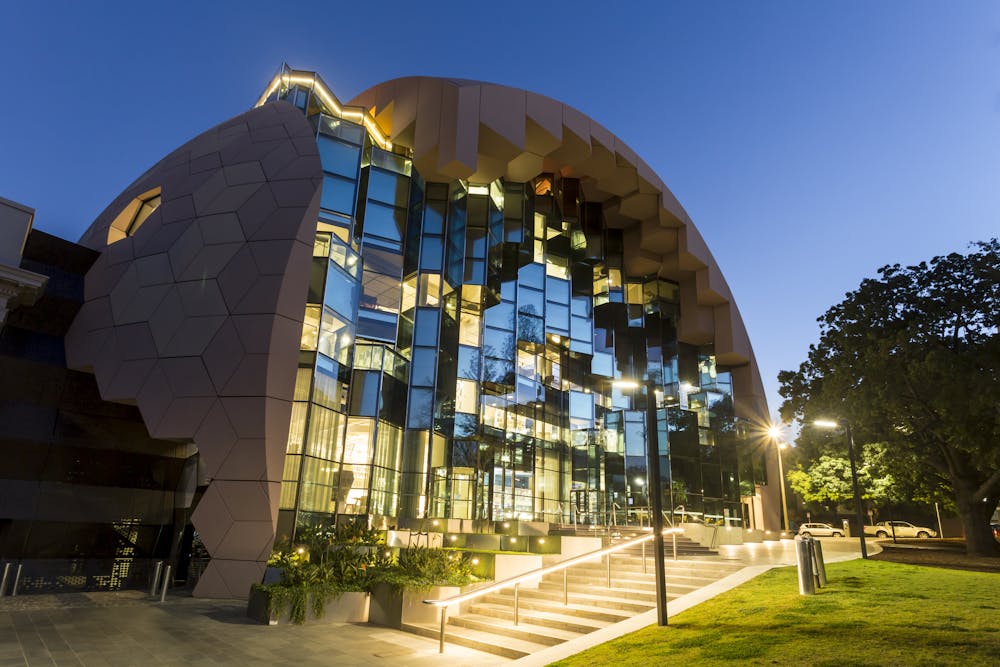
The State Library in Victoria illustrates that libraries are so much more than just places that contain books. from shutterstock.com

In 2017, archaeologists discovered the ruins of the oldest public library in Cologne, Germany. The building may have housed up to 20,000 scrolls, and dates back to the Roman era in the second century. When literacy was restricted to a tiny elite, this library was open to the public. Located in the centre of the city in the marketplace, it sat at the heart of public life.

We may romanticise the library filled with ancient books; an institution dedicated to the interior life of the mind. But the Cologne discovery tells us something else. It suggests libraries may have meant something more to cities and their inhabitants than being just repositories of the printed word.


Read more: State libraries need our support and participation to survive


Contemporary public libraries tell us this too. Membership has generally declined or flat-lined, but people are now using libraries for more than borrowing books. Children come to play video games or complete homework assignments together. People go to hear lectures and musical performances, or attend craft workshops and book clubs.

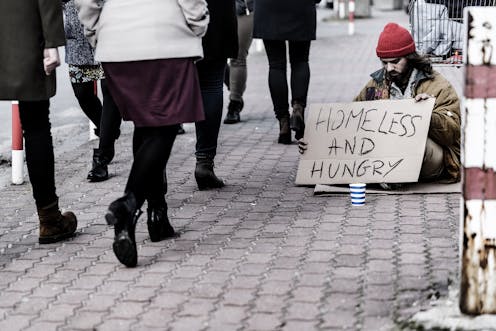
Libraries have become vital for the marginalised, such as the homeless, to access essential government services such as Centrelink, and to stay connected. They have become defacto providers of basic digital literacy training – such as how to use an iPad or access an eGov account. Others cater to tech-enthusiasts offering advanced courses on coding or robotics in purpose-built spaces and laboratories.

We do romanticise libraries as being repositories of ancient knowledge. Clarisse Meyer/Unsplash

Yet the future of Australia’s public libraries is unfolding according to a contradictory, double narrative. One-off funding for “feature” libraries built by star architects exists in parallel with cuts and closures of libraries on the margins. In Victoria’s city of Geelong, for example, three regional libraries on the city’s periphery faced closure scarcely a year after the opening of the A$45m Geelong Library and Heritage Centre.

Part of the reason for this is that the expanded contribution of libraries to our communities and cities isn’t recognised at higher levels of government.


Read more: Has the library outlived its usefulness in the age of Internet? You'd be surprised


How libraries are changing

In the early 2000s, as archives shifted online, futurists predicted an imminent death to public libraries. But the threat of obsolescence made libraries take proactive steps to remain relevant in a digital world. They thought creatively about how to translate services they have always offered – universal access to information – into new formats.

Libraries digitised their collections and networked their catalogues, exponentially extending the range of materials users could access. They introduced e-books and e-readers to read them with. They mounted screens to watch movies or to play video games.

They also installed computers crucial to that 14% of the population who don’t have access to the internet at home. And they wired up their spaces with free WiFi, retrofitting extra power-points so users could plug in their own devices.

Libraries have a lot of programs around technology and the use of computers. from shutterstock.com

Besides offering new technologies and services, libraries offer people a welcoming, safe space to gather without the pressure to spend money. Investing in attractive, versatile furnishings, they have actively encouraged people to dwell in their spaces, whether this is to read a newspaper, complete a job application online, or to study.

In an age where communication technologies create both efficiency as well as forms of isolation, such spaces assume a renewed social importance.


Read more: Friday essay: why libraries can and must change


How libraries shape the city

As vital as libraries are to individuals, their value is also connected to broader civic agendas. Libraries have deliberately sought to change perceptions of themselves from spaces of collection to spaces of creation. Some, such as the State Library of Victoria, see themselves facilitating creativity not only in an artistic sense, but also as entrepreneurial hubs for start-ups and budding innovators.

Public libraries have promoted their relevance to cities by strategically aligning themselves with government visions of economic growth. For instance, the Geelong Library and Heritage Centre was a signature investment in Geelong’s Digital Strategy, promoted as a “platform” to build “digital capacity” and a visible symbol of the city’s transition to a digital future.

Others, such as Dandenong library in Victoria, attract high levels of funding as part of urban renewal projects aimed at revitalising declining urban precincts.

These high-profile libraries, usually in urban centres, overshadow the uncertain fate of smaller libraries on the periphery, fighting to stay viable due to insufficient funding.

The Geelong Library and Heritage Centre cost millions of dollars to build, while three local libraries lost funding. from shutterstock.com

This contradiction is occurring because provisioning for libraries is not embedded at high levels of urban planning and policy making. There is no nationally consistent model for allocating funds between the states and local government. Nor is there a consistent framework across Australia for evaluating library performance.

Critically and most revealingly, libraries are evaluated based on traditional metrics, such as loan and membership numbers, capturing only a fraction of the full value they contribute to our individual and collective life. Failure to recognise this by governments and policymakers puts at risk the diverse and nuanced ways libraries might shape Australia’s future.

The Conversation

The authors do not work for, consult, own shares in or receive funding from any company or organization that would benefit from this article, and have disclosed no relevant affiliations beyond their academic appointment.

27 Aug 17:26

Woke Giant, retro political art for third century America

by Rusty Blazenhoff

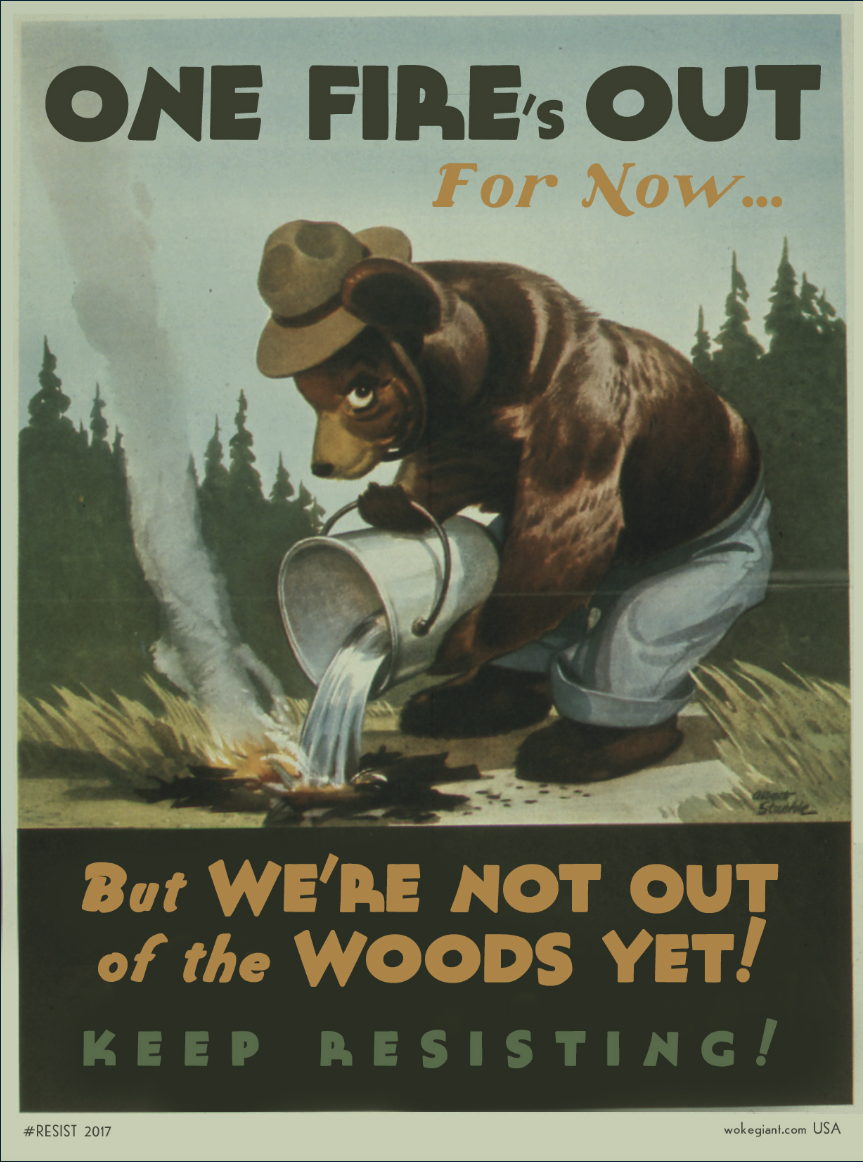
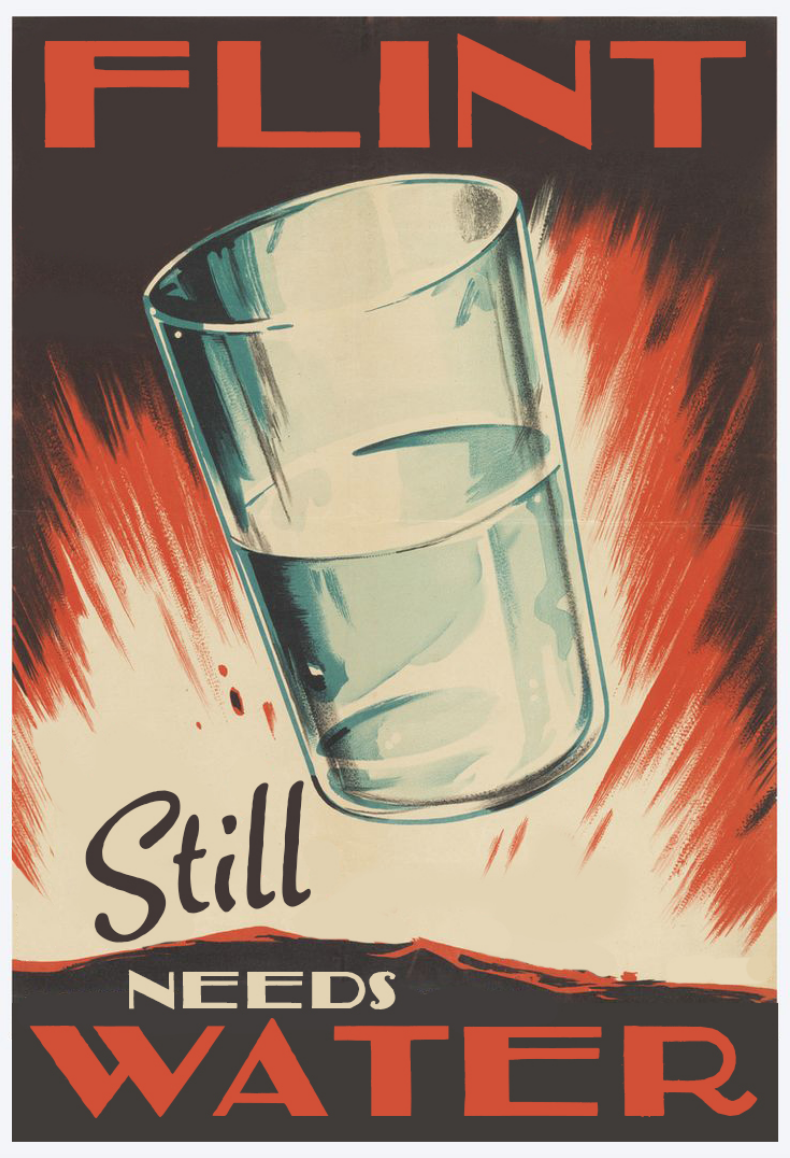
Over at Woke Giant you'll find some seriously cool, retro-styled "political art for third century America." Don't miss the downloadable protest signs!

Here's a taste: Stress is the enemy! Keep resisting! Flint still needs water!

Thanks, Tricia!

27 Aug 17:24

Oil paintings show how people who wear glasses see the world without them

by Rusty Blazenhoff

People who have good vision: Ever wonder what it's like to see the world as someone who is nearsighted? Well, Cape Town-based artist Philip Barlow has imagined this blurry world for you in a series of hyperrealistic oil paintings. See more of his work on his Instagram. https://www.instagram.com/p/BW1y2TCgKyO/?taken-by=philipbarlow https://www.instagram.com/p/BZ_8I5WALSd/?taken-by=philipbarlow https://www.instagram.com/p/BkQAOzWgGq4/?taken-by=philipbarlow https://www.instagram.com/p/Bh1LgIYg9J5/?taken-by=philipbarlow https://www.instagram.com/p/Bkm8LcUBsaH/?taken-by=philipbarlow https://www.instagram.com/p/Be8yTgXneu4/?taken-by=philipbarlow https://www.instagram.com/p/BlZx08lBC_V/?taken-by=philipbarlow

(Bored Panda)

27 Aug 17:06

NYU makes med school free for all students

by Cory Doctorow

The median US med-school grad has $195,000 in loans; all 93 of NYU's freshman med-school class will have free tuition for their entire degree program, as will all future students (the 350 currently enrolled students will no longer pay tuition, same goes for the school's 9 grad students) (more…)

27 Aug 16:56

A browser extension that checks web-pages for misleading and hoax images

by Cory Doctorow

https://www.youtube.com/watch?v=osPL8b-nTeg

Surfsafe is a browser extension that compares all the images you load in your browser to images that appear on "trusted news sites," fact-checking services, and Snopes, and pops up a tool-tip warning when you hover over known hoax images with links to more information. (more…)

21 Aug 13:25

Despite preeminence boost, USF loses funding from state

by oracleeditor@gmail.com (Josh Fiallo, Managing Editor)

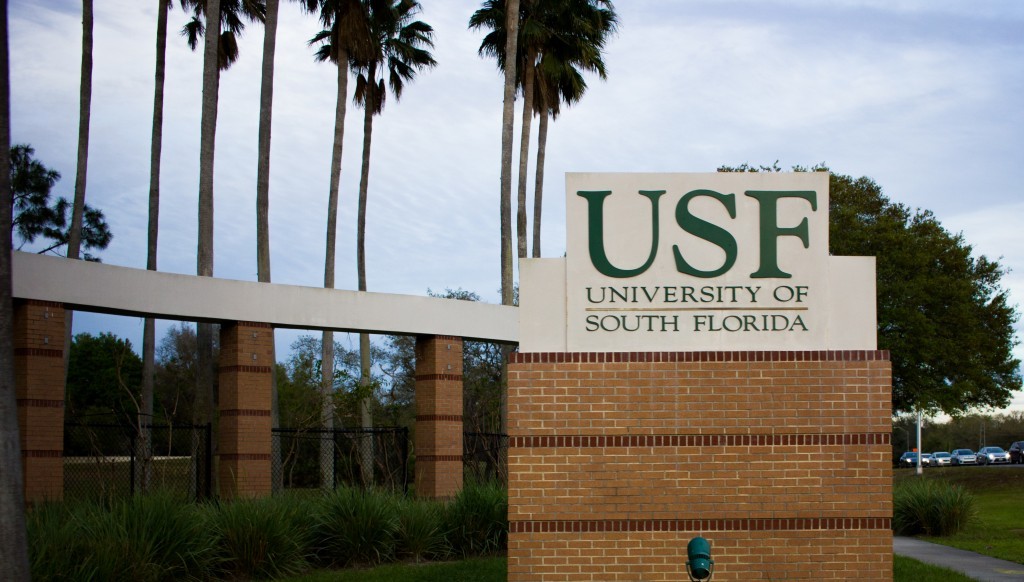
Even with an increase in performance by USF, the school received $7.7 million less from Florida’s Board of Governors in performance-based funding for the 2018-19 academic school year. ORACLE PHOTO/CHAVELI GUZMAN

It became official on June 27: Following year-after-year improvements in performance for the past five years, USF joined the ranks of Florida State University (FSU) and the University of Florida (UF) as the state’s third preeminent university.

Along with the elite status came prestige, as well as an additional $6.15 million bonus in funding from the state to USF. Despite the cash bonus and an increase in performance from the year prior, however, the university still received over $1.5 million less in funding from the state after the Florida Board of Governors (BOG) chopped USF’s performance-based funding by $7.5 million for the 2018-19 academic year.

Without the extra funding, USF Provost Ralph Wilcox says the university may have to scale back on certain one-time purchases for the school at times, such as purchasing new “holdings” for the library, which would include new books, computers, printers, etc.

The loss in funding comes at the same time UF gained $2.5 million more in performance-based funding over the year prior, despite performing two points lower — from a 95 to 93 — on the metrics used by the BOG to judge schools’ performance.

In that same time frame, USF improved its score — which is judged out of 100 — from an 84 to 86.

The reason behind the funding discrepancy can be tricky. The simplest reasoning behind it, according to Wilcox, is that UF, despite its performance decrease, has the largest base budget to begin with. He also says it’s because UF is still the state's top performing university and consistently receives the most funding as a result — receiving $57.6 million to USF’s $37.6 million for the 2018-19 academic year.

But still, why would USF lose funding for increasing its performance, which is judged off of 10 student-success metrics, while its fellow state university earned more for a lesser performance?

According to Wilcox, it’s because USF, which regularly finishes alone in at least third place of the state's top-three universities in performance, failed to do so in the last academic year.

Since the bottom three public universities in Florida receive no performance-based funding from the state, Wilcox says the money that would otherwise go to those schools who finished in the bottom three on the point scale — Florida Gulf Coast, North Florida and FAMU in 2018 — goes to the top-three performers instead.

Coming in a three-way tie with FSU and UWF for third place in performance for the 2017-18 academic year, USF lost its bonus funding after a tiebreaker between the three institutions granted FSU the undisclosed multi-million dollar amount of funding, while USF received no extra money.

“We were disappointed that we didn’t win out, if you will, on some of that distribution,” Wilcox said.

Wilcox says that the method of using the tiebreaker to award one school all of the funds was laid out well before the tie came to be, so the school did not object the method.

Instead, what was more disappointing to Wilcox and the university was that USF was shut out from additional funding despite being designated as an institution that has surpassed the “excellence school benchmark,” while FSU did not, which gave it an advantage USF did not possess.

USF, due to its status as an “excellence school,” cannot reap the benefits of receiving extra points for improvement, but only on how high it performs. Meanwhile, FSU can receive extra points for improving in certain metrics and did so, earning improvement points for increasing its net tuition and fees per 120 credit hours for students.

The BOG judges schools not just on how well they perform, but also on how much certain schools have improved in key areas — such as six-year graduation rate and median wages of bachelors a year after graduation — from one year to the next.

The boost was enough to bring FSU — which finished in fourth the year prior — to being tied with USF and UWF. After the tiebreaker, which judged performance and improvement together, FSU received the bonus, bringing its total performance-based funding, not including its preeminence funding from the state, to $51.6 million.

USF finished second in the tiebreaker.

If schools were judged solely on high performance, Wilcox says, USF would have finished in the top three on its own, eliminating the need for a tiebreaker.

“The disappointment for me was that here you have a university that scored well on the excellence scale (USF) and another university (FSU) who scored well on excellence, but also with a pretty significant point total on at least one of the metrics in improvement,” Wilcox said. “And the excellence school, the school who scored exclusively on the excellent scale (USF), lost out on the tiebreaker. That’s what’s disappointing.”

Despite the disappointment of losing out, Wilcox stressed that USF is not making excuses for itself. Instead, he says, it is ensuring that in the future there’s no need for a tiebreaker to determine whether the school earns a bonus from the state.

The goal for USF this academic year: Earn 89 or 90 points on the metric scale, Wilcox said.

“I think it motivated everyone even more,” Wilcox said. “To ensure we don’t get caught in a tiebreaker in the future. Certainly, we’re not going to be satisfied with anything less than ending up in the top three.”

Still, Wilcox stressed how unpredictable the final standings can be due to how the BOG judge schools based not only on performance, but also off of improvement.

“We’ve seen here and we’ve seen in the past, rather unexpectedly, universities can pop out of nowhere and score well on improvement even though they don’t come anywhere close to the University of South Florida’s performance and be the beneficiary of significant state investments at the expense of USF,” Wilcox said.

“The challenge for us is to keep driving forward and to continue to press upward. Quite clearly, it’s motivated us to roll our sleeves up, to work harder and focus even more on how to improve our performance on these metrics.”


17 Aug 12:38

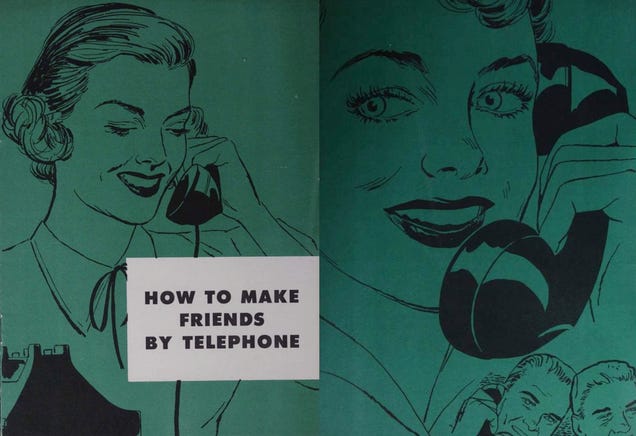
The 1950s Guide to Proper Telephone Etiquette

by Matt Novak

Phone calls here in 2018 seem to be more and more rare, especially with younger people. But most Americans still know basic phone etiquette, like saying “hello” when you answer the phone, and not hanging up without some kind of goodbye. But in case you’ve forgotten, here’s a helpful guide from 1950 that was produced…

Read more...

15 Aug 19:44

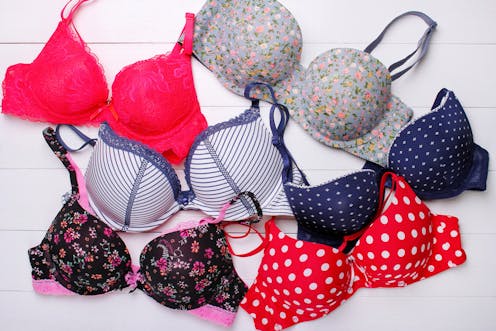
Wearing an ill-fitting bra isn't just uncomfortable, it's bad for your health

by Joanna Wakefield-Scurr, Professor of Biomechanics, University of Portsmouth
Christina_summer/Shutterstock

Wearing the wrong size bra is not only uncomfortable, it can cause a range of health problems. Research has shown that a lack of breast support often leads to breast pain, which is reported by 50% of women. An ill-fitting bra that doesn’t give the right support can also lead to breast skin damage – usually seen as stretch marks, caused by stretching the skin beyond its recovery point.

Ill-fitting bras have also been associated with neck, back and shoulder pain, bad posture, and rubbing and chafing leading to skin abrasions.

We also see ill-fitting bras causing permanent changes to the body, such as deep grooves in the shoulders caused by pressure from the bra shoulder straps. Ill-fitting bras have even been associated with a desire for breast reduction surgery. And with 80% of women wearing a poorly fitting bra, this is potentially a significant problem. In a study that assessed the bra fit of women wanting breast reduction surgery, all were wearing an ill-fitting bra.

The lack of breast support and the difficulty in finding a well-fitting bra has also been linked to a reluctance to exercise, with obvious long-term consequences.

Despite this fairly long list of health implications, millions of women continue to wear ill-fitting bras.

Forget about cup size

In 1935, Warner Brothers incorporated breast volume into bra sizing and the alphabet bra cup size system we use today was launched.

This original bra sizing system went up to a D cup. But since introducing this system, body sizes have changed a lot. Many women now buy a D cup bra or larger. Some bra companies use this same sizing system to make bras up to an N cup.

Bra size is difficult to measure. The accuracy of bra measurement is affected by breathing, posture and how thin you are. Researchers suggest that bra-size measurement should take place over a well-fitted, unpadded and thin bra. But most women are likely to be fitted in a shop while wearing their own bra, regardless of whether or not it fits well.

Bras produced by different manufacturers have inconsistent sizing, as there is no universal size chart or grading method. Unfortunately, bra fitters have varied experience, and there is no agreed level of competency or bra fit qualification.

The bra marketplace can be overwhelming and confusing. But, unlike shoes, breasts change size, shape and position throughout the menstrual cycle and throughout life. So women’s bra size can change regularly. Despite this, there is limited guidance for women to assess their own bra fit.

Our research team works with most of the lingerie companies around the world to offer a scientific, evidence-based approach to bra development. We use 3D scanners and biomechanical technology to understand bra fit.

Five simple steps to good bra fit.

Our approach to bra fitting is not to rely on the tape measure to establish bra size, but to educate women and give them the power to assess their own bra fit. We have used our 13 years of experience in breast and bra science to develop an evidence-based bra fit video to help women forget about bra size and focus on the five simple steps to a good fit.

This simple checklist could help millions of women avoid bra-related health problems, and it’s as simple as forgetting your ABC.

The Conversation

Joanna Wakefield-Scur receives funding from bra companies around the world.

15 Aug 19:29

Disney (yes, Disney) declares war on "overzealous copyright holders"

by Cory Doctorow

Disney is being sued by the Michael Jackson estate for using fair-use clips in a biopic called "The Last Days of Michael Jackson" -- in its brief, the company decries "overzealous copyright holders" whose unwillingness to consider fair use harms "the right of free speech under the First Amendment." (more…)

14 Aug 19:38

11-year-old hacks replica of Florida's state election website in less than ten minutes

by Gina Loukareas

Can we please have paper ballots nationwide? Last week at DEFCON 26 in Las Vegas, eleven-year-old Emmett Brewer hacked into a replica of Florida's state election site and changed the voting results. That's scary enough. What's even scarier is that it took him less than ten minutes. An eleven-year-old girl was able to hack into the same site in about fifteen minutes. And more than THIRTY kids were able to hack into replicas of other states' sites in less than half an hour. That is straight up alarming and you'd think the folks in charge of our state and federal elections would be concerned about this and want to take immediate action. That would be the normal reaction. But we're a long way from normal.
In a statement regarding the event, the National Association of Secretaries of State said it is “ready to work with civic-minded members of the DEFCON community wanting to become part of a proactive team effort to secure our elections.” But the organization expressed skepticism over the hackers’ abilities to access the actual state websites. “It would be extremely difficult to replicate these systems since many states utilize unique networks and custom-built databases with new and updated security protocols,” it read. “While it is undeniable websites are vulnerable to hackers, election night reporting websites are only used to publish preliminary, unofficial results for the public and the media. The sites are not connected to vote counting equipment and could never change actual election results.”’
I'm sure we'll be fine, though. Congress is hard at work to protect the sanctity of our elections to ensure we don't have a repeat of 2016. Oh, wait. No, they're not. An 11-year-old changed election results on a replica Florida state website in under 10 minutes [Michael D. Regan/PBS][Image: Pixabay]
14 Aug 14:28

Our workplaces are filthy and it's costing us all

by Libby Sander, Assistant Professor of Organisational Behaviour, Bond Business School, Bond University
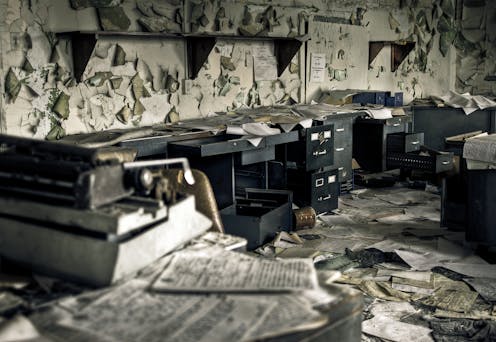
Mess itself have a negative impact on workers. Shutterstock

The typical office desk is home to over 10 million bacteria, 400 times more than a toilet seat. Other studies have revealed people don’t wash their hands, and surfaces from taps to elevator buttons are “officially dirty”.

Beyond the health concerns, this has an impact on our psyche. Humans have an inbuilt disgust response to dirty environments. A clean workplace has also been shown to reduce sick days and increase productivity.

People attending work while sick adds to the spread of disease and costs the Australian economy about A$34.1 billion each year through lost productivity. The cost of absenteeism in Australia is estimated at A$7 billion a year.

We are not as clean as we might think

American researchers conducting a 13-month study found 4,800 surfaces in office buildings were “officially dirty”. Taps, microwaves, computer keyboards and fridge doors were the dirtiest surfaces.

This is especially of concern given the rise of open-plan and shared-desk workplaces. Workers in open-plan spaces have a 62% higher incidence of sickness absence than those in private or shared cellular offices.

Etiquette in shared-desk workplaces requires employees to clean down their workstation and equipment when they finish using it. However, less then half of employees comply.


Read more: How clean is your desk? The unwelcome reality of office hygiene


I once worked with a colleague who refused to touch any surface in a public toilet and would use gloves or paper towels to avoid doing so. Another colleague was so troubled by the toilet roll dispenser that he kept his own supply of toilet paper in his office.

This is understandable given that research has shown that under certain conditions we all behave like pigs. Both our environment and social norms influence our behaviour.

In one famous study, for instance, even people who said they wouldn’t litter were more likely to do so when the environment was already dirty or others were littering.

If workplaces are already dirty, it makes sense that no-one empties the dishwasher. We feel that it is not our responsibility as we follow the norm and behave in ways we normally wouldn’t.

The impact of a messy workplace

One study of 43,021 respondents from 351 office buildings found that cleanliness was be correlated with employee satisfaction. In two laboratory and field experiments, offices that were seen to be in proper order and had a pleasing appearance had positive outcomes for trust in the organisation and for learning.


Read more: How employers can design workplaces to promote wellness


On top of all this you have the health impacts of unhygienic workspaces. Viruses can survive for hours or even months on surfaces like phones and computer equipment.

In another study on the effects of a controlled increase in cleaning quality, researchers found that a cleaner office resulted in a 12.5% decrease in sick days and reported increases in productivity.

What can we do about it?

Not all communicable infections have vaccines, so overcoming the problem of dirty workspaces requires a bit of ingenuity.

Hand hygiene has been shown to be one of the most effective means of reducing the transmission of germs. In year-long random controlled trials, workplace hygiene programs that include education and the use of hand sanitisers reduced hygiene-related healthcare claims by over 20%.

Many organisations have implemented sanitation stations in open-plan and hot-desking environments to encourage employees to wipe down the desk, computer equipment and phone when they have finished using them for the day. However, a study has shown that less than half of employees use them.


Read more: A new study should be the final nail for open-plan offices


This could be explained by research that found that hot-desking environments can lead to employees feeling indifferent to their coworkers and less committed to the organisation.

Some research has suggested that creating ownership can lead to increased responsibility and to people doing the right thing. This might include team ownership of different aspects of the work environment such as schedules for cleaning the kitchen.

While employees should be encouraged to stay home while sick, and the use of hygiene programs can have a positive impact, the uptake of these initiatives continues to prove challenging for employers.

The Conversation

Libby Sander does not work for, consult, own shares in or receive funding from any company or organization that would benefit from this article, and has disclosed no relevant affiliations beyond their academic appointment.

13 Aug 17:52

Hothouse Earth: seven things you can do to stop it

by Abid Mehmood, Research Fellow, Sustainable Places Research Institute, Cardiff University
Vivvi Smak/Shutterstock.com

If global temperatures are allowed to rise by 2℃, we face creating a “Hothouse Earth” that would shift the planet to an irreversible state, a recent research paper warns. This has provoked a global frenzy in social, news and print media reminiscent of the planetary emergency professed by Al Gore a decade ago. Only this time climate scientists, and not politicians, are the ones causing the storm.

The research is compelling, but the arguments are hardly new. We’ve long known that Earth systems require extensive human intervention, that nature will not redress the balance itself. We already know of the planetary boundaries and, thanks to our unsustainable practices, how crossing certain thresholds of natural resources (fresh water, land use, and biodiversity loss) and environmental variables (atmospheric aerosols, biochemical flows and ozone depletion) could lead to tipping the Earth’s systems out of balance.

Nonetheless, the idea of Hothouse Earth has taken off. This is a good thing in terms of raising awareness and triggering global concerns and subsequent actions for integrated climate governance. But such accounts often fail to consider the political climate of the day.


Read more: Hothouse Earth: here's what the science actually does – and doesn't – say


Ongoing austerity measures in the aftermath of the 2007-08 financial meltdown mean that states are divesting from their responsibilities on welfare, making way for supposedly “caring” forms of market-based mechanisms. Short-term policies of “doing more with less” have also affected civil society as many organisations that rely on government funding are either disappearing or struggling to sustain their causes.

Meanwhile, this research could not have come at any better (or worse) time with the prolonged spells of heatwaves around the world. And studies suggest that public perceptions of environmental hazards fluctuate with the proximities and experiences of climatic events.

But if not carefully interpreted, claims of doom and gloom scenarios can polarise public and political opinions. Much scientific research of this ilk, and certainly the vast majority of the media coverage about it, fails to appreciate the potential of individual people in tackling environmental issues. The same is true of many politicians, who consider environmental sustainability too serious a task to be trusted to people.

As a result, communities - although recognised as vulnerable to the effects of disappearing forests, warming oceans and melting ice sheets - remain absent from the decision-making processes and the proposed solutions. But community-based actions can be incredibly powerful, when harnessed.

There are various meaningful actions and initiatives that can be spearheaded by people in their communities. And in this time of political disengagement from the issue, it’s more important than ever that we do so.

New Zealand: a beautiful bolthole. Steven Bostock/Shutterstock.com

While 1% of us may be able to consider their options for relocating to more hospitable places on Earth (Silicon valley billionaires are buying up property in New Zealand), or relatively less hospitable locations on the moon and Mars, the others will have to do something, now.

Among the steps that can be taken immediately, you could consider:

1. Change your lifestyle

Not just attitudes and behaviours, we need to reconsider how we live our everyday lives. As we become more knowledgeable about the state of nature in our surroundings with deteriorating air, soil and water conditions, we need to think about changing the way we our families and our friends are contributing to the environment. Opt for an organic or vegetarian diet, support Fairtrade, and opt for locally sourced stuff.

2. Sow a seed or two

Growing fruit or vegetables in your front or back gardens, or in pots indoors, will not only liven up your living space and provide you with fresh, local produce. The increased photosynthesis increases carbon sink and contributes to reducing greenhouse gases. Even more so, do it as a community. Many local authorities are now encourage the greening of the abandoned lands and derelict areas.

3. Join a local collective

Or better still, start one. Transition Network is a good example of actions based on voluntary individual and collective participation. It began as a permaculture movement to reduce fossil fuels dependence, growing own food, sourcing locally, promoting social inclusion. Today it is one of the largest community-based networks, with presence all over the world.

4. Use public transport or cycle

Many towns and cities are now promoting different kinds of bike ride or sharing schemes. Sustainable transport solutions can help decrease car dependence besides reducing carbon footprint.

Get fit and save the planet at the same time. Connel/Shutterstock.com

5. Help scientists with their research

Citizen science is increasingly becoming a valuable way of community-sourced and voluntary participation and research in all scientific disciplines. Contributions from everyday lives of citizens help scientists get out of their silos and find better solutions to complex and wicked problems.

6. Engage with your local and national politicians

Most of the political parties on a broad range of spectrum now understand and support the need for sustainable and healthy lifestyles to make our places better in social, economic and environmental terms. But political agendas are a reflection of what people demand. And what better way to empower ourselves than to use our voting rights responsibly?

7. Check out what the government is doing

Local and national governments are committed to improving the environment. Many towns and cities have signed up for the Covenant of Mayors, voluntarily agreeing to reduce emissions and using sustainable energy sources. Surprisingly, not many countries have sufficient legal structures in place for climate action. Among national strategies, the Well-being of Future Generations Act in Wales is often quoted as an exemplar of good policy and practice.

The Conversation

Abid Mehmood does not work for, consult, own shares in or receive funding from any company or organisation that would benefit from this article, and has disclosed no relevant affiliations beyond their academic appointment.

13 Aug 17:33

How we use good deeds to justify immoral behaviour

by Nishat Babu, Lecturer in Organisational Behaviour, Aston University
'I helped my neighbour move yesterday - you can't rescue everyone.' Photographee.eu/Shutterstock

We all like to think of ourselves as morally sound individuals. However in doing so we often assume that morality is static – that we are consistently moral to some extent over time. In reality, research suggests that most of us will behave in contradictory ways and act both morally and immorally from time to time. Interestingly, when we think about our past moral actions, we are likely to engage engage in compensatory behaviour and act immorally going forward.

For instance, if you recently donated to charity, you may donate less money at a future charity event or be less willing to volunteer. This has been termed moral licensing, and describes how previous engagement in moral behaviour provides people with moral “credits” that then affords them with a ticket to subsequently engage in morally questionable behaviour.

The consequences of this can be quite serious, and happens even when people are merely anticipating future engagement. One study showed that people who expected to engage in some future moral action, such as in a fundraiser or donating blood, were more likely to pick a white candidate over a black candidate as being suitable for a job.

Moral licensing has also attracted attention in the area of corporate social responsibility. This term can broadly be thought of as an organisation’s focus beyond the bottom line – how it acts towards its stakeholders, the environment, and society. For example, Kenneth Lay, the former CEO of Enron – a company notoriously known for its accounting fraud which ultimately led to its collapse in 2001 – was noted to be a keen philanthropist. It may well be that he felt that his philanthropic efforts provided him with moral credits, allowing him to subsequently endorse the negative goings on within the company.

This view is in fact reinforced by research. One study that looked at moral licensing within the organisational context showed that prior corporate social responsibility of CEOs was linked to more corporate social irresponsibility later. Interest in moral licensing has even extended to areas such as energy conservation. One study showed that residents reduced their water consumption when exposed to a water conservation programme. However, at the same time their electrical consumption was shown to have increased in comparison to a control group.

Previous organisational CSR has been linked to subsequent social irresponsibility. David D'Amico/Flickr

Currently we are not sure what the psychological processes underpinning moral licensing are. Does prior moral behaviour really provide credits that can be withdrawn to allow engagement in a questionable act – because we feel we have “earned” the right to do so? Or could it be that prior moral behaviour changes the meaning of the subsequent questionable behaviour? For instance, if we have established through previous actions that we are not racially biased, we may more easily convince ourselves that picking a white candidate over a black candidate was due to some factor other than race.

But are others willing to accept our moral license? One study looked at the reactions of individuals to a white speaker who made a potentially offensive comment directed at African Americans. When this comment was preceded by “I’m not racist or anything, but …”, the white people rated the speaker as slightly less racist, while the black people judged the speaker as more racist. And so, where the targeted group was concerned, they were less likely to license the speaker – causing the speaker’s initial claim of not being racist to backfire.

Moral cleansing

The opposite to moral licensing is also true. We know that when people recall their recent immoral behaviour, they express greater willingness to engage in compensatory moral actions. This is referred to as moral cleansing – demonstrating the dynamic nature of moral behaviour.

For instance, Donald Trump’s quick decision in April 2017 to launch a missile strike in Syria in response to a chemical attack by the Syrian regime, drew praise from his critics as being “the right thing to do”. However, as Hillary Clinton pointed out, “we cannot in one breath speak of protecting Syrian babies and in the next close American doors to them” – referring to a ban on receiving refugees.

It could well be argued that Trump’s morally questionable previous behaviour motivated him to engage in “moral cleansing” by launching the applauded missile strike. But the example clearly shows that while this may have assured him about his own morality, it takes more consistency to be accepted as moral by others.

Trump received praise for his response to a chemical attack in Syria – but didn’t want to receive refugees to the US. Gage Skidmore/ Flickr

Finally, there is some evidence to suggest that moral licensing seems to be apparent only for private transgressions, such as donating to charity privately as opposed to doing so publicly. It seems as individuals, we seek to protect, and in some cases even bolster our reputation through public displays of moral actions. And engaging in morally questionable behaviour that we ourselves feel we have earned isn’t something we want to broadcast. Indeed, research has evidenced that those people who are publicly charitable do benefit from reputational enhancement.

Being good isn’t always easy. When it comes to behaving morally, it appears there is a balance we all strive to achieve, so that personally we can remain assured of our own moral goodness.

The Conversation

Nishat Babu does not work for, consult, own shares in or receive funding from any company or organization that would benefit from this article, and has disclosed no relevant affiliations beyond their academic appointment.

13 Aug 15:04

12% of music industry revenues go to musicians

by Cory Doctorow

There are more people who want to make art than the market would support, and the arts are a highly concentrated industry: combine those two facts and you get a buyers' market for artists' work, controlled by intermediaries, who take almost all of the money generated by the work. (more…)

13 Aug 15:03

A delightful and insightful look at the beach party film genre of the 1960s

by Andrea James

The Royal Ocean Film Society examines and contextualizes the beach party movie genre formula perfected and then milked dry by the genius marketers at schlock house American International Pictures. (more…)

13 Aug 15:03

Meet Shudu, the world's first digital supermodel

by Andrea James

Shudu is a harbinger of the future of modeling, a digitally created and enhanced supermodel created by Cameron-James Wilson. "Digital influencers" like Shudu are already clogging up Instagram and Snapchat, where kids these days can't get enough of the more-human-than-human beauties. (more…)

13 Aug 14:50

The EPA's own staff are aghast that Trump is bringing back asbestos

by Cory Doctorow

The Trump administration's plan to bring back asbestos is right in line with Trumpist ideology that any science that interferes with profits is a hoax (Trump claims that the asbestos-cancer link is a conspiracy to help the mafia make money on asbestos removal contracts), and the fact that the leading Russian asbestos company (which has ties to Putin) put Trump's face on their packaging is just an extra too-shitty-to-be-true detail for all of us to ponder as we die of mesothelioma in a few years. (more…)

07 Aug 13:08

Forget the Open Concept: It's Time to Bring Back Rooms

Forget the Open Concept: It's Time to Bring Back Rooms:

My history of (and manifesto on) closed rooms for CityLab!

03 Aug 19:41

What colleges must do to promote mental health for graduate students

by Meghan Duffy, Professor, University of Michigan
Many graduate students report psychological distress, but the fear of stigma and other factors often dissuade them from seeking help. Dirima/www.shutterstock.com

Sara did not expect much to come from her visit to the university’s counseling center, but she was concerned enough about the dark thoughts she’d been having that she decided to go anyway.

As she sat in the waiting room after turning in the patient questionnaire, she thought: “It’s probably not a big deal. I’m probably overreacting.”

But she wasn’t. After reviewing her screening survey, staff at the counseling center didn’t want her to leave without speaking to a therapist.

Like Sara – an actual student who agreed to let us share her story – half of all graduate students experience psychological distress. Four in 10 graduate students reported that mental or emotional health affected their academic performance in the previous four weeks. When asked about their mental health in the past year, 7 percent of graduate and professional students reported seriously considering suicide compared to 4 percent of adults in the general population.

As researchers who study mental health and mentor graduate students, we believe critical changes need to be made at universities to better support students like Sara. Some of these changes can be made by individual graduate students and faculty, while others require larger institutional changes by graduate programs, departments and the universities as a whole.

1. Fight the culture of silence

We believe the culture of silence surrounding mental health in academia needs to be changed into a “culture of access” around mental health. This involves starting with the assumption that graduate students with mental health concerns are expected and welcomed in academia, not aberrant cases that need to be dealt with.

It also pays to seek out mental health first aid training, which has been shown to improve knowledge, attitudes and behavior regarding mental health.

2. Expect reluctance

Even as society struggles to normalize conversations about mental health, students may still find it difficult to reach out for help. As was the case for Sara, students may feel they aren’t in bad enough shape to need help. They may also worry about being judged by their community, may want to handle things on their own or may not have the time or money for services.

One way students can help each other is by reaching out to students who seem to be struggling. We personally know students who only sought care after a concerned peer reached out.

Some barriers, like stigma, may be particularly acute for certain groups. For example, a forthcoming article in the Journal of Adolescent Health found relatively modest variation in mental health problems among students of different races and ethnicities, but that students of color were much less likely to be diagnosed or to seek help. That study – by Sarah Lipson and colleagues – found that Asian and Asian-American students are particularly unlikely to seek and receive treatment.

Universities must make sure mental health care for all graduate students is accessible and affordable. Students can call on their universities to enact the specific recommendations put forth in the Equity in Mental Health framework.

3. Address sexual and gender-based harassment

Improving graduate student mental health requires reducing harassment, including but not limited to sexual harassment.

A recent National Academies report concluded that 20 to 50 percent of women students “encounter or experience sexually harassing conduct in academia.” The unacceptably high rates have direct consequences for mental health: sexual harassment increases symptoms of depression, stress and anxiety.

Sexual harassment has been shown to increase stress. Antonio Guillem/www.shutterstock.com

Reducing harassment in academia will require institutional change. There are specific red flags that signal that institutional change is needed, and there are specific actions that individuals, graduate programs and universities can take to enact that change. These include being clear about what constitutes sexual harassment and having trainings that focus on changing behaviors, not beliefs.

4. Create peer support networks

Research indicates that support from co-workers helps academic staff members cope with work-related stress. Graduate students could benefit from peer support, such as writing groups run by trained peer facilitators. As one example, students at the University of Melbourne developed Write Smarter: Feel Better, a peer mentoring for Ph.D. students that focuses on productivity and mental health. Graduate students can create such groups and graduate programs can support peer facilitator training.

5. Reduce student stress and anxiety

New research that combined and analyzed data from earlier studies of stress reduction techniques points to specific programs that could improve student mental health.

Short courses in stress reduction have proven effective. Artit Fongfung/www.shutterstock.com

Except in the case of relaxation training, short stress reduction courses of eight weeks were as effective as longer courses. This suggests that graduate students would benefit from seeking out such courses and that universities should implement them. The benefits of such courses could be realized in just half a semester.

6. Recognize that overwork comes at a cost

As one study put it, it’s normal in the world of science and academia to view the “ideal scientist” as one who “gives priority to work, has few outside interests or responsibilities, and pursues research single-mindedly.” High work demands are a major cause of poor graduate student mental health and work-family conflict was the strongest predictor of psychological distress in one recent study of Ph.D. students.

Work-related stress is associated with burnout and poor mental health, and excessive work demands drive overwork and poor work-life balance. Overwork can also reduce productivity, driving “presenteeism,” where people are present at work but not productive, as well as high levels of turnover and negative attitudes towards work.

Thus, graduate students, faculty, and staff must recognize that overwork comes at a substantial personal cost. A guide to creating supportive environments for academics with mental health conditions notes that we must “avoid supporting or valorizing behaviors that erode mental health, such as working extremely long hours, or making the job more important than anything else.”

7. Help graduate students who need to take leave

Some graduate students who face mental health issues will need to take medical leave. At present, departments and programs treat each individual case as a crisis that needs to be dealt with. But given the prevalence of mental health conditions in academia, it should be expected that such needs will arise regularly. For that reason, we believe consistent mechanisms to support students who take medical leave should be created.

Unfortunately, in many places, stipend support for students is removed if they take medical leave. This means that students might be financially unable to use medical leave to address their mental health. Graduate students should advocate for mechanisms to support students who need to take medical leave, and administrators should work on enacting those changes. Creating fellowships for students who need medical leave would help students get needed help.

In the end, Sara left academia and is thriving elsewhere. For her, academia wasn’t a healthy place. Perhaps if more programs adopted the strategies shared here, graduate school would be a healthier place for students like Sara, improving their experience and making it so that society does not lose out on their contributions.

The Conversation

Carly Thanhouser has consulted for the American Foundation for Suicide Prevention.

Daniel Eisenberg and Meghan Duffy do not work for, consult, own shares in or receive funding from any company or organization that would benefit from this article, and have disclosed no relevant affiliations beyond their academic appointment.

03 Aug 19:40

The five best parenting books grounded in science: an expert's choice

by Sarah Kuppen, Senior Lecturer in Developmental Psychology, Anglia Ruskin University
(After) bed-time reading. Shutterstock

New parenting books seem to pop up all the time. How to do it the French way, the Tiger Mom way, the New Kid by Friday way, or how to just muddle through – the choice can be a little overwhelming. How can we know which guide will give us the answers to the questions that are most relevant to our needs, with an approach that we feel comfortable with?

I came across – and read – a vast selection while writing my own parenting book, Little kids, big dilemmas: Your parenting problems solved by science – and there really does seem to be a guide for everyone. For my own contribution, I used a science-led, evidence-based approach. And while the selection for genuinely research-oriented parenting books is not particularly large, there are a few I would highly recommend.

So here are my top five parenting books to have within reach for help in navigating what are often those bewildering early years. What to read when you don’t really have time to read:

1. Our favourite gift

Amazon

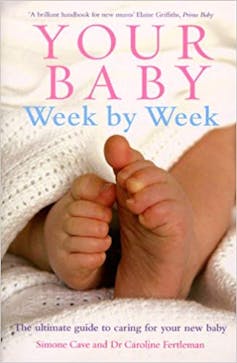
Your Baby Week by Week by Simone Cave and Dr Caroline Fertleman was the book I used for my own children. It was a gift to us and I have given it many times as a gift to others. The thing that’s really great is that you can dip in and out as you like.

In those first few months when you’re really exhausted and all you want is a response to the exact question you’re looking for, this book provides specifics on questions such as how much milk, sleep and crying time your child needs.

The real essentials to caring for your baby.

2. Mum knows best

Amazon

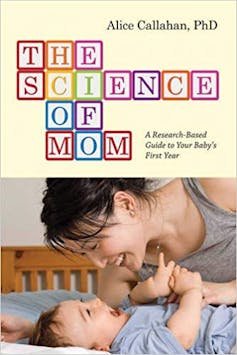
The Science of Mom: A Research-Based Guide to Your Baby’s First Year by Alice Callahan takes a clear, nicely paced approach to talking the reader through the science on some of the most contentious parenting issues.

Particularly relevant to the author’s American audience is the discussion on vaccination, which lays out the evidence in an accessible, no-nonsense fashion.

Callaghan also covers research on many of the areas parents care about most, such as feeding and sleeping.

3. Science for everyone

Amazon

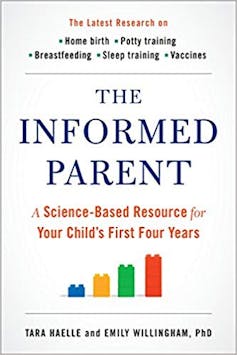
I really like The Informed Parent: A Science-Based Resource for Your Child’s First Four Years by Tara Haelle and Emily Willingham. It’s obvious the authors have plenty of experience communicating science to the lay reader. Not only do they present the up-to-date knowledge on controversial topics, they also discuss this in relation to the personal choices they made when raising their own children.

They give just the right amount of personal anecdote, making the review of the research evidence easy to digest and the book overall an easy read. I also like that they address in detail the thorny topic of sleep training and controlled crying.

Why didn’t you read past Chapter 1? Shutterstock

4. Focus on discipline

Amazon

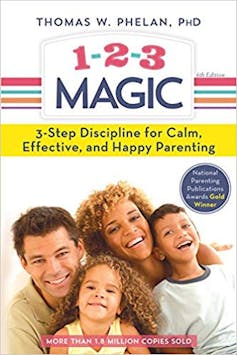
With 1.6m copies already sold, 1-2-3 Magic: 3 Step Discipline for Calm, Effective and Happy Parenting by Dr Thomas W. Phelan is the book on discipline and young children. Phelan believes that all discipline situations can be sorted into two categories – the behaviours you want to start (such as tidying up or getting ready for school) and those you want to stop (such as whining, fighting or anything anti-social).

While it can sometimes can feel overly controlling, this book is full of clear practical advice. Parents are certain to find something useful to add to their disciplining repertories.

5. Talking it over

Amazon

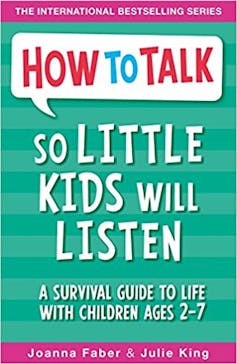
How To Talk So Little Kids Will Listen: A survival guide to life with children ages 2-7 by Joanna Faber and Julie King is part of the very popular series emanating from the original international bestseller – How to Talk So Kids Will Listen and Listen So Kids Will Talk.

Through the use of practical examples, the authors illustrate the unhelpful communication patterns parents often fall into when dealing with their kids. They also provide loads of story examples, which many parents will relate to, with examples of how to deal with them. There is something here for everyone.

The Conversation

Sarah Kuppen ne travaille pas, ne conseille pas, ne possède pas de parts, ne reçoit pas de fonds d'une organisation qui pourrait tirer profit de cet article, et n'a déclaré aucune autre affiliation que son poste universitaire.

02 Aug 19:44

Hiroshi Unno's 'The Art of Fantasy, Sci-fi and Steampunk'

by Jason Weisberger

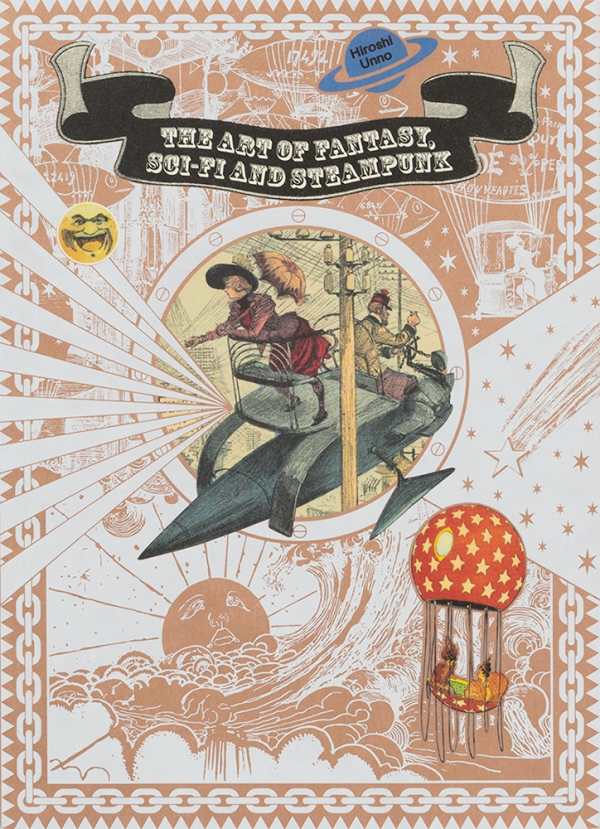
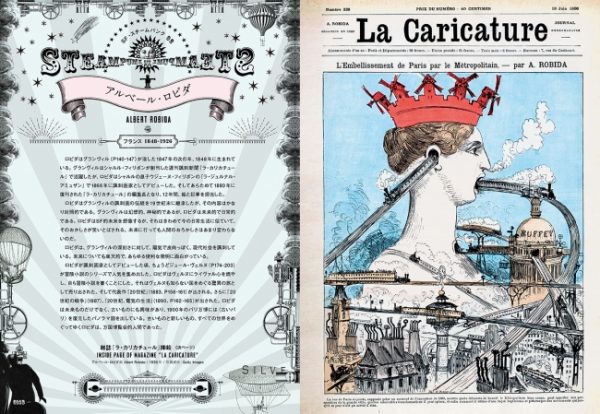
I can not read or understand very much of Hiroshi Unno's The Art of Fantasy, Sci-fi and Steampunk, but it is a visual treat!

This tome collects images and art from novels, early fantasy and romance to steampunk. Unno catalogs the incredible maturation of fantasy art work from the 19th century today.

I spent a couple hours leafing through this book, and it will live on my coffee table for quite a while.

The Art of Fantasy, Sci-fi and Steampunk by Hiroshi Unno via Amaozn

02 Aug 19:39

Whiskey Tango Foxtrot, you don't know the phonetic alphabet yet?

by Andrea James

Not only does Rachel have excellent diction, she gives some interesting history about how the standard phonetic alphabet was developed. Watch and learn! (more…)

02 Aug 12:41

Donald Trump's orange face may be funny, but this tanning historian says it masks something deeper

by Tania Woloshyn, Associate Fellow in History, University of Warwick
John Gomez / Shutterstock.com

Angry Creamsicle, Comrade Cheetolino, Mango Mussolini, Agent Orange – these are just a few of the nicknames that Donald Trump has picked up along his presidential road. Trump may ethnically identify as “white”, but his skin is categorically and scathingly portrayed as orange.

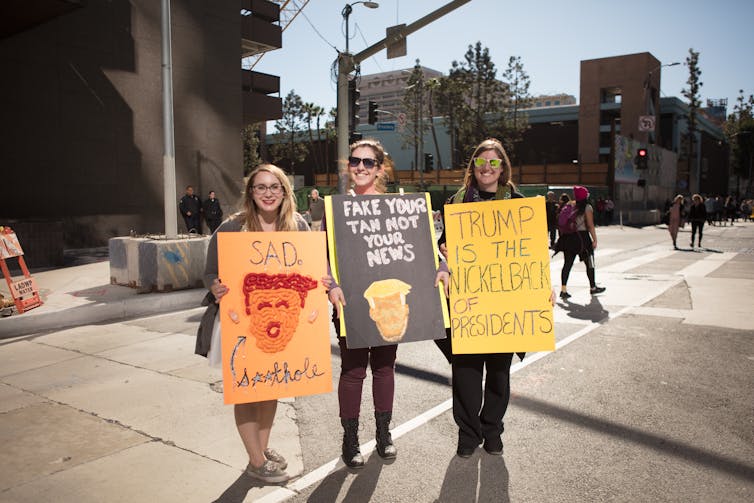
When Trump was elected in 2016, succeeding former president Barack Obama, I remember references such as “orange is the new black”. At once an allusion to the popular Netflix series and a bold comment on race, colour here functions as an important form of satire. And this satiric use of colour has persisted throughout Trump’s presidency. His recent UK visit witnessed the orange baby balloon and orange-faced protesters continuing this in full force.

My specialism is the history of tanning, so I find this particular form of humour fascinating. It’s striking that Trump’s skin tone, above all else, has prompted such a level of derision.

Fake it to make it

Orange is a colour with such comedic value because it is impossible, disingenuous: it is a mark of artifice. Tanning enthusiasts speak of achieving a healthy “glow”, looking “bronzed”, and one’s (implicitly and necessarily once white) skin “browning” in the sun. “Fake bake” would seem, and is marketed as, the safer alternative to true exposure to the sun’s UV rays, which we know can cause cancer.

But the problem is it remains just that: fake. The colouring is a dye, sitting on the skin’s upper surface layer, not a natural alteration of pigment embedded deeper within the cells. Unlike red lipstick, violet hair dye, or blue eye shadow – which are also clearly “unnatural” aesthetic additions and colour modifications to the human face – the orange fake tan (or serious overuse of bronzer) is widely viewed as unacceptable within popular culture. The natural progression of skin “phototypes” does not include orange as a colour “value” on this light-dark spectrum.

Less a subtle browning than a fluorescent face plant, we find the colour funny because it’s an all-too-obvious applied coating that fails to convince anyone of natural pigmentation. Orange is not bronze, not brown, not black (and never will be). It is laughable, therefore, because it is a mark of failure, an act of mimicry gone wrong. Put simply, orange isn’t “of value” to us because it isn’t a “value” as a skin colour at all.

Agent Orange. Antwon McMullen / Shutterstock.com

And let us remember why it exists in the first place. It is a normalised belief in white Western culture that dark skin is to be envied, that altering (however temporarily) one’s original colour by darkening it several shades down the colour line will make it look more beautiful, healthier, sexier, younger. This is the case for both women, especially young white women in the US and UK, as well as men, not least male bodybuilders.

It’s not surprising, then, that Trump believes altering his natural skin colour will improve his appearance and, hence, sense of self. The belief in a “healthy tan” has existed since the early 20th century, and continues to drive tourism just as it drives the tanning bed and fake tan industries.

Getting below the surface

I’d argue that there is something very serious about Trump’s orange face – something serious about the superficial. Scottish artist and writer David Batchelor argues that colour has been feared and marginalised as trivial, as artifice, as “other”, throughout the history of Western civilisation. He terms this “chromophobia”, describing the prejudice against colour as operating two ways:

In the first, colour is made out to be the property of some ‘foreign’ body - usually the feminine, the oriental, the primitive, the infantile, the vulgar, the queer or the pathological. In the second, colour is relegated to the realm of the superficial, the supplementary, the inessential or the cosmetic. In one, colour is regarded as alien and therefore dangerous; in the other, it is perceived merely as a secondary quality of experience, and thus unworthy of serious consideration. Colour is dangerous, or it is trivial, or it is both.

Fake tan, fake news. Manutsawee Buapet / Shutterstock.com

Like his combover (his thinning hair suggesting lost youth and virility) or his sourpuss pouts (lost composure under intense media scrutiny), Trump’s orange skin is a target of ridicule – of a man obsessed with vanity yet marked by signs of failed masculinity. And yet there is danger here, too, for they are implicitly signs of weak and worrisome leadership, of a man out of control of his appearance and perhaps, by extension to his opponents, his country.

The reference to Trump as “Agent Orange” is particularly relevant. Used by the US military in the Vietnam War to destroy foliage, this chemical also contained the carcinogen, TCDD, which seriously harmed many local inhabitants and their future unborn children. For artists like Busta Rhymes, Trump is envisioned as a dangerous weapon or force of destruction that threatens global peace.

Above all, there is a crucial irony that the orange-saturated skin that has become so characteristic of Trump’s image is totally at odds with the overt xenophobia and racism that saturate his words and actions. Yet here, too, are historical parallels: Hitler equally praised the “bronzed”, sculpted bodies of the ancients and encouraged his soldiers to tan and exercise in the open air while simultaneously spouting of the purity of the Aryan race.

I am not arguing that Trump is a modern-day Hitler (even if others have). What I am arguing is that orange is a colour not of comedy but of contention, even provocation. Protesters wear orange paint like a war mask, mocking Trump’s unstable character and confused “values”. His odd, even toxic, colouring may seem trivial, but its meaning is more than skin deep.

The Conversation

Tania Woloshyn has received funding from the Wellcome Trust, through a Research Fellowship and a People Award (2012-2016). Previously (2004-2008; 2010-2012) she received funding from the Social Sciences and Humanities Research Council of Canada (SSHRC).

02 Aug 12:36

The infantilization of Western culture

by Simon Gottschalk, Professor of Sociology, University of Nevada, Las Vegas
What happens when an entire society succumbs to childlike behavior and discourse? Elantseva Marina

If you regularly watch TV, you’ve probably seen a cartoon bear pitching you toilet paper, a gecko with a British accent selling you auto insurance and a bunny in sunglasses promoting batteries.

This has always struck me as a bit odd. Sure, it makes sense to use cartoon characters to sell products to kids – a phenomenon that’s been well-documented.

But why are advertisers using the same techniques on adults?

To me, it’s just one symptom of a broader trend of infantilization in Western culture. It began before the advent of smartphones and social media. But, as I argue in my book “The Terminal Self,” our everyday interactions with these computer technologies have accelerated and normalized our culture’s infantile tendencies.

Society-wide arrested development

The dictionary defines infantilizing as treating someone “as a child or in a way that denies their maturity in age or experience.”

What’s considered age-appropriate or mature is obviously quite relative. But most societies and cultures will deem behaviors appropriate for some stages of life, but not others.

As the Bible puts it in 1 Corinthians 13:11, “When I was a child, I talked like a child, I thought like a child, I reasoned like a child. When I became a man, I put childish ways behind me.”

Some psychologists will be quick to note that not everyone puts their “childish ways” behind them. You can become fixated at a particular stage of development and fail to reach an age-appropriate level of maturity. When facing unmanageable stress or trauma, you can even regress to a previous stage of development. And psychologist Abraham Maslow has suggested that spontaneous childlike behaviors in adults aren’t inherently problematic.

But some cultural practices today routinely infantilize large swaths of the population.

We see it in our everyday speech, when we refer to grown women as “girls”; in how we treat senior citizens, when we place them in adult care centers where they’re forced to surrender their autonomy and privacy; and in the way school personnel and parents treat teenagers, refusing to acknowledge their intelligence and need for autonomy, restricting their freedom, and limiting their ability to enter the workforce.

Can entire societies succumb to infantilization?

Frankfurt School scholars such as Herbert Marcuse, Erich Fromm and other critical theorists suggest that – like individuals – a society can also suffer from arrested development.

In their view, adults’ failure to reach emotional, social or cognitive maturity is not due to individual shortcomings.

Rather, it is socially engineered.

A return to innocence

Visiting America in 1946, French anthropologist Claude Lévi-Strauss commented on the endearingly infantile traits of American culture. He especially noted adults’ childish adulation of baseball, their passionate approach to toy-like cars and the amount of time they invested in hobbies.

As contemporary scholars note, however, this “infantilist ethos” has become less charming – and more pervasive.

Researchers on both sides of the Atlantic have observed how this ethos has now crept into a vast range of social spheres.

In many workplaces, managers can now electronically monitor their employees, many of whom work in open spaces with little personal privacy. As sociologist Gary T. Marx observed, it creates a situation in which workers feel that managers expect them “to behave irresponsibly, to take advantage, and to screw up unless they remove all temptation, prevent them from doing so or trick or force them to do otherwise.”

Much has been written about higher education’s tendency to infantilize its students, whether it’s through monitoring their social media accounts, guiding their every step, or promoting “safe spaces” on campus.

Meanwhile, tourist destinations like Las Vegas market excess, indulgence and freedom from responsibility in casino environments that conjure memories of childhood fantasies: the Old West, medieval castles and the circus. Scholars have also explored how this form of Las Vegas-style “Disneyfication” has left its stamp on planned communities, architecture and contemporary art.

Then we’ve witnessed the rise of a “therapy culture,” which, as sociologist Frank Furedi warns, treats adults as vulnerable, weak and fragile, while implying that their troubles rooted in childhood qualify them for a “permanent suspension of moral sense.” He argues that this absolves grown-ups from adult responsibilities and erodes their trust in their own experiences and insights.

Researchers in Russia and Spain have even identified infantilist trends in language, and French sociologist Jacqueline Barus-Michel observes that we now communicate in “flashes,” rather than via thoughtful discourse – “poorer, binary, similar to computer language, and aiming to shock.”

Others have noted similar trends in popular culture – in the shorter sentences in contemporary novels, in the lack of sophistication in political rhetoric and in sensationalist cable news coverage.

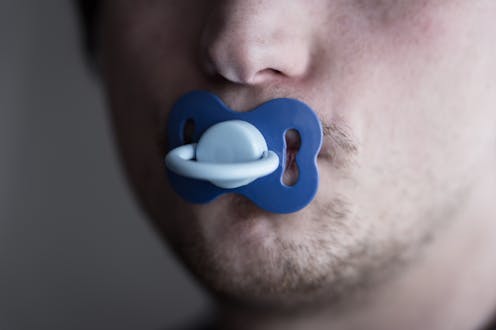
High-tech pacifiers

While scholars such as James Côté and Gary Cross remind us that infantilizing trends began well before our current moment, I believe our daily interactions with smartphones and social media are so pleasurable precisely because they normalize and gratify infantile dispositions.

They endorse self-centeredness and inflated exhibitionism. They promote an orientation towards the present, rewarding impulsivity and celebrating constant and instant gratification.

They flatter our needs for visibility and provide us with 24/7 personalized attention, while eroding our ability to empathize with others.

Whether we use them for work or pleasure, our devices also foster a submissive attitude. In order to take advantage of all they offer, we have to surrender to their requirements, agreeing to “terms” we do not understand and handing over stores of personal data.

Indeed, the routine and aggressive ways our devices violate our privacy via surveillance automatically deprive us of this fundamental adult right.

While we might find it trivial or amusing, the infantilist ethos becomes especially seductive in times of social crises and fear. And its favoring of simple, easy and fast betrays natural affinities for certain political solutions over others.

And typically not intelligent ones.

Democratic policymaking requires debate, demands compromise and involves critical thinking. It entails considering different viewpoints, anticipating the future, and composing thoughtful legislation.

What’s a fast, easy and simple alternative to this political process? It’s not difficult to imagine an infantile society being attracted to authoritarian rule.

Unfortunately, our social institutions and technological devices seem to erode hallmarks of maturity: patience, empathy, solidarity, humility and commitment to a project greater than oneself.

All are qualities that have traditionally been considered essential for both healthy adulthood and for the proper functioning of democracy.

The Conversation

Simon Gottschalk is affiliated with the Democratic Party and other organizations affiliated with it.

31 Jul 19:50

History of the peace symbol

by Rob Beschizza

Jacobo Prisco at CNN returns to 1958, when a new symbol appeared at protests against nuclear weapons in the UK.

"It's a minor masterpiece with major evocative power," said design guru and cultural critic, Stephen Bayley, in an email. "It speaks very clearly of an era and a sensibility.

"It is, simply, a fine period piece: the ordinary thing done extraordinarily well."

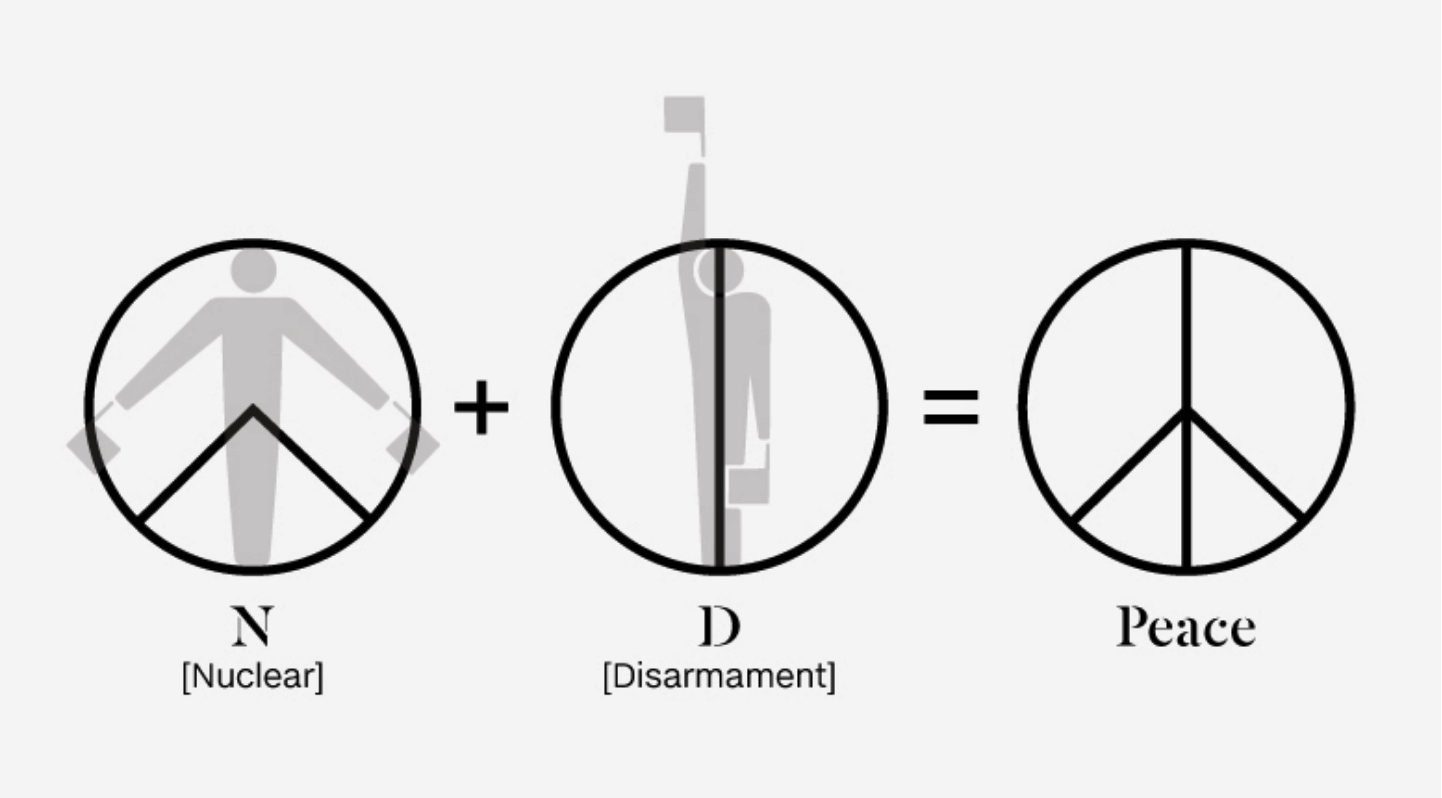
The design is meant to represent the letters "N" and "D" -- standing for "nuclear disarmament" -- as they appear in the semaphore alphabet, which is used by sailors to communicate from a distance with flags.

Gerald Holtom designed it,
31 Jul 19:50

What happens when you let computers optimize foorplans

by Rob Beschizza

I eagerly await our new AI masters' world of ultraoptimized, uncannily organic, evolving foorplans. Joel Simon:

Evolving Floor Plans is an experimental research project exploring speculative, optimized floor plan layouts. The rooms and expected flow of people are given to a genetic algorithm which attempts to optimize the layout to minimize walking time, the use of hallways, etc. The creative goal is to approach floor plan design solely from the perspective of optimization and without regard for convention, constructability, etc. The research goal is to see how a combination of explicit, implicit and emergent methods allow floor plans of high complexity to evolve. The floorplan is 'grown' from its genetic encoding using indirect methods such as graph contraction and emergent ones such as growing hallways using an ant-colony inspired algorithm.

Adds Simon: "I have very mixed feelings about this project."

31 Jul 19:24

Super-fancy bird may comprise a second species

by Andrea James

Sharp-eyed ornithologists noticed that some specimens of Vogelkop Superb Bird-of-Paradise that they observed looked different enough that they may be a separate species. They captured video of the other kind for comparison. (more…)

31 Jul 19:21

Universal, having learned nothing from its "dancing baby" ass-kicking, is once again attacking Prince fans

by Cory Doctorow

In 2008, Universal Music fraudulently claimed that a short Youtube clip of a toddler dancing to Prince's "Let's Go Crazy" was a copyright infringement, leading to eight years of litigation and, eventually, a landmark ruling secured by the Electronic Frontier Foundation in which the court found that Universal had a duty to consider fair use before using the Digital Millennium Copyright Act to censor other peoples' media. (more…)

27 Jul 19:37

Brontëk: the neo-Victorian play that pokes fun at the absurdity of Brontë family myths

by Márta Minier, Lecturer in Drama, University of South Wales
Captblack76/Shutterstock

Though the Brontës are known as English writers, their appeal has never been limited to the British Isles. From the Italian comic opera Le Sorelle Brontë (1963), by Alexandrian writer Bernard de Zogheb, to Yoshishige Yoshida’s Arashi ga Oka (1988), set in medieval Japan, the sisters’ work has inspired numerous adaptations across the world.

Perhaps the most peculiar of these spin-offs is a biographical drama from post iron-curtain Hungary. Brontëk (“Brontës”), first published by Hungarian writers Zsolt Győrei and Csaba Schlachtovszky in 1992, is a curiously playful, topsy-turvy and irreverent play about the Brontë family.

The play’s story is truly transnational. Set in March 1848 on the Yorkshire moors, it revisits the popular myths and mysteries surrounding the Brontës, but with a neo-Victorian (a modern reimagining what the Victorian era was like) twist. The events take place on the eve of the Hungarian revolution against the Hapsburgs. Its language is historically layered, with traces of mock Renaissance and mock 19th-century registers, mixed in with the contemporary Hungarian it was written in.

Little actually happens in the drama, instead its purpose is to be a parodic take on the myths that surround the reclusive authors. Where others have been far more serious in their explanations of the Brontës’ lives, this is very much tongue-in-cheek.

Brothers and sisters

Brontëk’s characters are unusual, to say the least. The drama features the three Brontë sisters, their father, “Patrik”, and a Belgian educator, Monsieur Heger (who, in real life, was Charlotte’s teacher, mentor and platonic love interest from her time in Brussels). It also includes the real life 19th-century Hungarian revolutionary, Mihály Táncsics.

While Anne, Charlotte and Emily famously chose to write under the male pseudonyms Acton, Currer and Ellis Bell, the sisters of the play (Anna, Sarolta and Emília) are actually men who have been brought up by their father as women. At the start of the drama they have just been summoned back from Brussels to the moors by Patrik and, with no access to pen and paper – despite asking “Santa”/Patrik for it – they spend their time embroidering their novels.

The real Haworth Parsonage, circa 1863. Wikimedia

The “sisters” (bearded men) are not allowed to go out, the doors are barricaded with wooden panels. But Emília, the romantic one who longs to be in the moors, goes out in “her” father’s clothes – only to catch a cold that later proves to be fatal.

Monsieur Heger, a hopeless bore of a bachelor with a domineering mother, who proposed to Sarolta in Brussels, arrives to elope with her (unlike the real life Monsieur Heger who is reputed to have ripped up Charlotte’s letters). Heger wears women’s clothing so as not to look suspicious to the protective and jealous Patrik, and introduces himself as Currer Bell, but wants to be called simply “Curry”.

Patrik, however, does not tolerate men around his “daughters”. He is distrustful of them and wants to protect the “girls” from all men – including himself. He constantly tries to suppress his physical desire for them, while also blaming the “girls” for the premature death of his wife.

Subverting the stereotypes

As Emília longs for a life of passion, the down-to-earth Sarolta cannot wait to get away with the man “she” is not in love with, but sees as an escape route. Emília carries some of the quintessential romantic and idiosyncratic passionate singleton stereotypes of the real-life Emily held by some of her fans. Sarolta, meanwhile, shares some of the pragmatism often mentioned in relation to Charlotte. But, if anything, Sarolta takes this pragmatism to a degree of selfishness and superficiality.

As these events occur, the pensive, sacrificial Anna is corresponding with Táncsics, the Hungarian utopian socialist and writer. Táncsics is in prison for his radical views and – needless to say – “she” has never seen him. If the play rehabilitates any of the Brontë siblings, it is the one whose work has been least read – Anne (Anna in the play). She is presented with almost redeemable features through “her” sacrificial attitude and platonic love for the imprisoned Hungarian intellectual. While this depiction is also recycling the “long-suffering, self-denying, reflective” image of Anne, to use Charlotte’s words, the play treats Anna as “her” siblings’ equal.

Even though Brontëk was, on one level, simply the work of two young university students who wanted to write drama differently, there is no denying that it stands on its own in its playful and irreverent depiction of the Brontë sisters. As with Julian Barnes’s playful postmodern take on the life of French novelist Gustave Flaubert in Flaubert’s Parrot (1984), Brontëk warns readers against looking too much at the significance of biography. But at the same time it allows them to be fans, devotees, mythmakers (and mythbreakers) who are capable of laughing at themselves.

The Conversation

This article is based on a talk originally given at a Cardiff BookTalk event (https://cardiffbooktalk.org/).