Shared posts

26 Mar 14:50

Paper Mills: Not Just for Students Anymore…

by Jonathan Bailey
Paper Mills: Not Just for Students Anymore... Image

A recent article by Holly Else & Richard Van Noorden in Nature looks at a growing issue in the field of research: Paper mills.

The article highlights the work of Elizabeth Bik and other, pseudonymous, researchers that have identified more than 1,400 published papers that were potentially linked to paper mills. Of those, most have not been changed with only 370 being retracted and expression of concern added to 45 more.

According to the article, the issue is especially pronounced at Chinese hospitals, where physicians are often required to publish research to get promoted but are too busy to perform any actual research. This has resulted in a marked increase of paper submissions from the country, up fifty-fold from just two decades ago.

However, the problem is not limited to just China. According to Catriona Fennell, the head of publishing services at Elsevier, there is evidence of such paper mills operating out of Iran and Russia as well.

At a Committee on Publication Ethics (COPE) forum in September, Bik spoke about the issue and said that the issue required publishers to be more aggressive when reviewing papers, including asking for raw data from those seeking publication.

However, Bik acknowledges that those steps are not foolproof and may lead to something of an arms race where journals work to find ways to detect and stop the publication of fake science and the paper mills continuously step up their game to get around those measures.

Though this may seem like an odd problem for the world of academic publishing, it’s far from new. As far back as 2007 there were efforts to track this industry and it grew rapidly, reaching $150 million by 2009. However, the recent work indicates that, not only is it a growing industry, but that many such papers are slipping through the cracks and getting published, including in reputable journals.

Worst of all, it dovetails with another well-known problem to ensure that fake science will always have a home.

Fake Journals, Fake Papers

The issue of paper mills isn’t an isolated phenomenon. For years, academic publishing has been battling the issue of predatory journals, which are fake journals that will agree to publish almost anything… for a fee.

These journals are often very sneaky and have official-sounding names, sometimes going as far as to steal another journal’s name and URL

The reason that these businesses exist is quite simple: Many would-be researchers are desperate to publish. Many schools, hospitals and research groups require proof of regular publication in order to obtain promotions or even just maintain their current position.

This has led to the mantra of “Publish or Perish“, which pushes academics to publish as frequently as possible, ideally with higher impact journals.

However, the desire of employers to constantly see publication does not always line up with the realities of research itself. This has prompted researchers to take a variety of approaches including breaking up one large project into multiple papers, adding coauthors to help colleagues and even seeking publication of the same research in multiple journals (duplication).

In short, the motivation right now to focus on the quantity of research, not the quality. That, in turn, opened the door for predatory journals and paper mills alike. This leads to a war that publishers must fight on two fronts: One against predatory journals and the other against paper mills.

Unfortunately, it’s likely that the scope of both issues are widely underestimated at this time. We only know the fake papers and the predatory journals we’ve detected and it’s almost certain there many more of both we don’t know about.

To make matters worse, as Bik pointed out, as processes improve for detecting fake science, so will the processes for producing fake science. This is not a war that’s going to be won any time soon, if ever.

Bottom Line

When people think of paper mills, they usually envision students paying for an essay or, at worst a thesis or dissertation. Very little consideration is given to the fact that researchers working in the field might be similarly tempted.

However, it makes perfect sense. The pressures that exist while one is a student don’t magically go away after graduation. If one stays in academia, they will face continuous pressures to put out new work and many will lack the time, confidence, skills, interest, etc. to do it.

As long as academics are forced to work in a publish or perish environment, this issue will not go away. If anything, it will only grow as the field becomes increasingly competitive. Though there’s been a lot of good work to reduce the effectiveness of paper mills and predatory journals, without reducing the demand for them, those efforts will likely be in vain long term.

Simply put, we must find new ways to grade researchers that reduce or eliminate the publish or perish environment. As long as that exists, there will always be a perverse incentive that will drive some to take unethical shortcuts that are dangerous to the progress of their fields.

.

Want to Republish this Article? Request Permission Here. It's Free.

Have a Plagiarism Problem?

Need an expert witness, plagiarism analyst or content enforcer? Check out our Consulting Website
25 Mar 19:45

Dementia: is processed meat another risk factor?

by Richard Hoffman, Associate lecturer, Nutritional Biochemistry, University of Hertfordshire
The equivalent of one bacon rasher was associated with 44% increased dementia risk. stocksolutions/ Shutterstock

The evidence of a link between processed meat and cancer is now strong enough for some organisations to recommend not eating any. There’s also increasing evidence of a link between processed meat and type 2 diabetes. And now, a new study has added to the list of woes for lovers of processed meat by linking it to an increased risk of dementia. But this latest association may not be quite so convincing.

The new study, from the University of Leeds, used data from the UK Biobank, which is a biomedical database containing detailed genetic and health information from nearly half a million people, aged 40 to 69. The researchers measured how frequently participants reported consuming processed and unprocessed meat, and then monitored cases of dementia over an eight-year period.

During this period, 2,896 participants developed dementia. The researchers calculated that eating 25g of processed meat per day – the equivalent of one rasher of bacon – was associated with a 44% increased risk of dementia. And for those who developed dementia, processed meat was associated with a 52% increased risk of Alzheimer’s disease - the main cause of dementia. By contrast, they found that consuming 50g a day of unprocessed red meat such as beef, pork, or veal was protective, and was associated with reducing the risk of dementia by 19% compared to people eating meat up to once a week.

To find opposite health effects for processed meat and unprocessed meat is unusual, especially given that many studies show that both processed meat and red meat increase cancer risk. So what might be going on here?

Studies that examine an association between the consumption of a specific food and an increased risk of a disease are not proving that there is a causal link. Many factors are linked to an increased risk of dementia, and only a small selection of these can be evaluated in any one study. This makes it difficult to draw firm conclusions about what may be the cause for an observed effect.

The Leeds study used a broad definition of processed meats. It not only included ham, bacon and sausages, but also more highly processed meat products, such as meat pies, kebabs, burgers and chicken nuggets. It’s likely that people who consume these highly processed meat products will also have a taste for other highly processed foods, such as crisps or cakes, that are part of the typical western diet.

An assortment of unhealthy foods, including a hamburger, soda, crisps, chocolate, and candy.
An unhealthy diet may also be to blame. beats1/ Shutterstock

So highly processed meat products may simply be a representative marker for an unhealthy diet and it may be this, rather than bacon, ham or sausages, that is increasing the dementia risk. Research shows an unhealthy western diet is linked to an increased risk of Alzheimer’s disease. It’s thought that the adverse effects of a poor diet on the gut microbiota (the community of trillions of microbes in our gut which help us maintain our wellbeing) are linked with neurological disorders, including dementia.


Read more: Your gut microbiome may be linked to dementia, Parkinson's disease and MS


Also, the degree to which the meat was cooked was not considered in this study. A high cooking temperature can increase meat’s negative impact on health. Most processed meats, such as sausages and bacon, are cooked at high temperatures until brown. This browning is an indicator that toxic compounds, called advanced glycation end-products (AGEs), have formed on the surface of the meat. AGEs cause neuro-inflammation in the brain. And in animal models and human studies this is strongly linked to an increased risk of Alzheimer’s disease.

In a survey of 549 foods, fried bacon had by far the highest levels of AGEs. Although levels were high in steak, they were still ten times lower than for bacon. Levels of AGEs were lower still in other red meats (although still high compared to most other foods) and depended on how the meats were cooked. Because the way people eat meat varies so much, it’s perhaps not surprising that at the moment there is no clear consensus as to whether or not there is a link between eating meat and decreased cognitive function.

One of the distinguishing features of the participants in the Leeds study who developed dementia was that they were more likely to be men. Although dementia is overall more common in women, among those under 65 it’s more common in men. A main cause for this so-called early onset dementia is thought to be traumatic brain injury, which occurs more in men living in regions of socioeconomic deprivation. The relatively young age of the study’s participants means that most of those with dementia would be classed as having early onset dementia, but brain injury was not assessed as a possible cause in this study.

As well as eating more processed meats, the participants in the study who developed dementia were also more likely to be economically deprived, less educated, smokers, less physically active, more likely to have a history of stroke, and a family history of dementia. Perhaps this is the more important finding from the study.

A high consumption of highly processed meats may simply be a representative marker of a less healthy lifestyle overall - something a single study cannot address in any detail. If so, then public health campaigns that address these broader issues are crucial for people from deprived backgrounds, to help reduce their overall risk of dementia. Merely reducing their consumption of bacon butties is likely to have far less effect.

The Conversation

I am the author of two books on the Mediterranean diet: The Mediterranean Diet: Health and Science (2011) and More Healthy Years - Why a Mediterranean Diet is best for you and for the planet (2020).

25 Mar 19:38

Endometriosis: three reasons care still hasn't improved

by Annalise Weckesser, Senior Research Fellow, Medical Anthropology, Birmingham City University
Women wait an average of eight years for diagnosis. Cadmium_Red/ Shutterstock

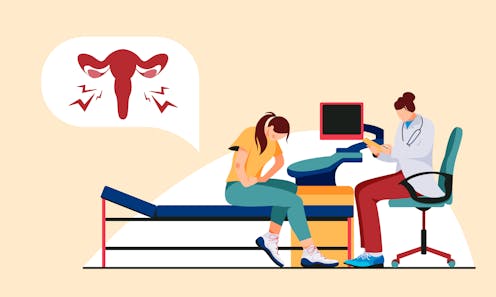
Around 1.5 million women in the UK suffer from endometriosis, a painful and debilitating condition that can affect every aspect of a person’s life. The condition causes tissue similar to the lining of the womb to grow elsewhere – including in the ovaries and fallopian tubes – and can result in severe pelvic or period pain.

Treatments for endometriosis include painkillers, hormone medicines and contraceptives, and surgery (laparoscopy and hysterectomy). But some women find these ineffective and abandon medical treatment or seek alternative therapies. In the UK, women also wait an average of eight years for a diagnosis.

Although a recent small trial of a potential new endometriosis treatment has left researchers feeling hopeful, there is still no cure for this condition – and treatments have progressed little since the condition was first recognised in the 1920s. Here are three reasons endometriosis care has been slow to improve.

1. Endometriosis is not a priority condition

Investment in research on endometriosis, and women’s reproductive health generally, remains low compared with conditions such as diabetes, which are similarly prevalent but affect both men and women.

An All Party Parliamentary Group inquiry into endometriosis care found that there have been no significant treatment breakthroughs because endometriosis research hasn’t been a priority. Worse, it means we still don’t fully understand what causes the disease, making it difficult to develop a cure.

Women with symptoms must first see a GP to receive a referral to specialist care for diagnosis and surgical treatment. But more than half of women have to visit a GP more than ten times before they are referred to a specialist. The UK’s National Institute for Health and Care Excellence urge GPs to better prioritise endometriosis for further investigation to quicken diagnoses.

2. Endometriosis is poorly understood

Few people know what endometriosis is. A recent study I co-authored shows only 8% of teenage girls in the UK know about endometriosis. By comparison, 39% know about Parkinson’s disease, even though Parkinson’s affects about a tenth the number of people as endometriosis.

Our study also revealed 27% of teenage girls were unsure if their period was “normal”. This is important, as many adults with endometriosis didn’t seek medical help when they were younger because they thought their symptoms – like excessive period pain or heavy menstrual bleeding – were typical. It’s argued that if young women know what typical periods look like, they’ll be better able to identify signs of endometriosis and seek care earlier. This may also quicken their diagnosis.

Research also shows stigma around discussing menstruation prevents some women from talking about endometriosis symptoms, even with doctors. Further, stigmatisation of menstruation in society as a whole means researchers and doctors are less interested in pursuing endometriosis as a speciality area, hampering strides in improving care.

Endometriosis is also often mistakenly thought of as solely a menstrual health condition. There are non-menstruation related symptoms that even some health professionals are not adequately familiar with, including painful urination or bowel movements, non-period related pelvic pain, painful intercourse and fatigue. This means clinicians often misdiagnose endometriosis.

Woman sitting in doctor's office speaking with doctor.
Symptoms may mean endometriosis is not be properly diagnosed. smolaw/ Shutterstock

Endometriosis also does not conform neatly to biomedical models of disease, meaning disease extent doesn’t always equate to symptom severity. Some women with endometriosis may have few symptoms, but have extensive “endo” (tissue), whereas others may experience severe pain, but have a small amount of endo tissue. In such cases, some women report they’ve been told by doctors that their symptoms cannot be “that bad”, with their accounts seen as less credible than what is detected by currently available measures. This means endometriosis can be misunderstood by health professionals.

3. Sufferers’ accounts have been dismissed for decades

In 2001, a colleague of mine interviewed women who suffered from endometriosis. She found that health professionals trivialised endometriosis symptoms as “typical period pain”.

Nearly two decades on, our research found women still feel disbelieved and desperate for relief from their symptoms. GPs confirm women come to them “ready for battle”, expecting not to be believed or made to feel that “it’s all in their head”.

Even the previously mentioned endometriosis inquiry revealed nothing new about the dismissal of endometriosis sufferers’ accounts. This was a missed opportunity to examine how to tackle this problem. It also didn’t adequately include the experiences of people of colour and the LGBTQ+ community. Both communities that, based on existing health inequalities evidence, are more likely to have their symptoms poorly treated. In healthcare, gender biases mean women’s pain isn’t investigated as seriously as men’s. A recent Yale study even showed girls’ pain is taken less seriously than boys’.

The struggle to have endometriosis accounts believed is part of a larger, systematic dismissal of women’s experiences of their bodies. Recent discussions about women’s experiences of sexual harrassment, or Meghan Markle’s account of racial bias in the media are both examples of women needing to fight to have their story believed. And when health professionals don’t take women’s accounts seriously, it may mean diagnosis delays and ineffective treatments.

Taking endometriosis sufferers’ accounts seriously is the linchpin to improving care. For the long-overdue improvements to endometriosis treatment, diagnosis and care to happen, we need to believe and prioritise the words of endometriosis sufferers. Greater awareness and understanding of the condition will help.

The Conversation

Annalise Weckesser does not work for, consult, own shares in or receive funding from any company or organization that would benefit from this article, and has disclosed no relevant affiliations beyond their academic appointment.

23 Mar 17:09

People gave up on flu pandemic measures a century ago when they tired of them – and paid a price

by J. Alexander Navarro, Assistant Director of the Center for the History of Medicine, University of Michigan
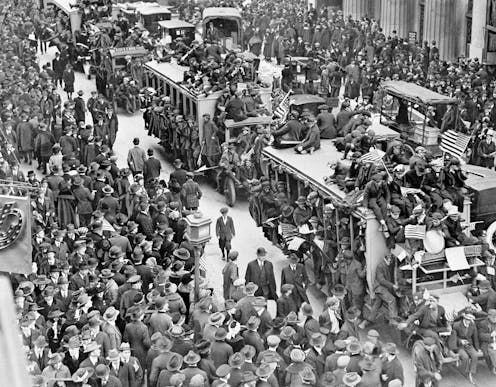
Armistice Day celebrations on Nov. 11, 1918, worried public health experts as people crowded together in cities across the U.S. AP Photo

Picture the United States struggling to deal with a deadly pandemic.

State and local officials enact a slate of social-distancing measures, gathering bans, closure orders and mask mandates in an effort to stem the tide of cases and deaths.

The public responds with widespread compliance mixed with more than a hint of grumbling, pushback and even outright defiance. As the days turn into weeks turn into months, the strictures become harder to tolerate.

Theater and dance hall owners complain about their financial losses.

Clergy bemoan church closures while offices, factories and in some cases even saloons are allowed to remain open.

Officials argue whether children are safer in classrooms or at home.

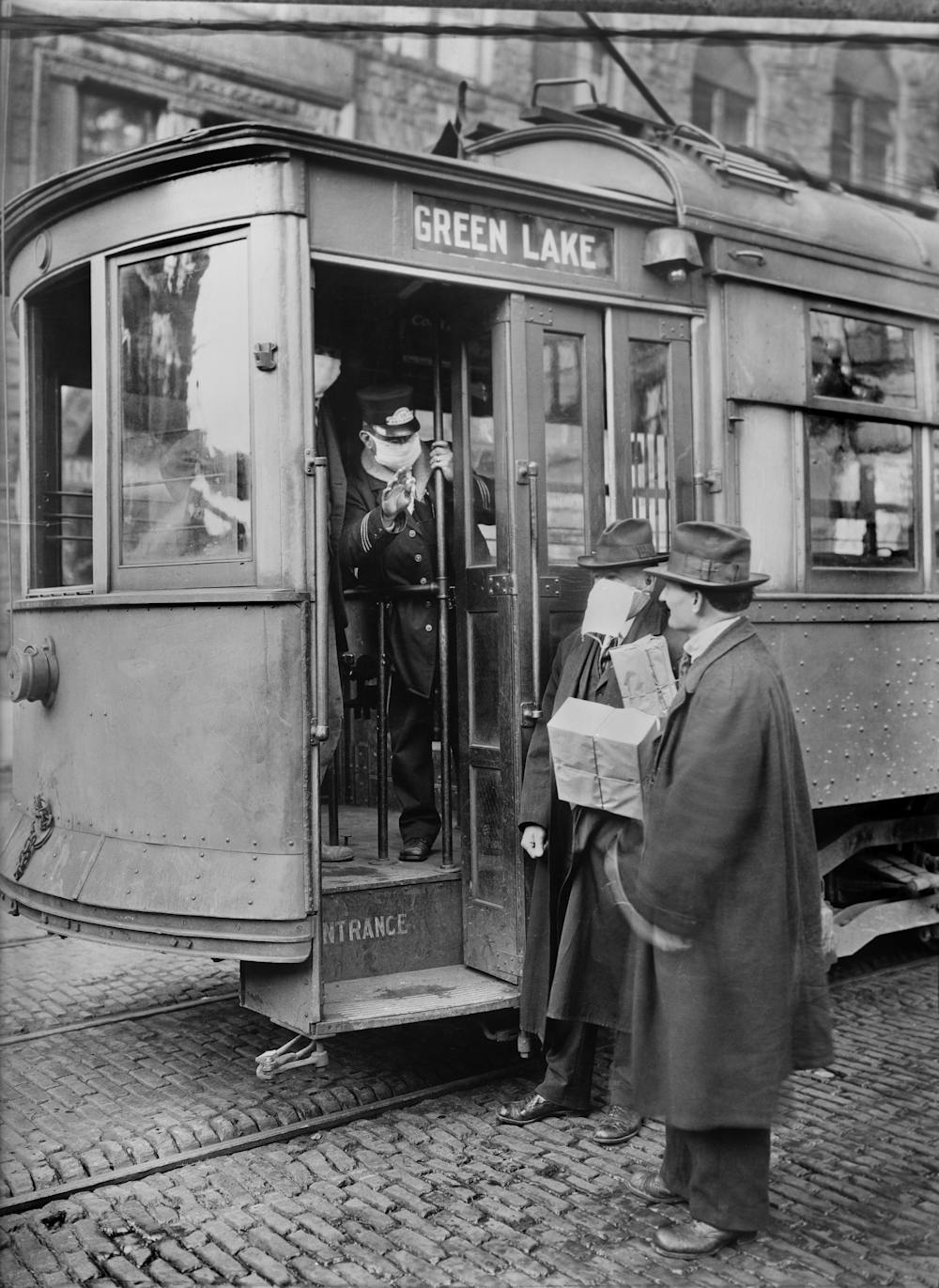
men with a streetcar
No mask, no service on streetcar in 1918. Universal History Archive/Universal Images Group via Getty Images

Many citizens refuse to don face masks while in public, some complaining that they’re uncomfortable and others arguing that the government has no right to infringe on their civil liberties.
As familiar as it all may sound in 2021, these are real descriptions of the U.S. during the deadly 1918 influenza pandemic. In my research as a historian of medicine, I’ve seen again and again the many ways our current pandemic has mirrored the one experienced by our forebears a century ago.

As the COVID-19 pandemic enters its second year, many people want to know when life will go back to how it was before the coronavirus. History, of course, isn’t an exact template for what the future holds. But the way Americans emerged from the earlier pandemic could suggest what post-pandemic life will be like this time around.

Sick and tired, ready for pandemic’s end

Like COVID-19, the 1918 influenza pandemic hit hard and fast, going from a handful of reported cases in a few cities to a nationwide outbreak within a few weeks. Many communities issued several rounds of various closure orders – corresponding to the ebbs and flows of their epidemics – in an attempt to keep the disease in check.

These social-distancing orders worked to reduce cases and deaths. Just as today, however, they often proved difficult to maintain. By the late autumn, just weeks after the social-distancing orders went into effect, the pandemic seemed to be coming to an end as the number of new infections declined.

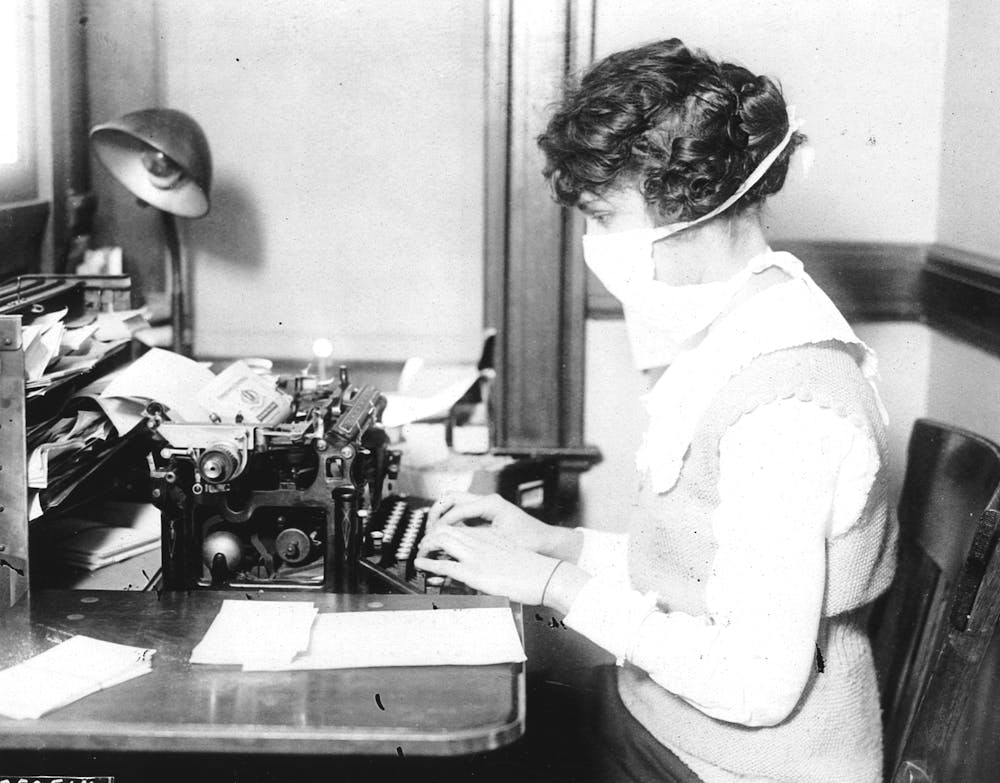
masked typist at work
People were ready to be done with masks as soon as it looked like the flu was receding. PhotoQuest/Archive Photos via Getty Images

People clamored to return to their normal lives. Businesses pressed officials to be allowed to reopen. Believing the pandemic was over, state and local authorities began rescinding public health edicts. The nation turned its efforts to addressing the devastation influenza had wrought.

For the friends, families and co-workers of the hundreds of thousands of Americans who had died, post-pandemic life was filled with sadness and grief. Many of those still recovering from their bouts with the malady required support and care as they recuperated.

At a time when there was no federal or state safety net, charitable organizations sprang into action to provide resources for families who had lost their breadwinners, or to take in the countless children left orphaned by the disease.

For the vast majority of Americans, though, life after the pandemic seemed to be a headlong rush to normalcy. Starved for weeks of their nights on the town, sporting events, religious services, classroom interactions and family gatherings, many were eager to return to their old lives.

Taking their cues from officials who had – somewhat prematurely – declared an end to the pandemic, Americans overwhelmingly hurried to return to their pre-pandemic routines. They packed into movie theaters and dance halls, crowded in stores and shops, and gathered with friends and family.

Officials had warned the nation that cases and deaths likely would continue for months to come. The burden of public health, however, now rested not on policy but rather on individual responsibility.

Predictably, the pandemic wore on, stretching into a third deadly wave that lasted through the spring of 1919, with a fourth wave hitting in the winter of 1920. Some officials blamed the resurgence on careless Americans. Others downplayed the new cases or turned their attention to more routine public health matters, including other diseases, restaurant inspections and sanitation.

Despite the persistence of the pandemic, influenza quickly became old news. Once a regular feature of front pages, reportage rapidly dwindled to small, sporadic clippings buried in the backs of the nation’s newspapers. The nation carried on, inured to the toll the pandemic had taken and the deaths yet to come. People were largely unwilling to return to socially and economically disruptive public health measures.

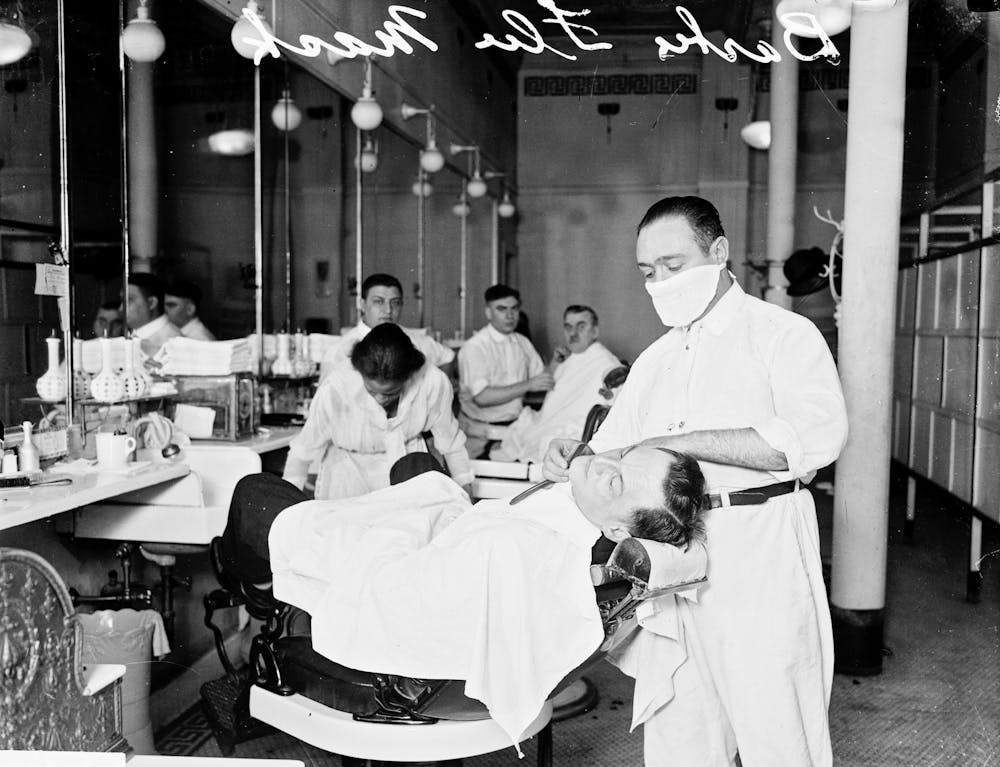
masked barber shaves a customer
No matter the era, aspects of daily life go on even during a pandemic. Chicago History Museum/Archive Photos via Getty Images

It’s hard to hang in there

Our predecessors might be forgiven for not staying the course longer. First, the nation was eager to celebrate the recent end of World War I, an event that perhaps loomed larger in the lives of Americans than even the pandemic.

Second, death from disease was a much larger part of life in the early 20th century, and scourges such as diphtheria, measles, tuberculosis, typhoid, whooping cough, scarlet fever and pneumonia each routinely killed tens of thousands of Americans every year. Moreover, neither the cause nor the epidemiology of influenza was well understood, and many experts remained unconvinced that social distancing measures had any measurable impact.

Finally, there were no effective flu vaccines to rescue the world from the ravages of the disease. In fact, the influenza virus would not be discovered for another 15 years, and a safe and effective vaccine was not available for the general population until 1945. Given the limited information they had and the tools at their disposal, Americans perhaps endured the public health restrictions for as long as they reasonably could.

A century later, and a year into the COVID-19 pandemic, it is understandable that people now are all too eager to return to their old lives. The end of this pandemic inevitably will come, as it has with every previous one humankind has experienced.

If we have anything to learn from the history of the 1918 influenza pandemic, as well as our experience thus far with COVID-19, however, it is that a premature return to pre-pandemic life risks more cases and more deaths.

And today’s Americans have significant advantages over those of a century ago. We have a much better understanding of virology and epidemiology. We know that social distancing and masking work to help save lives. Most critically, we have multiple safe and effective vaccines that are being deployed, with the pace of vaccinations increasingly weekly.

Sticking with all these coronavirus-fighting factors or easing off on them could mean the difference between a new disease surge and a quicker end to the pandemic. COVID-19 is much more transmissible than influenza, and several troubling SARS-CoV-2 variants are already spreading around the globe. The deadly third wave of influenza in 1919 shows what can happen when people prematurely relax their guard.

[Deep knowledge, daily. Sign up for The Conversation’s newsletter.]

The Conversation

J. Alexander Navarro does not work for, consult, own shares in or receive funding from any company or organization that would benefit from this article, and has disclosed no relevant affiliations beyond their academic appointment.

19 Mar 12:28

Imminent Win For The Public Domain: Court Likely To Compel Musée Rodin To Release Its 3D Scans Of Sculptor's Works For Free

by Glyn Moody

Back in 2019, Techdirt wrote about a fascinating case involving a bogus CC license on a 3D scan of a 3000-year-old bust of Nefertiti. The person at the heart of the saga was the artist and open access activist Cosmo Wenman. His web site has some background on what he calls his "freedom of information projects":

For more than a decade, museums around the world have been making high-quality 3D scans of important sculptures and ancient artifacts. Many institutions freely share those 3D scans with the public, allowing us to view, copy, adapt, and experiment with the underlying works in ways that have never before been possible. But some keep their scans out of public view, and I've been trying to help them see the light.

Following his success in liberating the 3D scan of Nefertiti, Wenman is now trying to do the same with 3D scans of the works of the great French sculptor Auguste Rodin. Many of these scans have been created by the Musée Rodin in Paris. There is a long and entertaining article (in the original French and an English translation - pdf) about Wenman's pursuit of the 3D scans, and of the Musée Rodin's refusal to share them. Wenman took an interesting tack, claiming that the museum's 3D scans were documents subject to France's freedom of information (FOIA) laws. It worked:

In late 2018 I sent a formal demand to Musée Rodin for access to all its 3D scans, citing French freedom of information laws. When the museum refused to comply, I brought the matter before the French government.

In June of 2019 the French government agency that oversees FOIA matters announced its first-of-its-kind opinion, in my favor; 3D scans produced by French national museums are in fact administrative documents and are subject to public disclosure. Musée Rodin is required by law to give the public access to its 3D scans of Rodin's works.

Another victory for Wenman, then, but rather a hollow one. Despite the French government agency's ruling, Musée Rodin continues to withhold the 3D scans. Wenman went on to file a suit against the museum in the Administrative Tribunal of Paris. Wenman wants the court to compel the museum to comply with the law, and to impose "significant" financial penalties for any delay. After more than a year with no response, the court directed the museum to present a defense. At the time of writing, Wenman is still waiting. However, given the unequivocal nature of the rulings against the Musée Rodin, he is confident:

Musée Rodin is going to fight, but I expect to win. The outcome will affect every national museum in France, inform policies at institutions around the world, and have interesting effects on the art market.

I’m shooting for a victory for open access, and freedom and innovation in the arts.

The knock-on effects of one person's dogged pursuit of a few computer files could have a major impact on the wider availability of 3D scans of sculptures and ancient artifacts -- a real win for the public domain.

Follow me @glynmoody on Twitter, Diaspora, or Mastodon.

18 Mar 17:17

Making it easier to vote does not threaten election integrity

by Douglas R. Hess, Assistant Professor of Political Science/Policy Studies, Grinnell College
An election worker during mail-in ballot counting at the Pennsylvania Convention Center in Philadelphia on Nov. 6, 2020. Chris McGrath/Getty Images

As state legislators consider hundreds of bills on election policies this spring, false claims of voter fraud are being repeated as justification for proposals to claw back recent advances that have made voting easier for Americans.

In debates about election policy, making it easier to vote and election integrity are frequently presented as opposing goals. Increasing one, it is argued, means decreasing the other.

The 2020 elections saw many states expand voting by mail, the use of ballot drop-off boxes and other procedures. In the end, turnout was high, and both the U.S. Justice Department, under Trump Attorney General William Barr, and the Cybersecurity and Infrastructure Security Agency, along with a host of other election and security officials, stated that the elections were secure.

Changes in election policy can either make it easier or harder to vote by adding or removing hurdles to participation. For example, state bills most commonly introduced by Democrats aim to expand the number of people voting by increasing early voting periods, allowing more people the right to vote absentee or restoring the voting rights of people who completed a felony sentence. Implementing automatic voter registration – that is, registering citizens to vote from existing government data, as many wealthy democracies do – is a particularly common reform proposal.

In contrast to an emphasis on making voting easier, Republican proposals tend to prioritize restrictions on mail-in voting, early voting and the discretion local election officials used in 2020 to increase turnout while protecting voters from the pandemic. Republicans claim these changes are needed to protect election integrity, another central value for fair elections.

Ultimate stress test

Civil rights groups are alarmed as many bills under consideration by states include significant restrictions on voting. The more extreme provisions in some Republican proposals are even leading to conflict within the party and between legislators and the officials who run elections. Proponents of these bills claim that they will increase election integrity and that “restoring confidence in American elections is a national priority.”

But the COVID-19 pandemic created the ultimate stress test for U.S. election integrity last year. And election officials’ success under that test demonstrates that the often-claimed trade-off between election integrity and reasonable measures to make it easier for people to vote is, in fact, largely false.

For instance, early voting and voting by mail are targeted for restrictions in many states, even though both reforms are popular with the public, worked securely in 2020 and have been expanded in many states for years without increases in fraud. Likewise, the collection of absentee ballots – a necessity for some voters – can be implemented securely with appropriate safety measures.

Making voting harder

According to the Brennan Center for Justice at New York University, as of mid-February, there were more than 250 bills in 43 states, many with provisions that would make it harder to vote. In “trifecta” states – the 38 states where a single party controls both legislative chambers as well as the governorship – these bills are making rapid progress.

For instance, in Iowa, a new law typical of this group of bills passed along party lines in March. It reduces the time allowed for early voting and prevents the counting of mail-in ballots that are posted before Election Day but arrive after Election Day. It also limits the number of ballot drop boxes and cuts polling place hours on Election Day. The law also strips county election officials of much of the discretion they used in 2020 that led to wildly successful mail-in balloting efforts.

A joint session of the Iowa Legislature.
In March, Iowa lawmakers passed a bill that reduces the time allowed for early voting and prevents counting of mail-in ballots that are posted before Election Day but arrive after Election Day. AP Photo/Charlie Neibergall

The bipartisan Iowa State Association of County Auditors opposed the bill, claiming it threatened Iowa’s “deserved reputation for fair, efficient and smooth elections.” The day after it was signed by the state’s Republican governor, a local civil rights group filed a lawsuit claiming the changes will hamper voting by minority citizens and those who are elderly, have a disability or have low incomes.

In Georgia, a bill sponsored by Republicans in the state Senate would severely limit who can request an absentee ballot and limit weekend voting. It so disgusted the party’s own lieutenant governor – who is a staunch supporter of absentee voting – and several GOP state senators that they either left or were conspicuously absent from the Senate when the bill was debated.

In addition, an election policy task force established by Republican Secretary of State Brad Raffensperger criticized the legislature for poor consideration of election policy last week, stating that “There is a need for responsible elections policymaking to be deliberate and evidence-based, not rushed.”

Expanding or restricting access

Rhetorically, the integrity of elections can refer to a great many things. However, over the past many years, election integrity has become a code word for hypervigilance over voter fraud. Despite mountains of evidence that fraud by voters is extremely rare, state legislators are pushing restrictive policies such as requiring proof of citizenship when registering to vote, requiring identification when voting and limiting absentee voting.

After election officials successfully overcame the hurdles the pandemic threw at them – such as increasing drop-box locations for safe balloting or making absentee ballots readily available – many state Republican legislators claimed those modifications resulted in or risked election manipulation.

However, some Republicans are bucking the trend in their party and are drawing on the lessons from the successful administration of elections in 2020. In Kentucky, bipartisan support in the Republican-controlled state House passed a bill that would implement three days of early voting and maintain an online system for requesting absentee ballots, although only for some voters, first used during the pandemic.

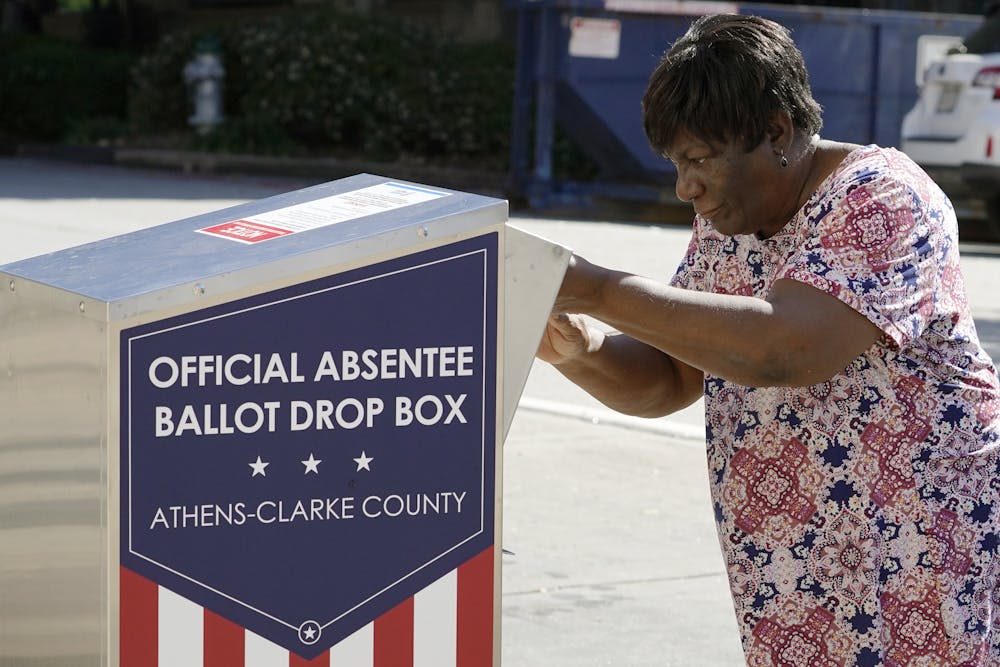
A woman dropping off her ballot in a drop box in Athens, Georgia
A voter drops off a ballot during early voting in Athens, Ga., on Oct. 19, 2020. Photo/John Bazemore

More voting, more integrity

There are situations in which making it easier to vote can increase election integrity.

For instance, roughly 25% of adult citizens will change their address in a 24-month period, and this mobility can affect the accuracy and completeness of voter registration lists. However, overzealously removing names from the registration rolls when officials believe a voter may have moved can mistakenly remove valid registrations and disproportionately harm minority voters.

[Deep knowledge, daily. Sign up for The Conversation’s newsletter.]

Perhaps the best way to ensure the integrity of registration lists is to simply expand voter registration services. During the 2018 election cycle, more than half of all voter registration applications were updates to existing records. Unfortunately, many states still violate the National Voter Registration Act, a federal law mandating that states offer voter registration services through various government agencies.

Ensuring the integrity of registration lists and making registration easier could go hand in hand, but only if states implement this federal law fairly.

Simply put, tightening rules to prevent astronomically rare events of fraud is likely to cause far more harm than good. The 2020 general election demonstrated that policies expanding access to the ballot – including ones targeted for elimination by some bills that states are considering this spring – can be implemented securely, even under highly stressful conditions.

The Conversation

Douglas R. Hess has received research funds to study voter registration access and has volunteered for the Democratic Party.

18 Mar 14:38

7 ways to avoid becoming a misinformation superspreader

by H. Colleen Sinclair, Associate Professor of Social Psychology, Mississippi State University
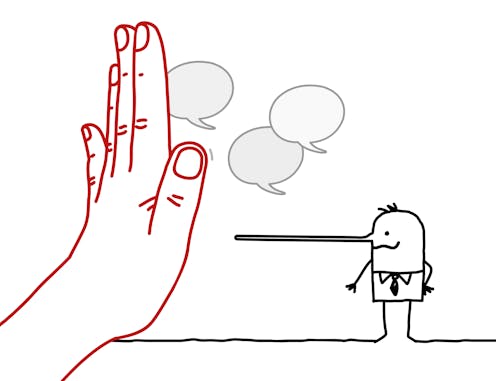
Identify and stop the lies. NLshop/iStock via Getty Images Plus

The problem of misinformation isn’t going away. Internet platforms like Facebook and Twitter have taken some steps to curb its spread and say they are working on doing more. But no method yet introduced has been completely successful at removing all misleading content from social media. The best defense, then, is self-defense.

Misleading or outright false information – broadly called “misinformation” – can come from websites pretending to be news outlets, political propaganda or “pseudo-profound” reports that seem meaningful but are not. Disinformation is a type of misinformation that is deliberately generated to maliciously mislead people. Disinformation is intentionally shared, knowing it is false, but misinformation can be shared by people who don’t know it’s not true, especially because people often share links online without thinking.

Emerging psychology research has revealed some tactics that can help protect our society from misinformation. Here are seven strategies you can use to avoid being misled, and to prevent yourself – and others – from spreading inaccuracies.

1. Educate yourself

The best inoculation against what the World Health Organization is calling the “infodemic” is to understand the tricks that agents of disinformation are using to try to manipulate you.

One strategy is called “prebunking” – a type of debunking that happens before you hear myths and lies. Research has shown that familiarizing yourself with the tricks of the disinformation trade can help you recognize false stories when you encounter them, making you less susceptible to those tricks.

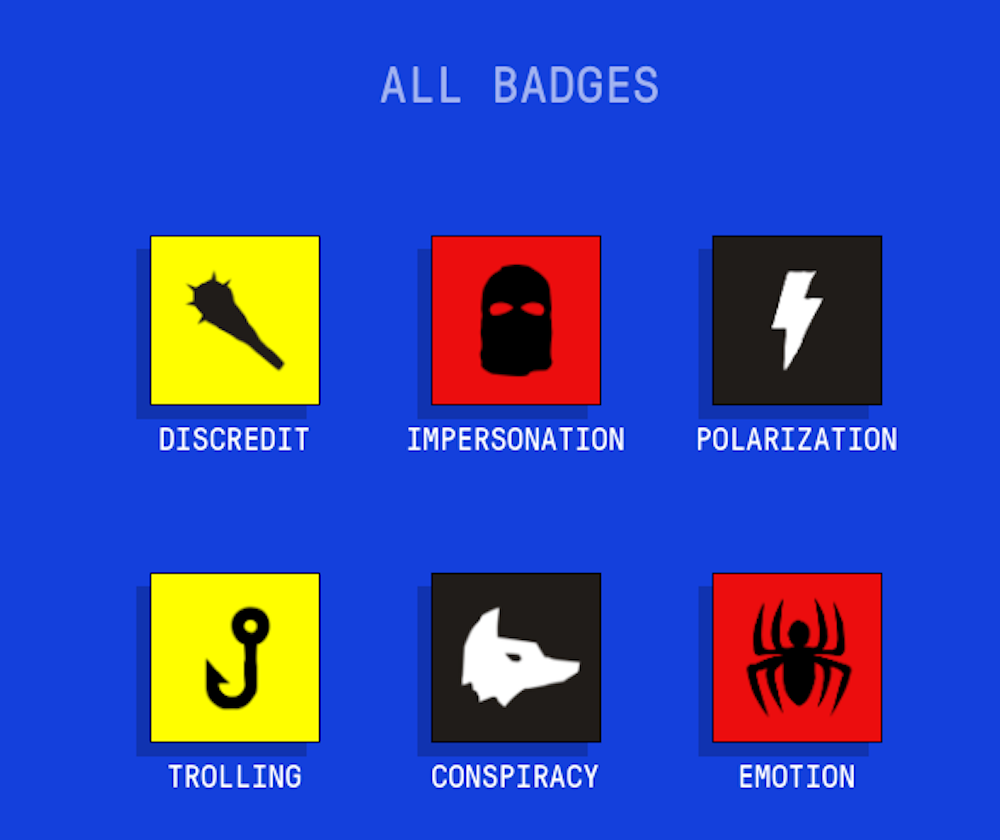
Researchers at the University of Cambridge have developed an online game called “Bad News,” which their studies have shown can improve players’ identification of falsehoods.

In addition to the game, you can also learn more about how internet and social media platforms work, so you better understand the tools available to people seeking to manipulate you. You can also learn more about scientific research and standards of evidence, which can help you be less susceptible to lies and misleading statements about health-related and scientific topics.

Badges identify ways misinformation exploits people's minds
Playing the ‘Bad News’ online game illustrates different ways information warriors can prey on people’s psychological vulnerabilities. Screenshot of Get Bad News

2. Recognize your vulnerabilities

The prebunking approach works for people across the political spectrum, but it turns out that people who underestimate their biases are actually more vulnerable to being misled than people who acknowledge their biases.

Research has found people are more susceptible to misinformation that aligns with their preexisting views. This is called “confirmation bias,” because a person is biased toward believing information that confirms what they already believe.

The lesson is to be particularly critical of information from groups or people with whom you agree or find yourself aligned – whether politically, religiously, or by ethnicity or nationality. Remind yourself to look for other points of view, and other sources with information on the same topic.

It is especially important to be honest with yourself about what your biases are. Many people assume others are biased, but believe they themselves are not – and imagine that others are more likely to share misinformation than they themselves are.

3. Consider the source

Media outlets have a range of biases. The Media Bias Chart describes which outlets are most and least partisan as well as how reliable they are at reporting facts.

You can play an online game called “Fakey” to see how susceptible you are to different ways news is presented online.

When consuming news, make sure you know how trustworthy the source is – or whether it’s not trustworthy at all. Double-check stories from other sources with low biases and high fact ratings to find out who – and what – you can actually trust, rather than just what your gut tells you.

Also, be aware that some disinformation agents make fake sites that look like real news sources – so make sure you’re conscious of which site you are actually visiting. Engaging in this level of thinking about your own thinking has been shown to improve your ability to tell fact from fiction.

A man leans back from his desk
Take a moment to think before you decide to share something online. 10'000 Hours/Digital Vision via Getty Images

4. Take a pause

When most people go online, especially on social media, they’re there for entertainment, connection or even distraction. Accuracy isn’t always high on the priority list. Yet few want to be a liar, and the costs of sharing misinformation can be high – to individuals, their relationships and society as a whole. Before you decide to share something, take a moment to remind yourself of the value you place on truth and accuracy.

Thinking “is what I am sharing true?” can help you stop the spread of misinformation and will encourage you to look beyond the headline and potentially fact-check before sharing.

Even if you don’t think specifically about accuracy, just taking a pause before sharing can give you a chance for your mind to catch up with your emotions. Ask yourself whether you really want to share it, and if so, why. Think about what the potential consequences of sharing it might be.

Research shows that most misinformation is shared quickly and without much thought. The impulse to share without thinking can even be more powerful than partisan sharing tendencies. Take your time. There is no hurry. You are not a breaking-news organization upon whom thousands depend for immediate information.

5. Be aware of your emotions

People often share things because of their gut reactions, rather than the conclusions of critical thinking. In a recent study, researchers found that people who viewed their social media feed while in an emotional mindset were significantly more likely to share misinformation than those who went in with a more rational state of mind.

Anger and anxiety, in particular, make people more vulnerable to falling for misinformation.

6. If you see something, say something

Stand up to misinformation publicly. It may feel uncomfortable to challenge your friends online, especially if you fear conflict. The person to whom you respond with a link to a Snopes post or other fact-checking site may not appreciate being called out.

But evidence shows that explicitly critiquing the specific reasoning in the post and providing counterevidence like a link about how it is fake is an effective technique.

Even short-format refutations – like “this isn’t true” – are more effective than saying nothing. Humor – though not ridicule of the person – can work, too. When actual people correct misinformation online, it can be as effective, if not more so, as when a social media company labels something as questionable.

People trust other humans more than algorithms and bots, especially those in our own social circles. That’s particularly true if you have expertise in the subject or are a close connection with the person who shared it.

An additional benefit is that public debunking notifies other viewers that they may want to look more closely before choosing to share it themselves. So even if you don’t discourage the original poster, you are discouraging others.

A child raises a finger
Even kids know to speak up when they see something wrong. Mireya Acierto/DigitalVision via Getty Images

7. If you see someone else stand up, stand with them

If you see someone else has posted that a story is false, don’t say “well, they beat me to it so I don’t need to.” When more people chime in on a post as being false, it signals that sharing misinformation is frowned upon by the group more generally.

Stand with those who stand up. If you don’t and something gets shared over and over, that reinforces people’s beliefs that it is OK to share misinformation – because everyone else is doing it, and only a few, if any, are objecting.

Allowing misinformation to spread also makes it more likely that even more people will start to believe it – because people come to believe things they hear repeatedly, even if they know at first they’re not true.

There is no perfect solution. Some misinformation is harder to counter than others, and some countering tactics are more effective at different times or for different people. But you can go a long way toward protecting yourself and those in your social networks from confusion, deception and falsehood.

[Over 100,000 readers rely on The Conversation’s newsletter to understand the world. Sign up today.]

The Conversation

H. Colleen Sinclair receives funding from the Department of Defense.

18 Mar 12:13

College of Public Health officials dispel vaccination myths during virtual event presented in Spanish

by Angela Cordoba Perez, STAFF WRITER
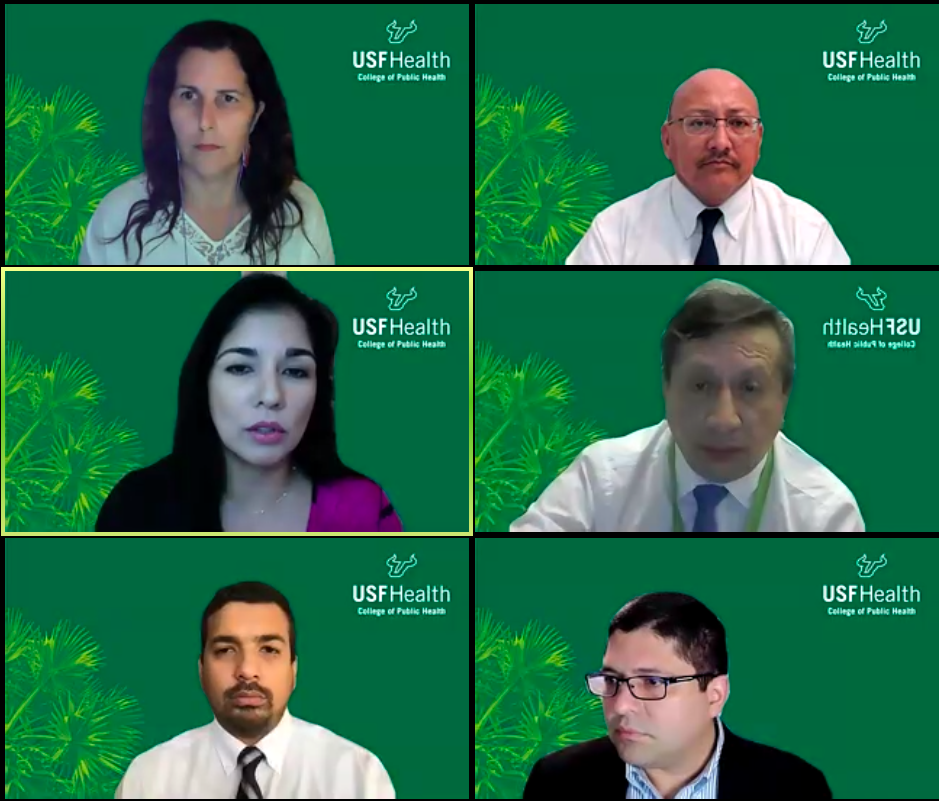
In a Zoom and Facebook session held entirely in Spanish, faculty members from USF’s College of Public Health encouraged the audience to get the COVID-19 vaccine and dispelled common myths surrounding vaccinations. SPECIAL TO THE ORACLE/ZOOM

Spanish-speaking faculty members from USF’s College of Public Health busted myths and broke down information related to COVID-19 vaccines in a virtual panel directed at a Hispanic audience.

The College of Public Health’s 90-minute session Tuesday evening kicked off a series of public virtual events focused on topics such as clearing up misinformation on vaccines, the economic impact of the pandemic and how the pandemic has affected domestic violence incidents.

Dates for the other sessions will be announced in the coming days, according to Arlene Calvo, associate professor in the College of Public Health.

The first session titled “Hablemos de la Vacuna del COVID-19” or “Let’s Talk About the COVID-19 Vaccine” focused on facts about available vaccines and was streamed on Zoom and the college’s Facebook page. It was held entirely in Spanish. The main message of this session was, “Get vaccinated.”

Alongside Calvo, doctors Ricardo Izurieta, Dinorah Martínez-Tyson, Abraham Salinas, Miguel Reina and Ismael Hoare participated in the panel discussion, during which the types of vaccines, their importance to get COVID-19 immunity and the measures vaccinated people should have were covered.

Attendees had to answer poll questions such as “Would you get vaccinated if you had the chance to?” or “Does the vaccine have secondary effects?” that would tell the panelists how much the audience knew about a subject. Members of the public could also ask their own questions in Zoom’s Q&A feature.

The Hispanic population has been one of the communities most affected by the pandemic and the deadly consequences of the virus. Compared to white non-Hispanic people, Latino or Hispanic populations have 1.3 times more cases of coronavirus, 3.1 times more hospitalization cases and 2.3 times the death rate, according to data from the Centers for Disease Control and Prevention. Calvo said this is one of the reasons they wanted to share accurate information with the community.

“What has caught our attention in all of this is the amount of misinformation that we see on social media,” Calvo said.

“It has been identified that social media sites in Spanish are monitored much less than those in English. So the Spanish-speaking population, in some way, has been targeted to receive misinformation about a lot of topics that do not have a scientific basis.”

One topic related to misinformation discussed among the panelists was the use of home remedies such as teas, which are commonly used in Latin cultures to treat illnesses. Salinas said even if he respects the use of those because they are part of many people’s beliefs, homemade remedies cannot replace the vaccine.

“It is important to say that you can continue drinking your tea or whatever remedy you are using that is not harmful, but you still need the vaccine,” Salinas said. “Because none of those [homemade remedies] have prevented the illness or have actually decreased its mortality.”

One of the questions the doctors heard in their communities they were eager to address was about the differences and effectiveness of each type of vaccine.

At the beginning of the panel, Izurieta spoke briefly about how the vaccines worked in a person’s immune system. When responding to which one was the best, the answer was unanimous — the first one a person can get.

Reina said all of the vaccines that have been authorized for human use are effective against COVID-19 and prevent hospitalizations and mortality as a result of the virus. The ones discussed in the panel included the Pfizer-BioNTech, Moderna, Johnson and Johnson, and AstraZeneca vaccines.

“The important thing is that we have access to the vaccine so once a person does have it, that is the vaccine that will be most effective for them,” Reina said. “Because they have access to the vaccine at that moment and they should not waste the chance of receiving the protection that the vaccine gives.”

To reinforce their message of how important vaccinations are, Izurieta recounted some of his personal experiences in which he’s seen firsthand the effects of other vaccines and called them a “miracle” in the history of public health.

“In my childhood, when I attended high school and even college, I always had a classmate … with [post-polio symptoms] that had to walk with crutches,” Izurieta said. “In primary school we changed the soccer rules … and we put my friend who had crutches as the goalkeeper and he defended the goal with them.

“Now when I go into a class to teach [at USF] or in other countries, I think [about how great vaccines are] because now I don’t see any students with [post-polio symptoms].”

After getting vaccinated, the doctors emphasized the importance of continuing with preventive measures such as wearing masks and maintaining physical distance.

Calvo said it was common for people to believe they don’t have to protect themselves against the virus anymore once they get their doses. Salinas called this the “Superman effect” and explained that with the virus changing so much, people should continue being careful.

“I have heard the comment ‘I am going to get the vaccine and I am going to go to so many places and I do not need the mask anymore’ but the … [COVID-19 variants are evolving],” Salinas said.

“We know that the current vaccines protect against the current variants, but the situation has not resolved yet … We shouldn’t let our guards down. That would be a mistake.”

The doctors also explained that secondary effects such as arm pain, fever or chills were normal after receiving the doses. At the end of the panel, Martínez-Tyson shared resources the public could use to know where they can get vaccinated or where they can ask for appointments. She asked the community to follow the guidelines and keep their hopes up.

“We see the light at the end of the tunnel,” Martinez-Tyson said. “We are almost there, but not yet, so it is important to stay patient. The vaccines will be more frequently available as more are distributed and there will be more in the [vaccination sites] so be patient, don’t lose hope, we are almost there.”

16 Mar 12:54

Thank You for Speaking Against a Terrible Copyright Proposal

by Katharine Trendacosta

Last week was the deadline for comments on the draft of the so-called “Digital Copyright Act,” a proposal which would fundamentally change how creativity functions online. We asked for creators to add their voices to the many groups opposing this draft, and you did it. Ultimately, over 900 of you signed a letter expressing your concern.

The “Digital Copyright Act” was the result of a year of hearings in the U.S. Senate’s Subcommittee on Intellectual Property. Many of the hearings dismissed or marginalized the voices of civil society, Internet users, and Internet creators. Often, it was assumed that the majority of copyrighted work worth protecting is the content made by major media conglomerates or controlled by traditional gatekeepers. We know better.

We know there is a whole new generation of creators whose work is shared online. Some of that work makes fair use of other copyrighted material. Some work is entirely original or based on a work in the public domain. All of it can run afoul of ranking and promotion algorithms, terms of service, and takedowns. The “Digital Copyright Act” would put all of that creativity at risk, entrenching the power of major studios, big tech companies, and major labels.

Along with your signatures and letter, EFF submitted our own comments on the DCA. We urged Congress to set aside the proposal entirely, as many of the policies it contained would cause deep and lasting damage to online speech, creativity, and innovation. We do not only want this particular draft to be put in the bin where it belongs, we want to be clear that even watered-down versions of the policies it contains would further tip the balance away from individuals or small creators and towards large, well-resourced corporations.

One of our concerns remains a call from many a large corporate rightsholder for Internet services to take down more speech, prevent more from being uploaded, and monitor everything on their services for copyrighted material. The “Digital Copyright Act” proposal does just that, in many places and in many ways. Any one of those provisions would result in a requirement for services to use filters or copyright bots.

Filters alone do not work. They simply cannot do the necessary contextual analysis to determine if something is copyright infringement or not. But many of them are used this way, resulting in legal speech being blocked or demonetized. As bad as the current filter use is, it would be much worse if it became legally mandated. Imagine YouTube’s Content ID being the best case scenario for uploading video to the Internet.

So we want to thank you for speaking up and letting Congress know this issue is not simply academic. And letting them know this is not simply Big Tech versus Big Content. For our part, EFF will continue keeping an eye out and helping you be heard.

16 Mar 12:53

Amazon's Refusal To Let Libraries Lend Ebooks Shows Why Controlled Digital Lending Is So Important

by Mike Masnick

The Washington Post tech columnist Geoffrey Fowler recently had a very interesting article about how Amazon won't allow the ebooks it publishes to be lent out from libraries. As someone who regularly borrows ebooks from my local libraries, I find this disappointing -- especially since, as Fowler notes, Amazon really is the company that made ebooks popular. But, when it comes to libraries, Amazon won't let libraries lend those ebooks out:

When authors sign up with a publisher, it decides how to distribute their work. With other big publishers, selling e-books and audiobooks to libraries is part of the mix — that’s why you’re able to digitally check out bestsellers like Barack Obama’s “A Promised Land.” Amazon is the only big publisher that flat-out blocks library digital collections. Search your local library’s website, and you won’t find recent e-books by Amazon authors Kaling, Dean Koontz or Dr. Ruth Westheimer. Nor will you find downloadable audiobooks for Trevor Noah’s “Born a Crime,” Andy Weir’s “The Martian” and Michael Pollan’s “Caffeine.”

I've seen a lot of people responding to this article with anger towards Amazon, which is understandable. I do hope Amazon changes this policy. But there's a much bigger culprit here: our broken copyright laws. In the physical world, this kind of thing isn't a problem. If a library wants to lend out a book, it doesn't need the publisher's permission. It can just buy a copy and start lending it out. Fowler's correct that a publisher does get to decide how it wants to distribute a work, but with physical books, there's the important first sale doctrine, which lets anyone who buys a book go on and resell it. And that meant that in the past, libraries have never needed "permission" to lend out a book. They just needed to buy it.

Unfortunately, courts seem to take a dim view of the first sale doctrine when it comes to digital goods.

However, a few years back, some very smart librarians and copyright professors and experts got together and created a system called Controlled Digital Lending (CDL), which aimed to (1) rectify this massive gap in public access to knowledge while (2) remaining on the correct side of copyright law. In its most basic form, CDL, involves libraries buying physical copies of books (as they did in the past), scanning those books (which has already been ruled to be fair use for libraries) and then lending out that digital copy only if they had the matching physical copy on the shelf. As the libraries and copyright experts correctly note, it's difficult to argue that this is any different than lending out the copy of the book that they bought.

But, of course, publishers have always hated libraries' ability to lend out books in the first place -- and have been itching to use the power of copyright to block that. Already, they charge libraries insanely high prices for ebooks to lend, and put ridiculous limits on how those books can be lent.

So, no surprise, last year, in the middle of a once-in-a-century pandemic, the publishers sued the Internet Archive, arguing that its Open Library project, which runs based on the CDL principles, violated copyright law. And, incredibly, a ton of people have cheered on this nonsense lawsuit -- even those who hate Amazon.

Yet, if you really want to stop Amazon from being able to block libraries from lending out ebooks, there's a simple answer: fix copyright law. Make it clear that Controlled Digital Lending is legal. Or, go even further and say that the First Sale Doctrine also applies to digital goods, as it absolutely should.

15 Mar 20:18

People turn to Bob Ross painting during the pandemic

by Gareth Branwyn

This Sunday Morning segment from last month looks at how Bob Ross just keeps getting more well known, especially during social isolation. People are turning to him not only to learn how to paint, Bob Ross style, but also for the quirkiness, calmness, and positivity that he brings to these troubled times. — Read the rest

15 Mar 14:52

Tampa campus library forced to cut thousands of journal subscriptions amid budget cuts

by Audra Nikolajski, ASSISTANT NEWS EDITOR

After facing a 15.3% reduction to its overall budget, the Tampa campus library is changing its processes to make up for the nonrenewal of thousands of academic journals. ORACLE PHOTO/LEDA ALVIM

Faced with a 15.3% budget cut, the Tampa campus library faculty and staff are increasing their operations so access to thousands of academic journals is not permanently lost.

Thousands of journal subscriptions will not be renewed for the 2021-22 school year to meet the requirement of cutting over $1 million in library funds, slowing the immediacy students and faculty can access them. The cuts were made as part of a universitywide budget cut of 8.5% due to the financial constraints posed by the pandemic across the state.

The library has both recurring and non-recurring expenditures, Todd Chavez, dean of the USF Libraries, said. Non-recurring expenditures include books and other forms of media permanently owned by the library once they are purchased. However, the 15.3% reduction has to come out of the library’s recurring budget, which includes staff and faculty salaries and subscription-based media such as academic journals.

“We’re doing everything we can to avoid laying off personnel and losing faculty,” Chavez said. “We have sacrificed some vacant positions that we had planned to hire into … we gave up a little bit of our operational expenses, and then the rest of the library cuts, 79%, are going to be against the collections budget.”

The collections are composed of approximately 82,000 academic journals covering all disciplines, according to Chavez. The budget for the collections is currently $5.4 million and a little over $1 million of that needs to be cut.

“We’ve got a very huge process underway because in order to take a cut like this, you literally have to look at everything,” he said. “You can’t say ‘I’m only going to look at this’ or ‘I’m only going to look at that’ in order to get what is over a million dollars out of a budget that’s $5.4 million. You have to look at everything.”

When deciding which journals will not be renewed, the library faculty and staff began evaluating each resource on eight data points in November and have continued these efforts through March. Some of the evaluative data points include the cost of the journal, how often the journal is used, the cost per usage and personal access, which is how much of the journal’s content the library owns.

“If there are 30 volume issues, do we own all 30? Does it have only four issues and we only own two? That’s how we do an ownership assessment,” Chavez said.

The library faculty and staff also look at the journals’ rankings in Scopus and SciVal, which are online databases that host journals and provide details and abstracts about each one. They also check to see how many faculty members at USF have cited the journal or how many are authors in the journal.

The last variable checked to decide upon renewal is the amount of open accessibility the journal has, according to Chavez.

“So a lot of journals, particularly science journals, have started doing this. I would call it a service to the community of providing big portions of their title list,” he said. “For example, one of them I looked at the other day was a journal in geology, that journal has been published since the early 1900s. We don’t own all that because we weren’t here at that time. [From] 1995 or 1997 to 2020, we own that, but they actually provide free access to all of the journal one year back. So they won’t provide you with 2021 content [if you don’t subscribe], but they will provide you with 2020 back.

“So that’s a very high open accessibility rating, whereas other journals have zero open access, or we might own very little of it, so that would lower its value.”

For most of the journals that the library faculty and staff do not renew, Chavez said the previous issues will still be retained.

“One of the things we stress is that not renewing something does not mean we no longer have access,” Chavez said. “Maybe the journal started publishing in 2000 and we dropped our subscription in 2020, we still have everything from 2000 to 2020, we don’t lose that. There are some rare cases where we actually lose access, but in the overwhelming majority, whatever we pay for we keep.

“We just lose access to current and future content, but if budgets improve in a year, we can resubscribe, and we can buy the latest issues.”

Chavez said even if the library decides not to renew a journal subscription, students, faculty and staff will still be able to get their hands on it in some way because the library is working to expand its operations in other departments.

The library will be expanding the interlibrary loan service, a free service the library uses that borrows materials from other libraries, and the document delivery service, which is when a faculty member or student requests a document and the library buys it and delivers it to them.

“We’ve reallocated personnel to take care of [document delivery and interlibrary loan services], so we’re prepared for the reduction in the collections. It’s not what we want to do, and it’s not the kind of thing that an academic library would normally see as a positive direction to move in, but we have a plan to meet the needs,” Chavez said.

While students, faculty and staff will still be able to access all materials through the interlibrary loan service and the document delivery service, the major difference is in the immediacy with which that will take place, according to Chavez.

“We’ve done studies by looking at papers that have been written by our faculty and peer reviewed journals. We’ve looked at their reference lists and their citation lists and we estimate that between 70% and 75% of all the materials that they seamlessly use today, they will continue to be able to access after this reduction,” he said.

“So that means that somewhere between 25% and 30% may not be accessible immediately to them but it’s all available to them through interlibrary loan or document delivery, it just introduces a delay in the process.”

In an effort to maximize the efforts of the interlibrary loan and document delivery services as well as minimize the impacts of the collections cuts, the Tampa campus library’s Resource Sharing Department will extend its hours.

It is currently open weekdays 8 a.m. to 5 p.m., and beginning in fall the department will be open 8 a.m. to 9 p.m. Monday through Saturday, with the possibility of extending all the way to 11 p.m. if necessary.

Although the collections cuts are going to have some impact on university, Chavez said the library faculty and staff are aiming to lessen this impact as much as possible.

“Faculty are dependent on our collections to get their job done and students are dependent on our collections to get their degree completed so we’re going to continue to deliver those collections, it’s just that we might do it in a different way,” Chavez said.

12 Mar 21:53

Texas distorts its past – and Sam Houston's legacy – to defend Confederate monuments

by Jeffrey L. Littlejohn, Professor of History, Sam Houston State University
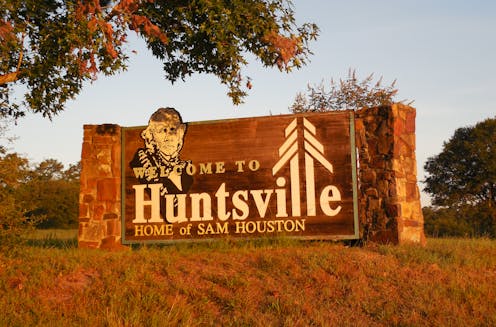
Huntsville reveres hometown hero Sam Houston. And he did not revere the Confederacy. Jimmy Henderson/flickr, CC BY-SA

At least 160 Confederate symbols were removed from public spaces across the United States in 2020, according to the the Southern Poverty Law Center. Even Virginia, the former capital of the Confederacy, has removed a statue of Gen. Robert E. Lee from the Richmond Statehouse and is trying to take down others seen as offensive by an increasing numbers of Americans, including those whose ancestors were enslaved.

Texas has largely declined to participate in this nationwide reckoning with the symbols of the Old South. Instead, local officials are doubling down on their Confederate monuments.

Republican State Sen. Brandon Creighton, who represents the city of Conroe, near Houston, says he will file a bill this legislative session to protect historical monuments from efforts to remove them.

Meanwhile, officials in rural Walker County, Texas, voted unanimously in December to keep a marker to “Confederate Patriots” on the county courthouse lawn in Huntsville. The vote followed an eight-month citizen campaign calling for the removal of the monument, which was erected by the United Daughters of the Confederacy in 1956.

Walker County Commissioners explained their Dec. 21 decision only by saying that the monument “does not belong to us,” suggesting it is a piece of local history.

Yet Walker County is hundreds of miles from any major Civil War battlefield. And the county’s most famous resident, Sam Houston, a Texas hero, ardently opposed the Confederacy.

So rejecting the Confederacy is Texas history, too.

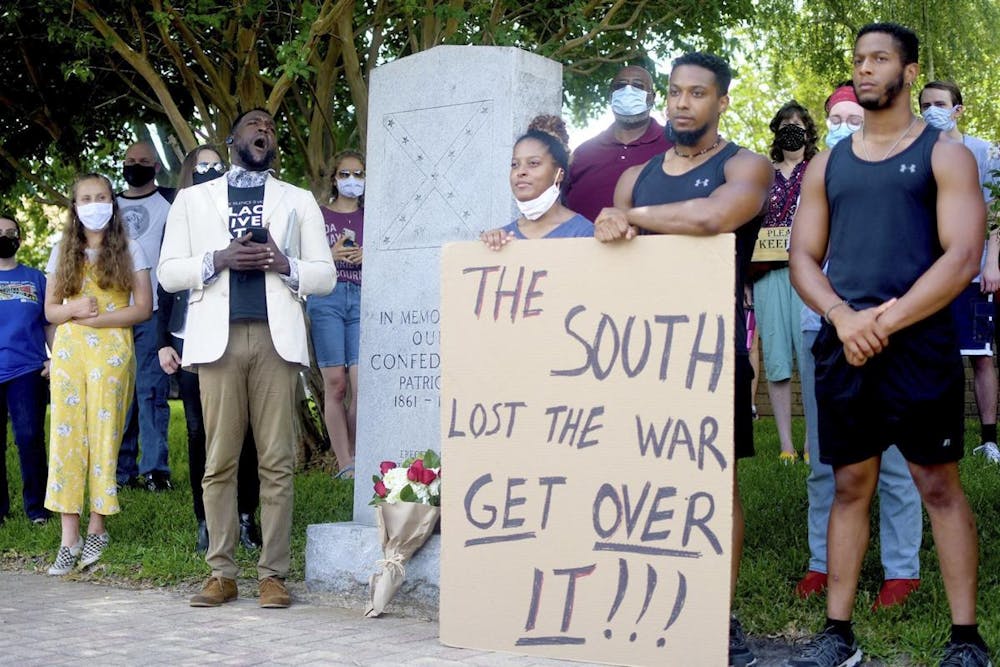
Crowd of young people stands by Walker County's Confederate monument with signs saying, 'The South lost the war, get over it!'
A protest in Huntsville, Texas, calling to remove a Confederate marker at the Walker County Courthouse. Courtesy of Joseph Brown, The Huntsville Item, CC BY

A proud Southerner who opposed secession

Sam Houston was the most important political figure in Texas before the Civil War. The modern city of Houston is named for him, as is the university in Huntsville, Texas, where we teach American history.

Born in Virginia, Houston moved to the Mexican state of Texas in 1832. A veteran of the War of 1812, Houston was soon appointed commander of the Texas Army and helped secure Texas’ independence at the 1836 Battle of San Jacinto. He went on to serve two nonconsecutive terms as president of the independent Republic of Texas.

Later, Houston was the state’s Democratic governor when secession became a serious subject of discussion in the South.

In 1860, following Abraham Lincoln’s election, white leaders in Huntsville wrote to Houston seeking his advice. Houston counseled them in a letter written on Nov. 14, 1860, to remain vigilant in their defense of American constitutional values “when the country is agitated and revolution threatened.” He urged the group not to get “carried away by the impulse of the moment.”

Faded, sepia-toned Texas flag
Flag of the independent Republic of Texas. troyek/E+ via Getty Images

There were natural bonds between Houston and Southern secessionists: All were white male slave owners who openly endorsed white supremacy. But Houston saw slavery as a necessary evil, not a patriotic cause.

It is necessity that produces slavery,” he said in 1855, and “it is convenience, it is profit, that creates slavery.”

As a senator in 1854, he had voted against the extension of slavery into the Kansas and Nebraska territories and was condemned throughout the South for his principled stand.

Sam Houston was no abolitionist, however. He owned more than a dozen enslaved people and profited from enslaved labor throughout his life. Unlike much of America’s Southern gentry, though, Houston was not willing to shed blood to expand slavery.

When Texas legislators met in 1861 to consider seceding from the United States, Houston made clear his opposition to the move. But Texas secessionists were a stronger force. When Houston refused to take an oath to the Confederacy on March 16, 1861, he was removed from the governor’s office.

Booed by crowds and driven from state politics, Houston settled into a self-imposed exile in Huntsville. He watched in dismay as Texas joined the Confederacy. He died two years later, a lonesome and broken man.

A contorted view of Texas history

As scholars who focus on race and class in Texas, we have studied the state’s history and have been led to speak out against Huntsville’s Confederate monument.

As we wrote last year in a statement published in the local newspaper, the Huntsville Item, the courthouse marker obscures and misrepresents local history. It is an insult to Houston’s refusal to pledge allegiance to the Confederacy and ignores the fact that enslaved African Americans made up most of Walker County’s population during the Civil War.

It is, in so many words, an ahistorical monument.

Yet Huntsville – population 40,000 – glorifies Houston as a military and political hero. His former home is surrounded by a modern museum dedicated to him. And Interstate 45, which runs from Houston to Dallas, features a 67-foot statue known as “Big Sam” advertising Huntsville to travelers.

Old white wooden building with simple architecture
Woodland, Sam Houston’s historic home in Huntsville, Texas. Pma03/Wikimedia Commons, CC BY-SA

How can modern Huntsvillians – like local officials across Texas – both revere this anti-Confederate leader and pledge their support for Confederate symbols?

The answer lies in the “Lost Cause,” a tenacious Southern myth that portrays slavery as benign and the Confederacy as noble. This is the preferred version of Texas history promoted by the state’s conservative leadership, the version that appears in Texas schools’ textbooks.

A giant white marble statue of a man with a cane, highway in the foreground
‘Big Sam,’ off I-45 outside Huntsville.

By the 1950s, when the Huntsville chapter of the United Daughters of the Confederacy erected the courthouse monument, the group had been pushing the Lost Cause narrative for over half a century.

Mae Wynne McFarland, a native Huntsvillian and 1941 president of the Texas Daughters of the Confederacy, characterized the “War Between the States” as a conflict “fought for exactly the same principles which inspired the American Revolution, the War of 1812 and the Texas Revolution.”

Houston fought in two of those three battles. His repeated public statements show, however, that he did not believe the Confederacy’s effort in the Civil War aimed at the “same principles” as the War of 1812 or the Texas Revolution.

Conservative white Texans have long tried to knit Sam Houston into their Lost Cause narrative. But biographers and students of history have always been there to correct them.

[Deep knowledge, daily. Sign up for The Conversation’s newsletter.]

The Conversation

Jeffrey L. Littlejohn has publicly advocated for the removal of Walker County's Confederate monument.

Aaron David Hyams has publicly advocated for the removal of Walker County's Confederate monument.

Kristin Henze has publicly advocated for the removal of Walker County's Confederate monument.

Zachary Montz has publicly advocated for the removal of Walker County's Confederate monument.

12 Mar 21:46

Rihanna's Ganesh pendant – Hinduism is a religion, not a pretty aesthetic

by Rina Arya, Professor of Visual Culture and Theory, University of Huddersfield
Ganesh. Nehaniks/Shutterstock

In a recent social media post showing off her Savage X Fenty brand, the singer Rihanna posed topless while sporting a diamond-studded pendant of Ganesh, the elephant-headed god. Hindus expressed their anger on Twitter, accusing her of cultural appropriation and of using their religion as an aesthetic.

Ganesh is the remover of obstacles and is called upon by Hindus during marriage ceremonies to bestow good fortune. Hindus consider him a divine figure and that fact should be respected and understood. The necklace, however, was treated as a mere accessory, lacking any significance or meaning.

Hindu deities possess a rich and varied iconography and mythology. Each deity has a special meaning and purpose for use in worship. When the imagery is used by non-Hindus, this significance is often lost and it may well be felt that the likeness of gods are used in disrespectful ways that involve thoughtless appropriation rather than cultural appreciation.

More than pretty

Cultural appropriation refers to the taking for one’s own the objects and practices of a minority (ethnic) or indigenous culture by a majority culture. This can lead to cultures and groups of people becoming further marginalised or exploited in different ways, often economically.

A Hindu symbol that has sparked debates about cultural appropriation is the bindi. A decorative mark traditionally worn by married women on the centre of the forehead, it is believed to balance energy and ward off evil. The bindi is considered to be ‘the third eye’, a point of mystical wisdom and a gateway to spiritual insight.

Western celebrities, such as Gwen Stefani and Selena Gomez, have worn bindis in music performances. This has aided the perception that a bindi is a fun and frivolous accessory, as meaningless as choosing to wear glittery eye shadow. As such, it has become a popular adornment of music-festival goers.

Identity politics (the politics of how groups define themselves) are at issue in appropriation. Immigrants have historically been discriminated against for wearing cultural and religious markers. It can be incredibly offensive when such markers become a meaningless fashionable item and become socially acceptable, even glamorous, when worn by those outside of the minority culture.

Unclean body parts

As well as appearing to appropriate a culture she doesn’t belong to, how Rihanna chose to wear the symbol of Ganesh has added to the outrage of Hindus.

Within Hindu ritual tradition, the body needs to be ritually cleansed and covered before it is deemed suitable to be before deities for worship and prayer. Although deities cannot be polluted, consumerist commodities have caused great offence when they don’t uphold the sacredness of the representation.

For example, in 2005, the designer Minelli brought out a shoe that was adorned with the image of Rama, the seventh avatar of Vishnu, one of the three main deities of Hinduism. In Hinduism, feet are considered lowly and unclean because of what they come into contact with. For this reason, placing a representation of a deity on shoes is disrespectful. When the shoes were withdrawn from sale, many Hindus wanted to salvage the sacred image and unpicked the motif so they could dispose of it ritualistically by immersing it in the sacred waters of the Ganges.

A sexualised body is also deemed “unclean”, which is why Rihanna wearing a necklace of Ganesh while topless and showing off her satin underwear collection was disrespectful to Hindus. To be in the presence of a god, Hindus must be respectfully and modestly dressed.

Diversity should be celebrated and there are ways to appreciate a culture without appropriating it. Engaging with other cultures should be a thoughtful and informed practice, one which acknowledges and respects the provenance of its symbols, objects and practices.

The Conversation

Rina Arya does not work for, consult, own shares in or receive funding from any company or organisation that would benefit from this article, and has disclosed no relevant affiliations beyond their academic appointment.

12 Mar 21:33

The first Black American military pilot led a stunning career in wartime France

by Futility Closet

Eugene Bullard ran away from home in 1907 to seek his fortune in a more racially accepting Europe. There he led a life of staggering accomplishment, becoming by turns a prizefighter, a combat pilot, a nightclub impresario, and a spy. In this week's episode of the Futility Closet podcast we'll tell Bullard's impressive story, which won him resounding praise in his adopted France. — Read the rest

12 Mar 21:30

The most haunted images from the Boston Public Library's recently digitized photo archives

by Thom Dunn

In January 2021, the Boston Public Library uploaded some 8,000 public domain photographs to Wikimedia Commons. As The Boston Globe explains:

There's plenty of history to be found in the stash — the BPL highlights photos on the early history of the Red Sox and 19th century daguerreotypes of local abolitionists, for example — but which photos will make you want to run and hide?

Read the rest
12 Mar 21:28

Women used to dominate the beer industry, so they were burned at the stake

by Miss Cellania

When water was often unsafe to drink, people turned to wine. But beer takes a lot less time to make, and is somewhat nutritious besides. Brewing beer is akin to cooking, so making beer became one of the household chores that women performed. — Read the rest

11 Mar 14:33

OPINION: Federal voting law expansion will result in a stronger democracy

by Teegan Oshins, STAFF WRITER
The For the People Act should be passed by Congress to dismantle an inherently classist voting system. SPECIAL TO THE ORACLE/yoursun.com

The U.S. House of Representatives passed a bill March 3 that could potentially expand voting rights for American citizens who often experience disparities in information access and transportation to the polls. 

The For the People Act would provide citizens with better access to voting through decreasing the “influence of big money in politics” and strengthening “ethical rules of public servants,” according to the bill.

New rules are needed to reform the corrupt voting system that is currently in place. Impoverished citizens have disproportionate access to information about candidates, voting dates and methods due to the prioritization of citizens who are known to vote one way or the other.

Common voting barriers are lack of transportation to the polls, time in the day to vote and poor access to education on candidates, often experienced by impoverished citizens. 

The For the People Act will also allow for automatic voter registration when citizens obtain a license from their state’s department of motor vehicles, which makes the process of participating in American elections easier and less time-consuming. 

With this bill, each state will no longer require citizens to justify their need for a mail-in ballot, making access to ballots easier. This opens up voting to lower income citizens who do not have the time nor the financial means to go to the polls. 

Income is positively correlated with the ability to vote. During the 2016 presidential election, those with an income of $150,000 and higher were about 30% more likely to vote than those who had an average income of $5,000, according to Econofact’s 2019 analysis of 2016 exit poll data. 

This is due to citizens’ means of getting to the polls, such as by car or public transportation, and the time they have allotted to wait in the long voting lines. In the 2020 presidential election, some waited as long as eight hours, like voters had to do at a precinct in Georgia, according to The Atlanta Journal-Constitution. Most working Americans don’t have the ability to take eight hours out of their day to wait in a line to vote.

The For the People Act would also decrease the financial abilities of extravagant campaigns. Voter suppression has become a large issue in America, being spearheaded by campaigns who use their money to direct educational information to specific constituents.

Voter suppression is so prevalent in the U.S. that the American Civil Liberties Union (ACLU) was prompted to create a campaign in 2020 called Block the Vote to combat it. 

“Across the U.S., too many politicians are passing measures making it harder to cast a ballot,” the ACLU’s website said. “The goal is to manipulate political outcomes, and the result is a severely compromised democracy that doesn’t reflect the will of the people.”

Voter registration knowledge will be improved through the bill by requiring annual reports by each state on registration statistics to analyze demographic trends in registration, adding a voter registration reminder to change of address forms and providing grants to states that promote the involvement of young people in election activities. 

Republican opponents of the bill have also argued that the bill seems to be completely in favor of Democrats, because it would expand voting access to those who are more likely to “vote blue.” 

“Democrats want to use their razor thin majority not to pass bills to earn voters’ trust, but to ensure they don’t lose more seats in the next election,” said House Minority Leader Kevin McCarthy during the House vote March 3. 

This opposition is telling of Republican legislators’ voter suppression intentions. Democracy is based on the public choosing their leaders, and if the majority of people in America choose Democratic leaders, then Republicans have no right to attempt to suppress that. 

If the For the People Act is passed, money will no longer be an obstacle for voter education and capability, nor will campaigners have the ability to directly suppress economic classes. The bill is needed in order to diminish the disparities the corrupt voting system currently creates among Americans.

10 Mar 13:49

Custodial staff brave pandemic conditions to support families, welcome students back on campus

by Angela Cordoba Perez, STAFF WRITER
Instead of transitioning to working from home as many USF employees did at the start of the pandemic, USF custodial staff had to step up their cleaning procedures across campus while keeping themselves and their families protected from COVID-19. SPECIAL TO THE ORACLE/UNSPLASH/Anton

After a long day at work cleaning Juniper-Poplar Hall, Jenny Lanza’s priorities after arriving home are to shower and change her clothes before coming into contact with her family, especially her 70-year-old mother. 

Even with the fear of exposing them to COVID-19 in the back of her mind, she has no option but to continue working to support herself and her family.

“It was stressful … I got a little nervous because I was afraid my children or mother, who is already old, would get the virus,” Lanza said. “They say young people are still at risk but I was more worried about my mother.”

When she reflected on how she would handle the situation of working and being exposed to COVID-19, she decided to work out a way to continue her job duties and reduce the risk of infecting her family. 

“We do have contact with a lot of students so I started wondering ‘How am I going to [deal] with my job?’” Lanza said. “But I said ‘OK, I have to move forward. I have a job and I will figure out how to take care of my mother.’”

Similar to Lanza’s case, working from home was not an option for other Housing and Residential Education custodial employees as the university had to step up its cleaning procedures around campus. Even though the number of students in the dorms was reduced in summer and fall, all of the employees in the custodial services department continued working 40 hours a week. 

Roberto Jimenez, custodial manager, said at the beginning of the outbreak his staff was worried about the health risks that the pandemic posed. To give them some “peace of mind,” the housing department started buying personal protective equipment (PPE) in large quantities.   

“I think to an extent, everybody was somewhat scared of this virus,” Jimenez said. “But with the department, we knew that we had to come back with the plan and make sure and reassure the staff that we were going to provide them with the tools not only to help sanitize and disinfect surfaces, but also for them to protect themselves.”

Employees were given PPE including suits that covered their clothes for when they were cleaning inside each residence hall as well as mandatory guidelines such as keeping physical distance between each other and using gloves, face masks and goggles when working.

During their training in March 2020, custodial services staff were told to focus on cleaning high touch areas and to disinfect common areas almost every hour. Some housing employees went through special training to work in the isolation dorms designated to house students who tested positive for COVID-19 or those who were exposed to the virus.

Their procedures for the isolation areas include taking new linen sets to each room, carrying frozen meal kits and having a specific disinfecting routine for the isolation spaces. 

“The disinfection process works by spraying the room, spraying the space with a peroxide-based chemical that kills anything that could be in there,” Jimenez said. “Then we have people that come behind, and they wipe everything down, and then they’re out. So that space is clear for entry by a resident. A resident stays there anywhere from two days to two weeks, they move out, and then we go through the process all over again.”

Even with all of the precautions, Lanza felt nervous about heading to work and putting her families at risk because of the potential exposure to the virus. Lanza was concerned for the health of her elderly mother as well as her young children, and so she limited her risk of exposure to the dorms, and took all the necessary precautions to prevent contracting the virus, including not traveling. 

Her routines before the pandemic included visiting friends and going on trips to visit her family in Houston or Miami, and going back to Honduras, her home country. 

“[The pandemic] has impacted me because you can’t have relationships with friends or family,” Lanza said. “So, I used to visit them at least once a year but now I haven’t been able to see them for all this time, and that has affected me. It makes me sad because I have family in different states and I can’t be near them.” 

As an immigrant, Yamilka Pages, a custodial services member from Cuba, said she also misses visiting her family. Even if traveling is not something she does often, she wishes she could be with her family now more than ever. 

“It has affected me not being able to visit my family because of how the situation [with the virus] in Cuba is right now,” Pages said. “One would like to help them by going there, but with Cuba’s current situation, I cannot go.” 

Pages tries to speak with her daughter almost every day and has been taking advantage of her time at home to get more rest.

“Thank God I have not felt lonely, I am not the type of person who goes out much,” Pages said. “I like watching TV or Netflix, or sometimes I put on Cuban shows on YouTube.”

Like other custodial staff, she is grateful she could continue working under the new circumstances and said she has not felt a financial impact from the pandemic because her hours have stayed the same. 

Even if the workload does feel heavier and the cleaning routines can get tiring, like many employees, Lanza said she is grateful to still have a job knowing that many people have been laid off or were being furloughed because of COVID-19 restrictions. 

“We do have a little more work, but we have work,” Lanza said. “Sometimes I get stressed out, but at the same time I say ‘I am healthy, I have my family, I have a job.’

“Unfortunately, many people have lost their job, many people have lost relatives. And I tell myself ‘continue going’ because for now I have not had to live those difficult moments that others have gone through.”

08 Mar 15:23

How to survive an ostrich attack

by Clive Thompson
Cartoon of ostrich attack from Wikihow

I never thought of ostriches as particularly dangerous — until I read the unexpectedly gripping Wikihow article on "How to Survive an Encounter with an Ostrich".

Now I'm terrified! Basically, ostriches are velociraptors — capable of running 43 miles an hour, and possessed of "razor sharp talons" on legs powerful enough to deliver a 500-psi blow. — Read the rest

05 Mar 21:27

The "dumb TV" is almost dead

by Rob Beschizza

As of 2020, writes Nirav Patel, all the fancy TV brands load their sets with tracking, UI advertising and junkware, and short of nerdy shenanigans (such as buying a Raspberry Pi and setting it up as an ad-killing DNS proxy) there's no practical way to get around it. — Read the rest

02 Mar 21:06

Elizabeth Warren's wealth tax would reduce inequality – the problem is it's probably unconstitutional

by Beverly Moran, Professor of Law and Sociology, Vanderbilt Divinity School
Sen. Elizabeth Warren argues that her plan is constitutional. AP Photo/Susan Walsh

Sen. Elizabeth Warren says it’s time to tax wealth.

The Massachusetts senator on March 1 introduced a bill to tax households worth over US$50 million and up to $1 billion at a rate of 2%, and anything over that at 3%. She first proposed the idea of a wealth tax during the Democratic presidential primary in 2019.

The legislation, which could raise an estimated $3 trillion over a decade, is meant to reduce inequality by using revenue from the wealthiest Americans to pay for new federal programs to lift up some of the poorest.

There’s at least one problem: It may be unconstitutional.

As an expert on tax policy, I know firsthand how America’s system has exacerbated inequality. Fortunately, there are other ways to tax the rich.

Income and wealth inequality

Concerns about inequality have increased in recent decades.

Americans enjoyed substantial economic growth and broadly shared prosperity from the end of World War II into the 1970s.

But in the 1980s, President Ronald Reagan dramatically slashed taxes on the wealthy – twice – cutting the top rate on wages from 70% to 28%.

Studies have shown that the drop in tax rates, combined with other “trickle-down” policies such as deregulation, led to steadily rising income and wealth inequality.

The wealthiest 1% controlled 39% of all wealth in 2016, up from less than 30% in 1989. At the same time, the bottom 90% held less than a quarter of America’s wealth, compared with more than a third in 1989.

Currently, the federal government taxes all income above $518,400 at 37% with an additional 3.8% investment tax on incomes over $250,000.

The problem with a wealth tax

Warren’s wealth tax aims to change that.

Her tax on estates worth over $50 million would affect an estimated 100,000 families, or fewer than 1 in 1,000, according to University of California, Berkeley economists Emmanuel Saez and Gabriel Zucman. The tax wouldn’t start until 2023.

Unlike an income tax, a wealth tax reaches the root of both wealth and income inequality.

There’s only one snag: There are strong arguments that a federal wealth tax is unconstitutional. Wealth taxes violate Article I, Section 2, Clause 3, of the U.S. Constitution, which forbids the federal government from laying “direct taxes” that aren’t apportioned equally among the states.

A direct tax is a tax on a thing, like property or income. An indirect tax is a tax on a transaction: for example, a sale or a gift.

The income tax is a direct tax and constitutional because of the 16th Amendment, which specifically allows income taxes without apportionment. As for property, you may notice that only states levy real estate taxes. In almost every case, the federal government cannot tax real estate or any other form of wealth absent a transaction.

Warren cites a small group of law professors who back her claim that a wealth tax passes constitutional muster. But the argument against constitutionality is strong enough that a lawsuit before the Supreme Court is sure to follow any attempt to enact a wealth tax.

Barring a victory before a conservative Supreme Court or an arduous amendment to the Constitution, the federal government is shut out of taxing wealth.

Two other proposals

Two other proposals to tax the rich also emerged in 2019.

Rep. Alexandria Ocasio-Cortez of New York wanted to create a new “60% to 70%” tax bracket for income earned from labor over $10 million. She estimated that her plan would catch about 4,000 people and raise $720 billion over 10 years.

One problem with that idea was that the wealthy can avoid or lower that tax by choosing when they receive the income. A second is that the rich earn most of their money from capital gains, which are taxed at a much lower rate than wage income.

Vermont Sen. Bernie Sanders, who has since signed on to Warren’s plan, in 2019 proposed going after wealth but targeted instances when it’s being transferred to someone else – which is what makes it constitutional. He wanted to lower the threshold at which the estate tax applies from $11 million – which touches just 1,000 estates a year – to $3.5 million, where the threshold stood in 2009. He would also levy a new 77% rate on estates over $1 billion. Sanders estimated that his plan would raise $315 billion over 10 years.

Although this would bring in significantly less than his colleagues’ proposals, it is far superior because it both addresses the root of the problem – wealth disparities – and can be implemented immediately. And it wouldn’t pose a constitutional problem.

A rising tide

I agree with all three lawmakers that the United States should return to economic policies that seek to lift all boats.

Although American wealth and productivity has surged in the last 40 years, most Americans have not fared nearly as well as the richest have. In 2020 alone, America’s billionaires saw their wealth increase $560 billion, even as tens of millions were unemployed or depended on food donations to get enough to eat.

The U.S. tax system is at least partly responsible for these gaps. A wealth transfer tax – rather than one that taxes wealth – seems to be the best approach to both pass legal muster and help solve the problem.

This is an updated version of an article first published on April 2, 2019.

The Conversation

Beverly Moran receives funding from Ford Foundation in 2001 for work on taxation and wealth. Also the Annie E. Casey Foundation in around 2005. same type of work

02 Mar 16:20

The dystopian roots of the concept of "Meritocracy"

by Thom Dunn

Meritocracy is one of those things that sounds innocuous enough on the surface (hard work pays off! everyone gets rewarded proportionately according to their abilities!), but quickly starts to crumble once you look more closely (how are we measuring these efforts? — Read the rest

02 Mar 16:17

America's obsession with tipping of course has racist roots

by Thom Dunn

Tipping-as-wage is a weirdly American phenomenon.

Don't get me wrong, I have some friends in the restaurant industry who have done quite well for themselves thanks to the bizarre social expectations of gratuity. That's not to say there's no benefit to the incentivizing aspect of it, either. — Read the rest

25 Feb 15:16

From 'aliens' to 'noncitizens' – the Biden administration is proposing to change a legal term to recognize the humanity of non-Americans

by Kevin Johnson, Dean and Professor of Public Interest Law and Chicana/o Studies, University of California, Davis
If a proposed law passes, this group of immigrants apprehended at the U.S. border near Mission, Texas, would be called 'noncitizens,' not 'aliens.' Sergio Flores for The Washington Post via Getty Images

A profound change has been proposed by the Biden administration for U.S. immigration law. Following up on candidate Joe Biden’s promise of immigration reform legislation, the U.S. Citizenship Act would eliminate the term “alien” from the U.S. immigration laws.

The country’s bedrock immigration law, the Immigration and Nationality Act, would be amended to say that “[t]he term ‘noncitizen’ means any person not a citizen or national of the United States.”

Some might think that terminology is not a big deal. But as a scholar of immigration and civil rights law, I believe that the one-word change could deeply influence Americans’ views about the rights of noncitizens and, by so doing, the future trajectory of immigration law and policy.

In forging immigration law and policy, it is far easier to deny the humanity of an “alien” than to do so for a “noncitizen.” The use of the word “alien” helps rationalize the severe treatment of noncitizens of color, from detention in cages, family separation and more.

A yellowed copy of the handwritten first page of the 1882 Chinese Exclusion Act
The first page of the Chinese Exclusion Act of 1882. Wikipedia

Signaling attitude

Consider that, in restricting immigration and deportations, generations of U.S. government officials, but especially those of the fervently anti-immigrant Trump administration, frequently used the term “illegal aliens.”

For instance, President Donald Trump tweeted in 2019 that the U.S. Immigration and Customs Enforcement agency “will begin the process of removing the millions of illegal aliens who have illicitly found their way into the United States.”

Officials in other presidential administrations, such as President Barack Obama’s, used “undocumented immigrant” to refer to the same people.

Similarly, use of language by Supreme Court justices telegraphs how a case will come out, as well as suggests a justice’s attitude about immigrants and their rights. In writing for the Supreme Court in 2020 upholding deportation of an asylum seeker without a hearing, Justice Samuel Alito wrote in the first line of the opinion that “[e]very year, hundreds of thousands of aliens are apprehended at or near the border attempting to enter this country illegally.”

In contrast, Justice Sonia Sotomayor, in finding in favor of the immigrants, wrote for the majority, “[t]he Court uses the term noncitizen throughout this opinion to refer to any person who is not a citizen or national of the United States.”

Targeting immigrants

The first federal immigration legislation, the Chinese Exclusion Act of 1882, expressly targeted Chinese immigrants for exclusion from the United States from 1882 to 1965. Over time, the terms “alien” and “illegal alien” replaced the references to the Chinese in the immigration laws.

The word “alien” is the core of the Immigration and Nationality Act of 1952, which as amended constitutes the comprehensive U.S. immigration law. The law governs which “aliens” may be admitted to, and deported from, the United States. Immigration law dictates that the “term ‘alien’ means any person not a citizen or national of the United States.”

The term “illegal alien” has been criticized as a racial code for immigrants of color.. Today, “illegal alien” often is employed to refer to Mexicans and Central Americans.

“Next week ICE will begin the process of removing the millions of illegal aliens who have illicitly found their way into the United States,” former President Donald Trump said in mid-2019.

Late in the 2020 presidential campaign, Trump aide Stephen Miller tried to discredit Biden’s immigration policies by saying that Arizona, for example, “will be overwhelmed by hundreds of thousands, millions of illegal immigrants because they get apprehended, they get issued a court date and they get released.”

Demonstrators at a rally in support of Dreamers in San Diego, June 2020.
‘No human is illegal,’ reads one demonstrator’s sign at a June 2020 San Diego rally in support of undocumented migrants, known as ‘Dreamers,’ brought to the U.S. as children. Sandy Huffaker/AFP via Getty Images

Terminology matters

In a law review article published more than 20 years ago, I criticized the dehumanizing impacts of alien terminology and how it helps to rationalize the harsh treatment of people:

“Citizens have a large bundle of political and civil rights, many of which are guaranteed by the U.S. Constitution; aliens have a much smaller bundle and enjoy far fewer constitutional and statutory protections…. [T]he use of the term alien helps to reinforce and strengthen nativist sentiment toward members of new immigrant groups, which in turn influences U.S. responses to immigration and human rights issues.”

The legal creation of the “alien” helps to justify the fact that our legal system offers noncitizens only limited rights. Constitutional law scholar Alexander Bickel noted that the use of terms that dehumanize people helps justify the denial of rights because it is easier to deny rights to a nonperson.

[The Conversation’s Politics + Society editors pick need-to-know stories. Sign up for Politics Weekly.]

Consider the public debate. Advocates of immigration enforcement claim that today’s faceless “illegal alien” invaders must be stopped. For example, Ken Cuccinelli, the acting director of U.S. Citizenship and Immigration Services in the Trump administration, was a founder of a group more than a decade ago that described “illegal aliens” as “foreign invaders” responsible for “serious infectious diseases, drug running, gang violence, human trafficking, terrorism.”

The Federation for American Immigration Reform, an advocacy group that works to limit immigration, recently issued a press release announcing that “Illegal Alien Population Soars to a Record 14.5 Million Amidst COVID-19 Pandemic.”

Glenn Spencer, the president and founder of American Border Patrol, an advocacy group that tracks migrants crossing the U.S.-Mexico border, has said that “[e]very illegal alien in our nation must be deported immediately. …”

Although a seemingly minor and technical change, the elimination of “alien” from the U.S. immigration laws might transform the entire discussion of immigrants.

Terminology matters. Humans, not faceless invaders, are affected by the immigration laws. “Noncitizen” is more neutral than “alien.” On this score, the U.S. Citizenship Act would take a small but important step toward treating immigrants with humanity.

The Conversation

Kevin Johnson does not work for, consult, own shares in or receive funding from any company or organization that would benefit from this article, and has disclosed no relevant affiliations beyond their academic appointment.

25 Feb 15:04

What is fascism?

by John Broich, Associate Professor, Case Western Reserve University
A Donald Trump supporter wears a gas mask and holds a bust of him after he and hundreds of others stormed the Capitol building on Jan. 6, 2021. Roberto Schmidt/AFP via Getty Images

Since before Donald Trump took office, historians have debated whether he is a fascist.

As a teacher of World War II history who has written about fascism, I’ve found that historians have a consensus definition of the term, broadly speaking.

Given the term’s current – and sometimes erroneous – use, I think it’s important to distinguish what fascism is and is not.

Race-first thinking

Fascism, now a century old, got its start with Benito Mussolini and his Italian allies. They named their movement after an ancient Roman emblem, the fasces, an ax whose handle has been tightly reinforced with many rods, symbolizing the power of unity around one leader.

Fascism means more than dictatorship, however.

It’s distinct from simple authoritarianism – an anti-democratic government by a strongman or small elite – and “Stalinism” – authoritarianism with a dominant bureaucracy and economic control, named after the former Soviet leader. The same goes for “anarchism,” the belief in a society organized without an overarching state.

Above all, fascists view nearly everything through the lens of race. They’re committed not just to race supremacy, but maintaining what they called “racial hygiene,” meaning the purity of their race and the separation of what they view as lower ones.

That means they must define who is a member of their nation’s legitimate race. They must invent a “true” race.

Many are familiar with Adolf Hitler and the Nazi regime’s so-called Aryan race, which had no biological or historical reality. The Nazis had to forge a mythic past and legendary people. Including some in the “true race” means excluding others.

Capitalism is good

For fascists, capitalism is good. It appeals to their admiration of “the survival of the fittest,” a phrase coined by social Darwinist Herbert Spencer, so long as companies serve the needs of the fascist leadership and the “Volk,” or people.

In exchange for protecting private property, fascists demand capitalists act as cronies.

If, for example, a company is successfully producing weapons for foreign or domestic wars – good. But if a company is enriching nonloyal people, or making money for the imagined subrace, the fascists will step in and hand it to someone deemed loyal.

If the economy is poor, the fascist will divert attention from shortages to plans for patriotic glory or for vengeance against internal or external enemies.

Benito Mussolini in Agro Pontino, Italy.
Benito Mussolini taking part in the inauguration of the first rural settlements in Agro Pontino, Italy, on Oct. 29, 1939. Mondadori via Getty Images

Might makes right

Important to most fascists is the idea that the nation’s “patriots” have been let down, that “good people” are humiliated while “bad people” do better.

These grievances cannot be answered, fascists say, if things remain under the status quo. There needs to be revolutionary change allowing the “real people” to break free from the restraints of democracy or existing law and get even.

For fascists, might makes right.

Since for them the law should be subservient to the needs of the people and the need to crush socialism or liberalism, fascists encourage party militias. These enforce the fascist will, break unions, distort elections and intimidate or co-opt the police.

The historical fascists of Germany and Mussolini’s Italy extended the might-makes-right principle to expansion abroad, though the British fascists of the 1930s, led by Oswald Mosley and his British Union of Fascists, preferred isolationism and preached a sort of internal war against an imagined Jewish enemy of the state.

What fascists reject

First and foremost, fascists want to revolt against socialism. That’s because it threatens the crony capitalism that fascists embrace.

Not only does socialism aim for equal prosperity no matter the race, but many socialists tend to envision the eventual extinction of separate nations, which offends the strong fascist belief in nation states.

Along with getting rid of aristocrats or other elites, fascists are prepared to displace the church or seek a mutually beneficial truce with it.

Mussolini, Hitler and the Falangists in Spain learned that they had to live with, not replace, the church in their countries – as long as their regimes weren’t broadly attacked from the pulpit.

Fascists also reject democracy, at least any democracy that could potentially result in socialism or too much liberalism. In a democracy, voters can choose social welfare policies. They can level the playing field between classes and ethnicities, or seek gender equality.

Fascists oppose all of these efforts.

Fascism grows from nationalism

Fascism is the logical extreme of nationalism, the roughly 250-year-old idea that nation states should be built around races or historical peoples.

The first fascists didn’t invent these ideas out of nothing – they just pushed nationalism further than anyone had before. For the fascist, it’s not just that a nation state makes “the people” sovereign. It’s that the will of righteous, real people – and its leader – comes before all other considerations, including facts.

Indeed, the will, the people, their leader and the facts are all one in fascism.

The Conversation

John Broich does not work for, consult, own shares in or receive funding from any company or organization that would benefit from this article, and has disclosed no relevant affiliations beyond their academic appointment.

24 Feb 15:25

OPINION: ‘Anti-mob’ bill is excessive, ignores actual injustices

by Teegan Oshins, STAFF WRITER
A bill introduced in the Florida House of Representatives by Gov. Ron DeSantis unnecessarily increases penalties for violent and disorderly protesters, targets the Black Lives Matter movement and infringes on First Amendment rights. SPECIAL TO THE ORACLE

A protest took place in downtown Tampa on Sunday afternoon in response to the “Combating Violence, Disorder and Looting, and Law Enforcement Protection Act,” which intends to expand laws against those who act violently toward police officers and was announced by Gov. Ron DeSantis in September 2020.

The “anti-mob legislation,” as DeSantis referred to it when it was introduced, has been in the Justice Appropriations Subcommittee of the House of Representatives since Jan. 27. The legislation would give more authority to police officers to shut down protests, increase penalties for crimes committed at protests and alter defunding laws for local law enforcement agencies, a key demand of the Black Lives Matter (BLM) movement.

The bill transparently targets BLM protesters who have been accused of violence and looting as well as grants police officers too much power which could lead to infringements on the right to peaceably assemble, outlined in the First Amendment of the Constitution.  

The most egregious feature of this legislation is a possible violation of a citizen’s right to protest. The First Amendment provides U.S. citizens this right to peaceably assemble, and police have the ability to break up a protest that becomes violent. But this bill would make law enforcement the ultimate authority on deciding to terminate a protest if they deem it has devolved into a riot or mob.

The bill uses ambiguous terminology and language which could lead to an officer violating a citizen’s First Amendment rights. It doesn’t describe what type of evidence an officer needs to prove a violent event happened nor does it say if the officer needs proof at all. The bill could allow law enforcement to easily stop protesters who may not be their biggest fans, like BLM protesters, without facts to support their actions. 

In other words, if a situation were to arise in which an officer shuts down an otherwise peaceful protest he or she disagrees with, the bill gives them that option and effectively violates the protesters’ rights to assemble.

Issues with the legislation go beyond vague language. It also makes punishments for crimes committed while protesting far harsher than they need to be. 

If the bill is passed, punishments would be intensified for protesters who commit “violent conduct resulting in injury or damage to another person or property, or creating a clear and present danger of injury or damage to another person or property,” as stated in the bill, creating a mandatory minimum jail sentence of six months. Charges would also be increased from misdemeanors to felonies for property damage and traffic obstruction within a protest. 

The most severe of the penalty increases is the prohibition of bail or bond until a convicted protester first appears in court. These punishments are unnecessarily exaggerated and reactionary to the current political climate and shouldn’t become law. 

Most of the arrests made during the summer protests were nonviolent misdemeanors anyway. An analysis by The Washington Post performed in October found that 77%, or 2,059, of 2,652 people arrested in the 15 cities it analyzed were charged with nonviolent offenses. 

The act also is in contrast to the pleas of the BLM movement to defund the police and form laws in protection of minorities which historically have been affected by police brutality, the fifth demand listed on the movement’s official website. 

The bill prohibits any local government or state grant from defunding law enforcement budgets, a prominent wish of BLM and providing further evidence to suggest the bill is aimed specifically at hurting supporters of the movement.

This movement is not one that should be dismissed, as many American people support its efforts. After the summer of protests, a Pew Research Center survey of 10,093 American adults in September found that 55%, or 5,551 people, said they supported BLM.

Instead of instating protections for minorities, Florida legislators will be prioritizing the safety of law enforcement rather than those who have been protesting for their safety to be valued by police and the government. 

DeSantis denied this bill was against the BLM movement when asked in the wake of the Capitol riots Jan. 6, promising his intentions were to speak out against violence toward law enforcement of any kind.

“I don’t care what banner you’re flying, if you’re engaging in that conduct, we’re going to hold you accountable,” said DeSantis in a Jan. 7 press conference. 

Despite his seemingly good intentions, DeSantis’ legislation was introduced Sept. 21, in response to the BLM protests and specifically denies BLM protesters the ability to defund the police and obstructs their ability to protest against law enforcement.

If this bill is passed by Florida’s House, it should be stopped by the Senate. Democratic Ranking Member of the Justice Appropriations Subcommittee Michael Gottlieb along with the four other Democrats on the 14-member subcommittee need to work across the aisle to stop the progression of this bill and address real injustices affecting Floridians.

Some legislators in Florida have been listening to BLM protesters, like House Minority Leader Bobby DuBose, who spoke out against DeSantis’ legislation and is working with fellow Democrats to introduce two police reform bills. One of the bills would outlaw no-knock warrants while the other would create a statewide database to track decertified police officers and alert other counties of the officers’ histories if they tried to get hired elsewhere, according to DuBose in a Feb. 9 press conference.

Increasing penalties for protesters and making it harder for convicted protesters to obtain bail is a blatant attack on the BLM protesters, and loopholes for law enforcement can infringe upon Floridians’ First Amendment right to assemble. DeSantis should be following in DuBose’s footsteps and listen to the pleas of Florida protesters instead of attempting to silence them. 

23 Feb 13:16

Using a Free AI to Write an Essay

by Jonathan Bailey
Using a Free AI to Write an Essay Image

Back in December, I decided to see what kind of essay I could get for super cheap. I then went to Fiverr and paid an essay writer $10 to pen me a 500-word essay about the history of copyright.

The essay I received was both garbage and worrisome. While it wouldn’t withstand any serious scrutiny, it’s easy to see how instructors and graders might be fooled by it if they weren’t paying close attention.

However, that story got me wondering, What if I was feeling even more lazy and spendthrift?

So, I decided to seek out an AI writing tool that was A) Completely free to use and B) Would do the bulk of the writing for me.

After some light searching, I found a prominent essay-writing bot that claimed to be my “professional essay typer” and set it loose on the same subject that my human ghostwriter did a few months ago.

To that end, the results were interesting. Pasted below (without edits) is my 500-word essay about copyright history.

Copyright History (As Told by a Free Bot)

Today usually subsumed under the broader category of statutory rules known as intellectual-property law, document is designed mainly to protect the artist, a firm, or another person against particular unauthorized uses of his work (e.g. , Reproducing this work in any matter structure, writing it, performing it publicly, shooting it, transmitting it, or making an adaptation of it) . The document provides the holder with a special dominance over the created substance that ensures him of both power over its usage and the part of the pecuniary benefits derived from it.This history of document starts with first privileges and monopolies given to printers of volumes. The island Act of Anne 1710, full name “ An Act for this hope of education, by vesting these copy of Printed Books at the writer or buyers of much Copies, during the Times therein mentioned s”, was the first copyright statute. Initially copyright law just used to the repetition of books. Over time different functions , e.g., translations and derivative works were given subject to copyright and document today covers a broad variety of jobs, including maps, performances, pictures, photographs, sound recordings, motion pictures and computer programs.

Yet before the U.S. Law was adopted, copyright was an important legal issue in this new independent country. These Articles of Confederation promoted each government to address this topic, and at 1782, writer and owner Noah Webster lobbied the 13 legislatures to pass copyright laws. New York and New shirt refused him. But in Jan, 1783, America passed the copyright law, which was modelled upon the act of Anne.

Contemporary copyright law has been influenced by the array of older legal rights that have been recognised throughout history, including the ethical rights of the writer who made the job, The economic rights of the benefactor who paid to get the material created, the property rights of the particular owner of the material, and the ruler’s place to censor and to regulate the printing industry. The origins of some of these rights may be traced back to old Greek civilization, old Jewish philosophy, and old Roman philosophy. In Greek society, during the 6th century B.C.E., there emerged the idea of the separate person, including individual ideals, desire, and ability. The human ego is critical in copyright because it describes the ability created by the individual from the rest of society. In old Jewish Talmudic law there may be seen acceptance of the ethical rights of the writer and the system or property rights of the author.

Understanding the Mess

Using a Free AI to Write an Essay Image

Obviously, this is not a good essay and it’s far worse than the $10 one I got from a human writer, which also wasn’t impressive. In fact, significant portions of it are completely unintelligible. Much of that is caused by the fact that, though they claim to use AI and be a “bot”, they really aren’t.

The bot doesn’t write anything from scratch. Instead, it looks at your paper subject and tries to find what it thinks are relevant paragraphs. Then it “rewrites” the text through spinning in an attempt to hide the duplicate text from the search engines.

To that end, it’s more of a crude article spinning service connected to a search engine. It simply spares the user of having to search for the content to lift. You can see this yourself by comparing the paragraph of the above image (before modification) to the first paragraph of the History of Copyright Wikipedia entry.

This is reflected in the site’s marketing, which makes the claim that they aren’t aiding in plagiarism, that they are simply helping automate what students do anyway.

However, to be 100% clear, this is not how students should be writing. This type of writing is not actual paraphrasing and is the exact opposite of cleanroom writing. Even if a student took all these steps by hand, it would still be plagiarism.

In my test, it was not easy to use. The human operator still must pick the paragraphs to be rephrased and included. However, with this topic, the “bot” simply ran out of relevant copyright paragraphs (this is why the “essay” is barely over 400 words). After the first few paragraphs, it mainly gave me generic content about history and not copyright history.

To make matters even worse, the text couldn’t pass a basic plagiarism scan. A quick spin through CopyScape easily found one of the sources. It seems likely other plagiarism detection systems would work just as well, if not better.

And for the final straw, my promised “free” essay turned out to be anything but. When I went to copy and paste it, they attempted to charge me for the text that was generated.

Using a Free AI to Write an Essay Image

Though I ended up not paying, I was able to get the text out through other means, it still felt like a broken promise given that it was heavily advertised as a “Free essay writing tool.”

For me personally, as a writer, it would have been faster to just write the essay myself. However, this service is not targeted at those that are comfortable with their writing and do it regularly. It’s targeted at those that either don’t wish to complete an assignment or those that lack the confidence to tackle the task.

Though this essay is far worse than the $10 one I bought, it’s still possible that it could fool someone not closely reading. It has a lot of the correct keywords/buzzwords and the tool can add citations if desired.

One couldn’t write their dissertation this way, but for small assignments that aren’t heavily scrutinized, this may still be able to work, though it is a risky endeavor to say the least.

Why This is a Worry

It’s important to repeat that this is not actual AI writing. Though all the marketing says it is an “artificial intelligence” it creates nothing from scratch. It simply copies other paragraphs, swaps words around and pretends to have made something new.

However, this bot is at the very tail end of what AI can do. It’s a “free” tool offered on the open internet. GPT-3, as well as similar systems, are capable of doing much, much more. That is part of why the researchers behind GPT-3 have withheld the most complete versions of that AI.

That said, as the technology improves it will become more common and it will be easier and easier for students to generate essays. For now, those essays are likely to be like the one above, quite bad. However, the improvements will come sooner rather than later.

That is something educators need to be prepared for.

Bottom Line

Though the essay above may not seem to give much reason to worry. The fact remains that I was able to create an essay in a few minutes for free. Though it doesn’t hold up to any scrutiny, there are still situations where students might find such a work useful (if unethical).

Still, the good news is that the recent spike of interest in essay mills may be doing a decent job of preparing us for a future with better AI writing bots. That issue has forced plagiarism detection services to invest in ways to not just detect copied text, but to determine authorship.

However, this doesn’t necessarily lead to a bright future. Instead, it’s a cat and mouse game as detection bots and generator bots try to outperform one another.

It’s a big part of why it’s time to start thinking about academic integrity more holistically and finding ways to combat it before it can happen. This can include changing the types of assignments that are given, incorporating better honor codes and offering students resources to help in areas they are struggling.

The essay above may not be very impressive. but the fact it exists at all should be of some concern for the future. The tools are just going to get better and easier to use.

What is gobbeldygook today could turn out to be a serious threat in a few years’ time.

Want to Republish this Article? Request Permission Here. It's Free.

Have a Plagiarism Problem?

Need an expert witness, plagiarism analyst or content enforcer? Check out our Consulting Website
19 Feb 21:16

Why the U.S. government decides the color of our food

by Miss Cellania

The US government, in setting standards for food quality based on appearance, also shaped our perception of what is acceptable to eat. This does not always line up with reality. In some cases, the standards were not so much about quality as they were about protecting an industry, as in the margarine wars. — Read the rest

15 Feb 20:37

A fake New York town that only existed on a map briefly became real

by Thom Dunn

A few weeks ago, I wrote a post here about the bizarre meme of a fake Avril Lavigne song that started to appear on lyric websites, and eventually spawned its own covers. Several readers commented that it reminded them of "Trap Streets" — a cartography practice where a mapmaker marks their intellectual property by including a fake street where none exists. — Read the rest