Shared posts

16 Jun 20:41

Chief Publishing Lobbyist Maria Pallante Claims Copyright Is 'Under Assault' At Annual Meeting

by Timothy Geigner

The Association of American Publishers, like most industry lobbying groups, has a reputation for jealously guarding industry profit-making, no matter the larger implications of their doing so. In the past, the AAP has advocated for secret copyright treaties designed specifically to protect the publishing industry, getting Google to make its Google Library project far less useful, and has sued the Internet Archive's digital library program in the middle of the COVID-19 pandemic. Again, the AAP is a lobbying group and we should expect them in some respects to behave like one, but it's important to tease out what they're lobbying for and against and whether its interests are shared with the interests of the general public. Spoiler alert: they absolutely are not.

So, when the AAP held its recent annual meeting and devoted a portion of this 90-minute affair to the importance of copyright, that would typically be met with something of a yawn and a hand-wave. And when it got several mediocre persons to also speak at that meeting in part to rail against the omni-present threat of "big tech", well, most of us probably just kept yawning.

As part of their remarks, Brian Napack, AAP chair and CEO of John Wiley, and Maria Pallante, CEO of AAP, made clear that protecting copyright remains the top priority for the association.

Minnesota Senator Amy Klobuchar voiced her concerns over the power of Big Tech in accepting the AAP’s 2021 Award for Distinguished Public Service. Keynote speaker Don Lemon (CNN host and author of This Is the Fire), urged publishers to publish more authors of color, while closing keynoter Brad Stone focused his remarks on Amazon, the subject of two of his books, The Everything Store and the recently released Amazon Unbound.

If Senator Klobuchar wants to join the likes of Donald Trump in complaining vaguely about "big tech", well, I guess I'll just have to somehow manage to keep my eyes dry. The inclusion of divisive cable news commentators is certainly a choice to be made, I suppose, as is the inclusion of a biographer for Amazon and Jeff Bezos who isn't always super kind to the company or its leader. That Stone's books can be bought on Amazon is at least a partial rebuttal of all the "big tech" complaining, but I digress.

Instead, what is most notable from this annual meeting is the CEO of the AAP, Maria Pallante, proclaiming to the audience that the association would do everything possible to beat back the "assault" in progress on America's copyright laws.

To make sure that publishing remains a good business to be in, AAP’s job, Pallante said, “is to ensure that you can compete fairly in the modern marketplace.” Regrettably, she continued, “there are actors who seek to weaken your legal protections in order to advance their business interests, whether that interest is in bloating the fair use doctrine to illogical boundaries or, more blatantly, appropriating and monetizing your works without permission.”

In Pallante’s view, the exclusive rights delineated in the Copyright Act are under assault, as is an effective enforcement framework, and she said the DMCA, which governs how infringing content on websites can be taken down, “is badly in need of updating.” She also lamented the lack of a competitive marketplace in which authors’ works can be discovered and publishers can compete “without unfair control or manipulation from dominant tech giants.”

Think about the claims in that statement. "There are actors that seek to weaken your legal protections in order to advance their business interests" is a hell of a take from the CEO of a lobbying group that literally does that exact thing to the public. More copyright laws that strip away the public's rights, stricter enforcement with less legal protections for the accused among the public, diminishing the role of fair use: literally all of these things Pallante is advocating for are well-described as an actor seeking to weaken your legal protections to advance its business interests. Pallante is literally the villain she's complaining about.

As for copyright being "under assault", well, I can only assume it's under assault in the same fashion that I'm constantly told that Christmas is under assault, by which I mean it only expands, becomes more arduous and annoying, is omni-present, and is tied strictly to commercial interests.

Pallante goes on to suggest that the AAP's lawsuit against the Internet Archive's library platform had better be victorious... or else basically all copyright protections go away.

In a final point about copyright, Pallante said that the lawsuit the association filed a year ago against the Internet Archive for copying 1.3 million scans of books is still in discovery, but said the IA’s activities “are well outside the boundaries of both the law and copyright commerce, and ultimately pose an existential threat to the copyright framework on which authors and publishers rely.”

If you can read that and not burst out laughing, you have a stronger constitution than I do.

Now, if Pallante's name sounds at all familiar to you, it's because she previously ran America's Copyright Office. Now, I will say this much: I will happily take Pallante's doomsday for copyright claims more seriously than I have in this post if she can tell me what happened to the $11 million that the Copyright Office, under her leadership, managed to spend on a computer system that never materialized, was supposed to cost a tenth of that spend, and was the subject of several lies in the Copyright Office's reports to Congress.

Otherwise, I'll just note that copyright law in this country is so laughably bloated that it deserves an assault, but isn't actually on the receiving end of one.

14 Jun 14:04

Why the Second Amendment protects a 'well-regulated militia' but not a private citizen militia

by Eliga Gould, Professor of History, University of New Hampshire
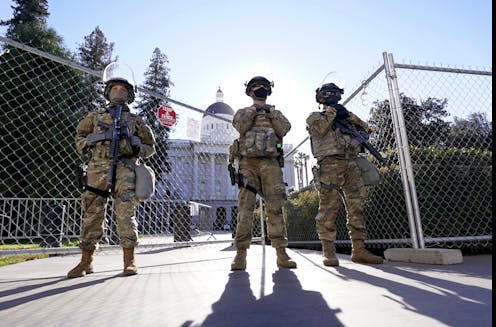
The Second Amendment declares the importance of state-government authorized militias, like these National Guard troops guarding the California State Capitol building. AP Photo/Rich Pedroncelli

When a federal judge in California struck down the state’s 32-year-old ban on assault weapons in early June 2021, he added a volatile new issue to the gun-rights debate.

The ruling, by U.S. District Court Judge Roger Benitez, does not take effect immediately, because California has 30 days to appeal the rejection of its assault weapons ban. Most coverage has focused on Benitez’s provocative analogy between an AR-15 and a Swiss army knife. But the case raises troubling questions about the meaning and proper role of “militias” under the Second Amendment.

The plaintiffs in the lawsuit claimed that California’s assault weapons ban unconstitutionally restricted citizens’ Second Amendment rights by preventing them from using assault weapons for home defense and other legal purposes. California’s defense was that assault weapons are more dangerous than other firearms and therefore subject to additional restrictions.

In his ruling, Benitez asserts that citizens have a right to own a private assault weapon not just for defense of a gun owner’s home, but also for “citizens’ militias” engaged in homeland defense.

If the founders were alive today, I believe they would be very concerned – because the Constitution is clear that the only militias protected by the Second Amendment are “well-regulated” units authorized and controlled by state governments, not a private citizen militia.

People wearing camouflage, face masks and helmets stand with weapons
These armed, camouflage-clad people at a protest in 2021 say they are part of a militia group, but not one sponsored by a state government. Joseph Prezioso/AFP via Getty Images

Starting from a precedent

The preamble to the Second Amendment mentions service in a militia as a reason citizens have the right to keep and bear arms: “A well regulated Militia, being necessary to the security of a free State, the right of the people to keep and bear Arms shall not be infringed.”

In his ruling, Benitez builds on the 2008 Supreme Court case D.C. v. Heller. In that landmark case, the Supreme Court held, as Justice Antonin Scalia wrote, that the amendment protects a right to possess a firearm unconnected to military service and that individuals are free to use such weapons for “traditionally lawful purposes, such as self-defense within the home.”

Benitez accepts this individual right, including to own assault weapons, but he adds what he calls “citizen militias” to the mix, which he defines as an “informal assembly of able-bodied, ordinary citizens acting in concert for the security of our nation.” The AR-15, he says, is an “ideal arm” for such purposes.

While distinguishing a citizen militia from a “state-organized militia,” the judge is vague about what, exactly, a citizen militia is. The examples he offers include the armed partisans led by Fidel Castro, Ho Chi Minh, and the Taliban and Iraqi insurgents. Although Benitez surely knows that the United States has a long history of vigilantism and mob violence, he doesn’t say which informal groups of armed citizens in this country might qualify and which would not.

That lack of specificity is a problem. Does a citizen militia include the protesters who occupied the Michigan State Capitol during the spring of 2020, posing with assault weapons slung over their shoulders? What about the activists who in the summer of 2020 briefly created Seattle’s Capitol Hill autonomous zone, where guards armed with AR-15s stood watch at the entrance and patrolled the streets? Kyle Rittenhouse, on trial for killing two people with a Smith & Wesson rifle in Kenosha, Wisconsin, allegedly viewed himself as part of a militia and claimed to be helping the police.

Government-authorized groups only

The biggest problem with Benitez’s ruling is that the Second Amendment sanctions a “well-regulated militia,” not an informal assembly of armed citizens. As the founders knew, a “well-regulated militia” was one authorized, trained and – with growing frequency during the American Revolution – armed and provisioned by state governments.

After the American Revolution, the purpose of these state militias was clearly laid out in Article I, Section 8, Clause 15 of the Constitution: so Congress could use them to “execute the laws of the union, suppress insurrections, and repel invasions.”

Today, the militia in all 50 states is the National Guard. In California, as Benitez notes in his opinion, the militia also includes the State Guard, a force trained and equipped by the government. There is nothing informal about it.

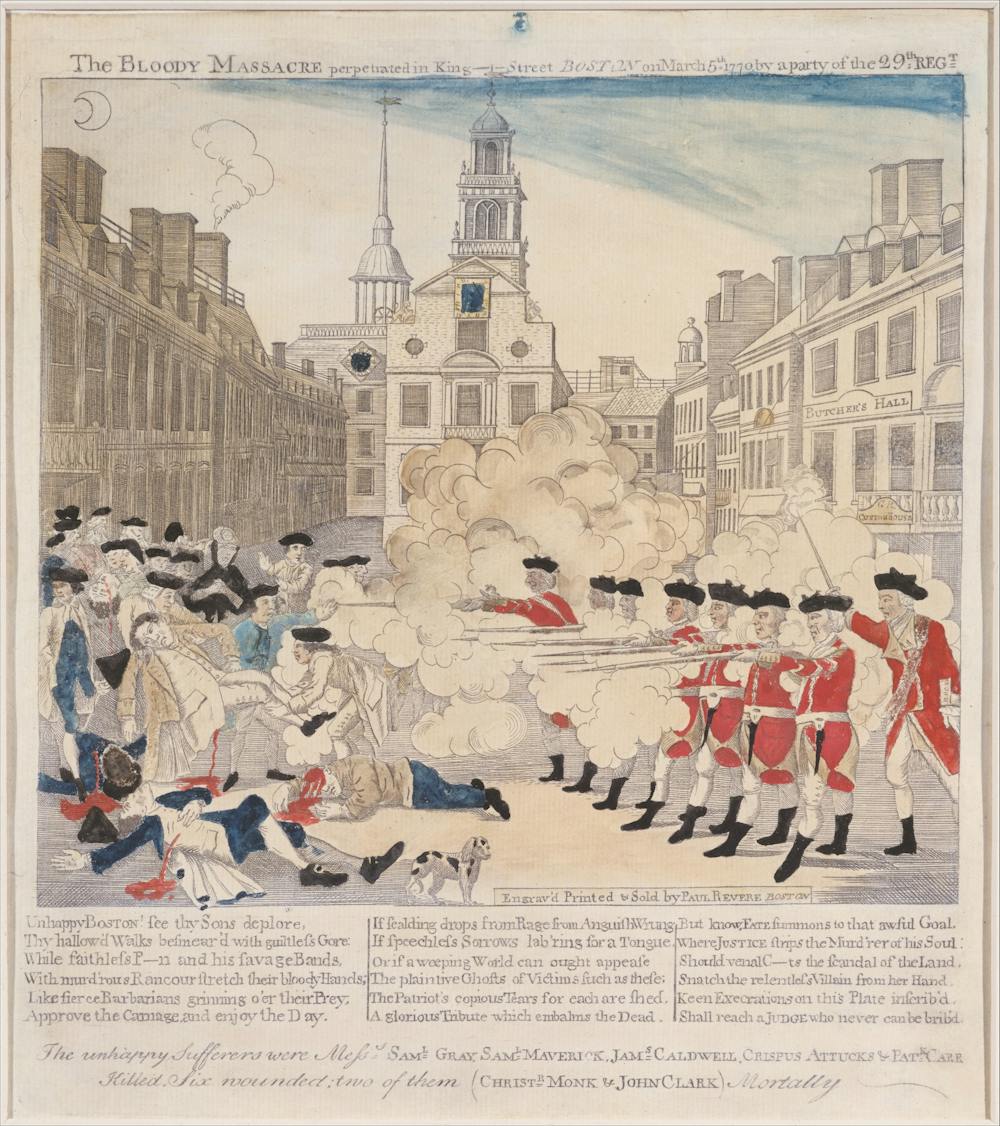
An illustration of British redcoats firing into a civilian crowd
After the Boston Massacre, American Colonial leaders feared mob violence. Paul Revere, from Metropolitan Museum of Art, via Wikimedia Commons

Avoiding mob rule

Having lived through the Revolutionary War, the founders knew why the words “well regulated” mattered. They had seen what happened when people took the law into their own hands.

After the Boston Massacre in 1770, when British soldiers opened fire on a crowd that had been pelting them with rocks and ice, John Adams defended the soldiers during their murder trial, worried that a guilty verdict could lead to mob rule.

In 1775, the Colonial Minutemen who stood their ground at Lexington and Concord served in units authorized by the Massachusetts legislature. Although taking up arms against their king and his soldiers, they fought as members of a well-regulated militia.

Men on horses review columns of troops
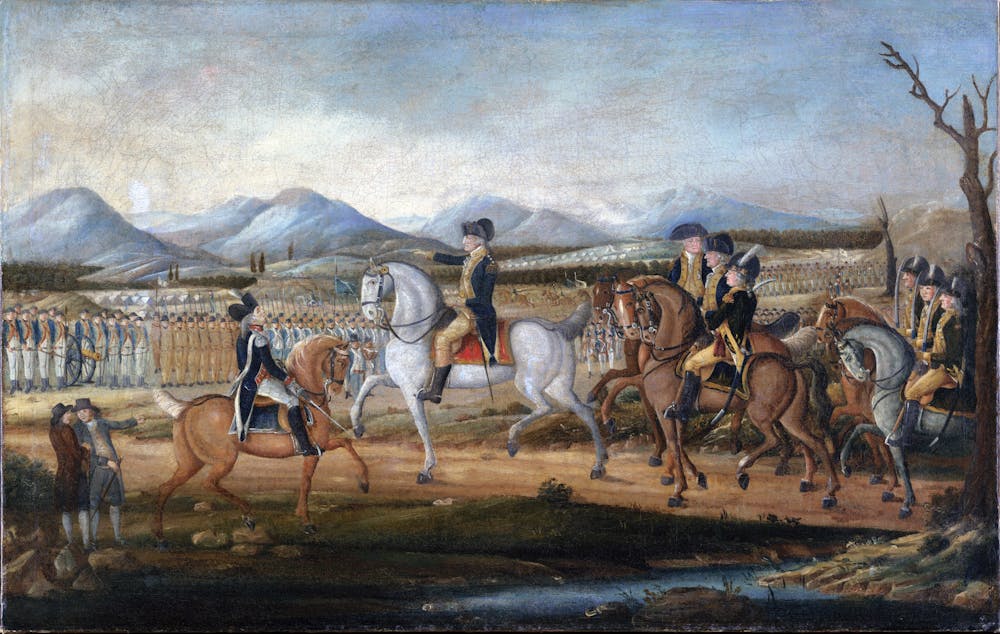
President George Washington, at center on white horse, reviews troops in Maryland before marching to suppress the Whiskey Rebellion. Metropolitan Museum of Art, via Wikimedia Commons

Naturally, not all early Americans accepted such distinctions. During the so-called Whiskey Rebellion from 1791 to 1794, which occurred after the Constitution and Second Amendment had been ratified, armed insurgents near Pittsburgh forcibly resisted a new federal tax on distilled spirits, mustering in military-style formations, tarring and feathering federal excise officers, and threatening secession. President George Washington responded in 1794 by marching west at the head of 12,950 federalized state militiamen. By the time the Western Army reached the Ohio River, most of the rebels had gone home. The nation’s first president made clear that in a democratic republic, the way to make your voice heard is through the ballot box, not the muzzle of a gun.

The right to own a gun is “not unlimited,” as Justice Scalia wrote in 2008. For that reason, the Supreme Court held that state and federal authorities can bar firearms from schools and public buildings, while the people remain free to prohibit what Scalia called “dangerous and unusual weapons.”

The AR-15 may no longer be unusual, but California’s decision to appeal Benitez’s ruling shows that the state still thinks it is dangerous. If the rifle really is Benitez’s “ideal” weapon for a citizen militia, then perhaps the state is right.

[Insight, in your inbox each day. You can get it with The Conversation’s email newsletter.]

The Conversation

Eliga Gould does not work for, consult, own shares in or receive funding from any company or organization that would benefit from this article, and has disclosed no relevant affiliations beyond their academic appointment.

11 Jun 19:10

Matt Canavan suggested the cold snap means global warming isn't real. We bust this and 2 other climate myths

by Nerilie Abram, Professor; ARC Future Fellow; Chief Investigator for the ARC Centre of Excellence for Climate Extremes; Deputy Director for the Australian Centre for Excellence in Antarctic Science, Australian National University
Steven Saphore/AAP

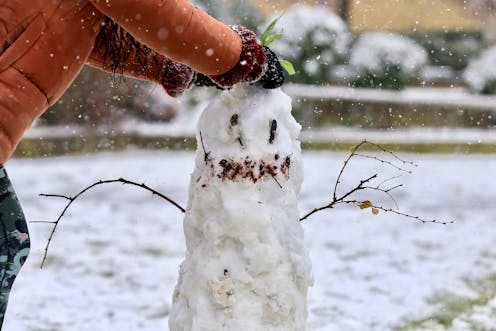
Senator Matt Canavan sent many eyeballs rolling yesterday when he tweeted photos of snowy scenes in regional New South Wales with a sardonic two-word caption: “climate change”.

Canavan, a renowned opponent of climate action and proponent of the coal industry, appeared to be suggesting that the existence of an isolated cold snap means global warming isn’t real.

Prime Minister Scott Morrison has previously insisted there is “no dispute in this country about the issue of climate change, globally, and its effect on global weather patterns”. But Canavan’s tweet would suggest otherwise.

The reality is, as the climate warms, record-breaking cold weather is becoming less common. And one winter storm does not negate more than a century of human-caused global warming. Here, we take a closer look at the cold weather misconception and two other common climate change myths.

Myth #1: A cold snap means global warming isn’t happening

Canavan’s tweet is an example of a common tactic used by climate change deniers that deliberately conflates weather and climate.

Parts of Australia are currently in the grip of a cold snap as icy air from Antarctica is funnelled up over the eastern states. This is part of a normal weather system, and is temporary.

Climate, on the other hand, refers to weather conditions over a much longer period, such as several decades. And as our climate warms, the probability of such weather systems bringing record-breaking cold temperatures reduces dramatically.

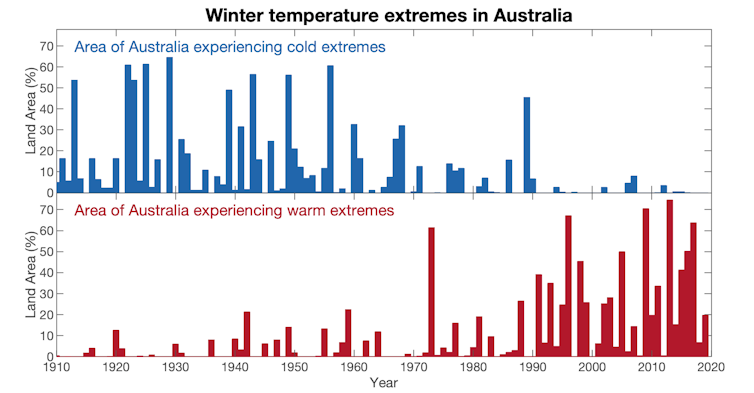
Just as average temperatures in Australia have risen markedly over the past century, so too have winter temperatures. That doesn’t mean climate change is not happening. In a warming world, extremely cold winter temperatures can still occur, but less often than they used to.

In fact, human-caused climate change means extreme winter warmth now occurs more often, and across larger parts of the country. Record-breaking hot events in Australia now far outweigh record breaking cold events.

Extreme cold and warm winter temperatures in Australia
Percentage of Australia experiencing extreme cold (bottom 10%) and extreme warmth (top 10%) in winter since 1910. Data from the Bureau of Meteorology.

Myth #2: Global warming is good for us

Yes, climate change may bring isolated benefits. For example, warmer global temperatures may mean fewer people die from extreme cold weather, or that shorter shipping routes open up across the Arctic as sea ice melts.

But the perverse benefits that may flow from climate change will be far outweighed by the damage caused.

Extreme heat can be fatal for humans. And a global study found 37% of heat-related deaths are a direct consequence of human-caused climate change. That means nearly 3,000 deaths in Brisbane, Sydney and Melbourne between 1991 and 2018 were due to climate change.

Extreme heat and humidity may make some parts of the world, especially those near the Equator, essentially uninhabitable by the end of this century.

Global warming also kills plants, animals and ecosystems. In 2018, an estimated one-third of Australia’s spectacled flying foxes died when temperatures around Cairns reached 42℃. And there is evidence many Australian plants will not cope well in a warmer world – and are already nearing their tipping point.

Heatwaves also damage oceans. The Great Barrier Reef has suffered three mass bleaching events in just five years. Within decades the natural wonder is unlikely to exist in is current form – badly hurting employment and tourism.


Read more: Climate change is making ocean waves more powerful, threatening to erode many coastlines


Myth #3: More CO₂ means Earth will definitely get greener

In January last year, News Corp columnist Andrew Bolt caused a stir with an article that suggested rising carbon dioxide (CO₂) emissions were “greening the planet” and were therefore “a good thing”.

During photosynthesis, plants absorb CO₂. So as the concentration of CO₂ in the atmosphere increases, some researchers predict the planet will become greener and crop yields will increase.

Consistent with this hypothesis, there is indirect evidence of increased global photosynthesis and satellite-observed greening. There is also indirect evidence of increased “carbon sinks”, whereby CO₂ is drawn down from the atmosphere by plants, then stored in soil.

Rising temperatures lead to an earlier onset of spring, as well as prolonged summer plant growth – particularly in the Northern Hemisphere. Researchers think this has triggered an increase in the land carbon sink.

However, there’s also widespread evidence some trees are not growing as might be expected given the increased CO₂ levels in our atmosphere. For example, a study of how Australian eucalypts might respond to future CO₂ concentrations has so far found no increase in growth.

Increased plant growth may also cause them to use more water, causing significant reductions in streamflow that will compound water availability issues in dry regions.

Overall, attempts to reconcile the various lines of evidence of how climate change will alter Earth’s land vegetation have proved challenging.

So, are we doomed?

After all this bad news, you might be feeling a bit dejected. And true, the current outlook isn’t great.

Earth has already warmed by about 1℃, and current policies have the world on track for at least 3℃ warming this century. But there is still reason for hope. While every extra bit of warming matters, so too does every action to reduce greenhouse gas emissions.

And there are promising signs of increasing ambition to reduce greenhouse gas emissions on the global front – from the United States, the United Kingdom, the European Union, Japan and others.

Unfortunately, Australia is far behind our international peers, instead pushing the burden of action onto future generations. We now need the political leadership to set our country, and the world, on a safer and more secure path. Ill-informed tweets by senior members of the government only set back the cause.


Read more: Spot the difference: as world leaders rose to the occasion at the Biden climate summit, Morrison faltered


The Conversation

Nerilie Abram receives funding from the Australian Research Council.

Martin De Kauwe receives funding from the Australian Research Council.

Sarah Perkins-Kirkpatrick receives funding from the Australian Research Council.

10 Jun 20:29

'Over the top': backlash against TikTok's bee lady not justified, say bee experts

by Caitlyn Forster, PhD Candidate, School of Life and Environmental Sciences, University of Sydney
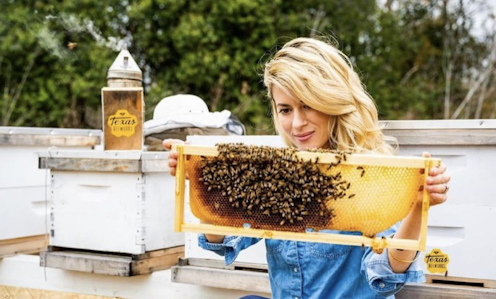
Texas Beeworks' Erika Thompson has been accused by other users of staging her TikTok videos and handling bees in an unsafe manner. Instagram: @texasbeeworks (resharing the work of Jonathan Vail)

Beekeeping has become hugely popular in recent years, and a new world of beekeeping influencers has recently emerged on TikTok. But it’s not without drama.

Erika Thompson — the bee lady from Texas Bee Works — has gained a following of 6.4 million on TikTok by posting videos of rescuing bee colonies from odd places, including trucks, toilets, and umbrellas. Thompson is at ease in the videos with the colonies, and is frequently not wearing protective clothing, has her hair loose, and handles the bees with her bare hands.

But lately, her videos have been getting backlash from other beekeepers, and fuelled by the media. They say she uses dangerous beekeeping practises, and she isn’t really “saving the bees” as she claims in each video.

We research bee behaviour at the University of Sydney. To us, this backlash is over the top. Thompson is clearly a competent beekeeper who is educating the public about honeybees in her own way on social media. She shows the potential for TikTok to bring interesting biology to the public — and she does it all without getting hurt.

Double standards

Thompson has been accused of “bee-washing” – when someone claims actions are more bee-friendly than they are, usually by inflating the conservation messaging of honey bees over other more threatened bee species.

This could well be the case, but Thompson wouldn’t be the first nor last person to piggy back on a popular message to boost her business.

Bee hotels are a great bee-washing example. You can buy these nesting boxes from many major stores, including Bunnings and Aldi, yet most native bees are ground nesting and bee hotels may even increase disease transmission if not cleaned between seasons.

Yes, Erika Thompson’s videos don’t show much of the mishaps that sometimes happen with beekeeping. But if she wants to send a positive message about bees and increase her following and business opportunities, it’s unlikely she’s going to show videos involving stings.

As researcher and beekeeper Lewis Bartlett pointed out on Twitter, attacks on Thompson seem to have a basis in misogyny, and some even read as downright envy.

In fact, research from 2018 confirmed women are more likely to get negative comments on YouTube, so it is sadly unsurprising a woman is behind the “controversial” videos.

But why isn’t she getting stung?

Honeybees are the leading cause of hospitalisation from a venomous animal in Australia. So it’s shocking and impressive to see someone scoop up bees with their bare hands.

She’s not the only example of someone undertaking what’s been considered by some to be unsafe practise, with other TikTok users show similar non-gloved practises.

While we don’t recommend people who aren’t beekeepers try this, bees can be beautiful, docile creatures. And it’s clear Thompson knows how to interact with bees and how to avoid being stung.

To prevent stings, Thompson gently handles bees, and is likely carefully choosing which bees to film based on how aggressive the colony is.

Colonies can be selectively bred to be less aggressive, and beekeepers will seek out certain subspecies of bee, such as the Italian subspecies Apis mellifera liguistica, which are popular due to their inherent gentle nature.

If a colony is agitated or aggressive by nature, it may be more likely to sting. If you can smell bananas around bees, you may be smelling their alarm pheromone. Even the weather will impact the mood of the bees — nicer weather brings nicer bees.

Beekeepers often use smokers to calm bees before interacting with them. If you scroll through Thompson’s TikTok feed, you’ll see her wearing protective bee keeping equipment and the presence of smokers in a few videos.

There’s a chance the bees are actually stinging Thompson, but she isn’t bothered by them.

Each person has a different reaction to honeybee stings. Some people have a severe reaction, an anaphylactic response potentially leading to death, while others barely react.


Read more: It's bee season. To avoid getting stung, just stay calm and don't swat


This beekeeper is confident there’s no risk of stings from honeybees, so he has taken off his hood and gloves. Sebastian Croker, CC BY-NC

‘Save the bees’

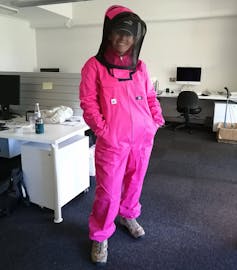
Beekeepers often wear thick full-length bee suits, veil, gloves, and enclosed shoes when working with their colonies. Many colourful options are available. Eliza Middleton @smiley_lize

Thompson has proven her skills as an engaging educator on honeybee health and biology, filling her videos with interesting facts about honeybees and explaining their behaviours.

Her videos often end with “save the bees” messaging, but her focus on honeybees can take away from the importance of native bees.

In North America, many native bees, such as the rusty patched bumblebee, face significant threats.

Honeybees, on the other hand, are believed to have originated in Africa or Asia, and are considered native to Europe, Africa, and the Middle East. And yet, the number of colonies of honeybees in North America has increased.

Conservation isn’t as simple as saving or focusing on a single species.

By saving a non-native species over a native species, you can unwittingly increase the competition for resources and the native species can’t compete.

How can you help save the bees?

Beekeeping has been soaring in Australia. In Queensland, for example, the number of hobby beekeepers has doubled in the last five years.

While Thompson makes it look fairly easy to move swarms of bees, you should not try and move bees yourself without adequate training.

Bees in swarms are unlikely to sting, and usually move along in a few hours. But if you are concerned, call a professional beekeeper to remove them.

But to help save the bees, you don’t need to be a beekeeper. Simply planting flowers in your garden and reducing your use of pesticides can make a big difference.

Go outside and get to know your native bees, and maybe even get involved in some citizen science.


Read more: These 3 tips will help you create a thriving pollinator-friendly garden this winter


The Conversation

Caitlyn Forster receives funding from the Australian Research Council. She is affiliated with The Australasian Society for the Study of Animal Behaviour.

Eliza Middleton receives funding from the Australian Research Council.

10 Jun 15:16

OPINION: Voting amendments will boost underrepresented voices in Florida

by Marcelene Pilcher, CORRESPONDENT
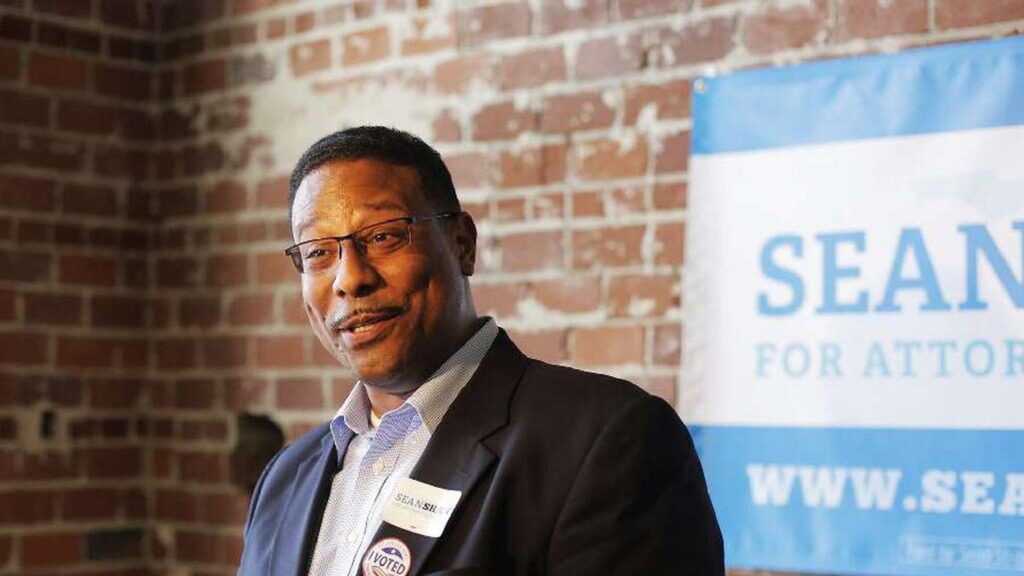
Former Florida Rep. Sean Shaw’s proposed amendments would make it easier for underrepresented groups in politics to vote, allowing them to advocate for public policy that addresses their interests and needs. SPECIAL TO THE ORACLE/Octavio Jones

Former Florida Rep. Sean Shaw presented three separate amendments to the state constitution May 30. These amendments would increase ease of voting in Florida through automatic registration and give felons and last-minute voters a chance to register up until Election Day. 

The first amendment would have Florida join states like California and Rhode Island in automatically registering to vote any citizen renewing or updating their driver’s license. The second would allow Floridians to register to vote on Election Day or during early voting at their voting centers, joining 20 other states that have passed similar policies. 

The third amendment would undo a provision passed by the Florida Legislature in 2019 that requires felons to pay off outstanding court fines, fees and restitution before registering to vote. 

Shaw’s proposed amendments will make it easier for groups that are underrepresented in politics like college-aged students, low-income citizens and felons to vote, allowing them to advocate for their interests in political representation and policy.

The first amendment aims to remove some of the inconveniences associated with voting and may encourage these demographics to exercise their civic duty as Americans.

Many groups are absent from voting booths. College-aged students, low-income individuals and racial minorities have significantly lower turnouts than other groups. The college-aged demographic of people ages 18-24 is the least represented age demographic. Only 51% of those surveyed voted in 2020 as opposed to 74% of voters ages 65 and older, according to the 2020 census.

Streamlining the registration process by automatically registering eligible citizens to vote during department of motor vehicles transactions would increase the ease with which students can vote.

The second and third amendments would encourage impoverished Floridians as well as previously incarcerated felons to vote by reducing cost and time barriers to get to voting booths.

Low-income individuals seem to have difficulty making it to the voting booths. Only about 48% of individuals below the poverty threshold voted in the 2020 election compared to 85% of individuals in the highest income bracket, according to the census.

Many who were previously incarcerated also fall into lower income brackets. Incarcerated people in 2020 had a median annual income of $19,185 prior to their incarceration, which is 41% less than non-incarcerated people of similar ages, according to the Prison Policy Initiative. This can be a barrier when trying to pay off extensive legal fees associated with a felony charge.

As of 2020, 23.3% of Black voters are disenfranchised in Florida due to their felony debt status, according to The Sentencing Project, a nonprofit that advocates for people with a criminal record. This is more than any other racial group in Florida. 

By giving felons the right to vote regardless of debt status, it would be removing another systemically racist and classist restriction on Florida groups who face difficulties exercising their right to vote and may see an increase in the booth turnout next election.

Shaw’s proposed amendments come amid continued allegations about widespread fraud in the 2020 election, which former President Donald Trump claimed he rightfully won. Policymakers in several states have tried to address his claims by proposing laws restricting methods to ease voting, like vote by mail and ballot drop boxes.

Gov. Ron DeSantis signed SB 90 on May 6 which restricted voting in Florida. This bill limits the use of ballot drop boxes and requires more identification requirements for voters requesting an absentee ballot. It also increases the rate at which voters must request absentee ballots, from every four years to every two. 

This bill triggered a lawsuit against Secretary of State Laurel Lee by coalitions including the League of Women Voters of Florida, Black Voters Matter Fund and the Florida Alliance of Retired Americans because of its apparent discrimination against specific groups who use drop boxes and mail-in ballots most frequently. 

“These voting restrictions are part of a national movement to create barriers for Black and brown voters and an effort to deny ready access to the ballot box,” said President of Florida’s NAACP chapter Adora Obi Nweze in a statement from the NAACP Legal Defense Fund. “In the midst of a pandemic, 11 million Florida voters cast ballots including a significant number of Black voters, with more than 500,000 voting by mail.”

Despite these actions from state legislators, some institutions are taking steps to ease the hassle of voting in alignment with Shaw’s initiatives. USF partnered with the Hillsborough County Supervisor of Elections to open early voting sites on campus during the 2020 election, according to an October 2020 article from The Oracle.

It’s no easy feat to push an initiative like this onto the ticket. Sponsors of a constitutional ballot initiative have to collect nearly 900,000 signatures and raise millions of dollars to affirm public support for the amendments. 

Senate Bill 1890, which DeSantis signed into law May 7, limited individual contributions to ballot initiatives to $3,000 each. With the average 2020 petition cost nationwide totaling $2.1 million, according to Ballotpedia, this could be detrimental to the success of any ballot initiative.

There is hope to overturn this law. This contribution cap has received pushback from the American Civil Liberties Union and Shaw’s political committees, who filed a lawsuit in May that questions the constitutionality of this law. If the lawsuit is successful, Shaw’s amendments would be able to receive more financial backing and hopefully end up on the next election’s ballots.

For democracy to work, all citizens should have equal opportunity to vote. These amendments will give demographics with difficulty making it to the polls a fighting chance to exercise their civic duty and prioritize their public interests.

09 Jun 17:48

Why do certain people always show up at the top of your Instagram feed? Here's the official word from Instagram

by Mark Frauenfelder

Instagram (owned by Facebook) wrote a post to its blog explaining how its suite of algorithms works to decide what photos and videos to show you, and how you can take more control over what you see. Most of it is pretty obvious (if you like and comment on a person's posts, you see their other posts more frequently than people you scroll past without liking), but I learned a few things about what to do to tune the algorithms. — Read the rest

09 Jun 17:45

Val Demings running for Senate in Florida

by Jason Weisberger

Congressperson Val Demings of Florida has announced that she is running to unseat one of the Senate's most MAGA members Marco Rubio.

08 Jun 20:44

Supreme Court weighs voting rights in a pivotal Arizona case

by Cornell William Clayton, C.O. Johnson Distinguished Professor of Political Science, Washington State University
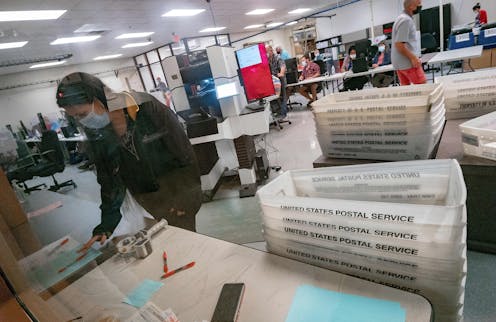
The Maricopa County Election Department counts ballots in Phoenix on Nov. 5, 2020. Arizona's election laws are the subject of a pending Supreme Court decision. Olivier Touron/AFP via Getty Images

Would you vote by mail if you had to drive hours to a post office to mail your ballot? That question confronts the United States Supreme Court this session in Brnovich v. Democratic National Committee, which analysts see as one of the most important voting rights cases in a decade.

The case considers two Arizona laws that place limits on how and when Arizonans can vote.

A state law passed in 2016, H.B. 2023, makes it a felony for anyone other than a family member, caregiver or postal worker to collect and deliver ballots. The second Arizona law in question requires ballots to be cast in the assigned precinct where a voter lives. If a voter casts a provisional ballot at the wrong polling place, election officials will reject it.

Narrowly, Brnovich v. Democratic National Committee asks the court to decide whether the two Arizona rules disproportionately hurt minority voters.

But the court’s ruling will have national consequences. Since the 2020 presidential election, legislators in 47 states have introduced 361 so-called “election integrity” bills placing new restrictions on voting.

Our research on elections show that these types of restrictive laws significantly impact voting, particularly among racial minorities and the poor.

The Supreme Court’s decision could determine the fate of many of these laws.

From Arizona to the Supreme Court

In Arizona, nearly 80% of voters in 2018 cast their ballots by mail. But mail service is not always available in rural areas of the state where many Hispanic and Native Americans live. Only 18% of Native Americans in the state, for example, have access to home mail delivery.

The Tohono O'odham reservation, which covers an area larger than Rhode Island and Delaware, has no home delivery and only one post office. These rural voters often rely on friends or get-out-the-vote workers to deliver their ballots to polling stations.

The burdens on rural and tribal voters were cited in a 2016 lawsuit filed by the Democratic National Committee to block the Arizona ballot collection ban and out-of-precinct vote restriction. The Democratic National Committee claimed both policies violated Section 2 of the federal Voting Rights Act, which prohibits practices that “result in a denial or abridgement of the right (to vote) on account of race or color.”

A small white post office that seems to be boarded up; a cactus is in front of it
Post offices are few and far between in rural Arizona. Joe Sohm/Visions of America/Universal Images Group via Getty Images

The lawsuit, which was supported by Arizona’s Democratic secretary of state, also argued that the ballot collection ban purposely targeted minority voters. That would violate the 15th Amendment to the U.S. Constitution, which prohibits states from intentionally denying the right to vote on account of race.

Arizona’s Republican attorney general and the state’s Republican Party argued the laws were race-neutral restrictions that do not impede Arizonans’ equal opportunity to vote and were enacted to safeguard election integrity.

The district court in Arizona and two separate three-judge panels of the U.S. Court of Appeals for the Ninth Circuit originally ruled in Arizona’s favor. But, after the full Ninth Circuit Court met together in what’s called an “en banc” session, those decisions were reversed.

The full Ninth Circuit said Arizona’s ballot collection ban violated Section 2 of the Voting Rights Act and the 15th Amendment because minority voters were more likely than nonminorities to rely on others to return their ballots. And the law could not be credibly defended as an election integrity measure because judges saw no evidence that third-party ballot collection led to vote fraud in the past.

The appeals court also found that the out-of-precinct policy violated Section 2 of the Voting Rights Act. Arizona officials frequently changed polling places in urban counties with large minority populations, so voters easily made mistakes. In 2016, 3,709 out-of-precinct Arizona ballots were rejected, and minority voters were twice as likely as whites to have their ballots discarded in that process.

The court put its decision on hold pending Arizona’s appeal to the Supreme Court, leaving both policies in place for now.

Electoral consequences

Arizona is one of 14 states restricting third-party ballot collection. Twenty-six states require in-precinct voting. Nationwide, some 140,000 provisional ballots during the 2018 midterm elections were invalidated as out-of-precinct. This happens even when precinct location is not relevant, such as elections for governor or president.

If the Supreme Court decides in favor of the Democratic National Committee, Arizona’s controversial laws and many others like it will be invalidated. If Arizona prevails, states will have greater latitude when adopting restrictive voting practices.

Before 2013, states with a history of discrimination needed federal approval before enacting new voting laws, under Section 5 of the Voting Rights Act. But in 2013, the Supreme Court in Shelby County v. Holder – a voting rights case from Tennessee – dismantled these preclearance procedures.

As a preclearance state, Arizona was previously blocked by the federal government from enacting voter restrictions like H.B. 2023. Other former preclearance states that have passed restrictive laws since 2013, include North Carolina, Texas and Florida.

Since Shelby County v. Holder, voting rights advocates have had to rely on a different section of the Voting Rights Act – Section 2 – to legally challenge these restrictive voting laws.

Brnovich v. DNC is the first Supreme Court test of this strategy.

How the court leans

During oral arguments in March, several conservative Supreme Court justices, including Chief Justice John Roberts, asked questions that seemed sympathetic to Arizona’s concerns about election integrity.

But the justices appeared split over the legal standard for evaluating Section 2 claims.

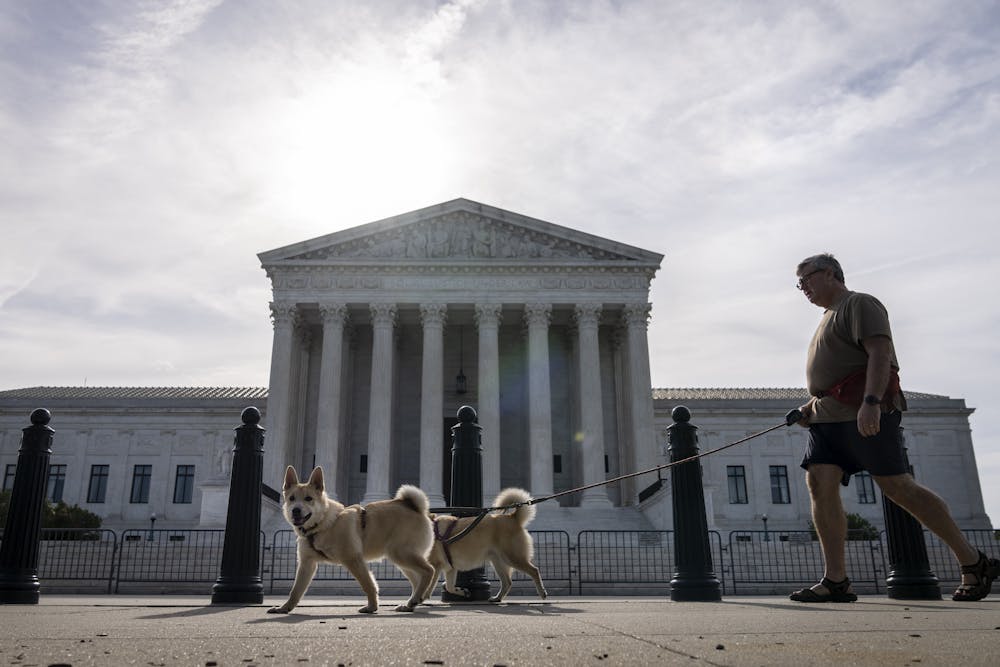
Supreme Court, with a man waking his dogs in front of it
The Supreme Court is expected to rule soon in the Arizona voting rights case. Drew Angerer/Getty Images

In deciding against Arizona in 2020, the Ninth Circuit used a “results test.” This means that a law does not require proof of an intent to discriminate to be struck down. Judges ask only whether the law disproportionately affects historically disadvantaged groups.

Justice Samuel Alito worried the results test was overly broad. Poor, less educated voters, Alito said during oral arguments, would “find it more difficult to comply with just about every voting rule.” Alito proposed asking only whether policies deny voters an “equal opportunity” to participate in elections.

Justice Stephen Breyer, a liberal, suggested the court should consider disparate impact on minority voting but also allow states to defend their policies as enacted for reasons other than race.

Justice Brett Kavanaugh proposed a middle ground. His test would look at whether minorities have the same “opportunities” to vote but also other considerations, such as whether other states use the same rule and whether race-neutral justifications existed for it.

Which approach the court adopts will set the stage for future litigation and the larger showdown between federal voting rights protections and states’ control of elections.

[Understand key political developments, each week. Subscribe to The Conversation’s politics newsletter.]

The Conversation

The authors do not work for, consult, own shares in or receive funding from any company or organisation that would benefit from this article, and have disclosed no relevant affiliations beyond their academic appointment.

08 Jun 13:36

ProPublica investigation finds ultra-rich pay almost nothing in federal income tax

by Rob Beschizza

The Three Percenters are a far-right group who love guns and Nazis, but the term would apply just as nicely to America's richest men, who pay about that rate in federal income tax due to legal loopholes and other shenanigans. ProPublica acquired financial documents that show Jeff Bezos, Elon Musk, Michael Bloomberg and other multibillionaires paid about 3% or less of new income—and that's if they paid anything at all. — Read the rest

07 Jun 20:35

Are Pagan Zines — Like Vinyl Records — Coming Back?

by Chas S. Clifton

I recently have purchased copies of two Pagan zines, and I am thinking about a couple more. (What is a zine? Read here.)

That is the most in years. Is this a trend? Is a small-press renaissance underway? A rebellion against the corporate social media of InstaFaceTwit etc. and their online “walled gardens”? They say vinyl records are outselling CD’s now, but that is more because CD sales have slumped than vinyl is rising, although vinyl has in fact risen in market share. Will zines come back too?

A saddle stapler for pamphlets, essential for zine publishers!

I used to have shelves of Pagan zines and a subscription to Factsheet Five, but the air leaked out of zine publishing in the late 1990s as people got used to the “World Wide Web,” which was free (or seemed to be) and where you could post your stuff without having to type or draw pages, take them to the copy shop, then collate, staple, and mail.

Before that, I’d been involved with a couple of literary zines, two Pagan zines not worth mentioning, and finally Fritz Muntean’s new, intellectually ambitious one: The Pomegranate: A New Journal of Neopagan Thought, which ended up as something else. Fritz flattered me by saying he was partly inspired by my short-lived (1984–86) effort, Iron Mountain: A Journal of Magical Religion, which you can now read online, all four issues of it.

Some examples: Edited by Maria J. Pérez Cuervo, who is interviewed here, Hellebore is published in Bristol (UK), and leans heavily towards folk horror, folk witchcraft, myth, and psychogeography. Issues are £6.75 (US $9.58) plus postage.

She grew up in a fertile environment for a zine editor, and she has an MA in archaeology from Bristol University (What do you do with an MA? Write a lot and start your own journal.)

I grew up in a fairly bookish home and I don’t remember not writing. As a child I used to make my own magazines, with comics I drew and articles I wrote. My dad was into ancient history and mythology, and my mum has always been a bit of an anglophile, and it probably rubbed off on me. My mum told me a lot of fairy tales, and what really fascinated me was the magic. You know, the witch, the magic mirror, the curses. A bit later I became obsessed with Enid Blyton’s Famous Five books, partly because of the settings (the moors, the Cornish coast, the ancient ruins), and with Sherlock Holmes

I bought issue #3, The Malefice Issue, (“What has been buried ought not to return”) and was reminded of some of the older Pagan zines. The resemblance was intentional, for she says she wanted “the aesthetics to evoke that particular era, the late 60s and 70s, grabbing inspiration from Czech film posters, with a touch of psychedelia, and an old-school fanzine finish.”

Is it typical of connected life today that I followed Fiddler’s Green for months on Instagram before I got around to ordering a sample issue? It is the zine of “Art & magic for tea-drinking anarchists, convivial conjurors & closeted optimists,” with a mailing address in Berkeley, California. I bought volume 2, number 3, “Gods of the Afternoon,” which is $15 + postage.

Speaking of postage, alongwith the articles, listed here, was a table of postal rates, which warmed my heart, and — OMG real zine culture! — several pages of zine reviews! Further explorations await.

And speaking of vinyl, the issue included a 45 rpm flexi-disk of “Mushroom Madness” by Anton Barbeau, so I need to blow the dust off my old Technics turntable and learn what it sounds like.

The famous Museum of Witchcraft and Magic in Boscastle, Cornwall, is re-opened post-COVID lockdown and also has a museum journal (I am calling it a zine too) called The Enquiring Eye, “that aims to showcase a wide range of research into all aspects of magical practise, witchcraft and the occult.” Issues are £5, and five have been published so far, with articles like “Wisdom from the Wilderness: Using the Fae to Re-enchant the Landscape in a Time of Crisis.” Table of contents for issue 5 here.

When it comes to vinyl record albums, says Charlie Randall, CEO of McIntosh Labs, “I think it’s natural for any generation to think that the technology of their time will be replaced by future technology and go extinct.”

In large part I think that’s the case except with vinyl records. There is something romantic about records, something satisfying about opening the album jacket, seeing the fantastic artwork and studying the liner notes while listening to the album. That’s something that today’s digital files just can’t replace.”

Maria J. Pérez Cuervo

Maria J. Pérez Cuervo agrees when it comes to print-on-paper:

So much of the content we consume these days is digital that print feels like a small luxury. And I wanted to make a beautiful object for everyone who loves these themes, because there wasn’t anything quite like it. Making it limited-run was partly a practical decision, but also, I think, reminiscent of a time when you didn’t have constant access to information. And you could be a little girl, catch a film halfway through on TV, and not know the name of it, but be haunted by it for life. And somehow this invests the film, or the book that you borrowed from the library but never found in any shops, with an almost mythical quality. Maybe in a few years there’ll be people saying “oh, do you remember that little zine?” Who knows?

04 Jun 20:06

What is endometriosis? Patients turn to social media for information and support

by Eileen Mary Holowka, PhD Candidate, Communication Studies, Concordia University
Endometriosis awareness has skyrocketed over the last decade thanks to social media use, and this brings both new resources and challenges for those living with the disease. (Shutterstock)

Endometriosis is an inflammatory condition where tissue similar to the lining of the uterus grows outside the uterus. It affects one in 10 women and undetermined numbers of transgender and non-binary people.

Despite its prevalence and the accompanying economic burden, endometriosis is underfunded and steeped in histories of sexism, racism and classism.

Even today, endometriosis commonly gets misrepresented and inaccurately defined, sometimes even within medical literature. It is also widely treated as a reproductive disease, despite often affecting other organs and systems of the body.

In 2018, “What is endometriosis?” was the third highest trending health-related question on Google. In the United States alone, there are more than 400,000 monthly Google searches of endometriosis.

Endometriosis awareness has skyrocketed over the last decade thanks to social media use, bringing with it both new resources and new challenges for those living with the disease.

The amount of knowledge, representation and support that people living with endometriosis produce on social media is astronomical. Although it is important to remain wary of misinformation, it is also necessary to listen to what these patients are saying and not dismiss their social media use.

Histories of mistreatment

Endometriosis care is perceived as lower priority for a number of reasons, many of which are based on age-old myths and discrimination.

Patient-blaming in endometriosis can be traced as far back as 400 BCE, when women were often held responsible for their symptoms for dubious reasons such as “poor morals” or too much sexual intercourse.

Although endometriosis treatment has improved since the intravaginal leechings and other dated treatments of the past, contemporary patients still regularly experience dismissal and patient-blaming.

People living with the disease face a worldwide average delay of 7.5 years between onset of symptoms to diagnosis.


Read more: 1 in 10 women are affected by endometriosis. So why does it take so long to diagnose?


In the face of this mistreatment, many turn to social media for answers.

Turning to social media

In my survey of 287 people living with endometriosis, 61.6 per cent of said they did not learn about the disease from a health-care practitioner, and 11.5 per cent of those who did still experienced dismissal, delays or misinformation from those practitioners.

Although only 23.6 per cent first learned about endometriosis online, 81.6 per cent said that social media played a role in their process of seeking a diagnosis or learning about endometriosis. Similarly, 92 per cent said they learned something new about endometriosis from social media that they did not hear about elsewhere.
It is clear that social media has played an important role in making information about endometriosis more accessible. Advocate-run Facebook groups and Instagram pages mean that people can type their symptoms into Google. Although misinformation also propagates online, endometriosis advocates have worked hard to try and make accurate information rise to the top.

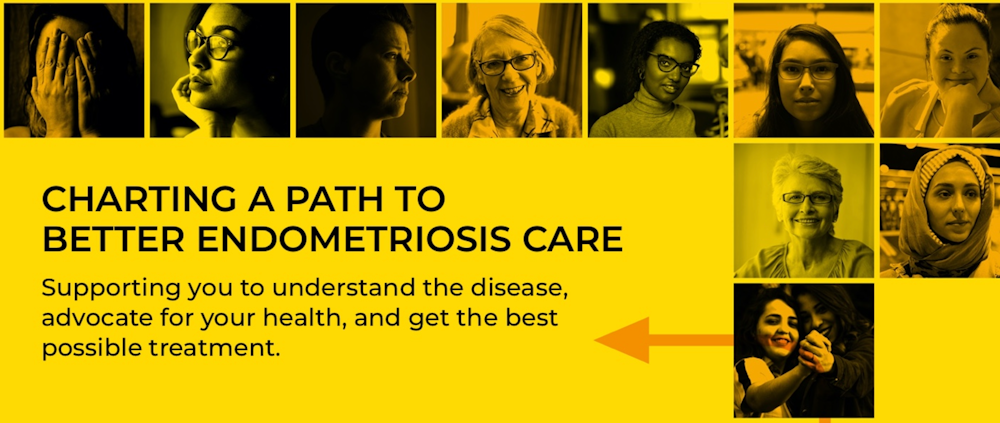
A yellow image with images of people reads CHARTING A PATH TO BETTER ENDOMETRIOSIS CARE. SUPPORTING YOU TO UNDERSTAND THE DISEASE, ADVOCATE FOR YOUR HEALTH, AND GET THE BEST POSSIBLE TREATMENT.
Nancy’s Nook Endo is an online resource for people dealing with endometriosis — the site began as a Facebook group. (Nancy's Nook Endo), Author provided

The Facebook group “Nancy’s Nook Endometriosis Education,” for example, provides an enormous archive of files with information and research on endometriosis, including how to find specialized doctors. In the last year, Nancy’s Nook has grown to well over 100,000 members, including patients, doctors and caregivers. Nancy’s Nook focuses primarily on education, but other groups such as “Endo Knows No Gend-o” and “EndoMetropolis” provide emotional support.

Instagram pages such as @EndometriosisSummit and @theendo.co use popular trends like selfie challenges to promote accurate information. However, their content must also compete with businesses who use the hashtag #endometriosis to sell their products and celebrities or influencers who may share misinformation.

While the endometriosis social media landscape is fraught, it is also growing at a rapid pace. As my survey shows, social media often provides important resources and support to many of those living with the disease. Despite this, research suggests that there is commonly a trust gap between doctors and patients when discussing information found online.

A woman sits on a sofa holding her stomach in pain
It can take over seven years for people with endometriosis to receive a diagnosis and treatment. (Shutterstock)

Patient-blaming in the 21st century

The history of patient-blaming haunts contemporary conversations around social media use. Patients turn to social media in the face of discrimination and mistreatment, but are further dismissed if they bring up that social media use in the doctor’s office.

The way that social media use and endometriosis are both gendered ties into histories of dismissing women, trans men and non-binary people.

Although consulting health information often makes patients feel more knowledgeable, empowered and prepared, bringing it up during appointments can lead to conflicts and distrust between the patient and doctor. However, when both parties discuss online health information openly, it can actually improve the patient-practitioner relationship.

Opening up to patient-produced knowledge and representations can help expose the gaps that exist in endometriosis care. As my research shows, people with endometriosis are hungry for information and proper treatments.

Advocacy around the disease has never before been so widespread and accessible. Including the data produced on social media in our endometriosis literature may help us create better futures for both patients and providers.

The Conversation

Eileen Mary Holowka receives funding from the Social Sciences and Humanities Research Council (SSHRC).

04 Jun 20:03

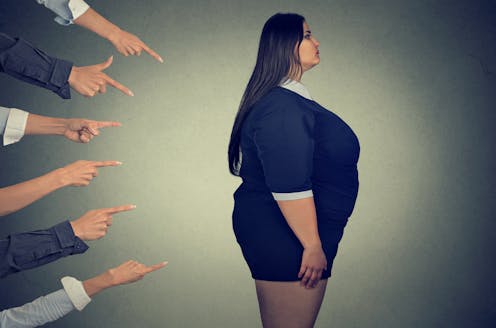
Weight stigma is a burden around the world – and has negative consequences everywhere

by Rebecca Puhl, Professor of Human Development and Family Sciences and Deputy Director, UConn Rudd Center for Food Policy and Obesity, University of Connecticut
Weight stigma occurs in many developed countries, not just the U.S. and often has devastating consequences. SIPhotography/Getty Images

Lazy. Unmotivated. No self-discipline. No willpower.

These are just a few of the widespread stereotypes ingrained in American society about people who have a higher body weight or larger body size. Known as weight stigma, these attitudes result in many Americans being blamed, teased, bullied, mistreated and discriminated against.

There is nowhere to hide from societal weight stigma. Decades of research confirm the presence of weight stigma in workplaces, schools, health care settings, public accommodations and the mass media, as well as in close interpersonal relationships with friends and families. It’s everywhere.

I’m a psychologist and researcher at the Rudd Center for Food Policy & Obesity at the University of Connecticut. For 20 years my team has studied weight stigma. We’ve examined the origins and prevalence of weight stigma, its presence across different societal settings, the harm it causes for people’s health and strategies to tackle this problem.

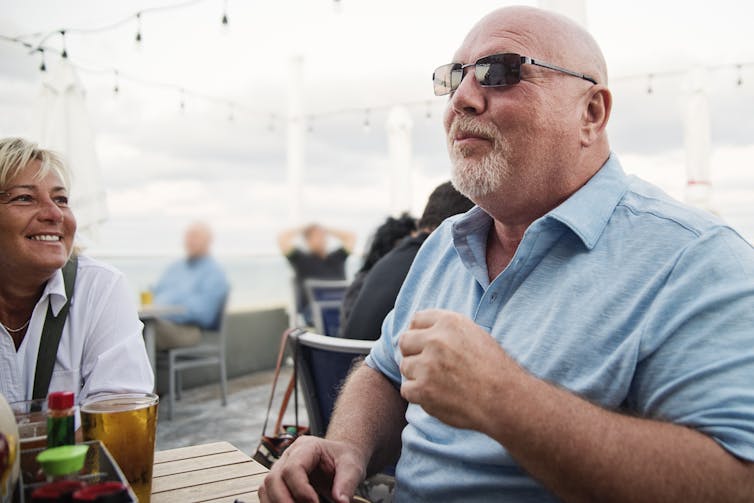
Man and friends enjoying a meal together on a restaurant terrace.
The study surveyed nearly 14,000 adults in six countries who were actively trying to manage their weight about their life experiences of weight-related stigma and bias. Martine Doucet/E+ via Getty

We conducted a recent international study that clearly shows that weight stigma is widespread, damaging and difficult to eradicate. This societal devaluation is a real and legitimate experience for people across different countries, languages and cultures.

A persistent American bias

Among U.S. adults, weight stigma is a common experience, with as many as 40% reporting past experiences of weight-based teasing, unfair treatment and discrimination. These experiences are most prevalent for people with high body mass indexes or those with obesity and for women. For youth, body weight is one of the most prevalent reasons for teasing and bullying.

The fact that more than 40% of Americans have obesity has not softened public attitudes toward people in this group. Although societal attitudes toward other stigmatized groups have become less prejudiced in recent decades, there has been little change in weight bias. In some cases it’s worsening.

Prevailing views that people are personally responsible for their weight, despite ample scientific evidence of the complex and multifactorial causes of obesity, are one reason why weight stigma persists. This mindset is difficult to change given American culture’s celebration of thinness, negative media portrayals of people with larger bodies and a thriving diet industry. These factors reinforce the faulty premise that body weight is infinitely malleable, as does a lack of legislation to protect people from weight discrimination.

Contrary to public perceptions, weight stigma does not motivate people to lose weight. Instead it worsens health and reduces quality of life. The harmful impacts of weight stigma can be real and long-lasting. They range from emotional distress – depressive symptoms, anxiety, low self-esteem – to disordered eating, unhealthy eating behaviors, lower physical activity, weight gain, increased physiological stress and avoiding health care.

A shared struggle

Weight stigma is not unique to America. It exists around the world. However, few studies have directly compared people’s experiences of weight stigma in different countries.

In our recent study, we compared experiences of weight stigma in six nations: Australia, Canada, France, Germany, the U.K. and the U.S. These countries share similar societal values that reinforce personal blame for body weight, and do little to challenge weight-based shaming and mistreatment. The participants were 13,996 adults (around 2,000 people per country) who were actively trying to manage their weight.

The biases people encountered because of their higher weight or larger body size turned out to be remarkably consistent across the six countries, with more than half of study participants – 58% on average – experiencing weight stigma. The most common interpersonal sources of weight stigma were family members (76%-87%), classmates (72%-76%) and doctors (58%-73%). These experiences were most frequent and distressing during childhood and adolescence.

Many incorporated these stigmatizing experiences into how they felt about themselves. In this process of “weight bias internalization,” people apply negative societal stereotypes to themselves. They blame themselves for their weight and judge themselves as inferior and deserving of societal stigma.

We knew from our earlier research that weight bias internalization has harmful health implications, and this was true here as well. Across the six countries, the more that people internalized weight bias, the more they gained weight in the prior year, used food to cope with stress, avoided going to the gym, had an unhealthy body image and reported higher stress. These findings persisted regardless of people’s body size or their previous experiences of stigma.

Moreover, in all six countries people with greater internalized weight bias reported worse health-related quality of life and health care experiences. They avoided getting health care, had less frequent checkups and reported more substandard health care compared to people who had less internalization.

The unique multinational perspective of our study reveals that weight stigma is commonly experienced, often internalized and related to poor health and health care among people who are trying to manage their weight. In this sense, confronting weight stigma appears to be a collective struggle, but it’s one that people are likely grappling with on their own.

Reasons for optimism

While there is a long road ahead to eliminate weight stigma, shifts in societal attitudes are taking place. In recent years, the harms of “fat shaming” have received increased public attention, and so has the body positivity movement. Both are helping to elevate calls for efforts to stop unfair treatment based on weight.

There is also growing recognition in the medical community that action is needed. In 2020, more than 100 medical and scientific organizations across nine countries signed a joint international consensus statement and pledge to bring attention to weight stigma and its harmful impact. These medical experts aim to shift the narrative of blame and help address weight stigma in media, public attitudes and health care.

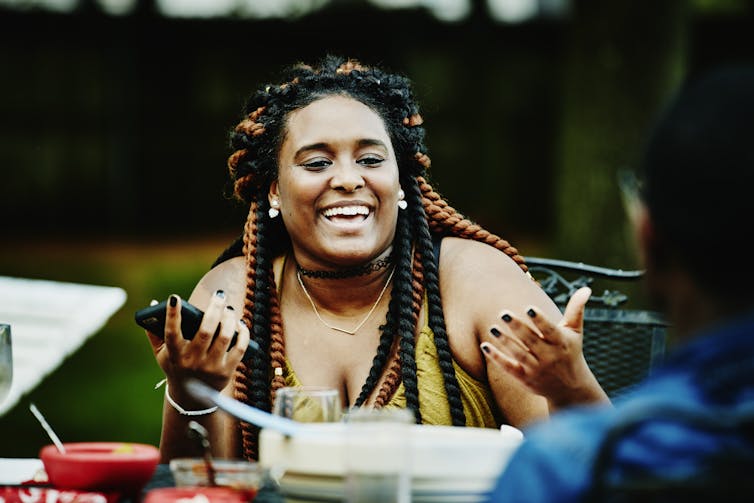
Laughing woman of large body size, in discussion with friends during backyard party Thomas Barwick/Stone via Getty
A majority of Americans believe it is time to add body weight as a protected category to existing state civil rights laws, alongside categories like race and age. Thomas Barwick/Stone via Getty

Our research shows broad and substantial public support for policies to tackle weight discrimination. In a series of national studies, we found that more than 70% of Americans support adding body weight as a protected category, alongside categories like race and age, to existing state civil rights laws. They also support new legislation to make it illegal for employers to discriminate against employees based on weight.

[Over 100,000 readers rely on The Conversation’s newsletter to understand the world. Sign up today.]

This would legitimize weight stigma as both a social injustice and a public health issue.

I believe broad and collective action is needed to address this problem, both in and outside the U.S. While this may sound challenging, fundamentally it is actually quite simple: it’s about respect, dignity and equal treatment for people of all body weights and sizes.

The Conversation

Rebecca Puhl receives research funding from WW International, Inc., who funded the multinational studies highlighted in this article.

04 Jun 19:49

Shot 55 years ago while marching against racism, James Meredith reminds us that powerful movements can include those with very different ideas

by Aram Goudsouzian, Bizot Family Professor of History, University of Memphis
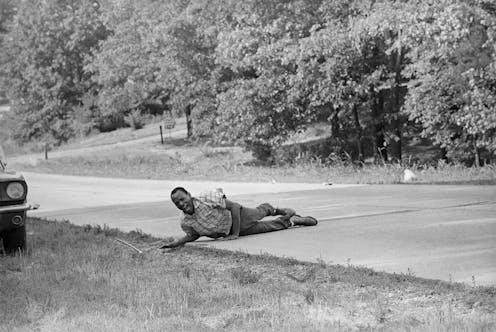
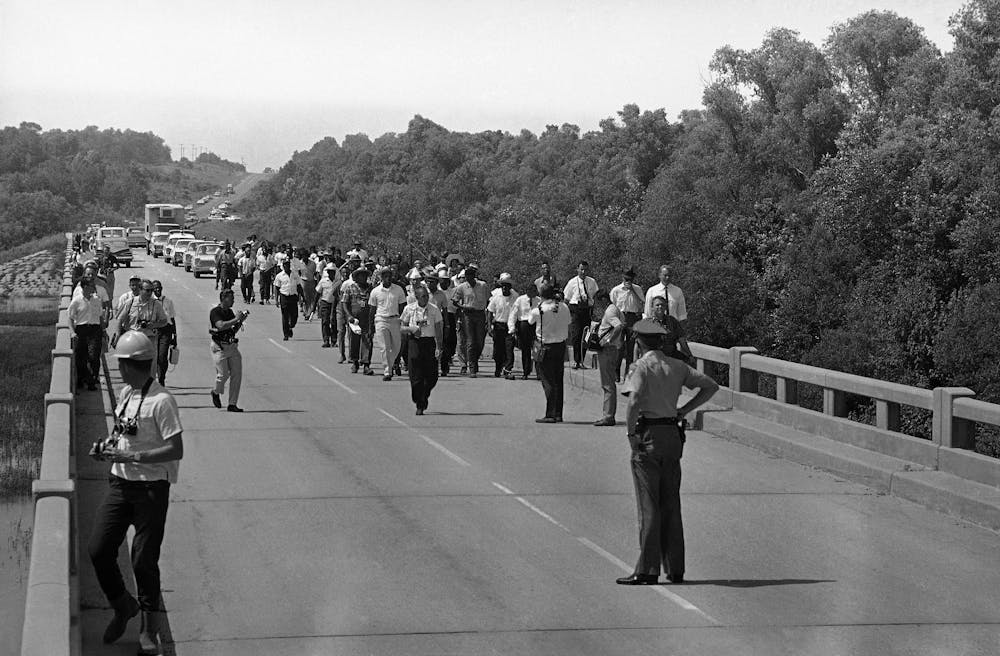
Civil rights activist James Meredith grimaces in pain as he pulls himself across Highway 51 after being shot in Hernando, Mississippi, during his March Against Fear. AP Photo/Jack Thornell, File

James Meredith was walking down Highway 51 just south of Hernando, Mississippi. It was June 6, 1966, the second day of his planned 220-mile trek from Memphis to Jackson, which he undertook to encourage Black people to overcome racist intimidation and to register to vote.

As cars filled with newspaper reporters and police officers rolled nearby, he walked a sloping stretch of road lined with pine trees. He heard a shout: “James Meredith! James Meredith!”

A white man in a roadside gully lifted his shotgun, aimed at Meredith and fired. Meredith was hit and crawled across the road, his eyes wide with panic. As he splayed onto the gravel shoulder of Highway 51, blood soaked through the back of his shirt.

The attack, which happened 55 years ago, propelled Meredith back into the spotlight. Four years earlier he had integrated the University of Mississippi, which prompted bloody rioting and a political crisis. Now, in 1966, photographs of an anguished, injured Meredith splashed across newspapers’ front pages, and the media again admired his stoic fight for racial justice.

Civil rights leaders and thousands of others took up Meredith’s walk, transforming it into a huge demonstration known as the “Meredith March” and “March Against Fear.”

But Meredith, who survived his wounds, resisted his assigned political role. While liberals celebrated his sacrifice, he grumbled that he should have carried a gun, and in the ensuing weeks, he complained that the march lacked order, imposed upon Black Mississippians and endangered women and children.

The shooting revealed how James Meredith fits no conventional political category. He is a civil rights hero who does not associate himself with the civil rights movement. He espouses conservative ideas of self-reliance, discipline, morality and manhood, yet he proclaims a radical mission to destroy white supremacy.

Meredith’s historical meaning is slippery, but that very inability to pin him down can teach important lessons – not only for how to remember the 1960s, but for how to think about social change.

As Meredith’s example reinforces, humans are too complicated to assign to one political tribe. Major movements, moreover, need contributions from people with a range of ideologies.

A group of marchers on a highway in northern Mississippi, including civil rights leaders Martin Luther King Jr., Stokely Carmichael and Floyd McKissick.
On June 8, 1966, days after Meredith was shot on his march, civil rights leaders Martin Luther King Jr., Stokely Carmichael and Floyd McKissick walk in the front rank of Blacks and whites who took up the march from Memphis to Jackson, Mississippi. AP Photo

‘Paradoxical personality’

Meredith, who soon turns 88, remains a familiar figure around Jackson. He is one of the elderly regulars at a supermarket’s coffee klatch. He often dons his trademark white suit and a “New Miss” ballcap. Prone to grandiose or quirky statements, he still possesses a certain charisma, informed by his mystical sense of his own God-ordained destiny.

I first encountered Meredith’s paradoxical personality in 2009, during an interview for “Down to the Crossroads,” my narrative history of the Meredith March Against Fear. Since then, I’ve kept wrestling with Meredith’s significance – I wrote the introduction to his reissued memoir “Three Years in Mississippi,” and I’m now collaborating on a graphic history about Meredith and the integration crisis at “Ole Miss.

Other major figures from the March Against Fear have clear-cut legacies. Martin Luther King Jr. is the moral beacon of a nonviolent movement. Stokely Carmichael, who called for “Black Power” on the march, is a radical icon. Fannie Lou Hamer represents the central role of Black women in the grassroots freedom struggle.

But Meredith? After the march, he faded from view. He did not join any of the major civil rights organizations. His multiple runs for office failed, as did numerous business ventures. By the late 1980s, he seemed to court shock value: He worked for archconservative North Carolina Sen. Jesse Helms, and then endorsed Louisiana politician David Duke, a former grand wizard in the Ku Klux Klan.

James Meredith, dressed in all white and wearing a straw hat, walks surrounded by others in a 50th anniversary march commemorating his earlier march for voting rights.
Civil rights pioneer James Meredith, center, and others walk through downtown Jackson, Mississippi, to the state Capitol on June 25, 2016, as part of a commemoration of his 1966 march from Memphis to Jackson. AP Photo/Rogelio V. Solis

Yet Meredith also remains a symbol of pride: His statue on the University of Mississippi campus is a rallying symbol for Black students – and also has been a target of racist defacement. Black Mississippians often recognize his heroism.

Meredith is difficult to categorize or claim.

Those on the political right tend to showcase the rare Black conservative, but Meredith is a vocal critic of American racism, which most conservatives seek to downplay.

Liberals love to celebrate civil rights icons, but Meredith sometimes makes provocative, and even outrageous, statements about the civil rights movement and its leaders.

Radicals share his goal of destroying white supremacy, but an old man who preaches old-fashioned morality does not conform to the modern model of an activist.

Streams into a river

The Black freedom struggle has long encompassed people of different ideologies and tactics. Like streams feeding into a river, these political approaches come from distinct sources, but inevitably move in the same direction. In the 1960s, this movement surged forward, in part thanks to Meredith.

He is a complex person – one who might never be fully understood. That’s an important reminder: A movement depends on individual people making individual choices to act in individually specific ways, all in service of a collective goal.

The United States is again undergoing a racial reckoning, and again the nation is divided over its direction. It is, moreover, a dangerous moment for democracy. A sizable portion of the electorate believes in conspiracy theories about stolen elections.

In this polarized atmosphere, what can a productive social movement look like?

It has to respect the idealism of the forces demanding change but still speak to broadly shared democratic principles. A powerful movement makes room for contributors who don’t fit neatly into that movement. Sometimes, as in the case of James Meredith, their significance is extraordinary.

The Conversation

Aram Goudsouzian ne travaille pas, ne conseille pas, ne possède pas de parts, ne reçoit pas de fonds d'une organisation qui pourrait tirer profit de cet article, et n'a déclaré aucune autre affiliation que son organisme de recherche.

04 Jun 19:45

Toxic chemicals linked to lower egg counts in women

by Jasmin Hassan, PhD Candidate in Reproductive Medicine, Karolinska Institutet
This is the first study to investigate how chemical exposure impacts the number of eggs a woman has. Peakstock/ Shutterstock

Birth rates are decreasing worldwide. In all European countries they’re even dropping below population replacement levels, which refers to the number of children needed per woman to keep a population stable. While these decreases might be due to many adults intentionally postponing when they have their first child – or actively choosing not to have children – an increasing number of studies suggests these don’t fully explain decreasing birth rates. Some research also indicates that decreasing fertility is a major contributing factor in this decline.

One factor linked to decreased fertility is the presence of industrial chemicals found in our environment. Much is known about the impact of these chemicals on male fertility, but little research has looked into how they affect women. This is what our recent study sought to do.

We found that exposure to common chemical contaminants was associated with reduced egg counts in the ovaries of reproductive-aged women. Though these chemicals have since been banned, they were once used in household products like flame retardants and mosquito sprays, and are still present in the environment and in foods like fatty fish.

Fewer eggs

We measured the levels of 31 common industrial chemicals, such as HCB (an agricultural fungicide) and DDT (an insecticide), in the blood of 60 women. To gauge their fertility, we measured the number of immature eggs they had in their ovaries by counting them in ovarian tissue samples using a microscope. Because ovaries are located inside the body and would require surgery to access, we chose pregnant women who were having a caesarean section, as this made it possible to access tissue samples without additional surgery.

We found that women with higher levels of chemicals in their blood sample also had fewer immature eggs left in their ovaries. We found significant connections between reduced egg numbers and certain chemicals, including PCB (used in coolants), DDE (a by-product of DDT) and PBDE (a flame retardant). As female fertility is age-dependent, we made sure to adjust our calculations accordingly depending on the age of the woman in question. This showed us that exposure to these chemicals resulted in fewer eggs for women of all ages.

We also found that women with higher chemical levels in their blood had to try for longer to get pregnant. For the women with the highest levels of chemicals in their blood, it took more than a year.

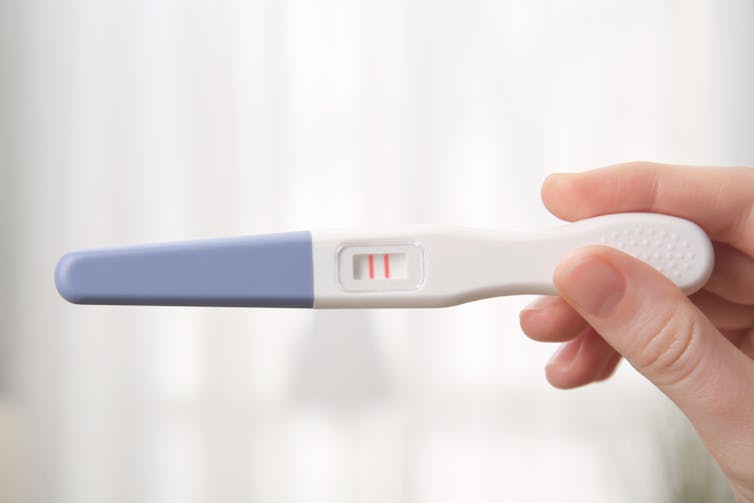
A woman holds a positive pregnancy test in her hand.
Those with the highest levels of chemicals took over a year to become pregnant. Africa Studio/ Shutterstock

Unlike men, women are only born with a fixed set of immature eggs in their ovaries, and cannot produce new ones after birth. A woman’s “reserve” (the number of eggs in her ovaries) naturally diminishes through monthly ovulations, as well as by normal follicle death. When depleted below a critical level, natural fertility ends and menopause begins. Our findings imply that toxic chemicals may speed up the disappearance of ovarian follicles, which could lead to reduced fertility and earlier menopause.

Chemical soup

We’re exposed to industrial chemicals through our food, the products we put on our skin, and even through our mothers while developing in the womb.

The number of industrial chemicals, as well as their abundance in the environment, has steadily increased since the 1940s – with devastating effects on ecosystems, wildlife and even human fertility. Many chemicals were introduced to the market with little testing for safety. This has led to a situation where humans and the environment are exposed to an extensive “soup” of industrial chemicals.

So far, multiple chemicals have been found to be harmful to reproduction after only decades of consumer use. These include PFAS (the chemical used in Teflon, Scotch Guard, and firefighting foam), phthalates (used in plastic packaging, medical equipment and soaps and shampoos), as well as pesticides and other industrial chemicals like PCBs.

The negative effects include reduced sperm counts in men, and potentially the ability of women to become pregnant. Our study is the first to investigate the link between chemical exposure and the number of eggs a woman has.

The chemicals we studied were all “persistent”, meaning they build up in the body over time. Strikingly, the chemicals that we found to be associated with lower egg counts were restricted by an international treaty decades ago. Yet because of their persistence, they still contaminate the ecosystem and our food.

Interestingly, PCBs (one of the chemicals we studied) have also been connected to decreased sperm counts and infertility in men. Simultaneous decreases in male and female fertility could make it more difficult for couples to get pregnant.

In future, researchers should investigate whether the fertility of all women – as opposed to pregnant women – is similarly affected by these chemicals. But these findings may encourage us to rethink chemical safety to take fertility into consideration during safety assessments. Avoiding certain foods (such as seafood) and certain products (such as those we put on our skin and hair) may also help minimise the negative effects of chemicals on our chances of having a baby.

The Conversation

Paulina receives funding from the Swedish Research Council, Swedish Research Council for Sustainable Development, Jane & Aatos Erkko Foundation, Karolinska Institutet funds and foundations, and the European Commission.

Richelle receives funding from Birgitta and Carl-Axel Rydbeck Research Foundation.

Jasmin Hassan does not work for, consult, own shares in or receive funding from any company or organisation that would benefit from this article, and has disclosed no relevant affiliations beyond their academic appointment.

04 Jun 19:33

Rights for nature: How granting a river 'personhood' could help protect it

by Justine Townsend, PhD Candidate, Department of Geography, Environment and Geomatics, University of Guelph
In February, the Innu Council of Ekuanitshit and the Minganie Regional County Municipality declared the Muteshekau Shipu (Magpie River) a legal person, a move that may provide greater certainty for this majestic river's future. (Boreal River)

The Muteshekau Shipu (Magpie River) runs nearly 300 kilometres in Québec’s Côte-Nord region. The river is culturally significant for the Innu and it is popular with white water paddlers and rafters.

Despite efforts to protect the river, Muteshekau Shipu continues to be threatened by potential new hydroelectric dam development. But, in February, the Innu Council of Ekuanitshit and the Minganie Regional County Municipality declared the Muteshekau Shipu (Magpie River) a legal person, a move that may provide greater certainty for this majestic river’s future.

While a first in Canada, granting legal personhood to natural entities is part of a global movement to recognize the rights of nature in law. Indigenous communities around the world are leading the way in upholding the rights of sacred and ancestral rivers, forests and mountains. Recognizing the rights of nature is an opportunity to elevate the power of Indigenous Peoples’ laws and worldviews to benefit all peoples.

Extractive values — the belief that natural entities are resources that can be used for human benefit with little regard for their well-being and longevity — are deeply embedded in Canada’s legal and economic systems.

These values influence the ideologies at the root of our biodiversity and climate crises. These ideologies justify the transformation of rivers, forests and the atmosphere into commodities and private property at our own peril. Recognizing natural entities as legal persons and enshrining their rights in law is a promising legal innovation.

Rights of nature

On Feb. 23, the Alliance for the Protection of the Magpie River/Muteshekau Shipu recognized nine rights of the river. These include the rights to evolve naturally and be protected, to be free of pollution and to sue.

The members of the Innu Council of Ekuanitshit, part of the alliance, will now be the river’s guardians. This means that those with long-standing relationships to Muteshekau Shipu will be formally entrusted with the river’s care for future generations.

“Designating the river as a legal person was the clearest message we could send,” Chief Jean-Charles Piétacho of the Innu Council of Ekuanitshit told us in an interview. “There will never be dams in this river. The river protects herself, we protect the river, we’re all protected. I think the message is very clear.”

A river winding through lush green valley
In 2017, the New Zealand Parliament recognized what Māori leaders had been saying for generations, that the Whanganui River is a living being and should have the rights, duties, powers and liabilities of a person. (Shutterstock)

Galvanized by widespread environmental degradation and rising Indigenous rights movements, Indigenous communities around the world are leading the way in upholding the rights of sacred and ancestral rivers. This includes Māori tribal relationships with the Whanganui River in Aotearoa New Zealand, the role of Indigenous and Afro-Colombian communities in the Atrato River in Colombia, and the Yurok Tribal Council’s granting legal rights of personhood to the Klamath River through an ordinance in the United States.

The idea that nature is a sentient being isn’t new to Indigenous and other traditional peoples. “The vision of the Innu is that Nature is living. Everything is alive,” said Chief Piétacho.

Indigenous laws: Relationships and responsibilities

Recognizing the rights of nature are modern expressions of long-practised Indigenous laws. Indigenous laws are as diverse as Indigenous cultures yet share an understanding that humans are an integral part of the natural world. These laws emphasize respect for all beings and responsibilities to care for lands and waters. Trees, mountains and plants are relatives, not commodities that can be privately owned and exploited.

A dam controls the flow of a river
Four dams along the Klamath River, which flows through Yurok Territory, are set to be removed to begin the restoration of the river that runs from Oregon to northern California. (AP Photo/Gillian Flaccus)

The rights-of-nature movement may seem radical to some people. It challenges Eurocentric values such as human dominance over the natural world, which is considered largely inanimate. The conservation movement itself is founded on a worldview that sees “wilderness” as something separate to be protected from humans. The “fortress” conservation movement is ideologically non-commensurate with Indigenous ways of thinking about being a part of nature. This belief was used to justify the forced relocation of many Indigenous Peoples from their territories to establish parks and protected areas.

Rights understood through a western, liberal and individualistic lens overlook collective responsibilities to the natural world. “I sincerely think Québec and Canada missed their responsibility; they aren’t protecting the river from development,” said Chief Piétacho.

Bridging western and Indigenous legal systems through a rights-of-nature approach is one tool for encouraging a kincentric view of the world, which sees humans as “part of an extended ecological family that shares ancestry and origins.”

Indigenous laws mirror and reinforce relational worldviews that view living entities as relatives, not resources. This in turn shapes social conduct that emphasizes respect and responsibility to the natural world. Innovative governance arrangements are one means through which distinct worldviews and associated laws can be woven together.

Innovative governance models

Rivers speak but since western laws and institutions are not designed to listen, people must act as intermediaries voicing perspectives on their behalf. Indigenous laws are well positioned to conceptualize the decision-making structures needed to breathe life into legal personhood.

In 2014, Tūhoe iwi (Māori) and the New Zealand government granted legal personhood to Te Urewera, an ancestral forest and former national park. They created a board responsible for making decisions in the best interests of Te Urewera. Tūhoe, as children of Tu Urewera, give expression to her through the board.

In Northern Canada, Łutsël K’é Dene First Nation established Thaidene Nëné as an Indigenous Protected Area under Dene law. It is also protected as a park and conservation area under Canadian and territorial (Northwest Territories) legislation. The management board, Thaidene Nëné Xá Dá Yáłtı, is composed of members of Łutsël K’é Dene First Nation, the Government of Canada and the Government of the Northwest Territories. Once appointed, members no longer represent their organizations, they speak for Thaidene Nëné.

Indigenous-led initiatives

Examples like Thaidene Nëné are the exception and not the norm in Canada, although this may be changing. There is a national mandate to support Indigenous-led conservation initiatives and advance reconciliation. This support combined with Indigenous leadership and accompanying legal innovations present new opportunities for caring for the land and waters.

Many similar Indigenous-led initiatives are currently underway, supported by programs including the Bioneers Indigeneity Program, RIVER (Revitalizing Indigenous Values for Earth’s Regeneration), the Conservation through Reconciliation partnership, RELAW (Revitalizing Indigenous Law for Land, Air and Water) and the Global Network for the Rights of Nature.

The Muteshekau Shipu river declaration — and the legal guardianship role for Innu — is an example governments can learn from. “If the government wants to effectively protect Nature, they should consider this option so protected areas would be protected along with our rights,” said Chief Piétacho.

To create just and liveable futures for all our relatives (human and otherwise), Canadian laws and policies need further innovation. Vesting legal personhood in natural entities is a promising intervention when Indigenous Peoples represent these entities. It elevates the standing of nature for all peoples and respects the laws of Indigenous Peoples.

Georgia Lloyd-Smith, a lawyer with West Coast Environmental Law, co-authored this article. The authors are grateful to Chief Jean-Charles Piétacho for the interview.

The Conversation

Justine Townsend receives funding from the Social Sciences and Humanities Research Council of Canada.

Bioneers//Collective Heritage Institute receives external funding from foundations and individuals to support Bioneers Rights of Nature tribal governance initiative.

Catherine Iorns and Lindsay Borrows do not work for, consult, own shares in or receive funding from any company or organisation that would benefit from this article, and have disclosed no relevant affiliations beyond their academic appointment.

04 Jun 18:57

Supreme Court affirms tribal police authority over non-Indians

by Kirsten Carlson, Associate Professor of Law and Adjunct Associate Professor of Political Science, Wayne State University
The actions of a Crow Nation police officer were in question at the Supreme Court. Crow Nation

The Supreme Court unanimously affirmed the sovereign power of American Indian tribes on June 1, 2021, ruling that tribal police officers have the power to temporarily detain and search non-Indians on public rights-of-way through American Indian lands.

In most communities in the United States, the local government has the authority to investigate and prosecute both misdemeanor and felony crimes. And local police can detain and search individuals suspected of state and federal crimes, at least until handing them off to the appropriate authorities.

Tribal governments – the local governments in Indian country – have the power to prosecute tribal citizens on tribal lands. When it comes to non-Indians, though, the situation is different. In 1978, the Supreme Court ruled that tribal governments could not prosecute non-Indians for any crimes in Indian country. Tribal governments have to rely on state and federal governments to prosecute non-Indians – which doesn’t happen often. Effectively, non-Indians have been able to commit crimes in Indian country with impunity.

Tribal police are often the first responders to reported crimes on tribal lands, regardless of whether the victims or the alleged perpetrators are American Indians or not. Now, with this latest ruling, the court has clarified that tribal police can search non-Indians suspected of state or federal crimes in Indian country and detain them until handing them off to federal or state authorities.

A tribal officer’s encounter

Late one night in February 2016, Crow Nation police officer James Saylor stopped to examine a truck sitting on the side of Highway 212 on the Crow Reservation in Montana. He wasn’t attempting to arrest the occupants, but rather thought they might need assistance.

When he approached the truck, however, Saylor noticed that the driver, Joshua James Cooley, had watery bloodshot eyes. Saylor also saw two semiautomatic rifles sitting on the front seat.

He ordered Cooley out of the truck, conducted a pat-down search, and called for backup from other officers. Saylor then noticed a glass pipe and a plastic bag of methamphetamine in the truck. Upon their arrival, federal and state officers instructed Saylor to seize the drug evidence. Federal officers eventually arrested Cooley.

A federal grand jury later charged Cooley with gun and drug charges under federal law. Cooley sought to defeat the charges by arguing that the drug evidence seized by Saylor could not be introduced into court because a Crow Tribe police officer lacked the authority to investigate crimes by a non-Indian.

Cooley’s argument included a claim that the Supreme Court’s 1978 ruling also limited the ability of tribal police officers to detain and search non-Indians in Indian country.

Federal Indian law attorneys feared that a Supreme Court decision limiting tribal policing authority would further undermine the safety of Indians and non-Indians living in Indian country. They worried such a ruling could hamstring the ability of tribal police to detain and search potential criminals.

A police officer talks to a man driving a vehicle
Tribal police often interact with the public, including tribal members and nonmembers. Mark Ralston/AFP via Getty Images

Tribes have power on their lands

The Supreme Court unanimously ruled against Cooley. Justice Stephen Breyer, writing for the court, stated clearly that “no treaty or statute has explicitly divested Indian tribes of the policing authority at issue.”

The new ruling built on another Supreme Court decision from 1981, declaring that a “tribe may … retain … power … over the conduct of non-Indians … within its reservation when that conduct threatens or has some direct effect on the political integrity, the economic security, or health or welfare of the tribe.”

The new ruling made clear that this case unmistakably affected the health or welfare of the tribe, saying that “deny[ing] a tribal police officer authority to search and detain … any person he or she believes may commit or has committed a crime would make it difficult for tribes to protect themselves against ongoing threats.”

[Get the best of The Conversation, every weekend. Sign up for our weekly newsletter.]

This decision affirms the authority tribes have on tribal lands, and acknowledges the vital role that tribal governments play in keeping their communities safe.

It also reinforces Congress’ recent efforts in the Tribal Law and Order Act and Violence Against Women Act to close legal loopholes that have allowed non-Indians to avoid accountability for crimes committed in Indian country.

The justices’ focus on the practical importance of tribal sovereignty to ensure safety for everyone in Indian country signaled that non-Indians may be held responsible for crimes they may commit in Indian country.

Tribal police officers, like local police across the country, can detain and search non-Indians suspected of state and federal crimes in Indian country, including making suspects wait until state or federal officers arrive to take over the case. That decreases the likelihood of potential criminals getting away scot-free.

The Conversation

Kirsten Carlson does not work for, consult, own shares in or receive funding from any company or organization that would benefit from this article, and has disclosed no relevant affiliations beyond their academic appointment.

26 May 12:00

The Zodiac Man

In zodiac man illustrations, astrological signs appear alongside the parts of the body they were thought to influence.

25 May 20:42

What actually is catnip and is it safe for my cat?

by Lauren Finka, Postdoctoral Research Associate, Nottingham Trent University
Shutterstock/Anna Hoychuk

There are many valid theories to explain the global appeal of cats, including our obsession with watching videos of them online. In terms of cats’ pure entertainment value, however, our fascinations are probably attributable to their seemingly endless repertoire of bizarre behaviours.

From being able to “trap” your cat by simply drawing a square around them, to cats seemingly freaking out when presented with a cucumber (I don’t condone this latter activity on cat welfare grounds), our feline companions are as entertaining as they are perplexing.

When it comes to their seemingly weird reactions to things, their response to an unassuming plant belonging to the mint family is no exception.

Nepeta cataria, or more commonly known as catnip is a plant native to parts of Europe and Asia that is well known for its cat-attracting (and craze-inducing) properties among domestic cats and several other (non-domesticated) felids, including lions, leopards and jaguars. Responses to catnip typically include sniffing, licking, biting, rubbing or rolling on the plant, head shaking, drooling, vocalising and even kicking with the hind feet.

Catnip’s status as kitty kryptonite is due to a specific chemical compound called nepalacatlone that the plant naturally releases when its leaves or stem are bruised. This chemical is thought to bind to protein receptors within the cat’s nose which then stimulate sensory neurons that lead to changes in brain activity.

These mind-altering affects can typically last between five and 15 minutes, although some cats will respond much more intensely and for longer than others. Interestingly, the ability to respond to catnip is thought to be heritable, with around one in three adult cats seemingly immune to its effect.

However, other scientists argue all cats may possess the ability to react to catnip, but that some are active and others more passive responders, with differences in intensities of reactions influenced by their age, sex and neuter status.

Is catnip a drug for cats?

Many cats are certainly very attracted to catnip and will actively seek it out in their environment. For these reasons, catnip is often used (in its dried form) to encourage cats to use their scratching posts – as opposed to the arm of our expensive new sofa. It’s also commonly placed within cat toys or planted in gardens as a source of enrichment for cats.

In humans, smoking catnip has been described as inducing sensations akin to those of marijuana or LSD. It’s possible that cats may experience similar effects, although their brains are not quite the same as ours, so their “trips” might feel a little different to them.


Read more: Is it unethical to give your cat catnip?


However, a recent study indicates that exposure of cats to nepalactalone leads to increases in a peptide hormone associated with pleasure. This suggests that catnip could have some pretty powerful feel-good properties for kitties.

Interestingly, the authors also found that cats covered in nepalactalol were less likely to be bothered by mosquitoes. This provides a suitable evolutionary explanation for cats’ innate attraction (and reaction) to the plant - covering yourself in catnip might feel really good, but also help keep those pesky insects at bay.

A cat sniffing fresh catnip.
Around a third of cats are immune to catnip’s effects. Shutterstock/Okssi

Is it cruel to give a cat catnip?

Although evidence suggests catnip does have pleasurable side-effects, not everything we like – or are at least attracted to – is good for us. The heightened arousal and altered state of consciousness that probably occurs among active responders may not always be a welcome experience.

In situations where cats feel anxious, unsure or not fully in control, they tend to seek out sources of safety rather than stimulation. Under these circumstances, the last thing cats probably want is to go on some sort of mind-bending hallucinogenic trip.

While it may certainly be fun for us to watch their catnip-induced antics, we should think carefully about if we are doing this for the cats’ benefit, or simply for our entertainment. We should also avoid disturbing or trying to stroke cats that are under the influence, and ultimately, cats should always be allowed to say no.

If we want to give cats catnip, it’s best that we place it somewhere quiet, away from their core areas in the home – avoid locations where they usually eat and sleep – and let them decide if they feel like taking a hit, in their own time.

The Conversation

Lauren Finka is a member of International Cat Care's feline wellbeing panel and consults for Battersea Dogs and Cats Home

25 May 20:37

Six reasons why potatoes are good for you

by Duane Mellor, Associate Dean Education - Quality Enhancement,, Aston University
Potatoes have been given a hard time. Sergej Cash/ Shutterstock

The humble potato has been given a bad rap. What was once a cheap staple of many countries’ diets has instead been branded in recent years an “unhealthy” food best avoided.

Eating too much of any type or group of food (like carbohydrates) isn’t healthy, and some research suggests eating too many potato products in particular might be associated with higher blood pressure. But it’s typically the way we prepare and consume potatoes (like frying them) that cause negative effects.

In fact, potatoes contain a lot of vitamins and other nutrients that are important for health. Here’s six reasons why potatoes are good for you.

1. Vitamin C

People typically associate vitamin C with oranges and citrus fruit. But an important source of vitamin C in British diets for most of the 20th century actually came from potatoes. On average, a small (150g) potato provides us with about 15% of our daily vitamin C.

Vitamin C is important as not only does it support immune function and contain antioxidants, it plays an essential role in forming connective tissue, which helps our joints work – and holds our teeth in place. This is why vitamin C deficiency (scurvy) is linked to teeth falling out.


Read more: How the humble potato fuelled the rise of liberal capitalism – podcast


2. Vitamin B6

Vitamin B6 is an essential co-factor (a small molecule) in the body. It helps over 100 enzymes in the body function properly, allowing them to break down proteins – a process key to good nerve function. This may also be why B6 is linked to good mental health.

Typically, a small potato will contain around a quarter of an adult’s recommended daily intake of B6.

3. Potassium

Having potassium in our cells is important for regulating the electrical signalling in muscles and nerves. So, if potassium gets too high or low, it can stop our heart working.

Roast, baked and fried potatoes contain higher levels of potassium than boiled or mashed potatoes, with a jacket potato containing around a third of the recommended daily intake. This is because boiling diced potatoes can cause around half of the potassium to leak out into the water.

However, people with kidney disease – which can limit the ability to remove excess potassium from the body – may need to limit the number of potatoes they eat. And if you do roast or fry your potatoes, be careful how much oil you use.

4. Choline

Choline is a small compound which attaches to fat to make phospholipids, the buildings blocks of cell walls, as well as the neurotransmitter acetylcholine (which helps us contract muscles, dilate blood vessels, and slow heart rate). Potatoes contain the second highest levels of choline, next to protein-rich foods, like meat and soya.

It’s vital to consume enough choline as it’s essential for a healthy brain, nerves, and muscles. And subtle differences in our genes may mean some of us are naturally more deficient in making choline. A jacket potato contains around 10% of a person’s daily choline requirements. Choline is particularly important in pregnancy, as the growing baby is making lots of new cells and organs.

5. Good for our stomach

A bowl of boiled potatoes with fresh dill on top.
The cooked starches in potatoes can be good for our microbiome. Gayvoronskaya_Yana/ Shutterstock

Cooking and cooling potatoes before eating them allows resistant starch to form. This healthy starch helps our bodies in many ways, including by acting as a prebiotic (which are important for a healthy gut microbiome).

The cooling of fluffy, cooked starches causes them to collapse. While this actually makes them harder to digest, this means that the bacteria in our colon then ferments them, producing compounds similar to vinegar called short-chain fatty acids. These fatty acids nourish our guts and keep it healthy.

Short-chain fatty acids can also alter our metabolism in a good way, helping lower blood fat and blood sugar levels. This – together with their high water and low-fat content – makes boiled and steamed potatoes a low calorie, nutrient dense and filling food.

6. Naturally gluten free

Potatoes are also naturally gluten free, so are a great option for people with coeliac disease or who need to avoid gluten.

The same is true for sweet potatoes, which also have a lower glycaemic index – which means they don’t cause a sharp spike in blood sugar, which may help control weight and appetite. However, sweet potatoes are slightly higher in calories and carbohydrates than regular potatoes – though they contain more beta carotene (a form of vitamin A).

Potatoes on your plate

Some people may choose to avoid potatoes due to concerns about weight gain – but a typical boiled potato is only around 130 calories, which is actually fewer calories than a banana of the same size. But it’s important to remember how potatoes are prepared and what they’re eaten with.

Boiling or steaming (possibly with cooling to increase the resistant starch) is the best way to keep the number of calories per gram low. Baking will increase calories per gram (as water is lost), as can mashing with butter or cream. The least healthy way to eat potatoes is as chips or crisps, as they soak up oil like a sponge.

You’ll also want to avoid green potatoes. This happens when the potato has been stored in light and produces a toxin which can irritate our gut. Otherwise, for most people including potatoes as part of a healthy and varied diet may actually be a good thing.

And alongside being healthy, potatoes also have environmental advantages. They require less water than rice to produce, and less greenhouse gases than both rice and wheat – which may be yet another good reason to include potatoes in your diet.

The Conversation

Duane Mellor is affiliated with British Dietetic Association and Association for Nutrition.

25 May 20:21

Why do I need anything other than Google to answer a question?

by Cody Behles, Director of Innovation & Research Support, University of Memphis
Scholars can be more reliable than search engines. Anadolu Agency/Getty Images

Curious Kids is a series for children of all ages. If you have a question you’d like an expert to answer, send it to curiouskidsus@theconversation.com.


Why do I need a scholar to answer a question if there is Google? – Harrison F., age 13, Brookline, Massachusetts


Imagine you’re researching something. Whether you’re a fourth grader who needs to find out how volcanoes erupt or you’re an adult looking for more information regarding a news article, you might want to quickly look something up on the internet. What could go wrong?

Google’s search engine may seem to have all the answers to your questions. But where does that information come from? Who selects the websites that display when you enter “volcanic eruption” in the search box? Who decides which item shows up first and in what order the rest will follow?

I think about these questions a lot because of what I do for a living: helping University of Memphis scholars communicate about their work with academic peers and the public.

These scholars are experts who have worked and studied for a long time to learn all they can about a topic. They answer questions by combining their knowledge with the scientific method to discover new things.

Page, Brin and PageRank

When Larry Page and Sergey Brin created Google’s search engine in 1996 as Stanford University computer science students, they were trying to establish a fast way to easily find things on the internet. At the time, searching through the web was slow and difficult, making it hard to find the best information.

They invented an algorithm, a detailed step-by-step instruction set or formula, called PageRank. It works by estimating the quality of a webpage by measuring the number and quality of other pages that link to it. When you search on Google, its search engine returns the highest ranked pages related to what you’re looking for.

PageRank, explained.

Some drawbacks

Googling became so fast it can seem instantaneous.

But the results you see when you do a Google search can be influenced by other things besides PageRank, including whether advertisers are paying Google to make their websites show up higher than they otherwise might. Google’s algorithms factor in hundreds of other variables, including what sites you’ve clicked on in the past and how recently a page was updated.

Unlike scholars, Google’s search engine can’t automatically decide which sources are the most important, most accurate or most significant. That is, Google searches don’t necessarily identify objective and reliable information.

You may consider switching to another search engine like Microsoft’s Bing or one that specifically promotes the privacy of your information like DuckDuckGo. But many of these alternatives have the same shortcomings.

How scholars communicate

Scholars often communicate by publishing research papers. Each paper emphasizes a single idea that adds something to a discussion. It may be the new result from an experiment or a new observation. Other scholars then read that paper and discuss it.

Knowledgeable people can take stock of the same set of facts and still have different perspectives, which means there isn’t necessarily one right answer to a question. Over time this back and forth leads to some generally accepted principles and concepts.

This cycle of research, review and discussion has been around since the first academic journals were published in 1665. As new discoveries are made, ideas can change.

One way researchers show what other ideas they consider in their work is through scholarly citations. You’ve surely seen them before – they are in the reference section at the back of nonfiction books or at the bottom of Wikipedia articles. Each points to another work.

These citations tell you what other books and sources the author of what you’re reading considered – and how they came to form the ideas. If multiple scholars use the same ideas as building blocks for their own concepts, and then their ideas, in turn, are used as building blocks for other ideas, it continually leads to a cycle of innovation.

This discovery process isn’t influenced by advertisers – even if it can be partially shaped by whether or not scholars can get funding to pursue a particular kind of research.

Many of the ideas you find on the internet originate from scholarship but are vulnerable to bias and advertising pressure in a way most scholars are not. We need scholars because they provide a complete picture, the most up-to-date information, derived from their wisdom and deeply considered perspective.

The internet makes locating information easier than at any other point in human history. But as Albert Einstein said, “Information is not knowledge. The only source of knowledge is experience.”


Hello, curious kids! Do you have a question you’d like an expert to answer? Ask an adult to send your question to CuriousKidsUS@theconversation.com. Please tell us your name, age and the city where you live.

And since curiosity has no age limit – adults, let us know what you’re wondering, too. We won’t be able to answer every question, but we will do our best.

The Conversation

Cody Behles does not work for, consult, own shares in or receive funding from any company or organization that would benefit from this article, and has disclosed no relevant affiliations beyond their academic appointment.

25 May 20:19

578,555 people have died from COVID-19 in the US, or maybe it's 912,345 – here's why it's hard to count

by Ronald D. Fricker Jr., Professor of Statistics and Senior Associate Dean, Virginia Tech
A November 2020 memorial in Washington, D.C. consisted of thousands of flags, each planted to remember someone who died of COVID-19. Andrew Lichtenstein/Corbis via Getty Images

When the Institute for Health Metrics and Evaluation at the University of Washington released its estimate that COVID-19 had killed 912,345 people in the U.S. by May 6, 2021, many were shocked. That’s 60% higher than the 578,555 coronavirus-related deaths officially reported to the U.S. Centers for Disease Control and Prevention over this same period.

How can two estimates differ so widely? It’s not like the Institute for Health Metrics and Evaluation researchers stumbled upon a morgue of more than 300,000 dead people who hadn’t been tracked elsewhere.

Here’s what goes into some of the various counts of COVID-19 pandemic deaths and how I as a statistician think about their differences.

Tracking deaths

When someone dies, a medical professional records the immediate cause and up to three underlying conditions that “initiated the events resulting in death” on the death certificate. Death certificate information is transmitted to the National Vital Statistics System for a variety of public health uses, including tabulating the leading causes of death in the U.S.

But death certificate information may not reflect the actual number of COVID-19 deaths. A COVID-19 diagnosis could have been missed by health care workers, or the disease could have gone unrecorded on a death certificate. There’s always going to be some error in the data.

One way to think about this is:

OBSERVED COUNT = TRUE COUNT + ERROR

That is, we want to know the real number of COVID-19 deaths in the U.S., the “true count.” But because the real world is messy, we’ll never know that true count and can only approximate it. The unknown true count combines with unknown errors to give us the observed count – for instance, the tally from all the nation’s death certificates.

If the predominant error is that some COVID-19-related deaths were missed – perhaps due to a lack of testing earlier in the pandemic – then the observed count would be an underestimate of the true count. However, there could be additional types of errors as well, and those may cause the observed count to deviate further or in other ways from the true count.

Calculating ‘all cause’ excess mortality

One way around this dilemma is to focus on how many deaths were recorded over and above the number expected by epidemiologists and statisticians had the pandemic not happened. This count is called “all cause” excess mortality. It’s based on historical data.

Estimates from this type of analysis suggest that the reported number of COVID-19 deaths may be an underestimate. Many more people died during the pandemic than normally would have during that time period. And it’s a higher number than how many people died of COVID-19 according to death certificate counts.

For example, the estimated number of deaths above what was expected in 2020 was almost 412,000 people, while the number of deaths the CDC attributed to COVID‐19 as of Jan. 6, 2021 was 356,000.

This type of analysis cannot conclude that the excess deaths are due to COVID-19 itself, only that the aggregate impact of the pandemic resulted in more deaths than would have been expected in its absence.

Reconsidering the number of expected deaths

So if by May 2021 there were 578,555 reported COVID-19-related deaths and perhaps as many as 663,000 excess deaths according to CDC data, how did the Institute for Health Metrics and Evaluation come up with the figure 912,345?

Their analysis seeks to determine the true number of COVID-19 deaths by estimating other effects due to the pandemic. IHME then uses its estimates of those effects to adjust the observed COVID-19 death count.

Some factors they considered would likely contribute to more deaths: health care that was delayed or deferred; mental health disorders that were untreated; increased alcohol use and opioid use during the pandemic. They also considered factors that would likely cut down on deaths: decreased numbers of injuries; reduced transmission of diseases that weren’t COVID-19.

They then used these estimates to adjust the expected number of deaths in an effort to better quantify the number of deaths attributable to COVID-19. In effect, they were applying these pandemic-specific “errors” to the excess death estimates that were based on pre-pandemic historical trends.

Ideally, this type of analysis should result in excess mortality being a better measure of the number of deaths that can be attributed to COVID-19. It depends, though, on having sufficient detailed data available and requires certain assumptions about that data.

masked people stand outside in a socially distanced way
Attendees at an April 2021 ceremony to memorialize people who died of COVID-19. Ben Hasty/MediaNews Group/Reading Eagle via Getty Images

So which number is right?

Such a simple question is actually quite hard to answer for many reasons.

One is that each number is the answer to a different question. The number of “all cause” excess deaths quantifies how many people died from any cause above what we would have expected if the death rate during the pandemic had followed pre-pandemic patterns. The Institute for Health Metrics and Evaluation number is an estimate of the total number of deaths that can be attributed to COVID-19. Both are useful for understanding the impact of the pandemic.

Yet, even two estimates of the total number of COVID-19 deaths are going to differ because the estimates could be based on different methodologies, different sources of data and different assumptions. That’s not necessarily a problem. It may be that the results turn out to be relatively consistent, suggesting the conclusions don’t depend on the assumptions. Alternatively, if the results are very different, that can help researchers understand the problem better.

However, even small differences between studies can, unfortunately, sow distrust in science for some people. But it’s all part of the scientific method in which studies get reviewed by researchers’ peers, questioned and dissected, and then revised as a result. Science is an iterative process in which gut instinct and guesses get refined into theories and then may be subsequently refined into facts and knowledge.

In this case, the Institute for Health Metrics and Evaluation study provides some evidence of what researchers like me suspected: The number of excess deaths in the U.S., while larger than the number of deaths attributed to COVID-19, may also be an undercount of the true number of COVID-19 deaths. It is also consistent with a World Health Organization analysis that concludes the number of COVID-19 deaths in some countries could be two to three times greater than the number recorded. But no single study offers definitive proof, just one more piece of evidence on the path to better understanding the deadly impact of this pandemic.

[The Conversation’s science, health and technology editors pick their favorite stories. Weekly on Wednesdays.]

The Conversation

Ronald D. Fricker Jr. does not work for, consult, own shares in or receive funding from any company or organization that would benefit from this article, and has disclosed no relevant affiliations beyond their academic appointment.

25 May 20:18

Faith in numbers: Fox News is must-watch for white evangelicals, a turnoff for atheists...and Hindus, Muslims really like CNN

by Ryan Burge, Assistant Professor of Political Science, Eastern Illinois University
Fox News has a faithful audience. AP Photo/Richard Drew

Fox News possesses an “outsized influence” on the American public, especially among religious viewers.

That was the conclusion of the nonprofit Public Religion Research Institute in a report released just after the 2020 presidential election. It noted that 15% of Americans cited Fox News as the most trusted source – around the same as NBC, ABC and CBS combined, and four percentage points above rival network CNN. The survey of more than 2,500 American adults also suggested that Fox News viewers trend religious, especially among Republicans watching the show. Just 5% of Republican viewers of the channel identified as being “religiously unaffiliated” – compared to 15% of Republicans who do not watch Fox News and 25% of the wider American public.

To further explore the relationship between different faiths and the TV news they associate with as part of my research on religion data, I analyzed the result of another survey, the Cooperative Election Survey.

The annual survey, which was fielded just before the November 2020 election, with the results released in March, polled a total of 61,000 Americans over a number of topics. One question was on their news consumption habits. It asked what television news networks respondents had watched in the prior 24 hours.

Percentage of respondents who saw TV news in past 24 hours

Ryan Burge/CES

Some very interesting patterns emerged across religious traditions – and the nonreligious – and the type of media being consumed. For instance, of the the big three legacy news operations – ABC, CBS and NBC – there was no strong base of viewership in any tradition.

In most cases, about a third of people from each religious tradition said that they watched one of those legacy networks in the last 24 hours. PBS scored very low among every tradition. In most cases fewer than 15% of respondents reported watching PBS in the time frame.

However, the numbers for the three major cable news networks – CNN, Fox News and MSNBC – were much higher across the board. In eight of the 16 religious and nonreligious traditions categorized in the poll, CNN viewership was at least 50% of the sample. This was led by 71% of Hindus who watched CNN and 63% of Muslims.

The least likely group to watch CNN was clearly white evangelicals, at just 23%. In comparison, MSNBC scored lower nearly across the board. In fact, in none of the 16 classification groups was viewership of MSNBC greater than it was for CNN.

Fox News viewership was higher than that of MSNBC, but was not as widely dispersed as it is for CNN. It’s no surprise, given its reputation as a conservative news outlet, that 61% of white evangelicals say that they watch Fox News – in the last election, around 80% of white evangelicals voted for Republican candidate Donald Trump. The other three traditions where viewership was at least 50% are white Catholics, Mormons and members of the Eastern Orthodox Church. It should come as no surprise, as those are three groups that consistently vote for the Republican Party. Just 14% of atheists watched Fox, which is just about in line with the share of white evangelicals who watch MSNBC.

Fracturing right-wing media

But with the fracturing of conservative media sources seeing more competitors vying for viewers among the right, Fox News could see a drop in viewership from the religious right.

In the wake of the 2020 presidential election, Fox News viewership plunged as many Trump supporters believed that the network was not being loyal to their standard-bearer of the GOP.

Given the vast number of news options that people of faith have and the increase in political polarization in the United States, the pressure for networks to deliver the news that people want to hear will only increase as time passes.

[Explore the intersection of faith, politics, arts and culture. Sign up for This Week in Religion.]

The Conversation

Ryan Burge does not work for, consult, own shares in or receive funding from any company or organisation that would benefit from this article, and has disclosed no relevant affiliations beyond their academic appointment.

25 May 20:09

Super blood Moon: everything you need to know about the lunar eclipse

by Osnat Katz, PhD Candidate in Space History, UCL
Shutterstock/CHEN HSI FU

Throughout history, lunar eclipses have seemed dramatic. The Moon’s grey-white disc deepens to yellow and orange and finally a dark red cast – this gives a lunar eclipse its nickname of the blood Moon.

Cultures across the world have thought of the lunar eclipse as a sign of changing fortunes or even ill fortune. The ancient Mesopotamians thought the lunar eclipse was an assault on the king and installed proxy kings during the lunar eclipse so no harm came to their rulers. The Hupa and Luiseño tribes of California thought that the Moon must be injured or sick during the lunar eclipse.

A total lunar eclipse will be visible from parts of Australia, Asia and the western parts of North and South America on May 26. This coincides with a supermoon – a point where the full Moon is closest to Earth.

What is a lunar eclipse?

The physical causes of the lunar eclipse are more straightforward than illness, injury or bad luck. A lunar eclipse takes place when the Moon moves into the Earth’s shadow. The Earth has to be directly between the Sun and the Moon, and a lunar eclipse can only take place during a full Moon.

First, the Moon moves into the penumbra – the part of the Earth’s shadow where not all of the light from the Sun is blocked out. Part of the Moon’s disc will look dimmer than a regular full Moon.

Where things get interesting – and strange – is when the Moon moves into the Earth’s umbra, where direct light from the Sun is totally blocked out by the Earth. This means the only light reflecting off the Moon’s disc has already been refracted, or bent, by the Earth’s atmosphere.

Diagram showing what happens during a lunar and a solar eclipse.
A lunar and a solar eclipse. Shutterstock/Alhovik

Blue light is refracted and scattered more by the atmosphere. While all wavelengths of light travel at the same speed, when they pass through a different material —- such as passing from the vacuum of space to Earth’s denser atmosphere —- the shorter, bluer wavelengths are refracted and scattered more because of their higher frequency.

This refraction and scattering mean that only longer wavelengths of light reach the Moon and are reflected back to Earth. Red light has a longer wavelength than blue light, which gives the lunar eclipse its characteristic reddish colour. On Earth, we see the same effect during sunrises and sunsets, when the sky has a more reddish glow than during the day.

During a total lunar eclipse, the whole of the lunar disc enters the Earth’s umbra, so lucky Moon gazers will be able to see a full, reddish Moon. This won’t last forever, though. After about 14 minutes, the Moon will move out of Earth’s umbra and back into its penumbra. In total, the lunar eclipse will last a few hours.


Read more: Blood moon: lunar eclipse myths from around the world


How to watch the eclipse

Unfortunately, in many places including the UK, the Moon will be below the horizon. However, some institutions will be streaming live feeds of the lunar eclipse from their locations. For example, the Griffith Observatory in Los Angeles will be streaming the whole lunar eclipse for free.

The Moon moves into the Earth’s penumbra at 10:45am BST, and moves into the Earth’s umbra at 12:11 BST. Even though you can’t necessarily go out stargazing in the dark, you can still follow the eclipse from the comfort of your own home – no late nights or early starts required.

Moon gazers will have a while to wait until the next lunar eclipse. On November 19, there will be a partial lunar eclipse that’s just about visible, low in the sky, with barely any of the Moon in the Earth’s penumbra. But many may have better luck next year on May 16 2022, when there will be a total lunar eclipse, visible from the UK in the small hours.

The Conversation

Osnat Katz receives funding from the AHRC and the Science Museum for her research.

25 May 20:05

1 in 4 unvaccinated people may not comply with CDC guidelines to wear masks indoors, survey suggests

by Matt Motta, Assistant Professor of Political Science, Oklahoma State University
People who dine out after the CDC recently changed mask guidelines are counting on the honor system. FG Trade/Getty Images

The revised guidelines on when and when not to wear masks came as a surprise to many Americans. The Centers for Disease Control and Prevention announced May 13, 2021, that people who are fully vaccinated against COVID-19 can safely enter many indoor settings, such as grocery stores and restaurants, without wearing a mask.

The CDC’s updated guidelines also ask that unvaccinated or partially vaccinated people continue to wear a mask – even in establishments like bars and restaurants, where doing so may no longer be required.

There is good reason to suspect that at least some unvaccinated Americans may violate the CDC’s recommended “honor system” approach. Although the number of Americans who have been vaccinated or plan to be vaccinated against COVID-19 has increased in recent months, many Americans – 34%, according to a recent Kaiser Family Foundation survey – are either on the fence about vaccinating (15%), will vaccinate only if required to do so (6%) or plan to forgo vaccinating altogether (13%).

My colleagues and I conducted research that suggests that many people who plan to refuse a vaccine hold negative views toward scientists and medical experts. Consequently, it seems plausible that unvaccinated people may be unwilling to heed the advice of public health experts at the CDC.

So an important question arises, especially as Memorial Day approaches and people want to be out and about: Can fully vaccinated Americans trust unvaccinated people to wear a mask, even when not required to do so? In a new, demographically representative survey, I find that the answer may be no.

The virus could mutate among unvaccinated people

The logic behind the decision, according to the CDC, is that the Pfizer, Moderna and Johnson & Johnson vaccines are effective enough to substantially reduce the likelihood of vaccinated people contracting COVID-19, developing symptoms or spreading the disease to others. This likely means that potentially infectious unvaccinated people pose only a minimal threat to the vaccinated people with whom they come in contact.

There are now comparatively low levels of community spread across much of the U.S. And, as of May 24, over 38% of Americans were fully immunized against COVID-19 via vaccination. As a result, this recent CDC guidance may not interfere with declining virus transmission rates across the country.

The decision, however, has nevertheless raised questions about whether vaccinated Americans can trust unvaccinated people to follow the CDC’s updated guidelines. As CDC director Rochelle Walensky put it, unvaccinated people must be “honest with themselves” about the protective health benefits of wearing a mask.

One concern about the so-called “honor system” approach is that it may allow the virus to circulate among unvaccinated people – a point raised by a major nurses union. If true, increased circulation could enable the virus to continue to mutate. This could potentially lead to the development of variants that are at least partially resistant to existing COVID-19 vaccines.

A woman gives a thumbs-up after getting a COVID-19 vaccine.
Many vaccinated people still want to wear a mask after receiving a COVID-19 vaccine. FG Trade/Getty Images

Assessing mask-wearing intentions and vaccination status

I studied Americans’ vaccination and mask-wearing intentions in a demographically representative survey of 478 adults in the U.S. on May 17. Respondents were recruited to participate in this study via Lucid Theorem, an online opt-in survey research service. It uses quota sampling to produce samples that reflect known census demographic benchmarks on age, race, educational attainment, household income, partisan identification and census region.

I corrected for any remaining deviations between the sample and U.S. adult population by applying survey weights that adjust for respondents’ age, race, educational attainment and household income.

I first asked respondents to report whether they were “fully vaccinated against COVID-19” or “partially vaccinated against COVID-19,” or if they had “not received a COVID-19 vaccine.” Respondents could report that they were “fully vaccinated – that is, received two doses of Pfizer/Moderna or one of Johnson & Johnson” or “partially vaccinated – meaning that they received one dose of Pfizer/Moderna”; that they have “not received a COVID-19 vaccine, but plan to”; or that they have “not received a COVID-19 vaccine, and do not plan to.”

As some respondents may not have been aware of the updated CDC guidelines, I next briefly summarized the CDC’s revised recommendations.

Finally, I asked respondents whether they “plan to wear a mask in indoor settings like stores and restaurants, even when not required to do so.” Respondents could answer this question by saying “Yes, I plan to wear a mask” or “No, I do not plan to wear a mask.”

Many unvaccinated people may ignore CDC guidelines

About 1 in 5, or 21%, reported that they had not received a COVID-19 vaccine and do not plan to do so. In addition, more than one-quarter (26%) of that 21%, equivalent to about 5% of the total set of respondents, also said that they plan to not wear a mask in indoor spaces like stores and restaurants.

On the other hand, of the 48% who reported being fully vaccinated, a smaller percentage, or 19%, plan to not wear a mask indoors. This means that the proportion of unvaccinated people in my sample who plan to not wear masks indoors is higher than the proportion of vaccinated people who plan to do the same.

Fully vaccinated people may choose to continue to wear a mask indoors because they don’t trust unvaccinated people to follow CDC guidelines. I find that a slim majority – 54% – of fully vaccinated respondents report that they trust unvaccinated people either “a little” or “not at all” to wear masks in indoor environments. Even though nearly 4 in 5 – or 79% – of fully vaccinated people report that they trust the CDC to “do what is right,” uncertainty about what unvaccinated people choose to do may outweigh those considerations.

A potential mismatch between expectations and reality

The idea that many unvaccinated people may choose to not wear masks in public indoor spaces does not necessarily have negative public health consequences. It could be the case that current COVID-19 transmission rates, vaccine uptake and population immunity to the virus are sufficiently high to stave off another wave of infections. As a social scientist, I prefer to leave that question up to epidemiologists and public health professionals.

[The Conversation’s most important coronavirus headlines, weekly in a science newsletter]

However, I believe my research documents an important asymmetry between the CDC’s revised recommendations and what unvaccinated people actually plan to do. Because some Americans who have no plans to vaccinate against COVID-19 report that they may ignore CDC guidelines regarding mask-wearing in indoor spaces, other Americans may be right to harbor some amount of skepticism about whether or not the “honor system” approach is likely to produce compliance.

Of course, I caution that these survey responses are based entirely on self-reported data. It could be the case that people who self-report planning to vaccinate or wear masks, or both, do not actually do so in their daily lives. If true, this may actually strengthen the case for vaccinated Americans to hold some amount of skepticism toward unvaccinated people, as I may be underestimating the extent to which unvaccinated people plan to skirt CDC guidelines.

An “honor system” approach to mask-wearing may not ultimately prolong the pandemic. But Americans may be right to doubt whether or not unvaccinated people follow CDC recommendations.

The Conversation

Matt Motta does not work for, consult, own shares in or receive funding from any company or organization that would benefit from this article, and has disclosed no relevant affiliations beyond their academic appointment.

25 May 14:24

A Plagiarism Explanation Worse Than the Plagiarism

by Jonathan Bailey
A Plagiarism Explanation Worse Than the Plagiarism Image

D Magazine is a monthly publication that has been a staple of the Dallas-Fort Worth area for nearly fifty years. As such, it was surprising when, last week, they took time out on their website to call out plagiarism of their work.

In a short article by Tim Rogers, the paper alleged that another Dallas-focused publication, VoyageDallas, had copied a story they published in 2018 about MoMo Italian Kitchen and republished it verbatim in an un-bylined post.

Rogers, who is also the editor of D Magazine, mocked the plagiarism saying that it was a “a bit too inclusive” for his taste and wondered if they operate similarly in other citites.

The VoyageDallas article, which was published in 2020, was presented as an interview with the restaurant’s owners, Wende Stevenson and Aaron Gross. However, as a screenshot of the article confirms, it was nearly a word-for-word copy of the original piece.

Then, shortly after D Magazine posted their allegations, the article on VoyageDallas went offline. It was then the story took something of a strange turn. According to an update posted two days later, VoyageDallas got in touch with D Magazine and explained the situation in more detail.

According to Mayank, one of the site’s founders, the article was actually written by Stevenson and Gross themselves and they had signed an agreement certifying that they had all the rights to the work. He further clarified that the subjects, not reporters on his staff, ultimately control what is in the article.

However, that doesn’t actually make the situation much better. If anything, it’s actually worse. Rather than VoyageDallas having a problem with an unnamed rogue reporter, they have a systemic issue with the way they obtain and present information.

However, it’s a problem that is all-too-common on the internet and is likely to continue to get more prominent as newsrooms continue to try to do more with less.

You Do Get How That’s Worse, Right?

A Plagiarism Explanation Worse Than the Plagiarism Image
Screenshot of Plagiarized Article Taken By D Magazine

On the surface, it might seem as if it’s better for VoyageDallas to put the blame on the subjects of the article, there’s one major problem with that: Their names weren’t anywhere on the article.

The article ran without a byline so the only name affixed to it was VoyageDallas. As such, any reader that comes across that article has the reasonable assumption that the article was written by a member of VoyageDallas’ staff, not by someone outside the company and certainly not by the subjects themselves.

While VoyageDallas may not have known that the article was originally written by D Magazine, they definitely knew that it wasn’t written by them. Yet, they presented the article as if it were or, at the very least, did nothing to dissuade that impression on the article itself.

This raises questions not just about authorship, but about journalism. An article written by the subject of that article is not a news piece, it is a press release. The expectation is that a news article is written by an impartial journalist that at least tries to independently verify facts of the story and consider all sides of it.

When press release content is used in a news article, the best practice is to clearly cite it and indicate that it comes from an inherently biased source. Though the rules are sometimes more flexible when dealing with feature pieces, such as this one, it’s still a big leap to run what is essentially a press release and not indicate that it wasn’t written by the publication.

To give an example, even when publishing unethical lists of “Best Essay Writing Services”, the Associated Press still makes it clear on the page itself that they are press releases, not original content.

But while I’m targeting VoyageDallas because of their recent public spat with D Magazine, the truth is that they are far from alone. What they’re doing is, if anything, part of a growing and very disturbing trend of blending press releases with news publication.

The Growing Problem Press Release Plagiarism

To be clear, press release plagiarism is nothing new. It’s been an issue for as long as there has been a press and organizations that seek to manipulate it. We’ve seen it many times over, it played a major part in the downfall of Jonah Lehrer in 2012 and it is one of the most common types of plagiarism in journalism.

One reporter even sued his former employer after he was fired for press release plagiarism, alleging that it was such common practice that the paper’s firing was defamatory.

However, over the past decade, many reporters have become more reliant on press releases and other content provided by the subject. The reason is simply because newsrooms are getting smaller and being tasked with producing more content. Reporters that, at one point, might have only done a couple of stories per week are now tasked with doing multiple per day.

Shortcuts often become necessary and one of the first to be taken is the use of press releases in news content. While this can be fine as long as the content is appropriately attributed, it raises serious ethical issues if a reporter or a publication is treating the words as if they came from their own hands.

Poynter, an organization that focuses on ethics in journalism, has a great guide for ethical use of press releases. However, as that article shows, views on the ethics of press release usage vary wildly, making it important for publications to set their standards.

That, in turn, brings us back go VoyageDallas. They likely see no harm in reusing press releases this way, especially since the authors release the content to them specifically for this kind of use. However, there are two victims of plagiarism and they are still misleading their audience, even if they don’t intend to.

Press release plagiarism is often seen as a victimless crime. However, it still robs the audience, who consumes marketing material under the guise of journalism all because of the trust they have in that publication.

Bottom Line

In their FAQs, VoyageDallas does shine some light on their practices. There they say the following:

We publish people’s stories in their own words, even when there are grammatical issues because we believe it’s important to highlight that not all successful people sound the same, have flawless writing skills, etc.

VoyageDallas FAQs

In short, they admit that they publish the work from their subjects and don’t edit it. However, this buried in their FAQs and is not indicated on the articles themselves. There is no byline, no indication the content is a press release and no indication that the subject is the author on the article itself.

What makes it interesting is that the section of the FAQ to feature the quote above is “Authenticity over polish”

For a work to be authentic, it must include clear attribution. It must be abundantly clear who wrote the article and why they wrote it. Otherwise, it’s just confusion for the 99% of visitors that simply read the article and never see the FAQ. They will likely never know the piece wasn’t written by VoyageDallas’ staff.

If nothing else, this current approach brings problems to VoyageDallas. When D Magazine called them out for plagiarism, they had no idea the piece was written by the subjects so they named and shamed VoyageDallas. In short, not being clear about who wrote the piece also means that VoyageDallas bears the reputation harm for any misdeeds done by their writers.

Clear attribution isn’t just important for the audience, it can help save the publication a great deal of headache, especially when appropriating outside material.

20 May 14:49

Stretching can increase your tolerance for pain

by Hugo Massé-Alarie, Professeur adjoint, physiothérapie, Université Laval, Université Laval
Stretching exercises are often prescribed by health professionals, such as physiotherapists, to reduce pain. Shutterstock

To stretch or not to stretch?

Should you do it before or after exercise? Does it prevent or heal injuries? Stretching is always a hot topic. However, while it is effective in improving flexibility, its usefulness in reducing pain is being questioned.

Back pain is one of the most prevalent health conditions in our society. Up to 80 per cent of the population may suffer from it at least once in their lifetime. Many sufferers do not improve after treatment. What makes treatments work or not? Answering this question could improve the quality of life of millions of people.

Health care professionals, including physiotherapists, often prescribe exercises such as stretching to reduce pain. It has long been accepted that stretching provides pain relief by increasing range of motion and decreasing muscle tone, which give the impression that there is less pain.

However, this perceived pain relief is rarely found to be directly associated with pain reduction. In fact, a recent study showed that increased flexibility was actually associated with a greater tolerance for pain, which occurs during the stretching. It’s possible that stretching actually impacts pain perception by activating the areas in our central nervous system that modulate pain.


Read more: To stretch or not to stretch before exercise: What you need to know about warm-ups


I am a professor in the physiotherapy program at Laval University and a researcher at Cirris, the centre for interdisciplinary research in rehabilitation and social integration at the university. Together with students from Laval University and McGill University, I have just published new research on the effect of stretching on pain sensitivity: “Stretch-induced hypoalgesia: a pilot study” in the scientific journal Scandinavian Journal of Pain.

For the study we recruited 22 healthy adults who did not suffer from back pain. Each participant was asked to perform a stretch of the lumbar region (lower back), followed by a stretch of the forearm muscles. Participants were instructed to hold each stretch for three minutes to produce a moderate stretching sensation.

Stretching produces hypoalgesia

Before and after each exercise, we measured the pain sensitivity threshold for a muscle of the lower back (erectors of the lumbar spine) and a muscle of the forearm (wrist flexors) using an algometer.

An algometer is a measuring instrument equipped with a sensor that calculates the pressure required to produce a sensation we call a pain threshold. This way we can measure the modulation of pain sensitivity, or the change that stretching has on a pain threshold.

We calculated the modulation for each stretch on the extended area and on an area distant from the stretched muscles. A change recorded in an area remote from the stretch would suggest that the regions of the central nervous system that involve pain control were activated, and therefore that the stretch had a systemic effect.

A man with a back rests his hand on the lumbar region.
Back stretches may not benefit everyone who suffers from back pain. (Shutterstock)

We observed that both stretches produced hypoalgesia, an increase in the pain sensitivity threshold. In other words, after the participants performed the stretches, the experimenter had to apply greater pressure to produce pain.

Following the wrist extension, stretch-induced hypoalgesia was restricted to the stretched area itself, while following the back flex, hypoalgesia was also present at a distance from the stretched area (the forearm).

The brain plays a role?

Stretching is not the only type of exercise that produces hypoalgesia. Several studies have shown that aerobic exercise and exercise involving sustained muscle contractions also induce hypoalgesia.

These forms of exercise have received much more attention from the scientific community than stretching has, with some groups of researchers attempting to determine what mechanisms are at work. For example, it has been suggested that exercise-induced hypoalgesia involves the activation of — and interaction between — the opioid and endocannabinoid systems, which control pain.

In a recent review or research, the authors suggested that exercise-induced hypoalgesia could be explained by the unpleasant and even sometimes painful effect of these exercises. Indeed, we know that activating nociceptors (pain receptors) induces hypoalgesia by triggering systems that modulate pain, including opioids.

For example, holding a hand in a bucket filled with cold water produces an intense pain that induces systemic hypoalgesia. It is possible that similar mechanisms could also explain our results, since stretching produces a sensation that is sometimes unpleasant and even painful.

The remote, and therefore potentially systemic effects, were only present following back stretching. We believe that stretching the back could involve stretching a larger mass of structures (muscles, ligaments, tendons, skin) than stretching the wrist, and could therefore produce a greater effect. These hypotheses should be tested in future studies.

Stretching is not a panacea

The immediate benefits of stretching in people with back pain could be explained by the fact that regions in the body involved in pain modulation were stimulated. However, many people with chronic back pain benefit less from the hypoalgesia that is usually induced by exercise. This could be explained by differences in the functioning of regions in the central nervous system that are involved in pain control.

Back stretches may not benefit everyone who suffers from back pain. Severe back pain that persists over time is usually multifactorial, so general management by a health care professional, such as a physiotherapist, may be necessary to reduce or control the pain. Stretching is only one of the treatment tools available to improve one’s health condition and it is not a panacea!

The Conversation

Hugo Massé-Alarie has received funding from the Canadian Institutes of Health Research (CIHR), the Natural Sciences and Engineering Research Council of Canada (NSERC), the Fonds de Recherche du Québec - Santé (FRQS) the Canada Foundation for Innovation (CFI) as well as the Government of Quebec, the Canadian Pain Society, the Canadian Musculoskeletal Rehabilitation Research Network, the International Society for the Study of Lumbar Spine (ISSLS), Taisho Pharmaceuticals, Pfizer Inc., Lilly Co, REPAR, the Réseau Québécois en Recherche sur la Douleur (RQRD) and Cirris.

20 May 14:27

Charities beg America to stop giving them trash

by Rob Beschizza

Goodwill is very grateful for everything that you do, America, but would also like to remind you that it's not a fucking landfill.

"I'm careful not to shake my finger at donors because without them, we wouldn't have a business model," said Megan Fink, a marketing executive at Palmetto Goodwill, which operates 31 stores in South Carolina.

Read the rest
19 May 13:19

New aesthetics added to massive Howard Frankland Bridge construction project

by Andrew Harlan


A massive construction project is set to transform the Howard Frankland Bridge linking Tampa and St. Petersburg. The Florida Department of Transportation is now seeking input on the new aesthetic features that will be visible to not just commuters, but boaters as well.

Construction is underway on the Howard Frankland Bridge replacement project. As part of feedback from the community, FDOT is constructing aesthetic features that will be visible to drivers, boaters and shared path users. These aesthetic features will be located along the overlooks and on each side of the bridge, welcoming you to both Pinellas and Hillsborough Counties. The map below shows the planned locations of the aesthetic features.

Map of a bridge over Old Tampa Bay

Transforming the way people travel over the Howard Frankland Bridge

This nautical theme is inspired by the surrounding waters in the Greater Tampa Bay area. Here’s what you have to choose from: 

Modern Marconi Sail
  • The modern Marconi sail, which embodies the energy and excitement from sailboats ‘rounding the mark’ in a regatta.
Classic Schooner Sail
  • The classic Schooner sail, which embodies the historic sailing ships and their lofty ‘flying jib’ sails.

Those interested can cast their vote online by clicking here. Voting officially closes on May 31.

 The Florida Department of Transportation project will ultimately be the largest bridge ever constructed in Florida. 

Creating a new three mile bridge

The new three-mile bridge will be built to the north of the current southbound interstate bridge. With BCC Engineering as the lead engineer, the project design will feature four southbound general purpose lanes, two southbound express lanes, two northbound express lanes, as well as a shared use path and accommodations for transportation via light rail system. 

The existing southbound bridge will be converted to the new northbound I-275. When complete, the current northbound bridge will be removed. Construction is anticipated to begin in the fall of 2020 with completion in 2026. 

The newly built connection will add capacity and mobility to account for future growth of the Tampa/St. Pete region and will allow for improved emergency management scenarios and hurricane evacuations. 

What to read next: 

Cocktails to-go are now a permanent thing in Florida

Tampa Pride kicks off with a street festival in Ybor City

Duckweed Urban Grocery opening a massive location in Westshore Marina District

PopStroke opening a putter’s paradise in Wesley Chapel

The post New aesthetics added to massive Howard Frankland Bridge construction project appeared first on That's So Tampa.

18 May 20:19

The Panic Over Doctor Who Fan Fiction

by Jonathan Bailey
The Panic Over Doctor Who Fan Fiction Image

Doctor Who is one of the most popular science fiction fandoms in the world. It should come as no surprise that, with that huge presence comes a very large fan fiction community.

However, over the past few days much of that community has been sent into a frenzy as, according to a report on iNews, several fan fiction authors have received demands from the BBC to take down their works.

This has led others to seek out and find the Doctor Who FAQ page, which includes this passage about fan fiction:

You are welcome to write Doctor Who fiction for your own enjoyment, but we should remind you that it is not permitted for you to publish this work either in print or online.

Doctor Who FAQ Page

However, as noted by the Daily Dot, that FAQ has been up since at least 2014 and has included that passage since then. In short, this is not a new policy, but one that has been in effect for at least seven years.

It’s clear that we are not in the middle of a massive clampdown on Doctor Who fan fiction. A simple Google search finds communities and forums with tens of thousands of stories available.

So what is going on? Most likely, much ado about nothing.

Difficult Times for Fan Fiction

Fan fiction (and fan art) are a messy space for copyright. In general, when you create a work of fan fiction, you are creating a derivative work based upon the original work and that is something that the copyright holder has the exclusive right to do or license.

In short, unlicensed and unpermitted fan fiction is a copyright infringement and rightsholders are well within their rights to take action against it if they see fit.

That said, they rarely do.

The reason for this is quite simple: Most rightsholders don’t want to go to war with their fandoms, especially when the infringement isn’t harming their bottom line and may even be helping to keep fans engaged during gaps between official works.

However, authors and creators have taken a wide variety of approaches to fan fiction. For example, Anne Rice has a lengthy history of banning all fan fiction, CBS and Paramount once were famously permissive about fan fiction but set down strict guidelines after one fan production pushed things too far and others have no official stance whatsoever.

Still, there are general guidelines including publishing fan fiction for fun and not commercializing it, not submitting the work directly to the creators and not trying to position a fan creation as canon. As long as those lines are not crossed, fan fiction may well be an infringement, but it is generally well-tolerated (sometimes begrudgingly).

However, we’re not at the halcyon days of 2013, when Kindle Worlds launched and offered fan fiction authors a way to earn money from fan fiction legally. Kindle Worlds appears to be defunct and fan fiction has been receiving a great deal of pushback in recent years as it increasingly became a platform for authors to launch their careers.

So, it is entirely possible that the BBC is seeing the writing on the wall and has decided to start more strictly enforcing their boundaries. However, a handful of removal requests does not represent a tidal change, not when tens of thousands of stories remain online, and countless communities are active.

Once that changes, then the time to panic has come.

Bottom Line

In April 2017, three years after the FAQs went live, the BBC published a guide to fan fiction writers. However, it wasn’t a set of legal guidelines but help on penning a great story and encouraged users to publish it to Mixital, a BBC-owned site for fan fiction works that went defunct in April 2019.

Clearly, the FAQ page is not the last word on BBC’s approach to fan fiction. Though they would be wise to clarify their policy and spell out the boundaries that they DO intend to enforce, that FAQ has been up for seven years with very little, if any, enforcement of that policy.

To make matters more complicated for the BBC, many of the show’s writers including Nicholas Briggs, Steven Moffat and Paul Cornell got their start writing fan fiction. David Tennant, the Tenth Doctor, also reportedly wrote fan fiction as a child.

To be clear, fan fiction is under more scrutiny than any point in history. We’re in a period of pushback after several fan productions overstepped boundaries and other former works of fan fiction, such as Fifty Shades of Gray, went on to become large commercial successes.

The relationship between fan fiction community and rightsholders has never been more tenuous. But that doesn’t mean a blanket ban is on the horizon.

17 May 18:55

Four health benefits of hugs – and why they feel so good

by Francis McGlone, Professor in Neuroscience, Liverpool John Moores University
Our sense of touch is important for creating and maintaining social bonds. DimaBerlin/ Shutterstock

For many people, the thing they’ve missed most during the pandemic is being able to hug loved ones. Indeed, it wasn’t until we lost our ability to hug friends and family did many realise just how important touch is for many aspects of our health – including our mental health.

But now that vaccine programmes are being rolled out and restrictions are beginning to ease in much of the UK, many people will be keen to hug again. And the good news is that not only do hugs feel good – they also have many health benefits.

The reason hugs feel so good has to do with our sense of touch. It’s an extremely important sense which allows us not only to physically explore the world around us, but also to communicate with others by creating and maintaining social bonds.

Touch consists of two distinct systems. The first is “fast-touch”, a system of nerves which allows us to rapidly detect contact (for example, if a fly landed on your nose, or you touched something hot). The second system is “slow-touch”. This is a population of recently discovered nerves, called c-tactile afferents, which process the emotional meaning of touch.

These c-tactile afferents have essentially evolved to be “cuddle nerves” and are typically activated by a very specific kind of stimulation: a gentle, skin-temperature touch, the kind typical of a hug or caress. We see c-tactile afferents as the neural input stage in signalling the rewarding, pleasurable aspects of social tactile interactions such as hugging and touching.

Touch is the first sense to start working in the womb (around 14 weeks). From the moment we’re born, the gentle caress of a mother has multiple health benefits, such as lowering heart rate and promoting the growth of brain cell connections.

When someone hugs us, the stimulation of c-tactile afferents in our skin sends signals, via the spinal cord, to the brain’s emotion processing networks. This induces a cascade of neurochemical signals, which have proven health benefits. Some of the neurochemicals include the hormone oxytocin, which plays an important role in social bonding, slows down heart rate and reduces stress and anxiety levels. The release of endorphins in the brain’s reward pathways supports the immediate feelings of pleasure and wellbeing derived from a hug or caress.

A young girl runs to hug her grandpa, who is wearing a mask outdoors.
Hugging releases many important neurochemicals. Mladen Zivkovic/ Shutterstock

Hugging has such a relaxing and calming effect that it also benefits our health in other ways.

It improves our sleep: From the benefits of co-sleeping with infants to cuddling your partner, gentle touch is known to regulate our sleep, as it lowers levels of the hormone cortisol. Cortisol is a key regulator of our sleep-wake cycle but also increases when we’re stressed. So it’s no wonder high levels of stress can delay sleep and cause fragmented sleep patterns or insomnia.

It reduces reactivity to stress: Beyond the immediate soothing and pleasurable feelings provided by a hug, social touch also has longer-term benefits to our health, making us less reactive to stress and building resilience.

Nurturing touch, during early developmental periods, produces higher levels of oxytocin receptors and lower levels of cortisol in brain regions that are vital for regulating emotions. Infants that receive high levels of nurturing contact grow up to be less reactive to stressors and show lower levels of anxiety.

Increases wellbeing and pleasure: Across our lifespan, social touch bonds us together and helps maintain our relationships. As noted, this is because it releases endorphins, which makes us see hugs and touch as rewarding. Touch provides the “glue” that holds us together, underpinning our physical and emotional wellbeing.

And when touch is desired, the benefits are shared by both people in the exchange. In fact, even stroking your pet can have benefits on health and wellbeing – with oxytocin levels increasing in both the pet and the owner.

It could help us fight off infections: Through regulation of our hormones – including oxytocin and cortisol – touching and hugging can also affect our body’s immune response. Whereas high levels of stress and anxiety can suppress our ability to fight infections, close, supportive relationships benefit health and well-being.

Research even suggests that cuddling in bed could protect us against the common cold. By monitoring hugging frequency among just over 400 adults who were then exposed to a common cold virus, researchers found the “huggers” won hands-down in being less likely to get a cold. And even if they did, they had less severe symptoms.

Hug it out

While it’s important we continue to keep ourselves safe, it’s equally as important that we don’t give up hugs forever. Social isolation and loneliness are known to increase our chances of premature death – and perhaps future research should investigate whether it’s a lack of hugs or social touch that may be driving this. Touch is an instinct that is all-around beneficial for our mental and physical health – so we should celebrate its return.

Of course, not everyone craves a hug. So for those that don’t, there’s no reason to worry about missing out on the benefits of hugs – as giving yourself a hug has also been shown to regulate emotional processes and reduce stress.

The Conversation

Francis McGlone has received funding from The Leverhulme Trust, BIAL,

Susannah Walker receives funding from The Leverhulme Trust and BIAL.