Walled Culture is a big fan of the public domain. The amazing artistic uses that people are able to make of material only once it enters the public domain are an indication that copyright can act as an obstacle to wider creativity, rather than something that automatically promotes it. But there’s a problem: because the public domain is about making artistic productions available to everyone for no cost and without restrictions, there are no well-funded lobbyists who stand up and defend it. Instead, all we hear is whining from the copyright world that the public domain exists, and calls for it to be diminished or even abolished by extending copyright wherever possible.
Sometimes those attacks can come from surprising quarters. For example, in October last year Walled Culture wrote about Italy’s Uffizi Galleries suing the French fashion house Jean Paul Gaultier for the allegedly unauthorized use of images of Botticelli’s Renaissance masterpiece The Birth of Venus on its clothing products.
Sadly, this is not a one-off case. The Communia blog has another example of something that is unequivocally in the public domain and yet cannot be used for any purpose, in this case a commercial one. The public domain art is the famous Vitruvian Man drawn by Leonardo da Vinci over 500 years ago.
The commercial use is as the image on a Ravensburger puzzle. As the Communia blog post explains:
According to the Italian Cultural Heritage Code and relevant case law, faithful digital reproductions of works of cultural heritage — including works in the Public Domain — can only be used for commercial purposes against authorization and payment of a fee. Importantly though, the decision to require authorization and claim payment is left to the discretion of each cultural institution (see articles 107 and 108). In practice, this means that cultural institutions have the option to allow users to reproduce and reuse faithful digital reproductions of Public Domain works for free, including for commercial uses. This flexibility is fundamental for institutions to support open access to cultural heritage.
This makes a mockery of the idea of the public domain, which to be meaningful has to apply in all cases, not just in ones where the relevant Italian cultural institution graciously decides to allow it. The fact that this law was passed is in part down to the success of the copyright industry in belittling the public domain as an aberration of no real value – something that can be jettisoned without any ill effects. However:
These cases are bound to leave wreckage in their wake: great uncertainty around the use of cultural heritage across the entire single market, hampered creativity, stifled European entrepreneurship, reduced economic opportunities, and a diminished, impoverished Public Domain. To address these issues, we hope the European Court of Justice will soon have the opportunity to clarify that the Public Domain must not be restricted, a fortiori by rules outside of copyright and related rights, which compromise the European legislator’s clear intent to uphold the Public Domain.
Let’s hope the Court of Justice of the European Union does the right thing, and defends the incredible riches of the public domain against every depredation – including those by Italian cultural institutions.
by Zeineb Bouhlel, Research Associate, Institute for Water, Environment and Health (UNU-INWEH), United Nations University
Bottled water corporations exploit surface water and aquifers, buy water at a very low cost and sell it for 150 to 1,000 times more than the same unit of municipal tap water. (Shutterstock)
In our recently published study, which studied 109 countries, it was concluded that the highly profitable and fast-growing bottled water industry is masking the failure of public systems to supply reliable drinking water for all.
The industry can undermine progress of safe-water projects, mostly in low- and middle-income countries, by distracting development efforts and redirecting attention to a less reliable, less affordable option.
The rising sales of global bottled water is contributing to plastic pollution on land and in the oceans.
(Shutterstock)
The latest UN University report revealed that the annual sales of the global bottled water market is expected to double to US$500 billion worldwide this decade. This can increase stress in water-depleted areas while contributing to plastic pollution on land and in the oceans.
Growing faster than any other in the food category worldwide, the bottled water market is biggest in the Global South, with the Asia-Pacific, Africa and Latin American and Caribbean regions accounting for 60 per cent of all sales.
But no region is on track to achieve universal access to safe water services, which is one of the SDG 2030 targets. In fact, the industry’s greatest impact seems to be its potential to stunt the progress of nations’ goals to provide its residents with equitable access to affordable drinking water.
Impact on vulnerable nations
In the Global North, bottled water is often perceived to be healthier and tastier than tap water. It is, therefore, more a luxury good than a necessity. Meanwhile, in the Global South, it is the lack or absence of reliable public water supply and water management infrastructure that drives bottled water markets.
Therefore, in many low- and middle-income countries, particularly in the Asia Pacific, rising consumption of bottled water can be seen as a proxy indicator of decades of governments’ failure to deliver on commitments to safe public water systems.
The rising consumption of bottled water in some countries can be seen as a proxy indicator of decades of governments’ failure to deliver on commitments to safe public water systems.
(Shutterstock)
This further widens the global disparity between the billions of people who lack access to reliable water services and the others that enjoy water as a luxury.
As the bottled water market grows, it is more important than ever to strengthen legislation that regulates the industry and its water quality standards. Such legislation can impact bottled water quality control, groundwater exploitation, land use, plastic waste management, carbon emissions, finance and transparency obligations, to mention a few.
Our report argues that, with global progress toward this target so far off-track, expansion of the bottled water market essentially works against making headway, or at least slows it down, adversely affecting investments and long-term public water infrastructure.
Such initiatives offer the bottled water sector an opportunity to become an active player in this process and help accelerate progress toward reliable water supply, particularly in the Global South.
Zeineb Bouhlel works for United Nations University Institute for Water, Environment and Health (UNU-INWEH). UNU-INWEH is supported by the Government of Canada.
Vladimir Smakhtin received funding from Global Affairs Canada
by Lisa M. Given, Professor of Information Sciences & Director, Social Change Enabling Impact Platform, RMIT University
This is a fake AI-generated image. Daniel Kempe via Twitter/Midjourney
AI tools can help us create content, learn about the world and (perhaps) eliminate the more mundane tasks in life – but they aren’t perfect. They’ve been shown to hallucinate information, use other people’s work without consent, and embed social conventions, including apologies, to gain users’ trust.
For example, certain AI chatbots, such as “companion” bots, are often developed with the intent to have empathetic responses. This makes them seem particularly believable. Despite our awe and wonder, we must be critical consumers of these tools – or risk being misled.
Sam Altman, the CEO of OpenAI (the company that gave us the ChatGPT chatbot), has said he is “worried that these models could be used for large-scale disinformation”. As someone who studies how humans use technology to access information, so am I.
A number of fake images of former US President Donald Trump being arrested have taken the internet by storm.
Elliot Higgins/Midjourney
Misinformation will grow with back-pocket AI
Machine-learning tools use algorithms to complete certain tasks. They “learn” as they access more data and refine their responses accordingly. For example, Netflix uses AI to track the shows you like and suggest others for future viewing. The more cooking shows you watch, the more cooking shows Netflix recommends.
While many of us are exploring and having fun with new AI tools, experts emphasise these tools are only as good as their underlying data – which we know to be flawed, biased and sometimes even designed to deceive. Where spelling errors once alerted us to email scams, or extra fingers flagged AI-generated images, system enhancements make it harder to tell fact from fiction.
These concerns are heightened by the growing integration of AI in productivity apps. Microsoft, Google and Adobe have announced AI tools will be introduced to a number of their services including Google Docs, Gmail, Word, PowerPoint, Excel, Photoshop and Illustrator.
Creating fake photos and deep-fake videos no longer requires specialist skills and equipment.
Running tests
I ran an experiment with the Dall-E 2 image generator to test whether it could produce a realistic image of a cat that resembled my own. I started with a prompt for “a fluffy white cat with a poofy tail and orange eyes lounging on a grey sofa”.
The result wasn’t quite right. The fur was matted, the nose wasn’t fully formed, and the eyes were cloudy and askew. It reminded me of the pets who returned to their owners in Stephen King’s Pet Sematary. Yet the design flaws made it easier for me to see the image for what it was: a system-generated output.
Image generated by Dall-E 2 using the prompt: ‘a fluffy white cat with a poofy tail and orange eyes lounging on a grey sofa’.
I then requested the same cat “sleeping on its back on a hardwood floor”. The new image had few visible markers distinguishing the generated cat from my own. Almost anyone could be misled by such an image.
Image generated by Dall-E 2 using the prompt: ‘a fluffy white cat with a poofy tail sleeping on its back on a hardwood floor’.
I then used ChatGPT to turn the lens on myself, asking: “What is Lisa Given best known for?” It started well, but then went on to list a number of publications that aren’t mine. My trust in it ended there.
Text generated by ChatGPT using the prompt: ‘What is Lisa Given best known for?’
When I challenged ChatGPT, its response was deeply apologetic, yet produced more errors. I didn’t write any of the books listed below, nor did I edit the journals. While I wrote one chapter of Information and Emotion, I didn’t co-edit the book and neither did Paul Dourish. My most popular book, Looking for Information, was omitted completely.
Following the prompt ‘Hmm… I don’t think Lisa Given wrote those books. Are you sure?’, ChatGPT made yet more errors.
Fact-checking is our main defence
As my coauthors and I explain in the latest edition of Looking for Information, the sharing of misinformation has a long history. AI tools represent the latest chapter in how misinformation (unintended inaccuracies) and disinformation (material intended to deceive) are spread. They allow this to happen quicker, on a grander scale and with the technology available in more people’s hands.
Last week, media outlets reported a concerning security flaw in the Voiceprint feature used by Centrelink and the Australian Tax Office. This system, which allows people to use their voice to access sensitive account information, can be fooled by AI-generated voices. Scammers have also used fake voices to target people on WhatsApp by impersonating their loved ones.
Advanced AI tools allow for the democratisation of knowledge access and creation, but they do have a price. We can’t always consult experts, so we have to make informed judgments ourselves. This is where critical thinking and verification skills are vital.
These tips can help you navigate an AI-rich information landscape.
1. Ask questions and verify with independent sources
When using an AI text generator, always check source material mentioned in the output. If the sources do exist, ask yourself whether they are presented fairly and accurately, and whether important details may have been omitted.
2. Be sceptical of content you come across
If you come across an image you suspect might be AI-generated, consider if it seems too “perfect” to be real. Or perhaps a particular detail does not match the rest of the image (this is often a giveaway). Analyse the textures, details, colouring, shadows and, importantly, the context. Running a reverse image search can also be useful to verify sources.
If it is a written text you’re unsure about, check for factual errors and ask yourself whether the writing style and content match what you would expect from the claimed source.
3. Discuss AI openly in your circles
An easy way to prevent sharing (or inadvertently creating) AI-driven misinformation is to ensure you and those around you use these tools responsibly. If you or an organisation you work with will consider adopting AI tools, develop a plan for how potential inaccuracies will be managed, and how you will be transparent about tool use in the materials you produce.
Lisa M. Given, FASSA receives funding from the Australian Research Council and the Social Sciences and Humanities Research Council of Canada. She is the Editor-in-Chief of the Annual Review of Information Science and Technology. Her forthcoming book "Looking for Information: Examining Research on How People Engage with Information" (with coathors Donald O. Case and Rebekah Willson) will be published by Emerald Press in May 2023.
by Camilla Nelson, Associate Professor in Media, University of Notre Dame Australia
Minangkabau women carrying out traditional ceremonial activities in West Sumatra in 2020. Shutterstock
Thirty years ago, I travelled to Lijiang, an ancient city in the northwest of China’s Yunnan province in the foothills of the eastern Himalayas. Lijiang’s old town is a tangle of intersecting waterways, arched stone bridges, and cobbled streets. Just north of the city – about five hours by road – is Lugu Lake, and the villages of the Mosuo, one of the world’s oldest continuing matriarchal societies.
Back then, before Lijiang’s UNESCO world heritage listing brought planeloads of tourists, the Sino-Tibetan borderlands were an out-of-the-way place, and difficult to reach. I took a slow boat from Hong Kong, then travelled overland, sleeping on straw mats on riverboats, and the back seats of buses, using a quickly acquired and entirely pragmatic Mandarin vocabulary to negotiate China’s then emerging industrial cities.
I was anxious to catch a glimpse of a society where women and men had chosen to arrange their lives differently from the male-dominated, Australian suburbia in which I grew up.
In Mosuo villages, women are equal, and perhaps superior to men. Mothers and grandmothers head households, women conduct business, and property passes down the female line. Nuclear families do not exist. Instead, women take lovers and have children, but they live separately from their partners. A man’s place is in his grandmother’s house, raising his sister’s children.
Mosuo women at Lugu Lake in 2010.
Shutterstock
It’s a way of life dating from the 13th century, at least – some say 2,000 years – that has steadily resisted being absorbed into the wider, patriarchal Han Chinese culture. When I was there, memories of resistance to the Cultural Revolution ran deep. Between 1966 and 1976 matrilineal families were banned; conformity with Beijing meant putting men in charge.
Reading Angela Saini’s The Patriarchs – How Men Came to Rule, the questions that had preoccupied me then, as a very young woman, came back. Saini’s book is as much about matriarchies as it is about “the patriarchy”, and as much about real and mythical matriarchal societies as it is about the real and imagined ways in which “the patriarchs” overthrew them.
“The word we now use to describe women’s oppression – ‘patriarchy’ – has become devastatingly monolithic, drawing in all the ways in which women and girls around the world are abused and treated unfairly …” she writes.
The problem with this kind of thinking is that male domination is made to look inevitable, omnipresent, natural or biological.
And as Saini points out, “The most dangerous part of any oppression is that it can make people believe that there are no alternatives.”
We need to know alternatives exist.
Dumitru Doru/AAP
Although most dictionaries will tell you matriarchal societies are “hypothetical” – and highly regarded 20th century western historians such as Gerda Lerner have roundly declared “no matriarchal society has ever existed” – recent research drawing on decades old studies in anthropology confirms there are at least 160 matrilineal communities in the world in nations such as India, Africa, Indonesia and the Americas.
Of these, there are likely to be some – like the Mosuo – with strong matriarchal claims.
Saini, best known for her science journalism, takes a deep dive into history and archaeology to show the ways in which ancient non-patriarchal societies have organised themselves.
Her interests include “matrilineal societies” (that is, societies in which descent is traced through the female rather than the male line and property is often inherited in the same way); “matrilocal societies” (a woman stays with or near her family after marriage and a man moves to where his wife’s family lives), and “matricentric” or “matrifocal societies” (a woman is the head of the family household, but this does not necessarily extend to social governance).
Of course, the word matriarchy carries a slightly different meaning, in that it is connected to power.
In popular usage, it conveys an idea of female domination – a mirror image of patriarchy – in which women have absolute authority over men and children. And yet, to account for matriarchies through a patriarchal lens seems wrongheaded.
Societies with claims to a real rather than hypothetical or imagined matriarchal status – including the Mosuo in China, the Khasis in north India, and the Minangkabau in West Sumatra – are frequently a lot more complex.
Women wearing traditional Minangkabau dress in Payakumbuh, West Sumatra.
Shutterstock
Among the Minangkabau, for example, the world’s largest continuing matrilineal society, with a population of over 5 million, an ancient culture based on customary practice - called “adat” - has repeatedly transformed itself in the wake of conversion to Islam in the 16th century and more than two centuries of European colonial rule. But women’s ownership of land and property continues to secure their power, and customary practice does not allow men to act without them.
Here, in largely agricultural communities, in the lush volcanic highlands of the Indonesian archipelago, ancestry and family name continue to be passed down through the female line, along with house, land, and livestock, although men may now pass business earnings to their sons, following Islamic law.
Husbands move into their wives’ homes on marriage, and all decision-making requires consensus based on principles of mutual responsibility.
In the northeastern Indian state of Meghalaya, which roughly translates as “Abode of the Clouds”, in reference to the mountainous terrain it occupies between Bhutan and Bangladesh, live the Khasi. Theirs is one of few matrilineal societies where a family’s youngest daughter – not the eldest – inherits her mother’s wealth and property.
All children trace their lineage from their mother’s side of the family. The youngest daughter is known as the “khadhuh” or head of the family. Her house is open to everybody, including any orphaned or unmarried male relatives. Her maternal uncles act as advisors, but do not wield authority over her.
A Khasi woman cleans a bamboo shoot for sale at a market in Guwahati, northeast India.
EPA
There are many more societies in which matriarchal traditions from the past continue to shape social organisation in the present. These include the Haudenosaunee in North America, the Bribri in Costa Rica, the descendants of the ancient Nairs in Kerala, and a significant number of communities in Africa’s “matrilineal belt”.
Africa’s matrilineal societies go back more than 5,000 years. They are commonly thought to originate in an ancient diaspora of Bantu-speaking peoples from an area around modern day Nigeria and Cameroon, spreading out across the continent.
Matrilineal traditions of descent and the inheritance of land are still followed in many Bantu-speaking communities, including the Bemba and the Luapula peoples of Zambia, for example. Matrilineal traditions have strengthened these women’s socio-economic status, compared to neighbouring non-matrilineal societies.
And, of course, there are other societies that do not fall into any of these simple binaries. Australia’s Aboriginal people, for example, have a variety of different gender arrangements, including traditions in which men govern men, and women govern women.
What is truly fascinating about the whole idea of matriarchy – as Saini points out – is that it is a very modern preoccupation.
Stories about Amazonian warriors, fiery goddesses and powerful queens can be traced back to ancient times, across cultures and continents. But the term “matriarchy” is largely the creation of mid-19th century anthropological writing. It conspicuously appears at a time when Europeans – driven on by the dreams of conquest and “discovery” that marked the imperial project – reacted in shock as they encountered societies different from their own.
In 18th century Kerala, for example, Europeans were baffled to encounter the descendants of the ancient Nairs living in taravads – bustling joint households with a shared female ancestor – in which the rules of monogamous marriage and nuclear family didn’t apply. Sexuality was celebrated. Women were allowed more than one sexual partner, and fathers raised their sisters’ children rather than their own.
One Dutch traveller declared the Nairs to be “most lecherous and unchast [sic] nation in all the Orient”.
Ramaswami Naidu: Three Nayar Girls of Travancore (1872).
Wikimedia Commons
Similarly, in North America, missionaries who encountered the Haudenosaunee, were surprised by the obstinacy of their children who persistently swapped English pronouns to reflect the Haudenosaunee belief that women were the more important gender. They promptly set themselves to work to “correct” the children’s “errors”.
‘A corrupt phase of human development’
Back “home” in the European metropolis, anthropologists began to search for explanations for this behavior. They drew on a potent mix of nascent evolutionary science and colonial myth. Europe’s so called “civilising mission” wasn’t just about allegedly “dominant races” overtaking other societies, “it was also men who were taking their place as the dominant sex”. Saini writes,
European intellectuals imagined a transition from savagery to civilisation, from irrationality to rationality, from immorality to morality [in which male authority] was believed to be another marker of humanity’s progress.
A plethora of books including Johann Bachofen’s Mother Right, John Ferguson McLellan’s Primitive Marriage, and Henry Morgan’s Ancient Society set out a speculative history of humankind in which society was deemed to have a shared matriarchal origin, before men seized power.
Mostly, these 19th century intellectuals defined matriarchy as a “corrupt” phase of human development that later gave way to a “rational” male dominated society, either cataclysmically or by a process of evolution.
Many – including Karl Marx – decided women’s inferior social status was due women’s intrinsic weakness, not the material conditions in which they found themselves.
Unlike Marx, Friedrich Engels gave the decline of matriarchies a material and historical dimension, arguing it was the creation of private property in archaic societies that had ushered in the “world historical defeat of the female sex”.
These sweeping accounts of human civilisation were based on gender stereotypes, which frequently characterised women as “too weak” and men as “too strong”.
According to Saini, even suffragettes fell into the trap of accepting that “peaceful, women-centred societies” had been overthrown by “violent marauding men who shared an unstoppable lust for power and control” during a single “big turning point in prehistory”.
By the 1960s, she argues, a new generation of myth makers believed they had identified this crucial “turning point” and its location.
Elder, goddess?
Just beyond the metropolis of Konya, in modern day Türkiye, “buried under a bump in the otherwise flat, arid plains of southern Anatolia”, lie the ruins of Çatalhöyük. Saini describes these ruins as the remains of a “society in which nothing follows the rules as we might expect them to be”.
Humans lived in Çatalhöyük at the end of the Stone Age, around 7400BCE – that is, before the Indus Valley societies and 5,000 years before the pyramids.
Here, ancient houses are built “back to back, side to side” like boxes stuck together. They have flat roofs with no doors or windows. The original inhabitants came and went through ladders in the roof, walking across the tops of buildings rather than around or between them.
Interior walls are covered in dramatic red frescoes, featuring human figures, birds, or possibly vultures. Bulls’ heads are built into clay walls and benches, with horns protruding.
Unlike most archaeological sites where there’s often clear evidence of gender hierarchy – with, say, male skeletons being better nourished than female skeletons, or being buried with different status and belongings – in Çatalhöyük, the inhabitants appeared to be, at first glance, extremely egalitarian in their relationships.
But what particularly caught the archaeologists’ attention, Saini writes, were hundreds of tiny clay figures, mostly female. They were considered to be fertility figures but unusually, had not been sexualised. The best known of them, called the “Seated Woman of Çatalhöyük”, depicts a woman seated with her hands on top of two big cats, possibly leopards. Her back is perfectly straight. She is invested with calm authority. Like a respected civic elder.
Seated woman of Catalhöyük.
Museum of Anatolian Civilizations/AAP
On this evidence, archaeologist James Mellaart – who dug up the site in the early 1960s – claimed Çatalhöyük as a matriarchy, and the “Seated Woman” as evidence of a goddess worshipping society.
Through the 1970s and 1980s, this “Seated Woman” and other similar archaeological finds gave rise to a series of speculative archaeological bestsellers about possible ancient matriarchal societies. Books included theologian Merlin Stone’s The Paradise Papers, (also published as When God was a Woman), and Riane Eisler’s The Chalice and the Blade. All claimed proof of a goddess-worshipping matriarchal past ransacked by marauding nomads at the end of the Bronze Age.
A tourism industry soon sprang up. “Goddess Tours of Anatolia” and other exotic destinations around the Mediterranean remain popular, frequently led by guides weaving archaeology and optimism together into allegedly life-changing consumer experiences.
All of which has, of course, been fiercely disputed.
But if histories of prehistoric goddess-worshipping societies contain an element of wishful thinking – so too does the popular, triumphal version of patriarchal history that appears to have replaced them.
It is a history that too often refuses to pay attention to alternatives, reducing the history of women to one characterised by marginalisation, victimisation, and deafening silence.
Leaving Yunnan 30 years ago, I took with me memories of the scented air, the emerald trees, the dark wood interiors of village houses, exquisite embroidery, and a mountain landscape unfolding like a fairy tale. But it was also clear that – although people were not impoverished – life was not exactly easy, and women worked hard.
Today, you can fly in and out of Lijiang International Airport and there are tourist facilities at Lugu Lake. Life may – or may not – be more comfortable and secure for the people who live there. It is surely different.
One problem that plagues writing about the world’s living matrilineal societies is the idea that they are “dying” or “surviving” measured against an assumed pristine historical norm.
Saini’s book understands history is fragile, power is contested, and change is a constant in any human society. She is absolutely right to direct the reader’s attention to the “exceptions” and the “margins where people live differently from how we might expect”.
It’s here – in unfamiliar surroundings – that our assumptions can be questioned.
Camilla Nelson does not work for, consult, own shares in or receive funding from any company or organisation that would benefit from this article, and has disclosed no relevant affiliations beyond their academic appointment.
In the middle of the fourth century BC, an ancient Greek woman named Phryne cast off her clothes and walked naked into the sea at the Festival of Poseidon. While it earned her a job as nude model for one of Greece’s top artists, it also landed her in court on the charge of impiety, for which the punishment was death.
Today Greece plays host to many a scantily clad holidaymaker, and with the sexual revolution behind us, many would like to think that women are free to do whatever they like with their own bodies.
Almost ten years ago, when I began stripping off myself – first for artists and then in the form of naked protest – I presumed that there were no puritans left to object. As the criticisms began to fly and controversy ensued, I realised how wrong I was.
My eyes were opened to the forces bubbling away under the surface. Puritanism was – and is – making a comeback and, as I show in my new book, Naked Feminism: Breaking the Cult of Female Modesty, it is almost on cue. The pendulum of female modesty has swung back and forth across the ages.
In early hunter-gatherer communities, women’s bodily modesty was hardly a priority, and rather difficult to police. But as human beings settled down in one place, taking private ownership of land and resources, immodest women came to be seen as a threat to fatherhood and to inheritance.
As the world population grew and people waged war with one another, immodesty became even more of a threat. “Promiscuous” women were seen as harming food security, group identity and even potentially fraternising with the enemy.
Virginity became an obsession, enabling reproduction – and property – to be closely controlled. To signal their bodily modesty, women were expected to cover up.
The dawn of modesty
By the second millennium BC, a veil of modesty had descended across the Mediterranean and the Middle East. For the ancient Greeks, nothing was more emblematic of civilisation than a chaste – and veiled – woman.
The Romans were somewhat more liberal, so much so that according to some Victorian writers, it was the subsequent “deterioration in female morals” that brought about the downfall of the entire Roman Empire.
The Veil by William-Adolphe Bouguereau (1898).
Wiki Art
Of course, once the Romans stopped persecuting them, Christians were at the ready to restore modesty to women’s lives. Nude statues were torn down and the veil made a comeback. Even sex within marriage was discouraged, as – according to Saint Augustine – the sexual act served to pass on “original sin” to the next generation.
By late medieval times, the pendulum was swinging in the other direction. Even the most modest woman of all – the Virgin Mary – had by now become seen as promiscuous.
Her virgin claim was ridiculed and mocked by writers, while the most faithful followers of Christ – pilgrims – collected souvenir badges that depicted female genitalia alongside walking phalluses with wagging tails.
In a battle to save souls, the puritans rolled out a new, no-nonsense strand of Christianity in the 17th century. By 1630, single mothers were being whipped and abortion had been made punishable by death.
Study of a Woman by Marie-Denise Villers (c.1830).
Louvre Museum
Eventually, modesty momentum ran out of steam. In England, the puritans were booted out in 1660 with the restoration of the monarchy (with some seeking refuge in the Americas) and soon, the Georgians were ushering in a new era.
The pendulum swings once more
In the 18th century, the bouncing bosom was attracting attention, to the point that the Lady’s Magazine declared the uncovered chest a health hazard. But, with their eyebrows raised, puritanism soon returned in Victorian disguise. Even the suffragettes prided themselves on their “bodily purity”, as symbolised by the white stripe within their tricolour branding.
By the 1960s, a sexual revolution was – once again – underway. But, as Victorian repression has increasingly become a dim and distant memory, puritanism is now making a comeback. And, just as in the Victorian age, it is not only religious zealots that are fanning the flames.
Within feminism itself, “immodest women”, from scantily clad celebrities to strippers, are, once again, presented as a threat: to themselves, to other women and to wider society. As one self-proclaimed feminist wrote to me: “Why do you think women are not taken seriously or listened to and thought as sex objects? Because of silly tarts like you.”
Rather than being one long march towards bodily freedom for women, history consists of an almost constant battle to keep the puritans at bay. Having swung in the more liberal direction in the 20th century, the pendulum is now swinging back towards modesty. And that’s why – with body and brain – I’m fighting back.
Victoria Bateman does not work for, consult, own shares in or receive funding from any company or organisation that would benefit from this article, and has disclosed no relevant affiliations beyond their academic appointment.
The National Commission on Excellence in Education’s release of a report titled “A Nation at Risk” in 1983 was a pivotal point in the history of American education. The report used dire language, lamenting that “the educational foundations of our society are presently being eroded by a rising tide of mediocrity that threatens our very future as a Nation and a people.”
Using Cold War language, the report also famously stated: “If an unfriendly foreign power had attempted to impose on America the mediocre educational performance that exists today, we might well have viewed it as an act of war.”
The report ushered in four decades of ambitious education reforms at the state and federal levels. Those reforms included landmark policy shifts like George W. Bush’s No Child Left Behind Act, Barack Obama’s Race to the Top program and major state reforms in areas including teacher quality, school choice and test-based accountability for schools and teachers. But what is the legacy of “A Nation at Risk” 40 years after its publication? And what are the implications for school reform in the coming years?
As a scholar of education who specializes in standards-based reform and accountability, I believe important lessons can be learned about American education by examining what has taken place since the release of the report. Here are three:
1. Education reform has improved outcomes, but progress has slowed or reversed in the past decade
The U.S. has had major challenges with educational performance that long predate “A Nation at Risk.” One is that too many students are not mastering grade-level material. Another is that not enough are enrolling in and completing college given the benefits of college to individuals and society. Additionally, large gaps exist in both of those areas based on race and ethnicity and income.
Since the report, students from all racial, ethnic and socioeconomic groups have continuously made achievement gains, and gaps have narrowed considerably since the 1970s – especially in the early grades. Yet low levels of achievement and gaps in achievement remain. For instance, even before the COVID-19 pandemic, 34% of fourth graders scored below the “basic” level on the National Assessment of Educational Progress, meaning they weren’t reading at grade level. Since COVID-19, national assessment results in reading and math indicate the pandemic erased two decades of achievement gains; for instance, in eighth grade math the number of students scoring below basic increased from 31% in 2019 to 38% in 2022.
2. The reforms did not address the root causes of the problems
The report spurred four decades of intense reform led by states and the federal government. But these reforms have largely not addressed the major causes of poor educational performance – poverty and other factors outside of school, as well as highly decentralized educational systems that thwart meaningful school improvement.
While schools can help lessen these disparities in school readiness between more and less advantaged children, the report failed to look beyond schools for solutions to problems that stem from social inequality.
The narrow view of “A Nation at Risk” is notable because the widely accepted wisdom of the time, especially among Republicans, and going back to the 1966 Coleman Report, was that schools aren’t a primary driver of inequality. After all, the Coleman Report found that differences in school resources, like money and books, didn’t account for differences in student achievement between more and less advantaged children.
Even the education efforts since the report have not been able to address the structural barriers in U.S. education to large-scale improvement. For instance, in a recent book I show that state and federal policies over the past 30 years that focus on improving schools through better and clearer standards have only modestly improved teaching.
A big part of why standards and other education reforms have failed has to do with the fact that school systems in the U.S. are remarkably decentralized. About 13,000 school districts and their individual teachers exercise substantial control over what actually happens in classrooms. The inability of policymakers at higher levels – such as states or the federal government – to meaningfully change school practice partially explains why other major reforms have failed to achieve real results. Examples include the Obama administration’s US$7 billion school turnaround plan and teacher evaluation reforms. In a more centralized system, policies enacted at the state and federal levels could be implemented as intended; that is rarely the case in U.S. education.
3. The political coalitions that brought reform have fallen apart
As on other topics, Americans are highly polarized on education policy. From “A Nation at Risk” through even much of the Obama administration, many aspects of the education reform agenda had bipartisan agreement. Governors of both parties came together to enact standards and testing reforms that set expectations for student learning and measured student progress against those expectations in the 1980s and 1990s. Congress voted overwhelmingly for the No Child Left Behind Act in 2001, calling for more rigorous standards and more frequent testing to drive educational improvement.
And some versions of school choice – especially charter schools – were supported by Republican and Democratic administrations in Washington and nationwide. Even the now-controversial Common Core standards, which aimed to create consistent expectations for student learning in math and English nationwide, were originally bipartisan. That is, they were created and endorsed by leaders from both parties.
And expanding choice programs continue to drive down public school enrollment in states across the nation. Over a million students have been lost from public schools, and private school enrollment has increased 4% since the onset of COVID-19.
The result of these trends is that the reform consensus that brought about a broadly national approach to education reform is splintering into red state and blue state versions. I expect red state reform will likely emphasize school choice and a back-to-basics curriculum focused on reading, math and the avoidance of controversial topics. I expect blue state reform will likely emphasize whole-child supports like mental health, social-emotional learning and curriculum that is intended to reflect the culture of the nation’s increasingly diverse student body.
The problems raised in “A Nation at Risk” remain as important as they were in 1983. In my view, national leaders need to continue to improve educational opportunity and performance for America’s schoolchildren. Improved education benefits individuals – those with college degrees have longer life expectancies, higher earnings and wealth and even more happiness than those with a high school degree or lower. Education also benefits societies, leading to greater economic growth. But 40 years after the report, policymakers don’t seem to have learned the lesson that schools alone won’t solve the nation’s educational problems. And if that’s true, the nation remains at risk.
Morgan Polikoff does not work for, consult, own shares in or receive funding from any company or organisation that would benefit from this article, and has disclosed no relevant affiliations beyond their academic appointment.
Utah has a law that requires committees to review any book submitted by parents via a web portal for removal from their district libraries. This law was put into place to remove books that might help kids understand themselves, or not feel bad about who they are, but are deemed "unchristian" because they might include a mention of private parts, or skin color, or choosing to wear the clothes you like. — Read the rest
Here's a helpful compilation of "every horrible bill proposed by DeSantis's Florida GOP this year." It's infuriating to read, but it's important that we are informed of the awful things happening down in Florida (and all over the country, really). The list (which is subtitled: "Homophobes, racists, billionaires, and white nationalists rejoice?") — Read the rest
Another new mosquito species has made its way across the tropics into Florida. It has made a permanent home in at least three counties. Scientists are concerned because of the rate of new mosquitoes arriving in Florida. They are also worried about the potential for them to transmit mosquito-borne diseases.
This species was first discovered in Miami-Dade County in 2018 by UF/IFAS faculty while they hunted for other nonnative mosquitoes. Since then, thriving populations have been recorded in Miami-Dade, Collier and Lee counties. Scientists are concerned there hasn’t been enough research on the species and their potential disease risk.
“There are about 90 mosquito species living in Florida. And that list is growing as new mosquito species are introduced to the state from elsewhere in the world,” said Lawrence Reeves. He’s the lead author of the study and an assistant professor and mosquito biologist at the UF/IFAS research center.
Mosquitoes in Florida
Mosquitoes are among the most studied insects because they can transmit diseases. However, there are large gaps of knowledge, said Reeves.
“That’s particularly true for species from the tropical forests, where mosquitoes are diverse and understudied,” he said. “Introductions of new mosquito species like this are concerning because many of our greatest mosquito-related challenges are the result of nonnative mosquitoes. And in a case like this, it’s difficult to anticipate what to expect when we know so little about a mosquito species.”
Globally, there are more than 3,600 types of mosquitoes. When a new mosquito is found in Florida, it could be any of these species. Reeves and his team used DNA analysis and other tools to not only discover they had found a new mosquito species, but to identify it as Culex lactator.
Culex lactator is found in Central America and northern South America. It is a member of the Culex group of mosquitoes. This group includes important species that transmit the West Nile and St. Louis encephalitis viruses. But it is unclear whether Culex lactator will contribute to the transmission of these viruses in Florida.
Every year, Florida faces challenges from mosquito-transmitted diseases such as:
West Nile virus
Eastern equine encephalitis virus
Dengue virus
Chikungunya virus
“It’s too early to know whether Culex lactator will exacerbate these challenges. But the implications are often difficult to predict because not all mosquito species are equally capable of transmitting a particular virus or other pathogen,” said Reeves.
Each mosquito-borne virus is transmitted by only certain mosquito species, said Reeves.
“We need to be vigilant for introductions of new mosquito species because each introduction comes with the possibility that the introduced species will facilitate the transmission of a mosquito-transmitted disease,” he said.
New mosquito species in Florida alert
The initial specimens of Culex lactator were collected in 2018 from rural sites in southern Miami-Dade County, south of Florida City, followed by additional adult and immature specimens collected through 2022 in the same locations. Each set of mosquitoes were collected from traps set by associate professor Nathan Burkett-Cadena, doctoral student Kristin Sloyer and Reeves while looking for other recently introduced mosquitoes.
In 2022, scientists with the Collier Mosquito Control District and Lee County Mosquito Control District found Culex lactator in their counties. It indicates that Culex lactator has likely spread from its initial point of introduction.
Currently, Culex lactator is known to live in Collier County, Lee County, west of Fort Myers, and in the Homestead area of Miami-Dade County. Although it may have also spread elsewhere in the state, said Reeves.
“Culex lactator is physically similar to mosquito species already known from Florida. It looks like other more common mosquito species,” said Reeves. “Because of that similarity, the presence of Culex lactator in an area can be easy to miss.”
Reeves and his team stress it’s important to monitor for Culex lactator as it is likely to spread within the state into areas that are environmentally suitable.
Why mosquitoes love Florida
Florida’s proximity to the tropics and climate conditions make it ideal for nonnative mosquito species. Scientists are concerned about the rate and frequency of new species establishing in Florida. As many as 17 nonnative mosquito species are established in the state. Researchers stress that the detections of nonnative mosquito species are increasingly frequent. In fact, 11 of 17 nonnative species first reported in the past two decades. And six of these 17 detected in only the past five years, said Reeves.
The mosquitoes Aedes aegypti, Aedes albopictus, and Culex quinquefasciatus – among the most important disease vectors in the United States – like Culex lactator, are nonnative species, introduced from the tropics.
“Climate change may improve the chances of tropical mosquito species becoming established once they make it to Florida if the state becomes warmer,” adds Reeves. “Increasing storm frequency and intensity could also blow in more mosquitoes and other species from the Caribbean, Central America and elsewhere.
Over the years I’ve gotten into the habit of seeking out the German history of places I visit. While browsing the history section of my local used bookstore, I stumbled across the book, “Hawaii and the German-Speaking People” by Niklaus R Schweizer. Since we were planning a trip to the Islands, I grabbed it (a […]
Rick Rodriguez of Tavernier, Florida, and three friends faced a whale of a problem after a huge whale sank their 44-foot sailboat in the Pacific Ocean. They were 13 days into a three week trip from the Galapagos Island to French Polynesia when, during lunch, all hell broke loose. — Read the rest
A report from the American Library Association shows that attempts to ban books are growing in frequency and volume of books targeted. 2022 shows nearly twice as many books had made the list MAGAs demand to see removed from the shelves. — Read the rest
Tallahassee Classical School principal Hope Carrasquilla was fired after parents complained that their sixth graders were "upset" after being shown "pornographic" art: Michalangelo's sculpture of "David," a 16th century Renaissance masterpiece. According to Carrasquilla, "Once in a while you get a parent who gets upset about Renaissance art" so the school usually sends a letter in advance of this particular art history lesson. — Read the rest
“Good Morning America” is placing a spotlight on inspirational little girls, who are making a difference in the world, as part of its Next Generation of Women’s History Month series. They’ve chosen to highly Tampa’s own Delanie Dennis. The 11-year-old runs a lemonade stand, Delanie’s Lemonade Stand, which has raised over $61,000 for animal rescues and charities, and hosts an adoption fair, Squeeze the Day, every year.
The young philanthropist was also named ASPCA’s Kid of the Year in 2022. “I believe that somewhere out there, animals have a forever home,” Delanie told “GMA.” “If you buy a lemonade, you can help the animals.”
Delanie’s family opened her lemonade stand, called Delanie’s Lemonade Stand, in their Tampa restaurant, called Cafe Delanie, five years ago. Each month, the lemonade stand’s proceeds are donated to an animal rescue organization of Delanie’s choice. She also hosts an annual rescue event, called “Squeeze the Day,” where people can adopt animals.
Delanie presents at check for more than $1,600 to the Humane Society of Tampa Bay.
“I want to inspire my generation to help animals,” Delanie told “GMA.” “The future is that hopefully animals’ lives will all be changed.”
The lemonade stand owner was surprised with a $2,500 donation from Veterinary Emergency Group. Delanie said the money will be donated to the organization she is supporting this month, a nonprofit that helps rescue English Mastiffs in Florida.
You can see the lemonade stand inside Delanie’s Cafe at 3016 Highway 301 N, Suite 300. Follow Delanie’s Lemonade Stand on Facebook to learn more, and to donate.
One of the most accessible places for anyone to begin their journey to a more sustainable lifestyle is your own home. You can make an amazing difference simply by making your home more energy and water efficient. Plus, an environmentally sustainable home saves you money! But it can be hard to know where to even start. Luckily, the team at Climate First Bank has come up with a comprehensive list of where to start with these changes.
Heating & Air Conditioning
Heating & air conditioning as a combined category accounts for 51% of total energy usage in an average U.S. home–the most of any category. It’s also the greatest opportunity for energy conservation. Replacing old air conditioning or heating systems with a high-efficiency heat pump can keep you comfortable but use much less electricity or fuel. Click here to see which heat pump systems qualify for the federal Energy Star tax credit.
Dual-Paned Windows
The insulated glass and low emissivity (low-e) technology featured in dual pane windows minimizes heat gain and heat loss within your home. Energy Star studies show that replacing single pane windows with double pane can save between 21%–31% of heating and cooling costs. Using window treatments, such as curtains and blinds, keeps the sun’s rays outside, thus indoor air gets much less heated up. Click here to see if you qualify for a free government window replacement grant.
Insulation
There are several types of wall and attic insulation that can be added post construction. Most homes already come with some sort of fiberglass insulation in the walls and attic or maybe blown-in insulation in the attic. However, other more effective and more environmentally responsible forms of insulation exist, such as cellulose insulation. It’s made of 80%–85% recycled newsprint that is treated to make it fire and bug resistant. Denim insulation is just what it sounds like–recycled jeans. Therma cork is made from the outer bark of oak trees and has a negative carbon footprint. It’s renewable, biodegradable, free of toxins, and it cancels noise. Icynene insulation is a spray foam made out of castor oil that expands to 100 times its original size. It’s one of the strongest home insulation alternatives dropping your energy bills by 30%–50%, and it also cancels noise.
Water
Per the Drawdown.org website, hot water is responsible for a quarter of residential energy use worldwide! One of the easiest ways to reduce hot water consumption is using the cold cycle only on your washing machine.
Reduce Everyday Water Consumption
The average Florida resident uses 87 gallons of water per day in and around their home. Using low-flow showerheads and faucets can reduce that average daily total–use them in your kitchen, bath, or any other source of water in your home.
The greatest opportunity to conserve water is by fixing leaks. Per the Environmental Protection Agency, an average household’s leaks can account for 10,000 gallons of wasted water per year. Ten percent of homes have leaks that waste 90 gallons a day or 32,850 gallons in a year!
Gray Water System
As defined in Chapter 381 of the Florida Statutes, gray water includes water from baths, showers, clothes washers, laundry trays, and sinks, but does not include wastewater from kitchen sinks (Florida Statutes 2008). According to a University of Florida website article titled, “Gray Water Use in Florida,” gray water accounts for approximately 50%–60% of household water use. Gray water systems collect such water so it can be reclaimed and reused. The state of Florida only permits such gray water to be used for toilets and urinals. Still, gray water systems can save the average household from wasting over 12,647 gallons of drinking water per year!
Landscaping–Go Native
Florida has a more serious water shortage than you can imagine. According to the National Resources Defenses Council (NRDC), lawns consume nearly 3 trillion gallons of water a year, 200 million gallons of gas (for all that mowing), and 70 million pounds of pesticides. Instead, landscape with natural and native speciesthat don’t require so many resources. You can even set up barrels or containers to collect rainwater at each downspout from your roof. The water collected then can be used for irrigation.
Lighting
According to the website, energy.gov, lighting accounts for around 15% of an average home’s electricity use, and the average household saves about $225 in energy costs per year by using LED lighting. Change all bulbs in your house to LED lighting and switch to smart plugs that allow you to turn off lights from anywhere. You’ll save money, change fewer light bulbs and enjoy better lighting in your environmentally sustainable home.
Kitchen Appliances
First, make sure you use Energy Star appliances certified by the U.S. Department of Energy. These use anywhere from 10 to 50 percent less energy than a non-energy efficient equivalent. Next, consider upgrading your refrigerator, especially if it’s over 10 years old. According to the NRDC, replacing it with an Energy Star model could prevent more than 5,000 pounds of carbon pollution over five years. And instead of using it in your garage or giving it away, make sure you turn it off and recycle the metal and plastic in your old refrigerator. If you prevent it from continuing to run, you’ll avoid another 10,000 pounds of carbon emissions.
Tips for other appliances include running your dishwasher only when full. NRDC shows that this prevents 100 pounds of carbon dioxide pollution per year. Counterintuitively, using the dishwasher can save water. It uses only 3 gallons per load, while hand washing dishes uses up to 27 gallons!
Solar Panels
So many of us assume solar is the best solution for an environmentally sustainable home energy needs. But solar alone isn’t the answer. Solar panels don’t last forever and, for the most part, can’t be recycled. At the end of their lifecycle, most go to the dump where they are categorized as hazardous waste!
Project Drawdown’s website is a great resource, especially when it comes to things related to solar power. Their Distributed Energy Storage solution recommends the use of rooftop solar panels but combined with a home energy storage system. This can take be stand-alone batteries or electric vehicles. The idea is that you don’t have just one source of energy. On sunny days, solar panels are amazing at collecting energy which you can store in batteries or an electric car for a rainy day. And, if you need to supplement that, then many systems will allow you to recharge your storage batteries with electricity from the grid bought at non-peak hours. Some systems even include a small generator, which is another source for recharging your batteries when the grid is down. For more information, to help you make an informed choice, check out a website like EnergySage.com or reach out to the team at Climate First Bank so we can connect you with one of our bank-approved solar installers in Florida.
The passage of House Bill 999 on March 13 caused both support and disagreement from College Democrats, College Republicans and Students for Socialism. ORACLE GRAPHIC / JUSTIN SEECHARAN
Student-led political groups on campus have presented differing opinions and action plans regarding House Bill 999, which targets diversity, equity and inclusion (DEI) and critical race theory (CRT) initiatives at the state’s public universities.
House Bill 999, which passed through the Florida state house on March 13, aims to prohibit state colleges and universities from using funds to “promote, support or maintain any programs or campus activities that espouse diversity, equity, or inclusion (DEI) or critical race theory (CRT) rhetoric,” according to the Florida Senate.
The state’s Board of Governors are also given the ability to remove “any major or minor in CRT, gender studies, intersectionality or any derivative major or minor of these belief systems.”
Andrew Davis, vice president of USF College Republicans, said he supports the bill. Davis said DEI pushes straight, white students away from academic programs on campus.
“Diversity inherently is not a bad thing,” Davis said. “But racism is masquerading as DEI by pushing out white students from participation in things their taxes or student fees pay for.”
Davis said the bill will have a positive impact on Floridian students. He said students would be able to come to school and participate in the programs on campus regardless of their physical characteristics.
Davis also said those who oppose the bill have incorrect talking points of what will and will not be banned.
“There’s no language in the bill that specifically bans [black fraternities or sororities]”, he said. “[People] are expanding upon what it is and applying it to other situations, but that’s obviously not the purpose or impact of the bill.”
President of USF College Democrats Jonathon Chavez said he is concerned about how the bill will affect student organizations.
“One of the big issues that we’ve been facing here that we really haven’t gotten that much respite on is the student organization situation,” Chavez said. “In the first draft, that was extremely unclear, and that was one of the largest protests that was raised about it.”
Chavez said student organizations are at risk of being prevented from freely organizing. He also said removing certain majors and minors will disenfranchise students interested in pursuing those degrees.
“What if you’re a senior next semester and it’s supposed to be your last and suddenly your degree disappears?” he said. “Our Women’s and Gender Studies department just turned 50 years old not that long ago. So those students as early as next semester can be told that ‘Yeah, this degree that you’re pursuing, it doesn’t exist anymore.’”
The amount of federal grants awarded to USF will also be affected, according to Chavez. He said that when our state laws go against federal trends, USF will not be a priority for grants.
“A lot of international students find our campuses very desirable. And if Florida law kind of restricts the attractiveness, it [will prevent] us to get those research grants or for us to get those international students,” Chavez said.
“Everyone suffers. That’s less tuition money for the school to spend.”
Will Mleczko, vice president of Students for Socialism at USF, said DEI initiatives and CRT education on campus are crucial in building an informed society.
“Oftentimes, it’s just the teaching of what has happened in the past to marginalized groups like colonialism or slavery,” Mleczko said. “These are [the teachings] that you want in an educated society.”
Mleczko also echoed Chavez’s fear of student organization busting.
“As a member of Students for Socialism, we kind of threaten our existence as well as all of our allies’ existence,” Mleczko said. “We don’t want to have to feel that the school wants to get rid of us or show us away.”
Chavez said he believes the College Democrats will gain support against the bill through continued activism and by increasing awareness.
“There’s a lot of other issues in that bill, but we’re going to try to be very proactive and utilize our student governments,” he said. “[We need] proactive action and statements ahead of time to say that we don’t really stand for this. We’re going to do our best to mitigate what we are certain will be harmful effects.”
Aleyda Matamoros, a member of the USF College Republicans, said she advocates for the termination of CRT measures and was part of a roundtable discussion regarding DEI with Gov. Ron DeSantis on March 13.
During the discussion, DeSantis accused state universities of underreporting spending on DEI initiatives. Alongside the panelists, he said diversity initiatives were indoctrination and signified a lowering of standards, according to a March 13 Tampa Bay Times article.
Matamoros said the elimination of these programs will hopefully turn around certain societal notions.
“It cuts out the DEI programs on campus, which reduces spending,” Matamoros said. “And [CRT] very much leads to this one victimhood mentality. I hate the idea that just because of my race or gender, I am a victim based off society.”
Matamoros said eliminating CRT in schools would help reduce the idea that white people should suffer for historical wrongs.
“People are now pointing fingers to white and traditionally American people and saying it’s all their fault,” she said. “Don’t get me wrong, I definitely think we should look at what happened and be like ‘[Slavery] was something that happened,’ but we’re past that.”
The College Republicans partnered with the governor’s office and other conservative institutions to hold events and market on social media, according to Davis.
“Luckily, it’s much easier for us to do that in Florida because we have DeSantis,” Davis said. “He hit the nail right.”
Dear Rich: I am working on a book project which would use advertisements from a major U.S. corporation that were published in a popular U.S. magazine between 1918 and 1962. The magazine itself was copyrighted, but the ads do not contain any copyright markings, so my understanding is that the ads would have entered into the public domain.
The advertisements are most likely in the public domain. It's true that the 1976 Copyright Act expressly requires that advertisements in magazines have separate copyright notices. But your advertisements (1918-1962) are subject to the 1909 Copyright Act, which had no rules for magazine ads. (See Sec. 3 of the 1909 Act.)
How do they become public domain? First, the ads published from 1918 through 1927 are automatically in the public domain as the copyright has expired. Second, there is caselaw under the 1909 Act that holds that a periodical does not acquire copyright in its ads, even if the magazine's art department created the ads. Third, even if the ads published between 1928 through 1962 were protected by copyright, they would be in the public domain if the copyright was not renewed after 28 years. Only a small percentage -- between 7 and 15% -- of copyrighted works were renewed, so the odds are in your favor. P.S. You can hire the Copyright Office to search the renewal records.
by Heather Hensman Kettrey, Assistant Professor of Sociology, Clemson University
A drag queen reads to a group of parents and kids at a library in Los Angeles in July 2019. Guy Smallman/Getty Images
Tennessee recently passed legislation that bans drag from being performed in public spaces, as well as in the view of children. Although Tennessee is the first state to enact such a ban, it is unlikely to be the last, as others with conservative legislatures are currently considering similar action. Some states proposing bans have explicitly targeted Drag Story Hour, which involves drag performers reading books to children in public spaces such as libraries.
So why does the American public suddenly need to be protected from drag?
The answer to this question has deep roots in modern U.S. history.
Tennessee’s ban on drag is not an isolated event. Rather, it is only the latest volley in the broader culture war between American conservatives and progressives to define the values of the country.
A centurylong war
In 1991, sociologist James Davison Hunter alerted Americans that the nation was in the midst of a perpetual culture war that would “continue to have reverberations not only within public policy but within the lives of ordinary Americans everywhere.”
Examples of early culture war battles include the 1925 Scopes Monkey Trial, in which a Tennessee high school science teacher was prosecuted for violating anti-evolution laws, and the 1962 Supreme Court ruling that deemed school-sponsored prayer unconstitutional.
Culture war conflict came to a head in the 1980s and 1990s, with Senate hearings over the perceived dangers of heavy metal music and obscenity in rap music.
Social scientists largely thought the culture wars had receded at the turn of the 21st century. Then former President Donald Trump’s battle cry to “Make America Great Again” rallied troops back into action.
As Hunter noted in his monumental tome, culture war disputes usually intensify during times of upheaval, such as changes in the country’s demographics and shifts in the distribution of political power. These shifts lead people to wonder exactly whose values, languages, religions and opportunities are respected or promoted by the government, law and popular culture.
Not surprisingly, cultural conflict tends to emerge within institutions that have practical implications for Americans’ lives: family, public schools, popular media, public art and law.
Ripe conditions for a new battle
The first Drag Story Hour took place in 2015. It was organized by author and queer activist Michelle Tea and the San Francisco-based literacy nonprofit RADAR Productions. The official mission of Drag Story Hour is to celebrate “reading through the glamorous art of drag” and create “diverse, accessible, and culturally-inclusive family programming where kids can express their authentic selves.”
Because these performances take place in public spaces and in front of children, they hit upon a couple of important culture war triggers.
First, public performances can spark cultural conflict because they can signify exactly whose values are prioritized over others. Second, art and performances that reach audiences of children are often perceived as a threat to the family as an institution.
For example, in the 1980s, some activists and politicians viewed profane music as a threat to the family. This led to the introduction of parental advisory labels to identify music deemed inappropriate for children.
In our analysis, we found that many grievances centered on institutions and values crucial to the culture wars.
We found that conservatives reminisced about a time when their values were dominant in American society and rehashed old culture war narratives about “threatened children.”
Many opponents of Drag Story Hour claim that the events endanger kids by ‘grooming’ them to be sexually exploited.
Guy Smallman/Getty Images
They specifically expressed nostalgia for a time when American culture was anchored by conservative values, and progressive views existed on the periphery of public life. As one forum member lamented, “When I was a kid, the librarians were nice Christian ladies and there was an American flag outside. My current public library [has] scary levels of liberal posters and talks.”
Some conservatives also used rhetoric reminiscent of the “Satanic Panic” of the 1980s and 1990s by claiming that drag performers were satanic pedophiles who sought to recruit, groom and sexually abuse children. Others argued that parents who take their children to Drag Story Hour should be jailed or lose their parental rights.
The safety of children as political fodder
In our view, it’s no accident that Tennessee’s ban on drag specifically targets drag performed in front of children.
Emphasizing threats to children is a well-established strategy for conveying the decline of American culture and values. As sociologists Joel Best and Kathleen Bogle have noted, adults often project their anxieties and fears concerning a perceived disintegration of traditional norms onto younger generations, whom they believe need to be shielded.
In the 1970s, anti-gay activist Anita Bryant launched her “Save our Children” campaign. Claiming that gays and lesbians were “recruiting children” to their cause, she successfully pressed voters to oppose anti-discrimination statutes.
In today’s opposition to Drag Story Hour, there are echoes of the rhetoric of anti-gay activist Anita Bryant.
Bettmann/Getty Images
The deployment of these well-worn narratives is unlikely to end with legislation such as Tennessee’s drag ban. Rather, it will continue as long as conservatives and progressives battle to define American values.
Les auteurs ne travaillent pas, ne conseillent pas, ne possèdent pas de parts, ne reçoivent pas de fonds d'une organisation qui pourrait tirer profit de cet article, et n'ont déclaré aucune autre affiliation que leur organisme de recherche.
by Cary Cooper, Professor of Organisational Psychology and Health, University of Manchester
Work, it’s something most of us do though it isn’t always enjoyable. Whether it’s long hours, gruelling tasks or just the repetitive nature of a day-to-day routine, work can sometimes be something we have to do rather than something we want to do.
But given that the average person will spend 90,000 hours at work over a lifetime it makes sense to try and enjoy it if you can. So what can you do to be happier at work and reduce stress?
I was the lead scientist in a government project that looked at how our wellbeing and emotional resilience can change over a lifetime.
As part of this project, the team, with help from think-tank the New Economics Foundation, identified several things that can reduce stress and enhance wellbeing and happiness – all of which can be applied to the workplace. So what helps?
1. Be active
Exercise and other physical activities won’t make your problems or stress disappear, but they will reduce their emotional intensity and give you mental space to sort out problems – as well as keep you physically fit.
Research shows time and time again the positive benefits of exercise, so why not bookend your working day with some physical activity.
Walking to and from work is a great way to create separation from the working day. If that’s not possible you could get off the bus a stop early, make your lunchtimes active or maybe find an exercise class to do before you start work for the day.
Try a lunchtime exercise class for a change of scenery.
Pexels/Yan Krukau
During the pandemic, many people found their wellbeing suffered due to a lack of social contact. Indeed, a good support network of friends and family can minimise your work troubles and help you see things differently.
It’s also worth getting to know your colleagues. The more you invest in your relationships at work, the more enjoyable you may find your day.
Helping work colleagues and others in your life, can also enhance your self-esteem and give you a sense of purpose, which is essential to your wellbeing and contentment.
Get to know your colleagues, you might discover you enjoy spending time together.
Pexels/Alexander Suhorucov
3. Learn new skills
Keeping “cognitively active” is critical to your psychological and mental wellbeing and can provide you with new opportunities in terms of your career development. So try to keep learning – take a course, develop some new skills or learn a new hobby, it all adds up.
Having things going on in your life outside of work is also important for your emotional and mental wellbeing. In the UK we work some of the longest hours in Europe, meaning we often don’t spend enough time doing the things we really enjoy. Don’t work excessive hours. And ensure you make time for socialising, exercise, along with activities you find fun.
This is all about “being in the moment” rather than in the past or looking too far forward. Enjoy the present and you will appreciate it more. Indeed, there is plenty of research on the positive aspects of mindfulness and how it can help with mental health.
You don’t have to sit down for hours meditating either. Being in the moment is more about bringing your brain back to the now. A more mindful approach to life is something you can practice at any time of the day, it’s just about being aware, noticing your surroundings – the sights, sounds, smells. You can do this while you’re walking, in a meeting or making a cup of tea.
5. Recognise the positives
Staying present also helps you to recognise the positives in your life – allowing you to be a glass half full rather than a glass half empty person.
Accept there are things at work or in life you can’t change and concentrate on the things you have control over. Remind yourself to feel grateful for the positives in your life.
6. Avoid unhealthy habits
Given what we know about their long-term consequences, using excessive alcohol or coffee consumption or smoking as a coping strategy for work stress is ultimately likely to have a negative impact on your happiness, even if they seem to provide a quick pick-me-up.
Finding the positive in things could help you to enjoy time spent on Zoom meetings rather than resent it.
Pexels/Tima Miroshnichenko
7. Work smarter, not longer
Prioritise your workload during working hours and you will have more disposable time to do the things you enjoy. Accept that your in-tray will always be full, so concentrate on the important things first.
The more you take control of your work life and get the balance you need, the more likely you will be happier at work. Indeed, given that in the UK stress-related illness accounts for nearly 60% of all long-term sickness you must prioritise your wellbeing and try to reduce work stress where possible.
Cary Cooper does not work for, consult, own shares in or receive funding from any company or organisation that would benefit from this article, and has disclosed no relevant affiliations beyond their academic appointment.
by Yvonne Breitwieser-Faria, PhD Candidate and Academic in Law, The University of Queensland
Throughout Russia’s war against Ukraine, there have been countless reports of alleged war crimes and crimes against humanity. Now, there are also allegations of genocide involving the forced transfer of Ukrainian children to Russia.
The International Criminal Court has just issued two arrest warrants in connection with the transfer of Ukrainian children for Russian President Vladimir Putin and Maria Lvova-Belova, the Russian commissioner for children’s rights.
While this is a significant legal milestone, the warrants might not necessarily lead to an arrest – due to a lack of enforcement mechanisms and the likely reluctance of the Russian state and potentially other states to cooperate.
Re-education and forced adoptions
There have been many reports on the forced transfer of Ukrainian children, ranging in age from infants to teenagers, to various locations in Russia and Russian-occupied Crimea. These transfers date back to the beginning of February 2022; in the case of occupied Crimea, transfers of orphans and children without parental care commenced as early as 2014.
Russia is now believed to be operating a large-scale, systematic network of at least 40 “recreational” re-education camps for thousands of Ukrainian children. The primary purpose of most of these camps appears to consist of pro-Russian indoctrination and, in some instances, military training.
While Russia does not deny the evacuation of children or that they are now in Russia, the government claims it is part of a humanitarian project for war-traumatised orphans.
However, not all of these children are orphans. According to an investigation by Yale School of Public Health’s Humanitarian Research Lab, children with living relatives in Ukraine have been “recruited” to attend camps in Russia for ostensible holidays. Consent from families is given either under duress or routinely violated.
Once the children are in Russia or Crimea, their communication with family members is either restricted or nonexistent. Most children have been unable to return home.
Troublingly, Putin’s “patriotic patronage campaign” is also strongly encouraging Russian families to adopt purported Ukrainian orphans. There have been legislative changes to expedite the adoption of Ukrainian children and financial incentives for Russian families who do this.
The exact number of Ukrainian children being sent to Russia is unclear. The Ukrainian government has officially identified 16,221 deported children as of early March.
Other estimates suggest the real number may be as high as 400,000.
Is the forced transfer of children an act of genocide?
International law dictates what types of crimes constitute an act of genocide. These acts are exhaustively listed in the Genocide Convention, adopted in 1948. The legal definition of genocide has not changed in 75 years, and is accepted by and applicable to all states worldwide.
Article II of the Genocide Convention lists the forcible transfer of children of a group to another group as one of the acts which may amount to genocide if it is done with the intent to destroy a national, ethnic, racial or religious group.
Ukrainian children would be protected under this legal definition as a national group. The evidence, to date, also suggests the forcible transfer of Ukrainian children to Russia for the purposes of potentially “integrating”, or indoctrinating, them into pro-Russian culture has taken place.
While definite proof of this specialised intent is required, the removal of children from their families, homes and culture suggests the purpose of Russia’s “evacuation” of children may be to erase Ukraine’s identity.
Whether or not Russia succeeds is irrelevant; the attempt to commit genocide is also a crime.
the Ukraine-based Regional Centre for Human Rights, in cooperation with the Lemkin Institute for Genocide Prevention.
The arrest warrants just issued by the International Criminal Court are the first related to alleged crimes committed during the Ukraine war. The judges of the responsible chambers agreed there were “reasonable grounds” to believe Putin and Lvova-Belova bore responsibility for the “unlawful deportation” of Ukrainian children.
Why evidence is crucial
Successful criminal proceedings would require proof that the alleged perpetrators have committed genocide beyond a reasonable doubt. Conclusive evidence to this end will be crucial; the court will not be satisfied with a lesser standard.
The types of evidence that could support a prosecution could include everything from witness testimonies to satellite imagery or video recordings. Any evidence must meet international standards and protocols for criminal prosecutions.
Importantly, prosecutors would also have to demonstrate that not only did the transfer of Ukrainian children take place, but also that the perpetrators acted with the intent to destroy Ukrainians as a national group.
This evidence, in particular, will be difficult to collect – but not impossible with modern technology. This allows for the collection of evidence in real time and the preservation of otherwise perishable evidence through, for example, social media.
Yvonne Breitwieser-Faria does not work for, consult, own shares in or receive funding from any company or organization that would benefit from this article, and has disclosed no relevant affiliations beyond their academic appointment.
by Daniel Drache, Professor emeritus, Department of Politics, York University, Canada
Former President Donald Trump reacts to the crowd after he finished speaking at a campaign rally in support of Sen. Marco Rubio in Miami in November.
(AP Photo/Rebecca Blackwell)
The leaders of the current phase, however, are smarter and their Machiavellian ambitions grander. In the U.S., a dozen or more newly elected congressional ultra-rightists are angling to replace Trump at the head of the Republican Party at the first opportunity.
Protesters stand in front of Trump Tower in New York in August 2022 demanding his indictment for various alleged misdeeds.
(AP Photo/Seth Wenig)
Populism 2.0
The focused populism of 2023 is light years away from the unexpected successes of 2016. The newest class of right-wing populists aims not only to dismantle the guardrails of democracy, but also the most fundamental principles of the rule of law.
This attack is happening in many countries. Populists are moving fast and using targeted strategies to subordinate the legal order to authoritarian rule.
The attack on judicial independence in Israel, the violent occupation of the Supreme Court and Houses of Parliament in Brazil, the arrest and intimidation of journalists in India and the imprisonment of thousands of Russians opposed to Vladimir Putin’s murderous invasion of Ukraine all happened in the past year.
Recent surveys have shown that citizens in democracies around the world increasingly believe that both government and the media are “divisive forces in society.”
Policy experts don’t yet know if populism is a cause or a symptom of polarization. Regardless, trust in the democratic process is eroding.
Israeli women’s rights activists in Tel Aviv dressed as characters in the popular television series ‘The Handmaid’s Tale’ protest plans by Prime Minister Benjamin Netanyahu to overhaul the judicial system.
(AP Photo/Ohad Zwigenberg)
The ‘fascistic individual’
In his 1950 book The Authoritarian Personality, German sociologist Theodor Adorno argues there’s an inherent desire for dominance deep in the human psyche. Adorno was ahead of his time in exploring the psychology of the “potentially fascistic individual” lying dormant within us.
More than 70 years later, social scientists still haven’t explained the magnetism of the abyss — a term describing some people’s willingness to embrace reckless policies regardless of the explosive consequences for their societies.
To come to terms with this capacity for delusion, contemporary psychologists have returned to the idea that there are certain ways of thinking that create a warped world view.
Research into Machiavellianism, narcissism and psychopathy, the so-called Dark Triad of anti-social personality traits, draws upon Adorno’s important insights. Social scientists are now identifying the link between a vindictive world view and political extremism, online abuse and hate speech.
The masks of command
Each authoritarian leader is different, bound only by their anti-liberalism, Dark Triad traits and their celebration as the ringleader of a populist circus.
In our recent book, Has Populism Won?, we show how charismatic leaders encourage a form of totalitarianism in which blind allegiance creates a feeling of partisan belonging. To carry it off, leaders wear what we call “masks of command” to rally their followers.
In our assessment, leaders who spin webs of lies wear the mask of “conspirator-in-chief.” The conspirator uses favours, relationships and money to destabilize institutions and erode the norms that stand in the way of autocracy.
Israel’s Benjamin Netanyahu relies upon the commander’s mask of “first citizen of the empire” when he argues that the solution to societal polarization is more personalized power.
The first citizen always desires fewer checks and balances. For example, Netanyahu wants to politicize judicial appointments and reduce the oversight of Israel’s Supreme Court. It’s all aimed at undermining the autonomy of judges who have the responsibility to protect Israel’s constitution.
An anti-Boris Johnson protester holds up a placard with artwork of him and Donald Trump in London in 2022.
(AP Photo/Matt Dunham)
Johnson and Trump frequently wore the aggressive mask of “national defender.” As false tribunes of the people, they weaponized immigration to their own advantage.
For Trump, America was beset by armies of refugees from Latin America. For Johnson, the U.K. needed to raise the drawbridge on migrants from eastern Europe. The zealot national defender always exaggerates external threats.
The “holy crusader” is even more ambitious because he believes he can change the entire international order to return his nation to greatness.
Russian President Vladimir Putin chairs a meeting via videoconference outside Moscow on March 3, 2023.
(Mikhail Metzel, Sputnik, Kremlin Pool Photo via AP)
For example, Putin is a warmonger who uses imperialistic belligerence to disguise his nation’s decline. He aggressively sells the delusion of a Eurasian century.
Backed by China, he shadow-boxes with Russia’s old foe, western capitalism, to restore Moscow’s superpower status.
These politicians play to jaded electorates and captive audiences who reward grandiosity and xenophobia because partisanship fills the void left by an absence of genuine national community.
These shamanistic masks have long been a mainstay of populists.
To many contemporary observers, the idea of an authoritarian personality is antiquated. We disagree. What Adorno and his contemporaries did was ground-breaking. They clarified why some people prefer authoritarianism even when it runs counter to their interests.
So how to oppose extremism?
As political scientists, we believe democracy only works when it is safeguarded by a robust system of checks and balances, masses of engaged citizens and an independent judiciary. Every populist who promises to destroy the government to save it is lying for personal gain. It’s as simple as that.
In his book The Spirit of Democracy, political scientist Larry Diamond of Stanford University argues that the fate of democracy depends on the passion of the people to defend it from its enemies. But today, the people’s passion is in the grips of hard-right populists.
Yet we shouldn’t be complacent to the immediate reality that more radioactive fallout from American politics is heading our way. It demands an urgent response.
The authors do not work for, consult, own shares in or receive funding from any company or organisation that would benefit from this article, and have disclosed no relevant affiliations beyond their academic appointment.
by Stewart King, Senior Lecturer, School of Languages, Literatures, Cultures and Linguistics and Fellow of the Australian Academy of Humanities, Monash University
Paperbark tree. David Clode/Unsplash
There is something familiar about Aunty June, the protagonist of Julie Janson’s Madukka the River Serpent.
Like Precious Ramotswe in Alexander McCall Smith’s No.1 Ladies’ Detective Agency, she opens her own investigation agency. Like Agatha Christie’s Miss Marple, Aunty June is underestimated by powerful men. Like Vera Stanhope from the Ann Cleaves novels and BBC series, she doesn’t give up until the truth comes out.
But any resemblances between Madukka the River Serpent and the works of these British authors ends there. In this self-described “Indigenous crime novel”, Darug playwright, poet and novelist Julie Janson draws attention to the genre’s limitations to provide justice for the systemic violence experienced by Indigenous peoples.
Review: Madukka the River Serpent – Julie Janson (UWAP).
The novel is set in 2020 in the fictitious northern New South Wales town of Wilga, on the Darling River. Like in much “outback” noir, Wilga is no idyllic country town, but the divisions and tensions within the town are more obvious than we see in many such novels. There are constant scrapes between farmers, the police, environmentalists, white supremacists, First Nations peoples and motorcycle gang members.
These tensions are heightened by the environmental disaster engulfing the town. The impact of climate change, exacerbated by the extractive practices of “Big Cotton”, has drained the river and waterways that sustain life. This in turn threatens the Dreamings that keep culture alive. “Totems die, then we die,” says one Murri man.
A host of crimes
The mystery centres on the disappearance of Thommo, a Murri “ecological hero”. The gungie (police) led by Sargent Blackett refuse to take his disappearance seriously. But when Aunty June is visited by Thommo’s unsettled spirit she decides to investigate.
Aunty June is a “fifty-year-old […] freshwater Gamilaraay Aboriginal woman born of clay plains, dust and kangaroos”. Though she has relatives in town and is a respected Elder, she is not a Traditional Owner. June is supported by her brother William, sister-in-law Merle, and her feisty and uncompromising teenage niece Arana.
Aunty June’s enquiries quickly move beyond the disappearance and death of an individual Aboriginal man. Without ever losing sight of Thommo’s tragedy, the investigation explores a host of other crimes. These include dispossession, theft, corruption, endemic racism, Black deaths in custody, sexual violence, human-induced climate change and the destruction caused by industrial-scale farming, among other acts of physical and symbolic violence.
The wide range of violence and crimes is a heavy load for any novel to bear and Madukka the River Serpent doesn’t always carry them well. But where many a novel would treat each individual act of violence discretely, Janson traces the connections between them. The problems facing the Murri people here – and First Nations everywhere in the country – cannot be resolved by treating each one in turn. They are all intertwined, interconnected.
They also have a long history. The first chapter, titled “26 January: Survival Day”, frames the present, giving it meaning. Police and farmer aggression towards Wilga’s Indigenous population in 2020 is presented as the latest manifestation of a history of violence dating back to the Waterloo Creek Massacre of 1838.
While the novel rightly offers an unflinching depiction of Aboriginal dispossession, it is not stuck in the past. It is also concerned with the future. Aunty June and others want to break the historical cycle of violence that has plagued Indigenous-settler relations.
The hope for a better future is also tied up in the novel’s depictions of Country. Connection to Country is central to Aboriginal culture. Wilga’s First Nations are “river people” and the
Darling was their lifeline along its winding path. Rivers of stars in the Milky Way, the whispered Madukka and paths to follow Dreaming stories. Connected like a spider web to every living thing.
The wanton destruction of the environment for economic gain “dries the Dreaming tracks out”, spelling “genocide for our spirit”.
Yet it is not only the First Nations characters who suffer from water theft by big irrigators; it is all people, “Black and white”, especially the three million people for whom the Darling is a water source.
In framing concern for Country as an environmental necessity, Madukka the River Serpent tries to overcome past divisions and bring together “Black, white, Asian, gay, straight, trans, greenies, ferals, feminists, Labor Party, Shooters, Independents and even the National Party” in a common cause.
Given the debate over the referendum on the Aboriginal and Torres Strait Islander Voice to parliament, this is a tall ask.
An ambitious and confronting crime novel, Madukka the River Serpent is most convincing at reminding readers that “White Australia has a black history” of violence against First Nations people. It is less successful, however, at fostering the shared sense of community that Aunty June sees as central to addressing the environmental catastrophe that affects us all; though to be fair, this is a task beyond the ability of any single novel.
It is surprising there is not more Indigenous crime fiction. The genre’s place-specific exploration of crime and justice seems ideally suited to Indigenous authors wanting to reach and inform a broad audience of historical and contemporary systemic injustice.
After initial forays into the genre from the 1980s by some Indigenous writers, Kamilaroi author Philip McLaren published his first crime novel, Scream Black Murder, in 1995. Murri writer Nicole Watson wrote The Boundary in 2011 and Goorie author Melissa Lucashenko won the Miles Franklin Award for her 2018 novel, Too Much Lip.
Indigenous novelists like McLaren, Watson, Lucashenko and Janson are casting crime fiction in Australia in a new light. They remind readers that Australia’s greatest fiction is terra nullius, the belief that this country was uninhabited prior to European settlement, and that its greatest crime is the ongoing violence and dispossession of its First Nations people.
Stewart King does not work for, consult, own shares in or receive funding from any company or organization that would benefit from this article, and has disclosed no relevant affiliations beyond their academic appointment.
Rep. Marjorie Taylor Greene, a Republican from Georgia, wants a “national divorce.” In her view, another Civil War is inevitable unless red and blue states form separate countries.
But all this secession talk misses a key point that every troubled couple knows. Just as there are ways to withdraw from a marriage before any formal divorce, there are also ways to exit a nation before officially seceding.
This scale begins with smaller, targeted exits, like a person getting out of jury duty, and progresses to include the larger ways that communities refuse to comply with state and federal authorities.
Such refusals could involve legal maneuvers like interposition, in which a community delays or constrains the enforcement of a law it opposes, or nullification, in which a community explicitly declares a law to be null and void within its borders. At the end of the scale, there’s secession.
From this wider perspective, it is clear that many acts of departure – call them secession lite, de facto secession or soft separatism – are occurring right now. Americans have responded to increasing polarization by exploring the gradations between soft separatism and hard secession.
These escalating exits make sense in a polarized nation whose citizens are sorting themselves into like-minded neighbhorhoods. When compromise is elusive and coexistence is unpleasant, citizens have three options to get their way: Defeat the other side, eliminate the other side or get away from the other side.
Imagine a national law; it could be a mandate that citizens brush their teeth twice a day or a statute criminalizing texting while driving. Then imagine that a special group of people did not have to obey that law.
This quasi-secession can be achieved in several ways. Maybe this special group moves “off the grid” into the boondocks where they could text and drive without fear of oversight. Maybe this special group wields political power and can buy, bribe or lawyer their way out of any legal jam. Maybe this special group has persuaded a powerful authority, say Congress or the Supreme Court, to grant them unique legal exemptions.
These are hypothetical scenarios, but not imaginary ones. When groups exit public life and its civic duties and burdens, when they live under their own sets of rules, when they do not have to live with fellow citizens they have not chosen or listen to authorities they do not like, they have already seceded.
Schools to taxes
Present-day America offers numerous hard examples of soft separatism.
Over the past two decades, scores of wealthy white communities have separated from more diverse school districts. Advocates cite local control to justify these acts of school secession. But the result is the creation of parallel school districts, both relatively homogeneous but vastly different in racial makeup and economic background.
As one reporter wrote, “If you didn’t want to attend school with certain people in your district, you just needed to find a way to put a district line between you and them.”
Many other examples of legalized separatism revolve around taxes. Disney World, for example, was classified as a “special tax district” in Florida in 1967. These special districts are functionally separate local governments and can provide public services and build and maintain their own infrastructure.
The company has saved millions by avoiding typical zoning, permitting and inspection processes for decades, although Florida Gov. Ron DeSantis has recently challenged Disney’s special designation. Disney was only one of 1,800 special tax districts in Florida; there are over 35,000 in the nation.
Jeff Bezos paid no federal income taxes in 2011. Elon Musk paid almost none in 2018. Tales of wealthy individuals avoiding taxes are as common as stories of rich Americans buying their way out of jail. “Wealthier Americans,” Robert Reich lamented as far back as the early 1990s, “have been withdrawing into their own neighborhoods and clubs for generations.” Reich worried that a “new secession” allowed the rich to “inhabit a different economy from other Americans.”
Spectators applaud after the Buckingham County Board of Supervisors unanimously votes to pass a Second Amendment sanctuary resolution at a meeting in Buckingham, Va., Dec. 9, 2019.
AP Photo/Steve Helber
Hoping to become a separate state independent of Chicago’s political influence, over two dozen rural Illinois counties have passed pro-secession referendums. Some Texas Republicans back “Texit,” where the state becomes an independent nation.
“Cal-exit,” a plan for California to leave the union after 2016, was the most acute recent attempt at secession.
And separatist acts have reshaped life and law in many states. Since 2012, 21 states have legalized marijuana, which is federally illegal. Sanctuary cities and states have emerged since 2016 to combat aggressive federal immigration laws and policies. Some prosecutors and judges refuse to prosecute women and medical providers for newly illegal abortions in some states.
Estimates vary, but some Americans are increasingly opting out of hypermodern, hyperpolarized life entirely. “Intentional communities,” rural, sustainable, cooperative communes like East Wind in the Ozarks, are, as The New York Times reported in 2020, proliferating “across the country.”
In many ways, America is already broken apart. When secession is portrayed in its strictest sense, as a group of people declaring independence and taking a portion of a nation as they depart, the discussion is myopic, and current acts of exit hide in plain sight. When it comes to secession, the question is not just “What if?” but “What now?”
Michael J. Lee does not work for, consult, own shares in or receive funding from any company or organisation that would benefit from this article, and has disclosed no relevant affiliations beyond their academic appointment.
Maybe you think of clicking link after link to learn about a topic, followed by another topic and then another. Or maybe you’ve heard a teacher or librarian tell you that what you read on Wikipedia isn’t reliable.
As research and instruction librarians, we know people have concerns about using Wikipedia in academic work. And yet, in interacting with undergraduate and graduate students doing various kinds of research, we also see how Wikipedia can be an important source for background information, topic development and locating further information.
What exactly is Wikipedia?
Wikipedia, which launched in 2001 is a free online encyclopedia run by the nonprofit Wikimedia Foundation and written collaboratively by its users.
There are 10 rules and five pillars for contributing to the site. The five pillars establish Wikipedia as a free online encyclopedia, with articles that are accurate and cite reliable sources, and editors – called Wikipedians – who avoid bias and treat one another with respect.
Policies and guidelines build upon the five pillars by establishing best practices for writing and editing on Wikipedia. Common issues that go against the guidelines, for example, include paid editing and vandalism, which refers to editing an article in an intentionally malicious, offensive or libelous way.
Here are what we see as the main pros and cons to college students using Wikipedia as a source of information in their research and assignments, though anyone can consider these tips when using Wikipedia.
Wikipedia’s strengths
1. Basic information on virtually any topic
In addition to being free and readily available, Wikipedia’s standardized article layout and hyperlinks to other articles enable readers to quickly track down the basics on their topic – the who, what, when, where and why.
In our experience, many students come to the library with a chosen topic – for example, voting rights during Reconstruction – but little knowledge about it. Before searching for the scholarly articles and books typically needed to complete their assignment, students benefit from knowing keywords and concepts related to their topic. This ensures they can try a variety of words and phrases in the catalog and databases as part of their search strategy.
2. Notes and references encourage readers to go deeper
The “Wiki rabbit hole” is a real browsing behavior of endlessly hopping from topic to topic, which is a testament to the site’s easy navigation. Students can find valuable information such as important scholars on the topic by scrolling to the “Notes” and “References” sections of the Wikipedia page. Here they can find out who authored the various sources used in the article, as well as the citation information needed to locate additional books and articles.
Students create and edit Wikipedia articles on underrepresented women artists at an edit-a-thon at Queens College in New York City.
Wikimedia Commons, CC BY-SA
3. Students can be editors
Students can write content, share information and properly cite scholarly sources on Wikipedia by becoming an editor. Quick-acting editors can become the first to add changes to an article as events unfold. Those of us with access to scholarly sources, both in print and online through libraries, can expand Wikipedia’s content by sharing information that might otherwise be behind a paywall.
The crowdsourced nature of Wikipedia can lead to the exclusion of some voices and topics. Although anyone can edit, not everyone does.
On the issue of gender bias, Wikipedia acknowledges that most contributors are male, few biographies are about women, and topics of interest to women receive less coverage. This dynamic can be observed in other areas of underrepresentation, especially race and ethnicity. Nearly 90% of U.S. Wikipedia editors identify as white, which leads to missing topics, perspectives and sources.
2. Citation requirements can exclude important sources
Wikipedia requires that information included in an article was published by a reliable source. While this is often an important element to confirm something is true or correct, it can be limiting for topics that have not received coverage in newspapers or scholarly journals. For some topics, such as Indigenous peoples of Canada, an oral history may be an important source, but it could not be cited in a Wikipedia article.
3. Not all cited sources are open-access
Some sources may be behind paywalls, and since citations drive traffic and revenue, academic publishers have a vested interest in their publications’ being cited, whether or not they are freely available. However, college students can use their school’s library to get full text access to the sources they discover in Wikipedia articles.
4. Articles change frequently
While timely updates are an advantage of Wikipedia, the impermanence of articles can make them difficult to rely on for information. Students can keep track of the date they find a piece of information on Wikipedia as it might not be the same when they return. The “Talk” page of a Wikipedia entry provides a discussion of changes to the article, and the Internet Archive Wayback Machine can be used to view previous versions.
The authors do not work for, consult, own shares in or receive funding from any company or organization that would benefit from this article, and have disclosed no relevant affiliations beyond their academic appointment.
by Marianne Hem Eriksen, Associate Professor of Archaeology, University of Leicester
A new find from Denmark, dubbed the Vindelev bracteate, has challenged previous understanding of religion in late prehistoric and early medieval Scandinavia.
The discovery of the oldest recorded mention of the god Odin – usually known from much later stories of Norse mythology – pushes the age of this deity back at least 150 years to the early 5th century. Odin is a complex and fascinating deity and the new find offers insights into the worldviews of ancient Scandinavians.
In 2020, a hoard of gold objects from the 5th century was found in Jutland, Denmark. Among the objects was a Scandinavian-style “bracteate” – a type of pendant modelled on Roman coins and medallions.
More than a thousand of these bracteates have been found across Europe. Most were likely made in south Scandinavia and feature depictions of animals and human or human-like figures.
The Vindelev bracteate is particularly large and displays a human head (probably male) and a galloping horse. The gold pendant has also been inscribed with runes – an alphabet used in Scandinavia for almost 1,000 years before the Latin alphabet took over.
Rune experts Lisbeth Imer and Krister Vasshus of the National Museum of Denmark and Sagnlandet Lejre museum have examined the inscription. While the full interpretation will be published next month, they have identified the name Jaga, or Jagaz, and the phrase “Odin’s man”.
Runes and bracteates all emerged from a melting pot of beliefs, ideas and technologies between the Roman Empire and their northern neighbours and attackers, the Germanic “barbarians”. The gold from which they were made and, probably, the Norse gods themselves came from the same pot.
Imer and Vasshus argue that Jagaz was a king and cult leader among a south Scandinavian tribe. However, when it comes to prehistoric iconography, scholars can be a bit obsessed with kings. In reality, there is no direct information about who the figure is. He could be a warrior, a shaman, a medicine man – all or none of the above.
Odin: shaman, shape-shifter, queer?
Odin was a pan-Germanic god known as Wuotan, Wōden and Óðinn across northern Europe before the conversion to Christianity (although belief in the Norse gods probably continued in remote areas for some time).
An18th century etching of Odin from an Icelandic manuscript.
Det KGL Bibliotek
Odin, the king of the gods, was associated with war and the dead. According to later medieval sources, he ruled over the death realm known as Valhall (the hall of the slain warriors). We preserve his Old English name in our word Wednesday: Wōden’s day.
In later written sources, Odin is known by over 200 names, among them “the masked one”, “terrible/ugly one” and my personal favourite: “horsehair-moustache”.
Odin had the capacity to shape shift into animal form and could send his thoughts and intent into the world in the form of two ravens called Munin and Hugin. As 12-13th century Icelandic writer Snorri Sturlusondescribes:
Odin could transform his shape: his body would lie as if dead, or asleep; but then he would be in shape of a fish, or worm, or bird, or beast, and be off in a twinkling to distant lands.
Odin was a master of seiðr. Seiðr was a magical, ritual practice involving chanting, drumming and seeing into the future or speaking with the dead.
According to Snorri, Odin learned seiðr from the goddess Freyja. However, because seiðr was associated with women and because its ecstatic components may have had sexual allusions, it was seen as unmanly. This has led some scholars to question whether Odin was a queer god, or gender fluid.
What does the Vindelev bracteate tell us?
Despite the popularity of the Norse gods today, much about their history remains uncertain. The historical sources describing these gods were written centuries after the fact by Christian authors. How reliably they describe Viking age beliefs has been debated.
The find adds to several objects that confirm that the written sources are not purely the inventions of Christian authors in high medieval Scandinavia.
Whether the Odin of the Vindelev bracteate is quite the same character as the Odin of the medieval sources almost 1,000 years later is difficult to ascertain. But the name had deep roots among the Scandinavians. The new discovery also places the deity among the Germanic peoples who contributed to the fall of the western Roman Empire.
As a scholar researching the human body in the Iron and Viking ages in northern Europe, I am intrigued by the figure’s hair, which may be connected to sacrificed braids found in bogs in Scandinavia from centuries earlier.
This provides clues about hairstyles and body ideals at the time and supports evidence that hair was an especially important and meaningful part of the body.
While the mention of Odin is unparalleled, the glimpse of Jagaz (whoever he was) is also fascinating. We can speculate that he lived in the early 400s in what is now Denmark, adorned his hair with a braid, believed in Odin and had a horse companion.
He may have practised something akin to seiðr. Perhaps he journeyed to the Roman Empire and served as a soldier, returning with experiences of exotic animals, enormous monuments, foreign languages and gods that his community would have difficulty grasping. Perhaps he used his pay to have an exaggerated bracteate made, that he would ultimately sacrifice in a gold hoard in the ground.
Despite gaps in the story, the Vindelev bracteate opens new possibilities to imagine the decidedly foreign worlds of past people – and their gods.
Marianne Hem Eriksen does not work for, consult, own shares in or receive funding from any company or organisation that would benefit from this article, and has disclosed no relevant affiliations beyond their academic appointment.
We love food festivals in Tampa, and PhilFest is one not to be missed. This celebration of Filipino cuisine is set for March 31 through April 2 at the Philippine Cultural Complex (14301 Nine Eagles Dr) in Tampa. This is the 27th iteration of the fabulous event, and continues The Philippine Cultural Foundation, Inc.’s mission of moving Pinoy empowerment onwards.
There’s a lot to see, eat, and experience over the 3 day celebration. A dynamic array of vendors offer a plethora of extraoridnary Filipino food, Philippine merchandise and live musical performances.
Non-stop entertainment will also dote the PhilFest stage with presentations by PCFI’s resident performing groups, and cultural shows by visiting performers from other states including groups from Canada. PhilFest also offers entertainment segments like “Tanghalang Pambata” Talent Competition for Children, “Tawag ng Tanghalan” Singing Competition for Adults, “Revolution” Youth Night and Hip-hop Dance Competition, “Yugyugan” Street Dancing, and more.
Mata’s is renowned for its sisig in Tampa | Photo via PhilFest (FB)
PhilFest is a huge Tampa tradition that includes parades and great food
One major highlight of the festival is an hour with R&B singer and songwriter Kiana Valenciano presented by The Filipino Channel and Pinoy at Iba Pa, PhilFest’s major sponsors.
Organizers will also be conducting the search for the next “Miss/Mrs PhilFest” from the eight contestants, each representing her Filipino-American organization. Attendees will get to see the contestants along with other participants in street parades like “Flores de PhilFest” and “Grand PhilFest Parade.”
Weekend event times:
Friday, March 31 – 5pm-11pm Saturday, April 1 – 10am–11pm Sunday, April 2 – 10am–6pm
Tickets are $10 at the gate the day of the event. Advance tickets are available for $8 in select outlets in the Tampa Bay Area including the Bayanihan Arts and Events Center. More details can be found on PhilFest’s official event page.
A Florida judge blocked Gov. Ron DeSantis's authoritarian "Stop Woke" act again yesterday, after first blocking it in November, allowing professors to continue teaching about race and sexism as they see fit.
Tallahassee U.S. District Judge Mark Walker called DeSantis's anti-democratic law "positively dystopian," and said, "It should go without saying that if liberty means anything at all, it means the right to tell people what they do not want to hear." — Read the rest


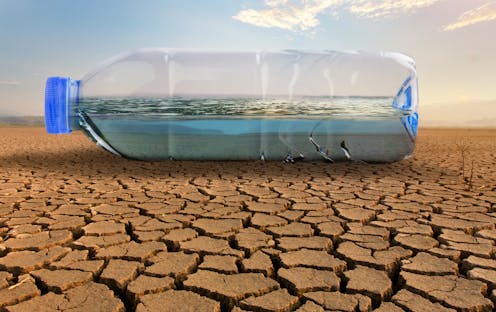

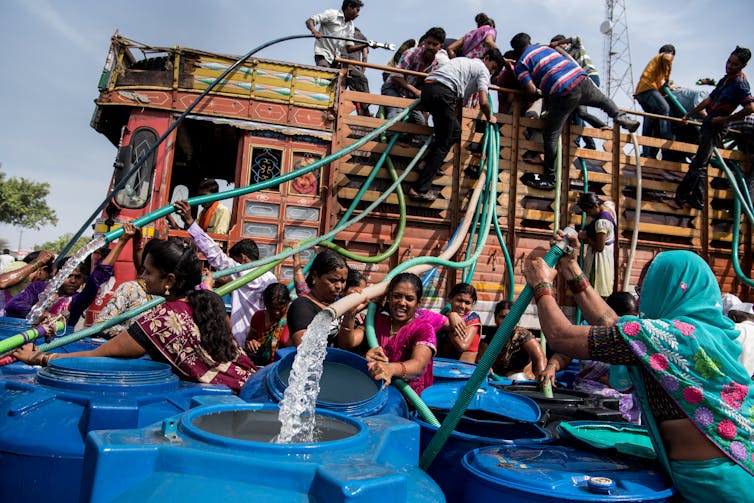







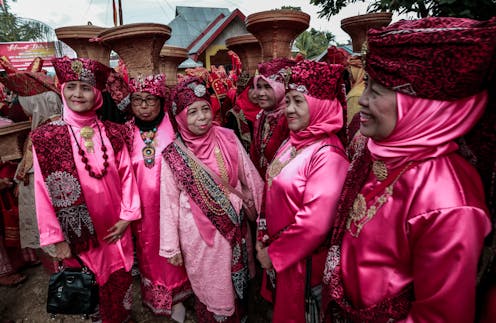


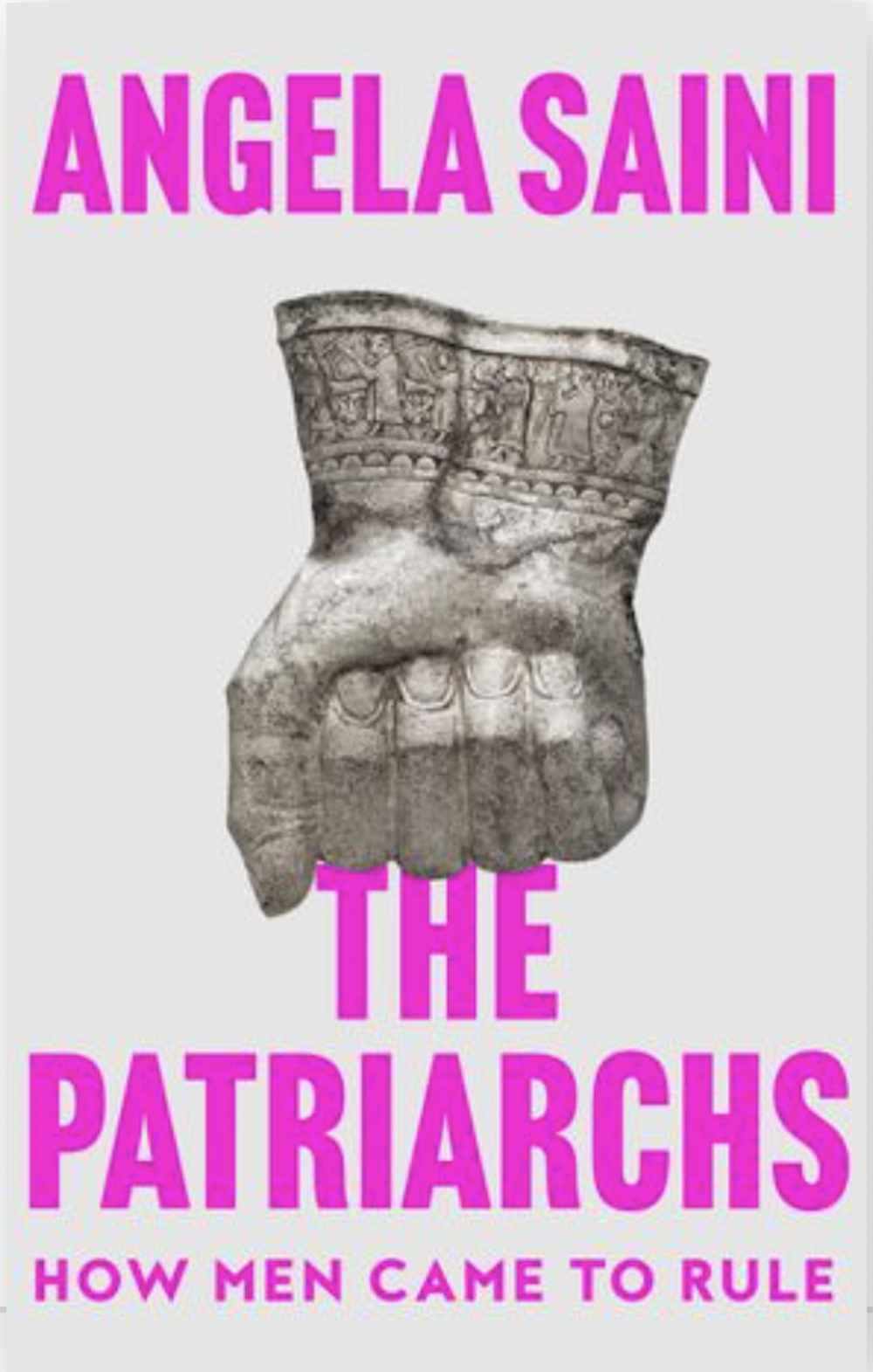
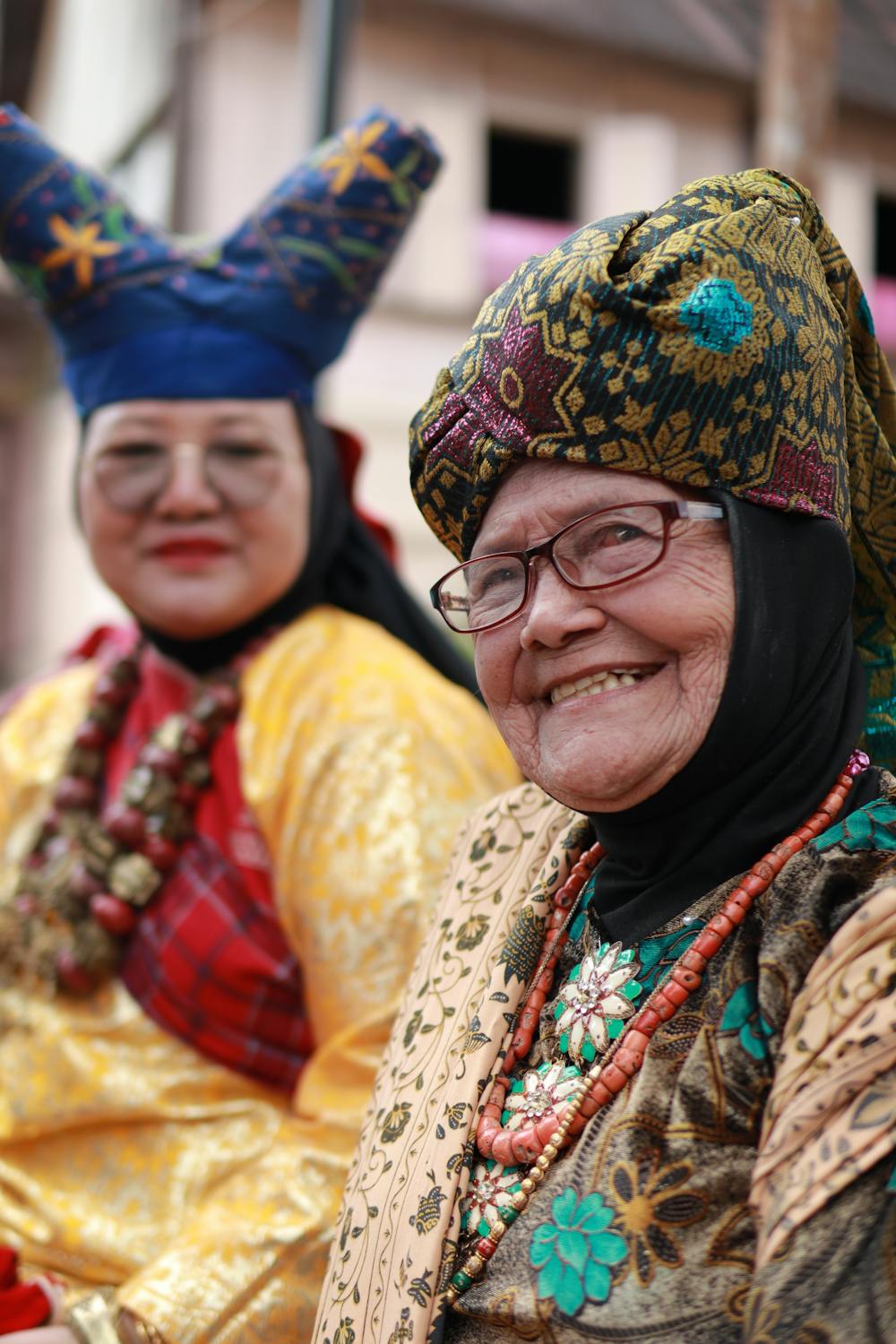
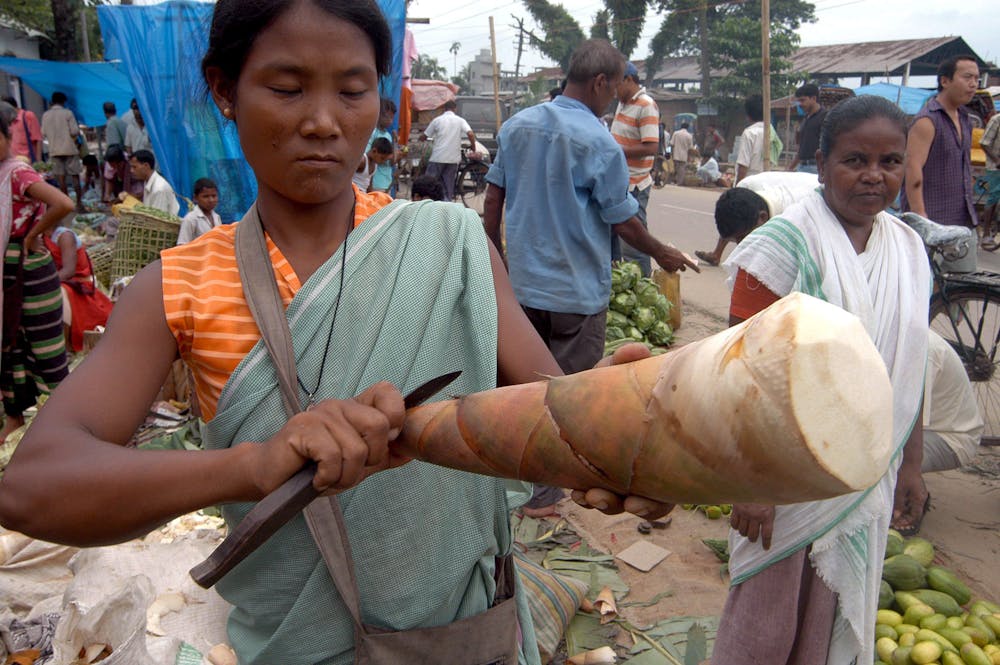
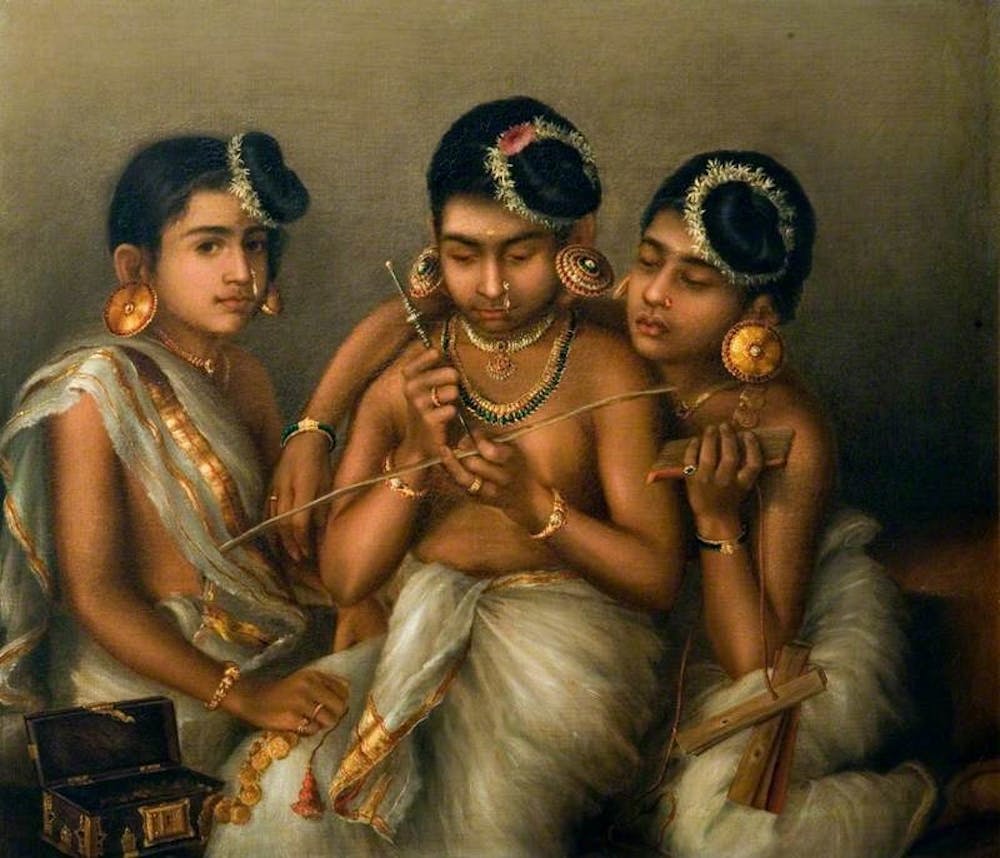


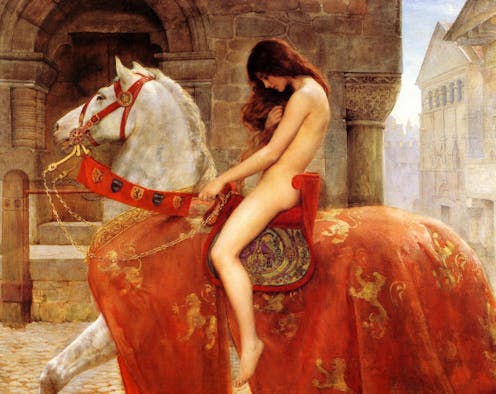
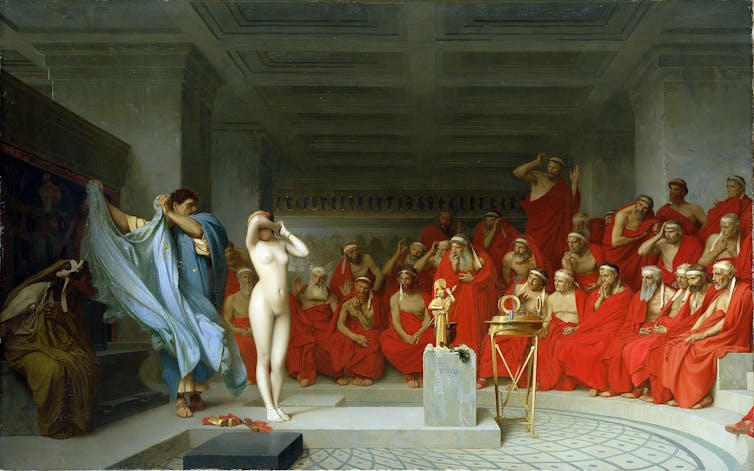
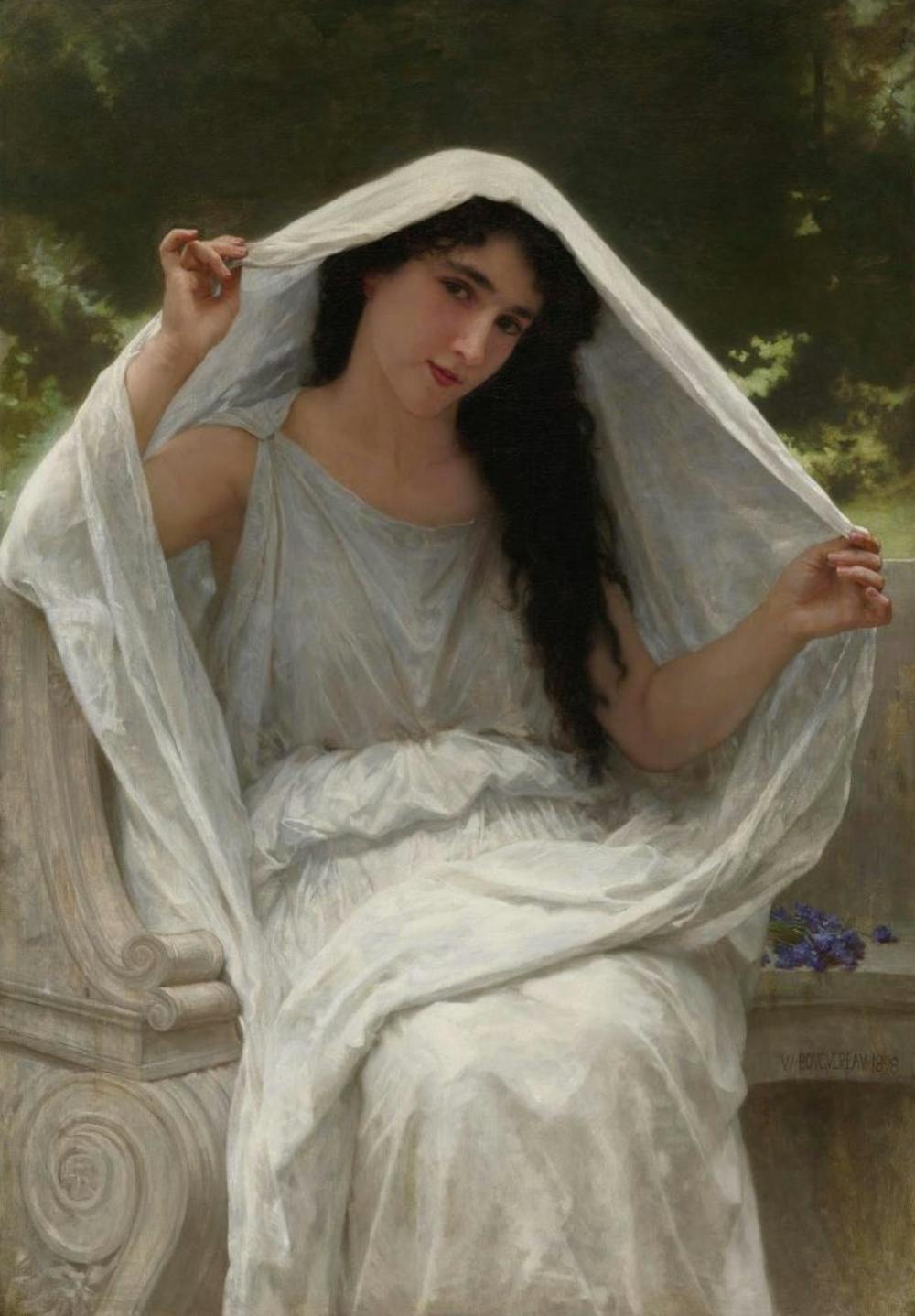
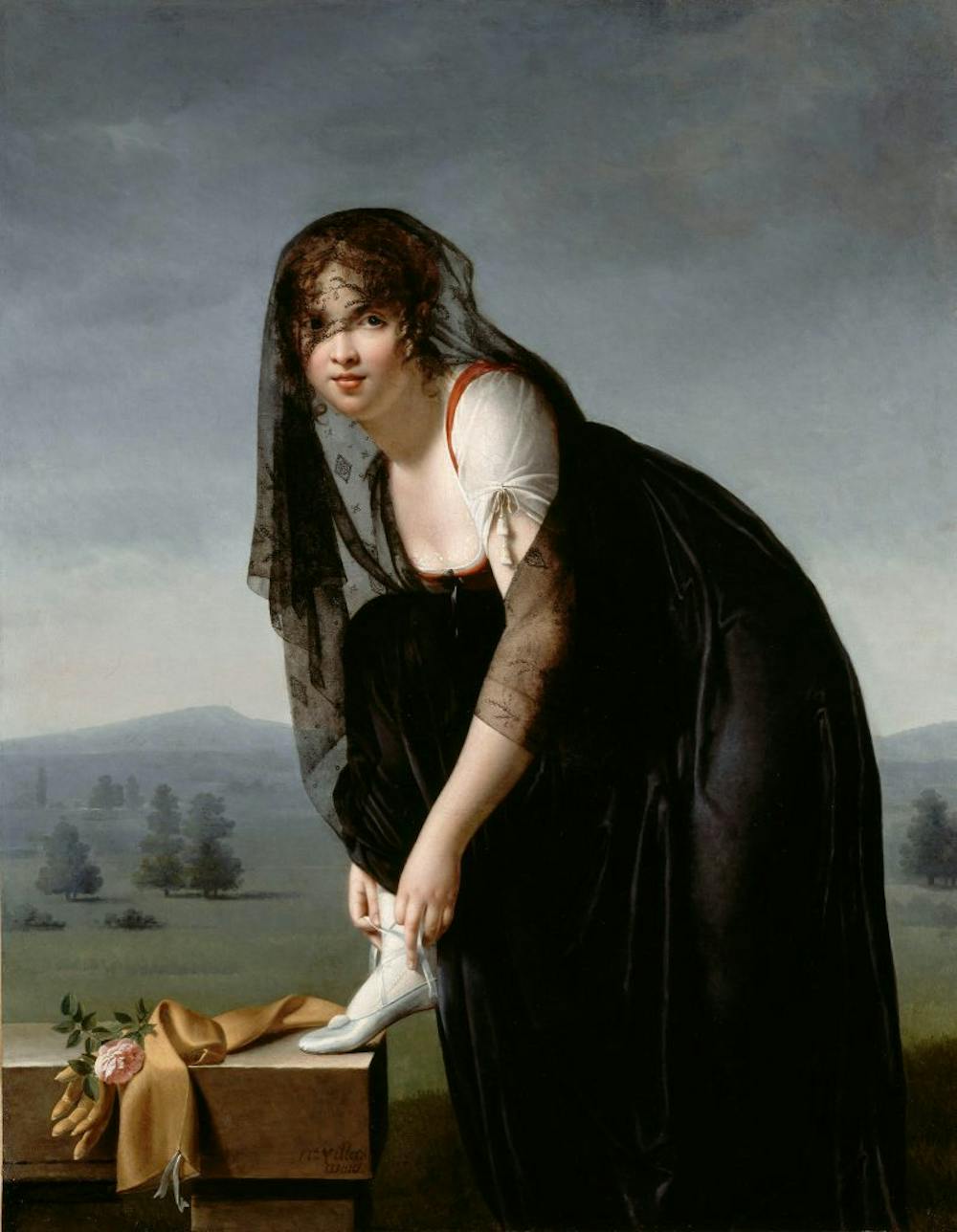

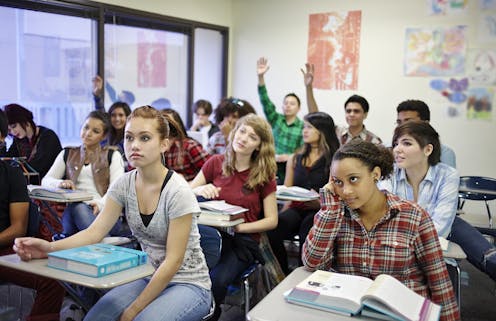



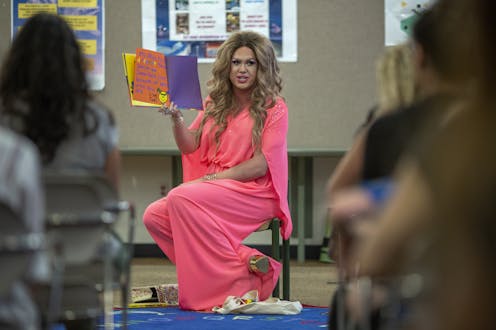
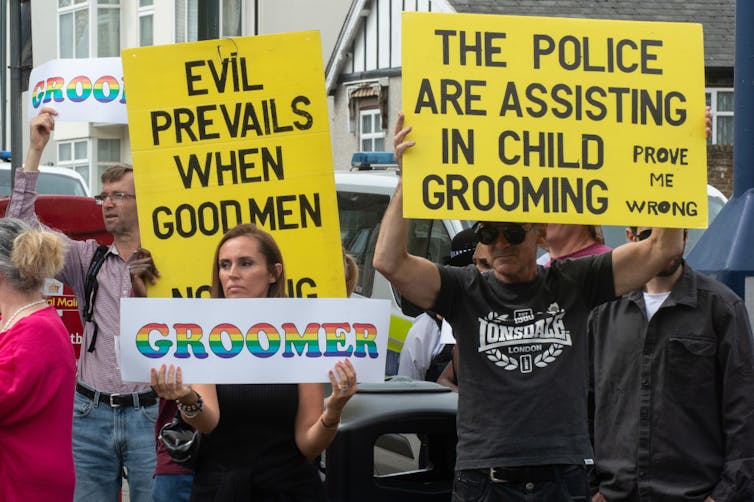
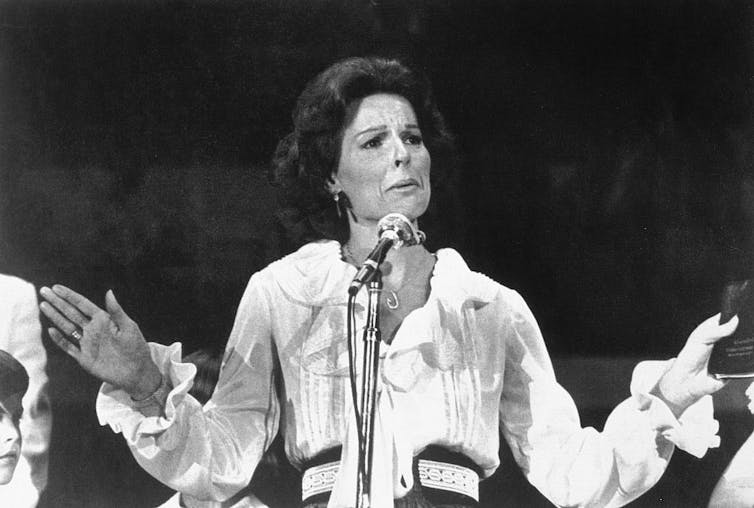


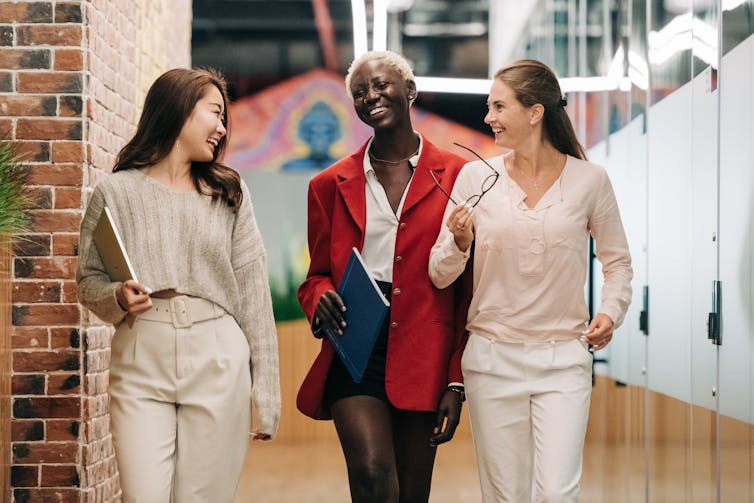





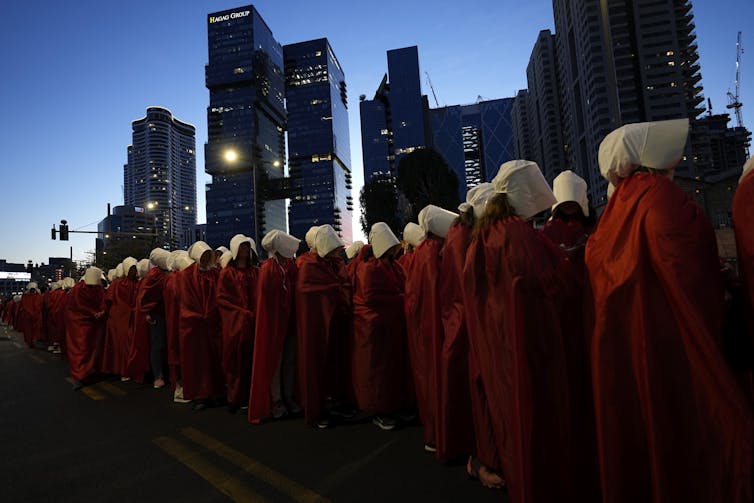





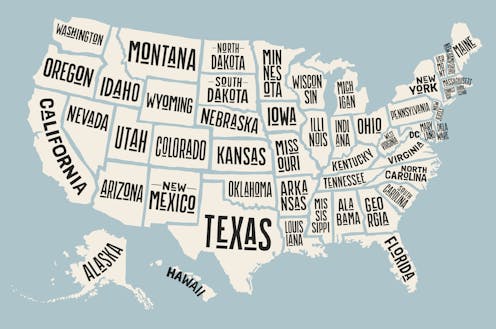









_-_01.jpg)

