What do Andy Warhol’s Campbell’s Soup Cans, Yayoi Kusama’s Pumpkin, and David Hockney’s Portrait of an Artist (Pool with Two Figures) have in common? You guessed it—they are works of […]
In the previous blog post in this series (Part 1), we presented and discussed several visual arts copyright cases addressing the issue of copyrightability. In this blog, we look at […]
As seen in parts 1 and part 2 of our blog series, where there is art, there are artists who love to push boundaries, particularly in copyright law. This is […]
by Sarah Seabrook, Research Assistant in the Department of Political Science, University of Waterloo
The Government of Canada recently announced more than $1.6 million for endometriosis patients and research, the largest single investment in endometriosis care in Canada for the last 20 years. (Shutterstock)
Endometriosis is a debilitating disease that affects an estimated one million Canadians. It involves the overgrowth of endometrial tissue (the tissue that lines the uterus), which typically sheds during menstruation and regrows to support reproduction.
With endometriosis, the endometrial tissue grows excessively, both inside and outside of the uterus, which can cause pelvic pain, extreme menstrual cramping and non-menstrual cramping, as well as chronic fatigue and reduced fertility.
The Government of Canada recently announced more than $1.6 million for endometriosis patients and research, the largest single investment in endometriosis care in Canada for the last 20 years. This much-needed, long-awaited funding will go far to address the many challenges that endometriosis patients face, including struggling to get a diagnosis in the first place, dismissal of their symptoms, related stigma, and ineffective treatments.
Left untreated, endometriosis can affect the central nervous system, leaving patients at heightened risk of abnormal pain and chronic pain presentation, which too often negatively impacts their overall quality of life.
In fact, endometriosis patients often experience a reduced ability to participate in the activities of everyday life. Yolanda Kirkham, an obstetrician-gynecologist (OBGYN) from the University of Toronto, has reported that girls and young women are unable to attend school for a few days each month due to their symptoms, while others with the disease frequently miss work due to nausea and vomiting.
Most cases of endometriosis are not diagnosed by primary care providers, but by specialists — namely OBGYNs to whom they are referred. Long waiting lists to see specialists can contribute to delayed diagnosis.
(Shutterstock)
The unfortunate outcome for these patients is not just their reduced ability to participate in activities. It also means they experience significant losses in their economic productivity. Researchers have found that the average endometriosis patient in Canada loses around $3,400 in economic productivity per year.
Delayed diagnosis
One of the significant challenges faced by people with endometriosis is receiving a diagnosis. Patients experience an average delay of 5.4 years from the onset of symptoms to diagnosis. The symptoms are similar to other reproductive health issues (such as polycystic ovary syndrome) or severe period pain, which can be confusing for non-specialist health-care professionals.
Research with endometriosis patients has shown that most cases of endometriosis are not diagnosed by primary care providers, but by specialists — namely OBGYNs to whom they are referred. Taken together with long waiting lists for specialists, the barriers to diagnosis are significant.
Another barrier is that women often have difficulty convincing care providers their pain is real and a cause of concern. In a recent research project, one of us (Sarah Seabrook) examined 70 publicly available accounts of people experiencing endometriosis, including quotes printed in newspapers, as well as from the narratives published by endometriosis not-for-profit EndoAct.
This dismissal of pain is particularly troublesome because people don’t often share their menstrual experiences and may be unable to differentiate between normal and abnormal menstrual experiences. In an article published by CBC News in 2021, a woman with endometriosis reported that the first few times she had her period, she was hospitalized for severe pain, but because this was her initial experience of menstruation, “she thought the pain related to her period was normal.”
Lack of effective treatments
Once endometriosis is diagnosed, there are significant barriers to receiving effective treatment. The first line of treatment is typically hormonal birth control, which does nothing to address the growth of endometrial tissue, although for some people it can help with controlling menstrual pain. The same is true of anti-inflammatories and painkillers, which can reduce pain, but do little for the growth of endometrial tissue.
When things are more severe, patients might be given surgical options such as tissue excision (removing the entire endometriosis lesion) or ablation (burning off the surface of the endometriosis lesion). However, these procedures are rarely curative — the excess endometrial tissue grows back in a lot of cases. As a final resort, some patients undergo a hysterectomy. For the most part, endometriosis care is focused on either temporarily reducing pain, or temporarily controlling the growth of tissue.
The lack of effective treatment options is tied to an ongoing failure to understand endometriosis, its underlying causes and effects. Leading Canadian experts have been calling for the improved understanding of endometriosis care and its treatment options, and advocates have been mobilizing for increased funding to understand, diagnose and treat endometriosis in Canada.
To improve outcomes, endometriosis patients need more research, more options and more attention to be paid to the disease. The newly announced federal investment in endometriosis research and care by the federal government is a good first step — although continued funding and support will be needed to address the continued, far-reaching effects of endometriosis in Canada.
Alana Cattapan receives funding from the Social Sciences and Humanities Research Council of Canada and the Canadian Institutes of Health Research.
Sarah Seabrook does not work for, consult, own shares in or receive funding from any company or organisation that would benefit from this article, and has disclosed no relevant affiliations beyond their academic appointment.
An ancient kola tree has been cut down in southern Ghana. Local tradition held that the tree had grown on the spot where spiritual leader Komfo Anokye had spat a kola nut onto the ground three centuries previously.
Anokye was a fetish priest – a person believed to act as a mediator between the living and the spirit world – and the tree that took his name was reputedly able to cure ailments and lift curses.
These legends, and its location on a major road, turned the Komfo Anokye tree into a tourist attraction and a symbol of ancestral roots. Its loss is historically, culturally and ecologically significant.
The felling of the iconic tree prompted an outpouring of anger and grief, and a desire to repair the damage done. But what is it about the loss of a tree that provokes such an emotional response? Why is it that single trees are so important to us? And why might our instinct to repair the damage by planting a new tree prove unexpectedly complicated?
Tree felling as an emotive issue
The felled tree, and the outpouring of emotion that followed, is one of several such high-profile instances. In late October 2023, the decision was made to cut down the 550-year-old Darwin’s Oak in Shrewsbury. The Woodland Trust described the felling as a “death sentence”.
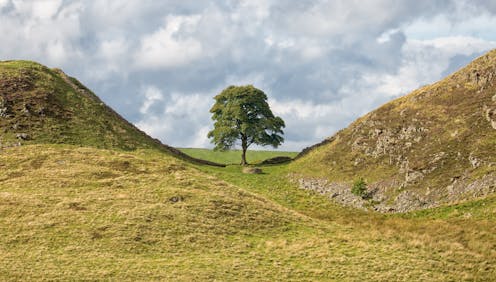
The felling of the Sycamore Gap tree in September 2023, which was located next to Hadrian’s Wall in Northumberland, was described in similarly emotional language.
The deliberate cutting down of trees is highly emotive because they are central to how we perceive ourselves within our environment. Trees are living archives, recording the past of our planet and our own personal histories.
Individual trees are steeped in storytelling and symbolism. Some cultures believe that the spirits of the ancients and family members reside within Africa’s climate-vulnerable baobab. And the Ankerwycke yew at Runnymede in Surrey is described as the last surviving witness to the sealing of the Magna Carta in 1215.
The Sycamore Gap tree was also an iconic image. Its fall prompted local and global reaction on such a scale that we might be forgiven for concluding that felling one tree elicits a more visceral reaction than the destruction of entire rainforests.
While Sycamore Gap was grabbing the headlines, the latest state of nature report showed the UK to be one of the most nature-depleted countries in the world. This juxtaposition exemplifies the different ways in which people ascribe value to nature.
Our research from 2021 explored the different ways that people prioritise their relationships with nature. Some protect nature for human benefit and others seek to protect nature for its own sake. At the same time, some people prioritise the conservation of species and ecosystems, while others focus on the wellbeing of individual specimens.
Iconic trees are a prime example of this contrast. The action we take to protect iconic trees, or to replace those that fall, may satisfy the moral imperative to “do something”. But it is often energised by a greater concern for individual organisms than for the need to protect the wider environment.
Replacing iconic trees
Tree planting has political capital as a way to tackle climate change. But rushing to replace lost nature on our own terms and without effective management can lead to poor outcomes.
Neither a single sapling, nor many, will directly replace the unique ecosystem of a 300-year-old tree – at least not for another 300 years. If we treat nature as easily replaceable, we embrace the “quick fix” and ignore the impact of human actions on ecological succession and the vast complexity of the ecological system.
Ecological succession is the natural and never ending process of change in an ecosystem. It is what allows a healthy woodland to regenerate itself, for example, after forest fires.
The felled tree at Sycamore Gap was removed and stored pending a decision on what to do with it. But, similar acts of removal elsewhere in the wild can disrupt ecosystems too. Dead trees are a vital component of any woodland as they recycle nutrients, support the growth of fungi, and provide a home for a diverse array of birds, insects and mammals.
The tree at Sycamore Gap stood in isolation, but the loss of a single tree is still not without consequence. The complexities inherent in replacing the ecological value of lost trees must not blind us to their wider and equally important cultural significance. In the words of the British-American poet, W.H. Auden: “The trees encountered on a country stroll, reveal a lot about a country’s soul.”
Conservation debates should be about more than economic or functional human benefits. They should integrate history, culture and values into our relationship with the natural world.
Les auteurs ne travaillent pas, ne conseillent pas, ne possèdent pas de parts, ne reçoivent pas de fonds d'une organisation qui pourrait tirer profit de cet article, et n'ont déclaré aucune autre affiliation que leur organisme de recherche.
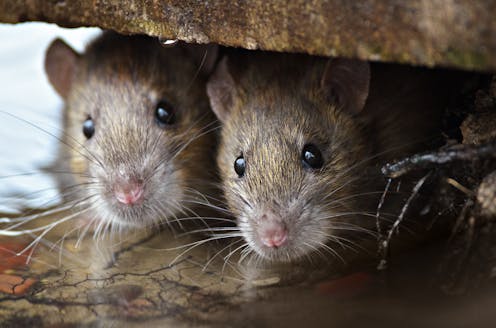
Rats have a somewhat unfortunate tendency to enjoy living where people live. That’s how a biologist tried to explain people’s hatred for the rodents in a television news feature about rats gnawing electrical cables in parked cars in the southern Swedish town of Malmö.
The brown rat, Rattus norvegicus, is one of the species best adapted to modern society. These rats have followed humans around the world to become one of the most abundant mammals, spreading from their native distribution in northern China and Mongolia and reaching Europe in the 1500s, possibly even earlier. Black rats, however, arrived in Europe as early as the 1st century AD.
Today almost all wild brown rats are synanthropic, meaning they live in close association with humans, eating our leftovers and using human structures for shelter. The relationship between rats and humans is one of commensalism, a word derived from the Latin term “commensal”, meaning “eating at the same table”.
Throughout the centuries, rats have been cast as humanity’s dark shadow. Rats have had an enormous impact on human civilisation, not least through the spread of diseases. They have long been associated with dirt, death and destruction. In medieval Europe people loathed rats for their so-called brutishness, seemingly limitless sexual appetite and fecundity. But their huge numbers and adaptability mirrors humans’ evolutionary success.
Real rats are far from the despicable creatures they often are made out to be. Several studies have shown that rats have powerful empathy.
These animals can share the emotional state of others, which in psychology is called emotional contagion. Research has shown that when a rat sees another rat in distress, the neural structures activated in that rat’s brain closely resembles those activated in humans brains when feeling empathy for pain of others.
One experiment showed that rats will release a fellow rat from an unpleasant cage even if they are not rewarded for it. And if given chocolate treats afterwards, the free rat would usually save at least one treat for the former captive.
This selfless behaviour comes from rats’ socially complex lives in family groups of multiple generations. They form lifelong bonds with other rats and share socially learned skills, such as foraging techniques, across generations. This means rats have a form of culture.
A study from 2023 even showed that rats can imagine places and things that aren’t in front of them at the time. In experiments rats were shown to navigate a space in their thoughts, that they have previously explored. As in the studies of empathy, researchers demonstrated this by comparing the regions in the rat’s brains that were activated to those that are activated when humans think about navigating their way through places they have visited.
This ability to imagine also suggests that rats have a sense of past and future.
Living and dying with rats
With this in mind, human ways of dealing with rats seem cruel. The most common chemical method for rat control is anticoagulants, which cause fatal internal bleeding one to two weeks after a rat eats the poison. Since rats are both socially intelligent and cautious, they prefer to sample unfamiliar food and then wait to see if it makes them or other rats sick.
It’s called poison shyness. With anticoagulants however, the time between consumption of the bait and the rat dying is so long that they don’t usually associate it with their feeding habits.
The human motivation for learning about rats has often been the desire to kill them. The foremost experts in wild rat behaviour are their exterminators. And yet, current methods for controlling wild rat populations are not very effective.
Some rats have developed resistance to the poisons and are able to eat it and survive. Trapping them is notoriously difficult, and they often recolonise the territory from which they have been removed.
It’s time to consider if there are less violent ways of living alongside rats.
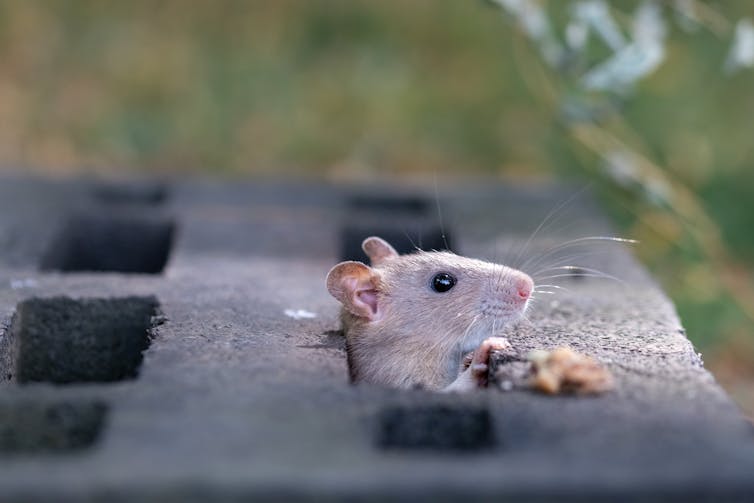
TashaBubo/Shutterstock
Instead, we should consider other strategies, like the ones explored by the Urban Rat Project at the University of Helsinki. Here researchers from different disciplines are trying to get a deeper understanding of conflicts between rats and humans. They are studying both species and their interactions, in hope of a future with less bloody human-rat relations.
The project has spotted that places in urban areas where people feed birds tend to attract rats as well – which people then try to eradicate using poison or traps.
Research has also suggested that with increased knowledge about rats and their behaviour people tend to develop a more positive attitude towards them. So more knowledge of wild rats’ social behaviour is needed. And humans need to manage their own behaviour to avoid conflict with rats.
A good place to start would be reducing food waste and stop leaving leftovers out unsecured. Less rats around human food sources, for example, and more knowledge about their behaviour would mean a lower risk of diseases spreading from rats to humans, as well as from humans to rats.
Humanity’s future is with the rat, a social and empathetic animal. So it’s time we understood our shadows.
Tobias Linné does not work for, consult, own shares in or receive funding from any company or organisation that would benefit from this article, and has disclosed no relevant affiliations beyond their academic appointment.
by Ignacio Blanco-Alfonso, Catedrático de Periodismo de la Universidad CEU San Pablo (Madrid, España), Universidad CEU San Pablo
It’s no secret that smartphones and other digital devices control and consume our attention, both among adults and young people. This can be illustrated with three different, but very common scenarios:
A group of teenagers are sat beside one another. Each of them is staring down into a screen.
Commuters on public transport are hunched over their phones, scrolling infinitely through social media or playing an addictive game. Very few people are reading a book, or even looking out of the window.
You are finishing a presentation for work on the computer. An email notification comes in from a colleague with a link to a short, amusing video. The link takes you to social media site which then offers you another video, followed by another. Before you know it, an hour has gone by and the presentation remains unfinished.
Trapped in an app
The three examples above demonstrate how mobile applications are designed to trap our attention. Most apps work like this because because they are free. Instead of charging the user, they make money by harvesting data and advertising. The more time we spend looking at the screen, the more data and advertising we consume.
According to data from 2022 published by the Spanish National Statistics Institute, 40% of children aged 11 have a phone. This number jumps up to 75% at 12 years old and then to 90% at age 14. The apps that they use on these phones are the same as those used by adults, and they respond to the industrial logic of the internet: they provide things quickly, efficiently, and with minimum effort for the user.
Children today are digital natives, meaning they have never known life without internet access. They have been raised on clicks, jumping from content to content without a second thought. In the words of the philosopher Byung-Chul Han in his 2021 book Non-things, this kind of constant stimulation means that “we quickly come to need new stimuli. We get used to seeing reality as a source of stimuli and surprises.” We struggle to focus our attention on any one thing and this “tsunami of information agitates our cognitive system.”
Changes in the brain
In this sense, loss of attention is related to a decline in our ability to concentrate. As Nicholas Carr pointed out in his 2010 book The Shallows: what the internet is doing to our brains, the brain changes according to our experiences. Books, for example, can train the brain to deeply focus its attention on one task, while mobile devices encourage us to peck and hover over the surface of things without fully grasping them.
When we receive information in large quantities, it stops being meaningful. When faced with an overwhelming amount of it, our brains react by blocking the information, but the discarded content does not simply evaporate from our minds. Instead it lingers, preventing us from figuring out what we are interested in, and limiting our attention span.
Impacts on the way we learn
Mobile phone addiction and the way young people learn are both directly connected to the concept of [mind wandering](https://www.sciencedirect.com/science/article/abs/pii/S0360131522001877). An excess of information inputs makes us switch off and lose attention, and this can be damaging in the long term.
In order to recover attention, the brain needs to take a break and find time and space where it can be free from constant noise. Adults – who generally have better willpower, critical thinking skills, perception of time and organisation – can make the effort to find these much needed spaces to focus attention.
Children, on the other hand, have not yet acquired these behaviour strategies, and run the risk of never recovering their attention spans. If we give children and teenagers access to digital devices before they have developed these skills, we give their attention free rein to wander. It will then become harder and harder for them to focus on a task for the necessary amount of time.
Las personas firmantes no son asalariadas, ni consultoras, ni poseen acciones, ni reciben financiación de ninguna compañía u organización que pueda obtener beneficio de este artículo, y han declarado carecer de vínculos relevantes más allá del cargo académico citado anteriormente.
by Aude Campmas, Lecturer in French Studies, University of Southampton
Waiting By The Window by Carl Holsøe. Wiki Commons
Choosing to be child-free is more common than ever before in some countries, including the US. Many people see not having children an ethical and ecological choice, made to protect the environment, people and other species. Being child-free is about being “green”. Consequently, more positive discourses around childlessness are emerging.
But this was not always the case. In societies that encourage an increased birthrate, motherhood is often presented as natural and caring. Meanwhile, women without children are often described as biological failures, or as deviant. For example, when visible in popular culture – they are often not represented at all – women without children are either presented as animal-lovers like the “crazy cat lady” or animal-killers, like Cruella de Vil. In these examples, the focus on animal represents their supposed inability to care for humans (their species), their “unnaturalness”.
In the 19th century, women without children were already being described as selfish and unnatural. The natural world was conversely used to describe fertile women, who were often compared to flowers in bloom in literature.
Should I have children? The pieces in this series will help you answer this tough question – exploring fertility, climate change, the cost of living and social pressure.We’ll keep the discussion going at a live event in London on November 30. Click here for more information and tickets.
The association of women with plants and fertility is an ancient one, found particularly in agricultural pagan figures. Demeter, the ancient Greek goddess of the harvest, for example, was the goddess of grains, but also of marriage and fertility.
Many expressions still link women’s reproductive systems and flowers. In French, the flower is a metaphor for a virgin sexual organ. To avoir ses fleurs (have your flowers) is an expression for having periods, and being une jeune fille en fleur (a young woman in flower) means that the young woman is ready for marriage – and therefore reproduction.
Women themselves are also compared to flowers: in English, both “pretty flower” and “English rose” describe attractive young women. Reducing women to flowers, through these comparisons, is not only misogynistic, but reinforces the social pressure to produce children “on time”. Timing is important in these comparisons, as flowers fade quickly.
Being child-free in the 19th century
But what about women without children, those flowers that will not produce seeds? My research into literature and paintings from the second half of the 19th century has shown that they were often represented as monstrous horticultural hybrids.
At the time, “hybrid flowers” – which were often sterile – became the preferred metaphor to describe sexually active women who were either unable or refused to bear children. In France, having and raising children was seen as a woman’s natural and civic duty for the nation. Conversely, women who were sexually active but without children were often seen as unnatural and dangerous.
Comparisons that described women as flowers were historically about fertility. How was it then that flowers became a metaphor for sterility at the end of the 19th century?
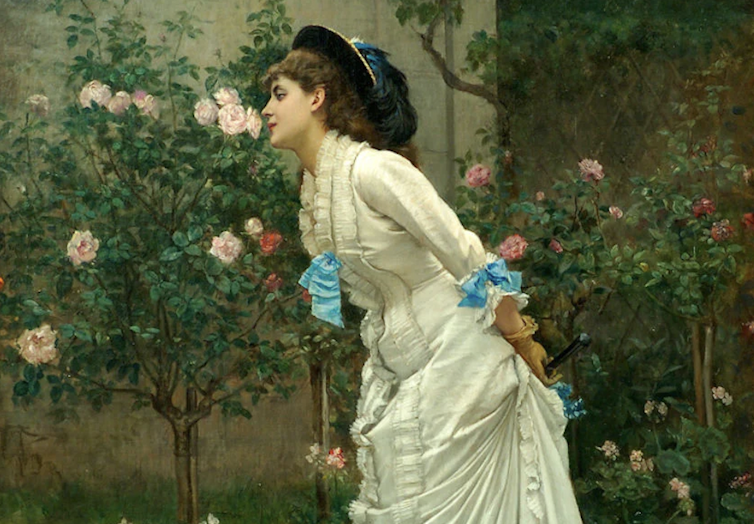
Fertile, childbearing women were compared to more classic flowers such as roses. Girl And Roses by Auguste Toulmouche (1879).
Clark Art Institute
The emphasis on flowers as sexual organs and as a metaphor for women’s sexuality appears to have been used more often after the Swedish botanist Carl Linnaeus openly discussed the sexuality of plants with anthropomorphic language at the end of the 18th century.
It is important to note that, for a long time, if men knew at all that flowers were sexual organs, they believed they were unisexual and feminine. They did not believe that both male and female organs were involved in the production of fruits.
Once the sexual nature of plants had been established, the nature of the floral metaphor changed and the innocence of the flower was lost. Flowers progressively became the symbol of a young lady with an emerging sexuality or who was waiting to “bear fruit”.
Horticultural hybrids
During the second empire in France (1852-1870) and the beginning of the Third Republic (1870-1840), horticultural hybrids were extremely popular.
Horticulturists developed large plants and flowers such as cattleya, hibiscus, nidularium which often looked like enlarged genitals (natural plants are often a lot smaller and less colourful). These hybrids made the sexual analogy even more obvious.
By the end of the 19th century, the artificial hybrids became used for describing, indirectly, near-pornographic scenes. Here is an example from The Kill (1895), a famous novel by Émile Zola. Instead of describing the characters making love, he describes the plants:
As their glances penetrated into the corners of the hothouse, the darkness became filled with a more furious debauch of leaves and stalks; they could not distinguish on the terraces between the marantas, soft as velvet, the gloxinias, purple-belled, the dracoenas, like blades of old lacquer; it was a great dance of living plants pursuing one another with unsatisfied fervour.
Many of the hybrids being created at this time were sterile. They therefore became a metaphor for “unproductive” sexuality. Because they were man-made, they could be seen as a perversion of the laws of nature. Comparing women to those hybrids was a way to criticise what was deemed the artificiality of their infertility, or decision not to have children.
Fertile, childbearing women were frequently compared to natural, more classic flowers such as roses or lilies.
At the time, France was obsessed with its low birth rate. Many politicians believed it explained why France had lost the war against Prussia (1870-1871). Childless women were therefore also seen as bad citizens.
Through their comparisons with hybrid, infertile flowers, women who could not or choose not to reproduce were deemed un-French, undesirable and, in some ways, monstruous.
Understanding how women are associated with nature and very often compared to flowers is essential to understanding how being childless continues to be demonised in contemporary society. As contemporary art, culture and the very language we use demonstrates, child-free women are still often described as “unnatural” or biologically deviant.
Looking for something good? Cut through the noise with a carefully curated selection of the latest releases, live events and exhibitions, straight to your inbox every fortnight, on Fridays. Sign up here.
Aude Campmas is affiliated with:
I am a volunteer for Portsmouth Abuse and Rape Counselling Service.
As of Nov. 25, according to health officials in the Gaza Strip, more than 14,000 Palestinians have been killed, the majority of whom are women and children.
But one of the arguments given by defenders of Israel’s actions is that, tragic though these deaths are, the harm inflicted on civilians is proportionate because it is outweighed by the importance of destroying Hamas.
But what does “proportionate” mean in the context of civilian deaths? And how should we assess Israel’s claims of proportionality against critics who argue that Israel’s actions have caused disproportionate harm to civilians? As a scholar of war crimes and military ethics, I argue that to assess these claims requires careful thought about what it really means to value civilian lives. If all civilian lives are morally equal, as international law holds, then the lives of civilians on both sides of a conflict should be treated with the same degree of respect.
Why targeting civilians is wrong
International humanitarian law, or IHL, prohibits direct attacks on noncombatants – a category that includes civilians as well as wounded and surrendered soldiers. IHL also prohibits direct attacks on civilian objects such as schools, religious centers and hospitals and other civilian infrastructure.
However, because it is impossible to avoid all harm to civilians in a war zone, IHL permits attacks on military targets that are likely to cause harm to civilians if two conditions are met: First, the foreseeable harm to civilians must be proportionate to the military advantage sought by the attack. And second, the choice of tactics and weapons – what is referred to in IHL as the “means and methods” – must also aim to minimize risk to civilians, even if it means putting more soldiers in harm’s way.
The prohibitions on directly targeting civilians and exposing civilians to disproportionate risk of harm exist because, under IHL, civilians have protected status as long as they take “no active part in the hostilities.” This means that, as stated in the Geneva Conventions – the set of international treaties governing the conduct of armed conflict – all civilians must be “treated humanely, without any adverse distinction founded on race, color, religion or faith, sex, birth or wealth, or any other similar criteria.”
Directly targeting civilians or exposing them to disproportionate harm is therefore wrong for the same reasons that it is wrong to kill or harm innocent people in peacetime. People who pose no threat to others deserve respect and protection from violence regardless of their nationality or group identity. To violate that respect in war is not only a war crime but a moral crime, which is why Hamas’ massacre of at least 1,200 Israeli citizens and the taking of 240 hostages is rightly condemned as an atrocity.
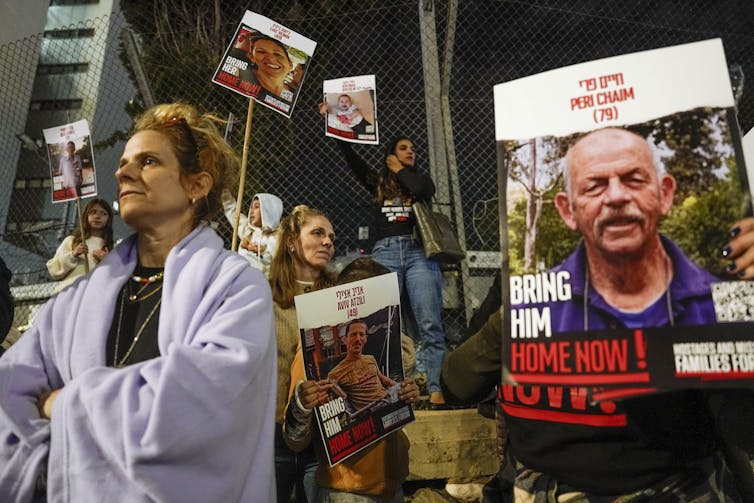
Israeli protesters in Tel Aviv call for the release of the hostages held in the Gaza Strip by Hamas on Nov. 28, 2023.
AP Photo/Ariel Schalit
How should the lives of innocent people be weighed against important military objectives?
Proportionality and moral assessment
The condemnation of Hamas’ crimes is based on the same moral principle as the laws that protect noncombatants in war: All innocent people deserve protection.
However, scholars and legal experts disagree about how the legal framework laid out in the Geneva Conventions should be applied in war zones.
For example, in 1987 the International Committee of the Red Cross argued that the definition of “military advantage” – the advantage against which potential civilian harm must be weighed – should only include “ground gained” and “annihilating or weakening the enemy armed forces.”
There is also disagreement about what counts as “civilian harm.” For example, scholar Emanuela-Chiara Gillardargues that “civilian harm” should include psychological and physical harms; legal expert Dr. Beth Van Schaackargues that long-term harms should also be considered.
In short, there are no easy answers to questions about how to weigh harms against civilians against the value of military objectives. But while answers are difficult, there is a different way to frame this question: What does it mean – not just legally, but morally – to treat all civilian lives as equal, as the law requires?
As scholar Matthew Talbert and I argue, the first step in answering this question is to ask what a military force would accept if it were “their” civilians who were at risk of harm from military action.
That is the standard we should apply when assessing potential military actions that threaten harm to enemy civilians. We call this standard the “principle of the moral equality of noncombatants.” For example, Israel argued that its attack on Shifa hospital was justified because, it claimed, Hamas was hiding a command base and weapons under the hospital.
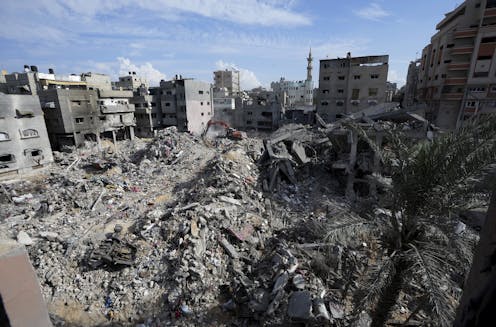
The hospital, which was running low on fuel, food and water, housed patients, including premature babies, and civilians seeking refuge from the conflict. According to footage shown in news reports, the attack left the hospital seriously damaged, filled with debris and lacking essential supplies for the remaining patients, who include the elderly and infirm.
Israel has released footage supporting its claim that there was a Hamas command center under the hospital. Does that mean Israel’s attack on the hospital meets the requirements of proportionality? In other words, was the harm to civilians caused by the attack – including the ongoing harm resulting from the loss of a major hospital – proportionate to the military value of destroying a Hamas command base?
In applying the principle Talbert and I proposed in our paper, the question would be phrased as follows: If Hamas was hiding a control base under an Israeli hospital and it was Israeli civilians at risk, would Israel think that attacking the hospital would be justified? If the answer is “no,” then the attack against Shifa hospital is also not justified.
This is because if the risk to Israeli lives outweighs the benefits of capturing a Hamas command base, then the risk to Palestinian lives should be given the same weight and lead to the same conclusion. Under IHL, all civilians are legally entitled to the same protection, regardless of their nationality.
Taking civilian lives seriously
Unfortunately, the debate about proportionality in the conflict between Israel and Palestine is only the latest of many debates about proportionality and civilian deaths in war zones.
For example, since 2001, the United States’ drone program has killed at least 22,000 civilians in Afghanistan, Iraq, Syria, Pakistan and elsewhere. A New York Times report on these deaths found multiple instances of “flawed intelligence,” cover-ups and cases of mistaken identity. Despite this record, civilians deaths still occur.
Using the principle of the moral equality of noncombatants to assess this track record would reveal whether the U.S. military is taking sufficient care to avoid harm to civilians. If the U.S. military would not accept these deaths – and the policies and practices that contribute to them – if U.S. civilians were at risk, then these deaths are unjustified.
This would mean that the drone program must change in order to treat civilians in Syria, Pakistan and elsewhere with the respect to which they are legally and morally entitled. This example illustrates that to meet the standards of IHL and the moral principles that underlie those standards, military forces must apply the principle of the moral equality of noncombatants. There is no legal or moral justification, I argue, for treating some civilians lives as less important than others.
This is a demanding principle. Applying it would be difficult - military and political leaders would have to accept that there might be military objectives that are not important enough to justify risk to civilian lives. And it would require acknowledging that some military objectives might be so important that even harm to “their” civilians might be justified.
But one of the functions of IHL is to “limit the suffering and damage caused by armed conflict.” This principle reflects the moral and legal status of civilians in IHL and could lead to greater respect for and protection of all civilians during conflict.
Jessica Wolfendale does not work for, consult, own shares in or receive funding from any company or organization that would benefit from this article, and has disclosed no relevant affiliations beyond their academic appointment.
The Royal Society of Chemistry found that the UK’s drinking water standard is not stringent enough to protect us against the dangerous health effects of PFAS. The health risks include links to cancer and fertility problems.
But PFAS are a problem that is not going away anytime soon. Even if we stopped using them in products today, there are already huge amounts of them in the environment and some types of PFAS simply do not degrade. Our research has even found growing evidence of these chemicals in some of the most remote places on Earth, including the Antarctic.
To make matters worse, the PFAS chemicals that do degrade often break down into the more recalcitrant PFAS types, which then cycle around the environment endlessly.
What are PFAS?
Media coverage of the problem can be hard to follow because the PFAS group includes more than 5,000 different chemical substances.
It used to be common to read stories about poly- /perfluoro compounds (PFCs) and poly- /perfluoro alkyl acids (PFAs) rather than PFAS. Even now it is not uncommon to see products like outdoor clothing labelled as PFC free.
But a lot of PFCs are non-toxic and include a lot of widely used medical drugs. PFCs mean drugs with a carbon-fluorine bond, which is not a problem in itself. PFAS are a sub group of PFCs and they are toxic and extremely difficult to break down.
PFAs are a sub-group of PFAS chemicals. Over the last few years research has increasingly highlighted problems with the wider PFAS group than just PFAs. PFAS can be broadly split into two groups: fluoropolymers and non-polymers.
Fluoropolymers
The most well-known fluoropolymer is polytetrafluoroethylene (PTFE) with its trademark name Teflon, first produced by Dupont in the 1940s. PTFE is the non-stick coating to cookware. Its stability to high temperatures, non-reactivity and low friction properties makes it ideal for this application. We can ingest flakes of the polymer, but it is not absorbed by the body so just passes through us.
PTFE film is also used in some types of waterproof, breathable outdoor clothing. The micropores allow the passage of water vapour (from sweat for example) but prevent water droplets seeping through, keeping the wearer dry.
Other fluoropolymers include polyvinylidene fluoride (PVDF) used in sensors and batteries because of its ability to hold an electrical charge. While fluoropolymers are not considered toxic, their production relies on large quantities of other toxic chemicals, like non-polymers. They are better for us because the end product doesn’t bring us into direct contact with non-polymers, but bad news for the environment as that is where the non-polymers will probably end up.
Non-polymers
The non-polymer group has by far the biggest number of substances and their use is myriad – including in food packaging, cosmetics, medical applications, fabric coatings and electronics.
This group also includes refrigerant and cleaning solvents (replacement chemicals to the infamous CFCs banned to protect the ozone). They have high water and oil repellency and chemical stability. For industrial uses chemicals must be stable so that they do their job without reacting or breaking down. If you bought a cosmetic and it lost its colour or wouldn’t spread after a few days, for example, that wouldn’t be good.
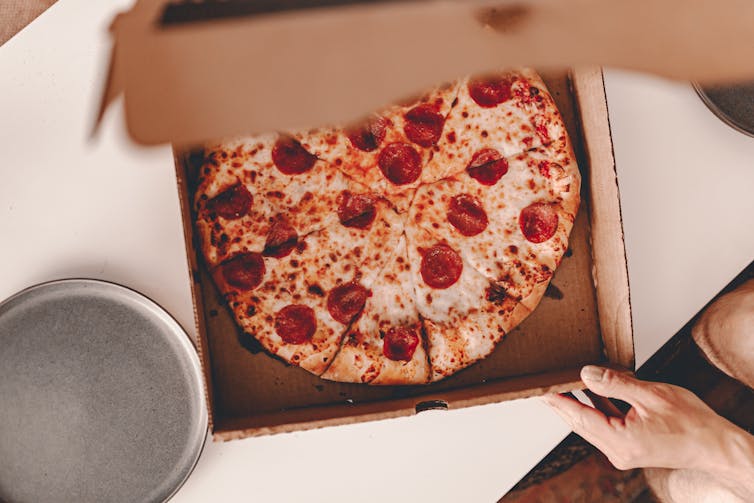
Non-polymers also have good thermal stability. This makes it very useful for making food packaging such as pizza boxes and popcorn wrapping.
They are used in a lot of cosmetic products and toiletries because they make the product smoother, water resistant and easier to apply.
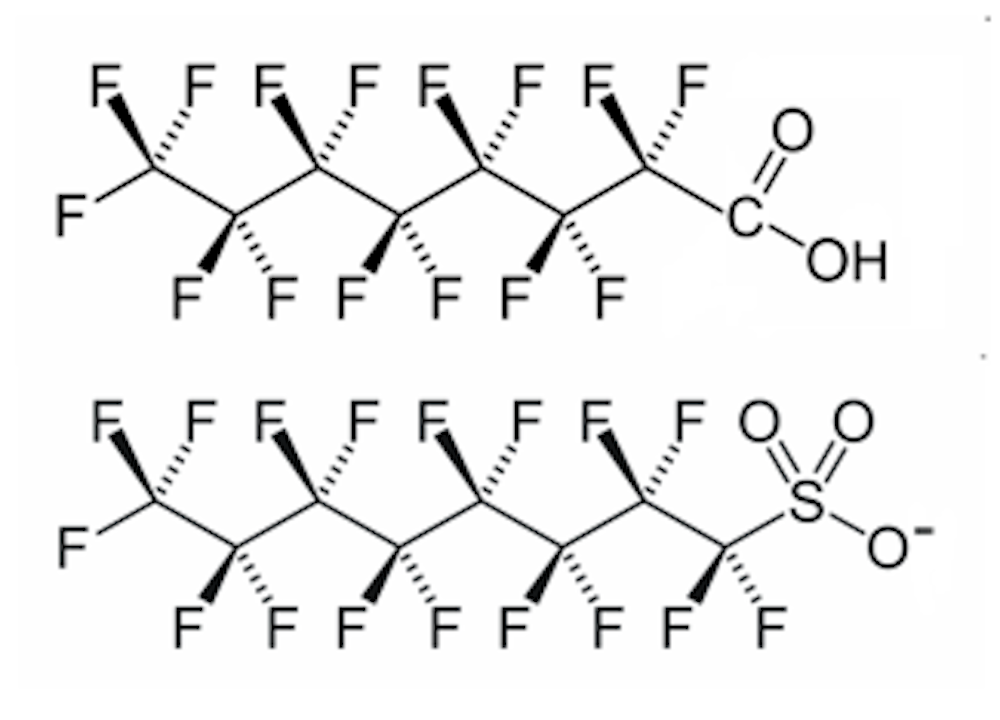
They have an eight-carbon chain (C8) with acidic heads. The longer chain length provides better stability and less friction which means they are useful as processing aids in polymer manufacture.
Since 2000, industry has moved away from C8 chemistry and shifted towards shorter chain length chemicals because of concerns over toxicity of the longer-chain compounds and their harm to the environment.
The shorter chain length does help them break down faster and makes them less toxic. However they don’t perform as well as the longer chain chemicals. So manufacturers use more of them in products and more of them get into the environment.
The long, fluorinated (F) eight-carbon ‘backbone’ provides thermal and chemical stability and is hydrophobic while the acid head is hydrophilic.
Crispin Halsall, CC BY
Toxic effects
The widespread of these chemical groups comes at a cost. PFAS enter the environment through the everyday use and disposal of products that contain them. Emissions from fluoropolymer manufacturing sites is another source.
Domestic and commercial wastewater contains PFAS, which is released into rivers and ocean currents and into remote parts of the planet as evidenced by my team’s recent work investigating high levels of PFAS in Arctic sea ice.
Humans are typically exposed to these chemicals through drinking water, food and household dust. They are a problem for our health because these chemicals have an acid head which tends to interact with and bind to protein molecules in blood. This has knock-on effects on health.
There is strong evidence to demonstrate that exposure to specific PFAS is linked with liver disease, cancer and damages people’s reproductive systems and children’s development. Another area of concern is repression of the immune system and lowered response to vaccines.
Many other countries such as the US and Denmark have revised their drinking water standards. It’s time UK drinking water standards caught up.
Crispin Halsall is a Professor of Environmental Organic Chemistry and receives funding from the Natural Environment Research Council (NERC) for his work on PFAS
U.S. Rep. George Santos, a Republican from New York, was expelled on Dec. 1, 2023 from Congress for doing what most people think all politiciansdo all the time: lying.
Santos’ fellow members of Congress – a professional class stereotypically considered by the public to be littered with serial liars – apparently consider Santos peerless and are kicking him out of their midst on a 311-114 vote, with two members voting present.
How could a politician engage in such large-scale deception and get elected? What could stop it from happening again, as politicians seem to be growing more unapologeticallydeceptive while evading voters’ scrutiny?
Santos’ success demonstrates a mastery of something more than just pathological lying. He managed to campaign in a district close to the media microscope of New York City, in one of the richest districts in the state, and get elected and stay in office for a year, despite making a mockery of any semblance of honesty.
I have found that voters are drawn in by politicians’ demeanor cues, which are forms of body language and nonverbal communication that signal honesty or dishonesty and yet have no relationship to actual honesty. For example, looking nervous and fidgety or appearing confident and composed are demeanor cues, which give impressions of a politician’s sincerity and believability. Someone’s demeanor cues might signal that they are trustworthy when they’re actually lying, or could signal lying in someone who is actually telling the truth.
The most authoritative index of demeanor cues that affect people’s perceptions of honesty and deception was developed by Tim Levine, a professor of communication at the University of Alabama, Birmingham. Demeanor cues that convey sincerity and honesty include appearing confident and composed; having a pleasant, friendly, engaged and involved interaction style; and giving plausible explanations.
The insincere/dishonest demeanor cues include avoiding eye contact, appearing hesitant and slow in providing answers, vocal uncertainty in tone of voice, excessive fidgeting with hands or foot movements, and appearing tense, nervous or anxious.
Participants who saw muted 10-second clips – making their judgments solely on nonverbal cues – were able to predict which candidate would go on to win. But those who watched the video with the sound were no better at picking the winner than if they picked randomly without ever watching or listening to anything. Voters make their judgments of a politician’s competence, it turns out, based on a 1-second glance at the politician’s face.
Another study also found that politicians’ facial expressions have the power to move us, literally: People watching clips of Ronald Reagan looking friendly adjusted their facial muscles accordingly and mimicked his smile, and people watching clips of Reagan looking angry tended to furrow their brow, too.
He was able to make up lies out of whole cloth and have them believed – a feat rarely accomplished by liars. He exudes confidence.
Santos dresses with sartorial elegance. He wears chic eyeglasses and sunglasses, accessorized with bright but not tacky jewelry. All this is complemented by one of his signature fleeces or sweaters, typically worn over a collared dress shirt and under a smart jacket. Santos even bought his campaign staff Brooks Brothers shirts to wear.
In my experiments, which have shown that voters base their judgment of politicians’ trustworthiness almost entirely from perceptions of demeanor, I found that Republicans are especially susceptible to demeanor cues. Republican voters will disbelieve their own honest politician if they perceive that the politician’s demeanor is insincere. But they will believe their own politician if they perceive sincerity.
Santos’ believable demeanor follows in the lineage of other con artists who could deceive absurdly yet adroitly. Disgraced financier Bernie Madoff dressed well, looked dignified, acted friendly and cordial, and his resting face was a smiling expression. The Fyre Festival fraudster Billy McFarland also had a resting face that was a smiling, aw-shucks expression, and acted harmless and friendly.
And Elizabeth Holmes of Theranos – who became the youngest female billionaire in history – faked a deep voice, walked upright with perfect posture, smiled and conveyed unrelenting confident poise, and maintained an unblinking gaze. All this enabled her to tell lies to some of the richest, most accomplished, intelligent titans of industry.
Madoff, McFarland and Holmes could look people in the eye and steal their money – swindling largely through the same sorts of demeanor cues that Santos exhibits.
McFarland, Holmes and Santos have the ability to smile with their upper teeth showing while they are answering tough questions in interviews, which research shows exudes trustworthiness.
Republican candidate George Santos, left, fist-bumps campaign volunteer John Maccarone while campaigning on Nov. 5, 2022, in Glen Cove, N.Y.
AP Photo/Mary Altaffer
Fool me once …
Just because someone speaks confidently, dresses well and acts friendly does not mean the person is honest. Pay attention to what people say – the content of their verbal messaging.
Some people just look honest but they are pulling the proverbial wool over your eyes. Some people look sketchy and appear unbelievable, but what they say is truthful.
Santos’ disgrace is a teachable moment for citizens. As the proverb goes: Fool me once, shame on you; fool me twice, shame on me.
David E. Clementson does not work for, consult, own shares in or receive funding from any company or organization that would benefit from this article, and has disclosed no relevant affiliations beyond their academic appointment.
by Derek Matravers, Professor of Philosophy, The Open University
Destruction of Ukrainian heritage is happening on a scale not seen there since World War II, a report published by the journal, Antiquity, has claimed.
The report lists damage to a number of historic sites, including the Unesco-listed Vasyl Tarnovsky Museum of Ukrainian Antiquities and the burial mound at Boldyni Hory – one of the largest eleventh-century Ukrainian necropolises. Since the war began, Unesco has verified damage to 329 sites, including to the historic centre of Chernihiv.
It adds that collections have been expropriated and transferred to Russia from museums in occupied regions, including Kherson (now back under Ukrainian control), Melitopol and Mariupol, while in other cases artefacts have been pillaged by Russian soldiers to keep or sell. Researchers are using satellite data as well as on-the-ground assessments to document the destruction of Ukraine’s cultural heritage.
It was damage to heritage during World War II that prompted the United Nations to put together the Convention for the Protection of Cultural Property in the Event of Armed Conflict (also known as the 1954 Hague convention). This made it a war crime to destroy “cultural property” (the term used to describe tangible heritage) except in cases of military necessity.
The 1954 convention envisaged a scheme for the protection of heritage in war that would parallel schemes for the protection of people. Like the red cross emblem that effectively removes things such as ambulances and hospitals from the danger of attack, there was to be an emblem, a blue and white shield, that should create awareness (and protection) of important museums, monuments, archaeological sites, archives and libraries.
An additional protocol proposed that there be an organisation, The Blue Shield), to protect cultural heritage in emergency situations.
Although this got off to a relatively slow start. The UK ratified the convention in 2017 – the last major military power to do so. The convention mandates states to have “cultural protection units” as part of the regular armed forces – the UK set one up in 2019. The prompt for this activity was the widespread destruction of heritage in the Middle East, notably parts of Palmyra in Syria by ISIS and the destruction of the Mosul Museum in Iraq.
The west has its own sins to count here: during the invasion of Iraq, the Americans set up a large military base on the site of Ancient Babylon and did extensive damage including using thousands of tons of archaeological material to fill sandbags.
Despite all this, as the report on Ukraine makes clear, there are limits to what can be achieved. Part of the problem is that it is just difficult to persuade armies to be careful about buildings when they are shooting and/or being shot at. Despite signing up, states have not really put much effort into implementing the convention.
There are few sites marked with the blue and white shield in the world, and it is not obvious that it would help them much if they were marked with the shield. (I have one of the shields upstairs – a despairing member of The Blue Shield gave it to me as a keepsake). There are some commendable efforts to train regular soldiers in the heritage legislation, but they have a lot of other calls on their attention.
Although Ukrainians will survive this loss it is, nonetheless, a loss. Sometimes this is tangible; a ruined town bereft of history is unlikely to attract tourists and revenue. Sometimes it is less tangible. Links with the past are destroyed, there is a loss of opportunity to continue a way of life, to live in the place one’s parents and grandparents lived, to go to the same church or even the same cafe. When these things are gone we can never get them back.
Other countries have tried to replace what had been destroyed. The Poles, for example, reconstructed the historic centre of Warsaw, which had been levelled by the Nazis.
But what people want is history, not a copy of history. Also, by that stage, there might be other demands on scarce resources – as Lynn Meskell, professor of anthropology at Penn State University has argued, sometimes we need toilets first and temples second.
Why protect buildings?
It would be optimistic to think the Russians were worrying too much about the Hague convention (although they, like the Ukrainians, are signatories). However, if they were, the uncertainties at its heart would not help. For the past few years, Helen Frowe, director of the Stockholm Centre for the Ethics of War and Peace, and I have been trying to clarify matters. Central to these issues are the “stones versus lives” debate: given limited resources, should we focus on preserving culture (stones) or people (lives)?
The standard reply to this is that concern for heritage and concern for people are inseparable. Thomas G. Weiss and Nina Connelly, cultural heritage experts based at the City University of New York, have gone as far as to set out how an expansion of the “responsibility to protect” legislation may justify the case that it is right to go to war to prevent heritage being destroyed.
Frowe and I take a different view. We do not think choices between heritage and people can generally be avoided.
Earlier I said that the Hague convention outlaws the destruction of cultural property except in cases of military necessity, where there’s “no feasible alternative available to obtain a similar military advantage” (Article 6). But is an alternative feasible if it saves the cultural property, but increases the risk to soldiers by 5%? What about 10%? Without some way of making such calculations, the convention is toothless.
Artefacts that have been around for a thousand years or more have been destroyed in Russia’s illegal war. However, facing up to the issues, which includes improving this international legal structure, might help prevent some destruction of cultural treasures in the future.
Derek Matravers receives funding from the AHRC grant: AH/P015077/1, 2017-2020.
On Nov. 9, the Florida Board of Governors (BOG) voted in favor of a proposal, introduced by Florida Commissioner of Education Manny Diaz Jr., that would remove Principles of Sociology as part of the state’s general education requirements. Sociology is a vital part of higher education, and this decision will inevitably have detrimental effects on […]
by Roger J. Kreuz, Associate Dean and Professor of Psychology, University of Memphis
According to the publisher’s editor-at-large, 2023 represented 'a kind of crisis of authenticity.' lambada/E+ via Getty Images
When Merriam-Webster announced that its word of the year for 2023 was “authentic,” it did so with over a month to go in the calendar year.
Even then, the dictionary publisher was late to the game.
In a lexicographic form of Christmas creep, Collins English Dictionary announced its 2023 word of the year, “AI,” on Oct. 31. Cambridge University Press followed suit on Nov. 15 with “hallucinate,” a word used to refer to incorrect or misleading information provided by generative AI programs.
At any rate, terms related to artificial intelligence appear to rule the roost, with “authentic” also falling under that umbrella.
AI and the authenticity crisis
For the past 20 years, Merriam-Webster, the oldest dictionary publisher in the U.S., has chosen a word of the year – a term that encapsulates, in one form or another, the zeitgeist of that past year. In 2020, the word was “pandemic.” The next year’s winner? “Vaccine.”
“Authentic” is, at first glance, a little less obvious.
According to the publisher’s editor-at-large, Peter Sokolowski, 2023 represented “a kind of crisis of authenticity.” He added that the choice was also informed by the number of online users who looked up the word’s meaning throughout the year.
A 1906 print ad for Webster’s International Dictionary advertised itself an an authoritative clearinghouse for all things English – an authentic, reliable source.
Jay Paull/Getty Images
The word “authentic,” in the sense of something that is accurate or authoritative, has its roots in French and Latin. The Oxford English Dictionary has identified its usage in English as early as the late 14th century.
And yet the concept – particularly as it applies to human creations and human behavior – is slippery.
Is a photograph made from film more authentic than one made from a digital camera? Does an authentic scotch have to be made at a small-batch distillery in Scotland? When socializing, are you being authentic – or just plain rude – when you skirt niceties and small talk? Does being your authentic self mean pursuing something that feels natural, even at the expense of cultural or legal constraints?
The more you think about it, the more it seems like an ever-elusive ideal – one further complicated by advances in artificial intelligence.
How much human touch?
Intelligence of the artificial variety – as in nonhuman, inauthentic, computer-generated intelligence – was the technology story of the past year.
At the end of 2022, OpenAI publicly released ChatGPT 3.5, a chatbot derived from so-called large language models. It was widely seen as a breakthrough in artificial intelligence, but its rapid adoption led to questions about the accuracy of its answers.
The chatbot also became popular among students, which compelled teachers to grapple with how to ensure their assignments weren’t being completed by ChatGPT.
Issues of authenticity have arisen in other areas as well. In November 2023, a track described as the “last Beatles song” was released. “Now and Then” is a compilation of music originally written and performed by John Lennon in the 1970s, with additional music recorded by the other band members in the 1990s. A machine learning algorithm was recently employed to separate Lennon’s vocals from his piano accompaniment, and this allowed a final version to be released.
Advances in technology have also allowed the manipulation of audio and video recordings. Referred to as “deepfakes,” such transformations can make it appear that a celebrity or a politician said something that they did not – a troubling prospect as the U.S. heads into what is sure to be a contentious 2024 election season.
Our judgments of authenticity are knee-jerk, he explained, honed over years of experience. Sure, occasionally we’re fooled, but our antennae are generally reliable. Generative AI short-circuits this cognitive framework.
“That’s because back when it took a lot of time to produce original new content, there was a general assumption … that it only could have been made by skilled individuals putting in a lot of effort and acting with the best of intentions,” he wrote.
“These are not safe assumptions anymore,” he added. “If it looks like a duck, walks like a duck and quacks like a duck, everyone will need to consider that it may not have actually hatched from an egg.”
Though there seems to be a general understanding that human minds and human hands must play some role in creating something authentic or being authentic, authenticity has always been a difficult concept to define.
So it’s somewhat fitting that as our collective handle on reality has become ever more tenuous, an elusive word for an abstract ideal is Merriam-Webster’s word of the year.
Roger J. Kreuz ne travaille pas, ne conseille pas, ne possède pas de parts, ne reçoit pas de fonds d'une organisation qui pourrait tirer profit de cet article, et n'a déclaré aucune autre affiliation que son organisme de recherche.
Eric Torres, president of the Association of Latin Professionals for America (ALPFA) and junior personal financial planning major, said a proposed regulation targeting diversity, equity and inclusion (DEI) could have a huge impact on student organizations. Torres said it could impact groups’ funding, which is essential to running any group on campus. “Without the funding, […]
2SLGBTQ+ people and organizations have a long history of resisting efforts to harm or erase us, and much of that history is preserved in community-based archives.
Since 2020, I have been helping to build a 2SLGBTQ+ Community Archive in Hamilton, Ont. My students and I are often amazed at just how long 2SLGBTQ+ communities have been resisting very similar kinds of backlash, hate and violence to what we’re seeing today.
Anyone concerned about 2SLGBTQ+ struggles today can learn from the history of resistance and activism preserved in these archives.
Narratives about saving children
In the 1970s, gay and lesbian groups successfully fought back against conservative U.S.-based celebrity Anita Bryant’s “Save Our Children” campaign. Today, Bryant’s anti-gay sentiments are amplified by campaigns like the “1 Million March 4 Children.”
But we can learn from the successful tactics of 2SLGBTQ+ organizers who fought against those campaigns. By building alliances with labour groups, progressive churches and more, these activists held successful counter demonstrations across Canada, from Toronto to Winnipeg to Edmonton to places as small as Moose Jaw, Sask.
More than a decade after these events, organizations like the Hamilton United Gay Societies (HUGS) and the Gay and Lesbian Association of McMaster refused to forget the hate-filled vitriol of Bryant’s campaign. They exposed her tactics in their monthly newsletter and reminded readers about the power of the counter-demonstrations that took place.
Lack of BIPOC and trans representation
My students and I noticed right away that the gay and lesbian people and histories documented in 2SLGBTQ+ archives were mostly white. There is very little representation of Black, Indigenous or other racialized groups, and also very little representation of trans lives and histories.
Many 2SLGBTQ+ archives are now working to remedy these gaps in their collections by actively seeking to collect materials from racialized queer and trans community members.
From these gaps we can learn about the ongoing effects of racism and transphobia within 2SLGBTQ+ communities. While building the Hamilton 2SLGBTQ+ Community Archives, we began with a series of critical conversations intended to get us thinking about how to move beyond centering whiteness in our collections. We learned about how essential it is to have the diversity of 2SLGBTQ+ communities represented from the outset.
Today, there are also stand-alone archives in Canada for two-spirit and trans communities, while projects like Marvellous Grounds in Toronto produce alternative archives of racialized queer and trans people.
The long history of struggle to address racism within 2SLGBTQ+ communities prompts us to be mindful of where and how racism shows up in our present-day organizing. For example, a lot of concern has recently been expressed about the number of Muslim participants in the “1 Million March.”
While we do need to keep talking about the role of religious groups and leaders in these movements, we can also learn from the struggles queer Muslim groups face to address Islamophobia, racism and homo/transphobia all at once. In the ArQuives, we can learn about groups like Min-Alaq, one of the first organizations for gay, lesbian and bisexual Muslims in Canada.
Today, queer Muslims are speaking out about anti-LGBTQ+ rhetoric from some Muslim organizations, and calling on all of us to prioritize the needs and well-being of queer Muslim youth. If we want to meaningfully redress those gaps in queer archives, we have to begin by learning from the organizing efforts of racialized queer and trans communities, historically and today.
Resisting policing
My students sometimes start out thinking their generation is the first to push back against police discrimination, harassment and violence.
However, these archives show us that 2SLGBTQ+ communities have been resisting unjust police practices for a long time. We can learn from the strategies and tactics of the organizing done in previous generations, if we know where to look for them.
For example, in the organizational records of HUGS we found one document from 1981 that lays out several concerns the community brought to the Hamilton-Wentworth Regional Police following increased police harassment of people presumed to be gay.
On Feb. 6, 1981, around 1,000 gay liberation demonstrators marched through downtown Toronto protesting the arrest of nearly 300 men in four city bathhouses the previous day.
THE CANADIAN PRESS/UPC/Gary Hershorn
Community members wanted to know how decisions were made to target the gay community — and who was making these decisions.
They also wanted to know how to lay a complaint against a police officer for harassment or verbal abuse.
This approach demonstrates a clear opposition to police interaction with 2SLGBTQ+ communities.
In a 1973 pamphlet calling for donations to the Canadian Gay Liberation Movement Archives, the collective noted that building an archive is “painstaking and timeconsuming work.” Now that I have a bit of first-hand experience with building an archive, I couldn’t agree more.
Most 2SLGBTQ+ archives survive on the labour of volunteers and on donations from members of our communities. Queer archives, according to archivist Rebecka Taves Sheffield, need at least three things to survive: space, money and expertise. To that list I would add that they need visitors, and not just students or academics like me, but anyone interested in learning from past social movement struggles.
In a time when anti-2SLGBTQ+ movements are becoming more vocal, and trying to push 2SLGBTQ+ communities out of public spaces, these archives are an essential resource for preserving histories and providing strategies for resistance.
Amber Dean does not work for, consult, own shares in or receive funding from any company or organization that would benefit from this article, and has disclosed no relevant affiliations beyond their academic appointment.
This is how carbon farming works. Farmers plant trees on abandoned farmland. The trees take in carbon from the atmosphere as they grow, acting as a natural sink to offset some emissions. For farmers, these carbon-storing plants pay off with carbon credits.
It sounds simple. But in recent years, the technique has come under fire over claims the approach is not delivering the carbon credits required to offset Australia’s carbon emissions.
As a restoration scientist, I believe it’s good the industry gets more scrutiny. But we should not write off carbon farming. If done properly, carbon farming can also restore lost habitat and help tackle the global biodiversity crisis. As Earth loses more and more species, large-scale restoration is now essential.
We know keeping existing habitat and restoring degraded land to habitat will benefit 86% of the over 1,300 threatened species in Australia. At one well-run carbon farming initiative in southwestern Australia, for instance, we saw a rare malleefowl – a bird that is exceptionally fussy about where it lives.
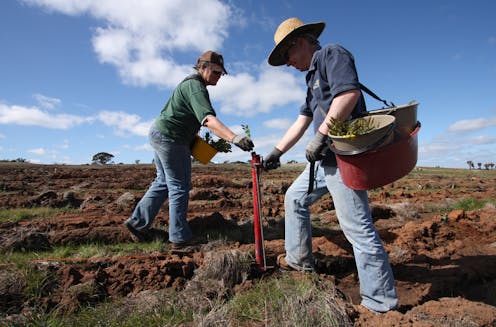
Restoration scientists Suzanne Prober and Tina Parkhurst contemplate a biodiverse carbon project 10 years after planting in south-western Australia.
Rachel Standish, CC BY-ND
Carbon farming can be a win-win – if done right
There are good and bad ways to do carbon farming. It’s wrong to claim credits for the growth of native remnant vegetation caused by rainfall, for instance, rather than regrowth after ending livestock grazing or other deliberate human intervention. It’s also wrong to claim credits for “avoided deforestation” – leaving vegetation intact when it was never intended to be cleared. We should also avoid planting trees in grasslands, which have their own set of species and should not be replaced.
Some carbon farming efforts have been run like plantations, where you plant a single fast-growing species such as blue mallee. The assumption here is monocultures like this store more carbon than a mix of species.
But we and other researchers have found this isn’t the case. Planting a diverse range of trees – like in a real forest – can store just as much carbon as monocultures.
Shrubs store less carbon than trees but play an important role in restoration. Their tangle of branches and leaves can offer safe harbour for smaller birds, for instance. Shrubs also boost projects’ resilience to drought and fire as they respond differently, which helps in recovery.
There would be no penalty to farmers for planting shrubs if the government’s planned nature repair market comes into force. Biodiverse projects could earn both carbon and biodiversity credits.
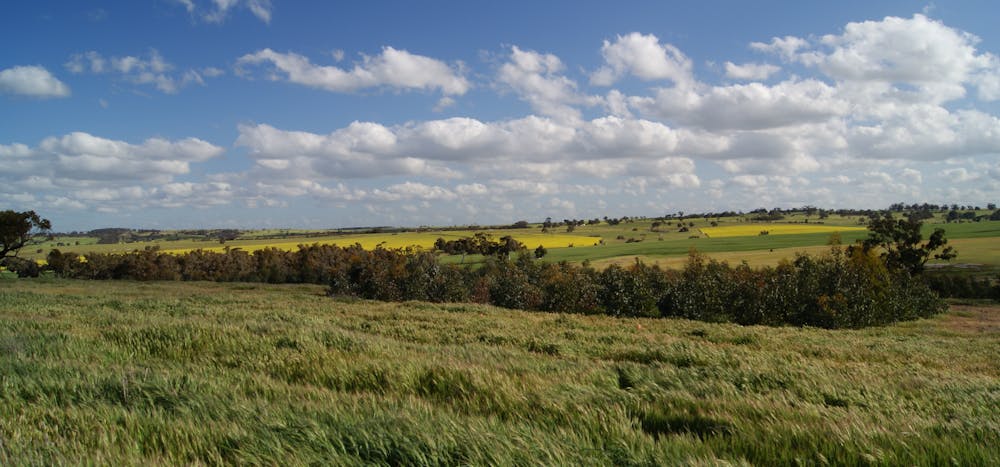
This would open the door to a win-win. Carbon-farming efforts could double as nature restoration projects, if we avoid tree monocultures and focus on restoring biodiversity while storing carbon. Australia has 13 million hectares of degraded land, meaning there’s plenty of room for restoration without taking farmland or compromising agricultural production.
Australia could benefit
As critics of carbon farming have pointed out, carbon credits from tree planting can be rubbery. But we shouldn’t tar all projects with the same brush.
In Australia, a number of companies are offering high-integrity carbon credits from biodiverse native tree planting projects, such as Carbon Positive Australia and Greening Australia.
Nature restoration is likely to become more attractive to investors because of the potential for growth in natural capital and employment.
As much as restoration is needed, so too is ongoing care such as feral animal control and leaving remnant vegetation intact.
Climate change is, unfortunately, threatening the environmental restoration which can help reduce its effects. In dryland Australia, drought makes it harder for seedlings to survive and for trees or shrubs to grow well even once established.
While many of Australia’s native plants are tough enough to weather fires, more frequent fires make it harder to bounce back. Plants need time between fires to grow rootstock and develop seed banks.
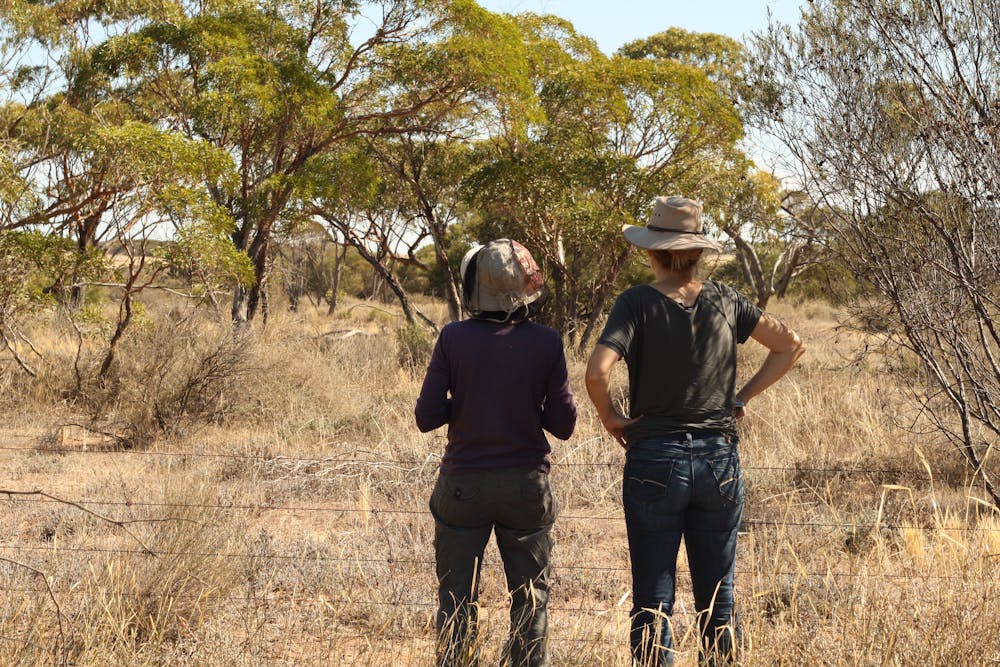
We have been researching how mixed-species revegetation efforts store carbon at the University of Western Australia’s research farm Ridgefield.
Rachel Standish, CC BY-ND
Biodiversity matters
When we talk about biodiversity, we’re talking about the richness of life.
To date, Australia’s carbon farming efforts vary a great deal in how they protect biodiversity. Think of the difference in walking through a blue mallee or sugar gum plantation – where there are few birds or other species – compared to walking through a patch of native forest. Some carbon farms can be diverse.
Restoration efforts which attract more species will come to function more like a true native ecosystem typical of their region.
This is not to say restoration work is easy. Turning a weed-filled paddock worn down by decades of agricultural use is tough. Even native species such as kangaroos and emus can become challenges by eating seedlings.
Treating experimentation as part of practice and publicly reporting successes and failures can help the industry progress. For instance, our restoration research has found native shrubs return if given the chance – but not understorey species.
In defence of carbon farming
Carbon farming is new. While some efforts may well be aimed at gaming the system, there are many others genuinely seeking ways of using nature to store the carbon we’ve released into the atmosphere. As this new approach progresses, there will be failures. But a failure is not necessarily greenwashing.
And as Australia, like many other nations, sets ambitious restoration targets to protect 30% of land and sea by 2030, we will need to experiment, innovate, work alongside Traditional Owners and plan to be there for the long term.
We are already seeing hopeful signs restoration work does yield benefits for at least some species, such as ants and woodland birds.
Restoration can work: for us, for climate and for our species. Let’s make sure it does work.
Rachel Standish receives funding from the ARC and the Transformation in Mining Economies CRC. She has worked on Greening Australia properties but has not received funding for this work.
Have you ever encountered a subpar hotel breakfast while on holiday? You don’t really like the food choices on offer, but since you already paid for the meal as part of your booking, you force yourself to eat something anyway rather than go down the road to a cafe.
Economists and social scientists argue that such behaviour can happen due to the “sunk cost fallacy” – an inability to ignore costs that have already been spent and can’t be recovered. In the hotel breakfast example, the sunk cost is the price you paid for the hotel package: at the time of deciding where to eat breakfast, such costs are unrecoverable and should therefore be ignored.
Similar examples range from justifying finishing a banal, half-read book (or half-watched TV series) based on prior time already “invested” in the activity, to being less likely to quit exclusive groups such as sororities and sporting clubs the more effort it took to complete the initiation ritual.
While these behaviours are not rational, they’re all too common, so it helps to be aware of this tendency. In some circumstances, you might even use it for your benefit.
Sunk costs can affect high-stakes decisions
While the examples above may seem relatively trivial, they show how common the sunk cost fallacy is. And it can affect decisions with much higher stakes in our lives.
Imagine that Bob previously bought a house for $1 million. Subsequently, there’s a nationwide housing market crash. All houses are now cheaper by 20% and Bob can only sell his house for $800,000. Bob’s been thinking of upgrading to a bigger house (and they are now cheaper!), but will need to sell his existing house to have funds for a downpayment.
However, he refuses to upgrade because he perceives a loss of $200,000 relative to the original price he paid of $1 million. Bob is committing the sunk cost fallacy by letting the original price influence his decision making – only the house’s current and projected price should matter.
Bob might be acting irrationally, but he’s only human. Part of the reason we may find it difficult to ignore such losses is because losses are psychologically more salient relative to gains – this is known as loss aversion.
It’s okay to quit a crafting project if it’s not looking salvageable any more.
Tim Masters/Shutterstock
While most of the evidence for the sunk cost fallacy comes from individual decisions, it may also influence the decisions of groups. In fact, it is sometimes referred to as the Concord fallacy, because the French and British governments continued funding the doomed supersonic airliner long after it was likely it would not be commercially viable.
Another example is drawn-out armed conflict that involves a large loss of lives for the losing side. Some may think it impossible to capitulate because the casualties will have “died in vain”.
If you find yourself justifying behaviour due to costs you’ve paid in the past rather than circumstances of the present, or predictions of the future, it’s worth checking yourself.
Identifying sunk costs allows you to cut your losses early and move on, rather than perpetuating larger losses. This is apparent in the housing example: the larger the crash, the cheaper the bigger house; and yet the larger the crash, the greater the perceived loss from selling the existing house. Hence, the greater the loss in opportunity inflicted by the sunk cost fallacy.
If you find it difficult to overcome the sunk cost fallacy, it may help to delegate such decisions to others. This may include the decision of whether to go to a buffet or subscribe to Netflix, with the latter potentially being a double whammy: one may feel compelled to binge-watch due to the flat fee structure and, as mentioned earlier, to finish mediocre series once halfway through.
Use sunk costs to your advantage
A second, less obvious benefit is actively using the fallacy to your advantage. For example, many gym memberships require upfront payments regardless of how much you use the facilities. If you find it hard to ignore sunk costs, choosing gym memberships that have large upfront fees and minimal pay-per-usage fees may be a way to commit yourself to a regular gym habit.
This can also apply to other activities that involve short-term pain for long-term gain – for example, paying for an online course will make you more likely to stick with it than if you found a free course.
But be warned, this doesn’t work for everything: it seems that spending wildly on a wedding ceremony or engagement ring doesn’t have a “sunk cost” effect – it fails to increase the likelihood of staying married.
Aaron Nicholas ne travaille pas, ne conseille pas, ne possède pas de parts, ne reçoit pas de fonds d'une organisation qui pourrait tirer profit de cet article, et n'a déclaré aucune autre affiliation que son organisme de recherche.
by Danielle Mariann Dove, Surrey Future Fellow and Lecturer in English Literature, University of Surrey
Around 46 million people across the UK are expected to have visited their local high street to go shopping over the last weekend in November, encouraged by so-called Black Friday sales. The projected spend in-store and online is forecast to reach close to £9 billion.
How much of a saving there is to be made on Black Friday is debated. But even if they are a way to get a head start on your Christmas shopping – and important for retail businesses – by encouraging people to buy things they don’t necessarily need Black Friday sales can have a detrimental impact on the environment.
In 2022, research estimated that 400,000 tons of CO₂ would be released into the atmosphere due to transportation associated with Black Friday in the UK that year. When considering the waste from packaging and the fact that up to 80% of Black Friday purchases end up in landfill after only one use, the damaging consequences of these mass sales become clear.
Clothes are, unsurprisingly, among the most popular items purchased during this period. Fashion is already the world’s second most polluting industry, accounting for up to 8% of global carbon emissions. On Black Friday, the carbon footprint of clothing sales is reportedly 72% higher than on any other day.
These statistics show that we need to consume more sustainably. The practices employed by the Victorians to mend, sell and reuse old clothing might offer us some valuable lessons this Black Friday.
For the Victorians, clothes were much more economically and emotionally valuable than they are today. Before the introduction of the sewing machine in 1851 and the rise of the ready-to-wear industry, clothes were made by hand, often at home.
A basic knowledge of fabrics and textiles was therefore commonplace, especially among women, who would have undertaken the majority of the household work. Making and repairing clothing were important practices that women devoted much of their time to, and sewing was a valuable domestic skill.
In contrast to today’s “throwaway culture”, where clothes are produced cheaply and quickly before being bought and disposed of after only a few uses, the Victorians carefully extended the life cycles of their garments. Employers even often handed lightly used articles of clothing down to members of their household staff.
The trade in second-hand clothes also became increasingly widespread from the late 18th century. Except for the very wealthy, the majority of people living in the UK would have worn at least some second-hand clothing.
During this period, old clothes were routinely collected by itinerant hawkers whose job it was to exchange flowers, china or money for cast-off clothes. They would then deposit old clothes in second-hand markets in major cities, where they would be repaired and sold on again.
Even when clothes were seemingly beyond repair, they were rarely thrown away. In 1865, an article that was published in The Leisure Hour, a Victorian era magazine, explained that “old clothes, after they have served their purposes of two or three classes of society, are yet far from closing their career.”
Rags could be collected and taken to papermills to be recycled into paper, while woollen textile waste was ground in mills to produce “shoddy” – a type of recycled cloth.
Beyond that, rags were even used as manure for growing Hops, or as English poet and philosopher Edward Carpenter claimed in 1887, for growing his potatoes:
“When my coat has worn … and got weather-stained out in the fields with sun and rain — then, faithful, it does not part from me, but getting itself cut up into shreds and patches descends to form a hearthrug for my feet. …when worn through, it goes into the kennel and keeps my dog warm, and so after lapse of years, retiring to the manure-heaps and passing out on to the land, returns to me in the form of potatoes for my dinner.”
The Victorians were not always motivated by environmental concerns in quite the same way that we are today. Nevertheless, they were driven to care for their clothes for reasons of thrift, economy and to prevent waste.
The European Commission announced in 2020 that it aims to achieve a circular economy by 2050. The initiative includes a vision to minimise textile waste and increase the recycling of garments. To bring this vision to fruition, there could be valuable lessons gleaned from the Victorians and their approach to handling old clothing.
Danielle Mariann Dove does not work for, consult, own shares in or receive funding from any company or organisation that would benefit from this article, and has disclosed no relevant affiliations beyond their academic appointment.
More than five million people visit the Florida Keys each winter, according to Travel and Leisure. As we approach the holidays and the long-awaited winter break, many USF students will flock to the beaches for a tropical holiday season. Perhaps the only benefit of global warming is that beach weather persists through much of South […]
Senior psychology major Delaney Slyker said the required Principles of Sociology class helped her discover she was interested in the field and helped her decide to minor in sociology. The Florida Board of Governors (BOG) advanced a rule on Nov. 9 based on Senate Bill 266, which would remove Principles of Sociology as a general […]
Andrew Lynch, freshman American Sign Language (ASL) interpreting major, was 16 years old when he was attacked for using the men’s bathroom in his high school in St. Pete. “I am afraid of it happening again every single day, everywhere I go,” Lynch, who is a transgender man, said. “I am afraid to use the […]
Some students shared their concerns about how the proposed regulation could affect free speech on campus. ORACLE PHOTO/JUSTIN SEECHARAN
For senior marine biology major Jessica Mills, the proposed Florida regulation banning social activism and funding for diversity programs on college campuses is unrealistic. She said it is a pipeline into “complete control” over college students.
“It will absolutely infringe on our ability to have free speech,” Mills said. “It is going against our constitutional right, and I don’t think that will be a very productive rule for anyone’s advancement.”
The Florida Board of Governors (BOG) advanced a rule on Nov. 9 based on Senate Bill 266 that would prohibit funding for social issues and diversity initiatives on public Florida college and university campuses.
The regulation bans university spending on “any activity organized with a purpose of effecting or preventing change to a government policy, action, or function, or any activity intended to achieve a desired result related to social issues, where the university endorses or promotes a position in communications, advertisements, programs, or campus activities.”
The public can comment on the regulation through the board’s website. The rule is expected to come before the board for final approval in January.
Director of Media Relations Althea Johnson said in a statement that USF continues to monitor the progress of the regulation proposed by the BOG.
If the regulation is approved, USF will work with its partners across the State University System and the BOG to analyze how the university will be impacted, according to Johnson.
Senior economics major William Mleczko, the President of Students for Socialism (SFS) at USF, said a possible lack of funding from USF could limit the organization’s on-campus events as they’d have less money available to spend on them.
“Everything can be politicized, and that is dangerous,” Mleczko said. “I feel like this regulation will probably lead to a lack of an on-campus scene for many groups and organizations”
If the organization’s funding is affected by the regulation, Mleczko said SFS will have fundraisers in order to keep up with the events they have planned for next semester.
Mleczko said he believes the state created the proposed regulation to prevent progressive and multicultural student groups from sharing their thoughts.
“This definitely wasn’t a rule to prohibit conservative free speech. It was to prohibit talking about class, race, and all aspects of daily life that are really important,” Mleczko said.
The regulation described “social issues” as “topics that polarize or divide society among political, ideological, moral, or religious beliefs, positions, or norms.”
Senior ASL interpreting major Emma Heard said she thinks the regulation’s definition of social issues is too broad.
“How is the regulation going to define what polarizing is?” Heard said. “It is confusing because social issues are just human topics.”
Heard said she is concerned some classes are not going to be allowed anymore if the regulation prevents universities from spending money to promote social issues.
“If the regulation stops funding diversity, what happens to classes where diversity is the main topic?” Heard said.
The proposed regulation could halt students’ personal learning by dwindling the number of diversity-focused classes, according to Mills.
“I have taken classes in Ethics and Humanities, where we talked about social issues,” Mills said. “The new regulation would basically shut down most of those classes and all of the discussion within them.”
Mills said she is concerned about how the regulation could affect the way professors teach their classes at USF.
“It could affect how vulnerable they’re able to be with their students and how they can share opinions with them,” Mills said. “I think it would severely limit the amount of growth that could be done within college classes.”
Faculty will also be affected if the regulation is approved because they will have to be careful with the topics they teach, according to Mleczko.
“They didn’t study for years to become professors just to teach some sort of alternate history where everybody in society has gotten along this whole time,” Mleczko said.
Professor Kiersten Jensen said she assured her students that the new regulation won’t affect discussion in her classes. She said she doesn’t think people should be afraid of any ideas.
“If there’s something within the topic that is in the coursebook and students want to talk about, then we will talk about it,” Jensen said.
Jensen said college campuses should support young people’s right to express themselves while being confronted with other opinions to enhance the learning experience.
It is important to share beliefs, experiences and observations to help other people understand different perspectives, according to Jensen.
“University isn’t supposed to be a K-12,” Jensen said. “It’s supposed to provide opportunities for young people to mature and hopefully become global thinkers.”
Mills said it is important that students can share their opinions to learn how to grow together. College is one of the most important facilitators of that, and a huge part of the college experience is erased if that is taken away from students, according to Mills.
Mleczko said that as students graduate and start picking up responsibilities, they need to know how to communicate with people and understand that not everybody thinks like them.
Jensen said she will always make sure the classroom is a space where everybody feels comfortable sharing their opinions.
“I’m certainly not going to be bullied into suppressing ideas, suppressing speech, or doing self-censorship,” Jensen said.
When foraging, it’s said that you should be as confident identifying edible plants in the wild as you are in a grocery store. Foragers also say that the best way to learn is to have an experienced person to guide you. Not everyone has access to someone like that, though. Enter: Books about foraging.
Now, gathering and eating wild plants based entirely on the photos and descriptions in a book can be a bit intimidating. For some plants, this isn’t a big deal — wineberries, for example, are an invasive edible that’s really easy to pick out. Garlic mustard and wild onions, too. Some plants don’t really have poisonous lookalikes, so the odds of making a dangerous mistake are pretty slim. Others, not so much.
All of this is to say that books about foraging aren’t all bad. At least, they weren’t.
Here’s where shit gets weird.
Here Come the Robots
People looking to make a quick buck have turned to artificial intelligence and Amazon’s publishing platform to pump out a lot of barely-concealed drivel. A lot of this is in the form of children’s books, I guess because they seem easier to make than a full-length novel. This is far from harmless, because children’s books play a role in the development of literacy and empathy that you don’t really want to hand off to a computer.
This attempt to cash out isn’t limited to children’s books, either. Amazon and other online book sellers have become the proud purveyors of foraging books written by AI. This isn’t really a new phenomenon, but, on the off chance any of you out there’re in the market for foraging guides, I figured I’d give you a heads up.
To be fair, a lot of these are simply useless and the worst they’ll do is waste your money. The books in this category claim to be foraging guides, but end up being about why foraging is good, listicles on the benefits of eating more fruits and vegetables, and recipe ideas. Pretty harmless overall.
On the other hand, there are books offering actual descriptions of “edible” plants and mushrooms(!). Some of them even list “taste” as an identifying feature of plants and fungi, which could encourage inexperienced foragers to taste things they haven’t positively identified. Since many extremely poisonous mushrooms are visually similar to harmless ones, this could get someone killed. Hell, plenty of people already mistake poisonous mushrooms for edible ones evenwithout books encouraging them to taste them.
Spotting Foraging Fakes
It’s not always easy to pick out which books are written by actual human people, and which aren’t. There are a couple of things that you can look for:
Publishing dates. Books written before the rise of AI generated content are a safer bet here.
The author’s web presence. Even if they have a photo, that doesn’t necessarily mean that they’re a person. The photo could be stolen (just see any of the fake identities on Scamfish), or made up by a different AI. Look for a blog. A Facebook page. A TikTok. An Instagram. Something to indicate an existence beyond the cover of a dodgy book. As this article from 404 Media states, “‘Edwin J. Smith’”’ is the author listed on two books[,] but doesn’t have any other books, or an online presence otherwise. The only Edwin J. Smith I could find was a Professor Emeritus of medicine at Indiana University from a staff list that’s more than a decade old.”
The author’s credentials. They should be actual, and not completely made up. Beware of author bios that offer vague, unrelated information.
A sample of the prose. A lot of bots pull from very varied sources, so you’ll get bits that sounds like they’re cut from a recipe blog, a florist’s website, an actual foraging manual, and so forth. These are also likely to be thrown together without much thought, because no actual humans looked at it to make sure it’d make any damn sense at all.
The editing. Bad, AI generated foraging guides often have mistakes that any human editor (or writer, for that matter) would pick up on right away.
A bad score from an AI-detection tool, like Scribbr or GPTZero. Get a sample of the text, paste it in a detection tool, and see what it says. While you’re at it, paste the author’s bio in there, too.
Again, if you’re able to, connect with an experienced foraging expert before going out in the field on your own. Your local university may be able to help you. You might even be able to find a group of foraging enthusiasts on sites like Meetup. Even if you can’t go out with a foraging expert, they may be able to recommend actual, useful guides, videos, and other resources for you.
Major changes might be in store for the area around MOSI — the Museum of Science and Industry. On November 1, Hillsborough County Commissioners unanimously approved a request for proposal asking developers to submit their plans for the redevelopment of the 67-acre site surrounding the MOSI. This area is located along E. Fowler Avenue south of the University of South Florida (USF).
Hillsborough County is seeking creative and competitive proposals from experienced and qualified master developers with a track record of mixed urban projects.
As part of the Uptown Innovation District, proposers are asked to submit innovative and inclusive development plans with a mix of uses including, but not limited to:
Hospitality
Entertainment
Retail
Public spaces
They also want to see plans that embrace transit and sustainable mobility. The County also hopes to see developers include economic drivers to the mix such as biosciences, life sciences, cybersecurity, and other advanced industries while capitalizing on the synergy and proximity to the County’s institutional partners such as USF, Moffit Cancer Center, James A. Haley Veterans’ Hospital, and Yuengling Center.
The County intends for MOSI to remain in its current 7-acre lease site. With MOSI’s plans for a future planetarium and learning labs, there is an opportunity for developers to add to this creative digital space with a commercial A/V or film studio, black box theater, or other performing arts platforms.
RFP submissions will be due in late February 2024. The Board plans to select the top-ranked master developer in summer 2024. Click here for additional information.
An Oct. 24 letter ordered university presidents to disband the Students for Justice in Palestine campus organizations. ORACLE PHOTO/JEISLIAN QUILES-SIERRA
State University System Chancellor Ray Rodrigues announced Florida universities have not deactivated chapters of Students for Justice in Palestine (SJP), despite a recent order to do so.
Rodrigues made the announcement at Thursday’s Board of Governors (BOG) meeting. He said the universities consulted with the different SJP chapters, who showed administration they were not under the “headship” of the National Students for Justice in Palestine (NSJP).
The constitutions of the campus organizations, which were submitted at the beginning of the school year, state that their organization “is not subservient, or under the National Students for Justice in Palestine,” he said.
The announcement came shortly after an Oct. 24 letter from Rodrigues ordered university presidents to terminate the pro-Palestinian student groups. This would affect USF’s own SJP chapter, which is currently active.
The universities are working with the SJP chapters on an “affirmation,” according to Rodrigues.
Rodrigues said the affirmation will confirm that the chapters “reject violence, that they reject that they are part of the Hamas movement, and that they will follow the law.”
In the letter released last month, Rodrigues wrote that NSJP made statements classified as “harmful support for terrorist groups.”
Hamas, which has been designated as a terrorist group by the U.S., attacked Israel on Oct. 7. The Israeli cabinet declared war against Hamas one day later, according to the Council of Foreign Relations.
Rodrigues wrote that Hamas called the attack “Operation Al-Aqsa Flood.” He said NSJP released a toolkit which promoted the terrorist organization.
The toolkit stated that “We as Palestinian students in exile are part of this movement, not in solidarity with this movement.” Rodrigues said this was a felony under Florida Statute 775.33 (3), which refers to “providing material support or resources for terrorism or to terrorist organizations.”
The order was met with protests on campus in solidarity with the USF SJP chapter and Palestine.
Rodrigues said the universities obtained legal opinions after the order.
The institutions raised concerns about “personal liability for university actors who deactivate the student registered organization,” according to Rodrigues. The BOG is seeking its own legal counsel on the matter, he said.
The Oracle has reached out to university officials for comment.
This is a developing story. Stay with The Oracle for updates.
Gratitude is a boon to mental health in difficult times. ORACLE PHOTO/ALEXANDRA URBAN
Between increased housing costs, an on-campus mental health crisis and a class divided by socio-political conflict, USF students have faced unprecedented challenges this semester on top of pursuing their degrees. Thanksgiving break is a well-earned pause in some of this semester’s chaos.
While it may be a holiday cliche, giving thanks is an effective way to steel yourself against the stress and struggle of modern life.
Practicing gratitude is a mindfulness exercise that has gained real traction in mental health circles in recent years. It involves small tasks like journaling what you’re grateful for that day, following a guided meditation or repeating daily affirmations.
It may sound reductive when compared to the grandiose issues students are grappling with. And it’s true – you cannot “Thank-you” your way into cheaper rent or a more peaceful political world. But the first step to cultivating a better life is to tend to the garden you can touch. Whether you’re advocating for change or just attempting to cope with the world around you, clear-headedness and peace is the first step.
Much like the rest of the world, the USF community was rocked by the Israel-Palestine conflict. The Oct. 7 Hamas attack on Israel triggered a series of on-campus protests and demonstrations.
The rights of on-campus pro-Palestinian groups were then challenged statewide on Oct. 25 when Chancellor of the State University System Raymond Rodrigues issued an order to disband them. While the order was halted, the pressure remains.
Jewish student groups like USF Hillel are concerned for their safety due to “increased antisemitism” on campus. For students on both sides, the tension is reaching a fever pitch.
While grappling with world conflict, USF students have also experienced a struggle more universal: crippling housing costs. The cheapest dorms cost $6,410 annually, and are set to increase by 4.5% annually for the next five years. Off-campus housing doesn’t offer a cheaper alternative.
“It’s stressful, and I don’t have a lot of spending money outside of school stuff, because I’m shelling out all this money into a meal plan and stuff. So I can’t really eat anywhere else besides the Hub,” junior studio art major Anna Waite said in an Oct. 17 Oracle article.
These are daunting stressors for students that can lead to depression and feelings of hopelessness. While practicing gratitude won’t solve the world’s issues, it’s a practical coping skill that can be a boon for preserving both your mental health and energy to make positive change.
Thankfulness exercises like helping strangers in small ways or telling a loved one that you appreciate them have conclusive mental effects. A series of studies by UC Davis Medical Center showed that gratitude practice diminishes stress hormones, reduces the risk of depression by 41% and decreases hopelessness in suicidal patients by 88%.
For students motivated to enact positive change, mental self-care and outlook management is one of the most effective forms of activism.
Advocating for change or even just keeping up-to-date on social issues can be exhausting, especially for students who compound global issues with everyday stressors. This exhaustion can lead to “activist burnout,” which creates long-term cynicism and feelings of inefficacy that stifle one’s ability to advocate effectively and have a lasting impact on self image.
That’s why, in times of conflict, socio-political injustice and economic struggle, it’s crucial to maintain a positive outlook on life. While thankfulness cannot end wars or repair the economy, appreciating life’s small joys wards off pessimism. Gratitude is remembering what makes the struggle worth it.
by Susan Barton, Professor of Plant and Soil Sciences, University of Delaware
Autumn is the season to gaze at gorgeous leaves of gold, yellow and orange as they flutter from the trees and fall on our yards – but then, of course, comes the tedious task of raking them up and trying to decide what to do with them. SciLine interviewed Susan Barton, a professor of plant and soil sciences at the University of Delaware, who says taking a lazy approach is actually a win for your garden and the critters that live there.
Dr. Susan Barton discusses fall lawn care.
Below are some highlights from the interview. Answers have been edited for brevity and clarity.
Can leaves on a landscaped property ever be left as they are, or should they always be mulched?
Susan Barton: A layer of leaves on the lawn will exclude light, which would be detrimental to the lawn. So when the leaves fall, either rake them up or chop them up with a lawn mower so they are finer and can sift down in through the grass blades. But if they fall in a landscape bed, or under trees, shrubs and larger plants, it’s fine to just leave the leaves without mulching them.
What are the benefits of mulching leaves rather than removing them?
Susan Barton: The leaves contain nutrients, and they also are a source of organic matter. So if you allow the leaves to go back into the landscape, you are providing nutrients for the plants to take up, and you are providing organic matter that will improve the soil structure.
If you think about forest, where leaves just naturally return to the soil and decompose every year, it’s some of the richest soil we have. By allowing that to happen in your landscape beds, you’re getting the same benefits.
What can keep leaves from blowing from one property to another?
Susan Barton: Chopping them up will dramatically reduce the blowing of the leaves. Make them smaller by either mowing over the leaves where they fall in the lawn, or raking them into piles and then mowing them.
There are also leaf vacuums that vacuum, chop up and put the leaves in a bag. Then you spread the leaves on your landscape beds.
What are the environmental benefits of not removing the leaves?
Susan Barton: If you rake up your leaves, put them in a black plastic bag and have them taken off to a landfill, then they never get to decompose and return those nutrients and organic matter back to the soil. Instead, you’re taking what could be a resource and making it a problem.
Also, many insects spend the winter in leaf litter. And a lot of people might not want insects in their landscape, but only about 2% of all the insects in the world are considered pests. Most of them are either beneficial or of no consequence to humans, and they are very important food sources for birds and other animals. Birds feed the insects, especially caterpillars, to their hatchlings.
So by allowing the insects to overwinter in the leaf litter, you’re supporting bird populations and, of course, pollinators, which help plants produce seeds that can develop into new plants.
When should people fertilize lawns?
Susan Barton: In the fall, because that is when turf grass is primarily growing roots and you’re promoting the kind of grass growth that makes a healthy, dense lawn. When you fertilize in the spring, your grass is growing leaves at that point, so you’re really just causing the grass to grow more and grow faster, and you will need to mow more often. So it really doesn’t make sense to fertilize in the spring.
Also, when you chop up the leaves in the fall, you are actually also fertilizing in the fall because you’re putting those chopped up leaves back into the soil. But it’s a good idea to add some additional fertilizer besides just the leaf litter.
How can people get the most out of their lawns and make their landscaping more environmentally friendly?
Susan Barton: The suburban norm is to have a lawn with some decorative plants around the house, or at the end of the driveway. But I think it’s a good idea to sort of flip that paradigm and design areas of the lawn that provide for play and gathering spaces, and then figure out what everything else can be.
It’s just a different way of thinking about the landscape, and much more environmentally sensitive. It will provide all kinds of ecosystem services, whether it’s better water infiltration or better air quality. If we think about pulling carbon dioxide out of the air, we’re doing it a lot more if we’ve got a ground cover, a shrub layer, a small tree layer and a large tree layer than we are if we have just a lawn.
SciLine is a free service based at the nonprofit American Association for the Advancement of Science that helps journalists include scientific evidence and experts in their news stories.
Susan Barton does not work for, consult, own shares in or receive funding from any company or organisation that would benefit from this article, and has disclosed no relevant affiliations beyond their academic appointment.
People fact-checked social media posts more carefully and were more willing to revise their initial beliefs when they were paired with someone from a different cultural background than their own, according to a study my collaborators Michael Baker and Françoise Détienne and I recently published in Frontiers in Psychology.
If you’re French, you’re less likely than an English person to believe a tweet that claims Britain produces more varieties of cheese than France. And if you’re English, you’re more likely than a French person to believe a tweet that claims only 43% of French people shower daily.
More intriguingly, when pairs of English and French people fact-checked such tweets together, how they did so and the extent to which they revised their initial beliefs depended on whether they were “matched” or “mismatched” for cultural identity. We found French-French and English-English pairs focused on confirming evidence and stuck to their initial beliefs, whereas English-French pairs engaged in deeper searches and revised their beliefs in line with evidence.
To address the misinformation challenge, researchers need to understand better how people process online information. In addition to contributing to such understanding, our findings suggest that bringing together people from opposing sides to fact-check contentious social media posts might improve their media literacy and their ability to engage in civil discourse.
Bringing together people from opposing sides of a conflict to jointly fact-check social media posts isn’t likely to be easy. In times like these, it’s hard even to get them into the same room to speak directly to each other rather than hurling slogans – and worse – at each other. Nevertheless, because publicly funded educational institutions are committed to promoting informed debate and preparing the nation’s future citizens, my colleagues and I believe they remain some of the most promising places to try this approach.
What’s next
In future studies, we plan to focus on topics that are more controversial than cheese or personal hygiene to see whether the moderating effect of mismatched pairs still applies.
Observing how matched and mismatched pairs fact-check such posts would shed light on how a tweet’s contentiousness affects people’s ability to fact-check it effectively. In particular, when the stakes are higher with regard to people’s identities, do mismatched pairs still outperform matched pairs, or does the content’s contentiousness obstruct effective collaboration?
Our approach to studying people’s deliberations about online information is to create experimental situations in which such deliberations are natural and observable. In this study, we designed a novel research setup based on the fact that sharing and discussing social media posts with others is an everyday activity.
The Research Brief is a short take on interesting academic work.
Eli Gottlieb does not work for, consult, own shares in or receive funding from any company or organization that would benefit from this article, and has disclosed no relevant affiliations beyond their academic appointment.
The Anti Defamation League and Hillel International have introduced a free legal help line for the Jewish community to report antisemitism on campus as it reaches an all time high, according to an Instagram post. ORACLE PHOTO/JUSTIN SEECHARAN
Students gathered at USF Hillel – the Jewish Campus Life Center – for a vigil three days after the Hamas attack on Israel.
While lighting candles and singing in honor of lives lost in the conflict, health sciences major Alexa Greenstein said that hers and other Jewish students’ grieving time was interrupted by protesters driving by the Hillel building on Sycamore Drive.
“There were people driving by honking their horns and blasting Arabic music,” she said. “It wasn’t in the middle of the day, it wasn’t in front of the MSC or the library. It was just for us.”
Hamas, designated as a terrorist group by the U.S., launched an attack on Israel on Oct. 7, according to an AP News article. The attack prompted the Israeli cabinet to declare war against Hamas, according to the Council of Foreign Relations.
Senior environmental science and policy major Rebecca Alexander said the passing cars that showed support for Palestine at the vigil were unwarranted since the Jewish students weren’t protesting.
“It wasn’t political,” she said. “It was literally just lighting candles in memory of all the people that have been killed, on either side.”
One day after the vigil, University Police (UP) was notified of a “non-specific” bomb threat at the Hillel building, according to an Oct. 11 Oracle article.
UP stated in a later update that the situation was caused by a dispute between two individuals online, and the bomb threat was “never legitimate,” according to the article.
Jewish students and their families are still concerned with safety on campus due to increased anti-semitism at universities, according to Greenstein.
“We are scared,” she said. “We don’t want to go to class. We don’t want to go to the library by ourselves. My mom won’t even let me stay at the library past midnight.”
President Rhea Law sent a universitywide email on Oct. 11 that condemned Hamas’ attacks on Israel, stating that USF stands with people affected by the conflicts.
“Everyone deserves to feel welcome and safe on our campuses,” Law wrote. “Violence, discrimination or harassment against any member of our community – regardless of their backgrounds of beliefs – will not be tolerated.”
Senior psychology major Rayna Hoffman said the university’s statements regarding its position on the conflict were vague, and did not promptly address students’ safety concerns.
“USF had a very surface level response,” she said. “It felt like they didn’t even mean what they were saying. I know I didn’t feel any more secure [and I] wasn’t like ‘My school has my back.’”
University of Florida’s President Ben Sasse issued a letter on Oct.12 after an on-campus Jewish vigil ended in a stampede. The letter stated that if protests were anything but peaceful, UF would be ready to act on it, according to the Independent Florida Alligator.
“Speech is protected – violence and vandalism are not,” Sasse wrote.
Hoffman is currently studying abroad in Florence, but she said she is still apprehensive about attending Chabad – an on-campus Jewish organization – events in the future.
“I am very proud of being Jewish and try to be vocal about that,” Hoffman said. “I never want to feel ashamed or have to hide who I am to protect my safety. But it’s really scary.”
USF increased police presence on campus due to “conflicts in the Middle East,” as stated in a universitywide email. Alexander said it has been comforting to see officers at Hillel.
“USF has police outside Hillel 24/7, and all the officers have been really kind and supportive,” she said. “It is a nice relationship that I never expected to have.”
The Biden administration has issued a warning to universities to manage the “alarming rise of anti-semitism and Islamophobia” on campuses, according to a Tuesday AP News article.
Greenstein said the rise in anti-semitic behavior is noticeable on social media, such as hateful comments under Jewish students’ social media accounts. She said these comments and posts are no longer focused on the conflict in Gaza.
“It is just blunt anti-semitism. So I don’t feel comfortable walking on campus, I know my friends don’t either,” Greenstein said.
Alexander said the posters and pro-Palestinian rallies at USF have prompted her to avoid being on campus as much as she can. Alexander said she’s received threats on her social media posts.
“People have commented on my Instagram like ‘Hitler was right’ or ‘We are finishing Hitler’s job,’” she said. “It is scary, these people are my peers.”
Even if she believes people should have conversations about the history of the conflict, Hoffman said most people are not very open to talk about it.
“When I feel strongly about something, it is not easy for me to change my positioning,” she said. “I think most of our generation is like that. People want to hear what they want to hear.”