Shared posts

07 Jun 02:26

The end of OpenGL support, other updates Apple didn’t share at the keynote

by Samuel Axon

Enlarge

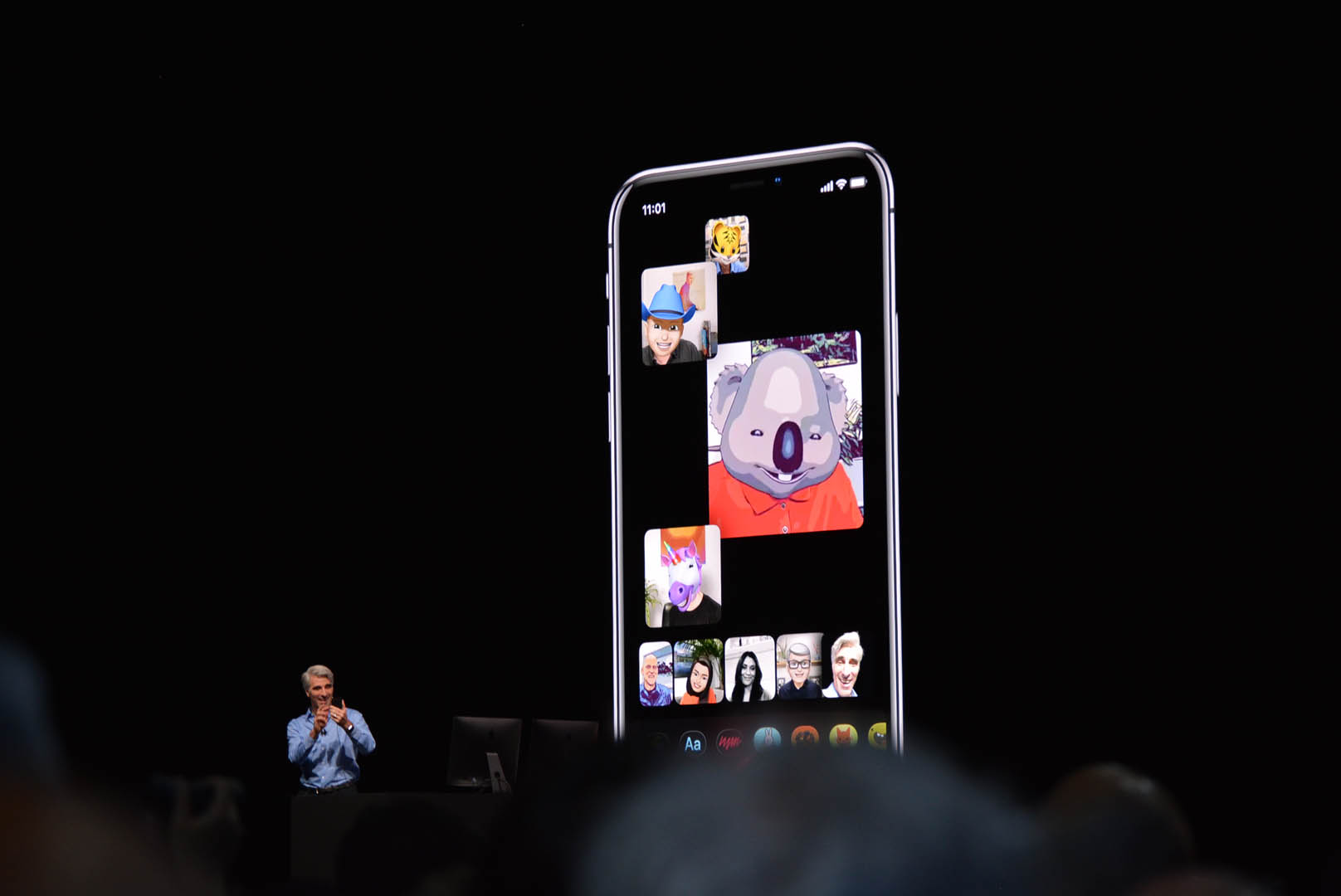
SAN JOSE—Monday, thousands of people watched Apple's Worldwide Developers Conference (WWDC) keynote, in which the company described its plans for the next versions of its key operating systems—iOS 12 and macOS Mojave. It was was more than two hours long, and it covered a lot of new features and tweaks. But in the hours since the keynote, additional information has emerged that wasn't mentioned in the keynote, but that's also relevant.

For one thing, Apple held a session at WWDC shortly after the Keynote called "Platforms State of the Union" that went into a little more detail on certain features. The company also spoke with press to answer questions and clarify concepts. Finally, the company has released the first beta releases of iOS 12 and macOS Mojave, along with various pieces of support documentation. Developers, press, and users have discovered a number of new changes and features this way.

More info will emerge as Apple hosts dedicated talks on subjects like ARKit and Metal, but here's the most interesting stuff we've learned at WWDC so far that wasn't brought up in the keynote. We don't touch on everything here, of course, but we'll be digging more deeply into certain topics from WWDC—some mentioned here, some not—in the coming days.

Read 24 remaining paragraphs | Comments

21 Nov 22:02

How Kids React To My Pretty Pretty Princess Nails.

by TheFerrett

Hi. I’m Ferrett. I’m a guy, and my nails usually look like this:

My profile picture

Or this:

Untitled

And after last night’s lovely manicure , they look like this.

Untitled

What I find fascinating about my nails, however, is how little kids react to them.  Because when a six-year-old girl first sees my nails, her first reaction is almost inevitably disgust and/or suspicion.  “Why do you have painted nails?” they ask, circling about me warily.

“Because they’re pretty.”

“But you’re a boy.”

“Boys can be pretty.”

Sometimes they make the disgust-face and back away.  Other times they tell me, “Boys aren’t supposed to be pretty!” and we get into a brief argument that I inevitably lose.  Regardless of whether they’re a girl or a boy, I’ve had this conversation at least forty times – this angry violation of their world, this curt rejection.

If I see the child again, however, they invariably ask again.  It’s the same question: “Why do you have painted nails?”  They clearly remember me.  And I tell them, once again, it’s because I think painted nails are pretty, and this time their response is puzzlement.  You can see them scrunching up their faces as they process this new idea that maybe some boys have long, girly fingernails, and they’re sure that it’s weird, but is it wrong?  They’re now no longer sure.  And sometimes they grab my hand without permission to touch my nails, as if to confirm this is a Real Thing.

When they leave, they’re still deeply suspicious of the nails.

The third time, they’ve come to terms with it.  It’s no longer an issue; this is what Ferrett does, and this is how some people are.  But what happens next is often very telling: on subsequent visits, the kids become enthusiastic about my nails.  They start to show their nails off to me, asking about my color, and when I walk through the door the first thing some of them do is see what color Ferrett is wearing today.  These kids now think it’s cool that I wear pretty pretty princess nails.  In particular for little girls, it’s often an avenue of connectivity – hey, you have wild nails, see the color my Mommy let me get?

Yet each of them, at one point, had told me with disgust that boys did not wear painted nails.

And I think that’s a microcosm of humanity, really.  When presented with something new that’s against how society tells you things should be, whether that’s homosexuality or transgendered people or polyamory or cross-dressing or a thousand other things, the inevitable gut reaction from people is a sort of visceral “Eeyew.”  Which is often not them rejecting the idea itself, but rather a reaction to having their concept of normality violently jabbed.  People like knowing how things are supposed to be.  They like feeling like they’re on top of things.  And this reminder that whoah, maybe you don’t know how people behave, is a threatening and ferocious action.

Then they see it a few more times and, circling the idea carefully, they come to recognize that maybe this is just another puzzle piece in the vast number of ways that human beings can be, and they come to accept it. Then in some cases, once they move beyond that, they become fans.  And – this is the important bit – having become fans, they forget that they were once opposed.  That process of adjustment fades away, and I never remind them.  It’s better if they believe that this was always the way, really.

And I don’t like dealing with kids who reject me, making little “cuckoo” gestures with their fingers to their friends as they retreat.  It’s strangely stinging, being written off by an adorable seven-year-old moppet.  But I also know that this reaction fades more often than not.  It’s a thing that humans often do, and it’s a dumb thing, but it generally takes a few sharp shocks to the worldview before they arrive at acceptance and tolerance.  And if they’re lucky, that worldview expands enough that newer concepts don’t seem all that crazy – once you’ve absorbed the idea that people can be gay, and that gender can be fluid, then expanding to accept the idea of transgendered lesbians is but a little hop.

That rejection is immediate, and painful, and by no means am I saying you’re not correct to be hurt by it.  But what I am saying is that that rejection is often not the final word, if that person is lucky enough to encounter enough other people like you.  People are often staggeringly thoughtless as they evolve, and ideally they learn to get past this sort of ugly brutality as kids… but sometimes a kid can go through a whole adolescence without meeting Dude With Painted Nails, clinging tight to a tragically narrowed world.  When they finally encounter you, they’re as ill-prepared to deal with it as the six-year-old was.  The reason we’re tolerant of kids is that they don’t know any better, and while it’s comforting to think that everyone gets handed the Big Grown-Ups Manual when they turn sixteen, a tome that contains all the proper ways to respond to things, the sad truth is that kids become grownups by running head-first into experiences, and usually cocking them up.  If they aren’t lucky enough to have the right experiences at the right time, some portion of them remains a dumb kid even if they’re sixteen or sixty or a hundred.

I’ve gotten to see these kids evolve, live, right before my sparkly sparkly nails.  Now they love ‘em.

That’s a good thing.

02 Jul 06:15

FTL: Faster Than Light fans creating a first-person, multiplayer treatment in Garry’s Mod

by Perry Vandell

Being a captain in FTL: Faster Than Light is a nerve-wracking experience. Hostile aliens could teleport onto your ship at a moments notice, an asteroid could take out life support, and you’re constantly put in horrible situations with no clear solution. The responsibility is simply too great, but luckily a pair of fellow space-goers are working on a Garry’s Mod gamemode that lets you demote yourself to the role of a single crewmember.

The mod, called Final Frontier, is a 3D representation of the cruel—but rewarding—roguelike we thoroughly enjoyed last year. Where your ships systems were easy to control from your tactical view, everything in Final Frontier must be managed by human players. Firing weapons, teleporting players, and unlocking doors requires a quick mind and quicker hands at the correct console.

The developers hosted a Q&A to elaborate on what their FTL-inspired mod entails:

“This game is (heavily (blatantly)) inspired by FTL, a game we all enjoyed playing but felt would be improved with multiplayer,” one of the developers wrote. “Unlike FTL, you control a single crewmember in first-person perspective, and must manually perform the tasks that FTL characters carried out by standing at their posts mashing keyboards. How well you perform your job is entirely dependent on the skill of the player at that task.”

The two modders say they’re only “prototyping the project in Garry’s Mod,” and that they’re only testing it internally, but plan to set up a public server once the mod’s main features are finished. I suppose I could take this time to look for a top-tier crew that’ll fight and die for me without question. Any takers?

Thanks, Rock, Paper Shotgun

The post FTL: Faster Than Light fans creating a first-person, multiplayer treatment in Garry’s Mod appeared first on PC Gamer.

14 Jun 04:48

“Just Shout Louder”: A Failed Viewpoint

by TheFerrett

Yesterday, inspired by watching a forum I love fall apart, I Tweeted this:

The problem with unrestricted free speech: one loud idiot can drive away forty sane people.

To which my Facebook friends replied, “RAH IT’S ALL THE FAULT OF THOSE MEEK FORTY PEOPLE YOU JUST YELL LOUDER AND DRIVE THOSE FUCKERS AWAY.”

No.  That’s really not how it works, nor how it should work.

See, the issue at hand is most places are optional forums – you don’t have to contribute to them.  Which means that people are only really participating because, despite a handful of inconveniences, they enjoy being there.  So if you have your lovely woodworking community where you all get together to build Amish rocking chairs, people are going there after the stress of work to get their chair on.

Fortunately, human beings largely enjoy themselves via the act of creation.  Which includes creating new friendships, new communities, new skills.  So you often wind up with an organization by mistake, simply because people get off on this sort of thing.

Now.  Throw in one lunatic – the guy who insists that YOU’RE DOING IT ALL WRONG, THIS ISN’T STRICTLY AMISH, and yells at everyone because their chairs suck and starts trying to amend the bylaws so that every chair produced here must fit his crazy standards.  This guy does this shit because he gets off on being right.  In fact, the more people fight him, the more he enjoys it, because there’s the challenge of winning.  So your yelling at him won’t drive him away – it’ll just be fuelling what he loves doing, which is arguing semantics.

The other forty people?  They find arguments stressful, especially when they’re about silly things that don’t really need to be argued about.  And this guy won’t stop.  Suddenly, they’ve stopped going to a place they enjoyed hanging with their friends and creating things they were proud of, to a place where they’re squared off against Idiot Boy and creating things that they’re not proud of, because Idiot Boy is changing the nature of what they’re producing.

Now, according to my short-sighted friends on Facebook, the proper solution is to just push back until he leaves.  Except, as noted, he won’t leave voluntarily.  He views this place as his his home, and he’s determined to make it suit him.  Every action you take will involve battling Idiot Boy in a public showdown.  Which means, really, what you’re saying is, “Even though you’re now made miserable by this group, it having turned into a chore you actively hate doing, you should stay in there forever just out of principle, in your spare time!”

Which is a fucking stupid approach.  Basically, what you’re saying is, “This one idiot ruining all your fun should get what he wants, and you should have your spare-time enjoyment destroyed, forever.”  No, the rational approach is to leave the group, because you’re now in a hostile situation where you can’t enjoy yourself.  This isn’t the future of American defense programs… it’s a fucking wooden chair, or a writing group, or a fantasy football league.  So they leave, making the idiot have fewer people left to fight him.

“Well, why can’t they throw the idiot out of the group?” you ask.  That’s a great question.  It solves your issue neatly, tells people what sort of conduct you expect to see in this group, and sets a tone that bolsters the enjoyment of everyone else in the club.  There’s just one problem:

That’s not unrestricted free speech.  It’s moderation.

This is why moderation is fucking awesome.

Look, it only takes one idiot to ruin it for a lot of people.  And if two idiots find each other and form a power bloc?  Forget it, their strength magnifies.  (And that’s assuming, often charitably, that the idiots actually believe what they’re saying and aren’t just trolling to see what damage they can do.)

Letting the idiots run loose means that you’re effectively prioritizing one communication style – loud and confrontational – over all the other forms of communication that exist.  When the idiots run reign, there are at least forty people who stay quiet because they don’t feel like getting into a fight – and that not wanting to fight all the time with crazies is entirely justifiable and logical.  Which means that you’re effectively suppressing whole swathes of thinking, making your group dumber.

I’m not saying that unrestricted free speech is bad.  I’m saying that in many cases, it’s completely suboptimal, particularly if you’re trying to foster a welcoming environment for people who don’t get heard much anyway.  Shaping environments are as much about what you won’t allow to happen as what you will… and to respond to every idiot by saying, “IT’S HIS RIGHT TO SPEAK!” is, quietly, telling all the other people who are not having fun any more that this isn’t about satisfaction, it’s about a bitter sticking to principles and you’d damn well better suck it up.

Not surprisingly, that’s not terribly appealing.  And then you wonder why your group never gets anything done.
 

07 Jun 03:29

Spy Party casually enters open beta, hopes the sniper isn’t watching

by Ian Birnbaum

Spy Party has been teasing us with its tantalizing asymmetrical hunter/prey gameplay for a long, long time. Last September we called it one of the brightest ideas in indie gaming, and at that point it had been in development since 2009.

The wait is nearly over! In addition to getting a full artistic makeover, an open beta has now launched, and all pre-purchasers of the full game are invited. Developer Chris Hecker, formerly of Maxis and Spore fame, is still hard at work on the game and, it must be said, appears to be suffering from some sleep deprivation, poor guy.

Spy Party’s central idea is a simple cat-and-mouse game. A sniper watches a cocktail party, looking for a spy making a transfer or planting a bug. The spy acts as much like the NPCs as possible while completing the mission. The civilians, as usual, get in the way and mess up everything.

Spy Party’s early builds have been a hit on the gaming convention circuit for a while. It first premiered at GDC in 2009 and continues to pop up at various PAX locations to further tantalize us.

You can sign up for the beta by pre-purchasing the game.

The post Spy Party casually enters open beta, hopes the sniper isn’t watching appeared first on PC Gamer.

10 May 23:58

FreeCiv available in HTML5 browsers, worldwide productivity plummets

by Ian Birnbaum

FreeCiv has been in development since 1995, but that doesn’t mean it’s stuck in the past. Everyone’s favorite not-Civilization nation-builder is now playable in browsers and on mobile devices so you can fully lose every waking moment enjoy multiplayer games anywhere you go.

The opensource 4X title is compatible with HTML5 browsers, so you can play in Chrome or Firefox without installing it on—let’s be honest here—your workplace Mac or PC. I don’t think anyone’s under any illusions about what this particular version will be used for. You may be in a beige-walled cubicle tomorrow, but your brain (and your browser) will be sending out scouts and making trade treaties with foreign dignitaries.

I’d love to see offices spending less time on March Madness brackets and fantasy football teams to indulge in something really fascinating: weeks-long exercises in fraught diplomacy and backstabbing! Between FreeCiv and Neptune’s Pride, any office should be able to find a strategy game that is right for them. After all, you’ll never really get to know a coworker until you betray them horribly.

Check out the FreeCiv wiki to help get you started, then get busy conquering the world.

The post FreeCiv available in HTML5 browsers, worldwide productivity plummets appeared first on PC Gamer.

16 Apr 22:17

What Function Will News Serve In The Future?

by TheFerrett

There’s no piece of news reporting that can compete with the speed of Twitter and Facebook.  That’s because the reporters are an intermediary layer, having to push it through a level of bureaucracy, whereas all someone has to do is Tweet “There was an explosion at the Boston Marathon finish line!” and wham, 10,000 Retweets later, the news is disseminated.

So anyone sane has pretty much abandoned the idea of getting breaking news from CNN.  Anyone who’s watched a major event unfold in real time knows that the official news outlets are often fifteen minutes, a half-hour, beyond the speed of actual events.

What CNN and Fox and the NYT have become, in effect, are the reality check.  Were you to have followed the Boston Marathon tragedy yesterday, you would have seen all sorts of crazy snippets of “news,” many of which turned out to be false.  Savvy net-users knew to take everything with a grain of salt until an “official” news source covered it… which is why, when a major source like the New York Post erroneously reported that a Muslim guy had been taken into custody, people got furious.  The news outlets don’t provide the news any more, they certify it.

Which makes me wonder how long that will happen.  It seems to me that eventually, there’ll be a way of certifying individual sources – i.e., “How trustworthy is Ferrett, anyway?”  You could look over my history and have people vote on how reliable I am at providing information, and in turn have that truthiness-percentage be a way of gauging how trustworthy my ratings for my friends are, and soon enough you would have a personal rating of how reliable a particular news item is.

I can easily envision a future where Fox News does nada – but an aggregator does some mighty complex calculations to say, “The volume of Tweets/Facebook posts about this Boston Marathon event have hit a critical mass, enough to bring it to my user’s attention with an 74% reliability rating.”  Reporters Tweeting directly from the scene would probably have more reliability, natch, but that wouldn’t be related to a news organization per se – it’d be that people had tuned into them before and trusted them.  Users with little experience online probably wouldn’t get a whole lot of traction right away, so if someone’s first post was “Check this video I took of the explosion,” it wouldn’t have much of an impact – but hour by hour, as other news sources came in and confirmed their post, that video would rise to the top of the news posts.

Eventually, the idea of “news” would go away, replaced by a large-scale network of personal probability calculations.  Maybe people would subscribe to groups of especially trustworthy people, making for erzatz news sources – but you could still get really good information just by sifting through people’s sources.   In many cases, more accurate than the stories that could only bubble up through a news department’s bureaucracy.

And when we can get news quicker and validate it on our own, what function will the news serve?  Will they wither away, or will such a movement force them to actually do what they’ve failed to do for years, and weigh in-depth reporting over trivial questions?  Or is our need to see random victims interviewed so strong that news will fall to the simple function of shoving a microphone into someone’s face?

And yes.  I know this new algorithmically-based methodology of news would only serve to deepen biases, for those you mark trustworthy are often those who you agree with politically.  But hey.  You think that’s not happening already?

05 Apr 23:46

Angling to develop for Google Glass? Google gives some insight

by Casey Johnston
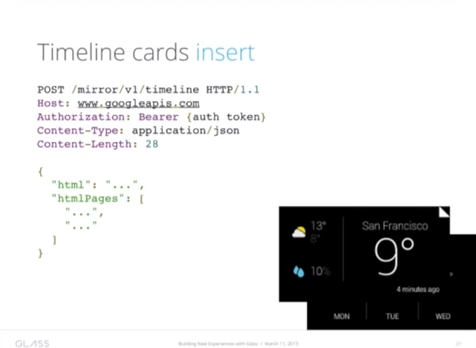
A demo of how to use the mirror API and its output during Timothy Jordan's talk.

If you’re looking for a taste of what it will be like to develop for Google Glass, the company posted a video demonstrating the hardware and a little bit of the API on Thursday. Timothy Jordan, a senior developer advocate at Google, gave a talk at SXSW in early March that lasted just shy of an hour and gave a look into the platform.

Google Glass bears more similarity to the Web than the Android mobile operating system, so developing for it is simpler than creating an Android application. During the talk, Jordan goes over some the functionality developers can get out of the Mirror API, which allows apps to pop Timeline Cards into a user’s view, as well as show new items from services the user might be subscribed to (weather, wire services, and so forth).

Jordan also shows how users can interact with items that crop up using the API. When the user sees something they like, for instance, they can re-share it with a button or “love” it.

Read 1 remaining paragraphs | Comments

15 Mar 12:48

Photo

by nickdivers