
This might be the tallest yet.




NSA surveillance footage of me at any restaurant where curly fries are available.


I love this Off the Air series. Lovely combination of the glitchy, psychedelic and surreal.
Erin&1
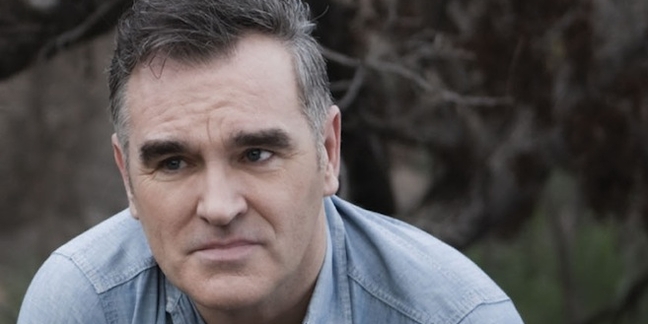
A Morrissey representative confirms that the singer's strongly-worded criticisms of Margaret Thatcher, which surfaced after news of her death yesterday, came from an old interview in an issues of Loaded magazine. (The fan website Morrissey-Solo first noticed this). But the old quotes fall pretty much in line with a new statement Morrissey has released.
His new statement touches on the state of the media, British politics and, of course, the overwhelmingly shitty nature of the entire world:
The difficulty with giving a comment on Margaret Thatcher's death to the British tabloids is that, no matter how calmly and measured you speak, the comment must be reported as an "outburst" or an "explosive attack" if your view is not pro-establishment.
If you reference "the Malvinas", it will be switched to "the Falklands", and your "Thatcher" will be softened to a "Maggie." This is generally how things are structured in a non-democratic society. Thatcher's name must be protected not because of all the wrong that she had done, but because the people around her allowed her to do it, and therefore any criticism of Thatcher throws a dangerously absurd light on the entire machinery of British politics.
Thatcher was not a strong or formidable leader. She simply did not give a shit about people, and this coarseness has been neatly transformed into bravery by the British press who are attempting to re-write history in order to protect patriotism. As a result, any opposing view is stifled or ridiculed, whereas we must all endure the obligatory praise for Thatcher from David Cameron without any suggestion from the BBC that his praise just might be an outburst of pro-Thatcher extremism from someone whose praise might possibly protect his own current interests.
The fact that Thatcher ignited the British public into street-riots, violent demonstrations and a social disorder previously unseen in British history is completely ignored by David Cameron in 2013. In truth, of course, no British politician has ever been more despised by the British people than Margaret Thatcher.
Thatcher's funeral on Wednesday will be heavily policed for fear that the British tax-payer will want to finally express their view of Thatcher. They are certain to be tear-gassed out of sight by the police.
United Kingdom? Syria? China? What's the difference?
Meena Vathyam sent in this photograph from Shanghaiist:

This one is very easy to solve. The sentence actually means:
huíxiāng chǎo bènjī dàn 茴香炒笨鸡蛋
("fried free range eggs with fennel")
The translator misparsed the last part as bèn jīdàn 笨 鸡蛋 ("stupid egg") instead of the intended bènjī dàn 笨鸡 蛋 ("eggs from free range chickens").
Bènjī 笨鸡 ("free range chicken") is a northeast topolectal word for what in Modern Standard Mandarin (MSM) is normally referred to as tǔjī 土鸡 (lit., "local / native chicken"). I've also heard this type of fowl referred to as cháijī 柴鸡 (lit., "firewood chicken"). In Shandong this type of poultry is called cǎojī 草鸡 (lit., "grass chicken").
The semantics of the epithet "stupid egg" were discussed at length in "Ma Ying-jeou and Xi Jinping: presidential language notes".
[Thanks to Cao Lin, Cheng Fangyi, and Rebecca Fu]
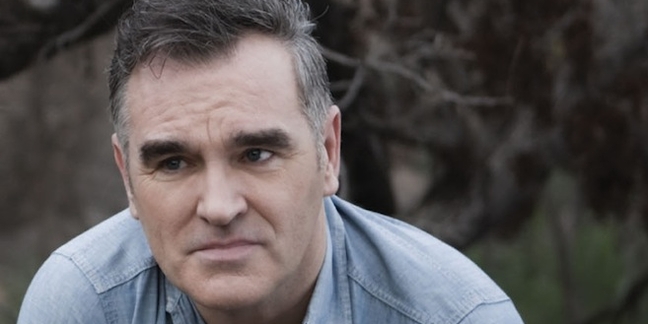
"Thatcher will only be fondly remembered by sentimentalists who did not suffer under her leadership, but the majority of British working people have forgotten her already, and the people of Argentina will be celebrating her death. As a matter of recorded fact, Thatcher was a terror without an atom of humanity."
-- Morrissey will not remember the late Margaret Thatcher fondly. (via Daily Beast)
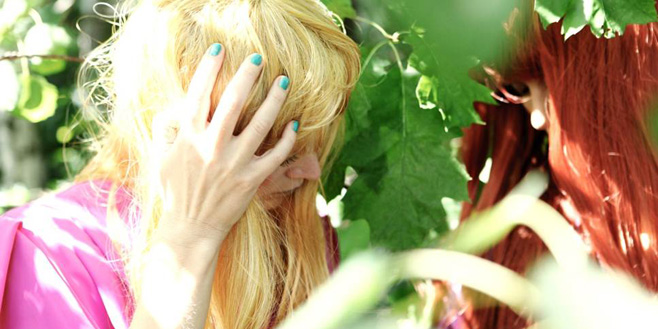
Photo by Alexa Vachon
The Knife: "A Tooth for an Eye" on SoundCloud.
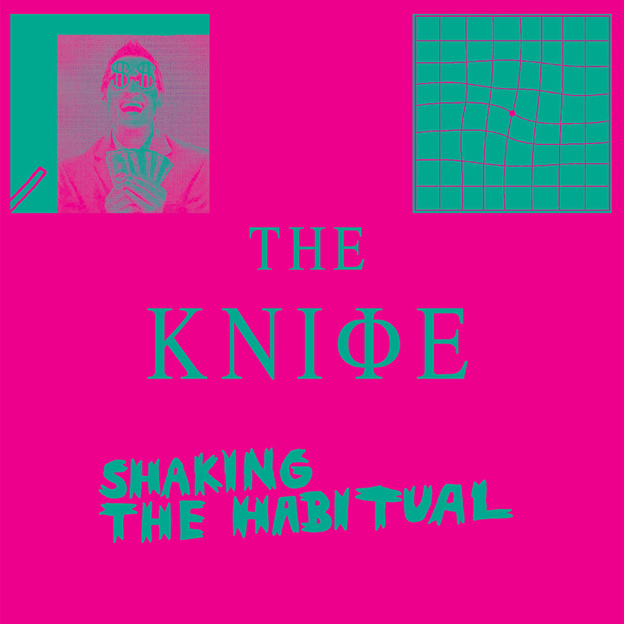
Smack dab in the middle of the new Knife album comes a track called "Old Dreams Waiting to Be Realized". It consists of precisely 19 minutes and 22 seconds worth of ominous ambient drone. At one point, an antsy, step-like patter cuts through, sounding like it's running away from something awful. The clank of closing metal doors are dispersed throughout. Distant alarms beep in agony. The constant hum of queasy synthetic chords suggest nothing less than a post-apocalyptic wasteland. Play it in your headphones and it'll turn a routine subway trip into a terrifying existential journey. And, in a way, that is what the Swedish duo are trying to do with all of Shaking the Habitual, their first proper album since 2006's stunning Silent Shout. They want to question everything we use to put people into physical, psychological, and statistical slots: gender, race, class, sexuality. All of it.
"There are so many old ideas that are not realized yet: classless society, real democracy, all peoples' right to move and be in the world with the same circumstances, I could go on," says Olof Dreijer. And while the emptiness of "Old Dreams" doesn't exactly suggest a happy ending for these suspended visions, its existence shows that the Knife are unafraid when it comes to obliterating their own musical habits. Because Shaking the Habitual-- out April 9 via Rabid/Brille/Mute-- also dismantles what people expect from a Knife album: six of the double album's 13 tracks clock in at more than eight minutes, as Olof and his sister Karin Dreijer Andersson go from industrial-tinged techno, to doom-laden balladry, to unnerving tribal sing-alongs. "It’s nice to play with people’s time these days," says Karin during a recent conference call, talking about "Old Dreams"' extended running time. Both Karin, 37, and Olof, 31, are calm and careful on the phone, deliberate in their quest to, as Olof puts it, "not be misunderstood."
To that end, the album is also the pair's most explicitly political statement to date as it comments on monarchy, patriarchy, separatism, racism, environmentalism, feminism, socialism, and several other -isms. "Three years ago, when we started to talk about whether we were going to work together again, we wanted to find a way to combine our political interests with making music," says Karin. So they buried themselves in progressive gender studies and political theory books, and then tried to mirror those texts' structure-busting concepts with similarly innovative sounds. Many of the album's tracks came out of live, improvisational sessions between Karin and Olof, a new strategy for the duo, who were used to programming and constructing their songs via computer. For "Old Dreams", for example, they set up a PA and mics in a "big boiler room" and recorded hours of feedback before editing it down. The jam-based approach lends the album a distinct human-ness as the unorthodox, otherworldly instrumentation teases-out the imagination. "We are driven by curiosity," says Olof.
Pitchfork: The "Full of Fire" video questions a policy that offers tax deductions for wealthy Swedes who employ women as maids for little pay. And in the video, you guys play the yuppie couple who are taking advantage of the tax break-- you're poking fun at yourselves while taking on these larger political issues.
Olof Dreijer: We’ve been talking about the importance of making your privileges transparent in order to be able to say something political. It's something I learned from reading about intersectionality, which is a way to analyze power by looking at its different categories-- gender, race, class, sexuality-- and how they interact. Before we started making this album, after not having worked together for a long time, we were interested in getting deeper into feminist and queer theory. So we read post-colonial feminist and anti-racist theory, and with this comes intersectionality. It's important to see your own position on the scale.
Being brought up in a white wealthy family in a Western country, we were privileged. And we have a privileged position as people being able to make music and study and get asked about what we think about the general political situation. This brings responsibility. When we see people listen to what we have to say, it makes us think about how we can use this attention in the best political way and how we can change our own working process by thinking norm-critically when making choices about who we employ, how we work, what salaries we pay.
Pitchfork: How did you originally get interested in feminist and queer theory?
Karin Dreijer Andersson: It’s something I’ve been interested at least since I started playing music, when I was around 15. It has taken different shapes during the years, but I've always been interested in trying to understand power structures in society and why some people have a lot and others don’t have anything.
OD: In Sweden, there are a lot of mainstream drag people that have been quite important. And I looked up to my sisters, too. I was the youngest of three, and that had a certain impact. Early on, I got to know activist groups like anarcha-feminists, who were really inspiring. Meeting people who take their feminist theories into action has been really important.
Pitchfork: Were you worried about taking such a big step into the political realm with this album, or if people would think you were preaching to them?
KDA: I haven’t thought about that at all. This album plays around with questions and issues that we have been dealing with from the beginning, in a way, but it is much more on a structural level rather than a psychological level. The most commercial way of doing it would be to stick with a formula, and, musically, this album is quite far from Deep Cuts. But that was also something we discussed, like, "Should we change our name? Maybe we shouldn’t be the Knife anymore because we are doing something very different." But I think it’s really more important to keep the name and do something completely different.
Pitchfork: How did your research on gender affect the music of the album?
OD: We read so much, and all these ideas steered our choices when it came to sound and rhythm. We are interested in making sounds where you don’t hear their origin, sounds that are a bit in between acoustic and synthetic. We want to diffuse these borders-- you could say we are queering certain sounds. If we have a sound that we’ve heard in a setting that we don’t like so much, like a white male rock band, we try to make it different through things like alternative tunings. We learned about how you can play around with different scales and why a group of people have come to agree that one scale is more harmonious than another.
Pitchfork: The lyrics to “A Cherry on Top” reference a medieval Swedish castle, and its sounds are very decayed-- it feels like a monarchy that's falling apart.
KDA: Well, that’s good. [laughs] We were playing a zither and tuning it at the same time. And for the lyrics, I mean, Sweden is still a monarchy. We think about ourselves as a democracy but we have built our society upon this structure where the throne is inherited by blood. So when I wrote those lyrics and was singing them, I was thinking of one of the children in the castle. That is something that comes back a few times on the album-- castles and bloodlines-- because it’s insane and fascinating to build a society based on that kind of biological family, which I think is the most fragile construction in society. Within politics, we have the Christian Democrats and also the right wing who talk about how families are the best ones to decide upon how to raise children. But I think it’s very strange to leave so much responsibility to such a shaky construction.
Pitchfork: To many Americans, at least, Sweden seems like a pretty progressive place, but you're saying that's not necessarily the case.
KDA: It’s difficult. Because a lot of Swedish people think of themselves as so progressive, they also think that they don’t have to deal with anything any more. But Sweden has a huge problem with racism, for example. Ever since a few years ago, we have a racist political party [Swedish Democrats]. They talk a lot about “us” as white, Swedish people, and the “others” as everybody else, along with closing the borders and not having any more immigrants.
OD: They are pretty good at packaging it into something else, but often not so good at hiding it. They have some influential power-- in the polls at the moment, they have 8%. It’s quite severe. They affect the mainstream discourse. It has become more OK to be this public racist, but it's often put in the frame of claiming the need for freedom of speech. Many white people see no problem in using the n-word. It’s not so progressive. There are some progressions when it comes to equality between genders, but it only works for people who are white, middle class, have a good-paying job, and are happy with the gender they were born in.
Pitchfork: On “A Tooth for an Eye”, you sing, “I’m telling you stories, trust me.” So while you're pointing out how so much of our history comes from a very white, male viewpoint, you're also acknowledging that this album is coming from a specific perspective as well.
KDA: I actually borrowed that line from my favorite Jeanette Winterson book, The Passion. It's important to question my story and my way of telling it, too. It's good to ask questions instead of serving answers.
Pitchfork: The album takes aim at a lot of traditional values-- have you thought about what your idea of a perfect society or government would look like?
KDA: [laughs] That can be a long question to answer. But I believe that people would be happier sharing things and being much more of a collective rather than working from these neo-liberal ideas of just looking after yourself. I think people need each other.


