Shared posts

19 Mar 16:49

Dinner Tonight: Curried Egg Salad

From Recipes

dt-curriedeggsalad.jpg

[Photographs: Nick Kindelsperger]

Egg salad is usually a monochromatic affair thanks to the healthy helping (or, as some people may point out, unhealthy helping) of mayo. Now, I happen to have a soft spot for this style, especially when it's on white bread and paired with something bitter and crunchy like watercress. But I began to wonder whether there was life beyond the basic recipe.

Taking a cue from one of my favorite chicken salads, I found this recipe in Gourmet that pairs hard-boiled eggs with lime juice, curry powder, and chopped apple. The result: a tangy, crunchy salad that's about as far removed from normal egg salad as possible.

It's an incredibly simple recipe. The only difficult part is choosing how to hard-boil the egg. Gourmet doesn't give a recipe but luckily we have Kenji Lopez-Alt for that. They come out perfectly creamy, not chalky and dry.

Curried Egg Salad

- serves 4 -
Adapted from Gourmet.

Ingredients

1/3 cup mayonnaise
1 tablespoon fresh lime juice
1 1/2 teaspoons curry powder
1 teaspoon Dijon mustard
1/4 teaspoon salt
1/8 teaspoon cayenne
6 hard-boiled eggs, shells removed and chopped
1 cup diced Granny Smith apple (about 1 apple)
1/3 cup red onion, diced
1/4 cup cilantro, chopped
8 slices of bread

Procedure

1. Pour 3 quarts of water into a medium-sized pot. Bring the water to a boil, and then reduce heat to a barely simmering. Carefully add the 6 eggs to the pot. Cook for 6 minutes. Remove the eggs and then dump into an ice bath until cool enough to handle. Remove the shells and chop the eggs.

2. Add the mayonnaise, lime juice, curry powder, Dijon, salt and cayenne in a bowl. Whisk until combined.

3. Fold in the eggs, apple, onion, and cilantro.

4. Construct the sandwiches. Scoop a bit of the egg salad onto a slice of bread and top with another slice. Serve.

19 Mar 16:47

Beautiful scrap wood butcher block table

scrap_wood_butcher_block_table_01.jpg

scrap_wood_butcher_block_table_02.jpg

scrap_wood_butcher_block_table_03.jpg

I love this. Instructables user wholman has gathered together a bunch of scrap wood from "dumpsters, back alleys, vacant lots, abandoned buildings, recycling yards, and architectural salvage centers" and laminated it together using all-thread. Then he's very carefully smoothed and polished only one side of the finished block, leaving the underside rough to show off the process. Beautiful.

Read more | Permalink | Comments | Read more articles in Furniture | Digg this!
19 Mar 16:47

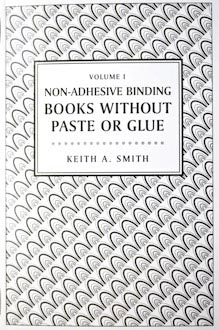
Books Without Paste or Glue

Keith Smith published Non-Adhesive Binding in 1990. At the time there were few other bookbinding manuals in print (and in comparison with other crafts, there still aren’t many). Books by Arthur Johnson, Edith Diehl and Douglas Cockerell offered instruction according to specific craft tradition. These manuals told how to bind a book with very little room for creativity other than decorative choices (what color would you like the leather on the spine to be?). The books were hard to find and contained long lists of tools and desirable equipment that a bookbinder should have.

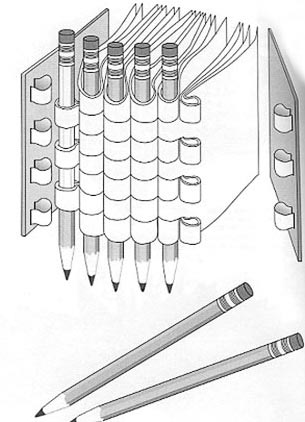
Keith Smith’s book is completely different. He illustrates basic techniques that can be used to create a wide variety of bindings. He encourages the binder to explore how books move, how structural variations influence that movement, and how both movement and structure can lead the binder to fully engage the creative intent of the author’s work. He is even more enthusiastic about the possibilities for binders who are the creators of content or those who we now call book artists.

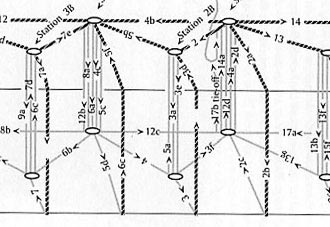
I started bookbinding in 1991 and Keith Smith’s Non-Adhesive Bookbinding was the first manual I ever bought. As Smith required very few tools and almost no equipment, I was able immediately to start making dozens of books based on his instructions. His drawings of often complex sewing patterns sometimes confused me (and sometimes still do!), but after having now tried to illustrate bookbinding or repair techniques of my own, I’m amazed at how much he conveys so clearly.

It has become more apparent to me with time and experience that his book is a deeper resource than it may first appear. While his methods are simple and often result in astonishingly modern looking bindings, his book is profoundly informed by historical methods and models. Unlike a bookbinding manual that represents a defined tradition, he uses the knowledge of earlier binders to encourage new binders to create their own paths.

Smith’s Non-Adhesive Binding may be almost 20 years old, but it remains a vital resource for bookbinders, book artists, and anyone who wants to creatively understand the book form.

-- Kristen St. John

Non-Adhesive Binding: Books Without Paste or Glue
Revised and expanded edition, sixth printing
Keith A. Smith
2009, 352 pages
$29

Available from Amazon

Keith Smith's website

Sample Excerpts:

smith010-sm.jpg
*
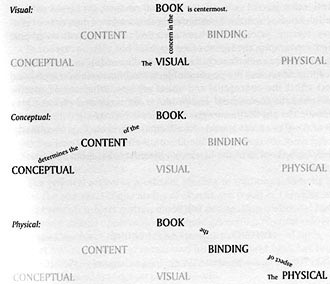
The book, constituted by everything in the pyramidal hierarchy, is always top and center, the totality and must dominate. Each decision on any element within is subordinate to the realized book. If the binding dominated, the book would be superficial. If conceptual, visual and physical organization were not considered, the content of text and/or pictures would be merely a compilation of islands, rather than an orchestrated totality.

It would appear that at one extreme, the content is quite separate from the process of binding. For me, nothing could be farther from ideal. I sometimes think about the physical object. There is concrete space between words and/or pictures. Movement is constructed through content, which determines the rate of turning pages.

*
smith006-sm.jpg
*
smith007-sm.jpg
*
smith009-sm.jpg
ASA-NO-HA TOJI
Hemp-Leaf Binding

*

A book can be created through a play upon the action of turning a page. Indeed, a lifetime's work can have as one under-pinning the exploration of what physically transpires in turning the page. Becoming involved and excited about any aspect of the physical book can reveal potential which, once understod, can easily be expanded as theme.... A book grows out of an understanding of its inherent properties, rather than the inclusion of outside elements. Conception springs from the physical format, evolving into a realized book.

19 Mar 16:47

25 Link Building Tactics to Improve Blog Search Engine Rankings

link buildingBlogs are often touted as good for search engine optimization. The reality is, blogs are simply software tools and what you get out of them from a SEO perspective is in proportion to how well you know how to use them.  Good keyword categorization and content are a start, but blogs are not much of a SEO asset unless they attract links.

The myth of “Build it and they will come”.  Not many businesses that start blogs have the patience to create great content and wait for others to find that content all on their own as a linking strategy. Without clicking on a link or finding it on a search engine, how will others find your blog?   Content is King but only if you promote it.

Links from relevant, credible sources balanced with on-page keyword optimization make it easier for search engines to find, index and sort blog posts in search results. If there’s an expectation for a company blog to rank well in search results, be sure to consider some of the following link building tactics:

1. Create content worth linking to. No matter how many tactics you find here and elsewhere, there simply is no substitute for creating content that others may find useful. Take the time to look at blog posts that already rank well in search results and notice their structure, quantity of words and word placement.

2. Conduct backlink analysis on competing web sites or blogs – find out who is linking to competitor sites that are not linking to yours. Ask sites linking to multiple competitors to link to yours as well. If another web site or blog is already linking to multiple competitors, there is a chance they’ll link to your blog as well.

3. Make useful comments on other blogs that don’t have rel=nofollow. Comments should always be useful, but if you become aware of a topically relevant blog that does not discourage search engine spiders from crawling links in comments, it’s work spending the extra time to provide helpful insights a links to resources that you’ve published on your own blog.

4. Encourage social bookmarks & news submissions of your content using services without rel=nofollow. Show links to those services like Folkd, Spurl or Feedmarker in the blog post template code so they are visible for blog readers to use. Some social bookmarking services will make a copy of what you bookmark or a static web page of the bookmark including a do follow link back to the source (your blog).

5. Get listed on other blogger’s blogrolls.  It never hurts to ask another blog that you’re active with to see if they’d consider adding your blog to their blogroll or curated lists of blogs.

6. Guest write on other blogs and include a link to your blog in the bio. In the course of getting to know blogs that already rank well on the keyword phrases you’re targeting, you may notice that they often accept guest blog posts from others. Contact the blog owner and suggest a compelling post that would be first and foremost, valuable to their readers. If it makes sense editorially to link from within the guest post to your own blog, be sure to use relevant keywords as the link text.

7. Submit to blog & RSS directories. Many directory links have no follow links or are not visited by a large volume of people, but making sure your blog and RSS feed are included in niche categories and collections of blogs can be a positive signal to search engines as well as to long tail users. Many bloggers that aggregate large lists of topically specific blogs will cultivate blog directories as a easy way to find blogs on similar topics. If your blog isn’t on the niche list in those situations, you won’t be included.

8. Submit to regular web site directories like botw.org. While there are blog specific directories (BOTW has one of those as well) many don’t discern web sites from blogs. If a quality directory has a relevant category with other reputable web sites in it, then it makes sense for your blog to be among them as a useful information source.

9. Be sure to include your blog URL in profiles and bios on social media sites. While most social media sites that allow users to add links to their profiles add no follow to the links, there are many that do not. Public profile links on LinkedIn and YouTube channels for example, are good links. Rather than focus on registering with 300+ sites using Knowem, just make sure that of the social media profiles you do set up inlcude a link back to your blog.

10. Write testimonials for services and software that you use. They may publish with a link back to your blog.  Testimonials must be well written, genuine and specific in order to be useful for the service/product owner. Get at the essence of what’s great about the product or service and even add something unique. If you’ve written a review of the product/service on your blog, that can also get you a link from their press page.

11. Job listings should always have a link back to your blog. Blogs can be useful recruiting tools that help candidates understand the culture of your company. When purchasing job listings on other web sites, add a link to your blog. The listings may expire, but may also introduce your blog to candidates that write their own blog and decide to write about a listing with a permanent link to the hiring company blog.

12. Event listings should always have a link back to your blog. Blogs can be effective tools for promoting events and if you are listing your event with 3rd party services, a link back to your blog post with more details will be useful to readers that want to know more. That link can also be useful to search engines.

13. Contributions to non-profits often have a donor page with a link. These links are now very rare but you should contribute anyway.

14. Article syndication can still result in a few good links. Include your blog URL in the article bio. Take some of your best tips oriented blog posts and re-write them for specific industry verticals or applications. Then submit them to article repositories. When others re-use those articles, the bio link back to your blog can be picked up by readers and search engines.

15. Distribute press releases via a wire service with a link to your blog included. Our client, PRWeb, is a pioneer in providing competitive SEO value with press release distribution. Many blogs and some news web sites will re-publish your press release exactly as it was distributed, including good links back to your blog.  Journalists use News search to look up past press releases and research on stories, which presents an opportunity to be found and included.

16. Contribute Op Ed pieces to Mainstream Media web sites. Contribute a link to your blog of course.  If you suggest content to another web site such as a letter to the editor, why not keyword optimize the title? Why not include a link back to your blog where you’ve written many more articles on the same topic?

17. When you get media coverage (or placements) in online publications, be sure to ask the journalist for a link to your blog. Again, it never hurts to ask. Many publications have a policy not to link out from stories. Many leave it up to the journalist or their editor. If you don’t ask, you will never get the link.

18. Develop social networks and share especially useful content from your blog where relevant. Be useful to others and they will useful to you by promoting your content and attracting links. Don’t be gratuitous when sharing links to your own content, but when you have something particularly special and valuable that’s highly relevant to a particular network, then by all means, share it with them. Some are bloggers as well and may link to it from their own blogs as well as pass the link along to others.

19. Linkbait. Create or aggregate disparate content that provides value and is not easily found elsewhere. Promote it to those that would be interested and in a position to distribute to the right audience. Again, create useful content, but be thoughtful about packaging it in a way that makes it unique and is easy to pass along. Look at other blog posts in your topical category that have “gone hot” on social news sites and understand their structure, format and tone. Leverage what has worked for others in your own content to be promoted.

20. Sponsor content on web sites or newsletters archived to the web that allow you to include a link. It may be a nofollow link, but it may not.  Many newsletters sent via email are archived to the web or have landing pages on the web. Ask those newsletters if you can buy an ad or even contribute a short article.  The article credits should include a link to your blog.

21. Hire bloggers to write content for you. They’ll often cross-post it to their own blog with a link back to yours. Of course, you should be considerate and simply mention that this is ok, don’t ask them or require them to do it.

22. Run a contest that may involve others deciding to link back to your blog. This can be tricky, but Marketing Pilgrim does a great job of this with their SEM Scholarship Contest. Readers write blog posts and the first cut is based on which posts get the most traffic and presumably, links among other criteria.

23. Offer a widget, when posted to others’ web sites, includes a link back to a credits page for the widget on your blog. TopRank’s Thomas McMahon created a RSS buttons tool and it’s use by other blogs has resulted in over 322,000 inbound links.

24. Review other blogs and offer a badge for those that get included. We’ve done this with BIGLIST and it has resulted in over 64,000 inbound links. Focus on quality and be consistent. Also offer a version of the badge that does not include a link for those that want to display the “blog flare” but don’t or can’t link to it. You should include your logo on the badge for improved brand awarness whether there’s a link or not.

25. Create an exceptionally useful tool. Others will link to it simply because it is useful. (See step 1) TopRank created a Social Bookmarking Tool several years ago and still has over 50,000 links as a result.

Bonus tip: When others link to you, THANK THEM!  Building good will is one of the most underrated marketing skills online. Be genuine, thoughtful and courteous. Also be SMART and driven to get links where it makes sense.

    What linking tactics for blogs have you found to be most effective? What challenges are you facing in attracting other sites to link to your blog?

    Save to del.icio.us [StumbleUpon] [Google] [Facebook] [Twitter]             subscribe Subscribe to this Feed

    © Online Marketing Blog, 2009. | 25 Link Building Tactics to Improve Blog Search Engine Rankings | 57 comments | http://www.toprankblog.com

    19 Mar 16:46

    Caesar rises: several millennia's artefacts from the bed of the Rhone


    In a dark space in a new exhibition at Arles museum in southern France, underwater sounds play over looped video footage of scientists taking part in digs on the Rhone riverbed.

    An intrepid team of archaeologists has been diving for 20 years, struggling with poor visibility, strong currents and flipper-nibbling bullhead catfish to bring up the 500 or so objects on displayed.

    In 2007, just when these Indiana Joneses of the water were ready to hang up their wet suits, they bumped into intriguing column fragments, friezes and chunks of mausoleums.

    Read the rest of this article...
    19 Mar 16:37

    Laptop reliability survey: ASUS and Toshiba win, HP fails

    Boy, do we have a nice slab of data for you to sink your teeth into today. The 3-year service history of more than 30,000 laptops has been pored over, analyzed, and reduced to gorgeous comparative charts, which you know you're dying to know more about. We should note, however, that the service was provided by SquareTrade, whose primary business is selling extended warranties, but that shouldn't completely prejudice us against reaching conclusions on the basis of the presented facts. Firstly, netbooks have shown themselves to be on average 20 percent less reliable than entry-level laptops, which in turn are 10 percent more likely to break down than premium machines. In other words, you get what you pay for -- shocking, right? The big talking point, though, will inevitably be the manufacturer comparison chart above: here ASUS and Toshiba (rather appropriately) share the winners' spoils, while HP languishes in the ignominious last place, with more than a quarter of all laptops expected to suffer a hardware fault of some kind within three years. So, does your experience corroborate / refute this info? Keep it gentlemanly, okay?

    [Via Electronista]

    Filed under: Laptops

    Laptop reliability survey: ASUS and Toshiba win, HP fails originally appeared on Engadget on Tue, 17 Nov 2009 11:09:00 EST. Please see our terms for use of feeds.

    Read | Permalink | Email this | Comments
    19 Mar 16:37

    Making The Complex of All of These

    I got the link to this video on YouTube via Jason Santa-Maria on Twitter. It’s compiled from around 3000 images taken over 2 months documenting the creation of 35 hand-made books at the Women’s Studio Workshop in Rosendale, NY. There’s a website with more info and clearer photos here. The whole thing is lovely and worth watching — note especially the attention to detail with the thread colour for the binding and the creation of the headband. These images are all from the video:

    19 Mar 16:36

    Giorgio Sironi's Blog: How to eliminate singletons

    Giorgio Sironi has posted a two part look at some techniques you can use to eliminate the singletons scattered through out your code (as sparked by the recent announcement that the Zend Framework project will be doing the same thing).

    It is actually very simple to eliminate singletons: just force the components to ask for what they need in the constructor or via setters or via inject*() methods, instead of looking up a singleton trough a static method only to obtain a reference. Once this fundamental decoupling is achieved, the hard part is tackling the construction problem.

    In the first part of the two, he looks at a Zend Framework example of how to replace a certain piece of code with injected instances of required objects. In the second part he refines it down a bit more and only inject/create the objects and resources as needed.

    19 Mar 16:34

    Dinner Tonight: Punjabi Rajma (Kidney Bean and Tomato Curry)

    From Recipes

    dt-punjabirajma.jpg

    [Photographs: Nick Kindelsperger]

    When I think of kidney beans, my mind usually wanders down the Mississippi River to New Orleans. That's when I start dreaming of perfect red beans and rice. It's one of my favorite meals—I'd make it much more often if it didn't take so long. Other than that, I occasionally find kidney beans in bland soups or bowls of chili (though not Texas chili, of course). So, I was little surprised to see them pop up in this Indian recipe from Lisa's Kitchen. Who knew kidney beans were so popular in Northern India?

    Oddly, it's the onions that kind of make this dish. They reduce down to a paste that picks up all the flavors from the spices and chiles. Only the beans can slightly calm the bout of spice.

    Starting with dried beans would be the far more traditional route but this quick version is still surprisingly good. It's just another reason why I adore vegetarian Indian cuisine so much.

    Punjabi Rajma (Kidney Bean and Tomato Curry)

    - serves 2 to 3 -
    Adapted from Lisa's Kitchen.

    Ingredients

    1 15-ounce can red kidney beans, drained
    1 1/2 tablespoons sesame oil
    1/2 medium onion, minced
    1 small garlic clove, minced
    1/2 inch of ginger, peeled and finely chopped
    1 hot red or green chiles stemmed, seeded, and finely chopped
    1 medium tomato, stemmed and chopped
    1 teaspoon ground coriander
    1/4 teaspoon cayenne
    1 teaspoon ground cumin
    Pinch of turmeric
    Juice of 1/2 lemon
    2 tablespoons parsley, finely chopped
    Salt

    Procedure

    1. Pour the oil into a large pot set over medium heat. Toss in the onion and cook, stirring occasionally, until it has started to brown, about 5 minutes. Add the garlic, ginger, and chiles and cook for 2 minutes, or until very fragrant.

    2. Dump in the chopped tomato, along with the coriander, cayenne, cumin, and turmeric. Cook until the tomatoes break apart and start to thicken into a sauce, about 10 minutes.

    3. Pour in the kidney beans, lemon juice, a cup of water, and half of the parsley. Bring to a simmer, then reduce the heat to low. Cook for about 10 to 15 minutes, or until the liquid has reduced and the sauce is very thick. Serve with rice or flat bread, and sprinkle with more parsley. Season to taste with salt.

    19 Mar 16:34

    TechCrunch Homepage Design Gets Deconstructed By ZURB

    ZURB, a well-regarded interaction design and strategy firm in the San Francisco Bay Area that has in the past done work for eBay, Facebook, Yahoo, Zazzle and many other familiar names, regularly publishes insightful design deconstruction posts for homepages of some of the most popular websites on the net, using its very own Notable app (also see our review of the website feedback tool).

    After taking a critical look at CNN.com, MSN.com and Twitter.com, the ZURB team has recently shined its light on TechCrunch.com. And we took notice.

    The best way to check out what ZURB had to say about our homepage design – which has been live since Summer 2008 when we did a major redesign for the second time – is to visit this full-page screenshot, where you can hover over their notes to see what feedback the team had to give.

    Apart from the visual aspect, the Notable page also allows you to check out the code, content and SEO elements of a website, and you can download the whole critique as a PDF straight from the app without the need to register.

    Just for the record, we agree with nearly everything the ZURB team had to say about our homepage design, both the good and the bad. No design is perfect, but we like to think we’ve struck a good balance between making it as easy as possible for readers to check out our content, while giving advertisers valuable real estate that doesn’t interfere with the editorial.

    We’re committed to making the experience even better, so note that we are currently working on an entirely new template and design for TechCrunch.

    Stay tuned, and in the meantime, do let us know what you think about the current design.

    Crunch Network: CrunchBase the free database of technology companies, people, and investors

    19 Mar 16:30

    Random Project Ideas

    I've done very little on the side project front since coming back from china. The trip shifted my focus to more tangible things and I've had trouble finding motivation to work on more abstract projects, especially after putting in eight hours at my day job. I've been using twitter (follow me!) as a release valve, but I yearn for a meaty side project again.

    Anyway, I thought I'd describe some moderately sized projects that have been jostling around in my head over the last month:
    • Bot Book. A friend recently posted a list of skills he'd like to acquire before finishing his PhD and one of them was to write a Quake bot using a neural network. I pointed out my old ecosystem project in Quake2, Neural Bot, and UN Bot as places to get started. Briefly looking at those projects got me thinking about how much I was into trying to understand and build quake bots all those years ago. I've recently been working in the area of BDI intelligent agents and I started thinking about comparing and contrasting these two approaches of autonomous control. My vision is to dig up the source code for all of the Quake, Quake2, and Quake3 bots I can find and study each in turn, describing the main sub-systems and most importantly the structures used to realise autonomous control (most commonly as hierarchical finite state machines). The book would be a summary of each of these studies and finally an abstraction of the general approach. The title might be something like: Bots: Lessons about autonomous control from computer game bots (or something more catchy). Each bot represents a different individual programmers approach to the problem, and there were a lot of bots made for these games. I'm really interested in the abstraction of all of these studies contrasted to more academically rigorous BDI, are there some great ideas in there not being exploited as much as they should in other domains?
    • Bioinformatics. I cannot shake my interest in the field. I've been poking around computational biology for many years now, hacking on protein folding prediction, and sniffing around related problems and suitable machine learning algorithms. I've been thinking pretty seriously about getting into a night course such as a graduate diploma or masters program in bioinformatics. The cost is AU$20K upwards, and I look back on the fist full of degrees I've already accumulated and think that maybe a more direct approach would be warranted. Although a night class can provide the structure and commitment to acquire the new skills required to work in the field, I'm sure self education and on the job learning would be enough, given good mentoring. There is no doubt to me that this field is a rising star (unlike applied computational intelligence), even in the technology backwater where I live. I think a reasonable first step would be to bash out a series of blog post (reports) on the field in general, open problems, learning materials, and local/world renown institutions, just to boost general familiarity with the field before more substantial (costs) steps are taken.
    • Canvas (HTML 5.0). The new canvas element in HTML 5 is a graphical context allowing free-form 2D and 3D graphics in the browser (written in javascript). The demos have had me excited for a while now, but it is libraries like processing.js that have pushed me over the edge. Rather than hacking on native iPhone apps, I would much rather realize my dreams of a distributed creature morphology evolution simulator (game) in the browser capable of running of any web-capable device. I'm sure there would be some hard work getting the physics engine (collision detection solver) running fast enough in interpreted javascript, but I believe the problems are solvable, even if one resorts to faster interpreters and faster CPU's to drive them.
    • LISP. Frankly, if you're a programmer you will eventually come to realise LISP is awesome. Although I've started my pilgrimage, I am a long way from mastering, let alone being productive in a dialect. I need to stop dancing around and either build something big and real in the language or to work through a book end-to-end (practical common lisp of course). Both of these strategies have worked for me before in rapidly acquiring new languages. I was thinking of dedicating the Christmas break to one of these tasks, we'll see...
    • Stackoverflow. I consume a lot of podcasts during my commute and while running. I subscribe to itconversations, and occasionally a stackoverflow podcast will find it's way into my playlist. I just about always skip it. The guys maybe smart dudes, or a the very least write about interesting things on occasion, but they produce a really crap podcast. Anyway, their joint venture - the stackoverflow site - is a pretty kick ass programmer Q/A repository. I have not contributed to it at all, but I have started searching various keywords and tags and I think I could contribute a lot, some of which might even be coherent or useful. What's holding me back is the investment. Each answer would be about the same investment as would be required for a small wikipedia entry (which I've been known to write). My problem is whether or not there is any return on that investment (as I think there is with wikipedia). Is it ego-fulfilling research (like making a slashdot/reddit/hackernews comment) or is it truly a contribution to the a community (however niche)?
    • Algorithms Book. I feel guilty. I want to write and publish a book (thesis doesn't count) before I turn 30. My inspired algorithms project was my concerted effort this year towards that goal, a project I started this time last year while job searching. I still have a bunch of copy (in latex) and code (in ruby) on my drive, some of which is on the web. I am less convinced anyone will want (pay for) the book, even after my efforts to optimize its content. Nevertheless, I do still believe it's a book I would want to have on my desk about 5-10 years ago. A book for a hack of a programmer interested in AI. I need to get off my ass, cut the scope of the book, and push out a complete 1.0 to friends (the web?) for comment, or weasel out and kill the project.
    • MapReduce and Evolutionary Computation. The map reduce paradigm for distributed problem solving is interesting enough, but I've noticed more and more machine learning algorithms being ported to the approach to run on platforms like Hadoop. I am specifically interested in the approaches to map evolutionary algorithms to the paradigm as my intuition tells me there are a myriad of ways this could be achieved. I want to read the literature and bash out a few ways in small case studies (ruby) and see if there is something truly interesting to it, or if it really is equivalent to the classical parallel approach. New computational paradigms typically open up interesting avenues on classical approaches, and this has happened before with EC with the implementation of the algorithm to multiple-CPU and multiple-machine computing platforms in the 80's and 90's resulting in a sub-field of diffuse and parallel evolutionary algorithms.
    There are some good ideas here, but I need to pick one or two and get to work (thoughts?). I don't want to sit around thinking up cool project ideas forever and end up doing nothing. I'm a maker, I need to build things!
    19 Mar 16:30

    Elemental Scientific

    This is the best source for buying small quantities of chemicals -- always a challenge in these days of chemical hysteria. Elemental Scientific will sell to individuals, online, with no paperwork or license needed. They have a very respectable selection of about 300 reagents and compounds. More than enough for most educational purposes, or for most basement experiments. You can purchase all kinds of acids, corrosives, poisons, explosives and dangerous stuff that you can not get elsewhere -- but only in small quantities. That's fine, because a small amount is often all you want for doing experiments, and many chemical supply outfits will sell only larger quantities if they sell to you at all. Elemental also offers glassware, lab equipment, and general experimental paraphernalia. They cater to homeschoolers and hobby experimentalists. If you've ever tried to buy chemicals elsewhere you'll recognize what an incredible resource this place is. Most chemicals will be shipped UPS, but a short list of 18 especially hazardous chemicals need extra hazmat protection, which is an added charge.

    -- KK

    Elemental Scientific

    19 Mar 16:26

    A Shockingly Decent $50 Stereo System

    by James Grahame

    Dayton B652 Bookshelf Speakers

    I've used a pair of Logitech computer speakers with a powered subwoofer in my office for years. I've never been particularly happy with the quality; yes, they can make the floor joists vibrate and sever the auditory hair cells from my cochlear nerve. Just not in a nice way.

    So I set out to find a replacement.

    I realized in a hurry that mainstream big box stores weren't going to be much help; they've been overrun by plasticy iDocks and a smattering of component systems replacing my sound system with something that sounded better was looking to be an expensive proposition.

    $20 Lepai TA2020A+ Class-T Amp

    Then I remembered a product that I wrote about in 2009 a tiny bargain-priced amplifier that used a digital amplifier chip manufactured by Tripath. It offered surprisingly clean sound for the money. Sure enough, Parts Express still offers a range of Tripath-based amplifiers and the price has come down considerably. Figuring that they'd all sound much the same, I opted for the no-frills Lepai LP-2020A+, a $20 unit based on a Tripath TA2020 chip. It's capable of outputting 20W + 20W into 4 Ohms at full power and includes a 12V, 2A power supply.

    Tripath TA2020 performance

    This minuscule amp is just about as bare-bones as they come, with defeatable treble and bass controls and a volume knob on the front panel. The back offers a 3.5mm jack for an MP3 player, alongside stereo RCA jacks. The inputs are tied together, so you can only use a single source.

    Of course, finding the right amplifier was only half of the battle.

    Luckily, I stumbed across a review in Stereophile that praised a $29.98 pair of Dayton B652 bookshelf speakers, also from Parts Express. The review concluded, "Keep a pair in your dorm room, a pair on your desktop, a pair in your office. As long as your expectations are realistic and you're willing to have fun, the Daytons are sure to please." That was good enough for me.

    These moderately sized speakers measure 11-13/16" H x 7-1/16" W x 6-7/16" and can be placed almost anywhere because they don't have a rear bass port that needs to be kept open. You shouldn't expect great beauty at this price; the B652s are basic black vinyl-covered rectangles with cheesy plastic spring clip connectors on the back. There's a wall mounting hook (these would be perfect in a reception area or small restaurant), and the removable cloth grilles are mounted on fiberboard, but they do the job.

    Inside, you'll find a 6 1/2" polypropylene cone and a 5/8" ferrofluid-cooled polycarbonate dome tweeter. Each speaker is rated to handle 40W RMS (70W maximum) into 8 Ohms, with a 70-20,000 Hz frequency response and a sensitivity of 87 dB 1W/1m. They're well suited to the little Tripath amplifier.

    All in all, this combination offers amazing bang for the buck. As long as you keep the volume at a reasonable level and defeat the tone controls, you're rewarded with clean, uncolored sound. Don't expect floor-shaking bass from this setup, but this minor shortcoming is shared by other inexpensive bookshelf speakers that tend to bottom out well above 50 Hz.

    Pricewise, there's nothing to complain about. You're looking at a total of $49.98 plus around $10 for UPS ground shipping, a fraction of the cost of an MP3 player dock. In return, you'll receive a system that should offer years of faithful service in an office, garage or workshop.

    Check out the Dayton B652 Bookshelf speakers and Lepai LP02020A+ amp at Parts Express.

    19 Mar 16:20

    Whitelines

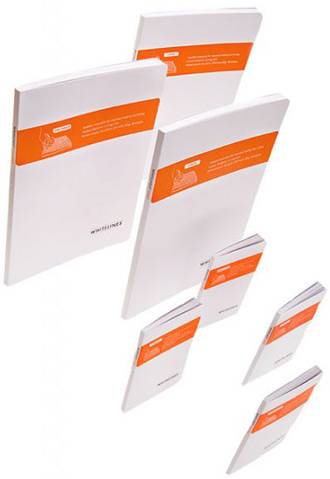
    Anyone doing technical or design work has burned through reams of graph paper. I’m a designer, and I use Whitelines to do technical drawings in accurate scale, which are then turned into 3-D models and die tooling diagrams. Whitelines is the best graph paper I have ever worked with.

    The concept is simple and powerful. Ordinary graph paper is paper with a graph of lines printed on it in a light color, often blue or gray. Whitelines is paper with a very light gray grid of squares printed on it. The graph is unprinted, hence, white lines.

    This is genius. Pen strokes, and even pencil, are startlingly clear against the background. The distracting visual noise of a printed graph is gone entirely, while retaining the precision and ability to see scale, which is graph paper's reason for being.

    whitelines2.jpg

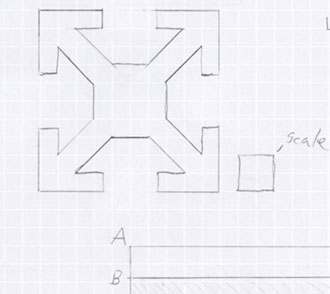
    I've been using Whitelines extensively for the past few months, mostly for technical drafting on the MakerBeam project, an open source metal building kit like Meccano for the Arduino set. The grid is .5 centimeter pitch, perfect for working on a metric standard. With ordinary graph paper, pencil lines are close in color weight to the lines themselves. When scanning pencil marks on ordinary graph paper, the pencil lines often vanish completely. With Whitelines, I can scan a pencil sketch, if I'm satisfied with it, without having to go back over it with pen.

    Available in A4, A5 and pocket sizes, as tablets, spiral bound, perfect and hardbound, both lined and graph. Better graph paper makes better drawings, and this is genuinely better graph paper.

    -- Sam Putman

    Whitelines Perfect Bound A4 Squared Notebook
    $10

    Available from Amazon

    Manufactured by Whitelines

    Related Entries:
    Field Notes Eames Design UniBall Signo Bit 0.18mm Pens

    19 Mar 16:11

    Purslane: Noxious Weed or Superfood?

    Some years ago I was flipping through my new book on gardening and found an odd vegetable that I had never heard of called purslane. Oddly enough, it looked just like the noxious weed that was completely taking over my parents' garden. So I grabbed a sprig and took it to the nearest garden center where they confirmed that yes, indeed, it was purslane.

    Purslane (Portulaca oleracea) is a fleshy succulent, preferring to grow in hot, dry weather. It has a low growth habit and produces thousands of tiny seeds all summer long, giving it its reputation as a noxious weed. It can be hard to eradicate from your garden. However, it is also a prime edible, with a crunchy texture and wonderful flavor. While the flavor is sort of generically "green," some of them, usually the bigger leaves, have a distinct lemon flavor. In addition, they are one of the highest known vegetative sources of omega-3 fatty acids. It is also full of vitamins and minerals. Its dietary benefits are enough that some have gone so far as to call it a superfood.

    So where can you get some seeds from this wonderful plant? I have yet to see any offered at seed catalogs, but it is pretty easy to score a little seed factory in many areas. Purslane uses its fleshy stems, which are also edible, as a water and nutrient storage device. After you have pulled the weed, it will continue to produce flowers and manufacture seeds as long as it can. I pulled one particularly healthy plant a few months ago. It was still producing flowers after a month of sitting in the sun. In Arizona. In July. So find the biggest plant you can find and pluck it. Then put it wherever you want the plants to take over. It will likely produce hundreds of seeds before it perishes. Unless the javelinas eat it first .

    Now go eat your weeds.
    19 Mar 16:11

    Toasted Coconut Milk

    CaramelizedCoconutMilkPuree

    There is something about the aroma of toasted coconut. It is rich, warm, and complex. In the past we have made toasted coconut consomme hoping to utilize these unique characteristics. The consomme was delicate and still evocative of the pleasures of roasted coconut. Still, we wanted to infuse that deep caramelized flavor in coconut milk. Our first tests produced really hot but still pale milk. It turns out that coconut milk needs some additional sugar to caramelize and develop the toasty elements. We ended up pressure cooking coconut milk in mason jars with the addition of some sweetened condensed milk. The results were amazing. The milk became a creamy version of the original consomme. Our first application of the toasted coconut milk was with a roulade of kampachi with tomatoes and melon. The one flaw was that the milk went everywhere and people were chasing the milk across their plates. Since it was an intimate setting the diners were comfortable tipping and scraping. As cooks we noted the flaw in the dish and sought to make improvements. In order to control the texture of the toasted coconut milk we added some agar so that we could make a pureed gel. The result is a delicious puree of toasted coconut milk which is easily eaten and can be enjoyed in both small and large bites. With the modification to the coconut milk the dish became a bit cleaner in aesthetic and certainly easier to consume.

    KonaKampachiCaramelizedCoconutMilkTomatoMelonBasil

    19 Mar 16:10

    Mr. Penumbra’s Twenty-Four-Hour Book Store


    William Gibson stopped setting his novels in the future, saying that the present had caught up with science fiction. Another illustration is this intriguing fantasy from Escape Pod, written by Robin Sloan and read by Stephen Eley. The story originated in a misread twitter, and was published on a blog, and adapted for this podcast.
    Mr. Penumbra has a database, believe it or not. The books aren’t shelved according to title or subject (do they even have subjects?) so the database is crucial. It runs on an old Mac Plus, but I copied it onto my laptop and, over the course of a few customer-free nights, mapped it onto a 3D model of the store. (If this sounds impressive to you, you’re over 30.)
    I was intrigued by the author's vision of the Google campus.

    And while I'm at it, let me heartily commend Escape Pod itself, my favorite thing to listen to while doing the ironing. I'm slowly working through their back catalogue of two hundred stories.

    19 Mar 16:10

    MetaboliCity - Urban growers

    19 Mar 16:09

    Gore Design’s Erosion Sink?

    19 Mar 16:04

    Using sonar to save power

    sonarpm_diagram.gif

    Here's a neat idea: using the standard microphone and speakers that are built into most recent laptops, researchers from Northwestern and University of Michigan have developed a sonar system to detect when a user is near the computer. Why is this interesting? Well, the idea is that it can be used to turn your computer screen off as soon as you walk away, rather than waiting the typical 10 or 20 minutes for the screensaver to kick on. It's a pretty neat idea, especially since it doesn't require any extra components, however I wonder how much power the sonar system itself will draw.

    [via slashdot]

    Read more | Permalink | Comments | Read more articles in Computers | Digg this!
    19 Mar 16:03

    What sociologist Erving Goffman could tell us about social networking and Internet identity

    I just finished Erving Goffman's classic sociological text, The
    Presentation of Self in Everyday Life
    . A friend told me to read
    this for an exploration into what "identity" means online, and I did
    find that the book offers some useful frameworks.

    I have to admit, to start with, that it's a rather distasteful work:
    personally, I don't see my entire life as a performance and everyone
    around me as an audience. That seems to be just what Goffmn wants me
    to do. (He calls this attitude his "dramaturgical perspective.")

    Furthermore, the book was published in 1959, just before the social
    revolution of the 1960s exploded the expectations of formality it
    documents--all the assumptions about proper behavior, social
    distinctions, making a good impression, and so forth. These
    distinctions remain, of course, but people tend to behave in ways that
    consciously disavow differences in class and status instead of
    highlighting them (at least in the United States).

    Goffman's underlying framework is still valid, though, and it casts a
    useful light on some of the dilemmas of going online.

    His fundamental contribution is how he slants his premise that we
    present a front in all our behavior before others. You have to
    understand that this posturing is real and pervasive, but rarely a
    consequence of out-and-out deception, or because we have succeeded in
    deceiving outselves. Usually we simply associate certain behaviors as
    appropriate in certain circumstances; some stylization is inherent in
    our interactions.

    For instance, just as a certain attention to style--or a stubborn
    flouting of its demands--enters into the clothes we choose to wear in
    public, there is inherent artificiality in our choice of screen name
    on a social network (unless an account related to our real name
    happens to be available). And whatever we choose certainly expresses
    something we want to reveal about our nature. This doesn't mean we are
    deceiving ourselves or others--we are being ourselves, but in a
    stylized manner.

    Goffman's approach certainly applies online, because our
    postings--even our instant messages--are more deliberate acts than our
    informal behaviors in real life. Although some participants play at
    being flippant and spontaneous on Facebook walls and microblogs, they
    must have greater consciousness of their effects on the viewer than
    most dinner table guests or concert attendees. Our online personas,
    therefore, conform even more closely to Goffman's idea of everyday
    life than our everyday life does.

    Second, Goffman points to the importance of a separation between
    spheres of action that lets us tailor our actions to our setting. Most
    institutions have a "front stage" where workers focus on the
    impression they make upon the public, and a "back stage" or back
    office where they can interact freely in order to get their work done
    expeditiously.

    Eliminating the distinction between front stage and back stage not
    only degrads the workers' performance but causes intense distress--yet
    that is exactly the situation on most Internet forums. Very rarely can
    people collaborating or sharing information on a public forum pull
    aside into a private space.

    Even if you request a private chat session or exchange of email, you
    take the risk that your correspondent will save the exchange and leak
    it to others (the taboo against revealing internal conversations,
    firmly enforced by teams in everyday life through their social ties,
    is significantly weakened during Internet interactions), or that the
    secret communication will come out through a subpoena or malicious
    break-in. And many online forums discourage private conversations in
    order to enforce an ideal of transparency: the right of all to
    participate in decisions.

    On the Internet, it is also nearly impossible to use the implicit
    signals that team members reserve for each other in real life--a kind
    of "side channel," to use a popular term from the field of digital
    communications--such as when a salesperson slips a word into a
    conversation with the customer that has a special meaning to a fellow
    salesperson.

    Under certain extreme circumstances, Internet users can develop hidden
    signals--see, for instance, Guobin Yang's book

    The Power of the Internet in China: Citizen Activism Online
    ,
    which I
    reviewed a few weeks ago--but
    the difficulties of developing such signals usually prevent Internet
    users from collaborating in the construction of those side channels.

    That the Internet suppresses implicit signals such as body language,
    and maps poorly to high-context cultures, is well known. But what we
    can learn from Goffman is that the elimination of all these nuances
    reduces the effectiveness of team behavior when they interact in
    groups with other participants who have differing interests or
    viewpoints.

    The Internet is also famous for preserving and broadcasting the
    faux pas that, in everyday life, are witnessed by only a few
    people. The dangers of being caught "off-mike" are greater than ever,
    and what might, in the past, have eroded over time into a vague rumor
    now becomes an ever-present, presence that can never be disavowed.

    Furthermore, people who witness faux pas in real life may,
    because of the context, possess enough sympathy for the transgressor
    to ignore the gaffe and refuse to talk about it later. But the global
    reach of the Internet brings in many far-flung witnesses who feel no
    need to show the transgressor any respect.

    Goffman cites some differences between cultures in the behaviors they
    expect and how they interpret those behaviors. The Internet, of
    course, flattens all public expressions without regard for culture. If
    you strip off some clothes and dance with members of the opposite sex
    at a party, you depend partly on the cultural context (as well as the
    guests' regard for what you do in other settings) to judge your
    behavior appropriately. If a video of that dance is posted to the
    Internet, it is subject to all the prejudices of viewers coming from
    other cultures, as I described in

    another article
    .

    Much has been made of the discardability of Internet personas; if we
    don't like who we are (or who others have come to see us as) we
    supposedly can simply start over. But I think the ability to quietly
    withdraw from Internet activities and reappear under a different
    pseudonym has greatly decreased since the days of USENET forums. Most
    of the groups we engage in expect us put up profiles, and
    cross-linking profiles is also encouraged. The strain of trying to
    maintain a totally fictional persona is so taxing that only a
    determined con artist or post-modern adventurer is likely to try.

    Goffman also describes a two-edged or, as he puts it, "discrepant"
    role that has a particular implication for the Internet. He describes
    how people relax their performance in the presence of family members
    or colleagues whom they treat as confidants. Although the role of
    confidant is usually assigned with great care, some people publish
    secrets from their careers in memoirs, seemingly bringing in the
    entire public as their confidants. Modern bloggers do this all the
    time, offering their readers the impression they're peeping into the
    blogger's private thoughts, as opposed to the public face he or she
    must maintain in official settings. When such private thoughts are
    published to the world (or even a corporate intranet), I'm left
    wondering what "meta-private" thoughts lie behind the private
    thoughts.

    Our conscious presentations of self are often meant to be scaffolding,
    which--as Goffman points out--can be taken down once it has performed
    its purpose. For instance, we put up a front in a job interview or our
    first date with a potential partner, knowing that we can gradually
    relax the front if the initial contact is successful and leads to
    commitment.

    But on the Internet, our front is being presented to the entire world
    for all time, and therefore can never be relaxed. We also have to
    worry, even more than real-life performers, over the essential
    question of whether we can sustain our performance.

    And this leads to the ultimate dilemma in Internet identity. The
    artificiality of our participation online, and the limited scope of
    available media, suggest that the Internet will never let us show our
    true selves. But other characteristics--the persistence of information
    and the ease of recombining information from different
    places--suggests just the opposite: that we can't conceal our true
    selves for long. It all depends on what characteristics of the
    individual you consider true: the "wet" versus the "dry"--the inner
    soul versus the worldly behavior.

    A lot of what Goffman wrote in 1959 seems outdated. And a lot more
    seems obvious, because the various guises people use have been the
    subject of literature and commentary from earliest texts we possess in
    civilization. Goffman is more chronicler than analyst, I've found, but
    his categorizations and conclusions can still be helpful when we
    suddenly find ourselves in new social settings--where the Internet never ceases to thrust us.

    19 Mar 16:03

    Super cements aka "geopolymers"

    kriven_acers_2004_mug_drop_mugs.jpg

    Think cement is just cement? Not so. These unlovely mugs are nonetheless very special. Prepared from special synthetic aluminosilicate materials called "geopolymers" (Wikipedia) by members of Dr. Waltraud M. Kriven's research group at The University of Illinois Urbana-Champaign, these mugs were tested in a special "mug drop" event at the 2004 American Ceramic Society (ACeRS) conference, and supposedly "were impossible to break at even 50ft onto bare concrete" (although the photos clearly show an astroturf-covered floor). Danger Room's David Hambling recently posted a nice overview of geopolymer technology with an eye towards defense applications. These presentation slides by Dr. Kriven (.pdf) include some actual formulae.

    kriven_acers_2004_mug_drop_bounce.jpg

    Read more | Permalink | Comments | Read more articles in Chemistry | Digg this!
    19 Mar 16:02

    Twitter Users Most Followed by the Web 2.0 Summit Crowd

    I took the set of users† who posted tweets containing the hashtag #w2s and determined who those users followed. Unlike the list of the most followed users in all of Twitter, the list isn't dominated by celebrities. (A few coders landed in the top 50.) Regular Radar readers will be familiar with many of the users listed below: over 20 of the top 50 are based in the SF Bay Area. Of the over 700 users I identified, a third follow Tim:


    pathint

    UPDATE: Pete Warden has been doing similar analysis to help conference organizers and attendees. He goes a step further and monitors conversations (one twitter user mentioning another user, and vice-versa). Here is Pete's network graph of the recent Web 2.0 Summit.


    (†) Data for this post was pulled on 10/27/2009. Using the Twitter search API, I was able to identify 1,500 relevant tweets and over 700 unique users responsible for those tweets. Given that I likely omitted earlier tweets, the results are at best an approximation of the true top 50 list.

    19 Mar 16:01

    How ice spikes happen

    icespikes.jpg

    Anybody else might shrug off these ice spikes as a meaningless hiccup in the preparation of a frosty beverage, but not Lenore and Windell at Evil Mad Scientist Laboratories!

    Snowcrystals.com has a fairly detailed explanation of how these things form, and it's documented elsewhere as well. (Roughly speaking, supercooled water is pushed up through a hole, somewhat like magma forming a volcano.) It's relatively easy to form these in your freezer if you start with distilled water, but occasionally-- as in our case --they do occur with regular tap water.

    Read more | Permalink | Comments | Read more articles in Science | Digg this!
    19 Mar 16:01

    How-to: Whittle a ball-and-cage

    ballandcage.jpg

    Terry Trier has written a good tutorial on carving this classic whimsy from a single piece of wood.

    Read more | Permalink | Comments | Read more articles in Crafts | Digg this!
    19 Mar 16:01

    How-To: Recycled wine bottle torch

    bottletorchrecycled.jpg

    This recycled wine bottle torch makes for a funky backyard picnic light, and you can get all the extra parts at the hardware store. (Thanks, Katie Wilson!)

    Read more | Permalink | Comments | Read more articles in DIY Projects | Digg this!
    19 Mar 16:01

    Make: Projects - Bottle cutting

    complete.jpg

    There are lots of ways to do this particular trick. You may have seen bottles "cut" using a bucket of ice water, a string soaked in fuel and set alight, a hot narrow gauge resistive wire, or some combination of the above. I've tried all of these ways, at one point or another, with varying degrees of success, and I'm reporting here the method that gives most consistent results for me. But if you're interested in trying some other way, by all means experiment. Glass bottles are freely available just about everywhere, and you can always recycle your mistakes.

    Regardless of which of these methods you favor, "bottle cutting" is generally a misnomer, as what's really going on is a process of controlled breakage. (Unless, of course, you're actually using a tile saw or something similar, in which case I'm prepared to agree it's really "cutting.")

    Anyway. Glass, molecularly, is mostly silicon dioxide, but it's distinct from crystalline solids like ice or table salt in that the molecules are not well-ordered in space. You may have heard some balderdash about how glass is really a liquid with practically infinite viscosity; generally the swelling of ancient cathedral windows at the bottom is sited as evidence to that effect. Well, it's not true: There is, to my knowledge, no reliable evidence that glass will flow at room temperature regardless of how long you wait. Turns out cathedral glaziers made their windows thicker at the bottom on purpose.

    But as an analogy, "infinitely viscous liquid" is not a bad way to understand the random molecular ordering of bulk glass. The upshot of this anisotropy is that glass does not cleave in orderly ways: Cracks tend to wander off in random, unpredictable directions, and shattering can easily occur due to internal stresses. There is, therefor, an element of luck involved in the bottle cutting operation, but with a bit of practice and good technique you can make it work most of the time.

    Read more | Permalink | Comments | Read more articles in MAKE Projects | Digg this!
    19 Mar 16:01

    Hermit crabs in glass

    Hermit 320
    A shy glass blower made a glass shell for a hermit crab... "glass houses" video here...

    Scientists at the New Zealand Marine Studies Centre and Aquarium at Portobello near Dunedin are looking at hermit crabs in a whole new light. The crabs have moved into new man-made glass shells and it's opened up a new world for those both inside the shells and out. "We brought the shells out there and sure enough in a week to ten days the hermit had decided that the glass house was better than their own house and had made it their home," explains aquarium curator Adelle O'Neill. There are over 60 species of hermit crabs living on New Zealand shorelines. They live in a shell because unlike normal crabs they don't have a hard exterior.
    Read more | Permalink | Comments | Read more articles in Arts | Digg this!
    19 Mar 15:59

    Sculpting metal with high explosives

    EvelynRosenbergDetanograph01.jpg

    In 1985, American artist Evelyn Rosenberg developed a technique for embossing thick metal plates by blasting them onto a mold with sheets of plastic explosive. "Detonography," as she calls it, can impress very delicate images into metal surfaces, and can weld dissimilar metals together into single panels. Shown above is "Pillars of Knowledge," featuring four detonographs treated with various chemicals to produce different patinas.

    Read more | Permalink | Comments | Read more articles in Arts | Digg this!
    19 Mar 15:59

    Shitty Jobs.

    This is about 100-vias, but I was sent this by the captain of the ship SS Buffalo today. Credit where it’s due – comment to get your fill.

    My job is so fucking unbelievable. I’ll try to sum it up by first telling you about the folks I work with:

    First, there is this supermodel wanna-be chick. Yeah, okay, she is pretty hot, but damn is she completely useless. The girl is constantly fixing her hair or putting on makeup. She is extremely self-centered and has never once considered the needs or wants of anyone but herself. She is as dumb as a box of rocks, and I still find it surprising that she has enough brain power to continue to breathe.

    The next chick is completely the opposite. She might even be one of the smartest people on the planet. Her career opportunities are endless, and yet she is here with us. She is a zero on a scale of 1 to 10. She might be a lesbian.

    But the jewel in the crown has got to be this fucking stoner. And this guy is more than just your average pothead. In fact, he is baked before he comes to work, during work, and I’m sure after work. He probably hasn’t been sober anytime in the last ten years, and he’s only 22. He dresses like a beatnik throwback from the 1960’s, and to make things worse, he brings his big fucking dog to work. Every fucking day I have to look at this huge Great Dane walk around half-stoned from the second-hand smoke. Hell, sometimes I even think it’s trying to talk with its constant bellowing. Also, both of them are constantly hungry, requiring multiple stops to McDonalds and Burger King, every single fucking day.

    Anyway, I drive these idiots around in my van and we solve mysteries and shit.