Shared posts

19 Mar 15:58

45 Amazing Examples of Code Generated and 3D CG Artworks


The most interesting thing we like about art is that it is independent of any medium; an artist can express himself without any limitations or restrictions by creating a wonderful and creative piece of art. A creative artist can come up with an inspirational and motivational thought and put that in their artwork in such a way that it becomes a masterpiece that dazzles our mind.

In this post we present some amazing examples of Code Generated, Algorithmic Abstract Artworks and CG Artworks. There are some really interesting platforms and libraries; by using them, artists can create unusual artworks. Most popular among these libraries are Flash Scripting, Generator.x, Processing (Java Based), openFrameworks (C Based) and for creating CG Art, artists are often using 3D Max, Maya, Zbrush, V Ray, Photoshop etc.

Hopefully, you’ll love them and will find them creative or inspirational. Please explore the further works of the artists linked below and also feel free to suggest other artworks in the comments to this post.

Algorithmic and Code Generated Artworks

Composition #72

Screenshot

Rewind Blue

Screenshot

Generative War

Screenshot

I am no Chuck Close

Screenshot

Crimson

Screenshot

The Days Shine On

Screenshot

monogram

Screenshot

You Are Special

Screenshot

Composite

Screenshot

Composition-51

Screenshot

Wild but happy

Screenshot

Aloha

Screenshot

Correndo

Screenshot

love.01

Screenshot

sad.wire

Screenshot

x.01.plode

Screenshot

orange.awakening.02

Screenshot

see.the.sky

Screenshot

circle.explosion

Screenshot

soft.twirl 02

Screenshot

behind.the.line.01

Screenshot

Heart

Screenshot

Pit

Screenshot

Stinging Eyes

Screenshot

Crazy Rabbit

Screenshot

3D Computer Graphic Artworks

In this section, we have collected some truly fantastic CG Artworks (3D Computer Graphics). The most incredible thing about 3D Graphics is that you can recreate any image on your computer that will looks very much like the real thing. Sometimes this 3D rendering becomes so incredible that nobody can hardly tell a difference between the real image and a computed one.

Young girl

Screenshot

The Duet

Screenshot

A Vespid

Screenshot

Hektor

Screenshot

Ice Enviroment

Screenshot

BINAH

Screenshot

Livingroom

Screenshot

Night Elf

Screenshot

Old Lamp

Screenshot

Great White

Screenshot

Gorilla

Screenshot

Howling

Screenshot

House For Sale

Screenshot

Porsche 911 Gt2

Screenshot

Green Cargo,

Screenshot

Escargot

Screenshot

Elder

Screenshot

The Artist himself

Screenshot


© Aquil Akhter for Smashing Magazine, 2009. | Permalink | 49 comments | Add to del.icio.us | Digg this | Stumble on StumbleUpon! | Tweet it! | Submit to Reddit | Forum Smashing Magazine
Post tags: cg, code generated art, computer generated

19 Mar 15:58

How-To: Make a glass skull by lost wax casting

clearglassat72.jpg

Glasskulls.com, though short on "who," is long on "how," featuring nice big, clear photos illustrating the process of going from wax master to finished art glass casting. Inferring from the scattered comments, I think the artist's name is "Donn." If so: Nice work, Donn, and thanks for showing us how it's done.

lost_wax_skull.jpg

Read more | Permalink | Comments | Read more articles in Arts | Digg this!
19 Mar 15:57

benderillustration.com

19 Mar 15:57

Cameraphone DVD macro lens hack

macro_1.jpg

macro_2.jpg

macro_3.jpg

Even if you've got a newer phone with an auto-focus lens you may still be able to take advantage of this resourceful macro lens hack. Disassemble an old DVD player for the lens, fabricate a lens holder out of cardboard, and place it before the standard lens with some poster mount, and you've got yourself a decent DIY macro lens.

[cnflikt via DIYphotography]

Read more | Permalink | Comments | Read more articles in Photography | Digg this!
19 Mar 15:56

Altoids Tin Garden

marques_altoids_garden3.jpg

Marque Cornblatt of Gomi Style crafted these sweet miniature gardens in Altoids tins. Marque used tiny succulent cuttings and small herbs in organic potting soil, and suggests misting them a few times a day. My favorite is the little garden he made for Buddha:

marque buddha lotus11.jpg

There are tons of cool project ideas that involve Altoids tins, and this is a great twist.

Read more | Permalink | Comments | Read more articles in Altoids and tin cases | Digg this!
19 Mar 15:48

Nantucket Diddy Bagg

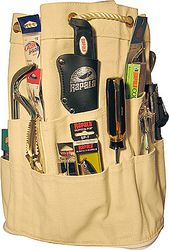
I bought this bag about four years ago at a boat show, intending to use it as a home for tools on my sailboat. I ended up using it more as a transport than a permanent home for tools, in part because I liked it so much and found it so useful that I didn’t want to be limited to using in solely on the boat.

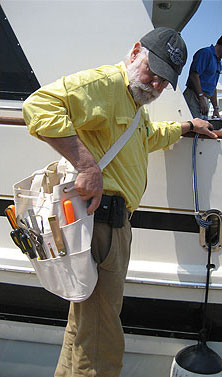
I use it anytime I need to cart tools out of the shop for a project whether at the boat, in the house or farther afield. It holds a lot and the tools are protected. I end up making fewer trips back to the shop because it’s quick, easy and safe to carry those tools that I’d otherwise hesitate to take, but end up needing. I assembled a wine storage unit for a restaurant on the fourth floor of a mall, and it was really helpful to load the Diddy Bagg up and configure the straps so I could wear it like a backpack. It left both hands free for carrying other stuff.

nantucket-diddy2.jpg

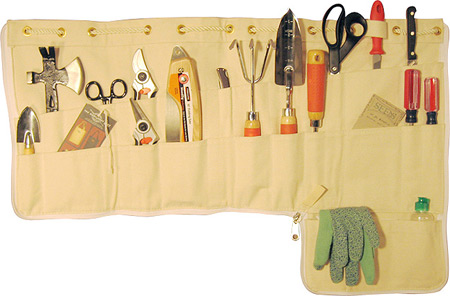
A ditty bag is a traditional tool carrier for marine use. Unlike a hard toolbox, it fits just about anywhere and is less likely to ding your shin (or a pretty piece of varnished mahogany) if you bump into it. The Nantucket Diddy Bagg adds to the traditional bag’s usefulness: It’s larger, has lots of individual pockets for delicate tools (can safely carry a sharp chisel) and it’s stiff enough to protect its contents.

The bag’s outstanding features are its straps and zipper. The adjustable straps allow you to carry it in a variety of ways, including as a backpack, and the zipper allows you to lay the whole thing out flat for access or cleaning. You can even attach it to the wall as a permanent, yet portable, means of tool storage.

nantucket-diddy3.jpg

Its weaknesses are that it is really too big to be a perfect boater’s ditty bag and the zipper is hard to operate. One could wash the bag and soften the canvas, but it might eventually get too soft and not be sufficiently rigid to stand up when full. So I opt to live with a hard to operate zipper rather than risk a flaccid bag. I added leather pulls on the zipper, which helps, but it still requires a firm pull.

-- Quinn McKenna

Nantucket Diddy Bagg
$70

Manufactured by and available from the Nantucket Bagg Company

Related Entries:
Pelican 0450 Tool Lending Libraries The Essentials of Living Aboard a Boat * Living Aboard

19 Mar 15:48

Prototype airless vehicle tires

military_tweel.jpg

As we have reported before, the idea of an airless tire (or "tweel") is at least as old as the 1930s. Still, these photos of prototype non-pneumatic tires under development for the US military by Resilient Technologies, LLC, are pretty sick. Gimme!

Read more | Permalink | Comments | Read more articles in Transportation | Digg this!
19 Mar 15:48

Usman Haque lecture in NYC

haquepreview.jpg

If you're in New York, you might be interested in Usman Haque's lecture at Parsons Art, Media, and Technology Lab:

Vast, floating clouds of helium balloons illuminated by LEDs—whose color you can change by calling them on your cell?! Floating skyscraper silhouettes held down by hundreds of people whose collective force modulates the light bubbling up the structure. An immense fountains on a beach brilliantly lit from within by visualizations of hundreds of thousands of vistors’s voices. Who did these things? Usman Haque.

When: Wednesday September 16 2009, 6:30pm

Where: Parsons the New School for Design, 2 W 13th St. 10th Floor

Read more | Permalink | Comments | Read more articles in Events | Digg this!
19 Mar 15:47

Arduino-controlled IKEA lamp


This hacked IKEA lamp uses an Arduino to create interesting lighting combinations at the push of a button. It uses 20 RGB LEDs to create the light show, and is powered by an old cell phone charger. Neat!

This is a project I have been working on for the past 2-3 weeks. I wanted to create a night light which had to be very simple to use and with no parts that can be consumed by babies!

In the Maker Shed:
Makershedsmall
Arduino Family
Make: Arduino

Read more | Permalink | Comments | Read more articles in Arduino | Digg this!
19 Mar 15:46

Library of strange compounds

compoundLibrary.jpg

George Pendle wrote the highly-recommended Strange Angel: The Otherworldly Life of Rocket Scientist John Whiteside Parsons, the biography of rocket pioneer Jack Parsons (whom I profiled in MAKE, Volume 13). In Saturday's Financial Times, George writes about the Materials Library at King's College, London.

Deep in the bowels of a brutalist concrete building on the Strand, long shelves are packed - crammed, really - with some of the world's strangest substances, from the past, present and sometimes, it seems, the future. Take Aerogel: the world's lightest solid consists of 99.8 per cent air and looks like a vague, hazy mass. And yet despite its insubstantial nature, it is remarkably strong; and because of its ability to nullify convection, conduction and radiation, it also happens to be the best insulator in the world. Sitting next to the Aerogel is its thermal opposite, a piece of aluminium nitride, which is such an effective conductor of heat that if you grasp a blunt wafer of it in your hand, the warmth of your body alone allows it to cut through ice. Nearby are panes of glass that clean themselves, metal that remembers the last shape it was twisted into, and a thin tube of Tin Stick which, when bent, emits a sound like a human cry. There's a tub of totally inert fluorocarbon liquid into which any electronic device can be placed and continue to function. The same liquid has been used to replace the blood in lab rats, which also, oddly enough, continue to function.


A library of the world's most unusual compounds [via Boing Boing]

Read more | Permalink | Comments | Read more articles in Chemistry | Digg this!
19 Mar 15:46

Four short links: 25 June 2009

  1. How an Indie Musician Can Make $19,000 in 10 Hours Using Twitter -- as Zoe Keating pointed out: "cash made by @amandapalmer in one month on Twitter = $19,000; cash made by @amandapalmer from 30,000 record sales = $0".
  2. The Nike Experiment: How the Shoe Giant Unleashed the Power of Personal Metrics (Wired) -- And not only can we collect that data, we can analyze it as well, looking for patterns, information that might help us change both the quality and the length of our lives. We can live longer and better by applying, on a personal scale, the same quantitative mindset that powers Google and medical research. Call it Living by Numbers—the ability to gather and analyze data about yourself, setting up a feedback loop that we can use to upgrade our lives, from better health to better habits to better performance. Collective intelligence + sensor networks can = happiness. (Mathematics gets by with just an "equals" operator. The rest of us need a "can equal" operator ...)
  3. Old Map App -- iPhone app with old maps. Reminds me of David Rumsey's keynote at OSCON 2004.
  4. Make It Digital -- Digital NZ site that helps organisations wanting to produce digital content, by offering them guidance on formats, metadata, and other issues they'll have to tackle. Includes a voting system to promote the (NZ) content you want to have digitised.
19 Mar 15:44

How-To: Seed bombs

seedbombinstructable.jpg

if you want to liven up a local vacant lot or other area but don't have easy access for guerilla gardening, make some seed bombs and throw them over the fence.

Read more | Permalink | Comments | Read more articles in Culture jamming | Digg this!
19 Mar 15:44

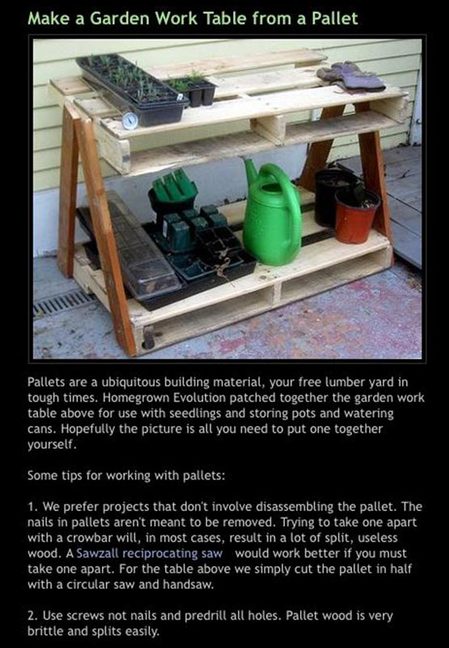
Homegrown Evolution

Mead making, beer brewing, bread baking, urban poultry raising, container planting, pirate gardening, foraging, pickling, bicycle-powered hauling, solar-oven making and anti-car culture ranting are just a fraction of what you’ll absorb plumbing the archives of HomegrownEvolution.com. Kelly Coyne and Erik Knutzen, husband and wife urban homesteaders, guide those of us who can’t make it back to the land on how best to incorporate aspects of it into our modern city-bound lives.

They’re encouraging, but don’t preach or pretend to be perfect, and therein lies their appeal. Erik and Kelly are friends of mine, and over the past few years their website and their book, The Urban Homestead, have led my household, step by small step, to be less consumptive and more productive.

-- Elon Schoenholz

Here's an instructional video on how to make your own self-watering container. If you plan to undertake this project, be sure to use a food-grade bucket, as the authors recommend in The Urban Homestead. SurviveLA was the original name of the Homegrown Evolution website. -- ES

Homegrown Evolution
Free

Sample Excerpts:

homegrownevol2sm.jpg

homegrownevol3sm.jpg

Related Entries:
Country Wisdom & Know-How The Art of the Stonemason The Complete Joy of Homebrewing

19 Mar 15:44

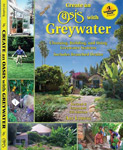
Create an Oasis with Greywater

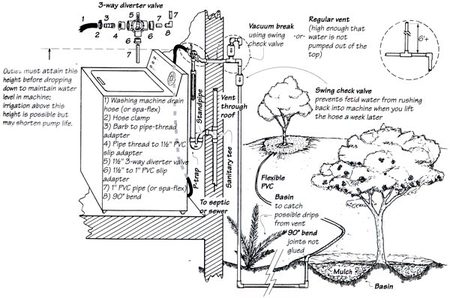
Greywater is the term for all household wastewater except for the toilet and kitchen sink. This is the only comprehensive book I know of on the subject, and in this fifth and expanded edition, Art Ludwig explains how to choose, build, and use a variety of simple greywater systems. There are clear drawings for sending washing machine water into the garden (with or without a drum), for putting diversion valves on bathtubs or showers, for creating “mulch basins,” for ultra-simple setups like “Garden Hose Through the Bathroom,” and “Dishpan Dump (Bucketing)” -- the latter of which I've been practicing lately to the great benefit of both septic system and compost piles.

oasis-greywater2.jpg

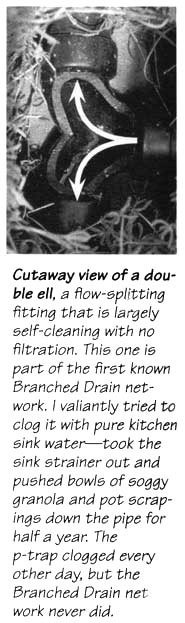
There’s a large section on branched drains -- splitting the flow and dispersing greywater to a number of mulch basins in the garden -- using gravity flow, no pumps or electricity. Mistakes made in greywater systems over the years are documented here, along with suggested improvements, and there's a two-page System Selection Chart with a comparison of 18 different systems.

-- Lloyd Kahn

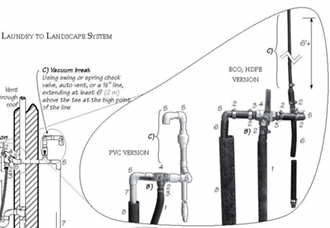
[Complete plans for one of the book’s most broadly appealing projects -- a Laundry to Landscape Grey Water System -- are available, free, on the Oasis Design site. -- ES]

The New Create an Oasis with Greywater
Art Ludwig
2009, 144 pages
$21

Published by and available from Oasis Design

Or $15 from Amazon

Sample Excerpts:

oasis-greywater3sm.jpg
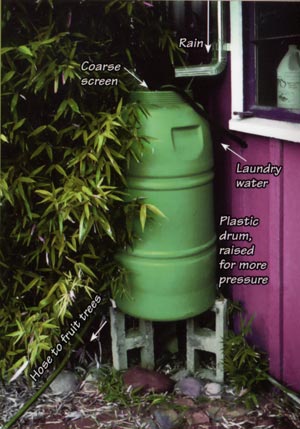
Simple Laundry Drum with Rainwater Harvesting

*

oasis-greywater4sm.jpg
Figure 7.6: Laundry Drumless Laundry

*
oasis-greywater5s.jpg

Related Entries:
The Tiny Book of Tiny Houses Ratcheting Tube and Pipe Cutter Free

19 Mar 15:44

How-To: Make pyrophoric iron

pyrophoric_iron.jpg

A former chemistry teacher of mine provided a great definition of "pyrophoric:"

[It] means that if you playfully squirt some at your lab mates, they will burst into flame.

In other (less amusing) words, a "pyrophoric" substance is one that ignites spontaneously on exposure to air.
Pyrophoric iron, however, isn't as dangerous as that makes it sound, especially in small quantities.

Basically, the oxidation of iron is so vigorous that it can cause very finely divided iron metal to become incandescent. Amazing Rust has a great tutorial on how to prepare finely divided iron by thermolyzing iron oxalate, a yellow powder that can, in turn, be prepared by a simple reaction between two common chemicals.

Read more | Permalink | Comments | Read more articles in Chemistry | Digg this!
19 Mar 15:44

Make: Projects - More on making Light Bricks

By Alden Hart

The "LED Light Brick" project in MAKE, Volume 18 has generated lots of good feedback for us, so we went back and asked Alden to explore a few variations on the theme of the brick casting itself, how you might be creative with it. This article is the result. Be sure to check out the original piece in MAKE, Volume 18, and also the on-line supplement containing specific casting instructions. --SMR

From the pages of MAKE

led_light_brick.jpg


Some Experiments in Mold Making

A lot of the fun of the Light Brick is trying out different molds. Some very different effects can be achieved depending on the mold you make. This post explores some mold making options and experiments.

Read more | Permalink | Comments | Read more articles in MAKE Projects | Digg this!
19 Mar 15:43

How-To: Dissolve IC packages

decapping_ICs_cc.jpg

Travis Goodspeed demonstrates how to chemically remove (or 'decap') the plastic surrounding those delicate and incredibly cool looking wafers chips -

The following are instructions and matching photos for removing the packaging of microchips without a proper chemical laboratory. Neither a hot plate nor a fume hood is required, and the only chemicals necessary are fuming nitric acid and acetone. The result is a bare die, with bonding wires. The bonding wires may then be removed and the die photographed using microscope.

The same as any author of a lay chemistry article, I must caution you to be very careful with the procedure that I describe. If you've no prior experience with chemistry, purchase an introductory book and study the safety instructions thoroughly. Nitric acid in these concentrations is nasty stuff, even when cold.Like the man said, safety first - but be sure to send us some sweet macro shots once you're done!
[via EMSL]

Update:: In the comments, John Cabrer writes -

Actually, you can accomplish the same task using nothing more that a propane or butane torch that you can pick up at the hardware store. Everything but the silicon turns to dust. This method has the added benefit, that there are no wires remaining to remove.
Read more | Permalink | Comments | Read more articles in Electronics | Digg this!
19 Mar 15:43

Electronic Swatchbook version 2 – lots more public domain swatches, search by colour

swatchbook2

We meant to launch our Electronic Swatchbook v2 last year but it got buried in a slew of server upgrades and other projects.

But here it is, now with nearly 2000 public domain patterns available for you to use and re-use. There are a whole lot of new swatches some dating as far back as 1837. And you can now search by colour.

Electronic Swatchbook initially launched way back in 2005. It was our first experiment with user tagging and also with releasing archival material into the public domain. The first iteration was always meant to expand but other projects got in the way.

Back then Electronic Swatchbook proved to us that, on the whole, you – the public – don’t come in and trash the place if we turn on tagging, and that releasing these materials as public domain gave these swatches new life, a new life that was often attributed back to the Museum (even though attribution wasn’t required). The comfort level that resulted led to the Powerhouse’s current range of online practices and pursuit of broader open access.

It should also be restated that the initial Swatchbook was, in part, a response to the demands of fashion design students to get access to the fragile swatchbooks for inspiration – a process that was time consuming, damaged the objects, and led to them being digitally photographed by lots of students.

Better to do this once and service them all. After all, that’s what digital is good at.

Since then we’ve noticed them appearing in all sorts of re-uses. And that warms the cockles of our hearts – and also provides good evidence of the worth of having the collection in the first place.

Giv Parvaneh (now at the BBC) worked on the original 2005 project when he was at the Powerhouse and again he helped on the rebuild and designed the ‘colour search’ feature. It works by analysing each swatch for a core set of colours – determined by breaking the original into smaller chunks then pulling the most dominant colours from each chunk. A colour hash for each image is stored in the database and this makes for quick cross-collection searching. As we add new swatches to the pot they need a once-only colour analysis.

(The site will be tweaked a bit over the next few weeks – the interface was never properly finished but here it is as a 80% done site – better late than never!)

19 Mar 15:41

How-To: Dye computer parts

blue keyboard.jpg

If you even remotely care about the aesthetics of your computer, you've probably wished at some point that one or more of your components were a different color. For instance, I prefer my computers to be basic black all over, but more than once have been driven to install a beige part because it was what I needed at the right price.

red CDR.jpg

Up until this weekend, I didn't think there was really anything to be done, short of making a mold of the offending part and recasting it in a different color plastic or resin, which is way too much work for such a small annoyance. There's spraypaint, of course, but it's tacky, IMHO; I can almost always identify a spray-painted surface, and although there are good spray paints for plastics on the market today, any kind of finish that leaves a coating on the surface can affect critical dimensional tolerances and impede fit or performance. And it may eventually wear off.

vinyl dyes.jpg

Turns out, however, that there are dyes for plastics, which is counter-intuitive for me because I think of a dye as requiring a porous substrate, and I don't generally think of plastics as porous. To find these products, the googlon is "vinyl dye," and the conventional market is folks restoring automobile interiors. These dyes, although they come in spray cans, are not paints. Their colorants actually adsorb onto absorb into the polymer itself and do not leave any kind of coating behind. To do so, they must soften the plastic surface with a solvent, so they can negatively affect its glossiness, but most of the plastic I'd want to dye isn't high-sheen, anyway. Here's a nice tutorial from GideonTech.com.

Read more | Permalink | Comments | Read more articles in Computers | Digg this!
19 Mar 15:33

Vente Privee - not quite Amazon but getting there

Buying clubs are dull from an internet-web-app-startup-style point of view but boy do they make money. And it appears they scale too. European online buying club Vente Privee, which launched in the UK in September 2008 after a stellar run from its original French home base, has posted a half-yearly turnover of £290 million – a 40% increase year on year. The company is projecting a turnover of £557 million excluding taxes in 2009 (an increase of 27%). It also aims to organise 1,800 sales events (180 in the UK) with a portfolio of 850 different brands.

In the first half of the year the company held 870 sales events across Europe (93 of which were in the UK) in partnership with 850 brands which equates to a 47% increase on 2008. The site’s membership has continued to increase, reaching 8 million members by the end of June (160,000 UK members) – a 42% growth for the same period in 2008. The first six months of the year saw an increase of 33% in the number of parcels dispatched (6 million).

19 Mar 15:32

Make: Projects - Mold concrete pots in scrap styrofoam

finished_pots.jpg

About a year ago Marc linked to the original version of this tutorial on my personal page. This is a revised version with more detailed and user-friendly instructions.

The idea here is to use a simple, inexpensive concrete mixture to cast decorative containers using common trash items as sacrificial mold elements. Styrofoam packing inserts, in particular, are available in an endless variety of shapes; the trick is to cultivate an eye for the negative spaces that are molded into these inserts, and set aside the interesting ones to use as outer forms. Inner forms, obviously, should be simpler, because the inside of the pot is not going to be visible.

Tools:

  • Wheelbarrow or other mixing bin
  • Shovel or other mixing tool
  • Tamping rod, e.g. 1.5" wooden dowel or closet rod, about 12" long
  • Knife or other metal straightedge
  • Old towel, preferably undyed
  • Saw or plastic pipe cutter
  • Hammer
  • Punch

Materials:

  • Styrofoam packing insert with interesting negative space
  • Beverage cup, food container, or other suitable inner mold
  • Play sand
  • Portland cement
  • Water
  • Plastic garbage bag
  • Short section(s) 1" pipe or other suitable drainage hole mandrel


Step 1: Gather your mold elements

mold_materials.jpg

I used a Styrofoam block I found discarded in a hallway in the UT chemistry department as an outer mold. It contains four identical cylindrical recesses and was originally used to package 4L glass solvent bottles. The inner forms are nested polyethylene tubs of the type provided at many grocery stores to package bulk dry goods.

Read more | Permalink | Comments | Read more articles in MAKE Projects | Digg this!
19 Mar 15:32

Hacking parking meters

Pt 2081
Our pals released a very interesting presentation about smart parking meters at the Black Hat Briefings USA, Las Vegas, Nevada, yesterday... Good presentation to review on how they figured out the security (or lack of) on parking meters...

Throughout the United States, cities are deploying “smart” electronic fare collection infrastructures. In 2003, San Francisco launched a $35 million pilot program to replace approximately 23,000 mechanical parking meters with electronic units that boasted tamper resistance, payment via smart card, auditing capabilities, and an estimated $30 million annually in fare collection revenue. Other major cities, including Atlanta, Boston, Chicago, Los Angeles, New York, Philadelphia, Portland, and San Diego, have made similar moves. This presentation details our evaluation of electronic parking meters, including hardware disassembly, smart card protocol emulation, and silicon die analysis.
Read more | Permalink | Comments | Read more articles in Culture jamming | Digg this!
19 Mar 15:32

TubeSat - Personal satellite kit?

Tubesat  Solar Cells Antenna Earth Background Assembly Heading 1
This appears to be a "satellite kit" for $8k via /.

Planet Earth has entered the age of the Personal Satellite with the introduction of Interorbital's TubeSat Personal Satellite (PS) Kit. The new IOS TubeSat PS Kit is the low-cost alternative to the CubeSat. It has three-quarters of the mass (0.75-kg) and volume of a CubeSat, but still offers plenty of room for most experiments or functions. And, best of all, the price of the TubeSat kit actually includes the price of a launch into Low-Earth-Orbit on an IOS NEPTUNE 30 launch vehicle. Since the TubeSats are placed into self-decaying orbits 310 kilometers (192 miles) above the Earth's surface, they do not contribute to any long-term build-up of orbital debris. After a few weeks of operation, they will safely re-enter the atmosphere and burn-up. TubeSats are designed to be orbit-friendly. Launches are expected to begin in the fourth quarter of 2010.


A TubeSat is designed to function as a Basic Satellite Bus or as a simple stand-alone satellite. Each TubeSat kit includes the satellite's structural components, safety hardware, solar panels, batteries, power management hardware and software,  transceiver, antennas, microcomputer, and the required programming tools. With these components alone, the builder can construct a satellite that puts out enough power to be picked up on the ground by a hand-held HAM radio receiver. Simple applications include broadcasting a repeating message from orbit or programming the satellite to function as a private orbital HAM radio relay station. These are just two examples. The TubeSat also allows the builder to add his or her own experiment or function to the basic TubeSat kit.


Read more | Permalink | Comments | Read more articles in News from the Future | Digg this!
19 Mar 15:32

How-To: Wooden shrink cup

shrinkcup.jpg

I never knew you could create a watertight cup by placing a ring of fresh cut wood around a base and letting it shrink as it dries. Instructables user morfmir shows us how.

Read more | Permalink | Comments | Read more articles in DIY Projects | Digg this!
19 Mar 15:32

Infinity-pool fish tank

zeroedge.jpg

ZeroEdge Aquariums makes these groovy continuously-overflowing fish tanks. I'm afraid to ask what they cost, but it seems like a do-able remake.

zeroedge aquarium.jpg

Read more | Permalink | Comments | Read more articles in Remake | Digg this!
19 Mar 15:30

Green Pockets by Maruja Fuentes

19 Mar 15:30

How-To: Closet wine cellar conversion

DIYwinecellarcloset.jpg

Instructables user dedub01 chronicled the conversion of his hall coat closet into a well-insulated wine cellar. He writes:

I decided to build this website after becoming frustrated while searching the Internet for practical information on how to inexpensively convert a coat closet into a wine closet. It seemed like everything was either sites for companies that sell full-blown wine rooms, or blogs by people who converted their cellar / child's room into a walk-in wine museum. Given that (a) I didn't have a large budget, (b) I only had a closet to work with, and (c) I was going to build it entirely by myself, most of what's out there on the Intertubes was useless.

Read more | Permalink | Comments | Read more articles in Instructables | Digg this!
19 Mar 15:30

14th century altarpiece on display at St Edmundsbury Cathedral


A rare medieval altarpiece is to go on show in a cathedral in Suffolk. The 700-year-old screen will be placed behind the altar in the new Chapel of Transfiguration at St Edmundsbury Cathedral in Bury St Edmunds. The chapel and screen were consecrated by the Archbishop of Canterbury on Friday 5 June.

The 14th century screen depicts St Edmund, King Edward the Confessor, an unidentified bishop and an archbishop, possibly St Thomas Becket. The rare medieval church screen was discovered in a storeroom at Kingston Lacey, a National Trust property in Dorset, and is now on loan to the Cathedral.

Canon Michael Hampel, sub-dean of the cathedral, said: "This will be an exciting moment when an ancient altarpiece - with our local saint on it - is 'brought home' to Suffolk. We are deeply indebted to the National Trust for making this possible. People knelt and prayed in front of this work of art during the Black Death, Henry VIII's reign, the Great Fire of London and the coronation of Queen Victoria. Now it's back in use, right here in Bury St Edmunds."

For more information, go to www.stedscathedral.co.uk
19 Mar 15:30

LilBookbinder on Etsy (hey–that’s me!)

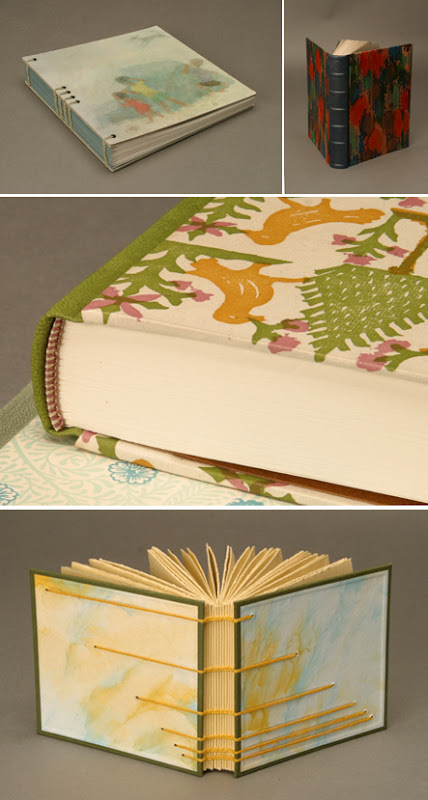
I’ve finally begun an experiment I’ve wanted to try for some time: I’ve opened up an Etsy shop and listed some of my handbound books online. You may recognize some of the books from my portfolio. They’re lovely little books, and I hope that someone out there likes them!

Head on over and take a look!


Posted in Etsy
19 Mar 15:30

How-To: Knap an arrowhead from a beer bottle

arrowhead_from_beer_bottle.jpg
(Image courtesy of Kevin Dunn, whose book Caveman Chemistry, along with a bunch of other cool hands-on projects, contains a chapter on knapping in bottle glass. Thanks Kevin!)

Anybody else read Snow Crash? Remember the big scary Aleut who likes to steal warheads from nuclear submarines using only his canoe and handmade glass knife? Remember how, when you first read that book, you kinda wanted to be that guy? Well, I'm here telling you: It's not too late to become the baddest mango-farmer in the world. After all, even Raven had to start somewhere, and apparently chipping an arrowhead out of bottle glass is the "hello world" of the flintknapping user community. Mike Melbourne and Tim Rast's venerable tutorial shows you how.

Read more | Permalink | Comments | Read more articles in Retro | Digg this!