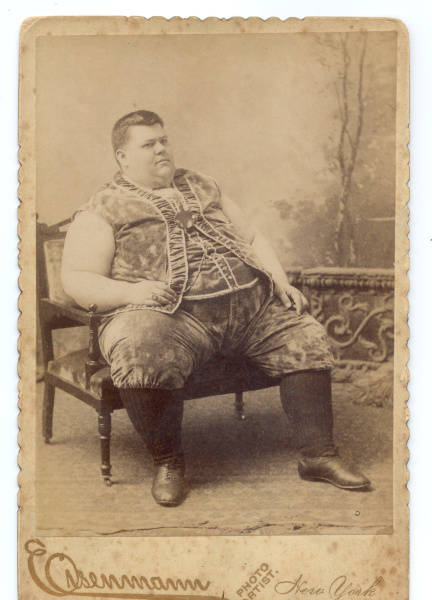
Text and photo from Modeled Behavior.


 I don't usually look to Metropolis magazine for respectable science. And I'm not starting now. But they have managed to find and bestow an award upon a bright young researcher--one Ginger Krieg Dosier of the UAE's American University of Sharjah--who claims she can make bricks that work just as well as traditional bricks just by mixing a few cheap ingredients at room temperature: sand, a not-dangerous-to-people bacterial culture broth, a common salt, and urea which, as you might suppose, would in practice almost certainly come from animal urine:
"The process, known as microbial-induced calcite precipitation, or MICP, uses the microbes on sand to bind the grains together like glue with a chain of chemical reactions. The resulting mass resembles sandstone but, depending on how it's made, can reproduce the strength of fired-clay brick or even marble. If Dosier's biomanufactured masonry replaced each new brick on the planet, it would reduce carbon-dioxide emissions by at least 800 million tons a year."
Then again, if Calla lilies replaced each new brick on the planet, it would reduce carbon-dioxide emissions by at least 800 million tons a year. But we'd also be living in a world without useful new bricks to build stuff with. It is probably reasonable to expect that Dosier's "Bacteria Bricks" will fare better as a construction material than Calla lilies, but whether they are truly comparable to conventional masonry in mechanical properties, durability, and weather resistance still remains to be proved. Also, her bricks take weeks to harden, compared to traditionally-fired bricks which can be manufactured in two days.
Still, prototypes are never perfect, and a lot of persistence and creative thinking has already gone into Dosier's research, and she deserves serious points for originality and effort. Here's hoping she really can make her process work, in practice, well enough to live up to its rapidly-proliferating hype. [via Boing Boing]
Read more | Permalink | Comments | Read more articles in Green | Digg this!If there’s something we developers are really bad at, it’s guessing. We think we know which parts of our application are slow, and spend a lot of time optimising those, but in reality the bottlenecks are often somewhere else. The only sane thing to do is measuring, with the help of some profiling tools.
There are a few profilers available for PHP, the most commonly used being Xdebug, which combined with KCacheGrind/WinCacheGrind/MacCallGrind can show the function call graph and the time spent in each function.
In this article, we’re going to try another profiler, XHProf, developed at Facebook and open sourced in March 2009 (under the Apache 2.0 license). XHProf is a function-level hierarchical profiler, with a PHP extension (written in C) to collect the raw data, and a few PHP scripts for the reporting/UI layer.
According to Wikipedia:
profiling, a form of dynamic program analysis (as opposed to static code analysis), is the investigation of a program’s behavior using information gathered as the program executes. The usual purpose of this analysis is to determine which sections of a program to optimize – to increase its overall speed, decrease its memory requirement or sometimes both
So a profiler is a tool that records the program events as they happen, and their effect on the system, collecting data with many different techniques. Some profilers only measure memory and CPU utilisation, others gather a lot more information, like full function call traces, times, and aggregate data. They can be flat or hierarchical, i.e. they can analyse each function by itself or in its context, with the full tree of its descendents.
At the moment, XHProf is only available for Linux and FreeBSD (and is expected to work with Mac OS).
The easiest way to get it is via the PEAR installer (package home):
apt-get install php5-common

pecl config-set preferred_state beta
pecl install xhprof
If it complains because it can’t find config.m4, you can still build the extension manually, using the following steps:
wget http://pecl.php.net/get/xhprof-0.9.2.tgz
tar xvf xhprof-0.9.2.tgz
cd ./xhprof-0.9.2/extension/
phpize
./configure --with-php-config=/usr/local/bin/php-config
make
make install
make test
Once you have XHProf installed, you should enable it. Open your php.ini and add
[xhprof]
extension=xhprof.so
xhprof.output_dir="/var/tmp/xhprof"
Where /var/tmp/xhprof is the directory that will collect the profile data for each run.
Restart apache, and the XHProf extension should be enabled (check with “php -m” that this is the case).
To profile a block of code, wrap it around these two calls:
// your code

// start profiling
xhprof_enable(XHPROF_FLAGS_CPU + XHPROF_FLAGS_MEMORY);

// the code you want to profile

// stop profiler
$xhprof_data = xhprof_disable();
It is possible to dump the $xhprof_data array to view the raw profiler data for each function call (number of calls, wall time, CPU time, memory usage, peak memory usage) if you want to inspect these at any point.
xhprof_enable() accepts some flags to control what to profile: by default only call counts and elapsed time are profiled, you can add memory and CPU utilisation; make sure they’re enabled in your dev environment (but disable the CPU timer if you use it in production, as it adds a high overhead). If you find the output too noisy, you can disable the reporting of builtin PHP functions with the XHPROF_FLAGS_NO_BUILTINS flag, or even exclude specific functions, by passing a second parameter like this:
// ignore builtin functions and call_user_func* during profiling
$ignore = array('call_user_func', 'call_user_func_array');
xhprof_enable(0, array('ignored_functions' => $ignore));It’s usually more useful to have a complete overview of the page, rather than a small block of code, and it’s probably better to have such an overview formatted as a table or a graph, as opposed to an array dump. For this purpose, XHProf provides a convenient UI that must be enabled in order to be used.
The code for the XHProf UI can be found in the xhprof_html/ and xhprof_lib/ directories. Assuming they are created in /usr/local/lib/php/ , we can symlink that directory to /var/www/xhprof/ so it’s available from our DocumentRoot.
We also need to create two PHP files:
/usr/share/php5/utilities/xhprof/header.php
<?php
if (extension_loaded('xhprof')) {
    include_once '/usr/local/lib/php/xhprof_lib/utils/xhprof_lib.php';
    include_once '/usr/local/lib/php/xhprof_lib/utils/xhprof_runs.php';
    xhprof_enable(XHPROF_FLAGS_CPU + XHPROF_FLAGS_MEMORY);
}
/usr/share/php5/utilities/xhprof/footer.php
if (extension_loaded('xhprof')) {
    $profiler_namespace = 'myapp';  // namespace for your application
    $xhprof_data = xhprof_disable();
    $xhprof_runs = new XHProfRuns_Default();
    $run_id = $xhprof_runs->save_run($xhprof_data, $profiler_namespace);

    // url to the XHProf UI libraries (change the host name and path)
    $profiler_url = sprintf('http://myhost.com/xhprof/xhprof_html/index.php?run=%s&source=%s', $run_id, $profiler_namespace);
    echo '<a href="'. $profiler_url .'" target="_blank">Profiler output</a>';
}
Finally, we add them to an .htaccess file so they’re automatically prepended/appended to our pages:
php_value auto_prepend_file /var/www/xhprof/header.php
php_value auto_append_file /var/www/xhprof/footer.php
At the bottom of your pages, you should now have a link to the profiler output. This is a huge time saver, because every time you load the page, you have fresh profiler data, only one click away, and it doesn’t require having external tools to parse and analyse it.
If you click on the link at the bottom of the page, a new page opens with the profiler data:
As you can see, the page has a nice summary with overall statistics, and a table with all the function calls, that can be sorted by many parameters:
Memory usage and CPU time are further differentiated into “Inclusive” and “Exclusive”: Inclusive Time includes the time spent in the function itself and in all the descendant functions; Exclusive Time only measures time spent in the function itself, without including the descendant calls.
Finally, in the report page there’s also an input box to filter by function name, and a link to the full call graph, similar to the one you would get with *CacheGrind. Make sure you have GraphViz installed (apt-get install graphviz).
As stated in the documentation, XHProf keeps track of only one level of calling context and is therefore only able to answer questions about a function looking either one level up or down. This is rarely a problem, since you can drill down or up at any level. Clicking on a function name in fact will show details about the current function, the parent (caller) and the children (called).
As a rule of thumb, when we’re ready to optimise our application, we should start sorting the data by CPU (exclusive), and look at the top of the list. The functions at the top are the most expensive ones, so that’s where we should focus our efforts and start optimising/refactoring. If there’s nothing obviously wrong, we drill-down and see if there’s something more evident at an inner level. After every change, we run the profiler again, to see the progress (or lack thereof). Once we are happy, we sort by Memory Usage or Wall time, and start again.
Here’s a quick summary if you want to print a step-by-step worksheet as a reference:
Profiling can be an extremely tedious process, because it requires a lot of patience, and a lot of time staring at numbers in a table (how exciting, eh?). Hopefully, the results of this process are exciting: improvements are often dramatic, since rewriting the slowest parts of the code (and not those we think are slow) has a considerable effect on the overall page load and ultimately on the user’s experience. The advantage of using good tools is that they help maintaining discipline and focus, and thus in building experience.
XHProf has a nice feature to get the differences between two different runs, clearly marked in red and green colours. This way it is easy to instantly see the improvements after every change.
To view the report use a URL of the form:
http://%xhprof-ui-address%/index.php?run1=XXX&run2=YYY&source=myapp
Where XXX and YYY are run ids, and the namespace is “myapp” .
Also, it’s possible to aggregate the results of different runs, to “normalise” the reports. To do so, separate the run IDs with a comma in the URL:
http://%xhprof-ui-address%/index.php?run=XXX,YYY,ZZZ&source=myapp
As in every journey, you must know where you are and where you want to go. If you need your application to scale, you must know what your targets are (users/sec, memory usage, page generation time), as well as your constraints (of your application, framework, server resources).
Before even starting coding your application, it’s a good idea to measure the baseline of your framework, if you use one. For instance, here’s a summary of an empty Zend Framework project (NB: the same considerations apply to any framework, I do NOT intend to single out ZF as a bad framework):
This tells you that unless you optimise the framework itself or cache the full page, you can’t use less than 2.5MB of memory or have less than 1500 function calls per page load. This is your starting point.
Profiling the framework itself is not just an exercise in style, but is an eye opener on how it works and how (in)efficient the various components are, so any time you decide to use one, you know what to expect.
There are many examples of common programming practice where you might be surprised to see the impact these choices have; here are some examples.
If you have a config.ini setting called “error.logging.level”, and use Zend_Config to read its value, you need to use $config->error->logging->level. Every “arrow” operator means two function calls. So that’s 6 function calls just to read the value of a config setting. If you read that value often or in a loop, consider saving it into a variable.
Every time you use a view helper, there’s a lot of stuff going on behind the scenes; here’s the call stack (it’s actually much worse, but you get the idea):
When you call partial() to render a template, the current view object is cloned, and all the non-private variables are unset. This is done through expensive reflection and an awful lot of substr() calls. Use render() instead if you can (or a view helper if the template is really small and called many times).
Every time you render a template or use a model class, ZF scans the include path to find the correct file to load, even if you already requested that file before. You’ll be surprised to know how many stat calls are made in a single page execution: thousands! Luckily, with XHProf (or even with strace/dtrace, in this case) it’s easy to see whenever a file is read from disk, so you can optimise the include_path order, and possibly use APC to avoid scanning the include_path twice for the same file.
Every time you use Zend_Json::encode() instead of json_encode(), unless you have a very specific reason to do so, you should hit yourself with a stick (perhaps not literally). Profiling the call and seeing what happens is left as an exercise to the reader.
As I said, I don’t intend to bash Zend Framework, I’m sure the others are no worse/better. What is important though is to be aware of the cost of each component of your framework, so you can make a conscious decision on which building blocks to use in your application.
It is likely that your application will access external resources: a database, a web service, or data on disk. These are usually the most expensive operations you should try to minimise. If you don’t see them at the top of the list when you look at the XHProf reports, it probably means that there’s something wrong: in this case the framework might be the main bottleneck, or you need to refactor your architecture.
Sometimes, there’s no single call eating all the resources, but it’s easy to spot a cluster of function calls related to a certain part of the code:
Needless to say, this is a clear indicator that you must refactor that component.
When you identify a slow piece of code, before optimising it, rethink why you are doing something, if it’s the right place to do it, and if possible reduce the amount of data you need to process. Only after these steps you can start worrying about the best way to do it.
I’m sure we all agree on the above statement, but sometimes it’s not that obvious what to look for. Or we think we already optimised everything, the reports don’t show any single resource hog, and we reached a dead end. This is when I find it useful to sort the XHProf reports by number of function calls. Usually, it is not a good indicator of the performance of a piece of code, because a single function responsible to retrieve data from an external source is a few orders of magnitude slower than many calls to an internal PHP function, for instance. On the other hand, even if PHP is fast, do we really need to call strtolower() 15000 times? Looking for odd things like this might give some hints on how we process data, and maybe come up with a better way. Too often we tend to bash a language for its slowness, and we tend to forget that usually performance issues have more to do with the implemented algorithms than with the operations used.
Here are some other code smells that might suggest we are doing something in a sub-optimal way:
All these cases are perfect candidates for caching. Of course I’m not suggesting caching everything. Remember that memory is another limited resource, so don’t abuse it if you need to scale; the key is to spread the load uniformly across all the available resources. You have to think about the cache-hit ratio, and start caching things you hit all the times. Also, it makes little sense to cache if it takes more effort writing to the cache than you save. But more often than not, you can cache a LOT of content.
In order of effectiveness, you can use static variables, APC, memcached. But do not forget about other kind of caches that are even more effective: proxy cache (or reverse-proxy), and of course the user’s browser. If you send the correct headers, many requests will be resolved before even reaching the server!
Some of the above mentioned code smells, even if apparently obvious, are in practice not very simple to spot. For loops and content being generated more than once, it should be quite easy, just look at the number of times a certain function is called and draw your conclusions. Identifying data being processed but not used might be harder: you see the traces, and ideally you should think why you are seeing those calls at all, or why you see them in that particular place. That’s why a lot of discipline is required: you keep looking at those reports for so long that you wish you could eliminate (violently) as many calls as possible so you don’t have to look at them anymore.
Do not rely on having all the resources available on the same machine. The more you decouple the various services, the easier it is to scale horizontally. Problem is, how to identify the parts to decouple? Well, first of all think about all the services that can be logically separate from the application itself, like all the data sources, content providers, data stores, but also the data-processing routines that are effectively black boxes. Then you might look at the profiler, and see if there’s a resource-intensive routine: can you move it to another machine? Can you maybe add -say- a thin RESTful interface around it? If so, then that service can be moved out of your app, and taken care of separately (e.g. with horizontal replication, if it’s a data store, or put on a cluster behind a load balancer if it’s a data processor).
As a last suggestion, it’s a good idea to collect profiler data under load, which is probably more representative of the real usage. To collect a random sample of profiler data, you can run a load testing tool (e.g. apache ab, siege, avalanche) and save a XHProf run every 10000 runs, by modifying the included scripts like this:
/usr/share/php5/utilities/xhprof/header.php
$xhprof_on = false;
if (mt_rand(1, 10000) === 1) {
    $xhprof_on = true;
    if (extension_loaded('xhprof')) {
        include_once '/usr/local/lib/php/xhprof_lib/utils/xhprof_lib.php';
        include_once '/usr/local/lib/php/xhprof_lib/utils/xhprof_runs.php';
        xhprof_enable(XHPROF_FLAGS_CPU + XHPROF_FLAGS_MEMORY);
    }
}
/usr/share/php5/utilities/xhprof/footer.php
if ($xhprof_on && extension_loaded('xhprof')) {
    $profiler_namespace = 'myapp';  // namespace for your application
    $xhprof_data = xhprof_disable();
    $xhprof_runs = new XHProfRuns_Default();
    $run_id = $xhprof_runs->save_run($xhprof_data, $profiler_namespace);

    // url to the XHProf UI libraries (change the host name and path)
    $profiler_url = sprintf('http://myhost.com/xhprof/xhprof_html/index.php?run=%s&source=%s', $run_id, $profiler_namespace);
    echo '<a href="'.$profiler_url.'" target="_blank">Profiler output</a>';
}
If your load testing tool can generate reports on CPU and memory usage over time, and collect statistics on what external services are accessed and with what frequency, then by all means observe those graphs, they give a lot of information on the real behaviour of your application and its critical areas. This is a goldmine when it comes to understanding what remains to be optimised. Also make sure the response time remains as flat as possible, without too many spikes or an exponential growth as the load increases: this is a good indicator of stable code and a stable architecture.
If you really want to achieve considerable speed gains and scalability improvements, you often have to be ruthless, question everything, ask all the stupid questions, follow the 5 Whys principle and yes, be prepared to annoy everyone else in the team. I think I did that more than once, and I apologise sincerely, but it was in a good cause!
Some links with more detail about some of the topics mentioned, and some further reading:
Have you lost your camera recently? Mislaid it somewhere in a national park? Left it in a taxi? Dropped it in the gorilla pit? Anyone can be a victim of the thoughtlessness and/or sleepiness that can lead to Camera Loss.
‘How can I prevent Camera Loss?’ I hear you ask, wishing I’d get to the point. Well, you can’t prevent cameras from getting lost, but you can do something so your camera can be found very soon after it has vanished.
All you have to do is take some photos – which you never delete from your camera – so when someone finds your camera at the bottom of the gorilla pit they are able to locate you and return the lost property to its rightful owner.
To illustrate just how you can safeguard your camera from the crippling effects of Camera Loss, here are the pics that I always keep on my camera.



















[Photograph: Joshua Bousel ]
Aren't the holidays lovely—as soon as one passes, it's already time to start gearing up for the next. With New Year's in sight, I stared thinking along the party food lines and found myself wrapping mushrooms with bacon, setting it over a fire and coming out with instant party poppers.
Truth be told, this was already one of the wife's favorite things to grill, but due to an insanely delicious bacon-of-the-month (best wedding gift ever) and crimini rather than button mushrooms, this was the best incarnation of a simple snack we've been enjoying for while.
Grill up a bunch of these and set them out on New Year's and you're sure to further lift the spirits of happy revelers.
1 lb bacon, cut in half
1 lb of crimini mushrooms, scrubbed and stems removed
Olive oil
Kosher salt
Freshly ground black pepper
Bamboo skewers, soaked in water for 30 minutes prior to use
1. Place mushrooms in a large bowl. Toss with olive oil until all mushrooms are well coated, about 3-4 tablespoons. Season with salt and pepper to taste.
2. Wrap each mushroom in 1/2 a slice of bacon and thread onto skewers, leaving at least 1/2 an inch of space between the mushrooms.
3. Light one chimney full of charcoal. When all the charcoal is lit and covered with gray ash, pour out and spread the coals evenly over the charcoal grate. Clean and oil the cooking grate. Grill the mushroom skewers until bacon is cooked and crisp on all sides, moving the skewers around if flare-ups start to occur. Serve either hot off the grill or at room temperature.
Philadelphia food writers Joy Manning and Tara Mataraza Desmond drop by each week with Meat Lite, which celebrates meat in moderation. Meat Lite was inspired by their book, Almost Meatless. —Editor

This dish has been a weeknight staple in my house for years. I vary the recipe often, sometimes adding a handful of steamed broccoli florets or substituting butter for the olive oil. I occasionally swap in a semolina pasta for the whole wheat. I never considered making it Meat Lite, though, until I suddenly realized how similar it is to something my husband's grandmother makes every year as part of her Christmas Eve Feast of the Seven Fishes. With the anchovies' big hit of umami and salty depth of flavor, this is the best version of my nutty pasta I've made yet.
- serves 4 to 6 -
1 pound whole wheat pasta
1/4 cup olive oil
2 anchovy fillets, chopped
1/3 cup pine nuts, ground in a food processor
1/3 cup walnuts, ground in a food processor
1/4 teaspoon red pepper flakes
2 garlic cloves, minced
1/4 teaspoon lemon zest
1/2 cup chopped flat-leaf parsley, minced
1. Bring a large pot of salted water to boil, and then add the pasta and cook according to package directions.
2. While the past cooks, heat the olive oil in a high-sided frying pan large enough to accommodate all the pasta over medium heat. Add the anchovy, nuts, red pepper flakes, and garlic, stirring often and breaking up the anchovies with a wooden spoon. (They will eventually dissolve into the oil.) When the nuts smell toasty, after about 5 minutes, kill the heat and set the pan aside.
3. Drain the pasta, reserving about 1/2 cup of the starchy cooking liquid. Return the pan with the nut sauce to medium heat, and add the cooked pasta to the sauce. Toss to combine, adding the reserved cooking liquid until the pasta is moist and coated. Stir in the lemon zest and parsley, toss to combine, and serve at once.
About the author: Joy Manning is the restaurant critic at Philadelphia Magazine. She blogs at Oyster Evangelist.

Wow, an incredible Instructable fromKyle McDonald:
The same technique used for Thom's face in the Radiohead "House of Cards" video. I'll walk you through setting up your projector and camera, and capturing images that can be decoded into a 3D point cloud using a Processing application. Most 3D scanning is based on triangulation (the exception being time-of-flight systems like Microsoft's "Natal "). Triangulation works on the basic trigonometric principle of taking three measurements of a triangle and using those to recover the remaining measurements
.
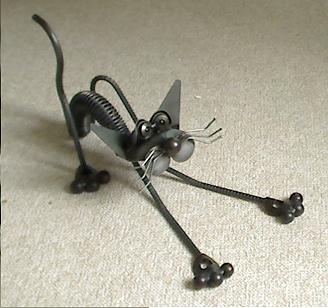
Time for the third annual ribbonfarm review/preview post. For you old-timers who haven’t been keeping up, and the newbies who discovered this blog late in the year, this should be a useful post. I summarize 19 notable posts, review the numbers, point out the trends and highlights, and provide a preview of 2010. So here goes. Let’s start by noting that in 2009, ribbonfarm acquired a mascot: Skeletor the junkyard cat.
Notable Commenters
This was definitely the year of the commenter, with comments/post jumping from around 3 to around 15. Of the hundreds (649 to be precise) of people who have posted on ribbonfarm since I started, most have been from 2009. Tubelite still holds the record with 41 comments. Among those active in 2010, a special shout-out to RG , Xianghang Zhang, Netsp, Frank Hecker, Josh W., and Divya Manian, all of whom posted several interesting/substantial comments on multiple posts. Good, meaty conversations are really what makes this whole effort worthwhile, so thank you.
Notable Articles
By my own criteria, 19 of the 59 posts in 2009 were “successful.” Of these I would judge 8 (the starred ones) to be objective successes as well, based on how much you guys liked them (comments, reblogs, tweets, coffees). Note, the list below is chronological (January-Dec), not in order of quality.
There were (fortunately for my sanity) no posts that you guys liked and I hated.
The Betas
It is easy to trot out the line that blogging is “writing in perennial beta” but much harder to actually work up the courage to flush out an incomplete piece before you are satisfied with it. In 2009 I did this with four posts that I personally consider critical to this blog. But true beta posts must pay the costs. You get valuable early feedback, but you don’t necessarily realize the full potential of the ideas you are working with.
The Numbers
Caveat for the Numerati: 2007 was anomalously “productive” because I had a lot of pre-blogging writing stored up that I merely flushed out, since I did not write online between 2001-2007.
Trends and Highlights
Here are my 2008 and 2007 roundups. Since I don’t have a consistent format for these annual roundups, I can’t do before-after comparisons. But a quick gut-check combined with a scan of the numbers tells me that…
2010 Preview
So that’s the roundup for you. Let’s see where we go in 2010. Happy New Year!
Buy me a coffee to sponsor more posts like this!

 The Lost Knowledge column explores the possible technology of the future in the forgotten ideas of the past (and those just slightly off to the side). Every other Wednesday, we look at retro-tech, "lost" technology, and the make-do, improvised "street tech" of village artisans and tradespeople from around the globe. "Lost Knowledge" was also the theme of MAKE, Volume 17
Sorry we haven't run a Lost Knowledge column recently. We had the winter holiday rush to contend with, all those gift guides, etc. And there was a short holiday break in there somewhere. Anyway, we're back on track now and looking forward to a year of lost, nearly-forgotten, or preciously-preserved technologies. If you have ideas for columns (some of our more popular pieces last year came from you, our readers), please pop them into the comments below.

This week's column is on a letterpress printing style I knew nothing about. One of the things I'm most proud of in my life is that I'm a printer by trade, or I used to be. It's actually the only trade or discipline in which I have any formal training. To my over-romantic mind, there's something extremely noble, even patriotic, about being a printer. It's no wonder that William Blake and Ben Franklin are a couple of my heroes. I co-ran a small job shop for about five years in the late 70s, doing everything from flyers for the local supermarket to full-blown newsletters and magazines, even a couple of books. We did offset lithography, not letterpress, but I was basically familiar with letterpress and the techniques and technologies involved. So I was surprised when I came across a book in a paper store (I'm such a printer nerd that I still haunt paper stores) on the Victorian heyday of "artistic printing," something I'd never even heard of. (FWIW: Wikipedia doesn't even have an entry for "artistic printing.")
The book (which I, of course, had to get) is called The Handy Book of Artistic Printing, by Doug Clouse and Angela Voulangas (2009, Princeton Architectural Press) and it's a wonder. It covers the history of artistic printing, shows examples of the machines used to create it, and offers dozens of gorgeous examples of the artform, along with thoughtful commentary on each example. The book itself is a lovely piece of bookart (er... offset lithographic bookart).
 Read more | Permalink | Comments |
Read more articles in Retro |
Digg this!
Read more | Permalink | Comments |
Read more articles in Retro |
Digg this!
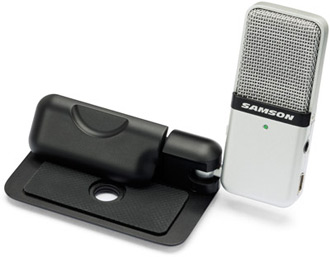
I've been an audio engineer for more than 35 years, and I'm always on the lookout for useful new tools. Microphones are a particular obsession; I probably own a dozen high-quality models. For a long time I’d wanted a nice USB mic that delivers high-quality audio recordings, yet has a very small footprint. The Samson Go Mic fits the bill for me. There are several other mics that do the same job, but they’re more expensive and larger/heavier.
This mic is pretty small, and it clamps to the top of the screen of your laptop with its integral clamp. It also comes with a USB cable and stores neatly away in the included zippered pouch. It’s plug and play for both Mac and Windows. The best features? It has a 1/8-inch headphone output on the side for zero-latency (no delay) monitoring and both cardioid and omnidirectional patterns. The cardioid pattern rejects sound from the back and sides. The omnidirectional pattern picks up equally well from all sides. The cardioid pattern would be best for a person doing a podcast. This mic records in mono, so the omnidirectional pattern would work well when you need to record an interview across a table (one person on each side) or multiple sources from different directions and have them all heard well in the resulting recording.
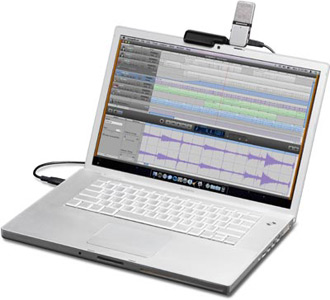
I bought two: one for our daughter, who’s been using it for Skype, and one for myself. I've been using mine with a netbook to record music rehearsals. While it isn’t a U87, it gets the job done well. I'm also looking forward to using it to record a podcast series I've been planning.
Here's a sample recording
-- Samson Go Mic - Portable USB Condenser MicrophoneAvailable from Amazon
Manufactured by Samson

I have no idea how well it works, but I'm loving the minimalist zen-garden aesthetics of this Mast Humidifier from Masuza. The wood, supposedly, is naturally rot-resistant and imparts a lemony smell to the air. [via Gizmodo]
Read more | Permalink | Comments | Read more articles in Furniture | Digg this!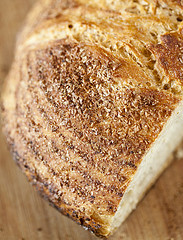
Bread is my favorite food, but I’m no baker. I hadn’t been one, at least, before a friend showed me the well-known New York Times video of Jim Lahey going through the remarkably simple steps of the no-knead approach to breadmaking. Mix the ingredients; let the resulting dough sit for 18 hours; fold; bake. That’s it. The resulting bread has a crunchy, thick crust, soft, chewy interior and excellent flavor.
No-knead bread is baking for nonbakers, perhaps also for skilled bakers too busy to bother with more labor-intensive approaches. This process requires so little effort but yields a beautiful, satisfying, delicious creation. It's really not much harder than making toast.
Since learning this technique, I’ve begun baking bread at least twice a week, finding the process as fun as it is a pleasure not having to buy inferior bread from the market. I’ve also used resources such as Breadtopia.com to refine my recipe and experiment with different ingredients. It’s given me the confidence to try more complex recipes.
Most, if not all, of the fundamental baking tools necessary for making no-knead bread will likely already be around your kitchen. If not, Breadtopia is one of many sources for the tools you’ll need to give it a try. I use a Lodge cast iron Dutch oven that’s been in the family for ages, a very cool tool. The web offers many resources regarding no-knead breadmaking, and I hope Cool Tools readers will share their favorites in the comments, but the NYT video is the best I’ve seen, especially as a starting point for novices, thanks to its utter simplicity.
Lodge Logic Dutch Oven with Loop Handles
$50 (7 quart)
Available from Amazon
Manufactured by Lodge

I am always on the lookout for cool cutting-edge chemistry for my Make: Projects series. It doesn't happen often, but occasionally there's a breakthrough that's both interesting and important, and yet easy enough that even non-professionals can replicate it in their kitchens. It's one of my dreams to someday present a home chemistry project based on science just published, within the preceding week, in one of the major journals.
Read more | Permalink | Comments | Read more articles in Chemistry | Digg this! The Late Age of Print: Everyday Book Culture from Consumerism to Control
 The Man Who Loved Books Too Much: The True Story of a Thief, a Detective, and a World of Literary Obsession by Allison Hoover Bartlett. Riverhead Books
 Books: A Memoir by Larry McMurtry. Simon & Schuster
 Howard's End on the Landing by Susan Hill. Profile Books
 Shotgun on My Chest: Memoirs of a Lewis & Clark Book Collector
 The Case for Books : Past, Present, and Future by Robert Darnton. PublicAffairs
 Read Me: A Century of Classic American Book Advertisements


 Can you deal with Sweets and Other Stories by Andre Williams?
As this is the season of lists and of gift giving, I thought I would put together the top ten books I thought every designer of interactive products should have in their library. I’ve also seen some reading lists floating around that leave out what are, to me, essential texts, or include books that are too focused on a particular medium (web, mobile). (For reasons of impartiality, I excluded my own book, Designing for Interaction, although I certainly hope it sits alongside these on the bookshelf.)
10. Shaping Things
9. Designing Interactions
8. Designing Interfaces
7. Designing for People
6. The Humane Interface: New Directions for Designing Interactive Systems
5. The Art of Human-Computer Interface Design
4. About Face 3: The Essentials of Interaction Design
3. Dealers of Lightning: Xerox PARC and the Dawn of the Computer Age
2. Universal Principles of Design
1. The Design of Everyday Things
After this, of course, there are many great books that delve into particular types of interaction design, design theory, information and communication design, physical computing, and many other topics. But I think these ten books form the center of any interaction designer’s library. Feel free to add more in the comments!


Etsy sellers Stil Novo Design make one-off hand-crafted furniture from reclaimed French white oak wine barrel staves. The pieces are good-looking and quite reasonably priced for handmade furniture. [Thanks, Camilla!]
Read more | Permalink | Comments | Read more articles in Furniture | Digg this! 
Not only has Philip Palmer had a double recommendation in the Guardian recently, he’s also scored a hat-trick in SciFi Now with a competition running last month, an excellent review in the current issue and an interview to come in the next! Here is just some of the incredible praise he’s received:
‘Palmer follows his much-praised debut, Debateable Space, with another riotous, wildly inventive space opera …crawling with over-the-top monsters and crazy biological dangers… Red Claw is that rare treat, an intelligent action adventure replete with intellectual rigour, human insight and superb storytelling.’ – Guardian
‘Philip Palmer is the kind of author that the science-fiction genre really needs at the moment; he is ambitious, imaginative, offbeat and varied in his style of storytelling … in flamboyant style Palmer has crafted a novel that is brimming with promise … offers science-fiction fans a refreshing and alternative read.’ – SciFi Now
‘Red Claw confirms Philip Palmer’s position as one of the quirkiest authors working today … Palmer’s playful prose, vivid characters, deft world-building and constant in-jokes keep you turning the pages … certainly brings some fun and adrenaline to the genre.’ – SFX
‘Red Claw hooks the reader in right from the get-go and doesn’t let up until the final page. The pace is relentless and the plot… is utterly compelling, twisting and turning and keeping you guessing till the very end … Red Claw is an utterly satisfying, fast and furious read, violent, sexy and laugh-out-loud funny in places it provokes thought but doesn’t preach and all the while it’s hugely entertaining. Definitely recommended’ – Sci-Fi-London
‘It’s been a while since I’ve read a science fiction novel as invigoratingly original in approach and theme as this one … Palmer’s writing is refreshingly direct’ – Morning Star
‘The only thing that alerts you to the fact that this wasn’t written during the golden era of science fiction is the swearing … The plot is pure Asimov/Clarke … reminiscent of classic SF … Excellent.’ – Books Monthly.co.uk
‘Philip Palmer doesn’t hold back on extravagant plot twists, bizarre alien biology and larger-than-life characters… it’s a roller-coaster ride through destruction, intrigue, murder and chaos … It’s fun, it’s brutal and it’s exciting.’ – SFCrowsnest
‘A marvellous mix of the ridiculous and the sublime, mashing pulp sci-fi with a seedly Heinlein style utopian dystopia, and some pretty dark humour as well. It’s The Lord of the Flies meets Starship Troopers. A truly dark tale of betrayal, big guns, and monsters … The story twists and turns like a twisty turny thing … This is one of the best novels released this year. 10/10’ – Emotionally Fourteen
‘This is a sharply modern, darkly humorous tale of what happens when people are the opposite of green. On the face of it you have a classic SF story of people exploring a planet filled with dangerous exotic creatures, but just below the surface is a seething satire of the dark side of human nature. The cover echoes the charming naivety of a 50s B movie or pulp novel, but open it up and you have a tale for the Noughties … Mr Palmer does it all particularly well with attention paid to every satirical detail.’ – MyShelf.com

Everyone has those days when they need a little inspiration, something to give those neurons a boost. On a good day, it might be a cup of coffee to get you going, on a bad one, who knows what will work? The following is a roundup of gifts that will hopefully help inspire creativity in their recipients.

Twyla Tharp: The Creative Habit (Simon & Schuster, $25)
When I first saw acclaimed choreographer Twyla Tharp's Catherine Wheel performance, I was in awe of the creativity and discipline in evidence. As I watched, I tried to image all of what would go into conceiving and executing such a complex and muscular dance piece. That creative discipline, developed over a lifetime of Tharp being one of the most creative, celebrated choreographers of our time, is laid out in this impressive creativity workbook. Reading The Creative Habit makes you realize how horribly most self-help books are written. This one is a joy to read, filled as it is with great stories, eye-opening insights about the creative process, and exercises that you likely won't be embarrassed to try. Given Tharp's incredible resume, and her intense work-ethic, it's not surprising that this book is extremely practical and focused on developing a discipline around your creativity. As the title makes clear, she argues that creativity, the ways and means for it to happen, anyway, can be practiced and become habitual. Even if a high degree of order in your creative chaos is not your style (it certainly isn't mine), there are all sorts of great lessons and exercises to take away from this book. In fact, I can't imagine anyone reading it and not getting smarter in how they approach their creative process. -- Gareth Branwyn


Here is a recipe from last winter that we are happily looking forward to working with again.
Apple and Cheddar Stock
230 grams onion
480 grams aged
cheddar
900 grams apple cider
Slice the onions 3 centimeters thick. Dice the cheddar into 5 centimeter chunks. Combine the onions, cheddar and cider in a 6-quart pressure cooker. Cook on high pressure for 15 minutes. Allow the pressure to naturally dissipate. Alternatively combine the onions, cheddar and cider in a large heavy bottomed pot. Bring the ingredients to a simmer and cook, stirring occasionally for one hour. Remove from heat, cover and let steep for 30 minutes. Strain the finished stock through a fine mesh strainer lined with damp cheesecloth. Discard the solids. Reserve until needed.
Apple and Cheddar Soup
Strained Apple and Cheddar Stock
650 grams peeled apple
Place the peeled apples and the apple and cheddar stock in a 6-quart pressure cooker. Cook on high pressure for 15 minutes and then let the pressure dissipate naturally. Alternatively combine the stock and apples in a large heavy bottomed pot and bring to as simmer and cook until the apples are tender. Puree the cooked apple and stock mixture in a blender until it is completely smooth. Strain the mixture through a fine mesh strainer, cool and reserve.
500 grams milk
250 grams aged cheddar cheese
Place the milk and the cheddar cheese into a heavy bottomed pot. Bring to a simmer and cook for five minutes to melt the cheese. When the cheese has broken down, turn off the heat and cover the pot. Let the mixture steep for twenty minutes and then strain the mixture through a cheesecloth lined strainer. Let the contents drip through the cheesecloth. Press gently on the solids to allow the moisture to be extracted from the solids. When the liquid is strained discard the solids and reserve the cheddar milk.
385 grams cheddar milk
260 grams firm tofu
1.5 grams fine sea salt
1.3 grams high acyl Gellan (0.2%)
1.3 grams low acyl Gellan (0.2%)
1 Pyrex dish 22.5 x 22.5 centimeters.
Place the cheddar milk, tofu and sea salt in the blender. Puree the mixture until it silky smooth. With the blender still running, sprinkle both Gellans into the vortex to evenly disperse the hydrocolloids in the mixture. Once the Gellans are dispersed pour the mixture into a heavy bottomed pot. Turn the heat on medium and stir the mixture as it heats. Continuous stirring prevents the mixture from sticking to the bottom of the pot and allows it to heat evenly. Warm the Pyrex dish in a 95°C oven. The warming of the dish will prevent the hot cheddar mixture from seizing when it is poured from pot to dish. Continue to stir and cook the mixture until it reaches 90°C. When the mixture has reached this temperature the Gellan will be fully hydrated. Quickly transfer the mixture from the pot into the warmed Pyrex dish. Pour the liquid as quickly as you are able to without splashing, keeping the flow as smooth and even as possible because the Gellan in the mixture sets rapidly once it is removed from the heat. Cool the cheddar tofu in the dish. When the tofu is cold, remove it from the pan and trim off any rounded edges. Cut the tofu into 1.5cm cubes and reserve on a tray in the refrigerator.
110 grams onion
18 grams garlic
5 grams jalapeño pepper
10 grams Espelette pepper puree
50 grams apple cider
2 grams fine sea salt
25 grams lime juice
3 Granny Smith apples
Place the first seven ingredients in a blender and puree until smooth. Strain the mixture through a fine meshed conical strainer. Peel the apples and cut the rounded edge off the apples. Place the apples on a cutting board with the stem side up. Cut a slice 1cm thick off the left and right sides of each apple. These slices will be larger planks. Cut slices 1cm thick off the top and bottom sides of each apple to create two smaller planks. Cut these planks into 1cm cubes of apple. Place the diced apple in a vacuum bag. Compress the fruit and seal with a vacuum sealer on high pressure. The compression will transform the apples from opaque to translucent. The compression and its effect on the fruit will take a few minutes after the apple comes out of the machine. Let them rest in the bag for 5-10 minutes. Once the apples appear translucent, open the bag transfer them to a fresh bag and add the pickling liquid. Seal the new bag on high pressure. Refrigerate the mixture for two hours. Once the apples have marinated, remove them from the bag, strain off the pickling mixture. Place the apples in small bowl, cover them, and reserve them in the refrigerator until needed.
Apple and Cheddar Soup
Cheddar Tofu
Spicy Pickled Apples
Sliced Chives
In a pot over medium heat, bring the apple and cheddar soup to a simmer. Place the spicy pickled apples in small pan and warm gently. The juices from the apples will keep them moist. Place the cheddar tofu in a large pan with 20 grams of water and cover with a lid. Heat the tofu on medium heat so that it steams gently and becomes heated through. When the soup is hot, use an immersion blender or a stand blender to puree it and make sure it is smooth and homogenous. In each soup bowl arrange eight cubes of pickled apple and eight cubes of cheddar tofu in a pile on the left hand side of the bowl. Alternate the pieces of apple and tofu to build the pile of cubes. When the cheddar and tofu are in place, sprinkle them with chives and pour the hot soup around the pile of cheddar tofu and spicy pickled apples. Serve immediately.

From Mary & Matt, the same people who brought you the Chocolate Pie Chart, this Milk to White chocolate bar is almost too pretty to eat. [via Kottke]
One of the best bargains in your local grocery store is plain old white vinegar. You can get a 32 ounce jug of it (half a gallon) for about $1.50 and it has a multitude of uses beyond the edible ones (like pickles and salad dressings). Here are fifteen uses for white vinegar, most of which I use myself.
Toilet cleaner Got a toilet bowl that’s difficult to clean? Before you go to bed, dump a cup of vinegar in the bowl, then close the lid. I usually spread the vinegar around the bowl a bit with a brush to coat the sides. In the morning, the whole bowl will be really easy to brush. I can’t remember the last time I bought actual toilet bowl cleaner.
Refrigerator cleaner I take a gallon of warm water in a bowl, add about two cups of vinegar, bust out a rag, and use that solution to clean the inside of the refrigerator. It does a great job of cleaning things up without much effort at all. If something’s really bad, I’ll put a tablespoon or so of pure vinegar right on it, let it sit for a bit, then give it a scrub.
Sunburn Is your skin a bit sunburnt? Just rub some vinegar on the affected area and it’ll feel much better really quickly. If it’s bad, you can reapply the vinegar a few times.
Kitchen drain odors If your kitchen drain has an odd smell, pour a cup of white vinegar down the drain, then don’t run any water for at least an hour. When you do run water, run quite a bit of it to flush out the drain. This usually takes care of any odors – if any still linger, repeat this a time or two.
Fabric softener Instead of using fabric softener, use about half a cup of white vinegar. It has largely the same effect without coating your clothes in chemicals and costs a lot less.
Rusty tools Just soak anything that’s rusty in vinegar overnight, then clean it thoroughly with a brush. The rust will wipe away nearly as well as it does with any expensive rust remover I’ve ever tried.
Vinyl flooring If you have a vinyl floor that needs cleaned, mop using equal amounts of water and vinegar. This works really well for getting up stains, especially if you go over it twice. Don’t do this with wood or wood laminate, however, because vinegar can react with the wood.
Window cleaning Forget Windex. Just put some vinegar in a spray bottle and get to work on any glass surfaces. It works really well and doesn’t seem to streak much at all.
Eyeglass cleaner If you use eyeglass cleaner, just take an empty container and fill it with vinegar. It cuts through grease on your lenses really well, leaving them looking great!
Microwave cleaning Put a cup of vinegar in the microwave, then run the microwave on high for three minutes. Let it sit undisturbed for half an hour, then remove the cup. The gunk in your microwave will be very easy to wipe down.
Carpet odors Did your dog do something funky on the carpet (or your toddler, for that matter – yes, I have used this tip to clean up some early potty training accidents)? Pour half a cup of vinegar on the spot that smells and just let it dry. This will kill off the odor and it’ll also make it easier to clean any stains.
Garbage disposal odors If your garbage disposal smells a bit odd, vinegar alone usually won’t do the trick because it doesn’t get into all of the cracks and crevasses in there. Instead, fill up an ice cube tray with vinegar and put it in the freezer until you have vinegar ice cubes. Toss those cubes into the disposal and run the disposal for five seconds or so (with water). Then let it sit for an hour or two, then run it again. This always works for us.
Air freshener Got that spray bottle of vinegar from the window cleaning? Spritz it in the air a few times to kill general odors. It smells vaguely vinegary for the first minute, then it just smells clean.
Nasty air Got a room that really reeks of smoke or paint fumes? Put a bowl of vinegar in there and just let it sit. If the room’s really bad, put out two or three bowls. The odor in the room will drastically improve in a few hours.
Whitening clothes Put a cup of white vinegar in a load of whites along with a quarter of a cup of baking soda. This will whiten your whites as effectively as bleach without the harshness.
These uses just scratch the surface. Whenever there’s a cleaning mission in my home, I usually tackle it with vinegar and baking soda as the first line of defense.
Do you have any great uses for vinegar? Share ‘em in the comments!

[Photographs: Nick Kindelsperger]
This is loosely adapted from a Babbo recipe I found on Epicurious, and by "loosely" I mean I changed three of the five ingredients listed—salt, pepper, and Parmesan weren't on the official list.
The recipe calls for fresh pasta instead of dried, but I just didn't feel like busting out the pasta maker on a weekday night. It also calls for pancetta, the delicious Italian bacon, but I didn't have it lying in the fridge so I went with some particularly fatty American bacon instead. And while plating the dish, I realized I didn't have any parsley (so I chopped some green onions for that fresh flash of green).
I know this sounds like a disaster, but the fundamental property of the original Babbo dish remains the same: parsnips cooked in pork fat taste really good. They come out slightly sweet with a luscious, creamy texture. Whatever you do, don't mess with that.
The dried pasta will work as long as you use a short shape instead of long strands of spaghetti. The American bacon will add a smoky note to the dish, which I kind of like. Parsley, however, would probably work better than the green onions.
- serves 3 to 4 -
Adapted from Babbo.
1/4 pound bacon or pancetta, chopped
2 tablespoons butter
2 pounds parsnips, peeled, quartered lengthwise, and cut crosswise into 1/4-inch-thick rounds
8 ounces pasta (fresh pasta if you have it)
1/4 cup chopped green onion (or parsley)
Salt and pepper
Grated parmesan
1. Bring a large pot of water to a boil. Meanwhile, add the chopped bacon to a large skillet over medium-high heat. Cook until the bacon is browned, stirring often, about 5 minutes. Remove the bacon with a slotted spoon and let drain on a couple paper towels. Pour off all but 2 tablespoons of the bacon fat.
2. Turn the heat to medium and add the butter to skillet with the bacon fat. Add the parsnips and cook for about 12 minutes, stirring often. They should be lightly browned and very tender. Turn off the heat.
3. Cook pasta according to the directions on the box. When done, reserve 2 cups of the cooking water and then add the pasta directly to the skillet with the parsnips. Turn heat to high and add about 1 1/2 cups of the cooking water, the bacon, and the green onions. Cook for 1 minute, stirring often. Add more of the cooking water if it looks too dry. Season with salt and pepper to taste.

One of my favorite pasta recipes is Pasta alla Puttanesca, which I've cooked before for this column. It's a haunting sauce of tomatoes, chile flakes, capers, and olives, and I can never get enough of the briny, sweet flavors and the punch of the capers. If you're into that sort of thing, this recipe for Mediterranean Poached Eggs from Mark Bittman's Kitchen Express, a cool little collection of 20-minute recipes, didn't fall far from the Puttanesca tree.
Bittman's addition is some sliced mushrooms, which release their liquid as they cook into the mixture; that round, meaty flavor binds the ingredients together. Slivers of fresh basil leaf stirred into the end give it that hit of fresh herbiness. This could be served as shown, on thick slices of rustic bread, which is how Bittman recommends it. But next time I'd just put it in a small bowl with the poached egg laid on top, bread on the side—much easier to eat. Either way, it's a fast meal that's big on flavor.
About the author: Blake Royer founded The Paupered Chef with Nick Kindelsperger, where he writes about food and occasional travels. After a year in Estonia, he's now living in Chicago.
- serves 2 -
Adapted from Kitchen Express by Mark Bittman.
2 tablespoons olive oil
1 cup sliced mushrooms
1/3 cup pitted black olives
1 onion, chopped
1 clove garlic, minced
3 plum tomatoes, chopped (or use canned)
2 tablespoons capers
Small handful basil leaves, slivered
2 eggs
2-4 thick slices peasant bread, toasted (depending on size)
1. Heat the olive oil in a large saucepan or skillet over medium heat and add the garlic and onion. Cook for 2-3 minutes, until soft, then add the olives, tomatoes, and mushrooms. Simmer as the mushrooms release their juices to form a sauce.
2. In the meantime, bring a small pot of water to boil with a splash of vinegar and poach the eggs until the whites are set and the yolk is still runny, about 3 minutes in barely simmering water.
3. Stir in the capers and basil leaves into the mushroom mixture and season to taste with salt and pepper. Toast the bread. Either spread the mushroom mixture onto the bread and top with poached eggs, or put the mixture in individual bowls and top with the eggs, bread on the side. Serve.

Cherry clafoutis is a dessert from the Limousin region of France, where, traditionally, it is served with unpitted cherries baked inside. Certainly a good trick to prevent your eating your cake too quickly.
I love it for the holidays because it is a family dessert—wholesome, rustic, and simple, but punctuated with those Christmas red, Rudolph nose cherries. Serve with vanilla ice cream and crushed green pistachio nuts and you have the perfect thing to eat while waiting for Santa to shimmy down the chimney.
I have forever heard of clafoutis batters being referred to as a pancake batter, so I wondered if I could make things easier for myself by experimenting with pancake mix. The result is a crumbly version of clafoutis, not as custardy as some may be used to, but not too sweet, and hearty and warming as can be. And between roasting chestnuts, hanging mistletoe, and stuffing stockings, I take all the help I can get.
About the author: Kerry Saretsky is the creator of French Revolution Food, where she reinvents her family's classic French recipes in a fresh, chic, modern way. She also writes the The Secret Ingredient series for Serious Eats.

- serves 8 -
40 cherries, pitted
1 cup pancake mix
1 cup half and half
1 egg
3 tablespoons melted butter
5 tablespoons sugar
1. Preheat the oven to 350°F.
2. Butter a pie dish. Place the cherries in an even layer all over the bottom of the dish.
3. Whisk together the other ingredients, and pour over the cherries. Allow to rest for 20 minutes.
4. Bake for 45 to 50 minutes, until a skewer comes out clean and hot.
5. Allow the clafoutis to cool so it is just warm. Cut into 8 slices with a serrated knife. Garnish with powdered sugar and toasted sliced almonds.


