A simple web-based wireframing app, with templates for websites and mobile apps.
Shared posts


19 Mar 23:49
 With the proliferation of single-board computers and the various flavors that they come in, it can be a bit daunting to a newcomer. Added to the vast array of programmable microcontrollers like the Arduino, it only makes platform decisions that much more complicated. In fact, we are frequently asked about [...]


Big Board List Compares Development Platforms
With the proliferation of single-board computers and the various flavors that they come in, it can be a bit daunting to a newcomer. Added to the vast array of programmable microcontrollers like the Arduino, it only makes platform decisions that much more complicated. In fact, we are frequently asked about [...]



19 Mar 23:47
Audio and guitar effects on Maple


Okie from LeafLabs got down with some experimental signal processing using Leaf's speedy Maple board and a custom shield -
Real-time audio processing is an example of an application where Maple really shines in comparison to Arduino. Maple has 12-bit ADCs with sample rates up to 1MSPS and PWM fast enough to clear ~11.8 bits of resolution (log2(72MHz/20kHz)=11.8) at a frequency twice the Nyquist frequency of the upper end of the bandwidth of the human ear (20kHz). And there’s a lot of clock cycles to do all kinds of really awesome stuff to the signal (e.g. echo, distortion, octave, harmony, equalization, flange, phaser, fuzz, ring modulation, and complete new imagined effects)!The EAGLE schematic/PCB files, code, audio samples, and further explanation can be harvested over on the LeafLabs blog.
The Maple's STM32 chip seems to be begging for more audio exploration like this. I imagine a basic music synth would be relatively easy to implement in comparison to effects processing.
Hmmm … must find more time for hacking.
More:

19 Mar 23:44
How-To: Make your own EL wire
The ever-industrious Jeri Ellsworth shows you how she made her own electroluminescent (EL) wire using enameled magnet wire, bare copper wire, and EL phosphors. And don't forget the rubber cement coating when you're done so that you don't shock the Dickens out of you.
EL Wire Made at Home - The Currency of Burning Man
19 Mar 23:44
Make and Mend: Drawer pulls made from used components


 Think those burnt-out 'tronics have no use any more? Rather than consign them to the trash heap, why not use them for decoration? These resin drawer pulls contain electronic components. You could make them merely for pretty or you could use them to remind you what's in what drawer. Pretty sweet! [Thanks, Rafael!]
19 Mar 23:43
Doctor Laser mini-documentary
Check out Doctor Laser, a nicely done mini-documentary about one of the last remaining laser holography artists in the world.
In the heyday of holography, back in the 1970s, there were four schools dedicated to the holographic arts around the world, and five studios in New York City alone. Today, there are only a few left in the world. And no one is holding the candle higher than Doctor Laser.Read the Full Story » | More on MAKE » | Comments » | Read more articles in Retro | Digg this!
Jason Sapan, as his birth certificate calls him, is sort of like a laser Doc Brown, and his cluttered New York studio-laboratory (replete with devoted interns) feels something like a time machine, a living ode to a seemingly obsolete art. But listen to him tell it - and take a look around his studio - and you might agree that there's no more accurate way of representing the world than with holography.
19 Mar 23:43
 For the past two weeks or so I've been hacking on a chess rating machine learning competition at Kaggle. The objective for the competition is to come up with a rating+prediction scheme that can outperform the standard system used for this type of thing called the ELO rating system.
I've been having a good time, hacking together a codebase with a bunch of highly optimizing rating systems as well as a bunch of machine learning techniques. I even managed to reach the top of the leaderboard eariler this week and hold it for a bunch of days. The competition finishes on Monday 15 November 2010, so there is a long way to go yet.
There are a bunch of chess rating systems, and I've had a crack with ELO and Glicko, although there are others like TrueSkill to have a play with. Big wins for me have come for denormalizing the data+highly tuned rating system data and running it through elaborate machine learning techniques.
I've got all my code and data analysis on github and intend to release it after the competition ends (or I get board of it). I've already released a cut down version of Glicko as a demonstration for budding chess rating system hackers.
Some lessons I've re-learned so far in this competition:


Chess Rating Machine Learning Competition
 For the past two weeks or so I've been hacking on a chess rating machine learning competition at Kaggle. The objective for the competition is to come up with a rating+prediction scheme that can outperform the standard system used for this type of thing called the ELO rating system.
I've been having a good time, hacking together a codebase with a bunch of highly optimizing rating systems as well as a bunch of machine learning techniques. I even managed to reach the top of the leaderboard eariler this week and hold it for a bunch of days. The competition finishes on Monday 15 November 2010, so there is a long way to go yet.
There are a bunch of chess rating systems, and I've had a crack with ELO and Glicko, although there are others like TrueSkill to have a play with. Big wins for me have come for denormalizing the data+highly tuned rating system data and running it through elaborate machine learning techniques.
I've got all my code and data analysis on github and intend to release it after the competition ends (or I get board of it). I've already released a cut down version of Glicko as a demonstration for budding chess rating system hackers.
Some lessons I've re-learned so far in this competition:
- Unit testing is critical for trust in the code (maths!).
- A robust test harnesses is critical for offline evaluation (crossvalidation of ideas).
- An audit trail of experiments and changes is critical (experiment log and source control)
- Keep code modular and extensible.
- Read read read: papers, wikipedia, own notes, graphs of the dataset.
19 Mar 20:12
Linx

This inexpensive construction kit uses simple plastic hubs to connect grocery store drinking straws. You can assemble quite large — and featherweight — structures in crystalline and geodesic designs. The 125 included hubs are enough for several big projects and are reusable. While you can use “bendable” drinking straws I don’t recommend them because they weaken the structures; but if that’s all you can find at the store, they’ll do.
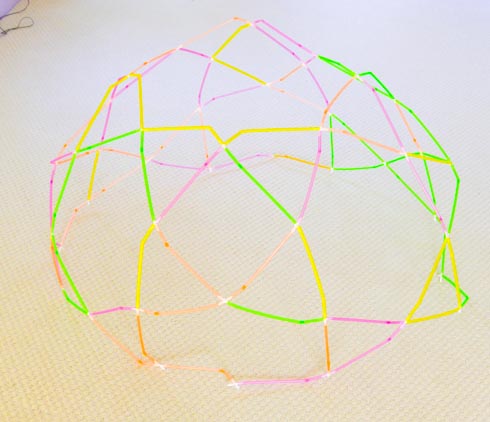

-- KK
Linx
$18
Available from Linx
19 Mar 20:11

2012 year-end link clearance
Another round of the semi-annual link clearance.
Snark
- New! Improved! Shape Up Your Life!: The New York Times book review of Timothy Ferriss's The 4-Hour Body reads like a recap on Television Without Pity, but this time they're making fun of a book! "'The 4-Hour Body' reads as if The New England Journal of Medicine had been hijacked by the editors of the SkyMall catalog." A few months later, they did a less snarky profile of the man.
- There's nothing more embarrassing than showing up for a sleepover with the same pod as everyone else. I wasn't that interested in the article, but that one line is a winner.
- Something to prepare you for the summer movie season: Coming Soon to a Theater Near You (Unfortunately). Actually, I think the comments are funnier than the main article.
- I recall that one time while waiting to board my flight, I heard the statement "Before we begin primary boarding, we'd like to invite X members to board at this time" for about five different values of X.
- The Annotated White House Flickr Feed.
- Some questions about Newsweek's sexy asparagus.
Tech
- The Defrag Tools show digs into the early history of the MSConfig tool. You can see the original bar napkin on which MSConfig was designed, and learn how I got involved. (Answer: Timecode 5:50.)
- StarCraft: Orcs in space go down in flames. I love these stories from the trenches. Remember, the purpose of these stories is not so you can say, "Ha ha, what a bunch of idiots." It's so that you can say, "Gosh, thanks for the warning."
- Learn to Read the Source, Luke. One of the overlooked skills of a developer is the ability to follow code into a foreign code base. The fact that hitting F11 takes you into a file you've never seen before is no excuse for throwing up your hands and saying, "I give up."
- High-Performance JavaScript on Modern Engines gives you a peek behind modern JavaScript engines and how you can arrange your code so it optimizes well.
- Windows 95 Tips, Tricks, and Tweaks is brilliantly twisted.
- How to take an alias on outlook.com and make it your primary account. Here's a step-by-step version.
- How scammers make money from people who click Like on Facebook viral links.
- I love the tradition (begun by Tony Chor) of the Internet Explorer team sending a congratulatory cake to the Firefox team for each new release of Firefox. It's also very nice to know that the Firefox folks return the gesture.
- This arrived too late for me to include it in my Microsoft Research quarterly update, but it was too awesome to hold for another year. Speech recognition demonstration. At 3:17, you can see the speech recognition system doing live transcription. I have to admit, when the presentation reached its punch line at 7:30, I got a little choked up.
- By the way, the Microsoft Research project to develop the time machine may want to get tips from this guy, who has not only teleported to a secret government Mars colony, but also claims that his traveling companion was Barack Obama.
- Do you know who Russell Kirsch is? You will soon. (Read the follow-up, too.)
- There's still time to get your free Windows Media Center add-on for Windows 8 Pro.
Culture (or what passes for it)
- A while back, I realized that material goods are a burden. Americans in general have yet to figure this out, and all their stuff makes them unhappy.
- Ken Levine's tribute to Shari Lewis.
- The Honor System: Teller (the less boistrous half of the Penn and Teller illusionist team) invokes copyright law to protect one of his signature illusions. Bonus link: Teller Reveals His Secrets.
- Wally Feresten is Saturday Night Live's cue card guy, one of the few remaining in the business.
- Helicopter Parents Hover in the Workplace.
- Jerry Seinfeld explains how he writes a joke, using his Pop-Tart joke as a subject. This video was created to accompany a very long article on the comic.
- Slate's Reader Takeover directed staff critic Troy Patterson to review cheap beers. And Bud Light doesn't even count; it's not cheap enough. Pull quote: "Natural Light is among the cheap beers sold by the 30-pack, which, based on my own experience as an undergraduate, constitutes a single serving." Along the way, you actually learn something about the economics of cheap beer.
- The making of the Gangnam Style add-on for Dance Central 3. There appears to be an unwritten rule that people with Japanese-sounding names who work on Kinect must wear sunglasses indoors. (I was surprised to learn that Kudo is the brother-in-law of one of my childhood friends. So my Kudo number is 3, possibly 2.)
Other Stuff
- How to spot an amateur. As one commenter noted, a common theme is that amateurs tend to overdo whatever it is they're doing.
- Facilities Management behind the Olympics. I'm fascinated by logistics.
- Everything Is Different Now: Funny and touching. (The photo caption won it for me.) I wish them the best, even though I don't even know their names or what they look like.
- Another tribute to the wisdom of our elders: 61-year-old retired potato farmer Cliff Young wins one of the most grueling endurance races by being the tortoise, not the hare.
- Marathon Man: The mystery of Kip Litton's marathon runs.
- An ATM technician's tips on simple ways to detect that an ATM has a skimming device installed.
- QP Fukairi Deep Roasted Sesame Dressing. In case you wanted to give me a gift of salad dressing or something.
- The GIF Guide to how the U.S. gymnastics team won gold in London.
- Spoiler alert: If you've never taken The Marshmallow Challenge, then don't click through. It's much more fun if you don't see how people solved the problem. Here's one impressive solution (the page is in Slovak, but the picture doesn't require translation). Here's another solution. (When I took the challenge, I was part of a team consisting of two mathematicians, an accountant, and an economist. We won, though our solution was much less impressive. I set expectations at the start by saying, "Okay, we're not going to win. Let's try not to lose." We ended up winning because nearly everybody else lost.)
- A former inmate describes life in a minimum security Federal prison. Answer: It's so nice, some prisoners don't want to leave.
- The Lying Disease, also known informally as Munchausen by Internet. Fascinating and horrifying.
- Snow Fall, a multimedia arti^H^H^H^Hmini-book on the Tunnel Creek avalanche.
- Stereotypes about what men and women really want in a mate were confirmed in a speed-dating exercise.
- A less academically-rigirous experiment was conducted by Rob Fee: He set up a fake profile on OK Cupid with a photo of a cute girl, accompanied by text that is utterly insane. Will guys realize that this girl is a total basket case? Of course not. (Risqué photos at bottom of page may be NSFW.)
- The difference between men and women: As part of the divorce, this couple had to divide their art collection, and the judge asked each to submit how they think the collection should be divided. The woman described her emotional reaction to each piece or how the scenes related to her life. The man said that he needed the artwork to secure a line of credit, and "I have a lot of wall space to cover."
- Extremist who advocates harrassing and even killing people who disagree with him and who mocks legal means of trying to shut him up becomes targeted by... oh you know where this is going. Wallow in the Schadenfreude. (NSFW for strong language.)
- Ira Glass teaches how to make balloon animals while answering questions about relationships and sex. No, really! (Sex questions NSFW.)


And, as always, the obligatory plug for my column in TechNet Magazine:
- Aliens Ate My Software.
- Living and Dying by the Demo. Long Zheng fell into this trap when he saw a Missed calls tile in a sample and concluded, "Windows 8 will have cell phone calling capability." (Except that he used the question mark escape hatch which lets you start a rumor and call it news.) I don't know where he got the idea that these samples were from built-in apps. I went back and listened to Kip's talk again, and he says (timecode 12:23), "Here's examples from our template catalog." In other words, they were all fake!
- In Triplicate, Please?
- The Service Pack Shuffle
-
The Numerology of the Build.
Note that the build sequence diagram got corrupted.
Here's what it's supposed to look like:
⋯ → 255 → 256 → 300 → 301 → 302 → 303 → 304 → ⋯ ↘ 257 → 258 → 259 Beta released - The Hidden Variables
19 Mar 19:49
Bio: Bill Gurstelle is a contributing editor for MAKE. He has a new book, The Practical Pyromaniac. Visit him at www.thepracticalpyromaniac.com
Hobby Micro Distilling

Writing publicly about one’s still is a lot like writing about one’s bong. You must be careful, since having one and using one could be on different sides of the bounds of legality. Distillation of alcohol for drinking, like growing weed, is strictly illegal.
I don’t know anything about bongs, but I must say, I really enjoy using my still. (Note to Feds: I use it strictly for distilling legal, natural essences.) The still set-up is basically a boiling flask connected via a long glass arm to a water-filled condenser unit. Although the micro-still is very small, having a boiling capacity of about a quart, I find using it to be a lot of fun. It’s amazing how proficient one can get in a short time. Making ethanol from grain and sugar is a fairly simple process, and reasonable success comes quickly, but getting really good at it can take years.
Producing high-proof alcohol is possible because of two wonderful scientific truths. The first is that yeast ferments sugar; that is, the tiny yeast fungi feed on sugar and convert it carbon dioxide and ethyl alcohol. The second is that alcohol and water boil at two different temperatures.
It’s the second item, separating liquids based on differing boiling points, for which a still is useful. United Nuclear sells an excellent micro-still set up. The components are all glass (no lead poisoning worries) and the connections are 24/40 ground glass joints. (That means the connections between glass components fit tightly.)
Salut!
Bio: Bill Gurstelle is a contributing editor for MAKE. He has a new book, The Practical Pyromaniac. Visit him at www.thepracticalpyromaniac.com
19 Mar 19:49


New in the Maker Shed: MudWatt Microbial Fuel Cell Kit

 Explore the power of microbes with the MudWatt™ Microbial Fuel Cell (MFC) Kit from the Maker Shed. Simply fill this kit with soil from your backyard (or someone else’s backyard), along with any biological matter you find in your refrigerator. Within days the attached LED light will start to blink using only the power produced by the electricity-generating microbes in your soil! The MudWatt™ is the perfect educational kit for classrooms and hobbyists since it incorporates a wide range of scientific topics. It’s easy to incorporate the MudWatt™ into a class discussion on microbiology, soil chemistry, electrochemistry, or electrical engineering.
Features
1 Complete MudWatt™ MFC:
- MudWatt™ Anode
- MudWatt™ Cathode
- MudWatt™ Vessel
- MudWatt™ Hacker
- Educational Booklet
- Instructional Booklet
- Pair of Nitrile Gloves
19 Mar 19:49
Exploring RabbitMQ and PHP - Bradley Holt
I’m exploring the possibility of using RabbitMQ for an upcoming project. RabbitMQ is a free/open source message broker platform. It uses the open Advanced Message Queuing Protocol (AMQP) standard and is written in Erlang using the Open Telecom Platform (OTP). It promises a high level of availability, throughput, scalability, and portability. Since it is built using open standards, it is interoperable with other messaging systems and can be accessed from any platform.
I’ll be using RabbitMQ first from PHP, but I plan on using it to send and receive messages to and from other systems. Following are the steps I used to get RabbitMQ and PHP’s AMQP library setup on my development machine.
First, I installed RabbitMQ using MacPorts:
$ sudo port install rabbitmq-serverThen, I started RabbitMQ:
$ sudo rabbitmq-server -detachedNext, I installed the librabbitmq library using a slight variation of the instructions on PHP’s AMQP Installation page (you may need to install Mercurial first):
$ hg clone http://hg.rabbitmq.com/rabbitmq-c/rev/3c549bb09c16 rabbitmq-c
$ cd rabbitmq-c
$ hg clone http://hg.rabbitmq.com/rabbitmq-codegen/rev/f8b34141e6cb codegen
$ autoreconf -i && ./configure && make && sudo make install
Then, I installed the AMQP extension using PECL:
$ sudo pecl install amqp-betaTo test that everything works, I opened up two interactive PHP shells using php -a. I ran the following code in the first PHP shell:
$exchangeName = 'messages';
$routeKey = 'routeA';
$message = 'Hello, world.';
$connection = new AMQPConnection();
$connection->connect();
$exchange = new AMQPExchange($connection);
$exchange->declare($exchangeName);
I then ran the following code in the second PHP shell:
$exchangeName = 'messages';
$routeKey = 'routeA';
$connection = new AMQPConnection();
$connection->connect();
$queue = new AMQPQueue($connection);
$queue->declare($exchangeName);
$queue->bind($exchangeName, $routeKey);
Back in the first PHP shell:
$exchange->publish($message, $routeKey);Back in the second PHP shell:
$message = $queue->get();
print_r($message);
Here is the output I got from the print_r statement:
Array
(
    [routing_key] => routeA
    [exchange] => messages
    [delivery_tag] => 1
    [Content-type] => text/plain
    [count] => 0
    [msg] => Hello, world.
)
There are several other options that can be set, and a lot more to learn about RabbitMQ and AMP. Check out the documentation for PHP’s AMQP extension for details about working with AMQP servers from PHP.
19 Mar 19:48
Zenni Optical
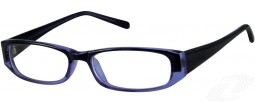
I had been using the previously reviewed Optical4less to purchase inexpensive prescription eyeglasses online, but I changed over to Zenni Optical two years ago. Zenni offers the same fabulous advantages of decent glasses for super cheap, but they are much faster to deliver, and have a much better selection, and their website is much easier to use and order. Reordering from the same prescription is a no-brainer, too.
Over the past two years I've ordered about 8 pairs of glasses from Zenni for different family members and myself, in all different strengths and styles, including sunglasses. The frame quality is okay (great for the price) and the optical quality is A+. My wife has extreme corrections, and I have a very odd combination of factors, while my daughter's prescription is mild. I've ordered single, bifocals and progressives - and the results have all been good. A simple correction and simple frame can cost as little as $10, but our typical glasses will cost about $35. Still a fantastic bargain. Even if you are style conscious, these are great for backup pairs.
One detail you have to pay attention when selecting a frame online is the width of the frame, which varies between models. Pay attention to the size indicator. I once ordered a pair too narrow. Delivery takes only about 2 weeks to my home in California.
Available from and manufactured by Zenni Optical
19 Mar 19:48


Weekend Projects: USB Webcam Microscope

Do you want to build some sweet projects in next-to-no time, over the weekend? Of course you do. Look no further than the new Weekend Projects section of Make: Projects, brought to you by RadioShack and The Great Create. Each week over the coming months we’ll be building clever, fun, mostly beginner-friendly, electronics projects. Using recommended parts sourced from RadioShack — along with other parts and tools you may already have in your shop or studio — we’ll be detailing projects you can build in a weekend — this weekend! We’re excited to get things rolling with this webcam-enabled microscope hack.
Within a few hours work, you’ll graft a webcam onto a microscope and be able to see, up close on your monitor, everything from microfibers in currency to trichome (hairs) on plants from your garden. This hack also allows you to utilize webcam software to capture screenshots or record video.
Sign up for the Weekend Projects Newsletter below to access the projects before anybody else does, get tips, see other makers’ builds, and more. And please email us your project build notes, images, stories, and your own mods. You may end up in a future newsletter!
Sign Up for the “Weekend Projects” Newsletter
Name:
Email:
19 Mar 19:48


How-To: Cyanotype Print on Handknits

Christina McFall over on CRAFT has a great tutorial on using the cyanotype printing technique on textiles like handknits and crochet.
Cyanotype is a fun printmaking technique that is well-suited for printing designs on hand knits and crochet as well as other fabric. While the nature of cyanotype limits the print to shades of blue*, the deep indigo blue is beautiful printed on different colors of yarn and fabric. The process is inexpensive, simple to get started, and relatively low-toxic, making it a great printing method for crafters and artists alike.
Most people are familiar with cyanotype without knowing it – in the form of the blue sunprint papers for kids. However, instead of buying pre-treated paper, you can buy the cyanotype sensitizer and use it to treat just about anything. The cyanotype image is formed when fabric that has been coated with the sensitizing solution is exposed to UV light (sunlight). Where the light penetrates to the sensitized surface, a dark blue permanent dye is formed, and where the light is blocked, the fabric stays its original color. So with the use of a negative (like an old black and white photographic negative), you can print any image or artwork. Fortunately, it’s easy to make digital negatives with a computer and inkjet printer.
In this tutorial, I will show you everything you need to know to get started making your own cyanotype prints on hand knits. The process is essentially the same for any other type of fabric or paper, so experiment and have fun.
More:
Meet the Makers: Christina McFall
19 Mar 19:47
Make: Projects – Glass Bead Projection Screen

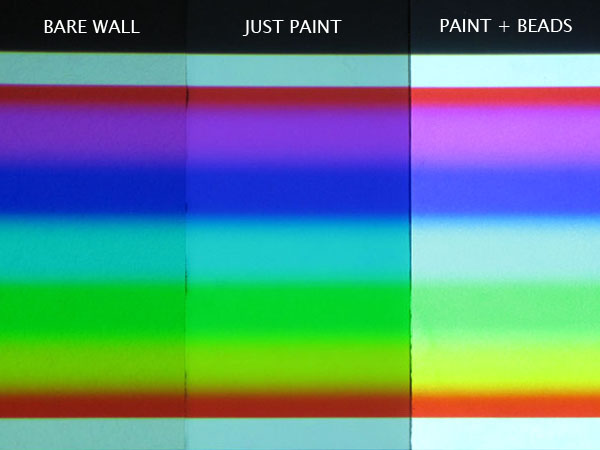

Here’s a method for applying a high-gain optical projection surface made from common, inexpensive materials—specifically, flat white interior latex paint and glass sandblasting media. This project began as a series of experiments to produce a DIY “screen paint” by directly mixing these two ingredients, which didn’t actually work, but did lead to the serendipitous discovery of this process.
More:
19 Mar 19:47


Cult Of Beauty at the V&A
The V&A’s Cult of Beauty exhibition opened over the weeked. You can read my feature on the Aesthetic movement in the Independent on Sunday.
The highlight of the exhibition comes right at the end. Alfred Gilbert’s statue of Eros, or to be more precise Anteros, or to be even more precise, The Angel of Christian Charity, is easily overlooked in its usual home of Piccadilly Circus, located as it is in the second worst place in all of London. But lowered to eye level and removed of surrounding neon, tourists and traffic, it turns out to be a figure of real beauty, simultaneously delicate and robust, and gleaming in its shiny aluminium (this is a recent cast).

The rest of the exhibition is similarly eye-catching, as you wander round the gallery following what seems to be an endless procession of portraits of dark-haired, brown-eyed women painted between 1860 and 1900 by the Aesthetes. William Brown, the fictitious schoolboy and one of my chief inspirations, always admitted a soft spot for a certain kind of women: dark-haired, brown-eyed and dimpled. He was clearly inspired by the Aesthetes.
_by_Sir_John_Everett_Millais,_1st_Bt.jpg/220px-Louise_Jane_Jopling_(n%C3%A9e_Goode,_later_Rowe)_by_Sir_John_Everett_Millais,_1st_Bt.jpg "Louise Jopling by John Everett Millais")



19 Mar 19:46
How-To: Make your own chalkboard paint

Martha has a great little tute up about how to make your own chalkboard paint by adding tile grout to regular latex paint. What's the most ridiculous object (besides a chalkboard) you could cover with with chalkboard paint? Or have seen covered with it? Maybe we should have a contest!
Read the Full Story » | More on MAKE » | Comments » | Read more articles in DIY Projects | Digg this!
19 Mar 19:46
hub
hub:
hub is a command-line wrapper for git that makes you better at GitHub.
Easily clone, fork, submit pull requests, view documentation and issues, compare releases, &c. from the command line.