Shared posts

13 Jun 19:41

Apollo’s Christian Selig explains his fight with Reddit — and why users revolted

by David Pierce
Christian Selig, in Iceland, against a sky.
Christian Selig is Apollo’s lone developer and at the center of the fight taking over Reddit. | Image: Christian Selig

‘Reddit has plugged its ears and refuses to listen to anybody but themselves. And I think there’s some very minor concessions that they can make to make people a lot happier.’

Christian Selig did not mean to be the face of a revolution. All the Canadian developer wanted, really, was to be able to keep working on his app. But that app, a Reddit client called Apollo, has become the central figure in an all-out platform war.

The short version of a long history goes like this: in April, Reddit announced new terms for its API, the tool through which developers of third-party apps access Reddit’s data. Every time you post a comment, refresh a page, search for something, or take just about any other action in an app like Apollo, the app pings an API to get the data you need. Reddit’s API has been free for many years, leading to a flourishing community of third-party tools. But Reddit finally decided it was time to charge for access, both to recoup the costs of running the API and to help the company become more profitable ahead of its planned IPO.

The logic made sense to Selig; the price didn’t. Ultimately, he calculated he would have to pay Reddit $20 million a year just to keep Apollo running, which he couldn’t afford. Other developers building Reddit apps came to the same conclusion and said they would be forced to shut down.

Many users decided this wasn’t a fair business deal — this was a plot to crush third-party Reddit apps. So in response, Reddit users decided to push back. The battle reached its current peak when thousands of subreddits went dark on Monday, protesting Reddit’s new API policies and how they affected everything from app developers to the on-platform tools many users rely on. Reddit’s response? It’s just business. “We’ll continue to be profit-driven until profits arrive,” CEO Steve Huffman wrote during an AMA session over the weekend. “Unlike some of the [third-party] apps, we are not profitable.”

Those third-party apps are clients like Apollo, which Selig has built and run for the last nine years. He’s planning to shut the app down on June 30th, the day before Reddit’s new rules go into effect. But he’s still holding out hope. Hope that Reddit might change its mind or soften its stance, hope that the subreddit blackout might change things, hope that Huffman might pick up the phone and try to smooth things over.

In the midst of the platform blackout, we sat down with Selig to talk about what he wants from Reddit, why he still believes in the platform, and whether he sees a chance to keep Apollo alive beyond the end of the month.

The following has been edited for length and clarity. For the full conversation, tune into Wednesday’s episode of The Vergecast.

Nilay Patel: Do you get the sense that Reddit knows that Apollo users are power users of Reddit? This is something I think about with social networks all the time: their data blinds them to the reality of the platform. So you might say, okay, there’s only 2 million Apollo users; you just don’t know that they happen to be 2 million of the most important users on the platform or the most vocal or the most invested. And you piss them off with a decision like this. Did you ever get the sense they knew that Apollo was important to some users or that you were in the middle of the relationship that Reddit had with that group of users?

Honestly — and I say this with a lot of respect for Reddit — I feel like this was a decision that kind of got rushed out the door, and they didn’t do their due diligence on understanding that stuff. Because there’s a lot of stuff. Even just making a really big pricing announcement, but not having any pricing. There were a lot of discussions where they were like, “We’ll have it in two to four weeks.” And I was like, great. And then six weeks passed. And they were like, “Okay, now we have it.”

At the end of January — I want to say January 26th — I had another call with Reddit prior to all this where they were saying, “We have no plans to change the API, at least in 2023, maybe for years to come after that. And if we do, it’ll be improvements.” So then two months, three months later, for them to say, “Look, actually, scratch that, we’re planning to completely charge for the API, and it’s gonna be very expensive,” kind of made me think… what happened in those three months? This clearly wasn’t something that was cooking for a long time. And I don’t think they understood how much this would affect people and the response that they would get. Because they’re honest, they’re smart people. And I don’t think if they understood everything that they do now, they would have made the same steps. At least I would hope not.

David Pierce: So Reddit said, “We don’t want to kill third-party apps.” But we just went through this with the Twitter API, which pretty explicitly wanted to kill third-party apps, right? Do you buy that either at that moment or now, in hindsight, with two weeks of more conversations, do you think Reddit actually doesn’t want to kill third-party apps? Because it sure looks like it does.

I will be charitable and say at the outset, I honestly don’t think they did. Or maybe I’m very naive. Maybe they didn’t care about us at all, but they were like, “We know you’re important to a subset of users, and we know there’ll be a big blowback if we get rid of you, so we want to make some arrangement where we can keep you but you’re not a pain in the ass.” But I think as time went on, things like only giving us 30 days to make these monstrous changes, I think it started to muddy the waters. It’s like, well, if you don’t want us to die, why are you giving us such aggressive timelines? And why can’t you bump things out? Or listen to us? Why are you acting in this way?

I think to a certain extent, after some of the blowback from initial posts from developers being like, “This is gonna cost us a lot of money,” they almost went on the defensive internally and said, “These developers are entitled, and they just want a free lunch or something.” And I feel like it got very personal when it didn’t really need to. It was just like, this is gonna kill my business — can we have a path forward?

“I feel like it got very personal when it didn’t really need to. It was just like, this is gonna kill my business — can we have a path forward?”

NP: If they’d offered to buy the app from you, would you have sold it to them?

I guess it depends on the stage. I mean, I’m just some guy, so if the number was high enough, sure. Absolutely. At the stage where it was clear that they weren’t interested in having third-party apps around anymore, just because of the pricing and some of the API changes around explicit content or whatnot, if that was the point where they said like, “That being said, we would like to maybe work with your user base or take your user base and figure out a way to make them happy in the context of the official app and work with you and your app through an acquisition,” I honestly would have listened to that.

Prior to that, it would have had to have been a pretty good number, just because I love building Apollo and being so in touch with so many people through the community. It would have to be a big number, losing such a big part of your life and what you do every day. There’s an emotional penalty to losing that is hard to quantify with money, as superficial as that sounds.

DP: This brings me to my favorite segment of every Vergecast, “Let’s Do Some Math Together!” Because there’s been a lot of questions and a lot of debate about what it would look like to continue to run Apollo. One of the things Reddit has said is that the way that the API works, it should cost less than $1 per user per month. Your math said it would cost about $2.50 per user per month.

On average, yeah.

DP: And so there are a bunch of folks out there who are like, “Okay, just charge us $5 a month, give some of that money to Apple, keep the rest, give some to Reddit, everybody wins.” Others are like, “Okay, just make it subscription-only, so only people paying for the app can use the app.” And it does seem like you went to “I can’t afford this; I have to shut down the app” fairly quickly. I’m assuming you went through some of these other scenarios before you got there. Walk me through how you get from “I owe $20 million a year, I have a very popular app” to “I definitely can’t afford this. My only option is to close.”

It’s a two-faceted answer. So say, yeah, just charge $5. Bob’s your uncle, right? The issue there is that your average user uses about 345 requests per day per user. And then, if you extrapolate that over the month, it would cost about $2.50 to support them. The issue is that’s the average user. A free user uses like 200-something requests; an existing paid user is closer to 500. So for that existing paid user who naturally uses more, that’s closer to $3.60 per month in its current state. And if I just charged $5 to them, you take off Apple’s 30 percent or whatever and you’re down to $3.50, you’re already 10 cents in the red per user per month. So the calculus there is already pretty tricky.

That being said, if I had more than 30 days, there’s a possibility that I could go in and change some stuff. Like where I check your inbox every so often, where I preload a page for you that I think you might scroll to — I can kind of cut down on all those and maybe cut that 400 down to, I don’t know, 300 or 200. If I had more than 30 days. But even beyond that, approximately 5 percent of my users used between 1,000 and 2,000 API requests a day. At the low end, those would cost $7.50 a month. And you can imagine the users who use the app the most are kind of the most likely to pay for things. So they’d be the most obvious ones that would want to pay for the app. And when you’re looking at them costing $7.50 a month each, do I have like a $5 tier that hopefully covers most people, and then once you expire that, is it like a phone plan where I call you up and say, like, “Do you want to top off for the month?” That’s not fun.

So that’s one facet of it. Say I solve all that. The other issue is that with the very short notice of 30 days from when the pricing was announced to when we start incurring charges, I’ve got about 50,000 yearly subscribers who have already paid for a year of service [at roughly $1 / month]. That price was based on operating costs that I had for design services, server fees, a part-time server engineer. For $1 a month, I can make a profit on that. But [with the API changes], I’ve got like $1 or $2 extra monthly costs per user for those 50,000 people who have already prepaid. I can’t monetize them anymore. They’ve already paid.

So starting July 1st, those people will start incurring a bill of $50,000 a month for me that I have no way to monetize further because they’ve already prepaid. And that’s where the calculus got really difficult: Okay, I have a bill for $50,000. And then maybe the next month, some of the people who are close to expiring would expire, and it would go down to 11 months, maybe you’d only be $45,000. And then the next month would be $40,000. But you’re potentially looking at hundreds of thousands of dollars in bills I would get from Reddit for people that I couldn’t make a single more dollar off of because they already paid my old operating costs. And that’s where it got really tricky.

“You’re potentially looking at hundreds of thousands of dollars in bills I would get from Reddit for people that I couldn’t make a single more dollar off of.”

Everyone I talked to was kind of just like, “I don’t see how I would make this work.” And then when you add on the extra fact that Reddit’s saying these like bizarre things around threats and blackmail, and they won’t answer your emails anymore, it kind of becomes a thing: I can’t pay for this. How to make a profit out of it is very difficult, and Reddit seems like they have no intention of wanting to work with me or third-party apps anymore. It kind of becomes, like, what’s the future here?

And that was kind of where I landed on it. I was staying at an Airbnb with like seven other people for WWDC, and it was just talking with them over. That Wednesday night, I was just like, “I don’t see any other route out of this. It’s just gotten dire.” And that was when I started typing up my post and being like, “Yeah, this is kind of it.”

NP: Reddit can barely monetize its own users, right? They’re not making money. And the way they’ve chosen to monetize is mostly advertising, which is not exposed in your app. If Reddit had come to you and said, “Alright, you can use our API, we’ll lower the costs, but you’ve got to start serving our ads,” I don’t know how I would have felt about that, as somebody who has used Apollo. That’s pretty icky. Now I’m paying you for software, but I’m getting their ads.

Yeah, but that’s one of those things that I felt like if they did it, it would have shown a little bit more effort to include third-party apps insofar as they’d have to build kind of that integration. And yeah, it’s tricky because if that was a path to survive, I wouldn’t like it, either — I prefer not to have ads, and I don’t mind paying for an ad-free experience — but if that was the only way to survive going forward, like that’s something I also would have entertained. A revenue share, where you make X amount of money, they want half a bit off the top, that’s something that would have been fine. There were a lot of arrangements I think they could have gone with that just weren’t quite as… killer, for lack of a better term.

DP: What do you want from Reddit? What could have happened in that phone call on May 31st that you would have just hung up and been like, “Great, cool, perfect. Sounds good. Win-win, everybody. Let’s move forward”?

In an absolutely perfect world, Reddit would have said, “Okay, we’re also going to halve the price.” Because that would have taken like my $2.50 a user down to about $1.25 (a month). I charge new users $1.50. So it would have been something that, for my existing users, I can at least afford to keep like them around. They won’t put me in the red. That would have been great.

NP: So you’re now the symbol of a much larger thing that’s happening on Reddit, right? There was a post about Apollo shutting down. And that spiraled into an ongoing series of subreddit blackouts. There are other asks in the mix now, mostly around accessibility, which I think even Steve Huffman has said, “Yep, Reddit’s got to do a better job of this.” And then there’s a set of asks are Not Safe For Work content, which it feels like they don’t know that Apple has rules — Reddit can’t just put porn in the app in the way that maybe they’re being asked for. But you’re now one part of a series of asks from a pretty disparate group on Reddit. Do you think that if they fix the API pricing situation and Apollo got back on track, that that would soothe the community at large?

I think it would go a long way, honestly, to at least making them feel heard. Because in this whole saga, I don’t think I’ve seen Reddit offer to give an inch on any of the things.

NP: I would say Reddit’s political skills at operating its community are… negative.

Well, it’s weird because prior to this, I almost always understood that Reddit as a company understood that they’re very community-focused, and they kind of didn’t do the bullshit corporate speak. And it was weird to kind of see this week, where they engaged in a lot more of that than I have historically ever seen them do. And it just went over… about as well as I thought it would.

NP: I think that we are in an absolute moment of change for what you might call the Web 2.0 era. Have you thought about “I’m just going to take my users and go build a Reddit for ActivityPub”?

DP: Even more specifically, one thing a lot of users have been saying is, “We’re leaving Reddit; we’re gonna go to Lemmy and Kbin!” Those are the two that I keep hearing about. Is there a move that way that you think is real, that you might want to be part of?

It’s tricky because, to a certain extent, that does sound really interesting. But with Mastodon, for instance, I love it, but I’ve seen so many people — even in the tech community, who totally have the means to make that move if they want to — who have just been too intimidated or just can’t get off Twitter for some reason. In the back of my head, I’m like, if these people who are much smarter than me can’t make that change, is this just like a short-term thing?

“It’s hard for me to build another thing. If it just evaporated again, it would be like a double breakup.”

It’s hard for me to build another thing. If it just evaporated again, it would be like a double breakup. This has been so exhausting for the last few months. The amount of work it would take to port all the API endpoints over to Lemmy or Kbin or something, that would be a gargantuan amount of work that I’m not sure I have the capacity for. And then just the complexity of making it work. Long term, it’s a big question mark for me that, at this stage, I’m not sure I’m totally interested in pursuing. But it’s also one of those things where I completely wish it the best. And if something that was decentralized kind of became the norm, I think that would definitely be a win for everybody.

DP: So as it stands right now, you’re set to turn off the API token and basically shut down Apollo on June 30th. What percentage of you believes you will actually shut down on June 30th?

Oh, gosh, like 90 percent.

DP: So you’re fully prepared for this to happen.

I’ve talked to my reps at Apple to get the process started. As much as I would love to say this has been a big bluff… it was literally a matter of, like, Reddit hasn’t answered my emails in a while. Every public statement I’ve seen seems like the CEO is quite angry over this. They don’t seem to want to budge on the timeline at all. I don’t see how I can make this work.

I’ve loved building Apollo — even at the $3,500 that [Apple’s Vision Pro] costs, I was kind of excited for the opportunity to see what Reddit on that thing could look like. I was really excited for that. So it’s kind of hard for me to say, but at this stage, it’s just hard for me to see a path forward where they are reasonably willing to meet me even a quarter of the way here. It just seems like they’re, they’re so angry, for lack of a better term, that I kind of just feel like it’s better for me to be honest with myself rather than hold onto the hope until the last minute and then just completely fall apart.

But that 10 percent of me really hopes that I’ll be able to say, “I hopped on a call with Steve. We talked it out. There were some pleasantries exchanged about misunderstandings. We’re all good now, they’re giving us more time to adopt the API, and we’re sticking around.” I would love that. But it’s totally in Reddit’s court. I’m happy to talk whenever, but I just haven’t been able to reach them.

29 Apr 17:31

Windows 11 basics: how to use System Restore to go back in time

by Barbara Krasnoff
Illustration by Alex Castro / The Verge

A few years back, I was working as a freelancer for a company that was trying to develop a US market for its rather obscure hardware products and needed a native English speaker to tweak the text on its site. Everything was going swimmingly until my second week on the job, when I went to the site — and found that I was suddenly getting weird ads flashing across my screen and had lost the ability to access my security software.

I needed to get rid of whatever had invaded my system — hopefully, without the need to reset my PC (and lose more time reinstalling all of my apps and files). Here’s what I used: System Restore.

System Restore is a handy feature that takes a sort of snapshot of your PC’s software, registry, and driver configuration at a specific point in time; this snapshot is called a restore point. You can then, if necessary, return your PC to that point in time. You might lose some of the work you’ve done since you created that restore point, but you’d also lose any unwanted changes that might have been made without your permission.

Although, in that particular case, the restore point worked for me, I have to admit that, most of the time, I didn’t have a lot of success with restore points. However, as of Windows 10, System Restore seems to have vastly improved. Here’s how to use it with Windows 11.

Set up System Restore

In order to use System Restore, you have to first make sure it’s enabled.

  • Interestingly, in Windows 11, System Restore doesn’t seem to be available from the regular Settings menu. Instead, the best way to find it is, according to Microsoft, to use the search icon in your taskbar and type in control panel. In the results, you’ll find the Control Panel app; select it.
Remember the Control Panel? Well, it’s still hidden in Windows 11.
  • Those of us who have been around Windows for a while will immediately recognize the old-fashioned Control Panel, which is where you used to go for almost all Windows tweaks. Look for the search field at the top right and type in recovery.
  • Select Recovery > Configure System Restore.
When you go to the Recovery page, you’ll be able to open or configure System Restore.
  • This will bring up the System Properties window. You’ll be within the System Protection tab. If you’ve never used System Restore before, all of the buttons will be grayed out except Configure. Either way, make sure your available drive (usually the C: drive) is highlighted, and then click on Configure.
Select Configure to set up System Restore. You can also create a new restore point from here.
  • Under Restore Settings, select Turn on system protection. If you want, you can select the maximum disk space that will be used for your restore points; after that, older ones will be deleted to make space. Usually, 1GB to 5GB is sufficient, depending on the size of your hard drive. Click OK.
If system protection isn’t turned on yet, this is where you do it.
  • You’ll be back at the System Properties windows. It’s a good idea to create a new restore point immediately, so click on the Create... button.
  • Name your restore point in the pop-up window, and click Create. After a minute or two, you should get another pop-up that says The restore point was created successfully. Click on Close.
You can manually create a restore point.

And you’re done! Keep in mind that new restore points are only created when, according to Microsoft, “you install a new app or driver, and when you create a restore point manually.” To do this last — for example, if you’re about to do something experimental with your system — just follow the above directions. (There are ways to have your PC automatically create a restore point each time it boots up, but that involves working with the PC’s registry; this article will only cover the basics.)

Use a restore point

So let’s say that you’ve just installed a new game that then proceeded to spread ads and other obnoxious things throughout your system. It’s time to use your restore point to go back to a time before you made that mistake.

Follow the instructions above to get to the Control Panel and the Recovery page.

  • Select Open System Restore
  • You’ll get a pop-up window titled Restore system files and settings. Click on Next.
  • You’ll get a list of all the various restore points that have been created, including the date and time they were created, what they were named, and whether they were created manually. Choose which one you want to go back to.
Highlight the restore point that you want to return to.
  • If you want to (and it’s a good idea), click on Scan for affected programs. This will give you a list of which programs will be deleted and which might be automatically restored. Close the window and then click on Next.
If I had any apps that might be affected by a restore, they would be listed here.
  • The final confirmation window will list the restore point you’ve chosen, the drive it will affect, and a warning that if you’ve changed your Windows password recently, you might want to create a password reset disk using a USB drive. You will also get one more chance to scan for affected programs. Click on Finish to begin the process.
Confirm your restore point, and your system will return you to that configuration.

20 Jan 21:47

How to Avoid Getting the Flu on an Airplane

by Emily Price
Image: Pexel

We’re in the middle of flu season, and everyone knows theres no better place to catch the disease than on an airplane on your way to that vacation you’ve been looking forward to for months.

You’re in a tight quarters sharing air, which means there’s a good chance if someone near you happens to be flying while sick, you’re going to be doing the same when you hop on your return flight in a few days.

Advertisement

Airplanes are always filled with germs, but during cold and flu season those germs are even worse, and in some cases can even be deadly. Thirty children have already died from the flu just this year.

While getting a flu shot is your best defense against getting the actual flu (you got one of those, right?) Travel and Leisure notes there are a few other things you can do to prevent getting sick in the air.

Pick a Window Seat

I know, you always sit in the aisle so you have easy access to the bathroom. The aisle seat is usually amazing, but while it gives you easy bathroom access it also gives you access to the germs of every single person walking down the aisle. At the very least you’re going to get exposed to all those while everyone is boarding, you’re also going to get exposed to everyone’s germs as they walk by your awesome aisle seat to get to the bathroom to blow their nose for the 50th time. A window seat reduces the amount of people you’re exposed to on the plane, which can be a decent line of defense against getting sick.

Wait to Board

Along those same lines, now is not the time to jockey for a better boarding position in a crowded line. If everyone is waiting to board in what looks more like a mob than a single-file line, hang back and board at the end of your group. Large, tightly packed together groups of people are not your friend right now.

Stay Hydrated

Your best line of defense against airborne diseases is the mucus membranes in your nose and mouth. When those start to dry out, something that happens often on planes, you’re making it much easier for you to catch a respiratory virus.

Try packing a small bottle of nasal spray and lubricating your nose before you board (and maybe mid-flight if it’s a long one).

Turn on Your Overhead Vent

I had actually heard you shouldn’t do this, but T+L suggests turning your overhead vent on when you board (this NBC article does a good job of explaining how airplane air circulation works). The idea being that the air vent improves air circulation and can move germs that come into your vicinity away from you.

Wipe Everything Down

I do this on every plane I get on year round. That tray table is gross and I assure you, no one is giving it a thorough cleaning before you get on board (unless you’re taking the first flight of the day, which can be a solid choice for a number of reasons).

The person who sat in your seat on the last flight could have used it to place everything from their child’s dirty diapers to their own snotty tissues and now you’re going to use it for peanuts. Wipe that bad boy down. I purchased a small package of antibacterial wipes from the drug store I keep in my book bag. I always wipe down the tray table, armrests and seat belt when I get on board and offer a wipe to my row mates in case they want to do the same. Assume the grossest person on the plane was sitting in your seat during the last flight and act accordingly.

16 Oct 17:08

FBackup 7 adds Dropbox and CD/DVD support, Fast Mirror backup option

by Nick Peers
Softland has released FBackup 7.0 and Backup4all 7.0, major new versions of its free and paid-for Windows backup products. Both programs, which offer file-based backup and extended functionality via plug-ins, add new cloud backup destinations, while FBackup gains support for CD/DVD backups and a Fast Mirror backup option. FBackup 7.0’s highlights include two new backup destinations. Users can now back up to Dropbox as well as Google Drive, plus CD/DVD is now an option too. Backups to Google Drive now come with a real-time progress indicator. Elsewhere there’s a new Fast Mirror back-up option that only copies new and modified… [Continue Reading]
30 Sep 22:16

A new book explores the CIA’s crazy plan to snatch a Soviet sub from the bottom of the ocean

by Brett Berk

During the height of the Cold War, a Soviet submarine mysteriously sank in the Pacific Ocean. K-129 held a crew of nearly 100 sailors, as well as a full payload of nuclear missiles. Following its loss, the US Navy noted the flurry of Soviet activity dispatched to locate the ship and saw an opportunity to gain access to their rival’s military secrets. They decided to locate and then steal the sub. The fact that this was physically, scientifically, and perhaps legally impossible led the team assigned to the project to — often ad hoc, or accidentally — create, iterate, and apply technologies that would radically change the transportation industry forever.

Author and journalist Josh Dean’s new book is The Taking of K-129: How the CIA Used Howard Hughes to Steal a Russian Sub in the Most Daring Covert Operation in History and tells the story of the project, which aimed to grab the sub from its resting place — three miles below the surface of the ocean. Spearheaded by the CIA and funded by a top secret black budget, the program required numerous uninvented technologies, an outrageous vehicle to carry and implement them, and a fantastical cover story to keep the Russians and the public in the dark—one that unexpectedly helped jump start the existence of an entire industry.

 Image: Penguin Random House

The ship that the CIA contractors designed was called the Glomar Explorer, and it was like nothing that had been built before. One of the largest ships ever constructed, the central section of its 600-foot-long deck was dominated by an enormous derrick, which could lower 17,000 feet of metal piping down to the bottom of the sea. Its hull concealed a huge claw that could be extended on this three miles of piping to grab the sub, along with a secret, giant-doored cavity capable of retracting, swallowing, and transporting it.

 Credit: Photo by Bettmann / Getty Contributor
View of the CIA spy ship 'Glomar Explorer', research ship of Howard Hughes organization.

The Glomar Explorer was thus extremely conspicuous — it was so big, it could be seen from space. But because it had to operate openly and with impunity on the open seas, the CIA had to invent a believable cover story so the Russians would not become suspicious of their real motives. The one they settled on was that it was an experimental seafloor mining ship, built for an industry that did not exist at the time, and owned by reclusive billionaire Howard Hughes, who was pressed into service to back up these claims. To foster the perception that this was true, the CIA hired experts to write scientific papers for mining and shipping publications, presented the ship and its mission at industry conferences and publications, and “leaked” the story to the mainstream press to encourage coverage.

“I’ve been calling it the most specific tool ever made,” Dean says in an interview with The Verge. “It wasn’t intended as a step toward anything. It was built to literally do one thing, which was to pull a two million pound hunk of steel off the bottom of the ocean.” At the time, it was so beyond the capabilities of any machine on the planet, creating it required pie-eyed thinking, a nine-figure blank check, and access to some of the nation’s best scientific tools, thinkers, and contractors.

This kind of carte blanche engineering was not an uncommon practice during the era. At the time, there was a shared belief that technological and social challenges could be solved by putting the smartest experts in the world on the topic, and funding them until they figured it out, and that, because investment and possible benefits would be high, the government should be the source of this funding. NASA is a key example of that. But Dean argues that the CIA was another.

 photo by Chuck Cannon

“Because of the secretive nature of the CIA, this isn’t widely understood, but the Director of Science and Technology at that time was essentially this ridiculous skunk-works for ambitious engineering,” Dean says. “In less than twenty years, they built the U2, the highest-flying surveillance plane ever made, and they built the SR-71, still the fastest plane ever made. But the stakes of the Cold War were so high the argument was, the survival of the nation and the planet depends on this.”

Like many experimental government programs in the era, much of the boundary-leaping technology developed for the ship ended up having extremely relevant applications. “Dynamic positioning was the big one,” Dean says, referring to the use of thrusters at a ship’s corners, which used special markers on the seafloor to help the ship maintain its position. This technology became important as offshore oil drilling became a standard practice, since it allowed a ship to hover over a specific drill point and insert and reinsert a drill serially into the same hole.

 Photo by Bettmann / Getty Contributor
View of the huge HMB-1 barge, companion vessel to the mystery Hughes search ship Glomar Explorer.

“It was also one of the first, if not the first, ships to have satellite positioning, to make sure that it was in the right place on the map,” Dean says, “this was so state of the art at that time.”

All of this was powered by some of the first computers ever loaded aboard a ship, but more impressive than these early, room-sized machines was the computation involved in designing this behemoth and all of its necessary systems. “This was all done one slide rules and calculators,” Dean says of the engineering team. “There were no computer models, these guys were doing it on paper with pencil basically.”

Closing the circle between fantasy and reality—like Argo meets The Abyss—scientific, industry, and popular interest in the CIA’s invented backstory actually helped jump-start the international practice of seafloor mining. A number of countries began exploring the possibility, including the Russians, who had clearly swallowed the phony tale.

“It was really a golden era of moonshots”

More pointedly, after its top secret mission was complete, the Glomar Explorer actually went into service as an experimental sea-floor mining vehicle in the now-real industry its fake cover helped to invent. The ship, then owned by Lockheed, was sent out for tests off Catalina Island in California, and successfully picked up manganese nodules from the bottom of the ocean. However, there was an issue. “We picked up a lot more nodules that we expected and jammed the system,” says Steve Bailey, a mechanical engineer who operated the tethered mining probe at the time, told The Verge. “And once it jammed, we couldn’t un-jam it.”

There were plans to send the ship back out in this capacity, but new global sea treaties, plummeting mineral and metal prices, and other environmental and economic disincentives conspired to bring the program to an end. However, Bailey believes it still may come to fruition. “Lockheed still owns the rights to the seafloor where we were working,” he says. “There are estimates that at the rate at which nickel is currently being used, we may run out in four years, and some nodules are rich in nickel. There are some places where rare earth minerals are in the nodules as well, and the only place where you can get them now is China. So there may be interest again.”

 Photo by Bettmann / Getty Contributor
Newsmen went on a guided tour of the HBM (Hughes Mining Barge) allegedly used in the recovery of a Russian submarine, in conjunction with the ship Glomar Explorer.

Meanwhile, strong entrepreneurial government funding for outrageous, but potentially revolutionary, ideas, seems to be at an all time low, with the Trump administration ignoring or defunding science aimed at alternative energy, combatting climate change, and space exploration, and even of innovative collaborations between government and existing industry. Speaking on research that occurred during the Cold War, Dean says, “It was really a golden era of moonshots, literally and figuratively.”

27 Jun 22:05

Apprentice Alf DeDRM Tools Updated (v6.5.4)

by Nate Hoffelder

Apprentice Alf DeDRM Tools Updated (v6.5.4) DRM e-Reading Software Your favorite free DRM-stripping tools were updated this week. The v6.5.4 is a relatively minor technical update, but since I haven't updated my copy in years I thought now was a good time to remind everyone to go check their copy and install the update.

The Apprentice Alf DeDRM Tools can remove Kindle, Kobo, and Adobe DE DRM. My preferred method is to install the tools as a calibre plugin (it's the easiest option) but the Tools can be run on their own.

The Tools can be downloaded from Github (some assembly required).

Changes in 6.5.4:

  • This update fixes a problem with the PDF decryption where the PDF includes very precise (more than 8 or so) decimal places.
  • It attempts to fix a problem with the Macintosh App and folder creation.
  • It has a minor update to the obok script for stand-alone use.
  • It updates various version numbers and copyright dates, and has some FAQ changes.

image  by ndrwfgg


You just finished reading Apprentice Alf DeDRM Tools Updated (v6.5.4) which was published on The Digital Reader.
29 Apr 02:26

How to use Kodi to watch live TV

by Richard Devine

Kodi is a terrific cord-cutting tool, and it's really simple to watch live TV using it.

To be clear, this isn't about watching TV channels delivered over the internet (IPTV) but actual over-the-air (OTA) channels. With the right hardware and matching plugins, adding your OTA TV to the main Kodi interface is a breeze.

For the purposes of this guide, we're using a HDHomeRun Connect tuner, but the process is the same for other supported PVR hardware. You also must have set up your hardware first before going into Kodi.

23 Mar 04:03

Best Windows 8 apps this week

by Martin Brinkmann

Twenty-first in a series. Several things happened in the past seven days with regards to Windows 8 and its apps. Microsoft launched a temporary program that rewards developers with money for apps they produce for the operating system. If you have followed this weekly series you know that the app growths is relatively stable. A monetary incentive may convince some developers to spend some of their resources on the production of apps for Windows 8 or Windows Phone.

Several apps received updates this week, including the OneNote app for Windows 8. It ships with pen and ink improvements, and support for Office 365 notebooks.

Last week's app of the week, the official Twitter app for Windows 8, made a big splash and climbed in to the top-10 list of the most popular apps for the operating system. The update fixed several issues and bugs in the app.

The overall app count in Windows Store increased by 1,595 apps this week, 491 apps over last week's performance. The U.S. store is now home to 34,147 free, paid and desktop apps. Free apps made a jump by 1,414 apps to a total if 26,476 in the store, while paid apps increased by only 180 this week to 7670 apps in total. App growth seems to be picking up in the past couple of weeks, it will be interesting to see if the trend continues in the coming weeks.

App of the week

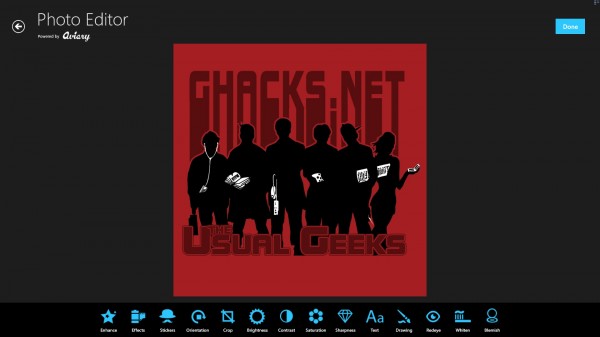
Photo Editor by Aviary

Paint is such a basic photo editor that most users look for a more powerful alternative almost immediately after installing a version of Windows. Photo Editor is probably the most versatile and powerful photo-editing app for Windows 8.

Once you have loaded an image into the application you are presented with a set of editing options. Available for selection are the usual tools you may expect to see in photo editors. These include options to crop the photo, add text to it, drawings, or to change its orientation.

The editor furthermore makes available a set of enhancements and effects that you can apply to the photo. From the ever present Instagram-like filtering options to funny stickers and enhancements that change the color scheme of the picture automatically.

Other Apps

Roman Empire (free version)

You play Rome and the Roman empire in this strategy game, from the humble beginnings in Italy to its rise to become the dominating power in Europe and Africa. The game itself uses a simple but working mechanic that you may know from games such as Civilization Wars or Phage Wars.

You command one or multiple cities that produce soldiers for you constantly. The size of the city determines how many soldiers it produces in a tick. Your task now is to conquer all other cities on a given map. This is done by dragging troops from your cities to attack neutral or enemy cities. You can only send half the troops out at any given time and need to factor that in before you do.

It is a game of resource management and strategic planning, and while it is not coming close to the likes of the Total Wars series, it is still a fun game to play.

7 Little Words

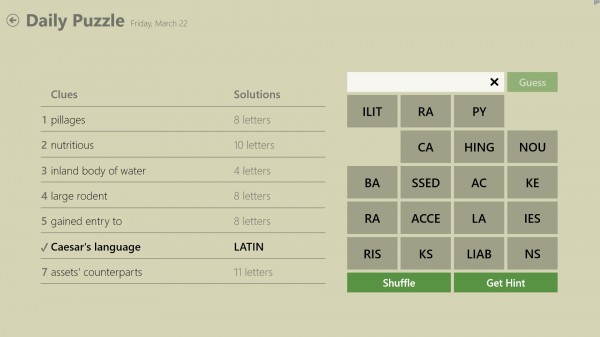
This puzzle app provides you with a new word puzzle every day. You need to find seven words that match clues that the app displays on its screen. It provides you with the letters of each word to make it a little bit easier for you, and character sets that you need to combine to create those words.

To give you an example. Caesar's language in 5 characters is Latin. To solve the puzzle, select the correct character sets that create Latin and hit the guess button afterwards.

The sets are removed from the game board and the clue is marked as solved.

Everyrep (free for a limited time)

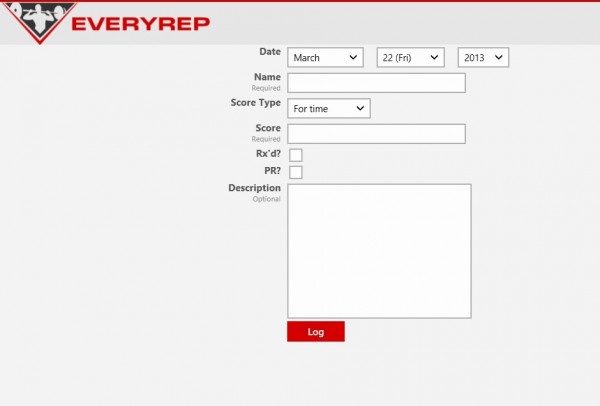
You can use this application to log your daily CrossFit workouts. It consists of a form that you need to fill out to add your latest workout to the database. You do need to add your score, score type, name, date of the workout and other information into the form. The application lets you track your workout progress over time.

It is a specialized application that only works for you if you are doing CrossFit workouts. You may use it for your own workouts though as long as you define the score properly.

The Smurfs Hide & Seek ($3.99)

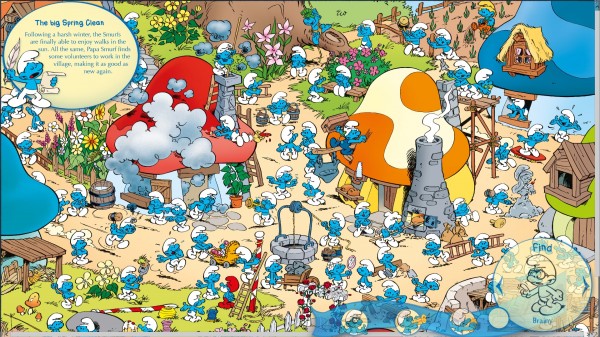
Your task in this game is to find smurfs or objects displayed in the lower part of the screen. All you have to do now is to carefully look at the screen until you find the character or object on it. A click confirms your finding and the next object or character in line will be displayed instead.

You can zoom in with the mouse wheel and scroll using the scrollbars or the mouse. The game features a total of 12 different scenes for you to explore. It is more of a game for children who love the Smurfs than it is a game for adults, as it is too simplistic to be entertaining for a longer period of time.

Meme Gallery

If you like Internet memes and the next big thing after Lolcatz, you are probably a regular on sites like Reddit, 4Chan or Know Your Meme.

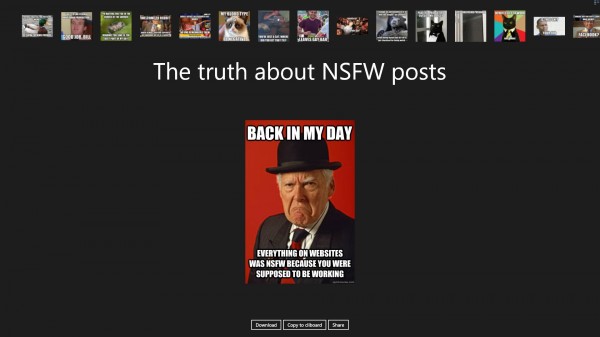
Meme Gallery brings those memes to Windows 8. Just start the app and browse all the latest memes in an endless scrolling list. You can download each image, copy it to the clipboard or share it directly using Windows 8's built-in sharing tool.

Volet

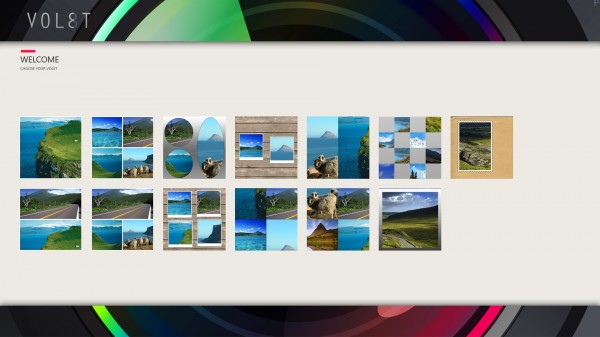
Volet is a popular photo app for Windows Phone that has now been ported to Windows 8. It enables you to create photo collages using one of the available templates that are presented to you on the start page of the application.

Just select the template you want to use and add photos to the respective fields it makes available. You can add basic effects to each photo that you select. This begins with the option to crop and ends with photo filters that you can apply to it. Add effects, stickers or other enhancing elements to the image, or use tools to remove red eyes or increase the brightness of the image.

Once you are done it is added to the collage. You repeat the process until you have added the maximum number of photos that the collage supports. Once done, you are free to add a caption and share the collage on Facebook, or to save it to your local system instead.

Windows 8 Handbook

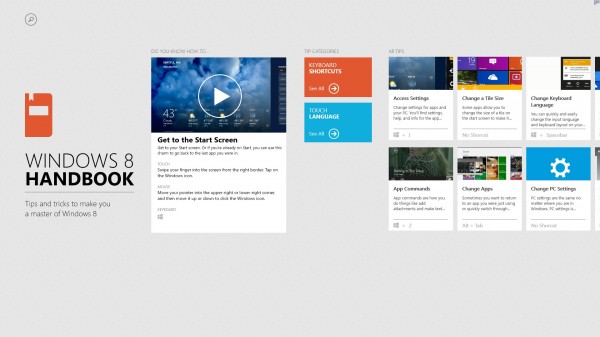
If you are new to Windows 8 you may have troubles finding your way around as quite a few things have changed in comparison to previous operating systems by Microsoft.

The handbook is a collection of tips and guides that you can use to understand what is new, and how to best work with the operating system. It offers short videos that help you with that, but also textual explanations that you can make use of to improve your workflow or understand key concepts of the operating system.

Web Image Viewer

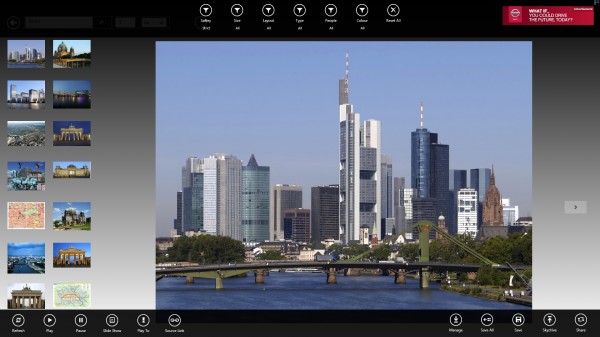
Web Image Viewer provides you with two options. You can use the app to search and browse images using Microsoft's Bing search engine, or use it to browse images on web pages.

The first feature makes available Bing's Image Search engine as an app. You enter a search term and wait for the results to be populated. The left side of the screen displays thumbnails that you can click or tap on to display them in large on the right.

A right-click displays -- many -- options that you can use for a variety of purpose. You find image filters at the top that you can use to only display specific image sizes or types. The lower half lets you save some or all images to the local system or SkyDrive, share them with contacts, or start a slide show mode to browse through images automatically.

Nearly the same options are available if you select the web page viewer instead. You do need to load a web address manually here though to start though. You can browse or use the saving and sharing options as well for these images.