Shared posts

06 Nov 23:00

A Field Guide To Ignoring Market Research

by Tom Webster
Charles Babbage's notebook at Wroughton museum

I recently spoke at the Vocus Demand Success conference (thanks for the invite, Geoff Livingston!) on the topic of consumer insights. Before I launched into my talk, however, I asked a very basic, yet provocative question: why are you here? No, I haven't been binging on Camus and Sartre again. Instead, I hoped to get a sense of what people expect to get when they go to a public presentation of market research.

I asked a similar question on Facebook, and got an altogether sensible answer from Chris Brogan, who replied that he wanted to know when he needed to conduct research, and when he could just go out, experiment, and possibly fail, without needing to do any market research.

Good question, Chris. Now here's your long distance dedication.

The answer I gave him on Facebook may have seemed flippant, but it wasn't--I think it was a pretty sound strategy, actually: if the cost of failure is low, easily bearable, or quickly recoverable, then you don't need me or my consumer insights brethren. Oh, sure, you could give us a call now and then. We miss your voice. But if the only thing you have to lose by pursuing an idea is a paycheck or two, or just your fear, then you don't need me.

The opposite is also true, of course: if the cost of failure is high in terms of time, treasure, or head count, it is incumbent upon you to invest some of that anticipated cost into doing a little market research.

Let me give you two quick examples. Yo, an app that essentially allows you to instantly ping a friend with a one "word" message ("Yo," natch) is not what you would call a slam dunk of an idea. In fact, Julien Smith notes that many great ideas are a mix of a good idea and a bad idea. Since most people won't work on the bad idea, there's a pretty wide lane to pursue it without competition. (He's had more great ideas than I have, so I trust his judgment on this matter. Go use Breather already!)

Yo basically replicates a feature Facebook deprecated long ago--the "poke"--and allows users to "YO" each other to their hearts' content, or until they go blind, whichever comes first. If Yo began their product development cycle with a market research study, what they probably would have gotten back is that most people don't have a great need to Yo each other. But a) you don't need "most" people to do anything to be successful, and b) it's hard for us to judge something we've never seen or used. But, more importantly, Yo took 8 hours to build, and was recently funded to the tune of one million dollars. I recently spent 8 hours building an Ikea armoire, and was funded to the tune of zero million dollars.

Yo didn't need any market research--in fact, I wouldn't have recommended it.

But here is another example: Path. If you are not familiar with Path, it started as a bit of a "velvet rope" social network--it was only on mobile, you couldn't post links, and it had a "friend" cap of 150. It was meant for a private social circle, and not to replicate Facebook or Twitter. Well, until this week, anyway. In the recently released Version 4 of Path, the company introduced a new messaging app called "Talk," which apparently we are going to want to use so much that it made sense to lift the 150-person friend cap, though they buried the lede a bit on that one in the release notes.

Now, I have been a Path user since the beginning, and I have a small 30-person circle on Path with whom I can occasionally be intemperate. (Just kidding. I am a well-regulated human.) Now, I do not claim that my collection of Pathogens is representative of anything, but I didn't see too much love for Path's changes in my circle. In fact, the reaction was so negative, that while I won't extrapolate that to the general population of Path users (I'd have to turn in my MRA card if I did that) it does beg--nay demand--asking the question: was this really what Path users wanted?

Now here is an example where the cost of failure is high. Path reportedly has at least 10 million users (though no one has a good sense of active users save Path itself.) Losing 10 million users is, well, a potentially costly risk. The thing is, I don't think Path needed to conduct a costly study to get some sense of that risk--all they needed to do was to release a Version 3.99 prior to version 4.0 that had ONE new feature: a short, one question survey that users had to click through to use the app. You'd only need to ask "How important to you is the fact that Path is capped at 150 users on a scale of 0-10" and count the 8s, 9s, and 10s. 

I don't think they did this with a representative population of Path users, or if they did, I missed it. All I know is that Path today is existentially different to the Path I signed up for, and I'm not sure it was a user-driven change. Time will tell. But in any case, Path represents a great example of an app that started with a low cost of failure and didn't need market research, and became one with a much greater cost of failure, that maybe could use some. It can be hard for a growing company to recognize that inflection point.

Would you recognize that point in your business?

      
15 Jul 16:20

How to Hire a Great Sales Person on Full Commission

by Eliot Burdett

Hiring  great sales people on full commission compensationIf you want to hire a great sales person on a full commission sales compensation plan or with a very low base, here’s the short answer on how you can: You can’t.

We get literally hundreds of requests from companies each year that want to hire sales reps on full commission.  The requests often sound something like these (all details have been modified):

  • Seeking a superstar sales person. We are a startup so need commission only, but right right person can easily achieve six-figures.
  • We need an experienced sales person, with strong contacts. Commission only with other incentives. 
  • Need commission only reps who can sell. 
  • Looking to expand our sales team – commission only, but payouts can be significant.
  • We need to hire 100% commission sales people that are hunters and can close sales on the initial visit.

I love the clarity on needs, and I wish hiring capable sales people was this easy, but think about it – why would someone who can sell work strictly on commission, where they assume all of the risk in building someone else’s business? Why would someone with a strong track record of sales performance join a company that makes no commitment or investment in the sales effort? Why would a superstar join a company that can’t afford to pay them a base salary? They wouldn’t. 

They wouldn’t because reliable sales people are a rare breed. They represent a small percentage of the total sales population and are in high demand, which consequently allows them to choose which employers they work for. And when they choose, they consistently choose employers that pay them well and set them up to succeed.

In fact there are only a few business sectors such as office products or retail sales where it is commonplace to attract talent by offering a full commission compensation plan, but even in those sectors, the best reps are constantly on the lookout for opportunities to migrate to better sectors where they will receive a more favourable return on their effort (we know – they call on our recruiters for help).

In most sectors, an employer that does not pay its sales people a premium over competitors, cannot expect to attract the best talent available and will more likely be building a sales team with under-performers that maybe wasting time, opportunities and money.

The bottom line is that if you want people who can sell, you will have to pay to attract them.

To your success!


Photo Credit: jDevaun via Compfight cc

The post How to Hire a Great Sales Person on Full Commission appeared first on Peak Sales Recruiting | Sales Recruiter.

26 Jun 15:10

7 Steps To Building A Social Business

by Sarah Goodall

7 Steps To Building A Social Business image houseBuilding a social business is much like building a house. Trust me. I know. As I write I have the diggers on-site laying the foundations for our Norwegian inspired home!

Last week I presented at the B2B Summit in London where over 400 marketers from all kinds of industries came together to share experiences and learn from each other. My presentation focused on building a social business from the inside out., the steps to follow and some of the challenges that might come along the way.

It’s fairly well-known that two thirds of the buying cycle is complete before a vendor is contacted and for every piece of content a vendor supplies to a B2B buyer, the buyer will find three other pieces themselves online. That coupled with the fact that content shared via employees can drive up to 8 x more engagement than content shared by a brand and trust in a regular employee now outweighs the trust buyers have in the company CEO…it’s no surprise that organisations are taking this shift to a social business model seriously.

Social media marketing has moved on. I would question whether the ‘marketing’ department will even exist in a couple of years time. Perhaps we’ll become the ‘Engagement Department’ focused on creating relevant content and engaging audiences in conversations. The linear lead funnel will disappear – it’s about personalised engagement on a massive scale and guess what? The back office marketing department cannot do this alone. They don’t have the bandwidth, expertise nor the experience to engage with prospective buyers wanting immediate answers.

The answer? A Social Business approach.

Here are my 7 steps to building a house…I mean a Social Business!

7 Steps To Building A Social Business image planning1 Get Planning Permission:  Be sure the organisation is ready for change.  Establish a social culture internally using tools like SAP Jam.  Work collaboratively and get Exec sponsorship to support.
 7 Steps To Building A Social Business image plan success1 Plan For Success & Get The Right Team On Board:  Get your architects, your builder and your planning officer on board at the start.  Find your social superstars (your catalysts of change) and your social wannabes.  Work together to establish business goals.  See my other post on who seems to be driving change.
 7 Steps To Building A Social Business image foundations1 Lay The Foundations:  Establish a social office up front.  One that listens, sets the social policy and guidelines, builds the infrastructure on which employees can be part of.  This department needs to focus on keywords, digital SEO and enablement.
 7 Steps To Building A Social Business image construction1 Begin Construction:  There’s a whole lot of work that goes on before you reach this stage so be ready.  The fun starts here.  Build a training program that engages employees.  Focus on building their personal brand.  Give the tools and support to help them do this.  It’s good to showcase the great talent you have working for your business so invest in them!
 7 Steps To Building A Social Business image materials1 Add Materials To Complete The Build:  There’s no point having a frame constructed if there are now windows, roof or walls.  After training comes content. Make it easy for employees to share your brand and non-brand content.  If the content is relevant, it will fly.  If it doesn’t fly, you need to check the quality!
 7 Steps To Building A Social Business image final fix1 Final Fixes:  Measure the social business impact.  Sure, the typical social measures of impressions, engagements and reach count but also consider other measures such as employee engagement and talent acquisition costs – you’ll be recruiting through referrals if you have a strong employee network!
 7 Steps To Building A Social Business image maintenance1 Ongoing Maintenance:  You don’t stop as soon as the house is build.  There’s always maintenance to be done.  Technology changes, new content arrives and regulations change.  You may also want to extend the model to include partner organisations or even customers!  Everyone is a potential brand ambassador

Building A Social Business From The Inside Out from Sarah Goodall

26 Jun 15:09

Make Every Word Matter (and Make Sure Your Buyer Personas Tell You How)

by Adele Revella

There’s a wonderful Mark Twain quote that goes like this “The difference between the almost right word and the right word is really a large matter—’tis the difference between the lightning-bug and the lightning.”

One of the most compelling aspects of buyer personas is their ability to identify the words that inspire buyers to take action. In a content marketing sea of buzzwords, jargon and “me too-ness”, marketers who can say something non-obvious and meaningful have a real competitive advantage.

Make Every Word Matter (and Make Sure Your Buyer Personas Tell You How) image island vacationHere’s an example. I recently arrived early for lunch with a business associate and noticed a Tommy Bahama store next door. Curious, I drifted in and immediately caught the eye of a salesperson who said, “I’ll be right with you, I’m with another guest right now.”

That’s brilliant. If you’re marketing a brand that wants to inspire buyers to spend north of $100 on a Hawaiian shirt, you need to change their mood. By training their sales people to say “guest” instead of “customer”, Tommy Bahama evokes the attitude of a carefree vacation where buyers might actually indulge in such an extravagance.

IBM is the source of a similar example. In 2002, when they bought Price Waterhouse Cooper’s consulting business, they made the deliberate decision to drop the term customers and start referring to clients. The logic? While customers engage in a single sales transaction, clients are involved in a much longer, strategic relationship.

A fascinating article on Salon last week talks about how language influences people’s perception of reality. Cognitive scientist Lena Boroditsky has conducted multiple experiments on words and the emotions they inspire. I thought this one was especially relevant:

“In a series of experiments by Boroditsky and Paul Thibodeau, test subjects were asked to read short paragraphs about rising crime rates in a fictional city and answer questions about the city. The researchers then assessed how people answered the questions based on whether crime was described as a beast or a virus. In one study, 71 percent of the participants called for more enforcement when they read crime described as a beast. When the metaphor was changed to virus, the number dropped to 54 percent.”

Can you imagine achieving a 17% improvement by changing just one word?

While these examples are simple in the retelling, they all began with something that isn’t the least bit easy — choosing the words that will fundamentally alter their audience’s experience. One of the best reasons to build buyer personas is to uncover the insights that clarify those words, and make it possible to rally internal stakeholders around that decision even if it challenges cherished opinions.

26 Jun 15:09

5 Ways GE Put Human Experience At The Center Of B2B Marketing

by Tony Zambito
5 Ways GE Put Human Experience At The Center Of B2B Marketing image 1 10 healthymagination feature image

Photo Credit: GE Healthcare

Over the course of the past few decades, B2B marketing has been perfecting the art of showcasing products or services. In the pre-Internet days, the focus was on the shiniest and brightest glossy brochure to make products or services look unbeatable. B2B companies resorted to showrooms and customer demonstration facilities. All in the hopes of making their products or services stand out from the pack. This is still happening today in the digital age.

Many of today’s B2B organizations still lead with the proverbial – “we are the leading provider of blah blah technology which enables companies to improve effectiveness and efficiencies as well as get a high return on their investment.” Where you begin can also determine where you end. Many companies still begin with the “leading provider” sentiment and it is a freefall from there to product-speak as well as business-speak oblivion. Websites and digital capabilities all designed to showcase products or services. These sites are replete with strong product imagery, product-speak, and business-speak.

The Shift To Human Experience

What is missing for companies still engaging in product-centric marketing is the connection to the human experience. For companies who have been in existence for several decades as a B2B organization, shifting away from product centricity is a radically new concept. While some have implemented content marketing efforts, they have done so to account for the new buying dynamics of researching and short-listing before direct sales interaction. However, an honest close look will find the content to be laden with product and business-speak.

What we are witnessing is a fundamental shift in how buyers and customers perceive experience. This is a shift I am witnessing from conducting qualitative direct interviews with customers and buyers over the last decade as part of my work in helping companies with buyer insights research and buyer personas. We are living in a new world of a digital economy, the digitization of all things, the consumerization of business, and higher expectations on the part of customers. All impacting not only how business customers make purchase decisions, but also a new element of emotional experience playing a greater role in why purchase decisions are made.

The Shift Is Hard

Making such a shift is very hard work. While it may sound easy or look easy on paper, it takes some doing. The shift to making the human experience the centerpiece of B2B marketing can be equally challenging for startups as well as companies with long histories. In either case, the product is or has been the centerpiece of their DNA.

One company who has been hard at work making this shift is GE. An organization rich in product innovation and technology, product-centric inertia is hard to halt and turn around. Here is a very powerful demonstration of how GE is bringing the human experience into the DNA of an organization:

Making The Shift

This Imagination At Work series of commercials by GE incorporates five important ways for companies to consider when making human experiences the centerpiece of their B2B marketing. These being:

Get out from your product world and into humanity. As this commercial demonstrates, GE went beyond its product world and even its business customer base. They went and understood the human emotions and experiences they touched.

Have human experiences serve as the foundation of compelling stories. Without understanding the human experience, companies are left to talk only about their products or services. Finding the human experiences means you will understand the compelling stories – naturally.

Share human experiences with the world. What GE does here is simple. They share the human experience with the world. No doubt, creating tears and overwhelming emotions for those cancer patient survivors and loved ones touched.

Share the human experiences internally. I do not know about you, but watching the video brought a welling up of tears. Just imagine, or in GE language – re-imagine, how it must have felt to be an employee who interacted with the cancer survivors visiting. Undoubtedly, emotional and renewed meaning to what they do.

Fulfill the human experience promise. What GE boldly attempts with this human-centered approach, as well as with other GE Healthcare Re-Imagine commercials, is to take a courageous step in fulfilling a promise to enhance the outcome of the human experience for all who touch it.

Connecting To The Human Experience

The new digital world we live in today is reshaping the concept of how people interact with the world. Professional lives and personal lives often carrying the same emotions. What we can count on is continual changes forthcoming in how human experiences are defined.

B2B marketing success, in the near future, will hinge on the ability to understand and connect to the human experience. This is a new frontier for B2B. One, however, which cannot be left unexplored.

26 Jun 15:09

B2B buyer behaviour

by Hugh Macfarlane
Change the sales stages in your CRM to reflect B2B buyer behaviour, rather than sales gates. Our latest research suggests this focus on B2B buyer behaviour has the potential to increase closure rate by 28%   In this blog, we will focus on just one chapter from our landmark 2014 report into alignment. Chapter 5 looks at the sort of performance uplift you should expect if you rename the stages in your CRM - and your marketing automation platform - to reflect buyer behavior and not vendor actions or gates.   We'll also show you how to get the whole report, for free, at the end of this video.    

read more

26 Jun 15:06

Influencer marketing

by Bryony Thomas

What is influencer marketing and how to use it?

Buying decisions, particularly high-value or complex ones, are not made in isolation.You need to know who your buyers are talking to, and get those people on side. You need to know who’s on their team, and get them on yours. That is how I define influencer marketing. In this post I’ll show how you can use it in practice by mapping third parties to the buying decision to plan your influencer marketing.

Why is influencer marketing important?

The source of a message is often as important as the message itself… The opinions of others are sought during a buying decision for two main reasons:

  • people may wish to shortcut the process by asking someone they think knows the subject well,
  • and secondly, they may look for reassurance that their decision is sound.

This is why you’ll hear marketers talk about including ‘influencers’ as part of your wider audience. It’s good advice. But, it’s such a broad term. Thinking about which specific people have what level of influence at each stage of the process allows you to communicate with them more precisely.

What’s interesting, and powerful in terms of your marketing, is to think about the different people buyers turn to at the different stages of their buying decision.

What you’ll typically find is that people cast the net wide in the early stages and then reduce down the people whose opinion they particularly value as they get closer to the purchase.

Watertight marketing influencer map

Who’s really on the buying team?

(NB. For some businesses your users might be a larger pool. For example, a large software implementation might be bought by a small buying team but used by hundreds of people on rollout. If this is the case in your business, your sketch for their team will flare out at the bottom to look a little like an ice cream sundae glass.)

In practice the extended buying team, i.e. the third parties whose opinion is sought, involved in a considered purchase might look like this:  

Influencers against buying decision

At the beginning a buyer might ask around without much selectivity. As the decision draws closer, they are likely to rely on sources they really trust to help with this decision. This is partly because there’s a limit to what can be reasonably asked of friends, family and colleagues in terms of the time they’ll give to helping with the decision. But, it’s also because the opinion of some people matters more than others.

Who needs to know what?

To be able to appropriately affect your buyers’ influencers, you need to identify who they are and map them against the decision making process. This allows you to focus your attention on key people, and to work out the specific types of information those people should be exposed to.

By noting the stage in the process at which they’re likely to be asked their opinion, you’ll now be able to map the most appropriate materials.  The point is that not everyone needs (or wants!) to know everything.

For example, at Awareness you simply need to be a name that comes to mind, but at Evaluation a referrer might be expected to have an idea of the other clients you work with. Here’s roughly what the different people need to know about you:

Influencer message mapWith the explosion in social media, it is now easier than ever to find your buyers’ extended team; for example:

  • You can find their colleagues on LinkedIn or similar sites.
  • You can see what groups they are a member of on LinkedIn.
  • You can see who they are following on Twitter, YouTube, G+, etc.
  • You can see material they’ve bookmarked, shared and favourited.

Having identified and categorised their team, you now need to go about getting them on yours. This is where networking and word of mouth really matters. It’s not just who your buyer is connected to that counts, but who they’re connected to, and so on.

CASE STUDY: Connect Assist: When Patrick Nash, Chief Executive of Connect Assist, was looking for expert advice on their marketing strategy, he decided to shortcut the process by asking someone he trusted: his chairman. However, his chairman couldn’t think of anyone. He, in turn, picked up the phone to a public relations professional he trusted. She said that advising on the wider marketing strategy wasn’t what she did, but to let her think about it. She logged onto LinkedIn and performed an ‘advanced search’ on the term ‘marketing strategy’ within 10km of her office. She looked at the websites of the people who came up, and enquired with a few of them and introduced the ones she felt was most appropriate to Patrick. Following submission of a proposal and a number of meetings, the company that was found via a search on LinkedIn won the business.

What this case study shows is that when it comes to social media, the people buying your stuff don’t necessarily need to be actively engaged in it themselves for it to have a powerful effect on their buying decision. This is particularly true in selling to Boards and to families. In the boardroom, it’s unlikely that the Chief Executive is going to be constantly plugged into Twitter or avidly consuming blog content. But, as the task to research a  given purchase is often passed down the line, it is increasingly likely that someone else that they ask is. However, it also demonstrates that in most circumstances putting all your eggs in an online basket probably won’t enable you to reach everyone you’d like to either.

It’s just as true in consumer decisions. In families, parents might not spend hours poring over review sites to choose their next family holiday – but a teenage child might well do. In my house, I certainly won’t spend time on a gadgetry forum before buying a new TV, but my husband wouldn’t think of buying electronics without doing so.

Go back to the last table, and now add an indication of their (on and offline) media consumption. This will help you to work out where else, beyond your buyer, you might need to be targetting your content and messaging to get picked up by the right people.

When asked who’s most important in all this, I always direct people to two key areas:

  • The internal salesperson.
  • Commerical Karma!

The internal salesperson

Of all of these third parties, people with the power of veto are arguably the most important. In many cases you will be one step removed from the all-important conversation with the critical third party.

That is, your buyer (not you) needs to convince and seek the approval of others to move forward with the decision. They need to become your salesperson. In a business setting, this might mean the finance director signing off on a proposal. In a family setting it might mean spousal agreement, as we saw in Leak #5 of the Thirteen Touchpoint Leaks.

You still have a role here, which is to equip your buyer to sell your ideas internally. When the objective is to get your buyer to convince others of the validity of their buying decision, it can be powerful to create marketing materials aimed specifically at the third party. And, if your budget is limited, reaching these critical third parties probably needs to be the focus of any influencer marketing.

Your Commercial Karma

Where you might create specific materials for people with a power of veto, it’s often non-marketing communication that informs the opinion of other third parties. Keeping the wider buying team in mind is a powerful reminder of why it’s important to treat people well in business. As we saw in Leak #11, nobody is nobody. Anyone you come into contact with could be an important influencer.

Think about:

  • Employees, unsuccessful job applicants, ex-employees.
  • Customers, ex-customers, people who enquired but didn’t buy.
  • Suppliers, ex-suppliers, companies that tendered for your business but didn’t get it.
  • Your competitors – or people in a similar industry.

How you, and all of the people and systems in your business, conduct themselves will become the footprint you leave. This will be happening whether you’re actively aware of it or not. Taking some time to consider, and therefore affect, the legacy of each interaction can help you to ensure that whomever your buyer turns to, they will have something good to say about you.

Over my last three articles, I’ve outlined the key elements of the Watertight Marketing Framework. We’ve looked and balancing emotion and logic in working out what to say. We then looked at finding the right tools and formats for these messages that earn you the right to somebody’s time. With this third element, you now that the ‘who’ of your plan. Put them altogether and you have a powerful marketing communications plan that supports every step of a buying decision.

Watertight MarketingThanks to Bryony Thomas for sharing her thoughts and opinions in this blog post. She is the best-selling Author and Founder of Watertight Marketing, and a no-nonsense marketer and business speaker, specialising in helping ambitious small businesses set things up. Her blog post is adapted from her 5-star book, Watertight Marketing, described as an entrepreneur’s step-by-step guide to putting a marketing operation in place that delivers long-term sales results. You can download a free sample chapter or connect with her on
LinkedInTwitterGoogle+ or Facebook.


26 Jun 15:06

How SEO and Inbound Marketing Can Grow Your B2B Marketing Performance

by Lee Odden

B2B SEO Inbound Marketing

Call it organic marketing, call it inbound marketing or even content marketing – the practice of creating useful information to generate demand and attract an audience of buyers vs. buying ads to push messages out to them is one of the highest impact, low cost approaches to digital marketing a business can take.

The practice of optimizing content for better search visibility goes hand in hand with the broader approach of inbound marketing. SEO best practices can be applied to content across the entire sales cycle to surface brand content during awareness, consideration and purchase behaviors as well as after the transaction to reinforce retention and advocacy goals.

While SEO has evolved along with the changes search engines continue to make, it’s still full of opportunities. In particular, is the practice of creating amazing content and media only to rely on paid amplification for exposure – ignoring the value that natural search brings to the visibility of content. That said…

The only thing worse than no SEO is “All SEO”

The hubris of only seeing online marketing opportunities through the eyes of search engine optimization creates situations where the mighty keyword takes precedence over customer engagement and conversions. Sure, ranking and referred organic traffic are the KPIs SEOs are most often held accountable to, but using SEO as the sole determinant for content inspiration and promotion is “limiting” to say the least.

Recently I had a chance to elaborate on this perspective with the folks at DGR in an interview about how B2B companies can better understand SEO and Inbound Marketing to boost the performance of their marketing. Here’s most of that exchange:

What are some of the best practices for SEO and Inbound Marketing? 

Like any marketing program, best practices inbound marketing and SEO start with objectives, an understanding of the target customer and a marketing plan with a tactical mix. Defining key performance indicators that track progress as well as metrics that will determine program success are also best practices.

Where a lot of marketers fail with inbound marketing efforts is to view content solely as a link building tactic for SEO. Or they see content as something that only matters for search rankings and not something that can pull customers through from awareness to consideration to purchase.

Inbound relies on content to attract, engage and convert new customers that are actively looking for solutions. Marketers that understand how customers discover information on the web can effectively plan content around topics buyers want information on. Keyword research around those topics will aid in the optimization of the content so it can be found through search.

Best practices SEO is a combination of technical readiness of a website, optimized content and links. Factors like page loading speed, authorship and structured data can improve different aspects of search marketing performance as well. Creating useful information that is optimized for the things buyers are looking for is another best practice. Actively promoting content will attract links from other websites and social networks, driving traffic and serving as signals that can be very powerful for search marketing visibility.

There are many other organic or inbound marketing best practices that range from publicity and media relations to leveraging social media and realtime content recommendation engines for content topics. And we can’t forget email marketing, marketing automation and conversion optimization.

What’s working well with SEO and Inbound Marketing?

Companies that get the blocking and tackling of technical SEO readiness and rich content (text, images, video and audio) plus active promotion to attract links have many more opportunities to refine their search marketing performance. Some of those opportunities include:

Integration of Content, SEO, Social Media and PR: Integrating SEO and inbound marketing efforts with media relations works well since established publications that cover a brand can send traffic and strong link signals that influence rankings.  Creating rich media content like videos, presentations, infographics and interactive tools that are useful and entertaining (and also optimized for keywords) can attract direct traffic, links and social shares that result in improved organic visibility.

Marketing Automation: When there is an active effort to create optimized and socialized content for the interests of specific customer segments, marketing automation software can be very effective for nurturing prospects through the buying cycle. Email communications directly with interested prospects that inform and inspire them to move from interest to transaction has worked very well for many companies, especially in the B2B space.

Brand Publishers: Businesses that take content seriously are becoming publishers in their own right and a robust mix of content design for specific customer segments can be a goldmine for an inbound marketing program. But it takes time to get that kind of momentum, so patience and an ongoing effort to optimize program performance is necessary. Insight from CRM analytics, conversion data, SEO keyword research, social media monitoring and real-time interactions with content can all inform the long and short term content planning for a very powerful inbound marketing program.

How can marketers improve the performance of their inbound campaigns? 

Any inbound program can be improved upon, depending on program goals and the ability to execute on a strategy. The first step is to view inbound as equivalent with overall marketing vs. a campaign with a start and stop. Inbound requires a long term commitment to content, promotion and analytics as well as an ongoing effort to optimize inbound marketing performance.

Understanding the questions customers need answered in order to buy is the most fundamental thing marketers can act on to improve the performance of their inbound campaigns. As my co-worker Alexis Hall has mentioned to me many times, “A shift from product focused content to customer needs focused content provides an amazing difference in marketing performance.” Answering customer questions is the most straightforward way to meet customer information needs.

A content plan that maps key questions along the buying cycle for each customer segment can be the roadmap for content that is optimized for search, socialized for networks and publicized for industry blogs and publications.  It’s often an inbound marketing improvement opportunity to revisit the data that informed each customer segment profile and persona, since customer communities can be quite dynamic. Adjusting for changes in customer preferences can result in improved content and inbound marketing performance.

By delivering content that’s actually useful to buyers (instead of how brands define useful) marketers can find substantial performance improvements.

What are some of the things B2B marketers need to consider as they plot their inbound and SEO strategies going forward?

For B2B marketers and longer sales cycles, content that fuels the buyer journey is important and distinctly different than B2C. Studies show that content preferences for B2B marketers can be different, requiring brands to conduct research, produce longer form content and both on and offline events. While B2B is often associated with boring white papers and case studies, the information in those content types is highly valuable for customer acquisition.

What B2B marketers need to consider is the packaging of their content to become both informative and entertaining, aka “infotainment”.  Competition for time and attention is fierce with the rise of content marketing, so brands need to tap into the creative and “human” side of B2B in order to stand out.

Also, many B2B buyers are committees, not sole individuals. That requires some understanding of the committee process and dynamic. You may have multiple personas to deal with and create content for, which is very different than implementing an inbound marketing program directed at a single persona.

What would you add as best practices for SEO and Inbound marketing?

Photo: Shutterstock


Email Newsletter Gain a competitive advantage by subscribing to the
TopRank® Online Marketing Newsletter.

© Online Marketing Blog - TopRank®, 2014. | How SEO and Inbound Marketing Can Grow Your B2B Marketing Performance | http://www.toprankblog.com

26 Jun 15:05

3 Ways a Content Marketing Outline Will Change Your Business

by Liz O'Neill

3 Ways a Content Marketing Outline Will Change Your Business image 3wayscontentmarketingoutline  1  400x600

At Kapost, we write a lot about how to build successful content marketing outlines and processes.

But it’s also important to take a step back from time to time and examine why outlining your content marketing strategy is necessary in the first place.

As a marketer, you’re under increasing pressure to drive revenue and leads for your business. If you don’t know how a process like a content marketing outline helps you achieve those revenue goals, you’re likely not going to be very invested in creating one at all.

What Is a Content Marketing Outline?

Before we dive into how a content marketing outline will help your business, let’s first define what it is.

A content marketing outline is your organization’s high-level content marketing roadmap. Stakeholders—such as the sales team, CEO, CMO, customer service representatives, and director of product marketing—help identify major content themes they’d like to focus on. This could be content that alleviates client pain points, or content that suits target buyer personas for specific sale stages. Then, it’s on the marketing team to brainstorm creative content campaigns that will address those themes but also maintain buyer-centricity.

Specifically, the content marketing outline identifies:

3 Ways a Content Marketing Outline Will Change Your Business

  • Key content themes your marketing team will address
  • Specific content pillars that will support those themes
  • Individual content assets that support the identified pillar but also serve the top, middle, and bottom of the funnel
  • Deadlines and rollout dates for content publication
  • People or creative teams responsible for each campaign

3 Ways a Content Marketing Outline Helps Your Business

1. Drives Traffic and Leads

“A content marketing outline ensures you’ll have content for the top, middle, and bottom of the funnel.”

A content marketing outline ensures you’ll have content for the top, middle, and bottom of the funnel every quarter of every year. That means that not only will you drive traffic with “engagement” pieces, but you’ll also provide more valuable, targeted content that ushers prospects toward purchase. And, because every piece of content is informed by the needs identified by internal stakeholders, each asset you create can be used in various departments and overarching strategy of your organization.

2. Promotes Collaboration

Collaborating on content across teams is one of the biggest challenges for marketers. While it’s easier to operate in a vacuum, there are many dangers to doing so, including mismanaged approval processes, multiple editorial calendars, and duplicate content. Establishing a content marketing outline brings together people across departments involved in creating, editing, and distributing content so they’re operating on the same schedule, toward the same goals.

3. Increases Efficiency

Content outlines enhance production efficiency significantly, too. Many B2B content marketers complain of hitting a “performance wall” when employing content marketing strategies. Things like complexities in management of content planning, production, approval, and distribution mar a business’s ability to conduct content marketing to the best of their abilities.

But even a simple content outline will aid in deconstructing this production obstacle. With a content outline, you won’t be bogged down with the process problems that plague disorganized content marketing teams and throw wrenches in campaign launches. Content marketing outlines help establish streamlined workflows, align key members of your content team, and ensure your content gets out the door on time.

It’s not always easy to implement new content marketing processes within your organization, but if you want to drive revenue with your content, it’s a prerequisite. Content marketing outlines are the first step to meeting your business goals with content.

26 Jun 15:05

The Pieces to a Holistic Content Marketing Strategy

by Emily VonSydow

Content marketing has moved from a nifty new buzzword to an established marketing strategy. It can accomplish many business and marketing goals, including:

  • Increased brand recognition
  • Better search quality
  • Attracting new clients
  • Earning positive word-of-mouth and references
  • Feeding other marketing channels such as social media, direct mail, email marketing and more
  • Driving traffic

Rand Fishkin of Moz summarizes it nicely in this video:

“[Content marketing makes] your website a hub, a destination beyond just the direct value that your business provides, so that you can earn referrals, word of mouth, traffic from search engines, from social media sites, from all the ways that links can be seen and shared on the web through inbound channels.”

Current situation

While so many B2B marketers understand the importance and the implementation, many are still wondering how it affects their bottom line. The most recent study by the Content Marketing Institute revealed the following:

The Pieces to a Holistic Content Marketing Strategy image Content marketing 600x205

It’s great to see the vast majority of B2B marketers are utilizing this content marketing, but what’s disappointing is so few are setting themselves up for long-term success with a documented strategy.

Oftentimes the trouble with creating a complete content marketing strategy is that it includes so many separate plans in order to be 100% effective. Different departments, budgets, buyer personas, sales cycles and tactics all play into content marketing.

In this article we’ll outline some of the most common tactics that can play a role in a holistic content marketing strategy.

Website

Content plays a critical role on a website. We’re not talking about blog posts and news updates (see more on that next), but well thought out web copy that explains your business and guides an individual through the decision making process. This means landing pages, calls to action, the navigation and more.

What you should be doing:

  • Evaluate your sitemap and determine if the hierarchy is accurately explaining your business.
  • Test different versions of a landing page headlines and body copy.
  • Create multiple calls to action for your website using varied content.

Blogging

Often the hub for many content marketing plans, truly effective blogs are providing their audience with useful information for their business. This means listening to your current customers, finding their pain points and offering solutions.

What you should be doing:

  • Researching issues and common problems in your industry to address.
  • Responding to commenters (both positive and negative!).
  • Repurposing blog posts for other content avenues (e.g. social media, video, eBooks, presentations, webinars, etc.) to support the sales process.
  • Ensuring your website backend can handle content growth and publishing.

SEO

Content marketing and SEO are best friends. SEO loves content because it provides opportunities for effective link building. And content marketing loves SEO because it’s a measurable outcome (domain authorities, page rankings, traffic, etc.). Though quality content is at times an afterthought in SEO (and vice versa), a truly holistic and successful content marketing strategy cannot happen without SEO.

What you should be doing:

  • When managing a blog, write with your SEO keywords in mind (without sounding like a robot).
  • Use SEO metrics such as domain authority and linking root domains to determine guest posting opportunities.
  • Measure the SEO performance of your competition such as backlinks and keyword ranking to shape future content.

Social Media

There are many opinions out there about what social media platform is right for B2B marketing. When addressing this component of your strategy determine the current performance of existing platforms, where your target audience is and your available staff to manage it.

What you should be doing:

  • Curating content from third party resources, influencers, vendors and partners to share on your platforms.
  • Finding influencers in your industry and engaging them with your content.
  • Redistributing blog posts as “snackable” information through quotes, data points, photos or short videos.
  • Exploring paid social media options when appropriate.

Email Marketing

Email marketing can play a role in every stage of the sales process, but its popularity among marketers makes it difficult to rise above the competing emails in a client’s email inbox. Similar to social media, existing content can feed your email marketing or be a standalone tactic.

What you should be doing:

  • Establishing a regular newsletter schedule (weekly, monthly, quarterly) to address “top of the funnel” leads.
  • Building unique email newsletter campaigns such as an educational series or special promotions geared toward stronger leads.
  • Segmenting your email lists based on stages in the sales process or client demographics.

Premium Content

We like to use the umbrella term of “premium content offers” to explain the variations of a traditional white paper. This could include eBooks, one sheets, guides, FAQs, infographics, case studies, presentations and more. The unifying characteristic is they’re a digital thought leadership piece used to educate an individual on a given topic.

What you should be doing:

  • Creating a variety of premium content that can address different levels of the sales process.
  • Enlisting the help of a graphic designer to create visually appealing content your audience wants to read (that means a Word document won’t fly here).
  • Optimizing your digital content offers for easy social media sharing.

Sales

In the end, this is the whole point of content marketing. To cast a wider net and build a more valuable list of qualified leads for a sales team. All the pieces above should receive input from the sales team.

What you should be doing:

  • Updating your buyer personas based on input from sales (what attracts, resonates and sells).
  • Providing sales with the tools to carry out their own content.
  • Collaborating with sales to determine the best content metrics to pull.

Take Away

If you’re in the 49% of marketers without an established plan, perhaps some of the tactics listed above you’re already utilizing but it’s going undocumented. Compile all your content channels and identify a core management team that creates, distributes and measures your content.

26 Jun 15:05

How to Get Your Content Featured in Top Technology Blogs

by Rachel Foster

How to Get Your Content Featured in Top Technology Blogs image 5874176 small 600x400Many B2B blogs look sad.

These niche blogs may not get a lot of traffic, comments or shares – even if they contain excellent content. If you oversee a B2B blog, it may sometimes seem like you’re publishing in a ghost town.

There are plenty of steps you can take to increase your blog’s traffic, comments and social shares. However, if you want to get your name in front of a larger audience, you should also consider guest posting for leading blogs in your industry.

Guest posting is an excellent way to display your expertise, get people talking about your content and bring leads to your website (from links in the guest posts or your social profiles). To help you expand your reach, I’ve put together the following dos and don’ts of pitching popular blogs:

Do your research.

Most popular blogs publish guest contributor guidelines. Read these before you pitch anything. They’ll give you suggestions for topics and style, as well as the name of the person to contact about your submission. Also make yourself familiar with the blog’s target audience before you pitch an article. If your pitch isn’t relevant, they won’t publish it.

Don’t make it all about you.

I recently received an email from someone who wanted to publish articles on my blog. She said that being published on my blog “would do wonders for my portfolio and give me an ideal platform to share my ideas with a large number of readers.” While that’s good for her, she didn’t say what my subscribers would gain from reading her articles. When you pitch a blog post, think about how it will benefit the blog’s readers. Does it relate to something timely that’s happening in their industry? Does it address a key business or technology problem that they are having? Let the editor know why you think the topic is important.

Do make sure it’s a fit.

At the same time, be sure to pitch blogs that your target audience reads. As your presence grows in the blogosphere, editors may reach out to you to contribute to their blogs. I was recently invited to pitch an extremely popular blog. While I thought it would be awesome to have my name on that blog, I decided not to go forward with the pitch, as our target audiences are different. I would rather write for blogs that focus on my target audience.

Don’t make it a sales pitch.

Many technology marketers reach out to bloggers when they’re promoting a new product. Some bloggers review the latest technologies and would welcome information about a new product. However, most blog editors don’t want a press release about your latest product. If you want to get published on these blogs, pitch topics that are educational and will help the blog’s subscribers gain insights into their biggest challenges.

Do reach out to your partners.

One way to get your content in front of your target audience is to do a blogging exchange with one of your technology partners. If you have a large enough readership, you can invite them to write for your blog, and you can write for theirs in return. If you have the same audience, it’s a win-win.

Don’t load your pitch with buzzwords.

Most technology marketers overuse words such as “innovative”, “robust” and “disruptive”. These words have been used so much that they no longer mean anything. Avoid them when pitching topics to technology blog editors.

And finally … just do it! What are you waiting for? Make a list of five blogs that you would like to pitch. Find out who the editors are, if they accept guest submissions and what topics they cover. Happy pitching!

26 Jun 15:05

Timeliness Matters: 3 Ways to Stay Ahead in Sales

by Amanda Maksymiw

Timeliness Matters: 3 Ways to Stay Ahead in Sales image timeliness resized 600Back in 2011, the Harvard Business Review educated us on exactly what timely manner meant. One hour. In fact, when companies reached out to prospects within an hour, they were seven times more like to qualify the lead. The Lead Management Study from InsideSales.com cites even more startling stats: “The odds of contacting a lead if called in 5 minutes versus 30 minutes drop 100 times. The odds of qualifying a lead if called in 5 minutes versus 30 minutes drop 21 times.

Simply put, whether prospecting a lead from an inbound program or from your website, sales needs to be proactive and follow up in a timely manner. Here are a few ideas to help sales reps get ahead of the clock.

Ensure Tight Alignment with Marketing

An issue with sales timeliness may be a symptom of poor alignment between marketing and sales organizations. If sales isn’t proactively engaging MQLs, it may stem from a disagreement on the definition of a qualified lead.

Many companies have SLAs in place ensuring that sales engages with marketing-generated leads in a certain timeframe along with defining different stages and processes. Shared goals, processes, definitions and metrics can help ensure that the right foundation is in place, so sales can stick to the game plan.

Pay Attention to Buying Signals

Companies are emitting various signals day in and day out. They are getting new funding, hiring new executives, expanding their offices, winning new patents and adopting new technologies. Staying on top of those changes would kill any opportunity of being timely. But staying on top of those changes can help reps become more relevant.

In fact, James Oldroyd of Sungkyunkwan University in the above HBR article cites one of main reasons sales reps fail to engage prospects within a timely fashion: many sales teams are “focused on generating their own leads rather than reacting quickly to customer-driven signs of interest.” Consider using a tool that identifies trigger events or an app that pulls internal and external data together in one view. Can’t swing new technology? Get scrappy and track the trends that matter most to your business. For example, watch for VC funding updates from your prospects by reading Forbes or PEHub.

Make It Relevant

Many companies use marketing automation to collect data about their prospects’ interactions – whitepaper downloads, page visits, video views, etc. – or digital body language. Before predictive analytics was really applied to marketing, tracking digital body language was the only way to monitor engagement and intent. With changes in the ways companies are buying new products and services, it’s clear that there is room for improvement in this area. According to CEB, up to 57 percent of the buying process occurs before a sales rep is engaged. SiriusDecisions estimates that the typical journey is nearly 70 percent complete by the time a sales rep is engaged.

A predictive lead scoring approach can help solve these problems. Predictive lead scoring works by taking all of the knowable data about a prospect or account to identify the most likely buyers based on intent, not just engagement. Since behavioral interest doesn’t equate with intent, traditional lead scoring only works half the time, prohibiting sales reps from being truly proactive. A predictive approach to lead scoring can help ensure that lead scores are always relevant, allowing sales to focus on what they should – proactively engaging the most lucrative leads and closing deals.

Timeliness Matters: 3 Ways to Stay Ahead in Sales image 7be7150d 780d 4acb 8d41 21f461e110711

26 Jun 15:04

7 Critical Steps to Create Marketing Content That Works – You Missing One?

by Steve Faber

Now that you’re ready to create marketing content, what steps do you take to ensure your content grabs the perfect potential customers and leads them straight to the open arms of your sales team? If your content’s done its job, they’ll follow the bouncing ball straight to sales, primed and ready to buy. It may take a while, though.

Consumers today, in either B2B or B2C environments, don’t wait for sales reps to reach them before starting down the buying decision path. They research and use content to decide or narrow down the field on their own first. Thank the Internet for the opportunity to hold so much sway over potential customers.

If you’re here, chances are you’ve bought in to the whole content marketing thing as a way to be part of their decision. It makes sense. When potential buyers investigate as part of their pre-buying decision making, they look for content with info that helps them. They will find someone’s. It may as well be yours.

When they do consume your content, does it lead them down the right path? How do you make sure?

First, remember this:

Content marketing is about more than simply the content and how much good information it contains. It’s also about:

  • How well it fits the intended audience
  • What you do with it before and after you publish to maximize distribution and get (the correct) eyeballs/ears on it.
  • Producing it in a form that maximizes value for your intended audience.

You may have discovered this already, but content marketing isn’t free. Content costs, there’s no way around it. It may be cost effective marketing, but like any organizational activity, it uses resources. Good content can be expensive.

Of course, creating content that doesn’t work costs even more. It’s not an isolated issue. Nearly half the 91% of B2B marketers claiming to use content marketing feel they are ineffective at it. Wow. How much was wasted on creating that content?

Ensure you’re not just letting precious resources fly out the window like so much aroma on a hot day. Create content that works, get your quarterly bonus, and grab a well-deserved vacation. Relax, it’s not that difficult, just follow some key steps.

If you’re just starting, here are the steps we’ve found to create effective marketing content and how to use them in your organization.

Maybe you’ve been creating content, but not getting the results you’d hoped for. Heads rolling yet? Let’s sew them back on. There are some key reasons your content may not be working, but you can fix them. If you’ve missed any of the steps below, including them will help set things right.

Content Marketing Step 1 – Define Measureable Goals and Objectives

What’s the mission? Where does your organization need the content to take it? Before firing up the content gun and spewing stuff everywhere,

7 Critical Steps to Create Marketing Content That Works – You Missing One? image Content Road s

What Are Your Specific Content Marketing Goals? You do know, don’t you??

know where it’s taking you, and what happens when you plant your flag on the beach.

Here in the Dark

The measureable aspect can’t be glossed over. I’ve tried. Not measuring doesn’t mean that your content isn’t good or effective. It means you don’t really know. Worse, even if you hit a home run, you won’t know how far the ball flew, where it landed, or how to make it fly farther next time.

So, What’s Important?

New subscribers? New subscribers per visitor? What about visitors to a specific web page? Maybe it’s social interaction: Tweets, favorites, plus ones, likes, blog comments, etc. (Ultimately, there’s a metric that’s the final arbiter. We’ll get there in a second. )

It depends. Doesn’t it always?

You’ll be measuring as your audience travels through the sales funnel. The content metric stages:

  1. Audience Acquisition – Did the content bring in visitors? You’re casting a net, did it catch anything? Who?
  2. Social sharing – Did they tell others and help distribution? Again, who?
  3. Lead Generation – Your content may have traveled far and wide, but did you get more leads directly attributable to the content? Indirectly?
  4. Sales – Did the leads from the content translate into real revenue? At the end of the quarter, it’s the most important. Does your content convert on whatever your goals are? Yes, it is sales’ responsibility to get contacts to write checks, but it’s content that brings in leads ready to grab their pen.

We’ve discovered the key is correlating metrics with a desired result. How does a good result help you reach your planed goals? Some metrics are important but they’re really just “feel good” stats. Pump up your statistics all you want, but great stats are no guarantee of future results.

Stats and results are quite different and many far brighter than me have confused the two. What’s the difference? Check out this post on plusyourbusiness.com for more on how the difference between statistics and goals can help you grow.

In the end, it comes down two things leads generated and conversion rate. How many leads did the content generate and what percentage of those leads turned into paying customers? Eyeballs (and ears) don’t pay the bills.

The $64,000 Question?

Who’s writing the checks and are they doing that in all or part because of the content? Use the right metrics to find out. Eventually it all comes down to one thing: ROI. Can you calculate it? Without the right measuring stick, it’ll be tough.

Using content specific metrics is as important as stage specific ones. For example, an email marketing campaign, will need a different set of numbers than you’d use for blog posts or white papers on slideshare.

Here’s a post at WELD2.com on email newsletter metrics:

2 – Create Buyer Personas

Content marketing is about 2 things: attracting and influencing. Who are you looking to attract and influence with your content? Paint a picture

7 Critical Steps to Create Marketing Content That Works – You Missing One? image Personas s

Who Are You Targeting – Exactly? Use buyer personas to ensure you create laser targeted content for your desired audience.

of them as individuals; we’re talking real people, not just their business roles.

That’s a buyer persona, and it defines your audience, so you know who the heck you’re creating for, and which of their needs it’s meeting.

Maybe you’re selling network security software to small and mid-sized organizations. Who the heck buys that stuff?? Who are the different decision makers and influencers that contribute to the buying decision?

In most cases it’s the IT manager, and possibly some others on the IT staff. The COO and facilities manager may have some input too, with the CFO likely wanting the numbers to pan out. Were do they influence the buying process? That’s important, yes, but here is the question that really sets the oil burning:

Who are those PEOPLE? Not just their positions in the organization, but what are their values and backgrounds? How do they think? What motivates them to buy?

Creating buyer personas to reflect that defines what you’ll need for content that brings in likely buyers.

Buyer Persona Questions

We use a few questions to help create buyer personas.

Ask the basics first:

Age, Sex, Education, Geographic Location, Family Situation (Married/Single/how many kids)

Next, what makes them tick?

Values, Fears, Political Affiliation, Goals, Dreams, Activities, Interests

Finally, why do they buy, and for whom?

Business Role (for B2B), Buying Process Stage, User Stage, Key Problem(s) Solving With Purchase

You could do a whole post on the ins and outs of creating buyer personas. Hey, there’s a ton of info here already. Thankfully, Erin Everhart did a killer post on creating buyer personas over on Search Engine Watch.

3 – Build Your Content Plan

Planning rears its ugly head again. Joe Pulizzi at Content Marketing Institute publishes a study every year. It’s almost required reading for effective content marketers. One of their key findings for 2014 is that marketers who have a documented strategic plan are 6 times more likely to taste success as those who don’t.

Don’t yet have a CM plan? Here’s how to create one:

First, what buyer stage is the content for? We’ve (and many others) discovered different content is most effective at various stages of the decision making process. Where your audience is in the process gives you clues about what content types and subject matter will be most effective.

For example, in the IT example above, decision makers will first determine if what they need, then move on to nail down their exact product requirements. From there, it’s a short hop to determining which products are in the market and of those, which meet their needs.

If you’ve made it that far, you’re on their short list. It’s whittle down time, when one solution rises to he top. At that stage, it’s time to get all decision makers on the same page. For example, the CFO, CEO, and COO may all have to sign off on a major capital investment at some point, in addition to gaining IT manager and/or CTO approval.

Content plays a major role in gaining the other decision makers’ approval. For yours to be effective here, it must answer the following:

  • What’s the content doing and why is it needed? If it’s for attracting the right audience to your funnel, what are they looking for at this stage of the buying process?
  • How is it influencing the influencers?

Buying Process Content Stages

Early Stage Content

Early stage content is used to bring in prospects, build trust, and position your organization and solutions. Audiences here are after content that supports availability, need assessment, solution efficacy determination, and technology validation. Basically – What’s new, what’s out there now, do/will we need any of it, does it work like it’s supposed to, is there something better coming soon?

In our IT security software example, what content to meets early buying stage needs?

Decision makers in the early stage will likely look at:

  • Technology Feature Articles
  • Technology News
  • Industry Leader Interviews
  • Reviews
  • Case Studies
  • White Papers

Middle Stage Content

Next, audiences move to the what/who stage of the decision making process. The know they need a solution and what kind of solution they’re looking for. They’re still in the dark on exactly who will provide it and which product is the best fit. Your content helps them nail it down.

  • Reviews
  • Case Studies
  • White Papers
  • Design drawings and diagrams
  • Company Executive, Product Manager, and Engineering Team Leader Interviews
  • Product Info Sheets and Brochures

Final Stage Content – It’s Go Time!

Thanks to middle stage content, the product is decided. The final stage requires buy in and sign off from all company decision makers. Imagine you’re on the IT team that’s looking to purchase the new security software. How can you support your decision with those within you organization?

What do you need to help make your case to them?

Example: You may have to sell the CFO on the ROI, so having content to support your case in the form of research and white papers that detail how your proposed solution will deliver a real return are vital.

If you’re a vendor who’s using content marketing, have this kind of content ready to go. If you’re selling within your organization, look to the vendor for help developing it, if need be.

See No Evil, But Watch Engagement Climb

It’s been proven ad infinitum that visual elements boost content engagement and effectiveness. Photos, graphics, and video work wonders. People love them, but it goes deeper. Visuals communicate some ideas faster and better than the printed word ever could. Moreover, some folks are visual learners. They absorb visual content more easily than other mediums. Help them learn yours.

It’s as easy as A,B,C….

A – Engagement is a goal for nearly all organizations.

B – Visuals kick about everything else to the curb for engaging visitors.

C – Include images and video to boost engagement.

See how easy that is? This infographic from training firm Boot Camp Digital (http://www.mediabistro.com/alltwitter/visual-social-marketing_b37628) has some compelling stats on visuals and social media that should convince you fence sitters.

An easy way to get the kind of snappy visuals people love to share and engage with is a new start up; Canva. I recently discovered it, thanks to social sharing (See, it works). Guy Kawasaki is a key player, so I’m a fan from the get go.

For those without a high end graphics department or can’t wait for them, it’s the ticket. We use it… a lot. You’ll quickly and easily create all kinds of graphics. They have optimized templates for myriad social graphics, the different social headers and backgrounds, blog images, and more. The price ranges from free to damn cheap.

4 – Develop an Editorial Calendar

When you determine what content you need at all buying process stages, it’s time to create an editorial calendar. We’ve found them

7 Critical Steps to Create Marketing Content That Works – You Missing One? image Editorial Calendar s

Editorial Calendars – Schedule for Success…..

indispensable for making sure the proper content is available when needed. A calendar also acts as an overview to help spot holes in your schedule. You’ll be able to more effectively allocate resources, plan production, assign vendors, internal creators or production teams content responsibility. It saves those “Crap, I need this by Friday” emails to your team…. on Wednesday.

They’re easy to create. Simply map out the content titles you’ll need and when in your plan they fit. Put each on the editorial calendar for publication the day it fits best with your plan’s objectives.

Powerful, Free and Flexible…

A simple spreadsheet works well for editorial calendars, especially if you’re running solo. If your team is larger than you and that PBnJ you had for lunch, leveraging the cloud is a big plus. Google Docs is an Ed calendar creation favorite. A Google Docs spreadsheet ensures many team members can collaborate, and view it when necessary. It’s powerful, free and flexible; 3 words near and dear to my heart!

If you’re so inclined, there are specialized tools for editorial calendar use.

Kapost is one of the most popular. It’s a really good fit for larger orgs that pump out high content volumes. If you’re starting smaller, Kapost is still an excellent choice, but maybe jumping onto Hubspot’s bandwagon is more your speed, not to say the orange team can’t work great for larger business as well. They do have a popular, free EC template though. Be advised – it’s based on an Excel spreadsheet, so it’s not the best for collaboration with other team members.

Should you use one for social media content? Sure, it’s a great idea that ensures your social media activity is aligned with your larger content marketing goals. Social media is a little more fluid, due to it’s temporal nature. You’ll end up augmenting your calendar with timely events that interest your audience.

5 – Publish and Distribute

TIP: POC – Platform Optimize Content.

There are more mobile visitors than ever, so ensure it looks good, and works properly on any likely screens with eyeballs attached. That could be

7 Critical Steps to Create Marketing Content That Works – You Missing One? image Content Distribution s

Great content just isn’t without appropriate distribution and promotion. Enough of the right people won’t see it.

anything from a 24” Mac to a Kindle or iPhone 3. These days, it may also be the new 84in flat screen in the conference room or the VP of Sales’ home theater. Thank smart TVs, Chromecast, and Apple TV for that last one. Analytics will help you refine this as your content gets visitors, and you see what they’re consuming with. You’ll likely have historical data from similar projects and posts to help here, too.

What channels to distribute your content? Where you publish and distribute is likely a function of :

  • The content’s role in your content marketing plan
  • The content modality
  • Your market
  • Your target audience

Typically, distribution extends to one or more of the following:

  • Your company blog
  • Key team members’ personal blogs, if applicable
  • Social media channels – GooglePlus, LinkedIn (especially the new publisher platform), Twitter, Facebook, etc
  • Document sharing sites – Slideshare, Scribd, DocStoc,etc…
  • Trade journals / magazines
  • Video sharing sites – YouTube, Vimeo, Vine, Daily Motion, Instagram, etc…
  • Email – Not dead, maybe more powerful than ever!
  • Your staff – They can be some of your biggest evangelists; and should be.

Use Leverage to Move The Big Rock

Most organizations report that their biggest content marketing is creating enough good content, never mind the great stuff. Leverage is a powerful ally that can help. It’s a key success principle and can be a big key to content marketing success, too.

A powerful way to use leverage is re-purposing existing content. Here are some re-purposing routes we’ve found effective:

  • Turn a blog post into a pod cast or video script, or go the reverse.
  • Use a case study as the basis for a blog post.
  • Syndicate a blog post as an article to a popular trade journal or e-zine serving your audience.
  • Turn a blog post into the basis for an infographic.
  • However you do it, stretch your resources to the limit, but get more for your money.

6 – Promote

*Most Important Promotional Tip in This Post: Get Influencers On Board Early.

In some ways, this should be step 5. Why? To maximize effectiveness, a little upfront legwork is required. This is where relationship building is key. You can’t just reach out to someone out of the blue and ask them to participate. They may still agree, but your chances zoom to the stars if you’ve:

  • Helped them before
  • Posted content on their blog (or they on yours)
  • Consistently interacted with them on social networks
  • Worked with them in some way

If the content is a collaborative effort with you and an influencer, you’re already rounding second. They’ll likely be on board with helping the social media push, reaching out to their contacts, and linking to your content from their media platforms. After all, it’s theirs, too.

  • Promote on channels where it makes sense. Slideshare for white papers and presentations.
  • Promotion Trough Social Sharing – Super Effective, Duh!!
  • A great thing about social; it’s user generated promotion.
  • Share B2B focused content on LinkedIn, and post in relevant LI groups. Find key influencers in your market and where they hang out on LI. That’ where you want to be, too. Join the same groups. If nothing else, you can learn a lot. Contribute value and get noticed. That way, when you share to groups you can get more traction, and maybe even ask for help (and get it).

CAUTION: LinkedIn has been getting pissy lately with multiple group postings. Whether or not that’s from LI itself, or group mods doesn’t matter. It’s the little blue prohibition box that pops up on your profile, informing you you’ve been banned that’s important.

Problem – their social sharing button makes it super easy to share content to multiple groups simultaneously. If it’s highly targeted to those groups and adds value it makes sense to share that way…. except that someone, somewhere decided that’s spamming and they don’t like it.

According to those who’ve been caught in the trap, posting to multiple groups simultaneously increases the likelihood you’ll end up in “SWAM” never-never land and be unable to post anywhere. Be selective, and post in one group at a time, choosing the most targeted and engaged first.

If you’ve developed a good relationship with bloggers in your market, find a very recent, relevant post on their blog that your content adds value to and link to it in a comment.

Comment Strategy Caveats:

  • Have a good relationship with the blog owner or editor first
  • When commenting on social platforms or blogs, both your comment and linked content must add significant value to the post
  • Blogs must allow linking in their comments. Many no longer do. It’s not all bad though. You’re not commenting for SEO, but for traffic. Blogs have largely migrated to social logins, so you’ll gain interaction and exposure there.
  • Syndicate your content to highly relevant outlets.

7 – Follow Up

Okay, you’ve made it through the first 6 steps with the resilience of Ed Hillary heading to 29,000 feet. Do you just sit back and wait for your masterpiece(s) to do their work? Hardly! There’s still more to be done. You want to wring every last drop of productivity form your content?

Follow up; this step is neglected by many content marketers, but can separate you from the pack if you’re not one of them. Come to think of it, follow up is where many otherwise excellent business people miss the boat in other areas, too. Use that to your advantage.

Here are several ways to supercharge your content with follow up after it’s flown the coop. Your content’s timeliness affects how you follow up. Time sensitive content’s usefulness decreases with time after the publish date; so do your opportunities for maximizing distribution.

Reshare

This is easy and powerful, two hallmarks of an excellent action. Use with care to avoid backlash, though. As with so many things in life, timing is everything. Twitter is your first target. Think about it. Sharing just once on Twitter just about guarantees you’ll miss most of your followers. Unless they’re searching for you or one of your Tweet subjects, nearly anyone follows far too many people on Twitter to see everything… or anything, for that matter. If you’re following even 5,000 people, your time line makes a stock ticker look like a slow boat to China. There’s no way you’ll see everything in there.

Use CircleCount.com to check for influencers on Google+ Find who (or whose audience) could benefit from your content. Check if they’ll use it as a guest post or share it to their social circles. Again, it’s part of a process. Don’t just ask them. Build a relationship first, then you’ll be ready.

Engage Quickly

Reply to commenters and social media sharers as soon as possible after they interact with your content. That builds the relationship, keeps them engaged, and stimulates conversation. Depending on your subject matter, it’s not all that may be stimulated. When it makes sense, encourage them to connect with your content on their platforms. Doing so requires a velvet touch, however.

Syndicate

Look for syndication opportunities on e-zines and blogs. For business oriented material, Business2Community can offer greater reach and social activity. I’ve had excellent results syndicating material there. As an added bonus, it’s from your RSS feed, so it’s automatic.

Email the appropriate list segments and let them know your content is waiting. As always, use a compelling subject line to ensure your email has a fair shot at getting opened. Many don’t. Relevance is key to success here. Of course, this applies only if you’ve actually built a targeted email list. All the more reason for jumping on that ASAP if you haven’t already.

The Same Old 7 (Content Marketing Steps to Success)

Despite all the recent hype, new buzzwords, and focus, content marketing is not new. Far from it. It’s been around for well over 100 years. That doesn’t mean it’s stayed the same, though. Few things have. That being said, many of these same 7 steps have been just as important the entire time. If your content marketing efforts never got off the ground, or stalled before they really took flight, a renewed focus on the 7 steps can turn things around.

Have you been using content marketing in your organization? Has it been effective? Has it worked as well as you’d like? If not, what do you think you’re missing?

26 Jun 15:04

Sales and Marketing Plans Need to be Aligned

by Christopher Ryan

Sales and Marketing Plans Need to be Aligned image marketing sales alignment

As a B2B marketing outsource provider, my team and I usually work very closely with the sales department at our client companies. The goal is to achieve effective alignment between what the marketing and sales teams are doing: driving to a common goal and reaching agreed-upon revenue targets. In the best-case scenario, we get to review and provide input for the sales plan. At the least, we want to understand the sales model so that we can formulate a marketing plan of attack that best supports the sales plan.

As an example of why this is important, imagine two very different sales models: In the first example, awareness is created and generated leads are fed to a business development function. In this scenario, direct sales reps will only see leads that have been pre-qualified, usually by a business development rep (BDR) who has personally qualified inquirers by asking a series of questions about budget, authority, timing and so forth. To best support this type of sales model, we want to drive as much activity into the top of the funnel as possible, creating the critical mass of inquiries needed to achieve the target number of qualified leads that have passed through the qualification process.

Let’s now look at the second sales model and how we align it with the marketing plan. If an organization utilizes a direct sales force, but provides no pre-qualification function (e.g. no BDRs), our focus in the marketing plan will be more on quality than quantity. This is true because we know that in most B2B scenarios, somewhere between 10 and 15 percent of all inquiries will pass the qualification filter. This means that sales reps will talk to 8.5 to 9 suspects before reaching one qualified prospect. This imbalance leads to two negative consequences. First, the reps fail to call all the suspects, finding reasons to disqualify them before making the calls. Second, reps get busy chasing their hot prospects and neglect to make the qualification calls in a timely manner. At some point, slow follow-up is almost as bad as no follow-up. If you want to see the impact of slow lead response, read my blog post on this subject.

In this type of sales model, we purposefully back off the quantity goal and align our marketing plan to deliver leads that are more qualified. Reps that discover that one out of every three or four suspects are qualified. They are then more likely to make the qualification calls and optimize their time. One of the easiest ways to produce quality is to require suspects to provide more data about themselves on the web form, thus pre-qualifying themselves. Each additional piece of data you ask for will reduce the number of responses, but will also drive up average lead quality.

These are just two sales model examples. When you include hybrids, there are dozens of possibilities. And every sales model will require a marketing plan that is tightly aligned. If you have a gap between sales and marketing, it’s best to address this quickly, especially by creating a service level agreement between the two departments.

26 Jun 15:04

Sales and Marketing Working Together

by David Meerman Scott

Sales and Marketing Working Together image 28cfc26d 1c73 475b 800d 7633242defb1 728 600x398Web content drives both sales and marketing success.

But it is essential that we take just a little time to look at how the two functions differ. By making certain we understand the difference, we can close the gap between marketing and sales and grow business faster.

Marketing generates attention of the many people who make up a buyer persona, whereas sales communicates with one potential customer at a time, putting the buying process into context.

Reaching Many People

It is the job of marketers to understand buyer personas—essentially groups of buyers—and communicate to these groups in a one-to-many approach. Marketers are experts at communicating to many people, and typically the potential customers they reach are not yet ready to have a sales discussion.

The marketing team captures the attention of a group of buyers and drives those people into and through the sales process. The content generated by the marketers—blogs, YouTube videos, infographics, e-books, webinars, and the like—can influence large numbers of people. Done well, with a deep understanding of buyer personas based on research, this content generates sales leads and culminates in the buying process.

Influencing One Person at a Time

The role of salespeople is completely different because they influence one buyer at a time when the buyers are much closer to making the buying decision. While marketers need to be experts in persuading an audience of many, salespeople excel in persuading the individual buyers. They add context to the company’s expertise, products, and services. Through them, the marketers’ content fulfills its potential at the precise moment the buyer needs it.

When the two functions work together, business grows!

Image via Shutterstock

26 Jun 15:03

4 Tips for Selling to High Level Executives

by Satyam Verma

Searching for a better way to sell

It’s easy to get discouraged with the lack of response when trying to connect with executive level contacts. Understanding how they function and what catches their eye is essential in successfully landing an in-person meeting or even just getting them on the phone.

In most sales scenarios, the process starts with targeting low to mid level employees — most of whom aren’t decision makers – hoping that they relay your message to the top and do it accurately. Using a bottom-up approach is a multi-step system that usually leads to prolonged games of phone tag, inaccurate or secondhand information and, more often then not, your original sales pitch or value proposition being destroyed as it moves up the rungs to the eventual decision maker.

So how can we simply this process and make it more efficient? While it might not always be appropriate, targeting high level executives can lead to closing sales quicker. It makes sense, right? The people making these decisions should be the same people who are getting the all the facts, and in this case, they should be getting them directly from you.

The top-down approach has great advantages, but there are a few things to consider that will affect how you approach these top-level executives. Below, I’ve broken down some important steps to take in order to ensure you’re ready when you do engage a decision maker.

4 Tips for Selling to High Level Executives image 6a00e54ee3905b883301a73d7d1cc0970d 800wi 600x400

1. Choose the right person to connect with

The Harvard Business Review suggests that, when targeting executives, you make sure to target those who “stand to gain or lose the most from your sales opportunity.” Clearly, it isn’t as straightforward as googling who the right person for the situation is. Start by doing some preliminary research about the company and its history. Check to see if there is any press coverage or publications that talk about the company, and who is involved with it. If you know anyone at the organization, ask for their input or try to connect with some at a lower level, and ask who the right person to talk to would be. Any sort of ‘insider information’ can be invaluable in terms of understanding the company’s needs and how to approach them. If you are able to successfully connect with someone who would feel a direct effect from your product or service, it will be much easier to gain their attention and can even lead to having a supporter within the organization — which greatly improves your chances of closing.

Lastly, don’t be shy! If someone in your network is connected with a target of yours, ask for the referral. Colleen Francis, Found and President of Engage Selling Solutions, says that leads coming from a referral are twice as likely to result in a sale as opposed to un-referred leads.

2. Get on their radar early in the process

A study conducted in association with WordPress says that 90% of executives check their email daily, with 65% using LinkedIn and 55% using Facebook regularly. This means that you must look and be prepared on all social sites. When you are targeting senior level decision makers, you don’t get a second chance. Make sure your LinkedIn and other social profiles accurately reflect you and your product. Sending a message to someone via LinkedIn can sometimes be more effective as they are able to see what you do and who you are involved with. Also, if you plan to send an email, the best time to send it is between 8 and 3pm.

3. Know what they want and how you can help them

Do not get on the phone with a decision maker if you plan on asking them what they are looking for and how you can help them! Make sure you know about the company’s needs and background, and have a clear, concise plan on what you can bring to the table. Executives don’t have the time, and will not entertain those who are unprepared. You are much more likely to close the sale if you understand their business and the challenges they face.

4 Tips for Selling to High Level Executives image wnd 3436012ddd25a84c4ba08f0f0b800711 600x452

You can do better than this.

At this point, you may be asking — how you are supposed to know what a business wants or needs? Unfortunately, there is no simple or straightforward answer. Leverage connections you may have with the company to get information. Speak to others who may be in the same industry or market to see what challenges they face. Find credible sources that address your target company’s industry and what’s going on in it. The most powerful information, which will not only guide your strategy but also help support your proposed solution, are cold, hard facts. Executives love seeing numbers. They can justify spending money when they can see how it will impact them, as opposed to just trusting you or a “gut-feeling.” Always be prepared with statistics, case studies, success stories, and any other credible information that supports your solution.

4. Get Straight to the Point

Executives don’t want to deal with all the minor details. That’s what they have the rest of their team for. Forget about the details and focus on the payoff – cost/money savings or improved services. If you can’t get this point across in less than 1 minute, you might as well stop right now.

Doing your research and setting a meeting is only the first leg of the process. As long as you directly address their needs and provide an effective and efficient solution, though, any executive will respond positively. If you keep it concise and drive value, you will be closing more high-dollar sales faster than you ever have.

26 Jun 15:03

3 Ways to Build a Human Brand

by Mitch Causey

What contributes to a human brand?

When I wake up each day, I get to help build a disruptive, human brand. For that, I consider myself exceptionally blessed.

I work at Lesson.ly, the easy training software company. Since my first conversation with our CEO, Max Yoder, I knew I was in for a ride. So I took the chance, I made the leap, and I joined the team.

On my first day, Max said, “I want to build a company that every employee will fight to work for, because that’s what they deserve.”

This sounded nice to me, but I didn’t immediately put a lot of stock into it. At that point in my life, I had experienced some fairly stagnant corporate environments, and I’d heard similar aspirations from people with a lot more years under their belt than Max, all of whom who had failed to achieve stellar corporate cultures and/or strong employee-retention rates.

I worried that, like those before him, Max’s good intentions would fall flat.

I am so glad I was wrong.

Lesson.ly is an extraordinary place to work. We all care. We all fight to work here.

And, after giving it some thought, I think I know why that is: I think it has to do with the fact that we don’t believe in the traditional, dehumanizing, financially-focused business culture. With the next three points, I will do my best to illustrate how.

1. Human Leadership

Lesson.ly’s leadership inspires us to be human.

Our board and investor group are all humble, not condescending; they have confidence and trust in us; and they are completely approachable. They help us with the big picture and they’re not too proud/busy/respected to dive into the weeds with us; people like that deserve applause, and I feel fortunate to have them as role models.

Also, it’s impossible to write this post without mentioning Max Yoder again. He is quite possibly the most human person on earth. His love for people oozes out of every pore as he drives our culture to the perfect balance of autonomy and accountability. We all get up every morning, ready to absolutely crush our jobs, knowing that Max has confidence in us to do so, and also knowing that if we fail, he is there to help up us get back up.

How to repeat:

  • Treat your employees how they want to be treated
  • Use Max’s method: Hire smart, conscientious people who are self aware; then, find out how your company can give them the life they’ve always wanted
  • Trust more

2. Human Communication

We communicate like fun-loving, passionate, rule-bending, inside-joke-having, real-life-living humans.

Whether we’re talking to each other on Voxer, discussing an important topic as a group in Flowdock, or brainstorming in person, we communicate with a mutual, noncompetitive respect. We are all in this battle together, fighting against outdated, high-walled, inefficient training software and processes. In this war, there is no room for caddy politics or self-importance. We are a community, a unified front, not just a groups of I’s. Culture doesn’t get much more human than that.

If you have visited our blog or received an email from us, you know that we don’t draw a line between internal and external communication with regard to being human. What you see on the outside is what you get on the inside. We make a conscious effort to make our humanity evident in every external interaction from a cold outbound sales call to the warmest meeting with a referral.

A few tangibles:

  • Keep your communication positive
  • Use Max’s catchphrase: “We will figure this out!”
  • Find the perfect animated gifs for every situation, and keep them handy

3. Human Product

Our product is built by humans and made for humans. The core job of our product is to help one or more humans give other humans the information and know-how they need to grow and thrive in their jobs.

The best part: our product actually does these things—that is, it works! I’ve helped a lot of companies sell stuff that I may or may not have cared about or believed in at all. This is not the case with Lesson.ly. When you use Lesson.ly, it just works. It solves our clients problems. Our days are not filled with folks who feel they’ve been cheated. In fact, we spend more time joking with our clients than we do troubleshooting, all because our product just works.

Getting to this point was not a fluke. The reason Lesson.ly just works is because we didn’t just throw something together for a quick buck. The original team talked to humans to find out what their problems were; then, they slowly but smartly built a product to fix those problems. And we didn’t stop there. Every single day, we seek out feedback from our human customers to continually improve our offerings.

Humanize your product:

  • Ask, then act
  • After you act, ask again; then, again
  • Focus on features that help; outlaw vanity features and nice-to-haves

Final Thoughts

You might have noticed that this post focuses solely on internal factors. This kind of behavior is strange for a marketer like me. Most marketers would focus on external logos, ads, and market metrics in a post about branding. I hope you can see now why this is: in Lesson.ly’s case, what happens behind the curtain is what makes the difference.

Since we have such a strong foundation inside, our organization’s culture, our autonomy, our humanness is evident to everyone who connects with us. That’s what people seek out, and that’s what people find here.

Oh, and I hope you’re jealous.

More than anything, I hope your jealousy leads you to change the culture you’re in—or remove yourself from it, if that’s the better option—because doing so will change your life.

Now, get after it and act like a human.

25 Jun 17:20

Acquisitions — If You Do Sell, Try to Make Sure It’s At a Local Maximum

Over the past 6 months or so, I’ve met with a series of entrepreneurs that turned down pretty attractive acquisition offers, relatively early in their lifecycle: SaaS Co. #1 turned down an $85m offer on $50k in MRR. SaaS Co. #2 turned down an $80m offer on $2.5m in ARR. SaaS Co. #3 turned down […]

CloudAve is sponsored by Salesforce.com and Workday.

25 Jun 17:08

Supreme Court rules against Internet startup Aereo in copyright fight with broadcasters

by CB Staff

WASHINGTON – The Supreme Court ruled Wednesday that a startup Internet company has to pay broadcasters when it takes television programs from the airwaves and allows subscribers to watch them on smartphones and other portable devices.

The justices said by a 6-3 vote that Aereo Inc. is violating the broadcasters’ copyrights by taking the signals for free. The ruling preserves the ability of the television networks to collect huge fees from cable and satellite systems that transmit their programming.

Aereo is available in New York, Boston, Houston and Atlanta among 11 metropolitan areas and uses thousands of dime-size antennas to capture television signals and transmit them to subscribers who pay as little as $8 a month for the service.

Company executives have said their business model would not survive a loss at the Supreme Court.

Some justices worried during arguments in April that a ruling for the broadcasters could also harm the burgeoning world of cloud computing, which gives users access to a vast online computer network that stores and processes information.

But Justice Stephen Breyer in his majority opinion that the court did not intend to call cloud computing into question.

But Breyer also said Aereo should be treated no different from a cable system. “Aereo’s system is, for all practical purposes, identical to a cable system,” he said.

Justices Antonin Scalia, Samuel Alito and Clarence Thomas dissented. Scalia said he shares the majority’s feeling that what Aereo is doing “ought not to be allowed.” But he said the court has distorted federal copyright law to forbid it.

Congress should decide whether the law “needs an upgrade,” Scalia said.

Broadcasters including ABC, CBS, Fox, NBC and PBS sued Aereo for copyright infringement, saying Aereo should pay for redistributing the programming in the same way cable and satellite systems must or risk high-profile blackouts of channels that anger their subscribers.

In each market, Aereo has a data centre with thousands of dime-size antennas. When a subscriber wants to watch a show live or record it, the company temporarily assigns the customer an antenna and transmits the program over the Internet to the subscriber’s laptop, tablet, smartphone or even a big-screen TV with a Roku or Apple TV streaming device.

The antenna is only used by one subscriber at a time, and Aereo says that’s much like the situation at home, where a viewer uses a personal antenna to watch over-the-air broadcasts for free.

The broadcasters and professional sports leagues also feared that nothing in the case would limit Aereo to local service. Major League Baseball and the National Football League have lucrative contracts with the television networks and closely guard the airing of their games. Aereo’s model would pose a threat if, say, a consumer in New York could watch NFL games from anywhere through his Aereo subscription.

The federal appeals court in New York ruled that Aereo did not violate the copyrights of broadcasters with its service, but a similar service has been blocked by judges in Los Angeles and Washington, D.C.

The 2nd U.S. Circuit Court of Appeals said its ruling stemmed from a 2008 decision in which it held that Cablevision Systems Corp. could offer a remote digital video recording service without paying additional licensing fees to broadcasters because each playback transmission was made to a single subscriber using a single unique copy produced by that subscriber. The Supreme Court declined to hear the appeal from movie studios, TV networks and cable TV channels.

In the Aereo case, a dissenting judge said his court’s decision would eviscerate copyright law.

Judge Denny Chin called Aereo’s setup a sham and said the individual antennas are a “Rube Goldberg-like contrivance” — an overly complicated device that accomplishes a simple task in a confusing way — that exists for the sole purpose of evading copyright law.

Smaller cable companies, independent broadcasters and consumer groups backed Aereo, warning the court not to try to predict the future of television.

Indeed, Scalia himself noted that the high court came within a vote of declaring videocassette recorders “contraband” when it ruled for Sony Corp. in a case over recordings of television programs 30 years ago.

The case is ABC v. Aereo, 13-461.

The post Supreme Court rules against Internet startup Aereo in copyright fight with broadcasters appeared first on Canadian Business.

25 Jun 17:05

It Turns Out People Are Using Their Phones And Not Their Computers To Surf The Internet

by Sponsor Post

xAd sponsor contentThis post is sponsored by xAd.

Let's say you’re at home watching "Game of Thrones" when you decide it's finally time to start reading the books. Pulling out your phone, you look up some critics' reviews and readers' reviews, then compare pricing on different sites. Once you've made up your mind, you pull the trigger and buy all five books in a matter of minutes. 

Just a few years ago, you'd probably have done those things at a desk, on your desktop or laptop. But the reality these days is, even if a computer isn't that far away, your first instinct is to reach for your phone.

Let’s face it — we crave efficiency and convenience. (We're also kind of lazy.) And when you need to access the internet, what’s easier than using the device that’s right next to you or in your pocket?

In xAd’s study “Mobile Path to Purchase,” conducted by Nielsen in early 2014, the location ad platform company discovered something surprising: No matter where they are, mobile users are finding their cellphones more convenient than their computers in helping them decide what to buy. In fact, time spent using mobile Internet to shop now surpasses that on desktop.

Phones have become a part of our everyday lives, which is why we rely on them so much when we’re shopping, looking things up, or thinking about making a future transaction. Consider phones the compass to our purchasing journey — even if that journey takes place while we're sitting at home on our couch. 

Whether you're purchasing tickets to a movie or checking the wait time at your favorite restaurant, chances are you'll use your phone to help you get there. And if marketers and retailers are interested in steering us toward the right destination, they’ll need to better understand how we interact with our mobile devices while we shop.

xAd’s mobile behavior study — focusing on the entertainment, auto, restaurant, and telecom industries — offers key insight into how consumers interact with their phones before making a purchase, such as:

  • Mobile plays a key role in driving consumers to visit a physical location.
  • A significant amount of mobile activity takes place at the beginning of the purchase process.
  • The majority of mobile shoppers expect locations to be within five miles.
  • Over 40% of consumers consider mobile the most important resource for a purchase decision.

Download xAd’s full study to learn more about mobile users’ path to purchase.

Find out more about Sponsor Posts.

Join the conversation about this story »

25 Jun 17:00

The 3 Key Inbound Marketing Metrics to Track in 2014

by Trent Dyrsmid

The 3 Key Inbound Marketing Metrics to Track in 2014 image 3 key inbound marketing metrics to track in 20141

Are you looking for a better, more efficient and all around more valuable way to track the growth of your business online? Is your current metrics letting you down when it comes to showing you the true opportunities and threats your business is facing?

Read on to learn about a 3 key marketing metrics that you need to be tracking as you move forward in 2014 and beyond.

1. Referral Traffic

Referral traffic is a type of metric that is used to track the total number of visitors that are coming to your website from external sources. Any time a person finds their way to your The 3 Key Inbound Marketing Metrics to Track in 2014 image social trafficsite thanks to a backlink this visit is attributed to referral traffic.

Referral traffic can come from nearly anywhere. For example:

  • A person talks about you on a forum and posts a link to your site.
  • A blog reviews a product or service that you offer.
  • You are a guest on a podcast, and a link to your site is in your bio.

Referral traffic is arguably an even more important metric to keep track of than overall traffic. Overall traffic contains paid traffic, social traffic and organic traffic while referral traffic is much more specific and, therefore, valuable.

2. Social Traffic

Social traffic is a metric that tracks visitors who arrive at your site from a social channel. These include popular channels like:

  • Facebook pages
  • Twitter feeds
  • Pinterest
  • LinkedIn
  • Google+

There are also many smaller social sites, and niche specific sites that can send social traffic to your site.

Social traffic is an important metric to follow because it lets you know where your customers are spending a great deal of their time. If you find out that the vast majority of your traffic is coming from Facebook, this can tell you two specific pieces of information.

  1. Your current Facebook social efforts are paying off. All of the time and attention that you’ve been putting into your Facebook page is generating traffic and revenue, right back where it belongs.
  2. Other efforts might not be working quite as well and deserve some investigation into whether you need to change your strategy to exclude them, or change the type of content being shared.

Social traffic is also valuable because it tells you where people are having conversations about the products and services that you’re offering. You can pay more attention to the social sites that are driving traffic and interject yourself into conversations more naturally as a result.

The nature of social media – public, real time, immediate – and the abundance of data collected on users, activity and engagement, provide a greenfield of opportunities to use social data to enhance and support marketing data. – Uri Bar-Joseph, SimplyMeasured.com

If you are just getting started, which social channels should you focus on first?

  • B2C companies are smart to start with Facebook and Twitter.
  • LinkedIn is the most productive for B2B.

Add additional social channels over time and carefully study your metrics to see if you are getting a return on your efforts.

3. Backlinks

Did you know that you MUST continually monitor your backlinks? Here’s why:

  • They represent important sales opportunities.
  • Search engines constantly change the way that they value backlinks when they determine where your site will appear in their search results. If new backlinks violate a rule, your site could be penalized.
  • It’s easy for a competitor to demolish your search ranking by playing havoc with your backlinks. In order to torpedo your search ranking and send your site down into the depths of “Page 2″ and beyond in search results, all a competitor would need to do is create backlinks that violate the search engine rules.
  • It is a great way to find new and legitimate sites that have suddenly taken an interest in the product or service that you have to offer. These are relationships that you should be nurturing, which is something that would be very hard to do if you didn’t know they existed in the first place.

Key marketing metrics change frequently. By understanding the key marketing metrics that you need to pay close attention to in 2014 you can make sure that you’re doing your part to help your business thrive.

What other key metrics are you using right now? Have you gotten any surprises, good or bad, by using the metrics we discussed here?

Hey, thanks for the info. Now what?

If you need any help with content creation, we have tons of free resources to get you over the hump. Please subscribe to this blog to ensure that you never miss an article.

Have questions or comments? Please use the comment form down below. We read and reply to every comment.

If you really enjoyed this post, please help us to spread the word by clicking one of the social media sharing buttons.

Thanks so much!

The 3 Key Inbound Marketing Metrics to Track in 2014 image 7b71edba fdf8 4663 8636 64908c3ddba710 300x129

25 Jun 17:00

Collaboration for Mid-Market Sales Growth

by Lori Richardson

collaboration for sales growthImagine being around the same people and ideas every day. The people – your people – in your company, are wrapped up with their version of how the company should grow – how it should expand, and you are limited by the blinders everyone wears.

You really don’t have to imagine – because it is a reality for most entrepreneurs growing companies.  Many of the same ideas are rehashed daily within sales and customer service – and in accounting and operations.

Blurred Lines

The value chain of stakeholders within an organization is longer and more blurred than before. It is critical to get products to market in a timely manner – which currently means sooner than ever before launched.

If you have an open environment where ideas can be shared your company has a good chance of using collaboration for sales growth. Mid-market company leaders (and leaders of SMB’s) need to create an atmosphere of continuous improvement. I might have a good idea, but my peer may have a way to make my idea really elegant.

Here are some collaboration strategies your organization can consider for growth:

Learn about Open Space Technology facilitation – this is the best system I have led or participated in for end-of-day results and in opening minds for creativity. Open Space Technology is a world-wide facilitation method created 20 years or so ago where everyone in the room has the same vote (executives have the same say as new individual contributors) and the room environment is set up for idea creation. The format seems lacking in structure but it actually is very structured. Take a look at the volunteer-supported website where a worldwide community shares ideas, links, and resources.

Become more focused on new ideas than being stuck on one specific one. Be open to criticism and ask for it to be constructive. It’s always easy to say why something is not going to work – it is quite another to propose an alternative. The best leaders I ever worked for accepted my criticism as long as I had another idea that I offered up at the same time. Do you have an open door policy?

Employ disciplined collaboration – don’t have a meeting for meeting’s sake. It is great to get other’s input but you need to be mindful of the bottom line. Over-collaborating is as bad as under-collaborating.  In sales and business building – execution is where it is at. Get input, be open, then be sure to focus on getting out there and interacting. Read HBR’s Getting Collaboration Right for more on this.

Competition is great, and is important in business to maintain your edge.

Collaboration is less used, and yet is as powerful because it encourages creativity. Creativity is a big advantage today in sales – the idea that you can talk with potential clients differently than a traditional sales approach wins business.

You need both.

Collaborate with cross-functional teams within the company.

Collaborate with vendors and business partners to differentiate and diversify.

Collaborate with your industry counterparts (some call this coopetition) where you work with a competitor for mutual gain. Think airline industry after 9/11.

What are 5 ways you can set the groundwork for more collaboration in your company?

How can this impact sales?

When will you start?


IBMThis post was written as part of the IBM for Midsize Business program, which provides midsize businesses with the tools, expertise and solutions they need to become engines of a smarter planet. I’ve been compensated to contribute to this program, but the opinions expressed in this post are my own and don’t necessarily represent IBM’s positions, strategies or opinions.

Lori Richardson - Score More SalesLori Richardson is recognized on Forbes as one of the “Top 30 Social Sales Influencers” worldwide. Lori speaks, writes, trains, and consults with inside sales teams in mid-sized companies. Subscribe to the award-winning blog and the “Sales Ideas In A Minute” newsletter for sales strategies, tactics, and tips. Increase Opportunities. Expand Your Pipeline. Close More Deals.

email lori@scoremoresales.com | View My LinkedIn Profile | twitter |Visit us on google+

The post Collaboration for Mid-Market Sales Growth appeared first on Score More Sales.

25 Jun 17:00

You cannot ignore the present. It’s where your sales are!

My sales perspective flies in the face of traditional selling. And it’s not just a disruption, it’s the new way of sales. What’s your perspective?
Here are seven realities to get your thinking started:
FIRST REALITY: Traditional selling is aggressive – telling, pitching, manipulating, and closing. This old-world approach to sales is over and has been for more than a decade. 
SECOND REALITY: The first sale that’s made is the salesperson. If the prospective customer does not by you, they're not buying anything.
THIRD REALITY: The customer is as smart or smarter than you are. The internet has provided them with competitive savvy and social media has provides proof.
FORTH REALITY: Your customers and prospects are busy with THEIR stuff and may have little or no time to be bothered by you and your stuff. It's so much more powerful when they find you in time of need.
FIFTH REALITY: Customers and prospects want intellectual engagement about how THEY WIN, not a sales pitch! They do not care about your urgency to make quota. They only care about their urgency to make profit.
SIXTH REALITY: The prospective customer must perceive value in your sales offering, trust you as a person and as a company, perceive that they win as a result of purchase, and be able to visualize outcome after purchase (maybe with the help of your video testimonials). 
SEVENTH REALITY: You better have a social presence and a social reputation that proves your worth to others, and provides peace of mind to the prospect.
Look at this list – carefully – and see if what you do, the actions you take, or any of the strategies about how you sell are contained here. If they are, you will consistently lose to the “new way.”
• Cold calling. If selling has a dark side, it’s the cold call. Total interruption of others (the prospect), and predominantly a waste of salespeople's time. Higher than 90% rejection rate and the major cause of sales failure.
• Hunting and farming salespeople. This is basically a sales specialist making a sale and then running away. Leaving behind the service department, or inside sales, or the delivery guy, and the customer to feel desserted. Hunting and farming is the worst case for relationship building ever created.
• Find the pain. Perhaps the rudest of all sales processes, it’s “probing” to make prospects feel uncomfortable. This is an old-world tactic, where the salesperson miraculously proposes a solution to an issue that the prospect has. The solution is not the issue. The issue is that finding the pain is the focal point of the sale. No value, no engagement, no connection – simply manipulation. The only thing more idiotic (and more rude) than “finding the pain” is cold calling.
• Pitch the product. Telling your prospective customer stuff about your product that they could've found online in three seconds, or that you could've emailed them in advance of your meeting. Customers do not care what you're selling, unless you're showing them how they win as a result of purchase such as how they will produce more, and how they will profit more. Start there. 
• Overcome objections. “Your price is too high.” Really? You still dealing with that? Where's the value? Where's the testimonial? Where’s the relationship? Where’s the trust? Where's the social proof?
• Close the sale. Manipulative closing is a thing of the past. The sale is made emotionally, not manipulatively.
• Proposals and bidding. This part of selling will never go away, but can be significantly reduced with loyal relationships and proven quality.
• Insincere follow-up. Call looking for money. 
• Customer satisfaction. J.D. Power and Associates gives “customer satisfaction” awards to airlines. Do I need to say anything more about how ridiculous customer satisfaction is?
• Ask for (beg for) referrals. If you ask for a referral once, and the customer does not give you one, and you call again reminding the customer that they promised to give you a referral, and the customer still does not give you one, they will never take your call again. Instead of asking for referrals, why don’t you give one?
• Low or no social media presence. Failure to understand the fact that social media is a combination of attraction, proof that you are you say you are, and a sales tool.
• Low or no social media awareness. Inability or refusal of salespeople to participate gives your competition an ability to use it and dominate.
• Low or no relationship. The quality of the relationship allows you to make multiple sales, earn more profit, earn referrals, and gain their testimonial proof. If you’re lacking in these four areas it’s your relationship report card, and loss of sales or profit, or both.
Me? I prefer to be assertive. Assertive salespeople ask. Aggressive salespeople tell. Assertive salespeople go for the customer. Aggressive salespeople go for the sale. 
Which one are you? It's the difference between the old way and the new way. 
The “new way” is next week – stay tuned!

My sales perspective flies in the face of traditional selling. And it’s not just a disruption, it’s the new way of sales. What’s your perspective?

Here are seven realities to get your thinking started:

FIRST REALITY: Traditional selling is aggressive – telling, pitching, manipulating, and closing. This old-world approach to sales is over and has been for more than a decade. 

SECOND REALITY: The first sale that’s made is the salesperson. If the prospective customer does not by you, they're not buying anything.

THIRD REALITY: The customer is as smart or smarter than you are. The internet has provided them with competitive savvy and social media has provides proof.

FORTH REALITY: Your customers and prospects are busy with THEIR stuff and may have little or no time to be bothered by you and your stuff. It's so much more powerful when they find you in time of need.

FIFTH REALITY: Customers and prospects want intellectual engagement about how THEY WIN, not a sales pitch! They do not care about your urgency to make quota. They only care about their urgency to make profit.

SIXTH REALITY: The prospective customer must perceive value in your sales offering, trust you as a person and as a company, perceive that they win as a result of purchase, and be able to visualize outcome after purchase (maybe with the help of your video testimonials). 

SEVENTH REALITY: You better have a social presence and a social reputation that proves your worth to others, and provides peace of mind to the prospect.

Look at this list – carefully – and see if what you do, the actions you take, or any of the strategies about how you sell are contained here. If they are, you will consistently lose to the “new way.”

  • Cold calling. If selling has a dark side, it’s the cold call. Total interruption of others (the prospect), and predominantly a waste of salespeople's time. Higher than 90% rejection rate and the major cause of sales failure.
  • Hunting and farming salespeople. This is basically a sales specialist making a sale and then running away. Leaving behind the service department, or inside sales, or the delivery guy, and the customer to feel desserted. Hunting and farming is the worst case for relationship building ever created.
  • Find the pain. Perhaps the rudest of all sales processes, it’s “probing” to make prospects feel uncomfortable. This is an old-world tactic, where the salesperson miraculously proposes a solution to an issue that the prospect has. The solution is not the issue. The issue is that finding the pain is the focal point of the sale. No value, no engagement, no connection – simply manipulation. The only thing more idiotic (and more rude) than “finding the pain” is cold calling.
  • Pitch the product. Telling your prospective customer stuff about your product that they could've found online in three seconds, or that you could've emailed them in advance of your meeting. Customers do not care what you're selling, unless you're showing them how they win as a result of purchase such as how they will produce more, and how they will profit more. Start there. 
  • Overcome objections. “Your price is too high.” Really? You still dealing with that? Where's the value? Where's the testimonial? Where’s the relationship? Where’s the trust? Where's the social proof?
  • Close the sale. Manipulative closing is a thing of the past. The sale is made emotionally, not manipulatively.
  • Proposals and bidding. This part of selling will never go away, but can be significantly reduced with loyal relationships and proven quality.
  • Insincere follow-up. Call looking for money. 
  • Customer satisfaction. J.D. Power and Associates gives “customer satisfaction” awards to airlines. Do I need to say anything more about how ridiculous customer satisfaction is?
  • Ask for (beg for) referrals. If you ask for a referral once, and the customer does not give you one, and you call again reminding the customer that they promised to give you a referral, and the customer still does not give you one, they will never take your call again. Instead of asking for referrals, why don’t you give one?
  • Low or no social media presence. Failure to understand the fact that social media is a combination of attraction, proof that you are you say you are, and a sales tool.
  • Low or no social media awareness. Inability or refusal of salespeople to participate gives your competition an ability to use it and dominate.
  • Low or no relationship. The quality of the relationship allows you to make multiple sales, earn more profit, earn referrals, and gain their testimonial proof. If you’re lacking in these four areas it’s your relationship report card, and loss of sales or profit, or both.

Me? I prefer to be assertive. Assertive salespeople ask. Aggressive salespeople tell. Assertive salespeople go for the customer. Aggressive salespeople go for the sale. 

Which one are you? It's the difference between the old way and the new way. 

The “new way” is next week – stay tuned!

25 Jun 17:00

Marketers Don’t Need to Be More Creative

by Michael Schrage

Marketers worldwide grew up with John Wanamaker’s famous marketing aphorism, “Half of my advertising is wasted; I just don’t know which half.” That pithy quote is now a misleading anachronism; we can know which half. Digital media and tracking technologies, along with dramatically improved analytics, now mean that serious marketers — if they really care to know — can have an excellent idea of just how effective (or wasteful) their advertising really is. Ignorance is now a choice, not an excuse.

This new reality has sparked global Game of Thrones-like hostility and rivalry in the marketing and advertising communities. Traditional “creatives” and disruptive “technologists” are locked in global conflict for bigger budgets and influence. “Ad Creativity Takes Back Seat to Tech at Cannes,” The Wall Street Journal recently declared. At the advertising industry’s most prestigious, sybaritic, self-indulgent, and self-awards gathering, the “Mad Men” are losing to the nerds, quants, and geeks. Couldn’t happen to a nicer bunch.

“In the last five years the industry has changed more than in the last 25. It’s created chaos,” Unilever Chief Marketing Officer Keith Weed told Cannes attendees. “What’s changed so radically is we’re no longer just competing with the geniuses that create content in places like Hollywood, we’re competing against everyone.”

“The question is,” said Miles Young, CEO of WPP subsidiary Ogilvy & Mather, “can there be enough focus on creativity?”

Unfortunately, that’s the wrong question. If there’s anything all that chaos and competition of the past five years should have taught agencies, it’s that too much “creativity” celebrated by marketers and advertisers really isn’t. Advertising creativity has long been a bit of a con job; the media world is filled with costly creative that neither builds brands nor sells products. The better argument is that traditional advertising and marketing firms have pathologically overinvested in creativity while consistently underinvesting in meaningful metrics. An even better case might be made that the multimedia successes of Google, Twitter, Pinterest, Instagram, Facebook, and so on, highlight just how flaccid and ineffective most creative advertising and market work has been. What’s the secret sauce these technologies all have in common? Their creativity is measurable, trackable, and accountable. That’s a winning combination. If you’re a brand manager or CMO, that’s what you should care about.

The ongoing revolution that “may reflect angst felt on the creative side of the industry as digital technology changes consumer behavior and complicates the ad world” (as The Journal put it) is less about creativity than the future of accountability. Smart advertisers don’t privilege good creativity over good metrics. Metrics let you learn in ways that creativity does not. The ability to see who takes an in-store selfie or tweets a product complaint confers power and insight. New media should inspire new metrics. New metrics should create new accountability. New accountability should provoke and promote new kinds of creativity.

When marketing metrics were crude, vulgar, and Wanamakerian, creativity was more important because, frankly, it at least offered the appearance and illusion of effectiveness and control. Creatives could both figuratively and literally “own” the brand story. But in an era where machine-learning algorithms can sync clicks, pupil dilation, tweets, likes, recommendation engines, and home delivery services, creativity becomes less a focal point than a measurable means to a business end. True creative genius may transcend metrics. But anyone regularly exposed to advertising or marketing campaigns knows first-hand that even brilliance, let alone genius, is in shockingly rare supply. That’s why marketers, advertisers, and brand leaders are wiser to invest in monitoring, measurement, and analytics. Whirlwind romance shouldn’t excuse limp underperformance.

Marketing creativity — and creative marketing — should no longer escape, elude, or fake accountability. That nervousness and discomfort manifesting in the suites and sands of Cannes are symptomatic of an elite that will quite literally be held to account for the measurable impact of their creative work. If that “creative” campaign doesn’t move the needle of a net promoter score, then what was creativity’s point? To win an award at Cannes, perhaps?

No, the essential question serious and strategic marketers and advertisers should ask isn’t, “How can we make ourselves more creative?”; it’s “How can we make ourselves more accountable?” Technology should be seen less as a medium of creative expression than a platform for assessing how well people engage with and get value from our products and services.

Greater accountability enables and invents greater creativity; greater creativity, alas, doesn’t invent or inspire greater accountability. Yesterday’s CMOs still cling to Don Draperian hopes of creativity with minimal accountability; tomorrow’s CMOs understand that accountability will make authentic creativity even more valuable.

The New Marketing Organization
An HBR Insight Center
25 Jun 16:59

10 Things Your Intranet Could Be Doing For You Right Now

by gagenvisual

Imagine a digital mecca that delivers guaranteed business value across the organization. It’s a place where employees are engaged in online collaboration, leaders actively participate in dialogue with their teams and the interaction drives high ROI. With the right business case and strategy in hand, you can elevate it from a repository of company information to an engaging, mission-critical platform that delivers an enhanced employee experience and measurable value.
25 Jun 16:58

The Future Of Work: 10 Skills You Will Need To Be Successful [INFOGRAPHIC]

by Jen Cohen Crompton

With all the predictions about the future of work, we are constantly painting a picture of how the future workplace will look. But, what most of us should focus on is what the workforce will need to look like – meaning, what skills employees need to have to ensure continued success into the next decade?

The Top 10 Online Colleges website has the answer. They’ve done the research and compiled a list of skills that all employees will need by 2020 (which is only six years away!) and the drivers of the new skill set.

First, we must understand what is driving change and molding the future of work.

The six key drivers of change include:

  1. Extreme longevity: People are living longer.
  2. The rise of smart machines and systems: Tech will augment and extend our own capabilities.
  3. Computational world: There will be an increase in sensors and processing that will make the world a programmable system.
  4. New media ecology: There will be new communication tools that will require media literacies beyond text.
  5. Superstructured organizations: Social technologies will drive new forms of production and value creation.
  6. Globally connected world: Diversity and adaptability will be at the center of operations.

Because of these global changes and technology being the catalyst for many of these forces, the future work skills we will all need in 2020 are a combination of changing how we act and think, and how we use technology as an extension of our daily lives – even more than we do today.

So what are the skills you should be working on today to ensure you’ll have a job tomorrow?

They include:

  1. Sense making
  2. Social intelligence
  3. Novel and adaptive thinking
  4. Cross-cultural competency
  5. Computational thinking
  6. New media literacy
  7. Transdisciplinary
  8. Design mindset
  9. Cognitive load management
  10. Virtual collaboration

Read more about how each drive relates to the skill and what that skill really means in the below infographic.

The Future Of Work: 10 Skills You Will Need To Be Successful [INFOGRAPHIC] image important work skills
Source: Top10OnlineColleges.org

25 Jun 16:55

How to Capture A Competitive Advantage With Strategic Planning

by Guest Expert

3 essential requirements for a more strategic marketing planning approach

To compete today, a company needs a unique brand story if it’s going to really have success at capturing and maintaining a clear competitive edge over other organizations in its niche. This brand story has to resonate with your customers and play to their desires, passions and needs. But how can this be created? I believe that the best way to achieve this is by creating and implementing a systematic process of research with the framework of something called strategic planning. In this article I will cover the 3 techniques which can help support a more strategic approach.

1. Make time for Marketing Research and Planning

The most important quality that an organization needs if it wants to make understanding its customers a key part of its long term strategic planning is the development of a deep understanding of those customers real needs.

You will have to get to know these needs so well that your long term strategies become not just adaptive but also downright anticipatory of what the people you’re serving will want and respond to. This in essence is the antithesis of being reactive or behind the competitive curve and it can be achieved by digging deeply into the information you gain from your target market so that you instinctively learn what makes them tick and click with regards to your brand. In other words, you want to know your buyers enough so that you can accurately anticipate what they’ll want to buy and why.

Following this core process of strategic planning will put public perception of your company to a level that’s at least a cut above that of your competitors. Most fundamentally, achieving this requires asking questions which will define your long term company goals and then finding answers to those same questions through careful study of your customers behavior, effective viewing mediums (for marketing) and the market dynamic as a whole in your niche. Doing this will let you get to know your customers not just as superficial consumers but also as fully fleshed out human beings.

2. Know your Customers better than any competitor

Understanding your customers is a continuous process that your organization will have to start living and breathing on a daily basis, as part of its internal culture. As this quote from David Ogilvy shows, you must go further than simple surveys or basic client-related facts such as their age and spending budgets. Creating quality marketing research to fully understand customers is involved. You have to dig much deeper through the use of an assortment of tools on the web and in human resources so that you can create an integral customer profile which is constantly added to and made to evolve.

market-research quote

With this grade of in depth research, you will be much more adept at anticipating your buyers wishes and emotional trigger much more effectively than your competition. Achieving this will then let you then market strategically instead of reactively. And if you want an excellent example of a real world company that follows through on this exact philosophy and process, look no further than Apple Computer and its cult-like loyal following of buyers. Here are some of the more useful customer information metrics you might want to start looking at:

  • Daily online and even offline habits
  • Information about your buyers professional, personal and family lives
  • Their interests, personal passions, hobbies and assorted worries
  • Their communications, social media and online browsing preferences
  • Awareness of advertising and different marketing platforms you might use or want to use
  • The dynamics of your customers buying, shopping and desire related habits.

These are just some obvious examples and the more you flesh them out while also finding other information points to investigate, the better you’ll be able to make strategic predictions about what your consumers will respond to. Fleshing out this information and other, related metrics will let you better grasp your buyers’ emotional triggers.

3. Avoid Reactiveness at all Costs

Being purely reactive means playing a game of catch-up, and when you’re constantly trying to catch up, you’ll have no time to create any kind of long term strategic plan. This will make you fall behind your competitors and disappoint your existing customers eventually. More importantly still, a reactive marketing response will ruin your breathing space for guiding a clear course to the future of your company. While you’re busy reeling from surprises in your target market, your competitors are going to move ahead of you inexorably, particularly if they are actually implementing their own strategic planning process. Strategic planning concepts are covered in much greater detail within the pages of this Business guide to strategic planning from Insights into Marketing.

Thanks to Matthew Zajechowski for sharing their advice and opinions in this post. Matt works for Third Coast Digital. You can follow him on Twitter or connect on Google+.
25 Jun 16:55

Is Relationship Building in Sales Dead?

mad men martini

There's been a lot of noise the last couple years declaring relationship selling dead. "The Internet has changed everything." "Personal connections don't matter anymore." "Selling is not about relationships." "Throw out everything you thought you knew about sales, Armageddon is coming!" Blah, blah, etc.

As we've discussed before, we strongly disagree with the idea that selling is not about relationships. Relationship building is still critical to winning sales. But it has changed. We wanted to know exactly how—from the buyers' perspective.

So we studied more than 700 buyers representing $3.1 billion in annual B2B purchases across multiple industries to learn what sales winners did differently from sellers who came in second.

We found that sales winners consistently do three things: They connect, convince, and collaborate with buyers. Our research found that sales winners make strong personal connections at more than double the rate of second-place finishers. Relationship building in sales is far from dead...

25 Jun 16:54

4 Proven Ways to Maximize the Value of Your Video Marketing

by Jennifer Pepper

Screen Shot 2014 05 20 at 11.42.58 AM 4 Proven Ways to Maximize the Value of Your Video Marketing

badge guest post FLATTER 4 Proven Ways to Maximize the Value of Your Video MarketingBy now, most marketers have realized that video isn’t a passing fad. It’s the real deal when it comes to delivering authentic storytelling, and it’s changing the way businesses offer unexpected value.
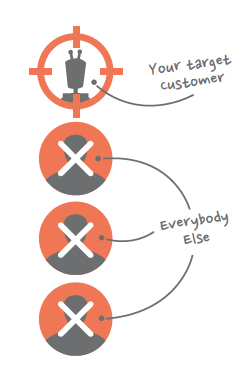
Companies are even becoming known for their video content. If I say Coca-Cola, WestJet, or Old Spice, for example, you can likely list videos you’ve shared from these brands.

Great videos distinguish you from competitors because this memorable medium opens people’s hearts. Unlike a white paper or eBook, video assets make people feel. And once your marketing crosses over into feelings territory, people want to do business with you. It’s a massive win for your content strategy.

Even though you might be creating content, you’re likely stuck when it comes to advancing your strategy or measuring your performance. As budgets for video marketing inevitably increase, you’ll eventually have to justify your investment and you have to be ready.

That said, here are four things you can do today to ensure you’re maximizing the impact of your video marketing.

1. Start Narrowcasting

The most common misconception I run into when it comes to video is that B2B brands feel a pressure to go viral. 

Mega brands – like chewing gum maker, Trident, for example – can get millions of views because they’re technically making videos to appeal to anyone with a mouth.

Your target market as a B2B company is way smaller than this and your videos should appeal to your niche rather than be broadcast to a huge, irrelevant group. If you narrowcast a highly targeted message capitalizing on your ideal prospect’s pain points, you’ll attract leads who have the interest and budget to actually convert and purchase your B2B solution.

Screen Shot 2014 06 20 at 3.47.46 PM 4 Proven Ways to Maximize the Value of Your Video Marketing

You’ll know you’re narrowcasting correctly if strangers to your brand can identify the exact persona or demographic you’ve crafted a particular video to target. It’s a smarter strategy than trying to boil the ocean.

2. Build a Dedicated Landing Page and Make Video the Star

Another trap most companies still fall into concerns video distribution.

Once you’ve made a video, you likely share it on social networks and wait for the views to roll in. Video can bring in a ton of site traffic and SEO benefits, so it’s actually best to embed it on a landing page on your website and share from there. Ultimately, you want this landing page to feature video as the main attraction. 

Oracle did this particularly well with their Journey to Modern Marketing campaign. Here you can see that guides, social components, and promotion for their blog all live on a dedicated landing page where video is clearly the visual star. 

Screen Shot 2014 06 20 at 2.55.41 PM 4 Proven Ways to Maximize the Value of Your Video Marketing

The 5 part video series resulted in a 120% increase in engagement, and an 85% increase in attribution to the creation of marketing qualified leads!

For more info on best practices, check out this helpful post on video landing page tactics.

3. Measure Concrete Video KPIs

After you’ve spent time and money on video marketing, you need to ensure it’s contributing directly to the bottom line. You can do this after measuring each video’s performance (which is super easy to do with a video marketing platform in place). 

Here are the metrics you’ll want to track for every single video you release:

  • Average time spent on your dedicated landing page
  • The click-through rate on the landing page (what percentage of viewers clicked ‘play’)
  • The video’s attention span (What percentage of viewers watch all the way through and when do viewers typically drop off?)
  • The percentage of those who follow through with your end-of-video call to action
  • The total amount of video content leads consume (how many videos do individual leads watch in a day? A month? A week?)
  • Which specific videos (or combos of videos) did converted leads watch?

These metrics will indicate how engaged your audience is and you’ll learn over time which content to amplify, or which videos you might need to modify to suit your target audience’s average attention span or preferences. On a whole, don’t market what you can’t accurately measure!

4. Start Scoring Leads Based on Their Video Viewing History

Your goal as a marketer is to increase the amount of marketing qualified leads coming into the sales pipeline. As you do this, it’s also imperative to understand which leads you should prioritize based on where they are in the buying cycle or their level of interest. This qualification process is infinitely easier if you have a lead scoring model in place, and it’s an even better model if it incorporates individual prospects’ video viewing history.

For example, if Alan drops by your website and downloads a white paper, he gets 20 points. However, if you’re not accounting for his video views, you’re blind to his actual interest. You see, Alan watched 8 videos in full in the 20 minutes he was on your site (each of them leading him to a particular product vertical he spent lots of time on). If you were accounting for these views, he’d have a higher lead score based on his attention span (indicating high interest) and sales could be notified to contact him immediately.

Overall, if you’re not lead scoring based on how prospects are interacting with video content on your site, you’re blind to quality digital activity and missing out big time. 

Learn More Tactics!

Each of these four tips come from our latest eBook, The Modern Marketer’s Guide to Making the Most out of Video. The guide is packed with B2B video examples and tactics that will take you from static to strategic, so make sure you take a look for even more helpful information!

25 Jun 16:53

6 Steps for Writing Simple Copy That Sells

by Aaron Orendorff

image of zen stones stacked on top of each other

Simplicity is the ultimate sophistication.

That’s what Leonardo da Vinci said anyway.

And four centuries later, Steve Jobs agreed. Actually, Jobs more than agreed. He flat-out stole it.

So here’s the question: What does plagiarized advice from the 16th century have to do with marketing copy in the 21st?

The simple answer (pun intended) is everything.

Because simple sells.

Brevity is no longer a luxury

According to a recent Harvard Business Review article, the “single biggest driver” of a consumer’s likelihood to “follow through on an intended purchase, buy the product repeatedly, and recommend it to others” was “by far … simplicity.”

Writing directly to content creators in their book Content Rules, Ann Handley and C.C. Chapman put the issue like this:

We’re in the clarity business, simplifying people’s convoluted ideas and wresting their wild, out-of-control text into something more civilized and comprehensible.

Why simplicity?

Because in a world teeming with “Blogs, Podcasts, Videos, Ebooks, Webinars (and More)” — as the subtitle of Handley and Chapman’s book explains — brevity isn’t a luxury; it’s a necessity.

So if you want to engage your audience, inspire them to action, and ultimately (pregnant pause) sell, the most fundamental question you can ask is, “How do I keep it simple?”

To that end, here are six simple steps for writing simple copy that, simply put, sells.

1. Have only one goal (seriously: just one)

My aim is to put down on paper what I see and what I feel in the best and simplest way.

~ Ernest Hemingway

The fundamental difference between simple copy and complex copy is the word “one.”

Everybody wants their sales copy to close. But until you’ve got a short, specific, and (above all) singular goal, it won’t.

In marketing terms, this means disciplining yourself to stick to the call to action (CTA), the whole CTA, and nothing but the CTA.

Dan Kennedy calls this your “strategic purpose”:

There are, of course, many ways I cast nets to find clients. Books, tele-seminars, webinars, newsletters … all are done ultimately with the intention of gently inviting people to inquire about my services.

Yet each has a different strategic purpose.

That’s a key point. You have to know your purpose for each piece, each item, each event. You have to know what your purpose is for being there. For being anywhere.

2. Only have one audience

Therefore, since brevity is the soul of wit
And tediousness the limbs and outward flourishes,
I will be brief: your noble son is mad.

~ William Shakespeare

Again, true simplicity comes down to singularity: singularity of purpose and singularity of audience.

As far as the latter goes, it doesn’t get much simpler (or more visceral) than the story Perry Marshall tells in 80/20 Sales and Marketing about his friend and colleague John Paul Mendocha.

At 17, John dropped out of high school and ran off to Vegas to become a professional gambler. Being young and inexperienced, John soon convinced Rob, a Vegas native, to take him under his wing and show him the ropes.

Their first lesson? Racking the shotgun.

Perry explains:

Rob took John to a cabaret. They walked in the door and sat down….

Rob had a sawed-off shotgun in his jacket. He pulled [it] out [and] slipped it under the table. He pressed the lever, popping the chamber open as if to load it. But instead of inserting a shell he loudly snapped it back shut.

A few heads in the crowd twisted around, trying to see where the racking sound had come from. Everyone else was oblivious….

Then [Rob] leaned over and said to John, ‘John, the people who turned around — those guys are NOT marks. Do not play poker with them.’

‘John, your job is play cards with everybody else.’

What’s the point?

Who you aren’t selling to is even more important than who you are.

In other words, having one audience means “racking the shotgun” early and often.

It means qualifying your audience. Focusing and narrowing. Which first requires you actually have an audience.

Just one.

And just like your one goal, your one audience has to be specific.

For example:

  • You don’t want to “consult business owners.” You want to coach CTO & IT managers who are overwhelmed by their new leadership positions.
  • You don’t want to “sell curriculum.” You want to sell to elementary school Spanish teachers who are strapped for time and need field-tested results.
  • You don’t want to be “a copywriter.” You want to write copy for medical professionals who are moving into the digital realm for the first time and need to improve patient relations by offering free and engaging advice to their existing family practice.

Remember: it all comes down to one.

3. Make it conversational … by actually conversing

I didn’t have time to write a short letter, so I wrote a long one instead.

~ Mark Twain

Most of the communication errors we make on paper we don’t make in conversation.

This is especially true when it comes to not being simple.

When we talk, we flow. We use nouns and verbs (a simple writer’s best friends), and we use them plainly. We communicate rhythmically, informally, and naturally. We don’t get caught up in long, complex sentences or trip over trying to “sound smart.”

And we do it all without thinking … which (of course) is the point.

To combat complexity, your best tool is conversation.

You can start by not only enlisting the help of an editor, but by asking him or her to read your copy out loud … in front of you. Scary stuff, I know, but reading it out loud can turn even the most inexperienced editor into a sniper.

Just remember that what you’re listening for isn’t so much mistakes. It’s anything that trips up your accomplice, anything that doesn’t sound like what one real person would say to another, anything that makes them stop and say, “Hmmm.”

What if you can’t actually converse with someone? Converse with yourself. I keep an old-school tape recorder on my desk for this very reason.

The trick is to give yourself a long enough break to generate fresh eyes and fresh ears.

After you’ve finished a draft, record it. Then, after an hour or two to detach from the writing of the draft, sit back down and listen to the recording … without looking at the words themselves.

Again, just like you would if you had a real person to talk to, make note of anything that smacks of complexity and non-conversationality (i.e., like the word “non-converationality”).

4. Avoid jargon and “insider” language

If you can’t explain it to a six-year-old, you don’t understand it yourself.

~ Albert Einstein

Whenever I start a new freelance gig, I tell the client, “The most profitable time we’re going to spend together is week one. I’m probably not going to produce much, but what I will do is ask, inquire, question, and basically be annoying. For those first few precious days, I’m going to be an outsider. Soon enough, I won’t be and that’s when I’ll start writing. But while I am, listen to me. That’s when what I say will count the most.”

We all struggle with insider vision — the curse of knowledge. Hanging onto what it’s like to not know something is nearly impossible.

And sooner, rather than later, this insider vision turns into insider language. We start using bland buzz words and phrases like “monetize,” “synergy,” “core competency,” and a host of others that ought to be banned forever.

Don’t be afraid to use big words in your copy, if they’re appropriate and (especially) if they can replace a phrase or string of words. But make them worth your audiences’ while, and explain them if necessary.

5. Cut your adjectives in half and your adverbs altogether (almost)

Often I think writing is sheer paring away of oneself leaving always something thinner, barer, more meager.

~ F. Scott Fitzgerald

This one’s really just a matter of math: “Most adjectives and adverbs don’t add information; they just take up space and dull your message.”

Or, as Jerod Morris put it, inspired by Stephen King’s hatred for adverbs: “Write what you mean and mean what you write. Use adverbs where they are pretty and unique in their boldness. Then, and only then.”

6. Cut ‘til it hurts

Why do we assume that simple is good?

Because … simplicity isn’t just a visual style. It’s not just minimalism or the absence of clutter. It involves digging through the depth of the complexity.

To be truly simple, you have to go really deep.

You have to deeply understand the essence of a product in order to be able to get rid of the parts that are not essential.

~ Jony Ive

Jony Ive was Steve Jobs’ soulmate in simplicity.

But just saying “less is more” is easy. Living it is hard. In fact, it’s downright painful.

And it should be.

Think about it like this: to cure gangrene you gotta get past the rotten bits and into the pink. Deep into the pink. If you don’t feel it when you cut, you’re still just messing around with the dead stuff.

But when it does hurt, when you say to yourself, “Oh geez, I pored over that sentence. I love that paragraph. Man that’s clever … but it doesn’t add enough value, so it just has to go,” that’s when you know you’re on the right track.

Courtesy of George Orwell, here’s a quick cheat sheet to make this as practical as possible:

Always use:

  • A word instead of phrase
  • A phrase instead of a sentence
  • A sentence instead of paragraph
  • A paragraph instead of a page

Simplicity and clarity lead to trust

There it is: six steps, one goal. Simplicity.

Why?

Because the alternative to simple and clear is hard and confusing, which is not a recipe for copy that will generate sales.

Here is a final quote from Marshall, who lays out the matter a bit more philosophically:

You should always be suspicious of complicated things. You should be even more suspicious of people who make simple things complicated.

Simple and clear lead to know, like, and trust. And that leads to sales.

Keep it simple, keep it clear, and your copy will drive measurable results.

Do you struggle with this?

Do you have a hard time keeping your copy simple? Many of us do.

You may also wonder when copy becomes too simple.

Join us over at Google+ to discuss.

Editor’s note: If you found this post useful, we recommend you put Aaron’s advice to work using the plan laid out by Pamela Wilson here: A Simple Plan for Writing One Powerful Piece of Online Content per Week.

Flickr Creative Commons Image via julochka.

About the Author: By night, Aaron Orendorff is busy “saving the world from bad content” over at iconiContent. By day, he teaches communication and philosophy at the local college. Follow him on Twitter.

The post 6 Steps for Writing Simple Copy That Sells appeared first on Copyblogger.

Related Stories