Shared posts

25 Jun 17:05

When You Messed Up Your Sales Deal (you have not lost)

by The Leads Explorer

Why you messed up the sales deal

So somewhere during the sales cycle you have messed up your sales deal.
- You didn’t understand the needs of the client
- You didn’t understand the motivation of the client
- You didn’t asked for the driving forces within the client
- You didn’t ask for the real problems to be solved
- You didn’t understand the buying process
- You didn’t deliver the right value
- You missed the buying signals
- You didn’t understand the competition
- You underestimated the competition

Not your fault: Blame everything and anything else

Of course the easiest is to acknowledge you have lost the deal because of the product or solution:
- Missing functions and features
- Lacking performance
- Price too high or too low
- No references

Reaction of your sales manager

When the sales manager finds out through your data in the CRM he will be furious if the deal has a large value.
Often the sales manager will then ask for a meeting with the customer during which he drops the pricing in the hope to save the deal. He makes clear that he is important enough to give special pricing to the important customer. However this is not saving the deal this is “SALE” like at the end of the retail season.

Inquiring and analyzing

The better attitude is to try to save the deal without price cutting. In order to do so you need to investigate:
- The reason for buying
- The expectations for the solution
. What does the solution need to achieve
. The expected ROI
- The amount of allowed changes the new solution can bring
- Why the current state is no longer acceptable
- The budget for the investment
- The budget for operations
- What are the feasible solutions or alternatives the customer has
- Comparing your solution with that from the competition

Saving the sales deal

The issue now is to get a new meeting with the customer in order to prove and show you have understood the issue and problem and are able to provide a feasible and economic viable solution. Your challenge is to get the additional meeting for a vendor that has already lost the deal. If you get the meeting you need to be sure your presentation and sales pitch runs perfectly and makes an impact by addressing all the issues, problems and budgets in order to convince the customer to rethink their decision.

Did you save sales deals ?
How did you achieve them ?

Related articles
25 Jun 17:05

5 Tips for Better Summer Sales Conversations

by David Du Pre

It’s that magical time of year when the weather gets better, and your prospects are often focused on things like family events and vacations rather than what they should be buying from you. As an accomplished sales person, you still want to make your quota and achieve corporate objectives, but it can be difficult to reach your goals during the summer months. Here are a few tips for making the most of the season.5 Tips for Better Summer Sales Conversations image Summer Sales image 300x200

Get Out of the Office

Your prospects want to be out in the nice weather as much as you do. Offer to take them somewhere out of the office for an afternoon treat. One company recently sent an Ice Cream truck to impress our team in Ghent. That kind of attention creates a memorable moment across multiple stakeholders for the next time you need buy-in on a purchase decision.

Segment and Focus Efforts

If it looks like most of your prospects are out of office, focus on strategic relationships. Schedule a “health check” with some of your key customers and do a comprehensive review of their account. Come prepared. Identify areas where they are doing great with your product and areas where they could be doing more. Have some suggestions based on their current solution so you are seen as a strategic advisor. Then seed some suggestions for future purchases and explain the business case for adding incremental spend.

Ask the Tough Questions

Really understand what the obstacles might be to doing business. Is there a delay in a decision because stakeholders are on vacation? Is it because rolling out a new product will be impacted by a lack of response? If you can identify that a real obstacle is present, you can plan an approach that helps remove it. If there is simply no desire to make a decision, you might want to focus your efforts elsewhere.

Get Creative with Pricing and Packaging

Work with sales management to get creative. Is there a summer special that can help you get your foot in the door to follow up with a large deal in the fall? Set up your future pipeline by making the product deployment as successful as possible and don’t forget to build some co-marketing terms into your contract. A small deal that has co-marketing rights with the right company can often help move the needle for marketing now and your pipeline later.

Partner-Up

Do you have partners with products and services that are ancillary to yours? The summer months are a great time to run joint events targeting each other’s customers. Host a casual meet-up over drinks and ask a few joint customers to participate in a 20 minute Q&A session that discusses the benefits of using the solutions together. It’s easy, non-competitive networking with built-in customer references.

These are all great tips for making the summer successful, but there is another thing you can take advantage of—take some time off yourself. If summer is when your pipeline slows, one of the best things you can do is to recharge your own batteries. Taking some time away from the hectic pace of revenue generation may be just what the doctor ordered, so you can attack the rest of the year with all the vigor it deserves. What other tactics are you taking?

25 Jun 17:04

U.S. companies poised for more buying in Europe

by Jonathan Ratner

Low funding costs, accelerating GDP growth and modest revenue growth will continue to push U.S. companies to make acquisitions in Europe, J.P. Morgan says in a new report.

M&A is surging among U.S. corporations, with the total transaction value in 2013 hitting US$1.1-trillion, the highest since the US$1.3-trillion peak in 2000.

U.S. corporate acquisitions of European companies climbed to US$122-billion last year, up from US$103-billion the year before.

Some of the recent transactions include Medtronic Inc.’s US$42.9-billion offer for Covidien, General Electric Co.’s US$17-billion offer for Alstom SA’s energy unit, and Eli Lily Co.’s US$5.4-billion deal for Novartis AG’s animal health business.

Eric Beinstein, head of J.P. Morgan’s high-grade credit strategy team, also noted there has already been about US$100-billion of completed or announced deals so far this year.

“This has been driven both by the recovery in European growth and the significant amount of cash that U.S. corporates have overseas,” he said, noting this cash typically incurs significant tax if repatriated to the U.S. “This gives companies an incentive to use the cash that is overseas on purchases of overseas assets, including M&A.”

The most important driver of M&A is the market’s ability to provide financing. Low yields and spreads in the high-grade and high-yield corporate bond markets make this possible, as does the strong demand for collateralized loan obligations.

Mr. Beinstein also noted the receding macro risks and solid growth expected in the U.S. and Europe support M&A, while the modest revenue and earnings growth many companies expect may have them looking to improve the situation through synergies.

“We believe this increase in M&A could last for a while,” the strategist said, noting there was likely a backlog of transactions following the financial crisis. “M&A tends to be clustered, as one transaction tends to speed up strategic reviews at other companies in the same industry, as they move to ensure their competitive position.”

Mr. Beinstein highlighted 20 U.S. companies with a high percentage of cash overseas that are believed to have some interest in acquisitions.

Topping the listed was Cisco Systems Inc. with about US$48-billion, 75% to 100% of which is held overseas.

Coca-Coca Co., Boeing Co. and Bristol-Myers Squibb Co. round out the top four, all of which are considered “medium” in terms of acquisitiveness.

IBM Corp. and Honeywell International Inc. ranked fifth and sixth, but are considered “high” in terms of acquisitiveness.

25 Jun 17:04

Using Facebook For Your Business? You Need To Know This

by Shell Robshaw-Bryan

It’s official – Facebook organic reach is dead. This comes as no surprise at all, as we have seen Facebook reach consistently dropping across all business pages for months now. What is more unexpected however, is that Facebook has finally come out and admitted it, ending months of speculation. This article looks in more detail at what this actually means for your own Facebook business page, illustrating the impact it will have on your activities.

Using Facebook For Your Business? You Need To Know This image sinking good ship facebook1 600x332

Be warned, the Facebook article is full of spin and tries to paint the decline in organic reach as somehow being a good thing. Read their announcement on the Facebook blog here, or check out this article from Marketing Week here.

Why Is Facebook Reach So Low?

Known as ‘content shock’, there are now so many businesses using Facebook (and other social networks) to publish their content, that at any given time, a user could potentially see hundreds if not thousands of posts appear in their News Feed.

Facebook claims that to benefit users, it restricts what it shows them based on a complex set of algorithmic calculations, commonly referred to as Edge Rank. This is the mighty Facebook News Feed Algorithm.

According to social media analysis firm BirdSong, Tesco has seen their Facebook engagement rate decline to just 0.98%, and that’s with a huge fan-base of 1.42 million people. See the Wall Street Journal article here.

Ever missed an important announcement or post from a page you follow and wondered why you didn’t see it in your timeline?

Ever wondered why a post you made about some really big news or a special offer got zero likes, comments or shares?

That’s the Facebook News Feed Algorithm doing it’s stuff in the background, deciding what it will or won’t show to a user.

Personal settings and preferences do play a small part in the algorithm. You are also more likely to see posts you have no interest in, if a lot of your friends have commented on or liked it. You are more likely to be shown universally popular content that you have no interest in (think of the likes of Buzzfeed etc) simply because it is popular (which rarely equates to that content being relevant, interesting or useful). The other big reason you’ll see content of course, is if the business has paid for it to be there.

Paid-for Facebook posts and adverts, will show up in a much larger number of users News Feeds, whilst organic posts are hidden by Facebook.

Understanding The Impact Of The Drop In Organic Facebook Reach

Let’s get on thing straight. Building a community from scratch and engaging with followers in small or new communities is now almost impossible.

Whenever you make a post, a very tiny number of your followers will be shown that post in their News Feed. When people don’t see content in their News Feed, then the only other way they can see it, is if they specifically visit your Facebook page.

With no prompt, reminder or reason to visit your business page, the chance of a follower actually checking your Facebook page on the off-chance that you will have posted content they’ll find interesting, is minimal.

Regardless of whether a person has liked your page or not, that audience is owned by Facebook, not you.

The fact is, Facebook is a pay-to-play publishing platform. If you want Facebook to promote your content to it’s users, you have to pay it. The important thing to remember here is they really are Facebook’s users, and not yours, regardless of whether a person has liked your page or not, that audience is owned by Facebook, not you.

Time To Abandon The Sinking Good Ship Facebook?

Facebook organic reach is shot and that is a fact, regardless of claims to the contrary. So it’s time to abandon the Facebook ship right? It’s not quite as simple as that.

We’ve seen that even when posts get zero on-page engagement, that they can still drive some website traffic. We’ve also seen examples of small businesses who have built up a decent following of a few thousand or more and who have particularly engaged, active followers, for whom Facebook is still working for.

However, for a small business just starting out on Facebook, or even for an established Facebook page with only a few hundred, less active followers, Facebook is not a good place to invest your time, unless you are willing to utilise it as a paid advertising platform.

Now Is The Time To Re-Focus Your Social Media Strategy

If the demise of organic reach on Facebook is news to you and something you’d not taken into consideration until now, then you really need to stop and ask yourself what value Facebook is providing you with.

If you were planning to get a Facebook business page set up, or had been wondering what the most effective social media networks to invest into would be, then my advice now remains exactly the same as it has been since late 2013.

Do not focus your activities on Facebook. Why limit the reach of your posts to less than 2% of your audience? If you are going to focus your energy anywhere, Google+ is a much better bet than Facebook, not least for the benefits Google+ provides with regards to SEO (Search Engine Optimisation) and in local search.

If you already have a strong following and are getting good engagement, great – keep it up. Just don’t be surprised when Facebook turns around in a 12 months time and announces that organic reach is finally down to 0%. It is a very real possibility.

25 Jun 17:03

The Cost of a Cloud Outage

by Simon Withers

Dark Clouds Overhead

The past year has been a difficult time for cloud computing. While the technology went some way towards gaining mainstream acceptance much of the talk focused on the numerous high profile outages which affected many businesses and countless customers. Too many high profile businesses have had their reputations affected following prolonged cloud outages. Unsurprising then that the availability and security of mission critical data stored within the cloud has been called into question.

Some of the most reliable organisations such as Salesforce.com and Microsoft have suffered cloud outages, each affecting thousands of businesses who were unable to access their data or service their customers. To provide a financial perspective on the issue, a 49 minute outage suffered by Amazon.com last year cost the business more than $4m in lost sales. The figure is staggering; even more so when you consider that it fails to account for the loss of future sales as fickle customers take their business to rival firms. Research from Microsoft has found that half of organisations believe that data accounts for up to 75 per cent of their total value. If a business can’t access its data then it can’t serve its customers.

And as we’ve seen over the past year, downtime which affects business can destroy the trust and relationship between organisations and their customers. Though it’s the major outages that have hit the front pages in the last year, even the smaller outages can have a huge knock-on effect. If a business suffers a short outage and is unable to fulfil a customer’s order or loses their data the damage to that relationship can take months or even years to fix. When an outage can be so costly to a business’ reputation as well as their revenues it’s no surprise that CIOs are approaching the cloud with caution.

Three Steps to a Brighter Cloud

While these examples demonstrate the worst case scenario, when implemented correctly the cloud can provide organisations with an unprecedented level of real-time data availability as well as robust and secure infrastructure.

  • Pick a cloud provider that you can trust – technology is complex and problems can happen to anyone – operational and security related. If you are going to put sensitive company information, or mission critical business processes under someone else’s management you need to understand their IT operation and their future strategy well.
  • Data availability must be one of your top priorities – don’t treat data availability as an afterthought, if you can’t access your data when you need it then why bother storing it. Make sure you challenge your provider to ensure they have built availability into their plans for cloud and are not just blinding you with the cost benefits of their offerings.
  • Don’t think that highly resilient clouds are just for large enterprises – it’s perfectly possible and affordable to have a secure, resilient cloud environment – without the expense of your own data centres or staff to operate them – and still know exactly where your data is stored and your applications are running. Even more important, make sure you understand your cloud provider’s true level of resilience.

Clearly, a cloud outage is not just about the loss of revenue but can have devastating consequences for reputations of organisations and, in the worst case scenario, could end up costing you your business. With this in mind it’s understandable that CIOs are reluctant to host their data in a third party service. The key lesson here is that it’s data availability, which is important. If organisations are savvy about the choices they make and ask the right questions, there is a great chance everyone from the IT Administrator to the CEO will be on board, safe in the knowledge that with the right cloud solution in place, relationships with customers and key stakeholders will only become stronger.

25 Jun 17:03

5 Ways to Increase Social Media ROI with Social Login

by Tracy Vides

Social media has become the key medium for users to communicate with brands and businesses. If you aren’t already using social media as a driving force for your business’ growth strategy, you’re not only missing out on an essential tool but are also putting your profitability at risk by ignoring it.

But, using social media and getting high ROI from it are two very different things.

One way of getting ahead of your competitors is by blending your website with next-generation social solutions. This could involve adding new features that you might not have thought about using.

The idea is to increase customer engagement, improve user experience, boost traffic, and ensure that everybody is talking about your brand.

How can you make this happen?

1. Higher engagement and better user experience with social login5 Ways to Increase Social Media ROI with Social Login image small biz socialmedia1

If you’ve never heard of social login (you’ve probably experienced it), it’s a service that allows users to register on a website with their already existing accounts, such as Facebook, Google, Twitter, and LinkedIn. The most evident advantage of social login is a rapid, frictionless signup that boosts conversions. Most users prefer logging in with their existing social accounts and avoiding the need to remember another username and password.

But, there’s more to social login than just convenient signup.

Every time a user logs in to your website with her social credentials you obtain her profile data. This information can then be leveraged to drive more meaningful interactions with users and to understand who they are and what they want.

The idea is to offer a personalized user experience, leading to better brand engagement, targeted lead generation, and better conversions. Marketers can identify the data points that are consistent with their current marketing strategies. This data helps businesses personalize their website experience for users and micro-target them with special product offers and discounts.

2. Understanding users through social analytics

Knowing whether your social media activities are delivering any value to your business is crucial to maximizing social media ROI. Making use of social analytics will help you keep tabs on the activities of your users as well as the impact of those activities on your business.

The use of social analytics means you no longer have to guess whether your efforts are delivering returns. You get a bird’s-eye view of all your activities and the ability to dig deeper into all aspects of social media.

3. Customizing user interface (UI) with social sharing buttons

Ordinary social share buttons are passé; if you want to maximize the benefits of social sharing on your website, it’s time to optimize your widgets and make them stand out.

It’s pretty simple – when you optimize your social share buttons to elevate them from the commonplace, you can put yourself ahead of the rest.

4. Spreading the love with a social invite

Implementing a social invite solution encourages your users to invite their friends on different social networks like Facebook, Google+, and Twitter, as well as email providers such as Gmail and Yahoo, to your website.

Now, here’s the thing. Readers won’t send an invite just because you’re asking them to. You’ll need to incentivize the social invite they are sending their friends. Reward them with special offers, a discount, or anything else you can think of to make them your brand ambassadors. These users will be bringing high-quality referrals to your site, so think of the right incentive as a way of saying thank you and also making sure they keep inviting their friends.

5. Social commenting to further discussions

5 Ways to Increase Social Media ROI with Social Login image thumbsup sky XSmall1Allowing users to post comments through their social accounts is a great way of enabling users to share their comments on their social profiles. This helps spread the word about your business and drives more visitors to your website.

For example, users can share comments with their friends or with people who like your page by using their Facebook identity to post comments. If they’ve checked the Post to Facebook box while adding a comment, the content they’ve commented on will appear in their friends’ newsfeeds. A single social comment has the potential to bring in a large number of visitors to your site.

Over to You for Implementation

Now, before you think this is way too difficult and will require significant amounts of time and expensive in-house web development, there is an easier way: a social login platform such as LoginRadius can integrate all these features for your web and mobile applications with a few clicks. Social login providers develop, maintain, and update the plugins – all you need to do is implement.

Next-generation social solutions are about taking the next steps in leveraging social media and optimizing it for your website. It’s about shifting to overdrive and implementing solutions that will entrench your website deeper in the social media ecosystem. Social is becoming a staple in today’s business world, and implementing these solutions will immensely improve your web presence.

For more on how you can make the transition from tactical use of social media to strategic social business practices, enroll today to view the Online Marketing Institute class, Transitioning from Social Media to Social Business.

25 Jun 17:03

Coaching The Sales Process — Deal Reviews

by Dave Brock

By now, you know my obsession with strong Selling Processes. It’s important, but misunderstood aspect of sales effectiveness. One of the things I’ve discovered as a result of my diatribes, is many sales managers really don’t know how to reinforce the sales process in their coaching and development of their sales teams. I’ve gotten a lot of questions on this topic from sales managers, and I suspect there are a lot more that are embarrassed to ask about this. Often, I when I get involved in review meetings, I find myself in a role of coaching both the sales person and in showing executives how they should be conducting the reviews and coaching their people.

I thought it worthwhile to address the issue, primarily focusing on sales managers, helping them to better understand how to use the sales process more effectively in conducting reviews and in coaching their people. If you are an individual contributor–don’t despair, you can learn a lot as well.

First some level setting, there are many processes and activities in the sales function. When I talk about the “selling process,” I’m focusing on the set of activities and outcomes required to move a qualified prospect through their buying process to a decision. The selling process is the set of activities we execute, aligned with the customer buying process. Stated differently, the selling process is all about the deal or the opportunity and how to manage working with the customer most effectively.

There are two sets of activities, critical to sales managers, in which the selling process is the core, first it is the deal/opportunity strategy–and the process for reviewing opportunities. Second, it is the health of the pipeline/funnel–and the process we use for reviewing pipelines or creating a forecast. In this blog post, I will focus on the deal review.

As a manager doing deal reviews with sales people and sales teams, generally there are several objectives:

  1. A business management objective. As a manager, I want to understanding the status, strategy, and what we are doing about a specific deal, so that I can make sure the sales team is executing the strategy that will most likely produce a win.
  2. A coaching objective oriented improving the sales person’s abilities to develop and execute winning strategies. We leverage coaching on a specific deal, with the objective they apply the lessons to all other deals.
  3. A combined business management/coaching objective. Using a specific opportunity to give me a sense about how well they are managing the other opportunities they are working on. Pragmatically, I can’t review every deal they are working on (nor to they want me micromanaging them). If they are managing the process well in the few deals I inspect, then I can have reasonable confidence they are managing the other deals well. Effective managers manage the process, not transactions.

I think it’s important that managers conduct at least one deal/opportunity review with each sales person every week. Properly structured, it should take 20-30 minutes (unless it’s a huge/complex deal).

Too often, managers choose the wrong deals to review, focusing on deals that are about to close. This is probably the type of opportunity to do a review on–if it’s about ready to close, there’s not much that can be done to adjust the strategy and improve the ability to win. Our greatest leverage on deal reviews is opportunities that have just been qualified and are in the discovery or early proposing stages. Over time, with each sales person, the manager should conduct review on deals in all stages of the pipeline.

Another mistake managers make in doing deal reviews is they aren’t prepared. Consequently, much of the time is spent reviewing past history rather than focusing on the things we should do to strengthen our strategy and compress the sales cycle. So before starting the review, sepnd a few moments, studying the deal in the CRM system. The first pieces of data I want to look at are where they are in the sales process. I want to look very specifically at where they are–what phase are they in (i.e. qualifying, discovery, proposing, closing) and what activities they have completed–yes, I do look at the check boxes. I look at what’s changes since the last time I reviewed the deal to get a general sense of progress has been made. I may skim notes–but probably not. If we have a good process in place and the deal has been updated, it only takes me a couple of minutes to get a good sense of things and to start to prepare the questions I want to ask. Some things I scan in preparing:

  1. Is there alignment between where we are in the sales process and the target close date. For example, if we are in the discovery phase of a complex deal, and it is forecast to close within 2 weeks, I wonder,” How are we going to complete all that needs to be done to move it from discovery to closure in 2 weeks?
  2. What activities have been skipped (are not checked)? We identify activities in the sales process because we know them to be critical to our success, why are we skipping these activities? There may be legitimate reasons, but I will want to understand this.
  3. Do the next step action plans make sense with where we are in the process, our positioning, and the competition?

By now, you are probably wondering, what if the sales person hasn’t updated the CRM or reporting systems. If they haven’t taken the time to do this, then they are wasting everyone’s time. It’s their obligation to have the most updated information in the systems.

This preview minimized the amount of time the sales person has to spend reviewing history. We can focus our time on where we are and what we do next.

In the review, I do the following:

1. I dive into 2-3 key critical activities that have been completed, asking the sales person to give me a deeper understanding and better context. For example, if the sales person has checked the activity, “We understand who is involved in the decision-making process and how the decision will be made,” I will turn this activity into a question, “Who’s involved in the decision and how will they make a decision?” (Duuuhhh—use the sales process as you crib sheet for the deal review). If the sales person cannot describe it well, if they start waving their arms around too much or fumbling, red flags start going up in my mind. I worry, do they have an accurate assessment of where they are in the sales process, are they managing it as effectively as possible? I’ll drill down on this question a little.

If they give a well thought out response, I’ll inspect a couple of other completed items in a similar manner. This discussion gives me a view of how completely they’ve executed the process to date, how well they understand and are managing the deal, and how effectively they are executing. If the responses are good, we’ll move forward.

If the answers are poor, we’re probably in trouble with this deal. We probably have to reset the whole deal strategy with the sales person, hopefully, being able to recover and move forward successfully with the customer.

2. If the sales person is managing the deal effectively, we focus the discussion on “What’s next?” This is where managers can add real value in coaching the sales person and improving the deal strategy. The next steps in the sale process give us our starting point. What’s happened, the customer attitudes/perceptions, our competitive positioning provide greater richness to the discussion. The discussion might include a SWOT analysis with the sales person, identifying opportunities, threats and the actions required to address them. We can challenge the sales person on our value creation, getting them to make sure the value they are creating is relevant and differentiated. We can challenge the sales person to think about compressing the sales/buying cycle.

It’s important the manager challenges the sales person about the strategy, getting them to think about the most appropriate things to do next. Effective coaching has the person discovering these themselves. When we get into “tell mode,” we actually transfer ownership of the strategy from the sales person to ourselves. Done right, the review becomes a collaborative problem solving session–with an outcome probably better than either person could have created alone.

3. At the conclusion of the review, the sales person should have identified all the next steps. What needs to be done, who is responsible, and when they need to be completed. The sales person should update the CRM system with these next steps, to make sure they are accomplished.

Following the review, it’s important for managers to follow up on key activities, making sure they are executed, check pointing to see if they had the desired impact or if we need to adjust the strategy going forward. (A little trick I use to remember to follow up is immediately after the review session, I take a few minutes to write my follow up emails in Outlook–scheduling them for future delivery. That way, I don’t have to remember–and when the follow up occurs, I get copied and can discuss things with the sales person.)

It’s amazing how much we can accomplish in a short period of time if we have a structure to the way we conduct deal reviews.

25 Jun 17:02

Seven tips to achieve profitable sales via generic PPC

by Chris Bishop

Are you just throwing money away on your PPC generics, or even questioning the worth? 

An emerging trend from the brands that I speak to on a day to day basis, as well as industry leaders, is the questioning of the value of spending money on generic paid search adverts and whether this budget is better reallocated into solely brand terms, or even other marketing channels.

So whilst profusely stating the benefits of this approach as a customer acquisition strategy, I am often shocked when auditing brands’ existing PPC accounts (monthly spend ranging from £5,000 - £150,000).  

The overall quality of search campaigns from a range of boutiques, high-street brands and multi-nationals are worringly sub-standard.

It is only then that I begin to understand the scepticism that this digital media tactic can effectively and efficiently drive greater branding awareness and ultimately revenue.  

While I’m sure I wouldn’t have headlined at Econsultancy’s Future of Digital Marketing last week by presenting on generic PPC ineffectiveness, it is nonetheless crucial as the mainstay of any company’s digital marketing to ensure the foundations of a campaign are solid.  

Though far more pioneering and forward-thinking speaker sessions are presented as the topic of the day, let’s make sure as an industry we do not build sophistication on inept foundations.

Therefore, I thought it would warrant a blog post to state the common mistakes or areas often overlooked by either a client’s in-house or other agency team.

Here then, are our seven tips to make a generic PPC strategy an effective digital paid media acquisition channel:

1. Match types 

There are 500m search queries every day that have never been seen before by Google, which means getting the approach right with this is crucial.

‘Broad Match’ types can waste budget on irrelevant searches whereas ‘Exact Match’, at the other end of the spectrum, can be far too restrictive. With the millions of unique search terms seen on a daily basis, a simple exact match strategy is going to miss out on more specific, high intent traffic.    

The solution is to utilise ‘Broad Modified’ match types more widely across your campaigns to capture this unique traffic, whilst still utilising exact where appropriate.

This will broaden the scope for long tail, more conversational searches which are often driven by a higher intent. Driving qualified, high intent traffic will improve the Quality Score of your generic keywords, which over time will drive down CPCs and aid a more efficient generic strategy.  

For one of our clients, efficiencies were gained in the account which led to a 29% drop in CPC’s, allowing a 70% uplift in traffic year-on-year with only a 22% rise in spend.

2. Ad scheduling 

We are regularly shocked to see generic keyword campaigns running at all hours of the day, every day of the week.

This may sound like a basic, or fundamental, tactic to aid efficiencies in generic search, the majority of accounts we audit are not employing it. This ‘always on’ approach can lead to unnecessary waste, and whilst conversions may be realised within all hours of the day, your budget may be better focused within your top converting hours and days.  

To avoid wastage, use historic data to plot conversion rates by time of day and day of the week. Schedule the ads to only run during key trading hours and use the bid adjustment tool to increase the ad position at peak conversion times.

3. Geo-targeting 

If you match your online offering with your bricks and mortar presence, your brand awareness will inevitably be stronger in these areas.

This is likely to lead to a higher conversion rate online in these locations, with a customer more likely to click and place their trust in your business. In addition, your brand should have a target audience, with varying geographical tastes and disposal income potentially aligning with this audience.

This should also be taken into account within your generic approach. 

When planning generic build out, utilise the tools in Google Analytics to identify your key converting geographical locations online.

Using this as a basis to begin generic targeting, then experiment with different locations over time to determine new 'sweet spots' where your brand’s demographic audience are. Taking this one step further, for brand with a physical store presence, this can then be used as market research to inform the overall business expansion strategy.

4. Device targeting

As we already know, online behaviour varies according to the device being used. Mobile browsers are often shopping with lower intent to purchase online and are likely at the research phase of the purchase funnel.

However, if your website provides a good user experience on mobile devices, you should not be afraid to capture generic mobile traffic.

Especially if your competitors are less advanced in their mobile offering, they are likely to be avoiding this traffic, posing an opportunity you should capitalise on. 

When the ability to target mobile and tablet devices separately was removed with the Enhanced Campaigns release in February 2013, many were afraid mobile CPCs would escalate.

Contrary to popular opinion, we find CPCs for mobile devices significantly cheaper for the same or higher ad positions, making this mobile traffic opportunity an even more attractive prospect.  

Nevertheless, as always, check this insight against your own data. If your mobile traffic has a low conversion rate and you haven’t yet focused attention on a responsive or mobile site, it may be best to limit budget on mobile traffic.

5. Remarketing for search

Remarketing Lists for Search Ads (RLSA) launched in June last year (2013) and allow brands to serve up targeted ads based on a visitors past behaviour.

This is a great opportunity within the competitive generic space, either to promote repeat purchase through generics, or as a final step to convert a customer already in the purchase funnel.

We are yet to see brands using this to their full advantage, with some not even building out lists to be used on the search network. By placing a simple piece of code on the site, brands can capture a visitors IP address and track how they interact with the site, even down to whether they have abandoned a basket or completed a purchase.

This information can then be used to identify a highly qualified customer when they enter a generic search term on Google, and serve them an ad in a higher position than if they were a brand new customer.

This will prove to be a fundamental part of generic strategies in the future, especially to re-engage your past audience during promotional periods, sale and peak trade.     

6. Long tail keyword coverage approach

Generic keyword coverage can sometimes be the result of a snap decision to increase traffic, which may lead to the quickest build out of high traffic, high competition search terms.

This tactic, whilst driving traffic and perhaps awareness, is not likely to drive efficient conversion in the long term. Therefore using this as a gauge of whether generic keywords will work for your brand is not wise. 

Generic strategy should be tackled as a long term commitment with periods of controlled trial and error across your product set.

Analysis of phrase and broad modified keywords should be undertaken to identify long tail search terms, which can then be extracted and controlled within their own ad group or indeed campaign.

This on-going breakdown of the keyword coverage allows you to 'weed out' the inefficiencies, and allocate budget to the revenue drivers to allow for greater ad positioning and traffic. 

7. Tactical generics

While these strategies will aid you in creating an efficient generic strategy with long term incremental value, it should also be noted that an 'always on' approach to generics isn’t always necessary. 

Build out of generic campaign structure could be carried out in a preparatory sense, which can then be quickly utilised to drive traffic during appropriate periods.

For example, conversion rate on generic terms will most likely be higher during periods of promotion, sale or seasonal peaks. This is a strategy which we like to coin a David and Goliath tactic.

Especially when working to restricted budgets, we focus generic expenditure during promotions, sale and for specific sales peaks, where they can efficiently make a noise against their more established 'always on' competitors and win a portion of their traffic and custom. 

Summary

Again, whilst the above tips will not necessarily win innovation awards it is imperative as an industry standard we at least get the basics right, regardless of in-house, search or wider media agencies.

I trust once the above tips have been implemented and the results achieved; then we all will be able to answer whether or not it is worth bidding on generics, and the channel and tactics being a viable and cost-effective way to recruit customers will remain loud and proud.

Then, and I suggest only then , can we all move onto the more sophisticated ways of optimising search and overall digital strategies! 

25 Jun 17:02

7 Tips for B2B Email Subject Lines

by Cameron Avery

The subject line makes or breaks an email. The average working professional receives more than 100 messages a day, so it’s easy for emails to get buried. The subject line needs not only to stand out, but conform to the following best practice tips:

Tip 1 – Don’t sell it. Tell it.

This is perhaps the best advice anyone can give you about subject lines. The subject line should relate very clearly to the content of your email, as opposed to pushing the hard sell, or creating a false sense of urgency.

For example:

Subject: Game Developer Loses Millions [Act now or you could be next]

Tip 2 – Identify yourself

Ensure the recipient knows the email is from you, or your company – a recognizable and trusted advisor. If that’s not possible, use a consistent identifier in your subject line.

For example:

Subject: [Game Developers Update] Protect against video game piracy

Tip 3 – Make it specific

Getting an email open from the target audience is the objective of your subject line. So, your subject line should relate the content of your email to the target audience. The more specific your subject line is, the more likely it will be received well, and therefore opened.

For example:

Subject: [Short Video] Protect against video game piracy

Tip 4 – Stand out

Before they even see your subject line, the recipient’s finger is most likely hovering over the delete button. So make sure you place key terms or benefits first to emphasize the value of the email’s content, enticing them to read more.

If it’s valuable, say so. And why. Outline benefits clearly.

For example:

Subject: Anti-piracy solutions prevent lost sales

Tip 5 – Make it relevant

You want to trip as many interest triggers as possible in the shortest possible time. Keep it timely, topical, and, if possible, local. Aim for 50 characters or less. Adapting some earlier examples:

Subject: [Game Developers Update] Protect against piracy

Subject: [Short Video] safeguard against video game piracy in [INSERT YOUR CONTACT’S STATE]

Tip 6 – Test it

Try some A/B testing to see which subject line triggers the greatest open rates. Send two identical emails, differing only in subject line, to a sample of your contact database. Use the more successful one for the remainder of your database.

Tip 7 – Avoid spam triggers

Words like ‘free’, ‘sale’, ‘attention’, ‘discount’, as well as exclamation points and using all capitals, will more than likely trigger spam filters. Search ‘email spam filter word list’ for many more words to avoid in your subject line. However, there can be exceptions to the rule. If a potential spam trigger is an integral part of your solution, for example, if you are offering ‘free’ shipping as a selling point, include it. Ideally, test your email subject line with and without that term to confirm it’s getting through.

25 Jun 16:57

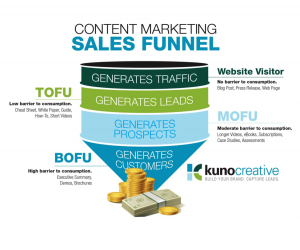
Is your website sales funnel-shaped?

by Drew McLellan

Website Sales FunnelThere’s always a lot of buzz about SEO (search engine optimization), SEM (search engine marketing) and of course, Google rankings.

Rightly so – each of those plays a role in how effectively your website can serve you from a marketing and sales perspective. Your website should be sales funnel shaped.

But I think most companies approach the web a little like the fable about the five blind men who were asked to describe the elephant that stood before them. The man who was near the elephant’s leg reached out, touched the elephant and announced that an elephant was like a huge tree trunk. The man who was by the tail, after feeling it, described an elephant like a bullwhip and so on.

While none of them were wrong – none of them were right either. That’s exactly where many companies are when they think about how to leverage their website. They’re not wrong but they haven’t got it quite right either.

Lets step back and take a more holistic view of the website’s purpose for being. You might have a website because it:

  • Gives you credibility – it proves that you’re real
  • Tells the visitor what your company is all about and why you exist
  • Lists/show what you sell/do
  • Educates your prospect on how you are different from your competitors and help them make an more informed buying decision
  • Helps your customers and prospects by making them smarter/better in some way
  • Is an information repository so your customers can access things like users manuals, support forums, case studies, testimonials or other forms of thought leadership
  • Provides ways to start a conversation, ask a question or give you feedback
  • May serve as a shopping portal and people can buy right there

But if we step back even a little further and take a look from the 30,000 foot level, we can see through all those functionalities, your website is the entry point to your sales funnel. For most organizations today — your website is the initial point of entry that could lead to a sale today or five years from today.

That doesn’t happen by accident. Getting them to your site isn’t the end of the game; it’s just the beginning. Now your goal is to move them into and through your sales funnel. You have to build your site and everything that happens on it with that intention.

Whenever I think of a sales funnel, I picture one of those plastic funnels people use when they do an oil change. The top of it is really wide and the bottom is a very skinny hole. The funnel coincides with the know • like • trust equation.

The top of the sales funnel – know

The top of the funnel is for catching all those people who have no idea you exist or that you sell anything they might need or want. This is where you are hoping they’ll get to know you.

The middle of the funnel is filled with all the ways you either keep them on your site or get them to come back. With repeated exposure, you’re hoping they’ll come to like you.

The smallest section of the funnel is where you’re hoping they come to trust you through repeated interactions, you continuing to be helpful and demonstrating a consistency in how you talk, behave and perform.

Once they’ve willingly squeezed themselves through that tiny little section of the funnel, they’ll be ready to buy. But not before.

Let’s look at the first stage of the funnel (know) and what you can do to catch the interest of your web visitors and encourage them to get to know you a little.

At the top of the funnel we have people who’ve never heard of you and may have no idea they need or want what you sell. They might discover you by clicking on a link in a blog post or after reading about you in the newspaper. They might have a problem and be Googling to find a solution and your site is listed in their search results. They may see a Facebook ad or type in your URL off your business card that they picked up at a trade show. But at this point, you’re a stranger. They don’t know, like or trust you. And we know we have to earn their trust before we can earn their money.

At that moment, your website has to be helpful or relevant enough in some way that they spend a little time on it so they begin to get a sense of you and how you might matter to them.

This is a do or die moment. If the visitor pokes around the site and then leaves, they might never return and you’ll never know who they were or if you could have served them. That’s how it works on most websites. If I asked you to show me a list of people who were on your website in the last six months, could you do it?

One of the appealing aspects of using the web to pre-shop is the anonymity of it. To get someone to introduce themselves to you — you have to either give them a compelling reason to keep coming back or better yet, you have to create the opportunity for an information exchange. You have to offer them something that is valuable enough that they’ll give you their email address in return. While it sounds simple – think of how many websites you visit and how few capture your contact information.

What does that look like? You want to offer something that’s a low barrier to entry. It doesn’t feel too intrusive. It could be any of these:

  • Sign up for our Enewsletter or regular tips
  • Get a copy of a how-to report, whitepaper or cheat sheet
  • Take an online course via email
  • Get access to unique content behind a firewall
  • Join a discussion group/closed forum
  • Be notified when new content/information is available
  • Download an eBook or watch a short video series
  • Sign up for a webinar or phone conference

Once you’ve done made that initial connection and you have a way to stay in touch – you can continue to be helpful which will keep the conversation going. At that point, one of two things is going to happen. As they get to know you/your company – they’re either going to decide they like you or they don’t. Both are great outcomes.

If they like you, they’ll stay in the conversation and get to know you even better. If they don’t like you, they’ll go away. Now you don’t have to waste any energy on someone who was going to be a bad fit.

The middle section of the sales funnel – like

To move someone from the start of the process into this section requires a mix of bravery and generosity on your part.

Keep in mind that most prospects are pretty skittish. Whether it’s in a retail store or online, they’re used to being chased around by over eager salespeople that pester the poor potential buyer until they flee. That’s one of the reasons many people do a significant amount of their shopping online. The anonymity allows them to browse without pressure.

That’s why you want to load up your website with lots of content that has no barrier to consumption like blog posts, testimonials and FAQs. Those elements will generate traffic to your site. The strategies we talked about last week – where there is an exchange of information (their email address for some downloadable tool or content) begins to thin the herd. The tire kickers will avoid the opt-in level, preferring to stick with your free content. And that’s fine. Until they move to the next level, they’re not ready to buy. Once they trade you their email address for some content, they’ve indicated that they are open to hearing from you.

I find it hard to believe I have to actually say this but I’ve seen time and time again that I do. There is absolutely no reason to collect email addresses if you aren’t going to actually send them something.

And that something cannot be a sales pitch. I’ve seen so many businesses stumble here. They didn’t give you their email address so you could hard sell them or immediately try to get an appointment or schedule a sales call. They gave it to you so you would keep sending them information that’s valuable to them.

That is your litmus test. Each and every time, before you hit send, ask yourself “is this going to be valuable to my audience?” Time for a re-write if your honest answer is no.

Assuming you keep producing helpful content and you actually send it out consistently – the prospects will let you stay in their in box. Week (or month or quarter) after week, you’re there. You’re teaching, helping and they are getting a little smarter and a little more comfortable with you each time they hear from you.

You should also use those regular emails (or however you decide to connect with them) to drive them back to new content/offerings on the website. Maybe you produced a demo video series or you’re hosting an educational event that you’d like them to register for.

While we are focusing on your website, it certainly shouldn’t be the only tool in your toolbox. Your sales funnel should be armed with both digital and traditional tactics. They work together hand in glove, each strengthening the other.

The days of your website just being an online brochure are long gone. Be sure your web presence is the sales workhorse it should be by building a sales funnel around the know • like • trust = sales equation.

The last section of the sales funnel – trust

Having the right timing matters. You don’t get to this part of the funnel after the first couple interactions. If I see one consistent mistake, it’s that people shift into these sorts of strategy way too early. It’s like meeting someone in a bar and proposing the same night. Odds are you aren’t going to get too many yeses.

I totally get it from a business’ point of view and have often felt that frustration myself. You’ve shared your expertise. You’ve answered their questions. Surely they should be ready to buy by now. They obviously like what you do enough to keep coming back. So why aren’t they buying?

In my thirty years of being in business, I’ve rarely met a buyer who is as anxious to make the sale as the seller. Sure, there are those customers who come to us in crisis, and we scramble to put out their fire but they’re not the norm. So what do we do? We hang in there, and we keep being helpful and we work to stay top of mind until they’re ready to move forward.

The other factor to remember is that while we are the ones who build the sales funnel, it’s the prospect that moves through it and they control the pace and direction. So while one prospect may linger in the getting to know you (remember our know • like • trust = sales model) or growing to like you section for years, another may whip through both of those and be willing to trust you enough for a trial purchase in a matter of a couple visits.

For your website to truly be an effective sales funnel, you need to offer different levels of engagement, so the prospects can move themselves through at their own speed. As we talked about in the last couple columns, that means free content (text and video if possible) and content that you’ll give them for an email trade. But what kinds of things should you have available for those who are ready to consider a purchase?

Believe it or not – one that many companies miss is having contact information on the site. Don’t make me look for your phone number or email address. If you have the capacity, live chat is great. But make sure I can contact you and give me more than one method. If you have a brick and mortar presence, be sure you list your street addresses as well, with a link to one of the mapping sites.

You can also offer the ability to schedule a call, demo or take an assessment that will require you contact them (usually by email) with the results.

Remember that most buyers want to be pretty sure they’re going to buy before they speak to a salesperson or company representative. When they do reach out, they may have some final questions but they’re very close to making a buying decision. Which means you need to be ready to respond quickly once they do trigger that next level of readiness. Test your site and all your internal systems to verify that nothing is going to get in the way of you finally connecting with this potential buyer.

Today’s consumers want to be able to shop us on the web. How well that works for you is completely in your control. Is your site ready?

P.S. I found the great graphic on a SocialFresh blog post.


The post Is your website sales funnel-shaped? appeared first on Drew's Marketing Minute.

25 Jun 16:57

B2B Events – What Does Demand Generation Have to Do with It?

by Erika Goldwater

We love events …attending them at least. Running them is another matter as that involves painstaking detail, budgets from HELL, venue chaos and any number of small nightmares. But attending them…well that is usually just great. Great until you come back to the office and have 200 emails and voice mails from people (vendors) you have not met.

B2B Events – What Does Demand Generation Have to Do with It? image event pin image

The idea behind integrating events into an overall Demand Generation Strategy is something that most marketers believe in. However, it seems they are not actually building events into the plans and executing as needed in order for them to be effective. If they were – you would not receive those 200 emails post- event or those follow-up calls from sales when you probably don’t welcome them.

How to integrate events into a Demand Generation Strategy?

Ideal Buyer Profile: Know your ideal customers. What does your ideal customer profile look like? What are the various personas who are involved in the buying process at your ideal customer? What do they read? Where do they get their information from? What events do they attend or blogs do they read? Before you can decide what events to sponsor or even attend, you need to know who your buyer is. In the March 31, 2014 blog post by Tony Zambito, he shares his view on why CMOs should care about buyer insight and buyer personas. It all comes back to doing everything you can to understand more about your buyer so you can connect better with them.

Timing: Look at your event schedule and find out where and how these events will help you better connect with your buyers and customers. If the events don’t help you Engage, Nurture or Convert your buyers – don’t attend and please, don’t sponsor. It just won’t be relevant for you or the attendees.

Content: Content is everything for events – it can make or break an event. Relevant, timely messaging with strong, engaging content that is consistent with the other components of your Demand Generation Program that is delivered in a provocative way – helps connect with buyers and start a conversation. Marketers need to remember that content is not a tactical campaign. It’s just part of the way in which we deliver the message.

Program: Rather than focus on one and done campaigns, think about a program. Why? A campaign indicates a tactical action focused on an asset or an event, whereas a program is ongoing, perpetual and “always on” and synchronized to the buyer and their buying patterns. A program is what needs to be built to deliver relevant messaging to your buyer throughout the Buyer’s Journey.

Demand Generation Strategy: A fully integrated Demand Generation Strategy has to be multi-channel as buyers often times consume content in a variety of ways. One of these channels may be events. When developing a strategy, do not focus on the tactics or channels first. Start with developing insights into your buyers, developing and mapping the content to the buyers purchase path and then determine the channels that will be used to deliver the content.

Event marketing is much more than picking an event, deciding your event message and creating a tactical campaign pre and post event to get some downloads or more names for your database. It’s about integrating the event into your overall Demand Generation Strategy as a means to continue the dialogue with your buyer. Events are just another piece of the Demand Generation Strategy, they are not a Strategy.

25 Jun 16:57

Price vs. features: Marketing automation buyers and owners care about very different things

by John Koetsier
Price vs. features: Marketing automation buyers and owners care about very different things
Image Credit: Image money

How can you leverage mobile to increase profitability for your company? Find out at MobileBeat, VentureBeat's 7th annual event on the future of mobile, on July 8-9 in San Francisco. Register now and save $200!

If you own a marketing automation system, chances are you care most about features. But if you’re looking to buy a marketing automation system, chances are you care most about price.

That’s just one of insights in a new report from VB Insight on the expanding field of marketing automation. (VB Insight is VentureBeat’s research platform.)

considering new marketing automation system“That makes perfect sense,” report author Dan Freeman, the president of marketing consultancy Marketing Growth Strategies, said. “First-time implementers are just trying to do the nuts-and-bolts, simple stuff like landing pages or knowing who is visiting their website, while those who have been doing marketing automation for six months or a year are looking at the next stage … full nurture programs, automated workflows, and more.”

Current owners who are either adding to their system or switching to another rank features and ease of use as the most important parts of a system. New buyers who don’t currently use any marketing automation system, however, rank both total cost of service and monthly price above ease of use and price.


Get Freeman’s entire report, Buyers and Users Marketing Automation Survey, on VB Insight.


The two groups are looking for different functionality, and have different ideas about what to expect from their software, Freeman told VentureBeat.

“First-time buyers don’t know much about implementation … they kind of have in mind that the cost of the marketing automation effort equates to the cost of the software,” Freeman said. “But owners understand there’s more to it … both in costs and in returns.”

In fact, many of the new marketing automation buyers aren’t even doing email marketing or customer relationship management (CRM), which means they are fairly unsophisticated buyers.

Email marketing users are much more likely to be in the market for marketing automation systems

Above: Email marketing users are much more likely to be in the market for marketing automation systems

Image Credit: VB Insight

That’s something the 70-plus marketing automation vendors will want to keep in mind — not just because new buyers have specific needs, but also (and maybe especially) because a big chunk of existing system owners are keeping their eyes open as well. As is well-documented, many companies use multiple marketing automation systems – and have a surprising openness to switching.

“That’s one thing that struck me about the results: Quite a few who have a system are looking to make a change,” Freeman said. “You would think there’s a little more stickiness, but it is pretty easy to change … and a pretty rapid payoff when you get a better system.”

The unsophisticated, new users could be well-served by some of the smaller marketing automation startups that have an all-in-one system with CRM-like components, Freeman said, while existing users could be better off looking for more established, full-featured systems.

In fact, there are two fairly standard paths for companies to follow here:

“There can be a progression from a starter system to a more sophisticated system,” he said. “But historically, the more natural progression has been from email marketing to marketing automation.”


Use a free or cheap marketing automation system? Tell us what's great about it (and not so great), and we'll share survey data from everyone else with you.


25 Jun 16:56

Scientific Sales Enablement: Breaking Down The Elements For Sales Reps

by John Fakatselis

Scientific Sales Enablement: Breaking Down The Elements For Sales Reps image 180177364A lot of companies have a hard time wrapping their heads around sales enablement. This is because it’s not just one defined thing for one distinct group, but rather a working formula that fuses sales, marketing, management and even other departments into systematic alignment.

The OUTPUT is straightforward: sales success. However, the INPUTS are nuanced and multilayered: ranging from strategic practices, processes and procedures to technology tools such as CRM, marketing automation software, content management collaboration and more.

So, yes, sales enablement is a bit abstract and hard to grasp … until you break down the elements.

Let’s look at this kaleidoscopic formula through the sales team’s microscope. First, we’ll cover the three core variables under the sales umbrella, and then we’ll zoom in on each element in the compound.

PLAN
Sales reps need planning tools that provide VISIBILITY across their pipeline and a clear, detailed picture of each opportunity. Visibility drives both ANALYSIS for effective sales strategy formulation and PRIORITIZATION for prudent time investment and resource allocation.

PREPARE
Today’s buyers want real-time responses and customized content. Reps need the right RESOURCES at their fingertips, plus a way to quickly tailor and personalize to each persona and pain point. They need GUIDANCE, coaching tips from management and easy access to subject matter experts (SMEs), plus seamless team COLLABORATION for strong value messaging and consistent branding.

ENGAGE
Sales reps must execute all information DELIVERY with expeditious convenience and an appropriate, approachable tone. They need to engage buying teams with personalized IMPACT messages that provide a textured, rich-media experience and differentiate from the competition. They need INSIGHT into how buyers are responding to information they share – who’s opening, downloading and sharing what with whom.

Now, let’s dissect.
Our next three posts will break down each of those variables (planning, preparing and engaging) into their catalyzing elements. So stay tuned.

Click below to see how a Sales Enablement Platform gives your reps the scientific formula for sales success.

25 Jun 16:56

Telemarketing to Increase Your Connection to Community

by Matt Ford

The boom of the internet has not only increased the human capacity to communicate and express. It has also created its own, unique space that is purely created from that expression. Forums. Social networks. Online communities. It’s not surprising why telemarketing doesn’t seem to have achieved much in comparison.

Regardless, it’s also all the more reason why you can’t just throw your telemarketing stuff away. In age when communication itself creates spaces and communities, you’ll need all the tools to keep increasing your capacity to connect.

Telemarketing to Increase Your Connection to Community image 1295268101 wow community 300x145The truth is even online boards have limitations when it comes keeping people connected. That isn’t to say the people posting on them are any less real. On the contrary, seeing them as real and not virtual is the key success for online marketers.

But just like email and chat, you’re still only just halfway there. You’re not giving a sales presentation. The appointment hasn’t been set. All the prospect still has to go by is your name and maybe a profile pick.

Telemarketing and other real-time communication tools serve as the additional mortar to really holding your connection in place. Imagine it like this. Your target community is like a real village and you’re the guy supplying a very critical resource. More often than not, being a personality is more likely to win you additional points for your contribution compared to being the recluse.

Still, the catch is that this community is just all over the place. One person could be in the same state but another could be a long flight away. Thus, your communication tools really need to pile up in order to effectively open yourself every single one. Consider their following information needs:

  • Telemarketing to Increase Your Connection to Community image linked in 300x247Their understanding is average compared to yours – Even the World of Warcraft community could be filled with more casuals than popular stereotypes let on. What exactly define casuals? They’re the people who aren’t fully versed in what you’re selling (otherwise, they’d know everything and could’ve provided it themselves). They don’t want a crash course. They just want to get on with the solution.
  • Payments alone create trust issues – Even in the age of Amazon and eBay, plenty of buyers are still hesitant to place their money until they can completely verify they’re getting what they’re paying for. It’s all the more serious given the sums being transacted in B2B exchanges. You have to have a real voice, a real face, and even a real place that prospects can go to in case they want a more firsthand look at your products.
  • Word of mouth testimonies don’t seal the deal – Having a good reputation makes for good impressions but that they can still be gamed. That’s why, no matter how recommended you are, you need something to seal the deal. It can be something as simple as a phone call or it can require as much as an actual, face-to-face meeting. This something prospect’s are free to choose and you can only comply by communicating with everything you’ve got.

While you can definitely say there are real people behind the personas in online communities, you’ll need to learn a lot more about them if you’re looking for those who can be sales-ready customers. You’ll need telemarketing and other direct forms of business communication to keep your connection alive.

25 Jun 16:56

12 B2B Content Marketing Examples and Case Studies for 2014

by Lee Odden

Killer B2B Content Marketing

Content Marketing has long been a staple for the B2B Marketing world with an increased boost in popularity due to changes in consumer information discovery and consumption. Over 90% of B2B marketers are using content marketing according to CMI and MarketingProfs. Far more research is conducted before sales contacts are made providing B2B companies an opportunity to satisfy buyer information hunger with some killer content.

But what works and what doesn’t? What are B2B brands, big and small, doing to achieve results with content marketing? Those are great questions we’re answering every day through our own work with B2B companies and through industry examples.

For some inspiration for your B2B content marketing programs, check out these mini-case studies from the 2014 C2C Killer Content Awards, which include a mix of brand content marketing program examples and the results they produced. From print to video to coordinated multi-channel content programs, there’s a nice variety here.

ADP Content Marketing

ADP:  Multi-Touch and Integrated 
ADP is a Fortune 500 company that offers various business processing services like payroll and human resource management. ADP’s Value Added Services division created a quarterly, multi-touch campaign using unique themes that included a mix of digital assets such as infographics, “cookbooks” and other collateral.

Results: $3.7M in closed-won business plus another $23M in the pipeline. The ROI for Q1-Q3: 905%

SunGard Content Marketing

SunGard Availability Services: Video Humor and Business CTA
Sungard provides IT operations support and serves more than 70% of Fortune 100 companies. SunGard Availability Services created a video series based around the holidays, injecting humor into educational content on pain points and industry trends. The company analyzed its audience’s content consumption patterns, and used the data to map out a campaign that would promote the content across multiple touch points via email, social, PR and paid media at a time when the audience would be expecting it.

Results: Over 3,000 leads generated in 3 days. Email click and click to open rates were 2-3X average. CTAs to download a white paper at the end of the videos had a 87.4% click-through rate.

Cox Media Content Marketing

Cox Media Group: Customer Success Focused Content
Cox Media includes 14 broadcast TV stations, a local cable channel, 57 radio stations, 8 daily newspapers and more than 100 digital services in 20 media markets reaching 52 million Americans weekly. Cox developed a 2014 Success Kit campaign for their advertisers including 5 assets in multiple formats to appeal to their SMB customers.

Results: 500+ downloads and interest from more than 2,000 potential leads improved lead and demand performance 9% over last year.

Toshiba Content Marketing

Toshiba: Integrated Campaign
Toshiba Global Commerce Solutions offer integrated in-store solutions which are implemented in 60% of the top 25 global retailers. Toshiba created a series of content assets baed on omnichannel retailing including an infographic, checklist, executive brief and an eBook.

Results: Over 19,000 opens, 1,100+ clicks and 309 leads generated.

OpenText Content Marketing

OpenText:  Multi-Touch Engagement
OpenText provides Enterprise Information Management solutions (information exchange, business process management, enterprise content management) for a variety of industries including financial services, energy and insurance. OpenText launched a “Make a Statement” campaign to promote their StreamServe solution which helps companies personalize customer communications. The campaign included a mix of assets and advertising media implemented in 6 languages.

Results: Over $3 million in pipeline revenue to date.

Future of Digital Engagement

Live Person: Influencer Content
LivePerson provides online engagement and service solutions such as chat, voice and targeted content for B2C and B2B companies. To reinforce it’s position as a thought leader in the digital engagement space, LivePerson connected with 10 industry influencers in B2B and B2C marketing. Interview topics ranged from social to mobile to omnichannel to search marketing and were published as an eBook about the future of digital engagement. Disclosure: I was one of the influencers interviewed for this eBook.

Results: 11% open rate, 17% CTR, 800 downloads, 270 marketing qualified leads and cited as “the most successful e-book of 2013”.

IBM Content Marketing

IBM: Integrated Demand Generation Campaign
IBM is a $100 billion company with 431,212 employees. The IBM “Smarter Commerce” program challenged industry executives to recognize and rethink about the value of empowered customers. A microsite provided content for each of the IBM 12 lines of business buyers and included a mix of digital assets: video, eBooks, case studies, white papers, and reports – each tailored for distinct Lines of Business audiences.

Results: The program overall has had over 38,000 impressions, 100,000 page views and over 13,000 responses. The leads generated from this program have been high quality and have rapidly progressed through the pipeline, generating significant wins for IBM.

Bonitasoft Content Marketing

Bonitasoft: Utility Through Simplification
Bonitasoft is a growing provider of business process management solutions. The Bonitasoft program addressed the complex and technical standardization of software using the BPMN 2.0 standard from a 508 page industry guideline to a 25 page “Ultimate Guide to BPMN2”. The shorter guide provides examples and graphics for non-technical users.

Results: 890 downloads and registrations, cost to pipeline ratio of $1 to $27. 54 sales opportunities were created and 15 sales have been won to date.

LinkedIn Content Marketing

LinkedIn Marketing Solutions: Influencers and Repurposing
LinkedIn is known as a social network for recruiting and finding talent, but with over 300 million professionals in the network, LinkedIn offers many solutions as a marketing resource. To reinforce the marketing solutions possible with LinkedIn, the LinkedIn Marketing Solutions group created the Sophisticated Marketer’s Guide to LinkedIn featuring digital marketing industry thought leaders, case studies, tips and a list of 25 social media experts. The Guide was published as an eBook, posted to Slideshare, created as an infographic, delivered as a webinar and published in print.

Results: 10,000 downloads in less than 30 days and more than 1/3 of those were marketing qualified leads. The webinar attracted 3,000 registrations and the repurposing of the eBook has driven thousands of views and shares.

Optum Content Marketing

Optum: eBook Hub
Optum facilitates fast, easy access to information that supports decision-marking across the healthcare system with clients in 140 countries. Optum launched a lead nurturing campaign with an eBook as the hub. Moneyball was used as a metaphor to illustrate the power of analytics in health care and targeted hospitals, health systems and large physician groups.

Results: Over 500 eBook downloads the first month and now there are 18,000+ contacts are new in various stages of the lead nurture track.

Autotask Content Marketing

Autotask Corporation: Modular Content
Autotask is a leading SaaS provider to the IT industry serving 5,000 accounts world-wide and offering a platform for CRM, service desk, projects, time sheets and invoicing. Autotask created a “Metrics That Matter” campaign that leveraged modular content assets: eBook, infographic, Brainshark videos, Flipbooks, Webinar, 10 blog posts and social media posts.

Results: Program influenced 35% of revenue in the first month and drove 20% of all inquiries for 2 months. Influenced 10% of total revenue for the year with payback in under 6 months.

LinkedIn Talent Solutions Content Marketing

LinkedIn Talent Solutions: Buyer Focused Content
LinkedIn Talent Solutions developed a playbook with an established a 5-step framework to enable companies to develop, promote and measure a winning employer brand. Promotion of the playbook occurred through multiple blog posts, bylines in trade publications, webinars in 8 countries, social promotions through Twitter, LinkedIn and SlideShare, sessions at industry events and distribution of hundreds of hard copies to clients.

Results: 14,000 downloads and $1.1 million in bookings plus a further $500,000 driven by related webinars and activity.

What’s interesting about these examples is that not every program is multi-channel and integrated. Some situations are simply opportunities to provide useful information in an interesting way. But for the longer term programs, multi-touch programs that coordinate themes, messages and creative across channels appear to have increased – both in implementations and for some, in the lead gen and revenue results achieved.

Where’s the SEO?

While I did not have access to the full case study data for these (what you see is what I have), I do find it amazing that not one of these programs mentions organic search as a consideration for content discovery.

This is a HUGE opportunity for content marketing ROI, especially in the long run as program assets attract links, social shares and engagement. If it has become the norm not to leverage SEO best practices with content marketing programs, then there’s a lot of money being left on the table for those of us who do integrate social and search optimization with content marketing. I’ll be talking about this at the MnSearch Summit later in the week.

What are some of your favorite B2B content marketing programs currently running? What B2Bb brands have you seen create killer content on a consistent basis? Is SEO part of your process for all content development and marketing?


Email Newsletter Gain a competitive advantage by subscribing to the
TopRank® Online Marketing Newsletter.

© Online Marketing Blog - TopRank®, 2014. | 12 B2B Content Marketing Examples and Case Studies for 2014 | http://www.toprankblog.com

25 Jun 16:54

6 Reasons Why Having a “Territory Free For All” Will Hurt Your Sales

by Colleen Francis
Recently I have met a few companies that insist on not having territories for their sales team. I call this a "territory free for all." Bad decision. A "territory free for all" only leads to dysfunction and poor sales. Here are 6 reasons why:
25 Jun 16:54

What is Banana Inbound Marketing?

by Nader Mahmoudi

What is Banana Inbound Marketing? image cldd What is Banana Inbound Marketing 600x400

OR

How to Sell Bananas Through Inbound Marketing Methodology

I accidentally created this analogy when I was trying to answer a question posed on the ColdAd™ website by a… (you can call him a new lead, but we call him a new friend.) He asked “what is inbound marketing?” He has also just subscribed to our mailing list so he might even be reading this article, too.

He went on to say, “To be honest, I just heard the expression ‘inbound marketing’ for the first time. I had to Google it and I still don’t understand it exactly. Would it even apply or help us? I don’t know.”
He is a successful business owner but is new to the world of digital marketing.

Really! What is it? A new SEO? How do you answer his question? It’s not like he’s a 5-year-old, so I don’t want to condescend or be rude to him. But how do I define inbound marketing to him in a simple sentence. Can you?

In a very short email, I came back with a “story” that I want to expand here. It’s a story of selling a simple product (like bananas) using the inbound marketing methodology.

Banana Inbound Marketing Story…

Imagine Jack (which is my favourite fake name) is a banana farmer. He used to sell his bananas through a distributor. But the third party commission was a lot so he decided to sell his bananas directly. A physical store can be an expensive option and he wants to use the Internet for potentially reaching more leads.

Website, a hub for inbound marketing efforts

He creates a website to sell bananas (www.bananasdirect.com). It’s easy for him to create a static website and just leave a phone number or contact form for potential clients. Or maybe an eCommerce website to allow clients to purchase bananas online and pay directly. But now he wants to implement inbound marketing.

Internet marketing can be a static website or an eCommerce web store, but it is not inbound marketing.

Blogging, the publication tool

Jack starts to write blog articles on his website (we call that content marketing). But instead of talking about the generic content of bananas (like the size of bananas, the calories and the color of bananas, how big his farm is and who has already purchased his bananas) or pushing visitors to buy, he writes blogs about how to be healthy with “bananas”; how “bananas” can affect a longer life; how to be happier and skinnier by eating “bananas” every day!

Blogging is content marketing, but it is only a part of inbound marketing not all of it.

In the corner of every single blog article, he places a sign: “Banana $1 / lb, buy one get one free.”

However, there aren’t so many visitors to his new website. So he searches and finds some others [related] sites such as foods.com or everydayhealth.org. He subscribes to their mailing lists and reads almost all of their new blog articles carefully.

His knowledge gets better and better as do his own blog articles. His website gets better and better too.

Link building to be found, not to do SEO

Sometimes he leaves comments on different sites about the article and writes a link to his own website.

“Pete Cashmore of Mashable left a hundred or more comments on other blogs every day.” That was his strategy when he first launched. (Neil Patel)

Visitors start to come to Jack’s website using related keywords such as “live longer”, “the benefits of banana”, or “mr rogers banana and cheese.”

Link building and SEO is a part of inbound marketing. It may attract visitors but not search engines. SEO is dead!

Email marketing, a tool for following up

To encourage his visitors to return to the website more frequently, he adds a short subscription form. Since Jack is now a respected authority on banana mythology, people join his mailing list to get the latest news. After publishing any new article, Jack sends an email blast to his opt-in mailing list and increases his site’s visitors. Finally some visitors begin purchasing bananas from off of his website.

Email marketing to opted-in subscribers is a critical part of inbound marketing.

Guest blogging, a way to touch wider audiences

Jack writes some excellent articles about the benefits of bananas and publishes them as a guest author on some mommy blogger websites. In his guest articles he mentions his mailing list and how subscribers will get new ideas about the usages and benefits of bananas. Suddenly the mailing list size doubles from the new wave of mothers who read his article.

Guest blogging is a well-known approach to increasing website ranking and also to expand your community. But it should be picked and implemented wisely.

Be an authority, be an expert

Jack joins some seminars and conferences and talks about his experience and blogging and how he loves bananas. He even mentions that he eats three bananas with his meals everyday. As a speaker, he shares testimonials from happy customers who have added banana to their everyday life.

Becoming an authority is the main goal of inbound marketing. Make more noise! Even if they don’t love you, they’ll listen to you!

Social media marketing to stay in touch

In social media, Jack creates accounts on Facebook, Twitter, Google+ and LinkedIn. First he starts to follow others who are related to his prospects, competitors and authorities. On average, 20% follow him back within 3 days. He also promotes his new blog articles on all his social media accounts many times. Early morning, around lunchtime and after work time are the best period for tweets while weekends were good to promote on Facebook and LinkedIn. (Maybe people had more time to read blogs on weekends). Within two months he got his first 1000 followers.

Social media marketing is a part of inbound marketing when you promote information and are not simply selling the product.

He also finds many new friends in his social media accounts who chat and tweet about BANANAS!

Fishing? You need a hook!

Jack figures out that visitors who want to use banana in their diet are more likely potential customers but not all of them are at the purchase stage. They already like bananas; they already know about the benefits of bananas; but they don’t want to buy from Jack right now.

Why?

Maybe they need to make sure that Jack is a banana expert or maybe they just want to buy a banana next week but not now.

Then he writes a file (lets call it an ebook) about “Tips and tricks for cooking with bananas!” He offers it as a free download in exchange for email addresses.

As soon as a new lead opts in and downloaded his ebook, Jack sends them more recipes about bananas. As well, he sends some weekly / monthly promotions to his email followers.

To implement inbound marketing, you need a valuable offer for your prospects. Then send some follow-up emails with info not found on your blog.

Lead nurturing

Jack creates two, three even tens of ebooks. Each for a different persona of prospect. Each placed on the website. Different automated emails for different personae increased the prospects engagement with Jack’s website.

Lead nurturing is essential to inbound marketing.

Done?

Not yet!

Be creative!

Jack records some “how to” videos, interviews some famous people and uploads them to YouTube and also his blog. He pays a designer to create a funny infographic about life and bananas. Even the national newspaper mentions him in a Monday morning article and promoters interview him as an entrepreneur. (I didn’t say how Jack solicited to get these attentions.)

Inbound marketing is not just plain blogging. Visual marketing mostly works better. Be creative, in any way.

Now, on average: 25% of his website’s visitors are purchasing bananas; almost 50% are potential leads (who will hopefully download ebooks); and the of rest which came to the website by mistake and left quickly (50% bounce rate!)

Begin again

Jack tests the colour and text of signs on blogs (for example: $0.99 / lb instead of $1/lb.) He tests emails and web pages (landing pages) in order to increase the rate of converting visitors to sales. He measures the most read and shared articles.

Pay per Click (PPC) ads

He even pays for Google Adwords, tries Facebook PPC and LinkedIn ads to “promote his ebooks”.

Although PPC is considered outbound marketing, it only counts if you are selling your product/ service. PPC is a good way to buy attention for inbound marketing when you promote your free ebooks on your ads. People love free stuff! Help them, don’t sell. Even on PPC.

Conclusion

Although Jack has done all these things, this is still no guarantee for success!

Who said inbound marketing was the best approach to sell bananas? There is no right and wrong answer.

There are some banana farmers who are creating and managing meetup and events for other banana farmers instead of prospects. There are some banana bloggers who just do blogging without any ebook, some PPC ads without caring about leads and their knowledge and some digital marketers who do networking instead of marketing; and some of them are successful.

Even Internet marketing experts don’t have a strong, single definition for inbound marketing.

In addition, keep in mind that for Business to Business (B2B) companies, a prospect might never even contact you to get a quote. You need to call them and follow up.

How would you sell a banana?

How would you describe inbound marketing?

What do you think about banana inbound marketing!?

25 Jun 16:54

The Customer Success Mindset

by Mark Pecoraro

All smart SaaS business are beginning to invest in Customer Success but it’s not just something you can throw a few dollars and bodies at. Customer Success starts with a mindset, and that mindset has to permeate throughout your entire organization. In this post, we’ll talk about what the Customer Success mindset entails, how it impacts each department, and how Customer Success managers can push this mindset in effective ways.

The Customer Success mindset means always thinking about your customer’s point of view and how you can solve their real business problems in a timely manner. This is not a one-time thing, in fact, it’s a long-term journey where you’ll have to be continually adding value and adapting as your customer’s needs and expectations change.

Every company out there will likely describe itself as “customer-centric,” but the Customer Success mindset is something that can actually be felt throughout every department. Being customer centric might mean that you put your customers first, and listening to their feedback, but having the Customer Success mindset means that you are constantly putting yourself in your customer’s shoes.

Customer Success Throughout the Organization

Customer Success can’t just be the domain of the Chief Customer Officer and the Customer Success team. Every department has a role to play. Here are a few examples:

Executive Staff:

You can’t just appoint a Chief Customer Officer or VP of Customer Success and think you’ve solved the issue. The entire senior leadership team must demonstrate their dedication to delivering customer value and creating long-term customer relationships.

This mind-set doesn’t just happen. It really does start at the top. The CEO needs to set the example by spending time engaging with customers and learning what business needs they’re trying to solve. The executive team should also be driving this Customer Success mindset throughout the organization. A Chief Customer Officer is a natural fit to be a powerful instrument to drive this mindset throughout the organization.

Appcelerator CEO Jeff Haynie is wildly passionate about Customer Success. The important thing is that he’s not just talk; he’s put his money where his mouth is. He’s constantly interacting with clients to know what problems they’re trying to solve.  He’s also invested in the proper resources and tools to make sure the Customer Success team can put the Customer Success mindset into action.

Zuora CEO Tien Tzuo is another great example of having the Customer Success mindset start at the top. As his company grew to hundreds of people in multiple locations, he wanted to make certain Zuora’s customer-centric mission was felt throughout the entire organization.

At a corporate offsite, his team put themselves in their customers’ shoes and thought about what key business objectives they’d want from Zuora. He reorganized the company around these 9 Keys to Success to make sure that every department in Zuora is built around how it can service these objectives for its customers.

Sales:

It’s tough for Sales to get out of the event mindset, and they should be happy when they close deals and sign contracts. But it’s important for Sales to truly understand that signing is just a step along the journey with the customer. The days of winning accounts with expensive dinners and golf trips are over … okay, almost over. Customers ultimately are going to choose based on relationships and products that really add value quickly, and continue to add value over a lifetime.


Sales Leadership must incorporate the Customer Success mindset into its pre-sales processes and ideally have proper gates set up during the selling motion. Sales can also introduce the Customer Success process or team early in order to set expectations with the client.

Introducing Customer Success into a customer engagement during the presales process may rub some Sales people the wrong way at first, but they’ll see the light. In a previous life, I did an analysis of the new customers we acquired and over half of them came from referrals or references from existing customers. This wouldn’t be happening if existing customers weren’t getting real value from the product. Successful customers lead to new business, which leads to a happy Sales team.

Product:

The product is very, very important to Customer Success. You can have the best processes in place and the sharpest Customer Success Managers around, but it’s not going to matter much if you have a dog of a product. If your product isn’t adding value and solving real business needs, you need to rethink what you’re doing.

You must build products with individual users in mind. It may sound elementary but having an intuitive user interface and a well thought-out user experience is vital. Of course, some B2B software requires complexity and favors function over form, but most modern business software can always be improved with the Customer Success mindset.

The Product team also must work closely with the Customer Success team to accurately represent the upcoming roadmap. The Customer Success team can serve as a valuable feedback tool for Product because they’re in touch with end users. This also stresses the importance of clearly communicating the customer’s needs back to the Product team.

Support:

I’ve made it very clear that the Customer Success department is NOT Customer Support but having a robust customer support infrastructure is an imperative. If your customer support organization isn’t running like a Swiss watch, your Customer Success team is too busy on break-fix activities instead of being able to add value.

Support needs to understand the role they play in serving the customer, not just looking at these issues as disconnected widgets to solve. Support can be given more context of the customer by being given insight into customer satisfaction information, as well as insight into the customer health score.

Marketing:

Marketing is more than just generating leads and filling the top of that funnel, as it can play a key role in delivering customer happiness for life. In businesses with recurring revenue, marketing needs to understand that they have to focus on marketing to existing customers just as much as acquiring new ones.

One way to retain customers is by effectively communicating what your company’s values are. This can be done through content marketing, social media channels, and through content that adds value to the customer’s experience (Whitepapers, eBooks, webinars and user guides).

Can You Really Change Mindsets?

I’ve lived through executive mandates of “Customer Success” that were implemented by senior leaders who just didn’t get it. They were staring at churn issues, facing pressure from the board and thought this was a simple solution. They never really changed their mindsets and embraced the customer-centric view.

Thoroughly embracing the Customer Success mindset throughout the organization will lead to tangible improvements in retention, reduce churn, and increase adoption. Having this mindset will also present more upsells and cross-sells, which all leads to increased revenue.

That’s why successful SaaS businesses know that the Customer Success mindset isn’t a nice-to-have, it’s a business imperative. ]

Having the Customer Success Mindset is key for modern SaaS business. Download the free eBook “The Metrics-Driven SaaS business” from Bluenose today. 

24 Jun 17:30

New one-stop sales and marketing resource: Conversation University

by Corporate Visions

convo-u_logoWe’re excited to announce the launch of Conversation University – an on-demand, virtual campus where you can learn why the habits and strategies commonly used by sales and marketing organizations are detrimental, and how you can do things differently.

Conversation University includes 23 webcasts, ranging in length from 1 to 35 minutes, as well as a well-stocked library of articles from CMO.com, MarketingProfs, Sales & Marketing Management, Demand Gen Report, and more.


At Conversation University you can learn how to:

  • Sell to the C-suite
  • Sharpen your negotiation skills
  • Tell your story through pictures
  • Have a conversation instead of giving a presentation
  • And lots more!

So, if you need a new way to approach your old job, check out this comprehensive resource, based on proven, easy, scientific approaches to marketing and sales, that will help you win more business.

And don’t miss “Professor” Tim Riesterer’s live Q&A session on Thursday, June 26 at 2 p.m. ET. To register, click here.


24 Jun 17:30

The Best Negotiators Plan to Think on Their Feet

by Michael Wheeler

You can’t script negotiation. Instead, you need a supple strategy you can adapt to the situation at hand. Opportunities pop up. So do obstacles. Power ebbs and flows. Talks that seem to crawl along can suddenly race forward or veer off in another direction.

After all, negotiation is a two-way street. Whoever you’re dealing with may be as smart and determined (or as fallible) as you are, and you can’t dictate their agendas, perceptions, or actions. So, you need to be both proactive and responsive, depending on how the interaction goes. For example, let’s suppose that you want to nail down a service contract with a new customer. What’s the first thing that you would say after the prospect welcomes you to her office (let alone the second or the third thing)? It all depends on how she starts the conversation. And she might open in different ways:

Version 1: “Hi Chris! We’re looking forward to partnering with you. Let’s figure out a deal that works well for both of us.”

Version 2: “Glad you could come, Chris. My colleagues have put you on the short list of possible providers for this contract.”

Version 3: “It’s time for you to fish or cut bait, Chris. We like your proposal, but you’ve got to come way down on price to beat your competition.”

These three statements express varying degrees of enthusiasm about working with you. And more fundamentally, they could reflect different bargaining styles. Each would require a tailored response on your part.

Good for you if you’re well prepared, having contemplated these alternatives in advance. But even if you did, you’d still want to hear the customer’s exact words and weigh what they really mean before replying yourself. The demand that you drop the price might sound like an obvious bluff, for example. Or the talk about “partnering” could ring false. And you won’t really know how you’ll feel at that moment—cautious or confident—until you’re really there. Only then will you have a better feel for whether you should be content with settling or should press for more.

Master negotiators understand the importance of agility. The late Richard Holbrooke, the U.S. diplomat who brokered peace in the former Yugoslavia, likened negotiation to jazz. “It’s improvisation on a theme,” he said. “You know where you want to go, but you don’t know how to get there. It’s nonlinear.”

But improvising is not making it up as you go along. Quite the opposite. Improvising requires deliberate learning, adapting, and influencing as you negotiate. You want to learn how much room there is for agreement (if any), and whether you can create opportunities for mutual gain. You’re also exploring how best to engage your counterpart: should you offer carrots or is this a case for brandishing a stick?

Having tentative answers to such questions is important before you start. Equally important, though, is treating them as assumptions that must be tested, refined, or perhaps discarded altogether. And the less you know, the more provisional your strategy must be. You’d better have a Plan B, in case things don’t pan out as you had hoped.

There’s a saying in the military that plans go out the window at first contact with the enemy. General Dwight D. Eisenhower, the architect of the massive D-Day invasion in World War II, famously said, “Plans are worthless.” What’s often forgotten is that he added: “But planning is everything.” Rigorous planning involves assessing best and worst case scenarios. Doing so sharpens your subsequent vision for signs that things are going well or poorly, so you can stay on course or adjust accordingly.

The same is true in negotiation. A well-crafted plan highlights what you do not know, hence what you need to discover in the course of dealing with your counterpart. But there’s a catch once you’re negotiating: the steps you take to discover key information—the questions you ask, the demands you make, the offers you extend—can have unpredictable consequences. For example, you might make a concession as a gesture of good will in hopes that it will be reciprocated. If you’re right, the negotiation will go down one path. But if it’s instead read as sign of weakness, you’ll be headed in a very different direction. You have to be ready for both possibilities and be alert for which one is emerging.

Decision theorist Gary Klein stresses the important of having what he calls “strong ideas, weakly held” in his book Streetlights and Shadows: Searching for the Keys to Adaptive Decision Making. If you have no notion of where you’re headed, you’ll wander blindly. By contrast, the more specific your assumptions are, the easier it will be to spot evidence that they are either right or wrong.

For negotiators, the danger lies in getting Klein’s advice upside down. UN diplomat Lakhdar Brahimi, who mediated bloody conflicts around the world, stresses the importance of keeping an open mind and adapting to the situation. “Don’t ask reality to conform to your blueprint,” he told me, “but transform your blueprint to adapt to reality.”

Focus On: Negotiating
24 Jun 17:24

World Cup Teams Are Playing For A Trophy And $35 Million

by Cork Gaines

It is becoming increasingly more lucrative to win the world's biggest soccer tournament as FIFA will pay this year's winning team $35 million.

The winner's prize is up 16.7% from 2010 and 74.2% from 2006. Meanwhile, the amount that will be paid to the runner's up is up just $1 million to $25 million.

Curiously, there is little financial reward for making it out of the group stage as the payout to the teams that don't qualify for the knockout stage is $8 million and making it to the round of 16 only guarantees those teams an addition $1 million.

World Cup Prize Money

Join the conversation about this story »

24 Jun 16:36

Why hiring the right employee is about to get even harder

by Murad Hemmadi

Hiring the perfect candidate is about to get a whole lot tougher because Canada’s workforce keeps shrinking, according to Statistics Canada.

The federal agency predicts that the number of people about to enter the labour pool (aged 15–24) is set to drop below the number about to exit it (aged 55–64) over the next decade. Only the most optimistic projections show a return to a ratio of one new worker for every retiree—and even then, not until the late 2020s.

Chart showing projected change in workforce from Statistics Canda

Getting your pick of the best up-and-comers entering the ranks of the employed could mean offering flexible schedules or locating yourself near where they live. Fortunately, fewer new workers doesn’t mean you have to lower your hiring standards. Our friends at Profit have outlined a few mistakes to avoid in attracting top talent, including sitting around waiting for an opening:

You can’t afford to wait for turnover to trigger your search for new employees. You need to build a pipeline of talented candidates and constantly be on the lookout for top talent—everywhere.

Executives from the PROFIT 500 also have some handy tips to keep your workforce dynamic and fresh. A Hundred Answers Inc.’s Sean Murphy suggests getting social:

“This year we decided to tone down our use of recruiters and use LinkedIn as a different tactic. And for about $25,000, I’ve already hired about 13 people. And so from a pure dollars and cents ROI perspective, you can’t beat it.”

Dominic Bortulossi of The Working Group Inc. says it’s important to get ‘em while they’re young:

“We offer a paid apprenticeship program, in which recent graduates come in for three months and get paired up with one of our senior developers. And we work on a career plan with them to determine what area of software design or development that they want to focus on. They get put on a project team with us. They work on their skill development. Every day there’s time for reviews via a senior developer to check on what they’ve done. It has been really successful. We’ve pretty much hired every apprentice that’s come through that system.”

So what are you waiting for? Get out there and find some talent. Before there’s none left.

The post Why hiring the right employee is about to get even harder appeared first on Canadian Business.

24 Jun 16:29

3 Simple Ways To Measure Social Sales Thought Leadership On LinkedIn

by Kristen Lawrence

3 Simple Ways To Measure Social Sales Thought Leadership On LinkedIn image 3 Simple Ways To Measure Social Sales Thought Leadership on LinkedInOne vital component of social selling is the ability to gain trust by establishing oneself as a credible adviser and thought leader. However, the process of becoming a thought leader can take some time and it can be difficult to track your effectiveness if you are just getting started. As a result, I’ve compiled a list of three simple ways to measure your impact and growth as an industry thought leader on LinkedIn.

Before we discuss measurement, it is important to remember consistent, high-value content publication should be your main focus to start. While it might take a few extra minutes, the benefits are huge. For one, if you are posting content, your name will appear more frequently in the stream of content and as a result, you will stay top of mind with your audience. Good content publication also helps you enhance your authenticity and helps you establish yourself as a thought leader. When you post content that other users find valuable, they will begin to associate that value with you, as you are the one that provided it. Whether it takes the form of engagement on others’ posts, status updates, or LinkedIn Group discussions, content publication is the first step.

The next step is to measure the results of your efforts. If you are just getting started, you can measure the effectiveness of your content – and your progress of becoming a thought leader in three easy ways.

1. Expressions of Interest

Expressions of interest are, simply stated, interactions on your content. Whether that is a like or comment on a status update or even a click through on your link, a measure of authority can be tracked with the increase in number of people who are engaging with your content and showing their interest in what you have to say.

2. Who’s Viewed My Profile

After users view your content, they will most often have an interest in who you are. Track the number of people who have viewed your profile and how they found you. This area offers valuable insight for LinkedIn users and is a great indicator of whether your content is leading to personal interest.

3. Reach

Finally, users who value what you have to say will want to connect with you so they can more easily stay on top of your content. Track this by noting how your network is growing as a result of inbound requests to connect and how that correlates to your content publication.

Above all, your goal with content publication for thought leadership should be for others to read your content, find value in it, and then contact you for more information about the subject matter at hand. Take time to review the three metrics above as you publish content, and revise your content plan to include strategy that helps you achieve the best results for each. Doing so will help you increase your value as a thought leader while creating valuable relationships in parallel, helping you achieve tangible social sales success overall.

24 Jun 16:25

B2B Events – What Does Demand Generation Have to Do with It?

by Erika Goldwater

We love events …attending them at least.  Running them is another matter as that involves painstaking detail, budgets from HELL, venue chaos and any number of small nightmares. But attending them…well that is usually just great. Great until you come back to the office and have 200 emails and voice mails from people (vendors) you have not met.

event pin image

The idea behind integrating events into an overall Demand Generation Strategy is something that most marketers believe in. However, it seems they are not actually building events into the plans and executing as needed in order for them to be effective. If they were – you would not receive those 200 emails post- event or those follow-up calls from sales when you probably don’t welcome them.

How to integrate events into a Demand Generation Strategy?

Ideal Buyer Profile: Know your ideal customers. What does your ideal customer profile look like? What are the various personas who are involved in the buying process at your ideal customer? What do they read? Where do they get their information from? What events do they attend or blogs do they read? Before you can decide what events to sponsor or even attend, you need to know who your buyer is. In the March 31, 2014 blog post by Tony Zambito, he shares his view on why CMOs should care about buyer insight and buyer personas. It all comes back to doing everything you can to understand more about your buyer so you can connect better with them.

Timing: Look at your event schedule and find out where and how these events will help you better connect with your buyers and customers. If the events don’t help you Engage, Nurture or Convert your buyers – don’t attend and please, don’t sponsor. It just won’t be relevant for you or the attendees.

Content: Content is everything for events – it can make or break an event. Relevant, timely messaging with strong, engaging content that is consistent with the other components of your Demand Generation Program that is delivered in a provocative way – helps connect with buyers and start a conversation. Marketers need to remember that content is not a tactical campaign. It’s just part of the way in which we deliver the message.

Program: Rather than focus on one and done campaigns, think about a program.  Why? A campaign indicates a tactical action focused on an asset or an event, whereas a program is ongoing, perpetual and “always on” and synchronized to the buyer and their buying patterns. A program is what needs to be built to deliver relevant messaging to your buyer throughout the Buyer’s Journey.

Demand Generation Strategy: A fully integrated Demand Generation Strategy has to be multi-channel as buyers often times consume content in a variety of ways.  One of these channels may be events. When developing a strategy, do not focus on the tactics or channels first.  Start with developing insights into your buyers, developing and mapping the content to the buyers purchase path and then determine the channels that will be used to deliver the content.

Event marketing is much more than picking an event, deciding your event message and creating a tactical campaign pre and post event to get some downloads or more names for your database. It’s about integrating the event into your overall Demand Generation Strategy as a means to continue the dialogue with your buyer. Events are just another piece of the Demand Generation Strategy, they are not a Strategy.

Author: Erika Goldwater, CIPP/US @erikawg Director, Marketing for ANNUITAS

24 Jun 16:23

The Sales Learning Curve: Getting Sales Process, Skills and Tools Right before a Full-scale Product Launch

by Dario Priolo

The Sales Learning Curve: Getting Sales Process, Skills and Tools Right before a Full-scale Product Launch

Over the past 18 months we’ve launched three significant new offerings: Richardson’s Selling with Insights®, Richardson QuickCheck®, Richardson Sales Process Pro®. It is interesting looking back at how we prepared our sales team, especially in light of a very thoughtful and highly relevant article I picked-up from the Harvard Business Review.[1] The article was written by Mark Leslie, the managing director of Leslie Ventures, and Charles A. Holloway, an emeritus professor of management at the Stanford Graduate School of Business in California.

The article discusses the need for what might be called tempered, carefully considered and carefully planned enthusiasm for selling new products. You run a company, let’s say, and your engineering department has developed an impressive new product. You feel deeply that the product is really good – a conclusion borne out by technical research and testing — and will make a real impact on the market. Your strong temptation is to get out and make a full scale effort to sell the product. Don’t.

In their very first paragraph, Leslie and Holloway set out the problems a company will face if it plunges in too quickly into a full scale sales effort.

“When a company launches a new product, the temptation is to immediately ramp up sales force capacity to acquire customers as quickly as possible. Yet in our 25 years of experience with start-ups and new-product introductions, we’ve found that hiring a full sales force too fast just leads the company to burn through cash and fail to meet revenue expectations. Before it can sell the product efficiently, the entire organization needs to learn how customers will acquire and use it, a process we call the sales learning curve.”

The “learning curve” itself is a simple concept to understand. A person’s ability to do a task, a simple task or a complicated task, gets better and better the more practice they get – to a point. Learning starts slowly, and sales-learning-curvethen speeds up, than slows down again after time spent doing the task. Basic ability should not decrease, just the rate of improvement of ability. An illustration of the process forms a bell shaped curve, hence the title “learning curve.”

With the launch of a new product, service or solution, your organization will need to climb a sales learning curve. That is, you will need to learn how to sell the product – ideally with a group of sales people who enjoy the novelty of a new product and who can work with the uncertainty of selling a product they haven’t sold before. As your company learns to sell the new product, you will refine your sales process, your sales messaging and your sales tools. Then, only after you learned to sell and support the sale of the product, should you roll out the product to your entire sales team.

This seems counter intuitive to the natural sales instinct of selling as quickly and as much as possible. Remember, however, that though the process may be slower at the start, sales should speed up in the long term as you learn, in the field, how to most effectively sell and support the product.

How do you find out how to sell your product “in the field”? You start with giving your sales people a good understanding of what the product can do. They should be able to use the product – but you are not training IT people. You increase the amount of contact with potential clients for the new product, even to the point of more client meetings in the initial phases of sales – or even earlier. Ask for their input. “You bought product x from us and like it. What do you think we should put in product X 2.0, or product Y?” Try to find a way of asking what would get them to replace the earlier product without making it seem like high pressure tactics. For those who buy the new product, check back and ask them how it is being used.

The sales learning curve is learning how the product is actually used, what it can really do, and adjusting sales techniques accordingly. Gathering facts as well as sales, in the sales learning curve, gives will also technical feedback. Let your engineering people know about any problems and get to work correcting any problems. They gave you a good new product. They can help you make it a great, and a popular, new product that fits market needs.

Selling a new product has to live with the reality of the learning curve. You start slowly, to see how your product fits in the business world. You research client needs, as a part of effective sales. You also monitor how your product meets these needs. (You keep monitoring, even when your sales forces ramps up towards a full scale effort.) With the new facts your “pioneer” and follow-on sales staff gather, you adapt and alter your sales approach to meet client needs better, to meet the needs of more clients, and to increase your sales revenues.


[1] July-August 2006

The post The Sales Learning Curve: Getting Sales Process, Skills and Tools Right before a Full-scale Product Launch appeared first on The Richardson Sales Excellence Review™.

24 Jun 16:23

Half of all sales inquiries are good. The challenge is finding which half.

by jobermayer@salesleadmgmtassn.com (James Obermayer)

In the distant past (30 years ago)
We figured out through research that 45%f of all inquiries turn into a sale for someone.

In the not too distant past (15 years ago)
We realized that salespeople cannot or will not follow-up on 100% of their inquiries. Marketing can assume that responsibility through nurturing, and increased sales are the result—not by just a few percent—but 200-300% more sales are the result of successful nurturing programs. 

In the recent past (5-6 years ago) we started using programs that grade people who visit your website, score them by what they click on and how long they view it, and present the not-too anonymous visitors to salespeople as sales leads. This happens without filling in the “Contact Us” form.

Now,

24 Jun 16:23

How Many Landing Pages Do I Need on My Website?

by The Wishpond Blog

How Many Landing Pages Do I Need on My Website? image CLvyzEF2RAp6fK6PxH2ea7uPD12SpkrZWjABNCXbrJcEu 0x0W0cGCJzQsldpWp3HrMvePcS fG iqgfI7EbEc1hDhImHWWZMH38zK yN wWv4lxGivLhwuz3t6x Eo5Zw

Do you have a landing page on your website? Of course you do.

Landing pages increase conversions, generating leads and sales for your business.

But do you need more landing pages?

Studies have shown that business websites with 10-15 landing pages tend to increase conversions by 55% over business websites with less than 10 landing pages. And those with more than 40 landing pages increase conversions by over 500%.

Do you have the right number for your website? Or are you missing out?

Here’s why you need more landing pages and five ways to make them work for you.


1. More Conversion Opportunities


It’s pretty obvious, but the more landing pages you have, the more opportunities you are giving your website visitors to convert.

Let’s say you have lead generation landing pages that:

  • Are optimized for SEO (and don’t have a “NoFollow”)
  • Have links from your other website pages (for example from your blog or “About” section)
  • Are on your website navigation bar directing traffic to your landing pages…

How Many Landing Pages Do I Need on My Website? image 15LRxyLql OvS0kcWafERBqBf1KvZoB33ZmiptTuSIaEvPl0DxZkaan ULGMexhdhgucRfUuc01gTLrKjdwWAj45 nKLJzLcBN8bbS8IPQ tpb0fubGdcaRfBY mxa XUA 600x182

You can easily get more leads even without an active online marketing campaign.

The more of these lead generation landing pages you have, the more likely people are going to find your pages (through search and your website funnels), and convert.

Some of the highest converting long standing landing pages are:

  • eBooks
  • How-to guides
  • Free trials
  • Free appraisals
  • Newsletter sign-ups

2. Optimize your PPC (Google) and Facebook Ads


Landing pages have traditionally been associated with PPC ads – that is Google AdWords PPC.

When you are building a landing page for online advertising, you should be testing and tweaking your pages to make the most cohesive and highest converting campaigns. Most good marketers will create a number of landing pages for each of their Google AdWords campaigns, A/B test them and use the highest performing ads/ landing page combinations.

The same is true for Facebook ads. Check out these four essentials to creating landing page/ Facebook Ads that convert.


3. More Inbound Marketing Opportunities


If you’re like me, your social media marketing team is always asking you to create more content. And your sales team is always asking you for more leads.

What’s a happy solution? You guessed it – landing pages.

Well written, optimally designed landing pages can give you a variety of marketing content. Your landing pages can then be shared on social sites, and get your business more leads (and even sales). The more variety of landing pages you have, the more social posts and updates your team can create for them. The more social links you share, the more traffic you’ll drive to your landing pages. The more traffic your pages get, the more conversions you get for future sales.

This makes your social media people and your sales team happy. Which in turn, makes you happy.

Some of the best landing pages for inbound marketing posts are interactive, engaging content like:

  • Vote contests
  • Photo contests
  • Photo caption contests
  • Coupons
  • Sweepstakes (hey, who doesn’t like to win!)

Example of an engaging vote contest, to get consumers interested in your business and products (made with Wishpond’s landing page builder – coupons):

How Many Landing Pages Do I Need on My Website? image K68PYLNPFaTVweCasMh dfft6NcvsjV D7K497o449C4lavHpFKmHOfmldspTDJjGuONkenXA auoqjRXguER dYUsS9d0xtjbeFkZJdiLaIP hK4usoCoi1siFXCgW7Cw 600x470

Each of these engagement tactics can be hosted directly on your website. By creating appealing posts for your Facebook, Twitter, Instagram, Google+ and other popular social media sites, you can both get more cool content for your social sites and drive traffic to increase your lead generation.

Yes, landing pages can make you popular with both your social media team and your eager sales group.


4. Segment for Your Traffic Sources


Not every customer lands on your page from the same source. You benefit by designing more landing pages to appeal to each of your traffic sources.

A good landing page builder (like Wishpond) makes it very easy to duplicate your landing pages. That way you can create a number of very similar conversion landing pages, with the same offer. You can tweak and hone your page copy and design to appeal more directly to each of your inbound traffic sources.

I’ll show you what I mean. Let’s say you have an ebook for download. You can make a cool landing page like this on using the Wishpond landing page builder tool:

How Many Landing Pages Do I Need on My Website? image N1IV sy1A7BiZ2IQr arp 25M9mum9eOAwp9PL3Plba2TwxswCq drOSiv5i PRoJ4V bl4eCADVq3PikyGE1fE0cutvjf CH7GcHCEUn4UL4888mmuWPiomYz04 qfUQ 600x563


If you link to it from your blog posts and blog – where people are already reading what you’re writing – create a unique landing page just for your blog site links. Tweak your ebook landing page copy to include mention of your blog such as:

“Thanks for being a valued reader of our blog. If you’ve liked our articles, you’ll love our free ebook just for you…”

How Many Landing Pages Do I Need on My Website? image HOTShRGHngHsaCH6EenrBvGIlC4SiFeYzupkK9L0ViVidARE6 Ib7je SKOKTF7KgiGJX2jC4bxhV50wde6W1OY4H4nGY8fiVMcCpn8 O1 6GOkzBQ2kbZCusoMKw9rwCw 600x329

If you link if from your Facebook Page, you could try out different copy such as:

“Get the book. We know you’ll Like it….”

How Many Landing Pages Do I Need on My Website? image NCeNn4rMfW6 rHS QFCE0fNL0k GIpMuvkpxULBcSefjjJmWnCwMT22ivk 4clmfXskUYaCGNSAIsWaeWEBD5ECdI8pdaW04PZX8U 1AdhxmOlRJQZAEDJoZ fSj6vE0Gg 600x333


Use the specific landing pages to make a more personal connection, to show that you ‘get’ your market (at least a little bit!). As you know, the better you can build that prospect relationship, the more likely you’ll gain brand loyalty and increased sales.


5. Segment your Offers and Market


Online marketers know that customers respond to offers differently. What might appeal to one customer will not resonate with another.

For example, you might have a demographic that prefers to use a coupon to shop online and one that prefers mobile coupons to shop in-store. How can you attract both consumer types to convert on your offer?

Build two separate landing pages and drive your traffic to where they prefer and exactly where you want: one landing page gives customer online shopping discounts and the other gives customers mobile coupons to encourage them to visit you in person.

Your market isn’t generic either. You likely have a whole bunch of specific consumer segments that respond better to different messages. Your offer might be the exact same, but by using targeted copywriting and design, you can create landing pages that resonate with each of your demographic base.

Let’s say you have a pizza restaurant, and you have two main markets: college aged students and young families. You can easily make two distinct landing pages: one to reach the college crowd and one for family buyers.

How Many Landing Pages Do I Need on My Website? image bL2Fei8zPXh6Wjs XK7rBx0 6wec9rqwEOgk88 rUgaAnbCmduFLbnmvTOVOA01wTZa6HH1euq7cpEDeVmYncRYc2udqk nNycmp9ZjsEA1EY5f5UunXGDGQmYHla9Hzgw 600x283


How Many Landing Pages Do I Need on My Website? image ObcU jC3LoJxYiMfknnQyAInXrLWxQAKzQTVN1e sGUQzL SWaCXG vqzIf8HCOdiBbP9G0IsapBdKC9ZgRDWCAsAJXZfJNn1BES6mDyV4cQHsTU7e0M ZCBZmGXhJlCWA 600x282


Though the discount is the same for both groups, the two tailored, optimized landing pages attract diverse demographics to convert.

Segmented landing pages are probably one of my favourite content marketing tactics. As a marketer, I just love the creative campaigns you can run. As a results-oriented business strategist, I also love the results they bring.

I’ll let you in on a little secret of mine. I like you. You read my articles and hopefully go and act on them to get better results. So, I’m going to show you how to effectively implement an email marketing campaign to increase sales conversions…

Bonus: Clever Segmented Email Marketing Campaigns

Start by using marketing smarts to create multiple pages targeting distinct demographics, as I wrote about above. But, take these unique, segmented pages further by implementing clever email marketing strategies.

I don’t know about you, but one of the only consistent paper mail I get these days is food delivery menus. You know, the ones you pick up as you’re entering the door to your home. They’re effective. It’s just at the moment when you’ve come home from work and are thinking about what to eat for dinner.

Well, with landing pages and a good email list, that pizza company can get the same marketing impact – without spending a whole lot on printing and mailing costs. Oh, and your marketing campaigns can be a whole lot more personal and made specifically for each segmented market.

Use the two unique landing pages in #5. Then send out personalized, segmented automated emails at just the right times.

For example:

  • Send out emails to your college demographic at around 3pm, 6pm, or 8pm on Fridays – when college students are most likely to be thinking about your delicious cheesy goodness.
  • Send out emails to your family centric list, linking to your family-centric landing page at around 3:30 or 5 – when your market is still at work and checking their emails, but thinking about getting home and feeding their young ones.


(You could even make it easier for your customers by linking your email to an easy online ordering page, where the customer can set the approximate time they’d like their dinner delivered.)

Try it out and let me know how you do!


Conclusion


So, how many landing pages do you need on your website? Probably a lot more than you have right now!

I hope this article has inspired you to create more landing pages and to build your online marketing strategies.

Do you have enough landing pages on your website? What marketing strategies do you use?

Written by Krista Bunskoek @ Wishpond

Don’t forget to check out the Complete Guide to Landing Pages. It’s a free ebook, just for you:

How Many Landing Pages Do I Need on My Website? image xAWuLzk7mOWjAkQqNpFlpjzYVVHm798CPU5mTZZE9oRSCuGKSD2Ilj4 hnxenxafU nWBmQ Tqs Nrn8c93mfKIdF49KyZfm6rgp39uk4zPGTZjlF2Lcn5FS vDcIR4wlQ

24 Jun 16:22

99% of Marketing Spending is Wasted

by noreply@blogger.com (Jim Estill)
John Wannamaker is credited with saying "50% of the advertising spending is wasted - the problem is I do not know which half".  But he was wrong.  99% or even more of the advertising $ that are spent are wasted but the 1% more than pays for the advertising.

The Atlantic printed an article that basically says internet advertising does not work.  See the article here.  They used examples of people searching for a product who already had decided what to buy.  I agree, this is a high % of the people.  What they did not use as examples of people who had non-buying intent but were good targets.

For example, if I type buy Nike shoes - I have likely decided to buy Nike's.  If I Google good running shoes, I am open to suggestions.  Or if I Google 10K races, I am also likely a buyer.  And advertisers use retargeting so I may get a running shoe ad the next day when I am searching something completely different.

I wrote an article a while ago on "The Fallacy of ROI on Marketing" and reused the concept in my book "Zero to $2 Billion - The Marketing and Branding Story Behind the Growth".  The gist of it is - consumers buy for a variety of reasons.  It might be because they saw the billboard or the truck or the Superbowl ad or the internet ad.  It is rarely just one impression - it is the "accumulation" effect.

Marketing success really is about math but you never know some of the variables.  In its simplest.  Spend $1,000 that is viewed (or presented) to 1,000 people and get 100 leads that turn into 3 buyers that generate $500 in margin each and you have a profitable business that can scale.   In this example, only 3 people in the 1,000 bought so it could be argued that 99.7% of the advertising spend was wasted.

Marketing is a bit like sales as far as success rates goes.   Great sales people have abysmal closing rates.  Many sales people can make good money for themselves and their companies by only closing 1 in 10 or 1 in 15 prospects.  It is about numbers.

And speaking of advertising, there is an interesting blog post on deception in advertising that has a cute infographic (now you see why I try to avoid fast food)

+++++++++++++++++++++++++++

There is another interesting article in the Atlantic that says that people lie about what they read.  They do not really want hard news.  What they really watch is sports and entertainment.  I can sort of see this.  People want to be thought of as being thoughtful and informed and would not want everyone to know they follow more shallow topics mostly.

++++++++++++++++++++++++++
And in keeping with the Time Management theme.  This is an article on 40 ways to stop procrastinating.   I am concerned that posting the link will reduce my blog readership though.

++++++++++++++++++++++++++
And a shout out for one of my investments that made Profit Magazines fastest growing companies (#54) - Iotum (they do freeconference.com)


24 Jun 16:22

Prospecting: How to Identify Your Targeted Audience


SALES QUESTION:
 
"My inside sales team needs to do a better job at generating targeted leads but trying to get them to prospect is like pulling teeth. Any suggestions?"


SalesBuzz Answer:
 
I remember like it was yesterday when I started working for a company that I was really excited about, and on day one, my new boss told me I would need to prospect for leads. My enthusiasm was immediately replaced with dread and fear. 
Closers don't usually like spending time "prospecting" and just hearing the word "prospecting" turned my stomach sour.
And then he taught me one of the most valuable secrets to sales success:
How to Identify Your Targeted Audience through Prospecting
Something I feared and despised turned into one of my greatest assets, and that, combined with my own unique process on selling by phone, had me leading the sales pack in short order.
Here is what he taught me:
STEP 1: Target prospects that are already spending money to generate the type of results you offer. 
When most sales people start prospecting, they contact random people and try to convince those prospects that they need to start doing XYZ. This is a huge waste of time. 
When my new boss opened my eyes with easy to follow prospecting tips such as "call those who are already spending money" it just made total sense - and I felt a little "duh" moment - but nobody ever shared that simple concept with me before. All of my previous managers simply said "smile, dial and good luck". 
So, how do you target prospects that are already spending money trying to achieve the results you offer? 
Here's one example:
Since we sold online advertising, marketing and lead services to high-end car dealers, my boss gave me two high-end car dealer magazines. He said to go through these magazines and TAG all of the FULL PAGE AD dealers and ignore those with half or quarter page ads. His theory was that the ones with the full page ads already knew the value of advertising and the small page ads were prospects that either had small budgets or were just testing the waters and that I wouldn't want to waste my time trying to convince them to up their budget or convince them that going bigger is better.
Ok so you don't sell advertising. I get it. But the theory still works across all platforms. 
Let's look at a few different industries. Let's say you sell:
1. Office cleaning services - Square feet of office space (do you want to target small offices or would you rather call clients that have large / multiple offices?)
2. Shipping / Logistics - Number of shipments per week / month. (Would you rather land a new account that ships once in a while or tons everyday day / week?)
3. Heating and Cooling AC / Supplies - Do you want to try and sell to a mom and pop AC repairperson or an AC heating and Cooling company that has 5 different locations? Top AC companies advertise on the radio, print and tv. Target those companies to resell your products.
4. SEO Service - Look at those doing the PAID Google Adwords. They are spending money to drive leads. If they could spend less money getting into the top organic section of Google, they will love it. 
Are you starting to get the picture? If you are going to seek and find your best prospects, you have to know what you are looking for, rather than simply smile and dial. 
STEP 2: VERTICALS
Next, my new boss taught me how to go after verticals that we helped - make a list and then call them to let them know what we are currently doing for XYZ Company to get in the door.
So for example, if we had a few Ferrari dealers using our service, it wasn't hard to build a list of all the Ferrari dealers in the US (and their sales ranking order) and add them to the prospecting hit list. 
And the opening value statement was easy and effective too:
"Hi (PROSPECTS NAME) this is (YOUR NAME) with (YOUR COMPANY NAME). Reason for my call is we're helping (Ferrari dealers 1, 2 and 3) move cars off the lot by generating an average of 10% more pre-qualified leads per month..."
What GM of a car dealership is going to say "No, thanks" after hearing that?
OK so, so far we have two techniques for prospecting: 
1. Target prospects that are already spending money for services that will generate the type of results you provide.
2. Go vertical. There's a saying "sell to common folk and go broke. Sell to a niche and get rich."
The third technique I was taught was WHEN to prospect.
Now, in the scenario I've been using (me starting at a new company and being told to prospect) I was told to NOT get on the phone and sell until I had my prospecting list built and ready to roll. My manager shared with me that most sales people waste their "selling time" prospecting. Meaning, instead of making dials, they are "researching" etc. 
I was instructed to generate a list ranging from 200 to 500 prospects that matched the criteria I was given, before getting on the phone. 
Now I know most of you reading this are already deep into the employment phase of your job and are wondering what you should do. 
The answer is simple.
Once you've identified what your top targeted audience looks like and where to find them, prospect before work, after work or once all of your calls for the day have been completed. 
One of the worst things you can do is prospect for new leads in the morning because while you are researching for leads, a more organized, motivated and determined sales person that works for your competition is calling your prospects while you are researching for them.
Sincerely,
Michael Pedone - SalesBuzz.com's CSS: Chief Sales Scientist
 
 
Need Fresh Ideas on How to Improve?


THIS IS THE LAST WEEK TO REGISTER!
•  
How to Eliminate "No, Thanks", "Not Interested" & "We're All Set" Responses from Cold and Warm Calls
 
•  
Neutralize Gatekeepers & Get Voicemails Returned
 
•  
How to UNCOVER your PROSPECTS HOT BUTTONS
 
•  
Identify the REAL DECISION MAKERS & Get them TALKING on the Phone
 
•  
Give Stellar Presentations, Handle Objections & Close More Sales
 
•  
Close Follow-up Calls and Get Targeted Referrals
 
•  
How to Set & Achieve Your Toughest Sales Goals
 
•  
Improve Your Time Management Skills
 
Date: Every Tuesday, from July 8, 2014 to Tuesday, August 26, 2014
Time: 11:00 am, Eastern Standard Time (New York, GMT-05:00)
Duration: 1 hour per session - 8 sessions total 
THIS IS THE LAST WEEK TO REGISTER!
REQUEST PRICING


Testimonials
"Michael Pedone is one of the few sales trainers that actually knows what he's talking about... Take his course. It's money in the bank!"
Jeffrey Gitomer, author of the Little Red Book of Selling
  
"For anybody who wants to improve their sales, go to SalesBuzz.com!" GERHARD GSCHWANDTNER, CEO, SELLINGPOWER MAGAZINE
"My favorite sales guru? Michael Pedone of SalesBuzz.com. Why? He's the person who's consistently sending me the most practical sales advice." GEOFFREY JAMES - Inc Magazine Sales Blogger w/over 1 million pageviews a month. 
"Use me as a reference ANYTIME!" Jim Tedesco Executive VP of Sales (Kony, Infor, CA Technologies) 
"Last year I exceeded my sales target with 250% (and the target was not low!). This was largely thanks to what I learned during your sales course."
Inge Boonen - Sales Director International - Arancho Doc Group 
"WE BEGAN SEEING IMMEDIATE RESULTS AFTER WEEK ONE..." Russell Durrant Vice President, Sales at Prophix Software  


Contact Information 
Sales Information 
888-264-0562  


SALES QUESTION:

 "My inside sales team needs to do a better job at generating targeted leads but trying to get them to prospect is like pulling teeth. Any suggestions?"

SalesBuzz Answer:

I remember like it was yesterday when I started working for a company that I was really excited about, and on day one, my new boss told me I would need to prospect for leads. My enthusiasm was immediately replaced with dread and fear. 

Closers don't usually like spending time "prospecting" and just hearing the word "prospecting" turned my stomach sour.

And then he taught me one of the most valuable secrets to sales success:

How to Identify Your Targeted Audience through Prospecting

Something I feared and despised turned into one of my greatest assets, and that, combined with my own unique process on selling by phone, had me leading the sales pack in short order.

Here is what he taught me:

STEP 1: Target prospects that are already spending money to generate the type of results you offer. 

When most sales people start prospecting, they contact random people and try to convince those prospects that they need to start doing XYZ. This is a huge waste of time. 

When my new boss opened my eyes with easy to follow prospecting tips such as "call those who are already spending money" it just made total sense - and I felt a little "duh" moment - but nobody ever shared that simple concept with me before. All of my previous managers simply said "smile, dial and good luck". 

So, how do you target prospects that are already spending money trying to achieve the results you offer? 

Here's one example:

Since we sold online advertising, marketing and lead services to high-end car dealers, my boss gave me two high-end car dealer magazines. He said to go through these magazines and TAG all of the FULL PAGE AD dealers and ignore those with half or quarter page ads. His theory was that the ones with the full page ads already knew the value of advertising and the small page ads were prospects that either had small budgets or were just testing the waters and that I wouldn't want to waste my time trying to convince them to up their budget or convince them that going bigger is better.

Ok so you don't sell advertising. I get it. But the theory still works across all platforms. 

Let's look at a few different industries. Let's say you sell:


  • Office cleaning services - Square feet of office space (do you want to target small offices or would you rather call clients that have large / multiple offices?)
  • Shipping / Logistics - Number of shipments per week / month. (Would you rather land a new account that ships once in a while or tons everyday day / week?)
  • Heating and Cooling AC / Supplies - Do you want to try and sell to a mom and pop AC repairperson or an AC heating and Cooling company that has 5 different locations? Top AC companies advertise on the radio, print and tv. Target those companies to resell your products.
  • SEO Service - Look at those doing the PAID Google Adwords. They are spending money to drive leads. If they could spend less money getting into the top organic section of Google, they will love it. 


Are you starting to get the picture? If you are going to seek and find your best prospects, you have to know what you are looking for, rather than simply smile and dial. 

STEP 2: VERTICALS

Next, my new boss taught me how to go after verticals that we helped - make a list and then call them to let them know what we are currently doing for XYZ Company to get in the door.

So for example, if we had a few Ferrari dealers using our service, it wasn't hard to build a list of all the Ferrari dealers in the US (and their sales ranking order) and add them to the prospecting hit list. 

And the opening value statement was easy and effective too:

"Hi (PROSPECTS NAME) this is (YOUR NAME) with (YOUR COMPANY NAME). Reason for my call is we're helping (Ferrari dealers 1, 2 and 3) move cars off the lot by generating an average of 10% more pre-qualified leads per month..."

What GM of a car dealership is going to say "No, thanks" after hearing that?

OK so, so far we have two techniques for prospecting: 

  1. Target prospects that are already spending money for services that will generate the type of results you provide.
  2. Go vertical. There's a saying "sell to common folk and go broke. Sell to a niche and get rich."

The third technique I was taught was WHEN to prospect.

Now, in the scenario I've been using (me starting at a new company and being told to prospect) I was told to NOT get on the phone and sell until I had my prospecting list built and ready to roll. My manager shared with me that most sales people waste their "selling time" prospecting. Meaning, instead of making dials, they are "researching" etc. 

I was instructed to generate a list ranging from 200 to 500 prospects that matched the criteria I was given, before getting on the phone. 

Now I know most of you reading this are already deep into the employment phase of your job and are wondering what you should do. 

The answer is simple.

Once you've identified what your top targeted audience looks like and where to find them, prospect before work, after work or once all of your calls for the day have been completed. 

One of the worst things you can do is prospect for new leads in the morning because while you are researching for leads, a more organized, motivated and determined sales person that works for your competition is calling your prospects while you are researching for them.

24 Jun 16:22

Not All Prospects Are Treated Equal: Why Lead Scoring Works

by Michelle Baruchman

Consider the world of marketing. Marketers have a sea of prospects, but not all of them may be relevant. So the task for them becomes deciphering between who is interested in their company’s products and services from who is merely browsing. Lucky for marketers, finding prospects no longer has to be challenge fraught with mystery.

Lead scoring is a methodology agreed upon between the marketing and sales department in which potential clients are assigned values based on explicit, demographic information they’ve shared and observed, inferred behavior exhibited on your website. Using this formula, marketers are able to determine the sales-readiness of each lead.

Not All Prospects Are Treated Equal: Why Lead Scoring Works image iStock 000013972104Small

It has been noted that only a small fraction of leads will be immediately ready for the sales team, a small fraction will never be ready at all, but the majority of people fall in the mid-range category, having the likely possibility of being sales- ready, but requiring nurturing to become more confident.

First, a business has to know what they are looking for in an ideal candidate. Both the marketing team and sales team have to sit down and define was qualifies as a lead. Explicit factors to consider include information such as job title, role within a company, industry, and company size. Implicit information is gained through monitoring prospect activity by tracking their IP Address. It is often said that actions speak louder than words and this is no exception. Observed behavior can reveal level of interest by finding amount of time spent on the website, which pages were visited, how many forms, e-books and whitepapers were downloaded, if a demo was requested and the legitimacy of the prospect. This separates the latent from active.

From there, attach each characteristic with a numerical or charged, connotative value. This is where the scoring comes in with lead scoring, and it will vary depending on the needs and desires of your company. Go through your checklist and mark how each lead compares. Some companies choose to assign points up to 100, some use rankings such as A, B, C or D, and some use terms such as “hot,” “warm,” “cool,” or “cold.” Decide what milestone constitutes a quality lead. Do only “hot” leads count? Does anyone with a score over 75 count? Balance false positives (an unlikely prospect passed to sales anyway) with a false negative (a highly likely prospect who was skipped over) to achieve to perfect equilibrium.

Finally, give each prospect a personalized, tailored experience. Don’t neglect those who may need more nurturing, but don’t waste time with those who may never come around. And understand that every prospect has the potential to be recycled.

Aligning these values with lead scoring will create a the ability to prioritize leads, form a cohesive link between departments and make for a more efficient, productive company.

What methodology do you use to score leads?