Shared posts

30 Jun 17:09

The State Of Sales Development {Webinar} With Trish Bertuzzi

by Greg Klingshirn

TrishHeader

Trish Bertuzzi has actively been promoting inside sales for over two decades and is a keystone in the sales development industry.

She’s worked with over 200 B2B clients to optimize their inside sales teams by connecting with sincerity.

Buyers won’t engage with sales reps who pitch product, but they will give access to trusted advisors.

We were lucky enough to have her join us to discuss a variety of sales development topics that include compensation planning, successful on-boarding processes, and promotions.

Her Twitter feed offers a wealth of insight and content resources for sales development teams.

I LOVE the fact that SalesDev is finally getting the recognition it deserves! http://t.co/6eKSLUZw9q

— Trish Bertuzzi (@bridgegroupinc) June 19, 2014

If you missed the webinar, here’s an opportunity to watch her deliver insights from her library of sales development knowledge:

Download the Bridge Group Inc’s latest ebook here.

27 Jun 23:06

"OK Google" Now Works From Anywhere On Your Android Phone

by Eric Limer on Gizmodo, shared by Andy Orin to Lifehacker

There's a new update to the Google Search app that's starting to roll out that lets you say "OK Google" to trigger voice search from anywhere instead of just the homescreen. That is awesome.

Read more...

27 Jun 23:06

​Forget.me Helps Remove You from Google Search Results

by Mark Wilson

​Forget.me Helps Remove You from Google Search Results

A recent European ruling decided that internet users can ask Google to remove outdated or incorrect information about them from search results. Forget.me makes the whole process as easy as possible.

Read more...

27 Jun 23:05

4 Things You Need to Know If the Police Try To Search Your Phone

by Ashley Feinberg on Gizmodo, shared by Alan Henry to Lifehacker

4 Things You Need to Know If the Police Try To Search Your Phone

In a rare unanimous Supreme Court decision yesterday, all nine Justices agreed that, yep, searching your phone without a warrant is indeed illegal . So if a police officer ever does try to dig through your digital dirt unlawfully, this is what you need to do.

Read more...

27 Jun 22:22

When a Buyer Loses Interest

You're in a meeting with a prospect. It starts out great. They are friendly, they listen attentively, they answer your questions, and they ask you a few questions.

But then as you explain your solution's features, share some statistics, and talk about how your service helped a similar company, you notice one of the people on the buying team shaking his head. Not long after that, another person on the team looks at her watch and another pulls out his phone to check his messages.

You've lost them. They don't care, and they don't want to hear any more.

More than likely your gut is telling you to get out of that situation—and get out of there as fast as you can. Run! Some people would—they'd cave to their addiction for comfort and leave the uncomfortable situation as soon as possible. And they would lose the sale.

If you face your discomfort, however, and stop the presentation to address their actions ("Jim, you don't seem to agree with those statistics. Have you heard something different?"), you can uncover the source of their problem, keep the conversation going, and work toward the sale.

The key to handling this type of uncomfortable situation is to decide how you're going to handle it before it happens, says Jeff Shore in his podcast interview How to Build Your 'Boldness Muscle' and Win More Sales.

27 Jun 22:22

The 3 Most Important Aspects of Inbound Marketing

by Douglas Burdett

Are you a bit overwhelmed by inbound marketing and all its moving parts? Don’t be – it all comes down to three concepts.

The 3 Most Important Aspects of Inbound Marketing image aspects of inbound makreting resized 600

Inbound marketing is a philosophy rooted in the idea that people value personalized, relevant content – not interruptive messages.

The 3 Most Important Aspects of Inbound Marketing image inbound marketing philosophy resized 600

The inbound methodology is about helping brands attract, convert, close and delight visitors, leads and customers through a variety of channels like social media, blogging, SEO and email. In essence, inbound marketing pulls customers to your company instead of shouting at them with interruptive messages.

Inbound marketing continues to grow in awareness and adoption, but many are not familiar with it or are still wrapping their minds around the concept.

For someone accustomed to more traditional marketing, there is a lot to learn and it can seem overwhelming and even intimidating.

When I have explained inbound marketing and its key features, I’ve found that people understand it more easily when I break it down into the three most important aspects: 1) Getting found online, 2) Converting visitors & leads, and 3) Analyzing and improving.

1. Getting Found Online

Getting found online starts long before someone does a Google search. Here are the key things that need to happen before that can occur:

Establish Goals – The most effective inbound marketing efforts are those most tightly aligned with an organization’s business goals. Are there strategic or business plans that drill down to marketing and sales goals? Are they specific, measurable, attainable, realistic and timebound? This can be the most difficult part, but when it’s done well, everything else falls more easily in place.

Buyer Persona – Who is your ideal buyer? What “trigger” gets them to first start searching for a solution that your company might be able to help with? What do they expect a company like yours to offer? Why might these buyers not buy from you? How do they go about researching a solution like yours and ultimately make a decision?

Website Development – This is where you ensure that your site is easy to navigate, has a professional appearance, is mobile ready, search engine friendly and easy to update.

Keyword Research – What are the terms that your buyers use in searching for a solution to a problem that you can solve? Are they different from the industry terms that you might be using? How hard is it to rank for these keywords (i.e. competitive)? From search engine optimization standpoint, you want optimize your site for those keywords and routinely create keyword-targeted content and build quality links to your website.

Blogging – This is where you create blog articles that interest your prospective audience (tip: talk about how to solve their problems, not about your company). Blogging creates more pages in the search engines, which translates into more opportunities for you to be found.

Social Media – With social media, you can build a following, share your blog posts and engage in conversations with your prospective customers. This is where social media can dramatically boost marketing effectiveness. Marketing expert Jay Baer says “Content is fire. Social media is gasoline.”

2. Converting Visitors & Leads

If you’ve ever shopped at a Costco or other warehouse type club, you may have noticed that they offer delicious samples of food. This is done because, not surprisingly, it generates sales. The same principal applies to inbound marketing offers where your anonymous website visitor becomes a known lead.

Offers – Also known as “premium content” appeal to buyers at all stages of their buying journey, whether they are first starting out, evaluating competitive options or making their final decision. Examples of offers include ebooks, whitepapers, webinars, tip sheets, etc.

Calls To Action (CTA) & Landing Pages – A CTA is a website button, image or text link that encourages a visitor to take an action by typically clicking on the button, visiting a landing page and filling out a form in return for some kind of content.

And voilà, you generate a lead! Now the real work begins. Fortunately, marketing automation software helps make all of this manageable.

Segmented Leads – Based on what the visitor has downloaded as well as which pages they visit and other digital body language, you can segment your lead into any number of groups.

Lead Nurturing – Many of your leads will buy, they just aren’t going to buy right away. And maybe not from you. Two of the most powerful aspects of inbound marketing are content and context. Using lead nurturing, you can offer your prospects the right content at the right time to help guide them through their purchase.

The 3 Most Important Aspects of Inbound Marketing image mapping marketing offers rev resized 600
3. Analyzing and Improving

One of the most important aspects of inbound marketing is measuring and analyzing your results. This constant feedback allows you to do more of what’s working and less of what’s not working.

Some of the most important things to measure with inbound marketing include:

  • Traffic To Leads
  • Cost Per Lead
  • Leads To Customers
  • Cost Per Customer

Other metrics that are enormously helpful include:

Traffic sources
Referring websites
Popular pages
Bounce rate
CTA performance (A/B Testing)
Keyword performance
Search rankings
Traffic from search

Inbound links
Blog subscribers
Social media audience size/growth
Social media engagement
Email subscribers
Email click-through rate
Email growth rate
Email sharing and forwarding

Which do you think are the most important aspects of inbound marketing?

The 3 Most Important Aspects of Inbound Marketing image 5e088544 a61d 4f87 b899 1743e2e2145e2 300x190

photo credit: visualpanic via photopin cc graphcs credit: HubSpot The 3 Most Important Aspects of Inbound Marketing image

27 Jun 22:21

Coaxing Channels

by admin
I love complex markets that require collaboration with strategic partners, industry groups and channels. It is an exotic form of auto-masochism. Marketing requires appealing to byer motivations. But you are often not the only, or even the primary person delivering the marketing message. Intermediaries may deal more directly with end buyers than you. Yet for the buyer to receive a consistent message, perceive a consistent brand or believe a consistent value proposition, these outside organizations have to carry your message, value props and brand identities. Not being your employees, they have to be coaxed with something other than the possibility of instant unemployment. Intermediaries can either be controlled or encouraged. The latter is preferable because you have no real control over them. Sure, if you are an industry gorilla who can pick and choose channel partners, and dismiss them at will, you have some control leverage. Lacking that, everything else … Continue reading →
27 Jun 22:20

3 Ways That Winemakers Trick You Into Paying Too Much

by Stephanie Yang

wine tasting paris

Unless you're a wine connoisseur, finding the right bottle can be tricky. It's generally accepted that the more expensive a bottle of wine, the better it is.

However, Ryan O'Connell from Nakedwines.com says belief is prompting winemakers to up their prices, sometimes unreasonably so.

Nakedwines.com is a customer-funded winery that helps independent winemakers set up a business.

O'Connel, a marketing manager-turned winemaker says that the day he entered the production side of wine, he began spotting patterns — ways that winemakers could potentially take advantage of consumers.

Here are three main indicators he gave us to tell whether or not you're paying too much for a bottle of wine.

1. Award competitions

It doesn't take much to convince the average wine buyer that a medal means high-quality. 

"In the industry, we all know that medals and competitions of that sort, especially in the U.S., are pretty much luck-based. So many competitions award medals to 80 percent of the entrants, that it's just kind of a money machine for the people running the competition," O'Connell says. "Those medals are worth about as much as the blue ribbon on a PBR."

He says that large production wines can pay a lot of fees to rack up awards in easy competitions. Good indicators of a trustworthy wine competition include locality, a diverse panel of judges and a low percentage of awards. Several good competitions O'Connell mentioned were the North Coast Wine Challenge and the International Wine Challenge.

2. Bottle packaging

Like most products, winemakers can get away with higher pricing just by spending more on the packaging. To tell if you're paying for the packaging or the wine, O'Connell recommends feeling the weight of the bottle first. He says some companies use heavier bottles to make people subconsciously spend more.

Another embellishment winemakers add is the punt, or the indent on the bottom of the bottle. Luxury wine punts usually measure about 1.5 inches, which means more money spent on design. Although larger punts make for more stable shipping, O'Connell says it's a pretty good indicator of how much effort was put into the packaging.

Even things opacity and color of the glass can cost extra. O'Connell says once you've noticed the differences once, it becomes easier to pick them out in the store.

"If you're buying wine for $10-15 and it's got expensive packaging, you're probably putting more money into the packaging than the grapes. If you spend $100, then there's a fair chance that the winemaker just spent a ton of money on the fruit, AND a ton of money on the packaging," he says.

3. Regional acclaim

When buying wine from a famous region, you're paying for the region's brand just as you're paying for the bottle.

"If a region is really world-famous, then it's probably spent a lot of money achieving that world fame," O'Connell says. "Then everything gets more expensive as a result of that marketing expense."

Not that those regions don't deserve their reputation. But O'Connell believes that it's hard to extricate the costs of the marketing from the costs of actual wine production.

As a work around, O'Connell suggests finding a region nearby that makes a similar style of wine. You may end up paying a quarter of the price you'd find for a celebrity region.

For beginners, find some local wine stores. Talk one-on-one to winemakers who can open up some bottles and let you taste their wines. Once you familiarize yourself with the different regions and their tastes and prices, you'll be able to better understand what you're getting with your money.

Join the conversation about this story »

27 Jun 22:17

Why Producing Sales Managers No Longer Make Sense (If They Ever Did)

by Paul McCord

Although many companies believe they are maximizing dollars by requiring their frontline sales managers maintain and grow their own book of business, are they really getting the value they expect or are they costing themselves sales and money in the long run by trying to save a few bucks on a manager’s salary?

Let’s examine the duties that are expected from a producing sales manager as gleaned from several producing sales manager ads on CareerBuilder:
•    Recruiting and hiring salespeople–and often clerical staff
•    Training, coaching and mentoring those people
•    Resolving customer issues
•    Coordinating and working with other departments such as shipping, manufacturing, underwriting, finance, etc.
•    Monitoring the local market and competition and keeping management informed of market changes and opportunities
•    Creating and implementing a local sales and marketing plan
•    P&L responsibility for the local office or branch
•    Conduct sales and training meetings
•    Complete reports for management on a weekly, monthly and annual basis
•    Creating annual office or branch budget
•    Creating monthly and annual sales projections
•    Operating as company’s ambassador to the community by attending community events and maintaining a high visibility in the community
•    Other duties as assigned

And then the kicker:
•    Maintaining a high level of personal sales activity and personal production

The first dozen responsibilities listed above are management activities that are—or should be—critical to the growth and profitability of the company.  Most of these activities require someone with strong management, problem solving, and analytical skills.  To properly perform these activities, the individual must have a frame of reference to resolve customer issues, to develop sales and marketing plans, to maximize the return on assets, to properly analyze the local market and competition, and especially, to recruit, train and mentor salespeople.

Only the last item is a purely in-the-trenches sales activity related item.  Yet, as anyone who has been in sales understands, to meet that requirement of ‘maintain a high level of personal sales,” selling must be a full-time job.

The Requirements For The Job
Go further into the job description and you find the ‘requirements’ section, describing the background and experience this individual must have to be considered for the job.  Most typically, that description includes these items:
•    3-5 years direct industry sales experience
•    Proven high level of production, meeting or exceeding quota
•    Strong product knowledge
•    Proven industry contacts and book of business

What’s missing in the requirements for this position?  Of course, not a single word about management skills, aptitude, training or ability.

And how is this individual typically paid?  Usually some combination of base salary, commissions and overrides, or worse, overrides and commissions.

Does It Make Sense?
The above list of responsibilities was gathered from a number of job postings from a number of industries including retail, banking, insurance, securities, medical, software, chemical, consulting, and others.  Most of these job postings listed a majority of the above requirements including the personal production requirement.

Although traditional in many industries, does this combination of duties make sense?  If it does:
•    why are so many offices in these industries poorly run?
•    Why the constant harping by senior management for the offices to keep costs down?
•    Why complaints by marketing that leads aren’t being followed up?
•    Why the complaints by manufacturing and shipping that didn’t know certain things about various orders?
•    Why are commission checks so often wrong?
•    Why is the training and coaching in these companies so poor?
•    Why are so many poor hiring decisions made by the company’s sales managers?

The list could go on.

The reason of course is obvious.  The company didn’t hire a manager, they hired a salesperson to try to keep the herd in line and hopefully end up with the sales numbers the company wanted—and that sales manager is expected to make sure they do through his or her personal production.

Sales management as so often practiced today is hardly deserving of the term.  And despite the onus being placed on the sales manager by the company, the problem doesn’t lie with the sales manager.  Typically, the company got exactly what they wanted—a top salesperson willing to assume responsibility they haven’t been prepared for in exchange for a title.

Can Companies Afford to Continue This Way?
For most companies, selling is becoming a bigger and bigger challenge.  Competition is fierce, their products are most often indistinguishable from their competitor’s, their markets are becoming more fragmented, their prospects are better educated and more demanding than ever before.

Management as a sideline, although traditional in a great number of industries, is costing companies billions of dollars every year in lost opportunities, bad hires, poor local market decisions, lack of resource utilization and lost sales.

In a complex world with razor sharp competition and astute prospects who often know more than the people trying to sell to them, companies can no longer afford to use management positions as rewards for past production.  Frontline managers are increasingly becoming the focal point of a company’s success or failure.

Many companies have already begun to change their management philosophy and have eliminated the selling manager position and have replaced them with full-time, qualified, and trained managers.  To this end, they have instituted manager training and coaching programs hiring outside companies and coaches to work with their new and existing management staff.

Take Action Now
If you are in a producing manager role, hire a sales management coach to help you prepare for the realities of the changing environment you are entering.  Those items within your job description that haven’t been emphasized in the past are becoming increasingly important.

If you’re a senior manager, consider whether a producing manager is really worth the lost revenue and lost opportunities.  Your company’s selling environment isn’t going to get easier.


27 Jun 22:17

Marketing contributes 20-60% of company revenues for companies using marketing automation

by John Koetsier
Marketing contributes 20-60% of company revenues for companies using marketing automation
Image Credit: Photo Illustration: Eric Blattberg

How can you leverage mobile to increase profitability for your company? Find out at MobileBeat, VentureBeat's 7th annual event on the future of mobile, on July 8-9 in San Francisco. Register now and save $200!

Marketing is taking a bigger seat at the revenue table, according to a new study released by B2B marketing automation vendor Bizo and enterprise software giant Oracle. In fact, marketing departments now account for up to 60 percent of business revenues.

And almost all marketers — 94 percent — use lead nurturing.

While 34 percent of respondents to the 500-executive study say that 25-50 percent of their marketing budget goes to prospecting new leads, 36 percent say that much more of their budget is allocated to building relationships with existing customers.

lead nurturing

There are a couple of caveats to the study, of course.


VB’s marketing automation index report highlights 20 different marketing automation solutions.


The survey respondents were executives at companies in Bizo’s marketer database, which naturally will over-represent companies currently using marketing technology, and specifically marketing automation. And those companies, of course, are self-selected, since the type of company that can benefit most from marketing automation is most likely to gravitate to those tools.

multiple marketing channels

Still, the results indicate that marketing is taking a new, more prominent role in direct revenue generation — once the province of the sales department. And that companies can expect marketing to be more than fluff and “awareness-building,” even if it isn’t strictly speaking traditional performance marketing.

Unsurprisingly, 72 percent of the marketers in Bizo’s database use marketing automation for lead generation, and most of them use multiple channels, including email, social media, paid search, and retargeting, to nurture their prospects through the sales funnel.

Multi-channel strategies are important, because it’s increasingly difficult to get email addresses.

For most marketers, only 1-5 percent of site visitors provide email addresses in response to content marketing strategies like free white papers. And even when they do, email open rates are lower than 20 percent. Hence, anonymous lead nurturing via techniques like retargeting visitors to your website become critical.

“Relying solely on email for lead nurturing is preventing B2B marketers from getting to the next level of business impact,” David Karel, CMO of Bizo, said in a statement. “With only five percent of website visitors willingly providing an email address, marketers’ need to find other channels … multi-channel nurturing represents a massive opportunity to reach prospects beyond the inbox and really boost the return on their marketing spend.”

In other words, Bizo is saying: Dump your email marketing program and enter the 21st century – perhaps with a B2B marketing tool like ours.

Here’s the study’s data, in visual form:

Bizo Infographic


Use a free or cheap marketing automation system? Tell us what's great about it (and not so great), and we'll share survey data from everyone else with you.


Oracle is the gold standard for database technology and applications in enterprises throughout the world?the company is the world's leading supplier of information management software and the world's second largest independent software... read more »

Bizo is how marketers reach and engage business professionals, wherever they travel online. Bizo's unique ability to precisely target more than 80% of the US business population gives marketers cost-effective access and insight into bu... read more »


27 Jun 22:16

Don’t Sweat the Small Stuff When Measuring Value in PR and Marketing Efforts

by Jeremy Church

One of the benefits of working in a consulting agency rests in our team’s ability to provide an outside perspective for our clients. In fact, from their point of view, that’s often the primary reason they hire us.

Occasionally, we participate in client meetings where a variety of stakeholders cover a wide range of topics, many of which don’t necessarily fall under our scope of work. At those moments, it’s always fascinating to be a fly on the wall and observe the amount of time spent on subjects that – in our experience – are rarely apparent to the key audiences these companies are trying to reach. Don’t Sweat the Small Stuff When Measuring Value in PR and Marketing Efforts image PR ROi 2

Brand consistency and brand identify are certainly important in distinguishing you from your competition. They are indeed elements that factor into an overall marketing and business development strategy.

But let’s not forget the forest for the trees in front of us. Are the minute details of where your logo is placed the primary reason why a business or customer wants to partner with you? Many branding discussions focus far too much time on items that won’t move the needle in terms of increasing your company’s bottom line.

Don’t get me wrong. These discussions do have significance and a place in marketing strategic planning. But far too often the differences are evident only to the internal audiences debating the shade and color of the sky in the background of the brochure or advertisement. They in no way help a company attract, convert and retain new business.

How do you measure the aesthetic appeal of light blue vs. ocean blue? It’s purely subjective and provides the illusion of control to a small group of internal participants who come to an agreement on the final coloring arrangement after hours of debate.  Its impact on driving business, however, simply can’t be measured.

That’s why all of our proposals and ongoing client engagements emphasize ways our collaboratively agreed upon activities can provide ROI.

WordWrite’s multi-level approach to measurement and analysis is derived from industry best practices. We begin with the accepted industry standard that distinguishes the three types of target audience responses created by your communications efforts: Outputs, outtakes and outcomes.

An example of an output would be the creation of a press release, byline article or op-ed piece, as well as a story idea pitched to an appropriate journalist. Outputs can be measured almost as soon as they are created. For example, did you communicate the message accurately? Did it get to the media contact it was intended to reach? Was it distributed within the agreed upon timeframe?

Outtakes begin to focus more on results in the near and midterm – perhaps as far as sixDon’t Sweat the Small Stuff When Measuring Value in PR and Marketing Efforts image PR ROI 3 months away. Did the press release, byline or op-ed make it into the media outlet where it was sent? Did the interview we arranged for one of the company’s thought leaders make it into the article or story as planned? In terms of demonstrating value, we can at this point in time then assess whether the messages you’re trying to communicate to key target audiences are being articulated in a manner that impacts the positive portrayal of your company and its story.

In addition, during this phase, journalists will start returning to you for additional insights because the messages your thought leaders are communicating are resonating with both the targeted reporters and – by proxy – the audiences you’re trying to reach.

The final way clients can assess our value takes the form of even more tangible outcomes.  Within six months to a year, did our work together on strategic communications or inbound marketing campaigns directly result in a new business lead, prospect meeting or a new client? Have prospects and qualified sales leads reached out to your organization for its guidance and expertise because your increased visibility and articulation of key messages have permeated the spaces where they consume media and subsequently make purchasing decisions?

Is this the only way to measure success for PR efforts? Of course not, but we believe it’s the best way. It provides a clear roadmap for clients in terms of what we’re trying to accomplish together and how we plan to get there. Unless, of course, you’d rather spend your valuable time debating at which level of magnification an image in your mailer starts to distort. If your clients and customers don’t care about that type of thing, then why exactly should you?

27 Jun 22:16

Your 6-Month Plan for Building a Powerful Email Marketing List

by Sarah Greesonbach

Your 6 Month Plan for Building a Powerful Email Marketing List image email list growth

You’ve probably heard ideas for doing all sorts of creative and spicy things to email marketing campaigns like segmenting them, increasing their open rates, and keeping customers subscribed to them. But before you can do any of these things, you need to grow your email marketing list.

If you’re just getting started building your email marketing list, or perhaps just looking for a refresher, the solution to this challenge is similar to all of your other marketing challenges: you need to apply consistent and steady effort to building your list.

The answer lies in our 6-month list-building challenge: plan to try one of these ideas each month for the next 6 months and quickly stock your email marketing list with highly-qualified, engaged email marketing contacts.

1. Add an optional “Subscribe to Our Blog?” field to your website lead forms.

There are two reasons you should get started with this one first: it’s the easiest update to make (simply update your website to include this field), and the longer this option is there, the more leads you’ll be able to get from it.

Users who are interested in downloading your premium content offers are also likely to find value in your email marketing list. Make it even easier for them to engage by offering a “Subscribe to Our Blog?” option on your contact form.

How well does this work, you ask? We’ve over doubled our own email marketing list in just 6 months with this tip alone.

2. Advertise your list with specific calls to action.

“Email newsletter” means different things to different people. Update your online and offline collateral to be sure you’re specific about what your email updates area about, how often you send them, and what subscribers can expect to get out of them.

“Sign up for our email newsletter,” is not as compelling as “Business leaders sign up for our email newsletters to receive weekly advice for growing their business.” Create your own call to action with a formula like this: “[Your target audience] sign up for our email newsletters to receive [frequency] advice for [value you provide].”

3. Host a virtual event (like a webinar) with an in-demand industry speaker and collect emails at registration.

Grow your list with like-minded people by gathering like-minded people for an exclusive event. Book a speaker or, if you have a strong following, host an event yourself, on a topic of high interest and importance to your audience. You can also collect email addresses at signup if you are giving an online sales presentation or informational session.

Deploy low-cost event technology like Google Hangouts or GoToMeeting to host a live or pre-recorded webinar that offers a clear value to your prospective email audience.

Add incentive for signup by letting attendees know you’ll email a recording of the webinar after it’s over.

4. Swap promotional opportunities with a trusted partner.

You can swap promotional opportunities with a trusted partner within your industry to gain access to a fresh, new audience. Just make sure you a prospective partner that’s relevant to your target audience, and pay attention to the potential partner’s size to make sure it’s an equal exchange for both of you. They might be willing to disclose their email list size before you agree to work together.

Make a list of potential partners within your industry (or partners with complementary products/services), then develop an offer and send it with a personal note. You could exchange advertising opportunities by way of a guest blog posting on each other’s websites or co-hosting the development and publication of an infographic or creative project. It’s a win-win way to gain access to a motivated, interested audience that may not have had the opportunity to sign up for your newsletter.

5. Send out personal invitations.

In the digital age, we often underestimate the power of a personal invitation. Throughout month five of this challenge, take time to write one email per day personally inviting your contacts to sign up for your email newsletter. Include personal details — gleaned from their LinkedIn profile — to express why this would be a worthwhile experience for them. Politely and energetically express your enthusiasm and give them a reason to join in.

6. Plan or attend a live event and connect sign-in to your email marketing list.

As you attend networking activities, trade shows or conferences each month, you’ll surely be getting a stack of business cards. After each event, send a personal email to each contact. In the email, include some reasons they should subscribe to your blog, remembering to tell them what they can expect to learn, how often they will receive it, and how many other people in their industry already benefit from reading.

Your email list-building opportunities are only as limited as the effort you’re willing to put forward. Add these list-building strategies to your to-do list to see a dramatic improvement in just six months.

Have any ideas to add to this list? Which do you think will work for you?

Need help building your email list, or unsure of how to get more business from your email list?

Your 6 Month Plan for Building a Powerful Email Marketing List image 99103743 1015 4bd2 a76c 16cce475e74a

27 Jun 22:16

Insanely Simple Email Follow Ups

by Ian Adams

Why don’t we organize our contacts?

In theory, it’s a nice idea to follow up regularly with contacts, but for most people it never happens (including myself). Until my role at a startup two years ago demanded I figure it out.

I finally took the time to learn how to organize my contacts.

Insanely Simple Email Follow Ups image ian adams bio image

Author Ian Adams, Founder of the Senator Club

While we were growing up, no one taught us a class on “how to organize contacts.” There was no instruction about it in grade-school, high-school or even college.

You would just meet someone new, get their phone number, maybe their email, and then add it to your phone. That was the extent of organizing contacts.

Now we have the opportunity to do things differently.

I’ll share with you how I philosophically think about contacts, how that effects your way of organizing them, and how you can finally put them in order to make follow ups insanely simple.

Because seriously, why did you get their email and phone number if you never plan to follow up with them?

Think about the outcome of your relationship

There’s a concept called Outcome Based Thinking by Kevin Hogan, who wrote the book “The Psychology of Persuasion“. It suggests most of us operate in a stimulus/response mode. Something happens; we respond. Something else happens; we respond.

However, it’s possible to do it differently and achieve a more favorable outcome. It’s called Outcome Based Thinking, and it will allow you to decide what you want and show you how to get it.

In fact, I suggest you use the same philosophy to organize your contacts.

For most of us, this is the most complex our contact list becomes.

  • Family
  • Friends
  • Work
  • Hobby

That’s because we designed it while we were in response mode. Something happens; we respond. Get phone number; put in phone.

I want you to try to design it while in Outcome Based Thinking mode. This is how I organize my contacts.

I think about the desired outcome of my relationships

Think about this. When you have a desired outcome in mind, you will communicate with a contact in a specific way to achieve that outcome. So, when you organize your contacts by the desired outcome, you can streamline your communications to all of them.

This saves an incredible amount of time for two reasons. Number one: you will already have written email templates to follow up with them (I’ll explain). And number two: you will no longer be overwhelmed with “how to follow up” because instead the outcome and communication will already have been scripted.

So think about this for your contacts. What do you want to accomplish?

Then create primary buckets for each desired outcome. For example, let’s say you need to raise capital; create a bucket for “investors”. Let’s say you need to hire a social media manager; create a bucket for “hiring recruits”.

Soon your list will look something like this:

  • Customers
  • Employees
  • Investors
  • Leads
  • Partners
  • Hiring Recruits
  • Vendors

Then within each primary bucket you can create sub-buckets:

  • Employees (marketing, sales, operations, IT, HR)
  • Leads (Product 1, Product 2, Product 3)

Remember, each bucket exists to achieve a desired outcome. But here is the most important part. The follow up.

Write your follow up template before you need it

Once you organize your contacts into buckets, it’s easy to think you are done. Take this extra step.

It will make your follow up insanely simple going forward. Write email templates for typical communications that will occur between you and your bucket of contacts.

You can build email templates in gmail and outlook or applications like Contactually, ToutApp and Yesware can help manage it for you.

You’ll have teaser emails to investors, welcome emails to customers, interview emails to recruits, etc.

When you pre-determine email communications through templates, it not only saves time but also allows you to have a consistent message in the marketplace.

Conclusion

The sooner you make this change the better. Your contact list is only going to grow larger. So organize your contact now. Because it’s a lot easier to add contact buckets and email templates incrementally versus one month from now.

27 Jun 22:16

10 Ways to Build Your Email List – the Right Way

by Guest Post

10 Ways to Build Your Email List – the Right Way written by Guest Post read more at Small Business Marketing Blog from Duct Tape Marketing

It’s guest post day here at Duct Tape Marketing and today’s guest post is from Krista Bunskoek – Enjoy! 

DTM 10 email bunskoek header

photo credit: Flickr

Think email marketing is dead? Think again. Last year alone, 44% of email recipients actually admitted to making a purchase based on promotional email they received.

Email is one of the most personal, customizable forms of online marketing. And it works.

As smart marketers and small business owners, we’re always looking for better ways to build our email lists with qualified leads.

10 ways to generate leads from your website

1. Coupons

Retail consumers love to get a great deal. Set-up email-gated coupons through your website to generate qualified leads (and get immediate sales too.) By giving away coupons related directly to your products, you’ll only attract prospects who are interested in your particular wares.

2. Contests and Sweepstakes

DTM 10 email bunskoek vote contest

Example of a Vote Contest to increase engagement and get email leads

I like to win, you like to win – your customers like to win too. Host an email-gated contest directly on your website. Use sweepstakes to both promote your business (by giving away a business related prize) and generate leads.

Use contests like photo contests, photo caption contests and vote contests to make your website more engaging. You win by getting user-generated content, consumer input – and emails.

3. Free Product Catalogues

Do you have a PDF catalogue of your products? Upload it to your website. Set up a simple lead generation landing page to enable interested buyers to download it for free (in exchange for an email and name) whenever they want.

4. Free eBook

DTM 10 email bunskoek ebook

John Jantsch offers his knowledgeable marketing advice in his must-read free ebooks

These days you’re likely blogging. If you’re blogging the right way, you’ve got a series of informative or interesting articles related to your business.

Take 5-10 well written articles and turn them into a valuable resource for your market. Give the ebook away for free through an email-gated landing page.

5. Free Trial

Let your prospective customer test out your goods. Give away a free trial for a limited time period – all for the mere cost of an email. A free trial attracts warm leads who are just ripe to nurture into new buyers. Use the emails to send out timely, personal messages to reel them in.

6. Free Quote or Appraisal

If you offer customized pricing, get email leads by setting up a distinct “free quote” landing page. Make it easy for your website visitors to take their interest in you to the next level. Set up an email-gated form on your site to catch those leads, warm them with your charm (and price) and get the sale.

7. Personalized Consultation

DTM 10 email Bunskoek demo

Businesses like Wishpond offer free personalized demos

If you’ve got a slick sales team (even if that’s just you), a live one-on-one consultation can close the deal. It can also give you very warm emails to keep the relationship going. A lead gen consultation page is a must for your business.

8. Live Webinar

Live, free webinars give you the chance to connect and engage with genuinely interested customers. Webinars show your customers that you’re willing to share your expertise for free – and that you know what you’re talking about.

They take a bit of prep time and you have to make a new webinar for each lead gen opportunity. Maximize your lead generation by recording a series of email-gated webinars.

9. How-to Guides

Want to educate your market and be seen as the helpful knowledgeable business leader? Write a number of free how-to guides related to your product or service.  Give them away for free on your website through an email-gated landing page.

10. Pre-launch Engagement

If you’re starting a new business or product offering, a key tactic I’ve successfully used is the “launching soon” landing page. Generate emails by marketing your products and giving pre-signups sneak peeks, special deals and engagement opportunities (such as product name contests, logo vote contests or ebook cover contests). Send out emails to keep the relationship – and excitement – building.

Building your email list is the foundation to business success. Try out one or ten of these tactics for your website. Let me know how you do.

Got more email lead generation tips?


Krista Bunskoek headshotKrista Bunskoek is a Content Marketer at Wishpond. Wishpond makes simple tools for epic online marketing campaigns. She’s written a number of online marketing ebooks like Google AdWords for Small Business and Website Contests and Promotions. You can reach Krista through her twitter handle @kbunskoek or her Google+ page.

Related posts:

  1. 3 Creative Ways to Grow Your Email List Thursday is guest post day here at Duct Tape Marketing...
  2. The Right Way to Buy an Email List If you think you can forgo email marketing in favor...
  3. Use Your Neighbors and Partners to Build Your List From the WikiPedia: Referral marketing is a structured and systematic...
27 Jun 22:16

Social Media On A Budget: Penny Pinching Tips That Expand Your Reach

by Janette Speyer

I run a small business, so I am not a stranger to small budgets or unaffordable marketing propositions. However as they say “Necessity is the mother of invention” and so is marketing your small business. If you are finding yourself limited by financial constrictions and have no time to run an extensive marketing campaign, here are few quick suggestions that won’t break your budget and you can apply straight away.

Social Media On A Budget: Penny Pinching Tips That Expand Your Reach image social media tips 600x600

  1. Never Stop Selling: Selling your business is a lifestyle not something you have to add to a list. Have your sales pitch always ready to use, you never know whom you will meet in the elevator or sit next to on a plane. Sales are a revolving door, so it’s a numbers game. Small businesses tend to not put enough time into selling. Pitching new clients is the heart of your business. Many of us small entrepreneurs get caught up in getting the job done and forget to replenish lost customers with new ones.
  1. Update Your LinkedIn Profile: This is more important than you think: Even today, many businessmen tend not take advantage of this incredible platform. There is a common belief that it is only used for human resources. LinkedIn is a powerful tool to field new leads and reach out to new prospects. Start by creating a company page for your business and promote it to your followers. Don’t forget to add your recent projects and ask for recommendations from satisfied customers.
  1. Build a Virtual Community: Use your social media channels to network online. Join professional tweet chats via Twitter and look for Facebook Groups and Google+ Communities that can showcase your depth of knowledge. You will be amazed how many people will get used to seeing you and how quickly you will build trust if you take an hour to participate on a relevant industry twitter chat.
  1. Have an Up-To-Date website: The cobbler’s son is the last one to get his shoes fixed. Not to overuse this cliché, but when was the last time you looked at your website and made the necessary updates? Make sure you have the most recent contact information and your social media profiles should be included for easy engagement with potential followers and customers.
  1. Use Your Connections: Your connections accumulated throughout the years of running a business are a valuable asset. Use them for recommendations and referrals. You never know which one of their contacts is looking for a service or a product like yours.
  1. Have an Active Blog: Once a week will get you started. The easiest posts are articles that which relate to your professional experiences. Write what happens in your day, how your solved business problems or what helped you make a critical decision that benefited your business. All this knowledge on paper can only help you look more informed to your customers.
  1. Promote Your Social Media Channels: Use all your social media channels to connect with potential customers. Be selective; don’t use everything you see. Time is limited. Just choose the ones that get you the most engagement and use your valuable time to reach those most responsive.

The reality is, if you don’t put a sign on the door how will anyone know you have a business? You can maximize your coverage by keeping things very simple. It’s all about exposure in the right places to grow your business and take it to the next level.

27 Jun 22:16

How To Create Content for Internet “Scanners” Instead of “Readers”

by Kelly Kranz

How To Create Content for Internet Scanners Instead of Readers image How to create content for internet scanners

Calling all scanners, calling all scanners! I know you are out there and I know you are guilty of scanning content rather than reading it thoroughly. And you know what…that’s OK! We are busy people (yes I am a scanner as well) and we like to get to the takeaways of the content we read sooner rather than later. Let’s look at some ways to create content that is scanner friendly and still gets your main points across.

The List

Create content that can be broken down into list format. Why the list works:

1. We like to read quick short snippets of information or facts

2. The content looks less threatening when it is

organized in such a simple manner

3. It cuts out all the fluff and get’s straight to the point

4. Marketing something as a “checklist” will catch more attention

5. It’s easy to digest

Did you get my point? Cause I just listed them for you ;)

Pictorial Storytelling

This is one of my favorites. Let me show you an example of pictorial storytelling with some of my favorite characters from Parks and Recreation.

How To Create Content for Internet Scanners Instead of Readers image tom haverford quotes

The scanner really is interested in what you have to say but they want to learn in a way that works for them.

How To Create Content for Internet Scanners Instead of Readers image Leslie and Ron

If a scanner can’t navigate through your content quickly they will click away. If the content isn’t concise then we won’t get to your conclusions fast enough to understand them. After all, we are not readers so you only have our attention for a small amount of time.

How To Create Content for Internet Scanners Instead of Readers image ron swanson 600x403

We like simple and to the point. Don’t be too lavish with us.

That my friends is what I call pictorial storytelling. Pair your talking points with pictures that your audience may find compelling or amuseming. Here I went with a ‘Parks and Rec’ theme because, personally, I happen to think they have the best one liners around and I can relate that to my content.

You can also do this with GIFS. I’ve done this in the past- check out the article here.

The Summary

Scanners love nothing more than a well organized conclusion. The summary of your content can behave as a ‘key takeaway’ section. Scanners no longer have to read the entire article, we can scroll down to your conclusion and see if we find anything of use to us. And if we do, we tend to scroll back up and read more about it.

Here is an example of ‘The Summary’ they are usually found at the end of articles or ebooks.

——————

My Bottom Line
All things marketing need to serve your business bottom line. In order to serve it properly there needs to be a strategy in place. You should always be working toward a goal and be able to measure what worked and what did not.

  • Identify Marketing goals on basic levels- we want 400 more leads each quarter
  • Create strategy to reach marketing goals
  • Align communications with your boss and sales- Everyone is on the same page
  • Implement marketing efforts and measure them against your goals

——————

You can see how it works with the full article here

Short and Sweet

We tend to think we need to create content that follow Google’s rules exactly (and we know how often those rules change).  But it’s OK to post an article that only contains a paragraph every once in awhile. Perhaps the paragraph is about a recent update to your industry or general breaking news that affects your audience.  You can also create an image with useful stats on it for your audience to share. The scanners will eat that up. Scanners appreciate you keeping them in the know and they will like that you did it in such an effective way.  Check out the picture below that was created to share a compelling quote captured from the mouth of our very own Rick Kranz.

How To Create Content for Internet Scanners Instead of Readers image Sales Process 600x450

My Conclusion…

Content is flexible. It does not have to be this or that- it can be what you want it to be. Everyone likes to consume their content differently just like how some of us prefer cream in our coffee or 4 packets of splenda. You can’t please everyone that comes across your content but you can plan to format content in specific ways that may expand your audience- yes I’m talking about the scanners. You can capture the attention of scanners if you cast your net smart enough.

How To Create Content for Internet Scanners Instead of Readers image c07153cc 93d6 4834 aee5 e4c5f6a14d4a2 600x161

26 Jun 15:14

When to Schedule Your Most Important Work

by Ron Friedman

If you work with a team, chances are your inbox is often flooded with invitations. Internal meetings, client conference calls, the occasional lunch request. Assuming you have some control over your calendar, how you respond to these offers generally depends on two factors: the value of attending the meeting and your availability.

Rarely, however, do most consider a third factor in our decision-making criteria: the time of day when you are at your most productive.

By now, you’ve probably noticed that the person you are midway through the afternoon is not the same person who arrived first thing in the morning. Research shows our cognitive functioning fluctuates throughout the day. If you’re like most people, you’ll find that you can get a lot done between 9:00am and 11:00am. Not so at 2:30pm. Later in the day, it often feels like we’re moving at a fraction of our morning pace.

That’s not an illusion.  Recent studies have found that on average, people are considerably worse at absorbing new information, planning ahead and resisting distractions as the day progresses.

The reason this happens is not merely motivational. It’s biological. Our bodies run on a circadian rhythm that affects our hormone production, brain wave activities, and body temperature. Each of these variations tinker with our energy level, impacting our alertness and productivity.

Importantly, we don’t all follow identical patterns. While most people do their best work in the morning (and our preference for mornings tends to increase with age), others are night owls who are more productive later in the day. Research suggests that our fondness for morning or evenings isn’t simply a personal preference—it’s directly tied to the time of day when our physical and cognitive abilities peak. And one new study has even found that morning people are more ethical in the morning – and night owls, more ethical later in the day.

To get the most out of every day, you need to guard the hours when you are at your most productive. Think back to yesterday and the day before. At which points of your day did you feel at your most energetic? (If you’re not sure, tools like RescueTime can help.)  Chances are, these are times with the highest productivity potential.

Once you’ve identified high-potential hours, consider treating them differently—for example, by blocking them off on your calendar. This discourages colleagues with access to your availabilities from suggesting these times for meetings. An additional advantage of having high-potential hours blocked off is that it prompts you to think twice before suggesting your own non-essential meetings at that time.

Proactively setting aside your best hours to get work done saves you from having to scramble later on to compensate. Use these hours for working on high-priority projects, making decisions you’ve been avoiding, or initiating a difficult conversation.

And, if you’re the owner of a dull, 10 a.m. staff meeting, do your team a favor and reschedule it for after lunch. The afternoon is when most people’s energy levels naturally dip. Lower energy levels can be disastrous for work that requires deep focus, but is considerably less detrimental in the context of other people. Having others around also naturally increases our alertness levels, helping counteract the slump in energy.

Fatigue, it’s worth noting, is not all bad. In fact, the findings of a 2011 study suggest that when our minds are tired, we are more distractible and less adept at filtering out seemingly irrelevant ideas. The free association that ensues makes “off-peak” hours an ideal time for finding novel solutions.

Ultimately, the best way to schedule is to take our natural energy fluctuations into account. You can maximize your productivity by calibrating activities to the right time of day. If a task requires willpower and complex thinking, plan to do it when you are at your most alert. In contrast, if what you’re after is a fresh perspective, use fatigue to your advantage by looking for solutions when your energy drops.

In either case, protect your best hours. If you don’t do it, who will?

26 Jun 15:14

I-Corps @ NIH – Pivoting the Curriculum

by steveblank

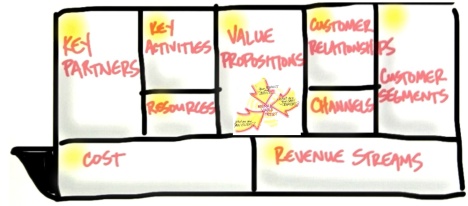
We’ve pivoted our Lean LaunchPad / I-Corps curriculum. We’re changing the order in which we teach the business model canvas and customer development to better-fit therapeutics, diagnostics and medical devices.Udacity canvas and value prop

Over the last three years the Lean LaunchPad class has started to replace the last century’s “how to write a business plan” classes as the foundation for entrepreneurial education. The Lean LaunchPad class uses the three “Lean Startup” principles:

  • Alexander Osterwalders “business model canvas” to frame hypotheses
  • “Customer Development” to test the hypotheses outside the building and
  • “Agile Engineering” to have teams prototype, test, and iterate their idea while discovering if they have a profitable business model.

Teams talk to 10-15 customers a week and make a minimum of 100 customer visits. The Lean LaunchPad is now being taught in over 100 universities. Three years ago the class was adopted by the National Science Foundation and has become their standard for commercializing science. Today the National Institutes of Health announced their I-Corps @ NIH program.

The one constant in all versions of the Lean LaunchPad / I-Corps class has been the order in which we teach the business model canvas.

Value Propositions and Customer Segments are covered in weeks 1 and 2, emphasizing the search for problem/solution and then product/market fit. Next we teach Distribution Channels (how are you going to sell the product) and Customer Relationships (how do you Get/Keep/Grow customers) and Revenue Streams (what’s the Revenue Model strategy and pricing tactics.) Finally we move to the left side of the canvas to teach the supporting elements of Resources, Partners, Activities and Costs.

current teaching order

Teaching the class lectures in this order worked great, it helped the teams understand that the right-side of the canvas was where the action was. The left- hand side had the supporting elements of the business that you needed to test and validate, but only after you made sure the hypotheses on the right were correct.

This lecture order was embedded in the Udacity Lectures, the syllabi and educators guide I open-sourced. Hundreds of teams in the NSF, and my Stanford, Berkeley, Columbia, and UCSF classes learned to search for a repeatable and scalable business model in this way.

It’s consistency was the reason that the NSF was able to scale the I-Corps from 15 to 30 University sites.

So why change something that worked so well?

Rationale
Last fall at UCSF we taught 125 researchers and clinicians in therapeutics, diagnostics, medical devices and digital health in a Lean LaunchPad for Life Sciences class. While the teaching team made heroic efforts to adapt their lectures to our “standard” canvas teaching order, it was clear that for therapeutics, diagnostics and medical devices the order was wrong. Hypotheses about Intellectual Property, Reimbursement, Regulation and Clinical Trials found on the left side of canvas are as, or more important than those on the right side of the canvas.

I realized we were trying to conform to a lecture order optimized for web, mobile, hardware. We needed to cover Intellectual Property, Reimbursement, Regulation and Clinical Trials a month earlier in the class than in the current format.

The National Institutes of Health has adopted our class for its I-Corps @ NIH program starting this October. Most teams will be in therapeutics, diagnostics and medical devices. Therefore we’re going to teach the class in the following order:

1) value proposition, 2) customer segments, 3) activities, 4) resources, 5) partners, 6) channel, 7) customer relationships, 8) revenue/costs

LS Suggested Order simple

I-Corps @ NIH Lecture Order Details
Customer Segments change over time.  CROs or Payers may ultimately be a resource, a partner or a revenue source, but until you get them signed up they’re first a customer. Your potential exit partners are also a customer. And most importantly, who reimburses you is a customer. (You get an introduction to reimbursement early here, while the details are described later in the “Revenue” lecture.)

Activities are the key things you need to do to make the rest of the business model (value proposition, distribution channel, revenue) work. Activities cover clinical trials, FDA approvals, Freedom to Operate (IP, Licenses) software development, drug or device design, etc.

Activities are not the product/service described in the value prop, they are the unique expertise that the company needs to deliver the value proposition.  In this week we generally describe the business rationale of why you need these. The specifics of who they are and how to work with them are covered in the “Resource” and “Partners” lectures.

Resources - Once you establish what activities you need to do, the next question is, “how do these activities get accomplished?” I.e. what resources do I need to make the activities happen. The answer is what goes in the Resources box (and if necessary, the Partners box.) Resources may be CRO’s, CPT consultants, IP, Financial or Human resources (regardless of whether they’re consultants or employees.)

Partners are external resources necessary to execute the Activities. You’ve identified the “class of partner” in the Resources box. This lecture talks about specifics – who are they, what deals work with them, how to get them, how to work with them.

Customer Relationships is what we think of as traditional sales and marketing; assembling a SAB, getting the KOL’s, conferences, articles, etc.  Customer Relationships answers the question, “How will we create demand and drive it to our channel?”

Suggested Order

We think we now have a syllabus that will better fit a Life Science audience. Once the syllabus stops moving around we’ll open source it along with the educators guide this fall.

Lessons Learned

  • The Lean LaunchPad class has started to replace the last century’s “how to write a business plan” classes
  • The lecture order emphasizes testing the right-side of the canvas first
  • That works for almost all markets
  • However, for life sciences hypotheses about Intellectual Property, Reimbursement, Regulation and Clinical Trials are critical to test early
  • Therefore we created a more effective lecture order for Life Sciences

Filed under: Lean LaunchPad, Life Sciences (NIH), Teaching
26 Jun 15:13

The Value of Full Service Marketing

by cbrooks

As a business owner you may know it’s important to invest in a marketing campaign to grow your brand but do you really know how or why? Learn how full service marketing utilizes different media outlets to promote your business and the unique benefit each one has to offer.
26 Jun 15:13

Patents Are Eating the World and Hurting Innovation

by Walter Frick

It’s been a busy month for intellectual property. In late May, the U.S. Senate failed to pass a reform bill aimed at curbing the influence of patent trolls. In early June, Elon Musk announced that Tesla would not initiate lawsuits with any firm that used its patents “in good faith.” Last week, the U.S. Supreme Court issued a ruling limiting the scope of software patents.

The backdrop for all of it — and the reason why so many companies ought to be paying attention — is the explosion of patent litigation since the 1980s, illustrated below:

patentlawsuits

That chart is also key to understanding Tesla’s decision to share its patents in order to grow the electric vehicle industry, as I discussed today with Orly Lobel of University of San Diego and James Bessen of BU. (You can watch the recording of our conversation at the bottom of this post.)

“What Musk has said is basically these patents aren’t very valuable to us in terms of keeping other electric vehicles out of the marketplace,” Bessen explained. “But he’s hanging on to them, and what he’s talking about there is that they may be valuable in defensive terms, if other firms come after him and sue Tesla.”

In other words, the value of patents in an increasing number of cases is merely to keep from getting sued by someone else with patents.

Tesla isn’t the first to recognize this. The same sentiment was behind Twitter’s announcement in 2012 of an Innovator’s Patent Agreement, designed so that “employees can be assured that their patents will be used only as a shield rather than as a weapon.”

In his 2008 book Patent Failure, Bessen and co-author Michael Meurer argue that after taking the cost of litigation into account, the effect of patenting in all industries except pharmaceuticals and chemicals was to reduce the profitability of innovation rather than to increase it. The system works better in the pharmaceutical and chemical industries since the “boundaries” around the patents — what is and isn’t covered — are relatively clear. By contrast, in software it’s often far less obvious what a given patent protects.

Last week’s Supreme Court ruling sought to remedy that, holding that abstract ideas are not made patentable simply by the fact that they are performed by a computer. But it did not go out of its way to make clear just what sort of software inventions were novel enough to warrant protection.

While Lobel and Bessen see the ruling as positive, our conversation ended on a gloomy note. Patent pools, defensive patent agreements, and court rulings can all help. But ultimately the onus is largely on policymakers to clean up the mess.

“We’re forgetting that intellectual property is all about striking the right balance,” said Lobel. “It’s all about the purpose of promoting, not impeding progress in arts and science.” Instead, we treat patenting as a natural right, she said, ignoring the adverse impact on innovation.

Hence cutting-edge firms like Tesla hold patents even when they aren’t looking to exclude others from copying their technology, just in order to mitigate their own litigation risk. Given such a perverse environment, sharing patents in good faith is a step in the right direction. But it doesn’t really fix the problem.


UPDATE: There were some questions on Twitter about the dramatic spike in litigation in 2011 and 2012, and as one of our commenters notes, that is partly (but only partly) a result of a change in legislation. In 2011, Congress passed the America Invents Act which — among other things — limited the number of defendants that could be named in a patent suit, in an effort to curb the impact of patent trolls. This had multiple effects. First, as the GAO concluded in a study of the litigation spike, some suits may have been rushed in order to get in ahead of the law going into effect. Second, parties that did want to name multiple defendants now were more likely to be required to file multiple suits. (You can think of this as inflating the 2011-2012 numbers, or as undercounting litigation in earlier years.) But even when this is taken into account, by counting the number of defendants rather than suits, the level of patent litigation appears to have risen considerably in recent years. As the GAO concluded, “overall defendants in patent infringement lawsuits increased by about 129 percent” between 2007 and 2011. For more on this, try this post by Bessen.

26 Jun 15:12

Investors Always Come Back … Even to Argentina

by Justin Fox

Argentina lost big to a group of American “vulture” hedge funds in court last week, when the Supreme Court declined to reconsider an appeals court decision that the funds had the right to demand that the country make good on a bunch of old bonds they owned even though it long ago renegotiated the terms of that debt with most creditors. (For explanations of the case, see Felix Salmon in Foreign Affairs and Matt Levine at Bloomberg View.) Short-term, this represents a crisis for Argentina, which has until June 30 to either pay out or default. Over the long run, though, it may be a step toward removing such cases from unsympathetic American courts and letting countries like Argentina battle it out with creditors on friendlier turf.

This is an outcome that Laura Alfaro, a professor in the Business, Government, and International Economy unit at Harvard Business School and the former Minister of National Planning and Economic Policy of Costa Rica, thinks would be healthy for all parties involved. In a piece published on HBS Working Knowledge in April, Alfaro argued that the U.S. Congress took a wrong turn in 1976 in passing the Foreign Sovereign Immunities Act (FSIA), which allowed foreign governments to issue debt in accordance with U.S. law, and creditors to sue those governments in U.S. courts in the event of a default.

“One of the most damaging results of the FSIA,” Alfaro wrote, “is a false perception that foreign debt was made less risky than it is. The limited enforcement rights of investors means that sovereign debt remains risky, regardless of whether it is issued under foreign law.” It would be better, she concluded, to return to the pre-1976 practice in which each country issued sovereign debt under its own laws, a change that would “allow debtors and creditors alike to better understand and acknowledge the risk inherent in sovereign debt lending. If you lend to Argentina, you are dealing with Argentina.”

I caught up with Alfaro, who is currently in Brazil cheering on her country’s surprisingly successful soccer team, to ask a few questions by email. Here’s what she had to say:

You’ve been arguing that the sovereign debt of Argentina and other countries should in fact be treated as sovereign and thus not subject to U.S. laws. Last week’s Supreme Court decision was a pretty powerful statement that U.S. law does prevail, whatever the consequences for global debt markets. Does that pull us farther away from the outcome you want, or push us closer to it?

Alfaro: When bonds are issued under foreign law, creditors can sue a defaulting debtor in a foreign court and typically obtain a favorable judgment, since the sovereign debtor is in breach of contractual obligations.  However, the value of this judgment can be limited for two reasons.  First, the creditors generally cannot recover a sovereign debtor’s local assets since these are typically protected by domestic law.  Second, sovereign debtors benefit from foreign governments’ sovereign immunity laws, limiting creditors’ ability to seize sovereign assets held abroad.  For example, foreign assets held in a diplomatic capacity, such as military assets or an ambassador’s residence, are always protected in the United States.  We still need to see if Argentina chooses to pay everyone or default.  Sovereign debt continues to involve a risk. It is best if this is acknowledged explicitly by all the parties.

Does the U.S. need to amend/repeal the FSIA to get us to the sort of sovereign debt markets you’d like to see, or are there other solutions?

Perhaps the one positive effect of the ruling is that we may engage in a serious discussion of these issues (although sadly I still do not envision grand changes emerging).

Sovereign debtors can overcome collective action problems in restructurings by including ex-ante contractual provisions in the bond documentation that make it more difficult for dissenting creditors to hold out and litigate their claims, and using ex-post negotiating strategies that encourage collective action amongst creditors. The most widespread contractual mechanisms for dealing with these problems are collective action clauses that empower a qualified majority of creditors to bind dissenting creditors and thereby limit the potential threat of litigation from “holdout” creditors.

Another important issue is to change the pari passu clause, which limits the ability of debtors to privilege one group of creditors over another. Argentina’s bond offering featured the broadest version of the pari passu clause, providing for equal priority and equal payment of similarly situated creditors. In 2012, the U.S. Court of Appeals for the Second Circuit held that this prohibited it from paying one class of creditors while other creditors that are owed payment receive nothing.

In future bond offerings, sovereign debtors can avoid this interpretation by changing the wording of the clause or deleting language that provides for equal payment.  They also have the option of issuing bonds under their own law.  Bonds issued under local law typically limit the ability of creditors to litigate in foreign courts.

The question of why a sovereign debtor would ever choose not to insert such contractual provisions into its bond documents or issue under foreign jurisdiction remains. Sovereign debtors have an ex-ante incentive to commit to greater creditor enforcement rights in order to attract more favorable financing terms. But sovereign nations are sovereign nations.  Less creditworthy countries must therefore decide whether the premium for including contractual terms that limit creditor litigation rights is worth paying.

Is there a chance that this Supreme Court decision will damage New York’s standing as a financial center?

On the one hand the decision of the Supreme Court strengthens creditor rights. On the other hand, some sovereigns may prefer alternative laws to issue their debt. As mentioned, this is a tradeoff between most favorable terms ex-ante and limitations ex-post. The important point, however, is that this is an ex-ante bargain between the sovereign debtor and the creditor and is priced into the financial terms of the transaction.  Again, perhaps moving to a world where everyone explicitly acknowledges the risks would be better.

What do you think Argentina should do next?

They should start negotiating in good faith.  There are attempts also to move the debt to local jurisdiction. A payment is due June 30, so we will find out what they will do.  But again, showing good will matters.

With no protection in U.S. courts, would anybody outside Argentina buy Argentine debt?

History has shown that investors always come back … even to Argentina.

26 Jun 15:12

To Resolve a Conflict, First Decide: Is It Hot or Cold?

by Mark Gerzon

As a leader, you’re going to face conflict. It comes with the territory. But before you try to deal with a conflict, you first need to stop and ask yourself the following question:

Is it hot or cold?

To help you answer this vital question, consider these two definitions:

Hot conflict is when one or more parties are highly emotional and doing one or more of the following: speaking loudly or shouting; being physically aggressive, wild or threatening; using language that is incendiary; appearing out of control and potentially explosive.

Cold conflict is when one or more parties seem to be suppressing emotions, or actually appear “unemotional,” and are doing one or more of the following: muttering under their breath or pursing their lips; being physically withdrawn or controlled; turning away or otherwise deflecting contact; remaining silent or speaking in a tone that is passively aggressive; appearing shut down or somehow frozen.

Neither of these types of conflict is constructive. Conflicts that are warm — that is, already open for discussion but not inflamed with intense hostility — are far more likely to productive. So, if you’re dealing with cold conflict, you need skills to “warm it up.”  If you’re dealing with hot conflict, you need skills to “cool it down.”

Conflict resolution, like cooking, works best at the optimal temperature. If too hot, your conflict may explode, burning your deal or causing your relationship to flame out in anger or overt hostility. Cold, and your deal may be frozen, not moving forward at all, or the relationship may become icy with unexpressed emotions and withheld concerns. As a leader, you want to bring conflict into a temperature zone where it can become useful and productive.

In the twenty years that I’ve been dealing with conflict professionally, I’ve operated in both hot and cold settings. In my work with companies, educational institutions, and faith-based organizations in the U.S., I have generally found cold conflict. However, in my work with politicians both in the U.S. and in conflict zones around the world as a UN mediator, I have often dealt with hot conflict. And I’ve learned firsthand that understanding this hot/cold distinction is a crucial first step before you start trying to act like a mediator in any organization. Once you’ve made a definitive hot/cold diagnosis, you’ll need to understand what some of the dynamics behind each situation might be:

If the conflict is hot: You don’t want to bring participants in a hot conflict together in the same room without settings ground rules that are strong enough to contain the potentially explosive energy. For example, if you are dealing with a conflict between two board members who have already attacked each other verbally, you would set clear ground rules — and obtain agreement to them — at the outset of your board meeting before anyone has a chance to speak.

Try this approach. Have everyone sit in a circle, and then ask each person to speak in turn with strict limits (e.g. 3 minutes each). Pick a question for everyone to address that requires that they speak about themselves and their own feelings. For example, when I worked with members of the House of Representatives, the question that opened the retreats I designed was: “How does the way the House deals with its differences affect you and your family personally?” The result of this sort of question and answer session is an opening round of conversation that avoids personal attacks, allows everyone to speak, and ideally deepens trust before entering more difficult territory.

If the conflict is cold: You can usually go ahead and bring the participants or stakeholders in the conflict together, engaging them in constructive communication. That dialogue, if properly facilitated, should “warm up” the conflict enough so that it can begin to thaw out and start the process of transformation. But you will still need to be vigilant and prepared. Conflict is often cold precisely because so much feeling is being repressed. So you need to skillfully know how to warm it up without the temperature unexpectedly skyrocketing.

Use debate and dialogue. If a group is avoiding tackling a tough issue, frame the difference as a polarized debate. Form two (or, if necessary, more) teams and hold an actual debate. This will accentuate the differences and inspire the group to recognize the conflict that is under the surface.

Whether the conflict is hot or cold, the goal is not compromise, but rather bridging the divide and innovating new options or solutions. Bridging means creating stronger ties and deeper trust between the former antagonists. Innovating — which is distinct from compromise — means that some new resolution or possibility has emerged.

Conflict resolution isn’t something you learn overnight — it takes time, practice, and reflection.  If you find yourself in the middle of a conflict and you haven’t yet developed the skills to address it, consider bringing in a third party or a professional mediator to help. With that said, if you’re reading this in the middle of an intense, immediate conflict that requires urgent action, keep the following advice in mind:

1. Make time your ally. Don’t rush to act. Unless you’re in danger, take stock of your options. Otherwise you might say or do something you regret.

2. Determine your goal and focus on it. Don’t get distracted; stick to what matters.

3. Avoid name-calling and finger-pointing. Focus on the problem, not the people.

4. Beware of self-righteousness. Keep an open mind; you may find that you can learn something of value.

5. Listen to everything, but respond selectively. You don’t have to address every point — just the ones that make a difference.

6. Take stock before you take sides.  Don’t speak — or take any other action — until you’ve really heard the other person out. Don’t leap to conclusions before you have a firm grasp of the situation at hand.

7. Consider calling in a third party. Someone who is not involved in the conflict may be able to provide vital perspective for both parties.

8. Let your adversary know you. Letting down your guard and letting the other person in may help them understand your point of view.

9. Check the temperature gauge. If the conflict is still too hot, don’t try to resolve it right away. Agree to come back when things have cooled.

10. Observe the Golden Rule. “Do unto others as you would have them do unto you.” Be polite. Be compassionate. It may inspire your adversary to do the same.

Keep in mind that your ability to navigate conflict is one of the primary ways that you reveal your character as a leader. The best time to learn is when conflict is neither too hot nor too cold. By learning to control the temperature, you make it much more likely that you’ll be well positioned to deal creatively with the next conflict that’s inevitably coming your way.

Focus On: Conflict
26 Jun 15:11

We’re No. 1: 18 reasons why it’s great to be Canadian

by macleans.ca
MAC25_CANADA_TOP_CAROUSEl

We’re No. 1 all over the place.

We all know Canada sits on top of the world geographically, but as this list of firsts proves, we are global leaders in so very many surprising ways.

True, these are little triumphs, but, taken together, they are many little triumphs. No denying, Canada is one smokin’-hot 147-year-old.

Say cheese — we’ve earned the right: Cast your classic Canuck modesty to the four strong winds and revel in our world-beating reputation for . . . cheese.  Lancaster, Ont.’s own Lankaaster is the Supreme Global Champion of the Global Cheese Awards. Wow, that sounds important.

We’re at home on the water: Canadians can do a lot in a canoe—but we’re better in a dragon boat. At the World Dragon Boat Racing Championships in Hungary, Canada finished first in 12 of 21 events.

Elisabeth Roy/Dragon Boat Canada

You can count on our banks: The World Economic Forum has ranked Canada’s banks the soundest in the world out of 148 countries. What accounts for this strength? The banks will tell you that, unlike their American colleagues, they never take their eye off potential risks. Politicians and regulators, on the other hand, will take credit for a streamlined regulatory system that avoids the overlap and potential loopholes that plague Wall Street. The truth probably lies somewhere in between.What matters is whether the strength of the banks will hold up when the next crisis comes, which at some point, it will.  It makes one forgive the puny interest rates they pay. Almost.

Our middle incomes are at the top of the global pile: A New York Times report earlier this year showed that median incomes in Canada rose 20 per cent between 2000 and 2010, after adjusting for currency and inflation, to $18,700—putting us neck and neck with the U.S. Given the continued strength in the Canadian economy since 2010, along with lacklustre gains in the U.S., Canada’s middle class is likely to have pulled well ahead. At the same time, new research in the last year showed that the so-called “American dream”—the notion that anyone born to rags can rise to riches—really belongs to Canada instead.


Related: 22 maps of Canada as you’ve never seen it before


We own the 245-kg deadlift: Ron Delaney, a 62-year-old from Sydney, N.S., won the Classic World Powerlifting Championships in the master’s division for the fourth year in a row.  He also set a new record in the deadlift.

… the lumberjack record for speed climbing: The lumberjack world record for ascending and descending a 90-foot pole was set by B.C.’s Stirling Hart in 18.3 seconds. (And style points for that great name!)

… and a record in disc flying: At the World Overall Flying Disc Championships in Sweden, Calgary’s Rob McLeod won the Self Caught Flight World Championship, meaning he threw a disc 79 m in the air, ran, and caught it himself.

We boast the word’s speediest salesman: Justin Gattey won the International Livestock Auctioneer Championship at the Calgary Stampede, speed-talking his way past nine other finalists to become the world’s fastest salesman.

… and the world’s fastest drummer: Nobody can keep a beat like Tom Grosset. The Torontonian set a record as the world’s fastest drummer, rattling off 1,200 strokes in 60 seconds. Something to celebrate, unless he lives in your basement.

We’re the best at snooty art films and DoGooder videos: No other country on Earth can touch Canada when it comes to the most critically lauded genre around: the snooty art film. This year’s Cannes film festival, ground zero for the world’s elite cineastes, featured a record number of Canadian films in official competition, each of them the highest of the highbrow. There was David Cronenberg’s lofty satire Maps to the Stars, Atom Egoyan’s intense and so-very-slow drama The Captive and 25-year-old wunderkind Xavier Dolan’s emotional (i.e., extremely non-commercial) drama Mommy, which took home the festival’s Jury Prize. (The Canuck-led aloofness didn’t end at the official competition level, as Ryan Gosling’s impenetrable directorial debut, How to Catch a Monster, played in the appropriately titled Un Certain Regard side category.) If that wasn’t enough of an art-house assault, Quebec’s Geneviève Dulude-Decelles’ The Cut won the award for best international short film at this year’s Sundance film fest, and Toronto annually wades into high-and-mighty territory with its globally celebrated film festival. But if dominance in one film genre isn’t enough, we’re also tops in the emerging instructional-medical film category: the Canadian Cancer Society’s film Nutiquette, about testicular cancer awareness, took home first prize at this year’s DoGooder Nonprofit Video Awards. The ball’s in your court, world.

Ryan Gosling, Atom Egoyan, Xavier Dolan and David Cronenberg.

Ryan Gosling, Atom Egoyan, Xavier Dolan and David Cronenberg.

We had lift-off … at least for 64 seconds: Since its inception 33 years ago, the $250,000 Igor I. Sikorsky Human-Powered Helicopter Award stood unclaimed, until a Toronto-based team took it for pedalling their machine in the air for 64 seconds.

We’re stars in space — (and the Twitterverse): Chris Hadfield, a TED-talking, Bowie-impersonating space cowboy, became the first Canadian commander of a million pounds of metal known as the International Space Station in March 2013. In the course of conquering space, he won the hearts of more than a million people following him on Twitter. Not to be outdone by the world’s first space-going, social media giant, four Canadians won a NASA International Space Apps Challenge this May by designing what they called “Twitter for the sky.” The app would constantly update a cosmic stream of goings-on so astronomers and amateurs alike could keep an eye on the universe. It comes not a moment too soon for Kathryn Aurora Gray of Fredericton, who, at 10, became the youngest person ever to discover a supernova when she spotted the exploding star on New Year’s Eve.

Photograph by Christopher Wahl; styling by Claudine Baltazar for Tresemme Hair/M.A.C. Cosmetics/Plutino Group

Photograph by Christopher Wahl; styling by Claudine Baltazar for Tresemme Hair/M.A.C. Cosmetics/Plutino Group

We are proven straight shooters: The Mounties defeated the Alaska State Troopers at their 53rd annual shooting competition: the event is the longest running international law-enforcement shooting competition in the world.

We even win at the old college try: Back in 2000, when the Organisation of Economic Co-operation and Development measured the proportion of people between the ages of 25 and 64 with post-secondary degrees in 42 countries, Canada came first, with 40 per cent in cap and gown. When the OECD’s “Education at a Glance” report was released in 2013, we were still the most educated country on the list, with 51 per cent of Canadians earning a degree from a college or university.

Our housing market keeps defying the odds: For years now, experts the world over have used words like “frothy,” “bubbly” and “overheated” to describe Canada’s soaring housing market. Another word they might consider: resilient. Despite the repeated warnings of an inevitable cooling, Canada’s housing market just keeps steadily rising in all major cities. In fact, nowhere has the dream of home ownership seemed so rewarding in recent years than in Canada.  A recent Statistics Canada report says the median reported value of a principal residence was $300,000 in 2012, up 83 per cent from 1999. The market is being driven by record-low lending rates but also by foreign investors who believe Canada is a safe and desirable place to park their money. In its ranking of the world’s most resilient cities, the U.K.-based, real estate investment and development firm Grosvenor recently named Toronto, Vancouver and Calgary the top three places for long-term real estate investment, calling them “safe havens in a rapidly changing global environment.”

We write the books the world is reading: Canadian authors have long held sway over the global literary scene—though we’ve never been quite as on top of the world as now. This past October, Alice Munro became not only the first Canadian to win the Nobel Prize in Literature, but the only homegrown author to unite the entire country in one giant patriotic love-fest. (Sorry, Margaret Atwood, but even if you cure cancer, you are simply too divisive.) We’ve also claimed New Zealander Eleanor Catton as one of our own after she snagged the Man Booker Prize for her epic murder mystery novel, The Luminaries. Finally, Toronto’s Eitan Amos won the only book-based contest that really matters, placing first in the International Youth Bible Contest in Jerusalem this May. It isn’t called the “greatest story ever told” for nothing, after all.

Alice Munro, Eleanor Catton, and Eitan Amos.

Alice Munro, Eleanor Catton, and Eitan Amos.

We are a country full of great repute: If reputation is a country’s calling card, then Canada is knocking down doors all over the world. When we came out on top for the third time in an annual survey of 27,000 people from the G8 countries, there was much to crow about, especially when the superpower to the south checked in at 22nd. The Reputation Institute, a management consultancy with offices in New York and Copenhagen, reported last year that Sweden was a close second (we scored 76.6 out of 100; the Swedes got 76.5), with Switzerland and Australia and Norway filling out the top five spots. It’s probably a good thing everyone else likes us, because Canadians aren’t so effusive. According to the latest survey by GlobeScan, a global consulting firm, Canadians ranked Canada’s role in the world below that of the U.S., France, the U.K., and Australia, said Doug Miller, GlobeScan’s chairman. “In part, that’s the beauty of Canadians. We’re very modest and self-critical. We have our stellar reputation. But we as Canadians don’t feel that we’re living up to it as much.”

Two words: Hockey supremacy: How best to measure our domination of the game? In Olympic gold medals? In our production of stars like Steve Stamkos and P.K. Subban—two of the most electrifying players in the sport? Canada, it turns out, remains by far the most prolific source of professional talent, providing nearly half the roughly 210 players drafted to the NHL each summer. That’s about the share we’ve produced since the league introduced the draft in 1969, and gives lie to the notion that Europe and the U.S. are stealing away Canada’s status as the sport’s worldwide centre of excellence.

Bruce Bennett/Getty Images

Bruce Bennett/Getty Images


The post We’re No. 1: 18 reasons why it’s great to be Canadian appeared first on Macleans.ca.

26 Jun 15:11

The New KPI’s of Marketing ROI

by Dan Newman

By this point we all know that at the end of the day the top priority of marketing should be to create customers for the business – whatever the business may be.

As a marketer, you live in a world that is adding channels on seemingly a daily basis, while at the same time the consumers’ attention are being drawn in a hundred different directions making it increasingly difficult for any brand (especially those without an endless budget) to stand out.

In the end the mission is sales, well at least that is the myth, but I think we would all agree that when we invest in marketing we seek a return. More times than not those upstairs that write the checks and control the budget want marketing to drive more sales. But in a world of short attention spans and unprecedented options are there key performance indicators (KPI’s) that should be attached to marketing and social media efforts that span beyond just customer acquisition and sales?

The short answer is yes, there are, and while these new KPI’s should, by no means, replace the onus on marketers to create customers and revenue, they do measure different aspects of a business that are equally, if not more important, for long term performance than their traditional counterparts. In the vastly evolving landscape of marketing, the new KPI’s must also reflect the following:

  • Customer Retention: How successful are we in keeping customers and building repeat business?
  • Customer Satisfaction: Are our customers happy? How well are we doing in getting them to share their satisfaction to build word of mouth?
  • Product Improvements/Optimization: Is our community driving ideas to help us innovate? Whether products or services, do we have our finger on the pulse and how much are our customers helping us accomplish this?
  • Employee Productivity: Does the company adequately equip and empower employees to succeed?
  • Employee Retention: Are we creating a brand that employees are proud of and a place of work where they can grow personally and professionally?

Happier Customers, Better Products, Satisfied Employees

The business of the future should not simply measure their marketing by the dollar value returns that it creates.

If you look at the numerous studies that have shown the value of a satisfied customer or the return on stronger employee morale, you would have to be crazy to dismiss these items when determining the success of a marketing program.

The challenge that remains is how, or perhaps if it is possible to measure the direct value of investing in customer satisfaction.

For instance, Zappos, from their earliest days, have set out to build the ultimate customer experience. With almost a “Never-say-no-to-a-reasonable (or unreasonable) customer demand,” their customer experience teams will do whatever it takes to maintain a happy customer.

I suppose a marketer may say that is a customer service expense, but I would beg to differ. When an unhappy customers’ situation is flipped on its head by a small expense approved by an empowered customer service professional what you have is an investment in your customer; to create and keep them, and that is without a doubt a marketing investment. Furthermore, the cost of replacing a customer is 6x the cost of retention, so why wouldn’t we want to keep our customers happy?

Another great example is the way companies such as Dell and Starbucks use online communities to drive product development and innovation. While one company is a technology company and the other is a beverage company, both have invested substantially in building their brand evangelists by making their most loyal customers ideas and input feel welcome and sometimes even utilized in their product optimization.

While Steve Jobs may have been known for never putting his ear to the street and just “knowing” what his customers want, he was the exception and not the rule. Companies that can find ways to listen and adapt to their customer feedback can build a new type of loyalty that translates into dollar returns. The challenge again is how do you attribute that to a campaign? Is it even possible?

Where Marketing ROI Is Heading

In the future Marketing ROI will have to spread its wings to move beyond just customer creation and measurable dollar value returns. However, I want to be clear when I say that doesn’t mean those activities aren’t important, because they are.

The creation and continued evolution of metrics that measure the baseline value of more satisfied customers, the involvement of a brand’s community in product development and the investment in more satisfied employees will all become anchor points in the process of building a marketing strategy.

Perhaps the biggest difference will be the way smarter businesses big and small will apply the new marketing KPI’s to enhance their marketing 24/7/365 rather than placing a hyperawareness on the peaks and valleys created by a traditional marketing strategy, which is dependent on campaigns that do little to build loyalty within the brands’ stakeholders.

26 Jun 15:06

How to create an integrated marketing campaign plan

by Alex Heaton

Avoiding common 6 pitfalls of marketing campaign planning

avoiding-campaign-pitfalls

In my previous post reviewing techniques for digital marketing integration post I touched on the three major challenges to integrating digital marketing: planning, people and agencies. In this article I will look in more detail at these challenges as they relate to  marketing campaigns, giving suggestions on how they can be avoided through better management.

To help make the campaign successful it can help to think about what can go wrong in the planning and execution and then avoid these pitfalls. In this post I’ll show 6 pitfalls that I’ve seen with campaign planning – each of the following pitfalls is directly aligned to one of six stages of creating an integrated campaign covered in the Smart Insights marketing campaign planning/briefing template which I will describe more fully in a later post:

  • 1. Campaign goals and tracking.
  • 2. Target audience, customer insight and targeting.
  • 3. Key campaign messages and offers.
  • 4. Campaign media plan and budget.
  • 5. Campaign asset production.
  • 6. Campaign execution and optimisation.

From my time at First 10, many years at a large full service agency, and several more working client-side, I would estimate that I’ve worked on around ten integrated campaigns a year, so over 100 in total. The following examples and recommendations are all based on this experience.

Pitfall 1: Mixing multiple objectives with arbitrary channel goals will bias strategy and channel selection

I’ve seen countless briefs over the years which list a huge array of goals. The example below is a real brief I received a few years ago.

Campaign Objectives:

  1. Raise awareness of the brand
  2. Encourage trial
  3. Increase engagement with key target demographics
  4. Increase Facebook likes
  5. Win an award (this is a REAL example, not a joke…)

There are a number of issues with these objectives. First of all they are not SMART (Specific, Measurable, Achievable, Relevant or Time Bound) but this is fairly easy to fix. For example:

Revised Objectives for a 3-month campaign

  1. Raise awareness of the brand from X to Y in 3 months
  2. Encourage X new customers to take the trial pack in 3 months
  3. Increase engagement with key target demographics by getting X number of customers to complete Y engagement actions on the website in 3 months
  4. Increase Facebook likes from X to Y in 3 months (Relevant?)
  5. Win the X award for integrated campaigns this year (Relevant?)

The next issue is that while we might find a strategy that achieves objectives 1 to 3, by treating these objectives as equal it is very likely that the campaign strategy, messaging and execution will be watered down, ultimately achieving average results across all three objectives.

Finally, including arbitrary channel goals will bias the strategy. For example we might be able to achieve objectives 3 and 4 by developing a Facebook campaign but then under-perform on objective 2 because the campaign is in social when it should be in store.

Ultimately if you’re not sure then keep it simple. Often the best objectives are core business objectives linked to a monetary value, e.g. sell 5000 of X in 3 months with Y budget.

 Recommendations

  • Simplify objectives back to business goals rather than marketing goals if possible
  • Avoid channel specific goals at this stage. Set channel KPIs once you have a strategy in place
  • Always use SMART objectives

Pitfall 2: Limited research or insight into your audience will hugely affect the strategy

I spent some working for a brand that was new to the UK not so long ago. The market they’re in is growing very quickly as are the brands that are fighting for a share. Despite being one of the biggest brands in their home market with a wide appeal, they initially identified a niche target demographic as their primary target audience. To further narrow it down they then identified a geographic location with has a lower consumption of this type of product than other areas.

Their product is one of the better ones but there isn’t as much differentiation between the top and the bottom as the brand believes. Another sign that they could be making a mistake is that all of the competition are going for the mass market demographic and the geographic region with higher usage. Some might say that because of this their strategy is smart, but my opinion is that it’s high risk. To make matters worse their ATL campaign totally ignored the insight that they do have on their product and market in favour of a slightly bizarre ‘insight’ that most users of the product disagree with.  As a result, they’ve struggled to gain a similar share of the market as they have done in their home market.

Recommendations

  • Be objective and use your research to inform strategy not ratify your existing ideas
  • Use a research agency to guide your strategy and then research again when you have creative
  • Do your own research by using tools such as Comscore, Kantar, Global Web Index, Google Surveys
  • Spend a day at a call centre, or better still, phone 100 customers and ask their opinion (Zappos senior management all do this)

Pitfall 3: Relying on your opinion to judge the best creative and messaging for various audiences is risky

I like to think that I’m pretty good at judging creative these days, but the reality is that I probably get it wrong as much as I get it right. Over the years I’ve witnessed lots of large campaigns, rolled out with large media spends, with one creative execution and the same messaging across all creative. The campaign goes out, and you hope for the best. On the other hand, I’ve been involved in campaigns where we’ve gone through multiple rounds of testing which have done very well indeed.  A typical test plan might be as follows:

  1. Messaging tests with the same visual creative
  2. Demographic targeting tests with the winning messaging
  3. Near to final creative visual tests
  4. Launch with up to 10 creative with pre-tested messaging and creative that is optimised for demographic groups

While this process adds time and cost to the front of the campaign, I’ve seen 5-10% increases in performance as a result making it well worthwhile.

Recommendations

  • Use Facebook ads to test messages and creative quickly and cheaply
  • Use Google surveys to get qualitative and quantitative feedback on creative, again quickly and cheaply
  • Build in budget for testing and always deliver multiple creative executions

Pitfall 4: Media un-neutral planning

Every agency will tell you that they are media neutral when it comes to planning; the reality in my experience is far from neutral. Ultimately it comes down to incentives and rewards (something I will be covering in a future post in more detail).  If one agency is paid to plan and to buy media for you, there are plenty of opportunities to get a biased plan. Media owners court agencies, they offer incentives, commission and build relationships with the planners and buyers. While the non-monetary incentives are nice, ultimately the agency is interested in making money, so why choose a channel with limited or no agency commission when you’re incentivised not to?

This problem is certainly not new, and in fact many agencies now pass this discount back to their clients. The other big incentive when it comes to planning un-neutral is the recommendation of tactics that are in the planners’ or agencies’ comfort zone, or that might mean an additional project for that agency.

Recommendations

  • Pay for planning by itself with no promise of buying or execution
  • Use a reward structure that is not simply a flat fee, encourage your agencies to strive for success (post on this to follow soon)

Pitfall 5: Mapping customer journeys and messaging across channels is essential

I was watching an England match recently and happened to watch a rather unusual ad featuring Steven Gerrard. It turned out to be a Lucozade Sport ad, which seemed to imply that the product could help you beat the humid conditions during the World Cup. It then had a call to action to book your place at something called the ‘Conditions Zone’. At the time I had no idea what this thing was or why I should book a place, and I suspect the ad would have performed poorly. Altering the call to action to be something like ‘How to beat the Brazilians with science’ or something similar would have been much clearer than their call to action. Once the consumer has moved to the website and learned more about the project, you’re then in a position to ask them to to book their places.

Recommendation

  • Map your messaging against your planned customer journeys before you start your visual creative – to learn more about customer journey mapping, see the examples in the Smart Insights Persona Toolkit.

Pitfall 6: Test, optimise, analyse and repeat

I did some work for a major oral care brand a few years ago, and strangely enough their brand name was not their URL. It turned out they had once created an integrated TV, press, and digital campaign and had decided to use the campaign name as the permanent URL for the brand. I wasn’t around at the time but I do know that they were losing up to 10k worth of natural search a month because of this mistake. Once this campaign had gone live, the drop off in search should have been picked up and prompted a change in strategy. More often than not, budget is not assigned to optimisation which means things like this are simply left.

In many respects, integrated digital campaigns are similar to building a piece of software, where the first version is simply a beta version. Once the beta is live we then need to enter into a regular cycle of improvements and new releases. I’ve seen campaign performance increase by up top 10% through optimisation.

Recommendations

  • Build in an optimisation budget
  • Build in an optimisation expectation with the whole team
  • Be prepared to change major parts of the strategy if they are not working

Image credit: Photobucket

26 Jun 15:03

5 Ways to Increase Conversions With Forms

by Aaron Mireles

5 Ways to Increase Conversions With Forms image inbound marketing bad formWhat have you done for your forms lately?
Forms are the lifeblood of your leads and when improperly optimized, conversion rates will fall faster than Myspace after Facebook.

Why? Because forms are a point of friction on your site.

Forms are the area where your target audience stop and ask, “Do I really want to hand over my contact information?” That being said, improving your forms can mean big opportunities for your company. So the question remains, why not take the time and improve the performance of your forms and reduce the friction?

By implementing the five points below, you can increase your conversion rates. As a bonus, you will also spare countless visitors the agony of encountering another atrocious form they would be dreading to complete.

1. Design To Differentiate 

Today we are constantly connected to the digital realm where we read, digest, and move on all in a short time. The same can be said about online forms, which are notoriously missed or avoided if they fail to capture the attention of the user. If you are looking increase your submission rate, use a clean form design that captivates and helps guide the user in the visually in the direction of the submit button. Here are a few other things to think about when creating a form that wows users into handing over their contact information:

  • Ensure all form designs are consistent with your brand
  • Avoid creating two columns within your forms
  • Get creative with the field text
  • Keep your form simple and reduce the need to scroll drop down options.

2. Carefully Select Form Titles 

Would you fill out a form if the title was confusing or non-existent? After all, the title indicates exactly what users will receive after giving you their contact information. This is why your title should be clear, striking and concise. Imagine your form title is a call to action and it’s sole purpose is to encourage visitors to complete the form in its entirety and continue to participate in the digital journey. Here are a few examples of form titles that is both recognizable and encourages action.

  • Sign up for the weekly blog digest
  • Download the Big Data is Baloney whitepaper
  • Register for Why Cat Videos Dominate YouTube webinar
  • Claim your 2014 Social Media Guide now!

3. Goldilocks Your Field Count

Keeping forms short to increase conversions is wise and can help prevent form abandonment. However, a short form can be just as off-putting as a long one and even get you into hot porridge with sales if the leads aren’t top quality. So what’s the right number of fields? There isn’t a definitive answer but with a strong strategy and keeping these points in mind, you can find your perfect form field count that isn’t too big or small but just right:

  • Steer clear of invasive questions like asking for their age, if possible (reduces conversion rate by 3%) or phone number (reduces conversion rate by 5%).
  • Experiment with optional fields. Studies show companies who added the word ‘optional’ to phone field doubled conversion rate from 42.6 to 80%.
  • Automate fields when possible using smart form logic. If the information is already in your system, it should be populated automatically.
  • Consider the buying stage of your offer and match it to how much information you need. A whitepaper shouldn’t require the same information as an infographic.

4. Don’t Submit to “Submit”

For the love of conversions, make sure the submit button does not actually say “submit.” Just imagine bumping the conversion rate by 3% with a few minutes of brainstorming and non-intimidating copy that addresses the viewer as a peer. Think of this button as the last opportunity to convince the user to continue filling out the contact fields and take the next action. Finally, make sure the button is customized to reflect the offer. Here are a few examples:

  • Get The Information
  • Show Me My Coupon
  • Download This eBook
  • Find My Apartment

5. A/B Test For Success

Any area on your website that could potentially create friction on a website is open for A/B testing, your forms included. By A/B testing your forms, you can get a better handle on your target audience’s behavior when asked to provide personal information. An even bigger benefit to testing different versions of your form is increasing the conversion rates down the line with other forms and in half of the time. If you’re unsure what to test, try these ideas:

  • Experiment with multiple forms of copy that highlight what the user will get after submitting the form
  • Try multiple “submit” button versions that hint at what happens after the click
  • Test multiple brand consistent colors that will help find the eye pleasing recipe for success
  • Try different field copy that is no where near the traditional “First Name, Last Name, E-mail.”

Reducing your website forms friction means improving the user experience and making the journey purposeful. Whether you are A/B testing, designing to stand out or optimizing your form titles, strategies like these will assist in reducing the friction that makes users abandon forms. By making the experience as easy and sensible, you’ll find that conversions and user experience will both significantly improve. Within each form on your website are hidden submissions and opportunities waiting for you to uncover.

So what is keeping you from improving your form field conversion rate? 5 Ways to Increase Conversions With Forms image

26 Jun 15:03

How to Track Attempts per Lead in Salesforce

by mattbertuzzi@gmail.com (Matt Bertuzzi)

attemptsperleadIf you lead an SDR team, or are in Marketing and deliver them leads, I'm sure you've been involved in debates about how many times a rep should attempt to reach a prospect.
You have a process. But are you able to accurately track it in Salesforce?  

For years, I've been tweaking reports trying to get an accurate picture and I think I've finally buttoned it up. Here's how you can too: (you might want to involve your Salesforce Admin)

Step 1 - Choose the right report

For most orgs, Activities with Leads will be the best report type.

Step 2 – Focus on a subset of leads

If you include leads that your reps are currently calling, it will skew your numbers. Similarly, you don't want leads your SDRs have disqualified without ever attempting (competitors, students, cartoon characters, etc.).

For best results, you want to include only the leads that your SDRs have attempted, but not reached. In our org, we disposition those leads to "No Contact."

leadstatus

This is a key step to getting the report right. Use whatever lead status means 'tried to reach | never did' in your org.

Step 3 - Hide the noise

Automatically generated activities will throw off our numbers. For my taste, I remove things like mass emails, email opens, email replies, etc. I want a nice clean list of phone and email attempts by the SDRs only.

So my report criteria look like:
report-properties

Next you'll want to set the report format to "Summary" and group by rep. I used "Assigned" as my grouping. At this point, make sure to save the report.

Step 4 - Secret sauce

This part requires a quick detour. You need to create a custom formula field on Leads.

Setup -> Build -> Customize -> Leads -> Field - > (scroll down) New Lead Custom Field. For Data Type, select "Formula." And follow the steps below:
steps23

Step 5 - Fun with math

Head back to editing your report. Add a Custom Summary Formula called "Average Attempts." It should look like this:
average-attempts

Voilà

Your report should look like this. I added a chart at the top and sorted by Average Attempts descending.

attempts-per-lead

It's ciritcal that you know if your calling methodology is being followed. Attempts per leads is a key indiciator. This report will give you visibility into Rep and aggregate levels.

If you run into any issues, let me know in the comments and I'll be glad to lend a hand.

New Call-to-action

----------------
  

Matt Bertuzzi

About Matt Bertuzzi

Matt writes about inside sales metrics & trends. He is co-author of The Outbound Index.

Connect on Twitter and Google+.


26 Jun 15:02

Be Relevant or Die: The New Nature of Nurture

by Will Spendlove
irrelevant email follow ups

Author: Will Spendlove

Nearly three-quarters of online customers are frustrated by brands that showcase irrelevant content and promotions. Is your marketing department contributing to your prospects’ frustration and harming your pipeline – or even worse, your bottom line?

Harnessing relevance in your marketing efforts involves engaging , relevant , personalized content – you’ve heard it all before. But the simple truth? Companies who are doing ‘the relevance thing’ well aren’t in the majority. Many marketing organizations are struggling to differentiate segmentation from personalization; others are still pushing out batch and blast email campaigns.

Relevance is the New Game in Town

Soliciting prospects used to be more of a numbers game. Think of an old fashioned factory manager, dealing with high turnover rate and constantly trying to keep all of his work stations staffed. His goal wouldn’t be to find the best employees – he’d probably hire anyone who applied. Compare this to a successful, modern company, where job recruiters carefully select employees who fit with the company culture, and who are most likely to stick around.

Lead generation also used to be more of a numbers game. You marketed to as many people as possible, regardless of their fit for your product or service. Today, marketers are more like those modern recruiters – they think of potential customers as future advocates.

Instead of a numbers game, it’s now a relevance game. Reaching your prospects in a negative way (read: marketing to them with irrelevant messaging) will affect your ability to recruit new customers and to maintain current customers. As marketers, we’re trying to maintain the delicate balance between creating brand messages with wide appeal, and creating highly targeted journeys for our buyers. And we’re not only doing this for the sake of revenue – we’re doing it for the sake of customer success.

Humanize the Masses

Thanks to increasingly sophisticated data collection technology, marketers now have the option to track and collect massive amounts of information about their prospects and customers. But the point of tracking isn’t to lump everyone together – it’s to understand how each individual experiences our products. Combined, user behavioral data and explicit user profiles produce a rather solid picture of our prospects – and if used appropriately, can almost guarantee a happier customer story. When your customers willingly share their personal information, they rightfully expect an improved user experience.

That’s why marketers might choose to deploy sophisticated marketing automation tools, to strengthen customer relationships, increase social engagement, and boost visibility – in short, to enhance user experiences. Once you understand what your customers are looking for, marketing automation can help you both adjust and execute on that understanding. Remember that prospects are not faceless companies; they are people who are motivated by pain or curiosity.

4 Components of a Relevant Campaign

To create relevance, you’ll need to do more than implement the right tools. You can begin to humanize your lead pool by gaining insight in four areas: prospect intelligence, lead intelligence, lead scoring, and lead nurturing.

1. Prospect Intelligence: Track even anonymous prospects with personalization tools, which can provide you with behavioral/demographic/firmographic analysis of users who are cruising your site.

  • Personalization tools can look up the IP address of site visitors, giving you critical information about anonymous visitors, telling you which company’s server hosts each visitor’s computer.
  • When prospects from ideal target companies are visiting your site, analytics will help you determine which pieces of content to prioritize and which companies are likely to convert.

2. Lead Intelligence: Lead intelligence is the captured data that reveals behavioral activity on your site combined with external behavior about an individual and their company.

  • Lead intelligence helps to determine where your prospect is in the buying cycle (kicking the tires or intending to buy). Use lead intelligence to create a lead profile enabling you to send relevant, targeted content tailored to your lead’s needs/pain points.
  • Information sources/metrics for building a profile: Web forms, web pages viewed, emails read, social media interactions, company firmographics, company business events (triggers).

3. Lead Scoring: Identify quality leads by assigning value to each lead based on its professional information, website behavior, and/or interaction with your content.

  • Scoring helps you weed out leads that will be a waste of your time, or accelerate leads who are getting closer to a purchase decision.
  • But on top of that, lead scoring enables you to filter leads based on their stage in the buying cycle. For example, a lead who has only downloaded an introductory-level whitepaper will delete your hardcore sales email, but they might latch onto an offer to receive automatic updates about more articles on the topic, or even a demo/webinar that will speak to similar pain points.
  • It’s important to remember that the more time a lead spends with your content, the more “educated” they become. The more informed they are, the more likely it is they would be interested in hearing from sales.

4. Lead Nurturing: Targeted lead nurturing campaigns allow you to identify your leads’ preferences so you can speak directly to their needs – also known as relevance. Gradually educate your leads and answer their questions before passing them along to your sales team. Most people gain slight pleasure from the act of clicking the delete button on an irrelevant email – so don’t put it past them. Some will even tell their server that your address, or domain, is spam.

  • Imagine two CMOs: one who has downloaded a whitepaper about SEO, and another who downloaded the same whitepaper but is also attending a major conference in your region, and has connected with your company on social media. Should both CMOs be receiving the same message? The former isn’t ready to be sold, but the latter might be ready to have a conversation about solutions.
  • And what about a copywriter who has downloaded several of your ebooks? It’s likely that the copywriter was doing research, so there’s no point sending a sales message. But what if that same copywriter takes two more separate actions that reveal a deeper interest in your product? If you choose to contact her, you’ll be prepared with a decent amount of information – much better than going in blind

And when you’ve accomplished those four? You’re now ready to launch informed, micro-segmented campaigns that are full of relevant, contextualized marketing messages. Time to get relevant!


Be Relevant or Die: The New Nature of Nurture was posted at Marketo Marketing Blog - Best Practices and Thought Leadership. | http://blog.marketo.com

26 Jun 15:02

Evolution of Sales: Are Salespeople Hunting or The Hunted?

by Jenny Poore

Adapting to the Demands of the Educated Buyer

Evolution of Sales: Are Salespeople Hunting or The Hunted? image 2014 06 17 17.14.06

One of the most profound shifts in the current sales experience has nothing to do with the modern-day sales executive; the change lies wholly within the mind of the prospect. Contemporary sales teams are challenged most by a single factor: the educated consumer. This data-driven, all-access world we live in accelerates communication, information sharing and transparency — all with the click of a button. Social networks have not only changed the way we personally buy but also the way we sell.

Long before purchasing a product, today’s consumers are highly knowledgeable of their options within any given market. They no longer look to sales professionals to provide neither information— nor do they trust brands as de facto qualified resources. It’s not just that buyers start the sales process without you; research demonstrates that consumers typically complete most of the purchase journey before having any contact with sales. In fact, according to Forrester Research, the average buyer has completed between 60 and 90% of their decision-making process before engaging a sales professional.

There is no doubt that by the time your sales teams interact with them, prospects are far more informed about your business than you are about theirs.

As a result of greater access to and familiarity with information, customers are demanding more expertise from sales representatives. Sales personnel must adapt to this transforming environment or face extinction. Sales people must transform into expert consultants who gather new customers, while maintaining their base.

Understanding why and how to engage with today’s social business environment starts with recognizing changes in buyer communication patterns, product knowledge and online behavior. Sales pros must learn how to tap directly into the digital origins of these new concepts. We know customers are online and that they use the Internet to research purchases.

As consumers evolve, so must sales professionals, particularly in their use of modern communication tools, such as social media. (The folks at Sales Engine have compiled some helpful social selling tips here.)

These new communication avenues will allow sales teams to be where their customers are, regardless of geographical boundaries.

Consider the following:

  • Inside sales is growing 300 percent faster than outside sales. The shift is towards inbound sales teams and new tools for prospecting — do you know what these are and how to use them?
  • Sellers must adapt their processes, tools and training to find and engage the right people and build their professional networks.
  • Regardless of these new tools, we are all still human beings, wired with our “Old Brains.” How can sales professionals combine biology with technology to reinvent customer conversations?
  • The importance of context and how sales professionals can tailor content and messages by evaluating customer environments, both organizational and virtual.

The business benefits of embracing the educated consumer are exciting, because they offer numerous opportunities for growth. Yet, sales pros can get lost in this new sales world without an understanding of where your prospects find information and how they want to be engaged. You risk obsolescence if you play by their rules and not yours.

26 Jun 15:02

Generating Leads Online

by mileshobson

Generating leads online can be a difficult task for many companies. Your website needs to be generating enough traffic, then prospects need to be converted to leads in some way. Leads also need to be qualified to make sure that you are a good fit for them and them for you; you don’t want to be wasting the valuable time of your sales team.