Shared posts

26 Jul 17:50

Starbucks: A Lesson on Inspiring from the Inside Out

by Joshua Champagne

When brands do something remarkable, it is always a good idea to dissect their moves, and learn from both the good and the bad. After letting the dust settle and giving ourselves time to see all angles of the story, we thought it was about time that Cult weighed in on the recent deal struck between Starbucks and Arizona State University.

For those of you who aren’t completely up to date on the initiative, you can learn about the nitty gritty details here.

So What’s The Initiative?

Starbucks: A Lesson on Inspiring from the Inside Out image starbsemplTo give a quick break down, on June 18, 2014 Starbucks announced a partnership with Arizona State University in which it would be offering its employees “free” online classes in order to help them get their degree while working at Starbucks. The most amazing part? Employees didn’t even have to stick around and work for the company afterwards.

Starbucks was doing this all out of the goodness of their heart. Or so we thought…

A few days after the announcement and the accompanying media blitz heralding Starbucks as a pioneer in employee care, the little nuances that the coffee giant did not mention started to come out. Like a thread from a sweater their perfect plan and goodwill began to unravel. Instead of the kind gesture many believed the company was making, mainly due to the video the company itself released, it turned out this initiative was not truly that grand of a gesture. In a statement released by Arizona State University, the school stated that Starbucks was not actually providing any money towards their employees’ education, instead the two entities had reached a discounted rate agreement and social support and other financial aid would cover the remaining fees. That is much less impressive than the image many had in their head of the chain paying thousands of dollars out of their own pocket to help out its employees.

What it Means For Brands

Regardless of the details of the deal and how it actually pans out, it is the notion behind the plan that needs to be dissected. Starbucks might not be the fairy godmother that the employees were hoping for, but it is a step in the right direction, regardless of how small that step is.

When looking at the Anatomy of a Cult Brand, our favourite reference material, we state that “Be Inspirational” is one of the 6 main components that make up the most successful of brand mantras. In this case “being inspirational” refers to companies that inspire from the inside out, first creating a superb employee culture before letting this infectious positivity spill over to consumers. See where I am going with this?

If a company does not have the loyalty of its own employees how can it expect to impress customers?

Starbucks, while not the first to attempt a program of this sort, is definitely one of the bigger and more prominent brands to take the initiative. It says to all, “We care about our employees, we see them as people first, and want to do our best to help them achieve their dreams.” Does it get more inspirational than that? Companies like Westjet with their “owner over employee” philosophy and the empowering Whole Foods are other great examples of companies that are focusing on inspiring from the inside out.

What this also means, is that the competition for many common positions will increase, with companies showing their appreciation down to the front line, they will have an easier time selecting the best employees from the get go. It is important when operating any business you hire people that fully support what your brand stands for, if they don’t, what is the point in having them around? It’s harsh but true.

It is important when operating any business you hire people that fully support what your brand stands for, if they don’t, what is the point in having them around? It’s harsh but true.

Starbucks is smart, they know that by introducing such a program, they will attract some top tier talent, while building their own brand of as the “coffee shop that cares.” While the program might not have been the miracle many first believed it to be, it does exemplify the current direction of the workplace. If companies don’t show their appreciation for their own employees, their own employees won’t show them love when talking to friends.

There is nothing more powerful than having a strong internal culture while cultivating your external brand image.

26 Jul 17:49

When is a Good Time to Review and Renew Your Business Plan?

by Hal Shelton

When is a Good Time to Review and Renew Your Business Plan? image Business Plan Image

In this post, you will learn what events trigger a need to update your business plan, how updating a business plan differs from creating the original, and who should be involved in the updating process.

Do I Need to Update My Entire Plan?

Most likely, no. It depends on what trigger situations you are addressing. Almost all businesses should update the strategies and tactics in the marketing section to meet constantly changing market realities.

For example, which of your actions/activities worked well and should be continued, and which should not? If everything is working, then you are not experimenting enough — not everything will work as planned and you can only grow from the lessons learned.

If updating your plan fills you with dread, don’t worry.

Creating your first business plan may have been a chore, but updating a plan is easier and more fun. During your start-up, you likely had little direct experience and no track record or historical information, so many of the marketing and operational forecasts were educated guesses. Now you have some experience and a track record, and you have experimented and know what works and what doesn’t. Plus, you have already existing information to use as a foundation.

Situations That May Trigger a Plan Update

Business plans are living documents and need to be revisited every so often to ensure they are still relevant. In this way you can continue to use and benefit from the strategies and tactics.

Further, business plans are forward-looking, so they are based on estimates, which means updates are often necessary. Following are some specific situations that may be cause for you to look at updating your plan.

1. Competitors have reacted to your market entry by reducing prices for similar products, extending business hours, liberalizing their return policy, providing free shipping, etc.

You must decide whether to match their tactics or stick to your plan. In either case, your revenues will be lower, so you will need to plan a course of action. These situations may affect your plan’s marketing, products & services and operations sections with a resultant impact on the financial section.

2. A competitor has copied your product or service.

Do you have intellectual property protection (patents, copyrights), and is it economically feasible to go after the perpetrators? If yes, there will be legal expenses, and revenues may decline with the increased competition.

3. The economy has changed (inflation, recession, unemployment rates), impacting potential customers’ ability to buy your product or service.

This will negatively impact your revenues, and depending on your staffing, adjustments may be needed there as well.

4. You land a major new customer, or an existing customer cancels a big contract.

The first is good news and might require more resources than originally planned, but the latter is not good at all and will require you to come up with a fresh approach.

5. A major vendor has cut you off or changed their terms and conditions.

For example, they previously allowed a 30-day grace period but now require cash in advance. If you are cut off, you must scramble to find a replacement. Maybe you stop buying from a vendor due to quality and dependability issues, or your business has outgrown a vendor’s limited services.

6. Regulatory changes impact your business.

One potential change in many states is the imposition of sales tax on all internet sales. The possible result? Online sellers and brick and mortar stores with the same prices — and no competitive edge.

7. You lose a key staff member, which affects productivity.

Reduced resources means either your business must reduce its size or you need to find alternatives.

8. You are ready to take your business to the next level.

Obtaining growth funds from a bank or angel investor requires a more sophisticated plan. Even if you do not need additional funding, a business plan based on an estimated $50,000 business might not be adequate to support a $300,000 one, which may need additional employees, for example.

Whether one of the previous reasons dictates an update or not, make it a practice to review your business plan at least once a year and plot your activities for the coming year. Do this as part of your annual planning and budgeting process at the end of your fiscal year. If you previously had your forecast in a full year increment, this time do it quarterly, and next year monthly.

Who Should Update Your Company’s Business Plan?

You probably prepared the original business plan yourself, since you were likely the only employee. If you have now grown and added staff, try to involve them so there is buy-in. That way, when it is time to implement the plan, your staff will be on-board and the activities will go smoother.

Key Lessons

  • External and internal events can trigger the need to update your business plan.
  • Business plans should be reviewed and possibly updated at least once a year, especially for younger companies.
  • Updating your business plan is more focused and fun than the writing the original one.
  • Involve staff in the updating process.
  • It is never too late to create a business plan.

Next Steps

  • Determine if any of the triggering events have occurred in your business
  • Schedule an update of your plan by the end of your fiscal year.

Next month, we will look at creating a business plan for a nonprofit.09

26 Jul 17:49

Malware Can Hide in the Most Obvious Places

You never know when malware will bite. Even browsing an online restaurant menu can download malicious code, put there by hackers.Much has been said that Target’s hackers accessed the giant’s records via its heating and cooling system. They’ve even infiltrated thermostats and print...
26 Jul 17:41

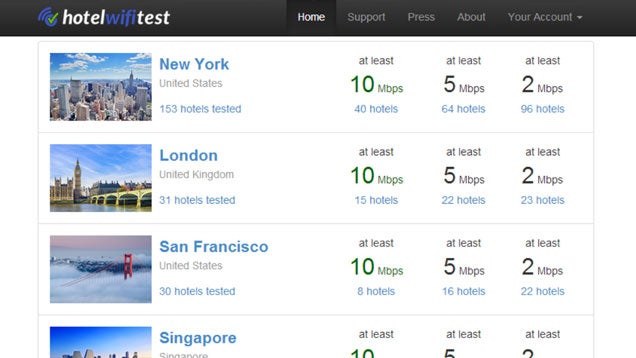
Hotel WiFi Test Ranks Hotels by Wi-Fi Speed and Quality

by Melanie Pinola

Hotel WiFi Test Ranks Hotels by Wi-Fi Speed and Quality

For many of us, decent Wi-Fi ranks right up there with location and price when it comes to choosing a hotel. Hotel WiFi Test makes it easy to choose a hotel with quality, fast wireless internet access for guests.

Read more...

26 Jul 17:40

The Correct Dimensions for Images on Different Social Networks

by Dave Greenbaum

The Correct Dimensions for Images on Different Social Networks

Working to craft the perfect profile at Facebook or LinkedIn? This infographic collects everything you need to know about the ideal photo size for different social networks.

Read more...

26 Jul 17:29

New ways of collecting data make city services more efficient

They are simple things Vancouver residents do every day without giving much thought. Turn on a tap for water. Walk under a street light. Plug money into a parking meter. Mostly unnoticed, Vancouver city staff collects data from some of these activities then apply technological innovations to improve city operations. The information is used for everything from helping to pick up abandoned garbage to making sure water flows to needed areas during an emergency.
26 Jul 17:23

Infographic: Top 50 Canadian oil & gas companies’ fluctuating fortunes

by Yadullah Hussain

The Canadian oil and gas sector has seen massive volatility in terms of revenues and profits over the past five years. Companies have vacillated between natural gas and crude oil production and their fortunes have dipped and soared reacting to energy prices. Here is a graphical representation of the fluctuating fortunes of the 50 largest oil and gas companies listed on the Toronto Stock Exchange. Data provided by Evaluate Energy.

To measure and compare the growth trajectory of different companies, simply click on the Disable All button (top right, just over the chart) and then select the companies you wish to compare.


26 Jul 17:19

Drive Profits With Recurring Billing & Social Media Marketing

by Vishal Pindoriya

Drive Profits With Recurring Billing & Social Media Marketing image Depositphotos 35828827 s

Once you get your business off the ground, one of your next challenges is to secure a steady revenue stream and a platform to facilitate it. A subscription business model with a recurring billing cycle is one of the best ways a Web-based business can ensure continual income and nab customers who are hesitant to pay a single higher price up front. Couple it with a solid social media marketing plan, and you are in a great position to continuously grow your customer base and increase sales.

How Recurring Billing Works

In the “real” world, most business transactions are one-off situations. Aside from the occasional magazine or newspaper subscription—or situations like a gym membership, which are often automatically recurring—getting continuous and repeat business can be a struggle. In the virtual world, however, most everything can be considered a service, making recurring subscriptions and purchases a sensible pricing plan. Even products can be offered as a service to customers, if you provide items people need at a regular intervals, thereby saving them time and money.

Most businesses hire a subscription service provider to provide the software and manage the accounts. Customers sign up for your services (or products) via your website, and you bill them using whatever pricing model works best for your business. The recurring billing service provider communicates with your customers (posing as you), managing the trial periods, setup fees and renewals. They also send all receipts, reminders and statements.

Enter Social Media

The continuously growing social media industry is the perfect marketing platform for subscription businesses. Seventy-seven percent of B2C companies got customers from Facebook, according to a 2012 State of Inbound Marketing study, and 80 percent of U.S.-based social media users prefer to connect to a brand through the social network.

Here’s one more statistic from Awareness, Inc. that should serve as a caveat: Fifty-three percent of businesses using social media marketing don’t measure their success. The “throw it against the wall and see what sticks” method of marketing is a bad idea. If you can’t measure it, don’t do it.

Be Prepared

When you are readying to launch your social media marketing campaign to support your subscription business, remember that you could easily see an immediate response from thousands of people. Are you prepared? Do you have the help you need to keep from getting overwhelmed, or are you trying to do it all on your own? Make sure you have the manpower to handle the potential influx. Plenty of startups have closed their doors because they grew too fast.

Finally, remember to stay flexible. In today’s fast-paced e-commerce world, those companies that are not able to bend and move with an ever-changing world economy will quickly fade into obscurity.

26 Jul 17:19

The Anatomy of a Retargeting Ad That Converts

by The Wishpond Blog

The Anatomy of a Retargeting Ad That Converts image RcN1Eu8KQXdbt2a CXu6kjKzySuq98we43wU6J3mHwLHYVz5Dg3fT0qGY1bOEX4nIlfSbDSdDB 02 9AibFMuja5GjSU xSydVAVl pqBs6gfl7M1eGBUloQDqJHF2stxg

You have read about, maybe even started running, retargeting campaigns.

And now you’re scouring the web for some best practice articles and finding almost nothing. You see stuff on Google Ads, Facebook ads, even LinkedIn ads.

But retargeting? Nowhere to be found.

That’s mostly because, if you’re using retargeting (or remarketing, or whatever we’re calling it this week), you’re ahead of the curve.

Congrats!

The problem with being ahead of the curve is you’re sometimes so far ahead that you find yourself on the far side of the curve, momentum building, arms pumping, with no one around you to grab onto your shirt.

The Anatomy of a Retargeting Ad That Converts image z6HhxzLH oORMSNlPBaxNlif Ka1JHNkxCcn 7cwC6AXFQs3s7aGM8H487 EhykzOge60QB8BHIJ63T 2zgRS4c38nOgcW7O9aALHczKaj9wV9v3Y F8HajlYxhoWUQVkQ


Let’s see what we can do about that.

This article will give you the anatomy of a retargeting ad that converts. I’ll discuss the elements you need to be including, how they work, and touch on how these elements are affected by “Ad Frequency” (and what that is).

Let’s get rolling (at a measured pace).

 The Four Elements of a Retargeting Ad


Those online marketers who have experimented with Facebook Ads will have a leg up on Adwords users when it comes to retargeting.

Many of the best practices Facebook advertisers are familiar with (like ad images, USP, CTA, use of exciting language) are similar.

For our Adwords friends, however, let’s do a quick runthrough:

Images:

  • Use, bright, eye-catching images with bright, eye-catching colors like red, orange, and light green
  • Use images of people (especially smiling women and babies, as they’ve proven to attract the eye best)

USP:

  • Your Unique-Selling-Point needs to communicate value immediately and quickly
  • Consider words like “Free” as well as percentage and dollar signs (% and $)
  • Use exclusivity and newness to communicate imperative and desire

CTA:

  • Tell people how to act on their interest with an eye-catching CTA button that contrasts with the rest of the ad
  • Use language framed for the ad viewer. Tell people how they stand to benefit, not what to do. For instance, go with “get” instead of “submit”

Logo:

  • Retargeting ads can be structured with several different objectives in mind. If you’re looking for brand awareness, make your logo front and center
  • If you’re looking for conversions, drop your logo into a corner and make your visual and USP the focus-points

 What your Retargeting Ad Might Look Like


Is there a right way and wrong way to structure these four elements within your retargeting ad?

No. Instead, you need to test it.

  • Do your click-through-rates increase when you enlarge your ad’s image?
  • How about the USP?
  • Do you get more traffic to your ad’s landing page when you include an image of your product or an image of a baby holding your product?

Test it!

But in the meantime, here’s the basic layout of a retargeting banner ad:

The Anatomy of a Retargeting Ad That Converts image 2t2swOf5P7ELCS6S iBGPFkYRf2DUPfOKZlJQCyM fVcCOwy4Wbd5rKPmdbt39VXvPOeBQDpXFmyKtBpNvsbSp8KzuUQS5OZLT9pvV89QOqCBOOnPzVH9cQDYnfMBFUguw

And here’s what it looks like in real life:

The Anatomy of a Retargeting Ad That Converts image xs9lJSrSukb3bSTpDk4Qwr54jf1wZJ  Zs LQ4RQdJxtaH 2SYoGlhorUTSabJfYCK CzXX9Q0rAiH1lyCws1XDpm4AT893nYeky007koQOZKdJwg49dqDyprYz eRBxew


And here’s the basic layout of a retargeting sidebar ad:

The Anatomy of a Retargeting Ad That Converts image sltIi0 Y tilnYkETJY9R gK2qUrEnO05iYKhIC1eeWqbshFyicAHHS42xDqyGXcbLz19qA5KUv3oPbpKX16NzvxG8IWldFhkPec15YcacNnneA8dyc999TtIOe6ip44nw

And here’s what that looks like in real life:

The Anatomy of a Retargeting Ad That Converts image OPBnpz Cfi0kJhzguMaAhvEXEyNjM YoIFw Rv3 caL3N m6YjA62p7ZlsdtThg4HKUsuTG0zyu0RwAVSPqRCjx2DaxCuvUTj URJNNDtHjRoTKYZNrI5JxDityjdTurxA

Believe me now?

Why these Elements are Important


Retargeting isn’t like normal advertising. You’re not promoting your business, your product, or your ebooks to people who have never met you before. You’re reminding people (who have already bounced off your site) of how awesome you are.

How does that change things?

Well, first of all, there’s the danger of spamming. But there’s also the awesome possibility that they bounced because of something you can fix.

Here are a few reasons these elements are important:

  • If people bounced off your pricing page because you were asking too high a price, you can offer a discount USP – something created specifically for people who viewed your pricing page.
  • If people bounced off your lead-generating content page, you can create a retargeting ad with a value USP – something created specifically for people who didn’t get how awesome your content was in the first place
  • If people bounced off your main webpage, you can create a retargeting ad with a charming or humorous baby – something created specifically for people who may have thought your business was too bland or weren’t excited by what you were offering
  • Your CTA button tells people specifically how to engage with your brand. It also can double the impact of a discount USP with something like “get 10% off now!”

The Anatomy of a Retargeting Ad That Converts image TziL6up5wY6E1gWnqWS18aRN1G9LOO5GZgV BfHM 1Jgtd3RNVnue8urePOzcj8IV7apIPnGgfpfxXbyzi7n6j7fz3LnyQJsfDn3TkR0IFi6jeI88KD8Tn52PHpsUXVUPQ

This ad incorporates not only a recognizable USP and brand logo, it also doubles the inherent value by including a second USP within the CTA button.

I also bet Insightly has a few ads running, and I wouldn’t be surprised if half had an image and half focused on a USP (as this one does).

Retargeting Ad Frequency, and Why it Matters


Ad frequency is a concept which (again) will sound familiar to Facebook Advertisers. Basically, ad Frequency is the amount of times a unique viewer has seen your ad. In Facebook it’s seen as an average (as in, when your Facebook Ad reaches an average Frequency of 4 or 5 you should rotate it with a different version).

With retargeting, however, it’s a bit more complicated.

I mentioned above that one of the dangers of retargeting advertising is spamming. The last thing you want to do is expose someone who bounced off your site a million advertisements they have no interest in.

That’s why most 3rd party retargeting providers have complicated algorithms which decide which of your site’s bounced traffic is most likely to convert on an ad. For instance, someone who came to your website, scrolled down a bit and bounced is far less likely to engage with your retargeting campaign than someone who viewed a few product pages and went to your pricing page before bouncing.

All that said, though, you still need to practice ad rotation to combat the spamming factor.

Here’s what I recommend:

  • Create three to five different retargeting ads – should be pretty straightforward once you have the template
  • Retain your business’ logo across all the ads (or a recognizable image, perhaps). This ensures your ad audience where the ads are coming from
  • Change the message while remembering that each traffic source (product page, main homepage, pricing page, lead gen page, etc) should have a different focus point.
  • Test color, humor (even making it blatantly obvious that you’re following your bounced traffic around). Test the order of your ad rotation to see what works best.

It’s also essential that you test the efficacy of your ads. Does a series of three work that much worse than a series of five? Does humor work on the last ad but not the first few?

Optimization is key for a highly-converting retargeting campaign.

For more on designing your retargeting ads by traffic source and by different objective, check out my article from last week: “3 Ways to Use Retargeting to Find Success Online”

Oh, and if you don’t believe me about retargeting ad rotation, I only needed to refresh the page five times before Insightly’s second ad appeared:

The Anatomy of a Retargeting Ad That Converts image 22SuR2elB7m s1kGa99OlehvWKqy 7HbQ0 kcP w MU2 koilcrXkikwlFQXZPgTIuVm REMbO6thehsu6Y3IqEcXw OumOMqau 29towIIX2jYSXM8bijHYvht1Ah0cNw

You’ll notice a slightly larger logo and a more casual USP. Nice.

 Conclusion


Hopefully that’s given you a better grasp of retargeting ad fundamentals. Keep in mind that your retargeting ads should be created specifically for each step of your sales funnel. Create a series that is shown to traffic that bounces from your pricing page, another for people who bounce from a product page, your homepage, your lead-gen pages, and anything else you can think about.

After all, we’re talking about (usually) 95% of your website’s traffic. Retargeting can have a huge influence on your digital marketing success.

When it’s done smart.

By James Scherer

The Anatomy of a Retargeting Ad That Converts image fCIBRXwZUMotNAfkqXhKOpqSqyWq9KFIstaayLgDxm2cI1rffO3ZfM5AJYv5aaHjuoUMtfUJps wpfjdpPDzTEjyDAJIipsLv pwIMi2mmtZVFpUDHKdOFHyMIkM aG04w

26 Jul 17:18

But We ALWAYS Lose on Price

by Nevil Tynemouth
But We ALWAYS Lose on Price image ID 100240513 1 300x249

Price versus value

Do you position your price effectively with customers?

Position the value of what you offer and how much value you can bring to your customers. Customers are far more interested in value than you might think. I say this because so many people we meet when we deliver seminars and training tell us; “Well, in my industry everyone is price driven”. This is a view that lots of people seem to support, they will tell us “Well, I’m not price driven” (we can usually tell this by the clothes they wear, the watch they have on or the car they pulled up in). But, they will say “Everyone I come across is only driven by price”. If only this were true, then the economist in me would get very excited (not a pretty sight an economist getting excited). But it’s just not the case. Let me explain why.

Working with an experienced team recently (one of the sellers had been there 12 years) they brought this point up in a fairly standard way – “Well we always lose deals because of price”. So we decided to have a look at how they position themselves to their clients. We filled a flipchart of all the things they say and do to differentiate themselves. It was an impressive list of some very key points that really excite customers. We then asked them to review all of the 20 or so different points they use and cross out any that their competitors used as well. We stepped back and let them review this themselves as a group, they debated each point and one by one they crossed them all out. Every single way that they used to position what they offered was just the same as their competitors were positioning.

This isn’t startling to us, because a lot of organisations don’t always recognise what they are great at. The net effect, was however, that in the customer’s eyes, the only difference between their offering and competitors offering was price.  So what happened? The customer didn’t perceive any real difference between suppliers, so they opted for the lowest price. Hence “Well we always lose deals because of price”. The frustrating thing was that this particular organisation (like most other and almost certainly like yours) has some great unique features, experience and things to offer its customers. They just weren’t being positioned effectively.

How did we solve this? Well we started a discussion around all of the things that this company did, how great they were in particular areas. Once we had identified this, all we needed to do was help them position this at an appropriate time and way with their potential customer.

A simple exercise you can run yourself:

  • How do you position your products and services?
  • How is this different to what your competitors do and offer?
  • What are the things you are brilliant at?
  • What do you do differently to anyone else?

Once you have answered these questions honestly you will have a clear way to demonstrate the value of what you offer.

Learning to position what you do, can make a huge difference to you and your business. If you think you aren’t unique or don’t do anything differently, pick up the phone and challenge us, we love to find the reasons why you are different to your competitors.

I came across this blog sometime ago by Neil Baron, an amusing title but makes perfect sense.

Image from Freedigitalphotos.net

26 Jul 17:17

Disrupting Payments, Africa Style

by Steven Sinofsky

Note from the author: For the past 10 years or so, I’ve been spending time informally in Africa, where I have a chance to visit with government officials, non-government organizations, and residents of towns, settlements and cities. In the next post, I’ll talk about free Wi-Fi in South Africa slums. This post originally appeared on Re/code.

Spending time in the developing world, one can always marvel at the resourcefulness of people living in often extraordinarily difficult conditions. The challenges of living in many parts of the world certainly cause one to reflect on what we see from day to day. Here in the U.S., we’re all familiar with the transformative nature of mobile phones in our lives. And for those in extreme poverty, the mobile phone has been equally, if not more, transformative.

One particular challenge faced by many in Africa, especially those living in fairly extreme poverty (less than $500 a year in purchase power), is dealing with money and buying things, and how the mobile phone is transforming those needs.

One could fill many posts with what it is like to live at such low levels of income, but suffice it to say that even when you are fortunate enough to ground your perspective in firsthand experience, it is still not possible to really internalize the challenges.

Slum life

Imagine living in a place where your small structure, like the one pictured below, is under constant threat of being demolished, and you run the risk of being relocated even farther away from work and family. Imagine a place where you don’t have the means of contacting the police, even if they might show up. Imagine a place where it takes a brick-sized amount of cash to buy a new cooking pot. image Representative home, or “struct,” in an informal settlement in the suburbs of Harare, Zimbabwe. Steven Sinofsky

These and untold more challenges define day-to-day life in slums, settlements and townships in developing countries in Africa, where the introduction of mobile phones has transformed a vast array of daily living tasks. Take the structure seen above, for example. It is a settlement in a vacant lot next to an office park in Harare, Zimbabwe. About 120 of these “structs” are occupied by about 600 people. For the most part, residents sell what they can make or cook; a small number possess some set of trade skills. Below, you can see a stand run out of one struct that sells eggs farmed on-site.

image Shop window in front of home where fresh eggs are sold in an informal settlement in the suburbs of Harare, Zimbabwe. Steven Sinofsky.

Mobile phones and extreme poverty

Through a Xhona-speaking interpreter, I had a chance to be part of a group (representing the government) hearing about life in the settlement. One question I got to ask was how many had mobile phones. Keeping in mind that the per capita spending power of these folks would be formally labeled “extreme poverty,” the answer blew me away. Nearly every adult had a mobile phone. When I asked for a show of hands, some proudly said they didn’t bring it to the meeting.

image Group of representatives showing off their mobile phones (all pictured owned a phone) of an informal settlement in the suburbs of Harare, Zimbabwe. Steven Sinofsky

Right away, you see the importance of a mobile phone when you consider the cost of the phone as a percentage of income. It is hard for us to imagine the trade-offs phone owners here are making, but in earning-power equivalence, a phone in this village is roughly what a car and its operation costs us — and we already have food, shelter and clothing in ample supply.

Communicating with family is a key function, because families are often separated by distance, as members go looking for work or to find a better place to live.

Phones are also used to call the police. Before mobile phones, there was simply no way to get the police to your home or settlement, since there are no landlines or nearby telephones. Keep in mind that most residents in these areas have no formal identification or address, and the settlements are often unofficial and unrecognized by authorities.

Phones are also used as an early warning system for authorities that might be on the way to evict folks, or perhaps perform some other type of inspection. The legalities of settlements and how that works are a separate topic altogether, but I won’t go into that here.

Phones are used to keep track of what goods are selling where, or what goods might be needed. A network of people helps each other to maximize income from goods based on where and when they can be sold, because they are needed. Think of this as extremely local information that was previously unavailable. This is crucial, because many goods have limited shelf life and, frankly, many people produce the same goods.

A specific example for some people was the use of phones to monitor the supply chain for beer and alcohol. One set of people specialized in redistribution of beverages, and needed to keep tabs on events and unique needs in the community.

A favorite example of mine is “queue efficiency.” One of the many challenging aspects of life in extreme poverty is waiting — waiting on line for water, for transportation, for public services of all kinds. Phones play an important role in bringing some level of optimization to this process by sharing information on the size of queues and the quality of service available. We might think of this as Waze for lines, implemented over SMS friends and family networks.

Some of these uses seem straightforward, or simply cultural adaptations of what anyone with a phone would do. The fact that Africa skipped landlines is a fascinating statement about technological evolution — just as, for the most part, the continent will skip PCs in favor of smartphones, and will likely skip private ownership of transportation for shared-economy solutions (the history of Lyft is one that begins with shared rides in Zimbabwe).

Skipping over traditional banking

An old-economy service that Africa is likely to skip will be personal banking. In the U.S., our tech focus tends to be on China and the role that mobile payments play there with WeChat or AliPay, or more broadly on the innovation going on payments between the innovative PayPal, Square and, of course, bitcoin. In Africa, almost no one has a bank account, and definitely no credit cards. But as we saw, everyone has a mobile phone.

The most famous mobile banking solution in Africa is M-Pesa (M for mobile, pesa is Swahili for money), which started in Kenya. People there use their phones to store cash and pay for goods. Similar solutions exist in many countries. Even in a place as remote and difficult as Somaliland, you can see these at work, as I did recently.

Madagascar is an island-country with incredible beauty and an abundance of things not seen across Africa, including natural resources, farmable land and water, not to mention lemurs. Yet the country is incredibly poor, with a countrywide per capita GDP of $400, which puts it in the bottom 10 countries of the world. On average, people live at the extreme poverty level of $1.25 per day in purchase power. One city I visited in Madagascar is home to the UN Millennium Development Goals, which is programmatically working to improve these extremely impoverished areas.

image Sign signifying the entrance to a town in rural Madagascar designated a Millennium Development Goals location, one of about a dozen worldwide. Steven Sinofsky

Yet technology is making a huge difference in lives there. Madagascar has three main mobile phone carriers. These are all prepay, and penetration is extremely high, even in the most remote areas. The country is wired with mostly 2G connectivity; there is some coverage at 3G, but it is highly variable. The only common use for 3G is for Internet access using external USB modems connected to PCs (usually netbooks) and shared.

Most of the phones in use are feature phones, often hand-me-downs from the developed market. I’ve even seen a few iPhone 3s. One person complained about being unable to update iOS because he has no high-speed connection for such a download (showing that people are connected to the world, just not at a high download speed). A developed-market smartphone is pretty much a feature phone here, and the cost of another network upgrade means that one is far off. People are anxious for more connectivity, but along with cost, the current state of government will make progress a bit slower than citizens would like.

A huge problem in this type of environment is safely dealing with money. Madagascar’s currency trades at $1 U.S. to 2,500 Madagascar ariary. When you live off of 3,000 or so a day, you’re not going to carry around three bills, so very quickly you end up with a brick of 100 Ar notes. What to do with all those? Where can you put them? How do you keep them safe? How can you even keep them dry in a rain forest?

Well, along comes mobile “banking.” As easy as you can recharge your phone, you can add money to your stored money account. You walk up to a kiosk — there are thousands and thousands of them — and in a series of text messages with the shopkeeper, you give her money and your phone gains stored value.
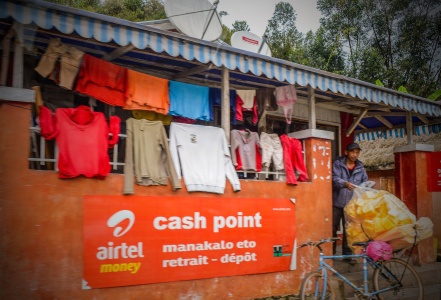
image Home and storefront selling recharge minutes for pay-per-use mobile phones; also a station for mobile-phone banking in rural Madagascar. Steven Sinofsky

With iOS and Android fragmentation, how would these apps work, given what must be finite dev resources? The implementation of this is all through an old-school standard called SIM Apps or Sim Application Toolkit.

This set of APIs and capability allow the installation of apps that reside on your SIM. These apps are simple menu-driven apps that look like WAP sites. They are secure and controlled by carriers. Using this framework, mobile banking has reached unprecedented usage and importance in developing markets, particularly in Africa.

The scenario for usage is quite simple. You charge your phone with money, just as you would with minutes. When you want to buy something, you bring up the SMS app (pictured below, on an iPhone 3 in Malagasy) and initiate a transaction. The merchant gives you a code, which you enter along with the merchant’s identifying code. You then type in an amount, which is verified against your current balance. The merchant then receives a notification, and the transaction is complete. The whole system is safe from theft because of the connection to your mobile number, two-factor authentication and so on. There is no carrier dependency, so you can easily send/receive to any carrier, though the carrier has your balance. This isn’t an interest-earning savings account, but rather a transaction or debit account (of course, in the U.S., few of us earn interest on demand deposits these days, anyway). image Screen showing “My Account” in Malagasy, displayed on a recycled iPhone 3 (note the absence of a cellular connection). Steven Sinofsky

You can also give and receive money from individuals. This is extraordinarily important, given how there can be distance between family or even the main wage-earning in a family. The idea of sending money around to family members is an incredibly important part of the cash economy of low-income people. This market, called “remittance,” is estimated to be over $400 billion in developing markets alone.

Life is easier and safer for those using mobile banking this way. You can count on your money being safe. You don’t need to carry around cash and worry about loss, theft, or water and weather destroying physical currency. You can easily deal with small and exact amounts. As a merchant, you don’t have to make change. It is just better in every dimension.

The carriers profit by taking a percentage of the transaction, which is high in the same way that check-cashing in the U.S. is high (and credit cards, for that matter). The fee is about two percent, which I am not sure will be sustainable, given the competition between carriers. I also think it will be fascinating to see how developed-market companies like Western Union evolve to support mobile payments, as they provide integration points to the developed-market financial systems. It is not uncommon to see a Western Union representative also offering phone recharge and mobile banking services.

In our environment, we would see this as a convenience, like a debit card. But in Africa, it is far more secure and convenient, because you only need your phone, which you will carry with you almost all the time, just as we do in the U.S.

I think the most interesting point of note in this solution is how it essentially skips over banking. If we think about our own lives, and especially those of the generation entering the workforce now, banking is most decidedly archaic. The whole idea of opening an account and dealing with a level of indirection which offers very little by way of useful services — it just feels like there’s a need for disruption. Our installed base of infrastructure makes this very difficult, but in the developing world that challenge doesn’t exist. It isn’t likely that most people will graduate to full-fledged banking just as we don’t expect people to graduate from a mobile phone to a full-fledged PC.

It also isn’t hard to imagine this type of mobile banking taking off first in the cash-based part of the developed world, where today people pay fees to cash checks and buy money orders, absent a bank account. The large numbers of check-cashing storefronts located near lower-income areas share much in common in some ways. One example is remittance. Many immigrants in the U.S. are the source for remittance funds going to developing markets. Seattle, for example, has one of the largest populations of Somalians outside of Northern Africa, and they routinely send funds back to their families. Today, this is a difficult process, and could be made a lot easier with a global and mobile solution.

Looking forward

image

Merchant using a credit-card reader attempting to get a stronger signal to complete the transaction in Anosibe, Madagascar. Steven Sinofsky

I look forward to solutions like this for our own lives here in the U.S. We see some of this in service-by-service cases. For example, using Lyft is completely cashless. I can use PayPal at merchants like Home Depot. Obviously, we all see Square and other payment mechanisms. Each of these shares a common connection to established banking and plastic cards. That’s where I think disruption awaits. Will this be bitcoin alone? Will someone, even a carrier, develop and scale a simple stored-value mechanism like that being used by billions of people already?

For myself, and no doubt for many reading this, this transformation is old hat. I’ve seen these changes over the past decade across many countries in Africa and elsewhere. Africa isn’t single-marketplace by any stretch. What is working in Madagascar, Kenya, Somaliland and others might not work elsewhere, or might not work for all segments of a given economy. Stay tuned for more observations from this trip.

It is always worth a reminder how some changes can bring about a massive difference in quality of life.

–Steven Sinofsky @stevesi

P.S.: What happens when you’re forced to use high-tech 3G connectivity to do a Visa card transaction? The merchant (pictured above) goes outside in a rain forest and aims for a stronger connection for the card reader. Yikes!

26 Jul 17:17

5 Point Quality Assurance Checklist for Your Social Media Posts

by Helen Nesterenko

5 Point Quality Assurance Checklist for Your Social Media Posts image quality approved1

Your social media engagement traffic, engagement, and exposure are critical to your success. You need to score home runs with every piece of content.

It is dishearteningly easy to for users to unsubscribe, un-like, or un-follow, your feed, especially given the perpetual email bombardment with endless streams of content. Users can thus be super selective regarding what appears in their updates and inboxes.

1. Do your posts contain a call to action (CTA)?

5 Point Quality Assurance Checklist for Your Social Media Posts image internet marketing for builders

Image source: DreamGrow.com

Customer engagement will not occur magically, especially when you post infrequently. You have to drive engagement. CTA’s grab readers’ attention, pull them in, and propel your content’s spread across the web. Craft your CTAs to be requests rather than commands, discreet pushes towards participating in your social media strategy.

2. Are you exploiting the power of pictures?

Of course, not every situation calls for images (no need to reply to your mentions on Twitter with a picture). Images, however, are fun, powerful inducements to engagement, and increase your chances of going viral! Most top social media outlets – increasingly – facilitate image sharing. Even Twitter has enhanced its image previews and visibility. Even if you are not a Photoshop power user, and the prospect of creating your own images intimidates you, awesome tools like Canva.com can lower the skill barrier.

3. Is this the right moment to update?

Yes, you may be located in US, but where on the globe is your audience? Does it make sense to post when your audience is probably snoring? Fortunately, most social media networks, and tools like Buffer offer scheduling options to permit posting when your audience is most likely to be online and reviewing their news feeds. Check the substantial online research for guidance.

4. Did you proofreed? Oops…too late now!!

5 Point Quality Assurance Checklist for Your Social Media Posts image proof

Image source: Egytranscript.com

Sadly, way too many social media posts are ignored or even mocked for their careless grammar, obvious misspellings, and punctuation errors. For example, we at WEBSITE work with many copywriters and bloggers, and if posts contain even miniscule errors, our audience notices instantly. Such slip-ups discourage social media engagement, and detract from your exposure and your credibility.

5. Are you providing value to your core audience?

Know the folks who follow you and engage frequently with your brand, and post accordingly. If you deal in kitchen wares, you can guess that they are unlikely to engage with celebrity gossip! Yes, general interest posts will be widely readable, but not necessarily compelling to readers who keep in contact with your business, who are likely to convert to future customers. Keep these people’s needs foremost when composing your next social media update.

Your social media posts will benefit from reviewing these elements, and so will your business!

Header image source: Writtent.com

26 Jul 17:17

4 Strategies to Help Companies Rise in the Google Rankings

by Abbe Miller

4 Strategies to Help Companies Rise in the Google Rankings image 2e1ax default frontpage SEO Strategies

SEO can be a tough nut to crack and especially so when Google unleashes new ranking algorithms without warning – unless you’re one of those businesses fortunate enough to have a full-time SEO. And yes, for those readers that aren’t in the know, SEO isn’t just the process of improving digital visibility, it’s also a job title: search engine optimizer. The emergence of this position goes to show you just how prevalent the practice of SEO has become.

For many businesses, the multi-faceted approach required to tackle SEO can be daunting. It requires research to identify target keywords, the development of a content marketing strategy, and various efforts to mitigate the risk involved with incoming links and more. The shear time involved can be a challenge for some businesses to find – let alone the required skill sets.

There are, however, a few things that business users can do from an SEO perspective that are both out of the box and effective. Those tasks, as recommended by Prashant Puri, founder of AdLift and a speaker at the Searchmetrics Visibility_14 conference, include:

1. Conducting competitive analysis

Considering the high value placed on content, it can be incredibly frustrating to find that your website’s content might be missing the mark. But, it can also be incredibly helpful to learn what topics are being covered in your industry on relevant competitor websites. By doing so, you can get a feel for what content readers are looking for.

Ahrefs.com, a website devoted to exploring websites and checking back links, is a good resource to tap into for conducting competitive analysis. Puri also mentioned that another way to research what your competitors are posting is by setting up various Google Alerts to get notifications for when fresh content is being syndicated. Google Alerts can be set up for keyword sets, as well.

2. Looking at social closely

Conducting competitive analysis is incredibly helpful, but Puri highlighted the value that can come from honing in on social influencers. Ahrefs.com can help businesses take their content to the next level by focusing on the companies that have high social engagement.

The same is true for a website called Topsy.com. Puri said that by looking at your keyword set and using Topsy.com to understand the different sites and social influencers talking about those topics, businesses can better filter based on the freshness of the content.

3. Acquiring broken links

Also during his presentation at the Searchmetrics event, Puri brought up a white hat tactic that while fairly time consuming, can work wonders. He said to begin the process by identifying relevant sites you want an inbound link from – a highly prized element of SEO. The goal, Puri said, is to reach out to the webmasters on the identified sites and say, “Hey, your link is broken, but I have relevant content to fill that link.”

And although Puri walked attendees through the entire process of tracking down broken links, Moz.com produced an article titled “The Broken Link Building Bible,” with comprehensive instructions.

4. Obtaining image attribution

To receive additional inbound links, Puri also suggested that attendees look at their most shared articles and then do an image search of those articles. Google spits out all of the different images associated with that article title, Puri said, and if you find any of those websites not linking back to you, you can contact them to get a back link.

So although there are many different ways to get on Google’s good side, Puri’s recommendations are definitely worth considering. After all, the payoff will come in the form of increased visibility and with it, increased sales – the utmost fruits of SEO labor.

26 Jul 17:17

Reduce Shopping Cart Abandonment With These 6 Shipping Cost Savers

by Tracy Vides

Reduce Shopping Cart Abandonment With These 6 Shipping Cost Savers image 6waystosaveonshoppinginyourecommercebusinessHow to reduce shopping cart abandonment is a key question for any ecommerce business. There are several different strategies and tactics that help resolve high abandonment rates, shipping rates are a biggie for consumers.

Here are 6 ways that you can save on your shipping costs to help reduce shopping cart abandonment on your ecommerce site.

Ecommerce businesses around the world can prune away their various overheads one by one, but one cost that stubbornly refuses to go away is that of shipping your products to the end user. Shipping costs account for 5 to 20% of e-tailers margins, depending on the product sold and the distance the item is being shipped. Most ecommerce businesses pass this cost on to the buyer, resulting in that dreaded result that no one dares to speak of – shopping cart abandonment.

One of the leading reasons why shoppers abandon carts online is the fact that the price of an item rises substantially once shipping fees are added to the basic tag price.

According to ComScore, at least 61% of users are likely to cancel their entire purchase if they eventually find that free shipping is not offered.

Here are six ideas to prevent this nightmare from striking your ecommerce business.

#1 Have a Minimum Purchase Requirement

It’s every online retailer’s dream to offer free shipping at no cost. But we all know that there ain’t no free lunches in the world. So, be prepared to spend some money on shipping from your pocket, but only after you know you’ve made your margins.

Offer free shipping to your customers, but with a caveat. Have your customers purchase items above your break-even point and then go ahead and loosen those purse strings to offer them free shipping. Something like ‘Free Shipping above $50’ is music to the ears of an online shopper – makes them buy that much more, just to make the cut for free shipping.

#2 Offer Flat Rate Shipping

This idea tries to walk the tight rope between keeping the customer happy and preventing you from bleeding dry due to shipping costs. By keeping the shipping costs significantly lower than competition, you retain the edge from the customer’s point of view, at the same time; by not taking the hit for shipping entirely from your pocket, you still make money on the sale. Win-win!

Old Navy.com does exactly this by offering a flat rate of $7 against all orders. They even offer free shipping for orders above $50.

Shop around for shipping companies that offer you the best rate. Strike a deal with the most affordable shipping company for a flat fee against an assured minimum number of orders per month. Check out USPS’s great options for flat rate shipping – here the cost not the shipping time is key.

#3 Go Mobile

When ecommerce business owners hear the done-to-death phrase ‘Go Mobile’ it’s usually in reference to making one’s website mobile friendly to cater to the growing population of smartphone shoppers among your target audience.

But here I refer to taking the backend of your ecommerce operations mobile as well. You could go with Shopify’s simple mobile POS setups and be truly mobile in every sense of the term. Still confused? Let me explain.

Imagine you’re at a trade show where someone liked your wares. Now you don’t need to make this customer log onto your website, make the purchase and then ship it over to them a few days later. When you go mobile, you eliminate the shipping part of the story entirely from the transaction. Hand over the item to your customer right there and swipe their card on your mobile POS. The inventory adjustments, invoicing and payment processing will all be taken care all in one place with this nifty attachment. Convenient and cool!

#4 Offer Free Shipping Based on Product Category or Customer Type

In every online retailer’s catalogue, there will always be those handful of items that don’t sell as much, but offer great margins every time they do sell. Incentivize the sale of high value, high margin items by offering free shipping on them. This way, the customer gets her ‘free shipping’ and you make more money on each order.

Customer retention is another scenario where offering free shipping is a great idea. We all know that repeat customers spend more money and shop more often on your site than new customers do. This means, there’s a definite value in retaining your loyal repeat customers. As a way of buying their loyalty, offer free shipping to customers who make three or more purchases on your site. Alternately, you could offer it to customers who make purchases worth over X dollars or more and so on.

#5 Offer Store Pickup (for Multi-Channel Retailers)

Almost all traditional retailers, now have their own online retail channel creating a multichannel retail scenario. Multichannel retailers have the unique advantage of being able to hold inventory at store locations close to the homes of their online customers and fulfilling orders at zero shipping cost by asking customers to pick them up from their nearest branch.

This way, customers don’t have to wait for days to have the item delivered, they can pick up the items as soon as they are free to drop by the store.

Nordstrom pioneered this store pick up movement that everyone else is now aping. The surprise benefit of this model is that customers who come into a store to pick up an item ordered online, also end up buying something more from the physical stores themselves. In 2008, Nordstrom’s in-store sales went up by 8% and revenue grew 42% over four years.

#6 Use Reverse Psychology (Same Day Delivery with Paid Shipping)

When free shipping is not within your means or business model, try and change customers’ mindsets by offering them a different value proposition.

According to Forrester data, 11% of consumers reported that they stopped shopping on ecommerce sites that provided extremely slow deliveries.

Tap into this niche and offer same/next day delivery with paid shipping and delight your customers like your free shipping competitors can never hope to do.

Your Turn

With the amount of money, time and effort that ecommerce firms put in to attract a customer to their site and check out their products, it’s a pity when customers walk away without a purchase just because of something as secondary as shipping.

Don’t let shipping put a spoke in your wheels. Use any of these or some of your own creative ideas around shipping and make your customers keep coming back for more!

26 Jul 17:16

Solar And Wind Power Are More Expensive Than People Think

by Business Insider

solar powerWind and solar power are even more expensive than is commonly thought.

SUBSIDIES for renewable energy are one of the most contested areas of public policy. Billions are spent nursing the infant solar- and wind-power industries in the hope that they will one day undercut fossil fuels and drastically reduce the amount of carbon dioxide being put into the atmosphere.

The idea seems to be working. Photovoltaic panels have halved in price since 2008 and the capital cost of a solar-power plant--of which panels account for slightly under half--fell by 22% in 2010-13. In a few sunny places, solar power is providing electricity to the grid as cheaply as conventional coal- or gas-fired power plants.

But whereas the cost of a solar panel is easy to calculate, the cost of electricity is harder to assess. It depends not only on the fuel used, but also on the cost of capital (power plants take years to build and last for decades), how much of the time a plant operates, and whether it generates power at times of peak demand. 

To take account of all this, economists use "levelised costs"--the net present value of all costs (capital and operating) of a generating unit over its life cycle, divided by the number of megawatt-hours of electricity it is expected to supply.

The trouble, as Paul Joskow of the Massachusetts Institute of Technology has pointed out, is that levelised costs do not take account of the costs of intermittency. Wind power is not generated on a calm day, nor solar power at night, so conventional power plants must be kept on standby--but are not included in the levelised cost of renewables.

Electricity demand also varies during the day in ways that the supply from wind and solar generation may not match, so even if renewable forms of energy have the same levelised cost as conventional ones, the value of the power they produce may be lower. In short, levelised costs are poor at comparing different forms of power generation.

To get around that problem Charles Frank of the Brookings Institution, a think-tank, uses a cost-benefit analysis to rank various forms of energy. The costs include those of building and running power plants, and those associated with particular technologies, such as balancing the electricity system when wind or solar plants go offline or disposing of spent nuclear-fuel rods.

The benefits of renewable energy include the value of the fuel that would have been used if coal- or gas-fired plants had produced the same amount of electricity and the amount of carbon-dioxide emissions that they avoid. 

Mr Frank took four sorts of zero-carbon energy (solar, wind, hydroelectric and nuclear), plus a low-carbon sort (an especially efficient type of gas-burning plant), and compared them with various sorts of conventional power. Obviously, low- and no-carbon power plants do not avoid emissions when they are not working, though they do incur some costs.

So nuclear-power plants, which run at about 90% of capacity, avoid almost four times as much CO{-2} per unit of capacity as do wind turbines, which run at about 25%; they avoid six times as much as solar arrays do. If you assume a carbon price of $50 a tonne--way over most actual prices--nuclear energy avoids over $400,000-worth of carbon emissions per megawatt (MW) of capacity, compared with only $69,500 for solar and $107,000 for wind.

Nuclear power plants, however, are vastly expensive. A new plant at Hinkley Point, in south-west England, for example, is likely to cost at least $27 billion. They are also uninsurable commercially. Yet the fact that they run around the clock makes them only 75% more expensive to build and run per MW of capacity than a solar-power plant, Mr Frank reckons.

To determine the overall cost or benefit, though, the cost of the fossil-fuel plants that have to be kept hanging around for the times when solar and wind plants stand idle must also be factored in. Mr Frank calls these "avoided capacity costs"--costs that would not have been incurred had the green-energy plants not been built.

Thus a 1MW wind farm running at about 25% of capacity can replace only about 0.23MW of a coal plant running at 90% of capacity. Solar farms run at only about 15% of capacity, so they can replace even less. Seven solar plants or four wind farms would thus be needed to produce the same amount of electricity over time as a similar-sized coal-fired plant. And all that extra solar and wind capacity is expensive.

A levelised playing field

If all the costs and benefits are totted up using Mr Frank's calculation, solar power is by far the most expensive way of reducing carbon emissions. It costs $189,000 to replace 1MW per year of power from coal. Wind is the next most expensive. Hydropower provides a modest net benefit.

But the most cost-effective zero-emission technology is nuclear power. The pattern is similar if 1MW of gas-fired capacity is displaced instead of coal. And all this assumes a carbon price of $50 a tonne. Using actual carbon prices (below $10 in Europe) makes solar and wind look even worse. The carbon price would have to rise to $185 a tonne before solar power shows a net benefit.

There are, of course, all sorts of reasons to choose one form of energy over another, including emissions of pollutants other than CO{-2} and fear of nuclear accidents. Mr Frank does not look at these. Still, his findings have profound policy implications. At the moment, most rich countries and China subsidise solar and wind power to help stem climate change.

Yet this is the most expensive way of reducing greenhouse-gas emissions. Meanwhile Germany and Japan, among others, are mothballing nuclear plants, which (in terms of carbon abatement) are cheaper. The implication of Mr Frank's research is clear: governments should target emissions reductions from any source rather than focus on boosting certain kinds of renewable energy.

Click here to subscribe to The Economist.

Join the conversation about this story »

26 Jul 17:16

4 Communication Problems Between Your Business And Your Customers

by Sabina Stoiciu

4 Communication Problems Between Your Business And Your Customers image 4%20Communication%20Problems%20Between%20Your%20Business%20And%20Your%20Customers

A business’ life and wealth is influenced by many factors – the way it is managed, the impact of its products and services, the approach it brings towards the market, the branding and marketing efforts, and not to forget – its customers.

Do customers love your business? Then you’ll be a step forward to your business success. Do they run for their lives when it comes to your business? If so, you have a serious problem.

It’s not like reinventing the wheel – you already know customers make or break a business (their power is considerable, especially when they refer your business to others, as the study shows). Though, in order for a good relationship to exist between them and your business, there has to be something more to it than them just liking the products you offer. The most popular companies and brands develop a personal connection with their customers. There’s a story behind the business, there’s a ‘face’ behind the brand. Well, maybe not an actual face, but the brand is personalized.

One of the most important ways to develop a relationship between your business and your audience is through communication. A few basic takeaways on company-customer communication include being honest, being available, empathizing with your client, and allowing  communication to work both ways. Meaning you have to speak to your customers and you have to let your customers speak to you.

Unfortunately, I’ve seen businesses that ignore some of these important communication basics. Be it on purpose or not, what this goof does is hurt them in their relationship with the customers.

Thus, in order to avoid communication problems in your business, here are 4 mistakes to overcome:

Mistake #1 – You Don’t Have a Clear Way for Your Customers to Contact You

Alright, you have a business website. That’s a good first step. But do you have one or more options to let your customers reach out to you? I hope you do.

What options are there for your website’s contact us section? An option would be to list an email address where customers or potential clients can email you with their concerns. Although it’s not a bad contact method, there’s a risk of receiving spam emails because of the publicly shown address.

Another option for letting people reach out to you is by including a contact form on your website. This will spare you of receiving spam, as you can use captcha or smart captcha codes that filter unwanted messages from spam bots. Plus, a contact form offers you a few additional advantages like letting people select the matter they want to contact you about, which will help you sort messages and manage them easier, showing a custom thank you page or send a personalized autoresponder after submission, offering advanced reports on your submissions, and many more.

Besides your contact method from your website, you can also use social media to listen to customer inquiries. Your company’s Facebook page, Twitter channel, LinkedIn page, YouTube channel, and Pinterest account can be seen by your audience as convenient ways to get in touch with you. Sure, it all depends on which channels you choose to include in your communication strategy – you don’t have to be present on a certain social media channel, if it doesn’t make sense for your business.

Mistake #2 – You Don’t Ask for Your Customers’ Feedback

This is a very tricky one. Do you know what your customers think of your business? Do you ask them about it or expect them to just tell you if they find something wrong? Do you risk getting too much feedback you won’t be able to implement?

There’s an answer for each of these questions. But the general thought is that asking for feedback is something you should do in your business. If your customers are unsatisfied, there’s a high chance you’ll learn about it quickly, even without asking them.

On the other hand, if they are very pleased, running a feedback research may bring you some appreciations that’ll warm you up even on a cold winter day. For example, we often ask our customers at 123ContactForm – the company I work for – how their experience is with us. We create our own forms and surveys with our form builder, and customize them every time for what we need. If something bothers our customers, we hear about it before asking, like I said. If we weren’t to ask about how pleased they are with us, we wouldn’t have heard things like “I love your support” or “Your support team rocks”. And that is something you’ll always want to hear.

Asking for feedback shows you other things too, besides the satisfaction or dissatisfaction of your customers. It provides you with tips on improving your products and services, your marketing efforts, your sales and your overall business success. Thus, conducting a feedback research through, for example, a customer feedback survey, can help you more than you would think.

Mistake #3 – You Don’t Share Company News, Updates, and General Information

As mentioned, your brand’s story is part of the connection between your company and your customers. People can’t feel close to you if they know nothing about you. Just like in real life, like in a human-to-human relationship.

In order for your audience to be engaged with you, they need to know what you’re doing. Do you have new products, improved features, or a more extended distribution? Have you opened a new business location? These are all things your customers should find out. Use your communication channels to keep them informed about your business. If you think it is suitable for you, write a blog for anything worth sharing. For an even better customer engagement, share information of general interest like useful advice for your customers, industry news, and perhaps some easy-going content for lazy weekends can add value to the way your audience perceives your business.

Mistake #4 – You Don’t Show Your Customers How Much You Value Them

This is something that you do through communication, too. While your general business activity can contribute to showing your customers you care about them, communication is the one pinpointing it. Your regular communication tone, the content of the messages you’re sending to your audience, the way you respond to customer inquiries and concerns, the amount of thanks you give your audience for being your customers – they all are part of demonstrating you care about your clients. And by showcasing this, you offer them a reason to stay loyal to you and, who knows, maybe promote your business as brand ambassadors.

How can your customers see you value them? There’s more than one way. Do everything while keeping them in mind. Send them customized, personalized messages. Find out about their interests and deliver useful information. Run special promotions for them. Thank them for being with you. Show them that you’ve listened to their feedback and you’ve implemented it. And just tell them that you wouldn’t exist if it weren’t for them.

What’s your opinion on the right communication between a business and its customers? Feel free to share your suggestions!

Image via Shutterstock

26 Jul 17:16

Foursquare Unbundles; Appeals to an Audience Exhausted by Social

by Alyssa Adkins

I’ve never been big into Foursquare. I tried it out for a bit last summer, but when my scheduled picked up in the fall, the app quickly made its way into the dusty crevice of the third page of my iPhone. I just didn’t have time for it.

But I’m intrigued once again, given the buzzin’, or rather swarmin’, around Foursquare’s recent big move.

Foursquare Unbundles; Appeals to an Audience Exhausted by Social image IMG 9042 169x300

On May 15th, Foursquare released Swarm, an app that takes its check-ins and mixes in some social planning. This “unbundling” of sorts includes a revamp of Foursquare’s original app, which promises to boost its search capabilities with its forthcoming update.  

Apps Get Focused

The move echoes a larger shift in mobile app development towards specific task-based apps. In a killer article for TechCrunch, Matthew Panzarino briefly outlines the three phases of app development:

1. “Information Appliance” Model: based less on connected experiences, early app offerings were designed to perform an electronic function, such as a calculator or a camera.

2. “Home Screen” Era: for quite awhile now, it was believed that apps stood no chance unless they held a spot on your home screen; the only way to turn a profit was to keep the consumer in your app as often and for as long as possible.

3. “Apps as “Service Layers:” now, an app’s presence on your home screen isn’t as telling of success as it once was. According to Panzarino, “these are the apps you have on your phone but only open when you know they explicitly have something to say to you,” i.e. they aren’t and don’t try to be an all-encompassing experience. These apps aren’t for browsing or discovering; these are apps with a specific, focused purpose and, as Panzarino explains, are “informed by contextual signals like hardware sensors, location, history of use and predictive computation.”

Jon Steinback, Foursquare’s VP of product experience, hones in on this “fundamental shift” in mobile app use:

“We were born in mobile but we were born in this idea that each mobile app was kind of like a web property bundled up for mobile … And as mobile usage has broadened and evolved you get individual experiences instead. You open an app to do a specific task and not as a gateway to a large complicated experience.”

That’s what Foursquare was: “a gateway to a large complicated experience.” I could use it to check-in to restaurants, work, the gym, bars, etc. I could see where my friends were, what they were up to and with whom. I could snag some deals from local businesses. But I didn’t want to do all of these things when I opened the app.

Frankly, I didn’t care what my friends were doing or where they were, because I had Facebook and Twitter for that (especially considering Facebook’s new “Nearby Friends” feature). I wanted happy hour deals or ideas on where to hunker down and study for my exams.

In short, I wanted search without the social rather than a bundled, hybrid social experience.

Swarm is a refined approach to social planning, while the forthcoming updated Foursquare appears to promise some kick-ass local search, taking on Yelp and Google in a big way.

And the People Cried Unto Foursquare

The tech world is abuzz with interest and excitement about Foursquare’s move, but the app’s loyal users? Not so much. In fact, their critiques are quite harsh, offering mostly one star in the iTunes App Store and the Google Play store. Raina921 loved the check-ins and design of the previous Foursquare:

Foursquare Unbundles; Appeals to an Audience Exhausted by Social image IMG 9071 338x600

Evanadg doesn’t want social; he wants “reliable, honest reviews” and the ability to mark places he’s been for “future reference:”

Foursquare Unbundles; Appeals to an Audience Exhausted by Social image IMG 9068 338x600

Pinkpuffles claims it’s the only app “that uses two apps for one purpose:”

Foursquare Unbundles; Appeals to an Audience Exhausted by Social image IMG 9070 338x600

Quite a lot of this negative feedback populates the review pages. Most people loved Foursquare the way it was. They loved the check-ins and vehemently pursued mayorships and deals from their local vendors.

Foursquare IS listening to this dedicated audience, however. A new update came July 7th with this note from the company:

Foursquare Unbundles; Appeals to an Audience Exhausted by Social image IMG 9066 338x600

My guess is, however, that the unbundling wasn’t aimed at this dedicated user base. Rather, this move was meant to get the social check-in features off of the main Foursqaure app in order to prepare the platform for some killer search options, including anticipatory search and contextually based recommendations.

The rationale is that this local search capability will appeal to a wider user-base, as confirmed by Bijan Sabet, one of Foursquare’s early investors and a current board member: “Just like you don’t need to tweet to enjoy Twitter, splitting the app in two will help make it clear to a big audience that you don’t need to check in to find value in Foursquare.”

Looking Forward

Foursquare’s unbundling signals a shift in app development from large, do-it-all apps to refined, focused components, which is great news for all of us that are burnt out by our constant, plugged-in social life.

I’m learning that there’s only a very small part of the population that can not only handle but also enjoy being plugged into social 24/7. Check-ins cater to this niche audience. Most of us, however, are too busy or tied up to drop what we’re doing and go grab a drink with the friend that Swarm tells us is just two blocks away from us.

Most of us are exhausted. We don’t need another social app. We don’t need another opportunity to compare ourselves to others.

What we like and need, however, is ease and utility. And that’s what this updated Foursquare app will hopefully deliver with some pretty stellar, no-fluff local search deals and recommendations.

Because most of us just need to find the best happy hour in town, and if we see our friends there – cool. If not, cheers to drinking for one.

Foursquare Unbundles; Appeals to an Audience Exhausted by Social image a0e8b26d d8d0 408c bcff d2d364970ce526 600x270

26 Jul 17:15

10 Hacks For Creating The Ultimate LinkedIn Profile (Infographic)

by Louis Foong

As we know, LinkedIn can be a valuable and effective form of B2B lead generation. Have you asked yourself these questions recently?

How effective is my LinkedIn profile?

Does my LinkedIn profile currently provide my prospects with a positive first impression?

The social media experts from Link Humans designed an intriguing infographic to help professionals, including B2B marketers, create killer LinkedIn profiles.

In order to improve or maintain your good reputation – as well as your company’s status – on LinkedIn, please refer to the following section. These are key points Link Humans has emphasized in their infographic, “10 Tips For The Perfect LinkedIn Profile”:

Tips To Consider For Your LinkedIn Profile

  • If you want people to notice your profile, consider publishing a post you’ve written.
  • Keep SEO in mind – incorporate key words in the summary section of your profile.
  • In your skills list, move your most significant skills to the top.
  • Ensure the groups you join are relevant to your industry; remember, the groups you are affiliated with are also seen on your profile.
  • Don’t forget to include your past and current volunteer experience.

Stats You Never Knew About LinkedIn

  1. If you add your photo to your LinkedIn profile, your profile may result in 14x more views compared to a profile without a photo.
  2. According to the infographic, LinkedIn users who incorporate their skills in their profiles tend to result in 13x more views.
  3. Hiring managers (42%) who utilize LinkedIn believe that emphasizing volunteer experience on a profile is just as important as highlighting a formal working background.
  4. If you are active in your LinkedIn groups, your profile is likely to be viewed 5x more in comparison to a user who isn’t active in groups.
  5. If you want to add 15x more views to your LinkedIn profile, try including an industry.

Can you more tips for creating a killer LinkedIn profile? Please leave your recommendations in the comments. If you found value in this post, please click here to join our free B2B lead generation email newsletter list.

10 Hacks For Creating The Ultimate LinkedIn Profile (Infographic) image 10 tips for the perfect linkedin profile 1 1024

26 Jul 17:15

When high investing fees are a good thing

by David Kaufman

We’ve all heard the complaints that investment management fees are too high, but what’s missing from the debate is whether those fees represent good value for the money.

The value of something requires, by definition, that it have usefulness or merit to an individual, either because she sees it as desirable in itself or because others do. In other words, value is entirely subjective.

Investment products are not good value simply by being cheap, nor bad value simply by being expensive. They are either good value or not. Price is only half of the equation. What you get for that price is also a key determinant.

There are examples where price alone determines value, such as when passively investing in a broad market or index. For example, so long as counterparty risk is kept to a minimum and there is adequate volume in the market, you should buy the cheapest exchange-traded fund available that gives access to a defined index to which you want exposure. To pay any more would decrease value with certainty.

The determination of value becomes more nuanced when looking at actively managed investment funds with complex trading strategies run by managers who have great pedigrees and excellent track records.

Some of these managers have stellar performance metrics over long periods of time. They also charge the highest fees in the business — often as high as “2 and 20,” meaning a 2% management fee and a 20% performance fee, usually over a predetermined hurdle.

These funds are certainly expensive. The real question is are they worth the fees?

There are two elements in determining the answer to this question. The first is to review net-of-fee performance (and virtually all investment fund performance figures are shown net of fees). The second is to establish what the objectives of that fund are and what appropriate benchmarks should be used.

In a nutshell, the test is this: Net of fees, has this fund consistently outperformed its benchmark and achieved its stated objectives over a long period of time?

If the answer is no, it’s too expensive no matter what the fees are. If the answer is yes, again, it doesn’t matter what the fees are, because it’s good value.

This last statement can be very hard to swallow for people programmed to only seek out low-cost investment solutions based on the fallacious assumption that there is a low-cost solution to every problem.

I recently had a heated debate with a member of an investment committee of an institutional investor on this point. He was adamant that a fund our firm had recommended was a bad investment because (and only because) it had a two-and-20 compensation model. It didn’t matter to him that an investor’s objective would have been met in each year since the fund’s inception, as demonstrated by more than 15 years of available net-of-fee performance data.

We argued back and forth until I asked him one simple question: If I were to tell you that the management fees for this fund were zero, would you invest? “Of course,” was his answer. “Then can’t you see that it doesn’t matter what the fees are?” I protested. He persisted: “I don’t care how you twist things – I am not going make some hedge fund manager rich with my money.”

Ultimately, he was simply unwilling to accept that high fees can represent good value no matter the argument.

That said, high fees can represent a problem in one important way: They make it much harder for a manager to allow investors to achieve their objectives and for him to beat his benchmark consistently over time. Fees exacerbate negative performance and drag on positive performance.

In other words, high-fee managers must be really good at what they do to earn the fees they command, whereas low-fee managers have a much lower hurdle to clear in order to earn their fees.

Mutual funds get so much negative press on their management fees because of the availability of cheap ETF alternatives. It is very difficult for most managers (with some very notable exceptions) to provide enough added value to outperform simple ETFs all the time. That mindset should change as investing strategies become more complex.

Ultimately, it is up to investors to decide whether they have received good value from their investment managers, irrespective of the price for their services. If you use the proper methodology to make this an informed decision rather than one based solely on bias and gut instinct, your investment portfolio will be better off for it.

David Kaufman is president of Westcourt Capital Corp., a portfolio manager specializing in traditional and alternative asset classes and investment strategies. He can be contacted at drk@westcourtcapital.com.

26 Jul 17:15

21 Bill Gates quotes that take you inside the mind of the world’s richest man

by Drake Baer, Business Insider

Bill Gates’ personal net worth — an estimated US$80 billion — rivals the GDP of Ecuador and tops Croatia’s.

The Bill and Melinda Gates foundation, which he and his wife set up in 1997, gives away nearly US$4 billion a year.

The Financial Times wrote that “through the stroke of pen on cheque book, Gates probably now has the power to affect the lives and well-being of a larger number of his fellow humans than any other private individual in history.”

How did the world’s wealthiest man get to where he is today? Gathered from 20 years of interviews, these quotes show how Gates grew from startup nerd to software titan to history-shifting activist.

On the journey thus far

“It’s pretty amazing to go from a world where computers were unheard of and very complex to where they’re a tool of everyday life. That was the dream that I wanted to make come true, and in a large part it’s unfolded as I’d expected. You can argue about advertising business models or which networking protocol would catch on or which screen sizes would be used for which things. There are less robots now than I would have guessed.”

[Rolling Stone, March 13, 2014]

On why Microsoft succeeded

On why Microsoft succeeded

ScrapeTV

“Most of our competitors were one-product wonders … They would do their one product, but never get their engineering sorted out.

“They did not think about software in this broad way. They did not think about tools or efficiency. They would therefore do one product, but would not renew it to get it to the next generation.”

[BBC, June 19, 2008]

On collaborating with Apple early on

On collaborating with Apple early on

Business Insider

“We had really bet our future on the Macintosh being successful, and then, hopefully, graphics interfaces in general being successful, but first and foremost, the thing that would popularize that being the Macintosh.

“So we were working together. The schedules were uncertain. The quality was uncertain. The price. When Steve first came up, it was going to be a lot cheaper computer than it ended up being, but that was fine.”

[AllThingsD, May 31, 2007]

On working with Steve Jobs

“Steve and I were very different. But we were both good at picking people. We were both hyperenergetic and worked super­hard. We were close partners in doing the original Mac software, and that was an amazing thing, because we had more people working on it than Apple did. But we were very naive. Steve promised us this was going to be this $499 machine, and next thing we knew, it was $1,999. Anyway, the Mac project was an incredible experience.”

[Rolling Stone, March 13, 2014]

On Microsoft’s growth

On Microsoft's growth

REUTERS/Rick Wilking

“You know, even when we wrote down at Microsoft in 1975, ‘a computer on every desk and in every home,’ we didn’t realize, oh, we’ll have to be a big company. Every time, I thought, ‘Oh, God, can we double in size?'”

[AllThingsD, May 31, 2007]

On enjoying the less-world-changing stuff

On enjoying the less-world-changing stuff

REUTERS/Carlos Barria

“Playing Bridge is a pretty old fashioned thing in a way that I really like … I do the dishes every night — other people volunteer but I like the way I do it.”

[Reddit, February 10, 2014]

On success

On success

Reuters

“Success is a lousy teacher. It seduces smart people into thinking they can’t lose.”

[The Road Ahead, 1995]

 On his guilty pleasure

“Owning a plane is a guilty pleasure. Warren Buffett called his the Indefensible. I do get to a lot of places for Foundation work I wouldn’t be able to go to without it.”

[Reddit, February 10, 2014]

On the role of technology

On the role of technology

Reuters

“Fine, go to those Bangalore Infosys centers, but just for the hell of it go three miles aside and go look at the guy living with no toilet, no running water … The world is not flat and PCs are not, in the hierarchy of human needs, in the first five rungs.”

[The Financial Times, November 1, 2013]

On why he wants to ‘eradicate’ diseases

On why he wants to 'eradicate' diseases

Ramin Talaie / Getty

“Eradications are special … Zero is a magic number. You either do what it takes to get to zero and you’re glad you did it; or you get close, give up and it goes back to where it was before, in which case you wasted all that credibility, activity, money that could have been applied to other things.”

[The Financial Times, November 1, 2013]

On the role of money

“I’m certainly well taken care of in terms of food and clothes … Money has no utility to me beyond a certain point. Its utility is entirely in building an organization and getting the resources out to the poorest in the world.”

[The Telegraph UK, January 18, 2013]

On his life’s work

“The most important work I got a chance to be involved in, no matter what I do, is the personal computer. You know, that’s what I grew up, in my teens, my 20s, my 30s, you know, I even knew not to get married until later because I was so obsessed with it. That’s my life’s work.“

[AllThingsD, May 31, 2007]

On government

On government

Getty/Brendon Hoffman

“You have to have a certain realism that government is a pretty­ blunt instrument and without the constant attention of highly qualified people with the right metrics, it will fall into not doing things very well.”

[Rolling Stone, March 13, 2014]

On development versus venture capital

On development versus venture capital

AP Photo/Aftab Alam Siddiqui

“You know, development sometimes is viewed as a project in which you give people things and nothing much happens, which is perfectly valid, but if you just focus on that, then you’d also have to say that venture capital is pretty stupid, too. Its hit rate is pathetic. But occasionally, you get successes, you fund a Google or something, and suddenly venture capital is vaunted as the most amazing field of all time. Our hit rate in development is better than theirs, but we should strive to make it better.”

[Rolling Stone, March 13, 2014]

On the value of unhappy customers

On the value of unhappy customers

Frederick M. Brown/Getty Images

“Your most unhappy customers are your greatest source of learning.”

[Forbes, March 4, 2014]

On competition

“Microsoft has had clear competitors in the past. It’s a good thing we have museums to document that.”

[Infoworld, October 1, 2004]

On his place in the universe

“It’s possible, you can never know, that the universe exists only for me. If so, it’s sure going well for me, I must admit.”

[TIME, January 13, 1997]

On intellectual property

“Intellectual property has the shelf life of a banana.”

[Seattle Post Intelligencer, July 7, 2011]

On being in business

“Of my mental cycles, I devote maybe 10% to business thinking. Business isn’t that complicated. I wouldn’t want to put it on my business card.”

[Playboy, July 1994]

On the limits of capitalism

“The market does not drive the scientists, the communicators, the thinkers, the government to do the right things.  And only by paying attention to these things, and having brilliant people who care and draw other people in, can we make as much progress as we need to.”

[TED Talk, February 2009]

On the importance of innovation

On the importance of innovation

Stephen Brashear / Getty Images

“Our modern lifestyle is not a political creation. Before 1700, everybody was poor as hell. Life was short and brutish. It wasn’t because we didn’t have good politicians; we had some really good politicians. But then we started inventing — electricity, steam engines, microprocessors, understanding genetics and medicine and things like that. Yes, stability and education are important — I’m not taking anything away from that — but innovation is the real driver of progress.”

[Rolling Stone, March 13, 2014]

Now, see how another great business mind thinks: 22 Quotes That Take You Inside Elon Musk’s Brilliant, Eccentric Mind

Now, see how another great business mind thinks:

REUTERS/Lucy Nicholson

26 Jul 17:14

Save Supply Chain Costs, Save The World

by Shelly Dutton

Save Supply Chain Costs, Save The World image cD03YjY1MzBhYmUyOThiMDA2ZjFmMDYwNjAzZWVmNDUwNSZnPWFkNzhiYzIxNmU5NzE2NzhhN2ZkZGJiMDE5YTM4MTMySupply chains are frighteningly fragile. They are becoming increasingly global and highly extended networks that are prone to natural disasters, climate change, civil conflict, and a variety of common risks. They account for approximately 50 percent of business expenses and 75 percent of greenhouse-gas emissions for most manufacturers.1 And half of their revenues can be easily spent on just raw materials and packaging.2

Looking at the state of today’s supply chain, it’s quite obvious to many corporate leaders that there’s a link between sustainability efforts and operating a highly efficient supply chain. According to the study UN Global Compact–Accenture CEO Study on Sustainability, 93% of CEOs see sustainability as important to the future success of their business. However, approximately one-third of the CEOs surveyed indicated that their businesses are making sufficient efforts to address global sustainability challenges and are able to quantify the value of their sustainability initiatives back to the business.

Let’s face it: A sustainable supply chain is no longer just an optional nice-to-have – it’s a critical business imperative. And for many businesses, they are accepting this reality head on. They understand that the ability to produce quickly, innovate, and meet customer demands shouldn’t leave out green, responsible practices. In fact, it’s these progressive companies that are realizing that operating more sustainably can also benefit their bottom lines.

Yes, you can save money and the environment with these 4 approaches

Want to be one of these progressive companies? Try out these four sustainable supply chain experiments:

  1. Pinpoint inefficiencies through your carbon footprint. By monitoring carbon use of your entire product line, supply chain inefficiencies can be detected and fixed quickly and less expensively. Companies, like Danone, who decided to undergo this effort were able to not only boost their bottom line, but they were able to reduce its carbon and related energy consumption by 40%.
  1. Disrupt your industry with a greener product or service. Believe it or not, taking advantage of the latest crop of new technological innovations can really help you create a sustainable, profitable business. For example, Skype radically changed the telco industry by seizing the opportunity presented by the existing IP infrastructure of the public Web. This enabled Skype to offer free voice-over-IP calls with minimal overhead and pass those savings to customers.
  1. Transform products into services. Reduce emissions and make a few extra bucks without disrupting the entire supply chain. Selling a service that supports your products can not only be perceived a better customer service, but it’s also a sustainable model. Take, for instance, an appliance manufacturer. This type of business can offer a full lifecycle service of its products by maintaining appliance from installation and replacement to recycling at the end of use. This gives the manufacturer and retailer more control of the brand by making customers feel secure that their new purchase is installed properly and safely and former appliance is disposed of responsibly.
  1. Use shared resources. Access to resources is increasingly strained. But instead of this situation being a problem, business should consider it as an opportunity. Innovation expert and business consultant Don Tapscott claims that businesses should “shift the way that we manage resources from a traditional industrial batch kind of model to a real-time interactive and collaborative model.”

Sources:
[1] Accenture, 2012
[2] U.S. Environmental Protection Agency, 2010

26 Jul 17:14

The Cold Email Template that Got 16 New B2B Customers

by Heather Morgan

The Cold Email Template that Got 16 New B2B Customers image The subject line is your gate keeper so

Do you know the difference between a cold email that doesn’t get any responses and one that generates more than a dozen new customers? Which kind of cold email templates are you writing to your prospects?

In order assess the quality of your cold emails, all you need to do is check your email response rates: If you’re sending to a targeted list and your response rate is less than 10% then you should spend more time perfecting your cold email templates.

Great Company, Crappy Cold Email Templates

Earlier this year a new B2B client came to me and asked me if I could help them with outbound cold emails. They were offering an incredible service to SaaS companies, but weren’t very successful with cold email: response rates were below 2%.

Within about a month of working together I was able to create them an email template that actually got them more than 16 new customers. That’s not bad for a single email template.

Why Their Cold Emails Were Bad Before

  1. Too long: No one wants to read a mini e-book in an email. They tried to make too many points. They have an incredible company and product/service, but highlighting too many value props was diluting their message. This in turn weakened their Call to Action.
  2. Too self-focused: Their emails talked way too much about why they were awesome, listing their company’s features instead of putting it in terms of value for the customer.
  3. Too Hipster: They were trying to seem young and modern, but all their fancy marketing automation templates made their emails seem impersonal and spammy, even with custom inserts. No one thinks they’re getting a personal email if it’s formatted with pretty design: Keep it simple.

The Winning Cold Email Template

The Cold Email Template that Got 16 New B2B Customers image highlighted email template

Results:

57% open rate

21% response rate

End Outcome: 16 new customers

Reasons Why that Cold Email Template Was So Effective

Exciting subject line: The subject line is your gate-keeper, so you should spend 80% of your time crafting different subject lines to test. You want to create a subject line so exciting (but not spammy or too salesy) that your recipient can’t help but open. Who wouldn’t want to 10x their traction?

Enticing (Credible) offer: You need to give your prospects a reason to respond. Give them a taste of something that is highly valuable and relevant to them and they will bite. Mentioning your past success with another client makes this offer seem more realistic and obtainable.

Personal feel: The email has the same basic format of an email you’d send to your mom or best friend. You’re using their name, company name, and mentioning a company that they know that may even be a competitor.

Social proof: One of your biggest barriers to selling is risk. No one wants to be the first customer and work with someone without credibility or experience. By mentioning one of your customers and the results you delivered to them, you are less of a risk to start talking to.

The Cold Email Template that Got 16 New B2B Customers image Untitled design 152

26 Jul 17:13

8 Twitter Tips Every Business Owner Needs To Know

by Casandra Campbell

8 Twitter Tips Every Business Owner Needs To Know image Twitter Tips For Business

Twitter is powerful tool. I almost always recommend that businesses start out with Twitter when it comes to social media. But like anything, Twitter is only powerful if you know how to use it.

Over this years, I’ve discovered a number of game changing hacks that will take your Twitter game to the next level. These small tweaks—on top of all the good stuff you’re already doing—can have a tremendous impact on your business bottom line.

1. Pin a Tweet to the Top of Your Profile

The latest Twitter updated gave users the ability to pin a tweet to the top of their profile page—but most people haven’t caught on yet! This is actually a very valuable feature. Regardless of when someone visits your profiles, they’ll be able to see one of your best tweets and immediately know what you’re all about.

Not all tweets are broadcast tweets. Personally, I spend a lot of time replying to tweets, live-tweeting events, and sharing quick personal stories. I spend even more time sharing highly valuable business and marketing content, but if you happened upon my profile right after I replied to a dozen mentions, you wouldn’t know that. All you would see are those conversations flooding my profile feed.

That’s why it’s so valuable to utilize the pinning feature. If new Twitter followers could only see one tweet, what would you want it to be? Pin that tweet to the top so they always will. I’ve pinned a tweet with a link to this post!

2. Don’t Start Tweets With An @ Symbol

This is one has been said many times, but since even Twitter veterans still make this mistake, it bears repeating: unless you’re having a conversation with someone, do not start your tweets with @username.

Although these tweets show up in your profile feed, they will not show up in the feeds of your followers—unless they happen to be following the user you mentioned. Twitter does this to filter out conversation clutter. Twitter assumes that if you and are having a direct conversation with someone else, most people won’t want to follow your conversation unless they know both of you. That’s why it gets filtered out.

However, if you want tweet about another user so that all your followers can read it, you’ll have to move the @username away from the beginning of the tweet. So instead of tweeting, “@ccampb85 has a really great blog – you should check it out!” (only people who follow both of us would see it) you’d want to tweet, “I really like @ccampb85′s blog – you should check it out!” (everyone following you would see it).

If this is a little bit confusing, I recommend checking out Garvy Vaynerchuck’s slideshow on the topic. He doesn’t a great job of explaining it!

3. Include a Link in Your Bio Copy – Not Just the URL Section

Most people include a link to their website in their profile where it says URL (although some people even forget to do this!). The thing is, when users search profiles on Twitter, this link won’t show up. For example, when I search users for the word marketing on Twitter, one of the first profiles listed is Ad Age as seen below. They did includ a link to their website in the URL section, but it’s not visible here.

8 Twitter Tips Every Business Owner Needs To Know image Screen Shot 2014 07 14 at 6.02.00 PM
Instead, they they should also included a link in their bio. Most people will not click through to the extended profile. They will either click Follow, click through to a link in the bio, or if you’re lucky both. If they’re no link to your site, you’re losing traffic. See below, where Chris Brogan does it right.

8 Twitter Tips Every Business Owner Needs To Know image Screen Shot 2014 07 14 at 6.02.11 PM

4. Activate Twitter Cards On Your Website

Did you know you can control how your website content is display on Twitter? By activating Twitter Cards on your website, links shared on Twitter will display photos, videos, and other media automatically. This allows you to take up more real estate in users’ feeds, and will increase click throughs to your website.

It only requires a few lines of code on your site, and you get to choose which Twitter Card will work best. Instructions can be found at the bottle of this page.

8 Twitter Tips Every Business Owner Needs To Know image Screen Shot 2014 07 16 at 3.10.25 PM

It’s amazing how few people take advantage of Twitter Cards—especially since they’ve been proven to increase click throughs. Would you rather someone share a simple tweet with a link, or a robust media-rich tweet like this one:

If you have a global audience, @Google's tips for internationalizing homepages is worth reading: http://t.co/muSOLxBLEd

— Search Engine Land (@sengineland) May 13, 2014

5. Collect Email Addresses On Twitter For Free

Twitter Cards have another use beyond displaying your website content in a better way. Twitter Cards can also be used to collect email addresses. Typically, this is set up during a promoted tweet campaign when a business is paying to advertise on Twitter and collect more leads. Promoted tweets with Twitter Cards tend to perform very well because they make it easy for users to opt in. They don’t have to enter their email address manually, they simple need to consent with one click and Twitter will pass the information along.

Now here’s the secret most people aren’t aware of. You can create a Twitter Card that collects email opt-ins for free. You’ll have to make it through the ad manager, but once it’s created, you can use it without paying to promote it. This is very valuable because you’re decreasing the barriers involved with collecting email addresses. Your followers won’t need to click through to your website or enter their email address. They can opt in without leaving Twitter.

You can send these tweets out to all of your followers, or send them as a reply anytime anyone shares your content or says something positive about your business. Here’s a great guide with instructions on setting up Email Twitter Cards for free. It’ll a few steps, but it’s pretty easy to do.

6. Don’t Hashtag Words In A Sentence

Another common mistake that many Twitter users make is overdoing with hashtags. This is bad for readability and gets pretty annoying after a while. Don’t get me wrong, hashtags are hugely valuable. They open your tweets up to an audience far larger than your own, but it’s important to understand how they work. Any word included in a tweet is searchable, regardless of whether or not there a “#” in front of it. Hashtagging words in the middle of sentence adds no value, and is kind of distracting. If you want people searching for “Toronto” on Twitter to find your tweet, you don’t need to write, “The traffic in #Toronto is horrible today”. You can just write, “The traffic in Toronto is horrible today” instead.

This is what a #tweet with too many #hashtags looks like. It's bad for #readability and doesn't #improve #search.

— Casandra Campbell (@ccampb85) July 16, 2014

Where hashtags do come in handy is when the word you want to be searchable is not included in your sentence. For example, “Traffic is horrible on Lakeshore – avoid it if you can! #Toronto”. There, the hashtag provides context, and makes your tweet searchable for anyone looking for information about Toronto—even though it wasn’t a part of your sentence.

Hashtags are a way of adding relevant keywords to the end of a tweet. #marketing #socialmedia #twittertips

— Casandra Campbell (@ccampb85) July 16, 2014

7. Keep Your Tweets to 120 Characters

If you’ve been using Twitter for a few days now, you’ve probably figured out that you get 140 characters per tweet. It can be easy to max that out. I know I often spend time finding ways to shorten tweets to get them under the prescribed 140 characters! However, you’ve probably also noticed that people retweet a lot of stuff, and you’d probably like them to retweet some of your stuff from the time to time.

Make it easy for them by keeping your to tweets to 120 characters. It’s common for people to add a little bit of commentary at the beginning of a retweet but they need a few characters to do so!

8. Track Your Mentions the Right Way

If you’ve been using Twitter for even a few hours, you’ve probably figured out what it means to get mentioned on Twitter. When someone includes your handle, it shows up in your Notifications tab. But these likely aren’t the only mentions you’re getting. There’s a good chance people were talking about your business before you were even on Twitter. They would have simply tweet your business name without including your handle. Many people are probably still doing this.

It’s a good idea to be aware anytime someone is talking about your brand. These “mentions” could be complaints you need to address, questions you should answer, and even testimonials you’ll want to collect!

So how can you find them if you’ve been “mentioned”? It won’t show up in your notification tab but you can search for tweets with your business name in the. You’ll have to keep searching on a regular basis, though. Personally, I would forget!

Fortunately, there are a number of services that can track these mentions for you. Many Twitter tools include this as a feature of their product. My personal favourite is Sprout Social. It tracks mentions of my brand (and anything else I tell it to track), including shares of my domain. That makes it easy for me to find out who’s sharing my stuff. It will show up automatically in my inbox—along with official mentions.

Next Steps

All of these tips can implemented in less than an hour. With the exception of Twitter Cards, each individual hack takes a maximum of 5 minutes—many are just changes in how you tweet. Commit one hour in the next week to following through with all these tips. I bet it will only take half an hour and the impact on your business will be worth much more!

What have I missed? What are your most valuable Twitter tips? Let me know in the comments!

26 Jul 17:10

Searching For Customers In LinkedIn’s Haystack Of Members?

by Gerry Moran

“Hello, can you tell me who the decision-maker is for enterprise software decisions?” Sound familiar – whether you are making or receiving a call? Now that sounds like searching for a needle in the proverbial LinkedIn haystack.

Searching For Customers In LinkedIn’s Haystack Of Members? image Screen Shot 2014 07 25 at 4.30.18 PM 600x296

Is that effective prospecting or cold calling? Does effective prospecting mean conducting a broad search on LinkedIn and using that list to make cold phone calls? No!

A Case For Social Selling – Cold Calling Facts

  • 200 million Americans have registered their number on the FTC do not call list.
  • Doesn’t work 90.9% of the time, reports Harvard Business Review
  • Costs at least 62% more per lead, states HubSpot, The State of Inbound Marketing
  • Cold calling has a rate of less than 2% of phone calls resulting in a meeting, states Leap Job
  • 88% of buyers will have nothing to do with cold callers, finds Huthwaite
  • 94% of buyers couldn’t remember a single prospector or message they had received during the last two years, reports Huthwaite

Use Advanced LinkedIn Search Features To Increase Social Selling Productivity

If you understand how keyword modifiers for Google searches and HootSuite listening work, then you will understand the power of these terms for LinkedIn. Keyword modifiers and Boolean terms make your searches work a little bit harder – not by changing the keywords, but by filtering what’s included or not included. Think about the question you want to answer before diving right into a Boolean search – and you will be much more productive.

5 Strategic Ways To Use LinkedIn Advance Search

Begin your search simply entering keywords into the search field at the top of any page or in any search field in the Advanced Search section. You can use search strings for better results. Before you enter these terms into the search field, ask yourself the following questions and then use the relevant Boolean terms.

TIP: Any one of the following searches will help you recruit for local events. However, because you find a key contact does not mean you should send them an immediate InMail. Engage with them first on LinkedIn, Twitter and on their blog, and then recruit. InMail SPAM is worse than email SPAM – so avoid it at all costs.

1. “Am I searching for a relevant customer based on two or more descriptive terms or words – e.g., public sector AND HR?” If so, the AND modifier will tie these two word together and provide you with a tighter set of search results.

Searching For Customers In LinkedIn’s Haystack Of Members? image Screen Shot 2014 07 25 at 8.33.49 AM

TIP: “+” can be used interchangeably with AND.

2. “Am I looking for customers with 1 of 2 differentiating characteristics or types of experience – e.g., CFO OR CIO OR CMO?” If so, then the OR modifier will help you search for anyone of a specific set of terms, which is crucial to help your access to the buying team within a target account.

Searching For Customers In LinkedIn’s Haystack Of Members? image Screen Shot 2014 07 25 at 8.40.12 AM

TIP: Save up to 3 people searches using Linkedin’s standard service – you will have 10 saved searches if you are a Navigator user.

3. “Do I know the type of customer for whom I’m prospecting, while at the same time knowing for whom I am not searching – e.g., (software AND Marketing) NOT SAP?’ If so, then the NOT modifier enables you to weed out the superfluous search results automatically. This strategy will increase your selling efficiency!

Searching For Customers In LinkedIn’s Haystack Of Members? image Screen Shot 2014 07 25 at 4.03.06 PM

TIP: Think ‘niche’ when it comes to search. The smaller and more accurate your prospect list is, the better.

4. “Is there an exact phrase that my prospect set uses to help me quickly assess their viability – ‘Head Of Social Media,’ for example?” If so, then the QUOTES modifier enables you to look for an exact phrase or buzzword in the title, summary, job description, etc. to help you increase your sales productivity.

Searching For Customers In LinkedIn’s Haystack Of Members? image Screen Shot 2014 07 25 at 11.58.18 AM

TIP: Think like a customer, thought leader or person and how they would describe themselves vs. what you think they are calling themselves.

5. “Do I have a very complex requirement that needs to consider, for example, location, target market, and industry – e.g., ( “marketing directors” OR “VP of Marketing”) AND Philadelphia AND ( software OR “information technology”) AND HR?” If so, then PARENTHETICAL modifiers will help you combine search terms and multiple modifiers to provide very focused results, which will save you prospecting time.

Searching For Customers In LinkedIn’s Haystack Of Members? image Screen Shot 2014 07 25 at 4.07.13 PM

TIP: I recommend using a combination of Google, HootSuite, Twitter and LinkedIn search to get a 360-degree view of your customer’s social and reputation graph.

Do you have another tip, strategic question or a way to search for your needle in the social selling haystack? If so, then please share below, or contact me directly at MarketingThink.com, or on LinkedIn, Twitter or Google+.

With over 300 million people using LinkedIn, every one of them cannot be your prospect. The task to find which ones are are daunting. A better understanding of how to use the LinkedIn Advance Search feature will come in handy – kind of the MacGyver tool for prospecting – to help you find your one in 300 million customers in the LinkedIn haystack of members.

26 Jul 17:10

2 Crucial Steps to Make Your Brand About the “Why”

by Liz Papagni

2 Crucial Steps to Make Your Brand About the “Why” image ID 100238638

Source

Every company knows what they do, right? Coca-Cola sells soft drinks, Apple sells state-of-the-art technology devices, and Nike provides athletic apparel. Even businesses on a smaller scale know exactly what they provide to consumers. Any business that gets so far as to start selling goods or services at least knows what they do. If you don’t yet know that, you may still be okay.

Maybe you know how you’ll provide your products and services. Will you offer exceptional service? Will you make yourself available at any hour of the day? Maybe your plan is to provide sustainable products with minimal impact on the environment. Some small businesses may know how they’ll operate even before they know what they’ll offer. What most don’t know—or at least haven’t identified—is why. Why do you do what you do? How does this fit into your branding standards for your small business?

Simon Sinek says, “People don’t buy what you do; they buy why you do it.” He’s absolutely correct. There is a very good chance your competitors do exactly the same thing you do. You can set yourself apart by doing things a bit differently—by changing the “how” of the equation. Still, if you haven’t identified exactly why you do what you do, you have no hope of establishing a brand.

So, how can you make your brand all about the “why”? Here are 2 critical ways:

What Is Your Mission?

Your mission shouldn’t be “to make as much money as possible,” or “to be the biggest attorney in town.” For one thing, that’s not really a mission—at least not one your buyers can get behind. And that brings up the second reason you shouldn’t consider these things your ultimate vision for your company: Buyers will know. And they won’t like you very much.

Instead, focus on the true heart of your business. Consider Steve Jobs, who, by the most basic of descriptions, designed and developed computers. He once said, “Technology is nothing. What’s important is that you have faith in people, that they’re basically good and smart, and if you give them tools, they’ll do wonderful things with them.” His passion—his vision—was people, not computers. The computers, and of course the iPhone, were his “what” that enabled him to realize his why. What is your passion? What is your higher mission? How do you want to change the status quo?

Who Are Your Buyers?

Before you can even consider why you’ll do what you do, you must consider whom you intend to serve. Sinek says, “A business doesn’t exist to promote its beliefs. It exists to produce results for its customers (who it serves). Understanding who your customer really is and the problem or pain they seek to solve is what differentiates a company in the marketplace and keeps it focused on the highest goal — creating customers.” The highest of ideals will serve no one if they don’t soothe someone’s pain points. What are your buyer’s problems? What sets you apart from your competitors, even if you offer the same services for similar prices? If you know the buyers you hope to work with, you know why they’ll choose you over anyone else.

As you can see, your products or services may not be as simple as you think. By developing a strong vision and mission, understanding the buyers who will connect to that vision, and knowing why those buyers need your services or products, then you begin to truly develop your identity.

Take some time today to focus on the “why” of your company. Why did you pursue your field in the first place? That answer alone may crystallize the rest of your responses. If you’re having trouble putting words to your vision, we can help. Together, lets discover your true brand identity.

26 Jul 17:09

You Call THAT a Lead?

by Joanne Black

You Call THAT a Lead? image fab87a2e 4dea 4565 af3e 9ce9715a21e7 728 600x247

Sales is like dating. You start by defining the qualities you’re looking for in the ideal mate (or prospect), and then figure out the best way to meet that person.

Let’s say you’re single and looking for a long-term relationship. You’re a little older and wiser now, so you take time to reflect on the profile of your perfect match. It turns out you want someone sober, smart, hard working, and honest, and who loves theater and concerts. Would you go looking for that person in a bar? Probably not.

It’s the same with “qualified” leads. We have to change how we talk about sales leads so that we’re looking for the right customers in the right places.

That’s Not a Lead—It’s a Waste of Time

Inquiries are not qualified leads, and neither are those coveted lists of names. Someone who visited your website and downloaded a white paper is not a qualified lead, nor is someone who viewed a demo. This kind of thinking is how we get our sales pipelines clogged with cold leads that almost never pan out.

Leads are people who are truly interested in talking to you about your product or service. They match the profile of your Ideal Client. They have budget—and a need. And they want to learn more about how you can help grow their businesses.

Think Quality, Not Quantity

Good salespeople know the key to increasing a sales pipeline isn’t filling it with as many people as possible. Instead, the goal is to keep it brimming with hot leads—the kind you get with referral selling.

Activity is important, but what really makes a difference in your business-development efforts is talking to the right people, nurturing those prospects, and hastening their way through your sales cycle. This decreases the time it takes to close your deal, thus increasing sales and reducing costs.

So where do you find these Ideal Clients? Probably not in a bar. And definitely not by cold calling.

You find them by asking your current Ideal Clients for referrals. It’s as simple as that.

Image via Shutterstock

26 Jul 17:09

CEO Best Practices To Follow In Order To See Results From Your Marketing

by Laura Hogan

CEO Best Practices To Follow In Order To See Results From Your Marketing image ceos see better results from marketing

You would think that if you have a marketing department in-house or if you outsourced a marketing agency that you would be able to see the results they were bringing in. The marketer’s job is to report on the tactics and strategies that they’re implementing, right? Sure, but a business relationship is a two way street and you need to be putting in your own effort to see the best results and to see your business grow. I’m not asking you to roll up your sleeves and dig into the marketing team’s daily routine and post a blog or anything, but getting into the habit of helping them out in your own consistent ways will benefit your entire business.

Clones Don’t Win

The key to getting results from your marketing is to be different, to stand out from the crowd. The best way to do that is to sit down with your marketing team and let them know exactly what you see that sets your business apart and what you want your leads and prospects to come to you for. Marketers are creative people and we can come up with some pretty cool ideas, but that doesn’t always mean they align with the CEO’s thoughts. To bypass the back and forth, sit down with them directly and let them know what you want to showcase as your unique message.

Build The Right Team

Marketing is typically its own department. But we actually work best when the sales department is also involved. Closed-loop reporting (when marketing and sales work together) will give you the most accurate return on investment numbers. But if you have a sales team that won’t work with marketing or a marketing team that refuses to ask sales for their numbers, you’re messing up big time. You want communicators. Sales should let marketing know what kind of questions they get in the sales funnel. Marketing can then address those questions and problems before they even speak to sales thus creating more qualified leads. And marketing should find out from sales which of the leads they brought in have closed so they can improve and focus on the right avenues moving forward.

Tell Them What You Care About

Key performance indicators (KPI’s) will help marketing identify and target the important things you want to track. If you don’t care how your keywords are ranking and you’d rather see how your pages are performing overall then tell them that. Don’t waste their time pulling information for reports that you’re just going to skim over. Plus it’ll ensure that you actually look over those reports instead of skim over the mass amount of information they send to you every month. Of course, they’ll still be paying attention to all the metrics that marketers should, they’ll just target your reports better.

Celebrate Accomplishments

Say your marketing team brought you a really qualified lead or increased your website visits by a significant amount. They’re probably really happy about it and you should be too. Make sure they know that even though you aren’t always focused on the marketing side of the business, that you see the results they’re bringing and appreciating the effort they’re putting into your business. Positive reinforcement goes a long way and it will keep any team motivated and striving to be better.

Network and Share

You have your own business network and I’m sure you’ve heard all about how awesome social media is right? Well if you’re not already on it, you should be. Because with your personal and business network as a CEO you could reach and interact with a lot of prospects in your industry. And even if you don’t know that many people that could be considered business prospects, your fellow business networkers sure will. And in no time you’ll be connecting with a ton of people online that are interested in your business and could potentially become customers or clients.

Once you’re connected with these people the next step is to share your content with them. In order to show your network what a smart industry leader you are and prove your expertise, show them the blogs and advanced content you’re marketing team has created that answers all their questions.

Takeaway

In order to see results from your marketing you need to speak up about what you want, what you like, what you find important, and who you want to share it with.

CEO Best Practices To Follow In Order To See Results From Your Marketing image 21bc56fa 381c 4e83 9f93 5f42c771b26f1

26 Jul 17:08

The Psychology Behind Social Proof: Why It Matters For Software Sales

by Emma Vas

The business software sales process is no longer a simple transaction to be completed with a single cold-call pitch. Buyer behavior has shifted (especially in the B2B sales process) and consumers are more informed than ever.

The Psychology Behind Social Proof: Why It Matters For Software Sales image software sales and social proof

These empowered consumers mean your software sales process needs to be backed up by the power of social proof. Briefly defined, social proof is the mentality that third-party validation increases the likelihood of a consumer to conform to the same actions as others. Social proof can take the form of expert endorsements, word-of-mouth recommendations from friends or online user-generated reviews.

Here are four ways that the psychology of social proof enhances your software sales pipeline and overall lead generation:

1. Harnessing The Power Of Social Media

With so many people and companies using Twitter, LinkedIn and other social media outlets as places to share their experiences with software products and services, your prospects are now heeding those reviews more than ever before.

In many cases, potential buyers prefer to get feedback from their friends and followers rather than via a website review board – especially since most users know that companies can add or delete reviews with the right amount of money.

Potential buyers might also actively solicit others’ experiences or reviews on social media platforms by asking questions like, “Has anyone bought accounting software recently? Which software vendor did you go with?” In addition, prospects turn to online professional communities for ratings, reviews and feedback (more on these communities discussed below).

2. Capturing Early Adopters

Everyone wants to be a part of the next big thing or the leading-edge software solution, but with so many new business software companies starting every month, companies are pickier than ever when reviewing potential partners.

Early adopters screen out the majority of these new software businesses by using reviews, social media and other forms of social proof. These early adopters (who are also your biggest promoters) look for the presence and experiences of others to inform their decisions and close the deal.

3. Handling Sales Objections

Social proof isn’t just for prospects initially considering you as a vendor or those just entering your software sales funnel – social proof also plays a role in addressing objections during the latter stages of the sales process as well.

One of the best ways to allay prospect fears and concerns during the sales process is through storytelling. Stories help you relate to customers and show them the proof that your solution works – particularly when you frame the story in their own industry lingo or jargon (which communicates a subtle form of social proof).

Another form of social proof that helps you handle sales objections is the use of case studies. Well-communicated case studies assure your prospects that their fears are insubstantial because others have faced similar challenges – and your software helped those people overcome their challenges. The more industry-specific and situation-specific your case studies, the more effective they’ll be at providing positive social proof for your prospects.

4. Turning Pain Into Advocacy

As more and more software prospects and customers visit online communities to seek reviews, search for product help and voice complaints, it’s important that your company listen to these customer pain points and address them before they become widespread in the community.

In these communities, social proof works both for and against your product: A complaint or concern that goes unanswered by a company representative provides social proof against your software product, while a complaint that is addressed and implemented into future software updates provides social proof for your company’s positive reputation.

Actively listening and engaging with these communities (such as Spiceworks or the Dell TechCenter) gives you an opportunity to turn concerned or complaining customers into advocates for your business. Once established members of these communities see that you’re proactively addressing comments and issues, they’ll start to advocate for your business in other sectors of the community (or in other communities entirely), providing the best kind of social proof for your software.

With consumers of your company’s software more empowered than ever before, your business can’t afford to ignore the importance of social proof. Instead, you need to embrace it. Once you harness the psychology of social proof, your software sales process becomes smoother and more cost-effective.

26 Jul 17:08

Bad Software Leads Destroy Good Sales Routines

by Lawrence Anderson

Around a week ago, I stumbled on this really informative blog post on about forming habits. It spoke of dividing writing routines around certain devices (articles on PC, opinions on laptop etc). It was just what I needed as a reference for my own blog. Unfortunately, I couldn’t find it because I just found it on my Twitter feed (yeah, good luck searching through that mess).

I spent a good hour and a half thinking up of the right keyword combination and timeframe but it just didn’t work. I couldn’t find it and good part of my morning routine got thrown off track.

Any of this sounds familiar? Something goes missing? Habits fall apart, followed by a productive routine? See that’s exactly what happens when you send over bad software leads even to successful sales reps.

Bad Software Leads Destroy Good Sales Routines image 52873440There is a keystone element to habit formation. This is something good salespeople apply (even subconsciously). There’s always a protocol, a routine, or a series of steps they follow on a daily basis. And if your software leads are anything less than complete, the lack of data is going to throw them off. You stand a good chance of them behaving just like me, wasting a good hour and a half searching for a missing piece of information. The structure of the routine starts falling apart.

Some might argue that this makes out sales reps as the Clock Kings (and Queens) of the office. Sure, it might be unreasonable to think they can’t go a day without a certain step in their routine. What you’re still ignoring however is the keystone element.

Here’s another analogy. Remember the Death Star? Being incomplete didn’t stop it from being fully operational. Blast it at the core and BOOM! A bad software lead can still be a like a proton torpedo to the core of your sales reps routine. That’s why if you’re really in a rush to qualify your software leads, make sure to at least:

  • Bad Software Leads Destroy Good Sales Routines image DeathStar2CorePrioritize at least one piece of information – Ask your salespeople if there is but one thing they can’t close a sale without. Make that your highest priority when generating software leads. It might give them a tough time but tough is a lot better than the impossible.
  • Prioritize a certain point of time – Timing is critical in both B2B marketing and sales. That means that if you’re going to delay some of your software leads, you need to limit only to a certain point. Anything beyond that stands a huge risk of ruining sales productivity.
  • Understand the extent of the damage – If the worst already happened, have a back-up plan and understand the extent of the damage. Has your sales rep fallen behind for the whole day or is he just sidetracked by a couple hours? Find ways to make up for lost time!

If habits have a strong link to customer satisfaction, how is it any different when it come to the work satisfaction of your sales reps? Their habits and routines are important to them and the last thing they need is poor quality information throwing it off track.

26 Jul 17:08

3 Tips for Inside Sales Reps to Stay Motivated During Summer Months

by Patrice Morrison

3 Tips for Inside Sales Reps to Stay Motivated During Summer Months image Motivate self resized 600It’s halfway through July! We’ve officially entered the dog days of summer. That means it’s time to start assessing Q3 goals and targets. July is the ideal time for inside sales reps to regain their focus so they can follow up the quarter with great results. But with beautiful summer weather and vacations planned for the not-so-distant future, it can be difficult for an inside sales rep to remain fully focused and motivated. Here are 3 tips inside sales reps can use to stay on task during the peak of summer.


1. Know Your Goals.

I know this tip sounds rather obvious and straightforward, but nonetheless it is very important. One of the key factors to staying on top of goals and objectives is having a clear understanding of what those goals are. To make those goals clear, schedule a meeting with management. Inside sales reps should take a couple moments to connect with their team, and most importantly their boss, to discuss expectations for the month, quarter, and more. This face-to-face meeting helps to ensure that both inside sales managers and reps are on the same page according to their quota and other expectations. When the inside sales team understands their objectives, it’s much easier to draft a plan and zone in on the most important tasks, such as calling high-level contacts, passing high-quality leads, and reaching other metrics that are most important to their managers. However, “making goal” shouldn’t be your only objective. Instead, focus on exceeding that goal with quality, not quantity.

2. Plan Ahead.

After an inside sales team has a clear understanding of their objectives, they can begin to create a plan for the upcoming weeks, months, and quarters. Some sales reps prefer to make task lists of short-term and long-term goals for completing and exceeding quota. These task lists can be hourly, daily, weekly, monthly, or all of the above. For example, I aim to complete at least 40+ outbound calls a day and send about 50 emails a day.  My weekly task list includes averaging an 8% connect rate and bringing in 3 leads. Having a tangible task list – especially one where I can cross off items when they’re completed – helps me stay on track, manage my time, and be more productive overall.

3. Reward yourself.

It can be hard to stay motivated at work during the summer months. The weather is so beautiful that it’s hard to ignore. But why deprive yourself? As long as you are staying on task and are on pace for your goals, there is no reason you shouldn’t be able to treat yourself. In fact, taking breaks here and there, even just to walk outside in the sunny weather, is proven to vastly improve focus and productivity for prolonged periods of time. For example, I look forward to visiting the local park during my daily lunch breaks. It gives me the rest and rejuvenation I need to finish off the work day productively. Sometimes I go out for coffee or visit the local bookstore just for the change of scenery. It’s important to take a moment to clear your head so that when you return to your desk, you are able to tackle any task with an open mind.

It’s crucial to meet with management to develop a plan for summer success, outline that plan in a task list you can look at often, and reward yourself with short breaks in order to stay productive in the summer months. A few weeks ago, I wrote about strategies for summer sales prospecting that should help you stay motivated when calling prospects, as well. Follow these tips and wow your team, manager, and your prospects with your persistence to stay motivated in the peak of summer.

3 Tips for Inside Sales Reps to Stay Motivated During Summer Months image c3d9e769 c3ae 4116 b4a8 6d0e19bf9fd513 Tips for Inside Sales Reps to Stay Motivated During Summer Months image