
This infographic covers as to why everyone should learn excel...
With a few hours and some spare cash, business owners can now create professional, user-friendly websites without writing a single line of code. WordPress alone offers more than 32,000 plugin options, which provides businesses with access to the latest, trendiest functionalities for their websites — no expensive developers required.
Most plugins are free (or very inexpensive) and have simple designs, which enable small businesses with little tech expertise to get all the bells and whistles they want. The toughest part is determining which plugins to install on your site. Who has time to vet all the plugins out there to weed out the duds?
Take a look at the 12 most underrated plugins for business websites to find ones that suit your company’s needs.
This WordPress plugin lets you embed a contact form within your website so visitors can send you feedback and messages. As the name says, this plugin is straightforward and easy to install. It’s minimalist yet fully customizable.
2. BackupBuddy
Every website owner’s worst nightmare is losing his or her entire site to hackers or a failed software update. Starting at $80 per year for two sites, BackupBuddy offers automatic, partial, or full backups of your WordPress site to give you peace of mind that you can quickly restore your website if it’s compromised in any way.
Broken links in your website are not only annoying, but they also make you look like an amateur. Broken Link Checker will find broken links in your site and send you a report either on your WordPress dashboard or through email so you can make quick and easy fixes.
This WordPress plugin identifies URLs on your site that return a 404 error. This happens when visitors try to access a page on your site that you’ve either deleted or changed the URL for. Most of the time, these visitors will give up and leave your site, but with 404 Redirected, you can easily forward those pages to a live working page on your site.
With the free or pro version of neosmart STREAM, you can embed your Facebook, Twitter, and other social media streams in your website. This WordPress plugin comes with default themes and can be customized to blend with your site design. Other web platforms can use it via PHP or iFrame.
Few website owners know that they should optimize images for search engines. The SEO Friendly Images plugin for WordPress lets you set “ALT” and “TITLE” attributes for images on your website so search engines and your site’s visitors can find your content.
7. PDF & Print
Sometimes, you need to enable website viewers to save your page as a PDF or print it for later use. The PDF & Print WordPress plugin displays a small PDF and print icon on your site so visitors know they don’t have to copy and paste or take multiple screenshots of your content.
More and more Internet users are browsing websites using their smartphones and other mobile devices, which makes it difficult to navigate a website without a mobile-responsive design. Tiny Scrollbar is a cross-platform plugin that creates both vertical and horizontal scrolling options for your visitors. It keeps text and images in smaller windows for easy viewing on mobile devices.
Blog commenters are slowly fading, so you want to thank those who take the time and effort to comment on your blog. This WordPress plugin lets you set up automated email messages and send them to blog commenters immediately or at a specific time.
Perfect for content-heavy sites, Disqus replaces your WordPress blog’s comment system and lets viewers respond to one another’s comments to promote direct engagement. It also improves functionality through social sharing and moderator controls.
Image-oriented websites will find this WordPress plugin useful. It offers a simple way to add scrolling slideshows of images. It’s great for content sites as well as for displaying product images on e-commerce sites.
A table is often the best way to show multiple pricing options, but creating beautiful tables in WordPress often requires coding beyond a non-techie’s skill set. Easy Pricing Tables provides customizable templates to display your pricing plans, such as highlighting a popular or best value plan.
Plugins can customize your website and transform it into a professional and easy-to-use resource. Just keep these tips in mind to avoid glitches and find the best ones for your site.
Install the plugin in a staging or development environment to make sure it won’t break any code or interfere with existing plugins on your site.
Speak to the developer or a customer service rep from the plugin company before installing it. Let the person know how your site is designed. The employee may recommend additional code to ensure its functionality and avoid conflicts between the plugin and your site. Also, subscribe to update emails from the developer to stay informed of any bug fixes or enhancements.
For each function you want, you’re likely to find several plugins that can do the same job. Compare similar plugins from different developers. This will help you spot inaccuracies and verify you’re choosing the best plugin for your site.
Insert a header or footer in one file running across every page on your site. This lets you add a plugin in one location and make it instantly appear on your entire site.
Routinely test plugins by going through typical browsing behaviors on your site, such as signing up for a newsletter or purchasing a product. This way, you can make sure nothing is broken in your funnel.
Sometimes, plugins can interact with one another and affect certain settings on your website. By putting these precautions in place, you can confidently explore new tools and reap all the benefits they have to offer.
What other plugins have you used to take your business’ website to the next level?
Image courtesy of Shutterstock.


Amazon has two basic options: invest in long-term growth to eventually conquer the world or cut costs and turn a profit to benefit investors.
CEO Jeff Bezos continues to make it clear the company is going with the first choice.
This year, Amazon spent $19.4 billion from April through June to generate $19.3 billion, resulting in a not a entirely unexpected loss. Analysts had predicted the company would not turn a profit in the quarter. The only surprise was how much of a loss — more than had been anticipated
It proved too much for investors. The stock moved steadily lower after the earnings release and the earnings call, during which Amazon executives made no attempt to convince investors that it is about to change its ways. Read more...
More about Amazon, Jeff Bezos, Stocks, and BusinessWhat makes you feel successful?
Maybe it's getting promoted or accomplishing a difficult task. Perhaps it's a sense of fulfillment in your personal life or satisfaction at work.
We all associate success with different things, and, according to a new CareerBuilder study, a six-figure salary isn't always one of them.
The survey, conducted online within the U.S. by Harris Poll on behalf of CareerBuilder, asked 3,372 workers and 2,188 hiring and human resource managers what salary they needed to earn to feel successful.
A majority (55%) said less than $70,000 a year, which is fairly realistic when considering the average American salary is $46,000.
CareerBuilder broke the results down and found that 63% of women and 47% of men who participated in the survey said they could earn $69,999 a year or less and still consider themselves to be successful.
"On average, workers’ notions of what they need to earn to feel successful either aligned with what they currently make or were just one step above what they currently make," says Rosemary Haefner, vice president of human resources at CareerBuilder. "This means career success isn’t necessarily associated with a particular dollar amount. It's relative to where we are at in our careers and how we progress along our career paths."
Only 4% of all respondents (5% of men and 2% of women) said it would take a $200,000-plus annual paycheck to make them feel successful.
"Making ends meet is clearly important, but people who go to work every day out of intrinsic motivation — for the love of the job — are far less likely to associate success with salary," Haefner says. "Feelings of success originate in a variety of ways: meeting personal goals, receiving positive feedback from customers or management, or simply the belief that what you do makes a difference."
Here's a breakdown of what employees need to earn in order to consider themselves successful:

SEE ALSO: 13 Things Successful Millennials Do In Their Spare Time

Yahoo CEO Marissa Mayer. Credit: Wikipedia Commons
If you gave Yahoo CEO Marissa Mayer truth serum and asked her about her hiring practices, she’d probably say she’s trying to put Yahoo on par with her former company, Google.
If you gave Yahoo employees truth serum and asked them about Mayer’s hiring practices and HR policies, they’d probably have a few – or perhaps more than a few – complaints.
The truth, as always, lies somewhere in the middle.
On July 16, 2012, Mayer was appointed CEO of Yahoo. Since, she has made several changes to the company’s hiring and HR policies, many of which have been controversial, both internally and externally.
Her most-publicized and controversial change was a ban on telecommuting, as many industry insiders claimed that Yahoo employees were abusing the perk. But she also instituted a more rigorous hiring practice that involves her signing off on every hire, gave employees free food and also established an employee-evaluation system that has led to hundreds of employees being fired.
The Changes
One of the first actions Mayer took when she was hired at Yahoo was naming herself “recruiter-in-chief” and made retooling Yahoo’s 12,100 employee-workforce a top priority, according to workforce.com. That included a controversial new hiring process where she signs off on every single hire, an idea she lifted from her former employer, Google.
The hiring practice at Yahoo requires at least four Yahoo employees interviewing each candidate, who each fill out a form, with HR compiling into one master form, according to Business Insider.Once the group has a recommendation, Mayer herself has to sign off on the hire, according to BI.
That move has proven controversial, as Reuters reports that it can take Mayer up to eight weeks to approve a hire. More damningly, Reuters reports that some Yahoo employees alleged Mayer was denying candidates who didn’t have degrees from prestigious universities, a charge Mayer categorically denied.
Along with a new hiring practice, Mayer banned telecommuting for all of her employees in 2013, after the benefit was allegedly being abused by Yahoo employees. The move was met with controversy, with women rights’ activist calling it “disappointing”.
Mayer also instituted a new employee evaluation system that led to more than 600 Yahoo employees being fired in the latter half of 2013 alone, according to allthingsd.com. The website reports that many employees agreed that Yahoo needed to “prune” its workforce, but did not like the way it was handled.
Mayer instituted some more popular programs as well, including extending the maternity time female employees get and giving all employees access to free food and a free smartphone, according to several news reports. According to Business Insider, Mayer also sent an early Saturday morning email to all employees at the beginning of her tenure saying she wants to make Yahoo the “absolute best place to work.”
Bottom Line
Mayer inherited a company in 2012 that, while successful, was lagging behind some of the other tech giants, particularly her old company, Google. There were also wide reports at the time that the company culture at Yahoo was lax and people were taking advantage of certain benefits.
Her new way is more of a top-down approach. Her hiring process, particularly, raises questions, as it essentially makes her the final decision-maker on all hires.
That can lead to biases – or at least the perception of biases – as opposed to a more data-driven approach. It can also lead to an overly-cumbersome hiring practice where strong candidates are getting hired elsewhere before they get an offer from Yahoo.
Everywhere I turn right now, I hear leaders talking about their need for collaborative leadership. It’s being identified as the fundamental differentiator in achieving strategic objectives. In order to make a difference though, it has to go beyond the polite, thoughtful behaviours of involving others, sharing information and lending strength when it’s needed. I define real collaborative leadership as: facilitating constructive interpersonal connections and activities between heterogenous groups to achieve shared goals. It is proactive and purpose-driven.
Dubai Airports offers a case study. Leaders there are being incredibly proactive in their collaborative leadership efforts, with a very clear purpose. While already running the world’s busiest airport (passenger traffic grew to almost 66.5 million in 2013, a 15% rise on the previous year), they recognized that to achieve their vision of becoming the world’s leading airport company, they need to drive a new service culture through the 3,400-person organization. But they knew they couldn’t make a meaningful change in their culture alone. To change customers’ real experience of Dubai Airports, they needed to engage their vendors and partners as well.
One of the outcomes is a customer-service training program that is being rolled out over a three-year period across many stakeholder organizations and 43,000 employees. The Dubai Airports team is investing in training for over 39,000 people outside of their own organization, aiming to ensure behavioral consistency and therefore customer experience consistency at every possible touch point. Samya Ketait, VP for Learning and Development says, “This is a huge project, but a worthwhile one. It means that regardless of who you meet at Dubai Airports – a police officer, a cleaner, an immigration officer… you should have the same positive customer experience. Collaborating with our stakeholder leaders has made this possible.”
While it’s spoken of highly in organizational life, it’s not something that necessarily comes easily. It may seem like a lovely, generous gesture of Dubai Airports to offer to provide customer-service training for so many other organizations’ employees, but the leaders from outside who bought into this collaborative processes had to weigh the costs of their employees’ time out of work to participate, and to trust Dubai Airports with training their teams in a way that would match their own organization’s values and objectives. To sustain the three-year collaborative process and achieve its goals, these leaders recognized the behaviors that would make it work. When it comes to collaborative leadership, these factors can drive success:
One of the most exciting parts of the collaborative leadership journey is that while it is purpose-driven (there are clear goals and objectives in mind to achieve along the way), the end is unwritten: we never know where our collaborative leadership efforts may take us. One door opens another possibility and one creative venture prequels another.
95% of marketers say “tailoring to diverse stakeholders” is a top priority for their organization. That’s no surprise given that 78% of suppliers also report bigger customer buying teams. And our survey of 3,000 B2B buyers confirms this. The average B2B purchase is now made by 5.4 people from a wide variety of regions and functions. In a world of diversity, messages designed for the primary decision maker don’t cut it. That’s why Marketing is investing heavily in message tailoring and targeting software.
But tailoring efforts aren’t working – and can even be dangerous. Despite investments in tailoring, groups of buyers are still far less likely to complete a purchase than single buyers. Indeed, two buyers are 26% less likely to buy than a single buyer and a group of 6+ is 50% less likely.
That’s because tailoring efforts often miss the point.
Here’s the typical approach: Marketing works out which business benefits are relevant to each stakeholder’s role or function and tailors messages accordingly. For example, a technology provider might focus on risk reduction for the CIO; improved customer experience for the CMO, and long-term profits for the CFO. The goal here is purchase intent from multiple stakeholders.
At first glance, this approach seems to work. Tailored business value messages make buyers 44% more likely to express purchase intent. However, there are two flaws:
1. Purchase intent is not enough. In a group purchase, individuals must be both willing to buy and also willing to advocate, i.e., willing to take on the personal effort and risk of convincing others. Today, only half of willing buyers are also willing to advocate for desired purchases – a major cause of purchase stalls. Unfortunately, messages about function-by-function business benefits (e.g., achievement of organizational goals) have little impact on buyers’ motivation to advocate because they don’t compensate for personal effort and risk.
Now, if marketers hit upon a stakeholder’s personal performance targets, they will see some impact on willingness to advocate. But there’s a risk here too.
2. Stakeholder-specific business value messages don’t unite diverse stakeholders. The more suppliers tailor messages to each stakeholder’s unique business goals, the less there is for them to agree upon. A marketer who pitches a software purchase to the CIO and CFO by focusing on customer experience improvements may not get much traction. Stakeholder-specific business value messages can actually hurt consensus.
So what’s the right approach? The answer lies in a critical distinction: some messages are designed to motivate buyers to speak up; others are designed for buyers to discuss.
Since purchase discussions usually focus on business outcomes, Marketing must ensure that business-focused messages highlight shared needs and benefits. This will simplify consensus.
When it comes to motivating buyers, however, the opposite is true. Marketing should tap into buyers’ deepest motivators by understanding what makes them tick as humans. The best way to do this is to appeal to buyers’ identity and offer a boost to their self-esteem. Data shows that suppliers who make buyers feel more proud of their work or more respected and popular at work see by far the biggest lift in willingness to act. In fact, “identity value” has twice the impact of any other type of value on buyers’ willingness to drive consensus. Few buyers will discuss their self-esteem with a buying group, but self-esteem gains will certainly make them more willing to speak up about purchase.
Put simply:
To motivate advocates, tailor messages to each stakeholder’s identity as much as possible.
To equip advocates to convince others, avoid tailoring as much as possible and focus on shared business needs and benefits across diverse stakeholders.
Only by providing both types of message can you win the consensus purchase battle.
Members: learn more about the right way to tailor messaging here or register for an upcoming webinar on the topic.
Webinars on Tailoring:
3rd Sept: Differentiating Your B2B Offer With Identity Value
2nd Oct: Creating a Unique B2B Customer Experience
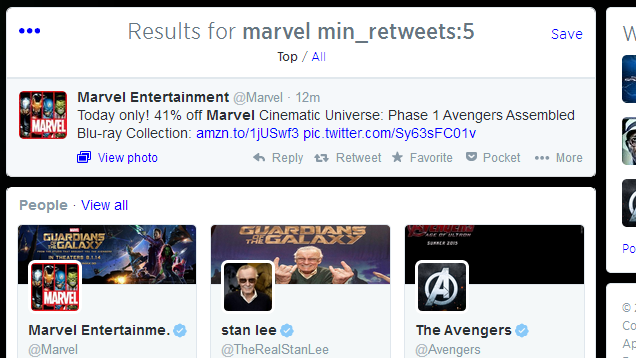
We already know that Twitter search is pretty useful for things beyond sharing your breakfast . However, there are some undocumented search operators that you can use to filter out the junk.

Wattpad founder Allen Lau. Wattpad has been vocal about its ambitions for Toronto’s startup community. (Wattpad)
Cities need to focus on building a vibrant start-up ecosystem rather than providing funding for specific ventures, according to McKinsey.
Examining the success of entrepreneurial hotbeds like New York, Tel Aviv and Berlin, Creating Growth Clusters recommends the establishing of start-up delivery units to encourage prospective new companies:
Establishing a coherent and supportive entrepreneurial policy at the city level is challenging. Municipal decision makers should identify bottlenecks in the start-up ecosystem and design and carry out initiatives to address them. These moves require a project-oriented, dynamic, and capable organizational structure.
Toronto is the eighth-best city in the world for start-ups, according to research firm Startup Genome. Jeff Beer suggested that a few smart changes could move the city up the scale:
But if it is serious about exploiting its innovation potential, Toronto needs a tangible strategy across government, the private sector, entrepreneurs and investors to make it happen. That includes a more active role for city hall in attracting and keeping business, improved investment incentives, and encouragement for big business to engage these new ventures as investors and clients.
READ: Make Toronto the startup capital of the world »
Canada isn’t exactly a barren wasteland for start-ups at the moment. Increasing numbers of Canadians are choosing to start their own businesses rather than work for someone else. Some are seeing fantastic returns from the decision to strike out on their own: the list of recent successes includes Apple purchase AllThingsID, social manager HootSuite and SalesForce acquisition GoInstant.
READ: Is HootSuite Canada’s next billion-dollar tech titan? »
The federal governments has been making efforts to boost entrepreneurial outcomes, with a new startup visa for foreign-born entrepreneurs and $400 million in funding to create venture-capital funds led by the private sector.
But municipal government is the level that really needs to be making an effort, McKinsey suggests. Innovation clusters are almost always based in large metropolitan areas, and cities have control over key inputs like power and transport infrastructure. Last year Calgary’s superstar mayor Naheed Nenshi suggested to Maclean’s last year that municipal government is the most crucial level for most citizens, and it seems that with startups it’s the absence of city engagement that causes problems.
Worrying signs abound for those hoping to see a local startup boom: Canada’s cities lack the kind of transit infrastructure that would fix the country’s productivity problem, and there’s a dearth of graduates in the science, technology, engineering and mathematics fields.
Still, if McKinsey is to be believed, a dedicated startup-booster in every major Canadian city would boost our odds of hosting the world’s next big innovation cluster.
The post Why fostering a successful startup scene means starting with City Hall appeared first on Canadian Business.
I was sitting with the founders of a company we’ve funded the other day talking about their competition. I love this product and I use it every day. It doesn’t yet have widespread adoption, but it as extremely actively used by the early adopters.
This company has several competitors – long time incumbents with somewhat stale, but useful products, and several new competitors, including well-funded and noisy ones. I use several of these products regularly in different situations and have encouraged the founders to use them also.
During our conversation, we started off by talking about pricing and go-to-market strategies. As part of this, we were talking through a strategy to change the current game being played in the market, both from a product and pricing perspective. We had clarity on the product side (we have several fundamental architectural differences that enable a powerfully different approach at scale) but thrashed for a while on the pricing perspective.
I realized I wasn’t very clear on the pricing strategies of the competitors so we went through them on-line. While this was sort of useful, our knowledge of their products, how they work, and what the current limitations of them are was more enlightening. Ultimately the product differentiation drove the pricing differentiation discussion, which resulted in our hypothesis about how to change the game which we are now testing.
If we hadn’t all be active users of these competitors products, we would have had a stupid conversation. While we have limited visibility into the competitors’ product roadmaps, we know how hard it will be for them to change several dimensions of their products. Sure, we should assume they can and will do this, but as we enter the market in a serious way, I think we can carve out a unique and very significant position for ourselves by leading with the product differentiation and supporting it with a pricing strategy that undermines theirs. In the absence of the product information we have from our experience using their products, we wouldn’t have been able to tie these two constructs together, and our resulting approach would be weak.
My general approach to competition is to “obsess about their products while completely ignoring the company.” If you can identify competitors, use their products continually, if only to have that knowledge when the moment comes that you have the conversation about how you are going to change the game.
The post Use Your Competitors’ Products All The Time appeared first on Feld Thoughts.
That is the question!
When it comes to qualifying leads, whether it’s a new account or within an established client, is there really any question whether or not qualification is important? Unfortunately, there is. There are instances where more accurate qualifying could have saved you or your company significant amounts of time, effort and trouble in terms of managing resources and maximizing your opportunities.
Another way to make the point is this: Have you ever seen a deal on the forecast with a 95% chance of closing this month, only to find there is some excuse that causes the deal to drift into the following month? And then it slips again and again into the ensuing months… until the same deal has been forecasted at 95% for so long that managers either get frustrated or they assume it’s a lost cause and take it out of their numbers completely? 
I was recently offered an opportunity to get in on a business deal that had a seemingly “phenomenal upside,” in a marketplace that was “rapidly growing,” and I was assured this person’s Internet-based product was virtually “bulletproof.” The deal was simple—where I basically agreed to trade my negotiation experience in working with large corporations in exchange for a small percentage of the company’s earnings. Granted, I wasn’t putting any of my own money at risk, but still, the time I would ultimately have to spend bringing the opportunity to fruition would require a significant investment in time on my part. But, the potential payoff definitely would have been easily worth it—a cut of 20+ million dollars. Yes, you read that correctly. That was twenty million…with seven zeros!
Although some people consider it annoying at times, part of my personality is to listen closely and hold people accountable for what they say. For example, when my partner in this deal told me that he would have his attorney draw up a contract that documented our verbal agreement, I expect it will be done within the week, as promised. When that didn’t happen, it wasn’t the end of the world, but missing verbal commitments registers with me—strike one. In the meantime, we strategized about the business plan several times but it became clear that the opportunity was not moving forward according to the expectations set by our main contact in the account—strike two. Now if my years in sales have taught me anything, it’s that at some point, you either hang in there and keep chasing what could be a pipedream, or you pose some tough questions to reveal where you really stand in the process.
Well, I chose the latter, and my tough questions initiated an uncomfortable conversation to say the least. I wasn’t upset that things turned out to be much less "baked” than had originally been communicated. But even as a minority partner in the enterprise, I wanted to know the real scoop. And that’s where things started to unravel. It turns out the attorney on the deal wasn’t being forthright, and the actual product is still miles from completion as opposed to “on the verge” of being finished, as was originally communicated. Strike three! Net/net, I broke off whatever partnership existed, wished my friend well in his endeavors, and I believe saved myself a great deal of time and hassle.
In my experience, when the planets are not aligned and you get the feeling that something isn’t working, you’re intuition is probably right. In this case, I concluded that this opportunity had little or no chance of success. Thus, continuing to chase a pipedream as if it had a 95% probability of success would have costs me a lot more than simply walking away. “Chasing ghosts,” I call it—where situations like this create one of the biggest drains on a salesperson’s time not to mention other valuable resources.
That said, is it possible that a deal you take off the forecast can come back from the dead, so to speak, in spite of a whole history of negative buying signals? Sure, that’s happened to me several times. And when it does, I am ready to jump back in with both feet if the status of an account actually changes. But, just because you forecast a deal with a high probability of closing doesn’t mean they are ready to move forward.
Just telling people that it’s important to qualify opportunities doesn’t provide sellers with enough information, however. It’s important to provide a strategy for “how” to effectively qualify in order to have a more reflective and accurate forecast. That’s where Question Based Selling comes in.
One of the old-school adages I often hear from sales managers is that sellers should qualify ‘early and often.’ I agree, with the caveat that it’s possible to qualify yourself out of an opportunity by asking inappropriate qualifying questions too early in the sales process. Here’s one for example, “Mr. Prospect, do you have $150K budgeted for an emerging technology solution that you’ve never heard of, but might save your company significant time and money?” The answer to that question is likely to be “No.” Of course they don’t have money budgeted for a product or service they haven’t even heard of yet. Thus, it’s possible to disqualify an opportunity before the need has been developed and your value has been appropriately conveyed.
My strategy for qualifying opportunities is relatively simple. First, you have to be willing to ask direct questions and then be patient enough to listen for the answers. “But, doesn’t asking qualifying questions sometimes put customers on the spot?” sellers will ask me. Yes, absolutely. I want to put potential customers on the spot to some degree—because I want to find out, “Are we working toward a mutually beneficial opportunity, or is this something that might be nice, but isn’t really a priority for them at this time?” If you are respectful and sincerely don’t want to waste the customer’s time, I have found that by being direct, customers are more than willing to share their thoughts, feelings, and concerns. It’s those quick-talking salesmen with a fake-smile plastered on their face that cause customers to shy away from telling you where they really stand.
Here’s a simple two-step process for effective qualification. First, you have to know where you stand in the deal. What’s the best way to find out? Easy, just ask…and the more direct you are with the customer, the better. “Mr. Customer, do you mind if I ask where we stand in this opportunity?” Or, “Mr. Customer, can you help me with something? My boss is asking me where we stand in this opportunity. Should I tell him that it will probably close within the month or should I let him know it’s likely to be pushed out into the future?” Then, I would probably some follow up questions about what obstacles were preventing them from moving forward?
That’s the key right there. If a transaction is never going to happen, you want customers to tell you right then and there. He or she doesn’t want to waste any more time chasing ghosts, either. Likewise, if a deal is going to happen, even if the customer doesn’t know exactly when, they are likely to give you their best guess on timing, along with the issues that have to be dealt with along the way. Now you are in a position to proceed accordingly.
One last note about qualifying. I don’t ask once and assume the answer I received at the time is set in stone forever. In fact, I make it a point to ask the same questions to more than one person. If their answers match up, then you can be pretty sure the information you’re getting is correct. However, if two different people within an account give me two distinctly different responses, then more work needs to be done to understand what’s really going on.
The QBS technique for this is called Cross-Referencing. When you are collecting information about an opportunity, make it a point to verify the data with someone else. I usually don’t share who I got the information from, because I don’t want to sound like a gossip within the account. But I still might ask questions like: “Ms. Customer, I heard that this contract could close by the end of this month, but the possibility exists that it might get hung up in legal. Is that an accurate assessment from your perspective?” From there, you might find out that the intel you’ve gathered thus far is dead on. Or, you might get a second opinion that is dramatically different, which would cause me to investigate further. Either way, the goal is simply to know where you stand, in order to know how best to proceed toward the ultimate goal.
So, you may want to take a few minutes right now and assess where you really stand on some of the more shaky deals in your forecast. Are they even real? Have you qualified them to the point where you know who the decision makers and influencers are, and how as well as when the decision will be made? Doing so might just make the difference in this week’s productivity, and ultimately in this month’s commission check!

Last week I had the opportunity to join Microsoft’s 2014 Worldwide Partner Conference in Washington, D.C., with more than 16,000 people from 140 countries representing Microsoft partner companies. While much of the conference was naturally driven around technology, I enjoyed many refreshing conversations with sales leaders about their approaches to working with clients.
One particular theme repeatedly arose in these exchanges—and was echoed in Microsoft CEO Satya Nadella’s keynote. “Let's collectively serve our customers to be able to transform their businesses and their lives,” he said. “That's the opportunity ahead of us."
I heard this again when I joined a session hosted by the International Association of Microsoft Channel Partners (IAMCP), where Microsoft partners were brought together to share insights on engaging with clients. From that discussion and others throughout the week, it became clear that this idea of winning together—that the more successful you can make your client, then the more successful you will be—is certainly not novel but more than ever seems to resonate.
In many ways, it’s simple common sense—but the issue is that’s not common practice. Many companies lose sight of the importance of focusing on their clients’ success rather than their own. For many sales teams, selling can be broken down into three simple steps: 1) the sale, 2) the closing of the sale, and 3) the implementation of the sold product or solution. In this approach, the relationship’s ultimate goal is to simply ensure the product or solution is properly implemented for the client. Ultimately, the sales agent is performing the bare minimum to complete a transaction.
Throughout the conference, I spoke with many sales leaders about the importance of building relationships with clients by providing value to them that goes beyond the basic mechanics of negotiating and completing a transaction. In particular, sales teams need to commit to working with a client on gaining the maximum benefit of a product or service. Doing so helps to build a connection that is more enduring—something akin to a partnership than a traditional buyer/seller relationship.
Yet I learned that many companies were putting their sales teams through extensive product training. They were working hard to help their sales staff thoroughly understand the technological attributes and operations of products or solutions so that they could be effectively sell. However, they often fell short with the next training step—helping them understand the business driver possibilities of the products so that they could effectively communicate with clients.
In other words, sales teams were learning to show their clients how a product works, but they weren’t learning how to demonstrate a particular product or solution could help improve their client’s business. They were prematurely advocating for the product or solution—selling it before they were ready to explain its true usefulness.
As a result, these sales teams were not forming strong, long-term relationships with clients when they made a sale. The relationship was limited to that single transaction, and they failed to adequately lay the foundation for the next sale.
A sincere intent to help clients succeed can change that. If a company wants to experience growth, then it has to help its clients experience growth, too. When that happens, both sides win. In fact, according to Partner Success with the 3rd Platform: Why Training Matters (a new IDC white paper sponsored by Microsoft on the heels of the conference), strong training and certification programs positively impact both sales and implementation success—leading to at least a 10 percent increase in both sales velocity and project efficiency.
What have you seen happen when your sales teams adopt a win-win approach with their clients? What steps do they take? And how do your salespeople work with clients to ensure they take advantage of the full potential of your products and solutions?
The Truth About Social Selling is a post from: The Sales Blog | S. Anthony Iannarino
The truth about social selling is that there is no such thing. Social selling is really marketing.
You don’t use social media to qualify your dream clients. The work you do using the social toolkit is about identifying your dream clients. It’s about listening to your dream clients share things that give you a hint as to what they believe is important.
You don’t use social media to do discovery work. The thing that makes discovery work so powerful is that you are sitting face-to-face with your dream client, allowing them to see and feel you listen to them. You can’t replicate that feeling on social channels. You also can’t apply your business acumen and your situational knowledge to their challenges and opportunities over social channels.
There is no way that you are ever going to present using the social channels. In fact, the proponents of social selling (which you now know is really marketing) are offended by the very word “sell.” They chafe at the mere mention of the word “pitch.” The social-only proponents say things like “be helpful,” and “share content.” And for God’s sake, “Don’t ask for anything.” But when you sell, you have to ask for commitments. If you aren’t gaining any commitments, you aren’t selling. You’re marketing.
You aren’t going to build consensus with a LinkedIn post. You aren’t going to really help your dream client resolve their concerns and fears with a Tweet, even a really, really clever tweet.
Social selling, or social marketing, is an awesome toolkit for developing relationships, relationships that allow you to get face-to-face with your dream client. What other toolkit can help you share your value-creating ideas and gain your dream client’s attention before you are known. Social is excellent for positioning and differentiating yourself and your offering from your competitors. Social, if done well, creates engagement with dream clients. Most of all social helps nurture the relationships you need to create new opportunities.
All of this “social” is above the funnel activity, but it helps you with prospecting, the activity that you need to have a funnel in the first place.
Salespeople need to be better marketers. Being a better marketer can help you be a better salesperson. But let’s not pretend that we are really selling when we are marketing.
I had dinner with a friend the other night who makes a fine living investing in Silicon Valley start-ups. It’s his passion to follow online innovation, so I threw out a hypothetical to him:
“Say you had to set up a website/blog/online store today…how would you do it?”

UNBROKEN, the gazillion copy bestseller about a pilot shot down, held prisoner and forced to fight like Hell to survive.
And then, as I often do, I started to answer the question myself before he got a chance to respond. I blabbed on about what the conventional wisdom is for creative blogger types whose value is in their authenticity and uniqueness. About how they’d need to invent something…a look and feel…that would express their singularity in the very design of their site. It would have to be handled very delicately and done just right to reflect their particular sensibility.
He laughed at me and simply said,
There is absolutely no value in being a snowflake on the Internet. In fact being “unlike any other” can kill you. No one will know how to use your site, or even read it, if you get too cute with it. Most people get caught up today on their mobile phones, so the site has to be easy to use on a tiny screen.
He then went on to explain that what he would do and has done is to find a “plug and play” website building company that does all of the technical stuff for him. One he can fix or change in ten minutes and not have to call someone else to do it. He’d make the site look like the most popular ones in the particular blog or online store arena he was looking to emulate. He recommended that writers using the web make their material unique, not the packaging. Don’t kill yourself over aesthetic designs that detract from the core mission.
“They call embraced innovations that work ‘best practices’ for a reason…”
It was my turn to laugh because his philosophy was exactly like mine in terms of how a publisher needs to behave. No matter the publisher’s size or traditions. When Steve and I pitched Giora Romm about publishing his Israeli bestseller in English, we told him that Black Irish Books would act “as if” we were Random House.
No, we wouldn’t be paying cooperative advertising to Barnes & Noble to get the chain to pre-order in bulk. And we would not be sending out a bunch of sales reps at great expense to convince the nation’s dwindling independent bookstores to take a flier on his book and stock a single copy and to “keep their eye on it.” That traditional method of “publishing” would prove silly for a non-celebrity or proven track record bestselling writer. I don’t know why the Big 5 still do that for all the books they publish…but they do.
If your name is not James Patterson or Walter Isaacson or Elizabeth Gilbert, you cannot depend on the old “two week blitz” publishing strategy to find a critical mass of readers.
Obviously Black Irish’s competitive advantage is in not wasting our time on old school methods wooing retailers or putting all of our eggs into a two week National Publicity basket. Our books are not “frontlist.” They are “backlist, evergreen” long-term commitments. So we spend weeks, months, years on every single one we put out there in an effort to reach what we think is the publisher’s job…getting the book into the hands of 10,000 readers. We have plans to promote all of our titles every chance we get, in any way we can do it, for as long as we’re around.
So we explained to Giora that we would act “as if” we were Random House in terms of production and packaging with only the people who will actually want to read the book in mind. So what are the Big 5 “best practices” for production and packaging?
First off, we needed to have a great cover, something that was indistinguishable from a Big 5 approach. It had to not only look like a Random House book; it had to promise even more. So we looked at all of the covers published by Big 5 publishers that were comparable to Giora’s book…UNBROKEN by Laura Hillenbrand and A HIGHER CALL by Adam Moss and Larry Alexander were the closest comparable. And we directed our designer Derick Tsai to follow their general graphic layout sensibility. Likewise our interior design was inspired by these titles too.
Steve and I were on the same page about innovating the cover imagery, graphic layout and interior design of the book. We should NOT do that!
No matter how brilliantly we would be able to pull off something remarkable, our target audience (military nonfiction readers, plus self-help inspirational narrative nonfiction readers) would not “feel right” about it. That is, these core readers want to have something “uniquely familiar” in terms of the books physical presentation. To give them “Abstract Expressionism” for a “Portraiture” kind of story would kill it before it was even read.
If we tried to do something remarkable with the packaging for Giora’s book in the way that Seth Godin brilliantly conceived of for his book PURPLE COW (a book about marketing is a perfect way to play with packaging), we’d alienate people who would be our “early adopters,” core military nonfiction readers. Anyone who has read UNBROKEN or A HIGHER CALL of THE THINGS THEY CARRIED or BLACK HAWK DOWN had to be able to take a one-millisecond look at SOLITARY and know that it’s in the same storytelling arena (Genre).
Let me take a step back here and tell you why we changed the title of Giora’s book from its original name TULIP FOUR. Again it speaks to acting “as if” Black Irish was Random House. TULIP FOUR is a terrific title…when you know what it means. It was the call sign on the radio for Giora’s Mirage jet on September 11, 1969, when he was shot down over Egypt and captured. Did Israel’s readers know what TULIP FOUR meant immediately when they picked up the Hebrew edition? Absolutely not.
But here is the very big thing they did know. They knew who the author was. Giora Romm is a national figure in Israel, equivalent to Chuck Yeager here in the United States. Remember the title of Chuck Yeager’s book? It was called YEAGER. So just having the name GIORA ROMM on the cover of TULIP FOUR was enough for Israel’s readers to know what genre the book was. Even if the title didn’t immediately resonate with them. It would later and it pays off in a big way too, thematically, but Steve and I didn’t have the luxury to be subtle or literary with the title here in the U.S.
We had to use the title to tell potential U.S. readers what genre this book lived in. Beyond the cover imagery, which can only be seen when browsing for the book online or in a store, we needed the title to tell the reader exactly what it was about. Ideally, a cover promises the same thing a story does…a beginning hook, a middle build and an ending payoff.
Again, if we were Random House, we’d want a title as captivating as UNBROKEN…the gazillion copy bestseller about a pilot shot down, held prisoner and forced to fight like Hell to survive. Well geez, we thought, our book has the same broad stroke description as UNBROKEN. Why don’t we use that package as our inspiration? Shouldn’t we try and find a title similar to UNBROKEN? And come up with a subtitle in the same family as UNBROKEN’s, a World War II Story of Survival, Resilience and Redemption?
Now you know why the book is called SOLITARY: The Crash, Captivity and Comeback of an Ace Fighter Pilot.

The cover of SOLITARY
But what of the back cover? How would Random House set up its marketing and publicity campaigns for a book like SOLITARY? That is, use the other side of the package to establish the book’s bona fides?
You’ve probably noticed recently that another book set in 1969 has somehow reached the top of Amazon.com’s bestseller list. And it’s not even available in print right now…just eBook format. And a company called Open Road, not one of the Big Five, publishes it. In fact, the author, John Brooks is deceased. How did that happen?
A person millions of people respect was asked what his favorite book was and he said it was BUSINESS ADVENTURES. Bill Gates make the book a bestseller just by expressing his opinion.
Publishers have known the importance of influential endorsements for years. So Black Irish Books had to recognize this importance too. SOLITARY might look like UNBROKEN or A HIGHER CALL, but without endorsements from writers in its same arena, or within the same potential readership circles, the book would not feel like a Random House book.
But…Shit…Steve and I are old salts.
We’ve been around the advance quote log roll for years. We know that it’s now virtually impossible to get anyone to give you an honest read and an honest quote.
But maybe it’s not impossible-impossible…
How could we get big name writers to actually read SOLITARY and give us quotes if we can’t roll out the “we’re a big important publisher that can help you down the line” subtext that the Big 5 uses when soliciting quotes for their books?
If we were going to get big shots, we had to make it personal.
We had to make our “ask” for a quote unique. It had to come directly from Steve and it had to be respectful of their time, yet forceful about the importance of the book. The other thing we decided was that we wouldn’t just send the book without asking first. Steve gets hundreds of copies of unsolicited books mailed to him every year from editors and writers and publishers he’s never met personally asking him to spend hours reading a book and then to offer a dazzling quote.
We didn’t want to be one of those guys that bug Steve. We wanted the people we targeted (about 30 big time writers that Steve and I either knew personally or knew their agents or editors or publishers personally) to not have to deal with the burden of having a book they never asked for dumped on their doorstep.
Ironically, we knew our courtesy would be a competitive advantage. We wouldn’t waste money printing and shipping a book to someone who didn’t have the time to read it. And we did something even more personal to give the letter the best chance of actually being read. We used Steve’s personal stationary (remember that stuff?) and each note was banged out on an ancient WWII era typewriter.
Think about it. You’re a big time writer. You get a hand typed letter directly from another big time writer you may not personally know, but you admire his work. He asks you to consider reading…not his next book…but a book he was so in love with, he opened up his own checkbook to publish it himself.
And the capper is that in the same “ask” letter, he tells you to throw out his plea and to never think for a second that he doesn’t understand that you don’t have the time to do it. Don’t respond if you have no time. I get it. No hard feelings.
Guess what happened?
Even the people who were swamped or couldn’t read the book, like Laura Hillenbrand, got back to us with heartfelt apologies for not having the bandwidth…wished us luck. I’d bet if they ever do have a free couple of hours, they’ll check the book out anyway…
And as you’ll see on the back cover of SOLITARY, a whole slew of bestselling writers put aside the time, read the book, and gave us their heartfelt comments. So acting “as if” we were Random House, we’ve put together a Big 5 caliber package. The title, the quotes, the cover, the interior are on the mark.
But what about marketing and publicity? More on that subject next week.
Guest Post by Kelly Riggs
Everything that happens after your customer says “yes” is what separates sales leaders from the rest of the pack.
In many cases a salesperson will work for weeks or even months to secure a piece of business; a process that likely includes several meetings, a number of presentations, and a host of additional sales calls before he/she finally reaches the finish line and wins the sale.
Then, of course, the real work begins: delivering on your promises.
You have likely made many commitments along the way, and your future credibility hinges upon your ability to deliver as agreed. Unfortunately, this is where many salespeople drop the ball, losing additional opportunities and referrals as a result.
Getting customers is one thing; keeping them, and leveraging those relationships to create additional business, is quite another. Since it is clearly much easier to sell customers who have already bought from you, it is always in your best interest to master the critical elements of the subtle art of follow-up.
Five Critical Elements of Follow-Up
To continue to build trust with customers – an essential part of winning future opportunities – a salesperson must take great care in the follow-up process.
You can be awesome in a sales presentation, and you can be a great closer, but it is considerably more difficult to get repeat business and referrals if you don’t excel in the subtle art of follow-up after the sale.
———————————-
By Kelly Riggs
Sales Executive. Two-time National Salesperson of the Year. Successful entrepreneur. Business performance coach since 2006.
A highly acclaimed platform speaker, Kelly is recognized as a dynamic thought leader in the fields of leadership, sales development, and strategic planning. He is a business performance coach for executives and companies throughout the United States, working with organizations that range in size from $3 million to $1.2 billion in annual revenues.
A national award-winning sales representative and sales manager, Kelly has spent the last seventeen years teaching and training organizational leaders in sales and executive management. His first book, “1-on-1 Management™: What Every Great Manager Knows That You Don’t,” was released in 2008. His second book, “Quit Whining and Start SELLING! A Step-by-Step Guide to a Hall of Fame Career in Sales” was released in May 2013.
Kelly hosts a live, online, business radio show called “The Business LockerRoom” that airs weekly at 3:00 p.m. CST. Designed for managers, leaders, executives, salespeople, and entrepreneurs, the show features compelling conversations and useful content that listeners can use to immediately improve their own business performance.
For more information, visit www.bizlockerroom.com

We've all seen SpaceX's incredible footage of a rocket taking off and landing. (In case you haven't, check out the above.)
CEO Elon Musk believes we should really be thinking about having all airplanes move like this — and have them be electric powered. This would make them more efficient in terms of fuel use.
In an appearance on The Colbert Report with Stephen Colbert, Musk explained his vision (we've edited out Colbert's interjections):
Aircraft should be vertical takeoff and landing. Kind of like a Harrier, except that it's better to move the fan than it is to duct the air. I think the Harrier's a great plane, but I think there's a real opportunity to have a vertical take-off and landing supersonic jet. You'd use an electric motor to drive a fan. Traditional jet aircraft are mostly fan driven — like when you see a high-bypass jet engine on a triple-7, it looks huge. That’s because most of the propulsion is really coming from the fan. So there’s some value to having ducts, but it’s actually more efficient to have an open fan if you just care about efficiency per mile. But you can go faster if you have a ducted situation.
The segment ended a bit cryptically, with Colbert asking, What's next? Musk replied, Well, what do you wish there was? Colbert then responded with this:
I wish there weren't any cables. I wish that computers didn't have to be typed into, that the mouse and the keyboard are terrible, it's a terrible interface, that I could just have a relationship with the machine, that I could have a discussion of my needs and it would do it. I think cables on anything are terrible, not just communication, but charging cables, that I could walk into my house and things would charge, or I would have a subscription service to a charging system and anywhere I went in the United States there'd be a charge that would follow me around.
Musk responded: "OK, OK ... Yeah no, we'll do it."
And Colbert ended with, "Elon Musk everybody, SpaceX, Tesla, and wireless charging."
Musk himself interjected with some laughs throughout Colbert's part, so in no way can we say that this was an extremely oblique product introduction through Stephen Colbert.
But we also can't rule out that it's not happening.
Here are the clips:

This is part II in the Email Marketing Mastery series. Missed Part I? Read it here.
In the last post, we saw 15 different ways you can instantly boost your email open and read rates today.
We looked at how you can be play ethical, use hypnotic words, create a stellar autoresponder list and a personalized welcome message, among other things.
Here are 16 more ways to make sure your emails are opened and to boost your click-through rates.
Sending emails when your readers are getting ready for work or going to bed? Chances are your emails won’t get opened.
Given that 24% of emails are opened in the first hour, reach out to your audience when they are not too busy.
Never underestimate the footer. Always give your readers one large-sized, clear and concise call-to-action in the footer.
It could be a new product promo, a discount or an invite to register to an upcoming webinar.
The GetResponse blog created an infographic based upon research which analyzed 300 million messages. It showed that auto-responder emails that were sent on a regular basis had a 24% higher open rate and 47% higher “click through rate”.
Sounds ironic, doesn’t it?
After all, we’re so cautious with our lists and fear we’ll “piss off” the reader and end up sending way fewer emails a month.
But pro data analyst Dan Zarella says that if you want to reduce the number of unsubscribes, send emails more often.
We’re creatures of habit. For most of us out of sight is out of mind. If you’re sending an email only once per month, it’s time to up your frequency because people will simply forget who you are, unsubscribe and flag you as spam.
Beautiful visual emails work better.
83% of learning happens visually. In short, a majority of us are visual learners. Contrast this with people remembering only 20% of what they read every time.
88% of senior marketing execs say integrating video with email has a positive impact on email campaign performance and 76% say that videos in emails generate higher click-through rates.
According to website builder IM Creator, visuals make your text more easy-to-digest, because let’s face it, they aren’t going to read but scan it. Make sure you also do A/B tests and include visuals in your emails.
For every three massive-value content emails, send a promo email nudging them to buy a related product. According to Convinceandconvert.com, in 2012, 44% of email recipients made at least one purchase last year based on a promotional email.
Pat Flynn does this well. This is how his auto-responder series look:

Source: Pat Flynn.
A sneaky yet great technique to stay on the top of what others are doing. Evaluating just their blog or website won’t cut it.
You want to become an insider and keep a tab on their content, frequency, style, design, subject lines to name a few.
Power phrases are “evergreen” subject lines that you can use over and over again irrespective of the subject. Create a swipe file of power phrases that you’ve tested for yourself and that generate higher open/click-through rates for your emails.
For my meetup groups, I’ve tested the phrase “Did you get this?” as a follow up subject line to an invitation. It piques people’s curiosity and they want to know whether they missed something.
Do you respond to every email that you get? Do you claim to do so?
If you’re not answering your subscriber emails, you’re missing out on a huge opportunity to build stronger relationships with your audience. Contrary to conventional thinking, this applies especially if you have a bigger list. (If you have thousands of people and replying to emails takes too much time, consider investing in a VA).
Granted, not everyone is in the “build relationships” stage yet. You may not have enough subscribers and don’t have to worry about in-depth connections with readers (yet) because there are too few of them. If that’s the case, don’t claim you read and reply to every email, because it will cost you your reader’s trust. Say what you do and do what you say.
I use MailChimp for me and my clients. Each campaign provides a snippet of content or a pre-header which is the first thing your mobile readers will see.
See arrowed text area below:

With 47% of email being opened on a mobile device, it becomes even more important. What’s more, 30% of consumers now read their email exclusively on mobile devices.
I once attended an info-sharing evening where the host wanted to share her experience with a business model. In the email copy, they told a great story and I was intrigued to sign up. On the evening, everyone turned up expecting the host to share her real, raw story with us.
Sadly, it turned out to be a sales pitch even though it wasn’t promoted as one. She had a great copywriter, but there was no alignment between the picture that was painted and what we really got at the event. There was no story, no connection built. It was all sales figures and hard-to-understand data on Powerpoint slides.
The result? Several pissed off attendees who didn’t care to buy.
Almost all of my emails start with a story and lure the reader in, before I’ve even made a “point” or mentioned a product.
Why? Simply because everyone loves a good story. Stories are how we grew up. We relate with them.
Before your subscribers even consider opening an email, they have to answer “What’s in it for me?”
Make it easier for them to answer the question by learning what your customers truly want. People are buying a desired resulting feeling. For example, someone who buys an Armani suit is really buying the feeling of luxury.
Once you execute #11 and #12 well, you’ve had them hooked!
Don’t be afraid to talk about feelings. Feelings are energetic and magnetic.
Talk to one person at a time, not the masses. Make them matter. Get a conversation started. Forget the grammar “rules” once in a while. It’s OK.
Oh and remember, it’s never about you but them.
Especially for promo emails, have a call-to-action between clear two to five words. Better yet, try visual CTAs and cues that work.
Here is another style that CopyBlogger uses at the end of their blog post: (http://www.copyblogger.com/smart-people-personas/)

In his course Serious Bloggers Only, Jon Morrow teaches how to condition your reader using a simple tactic: Write short emails, no longer than 100 words with a link pointing to full content. Publish the rest of the content goodness on your website.
This will condition your readers to click on a link every time in order to receive something good. In their minds, click = good stuff.
Simple but pure genius!
And segment your list instead. Avoid “batch and blast” approach. Segmented emails are well-targeted and generate 30% more open rate and 50% more click-through rate than blast-emails.
As an example, someone who abandoned a product in their cart can be sent a discount coupon email to bring them back.
Now that you’re armed with tons of new ways to engage and re-engage your readers, which one are you going to try out first?
Here’s a recap of 30+ ways to make sure your emails are opened and read.
Got a tip #32 to add? We’d love to hear it in the comments!
As a manager, do you think of yourself as a leader or as a coach? Do you, for instance, feel it’s important that your staff see you as an expert or do you prefer to create an egalitarian environment? Are you the person who solves problems or helps your staff come up with their own solutions? Are you more comfortable being directive or collaborative?
Results of a survey we’ve been conducting indicate a stronger desire to display coaching attributes than we were expecting.
Our assessment consists of 30 items we have tested and correlated to the most important attributes associated either with strong, top-down leadership or excellent coaches. (If you have not yet, we encourage you to take the assessment now, so that you can compare your scores with the those we present below.)
More than 2,00o readers responded to the survey. The results represent a global audience with 60% of respondents from the U.S., 10% from Europe, 9% from Asia, 6% from Canada, 2% from Central/South America, 2% from Africa, and 11% who did not identify their location. Respondents represent a fairly even mix of all levels in the organization: 20% executive management, 23% senior management, 27% middle management, and 30% supervisors or individual contributors.
You can compare your scores to others in the chart below here, which displays ranges of scores we’ve so far collected for the three different attributes. A negative score indicates a preference strong, direct leadership, managing through applying your expertise and through giving advice and clear direction. A positive score indicates a greater desire to act as a coach. Generally speaking, we have found through our research and our experience, excellent coaches would rather help others discover an answer for themselves than give advice. They prefer to act collaboratively rather than tell people what to do. And they prefer to act as an equal rather than as an expert. And as we analyzed the data, we were surprised (and frankly, pleased) to see that three-quarters of scores were positive, indicating that the vast majority preferred to manage through coaching.

Years ago, Joe recalls sitting through an introduction by the CEO of a Fortune 50 company that had grown dramatically by acquisition. In his presentation, he said, “The reason we bought all these different companies was that we felt like they would be worth more together than they would running as separate entities. The only way we get that value is through your efforts to collaborate and work together.” Most of the CEOs across the world have given that same speech. Apparently, people are hearing the message.
Well, perhaps. What we’ve tracked here are people’s desire to act in a particular way, not what they actually do. We imagine many readers are saying to themselves, “My boss does not seem that interested in letting me discover my own solutions.” Or many could be musing, “It’s true that sometimes we desire an open, collaborative conversation only to find ourselves barking out directions and orders.” That can happen, but there’s a world of difference between organizations in which people fall short of a collaborative ideal and those that don’t subscribe to it at all.
As we looked further into the results, we found those in top management positions to have the strongest desire to be more collaborative and help others find their own solutions; supervisors ranked the lowest. That jibes with our own experience, in which we find supervisors often believe that they are expected to give advice, give orders, and assure that orders are executed. But, remarkably, even this group prefers coaching to directive leadership to some degree.

We find these results so heartening because, frankly, we’ve seen supervisors and managers who were really good at getting results by giving lots of direction and advice and staying on top of all the details. A really effective autocratic leader can be efficient and quick about getting things done. But something suffers in the process. People wait for orders. They stop taking initiative. Their level of engagement declines slowly—and often rapidly—as time progresses. It can be easy in the effort to get the job done to lose sight of the long-term goal of helping people get better at getting the job done. The enormous value of coaching is what it does to develop people and create an ever more engaged and empowered team of employees.

Mark Cuban isn't a fan of tax inversions, either.
Last night, President Obama spoke with CNBC's Steve Liesman, and their first topic of conversation was the issue of tax inversions, or mergers where U.S.-based companies acquire foreign companies and move their tax base overseas to enjoy lower rates.
Obama said this strategy, among other things, "undermines people's confidence in how companies are thinking about their responsibilities to the country as a whole."
Cuban took his rhetoric a step further: he said he's selling stock in companies that move for tax reasons.
On Twitter this morning, Cuban fired off a series of tweets about how companies that move their tax base overseas to avoid paying taxes force existing taxpayers to make it up elsewhere.
If I own stock in your company and you move offshore for tax reasons I'm selling your stock. There are enough investment choices here
— Mark Cuban (@mcuban) July 25, 2014
If you talk to me as a shareholder and ask me to accept a higher PE so you can save jobs I'm open to it. The risk doesn't leave the system
— Mark Cuban (@mcuban) July 25, 2014
. @pointsnfigures no it doesn't. Shareholder value should increase my net worth. Reduced tax receipts get paid by me and you elsewhere
— Mark Cuban (@mcuban) July 25, 2014
When companies move off shore to save on taxes, you and I make up the tax shortfall elsewhere sell those stocks and they won't move
— Mark Cuban (@mcuban) July 25, 2014
Look at your portfolio holistically.A corp move may push up the stock. it may push up your taxes Taxes r forever. #costdontleavethesystem
— Mark Cuban (@mcuban) July 25, 2014
Cuban is one of the most outspoken and influential business voices around, and his comments are certain to get notice.
The chances that these comments spur action in Congress, which is where any move to limit tax inversions really needs to come from, are probably remote.
But the more people that are outspoken against tax inversions, the harder it might be for Congress and corporations to maintain the status quo.
 Often times when we think about creating marketing content we think of it as a one-time usage situation. You write a blog post, it gets posted, and that’s that. You create content for an ad, it runs in your selected publication, and that’s the end of that content’s life. When you look at marketing content this way it can be hard to rationalize investing in high-quality work. However, marketing content does not have to be “one and done.” Here are some ways to make the most of your marketing material.
1. Give that video some legs
Often when companies decide to invest in a video it is because they want something interactive on their website or because they want to build up a YouTube channel. The thinking is that once the video is posted to both places, that is about as much usefulness as you can get out of the piece. However, there are lots of other ways a video can be used. For example, a video can be posting to a special landing page to which an ad or an e-newsletter is driving traffic. A video can be used at a trade show to offer more specific product details or demos. A video can even be embedded these days into digital ads to grab attention and make the ads more interactive.
2. Make that presentation last
Do you have a Power Point presentation that you use as a sales tool? If so, don’t feel that it can only be used for that purpose. There is a site called Slide Share where power point presentations can be posted for anyone to review. You would of course want to remove any proprietary information, but links from Slide Share back to your website are great for Search Engine Optimization and you can also start to build a reputation as a good presenter with valuable information.
3. Make your news releases work for your website
Sending out a news release these days is far easier than it used to be. A simple emailed news release can be published that day by industry publications. That kind of exposure is great, but what can really enhance the value of your posted news release is making sure you hyperlink your keywords so that the search engines learn to associate your website with those keywords. Additionally, posting news releases to your own website adds a lot of new content on a regular basis, preventing your site from becoming stagnant.
4. Spread the case study love around
Especially in the B2B world, getting a case study that you can promote can be tricky. Companies don’t often want to reveal who their customers are and sometimes customer don’t admit that they had a problem that needed to be fixed. This is not cause to despair, but it does mean that when you are able to get a case study you want to capitalize on it as much as possible. In addition to getting the case study published in a key industry publication, it is important to post pieces like this to your company website. In the past we have also used (with permission) quotes from the case study as the core of a testimonial ad. Case studies are also great for presentations at trade shows or conferences.
5. Don’t let that blog post just be a blog post
Companies will often respond to the idea of starting a blog with the common refrain – we don’t have time for that. Other clients have expressed a fear that their blog will not get any visitors or that it won’t do any good. One way to address all of these concerns is to use your blog post beyond the actual blog site. If you are approaching your blog with the idea of answering common client questions, include links in your e-newsletter or advise whomever answers calls to direct people to your blog posts. The content that you write for your blog posts can be “repurposed” for e-newsletters or white papers, and of course having blog posts also gives you content for any social media platforms you are using.
Very seldom does a marketing piece need to be “one and done.” Particularly if you know what your key objectives are, it can be relatively easy to determine how you can give everything you do “legs.” If you need help with that just let us know!
Image Credit: https://www.flickr.com/photos/usagrc/8737919548 via Creative Commons

Problem: Have you ever heard the term “sales profession?” How about “medical profession?” Which one do you think has the most credibility? Of course, I’m biased I am a “professional” salesperson. Which would the general public, the people who are our prospective buyers, give the most credibility to as a real profession? My guess is medicine.
Analysis: Medical professionals study for years before they are licensed to practice and then must undergo regular continuing education to stay licensed. The profession is highly regulated, and rightly so, since peoples’ lives are on the line. But what about sales? The normal requirement to get into sales is often nothing more than an outgoing personality and a business card. Training ranges from nothing to rigorous, but usually is inadequate. Salespeople are often making recommendations on products and services that can have a profound impact on their customers. Yet, we have no regulating body to keep out the charlatans.
In medicine, they have a term for someone who prescribes medical treatment without an adequate diagnosis of the condition. They call that person a “quack.” A synonym for quack is charlatan, described by Webster as someone who pretends to have expert knowledge or skill that he does not have.
How many “professional” salespeople prescribe a product or service before they’ve made an adequate diagnosis? Far too many according to the buying public. It’s no wonder that, almost universally, salespeople are mistrusted. And it’s no wonder that selling is so difficult, given that prospects don’t trust salespeople.
Solution: If you want to set yourself apart from your competition, if you truly want to be regarded as a professional, then begin with a better diagnosis. Tell the prospect that you won’t give a presentation until you understand his situation completely. It would sound something like this; “I understand that you want to hear all about our product and what it costs and at the same time, I don’t even know if I can help you. I haven’t asked you enough questions to determine that. Shouldn’t we do that first… determine if we are even a right fit for you?”
Then, make sure you ask enough of the right questions to be able to suggest a solution that will completely fix the problem. The right questions are the ones you ask to understand the business issues, the costs associated with these issues and the potential upside of resolving these issues.
The wrong questions are ones you ask just to build a quote. Quote questions are typically centered on getting the specs so you can build a quote. They are important questions but only come after you have identified the business issue you can solve, associated a cost to it, and have an agreement from the prospect that it is an important enough issue that they would want to address it either immediately or in the short term.
A professional asks the right questions at the right time.
So after reading this which one are you, the professional or the pretender? Before you answer ask yourself this question; “If I was arrested for being a professional salesperson, would there be enough evidence to convict me?”
Good Selling!!

According to Salesforce, implementing a CRM system could boost sales productivity by 27%. Additionally, a Nucleus Research survey of CRM decision makers found that organizations could significantly increase returns on their CRM investments by adding mobile and social capabilities for salespeople, resulting in an average productivity gain of 14.6% from mobile and 11.8% from social.
Below are three ways that using a CRM system can increase the overall productivity of your sales team.
1. Lead Qualification – CRM technology can be extremely effective at qualifying leads before they’re put into the hands of the sales team. It’s important that you have a well thought-out lead qualification process to begin with. The next step is to map that lead qualification process to your CRM.
An effective lead qualification process should include:
2. Proposal Generation – Tracking down the necessary documents, spreadsheets and approvals associated with creating and sending prospects a new proposal can take hours or even days. This delay could cost you the sale. However, if all of the critical information needed to develop a proposal is stored within the CRM, the process of creating one only takes a few minutes of your time.
By leaning on your CRM system for generating your proposals, not only will the contact and opportunity information from your prospect flow into your proposal, but your catalog items and pricing information are automatically entered as well.
3. Report Automation – Allowing your CRM to auto-generate a weekly sales report for your manager could save you hundreds of hours per year. That means that you get to spend more time doing what you do best, selling. In addition, viewing your sales numbers week to week can help you to improve your sales processes and serve as a motivational tool to improve your individual performance.
At the end of the day, the process is more important than the tool. However, CRM is one of the most powerful weapons in the salesperson’s arsenal, enabling you to save time, increase sales and increase productivity, if you’re willing to set up a few key processes on the back-end, ensuring your success.
 B2B companies are more than ever using online marketing strategies, but manufacturing companies have habitually held on to their traditional marketing techniques – print advertising, trade shows, and newsletters.
Only 21% of manufacturing marketers have a documented strategy for creating content online, lower than the B2B average. (We also published a case study on how a manufacturer’s blog brought real business results that you may be interested in reading.)
The less flashy nature of the manufacturing industry can lead marketers to think that they don’t need an online strategy, but a marketing strategy can improve business in any industry.
Combining traditional manufacturing marketing with an online marketing effort can help manufacturing companies leverage their content across all fields. Here are a few tips to improve your manufacturing marketing.
Learn what your customers need by listening to their questions. Whether it’s over the phone or at a trade show, write down anything a prospective customer asks.
Compare notes with your sales team to determine what your customers are asking about the most. By determining what questions your prospects are asking, you can set yourself up to become an educational resource for them.
Positioning yourself as a resource for commonly asked questions will help customers see you as the company that provides solutions to their problems.
After you listen to their needs, try to become the solution. You want to provide information that will make your customers’ lives easier and answer their most pressing questions.
Instead of pitching to them why your product is the best, try to discover if you are going to be a good fit for their requirements.
Periodic emails to your customers or prospective customers are a great way to provide information they would be interested in. Try to discern what sort of content resonates with your customers to decide what you should send them.
Blog posts, guides, PowerPoint presentations and even video are great ways to present interesting content to your prospective clients.
Many manufacturing company websites just use their websites as a place for contact information.
Contact information is essential on a website, but your site should be so much more. You can make your website a place for lead generation by providing content that is useful for your customers to read.
Including a call to action (CTA) in your website articles gives readers a place to go when they’re finished looking at your article. A CTA can link to a guide or white paper that’s relevant to the article, or to a contact form for further questions.
CTAs help you generate leads from the people who find your information useful and give them an opportunity to learn more about your company.
Combining your web content with traditional manufacturing marketing methods like trade shows can make your website more visible to customers who may not be online.
If you frequent trade shows, consider printing off a few copies of a website article to have at your booth. Make a sign so customers know what it is, and allow them to take copies to peruse at their own pace.
If you include a link where they can find the post online, you just advertised your website and made your content easily accessible for everyone at the trade show.
E-newsletters are the most commonly used form of content marketing by manufacturing companies, with 82% of manufacturing marketers utilizing them.
Make your e-newsletters more effective by linking up your website content and new articles each time you send one out. Send out an email at least once a month and measure who on your list is opening them.
If you find you have a group of people who are consistently opening your emails, put them in a separate list. Send this interested group more frequent emails containing content they might want to read.
You can also send them an update email each time a new article is published on your website to encourage them to visit your site.
Creating content is a great way to give your potential customers an opportunity to find you. As you create more great content for your site, try to find ways to intertwine it with your other marketing tactics to improve the effectiveness of all of your marketing and demand generation.
Don’t limit yourself to just posting this content on your website – utilize it in your traditional marketing as well!

 These days, everyone is a brand evangelist. Consumers express their love of Vans on Instagram; Sephora supporters can show off their favorite looks on the brand’s Pinterest page; and Facebook is practically rebuilding its business model around connecting fans with the companies they “like” by initiating compelling conversations.
Inspirations and opportunities abound for your loyal customers to express their brand devotion — and to express their personalities through the brands they choose to champion. But what about your own workforce? Is your business doing enough to engage your employees in your content creation efforts, regardless of their level of experience or the functional role they play in your organization?
Last week, we discussed the challenge of finding the right writers to join your team; this week, we look at the other side of the coin: how to inspire and motivate your existing employees to create content on behalf of your business. To explore the topic, I asked a group of our blog contributors, Online Training instructors, and Content Marketing World speakers for their ideas. Take a look at the insights they shared in answer to the question, “What practical suggestions can you offer for involving employees and inspiring them to participate in content creation — particularly those who aren’t in the marketing department?”
 This is a common challenge in organizations that don’t value their content as a business asset. It’s not a problem of inspiration. It’s a problem that centers around a lack of leadership. Great leaders excite, encourage, and inspire the efforts of their employees toward the achievement of measurable goals by spelling out expectations, defining roles and responsibilities, and providing the proper training and incentives. Leaders make sure employees understand the end game. They explain what is important (and what is not). They ensure employees understand both the plan and the role they play in helping the organization achieve success. And, they measure and reward those who do a great job. —Scott P. Abel, Content Marketing Strategist, The Content Wrangler, Inc. | @scottabel
 Play to each person’s strengths. Non-writers won’t become writers overnight, but they might give a great interview. Others might be more visual than verbal. Others might be better for working the social media channels instead of creating content. —Doug Kessler, Co-Founder and Creative Director, Velocity Partners | @dougkessler
 A few suggestions:
 I think you need to educate the employees about the importance of building their personal brand and their own audience. By contributing to content creation — and getting exposure for this content creation — they are demonstrating their knowledge outside the company, which will help them in their future careers. It needs to be a win-win situation for employees and employers.
Content creation is challenging and time consuming so employees need to understand the benefits. —Ian Cleary, Social Media Tools Guy, RazorSocial | @iancleary
 I’ve found four corporate archetypes that need a personalized approach to engaging them in our [content marketing] initiatives:
 This is a topic of future research, actually, but there are some approaches that I see working well. First: training. Help people to understand what content marketing is, why it benefits the organization and, most of all, how it can help them, personally, with their jobs: Encouraging outside input; reducing customer service queries; increasing leads or sales? Effective content can make a lot of people’s jobs a whole lot easier. Sell that benefit and you’ll sell them on bringing content to the table. But understand there will be those who are able to create content, and those who can’t, or won’t. This latter category should be encouraged to contribute ideas, if not actual execution. —Rebecca Lieb, Analyst, Altimeter Group | @lieblink
 Rather than thinking of non-marketing employees as content creators, it’s better to think of them as sources — just as a journalist would. With this mentality, you, as the journalist/content creator, can interview the subject matter expert with a tape recorder in hand, and selectively quote them in a piece of content.
The benefits of this approach are three-fold:
 Each of our team members is a part of our blog team. They are extremely talented writers, strategists, content marketers, and the list goes on. They are also very busy with other work, so to inspire them, we encourage creative freedom on articles submitted to our blog. In addition to the standard “how-to” pieces that provide outlines for businesses to conduct content marketing activities, we also get articles with content that talks about how a unique selling proposition relates to super hero movies, or how video killed the radio star and has its eyes set on other content types. By allowing for creative freedom, we effectively inspire our team to create pieces that resonate with our audience and stand out from the crowd. —Anthony Gaenzle, Director of Marketing, Enveritas Group | @anthonygaenzle

Let’s be realistic. Not all employees will feel like writing or even thinking about content. The best way to involve them in content creation is to talk to them. Take a journalistic approach. Act as a journalist. Get content out of them by talking to them regularly, asking questions — just like a journalist would do. And out of these conversations create content in a form that suits your content marketing program best. Include them in content by name (only if it makes sense, of course). Gradually you’ll get more and more out of them as they won’t take it as a burden and they will feel their knowledge and place in the company is appreciated. —Nenad Senic, European Editor, Chief Content Officer | @nenadsenic
There are many great approaches for inspiring your team to evangelize your business through content. The trick is to find a way to make content creation a benefit — not a burden.
Ideally, employees should come away from their content creation efforts feeling like their ideas and opinions matter to your business, that they have something of value to offer, and that they will be respected and recognized for the extra efforts they put into their contributions. Given the right training, support, respect, and encouragement, any employee — regardless of their area of expertise — can be a powerful evangelist for your brand.
Here are a few more ideas for tapping into everyone’s inner content creator:
Looking for more ideas and inspirations for making your business’ content marketing efforts more manageable — and more successful? Register today to attend Content Marketing World 2014 — the biggest industry event of the year.
Cover image by Rayi Christian W, via Unsplash
When it comes to closing the deal, you could be your own worst enemy. Not happy with your sales numbers? Is your site not converting at the rate you need? Don’t blame the leads (The leads aren’t weak, you’re weak!). Instead, the answer could be looking you in the eye every time you visit your company’s website. Un-optimized websites and difficult conversion processes are kryptonite to a high conversion rate and could be the very thing that is sabotaging your sales. Here are three of the most common areas of #salessabotage we see at SME Digital.
 By now everyone reading this blog should understand the importance of a mobile optimized site. But having a responsive/mobile friendly site is just one area of your website that needs optimization. Take a good look at your site, what’s the first thing you see. If it’s not a call-to-action to begin the sales cycle (or get placed into a nurturing campaign), then you could be losing potential conversions. You have to optimize the site for conversion. Make sure there is at least one call-to-action on every page of the site. You also want to make sure that you are split-testing these conversion points to continually improve your numbers. As silly as it seems, tweaking the color of a button or the wording of the call-to-action could add serious points to your conversion rate. Besides optimizing for mobile and conversions, you want to be sure your site loads at an acceptable pace. Your customers are not patient people. They are just like you. If they think a site or shopping cart is taking longer to load than what it should, they’ll bounce! They are going to lose interest and go to a competitor’s site. A competitor who has a better functioning site.
 The mechanics of your website might be working, but what about your messaging. Anyone who comes to your site should be able to get a near-immediate understanding of what your company is about. If it’s not crystal clear what service or product your company provides, you’re going to lose the sale. Think about it yourself. How many times have you gone to a site, read the “About Us” page and thought, “Okay…, so what do they do?” If you ask that question, you can be sure that your customers ask this question. Make sure they aren’t asking that question about your site. Every page on your site should speak, to some degree, about how your company is going to help solve your customer’s problem. This can be done through copy, product images (especially if you’re an Ecommerce shop), video, and infographics, anything short of a dancing bear in the corner of the screen.
Regardless of the medium you choose, make sure the communication isn’t too long, confusing or full of jargon/empty words. The better the understanding a potential customer has of your services or products, the more likely they are to convert.
If your sales or conversion process is too complicated, it could be costing you conversions (sabotage). Complicated sales process include those with multiple, unnecessary steps, buttons that are hard to find, poorly worded field labels and anything else that makes a customer say, “Huh?” when they are trying to check out. Equally detrimental to closing the deal are buggy conversion processes. If a customer’s shopping cart keeps emptying automatically, or a form field isn’t working, that customer is going to become discourage. Discouraged customers do not buy.
So how do you know if your sales process is costing you sales? Well first, get some honest feedback from past customers on their check out or conversion experience. Even better, go ahead and set up conversion funnels and goals inside your analytics platform. This will visualize and measure each step of the conversion process so you can see where customers are abandoning the conversion process. High abandonment at a particular step is often an indicator of a problem with your sales process.
Closing the deal is hard enough as it is, so do yourself a favor and stay out of your own way!

Has your digital platform ever cost you a sale? Let us know in the comments below and join the conversation.


Since the launch of Google+ in 2011 there has been much speculation of whether Google+ would prove to be a serious social networking threat to Facebook.
The short answer is: no.
While Google+ has 29 million unique monthly users on its website and 41 million on smartphones, Facebook has 128 million users on its website and 108 million on phones. According to Nielsen, Facebook users spend on average more than 6 hours per month on site, while Plus users only spend 7 minutes per month on site. Furthermore the level of user engagement on Google Plus is about 35%, compared with Facebook’s 49% active usage.
So how has Google Plus gained over 1.15 billion registered users this year? Compared with Facebook’s 1.28billion, it would appear Google Plus is closing in on Facebook’s territory quicker than expected.
According to the NY times, Google Plus is not positioning itself as a social networking competitor to Facebook, rather the platform is designed to be central to Google’s future as “a lens that allows the company to peer more broadly into people’s digital life, and to gather an ever-richer trove of the personal information that advertisers covet.”
Indeed the rise of Google Plus is tied to Google’s other products, in other words:
“If you want Google search, they’re going to shove Google Plus at you pretty hard, so the consumer’s forced to take the product they don’t want to get the product they want,” – Tim Wu, Professor at Columbia Law School
So why are people signing up for Google+?
Google refers to Plus as an ‘authorship tool’, and what this means is that Plus is being used by Google to tie all of their products together, from Gmail to Youtube to the Google search engine. Google is leveraging their other products to get you to signup to a Google+ account. Essentially what this means is that if SEO is important to your business (and it usually is for businesses of all sizes with an online reach), you will signup for Plus to improve your SEO rankings. Google+ also allows you to syndicate your other social media platforms to your Google+ account, and of course your original post has to be published first on Plus, which is then shared across your other platforms. For this reason Google+ is very popular with content marketers and bloggers, and the fact that 70% of top 100 inter-brands are using Google+ suggests the platform is playing an increasingly central role in corporate marketing strategies, according to Forbes.com.
In short, Google+ is not competing with Facebook as the go-to platform for you to share your holiday photos and find out where your old school mates are now living. It is for anyone who is already using Google’s other products (most of us), who want to improve their SEO rankings in Google’s search engine. As Google begins to fully integrate Plus into their products, people will find themselves active users simply because they are already on the site.
As we all know, Data Science is as much a science as it is an art. The key to successfully applying data science has always been ability to nail down the art part of the science. In my last post, I made the case why we need data science for demand generation. Today I will discuss what it takes for finding good leads on social channels using data science.
Lead Identification
An approach that many of our competitors have been using for lead identification is to perform search on the social data and then rank the result based on certain criteria. The primary problem with this approach is the way they form the search queries. That is the keywords that they use to perform the search. Usually, they use the set of well-defined keywords that explains their customers business.
Unfortunately, this approach results in limited success. Conversations in social media are inherently ephemeral and highly influenced by “immediate” events. The conversation that is popular today may not be popular tomorrow i.e. today’s search criteria may not be relevant tomorrow. For example, when, on March 15th 2014, the news came out that Jim Kelly, former QB of Buffalo Bills, had a recurrence of cancer, the social conversations under the broader topic “NFL” or “Cancer” were completely dominated by that news. A smart system would understand the variation in the conversation and accordingly adjust (include or exclude) the newly found search criteria. This implies that we need a scalable mechanism to determine search criteria that takes into account the dynamic nature of social conversations.
To solve the above problem, we explored various algorithms in Natural Language Processing, Information Theory, Statistical Inference, and Machine Learning. We also explored various ways of determining trending topics at a micro level and applying decay factors. The technology that we built borrows concepts from these areas and combines several algorithms to address the problem of dynamically discovering keywords given a broader topic. We call it SMARTSense.
SMARTSense from NextPrinciples
Our SMARTSense technology captures the changing trend in conversations under a given topic (micro-trend) and auto-adjusts to listening to the conversations that are relevant in the present context. It also introduces two critical notions, which we call “relevancy” and “reach” to further refine the lead identification. These two notions will provide our customers the ability to fine-tune the algorithm to suit their business needs. The Relevancy Dial provides the ability to focus on the conversations that are highly related to their topic of interest. The Reach dial provides the ability to control how broad an audience they want to listen to.
Early results have shown great results using data science based SMARTSense which the marketing team at NextPrinciples will share in the near future.
Have you leveraged data science for lead generation? I would love to hear from you.

One trick you may or may not have picked up about Gmail is that you can add in periods anywhere in the front part of your address and it makes no difference whatsoever: john.smith@gmail.com works just the same as johnsmith@gmail.com. What's more, you can add a plus sign and any word before the @ sign (e.g. johnsmith+hello@gmail.com) and messages will still reach you. If these tweaks make no difference, then why use them? One major reason: filters.
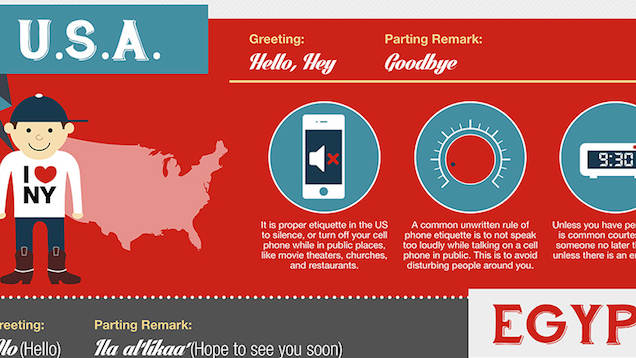
If you're traveling or making an international call, it's good to know cultural differences so you can be polite. This infographic from RepairLabs explains the common tendencies different cultures have using cell phones.

 Follow Us
 Like Us


