Shared posts
Elevator Speech vs. Unique Selling Proposition vs. Value Proposition – by Jill Konrath
Publishing Is Not Dying
If marketers want to produce content, they need to think like publishers. After all, content isn’t an extension of marketing, it’s an extension of publishing.
I am hardly the only one to make that case, but skeptics are still vocal in their disagreement. “Aren’t publishers failing?” they say. How can I hold up a struggling industry as a model? If publishing is a viable model, why aren’t publishers making money?
These sentiments are common, but they are not based in fact. In truth, publishing is flourishing, creating massive new fortunes for entrepreneurs and more choices for consumers. It’s also attracting large investments by established companies and venture capitalists. Though not everyone prospers, there has never been a better time for publishers.
First, the obvious: a new breed of online publishers has been generating hundreds of million dollars of value in very short periods of time. “Mommy blogs” created an entirely new category. Bleacher Report was sold for over $175 million in just five years. The Huffington Post was sold for $315 million in just six years. And it’s not just the financial results that are impressive — Huffington Post has won a Pulitzer Prize, as has Politico, a news organization launched in 2007.
These examples are not mere exceptions, but part of a growing trend. Publishing start-ups are hot. Vox Media, a venture-funded publishing start-up, recently lured Ezra Klein away from the Washington Post. Andreessen Horowitz just announced a $50 million investment in Buzzfeed. ESPN recruited Nate Silver to run his famed data journalism blog, FiveThirtyEight, under its umbrella. Clearly, there’s no shortage of opportunities in online publishing.
Sure, you may say, tech-savvy startups are doing great, but old-line publishers, like magazines and newspapers are doomed. Aren’t they?
It’s true that magazines in the U.S. were more profitable in the pre-digital age because of the fragmented broadcasting market, but they do make money today. Magazine consultant Jay McGill estimates that profit margins in the industry have dropped off from a stellar 20–25% to a more earthly, but still healthy, range of 12–15%, which is pretty close to the average for the S&P 500. In fact, publishing giant Hearst recently reported record-breaking ad sales for its September issues.
Samir Husni, Director of the Magazine Innovation Center, also points out that in recent years publishers have taken concepts from other media platforms, like All Recipes, HGTV, and Food Network, and turned them into successful print brands.
The newspaper industry has been hit especially hard because historically it has derived much of its revenues not from display advertising, but from classifieds and other direct marketing services, where the impact of digital technology has been the greatest. So it shouldn’t be surprising that many newspapers have struggled. However, even here the story isn’t as bleak as many think. Last year, News Corp’s newspaper division reported EBITDA of $795 million on $6.7 billion—a 12% margin—which is pretty good. Even The New York Times—which, as I’ve noted, has not run its business well—achieved 8% net margins in 2013—not great, but not exactly a tragedy either.
The reason why many publishing businesses continue to make money is simple: they’re selling a product that people want and need. As long as people want to be informed, entertained, and inspired, there will be profitable opportunities in publishing.
Yes, some old-line publishers are faltering and clearly there are challenges ahead, but that can be said about any incumbent industry. We live in an age of disruption, and in order to compete, everyone must adapt. You simply can’t run a business—any business—the way you did 10 or 20 years ago.
Still, the future of publishing is bright. While every business needs to adopt a true culture of change, clearly there is no lack of potential. Once you accept the fact that business models don’t last, it becomes clear that there are, in fact, more opportunities to create and curate content, access top talent, attract investment, and make money than ever before.
The key is for publishers to stop trading digital dollars for analog dimes. Take web video, for example, which is booming. Print and digital publishers have long complained about the abundance of ad dollars that went to TV. Now they can compete for budgets against even the strongest broadcasters on a variety of platforms. In fact, online video revenues are growing at 20% per year.
Beyond that, there is mobile, e-commerce affiliate programs, social media, big data, and the fact that it is easier to experiment with and develop new content on digital platforms than it ever was in the physical world. Once publishers let go of the idea that they are going to make their money selling ad pages and pushing rates, it become clear just how profound the opportunities are.
So there is no intrinsic problem with publishing. There is still enormous value in uncovering stories and telling them well. That publishers need to innovate their business models just puts them in the same place as every other industry.
Publishing is dead? Hardly. In fact there have never been more opportunities for publishers.
Smart Selling Visions: Up-Close with Top Revenue Leader Jim Mooney, CEO of @RO_Innovation
This post is part of a series of Executive Interviews of top sales and marketing solutions company. We ask the same questions of every executive so readers can learn about their unique positioning and their vision for the industry.

This week I interview Jim Mooney, CEO of RO|Innovation.
Nancy: What does RO|Innovation do? What problem/s are you solving for sales and/or marketing organizations?
Jim: RO|Innovation brings the Voice of the Customer front-and-center through intuitive, easy-to-use, cloud-based sales and marketing solutions that drive revenue for B2B organizations. Our SaaS business applications enable companies to accelerate sales cycles, increase close rates, increase sales efficiencies and “bridge the gap” between sales and marketing.
Research has shown the average sales rep actually only spends 35% of their day actively selling to prospects. The rest of their time is spent doing admin activities, searching for “stuff” to send to their prospects, or creating their own marketing materials to send. We are helping sales reps increase their efficiency so they can spend more time actively selling and drive revenue. In particular, RO’s sales enablement solutions help reps send the right information – whether it’s a case study, white paper, setting up a customer reference call, internal battle card or other – to the right buyer at the right time in their B2B sales cycle, while giving them valuable real-time prospect engagement insights to know when to follow up, what to say, and how to drive the sale forward faster.
At the same time, we’re helping marketers and customer advocacy departments centralize assets for sales rep use and report which of those assets had actual impact on sales cycles to determine ROI and drive smarter marketing spend.
Nancy: How does your solution uniquely address the problem (or in what way do other solutions fall short from solving the problem)?
Jim: In B2B sales, trust is a massive accelerator to reducing the sales cycles. In the past, enterprises used marketing, events and branding to create awareness, build affinity, and increase confidence. However, customer success stories and references are critical for closing new business. The problem was, enterprises were unable to scale and leverage success stories and references to the level they needed – especially as the number and types of decision makers involved in the buying process increased.
RO’s solutions are built around the premise of featuring the #1 accelerator to trust – happy customers – and ensure customer proof points are easily scalable, accessible, present and aligned with each stage of the buyer’s journey. This in turn helps accelerate sales cycles and helps increase close rates.
Nancy: What’s the most important thing that today’s business decision-makers should look for (or ask, or consider, or solve)?
Jim: The number one thing decision makers should ask themselves is: “Will having this solution help drive revenue for my business?” Decision makers should be asking solution providers how much and how they’ve impacted their customer’s businesses – and be talking to those customers first hand. If the vendor can’t share that with confidence, they’re probably not the right vendor to help you meet your future goals.
Nancy: What are you most excited about for the next 12 months?
Jim: I’m excited about being a player in the sales enablement space. Because sales enablement is still evolving, it’ll be exciting to watch how the marketplace changes and how vendors respond to the real business challenges B2B organizations are facing in sales and marketing. We believe our unique value proposition of being able to leverage the voice of the customer will resonate.
Nancy: What do you think is the biggest underlying theme or trend for sellers and/or marketers in 2014?
Jim: I believe the biggest underlying trend for both sellers and marketers in the next year will be embracing your customer base. Sellers and Marketers will need to work to create a better understanding of who their best customers are, who the company’s advocates are and activate them in a way that impacts the sales and marketing funnel. I’m sure you’ve heard the stat before, but since something like 70% of the buyer’s decision is made before they contact a sales rep, having customer advocates in your sales and marketing arsenal is going to be more critical than ever.
Plus, buyers today trust the experience of their peers over that of a vendor. Research has shown that the #1 way B2B buyers make their decisions is first through their own experiences, but their #2 information source during the decision process is their peers. To that end, 84% of decision makers begin their buying process with a referral (Source: Edelman Trust Barometer), which means you better have happy customers willing to share your name when a peer initially reaches out to them. It also means by the time that buyer does contact you, you better be darn sure you’re building trust and influencing their decision with the right testimonials and proof points from their peers at the right time; else risk losing the deal all together.
Nancy: What would you challenge sellers and/or marketers to think about for 2014?
Jim: With the shifting B2B buyer landscape, I’d challenge sellers and marketers to sit down at the table and really strategize how they’re “bridging the gap” between their departments. Is marketing creating content that sales isn’t using or doesn’t really find valuable? Is sales constantly calling upon their “pocket references” (and burning out relationships) or spending too much time looking for stuff because it’s in too many places, and thus not spending that time in conversations with buyers? Can marketing really tie a hard ROI to assets they’re producing to support the sales cycle? Is sales doing a good job of really differentiating their solution and building buyer trust? These are all questions today’s marketers and sellers are wrestling with. They’re hard questions to answer sometimes. Just know there are tools out there to solve these problems – so it’s not worth losing sleep over!
Note: To learn more about RO|Innovation, watch a webinar replay of “Valuable Message Development and Delivery in the Context of Sales Enablement” with featured guests from Forrester Research, Intel, and VMWare, or visit www.ROinnovation.com.
Hey Target, here’s how you expand into Canada, courtesy of Wal-Mart

Target Canada is an unmitigated disaster. On that point, everyone, from its customers to investors to the company’s executives, can agree. In reporting its second-quarter results this morning, Target revealed its Canadian operations lost another US$200 million, while same-store sales—a gauge of performance that measures only those locations that have been open for at least a year—fell 11.4 per cent from the same period in 2013.
There’s been no end to the analysis of what went wrong. But to understand just how truly awful Target’s performance has been here, it might help if we compare it to the Canadian expansion of that other giant U.S. big box retailer, Wal-Mart.
Drawing from Wal-Mart’s annual reports in the mid-1990s, here are four ways Wal-Mart put Target to shame.
1. Scale
In a conference call with Canadian media on Wednesday, Target chief financial officer John Mulligan declared: “We bit off way too much, too early. In retrospect, (we would) probably open five to 10 stores last year—refine the operations, refine the supply chain, the technology, get our store teams trained. But again, that’s all hindsight. We are where we are right now and we’re focused on moving forward to fix this for our guests.”
But a big, bold launch of the type undertaken by Target didn’t have to fail. After all, that was precisely how Wal-Mart entered Canada in 1994. Consider this passage from Wal-Mart’s fiscal 1994 annual report: “Our entry into Canada is proceeding smoothly. The acquisition of 122 Woolco stores from Woolworth Corp provided a quick, wide-ranging entry there, rather than building from the ground up. Moreover, within 36 hours of the announcement, members of our management team visited with the managers of every store . . . The stores are being run by Canadians, with the needs of Canadian consumers top-of-mind. The stores’ merchandise mix is being changed to reflect our price/value concept . . . We expect all 122 stores will be completed well before the holiday shopping season.”
2. Price
Wal-Mart paid US$335 million for those 122 Woolco stores in 1994.
It took Target another 17 years before it finally got around to buying Zellers, forking over US$1.8 billion for 220 locations. The plan was to convert 100 to 150 locations to Target stores by 2014. The remainder would be resold, saddling executives with the dual role of launching a retailer in a new country, while also shopping around for buyers for its excess portfolio of locations. (Target would sell 39 of those spots to its ever-expanding rival, Wal-Mart.) It wasn’t as if the thought hadn’t occurred to Target to plant its flag north of the 49th parallel. As early as the year 2000, it was widely accepted that Target would eventually absorb HBC’s struggling Zellers unit.
3. Costs
It took Target from early 2011, when it announced the Zellers deal, to March 2013 before it opened its doors and could ring up its first sale. To date, Target has racked up $1.8 billion in losses from its Canadian operations. Here is a good breakdown of the losses.
In Wal-Mart’s fiscal 1995 annual report, the retailer said its operating, selling and general and administrative expenses, as a percentage of sales, had risen just 0.2 per cent and 0.3 per cent in each of the previous two years as a result of the Canadian acquisition and launch. By Wal-Mart’s second year in Canada, it had already generated an operating profit, having doubled sales per square foot since taking over from Woolco. By Year 2, it boasted a 40 per cent share of the market.
4. Discipline
It’s taken three years for Target to admit just how flawed the Canadian expansion has been. An atrocious inventory management system left shelves empty, while Canadians were completely turned off by Target Canada’s decidedly un-Target-like prices on goods.
Things couldn’t have been more different at Wal-Mart. From the company’s 1997 annual report, here’s a first-hand account of how the retailer’s acquisition and launch unfolded, from a buyer named Agnes Seto, who’d previously worked at Woolco. “We have the most advanced computer technology as tools to do our job, whereas, before, a lot of reports were not available for us to analyze our business . . . We set specific goals for sales, inventory and gross margins.”
The post Hey Target, here’s how you expand into Canada, courtesy of Wal-Mart appeared first on Macleans.ca.
Does Your Content Help or Hurt Sales?
 At any time, buyers can go online and look for information about you, your company, and your services. When they get there, what will they find?
Will they find useful content created or curated by you that helps them with the challenge they're facing? Will they find self-serving promotional pieces that cause them to instantly click away? Will they find blog posts and articles about you but written by someone else who misconstrued information about you? Or will they find nothing at all because your links are buried on the fifth page of search results, and no one goes past page 2 when doing searches?
Online information plays a key role in prospect's buying decisions. And you need to control the flow of it. For when you can control the flow, you can better control the sales process, writes Colleen Francis in her article How to Regain Control of the Sales Process.
"The whole point of regaining control of the information flow is to attract buyers," she says. "Follow your ideal clientele on social media, and join the same networking groups they're members of to make yourself known. Publish high-value content to these sites daily. In doing so, you cast a wide net and encourage the buyer to come to you. I call this approach indirect prospecting."
Lessons on Marketing Strategy and Content Marketing ROI – Michael Brenner Interview

One of the key players and innovators in the world of content marketing is Michael Brenner. During his time at SAP as Vice President of Marketing & Content Strategy and the Managing Editor for the SAP Business Innovation site, Michael also co-created one of the most popular B2B marketing websites, Business to Community.
Today, you’ll find him working as Head of Strategy at NewsCred as well as writing for his B2B Marketing Insider blog. We’ve covered Michael’s B2B marketing presentations in the past and it was great to catch up with him for this interview.
In the lead up to Content Marketing World, our discussion with Michael touches on some of the key questions marketers are trying to tackle, from developing a strategy to growing an audience to the importance of measuring content marketing performance. Michael also shares a business lesson from one of his favorite childhood stories.
Once an audit of content assets, costs & performance is done, you have all the elements required for defining a content marketing strategy. @brennermichael
How important is it for a company to have a content marketing strategy defined before asking internally for budget or engaging an outside consultant? Can experimentation lead to strategy or is a hybrid approach more practical?
Content marketing is currently a very tactical solution to very tactical problems inside most companies today. Most marketers look at an infographic, an ebook, a video as “content marketing”. As long as this tactical approach continues in our campaign-based world, content marketing will struggle to achieve the success businesses need.
At the same time, content marketers need to show something to get something. You have to prove value. I would suggest we need to work in parallel. Start with a content marketing pilot program. The focus has to be on continuous delivery of content and acting like a publisher. Then show the results and build the business case for extending that approach.
Since content strategy comes down to managing content like a strategic asset, you also have to do an audit of your existing content assets, the cost, the use and the performance. I don’t think content marketing requires incremental budget. It just requires a shift away from non-performing content assets and non-performing advertising budgets.
Once this is done, you have all the elements required for defining the content marketing strategy at any company. You know your current costs and performance. You know what skills you have and what gaps you need to fill. And you have some marketplace feedback on what works for your audience.
What are some ways you can use audience insights to inform your content planning and promotion?
Audience insights are really important. I see businesses spend a ton of money on buyer persona research but then stop short of identifying the pieces that are useful: what places does your audience go for content? What topics do they care about and share? What types of content do they fins most interesting? So direct research needs to identify the answers to those questions.
Keyword research is also really important. When we have a question, we go to search engines and ask. Businesses have to understand what questions customers are asking and make sure their content strategy focuses on answering those questions.
Another great source is social. I think the first place to start – and this requires an understanding of your keywords – is identifying what “share of conversation” your brand has around your important topics. The topic is usually your product category. Many brands simply count “mentions” on social. But this rarely changes much over time without some major external event or ad campaign. More important is how often brands show up in the larger conversation and what percent of that branded piece you have relative to your competitors.
Visual, consumable and snackable content should be a growing part of your content marketing program. @brennermichael
Visuals in content marketing are increasingly popular but how important are they really? Is this the beginning of the end of text or just a phase?
Text – words – will always be an important way to expresss our point of view, share important information, and dive deep into a topic that requires some time to tell the story.
But visuals are beginning to take a larger share of the content we consume. Some estimate that video will consume 90% of the bandwidth on the internet by next year. Images play such a big role in the rise of sites like Pinterest and Instagram and Snapchat. And some futurists are even pointing to how kids use emojis and symbols to communicate.
So visual, consumable and snackable content should be a growing part of your content marketing program.
Is Content Marketing ROI really that hard? What are you doing to measure content marketing performance?
Content Marketing ROI is no harder than ROI for the rest of marketing. But many folks ask the question more as a defense mechanism for change. You will hear marketers ask this question despite not knowing what the ROI is on the rest of their marketing spend. So start with that benchmark. What is the ROI of marketing? Content marketing ROI is easier because content marketing results are easier than something like advertising.
Next, you need to be able to calculate the cost of your content. This requires an audit and inventory of the dollars spent to produce the marketing content your business creates.
Once you know the cost, you need to place a value on the results of content marketing efforts. For reach and engagement measures (pageviews, social shares, etc) you can calculate how much advertising or paid social investment would have been required to generate the same amount of reach or engagement. For conversion, you should know the business value or average cost of a lead, or an event registration or a subscriber. Then count those measures, multiply the average cost and you have a value numbers.
From there, ROI is pretty easy. But I think the real question behind the ROI question is “why should I change what I am doing today?” And that is a totally different question.

In the spirit of the Content Marketing in Wonderland (Alice) theme of the #CMWorld eBook series, what was your favorite story from childhood? Any lessons in it for business or marketing today?
My favorite story from childhood is The Little Prince. Everyone knows it as a story about growing up, the loss of innocence, how to navigate this strange new grow-up world and also the discovery of new things. All themes that are very much a part of Alice In Wonderland.
“All grown-ups were once children… but only few of them remember it.”
But The Little Prince is also about holding on to some of the things we mostly “un-learn” as adults. I think the greatest storytellers are all still very much children at heart and have held on to the secret of the The Little Prince: they know how to inspire our minds and touch our hearts through emotion and feeling:
“And now here is my secret, a very simple secret: It is only with the heart that one can see rightly; what is essential is invisible to the eye.”
~ Antoine de Saint-Exupéry, The Little Prince
This is a lesson that is easy for businesses to forget as the pressure to sell more stuff looms over each and every one of us. That is why marketing is damn hard. And content marketing even more so.
Excellent tips Michael, thank you!
You can get even more of Michael’s content marketing ROI wisdom from the upcoming #CMWorld eBook: Content Marketing in Wonderland: Showing Real ROI for Your Content Marketing, which will be publishing here on Monday, August 25th. In the meantime, be sure to check out the first 3 eBooks:
- Building a Content Marketing Strategy
- Building an Audience Development Strategy for Content Marketing
- A Visual Content Marketing Strategy
If you would like to broaden your content marketing knowledge, then be sure to check out the Content Marketing World conference coming up Sept 8-11 in Cleveland. If you use the discount code, TopRank, you’ll save $100 off main event and all-access registrations.
A big thank you goes to the eBooks’ sponsor, Curata and to CMI for partnering with us on this project. All of us at TopRank Online Marketing and the broader content marketing industry benefits from their support of this eBook program!
 Gain a competitive advantage by subscribing to the
TopRank® Online Marketing Newsletter.
© Online Marketing Blog - TopRank®, 2014. | Lessons on Marketing Strategy and Content Marketing ROI – Michael Brenner Interview | http://www.toprankblog.com
Why You Need to Do More Than Name + Define Your Sales Pipeline Stages
The state of the sales pipeline reflects the health of any sales process – and in anything other than the simplest of sales transactions, that process goes through multiple stages.
 Those stages have names. Sometimes they simply reflect phases in the sales process – qualified, proposed, selected, etc. There’s been a recent trend towards naming the stages after key steps in the buying decision process.
If you’re seeking to co-ordinate the efforts of multiple sales people, it’s obvious that those pipeline stages not only need to be named, they need to be defined in a clear and unambiguous way. But that’s not enough…
If you’re responsible for managing a sales pipeline, you’ve probably both named and defined the key stages. But are you absolutely sure that every sales person is interpreting your definition in exactly the same consistent fashion?
Investing time in clear, detailed pipeline stage definitions pays dividends. Even better if those definitions clearly explain both what you what you expect the sales person to do – and what you anticipate the buyer will do – at each stage.
Reflecting the buyer’s journey
This is where I often come across issues. It’s unfortunately often far more common for the stages to be solely or largely defined in terms of sales activities than it is to also define the parallel journey that the prospect can be expected to follow.
Expectations of the sales person are frequently poorly defined or incomplete. There’s tremendous benefit to making clear what information you expect the sales person to be conveying at each stage, what questions they should be asking, and what tools are available to support them in the process.
Anticipating the issues, motivations and concerns of the key stakeholders at each stage of the process is equally invaluable, as is preparing sales people for the questions they are most likely to be asked by the prospect, and highlighting the materials that can be used to facilitate the prospect’s buying journey.
The missing link
But even then, there’s often still a missing link – and it’s one of the most important foundations of effective pipeline management. Even when stages are well defined, it’s rare for the milestones that establish the boundaries between one stage and the next to be given equivalent attention.
Without clearly defined, unambiguous milestones, it’s hard to clearly establish exactly where the prospect is in their buying decision process. And if you misinterpret that, all manner of bad things follow.
Many of today’s most common pipeline management problems and revenue forecasting misses can be attributed to the failure to insist on clear, verifiable evidence of genuine progress on the prospect’s part before the opportunity is moved to the next stage.
Never confuse sales activity with progress
Let’s be clear: “completed demo”, “submitted proposal” or any similar sales-related activities serve no useful purpose as milestones. The only milestones that matter are those associated with something the prospect can be proved to have done or said.
Without verifiable evidence that the prospect has completed the necessary action or provided the necessary information, the opportunity should stay where it is (or be moved backwards). It’s a simple as that. No milestone, no forward motion, no matter what the sales person says.
If you allow anything else, if you allow opportunities to be promoted simply because of something a sales person has done – or claims to have done – you substitute informed judgement for wishful thinking. And that way madness (and missed revenue targets) lies.
Managing by the milestones
That’s what I mean when I say that you need to do more than name and define your sales pipeline stages. You need to manage by the milestones, and insist that everyone else does the same.
Will the results be worth it? All the research suggests that organisations that master this discipline out-perform their peers by a factor of at least 20-30%, and have far fewer deals that end in an unexpected decision to “do nothing”.
Clearly defined stages and milestones are just two of the many practical recommendations we make in our recently-published Revenue Accelerator’s Guide to Proactive Pipeline Management.

How to increase conversions by creating buyer urgency & fear of loss
A sense of urgency and fear of loss are powerful sales drivers in ecommerce.
Undecided shoppers can be encouraged to make an impulse purchase if they think they’re in direct competition with other people for a product that has limited availability.
I recently rounded up 11 examples from ecommerce sites that use stock levels to create buyer urgency, but that’s by no means the only tactic available.
Here is a range of other techniques used by well known brands that can prove to be very effective in driving conversions.
And just to clarify, I've intentionally avoided group discount and flash sale sites (e.g. Groupon) that are built around scarcity and deadlines.
Booking.com
When you look at a hotel on Booking.com two messages briefly appear in the top right-hand corner.

These messages notify you of:
- The most recent booking at this hotel.
- How many people are currently viewing the hotel.
The aim is to let users know that this hotel is popular (someone made a booking only a few hours ago) so they’d better make a booking before those other seven people snap up the rooms.
Similar notifications also appear on the sidebar adverts promoting the ‘recently viewed’ hotels:

And Booking.com adds to the sense of urgency by notifying users of dwindling availability among the room options.
It all contributes to an atmosphere of competition and urgency that people towards the checkout.

Hotels.com uses similar methods. When you view a hotel on the site a message pops up saying how many people have viewed it in the past hour.
This is followed by another message that says how many times it has been booked in the past 24 hours.

Ebay
Ebay has displayed the number of people watching an item for as long as I can remember, but recently it seems to have been adding more features aimed at creating a sense of urgency.
The ‘watchers’ information refers to the number of eBay users tracking the item, so it’s a way of increasing competition for items.
To add to this, eBay also briefly displays a graphic on the left of the screen which states how many people are viewing the item each hour.
It creates a sense of urgency by instilling a fear of loss, as items on eBay are typically scarce so shoppers don’t want to lose out to other users.

In the above screenshot you can also see the stock information, which reveals that four of these items have already been sold and only three are still available.
It’s another way of showing people that this product is popular and quickly selling out.
Finally, there are also more standard persuasive techniques, such as the offer of free postage and returns, and fast delivery.
Ticketmaster
Of course, the most effective way of creating a sense of urgency is to set a short deadline and display a ticking clock.
Ticketmaster gives you just three minutes to complete each page, so there’s no time to get distracted or head off and make a cup of tea.
And if the ticking clock isn’t enough to focus the mind, there’s also some text that advises users to ‘buy these tickets before time runs out’.
Click to enlarge

In fairness Ticketmaster does have a valid reason for using this method, as when tickets are in high demand you don’t want people adding them to their basket then spending several days deciding whether or not they really want them.
And it’s a tactic that might not work in other areas of ecommerce because shoppers don’t generally want to be rushed and given only a few minutes to complete a purchase.
Simply Hike
Simply Hike employs a different version of the ticking clock. It uses a time limit on the product page rather than in the checkout, telling customers that they have only a few hours to secure next day delivery.
This technique would only really work if the shopper is impatient or needs the products in a hurry, but it probably proves quite effective at securing a few extra sales.

This is actually a fairly common tactic among ecommerce sites, with Amazon being a prime example:

Ruby Lane
This excellent example comes from vintage marketplace Ruby Lane.
An otherwise unattractive brooch can be made more desirable by telling customers that:
16 other shoppers have this item in their cart or wish list. Don’t miss out!
It’s a slightly different take on eBay’s tactic of displaying the number of people watching an item, and is very effective at creating a sense of urgency.
Click to enlarge

How to Choose the Best Social Network for Your Business
When I started at Buffer, I was given permission to make mistakes, to ask forgiveness rather than permission, to always test everything.
So I’d like to give you all some permission as well.
You have permission to pick and choose your social networks.
In fact, often times it may be best not to be on certain social networks, perhaps because of the time it takes to do social right or because your customer personas don’t fit with a particular network. When you’re choosing which social networks to be involved with, it’s okay to be picky. You have my permission.
The next step is making an educated decision on which social networks to choose. There are a big number of factors that could weigh a decision for you, and I’ve done my best to collect them here in this post. From demographics to research and a whole lot else in between, here is what I’ve found to help you choose your social networks.

The most popular social networks, by active users
What the raw data can tell you about choosing a social network
According to data pulled together by Digital Insights, here’s the breakdown for the social networks with the most monthly active users. You can check the Digital Insights blog for the overall number of users, too, although active users is likely to be a more meaningful metric when making decisions.
Social networks, ranked by monthly active users:
- Facebook: 1.28 billion
- Google+: 540 million
- Twitter: 255 million
- Instagram: 200 million
- LinkedIn: 187 million
- Pinterest: 40 million

You’ll notice that Facebook is far and away the most popular social network, with twice as many monthly active users as the runner-up. You’ll notice a Facebook-as-king theme running through much of these stats.
Here is the chart for social network growth, courtesy of a report published at the first of the year by GlobalWebIndex. It acts as a nice counterbalance to the overall active user numbers since it highlights what may be some up-and-coming social networks.

Should you decide which network to join based on its size?
Yes and no. Size matters inasmuch as you’d probably like the network you join to have reached a tipping point of users, popular enough that spending your time there will be time well spent. For that matter, even Pinterest’s 40 million users could be enough volume for you, especially if the demographics fit (see below).
At the same time, relying solely on size can be dangerous. First off, consistent social network data is hard to find. The active user stats above show a 215 million user gap between Twitter and Pinterest, yet other stories can claim Pinterest is more popular than Twitter (the difference in reporting comes down to surveys vs. stats, as well as the definition of popularity).
Also, size does not exist in a vacuum. There are scores of other factors that could be just as valuable or more valuable as you decide which networks to join. In some cases, size might be a false indicator of whether or not you should be on a particular network.
- Will more users mean more competition for attention?
- Are your customers on the network?
- Does the network fit your demographic?
- Does your industry have a presence?
Perhaps a better question is: Which social networks can users not live without?
The team at UTA Brand Studio has a tool to measure this social media dependence, and they shared findings earlier this year that showed exactly which social networks we’re most attached to.
The results, based on a survey of 2,006 U.S. adults, showed Facebook and Instagram in the top two spots.

These overall numbers are interesting on their own, and it gets even more so when you segment according to gender, age, and household income. Complete results are available in UTA’s SlideShare presentation.
For a taste of how things differ from gender and age, here are a couple of quick charts showing the rank of different networks.


There’s lots more great demographic data to base your decision on, too.
Where are your customers? Here’s how to find out
What demographic data can tell you about choosing a social network
The Pew Research Internet Project has been compiling social media statistics and demographics for the past several years, releasing new information on a regular basis. Their latest demographic survey—a representative sample of 1,801 adults, surveyed in August and September 2013—shows who makes up the user bases for five major social networks.
Here’s a spreadsheet of the results. The numbers represent the percentage of online users who use each network. Google+ was not included in the survey.
(Note: Facebook is so far and away larger than the others that it’s kind of silly to compare them. I’ve highlighted the important numbers for everyone but Facebook. I could have highlighted the entire Facebook column.)

That’s probably a lot to digest. Here’s a quicker look at the social networks that provide the best fit in a number of different categories.

How might these stats impact your decision to choose the right social network?
It’s possible that you’ve created buyer personas for your customers, and you know general information about their age, gender, income level, and so forth. You can line up these insights with the demographic data of a social network and see which networks fit.
(For instance, I once worked at a company with an almost exclusively 65-and-over demographic. Instagram would not have been a major need for us.)
You can also judge the value of a social network based on how well it fits your content and strategy. If you create content that your audience loves, you’re likely to find your audience on social networks that love sharing your particular style of content—video, images, long-form, etc.
Here’s a helpful way of looking at it, courtesy of Jason DeMers at Search Engine Land. He broke down social networks into seven different types, each with their own characteristics.
- Kitchen-sink networks: Twitter and Facebook
- Image-based networks: Pinterest, Instagram, Tumblr
- Video networks: YouTube, Vimeo, Vine
- Business-focused networks: LinkedIn
- SEO and authorship networks: Google+
- Location-based networks: Foursquare, Yelp
- Niche networks: reddit

Important questions to ask when choosing a social network
Tim Grahl at Out:Think has a short and simple list of three of the big questions to ask when choosing a social network.
- Does it make sense for my content? (See the seven types of networks listed above.)
- Do potential fans spend time there? (See the demographic information above.)
- Does it make sense for me?
It’s this final piece—your gut—that could make the most telling argument for or against a social network. If you’ve done your research already and are still on the fence, answering the “gut” question might be the deciding factor.
Does it make sense for me? Is it something I can easily fit into my life? Do I have time to do it? After doing some research and observation, do I “get” how it works?
I find the last part of this question series to be particularly compelling. Many of us feel like we can learn a new network if given enough time. The only problem: When do we have enough time? If you’ve given it a go and it still doesn’t make sense, weigh this when deciding whether or not to press on.
Which social networks should you join? Here’re some answers.
Let me start off by saying that you can judge the necessity of your being on a social network by looking at the stats and asking yourself important questions. And then, if it’s still just too much to take in and you’d like someone to tell you what to do, here’re some answers.
Should you be on Facebook?
Yes, if you don’t mind the competition. More than 70 percent of online adults actively use Facebook. It is far and away the most popular social network. If your customers use the Internet, they’re very likely to be on Facebook. Consider, though, that with great popularity comes great competition. The News Feed is a crowded place for your business updates.
Should you be on Twitter?
Yes, if you’ve interested in a younger, tech-savvy crowd. Michelle Manafy of Inc calls many of the users “information junkies,” and it can be a wide variety of “information:” technology, news, sports, marketing, journalism, and so on. Topical and timely work great on Twitter. Be aware that a tweet reaches its peak after 18 minutes, so get your next tweet ready fast.
Should you be on LinkedIn?
Yes, if you can play the business game. LinkedIn’s audience is full of great insights on work productivity, networking, and job hunting. B2B companies love it. B2C companies are still figuring it out.
Should you be on Google+?
Yes, if you want to impact your SEO. There are other reasons to join Google+, of course. One of the biggest is that its user base is so large and the competition is so low. Each new post comes with SEO juice, too. A word of warning: Things might seem a bit quiet at times.
Should you be on Instagram?
Yes, if photography is your jam. Instagram works great in a pairing with Facebook or Twitter, and business is booming. More and more users join every day, albeit young ones.
Should you be on Pinterest?
Yes, if you have big visuals in your content. There’s a great demographic fit, too, for business that cater to women or brands that focus on categories like food or DIY.
Conclusion: How to choose a social network
It’s perfectly okay to pick and choose which social networks you join.
Small businesses may not be able to handle a consistent presence on four or more networks, so it’s helpful to step back, assess, and choose your best bets. Study the numbers, check for your audience, and ask yourself the important questions.
Which factors are most important to you when choosing a social network?
I’d love to hear about your experience in the comments. Do you try to cover as many social networks as possible? Have you chosen a select few to focus on? Come share your thoughts!
Image credits: UTA Brand Studio, TechCrunch,
How to Identify Quality Content Without a Writing Background

Evaluating the quality of your writers’ work may seem daunting if you don’t have a background in writing, but it doesn’t have to be.
Whether you employ an on-site team of content writers or connect with writers through a freelance service (or both!), you should receive content that meets your company’s standards. It’s not enough to collect their work, post it on your website and hope for the best; your investment should produce a positive return. However, it can be challenging for some marketers who don’t have experience and a background in writing to identify good and bad content. Since each piece of content you publish should shed a positive light on your brand, here’s a checklist to help you guarantee quality:
How to Identify Great Content
Spelling, grammar and punctuation. First and foremost, all measures should be taken to guarantee an error-free article.
Style Check for consistent style throughout the content. For example, the writer should either spell out “California” or use an abbreviation every time.
Accurate stats and verifiable facts. If your content makes an argument backed by statistics, spot check it to make sure the statistics are accurate. If your content references a published article, research the study or thought leader and audit a few references to verify them.
Readability. Read the content aloud to yourself. Notice whether it flows or whether it sounds awkward. Visually scan the content to see whether it’s broken up into subsections and lists, which makes it easier to read as well.
Tone and voice. Reading aloud also helps you to evaluate the tone and voice of your content. If you want something serious, but your writer has injected a snarky tone, ask the writer to correct it. Also, make sure that the voice, whether it addresses the customer directly (“you”) or discusses customers in general (“they”), is consistent throughout the piece.
Working links. Click any links in your content to ensure that they actually work. Also, make sure that every time the writer inserts a link, the link is relevant to the sentence or paragraph.
Objective of the piece. Read through the piece and make sure that it meets your marketing objectives. If it doesn’t support your other marketing efforts, ask the writer to make the appropriate changes.
You don’t have to be an editing or writing professional to mount a good content marketing campaign. However, you do have to know how to recognize good content when you see it, and your content has to produce a healthy return-on-investment. With that being said, once you follow a consistent publishing schedule it’s important to track key metrics to understand if your content efforts are proving to be successful or unsuccessful. Depending on what your content goals are, here’s a brief overview on how to evaluate success:
- Increased brand awareness: Track metrics like page views, video views, referral links, downloads, social shares, social mentions and website traffic.
- Customer engagement: The best indicator of engagement is how many customers share or comment on your content. Track social network metrics such as likes, favorites, shares, retweets, +1s, favorites and pins. Also, track blog comments, inbound links and blog comments.
- Lead Generation: Good metrics to track lead generation include blog subscriptions, new social network followers, email subscriptions, form submissions and content downloads.
- Customer Loyalty: To measure customer loyalty, track how many of your social media or blog followers are consistent, active users. You can also track how much of your content is viewed by current customers.
- Direct Sales: It’s important, but not always easy, to link increased sales to content marketing efforts. You can track short-term promotions related to a content push or cross-promotions you’re recommending in recently published content. Overall, if you’re seeing sales increases along with positive metrics related to brand awareness, engagement, leads and customer loyalty, then your content marketing is likely a major force behind stronger revenue.
How do you identify quality content? Share your thoughts with us below.
Getting Sales Leads from the 90s Kid
What do sharks and turtles have in common? Well, if you were once a kid in the 90s, you’d know that mutant versions of both were popular cartoon shows. (Them alongside hockey playing ducks and bike riding mice from outer space.)
So why the trip down this memory lane? The real question is: whose memory lane is this? The answer is millennials. It doesn’t take an MBA to know they are already taking up space in your offices, your conference rooms, and well on their way to occupying positions beyond the managerial suite.
 The takeover is imminent but there’s no need to see it as an invasion of juveniles. In fact, there are plenty reasons to believe that they can be similar to older generations of professionals. Nostalgia is just the beginning. If you’re going to start finding 90s kids among you sales leads, establishing a few things in common is still a tried-and-true way to start.
But first, it’s also good to know what doesn’t work anymore. Inflexible campaigns and being too anonymous obviously won’t get their attention. On the other hand, being more personalized and approaching them from that level just gives you more reason to find something in common across generate gap.
- Nostalgia – They might be currently steeped in pop culture but that doesn’t mean they’re not old enough to start looking back on their childhood memories. (If they weren’t, you wouldn’t have articles like this popping up right after the death of Robin Williams.) It just goes to show that you’re not the only ones with a habit of looking back on things. Theirs might be to a different time but the feeling is there and you can tap into the time for things that they can still relate to.
- Drive to succeed –The means may differ but the ends still remain. Millennial prospects want to succeed just as much as their baby boomer counterparts in 60s. Definitions of success might differ on more personal levels but as far as, say, more productivity or better working conditions, go, those are still needs. In fact, this list of 90s fictional heroines can show that this drive was still strongly fostered among 90s kids.
- A subtle repeat of history - Oddly enough, there’s a huge chance this could be history repeating itself on a very subtle level. A reigning generation is taking up a certain portion of your target market, and therefore you shift the tone of your marketing and lead generation campaigns according to its preferences. For all you know, your marketing predecessors may have already done the same thing in their day!
There’s so much focus on what makes millennials different from past generations. But while its often for the sake of learning how to manage them or market to them, you can do the same with what they also have in common.
Stop Blaming Price: Here Are 3 Real Reasons Why Deals Are Lost
The team killed it. The presentation was flawless. The proposal was outstanding. You covered all of the bases, but you lost. Searching for answers, the only thing you can think of is that the other guy must have “bought the deal,” right?
In the article titled “Why B2B Sales Leads Don’t Convert (and Who Is to Blame),” Marketing Profs highlights a recent survey of nearly 200 marketers, sales professionals and presidents/CEOs on their thoughts on why deals were lost. Not surprisingly, 60 percent said that price was the main reason, but what may surprise you is that the percentage is wrong.

To truly understand why deals are lost, you have to seek feedback from buyers. Having conducted numerous post mortem analyses of lost deals, and buyer behavior research, here’s what I have learned.
Roughly one-third of all buyers consider price as one of the drivers, or the main driver, of a purchase decision. Pure price buyers represent about 5 to 10 percent of all decision-makers. The remaining portion (20 to 25 percent) are value buyers who may – but don’t always – buy the lowest-priced product or service.
Using those numbers, the research overstates price as the reason for a loss by a factor of 2x. What accounts for the remaining 30 percent?
Here are three common reasons for losing a deal that doesn’t involve price:
1. Low investment in the relationship. Deals are not solely rationally made on purchase transactions, especially as price and product complexity increase. Selling bigger-ticket items involves a degree of trust built between a vendor and a buyer. Recent research by Fortune and gyro found that 65 percent of executives believe subjective factors that can’t be quantified (like a company’s culture and values) make a difference when evaluating competing proposals. Even more executives (70 percent) said that a company’s reputation was a critical consideration in the decision-making process. Investing in relationship-building with buyers takes time, but as the research shows, it’s worth it. If buyers say that the only time they see a rep is when he or she wants to sell them something, that investment is not being made.
 2. Focusing on the wrong message. Focusing on only selling the business value (functional benefits, business outcomes) of a product limits the sales ability to make the case for a higher price. Connecting the value the product delivers to the buyer, on a personal level, helps reps broaden the conversation. According to CEB research, not only are you twice as likely to win the deal by focusing on personal value drivers (professional and personal benefits, like a promotion, admiration from peers, etc.), but buyers are also eight times more willing to pay a premium. To do that effectively, sales people need to be able to put themselves in the shoes of decision-makers. They need to understand their buyers’ situation, role, relationships, etc., and sell the value of the product or service to those unique needs. If reps only know how to sell “feature functionality,” the conversation all too often comes back to price.
3. Missing the real buyer. There is no guarantee that past buyers are going to be key decision-makers in future purchase decisions or on other types of products. Years ago, I did a post mortem analysis for a medical equipment company on an innovative product. The sales team said they were losing deals because the equipment was priced too high. The analysis proved that they were both right and wrong. The traditional buyer did, in fact, believe that the product was priced too high compared to others in the market. However, a new set of users who had become the primary decision-makers emerged. This group was using the innovative technology as a revenue-generating procedure. As a result, they valued the product differently and were willing to pay a premium. Deals were lost because the company didn’t understand how buyers intended to use the product, and as a result, they missed the key decision-maker.
The simple answer is that deals are lost because the case for the value of the product or service has not been adequately expressed to meet the needs (professional, personal or both) of the key decision-maker. Blaming price is a convenient crutch that shifts accountability to the product or pricing team and away from sales and marketing. Finger-pointing may make us feel better about our role, but it doesn’t fix the problem. If you are truly intent on increasing win rates, you must dig deeper into understanding why. I can guarantee six out of 10 times that you won’t find it is price.
Email Validation & Intelligence: A 1-2 Punch for Better Lead Nurturing
 Marketers love lead nurturing. According to a recent Bizo survey, 94% of them believe lead nurturing is integral to their overall marketing strategies. But what marketers love even more than lead nurturing is successful lead nurturing.
Studies show timely, automated and personalized marketing messages are more successful in engaging customers than emails generated manually by marketers without consideration of customers’ needs. So how can you create these kinds of killer lead nurturing emails even if your list is riddled with stale emails or you don’t have the necessary data to personalize messages? That’s where Email Validation and Email Intelligence come in.
Remove Problem Emails with Email Validation
Lead nurturing programs generally begin by offering something of immediate value to web visitors, often in the form of an eBook or “how-to” guide from B2B companies or a discount from B2C companies. To receive the offer, visitors must give their email addresses (or more…). Ideally, they’ll enter the correct information every time; however, this isn’t the case.
You can’t have a successful lead nurturing program if your message never makes it to your recipients. An Email Validation service featuring Email Correction can find and fix typos, misspellings and other human errors in real-time. This helps prevent problem emails from ever making their way onto your list.
Using Email Intelligence for Improved Personalization
The more fields on your form, the more resistant leads may be to submitting their personal data. Giving their names and email addresses is one thing; giving their age, gender or income is something entirely different. It’s hard to find a happy balance between offering enough fields to really learn about your customers and offering few enough fields to prevent them from tiring and abandoning the form.
With an Email Intelligence service, you can collect data that goes beyond traditional demographics to include interests, purchasing behavior and even social media profiles. This targeted information can then be used to create specific content geared to the unique needs of leads as they move through the sales funnel.
It takes continued effort for a lead nurturing program to be a success. Validating emails through Email Validation will stop data entry errors from preventing your message from reaching leads, and capturing useful data through Email Intelligence will allow you to create meaningful messages for leads and customers.

How to Use Surveys for Sales
You may think that market research initiatives are reserved only for use by the marketing department or product development team. However, surveys are an effective way to gather information about current and potential customers’ needs. They also serve as a tool to engage and gather important customer data that you can use to formulate sales strategies.
Pre-Sale
A survey is a creative way for your company to generate more sales leads. At the end of the survey, capitalize on the opportunity by asking your respondents if they would like to receive additional information about a product/service or redirect them to a special landing page on your website. It’s important to use the survey to capture as much contact information as you can in order to gently guide prospects into your sales funnel.
Post-Sale
In a study by Rice University Professor Dr. Paul Dholakia and Dr. Vicki Morwitz, they found that the simple act of asking customers how a company was performing resulted in a 50% increase in customer retention. Your work is not done once the sale closes, it’s important to take advantage of the opportunities provided by new and existing customers as it costs much less to create an additional sale with them versus a brand new prospect.
According to Parature, poor customer experiences result in an estimated $83 Billion loss by US enterprises each year. By automating the evaluation of your sales activities, performance and effectiveness, much of this loss can be mitigated.
8 Survey Development Tips from SurveyMonkey:
- Have a clear goal in mind before you ask questions. What information are you trying to collect?
- Be considerate of your users’ time. Don’t ask them to spend 30 minutes taking a survey. Determine a few critical data points for your business.
- Establish flow. Help your users recall their experience by ordering questions so that they follow the flow of their initial experience.
- Ask good questions. Good questions are relevant, clear, brief and specific.
- Use the appropriate question type. Limit your use of open ended questions as they take a lot of time to complete and are often skipped.
- Test your survey. Before deploying it to customers send it to friends or family members and ask for honest feedback and for any potential ambiguity with questions and formats.
- Provide a small incentive. Get better participation by offering a small coupon or other incentive for completing the survey.
- Survey regularly. Surveys are simply a snapshot in time. To get real value from them it’s important to survey your database regularly to see if changes you made to previous feedback is working.
9 Questions to Bridge the Gap Between Sales and Service
Most sales teams focus on closing deals and adding to their pipeline. They rely heavily on marketing programs to drive leads, but often overlook a valuable resource: intel from field service technicians.
In a recent survey, Aberdeen Group found that 57 percent of best-in-class companies incentivize field technicians to identify cross-sell and up-sell opportunities for sales. “Service technicians are often in front of customers at a time of need. The intelligence, which can be gleaned from these interactions, is invaluable to the sales team,” the report says.
Not all service techs want to sell, but they can still play a valuable role in the sales funnel. For instance, if they have to fix the same problem week after week because a customer is misusing the product, the company could add a training service into the contract to teach the customer proper use. Not only does this build efficiency into the company’s operations, but also it adds value to the customer, who has more productive assets on the floor.
Not only is the communications gap between sales and services psychological, it’s also a physical one. The two camps rarely interact in daily work. To glean insights from field techs, sales must make a concerted effort to ask them questions relevant to business.
Questions Lead to Insights
Here are some of the most valuable questions that sales and marketing should ask their frontline workers:
Who are the happy customers and why are they happy? Stacey Epstein, chief marketing officer at ServiceMax, suggests asking field techs this question for a couple of reasons. “Whether the customer is happy due to great product, or great service, this helps marketing understand the value proposition. It also helps them find great spokespeople, quotes and references about their offering,” Epstein says.
Constance Marroquin, marketing manager at global medical technology company ArjoHuntleigh, suggests asking: Does the customer know the value you are providing, and is that person the economic buyer?
“Often the service tech may not have direct contact with the person who is making the economic decisions for their products and services. It is important they seek them out, give them a summary of the service (value) they have provided and leave a business card,” Marroquin says.
She also recommends asking techs if they know the company’s top three competitors.“Service should have a general knowledge of products and services of their top three competitors so they can easily identify the names and products in an account. Service can be a great source for market intelligence, but they have to know what to look for,” Marroquin says.
In a recent LinkedIn discussion, several field service managers shared the questions that they think sales should ask techs. Here are a few of their recommendations:
- What improvement would you like to see?
- How is the system working?
- What does the customer think about the system?
- What enhancement does the customer want?
- Do you think the customer training is working?
- What do you feel we could do to improve the after-sales support?
- Do you think there is a possible sale at your sites?
- What is the customer’s impression when they see you?
- Assume that you are the customer. Do you think that our efforts can gain your loyalty to our organization?
Epstein says that sales teams will find value in aggregate data from field techs. “As a marketing person, if I can get reports on where there are failures, I can run campaigns for those products, regions, etc. for service offerings or even product upsell,” she says.
This article originally appeared on SmartVan.
Marketing Analytics techniques to increase sales
Three ways to use marketing analytics to increase sales
As there are so many options available when using data analytics, why do some businesses typically rely on one single approach? The analytical tools available for the business leader’s arsenal are now better and bigger than ever before, and are targeted to generate better decision-making. Despite this, and the ability of such tools to increase conversion rates, growth and MROI (marketing return on investment), some companies seem frozen by the choices on offer.

This causes business heads to default to their usual performance-management and planning approach, and the typical result is the discovery that even advanced single methodologies have limits. The variety of audiences and activities that marketing budgets support and the diverse time limits for investment requires an approach that’s a little more complex. The ideal way for companies to improve their marketing effectiveness is to merge the various MROI options in such a way that allows the best attributes of each to shine through.
The improvements can be extremely impressive. A survey of our client revealed that our client engagements from the previous decade or so across different sectors and regions revealed that the integrated approach reduces marketing spending by between 15 and 20 percent. Globally, this means that around $200 billion could be freed by businesses to be invested elsewhere.
Take this example: A client of ours in the insurance industry in the US managed to increase its productivity in marketing by more than 15% every year from 2009 until 2012. The company succeeded in maintaining the same levels of marketing spending over this timeframe, compared to a rise in typical spending on marketing by similar businesses of over 60%. Marketing analytics allowed the company to improve the way it made important business decisions.
Using analytics to define strategy
The main strategy of any business defines its analytical choices. Without a firm base, companies simply allocate budgets for marketing based on last year’s budget, or on which product or service performed the best in the last quarter or so. Such an approach leads to a political rather than analytical approach, where proposals that are ‘flavor of the month’ or sections that yell the loudest get the funding, rather than areas that need to develop the most.
It is far more appropriate to measure proposals on their economic worth or likelihood of return. Options that are scored using such numbers provide a streamlined and concise method for making comparisons, and such metrics can be combined with predetermined conditions such as baseline budgets, prior commitments and media thresholds.
Having an understanding of your customer’s purchasing behaviour is the other prerequisite in creating a MROI portfolio that is effective. Consumer behaviour has altered so much in the last few years that old ideas of thinking about customers, such as the age-old marketing ‘funnel’, no longer apply.
The funnel dictated that brand awareness was the main driver behind increasing conversion rates and sales, but the emphasis is now upon the entire consumer decision journey. The purchasing process is much more dynamic than previously heralded, and consumer behaviour is influenced in several different ways.
For another example, one company who sold home appliances spent a large share of its marketing dollars on newspaper, magazine, TV and display adverts, aiming to create as much brand awareness as it could among its target customers.
Once the company performed the usual analysis, it discovered that most people searching for home appliances did so by browsing sites, and that less than 10% of customers visited the company’s own web-site. As a result, the business began to invest in website content rather than traditional advertising, and as a result gained a 20% increase in e-commerce sales.

Better decision-making
The science of marketing analysis has improved thanks to new and better data sources, but non-scientific considerations remain important as well. Business know-how is required to challenge or ratify some approaches, but a creative approach is key in order to develop fresh ideas of how data can be used, or how new opportunities can be identified to unlock data. Such ‘soft’ skills are extremely useful when data quality and availability is uncertain.
For example, it’s easy to use data to calculate how many people are responding to an email campaign, but in other areas it’s not so easy to define. Such challenges, however, should not restrict the use of analysis to enable better decision-making.
Using data to make the best decisions is a three-step process:
1. Find the analytical approach that works best
Companies need to work out the pros and cons of all the appropriate analytical tools in order gain the most effective marketing mix. The prevailing choices when it comes to non-direct marketing include:
Reach, Cost and Quality (RCQ)
Reach, Cost, Quality (RCQ) and other Heurisitcs. RCQ reduces each touch-point into its component parts by using structured judgement and data. Such parts include quality of engagement, number of target customers reached, and cost per unique touch-point.
RCQ can be used when advanced analytical tools would not be of use, such as when data is limited, when spending is routinely consistent all year round, or in ‘always-on’ media where marginal investment effects are harder to extract.
RCQ allows all the various touch-points to be brought back to the same scale so comparison is much easier. It is simple to execute, but in practice refining the value of each specific touch-point presents challenges given the difference between the channels. RCQ also does not have the ability to account for interaction or network effects, and relies heavily upon the assumptions that drive it.
Marketing mix modeling (MMM)
Marketing-mix modeling (MMM) and other advanced analytical tools.MMM involves the use of big data to work out the effectiveness of spending per channel.
This involves statistically linking marketing investments to other sales-drivers, and usually includes external variables such as seasonal factors, competitor activities and promotional campaigns to reveal both interactive (for example, online and social media activities) and longitudinal (changes over time in segments and individuals) effects.
MMM is useful for both near-term and long-range planning, but it does have its limits. High-quality data is essential, particular with historical marketing spending and sales data, and it cannot measure activities with small amounts of variance, such as outdoor media. It also cannot be used to measure the long-term effects in investing in any one, single touch-point, such as a social media feed or a new smartphone app.
MMM also needs users who have expert econometric knowledge to understand the models, and a tool to plan scenarios to model the financial implications caused by making specific spending decisions.
Attribution Modelling
Attribution modelling and other emerging approaches. Attribution becomes increasingly important for marketing execution and online media purchasing the more money that is pumped into online advertising.
Attribution modeling is where a set of algorithms or rules govern how the credit for the conversion of traffic to sales is meted out to the various touch-points, such as online ads, social media feeds and email campaigns. This helps marketers to decide how useful each touch-point is for conversion success.
The most-used method, however, is to simply to assign full credit to the last action, which is usually the CTA button. Newer methods use regression techniques, advanced algorithms and statistical modeling to tie into real-time systems to generate a much more accurate overall picture. While such approaches are better than tying methods to rules, they still generally depend on using data from cookies as input, hence limiting the richness of the data and making it harder to accurately define the importance of each individual touch-point.
2. Generate insights by integrating capabilities
Some businesses still rely on using a single analysis technique, but better returns are the result of using MROI tools collaboratively. Such an approach, which includes using data and insights from direct responses, reduces the inherent bias in any single MROI method and allows business leaders to be flexible in moving budgets towards activities that produce the most worth.
How do such techniques work together?
A business may find that traditional advertising makes up around 80% of its marketing budget. Since such activities produce customer-measuring data that can be tracked longitudinally, it follows that MMM should be used.
Digital spending, however, can be more accurately tracked by using attribution modeling, and therefore highlighting the activities within broader categories that are most likely to generate the highest conversion rates. Moving forwards, the company could then make use of RCQ to monitor the other 20% of its marketing budget, which could go towards ways of reaching consumers who are hard to reach via the traditional advertising channels.
By developing frequent response curves across different analytical techniques, it helps marketers to place the value of each approach on an equal footing. They can then use a tool for decision-support in order to integrate the results, which will allow business leaders to track and share performance on a basis that’s close to real-time, and make alterations quickly as needed.
For a further example, a large power company used RCQ to adjust its out-of-house and sponsorship mix. In doing so it increased reach and raised the efficiency of its marketing communications by over 10 percent. The business then used MMM to obtain a more accurate MROI assessment concerning spending on traditional media against online channels.
The results: each €1 million invested online by the company generated 1,300 new customers, while the same spend on traditional media helped them retain around three and a half times that many consumers, of which around four in ten would have stayed loyal to the brand in the long term anyway.
Such insights helped the business to understand where to concentrate its messaging in keeping existing consumers and attracting new ones.
When it comes to purifying the mix, it is sometime tempting to spend on short-term investments that generate high levels of ROI. This is fed by the fact that a lot of data comes from customers who engage in short-term behaviour, such buying products on sale and or signing up for an email newsletter. Short-term behaviours account for around 15% of total sales, while the brand accounts for the other 85%.
Companies need to ensure their marketing mix models can account for marketing effectiveness over both the short and long term.
One leading produce brand almost fell foul of this short-term thinking. It launched a vigorous social media campaign – photo-sharing, contests, advertising and shared-shopping-list apps. It succeeded in delivering the same levels of revenue as had been generated by traditional advertising, but at a much lower cost.
The brand considered moving most of its budget away from TV and newspaper/magazine advertising and into social media, but when it crunched the numbers over the long-term, it found that the impact of social media fell by 50%. If the brand had gone along and moved into social media as MMM would have dictated, it would have resulted in a net loss of profit.

3. Make the analytical approach the center of all you do
Teams typically throw analysis over the wall or outsource it. When the numbers come back, they are often reluctant to make changes as they don’t understand the findings, or they don’t trust them.
Marketers need to work in tandem with data experts, digital analyzers and researchers in order to come up with hypotheses to fine tune the maths and alleviate this problem. Businesses also need to nurture individuals who can both work out what the analysis tells them, and who understand business.
A bank, for example, set up councils within the marketing department so that the analytic and creative teams had a place where they could work together. This helped creatives to understand how the figures could shape marketing programs, and the analysts to understand what the business was trying to achieve. Such a collaborative approach can half the duration of MROI campaigns.
Agility and reaction times are also crucial. The tactical media mix needs to be created by evaluating the lessons gleaned by the customer decision journey and the allocation of the marketing mix.
Results need to be compared with targets as soon as they are available, and the spending and marketing mix adjusted in accordance. Attribution modelling is especially useful with campaign changes that need to happen immediately, since budgets for digital channels can be modelled quickly and accurately. The best-performing companies often reallocate as much as four-fifths of their marketing budget for digital channels during a campaign.
Business leaders find themselves under increasing pressure to demonstrate ROI from a whole host of different marketing programs. Both the tools and the data is available to enable business leaders to make more-informed decisions. An integrated analytical approach is the best way of finding out the most useful insights and driving brand growth above the levels exhibited by competitors.
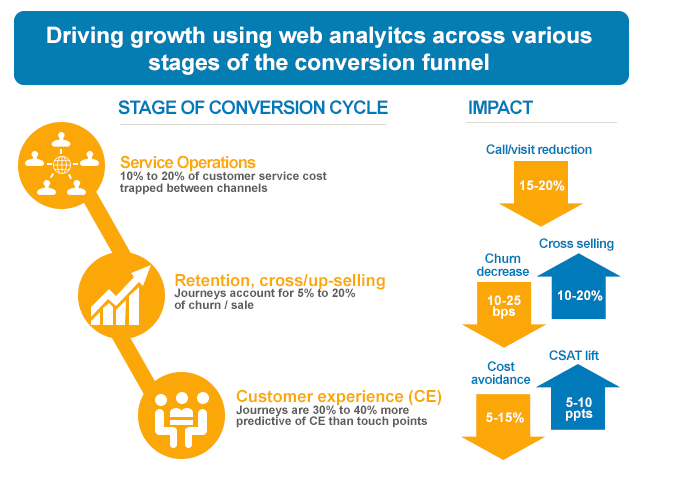
 Thank you to Milad Oskouie for sharing his thoughts and opinions in this blog post. Milad is a Director at Infinite Conversions, a digital agency focusing on improving website’s sales and revenues through conversion rate optimization. You can read his company’s blog and connect via LinkedIn, Twitter or email at milad@infiniteconversions.com
Canada’s 50 Most Powerful Business People 2014: #31–40
#31 Heather Reisman
Chair and CEO, Indigo
Is reinventing retail
Her retail chain, Indigo, may be struggling, but don’t count Heather Reisman out. She’s repositioning it as the world’s first “cultural department store,” and has convinced megawatt brands like Apple and American Girl to sign on to her vision. If the plan works, she hopes to take the chain global. If it doesn’t, she’ll find other ways to make her mark on the world. As one of the backers of Fed Up, a documentary about our growing addiction to sweet, processed foods, she’s taken a stand on sugar (in her stores, she’s banned treats from the checkout aisle). And as a steering committee member for the ultra-elite Bilderberg conference for global leaders, she wields another sort of power. But you’ll never see it: You’re not invited.
READ: InteraXon’s brain-sensing headband, Muse, goes on sale at Indigo »
#32 Brian Mulroney
Chair, QuebecorCan fix Karl Péladeau’s problems
As president and CEO of Quebecor, Pierre Karl Péladeau led a telecommunications giant beholden to federal regulations. So when he declared himself a separatist and entered Quebec politics, he created real concerns for shareholders. With a wireless spectrum auction looming, how could the company make itself a palatable partner for the Canadian government? By appointing a former Conservative prime minister—and ardent federalist—as its chairman. Brian Mulroney’s new job as Quebecor’s fix-it man is a reminder of his clout. As a director at Barrick Gold, Wyndham Worldwide and the Blackstone Group, he remains influential two decades after he left public life.
#33 Bonnie Brooks
Vice Chair, Hudson’s Bay CompanyKnows what shoppers want
You quit shopping at dowdy Hudson’s Bay Company years ago, but now you’re back, snapping up A-list offerings from brands like Top Shop and the just-opened Kleinfeld Bridal boutique. That’s the magic of retailing turnaround artist Bonnie Brooks. In her new role of vice-chair, Hudson’s Bay Company, she’s now focusing on the company’s other holdings, which include Lord & Taylor and Saks. Watch for the magic to spread.
READ: Why Hudson’s Bay will lose Canada’s retail war in 2014 »
#34 Calvin Helin
President, Eagle Spirit EnergyCould break the Pacific pipeline impasse
An author, lawyer and public speaker with a Twitter following approaching two million—his overriding theme being self-reliance, especially for aboriginal people—Calvin Helin could potentially be the one to break the deadlock over oil-pipeline access to the Pacific Ocean. His Eagle Spirit Energy proposal, backed by Vancouver’s billionaire Aquilini family (owners of the Vancouver Canucks), aims to put First Nations in the driver’s seat, with a pipeline from Alberta to B.C.’s North Coast.
READ: Six factors that could still stop the Northern Gateway Pipeline »
#35 Marc Poulin
President & CEO, Empire Co.Is flexing retail muscle
Marc Poulin helped engineer parent company Empire’s headline-grabbing takeover of Safeway in 2013—just before he became the first non-family CEO in Sobeys’ history. Since then, he’s made his own big changes, shuttering 50 underperforming stores across the country and selling 30 more to meet Competition Bureau requirements for the Safeway deal. And he’s flexing his muscles with suppliers, asking for a one per cent price cut to meet cost-saving targets. When you’re the second-largest grocery chain in Canada, with $17.6 billion in annual sales, you can afford to call the shots.
READ: Can Sobeys change leaders and conquer Western Canada at the same time? »
#36 Amanda Lang
Senior Business Correspondent, CBC NewsGets all the best interviews
If you want to get your message broadcast within Canadian business circles, then Amanda Lang is the person to do it. The senior business correspondent for CBC News, and one-half of The Lang & O’Leary Exchange, Lang is the go-to journalist for the corporate elite. Although she has political ties—Lang’s the daughter of former Liberal cabinet minister Otto Lang—she has established herself as one of the country’s most respected business journalists, scoring access to world leaders (Bill Clinton and Tony Blair), high-ranking government officials (Stephen Harper) and hard-to-reach executives (Saudi Prince Alwaleed bin Talal).
#37 Tim Leiweke
President & CEO, Maple Leaf Sports and EntertainmentIs turning Toronto into the world’s most exciting sports city
On May 4, close to 10,000 basketball fans gathered outside the Air Canada Centre to witness the Toronto Raptors fall to the Brooklyn Nets in a nail-biting playoff loss. Watching the crowd jump and cheer, you couldn’t help but notice the fans—white, black, South Asian, European—were more representative of the ethnic and social diversity of Toronto than any Leafs crowd. Toronto had entered a new era in sports, and the architect behind the “Northern Uprising” was Tim Leiweke, the Maple Leaf Sports and Entertainment honcho. Leiweke, who might be the most connected man in sports, has a record of calling in high-profile favours to get what he wants. He’s tapped Toronto-born rapper Drake to lead a ground campaign to rebrand the Raptors. He orchestrated a “chance” meeting with Lebron James to convince soccer superstar Jermain Defoe to sign with Toronto FC. And he’s hinted that he’d love to get Laker pal Steve Nash involved next. How deep is Leiweke’s Rolodex? He’s even tight with Bill Clinton who, in 2000, got the Democratic National Convention booked into Leiweke’s just-opened Staples Center.
READ: MLSE makes a strong statement naming Tim Leiweke new CEO »
#38 Shane Smith
Co-founder and CEO, ViceIs showing Rupert Murdoch how news is done
Shane Smith’s dance card has been pretty full this past year. His Instagram account shows him hanging with Bono and Mike Tyson. He sent Dennis Rodman to North Korea to watch basketball games with Kim Jong-un for Vice’s HBO newsmagazine series (which, incidentally, earned three Primetime Emmy nominations this year). And he’s taking lunches with Rupert Murdoch, MTV co-founder Tom Freston and Time Warner CEO Jeff Bewkes. The first two are already investors in Vice, the most sought-after media brand in the world. The latter is hungry to become one.

(Raina + Wilson)
#39 Gerry Protti
Chair, Alberta Energy RegulatorKeeps watch over the oil patch
Environmentalists decried the appointment of Gerry Protti, a former Encana executive, as chair of the newly amalgamated Alberta Energy Regulator (AER) last year as a case of the fox guarding the henhouse. But under his leadership the AER has taken a more muscular approach to oil and gas oversight, cracking down on things like leaks to well bores and aerial pollutants.
#40 John Masswohl
Lobbyist, Canadian Cattlemen’s AssociationPulls strings on Parliament Hill
A former policy officer and embassy staffer, Masswohl now lobbies the federal government on matters ranging from labelling issues to the temporary foreign worker program. He was an ardent and active champion of the free-trade deal with the European Union, which traded greater access to the Canadian cheese market for a potential $600-million boost to our beef exports. Low-profile but effective, Masswohl enjoys regular audiences with Agriculture Minister Gerry Ritz, Minister of International Trade Ed Fast and Prime Minister Stephen Harper.
READ: Think EU trade negotiations took forever? China and India will take longer »
 Follow Us
 Like Us
The post Canada’s 50 Most Powerful Business People 2014: #31–40 appeared first on Canadian Business.
When Chomping Down Software Leads, at Least Learn to Chew!
There are plenty times when the law of the jungle doesn’t just apply to real wildlife. At times it can also apply to business (and not always at its best). I’ve heard cynics say that the world of B2B sales and marketing is still dog-eat-dog. You either get your numbers or get out. You’re either a shark or sharkbait. (And no, I don’t mean little Nemo.)
This kind of attitude usually leaves organizations with the tendency to zero in on software leads and take no prisoners. You get right on to chomping. You leave nothing for your competitors.
But if you’re going to do that, at least learn how to chew.
What counts as ‘chewing’?

“Omnomnom!”
First of all, there’s actually nothing wrong with trying to be the shark in your market ecosystem. Like real sharks, being the apex predator of your niche gives a very similar role as the arbiter of balance. For competitors, you are what challenges them to create something you haven’t thought of before. For your customers and prospects, you are someone who has a strong incentive for being a provider. One way or another, they need you.
That’s why if you’re going to play the proverbial monster, you should learn how to do it right. The first step comes with being able to ‘chew’ and by ‘chew’ you have to do some things more slowly, with a little more grace, and (as Gandalf put it) ‘no small degree of charm.’ These include:
- Engagement – Yes, you and your sales reps are eager to win over prospects (perhaps even converting them by the batch). But no matter how much you reel in, those numbers will not compensate for lack of engagement. In fact, it’s only going to require a lot more of them. Brush up on your presentation skills (this guide from Mark Schaefer is good). Learn to listen more and talk less. Focus on delivering
- Expertise – It’s obvious that you need show you know what you’re doing. What you may not know is that credibility makes the best possible position for consultation. Yours is the business that does the ‘dirty work’ of maintaining servers, fixing bugs, and developing new ones. Some professionals might show a little disdain for that kind of work but they know it’s necessary and (at least subconsciously) desire the expertise to fill in their own gaps.
- Analysis –Data and analytics can tremendously help you understand your audience. They alone however don’t always ask the simpler questions (like the ones you ask when creating buyer profiles). Avoid reducing your audience to just numbers and graphs. These are only there to help you understand them further. Don’t just jump on a particular segment because the numbers indicate a higher response rate. Look deeper!
You already know enough that a bite-and-swallow approach to leads usually ends up wasting sales reps time with unqualified prospects. Why stop there? Find out what other areas of your lead generation process need some slower chewing so that the rest of your organization can better digest the information!
Why you should fire someone today

Too many companies rely on the institutional memory of a few deeply entrenched veterans. (Spiderstock/E+/Getty)
Alkarim Nasser has learned that it’s OK to fire people. It didn’t come naturally; like many employers, Nasser, who founded Toronto-based mobile strategy and analytics firm Bnotions in 2008, was uncomfortable terminating talent he’d worked so painstakingly to attract in the first place. That is, until he realized how much better off his business would be as a result.
“I feel like there’s a hesitation when you have to let someone go. You get paranoid about how it will affect the culture, how it will look,” he told a PROFIT 500 researcher earlier this year. “But I’ve realized when you just make the decision to fire someone you find yourself back on track.”
Nasser has grasped something few of his peers have: A bit of turnover on the payroll isn’t the end of the world. In fact, it’s a good thing.
Employers in Canada—especially smaller, entrepreneurial firms without the capital or cachet to be an obvious destination for the best and brightest—are obsessed with retaining staff. They’ll offer bonuses to people just for sticking around. They’ll bend over backward to accommodate individual work preferences. They’ll cram in every perk and privilege they can afford. Massage table in the meeting room? If it keeps a guy in sales from cruising LinkedIn on his lunch break, why not?
MORE: Why Are Your Staff Leaving? »
This is understandable, to an extent; the skills gap is wide enough that even so-called “employers of choice” struggle to find sufficiently qualified candidates. Once someone great is in the fold, it’s only natural to want to keep them around for as long as possible. Factor in the cost of hiring someone new, the hassle of training them and the disruption to business as usual—all of which can be significant—and it’s certainly easier to maintain the status quo.
Easier, yes. But not better. The occasional departure—or even firing—creates healthier and more energetic companies.
Labour dynamics are changing; most workers today don’t put a lot of stock in employer loyalty. (A recent Randstad Workmonitor study found that 65% of Canadian employees would have no problem leaving their job at any given moment.) Blame the much-maligned Millennials, most of whom plan to change jobs every three years or so, if you like, but they’re not the only group driving this trend. Other factors—including the increasing appeal of freelance life among young professionals, as well as retirement-age boomers looking for short-term “career epilogue” contracts—suggest the era of the “company man” is over.
MORE: How to Retain Millennials »
Moreover, keeping the same bums in the same seats is a recipe for mediocrity. While many employees are able to grow and thrive in a position over time, many simply are not. They grow complacent, they get bored, they become disengaged to the point that a new foosball table or company retreat isn’t going to do anything to draw good work out of them. And, more often then not, they start to bring down the morale of those they work with. It is not a tragedy when these people leave, whether by choice or by force. It frees them to do work to which they’re better suited. When the person was a known slacker, their departure can boost the spirits of the remaining staff. And it creates the opportunity for new people to come into an organization, who bring with them new energy, enthusiasm and ideas.
Also—and not for nothing—regular turnover forces leaders to confront some important questions about the scalability and sustainability of their businesses. Too many companies rely on the institutional memory of a few deeply entrenched veterans. When staff are regularly coming and going, firms have no choice but to codify the processes, practices and policies that otherwise live in someone’s head—a step that is instrumental in facilitating sustainable growth.
All of this is not to suggest it’s a good idea to fire your whole staff every year; a healthy core of engaged employees is something to which all companies should aspire. But when someone resigns or warrants dismissal, there’s no need to panic. Take a cue from Nasser and view it as the opportunity it is.
The post Why you should fire someone today appeared first on Canadian Business.
Did I Just Get a Google Penalty?

To watch the on-demand webinar, just click the slide.
Recently I did a webinar called “Did Google Just Penalize Me?” for Website Magazine. We didn’t have enough time to answer all the great questions we got about how you might get a Google penalty, so I’m recapping a few of the most interesting here. If you’d like to watch the webinar, please click the image to the right.
If you’d like to ask a question, just use the comment box at the end of the post.
“Does duplicate content apply to the same or similar content if it’s all on the same domain?”
The issue of duplicate content indeed can apply on your own site as well as on other sites. Panda is a Google algorithm update which is designed to affect low-quality content and has had many iterative updates over the past few years. Duplicate content is often seen as low-quality, when done in an effort to garner more traffic for search engines. It’s important to look for signs of duplicate content that are spammy and could be seen as low-quality. Here are a few quick and easy checks you can try:
- Copy a sentence or two from content pages on your site. Paste into Google search and “put a quote” around it, at the beginning and end of the text. This search will look for that exact text on the web. If you find multiple pages on your site (or on another site) with that text you may have a duplicate content issue.
- Use tools like PlagSpotter.com or Copyscape to test content published on and off your site. Reach out to any sites scraping your content or using it without permission or attributes.
- Make sure you are using proper SEO best practices on paginated pages and category pages of your site; these are often the culprits behind duplicate content on WordPress blogs. Yoast has a great guide to figuring out duplicate content issues on WordPress domains here.
- WWW vs non-WWW versions of your site resolving is a problem. As an example, if you have www.yoursite.com and also use http://yoursite.com, you could easily have duplicate copy between them. Set your preferred domain in Google and ensure that URL canonicalization reflects your preferred domain.
Additional resources:
- What is Duplicate Content – Search Engine Watch
- SEO Advice URL Canonicalization – Matt Cutts Blog
- Prepare for Panda Webinar – Vertical Measures
“How do you know which links are good or bad?”
This is a great question but a very subjective one. There are certain types of links that search engines, more specifically Google, don’t like. Look for links that are irrelevant or unrelated in nature. (You might ask yourself why the link is there.) These are links that often aren’t good to have associated with your site.
Irrelevant directories, article sites and pages are suspect too. So too blog comments or forum posts which aren’t genuine in nature, or pages that have links to other irrelevant sites. Site-wide links are often a big red flag to look out for also. Profile links on sites you aren’t active on look iffy. This informative article by Search Engine Land helps identify everything you need to know about bad links.
Tools exist to help in identifying quality links at the site and page level. Moz, ahrefs, Majestic SEO and Link Detox are just a few that can help.
“Can you give an example of what bad anchor text is?”
Bad anchor text, in essence, is anchor text which is unnatural and used in an effort to manipulate search engines. The text is a keyword that you want to rank for, often referenced as a “money keyword”, “optimized keyword”, or even “spam phrase”.
A site that sells shoes would likely want to rank for a very high volume phrase like “buy shoes” or “women’s high heels” or maybe “kids tennis shoes in Phoenix”. When inserted into content about shoes, these phrases as hyperlinks are very noticeable and not likely to be used as anchor text naturally. That’s an example of bad anchor text.
To learn more read my posts on the Act On blog, “Five Reasons Why Exact Match Anchor Text is Bad” and “Ten Ways to Vary Anchor Text”. Proceed with caution when choosing the right anchor text; these posts should help get you on the right path.

“They say content is king; where are the limits between shallow and cluttered content?”
Another great question! There’s no defined length, amount or publishing limit on content on the web. I hate to say it, but it all depends. It can depend on your industry, what resonates with your audience, and how much value your content provides. It depends on the cost of that content and the return on the investment, the performance. It depends on your team and their quality, creativity, and availability.
Many sites on the web have thrived by being producers of short content. Others have seen success by publishing regularly – in either case, producing what some may consider “cluttered”. The key lies in using that content effectively. Content is still king. Worrying about shallow vs. cluttered is certainly important, but should not stop you from getting started. Monitor your own progress and determine success for your site, paying close attention to quality, measurement and sticking to an established strategy.
“Can I get a Google penalty for having more than one Google Plus page that contains different information? For example a Google Plus page I made and the page that Google created?”
The penalty you could get for making a Google Plus page would probably not be a search penalty. Google search engine penalties are largely reserved for activities related to manipulating search rankings themselves. Some companies have used Google Plus to try to manipulate local search rankings, hoping a new Google Plus page will rank in the local map. Activities like these will likely result in your Google Plus page being taken down, and you losing the opportunity to have one in the future for your company or site. You might then be limited in your success with local maps as well if you try to manipulate Google Plus.
Generally, the terms of service on Google Plus reserve manipulating pages for Google Plus, meaning that you do not have that right. Bear in mind that being careful to meet the terms of service with any Google property (e.g. Google Plus, YouTube, etc.) is important; the last thing you want to do is make the giant mad. Things like posting duplicate profiles, ignoring image restrictions, and even running a social media contest have to be done with caution. Violating the terms of service on any social profile, including Google Plus, is serious and may throw all your hard work building a profile down the drain.
Having two profiles – a Google Plus profile and one you created – is a problem to rectify. Google now has a feature that will allow you to merge the data from a verified profile to a Google Plus page. More information can be found in this article on Local U. The feature was just added in June of this year, due to the overwhelming demand from businesses owners like yourself that wish to have one profile instead of the dreaded duplicate (which often has misinformation!). Take the time to merge profiles and get rid of duplicates.
Click the link to watch the “Did Google Just Penalize me?” on-demand webinar.
Remix & Reuse: How To Recycle Your Content
There are hundreds of reasons you should recycle your content.
Whether it’s blog content, website content, or content you use in your lead magnets (read: eBooks, cheat sheets, checklists, etc.), you should put a Remix & Reuse plan in place and then act on it at least once a year.
Today I’m sharing 11 ideas for recycling your content.

Remix Your Content
Remixing content is like giving it a shot of botox – you’re just smoothing out some of the wrinkles and making it new, young, and fresh again.
Ideas for remixing:
- Show vs. Tell: Take an old post and create a visual to go along with it. Try a video, an infographic, or make a SlideShare deck from it.
- Use it in a List Post: List posts are great ways to highlight older content. We made a “Best Of” post at the end of 2013 and linked to each of our most-shared posts.
- Remix guest posts: Take old guest posts (with permission, of course!) and update them, add a new title and headers, and fill in any holes. Then you can place that content on your blog as a new post. It’s also probably a good idea to link to the original post.
- Consider making it a series: As I’ve mentioned in previous posts, you should always have an eye on Google Analytics for your best performing posts. These make warrant a series or follow up. One of our most successful posts has been in the top three posts on Google Analytics for over a year now (20 Of The BEST Calls To Action), so we promptly decided it needed a follow up, which we titled, “20 More BEST Calls To Action.”
- Updates: With our field, social media marketing, things change A LOT. This means many posts require updates to make them correct. Instead of making a one-sentence update, take a new point of view (POV) or stance and develop those thoughts for a more robust posts. You can then re-share it with a note that it has updates along with a new POV.
- Take it from small to BIG: Let’s say you have 10 posts about tools. Or several posts on how to do a specific task for your industry. Why not take all of those posts and make them into a lead magnet, such as an eBook for download? (We did this with our four-part blog series on ROI, and now offer an eBook for download on our site – made from those posts [we added some formulas and a cheat sheet, of course]!).
Reuse Your Content
While remixing content may take a little more elbow grease, there are some simple, tried-and-true ways to reuse content, too.
Ideas for reusing content:
- Show off popular posts: There’s a reason certain posts do better than others, and when the people speak, you’ve got to give them what they want! One idea to show off popular posts is to take advantage of the sidebar on your blog and use a tool like PostSkin to put that content in the spotlight.
- Market evergreen content: You put in tireless nights and hours getting your content right, so why do so many people market that new article for only a few weeks?! Granted, not all content “lives” forever, but if you do have evergreen pieces (meaning they are helpful and valuable with no expiration date) make sure your marketing efforts are evergreen, too! We like to use the WordPress Plugin Revive Old Post to make sure our evergreen content is being shared on social media – even when we’re not thinking about it.
- Take advantage of Throwback Thursday: Again, if you have content that is awesomesauce, or was popular a few months ago, try giving it a little CPR by posting it on #TBT (on Facebook, Twitter or Instagram). Tell your audience why it’s such an amazing piece or why it was shared thousands of times to pique their interest.
- Take if from BIG to small: Comb through your eBooks, case studies, and blog posts for one-sentence tips or tricks. Use these snackable bites on your social media sites to show authority and add value to your pages.
- Make it an event: If you give webinars or keynote speeches, many times you can reuse content for part of your event.
Why Recycle Your Content?
Why not? You invested time, and maybe money, to publish your content, so it’s only wise to remix and reuse it.
And now you have 11 ways to do just that.
So? What are you waiting for? Go recycle your content!
Do you have any creative ways in which you reuse content? Let me know in the comment section below!
See you in the social sphere!
The Top 3 Avoidable Mistakes of Customer Surveys

Every company, regardless of size or industry, must use surveys to improve their customer experience.
When it comes to customer surveys, I believe there are three types of companies:
The “surveys don’t work” company: This company never collects customer feedback because they are short sighted and don’t know what to do with the data. They often cover up these challenges by saying “surveys don’t work.”
The passive company: A company who passively collects feedback but lets the data sit in a virtual storage unit which brings no value to the customer or the business. In this scenario, I would recommend not collecting feedback at all. You must be willing to go all in.
The admired company: An organization who obsesses over giving their customers a voice, analyzing the data, sharing the knowledge throughout the company and making operational improvements to better their business.
Which company are you?
One of the greatest challenges in using email surveys is having your customers open and complete them. It’s become a habit of consumers to immediately delete these emails and move on.
Why is this?
We have been trained to do so. Companies have sent us surveys for ages only to do very little with them. Think about it. How many times have you completed an email survey? How often have you had a company follow up with you? During my time at 1-800-GOT-JUNK? our goal was to respond to all customers within one business day after receiving their feedback. In fact, we had a 90/1 rule which meant that our goal was to respond to 90% of customers within one business day.
By responding to customers quickly, we built trust and created peace of mind that if they took the time to respond to our survey we would pay the respect by responding back to them. This practice was not only reserved for complaints.
There are three key reasons why your customers aren’t completing your customer surveys.
Not creating an engaging and authentic subject line
Take a look at your email subject line. Do you know what it is? Remove yourself as an owner or employee and ask yourself,
“Would I open this?”
Case Study #1: Let’s use Rogers communication (Canada’s leading telecommunications company) as an example. As of last week, this is their subject line.

“Your Feedback is Requested – Rogers Customer Experience” is mundane and doesn’t make me want to engage. Also, it makes me feel that they are only asking for my feedback to serve their own agenda. You need to have a subject line that resonates with your customers and makes them feel that the request is to serve them. For me, an email subject line such as “Did we wow you? Please tell us in five minutes” or “How can we improve? Tell us in three minutes” would have influenced me to complete their customer survey.
What would you recommend Rogers change their subject line to? Leave your response in the comment section below.
The team at Crazy Egg have put together a great post to give you some examples to recreate your subject line. Review your current customer survey email subject line, do some A/B testing and see what converts best.
Not keeping the customer survey lean
Personally, I won’t fill out any customer survey that is longer than ten questions. This is part of the reason why the Net Promoter Score (NPS) has become popular among companies of all sizes. You want your survey to be long enough to give you insight into how to improve your business but short enough not to cause “survey fatigue” with your customers.
Case Study #2: Qantas airlines is a fantastic example of keeping their customer survey short, direct and to the point. As you can see, they also use NPS.

Earlier this year, a commercial real estate company reached out to me for my customer experience expertise. They were asking dozens of questions with NPS being one of them. They were hesitant to solely focus on NPS because they were scared that they wouldn’t get the feedback they needed.
I immediately recognized their problem. They were gathering customer feedback for their own agenda. They wanted to gather insight into what they believed was most important. Part of the reason why NPS is so valuable is because you are able to ask two questions (or a few), sit back and wait to hear what’s most important to your customers.
After all, isn’t that the power of the Voice of the Customer? Annette Franz, voice of the customer expert and Director of VOC consulting at Confirmit, wrote a great post titled “Does It Pay to Listen to the Voice of the Customer?”
Take a look at your current survey, are you asking too many questions causing your company to receive too few responses?
Not making the experience digital and mobile responsive
It’s 2014 and I still see physical customer survey boxes. In order to increase survey complete rates we need to make it easy for our customers to do so. Systems such as geofencing and iBeacon will allow us to gather feedback from our customers in a way that is much easier for them and us.
If you are currently using physical boxes, consider these challenges. You’re asking your customers to spend too much time writing out their comments. You will have to have a SPA manually sort through each comment, categorize them and try to make sense of it all. Plus, it’s not easy to share customer feedback throughout your company, both good and bad, when it’s delivered in such a fragmented way.
Case Study #3: CLIENTpulse
CLIENTpulse is software to power customer feedback. What I appreciate about this software is their UX, their clean UI and that it is mobile responsive.. If I were to receive a customer survey from a company powered by CLIENTpulse the likelihood is that I would engage which would increase the probability that I would respond. As you can see, the CLIENTpulse software is easy to use on mobile phones and tablets.

Consider it a cardinal sin if you don’t optimize your survey for mobile phones and tablets. Don’t ask your customers to squint or zoom to complete your customer survey.
By effectively leveraging customer surveys, hosting customer advisory boards and designing your customer experience your company will be on the path to creating a customer centric company.
Tell me. What other features do you look for in an email customer survey? Leave your comments below.
3 Dimensions of the Client Relationship
 Firms survive when they find enough work to cover their expenses and generate a little profit. But firms thrive when they build enduring client relationships that continue to produce revenue and profit for the long haul.
Ever notice how most business development efforts seem driven by a survivalist mentality? They're mostly transactional, focused on winning projects rather than clients. And as those projects are being completed, there's the constant push to find more of them. Meanwhile, the firm's ongoing clients provide the stable base needed to create a sustainable business.
I've long advocated that firms should devote as much attention to building great client relationships as they do to chasing new work. The best firms in the A/E business do, but most I encounter seem to favor fishing over farming. If you're going to get serious about relationship building, it might be helpful to recognize three important dimensions of the client relationship:

One of the best ways to differentiate your A/E firm in the competition for clients is to demonstrate a keen understanding of the client's business and how your services will help achieve business outcomes. Divorced from the client's strategic needs, your services are likely to be viewed as a commodity. Commodity purchasers are much less likely to form the long-term relationships with service providers that you desire.
Working relationship. This involves how well the two parties work together, another aspect of client relationships that gets too little attention. The working relationship defines the client experience, which surveys suggest constitutes half of the perceived value that you deliver to clients. Yet the working relationship is seldom mentioned in sales conversations or in proposals. Most firms lack any kind of standards for delivering great client experiences, nor do they regularly solicit feedback from clients on how they're doing.
There are three critical steps to excelling at the working relationship: (1) benchmarking the client's expectations, (2) developing processes and standards for meeting those expectations, and (3) getting feedback on your performance. Do these three things and your firm will be in rare company.
Affinity is how much you and the client like each other. Friendship with clients is a wonderful thing, but it's overrated. You can have a very productive relationship with a client who is not a friend if you deliver business value and a great experience. When I speak of friendship, I'm talking about a relationship where simply spending time together is valued. There is a personal caring for each other, a natural attraction, and common interests.
In business, the term friend is commonly too broadly applied. Some seem to call everyone they know a friend. Others consider any client they get along with a friend. But getting along is a result of a strong working relationship, not necessarily a friendship.
Why are these distinctions important? I've seen too many friendships in business strained by the failure to deliver business results or tend to the working relationship. There are still sellers in our business who think that making friends is more important than meeting business needs. Too many firms think that quality technical work is all that really matters, without giving proper regard to the client experience. And our industry's neglect in linking our work to business outcomes is a significant factor in the commoditization of our services.
If your firm is serious about building more profitable, long-term client relationships, you'll want to avoid these common mistakes. Great client relationships result from helping clients succeed in their business or mission, delivering great client experiences, and—if the opportunity arises—being a good friend.
15 Ground Rules for Nonprofit Staff & Board Meetings

Lots of things can derail nonprofit staff, board and committee meetings. As an organization, adhering to the following ground rules for your various meetings can improve productivity and inspire a culture of teamwork:
1. In this room, at this time, we are all equal. Each of us – regardless of position – will participate.
2. Each of us will behave according to the organization’s values.
3. Each of us is mindful of confidentiality and conflict of interest.
4. We are committed to group process, respect and candor.
5. We will tap into the wisdom of the group, not focus on the opinions of individuals.
6. We will question our own assumptions and those of our colleagues in order to think creatively.
We will not get stuck on “what we’ve always done” and “what we do today.”
7. We will listen to each other and suspend judgments.
8. Our conversation is not about convincing each other but rather about listening to everything
and everyone and then deciding what it all means.
9. Each of us will be heard but that doesn’t mean each of us will get what we want.
10. No single person(s) shall dominate.
11. It’s okay to disagree. When issues are important and people care, they argue. But once we decide, that’s it. Once decisions are made, each of us owns and supports the decisions.
12. Each of us will accept responsibility for speaking out. Silence is consent.
13. We agree to focus on the meeting agenda and work hard to stay on track.
14. We will not start over or repeat if someone is late, leaves early or is unable to attend.
15. We recognize that the job of a facilitator is hard.
What do you think? Do ground rules really matter? What is the added value – or not?
How does an organization – and its participants – articulate its ground rules?
And always the big question, how do privilege and power affect ground rules?
Let us know in the comments below, and include any additions we might have missed!
How Google Has Changed Management, 10 Years After its IPO
Google went public 10 years ago today, and since then has dramatically changed the way the world accesses information. It has also helped shape the practice of management. Staying true to its roots as an engineering-centric company, Google has stood out both for its early skepticism of the value of managers as well as for its novel, often quantitative approaches to management decisions. Along the way it became famous for its reliance on exceedingly difficult interview questions — later abandoned — and its “20% time” policy — reportedly on its way out.
In honor of the company’s milestone, here’s a reading list of some of the best things we’ve published on the company since its founding in 1998.
How Google manages
If you only read one piece, make it this one by David Garvin in 2013, on how Google sold its engineers on management. (You can listen to Garvin interview Google manager Eric Clayberg in our podcast if you’d prefer.) Also from the Garvin piece, here’s what getting feedback at Google looks like.
The company faced a challenge in convincing its employees that management was actually valuable. To do so, it had to come up with a brand of management all its own, centered around “people analytics,” a quantitative approach to hiring and operations.
Earlier this year, Google’s SVP of People Operations, Laszlo Bock, wrote about its latest “people analytics” experiment. gDNA is a longitudinal survey of Google employees on everything from happiness to teamwork to office layout. Results will take years to collect, but Bock offers a window into the company’s quantitative approach to management and shares some stats on work-life balance at Google.
20% time
From early on, Google employees were encouraged to spend a significant portion of their time on interesting side projects, with the idea that some of these projects would become new products. Both Gmail and AdSense, the company’s ad software for publishers, started out as 20% time projects. But back in 2010, Chris Trimble criticized 20% time both for being expensive and for emphasizing ideas over execution. Writing last year, amid reports that the company was ending the policy, Michael Schrage took a slightly different view, arguing that 20% time is great for some employees but not for others. As for deciding who gets it? He suggested letting the data decide, an approach Google could no doubt get on board with.
How Google innovates
Bala Iyer and Tom Davenport attempted to “reverse engineer” Google’s innovation machine in 2008. The first step to innovating like Google, they argue, is patience. Not just a long-term outlook, but the investment that goes with it to set up the infrastructure — technical and managerial — that makes innovation possible. From there, the authors offer advice including building innovation into job descriptions, and trusting users to inform product strategy.

This emphasis on organizational structure comes up again in a 2014 piece by Linda Hill, Greg Brandeau, Emily Truelove, and Kent Lineback that looks at Google as an example of innovating continually over time. Key traits of innovative organizations like Google include the ability to learn from experiments and to combine “disparate and even opposing ideas.”
In 2011, Rita McGrath echoed another one of Iver and Davenport’s points: the importance of failure. In her post, McGrath recaps 11 product failures by Google over the years to emphasize the importance of taking such risks.
Another look at part of Google’s innovation strategy comes from a 2013 piece on DARPA, the government research agency. The authors are ex-DARPA leaders now running an innovation group at Motorola Mobility, which Google acquired in 2012. At DARPA and now at Google, the authors are focused on the rare form of innovation — described below as “Pasteur’s quadrant” — that simultaneously expands scientific knowledge and seeks to meet a specified societal need.

What Google could do better
Not everyone is so enthused. In 2011, Joshua Gans used Google+ to argue that the company was now playing catchup in key areas. In 2008, Scott Anthony surveyed Google’s innovation track record and concluded that its new products mostly hadn’t delivered results, and therefore Google was still fundamentally a search advertising company.
Eric Schmidt and “adult supervision”
Another management legacy associated with Google is the idea of bringing in an older executive to rein in young founders. Google wasn’t the first example (see: Apple) but the meme is closely linked to former CEO Eric Schmidt’s role at the company. In 2011, Julia Kirby argued that such arrangements will increasingly become common, while Michael Schrage made the case that they emphasize the wrong things about running a business.
Schmidt himself recounted part of his experience at Google in a 2010 article, which describes at length the company’s “quirky” Dutch auction IPO. And when he eventually left the CEO role, HBR editor-in-chief Adi Ignatius recalled past interviews with the founders as evidence of the inevitability of his departure.
Business in the age of Google
Google hasn’t just changed management by virtue of its own practices. Its very existence has dramatically changed the way lots of companies do business. A 2009 piece by Andrei Hagiu and David Yoffie asks “What’s Your Google Strategy?”, and describes tactics firms can use to succeed in an online world dominated by powerful platforms.
Glass, and where Google goes next
Lately, lots of talk about the company’s future has revolved around Google Glass. James Wilson explained last year why he doesn’t think Glass is the future of wearables. Earlier this year, Michael Schrage used Glass as a case study of how not to roll out an innovative new product. And I wrote about the tension between Google’s core strategy as a consumer technology company, and Glass’s potential as an enterprise product.
That’s just a sampling. A look through our archive confirms the outsized role that Google has played in defining what an innovative company looks like. More has been written about the firm than anyone has time to read, but thanks to the company’s eponymous search engine it’s all easy to find.
Are Your Salespeople Poised to Sell to Today’s Buyers?
Are Your Salespeople Poised to Sell to Today’s Buyers?
Few people need convincing that considerable power and influence has shifted to customers and prospective buyers. Much of this has been driven by technology and access to information.
The challenge isn’t necessarily to recognize this change in the buying and selling environment, but to know what to do about it.
Sales organizations or individual reps mired in the old ways of selling are destined to fall short of their target and find themselves in trouble or replaced by those that “get it.” Are your sales reps poised to sell to today’s buyers? Are they confident doing so, is it a stretch, or is it far beyond their comfort zone?
A recent Bain Brief underscored what’s at stake: “As customers seize the balance of power and more aspects of the sales process migrate online, leading B2B sales organizations find they must radically restructure their approach.” According to the article, those companies that succeed in making those radical changes “are realizing EBITDA growth of 20% to 25%” by following what they refer to as six imperatives, which are listed below.
Six Imperatives for the New Reality of Sales
1) Stay on target. Develop a sales system that matches the right offer at the right time to the target segment and delights customers based on a deep understanding of their priorities.
You must be keenly aware of your targets’ (both prospects and current customers) wants and desires as well as challenges and opportunities. This must be done in real time – not monthly or quarterly – to be of service before a competitor beats you to it.
2) Know customer value and values. Enable your front line to understand a customer’s value to the firm’s growth and profitability, as well as the customer’s decision dynamics.
This is more than knowing an industry or individual, but rather each target’s specific corporate culture, operating environment, and preferences. Each selling opportunity must be treated as unique and specific, not generalized or based on assumptions.
3) Re-imagine the channel mix. Invest in low- and high-touch channels to match sales capacity with opportunity and customer preference, then double down on self-service digital channels to help customers help themselves, earning loyalty and a high ROI.
Don’t put all of your marketing and sales eggs in one basket – either traditional channels or purely social media. Balance the old and new and (re)deploy your resources accordingly where they can be of best use and value to your buyers.
4) Align resources across marketing and sales. Seamlessly integrate marketing priorities with sales channel mix and capacity. Rethink where marketing ends and sales begins, as buying processes begin earlier than ever.
Force your team to think from the outside-in to see what your buyers are exposed to from both push and pull perspectives. Does it jibe, or is it disjointed and confusing? Get your act together to tell a consistent story and present a cohesive story to your buyers.
Also consider how much information you’re sharing with targets and at what stage of the sales process. You have to be willing to give buyers something to keep them interested. If it’s not enough, they’ll likely keep searching until they find what they’re looking for (from your competitors).
5) Raise the bar on talent. To build the next generation of sellers, elevate expectations and strengthen capabilities. Recruit people with relevant expertise, and train sellers to make the most of their time with customers.
What competencies are required of your sales roles for success? How can you help them master those competencies and skills? Adjust your training programs accordingly and be prepared to make tough decisions about those who can’t make the transition to support your new approach to selling.
6) Get the wiring right to unlock sales capacity. To reinforce new behaviors and track effectiveness, invest in data and analytics, system linkages, compensation and tools.
Once you’ve mastered the first five items, the last thing you want to do is torpedo your efforts by maintaining old habits, tools, or administrative tasks that are out of sync with your new approach. Take a step back to ensure that all touchpoints from marketing to IT, HR, and Accounting and beyond are supporting your new reality and not dragging your sales team back to the past.
This research by Bain and the findings they put forth in their paper are enlightening. The world of buying and selling is moving into new territory, to which sales organizations need to adapt in order to remain relevant and competitive.
Such strategic changes need to be implemented through your people, which is easier said than done. How will you move your organization from where you are to where you need to be? Few companies or leaders can get there on their own. Helping to set the right course to train your people and change their behaviors to align with your new selling strategy and priorities is our specialty.
COMPLIMENTARY RICHARDSON TECHNOLOGY BRIEF
Click here to down load our new brief, Selling in the Cloud – 8 Keys to Successful “Land and Expand” Strategy for SaaS Solution Providers.

The post Are Your Salespeople Poised to Sell to Today’s Buyers? appeared first on The Richardson Sales Excellence Review™.
3 Behaviors That Drive Successful Salespeople
Most people consider selling to be an art rather than a science: some people have it and some people don’t. But this leaves a lot of uncertainty in what is often a company’s most profitable department, and it makes managing a high-functioning sales force notoriously difficult. The prevailing thinking is that the amount of time salespeople spend with customers is the most important determinant of how much they are able to sell. But recent research has uncovered an even more powerful leading indicator: the size and quality of a salesperson’s network inside their own company.
People analytics can help organizations learn more about what behaviors differentiate their most successful salespeople. At VoloMetrix, we recently studied the sales force of a large B2B software company using six quarters of quota attainment data for a several thousand employees. We then correlated it against 18 months of VoloMetrix-created People Analytics key performance indicators. These KPIs measure things like time spent with a customer or manager; the size and cross-functionality of an internal network; how important a given employee is within an internal network; time spent in the presence of senior leadership; and many others calculated anonymously per person.
We expected to have two phases to the study. The first would simply run the model against the entire sales organization without bothering to segment them in any way. This meant that people selling to small- and medium-sized businesses were lumped in equally with people selling through channels and large enterprise, and that Asia-Pacific was lumped into with Europe, the Middle East, and Africa, and everywhere else.
Our researchers assumed that no meaningful correlations would emerge at that level — it seemed obvious that the most effective sellers of simple low-priced items to SMBs in Asia would look quite different than North American seven-figure enterprise solution sellers. That’s why phase two of the study would break employee populations down to these more similar groups and run the analysis again.
We didn’t need the second phase.
It turns out that regardless of what you are selling, who you are selling it to, or where you happen to be in the world, success in selling is highly correlated with three things:
- Spending enough time with customers and prospects
- Having a large and healthy network in your own organization
- Spending time with and getting attention from your manager and other senior people in your own organization
The first factor is trendy, and increasing time with customers is high on the priority list of most sales leaders and consultants. Unfortunately, simply increasing the amount of time your underperforming sellers spend with customers is unlikely to help much, and might actually hurt. Imagine a bad sales person who has tried to sell you something; now imagine spending twice as much time with them.
The second and third are a bit less obvious, but incredibly important.
Enterprise buyers are increasingly sophisticated and enter a sales process fairly well educated about their options. They are looking for someone that is credible, can understand their needs, and can address their questions and concerns quickly and competently. Doing this well requires a seller to be able to get the right people with the right expertise to the right place at the right time. It also requires them to know how to get the deal approved internally, have access to management when needed, and have a holistic understanding of what their entire company can offer to the buyer above and beyond the current transaction.
Take this example from the B2B company I described earlier. The top salespeople began the quarter by meeting with prospects. But as time went on, their time spent with customers declined while their internal networks grew.

Underperformers exhibited similar trends, but the numbers were lower — they spent 25% less time with customers throughout, had 20% smaller internal networks, and spent 20% less time with senior-level managers.
To be sure, these characteristics can be hard to measure. But our study, which has been repeated multiple times with similar results, and others like it have proven these network and behavioral metrics to be highly predictive of sales effectiveness.
Even better, these metrics are actionable. Top performing reps typically don’t know what they are doing differently than everyone else, and underperforming reps would prefer to be more successful, but don’t know how. In addition, managers might not understand just how much their interactions (or lack thereof) with employees directly affect sales. Through people analytics metrics, companies can provide transparency up and down their entire go-to-market organization to give employees, managers, and executives a more granular set of ways to measure their activities and, more importantly, prioritize those that lead to success.
4 Simple Steps to Writing a Blog Post That Floods Your Inbox with Inquiries

Are your blog posts helping you win clients?
Blogging helps boost your authority, drive relevant traffic, and generate leads.
But are your blog posts working for your business?
Although business blogging is a longterm strategy, you can employ a few smart tactics to one single post in order to generate meaningful leads.
Not just one lead. But a handful or more of quality leads.
In this post, I’ll show you exactly how I stumbled upon this four-step formula, and how you can apply this method to your business.
Ready to start winning new clients?
Step 1: Forget about generating leads
Running a small business is stressful.
You need to keep existing clients happy and fill your pipeline with new prospects.
You need to maintain your website and accounts, look for networking opportunities, and so much more.
But when we get so focused on running our businesses, we sometimes forget our true goal: solving clients’ problems.
To generate serious leads with a single blog post, you need to forget about lead generation for a moment.
Instead, go back to basics:
- Identify your ideal clients
- Understand their problems
- Strive to solve those problems
A lead-generating blog post doesn’t necessarily generate a ton of social shares — it’s possible, but not required. As Tom Martin suggests: chase customers, not clicks.
An effective blog post makes your ideal client pay attention because you tell her you can solve her problems.
Which problem will your blog post solve?
Step 2: Stand out as an exquisite problem solver
The web is full of superficial posts.
You know the type of posts I’m talking about, don’t you? 10 simple tips to achieve this or that and 7 mistakes to avoid to be awesome.
A short list of generic tips doesn’t make you stand out. You’re wasting your precious time.
To stand out as a serious problem solver, you need to concentrate your efforts. Write an epic tutorial instead of dashing off a series of wishy-washy posts.
Did you notice how Samar Owais debuted on Copyblogger in May?
She wrote a 5,156-word blog post about 53 freelancing mistakes. That’s how you arrive with a bang and intrigue potential clients (beginning freelance writers in Samar’s case).
We’re living in an amazing time, when anyone can find clients online. But you need to stand out from the masses who are also marketing themselves.
To get noticed and win clients as a no-nonsense problem solver, your blog post needs to:
- Describe your client’s problem in your opening paragraph and promise to solve it in the remainder of your blog post
- Explain with specific details how a client can solve her problem
- Remind your potential client how much more productive, happier, or healthier she’ll be when she follows your advice
When you consistently solve people’s problems, you win clients online.
Additional strategies for promoting your business with online content will be discussed during an upcoming master class on Kindle Publishing.
Click here to register for this Authority master classStep 3: Apply authority enhancers
Are you worried that clients won’t listen to you because you’re not an established authority yet?
If you feel like a newbie, insert some authority enhancers into your blog post to strengthen your credibility:
- Quote industry experts to demonstrate you have current knowledge of your field
- Insert book citations to show you’ve done your research
- Include credible statistics to add substance to your content
- Present detailed examples or case studies to show you can apply your knowledge
- Share strong opinions, and don’t be afraid to alienate readers who aren’t right for your business
Writing an authority-boosting article requires you to sweat the details. Avoid generic statements. Dig deep to find the best quotes and the most useful examples.
Make your post so good that readers can’t ignore you.
Step 4: Make prospects fall in love with you
Authority can be a little boring.
Doesn’t almost everyone claim to be an expert or guru?
Authority on its own doesn’t make you stand out — even the most comprehensive post can still bore your readers to tears. And who wants to work with a boring, old fart?
To tempt clients to hire you, add a large dollop of personality to your posts:
- Replace academic lingo with everyday language
- Add a dash of humor, and embrace your own quirks
- Make your voice more dynamic by using ultra-short sentences
Get rid of that academic tone. You might think you sound erudite, but the truth is you sound like a stuffy dodo — boring as hell, devoid of personality.
In a world of content shock, your unique voice makes you stand out. Your personality attracts clients.
If you suffer from quiet-blog syndrome …
Stop worrying about your own site for now. Instead, apply these four steps to guest posting.
Where are your ideal customers hanging out? Which blogs are they reading?
Before pitching and writing your guest post, study the host blog to ensure you understand its audience well. Review all popular posts. Read at least one hundred comments.
Is the audience struggling with the problem you want to solve for them?
Lead generation in practice
In October 2012, I published a guest post on KISSmetrics: “How to Write Seductive Sales Copy Like Apple.” I had quit my job the previous month, and I wasn’t even sure yet whether or not I wanted to be a copywriter.
When I wrote the post, I didn’t think about generating leads. I simply wanted to write a popular post that would solve a reader’s problem.
This is how I used the four steps to show a reader how to write copy that wins business.
- I studied KISSmetrics’s business-focused audience — mainly software as a service (SaaS) and e-commerce businesses looking to win customers online; I also found that readers loved posts about Apple and Steve Jobs. That’s why I used Apple as an example for my copywriting tutorial, and in the headline!
-
In my opening paragraph, I demonstrated the business benefits of copy — selling with words, turning doubters into buyers, captivating attention, and gaining more sales, and then created a comprehensive tutorial outlining
11 copywriting lessons. Each lesson featured a short explanation of a copywriting concept, an example from the Apple website, and straightforward tips on how to implement the concept for your own copy. - The blog post contained authority enhancers — figures of the average number of words per sentence on iPhone webpages added substance to my plea for shorter sentences. To add credibility to my argument, I also used specific details about how legendary copywriter Claude C. Hopkins successfully marketed the Schlitz brand.
- I applied a dollop of personality — even though the blog post was more than 3,000 words, the tutorial was concise; it also engaged the reader with questions, used seductive words, and included ultra-short sentences to show enthusiasm.
As a bonus, the post was optimized for how to write sales copy, and continues to attract organic traffic, generate email subscribers, and the occasional business inquiry — nearly two years after publication!
If you have a service business, you can follow the exact same steps to win clients.
For instance, a web designer can explain and illustrate usability or design principles. If you’re a marketing coach, explain how startups can apply persuasion techniques to win more business. An SEO specialist has the opportunity to explain exactly how to do keyword research for an e-commerce site.
Entice potential clients by proving you can solve their problems.
The truth about online lead generation
A large collection of wishy-washy blog posts might generate some traffic, but you won’t win clients.
Rather than churning out many blog posts, focus on quality.
Be confident. Be helpful. Be generous.
When you follow the four steps, your inbox will be flooded with inquiries, and you’ll be able to choose the best clients.
Let’s go over to Google+ to discuss writing comprehensive, enthusiastic, problem-solving tutorials.
Want to learn more about using content to gain clients?
This Friday, August 22 at 12:00 p.m. Eastern Time, I’ll be talking with Sonia Simone in a session titled Promoting Your Business with Kindle Publishing.
The audio seminar is free for Authority members. You’ll just need to register here.
If you’re not an Authority member yet … try Authority risk-free and get exclusive audio seminars like this one nearly every week of the year, ongoing networking opportunities, discounts, and education.
See you Friday, August 22, at noon Eastern!
Flickr Creative Commons Image via Loving Earth.
About the Author: Henneke Duistermaat is an irreverent copywriter and marketer. She's on a mission to stamp out gobbledygook and to make boring business blogs sparkle. Get her free 16-Part Snackable Writing Course for Busy People and learn how to enchant your readers and win more business.
The post 4 Simple Steps to Writing a Blog Post That Floods Your Inbox with Inquiries appeared first on Copyblogger.
3 Sales Lessons from Recruiters
 Salespeople and recruiters have a lot in common. By learning and adopting the recruiter mindset, salespeople can reap significant improvements in their results. Here are three key areas where sales can learn from recruiting.
1. Gold is found below the surface
Recruiters understand the value of research. In the process of sourcing candidates, they understand that the best information – the pieces that give you an edge on the competition – is typically not found on the surface. They know that if you are using a search engine to find information, the most highly ranked results may only mean something is popular, not valuable.
In sales, spending time to find the nuggets of gold (information) below the surface can give you the edge. Simply using Google or reading the prospect’s website will not bring you the information necessary to close a deal. Consider how you do deep research like a recruiter to ensure you know everything about your prospect.
2. To find your way, you need a map
In the world of recruiting, if you want to find and contact the best candidates, you need to map out the organization. Knowing the title of the type of person you need is helpful, but the best person may not have the title you expect. By mapping out an organization, and having multiple points of contact, you will be able to find and connect the best candidates.
In the world of large, complex organizations, you need to map out the organization and understand relationships (i.e. influencer, decision maker, administrator, etc.). This is more important that a specific title or role. As you understand the lay of the land, you can be much more effective in getting your goal accomplished.
3. Turn data into action
The best data is the cleanest, most up-to-date data and recruiters know how to get that data and turn it into action. Companies like Barton Associates, a niche healthcare recruiting company, use deep dive search tools to include the unique search variables their clients desire. With this enriched data, they capture emails and records, as well as identify additional new leads and contacts.
Doing this deep research and then turning it into real leads and contacts is a huge opportunity for salespeople. Are you turning data into action?
Learn more sales tips with the free ebook below.
