Shared posts

17 Feb 18:28

Referral Marketing Strategies: 5 Best Practices

by Amity Kapadia

Studio32 / Pixabay

The best referral marketing strategies share a common thread: Referrals are embedded into every aspect of the user experience. For a referral program to consistently deliver truly exceptional results, your brand’s referral marketing strategy must take all marketing channels into consideration. Basically, your program should be woven into who you are and how you operate. Without structure and commitment, you’re largely hoping that good things happen and that customers inherently know to refer their friends and colleagues to your business.

That might happen. Or it might not.

Instead of wishing, hoping, and praying for referrals, let’s talk about how to get more referrals.

In almost any successful customer journey, there’s at least one “moment of delight,” a point at which the customer is happiest with or most excited about your product, service, or brand. These “moments of delight” are perfect opportunities to present customers with the opportunity to refer others to your product or service. This is also where it can be very beneficial to have insight into how your prospects funnel through to become customers and the journey thereafter.

If you want to take your referral program to the next level, here are 5 best practices to help you get there:

1. Your Referral Program Should Be Easy To Find

Don’t make your customers root around your website searching for a referral link. Or even worse, dig through their email to find out how to log into your portal and see their reward status. The harsh reality is people aren’t going to sign up for your referral program if they don’t know about it, so make sure you’re making it visible and prominent. Remember, the entire purpose of the program is to get people to spread the word about your brand, products and/or services. If signing up to do so is difficult and frustrating, you won’t get the results you’re hoping for.

2. Always Be Transparent

Now, more than ever, consumers are highly cautious about sharing their information – especially online. Make your customer referral program more attractive by being upfront and honest about the entire process. Let program members know how their information will be used, how they can keep track of the process and exactly what they’ll get in return. The more information you share about your program, the more at ease your customers will feel and the more likely they’ll be to sign on. And on the flip-side, collecting and analyzing data from customer referrals is critical for optimizing future rollouts and campaign iterations. You’re planning to enable your customers to share your brand with others, and in return, they’re going to enable you to better understand consumer behavior surrounding your products and services. The more you understand about your customer base and the leads they generate, the more efficiently you can hone marketing strategies, gain customer insight, and grow revenue. Don’t let this data slip away without tapping into its full potential. Before you launch a program, decide how you will collect, store, and examine the intel and data points you retrieve.

3. Know What Your Customers Want

If you want to entice people to share your brand with their own networks, you have to provide them with something of value in exchange. Understanding your customers isn’t enough; do you know what they truly value? If your incentive isn’t worthwhile, your customer referral program will never even get off the ground. A good incentive will provide some type of desirable reward for your existing customers while also equipping them to share an incentive with others. Consider what motivates people to buy your brand in the first place, and design a program that speaks to what customers really want. Sometimes recognition, such as being featured on the website or in an ad or blog post, can be equally as attractive as other types of incentives.

4. Ask At The Right Time

Your customers aren’t going to want to refer a friend if it’s the first thing you ask them to do. In fact, if you start an interaction by asking for a referral, you may lose the sale altogether. You have to wait until the right time. This is also where it can be very beneficial to have insight into how your prospects funnel through to become customers and the journey thereafter. Studies have shown that the moments following a shopping transaction – commonly referred to as a “shopper’s high” – are a highly effective time to ask for a referral, since the rush of the purchase is still lingering. Or, you might wait until after the customer has received the product or services and are satisfied. And not every incentive has to be directly linked to referrals. For example, are there ways that you can reward customers who make X or more purchases within a given timeframe? Offering free shipping, doubling rewards points, or providing additional discounts for your most loyal and enthusiastic customers is a great way to energize true word-of-mouth referrals.

5. Invest The Time And Resources Necessary

A successful customer referral program can become the lifeblood of your business, but it won’t do anything if it’s not backed by the proper resources. The program should be strategically planned out, regularly measured, and managed on an ongoing basis. When you invest in your program, you can see unimaginable growth through this marketing channel (just look at the ROI of referral marketing by different industries). You can’t achieve success if you’re treating your referral program as an afterthought. Successful programs need structure and commitment from within your company. For this reason, many brands choose automated and streamlined platforms to ensure ease and satisfaction from both a consumer and company perspective.

A Winning Referral Marketing Strategy

Referral marketing isn’t just about using your existing customers to gain new leads. With a well-built incentive program, you can actually increase brand loyalty among existing customers while simultaneously growing your customer base through referral traffic. That’s a win-win.

By implementing these best practices into your referral program strategy, you’ll be much more prepared to develop a program that will net the results you want without incurring too many roadblocks along the way. The secret is to approach referral marketing just as you would any other high-value customer acquisition channel — investing in process and technology, and incorporating it into every aspect of your marketing strategy. When you do that, the payoff can be huge.

17 Feb 18:24

Using a Buyers Map to Unstick Deals | Sales Strategies

by Colleen Francis
Today, I want to talk to you about a process that we’ve been using with our clients that is helping them close more deals. We’re using a buyers map to help unstick opportunities that are stuck in their pipelines. So, what …
Read More »
16 Feb 17:35

How to Reduce Competition With Comparison Chart Copy

by Mike Devaney

A comparison chart that includes competitor brands can be a tremendously effective addition to your product’s sales page.

Naturally, introducing readers to other brands carries risk, especially when the features of their product closely align with yours. However, the solution is simple. Create the chart so that your product has the most check marks, x’s, and punched holes. Despite its bias, readers will often still perceive it as the best value.

In addition to subjective markings, there are specific copy techniques that, when applied, can establish your product as both different and better.

Why use a comparison chart?

#1 Expectations

Prior to the internet, comparison charts were largely the domain of third-party brokers like Consumer Reports. They showed the reader through independent testing, the strengths and weaknesses of multiple products within a category. Savvy shoppers would delay major purchases until reading a review from these unbiased sources.

That’s no longer true. Now, readers look for and expect to see comparison charts on sales pages. It’s strange. The reader knows the chart is biased, like branded content is, but still uses the information to make a decision. In fact, they’re one of the most viewed components of a sales page regardless of the reader’s buying intent.

#2 Influence

Comparison charts summarize your sales message. They provide proof for the claims you’re making in the copy. They attract readers invested in your message and scanners. The longer readers stay on site, the more opportunity you have to influence them. A comparison chart is your opportunity to show off the product in splendid detail. Your product will simply not receive the same favorability in a chart that you don’t control.

Readers look at comparison charts to verify or challenge their assumptions.

#3 Answers

Comparison charts list features (e.g., compatibility, dimensions) which are, essentially, answers to questions (“Will it work with…?”, “Will it fit in a….?”). Providing accurate information about competing products shows diligence and confidence. The legality of using a competitor as a prop appears to be settled law.

A side benefit of creating a comparison chart is pricing protection. Comparisons help marketers remember the original purpose of the product and the effort that went into its creation. The recall process can justify the current pricing strategy, especially during a slump when the temptation is to cut prices.

Comparison charts may also reduce the burden on customer service by providing ready answers to frequently asked questions.

Why don’t more products use comparison charts?

Comparison charts aren’t appropriate for all products. Three exceptions are:

  • Cheap, disposable products. Explaining the advantages of a .43 cent Bic pen over a .22 Acme pen is not necessary.
  • Truly unique products. There are some products that have no direct competitors; they are unlike anything else. A standard comparison chart would be a poor fit because the metadata would be wildly different.
  • Category leading products. Some products dominate their category. Using a comparison chart would elevate their competitors, implying peer-hood. Naming them gives them free and unnecessary publicity.

Still, allowing for these exceptions, many products in competitive marketplaces avoid direct comparisons on sales pages. Why? Fear of distracting the reader. Fear of litigation. Fear of not being good enough.

It’s an unfortunate position. While sharper copywriting will not fix an audience-product mismatch or magically improve a product’s features, it can highlight a list of benefits that, cumulatively, persuade the reader of your product’s superiority.

Copy techniques for standing out

In direct comparisons, winning products are usually different, not better, says Al Ries, author of Positioning: The Battle for Your Mind. You can differentiate your product with subtle copy tweaks.

Why subtle? Because the appearance of objectivity, as referenced earlier, boosts reader trust. Put another way, a patently partial comparison chart will be interpreted in the reader’s mind as mere advertising.

Your product should be the first (far left), center, or last (far right) column in the chart. This fits standard design principles, and it’s where users have grown accustomed to looking.

Avoid ostentatious design differentiators like screaming read circles and slash marks unless aggressive, direct marketing fits with your brand.

#1 Blended copy

The copy in your product listing page should match the copy on the rest of the page. The blending of tone and text is a subtle way to underscore your product’s legitimacy; it reads like the “approved” choice.

Search marketing agencies know this. They always try to match keywords with landing page copy. Why? Google rewards continuity in the form of relevancy scores. That lowers the cost per click. score).

Focus on the copy that introduces and immediately follows the comparison charts. These transition points “grease” the flow, encouraging the reader to keep going. On the other hand, inconsistencies in copy signal change, allowing the reader to disconnect.

#2 Spirited copy

Product copy has one goal: consumption. Standard direct response copy techniques encourage reading and aid comprehension. These techniques work, even in tight spaces. Use the following to move the reader forward:

  • Active voice
  • Short sentences
  • Vivid adjectives (“picture” words)
  • Exclamation points and question marks
  • Question, answer logic

You can also make competing products less attractive by using the passive voice, longer sentences, dull words, and periods alone. It’s the same tactic producers use on video to create contrast between two choices. The “winner” is the one bathed in good light, while the “loser” languishes in poor light.

#3 Kitchen sink copy

The comparison chart you design should exhaustively detail every feature of your product. Ensure the column headers stay fixed as the readers scroll. List features from most important to least. If you’re thorough, your product will have the most marks. Blank spaces in your competitor’s columns disfavor them.

You can always edit your column for length. However, long-form copy is a proven method for differentiating similar products (“the more you tell, the more you sell”). The cascade of features may cumulatively shift the balance in your product’s favor.

Conclusion

Readers look at comparison charts for guidance when deciding between similar products. The charts in your marketing communication should establish your product as meaningfully different and better than its competitors. Specific copy techniques, applied at key points, can do that.

16 Feb 17:34

6 Strategies for Asking for Referrals

by Richardson Sales Training

As we’ve discussed in previous posts, overcoming the status quo is a central challenge for sales professionals. Part of this problem stems from diffused decision-making across an increasing number of stakeholders. Additionally, as competition rises, businesses need greater assurance of the ROI of a proposed solution. The barriers are significant. Overcoming them requires a strong start. Effective sellers do so by leveraging referrals.

Referrals are powerful because they establish an early connection between the sales professional and the customer. Essentially, the sales professional comes vetted. Here, we look at strategies for requesting referrals and how they can help jump-start a relationship.

1. Start with Mutual Contacts

A mutual contact is the strongest referral. In this case, the referral is someone the sales professional, and the potential customer both know. If the customer trusts the referral, they’re more likely to extend that trust to the sales professional.

This is critical because trust remains a major hurdle in developing a sales relationship. Moreover, starting the relationship with a mutual contact is a powerful strategy for small and large selling organizations alike.

For all the capabilities of today’s robust CRM software, sometimes a simple phone call is the most effective way to start.

2. No Referral? Consider a “Hinge”

Sometimes there is no referral. In this case, it’s helpful to have a “hinge,” a mutual event both the sales professional and the customer attended. A hinge can be a recent trade show, a shared business interest, or a personal connection like graduating from the same school.

This approach still requires preparation. It’s easy to assume that a point of commonality will spark effortless conversation. In truth, the customer is in the middle of a busy day and managing deadlines.

Take the time to plan your words.

3. Use a Relationship Map

Referrals aren’t just for starting a relationship with a new business. Many sales professionals are successful in cross-selling by using referrals from other divisions or groups within a business where a relationship already exists.

In this scenario, a relationship map is helpful. A relationship map is a visual representation of both the reporting relationships between the stakeholders and the power structures between them. The reporting relationships are the “organization chart” of the stakeholders involved in the decision-making process.

The power structure relates to which stakeholders are favorably inclined to the sales professional. Consider this customized approach to finding a referral.

4. Leverage the Power of Reciprocity 

Sales professionals can be proactive by giving their customer a referral first.

This approach takes some foresight because its best to give referrals to customers that are in industries relevant to the markets likely to present future opportunities. Success in selling sits on a foundation of mutually beneficial outcomes.

This approach exemplifies that idea perfectly. The customer gets a boost from the referral while the sales professional lays the groundwork for their own referral request later.

5. Prepare and Follow Up

Jumping to the referral process is tempting. However, the sales professional needs to follow the normal routine of understanding the target customer first.

Why?

Otherwise, the referral is flying blind. Their lack of knowledge will overshadow the value they can offer by vouching for the sales professional.

Make sure to ask questions about what the new contact might be interested in and how the contact prefers to communicate. Follow up and express appreciation after the contact has made the referral.

Without follow-up, the whole exchange can feel very “you”- centered instead of “client”- centered.

6. It’s All in the Timing

Some of the strongest sales professionals can make the referral come to them. That is, they generate excitement with a new product offering or an especially compelling white paper.

An existing contact may share one of these things on social media. This is the perfect time to ask the contact to provide a referral. Moreover, if the product offering or white paper happens to be relevant to the target contact, the referral can use that material as a conversation starter.

Conclusion

Referrals are the single best way to ignite a sales pursuit strategy.

They allow the sales professional to bypass the gatekeeper with a “pre-sold” message. Additionally, the sales professional reduces the exhaustion and diminished morale that comes from churning through leads because, with referrals, more clients come from fewer leads.

Finally, remember, the referral must be more than an introduction. They must legitimize the sales professional by personally vouching for their ability to solve business challenges.


sales challenges 2018


For more insights, download “2018 Research: Understanding Selling Challenges,” from the Richardson Sales Training Company website.

The post 6 Strategies for Asking for Referrals appeared first on Welcome to the Richardson Sales Blog.

16 Feb 17:34

What is the Expected ROI for Your Marketing Plan? And How to Do It

by Laura Patterson

Today’s Marketing leadership is expected to be data-driven and measurement savvy. Your Marketing plan should immediately demonstrate both capabilities. In fact, calculating your Marketing plan ROI should be an integral part of your business processes.

Determine your Marketing plan’s ROI by arming your team with data related to finding, keeping and growing the value of customers.

Start with these five easy steps:

  1. Identify the cost of everything in your marketing plan. Don’t forget to factor in labor costs associated with each vehicle and program. If you don’t know the labor costs, ask your finance team for an average hourly rate. Itemize each vehicle and program’s cost and sum the total. This should add up to your total marketing budget.
  2. Determine the number of expected qualified engagement opportunities for each vehicle and program. For example, how many existing or prospective qualified attendees are expected to come to the trade show and/or webinar? How many qualified existing subscribers are reading the newsletter and/or email? If you can’t quantify the expected engagement for a vehicle (some vehicles are in support of the overall program, but can’t be easily quantified), use “0” and include its cost in the Marketing Plan ROI equation.
  3. Indicate the expected number of qualified new opportunities from existing AND prospective customers generated for each vehicle, program and the overall plan by using historical data, benchmark data or your best estimate,
  4. Gather the following information to do the calculation:
    • Qualified Opportunity-to-Proposal %
    • Proposal to Closed Deal %
    • Average Order Value
  5. Apply the following formula:
    • Total Number of Qualified Engagement Opportunities for all programs X Expected Response
    • Rate for all programs = Opportunities Generated Per Year
    • Opportunities Generated/Year X Lead to Proposal %
    • Number of Proposals X Average Close Rate
    • Number of Closed Opportunities X Average Order Value = Expected Revenue
    • Expected Revenue – Total Marketing Plan Cost = Marketing Plan ROI

You can use this same formula as a quick way to determine whether it makes sense to implement a program. This approach requires that you have an opportunity performance target in mind before you initiate any program.

16 Feb 17:27

Get Introduced to Your Sales Prospects in 4 Simple Steps

by Kylee Lessard
Two new contacts introducing themselves

Editor's Note: Enjoy this special encore post which was one of our readers' favorites in 2018. Happy New Year!

You’ve researched all there is to know about the account, including the name of the contact to connect with first. Now, it’s time to reach out to them. Where do you start?

According to Harvard Business Review, 90% of decision makers say they never respond to cold outreach, let alone respond favorably. One of the better ways to beat the odds is to warm up your outreach by asking a mutual LinkedIn connection for an introduction. Easier said than done, though. 

You have questions:

  • Do I have a strong enough relationship with the referrer?
  • Will I ultimately be able to help the sales prospect?
  • How can I make the introduction request easier for my connection?

You want to be careful not waste anyone’s time, which is actually a healthy way to approach this tactic. By taking measures to boost the transparency of your ask while also ensuring that everyone’s involvement will be worth their while (or that the ask is at least worth exploring on the surface), you make it possible for the same contacts to confidently introduce you in the future.

But where do you start? Follow these four simple steps to rock your request for an introduction with dignity.

How to Request an Introduction on LinkedIn in 4 Steps

Step 1: Discover Connections

With networking on LinkedIn, it’s all about who you know. Use your connections to map a successful route to a warm-path introduction. With the overload of sales content and messages bombarding decision makers everyday, relationships and personal connections are increasingly driving sales. In fact, buyers are five times more likely to engage with someone who shares mutual connections.

Discover who your prospect is connected to by following these simple steps:

  1. Click on the person’s name or profile image you wish to connect with to pull up their LinkedIn profile page. Scroll down to see your mutual connections, and click on “Mutual Connections” to open the search page.
  2. LinkedIn will automatically pull up the first-degree connections. Scroll through them to gauge the level of relationship you currently have with each one.
  3. Go back to the prospect’s profile page, and hover over the arrow that’s to the right of the button to send them an InMail.
  4. Click on the dropdown menu to “Get Introduced”

Before you ask your connection for an introduction, follow step 2 below.

Step 2: Get Social and Boost Your Relationships

The use of social media for sales prospecting is on the rise. As stated in our recent ebook, “Proven Strategies from the World’s Best Sales Professionals”, social media expert Jim Keenan reports that 73% of people using social media as part of the sales process outperform their peers and exceed quota 23% more often.

Before you request something from your connection, warm up the outreach by checking in and saying “hi” — the social media way. This can be done by liking or commenting on their LinkedIn posts. Congratulating them on a recent promotion or new job. Or even sending them an InMail with a handy article you have recently read that they will enjoy or find useful. This helps to ensure that your request for an introduction isn’t a cold email in and of itself.

If time is of the essence, and there’s no way to warm up the relationship, think of something you can do to help the mutual connection simultaneously. This might involve introducing them to someone in your network or sharing a relevant insight – anything you can do to balance the value exchange of the relationship.

Step 3: Keep it Simple

After you have boosted your social interactions with your connection, it’s time to request that introduction. Keep your request simple for the referrer by providing them with the knowledge and tools to easily make the introduction on your behalf.

Be transparent about your reason for requesting the introduction. One or two simple sentences to describe the situation and why you want to be introduced. For example, “I noticed that you are connected with [prospect name] because of [reason].” Do your research here. They might be connected by a group, a current or previous job, or even common interests. Then, explain why you would like to be connected to them.

Next, give your connection the tools they need to make an easy and quick introduction. A pre-written introduction email that leaves room for a personal touch shows your connection that you’ve thought this through, and you’re serious about respecting their time.

Try using the below template for reching out: 

Hi [prospect’s name],

I’d like to introduce you to [your name] who I have known [explain how you two know each other], and I believe you two could benefit from knowing each other.

He/She is interested in learning more about [explain what your reason is for requesting an intro] from you.

Have a wonderful day!

I’ll let [your name] take it from here.

Don’t forget to keep in mind a few simple sales prospecting email lessons when drafting your suggested email.

Step 4: Extend the Favor

It takes two to tango. Don’t forget to extend the favor to your connection. Thank them for taking the time to make the introduction for you, and let them know that if there is anything you can do for them, you're more than willing to return the favor. 

Discover more ways to boost your prospecting abilities by downloading our eBook, Proven Strategies from the World’s Best Sales Professionals.

16 Feb 17:27

Trending This Week: Tweak These Social Selling Tactics for More Success in 2018

by Steve Kearns

One of CustomerThink’s top predictions for 2018 was that social selling would become just “selling.”

“What we’ll see more of,” wrote Vanessa DiMauro, “is sales pros ratcheting up responsiveness by using their powers to connect people to people and people to data.”

That’s happening before our eyes, without a doubt. For B2B organizations, adopting social selling isn’t a way to get ahead of the curve anymore. It’s a necessity for keeping pace.

With that said, those who truly excel with this digitally aligned tactic are still gaining a distinct edge over the competition. It’s not enough for sales reps to simply call themselves social sellers and adhere to the basic principles; they need to continually refine their approaches, and eliminate ineffective (or worse) practices.

Social Selling Mistakes to Avoid in 2018

The Canadian Professional Sales Association recently published a list of four social selling faux pas that are commonly seen, and correctable. To make sure you’re staying clear of these mistakes and maximizing your success in the new sales landscape, let’s explore the four areas covered in CPSA’s article.

1. Getting Too Personal on Professional Profiles

It’s great to show off your personality on LinkedIn. You don’t want to come off as a boring, stuffy suit. To an extent, displaying your hobbies or interests can be very helpful. But it’s easy to cross the line and come off in a way that seems unprofessional to a potential buyer.

If you haven’t reviewed and optimized your LinkedIn profile in a while, now might be a good time. Ensure that your picture is professional and high-res. Consider how each portion of your profile — the headline, the summary, the work experience — might read to an unfamiliar person researching you. And follow this rule of thumb from CPSA: “If you wouldn’t say something to a prospect during a meeting, it is best to avoid posting it on a social channel where your prospect might see it.”

2. Being Spammy or Pushy

This is pretty much the cardinal rule of social selling, which should always emphasize the “social” part over the “selling.” This approach focuses on relationship-building and network expansion. Coming out of the gates with a salesy pitch can be damaging to your reputation and long-term results.

Enter every engagement with a new, or relatively new, connection bringing a mindset of “How can I help them?” rather than “How can they help me?” Ideally, you won’t even mention your product until the relationship has evolved to certain comfort level.

Bob Apollo has suggested that in complex B2B sales, a demo shouldn’t even be on the table until deep into the process. “You should defer your demonstration until you’ve got to the point where you have a clear sense of what a potential solution might look like, and show the prospect that.”

That advice applies to social selling as a general guideline. Don’t start discussing your product or service until you’ve learned enough about the individual, and their business, to deliver highly customized and genuine suggestions. Following this blueprint will dramatically improve your outcomes.

3. Ghosting

The usage of “ghost” as a verb is a relatively new thing, uniquely applicable in the digital age. It generally refers to the act of going silent on someone with whom you’d been conversing, and is frequently used by spurned admirers in the dating world when their interest suddenly stops texting back.

Removing the romantic elements, the issue is plenty prevalent in social selling. A rep will send a message and fail to follow up, or will disappear from a back-and-forth interaction once it becomes clear that there’s no opportunity. This is a bad habit!

Even if there’s zero chance that a prospect will go with your solution, that doesn’t mean it’s not valuable to stay on her radar. Professionals change roles and companies so often these days that you never know when that connection might pay dividends down the line, or when she could help you gain a warm intro with another acquaintance.

4. Sporadic Posts and Engagement

Consistency is crucial. If you’re not very active on social platforms, it not only makes it tougher for people to find you, but also sends an uninviting message. “This guy hasn’t posted an update since last September? I can’t imagine he’s very responsive.”

Using social media isn’t natural for everyone, and it can understandably be difficult to figure out what you should post to keep things fresh. This is a great opportunity to build a bridge with marketing, enlisting them to provide a pipeline of content that will attract and appeal to relevant buyers.

Elizabeth Hines wrote last week on the Fronetics blog about a sales-focused content marketing strategy, and how you can develop one by collaboratively answering the who, why, and what. With sales and marketing working in tandem, there should be no shortage of compelling material to share.

And while you want to frequently engage others to maintain visibility, be sure you’re doing so with purpose. As David Rynne explains on the Skills Lab blog: “There needs to be more than just liking a post or commenting on a prospect's content for the sake of it. You liked? You retweeted? That's great! But what makes you think your prospect actually thinks you care about them or their business? Where’s the follow through?”

If you’re too busy to constantly have a social network open on your computer, tools that enable automated post scheduling and alert notifications can be your best friends.

Hallmarks of a Successful Social Seller

Flipping these faux pas around, we can posit that an effective social seller — or, should we say, simply an effective seller — in today’s environment will carry these four traits:

  • Keeps a “business casual” style presence on professionally-oriented social networks
  • Avoids being spammy or promotional in the early stages of online interactions, leading instead with a helpful and consultative demeanor
  • Follows up with every new contact and maintains relationships even if they don’t directly drive sales and revenue
  • Posts new content consistently, engages meaningfully, and responds to comments or inquiries on social media quickly

Now get out there and excel.

To learn more about the tenets of modern B2B sales, with both original and curated insights, subscribe to the LinkedIn Sales blog.

16 Feb 17:27

6 Keys to Unlocking Demand Throughout the Waterfall featuring SiriusDecisions

by Devon Swanson

Sephelonor / Pixabay

There’s no doubt that the marketing world is an ever-changing landscape, with new flashy technology at every turn, a trendy methodology released every other day and “magic bullets” left and right. But at the end of the day, all of those things mean nothing if they’re not accomplishing every marketers number one goal: driving demand.

While that may sound simple enough, what does it truly mean in practice? We sat down with SiriusDecisions’ senior research director Kerry Cunningham, who has more than 20 years of experience as a B2B marketing thought leader, to discuss demand and share where predictive fits in. From Kerry’s perspective, there are six tangible ways to truly achieve scalable and repeatable demand:

  1. Aligning on Demand Units
  2. Engineering a Target Demand Stage
  3. Seeing Group Behavior, Not Just Individuals
  4. Identifying the Buyer’s Journey with Intent
  5. Engaging Your Units of Demand
  6. Prioritizing Demand for Effective Outreach

At first glance, getting the whole organization on the same page about who their buyers are seems like a simple enough initial step. But according to Kerry, most marketing and sales team are typically aligned around target accounts, not target demand units – which is the real selling opportunity. SiriusDecisions urges teams to become focused on defining their targets as “buying centers with a need and the people assigned to address that need.” Determining these demand units is a cross-functional, collaborative exercise that may require initial heavy lifting, but answering the following questions is a manageable starting point:

  • What does a good-fit need look like?
  • What causes buying cycles to start and what influences their prioritization?
  • Who engages with sellers and influences purchases?
  • What resources must the group command to acquire the solution?

Once there’s consensus on what an ideal customer may look like in theory, it’s time for organizations to move onto what SiriusDecisions calls the Target Demand stage. Target demand helps teams understand which demand units are a good fit and have a need for their solutions. This is what most of you know as Total Addressable Market or TAM. While we agree that understanding TAM is important, at 6sense we take it a step further and uncover organizations’ TAMnow, to better understand the Active Demand stage and double down on the aspect of time.

At this stage, teams are focused on which demand units are not only a good fit, but have a need now and are demonstrating behavior indicative of being in an active buying cycle. SiriusDecisions defines this practice as “deriving signals from the behavioral noise to identify when your prospects are in market.” What do we mean by behavioral noise? While most people only think of third-party intent data, all forms of prospect data can be regarded as potential signs of buying intent. These include a combination of the following: first party (information generated by owned and operated systems), third party (information provided by an external source), identified (known, but not invited) and opt-in (given explicit permission to contact). SiriusDecisions dives even further into intent data here if you’re interested in learning more.

Signal v. Noise

At 6sense, our Intent Graph does the heavy lifting within the Target Stage to stitch together every internal system, from CRM to MAP to website, then marries it to third-party research data to deliver meaningful insight from across the full funnel, both known and anonymous. Once these dots are connected, teams can move into Kerry’s next stage and leverage past behavioral patterns to reveal the nature of their buyer’s journeys and better understand how engaged they are.

By reconstructing the journeys that led up to prior purchases, marketers have insight like never before into the patterns that are indicative of buying stages. With this, marketing can increase conversion rates for ABM campaigns with highly targeted, personalized messaging and even the sales team benefits! AEs and BDRs can reach out at the precise moment a buyer is ready to engage – never too early or too late.

Now that you know who to target and when, we move to Kerry’s fifth step and focus on what SiriusDecisions calls “engaged demand.” Since these prospects or demand units are already engaged, it’s time to accelerate them through the funnel and work to convert. For 6sense customer Vyze, having insight into its buyers throughout the funnel has been critical. “With 6sense, I can finally align my digital campaigns with actual account behavior and engagement. It’s a game changer for how we think about account-based marketing,” said Vyze marketing director Leila Nazari.

Turning Insight Into Action

From deploying digital ads based on buying stage to account-based engagement analytics, personalizing within “engaged demand” generates more pipeline and drives up ROI. SiriusDecisions even found that “audience-centric campaigns can increase conversion rates by 50 percent.” But with increased pipeline comes another task – of the companies that are engaged, which ones should be prioritized for human interaction and how should sales target? For many sales organizations, the Fortune 500 has historically been their target account list. But now with statistical modeling and behavioral insight, teams can prioritize their selling time to reach out at exactly the right time and ultimately optimize conversions and increase efficiency.

Additionally, sales teams now have insight into every interaction a prospective account has taken, across every channel, both known and anonymous. For sales organizations like PGi, this has been a huge differentiator and they’ve witnessed 68 percent faster time-to-close, 9x lift in average deal sizes and 77 percent increases in win rates. PGi’s Vice President of Marketing Kerry Trivers said, “thanks to the unprecedented intelligence we’ve gained about our buyers and their behaviors, our sales efforts are focused, effective and smarter.”

16 Feb 17:26

Increase Conversions on Your Blog (3 Powerful Calls to Action)

by Rhonda Bavaro

Increase Conversions on Your Blog (3 Powerful Calls to Action)

Are you leaving your blog readers hanging or do you tell them how to take the next step with you?

The purpose of your blog is to attract new followers or new customers. Are you letting your readers know how to become followers or customers? It may sound like common sense, but many blogs don’t invite the reader to engage with them. To increase conversions on your blog you have to point your readers in the direction you want them to go.

Every blog post should be written with a goal in mind. By answering your readers’ questions, engaging with them on a relatable level, and positioning yourself as a trusted authority, you attract your ideal buyers. Once you attract them, you have to lead them to the next step in the buyer’s journey.

For those that are new to blogging and content marketing, the message that invites them to further engage with you is called a call to action, or CTA.

In a webinar I recently watched on blogging for business, Jennifer Grayeb of Productive and Pretty said, “Don’t write a blog post without a call to action or next step.” Each reader should finish reading your article and want to connect further with you. Are you letting them know how to do that? Jennifer highlighted three actions your blog readers should want to take after reading your article.

Three Powerful Actions Your Readers Should Take

Your readers should want to take one, or more, of the following actions to connect with you:

  • Get more from you
  • Learn from you
  • Work with you

It’s up to you to direct them to take that next step with a compelling call to action within and after each article. Let’s take a look at each of these in detail and how you can incorporate them into your blog posts.

How to Increase Conversions on Your Blog

By including a variety of CTAs in your blog posts and website pages, your readers will know exactly how to connect with you, how to find more of your content and how to work with you or buy your products or services.

How to Get More From You

Let people know how they can join your tribe, either by subscribing to your blog, following you on social media, or joining your membership site or Facebook group. Inviting them to follow you is how you build your list of potential buyers. Let them into your inner circle first, build a relationship with them, and when the time comes to make a purchase, they will think of you first.

People like to feel they belong to an exclusive group of like-minded individuals. Give them that opportunity by presenting clear CTAs within your blog posts.

Effective ways to do this are with pop-up forms, opt-in forms in the sidebar or header of your blog, and opt-ins within your blog posts. The email marketing and automation platform you use will have instructions for adding opt-in forms to your website. We also like to use Sumo for pop-up forms to capture email subscribers.

How to Learn From You

Your followers will want to learn from you as you build authority and gain their trust. Give them the opportunity to download or purchase premium content from you that teaches them the secrets that you’ve learned through experience. Blog posts that give a taste of what the premium content contains are a great way to lead them to take action to purchase your content or course.

Effective ways to invite your readers to download your content include adding CTAs within and at the end of relevant blog posts that lead to sign up pages, exit pop-ups that capture them before they leave a page, and banners in your blog sidebar.

Your CTA could be something as simple as putting a compelling phrase in your brand color within the blog post so it stands out. For example, “Read the guide now and tell me what you think” will lead your readers to your free opt-in content which then leads to your paid content. Or, it could be an image with a preview of the document they’ll be downloading and text that explains how it will benefit them. (See the CTA at the bottom of this article for an example.)

How to Work With You

The ultimate goal is that your readers want to work with you or purchase your products. Don’t leave them guessing. Make it easy for them to reach out to you. The longer and harder they have to work to contact you, the longer they have to talk themselves out of it and second guess their initial urge to connect.

Use your page navigation as well as your website’s footer and sidebar for CTAs that essentially tell your readers, “Click Here to Work With Me.”

Quick Ways to Optimize Your CTAs

  • Use first person rather than second person phrasing (start my free trial vs start your free trial)
  • Use color to bring attention to your CTAs – orange and red have been shown to perform well
  • Use symbols such as arrows to draw the reader to the intended action
  • Include CTAs close to the top of a blog post or the middle of a blog post

End-of-post CTAs are common, and we use them too. Keep in mind, though, that the bottom of a post typically presents many actions which divide the reader’s attention. You’re asking the reader to click on a CTA, leave a comment and subscribe to your blog. It can be distracting and confusing (and a confused mind says no.) Be sure to include a CTA near the top or middle of your posts, as well.

Are you using calls to action effectively on your website and blog? By letting readers know how to get more from you, learn from you, and work with you, you’ll increase conversions on your blog. That means more followers and customers, and a greater likelihood of long-term success.

16 Feb 17:26

Why B2B Tech Giants Are Missing the Boat When It Comes to AI

by Alain Stephan

mcmurryjulie / Pixabay

We are witnessing the early stages of an amazing time in human history. This is no secret. Amazon’s Echo, Apple’s Siri, Tesla’s autonomous vehicles, smart appliances. These innovative products are hard to ignore. And it is also hard to ignore the obvious defining feature they share — they are all fueled by artificial intelligence (AI).

But besides AI, there is something even more powerful that they share.

What do these products and solutions have in common?

Yes, these household-name products and technologies are backed by amazing AI. But the personal user does not need to worry about how these products work, they just make their lives better — whether powered by AI, HAL 9000, or some wizard behind a curtain. The personal users’ routines and lives are enhanced — sometimes overtly, often subtly, nearly always meaningfully — by beautifully and simply packaged, easy-to-use artificial intelligence. In short, these products make AI consumable.

Think about it. Did you hold a family meeting and form a task force to make sure you realize full ROI from your Amazon Echo? Or did you power it up, ask Alexa to play Free Bird and start looking for new ways to connect it to your network of devices and make your daily life amazingly better?

Odds are you simply started using it¹ because Amazon designed a product with the goal of making it easy to consume the benefits of the AI. They didn’t set out to make Alexa to be a custom algorithm, tailored to each household’s unique problems, needs, and voice patterns. They designed a product for mass consumption, building AI that solves an ever-increasing universe of problems. Every day, Alexa is learning and getting smarter. She is getting better at answering your questions. And you, the personal user, don’t have to worry about how she’s doing it. Sit back, sip your tea, and ask Alexa to dim the lights.

The story is much different for business users

When it comes to servicing business users, however, the major players in the tech world seem to be reverting back to archaic approaches for solving problems — developing better software, tools, and platforms. These tools are wonderful at enabling² business users. The tools provide the means to discover new patterns, create powerful new custom metrics and models, and explore new use cases and value propositions for the analysis of raw data.

Yes, analytics software tools are enabling business users to do a whole lot of really cool things. But in my opinion, that approach also translates into a whole lot of work — work and time spent scoping, collecting, cleansing, training, iterating, testing… Ugh.

So why have tech companies focused so much on the how when it comes to business users? Why have they complicated things? Why can’t they deliver data products that make a business smarter, delivering on a simple promise to the business user: “Do what you do, but do it smarter”?

The conventional wisdom, of course, is that the needs of the business user are so different across companies and industries, so complex and hairy, that tech companies would be trying to boil the ocean if they attempted to answer any meaningful business questions without very customized analytics. After all, the thinking goes, businesses have too many unique internal problems, processes, and politics for anything else to work. It thus becomes the ultimate in B2B tech hubris to think that one analytics product can accurately and effectively deliver insights for nearly every business.

At DialogTech, we believe in being the easiest company to work with, whether as a customer or an employee. So we challenge ourselves to make everything easier — even AI. And we believe that we are in a unique position to revolutionize how businesses leverage AI. The reason isn’t any one thing, but a combination of strengths that have taken years to develop and hone.

  1. A singular focus on the voice channel. This obsession allows us to build and harness deep expertise and intellectual property to address the online to offline challenges digital marketers and sales organizations face when it comes to inbound calls to their business.
  2. Access to mountains of beautiful, rich, accurate call conversation data to uncover patterns and trends. DialogTech spent the last decade investing heavily in an infrastructure that makes data collection from online and voice channels amazingly simple for our thousands of business customers. And in the AI arms race, you can try to build the perfect algorithm, but data is king. With access to this ever-increasing treasure trove of intelligence from both calls and online activity, we are constantly uncovering new trends and opportunities.
  3. The ideal company DNA to deliver insights that are ready-to-action. DialogTech continues to invest in people and technologies that transform data into actionable insights.

There is a better way to build AI-powered products for businesses. Every business — large or small. That’s what we’re working on. And we are moving fast — so stay tuned.

¹Unless you’re this person.
²Merriam-Webster defines enable as “to provide with the means or opportunity.” By definition, therefore, analytics tools provide the Business User with the means to do analysis.

16 Feb 17:26

10 Interactive Content Ideas You Can Use to Engage Leads in the Sales Funnel

by Jaime Nacach

10 Interactive Content Ideas You Can Use to Engage Leads in the Sales Funnel

Make Your Website Visitors Stay

Interactive content has proven many times to be an essential aspect of building strong engagement with your leads and customers. At the different stages of your sales funnel, you have to bring interactivity to be able to hook your target audience.

The typical blog posts and articles usually bring uninspiring results, despite all efforts invested in creating them.

In your B2B marketing campaigns, you can stand out in the endless streams of information and promotions reaching your audience through a variety of content, channels, and devices.

Use these 10 interactive content archetypes to superglue your website visitors, engage your leads, and drive consistent sales:

1. Drive Engagement with Quizzes and Games

Quizzes and games are tools and fun ways to interact with visitors on your website. They inspire the visitor to spend more time on your website, which is a good user engagement metric that impacts organic search rankings.

A quiz, in particular, provides an opportunity to get valuable information from your customers. It can drive traffic to your website; games can infuse fun into your offers, and overall, you grow your business when leads are participating fully on your website.

Food52, a food and nutrition website was able to attract an audience of 20,000 in 3 days using a quiz about cake.

how to engage leads through sales funnels

Having the right content suitable for your customers will increase their engagement and further pull them through your sales funnel (e.g., from awareness stage to consideration stage).

2. Qualify leads with a survey, embedded map, or assessment content

When you have a survey on your website, it performs two important functions:

  • It’s a way of assessing your leads.
  • It shows your customers they are important to you.

Conducting a survey is a free way to collect important information about your leads. For example, you can use a survey to determine how website visitors and customers are using your website, why users are bouncing off your pages, or the most important questions your visitors may have about your product or service.

Through a survey, you can qualify your leads and move them further down your sales funnel. An IT company, BigFix, used online surveys to qualify leads before they made their first contact with prospects. Through the survey, they knew the needs of their prospects and their sales reps were able to identify with it.

Embedding maps will make your website easier to navigate for your customers. This will glue them to your website where you can lead them through your sales funnel.

3. Answer customer questions with video and infographic

Videos should be an important part of your content strategy if you aim to engage your leads better. According to MarketingProfs, website visitors are 64% more likely to buy a product on an online retail website after watching a video.

One other important function of a video is that you’re able to reach more customers than with your written content. About 80% of your online visitors will watch a video, while 20% will read content in its entirety.

Having a video on your website helps to aid engagement as 26% of Internet users look for more information after viewing a video. To get the best results from your video content, make sure it’s as short as possible.

Videos that are 15 seconds or shorter are shared 37% more often than videos that are 30 – 60 seconds long. More so, the majority of users will click away if the video stalls while loading.

Interactive Content Ideas Use to Engage Leads

It’s usually said that a picture is worth a 1000-word. This has never been truer than in an infographic. Through infographic, KISSmetrics was able to generate 2,512,596 visitors and 41,142 backlinks from 3,741 unique domains.

You should consider creating more engaging videos this year. It’s a great step if you want to reach an audience that truly cares about your brand.

4. Support post-purchases with an eBook and White paper

No product is 100% perfect and most products have intricacies that your customers might have a hard time dealing with. Your business is never complete after a customer buys your product. Helping your customers with post-purchase service will enhance trust and make them buy more from you.

One way to answer any question your customer may have is to create an ebook or a whitepaper that answers all questions about your product or service. Prospects and customers alike can download the ebook and learn new things.

B2B companies are already producing downloadable PDFs, which they are giving away for free — and the results have been phenomenal.

Linkbird produced informative whitepapers and have since generated more leads and grew revenue for their content marketing software.

In the exact words of Linkbird CEO, Nicolai Kuban, “whitepapers: the heart of our content marketing strategy.”

5. Drive and qualify leads with Calculators and handy tools

When you explain a concept on your website, having tools like calculators could be what your customers need to understand the topic better. A Calculator, for example, will allow your target customers to see the benefits of buying your product.

Global Corporate Communications, Tandberg, decided to test online calculators as a way of quantifying both the economic and carbon-emissions impact of business travel.

Through this process, the company increased traffic to its website by 25%. The calculator has also helped them convert 3 – 4 times more leads than their white papers.

6. Uncover pain points with configurator and interactive learning

When you’re an expert on a subject, it’s easy to fall victim to the curse of knowledge. You have a perception of the needs of your customers and you design your product to solve these problems.

But you may be wrong. Your perception may be different from the reality of your customers. That is why it’s important to know the customer’s pain points, as it helps you to communicate with them as well as build a better product.

Everyone wants to feel important. Having a configurator on your website will allow your leads to customize your products according to their tastes. Through this, you can learn what your ideal customers want in your product.

According to research by the Aberdeen Group, configurators give B2B sellers many benefits, including raising conversion rates and reducing the length of sales cycle.

The study shows that B2B buyers complete nearly 60% of the sales cycle before ever talking to a salesperson.

7. Attract attention with contests and chatbots

Everyone wants to win. Especially if they are competing with other people. Organizing a contest on your website is a way to pull in more traffic to your website — thus, giving every one of your website visitors and potential customers a chance to win.

This new audience provides an avenue for you to generate leads that you can engage with in your sales funnel.

Chatbots are very effective in communicating with your customers with a personal touch. Because it has access to the users’ information.

A chatbot is available for a chat when a customer needs a fast response to an important question regarding your product. A chatbot can also send notifications to your customers when there is a new post or product on your website.

interactive content to lead generation

The beauty of it is that it’s a cheaper and faster way of reaching your audience, attending to them, and answering their questions in real-time. Interestingly, a chatbot also learns from communication with your customers.

Winnie is a chatbot on Facebook Messenger that helps website owners to make better choices of which hosting provider to use. Winnie has achieved a 72% CTR of users clicking through to an affiliate hosting provider. Isn’t that great?

8. Encourage engagement with tutorial video, podcast, Q&As

Having a tutorial video on your website or YouTube teaches your customers how to use your product. This can make their life easier as they can follow the visual content a step at a time.

Having a questions and answers (Q&A) session with your leads will give you the opportunity to answer all the important questions they have about your product before they make their purchase decision.

9. Drive traffic and sales with Slide presentations

Slide presentations are visual content that can help drive traffic and consequently sales.

You can embed a Slideshare presentation on your blog, which can also be shared to different social media platforms. Slide presentations go straight to the point and can explain even a complex concept with simple illustrations on slides.

Through slide presentations, Drift was able to get 30,000 views and also get to the front page of Google for the search term: ‘product marketing’ within 30 days of publishing the post.

10. Encourage participation in worksheets and to-do list

Having a worksheet and to-do list on your website helps your customers to track their progress as they use your product. This keeps them more engaged with your product and make them more likely to achieve their desired results.

Achieving their desired results means they will continue using your product and buy new products from you.

John Lee Dumas, in his bestselling “Freedom Journal” provided an easy-to-use worksheet and workbook for both day and night. The aim is to help people get more done, reach their goals, stick to their resolutions, and become more productive.

interactive content ideas to make sales

You can provide some sorts of a practical worksheet or to-do list. Your customers will love it. Because, they will realize they are a part of a bigger cause — and you truly are looking out for them.

Conclusion

Making your content as interactive as possible helps you to engage leads in your sales funnel and move them further down the funnel until you achieve your ultimate aim — to generate sales.

Written content is the traditional way of engaging and connecting with leads. Sure, it still works but you need to think of other content formats such as videos, podcasts, etc.

This is not a post to tell you to stop using written content. But spicing it up with these interactive content archetypes will make your ideal customers fall in love with your website and stick to your brand.

16 Feb 17:25

Improve Your Cash Flow With Inventory Management

by Michael Ugino

Growing an online business is incredibly difficult without healthy cash flow. If customers / sales channels are slow to pay, a seller can’t pay their suppliers and employees. Without paying suppliers and employees, there’s no inventory and no people to operate the business.

A business should always be striving for positive operational cash flow. With greater inflows than outflows, a company has extra resources to grow and expand. The key to achieving this healthy cash flow — inventory management.

To help sellers improve their cash flow, we put together this guide to help you improve your inventory management. By maximizing your inventory’s performance with these tips, your online business will have a greater net cash flow to grow.

What Is Healthy Cash Flow?

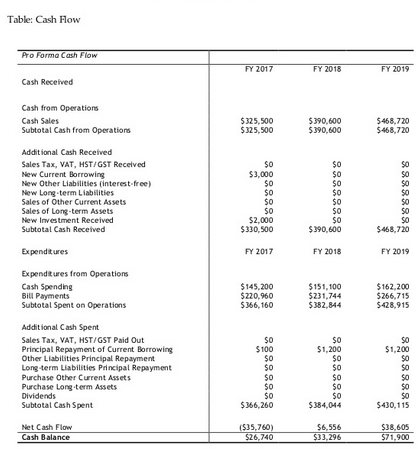
Cash flow is the amount of money being transferred into and out of a business. It’s usually calculated and presented on a budget sheet that identifies a company’s inflow and expenditures.

[Source]

A healthy cash flow is positive— more money is flowing into the business than flowing out of it. When a business generates more cash than it spends, it can grow its net cash flow over time and use that surplus to scale its operations.

Cash flow doesn’t paint the entire financial picture of a business. You also have to assess a company’s debt, profitability, and other factors to understand whether they’re financially secure. As a part of this financial evaluation, positive cash flow is a strong indicator of a healthy business.

How Inventory Affects Your Cash Flow

The cash flow cycle depends on your inventory. You spend the cash you have to buy your supply, and that inventory turns back into cash when it sells.

Consequently, your cash flow is easily reduced by poor inventory management. Specifically, issues with stocking your supply and customer orders can lead to fewer sales which hurts your cash flow.

Stocking your supply

A poor understanding of your inventory leads to miscalculating your supply. You haven’t properly tracked how often you sell your inventory, so you don’t know how many products you need to stock.

With a supply that’s too high, your cash flow is hurt by increasing expenditures. Your cost of goods goes up because you are buying and storing more inventory. At the same time, the demand for your goods isn’t high enough to satisfy the supply amount you’ve purchased.

For example, let’s say you buy thirty t-shirts at $10 a piece for $300. You want to sell each at $20, but there’s only enough demand to sell ten t-shirts. You invested too much in your inventory, and you lose $100.

With a supply that’s too low, your cash flow is hurt by decreasing revenue. If you only have a small amount of supply to sell, you only generate a small amount of revenue.

Let’s say you buy six t-shirts to sell. You manage to sell your entire supply, but you missed out on a larger profit by failing to meet the demand for ten t-shirts.
Without properly tracking your inventory, you don’t know how much of your products will sell or how much to stock. Your cash flow is reduced by spending either too much on inventory or earning too little from sales.

order issues hurt cash flow

Poor inventory management can also lead to order issues and customer dissatisfaction that hurt your cash flow.

Failing to track your inventory means you’re not consistently updating your supply. Without an accurate picture of your inventory, it’s easy to process an order that you can’t actually fill. Once you realize that you have less products than you expected, you can either:

  1. Delay shipping and delivery of the order
  2. Cancel the order

Both scenarios will leave the customer unhappy. If you continue to provide poor service due to poor inventory management, customers are going to lose trust in your business and stop purchasing from you. With this drop in sales, your cash flow will suffer.

[Source]

Your inventory management makes or breaks your cash flow. Sloppy management leads to problems that increase your expenditures or lower your inflow. Likewise, maximizing the performance of your inventory with better management leads to a strong, positive cash flow.

Inventory Tips to Improve Your Cash Flow

Boosting your cash flow with inventory management boils down to planning ahead. Establishing systems and habits for tracking your inventory flow allows you to predict the flow of your cash and avoid future mistakes that could hurt your cash flow. Stay organized, and your cash flow will remain healthy.

To get started, here are a few inventory management tips.

Track Your Inventory Flow

This first piece of advice is obvious, but the most critical. You need to meticulously record the:

  • Quantity of products you’re ordering
  • Quantity of products you’re selling

Tracking the amount of inventory you’re ordering and selling allows you to determine whether you’re overstocking or understocking. By comparing the inflow and outflow of your products, you know exactly how many products to order and satisfy customer demand.

Record your inventory flow regularly so you can measure any seasonal changes. Map out this flow on a calendar to visually understand how it fluctuates over time. Adjust your supply orders to accommodate demand increases or decreases at certain points in the year.

By consistently tracking your inventory flow, your supply orders will match the amount of inventory you’re selling. You earn a maximum amount of revenue by always meeting demand and cash isn’t tied up in extra supply. The result? Your cash flow stays positive and strong.

Understand and Improve Your Order Issues

Order issues leave customers unhappy and less willing to purchase more products — but they’re also avoidable.

Understanding past order problems allow you to identify what went wrong with your inventory management and caused the issues. Knowing the root problem, you can make a plan to adjust your inventory management. Avoiding these order issues in the future will keep your customers happy and your cash flow healthy.

Follow these steps to figure out your past inventory mistakes:

1. Track the order problems that have already happened. Make a list of:

  • Orders that didn’t get filled/were canceled
  • Orders that didn’t arrive on time
  • Orders with long turnaround times

2. Think back and note what led to these issues. Did you not have enough inventory in stock? Did you forget to update your inventory after past orders? Some issues may have been caused by factors outside of your inventory management, such as problems with a shipping carrier or a customer’s method of payment.

3. Make a plan to avoid what went wrong in the future. List out the ways your inventory management caused order problems, and identify what you can change in your practices as a seller to avoid these issues in the future.

4. Consider using an order fulfillment system. If you continue to have trouble processing and delivering orders correctly, you may want to consider using an order fulfillment system. Programs like Fulfillment by Amazon and Deliverr store your inventory and pack, ship, and provide customer service for your products.

[Source]

By using a fulfillment service, you don’t have to worry about order and delivery issues. You can focus on other areas of your business and rest well knowing your products are in good hands.

Backtracking and planning with these steps make it easy to avoid order issues in the future. By planning for future order mistakes, your customers stay happy and continue to make purchases that keep your cash flow healthy and positive.

Get Smaller Inventory Orders Frequently

Infrequently ordering large amounts of supply tends to tie up your cash in inventory. Sitting on a large amount of product that sells slowly over time means you’re waiting all that time to recoup your inventory dollars. Not great!

On the other hand, smaller and frequent inventory orders encourage greater cash flow because:

  • You’re able to quickly sell the inventory you purchased since you only bought a small amount. Instead of tying up cash, the money you spent to buy your small amount of products is recouped quicker.
  • You have flexibility in choosing your supply. When demand takes a surprising shift, you don’t want a large stockpile of inventory that’s outdated and won’t sell. Small, frequent supply orders give you the room to adjust your inventory if demand changes.
  • Fresh merchandise is more attractive. There’s a reason why almost every online store has a “New Items” or “Just Added” section. Buyers want what they don’t have, so they’re eager to buy new products. Small, frequent inventory orders make it possible to change your supply to include new products.

Switching to small, frequent inventory orders is tricky if you rely on bulk supply deals to make a profit. If you normally receive discounted large orders, try to negotiate with your supplier to reach a reasonable price on smaller, frequent orders. Even if the switch costs slightly more, ordering less inventory more frequently pays off by increasing your cash flow.

Improve Your Cash Flow With Inventory Software

You can make serious improvements to your inventory management and cash flow using the strategies in this guide alone. That said, making these adjustments takes a lot of work. With so many factors to track, it’s easy to get overwhelmed.

That’s why we recommend using an inventory management software like Sellbrite. Our software automatically updates your inventory every time an order is placed, so you avoid understocking. No matter how many channels you sell on, our system keeps your inventory organized.

By tracking how supply flows in and out of your business, an inventory management software makes it easy to map out your company’s cash flow.

Manage Your Inventory to Manage Your Cash Flow

As an online seller, you should never be surprised by your cash flow. Understanding the inflows and expenditures your business receives allows you to prepare for the future and adjust your budget to reach positive cash flow. This surplus makes it possible for you to grow and scale your business for long-term success.

Gaining this level of control over your cash flow can’t be done without excellent inventory management. Your supply is at the heart of the cash flow cycle. You spend money to buy inventory. You sell inventory to earn money. Meticulously track and manage your inventory flow, and you’ll have a firm grasp on your cash flow.

16 Feb 17:25

Account-Based Selling: 5 Things You’re Doing Wrong

by jeff@mjhoffman.com (Jeff Hoffman)

Account-based sales (ABS) is one of the year’s most buzzed-about buzzwords. You’re reading about its many merits, your boss is referring to it in meetings, and you might already be implementing it in your sales strategy.

But account-based selling can be an expensive, time-consuming business. So, before you go all in on ABS, make sure you’re taking the right approach, getting buy-in from your executives, and avoiding these common mistakes.

5 Common Mistakes in Account-Based Sales

1. You don’t have an existing prospect relationship

Some experts believe account-based selling can be used on new prospects, while others feel it should be reserved for existing clients. I fall into the latter school of thought.

I don’t think you can formulate a successful account-based strategy unless you have a strong relationship with the company already. Think about it. When you’re making an account-based sale, you’re likely tailoring your offer, and maybe even your product/service, to the unique needs of a single business.

To do this well, you need to understand the company’s structure, goals, priorities, and pain points even better than the people who work there. That understanding requires trust between the buyer and vendor -- the kind of relationship that usually only happens after a sale.

You might have sold an integration to this customer or signed them up for a free baseline account with your company, but they should have a contract with you before you embark on an account-based approach.

2. You’re not multithreading your opportunity

When you take an account-based approach to sales, you should be having many conversations concurrently. In other words, you know you’re running a successful ABS strategy when you’re constantly overwhelmed.

In traditional sales, you build a relationship with your champion and ask them to connect you with the right people at the right time. That leads to many consecutive conversations. In account-based sales, it’s important to have these conversations on an ongoing cadence, simultaneously.

Because ABS deals are usually asking for more money from bigger, more complex companies, they’re often accompanied by longer sales cycles.

That means it’s important to remain at the top of your champions’ minds throughout the duration of the sales process. You can’t do that with a consecutive approach to communication. It might take you several months to get to some key stakeholders.

Instead, have ongoing conversations with each department champion. Understand their shifting priorities, budgets, and pain points so that you’re always on their radar and the first to offer solutions to their evolving needs.

3. You don’t know your anti-champion

Your champions should be easy to identify. But do you know who’s advocating for your competitors? Speaking concurrently with champions in every part of the business should make it easier to find out.

Ask each of your champions, “Who are the other vendors your department is working with?” “Is everyone on your team happy with the level of service they’re receiving from these vendors?” “Are there people in your department who have good relationships with these vendors?

The answers to these questions will tell you who to win over internally, who’s not worth your time, and which vendors you’re competing against.

4. You don’t understand company structure

Account-based selling strategies primarily target large companies with the budgets required to facilitate these types of deal. And large companies likely mean multiple departments with various budgets, stakeholders, and decision makers. To be successful, you need to have a deep understanding of how their company works.

Start by creating an organizational chart, and use it as your North Star throughout the sales process. Ask champions in each department to fill in the details, and build your outreach strategy around their intelligence. Have nothing but champions in the marketing department?

Maintain regular communication with them, but focus your outreach efforts elsewhere -- perhaps the design team and their three anti-champions.

You should also understand how budgets are set. Are requests processed quarterly or annually? Which departments get the largest budgets? Once you find out how the budgets work, you know who and how you need to fight for the money.

Finally, learn which departments are supported by procurement and legal. The larger the deal, the less precedent there will be. So, knowing whose signature you need and when you need it can be a huge help to your champions as you move toward the close.

5. You’re not calendar savvy

Pay close attention to your prospect’s marketing event calendar and hiring roadmap. Each will provide valuable insight into company priorities for the year and when they’re focusing on each.

Don’t ask broad questions like, “What marketing events are you planning for the year?” or “What do you think the hiring priorities are this year?” Instead, ask, “Who should I contact in your HR department to discuss hiring priorities for the year?” or “I’d like to better understand your marketing priorities this year. Will you connect me with the appropriate person?

Getting a calendar or roadmap for marketing events and hiring goals allows you to tailor a strategic sales approach. And, sometimes, the right timing is all you need to seal the deal.

Account-based selling can bring in impressive revenue, attract highly qualified, low-churn customers, and earn you handsome commission checks. Just make sure you’re taking a direct, purposeful, and strategic approach.

And don’t forget to ensure your executives understand the difference in time and resources it takes to close account-based deals. Alignment there will be key to success.

HubSpot Free Sales Training

16 Feb 17:25

How Content Marketing Can Help Your Sales Team Close the Deal

by Roman Kniahynyckyj

With its ability to educate, inform, entertain and otherwise engage audiences, content marketing is a brilliant way for marketers to stir up interest and attract quality leads. And its uses don’t stop there. While content marketing may typically be associated with the marketing department, it can be equally beneficial on the sales end of the spectrum.

rawpixel / Pixabay

With the right sales and marketing alignment, your content can be powerful enough to help your sales representatives do everything from showcasing their expertise to closing the deal. Here are five ways content can contribute to the success of your sales team.

1. Position Sales Reps as Thought Leaders

Not many people are breaking down doors to talk to a sales rep pitching a product. But tons are interested in talking to a thought leader who can help them pinpoint a solution to their problems. LinkedIn research found a hefty 92% of buyers are more than eager to engage if a professional is known as a thought leader within an industry.

Positioning sales reps as thought leaders involves providing them with content that exhibits their expertise. Make sure your sales reps have accounts on LinkedIn and other relevant social media channels where they can publish posts, answer questions, join groups and discussions, and share their knowledge. The key here is to engage, not promote.

2. Establish and Maintain Digital Relationships with Leads

More and more sales teams are staying in the office instead of heading out on the field. That means it’s crucial for reps to establish and maintain digital relationships with their leads, something that can again be achieved with content.

Your content marketing setup is likely to already include lead nurturing campaigns that get blasted to the masses. Have reps create and manage their own email list of leads with which they can engage on a more personal level. Reps can send blog posts, white papers, e-books and other content that provides specific information and solutions based on a prospect’s needs.

Not only can this tactic reinforce your sales reps’ expertise in the industry, but it also keeps them top of mind. Again, the content should aim to inform and engage without attempting to sell.

3. Build Trust, Credibility and Emotional Connections

The content your sales team shares with leads serves to build trust, credibility and, perhaps most importantly, emotional connections. The more personalized and relevant the content, the more likely prospects are to realize the rep is truly in tune with their business.

Providing educational and useful content also helps to connect with a lead’s emotions, which is vital for making a sale. As much as we’d like to believe rational thought guides our purchasing decisions, they are actually made with the area of the brain that controls emotions.

Helping people feel knowledgeable and empowered with the content your rep shares can go a long way toward closing the deal.

4. Showcase the Benefits

Leads may review list after list of a product’s features and not bat an eye. But if you instead showcase the benefits a product can bring, you’re suddenly apt to have their full attention. Content that keeps the focus on the benefits, or what’s in it for the customer, enables your sales rep to target and provide solutions for specific pain points.

Benefits can be highlighted with content marketing pieces that include things like case studies, sales sheets, blog posts, infographics and slide decks that clearly illustrate the value of what you’re offering. Demonstrating how your product or service can save time, increase productivity and otherwise enhance the workplace does double duty of fortifying the emotional connection.

5. Help Prospects Sell it to Their Bosses

Most purchasing decisions aren’t made by a single person but an entire committee. That means even if the lead is sold on the idea, he or she has to turn around and sell it managers, department heads, finance execs and bosses.

Content can step in again here, providing hard numbers and data that show how your solution is a worthwhile investment for solving the prospect’s problems. Infographics are ideal for providing easy-to-digest statistics. Sales reps can also use case studies, videos, slide decks and additional data-driven content that answers questions, overcomes objections, and alleviates pain points.

Sales and marketing alignment is integral for creating all this juicy content, and getting the two departments together for regular meetings makes for a great start. Use the sessions for brainstorming and planning content your sales reps can then use to demonstrate their expertise, strengthen relationships, outline benefits and firmly close the sale.

15 Feb 17:24

How to Productively Work from Home Even If You’re Not a Morning Person

by Taylor Gordon

Self-awareness is important. One fact that I’ve come to terms with about myself is that I’m not a morning person. I love staying up until very late at night. But for some reason, late at night is not when I’m most creative or productive. The earlier I can get into the working groove, the more productive I am during the day. If you’re also not a morning person, here are some tactics that I use to get the most of my mornings:

Schedule Afternoon Appointments

Working from home means that you’re only accountable to yourself. Getting out of bed and showing up each morning can be difficult for even the most responsible workers. I’ve found that setting up afternoon appointments is a huge way to overcome late starts in the morning.

Having afternoon conference calls and in-person meetings with clients or partners gives you a reason to stop pressing the snooze button. It pushes you to cross to-dos off your list in the morning before you have appointments. Procrastination tends to happen when you feel there is unlimited time to do what you need to do.

Don’t Rely on Your Biological Clock

I used to wake up whenever my body wanted to at first when I started working from home. This is a mistake until your body gets comfortable with a routine. Working from home is still working. Doing so without a plan can lead to disorganization and a lack of productivity.

Set the alarm in the morning until you fall into a workflow where you wake up at a reasonable time on your own. Also, take a shower and get dressed like it’s a regular workday at a corporate job. Working in your pajamas is cool in theory, but it can make you feel a little bit too comfortable.

Find a Place to Work Other Than Your Bed

Have you ever woke up early and put hours of “work” in, but realized that you haven’t had much actual work output? I can relate. Try harder to separate your workspace from your sleeping space when this happens. Your bed and couch are for relaxing and sleeping.

When you’re working from bed, it’s easy to get distracted by things that you do when preparing for sleep like watching Netflix, scanning horoscopes, or checking Facebook.

If you don’t have a dedicated office, work from your kitchen table, head out to a coffee shop, or sign up for a co-working space. Get access to the clubroom or computer room if you live in an apartment or condo complex. Setting boundaries can also help with work-life balance.

Test and Retest Routines Until Something Sticks

Listen to your body and understand your patterns. What does it take for you to wake up in the morning earlier? Do you need to fall asleep at a reasonable hour? Do you need to wake up, drink coffee, and meditate for at least an hour to fully wake up before doing work?

For me, waking up, drinking tea, listening to an inspirational podcast or video, and then taking a walk outside helps me wake up fully so I can be productive during the day. Figure out what works best for you and rock with it.

Final Word

Adjusting into working from home can be difficult if you’re not a morning person. You may have been excited to work from home because you can technically sleep in all day. Be careful here. A lot of quality work can get done in the morning. Many successful people have morning routines that start quite early as well.

I’m a fellow non-morning person so I understand the struggle. Don’t be too hard on yourself. Work on making small adjustments so you can begin to use your morning hours wisely.

15 Feb 17:23

SpaceX may have just launched an 'Apollo moment' for the space industry — here's how

by Dave Mosher

Falcon heavy launch spacex

  • SpaceX launched the world's most powerful operational rocket, called Falcon Heavy, on February 6.
  • The company recovered two of the rocket's three reusable boosters and launched founder Elon Musk's red Tesla Roadster toward Mars orbit.
  • A former Pentagon official said the successful launch "ranks up there with the first Apollo mission."
  • Falcon Heavy could take business away from SpaceX's biggest current competitor, United Launch Alliance.


On February 6, SpaceX launched Falcon Heavy, the most powerful operational rocket system in the world.

The 230-foot-tall, three-booster launcher sent a red Tesla Roadster owned by company founder Elon Musk toward Mars orbit with a spacesuit-clad dummy in the driver's seat.

Musk is the first to admit that an electric car drifting through space is silly. But what Falcon Heavy's successful launch may mean for the future of spaceflight is anything but a joke.

"It ranks up there with the first Apollo mission. This is a pretty amazing thing," John Young, a SpaceX consultant and advisory board member, told Business Insider at Cape Canaveral, Florida, hours before the launch.

spacex falcon heavy rocket launch florida american us flag dave mosher business insiderYoung is a former Pentagon undersecretary who was in charge of buying launches and other equipment and services for the Department of Defense. He said Falcon Heavy could majorly disrupt the launch industry because it can lift nearly three times as much payload as the next-best rocket today, yet for about 25% of the cost.

"I think Falcon Heavy and its cost is going to reopen the door to larger satellites with more capability," Young said, adding that he also expects the launch to impact a lot of young people who watched the event live.

"That's why I'm willing to use a word like Apollo," he said. "That inspired a whole generation to go into science, and engineering, and aerospace, and I think today's event is going to inspire another group of people."

John Logsdon, a space policy expert, author, and spaceflight historian at George Washington University's Space Policy Institute, agreed that the Falcon Heavy launch represents a major moment in spaceflight history.

"The fact that SpaceX, on its own resources, was able to design, develop, and test this thing I think revives a sort of spirit of exploration — that the private sector really is doing some remarkable things," Logsdon told Business Insider.

What a Falcon Heavy rocket costs and what it can do

starman spacesuit tesla roadster car earth space last image elon musk spacex instagram

During a press conference after the launch, Musk said he spent about $500 million developing Falcon Heavy.

"We tried to cancel the Falcon Heavy program three times at SpaceX. Because it was like, 'man, this is way harder than we thought,'" Musk told reporters.

Now that SpaceX has proven Falcon Heavy works, it can launch the rocket in a few modes. When all three boosters can be recovered (fully reusable mode), a launch costs $90 million. If all three boosters are ditched in the ocean (fully expendable mode) a mission costs $150 million, according to Musk.

These prices may sound horrendously expensive, but relative to the rest of the launch industry, Young said it's "game-changing."

"As a DoD acquisition official, my fundamental mandate was to save money," Young said. "There's nothing more exciting to me than the opportunity for both competition and saving money."

The bargain becomes apparent when looking at what Falcon Heavy can launch: about 70 tons into low-Earth orbit, a space some 250 miles above the planet where many satellites reside.

That mass is roughly equivalent to 50 Tesla Roadsters, 15% of the football-field-size International Space Station, or 10 very large African bush elephants.

Practically, this could mean Falcon Heavy can deploy very large scientific payloads, telecommunications satellites, spy satellites, or possibly hundreds of smaller satellites in one go — perhaps even many or most of the thousands of broadband internet satellites SpaceX hopes to get permission from the Federal Communications Commission to send up in the coming years.

How Falcon Heavy compares to other rockets

delta 4 iv heavy united launch alliance usaf joe davila wikipedia

The capabilities of Falcon Heavy for its price stand out starkly aside the next-best launch systems.

For example, each NASA space shuttle could carry about 27 tons as its payload — about 40% of a Falcon Heavy's capacity. Yet including development costs, NASA spent an average of more than $1.7 billion (in 2017 dollars) per space shuttle launch, and the final mission launched in July 2011.

Today, the government uses Delta IV Heavy rockets to launch the heaviest payloads, such as spy satellites, into orbit. Those rockets are made by United Launch Alliance — a joint company formed by Boeing and Lockheed Martin in 2005, and SpaceX's biggest rival. (SpaceX sued to stop the merger, yet failed.)

A Delta IV Heavy is the only other comparable launcher to Falcon Heavy. It can lift an impressive 32 tons to low-Earth orbit, but that's still less than half the capacity of a Falcon Heavy — and it costs a lot more.

Young claimed that each Delta IV Heavy launch costs "over $400 million," a number based in part on historic prices and a recent US Air Force budgeting document (which suggests that may be the case again by 2020). Young also said the price might climb to as much as $900 million or $1 billion per launch in coming years as ULA retires smaller rockets and shrinks the number of launch options in the market.

But Tory Bruno, the CEO of ULA, told Business Insider that he "doesn't know where this $900 million to $1 billion stuff came from." He said the cost per Delta IV Heavy launch has actually fallen to about $350 million, and confirmed the price won't budge much if at all in the near future.

Either way, SpaceX's $90 million-$150 million price per Falcon Heavy flight is significantly less expensive, even if tens of millions of dollars get added to SpaceX's price for top-secret payloads (to cover what Bruno calls the "unique requirements" surrounding preparations for national security launches).

Young compared the Delta IV Heavy to a Lamborghini and the Falcon 9 to a Honda Accord.

"[SpaceX is] bringing a great, affordable, reliable launcher to the table in Falcon 9, and I think Falcon Heavy's going to be the Acura TL version of that," he added. "That Lamborghini launcher is going to cost about, right now the math says, four to ten times what that Acura or Honda Accord launcher's going to cost."

Bruno said ULA will launch two Delta IV Heavy rockets this year, then launch one "every couple of years" until the early 2020s before retiring the system. To replace it, ULA is developing a rocket called Vulcan: a partly reusable, roughly $100-million-per-launch system that will carry more mass than Delta IV Heavy.

Cornering a revived market — and launching a new one

blue origin orbital rocket plans

Bruno said ULA's upcoming Vulcan rocket will offer capabilities for deep-space payloads that SpaceX's rockets don't yet have. One problem Musk himself has noted is that the kerosene fuel in Falcon Heavy's upper-stage rocket can freeze after several hours. This concern that threatened the journey of Musk's red Tesla Roadster to Mars orbit, though it ultimately didn't manifest.

ULA's rockets instead use cryogenic liquid oxygen and hydrogen in their upper stage, avoiding the risk of frozen fuel. Bruno says this lowers the risk of failure for deep-space missions.

"There's a difference in capability between these two platforms... Sometimes it's more than just, 'Hey my rocket's really big,'" Bruno said. "Sometimes you need the rocket to do some rather unique and exotic things after they're up in orbit."

But the Vulcan may not be fully realized until the mid-2020s, and Musk said in 2013 that he hopes to develop a cryogenic upper stage for Falcon Heavy.

"I will seriously eat my hat with a side of mustard if that rocket flies a national security spacecraft before 2023," Musk tweeted on Monday, referring to Vulcan.

Another up-and-coming competitor to SpaceX is Blue Origin, an aerospace company founded by Jeff Bezos of Amazon fame.

Blue Origin is working on its own relatively affordable heavy-lift rocket system, called New Glenn. That rocket is expected to launch on a fully reusable booster, as is Bezos' smaller New Shepard rocket system for space tourists. The company is currently very secretive about its progress — Blue Origin declined Business Insider's request to look inside its new 750,000-square-foot rocket factory in Cape Canaveral, Florida.

In all likelihood, New Glenn may not debut for several more years either. That may give SpaceX additional time to corner more of the US commercial satellite market, which Young says the company rescued with the inception of its smaller, reusable, and relatively inexpensive Falcon 9 rocket.

spacex falcon heavy launch florida dave mosher business insider 42

"In 2010, 2011, and 2012, no commercial payloads flew on US launchers. They all flew on French, Chinese, and Russian launchers. In 2018, almost 70% of the commercial payloads are going to fly on US launchers," Young said, referring mostly to Falcon 9 rockets. "SpaceX, self-investing, has completely recovered the space industry for the US. That's jobs, that's the economy."

With Falcon Heavy's debut, Young said that door is swinging open farther and giving NASA, the military, and companies a new inexpensive way to send heavier satellites into orbit or to other worlds.

"SpaceX rockets are significantly lower than anybody in the marketplace. It's been said in the press, by the Chinese, that they are not sure they can compete with SpaceX's price points," Young said. "That's amazing, and that gives me hope the US is going to own the launch market for the next 20-plus years."

SEE ALSO: I watched SpaceX's Falcon Heavy rocket thunder into space for the first time — here's what it was like on the ground

DON'T MISS: Elon Musk: 'We want a new space race — space races are exciting'

Join the conversation about this story »

NOW WATCH: Watch SpaceX launch a Tesla Roadster to Mars on the Falcon Heavy rocket — and why it matters

15 Feb 17:22

12 Branding Tools to Set Your Company Apart

by George Beall

Your brand is more than just marketing; it expresses who you are to consumers and potential customers. It is your brand that your customer base interacts with, and your brand is one of the things that will help your business find success. Branding being so important, it should be one of your main focuses. Luckily, there are a lot of tools available to help you build your brand and set your company apart.

Packlane – With customers like Red Bull, 99designs, Shopify, Google, and many others, you can see the power of Packlane in action. Packlane lets you create your own custom packaging for products, which makes your brand visual and excites customers. Wouldn’t you prefer getting a branded box over a plain, brown shipping container?

You can design packaging that can suit any product, no matter the size, and feel confident knowing that the quality will be top-notch. Choose from a mailer box, folding carton, or shipping box, then start customizing everything from adding images or artwork to using your unique font and color scheme.

Deluxe Logo Maker – Your logo is extremely important and represents who you are and what you do all in one little graphic. It might seem like it’s not a big deal, but your logo is a major part of your branding. With Deluxe’s Logo Maker, you can design your own logo in a matter of minutes.

You simply choose from high-quality, industry-specific logo templates, then use the designer to make it your own. Once it’s all said and done, you’ll have an attractive, high-quality logo that perfectly represents your brand. And if you need help anywhere along the way, you can always work with one of their designers as well.

Canva – When it comes to your brand, appearances matter. Canva is a tool that ensures everything you put out there is beautiful and represents you perfectly. Canva helps with photo editing, choosing color palettes, and coming up with font combinations so that everything is cohesive and has a strong aesthetic.

ShopifyShopify is an ecommerce platform you can use to build the perfect website. Your website gives customers their first impression of you and your business, so it’s important it’s perfect. There are pricing plans to fit every budget, but you can get started with a free trial. With built-in options that let you sell with an online store, through Amazon, or on a Facebook shop, Shopify is one of the best website tools for any ecommerce business.

A Blog – There are a lot of different blogging platforms out there you can choose from, but most website builders give you the option of having an on-site blog. Whatever platform you choose, having a blog is an important part of branding. Not only does a blog let you educate and inform customers and potential customers about your product(s), it lets you portray the personality you want your business to have.

ReleaseWire – PR and image are an important part of your brand. If you have a poor public image, people will probably avoid you. One great way to get publicity (and make sure it’s good publicity) on your terms is through press releases. ReleaseWire is a press release site that helps you publish news and updates about your company onto the platforms where it should be. Not only does it help you get good press, but it also helps you expand your audience and gain more recognition.

VistaprintVistaprint is a site where you can print all sorts of different materials, but one of their main focuses is business cards. Having custom, branded business cards is important in order to build your brand. Rather than telling someone your website or email address and hoping they remember, you can hand them a card that gives them the information that they need and a visual representation of your company so that it lasts longer in their mind.

Meetup – If you’ve ever been frustrated with your lack of connections or wanted to find someone who could help you get a project underway, then Meetup is the place to do that. Meetup is a platform that connects people, whether for social or professional reasons. Not only can you expand your network, but you can also set up your own Meetup to give people a better understanding of your brand and what you do by speaking at events or hosting an open house.

Google Alerts – Whether you want to track trending topics, industry news, or new releases from your competitor, Google Alerts is the perfect tool. By keeping up on what’s happening and watching industry trends, you can prepare ahead of time for things to come and make sure you keep up with the latest tech, companies that are revolutionizing your industry, and the like.

Social Media – The majority of people are on social media these days, which means it’s not just a great place to keep up with family and friends, it’s a place to build your brand, too. Using social media platforms like Facebook and Instagram, you can show your client base what it is you’re working on and keep them up-to-date on any changes or promotions you’re running. Plus, you can use social media to interact with and engage your customer base, helping you to establish your brand and create customer trust and loyalty.

BrandYourself – When it comes to building your brand, knowing what people are saying about you is important. If you only know about the good feedback, how will you ever address the bad? BrandYourself is a tool that lets you see your online reputation and get an idea of what consumers’ opinions of you are. Once you know where you need to improve, you can use BrandYourself to fix unwanted Google results, clean up your social media, and improve your brand presence and reputation.

Answer the PublicAnswer the Public is a free program you can use for keyword research and to get consumer insights. You can use it to find out what people are searching for or have questions about, so you can create content that addresses their thoughts and concerns. You can also use it to help plan your next move or product, since knowing what it is the people want can help you improve your brand reputation.

Since 2018 is still just getting started, why not make it a goal to improve your branding by the end of the year and set yourself apart? What is the first thing you’re going to do to achieve that goal?

15 Feb 17:22

JPMORGAN: Cryptos face a major hurdle even if they become widely accepted as money

by Frank Chaparro

A wall of miners, seen at the cryptocurrency farming operation, Bitfarms, in Farnham, Quebec, Canada, February 2, 2018. REUTERS/Christinne Muschi

  • Cryptocurrencies don't stand a chance at usurping national currencies, according to JPMorgan. 
  • That's because they fail to meet the major criteria of a currency. 
  • Even if they did, the network effect of major currencies is too strong. 


You might have heard this before. 

Cryptocurrencies are a bad store of value and a bad unit of account. As such, they're a bad form of money. 

JPMorgan made that case in a wide-ranging note on cryptocurrencies sent out to clients on Friday. While the bank said it may make sense for some investors to include digital currencies in their portfolios as a hedge, it doesn't view any cryptocurrency as a "legitimate competitor" to sovereign currencies. 

"The huge volatility of the price of cryptocurrencies-with respect to either traditional currencies or to a basket of goods and services-has made use of cryptocurrencies as a unit of account impractical," the bank said. "Only hobbyists are using cryptocurrencies as a medium of exchange, at least for conventional transactions for goods and services." 

This point has been made by some of the most notable Wall Streeters, including Bridgewater's Ray Dalio and OakTree Capital's Howard Marks. But JPMorgan goes one step further. The bank notes that even if a cryptocurrency were to meet the criteria of a currency, it still would have a very difficult time giving a national currency a run for its money because of the network effect of fiat. Here's the bank's reasoning (emphasis their own):

"At any rate, even a hypothetically stable-value cryptocurrency is unlikely to compete with the dollar for transactions in goods and services, in say, Chicago, or to compete with the euro in Stuttgart. Economists have long viewed successful, i.e. relatively price-stable, currencies as natural monopolies in a given geographic area. This particular natural monopoly arises as a result of the inherent network externalities: pricing a New York meal in yen makes little sense as almost all customers will be holding dollars."

The only area where cryptocurrencies could compete with national currencies as a medium of exchange, according to the bank, is in the black market. 

The bank's argument echoes that of its chief executive Jamie Dimon, who in September 2017 famously called bitcoin "a fraud." The billionaire banker, who has since stepped away from those comments, also once said bitcoin is only useful for criminals and "a kind of novelty."

SEE ALSO: JPMORGAN: Bitcoin miners are in a 'hash rate arms race'

Join the conversation about this story »

NOW WATCH: Here's why the recent stock market sell-off could save us from a repeat of "Black Monday"

15 Feb 17:21

Show Some Love to Your Affiliates: 5 Tips for Effective Affiliate Relationship Management

by Chris Stocker

With today being Valentine’s Day, we must remember to show our affiliates some love!

Any successful affiliate program must include include proper relationship management. As a merchant, or affiliate management agency, one of your goals is to have as many publishers promoting your products as possible. For that to happen, you must have an on-going relationship with those publishers. The “Welcome to Our Program” approval email is not enough.

Here are a few ways to show some love to your affiliates.

Get To Know Them

Almost every publisher is going to have a Facebook, Twitter and/or Instagram, so click on over from their website to their social media profiles. Spend a few minutes getting to know them to find out what they post about. You may seem pictures of them always wearing a baseball cap with the same team, or they are tweeting about their favorite Netflix show. Make note of this in your affiliate relationship management tool. At the most basic level, I recommend having a spreadsheet with all affiliates that includes a notes section.

On your next email to follow up with them to either get them to place links to an upcoming sale or promotion, simply mention that you saw they were a huge fan of that big Netflix show that just announced a new season and how exciting that is. Small things like this will go a long way in building the lasting relationship needed for a successful affiliate program.

Giveaways

Giveaways are always a great way to incentivize affiliates, as well as to just simply show your appreciation for them promoting your affiliate program. One simple way to do a giveaway is to send out an affiliate newsletter outlining the giveaway rules. For example, any affiliate who has an active link placed on their site in the month of February will be eligible for the free gift card.

This accomplishes two goals. First, it helps to incentivize inactive affiliates to log in, grab an html code and place a link on their site. Just for doing that, they know they are eligible to win something. Secondly, this lets all affiliates show that you are appreciative of the work and effort it takes as an affiliate to promote a merchant’s program successfully.

Both of these are crucial to any long standing affiliate relationship.

Competitions

The idea of using competitions to show some love to your affiliates is very similar to the giveaway concept I just mentioned, however, this will require sales to be driven, as opposed to just a link placed. Here’s an example. Send out an affiliate newsletter that states the rules of the affiliate competition, which are, whichever affiliate has the highest sales dollar amount in the the month of February will win an Apple Watch. Now, your prize can be something of much less value, but a high value item will also drive the most competition.

The goal with this competition is not just show your affiliate some love and appreciation, but with a prize of such a higher value, you are going to motivate more content publishers to write reviews, place more links and share more on social media. In most cases, those reviews on a website or Facebook posts are going to live on, even after the competition is over. Most affiliates will not go back and take down a blog post that contains links, so now your short-term competition has lead to evergreen content.

Frequent and Prompt Communication

It is absolutely important, for any healthy relationship, to have clear communication. Not only clear, but frequent and prompt communication. Affiliates will tend to live on one side of the communication spectrum, they either love to hear from affiliate managers with new promotions, tips, deals, etc or they absolutely hate seeing an email from an affiliate manager. Until you are asked to stop communicating with them, side with the “we love communication” end.

When an affiliate reaches out with an email about a specific banner size or promotion idea, do not push them off and not answer right away. They may have been in the middle of a brainstorming process for their content calendar and by your lack of communication and response they may have already filled in that spot with a different promotion.

For this same reason, it is important to have frequent communication and stay in the front of the mind of content publishers. They are either looking to fill their content schedule or may even be in a creator’s block and your email with a new promotion can help boost them out of it.

As an affiliate, it is a great feeling to see a quick response from an affiliate manager. Once again, doing the simple things go a long way in building that all important affiliate relationship.

A Simple “Hello, How can I help?”

One question that can help take an affiliate relationship to the next level is simply, “hello, how can I help?” A short, concise, simple question like that shows an affiliate that you care. Why might they need help? Well, they may not be getting a lot of clicks on their links because they are not prominently placed on their site, or they are not focusing on the correct demographics. Whatever the issues may be, simply asking them how you can help and providing them with a few tips or ideas to help them succeed not only shows your appreciation to them, but it will also ensure that your links and promotions are the ones being shared on their site and not a competitors during a big holiday sale.

Showing love to your affiliates is really simple and is a basic concept of affiliate relationship management. Show them love and they will show you love and support back in the form of promoting your products.

I would love to hear your thoughts and feedback. Please leave a comment below and don’t forget to share this article on social media!

The post Show Some Love to Your Affiliates: 5 Tips for Effective Affiliate Relationship Management appeared first on Affiliate Marketing Blog by Geno Prussakov.

15 Feb 17:21

How to Make Your Dream Client Want to Meet with You

by Anthony Iannarino

It is difficult for salespeople to command their prospective client’s time. This is a symptom; it is not the disease. This means that the things that you might do to alleviate the symptom are not likely a cure. The cure would have to eliminate the disease.

Using brute force to gain an appointment by banging away on someone using the telephone or email is one way to try to overcome the symptoms and gain the commitment of time. Automating those communications only moves the brute force approach to technology while the underlying illness is not addressed. Granted, this sometimes works, but don’t let that allow you to pretend that you addressed the underlying problem. It has done no such thing.

Some people recommend taking a more passive view of prospecting, and so believe that the cure is to hang around on social media, interacting and engaging with people in hopes of someone raising their hand and asking you for a meeting. Many who recommend this as the cure have no idea how much more difficult and time-consuming content marketing is when compared to more traditional approaches. They also mistakenly believe that salespeople are content creators and are permitted to post public content in the same way that a person who works for themselves. These folks think that fishing is a better approach than hunting, even though the pond is understocked and overcrowded. This, too, leaves the disease alone to fester.

To treat the disease, you must have something of greater value than the time you are asking your dream client to give you, you must have something so valuable that your dream client would literally pay you for their time, as that is what they are really doing. If your 20-minute meeting doesn’t cause your dream client to discover something about themselves, something that is worth 1,000 times more than the time they gave you, then they are right to refuse your meeting.

Look at the first eight slides in your slide deck. If your marketing firm loves it because it tells your story, you are riddled with this disease, and you should immediately seek help.

Learn more on Trading Value in The Lost Art of Closing.

The post How to Make Your Dream Client Want to Meet with You appeared first on The Sales Blog.

15 Feb 17:21

5 LinkedIn Profile Makeover Tips and Why It’s Crucial to Outreach Success

by Kevin Nelson

LinkedIn is a popular and widely used social media platform. Registered LinkedIn accounts have reached around 467 million, and it’s showing no signs of slowing down anytime soon. The vast majority of these accounts are in a rough shape. Chance are, that you could use a LinkedIn profile makeover, too.

LI can be compared to Facebook in terms of popularity. However, one thing to take note of is that they both have different objectives, hence them not competing in the same market.

LinkedIn is mainly utilized in the field of professional marketing and is the most popular channel for helping in the building of brands or even to display your skills in a certain area. Moreover, LinkedIn is widely used when you are job hunting or developing partnerships with a wide range of companies.

LinkedIn is not only critical for business use; it also plays a key role for individuals.

The simple act of crafting your profile exceptionally could be the reason why you succeed in personal development and also in discovering new opportunities in your career. For many recruiters, LinkedIn is one of their favorite places for finding both prospective candidates and clients.

If you want to make people locate your profile, you need to consider the following basic preparations:

  • Page Name: If you want your page to look like a personal brand, you have to change a random URL to a custom one. You can easily do this in the profile settings.
  • Your Name and Rank/Title: If you want LinkedIn to be used as a professional profile, you have no otherwise but to make it professional. Include the appropriate personal details like your name.
  • Add a Photo: To make your profile work for you, you have to include your real photo. Doing this will make you appear in the Recommended feed more frequently, and people will certainly visit your page.

Nonetheless, in spite of all the advantages of having a great profile, one thing to note is that it doesn’t come that easy. You have to work for the optimization (aka a LinkedIn profile makeover).

Below are 5 tips on how to do your own LinkedIn Profile Makeover.

LinkedIn Profile Makeover Tip One: Certificates and Education

LinkedIn Profile Makeover

Your experience is the most crucial thing. However, most companies like individuals who continuously work on their skills and knowledge.

If you want to showcase that you never stop with your education and often attend various seminars and workshops, you need to add this information.

If you possess any certificates, but still attended some classes, you can as well add this information. Moreover, you can indicate the number of the certificate (if it has one) as proof of possession. Since you can attach photos to your LinkedIn profile, go ahead and attach pics of your certificates.

LinkedIn Profile Makeover Tip Two: Skills Endorsement

LinkedIn Profile Makeover

Your connections can assist you to enhance your reach. All they have to do is to endorse your skills. This will show other LinkedIn users that you utilize those skills in your line of work.

If you don’t know how to get more endorsements, you may employ one of the following methods:

  • Request your connections to endorse you.
  • Start endorsing your connections also. You might get some endorsements back.

However, there are those who feel that this functionality doesn’t add value to relationships users build via LinkedIn.

LinkedIn Profile Makeover Tip Three: Work Experience

LinkedIn Profile Makeover

The first thing people will focus on your LinkedIn profile is work experience. It is the key proof of your professional expertise, one of the main requirements of recruiters, and also the most efficient way to demonstrate that you are a person devoted to your work.

This is not a resume that you send to a recruiter. However, it bears some similarities and can serve the same purpose. Include all the organizations or companies that you have worked for. Another important thing is to include details about your responsibilities, achievements, and growth within the organization.

LinkedIn Profile Makeover Tip Four: Recommendations

LinkedIn Profile Makeover

In most cases, recommendations work better than experience and connections. Still, it is not easy to get them. You can’t just ask anyone to leave a recommendation for you, as they might not know what to write about you.

If you want your profile to be solid, the best thing is to request your associates or ex-associates to write something about your achievements, work, and experience. It will even be great if your current or ex-bosses leave a recommendation for you.

Recommendations work in two ways. Firstly, they enhance your profile’s visibility. You will regularly appear in the search if you have recommendations. Secondly, most people tend to trust those recommended by others. Therefore, strive to get a recommendation even if it’s just one. It will go a long way.

LinkedIn Profile Makeover Tip Five: Contribute Content

LinkedIn Profile Makeover

If you want to portray your expertise and begin to attract people to your profile, you need to become a frequent contributor. On LinkedIn, you can create content for the feed that will be seen by your connections. This is a great way of promoting yourself in case you have enough active LinkedIn users among your connections.

Furthermore, you can add a presentation to SlideShare. This will assist you also to promote your business. All slides will be available for search in search engines like Google so that your reach will be extensive.

Moreover, another technique is to simply write posts. This is probably the most effective means of establishing contacts in some niches and show that you aren’t just an employee, but someone who possesses strong analytical and research skills. LinkedIn enables you to publish posts on different subjects. For instance, you can write about marketing, cars, international affairs, etc. You’ll be able to find your audience.

Also, your articles will be available on different search engines. Thus you’ll be able to attract those who aren’t on LinkedIn. One thing you have to remember is that writing a post isn’t the same as sharing an article.

LinkedIn, if used effectively, can assist you to build your brand, find new customers, grow your business and also search for new opportunities.

It all depends on you and how you want your page to work for you. You always have to pay attention to your page and update it regularly.

If you want to attract people to your profile continuously, you have to keep on working on it. Publish posts frequently, add articles and encourage your connections to go through them.

The Importance of LinkedIn for Outreach

Establishing a LinkedIn page is just as easy as establishing a social media one. However, it looks like it’s not being fronted by most employers or lecturers.

How important is a LinkedIn profile makeover?

Studies have shown that 98% of recruiters use LinkedIn to search for suitable candidates. If you are in college, it is crucial for you to create an account before you graduate.

It’s good to reach out to organizations and establish connections with them before you start looking for a permanent job. See if there’s the probability of landing an internship position. This gives a great impression.

Another thing to note is that you should have a professional headline.

Most people tend to forget or ignore the headline bit altogether, yet it is vital. Remember to include a background picture that is relevant to the job you’re searching for. The photo you’ll upload should be a professional one and not selfies or cropped pictures.

Professionalism is key. First impression matters. In the summary section, make use of the 2000 characters to write about why you should be hired and which organizations you might have worked for.

For the experience segment, add all your achievements, projects, and publications. Finally, in the work section, you might have done section, add PowerPoint presentations, media, links, and portfolios.

Take your time to create the ideal profile. Someone will easily know if a profile has been created in a rush. Recruiters can see who is available and an employment opportunity will probably depend upon what you have written. The use of keywords can put you ahead of your competition.

Other mistakes people make include:

  • Overusing the endorsement feature — Most people tend to do endorsements for their buddies that might not be genuine. Friends endorse one another without knowing whether their friends actually have the skills in question. Endorsements assist HR practitioners to spot the best talent worldwide and recruit them to the best payable jobs available.
  • Most times, people don’t accept requests from those whom they might have met during a meeting or even a stranger.
  • Treating LinkedIn like a dating site.
  • Exaggerating your resume — Most people like to over-boost their skills when in reality they lack most of those skills and thus end up misleading recruiters.

Additional LinkedIn Profile Makeover Pointers

Additionally, if you want to create the perfect LinkedIn message, the following are 5 elements that will assist you:

  • Personable – For instance, if your message begins with ‘Allow me to introduce myself,’ you need to stop. This kind of message is not personable, and it states the obvious. It’s impersonal. Including the ‘human’ element will increase the chances of getting a reply.
  • To the Point – Even though long messages are at times necessary, whenever it’s a cold outreach you need to ask yourself how comes you have a lot to say to someone you don’t know yet. Strive to write one paragraph (a paragraph here is defined as 5 sentences). Doing this will make you come across as clear and straight to the point, thus leading to a better conversation.
  • Connection First – If you possess LinkedIn premium, then you have some Inmail credits to utilize to send messages to those who are not your connections. If you have connections or perhaps you are in the same group, proceed to connect with that person.
  • Common Ground – Take your time to go through someone’s profile. You might discover that you’ve probably schooled together or even you’re from the same locale. Use these to your advantage.
  • Specifics – Strive to incorporate certain call-to-actions at the end of your messages. The call-to-action indicates a specific time to do a certain task. It will keep you accountable and your connection will feel a sense of urgency to respond.

Conclusion

Are you already on LinkedIn? Take note of the hints outlined in this article to enable you to reap maximum benefits from this platform. If you’re not already signed up, do so today. You’re missing out on a lot of networking opportunities!

15 Feb 17:19

How to Use B2B PR in SEO to Boost Your Results

by Wendy Marx

How to Use B2B PR in SEO to Boost Your Results

Have you thought about using tactics typically reserved for PR in SEO? For years now, people have focused on the differences between PR and SEO — you’re either an expert in one or the other. But recently we have seen the line between these two industries blur and a common thread emerge. When SEO PR service professionals incorporate PR tactics into their SEO strategy, we see an uptick in positive results.

This should come as no huge surprise — after all, SEO and PR work toward many of the same goals, including brand awareness and credibility.

SEO has also evolved by leaps and bounds since it was first created in the early days of Google. It makes sense that as social media networks and other online tools advance, these technologies would play a larger role in a site’s SEO. And these just happen to be specialties for many PR professionals.

For example, as we will discuss in more detail below, Google is incorporating brand mentions into its algorithms. This means that when someone mentions your company positively on a review site or on social media, it boosts your site’s SEO score. A few years ago, brand mentions were strictly seen as a public relations tool, but we now see the growing importance of it in our SEO PR service.

Top SEO Priorities

According to one study from Clutch and Ignite Visibility, companies, when asked about their top SEO priorities for 2018, cited social media marketing, on-site optimization, and content creation as their top three. These are the very same areas where PR professionals excel.

There ‘s no doubt about: If companies want to succeed with their SEO goals, they need to incorporate PR tactics. Let’s get into just how many of the practices used by PR professionals can work to positively impact SEO results.

4 Tactics That Leverage B2B PR in SEO for Great Results

1. Creating Link-Worthy Content

Links have been an important part of SEO since its early days. But Google’s rules have changed a lot regarding what links boost SEO. Previously, Google didn’t care where you got your links from — the only rule was “the more the better.” This led to many link-stuffing practices that were, shall we say, not on the up-and-up. People got links from anywhere — including sites that had little to no traffic or authority.

Now, however, Google has specified what links make the cut. Links are rated based on quality, user experience, user intent, and the amount of authority that a site has. This means that your cousin’s hobby site for model airplanes is going to have a lot less link value than a highly renowned news site.

How to do it…

So, how do companies get high-quality links back to their site? This is where the skills and tactics of public relations professionals come into play.

A lot of what is involved in getting high-quality links is to first create high-quality content. Craft content that high-authority sites will be happy to post and link back to you, because they know their readers will enjoy it. To do this, you will need content that answers a vital need within your audience. Consult with others within your business to find out what questions potential customers are asking. Once you have a pool of ideas, start creating top-notch content.

Once you have your content ready, and you’re sure that it is a unique piece that fills a need within your industry, it’s time to pitch it to other sites. A key to this process is to provide a clear benefit. Show how your content can help their audience and attract more views.

Once you get your content onto one high-authority site, you can leverage that status with others. Your past exposure offers social proof — if this high-quality site published your content, then it must be worthwhile.

These are steps that B2B PR people take every day to put their clients on the map. From creating stellar content that audiences want to read, to writing the ideal pitch, to securing buy-in from high authority sites, PR pros know how it’s done.

2. Engaging Influencers

Influencers are those with a large following on social media. Their audiences often look to them for advice and insight into industry matters.

How can influencers help your SEO? Because of their deep connection to their audience, they have the power to boost both your brand’s visibility and engagement. As your brand garners more attention and your target audience takes notice, both traffic to your website and links back to your site will increase.

How to do it…

There are two principle ways that you can use influencers effectively to boost your SEO. The first way is to have an influencer include a link back to your site within his or her content. The downside to this is that influencers are required to disclose any sponsored links. This could detract from the value of the link if it is sponsored. However, if your content is compelling and benefits the B2B influencer’s audience, the influencer may very well do so without compensation.

The second way is to work with an influencer on a content campaign that will interest their audience. Because their audience is their bread and butter, they often know better than anyone what their audience wants and needs. Create a campaign that fills those needs and builds a bridge back to your brand.

You may also want to check out micro-influencers — individuals who have a smaller following than traditional influencers on social media, with audiences in the 15,000 to 25,000 range. Don’t let their smaller audience size fool you. At times, micro influencers can be much more effective than traditional influencers. This is because their audiences tend to be more engaged (i.e., they comment and share content more).

Note, however, that influencers should never be used as a one-time fix. Cultivate long-term relationships with influencers that will allow you to work collaboratively with them in the future. PR pros are seasoned at nurturing and maintaining these relationships.

Just imagine what potential benefits you can reap from influencers. If even half of their audience reshares your content or visits your site, it will boost traffic and engagement and lead to stronger SEO.

3. Using Social Media

Social media has risen in the ranks as a must-have element of SEO. As you create valuable content that your audience loves — and most importantly, shares — that creates backlinks to your site and builds up your SEO status.

Google recognizes the power of social proof in people’s lives and in a website’s authority, making it a component of its SEO algorithms.

How to do it…

How can you amp up your SEO even more with social media? A lot of this goes back to content creation. Craft content on your site that is extremely valuable to your audience — this will ensure that people will want to share it on social media.

Another part of your SEO includes your social media presence itself. Beef up your profiles on social media to represent your brand. This builds brand awareness so that when people see your branded content again, they’ll be more likely to recognize and trust it.

Among the social media networks not to underestimate is YouTube. This powerful network puts video at your viewers’ fingertips and is a great boon to SEO. For example, in this very visual world, video helps to keep viewers engaged and on your site longer — giving them ample chance to bond with your brand. YouTube, which has with one of the largest search engines on the internet, can direct new audiences to your videos.

Let’s focus on video for a moment longer. There has been a steady uptick in video use over the years, which has made video into a highly prized tactic across all industries and audiences. You can use it on YouTube, post it to social media, embed it as content on your website, and even incorporate it into your press releases — all of which adds to the power of your SEO.

4. Acquiring Brand Mentions

While the link-strengthening practices mentioned above are a powerful part of using PR in SEO, it’s important to note that brand mentions are also very important.

As Gary Illyes, Google Webmaster Trends Analyst, mentioned at Brighton SEO in September of 2017, If you publish high-quality content that is highly cited on the internet — and I’m not talking about just links, but also mentions on social networks and people talking about your branding, crap like that. Then you are doing great.”

It is obvious that as we move forward, brand mentions are poised to play a major part in SEO best practices.

While in the past we thought that actual links held the most power, we now see that even the simple action of mentioning your brand on another site can also boost SEO. And it’s not just any mention that will do. Google has made it clear that within its algorithm, sentiment matters — positive mentions will boost SEO scores and negative mentions and reviews will harm SEO scores.

How to do it…

What can help you to get mentioned positively on other sites?

One of the top B2B PR tactics to use is thought leadership. As others recognize your authority and expertise, they will want to talk more about you. Different thought leadership activities, such as speaking at industry events or publishing a book, can also put your brand in the spotlight.

Another way to boost brand mentions is to encourage happy customers to review your brand and share their experiences. Set up your social media networks for customer care — to take care of customer complaints and resolve any issues that come along. This open channel of communication can bolster positive mentions of your brand.

PR professionals also have other ways of positively positioning your brand. From crisis management to product launches, they know how to make your brand look its best and neutralize negative attention.

All of these PR strategies and tactics create positive brand awareness that makes you stand out in your industry. Among other positive results, this leads to more brand mentions and a boost in brand authority, all of which strengthens your SEO.

Key Points to Remember…

  • Create valuable and informative content that other sites will want to share and link back to you.
  • Influencer marketing is a great way to reach new audiences and build many links back your site.
  • Share your content on social media and spruce up your profiles to attract people to your brand and share your content.
  • Don’t forget the powerful impact that positive brand mentions can have on your SEO.

It is time for PR and SEO to put away their differences and work together toward a common goal: a rockin’ SEO score.

15 Feb 17:18

Research: A Strong Privacy Policy Can Save Your Company Millions

by Kelly D. Martin
feb18_15_-Osman-Rana_unsplash:HayonThapaliya
Osman Rana/Hayon Thapaliya/Unsplash

Cyberattacks are on the rise, with over 1,000 data breaches occurring at U.S. organizations in 2016 alone, most often through hacking or external theft. And it isn’t only violated firms that are hurt by these incidents. Studying hundreds of data breaches, our research has found that they create significant ripples that affect other companies in the industry.

Our research shows that data breaches sometimes harm a firm’s close rivals (due to spillover effects), but sometimes help them (due to competitive effects). What is more, we found that a good corporate privacy policy can shield firms from the financial harm posed by a data breach — by offering customers transparency and control over their personal information — while a flawed policy can exacerbate the problems caused by a breach. Together, this evidence is the first to show that a firm’s close rivals are directly, financially affected by its data breach and also to offer actionable solutions that could save some companies hundreds of millions of dollars.

Our research shows that sometimes a breach creates spillover, where investors perceive a guilt-by-association effect that harms the breached firm’s close rivals. For an example of competitor harm due to these spillover effects, consider the July 2012 Nvidia data breach, which affected 400,000 user accounts. Its rival Advanced Micro Devices (AMD) lost about $48 million on the event day (-1.4% drop in stock price) from the spillover effects of Nvidia’s breach, controlling for overall market effects. That is, when removing from our analyses all other events that could have influenced AMD’s stock drop, such as dividend declarations, contract signings, earnings information, or mergers and acquisitions, we find that clear and significant harm occurred from Nvidia’s data breach.

In fact, the spillover effects across our sample evidenced a drop in stock price that averaged more than $8 million in losses for rival firms where no such data breach occurred. Our results show the financial hit to these rivals’ stock prices can be detected for several days after the data breach before eventually stabilizing.

Yet a breach can sometimes help a close rival, creating beneficial competitive effects. Consider the massive Anthem data breach in February 2015, which affected as many as 80 million customers. The high severity of this breach led rival Aetna to gain about $745 million (2.2% increase in stock prices) on the event day due to competitive effects, again controlling for overall market effects. In this situation, a data breach of this scale makes investors worry about customers mass defecting to competitors, thus providing a positive boost to a close competitor’s stock price.

Our research shows that the severity of, or number of customers affected by, a breach is a key to understanding whether close rivals will be harmed or helped by their competitor’s bad fortune. As the number of customers harmed by the breach increases, stock market effects for the firm’s rivals go from negative to positive, as competitive effects become more dominant. This suggests that smaller breaches signal that others in the industry may also be vulnerable to hacking. However, large data breaches create the impression that the breached firm is in a unique amount of trouble. Our research shows that in large data breaches, customers increasingly desire to leave the breached firm. Expected switching behavior ultimately benefits the breached firm’s competitors, as captured in their stock returns.

The good news is that firms are not powerless against these data breach effects. There are actionable strategies they can use to protect or inoculate themselves from their own or a rival’s breach. Using studies querying hundreds of customers that we recruited on Amazon Mechanical Turk, coupled with stock data analysis of hundreds of companies over the past decade, our research finds that firms can protect themselves from data breach harm by implementing two important privacy-focused practices that benefit customers.

First, they can clearly explain to customers how they are using and sharing their data. Transparent privacy practices tell customers what specific information companies capture and how they use it (for example, IP address, search history, promotions, information being sold to third parties). Second, firms can give customers ample control over the use and sharing of their data. Control is endowed through giving customer opportunities to opt out of the firm’s data practices (promotions, sharing with partners, selling). Together, these measures were perceived to effectively empower customers, giving them greater knowledge and the ability to have a say in business practices.

Why Study Privacy Policies?

Although companies can provide transparency and control through various customer communications, the formalized and codified ways they do this is their privacy policies. These policies are important customer communication tools because the firm has legally agreed to abide by them. Regardless of what a company might message about data privacy in other ways, what must be put into practice is formally documented in the privacy policy. When customers are in doubt about their personal information, company messaging commonly refers them back to the privacy policy. Finally, a recent review of data privacy research in marketing found that customers do, in fact, have a good idea of a firm’s data practices as captured in a firm’s privacy policy — even if they do not read the privacy policy. Because privacy policies are simply a documentation of all company privacy practices, customers that are familiar with a given company and its approach to privacy have a highly accurate sense of what is in the policy. Again, our research with hundreds of customers confirmed this knowledge.

When a firm had transparent privacy practices, customers in our studies felt they had the knowledge to make an informed decision about sharing their personal data. When a firm’s privacy practices offered control, customers knew they had the ability to change their preferences about what and how they share their information. In our studies, customers did not punish breached firms that provided both transparency and control. Empowered customers are more willing to share information and are more forgiving of data privacy breaches, remaining loyal after the fact, as we learned. Customers of firms that offer high transparency and control reported feeling less violated from big data practices, attested to being more trusting, provided more-accurate data to the firm, and were more likely to generate positive word of mouth.

Firms high on these two dimensions also were buffered from stock price damage during data breaches, either their own or rivals’. Yet only about 10% of Fortune 500 firms fit this profile.

To study how a firm implements practices that provide transparency and control, we needed to look at the documented ways in which companies explain their approach to customer data privacy. By studying their use of transparency and control in their privacy policies, we wanted to understand how protected Fortune 100 firms were from the negative effects of data breaches. Our research team combed the privacy policies of all Fortune 100 firms to gain insights.

W180118_MARTIN_HOWGOOD1

Our findings show that some firms provide high levels of data transparency and control, and would be protected from data breaches. (See our ranking in the exhibit “How Good Are the Fortune 100’s Privacy Policies?”) Top-ranked firms such as Costco, Verizon, and HP would be shielded from spillover effects were a close competitor to experience a data breach. These firms clearly convey what information they capture and how they capture it, while offering their customers substantial control or say in that information’s sharing and use.

On the other end of the ranking are firms such as Citigroup, Morgan Stanley, and HCA. In 2011 Citigroup experienced a data breach of 146,000 customer records and suffered a $1.3 billion stock value loss. According to our analysis, if Citigroup had embraced practices of high transparency and high control, it would have suffered a loss of only about $16 million in stock value. That is, Citigroup might have saved about $820 million had it simply offered its customers high transparency and control. In response to this breach, Citigroup spent $250 million on cybersecurity systems and hired an additional 1,000 IT professionals. Yet our coding of its practices reveals that, as recently as 2016, Citi still was not providing high levels of transparency and control. Thus, while its enhanced IT safeguards may be sound, our research shows the company remains at risk should a competitor suffer a breach.

Company Ranking Methodology

We created transparency and control variables with procedures that employed a mix of automation and manual coding of companies’ actual privacy policies.

First, we captured all the relevant URLs pertaining to firms’ privacy policies that were in effect on January 1, 2016. We developed a Python code that visited all valid snapshots of each Fortune 500 firm’s privacy policy to extract that closest to our date of interest. In order to ensure the correct URLs were downloaded and parsed, a manual layer of quality check was performed. Specifically, a random 5% of the URLs were checked to find if there were any errors in the code, and the errors were corrected. We then resampled the URLs and found no errors. This process ensured that we correctly retrieved the privacy policy. Third, after obtaining the relevant privacy policy, we employed manual coding to construct the transparency and control variables, which consisted of carefully reading each privacy policy and using a coding schema to create count scores for transparency and control. For the variables that required coding of events, we followed standard procedures for textual coding.

Specifically, for the textual coding procedure, we employed two research assistants who were blind to the study hypothesis. Prior to coding the privacy policies, the two research assistants were independently trained on a sample of privacy policies (that were not part of the final sample) to use the coding scheme. One of the authors checked to ensure the research assistants understood the coding scheme. After obtaining all the privacy policies, each research assistant independently coded them. Finally, after all the privacy policies were coded, the interrater agreement between the two research assistants was greater than 85%, and all disagreements were resolved through discussion with the first author.

For the transparency variable, we used a count of the dummy variables across multiple elements of the privacy policy that signal openness and willingness to provide information to customers. Specifically, we coded whether the firm (1) explains its opt-out policy, (2) explains how it captures data, (3) explains how it uses data, (4) explains its use of tracking tools, (5) explains the value customers receive from providing their information, (6) explains its data sharing with third parties, (7) explains its data encryption practices, (8) provides contact information for privacy requests, and (9) discusses protections if data is compromised. If a firm’s privacy policy had all nine characteristics, the policy earned a transparency score of nine.

To create the control variable, we counted the number of opt-out choices in the firm’s privacy policy. Specifically, we coded whether the customer can opt out of (1) marketing communications, (2) saving data usage (for example, search history), (3) storing personal information (for example, credit card number), (4) sharing data with third parties, and (5) tracking. If a firm’s privacy policy had all five characteristics, the policy earned a control score of five. Note that we also counted opt-outs that were not on this list, but that were featured as part of the firm’s privacy policy. Four firms included additional data collection or data-use opt-outs beyond our five characteristics. These were firm-specific opt-outs that enabled greater customer control, but did not warrant separate opt-out categories for the entire sample of firms.

To create our rankings, we compiled the summed scores of transparency and control for all firms. Rankings were achieved by summing the combined transparency and control scores. It follows that some firms had identical scores on both dimensions, and in such cases they appear according to alphabetical order in the ranking.

Looking across the rankings, other firms appear to offer one of these aspects to customers. For example, some firms provide transparency, but fail to give customers the ability to act on this information (low control). In our research, this approach was poorly received by customers.

Finally, firms that neither tell customers how they use their data nor offer any control are at the greatest risk of financial harm. Our privacy analysis showed that an overwhelming 80% of Fortune 500 firms fall into this category. In our study, firms that failed to explain their data privacy practices had a 1.5 times larger drop in stock price than firms with high transparency, while firms that provided customers high control had no significant change in their stock price after a data breach.

Ultimately, firms can use data privacy practices to protect themselves from the spillover effects of competitors’ privacy failures, but their efforts to do so need to be meaningful. They must clearly explain to customers the ways in which they will access, use, share, and protect customer information, and it must go hand in hand with giving customers control over these data uses. Failure to do so leaves a firm susceptible to risk from multiple harms.

Editor’s note: Every ranking or index is just one way to analyze and compare companies or places, based on a specific methodology and data set. At HBR, we believe that a well-designed index can provide useful insights, even though by definition it is a snapshot of a bigger picture. We always urge you to read the methodology carefully.

15 Feb 17:18

6 Helpful Words to Tell a Crazy Busy Co-Worker

by Brenda Do

Your co-workers are stressed out, heading towards burn out, and haven’t had a work-free weekend in months. Yet you’re able to log-off at 5 p.m. nearly every day, relax on the weekends, and get all your work done on time. How do you do it?

You and your team concentrate on core tasks. Then you delegate the other work to freelancers. But why don’t your co-workers make life easier for themselves by using more freelance help?

It’s probably because they think freelancers are just for small projects. They don’t know that contingent workers can handle large projects too. Such as when GoDaddy engaged over 70 freelance web designers to create a new and successful revenue stream.

Six Magic Words

When you notice a co-worker answering emails late at night, trying to catch up with work on the weekends, or you hear them say, “I’m so behind!” here’s how you can help them out: Tell them, “You can get help from freelancers.” Those may be the six best words they’ll ever hear.

If you run into someone stressing over a project with a tight deadline, remind them, “You can get help from freelancers.”

If a project team is missing a vital skill, tell them, “You can get help from freelancers.”

If someone’s worried about handling peak season volume, let them know, “You can get help from freelancers.”

Since you engage contingent workers, you probably use freelancer websites like Upwork. Your co-workers may not know these websites make it faster and easier to find the right talent. Or your co-workers might not know how much time and money freelancer websites can save them.

Do them a favor: Tell them about your own experiences with freelancers. Share any shortcuts or tips for finding the right talent, or making projects smoother.

The Proof is in the Numbers

For those who like hard-core results, you can share these stats. With freelancers on Upwork, your co-workers aren’t just getting more help. They also get:

  • More savings: You can save 60-90% compared to traditional agencies
  • More productivity: On average, projects start in 2-3 days—and projects are delivered four times faster than through other sources.
  • More freedom: Most talent sourcing and engagement tasks are automated, so you spend less time on admin.
  • More skilled talent: Upwork’s Freelancing in America survey found that 55% of freelancers updated their skills within the last six months, verses 30% of employees.
  • More security: The solution has options to address data security, intellectual property, and classification compliance concerns.
  • More quality work: 60% of the time, freelancers delivered similar or higher quality work than talent from traditional sources.

If your co-workers are unsure, suggest they start with a small project. If you’re an Upwork Enterprise client, point them to your talent services agent. Talent services can show your co-workers how to use the platform by helping them write project descriptions, creating a shortlist of talent, and more.

Six simple words can help your co-worker get more work done and shed some stress. It starts with a gentle reminder: You can get help from freelancers.

Then everyone can enjoy their weekends.

15 Feb 17:13

What Happens When You Have Braindates with Founders

by Liz Heiman

SaaStr Annual 2018 just wrapped up in San Francisco. After 3 days of non-stop networking, listening to incredible speakers and having many Braindates, I finally have a chance to sit down and reflect on what I learned at this mind-blowing event.  

I had carefully plotted out my 3-day schedule with a mix of sessions about Scaling, Start-Up Funding, and AI,  but, to my surprise, that’s not what I did. What I did do was meet with founders who are struggling with issues around building a B2B sales team. Fortunately, I can watch the sessions I missed online because I wouldn’t trade the last 3 days and all the fascinating conversations I had as the result of Braindates people set up with me.  

What’s a Braindate? A Braindate is the creation of a Canadian company called e180. This year, e180 partnered with SaaStr to provide a platform that allowed attendees to request 30-minute mentoring sessions with people who had the expertise they were seeking. As an invited mentor, I put in 3 topics: Building a B2B Sales Team, Mastering the B2B Complex Sale and Strategic Planning to Drive Revenue. Who knew I would be so popular? My dance card for Tuesday was full in no time, and by the end of Tuesday, I was booked for the rest of the event. So, what I learned at SaaStr was more about what founders wanted to know than about what speakers were talking about. 

Below are the 5 questions I was asked the most and my answers, answers to questions they didn’t ask but needed to know, and a few surprises from the event.  

5 of the most asked questions and my answers 

1. How do you hire your first sales rep? 

In a start-up environment, hiring the wrong first sales rep can be very expensive. Here are 3 steps to ensure you’re hiring the right person. 

First, make sure you’re clear about your company culture. Hiring someone who doesn’t fit your culture won’t work. If your values include taking care of customers, don’t hire someone who will sell “ice to Eskimos”. 

Second, be clear about the job you’re hiring for. What skills do they need to have and what resources are you providing? Make sure the candidates understand what they will be expected to deliver and whether they will be finding their own leads or being provided with leads.  

Third, find a company that specializes in recruiting and screening sales and sales management candidates. Don’t take any chances! If you’re unsure of what you need, have an expert help you figure it out. It may seem expensive, but it’s significantly less expensive than wasting time and money on the wrong candidate. We often work with Proactivate when helping a client recruit sales talent.  

2. What type of sales rep should I hire?  

The founders I spoke with wanted to know what kind of sales reps they should hire. They all seemed to have one model or another in their head: relational-transactional-closer-consultative, hunter-farmer, relationship builder-results-driven-dedicated-educator. These are great, but what’s really important is understanding what your current situation is and what you need of the sales rep you are hiring. Forget about the buzzwords and think about your situation.  

If you know nothing about sales, you better find someone who already knows what to do and can do it without a lot of direction. That person can help you build your sales process. That means you are looking for someone with experience and a track record of success in an unstructured sales environment.  

Someone asked me, “What about track-record? What should I be looking for?” Again, that depends on your needs. If you have no sales structure in place and expect the sales rep to find all their own leads, don’t hire a superstar from a mature and structured organization where marketing delivers well-qualified leads all day. You need someone a bit scrappier. A cowboy, who can rope, ride and fix fences without you telling him or her what to do.  

Hire the sales rep that fits the job you have available. Again, ask for help. Find a recruiter who will help define the job, write the job description, find the candidates and screen them with you.  

3. How do I figure out compensation? Pricing? 

I am not a compensation or pricing expert, but that didn’t stop people from asking me how to figure that out. I say find an expert if you aren’t sure. There are a few things that I know need to be taken into consideration.  

On compensation: 

– What is your margin and how much can you afford to pay?  

– How much will someone with the skills you need be willing to work for? 

– With the compensation program you designed, is it reasonable for the reps you hire to achieve the compensation level they need to stick around?  

I recommend checking out Xactly for help with compensation. 

On pricing, the same principals apply: 

– What are your costs (fixed and variable) and how much margin do you need to make? 

– What are your competitors charging for similar solutions? 

– What will your customers pay? 

My friend Mark Stiving wrote a really helpful book on pricing. It’s a great place to start. 

4. What are the best practices in Sales Management?  

Talk about the question that could take a week to answer! The short answer is this; a good sales manager spends 80% of his or her time coaching. That time includes weekly team meetings, regular one-to-ones, and additional coaching and training time as needed. 

– Your weekly sales meetings should include product training and updates, skills training and reinforcement, team progress tracking, and strategy sessions.   

– One-to-ones with each team member should happen as often as appropriate for that individual. This time is for reviewing the funnel and providing support and coaching.  

– If additional coaching is required, set up extra time for ride alongs, problem-solving or listening to calls together. Then if additional training needs are uncovered for the team, bring in a trainer.

I think the most important thing, is for sales leaders to remember that your team gets beaten up all week long by customers and prospects. Don’t waste your time beating up your sales team. If they can’t deliver they need to go. If they can deliver, they need positive interaction that helps them perform better.  

5. What tools should I buy for my sales team?  

I was asked this in the middle of a huge SaaS conference! In my wildest dreams, I couldn’t pick the best ones for your team. But, here’s what I can tell you: 

Your team needs a clearly documented sales process. Whether it’s written in Word or is in a fancy playbook isn’t important. What matters is that you have one. It should lay out the stages of the sale, the activities during each stage, the questions that need to be answered during each stage and the content that is useful during each stage. 

Your team needs a funnel management tool. It could be an Excel spreadsheet, a SaaS funnel program or a CRM. We often recommend Pipedrive or Nimble for start-up teams. The number of leads you have and the complexity of your sale will determine the appropriate tools.  

The team will also need content to support their sales efforts. They will need articles they can send to prospects, infographics to explain complex ideas or timelines, and a deck of slides with the information they can use throughout the sales process.  

Finally, if you are going to have your team making outbound calls, look at tools that make it easier. Autodialers, for instance, will save time. 

Answers to questions they didn’t ask

You need a Key Account Management Program 

I shouldn’t be surprised, but in several meetings, I had to stop and say, “You don’t need more salespeople, you need a Key Account Program.” These founders were leaving $10s of thousands, in some cases hundreds of thousands on the table because they were focused on new logos and not growing their existing accounts. Let’s face it, if you only have one department of Wells Fargo, you have work to do.  

To be fair, several of the founders I spoke with were trying to create account management programs. But, they didn’t know how and had the wrong people in charge. I think this is where that hunter and farmer or relationships builder and closer discussion might come into play. Key Account Management requires a unique skill set. Neither a customer success rep nor an AE who is focused on new logos has what they need to do this job. This job requires people management, project management, information management and relationship building as well as traditional sales skills. The first thing to know is that no one can do this job effectively if management isn’t behind it 100%.

Retaining and growing Key Accounts requires organizing resources across the company to identify opportunities and solve problems within those accounts. This article goes into more details about the process and even has a free download on Account Planning.  

You need to learn to manage your funnel 

Being a sales leader means knowing the path to revenue. If you don’t yet have a funnel in place that lets you see what’s going on at a glance, then it’s time to implement one. Managing your funnel should begin to provide you information about close ratios, sales cycles, and timelines. Without good funnel management skills, it is difficult for a sales leader to manage a team. Which takes me back to creating a good sales process. It is difficult to understand and manage your funnel without a good understanding of the sales process. It may be that you develop the two at the same time.  

A couple of surprises  

CloseQuickly 

There were all kinds of SaaS solutions that did any number of amazing things for any number of industries; too many to tell you about here. But, I do want to tell you about one that got me really excited. I love things that are simple and CloseQuick.ly is just that. Simple.  

When Kevin Quan told me about it, all I could think is “This is going to make my life SO much easier.” Alice and I spend a lot of time documenting sales and onboarding processes with our clients. CloseQuickly is a simple way to make playbooks that are easy to use, easy to modify and easy to get to (they live in the cloud). Kevin made my day. It took him 5 minutes to get me set up and I’m already creating my first playbook. Woot woot!  

Braindate 

Did I mention that I loved the Braindate component of the conference? The idea was revolutionary, the platform was easy and the 6 or so staffers who supported the Braindate area were amazing, fun and really nice.  

For me, networking at a conference can be overwhelming. Braindate gave me the opportunity to spend positive, focused, one-on-one time with people I really liked and expect to stay in touch with. More importantly, this was an opportunity for founders to ask questions they have been needing to ask. At sessions with hundreds of people in them, there is a lot to learn, but it’s hard to customize. These sessions put the founders in conversations with experts who could answer their questions whether it was about sales, ops, legal, tech or AI. It was great to watch and participate in. Over 1,000 Braindates happened during SaaStr, that means lots of great learning happening.


Do you want to have a Braindate with the Alice Heiman team and get questions you’ve been needing to ask answered? Schedule a time to chat with us! 

The post What Happens When You Have Braindates with Founders appeared first on Alice Heiman, LLC.

15 Feb 17:13

Warning: You’re Ignoring Your Company’s Best Salesperson — and It Just Might Be Killing Your Business

by Tim Peter

Here’s a scenario for you: imagine you have an amazing salesperson who develops a deep connection with customers, beginning with their very first interaction. Even better, these prospects share their deepest concerns, telling your salesperson everything you’d want to know about how to help them — and how you can sell them what they need.

But you ignore everything this salesperson wants to share with you about what they’ve learned. You simply say, “Nah, I’m not interested in providing a better experience for these prospects. I’m not curious about their needs. I don’t care what they’ve told you.” That would be crazy, right? And yet, if you’re like most companies, you’re probably doing this every single day.

You may have guessed that your company’s best salesperson is, of course, your website. But how this brilliant salesperson knows what matters most to your prospects and leads might surprise you: website search. That is, the searches customers conduct directly on your site. And what customers tell you in those searches will make the difference between successful enterprises and the also-rans.

Here’s why:

It’s no secret that customers conduct the vast majority of their research online these days. In fact, data strongly suggests that most customers are anywhere from two-thirds to ninety percent along the way to a decision before they get in touch with your sales team. Your website is — or ought to be, anyway — a 24/7/365 salesperson always ready to help answer any question your prospects might have.

It’s clear that you know this. You and your competition (i.e., smart companies) invest heavily in content marketing to help answer those customer questions. You wouldn’t take that action if you weren’t trying to connect with customers and help them throughout their journey. That’s great. But what’s not great is how often customers struggle to find that content — and how difficult it is to know whether that content worked.

Your site search tells you three things you may have missed:

  • What matters to your customers.
  • How well you’re answering their questions.
  • Whether your content works — that is, whether your content moves customers closer to a purchase, or not.

Research shows that website visitors who search are between 43% and 600% (!) more likely to purchase than those who don’t. That makes sense. They’re motivated enough to actively seek the information that matters most to them. Why wouldn’t they buy? They’re asking for your help. The data’s there for you to use as you see fit. Are you listening?

How can you use this data? Well, here are just a few examples:

  1. Use search data to understand the questions your customers ask. What are the most common queries on your website search? What are potential customers looking for? What matters to them?
  2. Determine your content’s effectiveness at answering customer questions. When visitors to your site search, do they find the right answer? Do they click through to the right page, engage with your content, and connect with your calls-to-action? Do they return to the search results looking for a better answer? Or do they leave altogether, never to return?
  3. Track product marketing effectiveness. Are you seeing a rise in the frequency of searches for specific products? Do those changes mirror your marketing activities? Are you moving customers closer to contacting your sales team or the point of purchase?
  4. Match content to customer intent. Are you prepared to use this data to shape your content marketing and create more effective messaging? Can you tailor your search results to drive customers to the most appropriate content that meets their needs? How can you personalize the overall experience to improve connection and conversion?

Now, to be fair, many companies is understanding your site search data in a useful, actionable form that both answers these questions and points you towards appropriate next steps to close the sale. Others find their website search often isn’t much better than a “random webpage generator” (full disclosure, I work with a company called SoloSegment that solves these problems for a number of large enterprises). But putting those challenges aside, are you working to create a better experience for your best customers using search? Are you even looking at this data at all?

These are solvable problems. You can start small and build from there. And most important, your best salesperson exists to help your customers accomplish their goals.

Customers sell themselves. Data shows that most prospects are well on their way to a purchase decision long before they ever pick up a phone, send you an email, compose a tweet. Social selling makes for a fantastic buzzword — and, in truth, an even better reality. But without connection, there ain’t no selling.

Using search data to help you understand their needs, their concerns, their objections to your sale is hardly new. But there’s an even better source of data that often goes overlooked: website search. You don’t need fancy new software — though I wouldn’t mind if you looked at ours! You can start with simply improving your site search analytics in Google Analytics, Adobe Analytics, Coremetrics, and most other enterprise-grade analytics tools.

So here’s a question: why aren’t you listening to your best salesperson?

15 Feb 17:12

Finding New Leads For Your Business

by Aidan Cole

Finding new leads for your business takes up a lot of time; almost all of it, in fact. According to Investopedia, a sales lead is “a prospective consumer of a product or service, created when an individual or business shows interest and provides contact information.” What can we do to make better use of our time in our pursuit of new leads? You’ll be happy to know there are various means and methods to find new leads that should both cut down on the time spent searching for them and increase the amount you have.

Best of all, these tips are free and won’t cost you a penny.

NinjaOutreach

Ninja Outreach has been helping customers quadruple their traffic and increase sign-ups by ten. This is a fantastic tool that enables you to find leads and then reach out to them with just one solution. Whether you’re looking for blogger outreach, content marketing, or lead generation, they allow you to search for a topic and then deliver all the influencers relevant to those keywords. And with over 23 million websites in their database, you’ll probably find everything you want and then some.

The influencer’s info includes everything from their social profiles, contact info, SEO metrics, and engagement data. They also allow you to record each and every encounter you have with an influencer so you don’t forget what’s been talked about.

You can even email your lists of influencers with customized templates with NinjaOutreach then tracking opens, clicks, and replies.

Sumo

Sumo offers up a suite of tools to increase your traffic, build a following and track your success every step of the way. It takes less than a minute to open your account and begin finding leads. There’s no coding needed; you can create directly on your website, and it’s free to use.

LinkedIn Sales Navigator

This is an add-on for Gmail and it allows you to access LinkedIn profile data for any of your contacts who are also in your Gmail. It will generate “icebreakers” in the form of shared connections, experiences, and interests. You can even hover over an email address that’s in your message to see their profile. There’s a premium (paid) feature that allows you to also save contacts as leads in your Sales Navigator account and also utilize TeamLink – a feature that lets you know if a lead is connected to a colleague, allowing you to ask for an introduction.

ExpertFile

This platform serves up tools to better profile, manage, and promote your people on your website and more. Here you can find experts speaking on over 25,000 topics: from social responsibility to innovation; from entrepreneurship to biotech.

GetProspect

This lead generation tool also comes with an email finder. Simply select your search criteria and in return you’ll get a list of leads complete with names, corporate emails, positions, LinkedIn URLs, and more. They offer up an easy-to-use interface to manage all your leads and allow you to integrate your lists with apps like Salesforce, Pipedrive, Gmail, and Hubspot.

Revamp CRM

This all-in-one CRM platform allows you to add contacts, leads and businesses with no limits. You can even create schedules that your team can access as well as connect your store, if you have one, to get analytics, help manage revenue and track team performance. Revamp also offers up automated email campaigns that use dynamic tags.

Find That

This app allows you to find emails for pretty much anyone by using data analytics and cross-checks. It also enables you to verify email lists you’ve generated yourself. You can download the Chrome extension too so that it’s always at your fingertips.

HotJar

HotJar gives visitors to your website what they want, care about, and interact with by mapping out their clicks, taps and scrolling time. Using just one script and one account, HotJar captures all the analytics and feedback you’ll need to know which leads are worth pursuing.

Bitrix24

Bitrix24 offers up a suite of social collaboration, communication and management tools for your team and comes with four “plans” running from free to $199 per month. This comes with online storage, group chat, video conferencing, calendars, email, and telephone. You get CRM software to boot; allowing you to organize/track interactions with potential and existing leads.

PRHunters

Increase your PR leads in real-time thanks to this app. Simply set your keyword alerts to get a daily summation of PR opportunities that you need to increase your reach and find leads.

Discover.ly

This app generates social leads via platforms like LinkedIn, Facebook, and Twitter. Add it as a Chrome extension, then add in each of the social media sites you’re interested in. From there, you can find out more about your contacts and how they might be a lead or find one for you.

HelloBar

This tool creates leads, grabs emails, and drives traffic. It integrates well with apps like Aweber, Mailchimp, and Campaign Monitor to increase your social shares, likes, and tweets.

AddThis

A plugin for WordPress sites that helps list-building by connecting to the biggest email platforms to collect addresses directly through your site. It also gives you shareable buttons, and allows for fans and potential leads to connect with your content with a simple click.

There are so many tools to help grow and generate new leads for your business and these are but a few. Whether you’re growing sales leads or influencer leads that help spread your message, any of these apps/platforms – from NinjaOutreach to AddThis will help do just that.

15 Feb 17:12

How to Handle Difficult Sales Calls Like a Pro

by Sean Higgins

We’ve all been on a sales call that goes from bad to worse in under five seconds. Is your prospect moments away from throwing a mouse at the screen share? Did they say they were looking for apples but only talking about oranges? Are they speaking non-stop about the competitor they just had a demo with?

In these situations, it's tough to know how to get off the phone in one piece -- and still get a shot at the deal. Here are a few scenarios we’ve all dealt with and advice on how to handle each one. Learn from these tips, and save the sale next time a call goes off the rails.

The call where they just don’t get it

Ever feel like you nailed a presentation only to find your prospect staring at the screen share … silent? They’re either just not that into your offer or their mouth stopped working mid-demo -- neither of which are promising scenarios.

How You Got Here

When faced with disinterest or the silent treatment, consider one of two things. First, have you hit the wrong points? And, second, do you have the wrong person on the phone?

The good news is you can detect either of these within the first two minutes of the call. Start by confirming the qualification criteria you or your BDR have harvested.

Ask questions like, “Do you oversee the selection process?” or “What do you hope to learn from this meeting?” or “If everything goes well with this presentation, is there anything stopping you from moving forward with my offer today?

Once you’ve confirmed these points, you should be confident you’re speaking with the right

person. If their answers signal you should meet with someone else, politely explain you want to respect their time and reschedule your demo.

What to Do About It

Draw from earlier conversations, and ask how your product/service measures up to your prospect’s expectations.

If they still aren’t talking, start asking direct questions like, “I’m sensing this presentation isn’t meeting your needs. Is that correct?” and “How is our product/service missing the mark?” Never drop the price out of panic. I’ve seen a lot of junior reps arrive at the pricing section of their demo, meet a little silence, and drop the price immediately.

If you’re going to adjust pricing, make sure there’s strategy driving your decision. It should never be a knee-jerk reaction.

The call where you’re obviously the wrong candidate

Even the best products don’t make sense for every buyer. If you sell hammers and the customer is really just looking for paperweights, they can probably get by with something else. Remember, when you realize a prospect isn’t the right fit, they probably sense it too.

How You Got Here

This scenario arises when the lead generation process is poorly defined. If your lead generation team doesn’t have a crisp definition of what constitutes a quality lead, they’ll provide many “O.K.” leads, but few that are highly qualified.

By enabling a strong feedback loop between Sales and Marketing, you can define good leads (I recommend using BANT or PUCCKA methodologies here).

And give your lead generation team the ability to fire bad prospects. Even if Jill prospect calls and wants to learn about your product, your lead team should have the ability to redirect her to a better resource if she’s obviously a bad fit.

What to Do About It

Don’t be afraid to send bad-fit prospects somewhere else. Rather than promise your product will work well for a prospect when you know it won’t, be honest and connect them with a company that will offer a better solution. Your prospect will be grateful for your honesty, and you might even receive a referral from them in the future.

The number of salespeople who avoid recklessly pushing their own product is small -- so your company will earn credibility and maybe some future business.

3. The call where someone takes over the conversation

How long has it been? Five minutes, maybe 10? Your prospect won’t stop talking about their current process and how competitor XYZ is doing this better. All at once, you’ve been steamrolled out of your own meeting.

How You Got Here

It’s important to send a clear agenda prior to every meeting. Outline how you’ll handle questions before you begin the presentation. And judge when to politely jump in and move things along to improve the cadence and productivity of the meeting.

If you fail to observe one or all of these meeting “golden rules,” you might experience someone else hijacking your time with their own agenda.

What to Do About It

Ask questions of specific members of the prospect’s team. This allows even timid attendees to ask questions and express their opinions. Additionally, don’t be afraid of silence. If you stop talking and avoid giving cues you’re listening, your chattier attendees will get the hint -- and, if they don’t, other members of their team likely will.

Be assertive, and step in when necessary. If you’re experiencing a runaway meeting, interject with, “Sorry to interrupt, but I want to respect your time and goals for this meeting, so let’s move on to our next topic.

With these tips in your arsenal, you’ll be able to move difficult calls forward and reduce the number of hoops your sales team jumps through every day. So, go ahead. Ring the cash register!

HubSpot CRM

15 Feb 17:12

The 11 Common Symptoms of a Sick Customer Acquisition Strategy

by Hannah Swanson

If customer acquisition were always easy, business would be a cakewalk.

If acquiring new customers were simple, there would be no books, conferences or the need for B2B marketing organizations to develop a defined strategy. However, managing the costs and methods for customer acquisition and retention is a challenge for everyone.

Molly Galetto, VP Marketing Communications at NG Data, defines customer acquisition management as the “set of methodologies and systems for managing customer prospects and inquiries that are generated by a variety of marketing techniques.” In addition to marketing, a full-funnel mindset about customer acquisition will involve alignment with sales and customer success teams.

Customer acquisition can include a number of techniques that are familiar to demand marketers, such as audience targeting, lead scoring and reporting. If one or more of the tactics within a customer acquisition strategy is missing or ineffective, the whole program can miss targets. To learn the root cause of your struggles, it’s a valuable exercise to consider some of the symptoms of a sick customer acquisition strategy.

11 Symptoms of Sick Customer Acquisition

1. Poorly Defined Strategy Goals

Customer acquisition struggles can tank business results in record time. In many cases, it all boils down to an ineffective customer acquisition strategy, or a lack of goals.

James Dickerson, Founder & CEO of Crush Campaigns, writes that customer acquisition strategy goals should generally encompass targets for each of the following:

  • Lead generation
  • Product/service inquiries
  • Conversions
  • Website traffic

In addition to these top-of-funnel metrics, the customer acquisition strategy should also measure potential revenue in the pipeline, and create targets for revenue and recurring revenue that are shared by marketing, sales and customer success.

2. Team Members Aren’t Working in the Right Roles

Your customer acquisition strategy won’t take flight if your talent isn’t sitting in the right seats on the bus. Aligning people with strategy is a challenge for any B2B marketing organization, and there’s a number of ways ineffective talent management can result in an ailing strategy.

  • Maybe you have the talent needed, but your people need training or their job roles don’t align with your program goals.
  • Perhaps you’ve got a dream team, but your human resources are tied up in manual tasks.
  • Alternatively, maybe you really don’t have enough talent and you need more bodies.

These challenges aren’t unique, but they can have a real, negative impact on customer acquisition. If your issues resemble any of the possibilities above, you have a serious case for training, outsourcing, hiring or technology to automate your manual tasks.

To make matters worse, there’s no single blueprint for what a customer acquisition team and team roles “should” look like. Some tiny companies may drive results with a team of four; for example, demand gen, product marketing, content and PR/communications. Others may have dozens of internal team members and external third-party agencies.

The most effective way to ensure you have the right people working towards the right goals is to develop a healthy strategy, break down your goals into campaigns and assets and then divide the work across your existing team members’ strengths. In a modern marketing environment, it’s natural that roles can evolve quickly to support new initiatives.

3. You’re Missing the Target on Audience

All too often, a struggling customer acquisition strategy can be attributed to targeting troubles. Do you know who you’re targeting and why?

For teams that are already using customer acquisition tactics, baseline measurement probably has value. Renée Warren, Co-Founder and Public Relations Specialist at Onboardly, writes in Kissmetrics:

“There are two audiences you need to keep in mind here: your current audience and your ideal audience. Your current audience is self-explanatory; it’s the audience you are reaching already. Your ideal audience is the group you would like to reach eventually.”

Using tools for web and social media analytics and lead management, measure your current audience. Use this knowledge to measure who you’re reaching and how it stacks up to your buyer persona profiles. With a knowledge of how your targeting techniques are failing and succeeding, you can improve your content targeting, owned and paid distribution, and campaign efforts to reach the right people.

4. Content isn’t Being Executed Properly

Simply having content isn’t enough for a healthy customer acquisition strategy. It needs to be used in the right ways, distributed on the right paid and owned channels, and aligned with the overall customer acquisition and demand generation strategies. While content isn’t simple, far from it, it can be a powerhouse component of your demand generation strategy when used effectively.

David Stone, Manager of Content Marketing at ROI Revolution, writes on Windsor Circle that “content marketing….if done well…can have a huge positive effect on both customer acquisition and retention.”

Using content in the right ways for acquisition involves:

  • Researching buyer personas and their content habits
  • Translating campaign into content assets
  • Orchestrating a plan for content distribution
  • Performing continual analysis of content performance

5. Nurturing isn’t Orchestrated Optimally

Customer nurturing is the act of building relationships with your leads, to turn opportunities into long-term relationships. Nurturing involves the orchestration of people, processes and technologies. You may recognize that your nurturing is a point of weakness if you’re losing sales to your competition, your marketing-qualified leads rarely convert into sales-qualified leads, or lead-to-customer close rates are abysmal. Components of a healthy lead nurturing strategy involve:

  • Strong knowledge of the customer journey
  • Technologies to automate lead nurturing, such as marketing automation platforms and lead processing
  • Content assets and messaging tailored to specific stages of the buy-cycle

6. Measurement isn’t Informing Action

It’s rare that marketers aren’t measuring.

More commonly, marketers measure too much or too little. They’re wrapped up in social media engagement methods and ignoring high-return measurement across the lead sources for the top of the funnel.

In other cases, marketers wish they could measure success rates across lead sources, but without technologies to unify their efforts, they’re stuck trying to perform time-consuming data reconciliations in Excel.

Full-funnel measurement matters. So does unified measurement.

At a high level, the following metrics illustrate some of the insights B2B marketers need for an appropriately measured customer acquisition strategy:

  • Cost of customer acquisition
  • Customer lifetime value
  • Customer churn rate
  • Viral coefficient (organic lead generation and customer conversion)
  • Customer acquisition and engagement
  • Customer referrals

7. Troubled Relationships with Sales

Your customer acquisition strategy won’t be in full focus if sales and marketing are in a state of active war. Poor communication or alignment can result in a number of scary symptoms, which range from targeting the wrong leads to poorly synchronized lead handoffs or even sales team resistance against marketing efforts to work in tandem.

Christina O’Conner, Marketing Manager at LinkedIn, writes that a 2017 global LinkedIn research project on sales-marketing alignment titled The Power Couple recently uncovered “a vast majority of businesses (74%) [report] some forward progress on sales and marketing alignment, [but] far fewer describe it as ‘much better’ than a year ago.”

The same LinkedIn study found the following actions are associated with superior customer acquisition strategy performance, including data on how frequently these actions were reported by best-of-class survey respondents:

  • Shared objectives and KPIs ( 52%)
  • Superior customer insights (52%)
  • Accountability and clear workflows (47%)
  • Scheduled, consistent team meetings (45%)

8. Content Distribution Troubles

Did your latest eBook result in a total of three downloads? Is your lead quality abysmal? Do you struggle with a high average lead cost, since your paid distribution channels aren’t always putting your content in front of audiences that are qualified to become sales opportunities? If so, all signs point to content distribution trouble.

You can’t acquire new customers without quality content. You may be able to see some customer acquisition success with unbalanced distribution efforts, but you’re not maximizing the ROI of your content assets. A healthy content distribution strategy for your firm may involve:

  • Targeted content distribution via the right syndication partnerships
  • Smart content repurposing for impact with personas
  • Retargeting prospects in the middle of the sales funnel with content
  • Improving distribution efforts with face-to-face insights from sales and customer success
  • Data-informed customer segmentation for more precise distribution
  • Using tools, processes and education to support sales success with easy access to middle and bottom of the funnel content assets

9. Manual, Messy Lead Processing

If you spend hours each week pouring over spreadsheets to manually format lead data to be uploaded to your MAP or CRM, you’re in the majority. If your sales team complains of low-quality lead data – like untargeted job titles or faulty emails – you’re also normal. While “dirty data” and heavily manual lead processing efforts are common, they’re not a part of a healthy customer acquisition strategy.

Integrate research has found that up to 45% of lead records contain bad data, including most commonly, duplicated data, bad field data, missing fields or invalid formatting. This “dirty data” makes it impossible to measure performance. Spending hours each week tweaking low quality leads for upload into your CRM isn’t the smartest use of marketing team resources.

In contrast, what does a healthy lead processing program that’s based on the smartest technologies look like? At best-of-class firms, lead processing efforts involve technologies that support:

  • Automation of lead processing from third-party lead sources
  • Lead quality review to avoid paying for bad leads
  • Automation of data standardization to eliminate manual work
  • Consolidated, automated lead data upload to MAP and/or CRM tools

10. Stagnant Lead Scoring Systems

Lead scoring is simple, right? While technologies have made it relatively easy for marketing and sales to implement shared lead qualification criteria and automate the processes used to qualify opportunities, many companies are suffering from stagnant lead scoring systems. While the old-school method of doing things may work for a time, it won’t help you reach heightened customer acquisition goals.

Issues with lead scoring processes can even lead to other struggles, including worsened sales-marketing alignment. Elyse Dupre, a Writer at E! Networks and former Special Features Editor at DM News writes that “imperfections often create contention between marketers and their sales colleagues.”

Here are some tactics that can contribute to mature lead scoring processes:

  • Develop collaborative processes for continual sales-marketing improvement
  • Creating a neutral “owner” for lead scoring processes and tools, such as marketing ops
  • Integrate predictive analytics tools to enhance scoring to include intent and propensity to buy
  • Incorporate measurement of lead velocity for smarter nurturing and sales actions
  • Use lead scoring technologies on existing customers to upsell and cross-sell
  • Move from lead scoring to firmographic scoring with account-based marketing (ABM) techniques
  • Optimize and experiment with scoring criteria for continual improvement
  • Inform full-funnel marketing efforts with closed-loop intelligence

11. Weak Reporting & Optimization Processes

Are you spending hours with your demand generation and marketing operations specialists trying to figure out what’s working at the top of the funnel and how to improve performance?

It’s common, and even worse, you may not recognize this as a symptom of a sick customer acquisition strategy because it feels productive. The problem is that top-funnel customer acquisition efforts are too often disconnected from lower-funnel conversion metrics. You can report and optimize, but it’s not efficient.

This is a process challenge that’s often best solved with technologies for closed-loop key performance indicator (KPI) reporting, which allow data from your MAP and CRM to be reported as prospects travel through your sales pipeline.

A mature reporting and optimization process will allow oversight over campaigns, sources, creative and audiences, including real-time insights into:

  • Marketing-qualified and sales-accepted leads
  • Leads and firms from target accounts list
  • Opportunities and closed opportunities
  • Customer lifetime value

Healing Your Customer Acquisition Strategy

The root causes of these common symptoms of a sick customer acquisition strategy can vary significantly. In some cases, such as ineffective measurement or lead processing, marketers are trying to do the right things but lack the right technologies for efficiency. In other cases, marketers may need to hire more talent or work towards better cultural alignment with sales and customer success.

Not only is customer acquisition complex, but it also involves the orchestration of a lot of moving pieces, from MarTech to entire teams of people. By evaluating your B2B marketing and sales strategy holistically, you can determine how to achieve meaningful progress towards your goals in the year to come.

Unsure where or how your acquisition strategy is going wrong? For a comprehensive look at how your firm stacks up against best-of-class B2B organizations, check out: B2B Demand Marketing Assessment Guide & Orchestration Workbook. It includes everything you need for end-to-end diagnostics, including 12 customizable worksheets.

14 Feb 17:47

Question Based Selling: The First Question You Should Ask

by deb.calvert@peoplefirstps.com (Deb Calvert)

Jim Kouzes and Barry Posner, my co-authors for Stop Selling & Start Leading, are the creators of the body of work known as The Leadership Challenge®. Jim and Barry have spent decades researching leadership and understanding exactly what it is that leaders do to make themselves more effective with their followers. As it turns out, these are the very same behaviors our buyers want us to exhibit more frequently.

In fact, two of the top 10 behaviors buyers want to see more frequently from sellers pertain to questions. So if you're engaging in question based selling, you're on the right track.


However, before you get started, there's something you should know. There's a very important question you need to ask yourself before you start asking buyers questions.