Shared posts

06 Aug 16:37

The 3 Mistakes Every Company Makes Building the Outbound Sales Model

by Liz Cain

Editor’s Note: The following article is based on Liz Cain’s presentation at SalesLoft’s Rainmaker Conference. You can see the full presentation here.

I’m going to take you back, way way back. The year is 1999. And what we now consider to be “old cloud” companies were just being founded. Salesforce was one of the first out of the gate with an inside model. Marc Benioff and his team demonstrated a consistent ability to scale with an outbound sales team in those early years.

Top 3 Mistakes Building Outbound Sales

And with that, modern inside sales was born.

Building an outbound sales motion is not new, and yet almost every company makes the same three mistakes in the first months of getting up and running.

1. You don’t know your top segments, and if you do you’re not prioritizing them.

Every company starts broad. Excited by a large market and countless use cases, they take what comes to them. But, to make outbound work, you need to get hyper-focused and be relentless in prioritizing your efforts.

Let’s start with the basics. What is a segment? A segment is a group of customers that can be addressed with the same go-to-market strategy and product.

Seems simple enough, but I can’t tell you how often I hear founders and sales leaders go too broad – “We are a true horizontal play. We can sell to anyone. We don’t want to turn people away”. As investors, we want to see a large total addressable market, but we also recognize the importance of focus. When you don’t focus, bad things happen:

  • Dilution of resources
  • Lack of coordination and alignment
  • Incoherent messages to the market
  • Inefficient use of time and resources

LinkedIn is one example of a company that has a done a phenomenal job of defining, prioritizing and addressing clear segments. They’ve taken the same basic product features and packaged them in a way that they can go to market targeting 4 distinct groups, each with one clear product and message. They approach professionals, job seekers, sales teams and recruiters each with their own unique offering. I’m writing checks to LinkedIn for 3 of the 4 right now (infuriating, but you have to admit it’s genius).

Top 3 Mistakes Building Outbound Sales Model

As you think about applying these lessons to your own company, a few pieces of advice: start by reviewing the past and getting a firm understanding of your data. Come up with a hypothesis – get your sales, CS and marketing leaders in a room and hear what they think, then try to validate or disprove these hypotheses with real information. Finally, it’s time to experiment and this brings me to my second lesson.

2. You don’t run experiments, you pivot.

Most startups and many teams are nimble and can implement changes quickly – they can iterate on the fly. While that’s an admirable trait, you need to create a culture of discipline around experimentation for outbound to be successful. One rep succeeding in a territory is not necessarily repeatable. Figure out the levers you can pull and work through them systematically – if you can’t measure it, you won’t know what worked.

The risk comes when a sales leader, or founder or even CEO gets too excited by too many new ideas. Every new idea is a GREAT idea, but more importantly they want the entire company to chase it. It’s confusing when you’re moving too quickly, all in different directions, pivoting regularly – you hamper your own progress. The most common one I see? Moving to enterprise. Companies close one or two enterprise customers and get big deal fever. They pivot their entire company and point the outbound team at ONLY enterprise meetings.

A culture of experimentation needs to be established at the top and pushed down into an organization. It takes guts to test things, fail and go again. Leadership teams need to create room for this and encourage creativity without repercussions.

So how do you actually run a disciplined experiment? It starts with a hypothesis – what are you here to test? Then you need to identify the different factors, design a process, agree to a timeline and be crystal clear on the metrics you will track to determine if it worked. After you run the experiment, you need to be rigorous in your review. If it worked, the next step is to figure out how to cap out this option – how far can it scale?

Top 3 Mistakes Building Outbound Sales Model

Let me take you through an example of how to do this at your own company.

When you decide to start an outbound team, you don’t just hand them phones and say “go”. You narrow in on a particular segment and make a hypotheses around what persona to target, what messaging to use, how to procure the targets, and how to prioritize outreach. Each of these small decisions is a variable to be tested. When you look back in 90 days, how will you decide if you should pour in more resources or start the next experiment? You have to get clear on your measurements – for example,  fully-loaded cost of lead acquisition and conversion rate to customer.

3. You pitch too early in the buyer journey

Last, but certainly not least, when you shift from inbound to outbound, you naturally engage your buyer earlier in their journey. You might get lucky and call on a hot buyer, but more likely you will need to nurture, educate and develop a relationship long before you can start your sales process. And yet, most companies design a sales process that starts with “qualification”, which assumes your buyer is ready to be qualified.

There is fundamental difference between a suspect, an individual or business in your target market who you believe would benefit from your product or service, and a lead or hand-raiser, who shows interest and provides his or her contact information. This distinction is important – when you go outbound, you are dealing with suspects.

Top 3 Mistakes Building Outbound Sales Model

And suspects have not even started their buyer journey.

At the most basic level a buyer goes through 3 stages:

  1. Awareness where they identify a problem (or opportunity) in their business
  1. Consideration where they clearly define their problem and commit to researching and understanding all of the possible ways to solve it
  1. Decision where they narrow in on a short list of vendors and products before making a final purchase decision

Your sales team is probably used to dealing with inbound leads, they dive in around the consideration stage, pitch your product and focus on qualification. You’ve likely all heard the stat that 67 percent of the buyer’s journey is now done digitally (SiriusDecisions). Whether or not you fully buy it, you have to agree that the rise of the internet, digital economy, and information overload have created flexibility and a well-researched buyer. Which means we’ve come to rely on leading with our product and pitching early and often.

When you flip to an outbound motion, the key is to focus earlier and help your prospect get to the awareness stage.

Top 3 Mistakes Building Outbound Sales Model

Your time needs to be spent on thought leadership, closely tracking each suspect to ensure you are using the right content at the right time to engage them. If you have segmented your market correctly and have a narrowly defined ICP, this becomes much easier. This is a key coaching opportunity – you can teach your team to play the long game, and arm them with the right content and messaging to create that awareness of a greater problem, before pitching.

One company that has done an exceptional job of telling their story, creating awareness of a common problem and defining a category is Zuora. If you haven’t heard of them, Zuora is a SaaS platform for recurring or subscription billing. Andy Raskin does an amazing job of outlining their entire pitch here, but at the highest level they’ve managed to tell their story in terms of a market revolution and not just one customer.Top 3 Mistakes Building Outbound Sales ModelZuora coined the phrase “subscription economy” to name the trend in which buyers increasingly choose recurring service payments over outright purchases. Their outreach is not about their product, their investors, their clients or their success. It’s about education – most companies aren’t even aware that there is an opportunity to automate these manual processes. They’ve managed to take this story and infuse it in everything they do aligning their marketing, SDR and sales teams around the idea that you need to educate before you can sell.

So if I boil this all down, the strategy to go outbound can work for many businesses, but doing so requires that you avoid some common landmines. To succeed at outbound you must:

  • Define and prioritize your segments.
  • Run disciplined experiments.
  • Educate before you pitch.

This article was inspired by a recent presentation I gave at Rainmaker 2018. You can access the full presentation deck here.

The post The 3 Mistakes Every Company Makes Building the Outbound Sales Model appeared first on OpenView Labs.

21 Mar 15:40

Here's the only strategy you'll need if a trade war breaks out, says Barclays

by Joe Ciolli

trump xi

  • The derivatives strategy team at Barclays is advising traders to protect against possible downside risk resulting from a trade war.
  • The firm has devised a specific trade designed to hedge risks to industrial stocks, since they're seen as most vulnerable.

Are you braced for a trade war? Well you should be, considering the catastrophic effect it could have on markets.

Barclays has constructed a scenario where retaliation in response to President Donald Trump's recently instated steel and aluminum tariffs amounts to a 10% across-the-board tax on all US imports — and it's not pretty. The firm estimates such a tariff would cost the benchmark S&P 500 roughly 11% on an earnings-per-share basis.

That sort of hit would "completely offset the positive fiscal stimulus from tax reform," Maneesh Deshpande, head of equity derivatives strategy at Barclays, wrote in a recent client note.

Screen Shot 2018 03 20 at 11.26.34 AM

It's important to note that Deshpande admits this scenario is merely a low-probability tail risk at this point. However, he argues this isn't even the worst-case outcome, pointing out that his scenario doesn't factor in secondary effects on global growth and sentiment.

With those caveats in mind, Deshpande says the likelihood of a trade war has been rising in recent weeks, driving a greater need for investor protection should the situation escalate. And he has a specific trade recommendation for those looking to head off possible market negativity — one that's measured enough to fit an environment where a full-on trade war is still a long shot.

Before we get into the nitty gritty of the strategy, note that Deshpande's recommendation involves the SPDR Industrial Select Sector ETF (XLI), which he says is most vulnerable in a trade war. And the trade is built around the fact that XLI is still expensive relative to the S&P 500.

Here's Deshpande's full recommendation (note that put contracts are wagers the underlying asset will fall):

  • Buy XLI $76 puts expiring in June
  • Sell S&P 500 June 2,715 puts expiring in June for 0.55% debit

"The market is not currently pricing in the tail risk of a trade war," he said. "Which provides us with a good entry point to hedge the asymmetric downside risks to industrials."

SEE ALSO: MORGAN STANLEY: There are 2 major reasons the stock market has already seen its 2018 peak

Join the conversation about this story »

NOW WATCH: I quit cable for DirecTV Now and it's saving me over $1,000 a year — here's how I did it

21 Mar 15:34

Sales Training: Should We Emphasize Technique or Thinking?

by Bob Apollo

42318123_s

I’ve been talking about the long-term impact of conventional sales training programmes with clients, and their experience seems to be patchy to say the least. One obvious conclusion is that if sales training is to have any chance of being effective, it must be continuously reinforced once the delegates are back at work.

At minimum, this means embedding the principles taught on the course into the sales people’s day-to-day sales tools and CRM platform. It requires that first-line sales managers actively promote the required approach in their regular mentoring of their teams, and in their regular review of progress.

These seem to be the absolute minimum basic commitments that are necessary to ensure that the sales people benefit from the investment you’ve just made in training. But there’s still usually something missing: most sales training courses focus on technique – but technique by itself won’t get your sales people very far if they are not thinking clearly.

In fact, I’ve come to believe that in complex B2B sales environments with complicated buying dynamics, critical thinking skills count for a lot more than the mastering of any specific sales techniques. The reason is simple: if we’re not thinking clearly about the opportunity, whatever technique we apply is likely to be misplaced.

Complex B2B sales are complicated. There is no such thing as a perfect sales methodology, or a perfect sales process. How we assess and adapt to each individual opportunity is far more important than our mastery of any clever technique.

There are no “silver bullets”…

Whatever techniques or processes we chose to train or guide our sales people in, they can only ever amount to a framework, not a rigid, sure-to-be-successful routine. Despite what some of the aeriated “sales experts” might claim, there are no silver bullets, no magic wands and no shortcuts. There is no substitute for clear thinking.

Clear thinking needs to be applied right at the start of the sales cycle – before we have engaged the prospective customer. It involves carefully considering where our best chances of success lie – which issues we should focus on, what organizations and roles we should target, and which trigger events we should look out for.

Investing in discovery

It means setting expectations that our salespeople need to invest deeply in the discovery process rather than racing ahead to propose a solution to what is likely to be a poorly or incompletely defined need. It means expecting our salespeople to think about every opportunity from multiple perspectives.

It requires that they recognize that every complex sales opportunity is inevitably multi-dimensional. It involves helping them to put themselves in the shoes of each of the key stakeholders. It means signaling to them that we believe that every unit of thought applied in the early stages of the opportunity will pay back multiple times later in the sales cycle.

The need for empathy

But thinking isn’t just an intellectual exercise: it’s also an emotional one. Thinking and empathy are co-dependent. We can’t expect to establish empathy until and unless we are capable of seeing and thinking about the world from our stakeholder’s perspective. We need to care about them and their circumstances.

We need to work out why they might need to change in the first place. We need to understand the gap between their current situation and their future aspirations. If this value gap is small, we may want to persuade them that the status quo is less comfortable than it seems, or that their future potential is greater than they might currently think.

We need to help them think through their vision of a solution, by contrasting alternative methods and philosophies to solving their problem rather than diving in with a premature product pitch – enabling them to shape their high-level approach to achieving their aspirations.

And then we need to help them think through the key capabilities they are really going to need in whatever solution they implement – regardless of whether they acquire that solution from us or from another source. If we’ve laid this foundation, and if we still genuinely believe that we can offer a superior solution, our ability to persuade them of this will be hugely enhanced through the foundations we have laid.

Applying a formulaic sales technique or methodology won’t get us there. We need to use our rational and emotional intelligence to understand how our customers think, and how we might influence them. We need to be more curious than certain. And we need to care about their outcomes and not just our order book.

Expecting more

We can (and must) encourage our salespeople to think more clearly. We must train them to look at situations from multiple angles. We must challenge them whenever we review an opportunity with them to explain how they arrived at their conclusions. We must prompt them to describe the opportunity from their customer’s perspective.

We must signal to them that our processes and methodologies – important as they are – are merely the means to an end and that they are not to be slavishly followed but flexibly and intelligently interpreted. We must explain that evidence of clear thinking and intelligent action is more important to us than merely ticking off sales process boxes.

We can (and should) expect a lot from our teams. It is possible that some of our sales people, despite our coaching, may never make the grade. It is possible that some of our managers may be ill-equipped or unwilling to help them. In both cases, they are probably in the wrong role – and we need to recognize that no amount of technique training is ever going to fix that…

21 Mar 15:18

4 Trends Putting the 'Value' Back in Value-Added Resellers

by Bsignorelli@hubspot.com (Brian Signorelli)

The market for value-added resellers is constantly changing and expanding — with virtually no signs of stopping either anytime soon.

And if you're an IT reseller, a value-added reseller (VAR), or a channel partner advising clients on any part of the front office — like marketing, sales, or customer success — it's important you keep tabs on this evolving landscape.

Front-office SaaS development is booming, software is getting cheaper and more intuitive, and CEOs are concerned more about growth than point solutions.

Plenty of new trends are coming with these shifts. Let's take a look at four of them that value-added resellers and channel partners should watch.

Value-added resellers in the SaaS development and hardware spaces generally sell the products they enhance as either full-service solutions or value-added services like training or hands-on software installation and implementation.

One way or another, VARs take previously developed products or services and take necessary steps to augment and get more out of them. Let's take a more in depth look at the value-added reseller business model.

The Value-Added Reseller Business Model

The premise of the value-added reseller business model is essentially covered by its name. It's a model where a seller purchases a product from a supplier and adds additional features or services to boost its value. Then, that seller resells that "new" product at a premium.

One of the best ways to capture the principle behind the concept is to think of an automobile dealership. In this example, you can imagine a car dealership that purchases used vehicles and enhances them with custom parts, accessories, or extended warranties and resells them for more than it bought them for. 

That idea — selling augmented and enhanced products for more than they were purchased for — is the basis of the value-added reseller business model.

As previously mentioned, the model is now most commonly associated with the SaaS development and hardware spaces. In those industries, value-added resellers create integrations, products, and features to package with existing products or services. Those packages are then sold as full-service solutions or value-added services.

How to Become a Value-Added Reseller

The key to becoming a value-added reseller is rooted in the principle that value takes priority over profit. That means that the additional features or integrations you add to the products or services you augment have to legitimately improve them — not just make them more expensive.

Re-sold products need to be polished and ready for customers to use, straight off the bat. Getting there is often a matter of understanding the ins and outs of what those customers might need — and that generally takes a trained staff.

In many cases, you'll need to tap solution architects to identify the challenges the companies you serve are facing and help pinpoint the augmentations and additions necessary to get the most out of the product you intend to resell. And if the process of adding-value to your product is labor-intensive, you'll likely need to employ a broader, dedicated staff to expedite that process.

You also need to understand that being a value-added reseller is a dynamic game. You'll have to constantly stay abreast of emerging trends in your field and consistently update your product catalogue accordingly.

Pricing is another key factor in becoming a value-added reseller. VARs typically operate on low margins, so if you want to become one, you'll have to constantly keep tabs on deals from the distributors you purchase from. You'll also need to sell at prices that strike a delicate balance between spurring consumer interest and keeping your outfit financially viable.

Successful value-added resellers must reach a broad base of potential customers, so if you're interested in becoming one, you have to maintain an ecommerce presence.

If you're going to be visible to consumers and keep pace with larger competitors, you need that kind of a readily accessible forum for consumer contact.

4 Trends Value-Added Resellers and Channel Partners Should Watch

1. Front-office SaaS development and spending is exploding

If you follow Chief Martec’s Scott Brinker, you already know the marketing technology landscape has seen explosive growth over the past ten years, growing from just 150 software businesses in 2011 to over 8,000 in 2020 . But did you know this happening in sales technology now too?

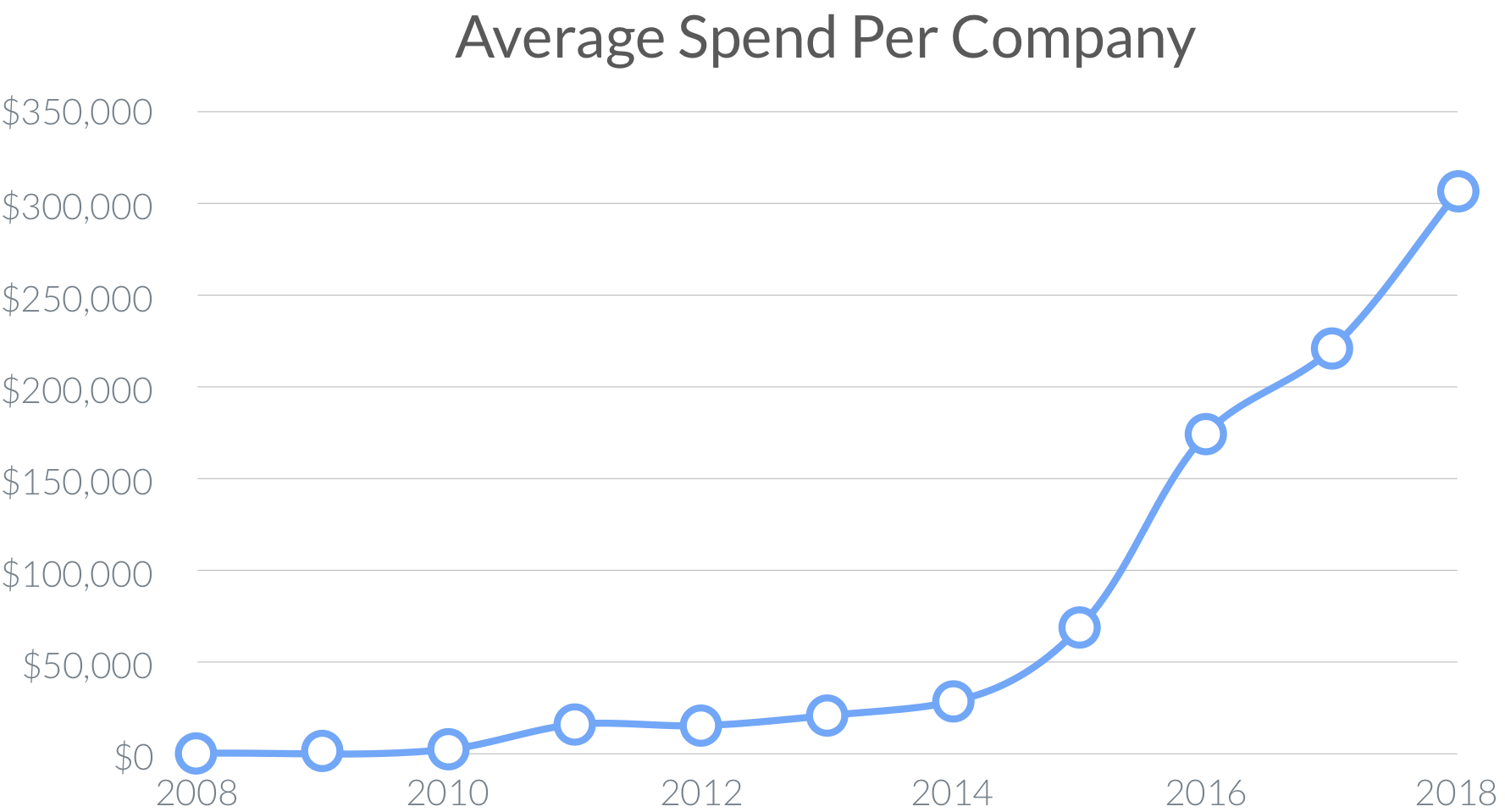
Over the last three years, the number of sales technologies grew from 715 in 2017 to 950 in 2019. And it’s not just happening across sales and marketing. SaaS spending across the entire business grew between 78% between 2017 and 2018, according to Blissfully’s 2019 Annual SMB SaaS Trends Report.

Value-Added Reseller SaaS Spending Image source: Blissfully 

2. Software is getting cheaper

The “freemium” model has been around forever (i.e., bars giving away salty snacks to sell more alcohol), but it has only recently been adopted by tech. The freemium debate has raged back and forth over the years as companies like Dropbox, Slack, MailChimp, and more have seen success with the model itself while more complex products have failed.

While freemium might not be the right strategy for every software business, several have seen results by adopting it. The world has shifted to a “try-before-you-buy” mindset. In 2018, a study by Klarna North America found that 71% of indicated they would use that kind of payment method if it was offered. 

And that, coupled with freemium sales equaling a lower customer acquisition cost, makes it attractive to more businesses every year.

 3: Software is getting more intuitive and requires less technical expertise

Software is getting immensely simpler to use. You don’t need to look too far back in time to see that software has evolved into a faster, more elegant, and more intuitive tool for non-technical end users.

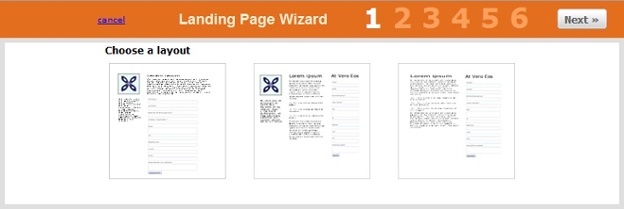
Take this example from HubSpot’s own UI (user interface) in 2010 versus 2018.

HubSpot Landing Page UI, 2010

Value-added reseller landing page 1

HubSpot Landing Page UI, 2018

Value-added reseller landing page 2

Which page would you rather spend time on? The needs and expectations of users has grown as well. Mobile apps and free technology make it easy for users to engage with once-complex platforms and tools.

This is great, but it also means your offering must follow suit. In 2020, you can’t release a clunky UI that isn’t responsive on mobile. As user experience and interface improves, user expectations rise and tolerance for poor UX/UI reduces.

4. SMB CEOs care about growth, not point solutions

The lines between sales, marketing, and customer success are blurred. Today, SMB CEOs care about growth, plain and simple. They no longer consider marketing separate from sales and customer success.

Instead, they understand the value of marketing generating leads for sales, sales engaging those leads, and customer success retaining, cross-selling and up-selling existing customers to fuel growth.

And as these front-office software tools proliferate, CEOs no longer consider “front-office” separate from, “back-office.” They view the entire ecosystem and brainstorm ways to create a beautiful, powerful, end-to-end customer experience. This is why SMBs today need more than marketing automation. They need a growth stack.

What Does This Mean for Value-Added Resellers?

In a world where there’s a free, beautifully designed point solution for everything, the role of the value-added reseller must change.

These are the opportunities I see for businesses like yours today:

Offering front-office growth services is your next big opportunity

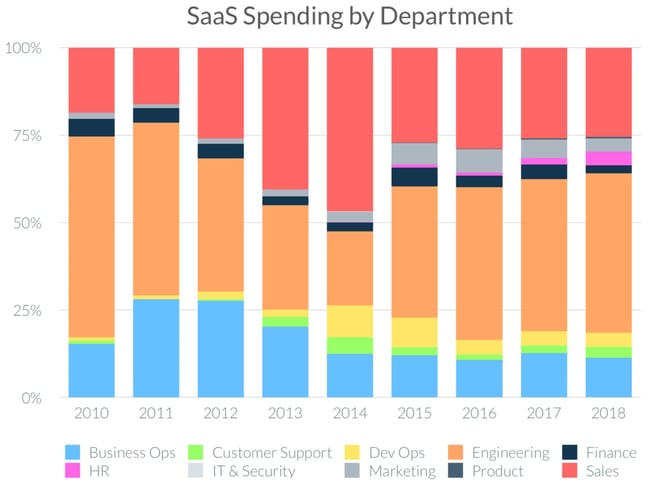
SMB CEO’s need help. According to Blissfully, front office departments — including marketing, sales, customer support, and business operations — account for over 50% of the average business's SaaS spending. 

Back-office spend has been shrinking since 2009, which suggests there’s more opportunity in the front office moving forward. You might have built your business on providing back-office solutions -- and I’m not suggesting you give that up entirely -- but transitioning some time to the front office represents a path towards sustainable growth.

An estimated 72% of salespeople spend up to one hour every day on data entry and connecting records from different sales tools. At minimum, your opportunity lies in helping customers understand the proliferating technology landscape and selecting the right technology to fuel future growth.

The opportunity lies in helping customers eliminate some point solutions, integrate the remaining software, develop coherent business-wide reporting — with tools like Data Box  —  and provide training and support to make it all work.

But there’s just one problem: It doesn’t create a scalable business. This brings me to the last big opportunity I see for businesses like yours today.

Offering front-office growth services is your next big opportunity

If you’re only offering services around technology selection, integration, reporting, and some basic training, you’ll struggle running a business with “lumpy” cash flow.

That’s because the nature of these traditional VAR services is project-based. You might win a consulting deal, do some work for three, six, or maybe even 12 months, but what happens after that? The client doesn’t need you anymore. They look at the hourly rate you’re charging for your work, decide you’re an opportunity to cut cost, and part ways.

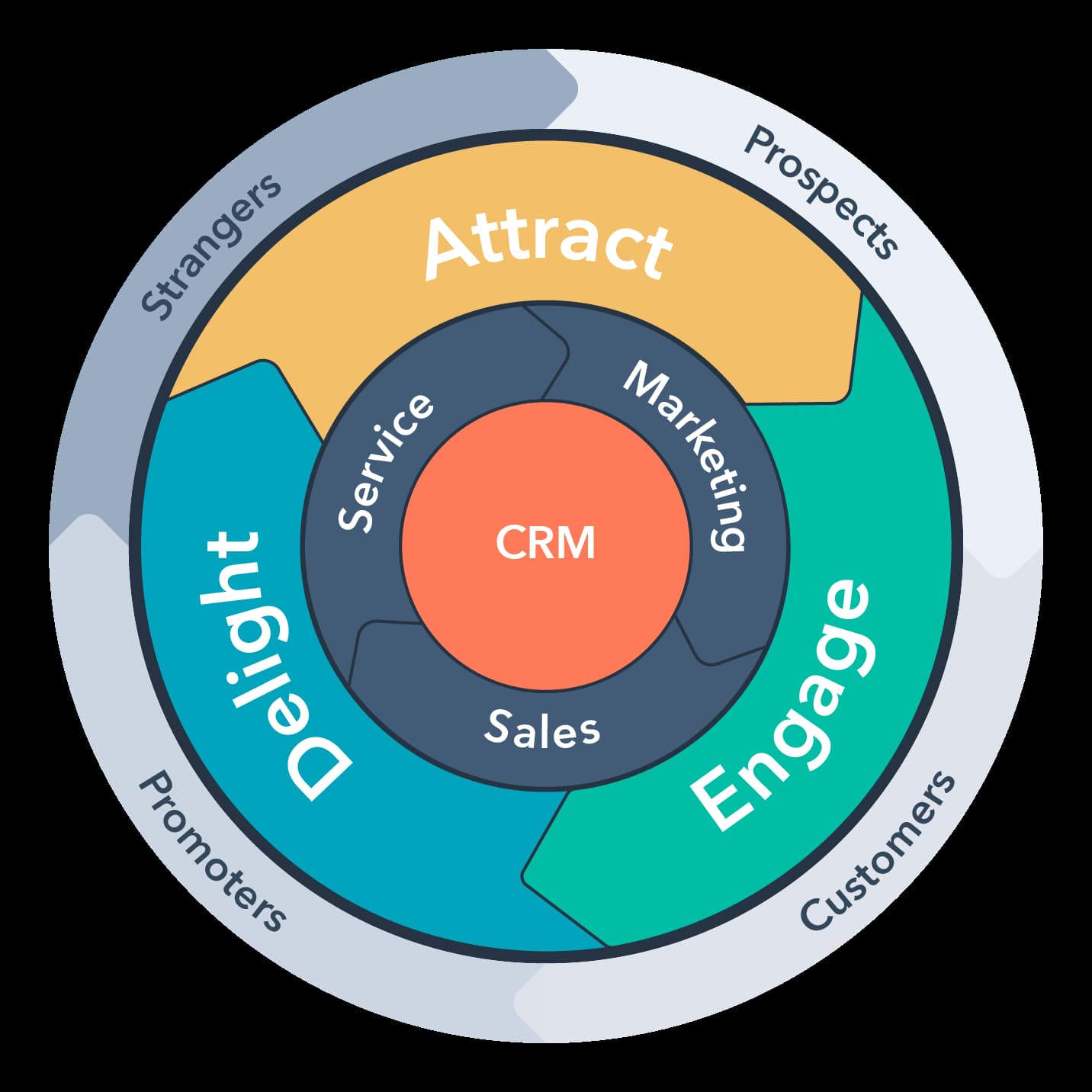
But what if you didn’t have to replace your entire client base? What if you shifted from being a project-based, cost-center consulting firm to an ongoing, strategic partner driving revenue and profit for your clients? It would change the trajectory of your business, right?

Value-added reseller flywheel Image Source: HubSpot

This is the next frontier for businesses like yours, but it doesn’t come without investment in training to learn the types of services you could be providing to clients.

These are services like lead generation (outsourced content marketing and marketing automation), sales acceleration (automation, efficiency, enablement, and training solutions), and customer success enablement (connecting the pre-sale and post-sale experience, building customer support and chat experiences, designing the customer knowledge base).

Done well, this means your business can transition away from $25-$50K one-time consulting projects that aren’t in step with many of today’s SMBs and into long-term, recurring value-added service engagements worth $50-$100K+ per year.

Then, you’ve got to deliver. Provide these services well — all of them — and you’ll save clients from hiring an army of full-time employees.

20 Mar 16:16

Canada must curb farmland speculation to keep grip on food security: Senate report

by Derrick Penner

Canada has a conundrum: a new generation of farmers wants to take over agriculture, but farmland prices are escalating out of their reach, a new Senate committee report has found.

That puts them at risk of becoming employees or tenants of big land owners, and puts Canada’s own food security at risk if governments can’t find ways to curb investment speculation and keep ownership of Canada’s farmland in Canadian hands.

“What struck me personally is that so many young people want to become farmers,” said Sen. Ghislain Maltais, deputy chairman of the Senate standing committee on agriculture and forestry, “but their hands are tied,” when it comes to their ability to buy land.

The Senate committee released its report, the culmination of two years of work studying the issue, in Vancouver Monday before public hearings on the impact of climate change on agriculture and forestry.

The committee found that in 2015, it cost, on average, $5,400 to buy an acre of farmland in B.C. and $10,000 in Ontario — the highest price in Canada.

The committee’s report found multiple factors behind soaring farmland values including low interest rates and strong commodity prices that bolstered farm businesses, but speculative purchases by institutional investors also served to boost values.

In British Columbia, particularly in the Lower Mainland, land values have also been pushed higher by buyers who build mega-mansions in agricultural zones, said Richmond Coun. Harold Steves, who is a longtime farming advocate.

“What it amounts to right now, the next generation in Richmond can’t take over (farms), the prices are too high,” Steves said, and he argues that the same dynamic applies across most of the Fraser Valley.

That, Steves said, puts farmers in the position of having to lease fields as tenants, which comes with the insecurity of not knowing how long they will have to recoup investments made in sound farming practices such as composting and crop rotation.

Steves didn’t have any input into the Senate committee’s work, but his advice to its members would be similar to the representations that have been made to B.C.’s agriculture officials: limit the size of houses that can be built on farm properties, ban foreign ownership and promote methods of land banking that can give tenant farmers long term security.

However, the committee’s conclusion touched on some of the same sentiments that were reflected in committee chairwoman Sen. Diane Griffin’s comments Monday about the choices Canadians have about passing the traditional family farm on to the next generation.

“It’s exceedingly important, in terms of the security of our food supply in Canada that we have Canadian farmers producing food for us on land that they own,” Griffin said.

And Maltais, a senator from Quebec, speaking through an interpreter, said both levels of governments need to act to make sure Canadians remains in control of it.

“If we don’t do our part in feeding the world, the world will come to us to feed itself,” Maltais said, if foreign investment funds buy too much Canadian farmland.

The committee concluded with five recommendations to help make passing farmland from one generation to the next easier and encourage federal-provincial cooperation on ways to curb land speculation.

The key recommendation, however, is that the Department of Finance look at the feasibility of increasing lifetime exemptions from capital gains taxes for qualified farm properties, which would make buying farmland easier.

The province is in the middle of its own public consultation on revitalizing B.C.’s agricultural land reserve.

On the same day the Senate committee visited Vancouver, B.C. Agriculture Minister Lana Popham marked the half way point of the province’s own consultations, which have seen 989 people complete surveys on steps to bolster agriculture in the province.

depenner@postmedia.com

twitter.com/derrickpenner 

20 Mar 16:13

Your pricing should encourage the behaviors that create value

by Steven Forth
CreateValue_Blog.png

One of the most important models when it comes to software design is that of BJ Fogg from the Persuasive Tech Lab at Stanford University. This model has been adopted by many product managers, but its importance to pricing is not widely appreciated. In general, people will only get value from your offer if they use it and they will only use it is easy to do so and they are well motivated. Almost all B2B software falls below what Fogg calls 'The Action Line.' As a result, it requires triggers to have people actually use the software. As Fogg summarizes this, behavior is the result of motivation to act, the ability to act and a trigger occuring in the same moment. Learn more here.

BJ Fogg B=MAT

This behavioural model has been expanded by Nir Eyal in his Hooked model. This model covers long term adoption of software such that using it becomes a habit. The goal here is to create a virtuous circle in which Actions on the system, lead to some form of Variable Reward. Behavioural science has found that variable rewards have more impact on behaviour than consistent rewards. The result is a growing investment in the system which leads to Internal Triggers to take an Action, larger Awards, more Investment and so on.

Nir Eyal - The Hook

Marketing automation systems are a good example of this. Systems like Pardot, Marketo and Hubspot have made an art of this. They use content marketing to make sure the External Triggers are frequent and often convincing. The systems have all sorts of Internal Triggers like notifications and reports. All of this activity builds a database that can be mined for insights and to which machine learning can be applied. These insights generate additional internal triggers and so the show goes on.

What does all this have to do with pricing? When designing pricing models we want to make sure that how we price does not discourage the behaviours we want to encourage and, in fact, rewards these behaviours. This can be the achilles heel of value-based pricing. The basic philosophy of value based pricing is that the price the user pays should reflect the value they receive, and that this value is relative to the alternatives available. So far so good. But it is possible to come up with pricing that discourages use, as a result that damps down the virtuous circle we are trying to achieve.

For example, imagine a system that uses notifications to keep people aware of their changing environment. This is an Internal Trigger in Nir Eyal's system and this functionality may support a number of important value drivers. One could put a price on notifications, or use them as a fence and only provide a fixed number per account. This is a silly example as noone (I hope) would be so silly as to do this. Reducing the number of triggers through pricing is dumb idea as it (i) reduces the value of the software and (ii) it will reduce the use of the software.

One place to consider pricing is by measuring the Investment, the store of information that has been collected by and about the users. If not properly used, this investment/repository can become a value sink (this is one reason so many companies are turning to better data analysis through AI, to surface the value in there repositories). Properly used it can inform the entire habit forming cycle (which one wants to convert into a value creation cycle). Pricing this investment can be a win, win. Properly used, the investment drives a return and both the vendor and the user should share in the benefits of these returns.

Generally speaking, do not price your triggers or the actions you want your users to take.  Instead, price the investments that are the repositories of your systems value.

Some things to do.

  1. Build a Hooked model of your Triggers (Internal and External), Actions, Rewards, Investments.
  2. Which of these are you pricing?
  3. Does that pricing discourage actions that lead to value? (Pay close attention to any pricing of Triggers or Actions.)
  4. Take a closer look at investment and work out all the ways that user investment is building up in your system. This includes the data being collected.
    1. Is it being repurposed to create more value for the user?
    2. How is the user made aware of that investment and the value being created?
    3. Is there a way to price this rather than actions or notifications?

Ibbaka is happy to sit down with you and think through the ways in which behaviour and economics interact to create value for users. This is where real pricing excellence resides.

Subscribe

Sign up with your email address to receive news and updates.

Email Address Sign Up

We respect your privacy.

Thank you!
20 Mar 16:12

Why Logistics Cannot Be Overlooked in a Thriving Tech Landscape

by Peter Daisyme

Logistics may seem old-fashioned in a tech landscape full of digital services and sharing-economy platforms. For example, there is no unified fleet of Uber drivers. Instead, logistics are handled by individual users of the app with their personal resources. With the rise of the platform economy, it may seem logistics no longer fits.

Logistics Still Relevant

Then, there is the consumer’s experience. It may seem like no physical products are use when they’re paying for a music streaming service, viewing an ad that keeps a free online product free, buying or trading cryptocurrency, or renting a movie from iTunes.

However, logistics are still relevant even as the economy moves online. Amazon is the biggest proof. They are running a carefully monitored empire of 75 fulfillment centers and 25 sortation centers spread across the U.S. This allows online shoppers to have more or less anything arrive on their doorstep a day or two after ordering it. Logistics allow this kind of efficient movement of physical products through the economy.

Though digital services is a growing sector, physical goods still matter to consumers. In fact, the national and global economy also care. Every year, the U.S. trucking industry moves 10.49 billion tons of freight. These goods don’t just go to mega-stores like Amazon. They also are shipped to mom-and-pop shops, niche e-commerce platforms, construction contractors and other buyers. Plus, these physical goods are also vital to other major pillars of the U.S. economy.

Addressing Inefficiencies

However, inefficiencies hinder this important industry. Many trucks drop off one load of freight and then have to drive somewhere else to pick up another load. This means that 15 to 25 percent of US trucks on the road are empty at any given time. These inefficiencies make the freight industry less effective at delivering materials. Also, this severely impact truckers themselves. They often receive little or no pay for driving an empty truck to a pick-up location.

Trucking is a dangerous industry. It has the seventh-highest mortality rate in the US according to Time Magazine. Some of that danger comes from driving empty trucks. In fact, a recent study has found that empty trucks are more than twice as likely to crash as full ones.

Also, the inefficiency problem has a significant environmental component. Unnecessary back-and-forth truck traffic increases the whole industry’s carbon footprint. Additionally, it causes unnecessary congestion and infrastructure wear.

Some of those inefficiencies stem from technological lag. TechCrunch reports that about 67 percent of shipping companies rely on paper records rather than logistical software. The U.S. tech world has been moving at a lightning pace. However, that evolution has left the logistics world behind. And, that harms truckers, retailers, and consumers.

Using Technology to Improve Logistics

Fr8 was founded by a team of blockchain and freight leaders. They realized the freight world needed a technological revolution. The company offers an interrelated suite of apps that use blockchain solutions to improve freight efficiency. Their Fr8 board is a decentralized marketplace for freight shippers and carriers. Users sign up and enter their professional credentials and freight or trucking information.

A proprietary bi-directional recommendation engine built into the platform helps users matches them with others who best suit their needs. A trucker could use the platform to both find a shipper who needs freight moved from one state from another and a different shipper who needs freight moved the other way. This minimizes empty miles. Users leave each other feedback much like eBay or Uber. Therefore, each profile develops a ranking that users can consider when making partnerships.

This platform circumvents traditional (fee-heavy) broker arrangements. It offers increased efficiency with drastically lowered costs. The entire platform runs on Fr8 tokens. These are dedicated ERC20 cryptocurrencies built on the Ethereum blockchain. Users pay a fee of Fr8 tokens to access the Fr8 board. They temporarily advance Fr8 tokens as collateral for successful shipment completion.

New Processes for Logistics

Fr8 token’s smart contract and their immutable transaction ledgers ensure shipping agreements are clear and binding. Fr8 also offers value-added services. These include electronic mile logging via smartphone or IOT device, integration with other trucking apps, and financial services like credit and stake agents access. Even users who prefer not to use cryptocurrency can access to the platform.

Technology has revolutionized sectors across the country. In best case scenarios, it’s empowered employees while promoting economic development and environmental efficiency. Fr8 presents one of these best-case scenarios. They deliver a platform that allows more profitable, safer, and lower-carbon business options for drivers while optimizing the speed at which freight moves from suppliers to retailers. Fr8 is offering a public ICO in 2018.

It’s a clear sign that technology help the logistics world evolve and improve. The enhancements from new technology solutions will also increase logistics relevancy well into the future.

20 Mar 16:10

The Startup Playbook: Nailing Pricing Strategy

by Rajat Bhargava

Editor’s Note: The following is an excerpt from The Startup Playbook: Founder-to-Founder Advice From Two Startup Veterans available on Amazon here.

startup playbook

While figuring out your go-to-market strategy isn’t linear, you do need a place to start. We like to start with the pricing strategy. If you have a sense for your price point and model, that can be fundamental to the specific sales and marketing approaches you take.

A significant way you can differentiate your company is by making the pricing strategy (often called pricing model) unique. The place to start with pricing is to get a handle on the general concept. Start by investigating the following:

  • Value of your solution. What is your solution worth to your customer? Does it help them save time or money? Is the value emotional? Does it help them generate more income? You’ll need to analyze the benefit of your solution from the customer’s perspective and make your best attempts at quantifying it.
  • Costs to deliver your solution. Another factor in your pricing strategy will be your costs. While you’ll likely sell your solution at a loss initially, you’ll want to understand both the fixed and variable costs you’ll have delivering your solution to a customer now and over time. Try to see if there are natural break points or clear decreases in cost as you scale the business. For example, most companies see a substantial decrease in a selling cost when they sell more or additional products to existing customers because they already have an established relationship. Understanding the nuances of your cost model can help you get creative in your pricing model.
  • Competitive pricing. There is generally a price point that your competitors have gravitated towards. While you don’t need to sell at the same price, you need to take into account that your customers will use competitive pricing as a benchmark. Additionally, while your competitors won’t always be right, you should try to understand why they price their offering as they do. There might be a very good reason for it. You’ll need to judge how best to play in the competitive landscape, but understanding what you are up against is important regardless of your decision.
  • Substitute pricing. For many founders, the often overlooked competitor is the substitute product. Your customers may opt to solve their problem differently than by purchasing from you or your competitors. Ride sharing companies, such as Uber, Lyft, and Grab, among others, are viewed as competitive with the taxi industry. But, what if ride sharing customers used their services in lieu of purchasing a car? In this scenario, wouldn’t these companies be in competition with car manufacturers? The ride sharing business model is vastly different than their substitute competition’s. The challenge here is to think through all the different ways your customer can solve their problem so that you can price your solution accordingly.
  • Overall costs of implementing your solution. Sometimes, your solution isn’t everything that your customer needs. They might need to purchase additional products, or perhaps they need to pay for people to be trained or to help implement your solution. Understanding what the total costs are for your customer to gain value from your solution will also help you in the pricing discussion.

Some example models you’ll want to consider are discussed in the next section. This is hardly a complete list of pricing model approaches. Ultimately, our hope is that you can develop a clever pricing model that resonates with your customer – maybe even invent a new one. Note that some of these models can be used together, but again, the primary goal should be to find something that’s natural to your customer and still represents profit for you.

Model #1: Premium-cost/Low-cost provider.

Many companies have built their models around being the highest or lowest cost providers. Either can work as long as you build the rest of your business around such a position. That is, are you delivering what the customer is paying for and therefore expects? Selling cheaply made products at a high price is not, generally speaking, a long-term winning strategy, and selling high-cost products at low prices isn’t sustainable financially.

If you’re the low-cost provider, is your cost model and supply chain built for efficiency and scale? Amazon leveraged the low-cost model to compete against Barnes & Noble and other booksellers, and is now using that same approach against Walmart. In terms of premium pricing, Mercedes-Benz is a perfect example of high-end, mass market cars easily recognized by virtually anyone.

Model #2: Razor/Razor-Blade Model.

This is a model where the consumer purchases a core component of your product (the razor), which then requires the ongoing purchase of a consumable component (the razor blades). The core piece is frequently sold at a discount with the company generating its profits from the continuous sale of the consumable. Think of companies like HP selling printers and ink cartridges and Nintendo selling consoles and games as excellent examples of this model. Can you lock in your customer with the purchase of a core component and then sell the consumable part to them on an ongoing basis? If you can, then this may be a model worth considering.

Model #3: Subscription.

Another popular model (especially in software) is to deliver your solution as a service, or said another way, on a subscription basis. Generally, the customer pays monthly or annually for you to deliver your solution, which usually occurs on an ongoing basis. This model doesn’t work for one-time purchases. Salesforce, the leading sales automation company, was a pioneer of this model in the enterprise software space. On the consumer side, a number of companies are using subscription models for items that we used to buy periodically. Many web-based consumer storefronts offer subscription purchases for consumable items that are regularly needed, like household supplies or personal care items. Most large software companies like Adobe and Microsoft have transitioned to selling their solutions using monthly or annual billing.

Model #4: Freemium.

Another popular model frequently used in software sales is freemium. Freemium makes it easy for customers to try a product for free, then upgrade to a version with more features once they get hooked on it. Giving away your product, even a part of it or for a limited time, can be a great way to generate interest. For the startup, knowing what it costs to deliver this free solution is as critical as knowing why the customer will upgrade. Mobile phone-based games such as Rovio’s Angry Birds or Supercell’s Clash of Clans are great examples of this model. Many games are free, and virtual goods or features are purchased to enhance the game play.

Do your homework on models that can potentially be helpful and then put your own spin on one. A pricing model that is seamlessly integrated with your solution approach creates a significant advantage.

As you think about your pricing model, keep in mind that startups tend to underprice their solutions. That’s okay to start with, but over time, you’ll want to figure out how to find the right price point for your solution.

The good news is we don’t believe you should think of pricing as static. Conventional wisdom says you can’t raise prices once you set them. That’s untrue. While it can be hard to raise prices, it happens all the time and can be a tactic that you use to close the gap between the value that you offer and the price you charge.

Innovative approaches to pricing models have been used by a number of startups to great benefit. Take your time and figure out an approach that can be a competitive advantage.

The post The Startup Playbook: Nailing Pricing Strategy appeared first on OpenView Labs.

20 Mar 16:09

Story Driven: You Don't Need to Compete When You Know Who You Are

by Blyth

"When you have something to say, you don't need to shout. Bernadette Jiwa helps us learn how to create the change we seek to make in the world."
—Seth Godin

A few short months after her last book, Hunch, landed on our 2017 Business Book Awards Longlist, Bernadette Jiwa is back with her latest marketing guide, Story Driven: You Don't Need to Compete When You Know Who You Are (Perceptive Press, March 7, 2018, $8.99, paperback). Leading with her storytelling expertise, Jiwa's new book "is about how to stop competing and start succeeding by being who you are, so you can do work you’re proud of and create the future you want to see." The excerpt below steps you halfway through the book's introduction. If you want to build a great company, a thriving entrepreneurial venture, or a fulfilling career, pick up the book and find out why you don't need to compete when you know who you are.


Introduction

‘[S]uccess is like a mountain that keeps growing ahead of you as you hike it… and there’s the very real danger that “succeeding” will take up your whole life, while the big questions go untended.’

—George Saunders, convocation speech for the Syracuse University class of 2013


The story broke on 15th September 2015. It was less of a story and more of a scandal—the biggest deception ever discovered in automaking history. The United States Environmental Protection Agency had evidence that the world’s largest car manufacturer had been deliberately cheating on emissions tests for at least six years. Eleven million diesel cars that had been marketed as ‘clean’ in order to boost sales and profits had been fitted with ‘defeat devices’—software that would give compliant emissions readings under test conditions, but actually allow the cars to emit forty times the allowed amount of nitrogen oxides under normal driving conditions. Not only did these vehicles fail to meet regulatory requirements, but they also were emitting pollutants at levels considered to be harmful to public health.

As news stories spread, speculation escalated and stock prices tumbled; 40 percent ($30 billion) was wiped from Volkswagen’s value in a matter of days. VW’s CEO, Martin Winterkorn, resigned, saying that he wasn’t aware he’d done anything wrong, but he recognised that ‘millions of people across the world trust our brands, our cars and our technologies’, and he was ‘deeply sorry we have broken this trust’.

Volkswagen’s new CEO, Matthias Mueller, later explained that the emission compliance issue was a technical problem that arose because the company ‘had some targets for [their] technical engineers, and they solved this problem and reached targets with some software solutions which [weren’t] compatible [with] the American law’. This seeming lack of insight and reluctance to shoulder blame did not go down well with customers or the media, and the statement was later clarified.

The cost to VW in fines and compensation alone is estimated to be in excess of $20 billion. The reality is that the scandal cost them much more in lost reputation. The emissions fraud wasn’t the work of one person—a lapse in judgement of a lone wolf trying to meet a target. It was a systemic failure in the company, akin to a mutation in human DNA that allows a cancer to run rampant through a body. The company once known as the maker of ‘the people’s car’ had lost touch with its identity and failed its people. They had forgotten who they were.

Two weeks to the day from the breaking of the emissions scandal, the world’s first all-electric SUV, the Model X, was unveiled in California by Elon Musk, the CEO of Tesla Motors. The fledgling automaker had not yet sold 100,000 cars in its lifetime. Less than two years after the first Model X cars took to the road, Consumer Reports ranked Tesla as the top American car brand and eighth in the world. To put that achievement and Volkswagen’s material advantage into perspective, Volkswagen Group, founded in 1937, was seventh on the Fortune Global 500 list. The company produces more vehicles in two days than Tesla did in all of 2016.

Why would people at a company like Volkswagen, with virtually unlimited resources—assets of €381.9 billion, plus talent, expertise and brand equity—risk everything by taking an illegal shortcut? What enabled the smaller, less-well-resourced team at Tesla Motors to be so innovative? Apart from the obvious differences in resources and longevity, what distinguishes each of these brands from the other is the business philosophies upon which they are built.

In its 2011 annual report to shareholders, Volkswagen declared, ‘The main goal of the group’s strategy is for Volkswagen to become the economic and ecological leader of the global automotive industry.’ The company’s goal was to beat the competition and be number one. It’s clear from the report that the single bottom line was the leadership’s key driver. Volkswagen defined four objectives that would enable them to become ‘the most successful and fascinating enterprise of the global automotive industry by 2018’. Innovation, increased sales, increased pre-tax return on sales, and being a ‘top employer’ were listed as the means by which they would achieve this goal. It seems now that the desire to be innovative was only a means to an end, rather than a reason to strive for excellence. We’re left wondering where, or if, happy customers fit into their plans.

As the dust was settling on the emissions scandal, Herbert Diess, CEO of the Volkswagen brand, reiterated Volkswagen’s competitive worldview in an interview: ‘We see Volkswagen as the company that can stop Tesla, because we have abilities Tesla doesn’t have today.’ In 2017, Patrick McGee reported in The Financial Times that Diess confirmed the company’s intention to go after a big slice of the electric car market. ‘Anything Tesla can do, we can surpass’, he said. He also confirmed that Volkswagen aimed to stop Tesla from getting foothold in the market for more-affordable electric cars: ‘It’s our ambition, with our new architecture, to stop them there, to rein them in. We are confident that in this new world we will become a market leader.’

It seems that Volkswagen’s narrative and identity still centre around its targets and capabilities, the ability to dominate and the goal of being number one.

In stark contrast, the Tesla team is working towards its vision for the future. Since the brand’s inception, the company has been committed to making a contribution to the wider world. Tesla’s people have always been united around a single mission: ‘to accelerate the world’s transition to sustainable transport’. This mission was updated in 2016, changing ‘transport’ to ‘energy’. Elon Musk published his ‘secret Tesla Motors master plan’ online in 2006 for the world to see. The company’s contribution, aspirations and values inform the strategy he laid out at that time. Here’s an excerpt:


As you know, the initial product of Tesla Motors is a high performance electric sports car called the Tesla Roadster. However, some readers may not be aware of the fact that our long term plan is to build a wide range of models, including affordably priced family cars. This is because the overarching purpose of Tesla Motors (and the reason I am funding the company) is to help expedite the move from a mine-and-burn hydrocarbon economy towards a solar electric economy, which I believe to be the primary, but not exclusive, sustainable solution. …

So, in short, the master plan is:

Build sports car
Use that money to build an affordable [electric] car
Use that money to build an even more affordable [electric] car
While doing above, also provide zero emission electric power generation options.


Prior to the emissions scandal, the engineering team at Volkswagen lived in fear of being unable to meet tough innovation deadlines, while the people at Tesla were aspiring to become the company that would change the world. Ironically, in its attempt to catch up to Tesla, Volkswagen is undoubtedly helping them to realise their vision to accelerate the transition to sustainable energy.

What went wrong at Volkswagen? Why did a team of presumably smart, dedicated people, with a legacy to uphold and access to unlimited resources, lose their way? Those of us on the outside looking in will never know the exact details about the errors in human judgement that caused the crisis. But we can take a step back and see how the company’s philosophy and internal narrative shaped its identity, culture and strategy. We can learn from the mistakes of the past.


Excerpted from Story Driven: You Don't Need to Compete When You Know Who You Are by Bernadette Jiwa.
Published by Perceptive Press.
Copyright © 2018 by Bernadette Jiwa.
All Rights Reserved.


ABOUT THE AUTHOR

Bernadette Jiwa is a recognized global authority on business philosophy and the value of story in business, innovation and marketing and the author of several best-selling books on marketing and brand storytelling. Her popular blog was voted Best Australian Business Blog in 2012 and has featured three times on Smart Company’s Best Australian Business Blog list, topping it in 2016. Bernadette advises, consults and speaks with entrepreneurs and business leaders, from startups to Fortune 500 companies, who want to do work they’re proud of and create the future they want to see. Her work takes her from Melbourne to New York (and everywhere in between). You can find out more about Bernadette's work on her site, The Story of Telling.

20 Mar 15:48

7 Reasons to Automate Your Marketing Campaigns

by Aashish Sharma

Do you plan to automate your email marketing campaigns? Note that it is essential to understand what to expect and what the key benefits are before you begin to compare the different tools you can use for marketing automation.

This continually evolving technology allows you to increase the number of qualified leads, generate conversions and generate more revenue. These marketing automation platforms are more than just support tools, and they really change the role of the marketer: tedious and repetitive tasks will be eliminated from their workloads, but it goes far beyond that! These tools allow you to optimize time for both your marketing and sales teams.

For example, you can optimize your automated emailing campaigns, where many actions can be automated: welcome email, sending of resources, a proposal of promotional offers (various occasions such as holidays, birthday …), and recovery after the abandonment of basket, complementary product proposal, etc.

Discover 7 reasons to automate your email marketing campaigns and get qualified leads.

7 Reasons to Automate Your Email Marketing Campaigns

# 1 – Saving time and reducing costs

As we said above, automating some actions in your marketing campaigns allows you to say goodbye to repetitive and tedious tasks. Your marketing teams will then have more time to devote themselves too much more creative works. This will bring innovative ideas to the business that will lead to nurturing better business opportunities.

You probably have limited resources to grow your business both regarding team and budget for advertising expenses. By implementing automated lead acquisition campaigns, you can reach the right people at the right time according to their interests. No more sending flyers, email, unspecified mail. After automating some of the tasks in your email marketing campaigns, you’ll be able to send your emails automatically without thinking, and you’ll save money.

# 2 – The data collected will be more reliable and better qualified

One of your email marketing campaigns is to offer a white paper download. Several actions are to put in place, but it is impossible to do all of them manually! Let’s take an example: a lead has registered by completing your form, and you must send an email manually every time a lead is registered. What now needed is a detailed information to be given by you to the lead. Automate your action by scheduling the start of an email containing the download link as soon as the form is filled in and sent or the automatic download of the white paper.

To collect reliable and qualified data, you need to offer exciting content (white paper, computer graphics, blog articles, etc.) to attract the lead’s attention. A dedicated landing page highlighting the benefits and expertise you bring is a solution! But how to collect data from your leads efficiently? By creating an especially dedicated form from the marketing automation software.

When a lead gets register via form its natural that he is interested in your services. He will then represent a potential client.

# 3 – Communication between your marketing and sales teams will be better

When you have collected your leads, you must assign a score and prioritize them. Do it manually? Impossible too! A marketing automation software will allow you to create lead scoring scenarios depending on the behavior of the lead vis-à-vis your actions: how many points to allocate when opening an email? How many points to award for visiting a specific web page? These points will allow the sales team to prioritize the leads and thus define if he is ready to be contacted or not.

Your marketing and sales teams will have to work together to define the number of points to be awarded and according to which actions! No more phoning campaigns where the lead is not ready to listen to you! The advantage of automating all these tasks is to qualify the lead to reduce the conversion time from lead to end customer, but also to make the work between your teams much more efficient.

# 4 – Best targeting

Automating your automated email campaigns is also about making sure you are targeting the right people. When you launch a marketing campaign, you can define with the software, automatic segmentation of your database. When you offer a promotional offer campaign, you can create a new segment called for example “Promotional Offer – Purchase.” With a marketing automation software you can create and put an action saying that when a lead makes a purchase, it will automatically include in this new segment.

You can also decide when to send an email or SMS and how often and manage the advertising pressure. For example, you can define the maximum number of emails or SMS that your contacts should receive per week or month. The goal is not to pollute the mailbox of your contacts.

Finally, who says better targeting, says efficiency! You will not forget any more contact, but above all, once the campaigns are configured and planned, you will send messages, offers, and reminders at the right time without intervening.

# 5 – Better tracking of leads behavior

Marketing automation software can also track the behavior of leads on your site, so when a person signs up for one of your forms, you can see from which page of your website the lead has arrived and which path he completed to complete the form. By studying the behavior of your leads, you can optimize your marketing campaigns.

# 6 – Personalized messages and loyalty

Your customers are not just identifiers or numbers to which you can associate them! Automating your email marketing campaigns can help you create different profiles and segment them in a much-targeted way by ensuring the right message reaches the right person, on the right channel, and at the right time. You can update the information continuously and automatically.

If you manage an e-commerce site, you can, for example, send a highly targeted email campaign by offering your customers additional products 10 days after placing an order or send an email campaign with a promotional offer 30 days before its anniversary. Etc.

It also works with your blog articles! You can give a second life to your articles. For example, when a user reads one of your articles, you can automate the sending of an email thanking him for having read and visited your blog and offer other articles on the same topic.

# 7 – Ability to test, optimize and retest

Your marketing teams can test, identify the actions that work best and optimize them then retest! They will be able to identify the messages, visuals, formats, and channels that work best for each target. This information is essential to optimize your content.

A / B tests can also be conducted automatically on each of your marketing campaigns. So, you can test them in real time and define the ones that are most effective. Thus, by testing and optimizing your marketing campaigns, you will improve your performance.

Automate Your Marketing Campaigns with Email Marketing Automation

As you can see, automating your email marketing campaigns saves you time, generating qualified leads, reaching your targets, better understanding the behavior of your leads and sending them personalized messages. The point of this type of software is to optimize the conversion time of your leads and allow your marketing and sales teams to collaborate better.

20 Mar 15:47

4 Trends Putting the 'Value' Back in Value-Added Resellers

by Bsignorelli@hubspot.com (Brian Signorelli)

The market for value-added resellers is constantly changing and expanding — with virtually no signs of stopping either anytime soon.

And if you're an IT reseller, a value-added reseller (VAR), or a channel partner advising clients on any part of the front office — like marketing, sales, or customer success — it's important you keep tabs on this evolving landscape.

Front-office SaaS development is booming, software is getting cheaper and more intuitive, and CEOs are concerned more about growth than point solutions.

Plenty of new trends are coming with these shifts. Let's take a look at four of them that value-added resellers and channel partners should watch.

Value-added resellers in the SaaS development and hardware spaces generally sell the products they enhance as either full-service solutions or value-added services like training or hands-on software installation and implementation.

One way or another, VARs take previously developed products or services and take necessary steps to augment and get more out of them. Let's take a more in depth look at the value-added reseller business model.

The Value-Added Reseller Business Model

The premise of the value-added reseller business model is essentially covered by its name. It's a model where a seller purchases a product from a supplier and adds additional features or services to boost its value. Then, that seller resells that "new" product at a premium.

One of the best ways to capture the principle behind the concept is to think of an automobile dealership. In this example, you can imagine a car dealership that purchases used vehicles and enhances them with custom parts, accessories, or extended warranties and resells them for more than it bought them for. 

That idea — selling augmented and enhanced products for more than they were purchased for — is the basis of the value-added reseller business model.

As previously mentioned, the model is now most commonly associated with the SaaS development and hardware spaces. In those industries, value-added resellers create integrations, products, and features to package with existing products or services. Those packages are then sold as full-service solutions or value-added services.

How to Become a Value-Added Reseller

The key to becoming a value-added reseller is rooted in the principle that value takes priority over profit. That means that the additional features or integrations you add to the products or services you augment have to legitimately improve them — not just make them more expensive.

Re-sold products need to be polished and ready for customers to use, straight off the bat. Getting there is often a matter of understanding the ins and outs of what those customers might need — and that generally takes a trained staff.

In many cases, you'll need to tap solution architects to identify the challenges the companies you serve are facing and help pinpoint the augmentations and additions necessary to get the most out of the product you intend to resell. And if the process of adding-value to your product is labor-intensive, you'll likely need to employ a broader, dedicated staff to expedite that process.

You also need to understand that being a value-added reseller is a dynamic game. You'll have to constantly stay abreast of emerging trends in your field and consistently update your product catalogue accordingly.

Pricing is another key factor in becoming a value-added reseller. VARs typically operate on low margins, so if you want to become one, you'll have to constantly keep tabs on deals from the distributors you purchase from. You'll also need to sell at prices that strike a delicate balance between spurring consumer interest and keeping your outfit financially viable.

Successful value-added resellers must reach a broad base of potential customers, so if you're interested in becoming one, you have to maintain an ecommerce presence.

If you're going to be visible to consumers and keep pace with larger competitors, you need that kind of a readily accessible forum for consumer contact.

4 Trends Value-Added Resellers and Channel Partners Should Watch

1. Front-office SaaS development and spending is exploding

If you follow Chief Martec’s Scott Brinker, you already know the marketing technology landscape has seen explosive growth over the past ten years, growing from just 150 software businesses in 2011 to over 8,000 in 2020 . But did you know this happening in sales technology now too?

Over the last three years, the number of sales technologies grew from 715 in 2017 to 950 in 2019. And it’s not just happening across sales and marketing. SaaS spending across the entire business grew between 78% between 2017 and 2018, according to Blissfully’s 2019 Annual SMB SaaS Trends Report.

Value-Added Reseller SaaS Spending Image source: Blissfully 

2. Software is getting cheaper

The “freemium” model has been around forever (i.e., bars giving away salty snacks to sell more alcohol), but it has only recently been adopted by tech. The freemium debate has raged back and forth over the years as companies like Dropbox, Slack, MailChimp, and more have seen success with the model itself while more complex products have failed.

While freemium might not be the right strategy for every software business, several have seen results by adopting it. The world has shifted to a “try-before-you-buy” mindset. In 2018, a study by Klarna North America found that 71% of indicated they would use that kind of payment method if it was offered. 

And that, coupled with freemium sales equaling a lower customer acquisition cost, makes it attractive to more businesses every year.

 3: Software is getting more intuitive and requires less technical expertise

Software is getting immensely simpler to use. You don’t need to look too far back in time to see that software has evolved into a faster, more elegant, and more intuitive tool for non-technical end users.

Take this example from HubSpot’s own UI (user interface) in 2010 versus 2018.

HubSpot Landing Page UI, 2010

Value-added reseller landing page 1

HubSpot Landing Page UI, 2018

Value-added reseller landing page 2

Which page would you rather spend time on? The needs and expectations of users has grown as well. Mobile apps and free technology make it easy for users to engage with once-complex platforms and tools.

This is great, but it also means your offering must follow suit. In 2020, you can’t release a clunky UI that isn’t responsive on mobile. As user experience and interface improves, user expectations rise and tolerance for poor UX/UI reduces.

4. SMB CEOs care about growth, not point solutions

The lines between sales, marketing, and customer success are blurred. Today, SMB CEOs care about growth, plain and simple. They no longer consider marketing separate from sales and customer success.

Instead, they understand the value of marketing generating leads for sales, sales engaging those leads, and customer success retaining, cross-selling and up-selling existing customers to fuel growth.

And as these front-office software tools proliferate, CEOs no longer consider “front-office” separate from, “back-office.” They view the entire ecosystem and brainstorm ways to create a beautiful, powerful, end-to-end customer experience. This is why SMBs today need more than marketing automation. They need a growth stack.

What Does This Mean for Value-Added Resellers?

In a world where there’s a free, beautifully designed point solution for everything, the role of the value-added reseller must change.

These are the opportunities I see for businesses like yours today:

Offering front-office growth services is your next big opportunity

SMB CEO’s need help. According to Blissfully, front office departments — including marketing, sales, customer support, and business operations — account for over 50% of the average business's SaaS spending. 

Back-office spend has been shrinking since 2009, which suggests there’s more opportunity in the front office moving forward. You might have built your business on providing back-office solutions -- and I’m not suggesting you give that up entirely -- but transitioning some time to the front office represents a path towards sustainable growth.

An estimated 72% of salespeople spend up to one hour every day on data entry and connecting records from different sales tools. At minimum, your opportunity lies in helping customers understand the proliferating technology landscape and selecting the right technology to fuel future growth.

The opportunity lies in helping customers eliminate some point solutions, integrate the remaining software, develop coherent business-wide reporting — with tools like Data Box  —  and provide training and support to make it all work.

But there’s just one problem: It doesn’t create a scalable business. This brings me to the last big opportunity I see for businesses like yours today.

Offering front-office growth services is your next big opportunity

If you’re only offering services around technology selection, integration, reporting, and some basic training, you’ll struggle running a business with “lumpy” cash flow.

That’s because the nature of these traditional VAR services is project-based. You might win a consulting deal, do some work for three, six, or maybe even 12 months, but what happens after that? The client doesn’t need you anymore. They look at the hourly rate you’re charging for your work, decide you’re an opportunity to cut cost, and part ways.

But what if you didn’t have to replace your entire client base? What if you shifted from being a project-based, cost-center consulting firm to an ongoing, strategic partner driving revenue and profit for your clients? It would change the trajectory of your business, right?

Value-added reseller flywheel Image Source: HubSpot

This is the next frontier for businesses like yours, but it doesn’t come without investment in training to learn the types of services you could be providing to clients.

These are services like lead generation (outsourced content marketing and marketing automation), sales acceleration (automation, efficiency, enablement, and training solutions), and customer success enablement (connecting the pre-sale and post-sale experience, building customer support and chat experiences, designing the customer knowledge base).

Done well, this means your business can transition away from $25-$50K one-time consulting projects that aren’t in step with many of today’s SMBs and into long-term, recurring value-added service engagements worth $50-$100K+ per year.

Then, you’ve got to deliver. Provide these services well — all of them — and you’ll save clients from hiring an army of full-time employees.

20 Mar 15:46

How Salespeople Win by Aligning with Marketing

by Steve Kearns
Sales & Marketing Alignment

Imagine what would happen if you suddenly received more leads from marketing. And, what if a higher percentage of those leads were of the eager-to-talk, ready-to-buy variety?

You don’t have to ponder long. A survey conducted by LinkedIn and Join The Dots makes it clear: sales and marketing alignment is good business. For sales pros, that means boosting performance by converting better targeted, sales-ready leads who are genuinely interested in your offering.

Why Alignment Makes Sense for B2B Companies

Today’s buyers expect a seamless experience. If that’s not reason enough to align, there’s also the revenue factor: 58% of salespeople and marketers say collaboration improves customer retention, and another 54% say it boosts financial performance.

For sales pros, that means more contract renewals, cross-selling, and up-selling opportunities. It also increases the odds that our existing customers will act as a referral.

Our guide, Driving Intelligent Customer Experiences, dives into the many ways a collaborative mindset and cohesive approach benefits marketers and sellers alike.

How Greater Alignment Improves the Selling Process

Working collaboratively, sales and marketing pros can develop a unifying strategy and common goals. That means creating a shared framework to identify ideal customer types, pinpoint key messages, and determine a handoff strategy that makes sense from the customer’s standpoint.

Among teams that work together in this manner, 67% report having a clearer understanding of the customer. Sales and marketing stay the path by setting recurring meetings, coordinating planning efforts, and maintaining consensus on objectives and measurement.

Benefits Sales and Marketing Alignment Brings to Salespeople

What happens when sales and marketing have a unified view of the customer? For sales, that means less time is wasted on leads that aren’t ready to talk to sales or aren’t a good fit in general.

Without alignment, marketing is less equipped to tell what constitutes a quality lead. And as you know, it’s hard to recover from an awkward handoff. If the lead isn’t quite ready, or the expectations are unclear, we can easily hamper our chances to make a future sale.

Collaboration with marketing enables you to spend more time helping existing customers and nurturing top prospects. In fact, 58% of survey respondents who work on aligned teams report improved efficiency, with 52% experiencing greater productivity.

Learn all the ways sales and marketing collaboration can enhance your pipeline with our new guide, Driving Intelligent Customer Experiences.

19 Mar 17:42

LinkedIn users can now request job referrals from their connections

by Mallory Locklear
LinkedIn debuted a new feature today that could help job-seekers get a leg up in their search. TechCrunch reports that when users are connected to someone who works at a company with a job opening listed on LinkedIn, they can now ask that person for...
19 Mar 17:42

How to Succeed at Managing the Prospect's Emotions

by Sandler Training

Jim Barnoski, Sandler trainer, talks about how to manage the prospect's emotional reactions to the sales process. Often, talking about things like budget, the prospect's problems, or even the people involved in the buying decision will trigger negative emotions in your prospect. If you can't prevent or get rid of them, the prospect might get rid of you instead.

19 Mar 17:25

Improve your cold emails with this simple mind-reading technique

by steli@close.io (Steli Efti)
mindreader.jpg

You’ve sent a bunch of cold emails, but you keep getting the same one-line response: “Thanks, but we’re happy with our current solution.” So what can you do to attract prospects who already have a vendor in place?

Start reading their minds.

Pitching to the same kinds of prospects every day actually teaches you how they think. You know what they like and don't like. You anticipate their questions and objections. This knowledge basically makes you a mind reader.

If prospects consistently tell you that they’re satisfied with their current solution, embrace that reality and make it part of your pitch. Tweak your cold email so that you’re leading with their primary—and easiest—objection.

Here’s how it might look in practice:

Hey Steli,

We recently launched a new platform that [one-sentence pitch]. You probably already have a vendor you’re happy with, but here’s why I’ve decided to email you today.

I can’t promise you’ll convince prospects to switch vendors, but if you lead with this mind-reading technique, I guarantee they’ll keep reading your email. If nothing else, they’ll at least wonder why you’re confident enough to reach out to someone who already has a solution in place.

Start writing better cold emails today. Download your free, easy-to-use templates right now!

You still need to follow this up with a great pitch

If you don’t provide value or you’re unable to differentiate yourself from the competition, mastering a cold email mind-reading technique is the least of your problems. By the time you’re using this, you should know why you’re reaching out to prospects who already have strong vendor relationships.

You can build on this lead-in with something like:

We’ve worked with hundreds of companies just like yours. After learning what we could do for them, they chose to make the switch. Seeing this pattern over and over made us realize that we needed to reach out to companies that already have a solution in place, so we can show you there’s something better on the market.

I received a great cold email the other day

Because I run a SaaS company, I get tons of emails from outsource development shops around the world. They all claim to have the best developers and service offerings. Why not offshore some of our development work, so we can focus on growing our business?

Here’s what I do when I get these emails:

delete.gif

I’m just not interested in outsourcing product development. I don’t believe in it—and neither does our team. Plus, most of these cold emails are super low quality. But last week, I received an email that stood out from the crowd.

Hey Steli,

I know you get tons of emails from dev shops just like ours, and you probably want to hit the delete button and move on with your day. But please just give me three more sentences before you make that call.

As I was reading the email, I wanted to delete it, but I couldn’t. I thought, “All right, fair enough. You’re honest and empathetic. You understand what my inbox looks like every day. You’ve earned a few more sentences.”

So I read on and he had a really strong pitch. I’m definitely not in the market for outsourced development, but if I was, I would have replied. He wasn’t able to convert me, but he absolutely got me to read on.

And you know what else? I didn’t delete it. I archived it and figured if other people were ever interested in this service, I’d maybe forward this email.

What’s the takeaway?

If you really pay attention to your prospects—if you ask the right questions and listen to their objections—you’re going to speak to them in a way that feels a lot like mind-reading. Embrace the reality of the situation, address their objections before they have them, and you’ll convince a lot more prospects to read your cold emails.

Want more ways to improve your cold emails? Download Cold Email Hacks 2.0 for templates, strategies, and more.

Get your free cold email templates

19 Mar 17:25

What Kind of Leadership Works Best at Your Company?

by Deborah Ancona
mar18_19_Andersson-comm-orgculture
Kenneth Anderssson for HBR

Inventive companies like Amazon and Tesla are constantly churning out new products and services, but there is something else that they, and other distinctive enterprises, are also in the business of producing: their version of leadership. A research project we just completed suggests there might be something important and innovative going on in this department, too. The “challenge-driven” leadership we found in our study of MIT leaders might not be right for every kind of enterprise, but we suspect it will spread to many more in years to come.

The idea that high-performing organizations might have something distinctive going on in their leadership behaviors, and not just their marketplace offerings, is not new. Firms like GE and Procter & Gamble have long been seen as crucibles of managerial talent development, in which certain kinds of leaders tend to be forged. Scholars including Dave Ulrich and Norm Smallwood and Jim Kouzes and Barry Posner have explored the concept of building “leadership brands.” Headhunters dine out on these differences. This means, for one thing, that it’s good to develop some self-knowledge on this point. If an enterprise can figure out what kind of leader reliably emerges from its ranks—and especially if it doesn’t like what it discovers—it can start doing something about it.

If it’s not clear what kind of leadership works best at your company, here’s one strategy for figuring it out. Pay attention to who quits or gets fired — especially new hires — because it can signal what leadership skills matter most. One senior executive did just that at her global firm where creative output counts. She said: “If you’re not interested in being provoked to act creatively, then you’ll have a boring life here. But if you like being provoked and it opens up your creative capacity, then you have an opportunity to react to the provocation. If you don’t react though, sorry, but you’re at the wrong address and I’ve seen many people being at the wrong address here. You either belong here or you don’t and many people leave, voluntarily or involuntarily, after three to six months.”

If you like the kind of leader your organization typically produces, protect that kind of leadership. That was the desire that motivated us to venture into a year-long research project at our own institution, MIT. We had the strong sense that there was something distinctive about the “MIT style of leadership”—some behavioral line that we could trace from the students’ infamous hacks to the alumni’s entrepreneurial ventures. That sense was redoubled when we started interviewing people we saw getting big things done here. To our surprise, they weren’t typically comfortable talking about themselves as leaders. Some even seemed to have a kind of allergic reaction to the word, associating “leadership types” with overly confident climbers, eager to rise in the careers and start delegating the real work. If we were looking at a new version of leadership, this was one with an anti-leadership strain running through it.

As we dug deeper, we discovered the key to those attitudes—and to much else about how teams get work done at MIT. People here don’t follow leaders, they follow problems. The most important work, then, of what we would call the “leader” in a situation is to seize on some intriguing, inspiring, barely-solvable problem, and frame it in a way that draws other smart and skilled people toward it. In this “problem-led” version of leadership, moreover, the person taking charge often changes with the phases of the effort. Through a fluid “stepping up and stepping out” process, team members take on more responsibility when the need for their particular knowledge or skill is greatest. A lot of things turn out to work differently when leadership is challenge-driven — as we saw from the winning MIT Hyperloop Team to the work of the Langer Lab to the community that pulled together to erect the Sean Collier Memorial. Along the way, we also realized that what we had been calling the MIT style of leadership was actually bigger than MIT; we recognized its earmarks in other organizations, too, that are known for taking on big challenges.

Leadership styles, or brands if you prefer the term, are always contextual. Different kinds of leaders are minted in different organizations, and whether they can succeed elsewhere is always a question. And leadership styles have their times as well as their places; perhaps challenge-driven leadership is particularly well-suited to our current moment, with its high levels of ambiguity and opportunity. It seems, too, like a leadership style that becomes more workable where high degrees of connectivity make it easier to assemble ad hoc teams and have them be productive. In other words, it seems like the kind of leadership the twenty-first century—the digital age—has enabled and will increasingly demand.

19 Mar 17:20

Email Personalization: What Consumers Want From Retailers [Infographic]

Consumers say the types of retail-email personalization that they value most are targeted promotions/discounts and tailored recommendations, according to recent research from Dynamic Yield. Read the full article at MarketingProfs
19 Mar 17:19

Getting Wearables Right: Motiv's Smart Ring Should be a Lesson for Product Designers Seeking to Launch a New Product

In the last entry we looked at the Talon gesture control ring, whose public reception will, we feel, be hamstrung by poor presentation. In contrast we think another smart ring we saw at the World's Fair Nano in San Francisco, called the Motiv Ring, is going to do well for both the value it offers to end users and the clear way the company presents its product; the company's approach ought be studied by any designer hoping to debut a new product on the market.

What is it?

The titanium Motiv Ring is a fitness, heart rate and sleep tracker ideal for those who'd like to run/swim/spin/do yoga/work out without having to bring their phone along on an armband or wear a smartwatch. The Motiv contains both sensors and two days' worth of memory, allowing you to leave your device in the locker while you get your sweat on; once the Motiv is back in proximity with your phone, it automatically syncs the data it's stored via Bluetooth. It's also meant to be worn overnight as a sleep tracker.

What does it do?

Motiv's development team has also done a far better job than Talon's in presenting what the product does and how, precisely, it would fit into your life. In fact, this might be one of the best presentations of a new product we've ever seen. First off, the teaser video, so that potential customers can quickly decide whether they're even interested in the first place:

How do I actually interact with it?

The ring is presented in context along with some snippets of its attendant apps. If the viewer is interested enough to learn more, a better look at the app is presented in short, easy-to-digest snippets. This demonstrates the Activity Detail feature:

Activity Detail from Motiv on Vimeo.

That shows you precisely what data is captured and presented to you, and how you'd interact with it. The following vid shows the Sleep Detail feature:

Sleep Detail from Motiv on Vimeo.

How does it work?

Here's an explanation of how the company tracks active minutes, as opposed to "empty steps:"

Sizing

Okay, so up to this point, everything looks fine and dandy; but how would you actually get started? First off it's a ring, and all of us have differently-sized fingers, so how does that work?

The first thing the company does is send customers a sizing kit and have you try the following:

Set-Up

Once your appropriately-sized ring has been delivered, this is how you set the thing up--and note the very clever design of the charger:

I say the design of the charger is clever because being gravity-based, there's no doubt as to whether your ring has formed a good connection. If the magnets were not engaged, the ring would fall off. Smart.

The Design Approach

That the company has taken all of these steps to present their information is a testament both to their thoroughness, and the fact that they "get it" when it comes to explaining a new and unfamiliar product. Unsurprisingly the design of the ring itself started with a user-focused approach, as explained here by Motiv co-founder Curt von Badinski; he points out that he started with the UX and forced the technology to fit it, rather than the other way around:

The Customer Service

And, if this video is any indication, the company's customer service appears to go above and beyond:

Thank You Motiv! from Motiv on Vimeo.

The Takeaway

Motiv's approach really should serve as a lesson to designers seeking to launch a new product. It's not enough to just have a good idea and overcome the physical challenges of getting it manufactured; you need a team of people working together to think through every aspect of the user experience, from mulling over whether they want to buy it or not, to how they'll first engage with it, then how they'll interact with it on a daily basis. My hat's off to the guys and gals who made this product happen.

19 Mar 17:17

A List of Sales Improvement Frauds

by Anthony Iannarino

There are some who present ideas as if they are truths that one must follow to improve their sales. Here is a field guide to frauds.

The “Is Dead” Fraud: Those who insist that some prospecting methods no longer work. The more one insists that some method of prospecting no longer works—or soon won’t—the truer it is that individual is a fraud. This fraud almost always gains attention for themselves for feeding a salesperson’s fear of cold calling. This is true even if they hedge, suggesting that cold calling still works now, but that its demise is imminent. The easiest way to spot this fraud is to notice the regularity in which they write posts about cold calling on LinkedIn, that frequency indicating how much they need attention, as they normally measure their success in likes and comments (all of which come from their fraud peer group or those whose fears they intend to feed). No prospecting method is dead.

The “Social Only” Fraud: Those who insist that social channels produce better results than cold calling and one should exclude all others. Were this true, salespeople would already be experiencing the embarrassment of riches that these frauds promised were possible when they set up the mutual exclusivity of one medium outproducing any other. Let us call those who are not frauds “operators,” those people who actually produce results. Operators will tell you that you want to be omnichannel, using every prospecting method available. When results are necessary, more direct methods of asking to explore change outproduce the tools that nurture relationships (both of which are necessary, one taking more time to produce the outcome that is an opportunity). Frauds reject the idea that direct outreach is faster, suggesting instead that you write more blog posts and post more frequently to LinkedIn.

The “Henny Penny” Fraud: Those who suggest that the salesperson is irrelevant and that the buyer has parity when it comes to information and insight. Let us call this type of fraud Henny Penny, after the chicken that was hit on the head by an acorn and worked up the rest of the barnyard animals by telling them the sky is falling (a fable that results in almost all the characters dying at the end). More than any other, this group of frauds seems to be made up of those who used to work in sales but found it difficult to create compelling differentiation and sincerely believe that their experience is every salesperson’s experience. In every industry. In every corner of the Earth.

Let’s imagine you have sold what you sell now for 3 years. In that time, you have helped 36 companies buy what you sell and enjoy the benefit of the better outcomes you helped them generate. The buyers in each of these cases makes the decision to buy what you sell two or three times in their career. How could they know more, without the many and varied experiences it takes to really know how to produce results?

The “Fake News” Fraud: Those who share fraudulent facts about sales that lack the smallest hint of credibility. There is zero credible evidence that buyers no longer take phone calls, that they reject some number over 90 percent of all attempts through a cold outreach, or that over 80 percent of all opportunities come from recommendations. Even some of the facts that are well researched are misinterpreted and being used to suggest a course of action that was never intended. It only takes a few clicks to discover that what is presented as a fact is really a blog post written by a person in a company that sells some sort of technology that is going to “change the way we sell forever.” They write these posts and share these fake facts as a way to make the case for their offerings by suggesting they provide the answer to “why change now?”

The “Non-selling Expert” Fraud: Those who offer sales advice without ever having sold. There is a category of frauds made up of people who have never carried a quota, never had to create opportunities in white space, never sat across from a prospective client, and never had to win competitive deals in order to generate their income. They write about sales, some even being published on popular web sites and magazines.

Ideas are infections. Once you believe that something is true and adjust your actions to those beliefs, the consequences of your actions follow, no matter the harm that comes to you. Avoid frauds.

The post A List of Sales Improvement Frauds appeared first on The Sales Blog.

19 Mar 17:17

5 Email Workflows You Should Be Using in Your Sales and Marketing Automation

by Jaime Nacach

5 Email Workflows You Should Be Using in Your Sales and Marketing Automation

5 Guidelines for Effective E-mail Marketing

Email workflows are important parts of a winning sales and marketing automation. You just can’t neglect them. In essence, it’s all about sending the right, highly targeted, and personalized emails to your email subscribers, leads, and customers you have on hand.

Each email sent has a definite purpose: converting leads into sales. But it gets tricky if you don’t know the type of workflows to use and how to set it up properly.

I’ll guide you in this article. Let’s get started.

1.Welcome/Training Workflow

A welcome/training workflow is an important part of your email marketing campaign because it creates the first impression about you and your brand. And you don’t get a second chance to make a first impression.

email workflows sales marketing automation crm

When a user subscribes to your email list, you need to send a series of valuable content to them. This series of content is organized in a workflow. You don’t have to send welcoming messages manually to every new email subscriber. That will be boring, time wasting, and ineffective.

Having a welcome workflow means you can send these messages automatically to your new subscribers at the time you have specified.

Normally, the first email in the sequence should be sent to a subscriber immediately they subscribe to your list. If you promised them an ebook or a video tutorial, they should get it as soon as they subscribe and confirm their account (optional).

Setting up a workflow is pretty simple, especially when you’re using a robust CRM like HubSpot and AgileCRM. This screenshot explains it better:

email marketing lead generation

A welcome/training workflow could look like this:

  • The first email is sent to your subscriber immediately after sign up. This is usually the first chance you get to introduce yourself and your business. Make it brief, interesting, and persuasive. It’s like meeting someone for the first time, you don’t have to spill all your secrets during the first meeting. This is not the time to advertise your product or service as it can repel your new lead. It’s about shining a spotlight on your business. The main aim of this message is to let your subscribers have knowledge of what your business can do for them.
  • The second email is sent 2-3 days later. This is to familiarize with your subscriber. You use this email to give them more details about your business and what you do. You can also send links to the most important and popular posts on your website. Through this, your subscriber will be able to see if they need your service.
  • The third email in the workflow can be sent a week after subscription. This is to show your subscriber that you’re a credible business that can meet their needs and solve their problems. In this email, you can share customers’ testimonials, the positive experiences they have had using your products, and how they have loved your brand.

2. Engaged Contact Workflow

The truth is that all leads are not created equal. Some contacts on your list are attentive readers of whatever content you send to them, while some don’t even care. You can create a sequence of content for contacts that are engaged with you.

There are several ways to persuade “engaged” prospects and customers. One of the most effective is when you utilize positive social proof.

Research by The Wall Street Journal showed that testimonials, success stories, customer base, and the like are commonly the most proven strategy for getting people to pay rapt attention.

testimonial success stories email marketing

Your email marketing software can tag subscribers automatically using the triggers you have set for the workflow.

This depends on how you define high engagement. Is it reading 5 of the most important posts on your website? Or watching your videos? Or clicking through from emails to your website? You can set any activity as a trigger for high engagement that will automatically add a contact to this workflow.

It is easier to send more content to this list. In fact, it is advisable to share your top content with them as they’ll like it and probably share it on social media.

3. Lead Nurturing Workflow

When a lead has an interest in your welcome workflow emails, it is a good start, but you’re still yet to achieve your ultimate aim of turning your lead into a loyal customer. Businesses are getting lots of results from this type of email workflow — and their leads (i.e., email recipients) are happy as well.

A lead nurturing workflow helped Crowe Horwath, a public accounting and consulting firm to hit a 133% ROI after just 7 months. It also got 75% to 80% open rate for nurturing emails.

lead nurturing workflow email

For a subscriber with heightened interest, it is important that you move them to the lead nurturing workflow.

Since you have successfully moved your lead from the awareness stage to the interest stage, moving them to the sales stage should be your next target. Make sure you define your objective in your lead nurturing campaign or workflow.

lead generation through sales funnel stages

At this point, your lead is in the middle of the sales funnel and you want to make them a marketing qualified lead. Your job at this stage is to convince your potential customer to take the crucial step of buying your product.

Share case studies, give access to product demo, and offer free trials to leads who are still on the fence. Help them make a decision by sharing the results they can get.

Most marketing automation tools are designed to make this process seamless. Once the subscriber triggers your definition for an “interested” subscriber.

You can gain a customer much easier because you’re able to seamlessly move your lead from the welcome stage to the lead nurturing stage, right inside the automation tool — without much input from you.

4. Checkout Abandonment Workflow

One of the biggest problems, if not the biggest, in the e-commerce industry is cart abandonment. Business Insider estimates that e-commerce companies lose a combined $4 trillion in revenue per year to abandoned carts. And 71.2% of shoppers abandon their shopping carts.

cart abandonment ecommerce website statistics

Although it can be said that in many cases of abandoned carts, users buy these products from competitors, it is still a valid argument that an abandoned cart is the closest a lead can get to sales. And it could be a source of huge revenue loss.

But an abandoned cart doesn’t mean the sale has been lost forever. In fact, Business Insider further reports that 63% of the abandoned cart is potentially recoverable by savvy online retailers.

There are many reasons potential buyers leave a cart at the point of purchase. They could be discouraged by the number of shipping fees, or surprised their cart has accrued to such huge amount of money. They might even go to a competitor website for price comparison or are unable to find their credit card.

According to a study by Statista, presenting customers with unexpected costs (56%) is the most common cause of checkout abandonment. This is why offering discount should be an integral part of recovering abandoned carts.

retarget customers abandon shopping carts email

When there is cart abandonment, it should trigger the checkout abandonment workflow.

Online retailer Smiley Cookie implemented a three email sequence for retargeting customers that abandoned their shopping carts.

The first email in their checkout abandonment workflow was to ask the user whether there was a problem with checking out. Their second email was to offer the user a 10% discount on their order and the third email was to offer a 20% discount.

Their first email achieved an average open rate of 54% and a CTR of 28%. The second email achieved an open rate of 50% and a CTR of 16% while the third email achieved an open rate of 23% and CTR of 6%.

On average, their triggered email series recaptured 29% of the abandoned shopping carts it targeted, turning them into sales.

5. Product-Launch Email Workflow

Before launching a product, it is important to generate buzz around it to give your product as much publicity as possible. Likewise, you need to communicate with your prospects and customers to keep them abreast of the necessary information ahead of the product launch.

Having a product-launch email workflow with pieces of necessary content for your subscribers creates awareness based on how leads interact with the workflow.

When SamCart was about to launch its checkout page software, it needed to send daily broadcasts to a section of its subscribers who would be interested in their software.

The most important content they needed to broadcast were the 3 videos that explained what the software was all about. In fact, the company had adopted the same product-launch workflow for a long time, and have achieved a 19.6% conversion rate — leading to a $2.3MM in a product launch.

product launch email workflow campaign

By using Drip, they sent out the first video to all their subscribers. Subscribers who watched at least 20% of the video were tagged as interested subscribers and added to the product-launch workflow.

These subscribers got more content to prepare them for the next videos. With this workflow, SamCart knew its subscribers who were interested in the software. SamCart offered the interested leads a free trial for the software.

With the use of product-launch email workflow, SamCart signed up over 3,000 new customers from a list of 25,000 opt-ins. It also engineered a 7-figure launch

Conclusion

Email is an integral part of sales and marketing automation. This is because email is personal to each individual. According to Statista, 98.4% of email users in America check their email at least once daily while 34% check it ‘throughout the day.’

To achieve the best result from email marketing, it’s a wrong idea to blast a single message to all your subscribers or tag them manually.

Firstly, it is very stressful and prone to error. Secondly, it wastes time and money. Email workflows can get you the best results, as well as satisfy your customers.

Since every lead moves through different stages of your sales funnel at different times based on their interaction with your workflows, a well-planned workflow will help you interact with your leads and customers better.

19 Mar 17:17

When to Go Outbound, aka ‘The Inbound Trap’

by Tim Matthews

Skitterphoto / Pixabay

When I ran marketing for the high-growth SaaS business Incapsula, I relied heavily on inbound marketing techniques to fuel our demand generation engine. Things went swimmingly in the beginning, but then I noticed the velocity of marketing-generated leads began to slow and dip below the growth expectations for the business. What happened? I had fallen into what I can “the inbound trap.” Let me explain.

Inbound marketing uses techniques that bring buyers to you. At its core is creating content that attracts customers. Typically, it is the combination of content marketing and search engine optimization (SEO). You write about problems or issues that are important to your buyers and related to your product, and make sure that content ranks well on Google results pages.

Outbound marketing uses conventional methods like direct mail, email, advertising, content syndication and event marketing. The easiest way to contrast inbound and outbound is to compare SEO with direct email. Search engine marketing works well because you are engaging with the buyer at the time they are looking to solve a problem. Email marketing usually starts with a database of likely buyers. You send them emails with (hopefully) attractive offers and hope they bite. Most often, however, your emails are deleted without being read.

So, what’s the inbound trap? Quite simply it is relying too heavily, or for too long, on inbound marketing. It can happen quite easily. Inbound is addictive. The leads are high quality and cheap. That’s because you are finding the buyer when they are ready to buy, and creating content of your own is less expensive than most outbound techniques.

Here was my journey at Incapsula. I broke it down into three distinct stages: $25, $50, and $100 million. Your mileage will definitely vary, but I think you can break down your growth path into three similar stages. What’s important is recognizing where you are and knowing when to add resources. And most of all, don’t fall into the inbound trap.

$25 Million

Ultimately, if you have a growth business, you will get to a point where the volume of prospects coming to you is not high enough. When that happens really depends on your company. In my experience, inbound alone won’t work when you get north of $25 million in bookings. It’s likely at this stage that you may already be utilizing Google AdWords and going to a few events. You can look at adding events, but they are the most expensive part of the marketing mix. My recommendation is to take a look at your cost per opportunity from AdWords and see if you have the budget to increase your funnel a meaningful amount (10%+) by spending more on paid advertising. NB: If you have not been spending much energy optimizing your PPC campaigns, this would be a good time to start.

$50 Million

When you get over $50 million in bookings, you really need a good balance of inbound and outbound. This is when I had that feeling that something wasn’t right. I couldn’t quite put my finger on it at the time, but I was sliding into the inbound trap. We were doing a small number of events and had a pretty well optimized AdWords campaign that I had added funding to. To counter the slide, my strategy was to go bigger with email.

A slight pause here to make an important distinction on email. Sending emails to your house list or blog subscribers is not, strictly speaking, outbound.

A slight pause here to make an important distinction on email. Sending emails to your house list or blog subscribers is not, strictly speaking, outbound. These people have already found you and may have signed up to receive your emails. It’s what Seth Godin calls “permission marketing.” Sending emails to lists you buy is outbound. That’s what I did. I called it “Project M,” which stood for “massive mailing move.” We knew our buyers very well by then – titles, problems, and what kind of assets worked. We even had predictive lead scoring in place, so there were a bunch of other signals we used to tune our lists. Too long to get into the details here, but I bought hundreds of thousands of names and started outbound emailing, with timely follow up by a sales development rep.

Also, at this stage, if it’s appropriate for your business, you probably want to start looking into how partners can help you. For many products, this means adding or growing the channel – resellers and distributors. There are a number of things you can do, from increasing recruitment, to adding rebates, or running a channel promotion (like a trip to the Super Bowl for the top channel rep). If you are an online business that relies on referrals, you may want to build an affiliate program.

$100 Million

When you get to this stage, something really painful happens. I experienced it firsthand. My sales team had gotten used to marketing delivering leads, first from inbound techniques, and then from outbound techniques. The leads had gotten harder for them to convert. Remember, inbound leads are usually ready to buy. The outbound leads were much earlier in, or not even in, the buying cycle, so they weren’t as good in the eyes of the salespeople, even if they did eventually convert.

At this later stage, you need to have the conversation about sales outbound, aka cold calling or using their Rolodex. Most sales leaders know this is inevitable, but it’s never popular. It probably also means an increased investment in sales development reps.

But it’s true. Take a look at the graph below, from a study by the Bridge Group. You can see that the average amount sourced by marketing peaks in the $5 million to $20 million stage. As I said above, your mileage will vary. We peaked later and had an overall larger contribution from marketing.

Marketing Sourced Revenue Graph - Bridge Group

Figure 1: The amount of pipeline sourced by the marketing team falls as revenue grows. Source: The Bridge Group.

One last thing to consider is cost. Depending on your average selling price, some outbound techniques may be cost prohibitive. This is where you need to understand you customer acquisition cost (CAC) and how long it takes you to make your money back, using the CAC ratio.

The cliffs I described above are from my experience. As you can see in the Bridge Group survey, the average is different from my experience, which means there are people who will have to go outbound sooner, and some later.

But whatever your case, just being aware of the inbound trap hopefully means you won’t fall in, whenever it comes.

19 Mar 17:16

3 Reasons B2B Marketers Need Optimized & Influencer Activated Content

by Lee Odden

B2B content optimized influencer activated

We’ve all read the headlines about the death of organic social media and BuzzSumo’s recent report on the huge drop in social sharing reinforces the news that the free for all days of social media are coming to a close. Add to that the distrust of branded content and advertising and it’s easy to see that marketers need to rethink their approach.

If buyers are not engaging with brand social media and content, then where is their attention?

This is not a new question and the way we’ve been finding the answer is through insights about buyer preferences for solutions content: discovery, consumption and action.

The Customer Information Journey. Buyers pulling themselves through the majority of the research process for finding solutions do so with content. But where do they discover that content? What are their preferences for content types, topics and platforms for consumption? What sources do they trust? Of equal importance is what signals of credibility produce the confidence to inspire action within that content?

Customer Empathy. As B2B marketers are faced with an ever growing list of demands for content and channels, empathy with the customer experience is more important now than ever. What’s also important are the solutions for attracting, engaging and inspiring action that actually work.

Optimized And Influencer Activated Content. At TopRank Marketing we are fortunate to work with an innovative team and brave clients that trust our advice on how to optimize B2B buyer experiences. By leveraging integrated SEO, Content and Influencer programs, we’ve been able to achieve marketing performance results like 500% more leads and generating 22% of all sales pipeline revenue for the year tied to a single integrated content program.

To help marketers make the shift from dead end social media and brand-centric content that buyers don’t trust, here are 3 reasons why now is the time for B2B brands to capitalize on content optimized for search and influence:

1. Keyword Topics are King:

Customers ignoring social and brand content means they’re paying attention to something else. It comes down to trust and credibility. At every stage of the buying cycle from awareness to consideration to purchase, buyers use search engines to find solution content.

With virtually every B2B marketer on the content marketing bandwagon, many marketers are so focused on creating content they’re not allocating much more than an afterthought of paid social and ads to content promotion.

With content optimized for the solutions information and keywords that buyers are looking for, B2B brands can be useful at the very moment of need. That kind of credibility is what drives confidence, engagement and action.

The challenge: Is your content optimized for specific solutions keywords / topics? Have you done the homework to find out if those are the keywords buyers are using? That are in demand? Are you creating topical hub and spoke content for focused internal linking that drives organic search visibility? Is your content “the best answer” for what customers are looking for?

2. Influence is Queen:

B2B marketing industry research shows buyers trust peers and experts more than advertising. Whether it’s a question to an expert in a forum or reading authoritative advice in an industry publication, B2B buyers seek useful information from credible sources.

B2B brands are still behind when it comes to engaging influencers to add expertise and credibility to content. Our research with Traackr and Altimeter found that only 11% of B2B companies have ongoing influencer programs vs. 48% of B2C companies. B2B content without influencer contributions is like eating a baked potato plain. Boring! Including influencer contributions to B2B content is like adding your favorite toppings (salt, butter or sour cream) to that potato.

The challenge: Who are your brand’s influencers? Who is actively evangelizing your products or services? Which influencers could really make a difference for your marketing if they were associated with your brand? What are you doing to build quality, ongoing relationships with industry experts?

3. Activate Influencers & Optimize for Search:

When content programs leverage keyword and topic research to optimize content and use those same topics to help identify credible industry experts to contribute to that optimized content, it creates information that is both trusted and credible.

Many B2B brands do optimize their content for customer focused keywords. And others are moving from experimentation to implementing ongoing influencer programs. B2B brands that integrate both SEO and influence into their content marketing create a compelling opportunity to be found when it matters most and to be trusted when it matters more.

The challenge: Are you leveraging your keyword research for SEO to also find influencers that are relevant for the same topics? Are you engaging those influencers to co-create content on those topics? Are you inspiring the influencers to publish keyword rich content on their websites linking back to your brand? Are those influencers also engaged for earned media in industry publications and blogs on target topics with links back to your brand?

With an understanding of keyword demand, B2B marketers can tap into the opportunity to be the best answer for buyers with content at the very moment of need. Even better is that influencer contributions to that optimized content will give it the credibility and engagement needed to inspire action.

Here are a few steps to get started with an Optimized and Influencer Activated Content Marketing Program:

  1. Identify top, relevant search keywords
  2. Create hub and spoke content architecture (big topic & derivatives)
  3. Map keywords to to content
  4. Keyword optimize content + links
  5. Leverage keywords to identify & recruit relevant influencers
  6. Ask influencers keyword rich questions
  7. Incorporate influencer contributions in mapped content
  8. Encourage influencer promotion and linking to content
  9. Implement media and blogger relations using influencer content
  10. Repurpose content according to best performing keywords/influencers

You can go a lot deeper than this and there are a number of sub-steps, but this list should provide a good overview. Of course we specialize in B2B programs that integrate SEO, content and influencers, so feel free to check out our influencer content marketing case studies for inspiration.


Email Newsletter Gain a competitive advantage by subscribing to the
TopRank® Online Marketing Newsletter.

© Online Marketing Blog - TopRank®, 2018. | 3 Reasons B2B Marketers Need Optimized & Influencer Activated Content | http://www.toprankblog.com

The post 3 Reasons B2B Marketers Need Optimized & Influencer Activated Content appeared first on Online Marketing Blog - TopRank®.

19 Mar 17:06

11 Key sales challenges for 2025 [+ how you can overcome them]

by laura.morrison@richardson.com (Richardson)

AI isn’t the biggest hurdle for sales teams anymore — that’s what I learned after speaking with several sales professionals.

As 2025 unfolds, I’m seeing a clear shift in where sales leaders are putting their focus. Pipeline growth and revenue performance are taking center stage — 64% of sales leaders told us that’s their top priority, compared to just 14% who are still focused on AI adoption.

Sales has always been about adaptation. The market changes. Buyer expectations evolve. New tools emerge. And your playbook has to keep up.

In this guide, I’m walking you through 11 of the biggest challenges salespeople are facing in 2025 — plus the practical strategies I’ve gathered from experts to help you tackle them head-on.

Download Now: 2025 Sales Trends Report [New Data]

11 Sales Challenges for 2025

1. Buyers crave personalization.

53% of sales professionals believe personalizing the buying process to each prospect will become more important in the future.

No surprise because “trust in organic search platforms fading, ads are flooding every corner of the internet, and LinkedIn is overrun by self-proclaimed gurus. Buyers are more skeptical than ever,” says Oz Rashid, CEO at MSH.

“They rely on trust signals, peer opinions, and proof of solutions more than ever — and that trend isn't slowing down,” he added.

Likewise, Jayme Manos, Principal Manager of Corporate Sales at HubSpot, believes personalization is becoming a non-negotiable. “I believe that non-personalized sales email blasts will become even less effective,” he said. “Reps will need to ensure they've not just researched an account, but that they come with a strong 'point of view' and a very clear call to action, regardless of medium.”

However, these suggestions stem from salespeople. Do customers share the same position?

According to S&P Global’s 2025 Trends in Customer Experience report, people prefer personalization over privacy and are ready to give out their data in exchange for relevant offers. There’s also a striking growth in such a desire compared to data from the previous year.

Now, 20% more GenX care not about data privacy but personalization.
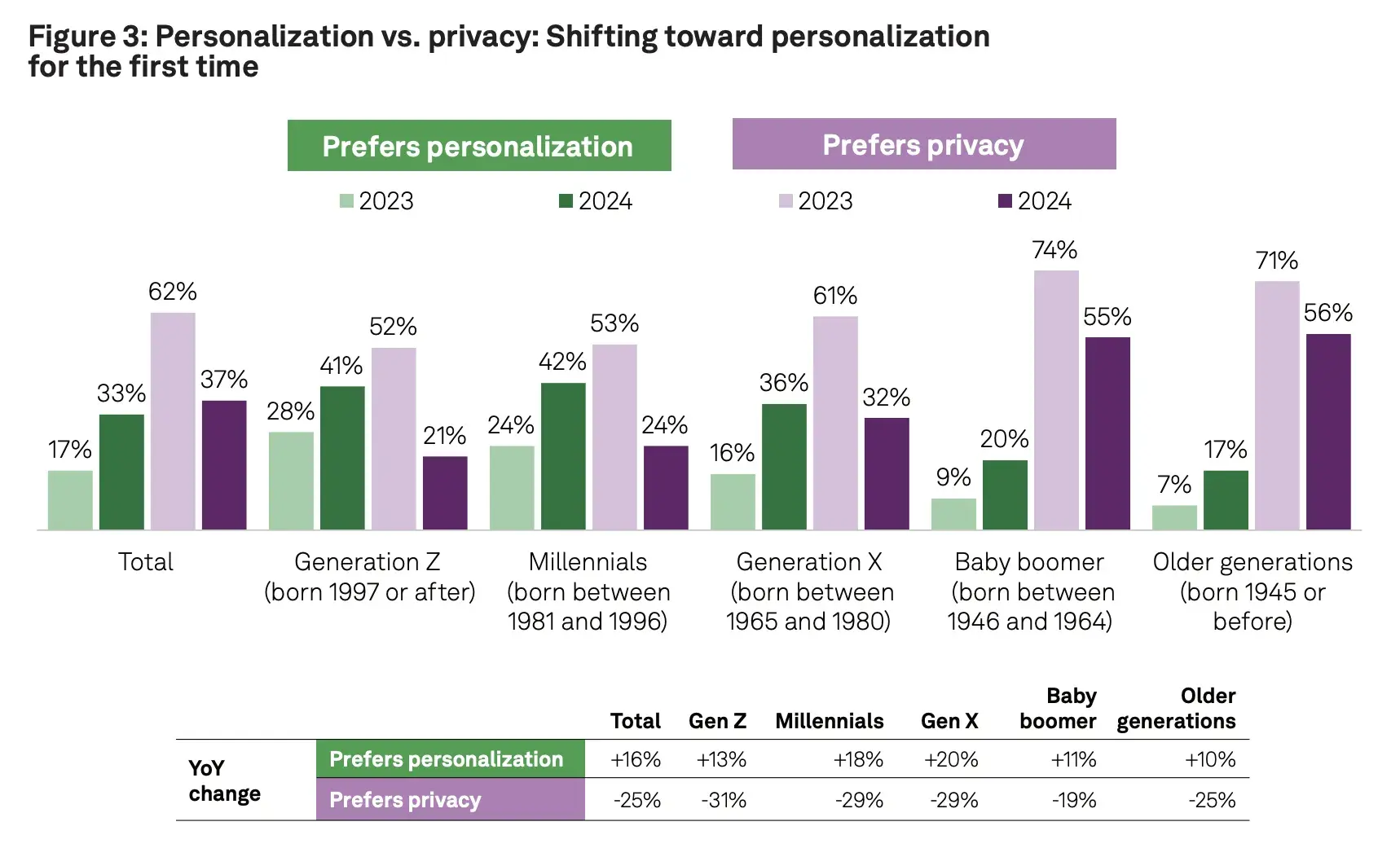
salespeople have to shift towards personalized campaigns to gain more sales.

Source

How can salespeople go the extra mile to personalize their outreach, lead nurturing campaigns, etc., when time is of the essence?

How to Handle This Challenge

Shane McEvoy from Flycast Media shared his perspective, and I couldn’t agree more:

“Sales teams need to adjust their nurture sequences rather than pushing for quick closes. AI can predict where a lead is in the buying process and suggest the right touchpoints. Sales reps should work closely with marketing to create segmented follow-ups based on the deal stage,” he said.

“By providing value at every stage instead of rushing the process, companies will avoid losing deals due to hesitation and lack of personalization.”

2. Sales teams must find the right balance with AI.

75% of sales professionals believed that AI could make them more efficient at their jobs, according to HubSpot's 2024 State of AI Report. In 2025, our survey showed that 27% of sales leaders fear buyers will resist AI-driven interactions and prefer human engagement.

Yet, most of us are still testing the waters with this technology, and there's plenty of room for missteps along the way.

Take sales outreach, for example. You could use AI as a content machine to rev up your outreach, but that isn't the best use case.

As Mike Kaput, chief content officer at Marketing AI Institute, told me, "AI is a very powerful tool — one that can definitely help you scale your outreach. However, the same principles still apply: nobody likes to get blasted with tons of irrelevant emails. Just because you can send more outreach using AI doesn't mean you should."

How to Handle This Challenge

If you‘re feeling pressure to rebuild all of your processes around AI, you’re not alone. However, a better approach is thinking of AI as a tool to improve your existing processes.

For example, instead of using AI to increase the volume of your prospecting emails, you can use it as a research tool to better understand each prospect and write more impactful messages.

Look over the tasks salespeople reportedly automate successfully with AI.
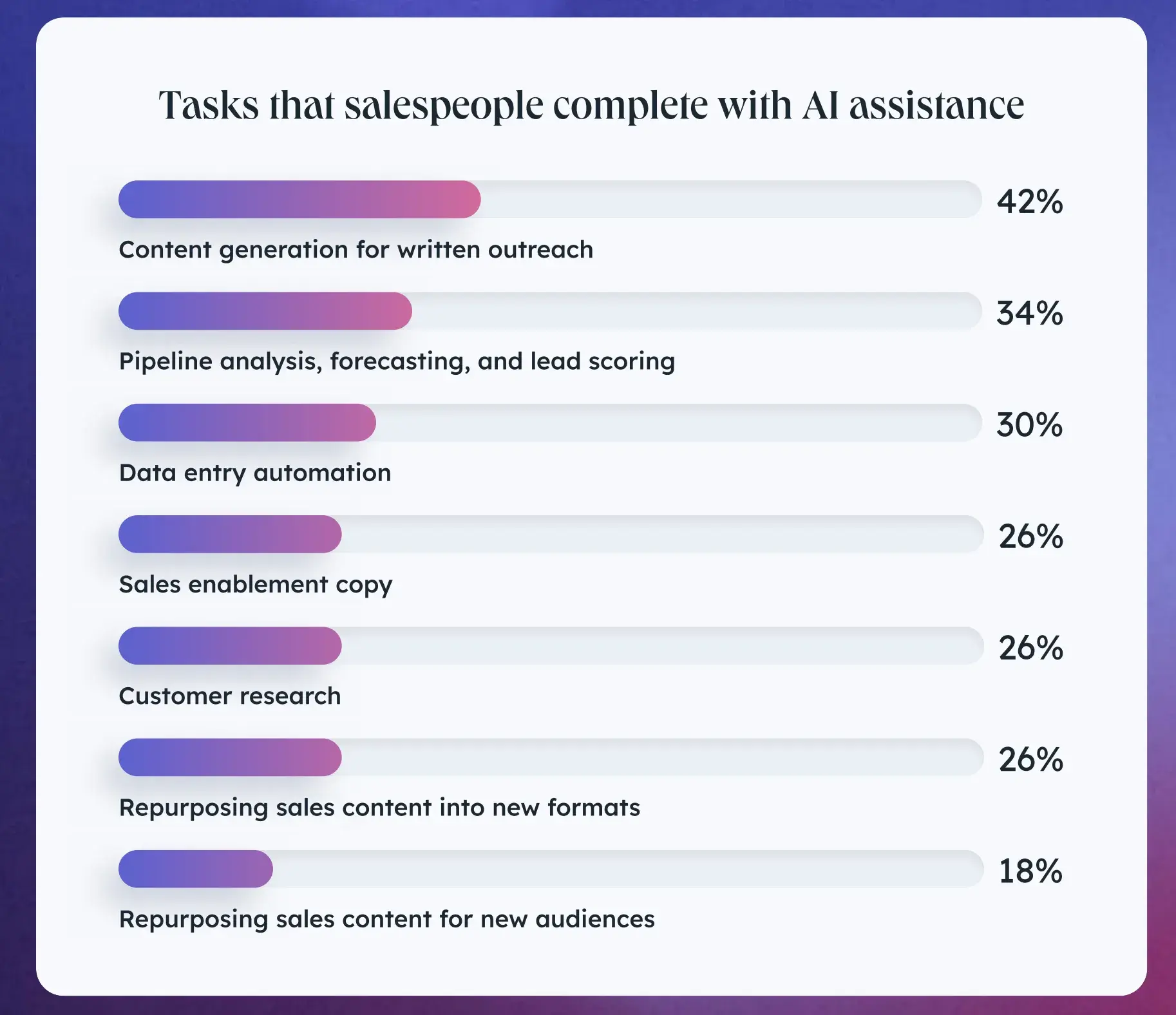
how ai helps salespeople to be more effective with their routine tasks.

Source

And remember, balance is key. The best AI systems will be those that empower sales professionals to do more without losing the personal connection at the core of sales.

3. Sales cycles are getting longer.

U.S. consumer spending in January 2025 fell for the first time in nearly two years, reported Reuters. Meanwhile, in late 2024, Investopedia published alarming numbers — over 75% of Americans have cut back on spending.

When wallets get tighter, sales cycles get longer. Consumers need more time to make purchasing decisions, and they tend to lobby more objections throughout the process.

How to Handle This Challenge

Focus your energy on engaging with prospects with the highest likelihood to convert, rather than spreading yourself thin over numerous leads. By intensifying your interactions with these leads, you'll use your time more effectively and enhance your prospects of closing a sale.

Additionally, consider offering flexible pricing plans. Among sales reps who offer freemium options, a staggering 90% say it's “very effective” at turning prospects into paying customers.

Dan Tyre echoes this point, telling me, “Offering a free tool or widget, product trial, consultation, or services checklist can increase your visibility early in the sales process.”

4. Marketing and sales struggle to find alignment.

There's a reason why 1 in 4 sales reps report that improving marketing/sales alignment would result in the most growth for their company. Yet, 30% of sales teams struggle to strike that perfect balance that reportedly slows them down.

What happens?

When this alignment is fragmented, both sales and marketing teams suffer. Marketing teams are unable to effectively generate and pass on high-quality leads, tailor content to the specific stages of the buyer's journey, or get the feedback they need to refine their strategies.

Sales teams, on the other hand, are unable to leverage insights from marketing to fully understand the customer's needs, waste time chasing poor-quality leads, or capitalize on the full potential of the marketing materials and campaigns.

How to Handle This Challenge

Step 1: Everything begins with a good customer relationship management (CRM) system as a central part of aligning sales and marketing teams. In fact, 78% of sales professionals say their CRM is effective at improving sales and marketing alignment.

Additionally, sales professionals who use a CRM are 79% more likely to say their teams are strongly aligned.

For example, HubSpot's Sales Hub offers a wide range of tools — including lead scoring, email templates, and a high-powered analytics dashboard — to help increase alignment and collaboration between marketing and sales.
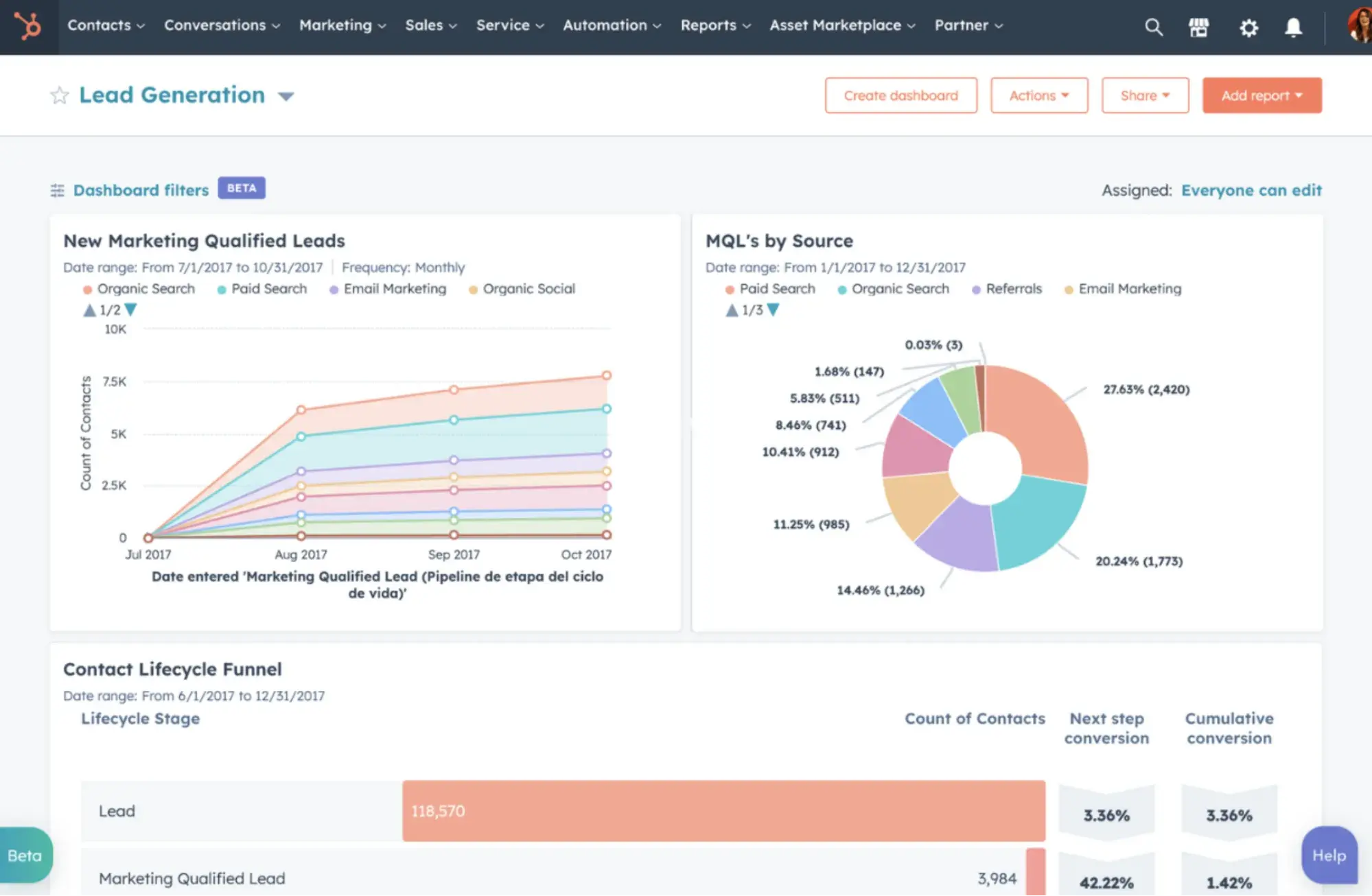
Try HubSpot's Sales Hub for Free

Step 2: “Deepen your understanding of your target customers. Not just lip service. Take surveys, review sales transcripts, and analyze solution adoption by volume to paint an accurate picture,” suggests Rashid, giving you a nudge toward the next steps.

Step 3: Rashid then recommends that you simplify your messaging. “In 2025, buyers should understand what you do differently and how you do it in under 10 seconds. We've stripped away jargon and made everything as clear as possible across channels.”

Step 4: Then you’ll want to define what success looks like between marketing and sales. “Each department has its own KPIs as leading indicators, but ultimately, we've … clearly defined what a qualified opportunity is and made sure everyone on the team is aligned,” said Rashid.

5. You need more than a solid product to close a deal.

Manos asserted that sales reps won‘t be able to rely primarily on how sound their product or service is to land deals. According to him, "The quality of the technology you’re selling alone doesn't close big deals."

Touting your solution's bells and whistles and technical performance is less effective in the “seas of same” that characterize the competitive landscape of most modern industries — particularly SaaS. In 2025, there needs to be much more to your efforts.

How to Handle This Challenge

According to Manos, “With the sheer number of competitors offering any specific SaaS solution, running a strong sales process is more important than ever. When sales reps push for a close, without having executive buy-in and a clear ROI, more deals will be lost to 'no decision' and timelines will push.”

6. A buyer-first mentality is dominating.

According to Kwesi Graves, VP of Sales at Scribe, prioritizing buyer interests will have more bearing on how reps conduct their sales efforts going forward. He says, "When we think about the concept of buyer-first, it's redefining the paradigm.

“We're going to look at how buyers want to buy versus how we choose to sell to them. It's all about mindset and scrapping out or wiping the hard drive from that old mindset, especially in the way we're selling now in this market.”

How to Handle This Challenge

Adopting a more consultative, helpful, empathetic approach to selling is the key to handling this challenge — taking steps like listening actively and having conversations tailored to getting at the “why” behind a sale will be key going forward.

Sales efforts can't be presentation-first anymore. You need to avoid “talking at” your prospects if you want to adapt to a buyer-first landscape. Emphasis has to be put on elements like extensive buyer research and relationship-building to adjust to a world where the buyer has the power.

Familiarize yourself with concepts like customer-centric selling. Learn how to conduct your sales efforts without pressuring buyers. Try to plan your efforts around your prospects' timelines as opposed to your ideal schedule.

One way or another, acquaint yourself with your buyers' unique challenges and put them first. Strides like the ones listed here provide the best avenues for you to better understand and adjust to a world where the buyer has a disproportionate amount of power in the prospect-salesperson dynamic.

7. Incorporating social selling into broader efforts is necessary.

Social media is more or less omnipresent in virtually every aspect of modern life — and the sales world is no exception. Social selling skills are becoming much more of a “need to have” than a “nice to have” for sales professionals.

According to data from LinkedIn, 78% of social sellers outsell peers who don’t use social media.

How to Handle This Challenge

Salespeople need to have a grip on how to leverage platforms like LinkedIn and Twitter for processes like prospecting, sharing relevant content, seeking referrals, and developing clout in their spaces.

This challenge isn‘t necessarily new, but it’s as pressing as it has ever been. Every salesperson needs to account for the rising tide of digital transformation. Social media, as a sales resource, isn‘t going anywhere — so it’s in your best interest to incorporate it into your repertoire if you haven't already.

8. You have to sell to buyer groups instead of just buyers.

Gone are the days of appealing to individual buyers. According to research from Forrester and Gartner, purchases involve from 6 to 22 stakeholders, whereas the latter occurs in complex purchases. These buyer groups typically involve prospects with varying degrees of authority and influence.

The people you engage with when selling to a business can include gatekeepers, influencers, blockers, champions, users, decision-makers, and a host of other representatives who can make or break your deal.

How to Handle This Challenge

Thorough research and personalization are central to overcoming this challenge. You need to be prepared to connect with all of the types of contacts listed in the previous paragraph — a process that's much easier said than done.

At the end of the day, those contacts are individuals, so naturally, they're going to be receptive to an individualized approach. Research the prospects you talk to and get a feel for their priorities, personal inclinations, and level of seniority at their companies.

Along with that, understand the common denominator that connects them — the business they work for. Know its ins and outs. Understand its industry and where it stands relative to its competition. Have a feel for its pain points, and be able to speak to all of those elements when talking with anyone you connect with from it.

9. Standing out from the competition is more important than ever.

According to HubSpot's recent survey, 28% of sales professionals stated that standing out from the competition is one of the most prevalent challenges.

Differentiation is a key issue across virtually every field, and sales is no exception. Salespeople are some of the most important agents when it comes to setting their companies apart from their competitors.

Businesses distinguish themselves with their specific value, and at its core, sales is the process of conveying that value as effectively as possible. And if your industry is flooded with a variety of options that all serve the same fundamental purpose, that process can get complicated and frustrating.

How to Handle This Challenge

Overcoming this challenge starts with determining value through understanding — having a thorough pulse on how your product or service works, the vertical you operate in, your buyer personas, who your direct competitors are, and how they try to set themselves apart.

Obviously, that‘s a lot to keep tabs on, and developing that kind of knowledge is easier said than done, but you need all of that if you’re going to craft an effective value proposition. Know your offering's features and the benefits that stem from them, inside and out.

Thoroughly research the businesses in the space you serve to identify common pain points. Talk to your existing customers about why they chose your solution. Put together a solid picture of the typical prospect who might buy from you, and adjust it as your landscape changes.

Understand your competitors as best you can. What do they offer that you don‘t? Where are you stronger? Where are you weaker? Do you have features they don’t? Do you charge at a more accessible price point?

The unique value your company can offer provides the basis for your differentiation. If you want to stand out from the competition, you need to know what makes your business special — if you can get there and sell on that basis, you'll be in a solid position to stand out from your competition.

10. Prospects need to be engaged throughout the sales process.

17% of our survey's respondents said keeping prospects engaged is a major challenge. That makes sense; your sales efforts can only go as far as your sales process permits — even the best salesperson can be limited by a lackluster one.

And though that trend is troubling, it‘s a fact of sales life. And if you want to get the most out of your efforts, you need to know how to keep your prospects intrigued and enthusiastic throughout the process’s entirety.

How to Handle This Challenge

Approaching this challenge falls on both sales leadership and the individual reps they oversee. It starts with leadership putting together a sales process that lends itself to engagement — ones that strike a balance between thorough communication and timeliness.

Next, the reps who leverage the process need to execute it effectively, specifically when it comes to communication and building rapport. You, as a salesperson, need to quickly develop and sustain trust with prospects.

That means communicating with them throughout the sales process and finding ways to convey value at every stage with the parties you engage with. Touch base consistently but not intrusively. Research the companies you sell to and the contacts you get in touch with, and shape your conversations around what you find out.

Let your prospects know you're there without being overly eager or obnoxious. As I said, engagement stems from tactful, effective communication. Learn how to keep them aware without annoying them.

11. Sales teams face capacity issues.

One or two sales reps can’t do it all. Oftentimes, businesses mistakenly blame sales teams for long sales cycles, overdue touchpoints, inefficient management of the sales pipeline, etc. In reality, the issue lies in the team’s capacity and not in their hard skills.

As Richard Harris, from The Harris Consulting Group, pinpointed, “One cannot simply say to a sales rep ‘make 20 more phone calls per day.’ At some point, we reach the maximum capacity of humans.”

How to Handle This Challenge

Start with digging into sales analytics. Look at your pipeline.

  • How many leads can sales reps receive every day?
  • How much time does it take for a discovery call, demo, or meeting?
  • Do reps craft each follow-up message, or do they use templates?
  • How much time did they spend with one lead on different stages of the sales pipeline?
  • Do these numbers correlate with benchmarks or colleagues?

If you identify that it’s too much for one person to handle, your next can be adopting AI technologies. It will solve your human capacity issue with little routine tasks like crafting a follow-up message or data entry.

Harris offers a straightforward example of how it can work.

“You want to focus on meetings with the highest level executives at a company, say a VP of sales. That is what your sales team focuses on,” he said. “You should also focus on some of the sales managers at that company. Here, you can leverage AI to send nurturing messages to lower-titled people.”

He continues: “The old-school way to handle it was to throw more bodies at the problem. The new school will leverage the technology as a partner with the sales rep.”

Back to You

So long as sales reps and managers demonstrate persistence, adaptability, and a constant commitment to solving for the customer, they should be able to handle the challenges of the new sales landscape.

If you’re navigating the same challenges, I hope this guide gives you a few clear next steps.

19 Mar 17:05

Your Sales Appointment Scheduling Process is Hijacking Productivity

by Nicolas de Kouchkovsky

For a long time, I thought of scheduling sales appointments, whether it was for demos or discovery calls, as just a feature. Improving this process was the last thing on my mind.

I was swayed by the all free tools you can use for yourself. 18 months ago, I came to realize that scheduling was much more important.

Here’s why.

You waste a LOT of time exchanging emails with a prospect until a good time is found.

Besides compromising your Sales Development Reps’ (SDRs) productivity, there are a lot of no-shows. It’s not uncommon to see 25% of scheduled meetings not happening. You could say this led to the best practice of SDRs owning leads till a meeting actually occurs.

Why You Must Care About Improving Your Sales Appointment Scheduling:

  1. Appointment setting often defines the handoff from sales development to sales.
  2. The time it takes to arrange a meeting has a direct impact on conversion.

Point #2 is particularly salient when you’re selling something loosely tied to an immediate pain point or for commodity products. 70% of meetings occur when scheduled within 9 days versus only 47% when scheduled more than 30 days out. Time is the currency of many prospective buyers. Your ability to secure a meeting will depend on how effortlessly you can follow up.

Fortunately, technology can help. This category—sales appointment scheduling—I created in my sales tech stack already lists 20 tools.

improve sales appointment scheduling

Let’s explore 4 tips that’ll make sales appointment scheduling a lot easier for you and your prospects.

1) Add Appointment Scheduling Tools to Your Sales Stack

Calendly and Assistant.to were among the first few players in the scheduling automation space. Calendly’s founder Tope Awotona found the process of scheduling meetings the most frustrating part of his job when he was a sales rep.

Having majored in computer science, he immediately figured there had to be a software solution to the problem. He looked into existing solutions but they were either hard to integrate or specific to a profession.

He built his company on the vision to accommodate a broad set of use cases by making integrations a snap! This meant prospects could see a rep’s availability with a URL inserted in an email or a website. The prospect has to then simply choose among the available options.

This type of a tool is built for speed and simplicity and democratizes the feature. These solutions are designed to make trials signups easier thus leading to broader product/service adoption.

The paradigm is also very generic and can be added to any sales process and stack. It hinges on being integrated out of the box with calendars, websites, communication and conferencing tools as well as CRM for activity logging or payment.

2) Integrate Appointment Scheduling into Your Workflows

Several sales engagement vendors such as Outreach or Yesware have added this capability to their platform. New entrants such as Mixmax are pushing the envelope to “fuze” scheduling into the workflow for all the parties involved.

Mixmax’s Olof Mathé spoke with me about his vision—not limited to scheduling—of weaving communication into existing email and CRM tools.

The three founders pride themselves on being communication geeks who cut their teeth in this space and compete with industry disrupters like Skype or Google.

The key point here is to enable users to take action within the message. This model can also be applied to polls, surveys, and content. By reducing the number of clicks required, it makes automation almost irrelevant.

3) Focus on Conversion Rates Not Appointments Booked

The poster child for a specialized app is Chili Piper. Their founder Nicolas Vandenberghe is actually the one who convinced me to create a category for appointment scheduling.

He approaches scheduling from a larger perspective—as a hand-off from Marketing and Sales Development to Sales. It’s not just about finding a time, but securing an appointment and assigning the lead to a sales rep.

Of course, it’s critical to ensure there’s a fair distribution of leads among larger sales teams. Gathering data to do it can take time and break the promise of an instant booking.

Nicolas believes the industry needs to go beyond saving that 5 to 10 minutes it takes on an average to book a meeting.

The true measure of success should be improved conversion rates. Well-established offers may still rely on self-qualification by the prospect and don’t need an SDR to facilitate the process. Moving your appointment schedule online creates a “fast lane” allowing prospects to directly book their demos or meetings.

4) Automate Appointment Scheduling with AI

Artificial Intelligence (AI) is not new for appointment setting.

x.ai, an appointment scheduling assistant, was among the first AI applications for sales.

Clara Labs added a twist by combining AI with human assistance. Their founder Maran Nelson carefully zeroed in on this angle after several iterations.

They first tried to create a User Interface (UI) for booking time. The UI turned out to be cluttered and could not work around language constraints. They then adopted Natural Language Processing (NLP) but was still struggling with a broad range of use cases.

Some organizations want a personalized appointment scheduling experience because it’s the first step in a relationship. Others want to automate and optimize their own appointment scheduling process down to a single click. The solution was to include a human in the loop, supervising the process and stepping in to prevent too many automated back-and-forth messages.

Start by Reviewing Your Internal Processes

We’ve covered a key aspect of your sales engagement process here. It governs both a critical handoff and overall conversion rates. In particular, you should check if your process is a leaky pipe or if it’s eating into your team’s time.

Before you consider any of these tools, you should define your ideal appointment scheduling process. That will guide the selection of the approach best suited to your business. It will also help you assess where you need to improve, why you need technology, and how to measure success: enhancing SDR productivity, making their job easier, or improving conversion rates.

The post Your Sales Appointment Scheduling Process is Hijacking Productivity appeared first on Sales Hacker.

19 Mar 17:03

The 3 Mistakes Every Company Makes Building the Outbound Sales Model

by Liz Cain

Editor’s Note: The following article is based on Liz Cain’s presentation at SalesLoft’s Rainmaker Conference. You can see the full presentation here.

I’m going to take you back, way way back. The year is 1999. And what we now consider to be “old cloud” companies were just being founded. Salesforce was one of the first out of the gate with an inside model. Marc Benioff and his team demonstrated a consistent ability to scale with an outbound sales team in those early years.

Top 3 Mistakes Building Outbound Sales

And with that, modern inside sales was born.

Building an outbound sales motion is not new, and yet almost every company makes the same three mistakes in the first months of getting up and running.

1. You don’t know your top segments, and if you do you’re not prioritizing them.

Every company starts broad. Excited by a large market and countless use cases, they take what comes to them. But, to make outbound work, you need to get hyper-focused and be relentless in prioritizing your efforts.

Let’s start with the basics. What is a segment? A segment is a group of customers that can be addressed with the same go-to-market strategy and product.

Seems simple enough, but I can’t tell you how often I hear founders and sales leaders go too broad – “We are a true horizontal play. We can sell to anyone. We don’t want to turn people away”. As investors, we want to see a large total addressable market, but we also recognize the importance of focus. When you don’t focus, bad things happen:

  • Dilution of resources
  • Lack of coordination and alignment
  • Incoherent messages to the market
  • Inefficient use of time and resources

LinkedIn is one example of a company that has a done a phenomenal job of defining, prioritizing and addressing clear segments. They’ve taken the same basic product features and packaged them in a way that they can go to market targeting 4 distinct groups, each with one clear product and message. They approach professionals, job seekers, sales teams and recruiters each with their own unique offering. I’m writing checks to LinkedIn for 3 of the 4 right now (infuriating, but you have to admit it’s genius).

Top 3 Mistakes Building Outbound Sales Model

As you think about applying these lessons to your own company, a few pieces of advice: start by reviewing the past and getting a firm understanding of your data. Come up with a hypothesis – get your sales, CS and marketing leaders in a room and hear what they think, then try to validate or disprove these hypotheses with real information. Finally, it’s time to experiment and this brings me to my second lesson.

2. You don’t run experiments, you pivot.

Most startups and many teams are nimble and can implement changes quickly – they can iterate on the fly. While that’s an admirable trait, you need to create a culture of discipline around experimentation for outbound to be successful. One rep succeeding in a territory is not necessarily repeatable. Figure out the levers you can pull and work through them systematically – if you can’t measure it, you won’t know what worked.

The risk comes when a sales leader, or founder or even CEO gets too excited by too many new ideas. Every new idea is a GREAT idea, but more importantly they want the entire company to chase it. It’s confusing when you’re moving too quickly, all in different directions, pivoting regularly – you hamper your own progress. The most common one I see? Moving to enterprise. Companies close one or two enterprise customers and get big deal fever. They pivot their entire company and point the outbound team at ONLY enterprise meetings.

A culture of experimentation needs to be established at the top and pushed down into an organization. It takes guts to test things, fail and go again. Leadership teams need to create room for this and encourage creativity without repercussions.

So how do you actually run a disciplined experiment? It starts with a hypothesis – what are you here to test? Then you need to identify the different factors, design a process, agree to a timeline and be crystal clear on the metrics you will track to determine if it worked. After you run the experiment, you need to be rigorous in your review. If it worked, the next step is to figure out how to cap out this option – how far can it scale?

Top 3 Mistakes Building Outbound Sales Model

Let me take you through an example of how to do this at your own company.

When you decide to start an outbound team, you don’t just hand them phones and say “go”. You narrow in on a particular segment and make a hypotheses around what persona to target, what messaging to use, how to procure the targets, and how to prioritize outreach. Each of these small decisions is a variable to be tested. When you look back in 90 days, how will you decide if you should pour in more resources or start the next experiment? You have to get clear on your measurements – for example,  fully-loaded cost of lead acquisition and conversion rate to customer.

3. You pitch too early in the buyer journey

Last, but certainly not least, when you shift from inbound to outbound, you naturally engage your buyer earlier in their journey. You might get lucky and call on a hot buyer, but more likely you will need to nurture, educate and develop a relationship long before you can start your sales process. And yet, most companies design a sales process that starts with “qualification”, which assumes your buyer is ready to be qualified.

There is fundamental difference between a suspect, an individual or business in your target market who you believe would benefit from your product or service, and a lead or hand-raiser, who shows interest and provides his or her contact information. This distinction is important – when you go outbound, you are dealing with suspects.

Top 3 Mistakes Building Outbound Sales Model

And suspects have not even started their buyer journey.

At the most basic level a buyer goes through 3 stages:

  1. Awareness where they identify a problem (or opportunity) in their business
  1. Consideration where they clearly define their problem and commit to researching and understanding all of the possible ways to solve it
  1. Decision where they narrow in on a short list of vendors and products before making a final purchase decision

Your sales team is probably used to dealing with inbound leads, they dive in around the consideration stage, pitch your product and focus on qualification. You’ve likely all heard the stat that 67 percent of the buyer’s journey is now done digitally (SiriusDecisions). Whether or not you fully buy it, you have to agree that the rise of the internet, digital economy, and information overload have created flexibility and a well-researched buyer. Which means we’ve come to rely on leading with our product and pitching early and often.

When you flip to an outbound motion, the key is to focus earlier and help your prospect get to the awareness stage.

Top 3 Mistakes Building Outbound Sales Model

Your time needs to be spent on thought leadership, closely tracking each suspect to ensure you are using the right content at the right time to engage them. If you have segmented your market correctly and have a narrowly defined ICP, this becomes much easier. This is a key coaching opportunity – you can teach your team to play the long game, and arm them with the right content and messaging to create that awareness of a greater problem, before pitching.

One company that has done an exceptional job of telling their story, creating awareness of a common problem and defining a category is Zuora. If you haven’t heard of them, Zuora is a SaaS platform for recurring or subscription billing. Andy Raskin does an amazing job of outlining their entire pitch here, but at the highest level they’ve managed to tell their story in terms of a market revolution and not just one customer.Top 3 Mistakes Building Outbound Sales ModelZuora coined the phrase “subscription economy” to name the trend in which buyers increasingly choose recurring service payments over outright purchases. Their outreach is not about their product, their investors, their clients or their success. It’s about education – most companies aren’t even aware that there is an opportunity to automate these manual processes. They’ve managed to take this story and infuse it in everything they do aligning their marketing, SDR and sales teams around the idea that you need to educate before you can sell.

So if I boil this all down, the strategy to go outbound can work for many businesses, but doing so requires that you avoid some common landmines. To succeed at outbound you must:

  • Define and prioritize your segments.
  • Run disciplined experiments.
  • Educate before you pitch.

This article was inspired by a recent presentation I gave at Rainmaker 2018. You can access the full presentation deck here.

The post The 3 Mistakes Every Company Makes Building the Outbound Sales Model appeared first on OpenView Labs.

19 Mar 17:03

Where Do You Find New Leads

by Miles Austin

Where Do You Find New B2B Leads? How do you consistently—from day to day and year to year—find new leads? It’s been a challenge since the creation of modern business plans and techniques. Churning through lead after lead isn’t the answer, especially if the few sales you make are a one-and-done type of business-to-business sales. […]

The post Where Do You Find New Leads appeared first on Fill the Funnel.

       
19 Mar 17:02

How To Solve Your Biggest Pipeline Management Problems

by Dusti Arab

PawinG / Pixabay

Managing a pipeline is equal parts art and science, beginner’s mindset and your 10,000 hours of experience. But by the time you get to the point of managing a team, the problems that can come up in your organization’s pipeline get exacerbated on a scale that can be difficult to deal with.

Fortunately, many of these problems are also predictable – and can be addressed with solutions pioneered by those who’ve already been in your shoes.

Today, we’re highlighting some of the best practices for effective pipeline management, so you can skip the painful learning curve that can show up in the form of lower sales, a discouraged team, and more. As an added bonus, many of the links below contain templates to help you navigate this territory as effectively as possible. (In particular, Close.io‘s pipeline review guides are phenomenal.)

Separate Pipeline Reviews from Forecast Meetings

Forecast meetings are designed to talk about revenue and what deals are closing this week. Those meetings only deal with the end of your pipeline, not the overall health of the pipeline. Schedule a pipeline review with your sales team to discuss what’s at the beginning of the pipeline.

A successful pipeline review can not only help you determine how many leads you have in the funnel, but it can be an important training tool for your team. You can take a closer look at what’s likely to close and what’s just cluttering up the pipeline. It’s a great opportunity to evaluate how the most qualified leads are generated and focus on those.

Keep the Pipeline Clean

More is not necessarily better when it comes to your sales pipeline. It takes valuable time and resources to follow up properly with all the potential customers in the funnel. It’s been said that 20% of your leads are going to provide 80% of the payoff.

That’s why it’s so important to keep a close eye on your sales funnel and eliminate weak sales opportunities. By clearing out the clutter, you free up time and energy to focus on the most qualified leads in your pipeline. You’ll be more likely to convert and keep that revenue stream flowing.

Evaluate Your Sales Metrics

Focus on evaluating the sales metrics that will really help to keep your pipeline flowing. Of course, your win rate is important, but figuring out how you got to your win rate could be even more crucial. Here are some additional metrics that could help you understand your pipeline a little better:

Opportunity Dollar Size vs. Average Won Deal Size

Is the size of your potential sale here about the same as it usually is? That’s a good indicator that you’re in your sweet spot. If a deal is significantly larger than the average size deal that your team usually wins, that’s an indicator that it’s less likely to close.

Optimism can keep you stuck here with the large deals that might not close when you could be closing significantly more of the deals that are in your team’s wheelhouse. Leaving those big deals in the pipeline can also be dangerous to the health of your pipeline because it’s inflating the value of the pipeline with deals that are less likely to be won.

Opportunity Age vs. Win Cycle

In the same way that it’s key to evaluate the size of the deal, you must evaluate how long a deal has been in the pipeline. The longer you have a deal lingering in the pipeline, the less likely it is to close (unless you have a product with a longer life cycle). When you’re paying close attention to your sales cycle, you know about how long it takes for your average customer to make their decision. If a deal has been in the pipeline too long, it’s time to let it go and focus on deals your team is more likely to win.

Look at Your Sales Process from the Customer’s Perspective

Your potential customer isn’t thinking of themselves as a “qualified lead” – and maybe you shouldn’t be either. Try aligning your sales process with your potential customer’s buying process. First, your potential customer becomes aware of pain point in their current systems. The customer then discovers your company, or the product or service you sell, then they begin to consider how your solution stacks up against their other options. Thinking about the sales process as a customer journey helps to ensure that you’ve got your sales staff at the right place at the right time to continue your sales cycle.

Focus on Data Quality

Is everyone entering data consistently? Is there a formalized process for how your potential customers move through your pipeline? If not, poor data quality could be giving you a false sense of security (or despair when it’s unwarranted) in your pipeline. What you get out of your pipeline is only as good as what you put in. A great CRM tool can help you manage the quality of the data your team or sales automation process is collecting.

19 Mar 17:01

Why Adding Another Salesperson Isn’t Always the Answer

by Charles Nadler

When you think about the fastest way to grow your small business, there are a couple paths that probably come to mind: hire for sales and explore acquisition opportunities. If acquisition isn’t in the cards, then maybe you’re just relying sales.

Historically, outbound selling has been a proven lever for growth. But in today’s buyer-driven market, relying on outbound sales exclusively is simply not as reliable as it once was.

An effective growth strategy needs to be diversified; specifically, I’m going to make the case that it needs to include marketing. (Full disclosure: I’m a Strategic Director for a marketing agency. So, yes, I’m biased, but I’ve also been around the track a few times and have seen first-hand how marketing has helped our own agency and our clients.)

If you’re more inclined to hire salespeople than invest in your company’s marketing, let’s unpack some of the arguments why a salesperson might be preferable to marketing and compare them to today’s market trends and the evolution of buying habits.

Adding a Salesperson Makes Sense on Paper

First, let me acknowledge that I appreciate the allure of hiring salespeople. Quick-thinking, effective salespeople can be a great way to generate leads and increase revenue — that’s their whole job and it’s how they’re compensated. Because of the direct impact they have on your business, you’re able to track and review their performance and pay them accordingly.

What’s not to like?

On the other hand, if you’re investing in a marketing team or outsourced agency, you may be frustrated to find that their efforts won’t provide immediate results. There may be no marketing switch you can flip that instantly generates a positive ROI. Sometimes even tracking effectiveness of marketing efforts can be a little confusing.

It’s no surprise many business owners prefer the directness of a salesperson’s impact over the efforts of a marketing agency.

How Far Can Sales Take You?

Of course, a single salesperson has a much narrower focus and impact than a cross-channel marketing operation. Meanwhile, a good marketing gets your message out across several channels so that you’ll actually gain awareness and brand recall with your audience.

Even one well-crafted, targeted ad can get your business in front of more people in a given day than your sales team has time to call in a month. When you invest in a multi-channel marketing, you’re reaching markets your sales team may or may not be able to reach.

Study after study has shown that real, sustained growth comes from a diversified set of channels. But if you’re not finding new ways to attract leads, then you’re deserting your sales people to the misfit island of cold calling, spamming and other ill-advised “spray-and-pray” tactics that rarely perform.

However, by investing in marketing, you’re attracting customers to your business by giving them the content they need to choose you. These are called inbound leads. They’re more educated, more empowered, and much more likely to convert than cold outbound leads. Best of all, according to research performed by HubSpot, inbound leads cost 61% less to generate than outbound leads.

Let’s look at some trends on buyer behavior and sales tactics:

  • Only 16% of marketers say outbound practices provide the highest quality leads for sales. (HubSpot, 2017)
  • 38% of salespeople say getting a response from prospects is getting harder. (HubSpot, 2017)
  • Only 29% of people want to talk to a salesperson to learn more about a product, while 62% will consult a search engine. (HubSpot, 2016)
  • Almost 50% of internet users look for videos related to a product or service before visiting a store. (Google, 2016)
  • 80% of business decision makers prefer to get information in a series of articles versus an advertisement. (Exact Target, 2015)

If it isn’t clear yet, today’s sales climate has shifted radically from 15 years ago when the internet was more like the wild west and salespeople could be relied on to drive lead generation. Today, buyers are in control. They prefer to do preliminary research online and they typically know what they’re getting into before they talk to sales.

When you expand your marketing efforts with a marketing team or agency, they make sure inbound leads find you while generating new demand from a wider audience. If you’re ignoring channels like SEO, content, digital advertising and email marketing, you’re not getting in front of potential leads and you’re limiting your opportunities for growth. Most entrepreneurs set aggressive sales goals and if you’re relying on salespeople to hit those, you’re leaving a lot of stones unturned.

Marketing Allows Sales Teams to Focus on Revenue

If you’re thinking about hiring a marketing agency or director, here’s a good piece of advice: resist the urge to think about sales and marketing as two different departments. Instead, hire marketing resources who know how to align with sales and you’ll be providing your sales team with an invaluable resource (They may even thank you.)

Why? Because when aligned, marketing is helping qualify your leads, prioritize them for your sales team, and automate tactics so your sales team can segment, track, nurture and convert leads as quickly as possible. With all that time saved, they’ll have plenty of time to go golfing or whatever it is that salespeople do in their free time.

Choose What’s Right for You

Not every business needs the full-tilt efforts of a marketing agency; you’ve got to decide what’s right for you. However, as it gets cheaper and easier to launch new businesses, your competition may grow while your market becomes more fragmented. It’s up to you to look at your competitors, consider how much they may be spending on marketing, and decide: can you afford not to invest in marketing?

19 Mar 17:01

Sales Navigator Success Stories: Tech and Professional Services [Video]

by Judy Tian
Sales Navigator Success Story

When it comes to lead gen and biz dev, sales professionals with a knack for finding and engaging the right people put themselves in a much stronger position from the start. Read on and view the brief videos below to discover how four technology and professional service firms use LinkedIn Sales Navigator to research potential buyers, initiate conversations, and build rapport.

Apply Advanced Search Filters to Reveal New Leads at Customer Accounts

Sales teams typically have well-established contacts at their customer accounts. That’s good business. It can still be tricky, though, to figure out who to approach to discuss cross-sell or upsell opportunities.

The advanced search filters of LinkedIn Sales Navigator can help. See how Danielle Barnes and her team at global advisory leader EY used the advanced search functionality to reveal new names at an existing customer during their search for people with an interest in blockchain and digital currency.

Use Advanced People Search Filters and Inmail to Connect with the Right Person

Zoom Video Communications’ Head of Sales Greg Holmes found success using Sales Navigator to pinpoint C-level customers in the bay area who might be interested in attending a hockey game. That meeting led to another C-level introduction, followed later by a closed deal.

Create Personalized Messages that Get Read

The abundance of email and automated messages causes prospects to delete most sales communications with little consideration or afterthought. InMail helps sales professionals break free from the clutter.

Guardian Life’s Nate Isaacson explains how a financial advisor at his company directly attributes his success to InMail.

Use the Power of a Combined Network to Break Through Gatekeepers

Persistence and resourcefulness are hallmarks of successful sales pros. On your quest to gain traction with a qualified sales prospect, it’s almost a given that you’ll encounter a closed door.

But even if a deal seems doomed for now, don’t give up just yet. Circumstances change, and when they do, you can spring into action like Samantha McKenna and her colleagues at On24.

Interested in using the best version of LinkedIn for salespeople? Visit us at sales.linkedin.com. And to keep pace with the latest in selling, subscribe today to the LinkedIn Sales Blog

19 Mar 17:00

Marketing ROI Showdown: Which Digital Channels Perform the Best?

by Eric Siu

With so many digital channels these days, it can be hard to tell where you should be spending your time and marketing budget. SEO, email marketing, PPC, native advertising, podcasts, social media…the list goes on!

But that’s exactly why it’s important that you spend your money and energy in the right places.

If you spend your time and budget on the wrong channels, not only will you be wasting your marketing dollars, you’ll also be missing out on potentially lucrative opportunities to grow your business on other channels. That means it won’t just cost your company thousands in wasted marketing dollars – it could cost you even more in unrealized revenue!

Thankfully, you don’t have to completely guess at what works. ROI is something that can be defined, measured, and analyzed.

But first, you need to understand some of the challenges with picking a single top-performing channel.

There Is No Consensus about Marketing ROI

As much as I’d love to offer you a magic bullet here, there simply isn’t one.

When I was preparing to write this article, I decided to read through a few surveys and studies to see what other experts and professionals thought were the most effective marketing channels.

Unfortunately, the results were pretty scattered:

Study 1: Ascend2

Marketing ROI Showdown1

Study 2:Econsultancy

Marketing ROI Showdown2

Study 3: GetResponse

Marketing ROI Showdown3Just look at PPC for example. The study done by Econsultancy (2) showed it to be the best performing by far. But look at the GetReponse study (3) – it ranked dead last.

So what gives?

Every business has different marketing goals and measures ROI differently. Econsultancy focuses on e-commerce marketing, so their survey is probably a little biased toward that demographic. Instead of saying that PPC is the most effective marketing channel, it might be more accurate to say that PPC is the most effective e-commerce marketing channel. At least for their audience.

In fact, only email marketing ranked among the top ROI opportunities across all three studies. And that’s because it does a very good job of achieving multiple marketing objectives and, for many businesses, has a heavy emphasis on sales (where it’s easier to measure ROI).

But as you’ll see when you read on, sales isn’t the only metric you should be evaluating your marketing on.

How to Measure Marketing ROI

First, let’s make sure we’re on the same page about what ROI is. ROI is your Return on Investment. The money you made in excess of your expenses, then divided by your investment and expressed as a percentage.

Marketing ROI Showdown4

This allows you to compare two different campaigns regardless of their size. A campaign that makes you $1,000 for a $100 investment has a much better ROI than one that brings in $20,000 but costs $15,000 despite the fact that the latter earned you $4,100 more.

Your gain from investment should refer to the value that marketing contributes to your business.

In the most obvious example, that could be sales revenue. But it could also be website traffic, brand awareness, leads captured, or anything you desire. (You’ll learn more about selecting the best metrics in the next section).

Since each business has its own goals, your metrics will be different – which is precisely why I can’t make a blanket statement like “email marketing is always the best ROI for all businesses.”

Your cost of investment should be a summation of everything that goes into the campaign, namely time and money.

For example: if you pay someone $350 to write an eBook based on a case study you did and then paid a $150 editor fee to have someone polish it off, your total investment would be $500.

Now let’s say that your eBook captured $2,000 worth of leads. Here’s how the math would break down:

Marketing ROI Showdown5

Most people would consider this very good.

Track Costs Properly

Be careful though – does that really capture the true cost of capturing leads from your eBook? What about the time it took you to prepare the case study? Or the costs of the lead capture software you used to collect email addresses from your site?

You need to make sure that you factor in expenses like that, too. Especially your time. If your time is worth $50 an hour, every full day you spend on a project costs $400. That only goes up as your salary does.

On the other hand, don’t double count costs either. If you paid someone to turn an existing blog post into an eBook or some other content repurposing, you shouldn’t include the cost of the original resource. It’s already spent.

And lastly, don’t forget to spread out shared costs.

For example: if you decide to upgrade to a CRM with better funnel tracking for your new campaigns, don’t just expense it all to your next project if others are relying on it. Instead, spread the cost out evenly across the projects that rely on that product.

Or if it’s a tool your business is going to invest in regardless of your marketing decisions, leave it out completely.

Select the Right Metrics to Measure Your Marketing ROI

While expenses are more or less straightforward, measuring the value brought in can be much more tricky. If you select the wrong metrics, you could end up wasting time and money chasing strategies that show pretty results but aren’t actually doing anything for your business.

An easy metric to track is something like sales revenue, but not all marketing efforts are focused on direct sales. Some strategies, like content marketing, are focused on building brand authority and nurturing the customer through a buyer’s journey before closing the deal:

Marketing ROI Showdown6

The first step in selecting the right metrics is defining your goals.

You need to talk with your digital marketing agency, your marketing team, and other internal departments to agree on your role and how you will measure success. This requires that you understand the buyer’s journey and where your marketing fits in. Is your role to close deals? Retain customers and grow accounts? Increase brand awareness?

In a large organization, marketing might play all these roles and more. But each campaign should have a single primary focus.

Once you know what your primary goal is, you need to define a single metric by which to track it. For example: if your goal is to increase brand awareness, will you measure that by ad impressions or website visits?

Choosing the right metrics can be hard, but also one of the most important things you can do. If your metrics are wrong, you’re flying in the dark.

Here are some great resources to help you find the right metrics:

It’s important to focus on a single metric when evaluating your ROI. For example: if your goal is to pass more qualified leads to sales, then your metric should be qualified leads captured. The number of website visitors you get isn’t important. The number of total leads you capture isn’t even important. Total qualified leads are what count.

That doesn’t mean those other metrics aren’t helpful to track and improve the effectiveness of your marketing. But they don’t belong in your ROI calculation because they don’t directly contribute to your defined business goal.

Lastly, you need to assign values to those metrics – ideally, a dollar value. For goals like increased sales, the dollar value is inherent. Others need to be calculated.

Your sales team should have an idea of how much a qualified lead is worth, based on conversion rates and customer lifetime value. But sometimes a dollar amount just won’t make sense, as with brand awareness campaigns. In that case, you should just substitute the metric for the “return” section of the formula to find an average cost per result.

So if your goal is to drive traffic to your website, your metric might be unique visitors. If you spend $1,000 on ads that send 100,000 people your site, ROI would be 100,000 visits / $1,000 = 100 visits per dollar.

You can then compare that with your content marketing campaign that cost you $2,000 but drove 300,000 visits. So 300,000 visits / $2,000 = 150 visits per dollar.

If you want to compare these campaigns to more sales-driven efforts, you’ll have to assign a dollar value to each website visit. That’s not impossible if you know your average conversion rates, but just keep in mind the more estimates you put into the formulas, the less exact the results become.

2 Tools You Can Use to Track Marketing ROI

If you’re spending a decent amount on marketing activities, you should be using the right tools to track your costs and returns to make sure it’s as efficient as possible.

Tracking all of this manually can be time-consuming in itself and if your goal is to be more efficient with your resources, anything that gives you back time is a smart investment.

Kissmetrics integrates with your site and marketing tools to track each campaign you run and the behavior of the visitors they send:

Marketing ROI Showdown7

If your site drives sales, it can even automatically tell you how much revenue each channel is driving so you know where to invest more energy:

Marketing ROI Showdown8

But if your product isn’t e-commerce focused, you should still tie your marketing efforts to end results with an integrated pipeline CRM like Salesmate:

Marketing ROI Showdown9

This will track your leads through the marketing funnel and then compare that with the results of your sales team, which is really valuable when you want to track qualified leads that result in sales instead of just generic total leads.

Conclusion

So what marketing channel provides the best ROI? Unfortunately, there is no silver bullet when it comes to that question. But it can be measured, calculated, and analyzed.

You just need to make sure that you accurately account for your costs and track the right metrics that result in achieving your business goals. So don’t rely on gut feelings or personal opinions when selecting your marketing channels.

Take the time to run the numbers and make an informed decision – that’s the way to achieve maximum results.

The post Marketing ROI Showdown: Which Digital Channels Perform the Best? appeared first on OpenView Labs.