By Jim Cathcart After years of your sales team seeing prospects as “fresh meat,” how do you cultivate a service-oriented mindset? Well, it’s not as complex as it might seem. It is not like getting lions to become vegetarians. Instead, it’s about showing the value (e.g., payoffs) of doing things in new ways. Setting the …
Today’s consumer expects nothing short of an earth-shattering experience as they interact with your brand, no matter where they are in their journey. And they want the same unique, personalized experience to travel with them as they venture across channels, offline and back again.
Mapping your customers’ journeys from prospects to loyal advocates is one thing, but delivering empowering experiences that adapt in real time across marketing, sales, and service is quite another.
Rising customer expectations are pushing change at an unprecedented rate. So smart businesses are turning to artificial intelligence (AI) and its subfields — machine learning (ML), deep learning, and natural language processing (NLP) — both to meet these challenges and surpass cautious competitors. Here’s how AI is making an unforgettable customer journey not only possible, but also a competitive imperative.
1. Improved Visibility Into Customer Sentiment
It’s tough to create a compelling experience for your customers if you don’t have good insight into where they’ve been, where they are now, and most importantly, what they think. Which channels and offers are most effective at which stage and why? Where are customers getting frustrated? Why are some falling off completely?
While sentiment analysis is nothing new, ML applications are doing it more accurately and in real time, for deeper, more meaningful insights into customer attitudes throughout the lifecycle.
Brands are able to capture and analyze data on customer sentiment in the moment, unraveling values and motivations that impact buying decisions.
Text extraction, for example, can pull content from social media posts as they occur, revealing how people talk about the products and services they’re considering. Improved visibility into opinions along the customer journey can highlight what’s working, what’s not, and why, making it easier to anticipate customer needs and meet demands as they unfold.
2. Right Content, Right Time
Once you have some idea of how your customers feel, it’s easier to match them with the right content. The decisions you make about the type of content, messaging, and service offerings you present to them along their journeys determines whether you build happy, informed advocates. Get your content wrong, and the journey ends there.
The good news is, a wide range of campaign automation tools powered by AI is available to help develop better customer journey maps and storyboards for improved targeting and customized messaging based on where customers are and how likely they are to buy. ML algorithms recalculate in real time, allowing marketers to place the best offers in front of customers instantly — even as they change their minds.
Based on interactions with your content, ML can help you create dynamic customer profiles. Using both offline and online data, a single, integrated customer profile is created, allowing you to personalize campaigns across channels and target customers with precision.
Other AI applications can analyze buying signals and trends to identify customer preferences that can then be aligned with where the customer is along the buying journey.
Smarter, more sophisticated chatbots are doing a better job of anticipating customer needs and building relationships that drive outstanding experiences. Relying on an external knowledge base, AI-powered bots learn and adapt with each new interaction. Today, they’re not just handling customer inquiries and placing orders, they’re engaging customers throughout the entire lifecycle — from awareness to purchase and beyond.
Progressive Insurance created the “Flo Chatbot” — an auto-quoting tool that lives on Facebook Messenger — to simplify the process of getting an auto insurance quote. The Flo Chatbot answers popular insurance questions such as, “what is a deductible?” and even personal questions directed at the Flo Chatbot such as, “what is your full name?”
Dan Witalec, Customer Acquisition Leader at Progressive, believes the Flo Chatbot will improve the customer experience “by talking with them exactly where they are: on Messenger.” With 4.8 million followers on Facebook, it seems Progressive chose the perfect platform to reach both potential and current customers along their car insurance journeys.
4. Personalized Dynamic Pricing
The right price is often the deciding factor in a purchase, and ML-powered regression models drive real-time pricing — only personalized. Moving beyond yesterday’s dynamic pricing, AI applications allow unique offers to be made on an individualized level. As customer preferences change, so will pricing, resulting in one in-store price and one personalized price for you.
Personalized dynamic pricing lets you extract the right information about buying behaviors as they occur so you can present the best products to your customers at the right prices and on the fly.
Final Thoughts
The customer path to purchase is becoming more complex every day. And while most businesses recognize the need to understand the voyage, few have a handle on it.
Here’s the takeaway: practical applications of AI, like those discussed above, can help improve workflow and increase efficiencies while offering your customers the products and services they demand.
However, whichever digital path you decide to take, driving superior customer journeys requires more than assembling the right combination of data, insights, and digital content. It involves building and executing smart strategies that end in award-winning, omnichannel, personalized experiences that wow.
Having gotten insight from top pricing recruiter Chris Herbert, we reached out to pricing thought leader Tim J. Smith to get his insights into the skills needed for pricing expertise. Tim is the CEO of Wiglaf Pricing and his books include Pricing Strategy and Pricing Done Right. To widen our perspective, we also spoke with top sales coach Reg Nordman of Rocket Builders.
This interview is part of the joint Ibbaka and TeamFit research project on skills for pricing excellence. Ibbaka is interested in this as we are scaling up our own pricing practice and deepening our skills base. We need to know what is coming and what skills we need. We are also interested in supporting the general growth of pricing expertise, as ‘the best customer is a well informed customer.’
Ibbaka: What are the critical skills for pricing expertise?
Tim: I am seeing a divergence between the retail space and B2B.
In retail, the skills are driven by the need to understand data about market segmentation, competitor actions, consumer response and so on. Increasingly, the skills used here come from computer science – algorithm design, artificial intelligence and machine learning, data science are generally all critically important.
It is quite different in B2B. Here there is often a lack of data, especially of competitor data. What is most needed among B2B pricing experts is the ability to have a discussion at the board level. This requires a broad knowledge of business and strategy and not just analytical skills. Emotional intelligence is needed.
A B2B pricing expert needs to be able to create and manage the agenda on how to increase profit, which is often a key goal of pricing.
Ibbaka: What are the skills that differentiate the really superior pricing consultants from the crowd?
Tim: An understanding of business innovation and business models. The top pricing consultants have a strategic point of view on how to make a business successful. They are able to support the business as it considers innovation and new product lines, new market opportunities, and even merger and acquisition activities.
The top people go well beyond the pricing optimization and revenue management concepts that are often taught in the operations courses at business schools. They know how to optimize price structures to drive strategy. These people are needed in the retail and B2B spaces.
Ibbaka: Do you see pricing as a team activity?
Tim: Yes. Good pricing leaders understand team dynamics. They can build and lead teams, and they can also work well with the leadership teams at their companies.
Ibbaka: What are the biggest skill gaps?
Tim: People still lack even the basic skills. There is a general lack of pricing knowledge even among pricing consultants. Some cannot even explain the difference between conjoint analysis and Van Westendorp or think they are interchangeable! Most people do not have basic analytical skills and lack an understanding of basic pricing techniques.
Ibbaka: Are there also gaps in more advanced skills?
Tim: That is harder to answer. In developing my own team I look for three critical things: math skills, emotional intelligence and curiosity.
My firm is often dealing with smaller companies that do not have their own pricing teams so we have to be able to work with people who do not know the basics of pricing.
Ibbaka: How is pricing expertise going to change?
Tim: I think Ernst-Jan Bouter has some good insights into this. In his book Pricing: The Third Business Skill, he suggests that pricing will become a C-level role. There will be Chief Pricing Officers, or their equivalent.
I did not used to believe this, but it is happening, if slowly. For example, Eastman has developed a distributed pricing function and has 80 or 90 people working on pricing in different parts of the organization. That is a pretty large team and the leader is definitely an executive. For pricing people to reach the C-suite they need to move beyond pricing consulting to leadership positions with broad accountability.
Pricing may be part of marketing, but it is very different from marketing communications. It integrates skills from marketing, sales, legal and financial functions. Very few people have the range of skills and integrative thinking to do this.
Not all companies will make pricing a C-level position, but they will need to start dealing with it at the board level.
Ibbaka: What question should we have asked you but did not?
Tim: Hmm, I guess it is ‘How do you train people on the core pricing skillsets?’ We are still struggling with this, despite all the books, internet resources and the work being done by the Professional Pricing Society. We are finding it hard to fill the gap.
The Pricing Strategy book is mostly for pricing analysts. When I teach it I find that many people do not have the math skills needed to really work through it. The Pricing Done Right book is for business people who need to know the basics and what good looks like.
The approach we are taking at Wiglaf is as follows.
Year one, a new MBA is expected to read the Pricing Strategy book and become a Certified Pricing Professional (CPP). At this point they move from Pricing Analyst to Consultant.
Year two, I have people learn sales skills, we use the Miller Heiman training. A person who cannot sell will have a hard time consulting.
Year three, I give them project management training and get them to go out and close deals. By this point they should also be building up some specialist skills and industry knowledge.
I also expect everyone to be able to write. This is central to communication. I ask them to write ten articles a year for The Wiglaf Journal.
Hopefully all this experience cultivates not arrogance but humility.
Subscribe
Sign up with your email address to receive news and updates.
The workplace revolves around email, and knowing how to end an email professionally is essential for any role. Putting thought into your email closing line can make the difference between receiving a prompt response or being left on read.
Whether you’re in a job search or emailing prospects, here are examples of powerful email closing lines for any professional situation.
Let’s go over the standard email sign-offs you can use before your signature. The sign-off you choose will depend on the scenario and whether the conversation is casual or formal. Here is a list of email sign-off options:
Thanks!
Best
Thank you
Regards
Have a great day!
Talk soon
Let me know!
Thank you in advance
Now that you have your sign-off squared away, here are several statements and questions you can use to end your emails for a range of professional scenarios.
When Applying for a Job
If you want to get your sales meeting request accepted, you must end your email with a strong call to action. Closing your email with a question effectively increases the chance that the receiver will respond.
1. Thank you for considering me for this position. I look forward to hearing from you about next steps.
2. I’ve attached my resume and cover letter for your review. Please let me know if there’s anything else I can share at this time. Thanks!
3. I’ve attached my portfolio. Do you know when you’re looking to fill this position?
After a Phone Screen or Interview
Once you’ve moved past the application process and landed an interview, your job isn’t done. The next step is to send an email follow-up after your phone screen or interview. Here are a few examples of email closing lines you can use.
4. I’ve attached my portfolio per our discussion. Please let me know if there’s anything else you need.
5. Thank you for your time. I look forward to hearing back about next steps!
6. I enjoyed speaking with you. As discussed, I’m available for the next interview on the following dates.
When Requesting a Meeting
If you want to get your sales meeting request accepted, you must end your email with a strong call to action. Closing your email with a question is an effective way to increase the chance that the receiver will respond.
7. “Are you ready to discuss pricing, or would you like me to hop on the phone with your legal team?”
8. “Looking forward to walking you through our POS tool. Are you available on Wednesday at 3 p.m. or Thursday at noon?”
After a Meeting
As soon as your meeting ends, send a follow-up email with a recap of what was discussed and a clear next step. This ensures the conversation stays fresh in the receiver’s mind and gives them an easy way to respond.
9. “Please let me know by [date] if you are ready to [next step].”
10. Email me by [date] to confirm [next step]
11. “I’ll send you a calendar invite/reminder about finalizing that paperwork on [date]. Sound good?”
When Accepting a Job
Perhaps one of the most exciting scenarios, there are a few different ways to end an email when you’re accepting a job.
12. I’m excited about the opportunity and look forward to discussing next steps.
13. I look forward to joining the team! Is there anything else I need to complete before my start date?
14. Thank you for the opportunity! I am available to start on [start date].
When Asking for a Referral
If you’ve experienced the job search process before, then you know that referrals can help you stand out among a sea of applicants. Customer referrals can also help boost your social proof when shared online. Here are a few examples of how to end your email when asking for a referral.
15. Thank you in advance for your referral! I appreciate your time.
16. Please let me know if there’s any additional information I can provide to help you with your referral. Thank you!
17. I appreciate your help and would love to return the favor. Let me know!
18. As a thank you for your referral, we’d love to offer you a discount on your next service.
After Meeting Someone
Meeting people in your industry is essential for building a strong network. You may organically connect with people in online communities or even meet other professionals at a networking event.
Either way, after you connect with someone, it’s important to maintain that relationship with occasional check-ins. Here are a few email closing lines to use after you send a check-in email after meeting someone.
19. “Congratulations on being chosen to speak at INBOUND! What was the application process like?”
20. “I saw your tweet about hiking the Appalachian Trail — that’s impressive. How long have you been into backpacking?”
21. “I saw your tweet about skiing last weekend. Do you have any tips for a beginner?”
When Warming Up to a Lead
When you’re trying to educate the prospect on your product’s value, consider ending with thought-provoking questions and statements. Try saying, “Did you know [surprising fact about product]?” Here are some ideas:
22. “Did you know many lawyers will purposely insert invalid clauses in business contracts?”
23. “Did you know most senior managers have never undergone leadership training?”
24. “Did you know most of your competitors already have a solution like this in place?”
25. “Food for thought: Half of [insert type of business] don't comply with new regulations.”
26. “According to this Deloitte report, smartphone shoppers are 14% more likely than non-smartphone shoppers to convert in-store.”
27. “By the way, the art program they designed with our help ended up winning two national awards.”
28. “Two years later, that company was acquired for $30 million.”
When Following Up With a Prospect
A well-chosen question can turn a one-way exchange into a dialogue — and talking with your prospect is always better than talking at them.
To kickstart an initial exchange or engage a prospect that’s gone silent, extend an offer they won’t be able to refuse. You’ll simultaneously add value and incentivize them to answer. Here are a few closing lines you can use to end an email when talking to a prospect.
29. “I've got a great checklist on [insert topic]. Want me to send it your way?”
30. “Did the ebook you downloaded change the way you think about [insert topic]?”
31. “Is it currently a priority to improve [insert business goal]?”
32. “How did you maintain hiring quality as you scaled? Did you ever try an employee referral program or social recruiting strategy?”
Knowing how to end an email professionally will ensure you’re prepared for any situation that comes up throughout your career. Keep these email closing lines in your back pocket and customize them for your own scenario.
Let’s talk about profit. It’s a nice word. Great concept. Fabulous way to boost your business. But we don’t always give it the respect it deserves. Profit needs to be a priority.
The common wisdom is that a business needs sales. But all the sales in the world won’t help you if there’s no profit being earned. We all know how painful and stressful it can be to live paycheck-to-paycheck…so why would we want to build businesses that need to live sale-to-sale to keep bills paid? No thank you.
Of the entrepreneurs and small business owners I’ve met, and the clients I’ve worked with, there are 3 different Profit Personalities.
#1 – The Scrounger
This is the ‘profit is what’s left after I pay all my bills’ personality.
There isn’t a calculation involved in what profit margins are…it’s just kinda whatever is still sitting in their bank account at the end of the month.
Is this you?
You may be a Scrounger if you find yourself setting big annual/quarterly/monthly goals and then never having the financial resources available to execute on them. When an unexpected expense pops up, you’re left scrounging around in couch cushions (figuratively and literally speaking) to come up with the funds. Or, you’re slapping it all on credit and making it a problem for another day.
#2 – The Wobbler
This Profit Personality takes the approach of “I’ll add a little something, but don’t want to look greedy”. There’s a calculation on how much profit to add into the mix for rates and project proposals, but the *actual* profit percentage that shows up on those proposals has less to do with that calculation – and more to do with whatever number they end up with after a few days (or weeks) of hemming and hawing and being worried about looking greedy.
Is this you?
You may be a Wobbler if you start off each proposal or pitch process with a beautiful fee in mind, but never actually ask for it. You probably also find yourself having moments of “Huh. Well, this wasn’t really worth it…” while in the middle of projects or client engagements. And when the project wraps and you collect on your invoice there’s not enough there to cancel out all the resentment.
#3 – The Strategist
This is a rare bunch, with an approach best described as “I know where I need to go, and this is what it takes to get there”. Profit margins are strategic. They’re building nest eggs for future business investments, hedging their bets against scope creep, incorporating hazard pay for those pain in the butt clients, AND they’re giving themselves some negotiation wiggle room just in case someone asks for a discount.
Is this you?
This may be you if…well, frankly…things are going swimmingly and you’ve been rather smug as I described the first two profit personalities. When it’s time to expand, make an investment or deal with a snafu you have the financial resources in place to take care of it stress-free. Not every sale you make or client you work with brings in A+ profit margins…but when they don’t it’s because you’ve made a conscious decision that there’s other value for you in that work.
Which Profit Personality Do You Want To Be?
Hands way up high in the air for transforming your approach to profit into that third one – supremely strategic.
Are you a small business owner debating whether or not you should build a mobile app?
You may see a mobile app as a pathway to greater success. However, mobile apps also require a large amount of time and money to build. Is it worth the cost?
To help you in your consideration, here is one reason to build and one reason not to build a mobile app.
1. You want to build a mobile app to attract new customers?
Bad idea.
According to a recent survey on small business apps, the largest percentage of small businesses (28%) build a mobile app because they want to attract new customers.
In reality, though, this is a poor decision. Consider how users find mobile apps. Do you know anyone who regularly browses an app store for any random app? Likely not.
“The app store is terrible for discovery,” explained Woody Zantzinger, vice president of business development at WillowTree, Inc., a mobile app development company. “It’s hard to search for applications. There are 2 million apps on the Apple App Store. There are thousands added every day.”
Instead, mobile apps are downloaded because users seek them out for a specific purpose.
If you build a mobile app purely to attract new customers, you likely will need to spend a significant amount of money marketing the app on other channels, potentially negating any benefits provided by the mobile app.
Why should you build a mobile app then?
2. You want to build a mobile app to better engage with existing customers?
Good idea!
Instead of attracting new customers, mobile apps work best at strengthening relationships with already existing customers.
Consider – a mobile app puts your business in customers’ pockets. You can entice them into further business with discounts, information, and rewards, all in a device that many people carry with them constantly. Previously sporadic customers may become more engaged, or even begin promoting your business on their own.
While you’ll need to first catch these customers’ eyes with other marketing methods, repeat customers with a mobile app can offer a big boost to your small business.
Charles Cridland, technical director of YourParkingSpace, a UK-based online parking marketplace, explained how an app enhanced his company:
“We’ve seen the average number of bookings for app users grow hugely,” said Cridland. “On average, an app customer makes over 3 times as many bookings as a desktop customer – with the convenience and one-click re-booking functionality really driving repeat bookings and overall customer lifetime value.”
In-Depth Analysis Before App Development is Key
How can your business know if it’s truly building a worthwhile app?
While the above two reasons offer beginners’ insight into proper app development goals, every situation varies. Small businesses should conduct in-depth analysis of any app development plans to ensure they aren’t wasting resources by building an app that no one will use.
“The more rigorously you assess whether to invest or not to invest in a mobile app, the better,” said Peter Mezyk, chief operating officer at Nomtek, a mobile app development agency.
Mezyk suggests that small businesses reflect on their customer journey to identify the best touchpoints to enhance with a mobile app. Then, set specific metrics that will help you qualify what is and isn’t a successful mobile app. Only then should you build any sort of app, and it should be the simplest and cheapest version of a mobile app first.
If you see success from your lean app, then continue developing it into a full product.
Beyond what’s mentioned in this article, mobile apps offer strong benefits to small businesses, if made thoughtfully and for a worthwhile goal. Approach mobile app development with equal measures of excitement and apprehension.
Customer surveys are essential for providing valuable insights to businesses to help improve their goods and services. The growing shift to an online world has reduced face-to-face interaction, making it harder to understand who your customers are and what they need. Customer surveys are a great way to stay connected with your consumers, identify market trends and enhance your product.
How to manage a customer survey
Email, over-the-phone and face-to-face surveys are some of the most popular methods used by businesses to conduct customer surveys. However, these platforms are high in cost, require many resources and can deliver less accurate responses.
SMS is an efficient and affordable method for customer surveys with numerous benefits that deliver optimized results.
Large sample sizes
SMS boasts an open rate of 98%, making it the ideal platform for conducting customer surveys. SMS surveys can increase sample sizes with users now picking up their phone more than 1500 times a week. More responses mean more accurate results, so your business can ensure it’s getting the right insights by conducting surveys using SMS. A study conducted by market researchers Ipsos MORI found that 95.3% of consumers would respond to SMS surveys – much higher than any other method.
Quick response rates
The average response time for an SMS is just 90 seconds. Contrastingly, it takes 90 minutes to receive a reply via email. Quick feedback can help your business make prompt changes and respond to market trends in a timely manner. Waiting for results via email or in-store questionnaires can take weeks to process and put your business behind competitors.
Accurate responses
Over-the-phone surveys or face-to-face questions often produce less accurate results. These customers can feel panicked, be less inclined to give honest answers or may not have had enough time to think about their experience. SMS surveys provide the perfect balance of timeliness and comfortability as consumers can complete the survey at a suitable time with secured privacy.
Simple set-up
A web SMS platform is a quick and easy way to set-up an SMS customer survey. By using SMS software, your business can create and send surveys in just a couple of minutes. This process is much simpler than door knocking, cold calling or face-to-face questioning. For increased efficiency, you can schedule surveys in advance and choose specific customer groups with SMS software.
Low-cost
SMS only costs a few cents per message and requires few resources to manage. Printing surveys, holding focus groups or calling customers requires extensive human resources and high set-up costs. Your business can increase return on investment by using SMS surveys due to the low-cost, high-response system.
2 Way SMS
Your business can optimize the customer survey process by using 2 Way SMS. This tool can be used to produce auto-replies to gain further insights from customers without any additional human resources. Instant responses can improve customer service by delivering quick solutions to any customer queries or concerns.
Future of customer service
Using SMS as a service tool has become increasingly popular amongst younger audiences. A study from OneReach found that 85% of students preferred SMS as a customer service method. Your business can get ahead of this trend by implementing SMS surveys and connecting with younger generations.
Final thoughts
There is no doubt that the rise of the digital world has dramatically reduced face-to-face interactions for businesses. However, the importance of interacting and learning from customers remains vital for any organization. SMS software provides a simple, efficient and cost-friendly method for conducting surveys to gain key insights and monitor consumer trends.
Likes, comments, engagement rates, growth rates, website traffic… do you sometimes feel lost in the maze of influencer marketing metrics, unable to find a path to your desired goal? Influencer marketing is growing up so quickly that marketers often struggle to set a course through this rapidly changing field.
In this blog post, you’ll learn which influencer marketing metrics you need be measuring in order to reach the desired outcome for your campaign or brand. Certain metrics are associated with different outcomes, so by focusing on the desired outcome, you’ll be able to create a map out of the influencer marketing metrics maze.
OUTCOME-DRIVEN INFLUENCER MARKETING METRICS
According to Statista, the leading goals of influencer marketing are: improving brand advocacy, managing reputation, expanding brand awareness, reaching a new target audience and driving sales conversions. So let’s break it down. Which influencer marketing metrics are most important to each outcome?
1. CREATE AWARENESS & ATTRACT A NEW AUDIENCE
If your goal is creating awareness or drawing a new target audience, it is crucial to measure and analyze the following metrics.
IMPRESSIONS
Impressions indicate how often a piece of content has been viewed. These numbers are usually easy to track. Instagram business, for instance, provides this metric. For video content or Instagram stories, you can also track your views with a regular Instagram account. Since you won’t have access to your influencers’ accounts, make sure you make receiving the necessary screenshots and Instagram story metrics for a campaign part of the agreement with an influencer.
Unfortunately, it can be hard to draw precise conclusions based on this metric alone. A piece of content can have more than one impression per user. And just because someone is exposed to your content doesn’t mean the person actually perceives it. Most of us don’t focus that closely while scrolling through Instagram, so we may only consciously register a portion of what crosses our screens.
FOLLOWER GROWTH RATE
The follower growth rate describes how many new followers an account gains over time. The metric is a percentage that is calculated by comparing the number of new followers to the number of existing followers. For Instagram business accounts, the growth rate is available on the site.
On the InfluencerDB platform, you can track an influencer’s Instagram follower growth easily. Additionally, using InfluencerDB’s growth rate and follower changes feature, you can identify the influencers and mentions that result in growth.
To measure whether you are able to attract a new target audience, you may want to dig deeper into your audience data. In the example below, the user broke down their audience demographics by gender and location of followers. This detailed information is highly valuable to understanding who your followers are and how they change.
This is usually measured in visits. Google Analytics provides helpful insights like the overall pageviews, number of users, number of new users and the time a user spends on a specific site. Instagram business also provides valuable analysis of the number of clicks on the link in your business account bio.
During your influencer marketing campaign, you should track whether these numbers increase and how they change. Referral traffic is an especially valuable metric for working with influencers since it tracks visitors who come to your website from sites other than the major search engines– for instance, by link clicks on social networks.
2. INCREASE THE BRAND’S ENGAGEMENT
If your desired outcome is increasing overall brand engagement, you’ll need to measure the relevant engagement rates. These include typical influencer marketing metrics such as likes, comments and the like-follower ratio. According to Business Insider, most marketers mainly measure their campaign success by analyzing their engagement over any other influencer marketing metric.
But don’t just track your own engagement rates. You can measure how well an influencer’s sponsored post promoting your product performs in contrast to other postings by looking at the posting’s like performance.
3. DRIVE CONVERSIONS
If your desired outcome is to drive conversions and you want to measure how your sales are affected by influencers, you can draw attributions best by implementing codes and links in your campaign.
AFFILIATE LINKS
The great advantage of using affiliate links in your influencer marketing process is that you’ll be able to track which clicks result in a conversion since the link is a specific URL that contains the influencer’s username.
DISCOUNT CODES
These are similar to affiliate links. If you provide the influencers of your campaign with personalized links, you’ll be able to identify how many purchases were made using a specific discount code.
CAMPAIGN URLS
Like both tactics mentioned above, campaign URLs allow you to collect information about the overall efficacy of campaigns or different campaign partners. This might be helpful if your campaign launches on different social media sites and you want to know which of them is attracting the customers who generate the most revenue.
MONTHLY REVENUE
Tracking your monthly revenue on a regular basis can help you identify trends. Depending on your campaign, you won’t be able to track what influencer performed best, but by reviewing on a monthly or annual basis, you can determine what strategies or events result in the highest revenue and best outcome.
4. IMPROVE THE BRAND’S IMAGE
Of all the outcomes we’ve discussed, improving your brand’s image is the most difficult to measure. The only measurable influencer marketing metric for this outcome is mentions.
With our InfluencerDB software, you can track the mentions and overall engagement of your account for a specific time frame to see if mentions increased during a campaign or partnership.
But even though you can track the number of mentions, it’s up to you to understand the attitudes and emotions of your audience. Who talks about you? Are the mentions positive or negative? Are the people mentioning your account influential and relevant?
THE TAKEAWAY
Identifying the most important metrics for your brand can be a long and demanding process. It can be difficult to figure out what metrics will tell you how close you are to your desired outcome. Measuring the right influencer marketing metrics — the outputs of your campaigns and partnerships — to analyze different outcomes is necessary in order to understand which outputs lead to the best results. When you understand the relationship between these outputs and various outcomes, it is easier to chart a path forward.
Cerner's confronting those changes by finding technology partners, which Zane Burke, the president of Cerner, believes is a better strategy than tech companies trying to go it alone.
The complexity of healthcare data "has a tendency to eat you alive," Burke said of tech companies attempting to enter the space.
The lines around what defines a healthcare company are getting blurred.
Meanwhile, tech giants are increasingly interested in healthcare. Apple's going to start letting people store medical records on iPhones, and there has been speculation about how Amazon could get into the pharmacy business. Already, Amazon's teaming up with JPMorgan and Berkshire Hathaway to form a new independent nonprofit venture aimed at lowering healthcare costs for their employees.
It's putting companies that make the software that connects different aspects of the healthcare system through electronic health records in an interesting position.
Zane Burke, the president of the health information technology giant Cerner, said his company was "increasingly looking for partners along the way."
For example, Cerner's working with Salesforce on customer-relationship-management automation and with Apple on health-records storage — Apple can work with Cerner's electronic medical records to pull in that information should a person want to see it on their iPhone.
Burke is less convinced that big tech companies can go it alone in health IT, based on how things have gone in the past.
"Big caps have gotten into this business before, multiple times, and have gotten killed every time," Burke said.
Companies like Google, Microsoft, and IBM have tried to get into the health IT space over the past few decades but haven't stuck around. Google Health, for example, built a personal-health-information service, but the project shut down in 2011. Microsoft recently decided to abandon its HealthVault Insights program, designed to give patients a better picture of their medical records and health.
"I'm not saying the next big cap that gets in is going to get killed — I'm just saying there's a reason why people have not succeeded in the past," Burke said. "And it's because of the complexity and understanding the depth of healthcare."
The stumbling block, as Burke sees it, is that complex nature of healthcare data, especially when it comes to privacy issues and interoperability challenges in getting data from one hospital to another.
For technology companies that may not truly understand healthcare data, Burke said, "that complexity has a tendency to eat you alive."
But it puts companies like Cerner in a good spot, Burke said.
"We have a number of folks that want to work with us, and we just want to be very careful about picking the right partners that help us advance the ball the fastest and deliver the most value for our clients," he said. "And that'll take care of our shareholders."
Imagine this: You’re a general manager for a manufacturing company and orders are up. You know you should be celebrating, but instead, you feel gut punched. Your plants are facing severe capacity and material constraints and you know you can’t fill these orders. Now you have to decide which ones to fill, which to delay, and which to turn away.
Your decision will favor winners and losers: desperate customers, angry sales reps, and frustrated factory employees. And, if you don’t get it right, your reputation with all of these stakeholders will take a serious hit.
Here’s another tough decision scenario: You were just told that you’ve been laid off. It’s not entirely surprising since your company — and the community you live in — has been struggling. Do you stay in your depressed community where your kids go to school? Or do you move to another state where jobs are more plentiful?
This decision is full of bad options and a good dose of uncertainty. If you move, you’ll incur expenses and may even lose any unemployment benefits you’re receiving. If you stay, you’ll be in the same boat as your neighbor who has been out of a job for two years.
Every leader has to make tough decisions that have consequences for their organizations, their reputation, and their career. The first step to making these decisions is understanding what makes them so hard. Alexander George, who studied presidential decision-making, pointed to two features:
Uncertainty: Presidents never have the time or resources to fully understand all of the implications their decisions will have.
“Value Complexity”: This is George’s term to explain that even the “best” decisions will harm some people and undermine values leaders would prefer to support.
The decisions that senior leaders, middle managers, frontline employees, and parents have to make often have the same features. Uncertainty and value complexity cause us to dither, delay, and defer, when we need to act.
What steps can leaders take to deal with these factors when making decisions?
Overcoming Uncertainty
Our initial reactions to uncertainty often get us deeper into trouble. Watch out for the following four pitfalls.
Avoidance. It often feels like problems sneak up on us when, in reality, we’ve failed to recognize the emerging issue. Instead of dealing with problems when they begin to simmer, we avoid them — and even dismiss them — until they are at a full boil. For example, perhaps your plants have been running at near capacity for a while and there have been occasional hiccups in your supply chain. Instead of addressing these issues, you accept them as normal. Then, “suddenly,” you’re unable to fill orders.
Fixation. When a problem presents itself, adrenaline floods our body and we often fixate on the immediate threat. In this fight or flight mode, we’re not able to think strategically. But focusing exclusively on the obvious short-term threat often means you miss the broader context and longer-term ramifications.
Over-simplification. The fight-or-flight instinct also causes us to oversimplify the situation. We divide the world into “friends” and “foes” and see our options as “win” or “lose” or “option A” or “option B.” Making a successful decision often requires transcending simplifications and discovering new ways to solve the problem.
Isolation. At first, we may think that, if we contain the problem, it’ll be easier to solve. For example, it may feel safer to hide the problem from your boss, peers, and customers while you figure out what to do. But as a result, you may wait too long before sounding the alarm. And, by then, you’re in too deep.
To avoid these pitfalls — or to get out of them once you’ve fallen into them — it’s best to take incremental steps forward without committing to a decision too quickly. Below are five things you can do to reduce uncertainty as you evaluate your options.
Assess the situation. First, fairly consider and add up the risks of not acting. Seeing these costs will push you out of avoidance. Second, consider the pluses and minuses of your options. Walk through different scenarios to uncover hidden risks and discover new options. For example, if you’ve lost your job, then not acting carries unacceptable risks. Moving to a high-employment area might make sense, but it comes with costs. Make lists of the costs and benefits of moving and not moving.
Don’t get stuck. Challenge any either/or assumptions you’ve made. Ask, “Can we do both?” and “What other options are available?” For example, can you focus your job search on a high-employment region without actually moving until you find a job? If you do find a job elsewhere, would it be possible to work remotely?
Add others’ perspectives. Grab a lifeline. Don’t stew alone about the choices in front of you. Instead, talk to people you trust about the decision and your assessment. Chances are that, if you expand your circle, you’ll expand your options.
Try a test run. Find a low-risk, small-scale way to test your options. For example, if you can’t fill all customers’ orders, can you test having a few sales reps call select customers to delay orders and see what the response is? Can you outsource a few critical orders to another manufacturer? Use these tests to reassess the costs and benefits of your different options.
Take a step. Break a complex decision into simple steps. Determine the very next step you need to take and then take it. For example, the next step is not: “Move to Omaha.” Instead, it might be: “Call three recruiting firms in Omaha.”
Overcoming Value Complexity
When you know that your decision is going to negatively impact others — say hurt loyal customers or punish well-intentioned sales reps — watch out for the following missteps.
Don’t downplay the damage. When you have to make tradeoffs, it’s tempting to ignore or underestimate the damage. While this may make you feel better about your decision, it usually adds insult to injury for the person on the receiving end. For example, if you decide to move, which means pulling your daughter out of her senior year in high school, it’s important to recognize the sacrifice she will make, not minimize it by trying to convince her it won’t be so bad.
Avoid dehumanizing labels. It’s also easy to view your decision as picking winners and losers and then to disparage the “losers.” For example, if you decide to fulfill certain customers’ orders and delay others, you might try to make yourself feel better by saying that those who are getting delayed orders aren’t valued customer anyway because they don’t always pay on time or they order less. This may make it easier to stomach the harm you’ve caused but it compromises your values. Instead, recognize and honor the stakeholders who must bear the brunt of your decision.
When a decision will result in unwanted harm or force you to compromise your values, use the following approaches to reduce the damage.
Make your intention clear. Be as clear as possible about your intention. Explain that you are in a bad situation where any decision you make will harm someone. You don’t wish negative consequences on anyone, but it’s impossible to avoid.
Mitigate or compensate for the harm. Find ways to make the harmed people whole again. Give them preferential treatment in the future to restore a sense of fairness, or give them opportunities to make up for what they have lost. For example, if some of your salespeople will lose the commissions from the sales you need to cancel, still allow those cancelled sales to count toward their bonus.
Minimize the maximum harm. Humans tend to catastrophize and, when presented with bad news, imagine and obsess over whatever those worst-case possibilities might be. If you can anticipate these worst-case scenarios, and take them off the table — honestly guarantee they will never happen — you can help to quell fears.
Recognize sacrifices. When your decisions result in harm for some, frame the harm as a sacrifice they’re making for the greater good. Their willingness to “take one for the team” should count in their favor. Do your best to turn them into heroes.
Decisions — whether they’re about your business or your career — are often complex, and given the rate of change in the world, are getting more so. However, if you explicitly recognize the role that uncertainty and value complexity play in making these decisions difficult, you can take steps to ensure you’re making the best choices with the information you have — and you can help those affected by your decisions better accept the consequences.
2017 did not go easy on retailers. Despite retail spending growing globally year-over-year, more than 6,700 store closures were announced last year among brands like Macy’s, Gap and RadioShack. Amazon is much to blame for the meltdown, and for good reason: its “one-click” navigation, vast inventory, competitive pricing, fast and free shipping (for Prime members) and easy return process have all contributed to its global dominance. But that’s not all that’s causing the collapse of retail.
The high volume of brick-and-mortar locations combined with the prevalence and general ease of purchasing items online (51%of Americans purchase items online vs. in store) are also contributing to the downfall. Additionally, people are now spending money on experiences and not necessarily goods.
The good news is that these trends offer several opportunities that brick-and-mortar retailers can leverage to gain a competitive edge. Let’s take a look at nine ways retailers can survive and thrive in 2018 and beyond:
1. Get online
It may seem like a no-brainer in today’s digital age, but nearly half of all small businesses still don’t have a web site. Consumers expect to find a brand online to see their products, compare items and make purchases — and to have a good experience while doing so. Retailers should ensure their e-Commerce sites are user-friendly and offer robust product descriptions and reviews.
2. Go social
Social media has shifted the balance of power from the brand to the consumer, creating an avenue for two-way conversation between them. Retailers must ensure they have an active presence on social media channels that isn’t limited to simply posting promotional content, but also focuses on interacting and responding to users. Engaging consumers not just as buyers but as people is the key for developing lasting relationships.
3. Encourage product reviews
Eighty-two percent of U.S. consumers read customer ratings or reviews before making purchase decisions. Therefore, the power of combining online reviews and social media cannot be overstated. Brands need a good quantity of unbiased reviews — not just positive ones — so consumers can assess posts and make their own judgments. Retailers should consider asking for and incentivizing customers to share their reviews, and use social media to promote them.
4. Perfect the in-store experience
Despite the surge in online shopping, the in-store experience is still very appealing to many consumers, but don’t let visitors use your physical location as a “show-room only” experience. If the in-store visit doesn’t feel like a special experience, then consumers won’t see an incremental benefit from visiting a store versus shopping online. Retailers should make sure their brick-and-mortar locations deliver a positive, compelling brand experience and offer value where e-Commerce sites can’t, such as a knowledgeable sales staff, easy access to products and sizes, exclusive in-store offers and great customer service.
5. Hire and train the best salespeople
Much of the retail experience depends on customer service and enticing the shopper to look at multiple product offerings, so it’s critical that retailers invest in their sales team. The best sales associates have the training and people skills required to be brand mavens and curators for customers. Their superior product knowledge enables them to identify what a customer might like and make recommendations accordingly.
6. Know your customers
It’s no surprise that there’s a generational divide between Millennial and baby boomer shoppers. Millennials, who grew up on technology, shop across multiple channels and devices and expect their experiences to be consistent, relevant and rewarding. Marketing to Millennials and meeting them where they shop will help retailers thrive into the next 20 years and beyond.
7. Offer exclusive loyalty programs
The best loyalty programs offer substantial benefits that go beyond merely offering discounts or points toward future purchases. Carve out a program that offers real value for customers, such as advanced access to deals, special treatment from sales staff or meet-and-greets with celebrities. Loyalty customers enjoy perks that are exclusive to the program and the psychological factor of being “in” with the brand.
8. Offer special brand experiences
In addition to exclusive loyalty programs, successful retailers are rebranding their companies to engage with specific audiences, offering products that are unavailable elsewhere and/or designed for a specific shopper in mind. Examples include exclusive designer collections that are only available at the designer’s shop and the retailer.
9. Measure and optimize marketing performance
Perhaps most importantly, retailers must be able to determine the marketing strategies and tactics that resonate with target audiences and drive desired behaviors, such as an online sale or in-store purchase. Technology that combines audience data with multi-touch attribution can help retailers uncover the most impactful creatives messages, offers and tactics, and then apply that insight to optimize consumer experiences and make smarter investment decisions within and across channels. Understanding the effectiveness of every marketing dollar spent is a necessary exercise for maintaining a healthy marketing ROI while driving the business forward.
While the road ahead will be challenging for retailers, all hope is not lost. By taking advantage of these nine key differentiators, retail brands can gain a competitive edge and thrive in the age of Amazon.
Conventional wisdom suggests that negotiators need alternatives to succeed. Alternatives give negotiators the confidence to negotiate offers more ambitiously, to push for more optimal outcomes, and to walk away from the table when needed. But negotiators often have no alternative at all. For example, a recent survey by GMAC suggests that the average MBA graduate only has a single job offer to choose from, suggesting that many MBAs have to negotiate their job offer without an alternative to fall back on.
So what can you do if you lack an alternative? How can you walk away from the table with a better outcome?
In our recent paper, forthcoming in the Journal of Personality and Social Psychology, we found that negotiators can actually reap some of the benefits that alternatives typically offer by simply imagining having an attractive alternative.
The power of imagination
In earlier research we found that alternatives not only make negotiators feel more powerful, they can also serve as high or low reference points, helping to frame the negotiation. We wondered whether negotiators needed actual alternatives to get these benefits, or whether simply imagining one would be sufficient. Across seven studies, using samples of over 2,500 MBA students, online participants, and working professionals, we hypothesized that imagining an attractive alternative offer would give them a reference point and motivate them to demand more from their opponents.
In one study, 306 online participants were told to sell a second-hand CD to a potential online buyer (fictitious) and make the first offer. The participants were divided into three groups: one was told that a different buyer offered $8 for the CD (a strong alternative); another group had no alternative offer; and the third group was told to imagine that they had secured a strong alternative – we asked them prior to the negotiation to imagine what this alternative offer would look like, what it would feel like to have this alternative, and how it would affect their upcoming negotiation. Consistent with our hypothesis, negotiators who mentally simulated an alternative made more ambitious first offers than those with no alternative — $11.20 vs. $8.65 – though, not surprisingly, they offered up less than those who had a strong alternative.
To assess whether the effects of imaginary alternatives carry over into more profitable final agreements, we conducted another study with 300 laboratory participants, asking them to negotiate the price of a Starbucks mug face-to-face with each other. They were grouped similarly: some had an actual alternative, some had no alternative, and others were told to simulate an alternative. We gave them an incentive to negotiate as ambitiously as they could: they could earn the money they made off the coffee mug and/or keep it.
There were two rounds in the negotiation. In the first round, all negotiators were told that the price for the mug typically ranges from €3-10 and we manipulated the presence or absence of an alternative. Participants in the actual alternative group received a strong alternative offer of €8. Participants in the imaginary alternative group did not receive this alternative offer but were told to mentally simulate having an attractive alternative first. Finally, participants in the control group neither received an alternative nor the instruction to mentally simulate one. All participants then proceeded to the next round, which involved actually negotiating. We found that participants in the imaginary alternative group demanded more in negotiating and sold their mugs for $1 more compared to negotiators in the control group. We also found that they performed almost as well as those with a strong alternative.
These studies show that mentally simulating having attractive alternatives may help boost your aspirations and outcomes in negotiations. This could mean thinking about what an attractive but realistic alternative offer looks like, for example, for a product you’re selling or an alternative job offer before you head to the negotiation table.
Alternatives have to be good
Despite these positive effects of mental simulation, we also want to note some important caveats. Our other studies demonstrated various situations where imagining an alternative offer did not yield a better outcome or potentially even backfired. First, we found that the type of alternative simulated matters. When we asked negotiators to imagine an unattractive alternative rather than an attractive alternative, they performed much worse because doing so lowered their aspirations. This is consistent with a previous paper of ours showing that negotiators can be “weighed down” by the low anchor a weak alternative provides, setting them up to fail.
Second, we found that who is imagining an alternative matters. In a simulated job negotiation for a sign-on bonus, we had MBA students in Singapore and France either play the role of a recruiter or job candidate. We instructed either one or both negotiators to engage in mental simulation before the negotiation started and instructed one to make the first offer. We found that the benefits of mental simulation only materialized when negotiators were able to make the first offer and when their opponent did not also engage in this mental simulation. Thus, imagining an attractive alternative is particularly effective when you move first in a negotiation and when you’re the only one to use this strategy.
In a final study, we found that mental simulation can also prevent agreement when negotiators’ positions are difficult to reconcile, such as when their price limits do not overlap. We had sellers of a restaurant demand a higher price than buyers were able to offer. Both sides could only come to an agreement if they uncovered additional features (such as a job guarantee) that would “expand the pie.” Under these situations, the more aggressive offers resulting from mental simulation made negotiators actually more willing to declare an impasse rather than come to agreement.
Although strong alternatives are important for a successful negotiation, we often need to negotiate without the luxury of having them. Our findings suggest that you can partially compensate for this lack of power by mentally simulating a realistic but ambitious alternative. The key is to have a good alternative top of mind, to make the first offer if possible, and to have walkaway points that overlap.
As any hiring manager who’s spent time poring over giant stacks of résumés can attest, it’s a dull exercise and after a while they all start to look the same.
When vying for a competitive job, if you can’t find a way to stand out, you’ll be hard-pressed to get a call back.
Most people view their LinkedIn profile as an online résumé, which it is. But for sales professionals who are comfortably employed, and using the platform mostly for networking and social selling, your audience is very different. More than half of all B2B buyers research sellers on LinkedIn. How are you presenting yourself to them?
If your profile reads like a dry résumé you’d send along with a job application, prospects aren’t likely to find much value. But if you take advantage of this opportunity by orienting the contents of your profile toward problem-solving and demonstrating expertise within your niche, you can gain a critical edge.
Turning Your LinkedIn Sales Profile from Résumé to a Personal Brand Booster
Much like a busy hiring manager inundated with résumés, B2B buyers look at plenty of LinkedIn profiles. How can you differentiate yours so it appeals to the people you want to engage? We recommend three specific shifts in approach.
From “About Me” to “About You”
A résumé is inherently self-promotional, by necessity. It’s a documentation of your work history, your competencies, your references. This is also true of your LinkedIn profile, and of course you want to talk about yourself in this space. But think about ways you can frame the information so it speaks to the buyers in your industry.
Instead of looking at your profile from the perspective of a potential employer (“Will this make someone want to hire me?”), look at it from the perspective of a potential buyer (“Will this make someone want to do business with me?”). Place the service and consultation you’ve provided to customers front-and-center.
Just as hiring managers want to see measurable achievements, so too do the folks in charge of B2B purchase decisions. But they’re not interested in revenue you generated or efficiencies you added for companies you worked at. They want to know how you’ve made life easier for organizations similar to theirs.
From “What I’ve Done” to “What I Can Do”
We’re all familiar with the standard template for presenting professional experience on a résumé: I worked at Company X from 20XX-through-20XX and accomplished X, X, and X.
Is this information helpful to a prospective buyer? In most cases, no. Instead, you could use the real estate beneath each previous position in the “Experience” section of your profile to delineate ways in which the gig made you better at what you do now. Which aspects of that job were formative toward making you a strong advocate in the buying process? What did you learn that improved your grasp of the space in which you currently operate?
For a good example of this approach in action, check out the profile of social selling guru Barbara Giamanco, who uses her Experience area to tell stories and solidify her personal brand. She even sometimes includes calls-to-action.
Bonus Tip: Don’t waste space by listing positions that are completely irrelevant to what you do now. If you wind up back on the job hunt in the future and feel those experiences could bolster your case, you can always add them in again.
From “General Capabilities” to “Applicable Skills”
The “Skills & Endorsements” section is often used to rattle off skills that will appeal to employers. In the profiles of sales pros, you will often find a collection of boilerplate sales skills: Solution Selling, Sales Strategy, Business Development, etc.
But today’s buyers aren’t looking for someone to sell them something; they’re looking for an advocate who can unlock new insights and deliver value. With this in mind, it might be more helpful to line your skills up with the industry your serve, reinforcing your expertise. If you sell a tech product or service, focus on skills pertinent to that vertical. Ditto for finance, security, and so forth.
Your First Step to Building Trust
In our current marketplace, building trust with prospects is absolutely essential. And in many cases, that process starts before any meaningful interaction takes place. First impressions matter, and with buyers becoming increasingly active in online research, your LinkedIn profile is a key opportunity to project yourself as a trustworthy partner.
Make sure yours sends the right signals:
I work for you, and I’m genuinely interested in helping resolve your business challenges
My past experience has shaped me into someone who can solve problems in your industry
My skills and specializations are acutely useful to people in your field
Whether on LinkedIn or any social media network, this fact is reliably true: posts containing visuals get more engagement, more shares, and more reach.
It’s natural for one’s eyes to be drawn to bold, striking imagery and videos. This type of content invariably sticks out on feeds full of plain text. The best social media marketers are already incorporating visual elements into their posts on a regular basis, and savvy social sellers should certainly be doing the same.
Benefits of Visuals for Social Selling
There are many reasons for adopting a social selling approach. It provides opportunities for listening, relationship-building, and thought leadership. But perhaps most importantly, it gives sales professionals greater visibility in highly competitive verticals.
Today’s B2B buyers are researching their own purchase decisions more than ever before. In the majority of cases, social media will be a component in that process. Maintaining a strategic, consistent social presence and serving up insights that are useful to people who fit your customer prototype can sharply increase your probability of inbound engagements.
Using the right visuals as part of this approach boosts your odds and magnifies the impact of your shared content.
As noted in the Secret Sauce eBook, LinkedIn updates featuring rich media achieve clickthrough rates up to four times higher than text alone.
Beyond the data-driven rationales, using graphics or videos in a social selling approach intuitively makes sense. Graphs, charts, demonstrations, interviews, and other forms of visual content can make a stronger impression and convey key points more simply and succinctly.
The case for incorporating visuals into your LinkedIn updates is clear. However, most sales professionals aren’t graphic designers. So how can you add rich media to your social repertoire without such expertise? Here are a few suggestions to get you started.
How to Spice Up Your LinkedIn Posts with Visuals
Know Your Best Practices. For updates on your own LinkedIn page, recommended image specs are in the range of 700 x 400 pixels. Use crisp, high-resolution graphics. Avoid boring stock photos, and opt instead for visuals that are interesting, colorful, and unique. When recording video, make sure to use a horizontal rather than vertical orientation to make use of all your real estate on the feed.
Make it Relevant. It is crucial that the accompanying visuals be pertinent to what you’re posting about. Creativity and outside-the-box thinking are good; randomness is not. Don’t just add a picture of a cute cat to an update about the biggest challenges being faced in the financial services industry. Visual cues that are recognizable and relatable to your target audience tend to perform quite well.
Easy-to-Use Tools are Your Friend. There are a number of free (or almost free) tools available online that can help you create sleek-looking visual assets without major design skills. Check out free image repositories like Pexels and Pixabay. Try creating a custom graphic with Canva or Piktochart. Uncover more resources in our Let’s Get Visual infographic.
Feature Yourself. If you aren’t camera shy, putting yourself out there in images or videos can be an excellent way to build familiarity and trust with prospects or customers. Even in the digital space, people like to see the person (or people) they’re doing business with. Showing your face helps reduce the inherent anonymity of online interactions and engagements.
Highlight Stats and Insights. When you want to really drive home a particular statistic, quote, or revelation, featuring it on an image can often compel viewers to explore further. It’s important to keep text excerpts on graphics short and sweet, but when done right, the insights are much more likely to get noticed. Here are a couple of examples from our own social image library:
Collaborate with Marketing. This is a great opportunity to engage the marketing department and foster a culture of alignment. Ask them to help create customized infographics or other visual content that you can use on social media or in Point Drive packages. You could even work in tandem to make a killer SlideShare presentation.
See For Yourself
Don’t take our word for it. If you aren’t already doing so, try adding some visual elements to a few of your upcoming LinkedIn updates. The tools and tactics covered above will provide a good starting point.
For more advice on forming a daily routine conducive to social selling success, download the LinkedIn Selling Tactical Plan.
Commodity trading is a very old industry that focuses on raw materials, like lead or copper, that are worth hundreds of billions. These materials are constantly moving from producers to consumers in a global market worth about $80 billion, but it often lacks efficiency and transparency. Meanwhile, intermediaries make a lot of money just by acting as the middlemen. That’s where blockchain could, in theory, be applied, but introducing great transparency.
Open Mineral, a physical commodities trading platform, has now closed an investment round ($2.25 million) to do just that.
The idea is to increase the efficiency of the market for base and precious metal raw materials using blockchain. Its digital platform, Open Mineral Exchange, will bring together sellers and buyers, mining and metals companies, allowing them to transact directly and securely, without intermediaries. It will also digitize and streamline the complicated and paper-heavy process.
These newer trading platforms for physical commodities have been appearing in the last couple of years. Tradecloud, for example, addresses the refined metal market, while Metalshub focuses on ferroalloys. None of the current platforms use blockchain.
The Open Mineral model will rely on a success-based fee, which will depend on the value/chemical composition of the material and the volume transacted. The platform currently focuses on zinc, lead, copper, gold and silver concentrate markets, but could expand into other concentrates in the future.
Open Mineral became the first startup to join Thomson Reuters Incubator based in Zug, which is famously spinning out blockchain startups. Investors include Goldcorp, a Canadian gold mining company, and Xploration Capital.
The company is founded by Boris Eykher and Ilya Chernilovskiy. Before co-founding Open Mineral, Eykher and Chernilovskiy both worked at Glencore, the largest commodity trading house in the world. The company is headquartered in Baar, Switzerland with operations in Beijing, Lima and Moscow.
On this episode Social Business Engine podcast host Bernie Borges summarizes key takeaways from recent episodes featuring digital sales and marketing practitioners at Adobe, Conversica, Oracle, Verizon and SAP.
It’s undeniable that digital sales and marketing are here to stay. Any company that is going to be a competitor in the B2B environment has to provide its sales and marketing teams the digital tools and training needed in order to be successful. The Social Business Engine Podcast is the one resource where you can hear in-the-trenches examples of how companies large and small are creating their own digital transformation in marketing and sales.
In this episode Bernie Borges, CMO of Vengreso and your host explains why digital transformation in sales, marketing, and customer facing functions of companies are so important to him. On this episode, Bernie highlights his takeaways from recent episodes that demonstrate the focus of the Social Business Engine podcast and why you will continue to learn from it.
Spotlighting Those With Digital Sales Transformation Stories To Tell
Many sales and marketing related podcasts feature authors or sales coaches who help individuals increase their sales skills to advance their careers. Those podcasts are great and very needed – but it’s not the focus of the Social Business Engine podcast. SBE’s host, Bernie Borges is excited to highlight those in leadership or management positions who have digital transformation stories in the trenches to inspire you in your own digital transformation journey.
In every episode, Bernie speaks with practitioners who are capitalizing on the digital and social-media-driven nature of society to increase their company’s ability to engage their employees, prospects and customers more effectively. In this episode, you’ll hear how Adobe is infusing social media into every aspect of its business, how Conversica is using AI-power sales assistants to fuel sales, and more.
After you listen to this episode you’ll understand why Bernie is so passionate about focusing the Social Business Engine podcast on the world of B2B sales and marketing digital transformation.
Digital Sales Enablement: Infusing Social Media Into All Aspects of Business
Episode 153 of Social Business Engine introduced listeners to Adobe’s Head of Social Business Enablement, Lauren Friedman. Her goal at Adobe is to infuse social media into all aspects of what Adobe does as a company.
In the episode, Bernie highlights how Lauren and the team at Adobe are helping employees use social media to achieve their business objectives. This includes training courses such as Social Selling, Social for Product Management, Social for Talent Acquisition, etc. Her team also leads the Employee Advocacy program at Adobe where they work to enable all employees to effectively use social media personally and professionally.
That last point is one that most companies are not doing very well to date. But it’s a mindset and strategy that is becoming more and more vital for B2B digital sales as we move into the future. Listen as Bernie explains why the topic is so relevant and why sales and marketing leaders must learn from examples like Adobe’s in order to empower their own sales teams.
The SBE Podcast Introduced You To How Conversational AI Can Amplify Digital Sales
Episode 188 of The Social Business Engine Podcast features Bernie’s a conversation with Alex Terry, CEO of Conversica. Conversica is doing some incredible things in the digital sales ecosystem through AI (Artificial Intelligence) in the form of digital sales assistants. Their AI-powered sales assistants become part of sales and marketing teams. These assistants can automatically contact and engage prospects via email at scale using natural language conversation until the prospect either turns into a willing sales conversation, or opts out.
Episodes 197 through 201 feature SAP’s impressive global social selling strategy. There is much to admire about their digital transformation story. Among many achievements, SAP is succeeding at aligning marketing and sales in support of their global social selling program. They’ve trained 12,000 sales reps across the globe. The results are truly impressive with reps creating sales opportunities that are more than 5x the size of deals of those not created through social selling. Also impressive is the innovative approach SAP has taken to measuring results. Catch episode 201 to hear all about these innovative techniques.
As the Social Business Engine podcast has move through the milestone of 200 published episodes, Bernie wants you to know that he is committed to delivering inspirational examples of digital transformation in the trenches.
We can’t predict if there will be another 200 episodes to this podcast show. We can, however, commit to staying true to the mission of helping you learn from digital sales and marketing practitioners in the trenches.
If you’re not subscribed to SBE, subscribe through iTunes or your favorite podcast player. Subscribe here to get our weekly updates delivered each episode to your inbox.
Outline of This Episode
[1:03] The direction and purpose of the Social Business Engine podcast
[3:42] A quick recap of the most recent episodes highlighting SAP
[5:37] 5 episodes that highlight the focus of the SBE podcast
We all want to have a full sales pipeline to fuel the success of our business. Toward that end, Bernie is doing something a little different on this episode. He recorded a conversation between himself and his co-founder and CEO of Vengreso, Mario Martinez Jr. The two of them speak about the “why” and the “how” of a strategy they are implementing at Vengreso that you might consider at your company.
The “content for sales” method they are going to reveal is producing great results. In this conversation, you’ll hear all about those results as well as what they refer to as “the zit” – the area where they need the most improvement and are putting in a lot of effort to address.
Bernie and Mario are being transparent with you about their approach to digital sales because they believe that their candor about these issues will provide great takeaways for your business. Don’t miss out on these “real world” scenarios being worked out in the Vengreso digital sales pipeline right now.
One Of The Most Powerful Ways To Fill The Sales Funnel Is Through Content
Content marketing is not a new concept, but most sales organizations don’t understand how to leverage content to fill their sales pipeline. The right content shared in the right ways, and utilized by the sales team to address buyer questions and needs is a powerful way to generate leads. In this conversation Bernie and Mario share how their content strategy has enabled Vengreso to reach a level of success unheard of in its short history – 43% website traffic from organic search and 12 Million People Reached Via Social Media. How have they done it? Through a carefully constructed and implemented content for sales approach. Find out how you can fill your sales pipeline using this same strategy, on this episode of Social Business Engine.
If Your Content Strategy Isn’t Mapped To Your Buyers, It Will Miss The Mark
“How are your salespeople currently using your content?” The most common answer Bernie receives when he asks that question is, “They’re not.” The reason that answer is so common is that the content has not been developed under a plan that identifies how the salespeople can use that content to connect with their buyers. It’s also not been implemented with a tool that enables them to share it easily. Most importantly, the strategy doesn’t take into account how the content being created maps to the people they are trying to sell to. And finally, in most cases, the sales leadership of the company was not involved in planning the content to be shared. That’s a recipe for frustration and in this episode, Bernie and Mario walk through how they’ve avoided those pitfalls and are seeing amazing results.
Could You Use 700 to 1200 Inbound Help Requests Every Single Month?
43% website traffic from organic search and 12 million people reached through social media sounds impressive, but if it’s not converting into real sales leads in the pipeline it doesn’t really matter. That’s why Bernie and Mario felt it was important to share exactly how those impressive numbers have translated into filling their sales pipeline. The Vengreso team is now receiving 700 to 1200 inbound requests every single month. It’s almost too much to handle but it’s evidence that a systematic approach that creates strategic content for sales and utilizes it effectively in a variety of ways will increase sale leads exponentially.
To improve their ability to handle the volume of inbound leads Vengreso will soon be implementing a digital assistant from Conversica. You may remember meeting Alex Terry, CEO of Conversica, on episode 188. After learning about Conversica’s powerful AI capabilities to implement a digital assistant to follow up on high volumes of leads, Vengreso decided to partner with Conversica both as a technology partner and as a client.
Learn all about the Vengreso pillar and cluster approach to content creation and publication, and learn how to implement this model to fill up your sales pipeline, on this episode.
Outline of This Episode
[0:31] Bernie’s overview of this episode: an approach to digital sales Vengreso is trying right now
[3:12] Vengreso’s collective realization: content needed to be created for the sales team
[7:01] Setting up a pillar and cluster strategy using the Vengreso site as a case study
[12:30] How this content for sales approach fuels sales enablement
[14:12] Traffic – social – engagement: how all 3 are working together to grow from 1000 monthly visitors to 15,000 per month
[19:27] How to implement this approach within a corporate model
[23:02] The sales pipeline impact these approaches are having on the sales pipeline
[26:38] The problem: too much volume creates an inability to convert leads
Sales outsourcing can be a good way for organizations to increase lead generation and sales without investing in onboarding and the cost associated with full-time sales reps. There are important things to consider before outsourcing sales, including familiarity with the product/service, your business model, and your company's views on cold calling.
Sales outsourcing -- outsourcing in general -- isn't new. However, many companies are still very cautious and reluctant when it comes to entrusting what can be seen as such a core business activity like generating new business to a third party. There's an everlasting debate - to outsource or not to outsource outbound. Both opinions have dedicated supporters.
As a HubSpot Sales partner, our outbound lead generation company has operated in this sector for over three years, and we think that sales development outsourcing isn't a one-size-fits-all equation. We've worked with over 350 companies and provided our services to firms across 65 discrete industries. We’ve talked and listened. And we've accumulated quite a lot of feedback.
As a result, we’ve outlined five reasons why sales development outsourcing isn't a good fit for your company and three reasons perhaps it is.
1. Your Business Model Won’t Work
This is the major reason you shouldn’t outsource sales development. If you are B2C, B2B2C, or B2C2B, it’s highly likely your business model simply won’t fit an outbound model. Much of this comes down to your product pricing. It’s unlikely an Average Contract Value lower than $1,000 will be able to sustain both outsourcing sales development reps (SDRs) and the account executives that then work new opportunities developed.
Other hallmarks of bad fits are short sales cycles or largely horizontal pools of leads. Essentially, where Personas are less important than simply reaching masses of people, as outbound prospecting isn’t the most efficient method to attract broad swaths of new clients. In these cases, businesses are wise to invest more in marketing, advertising, and freemium product strategies.
Grammarly is a good example of successful B2C2B. Initially, it had only paid accounts. According to Alex Shevchenko, the program's developer, the company was losing 95% of potential users due to this approach.
After a mammoth $110 million funding round in 2017, Grammarly today boasts both freemium and premium services. Over 95% are freemium users, amounting to over 10 million people around the globe.
They create word of mouth and tons of potential customers. Professional content writers and journalists will always seek to have Premium and will persuade their employers to purchase it. With such a model, Grammarly simply doesn't need the outbound prospecting. They have automatized their sale process.
2. You think sales outsourcing is too expensive
In fact, it's the most popular argument our own SDRs hear over the phone. Fees for outsource firms range in the thousands of dollars per month.
Companies that have never used these kinds of services believe it will cost them a fortune, and that an in-house team will be less expensive with greater control.
Challenging this assumption
The reality is quite the opposite. According to most surveys, cost savings is the primary reason for outsourcing. Interesting data from leading job sites like Glassdoor, Indeed, and AngelList suggest the average SDR base salary ranges from $47.8 to $62K.
None of these costs usually factor in software, hardware, or other typical overhead -- often 25% of salary. And the least factored part of in-sourcing is the allocation of management time, money, and resources. Figures, all-inclusive of these hidden costs, can easily run into the six figures.
It gets worse. In 2018, the SDR position largely serves as a short-term launchpad of a sales career (or brief foray into the land of rejection in a job many cannot handle).
The average hire comes with less than 12 months experience and an average tenure of under 15 months (including ramp time). It’s rare to find organizations allocating human resources costs for the endless treadmill of hire, train, and retain required for insourcing.
In other words, companies spend 26% of their time on training, which takes a manager’s time and efforts resulting in positive productivity for less than a year.
Here's one more thing to analyze, when you consider sales outsourcing. Along with cutting costs, companies usually try to estimate qualitative ROI using the following criteria:
Freeing the time of your in-house employees (usually sales account execs)
Improvement of analysis and planning (consistent opportunity creation)
Acquisition of knowledge and experience
Strategic value (building pipeline)
Innovation
Basically, employees with less than a year of experience shouldn’t be expected to bring innovation and strategy to your company. Their first year on the job focuses on learning.
Insourcing comes with a multitude of costs, most of them hidden. Outsourcing, on the other hand might appear expensive, but costs will always be obvious. Be sure to run a thorough either/or analysis before drawing conclusions on which is truly most expensive.
3. You think cold calling is dead
There are a multitude of voices arguing cold calling and emailing are dead. Without a doubt, there are more headwinds facing direct targeting of leads than ever before. Especially as pointed out by those promoting social selling or similar agendas.
Part of this line of thought is rooted in the belief cold outreach is an unpleasant, unsavory, and unproductive use of time.
Challenging This Assumption
The cold reality of cold outreach is it’s the only way to guarantee direct targeting must-win logos that matter to your business. It’s one of the reasons Account Based Marketing and Account Based Sales are such trending topics over the last few years:
Account Based Marketing and Sales are a broad market response towards the ever-greater and more sophisticated use of outbound tactics.
Each of the 20 fastest growing B2B SaaS companies have implemented outbound outreach. Each B2B company to issue an IPO in 2017 has embraced outbound. This is a successful, productive go-to-market strategy practiced by the fastest-growing companies in the world.
Further, according to a recent study on the most popular sales myths by the RAIN Group, the earlier your outreach occurs in the purchase process, the better. And by earlier, this often means before buyers even understand what they really need.
4. You think you won't have control over an outsourced sales development team
Understandably, when it comes to sales, control is a top reason for not outsourcing. SDRs are people who contact your potential clients directly. You don't want them to screw it up.
Furthermore, you want to be sure that they don't waste their time and avoid cold calling -- the dreaded Call Reluctance Syndrome -- as some might make the case this is the most unpleasant part of any SDR's job.
Challenging This Assumption
Having a sales rep who’s constantly out of sight looks like a total loss of control. This is partially true. But only if you think of control as 100% supervision over every action your staff makes with your oversight, which isn't an effective option in a distributed world.
We believe an effective SDR should be a self-manageable entity, capable of doing at least 90% of the work on their own (if not more). As it stands, the work itself is pretty much a solo endeavor.
There’s an argument to be made that teamwork matters too. And doing rejection-filled work all-day, everyday, requires the moral support only peers can give. As such, in our own organization, our SDRs work side-by-side and provide the type of esprit de corps that simply isn’t possible in small or heavily matrixed organizations.
Having a dedicated team, such as pairing SDR’s with Sales Researchers, working across blocks of other SDR teams, plus Customer Success, QA, and management oversight are nice checks and balances to any fears of control loss.
Not to be overlooked are shared goals. Any outsourced sales agency worth its salt only succeeds when clients succeed.
As such, monitoring of minutes, activities performed, and advanced analytic charting of progress should always be part of the equation. We know properly organized communication and reporting are the best way to supervise and manage sales reps:
Setting points and criteria for control of SDRs in an outsourced model will often deliver ">greater visibility than even in-house methods.
And absolutely guarantee something insourcing will not -- enabling your sales team to spend more time on more valuable tasks than research and prospecting, such as analysis, planning, account management, and closing deals.
5. You don't want feedback from your market / You don't know how your product stands out
Surprisingly, we’ve met many such companies. They didn't understand the value of their product and how they are different from the competition -- and they often didn’t care to learn why. In a purely inbound model, these blind spots aren’t always glaringly obvious. Marketers rarely have to deal with objections.
And that's the reason why such businesses absolutely don't match a sales outsourcing model.
The value of your product/service becomes a focal point of conversations SDR’s start with prospects. This requires researching a lead’s business first to see how an offer can fit and help.
Good SDR’s will always do their homework first, to understand why any prospect will even care. Then they’ll keep the conversation going by bringing relevance to bear to any appointments they set.
Market learnings are some of the most valuable things a sales outsourcing team can bring you. Hence every response is reported, and you’ll get to know what your potential buyers actually think about your product, your competitors, and their own needs -- some of which you may not like or want to hear.
Think of the beneficial perspective on how your business and your product looks from a potential customer's point of view -- but only if you’re prepared for the unvarnished truth.
Summary
It’s easy to take a casual view of sales development outsourcing as something that doesn’t fit your company. It’s rather effortless to dismiss the merits of an outsourced approach without digging in -- after all, the status quo is a powerful force.
However, challenging assumptions on reasons not to outsource sales development may make you think differently about your business and, perhaps, even make you a candidate to grow through outsourcing.
For many fast-growing companies, most of their marketing is focused on one thing: acquiring customers.
It’s all about the funnel; attracting and nurturing prospects so deals are closed. It’s about awareness, engagement and education.
Then, a prospect becomes a customer and something strange happens: companies abruptly stop marketing to them, other than run-of-the-mill onboarding and take-it-or-leave it training that delivers little value.
For the most part, customers are taken for granted or ignored. As a result, they feel unloved, unappreciated and underserved. It explains why churn is such a problem, particularly in ultra-competitive markets.
Something needs to change, right?
Instead of assuming customers are content, companies need to keep marketing to them. To keep customers in the fold, companies have to be engaging, educating and entertaining.
Customers have to believe their business is valued and, just as important, they need to see that the product still makes a difference to them personally and/or professionally.
There are various ways to market to customers.
A newsletter that highlights how customers are successfully using a product and growing their businesses. Freshbooks, for example, publishes a monthly newsletter that highlighted customers who used its online invoice software.
Case studies that showcase how a product is used in different ways. These stories validate that a customer made the right decision and, at the same time, offer insight into how the product offers value. HubSpot is a great example of a company that creates case studies that put the spotlight on its customers.
Blog posts that educate and entertain. While blogs aren’t particularly sexy these days, they are content workhorses that power social media, newsletters, infographics, eBooks and videos. Take a look at how Wistia uses its blog to educate customers and prospects about how to create better videos. Buffer is another company with a blog that delivers value about social media.
Videos that educate customers (and prospects) about how to use the product and get as much value as possible. Wistia makes terrific videos, while WealthSimple is successfully using videos to educate millennials about investing.
Resource centers: The problem with many resource centers is they are boring, which explains why few customers use them. This information should be more accessible and user-friendly by using media such as videos, photos, and GIFs.
Webinars to educate your customers about new features or industry trends. A Webinar showcases ideas and lets you interact with customers. Customers can also watch recorded versions of the Webinar at any time.
Meetups in which customers can interact with a company’s executives and employees. These type of events create stronger relationships and provide a company with real-world and real-time insight about their product and what customers want.
I’m currently working with a client that has completely embraced the idea of marketing to customers. It has an in-house video production team focused on creating videos that educate customers to make them more successful.
While a three-person video team is a major investment, it is marketing that makes an impact. When a company invests the time and money to nurture and educate its customers, it makes customers stick around and recommend the product to other companies.
This client has been focused on internal marketing while, until recently, doing little external marketing. It sells a product that helps customers make more money so there is strong demand amid little competition.
By marketing to customers, the company us helping customers successfully leverage its software and creating stronger customer success culture.
In some respects, it is strange this client’s video-making efforts stand out but it shows that marketing needs to continue throughout the customer journey.
Simply put, there is too much competitive to ignore your customers and stop marketing to them. Companies need to take a different approach to the sales funnel by adding education and engagement to awareness, consideration and purchase.
To build a community, you need to be actively involved. It is no longer enough to build and sell a product; companies need to constantly support their customers so they’re happy and successful.
If you’re not marketing to your customers, another company will be marketing to them. And before you know it, the customer will be gone.
Are you chasing the golden goose, or are you on a wild goose chase? When you’re first starting out and trying to scale your company, it’s hard to know for sure.
When we were still a small, scrappy team, we took a piecemeal approach to developing our sales process and didn’t involve anyone who actually worked exclusively in sales. It worked for a while, but after my company doubled in size and we had made deep investments in our marketing efforts, we realized we needed to revamp our sales process.
The first thing we tackled was the initial messaging we sent out to leads when they converted on our homepage. At the time, leads would encounter delays, going cold before sales had a chance to act on them. The sales team spent so much time on intro calls, we couldn’t move our best leads down the pipeline once we discovered who they were.
In this blog, I’ll cover how we scrapped our old, slapdash rigmarole and created a new, scalable workflow based on our real-life experiences, as well as how we immediately improved our sales process.
Recognizing the Problem
Our old lead qualification system lacked one crucial component: intelligent automation.
We spent hours manually qualifying every lead, determining which ones were worth more attention in the sales cycle. This squandered time, and worse, it relegated a highly-capable strategic thinker to a repetitive task, wasting talent that would be better used on higher priorities.
On the sales side, the problem was even worse. Our team was slammed with both qualified and unqualified intro calls with leads. Some leads were considering starting a company, while others were leaders at Fortune 500 organizations. Because we had no automation, all of them got the same level of attention.
This focus on intro calls meant that 90% of the time, the sales team couldn’t focus on down-funnel activity. We were wasting talent, time, and opportunities. So we decided to fix it.
What We Did
To correct our course, we designed a step-by-step plan to rebuild our lead generation strategy.
First, we created a new lead qualification workflow. When the workflow captures an email address and sends it to our marketing automation solution, the lead automatically receives a score of zero. Then, the workflow asks four questions:
Which industry does this lead come from? (0–3 points)
What is this lead’s monthly revenue? (0–3 points)
What is this lead’s marketing budget? (0–4 points)
What are this lead’s growth goals? (no points)
Out of a possible 10 points, we set a score of four as the cutoff for qualified leads. When leads qualify, the workflow encourages them to call us. When they don’t, the site redirects them to our blog, puts them on an email list, and tells them they will hear from us later.
With the qualification workflow in place, we designed two separate email workflows to streamline our incoming leads. Qualified leads receive an email designed to get them on the phone with our director of sales. Unqualified leads receive a pricing communication that’s upfront about our fees, informs them what we offer, and lets them decide whether they have the budget for our services.
This new system created a more manageable funnel for our sales team. Thanks to the qualification score system, the sales team only spends a third of its calls on introductions, 90% of which are now with qualified leads. Our system also freed the sales team to refine our down-funnel sales process. Now, we have new email workflows, a growth audit cycle phase, and a master services agreement signing process.
The real proof is in our conversions. Our rebuild doubled our monthly average of new clients from five to 10.
Lessons Learned in the Rebuild
While our rebuild was successful, we could have benefitted from knowing a few things before we began. If you want to follow our example, consider these lessons.
Time Is Everything
Our directors of sales and marketing were slammed with manual work prior to the rebuild. Had we known how much of that work automated qualification could save, we would have started long ago.
Sales reps effectively follow up with leads only around 25% of the time. You don’t have to let unripened leads wither on the vine. Use automated programs to handle lead scoring, like we did, adjusting the scores and metrics to fit your preferred demographic. If other marketing tasks steal your time, automate those, too. Automate special landing pages, pop-ups, and promotions to free your employees for more important tasks.
Not All Leads Are Equal…
Before our new process, we were willing to listen to anyone and everyone. As we scaled, that became unrealistic. We needed to be more discerning about which clients we worked with, which calls we took, and how we approached prospects in different price tiers. This is especially true as we grow, hire more, and increase our pricing to reflect the growing demand.
You can avoid lowering the return on investment of your time spent chasing leads by clearly identifying the types of customers and purchase behaviors you want to pursue. Break down prospects by industry, company size, job titles, and other factors relevant to your product, then focus your attention on your best prospects. If you do well with executives at technology companies with 1,000 to 5,000 employees, set your lead system to prioritize those leads.
…But Everyone Deserves a Voice
Prioritizing one demographic doesn’t mean ignoring the rest. Unqualified leads can find their way to our director of sales by qualifying themselves through our pricing email. If an unqualified prospect receives that communication—which includes transparent pricing—and still wants to talk, we want to have those conversations.
Instead of shutting down unqualified leads, put them into an email cycle that keeps them informed about your business. Segment prospects into lists based on lead type if you offer different tiers of products, and loop them in on company news, new products, and other relevant information. Leads who aren’t qualified might become qualified later, particularly if they consistently receive valuable information from you that they can use to make a decision. If you shun them at first, they won’t view you in a positive light when they’re ready to buy.
Lead qualification automation saves time, boosts revenue, and frees talented people to work on projects with higher return on investment. Stop wasting their time and energy. Follow these steps to implement a qualification system that works for you.
Have you built a scalable lead qualification system that works for your business? Are you considering a rebuild? Tell me about it in the comments, I’d love to keep the conversation going.
“If I have one regret as a business owner, it’s not focusing on building our email list earlier in the process” — Joe Pulizzi, Founder of Content Marketing Institute
Most bloggers do not realize the importance of email-list until they see the impact it creates on blog traffic and revenue.
Before realizing the importance of email list, you should actually know what it is.
An email list includes names, email addresses and contact number of the people who permit you to send them updates about your blogs or products via email. As these subscribers joined your network and email list via signing in and verifying all the details, it means they are extremely interested in what you have to offer.
Now, the point is how to build your email list gradually. What is the best way to nurture it?
Some say having an optimized website CTA is crucial. Others believe that the key to more subscribers lies somewhere in social media. Promotions, co-marketing options, and offline events come to mind too, but all of these strategies take time, money, and effort. Plus, not one of them guarantees success.
Here’s another proposal – create a quiz!
Let’s talk about why quizzes make an effective email list-building technique and discuss the best ways to make them irresistible.
Can You Resist a Challenge to Click?
In order to understand why quizzes have always been viral, we must put ourselves in a quiz taker’s shoes. While scrolling down one’s Facebook feed, there are two types of content that usually catch one’s eye. The first gives the user a chance to get something for free, and the second invites the user to learn something new.
Coupons, discounts, vouchers and freebies all fall under the first category. In the context of marketing, they are all deemed effective. The problem is, not everyone is interested in getting something they don’t actually need, even if it’s for free. Unless it’s a really great catch, most of us will keep on scrolling.
The second category includes everything from daily news to opinion pieces to DIY tutorials. It imparts knowledge, both theoretical and practical, that we would like to collect for our treasuries of know-how, and it’s always for free! Be they enlightening or purely entertaining, quizzes belong in this group too.
But in terms of clickability, quizzes are better than both of these categories combined. Quizzes give the opportunity to learn something about ourselves.
Sure, some quizzes are so ludicrous and trivial that even the most passionate quiz takers would easily pass them by without clicking. But, such quizzes need to have a headline like “What’s your blogging style?”, “How successful in business you are?” or “What type of a quiz taker you are?” This way, customers get attracted towards your quiz.
If you can learn which character from Game of Thrones you are, that newly acquired knowledge about your personality will either give you a self-esteem boost or point out some character trait that you need to work on. Either way, that chance to get to know yourself a little bit better is why you cannot resist a challenge to click. And, that’s what intelligent marketers count on when they are creating quizzes.
How to Create a Compelling Quiz
To create a quiz, you need a reliable tool!
Although you get a myriad of brilliant quiz maker options to choose from, always opt for those that are user-friendly, intuitive, and fast. A great tool should also offer multiple types of quiz questions and allow you to add videos, images, and other types of content. You’ll want to customize your quizzes too, to share them across channels, and to analyze their results, so ask about these features as well.
You need to choose an appropriate quiz format
For this, you’ll have to return to your audience targeting strategy and review the preferences of your ideal buyer persona. If the person you’re addressing is young and fun, a personality quiz that reveals ice-cream flavors might work. If you’re targeting entrepreneurs, offer them an assessment quiz to learn whether or not they are team players. The possibilities are really endless.
Try Out These 5 Viral Quiz Formats
With that in mind, we give you the 5 viral quiz formats that everyone will click through.
1. Personality Quizzes
Personality quizzes are preferred among bloggers since they can be anything from “What tropical bird are you?” to “How rich will you become?” In addition to being incredibly fun, this quiz format is compelling because it offers a glimpse into who you actually are and where are you heading in life.
It deserves bonus points for collecting invaluable data that might soon become a part of your CRM base. Every subscriber, and there will be a lot of them, will be at the top of your sales pipeline – if you’re selling something – until your well-written emails eventually convert them into paying customers and loyal brand ambassadors.
2. Assessment Quizzes
The same applies to assessment quizzes, which are essentially very similar to a personality format. If you want to create a quiz that appeals to infopreneurs and trivia buffs, think somewhere along the lines of “How much do you know about project management?” or “How well do you know [topic]?”
3. Score Quizzes
Score quizzes are also very popular, since they let you calculate how intelligent, emotional, skilled, or insightful you are. Like personality quizzes, they offer a unique opportunity to learn a little more about yourself and your strengths and weaknesses. Plus, they can give you a proof for how clever you are.
4. Hybrid Answers
Instead of the traditional multiple choice answers, why not offer pictures? Buzzfeed has been doing this for quite some time, and others have started to take their lead. If the quiz is, for example, “What type of writer are you?” get them to choose between pics of fierce lions and cunning foxes.
5. Short Answers
Now, all of the previous quiz formats rely on the principle of multiple choice – the quiz takers get a question and respond by choosing one of the offered answers. But, there are other ways to create a quiz. This one allows you to ask your subscribers something, and receive a direct, though short answer.
This type of quizzes typically requires more time, both to create and to take. Also, most people don’t like giving out personal information about themselves unless the reward is truly tempting. If you want to use it as an email list-building technique, take a “How may we help you?” approach and ask your subscribers what it is that they want and need from your niche, but cannot find anywhere around.
Happy Quizzing!
Whatever you choose, quizzes will make your email list grow. Like all great content, they provide a short, but much-needed relief from our everyday tasks, but appeal to our narcissistic side at the same time. And, what else would tempt you to click and subscribe if not a fun cheat sheet for who you are?
This post was written by Angela White. She is an ed-tech enthusiast with a passion for writing on the consumer market in the areas of product research and marketing using quizzes and surveys. Having a knack for writing and an editorial mindset, she is an expert researcher at ProProfs; a brand that’s known for creating delightfully smart tools such as Quiz Maker and Survey Maker.
Unless they filled in a form on one of your organization’s landing pages or called your sales department, it used to be impossible to identify who was in the market for products and services your company offers.
But of all the people looking for a solution like yours, how many actually give you a direct signal of interest?
Sadly, the leads you receive are likely the tip of the iceberg; a large majority of the market remains hidden from view. That’s because many potential buyers may not find your site or leave before registering for your latest e-book. If you sell technology products or solutions, however, your prospects probably seek information on third-party publisher and review sites.
Wouldn’t you like to know who the rest of these people are?
That knowledge would enable your company to communicate with them and customize your message depending on where they are in the buying cycle. If they are early in the buying cycle, as indicated by the articles they read, you have a chance to reach them before your competition. That’s an advantage because the early bird gets the worm. If they are further along, which is likely if they are reading review sites, you have the benefit of connecting with someone who is ready to buy.
Through the wonders of today’s technology, you can outfox the competition and find buyers they may not be aware of.
The secret is buyer intent data.
What Is Buyer Intent Data?
Typically, when buyers want to solve problems, they start by typing a few words or a question into Google or another search engine. It’s often the most efficient way to access and sift through copious amounts of information. When they perform these searches, they are likely to land on publishers, analysts, and review sites. These might include Forbes, CIO Insight, Aberdeen Group, Capterra and G2Crowd, all of which collect data on their sites’ visitors. These companies sell visitors’ data to businesses like Bombora and The Big Willow that aggregate it for use by marketers.
Some of the information is on the Internet Protocol (IP) level, which identifies visitors by the company they represent. Also, when visitors register for premium content, individual-level data is available. Finally, cookies track online behavior — the footprints people leave across the web as they search for answers, read articles online, watch videos and webinars and download e-books, case studies and more.
Another category of intent data is the activity your marketing automation platform monitors on your website and your email nurturing programs. By understanding the pages a prospect visits, how long they linger on each page, the emails they open and which premium content they download, you have an idea of what they are interested in and their level of buying interest.
Gaining the Full Value of Buyer Intent Data
By matching this internal and external buyer intent data with firmographic information that represents your ideal account profile, you can laser-target your sales and marketing initiatives. Once you discover which companies, and sometimes individuals, are in the market and fit your profile, it takes a little sleuthing to engage on an individual level with buying decision-makers and influencers. Thus, you need to work with data tools, such as InsideView, to find the names, email addresses and telephone numbers of key people. Alternatively, you conduct searches on LinkedIn.
With this personal information, you can gain a competitive edge by adding a human touch to your marketing. Reach out via a one-on-one phone call. Then continue to nurture the lead using a variety of mediums — emails, LinkedIn’s Sales Navigator platform and additional phone calls when appropriate. By doing so, you gain insights that enable you to customize messaging to increase its relevance and thereby boost prospect interest.
Score your leads and when they are hot, have your business development reps call them to schedule sales appointments. Thus, by marrying buyer intent data with firmographic data depicting your ideal account and drilling down to amass personal contact information, you’re empowered to focus your energy where it will yield the best results. If you put all these pieces together, you’ll enjoy shorter sales cycles and increased deal win-rates.
So you’ve implemented a growth-oriented marketing strategy aimed at getting your product in front of more of the right people and in turn, boosting sales, but you’re not sure if it’s working?
You’re far from alone.
According to HubSpot’s 2017 State of Inbound report, “69% of executives believe their organization’s marketing strategy is effective, but only 55% of individual contributors in marketing agree.”
Clearly there’s some discrepancy between what different members of an organization believe a successful growth strategy looks like.
Thankfully, by gaining a better understanding of the signs of a failed growth strategy – and why we miss them – we can start to turn things around (and be in a better position to convince the C-suite why these changes need to happen).
While this won’t be an exhaustive list, these are (in my experience) the most common reasons companies miss the signs that their growth strategy isn’t working.
They’re looking at the wrong data or focusing on the wrong metrics
It might sound hard to believe, but I’ve worked with an online retailer who, despite generating hundreds of thousands of dollars in monthly revenue, hadn’t set up e-commerce tracking.
Sure, they knew what they were selling and how much of it, but they weren’t able to link those sales to their marketing efforts, and consequently, they were unable to understand how their marketing strategies and site usage were impacting their bottom line.
This isn’t to imply that increasing traffic to your site and boosting general brand awareness shouldn’t be on the agenda, but in isolation those metrics mean very little. You could see month-over-month organic traffic to your site increase 1000%, but if those visitors aren’t converting, what value are they really offering you?
If the data you’re looking at isn’t telling the full story, you’re unlikely to spot the signs that your growth strategy isn’t working.
Focus on actionable metrics that allow you to make educated decisions in terms of how and where your marketing budget is spent, instead of on vanity metrics that look good on paper but offer very little insight into the real impact of your growth strategy.
They’re looking at the right data, but interpreting it incorrectly
This might mean seeing unexpected growth or declines, but failing to account for seasonal changes. E-commerce stores, for one, will often see sales go up or down in line with how sunshine, rain, or snow impact customer behavior.
Here’s a brief example of how online sales are negatively impacted by sunny weather (bearing in mind that this doesn’t account for the disproportionate increase in the sales of goods like barbecue grills, sunglasses, and garden furniture that will be seen during this time).
Alternatively, incorrectly interpreting data might mean attributing a spike in traffic or sales to your growth strategy, when in fact interest in your industry has surged, and your competitors are seeing similar growth (Google Trends is a great tool for quickly checking if this is the case).
It could be as simple as seeing sales increase but failing to dig into their source, and using that information to redirect your marketing spend accordingly.
There are countless ways the right data can be used in the wrong way, but that’s a discussion for another time. The key lesson here is to audit the data you’re currently using, and figure out whether the stories it’s telling you are accurate, useful, and actionable.
Those directly responsible for growth know their current strategy isn’t working, but they’re unable to make changes without the buy-in of executives who are disconnected from the process
This is a common problem in big corporations where there’s a significant separation between those responsible for creating and executing a growth strategy, and the decision makers up top.
If those “up top” have little to no understanding of what the company’s growth strategy entails and why, there’s a good chance its failures will fall under the radar.
How to Know Your Growth Strategy Isn’t Working
So now that we know why companies miss the signs that their growth strategy isn’t working, let’s take a look at some of the most common signals you should be looking out for if you want to make sure you’re not missing these signs yourself.
Your Churn Rate is Unsustainable
As you know, a churned customer is simply a customer who has cut ties with a brand. So understanding churn rate is essential for SaaS companies, as well as any other business that generates revenue via recurring payments.
This is because if you’re losing customers at a higher rate than you’re gaining them, you may well be in the negative, and this puts you and your business in dangerous position.
Of course, it’s not that simple.
Few companies charge every customer the same fee; there are generally many variables affecting this, such as number of users on an account and the features customers want to access.
We also have to consider how long it takes before a customer becomes profitable – for example, how long they have to stick around before their spend exceeds the cost of acquisition – and what the average lifetime value of each customer is.
If you’re gaining more customers than you’re losing, but those new customers have a lower LTV than the ones that are saying goodbye, then your churn rate is unsustainable – despite being in the positive.
On the other hand, as the diagrams below show (thanks to Tomasz Tunguz for featuring them in this post), if you’re losing more customers than you’re gaining, but those new customers are more profitable than your old customers, or your current customer spend is increasing, a negative churn rate can actually be a good thing.
In other words calculating churn isn’t as simple as customers lost/current customers, but if you want to know more, there’s an excellent post from Steli Eftihere that explains churn rate in more detail.
Regardless, if you’ve calculated your churn rate and concluded that it’s not sustainable, chances are that you’ve got one (or more) of the following problems at play that you need to fix:
So your marketing and sales teams are doing a great job of bringing in leads. Traffic to your website is increasing, and you’re getting more phone calls, emails, and website inquiries.
That’s great… right?
It might be, but only if those leads are qualified and converting.
I’ve spoken with countless highly-unqualified leads in my time. They’re generally from one-person startups and know they need marketing, but have little to no understanding of what they’re looking for or how much it typically costs. Sometimes it’s people that have no more than an idea.
While I’ll do what I can to help them out – give them some advice if I’ve got the time, or point them to some resources I think they could learn from – the odds are well against me selling to these people, now or ever.
Every service-based company will get some leads like this; it’s unavoidable. However, if you find that you’re spending more time politely brushing away false leads than talking to people who are actually in a position to buy, there’s a good chance, again, that one of the following problems is at play:
You’re just not doing enough to convert leads/you’re giving up too easily
You’re Just Not Getting Results
Now, I know what you’re thinking – if there’s any definite sign that your growth strategy isn’t working, it’s that it just isn’t getting results.
But bear with me.
For various reasons, the fact that a strategy isn’t getting results can be, and often is, easily overlooked or missed altogether – and this can go on for far too long.
This most often happens because of what’s commonly called the IKEA effect.
For those who are unfamiliar with the IKEA effect, it’s a cognitive bias in which we place far too much value on things we create ourselves. In other words, we think they’re better than they are, and we love them more, because we made them.
“Most of us intuitively believe that the things we labor at are the things we love.” Shankar Vedantam, Hidden Brain
While this psychological phenomenon has arguably helped turn IKEA into one of the world’s best-known brands, it’s not been so great for marketers.
Companies get so excited about what they’re creating – whether it’s a piece of blog content, a social media post, an email campaign… whatever it may be – that they completely overlook the fact that no one except them cares, and their work is getting zero results.
If this feels familiar, it might be time for an overhaul of your growth strategy from the ground up (and it’s a good idea to seek the help of marketers who have a proven track record of devising strategies that drive real, tangible results).
Have you got any thoughts to add? Have you ever spotted a gap in the effectiveness of your growth strategy and made changes to fill it and help your company become bigger and more profitable as a result? As always, if you’d like to share your thoughts or experiences, it’d be great if you could leave a comment below.
Sales engagement software has traditionally been viewed exclusively as a tool to support the sales organization. Katie Boyd, a Customer Success Manager here at SalesLoft, begs to differ. She leverages sales engagement software in her customer success role to elevate the customer experience.
Katie shares with us her tips for utilizing the SalesLoft platform in order to better stay in contact with your customers. Using cadences and multi-touch approaches, she structures communication and streamlines efforts to more effectively nurture long-term relationships. Whether you are reaching out to a potential customer or working with an existing one, sales engagement software is invaluable in creating a better customer experience.
Hey there. Katie Boyd, Customer Success Manager here at SalesLoft. I’d like to talk to you about leveraging sales engagement software in a customer success role. While it’s often viewed as a sales-specific tool, CSMs can also find a ton of value in structured, customized communication. I’ve seen some of the best customer experience organizations thrive with a tool like SalesLoft as a task management system. Let’s take a look at some of the ways top performing CSMs achieve even more.
The first thing that success teams can benefit from is the ability to create proactive touches with their entire book of customers. Being a Customer Success Manager, it becomes so easy to become reactive. Many teams have trouble communicating as often as they’d like, so SalesLoft offers a task management tool that allows you to be more proactive in the way that you’re reaching out to your customers. When it comes to driving long-term retention, cadence gives you the ability to create a multi-touch, multi-channel approach to provide real value at scale.
Success teams are also responsible for internal collaboration with other key players, which means that they’re working closely with teams like marketing and sales. Team templates play a strong role in making sure that your messaging is on-brand, but can also be streamlined across other teams to use. That’s why I like to create email templates for our team to share common customer interactions. Within these templates, we’ll also create snippets, which are small bodies of common text for more specific, repetitive information. This helps to bring total alignment to the customer experience.
Another great use that success teams can benefit from is the removal of manual tasks from their days. While templates and snippets play a strong role in minimizing redundancy, automation rules are a true game changer. By pulling information to create triggers, like renewal date or Pardot score, CMSs can take action when the time is right. Automatically moving customers into cadences based on key events helps to make sure that no customer falls through the cracks.
Thanks for watching. I hope you’ve learned how to use sales engagement software to empower your success team. If you have any comments or questions, feel free to drop them below.
I recently had the honor of speaking at 2018 CBA LIVE with Kevin King from ID Analytics. It was a truly remarkable event with inspiration around every corner. We felt at home in our session on the growing risks of synthetic identity theft per the conference’s “Beyond The Bank” theme this year.
CBA LIVE Beyond the Bank perfectly framed the collective conversation, as it encompassed consumers’ growing demands within the space that are increasingly falling outside the traditional banking realm.
Digital payment innovations took center stage at sessions throughout the event. In fact, digital payment options are now preferred by 47 percent of consumers, compared to 43 percent still opting for cash.
It has become paramount that banks and credit unions consider this shift and are actively working to keep up with advancing tech. Plus, as highlighted throughout CBA LIVE, financial institutions must understand the widespread impact of these digital tools (for better or worse), as well as the vital role they play in the consumer experience.
Let’s explore some key digital payment innovations that are driving this shift away from cash. By identifying what makes digital payments the preferred choice amongst consumers, we can better understand the financial landscape and help find guidance for the future.
Digital Payment Innovations: 4 Must-Watch Trends
Explore the digital payment innovations that have “clicked” with consumers:
1. Peer-to-Peer Transactions (P2P)
P2P transactions are electronic money transfers made from one person to another through an intermediary service. In 2017, 63.5 million consumers used a P2P payment app at least once a month, which is nearly one-third of all smartphone users.
PayPal, Venmo, and Zelle are some of the largest P2P intermediaries. However, new fintech firms are emerging as P2P matures out of the early adopter phase.
The success of P2P stems from its ability to seamlessly solve everyday problems, in an application format that’s familiar to digital consumers. Once cash-based payment scenarios — like paying the babysitter or sending loved ones money — can now be accomplished with a single click.
Thanks to recent industry partnerships and widespread data-sharing, this payment method will continue to grow as users become more familiar and trusting of this once futuristic option.
2. Mobile Commerce (mCommerce)
In Visa’s Emerging Trends in Payments session at CBA LIVE, mCommerce was at the forefront of the conversation. mCommerce encompasses all transactions that take place on a mobile device — including mobile-optimized websites and applications.
Visa reports sales on mobile devices are growing 53 percent faster than desktop eCommerce. While mobile functionality is nothing new in the payments world, it’s only now gaining widespread acceptance after years in the market. Consumers simply needed time and incentive to feel confident using mCommerce.
Payment wearables hope to be the successor to mobile. This forecast is leading banks and credit unions to watch the wearables market closely and derive best practices from leaders in the space.
3. Artificial Intelligence (AI)
Spawned from big data and machine learning, AI is transforming the way we understand and interact with accountholders. While it opens new doors in terms of customer experience (e.g. smart chatbots, tailored offerings), AI also provides a layer of security once unheard of.
By understanding consumer behavior on a new level, financial institutions can more accurately validate an individual’s identity and thwart account takeover and other forms of fraud. This is exceptionally crucial considering the recent spike in both new account fraud and account takeover fraud.
AI is not foolproof just yet. It will need time to mature and will likely be assisted by widespread use in non-financial sectors. Once consumers become familiar with “smart” digital experiences, banks and credit unions can capitalize on strategy-rich AI initiatives.
4. Payment Network Advances
Digital payment innovations have been made possible through payment network advances and collaborations — even gaining a major boost for EMV. While payment accounts were traditionally identified by account numbers, today, EMV technology has replaced those identifiers with unique single-use codes.
This fundamental change has created more secure payments, primarily for in-person digital transactions, but has also allowed financial institutions to more securely leverage APIs and outside collaboration to create digital payment innovations while remaining (largely) in-control of their accountholders’ data.
But while it’s a breeding ground for creativity, security concerns are always a present risk. Last month, a major Indian bank was the most recent victim of this faux-pas after they detected a bug in a digital payment application that allowed pilfering small amounts from multiple accounts.
Analyzing Innovation: The Keys to Success
So, what makes these digital payment innovations, well, innovative? Sure, a new product can capture our excitement for a moment, but the innovations discussed at CBA LIVE were far from new. In fact, many had been poised to take over the market for some time.
Analyzing emerging trends highlights the trifecta surrounding innovation: security, familiarity, and incentive. Digital payment innovations must answer real-world problems and come in a package that’s familiar to navigate — while also reinforcing our increased needs for security.
The industry can’t afford to innovate just for the sake of innovating. The risks are far too great to introduce a data-rich digital tool that adds little to no value to the accountholder experience.
What risks, you ask?
In 2017, there were 178 million sensitive records exposed in data breaches across the U.S. These records contained highly-sensitive personally identifiable information (PII), including names, Social Security numbers, and financial account information.
Such attacks were often committed to facilitating identity theft and fraud — leading to record-breaking identity crime rates. Altogether, it left consumers exhausted, annoyed and afraid for their personal and financial well-being.
Criminals are easily getting their hands on PII, and it has undoubtedly slowed the adoption of digital payment innovations. Consumers are thinking twice about just how safe these unfamiliar payments are. This reluctant attitude towards digital payment innovations has major ramifications on the entire financial process.
Lagged Adoptions Means Lost Opportunities
Unfortunately, slow adoption weighs negatively on both consumers and financial institutions.
Consumers miss out on rich user experiences that provide more control and visibility over their finances. Not to mention, the loss of convenience that’s treasured in today’s fast-paced world. While a consumer might initially push P2P away today, in a few years when their friend introduces them to an app that splits a restaurant bill among friends in record time — they’ll regret how long it took them to get on board.
Meanwhile, banks and credit unions miss out on critical cross-sell and engagement opportunities that these digital experiences provide. These systems create reactive, real-time experiences that are backed by data-rich behavioral analysis. They allow for effective product targeting and consumer lifecycle identification, which can drive real value long-term.
Currently, their capabilities are largely unsurpassed in terms of marketing and sales abilities. To overcome these barriers and ensure digital adoption, it’s critical banks and credit unions partner with trusted providers to reinforce security in the entire banking process with a comprehensive security offering.
Secure Your Financial Institution’s Journey into Digital
As fraud and technology continue to grow on par, it’s crucial the industry brings smart digital payment innovations to market that are not a threat to security — but an opportunity to improve upon existing security controls. The industry must out-innovate identity thieves and build trusted partnerships to facilitate this.
Make sure your accountholders know you’ll always have their back — regardless of what platform they’re on. Bolster innovations by upholding a strong commitment to data security and enrich offerings with comprehensive identity theft and fraud protection.
By aligning proven identity theft and fraud protection with your digital payment innovation initiatives, you can ensure accountholders feel confident not only in their daily financial interactions but in exploring new offerings.
If you’re more a reader, here’s a crisp transcription of episode 02.
Sales Hacker Podcast—Sponsored by Node
Sam Jacobs: Hi, everyone, and welcome to the Sales Hacker podcast. I’m your host, Sam Jacobs, founder of The New York Revenue Collective.
Before we start, a quick thank you to this month’s Sales Hacker podcast sponsor Node. Node’s AI discovery platform can understand the meaning, context, and connection between any person or company by proactively surfacing opportunities that are highly relevant and personalized in real time.
Node is creating an entirely new paradigm for sales and marketing professions to grow pipeline and accelerate revenue philosophy.
Now on with the show.
Welcome back to the Sales Hacker podcast for episode two. I’m your host, Sam Jacobs, founder of the New York Revenue Collective, and today I’ve got a very special guest, Steve Denton, who is also a good friend and member of the New York Revenue Collective.
Steve is currently president and CRO of Collective[i]. He’s got over 25 years leading fast-growing private and public companies in a wide set of industries, including experience at eBay, GSI Media, Link Share, FedEx, and Pepsi.
Steve Denton: Hey, Sam.
Sam Jacobs: Welcome, and I’m glad to have you. We’re going to have a great conversation. First thing we always want to know is your baseball cards stats, Steve, at the very top of the interview. Your name’s Steve Denton. You’re president and chief revenue officer of Collective[i]. Give us the rough revenue range of Collective[i].
About Steve Denton and Collective[i]: Baseball Card Stats
Steve Denton: Sure. I wish it was my rookie card, but I think this should be a veteran card. We like to call it experienced and aged. Collective[i] is headquartered here in New York City. It’s an AI company for sales. Offices in the Bay area and globally. Revenue is anywhere between $10 and 25 million. Privately held. We have about 125 employees across the globe, and I look after the revenue functions here at Collective[i]. Think about that as sales and services.
Sam Jacobs: How big is that sales and services organization?
Steve Denton: Anywhere between 21 and 24 folks.
SDRs and SDR Development
Sam Jacobs: How does it break out in terms of function? You have SDRs, you have enterprises? Walk us through that really quickly.
Steve Denton: We have a large outbound SDR group, various titles, different things. We have around 15 folks that work in the SDR group right now, and then they support five enterprise sellers. We target companies that have 500 or more sales professionals within the organization.
That’s our sweet spot, so working a variety of functions there to personalize that outreach. Then, we have another group of SDRs that work in a stage that we call development, and the way we think about development, think about sales pursuits that a seller might engage in, or an opportunity.
Steve’s History of Sales
Sam Jacobs: What do you think separates good from great 20 years ago versus good from great today as you think about some of the folks listening today being young sales professionals trying to become a Steve Denton one day?
Steve Denton: Whether I was with Pepsi or I was with FedEx, when I came to talk to the buyers and prospects that I was selling to, or my customers, they found out about FedEx from me, right? There was no internet to do research.
That’s why your sales team back in the day carried big briefcases with lots of brochures in there, because you couldn’t just zip up a pdf file or send a video over. You had to be complicated, you had to advocate value, you had to be a trusted consultant, someone that you would buy from that you would trust.
You were also doing ton of product education. Those were the qualities of an SDR. You weren’t as positioned when you came into a sale. You weren’t already predisposed because the research had not been done.
Social Selling and Effective Buyer Research
Sam Jacobs: How do you move from being that to being a smashing SDR today?
Steve Denton: You can’t show up uninformed, so you need to be the most prepared person who walks in that room. With today’s sales tools and technologies, there’s no excuse for a sales professional to walk into an opportunity ill-informed and not educated.
You should be following that buyer on Twitter. You should understand what they’re doing in LinkedIn. You should have done your research—aka prepare for social selling—to get an understanding as to who they are, what they do, what they care about.
What’s the Definition of an Opportunity
Sam Jacobs: I think of an opportunity as the situation where we are mutually agreed that we are in an active commercial conversation. How do you define it?
Steve Denton: In the most part I agree with the definition—are we talking to the right people that can take the decision, or are we speaking to people who are going to influence that decision and are going to introduce us and guide us to those people in short order?
Not to cast blame on any particular application or tool, but I don’t know that CRM is helping us with that. It is a database. Let’s all agree we need a database to archive and hold our stuff, but what is it doing to help you close more deals? It’s just archiving items you already know. If I said this sentence, if it’s not in Salesforce, how would you complete it?
The Future of CRM
Sam Jacobs: Your company is about AI and machine learning. My whole concept has always been you do something over here and then you always have to log it and record it somewhere else, meaning this database or the CRM. Obviously, the future is going to be everything you do is automatically recorded, transcribed, digested, and analyzed.
Steve Denton: I agree with you 100%. We already experience that.
When we use driving navigation applications like Waze, we just punch up our destination, right? Everything else is logged for us, our speed, our location, inferences from the drivers around us, new routes get populated for us, an arrival time gets calculated for us as we continue to drive so we can make decisions, right?
I see that exists in our personal lives and in many of our professional functions, like marketing and HR and fraud protection, but when we still look at sales, in many cases, man, it is like 1984.
Navigating Your Career and the Critical Decisions
Sam Jacobs: Walk us through some of those decisions that you made on the way to selling three companies and being president and CRO of Collective[i].
Steve Denton: Sure. I’m working for Pepsi. I’m down in Virginia Beach, Virginia, a 23 year old guy. I don’t know anyone in town, and I’ve got these eight stores I’m responsible for.
As a result, right, it was challenging, and traffic’s bad and there’s a ton of people in the store and even though you’re wearing a Pepsi shirt people ask you where the bread is. It just becomes a very frustrating, challenging place, but you spend a lot of time at grocery stores.
Work faster and smarter
I just asked my store managers, “Could I work your store at night? Could I merchandise it at night?” That allowed a couple of things for me.
I got the job done in half the time.
That Pepsi section was perfect. Everything was spaced out, everything was perfect. Then, that allowed me to come into that store later in the day not wearing a Pepsi shirt with soda stains all over it but in a suit and actually deal with them more on a professional level. Because I was taking care of them, they started taking care of me. I started selling more stuff to them, getting incremental displays, making my numbers.
Make hard choices more often
The second one that I’ll tell you real quick was I was a district manager at FedEx. I was down in Baltimore having a great run, and this New York metro region opened up.
This place was a death trap.
They asked me, “Would you consider moving to New York and taking the New York metro region?” I mean, I know it could be a career killer, but I also knew at the age of 28 I wasn’t going to get an opportunity to be an RSM for about another 12 years, and I felt comfortable enough that I could do it. I had a supportive family, so I took that job.
We had a great turnaround. We won region of the year the next year, and that set me up to become a director at FedEx and that set me up to go be the VP of sales at Link Share.
Sam Jacobs: How do you choose between startups and which startup, or the big corporate route?
Steve Denton: I made that decision when I was leaving FedEx. I was a managing director at FedEx. There were 16 of us. I had a great career going, 1000 sales people working for me in the northeast, and I took a calculated risk with a young family to go be an SVP of sales for an early stage internet company in 1999.
That could have been disastrous.
The good news is, right, we built a monster there and we sold that thing to Rakuten for half a billion dollars in ’05, so what do you look at?
Fundamentally do you think this is smart, and do you believe in that business? Because you can’t fake that. Everybody can smell it.
The second thing is is the leadership team a team that has a history of getting people to better places and of success? Are you aligning yourself with winners there?
Is the technology sound? Is it in market, or is it alpha? Do they have customers?
Quick-Fire Questions
Sam Jacobs: I wanted to ask you some quick fire questions just to get your take on common topics of the day in sales land and get your read out on them. Does that sound good?
Steve Denton: Sure.
Sam Jacobs: Should SDRs report to marketing or sales? What do you think? Monthly, quarterly, or annual quotas? How do you think about it, and answer in any way that you want.
Steve Denton: Depends on the sales goals you’re carrying, right, and your sales cycle. If you’re closing a lot of sub-90 day or sub-45 day deals, a quarterly quota makes sense, or even a monthly depending on your sales cycle and the size of your deals.
Sam Jacobs: Tell us about your favorite weapon or tool in your sales stack and marketing stack, some piece of technology, some great vendor that you want to give a little bit of love to.
Steve Denton: There’s a little company that is out in the Bay area called Accompany.
Think about it like Owler. It does a really nice job surfacing for me when those folks are in the news or when those folks are mentioned or when those folks are speaking on a panel.
It’s delivered to my inbox every morning, and I find that to be a great use of technology to synthesize that for me.
If you’re doing some SDR work and you need to have a lot of conversations, you plug into ConnectAndSell. You’ll have 20 conversations in two hours, because somebody else is doing the dialing for you, and someone else is doing the navigating of phone trees
Sam Jacobs: Last question for you, Steven. Thank you so much for participating. This has been amazing. So is Collective[i] hiring?
Steve Denton: Yes. Personally I am looking for two enterprise sales professionals who have anywhere between five or more years of enterprise sales experience. Preferably one in New York and one in the Bay area, but like I said, I’m geographically agnostic. I’m personally looking for those roles right now; sdenton@collectivei or hit me up on LinkedIn and we’d love to talk to you about it.
Sam’s Corner
Hi, everybody. What a fantastic interview with Steve Denton!
He’s insightful and he’s got great insights for people that are looking to manage their careers in the right way. So Steve talked about taking on risk/reward profiles for going to a big company versus a small company that I would really encourage everybody to do.
It’s the biggest mistake I see sales managers make that want to be a VP of sales, and even VP of sales make this mistake.
Don’t Miss Episode 03
To check out the show notes, see upcoming guests, and play more episodes from our incredible lineup of sales leaders, visit www.saleshacker.com/podcast-subscribe
You can also find the Sales Hacking podcast on iTunes or Stitcher. If you enjoyed this episode please give us a share on LinkedIn or Twitter.
Finally, a special thanks again to this month’s sponsor at Node. If you want to get in touch with me, find my social handles in my bio below.
Blue Apron, the meal kit delivery service that launched in 2012, promised to change the way Americans cook at home. If Blue Apron had its way, there would be far fewer trips to the grocery store, no more anxiety about deciding what meals to cook, and less frequent trips for greasy takeout. In only four years after launch, the company was well on its way to achieving that mission. Blue Apron had raised $194 million and scored a $2 billion unicorn valuation.
Part of what made Blue Apron so disruptive was their pricing model. They took what would normally be a series of one-off purchases and turned it into a flat, predictable subscription fee. This presented customers a new, more intimate way of engaging with their provider and presented investors with healthy recurring revenue streams.
Blue Apron is part of a phenomenon that Zuora has called The Subscription Economy, which has spread to nearly every industry. Consumers can buy a subscription to software (of course), music streaming (Spotify), ride sharing (Uber), shaving supplies (Dollar Shave Club), eCommerce shipping (Amazon Prime), fitness classes (ClassPass), clothing (Stitch Fix)…the list goes on and on.
Flash forward to 2018. Consumers and investors alike are abandoning Blue Apron en masse, sending its stock price to an all-time low of $1.81 per share. That’s down over 80% from Blue Apron’s initial public offering price of $10 per share according to Business Insider.
There are many contributing factors to Blue Apron’s struggles, including rising competitive pressure, Amazon’s push into food, and distribution challenges. But there’s one overarching issue: customer churn. Daniel McCarthy, Assistant Professor of Marketing at Emory, estimates that 72% of Blue Apron’s customers churn by the time they’re six months old. Even more troubling is that as Blue Apron brings on new cohorts of customers, the new cohorts exhibit even worse retention economics. (Oh, and those newer cohorts are costing more and more to acquire).
In total, 70% of Blue Apron’s recent customers won’t stick around long enough to pay off all of the expenses that went into acquiring them (i.e. advertising, promotions). By comparison, SaaS companies often see extremely high renewal rates – rates of 80% or higher were reported in our 2017 SaaS benchmark survey. In many cases, SaaS companies also exhibit net negative churn, where the value of customer cohorts actually increases over time due to upsells and expansion revenue.
TL;DR Consumers have fallen out of love with Blue Apron’s subscription model and have decided they just don’t need a meal kit delivered every week.
Ok, but how does Blue Apron relate to SaaS?
SaaS businesses going back to Salesforce have proved decisively that subscriptions are a winning economic model for selling software. If you look up SaaS in Wikipedia, the very first line explicitly ties SaaS back to subscriptions, stating that “software as a service is a software licensing and delivery model in which software is licensed on a subscription basis and is centrally hosted.”
Here’s the thing: SaaS doesn’t actually mean subscription and being successful doesn’t require selling exclusively on a subscription basis. I believe that several of the trends that work against Blue Apron’s subscription model actually apply to the B2B SaaS world as well. Subscriptions may not be the only game in town anymore for SaaS. Price-market fit may indeed become as important as product-market fit, and in the process disrupt SaaS 1.0 companies. There are a few reasons why this may play out:
Customers want pricing to scale directly with usage and revenue. PayPal charges businesses 2.9% + $0.30 per transaction processed through the platform. But imagine if PayPal instead charged their customers a fixed subscription fee, regardless of how much their customers sold or how much of those sales were processed by PayPal. They’d probably struggle to get traction, right? Smaller buyers would have a difficult time justifying the monthly fee, and hence churn. Meanwhile, larger buyers would process so much transaction volume through PayPal, they would become unprofitable customers, leading PayPal to drive up rates for everyone else. This same customer-side issue isn’t unique to PayPal. Rather, it could apply to a number of MarTech companies or other SaaS vendors that directly tie into business performance.
Many SaaS use cases are one-time or occasional. Let’s look at Logikcull, cloud based discovery software for modern legal teams. Logikcull initially charged on a subscription basis, asking customers to commit in advance to a given discovery volume and user count. What they discovered is that two-thirds of private attorneys work at firms with five or fewer lawyers. These firms are often left out of the market because their discovery needs are occasional and extremely hard to predict at the outset. That’s why Logikcull launched their “pay as you go” product, where customers pay a flat monthly, per-GB fee without any minimum commitments or annual billing. The response was phenomenal, enabling Logikcull to raise a $25 million Series B round from NEA in just 17 days.
Vendors are under pressure to prove (and price based on) performance. Emerging SaaS startups, especially ones targeting verticals that have been slow to embrace technology, often run into a wall on pricing. On the one hand, they believe their software has the potential to generate millions of dollars in return for their customers (whether based on time savings, accuracy, increased performance, etc.). On the flip side, buyers are skeptical whether those returns will materialize, and may not want to bet huge sums on something considered unproven. That makes it a challenge, to put it mildly, to settle on mutually agreeable terms. The fix is performance-based pricing, which completely aligns the incentives of both buyers and sellers (at least in theory, and Tomasz Tunguz has a thoughtful contrarian perspective on the subject). Recent trends around data accessibility, predictive analytics, and machine intelligence remove some of the roadblocks that have, until now, gotten in the way of performance-based pricing in SaaS. As SaaS vendors get pulled into incentive-aligned, performance-based deals, they’ll need to ditch the knee-jerk attachment to traditional subscriptions.
The rise of developers as influential SaaS buyers. Finally, developers have become an increasingly important SaaS buyer, especially in today’s API economy. They expect minimal barriers to trying new products and they want to pay for software based on their actual usage, not some pre-set subscription. That’s how they buy AWS, Stripe, Clearbit, New Relic, Segment, Datadog, and other developer-friendly products. While usage-based pricing may be communicated as a “subscription,” in practice it feels more like “pay as you go” versus enterprise SaaS subscriptions.
Have you seen pressure to move away from traditional subscription-based pricing? If so, what did you do? We’d love to hear from you in the comments!
If we want to be successful with our prospecting, we have to keep it simple. Prospecting is merely getting a contact established and creating engagement.
Unless what you sell is low cost and has a high frequency of purchase, then any prospect you initially engage is going to require a second step.
Your goal is to merely be successful in getting a first date. Too many times I see salespeople going ape over what they see as poor results, because they’re not getting that first date and turning enough prospects into customers. Yes, that’s important, but it’s time to cool your jets and realize things take time, just like they did when you were in high school and prom seemed like it would never arrive.
It’s all about one step a time.
I’m not advocating putting in more steps than necessary. Leave that for your middle school square dance. Requiring two or three steps is not going to overburden you.
It comes down to two simple things on the initial call, and let me share a bit from my book, High-Profit Prospecting, as it says it best:
Your Goal Is a First Date
At the most basic level, you want to make contact with a lead, preferably with a phone call, and do two things:
1. Find out one piece of information about the company and/or person with whom you’re talking.
2. Secure a next step: Either an in-person meeting or another phone call at a designated time.
The first call is not the time to overcomplicate things. Too many salespeople make the mistake of trying to do a huge information dump on the first call, and it winds up going nowhere. (If what you’re selling is a quick sale with a short sales cycle, then you certainly should be speeding the process along, but it still does not give you the right to do a full data dump on the prospect.) Your first call should create a level of confidence and gain leverage to have a second call.
During your second call, dig deeper and truly qualify the prospect to ensure they’re really a prospect and not a suspect. Use the criteria outlined in Chapter 8. Attempting to complete all of that on the first call is rarely doable, and too many times if you try to do it all, the end result will be nothing.
For more specific prospecting strategies, be sure to grab a copy of my book High-Profit Prospecting!
A coach can help you excel in your sales career! Invest in yourself by checking out my coaching program today!
When it comes to closing deals, LinkedIn is near the top of just about every inside sales rep’s best friends list.
LinkedIn has become a go-to tool for inside sales teams when it comes to prospecting, qualifying and closing deals. The site’s popularity reflects how important social media has become in the B2B purchase decision process.
According to a 2014 IDC study, 3 out of 4 B2B buyers and 8 out of 10 executive buyers use social media to make purchasing decisions.
What separates LinkedIn from the rest of the social media pack is its focus on B2B and professional relationships. According to survey data from 2016, 59 percent of B2B marketers say LinkedIn generates leads for their business, and 65 percent of B2B companies say they have acquired a customer through LinkedIn.
The question is no longer whether inside sales reps should be using LinkedIn to close more deals—the answer to that is as straightforward as they come.
The big question is how inside sales teams should use LinkedIn to close deals, so we’ve put together a list of five things you need to be doing if you want to increase your close rate on LinkedIn:
1. Study your prospect’s profile
The benefits here are twofold:
Not only does this research arm you with a number of insights you can use to navigate the conversation once you get a foot in the door, but LinkedIn also sends a notification to let the prospect know you’ve viewed their profile.
If the prospect doesn’t know who you are, seeing your name and face in this notification can make your first message seem a little less cold, as you’ll already be a slightly familiar face.
Your Goal: Get LinkedIn to send your prospect a notification that you’ve been looking at their profile. Use this notification to get on their radar.
2. Look for a common connection
According to a survey of B2B buyers and influencers, only 4% had a favorable impression of a salesperson who reached out cold, but 87% had a favorable impression of a salesperson who was introduced to them by someone in their professional network.
B2B buyers place great value on the opinions of their peers and are far more likely to trust someone that their peers have vouched for. If you can find a mutual connection to introduce you, you’re far more likely to make headway with a potential buyer.
Your Goal: Find someone you are both connected to on LinkedIn who could make an introduction.
3. Look for a common interest
As you’re reviewing a prospect’s LinkedIn profile, try to find something the two of you have in common.
Does the lead follow someone that you follow? Are they in a group that you’re in? Did they go to the same university that you did or work at a company that you once partnered with?
Make sure to look at the content they’re sharing and engaging with as well. If they’re sharing content from some of the same sources you are, or on a topic you also follow, that could be all the common ground you need.
Your Goal: Find some common ground that you can use to kickstart a conversation.
4. Keep your message short and sweet
When you’re finally ready to send that first message to a prospect, the worst thing you can do is ramble on and on about stuff they don’t really care about.
The key here is to make it about them.
Instead of focusing on features, integrations, awards or case studies, focus on a specific problem they’re likely facing. Use a sentence like "We helped [similar size company] increase their [KPI]" to communicate the value you can offer without boring them to sleep.
Your Goal: Get to the point and focus on the prospect. Keep your first message to five sentences maximum. Here’s a video I put together about the importance of keeping things short and sweet. Check it out:
5. Ask a question they’ll care about
There are few questions a prospect is less interested in than “Can we chat?” and “Can I ask you a question?”
Boring.
Use the insights you gleaned from studying their profile and any common ground you’ve discovered to craft a question they’ll actually be excited to answer. People love talking about things that interest them. Use that to your advantage and spark a conversation with some real direction.
Your Goal: Get them talking by asking a question they’ll want to answer. It could be as simple as “What tool do you currently use for ABC?”
Now over to you
When it comes to typical B2B purchase decisions, LinkedIn is a major part of the process. It’s a tool that every inside sales rep should be leveraging, and by implementing some of the best practices in this post, you’ll be closing more deals in no time.
Keep in mind: Your prospects aren’t looking for multi-paragraph messages from salespeople they’ve never interacted with before. Find your common ground, then get the discussion started by making it all about them.
As a quick recap, here are the five things you need to do to increase your close rate on LinkedIn:
Study your prospect’s profile.
Look for a common connection.
Look for a common interest.
Keep your message short and sweet.
Ask a question they’ll care about.
Now—before you hit the ground running with these tips, make sure you’ve got a strong follow-up plan that’s set you and your inside sales team up for success:
We believe that small business are the real heroes when it comes to supporting local economies, creating innovative solutions and keeping the entrepreneurial spirit alive.
In the hectic small business world, marketing often takes a backseat to operations, so it is important to make every effort count. Trade shows are the perfect way to share your growing company with thousands of potential customers, over a short span of time. Face-to-face interactions solidify brand recognition, giving products and services much needed publicity along with networking and sales opportunities.
Here are our top 8 pieces of advice for small businesses:
1. Outline Your Goals
Okay, you’ve decided to give trade shows a try. But now what? Once the planning phase has begun, the list of tasks will begin to pile up. Because most small businesses need all hands on deck, it is important to strategically tackle your to-do list.
Every good business plan starts with a main objective in mind, and planning for a trade show is no different. As a small business at a trade show, it is important to set goals and identify precisely what your team wants to accomplish.
Is it more brand recognition? New customer leads? Industry networking?
Once you’ve established a purpose for attending the trade show, it will be easy to tell if you’re on target for success.
If the workload initially seems overwhelming, try incorporating trade show tasks into your everyday agenda, setting calendar reminders to make sure that deadlines aren’t forgotten. While your team may be small, it is important to assign tasks to team members and establish effective communication. With a great team and a strategic plan, trade show goals are easily within reach.
2. Budget for the Event
Taking the time to set a budget early on will save you from unexpected costs in the future. From reserving space to shipping materials, the cost of a trade show extends beyond the price of your exhibit. To get started, check out Nimlok’s Budget Worksheet to stay on track.
Once the budget has been set, explore a wide variety of fundraising options for supplemental funding. Many small businesses qualify for an Individual Development Account (IDA) matched savings grant. IDA funds can be used for a variety of reasons, including exhibiting at trade shows. An IDA grant is given to low-or-moderate-income small businesses, and is intended to assist recipients with cash-match financial assistance programs.
Each IDA provider has different criteria for which businesses qualify for funds, how much money a recipient must save and how much money the IDA provider is willing to match. Do your homework to determine if a grant is the right fit for your business before applying.
Due to limited time and budget, it’s not always possible for small businesses to attend several events each year.
Invest time into researching events that are highly relevant to your industry and business size, as the show type will directly impact the amount of leads and sales you receive.
While it may be tempting to opt for a smaller event, larger shows offer the opportunity to reach more attendees and can lead to better results. Consider looking for a local show, as it will reduce travel and shipping costs.
Another strategy is to review the list of exhibitors. If your direct competitors are exhibiting at that event, then you know the event is highly relevant to your target customer.
Finally, if you’re still unsure, try reaching out to the show coordinator who can help determine if the show is right for your business.
4. Maximize the Value of Exhibit Design
While your budget for face-to-face events may be tight, it is a mistake to cut corners when it comes to designing a display. The look and feel of your exhibit space is going to communicate a lot about your brand, so you want to make sure it tells the whole story.
Many small businesses may not have the budget for an expensive large-scale trade show exhibit, but you can still make an impact at your trade show with a smart exhibit. The booth does not need to be expensive; it just needs to properly represent your brand and engage your visitors.
Incorporate interesting shapes and vibrant graphics, which effectively gain the attention of trade show attendees. Modular and reconfigurable exhibits are also smart options for small business exhibitors. One exhibit can be tailored to meet show-specific needs, as your needs may vary depending on the show.
Finally, rental displays are a budget-friendly option for small businesses looking to have a big presence on the show floor. With fully customizable graphics and a variety of configurations, it may make the most sense, depending on your long-term trade show goals.
5. Get the Most Out of Pre-Show Marketing
There are many effective ways to reach attendees before the show opens. Try reaching out on social media platforms like Facebook, Twitter and LinkedIn. You can share teaser videos, special messages from staff members and exciting previews of booth activities. Make sure to give attendees an enticing reason to stop by your booth.
Additionally, it important to set up a marketing campaign plan that includes promotional emails and media outreach. Consider speaking during a workshop session to give your small business extra exposure and feature the session your pre-show campaign.
6. Prepare Your Staff
Staffing a trade show booth can be tricky for any business, let alone a small one. Limited staff means that someone will have to hold down the fort in the office while other members attend the show. Hiring external sales people is an option, although it can add significant costs to an already tight budget.
When it comes to selecting which staff members to bring to the show, it is important to stay objective. For example, if your goal is to increase sales, bring your best salesperson. If you’re looking to promote a product, bring a product developer. Having friendly, knowledgeable staff is crucial for trade show success, so make sure everyone is equipped with necessary information to educate attendees and make sales. If you’re small business owner, these tasks may be up to you!
7. Prepare Your Sales Pitch
Oftentimes exhibitors forget to update their sales pitch before they head to a trade show. Remember, the sales pitch that works in your showroom might not work on the show floor, especially when you’re a small business trying to outshine large competitors.
Take the time to tighten up your sales pitch, but more importantly get your entire team on the same page.
What is your message or mission statement at this event?
What do you want your audience to walk away with after your conversation ends?
Determine the answers to these questions and develop your sales pitch around them, so attendees leave with more than just product information. Give visitors a sense of who you are, and we guarantee that will make a bigger impact.
8. Network
Small businesses are already pros when it comes to networking! However, trade shows move quickly, so it can be easy to become so wrapped up in working the booth that you forget the importance of connecting.
Networking is one of the greatest benefits of attending a trade show, so be prepared to talk with attendees and answer any questions they might have. Bring business cards and a portfolio, so you can present during conversations.
Additionally, it can be a good idea to befriend nearby vendors, industry professionals and other small business owners. This can work to build quality connections that last long after the trade show is over.
Conclusion
Trade shows are a great opportunity for small businesses to gain valuable brand exposure, connect with other industry professionals and increase sales.
If your small business is looking to get the best return-on-investment from trade shows, download our free Trade Show ROI Playbook e-book, which is filled with tips and tricks to get the most out of your next event!


![Download Now: 25 Sales Email Templates [Free Access]](https://no-cache.hubspot.com/cta/default/53/be67aa79-8dbe-4938-8256-fdf195247a9c.png)
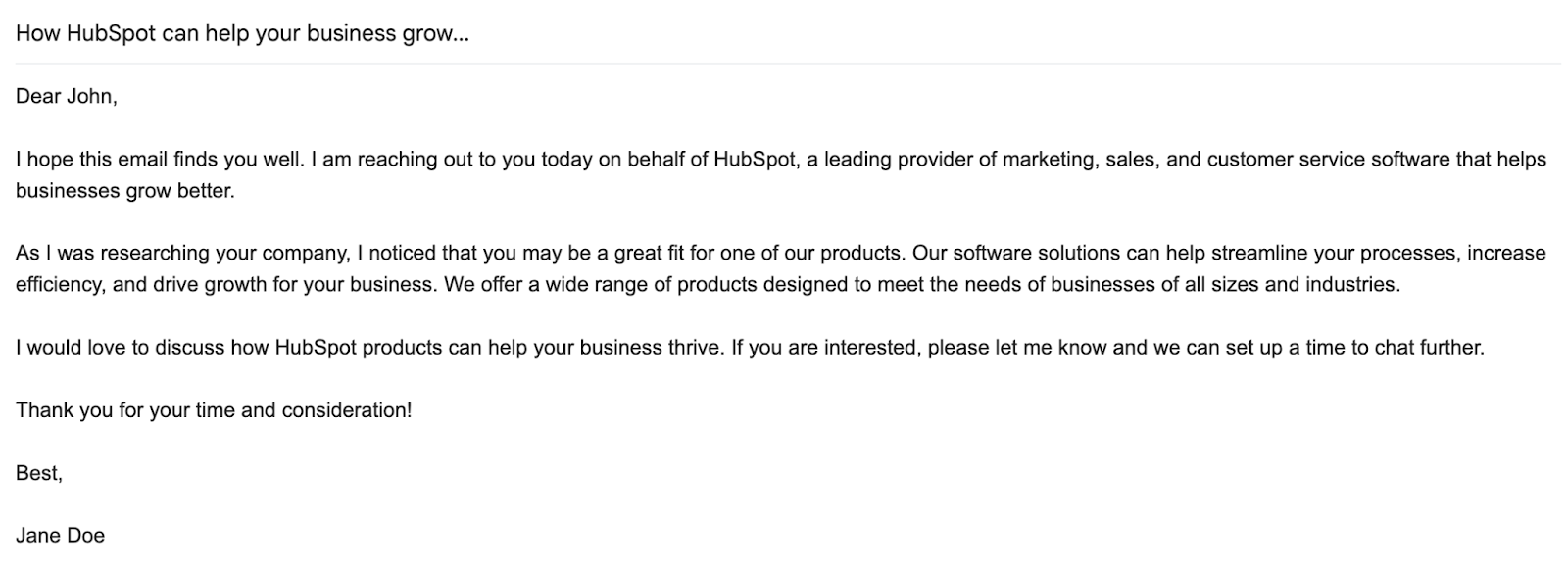
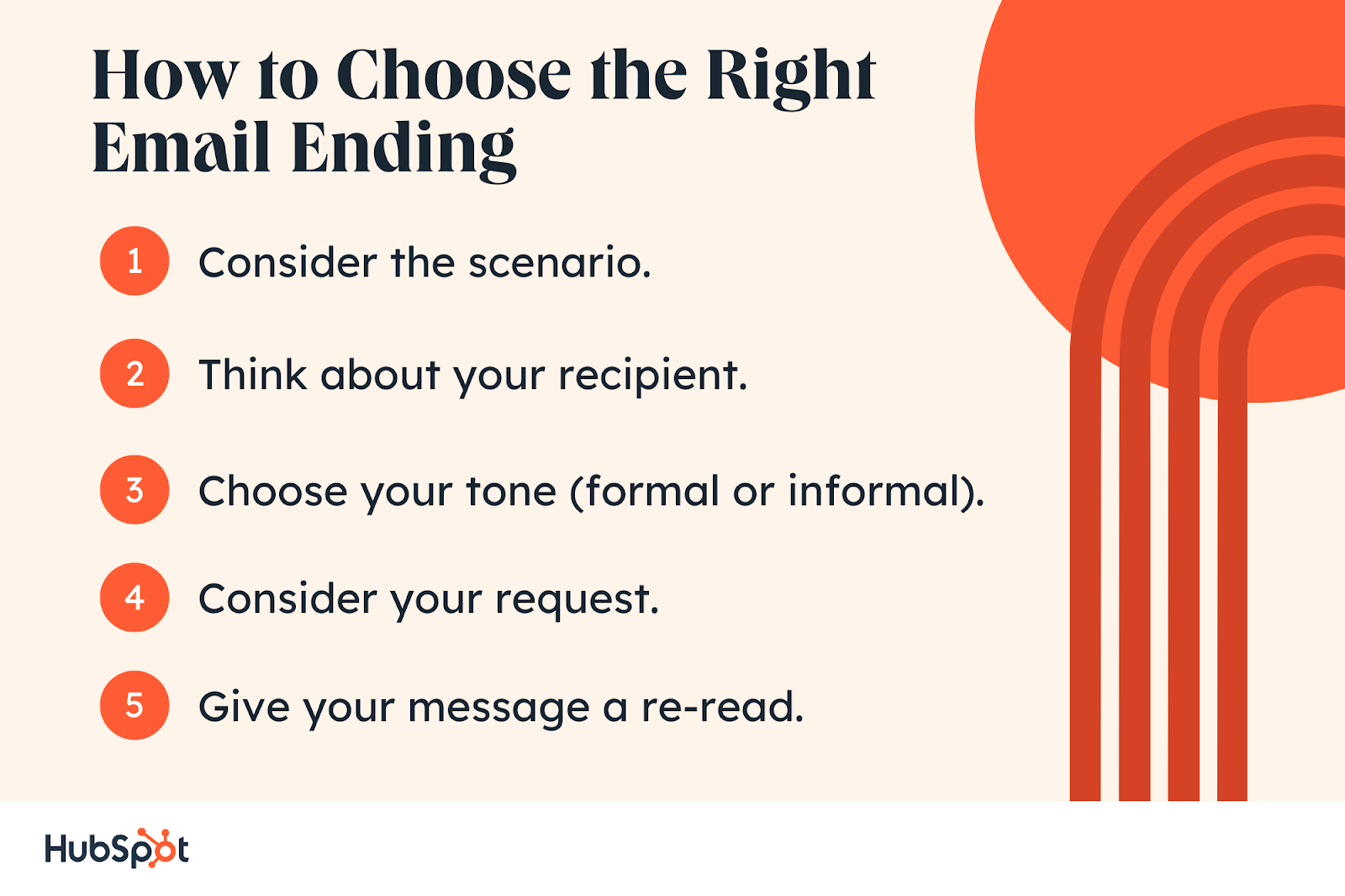
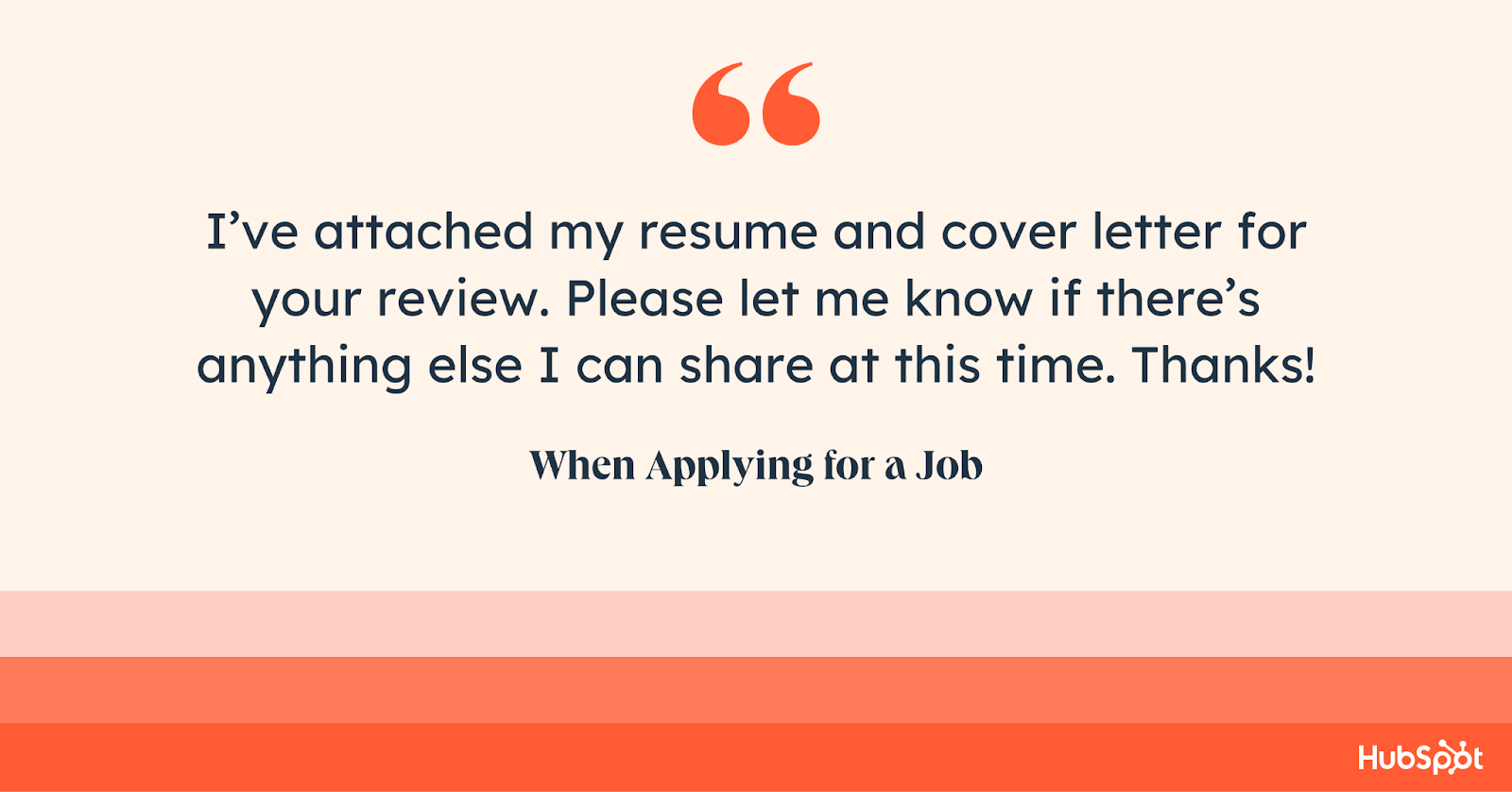
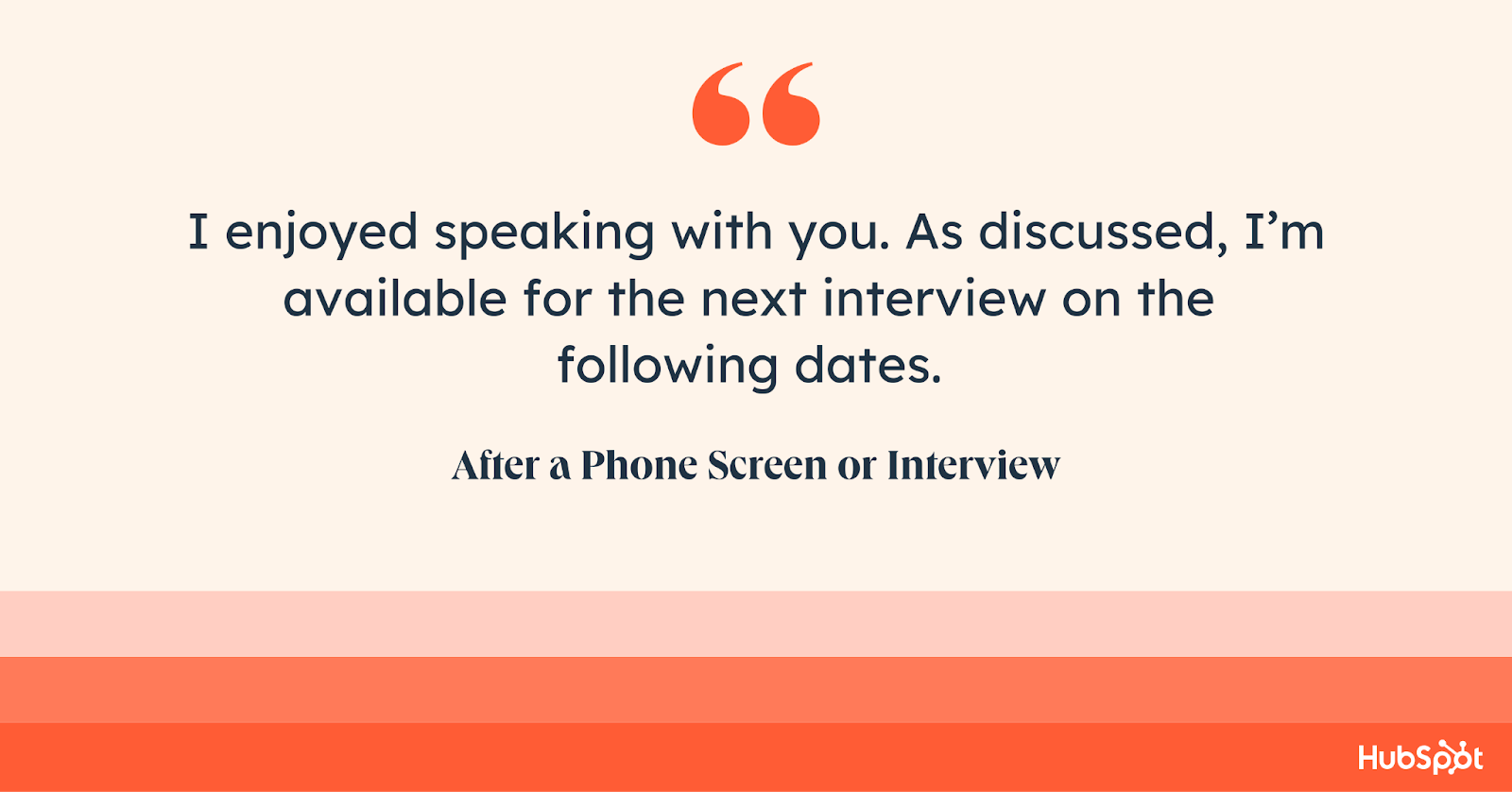
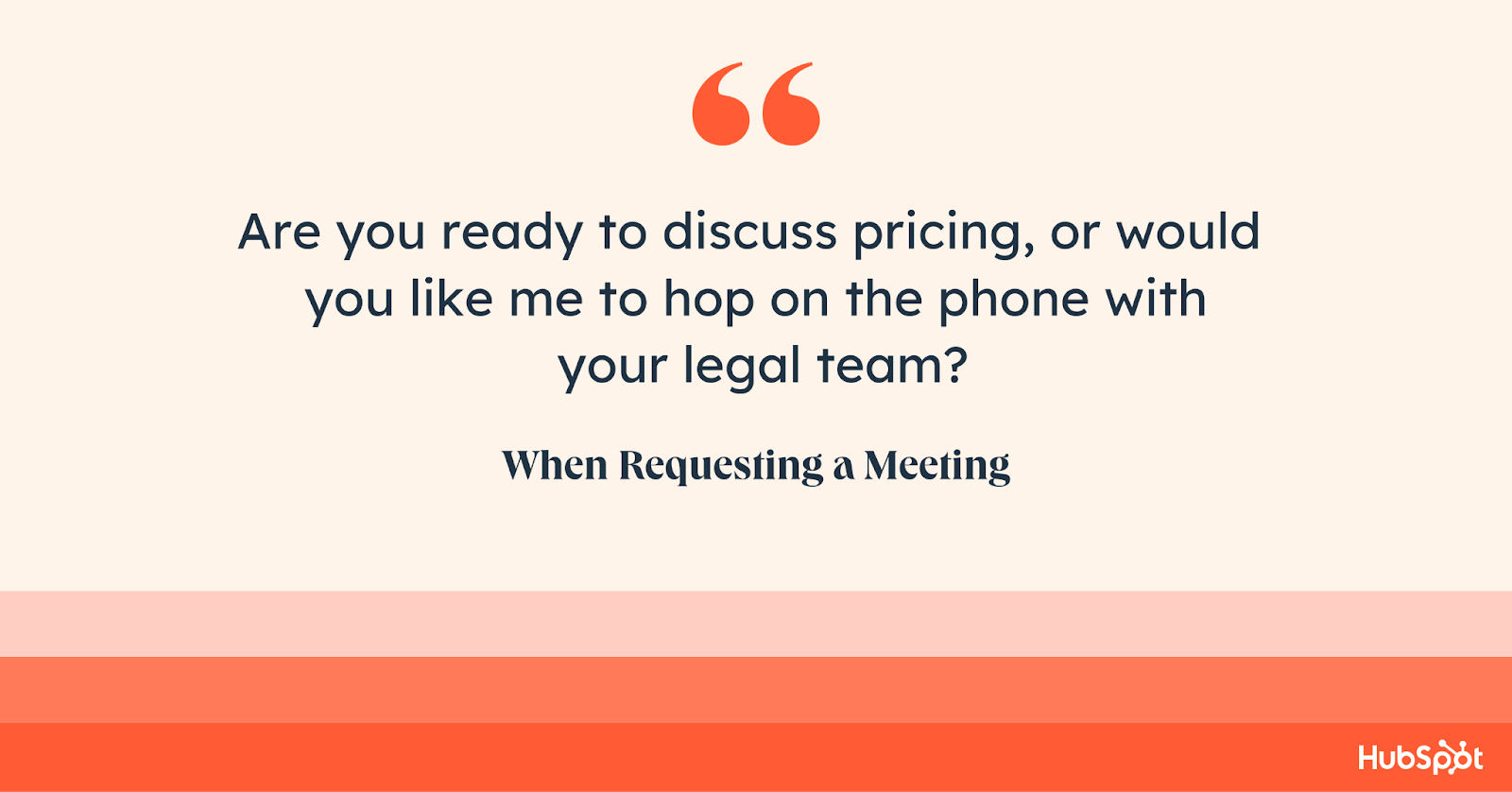
![how to end an email after a meeting. Please let me know by [date] if you are ready to [next step].](https://blog.hubspot.com/hubfs/Google%20Drive%20Integration/how%20to%20end%20an%20email_32023-3.png)
![how to end an email when accepting a job. Thank you for the opportunity! I am available to start on [start date].](https://blog.hubspot.com/hubfs/Google%20Drive%20Integration/how%20to%20end%20an%20email_32023.png)
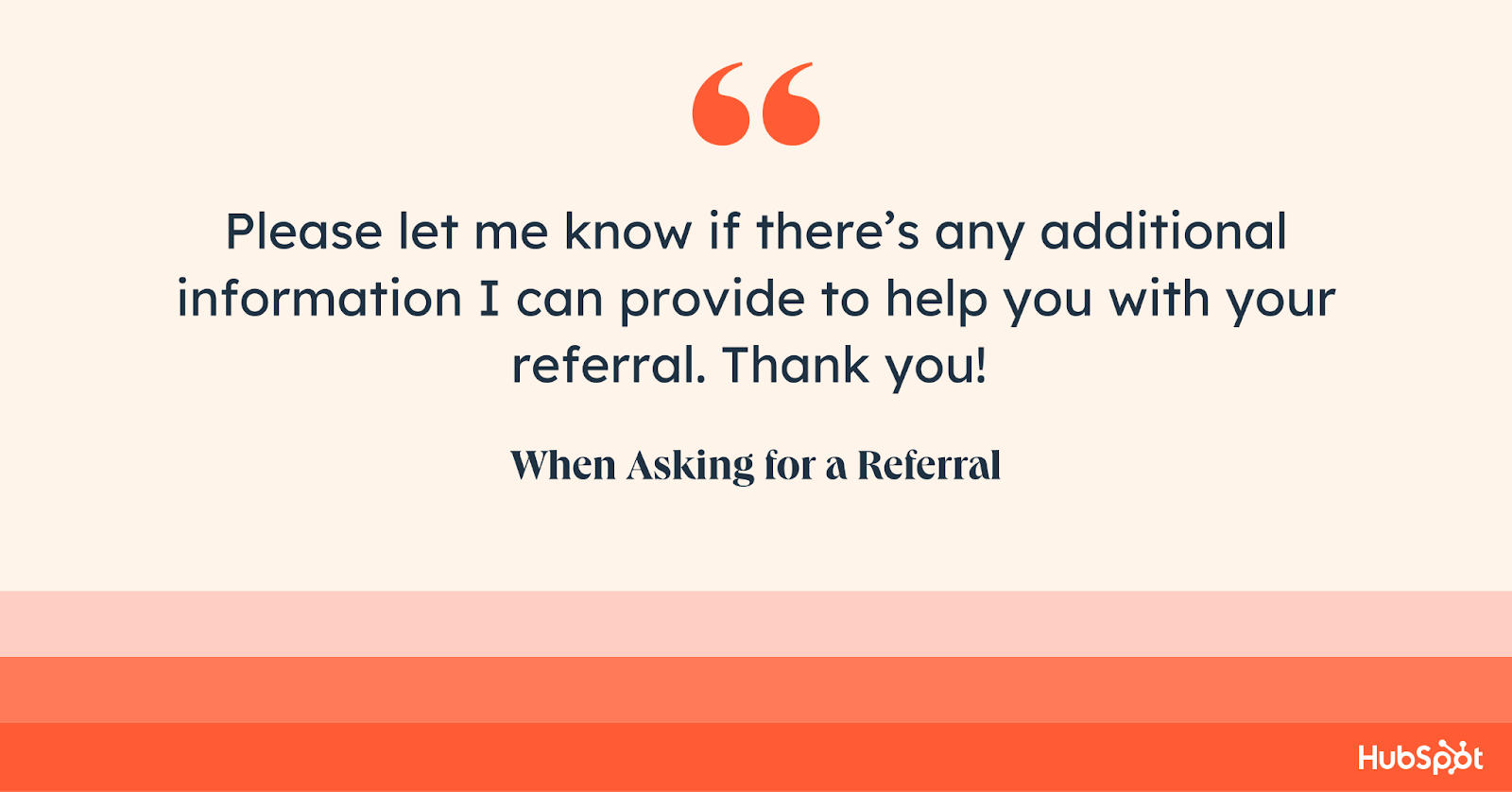
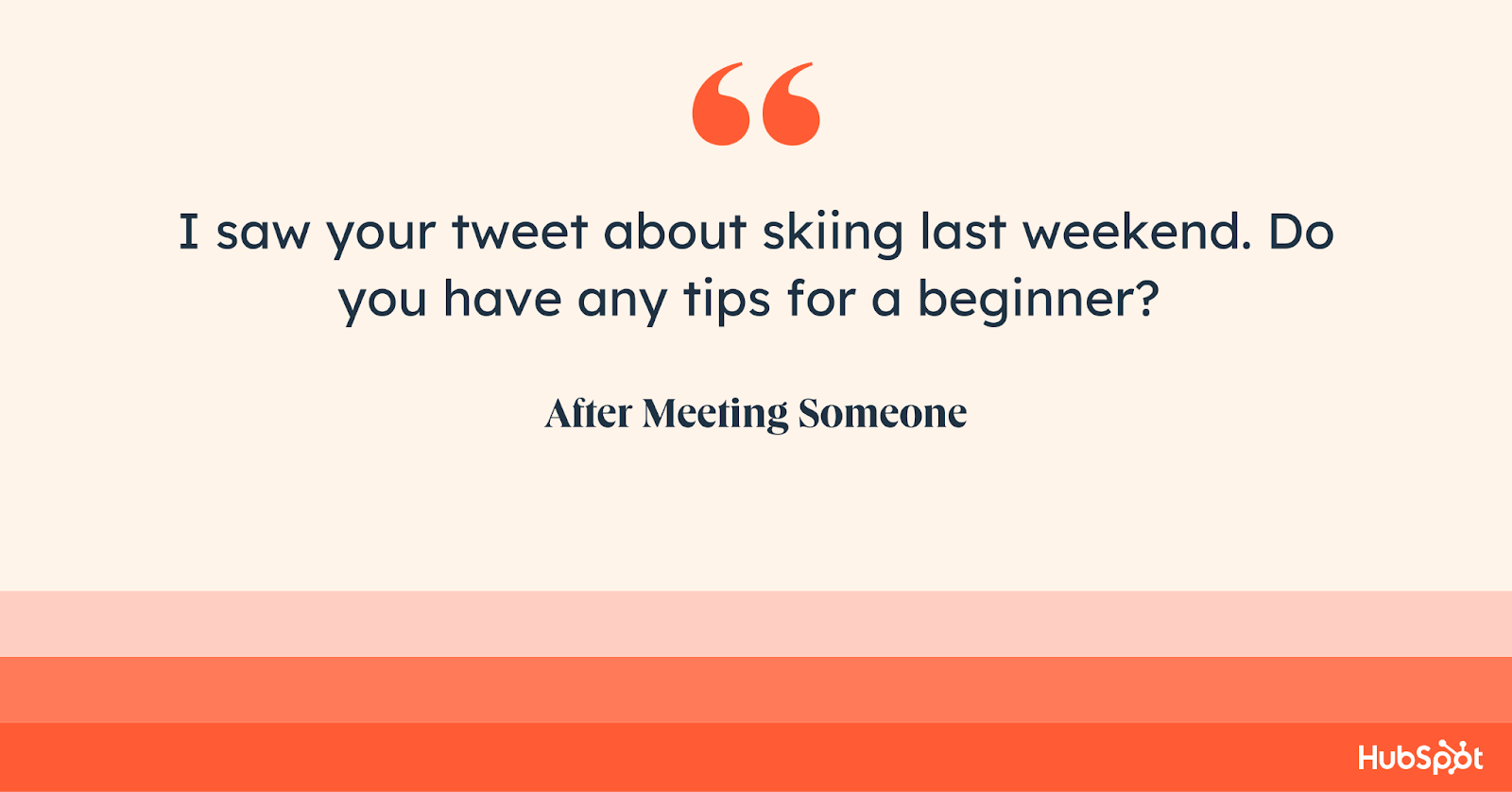
![how to end an email when warming up a lead. Food for thought: Half of [insert type of business] don't comply with new regulations.](https://blog.hubspot.com/hubfs/Google%20Drive%20Integration/how%20to%20end%20an%20email_32023-Jun-13-2023-02-19-56-5121-PM.png)