Shared posts

24 Jan 17:43

Social Media for B2B: How Are You Using It?

by Shannon Belew

Social Media Marketing for BusinessIf you sell products or services to businesses (B2B), you may be hesitant to use social media to market to your prospective customers. But you can bet your competitors are most likely using it to their advantage! What’s the best way for you to put social media  to work for your business?

In this infographic from the Clearpoint Agency, recent research provides a quick snapshot of how and why B2B marketers are using sites like LinkedIn, Twitter, and Facebook to reach prospects and customers. The infographic points out that there are a lot of people socializing out there – in fact, more than half of Internet users in the U.S. are using a variety of social media sites. What the infographic doesn’t mention is that 85% of consumers use the Internet to find information about their local businesses, according to research from Nielsen. Many of those same consumers will go on to make a purchase from you or your competitor once they have done their research. In fact, by the time you first make contact with that prospect, she is most likely to already be 70% (or more) through the decision-making process thanks to the information found online.

Your prospect is getting product or service information from viewing online customer reviews, reading comments and engaging with peers in online communities, visiting your website (and competitor sites), downloading brochures and case studies, and checking in with social media sites, such as LinkedIn, Facebook, Twitter, Pinterest, and more. Only after they’ve formed an initial opinion are they going to contact you for final pricing or other late-stage information (such as specific features or product functionality).

Is there any way for you to get engaged with prospects earlier? Is there a better way to get your content to prospects while they are still learning about their buying options? That’s where social media comes in, particularly for B2B companies. You have the opportunity to use social media to help you become a trusted adviser who  provides valuable information to your prospects. Interestingly, this infographic shows that of the B2B marketers surveyed, 74% use social media for customer acquisition, 71% use it for lead generation, and 64% use social networking sites for customer retention or loyalty. And 79% said they use social media for the broader purpose of building brand awareness.

Honestly, I think  the percentages of marketers using social networks for actual sales activity (as indicated in this infographic) are probably higher than the average B2B marketer. But there’s little doubt that social selling is on the rise and that B2B companies who don’t embrace this new sales tool will eventually get left in the dust of competitors.

That leads me to ask the question: How are YOU using social media? Check out this interesting infographic and then leave a comment about your social media use. (And be sure to check out more great info from the Clearpoint Agency – who we have to thank for this terrific infographic!)

B2B Social Media Marketing

22 Jul 18:16

Eight Ways to Hire Better Sales Managers

by peaksales

A common misconception is that the best place to look for great sales managers is in the ranks of great salespeople. That’s not necessarily true. Here are 8 Ways to Hire Better Sales Managers.

  1. Management Skill – A great salesperson can sometimes become a great sales manager, but it’s not always the case. When you’re looking to hire better sales managers, you’re not looking to hire someone who can close sales – you’re looking for someone who can manage your sales team, and that requires two different skills sets. Managing different personalities requires a delicate touch, someone who can get along with a lot of different types of people. They don’t have to be everyone’s friend – in fact, you don’t want them to be too friendly with everyone – but they should possess the capability of being cordial with a broad spectrum of people.
  2. Current Skills – In the 2.0 sales world, where metrics are critical and the web plays an enormous role in the sales cycle, a successful sales manager needs to be metrics-oriented and web savvy.
  3. Marketing Savvy – Does your sales manager understand the importance of inbound marketing? That’s advertising that a company puts out in the form of original content marketing, for example podcasts, blogs, video, white papers, and e-books. These attract web traffic from potential prospects which you can convert into leads. While lead gen is typically the responsibility of the marketing head, it helps when the sales manager understands marketing, shares insights on key customer buying habits and takes an active role in the development of the company branding strategy and design of these online tools.
  4. Ability to Manage the Organization – A great sales manager knows how to manage up and down. In other words, they pay attention to the people they manage as much (if not more) than they focus on impressing their superiors.
  5. Visionary – A great sales manager needs to have vision. They need to know their product, yes, but they also need to know the market and where the product fits. Who needs the product? Where will it sell the best? Who is the competition and what can the manager learn from the competition? A great sales manager should have detailed responses to all these questions.
  6. Process Oriented – Today more than ever before, sales is a science, where we study customer behaviour and map out best practices for sales activities. If you’re looking to hire a better sales manager, you’ll want to know what selling systems and methodologies they will envision for your company. What systems will be put in place to ensure that reps engage prospects in the most efficient possible ways?
  7. Hiring Ability – If you’re hiring a sales manager, you have to trust their taste. Not in food, but in talent. Do they recognize and recruit talented employees? What’s their track record? Can they replicate those employment decisions for your company? Are they willing to think outside the box? Are they disciplined enough to think outside the box without making unwise hires?
  8. Coach & Cheerleader - Can the sales manager create an environment where the reps are set up to succeed? Can the sales manager provide the necessary coaching and encouragement to get the most out of the reps on the team? These are critical elements of creating a winning culture.

Understanding sales is a big part of sales management, but understanding the difference between sales and sales management goes a long way to selecting better sales managers.

17 Jul 15:48

Millennials Are Millennializing All the Other Generations

by Josiane Feigon

Dan Schawbel from Millennial Branding is one of my favorite thought leaders on GenY. Chapter 2 of my new book Smart Sales Manager is dedicated to our wild and wonderful Millennials — AKA Talent 2.0. They are flooding most inside sales organizations and are changing the size and shape of the sales world as we know it. 

When Dan was a guest on the Today Show, hosts Kathie Lee and Hoda were right in his face with the question: Why are these Millennials so entitled, difficult, and expect to have OUR job soon? Dan set the story straight, reminding them how optimistic and productive this generation is. (BTW — they WILL have their jobs soon because these two ladies are way too tired :-) )

Dan reminds us that Millennials have influenced — or “Millennialized” — all the other generations in order to interact with them. Think of grandma who has joined Facebook to keep up with so she can see what her grandchildren are doing, or parents who find that the only way to communicate with their kids is by texting. 

It’s the same in sales. In fact, there’s a match between Customer 2.0 + Millennial Talent 2.0. These two are more in agreement than ever before.  Especially in these core areas:

  1. Technology and tools
  2. The fun factor
  3. Real-time collaboration
  4. Mobilizing
  5. It’s gotta happen now
  6. SWAG
  7. Relationships
  8. Hierarchy
  9. Social media


The post Millennials Are Millennializing All the Other Generations appeared first on TeleSmart Communications.

13 Jul 21:59

QuickMobile Opens EMEA Headquarters in London

Vancouver, BC, July 12, 2013--QuickMobile announced the opening of its London office, which will support customers and partners in Europe, the Middle East and Africa.
13 Jul 21:56

The True Value of Exceptional Customer Service & “Moments of Truth”

by Jonathan Farrington

Saturday Article (4)


Before I get into today’s topic, thank you all for my exceptionally bulging mailbox today. It seems the world, his brother - and everyone who knows his brother - has an opinion about the future of professional selling. And so they should. It is of course the oldest profession – you may need to think about that for a moment – and quite rightly, we should do everything we can to preserve its status.

The debate will continue over the next few weeks, and “me learned colleagues” are sharpening their pencils ready to join in. 

But today I want to discuss one of my most favorit topics – customer retention – because believe me, it is set to become the differentiator between success and failure for most commercial organizations.

Most of us are involved in some form of business acquisition for our respective companies. We all know that winning business often requires a significant investment in time, resources and energy and that the thrill of the chase is an exciting one. Isn’t it a shame that sometimes the customer, who you worked so hard to win, cancels the order during the initial stages because someone somewhere has let them down?

The sequence of events is often typical – an ‘important’ meeting of department heads is set up to find out who the culprit was and why, but it’s too late – all you can do is learn from the mistakes – or at least that’s the logical outcome.

In this post, I want to cover just two issues which your company faces in retaining customers:

• The true value of exceptional customer service

• Moments of truth

Looking around, it’s easy to see how many companies have developed customer service strategies using the telephone. Take for example some of the fast food establishments who actively promote ‘0800’ care lines, or the soft drinks cans with care line numbers on the packaging and the cleaning product companies with care lines. Care lines are increasing at a rapid pace in some industries.

So what is the value of good customer service? It increases spend, loyalty, reduces cost, promotes your company through positive word of mouth, differentiates you from your competition and can help you charge premium prices for your products and services.

We all want to deliver good customer service and want our customers to go out and recommend us to their friends, family and colleagues – yet finding the most efficient and cost effective way of doing this can be difficult. The telephone can play an important part in developing a comprehensive customer service strategy and should be looked at not just for the obvious applications of inbound care lines, but for proactive applications that could pre-empt issues before they arise.

Service isn’t just about answering calls quickly (within 3 rings is what I usually hear). It’s also important that the person you speak to has all the information and that you do not have to repeat yourself. Unfortunately, I have lost count of the number of times I have to do the latter with companies these days – even by some of the so-called top service companies.

Looking at badly handled calls, many of us are aware that 86% of customers would prefer not doing business with a company again if a single call is badly handled, but still many companies put inexperienced, poorly trained staff at the front end of their business. Worst of all, when you have a problem, you can’t get it resolved easily!

Unfortunately, customer care is still regarded by many as a costly activity or a burden on resources. Some organizations have already recognized the importance of customer care and a few are very advanced in its practice.

Every contact an existing, or potential, customer has with your company is a moment of truth. It could be how quickly their call was answered, how long it took your company to send out a brochure, what happens when the delivery driver turns up with the product, how accurate the invoice is, etc.

Recognizing all the moments of truth in your company will allow you to address weaker areas easily – for example, Jan Carlzon of SAS identified almost 1000 moments for customers using his airline. He then set his senior managers the task of improving each of these by just 1%, resulting in a substantial increase in service!

Have you already begun thinking about your company’s moments of truth?


News: Over at Top Sales World, we have announced last week’s Top Sales Blog Post and also this week’s Top 10 Posts – I do think the quality is just getting better and better!

You will also find a brand new selection of articles and tips over at Top Sales Management, including: “Let’s Get Real About Social Selling” “How to Obtain More Referrals” and Will 2013 Be The Year You Finally Leave Your “Comfort Zone?”

A word of thanks to Karen Clarke (VP Applications, Oracle UK and Ireland) and her superb team for hosting a very enjoyable event last night, it was a pleasure to speak to such an enthusiastic audience.

This weekend? Well there will be a couple of posts so do pop back if you have time. Me? It has been an exhausting and eventful week, so need to re-charge the batteries ahead of the launch of Top Sales Academy – Inside Sales Level – next week.

Bon w/e a tous!


13 Jul 21:50

Buyer Persona Thought Leadership Series: Q&A with Tony Zambito

by Stephanie Kapera

Buyer Persona Thought Leadership Series: Q&A with Tony Zambito image tony zambito 0189 email twitter resized 600Tony Zambito is the creater and leading authority in B2B buyer personas. We recently spoke to him about his work helping Fortune 100 companies gain a deeper understanding of their buyers. Here’s what he had to say.

Kuno:  What would you say the term “buyer persona” really means?

Tony: There’s a lot of what I call “faux persona work” out there. I came through the ranks as a typical corporate guy in sales and marketing and had the pleasure of leading large organizations. My transformative moment came when I witnessed the birth of personas at a design firm and helped them grow through some pretty significant design engagement.

Personas came out of the design world and were meant to inform design strategy; That was the original purpose.  I was able to work with some brilliant designers who came up with some of the foundational methodology, but while I was doing that I kept saying to myself, “Well, my background is in sales and marketing, and there’s got to be a way to make this work for sales and marketing.” That’s when I launched the buyer persona concept back in 2002. I wanted to make a methodology specific to sales and marketing, and I’ve been on that train ever since trying to evolve that. It’s gaining popularity in the marketing world, but there’s a lot of misinformation out there about it, too. It’s a R&D process.

Kuno: Can you talk about what buyer personas are not?

Tony: Buyer persona work is not a worksheet or a template to fill out. It’s a communications platform to communicate deeper insights based on your qualitative research. It gives you a communications vehicle to help the rest of your organization understand who buyers are at the deepest possible level. You are enabled to develop a common language about buyers in your organization.

Then, you’re executing on strategies informed by the insights and the buyer personas themselves. That’s basically the key principal behind it. It’s focused on modeling archetypes of your buyers and modeling buyer behaviors—which in turn then informs the strategies you need to put in place to connect with buyers.

Kuno: Do you use the “Awareness, Consideration, Decision, Retention, Support” labels when you talk about the stages of the buyer’s journey?

Tony: That’s a pretty standard definition. I use that model with clients because that’s what they want to talk about, and then I just filter the buyer data through that. There are all different kinds of names for that process, but the framework is pretty much the same.

That being said, when you do buyer persona and buyer insight development work the way it should be done, you get underneath the framework and find out the rich information and insights about the buyer’s interests and goals. So you can call the buyer journey whatever you want. What matters is focusing on buyer behavior and identifying the critical path they take to a purchase decision.

Kuno: What are some examples of buyer behavior? How should it be approached depending on each behavioral stage?

Tony: Instead of thinking of the stages by their names, think about them by the behaviors they contain. Instead of looking for “awareness” behavior at the “awareness” stage, look for the actual behavior at this stage. That’s the question.

At the moment, the buyer is an audience member. He’s not in the market yet. By understanding the behavioral goals at a deeper level, it makes more sense when it comes to orienting your content. What are this person’s goals when not in the market? Once he or she makes that transition into “lead” behavior, it’s important to figure out what his or her goals are. What does it mean to us when buyers are not ready to buy? It’s more about getting in their head and the choices being made. There are so many choices that they’re making along the way, so it’s important to understand those choices and their values. What counts is underneath the buyer journey framework and the path to purchase.

We’re so glad we got to have this chat with Tony! Stay tuned for upcoming Q&A’s in this series, including interviews with Adele Revella, Christine Crandell, Mark Gibson and more.

photo credit: Tony Zambito

Buyer Persona Thought Leadership Series: Q&A with Tony Zambito image 4947be1b d2cc 4d92 9654 85f7d9f0f8ef4

12 Jul 17:10

How An Engineering Toy For Girls Went From Kickstarter To Bestseller

by Lauren Orsini

Less than a year ago, Debbie Sterling’s concept of a toy that would teach engineering skills to little girls was nothing more than a prototype on Kickstarter.

Today, GoldieBlox holds the distinction as one of Amazon’s top 100 toys (top 20 as of this writing). The toy, which teaches engineering skills through the adventures of kid inventor Goldie, is available in 600 Toys “R” Us stores, and 400 other toy stores nationwide. 

But it’s not the sales that make Sterling proudest. Instead, it’s the messages from the parents that pour in every day. Stories about little girls that sing songs about building and engineering, or are inspired to build their own toys after playing with GoldieBlox.

“My favorite story was when a mom wrote in about being in a public restroom with her daughter where the toilet paper dispenser was broken,” Sterling said. “The girl said, ‘Mommy, it’s missing its axle!’ She’d learned the vocabulary from GoldieBlox.” 

Disrupting The "Pink Aisle"

Debbie Sterling, CEO of GoldieBloxDebbie Sterling, CEO of GoldieBlox

An engineer herself, Sterling was floored by the lack of options for little girls in what she calls the “pink aisle” of the toy store. There were “girl” versions of toys like Legos and Lincoln Logs, but they were little more than the same toys painted pink.

After doing research herself, through everything from talking to little girls about their favorite toys to speaking with toy manufacturers, she settled on a prototype for GoldieBlox, a construction-and-book set for girls aged five to nine. 

“GoldieBlox is the best of both worlds: reading and building,” Sterling explained on Kickstarter. “It appeals to girls because they aren't just interested in ‘what’ they're building ... they want to know ‘why.’ Goldie's stories relate to girls' lives. The machines Goldie builds solve problems and help her friends.”

As shown in the video, kids follow along with a picture book to use the toy, wrapping ribbon around pegs in a pegboard to make a functioning machine. 

“In the first story, Goldie makes a belt drive,” she said. “But you can take that same toy and make a plane, a car, all kinds of things. We want to show people there are infinite ways to play with it.”

Sterling loves to hear from parents about kids who take the skills they learned with GoldieBlox and apply them to all kinds of projects.

“I was told about one little girl who was inspired to build a massive, multi-story dollhouse on her own out of materials around her room,” she said. “I actually designed the construction pieces to look like household objects. I was hoping to inspire a maker and tinkerer mindset.”

Just The Beginning

Sterling designed the GoldieBlox kit in 2012, writing and illustrating the picture books herself while looking for a manufacturer to mass produce the toy. Before the Kickstarter, she invested her entire life savings into production. Luckily for her, the Kickstarter was funded in just four days. By October 2012, Sterling had over 5,000 backers and over $280,000 in funds.

On the final day of the Kickstarter, Toys “R” Us contacted Sterling. This summer, GoldieBlox became available in the mega toy chain for the first time. It’s the final step in GoldieBlox’s transition from concept to commercial product. 

Now GoldieBlox has seven employees; Sterling serves as CEO. In advance of the holiday shopping season, Sterling’s company will launch an additional books as well as an expansion pack of parts to go with the original GoldieBlox toy. 

When not building her company, Sterling devotes her time and energy to conferences, talks, and lectures in schools as well as at the likes of Google, Twitter, and Microsoft. Most recently, she gave a keynote speech at Girls Who Code. 

“One of the best things about founding GoldieBlox is that I get to speak and go to events all the time on behalf of getting kids excited and interested in engineering,” she said. “Even though the toy targets nine-year-olds, I get to inspire people of all ages.”

Photos courtesy of GoldieBlox

12 Jul 17:10

14 Tips to Nail Down Demographics

by Scott Gerber
Demographics
Feed-twFeed-fb

Having robust data about your customers (current or future) is critical to your startup's success. Good research can inform everything from creating your marketing plan to developing a brand-new idea.

But where exactly do you begin?


We asked 14 young founders to share their secrets about how to get the most reliable data about customer demographics, needs and wants quickly. Their best tips are below.

1. App Store Reviews

Emerson SpartzIt's never been easier to find out exactly what people think about the consumer products they use. Popular apps in the iOS App Store and Google Play have thousands of reviews. Even niche apps often have enough reviews to provide useful, actionable feedback about what people like and dislike about a particular product. This strategy isn't just for app developers. If your product has similarities to an app, you can still gain valuable insights from reading the reviews. Read more...

More about Marketing, Demographics, Small Business, Startups, and Business
12 Jul 17:04

Time to get your butt off the couch: Fitness app market to grow 63 percent by 2017 [report]

by Ki Mae Heussner

The already wide world of sports and fitness apps is projected to grow by 63 percent over the next few years, according to a report this week from research firm IHS Electronics and Media.

The company predicts that global installations (or downloads) of sports and fitness mobile apps are expected to rise from 156 million in 2012 to 248 million in 2017, boosting demand for already popular wearable health devices, like heart-rate monitors and activity trackers.

Year to year, growth will slow – from the nearly 40 percent increase in 2012 to a 15 percent climb this year – but the firm said installations are projected to remain strong.

While IHS estimates that the fitness app market will expand, it’s worth noting that growth is being led by a more narrow set of top apps. Smartphone app stores are chock full of sports and fitness apps, but IHS said that the top 20 free apps in the sports, fitness and health category accounted for a cumulative total of 231 million installations on their own, as of April. Some of those apps include Runtastic,  Azumio, MapMyFitness and Runkeeper.

Back in May, the firm projected that global shipments of wearable sensors and computers will climb to 56.2 million in 2017 from 43.8 million this year. But, as we’ve noted before, mobile apps are increasingly making use of the smartphone as a wearable computer.

Using the phone’s GPS functionality, accelerometer or other sensors, apps like ProtoGeo’s Moves and Noom’s Walk enable the smartphone to behave much like a stand-alone fitness tracker. Eroding battery power can be a concern with these apps (although the companies have made valiant technical efforts to preserve power) but they can be a cheaper and more convenient alternative to buying separate wearable gadgets.


Related research and analysis from GigaOM Pro:
Subscriber content. Sign up for a free trial.

12 Jul 17:03

Email Marketing Facts You Should Know About

by vaibhav

Many marketers advocate benefits of social media marketing over email marketing. But the reality is that Email marketing is old,...

The post Email Marketing Facts You Should Know About appeared first on ReadyContacts.

12 Jul 17:01

ROO vs. ROI

by Tibor Shanto

By Tibor Shantotibor.shanto@sellbetter.ca

ROO

Everyone is familiar with ROI – Return On Investment, sales people love to talk about, buyers (and their CFO’s), love to hear about it, and even more, love to achieve and validate a return on their investment.  But much like solution selling, after the shine wore off a bit, buyers became more hip to ROI discussions, sellers abused the concept, stating high often unattainable numbers that represented the highest ROI achieved by one or a few buyers rather than the average ROI received by most.  Buyers demanded real ROI calculations, not projected best case scenarios, having been jaded by too many flowery ROI projection, and almost as many misses in outcome.   Buyers now expect, no demand, ROI with teeth.

Perhaps a better measure of return, would be to measure the Return On Objectives – ROO.  While it may be true that return on investment may be a more objective measure of success, people are not entirely objective, unless they are Mr. Spock, but he is not people.  We tend to be more subjective, and as most sales people know emotional.

We’ve all seen people make and rationalize questionable decisions and actions, and when it comes to numbers they have all fudged a decimal or two.  When the numbers add up fine, but if there is a gap, if you are not the lowest cost provider, if it may take a three more months to get pay back with your offering than another, you need to bring other factor to help them make the right decision.

People take pride in achieving, in accomplishing what they set out to do, we have all seen people high five all over the place when they successfully realize what they set out to do.  By bringing in the power of ROO, you can get a buyer to stretch and buy the better more costly, and right solution.

If you can help a buyer exceed expectations in ways that go beyond the numbers, you can enhance the perception of the outcome.  Focusing on ROO gets the buyer emotionally invested throughout the cycle.  From information exchange, to closing, to execution.  When they emotionally invested they will work with you in so many more ways, than when it is strictly down to the numbers.  Especially when expectations around those numbers are missed.

The work is in surfacing the real objectives and expectations, working out the gaps and obstacles they face.  As you remove those gaps, or remove hurdles, the client can see progress towards their goal, and get that much more committed.  That is the work in sales.  Executed right, this is much more powerful than focusing on outcomes you have delivered for others, because it is “their” objectives, not someone else’s.

Let’s be clear, you can’t get away from delivering ROI, or having to demonstrate capabilities and past successes, but tying things to their specific objective, and measuring returns on those will give you the unfair advantage you seek.

What’s in Your Pipeline?
Tibor Shanto

12 Jul 17:01

All hyperbole is totally useless

by Seth Godin

Sure, it gets people's attention, but does it change minds?

Hyperbole needs to be hooked up to a story in order for it to make a difference. A story that resonates, that matches our worldview, that holds up to scrutiny.

Hyperbole can open the door, but it doesn't change behavior. Persistent stories that are true, amplified by the tribe... that's what changes behavior.

       
12 Jul 17:01

Are You Someone’s “Booty Call?”

by Keenan


booty call: 

A late night summons — often made via telephone — to arrange sexual liaisons on an ad hoc basis.

Yup! This Urban dictionary definition pretty much nails what a booty call is.  It’s when someone calls you late at night to hook up, usually when they have no other options, and after the bars have closed and they’ve struck out with everyone else. They don’t like you for anything more than gittin’ “a little.”
There is no relationship. There’s no commitment of monogamy or commitment of any kind. A booty call is a shallow, usually one-sided relationship for the benefit of gittin’ the “goods” without putting in the work.

You don’t want to be someones booty call. Yet, in sales, particularly with channels, too many people and companies are nothing but booty calls.

A booty call in sales is when a channel partner or a customer calls you up asking you for help or to do something for them, but never seem to be available for you.  The channel has a big deal on the table and their prospect is interested in your product or service and the channel asks you to come in and help close the deal. But, when you call the channel and ask them to introduce you to a customer of theirs they just can’t seem to find the time or won’t do it. A sales booty call is when a customer calls up and asks for a demo or a free trial but then when you ask for a meeting to share your new product coming out at the end of the quarter, they are nowhere to be found.

Sales booty calls are brutal. It’s when your partners and customers are quick to call you up and ask for a little love, but are nowhere to be found  when you need a little love back. Sales booty calls, like real booty calls, circumvent a relationship for one person’s gain. Most booty calls exploit one person’s desire for a relationship for the other person’s desire to get the “goods” without a commitment. You don’t want to be a booty call.

Don’t be a booty call.

Never have a one-sided relationship where your partners or customers take but don’t give.  Provide enough value that your customers and partners are willing to give as much as they take or get out. Create enough value so that a real relationship, a give and take relationship, can exist.

If you’re channel partners will only work with you when it serves their needs. You are a booty call. When your customer only wants to talk with you when they need you to give them something, you are a booty call.

Don’t be a sales booty call, they are the worst.  At least a real life booty call can feel good.  But, with a sales booty call you’re just getting screwed!


Also read:

Don’t be the Customer’s Bitch!

12 Jul 16:58

You Missed Your Number. Now What?

by Ed Powers

Your bankers and investors are going to want to know about this one. How to handle it--and them.

Many companies face that month or quarter when there is a miss. Even though you thought you did everything right, your financials simply aren’t where you would have liked. You get your quarterly unaudited report from your controller, and the bottom line is red. You know this might mean a call from your creditor after you submit that data, and you can do the quick math to see if you tripped a covenant.

But is there anything you can do? You bet!

Figure out why you missed

You may very well know exactly why you missed, simply because you have been running your business for a long time and it’s clear what went wrong. A deeper analysis is still in order. Better not to assume you know everything.

Your budget should show your major revenue and expense categories, your monthly target for each, and what actually happened. These metrics help you gain some legitimacy with your lender. You can show the lender which line item really drove the problem this period. Be prepared to explain what happened, or what didn’t happen, and why you didn’t hit your number. The better you can articulate that, the more effective your lender will believe you are in managing your business.

Stay on top of cash

Businesses with debt don’t fail when they lose money -- they fail when they can’t meet their outbound payments to a vendor, a lender or employees. Even if you miss your number, you need to make sure you are on top of your cash and able to meet your short-term liabilities. You should have short-term cash flow forecasts, particularly for those times of the year when cash is most likely to run low. No creditor wants to get that double-whammy phone call: “We lost money and we can’t meet payroll.” That’s when a downward spiral can accelerate.

Make the change

If you can change something in response to what went wrong, seriously consider it. You may be able to say, “that was just a blip,” but if you respond to it appropriately, you might be able to prevent it from happening again or better prepare yourself if it does. You may also be able to lower or delay current expenses to match a drop in revenue. But if a change is needed, you may need to embrace that difficult decision.

Know your covenants

Remember the loan document you negotiated and signed? Inside it, amidst the terms and conditions, are covenants. You should have simple metrics and calculations established for your business that measure and track the figures that can trip these covenants--or show how close you come to tripping them. Your accountant or controller should know these metrics, so you can do all you can to avoid tripping your covenants. Know when you are going to miss, and prepare ahead of time.

Pick up the phone

Bad news only gets worse with age. Call your lender as soon as you have gone through the steps above. They want to know what went wrong, why it went wrong, what it means for the loan, what you are doing about it and what your cash position is.

Prepare for that call by prepping with your controller. It’s human nature to respond better when someone is proactive and thoughtful. Better for you to anticipate their questions and prepare than to get defensive or risk a breakdown in what you know will be a difficult conversation. Be upfront and candid. Tell your lender what’s going on and importantly, what you are going to do. You will stand out against all of the business owners who aren’t being proactive.

Even the best companies can miss their numbers from time to time. There is uncertainty and risk in running any business, and you can’t always match the projection you made in your annual budget. When it happens, figure it out quickly, ask yourself the hard questions, and take proactive steps to manage your business.


12 Jul 16:46

Could the Chinese Economy Pull Down Key North American Stock Indices?

by Michael Lombardi

I am watching the Chinese economy very closely, because any economic slowdown there could have an adverse effect on the already struggling U.S. economy.

And here’s what I’ve seen: the stock advisors are not mentioning how critical the Chinese economy really is, how companies based here in the U.S. can face hard times if it slows, and how that could ultimately lead to lower key stock indices.

Dear reader, the most important thing you need to know about the Chinese economy is that it’s an indicator of global economic health and demand. Currently, it looks as though its health is deteriorating. Exports from the Chinese economy to the global economy plunged 3.1% in June, a month in which they were expected to increase by four percent. (Source: Reuters, July 10, 2013.)

What that means is that demand in the global economy is declining—and that strengthens my belief that the global economy is headed toward an economic slowdown. In June, exports from the Chinese economy to the U.S. economy fell 5.4% and those to the eurozone fell 8.3%.

Customs spokesman in the Chinese economy, Zheng Yuesheng, said, “China faces relatively stern challenges in trade currently… Exports in the third quarter look grim.” (Source: “China warns of ‘grim’ trade outlook after weak exports surprise,” Reuters, July 10, 2013.)

The Chinese economy is now expected to slow to 7.5% this year. But not only exports are declining; the factory output and investment growth in China, the second-biggest economic hub, are also headed downhill.

I think these numbers might even be too optimistic considering the economic slowdown in the Chinese economy could become severe, as the credit market problems are starting to unfold. Businesses not being able to borrow money to run their daily operations can hurt demand in the country. Consequently, high unemployment will probably become an important issue going forward.

Economic slowdown in China means U.S.-based companies operating in the country will also see their profitability decline. We’ve heard from companies like Caterpillar Inc. (NYSE/CAT) that are showing concerns with their operations in the Chinese economy; meanwhile, other companies—like Wal-Mart Stores, Inc. (NYSE/WMT), which has significant operations in China—are facing troubled times as well.

And you can add to this list the exporters to China—any economic slowdown in China’s economy means they will be selling less to the country. As I said before, the strength of the Chinese economy is an indicator of overall global health.

As I continue to point out in these pages, the key stock indices are not reflecting the reality of the economic situation—it’s far worse than they would indicate.

I remain pessimistic toward the key stock indices, because I don’t see a lot of improvements; rather, I see risk piling up significantly. This irrational rally can only go on for so long. Eventually, it will all come back to where it should be. And problems in the Chinese economy might just be the spark that brings investors back to their senses.

12 Jul 16:45

The Convergence of Marketing and Technology – Scott Brinker on Marketing Made Simple TV

by Jeff Ogden

The Convergence of Marketing and Technology – @chiefmartec a.k.a. Scott Brinker on Marketing Made Simple TV

In this week’s Marketing Made Simple TV show, Scott Brinker (@chiefmartec) sits down with show host Jeff Ogden (@fearlesscomp) to discuss the fast-changing world of marketing and technology. Scott is a very popular blogger at Chief Martec and CTO of the post click company ion interactive. In this show, you’ll learn:

  1. Just how complex the world of marketing technology really is (Much bigger and more complicated than you think.)

    The Convergence of Marketing and Technology   Scott Brinker on Marketing Made Simple TV image Scott Brinker1

    Scott Brinker

  2. Why people can’t keep up with technology changes and why you need a marketing technologist on your marketing team.
  3. Why the market is consolidating and expanding – all at the same time and what the future holds

Marketing Made Simple TV is the popular TV on the Web show created by Jeff Ogden of the sales lead generation company Find New Customers. Please note that Marketing Made Simple TV is a TV show, and not a web show. It features camera changes, B-Roll content and other features matching a television show. In addition to creating and hosting Marketing Made Simple TV, Jeff Ogden is an award-winning marketing expert, who was twice names Top 50 Influencer in Sales Lead Management. Marketing Made Simple TV is directed and produced by Craig Yaris of Social Ribbit. Shows premiere at noon ET every Thursday – at this blog and at many other sites too. All told, over 2.5 million people are exposed to Marketing Made Simple TV each week. Please check out our sponsors too, like Avitage, Communication Strategy Group, Social Ribbit and Watchitoo.

This blog recommends the great WordPress hosting of WPEngine. Get an awesome offer of two free months here.

12 Jul 16:45

Content Marketing Best Practices: Can “Less” Provide More Value?

by Jodi Harris

more or less contentThere has been talk in our industry about the benefits of doing “less,” i.e., whether it is a good content marketing strategy to develop fewer content pieces overall, or to create content for fewer platforms, in order to conserve resources and place greater emphasis on each content effort you are producing. In terms of content marketing best practices, it’s a topic that has recently inspired some passionate debate among our contributors and readers (as well as from CMI’s own Joe Pulizzi).

We thought it would be helpful to add more voices to the conversation, so CMI asked some of this year’s Content Marketing World speakers to weigh in. In addition to sharing their perspectives on the issue, our experts also provided some recommendations to help content marketers keep up with the constant demand to produce “more, more, more.”


Scott Abel, the "content wrangler," CMI

Well, [it's] partially true; but, I’d like to see some really meaningful cutting done in most of the organizations on this planet. For instance, cutting down the number of noise words and jargon helps improve readability and comprehension, especially among prospects accessing content on mobile devices. Using plain language (clear, concise, controlled terminology) helps non-native speakers of the languages you produce content in to be able to better understand it. Additionally, stripping out unneeded verbiage and focusing on clear communication (oftentimes leveraging principles of minimalism) saves untold millions in productivity. When you add translation to the mix, those savings can skyrocket.

The best way to produce more with less is to take a critical look at how you do things today. Seek the help of a process improvement specialist whose focus is optimizing the content production life cycle. These experts can help you adopt a unified content strategy designed to make you a lean, mean content machine. Scott Abel | @ScottAbel


Michael Brenner, best practicesI do not agree that we need to create less content overall. The shelf life of any one piece of content is getting shorter and shorter, not longer.

I believe we need to consistently create more — more valuable content with our customers’ information needs in mind. I know that marketing budgets are not growing very much, so we do need to stop creating the stuff that no one wants or reads or uses and create more content that our audience wants. Brands need to become an information source for their prospects, and that won’t come with less overall content.

So we need to consistently create more content, but it has to be aligned to customer needs, rigorously optimized, and paid for out of the budgets of those who were creating content no one wanted or used. Michael Brenner | @BrennerMichael


Heidi Cohen-best practicesThe question of whether to provide more or less content is irrelevant. As a marketer, you must offer the right kind of information; specifically, you must answer all of the questions your prospects and leads have. This applies to B2B, B2C, not-for-profit (NFP) and solopreneurs. Until you have done this, they’re not buying. Marcus Sheridan calls this the “secret sauce.” Prospects and leads seek product information, answers to their purchase-related questions, explanations that show them how to use your product, and ways to style product that you can provide, and other satisfied customers’ ratings and reviews. To ensure that you have sufficient content to meet your potential customers’ needs, supplement your content creation with content curation, and plan to repurpose your content (e.g., by following Todd Wheatland’s [strategy of creating] 20 pieces of content for every major content event. Heidi Cohen | @HeidiCohen


Will Davis-best practicesI am a firm believer in the notion of better content, not just more content. Each of our clients has a different marketing objective, a different product or service, and a slightly different target audience. Creating as much content as you possibly can, in every possible channel, is an absolutely impossible mission. Instead, focus on the areas that drive the most impact — for some clients that means backing off of some videos to do more webinars or an eBook; for others, it might be the exact opposite. There isn’t one definitive clear answer, but whatever you do it needs to be of the highest quality and it needs to stand out. How do you determine which things to do? Clearly define the desired outcomes and measure your content marketing efforts, and then drive forward creating remarkable content. Will Davis | @WillDavis


deana goldasich, best practicesFor our B2B clients, we’re finding that quality, “deep-dive” content produces far more leads than large quantities of surface-level content. To do it right, we’re now creating editorial plans that are deeper vs. busier. And, distribution is still often underestimated. If you’re not willing to spend as much effort distributing the content as you are in producing it, think twice about adding it to your schedule. Deana Goldasich | @goldasich


chris goward-best practicesAs content marketing evolves, marketers are realizing that quality truly does trump quantity. But quality content can still be leveraged across platforms. Most content sources can be converted with much lower effort than creating original content for each [effort]. For example, take your blog posts and convert them into SlideShare presentations, then present them in a short YouTube clip with links back to the full blog post, then add a few stats and turn it into an infographic. Chris Goward | @ChrisGoward


melissa harrison, content marketing best practicesIn some ways, I’ve always believed in the “less is more” theory; but in other ways, not so much. For example, I do agree that you should pick one or two channels to be really good at (it’s just like in business: Do you want to be mediocre at everything, or excellent at one or two niches?). Content is the same thing. However, I also believe your content should be continuously updated. I once read a blog post about how companies shouldn’t worry about updating their blog content as frequently — that it’s all about the quality of content, and even if you don’t switch it up, people will come. While quality is a must (I always agree with folks there), there is also something to be said about the speed in which we all gather, process, and look for information. So, while quality is key, constant change is also key in my book — as long as you’re focused in on a few channels, rather than the sum of them all. Melissa Harrison | @alleecreative


Carla Johnson-best practicesThe value of doing less is being overlooked and underrated. I see marketers having the same mentality about content marketing as traditional marketing — that more is better. If they can just get enough content into the marketplace, then customers and prospects can’t help but hear them. All that does is create more noise. It makes it easier for audiences to ignore them because, whatever they miss, there’s more where that came from.

It takes thoughtful content planning and a clear focus on your story — and the audience you want to tell it to — for content to cut through the clutter. By focusing on the main channels through which your audience wants to engage, you have more time to say something relevant and remarkable. That beats large volumes of content any day. Carla Johnson | @CarlaJohnson


aaron kahlow, content marketing best practicesThe “less is more” theory holds as the most fundamental truth in content marketing, especially when looked at through the digital and social media lens. Allow me to break it down for you from start to finish in five simple layers, building one upon the other:

1. The human truth: We get this intuitively; we just sometimes need a little reminder to prioritize it as important. When you say less — communicate less, do less, etc. — the actions you do take have much more meaning and impact. Take the classic example of being in a meeting: If you wait, write down your thoughts, cultivate them, and then only engage by raising your hand at one critical point (rather than engaging in the back and forth of opinions and banter), the impact of your one statement or idea will likely be exponentially greater. 

OK, now let’s build on that… 

2. The writing truth: Any writer,  journalist, or marketer knows this one by definition of the job: The hardest thing to do is make your value proposition, offer, and product description boil down to something simple and short. Anyone can write the long essay, but few can make it so simple and succinct that it has an amazing impact in seconds. Right? Less is more. 

3. The content marketing truth: Now this is where it gets interesting to all of us: If, we plan and target properly, we then will find ourselves producing more meaningful content, rather than lots of content. Translating directly from our human and writing truths, having a smaller but very impactful content marketing calendar of great stuff will give everyone engaging that greater brand affinity, less advertorial mind-block (aka blocking all your messages out because so many and so irrelevant or value-less) and a boat load more engagement. And for so many of us in the B2B world, it’s all about those few high quality engagement points for the right prospects that make the difference — not the quantity of page views, right? Right! Less is more. 

4. The “better social media and digital market” truth: Now take my favorite topic du jour — social media content and attribution — and apply that to, oh, let’s say Facebook. Post less, a lot less. A great rule of thumb would be if you are not willing to support and amplify your newsfeed/wall post with advertising, then it’s probably not worth posting. As ["Fast Times at Ridgemont High's" Jeff] Spicoli might tell you, “Dude, you’re clogging my feed.” And you are… so make that post more impactful by doing it less often and making the copy itself super short. Less is more, right? 

5. The “smarter, better, more mature marketer” truth: This is where it all begins and ends — being smart. Being smart starts with learning. Commit to learning — learning how to think more strategically, how to plan more effectively, understand what is working, and know what the best in your field are already doing. This is the key. Don’t waste your time, your company’s budget, and your customers’ time learning on the job! Learn first, execute second, and then bring it all back and continually get better. I think only the shallow and inexperienced wouldn’t agree that “sharpening the saw” is more important and impactful than chopping away with that dull blade, making a mess and burning yourself out in the process.

So, let’s do less, make more of that which has impact, and commit to it. Another way to look at it is that by doing less, you can have more time for what’s really important (beyond marketing ROI), and that even means more time for vacations, family, or whatever your heart craves. Less is more, for every aspect of life, right? Aaron Kahlow | @AaronKahlow 


doug kessler, content marketing best practicesCrap at scale is still crap. I’m all for volume, but never at the expense of quality. As [my company] wrote in our recent SlideShare on [the subject of] “Crap,” building a great content brand is the number one goal — if you erode that in an effort to keep the firehose pumped, you’ll be training people to ignore you.

This applies to channels, as well as content. If you can’t do a channel justice, it might be better not to use it. If it’s an important channel for your prospects, fight for the resources. Doug Kessler | @DougKessler


arnie kuenn, best practicesAs a rule of thumb, I lean toward fewer, more substantial content pieces over a “more is more” approach. All things being equal, it is obviously beneficial to generate more content, but it’s important to recognize the potential for diminishing returns at increased volumes.

Focusing on content that is more extensive, heavily researched, or otherwise more in-depth may indeed mean fewer pieces produced. But given an increasingly noisy content landscape, the way to stand out from the white noise is with genuine quality content that can’t be churned out by the “more is more” crowd.

For audiences increasingly looking for relevant information and education, it’s better to be the best answer in one content piece than a mediocre answer in several. Arnie Kuenn | @ArnieK


jim kukral, best practicesObviously, focus always wins out. I think you can create lots of content and be successful, or create just a little bit, as well. It really comes down to how good, and how often, you can do it. Some teams can’t do “great” content all the time. That’s fine. Focus and produce what you can that’s going to work the best for you. Jim Kukral | @JimKukral


Don’t miss additional insights and information from our fabulous roster of speakers at Content Marketing World 2013. Register now with the code CMIBLOG for a $100 discount. 

Cover image via Bigstock

12 Jul 16:44

Common Sense: Missing Ingredient In Marketing Campaigns

by Deanna M. Murray

Were you one of those parents, who, before naming your child, you tried to think of all the things other kids could call your kid based on what rhymed with, or sounded like the suggested name?

Or … Are you one of those parents who wished they’d done that …

Well, we all know kids can be cruel and can turn the most innocent of names into something befitting a playground chant. But it might be worse when a marketing team learns their beloved product is conjuring up giggles or ridicule they should’ve spotted a mile away.

More money is wasted on brand persona exercises, when, if one single person had simply looked at the brand as a normal person (with common sense) would, the glaring ridicule to come would have made itself known.

Most recently, this was brought to light in the onslaught of emails received from Bath & Body Works. Being a long-standing customer of this wonderful boutique, it’s always great to get their offers. Recently, their email marketing department has decided to either try to fool subject line spam filters or allow for a longer subject line by abbreviating the well-known chain’s name to BBW.

Now, if anyone had spent time researching, browsing or even just satisfying curiosity on a dating site the acronym BBW has nothing to do with soap, bubble bath and body spray. Do you think the Bath & Body Works folks went in eyes wide open when deciding it was OK to use the acronym?

There are websites dedicated to ‘brilliant’ ad campaigns, turned Leno fodder and even more with pictures and videos of fantastically unfortunate product names (Check out No. 7 and No. 11 on Oddee.com … and let’s go with No. 6 and No. 7 on ListVerse.com) and these are just a few.

Kidding aside, so many problems with branding and campaigns could be avoided by bringing some common sense into the room. Some of the most impressive marketing professionals, from Ivy League schools with master’s degrees and doctorates can attack a strategy from every angle and find the most intricate flaws. However, sometimes, the specialists miss the obvious and are grossly out of touch with the average person who will respond positively, negatively or humorously at a brand.

Studying focus groups, customer interviews and in-depth analysis can only get you so far when it comes to intelligent, meaningful brand awareness and advertising. There are arguments to be made, that we, as marketers, taint our data pool by simply asking people in to giving their opinion on a brand. It is also thought that focus groups are a great way to get SOME collective knowledge but opinions are impassioned favorably or negatively based on the fact money is changing hands.

Daily, we attempt to connect with consumers so they not only will buy our brands but will invest in it habitually. We throw millions of dollars at ad agencies and listen to huge dollar proposals in the hopes our brand’s investment is worth it. How often is the ROI there? How often, in hindsight, do we realize a small, obvious tweak in messaging, packaging, presentation or imagery would’ve sent the brand over the top?

It’s with all hope, the brands in your current and future care don’t end up with alternate-meaning initials or names meaning something entirely different in Klingon. But as long as we stay behind our desks and don’t get out to get a read of the consumer, it is entirely possible it happens.

Now, we’re not talking about setting up a booth somewhere, wearing shirts with a company logo on it and giving out samples and asking for candid responses in the process. We’re talking about being acutely aware when you’re out and about. Keep a keen eye out when at the grocery store. Stay up on all current news in all areas (sports, national news, local, celeb news, etc.) and don’t be afraid to get down and dirty. Extremely valuable brand information is out there and most of it never makes it on the page of a report handed out at executive meetings.

I say it very often – people do not like to be marketed to or at. Think about it. Do YOU, as a marketing specialist, do you like to receive cold calls, unsolicited pamphlets and emails? No one does (but of course, sometimes these methods are useful. I’m not devaluing them if thought through).

This shouldn’t discourage those in our field – it shouldn’t make any of us less-enthusiastic about our professions. What it should do is make us rise to the occasion and get in the weeds when it comes to making intelligent, brand-friendly, consumer-loving decisions. …

… I mean … unless you want to see your brand go viral for all the WRONG reasons.

12 Jul 16:44

Triumphs and Train Wrecks: Brands that Successfully Recovered—and Didn’t—From Social Media Fails

by Kate Dunham

In uberVU’s latest e-book we cover common types of social media fails and detail how to prevent them from happening to your brand. Each of the examples we present provide for some entertainment—because after all, fails can be pretty funny—but they also have a lesson to teach. And the lesson doesn’t stop with the fail. What can be even more damaging than a social fail is a poor response. Some brands have made excellent recoveries after fails. Others, well….haven’t.

Successful Recovery

Entenmanns

The baked goods brand played the lazy game and chose to blindly piggyback on a trending topic. The brand caught some major backlash as the #notguilty hashtag was about the Casey Anthony murder trial verdict—not donuts. Entenmanns recovered nicely by being quick to apologize and by being honest about its mistake.

Triumphs and Train Wrecks: Brands that Successfully Recovered—and Didn’t—From Social Media Fails image ente

American Red Cross

The American Red Cross fell victim to human error with an employee accidentally tweeted a personal tweet from the brand’s account. The brand recognized the problem with a humorous response that played off the original tweet’s content. The American Red Cross also talked about the mishap open and honestly, even addressing it on its official blog.

Triumphs and Train Wrecks: Brands that Successfully Recovered—and Didn’t—From Social Media Fails image red
Bonus social media points go to Dogfish Brewery who helped turn the fail into a win for the American Red Cross. After noticing its brand name in the original tweet—and the hundreds of tweets that poured in after—the beer brand made an effort to encourage people who were having fun with the blunder to donate to the charity. Helping out a fellow brand for a good cause—now that’s great social!

Triumphs and Train Wrecks: Brands that Successfully Recovered—and Didn’t—From Social Media Fails image dogfish head Capture

Failed Once Again

Chrysler

Similar to the American Red Cross, the car manufacturer found itself a victim of human error. But unlike the charity, Chrysler was quick to issue a cover up rather than the truth. The brand claimed its Twitter account was hacked, but under heavy fire from the social web it finally admitted the tweet was accident. Turns out an employee of the social media agency New Media Strategies, who handled Chrysler’s account, accidentally tweeted from the brand’s account rather than from his or her personal handle. The car brand announced the employee had been fired but made no apologies for its initial lie.

Triumphs and Train Wrecks: Brands that Successfully Recovered—and Didn’t—From Social Media Fails image chrysler
Triumphs and Train Wrecks: Brands that Successfully Recovered—and Didn’t—From Social Media Fails image chrysler recover

Celeb Boutique

Celeb Boutique suffered its own piggy-backfire when it used the trending #Aurora hashtag to promote a dress. The fact that the hashtag was about a mass shooting elevated this mistake to an epic fail. What further added to this disaster was the brand’s flippant apology. Instead of just acknowledging that it made a mistake, the brand attempted to defend itself by claiming it shouldn’t be expected to know the meaning of the hashtag because it is not based in the U.S.

Triumphs and Train Wrecks: Brands that Successfully Recovered—and Didn’t—From Social Media Fails image CelebBoutique

Triumphs and Train Wrecks: Brands that Successfully Recovered—and Didn’t—From Social Media Fails image auora

Belvedere Vodka

Belvedere Vodka proved poor taste isn’t funny when it posted an image on its Facebook and Twitter accounts that appeared to be making light of sexual assault. Rather than express regret for the offensive content the brand only apologized to those who found it distasteful (i.e. we’re sorry you’re so sensitive).

Triumphs and Train Wrecks: Brands that Successfully Recovered—and Didn’t—From Social Media Fails image belvedere

The lesson learned from all of these apologies—or lack thereof—is that honesty goes a long way in social media. There is great responsibility in representing your brand online. So while you should do everything you can to prevent social media fails, you should also put just as much thought and energy into recovering from them. Mistakes happen. It’s your reaction to them that matters most.

12 Jul 16:44

5G Wi-Fi to Improve the Speed of Wireless Devices

by Steven Scheck

5G Wi Fi to Improve the Speed of Wireless Devices image Wi Fi

Cisco’s 2011 Visual Networking Index Forecast reveals that video content is expected to reach 90 percent of global consumer traffic and there will be a steep inclination of digital content consumption. According to Netgear there are 25 million subscribers to video streaming services and uncounted others using free services such as YouTube video streaming. In addition to that, there are growing numbers of screens inside a home like computers, smart phones, tablets and internet enabled television. Many of these devices also run bandwidth intensive applications which further create requirement for high performance wireless and reliable connections. In the meanwhile, internet traffic is rapidly shifting to wireless devices.

The explosion of video consumption, increased dependence on wireless networks and the growing number of wireless devices put tremendous pressure on the family of 802.11a/b/n/g networks. In consequence to that, consumers are prone to experience deteriorated performance of networks, increased loading times and buffering videos. Most of the internet users are coming up with complains like they fail to connect with their wireless devices and when the Wi-Fi went down it is hard to avail connectivity in mobile devices. Working with wired networks at least was a charm.

Therefore, there was an urgent requirement to upgraded Wi-Fi architecture that will deliver more speed in spite of the traffic. The 5G Wi-Fi technology built on 802.11ac IEEE wireless networking standard emerged as a saviour for today’s mobile and video savvy generation. It is a major breakthrough from the existing 802.11n/g/b/a networks. It is claimed that 802.11 ac can deliver data rates almost in double speed than the typical 802.11n network.

How the 802.11ac is different from its predecessors?

Speed

With 802.11 ac will allow transferring HD movie to a tab under four minutes. Even inside home multiple video streaming is possible and that too at the same time. Theoretically, the maximum speed on 802.11 ac can reach 1.3 Gbps, which is three times the speed of its “n” counterpart. The increased speed is achieved with multiple antennas, wioder frequency bands and faster processing. However, while using at home you will receive much lesser speed depending on the number of users and type of data that has to be transferred. Yet the achieved speed will be far better than the existing varieties. The outcome is significantly faster traffic and reduced congestion that enable a decrease in overall travel time.

Reliability

Speed becomes irrelevant if the connection lacks reliability. It no doubt irritates the users if they have to experience video buffering during playback and results in jittery or frozen screens. Increasing the bandwidth capacity and improved processing ability, 802.11ac presents far greater bandwidth for consumption by wireless devices. It is possible to avoid interference and improve the speed for demanding applications such as high definition video streaming. Obvious result is effective coverage with fewer numbers of dead zones.

Quality

Older wireless kit uses 2.4GHz wireless spectrum. The spectrum only has three non-overlapping channels for transmission. The channels are crowded with innumerable interfering devices which result in a noisy environment, degraded performance and increased interferences. 802.11ac operates in 5GHz wireless spectrum which is much cleaner in contrast to 2.4 GHz spectrum. 23 non-overlapping channels of 5GHz spectrum makes it less prone to interferences. Therefore, the spectrum is apt for gaming and video streaming- applications that are sensitive to packet loss and delays.

Adapting the new Wi-Fi technology

The world is waiting inquisitively when they can reap the benefits off fifth generation Wi-Fi. While they are enthralled learning about the features, at the same time several question popped up before they test the 802.11ac network capacity. The first and foremost question is that whether they have to shun their older Wi-Fi products and adapt new wireless routers to shift to the 5GHz compatible devices? It will be a relief for them if they hear that 802.11ac devices can connect with existing routers. However, you will require new generation of compatible devices that will be available in the market from the end of this year. There are few early adapters though such as few devices of Apple and iPhone support 5G Wi-Fi technology.

5G Wi-Fi integrated chips for entry level consumer devices

In 2012, Consumer Electronic Shows Broadcom has unveiled 5G Wi-Fi chips that can be used for the mobile devices in addition to PCs. Many of the companies have followed the suit and start manufacturing the chip. Now, an integrated chip is also there in the market that along with the Wi-Fi system combines Bluetooth 4.0 and FM radio. It will make your experience better while you are streaming video, synchronizing media libraries or sharing files to tablets, smartphones or other mobile PC versions. The new chip that is yet to be launched will radically change the current scenario of Wi-Fi. You can expect a faster and reliable wireless technology at your palm top.

12 Jul 16:43

Three Reasons Why Blogs Can Be the Best Type of Content

by Pablo Smithson

You don’t always have to produce an exhaustive whitepaper or majestic infographic to properly engage with your customer base – sometimes the humble blog is the best way to go.

Like a parent aiming to avoid favouritism, as a content marketer I love all my content types equally, but I often feel an especially strong bond with the blog – the mouthy teenager of the content family. Why, you ask? Well before running through three main reasons for this, let’s define what a blog is in comparison with other types of writing that appear on brand websites…

Whereas a straight industry news story aims to be completely commercially neutral, the blog is like the company voice so can be a little more subjective. While a press release seeks to be the official announcement and comment on an occasion, your blog is less formal. Where whitepapers and evergreens rely more on research and fact to explain an issue, the blog can be a little more opinionated.

So, why does this kind of content often work best?

1. Guide a conversationThree Reasons Why Blogs Can Be the Best Type of Content image Fotolia 53281092 S 300x300

Sometimes media coverage surrounding an issue – often central to your product/service or overall industry – is at odds with your own views. A blog provides you with a platform to air these opinions. You are not seeking to mislead or cover up anything; you’re simply providing your side of the story. For example, if research appears in the news about a certain type of exercise being dangerous, then a gym might want to respond to the points raised – this stops the issue being quite so one-sided.

2. Meet search requests

While a blog can be a response to a news story or an update of something interesting happening at the company, it can also be a data-driven response to consumer behaviour. That may sound a bit jargon-y, but essentially if you see (in your website’s analytics) that your site is being displayed by search engines for certain search results but is rarely being clicked on, then you may want to think about producing some quality content on that topic. Your blog explaining a concept, for instance, could be just the thing that people are searching for – and so it could be a huge traffic driver.

3. Pop your collarThree Reasons Why Blogs Can Be the Best Type of Content image pop your collar design

All this talk about discussing issues and data-driven responses might feel like it sucks the fun out of blogs – don’t worry, blogs are there for you to show readers a little bit of your company’s personality too. Whether your finance team are doing a coast-to-coast challenge or your office is having a 1920s party to celebrate the release of ‘The Great Gatsby’, feel free to pop your collar in your blogs!

Thanks to spreadshirt.com for the image

12 Jul 16:43

The Bright Side of Dark Chocolate

by Lean On Life

Nothing tastes quite as good as a piece of chocolate. It’s one of my favorite indulgences – and one of the foods that I blame every time I gain weight.  For those looking to savor sweet-tasting chocolate without seeing the numbers on your scale get larger, you should consider dark chocolate as your perfect sweet alternative.

The Bright Side of Dark Chocolate image choco 300x200Dark chocolate vs. Milk Chocolate

One of the major differences between dark chocolate and milk chocolate is – you guessed it – the milk. Dark chocolate is made from cocoa and sugar. To give milk chocolate its sweet taste, food producers add milk to the mixture. If you’re a fan of both, the taste difference is immediately apparent: milk chocolate is sweet whereas dark chocolate can have a bit of a bitter aftertaste.

Is Dark Chocolate Healthy?

If you need chocolate to satisfy your sweet tooth, then try swapping to dark chocolate to reap its many healthy benefits. A study published in the American Journal of Hypertension found that dark chocolate had positive benefits in healthy adults: dark chocolate consumption was linked with a protective effect on the cardiovascular system, and a positive effect on endothelial function in adults (the part of your body responsible for things like fluid filtration and blood pressure control). Another study in the American Society for Nutrition had similar results, finding that the flavanols in dark chocolate decreased the risk of cardiovascular disease.

But if you’ve heard that dark chocolate is healthy, it’s probably for this reason: the flavonoids in dark chocolate are powerful anti-oxidants, useful in the prevention of cancer and heart disease. Cocoa flavonols were also found to improve blood pressure and lower cholesterol in a 2007 study published in the Journal of Nutrition, and to work with its phenylethylamine content to stimulate the brain’s pleasure centers.

Healthy… but… 

While studies continue to show that dark chocolate has all sorts of health benefits,  note that some dark chocolates are healthier than others. Look for ones that are at least 60% cocoa – those will have a higher flavanol content and more anti-oxidant benefits. And just because it’s healthy doesn’t give you permission to overdose – chocolate bars are still a source of fat. Limit yourself to one serving – about a square or two of your average dark chocolate bar.

One reason why cocoa is healthy is because it’s rich in polyphenols, just like red wine is. Nothing makes a better dessert than a square of dark chocolate and a glass of red wine.

This article The Bright Side of Dark Chocolate was originally published at Lean On Life and has been re-published with permission.

12 Jul 16:37

What to Ask Your "Numbers People"

by Tom Davenport

If you're a manager working with the analysts in your organization to make more data-driven business decisions, asking good questions should be one of your top priorities. Many managers fear that asking questions will make them appear unintelligent about quantitative matters. However, if you ask the right kinds of questions, you can both appear knowledgeable and advance the likelihood of a good decision outcome.

In my new book (co-authored with Jinho Kim) Keeping Up with the Quants, and in a related article in this month's HBR, we list a lot of possible questions for various stages of analysis. But in this short article, I thought it might be useful not only to mention a couple of the most important questions you can ask about data, but what some of the ensuing dialogue might involve.

1.Questions about Assumptions

You ask: What are the assumptions behind the model you built?

You think in response to their answer: If they say there are no particular assumptions, you should worry — because every model has assumptions behind it. It may be only that you're assuming that the sample represents a population, or that the data gathered at a previous time are still representative of the current time.

Follow-up: Is there any reason to believe that those assumptions are no longer valid?

You think in response: You are really looking only for a thoughtful response here. The only way to know for sure about whether assumptions still hold is to do a different analysis on newly-gathered data — which could be very expensive. Perhaps a particular relationship only holds when the values of a variable are moving in a particular direction (e.g., "this mortgage risk model only holds true when housing prices are going up — nah, that could never change!").

2. Questions about Data Distribution

You ask: How are the data you gathered distributed?

Scatterplot

You think in response: If the person can't describe the distribution, he or she is a shoddy analyst. Good analysts should have already looked at — and be able to show you — a visual display of the distribution of your data on any particular variable.

If you are interested in one variable as a likely predictor of another, ask for a "scatterplot" and look to see if the data line up in any linear pattern; that would indicate a strong correlation between the two variables.

Follow-up: Do the data follow a normal distribution?

You think in response: If the analyst says that the data aren't distributed normally (i.e., in a bell-shaped curve), then he or she needs to employ different types of statistics (called "nonparametric" statistics), and some commonly-used ones like standard deviations and correlations don't apply.

Normal Distribution

You might ask how they adjusted their analysis based on the distribution. For example, nonparametric tests often require a larger number of cases for the same level of statistical confidence.

Second follow-up: Were there any significant outliers?

You think in response: If the data are normally distributed but there are some outliers (unexpected values that don't fit the pattern), you could ask what they might mean, and what the analyst plans to do with them. In some cases it may be reasonable to delete outliers — if, for example, they are the result of coding errors.

You get the picture. It's important to show with this dialogue that you are interested, somewhat knowledgeable, and dedicated to a good decision outcome. You're not trying to suggest with such questions that you know more than the analyst, or that the analyst is hiding anything from you. It's the same sort of conversation that a CEO might have with a division manager who is presenting financial results. Gentle probing is the desirable tone.

12 Jul 16:36

10 interesting digital marketing stats we've seen this week

by David Moth

Here are some of the most interesting digital marketing stats we've seen this week.

Stats include the best features to include in mobile apps, marketing budgets, mobile search, Google Analytics and the rise of Google+.

For more digital marketing stats, check out our Internet Statistics Compendium.

Exclusive offers and in-app purchasing most important features for mobile apps

  • Data from our new Mobile Commerce Compendium shows that, more than anything else, consumers want to be rewarded with exclusive offers if they download a retail app, with 38% of respondents selecting this as an important feature for smartphone apps.
  • The ability to make a purchase in-app (32%) and a loyalty scheme (30%) were also considered to be key features, followed by a store locator tool (26%) and a reserve-and-collect function (21%).

In your opinion, what are the two most important features that smartphone retail apps should offer?

Digital marketing drives increase in Q2 ad budgets

  • Digital marketing proved to be the driving force behind a boost in Q2 ad budgets, according to a new IPA Bellwether Report.
  • Overall UK marketing budgets were increased in Q2 2013, with 22% of companies indicating an upward revision in the latest survey compared to 15% that had scaled back spending. The resulting net balance of +7.3% is the highest since Q3 2007.
  • One of the key factors in this increase was what the report rather broadly refers to as ‘the internet’. A net balance of +17.4% of companies indicated that internet-related marketing budgets had been increased, up form +8.9% in Q1.

Mobile now accounts for 18% of sales for affiliate marketers

  • Smartphones and tablets now account for almost a quarter of traffic for affiliate marketing campaigns, a massive six-fold increase in less than two years.
  • A new report from Affiliate Window shows that 22% of traffic and 18% of sales come through mobile and tablet devices, figures which respectively stood at just 3.5% and 5% back in November 2011.
  • The data comes from millions of sales and clicks recorded every month from more than 1,400 retailers’ and advertisers’ affiliate marketing campaigns.
  • Smartphones alone account for 13.6% of total traffic, which shows the importance of tablets for ecommerce as the devices drive a similar level of visits to smartphones despite a much lower penetration rate.

Percentage of affiliate traffic through smartphones

Mobile search spend up 132% year-on-year

  • New data from Covario shows that the level of investment in mobile paid search is slowly catching up with consumer behaviour.
  • On a global basis mobile search advertising accounted for 16% of total spend in Q2, of which 10% was spent on tablet and 6% on smartphone.
  • This represents an increase of 39% compared to Q1 2013 and a massive 132% increase year-on-year.
  • CPC prices varied significantly depending on the mobile platform. CPCs on smartphones remained at a 40% discount to desktop CPCs, but have increased nearly every quarter for the last five quarters – with the exception of Q4 2012.

Consumers want to resell digital purchases

  • A new report from WorldPay found a growing demand among consumers to resell their digital content and video games.
  • Consumers in China had the biggest appetite for selling on content, with 82% of respondents keen to resell, followed by South Korea (78%) and India (66%).
  • Almost half (49%) of UK consumers were interested in being able to resell their digital purchases, and 55% were keen to buy second-hand digital products.

56% of businesses rely exclusively on Google for web analytics

  • More than half of businesses rely exclusively on Google Analytics (GA) for their web analytics while just 11% don’t use the tool at all, according to data included in the new Econsultancy/Lynchpin Online Measurement and Strategy Report 2013.
  • This is a massive increase since 2009 when just 23% of respondents said they used GA exclusively.
  • With GA having a reputation as both free and easy to use, and having a strong community around getting the most out of the tool, it is no surprise to see the majority use it.
  • The increase since 2011 could, however, be partly due to the discontinuation of Yahoo’s free analytics tool, which was used by 8% of companies and 18% of agencies last year.

Does your organisation use Google Analytics?

Google+ second for social logins

  • A new study commissioned by Janrain shows that, of the people who use social networks to log in to other websites, almost half (46%) use Facebook. But Google+ is in a strong second place, with 34% of social logins.
  • Yahoo came in third with just 7% of social logins, while Twitter accounts for just 6%.

Digital brands top buzz rankings

  • The latest YouGov half-year BrandIndex shows that online brands are continuing to perform well in terms of consumer perception.
  • BBC iPlayer came in first place, with MoneySavingExpert.com in fourth, BBC.co.uk in sixth and YouTube in seventh.

More than one million apps were produced last year

  • New research from eBay shows that mobile apps involving retail products or services had a 42% success rate for reaching launch stage, with just shy of 73,000 retail apps made available in app stores last year.
  • The majority of these were ‘informational’, but around one in five (18%) allowed consumers to purchase goods, underlining the importance of mobile in the rise of ‘anytime, anywhere’ shopping.
  • The research also shows that 64% of apps that started development were never finished or rejected by app stores, accounting for £3.19 billion of development costs globally.
  • The average price of a basic app costs £12,000 and more advanced apps are an estimated £55,000.

Small businesses fail to make the most of social

  • A new report commissioned by LivingSocial has revealed that small businesses are potentially missing out on £554 million each year by not using social media tools fully.
  • The survey, conducted with 500 SMEs across the UK and Ireland, showed that 68% of small businesses are failing to take advantage of all that social media has to offer by not using its full potential, likely missing out on substantial opportunities to increase revenue.
  • Of the 4.8 million small businesses in the UK, nearly a quarter (23%) earn over £1,000 per annum through connecting with consumers on platforms such as Facebook, Twitter and LinkedIn.  
  • Over a third (36%) of small businesses are generating less than £150 per year from their social activity and those surveyed earned an average of £170 per year through these channels.
12 Jul 16:22

The Spiritual Leader of the Sales Force

by S. Anthony Iannarino

The Spiritual Leader of the Sales Force is a post from: The Sales Blog | S. Anthony Iannarino

Every sales organization has a spiritual sales leader.

There is a sort of religion that develops within the sales organization, and the spiritual leader establishes and maintains that religion. The rest of the salesforce looks to the spiritual leader to determine what they are supposed to believe, what actions they will–or will not–take, and how they bring themselves to the task of selling.

What the spiritual leader believes, the salesforce believes. And the spiritual leader will ensure and consolidate his power by ostracizing dissenters.

Guru In Reverse

If the spiritual leader believes that your product, service, or solution isn’t competitive, neither will the salesforce. If he believes that your product is the reason that he loses deals, then that’s what the sales force will believe.

If he believes that your price is too high and that’s the cause of lost opportunities, the salesforce will believe the same. And if he can’t sell with higher prices, no one can, right?

If he doesn’t believe in the sales process and approach then he will ensure that no one else believes it and instead follows his process. And if the spiritual leader believes that management is clueless, the rest of the salesforce will act in accordance with those beliefs.

The spiritual leader is easy to follow. He makes it easy to believe because what he believes means that you are not responsible for your losses.

A Better Spiritual Leader

But not all spiritual leaders in the world of sales are so negative.

There are some spiritual sales leaders who believe that their company has a greater ability to create value for their clients than their competitors. They believe price isn’t value, and that they can create and capture value instead of selling price.

Some spiritual sales leaders believe in the sales process and methodology. They believe the approach is effective, even if it’s difficult to execute.

Choose to Follow

It’s important that you choose which spiritual sales leader you are going to follow. One will promise you that nothing is your fault and that you can succeed–if only you can do something about your lousy company, your lousy processes and methodologies, your lousy pricing, and your lousy management.

The other spiritual leader will provide you with a more difficult path that leads to long-term success, mostly based on your individual effort and your willingness to do the difficult work.

If you’re the leader of a sales organization there may be no more important decision than who you allow to become the organization’s spiritual sales leader.

Questions

Who is the spiritual sales leader of your sales organization?

Why does he/she have followers?

What does this spiritual sales leader believe?

Are you following the right spiritual sales leader?

12 Jul 16:22

Be Patient and Smile: 4 Sales Tips from a Former Preschool Teacher

by Colleen MacNeil

Be Patient and Smile: 4 Sales Tips from a Former Preschool Teacher image colleen parachute resized 600Before I entered the world of sales, I worked as a preschool teacher for a few years.  I truly enjoyed being a teacher and loved spending my days reading stories and singing songs.  Sometimes I miss it, but I do like to go home at the end of each day without someone else’s boogers on me.

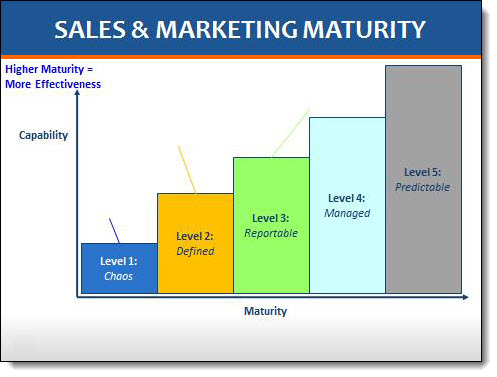
Teaching preschoolers and working in sales may seem like very different worlds, but there are many things I learned during my time as Miss Colleen that I can apply to my current job as an inside sales rep. Here are some sales tips from a former preschool teacher.

1. Keep a positive attitude and make sure you’re always smiling.

This is a general rule I try to live by all the time, but it sometimes takes a bit more thought to follow through during the work day.

As a preschool teacher, you always want to keep a smile on your face and give the impression that you are kind and nurturing.  This probably comes naturally for most teachers, but no one, not even Mary Poppins, feels like smiling and singing all the time.  If you stand in a preschool classroom for only 5 minutes you will see a child spill something or break something and hear screams and shouts from every corner of the room.  When you watch a child spill an entire gallon of orange juice all over that morning’s art projects, your natural reaction may be to scream in their face, “Why do you have the worst motor skills ever? And why would you think your tiny little arms are strong enough to properly handle a gallon of liquid?” but you can’t do that because they will cry and probably develop some strange complex where they are terrified to drink orange juice.  Instead, you have to force a smile and say, “It’s OK. I’m happy to see you are trying to be independent, but sometimes we need to ask for help.”

The same rule can be applied to sales.  After a few unsuccessful sales calls, you can start to feel down on yourself, and this translates over the phone.  Instead of sounding like a happy sales rep who is excited about the opportunity you’re offering and willing to share your incredible software/service with a prospect, you might start to sound like Ben Stein.  Imagine having a phone conversation with the Clear Eyes guy? That would be the worst.  If you sound miserable on the phone, prospects won’t want to speak with you, but if it sounds like you’re smiling, you will find that people are more likely to want to chat with you.

2. Remember that your attitude affects those around you.

I think one of the most important things any teacher should keep in mind is that your attitude sets the tone for the classroom.  When you yell at a child to sit down and be quiet, it is only a matter of time before that child turns around and speaks to a classmate in the same manner.  If it feels like the kids are extra cranky on the days that you’re tired and your patience is short, it’s probably because they are.

This is true in the office as well.  When you come into work and walk around like a big grump, it’s going to rub off on your coworkers. The manner in which you speak to a prospect will affect the way they interact with you as well.  If you are open and friendly, there is a better chance they too will speak openly with you.  No one wants to chit-chat with a cranky-pants, which brings me to my next point.

3. Sometimes people are just in a bad mood. Don’t take it personally.

As we grow, we learn how to control our emotions, a concept that is foreign to most preschoolers.  Sometimes a child will sit down to morning circle time, you’ll ask them a simple question like “What does the weather look like outside today?” and they may respond by screaming “I don’t know!” and bursting into tears.  Most likely this poor little terror just didn’t get enough sleep last night or Mom was running late and they forgot breakfast.  Whatever the situation is, the simple question about the weather is not why they are upset, and when you ask them about the weather tomorrow they will most likely happily respond.

Though adults have more control over their emotions, it is still something we all struggle with.  I have reached out to many prospects who were less than thrilled to receive my call.  If you call someone and kindly ask if they have a few minutes to speak about your service and they respond by shouting “NO!” and slamming the phone on the receiver, don’t give up on them.  Maybe that person didn’t get enough sleep last night, maybe their boss just yelled at them, maybe they are working from home and their three year old just spilled a gallon of OJ on the floor. Everyone has bad days; give that prospect the benefit of the doubt, and try to call him or her again week later.  There is a good chance that when that prospect answers, it will be like speaking to a totally different person. He or she may even apologize for being so rude last time and take your call.  Of course there’s the possibility that that prospect is just a big jerk, but you don’t know that until you try, try again.

4. Make sure that what you are working towards is in the best interest of others.

You may think this would be an impossible thing for a teacher to forget. Obviously their work should always be in the best interest of their students. But teaching is a job too, and sometimes you can catch yourself focusing on what is best for you as opposed to your students.  Sometimes, I would have to stop and ask myself, “Am I letting nap time go on for a half hour longer than usual because I think my students need the extra rest today, or because I need those few extra moments of quiet?”

Always remember to keep the best interest of your prospect in mind.  Sometimes sales reps can get so caught up in trying to hit their numbers that they overlook the reasons that their service actually wouldn’t be a great fit for the account they are reaching out to.  Be honest about the services you provide.  If you aren’t honest with a prospect, there is a good chance the deal won’t work out, or if it did, there will be problems in the future.  Take the time to stop and remember why you are offering your services, and really listen to your prospects to make sure it will actually benefit them, not just you.

I think many of life’s most important lessons are taught in preschool.  You learn the basics of interpersonal communication: remember your manners, don’t hit your friends, use your listening ears, be kind to one another, and don’t be afraid to try new things.  If your preschool teacher watched you do your job for a day, what advice do you think they would give you?

Be Patient and Smile: 4 Sales Tips from a Former Preschool Teacher image 49c4943b e150 418f 9be2 fc3bf3fee2a33

Be Patient and Smile: 4 Sales Tips from a Former Preschool Teacher image 07f0bf66 1dcb 40ea acd9 7c4ff5605ab08

12 Jul 16:22

Should Sales Take Over Marketing?

by John Staples

sales marketing maturityAs a CMO you're constantly being criticized for not measuring the return on marketing spend. The back and forth is: “I need more marketing dollars”. The response “What are we getting for what I’m spending now?” The CEO may even be considering moving marketing under sales. At least the Sales team is carrying a number.  Forbes highlights the confusion among executives over what the CMO priorities should be. This confusion adds to the “disconnect” between Marketing and the business overall.

The CMO Top Ten

Heidi Goff, CMO of a Fortune 1000 company recently shared her top 10 priorities. Heidi took over CMO responsibilities less than 2 years ago. She immediately assessed the current transformational state of the organization. This included leveraging a Sales Productivity Benchmark (SPB) conducted by Sales Benchmark index.

Heidi’s assessment defined her transformational road map. Most CMO's understand that transforming marketing isn’t typically a short term endeavor. Implementing Marketing Automation, restructuring roles, building new teams and redefining marketing takes time. The timeframe for transformation is not one the CEO or Sales leader have the patience to stomach.

The one thing Sales and Marketing can both agree on; Marketing is undergoing transformational change!

Who’s Got the Leads?

Let’s go back to when Heidi took over the marketing organization. The goals of marketing at the time did not include supplying any leads to sales. It should not shock anyone that sales leadership had no time for marketing. Why would they?

Heidi’s priority list, like many of yours, started with some core requirements. She did not have the luxury of fine tuning a well-oiled machine. The following is a partial list of her top priorities and brief explanation of each. The complete list can be downloaded here.

  1. Build an infrastructure that is flexible enough to support organizational changes as they happen. Keeping pace with the infrastructure requirements gives your team the greatest opportunity for success. Assess and audit annually and make the necessary adjustments.
  2. Assign someone to engage with sales on a daily basis. This maintains your group’s relevance to the sales needs. Alignment with sales has never been more important. Buyer Process Maps (BPM), personas, customer feedback etc. are critical cross functional tools/activities.
  3. Take an outward-in approach. Think like your customer. Leverage best practices and augment the team as necessary (thin staffs can’t do everything). Look for outside support for speed and best practices.
  4. Measuring the Return on Marketing Investment (ROMI) has never been more important. Put the necessary metrics and tools in place. Provide both a leading and lagging view.
  5. Collaboration across all products and disciplines is critical. Product Management, Product Marketing, Field Marketing, etc. must be aligned for proper Sales Enablement.

Make It Automated

By the way, Heidi’s initial foundation didn’t include any marketing automation. It also didn’t include any B2B demand generation campaigns. Both are tactical aspects of execution.  To delivery on her strategic priorities, these two tactics were required.  While Heidi’s priorities may be different from yours, the priorities will give you a framework to compare. Heidi literally started with no Lead Generation foundation at all.

Download the Top 10 Priorities of a Best-in-Class CMO. Compare your primary areas of focus with a CMO building a new marketing organization. Although your organization may be in a more mature state, you will still benefit from the list.

Does your situation sound a little like Heidi’s?

Call to Action:

  • Download the top 10 list from a best-in-class CMO
  • Assess your marketing organization
  • Create your own priority list including action items and ownership responsibility
  • Avoid allowing your CEO to think “I should just move marketing under sales.”

For additional information on sales and marketing alignment try this link.

It’s time to look at doing things differently. Take the opportunity to learn from your best-in-class peers. Download the Top 10 list from a best-in-class CMO. If you have any questions or concerns contact me at john.staples@salesbenchmarkindex.com. I’ll walk through the priority list and spend 30 minutes helping you create your own list.

Author: John Staples

Follow @JohnStaplesSBI

sbi on linkedin

If you enjoyed this post, never miss one again by subscribing your Email Here and/or subscribing to the RSS Here.

12 Jul 16:21

Sales Leadership: 9 Things the CEO MUST Know When Making a Sales Call with a Salesperson

by TheSalesHunter

walking away 199x300 Sales Leadership: 9 Things the CEO MUST Know When Making a Sales Call with a Salesperson photoIf you are a CEO or senior manager and you are planning to go on a sales call with someone on your sales staff, here are 9 things you must know:

1. The salesperson is going to be nervous having you along on the call.

It’s not every day a salesperson has the CEO in their car and on a sales call with them.

Make them feel comfortable by talking about non-business related subjects as a way to allow the salesperson to realize you’re human.

2. Let the salesperson know you’re along to help them.

The account you’re visiting is their account. Expect the salesperson to lead the call, but tell them you are there for support and to help if need be.

3. Find out how you can help the salesperson.

Are their certain aspects the salesperson thinks you could be particularly helpful with or are there questions the salesperson thinks you should ask the customer?

The salesperson may know specific ways they would like you to be involved, but may not tell you this without you saying, “How can I best help on the call?”

4. Demonstrate respect to every person you meet on the way to the call, at the call and after the call.

The salesperson is watching your every move.  How you interact with people is huge and can have a lasting impact on the salesperson.

5. Know that whatever you talk about and what you do while in the company of the salesperson is going to be repeated to others on the sales team immediately after you leave the salesperson.

This isn’t a bad thing, but it is one more thing to keep in mind as you go on the call.  You want your sales staff to see you as an asset in these situations.  No, you can’t control what they think, but you can greatly increase the positive odds by paying close attention to the details I’m describing in this post.

6. What you may think is unimportant, the salesperson may view as critical.

Respect them in their arena. Remember that you’re in the field, not your office.

7. Send a personal note to the salesperson after the call, letting them know how much you valued them taking the time to have you on the call.

This will demonstrate your leadership and show the salesperson that you genuinely value the work they do.

8. Recap with the salesperson’s boss what you saw, what you learned, and any necessary next steps.

The sales manager is anxious to hear how the sales call went. When you follow-up, it shows that you take your involvement seriously and you value the role the sales team plays in the success of the company.

9. Send a follow-up note to the customer and copy the salesperson.

It doesn’t have to be a lengthy note, but definitely something that demonstrates that you valued the experience.  Also, if there were any items that you told the customer you would follow-up on, then definitely mention these as well.

The above 9 things will make your experience on a sales call beneficial for you, the salesperson and the customer.  Ultimately, that kind of positive experience is good for your company!

Copyright 2013, Mark Hunter “The Sales Hunter.” Sales Motivation Blog.

button receive a free9 300x51 Sales Leadership: 9 Things the CEO MUST Know When Making a Sales Call with a Salesperson photo

12 Jul 16:21

Sales Effectiveness in the Digital Age

by Gerhard Gschwandtner
Sales – has it ever been about anything other than generating leads, transforming them into opportunities, creating innovative solutions to suit your prospect’s needs, and successfully closing a sale? Once upon a time, all that was achieved face-to-face, using printed marketing materials carried in a sales bag and a hopefully well-timed visit to a prospect’s home or office. Today, however, best-in-class sales teams harness the power of the digital age to sell smarter; the time has never been better to maximize sales effectiveness. Start with Sales and Marketing Alignment According to Aberdeen Group’s Peter Ostrow (Research Director, Sales Effectiveness), today,...
12 Jul 16:21

Andy Paul Salesperson lacking confidence in the value he or she creates for the customer hesitates instead of leaping forward #sales

Andy Paul Salesperson lacking confidence in the value he or she creates for the customer hesitates instead of leaping forward #sales