Shared posts

21 Aug 15:37

10 Brands' Twitter Marketing You Can't Help But Love

by Anum Hussain

twitter-marketing-loveSocial media conversations have evolved. Rather than broadcasting messages, users and brands are engaging in more direct communication. And the most prominent social channel for these one-to-one conversations is Twitter.

It's a good thing, too. Episerver reports that 30% of brands experience increased customer loyalty after establishing a social media presence. The thing is, some brands are doing it more often, and with a lot more heart, than others.

Because I want you to end your week on a positive note, I'd like to share some brands using Twitter the right way -- you know, conversations, personalization, the stuff that makes you feel all warm and fuzzy inside.

So, here they are. Ten brands that are totally rocking modern-day Twitter marketing.

1) @SocialSamosa and @Mallikarjunan

This awesome social media agency sent free samosas to my fellow HubSpotter Sam Mallikarjunan after he tweeted about wanting some every time he saw their Twitter handle. Even though the agency is located in India, they contacted a local restaurant in Boston and had samosas delivered to Sam's office here in Cambridge. It was a yummy day.

sam-social-samosa

2) @TacoBell and @RedBull

You might remember this funny exchange, but the humor still resonates with me. There's something about two big brands talking to each other with *gasp* personality that makes them both seem a little more human.

old-spice-taco-bell

(And speaking to the previously cited customer loyalty metric, I'm also a regular Taco Bell customer, and have even convinced many co-wowrkers to give the Bell a try.)

3) @TacoBell and @MeanGirlsQuotes

For anyone who has seen Mean Girls, this Twitter moment is too epic for words. Disclaimer: Fine, I really really really like Taco Bell. Okay?

mean-girls-taco-bell

4) @Yuengling_Beer and @_Whittle

While on vacation, Sam Whittle tweeted about how wonderful it was to be drinking Yuengling by the beachside. Not only did the brand respond ... but he was welcomed home with a box of Yuengling delivered and waiting for him!

yuengling-sam

5) @Oreo and @AMCTheatres

After Oreo tweeted about sneaking its cookies into a movie, AMC Theatres cleverly responded with this image.

amc-oreo

6) @PeterShankman and @Mortons

After Peter Shankman sent the following tweet, he was pleasantly surprised to find someone from Morton's Steakhouse waiting outside the airport with steak and bread.

peter-shankman

7) @Jif

After the creator of gif announced to the world that his animated visuals are pronounced GIF, not JIF ... well, needless to say, well played.

jif-gif

8) @BostonVC, @DunkinDonuts, and @HubSpot

When our CEO Brian Halligan took over the HubSpot Twitter handle for the day around the launch of our new tool Social Inbox, we knew it'd be a fun day. What we didn't know is that David Skok from our advisory board would call him out, and then Dunkin Donuts would jump in on it!

dunkin-hubspot

9) @getcrackin and @krystalminer

After Krystal Miner tweeted about her pistachio addiction, Wonderful Pistachios responded in sass-tastic fashion.

pistachio

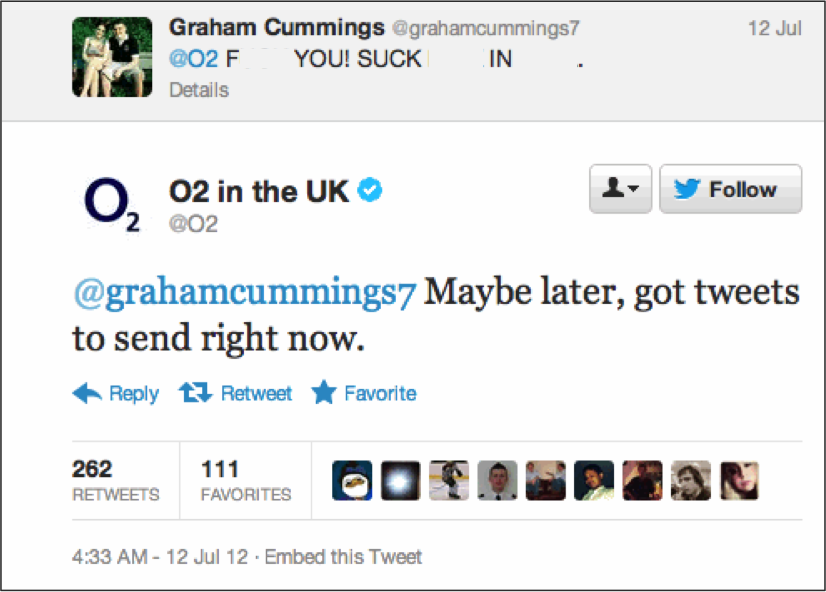
10) @O2 and @grahamcummings2

All I have to say about this example is that I'm sorry I had to sensor it. And maybe it doesn't make you feel warm and fuzzy ... but it's hilarious.

o2-1

Bonus: Bodyform on Facebook

Why should Twitter marketers have all the fun? After a concerned boyfriend left this extensive comment on Bodyform's Facebook wall ...

bodyform-comment

... Bodyform responded with an informative video.

 
Hopefully these hilarious, caring, and sassy examples inspire your brand to engage in awesome and honest conversations on social media, as well!
 
Image credit: Penelope Else
 
attract customers with twitter and vine
 
subscribe to the hubspot marketing blog
 
21 Aug 15:33

Before you build prospect list, Build a customer profile

by Ipshita Jain

Identifying the right audience is the most important step in the process of finding new customers, prospects or leads. Without knowing your audience, you would not know where to look for them. Once you know what you should be looking for, you can use some of the awesome tools that ZoomInfo has to offer to build the most effective marketing campaigns and target your prospects like you could never before. So how do you go about building your ideal customer’s profile? What parameters can you use to filter a large database in order to build a targeted marketing and sales leads list?

If you have been in business for some time, most likely you have at least a few customers already. Before you look anywhere else, start by thinking about your existing customers. Following questions would help you get to the answers you need to build your buyer’s persona –

If you are targeting business profiles, you should ask yourself -

  1. Who are my customers? What is their income? Age? Location?
  2. What are the job functions or roles of my customers? What do they usually purchase? Average amount of transaction?
  3. How often do they make a purchase? Is it cyclical or seasonal? This will give you an idea about your sales frequency, which is very important when you are building a revenue strategy and looking for more ways to increase revenue for your company.
  4. Is there a specific time when the customers make a purchase? For example, if you are an IT solution provider to educational publishers, like our client Focus Eduvation, the best time to reach out to your prospects might be the late summer, i.e. around the back-to-school period. Timing matters when you are prospecting.
  5. Which is the industry that my customers work in? What do they need help with to increase their revenue, and how do my product or services help them in achieving their goals?

If you are targeting companies, the questions to answer would be -

  1. Which companies are my customers? Their revenue? Location?
  2. What is the average size of my company? Are they early stage or mature companies? How many employees do they usually have?
  3. What are the industries that these companies operate in?
  4. How does my product or service solve their problems?
  5. How often do they make a purchase? Is it cyclical or seasonal?
  6. Who are the decision makers in the companies? What are their profiles and job functions?
  7. Is there any specific location that has higher concentration of your customers? When you look for new customers, you can pay special attention to this location.

Once you have answered above questions, you would be better positioned to take advantage of prospecting tools and find the exact kind of leads that you are interested in.

Haven’t tried ZoomInfo yet? Try a FREE TRIAL now!


21 Aug 15:32

Did Google’s New Inbox Just Kill Email Marketing?

by Jordan Cohen

As one of the most popular email services in the world, with half a billion users and counting, Gmail’s recent inbox changes have some pundits questioning whether email marketing’s best days are behind it.

In a matter of weeks, three small tabs— Primary, Social, and Promotion—have become giant question marks looming over every email marketer’s head. But is the alarm justified? Or could Gmail’s new inbox provide new opportunities to bring more powerful email experiences to consumers?

What About Those Three Tabs?

For those of you unfamiliar with Gmail’s “new” inbox, here is the quick take: Gmail has begun gradually rolling out changes to its inbox, which automatically categorizes each user’s email into three tabs: The Primary tab is the general inbox and the familiar main display whenever a user logs onto his or her account. The Social tab includes all social media updates and correspondences. The last tab, Promotions, aggregates all opt-in email marketing offers as well as promotional display ads that resemble emails from Google itself.

Email marketers have valid reasons to be concerned. How many times a day do we click and open an email just to feel as though we’re staying on top of our inbox? How many times do these opens lead to an online purchase or at least, a click-through to a marketer’s website?

While it’s too soon to tell whether the new inbox will have a long-term impact on actual email opens, what we do know is that now, with its separate tab, when users open a marketing email, they are doing it with purpose, and possibly, a higher level of buying intent. And therein lies the opportunity.

The Agile Email Marketing Opportunity

How can marketers take advantage of that fleeting moment when a recipient is deciding whether to continue looking or to move on to the next email? The answer is to make sure that every correspondence is timely, relevant, and highly personalized.

The emphasis on timeliness in email marketing is not new, but the technology to swap out content at the moment of each recipient’s open is. With agile email marketing technology, content within emails can be dynamically changed based on when, where, and how recipients open and interact with messages. Building relevant communications becomes easier for the marketer and results in deeper engagement with the consumer.

With only a few seconds to grab a recipient’s attention—especially folks who may not view an email until hours after it landed in their inbox—it’s imperative for content to remain relevant and fresh. Users should be greeted with alternative offers when a “One Day Only” flash sale has passed. Real-time geo-targeting should be used to display specific items based on recipient’s location at the moment of open. Marketers should have the ability to track campaign success in real time and be able to swap out content, even after an email has been sent to millions of recipients.

While it won’t alleviate all of the concerns that marketers may be feeling about the new Gmail inbox, adopting agile email marketing technologies and best practices will bring about new opportunities to improve the performance of email marketing campaigns and elevate their relevancy to a whole new level.

21 Aug 15:32

B2B Email Marketing: Batch and blast, mobile, and other challenges

by info@meclabs.com

Earlier this year at MarketingSherpa Email Summit 2013 in Las Vegas, I had the chance to enjoy many conversations with my email marketing industry friends. This post grew out of one of those talks.

I asked Matt Bailey, President, SiteLogic; Christopher Donald, CEO and Lead Strategist, Inbox Group; and Loren McDonald, VP Industry Relations, Silverpop, about comparing “batch and blast” email strategies against some of the more targeted and personalized email approaches. Here are their answers.

David Kirkpatrick: Email marketers are being told to employ aggressive database hygiene on email subscription lists, engage in tactics such as microsegmentation to individualize and customize the content in email campaigns, and begin emphasizing mobile form factors in email design to encourage engagement with campaigns on mobile devices.

At the same time, they are being told to get away from the traditional batch and blast or “spray and pray” efforts.

What are some advantages and disadvantages of these areas of emphasis in email marketing?

Loren McDonald: Email marketing is not “either-or.” A successful program relies on a combination of elements – broadcast, automated triggered emails and segmentation. Each element has a specific role to play in your email program. If you focus on a single one to the exclusion of the others, you’re leaving money on the table.

First, a well-designed broadcast email program makes sense because you will always have email messages that you should send to everyone on your list.

Part of email’s role is to nudge your customers into buying something they didn’t necessarily know they wanted, to reach out to the person who wasn’t planning to buy from you.

Having said that, I do believe that the more behavior you can capture, the more relevant your messages become, and you can automate more messages. Recipients value these messages because they’re more relevant than most broadcast emails.

Automated messaging helps you capture incremental dollars on top of the revenue you’re driving already with your broadcast emails.

Matt Bailey: As much as neither of us would recommend a batch and blast approach, it is still a “better than nothing” proposition.

I find that in many companies, the traditional email batch marketing is the sole or the primary way of corresponding with existing customers. So, in this way, it is better than no communication. There is little to no time spent improving the database or much thought into the messaging of the emails – it’s simply a task to be done.

Now, fortunately or unfortunately, when I audit these types of companies and their marketing, and come to their email programs – it’s a profitable venture. Because so little is put in, besides the creative, the email service provider (ESP) and the blast, but yet it produces the primary source of repeat business.

I say unfortunately, because many times it is profitable because there is little spent and even less attention to segmentation or database management. I say fortunately, because making simple changes and becoming better and more intelligent with microsegmentation, triggers, etc., will only make an already profitable activity soar in results.

The issue then becomes one of paying more for something that is already working and investing in it to grow. Meanwhile, the sexiness of social media is competing for the marketing budget, and the new sexy options tend to get the attention, whereas the already profitable and predictable email marketing gets overlooked.

Christopher Donald: There is definitely a lot of benefit to being able to segment and target based on the data. We like to look at pretty much everything – from browse data to email data. You know, what [your customers] are responding to and not responding to from previous purchases.

So, you can get segmentation or even microsegmentation. The problem is not everybody has the bandwidth or budget to do that.

So they still live in the batch and blast world, and it can be very effective. There are a lot of companies that all they do is batch and blast, and it does really well for them.

You can increase your ROI and your revenue through targeting and through better segmentation and messaging to those segments based on previous activity, but it takes time and money.

Some people do batch and blast just out of necessity, but that doesn’t mean it doesn’t work.

DK: What effect on that final conversion to sale (rather than other email metrics such as open rate and clickthrough) do these two different approaches exert on campaigns?

LM: The one-to-one approach, especially those emails that are triggered to the individual based on a behavior or event, typically have significantly higher conversion rates than one-size-fits-all broadcast emails.

On the other hand, conversion rates on broadcast emails are typically less than 5%, but the emails are sent to all or a majority of your database versus a tiny percentage on any given day of the one-to-one emails. But with automated email programs, the power and math is in that they are triggered 24/7/365 and that as you build your program you might have dozens of these emails going out every day.

So as I mentioned earlier, the key is to combine a growing number of these one-to-one automated emails with segmented and broadcast. Companies that add a significant number of automated email programs often see them contribute 25% to 50% of their total revenue from email.

MB: Oh, there is no contest. Every test, every campaign and every client that develops microsegmented campaigns or persona-based emails sees lifts in every category. It all comes down to relevance. Even if I have subscribed to your company’s emails, unless it is relevant to my needs – at that exact moment – it is spam. The more targeted your emails [are] by relevance, personalization and timeliness, the more significant all metrics increase, especially the ones that count – revenue and profitability.

CD: I think it all depends on what it is you are selling, right? If you simply sell a widget in 10 different colors, then segmentation probably isn’t important and isn’t even going to get you that much more revenue for the amount of time and cost that will be involved.

Revenue should always be your main indicator.

It is your main indicator of whether what you are doing is working, or not. I have seen clients spend huge amounts of money and time segmenting and on hygiene and managing inactives and doing everything they can do, but the bottom line – the return on investment of doing those things – doesn’t always pan out.

For others, it does. It is really looking at what you are selling. If you are selling lots of different products, it makes all the sense in the world to segment.

DK: Is relying on batch and blast because it still works possibly selling short a longer-term strategy of an engaged, if maybe smaller, subscriber base? And possibly risking eventual issues with deliverability, recipient fatigue (and the resulting opt-outs, or worse, spam/junk status) and/or brand credibility?

LM: If your email program is almost entirely batch and blast, then you are simply leaving a lot of money on the table. That is the fundamental reason to go beyond this approach – deliverability concerns and related issues are secondary. Remember, your goal as a marketer is to make as much money as possible for your employer while at the same time balancing margins, customer expectations, choice, list churn and other factors.

The simple truth is that sending more email makes you more money. But “more” doesn’t mean just sending more of the same old thing to everyone – but more relevant emails at the individual, segment and broadcast level. As my friend Dela Quist of Alchemy Worx says, “Don’t be stupid.”

You have to be responsible with your broadcast program. You must test frequency and monitor engagement across your database. Concentrate on activating your new subscribers right away. Use technology and data to identity customers who are becoming unengaged and then move them into different tracks. You also need to understand the longer-term impact on churn and revenue when simply sending more broadcast emails.

Additionally, one of the goals and purposes of your broadcast program is to drive subscriber behaviors that then trigger those one-to-one emails that lead to higher conversions and engagement. Without the regular cadence of broadcast emails you will have fewer behaviors from which to trigger the highly personalized emails.

MB: Absolutely! I believe that the batch and blast approach is only profitable because we are in a unique place in digital marketing. It’s the “grace period” before we hit a critical mass of personalized, targeted marketing. If your company isn’t doing it, then you will get overwhelmed by your competitors and others who are engaging your customers at a more personal level.

CD: I think it does hurt in the long run, for sure. I think you can turn off your audience over time [with batch and blast email].

But, sometimes it is a knowledge issue. There are a lot of plug-and-play services with recommendations based on browsing, or cart abandonment, or targeting based on data.

Sometimes people are email marketers by default, not by choice.

DK: What emphasis should email marketers place on mobile platforms right now when designing new email campaigns and overall email marketing strategies?

MB: I would look at your metrics to see how your customer base is interacting with your emails. While the data suggests that email is the number one activity on mobile you need to see how that is stacked up for your company. Just because reports state that you still have to see what is happening in your own business.

Now, after verifying how people are using your emails and where they are opening – if you see even the slightest trend or predilection to mobile, then you need to be exploring, designing or planning. Don’t ignore it.

CD: I think [email marketers] should take it very seriously.

You need to find out what percentage of your [audience] are opening and reading on mobile. We have a B2B client with a mobile open rate of only 4%.

You would think [being] business to business, the mobile open rate would be huge, right?

But, with this particular client, they have been sending this newsletter on a monthly basis for seven years and the newsletter is content heavy. It generates 1.6 million PDF downloads of new insurance policy information for agents.

Because it is a large format newsletter and a lot of content, there is no way to make it mobile-friendly.

DK: What are your overall thoughts or ideas you’d like to share on this topic?

LM: While I am a major proponent of one-to-one, behavior-based automated email, success is still all about balance and knowing what works with your customers.

You need to find the right balance among broadcast, one-to-one and segmentation based on your business, resources, budget and customer and purchase lifecycle. If you overemphasize one approach at the expense of the others, you’re leaving money – perhaps a lot of it – on the table.

MB: Metrics are powerful, and they are absolutely necessary to prove our assumptions. Even though your traditional email campaigns are profitable, it doesn’t mean that they will remain so next year. Even the simplest segmentation strategy will make a remarkable difference in your response rates, conversions and even more – the customer perception of your company.  All of which will be important as the personalization of digital marketing explodes over the near term.

MarketingSherpa Email Awards 2014

Did this blog post get you thinking about your own email marketing strategies and tactics? If so, let us know about your best campaigns from the past year and enter those efforts in MarketingSherpa Email Awards 2014. You have until September 8, 2013 to enter.

Related Resources:

Email Marketing: 208% higher conversion rate for targeted emails over batch and blast

Automated Email Case Study: 175% more revenue and 83% higher conversion rate

Email Marketing: 900% more revenue-per-email from Restaurant.com’s automated strategy

Email Marketing: Two ways to add relevance, and why you must be correct

21 Aug 15:30

If price is an issue

by Steve Yastrow

If you’re ever tempted to say, “All our customers care about is price,” consider restating this as, “We haven’t yet identified anything that is meaningful enough to command a higher price.”

The post If price is an issue appeared first on Steve Yastrow.

21 Aug 15:25

How To Organize Your Research With The Power Of Google Drive

by Saikat Basu
gdrive

Google Docs has made its home on Google Drive. So after one year, it’s high time to get used to calling it by the new account name. Some digital habits die hard, and in my case I find it’s still kicking as I continue to call it by its former name. I am one of the stragglers here. But then there’s one thing which hasn’t changed – my continuing reliance on Google for my web research. Google Drive might be jogging steadfastly behind Microsoft Office, but Google Drive is adding muscles to its legs; at least enough to help out...

Read the full article: How To Organize Your Research With The Power Of Google Drive

20 Aug 17:29

Blackberry Forgot to Manage the Ecosystem

by Michael G. Jacobides

The story of Blackberry underlines a new truth about the competitive landscape we live in: success or failure isn't a function of a good product or service, or a well-run, cost effective company with a sound capital structure. It also requires an effective strategy to manage your ecosystem.

This was Blackberry's failure. The company had become complacent about its remarkably loyal customers and didn't recognize the threat posed by rival ecosystems. Like many established firms before it, Blackberry blew the opportunity to become a nodal player and leverage the energies of its complementors, in the way that Apple does with its apps.

But incumbents don't always have to lose in the game of value capture. By playing their cards right, they may be able to sustain their position and both create a value proposition that will appeal to the end customer, and keep their suppliers and complementors in check.

In the July issue of HBR, Wharton's John Paul MacDuffie and I report the results from our research on how value migrates in industry ecosystems. We consider why in sectors like the computers of the 1980s value can migrate from the former integrated firms, giants such as IBM, to the new specialists that spring up in the industry ecosystem, such as Microsoft and Intel, and see what makes the "bottleneck," the core of the system's value, shift around in the sector.

We then consider why other sectors, such as automobiles, despite the hype and the expectations of change and value chain reconfiguration, have been remarkably stable. Despite the massive outsourcing that has happened in cars, value appropriation (in terms of share of market capitalization in the ecosystem) still rests with car manufacturers and not the ever-growing component makers.

Our research offers an explanation about what drives value to move or not.

We find that firms that succeed are those that proactively manage the structure of their sectors and keep a set of suppliers working for them in hierarchical, closed supplier networks. IBM made the mistake of opening up its sector through a set of standards which ultimately led to its demise, whereas today's Apple has a carefully controlled set of suppliers and complementary players to support its value proposition.

The solution is not to be vertically integrated but, rather, to control by managing differentiability — i.e., being the actor along the value chain who guarantees the product quality and shapes the experience — as well as manage the replaceability of other actors along the value chain. Automobile manufacturers have kept the lion's share of the sector as they managed to control the sector and shape the experience.

Bain & Company famously predicted in the 1990s that cars would soon look like computers, with giant suppliers ruling the sector. And Deloitte is once again predicting that with the advent of the Electric Vehicle, the sector will disintegrate and value will migrate.

Yet this doesn't look likely to us. Rather than seeing the car industry go the way of the computer, as many predicted, Apple is now pushing the computer sector to increasingly resemble cars: Hierarchical, tightly managed supplier networks, a keen eye for technology integration, a focus on the differentiation in the eyes of the final customer. Apple, unlike Blackberry, hasn't just grasped the importance of a solid value proposition; it is focused on managing the ecosystem and bringing value its way.

Of course, life always looks easier when you're the kingpin of the ecosystem. What's exciting is to consider not only how successful kingpins can defend their position, but also how upstarts might upset the sector.

By becoming go-to outsourcees, leveraging the need of incumbents to save on assets, and patiently moving up the food chain to become solutions providers, or by carefully managing the standards game to gain a toehold in broader markets, aspiring entrants may emulate the shift of firms like Huawei or Honhai from sub-assemblers to industrial giants.

There is no denying that strategy has become more complicated, and that it's far easier to analyse than engage in real-time problem solution. But if we look start looking more carefully at what drives the movement of value in our industries we may be able to re-think our strategies before it gets to be too late to respond.

20 Aug 17:27

See what happens if you don’t ask?

by admin

Hedge 2

About 15 or 16 years ago we were living in an old farmhouse in the middle of the beautiful Suffolk countryside. Around the farm was a hedge, probably around 2 or 300 yards in total, which clearly hadn’t seen a cut in some time. As a result the whole place looked a little untidy.  Time for action, I was told. The following day I happened to be in the local village when I saw a van drive past with “Garden Maintenance, Hedge Cutting” on the side.  Perfect I thought, making a note of the phone number.

Later that day I gave them a call and asked them to visit to give me a price.  After wandering around and looking at the hedge the guy who came to see me said he’d get back with a quote.

The Quote arrives……

Sure enough, a few days later his quote arrived. You should know that by now the pressure to get the hedges sorted out was growing (and so were the hedges) – my wife was well and truly on the case! Excitedly ripping open the envelope I checked out his quote.  I think the colour must have drained from my face as my wife asked “What’s the matter?”  I slipped the quote across the table.  I wasn’t sure whether I was just plain angry or utterly bemused.  The colour drained from her face as well so it wasn’t just me!

It’s how much?!!!!

how-muchThe quote was £1000.  For cutting back a hedge! When I had calmed down I rang him back and asked what he thought he was going to be doing – cutting it with nail scissors perhaps? After some blustering and my explaining that I just wanted someone to come in with a large hedge cutter, cut the hedge and clear up he agreed to amend his quote.  A few further days later and his amended quote arrived – for £600.

The high cost of country living?

I was beginning to think that living in the country was going to be a good deal more expensive than I had imagined.  Even at £600 the price seemed outrageous to me (but then I didn’t really have much to compare it with). Finally I thought it might be sensible to have a word with my next door neighbour (around ¼ mile away) and see what he did.

Some background research (at last)

“That seems an awful lot” David said when I told him of my two quotes.  “I use Ted, the local farmer.  Give him a call; he’s only down the road”.

So I rang Ted and he duly came to visit.  Now Ted was a typical farmer.  We walked across the fields together, wandered around the hedges, looked into the ditches, all punctuated with the occasional “Hmm” and slight intakes of breath.  At the end of it we were leaning against one of the gates to discuss the business end of the conversation.

“Well, you don’t just need the hedges cut, it’ll all need ditching too”. Oh dear, I could see the price rising again before my very eyes.  “The whole job will probably take a little while, to do it properly”.

“Goodness.  Really? Well roughly how much do you think it would be?” By now I was getting concerned.  The original £1000 was miles out I was sure, but £600 was beginning to seem more likely – and at least once a year!

……and now the price

Ted gave the whole project further considerable thought, having another quick wander.  Looking serious, he walked back to me across the field. “ Well” he said, “I really couldn’t do it for less than…

…..

….. £30!

“How much????”

“No, really, £30 is the lowest I can go”.  He wasn’t going to budge!

What a result!

Frankly, I was amazed.  How could the same job move from £1000 to £30? Surely,jump4joy my £30 job was going to be a disaster? It wasn’t.  He did a fantastic job and by the time Ted had finished, the whole outlook had been transformed and he had one very satisfied customers.  And £30. Just £30.

And I got to wondering whether he could have got more (of course he could).  This was serious money left on the table.  If only he’d just asked “What have you been quoted up to now?”

Value Pricing?

I’d have told him, willingly.  He could have charged me £100 without any difficulty whatsoever, maybe more. 3 or 4 times more than he actually quoted.  All for the want of a single question. He could have put Value Pricing into instant action without any difficulty.  Instead he looked at how long it was going to take him and how much he would need to cover his costs.

Ted is now retired, so I had to find someone else to do my hedges – nothing like as well as Ted and at the crippling price of £60.  He would have found it a bit more difficult to get more.  After all, he was asking for twice as much as I had been paying!

20 Aug 16:57

Six Ways Sales Professionals Should Use Social Media

by Personal Branding Blog

Most sales professionals I’ve encountered are using LinkedIn for business. However, few truly understand how to fully leverage sites like LinkedIn, Facebook, and Twitter. Social media is not only great for building relationships, but it is also wonderful for prospecting and attracting clients through a strong brand.

Six Ways Sales Professionals Should Use Social Media image shutterstock 1431442721 300x300I just finished conducting a workshop for a large national sales organization in Chicago. Below are a small handful of the tips that I shared with attendees.

Five sales tips for social networks

  1. LinkedIn - Use LinkedIn’s advanced search feature to build a prospecting list. Do you need to build relationships with all of the spinal surgeons located within a fifty mile radius of zip code 77002? Perhaps you need to connect with all of the directors of human resources within a 30 mile radius of your city. LinkedIn Advanced search will help you.
  2. Facebook – Use Facebook’s Graph Search to build a prospecting list. Discover “friends of friends who work for Shell” or “Communication Directors who work for Company XYZ.” Have a bowtie business? Look up “People like bowties and live in Houston.” Facebook will create a list for you that you can further refine.
  3. Twitter – Use Twitter search or Advanced Search for client discovery. Are you a Realtor? Type “looking for home in Miami” to see all of the Twitter users who recently tweeted with those words. Twitter users will often solicit the help of their followers when they need recommendations.
  4. Google+ – As a social network, Google+ is one of the top two that can influence search engine results. If you want to increase the likelihood of your brand’s website, articles, etc. being seen by potential clients, friend them on Google+ and post links to your web items on your profile.
  5. Pinterest – Do you have a visual, B to C brand that targets women? If so, Pinterest, with over 86% female users, is where you should post pictures of your products with links to purchase through your website.

Bonus Tip – When building prospecting lists in #1 and #2 above, you’ll get the person’s name and, depending on the search, company name. However, you will not have their email address. To find this information, you can perform a Google wildcard search. In the Google search box type the following, including both sets of quotations – “first name last name” “*@companywebsite” An example would be “Crystal Washington” “*@crystalwashington.com”

Author:

Crystal Washington is a social media marketing strategist, speaker, co-founder of Socialtunities—a social media instruction brand that trains Gen Ys-Boomers on the strategic use of social media, and the author ofThe Social Media WHY: A Busy Professional’s Practical Guide to Using Social Media Including LinkedIn, Facebook, Twitter, YouTube, Pinterest, Google+ and Blogs for Business. She is hired by corporations and associations around the globe to provide keynotes, workshops, and webinars.

20 Aug 16:57

Marketing Automation: Sales or Marketing Tool?

by Pardot

Despite being marketed for years as a tool for, well, marketers, automation is changing the shape of the modern sales department as well. Companies that implement the solution for their marketing teams soon discover that automation extends well beyond the boundaries of marketing.
20 Aug 16:57

Sales Training Article: Getting Referrals

by Customer Centric Selling

Sales Training Article: Getting Customer Referrals

By Geoffrey James, INC - Sales Source

sales trainingTo get referrals that turn into new customers you've got ask the right way at the right time.

Hundreds of "how to" sales books (and the sales trainers who write them) advise sellers to always ask for a referral after you close a sale, like so:

"Thank you for buying! Do you know anyone else who can use our product?"

Unfortunately, this type of request almost never results in a useful referral because it's asking for the wrong thing, in the wrong way, and at the wrong time. Here's a better way:

1. Pre-position the referral.

Asking for a referral when you've just made the sale is asking too much. The new customer has just risked "career points" by buying from you and has no idea whether you can deliver as promised. Why would that he or she risk further "career points" by referring you to a colleague?

Rather than asking for a referral at the point of sale, say something like: "I think you'll be delighted with our product. If that's the case, will you be willing to share your experience with somebody else who might be interested in this product?"

If the answer is yes, say: "Great! Until then, would you be willing to think about who you know who might be interested?" If the answer is "yes," you've pre-positioned that customer to give you a referral.

2. Ask for an introduction.

After enough time has passed so that the customer knows you can deliver as promised, re-contact the customer and confirm that the customer is delighted. If so, remind the customer of his or her commitment to you.

Don't settle for contact information because then you'll just be making another cold call. Ask the existing customer to send an email to the colleague (and if possible a call as well), personally recommending that the colleague speak with you.

The personal introduction is crucial because that's how the existing customer "endorses" you. It tells the potential customer that you can be trusted, which overcomes the barriers of suspicion and unfamiliarity that gum up sales efforts in their early stages.

3. Keep your source informed.

Since your existing customer has spent "career points" recommending you, the existing customer will naturally want to know what resulted from the referral. You start by thanking the existing customer, before you do anything else.

Then, as you develop the relationship with the new potential customers, keep your existing customer "in the loop." Let the existing customer know when you've contacted the new potential customer and whether (and when) that customer buys.

Finally, if the new potential customer DOES buy from you, show your appreciate your existing customer for his or her contribution to your success. Send a hand-written thank-you note or even a small, thoughtful gift.


sales training companyNeed some help with your sales performance? Take a look at the sales training workshops available to you and improve sales performance.

Read more sales training articles from CustomerCentric Selling® - The Sales Training Company.

20 Aug 16:56

Sales Manager or Sales Leader: Which are You?

by TheSalesHunter

Let’s do a quick review of some of the key activities the typical sales manager — or  sales leader — does. More importantly, I want you to ask yourself which one you are.

Compiling of reports

Sales managers put them together properly, adding information where necessary, and send them up the chain of command on time.

Sales leaders do the same thing a sales manager does, but then use the information to go back and discuss with their salespeople key items listed and a plan to start improving upon those items.

Scheduling of time

Sales managers view it as important to have plenty of scheduled days in the office to deal with the paperwork and to keep everything in order.

Sales leaders view being in the field with their salespeople and customers as the most important activity of all.  They catch paperwork and other stuff as they can while on the road, scheduling as little time in the office as possible.

Working with salespeople

When sales managers are out in the field, they spend their time working with the low performers because they view that as their most important job.  They ignore the top performers because they want to stay out of their way.

Sales leaders go where the need is and this means many times to the top performer. They know they can gain more sales by working with the top performer than by spending countless hours with the bottom performer who merely needs to be terminated.

Developing people

Sales managers believe the development of people is going to occur by sending salespeople to training classes.

Sales leaders believe developing salespeople is their top priority and they make it part of the daily routine.

Considering the above criteria, how did you see yourself with regard to each of the tasks?

This list is not complete.  It’s only a few of the items you need to consider if you are a sales manager striving to become a sales leader.  What other items would you add if we were compiling a more comprehensive list?

Copyright 2013, Mark Hunter “The Sales Hunter.” Sales Motivation Blog.

button receive a free9 300x51 Sales Manager or Sales Leader: Which are You? photo

20 Aug 16:56

Are your Customers Outpacing your Sales Team?

by Scott Gruher

In this post we will discuss Agile Sales. Agile sales is an approach that can help you keep pace with your customers.

A few months back I wrote a post about becoming an Agile Sales Leader.  Now it is time to make the entire sales organization agile.  Let’s start with the definition of agile sales.  

Agile is not a process!  The Agile sales approach places the customer buying experience above everything else.  All organizational behaviors and activities are aligned to this effort.

The first step is to understand how to keep pace with your customers.  Agile SalesRight now buyer behavior is outpacing sales organizations.  This is leading to frustration among many B2B buyers. On the other hand, B2C organizations have been driving this change among consumers.  Amazon, Netflix, EBay.  Buyers have been trained to expect speed, availability, and a self-directed buying experience.   They bring their B2C experiences to their jobs. This leads to friction when B2B sellers don’t match their new buying world. 
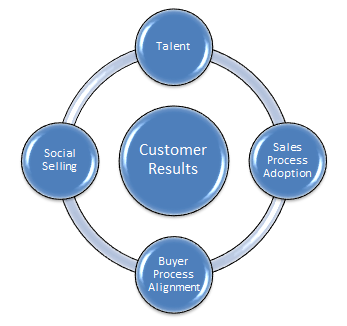
Now we will look at what agile sales organizations look like.   We will contrast them with sales organizations that say, “this is how we have always done it”. 

SBI’s 7th annual research session will expand on the agile sales concept. In an increasingly competitive environment, best-in-class sales organizations are looking for an edge.  Download this tool to keep pace with your customers by utilizing the agile sales approach.

Key Benefits of the Tool:

  • Keep pace with customer expectations
  • Outpace the competition through customer intimacy
  • Drive daily incremental improvement to Make the Number


What has changed in Agile Sales Organizations?

  1. Talent – industry experience and tenure are not as valuable. Experience can actually be a bad thing. Old habits are hard to break.  What your rep did 5 years ago is obsolete. 
    1. Agile Sales Talent – reps possess the competencies of the new A player.  These competencies show that a sales rep has acquired new capabilities.  They have kept up with the market.  If they have these skills they are more likely to sell effectively to the new buyer
    2. Being Outpaced – lead with a product and a price and call it solution selling.  Your talent is utilizing yesterday methods to influence today's buyer.
  2. More selling is done virtually – buyers are making decision without a rep in the room. This is true whether your organization is comprised mainly of outside or inside sales.  Buyers rely on content, peers, and social media to educate themselves.  Because of this fact, your team needs to be experts in selling when they aren't present. 
    1. Agile Sales – embrace the agile movement.  They are increasing the size of their centralized inside sales force.  They are also embracing the fact that outside resources spend most of their time inside. These decentralized sales people are being enabled versus pushed into the field. 
    2. Being Outpacedkeep telling outside reps they need to do X amount of F2F sales calls per week. 
  3. The use of technology, social, mobile – this one is the most obvious.  I still see sales reps using paper daily planners.  On the other hand, organizations are using voice recognition software. Sales people can dictate notes after a sales call and it is automatically saved to CRM. 
    1. Agile Sales – mobile enabled CRM.  Social selling is the norm.  Tablets are more prevalent than PCs. Utilize voice recognition software.  
    2. Being Outpaced - CRM is purely a micro-management tool. Computer work is completed in the office.  Still cold calling via the phone or knocking on doors.
  4. Sellers facilitate vs. closing – buyers are more educated and make a decision to buy.  Selling tactics have less influence on a buyer's decision.   They have been exposed to all the common tactics and are turned off by them. 
    1. Agile Sales – sellers know where buyers are on their journey.  They answer the buyer’s questions through a multiple channel approach. Top tier sellers are doing more selling without talking about their product or solution.  They use content, social, peers, and use cases to influence buyers. 
    2. Being Outpacedtrying to hard sell buyers.  Still focused on reaching a decision maker and handling objections.  Must close the deal.
  5. Decision making speed - as we discussed earlier, customers will no longer tolerate a slow approval processes.  Ease of doing business is more important than ever. 
    1. Agile Sales – approval requirements are clear and pushed closer to the customer.  Approval needs from management are prioritized and executed quickly. 
    2. Being Outpacedmassive hierarchy of approvals required.  Multiple departments can stifle deal flow.
  6. Iteration – everything in the sales force is constantly being upgraded.  Improvements in process and technology come from field feedback.  Tools like Chatter allow for rapid broadcasting of wins and losses.  Testing of new ideas is commonplace.  Nothing is every final, it is just a new iteration. 
    1. Agile Sales – buyer driven sales process.  Personas updated real time.  Buyer process maps built and updated based on direct interactions with buyers.
    2. Being Outpacedusing a sales process from the 80s. (i.e. – Miller Heiman, SPIN, Solution Selling)

Sign up for the FREE Tour Event to start being agile.


Author: Scott Gruher


sbi on linkedin


Follow @ScottGruher


Follow Sales Benchmark Index @MakingTheNumber


If you enjoyed this post, never miss one again by subscribing your Email Here and/or subscribing to the RSS.


20 Aug 16:56

How To Multiply Sales Leads like Rabbits

by Craig Klein

How To Multiply Sales Leads like Rabbits image sales like rabbitsOne of the most cost-effective ways to make your email marketing pay off is to make it shareable. If you can get someone to willingly share your content, you multiply the benefit of your efforts. When you really hit the jackpot is when your content goes viral.

How Do You Make Content Shareable?

According to Wiktionary, shareable simply means “designed to be shared”. Sounds simple enough, right? You create content – blogs, articles, emails, videos – anything you send to your target audience – because you want them to enjoy it. You want them to share it too.

Think about the things you share with others. What did you find so compelling that you wanted to share it with others? Most of the time you shared it was probably because there was something unique about it that answered a question for you or gave you new insight into a subject.

Share-Ability Clues Found in Your CRM

Your company offers a product or service you are confident is highly valuable to your customers. You wouldn’t be in business if this fact were not true. You can easily spout out a list of features and benefits that you offer customers if new prospects would simply listen to you. The buyers don’t care.

The internet has enabled the buyers of every product or service to be researched and compared to competition. What the buyer wants from you is information and education. Providing information the sales lead craves requires you to “sit on the other side of the table”. You can no longer serve up features and benefits and expect your sales leads to care – much less share.

You must get inside the head of your current customers to learn what education would have value to new sales leads. You can either search the activity of customers to see what caused response…or you can contact your customers. Use an online survey or pick up the phone. Simply ask:

  • What questions did you need answered when you were considering our product?
  • What were the gaps in your knowledge before learning about our industry?
  • Why did you decide to choose our product?

Share-Ability Clues in Your 360-degree Customer Focus

Stories are one of the most compelling sources of content when it comes to share-ability. When a sales lead receives an email blast that tells of a customer experience, they can identify and relate to the situation. It moves them emotionally. We all know that people buy with emotion first, then justify the decision with statistics. Get everyone in the company involved in collecting stories by making customer information available to everyone.

When you make client information available to everyone on your team, the customer becomes the center of everything done by your business. In the old days, the sales person might be the only one who knew much about the sales lead. Without today’s technology, the receptionist could say that the sales rep would get back with them about and inquiry.

Today’s sales leads will simply look for another resource rather than wait. The by-product of this 360 degree Customer View is the entire company has “ownership” of the customers and sales leads. They are invested in the customer relationship. Touching anecdotal stories, emotional expressions of appreciation and wild praise can become a part of company culture and be shared (with permission of course) with your future clients.

This kind of sharing among staff members allows the customer to feel understood and highly valued. That kind of trust leads to loyalty. Loyal customers like to share their experience with others. It simply creates a culture of sharing.

Make it EASY to Share

Marketing automation makes it easy to touch your sales leads and customers on a regular basis. Each piece of your email campaigns should include “share” buttons to make it simple to pass on. Don’t miss this important step.

20 Aug 16:56

How to Improve Your Sales Skills: 7 Ways to Get More Sales

by Amy Hardingson

Selling doesn’t come easily to everyone.How to Improve Your Sales Skills: 7 Ways to Get More Sales image 7stepstobeingabettersalesperson 500 300x193

I remember absolutely freezing during my first sales call. Lost for words and utterly unsure what tack to take.

Luckily, I had the chance to learn some basic and very easy to learn principles. While I will never be a hard sales expert, I am now confident in using my own unique style to close that sales opportunity when required.

Some people think that it’s all about the confidence and the determination, I say – it’s all about the psychology and understanding what your customer wants. And while confidence can’t always be taught, the latter certainly can.

7 tips to improve your sales technique

Know your customer

If you don’t know who you are selling to, you’re really going to struggle. For every product and service there will be a range of reasons why someone might be interested. If you pick the wrong reason to focus on then you’ll find your task very difficult.

In broad terms – know your target market. Know what age they are, what they like to do in their spare time, if they have a family, what their likes and dislikes are. Draw yourself up a customer profile and target all of your marketing efforts to persuade that person to buy from you.

In specific terms – get to know the potential customer who is talking to you. What can you find out about them? We all appreciate it when people take the effort to get to know us. The smallest of personal details (showing you pay attention and care) can help you to close a sale.

Explain the benefits

The reason why you need to know your customer is because it helps you to explain the benefits of your product.

Listing the features of your product or service isn’t persuasive as it doesn’t immediately make it clear what this service can do for you. Remember that potential customers don’t care about your product or service. They care about what it can do for them. Will it save them money? Time? Create peace of mind?

Don’t leave it for your customers to figure out what the benefit of a particular feature is. Spell it out for them and make it easy for them to see why it is such a helpful thing to buy.

Solve problems

What is even more effective than mentioning a benefit, is explaining how your product or service solves a problem; we are simply hardwired to avoid and solve problems.

By creating an obstacle and then removing it you are emphasising the immediate benefits, and making the reason to buy more psychologically enticing.

Remove hassle, prevent a catastrophe, and cure those pesky annoyances. Who doesn’t want to do that?

Paint a picture

Anecdotes and stories are a powerful thing. Did you know that once we believe a story that no amount of statistics will make us change our mind? Or that using a story to prove a point is 66% more effective than using a stat? Do yourself a favour and start using stories today.

In sales, they are a godsend. Whether you are painting a hypothetical picture or simply telling a true story you will find that they are a very effective way of drawing together the problems you solve, the benefits you create and getting your potential customer to imagine themselves in that situation.

Know the answers to every objection

Whatever may stop your ideal customer just as they are about to buy, you need to be able to overcome it. Draw up a list of all the objections that a client might have to buying your product or service, and think about how you would address each one.

What you don’t want is to get caught out – if you stumble then your prospect may lose faith in you and what you’re selling. Prepare yourself thoroughly, and if possible try and overcome all objections before they can even be raised.

That way, your customer won’t be able to think of a single reason not to buy – so why wouldn’t they?

Get to the point

No one has the time to figure out what you’re offering. Even though a little small talk can be good as a filler to build a relationship, getting to the point is vital – you don’t want to annoy by wasting time (this is one of the main reasons why cold calling doesn’t work).

Believe & be happy

Genuine belief that your product or service is the right solution for the people you are talking to is far more than half the battle. If you believe then you’ll be confident, and you will want to use everything in your arsenal to persuade them that if they buy they are making the right decision.

Moreover, belief and knowledge about what you are selling will make you happy to sell it – you’ll be improving the lives of your customers. And to quote that wise salesman Nev from The Call Centre “Happy people sell”.

P.S. If you want an entertaining way to see how top sales agents go about making sales I couldn’t recommend The Call Centre enough. It is a surprising watch that is a fascinating insight into the ‘factories of our time’ and what it is like to be a young sales agent (among other things).

20 Aug 16:55

Your Essential Sales Tool: Integrity

by Geoffrey James

It not just being honest, it's being consistent in everything you say and do.

There are many theories about why some salespeople are more successful than others. Some say it's sales technique; some say it's inborn talent. However, in my opinion, the most important source of sales success is personal integrity.

Integrity isn't the same thing as honesty. Integrity means that all the elements of your personality are integrated into a consistent whole. According to Ron Willingham, author of Integrity Selling in the 21st Century, this integrity has five interrelated aspects:

1. Your basic values about people and life.

If you have a positive view of people and see life in optimistic terms, the people to whom you sell will be drawn to you and be more likely to trust you. On the other hand, if you're cynical and suspicious, those values will be echoed back and your customer will resist trusting you.

2. Your general feelings about the act of selling.

If you think that selling means helping people and making them happier, healthier and more successful, you'll approach each opportunity with energy and enthusiasm. If you think selling means manipulating people into buying things they don't really need, you'll feel, in your heart of hearts, that you're a louse and will eventually self-sabotage.

3. Your assessment of your own sales ability.

If you're confident in your ability to address customer concerns, understand their business issues, and create a solution that works for their unique situation, that confidence will make you more effective. If you're not sure that you're all that good at selling, your lack of confidence will make customers doubt your competence.

4. Your level of commitment to taking action.

If you are absolutely committed to doing whatever it takes (within legal and ethical bounds) to help the customer, you will take timely action to make certain that the sale moves forward. If you're not really committed, your actions will be half-hearted and ineffective and customers will respond by buying elsewhere.

5. Your belief in the product or service you're selling.

If you are certain that what you're selling is the best available, that pride will reverberate through every action you take. If you secretly suspect that what you're selling is substandard, your desire to help the customer will conflict with the knowledge that you're selling them rubbish, thereby making you less effective.

To summarize, if you intend to be really, really good at selling:

  • 1. Be optimistic about people and about life.
  • 2. Think of selling as a way to help people.
  • 3. Learn how to sell and keep learning more.
  • 4. Be 100% committed to helping the customer.
  • 5. Sell only what truly best for your customers.
  • Like this post? If so, sign up for the free Sales Source newsletter.


    20 Aug 16:55

    Just in Time B2B Sales Resources

    by Lori Richardson

    get inspired and grow sales - salesstrategyYou want more inspiration to help you ease out of summer (soon) and into business building, sales-growing September.  Here’s a list of resources designed to help you do that. Follow some of my colleagues through their Twitter handles or via their blogs and you’ll be near some of the best B2B sales advice you can get. Oh, and there is no cost. You gotta like that.

    This week, Inbound Marketing Experts HubSpot came out with their list of 25 Helpful Sales Blogs You Don’t Want to Miss Out on

    Also this week, LinkedIn’s Master of Social Selling, Koka Sexton, created his Epic List of Sales Leaders on Twitter

    ES Research just posted three new webinars for sales leaders – about sales talent, connecting sales to marketing better, and one with LinkedIn on 5 Ways to Close More Business with LinkedIn’s Sales Masters.

    Always a good recommendation: the Fresh Sales Strategies group on LinkedIn as well as the Inside Sales Experts group on LinkedIn.

    That’s plenty for now. Future editions will share the best sales books and we will have some interviews with inspiring sellers.

    Share with us what blogs you enjoy – it will help to get the word out.

    Lori Richardson - Score More SalesLori Richardson is recognized as one of the “Top 25 Sales Influencers for 2013″ and one of “20 Women to Watch in Sales Lead Management for 2013″. Lori speaks, writes, trains, and consults with inside and outbound sellers in technology and services companies. Subscribe to the award-winning blog and the “Sales Ideas In A Minute” newsletter for sales strategies, tactics, and tips in selling. Increase Opportunities. Expand Your Pipeline. Close More Deals.

    The post Just in Time B2B Sales Resources appeared first on Score More Sales.

    20 Aug 16:54

    Inside vs Outside Sales – Are these roles blurring?

    by peaksales

    There are many different types of sales roles, but traditionally there have been two main divisions in selling: those who sell to the people that come to them (inside sales, aka in-house sellers, aka inbound) and those that go out and hunt down their own prospects then close the deal (outside, those who sell on the outside, or outbound). Now as sales evolves and the economic conditions demand that more sales are done on the phone rather than in person, the lines of inside and outside sales are blurring.


    Why Are Sales Hunters So Hard To Find?

    These days, even B2B companies employ large inside sales teams to work on driving new business. In some cases, there are sophisticated organizations with lead gen and cold calling teams that seek deals, nurture them and then hand over larger deals to senior reps who close them as well develop strategic accounts. Are these inside or outside?

    In the sense that they travel very little, and work in-house for the most part, they are inside sales, however the fact that they hunt and close new business makes them outside in the true sense of the word.

    As we have previously written the personalities for outbound vs. inbound sales are completely different. Trying to get someone to make cold calls when they lacks the DNA to do so can be very frustrating.

    The Distinction Between Inside and Outside Sales Are Definitely Blurring

    But there are also slight differences in the type of person that enjoys face to face selling vs phone selling. Some people communicate with their hands and this isn’t that simple on the phone.

    Today many outbound sales roles are 90% phone based and 10% in person selling, which demands a rep who can both influence a prospect on the phone and sell in person. In smaller companies reps manage a territory and will be responsible for both fielding incoming calls and making cold calls, so this demands skills in both hunting and lead conversion. These factors combine to demand a multi-skilled rep with a unique DNA.

    To your success!

    20 Aug 16:54

    Medical Device Sales – Tips to Leverage the Power of Storytelling – An STC Classic

    by Janet Spirer
    Medical Device Sales – Tips to Leverage the Power of Storytelling – An STC Classic image corvette cropped 150x150

    A Classic – ’63 Corvette

    Sales and storytelling – a powerful combination! We’ve written extensively about the power of storytelling noting that success comes more quickly to sales reps who are able to share engaging stories that resonate with the listener. It is one thing to list why a customer should do business with you; it is another to be able to relate past success stories that brings that list to life. The latter is memorable and repeatable – the former is just another list of features.

    In a previous blog we included tips for successful story telling. Those tips work with all B2B sales. But what about something specific for medical device sales? Dr. Jan Gurley asked: How do you move from the realm of transferring knowledge to physicians to changing their behavior? Dr. Gurley answers this question by sharing several tips medical device sales reps might embrace when storytelling.

    • Make it personal. If you want someone to care about making sustained behavior change, you have to individualize the story. The more personal you can make the link between the story and the behavior change, the greater your chances of success.
    • Keep it positive. We’re wired to need and want a narrative. But not just any narrative. For behavior change, we need a narrative that moves us along a path. Shame or blame will yank a person right out of participating in change.
    • Relate details. For physicians, it’s details, details, details. Set the stage for the story with details that a physician can relate to.
    • Stay on message. What is the primary issue and how can it be a goal that is sustained over time? What story can you share that illustrates how working with you and your company can help them move closer to achieving their goal?
    • Plan the next step. When it comes to behavior change, relapse is a normal part of the process. What’s the plan if a physician agrees to try your medical device but never gets around to it?

    Storytelling in medical device sales is a powerful and effective tool for selling to doctors, administrators, and clinical staff. It allows medical device sales reps to translate their sales message from solely a clinical product pitch to a positive patient experience with health outcomes.

    If you found this post helpful, you might want to join the conversation and subscribe to the Sales Training Connection.

    20 Aug 16:54

    2 Sales Strategies for Managing Your Career

    by Personal Branding Blog

    Did you just say sales strategies in managing your career?

    Yes, you need sales strategies where your career is concerned.

    2 Sales Strategies for Managing Your Career image shutterstock 130945784 300x202Let’s start with some basics. There are two types of sales persons.

    1. Hunter
    2. Farmer

    Hunter

    The hunter is the one who goes out and does the research who will buy your product (In this case it is you). Once the target is identified, the hunter will find prospective leads, make the pitch, negotiate pricing, terms and conditions and finally close the deal. They then move on to the next deal.

    Hunters are a rare breed. Good ones make a lot of money!

    Their sales strategies involve locating the prey, taking aim and capturing the deal.

    Here is the kicker. This is how we have traditionally looked for jobs.

    Hunter career sales strategies

    We scour the job boards. We ask around who is hiring. We identify an open position and submit our application or resume. We go into sales mode when we get the phone interview. We move through the interview process. We get the offer, and negotiate salary and benefits. We close the deal by signing the offer letter.

    Do you enjoy this?

    My guess is NO!

    We use this strategy when we have been let go or when we are unhappy in our current position. For both of these circumstances timing is an issue.

    Farmer

    Farmers are often referred to as account managers. They have an existing customer that they get to know well. They cultivate the relationship with the customer. They are there to help the customer solve their problems. They sell over and over again. There is a lot of repeat business. The idea is the customer knows who to turn to when they have an issue… You!

    The farmer’s sales strategies revolve around relationships and trust. Farmers tend not to make as much money, but it is far less stressful.

    Most baby boomers were taught that once you were hired you were loyal to your employer until you retired.

    Boy those days are gone!

    Farmer career sales strategies

    We will start out like a hunter. We will want to identify the potential audience. Who can hire you?

    That is when we put our farmers hat on. We will want to carefully cultivate key relationships with management from those employers. This might be through networking meetings, asking for introductions or through social media like LinkedIn, Facebook, Google+ or Twitter.

    We will want to understand their problems and issues. We will want them to know that we are capable at solving those problems and issues. When they are ready to buy (make a hiring decision), they will come to you.

    Why will they come to you?

    They know and trust you!

    Timing

    The big difference between these two sales strategies is timing. As a hunter, you can move as slow or fast as you want. To some extent you are in control. The other issue is this is hard work!

    As a farmer, you are building the relationships and playing a waiting game. You have little to no control over the timing, but it is a lot less work.

    Which of these sales strategies are you using in managing your career?

    Which of these sales strategies will you use in the future?

    Author:

    Marc Miller is the founder of Career Pivot which helps Baby Boomers design careers they can grow into for the next 30 years. Marc authored the book Repurpose Your Career: A Practical Guide for Baby Boomers, published in January 2013, which has been featured on Forbes.com, US News and World Report, CBS Money-Watch and PBS’ Next Avenue. Marc has made six career pivots himself, serving in several positions at IBM in addition to working at Austin, Texas startups, teaching math in an inner-city high school and working for a local non-profit. Learn more about Marc and Career Pivot by visiting the Career Pivot Blog or follow Marc on Twitter or Facebook.

    20 Aug 16:54

    The Key To Your Sales and Marketing Lies Within

    by Michael Trow

    The Key To Your Sales and Marketing Lies Within image Floors

    Can you guess what I did over the weekend??

    Yes, the joys of home ownership comes with the added bonus of being able to do what ever you like to what ever part of the property.

    For my better half and I, this weekend was ‘pull up the dingy old carpet’.

    Fun times.

    (Dusty times, *cough*.)

    With HGTV showing us just how easy this DIY stuff is we donned our grubby clothes, got out the tools and started to see what the possibilities were.

    Have you ever taken to a DIY project? If not, typically you do things in stages to get from A-B.

    So we started by agreeing to cut back a couple of corners and see what was underneath said dingy carpet. Low and behold, it was the original hardwood.

    SCORE. (You may now join me in a moment of whooping and celebration!)

    This is, good news. The original hardwood adds character and value.

    As you can imagine, we got a little excited by the prospect of being able to ‘make good’ what was there and have our dreams come true of the original hardwood featuring.

    So like excited children on Christmas morning we pulled up the rest of the carpet peeling back section by section.

    (I’m sure you can see where this is going!)

    With the entire floor exposed out elation turned left the room as fast as the rotten underlay.

    There were problems.

    There’s always a problem, that becomes a challenge.

    What we are left with is all in all, a fairly decent room of hardwood with patches that need addressing.

    This in turn, leaves us with options.

    1. Repair the patches and restore the floors to there former glory
    2. Lay new flooring on top and pretend nothing ever happened
    3. Pull up the old floors, repair anything else that needs it and lay new flooring
    4. Leave things as they are
    5. Shrug our shoulders, say ‘oh well, that didn’t go as planned’ and start another project in another room

    We haven’t completely decided which path to take.

    (Although, I did come up with some great ideas after a couple of glasses of wine!)

    No matter which option we choose, we will be able to do so with the knowledge that we have gained from being thorough and addressing what was/is going on.

    Like this,

    The Success of Sales and Marketing…

    comes from evaluating what is already happening.

    The parallels between this flooring project and sales and marketing is uncanny.

    Any form of sales and marketing is built up of layers. Layers of activity that has a start and and end. The end, typically is the prospect/client taking an action step you have outlined as being the Point of Entry. Or, the ‘next step’.

    The success of the activity is dependent on what is happening from start to finish.

    If you are measuring what is happening AND if you don’t see the results that are desired, then, would you agree there is a possibility that one component might be ‘broken’?

    You always have the option to walk away and try something different. This is your right. Like it is our right to take option 5 and start a new project in another room.

    Before you change direction, evaluate the areas of the sales and marketing and assess what could be broken and improved upon. Then, try again.

    You might be amazed at how a small ‘tweak’ to one part of the sales and marketing system can make all the difference in achieving predictable success.

    5 Typical Areas That Can Be Evaluated In Sales & Marketing

    1. The who – who is being targeted and are they the ‘best’ prospects
    2. The message – what is being said doesn’t resonate and isn’t compelling
    3. The process(es)
    4. The Call To Action
    5. The data management

    Like being a home owner, a business owner is afforded possibility. Possibilities that can be turned into reality.

    All I suggest, is that before changing direction and potentially prolonging success that the current situation be evaluated.

    20 Aug 16:53

    Sales Process Mapping Ideas to Consider

    by ljacob

    By Michael J. Webb

    Process mapping, in general, is a technique for creating a common vision and shared language among team members within an organization or project with the goal of improving business results.  I have seen management training and development firms realize that people working in their sales department had cross purposes.  The results was that executive-level discussions with customers were not taking place.

    This was something that clearly could not continue.  Using sales process mapping,  leaders reorganized their sales operations so job descriptions. sales team incentives, and the team's focus centered on the customer.

    This led to some significant results.  Six months later, they turned around a five-year downturn in sales numbers and team members earned some nice sales bonuses. 

    Another examples occurred in a large manufacturer's national account team.  Sales process mapping helped them discover how they could more effectively coordinate with sales team.  That led to increases in new prospects something no on eon the team expected.

    As a sales process consultant, I have seen leaders in organizations of varying sizes make critical mistakes that work directly against the benefits of what sales process mapping can get them.  This leads to the classic scenario where top sales people figure out ways to outsmart the process and use their own “system.”   Sales people ignore the stated processes and find ways that optimize their results.

    From the experience my team and I have gathered working with a large client base, we've observed four common mistakes that stand in the way of sales success:

      Sales Process Mapping Mistakes   A Better Sales Process Mapping Option
     
      Map all the details, losing track of the big picture.   Foreground goals in organizing your process map.  
     
      Focus on the seller, instead of the customer.   Determine how to create value for the customer throughout the process.  
     
      Map the process without showing how the results will be measured.   Map tools, skills, and performance metrics along with the process.  
     
      Buy somebody else's “ideal” sales process.   Engage your people in process mapping to define problems and solutions.  

    Review the following list where I describe the shortcomings that come about because of these mistakes and a better option I recommend.  By following these suggestions, you can derive the most positive results for your own organization.

    Mistake #1: Map all the trees, but miss the forest

    I worked with a senior level sales manager of a technical services company.  He had developed a very extensive sales process map detailing his organization's process.   I've included his map as (Figure 1) and it's a typical first attempt to map a sales process.  Team members with an analytical slant (such as Six Sigma Black Belts or IT Systems Analysts) will create similar maps and understandably so.  They include complicated decision diamonds and details.

    Figure 1: Too many steps make this map hard to use.

    This sales manager detailed people's activities across his sales organization.  It was accurate.  The problem was this sales process map did not empower him to better train or lead his team. This process map illustrates Mistake #1 in two significant ways:

    • An extremely detailed sales process map presents more information than person can absorb all one time.
    • All activities appear to have the same importance, with each activity equally dependent on the previous one. This isn't an accurate reflection of reality.

    Principle #1: Foreground goals in your sales process map

    Figure 2 shows how this same sales manager could be changed focusing more on goals. This technique places goals in the foreground, clarifying key issues.  For example, even if team members have different ideas about how they should qualify new prospects, they can agree that prospects must be qualified.  With this goal stated upfront, different team members can vary in their ways but the goal that needs to be achieved is clear. As individuals work toward consensus in the activity steps, they become best practices for achieving the goals.

    Figure 2: Grouping activities according to goals creates focus.

    Note that the goals are not the same as departmental boundaries. A single person might be involved in any of the top-level phases. This drives communication and collaboration, making process maps a powerful tool for generating a shared framework for accountability.

    Another important feature is decision diamonds showing where the prospect (or the salesperson) might opt out. In real life, prospects can decide to buy from someone else, wait until next year, or call out of the blue and need service tomorrow. Identifying and measuring these decision points acknowledges that the process has a yield, as well as providing critical information for process improvement.

    Mistake #2: Focus on the seller, instead of the customer

    Another manager at a financial services company mapped her company's sales process as part of her advanced degree program's thesis.  She gathered information the executives concerning “the optimal sales process.”   Never having been in sales she organized hierarchically.  This satisfied the requirements placed on her by her instructors.   It didn't do so well for her organization.

    Figure 3: This process map focuses on seller activities.

    In Figure 3, you can see it's hierarchical, identifying a goal for each phase. Notice that the steps in the Winning New Business phase call for working with the CEO at each step. Wouldn't that be nice?  

    Now, consider the Contracting phase. Who gets value from these steps? From an internal administrator's perspective, these procedures are important. But what value do they create for the customer? In fact, the benefit to the external customer was not considered at any stage of this process. Is it any wonder customers resisted it? Successful salespeople in this administrator's company routinely operated outside the process, as any successful salesperson would have to do.

    Principle #2: Determine how to create value for the customer.

    Sales processes that work create value for the customer. Delegating the process mapping task to an administrator without sales experience or executive insight allowed this company to go through the motions without making a difference. Figure 4 shows what this company's process might look like, recast with a customer focus. Figure 5 defines value to the customer.

    Figure 4: Revised sales process focuses on customer interaction.
    Figure 5: Value to the customer is identified.

    These diagrams illustrate a lengthier, more complex sales processes often found in business-to-business services. Such an approach is important where substantial talent or time such as engineering, IT, legal, or other consulting is necessary to develop a solution proposal. These complex sales environments are notorious for their unpredictability and cost. Before committing costly resources to the sales effort, the selling organization must do everything possible to ensure success and avoid wasting those resources. This can be accomplished by reaching decision makers early, so as to verify their needs and priorities. But this usually requires tremendous effort and courage. Often it is never accomplished.

    Ultimately, reaching the decision maker in your customer's organization benefits both you and your customer. Without first-hand insight into the decision maker's needs and priorities, you risk wasting everyone's time. But if you can validate your own understanding of the business value you offer the decision maker, even helping the decision maker generate a consensus if necessary, you create value for everyone. Getting credit for these things is often the key to winning the business

    Through sales process mapping, your team can keep a constant focus on your most mission-critical question: How can you create real value to the customer? If your business requires a contracting/administrative phase (like the financial services company in Figure 3), figure out how that phase can create value for the customer. If you can't, place that phase in service of another goal that does.

    Everything you do to find, gain, and keep customers should create clear value for them. If you do, customers and the best salespeople are sure to follow. You have no more powerful lever for ensuring an ever-growing stream of profitable business. Customer value is the number one defense against changing markets, competition, and technologies.

    Mistake #3: Forget to “show them the money”

    An organization's training department at a major corporation spent several million dollars to develop a customized sales training program.  The program was closely based company's values.  It was well received from an organizational development perspective.  It showed and demonstrated the company's conceptual goals clearly.  Along with existing training materials, it provided salespeople with many powerful skills (see Figure 6).

    Figure 6: This process does not specify measurable results.

    Unfortunately, it was filled with phrases like “Use the relationship network,” “Facilitate decision making,” or “Confirm joint commitments.”  Those reflected the company values, but wasn't very use useful to salespersons trying to make their numbers.  What is the concrete output of each step? How will it be measured? When are orders generated? Where is the process connected to the money?

    Lacking measurable steps grounded in real-world sales operations, the training program defined a process in name only. Salespeople learned how the company's world really worked on the job rather than from the course. Although many people agreed the course contained valuable skills, its value could not be proven. The sales organization in this company ultimately created its own measurement system outside the framework of the training program, crippling its effectiveness.

    Principle #3: Integrate tools, skills, and results measurements with the process

    Figure 7 illustrates how a sales process map (the same map appears in Figure 2) can include metrics. The sales organization's performance is measured by the high-level goals of the process, rather than the detail steps. There are many advantages in this approach to selecting metrics.

    Figure 7: Broad metrics assess each goal-driven phase of the sales process.

    First, as products and services move through their economic life cycles, sellers must change their marketing and qualifying strategies accordingly. Over time, these metrics can provide powerful leading indicators of market shifts, affording sellers precious lead time to respond.

    Second, these metrics allow the organization to identify its bottlenecks or weak links, allowing resources to be allocated most effectively. For example, if marketing is not generating enough good suspects, adding salespeople or engaging expensive training services will not help. Instead, the marketing process should be improved so as to create enough suspects.

    Third, a mapping approach allows people to participate in setting their own goals by drilling into more detailed analyses and metrics to improve performance. Figure 8 illustrates how a process map can serve as a tool for integrating some support functions within an organization.

    Figure 8: Link performance support, skills, and competencies to the sales process.

    Individuals can use this kind of detail to identify skills they need to work on. An organization can use process detail to integrate software support as well as training. This kind of mapping, a current trend in the training and development community, can yield powerful results.1

    Mistake #4: Buy somebody else’s “ideal” sales process

    Sales process maps can be purchased or come as part of a sales training or Customer Relationship Management (CRM) software. These sales process maps can be very useful, only if they are used properly.   Otherwise, they can do some serious harm.

    For example, sales executives purchase sales training in an attempt to create improved sales results. Good sales training does in fact help salespeople become more effective at reaching their goals. But, like everyone else, salespeople are creatures of their environment. If the environment is not changed, behaviors tend to return to their pretraining state. Although this problem is well known, sales executives often do not recognize the impact of mismatches between their own organization's sales environment and the assumptions of a sales training program. Many millions of dollars are wasted each year in training programs that are far less effective than they could be for this reason.

    In the case of CRM software, a company is often faced with fitting its business to the software, instead of the other way around. Anxious to collect license fees, software firms generally recommend, “Let's just get the software running vanilla for now; then down the road we can think about modifying it.” Down the road, most companies discover many dubious assumptions:

      Assumption   Reality  
      CRM systems provide management with information for better “control” of field activities.   Why would salespeople provide information to a system that can and will be used against them?  
      CRM suppliers know how to make a sales process work.   Most CRM systems only track activities; they are poor at helping people sell.  
      The supplier's sales process model is fine for our business.   The supplier's sales process model may be inappropriate for our business.  
      We can always make system changes later to fit our business better.   After the system has lost credibility and support in the organization, who cares?  

    Many organizations have found CRM implementations to be extremely frustrating experiences. Why do so many organizations find themselves in this situation? One reason is that executives assume that everyone else already understands how their business works so someone else (such as the software vendor or an administrator) can map out the details.

    However, if people within the organization haven't created a reasonable map of the sales process for themselves, how can they expect an outside supplier's assumptions to be on the mark? In this regard, Dick Lee, author of The Customer Relationship Management Survival Guide, offers a valuable perspective:

    Customer Relationship Management means implementing customer-centric business strategies, which drives redesigning of functional activities, which demands re-engineering of work processes, which is supported, not driven, by CRM technologies.2

    CRM software is very powerful. It requires answers to questions such as, “How do we create value for customers?” and “How do we measure the value we create?” If leaders in the organization don't fully account for the answers, the initiative will fail not because the CRM product is inadequate but because the organization didn't create an environment in which it could work.3

    Principle #4: Engage your people in process mapping to define problems and solutions

    Software and training suppliers can provide valuable tools to support your sales process. But the sales process itself can't be purchased from an outside supplier. It requires the hearts and minds of your people. It is the hearts and minds of your people. It is your customer relationship strategy. The leaders of a sales organization need to generate a common vision and implement it collaboratively. Process mapping is an ideal tool to engage people in creating and achieving this common vision.

    Conclusion

    The best salespeople in an organization often operate outside the parameters of whatever sales process or CRM system is in place. They get away with it because they provide the organization's supply of oxygen customers with orders. Thank goodness!

    It is time to challenge one of the traditional approaches of leaders who function as cheerleaders for their sales teams, while turning a blind eye toward internal roadblocks and constraints. Process mapping, accomplished through team collaboration, with clear focus on customer value at every stage, is a power tool for blowing away those roadblocks and constraints.

    In sum, sales process mapping provides these mission-critical benefits to any customer-facing organization:

    • It enables the team to tap into the customer's oxygen pipeline and trace a path to your business.
    • It ensures that the team can pull together to create real value, so salespeople don't have to go outside the system to deliver desperately needed oxygen.
    • It helps individuals understand and accept organizational changes across functions.
    • It provides the framework for measuring performance goals, which people can set for themselves.

    These are the reasons why process mapping brings such potential for creating breakthroughs in organizational sales performance.

    20 Aug 16:53

    Mapping Out a Trajectory for Targeted Sales Using the Math of Predictive Analytics

    by Shannon M. Brown

    Family dynamics can turn simple business intelligence decisions about buying beer for a Fourth of Mapping Out a Trajectory for Targeted Sales Using the Math of Predictive Analytics image 275023 l srgb s gl 300x199July party into a predictive analytics challenge.

    At last year’s party, Uncle Chet downed a six-pack of Coors Light and his five still-at-home sons ripped through two cases of PBR. All things being equal, I’d pretty much know what to buy for them this summer.

    But last fall, the middle son moved to Brooklyn and developed a taste for nano-brew beers, while his younger brother discovered cocktails during his semester abroad. And since the oldest kid’s DUI on New Year’s Eve…well, enough said. There might be a predictive analytics algorithm for stocking up on beverages using kind of data, but I haven’t found it yet.

    So, how hard must it be for companies – faced with infinitely more variable data — to know what merchandise to buy or services to offer?

    Retaining a loyal customer base – while also growing a business and attracting new customers – has long been more art than science. For a long time, business managers and their sales forces relied on their own observations and gut instincts to market to customers and to promote their services, but not anymore. As the science of market research practices continued to prove its value, companies swarmed to programs – and business tools – that helped them refine homegrown approaches. With the arrival of powerful computers and the ease of tracking large amounts of data, that research only grew more complex and more specialized over time.

    Business Intelligence Targets the Past, Statistical Analysis Looks to the Future

    Business intelligence, a catchall term for the reams of information that churn through a company’s databases every day, is a useful tool for seeing patterns and making informed decisions. Companies can track sales by zip code or bar code and can see how well sales fliers versus email coupons work.

    They can note that size-12 shift dresses in paisley prints sold out in days in Indiana, but lingered for months on the discount racks of Brooklyn clothing boutiques.

    It’s dependable data, for the most part, assuming things stay more or less the same over time.

    But more recently, as companies contemplate global competition with the click of a mouse, the hazards of just-in-time delivery, fluctuating consumer demand and razor-thin profit margins, they’re not content to rest on past information. They want to predict the future, as accurately and quickly as possible. Thus the rise of predictive analytics.

    I like my beer in cans

    Predictive analytics allows companies to make refined decisions or plans, using the same sort of sophisticated analysis. For example, it lets corporations see that not only are paisley dresses a hit in the Midwest, but that its customers over 40 in Indiana love coupons in the Sunday paper, while the same customer in the same demographic in Ohio only wants the dress she bought online shipped for free. And that twentysomethings from Brooklyn who shunned those dresses at full price will snap them up at a twenty percent discount, provided that they are stocked next to the cowboy boots and leather jackets for ironic layering.

    But the same tools that make predictive analytics so powerful – and precise – are also the reason that some corporations may shy away. These tools can require dedicated programs and even databases, specialized programming skills to input complex formulas and specific knowledge of advanced mathematics and statistics to input and interpret the correct data, barriers that can seem insurmountable to businesses that need to use their resources in the broadest and most efficient ways.

    So for a long time, the added costs of such analysis outweighed its benefits. But these days, powerful new software allows even small and lean businesses to cash in on the untapped gold mine of information at their fingertips. They take the math out of the mathematical analysis, providing ways to integrate predictive analysis into multipurpose business tools that offer point-and-click formulas and allow broad data mining that draws from a company’s existing databases. Which means that even small and mid-sized corporations can take look to the future, rather than just reflecting on the past, all without breaking their quarterly budgets.

    So when the nephew from Brooklyn shows up at the barbecue with his new girlfriend who interns for that social media start-up in SoHo and she’s wearing a paisley dress and hipster boots, you’ll not only know why – but also that she’s probably dying for a kale martini.

    Want to learn more? Get the full scoop from IDG Research (registration required.)

    20 Aug 16:53

    4 Ways to Set up New Sales Hires to Succeed

    by peaksales

    That news sales rep who absolutely killed it in the job interview is no guarantee to hit the ground running when they join your company. They might have been able to sell themselves to you, but now they’ve got to sell your company to a wider audience. What’s the best way to make that happen?

    Here are some critical things to consider when bringing on a new sales rep – things that will help them succeed.

    1. An on-boarding plan: The new sales rep who successfully navigated the job interview has the potential to be a star, but they might have the potential to walk out the door in a blink of an eye, too. Let’s face it: turnover among sales reps is part of the business, but a lot of that can be attributed to poor training. Want your sales rep to become a star? Then give them the tools for long-term success.
    2. Teach them the company. It might seem obvious, but it’s important – like really important – that employees know the company’s business backwards and forwards. We’re not talking about knowing the balance sheets or, you know, the secret formula for Coke – we’re talking about the company’s history, position in the marketplace, and operating philosophy.
    3. Train them properly. Regardless of what some say, people are not  born into the sales professional – well not entirely anyway. They are not like Aphrodite sprouting out of the head of Zeus, ready to cajole the world with their glowing wisdom. Great salespeople have a certain type of DNA, but that DNA drives them to become great sales people. They learn from watching other successfully professionals.
    4. Give them good mentors. Regardless of your profession – CEO, fireman, construction worker – you’re more likely to be successful if you’ve had proper mentoring. Are many successful sales people self-taught? Yes personal development certainly plays a factor. Did they have to spend a lot more time getting up to speed than someone who was shown the ropes? Undoubtedly.
    5. Demonstrate what you want them to do. There’s an old Chinese proverb that says, “Give a man a fish, feed him for a day; teach a man to fish, feed him for a lifetime.” Don’t tell the sales rep what they need to do – teach them by showing. Towards this end, it’s wise to have them shadow customer visits.
    6. Test them on what they know. Do they know the company’s history? Do they know what to do when a potential customer becomes abrasive – but has stopped short of slamming the door on a potential sale?
    7. Give them goals. This is arguably the most critical step. Sales reps need guidance. We’re not talking about sales targets, but things they should know or be able to do by certain dates.

    For more insight on how to ensure new sales reps begin producins as quickly as possible, check out The First 90 Days – Your Guide to Making New Sales Hires Produce Fast

    To your success.

    20 Aug 16:53

    4 Steps for Getting More Leads from Facebook

    by BizBest
    Facebook has proven to be a great source of new customers for millions small businesses. But many business owners are not using Facebook to its fullest lead generation potential. For one thing, Facebook has added new features that make it more useful for small firms.
    20 Aug 16:53

    Don’t Build Sales Plans to Make Your Goal!

    by TheSalesHunter

    sales target 199x300 Dont Build Sales Plans to Make Your Goal! photoWow! That title sure seems strange coming from me, doesn’t it?

    The truth is, though, that when you build your sales plans to make your goal, chances are pretty high that you will MISS your goal!!

    Reason is simple:  Things don’t always go as planned.

    Many of you are building your 2014 sales goals as you read this, and if you’re not, you need to start. It’s one thing to set a goal, but it’s another to have a plan that allows you to make (and exceed!) the goal.

    Let’s use an easy example.

    We’ll say you want to achieve $1 million in sales next year.  Fine, nothing wrong with that number. In breaking it down, though, you need to plan on building toward a number larger than $1 million.

    To hit your number of $1 million in sales, you may need to plan to get to $1.4 million. This allows for customers or sales that don’t come through as expected.

    Plan for this upfront. Don’t wait until you’re half way through the year to start the process.

    Too many salespeople wait too long to build contingency plans, and in so doing, they never achieve their numbers.

    I’m not a fan of contingency plans, so I’d rather see you doing a lot of pro-active planning instead.

    What makes it so effective is by building your plan like this in advance, you’re more likely to achieve your goal.  Better yet is if everything does fall into place, you will wind up achieving a number far above your stated goal.

    Sales managers who are reading this need to make sure each salesperson follows through in their pre-planning.

    Top performers will, but the average and below-average won’t, and come half-way through the year, you’ll be staring at a sales goal that is increasingly harder to hit.

    Don’t build plans to make your goal. Aim higher!

    Copyright 2013, Mark Hunter “The Sales Hunter.” Sales Motivation Blog.
    button receive a free9 300x51 Dont Build Sales Plans to Make Your Goal! photo

    20 Aug 16:53

    Samsung's struggles in China: Record sales don't mean record revenue (Kaylene Hong/The Next Web)

    Kaylene Hong / The Next Web:
    Samsung's struggles in China: Record sales don't mean record revenue  —  Over the weekend, Yonhap News reported that Samsung is struggling in the Chinese market.  —  Yes, struggling.  Despite optimistic figures from analyst firms showing record-breaking unit sales of Samsung smartphones in China …

    20 Aug 16:52

    How to Deliver Extreme Value Through a Collaborative Sales Process

    by John Jantsch

    How to Deliver Extreme Value Through a Collaborative Sales Process written by John Jantsch read more at Small Business Marketing Blog from Duct Tape Marketing

    Today’s sales process must be bathed in collaboration.

    The Sales HourglassThe idea of a “sales process” is not a new one, most sales people either figure something out that works and it become the de facto process for them or their organization hands down and trains around a specific method or moving a lead from inquiry to close.

    A sales process is really little more than a standardized set of steps that are turned into a process in order to create consistency.

    The most common approach goes something like this – a prospect demonstrates interest, the salesperson digs for pain, presents a solution, handles objections, proposes a purchase, wrestles with terms, handles more objections and goes in for the close.

    Some firms have embraced a more “adaptive” approach, which centers around zeroing in on understanding and controlling the buying process itself – how a buying decision is made, what selection criteria is used, how benefits are quantified and, most importantly, how funding for the purchase is allocated.

    An alternative to either of the approaches above is to be the organization or individual who defines the problem to begin with. Rather than winning the fight for “why choose us,” how about controlling the fight for “why choose anything.”

    Entering the Marketing Hourglass

    Over the course of the last decade I’ve championed a marketing process I call the Marketing Hourglass.

    The basic concept is to broadly design your marketing initiatives with an eye on logically moving prospects and clients through seven stages: know, like, trust, try, buy, repeat and refer.

    The Marketing Hourglass guides the prospect on a journey and creates the right opportunity – a prospect first comes to know about your firm or solution as an option and then moves, in many cases unguided, through a series of intentional steps provided to build like, or even belief, leading to the trust required to actually engage a firm.

    Traditionally the middle of the hourglass – the try and buy phase – is where the sales team steps in. I believe one of the core responsibilities of sales professionals today is to insert themselves earlier and later in the buying process so they can personalize the journey before, during and after the sale.

    The shape of the Hourglass actually draws upon this notion that the job of sales is much broader in the phases prior to and after a sale and only gets more narrowly focused during the try and buy phases required to make a sale.

    At this point the individual sales professional must introduce a unique process I call the Sales Hourglass.

    Introducing the Sales Hourglass

    The Sales HourglassTM is a set path that a salesperson can operate in conjunction with marketing in an effort to help a prospect become engaged in the specific process of buying.

    Think of the Sales Hourglass as your individual prospect playbook – The tool that will help you tailor your sales method for each client. One of the greatest benefits of a structured tool such as this is that it keeps you focused on the next step, even if that next step is the decision to pursue other opportunities.

    Merely demonstrating the Sales Hourglass process to a prospect will allow you to stand out as it introduces valuable steps not often taken by traditional sales professionals. The Sales Hourglass process (no matter what you decide to call it) is in itself a valuable teaching tool. I believe that these steps actually demonstrate not only a better way to sell, but also a better way to buy.

    The key difference between the two hourglass applications is that while the Marketing Hourglass is broadly cast at an ideal client persona or description, the Sales Hourglass is focused on an individual prospect or need and operated at this much more personal level.

    Another core difference is that the journey through the Sales Hourglass must be based on the mutually agreed upon notion that you and the buyer are prepared to determine there is no journey to be had at all.

    The logical steps along the Sales Hourglass are as follows: (I’ve placed the steps from the Marketing Hourglass in parenthesis along side each step to highlight the somewhat parallel paths.)

    The Sales Hourglass7 Stages of the Sales Hourglass

    Explore (Know) – The explore phase is, as it suggests, the place where you’ll conduct your own research such as discovering the elements of an organization’s community, constructing stakeholder maps and uncovering problems that you can make visible.

    This step can be started in response to a sales request, but it must be conducted not simply in response, but as an opportunity to explore the best possible solution or path, even if it differs or contests the stated directive from a prospect.

    Collaborate (Like) – The next step in the progression is to take what you’ve learned and assumed in the exploration state and start talking about innovations with a prospect.

    At this point, you’re simply discussing higher-level ideas, but don’t be surprised if you start finding out things that your organization doesn’t want to hear. Things like I need your products to do X or why can’t anyone figure out how to solve Y? The good news is that simply asking for and receiving this kind of information will make you more valuable to your clients and to your organization.

    The collaboration phase consists of sketching ideas and solutions that perhaps don’t exist anywhere as of yet and getting a prospect to think about how these ideas might impact their success. This process takes some guts because the best possible outcome may not be available through you, but I believe the long-term game is always served when you deliver value no matter what the package.

    Design (Trust) – The next step is to take what you’ve learned while exploring and collaborating and begin to design a solution with your customer and with your company. I know this may actually sound ridiculous if you’ve come up in a world driven by a catalog and inventory levels, but winning in today’s sales environment takes creating custom solutions that reach beyond a set of specs and push customers to think beyond rigid solutions to employ new ways to use technology, social sharing and collaboration as innovations that move them forward.

    Imagine if you changed your mindset from “sell what I have to sell” to “anything is possible” in terms of creating a successful customer journey? This is the ultimate trust building activity and changes the content of what you have to sell while certainly changing the context of the role of a salesperson.

    Define (Try) – You’ve effectively crafted a solution with and for your prospect and the job now turns to defining how the solution will be structured, delivered, implemented and paid for. This is the closest thing there is to a proposal and given the careful execution of the preceding steps this is where the deal is inked. As the design of the solution was collaborative there is no closing involved – the customer essentially accepts a reality they helped to create.

    This is not to suggest there won’t be a great deal more work to do. Perhaps the solution you co-created needs a sponsor to gain budget, perhaps many more stakeholders need to weigh in on and understand the implications of this new approach and even your primary contact may begin to question certain elements of the vision, but the beauty of this initial approach is that you’ve essentially distanced direct competitors from the mix.

    Deliver (Buy) – In many organizations, once a deal is inked the salesperson’s job is done. Customer service, project teams or delivery experts take over. There are many practical and real reasons for this kind of hand-off, but I believe the true expansion of your value comes from staying very active with the client after the sale.

    This may very well require extra time and effort on your part, but if you and your client started this journey you’re probably more equipped to make sure you either end up at the destination or take side trips that make sense.

    At the very least, design, in conjunction with your marketing folks, an orientation process that allows you to elegantly move the process to other team members or departments.

    If you want to build a reputation for delivering value you can’t ever abdicate the progress of the journey.

    Measure (Repeat) – Quite often the value of a solution can’t be easily measured, and yet, it’s an essential element. The Sales Hourglass performance operates at a much higher level when you become obsessed with measuring, analyzing and communicating the value your customers receive.

    There are many positive outcomes from taking this course. You can discover instances in which a client did not receive what they expected. See that these are addressed and your reputation for delivering value will soar. You can discover instances in which a client received extreme value. Just understanding the relationship between measurable value and cost will make you much more prepared to have confident discussions with prospects regarding pricing issues,

    You can discover instances in which you client received exactly what they expected. Helping your client actualize these results reinforces the value of working with you, leads to additional positive contacts and opens the door for additional opportunities.

    You must find a way to make a review of results part of your Sales Hourglass.

    Engage (Refer) – It’s amazing how often sales professionals neglect to engage past customers until it’s time to reorder or time to review a contract. Frequently re-engaging customers through continued education and exploration is what leads to the discovering of new opportunities, new introduction and referrals.

    The beauty of delivering such amazing value before, during and after the transaction is that you’ll be seen, not as a pesky salesperson checking in, but as a valued contributor or consultant.

    The Sales Hourglass is a powerful sales methodology, but it does not need to be viewed as a process strictly employed the “sales” department. The Sales Hourglass is essentially a teaching process and is equally effective in the hands of business development, customer service, technical support and HR. In fact, many firms could benefit from using this methodology with internal stakeholders to create more collaborative buy in for things like new technology deployment and annual priority setting.

    Related posts:

    1. The Easiest Way To Explain the Marketing Process Many marketers have been taught the concept of the marketing...
    2. The 6 Disciplines of the New Sales Professional The art of selling has evolved tremendously over the last...
    3. Installing a Selling System When asked to consult with a business, and challenged to...
    20 Aug 16:52

    The Key for Sales Ops in Driving Change

    by Patrick Seidell

    Change Management SBIWe’ve all heard the expression that “the only thing that remains constant is change”.  As a Sales Operations leader, your success depends on getting change initiatives to stick.  Today, this is more relevant than ever.
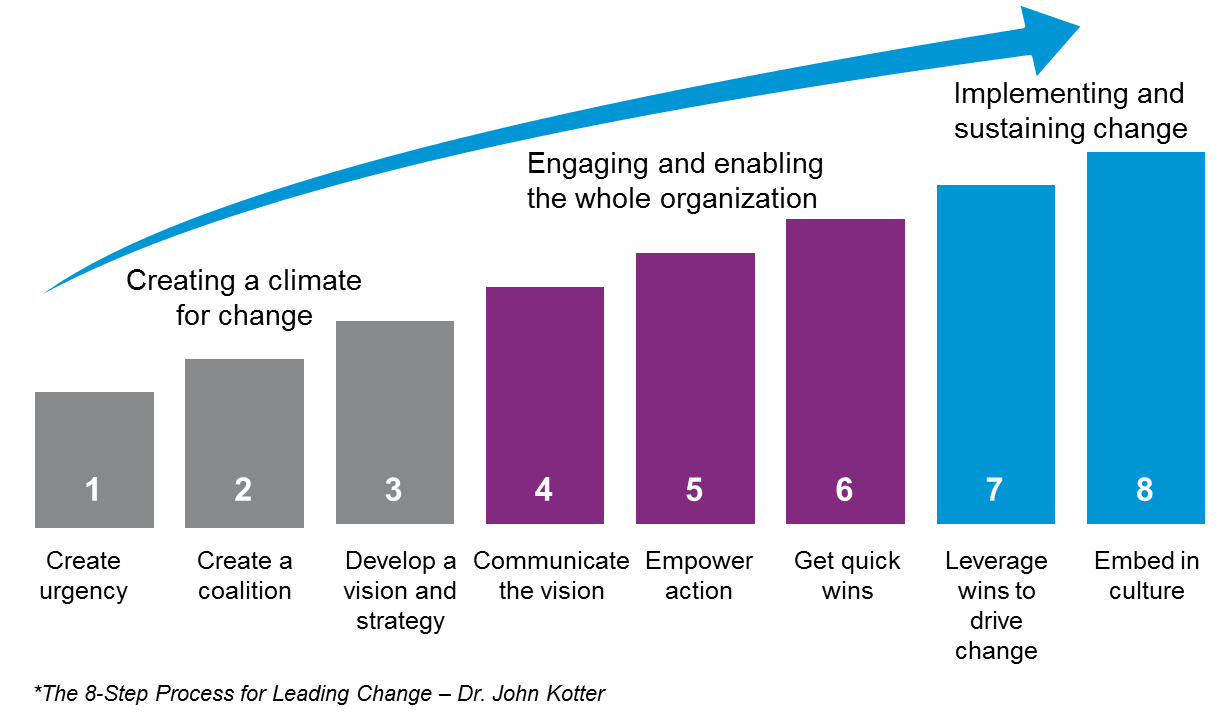
    Spending budget on initiatives that don’t gain traction is a nightmare.  Programs that don’t get adopted lead to lost budget and executive trust.  Lose your executives’ trust and nothing good results.

    Dr. John Kotter is a best-selling author and recognized expert on Change Management.  His research estimates that 70% of all corporate change initiatives fail.

    The early steps you take to support healthy change and adoption will set the tone.  Get it wrong and chances for recovery drop like a rock.  Get it right early on and you’ve got a good shot.

    If you identify changes needed for future success you’re a visionary.  Get changes adopted and you’re a successful visionary.  So, what’s one of the keys to getting change adopted early on? 

    Register for SBI’s 7th Annual Research Study “How to Make Your Number in 2014” and find out.  The “Expert Panel Change Management Guide” will be available to all registrants.  Our research shows you the essential changes needed to make the number in 2014.


    A graphic representation of Kotter’s view of change adoption is below:

    John Kotter Change Management


    Expert Panels directly support multiple steps in leading change adoption.  Let’s first take a look at what an Expert Panel is.

    Who Should Be On Your Expert Panel?

    Within sales, an Expert Panel (EP) is comprised of your best front-line performers.  This group shouldn’t include managers or supervisors.  Having management represented will limit honest feedback.  An EP that’s between 8-12 members is optimal.  This keeps the group small enough to manage but large enough to allow for diversity.

    There are other key attributes to look for in panel members.  Keep in mind is the EP will be highly visible in the company.  Here are the most important traits for your EP and why:

    • Top Performer – If someone is to be seen as an “expert” in sales, they have to perform.  As a change agent, others in the company need a reason to emulate them.  For inclusion of your EP, consistently killing your number is essential.
    • Innovator – Most of your very best revenue generators are also early adopters.  Some are not.  Look for performers that are also innovators
    • Challenger – Challengers to the status quo are great change agents.  Be cautious - there’s a fine line between a constructive challenger and a malcontent.
    • Respected – Top performers are typically respected by their peers.  However, there are the “lone wolves” out there.  You know the type - they won’t help a co-worker in any circumstance.  They make President’s Club but other reps won’t be likely follow their lead.  Don’t assign them to an EP if their peers don’t respect them.
    • Nominated - Best practice is for EP members to be nominated by their managers and/or senior leaders.  This increases the EP’s ability to get the full support of their efforts from above.

    How Will Your EP Support Positive Change?

    Change initiatives in Sales Operations take many forms.  Virtually every program or project you undertake will benefit from involving an EP.  Some examples include:

    • Ideal Customer Profiling
    • New Product / Service Roll-out
    • Designing a new compensation plan
    • Revising dashboards / scorecards
    • Rolling out a new Sales Process or CRM tool.
    • Designing a new sales role
    • Territory redesign

    Once you’ve identified your EP members, how do you put them into action?  Let’s return to Kotter’s view on change adoption.  In the early stages of change adoption, the objective is to create the right climate.

    Assume your next big initiative is supporting a new product introduction.  Pull the EP team together.  For an EP kick-off, consider meeting in person.  Get leadership involved - CEO, Sales, Marketing - the higher up, the better.  This will set the tone of the initiative’s importance.  Deliver evidence for why change is needed.  What’s changed about our customers that you must respond to?  How will this help you catch up to or surpass our competition?  If you don’t make a change, what will happen?  This creates the urgency Kotter refers to.

    By putting together your EP you’ve already begun to build a coalition.  Having management and leadership on board during the selection process expands the coalition.

    The EP can also help you develop a vision or strategy.  Share the vision and strategy of the change with the EP.  Let them challenge it.  Enable them to make adjustments based on their real-world experiences.  It’s key to get the EP involved at the right time for change initiatives. For an additional resources on Expert Panels, see a prior blog here 

    Each of the 8 steps of Kotter’s Change Management Process can be supported by your EP. Register for SBI’s 7th Annual Research Study “How to Make Your Number in 2014”.  Get the “Expert Panel Change Management Guide".  Change must be led both top-down and bottom-up.  Initiatives stick when your best performers lead the charge.

    Author: Patrick Seidell

    sbi on linkedin

    Follow @pseidell

    Follow @MakingTheNumber

    If you enjoyed this post, never miss one again by subscribing your Email Here and/or subscribing to the RSS Here. Comments are welcome below.

    20 Aug 16:51

    Sales Coaching – It’s a Game of Beat the Clock

    by Richard Ruff
    Sales Coaching – It’s a Game of Beat the Clock image clock 150x150

    Sales coaching and the time challenge

    Sales managers are no different than anyone else – they don’t have enough time to do all the things they need to do.

    This time issue is particularly telling when it comes to front-line sales managers. There is little doubt that front-line managers are the pivotal job for sales success and that coaching is one of their critical contributions.

    Yet when it comes to beating the clock, sales coaching is usually one of the early losers. Although it is possible to imagine that more time will be added to clock for sales coaching if top sales management makes the necessary leadership commitments, the most likely scenario is the time you got is the time you have.

    So the path forward is primarily about how to more effective and efficiency using the time you have. Let’s look at four ideas:

    Move to a one-on-many coaching approach. With today’s technology regardless of distance it is possible to shift from a one-on-one to a one-on-many approach for sales coaching. There are limitations but there are also opportunities. Many sales reps face the same challenges and the same knowledge and skill gaps. Not only are today’s technologies capable of supporting this shift – the ones on the immediate horizon are dazzling.

    Focus and prioritize. Even with a one-on-many approach you cannot effectively coach everybody on everything at the same time. You need to prioritize the challenges and performance gaps on which you will coach. And, particularly if you have a large sales team, you will need to coach some people first and some people second. Changing performance is hard – doing a little bit on a lot of things for everyone usually means doing nothing for anyone.

    Leverage others. Some where in the sales coaching process there is usually the opportunity to leverage others in your organization to help coach via mentoring or modeling. For example, if you have a top performer who is particularly good at something which is a challenge for others, soliciting their help can be good for the sales team and can be of benefit to the top performer.

    Establish a culture of performance accountability. Another way to address the coaching time issue is to get the person on the other side of the table to commit time to the performance improvement objective. In this case that means the sales rep. The manager needs to establish this performance improvement thing as a two way street – I will commit time to help you and you need to devote time to help yourself.

    If you found this post helpful, you might want to join the conversation and subscribe to the Sales Training Connection.