Shared posts

06 Sep 15:05

12 Phrases to Avoid in Sales Emails

by Geoffrey James

Avoid these common phrases in your sales and marketing emails.

If a prospective customer actually opens your email, the last thing you want to do is irritate or bore the customer. Here are 12 very common phrases that should be avoided:

1. "I hope you are well."

This "hope" is always followed by a page of boilerplate. In any case, if you don't know me, don't pretend you care about me.

2. "I thought I would reach out..."

That expression--which has suddenly gotten popular--always makes me imagine a baby reaching out of a stroller.

3. "We guarantee the lowest price..."

There's always somebody who can undercut any price plus you're forcing the customer to think about price rather than value. Bad idea.

4. "I'll be the neighborhood so I'll just stop by..."

This is a lie. You know it's a lie and he customer knows it's a lie. Starting a relationship with a lie always ends badly.

5. "I was looking through my contacts and..."

Same as #2.

6. "...a free estimate, with no obligation..."

The customer knows by agreeing to the estimate the customer is now socially obligated to listen to a sales pitch.

7. "If I could show you a way..."

This is corny sales-talk from way back when. Customers never want to hear a sales pitch or anything that sounds like one.

8. "A major firm in your industry..."

Customers don't believe reference accounts unless you can name the company that bought from you.

9. "Our product increases revenue and reduces costs..."

You've just made the exact same claim that every B2B firm makes. If you can't be specific, don't bother.

10. "For more information, click on this link..."

In most cases, the sales email has already barraged the customer with information but no reason whatsoever to spend time learning more.

11. "If you have any questions, please don't hesitate to call me at..."

The customer knows that your contact information is under your name. Putting it in the body of the email just makes you seem desperate.

12. "Sincerely Yours,.."

I have no idea why anybody would put this phrase in a business email. Same thing starting an email with "Dear..." Hey, the Victorian era ended 100 years ago.

Like this post? If so, sign up for the free Sales Source newsletter.


05 Sep 14:54

The Most Efficient Way to Sell More

by John Jantsch

The Most Efficient Way to Sell More written by John Jantsch read more at Small Business Marketing Blog from Duct Tape Marketing

Just as writing does more than produce words and sentences, speaking, or at least organizing and then verbalizing your point in an effort to persuade, is at its core what the fine art of selling has always represented.

Public speaking

photo credit: Dogfael via photopin cc

Back before radio, TV and certainly before all these online platforms, the best orator won the argument, the election and the sale.

While you may never grow to consider yourself an orator of any stripe, there’s a good chance you use your spoken word to convince and convert.

So, what I’m suggesting is that you proactively take this up a notch and add public speaking to the mix as a way to build authority, demonstrate expertise AND increase your sales efficiency.

Okay, authority and expertise maybe you buy, but efficiency?

When you’re asked to present your ideas one client or prospect at a time you can get in front of, say, ten a day at break neck speed. One well thought out presentation might put you in front of several hundred qualified leads who now know who you are, like what you have to say and trust that you know a thing or two about your business because they just heard you deliver some very valuable information over the course of forty-five minutes or so.

Don’t think of this idea as public speaking, think of it as “speaking for leads,” building trust hundreds of people at a time or a group sales education opportunity.

Here are some tips to keep in mind to make your speaking pay off big.

Get referred – You can create your own workshop events, but one of my favorite strategies is to approach two potential groups and offer to present great information to their clients and networks. The key here is that you have a topic that is very hot and seen as very valuable. This is not a sales presentation, it’s an education and value add tool.

Approach your two partners with the idea that you’ll present a great topic, they offer it to their customers, and they get to cross promote to each others attendees as part of the deal. You simply get referred in as the expert. (Every time you do this you will get asked to speak at an event one of the attendees is involved with as well.)

Make a deal with the sponsor – Remember, you have valuable information to present and should take the mindset that you are willing to waive charging a fee only if they permit your to elegantly reveal that there is a way for attendees to acquire your products and services and that you will also be offering some free stuff in exchange for contact information of those interested in the free stuff. Make it known that you have no intention of selling, merely informing. This approach raises the value of your presentation and gets you what you need as a lead generation opportunity. This can be a deal breaker for you or the sponsor. If you over promote, don’t expect to get asked back, if they won’t allow you to acquire leads, don’t bother.

Educate like crazy – Don’t be afraid to give away all of your secrets. Some folks suggest you should just tell them what they need, but not how to get it done. I don’t agree. If you tell them how, some may think they can do it themselves, but those who really want what you have will realize through your specific details, how tos, and examples that you do indeed possess the knowledge and tools to help them get what they want. Educate and you won’t have to sell!

Collect those addresses – In some cases people will come up to you after a thought provoking presentation and ask how they can buy, but, in case they don’t, make sure you give all attendees a valuable reason to share their contact information for the purpose of follow-up. You can offer them the slides to your presentation, a free resource guide related to your topic, or a more detailed report based on the topic, in exchange for business cards. If you don’t have this preplanned you’ll find you won’t get a second chance to wow these folks. Of course, I hope it goes without saying that you should also have a follow-up process. Write a hand-written note, add them into a pre-written drip email campaign on the topic, or call them up after the event to measure their engagement.

Yep, public speaking, it doesn’t get more efficient than that!

Related posts:

  1. 5 Tips for Getting More Leads from Speaking A lot of folks dream of being a sought after,...
  2. A Workshop Secret Weapon Presenting your expertise in front of a room of potential...
  3. How to Sell Anything Using Social Media One of my predictions for 2012 is that more people...
05 Sep 14:54

What to Seek in an Engagement Marketing Solution

by Dayna Rothman
engagement marketing

Author: Dayna Rothman

As a marketer, you no longer control the flow of information that buyers seek about your products and services. Instead, today’s self-empowered buyers find the information they want online. After all, there’s more than enough information at their fingertips on just about any topic. It’s no wonder that by the time buyers are ready to talk to a sales rep, they’ve already completed 60-90% of the buying process.

This shift in buyer behavior puts the onus on you, the marketer, to influence buying decisions, and not just for the initial purchase, but for subsequent purchases and over the entire customer lifetime.

That’s where nurturing comes into play. Lead nurturing has always been an important activity in the process of converting prospects to customers. But to succeed with nurturing–and to engage today’s buyer–marketers need to change how they think about and handle nurturing.

In today’s world, you as a marketer must engage prospects and customers across many different channels, with more content, at exactly the right moment. But to do so, you are likely managing dozens of programs and content assets at any given time. And it’s tough to figure out what a lead has or hasn’t seen, and the next best content or message that person should see.

Defining Engagement Marketing

Effective lead nurturing today depends on making sure your message gets absorbed as buyers are considering their options. And that means you need to develop a direct relationship with each individual. You can do that through engagement marketing. Where batch-and-blast campaigns feel like shouting, engagement marketing feels more like a natural conversation. That’s because engagement marketing attempts to genuinely connect prospects and customers with a company by “engaging” them in a dialogue, with the goal of eliciting a positive emotional connection. The more frequently and consistently you can connect with a prospective buyer on an emotional level, the stronger and more deeply that person becomes engaged with your brand.

What’s Holding Marketers Back?

So why aren’t more marketers tapping into the power of engagement marketing? Well, the truth is that it’s been too challenging.

Marketers have been using many, disconnected systems in order to connect with their audience. Even when they turn to technology like marketing automation solutions, marketers have found the solutions often too complex, forcing processes to be set up in a flowchart-like manner. It’s labor intensive to set up a marketing program this way. Plus the technology is too linear to reflect the true nature of interactions with prospects and customers.

What starts off as simple can quickly become extremely complex, because each new statement creates an entirely new branch in the stream. Eventually your workflow looks like a bowl of spaghetti and you’re unable to make heads or tails of it.

Because most marketers find it too complicated and frustrating to set up and manage these solutions, they fall back to simple drip campaigns that aren’t sufficient to create the level of engagement and relevancy that’s needed today. These campaigns don’t provide a way to “listen” to how prospects and customers are interacting with and reacting to the messages and content being sent. And if marketers can’t listen in this way–across channels–they can’t respond with the next relevant message or content asset.

What to Seek in a Solution for Engagement Marketing

While it is theoretically possible to create an engagement program using traditional marketing automation, it’s fairly difficult to do so, as we illustrated. Instead, you should look for a solution that combines the elements we described above. This solution should make it easy to create engaging dialogues with prospects and customers.

The following list outlines what to seek in the ideal engagement solution:

Powers relevant two-way engagements (or conversations)
To truly engage prospects and customers, you need to listen and respond to individual behaviors in real time. And the ideal solution allows you to do just that.

Enables dialogue across multiple channels
Look for a solution that makes it possible to communicate with prospects and customers both online and offline, and includes interactive social elements that help amplify your messages.

Automatically manages communication frequency
It’s too challenging and time-consuming to manually manage how frequently you should communicate with prospective buyers to avoid either actual or mental unsubscribes. Your solution should handle this for you. In fact, the solution should empower you to set a limit to the number of communications anyone can receive in a given time period. This is especially valuable when different areas of the organization are sending messages. With such a feature, you can make sure you’re not deluging your prospects and customers with communications, and eliciting a negative response in return.

Intelligently delivers relevant, timely content
The ideal solution should determine which content to send and when, based on the recipient’s actions to date, such as visiting your booth at a show, downloading content, or reaching out to sales rep.

Scales to support multiple dialogues
It’s one thing to listen and respond to a single prospect. But it’s not so easy to maintain dialogue with hundreds, thousands or millions of prospective buyers. The ideal system makes it easy to set up marketing programs and includes built-in intelligence that automatically keeps marketers connected with prospective buyers.

Helps build relationships over the entire customer lifecycle
Marketing now influences purchases from the awareness stage through to the time a prospect becomes a customer. The right solution can help engage prospects and customers over time by reinventing lead nurturing and powering sophisticated customer marketing through engagement. In other words, it does so by making it possible to send relevant content to buyers through multiple different channels instead of just via email.

Helps you measure true engagement
To ensure your engagement programs are working, you need to measure the results. Many marketers judge performance by open rates, click-through rates, click-to-open ratio, and unsubscribes, to name a few. But the ideal solution should comparatively measure how engaging each piece of your content is to provide a single measure of the overall impact of your content on engagement. It should also allow you to look at performance over time, such as for an entire program, as well as for each content asset.

Is easy to use
We all know how frustrating it can be to rely on the IT department to help us get programs off the ground. Look for a solution that allows any marketer to create powerful engagement programs. It should not be complicated to set up or manage. After all, you want to focus on what matters most–creating compelling content that will more deeply engage prospects and customers.

Simplifies content management
The ideal solution allows you to add new content simply by dragging and dropping it into the workstream. Moving it to the top of the stream tells the system that the content is high priority, so the system sends it first. But the system should be intelligent enough not to send the content to those who have already received it. It should also be smart enough to know if someone has downloaded that content through another channel. Moreover, when you add messages promoting things like events and special offers into a stream, the system should automatically activate the content at the right time and pull it out of the stream when the event is over.

Want to learn more about choosing the ideal engagement marketing solution? Download our ebook How to Choose the Right Solution to Nurture Leads and Customers.


What to Seek in an Engagement Marketing Solution was posted at Marketo Marketing Blog - Best Practices and Thought Leadership. | http://blog.marketo.com

05 Sep 14:51

Social Now Is the Most Important Search Ranking Factor

by Jeff Woelker

In the last few months, Google has been making some game-changing updates to its search algorithm, which has many search marketers scratching their heads about what to do next. Content or links? Editorial or paid? Link sculpting or disavow links? Authorship? It’s enough to make even the most savvy search folks wonder, “What the heck do I do now?”

Recently, Search Metrics did an in-depth study of the most correlated variables when ranking high in search engines. The answer may be surprising in that seven of the top eight factors associated with high search rankings are social in nature.

I know, it sounds counterintuitive to what we’ve been hearing for years. From keywords, to page titles, to link building, the emphasis has been on everything but social. Now, however, a major groundswell is happening that is forcing search marketers to rethink the way they have been approaching search for years. As more and more search marketers were gaming the system and creating content only geared towards bots and crawlers, the web and Google were becoming a vast wasteland of unusable content farms and link pollution, some of which still remains today.

With Google’s ranking algorithm changes, the company is incorporating more human elements and vetting within the machine and using social as a way to signal what’s important and what is not. And Google only continues to move in this direction. Many marketers have dismissed or pushed aside Google+ as a second-rate social network only meant for niche audiences. As you can see in the chart, however, Google is going to be taking content shared at Google+ much more seriously and forcing marketers to pay attention by any means necessary.

And Google is not stopping with +1’s, likes or tweets. It recently launched its review extension for Adwords, which now pulls in reviews of your products and services directly within your advertising. That further ties your efforts in social with search.

So, what can a search or social marketer do about all these changes? Here are three steps to use as you evaluate your content to ensure it’s optimized for search and social:

Would your customers share your content?

The answers to that question can be so honest and so hard at the same time. For many marketers, it didn’t matter in the past if customers would share their content. It was enough to appease Google and users would inherently show up as a result.

By rethinking your content strategy and making the content more interesting, compelling, differentiated, humorous, or honest, you make it more appealing both for the consumers to read but also to share with others. And it applies just as much to B2C as B2B. I’m just as apt to share a white paper from a tech company that makes fun of industry jargon as I am to share the latest recipe from a CPG brand that gives me a good cooking idea. Both are on target, in a language their users speak, shareable, and if done correctly, searchable.

Is your content in a language your customers speak?

How do I know if my customers will share my content? It’s one thing to just say it, but it’s another to enact it. To that end, there are a number of data sources you can pull from these days tovalidate whether your customers would share your content. One is first and foremost social listening. By using tools such as Radian6SysomosLikester and Simmons you can find out what your consumers are talking about, what resonates with them, and what they are more likely to share. Using Likester as an example, you can find out that fans of your brand are also fans of American Idol, Nascar and Roller Derby. Let’s say your next white paper is around “How IT infrastructure is like the last lap at Daytona.” First, it’s a topic your audience is already interested in and second, it’s a metaphor that your audience can relate to. Both factors make it instantly something your audience will resonate with. Or perhaps, your next post on Pinterest is a recipe using terms a popular show your customers like. Again, that makes your content so much more shareable than “Our latest recipe” or “Summer recipe.”

How can you measure what’s happening?

And the last and most critical component, how do I measure all of this? As in many other digital marketing campaigns, start small, test and learn, and scale up. You don’t need to go through and optimize your entire calendar for next year or go back and optimize every piece of content you generated last year. Instead, try it out and see what works. For instance, you can easily test message using free and inexpensive paid tools to test out your messaging with a limited audience. Figure out what resonates, drives traffic, and generates leads or even foot traffic—then scale up from there. Do you wonder whether to use humor or honesty? Close-ups or landscapes? Put together some test content and run them past a small audience (limited budget, geography, targeting, etc.) and see what resonates. From there, you can make the case on a small level and obtain budget for larger efforts.

So, do you think social is the next great leap in how search engines rank their content? Or do you think search engines are trying to find relevance and draw back users from time they are spending on social networks?

05 Sep 14:51

How to Integrate Inbound Marketing With a Traditional Sales Team

by Todd Hockenberry

inbound-sales-marketingFor those of us immersed in the world of inbound marketing, it's easy to understand how inbound tactics can have a major impact on a company's bottom line.

However, we work with a lot of companies that are just now embracing inbound marketing principles and tactics. In these cases, the last group within these companies that climbs on board is usually the sales department. When it comes to sales excuses, we've heard it all -- but it usually boils down to something along these lines of:

  • I don't have time.
  • It's not my job.
  • The leads are bad.

As a long time sales person myself, I understand where this impulse comes from. Many business owners and, unfortunately, many sales mangers subject sales teams to the latest and greatest fads in lead generation (think viral video), specious sales training (use these 11 steps and you will sell a million), and other time wasters so they are (rightfully) somewhat apprehensive.

A big part of getting these people to adopt inbound marketing is convincing them inbound isn't just another time wasting fad.

And it is possible to get even the most reluctant member of a sales team on board, but it takes time and effort. Remember, you're dealing with sales people so they need to be sold!

Here are the steps we take to convince a reluctant sales team to adopt inbound marketing. 

1) Educate

The most important thing to remember is that results sell, so go out of your way to make the connection between inbound marketing and traditional sales. Connecting customer interactions with sales goals and revenue is an incredibly powerful way of doing this. We use case studies of similar companies showing how driving traffic to a web site, converting them to leads, and nurturing those leads through the buying process delivers revenue.

We were hired two years ago by a technology service company to re-build their website, and during the course of that we started to talk to them about inbound marketing. The owner didn't believe that anyone would use the internet to find companies like theirs, so he would only hire us to build the site. Once we built the site and incorporated inbound principles, they saw a 200%+ increase in site visits. Two years later, we're finally getting them to connect actual sales to the leads generated from the site.

It took two years but the owner now sees a direct connection between the investment in inbound marketing and his revenue. Until we were able to make that connection, he was unwilling to make a serious investment in inbound marketing. 

Whether you're a marketing team or an agency delivering inbound marketing services, the number one thing you need to do is make the ROI case for the investment. HubSpot has tons of statistics on how inbound marketing drives leads and revenue at lower costs than any other marketing method. Use these tools to sell internally. As you develop your own internal results, make sure the metrics used for marketing connect to sales goals. Cost of customer acquisition, cost per lead, lead to customer conversion, and other inbound marketing driven metrics need to be part of the conversation you are having with sales.

Showing an example of a blog post or web page, optimized for a particular keyword, that drives traffic resulting in leads, that then convert to customers will make the bells ring in a sales persons head. Sales will take credit for the back end of the process (and they should), but by showing that a lead came from a particular piece of content and keyword gives them a specific reason to invest in the process.

2) Evolve

The old school sales process was an event; sales people reached out to leads and sold them. Now we know that this sort of sales event is becoming more and more the exception rather than the rule. With nearly universal internet access, people are changing how they buy which, in turn, has led to an evolution in how we sell. The sales process of the day is more geared to nurturing and educating, and inbound marketing mirrors that process.

To sell sales people on inbound, you need to show sales people how as a consultative process is essentially an inbound one. Using their expertise to solve problems -- and more importantly, identify potential issues -- sales people are creating the best inbound marketing content in the normal course of their day. The key is for them to recognize that inbound is essentially extending back into the sales process the same ideas that make the best sales people the best: their ability to recognize a problem, create a solution, communicate the solution and the value the client receives, and guide them through the buying process.

Sales should not be viewed as a linear, step-by-step process, but as a cycle -- one that is not always linear but does have recognizable stages. Buyers need to be educated, vendors need to be researched, and an internet presence needs to be maintained to stay in front of prospects. The details are different from the old school methods, but they aren't all that dissimilar at their core.

3) Employ

The next step in wooing reluctant inbound marketing followers is showing them that not only do inbound tools and content work, they're also not that hard to create.

Content produced by marketing departments, and even more so by contractors, often fails to meet the needs of the target audience, especially in technical arenas. Who better to explain the benefits of a technical solution --  or any solution -- than the sales people that do this all day long in the field? Farmed out content mostly skims the surface of what readers are looking for, and the more content that is produced in any given industry, the more this effect will become acute. Depth of content is what readers are looking for, and the sales team is uniquely positioned to help deliver it.

And I can already hear the objections from here -- I can't write! I don't have anything to say! Writing content will take up too much of my time!

But what the naysayers are missing is that sales people are already producing the kinds of content that prospects are looking for. They produce content all day long. A great way to start showing them how they can contribute is to develop Q&A blog posts. A five minute interview with a field sales person will yield a solid post that will help build team credibility. Savvy sales people pick up quickly on what to do next; they will help promote the content that has their name on it.

We also often show clients how to incorporate content into sales proposal by adding links to video, case studies, blog posts, and anything else that makes the offer specific and targeted to the customer. Customizing proposals and presentations helps sales people better present solutions and earn more deals.

4) Expand

Well earned Marketing Qualified Leads (MQLs) translates to Sales Qualified Leads (SQLs). Often times, Marketing throws the leads over the wall to Sales and doesn't have any connection to the revenue Sales generates from those leads. This is a management issue and is overcome by attention and accountability. Marketing managers need to sit down with sales teams and show where the leads came from, and own some part of the ability of sales to close them. Building this bridge is a key step in tightening the buying process and driving effectiveness -- in other words, showing a return on inbound marketing efforts. 

Salespeople want to be the experts in their area of focus, and inbound marketing gives them a platform and a reason to invest. Play to their ego, show salespeople how to build a platform and become the expert in their field, and demonstrate how communicating that expertise will drive interest and opportunity their way. Writing blog posts and using them when talking to a prospect is a great way to show a prospect that the salesperson is more than just a talking head. Writing about a topic is always more credible than just talking about it.

Inbound marketers could take a page from their sales team, and adopt strong internal selling abilities to promote the effectiveness of their work. That's the best way to build a sales funnel with inbound.

Todd Hockenberry is the owner of Top Line Results, a HubSpot certified partner in Orlando, FL providing sales and marketing services for small- and medium-sized companies. You can read more from Top Line Results on their blog.

Image credit: wonder_stewie
Case Study Top Line CTA

subscribe to the hubspot marketing blog

05 Sep 14:49

Google Rolls Out New Way for Nonprofits to Collect Donations

by Taylor Corrado

google-one-todayToday, Google For Nonprofits opened up its mobile donation app, One Today, to all Android users in the U.S. They are now inviting nonprofits to register, create their own projects, and ultimately fundraise via mobile devices and social media.

Sounds like a nonprofit inbound marketer's dream, right? (Well, the dream is probably for the app to be available for iOS, too.) This post will walk you through exactly what One Today is, and how to use it for your cause marketing.

What is One Today, and why is it useful?

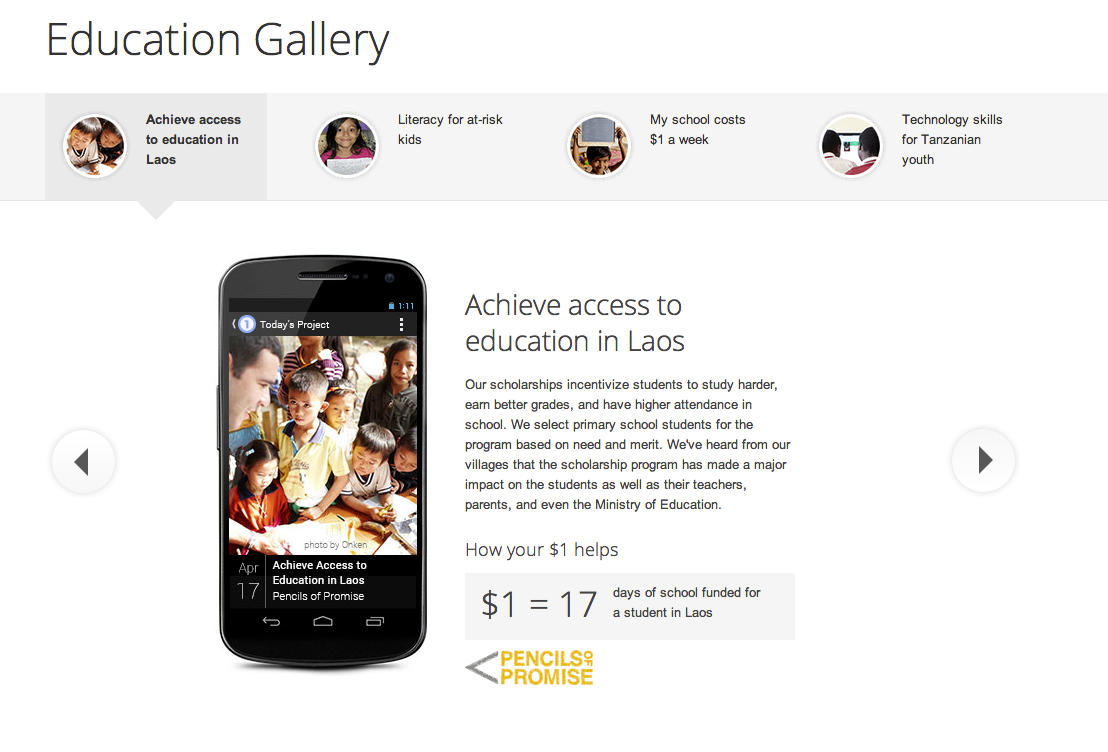
For Nonprofits: One Today is a mobile platform that allows your organization to create and feature projects and/or campaigns for which you’re looking for funding. The idea is that an impact can be made by just a $1 donation per day (hence the name). It's totally free to register your account. 

educational_gallery_-_one_today

For Individuals: One Today is an Android only app (sorry iPhone users) that allows users to browse and learn about a different cause every day, donate to what inspires them, and amplify an organization’s impact by asking their friends and family via social media to match their $1 donation each day.

one_today_-_how_it_works_for_individuals

Users will receive donation receipts after each donation payment is made (the app does not charge users for each $1 donation, rather it groups pledges and asks users to confirm a credit card charge periodically via Google Wallet). For any donations over $250, users will receive a tax deduction certificate from Network For Good at the end of each year.

So, what are the benefits of joining One Today? Well, there's a few (besides how cool it looks):

                  mobile_phone_2mobile_phone_1

  • It’s quick and easy. Once you are an approved Google for Nonprofits member, it takes only a few minutes to register and set up your first project.
  • It expands your donor base. One Today introduces your projects to those individuals that are most likely to donate to your cause because their friends and family have donated to similar organizations.
  • It raises awareness to a new audience. Your organization is able to tell your story to a new audience of technologically savvy individuals that care about causes related to yours. One Today learns what organization users like to support the more they give, so it’s tailored to users that are most likely to support your organization.
  • It creates a young, social movement around your fundraising. It gives your followers on social media and younger generations a new way to support your organization through the channels on which they are most comfortable.
  • It’s free to join One Today and Google for Nonprofits. Howeverthere is a small payment-processing fee of 1.9% on each donation.

What should your organization know about One Today?

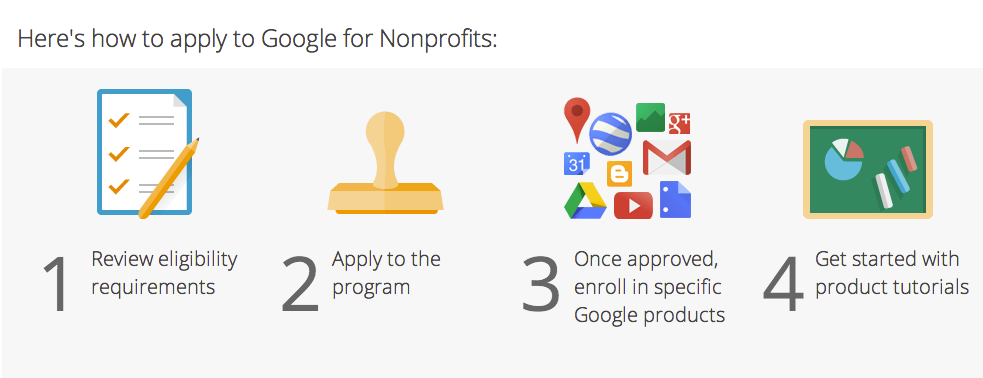
One Today can help your organization fundraise in a new, socially driven way. To register for One Today, your organization must be a member of the Google for Nonprofits Program. To register for Google for Nonprofits, you must be a registered 501(c)3 nonprofit organization in the US.. or an organization in the United Kingdom. To apply for a Google for Nonprofits membership, go here and follow the basic steps below. Make sure to review the eligibility requirements before applying, as some types of organizations are not eligible.

how_to_apply_to_google_for_nonprofits

Once you are approved as a Google for Nonprofits member, you will have access to all of Google’s Nonprofit products, including One Today, Google Grants, YouTube for Nonprofits, Google Earth Outreach Grants, and Google Apps for Nonprofits. Google also provides great product tutorial videos of how all their products can benefit your organization and how you can use them.

How does One Today work?

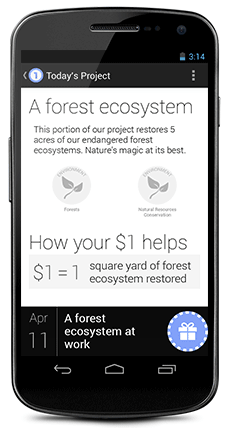
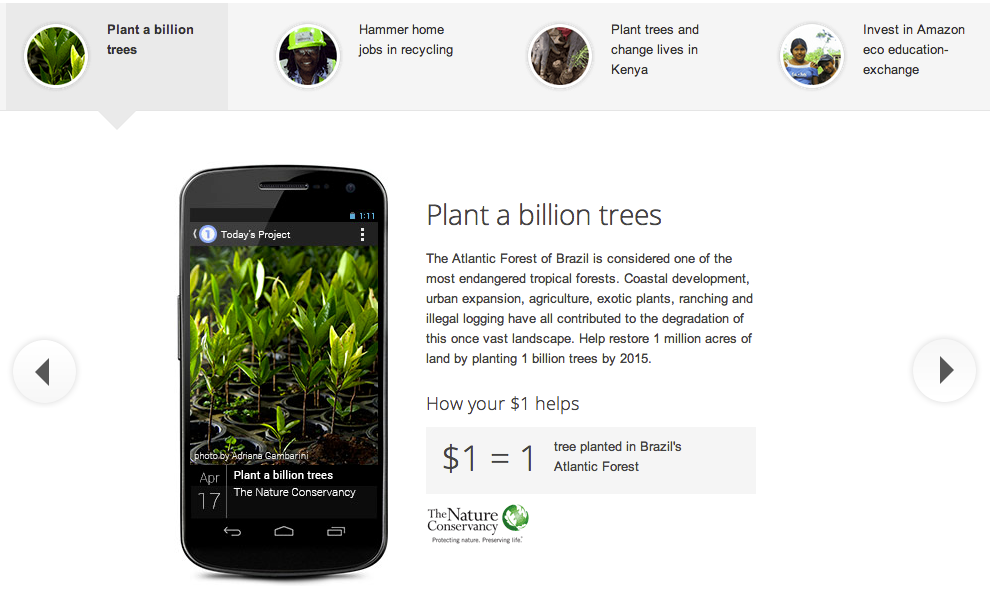
One Today connects individuals with causes that they are most likely interested in. Then, each day the app will highlight projects from organizations like yours. Users can then donate to a project of their choosing and share their generosity with their social networks, amplifying your projects' reach and hopefully bringing in more $1 donations. Users are only able to donate $1 at a time, which really encourages them to share it socially and encourage user matching.

Projects on One Today are meant to show the impact of a simple, $1 donation. Showing the proof of what someone’s small donation equates to is very important when trying to attract the younger Millennial generation to support your mission.

environmental_project

Once donations accumulate, your organization will receive a check each month from One Today’s payment processing partner, Network For Good. While individuals are giving to a specific project, your nonprofit is not required to dedicate those funds raised through One Today to that particular project. However, it would be beneficial to show the impact of those users donating through the app on your blog or on your website in the future to show the proof of your organization’s work.

One Today is an accessible, forward thinking channel for organization’s looking to engage donors -- particularly Millennials -- through mobile and micro donations. Let us know if you take advantage of it, and how it's working for your nonprofit.

nonprofit ebook - engage young donors online

subscribe to the hubspot marketing blog

05 Sep 14:43

Everything You Need to Know to Get Started With Pinterest for Business

by Ginny Soskey

pinterest_resourcesGetting started on a new social network -- regardless of what it is -- can sometimes feel incredibly daunting. You're dealing with a lot of new things: new platform rules, new platform technology, new audience using the platform, and most likely a new marketing strategy to make the most of the new thing. 

And while all the changes in social media require inbound marketers like us to just embrace all of these new things, sometimes we just want to have someone walk us through using a network from start to finish. We've got so much going on in all of our other marketing activities that we sometimes want someone else to gather all the info we need and hand it to us.

We've been there before, and we want to help. One of the social networks that people consistently ask us about is Pinterest -- from setting up an account, to actually pinning posts, to optimizing pins, to proving its ROI, we get a ton of questions about it every day. So if you're wondering how to get your Pinterest presences up and running, sit back, relax, and check out the resources we've compiled in our embedded Pinterest board below. We'll also walk you through the 10 most important pins in our board in the rest of the post.

7 Things You Need to Get Started With Pinterest for Your Business

1) Get oriented with a beginner's guide to Pinterest.

First things first -- you need quick crash course in marketing on Pinterest. In our Introduction to Pinterest for Business, We'll answer the most crucial questions about the visual social network: What lingo do you need to know? Why should you even bother with the platform in the first place? How do you even sign up for an account? And what can you actually do on the platform to move your marketing metrics? Seriously, do this step first -- it will help you determine if Pinterest is right for your business and give you a bunch of ideas to start implementing on Pinterest ASAP.

Download our Introduction to Pinterest for Business to get started.

2) Set up Pinterest buttons on your website.

Okay, so you've decided you're on board with Pinterest (#pinterestpuns). You've set up an account and added a few boards and pins. Don't forget this crucial step: add Pinterest buttons to your website to drive your website visitors to engage with your Pinterest boards and pins. There are two types of buttons: the 'Pin It' Button and the 'Follow' Button. Learn how to set them up so you can organically increase your Pinterest following.

Check out our blog post on adding Pinterest buttons to your website.

3) Find or create the visuals you want pinned. 

Now that you've got both your Pinterest presence set up on the social network and on your website, you're ready to find or create the visual content to be pinned. Since visuals are the crux are the reason why the social network exists in the first place, you want to make sure your pin's visuals are compelling enough for users to click, like, or comment on. 

The best part about this whole step is that you don't have to be a professional designer to make engaging Pinterest visuals. Check out the following free resources to create top-notch visual content that will blow your Pinterest followers out of the water:

4) Make sure people can easily find your content on Pinterest.

So after you've created all of this great content for Pinterest ... you want to make sure people can actually discover it. Yes, people will find it if others engage with you, but one of the most common ways they'll find your content is through search. So make sure you're prepared for search with this comprehensive guide to Pinterest SEO.

5) Optimize posts to get more engagement.

Besides optimizing for Pinterest search, there are a few other ways you can change up your content to get more comments, repins, and likes. Check out this data by Dan Zarrella to see how image height, description length, or word choice can affect your success on Pinterest. While these aren't hard-and-fast rules, the data can give you a general direction to take -- and after a while, you'll have concrete data about your audience to inform your future Pinterest posts. 

6) Take your Pinterest content elsewhere by embedding pins and boards.

There are two other ways you can add Pinterest content to your website besides adding the 'Pin It' or 'Follow' buttons. You can actually embed Pinterest boards (just like we did in this post)! It's pretty easy to do -- you're mostly copy-pasting code into your website or blog -- but there are a few crucial steps to follow that most forget to tell you about. Check out this blog post to learn more about embedding Pinterest widgets on your website.

7) Measure and iterate on your Pinterest presence.

So after all that creation and optimization, you're going to want to prove to your boss that your time is well spent on Pinterest. Get a run-down of Pinterest's latest analytics tool update, learn how to track specific campaigns on the platform, and see which metrics are most important to investigate on the social network.

Bonus: if you're committing to Pinterest over a longer period of time, we'll give you some formulas to calculate the long-term growth and success of your efforts. So go on, download our guide to optimize and measure your Pinterest account!

What else do you want to learn about Pinterest for business? Share your questions with us in the comments, and we'll update the board throughout the day with resources that can help.

free pinterest ebook

subscribe to the hubspot marketing blog

05 Sep 14:42

Facebook, Pinterest or Twitter: Know Where Your Customers Really Hang Out (Infographic)

Do you know which social network adults visit most? Have you ever wondered which demographics dominate Instagram? Find out here.
05 Sep 14:39

Social Media: It’s Not Just for Kids Anymore – 9 Adaptive Tips for Fundraisers Using Social Media

by Claire Axelrad

When’s the last time you found it easy to get a group of prospects together at a house party? Or to schedule a meeting between a prospect and your E.D.? In this busy world it’s becoming more and more challenging.  But there’s another way: Fundraisers using social media. It’s time for fundraisers to reinvent their … Continue Reading

Social Media: It’s Not Just for Kids Anymore – 9 Adaptive Tips for Fundraisers Using Social Media by Claire Axelrad - Maximize Social Business - Maximize Social Business - Your Social Media for Business Resource ... Featuring Contributions from Global Thinkers . This copyrighted content was originally published on Maximize Social Business and may not be republished on any other website or in any other format without explicit permission from the publisher.


Comments

Related Stories

05 Sep 14:39

Unleash the Power of a Great Referral Program

by Scott Gruher

The goal of prospecting - gain access to a high quality potential buyer

A lot has changed in sales over the past 50 years.  One thing hasn’t.  Referrals continue to be the highest quality leads. However, most sales organizations are awful at generating referrals.  I will explain why.

3 Reasons Why You Aren’t Getting Enough Quality Referrals

  1. Accountability – your team can ask for them.  The customer will tell you he’s done it, but you never know for sure. 
  2. Not Effective – no process exists.  When sales people have to invent their own method each time, they ignore it.  Or they ask, but they don't ask with a specific buyer in mind.  This leads to poor quality referrals.
  3. Reach - Not casting a wide enough net.  Sales people focus on easy referral methods that don’t produce enough referrals. 

describe the image

Due to these three factors, Sales Leaders look for other lead generation sources.  They don’t view referrals as a source capable of producing enough leads.  There is no question the quality is superior to any other source. 

Download the tool below to unleash the power of a great referral program.  When you sign up for our annual research meeting you get it. It is the World Class Referral Request Template. 

The Key Benefits of this tool are:

  • Get more referrals
  • Target high quality buyers
  • Make it easy for your customers to give you referrals


There are 5 methods to generate referrals

  1. Happy Customer – you do a great job so I will refer you.  Good source, but not enough quantity.
  2. By another vendor– another vendor refers you into a customer with hopes that you return the favor.  I scratch your back and you scratch mine.  Good source, but not enough quantity.  Also, most reps don't scratch back and this source dies off.
  3. From a friend – who do you know that I can talk to?  This source usually doesn’t produce enough referrals. 
  4. For a prize – “give us a name and we give you".  This one may drive high quantities, but the quality is typically lower.  People give you garbage names for a prize. 
  5. Social – an online connection.  Why is social so effective at generating referrals? Social gives you visibility, access, and reach

We will focus on social because it creates the largest quantity of quality leads. 


Why Social Rises to the Top 

1. Visibility – unlike many of the methods listed above, you can specifically target potential buyers.  When you ask customers for referrals, they say, “I can’t think of anyone”.  Instead, ask them to introduce you to Bob Smith at Acme.  Provide the introduction language as well.  Being specific makes it easy for them to execute for you.

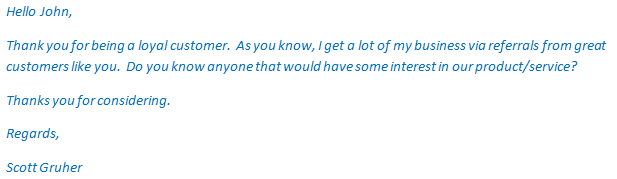
Here is an example of a poor referral request:

describe the image

Click here to get an example of a World Class Referral Request Template.  Using this template will get your more referrals now. 

2. Access – LinkedIn provides multiple paths to each buyer.  You can ask for an introduction through each path until you are successful.  This increases your chances of reaching the buyer.  And since LinkedIn is not a clogged channel, people respond to your requests more often. 

3. Reach – you can build a large database of referral sources.  You can organize this database with the LinkedIn contacts functionality.  These referral sources have connections that you can view and so on.  Most of your buyers use LinkedIn.  It is just a matter of building a strategy to get introduced. 


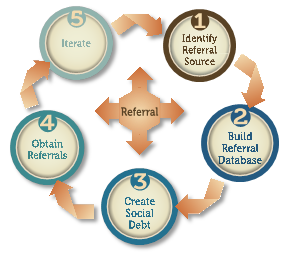
5 Steps to Obtain Referrals as a Form of Lead Generation: 

  1. Identify Referral Sourcedescribe the image
  2. Build Referral Database
  3. Create Social Debt
  4. Obtain Referrals
  5. Iterate


Interested in Getting Started?

Referrals are a powerful source of leads.  First, you have to create great LinkedIn profiles and build your network.  This requires a systematic approach. Second, you need a referral process in place to ensure the team executes properly.  Building a great referral program that is widely adopted by the field is not easy.  Third, you need to ensure it is enabled with the right technology.  LinkedIn is the best way to enable a referral program.  Good luck.


Author: Scott Gruher


sbi on linkedin


Follow @ScottGruher


Follow Sales Benchmark Index @MakingTheNumber


If you enjoyed this post, never miss one again by subscribing your Email Here and/or subscribing to the RSS.


05 Sep 14:38

The Power of Video Testimonials

by Robert Terson
In January I published a blog entitled “Testimonials.” In it I said: My friend, architect Barry Thalden, pointed out to me that in our modern technological world videotaped testimonials from satisfied clients and consumers would be an even more powerful proof sequence than what I used for four decades. I concur, go for it. Despite […]
05 Sep 14:38

Webinar: Transform Customers Into Your Most Powerful Marketing Asset

by Craig Rosenberg
In case you have been following — it’s Advocate Marketing week which will be culminating in this very exciting webinar which you can actually just watch from the Funnelholic blog! If you...
05 Sep 14:24

Gadgeteer – Microsoft’s Hardware Hacking Platform You Haven’t Heard Of

by Guy McDowell
nashmicro-gadgeteer

Microsoft is still in the innovation business. If you don’t think so, you haven’t heard about Microsoft’s open source electronics prototyping platform called Gadgeteer. You read that right – Microsoft and Open Source in the same sentence. Wanted to build a little invention you had in mind? Maybe you’re already programming C# and would like to work with some different hardware. Are you a technology teacher looking for a platform with which to teach? From the student to the professional, Gadgeteer can help you make your ideas a reality. For those of you not familiar with the growing field of...

Read the full article: Gadgeteer – Microsoft’s Hardware Hacking Platform You Haven’t Heard Of

05 Sep 14:20

Reduce Risk for Your Buyers

riskIn our What Sales Winners Do Differently research, we learned that reducing risk has shot up in importance as a criteria for buying today.

Now, for every 100 times you as a seller find advice to sell the return on investment case, you might find just one piece of advice focused on minimizing the perception of risk for the buyer.

This is interesting because it was just 40 years ago that marketers and sellers didn’t focus much on results and impact. The transition away from features and benefits had just begun But fast forward to today and every company’s marketing and sales messages promise some kind of results, often wild results, as their first foot forward.

Yet while everyone’s promising results, buyers regularly report disappointment...

05 Sep 14:15

New Sales Career Success Strategies

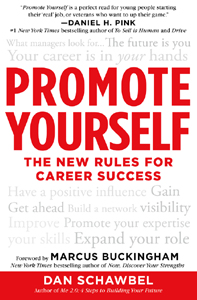
sales careerWant to know more about what it takes to get ahead today? Then I think you'll be interested in my recent interview with Dan Schawbel, author of a Promote Yourself: The New Rules For Career Success, Gen Y career and workplace expert, and the founder of Millennial Branding. (Click here to download an excerpt.)

JILL: Dan, thanks for talking today. You've done tons of research for your new book. What skills are employers are looking for when promoting people in their companies?

Dan Schawbel: Managers are looking for soft skills over hard skills when deciding whom to promote. The top soft skill is the ability to prioritize work, and it's important because workers have to do more with less and are given several projects to do in a limited period. As a worker, you need to decide which projects are most important to your company and then focus on it.

JILL: How important are sales skills in the hiring and promoting process today?

Dan Schawbel: If you don't have sales skills, it's hard to succeed at work because we are always selling. You have to influence those around you to take action. You have to sell yourself, your products and your ideas constantly. When you're interviewing for a job, your job is to sell the hiring manager on why you are the right candidate. If you want a promotion, you are selling them on why you earned it.

JILL: How should you go about selling yourself at work so that you don't come off as too self-promotional?

Dan Schawbel: You don't want to become too self-promotional at work because it will turn people off. Instead, you want to do your best work and let it speak for itself. You also want to shine the spotlight on your fellow co-workers because it creates stronger relationships and good karma. At the same time, you should make sure that you are getting proper credit for your work.

JILL: Do sales tactics change when marketing to different generations of people? 

Dan Schawbel: Different generations respond differently to various sales tactics. For instance, if you're a financial advisor and want to get millennial clients, you're going to have to use social networks in order to reach them and serve them. They are looking for more interaction through technology. For boomers, you're going to want to have in person vs. online conversations.

JILL: Can you give us your top three career tips for salespeople?

Dan Schawbel: Absolutely. 1) Build a strong network so it doesn't feel like your blind selling. It's much easier to sell to friends than to strangers. 2) Find mentors in your company that are great at sales and try to mimic their success and get guidance on how you can improve. 3) Don't give up on your sales career because you aren't getting returned calls. It happens to everyone so just accept it and move on.

JILL: So Dan, what would you say is the biggest take away from your book?

Dan Schawbel: The biggest take away from my book is that you can't rely on anything or anyone and that you have to be accountable for your career and take charge of your life. You need to be able to adapt to change, be open to new opportunities and learn the skills you need today and in the future. At the end of the day, success lies in your hands - so go make things happen!

JILL: Thanks a million for your insights, Dan. Your book, Promote Yourself, is well worth the read for people who are looking for the new rules for sales career success. And, if you'd like to read an excerpt first, click here for Chapter 10.

Also, Dan is doing a free webcast on September 10th to promote his new book. Click here to register for The New Rules of Career Success. Please note, there is limited seating!

________________

headerPicDan Schawbel is the Managing Partner of Millennial Branding, a Gen Y research and consulting firm. He is the author of the newly released book, Promote Yourself: The New Rules For Career Success as well as #1 international bestselling book, Me 2.0: 4 Steps to Building Your Future. 

Dan is a columnist at both TIME and FORBES, and has been featured in over 1,000 media outlets. He’s spoken at Google, NBC Universal, Harvard Business School, MIT, and IBM. Dan was named to the Inc. Magazine 30 Under 30 List in 2010, the Forbes Magazine 30 Under 30 List in 2012.

05 Sep 14:14

Twitter for Sales Reps: Big Hat - No Cattle

by Trish Bertuzzi


"Big hat and no cattle” (or “all hat and no cattle")
(US, idiomatic) Full of big talk but lacking action, power, or substance;
Apr. 25, 1981 Globe & Mail ‘One of the major raps against him was that he was all hat and no cattle. That is, he had a lot of style but not much substance.’

Warning: If you are someone who makes their living in/around/by ‘social,’ I’m not writing this particular post for you. I am writing for the thousands of sales reps who are being advised to use Twitter to engage with prospects and establish 'thought leadership.' Read on and make up your own mind.

I love Twitter. I love the brevity. I love seeing what my friends & colleagues are chatting about. I love getting RTs and favorites and all those things that make me feel so popular and interesting. And then damn Twitter had to give me analytics and allow me to see exactly how engaged my ‘followers’ are with what I’m sharing.

Net net: my bubble was burst!

At the time of this writing I have ~5K followers. Not a huge number, but not inconsequential. When Twitter released analytics, I took a peek at the data to see what was what. After all, I’m making an investment in curating the best of what I see/read/find and want to know the return.

I discovered that while Twitter feels great around activity, it’s less so around engagement. Put more simply -- people may view and RT your stuff, but rarely do they (or anyone else) actually click through and read what you are sharing. Bummer.

A concrete example using twitter analytics

twitter analytics

Here's what this is telling me for this particular tweet:

  • It was Favorite’d 3 times (activity)
  • It was RT’d 2 times (activity)
  • It had 3x my normal reach (activity)
    -and-
  • Only 8 people actually clicked on the link (engagement)

So by simple math we have: 4870 followers + 2 RTs (assume followers of 1.5K each) = total audience of 7,870. 8 clicks / 7,870 = engagement rate of .1%. Yikes!

That knocked me for a little loop, but not enough to make me abandon ship. So….

We decided to take a deeper dive into the data.

So I asked Matt to do some digging. He selected 25 twitter accounts to analyze. (Big names in the Sales game with follower counts ranging from 2K to 20K.) He ran an analysis (5 tweets per test subject) and uncovered the following.

The average per-tweet “engagement” rate is roughly .1-.3% regardless of follower count. These are basically the same rates as display/banner ads.

Sales Engagement Rates

So where does this take us?

Well, if you are salesperson who wants to become a ‘thought leader’ to your prospects by sharing valuable content and great information, you might want to invest your time elsewhere.

Think a Postwire portal. Think LinkedIn updates. Think personal nurture emails. Think sniper rifle as opposed to shot gunning it out there and hoping it gets seen and absorbed. Your average Twitter user sees at most 10-maybe-15% of their total stream. It’s hard to 'engage' with what you don’t see.

That being said...

Twitter can have huge benefits for sales reps.

Here are just a few that come to my mind (in order of likelihood):

  1. You will have fun and share with your community
  2. You will discover and engage with smart people
  3. You will learn a ton. (Please be one of the few that actually click through and read some of the content. It can be quite good!)
  4. You will uncover prospects that aren’t in your territory. Share that information internally.
  5. You will uncover prospects that are in your territory and talking about topics that make them relevant for you. Bingo – you just got lucky!

Net net

I still love Twitter and will continue to participate, but my advice for sales reps is to do your own analysis.

Calculate your level of activity and your level of engagement. In other words, take a break from all that thought “sharing” to turn around and see if anyone is actually following you in a meaningful way.

Based on the data, decide where and how to invest your social time. Thanks for reading.

Have you dug into your twitter analytics? Has it changed the way you share?

New Call to action

 ----------------

Connect with Trish on 
Twitter and Google+ 

05 Sep 14:14

How to Get Millennial Sales Reps to Start Using the Phone

by Max Stinson

If you’ve been around millennial reps long enough, it’s not hard to see how smart and motivated they can be. But it’s also quite painfully obvious how little they’re using the phone for prospecting. They’re basically overlooking a crucial part of the sales process this way. Fortunately, it’s not impossible for you to get these kids picking up the phone again and grabbing sales opportunities as they should.

A recent article on the Wall Street Journal reports on this growing trend and its effects in the workplace. No one else is feeling the consequences of lesser phone use more than sales organizations. According to one sales manager, this tendency among younger employees is partly to be blamed for lost sales opportunities and incidents of miscommunication. That’s why more and more bosses are telling millennial workers to ‘get off email and pick up the phone.’

But telling them to pick up the phone is one thing; making them actually do it is another. It’s going to take more than sending out a mere memo. Millennials are by no means naturally disobedient or lazy. It’s just because they have a wholly different mindset than, say, baby boomers. You’re just going to need a different approach when motivating them to give teleprospecting a chance. Here are four ideas to help get you started:

How to Get Millennial Sales Reps to Start Using the Phone image millennial main11. Relate sales calls to the bigger picture. Renowned leadership expert Jenna Goudreau says the key to motivating millennial employees is to explain how their responsibilities fit into some grand scheme. Millennials are more likely to do something when they can get a clear sense of purpose from it. So, see to it that you fully explain how prospecting by phone is part of the sales process and ultimately how it relates to your entire business model as well.

2. Train them with their careers in mind. Millennials are notoriously impatient when it comes to career advancement, grabbing every opportunity they can to rise through the ranks in the shortest possible time. If you can show your younger reps that having great phone prospecting skills is vital for a successful sales career, you’re halfway done getting them to happily ring up prospects and customers.

3. Make sure there’s collaboration involved. This article says one effective way to encourage millennials is to let them do things more collaboratively with others. Your younger reps are probably relishing the fact that they’re part of the inside sales team, and it’s now your job to convince them that teleprospecting can actually be a team endeavor.

4. Don’t separate them from their toys. Millennials grew up in a time when technology changed so rapidly that their birthdays were probably marked by one groundbreaking innovation after another. This is probably why traditional tools like the telephone most likely don’t ring a bell (literally) among your younger sales reps. But tradition and technology aren’t mutually exclusive. The idea here is to let your millennial staff use the tools they’re comfortable with to carry out teleprospecting.

There’s really no need to put a least on what makes millenials what they are. All they need is more motivation and understanding about engaging prospects over the phone. Share these ideas the next time you sit down with them and you may even come up with newer ways to use a phone call.

How to Get Millennial Sales Reps to Start Using the Phone image KSSF1

05 Sep 14:13

When Sales Training Isn't the Answer

by Gerhard Gschwandtner
Each year, companies spend more than $5 billion on sales training…with much of that time, effort, and money going to waste. In the SalesOpShop video “The Sales Performance Puzzle: How to Solve It,” RAIN Group president John Doerr succinctly explains this conundrum. He says that many companies simply neglect to identify − before they dive in − why sales training may be necessary. Often, says Doerr, the following problems, not a lack of sales training, prevent companies from seeing bottom-line results: Sales reps are well-trained in selling skills but don’t have adequate product knowledge. Some companies just don’t provide sales...
05 Sep 14:13

Sales Training Article: Is Sales An Art or Science

by Customer Centric Selling

Sales Training Article: Is Sales An Art or Science?

By John Holland, Chief Content Officer, CustomerCentric Selling® - The Sales Training Company

sales training workshopIn my mind sales is a combination of science and art. An issue for me since starting to promote sales process in 1993 has been the perceived mix of art and science. In writing this article I've come to realize that the requirement for new sellers to be "artists" varies greatly from company to company. If you give "paint by numbers" sellers blank canvases it's unrealistic to expect good outcomes.

Most people feel sales is much more art than science. Someone is born with the "gift of gab" that is a requirement to excel in selling. I disagree. In my career many high-performing sellers weren't outgoing personalities capable of schmoozing with anyone.

Organizations that don't create a granular approach to selling give sellers a great deal of "latitude." The problem is that only A Players (about 10% of sellers) are up to the task of taking on this responsibility. After being trained in products/offerings, new hires are assigned quotas and territories. They are expected to make their numbers. It's largely left up to sellers to determine the titles they want to target and the way they'll position offerings. You can see the likelihood that B and C Players face long ramp up times to competence and will struggle to make their numbers.

Vendors can change the mix of art and science for sellers if they take some logical steps. To start, they can define the titles that sellers must call on if they are going to sell, fund and implement a given offering. If appropriate they can do this for vertical market segments. Once defining the titles they could develop menus of relevant outcomes (business goals) each is responsible for that can be achieved through the usage of the offering in question. By taking this small step the company has pointed sellers in the right direction as to who to call on and what issues to use to try to gain mindshare. By doing so, they can also define a touchstone between sales and marketing in that a lead can now be defined as a specific title interested in achieving a goal from the menu of goals created for them.

Within CCS® we show a way to get more granular by creating sales ready messaging® to guide sellers in having conversations (for each title/goal) by mapping the most relevant parts of offerings to better define the questions sellers should be asking buyers. This is a major step toward allowing B and C Players to perform at high levels.

Average sellers need help in knowing who to call on and how to position offerings. The strategy of hiring A Players is difficult to execute. There aren't that many of them and they are looking for opportunities with early stage companies that offer equity to those that can perform. Even is successful early on, at some point it will be necessary to codify best selling practices to successfully onboard B and C Players.

There will always be a component of art in selling. Increasing the percentage of science can give companies a higher probability of succeeding.


sales training companyNeed some help with your sales performance? Take a look at the sales training workshops available to you and improve sales performance.

Read more sales training articles from CustomerCentric Selling® - The Sales Training Company.

05 Sep 14:13

“Introduce Sales Culture from the Top Down” {Sales Leader Video} w/ Tom Scontras

by Greg Klingshirn

SalesLeaderHeader-01

As a small business, getting your feet off the ground and gaining credibility with every sales is key. But it’s easier said than done.

Tom is the man for the job when it comes to generating revenue for small businesses. With 20 years working with early growth, he knows how sales and marketing can work together to produce great results. He is currently Chief Marketing Officer at Glance Networks in Boston, where he has been critical in their growth.

Let’s see exactly what Tom has to say:

For the full video, click below:

05 Sep 14:13

How to Integrate Inbound Marketing With a Traditional Sales Team

by Todd Hockenberry

inbound-sales-marketingFor those of us immersed in the world of inbound marketing, it's easy to understand how inbound tactics can have a major impact on a company's bottom line.

However, we work with a lot of companies that are just now embracing inbound marketing principles and tactics. In these cases, the last group within these companies that climbs on board is usually the sales department. When it comes to sales excuses, we've heard it all -- but it usually boils down to something along these lines of:

  • I don't have time.
  • It's not my job.
  • The leads are bad.

As a long time sales person myself, I understand where this impulse comes from. Many business owners and, unfortunately, many sales mangers subject sales teams to the latest and greatest fads in lead generation (think viral video), specious sales training (use these 11 steps and you will sell a million), and other time wasters so they are (rightfully) somewhat apprehensive.

A big part of getting these people to adopt inbound marketing is convincing them inbound isn't just another time wasting fad.

And it is possible to get even the most reluctant member of a sales team on board, but it takes time and effort. Remember, you're dealing with sales people so they need to be sold!

Here are the steps we take to convince a reluctant sales team to adopt inbound marketing. 

1) Educate

The most important thing to remember is that results sell, so go out of your way to make the connection between inbound marketing and traditional sales. Connecting customer interactions with sales goals and revenue is an incredibly powerful way of doing this. We use case studies of similar companies showing how driving traffic to a web site, converting them to leads, and nurturing those leads through the buying process delivers revenue.

We were hired two years ago by a technology service company to re-build their website, and during the course of that we started to talk to them about inbound marketing. The owner didn't believe that anyone would use the internet to find companies like theirs, so he would only hire us to build the site. Once we built the site and incorporated inbound principles, they saw a 200%+ increase in site visits. Two years later, we're finally getting them to connect actual sales to the leads generated from the site.

It took two years but the owner now sees a direct connection between the investment in inbound marketing and his revenue. Until we were able to make that connection, he was unwilling to make a serious investment in inbound marketing. 

Whether you're a marketing team or an agency delivering inbound marketing services, the number one thing you need to do is make the ROI case for the investment. HubSpot has tons of statistics on how inbound marketing drives leads and revenue at lower costs than any other marketing method. Use these tools to sell internally. As you develop your own internal results, make sure the metrics used for marketing connect to sales goals. Cost of customer acquisition, cost per lead, lead to customer conversion, and other inbound marketing driven metrics need to be part of the conversation you are having with sales.

Showing an example of a blog post or web page, optimized for a particular keyword, that drives traffic resulting in leads, that then convert to customers will make the bells ring in a sales persons head. Sales will take credit for the back end of the process (and they should), but by showing that a lead came from a particular piece of content and keyword gives them a specific reason to invest in the process.

2) Evolve

The old school sales process was an event; sales people reached out to leads and sold them. Now we know that this sort of sales event is becoming more and more the exception rather than the rule. With nearly universal internet access, people are changing how they buy which, in turn, has led to an evolution in how we sell. The sales process of the day is more geared to nurturing and educating, and inbound marketing mirrors that process.

To sell sales people on inbound, you need to show sales people how as a consultative process is essentially an inbound one. Using their expertise to solve problems -- and more importantly, identify potential issues -- sales people are creating the best inbound marketing content in the normal course of their day. The key is for them to recognize that inbound is essentially extending back into the sales process the same ideas that make the best sales people the best: their ability to recognize a problem, create a solution, communicate the solution and the value the client receives, and guide them through the buying process.

Sales should not be viewed as a linear, step-by-step process, but as a cycle -- one that is not always linear but does have recognizable stages. Buyers need to be educated, vendors need to be researched, and an internet presence needs to be maintained to stay in front of prospects. The details are different from the old school methods, but they aren't all that dissimilar at their core.

3) Employ

The next step in wooing reluctant inbound marketing followers is showing them that not only do inbound tools and content work, they're also not that hard to create.

Content produced by marketing departments, and even more so by contractors, often fails to meet the needs of the target audience, especially in technical arenas. Who better to explain the benefits of a technical solution --  or any solution -- than the sales people that do this all day long in the field? Farmed out content mostly skims the surface of what readers are looking for, and the more content that is produced in any given industry, the more this effect will become acute. Depth of content is what readers are looking for, and the sales team is uniquely positioned to help deliver it.

And I can already hear the objections from here -- I can't write! I don't have anything to say! Writing content will take up too much of my time!

But what the naysayers are missing is that sales people are already producing the kinds of content that prospects are looking for. They produce content all day long. A great way to start showing them how they can contribute is to develop Q&A blog posts. A five minute interview with a field sales person will yield a solid post that will help build team credibility. Savvy sales people pick up quickly on what to do next; they will help promote the content that has their name on it.

We also often show clients how to incorporate content into sales proposal by adding links to video, case studies, blog posts, and anything else that makes the offer specific and targeted to the customer. Customizing proposals and presentations helps sales people better present solutions and earn more deals.

4) Expand

Well earned Marketing Qualified Leads (MQLs) translates to Sales Qualified Leads (SQLs). Often times, Marketing throws the leads over the wall to Sales and doesn't have any connection to the revenue Sales generates from those leads. This is a management issue and is overcome by attention and accountability. Marketing managers need to sit down with sales teams and show where the leads came from, and own some part of the ability of sales to close them. Building this bridge is a key step in tightening the buying process and driving effectiveness -- in other words, showing a return on inbound marketing efforts. 

Salespeople want to be the experts in their area of focus, and inbound marketing gives them a platform and a reason to invest. Play to their ego, show salespeople how to build a platform and become the expert in their field, and demonstrate how communicating that expertise will drive interest and opportunity their way. Writing blog posts and using them when talking to a prospect is a great way to show a prospect that the salesperson is more than just a talking head. Writing about a topic is always more credible than just talking about it.

Inbound marketers could take a page from their sales team, and adopt strong internal selling abilities to promote the effectiveness of their work. That's the best way to build a sales funnel with inbound.

Todd Hockenberry is the owner of Top Line Results, a HubSpot certified partner in Orlando, FL providing sales and marketing services for small- and medium-sized companies. You can read more from Top Line Results on their blog.

Image credit: wonder_stewie

Case Study Top Line CTA

subscribe to the hubspot marketing blog

05 Sep 14:13

Antifragility in Sales

by Jack Malcolm

What if you could win on every number?

Salespeople are not fragile. It’s well known that resiliency is a crucial prerequisite for successful salespeople. It’s not just the frequency of rejection they face, because when long term results are fairly predictable it’s easy to take short term losses in stride—think of a .300 hitter in baseball. Resiliency is more important because results in sales can be so random and unpredictable. While it’s true that skilled salespeople with a good product at the right price can produce reasonably predictable results, there is still a lot of randomness that is out of their control. Maybe the reputation of their company is damaged because of something someone else does, or a long-time champion moves to a different company, or a competitor introduces a new technology that changes the rules.

Fragile egos don’t hold up for long in the face of such uncertainty. It takes robustness and resiliency. When you’re robust, randomness does not damage you; when you’re resilient, you may be damaged but you quickly recover.

Robustness is not just about a personal mental quality. A full funnel is robust, because it can withstand the shocks of losing deals. Or having a good number of smaller deals as protection in case the “big deal of the year” does not pan out. Not being dependent on a particular industry can also be robust, because you’re not as subject to cyclical downturns. Your compensation plan can even make you robust or fragile. Quarterly plans can make careers very fragile, because two bad quarters in a row can undo even someone with a few years of stellar performance.

Even better than robustness and resiliency is the quality of being antifragile. This term was coined by Nassim Nicholas Taleb in his fascinating and challenging book by the same name. Antifragility means that besides being able to withstand random setbacks and shocks you actually profit or improve from them. Things that go wrong may have short term or local negative effects but make the organism or the system stronger in the long run.

Anitfragility is actually common in nature. When you work out, you damage your muscle fibers, but the healing and rebuilding process makes those fibers larger and stronger. Natural selection is the ultimate antifragile phenomenon; although organisms die, species adapt and evolve.

There are three main ways to apply the concept of antifragility in sales—to profit from randomness and volatility: learning, maintaining optionality, and avoiding iatrogenics.

Learning: Use failure as your textbook

None of us welcome obstacles, failure and uncomfortable change, and it’s tempting to shove negative experiences to the back of our minds. Yet losses and setbacks offer limitless opportunities for antifragility, such as:

  • Learning, not just recovering, from your mistakes
  • Improving your offering in response to a competitor’s move
  • Conducting after-action reviews after every sales call
  • Using loss reviews to improve your approach or your offering
  • Fostering a climate that learns from losses rather than immediately assigning blame
  • Responding faster than your competitors to new information or conditions in the market
  • Resolving a complaint in a manner that makes customers happier than they were before
  • Listening, curiosity and lifelong learning, because they have low downsides and high upsides
  • Constantly looking for information that disconfirms your expectations and projections
  • Using failure and rejection as information and as a stimulus to more intelligent effort
  • Even success can teach lessons, as long as you don’t automatically assume it happened because you’re so smart.


Optionality: Build a secure floor and no ceiling

Besides personal assets or psychological qualities that can increase antifragility, there are also ways to structure your work to reduce downside and take advantage of randomness.  The key concept is to maintain options so that you are not forced into poor choices.

If you can build a secure base that does not take all your time, you can then focus the rest of your attention on the really big deals that bring the big paydays, the recognition, and the trips to Hawaii. Taleb call this the “Barbell” strategy, because it’s a way of focusing on both ends of a range rather than in the middle. The way this would work in a sales portfolio or a funnel is to build a secure base of customers that will keep you in the game and insulate you from large losses. It’s best to have a lot of smaller deals, where the loss of a few won’t hurt too much. While it’s tempting to see security in having a few larger customers, with which you have very solid relationships and big barriers to competitive entry, this is much more fragile than it seems.

Iatrogenics: Don’t screw it up

When something is naturally antifragile, managing it too closely or intervening too much can cause unintended harm. Iatrogenics is technically a medical term, describing unintended harmful results from medical treatment,[1] but the idea applies to other systems as well. For instance, prevention of minor forest fires makes the ecosystem more fragile by preventing the burning off of underbrush, leading to catastrophic fires at some point.

Sales managers always want to do something, but sometimes doing nothing may be the best management. Sales managers contribute to iatrogenics by excessively monitoring sales activity, by rigid procedures to regulate action, by automatically stepping in or by dropping prices to avoid losing deals.

If you’re a sales leader, you need to work on removing sources of fragility, without adding those of your own unintended doing. Since personal learning is one of the most powerful antidotes to fragility, anything that discourages learning is going to make your performance fragile. Blaming people for mistakes; fostering a culture of fear (e.g. “third prize: you’re fired”) Excessive monitoring of activity and rigid procedures that allow little room for initiative or flexibility cause fragility.

We salespeople like to say we make our own luck, and I believe that’s roughly true in the long run. But maybe the surest way to build a successful long term career is to put yourself in a position where even bad luck is ultimately good.


[1] In fact, it’s the third leading cause of death in the US, with an estimated 225,000 deaths a year.

05 Sep 14:12

Adjust your Treadmill Once in a While & Improve Your Sales

by Monika D'Agostino

I don’t like going to the gym, I really don’t. Lifting weights is OK, but going on the treadmill is almost punishment for me. I have to distract myself with music, conversations (if I have enough breath to come up for air) or just thinking about certain things that keep my mind occupied. For the longest time I was focusing on the speed and trying to make sure that I would increase my tempo in order to have the greatest impact. Then, a couple of years after torturous walks and runs, a very smart fitness trainer told me that it’s not all about speed, but also about the incline. He advised me to go slower and to steadily increase the incline. It builds muscle and stamina, he told me.

That’s when the light bulb went off for me. How often in life do we just run and run without adjusting and changing course?  I immediately thought of sales and how so many sales people run on flat surfaces, as fast as they can without ever adjusting the incline. What exactly do I mean by that?

When Prospecting Choose Quality over Quantity

It’s not about the number of calls – it’s about the quality. Think about it. What if sales people would take a step back and do their research before picking up the phone? They would be more effective, wouldn’t they? Utilizing LinkedIn and all other available on- and off-line sources is a great way to optimize your sales prospecting – or “adjust your incline”!

Sometimes making fewer calls can lead to better results. First off, you don’t sound like a broken record to yourself by the end of the day. More importantly though, when you are prepared you are in a better, position to actually have a conversation with your prospect – should you be so lucky that they pick up the phone. If not, just leave a meaningful voicemail instead of a particular script that is so often used.

When Presenting Use Engagement Rather than PowerPoint

There are still too many sales people who are trained and taught to rely solely on PowerPoint slide presentations. While a good presentation can certainly be of added value, very often it is an obstacle to engaging with your prospects. PowerPoint presentations are generally effective and I’d suggest using them when you have more than 4 people in a room. For smaller groups, or 1-on-1, I’ve experienced that it’s more effective to start a conversation, to engage and ask questions – and then LISTEN! If you still feel that a presentation or demo is necessary, you can always pull it up at a later point, just try a different route and see what the results are. You will be amazed how many “selling” opportunities you will find by just listening.

Be Natural Rather than Scripted

We all like people who are funny and natural. There is nothing wrong with making little mistakes, stumbling over your words or forgetting something as long as we catch ourselves and make reference to it. Nobody expects you to be “perfect” every single day and as long as the overall experience is professional, engaging and client-centered, there is nothing wrong with flaws. Quite honestly, I really appreciate people who admit that their technology isn’t working properly that very moment, or when they mention that the spot on their shirt or blouse is a result of their three year old spilling juice on them that morning. Professionalism doesn’t equal boring or stiff. Be yourself when reaching out to prospects or presenting, and people will gravitate towards you.

Change Things Up a Bit Once in a While

In closing, I find it’s really healthy and necessary to look at the way we do things on a daily basis and adjust course when necessary. Eating oatmeal instead of a bagel for breakfast could have an impact on your health and your waist line. Adjusting the incline on your treadmill will help you build muscles without being out of breath. Making smarter choices in sales will eventually result in increased revenue and it will also result in you having more fun which, in turn, will help your outlook on life in general.

Just think about the way you do things and mix it up once in a while.

05 Sep 14:12

4 Sales Coaching Strategies to Exceed Sales Goals

by Kevin Davis

4 Sales Coaching Strategies to Exceed Sales Goals image 64831945 coach bullhornMost sales managers recognize how important sales coaching is for helping their salespeople achieve high levels of performance and sustain good results. They want to know what they can do so that they can become more effective sales coaches. Here are four “best practice” tips I give them.

1. Set standards BEYOND minimum acceptable levels. Many companies set a minimum standard for a salesperson to produce to keep his or her job. But the message that sends is, “All I expect is mediocrity.” Instead, communicate to everyone on your team what the best sales people on your team are doing in terms of unique skills, knowledge and attitudes. Use those best practices to start documenting a “team success profile” and discuss that profile openly and regularly with your team. That way, every sales person will understand that you expect excellence and what they personally need to do to get better.

2. Ask better questions of your salespeople so they get better at asking questions of customers. How confident are you that your salespeople can delve into a customer’s or prospect’s thinking — and then use that information to win a sale? You can help your team improve their sales process by drilling into a rep’s sales process at every step along the way. For example…

Before, they make a first presentation, say, “Tell me about the customer’s 1st and 2nd needs.” If they can’t name a second need, they haven’t done a good job of probing.

As the opportunity progresses, ask, “Are there any decision-makers who may be opposed to us? Why would they be opposed?” If the salesperson can’t answer the question, they probably haven’t done enough to diagnose the politics of the purchasing process with the client.

Before they submit a proposal, ask “What do you need to do to win? Who are the strongest competitors and where are they better than us? Where are they weaker?” If the salesperson can’t answer these questions, they are going to fall down in the final step—where they need to convince the customer that your company is their best choice!

3. Stack rank your sales team on a quarterly basis. Grade each salesperson on skill and attitude on a quarterly basis, and create a GPA of your team. This ranking will help you figure out what kinds of coaching each sales rep needs. Do they just not have the skill or knowledge to do a better job, or do they know what to do but lack the will or attitude to make them successful? Have they improved in the last few months or are they stagnating?

Also, by ranking your salespeople, what you’ve really done is given yourself a grade in terms of YOUR effectiveness as a sales coach. If there are common problems across the team, what do you have to get better at so that your team can get better?

4. Coach someone before noon every day. Most sales managers have great intentions to coach their salespeople. But as soon as they step into the office (and maybe even before that), they get bombarded with problems, interruptions, requests, and other distractions. Don’t let yourself fall into that kind of reactive-management trap. The best way to maintain a balance of priorities and sales coaching responsibilities is to set an unbreakable appointment to coach a sales rep every day before noon.

05 Sep 14:12

Five Behaviors You Need To Track In Order To Improve Sales Forecasting

by Frank Donny

Sales forecasts have been misleading companies for years. The wildly different numbers that they present from one period to the next should be analyzed with care, as they are more likely to be numbers that lie than actual reliable predictions. But why is it so difficult to come up with accurate forecasts and reliable performance data?

Five Behaviors You Need To Track In Order To Improve Sales Forecasting image sales screen 50e2ff0ace78a2

Consider the following scenario:  You currently use a CRM system, but the standard reports are poor at best, so you pay a consultant to develop custom reports that  will then be run by your sales reps for every forecast report.  That report is then exported to a custom Excel sheet with tons of columns, rows, tabs, pivot tables, and everything but the kitchen sink.  In the report, the reps alter the data to make the numbers work in their favor.  They change deal stages, values, commit levels and create a forecast.  After this point, each rep sends that spreadsheet to their managers.  The managers combine all forecasts into one forecast.  From there, they change up the data and make the numbers work in their favor to create a forecast.  The managers send their forecasts to the next level of managers who have an admin or a sales operations person combine all the Excel sheets into one master sheet.  Finally, this sales leader switches up the data to work in his or her favor, and voila!, the sales forecast is born for the CFO, CEO and the board.

What’s wrong with this picture? The original forecast submitted by the reps now no longer looks even remotely the same as the forecast submitted to C-level management. Nevertheless, it’s considered accurate.  Just ask any sales leader who does this and they will tell you they are spot on.  Dig a little deeper and you’ll typically find that is not actually the case.

In their 2013 Sales Performance Optimization Study, CSO Insights stated that forecast accuracy is at an all-time low of 46.5%.  Less than half of opportunities in the companies they surveyed are properly forecasted. In a world of big data and big BI technology, should this not be getting better?

To find the answers, you need not look any further than your frontline sales managers and sales reps.  Improve forecasting by attacking the sales behaviors that erode the accuracy at the ground level.  Secondly, stop taking your data out of your CRM system.  Once sales reps improve the quality of their forecasting, then you can use a forecast report that is produced and visualized right inside of your CRM system.  This way, you can track the history of the changes that are made and answer key performance questions.  If your CRM system can’t do it, there are several really solid reporting tools on the market that can help.

Here are some of the behaviors that you should be tracking and correcting, which will improve your forecasting accuracy:

  • Not properly following your sales process.
  • Not properly following your sales methodology.
  • Not being able to select correct close dates which causes deal pushing.
  • Not logging key activity (validation) to prove a deal has the right to be in a particular stage.
  • Valuating deals poorly (including sandbagging deal sizes).

By tracking these activities and reporting them at the sales rep level, a frontline manager can attack the problem where it needs to be addressed – at the sales rep level.  Holding yourself, your sales managers and your sales reps accountable for their behaviors will dramatically improve your forecasting.

05 Sep 14:11

Grow Your Sales with a $30 Whiteboard

by Matt Inglot

origNeed to increase sales? Afraid of missing sales goals, but not really sure how to get consistent traction on them?

Last year I had this problem. Every month, or quarter, or even year, I would write down a sales goal. It would end up scribbled in a notebook, and even sometimes entered into the CRM. I would even commit it to memory, with all my heart. I would accordingly beat myself up or give myself a pat on the back when it came time to compare reality to the goal, but when push came to shove, knowing my goal wasn’t really impacting my sales performance. Yet isn’t that what goals are supposed to do?

Sort of. The human brain is amazing at meeting goals, but only when they are set the right way. When you really focus on getting something done, or solving a difficult problem, the gears just turn on. If you have ever met a seemingly impossible deadline, met a weight loss goal, saved up for a dream car, or so on, you know that feeling is like.

What was missing in this sales scenario is clear and measurable progress. If you want to get traction on your goals and achieve them, you need to know where you are at. Sure, you can run a report in your CRM that compares your sales funnel to your sales goals. But you’ll do that sporadically at best, and more likely, only once. Then you’ll forget about it as more pressing issues come up, like actually getting sales.

I finally recognized that this was the real problem. I didn’t know if I was “over” or “under” until it was time to evaluate. What I needed was to have that data in front of me, day after day, in plain sight. Yes that’s where the whiteboard comes in! I spent my $30, bought a whiteboard, and hung it right beside my desk.

On the top I wrote my sales goal for the year, in big letters. Then I used the rest of the space to draw a bar graph with three bars: “Booked”, “In-Progress”, “Total” representing projects that were completed fully, projects sold but in progress, and the total of the two (since we build websites we get part of the payment upfront, the rest on completion).

The board gets updated every time a sale gets made, or a project launches (the two things that get me closer to my sales goal). I now know exactly how far I am from the goal, and whether I am on track or not to meet it. It can’t be ignored, it can’t be forgotten. My whole brain is dedicated to keeping those little bars inching closer and closer to the finish line. And I must say, it’s made a huge difference in how I approach my sales and the effort I put in.

The whiteboard forces accountability. It forces my brain to think about sales a lot more often. It’s been the best return I have ever received on my money.

05 Sep 14:11

Nokia comes second to Samsung for online video shares, sadly not for sales

by David Moth

If online video shares translated to sales then the mobile landscape would look drastically different, but unfortunately for Nokia its phones haven’t proved to be as popular as its ads.

New research from Unruly shows that Microsoft’s most recent acquisition received 17% of all online video shares among smartphone brands, second only to Samsung which dominated with more than half (52%) of shares.

Apple came a lowly third with 9.4% closely followed by Sony (7%) and Blackberry (6.7%).

However Samsung’s impressive performance is thanks to the high number of videos it has launched over the years, so it’s potentially a case of quantity rather than quality.

Comparing Samsung and Apple head-to-head, ads for the Galaxy S4 massively outperformed the iPhone 5 by attracting 89% of the total shares for the two devices.

Furthermore, on average Apple iPhone 5 ads attracted 61,571 shares per video - 79,352 fewer than Samsung delivered with the Galaxy S4.

Looking at the three most shared smartphone ads of all time, Samsung came first and third with ‘Unleash your fingers’ and ‘S4: sound and shot’ respectively, while the Nokia Lumia 800 came second with its Deadmau5 stunt in London. 

Video games

The Unruly report also looks at ad shares for tablets, browsers and consoles, but more interestingly it reveals which video game ads have proven to be most popular.

Many of the world’s biggest gaming franchises have new titles out this year but Grand Theft Auto 5 has been attracting the most buzz, accounting for 48% of video shares and 52% of the views.

GTA 5 also had the highest number of average shares per video at 192,000, 54% more than Call of Duty: Ghosts with 125,000.

The data in Unruly’s report comes from analysis of the top 100 most shared ads across each product set from leading consumer tech brands. 

The data set covers all time shares using Unruly’s technology, which has been tracking video sharing data since 2006. Stats were recorded on August 16, 2013.

05 Sep 14:10

Does Telemarketing Do All The Sales Work?

by Matt Ford

It’s a common misconception: telemarketing (or any form of lead generation for that matter) does all the work and the salespeople are relegated to the role of a big business cashier.

However, it’s because it’s common that many telemarketing experts tell people why it’s inaccurate. You need to balance between qualifying leads and getting a sale out of them. When you don’t, there’s a tendency for people working on one process to eat up the time of people working on the other.

Does Telemarketing Do All The Sales Work? image 31395483A telemarketing call only covers half of what is needed to be done in the entire sales process. More specifically, it deals with identifying the problem.

According to Jim Sniechowski, that truly is 50% of the solution and he presents an excellent explanation how that identification alone already accomplishes much. And in regards to telemarketing, it goes to show that you don’t have to be the process that does all the work in order to be significant.

Below is a brief list of what your telemarketing efforts set up once you identify the problem:

  • Introductions are already in order – When you get your salespeople a name, a position, and a company, that gives them more time to cut to the chase. Never underestimate the value of such information, even if they do first appear to be minor details.
  • They have something to build a solution on – Sniechowski mentions materials and actions as some of the natural results of identifying a problem. Your salespeople obviously have plenty of these or they wouldn’t have much to sell.
  • A course has now been made – When you know about your prospect’s budget and resource limits, it’s like navigating through an underwater canyon via radar. As the submarine inside it, it gets much safer if you knew where the walls were.

Reversely, you can’t expect your telemarketers to do the work of building the solution from what they set up. There is just not time for that when there are still other prospects with problems in need of identification.

In the end, the process is evenly divided in two. You can’t have telemarketing do all the work of fixing a problem and you can’t expect sales to do all the work of first knowing what problem to base a solution on.

Does Telemarketing Do All The Sales Work? image 121DM

05 Sep 14:10

Grow Sales with Rhythm and Cadence

by Lori Richardson

Rhythm: movement of variation with patterned recurrence of a beat

Cadence: the flow or pattern of events – the beat, time, or measure

As a former marching band member, I know something about rhythm and cadence – it’s what made our band so great. But in business? How can sales grow based on these ideas?

Top sellers and sales leaders have always appreciated predictability such as specific dates on the calendar for annual planning, quarterly planning, coaching sessions, and reviews. So much of what we do in sales is not predictable that you are doing a disservice to your team if you don’t have specific traditions and blocked weekly and monthly times for certain sales tasks.

Recently I interviewed Kyle Porter, CEO of SalesLoft and he talked about the importance of rhythm and cadence in his company to accomplish goals and tasks. Kyle and his team are creating great services that help salespeople sell more and they get a lot accomplished. View the video or you can read the transcript below:

Biggest lesson I’ve learned is the importance of rhythm and cadence in our sales and marketing efforts –

We have incorporated this into our marketing and sales –

We are a content shop and put out a ton of valuable content. It’s extremely important to be of value to salespeople – not just from our product, but through the way we communicate with our community.

 Every Sunday night I’ll take all the things that I’ve read and all the things I’m following, and I’ll load up a Trello project management board with all the things we want to do throughout the week. We’ll put in user stories for our content creation.

We get together as a company and the whole sales team gives metrics on a daily basis – what they did yesterday, what they are doing today, and what they need help with in any way. We have routine metrics that we are checking on weekly.

Having this predictable way of managing the business, it gives us a blood that pumps through the organization – is like the heartbeat of the company. 

Are you a Disorganized Seller?

Top sellers are organized – they have blocks of time carved out and they nearly always honor those times.

For example, one of the sales leaders I work with also prospects, nurtures, and closes sales. He gets on the phone every weekday morning for one hour before he does anything else – making follow-up calls, introductions, connecting to referrals, and other specific sales focused activities. Then he has his first cup of coffee.

That ONE habit alone has given him ongoing referrals, new deals, and sets a great example for his reps in the office since actions speak so much louder than words.

If you feel very disorganized it is probably hurting your sales. Work on solving the organization issues.

Ideas for building your rhythm and cadence in the sales team:

Regular weekly sales meetings – keep them short for the whole team, and depending on how many reps you have, set up weekly or bi-monthly time with each.

Regular pipeline reviews – a group review can be very helpful as a teaching environment for the newer reps if executed well. This can be done in webinar format for team members that are spread out geographically, or in office weekly. Don’t cancel them.

Coaching time – put a plan in place for anyone under quota to get coaching that can help them dissect sales opportunities, work on their messaging, and help them with target prospects. We will have more on coaching in a future post.

Feedback time – sales leaders should welcome input so by having a weekly time at the end of the sales meeting or by encouraging this on every Friday, for example, more feedback will happen. Why not learn why reps don’t like something about the new service offering or what obstacles they have run into?

Marketing Rhythm and Publishing

From a content creation standpoint, every business now is a publisher. Things to think about that affect your company’s visibility and potential revenues:

Daily ideas jotted down in a singular place kept in the cloud – Google doc or Evernote

Weekly brainstorm with the entire team on what customers are asking about – this makes for great content

Quarterly editorial calendar to keep focus on who is creating what content to post where

What do you do in your business to get your rhythms of revenue going?


</p> <div class=”statcounter”><a title=”godaddy analytics” href=”http://statcounter.com/godaddy_website_tonight/” target=”_blank”><img class=”statcounter” src=”http://c.statcounter.com/7488706/0/7e950e5c/1/” alt=”godaddy analytics”></a></div> <p>


IBMThis post was written as part of the IBM for Midsize Business program, which provides midsize businesses with the tools, expertise and solutions they need to become engines of a smarter planet. I’ve been compensated to contribute to this program, but the opinions expressed in this post are my own and don’t necessarily represent IBM’s positions, strategies or opinions.

Lori Richardson - Score More SalesLori Richardson is recognized as one of the “Top 25 Sales Influencers for 2013″ and one of “20 Women to Watch in Sales Lead Management for 2013″. Lori speaks, writes, trains, and consults with inside and outbound sellers in technology and services companies. Subscribe to the award-winning blog and the “Sales Ideas In A Minute” newsletter for sales strategies, tactics, and tips. Increase Opportunities. Expand Your Pipeline. Close More Deals.

The post Grow Sales with Rhythm and Cadence appeared first on Score More Sales.

05 Sep 14:10

How To Align Sales And Marketing Goals With Inbound

by Patrick Spencer

In my last post, we shared that failing is necessary to be successful. But, what if you’re failing too much? How To Align Sales And Marketing Goals With Inbound image research 01

Reviewing processes and setting your team up for success are essential parts of the job for sales managers. Failing can be a good thing—but too much failure can lead to sales shortfalls, losing talented team members and a process that doesn’t support the desired results. Let’s examine why sales processes must match the desired behavior of your sales team based on today’s inbound model.

Inbound is your future—and the future is now

Salespeople are creatures of habit. What made them successful yesterday is what they rely on to make them successful in the future. But, the sales world is changing—daily! And inbound marketing is the way of the future.

Traditional sales involved being a “trusted advisor” to prospects, working to solve their problems and offering new solutions. And inbound relies on these elements as well. Now, keep in mind that there are different sales process scenarios for small, mid-tier and enterprise teams; but the elements of what makes them successful are similar.

At DigitalRelevance, our sales and marketing teams review both our inbound and outbound strategies on a regular basis. We discuss everything from lead score factors, lead sources and profiles to outbound efforts and effective email lists and webinars. It’s a comprehensive strategy whose foundation is built on inbound marketing principles.

The selling point of a new strategy

What makes inbound marketing different and better? It recognizes that our prospects are smarter, better educated and more prepared regarding the products and services they are looking to buy than they were a decade ago – even just a few years ago. The Internet is a user’s real-time “encyclopedia,” able to answer questions with references, books, guides, videos, presentations and anything they need to assist them.

If a prospect has done his research, by the time you contact him he should be ready to get down to business. He wants to understand why your company is different, what makes you better and how you can help solve his problem. And, if your sales team doesn’t understand or can’t convey what makes you different, you’ll lose him or point him toward competition that may be better prepared to meet him where he is in the sales process.

So, what does this mean? It means your sales team may be “selling” to inbound prospects without realizing those prospects want tangible and measurable conversations—not sales hype. If a CMO searches online for new cloud solutions and the company she chooses takes her through a series of sales-101-type questions, the deal will die before it even begins. Recognizing where your potential customer’s needs are—and what her knowledge level about your product or service is—can save you time and resources. And your sales team must be prepared to meet prospects where they are.

Sales managers need to take advantage of the work that inbound marketing has done for us. We’ve nurtured the client and given them helpful information; now they are ready to enter the sales funnel, but at a deeper sales stage than outbound prospects. Make sure your sales team is prepared to meet them at the right stage, with the right message.