Shared posts

04 Oct 15:16

2013 Tech Marketing Budget Trends: 3rd Platform Companies and Products Lead the Growth

by Sam Melnick
Yesterday, IDC's CMO Advisory Service had our annual Tech Marketing Benchmark Webinar. This study goes out to close to 100 senior lever marketing executives and represents the largest B2B Tech companies in the world (this year the average company revenue was $9.1B.) The webinar was packed with great information and was a great success. However the overlying question each year is where will marketing budgets sit at the end of the year and what direction are they moving. The results are some good news mixed with trends that point to hard work that marketers need to do around their budgets. 

Good News: More Organizations are Increasing their Marketing Spend Than Decreasing

As seen in the graph below, across the entire tech industry a net of 15% of companies are increasing marketing spend versus those decreasing. While it may not always feel like it, there are marketing budget increases out there to be had!


Challenge for Marketers in 2014: Finding the Right Areas that Should Receive More Marketing Budget

Despite the fact more companies across the tech industry are increasing marketing budgets than decreasing, budgets at the aggregate levels are flat to slightly negative. IDC expects Marketing budgets to decrease 0.5% year-over-year from 2012 to 2013. So that leaves us with an interesting juxtaposition, more companies are increasing budgets than decreasing, but at the aggregate weighted level the data shows a slight decrease in overall budgets. Three reasons we are seeing this:

  1. The largest companies within the Tech Industry are seeing flat to declining marketing budgets due to continued transformation within the industry. This brings the weighted levels down. 
  2. Hardware companies (as seen in the above graph) are the only sector where more companies are decreasing marketing budgets than increasing. Companies within this sector are typically larger and the Hardware industry is feeling more affects from the industry's transformation. 
  3. 3rd Platform companies and other high growth product lines and business units are driving much of the revenue growth and in turn are receiving much of the increases within marketing budgets. These companies are smaller, so they add the "n" value of companies increasing, but do not affect the weighted average as heavily. 
Illustrating the final point (#3) you can see in the graph below that Cloud Software Vendor's (who are right smack in the middle of IDC's 3rd Platform) Revenue Growth, Marketing Investment Growth, and Marketing Budget Ratio (total marketing budget / total revenue) are all at least 3X  that of their on-premise peers. Some of this can be attributed the size of the Cloud Vendors (typically smaller), but the growth being seen in the 3rd Platform areas is undeniable.

Note: If you would like to discuss cloud vendors marketing benchmarks further please email me at smelnick (at) idc (dot) com!

In closing the 3 budget takeaways we are giving for budgets in 2013 - 2014 are:
  1. More companies are increasing (vs. decreasing) marketing spend. (This is good news!)
  2. There is not enough "Peanut Butter" to go around... (so an even spread will not work this year)
  3. Marketing Investment will inevitably find growth areas: products; markets;  segments; or geos. (So, work hard to find those areas and invest wisely)
Sam Melnick is a Research Analyst at IDC's CMO Advisory Service and manages the entire benchmark survey and study. You can follow him on twitter at @SamMelnick

Copyright 2011 IDC. Complete articles may be reposted. Reproduction in part is forbidden unless specifically authorized. All rights reserved. Please contact IDC for information on republishing or web rights.
04 Oct 15:15

How To:: Behavioral Economics in Marketing: 7 insights to lift results

Preview Email Summit 2014 keynote speaker Dan Ariely in this article from the MarketingSherpa archives. Both the article and his keynote focus on his insights as a Professor of Psychology and Behavioral Economics at Duke University and best-selling author. Ariely delves into the irrational nature of many decisions, and how to apply these behavioral trends to your marketing. Among his insights: focus groups are bunk.
04 Oct 15:00

How To Spell Check A Document Without A Word Processor

by Justin Pot
spell-check

Still copying text into Word so you can check your spelling? Stop. It’s 2013, and spell check is built into everything from browsers to PDF readers. Old habits die hard, and when it comes to computers, it might mean you’re working harder than you need to. For a long time word processors like Word were the only programs on a computer to feature built-in spell check, meaning copying text to and from them was the quickest way to check for obvious mistakes. That’s been over for a while, however. Here’s how to check your spelling in your browser, PDF files...

Read the full article: How To Spell Check A Document Without A Word Processor

04 Oct 14:59

The Social Frontier: Great Ways To Explore Space On Social Networks

by Joshua Lockhart
space-social

Space: the final frontier. Yet Colonel Chris Hadfield was still able to tweet from it… Yes, social media has already found its way to space, and by doing so, it’s helped those of us here on earth to connect with the big black void. But what are the best social media accounts to follow when it comes to space travel and technology? For all you techie star-gazing wanderers out there, we’ve compiled a list of the best social media accounts you should follow for exploring space without having to leave your own home. NASA: Instagram & Flickr NASA offers a visual representation...

Read the full article: The Social Frontier: Great Ways To Explore Space On Social Networks

03 Oct 14:28

Social Media & The Law – 11 Things You Need to Know Now

by Eliza Steely
Rnordman

too true

social media and the lawAt TopRank Online Marketing, our Monday mornings are usually filled with lots and lots of coffee, the clicking and clacking of keyboards being furiously typed on, and the chatter of internal meetings. But this week, our Monday was full of bacon, social media, and the law.

Several of our social media savvy team attended the monthly Minneapolis and St. Paul Social Media Breakfast that delved into how social media and the law intersect.

A panel of lawyers, Emily Buchholz and John C. Pickerill, answered questions about everything ranging from copyright infringement and employers asking for account logins to what photos are ok to post and how to deal with negative comments online. If you’re involved in the social media world, legal issues can and will affect you.

Here are 11 important tips on social media and the law gleaned from Amie, Katie, Emily and myself from TopRank:

Amie Krone:

  1. Expect to receive the same consequences online as in real life. Freedom of speech is applicable to online communications, however you can still be fired for anything. Personal responsibility.
  2. Pinterest is a copyright infringement machine. It is only going to be a matter of time for someone to use for evil instead of good. Make sure you’re aware of copyrighted material. Although less likely, you could be held responsible for infringement.
  3. There is a ton of gray area – it all comes down to the details of each case. It’s best to use your best judgement and common sense. If you have a doubt, don’t post it. Once you do, it’s out there for good. It’s all about risk assessment.
  4. If running sweepstakes in social channels, be sure you’re aware of all of the rules & regulations for each state in terms of disclosures. Many are playing the risks until the FTC starts to get involved, since there aren’t many case studies to guide the way.

Katie Bresnahan:

  1. Using short phrases in online messaging will keep your quotation/attribution vague (and safer) – if you use the entire “heart” of a story, you’re running the risk of copyright infringement.
  2. If you want to cover your bases for utilizing photos of customers/attendees at an event or business in social media, be sure to clearly post that by attending they are implying consent unless otherwise documented.
  3. Facebook’s decision to take down the “I Hate the Pedal Pub” Page was more about Facebook’s judgement of its own site than it would be for the Pedal Pub to have legal grounds to have it removed. Be careful of what you post–checking site guidelines and being aware of what is acceptable (and not accepted) is important on every online platform.

Emily Bacheller:

  1. Taking photos of people at an event and sharing the photo on social media sites is fairly low-risk. However, the more places you share the photo (i.e. in a blog post or in promotional material) the higher your risk becomes as more and more people view the image. There also tends to be more backlash when they are photos of children.
  2. When running a social contest, make the rules clear, short and sweet to increase the odds that the participants will actually read and understand them.
  3. Use short phrases and include a link to the content that you pulled the quote from when using a direct quote in a social message. The clearer you are with attribution, the better.
  4. If content that you posted in a social message is fodder for a lawsuit, or you have been requested to cease and desist, taking down the content is usually an effective way to avoid litigation.

Eliza Steely:

  1. Following someone on Twitter or retweeting something they write doesn’t necessarily imply endorsement. It is still a gray area. However, engaging in a like is associated with approving of that specific content. If you’re uncomfortable with how your online interaction will appear to others, don’t do it.
  2. When it comes to using any non-original content it is important to be as specific and clear as possible. Remember to attribute, link to the necessary sources (especially with disclaimers, rules etc.). Infringement travels, and you don’t want to get stuck with a bad outcome. Read guidelines and laws first to make sure you know what you can and can’t do.
  3. Don’t necessarily delete all negative reviews/comments. They give you the opportunity to address any bad vibes. Plus, it looks a little fishy if all you have are rave reviews. Allowing all voices to be heard helps minimize your risk of being accused of false advertising.
  4. You can’t say anything just because you have the power to type it in. Be honest and truthful. Think your actions through–if it seems like a gray area, think it through even harder.

Essentially there are three things you can do to protect yourself online:

  • Attibute, Quote, Cite…however you have to identify your non-original material
  • Use common sense. If you don’t want someone posting that about you, don’t post it about someone else. If you’re worried about clicking “send” or “post” there’s probably a reason, so don’t do it
  • Know the rules. It’s easier to break them if you pretend they don’t exist, but doing so opens you up for litigation, and backlash in an arena where news travels fast.

A big thanks to all the lawyers who took part in the panel, and the audience members who thought of great questions to ask! As well as Mykl Roventine and the Social Media Breakfast MSP volunteers.

Have you run into any sticky situations with social media and the law? What are some questions or tips you have on dealing with them?

Image: Shutterstock


Email Newsletter Gain a competitive advantage by subscribing to the
TopRank® Online Marketing Newsletter.

© Online Marketing Blog, 2013. | Social Media & The Law – 11 Things You Need to Know Now | http://www.toprankblog.com

03 Oct 14:28

Three Reasons Why Marketers Should Annotate Their Curated Content

by Pawan Deshpande

Finding and sharing relevant content is quick and easy, but what will take your content curation to the next level is annotation.

Annotating is adding your own commentary or insights to third-party content so that you’re adding value or context and demonstrating your authority on the topic. That added value is a fundamental part of high-quality curation.

In some ways, annotation harkens back to curation in the offline world, which predates online content curation. One of the primary functions of the art curator in a museum is not only to select works of art for display and decide where and how to display them but also to annotate the art with narratives that describes the source and significance of the piece.

In the online world, it’s the difference between simply hitting the retweet button on Twitter and taking a few minutes to craft a tweet of your own that incorporates your opinion. Tweeters often use MT to indicate “modified tweet,” but annotation is also important when you’re curating content as part of an email newsletter or blog.

Here are three reasons why annotation is a crucial part of your curated content.

1. Differentiation

A Curata survey shows that the popularity of content curation is growing at a rapid pace from year to year (and given how time-intensive original content is compared to curation, it’s easy to see why). Of course, that means there are plenty of other sources where your audience could potentially read the same or similar curated content. Thought-provoking commentary can help your curation stand out from the noise online and share your subject matter expertise. Annotation separates the retweet bots from the emerging thought leaders.

2. Search Engine Optimization (SEO)

Google’s Panda and Penguin updates have put a greater emphasis on high-quality content. As a result, curators need to be mindful of how much content they excerpt from a third-party article and avoid duplicate content. If you quote a large portion of the original article without proper link attribution, you could potentially get penalized by the search engines. I encourage curators to make sure that their own original commentary is at least as long (or longer) than any content they excerpt. If you use quotes sparingly, add meaningful, well-written commentary, and retitle your content so it doesn’t compete with the original piece in search results, Google will recognize your curation efforts as an original content. The other benefit of annotation from a search engine standpoint is that it allows you to incorporate keywords that may not have appeared in the original piece.

3. Fair Use and Ethics

Whenever you’re using someone else’s content, you need to be attentive to fair use and copyright law. That includes providing proper attribution and a link to anything you’re citing or quoting and adding additional commentary so you’re not simply summarizing or quoting what someone else has already written. Limiting the amount of third-party material that you quote also helps you comply with fair use.

Your turn! Do you annotate your curated content? If not, why? If so, what are your reasons for doing so and your strategies for adding value? Leave a comment and let us know!

03 Oct 14:20

A Strategy to Hook Unresponsive Prospects

So you've done everything you can think of to get through to an unresponsive prospect, and it just isn't happening. Yes, business owners and executives are busy people, but with all your efforts, you’d think they’d respond after nine separate attempts.
Are they avoiding you? Did they not listen to all your voicemails or read your emails? Chances are, they simply have too much on their plate and they don’t see the importance of spending their limited time with you.
In this scenario, you've got two choices – either give up, or figure out how to hook them. If you give up, you’ve wasted all the valuable time you’ve spent prospecting. A nurturing campaign may be exactly the strategy to finally hook them. Launching a nurturing campaign keeps you on your prospects' radar without seeming obtrusive until they don’t have so much on their plate.
Why a Nurturing Campaign now?
You’ve probably heard the term, but may not have thought of nurturing campaigns as a tool to deal with unresponsive prospects. It’s a lead generation strategy, isn’t it? Exactly – and that’s what your unresponsive prospects need – some long term, nurturing lead generation.
A nurturing campaign involves utilizing a selection of lead generation strategies to build awareness with your prospects. It focuses on issues they may be experiencing and that you can solve. It combines a balance of personal, digital and collaborative strategies that keep you visible with prospects over a period of time, precisely what you want to do when prospects don’t yet realize they really need to talk with you.
Over time, a nurturing campaign helps make you ubiquitous. Suddenly, those unresponsive prospects hear or see your name everywhere they turn. You’re hosting a relevant event. You’ve written an interesting blog post. You posed thought-provoking comments in their social media groups.  And that causes them to stop and notice.
Now, when you call those unresponsive prospects, they’ll recognize your name. They know what you’re talking about. You’re more than just a sales person trying to have a product conversation. You’re someone they actually want to speak with. While they’re still busy people, and it still may take a few calls and emails to get a response, they will respond.
So don’t give up on those tough prospects. Nurture them. They’ll take your call when they see the value.

So you've done everything you can think of to get through to an unresponsive prospect, and it just isn't happening. Yes, business owners and executives are busy people, but with all your efforts, you’d think they’d respond after nine separate attempts.

Are they avoiding you? Did they not listen to all your voicemails or read your emails? Chances are, they simply have too much on their plate and they don’t see the importance of spending their limited time with you.

In this scenario, you've got two choices – either give up, or figure out how to hook them. If you give up, you’ve wasted all the valuable time you’ve spent prospecting. A nurturing campaign may be exactly the strategy to finally hook them. Launching a nurturing campaign keeps you on your prospects' radar without seeming obtrusive until they don’t have so much on their plate.

Why a Nurturing Campaign now?

You’ve probably heard the term, but may not have thought of nurturing campaigns as a tool to deal with unresponsive prospects. It’s a lead generation strategy, isn’t it? Exactly – and that’s what your unresponsive prospects need – some long term, nurturing lead generation.

A nurturing campaign involves utilizing a selection of lead generation strategies to build awareness with your prospects. It focuses on issues they may be experiencing and that you can solve. It combines a balance of personal, digital and collaborative strategies that keep you visible with prospects over a period of time, precisely what you want to do when prospects don’t yet realize they really need to talk with you.

Over time, a nurturing campaign helps make you ubiquitous. Suddenly, those unresponsive prospects hear or see your name everywhere they turn. You’re hosting a relevant event. You’ve written an interesting blog post. You posed thought-provoking comments in their social media groups.  And that causes them to stop and notice.

Now, when you call those unresponsive prospects, they’ll recognize your name. They know what you’re talking about. You’re more than just a sales person trying to have a product conversation. You’re someone they actually want to speak with. While they’re still busy people, and it still may take a few calls and emails to get a response, they will respond.

So don’t give up on those tough prospects. Nurture them. They’ll take your call when they see the value.

03 Oct 14:19

Zen and the Art of Social Media Sushi

by Frank Bocchino

Zen and the Art of Social Media Sushi image social media new year

What is Zen and the Art of Social Media Sushi? Patience grasshopper.  Put down your Facebook and Twitter posting software for a moment and I will explain.

Famous, recognizable people can be seen all over Los Angeles. In the neighborhood I live, I recognize one every day. But when I walk into my favorite Japanese restaurant for a quick bite, you would think Elvis had entered the building — when he was alive I mean.

Few writers are so recognizable that they fall into celebrity status — and I am certainly not one of those. Nor are few writers big spenders — not exactly the highest paying profession in the world. But tonight the chef came out of the kitchen to shake my hand. The new hostess and server introduced themselves. The manager bowed. Last night I just walked by and the owner waived wildly when he saw. There seems to be are as many Japanese restaurants in L.A. as there are celebrities, but to my Japanese restaurant, I am royalty. A true celebrity.

Did you notice how I twice called it “my” Japanese restaurant? That’s exactly the intent of the establishment. I’ve forgotten about the myriad of its competitors — many higher rated. They don’t care that I only spend a few dollars when I dine there because that’s a few dollars I didn’t spend at their competitors. They distract me with kindness. Intrigue me with their reactions.  Please me with their product. And I return. Time and again.

It’s precisely this pleasant patience that is lacking in many social media campaigns. Results can not be measured like traditional advertising. Zen and the Art of Social Media Sushi places importance and focus on the reader:

  • Be thankful that they chose to read your post or visit your page. They didn’t have to.
  • Show them you are happy. Greet them with good thoughts.
  • Introduce them to new things in your organization. Important and trivial.
  • Distract them with kindness. It will be appreciated and rewarded.
  • Make them forget your competitors. Please them with a satisfying read.
03 Oct 14:19

Why Twitter for Small Business Owners?

by Nischala Murthy Kaushik

Small business owners of today are faced with several challenges as a part of their everyday business operations. First and most importantly, is the basic need to survive and break-even. Second, is the focus on top-line growth through new customer acquisition or new businesses from existing customers. Third, is the focus on cost reduction / optimization / rationalization. And last but not least is the focus on profits. Oh! I forgot to mention all the other additional aspects which running a business usually involves – like Positioning, Branding and Marketing, Innovation, Human Resource Management, Communication, Operations, Finance, Strategy, Compliance, etc.

With so many things that need to be done with limited resources and small teams, it can get really busy and overwhelming for small business owners. And it’s so easy to wonder if there is light at the end of the tunnel!

Well here’s the good news! Social Media can definitely help address some of these challenges. Not only is social media cost effective, ubiquitous, easy to learn and adopt; but if a well-integrated social media strategy is adopted, the probability of business success is significantly amplified!

In this blog, I will list specific ways in which Twitter can be leveraged for the benefit of small business owners.

First and most important is to establish the BIG “WHY?” – “Why do you as a small business owner want to use Twitter?”

The question is very simple, albeit very important. But giving the right answer usually requires a lot of thought, introspection and clarity on your business goals and strategy. Once you have this answer, the Twitter journey is a lot more focused, useful, productive and enjoyable!

Small business owners could typically use Twitter for any of the following:

(1) Connect and Interact with Customers (Existing / New) - The only pre-requisites for this are that you should know who exactly are your customers and whether they are active on Twitter

Case-in-point: An entrepreneur I know who runs a high-end designer fashion label was working on the Social Media Strategy for her business. During discussions, it emerged that most of her customers are NOT on Twitter. And hence, it made limited sense for her to invest time and effort in building a Twitter presence exclusively for her customer interactions, or for lead generation / business development activities.

As a small business owner, if you’ve established that you’re customers are active on Twitter, the next step is to start active engagement with them. The purpose of customer interactions can vary from announcements of new products / services / offers / discounts, to sharing regular updates on information which is valued by your customer base.

Take-Away: Be clear on who you’re customers are, and whether they are on Twitter. Then you can start connecting and interacting with them on Twitter.

(2) Create a Brand – Twitter can be an effective and powerful channel to establish your brand. The only pre-requisite is that you should be clear on what brand image you want to create, and ensure that you tweet in line with this brand image. This will determine your competitive differentiation, industry presence and positioning. For e.g.: If you are a research firm who provides research services in technology areas, you should tweet snippets about your own research findings, or interesting data / facts and references on technology related research. This will enable you to create your own voice in the Twitter-verse

Take-Away: Clear, consistent and continuous communication in line with the brand is the key for brand creation and brand recall.

(3) Business Networking – One of the keys to success for small business owners is the kind of business networks they are associated with. Twitter can be a very powerful medium to establish new business connections and strengthen existing ones. Many times these business networks can help directly / indirectly in new upcoming opportunities. In addition to specific one-o-one networks / tweets / Direct Messages, active participation in Twitter chats can be a great source for building new business connections or identification of new business opportunities.

Take-Away: Focus on building and strengthening business networks on Twitter

(4) ResearchOne of the most important back-end activities essential for most small business owners is continuous focus on research around specific focus areas. Twitter is a great platform to get real-time access to quality information on any topic. The two specific ways which are of great help in this regard are Hashtag search, and by following the Gurus (experts) in a specific area of interest.

The good news is that research time can be significantly reduced on Twitter. Sometimes an easy way to get answers is to ask a question on Twitter, or ask someone with a good Follower base to post the question. More often than not, this can be one source of primary research data, similar to an online real-time survey.

Take-Away: Be clear on the research objectives. And use Twitter to get direct feedback, responses or hear from the experts.

(5) Ideation – Twitter can be used as a great platform for ideation. Ideas around What next?, How to grow and improve your business?, etc. can occur several times during social conversations and interactions – especially when you engage in dialog on what would make customers happy or what are the current pain–areas which plague a specific customer segment. In addition, interacting with industry peers and in specialized forums / networks can many spark off those “Eureka moments”.

Take-Away: Look to Twitter to hear, discover and learn what others are doing. This is the first source of new ideas.

(6) Continuous Learning and Knowledge Updates – Constantly learning and knowing what’s happening in your industry, within the market and getting a pulse of your customers, partners, suppliers, competition, etc. is absolutely essential for small business owners. Twitter can be a very effective in helping you do this! The easiest way is to identify your key partners, competitors, customers, analysts, publications and experts in your specific line of business, and follow them on Twitter (provided they have a Twitter presence). You will be able to gather real-time data and insights in trends, views, opinions and perspectives.

Take-Away: Look to Twitter to hear, discover and learn what others are doing. This is the first source of new ideas.

(7) Daily Dose of Inspiration / Motivation – The life of many a small business owner is filled with moments of uncertainty, doubt, questions and lows. And giving up is not an option. You have to move ahead! And one of the best ways is to stay and feel positive, inspired and motivations through the storms and rainbows.

Again, Twitter can be of immense help in this department. Following Twitter handles which usually share inspirational quotes, positive thoughts and motivational words / links can sometimes make all the difference in changing our moods, approach, thoughts, perspectives and responses. So, try to start your day by reading something positive / inspirational / motivational – And this can set the right tone for your day! And if you’re feeling blue, look up the tweets of someone who motivates / inspires, and that can help you sail through many a blue day!

Take-Away: Twitter can be that one channel which brings your way the much needed inspiration, motivation, support and cheer through many a low and many a high!

As I conclude, sharing below a compilations of resources which you may find helpful in your Twitter journey
How to get started on Twitter
Twitter Basics
How to Use Twitter to Grow Your Business?
Content Life Cycle on Twitter
Social Media Etiquette 101: The Basics
Why I don’t have even 100 followers on Twitter even after 3 years?

Good Luck in your ventures, and hope this post helps you in the effective usage of Twitter!

And if you’ve found a specific Twitter link / reference, do share it in the comments below so that it can help others in this community

Originally published on The Next Women; Edited and re-published on my site.

03 Oct 14:18

Telemarketing Tips – How to Avoid Calling the Dead

by Matt Ford

Now, now, you can relax. You’re not about to read a telemarketing horror story about some hapless agent calling the other side. Dead numbers are simply numbers that are no longer available or do not belong to the prospect you were hoping to engage.

Then again, they can be quite scary in their own right.

Imagine spending so much money on a telemarketing list. You gave your campaign everything it needed for successful appointment setting. You had agents. You had a good script. Your offer had both uniqueness and top-dollar value.

Next, imagine yourself dialing up all those numbers. The first few numbers were odd. You keep getting the whole “this number is no longer available” phrase. You think the list is just a little dated so you keep calling.

But as you do, that monotonous, repetitive recording is all you ever hear. It’s almost haunting as you and your people grow frantic. You dial and you dial and still, no human voice could be heard on the other end.

Telemarketing Tips – How to Avoid Calling the Dead image 0Weeks pass and still, no sign of a real number that was worth calling. It’s like you and your people realize that you’re all lost in a graveyard of old numbers. Every night, you recall just how much you spent on both the list and the campaign.

It’s not Dracula or Dawn of the Dead but a worst-case scenario like that could set for a pretty decent thriller (for telemarketers at least).

What exactly happened though? It may be several of the following:

You forgot to screen your provider.

There are dozens of list vendors on the internet. Just pulling up one site and making a purchase does not guarantee a quality list. Okay sure, they might say that but would it hurt to ask for a little more proof? Do a little background check on your provider and consult others who purchased from them.

You just went straight ahead.

Sometimes a ‘dead list’ can still be updated if you complement your telemarketing with some other tools. For example, you can use online research to look up a business and verify if it’s still around. You increase your chances by knowing where they might have moved or who the new owner could be.

You didn’t stop.

Unlike in horror movies, you can always just turn back when it clearly looks like something is wrong with the list you bought. That way you won’t have to waste any more money until you either investigate your provider further or try to use alternative methods to confirm the contacts on your list.

See it’s in the loss of money and time that can make a dead list of contacts quite frightening for B2B firms. Don’t get too excited to use that list until you make sure it won’t lead you to a graveyard!

03 Oct 14:18

Advertising Is Not Content Marketing

by Janet Fouts

Advertising Is Not Content Marketing image Fotolia 56610828 XS 300x184And Content Marketing is not Advertising.
It’s a hard thing to beat into a marketer’s head sometimes. Many brand marketers believe their goal in life is to write tasty copy that extolls the virtues of their products and nothing more. That content written by “amateurs” or worse yet “engineers” is not worthy of publication. We get it all the time. A company hires us to do influencer outreach and then has trouble with the way the blogger phases their review or post.

Here’s the thing. Most bloggers intimately know their market. And their market knows what to expect from them. They know the voice of that blogger, how they phrase things, the quirky ways they tell a story, the cutesy background any brand would feel a little squeamish about. In fact, they probably know more about their market than you do. Thats why they get so many readers. If you drop your “cut and paste” marketing piece on them and insist they use your phrasing it doesn’t ring true and the readers bounce. That hurts the credibility of the influencer as well as the brand. Lose-lose.

Now I’m not saying you should let just anyone carry your message. Far from it. What I am saying is you can learn quite a lot from top bloggers on how to create engaging content that attracts a following that returns and may even care about you and your product.

Take the time to get to know your market
If you’ve got an engaged social media presence start looking at who those people are. Why are they following you? What questions do they ask? Which posts really resonate with them and which fall flat? Ask questions to learn more about what they want. Pay attention to the jargon they use and how they phrase things. You want to join into the conversation, not drive it.

What if you can’t think of a thing to say?
OK, that pretty much never happens with marketers, but lets say you’ve got a bit of a writer’s block. Peter Shallard wrote a great post about just that on CopyBlogger called “How to Find More Content Ideas Than You’ll Ever Be Able To Create“. His post is all about thinking of what people really want to read about. Solve industry problems without selling. Be disruptive and ask and answer the hard questions. Look through your social media engagements for issues people are having and help them resolve the issue.

Content “marketing” today isn’t really marketing at all, it’s attracting people to your brand because you’re the answer girl. You have built trust with people because you gave them information they were looking for without asking for anything in return.

You listen to your market audience (remove the word market, it will make it easier) and what their needs are and you speak to them in their language instead of a press release.

I could go on and on here, but I’d rather have you come back for the next installment of this series. Which may or may not be on how to create a content marketing strategy. You’ll just have to wait and see.

Advertising Is Not Content Marketing image engagemexico 300x300

Learn more about content marketing
OR, you could join me in Mexico in November of Engage Mexico, a fantastic conference in sunny Puerta Vallarta where I’ll be speaking on Content Marketing among other things. You can even get some one on one coaching on this topic or pretty much anything related to digital marketing. This isn’t your ordinary talking head kind of conference. You have time to actively engage with the speakers, join breakout groups and workshops or just join us all for evening events and a morning power-walk. Pretty cool huh? Check out the schedule here and join us!.

03 Oct 14:18

5 Social Media Lessons to Learn from Oreo

by Harsh Ajmera

Oreo is not only a sandwich cookie consisting of two chocolate disks with a cream filling in between but it’s a brand that really keeps you connected and attached. I have been following Oreo as a brand on Social Media since a very long time and I am really amazed to see how precisely they connect with their audience through their content mix.

5 Social Media Lessons to Learn from Oreo image oreo social media 200x120

Every brand today is turning digital, and Social Media is one of the key things that you can’t miss if you talk about digital. But just having Social Media presence is not enough, it is important how a Brand communicates with their existing fans/followers. It is really important to understand your audience, know their preferences and keep engaging with them on a continuous basis.

Brands like Oreo and Coca-Cola are ‘super brands’. Why I call them super brands is because they are path-breakers, their actions will be considered as case-studies for others; and more than anything they have set an expectation for us, for their audience that they will do the best and we might just go more crazy over them.

Oreo has enormous fan following on Social Media, and here are the latest numbers-

  • Facebook – 34 Million+ fans
  • Twitter – 161K+ followers
  • YouTube – 20Million+ views
  • Instagram – 95K+ followers
  • Pinterest – 3K+ followers (I am still wondering why they haven’t leveraged Pinterest yet)

But as I said having fans/followers is not the end, the actual story starts from there and here are 5 Social Media lessons that other brands can learn from Oreo to increase their engagement and awareness.

Be Original and Creative

Social Media is a platform which gives you ample number of options to be creative. You have text, video, links, polls, ads, contest, giveaways, images and other options to showcase your creativity. Images do wonder on social media and have more virality than any other content type.

Look at the examples below, they are immensely creative to say the least. Simple messaging but great images. Look at the number of shares-

5 Social Media Lessons to Learn from Oreo image oreo facebook engagement

Be Emotional

Another great thing about Oreo is the way they connect with emotions, they have learnt that way to show gratitude to their fans/followers. Oreo makes you fall in love with their cookie, without even asking you to love it. In the below example you can see how they are connecting themselves to their fan Lisa T. born in the same year Oreo was introduced, isn’t that amazing?

5 Social Media Lessons to Learn from Oreo image oreo instagram engagement

Be Humorous

This reminds me of a famous quote “Don’t take life too seriously, you will never get out of it alive”. Relaxation, entertainment, social interaction, expressing opinions are some of the most popular reasons why people enjoy being on social media. And if your brand is only talking about selling products and their features, that’s not going to work for long run.

And that’s what Oreo got in their nerves, look at these amazing examples below-

5 Social Media Lessons to Learn from Oreo image oreo funny engagement

Be Provoking

One of the important ways to engage with your Fans is to keep asking them questions and provoking them to share/comment on the content your brand shares on Social Media. Oreo is a gem when it comes to this, I have seen Oreo campaigns with no materialistic giveaways and prizes but still people participate in huge numbers.

Oreo has created such an aroma that when they ask you something, you try your best to show your love for the brand. Look at image below-

5 Social Media Lessons to Learn from Oreo image oreo pinterest engagement

Be Consistent

Consistency is significant on Social Media, because it’s inexpensive one has to put his/her efforts in terms of time to really grow the brand. And thats what the agency for Oreo did, they are consistent; be it Star Trek’s birthday, 40 years of Pong, 1st Flight around the world, 1st High Five or any other event. Oreo can connect every event/occasion you can think of and they never fail to touch your emotions ever with different campaigns and contests they keep on doing.

5 Social Media Lessons to Learn from Oreo image oreo twitter engagment

Now it’s your turn

Tell us what you like or dislike about Oreo? or may be you find some other brand more engaging, please share with us

This article is an extract from my recent post on Socialable.

03 Oct 14:18

Why Marketing Benchmarks Are Bogus

by Eric Wittlake

Why Marketing Benchmarks Are Bogus image B2B Publisher EmailWe like to measure ourselves against something. We want to know that we are doing good work.

Is my my email click rate good? Is my search conversion rate where it should be? Is my brand lift above average?

Ummm, but what are you comparing yourself too? A number in some book or website, based on the results of businesses nothing like yours?

Stop. Now.

Published Benchmarks Are Garbage

Remember, a benchmark just reflects how the companies or marketers in the study are doing. Here are a few of the problems with published benchmarks:

  • Benchmarks are not exhaustive. They represent the results of a small sample of companies.
  • Measurement practices vary company to company and platform to platform. A benchmark averages together these apples, oranges and bananas as if they were all the same.
  • Benchmarks make easy to lie about your results. Even if you found a perfect benchmark for your company (and you won’t) and you beat the benchmark, how do you feel about 40% of companies doing better than you? Is that really something to feel good about?

Comparing Recent Reported Benchmarks

Need more? OK. If benchmarks were reliable data sources, benchmarks from various sources would align. But they don’t. They don’t even come close.

Here are five recent email benchmarks, side by side.

Why Marketing Benchmarks Are Bogus image Benchmark Email Performance
Notes on chart statistics: Mailchimp results exclude companies with less than 50 employees. MailerMailer results are based on personalized email copy. All statistics are based on unique open and click rates where indicated.

So enough. Stop measuring your results against published benchmarks.

The One Benchmark That Matters

There is one benchmark you can use: your own historical performance.

  • Finally, a benchmark from a company just like yours! :-)
  • You have access to all of the intimate, and gory, details of the measurement methodology used.
  • You can find perfectly comparable activities and you have the insight needed into the mix of activities to actually draw conclusions from changes.
  • When you beat the benchmark, it means you are actively improving your results!

So stop measuring yourself against a collection of irrelevant benchmarks. Your own results are the only benchmark that really matters for your organization.

Your Turn

How do you feel about published benchmarks? Share your view in the comments below or with me on Twitter (@wittlake).

Image Credit: Email by Keith Ramsey on Flickr

03 Oct 14:17

“Scandal”: The Show That Twitter Built

by Hari Raghavan

“Scandal”: The Show That Twitter Built image Scandal3Scandal, a phenomenally popular television show on ABC, has much to teach the social media marketer. Scandal stars Kerry Washington as the fearsome and formidable Olivia Pope, a former White House staffer and professional “fixer” who spends her time managing the crises of Washington’s elite, dodging attempts on her life, and thwarting the advances of her former lover (the President of The United States, no less). There are plenty of conspiracies to unravel and backs to stab, so it’s no wonder that critics and viewers were slow to take to the show when it first aired. Yet by the conclusion of its second season this year, the show was a bona fide hit, regularly drawing almost 9 million viewers in its coveted demographic and receiving rave reviews from its most vocal detractors.

The reason for this sea change? The social media savvy of the show’s writers, producers, and cast.

To her credit, the series’ showrunner, Shonda Rhimes, of Grey’s Anatomy fame, did much to re-work the show’s narrative after its dismal first season. She’s mostly succeeded, making even some of the flimsier storylines (e.g., Olivia’s rigging of a national election) more believable. But she’s also engaged directly with the show’s loyal following to thank them nightly for their fandom and nurture them from a devoted few into an army of many.

This is the show that social media saved. This is the show that Twitter built. In honor of the October 3 launch of the third season, here are a few lessons social media marketers might learn from Scandal’s “overnight” success:

Host online fan-centered events where and when possible. Writing for the Social Media Examiner, Mari Smith advises marketers to organize events that put the focus on fans, which can help you “discover new businesses, get more fans, and build tremendous community.” Smith recommends using hashtags and info blasts for promotion, and offers the example of #FacebookFriday, one of her own such gatherings.

  • The writers and actors of Scandal managed this with extensive Twitter promotions in the run-up to every new episode – Rhimes would forewarn her followers of coming twists (“West Coast Gladiators: GET OFF TWITTER RIGHT NOW! #spoilers #752”), and would be careful to mark each batch blast with the hashtags #Scandal and #ScandalABC. Washington would Tweet pictures of the set and stills from the episode itself, letting her own followers know that she was watching with them. This turned every new episode aired into its own online event.

“Scandal”: The Show That Twitter Built image Scandal1 700x466It’s better to be deep than broad. Rich Brooks of Flyte New Media encourages businesses to master just one or two social channels. This focus lets you spend more time in a channel, cultivating a deeper level of engagement and greater loyalty. Scandal’s popularity on Twitter bears this idea out beautifully, demonstrating the brand awareness that can be built by doubling down on a single outlet.

  • Rhimes and her crew identify fans and followers of the show by the search term “#Gladiators,” in reference to the title Olivia Pope bestows on her associates. Those same gladiators return the kindness with unwavering loyalty, and are the first to seize on developments in the show’s narrative and production

Take a multicast approach to content distribution. Paul Cooligan of Instant Customer suggests augmenting a broadcast with a social channel such as a Google hangout or Twitter.

  • Each new episode of Scandal was accompanied by live running commentary from viewers, writers, and cast members. In fact, for the series’ spring premiere, the show’s #Gladiators generated 119,000 live Tweets, beating out longtime Twitter favorite American Idol by almost 80,000.

Embrace one-on-one exchanges with key followers. Stephanie Sholknik, director of social media for Digitaria, says the surest path to gaining customer loyalty is through close, individual dialogues. These create the opportunity for you to learn directly from your customer what they wish to see online, and what they’re looking for in the products they purchase from your company.

  • Rhimes effectively replicated this formula in her appeals to Twitter followers. She extended key professional and personal insights (“Here comes my favorite Olivia Pope line I have ever written ever. #youwantmeearnme”) and often sent notes of appreciation (“Gladiators: Scandal would not have the opportunity to be on magazine covers without all of you watching. Thank you for making it happen!”). All this interaction and sharing made the events of the show and characters like Olivia Pope much larger than any one screen or episode could contain.

As Mary McNamara of The Los Angeles Times observed, Scandal has set an impressive standard for “must-Tweet television,” and has created a new model for television shows on the Big Four networks (CBS, ABC, NBC, and FOX). It has paved the way for future dramas as a “collective multimedia experience,” versus a standalone procedural.

The same lessons could probably be applied to almost any business. If you have customers of any kind, you have potential fans, and the opportunity to use social media to foster community and collaboration. Check out Act-On’s suite of social media products, which can help you manage social publishing, SEO, and more.

03 Oct 14:16

The Evolving Trend Towards “Integrated” PPC and SEO Campaigns

by Nathan Roberson

The Evolving Trend Towards Integrated PPC and SEO Campaigns image seo vs ppc

While the effectiveness of Pay Per Click (PPC) advertising is sometimes debated, PPC campaigns remain a popular and powerful tool for driving web traffic and attracting new customers—when done correctly. Once thought of as strictly an advertising tool, Search Engine Optimization (SEO) professionals are increasingly integrating PPC campaigns as part of an overall SEO strategy for their clients. When done properly, combining SEO and PPC creates a mutually beneficially relationship, as PPC has the potential to significantly boost web traffic and enhance the branding of a business and their products or services.

The Current State of SEO

In the past, SEO campaigns focused primarily on “tricking” search engines by creating as many backlinks and registries as possible. The changing algorithms or “crawlers” that determine search engine rankings have left this practice in the dust, as the crawlers now favor websites that contain professional content and receive natural or “organic” web traffic. SEO remains a complex and highly detailed pursuit; professional SEO services deli ver the best results for their clients by utilizing powerful analytics and research to effectively use a wide array of tools. Search engine algorithms frequently change, making SEO a difficult pursuit for the inexperienced or unprepared.

The Current State of PPC

Professionally designed and managed PPC campaigns are still the most powerful advertising tool for boosting traffic and e-commerce revenue. The older model of PPC advertising often involved throwing out a wide net of advertisements with the hope that the ads would catch the attention of the target market. As a result, PPC ads were often seen as unattractive—and even—irritating space wasters. There has never been a shortage of ineffective PPC ad campaigns, typically due to a lack of research or strategy. The effective PPC campaigns of today are based on reaching the target market with pinpoint precision by using professional quality advertisements that are both relevant and engaging. Proper keyword usage remains as relevant as ever, though keywords need to be used in a natural and unassuming manner. The use of specially chosen images, videos, and other informative and entertaining content has risen in popularity as well, playing into the increasingly visually oriented internet environment.

How PPC Advertisements Can Boost SEO

The ability to significantly boost traffic to a website is the primary SEO benefit offered by PPC ads. Additionally, the growing role played by PPC ads in social media company revenue models offers  atwo-pronged benefit; social media PPC ads are able to booth deliver traffic to a business’s social media page and website. Social media is rapidly becoming one of the go-to players in SEO, as it allows businesses to build natural communities of followers and easily disseminate SEO friendly content. PPC advertisements also give SEO providers an ability to gauge the effectiveness of specific keyword usage, as well as offering a look into what content is most likely to capture attention.

PPCs that are placed near or above keyword search engine results are more likely to receive click-throughs, as web surfers may favor them over the actual search results. The use of PPCs is also gaining steam for those looking to take ownership of or hold onto competitive key phrases or slogans, as repetitive PPC use can “brand” wording to a specific business or website. While obtaining click-throughs remains the primary goal of PPC ads, there is growing evidence that the mere presence of PPC ads can increase brand familiarity and information retention.

Benefits Associated With Hiring Outside PPC-SEO Assistance

The success of an SEO or PPC campaign often boils down to the smallest of details. Professional online marketing and advertisement services specialize in researching competitor and consumer trends to develop the best possible approach. The ability to track click-throughs and follow up on sales leads is another vital component of successful campaigns; consistent and real time monitoring of a campaign being the most effective way to handle these tasks. At the end of the day, overall professionalism is the key to success in PPC campaigns; using an expert service is the best way to keep a PPC campaign relevant to both potential customers and the all important search engine crawlers.

Image Via: Marketing Robot

03 Oct 14:14

6 Easy Tips to Write a Blog Post in 30 Minutes

by Patsi Krakoff

Blog Writing 300x199 6 Easy Tips to Write a Blog Post in 30 MinutesCan you write a blog post and publish in under an hour? How about 20 minutes? That’s my record. But as anyone who’s ever made love knows, fast isn’t always better. And sometimes it is.

There’s usually too much for small business professionals to handle. If you want to stay on schedule, you’ve got to learn to “just do it!” and do it fast.

Here’s how I research, write, add an image, compose a compelling title, and optimize for SEO and publish a blog post in under an hour.

Often, I’ve got an idea for a topic. Mostly, and lately, I don’t have a clue. I’m at the stage of blog maturity where I’ve written a lot about Writing on the Web, and how to use Content Marketing on a blog for professionals. In fact, I’ve recycled best posts at least two or three times.

The 6 basic steps for writing a blog post for a business blog are these:

  1. Find a problem your readers and customers need solving
  2. Research some stats on how bad the problem is
  3. Suggest a solution or 3-5 steps
  4. Explain why this is better than other solutions, answer objections
  5. Provide a call to action
  6. Ask your readers a provocative question and invite them to do something (comment).

Here’s how I wrote this post:

  • Grabbed a book. In this case, Joe Pulizzi’s Epic Content Marketing. I used the table of contents to find something interesting. I read a few paragraphs and was duly inspired (Thanks, Joe!)
  • Formulated the blog post idea, based on what I know about my readers and how the concept from the book applies to them and their problems.
  • Wrote the damn thing, directly into the Add New Post dashboard on my WordPress blog platform. I put down my ideas using bulleted lists like this.

I saved the post because I needed to attend to pressing business issues. But at least I got the skeleton of the post written. I’ll go back later and add more, including some quotes from the Epic Content Marketing book. I’ll add a graphic, create a catchy title, and then I’ll run it through my Scribe SEO Tool plugin.

I want to score for keywords like business blogging, content marketing, writing blog posts. We’ll check my score before I publish.

All this is done in 30 minutes, and I’ll probably finish in up in another 15. Catch you later.

(Photo: Freedigitalphotos.net)

03 Oct 14:05

How to Optimize Your Website for Sales Prospects

by Damian Davila

An online presence is essential in today’s competitive sales environment. From real estate to accounting to marketing, businesses are finding out that more and more sales leads are coming from the Internet. Still, it is not just a matter of “putting yourself out there” and launching just any site. To stand out from the competition, you need to have a site that follows best usability practices. If your site requires your visitors to use a 15-page instruction manual, then the number of people bouncing out of it will be high.How to Optimize Your Website for Sales Prospects image web design torrance website development The Life Oasis resized 600

In this article we will discuss the 3 best usability practices to optimize sales sites.

1. Clients hate to read.

According to studies, we only read about 28% of the text on a web page. And this is only in best-case scenarios. In the pursuit of “maximizing” the potential for sales, product managers often cram as much information as possible into every single page.

For example, I was working with a large corporation that had all kinds of press releases, product announcements, fact sheets, blog posts, and partnership updates to choose from. As we put together the sitemap for the site, we divided the site into sections, which would showcase a specific source. Once the site was built and ready for content upload, the reps from the corporation wanted to make sure that every section included all sources…on every single page! Each page ended up regurgitating the same info so that if you saw one page from the site, you virtually had seen them all!

The corporation’s approach was flawed due to 2 reasons. First, a website is an experience. By repeating the same info all the time, you’re cutting that experience short because you are telling your audience: “I got nothing else to show; this is it.” Second, it is not about content quantity, it is about content quality. Studies on how users read on the web show that only 16% of site visitors always read word-by-word any new page they came across. It is a mistake to decrease your chances of something being read by jamming everything into a single page. Without line breaks. In font size 8. Stop it!

2. Clients are using smartphones and tablets.

According to eMarketer, the number of U.S. baby boomers and seniors on the mobile web will hit 28.8 million by the end of 2013. As more and more potential clients are accessing the Internet through portable devices, it becomes imperative that your site is ready for those smaller screens.

More specifically, your sales sites needs to:

  • Load quickly – Microsoft computer scientist, Harry Shun concludes from his research that a site needs to load 250 milliseconds faster than a close competitor for users to stay.
  • Be short on text – Remember that site visitors only read 28% of text on a web page and that percentage drops even lower on smaller screens. Don’t frustrate your mobile visitors with unsurpassable barriers made of letters.
  • Be device-agnostic – While you may love your Samsung Galaxy S4, you still need to make sure that your site renders properly in iPhones, Blackberrys, Windows Phones, and other devices.
  • Leverage responsive web design – Don’t design your site like it’s 2010! Responsive design is a revolutionary web design trend and it is changing how sites are being developed. Talk with your web developer and take advantage of fluid grids, flexible images and other components to optimize your site for any screen.

This is not a fad; it is a reality that is here to stay. If you’re still not convinced, consider this: 63.2% of Millenials accessed the Internet from mobile devices in 2012. These are the future decision-makers and purchase influencers that you will be battling for with other companies in a not-so-distant future.

3. Clients need directions.

Your site needs to be built around a purpose. Whether it is to collect leads via email, push downloads from a whitepaper, or request signups for a free consultation, you need to make it clear. Don’t beat around the bush and leave your users guessing what it is. It needs to be 100% clear what you would like your site visitors to complete, ideally through a well-planned page layout that makes smart use of visuals and white space.

Not only will you increase the probability of people completing your call to action, but also you will be able to establish a conversion funnel for your site. This is beneficial for both your clients and your internal team members. How can you expect your sales team to increase sales leads from your site if nobody is clear about the conversion funnel? Establish it, measure results from it through a web analytics tool such as Google Analytics, and improve it. Repeat this process on a monthly basis to keep track of how clear your directions are to your site visitors.

Takeaway

Notice how I have purposely wrote all of the best website usability practices starting with the word “Clients.” That is because websites meant to generate sales leads must be designed, built, and updated with clients in mind. Remember that your clients hate to read, are using smartphones and tablets to access the Internet, and need clearer directions for what you want them to do at your site.

How to Optimize Your Website for Sales Prospects image 8fd4e9b0 464d 4690 a173 fe6a26d625112

How to Optimize Your Website for Sales Prospects image 07f0bf66 1dcb 40ea acd9 7c4ff5605ab014

03 Oct 14:05

Case Study: 3 Ways this Sales VP Uses Social Selling

by Dan Perry

social selling vpsSocial Selling is hot.  We get requests to explain how sales reps use social to generate revenue.  It seems all the focus is on your sales reps.   But how does a Sales VP use social selling?  How are you planning for Social in 2014?  This question doesn’t get asked that often.  And it should.  Your use of Social Selling will determine if you make the number in 2014.
Download the Social Selling Guide for Leaders.  This guide will:

  • Focus you on the three areas to make the number next quarter
  • Give you guidance how to coach your managers and reps on Social Selling.
  •  Improve you talent by focusing on the new style of ‘A’ player reps using Social Selling.
  •  Eliminate the social selling ‘noise’.  Get focused on the results

You can get this guide and others by signing up for our Research Review here.  At no cost, an expert from SBI will present the full research findings.

Social Selling Guide for Leaders

The Social Selling Process

Social Selling is a modern prospecting methodology that fills the funnel with opportunities.  It generates meetings with decision makers at a higher rate.  As a Sales VP, you use it to generate referrals in your dream clients. Imagine getting in a prospect at the decision making level.  This is done as simply as asking their Sales VP to make an introduction. That peer to peer introduction allows you early access in the buying process.  It can also connect you with people to build a virtual bench

There are three fundamentals of Social Selling that every person needs to be great at:

1. Profile:

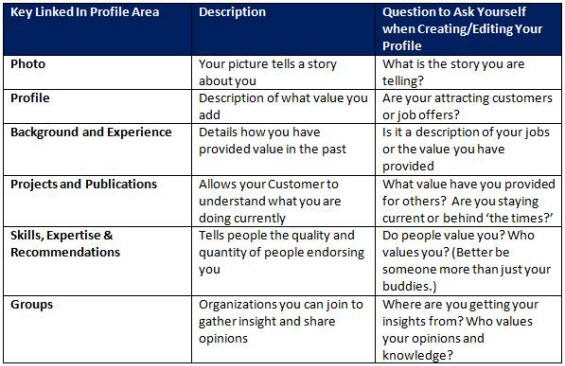
Your profile is who you are.  Most buyers look at who is meeting with them before the actual sales call.  They also view the boss more than sales person.  The quality of your Linked In profile will determine you and your reps creditability. Even before the sales call, your creditability is being tested.   Make sure you pay attention to these key areas:

social selling linkedin profile

2. Reach:

You will make your 2014 number based on the quantity and quality of connections. Your team will react to the quality and quantity of your connections.  Don’t expect your guys to have strong connections if you don’t. Being connected to decision makers results in more quality appointments.  This will result in 3.6x more appointments than those who don’t use social selling.  And people who have 5000+ connections have a 98% chance of attaining quota.  You need to lead by example for your team to improve.

3. Referrals:

This is where you make money from Social Selling. All the work and effort pays in referral generation.  Sales people who generate more than 7 referrals per month have 124% quota attainment.  But this requires leading by example.  As a Sales VP you can’t execute a sales process entirely.  You need your sales rep to ‘sell’ the deal.  But you can generate referrals by yourself.  Especially those for your team.  Coaching sales people on generating referrals means first doing it yourself.  How can you coach to referral generation if you don’t do it yourself?

Our case study is about a Sales VP Steve McKenzie.  Steve is a Regional Sales Leader for Paychex, a payroll processing company. Steve reluctantly completed a LinkedIn Profile 3 years ago.  His exact words to me.  “I better get on LinkedIn.  You never know when I might need to look for a job.”  Things have changed since then.  Steve now uses LinkedIn for modern prospecting.

  • He now has over 500+ connections.
  • Steve mines his data.  He does this by creating referrals.  And since he knows how to do it, his reps know how to do it.
  • Steve tells me he makes the number by sticking to a cadence.  This rhythm requires each of his people to send out 5 requests per day.  But to do accomplish this goal, Steve makes his sales reps ‘pay it forward’. Creating this ‘social debt’ allows you to ask for a referral with greater success.

Steve has now consistently made his quarterly number.  He tells us it is a result of generating referrals.  And the easiest way to do this is through LinkedIn.  

Call to Action:

  • Embrace Social Selling.  As a Sales VP, you must focus on the three fundamentals yourself.  You have to be the example.  When you do,  your coaching to Social Selling is impactful
  • Set Requirements.  Profiles need to be updated monthly.  Quality and quantity of connections measured.  Referrals generated with decision makers. Improvement goals established.  Treat this as you would anything else you coach and manage.
  • Consistently Pay it Forward.  Creating social debt will increase your referrals and sold business.  Making the number next year will rely heavily on you embracing social selling

Since the buyer is changing, you need to change.  Social selling gets your sales people early in the buying process.  Edelman Trust Barometer says 84% of buyers begin their buying process with a referral.  Use it.  Coach to it.  But don’t ignore it.  It is you and your team’s future.

Author: Dan Perry

sbi on linkedin

Follow @DanPerrySBI

Follow @MakingTheNumber

If you enjoyed this post, never miss one again by subscribing your Email Here and/or subscribing to the RSS Here

03 Oct 14:04

19 Sales Gut Checks: The Importance of Listening

by Greg Klingshirn

ListeningHeader-01

The sales world is complicated and it’s easy to get bogged down in the mass of tools, statistics and the like. Sometimes we all need to slow down and reflect to make sure we’re doing what’s best for our customers, which doesn’t include rambling about your product. Some of the best lessons are those we learned earliest.

Like the importance of listening.

Without it, there’s sure to be disparity between you and your prospects and customers. You’ve got to dig deep and understand what you can do to truly change your customer’s lives. And it all starts with letting them be heard.

Don’t be a crocodile salesman. You know, big mouth, no ears.
-Mark Suster

We’ve gathered 19 great quotes to help you reflect on (and hopefully improve) your sales.

  1. The true listener is much more believed, magnetic than the talker, and he is more effective and learns more and does more good. {Tweet This}
  2. The one thing that will make you most compelling and most interesting to your dream client is your ability to listen to them. That’s it. Listen.{Click to Tweet}
  3. Listening is the ultimate act of caring. {Click to Tweet}
  4. You can make more friends in two months by becoming interested in other people than you can in two years by trying to get other people interested in you. {Tweet This}
  5. Sincere salespeople listen to customers and uncover their pains so they can provide a fitting solution. {Tweet This}
  6. Your chances of selling are much lower if you’re talking rather than actively listening. {Tweet This}
  7. A smart salesperson listens to emotions, not facts. {Tweet This}
  8. Listening shows that you are invested not just in your own measurable success, but also in giving the customer a personalized and caring experience. {Tweet This}
  9. You can ask all the questions in the world but if you don’t listen carefully to what the other person tells you, you are wasting your time and losing valuable sales opportunities. {Tweet This}
  10. If they are not listening well, they are not hearing the important information they need to ensure they are qualifying the prospect. {Tweet This}
  11. Most people think “selling” is the same as “talking”. But the most effective salespeople know that listening is the most important part of their job. {Tweet This}
  12. The most basic of all human needs is the need to understand and be understood. The best way to understand people is to listen to them. {Tweet This}
  13. A good listener is not only popular everywhere, but after a while he knows something. {Tweet This}
  14. Even a great speaker will only get so far without a little listening. {Tweet This}
  15. The ability to actively listen has been proven to dramatically improve the capabilities of a professional salesperson. {Tweet This}
  16. Good listening is active. It involves more of your senses than just hearing. {Tweet This}
  17. Listen to not only what is said, but how it’s said. {Tweet This}
  18. Great listening skills build rapport, lead to sound decisions, cement relationships, and win business. {Tweet This}
  19. Listening is the primary tool for digging deeper and uncovering deeper and more significant issues in our customers. {Tweet This}
03 Oct 14:03

How Trigger Data Guides Workflows for Sales and Marketing

by Beth Cohen King

How Trigger Data Guides Workflows for Sales and Marketing image image00 resized 600You Don’t Need a Weatherman to Know Which Way the Wind Blows…
Well, You Might in Marketing and Sales

One of the famous Bob Dylan lyrics from “Subterranean Homesick Blues” implies that we should be reliant on our instincts, that we are capable of knowing which way the wind is blowing.  In theory, we are capable of determining which way the wind blows, but can we know when it’s going to rain, and furthermore be prepared for when it does?  Let’s not write off the weatherman just yet.

The CEO of iLantern, Charlie Allieri, loves the story of the salesman and his umbrellas.  The short version is: if the salesman is trying to sell umbrellas on a sunny day, obviously there will be no takers.  But, as soon as that rain cloud moves in, all of a sudden those disinterested buyers are lined up for one of his umbrellas, and the salesman can charge a premium price for them.  The moral is: timing is everything.  Offering services when your leads are good and ready means they will be open to listening if you can actually help solve their pain points.

Although you might be smart enough and well-researched to determine “which way the wind blows,” trigger data can let you know when it’s going to rain. Sales and marketers let trigger data make you a good weatherman, predicting the optimal moments to sell.

Data helps determine need and timing.  For marketers, inside sales reps, and outbound sales reps alike, NEED and TIMING are crucial for driving results.

Here’s a comprehensive look at how we use trigger data to complement the entire sales and marketing process. In marketing, we added event data into our campaign workflows.  Knowing that we weren’t interested in spamming our entire list with irrelevant content, we decided that sending more targeted emails to a smaller segment would be more personal and beneficial to help our leads with their needs.  Using event data, we determined who had recent sales wins, mergers and acquisitions, reported good earnings, management changes and other major events.  We then created targeted messaging around those events and created offerings tailored to them: some recipients received webinar invites, some received white paper offerings, some received data sheets, and some simply received information about our blog.  Using marketing automation through HubSpot, we brought behavioral data and event data together to score leads using inbound and outbound techniques.  Our click-through rate had over a 500% improvement.

By the time the leads are passed to sales, salespeople have a more complete picture, filled with conversation starters and a deeper understanding of where leads are in the buying cycle.  They have a more accurate lead score, so reps know who to cherry-pick and focus on, already knowing who has the propensity to buy. Overall, this means less time wasted. With this system in place, there aren’t necessarily more calls made; that’s not the point. There are more precise calls made to the right buyers in their time of need.

Trigger data is just one piece of the puzzle to help create uplift.  There is no magic bullet, unfortunately.  It takes thoughtful integration of all data points along the way.  Having recently completed a webinar with NetProspex and AG Salesworks, it is clear that understanding all the data points, and therefore knowing when to act based on relevancy is the most effective in producing larger ROI for both sales and marketing.  If you missed the webinar, tune in to this recorded version to see the complete process in action.

Buyers are different these days.  Knowing how to use the right data points at every stage from marketing, inside sales to outbound sales, will be the key to not only maintaining relevancy, but also delivering progressive, cutting-edge relevancy.

I would say the Bob Dylan song that rings most true today is: “These times they are a changin’.”  And with the right data you can stay ahead of the times, and have umbrellas on hand when the wind changes directions indicating that it’s about to pour.

How Trigger Data Guides Workflows for Sales and Marketing image image01 resized 600

How Trigger Data Guides Workflows for Sales and Marketing image 07f0bf66 1dcb 40ea acd9 7c4ff5605ab01

03 Oct 14:03

The Blueprint for a World Class Sales Organization

by Craig Rosenberg


03 Oct 14:02

Do You Have What it Takes to Succeed in a Sales Career?

by Robyn Melhuish

A sales career is unlike any other. It’s competitive, there’s always room for growth, and you can create a great living even if you only have a few years of experience. Plus, the space is only going to get bigger: The Bureau of Labor Statistics projects the sales representative profession to grow 15.6 percent by 2020.

However, it takes a certain person to succeed in a sales career. It’s not for the faint hearted or the timid. It takes tenacity, guts, and the belief that you can make success happen, sometimes without help at all.

If you’re considering a sales career, you must have what it takes to make it. Not sure if you’ve got it? Check out these four traits you need to have to succeed:

Persistence

It takes a special sort of person, with a commitment to the sales process, to create success. So, one of the traits you must have as a sales professional is persistence for your craft. For example, you may get shut down or get doors slammed in your face. However, persistence is the belief that if you talk to a certain number of people, the doors will slowly open. It may take awhile for you to get there, but after you establish credibility and present your knowledge in a persuasive way, those no’s will turn to yes’s.

Tip: Keep a running tab of common objections and study them thoroughly. That way, you can understand why potential customers are hesitant and come up with responses to help get them on board.

Listening skills

Each prospect, each customer is an individual with their own problems and needs. You can’t sell them anything until you’ve heard what those needs are. The ability to get a customer talking by using questions and listening to their problems is how you’re going to connect with them. Plus, when you stop being a salesperson and start understanding their needs and pain points, you can navigate through the sales process more smoothly. Sometimes they need a lot of guidance; other times they don’t need anything — but they will likely call you when they do.

Tip: Do your research beforehand. If a lead is known to be particularly difficult, find out why, as well as how you can circle around their objections. The more prepared you are, the better.

Product knowledge

To be successful in any kind of sales, you need to understand what you’re selling. Whether it’s medical devices, financial services, or office supplies, ample product knowledge is vital. For example, imagine how a physician might react to a pharmaceutical rep who didn’t know the history of the product, wasn’t aware of price points, and was unclear about the potential side effects? He’d be unlikely to prescribe, right? So, it’s important for you to do your homework before every meeting, and present your case from a well-informed place.

Tip: Always stay updated when it comes to your niche. Products are always changing, patents are constantly being approved, and the needs of your customers can change. By staying on top of the market, you stay ahead of the competition and can serve your audience better.

Confidence

Most salespeople are driven by competition. There’s a reason companies publish ranking reports on how each team member is performing. Nobody wants to be last, so they tend to work harder and longer to ensure they’re not. But even good salespeople have off months or quarters. Though it’s easy to feel down, you need to have the confidence and the tenacity to keep moving forward.

But it’s not just the competition with peers that can be tough on self-esteem; bouncing back from repeated rejections is obviously difficult too. However, you have to improve your skills, hone your techniques, and be a little more competitive in your tactics. You can’t just be motivated by money or the perks of a sales job — you have to want to sell more than anyone else without a personal agenda. That’s what makes a good salesperson and that’s what creates success.

Tip: If you are having confidence issues, try talking to an established industry member or take some courses which will sharpen your skills. When you know you can do the job well, it will reflect in your performance.

Success in a sales career may not be easy, but it does come with some major benefits. Being persistent, having great listening skills, knowing your product, and creating confidence are all ways you can be a better, more informed salesperson who understands their strengths and uses them to seal the deal.

What do you think? What are some other was to create success in a sales career?

02 Oct 17:10

Clowning Around – An Important Leadership Attribute

by Dan Pontefract

clowning2On average, Americans aged between 25 and 54 spend 26 percent of their time working, 33 percent of their time sleeping and the rest—roughly 41 percent of their time—doing anything but sleeping or working. This is according to the U.S. Bureau of Labor Statistics. By comparison, the Organisation for Economic Co-operation and Development (OECD) estimates in their Better-Life Index that member countries spanning the globe spend on average 20 percent of their time working and the rest on leisure, sleeping, personal care, etc.13 So, depending on where you live and how researchers arrive at the data points, workers are spending somewhere between one-fifth and one-quarter of their total available time working and earning a wage to help fund those leisurely activities, life-long planning, trips to Old Trafford to watch Manchester United and so on.

But when you cut the data a little differently and focus on total available waking time versus total time, it looks somewhat different. Based on the U.S. Bureau of Labor Statistics data, 33 percent of time is spent sleeping. Each year, we all get 8,760 hours to use as we see fi t. If 33 percent of the time is spent sleeping, it leaves us with 5,869 available waking hours. Americans work on average 2,278 hours per annum, which now correlates to a hair shy of 40 percent of waking time being spent on work. Said differently, Americans spend 60 percent of their waking hours with family and leisure, household or other activities while 40 percent is spent with work colleagues, wherever that employment takes place.

Now that we’re looking at data that suggests 40 percent of our waking hours are spent with work colleagues, don’t you think leaders should be spending a portion of their time clowning around? I do—it’s an important part of being a connected leader. In a world of quarterly targets, profit margin quests and cost constraints, a little levity can go a long way.

How to be clowning:

  • Business is serious but you don’t have to be all the time; ease up and smile for starters.
  • Lighten the mood; encourage those on your team to poke a little fun at you once in a while.
  • Don’t work till you drop; clowning can come in the form of coffees, lunches and outings.
  • Gaming isn’t just for kids; participate in online games or outings like bowling with your team.
  • April Fool’s is just one day of the year; clowning should become part of your regular leadership style.
  • clowningJokes aren’t taboo; learn how to tell them and, even better, encourage your team to do so as well.

In a 1985 paper the communication department of the University of Delaware explores patterns of humorous communication against the context of organizational culture. The research indicates humor can:

  • manage the tension between hierarchy and egalitarianism that emerges from the group’s enactment of power structure;
  • regulate interdependence among group members; and
  • balance the forces of differentiation and integration in the group’s communicative enactment of cultural identity.

I’m not suggesting you join the circus, but start by adding a little humor to your leadership style. Clowning around is an excellent attribute to add to your connected-leader-being repertoire. You don’t need a giant red nose or purple hair to prove it.

<Adapted from Chapter 5 of my book Flat Army: Creating a Connected and Engaged Organization>

02 Oct 17:07

The Guide to Social Selling Strategy: How to Use Social to Crush Your Number

by Craig Rosenberg
02 Oct 17:05

Infographics Are Effective And Now Anyone Can Create One

by Miles Austin

Infographics are effective, popular and can make a complex topic understandable. Like the old adage “a picture is worth a thousand words“, infographics will help you deliver your message. If you are online in any way, you have seen the impact of infographics and their ability to convey a message. They are effective not only online, but also in presentations and print.

why-do-infographics-make-great-marketing-tools

Many of us have brilliant ideas that could benefit from an infographic but we do not have the graphics talent and/or know-how to create your masterpiece. If you fall into that bucket, then today’s tool will be of special value. This tool will be helpful for anyone in sales, marketing or even a small business owner that does it all themselves. Others have purchased the tool and given it to their outsourced marketing team to use, taking advantage of the speed and ease and lowering the production costs.

Instant Infographics Presence is a web tool that removes the complexity and cost of more advanced graphic tools. It is truly a point and click tool that provides complete flexibility in designing and laying out your infographic. Because it is a visual tool, the most effective way to introduce this to you is by watching me create a brief infographic in the video demo linked below.  I recommend you gather the following information together before you begin:

  1. What is the message/information you want to share.
  2. Statistics and facts that demonstrate your point.
  3. Any images or graphics that you will want to incorporate into your finished infographic.

Once you have gathered these together you are ready to begin. For this demonstration, I want to convey the following information:

  1. Fortune 500 CEO’s are not yet on Twitter in any significant way.
  2. More are joining in and a few are dropping off.
  3. Twitter bird logo and source document with the facts and research

 Here is the result using this info and Instant Infographics:

Twitter CEO Usage Infographic


 If you would like to watch the complete 11 minute video of how this infographic was created click here.

Price for this product is $37.00 one time fee and provides unlimited access via password and ID.

Recommended Actions:

  1. Learn about the power of Infographics with this definitive guide from Unbounce.com.
  2. Grab  you copy of Instant Infographics Presence.
  3. Share a link to one of your first infographics creations below in comments.
  4. Bonus Download - The Ultimate Guide to Marketing with Infographics from the brilliant people at Unbounce.com

I have been using several tools from the developer for almost a year now and have been very pleased. I have actually purchased one of his tools outright and will be highlighting it later this week.

This is one of those times that I will receive a small fee if you purchase this tool. 

Original article: Infographics Are Effective And Now Anyone Can Create One

©2014 Fill the Funnel. All Rights Reserved.


Related Stories

 
02 Oct 17:04

How Many Movies Can You Actually Compare Content Marketing To?

by Michael Brito

How many movies can you actually compare content marketing to?

Probably all of them. And no offense if you love Breaking Bad. I love it too. Obsessed actually. And surely there are some amazing storytelling principles that you can extract from the show.

The problem with “content marketing” as a term, job or approach is that it’s by nature very tactical. It can easily be done in a silo. If you are a marketer, there is absolutely nothing stopping you from creating, aggregating, and curating content and then posting it up in social media channels without having a strategy. You can hire consultants, agencies, and even third-party journalists and bloggers using platforms to create content and campaigns on your behalf. It’s fairly easy and affordable to use services like Poptent or Genius Rocket to crowdsource highly produced video content.

And guess what? You can do all of this without actually talking to anyone in your company. Now, the content itself might not be epic or change any specific consumer behavior but it’s not hard to do, and it’s not all that expensive.

The reason why many of the brands struggle with content, storytelling, and scale is because they are looking at content from an elementary point of view. Content is not a box you check, a bubble you fill in, or a bullet point in a PowerPoint presentation. It’s so much more than SEO, more than videos, Infographics, Instagram photos, and real-time marketing. You can’t learn about content from clever blog titles like “10 Proven Tips to Learn This” or “How Content Marketing Is Like Top Gun.” Content must be considered a strategic imperative for your business. You must become a content organization if you want to take your business to the next level.

Just as there is an art to storytelling; there also needs to be a strategic and operational plan that can help you create and distribute content; integrate it across paid, earned, and owned media; and measure it effectively. As a marketer, brand manager, or small business owner you must move beyond the content marketing buzzword and commit to building a long-term content strategy that will allow you to execute your content marketing initiatives flawlessly and at scale.

For these reasons, your business, whether large or small, must start taking content serious and begin to make the right organizational changes to adapt to the external marketplace. It’s not going to change for you. This also means that you need to elevate the conversation beyond content marketing.

Your brand must become a media company.

All media companies are content machines. They have the correct structures in place, aligned teams, a robust editorial process, and they execute the distribution of their content flawlessly. Your brand must follow this model. Realizing that you still have rigorous business goals, you must challenge the status quo and think about content the way media companies do.

So you may be asking yourself, “why a media a company?”

Following are five characteristics of media companies you must adopt for your brand if you expect to make an impact, break through the noise, and reach consumers with game-changing content.

Storytelling

Media companies tell stories. Conde’ Nast has a diverse narrative told through their media properties from fashion and travel to sports and weddings. Traditional news organizations also tell stories, although their narrative is current and/or breaking news. Some news outlets have tried to up-level their narrative by using anecdotes like “Fair & Balanced” to differentiate themselves from their competition.

Content

Media companies are content machines with an “always on” mentality. It doesn’t matter what time a day it is or what the hour, media companies distribute content all the time. For example, the New York Times publishes 1,500+ articles per day (including those from AP, Reuters, and so on) and 200 to 400 blog posts.

Relevance

Media companies provide relevant content all the time to someone, somewhere. They aren’t in the business of providing content that’s a few days or weeks old, unless they are holding off on a story to get more detailed information. The content is recent and, in many cases, real-time.

Ubiquity

Media companies are everywhere. They dominate the search engine results and their content is shared daily across social media channels. They produce videos and advertise, and even their journalists have started building their own personal brands, which also feed the content engine day in and day out.

Agility

Media companies move quickly. They have subject matter experts and contributing writers who are prepared to write about any topic at any time. They also employ creative teams that can produce visual content at a moment’s notice. They aren’t held captive by approvals from a brand team or lawyers. They are content organizations and move quickly. They have workflows that facilitate the entire content supply chain (ideation, creation, approval, distribution and integration.

So let’s elevate the conversation about content, shall we?

Want to enjoy enhanced support and up to 50 social media profiles with your account? Try HootSuite Pro free for 30 days.

02 Oct 17:04

3 Easy Ways to Add Inbound Tactics Into Your Marketing Activities

by Tami Wessley

3 Easy Ways to Add Inbound Tactics Into Your Marketing Activities image tell tell tell“Tell them what you’re going to tell them, tell them, then tell them what you told them.” While many of us who’ve had this adage pounded into our heads might groan, it’s without question the easiest way to add Inbound Marketing tactics into your marketing activities.

The results of our 2013 Inbound Marketing Survey surprised us: we saw a huge swing from 2012, when the majority of marketers responded that they understood what Inbound Marketing is but hadn’t implemented it yet. In 2013, the majority indicated that they were very familiar with and have embraced Inbound Marketing as an important part of their integrated marketing plan. In fact, over 84% of respondents have implemented at least some Inbound Marketing activities.

What’s not surprising is that the ultimate result of this shift is 33% of marketers reporting an average of 50+ leads per month generated from their efforts.

Impressive, right? So, how can you get started bringing Inbound Marketing tactics into the mix without completely overwhelming your marketing team? We’ve switched up the “tell them” approach just a little bit to apply to our topic: “tell them, tell them again, then tell them what you told them.”

Tell them

If you haven’t already, implement a blog. B2B companies that blog regularly see 65% more leads generated than those that don’t. And, 82% of marketers report a positive ROI from their efforts. If you already have a blog – great! Take a look at your frequency and make sure you’re blogging at least once per week – more if you can. It’s a simple equation: the more you blog the more web visits you attract, resulting in more leads per month.

Tell them again

Your blog won’t do you any good if nobody knows it’s there. While a well-optimized blog will organically attract interested readers and do wonders for your SEO, promoting your blog on social media is a must to expand your reach and amplify your message. Find where your prospects are interacting and make it easy for them to find your content by sharing links. If you’re a B2B specialty manufacturer or professional services organization, chances are LinkedIn should be your primary channel. 90% of our survey respondents indicate LinkedIn is their social media of choice, followed by Facebook then Twitter. YouTube is proving to be a powerful medium for B2B manufacturers that have a unique process to demonstrate and want to more powerfully communicate their competitive advantage.

Tell them what you told them

Just because you wrote a blog article and promoted it on social media doesn’t mean your audience saw it right away. There are a few really simple ways to extend the life of your content and attract additional readers:

  1. Promote older posts on your social media for an extended period of time. As long as the content in your post is still relevant and valuable, use your social media platforms to let your audience know about it.
  2. Don’t be afraid to repurpose a topic. If it was good enough to write about the first time, chances are there are ways you can expand upon it, update it or make it more relevant to a different segment of your prospects.
  3. Consider aggregating some of your best posts and distributing them in an email to your contact list and blog subscribers. Again, just because you posted it doesn’t mean everybody saw it. If you’re a regular follower of Weidert Group, you’ve likely seen our Week-in-Review emails. These typically contain a short introduction followed by several links to recent posts our readers may find interesting.

Adding a structured blog, social media and HTML email protocol to your marketing activities is a great way to jumpstart your Inbound Marketing efforts. From there, you’ll want to take a deeper look at your website, SEO, advance/downloadable content, conversion opportunities, lead intelligence and metrics analysis. But those are topics for another day!

If you’re ready to join the 84% of marketers that are reaping the benefits of Inbound Marketing, we’d love to help you get started. Click here to sign up for our free Online Marketing Evaluation – from it, you’ll have a great understanding of how you stack up against your top three competitors, a review of your current activities and an actionable list of immediate tactics you can implement to start attracting leads.

3 Easy Ways to Add Inbound Tactics Into Your Marketing Activities image 22a4bcf6 6a98 471e b9c6 879f687bd916Image Credit

02 Oct 17:03

Sales process - the missing ingredient for marketing ROI

by Gerry Murray
Most marketers in B2B enterprises have never been trained on sales process. If I were running your marketing or sales organization this would be the first thing on my agenda. Why? Because without understanding sales process, marketing is essentially set up to fail. How can anyone improve or contribute effectively to something if they don't know how it works. It's like setting up your manufacturing to produce blue widgets but not telling your suppliers what parts you need for your particular widgets. So they ship you tons of blue stuff and hope that somehow it all works out. That's the position, to one degree or another that most enterprise marketing organizations are in even at some of the most advanced process-centric companies in the world. Largely because they have chopped up the customer creation process into a collection of departmentally independent activities. 

In a large enterprise with many products lines, business units and segments, there are likely to be a number of different sales processes. Marketing and sales resources should be aligned against these processes horizontally. This is the key to making the shift from a siloed command and control organization to a responsive, integrated customer focused one. Not only is it important to design around sales process, which should be designed around the buyer's journey, but it is important to design for change. Markets are dynamic and sales processes change.

Marketing automation systems, especially those that are integrated with the sales force automation or customer relationship management system, have begun to provide marketing with some clues to sales process. At least they can see what happens or does not happen when they deliver something to sales. But the data does not always explain why, and that's the critical part. Marketing needs to understand very specifically how Sales operates in order to optimize around customer outcomes. The alternative is for marketing to optimize around departmentally focused KPIs like the number of MQLs (ugh), or SALs, or worse vanity metrics like hits, sentiment, likes, etc. These metrics are useful indicators for some marketing activities, but not as business drivers for marketing investment.

Aligning marketing and sales around sales process is the first step to formulating an enterprise customer creation process that extends across all customer touch points, including: billing, fulfillment, service and support. At each stage of maturity, marketing, as well as all the other customer facing departments, gain much greater visibility and accountability to the whole process and its connection to corporate objectives for growth, market share, and margin. This is all necessary for a true picture of marketing ROI.

Your action items:
  • Marketers: lobby your top executives to make regular sales process training for marketing a priority. 
  • Sales executives: demand that marketing know how the different parts of your sales force work so they can more effectively develop prospects and serve customers. 
  • CEOs: get smart about your customer supply chain by applying the same level of due diligence and process discipline to it that you have to your product and services units. As a result, you will make much more effective use of marketing investment and be able to hold your whole customer facing team accountable for its contribution to your strategic objectives.
Copyright 2011 IDC. Complete articles may be reposted. Reproduction in part is forbidden unless specifically authorized. All rights reserved. Please contact IDC for information on republishing or web rights.
02 Oct 16:58

Your Business Magazine Awaits

by ceb

Screen Shot 2013-10-02 at 8.15.30 AM

I built you a business magazine. I did it because I wanted you to find ways to improve your worth, to grow your capabilities and connections. I did it because I wanted you to have the business curriculum for the future. I did it because 20 or so columnists can tell a much more colorful story than just me alone.

What’s the Idea?

The concept behind Owner is that whether you own your cubicle, your company, or just your life, you’ll find something in Owner magazine. The goal is to connect you with people who take ownership of their choices, who run their businesses and/or their jobs with pride and intent. If you’re the kind of person seeking to grow your capabilities AND your connections, Owner’s your crowd. We’re here not to create just content but to create connections. People who are participating in and around the Owner flag (which is yours to take, and soon yours to wear!) are finding business connections and other value. This isn’t a magazine. It’s a movement cleverly hidden inside a magazine.

What’s In It?

Owner magazine has articles about willpower and health and fierce determination and how one REALLY makes millions, and a 5 minute marketing method. And tons more.

Every month, on the first of the month, we drop 20 or so articles in front of you all at once, so that you can think through them, decide what’s helpful, work on some parts of your business, and grow.

Mobile-First Design

You want to really enjoy your new business magazine? Click this on your phone or tablet. We hired Jesse Petersen to do our design and he knocked it out of the park. This thing is built to be mobile-native and desktop-second. Why? Because I’ve never seen someone with a laptop on the night stand two inches from their ear.

And This Is Just Phase One

We’re getting ready to launch live video marketing and business jams, where we help people like you figure out your specific business challenges live in front of an audience (online), and share all the learning in real time. We’ve got a few apps we’re building to help you connect better with Owners like yourself. That’s the real goal. We have so much planned for you.

Who’s Behind Owner Magazine?

Me! I’m the publisher. Rob Hatch is my managing director and is stepping into an owner role himself for this project. We have editorial help from Sophie Lizard, and then, a whole SLEW of authors:

James Altucher
Bob Burg
Adam Bornstein
Donna Maria
Marsha Collier
Jacqueline Carly
Mike Damphousse
Dave Delaney
Jeff Goins
Charles H. Green
S. Anthony Iannarino
Jonathan Littman
Becky McCray
John Morgan
Dr. Terry Simpson
Tom Terwilliger
Alan Weinkrantz

And a few new writers joining us very shortly, as well.

So that’s a pretty decent group, right? Oh, and I’d HIGHLY recommend following all those folks above on Twitter. You’ll really appreciate the boost of brilliance and motivation you’ll get every day.

Take Ownership

Welcome to Owner magazine, and I really encourage you to sign up to receive the magazine via email, plus our newsletters. You’ll find a lot of business value, and connections to people who matter. It’s my promise to you.

02 Oct 16:09

10 Critical Steps to Sales and Marketing Content Alignment

Content Selling won’t be Successful without Alignment

When organizations think of sales and marketing alignment, they often focus on demand generation. As content continues to grow as a critical component in successful selling, organizations must now take steps to align around content as well. And believe me, content selling is important. A 2010 study of B2B buyers found that 95% of buyers chose a solution provider that “provided them with ample content to help navigate through each stage of the buying process.”

I can’t tell you how many times I have walked into a sales organization to talk about content and they tell me: “Marketing doesn’t create any content for us”. When I take the feedback to marketing, they show me hundreds of content pieces they have created over the last couple of years. Or often times, sales will tell me the “content sucks”, and then I will audit content and there is usable material for sales to be effective.

The problem I am describing is alignment. Sales and marketing must work together to deliver on the promise of content selling. Marketing must agree to move beyond demand generation content and build content designed to be used in the sales process.

The post 10 Critical Steps to Sales and Marketing Content Alignment appeared first on KnowledgeTree.