Shared posts

15 Oct 16:15

The Three Types of Mentors New College Graduates Need

by Mac Witmer

Editor’s Note: This post is part of our Welcome To The Workforce series, which focuses on sharing advice, experience, and guidance for upcoming and recent graduates entering the workforce. Today we hear from Mac Witmer, a recent UC San Diego graduate working as a GSO University Associate within the Global Sales Organization. In her first quarter at LinkedIn, Mac has identified three types of mentors that have been crucial to her success.

As you get older, it’s funny to look back on grade school and think about the life lessons that were casually ingrained into the curriculum. One experience that sticks out for me is the “reading buddy.” The reading buddy was typically an older student who was assigned to a younger student to help develop reading skills and confidence. This buddy served as a role model to the younger student.

I now realize that this dynamic was the precursor to what has become a key success factor in our professional lives. The reading buddies of the professional world have a different name but serve a similar purpose: to provide guidance and support while developing you to become a stronger professional. They are now called mentors.

mentors for new employees

In my first few months as a utility-paying, dinner-making “adult” professional, I have identified three key qualities that help to shape the types of mentors that are essential to a new college graduate entering the workforce.

Support

The supportive mentor is someone you respect and look up to, but is also someone you can be vulnerable around if you need to be. As one can imagine, the “real world” can be a bit shocking to new graduates and this mentor is your go-to in times of need. This mentor may be a peer, or close to it, who has gone through a similar transition recently.

The support provided by this mentor reaffirms that you are not alone this new stage of your life and who reassures you that your company and colleagues truly care.

Inspiration

The inspirational mentor is easy to spot, but looks different for every individual. This mentor is someone who is in a place where you wish to be one day. This mentor may currently work in your dream job or they are crushing it in your current role. This mentor has successfully routed his or her career path and can provide inspiration and guidance for yours.

The inspiration provided by this mentor can come in forms of a job shadow experience, a lecture or informational interviews, ideally with the goal of strategic career planning.

Professional Growth

The mentor who enables your professional growth is likely someone you directly report to who has witnessed your early wins and can champion you within the company. This mentor plays a crucial role in the development and adoption of your professional brand. This mentor is likely a respected leader within the company whose opinions are taken seriously.

The professional growth this mentor helps you achieve will move the needle for you in significant ways.

Simply put, different mentors serve different purposes and throughout different stages in one’s career – different mentors will surface. However as a new graduate, these three qualities in mentors have been immensely important to success in my first quarter as a professional.

What types of qualities do you see in your mentors? If you are a mentor, do you fall into one of the three buckets more heavily or do you embody all three qualities for your mentees? Share with us on our LinkedIn Company Page or on Twitter @LinkedIn.

15 Oct 16:15

How to “Follow” Companies on LinkedIn

by waynebreitbarth
follow meThis week’s tip is about a really helpful LinkedIn feature that many people haven’t stumbled upon. It’s the Following Company feature.
 
It is part of the Company Page section of LinkedIn, which I always refer to as a separate file drawer on LinkedIn. I say this because everything else on LinkedIn is about individuals rather than companies.
 
What is this feature?
 
It allows you to tell LinkedIn what companies are on your radar screen for whatever reason. When LinkedIn becomes aware of changes related to those companies, they can notify you.
 
How do you follow a company?
 
Once you land on a company page, just click the yellow Follow button that’s on the top right of the company page.
 
To find a company’s LinkedIn page, click the down arrow next to the large Search box on the top toolbar. Then select Companies and enter a company name in the Search box.
 
When you’re on an individual’s profile, you can scroll over any of the companies listed in the Experience section. When the company detail box pops up, just click Follow Company, which is in the lower left of that box.

Which companies should you follow?
.
  • Your company
  • Your competitors’ companies
  • Companies you want to work for
  • Companies you want to sell to
  • Companies you may be thinking of acquiring, merging with or partnering with
  • Important current and prospective vendors or suppliers
  • Companies in closely aligned and/or related industries
.
How many companies can you follow?
 
You can follow up to 1,000 companies, so have at it.
 
What things can you get notified about?
.  
  • Changes to the company page, including new products and services
  • New job opportunities (Job seekers — take note of this one!)
  • Company status updates
.
What less obvious things can you see or do with this information?
.
  • You can see all the people who are following your company by clicking the number of followers
  • You can see all the people who are following any or all of the companies you are following or any other company for that matter
  • The company may see you are following them (another job-seeker goodie)
.
The Following Company feature is a great research tool to help you keep tabs on the people and companies you care about.
 
For information about how your company can capitalize on LinkedIn, check out my free ebook 10 LinkedIn Mistakes Companies Make by clicking here. 

15 Oct 16:14

6 Stupid Content Promotion Mistakes No Marketer Should Make

by ltoner@hubspot.com (Lisa Toner)

content-promo-errorWe've all been there: You've created a piece of content -- a blog, an ebook, a report, a video -- with expectations of high volume traction ... and then nothing happens.

It sucks.

You stare at your data, hitting refresh over and over again, while the awful feeling of failure creeps over you. You might even start questioning your awesome content-creating skills -- not cool!

What exactly are you doing wrong? What makes one piece of content get thousands of views and shares while another goes no further than your friends and family members?

I used to find myself in that position a lot. I have since learned, though, what it takes to run a well-oiled content machine. Your job is not complete once you hit publish. Below are some of the mistakes that I was making that you might find helpful.

1) Stopping at the Start Line

I used to build a landing page with a piece of content strategically placed behind a form, rubbing my hands together thinking, "Great! I'm doing inbound marketing. Now I can just sit back and watch all the leads come rolling in!" Yeah ... not so much. It doesn't work like that, unfortunately.

The mistake I made here (and many others make it as well) was hitting go and not expecting to stall. People won't just magically find your content if you don't tell them its there! You need to build out your promotion strategy and follow through on each item.

If you spend 10 hours creating a piece of content, then you should spend at least 10 hours on promotion. There is no point in creating great content if you have no idea how people will find it -- whether through search, through social, through email sends, through co-marketing promotion, whatever it may be.

2) Always Relying Solely on Organic Social Media Promotion

Are you posting your new content to social media? Cool. I was too. What I wasn't doing was considering the use of paid advertising to promote that content, though. While we understand not every marketer has the budget to utilise this ad method, we think it can be very valuable to help get content off the ground.

If you've created valuable content, social advertising can help with the initial seeding. Facebook offers lots of different ways to target users based on their interests and demographics. A really cool way to use Facebook paid advertising to promote your fresh new content is to use the contact data you already have in your database to target new people of similar interests. (And tracking those ads just got easier, thanks to Facebook's recent announcement.)

You can export a list of all the people who have previously downloaded a similar piece of content from you and then upload them to Facebook to create a lookalike audience. Facebook will take your list and find people with similar interests. Once you know who these users are, you can then target your new content to them.

(Note: If you need help getting going with your Facebook advertising, you can get expert tips on how to do so here.)

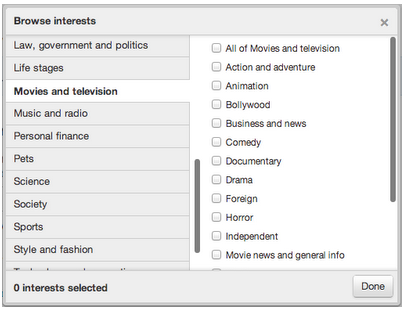
You can also target by interests on Twitter. There are now two ways you can target people on Twitter and outside of your own network: broad targeting and precise targeting.

For broad targeting, there are over 350 categories you can choose from.

TwitterTargeting

Precise targeting, meanwhile, allows you to create custom segments based on @usernames with similar interests to who you want to target.

For example, if you want to target someone who is interested in a particular genre of music, you could use @usernames of bands in that genre. You do not get access to their followers, Twitter simply displays your ad in the timeline for people with similar interests to the @usernames you have used.

Both of these targeting methods will allow you to show your content to groups of people who may be interested. But don't forget there are other social platforms with big reach that offer paid options, like StumbleUpon, and soon even Pinterest! Look into where your audience hangs out, and don't take paid promotion off the table as an option. 

3) Making Sharing Difficult

How easy is it for me to share your content right now? Do you have sharing icons on your blog? What about that ebook you wrote? How many obstacles do I have to get over to share it with my network? If I have to think about it, I'm going to be far less likely to share.

The answer? Give your audience lots of opportunities to share. To boost the likelihood your content is shared, try adding something like this to the end of your emails:

EmailShare

You could also use our personal favorite, the lazy tweet, which you can include in both your email as well as your content, as long as it's text-based.

Lazytweet-3

It's also good to remember that less is more. If you include sharing icons for every single social media platform out there on your blog and in your lead gen content, you will confuse your reader and they will be less likely to share. Keep it simple, know where your audience hangs out, and optimise for the networks on which they are most active.

4) Publishing Crappy Content

Content can be considered crappy for many reasons: an irrelevant topic, a poorly constructed piece, factual inaccuracies, or just bad spelling and grammar.

There is just no excuse for bad spelling and grammar. Use a spell-checker, people! Or get someone with polished grammar skills to proofread your work. Whenever I read a poorly constructed article, I rarely get past the first paragraph, the author loses some credibility, and I am about 99% less likely to share that content. (It would need to have a seriously killer takeaway lesson to make it to my network after that).

What people share with their network directly reflects on their own credibility, so if you want them to share your content, make your content stellar. If you are writing about what you do instead of how you solve your readers' problems, you are a shoe-in for the boring, unshareable content competition.

Also, don't underestimate the power of testing. For instance, Upworthy creates 25 different headlines for every article they write. Peter Koechley, co-founder of the company, says, "The difference between a good headline and a bad headline can be just massive. It's not a rounding error. When we test headlines, we see 20% difference, 50% difference, 500% difference. A really excellent headline can make something go viral."

5) Sending the Same Message to All Social Platforms

How often is the easy and quick way the best way? Not often. It's simple: Personalising your messaging on social networks improves the experience of your audience.

Make them feel like the content you have created is for them. Make it relevant, valuable, and personal. Use data to segment and target, based on what you know about your readers. Also, use the targeting options available on organic social media publishing when sharing your content.

Taking the time to personalise your messaging will help your content resonate with the reader more ... meaning they will be more likely to engage with you -- and share, share, share!

Your followers will also appreciate getting a different message for each network on which they follow you. Take one piece of content and break it out into multiple social media posts. Take an image from the content and post it to Facebook. Take a quote out of a blog post and tweet it. These are all great ways to keep your audience engaged and coming back for more.

6) Lacking Frequency and Consistency of Posting

Be honest -- do you post a piece of content once and forget about it? Well, just know this: Scheduling your social media posts to go out at regular intervals over a set period of time will increase your reach -- especially for a platform like Twitter.

According to a survey by Sysomos, 92.4% of all retweets happen within the first hour of a tweet being posted. Make sure you're posting often and testing when the best times are to post for your audience. Just make sure you don't schedule the same message to all networks (as noted in the previous section, that's a no-no).

It's okay to make mistakes -- in fact, they can help you big-time in the long run -- as long as you learn from them. If you're spending time and energy to create remarkable content, do it justice and make sure you get the promotion strategy right, too!

What ways do you think you can better promote your content? Are you using social media in the best ways possible? Let us know!

sign up for the content promotion tip series

subscribe to the hubspot marketing blog

15 Oct 16:13

17 Marketing Terms You Were Too Embarrassed to Google (But Should Definitely Know)

by mhibma@hubspot.com (Maggie Hibma)

embarrassed-googleAs inbound marketers, it’s our job to keep up with the latest trends in our industry, news on our competitors, and the latest marketing jargon.

But sometimes, every once in a while, a term or concept will eek by you. You might kind of know what it means, but not entirely.

And you’ll know exactly what that term is when a colleague says something to you and your first reaction is ... “Huh?

Perhaps you’re more eloquent than me, but I’ve had plenty of “Huh?” moments at my time here at HubSpot. And if I’ve been hesitant to Google a few things here and there, I bet there are some fellow marketers out there that also have been.

So ... I put together a list of some -- okay, 17 to be precise -- terms and concepts that you can brush up on (or maybe learn about for the first time) and your Google search history will be none the wiser.

1) Long-Tail Keywords

Long-tail keywords are cool. Essentially, they’re search queries that contain three or more keywords. So, for example, a regular keyword for HubSpot would be “HubSpot.” But a long-tail keyword could be something like “inbound marketing software.”

What makes long-tail keywords great is Google’s new algorithm, Hummingbird, focuses on user intent, which is the concept behind long-tail keywords, making them an important part of your marketing strategy. They’re also what can turn your PPC efforts into successful campaigns. See? Like I said -- cool.

2) Above the Fold

This concept is all about where content is placed on your webpage. Rule of thumb: Visitors should not have to scroll down the page or search to discover what you want them to do once they’ve landed on your page. That’s because what you want them to do should be ... above the fold.

This concept comes in handy when you audit your site pages (especially landing pages) to make sure they're performing up to your standards.

3) Meta Description

Here’s a basic summary of what a meta description is: A text summary of what can be found on your webpage (see what I did there?). There are several ways to optimize your meta descriptions for SEO purposes, since these descriptions show up in search reults along with the links to the pages.

4) Alt Text

Alt text, or “alternative attribution,” is like a caption on any image on any of your web pages. This text should explain to the viewer exactly what they’re looking at without needing to actually see the image.

Marketers use alt text so their images are optimized for any kind of viewer, like someone with images disabled in their browser, and so search engines like Google can “read” the image and return it in results for relevant queries.

5) Algorithms

Algorithms are like recipes: They’re formulas that include a bunch of different variables that search engines use when they crawl your website to determine how your page should rank in search results.

The variables that make up algorithms are guarded by search engines like your grandma guards the secret ingredients to her tomato sauce recipe. However, marketers still need to be aware of the important algorithm changes so they can continue to optimize their content, like their blog, for these algorithms to drive traffic to their site.

6) Personalization

The same way some shopping sites recommend related items you might like based on things you’ve recently purchased, personalization in marketing is about showing visitors relevant content that’s tailored to the experience they’ve already had with your website.

It’s the concept of not showing the same message to a brand-new visitor to your site that you would to a customer who's been to your site multiple times. That doesn’t make much sense, does it? But if you want more reasons to personalize your marketing, we’ve got 22 for you right here.

7) Content Curation

You have to create content that’s relevant to your buyer persona in order to make your inbound marketing successful. But content curation -- finding other relevant content that’s already been created and sharing it in a meaningful way to your audience -- should also be part of your marketing strategy.

Curating content can be an art form, and if you're good at it, it can turn you into a thought leader in your industry. Just make sure you’re adhering to the content copyright laws so you’re not stealing other people’s content.

8) 301 Redirects

If you need to know what a 301 redirect is, you might be thinking about a website redesign. When you permanently redirect one URL to another, you need to implement a 301 redirect so that it doesn't mess up that SEO strategy you’ve worked so hard on. A 301 redirect can pass 90-99% of ranking power from the old URL to the new one, and in most instances, it’s the best method for implementing redirects on a website.

9) SaaS

“SaaS” means “software as a service.” So, if you’re using any software that’s hosted by another company and they store your information in the cloud, you’re using a SaaS product.

HubSpot is considered a SaaS product -- and, actually, I bet a lot of applications you use every day are SaaS products. Think Salesforce, IM clients, project management apps … you get the idea.

10) Churn

Hint: This one has nothing to do with butter. Churn is a key metric SaaS companies use to determine the percentage rate at which their customers are going to cancel their recurring subscription to their service. Put plainly: You don’t want your customers to churn.

For data-driven marketers (that’s you), knowing the rate at which your customers churn is key so you can strategize on how to keep churn at your company low. Keeping customers happy isn’t always easy, but here’s some metrics and tactics you can use to help reduce churn at your company.

11) KPI

Key performance indicators (or KPIs) are metrics that you look at to track the progress towards your marketing goals. Some examples of marketing KPIs are CAC (cost of customer acquisition) or the ratio between the lifetime customer value to the cost it takes to acquire a customer (LTV:CAC).

I get it: That was a lot of acronyms. Here’s a great post on those critical marketing KPIs and what to do when they’re underperforming.

12) RSS

RSS feeds make keeping up with the latest industry trends easy as pie. RSS stands for "rich site summary," though others note it can also stand for "really simple syndication." Most websites and blogs have RSS feeds that you can subscribe to and have the latest published updates to those sites delivered right to you in an RSS reader of your choice.

Allowing customers and prospects to subcribe to content via an RSS feed is something marketers should consider when building a site or a blog. Want to subscribe to your favorite blogs now? Here are some RSS readers we recommend using to keep all your RSS feeds in one place.

13) UX

UX is short for “user experience,” and when someone refers to UX, they’re talking about the experience your customer will have when they interact with your service or product.

As a marketer, you should know that only 55% of companies are currently conducting any online user experience testing. But making sure your product has the best user experience possible can potentially make a difference for a prospect evaluating your product.

It's a term product managers think about every day, but it's an important concept for markters to understand.

14) API

An “application programming interface,” or API, is kind of a like a phone for applications to have conversations. An API literally “calls” one application and gets information to bring to you to use in your software.

HubSpot has APIs that developers use to get information from our software into theirs. And while all this sounds techy, it’s important for marketers to understand what APIs can do to factor them in to their marketing strategies. Luckily, we have a marketer’s guide to APIs just for you.

15, 16, and 17) CRM, HTML, CSS

Bonus! I saved these terms for the end as a goody bag since we recently blogged some FAQ posts about CRM, HTML, and CSS. These posts are just as good as any candy you'll find in a real goody bag (maybe better?).

Are there other marketing terms and concepts you’ve been embarrassed to Google? If so, let us know in the comments. (It's a judgment-free zone, we promise!)

Image credit: Sarebear:)

free intro to inbound marketing ebook

subscribe to the hubspot marketing blog

15 Oct 16:12

8 Questions About B2B Content Marketing You Really Need the Answers To

by Lee Odden

B2B Content MarketingIf you work in the B2B marketing world, content is one of the most important tools you have to create awareness, nurture and convert prospects to customers. For proof, look no further than the recent CMI & MarketingProfs industry survey for 2014 that reports 93% of B2B marketers use content marketing.

Part of gaining confidence in the right direction for your B2B content marketing efforts means asking and answering the right questions. Not just for your potential customers, but internal questions to open doors of consideration for your content marketing strategy.

Here are 5 essential questions many marketers are facing now and my answers to consider. I invite you to think of your own answers and share them in the comments.

What are some common misconceptions about content marketing?

Many companies still think of content marketing solely in terms of creating more content.

In the SEO community, content marketing is a very hot topic, but most SEOs think of it as a link building tactic: Create and promote great content to attract links.

Another limitation people impose on content marketing is to think of it only in terms of content objects, iike webinars, white papers and infographics vs. in terms of outcomes or experiences.

When I’m planning content for a client or for TopRank Online Marketing, not only do I think about the accuracy and compelling aspects of the story, but I also think about how that content can contribute to the overall consumer experience with the brand. How will it make a reader feel? The B’s in BtoB marketing are people too and some types of content are more than appropriate for connecting emotionally with the buyer.

A great example of B2B storytelling that contributes significantly to an experience is GE’s Datalandia

Another is Suitemates from Kinaxis

What kind of resources do you need to build a successful content marketing program?

Many companies considering resources for a content marketing program are not in a position to start hiring dedicated staff, so these suggestions could be considered as additional responsibilities in some cases. Joe Pulizzi and Robert Rose cover content marketing organizational structure pretty well in their book, Managing Content Marketing.

Since we’re in the thick of providing content marketing services for mid-market companies like Strongview and LinkedIn as well as large companies like McKesson and Dell, I’ve been able to get a good picture of what the essential resources need to be – for any company size.

Content leadership – A person who will champion the content cause in the organization. Larger companies will need executive sponsorship for the initiative and this role. For mid market and small companies, this role might be an Editor in Chief hired from the publishing industry. Experience with a media publisher and newsroom is essential as is managing or working with a team of writers, creatives and the business side of publishing. This editorial oversight serves as a steward for the voice of the brand

For a small or medium business, a Content Marketing Manager often fills this role with experience in corporate communications, publishing and marketing.

Content creators – From a brand journalist to copywriters, front end web developers/designers and creative design, the production team is the bread and butter for a content marketing effort. Companies large and small are scaling their content creation efforts not by hiring more pro writers beyond a core team, but by tapping into internal subject matter experts.

Additionally, companies that integrate their content marketing and social media community efforts will be able to connect with external resources for content creation as well. Some of these external resources will be fans and advocates and some will be paid writers and contributors that can create high quality content and share it with their own networks.

A great example of the output of this mix of internal and external content creation resources is Dell’s Tech Page One (Disclosure: Dell is a TopRank client)

Dell Tech Page One

Another great example of this is IBM’s Midsize Insider program.

Midsize Insider

Content Promoters – Great content isn’t great unless people can easily find, consume, share and act on it. That means having the people resources to promote the content being created, whether it’s traditional fare like white papers, eBooks and infographics or interactive social media content.

Content Amplification is something that should be factored in at the content planning level. We encourage our content creators to promote the content they’re producing and offer some performance metrics so they can see evidence of their work having impact. This feedback loop is critical for ongoing content performance optimization and can be highly motivating for content producers.

Organic amplification can be accomplished through SEO, social networks, blogger outreach and media relations. Paid amplification can be accomplished through PPC ads, social network ads, sponsored content and native advertising and other paid placement.

Monitoring and Analytics – From social media monitoring to web analytics, the performance of content can’t be left simply to page views and search engine rankings.  While it may make sense for a company to have dedicated analytics and monitoring resources, we believe in cross training content and account staff on these skills. For example, Eliza Steely, Ben Brausen and Steven Zahurones from our team recently become Google Analytics certified. Congratulations!

If you have social media specialists, it only makes sense that they provide reports and recommendations using social media monitoring software. Same for SEO, PPC and other Inbound Marketing specialists to bring web analytics expertise in support of the content marketing effort.

What does it take to build a sustainable content marketing program?

People, process and tools – from planning, to management to measurement that supports a feedback loop so you can optimize performance. Also, and most importantly, a community. When content marketing efforts are integrated with community building and networks, a brand will have a never ending supply of content ideas and amplification resources.

A strong vision for what content marketing is supposed to accomplish for customers and for the brand is also essential for a sustainable program. You have to be able to to show progress towards a goal and contribution to the business besides just being able to create content over a long period of time.

We’ll be celebrating our 10th year of blogging this December, which is a great example of a single content marketing tactic that has sustained and succeeded over a long period of time.

Where do I start if I am starting from zero?

It’s like eating an elephant. One piece at a time. And with a plan. Decide where to start and focus specifically on that area. No one goes from zero to hero by trying to be all things to all people. It’s also important when starting to have a clear idea of what success looks like. More leads? Lower marketing costs? Shorter sales cycles? Retained customers? More referrals? More industry media coverage? Additional monetization channels?

If you start specifically, you can become a really meaningful and important resource on that one thing and then expand into other areas with far more credibility than trying to be all things to all buyers from the start.

For example, when we started working with Marketo before they launched their product, the singular focus for content was around “marketing automation”. From there, it expanded to a wide variety of relevant topics expressed through a variety of content and media types.

Where do you get ideas for your content?

Ideas for content should come from knowing your brand, and customers.

A content marketing strategy that identifies customer segments and their buying journey will reveal many content ideas – basically, the questions that need to be answered in order for your customers to move through the sales cycle.

Think about what your brand stands for and what do your customers care about? Where do those interests intersect? The answer is a gold mine of meaningful content ideas.

Beyond that, the best or more unique ideas often come from community participation, experiences with customers, the industry, and with employees at your company that have regular, direct content with prospects and customers.

You can also get good ideas from answer sites like Quora, mining trending social media topics and the search queries from historical web analytics data or your on-site search engine.

Why do most content marketing programs fail?

Lack of vision, planning, commitment. Unrealistic goals or forecasting of resources. Not being realistic about how competitive an industry is, not tapping into what information buyers want and focusing more on what the brand wants to put out there. Empathy with your community of customers, smart planning, strong vision of success and commitment are the keys to not failing.

What’s the role of search? Does architecting content for SEO play a larger or smaller role than in the past?

Not making it easy for buyers to find your content is a bad user experience.

Ideally, the role of SEO and content should really be aligned with the opportunity for search to drive awareness and attraction for your topics and customer community. Are the topics you want to be known for in demand when it comes to search? Is it achievable for your brand to become the best answer for those topics?

Because of my long experience with search and seeing the impact on client marketing programs, I am biased that search should play an essential role with any kind of content that can be indexed and presented in search results. Achieving search visibility now or in the future means your brand solutions are presented at the exact moment the buyer wants or needs that information.

However, search is just one channel and one touchpoint during a typical B2B buyer experience. It has to fit with the rest of your digital marketing plan.

What’s the next level of content marketing?

Infotainment. More creative, more storytelling.  As brand content marketing initiatives become more sophisticated, they’ll actually become competitive in some ways with industry publications. Also, there is a growing shift from multichannel to omnichannel and content marketing that is better integrated with public relations, social media SEO and other communications channels.

As brands become publishers and more publishers become marketers, I think we’ll see a lot more owned media efforts that look like “in-house earned”.

As an example, think about the disruption of Netflix creating it’s own shows as a way to understand how brands will evolve their content marketing efforts. More earned will become owned and that opens up a whole new world of monetization opportunities and marketing efficiencies.

What about you? What are your answers to some of these critical questions for companies that want to succeed with content marketing? 


Email Newsletter Gain a competitive advantage by subscribing to the
TopRank® Online Marketing Newsletter.

© Online Marketing Blog, 2013. | 8 Questions About B2B Content Marketing You Really Need the Answers To | http://www.toprankblog.com

15 Oct 16:12

Are You Using the CBD Model to Understand Your Customers’ Buying Decisions?

by Dustin Heap

Companies continue to shift money to content marketing and content “experts” abound. However, many marketers still miss the mark with content strategy because they don’t understand their target audience’s consumer buying decisions.

Understanding the consumer buyer decision (CBD) model will help your content to be effective—not just present.

Here’s a quick refresher on what exactly the CBD model means.

Using the diagram, CBDs can be explained in a matrix consisting of “level of involvement” on the horizontal axis and “perceived differences” on the vertical axis. The result is four very different consumer behaviors. Each quadrant will require a different type of content and will be critical to the overall success of your content marketing.

Complex Buying Behavior

Characterized by high involvement and significant perceived differences, complex purchases are usually “big ticket” items. Due to the perceived risks, buyers will spend a lot of time doing pre-purchase research.

Content for these buyers must be in-depth. Detailed specifications, user-generated reviews, and side-by-side comparisons are perfect for the complex buyer. Animated videos and memes are not the type of content for this situation. Detailed content will allow the consumer to research the product before actually deciding to buy. Not providing this type of content to potential buyers is a ticket to failure. Big car sites, such as AutoTrader, are perfect examples of companies who understand this. Their sites have a plethora of information and tools for consumers to research their dream car without leaving the website, enabling them to reduce their risk of buying a car.

Dissonance-Reducing Behavior

Dissonance-reducing behavior is where there is high involvement of the consumer but few perceived differences. Examples of this behavior include purchases like hardwood flooring. This entails a big cost, but different types of wood flooring are similar. The consumer still faces a risky and expensive purchase but spends less time making a decision.

Content needed for dissonance-reducing behavior is largely post-purchase content. While this may sound counterintuitive to marketers looking to acquire new customers, remember that satisfied customers refer new customers for less than the cost of acquiring new ones. Thus, customer-acquisition content can work to highlight the perceived differences, while still reassuring the consumer they’ve made the proper decision. This can be done through follow-up emails, a company blog, or other marketing collateral.

Variety-Seeking Behavior

Variety-seeking consumers exhibit low involvement despite significant perceived differences between products. These are consumers who like to try new things and switch brands—not out of dissatisfaction, but simply to try something new like clothing or cell phones.

Because they aren’t loyal, content for variety-seeking consumers should have a two-fold focus. First, retain customers by continually communicating the product’s benefits. Secondly, acquire new customers. Because these consumers are prone to switch, content should focus on highlighting the many perceived differences and then offer promotions to entice the customer to follow through. For example, how often have you seen advertisements for a better network and a free phone for new customers? This is a perfect example of communicating value on perceived differences, while also offering something to get the customer to act.

Habitual Buying Behavior

Habitual buyers are buyers who simply purchase out of habit. Habitual buyers are those who neither spend time researching nor see any difference between products or services. Grocery purchases and daily visits to a certain website (a form of a purchase) constitute these types of decisions. Ultimately, it takes a great deal of effort to move consumers into this category and an even greater effort to make them switch.

Content strategies for habitual buyers require a keen understanding of the consumer. Using the example of a daily website visit as a “purchase,” be acutely aware of what content types have high user-engagement metrics and how these differ by location. Content can then be tailored to regional interests. Further, memberships, opt-ins, and tools to personalize the experience can ensure the visitor regularly “purchases” from the same website by visiting frequently. These “purchases” increase brand advocates and have a direct impact on profitability for websites that have an ad revenue economic model. ESPN.com does a great job of this by offering the ability to personalize the experience with favorite teams and building out content around regional hubs with similar interests and behaviors.

With content, it is imperative to understand what type of purchase your product or service entails for consumers. Doing so will allow you to not only acquire new customers at a lower cost, but retain them for a longer period, increasing their lifetime value. Then, and only then, will your content be king.

15 Oct 16:08

Social media zombies and the 2 percent solution

by Mark

zombies

I’ve spent most of my career in sales and marketing and have been fairly obsessive about customer satisfaction. But it occurred to me that some of my long-held beliefs about keeping customers happy have expired. Social media zombies have turned the world of service upside-down. Maybe it’s time to take a new look …

How the rules have changed

A few years ago, I was in charge of re-inventing a customer service department for a large company. During the process I searched for all the help I could get from experts and published best practices. The most important paper I found came from the University of Michigan Business School. They studied the cost versus benefit of trying to achieve “100% customer satisfaction” and came up with two important conclusions:

1) The cost of satisfying most customers is very low. Most people simply want to be acknowledged and assured that the problem is being addressed. Just good, normal business, right?

2) The other conclusion was that less than 2 percent of your customers are probably “haters” who will never be satisfied no matter what you do. They will try to “game you” for more goodies, harass you even if you respond, and just be an annoying pain in the patootie because that is how they get attention.

zombies 2The researcher’s conclusion was that in most cases, it is economically unwise to try to shoot for 100 percent customer satisfaction because an inordinate amount of your resources will be tied up in that difficult 2 percent. The implication is — go ahead and lose them because they are too expensive to maintain.

Unfortunately that advice is probably no longer valid because in an era where every person can publish, post, and tweet. The haters may very will control the conversation. They don’t go away. They attack, attack, attack …. like social media zombies.

You can no longer ignore them. Every business needs a solution for that 2 percent they used to be able to ignore.

Neutralizing your zombies by keeping your house in order

If you have reliable products and good customer service, you’re probably not going to be getting scads of zombies hating you on the web. A study I completed for a large company in the hospitality industry showed that .02 percent of their Facebook comments were negative – that is two hundredths of a percent. Hardly anything to lose sleep over and that is fairly typical if you have your house in order.

But what if you DON’T have your house in order?

One of the themes of this blog over the years has been the importance of establishing a company culture that can support the openness and responsiveness required by the social web. That is not always easy.

Another one of my clients has been paralyzed by fear over the possibility of negative comments. They were so fearful in fact that their competitors were zooming by them and their investors were getting frantic. They brought me in to help figure out a strategy.

I spent the first day trolling around their customer service department. This was the heart of the company and I needed to learn how the customers connected to them and if there were potential opportunities for solving customer problems through a social media strategy.

What I found shocked me.

Creating your own zombies

The service center was highly efficient and skilled at handling customer inquiries until there was a serious problem. If a complaint was escalated to a supervisor, the customer waited on hold an average of 10 minutes and it was not unusual for people to wait 30 minutes or more if they did not abandon the call! Perhaps before the days of the social web, a company could get away with this, but in this era, every angry customer waiting on hold is a potential zombie. What do you think they are going to do while they are waiting all that time? Complain on Facebook!

My advice was for this company to do nothing about starting their Facebook page until they could address this serious customer service issue, which they did.

98% is not good enough

Another customer of mine had introduced a new product and it became a sensation. The company was aggressively adding capacity and working like mad to keep the shipments going. They were proud that under the circumstances of overwhelming growth, they had achieved a 98 percent on-time shipping performance.

zombies 3Is that good enough?

The company was shipping 2 million units per month. If 2 percent of the shipments were late, that means 40,000 people were unhappy. According to the university study I referred to, about 2 percent of those dissatisfied customers will be “haters” who receive some psychological benefit from making a company miserable. That means they were creating 800 new zombies …. every month!

You would expect that a lot of these haters would start venting about their late shipments on Facebook and Twitter.

And that is exactly what happened.

They complained and complained and complained. It was ugly. The social media undead kept battering them relentlessly, wave after wave. The company became so overwhelmed by online complaints that their customer service department could not keep up, which made it even worse. Within a few weeks, the Facebook page had become a cesspool. My advice? Shut it down, solve the shipment problem, and build a customer service strategy that could handle the toxic 2 percent.

This is a big deal … and expensive

This is the new reality of our world. Even five years ago, the University of Michigan professors were probably still correct. But today, there is little room for error, isn’t there? Even a few dissatisfied customers can hijack a brand conversation. Even serving “reasonable” customers is a challenge. Social Habit research discovered that people expect brands to respond to a social media complaint within an hour, 24 hours a day.

Are you ready for that?

It seems to me there are vast implications for zombie-proofing your business in this environment, What are you seeing? Are costs going up? Customer expectations? How are you adjusting?

Illustration: Edited version of Fanboys versus Zombies magazine

The post Social media zombies and the 2 percent solution appeared first on Schaefer Marketing Solutions: We Help Businesses {grow}.

15 Oct 16:06

Why LinkedIn is losing its value to me

by Donal Daly

I don’t know about you, but I am a little frustrated with LinkedIn lately.  Every single day now I am getting multiple generic “I’d like to connect with you on LinkedIn” messages.  Most of these are coming from people I do not know, and as they are mostly generic, I have to assume that the senders are not really interested in making a connection – but simply are building up the contacts they have. That does not make any sense to me. In fact, I think it dilutes the value of their real network. Our Dealmaker Index Global Sales Benchmark Study would suggest that there is little correlation between the number of contacts someone has on LinkedIn and their revenue achievement.  The value is in how you build connections, not how you accumulate contacts.

I am a huge fan of social networks and have personally built relationships and won business directly as a result of our social media activity.  We have even built LinkedIn and Twitter integration directly into our Political Map Express and Dealmaker Smart Opportunity Manager products to make it easier for our customers to leverage their social networks.

At The TAS Group our core philosophy has been to shape thinking, cultivate customers and earn permission to engage. We try to follow 4 key principles:

1. The Social Universe is a great place to listen and learn

2. You Should Give Value First and Expect Nothing in Return

3. You Must Be Authentic, Be Prepared to Fail, and Don’t Give Up

4. It is advisable to be Open, Collaborate, and Co-Create – Let Others Play in the Community

The recent trend towards accumulating contacts seems to fly in the face of that. If those who you link with have a massive network, but you are not really connected to them, then it dilutes the value of your network, as they keep popping up as the link, and that sometimes gets in the way of people who you really now, and who might really help. Perhaps LinkedIn’s recent practice of continuously suggesting new people to connect with is partly to blame for this. It may well the case that LinkedIn has a different agenda – will we see them entering the CRM market with a ‘contacts-already-supplied’ strategy, who knows? – but as a social network to build connections it is losing its value, IMO.’

This was really brought home to me when a female colleague of mine received the worst kind of message.  It went like this …

Subject: Hello
How are you? I hope it has been a productive week for you..
I know the idea of using LinkedIn for an online dating websites purpose is weird. I don’t do this all the time. But i was captivated by your profile picture. I don’t how recent the picture is,but you caught my attention and you look very beautiful.We belong to the same group (Sales / Marketing Executives (CSO/CMO)).
However,I’d love to get to you know you if you’re single and available to date. We could get to know each other and meet for lunch,dinner or a cup of coffee whenever we are both comfortable to meet and depending on your schedule.
What do you think?

linkedin-message600

Really?

Is this really what LinkedIn has come to?

I seem to remember that, in the past on LinkedIn, you used to have to identify how you knew the person before you invited them to connect.  I, for one, would like to see that – or some other threshold of relationship – reinstated.

Otherwise the spam-factor will just increase and we will have to look at alternative solutions, and that would be a shame.

And yes, I will post this on LinkedIn, and see if there is any response.  If you care about this, please share.


Post to Twitter

15 Oct 15:59

Sunday Morning Reading – David and Goliath

by Keenan

I’m almost done with Malcolm Gladwell’s newest book, David and Goliath. It’s a typical Gladwell book, combining killer stories with unique data and information challenging our views of the world and the perspectives we operate from.  In David and Goliath, Gladwell challenges our notions on the little guy. As he puts it, the underdogs, misfits and the art of battle giants.

It’s not his best, I think Outliers and Tipping Point were better, but David and Goliath doesn’t disappoint.

Malcolm positions the book as the art of battle giants and why the “underdog” position may not be at as much of an underdog as we think. He challenges us to think about how we look at the underdog and how to use that position to our advantage. I see it a little different however. David and Goliath, for those looking, is a motivating book.  It motivates and challenges us to recognize that the status quo may not be the most ideal position and that the proverbial “David” is what is needed and that anyone not only can be David, but NEED to be David.

David and Goliath is a subtle call to action. It challenges us in the slightest of ways to stand up, take action and create change. It challenges us to change the rules of the game and therefore set a new course.

When dissected and viewed under a micro-scope, David actually wasn’t an underdog at all. Goliath never had a chance.  David’s brilliance wasn’t in his fighting skills, but in the fact he was the ONLY one who saw what was really happening and had the balls to change the rules of the game.

If you want to battle the Goliaths in your life, Gladwell’s new book will help you get there.

15 Oct 15:55

How to Write Tweets That Your Followers Will Want To Retweet

by Joel Lee
retweet

If you do it right, you could go viral on Twitter. In fact, Twitter is one of the fastest ways you could go viral today. The key? Write compelling tweets that others will want to share. One retweet could reach hundreds or thousands of new people and each new person is another potential retweet. Imagine how quickly that could snowball. Before continuing with the article, though, you should really prepare yourself with this: retweets and virality are never guaranteed. There’s a huge element of luck and coincidence involved in all of this. With that said, there are some things you...

Read the full article: How to Write Tweets That Your Followers Will Want To Retweet

15 Oct 15:28

The Five Rules Every New CEO Should Follow

by Roger Martin

Last week, an executive who was on the verge of being promoted to head his large global publicly traded company asked for my advice on how to be effective as a brand new CEO.  I gave him a list and he was so appreciative that I was motivated to write a blog about it.   There were five recommendations on my list:

1)    Grow the Pie

The most fractious and difficult thing to do in an organization is to take resources away from someone who is used to receiving them.  For this reason, growing the revenue pie is critically important to the success of a CEO’s reign.  If a CEO attempts to reallocate the existing resources in order to improve the organization’s prospects, endless fights and a firestorm of protests will ensue.

If instead, the focus is on increasing revenues, investment capacity will increase and new resources can be funneled to growth priorities without needing to cut absolute resources to non-priority areas. Over time, as the revenues grow, the non-priority areas will become an ever-smaller piece of the puzzle and when the success of the priority areas has been made manifest, the CEO can shut down the non-priority areas without much hassle or fuss.

2)    Follow Due Process

CEOs really don’t have to follow due process.  For example, they have the power to sack anyone they want.  However, it is critically important not to do that because everybody watches with a keen eye and wonders whether they will be objects of arbitrary decisions as well.  Suck it up and suffer until such time as a manager who you would rather remove immediately can be given feedback and a fair chance to improve.  That is a lesser evil than to establish in your team’s mind that you make up your own rules.

3)    Consult Whenever Possible

Consult wherever and whenever possible with your team before making decisions, even if it drags out the decision-making.  This is because your team needs to feel and function genuinely like a team.  As CEO, there will be times when you have to make a decision without any support from your team because from your CEO perspective you can see that it is the right decision and your team can’t.  You can get away with these decisions without destroying the team dynamics, but only if you save it for very rare occasions.

4)    Set High Strategy Standards

The easiest thing for managers to do is to avoid making the explicit choices that are essential for quality strategy. But mediocre strategy results in lots of work for little reward. So it is critical for a new CEO to establish that direct reports have the responsibility for making logically consistent and unique strategy choices in their areas of responsibility. You need to signal that you won’t create their strategy for them but will help if asked — because nothing is more important than having a high bar for strategy.

5)    Maintain a Big Tent

The new CEO needs to signal from inception that the organization will be a big tent that welcomes diversity, not a monoculture with only people who resemble the CEO. It is much harder to find the requisite personnel for a monoculture and the reward if you do find them is that they are less effective!

My favorite ‘CEO’ of all time is former Baltimore Orioles baseball manager Earl Weaver, who won multiple World Series Championships with rag-tag assortments of personalities that were arguably the most diverse that baseball has ever seen.  He could always sign or trade for players to fit in his tent because of the breadth and inclusiveness of his definition of ‘fit’. My least favorite is Pete Rose who insisted that every player manifested the ‘Charlie Hustle’ persona for which he was famous in his former life as a superstar player.  Rose traded away players who ‘didn’t fit’ and built monoculture teams that hustled their way to persistent mediocrity.

I encouraged the new CEO to act immediately on these five recommendations because in the rough-and-tumble world of the modern CEO, second chances are rarely given.  And if a CEO starts off reallocating the existing pie, declaring force majeure, acting unilaterally, accepting mediocre strategy and closing ranks to only the comfortable colleagues, the die gets cast pretty quickly.  So make those first few moves deliberately — and in accordance with this list.


15 Oct 15:22

Buyers As Usual Is Over

by Tony Zambito
Buyers As Usual Is Over image 5146901365 d1e00df0a5 m

Businessmen (Photo credit: Voxphoto)

CEO’s and their respective teams are feeling the pinch. Customer acquisition is a top priority. Lead generation is a priority. Effectiveness is a priority. Survey after survey in the last year or two points to the need to not only sustain but also grow. Clarity on how is the apparent missing link.

Short-Term

Many organizations in B2B are driven by the need to meet pressure-cooker short-term objectives. Meetings after meetings throughout are dominated by discussions about quarterly objectives. This is causing an inordinate amount of focus on the internal. Usually, most work efforts are centered on what can get done by the end of the quarter. This means heads are down and no one is looking out into the horizon.

It is within this context businesses are also attempting to understand buyers today. In conversations helping people with needs related to buyer insights and customer acquisition, the trend has been towards supporting an existing tactical effort. Meaning, the search for understanding buyers via buyer insights and buyer personas is to support an already determined tactic. Usually a tactic targeted to get done by the end of a quarter.

In the old days, this used be called putting the cart before the horse.

The Usual

We have heard plenty about business as usual is over. The response however, has been towards effectiveness versus transformation. Responses, which involve three-month sprints towards email campaigns, landing page campaigns, sales blitz campaigns, offer campaigns, and more. These all taking place within the same structure of organizations which, have existed since the 60’s, 70’s, or 80’s. It makes me wonder if business as usual is intact, only businesses are trying to be more effective with speed. Speed made possible by digital technology. Speed does not equal transformation.

Speed

Gaining the right perspective about markets and business is critical for any B2B organization. Companies today need to shift the balance of their perspectives away from the internal declaration of business as usual is over – to buyers as usual is over. What is unusual today is the buyer. The real speed is the pace of change in buying behaviors. This is the speed businesses need to get accustomed to.

The outside declaration of buyers as usual is over is what businesses need to voice. And, their balance of perspective should be on understanding the buyer. Lift your heads up and look out into the horizons to see what buyers are doing and why they are changing.

How

Before businesses can determine how their business as usual is over – they must first determine how their buyers as usual is over. Here are a few suggestion on how:

  • Make a commitment. Companies today cannot give lip service to good intentions of gaining the deep understanding they need about buyers. It will not happen in three months entirely. Make a commitment to be on the search for buyer insights continuously.
  • Conduct buyer research. Making the commitment involves committing to do adequate buyer insight research. It is foundational to transformation.
  • Change your meetings. Most meetings today are internal tactics based. Not buyer-based. Change the nature of meetings by having them guided by buyer understanding.
  • Change your decisions. I don’t have a survey to back this up. However extrapolating from my experience over the last decade, most organizations make decisions on strategy and tactics without the buyer present. I do not mean physically. This means having a review of buyer knowledge, insights, and implications in hand as decisions are made.
  • Connect tactics to buyer strategy. Strategies are often developed with good intentions of reaching buyers and growth. Without a deeper understanding of buyers, there is a breakdown in tactics to support strategies. This problem is significant. This disconnect is profound.
  • Top down is where to start. Making a commitment means it has to come from the top. Leadership has to be courageous enough to dial back the speed a notch to allow for buyer understanding. I often see very tactical levels in companies make bottom up attempts to voice the need for buyer insights. Their buyer persona efforts become mere checklist items offering no real insight about buyers nor towards transformation.

It is my belief B2B organizations are at a critical juncture. The buyers as usual is over trend– is very real. Businesses who fail to adapt to this perspective can be on a slippery slope towards being relevant to buyers.

Spinning Wheel

The short-term focus, running harder to be more effective and efficient, and lack of buyer presence in strategy has a spinning wheel affect. It is like when we go to carnivals. We pay to spin the wheel and we give it a good push. Each push we give is harder and harder. Hoping it will land on a good prize. Taking the chance it will be the one we want.

Are B2B organizations playing this game? Each campaign a harder push of the spinning wheel. Hoping to land on the increase in customer acquisition target they seek. It is time to get off this spinning wheel and take the time to know your buyers. You will discover buyers are playing a different game at a different speed.

15 Oct 15:17

Why Your Sales Ops Plan for Next Year May Already Be Obsolete

by Patrick Seidell

Most companies are in the heart of their planning process for 2014.  Has your Sales Ops planning kept up with the new realities?  Today’s post provides recommendations for revising your approach for 2014.  Evolve your perspective or suffer the consequences of missing the number next year.C  Users Patrick Seidell Pictures Obsolete Sales Operations

Certain elements of your planning process will always need to be addressed.  Setting Quotas,
territory structures, headcounts and total compensation budgets are examples.  Planning for new analytics software, Business Intelligence platform or new/upgraded CRM?  If that covers most of your plan’s components, you better catch up.  Get our 7th annual research report and see how the best are evolving.  By doing so, you'll also get the Sales Ops Planning Evolution Guide.

Self-Directed Buyers are the New Reality

You’ve seen the statistic in this space before.  57%.  The average B2B buyer is 57% done with their purchase decision before sales engages.  Our current data suggest they’re further along than that.  Have you adjusted your plan based on this continued shift of power and influence yet?

There’s solid evidence that your Marketing counterparts are responding.  According to a recent Content Marketing Institute survey:

  • 73% of marketing leaders are producing more marketing content than last year.
  • 58% have increased their content marketing budget
  • 30% of marketing’s entire budget is now devoted to content creation and distribution.

Increased use of blogs, video, webcasts and social media are aimed at the new buyer.  What about your plan for next year?  How will Sales Ops support sales in adapting to keep pace?

Where You Can Focus

With all that’s involved, adding more to your planning is a tall task.  Download the Sales Ops Planning Evolution Guide to help. Sign-up here to get it.

Sales Ops Planning Evolution Guide

If you don’t evolve quickly, your Sales Ops team will be left behind.  Here are a few summary points for you to consider as you finalize your plan for next year:

  1. Spearhead Social Selling Initiatives: What can you do to support sales in getting to the buyer earlier?  As the primary team responsible for sales tools, it’s time to re-evaluate.  Get LinkedIn upgrades.  Get the sales team trained on how to sell socially.  Click here for an example of building a referral program maintained in your CRM.
  2. Commit to Operationalizing Buyer Personas: If your company has personas developed, here are several tangible ways to do this.  Build the personas into your CRM.  Track pipeline and results by Personas.  Create tools such as call plans, discovery guides and opportunity assessments that are persona-based.  If you don’t have Personas developed, it’s past time - giddy-up.  For direction on Personas, click here.
  3. Align Your Sales Process to the Buyer: Does your sales process have stages titled “Qualify”, “Propose” and “Close”?  That should raise a big red flag.  It means your process is based on seller actions.  An outward-in approach is what’s needed today.  Movement through the sales process must be based on buyer actions, not seller activity.  Providing a process and tools that align sales activity to buyer actions works.
  4. Upgrade Your Talent: Your team has to evolve.  As a Sales Ops leader, this is up to you.  Sales Ops professionals that don't really understanding your buyers will struggle next year.  Are your team members comfortable on sales calls?  Technical expertise is improtant but can they also glean insights from your buyers?  Do they have a clear understanding of how and why they buy?  Do they have a network that can be leveraged for sales?  If so, they’ll do a much better job supporting sales in making the number.

Enable your Buyers to Buy

In planning for next year, consider this one question.  Will this (initiative, budget spend, restructure, etc.) help our buyers buy from us?  Even your “standard” planning activities must be approached from this viewpoint. 

Your compensation plan must align to your strategy.  But your strategy must sync up with the
market and your buyers.  Are your territories designed to maximize time with customers and prospects?  Are your quotas based on your ideal customer spend and ideal prospect opportunity?  Have you allocated headcount based on how your buyers want to be
approached?

The new reality for sales ops planning is buyer alignment.  Be “outside-in” in all you do.  It’s time that sales operations got aligned.  Your planning process for next year is the best place to start.  Register for our 7th Annual Research Report to see how the best will make their number in 2014.

Author: Patrick Seidell

sbi on linkedin

Follow @pseidell

Follow @MakingTheNumber

If you enjoyed this post, never miss one again by subscribing your Email Here and/or subscribing to the RSS Here. Comments are welcome below.

15 Oct 15:04

Marketing & Sales Join Forces — Effective Action Plan

by Revital Libfrand

Marketing & Sales Join Forces    Effective Action Plan image illustration Converted 11 269x300

It’s not a secret that the business environment has changed dramatically for the last few decades.

The usage of internet, mobile and social networks is impacting every field in our life.

Companies are adopting new marketing strategies to gain business in the virtual world so it would translate into customer’s engagement and revenues in the real world.

As a business company targeting B2B market we try to provide accurate definitions to our marketing and sales team with regards to the area of their responsibilities. While doing that, sometime it seems like there are overlapping areas; I personally prefer defining those unclear boundaries as – “utilizing marketing resources in your sales department to leverage both teams’ performances”

Let’s take a look at the main concern of an online B2B marketing team; obviously, their main challenge is generating enough qualified leads for the sales team so the REPs would convert them into customers. But marketing challenges do not end there. Marketing activities should reflect the company strategy and positioning; for example, if the company wishes to have the reputation of the professionals in their field, it’s the marketing teams that need to create and execute a plan that would achieve this goal.

Join forces with the company inside sales team and utilizing them as a channel, would help the marketing team in the execution plan.

By adopting few rules of mutual work, marketing could help the sales team becoming more engaged to the company messaging, knowledgeable with the professional content created by marketing, create a “trusted advisor” professional reputation and be an active part of lead nurturing process by keeping continues relationship with their contacts.

As social media is one of the major channels that is being used by the marketing to spread the company messages; encourage your sales REPs to leverage their present in the social networks.

  • Creating a professional profile
    Professional Profile- as the marketing team holds content writing resources; help your sales REP with creating a captivating professional profile in the social networks. The profile should include a summary about how can they help their customers.
    According to webmarketing report of 2012 covering over 500 US marketers (marketingland.com) Linkedin is the major lead sources for B2B with 44% of marketers who confirmed they generated leads through this channel, Facebook follows closely with 39%, Twitter at 30% and Google+ with 7%.
    Decent Photo- ensure the profile includes a nice picture of the sales REP, if it doesn’t, allocate a day to take pictures of all the team. Picture makes the profile much more personal.

  • Professional groups recommendation
    Map relevant professional groups that your sales REP should be members of.
    Make sure that the groups you choose are the ones that your potential customers are there.

  • Ongoing network contacts maintenance
    Advice your sales REP to invite every lead/person that they are in touch with- to connect them in the social network.
    Although you track all leads in your CRM or maybe with your marketing automation system, the fact that the sales REPs will leverage their circle of contacts also via the social channel will contribute their reputation with potential customers that will get the impression of an active, sharing and involved sales persona.

  • Ongoing network posting & content sharing
    Advice your sales REP to invest 20 minute a day reviewing group’s discussions.
    Encourage them to post or comment something at least once a week.
    Each company’s posts & blogs should be also shared by each and every sales REP with their professional network. A personal comment would help as well.

To summarize, even if your marketing strategy is based solely on inbound traffic, marketers should keep in mind that the company’s sales people could be an important squad of their leads nurturing process.

Joining forces of marketing and sales will contribute the marketing to spread content virally and will assist your sales team to keep a continues conversation with their potential audience.

Sharing professional information by the sales team will contribute not only to the sales REP contacts that will get relevant, interesting information, but also to the company in its effort to build an active sales team that would eventually become trusted by the customer.

15 Oct 15:04

Sleepy Sales and Sleepy Hollow

by Max Stinson

The tale of the headless horseman has certainly gone a long way since its debut in the 1800s. But whether it’s the Tim Burton adaptation or Fox’s new mystery series, the variations from the original have a hidden lesson on waking up sleepy sales.

Sleepy Sales and Sleepy Hollow image sleepy hollow ver3Now every good bookworm knows that the original Sleepy Hollow was not even a novel but was in fact a short story, one of the many in Washington Irving’s The Sketchbook of Geoffrey Crayon, Gent. But until now, this short story lives on partly due to the many liberties taken by its most popular adaptations.

Sleepy Sales and Sleepy Hollow image 220px Sleepy hollow ver2So how is it that a mere short story remains alive in people’s imaginations while sales of your products/services plummet because marketing struggles to keep your image equally vibrant?

Here are some possible explanations:

  • You fail to make an iconic impression – Much like Freddie Kruger or the Mummy, the Headless Horseman is an icon. Everyone knows who he is (you can’t exactly forget a guy who rides around without his head). What memorable impression have you left in your marketing campaign? Was there something that distinguished your brand or were you just another team of weary B2B salespeople?
  • You don’t take liberties with it – If you think adaptations keep the story alive, that’s only partly true. You’re ignoring the part that every new twist or artistic liberty keeps it fresh as well. Maybe you’re not getting as many leads because your prospects have grown tired of your unchanging marketing materials. The older you get, the more change is expected of you. Regardless of industry, innovation is vital to marketing as it is for the whole business.
  • Sleepy Sales and Sleepy Hollow image IchabodCraneYou neglect consistency – On the other side of liberty though, you have the need to remain consistent. You don’t take artistic liberties with a story without drawing a line. Stories that carry the Sleepy Hollow label still have a Headless Horseman. They still feature Ichabod Crane. It’s the same in B2B marketing and lead generation. You may make slight changes in your logos or catchphrases but you don’t divert from what your business continues to offer.

If your marketers aren’t helping sales wake up, it might because you are either changing your image too quickly or not quickly enough. The Legend of Sleepy Hollow, like many Halloween classics, maintains itself by a natural balancing act between trying something new and retaining its iconic identity in people’s minds. Treat the story of your own business in the same way.

Sleepy Sales and Sleepy Hollow image KSSF1

15 Oct 15:04

Amazon Hack: Boost Sales by Adding Images

by Penny

Did you know that images on a book page can help boost sales? This short videos shares this fun and easy Amazon hack to get more exposure and more sales!


15 Oct 15:03

Six Research Studies That Will Drastically Change Your Approach to Sales

by Ross Simmonds

No matter who you ask, whether it’s the best professional in their industry or a rookie on the job for the first time – We all want to be better. We all want to improve, be more effective, more efficient, and more skilled within our industries. In sales, it’s a competitive environment in which everyone is striving to be the best at their company.

But even though we’re inspired to be the best and have hope and ambition to become the best, it’s not always easy to identify what areas need improvement. It’s sometimes difficult to take criticism, and even more challenging to uncover flaws in your craft when you’re already making great strides in your career.

I want to share with you something that my Pops has told me from the time I was a kid. I built quite the reputation in our family as the kid who thought he had everything sorted out. I came to quick conclusions and questioned everything that came across my young eyes and ears. And with a balance of support and humility, my father always said, “There are things you know. Things you know you don’t know. And things you don’t know you don’t know.” Meaning something like this…

Six Research Studies That Will Drastically Change Your Approach to Sales image what you dont know charts

Today, we live in a world where information surrounds us. We have access to academic papers, competitor documents and even the most intimate information surrounding our customer’s lives. The information age has provided us with an opportunity to constantly develop our skills using everything from academic journals found on blogs to TED talks found on YouTube. As such, I wanted to take some of this information that’s readily available online and share with you some sales insights that could drastically improve your approach.

Be Relatable. Be Similar.

Over the years, there have been many studies that show how powerful the concept of similarity can be when discussing relationships with others. A study from Santa Clara University suggests that the simple nature of sharing similarity in a name or birthday can increase your chances of having someone like you.

Demonstrating that you have something in common with a prospect, colleague or employer gives you an increased chance of being liked. Thus, when you’re talking to a prospect, it’s important to listen to what they’re saying and identify opportunities in which you can relate to them on a specific subject.

While it’s beneficial to highlight common interests and get lucky enough to have a similar name, the way you interact also plays a role in developing a sense of similarity. For example, in the book Honest Signals, it suggests that mimicking the body language of a listener made their sales pitch 20% more effective.

Remember Their Name.

It’s a simple concept, but one that carries great power. Multiple experiments have shown that remembering someone’s name increases the chances of them complying when you ask them to buy from you. Studies also show that while forgetting a name doesn’t reduce the chances of them buying from you, it’s not doing you any favours either. Thus, it’s important to try and remember the names of those you’re looking to sell to or persuade. People often see you remembering their name as a compliment and thus, it establishes a deeper connection.

Get them talking about what interests them.

Lots of people think that the more they brag, humble or not, the more likely it is that someone will like them. I’ve sat in meetings with people who were trying to sell me their product and for half of the pitch, they sat back and name dropped or bragged about how great they were at their job. Studies show that sometimes you just need to shut up.

In fact, studies show that it’s more effective for you to get your potential client or lead talking about what they’re interested in instead of going off on rants about your own interests. Sounds easy, but in The Pursuit of Attention, sociologist Charles Derber shares the findings of a fascinating study, in which researchers watched 1,500 conversations and found that despite good intentions, most people struggle with what he has termed “conversational narcissism.”

Conversational narcissists always seek to turn the attention of others to themselves. For example, if a client mentions that they’ve spent the weekend with their family, instead of responding with: “That’s great, what did you guys do?” they’re more likely to respond with; “So did I. I have a five year old who’s a ball of energy. He’s really into sports and plans on making the NFL someday.”

The difference in these two responses is what psychologists have coined as active and constructive responses. Be more aware of how you respond to everyone from colleagues to potential clients as getting them talking about their own interests and thoughts is a great way to establish rapport and build a bond.

Be Nice. Be Kind. Be Likeable.

Despite the fact that most people will express that they’d rather work with a smart jerk over a likeable fool, studies show, no matter what people say, they prefer likable people over competent people. As such, spend less time trying to seem brilliant and more time trying to be likeable. Spend time practicing the efforts highlighted above, and spend time complimenting and agreeing with those around you.

Focus On Your Main Points when Talking to a Group.

Back when I was in University, I had a group project where we were asked to come up with a business idea and marketing plan. The idea needed to be environmentally friendly and have a social cause associated with it. Ideas were thrown around the room over and over again, but then one member got stuck on their idea and continued to bring it up. Before I knew it, we had zeroed in on his idea and were writing a plan and strategy for its launch.

The idea itself was actually quite bad. I knew it was bad, but because the entire group was so quiet, I had assumed that everyone was in agreement that it was a great idea. It turns out, I wasn’t alone as one of my group members revealed to me the day we were about to present that she hated the idea but thought the exact same thing as I did.

A study published in the Journal of Personality and Social Psychology examined a fascinating insight related directly to this situation. The study found that we can tell that three different people expressing the same opinion better represents the group than one person expressing the same opinion three times – but not by much. In fact, the study shows that if one person in a group repeats the same opinion three times, it has 90% of the effect of three different people in that group expressing the same opinion.

Relationships Rule Everything.

We recently surveyed sales professionals from across North America to ask them questions about selling in the technology age. One of the biggest indicators of the power of relationships was found when we asked the respondents what they felt was the most important part of generating business. Our results showed that 98 percent of sales professionals believe that relationships are the most important part of selling.

If you have more suggestions of useful studies or tips for driving success in sales, I’d love to hear them. You can comment below, or find us on Twitter at @Introhive.

15 Oct 15:03

How Top Sales Reps Interview the Interviewer

by Dan Bernoske

For some Sales Reps, 2014 could mean a new job.  The comp plan is changing, terriroties are redesigned, or the company vision has shifted. If that sounds familiar, you may be looking for a new position. As you are looking and interviewing, ask yourself a few questions. Is the company I’m interviewing for worth my time? Is the hiring manager keeping pace with my personal evolution? Does my potential peer group understand the modern buyer and how to reach them?

You need to interview the interviewer. If you don’t do your research, you could land in the wrong organization. A mistake like that can be costly.

This article discussed the cost of a bad hire from the Sales Rep’s perspective. To assist you further, sign-up for SBI’s Sales & Marketing Research Review here. At no cost, an expert from SBI will present the full research findings. You will have access to guides, templates and tools. These tools will help you excel in your current and future sales positions. Included in this you will receive the Interview Question Guide.

Interview Question Guide

The Wrong Sales Position Will Cost You

We’ve written several articles about the cost of a bad hire. These articles are usually from the perspective of HR or the hiring manager. But Sales Reps, especially a top performing, can be personally effected too.

I have a friend, John, who is a successful software Sale Rep. A true “A Player” who routinely earns a half a million dollars per year. He shared with me a story from early in his career.

Several years ago, he left a corporate job to work for a start-up. It was a risk, but he felt it was worth it. John was focused on the stock options and start-up lifestyle. But he didn’t know how stable the company would be. John knew one of the executives from college, but no one else. He took a small haircut on current base and commission and took the leap.

The company could not penetrate an already competitive market. Their product was great. But their leadership did not know how to approach the buyer. The major software companies had already moved in. The funnel dried up. 4 months later, John was looking for another job.

Back then, John was making $150K total annual compensation. He itemized his losses (see graphic below). In total, he went 8 months without earning his full income potential.  His losses were significant. Fortunately he found a job a month later and rebounded. But ever since then, he interviews the interviewer.


cost of mishire

4 Steps to Interview the Interviewer

1. Research the interviewers. A job interview is similar to a sales call. Do your homework to be successful. Likewise, research the hiring manager as you would any other Buyer. This is your opportunity to qualifying them. Are they “A Players” or “C Players”? Do they have the leadership experience required? Make sure they have a LinkedIn profile that shows signs of social selling.

2. Mystery Shop. Understand how they manage their inbound leads. Fill out their online form or call their 800 number. See how quickly their lead gen team transitions leads to their sales reps. This is an indicator of future process. A thriving lead gen team will help you make your number.

3. Interview the interviewer. In the Interview Question Guide, there are 30 questions. These questions drill down into the topics that are most relevant to your success. It is a cheat sheet to make sure you leave no stones un-turned. Don’t be afraid to put the hiring manager on the hot seat.

4. Analyze. For the opportunity to be worth your time, it must pass your standards. The research above should show a rapidly evolving company. They should be social sellers. Their lead generation team should be responsive. The hiring manager should properly answer your 30 questions.

You need to interview the interviewer. If you don’t do your research, you could land in the wrong organization. You can’t afford to take a bad opportunity. The costs of a stepping into a bad situation are too high.

Author: Dan Bernoske

sbi on linkedin

Follow @DanBernoske

Follow @MakingTheNumber

If you enjoyed this post, never miss one again by subscribing your Email Here and/or subscribing to the RSS Here.

15 Oct 15:03

How to Lose a Sales Lead in 10 Days

by Vijay Ramaswamy

There’s something a bit frustrating about how difficult it is to get sales leads and how easy it is to lose them. Of course, some people lose their sales leads honestly: they do all the right things, but the prospect just can’t commit. Others, however, lose those sales leads all on their own.

Social media has opened up so many doors when it comes to lead generation and nurturing. But there’s a sense of urgency when it comes to social and leads — you have to act fast or you’ll miss out and lose the lead. This is where a lot of businesses run into trouble. Whether it’s social content, social conversations, or social listening, they’re just not moving at the right speed. Leads are lost.

You need to know what not to do, right?

So how do you lose a sales lead in 10 days?

#1: Be inconsistent.

Post a lot to social media, then inexplicably go silent for days. Maybe even months. Come back, post for a while, and then disappear again. Because you just haven’t got the time, right?

#2: Do not act in a timely manner when it comes to providing responses.

Prospects love to ask questions. They want to educate themselves and learn more about you. If they reach out and you don’t provide them answers in a timely fashion (read: generally within 24 hours), you’re well on your way to losing that lead.

#3: Let your competition answer for you.

Even worse, if you’re not responding in a timely manner and you’re not paying attention, your competition might just start answer your leads questions for you — by providing attractive information about themselves and their goods and services. Before you know it, they’ll steal that lead right out from under your nose.

#4: Don’t use your social channels to share anything relevant that could benefit your leads.

Prospects follow your social channels because they’re hoping to get information about you. They want to get a feel for your brand culture. Most of all, as previously mentioned, they want to be educated. If all of your social posts are irrelevant to your business (and especially to your customers and prospects), not only are they not going to follow you, but they’re probably going to track down the businesses (your competition) who will give them what they’re looking for.

#5: Don’t create content that allows your leads to educate themselves.

Social media is a great avenue for sharing the content that you create. And content marketing is a great way to educate your leads and allow them to make an informed decision when they choose to do business with you.

So if you want to lose your leads, all you have to do is fail to create helpful content. Instead, just go ahead and post all about the things your cubicle dwellers have been up to, company-specific news, and lots of pictures of Fluffy the office cat. When attempting to lose leads, the least helpful and least relevant information is always best.

#6: Misuse your CRM integration.

Integrating your CRM platform with your social media management system is a great way to monitor the conversation happening around your brand. If you’ve already done this, fabulous!

If you don’t know when to act, though, you’re going to start losing leads left and right. Social CRM allows you to monitor the conversations happening around your brand so that you can step in and speak up at the right time to provide the lead with the information he needs at the best time.

This goes back to knowing how to act in a timely fashion. If you wait too long before you say anything, the lead is already gone.

#7: Don’t be proactive about finding leads.

Another great way to put your social media management platform to good use is to use it to find people who don’t even know that they need you and convert them to leads. For example, if, while you’re engaging in social listening, you see someone tweeting that her mobile phone keeps shutting off and you just so happen to sell and repair mobile phones in her area, you might reach out to see if you can answer any questions for her.

On the other hand, if you see that conversation happening and you make no move to convert, you’ve lost the lead.

#8: Go for the hard sell.

On the other hand, maybe you’ve mastered interaction on social media and you’re working on getting the timing down. Not speaking up fast enough is bad for keeping leads, but if you really want to lose them, speak up quickly and speak up often — and always, always, always do it going for the hard sell. Badger your leads about your products and services. Be relentless. Follow up once a day.

Bonus points if you manage to get a few digs in at your direct competition. You’re not just on the train to Lost-Leadsville — that train is an express.

#9: Argue with anyone who says anything unfavorable about your brand.

In the process of monitoring social conversations, you are bound to come across some negative sentiments. It’s just impossible to please everyone. When you see those comments, you have two choices.

If you want to possibly gain a lead, you reach out. You apologize and ask what you can do to help. You ask about the person’s experience that led to such a negative opinion. Remember that, yes, your leads can see those negative comments, but they can also see your reaction to them — even if it’s in replies that don’t go into the public stream. They can visit your page and still see how you handle the situation. If they’re impressed (or the person who previously held negative opinions is impressed), there is the potential to gain a lead.

On the other hand, if you fly off the handle, yell, swear, and act like a baby, you will succeed in losing any possibility of a lead. Bonus: you’ll probably create an even more negative opinion of your brand.

#10: Ignore social altogether.

Social media provides so many lead gen opportunities. If you really want to make sure you never see any of those leads, and that you lose the ones you do have, just ignore social completely. That’s where everyone is, and if you’re not there, they simply can’t bother you. They can stop into the office if they have any questions, right?

Let us know how that goes.


Assuming that you do want to capture and nurture your leads, ignore all of that advice. Instead, heed this one piece: social media management platform and CRM integration will be a huge help to you if you set it up.

Sure, it can seem a little bit overwhelming at first, but once you learn the interface for your chosen solution, you’ll realize the power that it holds. Marketers have long wished to be able to get inside customers’ minds in order to find out what they’re saying and thinking, and to know what it is they want. Social listening with CRM integration makes that possible so that you find, capture, nurture, and convert all of the leads that you can.

What was your biggest sales lead faux pas? How do you make sure you’re attracting and converting the most leads so that you don’t lose them? We’d love to hear your thoughts in the comments.

15 Oct 15:03

Lead Generation: Who knows the customer better – Marketing or Sales?

by bcarroll@startwithalead.com (Brian Carroll, MECLABS)

I once worked with a field marketing vice president who was calm, cool and collected for every presentation she prepared for.

Well, all except one.

The only presentation that ever seemed to rattle her nerves – and just ever so slightly – was the annual presentation to Sales leaders, justifying her upcoming budget (and, perhaps, existence).

“We talk to the customer every day…”

Let me first say, I am a huge proponent of Sales-Marketing alignment.

But today, just for today, let’s vent a little, shall we?

We’re among friends, so let’s be honest with each other. When things are going well, Sales receives the credit for making plan, making Club, for meeting and exceeding quota.

However, when things go south, Marketing receives the blame for not keeping the pipeline full, not generating enough leads, oh, and if they are generating enough leads, it’s not enough of the right people … these aren’t decision makers!

No matter how things are going, Sales tends to like to stick its nose in the Marketing plan, with the justification being, “We know the customer better. We talk to them every day.”

That is a hard claim to refute, but today on the B2B Lead Roundtable blog, I’m going to give you a little ammo.

Keyword strategy research

I just got back from MarketingSherpa Lead Gen Summit 2013 in San Francisco (MarketingSherpa and the B2B Lead Roundtable blog are both owned by MECLABS). Leading up to Summit, I had the privilege of reviewing all of the presentations to make sure they met MECLABS presentations standards.

I reviewed hundreds of slides, but the information from a single slide I’m going to share with you today really caught my eye.

Marie Wiese, President, Marketing CoPilot, ran an experiment with Grantek.com, a North American B2B systems integration company, to create a keyword strategy that would support lead nurturing.

The team created an initial list of 3,000 keywords, and culled it down to 50.

The keyword topic suggestions came from two sources:

  • Sales-team suggestions
  • Data-driven keywords

The Results: Data trumps the golden gut

Let’s take a look at some of the keywords that were chosen, along with how they performed:

Sales-Team Suggested

  • Manufacturing electrical energy consumption – 6.95% clickthrough rate
  • Manufacturing infrastructure – 7.7%
  • CPU data – 5.9%

Keyword Strategy & Data-Analysis Driven

  • Machine guarding – 11.5% clickthrough rate
  • Manufacturing information technology – 10.6%
  • Machine safety – 11.0%
  • Manufacturing data – 10.3%
  • Plant safety – 13.5%
  • Access and control/access and control technology – 19.1%
  • Manufacturing cloud – 16.2%

Key Learning: Use numbers to help make your case in the organization

I had a lot of fun ribbing Sales in the beginning of this blog post. But, I don’t mean this at all as a negative statement about the Grantek sales team, or any sales team for that matter.

This is human nature. We all feel that we have a golden gut to some extent, especially when we’re interacting directly with customers.

But unless you’re Steve Jobs, you don’t. You have to realize potential customers, especially those that choose another vendor, may not always honestly tell you why. Heck, they may not even know why their organization did or did not buy your solution.

But, here is where things like data, metrics, analysis and tracking results can be so helpful.

While it’s easy to disagree with opinions, it is very hard to disagree with numbers.

Looking to improve your own internal standing with the Sales team, and get a better understanding of what really resonates with your potential customers? I’ll leave the final word on the subject to Marie.

Every marketer has experienced that dreaded moment when trying to pitch a strategy to the sales team and opinion influences tactical execution. A sound keyword strategy allows you to develop content and inbound marketing tactics using data.

It’s hard to agree to spend time, money and resources on a whitepaper about fixing infrastructure when your data suggests you’d get better conversion by addressing access and control. Just because the sales team wants to sell infrastructure consulting, doesn’t mean that’s the best topic to generate leads and support lead nurturing.

Keyword strategies help you understand the difference between selling and buying and decide the right time for both.

Related Resources:

Best in Show: Top takeaways from Lead Gen Summit 2013 – Upcoming October 16 SherpaWebinar

Event Marketing: How a technology start-up made a trade show splash booth-free

B2B Digital Marketing: How Volvo Construction drove site visits through its email campaigns

B2B Sales Cycle: 4 steps to avoid the wasteful ‘no decision’

15 Oct 15:02

Interviewing Sales People: It’s Not About Making Friends

by peaksales
Image via Ambro / FreeDigitalPhotos.net

Image via Ambro / FreeDigitalPhotos.net

Sales people are naturally engaging (at least the good ones are) so interviews with sales people are usually cordial and friendly. If the candidate being interviewed is currently working (and the good ones usually are), then the interviewer is likely to bend over backwards to make a good impression, which makes it even more likely that the interviewee will have a comfortable atmosphere. This is all fine and good for developing a relationship, but it can make it somewhat difficult to ask the tough questions that properly assess the candidate. It also makes it really difficult to throw challenges at the candidate that allow for the interviewer to get great insight into the traits of the sales person. This is the most significant issue when interviewing passive (employed) sales candidates. This article will therefore present techniques for interviewing passive sales candidates, so that you, the interviewer, can truly assess which candidates will have the best impact on your organization.

Separating the Candidates. 

Not all passive candidates fit the job a hiring manager is trying to fill. Therefore, one of the major challenges a hiring manager faces when he or she interviews passive candidates for a sales position involves the balance between establishing rapport to get the candidate to give you time while performing an objective evaluation.

It is human nature to be subjective when evaluating people and this pressure may be most extreme if the hiring manager has a lack of candidate flow and is under pressure to make a hire. There is a tendency to want to settle, but the mark of a good hiring manager is the discipline to stay objective, and frankly, it can mean the difference between building a reliable, long-lasting, peak performance sales team, and just doing “average” – forever.

Don’t Get Sold

Just because a sales person is charismatic, and sells themselves to the interviewer, doesn’t mean they’re going to be able to sell the company’s products with as much efficiency. Seek proof that the sales person has been successful in relevant sales environments in the past.

Structure

Many sales reps are selected based on gut feelings and hunches or what their resume says (with no follow-up from the employer), and as a result many businesses suffer from poor sales results. Identifying a set of criteria which will be used to rank candidates can help bring objectivity to the hiring process. Similarly, developing an interviewing process  that includes a way to rank candidates based on interview performance will help bring stability to your hiring objectives. Furthermore, including several different ways to evaluate candidates such as traditional and behavioral interviews, psychometric assessments, role plays, mock presentations and assignments as well as cross referencing ensures you are “covering all of the bases”. Script meetings and have set agendas that are applied to every candidate; Do whatever you can to remove all subjectivity from the process.

Manage Expectations

One of the best ways that allows you to make an honest assessment of a candidate is to let them know in advance that you have a structured process and that you will be testing them. Also, let them know that you take sales hiring seriously and that the process you will be putting them through is critical to building a high performance team. Great sales people know that in order to be successful they need to be surrounded by a strong team, so they will be happy to hear that an employer doesn’t just hire anyone off the street.

Be Consistent 

While it is tempting to be extra friendly to the one candidate that seems to be a great fit on paper, it is critical to treat each candidate equally and put each through the same structured interview process. Unless a candidate is really not a fit, make sure to give them all equal time to minimize the impact of first and false impressions.

Test the Candidate

You don’t have to make it easy for the candidate. A hiring manager should make a special effort to avoid leading questions, and not be afraid to throw a curve ball like cancelling an interview at the last minute to see how the candidate handles the stresses that they will undoubtedly face in selling to the employers customers.

Watch What Happens Outside the Interview 

I like to see how people follow up after an interview. First of all, I want to know that they will follow up and develop our relationship or confirm action items. I also want to see if they take control and set next steps. Finally, I want to see how they communicate. All of these indicators provide insight into how they might qualify and engage prospects once employed.

Friendly is Fine, But Be Firm

It’s human nature to want people to like and respect you, and the hiring process can easily become more about making new friends in some cases than investing in your team’s future. By strategizing in a way that will allow you to hire based on objective data, and staying disciplined, you can save yourself, your company, and your team a great deal of heart ache and headaches in the future. This shouldn’t turn away great candidates; if anything it will make them more attracted to you. You’ll also take advantage of the chance to bring on long-lasting, top sales performers.

To your success…

15 Oct 15:02

How to Drive Sales in 2014 with Content Marketing

by John Koehler

The annual CMI/MarketingProfs B2B Content Marketing Benchmarks study validates the move toward Content Marketing. Marketing leaders understand that content marketing is King. We are seeing marketing budgets increasing the content development line item. However, most marketing leaders are still faced with challenges that are surprising.  In this post, I’ll address these challenges and how to conquer them. You can also sign up for this free event to get an in-depth review.

Let’s look at the graph below from the study. Aside from lack of time, producing enough content and quality engagement content are top challenges.

challenges b2b content marketersIt’s surprising to see these results. Marketers know Content Marketing is key to being successful because it produces results. However, the study shows they don’t know how to produce enough content. Additionally, it shows 49% of B2B Marketers do not even have a documented content strategy.

The blame often falls into the “Lack of Time” top challenge. Often, lack of time causes content marketing to be outsourced to 3rd parties. Don’t fall for this crutch. This will lead to insufficient leads and the death of you. No matter what these agencies claim, outsourcing content creation does not outsource the pain. When it comes to content development, outsourcing is not a quality solution. Outsourcing still requires significant time investment, it’s expensive and the quality misses the mark.  Outsourced content simply is not infused with deep domain knowledge.

The solution (even though you don’t want to face it) is developing a content marketing strategy internally. It may not seem possible but the internal resources are the hidden gem. SBI’s content marketing offering has helped companies produce the content that buyers seek. It engages them and pulls them through the buyers journey.  Save yourself time (and your job) by standing up an Internal Content Marketing capability.

What is the Internal Content Marketing Offering?

It’s in a sense, a new capability in your team. It utilizes personnel from Sales, Marketing, Product Development and other parts of the organization. When trained and armed with the battle-tested tools, an Internal Content Marketing team can produce high quality demand generation content consistently. A 3rd party will never know the customer like your internal team.  An example of the offering is below:

  • Content audit and map
  • Development of a content marketing function
  • Buying personas and buying process maps
  • Editorial calendar
  • Production schedule
  • Topics, themes, and campaigns designed
  • Media selection and promotion plans
  • Measurement and feedback loops

Sign up for SBI’s annual research study review here and learn how world class companies are producing this content. By attending, you will get a copy of our Content Grader Tool + dozens more tools free. This unique tool helps your team focus on producing continuous great content. If you havn't signed-up yet, see what your missing by reading attendee reviews on LinkedIn here.

The Content Grader tool

You may be thinking to yourself that creating an internal content marketing team isn’t easy. You’re right, it can be a heavy lift but one well worth it. The clients we have helped told us, “Content Marketing is now our best Sales Rep.”  It’s a fact; the content being produced by the internal team is selling when a rep is not present. This is happening because part of the content production training includes mapping persona content to the Buyer’s Journey.

This is not the only benefit of producing quality content. This new content production practice will naturally boost your SEO efforts for Google’s “Hummingbird” algorithm update. Search engines are constantly updating their algorithm to find and serve the best quality content to their users.  This gives your content the advantage. When your content is found and it's quality content, people will share it and link to it.

Next year is a pivotal year for Marketing Leaders. The CEO will be holding you accountable for revenue contribution. The sales team will be expecting more leads from you and sales enablement content. By embracing internal content marketing, you will be introducing new roles internally to support it. You will be working with Sales to conduct buyer research. This research will help you map content to the buyer’s journey.

Key Takeaway

Now is the time to document and plan a content marketing strategy. Leverage your internal resources for your content marketing strategy. 3rd parties could never produce content that resonates with a buyer. SBI can help you stand up an Internal Content Marketing capability with proven battle-tested tools. This will allow you to produce engaging, top shelf content fast and cost effectively. Sales will be enabled to close deals faster.

Sign-up to review SBI's annual Sales & Marketing Research Report. You’ll get a copy of our Content Grader plus dozens of tools used by world class companies.

Author: John Koehler


sbi on linkedin

Follow @SearchMaster

Follow @MakingTheNumber

If you enjoyed this post, never miss one again by subscribing your Email Here and/or subscribing to the RSS Here.

15 Oct 15:02

[Video] 4 Critical Questions to Outsmart Your Sales Competition

What if you were at risk of losing your best customer?

It’s time to get your thinking cap out again. I’m here to stretch you out of your comfort zone so you can see things in new ways. Today we’re going to look at your very best customer – the one you love working with and who contributes a fair share to your income. Got it?

Good, because now I want you to put yourself in your competitor’s shoes. You want this account really badly. And you know whose currently got the business.

So as you sit now, in your competitor’s shoes, here’s some questions I want you to think about: 

Four critical questions to stop your sales competition from stealing your best customers (or to unseat an incumbent!)

  • Do you see any weaknesses that you could potentially exploit?
  • Are there any industry or market trends that could create an opening?
  • Is the incumbent addressing all their needs – or just some? Would that be a way in?
  • How the company changing? Do they need help in new areas?

Those are just four questions to ponder. But do you see where I’m going with this? By looking at your best account from your competitor’s perspective you can do two things:

  1. Find out where you’re vulnerable so you can prevent it from happening.
  2. Identify areas where you can create new sales opportunities.

So take some time today and think about it. What you discover can make a big difference. 

sales competition

15 Oct 15:01

Will Twitter’s Lead Generation Card Improve Leads?

by Phil Lauterjung

Will Twitter’s Lead Generation Card Improve Leads? image twitter leads 2 300x300Social media marketing keeps evolving as much as the rest of online marketing does. And it needs some evolving in the social media world where the process of lead generation has been a bit stuck without any forward momentum. Up until recently, finding leads on places like Twitter or Facebook has required more detailed work and time in posting promotional information without guarantees of creating a conversion. But Twitter may be quietly changing all that with their new Lead Generation card.

How does their Lead Generation card work? By 2014, Twitter could single-handedly help the business world in economically profound ways that’s likely to be imitated.

The Brilliant Simplicity of Twitter’s Ability to Generate Leads

Twitter’s Lead Generation card has the fortunate aspect of being designed in a simple way so there isn’t any confusion on a new design. When Twitter decides to add something new, it’s sometimes done in ways that’s a challenge for daily users to assimilate. All a business has to do here is post a promotional tweet and click the option to add a lead generation card.

Once done, the tweet adds the “expand” icon at the bottom that a follower can open. The expanded portion allows a follower to add his or her name to a mailing list without having to visit the business’s website. But how does Twitter manage to send the business your information? They simply send them your email address and other vital info from your Twitter account.

While this might spark some questions on just how much customer information is passed on, it’s nothing more than what you’d provide to the business on their own form. As well, it’s a lead generation tool that businesses have been long waiting for in the social media world. And it’s only just the beginning of what’s likely going to be similar tools available in competing arenas.

What’s the Future of Lead Generation on Social Media?

You can expect places like Facebook to perhaps copy Twitter later once the Lead Generation card becomes mainstream. That’s because beta testing of Twitter’s system has already proven successful with some major corporations. It’s also the low cost-per-lead this feature is creating for companies that could make headlines before the end of the year. Only then will we likely see Facebook attempt something similar as a convenience to the business still struggling for leads in Facebook’s more complicated format.

Right now, however, Twitter is slow on rolling out their Lead Generation card to the mid-level and small business. While it’s understandable corporations would have first-time use, the small business no doubt can’t wait to see what results it’ll bring. Once the card is up and running, the small business economy may improve exponentially in a time when small businesses continues to struggle in more ways than one.

If you’re one of those businesses that needs to find leads now, turn to Integrated LeadGen Results for expert service and tools. We partner with Duct Tape Marketing, Nimble SocialCRM and Constant Contact to give you superior abilities in the process of lead generation. We’ll soon be dealing more with the use of Twitter’s Lead Generation card as well, so feel free to contact us with questions or comments.

15 Oct 15:01

The One Doc Your Sales and Marketing Teams Must Have

by Janine Popick

In almost every organization, there's opportunity for marketing and sales to be more closely aligned. This shared document can help.

Are your marketing and sales team working together seamlessly to get more sales for your business?

If you answered "yes" consider yourself lucky. In almost every organization and business of every size there's opportunity for marketing and sales to be more closely aligned, to work together to produce better qualified leads and seal more deals. Plus, the sales tactics that might have been your go tos in the past, may have become less reliable in this era of "content is king". So how do you bridge the gap between your marketing and sales team? Read on and I'll share how one document did that at my e-mail marketing company VerticalResponse.

Where's the Content?

Our marketing team produces a lot of content to help our prospects and customers. All the content is published on our VR Marketing Blog and on the Resources section of our website. We share it on social media and syndicate it to a few sites as well.

But, where we had a disconnect was we noticed our sales team wasn't actively using the content that marketing was creating to help move sales through the funnel. We have a pretty short sales cycle, but nonetheless, providing a prospect with a relevant piece of content that addresses their pain points could be a game-changer. But how inefficient would it be for the sales team to go hunting around to find the right piece of content for the right product at the right stage of the lifecycle? No wonder they weren't using the marketing content-- they didn't even know.

Put It All In One Place

Enter the director of content marketing. She saw the need for a comprehensive content inventory and hunkered down in her cubicle for two days. When she reemerged she had a document that had every single guide/whitepaper, webinar, case study, infographic and customer quote that we had ever produced. Each piece of content is mapped to the product or service that it relates to and also the stage in the lifecycle that the content applies to.

The document also includes links right to the content. We uploaded the doc to Google Drive and shared it with our entire sales team. They went crazy with excitement and they started actively using content in their messages and engagement with prospects. Then our Customer Support team wanted it too, so of course we shared it with them so they can share resources with customers calling in or e-mailing needing help with our products or services. We update the doc each time we have new content or when something needs a refresh so it is always current.

You can download a template to create your own content inventory here.

Does your business have a content inventory to help your sales team? Share what works for you in the comments.

Did you enjoy this post? If so, sign up for the free VR Buzz and check out the VerticalResponse Marketing Blog.


15 Oct 15:01

5 Ways Small Businesses Can Use Content Marketing to Increase Sales

by Ryan Kettler

5 Ways Small Businesses Can Use Content Marketing to Increase Sales image smallbusiness contentContent marketing is picking up momentum with small business owners. According to eMarketer, 74% of small business marketers increased their content marketing efforts in 2013.

Every small business serves a long-tail niche audience that can be targeted with content that resonates with them.

You simply cannot post a 5-page website, leave it alone for months (or even years), and expect to see any results in the form of online leads and customers. Content marketing takes time and effort, along with the willingness to learn, and yes, even fail.

So what can small business owners and marketers do with their content marketing to increase sales? Here are 5 five great ways you can leverage content for driving more online leads and sales.

1. Case Studies

Put yourself in the shoes of one of your target customers. One of the main things they require before providing you with payment is trust.

Trustworthiness is what prospective customers require to know that your product/service is going to provide them with some sort of gain: financial, time, organization, or all of the above. You must earn your prospects’ trust before they buy-in completely.

Case studies are one of the best ways to build trust with your target audience. Write a blog post detailing one of your most delighted customers. Be sure to include who they are, what they do, and the exact details on how they used your product or service to fulfill their desired needs. How exactly did you help resolve common pain points that others in their situation face all the time? The more quantifiable data points you can use, the stronger your case will be.

If members of your audience are the same or similar predicament as your featured customer, you’ll be able to create that trust factor and have a higher likelihood that they’ll reach out and express a need for your products/services. RELATED CLASS: Content Marketing for SMBs

2. Testimonials

Another powerful way to build trust with your content marketing is with testimonials.

Use a tool like SurveyMonkey to survey your power-customers (those who use your products/services the most) and brand evangelists/advocates to see who would be willing to provide you with a short testimonial. If you’ve done a great job for them, they should be willing to do this for you.

The bigger, more reputable customers and evangelists are really the ones you want to go after because the likelihood that your audience will recognize their name/company is higher. More recognition means more trust. Again, getting hard data in your testimonials is a very powerful motivational factor for conversions. For example, which of these testimonials is better in your opinion?

a) “Brand X is great!” – Joe Schmoe

or..

b) “By using Brand X, I was able to increase my ROI by 300% over the past month!” – Guy Kawasaki, Silicon Valley Author, Investor, Business Advisor.

Include solid calls-to-action wherever you feature these strong testimonials on your website so your visitors know exactly what to do to achieve the same results as your testimonial. For example, “Download this whitepaper to see how you can achieve the same ROI results as Guy!”

3. How-To Articles

I’m sure most of you have heard this one before. It’s one of the safest content marketing techniques, because it just works.

Your target market is all over the search engines every day, searching for ways to make their lives easier. That means a lot of queries that begin with the words “how to…”. Each query that doesn’t find you is potentially lost business. Each article represents another opportunity to cast another line out behind your hypothetical boat (your website) to catch, and reel these potential customers in.

The easiest way to figure out what your next how-to article will be about is by listening to your customers. What do they ask about in their support requests? If there’s a common question that you can answer with a how-to, then that’s what you’ll write about.

You can also listen to (see read) the blogosphere, social media, and Google trends. They’re all great places to find what people in your industry are talking about aka what’s hot. You can curate content from those articles and questions into a great how-to and then reply to folks with a link to your article. Be sure to offer your unique point of view on the subject. Add value, don’t just repurpose.

In your article, point out that your readers need your product/service to properly complete the how-to process and you’ll have more visitors convert into leads and customers. How-to articles that don’t sell your brand don’t do much good for you, so go ahead and brag a little bit.

4. Guest Blog Posts

A great way to tap into larger audiences who could benefit by using your product/service is by having reputable industry mavens post on your blog. Don’t forget to return the favor by providing your own guest post(s) on their blogs as well. RELATED CLASS: Business Blogging: How to Leverage Business Blogging for More Traffic, Leads, and Sales

You can start small by asking other local business owners who are in your industry for a cross-promotional guest post exchange. Make the pitch about them and how it will benefit their business. Agree to write a post that meets their content guidelines and determine a topic that their audience will love.

I say “in your industry” because you’re going to have a link back to your site, and Google rewards links that are from similar sites. For example, if you write a how-to article for a local cheese maker when you’re in the children’s clothing industry, you’re not doing either party a favor. However, if you’re a boutique wine shop offering the same cheese maker an article on “How to pair French wines with cheeses”, then you’re more likely to see some traction in the form of visits and SEO because of relevancy.

Guest blog posts put your name, as well as your brand name, out in front of new, relevant audiences. These links last forever so they create a constant stream of visitors who can be leveraged into leads and customers (as long as the content is evergreen, aka timeless).

5. eNewsletters

This final content marketing piece is really used to retain customers by keeping them informed on what your business has been up to lately.

They want to hear what’s going on in your industry and how it’s affecting them. If your customers only hear from you when you want something from them, you’re going to slowly push them away. Having an informal monthly eNewsletter can help keep the two-way dialogue open.

Send a short, well-formatted newsletter that includes links to some recent articles you’ve written, details new products/services you offer, lists improvements to existing products/services, and other relevant company or industry news that would be of interest to your audience. This way your customers know how you’re going to help them, and potentially others they know, now or down the road.

You can also send promotional and sale-related emails this way if you’re announcing a buy-one-get-one free or some other deal. We use MailChimp for this and it’s been great.

There are obviously many other content marketing techniques that you can use, but the five I’ve listed here are, in my opinion, what small business marketers should focus on to boost online sales.

Learn how to use content marketing to grow your business.

Watch Content Marketing for SMBs, and get into the nitty-gritty of what it takes to create content that attracts, engages, and converts your target audience . You’ll learn the necessary elements of a successful content marketing strategy, and the best ways to distribute your content. Give your business the rocket fuel it needs to grow with content marketing—watch this class now. Get instant access now.

15 Oct 15:01

7 Deadly Sins of Sales Managers

by John Treace

Are your salespeople missing their goals? The problem might be the manager.

I’ve worked to turn around many struggling sales forces during my career. More often than not, the problem wasn't that the sales team was "bad." It was that the team was poorly managed. These poor sales managers were degrading the sales teams' morale and efficiency--and most of them didn't even realize it. Here are some the worst mistakes sales managers make. Avoid these sins at your company, and you’ll see everyone’s numbers go up.

Sin No. 1: Making surprise visits.
One of the most exasperating situations for a sales rep is when a manager drops by with little warning. The manager does this hoping to see the rep in a “natural state”--how he or she works without the boss watching. But the problem with this tactic is twofold. For starters, it distracts the rep and degrades his or her performance. In other words, the rep won’t be laser-focused on executing the day’s plan, and the manager won’t get a true picture of that rep’s ability. Second, unexpected visits send a message to reps that the manager doesn’t trust them--and that is a sure-fire relationship killer.

Sin No. 2: Meeting with reps’ customers unannounced.
When I was a sales rep, I once had a sales manager meet with a long-term customer in my territory without my knowledge. I found out a week later, not from my manager but from the confused customer. This customer considered it poor business etiquette that my manager hadn’t informed me of his visit, and that hurt the customer's confidence in the company.

Sin No. 3: Breaking promises.
Of all attributes, trustworthiness is the most important in a sales manager. Sales managers should always keep their commitments, be consistent in the way rules are applied, and keep themselves informed about the daily challenges reps face. That will go a long way in keeping the trust of the sales team.

Sin No. 4: Treating all territories the same.
When a sales manager focuses on numbers alone, he or she can give reps the impression that all territories have equal potential. But there are almost always other influences that give one territory an advantage over another, and the manager must acknowledge these. For example, if a territory already has existing influential customers that will make new customer acquisition easier. Conversely, it’s harder to gain new customers in territories where there are few current users. And there are other factors that can come into play. For instance, if a new rep is replacing a salesperson of dubious reputation, the new rep will need to overcome the customer’s existing negative perception of the company. Good sales managers will recognize and acknowledge that not all territories are equal.

Sin No. 5: Showing favoritism.
All sales reps want to believe they have a fair shot at succeeding. When a sales manager gives more concessions, attention, or rewards to some reps over others, he or she degrades the team’s morale. This is a mortal sin, because morale is vital to the success of any sales team.

Sin No. 6: Requiring unnecessary paperwork or reporting.
Paperwork and reporting should serve one goal: closing sales. But many sales managers forget this, to everyone’s detriment. At one company, we found that reps were spending 10 percent of their time obtaining corporate approval on sales quotes. To reduce this, we set up a pricing matrix that allowed reps to directly quote the customer. We soon found that freeing up this 10 percent of the reps’ time generated a 20 percent growth in sales, with no increase in workforce cost. The lesson is clear: unnecessary reports and paperwork are a drag on sales production.

Sin No. 7: Setting unrealistic goals.
A sales team must perceive that all goals as reasonable and attainable. If the sales manager sets those goals too high--or too low--it signals to the sales team that the manager is not in touch with the market. It’s difficult for reps to respect and have confidence in managers like that.


15 Oct 15:00

Ready For Some Football & Sales?

by Nicholas Keseric

Isn’t fall just a great time of the year? Cooler days. Leaves changing colors. Kids back in school. No national elections. Seeing My Honey-Do List shift from outside to inside projects but usually with the same results of DNC. And the biggest prize of the fall is….football. Whether watching the little players starting out, High School, College or the Pros, it’s football.

Do you realize how much football and business development/sales have in common?

In football you start out with a plan before each game. All the players have clean uniforms. There is entertainment and festivities before, during and after the game. Game plans adjust during the game. Player’s uniforms get dirty. Sometime players get substituted for. Players are all trying to cross over the goal line of their opponents. Players are trying to prevent their opponent’s from crossing over their goal line. They are all looking to win the game.

To me, this former 2th string slow footed defensive end that was more like an open door than a retaining wall from the Kennedy High School Freshmen Sophomore team sounds awfully close to what goes into growing your business.

All businesses will have some plans as to what they are going to do for their year. My guess is that those plans can go from notes on the back of a napkin to a most detailed leather-bound work of art that may take a year to complete. Talk about job security! Some plans may not change much from year to year but it still is a plan. Some plans are looked at once a year while others are looked at monthly if not more frequently.

The key to growing your business is how you adjust from and to your plan during the year. Market conditions change. The economy changes. Competition changes. Things that you can’t control change that will force you to change your plan. Just like in football a key player can get hurt. Bring in your next best player at that position as a replacement. A key player departs your business. Do you have a replacement that can replace them from your bench? Or go to the waiver wires and bring in someone new?

The red-zone in football is where the team with the ball is inside their opponent’s 20 yard line close to scoring. Does the offense need to become more creative to score? The defense needs to hold their opponents from crossing over the goal line. Or in the case of a business, can we be creative with educating and entertaining our prospects eventually having them cross over into becoming a client? Can our business prevent our competitors from scoring with that same prospect? Even a bigger play, can our business hold off creative plays from our competitors on our own customers? We need a red -zone defense to maintain our customer-base and use a creative red-zone offense to gain new customers.

While in football you may score quickly using a 2 Minute Drill but sadly in business it will take longer than 2 minutes to convert your prospect into your customer.

So at the end of the business day, we needed to alter our plans during the year, we get dirty, used replacements in key spots, tackled our competition cleanly and without any penalties and crossed the goal line in victory of growing our business.

Football and business development are both filled with hard work, passion, character and commitment. And to be successful, we need to get off the sidelines and into the game.

15 Oct 15:00

Top Four Ways Reps Waste Time on Field Sales Calls

by Bob Sullivan

Sales_Marketing_ResourcesWhen you're in sales, time is money. Literally. In fact, as we've outlined in our white paper "Cutting the Cost of Sales Calls," research suggests that the average cost of a B2B in-person sales call is almost $400. Not only that, the average sale requires an average of five in-person sales calls before a customer signs on the dotted line. This means that the total cost of sales calls to close an average B2B sale is about $2,000.

The worst part is that wasted time on the road is often due to either logistical or highly solvable problems. In our experience, here are the top four time-wasters:

  1. Getting lost on the way to the meeting.
  2. Trying to find a (legal) place to park near the meeting site.
  3. Accidentally taking the wrong train or missing a scheduled flight.
  4. Failing to create a backup plan to maximize time (working on a report, conducting some cold calls) if a scheduled meeting falls through.

As Darrin Fleming pointed out in a recent blog post, “Maximizing ROI on Your Road Warriors,” some companies are cutting back on field sales teams and ramping up inside-sales efforts in an attempt to create a more productive sales organization. That can be a good approach, but it won’t work well for all companies. As Fleming says, adopting tools that directly benefit field sales can be just as useful to help you maximize your ROI on field sales (and, we would add, without overhauling your sales organization).

In our experience, introducing a sales tool that cuts costs can solve each of the productivity challenges listed above. Our CRM Call Planner tool

  • Keeps reps from getting lost
  • Helps reps find parking quickly and easily
  • Easily tees up reps to find cold-call opportunities when they’re on the road
  • Give reps and managers insight to help prioritize meetings

When reps operate more efficiently and effectively, opportunities open up for sales managers to improve their efforts as well. Because effective coaching is such an integral part of sales success, it makes sense to invest in tools that give managers an impartial way to approach territory planning and prospecting efforts.

What tools are you using to maximize the productivity of your reps? Share your thoughts in the comments section. 


15 Oct 15:00

6 Ways To Drive Down Cost of SaaS Sales

by Kyle Porter

COS-01

I recently heard two stories of companies who struggled to grow and please their investors.

In both cases, they blamed a high cost of sales.

I’m proud to say we’ve achieved a very low cost of sales at SalesLoft. So what’s driving it? SaaS companies like ours inherently have the benefit of capital efficiency, but there is a lot we can do to drive additional costs out of sales (of course you can always raise your average contract values, but we’ll hold that topic for a future post).

Here are 6 Ways to drive down cost of sales:

#1 Make it easy on your buyers

We’re a broken record with this message. Making it easy is a core tenant to sincere selling. In order to move customers through your funnel faster, you HAVE to make it easy and fun. Here are a few ways:

  • Send short sales and marketing emails with a single call to action
  • Provide fast and loving support to all users (even free – see below)
  • Allow customers to pay in the app (we only do this on our smallest plan but are considering bumping it up)
  • Use digital contracts through Google docs & Echosign (send quickly after the customer has agreed to terms)
  • Keep the app simple. Use social sign-in during the signup and login process so users don’t have to fill out a bunch of fields or remember passwords

Screen Shot 2013-10-14 at 6.25.39 AM

#2 Offer a free taste

Having a free version of SalesLoft has made a huge difference to our sales cycle.  It’s enabled our customers to get closer to buying before they come in contact with our sales team. That means our reps are only focused on late stage qualified leads. When you do this right, you’ll start sales cycles with emails like this:

Screen Shot 2013-10-14 at 5.56.41 AM

#3 Hire great reps

Not just good ones, great ones. Now this is hard. Here are a few recommendations. We’ll break the advice up into two parts (finding & attracting talent).

Finding them:

  • Make a solid job post and be creative. Focus more on what the hire will do to be successful and less on the “qualifications” needed.
  • Share this document like a mad man…social, email, verbally in social settings, blogs (see bullet above), etc. Job postings are an opportunity where it’s ok to be “shameless”.
  • Target specific companies whose reps have hit a glass ceiling

Attracting them:

  • Have a strong sales comp plan. Provide unlimited upside on commissions
  • Provide a path to promotion (ie. 6 months on quota, you get a promotion and get to hire a new rep to work under you, 12 months = new title and another hire). Check out these guidelines from Jason Lemkin on hiring sales people.
  • Provide testimonials and let candidates hear the value of the product first hand
  • Bonus – In some cases you can hire a user of your product. Find an evangelist and you’ll already know you have someone with passion

#4 Drive high volume of inbound leads / free users

Having a low cost of sales means spending time with the prospects most likely to buy.  It makes it easier if you have a lot of these :) We generate over 1300 inbound leads each month. Ok, we could write a novel on this one but it all starts with content. Here are some recommendations:

  • Get in the shoes of your customers and write like a mad man for them (not you).
  • Invest a lot of time into influencer marketing
  • Create a rhythm and cadence for your content production.
  • Incorporate viral sharing into your offering

Screen Shot 2013-10-14 at 6.37.02 AM

Screen Shot 2013-10-14 at 6.38.34 AM

#5 Communicate to your users based on their behaviors

If you’ve adopted the freemium model and are generating a ton of inbounds, the next step is to analyze user behavior so you can focus on those who “gets it”. At SalesLoft we measure and deliver the following:

  • Scoring of prospects based on # of logins and pageviews in app
  • We provide sales with a daily usage chart via email. In our case, it shows how many prospector imports were performed in the last 24 hours
  • Automatically send emails: 1) when they haven’t used the app over a period of months 2) when new features come out 3) if they haven’t used a particular feature yet.
  • In-app user satisfaction surveys that pop up every 6 months. Sales gets an email whenever they make a comment. They look like this:

Screen Shot 2013-10-14 at 6.20.22 AM

Screen Shot 2013-10-14 at 6.23.26 AM

#6 Simple onboarding

We’re back with the theme of make it easy on them. One of my favorite parts about SalesLoft is the simple salesforce.com integration. It’s really as easy as clicking two buttons to get started with our paid version of the product. We reference it over and over again in our sales calls and I’m confident it plays a major role in our sales cycles.

Focus on speeding up the time it takes to get customers on board.

#7 Provide fantastic support for free users

We already mentioned this but it’s too vital not to have it’s own header. We give our heart, blood, sweat, and tears to our customers. They’re what make business worth running and will translate into easier sales, more second-order revenue, and more referrals.