Shared posts

18 Feb 18:38

How to Make Content the Voice of Strategy

by John Jantsch

How to Make Content the Voice of Strategy written by John Jantsch read more at Small Business Marketing Blog from Duct Tape Marketing

I talk about marketing strategy a lot. It is for me the most important element when it comes to building a long-term, sustainable marketing system.

content strategy

photo credit: Giandomenico Ricci via photopin cc

Your strategy informs every marketing decision. It must be considered when you decide what products you will offer, how you will serve your customers, what your packaging looks like, what your followup entails and how you generate leads.

Today, the common thread in almost every element of delivering on strategy is content. Content is how you move people from know to like to trust. Content is how you give your marketing strategy a voice and, because of that, you must take a strategic and systematic approach to how your content is developed.

I know I’ve said this before and I know I’ll say it again: Waking up every morning and deciding what you are going to write on your blog does not scale.

Below is a refresher of my approach to developing and implementing a content plan with your overall business objectives and strategy in mind. I’ve updated the calendar element with my plan for 2014.

A Total Content SystemTM approach allows you to plan, delegate, curate, create, collaborate, repurpose and generally get far more out of every piece of content you produce. Once your system is in place it will build momentum with each passing month and begin to multiply in value to your organization.

The Total Content System goes like this:

  • Create a list of monthly Foundational Content Themes
  • Develop your Content Delivery Platform
  • Integrate your content with Core Business Objectives

Foundational Content Themes

Either through your own knowledge or by using a keyword tool like MOZ or Wordtracker, develop a list of core content topics and assign one to each month for the next 12 months.

Each theme should be a substantial topic related to your business or industry and represent an important keyword search term. It might be helpful to think about it like a book. Each month might represent a chapter in what will ultimately make up an important body of work by the end of this year.

You can also designate terms that you know you would like to rank higher for, but currently have little or no content that leads people online or off to you.

I’ll use my organization as an example to help illustrate this point. My business and model may be significantly different than yours, but examples always seem to help fill in the blanks for people.

My editorial themes for 2014:

  • January – Planning and organizational development
  • February – Offline marketing
  • March – Content marketing
  • April – Inbound selling
  • May – Outbound marketing
  • June – Marketing automation
  • July – Marketing strategy
  • August – Mobile marketing
  • September – Networking/Referrals
  • October – Community practices
  • November – Social media
  • December – Personal growth

These are all topics that I believe my community is interested in learning more about and that I personally have an interest in developing more content around. (I’m working on a sales book and will be heavy into daily writing on that project in March – all content has a purpose!)

Develop your Content Delivery Platform

Now that I have my list of foundational themes I can organize my Content Delivery Platform components accordingly. Again, this is my model, but many of these elements work for any kind of business and should be considered in your business.

  • Newsletter – I put out a weekly email newsletter. I will add themed content to each issue either through some of my own writing or by finding other people’s content related to the theme and highlighting it.
  • Blog posts – I write a daily blog post and may schedule a post related to the theme on a weekly basis. This still gives me lots of room on topics but helps me focus both from a content and SEO standpoint.
  • Guest posts – We currently run one guest post a week and use our monthly theme to suggest topics to potential guests. (If you would like to submit a guest post see the themes above for guidance and submit your idea here.)
  • Podcast guests – I produce a weekly audio podcast and the monthly theme really gives me guidance in lining up topic experts well in advance.
  • PR Pitches – We use our themes to promote stories and pitches to the media.
  • Sponsored pitches – We receive invitations to write sponsored content and conduct sponsored webinars and use our theme to guide these pitches. We also reach out to organizations that might have a special interest in a particular month’s theme with sponsor opportunities.
  • Webinars – Since we are creating all this rich, topic specific content we host monthly online seminars to deliver the content in a new form.
  • eBook – People really seem to love eBooks and they are an essential element in our list building efforts. Most themes lend themselves nicely to an eBook compilation.
  • Curate a Scoop.it topic – As we are doing the research and preparing all of the ideas for our own content, we bookmark tons of other people’s content, books, experts, tools and the like related to our theme and save the entire collection as a curated topic on Scoop.it. This allows us to attract even more readers and creates a nice library to draw from.
  • Create a content package – The final step is to take all of this content from each month and create a membership or community offering that would allow people interested in the monthly topic to access the entire package in one tidy resource. One of the things I’ve discovered over the years is that while so much content is free and available, people will pay for content that is packaged and delivered in the way they want it. Figure that piece out and you’ll really make your content efforts pay directly.

Integrate your content with Core Business Objectives

Okay, so now you’ve got your themes plotted out and you’ve got a plan for creating, filtering and aggregating all manner and form of content into your delivery system. It’s time map your content plan to your core business objectives.

This step allows you to better understand how to get return on your content investment and how much you should actually invest in creating a certain form or package of content.

For example, if one of your stated annual objectives is to dramatically increase the sale of information products, you would produce content with product creation in mind. Or, if one of your stated objectives for the year is to significantly increase your subscriber list, you would focus on producing, delivering and sharing content that attracts email capture, links and strategic partnering.

One of the most important aspects of a Total Content System plan is that it changes the lens you use to view all the information that comes at you all day long. When you know what your theme is this month and next month all of a sudden books, tools, articles and conversations take on new meaning and seem to somehow organize themselves for the benefit of your ongoing, long-term approach.

Related posts:

  1. How to Create a Total Content System Marketing podcast with John Jantsch As content becomes increasingly important...
  2. How to Make Strategy More Than a Nice Idea Few things are more confusing to business owners and marketers...
  3. Marketing Without Strategy is the Noise Before Failure Anyone that’s heard me speak or read my books knows...
18 Feb 18:37

Is It Okay to Cold Call a Prospect on Their Mobile Phone?

by Craig Rosenberg

I don’t have a desk phone or home phone. Actually, correction: While at Tippit I allegedly had a desk phone. Only problem was it wasn’t on my desk as I had moved cubes and never took it with me. When we sold Tippit and I was moving on to my new adventure, the IT guy came to me and said: “Craig, do you want your voice messages from your desk phone?” Me: “I have a desk phone?” IT: “Dude, you have a full mailbox of a hundred messages.” Oh. So I had a desk phone, I just had no idea where it was. Now I only have a mobile phone. If you want to cold call me to sell me something, you will have to find my cell phone number to get me.

I have a customer where the only desk phones are with the sales team. There are conference room phones, but otherwise, everyone else gets calls forwarded to their cell.  Hell, even babies are on mobile…see below:

cold call

Okay, so what should we do as sales/inside sales as we try to reach people? It’s harder then ever to reach people as it is. Is it kosher to call someone you don’t know on their mobile? My take is, the mobile phone is fair game. It is truly hard to tell what’s a cell phone and what isn’t anyway. If someone complains (which they do/will/have the right to do), I apologize and offer to call back. But to me, relevance and approach always win. Heck, people get pissed if you email or call them on their desk phone with something that isn’t of interest to them. If you have the right person, the right message, and the right energy, your intrusion is forgiven.

But what do I know? I decided to explore the topic by capturing feedback from two groups:

  • I asked a mix of inside sales experts, inside sales leaders, and people “in the business” for their anecdotal take.
  • I also took a quick poll to see what other sales/inside sales people said.

The results are…

The “sometimes” camp:

Trish Bertuzzi, CEO of The Bridge Group Inc

I say yes… and no…Yes, if you have a business card or an email with a cell # in the signature. Hey, they put it out there.
No if you get that information from a crowdsourced site… they may not have put it out there.

Mari Anne Vanella, CEO of The Vanella Group

Only if their voicemail says “Feel free to call me on my cell at…” It’s really interesting because we do a lot of global work and in other countries it is perfectly acceptable and considered normal to call someone on their cell, here in the US it isn’t okay and only people in the “circle of trust” can call it. As a general practice, I would say not to unless you have permission via their landline voicemail or email.

Steve Hays, CEO of Insidesalesteam.com

Tough call. There seem to be so many different scenarios on this one.
First call, intentional, obvious or easy data mistake to make etc….in this “no home phone world” it seems to be more and more of a one number life. But having said that – if you’re calling an old school person on their cell phone when you haven’t earned the right…it could get ugly.

Megan Toohey, Marketing Manager at AGSalesworks

I believe there is no black or white answer, it depends on the company structure and/or the individual. However, before you take it upon yourself to make the dial I would do some light research so you don’t come off as rude.

If you’ve exchanged emails with the sales rep and they list their cell phone number in their signature, I believe it’s A-OK (just try their office number first).  Some sales reps are always on the road so their primary communication vehicle is their cell- depending upon their company’s sales structure. However, if someone gives you a sales rep’s cell phone number, if you’ve Googled their contact information, or if you’ve pulled it off their Facebook page- I’d say nay, respect their privacy you never know what’s professional or personal.  Don’t be that person.

Kevin Gaither, Vice President of Inside Sales at Ziprecruiter

Absolutely IF you get their mobile number off of an email signature Or if you got a referral.  And I’ll do you one better.  Text messaging is also fair game AND a good practice to confirm appointments.

Dan McDade, CEO at Point Clear

I would not call a prospect on their mobile number unless it was clear that they used it extensively for business or the relationship was far enough along that it would not be presumptuous.

I provide my mobile number to prospects and clients as a matter of course, but it would be offensive to me to get a call at 9:00 PM. One night from someone who is early in the process of selecting a partner – because most of the time I would know it was not a qualified company or a lower-level person who doesn’t know better.

The “No” Camp

Gemma Mailhot, Director of Inside Sales

Editor’s note: I debated whether this answer fell into the “sometimes” crowd…

The answer is 95% NO, but with that said…how would you know the number was a mobile/cell phone unless you called it and the person told you it was their mobile/cell?  In this case you apologies and explain you were unaware you called their mobile/cell and that you were calling for business reasons and if now is not a good time is there another number to reach them at which they would be willing to speak with you and schedule a time to call them at a preferred number.

The 5% yes.  If you are going through your contact systems (i.e. SFDC) and that is the only number listed for a contact then calling is OK.

Make sure you call during business hours (their business hours) only because the phone may be used for business and personal.  Once you reach the person I would say you know this may be there mobile and you hope it is ok to call them at this number (but it was only number you had for them) and you wanted to schedule time to speak with them.  This would show respect for the person and would be less intrusive.

Also, if an admin gives you the mobile/cell number to call then use it and follow the guidelines above.

Matt Heinz, President of Heinz Marketing

Short answer is no.  Too often the customer’s cell phone is a personal device, paid for with their own money.  Some prospects may be OK with it, but if you don’t have a pre-existing relationship, you truly run the risk of looking too aggressive or desperate up-front and losing the ability to move the prospect further into a discovery and opportunity.  Alternatively there are numerous tools that are more business-oriented you can use to get in front of “cold” prospects – Twitter, LinkedIn InMails, warm referrals from their colleagues that you already know, etc.

Chris Snell, Inside Sales Manager at Care.com

Begin the backlash in 3…2…1…

I don’t think its okay to cold call someone on their mobile phone.  Here’s why: when I get cold called on my office line, or via email, I expect it; I’m cool with it.  When I get cold called on my mobile, I’m like, “Oh HELL no!”  But that’s just me.  I don’t give out my mobile to anyone – that’s my personal line.  I take umbrage with someone trying to sell me something on my mobile, and I’m a sales guy!  I realize that’s probably not the “killer” attitude that one expects of a salesman, but I’m a human first, and THIS human doesn’t want to get calls on his personal phone that he wasn’t expecting.  My office line?  Totally expected, but definitely not my mobile.

The “Yes” Camp

Isaac Fehrenbach, President of Compile

Absolutely.  The cell phone has become almost as business oriented as the office phone in many cases.  A high % (not sure if it’s a majority yet) of people list a cell phone on their business card or on their email signature.  If you have the cell phone# at your disposal, it likely means that the person has somehow put their cell phone in the public domain and should expect some degree of unknown calls coming in.  I fully expect to receive calls on my cell phone at times from people I have not yet met.

Best practices:

  • Please be respectful of the local time at the person’s home base.  Yes, they may be traveling and so you can’t bat 1.000 on this, but for goodness sake’s don’t call them at their home at dinner time.  9am-5pm local time is a safe bet.
  • While I doubt this happens much, obviously, be respectful if you have connected with someone who asks you not to contact them on that phone, lose their number!
  • You might consider not dialing as aggressively/often with the cell as it is slightly more difficult to ignore during “do not disturb” moments than an office phone
  • Last but most importantly, as with any cold call (cell phone or not), don’t waste their time!!  Do your homework, know who you’re calling, why you’re calling, why the person should care, and make those points right away.

Lars Nilsson, VP, Field Operations at Cloudera

I think it has to be ok.  I don’t have a home or work phone… In other words, my cell phone is all three and so it is my work phone… And I get cold calls from time to time and I think it’s ok.  Email before or after the call is encouraged as well

Mike Damphousse, CEO and Founder of Green Leads

Yes.  Many people today don’t even have home phones or office phones and their cell phone is it.

Don’t spam it.  Respect that it is a cell phone.  But don’t be afraid to call it.  If they challenge you on calling it, just say you “didn’t know it was a cell.  Sorry.”  Then keep talking.  Once they engage you with the cell and everything is cool, and you have a reason to followup in the future, feel free to ask them if you can follow up by text or do they prefer you call or email?  Many will say text is ok.

Never call a cell before 8am or after 7pm.  Give a guy a break!

Steve Richard, Managing Partner and Co-founder of Vorsight

Hell yes.  If you contact people on their cell phones the right way, then it is a very effective method.  If you do not, you won’t be remembered anyway.  Sales development is a game with unlimited mulligans.

If someone says, “This is my cell phone!” simply reply that you apologize and this is the number you found/were given.  Ask if you can call back later.  Most people will say, “OK, I have time now.  What’s this regarding?”  You are golden after this.

Survey says:

I sent the survey out via social channels and gave myself a couple days to get responses. It was a simple survey with one question that had three choices which I present below with the voting percentages. The winner is “sometimes” with yes getting a fair percentage as well.

  • Yes, if you have or get the number, it’s fair game – 36%
  • Sometimes, only if the prospect’s cell number has been provided (e.g. business card, email signature) – 57% (WINNER)
  • No – 7%

prospecting

So, there you have it. Next time we should survey the prospects instead of the prospectors…(: Can you imagine a CIO’s response? They would get 125 calls a day.

Join the fun and leave your take in the comments section below! 

Craig Rosenberg is the Funnelholic and a co-founder of Topo. He loves sales, marketing, and things that drive revenue. Follow him on Google+ or Twitter

Baby rocking the cell phone photo by Marc Levin 


18 Feb 18:33

3 CRM Challengers LinkedIn And Salesforce Should Worry About

by Bernard Lunn

It's tough being a sales titan, constantly having to face off against other titans while also keeping one eye on the rear view mirror for the upstarts gunning to overtake you. Young CRM titans like LinkedIn and Salesforce know how rapidly they grew, so they are suitably paranoid about challengers who maybe relatively unknown today.

There are three up-and-coming startups the current salestech titans need to worry about: InsideView, RelateIQ and Nimble.

InsideView

The oldest in this batch (but middle aged in venture terms), InsideView was born in 2005 with $56.5 million in total funding. The company raised another $19 million last August, which indicates strong momentum—older ventures need to show a lot of traction to get new funding.

It makes sense InsideView should be performing well: Business intelligence for sales is a huge need. InsideView aggregates external sources and delivers the data, in context, right into your CRM system.

InsideView makes a case for useful, contextual Big Data, but I don't see a mobile app in the App Store, which seems like a rather big oversight for a bunch of hustling salespeople who purportedly live off their mobile devices.

Here's my personal assessment of InsideView's point of view: If you live in your CRM system, InsideView will do "home delivery" of CRM Intelligence to wherever you live, rather than be the destination—in other words, if you have a mobile CRM, they will deliver it there. That may make a sensible business strategy and a good exit plan, but it won't make them a major threat to the current CRM titans.

RelateIQ

Born in 2011 but launching just last year, RelateIQ is a real youngster. The company raised $29 million in funding from Top Tier Funds, including Accel Partners and Battery Ventures. One lesser-known but strategically interesting fund—Asia-centric Formation 8—joined the company's $20 million funding round last June.

RelateIQ sounds like InsideView tagging itself as “Relationship Intelligence” (versus “CRM Intelligence” for InsideView), but I am not sure I buy their their strategy of, “Goodbye Relationship Management, Hello Relationship Intelligence.”

I understand Business Intelligence is a sexier space than CRM, but we need Intelligence before we can manage Relationships. Unlike InsideView, RelateIQ does have a mobile app in the App Store. Theoretically, you can test RelateIQ without a backend system—you can use something consumer-ized and light like Gmail or any Google apps), but in practice, it is not yet in the “click and work” instant payback mode essential for real play. RelateIQ feels like a direct competitor to InsideView, and there is clearly room in this market for multiple players.

Nimble

Nimble, initially, was much more of a contrarian passion play by a brilliant entrepreneur following the "____ that doesn't suck" theme. In this case, Nimble wanted to be the “CRM that doesn't suck.”

When Nimble was founded in 2009, entrepreneurs pitching new CRM businesses on the VC circuit had a lot of unanswered calls and emails. That is why the successful "____ that doesn't suck" ventures were usually funded by crazy passionate bootstrappers who went against all the odds, or big companies with deep pockets (like Google moving into email), or by entrepreneurs rich enough to use their own money. Nimble is the latter case.

Nimble was founded by Jon Ferrara, who built and sold GoldMine, a platform so beloved by sales people you could not pry it from them. With Nimble, Ferrara is using the same reseller model that won him the mass market with GoldMine, but here's the twist: In the world of software-as-a-service (SaaS), reseller leads to that much prized annuity income for the reseller.

Nimble is available across several App Stores (iOS, Android, Windows Phone) and all you need to get started is permission to access your contacts in Twitter, Facebook, LinkedIn, Gmail, Google+ and Foursquare. It ticks the mobile box and the “click and work” box.

The Social Dance

The current orthodoxy is that push marketing is dead, and it's all inbound pull marketing, which is basically just cold, automated marketing. A few diehard contrarians defend good ol' fashioned push marketing by humans, but both strategies are right and wrong at the same time. It's all about striking a balance: Sometimes you push, sometimes you pull.

Buyers and sellers want the same thing. In a SaaS world where an alternative is just a click away, an ill-fitting solution is an expensive mistake for the seller even more than it is for the buyer.

“It takes two to tango,” which is why buyers and sellers are advised to follow these steps to get dancing.

1. Research, First And Foremost

Buyers and sellers check each other out across the dance floor. Some you qualify as "out" based on this research. Buyers are getting ideas, figuring out their requirements and building a long list. Sellers are creating their target account lists based on “pain analysis.” Is it possible the pain you aim to alleviate is also keeping your prospects awake at night?

2. Research Some More

Some buyers and sellers "like the look" of each other. Buyers are focused on creating a short list of vendors to talk to, who appear to work in their domain and for their company size. Sellers, meanwhile, are creating their own shortlists by eliminating those obviously wasting their time through “Competitor Lock-In Analysis”—you don't want to obsess about competition, but you must rule out targets where the competition has a lock on the account.

For example, big old vendors will usually have something in their feature set that competes with your product, at least on paper. If you see a company that always buys from Vendor X, even their most shabby products, delete them from your list. It does not matter that you have convincing evidence your product is in a different league if it's clear the target company won't pay any serious attention to you. Your aim is to win business with the right CAC, not to be a dead hero.

These two phases of Research are valuable, but can lead to analysis paralysis. No plan survives contact with the customer; make your list dynamic, add new information and delete or update old information on an ongoing basis.

3. "Catch Their Eye"

You might get lucky if you jump straight to Step 4, or you might get a slap in the face, or simply be ignored.

"Catching the eye" will be called various names in different social media dance halls. You might Retweet (or Favorite or @somebody) on Twitter. On LinkedIn, you might just look at a Profile without bothering to be anonymous. These are quick pings—you put your message out there and wait for a response.

During that time after the initial ping, the other party is figuring out if they should invest time in you, so you check each other out online before replying. Based on the first two Research phases, both parties should have a mental model to filter and decide who to engage with. This phase may include some some socially appropriate persistence by the Seller, which can include old-fashioned, more intrusive methods like email and telephone—many influential businesspeople welcome phone calls as a relief from email.

4. Invite Them To Dance

Buyers show up in the Marketing Automation systems. Sellers send their introductory emails. Jumping to this step without considering the first three is just useless busy work; you might get a dance if you're lucky, but it's unlikely to be satisfactory.

5. The First Dance

At this point, the Buyers are now figuring out if a vendor can really deliver a relevant solution. Sellers, meanwhile, are performing “leverage analysis,” looking for unfair advantages to leverage the customer. connecting the dots between the generic pain point that all customers have, the specific pain point in the target account, and your technical secret sauce. 

6. The Second Dance

This is where Buyers are looking for vendors who are both innovative and reliable—or, as Gartner puts it, the "magic quadrant" of both Visionary and Ability to Execute).

The Seller is looking for an "Innovator with Clout"—your ideal prospect, kind of like the magic quadrant in reverse. You need innovators who will pay attention to a startup pitch, since most people are too deeply stuck in the legacy box. However, you have to be careful with innovators as some will waste all of your time moaning about "how stuck in the mud" their employer is, which is worse than useless—it's a startup-killing time sink.

You need innovators with clout. Usually, this means they've delivered business value through innovation before, so the powers that be will in fact pay attention to them when they come up with their next idea—the one based on your company.

Battling CRM Titans With A Multi-Tiered Strategy

One way to view these social networking dance halls is related to the level of intimacy. Twitter is the least intimate of the bunch, and that has value: You can Follow, Retweet, Favorite and @mention complete strangers. You rarely connect with your favorite Hollywood celebrity on Twitter; you care about them but they don't care about you. However, Twitter is great for connecting with thought-leaders and influencers in the markets you're interested in, as long as you have something interesting to say.

LinkedIn is a bit more intimate than Twitter: There is a synchronous protocol where both parties agree to connect. For those business contacts we know really well, we leave LinkedIn and use SMS, calling and Skype—even other social platforms. Email is still the indispensable tool that spans all levels of intimacy.

In the context of the six-step social dance, it's clear that Business Intelligence ventures like InsideView and RelateIQ are key: They facilitate and organize all that research, make it contextual, and most importantly, usable.

InsideView and RelateIQ may not replace the existing CRM titans, but sit atop them, extend them. Nimble, on the other hand, is a more disruptive play that directly challenges the titans, which is the closest approximation to my own vision for the perfect sales tool, which I dreamt up when I was hustling advertisers as ReadWrite's COO back in 2009 (as I described on my Hustler's Power Drill post).

Nimble, from my early review, seems to fit the bill of a true challenger. It is potentially disruptive because Nimble wants to the be tool you “live in," the one you turn to at the start of the work day and always have open. That's what both LinkedIn and Salesforce want to be, but attention is a limited resource so not everyone can win.

Nimble doesn't require any corporate sign-off; in that sense, it is much closer to Box, Dropbox and Evernote than it is to Salesforce, Oracle and Microsoft CRM. Jon Ferrara also isn't facing any exit timetable compulsion as he is the company's main investor, as well as its founder, which would make it difficult for a titan like LinkedIn or Salesforce to simply buy it out.

However, we are still in the early days ongoing battles of the sales technology titans, and even at this point, I can even see early-stage energy and money coming up to challenge the would-be challengers.

18 Feb 18:33

When to Leave Your Prospect at the Alter

by Keenan

It takes some serious cojones to walk away from a deal or to stop pursuing a deal in the early stages. As sales people we see everything as an opportunity AND it feels like we’re leaving money on the table when we do. Let’s face it, leads that turn into opportunities are valuable and walking away means we have to go get a new one and who knows when and if that will come.  However, it’s for this exact reason that you need to have the guts to walk away. Deals that aren’t going to close, customers that aren’t a good fit, prospects that are difficult to work with should all be left at the alter.

Not all prospects are created equal and learning to differentiate them and leave the deal as quickly as possible is the best thing you can do to make sure your time is spent on the opportunities that will actually close and finding new opportunities that are worth your time.

The unengaged prospect:

The most important sign that you should walk away from the deal is when a prospect isn’t doing their fair share of the sale. I’ve talked about this before. When the deal is out of whack, that is when you are doing far more work to close the deal than the prospect, the deal is not going to close and either you have to get the prospect engaged and doing their part or walk away. Every sale requires equal effort on the part of the salesperson AND the client.

Great sales processes have the prospect as engaged as possible. The prospect is doing as much work as the salesperson. When the sales person asks to be introduced to the other stakeholders, it happens. If the sales person needs specs, a current org chart, the current success measurements, the decision criteria, or anything else, the prospect gets it to them. Why? The prospect understands participating in the sales process is in their best interest and it allows them to make a better decision. When prospects are engaged and committed to the selling process, the deal has a much higher chance of closing.

If a prospect isn’t or won’t participate in the selling process, when they aren’t responsive to the sales person, when they can’t or won’t deliver on a sales requests then that’s a HUGE RED FLAG and it needs to be addressed right away. Here’s the deal, when prospects aren’t responsive it usually means, they aren’t really ready, they don’t have the authority in the first place, they’re just “looking,” they’ve already found another solution and are working you for better pricing or any other myriad of detrimental reasons to the sale. The bottom line is, if your prospect isn’t engaged in the sale with you, then you need to get them engaged or walk away. Don’t be the customers bitch. Don’t burn days, weeks or even months on a deal that isn’t going to close.

It’s not a good fit:

If you’re truly a sales person, you understand that it’s your job to deliver the best solution to your customers and prospects that will enhance or improve their business.  If your product or service doesn’t do that, then you have an obligation to say; “Mr or Ms. customer, but based on what you’ve told me about your business and what you’re looking to accomplish, I don’t believe we are the best solution for you. Let me recommend; A, B, or C, companies. I think they would provide what you’re looking for.”

It’s that simple. If you’re product isn’t the best fit for what your buyer is trying to do, then cut em loose. Period!

They are a bad fit:

Yes, some customers or prospects are bad fits. How they do business doesn’t align with your companies values. Their vendor management culture and approach are abusive or not value based. When your company and your prospect don’t seem to “gel” from a cultural perspective or they are difficult to work with, cut em lose. Don’t waste your time getting your ass handed to you during a difficult sales cycle only to bring on a crappy customer. Shitty customers are expensive. Don’t bring on a customer that you’ll just wish you could fire a few months later.

When all they care about is price:

Ever have a prospect that all they care about is price. They are so price sensitive, it’s all they are focused on? Good, kick em to the curb. If your prospect is solely focused on price, they are unable to see value or create value. Therefore, unless you are the cheapest competition, you don’t have a chance to win. Don’t spend 10 seconds on a deal whose sole decision criteria is price.

We only have so much time in a day to get deals done. Spending time on deals that won’t get done is  a quota killer. To avoid this trap requires you learn how to spot dead deals as early as possible. Wishful thinking, false sense of hope, denial and fear aren’t your friends. Know when deals aren’t really deals at all and get out. Spend the time working on deals that actually have a chance.

There is no law that says you’re supposed work every opportunity to find. The law says, you’re supposed to make quota and shitty opportunities keep this from happening.

Like most things, work the good, get rid of the bad.

18 Feb 18:32

Startups, here’s how to cut through the crap when you’re looking for a CRM tool

by Mikita Mikado / Quote Roller
Startups, here’s how to cut through the crap when you’re looking for a CRM tool
Source: Huguette Roe / Shutterstock

There are too many CRMs. Heck, there are too many CRM add-ons. Sales is our livelihood, and part of the job has become navigating the labyrinth of choices (and customizations) to make something that actually makes your job easier. Marc Andreessen says that software is eating the world, but for salespeople, software is eating us alive.

For the new SaaS company or sales organization, you have to hire the right people, find the right strategy, and define the right market. Now you also have to find the right Customer Relationship Management software. The thing that was meant to make your life easier — little software hacks and tweaks — has now become annoying on the same level as office management and HR issues.

Choosing and implementing the right CRM is a necessary evil, just like finding the right chairs and a reliable Internet provider. And, as you’d expect, All CRMs suck if implemented in the wrong way for the wrong type of company, just as they are all beautiful if they’re implemented correctly.

While building my startup — the proposal software Quote Roller — I’ve tried (and dumped) many CRMs for organizing sales, hiring, and fundraising. I’ve explored many CRM systems to consider integrating with our app, and I’ve whittled down a list of hundreds to only 12.

It’s been an awful rollercoaster, and I’m happy to share the ups and downs as a way of helping you find out what you do and don’t need to get.

You don’t need a CRM when …

… you don’t have a business (or a product-market fit) yet

It’s day 1. You have a chair and a desk and a computer. Don’t buy eight different pieces of software because you think you need to. When you need them, buy them. If you don’t know you need them, don’t. As a founder, you should start contacting potential clients before you even start the company. There’s no need to over-engineer at this point. Finding the product-market fit is hard enough already. Keep it simple (and free) using spreadsheets.

… when there is no sales process to organize

CRMs are made to organize repeatable sales processes and to organize processes that, at first, might not even be there. If you are just going after your first few clients, don’t mess it up with unnecessary data entry.

… you don’t know who you’re selling to

Once all the necessary tests are done, you should be able to answer the following questions:

1.   Who are your clients? Be specific.
2.   How do you find, contact, and persuade them to close?
3.   What is the approximate amount of money you can make on average from each client?
4.   How long is it going to take to close a sale?

… when there’s no use for the data

If you have a few people, and they’re still in the very early sales stages, there’s no process to break down for them. Making someone log a call isn’t useful unless you have a great deal of things to monitor and need organization.

Before you’re established, CRM can be a curse. Don’t buy it or use it unless it’s going to make your life — or your salespeople’s lives — easier.

PipeDrive vs Intercom: choosing a CRM based on your CLV

Your customer’s lifetime value (CLV) is the amount of money your company can make during a single customer’s lifetime. A higher CLV usually requires more time and effort to sell to. A six-figure sale may take months (if you’re lucky) or even years (if you’re realistic).

If your CLV is high, your CRM pipeline (the sales process’ steps) should have many stages and fewer deals in each stage. Creating a visual of your sales process makes it easy for you and your reps to see where things are with any prospective client and keep them from wanting to drown themselves mid-sale.

PipeDrive CRM is a great pipeline visualization app for companies with a high-deal size and a low-deal volume, where a company is focused on high-value customers. By sectioning out each part of the deal, PipeDrive lets you break down the thoughts, feelings, and processes of a sale in a way that’s far more human.

We managed our seed round via PipeDrive, where investors were “contacts” and investments were “deals.”

Pipedrive is a great software. However, if you’re making a lot of low-value deals, it’s overwhelming and unnecessary. The process is probably as simple as “make call, send email, close deal,” and thus entering in the data becomes useless.

In many high-volume, low-value deals, the sales are likely inbound, low-touch, and automated, which is exactly what Intercom focuses on.

Intercom is plugged into your website or app with a JavaScript snippet. It imports the client data and allows easy flagging, searching, and filtering in your client database.

Intercom also aggregates additional data about your clients from around the web — like location, social networks, and avatars — as well as from your own system – like the number of purchases, dates of first sign, and your last visit. The system maintains a history of messages sent to a client.

Another neat thing about Intercom is that you can send custom and automated messages to clients in real time, enabling you to save money on email marketing apps like MailChimp.

Your goal with any CRM is to support your salespeople and their process and have an idea where your next meal is coming from. If your CRM makes this process worse, you don’t want that CRM.

Nimble vs Base: choosing a CRM based on how you interact with customers

What makes for the best CRM for a team often depends on the way you build leads and interact with customers. Some companies are prospecting via LinkedIn, some are cold calling, and some buy email lists to reach out to potential clients.

If you sell using social networks, take a look at Nimble. Nimble’s integration with social networks is one of the best. Nimble imports your LinkedIn connections as CRM contacts and allows you to message them from the interface. Your message history attaches to your contact dashboards and deals. The same applies to your reps, so you can manage the sales process even if most of it happens in LinkedIn. Nimble also imports all contacts’ social streams, posts, and shares. That allows you to send relevant messages, much more personalized than cold, salesy emails. Similarly to LinkedIn, Nimble integrates, allows messaging via, and imports social streams from Twitter and Facebook. Plus you can take steps that show immediate customer loyalty, like following prospects on Twitter even before making a call.

Nimble also helps to set up “social signals,” or the notifications, for a contact’s birthday, new connections, career change, and more. For instance, you can automatically assign sales reps to prospect anyone who liked your Facebook page or mentioned services you provide in a tweet.

Essentially, it cuts down on research time and supports a great sale. However, if most of the conversations are taking place over the phone, it’s a bunch of information that’s nowhere near as useful. For companies who are planning to interact with clients via the phone, Base CRM is a better option. Base has built-in voice over IP (VOIP) functionality with very cheap international calling rates, saving time on both call-logging and the physical act of calling (and money, I suppose). The calls are recorded and automatically attached to contacts and deals, removing the awful call-logging data entry of classic salespeople.

Base is also great if you want your reps in the field. Imagine you have a team of five sales reps running around the city, talking to customers and closing deals. They need a tool with real-time access to contacts and deals in progress, and your sales manager needs real-time access to the deals they’re closing, places they’re visiting, and calls they’re making. The data’s already there without the reps having to struggle to log it.

Base’s mobile apps (as well as helping you make calls) provide access to the CRM’s data and display an interactive map with all the nearby contacts. You get to know where they are geographically at any point. All this makes Base a perfect solution for companies that practice “outside” or “field” sales and close deals in person.

CRMs can’t save your business, but they can make it better

Many believe that productivity tools and CRMs are the golden goose — the way to make an organization ‘great.’ The truth is, if someone is a bad sales rep, they’ll only be more obviously awful in a CRM-based solution. Furthermore, adding a useless CRM to your business will make your employees hate you and slow down those that don’t.

A CRM is a force multiplier. Success in sales is made by people who deal with your clients, the relationships they build, the needs they identify, the support they offer, and, of course, the product or service they’re selling. A great CRM will support them and catapult them to success, but a bad implementation will steer them to drinking (or to your competitors).

Mikita Mikado is a software engineer and entrepreneur from Belarus, now based in San Francisco. He is the co­founder and CEO of a company behind Quote Roller and PandaDoc. He is passionate about building meaningful SAAS applications that help to save time and be more productive.


VentureBeat is providing our Marketing Automation Study to readers who fill out our survey. Share your experience, and you’ll get our full report when it’s published. Also: speak with the analyst who put this report together.


18 Feb 18:31

How to Define the Lead of Your Company's Dreams [Infographic]

Finding the perfect leads for your company's database is like setting up a blind date. Will you have the same interests? Will the sales team like them? Will there be any chemistry? Our new infographic will help you define the lead of your company's dreams.
18 Feb 18:31

Why this is an extraordinary time to lead marketing

by Andy McCartney

This five part series is designed for all those marketers around the world who are aspiring to lead a marketing function.  

The objective of this series is to share insights, experiences and ideas for passionate marketers who want to grasp what it takes to be in charge of marketing, especially in these amazingly progressive times where marketing has attained a more strategic role.  

The series could be seen to be oriented towards B2B, but many marketers see the lines with B2C blurring. So grab a coffee, put your feet up and read on.

Digital and the big picture

Let’s first stand back and explore how the emergence of digital channels, technologies and practices have changed the business world in general. After all sometimes it is difficult to see through the smoke when in the midst of a revolution.

Thanks to the evolution and adoption of online communications, businesses are fundamentally changing the ways in which they operate. The number of mechanisms for connecting, collaborating, sharing and executing business has become richer and more powerful.

Immediate access to information, conversation and opinion has created new opportunity for organizations to create value.  If organizations can embrace digitally oriented business models, they stand to gain far more than they lose. 

Online communications, especially in the form of social networks, are creating a means of interaction within and between businesses that can vastly improve productivity, performance and organizational effectiveness. The biggest risk is not modernizing your business, particularly your increasingly strategic marketing function, as more agile and sharper organizations are leapfrogging competitors in the land grab for digitally savvy customers.

For businesses, digital adds both complexity and opportunity. Thanks to search engines, businesses can actually be found rather than continually having to go out into the market and hunt for customers. 

Of course it takes planning, experience and expenditure to maximize the quantity and quality of visitors who reach your business via search, but it is now one of the fundamentals of today’s business to be able to be found online, 24 x 7.

Search engines also contribute to the planet’s global knowledge-base, providing pinpoint access not only to your information, but your competitor’s too.  So being able to consistently position and differentiate your business when a prospect is researching your industry segment adds an ongoing challenge to marketers. 

Additionally, social media and professional networks allow people to break down barriers to knowledge, which means that it is no longer possible to have a gap between what you say and what you do. 

Businesses must avoid damaging reviews and negative online sentiment at all costs. It has never been more important than to monitor and manage the reputation of your business online, as this genuinely influences whether prospects and existing customers will conduct business with you.  

Over time, as decision makers become used to searching for goods and services online in their personal lives, so they are naturally inclined to bring the power and convenience of online research into their business lives.

Decision makers are open to influence from multiple online and offline information sources. Word of mouth is also important on the internet, not only for online retailing but for all types of business where conversations are occurring.  

In many businesses, prospects are not connecting with sales personnel until much later in the decision cycle. Sales has lost the control of acquisition and retention that it once had.Marketing has assumed more responsibility of the revenue cycle

The internet is gradually enabling the establishment and enhancement of relationships via more convenient research, networking and online collaboration, which in turn is gradually displacing face to face interaction.

Social media, content marketing and online search are turning traditional customer acquisition and retention practices on their heads. As Internet marketing accelerates and old techniques begin to falter, firms that ignore these trends will certainly be vulnerable. 

As a CMO, it is imperative to fully understand and continually manage all the market dynamics and business variables in play here, of which there are many.  

For campaign marketers, the absolute execution baseline is being able to accurately monitor target markets, understand customer preferences, present a water tight value proposition, attract/engage in meaningful and relevant ways, provide purposeful content along the lifecycle and interact on customers’ terms. 

I believe Peter Drucker once said that the only two functions of any organization are innovation and marketing, and that was before the internet! 

Marketing’s increasingly strategic role

What we can reasonably conclude is that marketing is central to the remarkable recent change in business models and practices. Given marketing’s understanding of the customer, the modern buying cycle, competition, and market dynamics, it is now most important that the board has a representative from marketing.

Due to the empowering nature of digital business, the customer is way more in control of the initiation and ongoing desire for any business relationship. Organizations must become truly customer oriented and operate every aspect of their company with the customer in mind.

The CMO needs to play a crucial role in constantly updating the boardroom and the CEO about the latest customer preferences and market trends, and how well corporate resources are aligned to meet those evolving customer needs.  

Marketing can become the glue that bonds any customer oriented business together, by internally nurturing a culture of information transparency and sharing of customer insights.  

Employees will feel more connected to the business, and a more natural collaboration between sales, marketing, customer support and other functions will occur as overall customer intelligence increases.

Some execs will be skeptical about this next comment, but over time when it comes to identifying the sales forecast for next quarter the CEO will approach the head of marketing, not necessarily sales.  

This will be because marketing is assuming greater control over more of the marketing and sales funnel, to the point where the ratios of targets-to-prospects-to-leads-to-sales become so scientifically predictable that forecasts and future growth will ultimately depend upon the number of prospects (new or repeat) delivered to the top of the funnel. 

Do you have the desire and ability to run marketing? 

Make no mistake, to be a successful CMO or head of marketing is a tremendous challenge. A past history of juggling should help with the mindset needed as there are way more variables to understand and manage than in previous eras.  

The hybrid skill-set needed for today's CMO

The remaining posts in this series will consider the mindset, skills, strategies and practices needed to succeed as a marketing leader:

  • The modern CMO’s mindset and skill-set.
  • The modern CMO’s Go To Market Playbook.
  • Generating demand via differentiation, reputation and thought leadership.
  • Marketing's role in driving modern business culture and capability.

Thanks for reading today!

18 Feb 18:31

How to Determine the Right Size for Your B2B Marketing Budget

by Vince Koehler

Marketing leaders struggle with top-down allocated marketing budgets.  Stop struggling with budgets determined with archaic means.  Begin leveraging best practices when planning your marketing budget amount.

World class firms perform marketing budget planning from two dimensions:

  1. Top-down – The business allocates a % of total revenue to marketing based on past history and known thresholds in the industry for marketing spend.  
  2. Bottoms-up – The marketing team performs activity-level planning.  This data rich effort reverse engineers the impact desired by using historic data.

Do you have enough budget? Download the B2B Marketing Budget Sizing Calculator.

B2B Marketing Budget Sizing Calculator

Why % of Total Revenue Isn’t Enough

Most companies benchmark their marketing budget as a percentage of total revenue.  This is a good barometer to gauge degree of magnitude.  However, it is about as sufficient as a doctor who takes a patient’s temperature.  It gives you insights, but comes nowhere close to answering the root cause.

Below is an example of a simple benchmark of marketing budget as a percentage of revenue.

marketing budget as a percentage of revenue

While the % spend is useful, it requires a deeper analysis of spend.  The mix of Program vs. Staff costs must be examined.  An effective marketing team must have a good blend of program dollars in relation to their staff costs.  A great staff without dollars to run programs is not optimized.

The total budget also does not point to how the dollars are used.  The types of activities vary significantly within marketing teams.  A heavy reliance on branding and tradeshow activities may have the right spend, but the wrong mix.  An agile marketing team with a shoestring budget can drive quality leads.

What’s most important before determining the amount of budget is validating the right activities.  Do the activities drive the desired result?  Or are they just check boxes for marketing managers to complete?   The Marketing Budget Sizing Calculator takes a data-intense approach to building a budget.

Stop guessing and start using a model that the CEO and CFO will embrace.  This is the key to unlocking additional dollars as well.

CMO’s Aim for 25% Contribution to Pipeline and Revenue

Marketing and Sales have seen radical shifts over the past twenty years in expectations.  This has left C-Level executives without certainty of what to expect from marketing.

As the diagram shows below, in the past 100% of leads came from sales.  As the marketing discipline began to develop then marketing became more involved.  However we over-rotated.  Companies began to think 100% of leads could come from marketing.  This can happen, but is rare in B2B except in unique transaction types and service models.

Balance is the key ingredient to success for both Sales and Marketing.  The ideal mix if a strong emphasis on the Sales team responsible for generating leads.  To support Sales, the Marketing team must support the lead generation efforts.

sales marketing lead contribution

World Class B2B marketing teams contribute 25%+ to the total pipeline and revenue.  That means that a quarter of every dollar of revenue originated as a marketing lead.  But you don’t get there overnight.  Companies that are able to reach this threshold are marketing teams with mature capabilities.  They fine-tune the capability over time with incremental improvements.

The percentage of pipeline and revenue is in context to sales performance.  The 25% average among world class firms is a threshold that can be surpassed.  It’s also a threshold that most companies need to aspire to hit over 1-3 years.

Success in the area of % contribution is being able to baseline and track improvement.  Each year the improvement increases as the team gets stronger.

Start with the desired impact when determining the ideal marketing spend. 

“In God we Trust.  All Others, Bring Data”

Alex Andrianopoulos, VP of Marketing from Guidance Software

This is one of my favorite quotes pointing to the importance of data-driven decision making.  Don’t guess anymore based on a top-down budget allocation.  Leverage the tool to give you the framework to arrive at the ideal marketing budget number.

Begin to create scenarios for what it will take.  Take advantage of the Excel file to customize the fields and formulas to your unique business needs.

Do You have enough budget? Download the B2B Marketing Budget Sizing Calculator.

B2B Marketing Budget Sizing Calculator

 Author: Vince Koehler

Vince Koehler

Google+ Vince Koehler on Google+

If you enjoyed this post, never miss one again by subscribing your Email Here and/or subscribing to the RSS Here.

18 Feb 18:31

Why Marketing Departments are WAY More Valuable than Sales Departments in the Digital Age

by Marcus Sheridan
Before I really get going here, let me say that I really don’t like the title of this blog post (even though I wrote it), mainly because I wish we were at the point where marketing and sales were completely combined—without silos—in every organization across the world. If this were the case—businesses, brands, and bottom [...]
18 Feb 18:31

Are You Pandering to the B2B Lead Slave Trade?

by ArdathAlbee

BuyerZone_B2BLeadDisposition

I just read the State of B2B Lead Generation report from Buyer Zone and I have to say that my heart sunk a bit. That nearly 50% are sending inquiries directly to sales as "leads" was disheartening enough. But when asked where they'd spend budget if they had money to burn, the answer from 31% of B2B marketers was to buy more leads. The majority of marketers said that increasing lead quantity was the key to their success.

If you haven't guessed - the remainder of this post is a bit of a rant. Fair warning.

Have we learned nothing? Do marketers walk around with blinders on? Or is it wishful thinking that force feeding our funnels can solve all of our problems?

Somehow this notion makes me feel kind of slimy. Like marketers are pandering to a B2B Lead Slave Trade where buyers are bought and forced to endure marketing and sales hell until they can break free of the shackles of this inhumane treatment.

Okay, so I'm being a bit dramatic. But, do you like it when you end up on the receiving end of emails from companies you've never heard of or given permission to hear from about stuff you have no interest in?

Do you enjoy downloading a paper and getting called from a clueless salesperson to "follow up with a demo" when you were simply interested in the topic of a white paper?

I thought not. So why is it we still feel like this is the way to go? It's kind of one of those "do unto others" things. But, for some strange reason we act like it doesn't apply to marketing.

BuyerZone_B2BLeadBuying

So why?

I'm going to start by blaming the CMO, CSO and executive team. Until marketing performance is graded on quality, rather than quantity, you're driving the B2B Lead Slave Trade.

What the Buyer Zone report found is that B2B marketers are actually getting pretty good at generating their own leads but feel that they've exhausted their internal skills to amplify the volume, so they resort to buying them. You're selling yourselves short; taking the easy way out.

I'd argue that if the leads generated were really leads, marketers wouldn't have this problem. Although marketers in mid to large companies say they're tracking qualification and close rates, it appears they're doing this more as bystanders than as active participants with accountability. (See the immediate turnover of leads to sales above)

So now it's time to assign blame to marketers perpetuating the crime. It's not okay to abdicate yourself from your participation in the B2B Lead Slave Trade by taking a hand's off approach as you toss leads over the wall and rely on sales to sentence them to hard labor as they seek to reach the number. Your hands are still dirty.

Set Your Slaves Free

Buying leads is lazy. It's all about you and nothing about them. The hard part about marketing in this noisy world is that attracting attention and then sustaining it isn't for the faint of heart. It takes hard work, dedication and a buyer-first mindset. But it's worth it.

When you create and share ideas that your target audiences need and want, they will opt in willingly to get more. They'll be interested in dialogue to learn more about the expertise your company brings to help them achieve elusive objectives. A lead isn't created in one touch - not usually. Just like you don't become best friends when you meet someone the first time.

In the report, the company website barely eked by lead generation services as the number one source of leads. I guarantee you that you have not exhausted the potential of that property to generate leads. You're probably not even close. The same is likely true for email, social media, SEO and word of mouth - ranked 3 - 6.

Instead of buying your way to lead quantity, it's time to focus on improving your skillsets and market approaches for gaining attention and sustaining engagement to improve lead quality. Roll up your sleeves and get to know your buyers. The buy and toss method doesn't help you do this.

There May Be a Bit of an Upside...

B2B marketers were asked, "Looking ahead, what will be the key game changer for the future of lead generation success? 

First response by 21.1% was increasing the quality of leads. Lead nurturing came in second with 12.8%.

Kudos to one fifth of marketers for at least knowing they're not hitting the high notes. The remaining 79% may be in serious trouble as buyers continue to fight for their freedom.

18 Feb 18:30

How to Write an Effective Meta Description (Yes, They Still Matter)

by ramesh.ranjan@localtrifecta.com (Ramesh Ranjan)

seo-keyThis post originally appeared on the Inbound Insiders section of Inbound Hub. To read more content like this, subscribe here.

I can't tell you the number of search results for companies I've come across that lack the one thing that might bring me to their websites: an effective meta description.

The meta description is one of your last hopes on search engine results pages (SERPs) to attract a searcher to come to your site. This is something that digital marketers constantly neglect to focus on -- perhaps because they think it just doesn't matter anymore. But if you're not putting effort into your meta descriptions, you could be missing out on good website traffic that can bring in lots of new leads and customers.

So, how can you produce meta descriptions that'll entice searchers to click? Write like a true salesperson. Let me show you how!

Meta Description's Role in Search Results

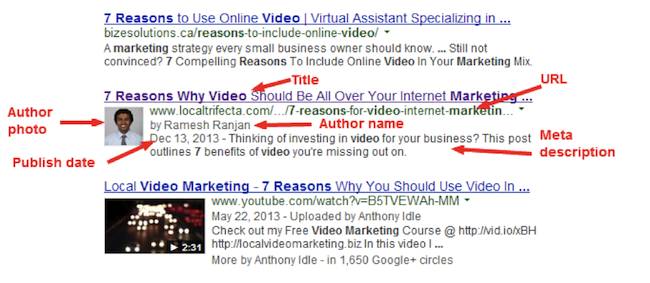
In case you're unfamiliar with the term, a meta description is the snippet of information below the link of a search result. Its purpose is to describe the contents of the page to the searcher. The end goal is to convince and persuade the searcher to click through to your website. Any words that match the search term are bolded in the description.

The image below shows you the basic anatomy of a search result, including where the meta description fits in.

search-results

For a given SERP, there's only a certain amount of people who will scroll down to the bottom of the page and click a result there. The percentage of clicks consistently drops off as you go further down the page, because a more relevant result is, logically, usually at the top of SERPs. So, if your result is far down at the bottom (or not even on the first page of results), you're already working shorthanded. This makes having a detailed, relevant, and eye-catching meta description that much more important.

If you're at the top of the SERPs, the same logic applies, though -- you want your meta description to be clear and convincing so that the searcher doesn't scroll to look for another result.

In short, the better your meta description, the more likely it is you'll have good clickthrough rates from organic search.

How to Write Great Meta Descriptions

I see writing meta descriptions as a legitimate exercise in effective sales copywriting. It should do everything possible to drive someone to make that decision and click. Our focus has to be on persuading the searcher to click -- while still maintaining accuracy so expectations are met. Here's how you can write meta descriptions that are clear, helpful, and stand out to searchers.

1) Use action-oriented language.

Action-oriented language is ideal for call-to-action copy -- which, if you think about it, is exactly what a meta description is -- because it tells the reader exactly what they can do if they click. Consider starting your meta descriptions with verbs like "Learn," "Discover," or "Grab,", and follow it up with specifics of what exactly they'll get if they click.

2) Provide a solution or benefit.

Tell the searcher what they can expect by clicking on your link. The last thing anyone wants to do is to have to click the 'Back' button because what they clicked on didn't match what they expected or wanted -- and you don't want it, either, if you care about your website's bounce rates.

Write a short sentence previewing the content or telling the searcher why they should read your post. Give them a clear benefit of clicking through and reading your post, if necessary. This is your chance to sell them on what you have to offer -- informative, valuable content.

3) Keep it under 155 characters.

Generally, a meta description should be under 155 characters. However, Google actually doesn't measure by characters -- it measures by pixels. That is, it'll cut off a meta description after a certain width. The reason we say 155 characters is to give marketers a benchmark to abide by. You can double-check the length of your meta description and title tags with this handy tool from SEOmofo.

4) Don't deceive searchers.

If your meta description deceives the reader with content not relevant to what they should expect, be prepared for the searcher to hit that 'Back' button again. Some meta descriptions are spammed with keyword-stuffed content -- this is bad, and probably stems from an old-school understanding of SEO. When searchers and search engines see keyword-stuffed content, that throws up all kinds of red flags, and hurts the level of trust a searcher has in your content.

5) Make it specific and relevant.

The average searcher knows a predictable, generic meta description when they see it in the SERPs (despite possibly not knowing exactly what a meta description is). That's why it's so important to use descriptive words -- not unnecessary "fluff" words -- and do your best to connect with your target audience and let them know what they'll get from clicking through on your search result.

What Not to Do With Meta Descriptions

While I've laid out plenty of things you should do when developing and implementing meta descriptions, there are also some no-nos regarding meta descriptions you need to remember.

Should you fail to put in a meta description for the pages you want to rank for, Google will display a snippet of text from the first paragraph of your page. If there's a search keyword in that text, it'll be bolded. Why is this bad? Well, it means you'll miss out on being able to sell to your prospective buyers. Now what salesperson would miss out on that opportunity?

And again -- I'm saying it again because it's important to reiterate this point -- stuffing keywords into your meta descriptions won't do you any good. These descriptions need to focus on providing clear and concise copy about your webpage, so avoid overusing terms simply because you think it's what your audience will want to see. (Hint: No one wants to see keyword stuffing.)

Your meta description is your chance to win over prospects. It's your short sales pitch for your website. Too many businesses leave this out and, in turn, miss out on a critical opportunity to improve clickthrough rates. Be sure to create an engaging meta description for your website that persuades people to choose you over your SERP competitors.

Have any questions or comments about optimizing for search results? Share them below!

localtrifecta seo guide ebook audit web site  

subscribe to the hubspot marketing blog  

18 Feb 18:30

The New Era Of The Cold Call

by Jonathan Farrington

The trend for inside sales is not coming — it has arrived and is sitting at our doorstep. Fuel and labor costs have soared and, because of intense competition, the prices of our products and solutions have largely flat-lined — as have sales achievement levels. Natural selection is now at work in sales teams everywhere. Companies have been forced to examine the complete cost of outbound sales, and what they discovered is startling. According to inbound marketing leader HubSpot, the average cost per inbound lead is 61 percent lower than an outbound lead.

Research by Sirius Decisions supports the HubSpot data and indicates that inbound leads cost less and have higher conversion rates than outbound leads, though an integrated approach between the two is considered optimal. Inbound marketing techniques such as strategic search engine optimization, blogging to build thought leadership positioning and the prolific use of social media tools allow sales executives to target relevant prospects who can learn about products and services on their terms. Today’s educated consumer will find you — will you be ready?

Virtual tools can empower sales professionals like never before, driving a new economic equation for business in this economy. According to Dave Stein, CEO of ES Research, “Customers everywhere increasingly prefer virtual interactions with sellers. Trend data reveal that sales organizations are shifting resources from outside to inside sales. Inside sales growth is 30 percent faster than their outside sales counterparts. The number of inside sales departments is projected to grow from 800,000 in 2009 to over two million this year.”

So why are businesses evolving toward inbound sales?

The traditional “cold call” once seemed indispensable to the selling process — the time and expense were a basic cost of doing business and necessary for survival.

But according to a recent study by InsideView, more than 90% of CEOs said they never respond to cold calls. The return on cold calling has decreased so drastically that it is essentially extinct.

This is just an extract from an article I was asked to contribute in a superb brand new eBook called  “EVOLUTION OF SALES: THE SURVIVAL GUIDE” which published on Tuesday. Apart from my piece, you will also find articles from some very “big-hitters” including Tamara Schenk of Miller Heiman Research, Ralf VonSosen of LinkedIn, Nita Shah of Hubspot, and Colleen Stanley of Sales Leadership, Inc.

You can download your FREE copy HERE

18 Feb 18:30

Why Your Sales Pitch Isn’t Converting

by Guest Post

Why Your Sales Pitch Isn’t Converting written by Guest Post read more at Small Business Marketing Blog from Duct Tape Marketing

Thursday is guest post day here at Duct Tape Marketing and today’s guest is Jordyn Rickard – Enjoy!

EmolectualWith call after call made to numerous businesses or advertisement after advertisement placed for potential customers and no results, you may be on the verge of a mental and emotional breakdown. It’s time to sit down and ask yourself a serious question… Why isn’t your sales pitch converting?

If you’re stumped and think that you’ve tried everything, it’s time to think again. Chances are, you simply are not making the right type of connection with your target consumer or client. Worse yet, there’s a chance you aren’t making any sort of connection. Without forming a connection that resonates deep within the consumer, your sales pitch and product stand very little chance of going to the places you ultimately want them to be.

Read on below for a solid solution to shaping your sales pitch using three easy strategies your ideal customer won’t get enough of.

A Fine Balance and Identifying The Connection Model

An ideal marketing sales pitch will make a connection that appeals to both an intellectual and emotional side. Falling too far on one side or the other eliminates the need and validation required for prospective customers to convert into customers. This scientific connection is dubbed an “emolectual connection.” Think about your pitch and why clients would emotionally want to be involved. Will it make better lives for their families? Make memories? Fill voids that they consistently face? Then turn your pitch around to its intellectual side. Why does this make sense financially? Why are YOU the best solution versus the other guys?

The Emotional Aspect

Convey your passion in your pitch. Tell your audience what makes you get up in the morning and what makes you thrive from day to day. Once they understand where you are coming from, you can turn the tables and connect with them on an emotional level. Part of being a great salesperson is identifying what makes your client thrive on a day to day basis. Showing clients how your product or service can impact their lives for the better will have them wrapped around your finger. Alternatively, a connection that doesn’t also include an intellectual bond will leave you with a wishy-washy client who may or may not drop in a short period of time. An emotional connection compels a person to stick with you over leaving for the other guy.

The Intellectual Aspect

All business minded individuals and consumers operate from a standpoint of validation. Everything they do has to make sense – from a financial standpoint to a moral standpoint. Take this opportunity to tell them why they need you. Why your product is the end all solution to fill the void. Talk finances and keep the end goal focused on them being happier and in a better place with your product in sight. People don’t want to be sold, but people do want to buy. Give them a reason that makes sense and you’re golden.

Most pitches already possess the intellectual aspect of an emolectual connection. By tying the two together to form an emolectual connection, you’ll find your sales pitch not only converts, but resonates deep within a consumer. Business experts and businesses themselves know that an angry customer is more likely to speak up and tell a friend or leave a review than a satisfied customer. But a passionate customer is just as likely to leave a review and speak up. Go for beyond happy customers, strive for a well-rounded connection and benefit significantly!

Jordyn RickardJordyn Rickard is a young marketing professional with over 5 years of experience in marketing and strategy for small and medium sized businesses. With an education in finance and an extensive freelancing background, she’s had the privilege of developing solutions that work for small businesses. Currently, Rickard proudly works as a Success Coordinator for Synduit, a marketing and consulting firm for small businesses. Reach out to Rickard on Twitter @jordynatsynduit .

Related posts:

  1. Customers Are Your Most Effective Sales Force Happy, educated, results oriented customers are the greatest sales force...
  2. Getting Sales and Marketing on the Same Page My guest for this week’s episode of the Duct Tape...
  3. 5 Stages of the New Sales Cycle Generating and converting leads is mostly what marketing is about....
18 Feb 18:30

Why the Best Marketing Teams Embrace Process

by Wade Foster

fingers-embrace-love-heartWhen asking fellow marketers why they entered into -- and love -- this line of work, many tell me how much they enjoy the chance to create on a daily basis. Whether it's a new piece of content, a social media campaign, or a landing page for a new product, there's something about the creative process that marketers just love.
But for many of us, it's tough to simply start creating on command. And since establishing a process can be seen as rigid and uncreative, we often shy away from systems and routines that can help us be more productive. But that's a mistake -- the best marketing teams embrace process as a way to continually execute great marketing campaigns.

The Science Behind Process

Process has been around for a long time. Perhaps the most popular, modern example of using process effectively to drive results in business comes from Toyota in the 20th century.

Under the guidance of American statistician William Edwards Deming, Toyota transformed the way its manufacturing facilities built cars. This system is what led to Toyota's dominance in car markets and even put American car companies in severe jeopardy in the late 2000s.

So what was the key to Toyota's success? Now popularly referenced as "The Toyota Way," the company focused on continuous improvement. While the end result was certainly important, it knew that following the right process would produce the right results. With that in mind, the company's management focused on measuring its process as closely as possible.

Some key points that drove The Toyota Way include:

  • Continuous improvement
  • Respect for people
  • Belief that the right process will produce the right results
  • Focus on treating root problems rather than symptoms

While this process works well for Toyota, process in general isn't just something for reducing costs in a car company. Great process can make any department in any company more effective -- including marketing.

Great Process, Great Companies, and Great Marketing

To give you an idea of just how certain processes can be applied to different parts of marketing, here are a few companies with unique processes and how they grow and improve through implementing them.

KISSmetrics' Webinar Marketing Process

Marketing analytics firm KISSmetrics does a fantastic job with its content marketing. The reason behind its success with content hasn't happened by chance, though. Instead, the company uses a very specific webinar marketing process to make sure that webinars produce the results it's aiming to achieve. Here are KISSmetrics' steps for putting together a webinar:

  • Choose the goal of the webinar -- This could be to increase sales or leads or to get some good press for the company.
  • Identify content that converts -- The company finds old content that has resulted in the goal chosen for the webinar, and then it builds the webinar around that goal.
  • Build the funnel -- Typically, this means driving traffic to a landing page, getting those visitors to register for the webinar, and following up with those attendees after the webinar.
  • Rehearse and conduct a professional webinar -- This means doing a pre-run of the webinar to ensure everything is prepared accordingly and then executing the actual webinar.
  • Update the webinar landing page -- Once the webinar ends, the company can easily update its landing page to include a recording of the webinar so that its hard work continually generates leads in the future.
  • Optimize the process for learning -- The company makes sure to track everything and learn from the process. That way, it gets better each time.

By using this process (and tools like Unbounce), KISSmetrics was able to increase its webinar sign-up conversion rates 40-80%. And the best part of KISSmetrics' method is that everything is reusable from webinar to webinar. This means each new webinar requires less work since its system dictates how the repetitive parts of the process should work.

WordPress, About.me, and Wealthfront's Public Relations Process

In this fascinating article, public relations professional Brooke Hammerling goes into detail on how some very notable startups, like WordPress, About.me, and Wealthfront, continue to score big wins in the press.

Hint: It's not about a one-off funding announcement or product launch. At its simplest level, it's about building a relationship with reporters and having a steady drumbeat of story pitches that fit the message the company wants to portray.

Pandora's Product Development Process

Content marketing and public relations aren't the only marketing areas that get can benefit from process. Pandora uses a product prioritization system that helps its entire company plan new features. Pandora's product development process got it more than 70 million active users with a tiny, but productive team of 40 engineers.

What's the secret sauce? Pandora has no long-term road map. Instead, every 90 days, its management team sits down and develops a list of all the potential features they'd like to ship that quarter. Then, with the help of an internal fake money system, the management team is able to narrow the list down to just a handful of shippable features that will have the biggest impact on the company. Each quarter, Pandora rinses, washes, and repeats.

Experimenting With Tools to Build Great Process

Just as important to the management and marketing process you put in place are the tools that enable you to work quickly and execute a process as a marketer.

A great marketing tool can allow you to build a landing page in no time, run A/B tests to figure out the best converting page, and send segmented emails to the right leads based on activity -- all without having to interact with your programming team. Those tools are invaluable as a marketer, because you can execute on your marketing plan as quickly and effectively as possible with little error.

HubSpot customers know they have tools to help marketers attract visitors to your website, convert those to leads, and then close them as customers. But they also know it's important to integrate any other tools they're using with their marketing software for a seamless experience -- which is why I'm excited to announce the Zapier-HubSpot partnership today.

If you're unfamiliar with Zapier, it's a tool that makes it easy to connect and integrate hundreds of web services in just a few minutes. Zapier is great for a marketer because you can easily connect HubSpot to any form software, CRM, project management app, or any other tool you might be using.

If you're a HubSpot customer, you can take advantage of this right away by logging into your HubSpot portal. The ultimate goal of this partnership is to make our mutual customers the most productive they can be by tying together all of the tools that they use without ever having to leave HubSpot.

So enjoy using HubSpot and Zapier together to create a process that makes your marketing faster and more efficient. And after dedicating a little time to implementing your process, you'll be able to save enough time and money to spend some more time with your family or take that extra vacation you've been planning. :-)

How does your marketing team go about creating an effective process?

how to make a marketing content machine ebook

subscribe to the hubspot marketing blog

18 Feb 18:30

4 Dumb To Questions To Ask In A Telemarketing Campaign

by Belinda Summers
4 Dumb To Questions To Ask In A Telemarketing Campaign image 4 Dumb To Questions To Ask In A Telemarketing Campaign DONE2

When conducting telemarketing campaigns, it is important that you use a sales script to guide your business discussion. Not that you use it all that is written there verbatim. It is just there to make sure that you are going through the right flow. And while there are a lot of questions that you can ask your B2B lead generation prospects, it pays to know what kinds of questions you should be avoiding.

These are not only sure-fire ways to turn off potential sales leads, it also leads your conversation with them nowhere. And truly, there are at least four useless telemarketing questions that you should make it a point to avoid.

1. “Would you agree? – Customers can get really wary about that, since this will look like you are trying to manipulate them on saying ‘yes’. This might be innocuous enough for smaller items, but when such a question may cause others to raise their eyebrows in doubt. Indeed, they might know a thing or two about blocking you. Instead of that, why not ask your B2B leads prospects regarding their “priorities in their business?”. That would make them open up.

2. “If I can save you 20% on total costs, would you be interested in…” – you wanted to bait your business prospects about better cost savings by doing business with you. Now, what makes this irritating to business prospects, and why it shows how dumb your marketing campaign can get, its amateurism. You would only ask this because you do not know what to offer best. That would happen if you have not researched about your business prospect at all.

3. “Do you have the budget to purchase our services?” – I tell you, say that question to potential sales leads, and you can say goodbye to their business. It is a dumb question since your prospects will think that you are only after the money (all right, who are not interested in making a profit?), and that you will run up your price to match their budget (which would imply that you are going to cheat on them). Seriously, you should avoid such scenarios for the health of your business. A better question would be: “tell me more about your process of purchase decisions”. This will let you know what your prospects are looking for, and how you can tailor your sales pitch to suit them.

4. “Are you the main decision-maker?” – all right, you might have to ask this question because you want to save time and go straight to the ones holding the purse, but here is one thing you have to remember: you will rarely get to your destination. If you think that the person you are talking with on the phone is a gate-keeper, do not antagonize them. Simply ask for the names of the major stakeholders of the business. That should get you to the right decision-maker.

For the good of your lead generation campaign, please skip these questions. You can always employ or craft better ones.

This content originally appeared at The Telemarketing Blog.

13 Feb 17:26

Get the Most Out of LinkedIn by Finding the Right Groups

by Hannah Clark

If you are a member of a LinkedIn Group or put effort towards networking through these Groups you may have noticed that it can be difficult to find the perfect one. Connecting over 250 million people globally, LinkedIn is the largest and most prominent social network for professionals. With over 1.9 million LinkedIn Groups, it can be hard to find Groups which cater to your needs. You can join up to 50 different Groups, but you might find it difficult to participate and build solid connections.

Is the group pertaining to your industry? Can I connect with other members? What are members talking about, and how often? Once you really narrow down your search, it might seem even more difficult to find a Group that is well managed. Here’s a great tip: if the most recent discussion was months ago, you may want to keep looking.

Take a look at a few successfully managed LinkedIn Groups from different industries:

Emergency Medical ServicesGet the Most Out of LinkedIn by Finding the Right Groups image Screen Shot 2014 02 12 at 10.29.19 AM

This LinkedIn Group has over 13,000 members, and is an incredibly active Group with over 50 discussions in the past month. Discussions, Promotions and Jobs are all featured on this LinkedIn Group Page, making it very easy to find a new opportunity, expand your reach and connect with industry leaders.

Many members of this Group share experiences, videos and articles from around the web, creating all types of interesting conversation. The members of this group are from all over the world, with different cultures, lives and professions. LinkedIn Groups like this are great places to learn the latest advances in your field, as well as hear new and unique opinions.

Java Developers

Get the Most Out of LinkedIn by Finding the Right Groups image Screen Shot 2014 02 11 at 7.55.19 PM

It’s no coincidence that there are more than 200,000 members of this Group as the demand for Java Developers grows constantly. Unlike the Emergency Medical Services Group, the members here ask questions, sparking conversation. With this many members you are bound to find other interesting links to info for Java Devs to share opinions and meet people from around the world.

If topics like “What is the size of a reference variable in java?” or “Choosing between an abstract class and an interface” might interest you, definitely check this LinkedIn Group out.

National Association of Realty Marketing Experts

Get the Most Out of LinkedIn by Finding the Right Groups image Screen Shot 2014 02 11 at 9.49.33 PM1

This LinkedIn Group is for any agents or brokers who are members of NAREME (National Association of Realty Marketing Experts). Other people who are interested in seeing lead generation and to increase the reach of their listing are also welcome to join in the discussion.

Although there are no job posting here (in fact, not one discussion on the job opportunities has been made) many of the members in this group work together to solve common problems. This Group of 7,000 members shares tips and knowledge of the realty market, including tricks on using social media to make sales. The realty industry is finding that social media is a great way to spread word of new events.

The Ethical Journalism Network

Not all LinkedIn Groups are open to the public. Some require that prospective members ask to join and that the owner or manager approve. Exclusivity has some benefits. The Ethical Journalism Network Group, for instance, has only 219 members, but all are thought leaders in the field. The Group is primarily a place for collaboration between senior professionals, academics, and NGO leaders in support of the EJN’s mission. It works like an invite-only conference: you know everyone there is credible and has something valuable to contribute. Unlike public groups, the focus is the conversation, not jobs, sales, or marketing. If what you’re looking for is a place to connect and share ideas with a few hundred of the smartest and most interesting people in your field, consider joining a private group. Or, better yet, start one!

Oil and Gas People

Get the Most Out of LinkedIn by Finding the Right Groups image Screen Shot 2014 02 11 at 9.31.06 PM

This Group is all about jobs. If you want to hire or get hired in the oil and gas industry, this is the place to be. 325,000 members deep, you can also find tons of videos, articles and engagement in the comments. While this Group doesn’t list jobs in its own tab, there are tons of posts about new positions in different locations around the world. By going through your feed through the “recent” setting, you can see the latest information and get connected with business leaders.

5 Tips on How to Get the Most out of LinkedIn Groups

  1. Narrow down the Groups right for you by using keywords and location searches. You can even find Groups that don’t have to be about the work. I typed in ‘Sailing’ and found a Sailing Network, a network with over 13,000 other people who share the same passion.
  2. LinkedIn suggests Groups that you may be interested in. The Groups You May Like option gives you the chance to see these based on the connections you have, profile information and skills and expertise.
  3. Find a Group that is active. When was the most recent discussion? There are Groups out there with a huge number of members, but absolutely no engagement. Make sure you’re looking for active discussion is important.
  4. Choose a quality Group that is right for you. Some groups are managed better than others.
  5. Once in a Group, engage! Being part of the conversation is never a bad thing. You will learn new insight and meet new people who could potentially affect your professional life.

Follow HootSuite on LinkedIn for company and product updates, industry news and career opportunities!

13 Feb 17:16

Use LinkedIn to Find Companies Friendly with Your Alma Mater

by Alan Henry

Use LinkedIn to Find Companies Friendly with Your Alma Mater

It's no secret that some companies, especially if they have a major presence in the same town as a major college or university, seek out graduates from that school for entry level positions. If you're looking for work, LinkedIn can show you which companies hire from your school often so you can connect with them.

Read more...

13 Feb 17:10

The Psychology of Gamification: Can Apps Keep You Motivated?

by Thorin Klosowski

The Psychology of Gamification: Can Apps Keep You Motivated?

Gamification is a buzzword that gets tossed around all the time, but the basic idea is simple: if you turn your life into a game, with digital rewards for real life achievements, you'll be more motivated to do something—or so the theory goes. Does it actually work? Let's take a look at what we know.

Read more...

12 Feb 16:29

Malaysia’s economy grew faster-than-expected 5.1 per cent in last quarter of 2013

by CB Staff

KUALA LUMPUR, Malaysia – Malaysia’s central bank said Wednesday the country’s economy grew a faster-than-expected 5.1 per cent in the fourth quarter of last year.

Growth for the full year was 4.7 per cent.

Bank Negara Malaysia said fourth quarter growth was underpinned by strong expansions in manufacturing and services, helping to exceed forecasts of 4.8 per cent growth.

The economy expanded 5.6 per cent in 2012.

Bank Negara warned that domestic demand may soften as the government cuts back on fiscal largesse but says this will be offset by improving global economic conditions.

It said that growth momentum will remain on a “steady trajectory.”

Malaysia’s economy has come under pressure amid rising domestic debt, a swollen fiscal deficit and a shrinking current account surplus.

The government has slashed fuel and other subsidies and said it will impose a 6 per cent goods and services tax by 2015 as part of fiscal reforms. It targets the economy to grow 5-5.5 per cent this year.

The post Malaysia’s economy grew faster-than-expected 5.1 per cent in last quarter of 2013 appeared first on Canadian Business.

12 Feb 16:29

A simple fix for CEO salaries: James Cowan

by James Cowan
(Photo: KC Armstrong)

(Photo: KC Armstrong)

Hunter Harrison’s compensation package at Canadian Pacific is undeniably inspirational—it can inspire envy, admiration, incredulity or outrage. What his $49-million payout inspires for you likely depends on two factors: Do you think the railway’s booming revenues and stock price can be directly attributed to Harrison’s leadership? And—perhaps more important—should CEOs be paid exponentially more than we mere mortals? If the second question is a “no,” then it doesn’t matter how awesome Harrison is at his job. For folks angered by soaring executive pay, the cheque’s size alone is provocation enough.

A recent report from the Canadian Centre for Policy Alternatives was clearly aimed at stoking this populist outrage. The think-tank ranked the 100 highest-paid CEOs on the TSX index, then compared their compensation to the salary of an average Canadian worker. They found it took top-tier CEOs until 1:11 p.m. on Jan. 2 to earn the $46,634 that an average worker makes in an entire year. For some, the payout came even quicker—Harrison pocketed a normal schmuck’s annual salary in just under two hours. A remarkable number of alarming—and alarmist—statistics appear in the report’s dozen pages. Wages for the average worker rose 6% between 1998 and 2012 in Canada; executive compensation rose 73%. CEO pay is now 171 times that of the average Canadian.

We should be clear here—the ever-more stratospheric salaries of CEOs is a legitimate concern, particularly for shareholders who see profits and dividends diverted to paying the tab. But there’s an irony to the CCPA report. Thing is, publicizing C-suite paydays only makes the problem worse.

True, public outcry over CEO bonuses in the midst of the financial crisis has led regulators to bolster disclosure laws. The Canadian Security Administrators closed some loopholes in 2011 while the U.S. Securities Exchange Commission last fall introduced rules requiring companies to reveal how their chief executive’s pay compares to an average worker.

But it was an earlier toughening of the rules that paradoxically sent compensation soaring skyward in the first place. U.S. companies have been required to report executive salaries since the 1930s, but it was the reforms of 1978 that forced the disclosure of a CEO’s total compensation. This change had an unintended side effect, because it allowed corporations to survey their competitors and set their compensation packages accordingly. This “peer benchmarking” was done by pegging a CEO’s pay to 50th, 75th or 90th percentile at rival companies. This led to the “Lake Woebegone” effect; like the children of Garrison Keillor’s fictional town, all CEOs were above average. The end result of this benchmarking was a salary arms race: between 1936 and 1980, the average CEO salary increased from $970,000 to $1.1-million, according to a 2010 study. But after the new disclosure laws, compensation rose quickly, hitting $4.4-million in the ’90s and $7.6-million by 2005.

Basic scrutiny hasn’t held back this tide. As corporate-governance expert Charles Elson recently noted in the New Yorker: “People who can ask to be paid a hundred million dollars are beyond embarrassment.”

What would truly help is the growing “say on pay” movement, where shareholders are given a non-binding vote on executive pay packages. Shareholders in Barrick Gold—including seven major pension funds—used such a measure to express displeasure over an $11.9-million signing bonus for its co-chairman. Critics complain “say on pay” votes are ineffectual because boards aren’t bound to the results, but of the 53 U.S. companies for whom shareholders rejected compensation plans in 2012, 45 made changes and got positive votes the following year, according to Institutional Shareholder Services. To deal with the few obstinate holdouts, Brookings Institution fellow Robert Pozen has suggested making the second year’s “say on pay” vote after a shareholder’s revolt into a binding resolution. It’s a practical solution that will prove far more effective than public shaming.

James Cowan is deputy editor of Canadian Business

The post A simple fix for CEO salaries: James Cowan appeared first on Canadian Business.

12 Feb 16:19

The Most Important Element for Increasing Leads and Sales

The "consumerization" of B2B marketing is about reducing friction at all customer touchpoints. B2B vendors need to learn from friction-reducing techniques of consumer goods firms and retailers. Read the full article at MarketingProfs
10 Feb 19:20

Why You Should Like To Lose Early In Sales

by The Leads Explorer

Sales cycles are investments

Sales cycles can be long and time consuming. The sales processes are investments of the company: phone calls, emails, conference calls, meeting preparation, meetings with customer, reporting, CRM, internal meetings, price quotations.
As with each investment the Return On Investment needs to be calculated.

Aim to lose deals early

In order to improve on your sales investments you should avoid to continue sales deals that you are likely to lose. The earlier you can disqualify a lead the better as you then can focus on deals you are more likely to win.
So disqualify your prospects during the early stages in order to make your company more successful and close more deals by focusing solely on highly potential sales deals.

How to disqualify?

By asking pertinent questions:
- When are you planning to taking a decision?
- What and when are the next steps ?
- What is holding you back from taking a decision ?
- Who will be taking the final decision on this project/deal ?
- What is your budget ?

Are you aiming to lose sales deals early in the sales process? In order spending more time on winning better deals more often.

10 Feb 19:18

The 3 Biggest Content Marketing Myths on the Web

by Nicole Beckett

Ahhh, the world wide web… where everything you could ever want to know is available at the click of a mouse.  Of course, the web is home to legitimate experts AND people who are talking out of their you-know-where.

It’s that second group you have to be careful of.

As content marketing has gotten more and more attention, there has been a near-endless array of articles, videos, and blog posts dedicated to it.  Every day, more and more people are talking about how to succeed at content marketing, but unfortunately, not all of them are offering legitimate advice.  In fact, some of them are giving out tips that will actually HARM your content marketing strategy.

The 3 Biggest Content Marketing Myths on the Web image Confused 300x225

That’s why I decided to highlight the 3 biggest content marketing myths that are floating around the web.  Fall for any of them, and your content strategy will never generate the results you’re looking for!

1.  “Guest blogging is dead.”

This myth is the result of a recent Matt Cutts’ blog post that people over-reacted to.  Unfortunately, people have confused “guest blogging” with “publishing crap on any ol’ website that isn’t yours, in hopes of building quick links”.  When done the right way, guest blogging is a great way to provide information and add value to authoritative websites.  It’s a legitimate way to establish yourself as an expert, because you’re offering the answers and solutions that your target audience so desperately needs.

2.  “More is better.”

Maybe this myth is the result of that AT&T commercial you see everywhere.  Unfortunately, though, more content doesn’t automatically translate into more success.  Instead, true content marketing success is a mixture of quantity and quality.  You have to publish a steady stream of high-quality content.  If you don’t, your readers will want nothing more to do with you!

3.  “Starting a blog is good enough.”

If all you’re thinking of doing is attaching a blog to your company’s website, you’re not coming up with a content marketing strategy.  A blog can be a powerful PART of your content marketing strategy, but your efforts can’t stop there.

After all, how is anyone supposed to find your blog?  Sure, you can share links to new posts with your Twitter and Facebook followers, but you’ll reach a much wider audience if you link to your blog in guest posts or in your YouTube videos.  After all, how many times have you read a really great article and headed to the author’s blog because you wanted to see more from them?  Publishing great content off your site is just as important as publishing it on your site, because it can bring a whole new crop of people in.

And speaking of content on your site, it’s also a vital part of your content marketing strategy.  After all, what good does a killer blog do you if your sales copy is cheesy and full of ridiculous hype, or if your product descriptions don’t really make much sense?   A good content marketing strategy will encompass EVERY way you “talk” to your audience, both on-site and off.

So, go ahead.  Start that blog.  Make it informative and fun to read.  Then, think of ways that you can expand BEYOND it!

10 Feb 19:17

10 Must-Read Guides for Every Inbound Marketer

by Simon Harvey

Every day hundreds of articles that are designed to help and educate new inbound marketing professionals are published. If you’re like me then you probably find that keeping on top of what really matters is becoming an ever more challenging task.

The number of digital publications, online groups, resource centres, hubs and so on has increased to a level that is just too much to absorb. So to help ease your way through all that content, here’s a list of what I consider to be 10 of the best inbound marketing eBooks around at the moment. Between them they contain all the most valuable aspects of Inbound Marketing that you simply can’t afford to ignore:

1) The Guide to Inbound Marketing & Automation by Pardot

10 Must Read Guides for Every Inbound Marketer image The Guide to Inbound Marketing  Automatio Pardot3

This eBook contains a fantastic introduction to Inbound Marketing, including where it falls short as a standalone discipline, and how aligned with Marketing Automation technologies it can lead to better ROI. Written in an easy-to-comprehend way, this is a must-read starting point for anyone new to Inbound Marketing.

2) Search Engine Optimization – Past, Present and Future by Hubspot

10 Must Read Guides for Every Inbound Marketer image seo   the past present and future Hubspot3

Search Marketing plays an equally important role in assuring the success of your inbound activities. Google’s non-stop algorithm changes have definitely altered the rules of the “SEO game”, requiring marketers to know more and act smarter. The Search Engine Optimization – Past, Present and Future eBook from HubSpot is a must read, containing valuable up-to-date advice on how to focus your SEO efforts for maximum visibility in 2014.

3) A Guide to Creating Content for Demand Generation by Marketo

The eBook dives into the basics of Content Marketing for Demand Generation, trying to solve the eternal question of “How to create content that sells?” A concise, analytical and valuable source, written by professionals for professionals.

4) Best Practices Guide to Successful Landing Pages by Pardot

10 Must Read Guides for Every Inbound Marketer image Best Practices Guide to Landing Pages Pardot3

Whether a visitor to your website will convert into a lead in your sales funnel is usually decided within seconds. One of the key factors that influence that decision is landing page optimisation: design, navigation, ease of access and so on.

The Best Practices Guide to Landing Pages eBook from Pardot provides you with some useful tips on how to boost the effectiveness of your landing pages and raise the number and quality of your B2B conversions.

5) 5 Marketing Automation Strategies to Nurture Leads and Create Long-Term Customer Relationships by Hubspot

As with most of Hubspot’s great pool of resources, this guide provides practical solutions that aim to ease and improve your journey towards long-term, successful inbound marketing. The eBook highlights how through automation your lead nurturing processes can impact repeat purchases, as well as helping you to discover and nurture brand ambassadors.

6) 7 elements of Inbound Storytelling by John Bonini

10 Must Read Guides for Every Inbound Marketer image inbound storytelling ebook John Bonini3

This beautifully designed eBook defends the art of storytelling as the most successful technique to differentiate your brand from your competitors. As opposed to generic, dry value propositions and uninspiring content, this eBook promotes the use of remarkable business stories and not boring factual articles to inspire your prospects to take action.

7) The Blueprint of a Modern Marketing Campaign by Kapost and Eloqua

10 Must Read Guides for Every Inbound Marketer image blueprint3

Did you know that 60-70% of content produced by B2B Marketing departments goes unused? In order to avoid wasteful practices within your Inbound Marketing programmes, you need to learn how to execute your campaigns in a more integrated and aligned way.

The Blueprint of a Modern Marketing Campaign eBook provides great advice on how to achieve that goal. In addition, it contains worksheets called the “Modern Marketers’ exercises” that aim to help you design the blueprint for your next marketing campaign.

8) The Advanced Content Marketing Guide by Neil Patel and Kathryn Aragon

Presented as a series of attractive visuals, this guide covers all you need to get started in the art of content marketing. This volume covers the ten basic aspects of the discipline from strategic foundation and idea generation, to planning and monetising.

9) 58 Social Media Tips for Content Marketing by Content Marketing Institute

10 Must Read Guides for Every Inbound Marketer image 58 social media tips CMI3

This eB from the Content Marketing Institute includes a collection of best practices to help inbound marketers get the most out of the top social media channels. Additionally, the Social Media Tips for Content Marketing eBook includes practical examples of brands – such as Taco Bell, Red Bull and Dell – that have managed to successfully master their presence on those channels.

10) Content Marketing, Meet Content Selling by KnowledgeTree

10 Must Read Guides for Every Inbound Marketer image knowledgetree ebook3

Did you know that the marketing collateral and assets that you create are no longer just required for lead generation and nurturing activities?

The concept of Content Selling outlined in this eBook explains how ready access to relevant marketing collateral has now become a key part of the sales processes. This book provides some great insights on how to effectively collaborate with your sales colleagues and also how effective matching of content assets to stages in the sales process can generate you more revenue.

So those were my thoughts, but are there any particular eBooks or publications that you think need be included in my ultimate reading list for inbound marketers? I’ll watch the comments for suggestions!

10 Feb 18:36

Are Your B2B Buyers More Evolved Than Your Content?

by Ardath Albee

Are Your B2B Buyers More Evolved Than Your Content? image 6a00d8341c406353ef01a73d6a177a970d 800wi

The noise online is deafening. But there is also a lot of really great content available on nearly every subject imaginable – from addressing simple ideas to the highly complex. There’s a lot of research that shows the first stop for B2B buyers with the need to solve a problem is search. With nearly unlimited search results for any query, your buyer is learning a lot as they browse around looking for ideas, education and opportunities to turn that problem into an opportunity for their company – and their career.

So, do you know what they know?

Most marketers do (or have someone) do keyword research to use to engage their target audiences.

I worked on a project recently where an “SEO specialist” provided a list of keywords for the marketing team to use. I went out and Googled them. Some of them produced results totally unrelated to what the buyers would be interested in, but they had good volume (so what?). Some produced results with competitor content and some of that content was pretty darned good. Some of it was totally off the mark.

The point being that I don’t see a lot of marketers actually looking at what the keywords they’re using produce for a search. It’s strangely a bit like blind acceptance if the words make sense to them. But what’s at the end is critical.

So what if you stepped into your buyer’s shoes and went online to search for a solution to a problem your buyer might be experiencing by using your keywords? What could you easily learn from the content offered up in the search results? If you click on a link and read it, does it prompt you to search on a new term? (what was is?) And so on.

Or would you hit the back button and keep scrolling through the search results looking for a better option? How far do you get before you realize this keyword isn’t giving you what you need and move on to the next one? Do you use a keyword from your list or did your brain come up with a new one.

Remember, you’re in your buyer’s shoes. Be discerning. Treat the exercise seriously. Heed time – they don’t have all day. Look for the rabbit holes that start with the example I proposed in the previous paragraph.

Once you’ve done this several times, review what your buyer would have learned.

If you know your buyer uses a social platform in their buying process, go try searching on some of those – groups in LinkedIn they may belong to or hashtags on Twitter, for example. What can they learn about solving those problems in those environments?

Now go look at your content. Given what your buyer may have engaged with, is your content off the mark? Is it too advanced or too simplistic? Is it possible that any of the rabbit holes you followed could provide new insights for how your content might be positioned to enter the thread? This can be critical if the keyword isn’t one that will allow you to quickly reach page 1 in the search results.

We often plan our content from start to finish as if our prospects will only interact with the story we’re telling. Heck, I’ve been guilty of this at times, myself. But marketers need to recognize that this isn’t reality for most of our buyers – if any – and start to figure out how we’ll engage them based on what they may already have learned.

In the experiment you did, was what you learned on the mark? Or was it off track, given the thorough research I know you’ve done while building buyer personas?

If it was off track, can you develop content to set them straight? I don’t necessarily mean dissing the other content, but gently guiding them to another perspective. Perhaps something along the lines of “Why X may not be the best choice if you need to do Y” And this isn’t to be taken lightly. You better be able to show your expertise where your claim lies.

Buyers are smart. They’re evolving quickly. We need to think about what that means for our marketing programs and how we’ll evolve them to stay in step with what our buyers know – or think they know – as they navigate through all that online noise to find what matters to them.

You want it to be your content, right?

10 Feb 18:35

Fitness Basics: How the letters Y, T and I are the key to a stronger core

One of trainer Kathleen Trotter's favourite circuits will quickly strengthen your upper back and core. Just remember: Y, T and I!
10 Feb 18:34

How to Leverage LinkedIn Groups to Generate Instant B2B Sales Leads!

by John Nemo

How to Leverage LinkedIn Groups to Generate Instant B2B Sales Leads! image LinkedIn Network 300x225Wouldn’t it be great if you could leverage an existing social media network to generate a targeted list of your ideal customers without having to spend a ton of time, money and effort?

Spoiler alert: There is!

In this video and blog post, I’m going to show you how to leverage LinkedIn’s “Groups” feature to create instant lists of your ideal clients or sales prospects.

The beauty of going this route with LinkedIn is that it removes the gatekeepers, middlemen and everyone else standing between you and your ideal customer. Instead, you’re able (in a matter of seconds!) to create a list of the exact people you’re looking to do business with. You can even organize and arrange your new prospect list by job title, city/region or company name. Best of all, it literally doesn’t cost you anything other a little bit of your time and attention!

Big Blue = Sleeping Giant

I like to call LinkedIn the “sleeping giant” of social media. I don’t think many of us grasp just how powerful of a B2B sales and marketing channel LinkedIn has become. The stats are staggering: A 2012 study by inbound marketing leader HubSpot indicated LinkedIn is 277 percent more effective at lead generation than Facebook or Twitter. (Read that stat again.) A 2013 study by Investis noted that 64 percent of all traffic coming to corporate websites through social media channels is arriving courtesy of LinkedIn.

There’s a reason it works so well: LinkedIn literally offers you a treasure trove of information and opportunity when it comes to locating and engaging your ideal clients and customers. The key is understanding how to leverage the platform so you can generate the most quality leads in the shortest amount of time.

Make sure you watch the entire video that goes with this post, and then let me know in the comments how it works out for you and your specific niche or industry and what type of lists you come up with. Looking forward to your comments!

10 Feb 18:34

Does Sales Make You Feel Like a Sleaze? Develop Qualified Leads by Never Selling Again!

by Debra Andrews

Does Sales Make You Feel Like a Sleaze?  Develop Qualified Leads by Never Selling Again! image angry baby1When you think of “selling,” do you cringe?  Would you rather have a root canal than to have to pick up the phone and attempt to enlighten a cold prospect about the merits of your solutions and, let’s be honest, beg for a meeting?  Just like you, most professional service providers feel “unprofessional” when selling and find the whole process a bit degrading.  So, today I’m going to share insight that will instantly make you feel a whole lot more comfortable.  Here’s the panacea:  Stop Selling!  Yep, you heard right, simply don’t do it a minute longer and let out a big sigh of relief.

Say Goodbye to You-Focused Selling 

There’s a good reason why you detest selling. People, especially busy executives, don’t like sales people.  In a pointed post, Why Customers Hate Sales People, Roger Bostdorff from B2B Sales Boost points out some of the top reasons why professionals screen calls, don’t open direct mail and refuse to take meetings. He opines that your traditional salesperson:

  • Doesn’t listen
  • Talks too much
  • Lacks knowledge
  • Fails to understand your needs

Sales people are too focused on themselves and making quotas and commissions and not enough on the needs of their potential customer.  And here’s why that really ticks off the B2B buyer:

“The world revolves around me. Me, me, me. My favorite person: Me. I don’t want email from you. I don’t want junk mail from you. I want me-mail.” – Seth Godin

Buyers care about themselves – not you!  Selling makes you uncomfortable because it should – you are pushing “you” focused messages on busy people who aren’t ready or don’t want to receive them.

Say Hello to Me-Focused Content

I’m about to eradicate sales completely by changing your mindset and how you approach bringing in new business. You are not going to push legal, accounting, engineering or architectural services and interrupt professionals who are trying their best to avoid you.  You are going to focus squarely on your buyers – their challenges, needs, pain points and opportunities – and let them know you care through developing helpful content to make their lives better.  This content is your “non” sales tool to pull potential buyers into your pipeline.  The actual term for this process is called Content Marketing, which is defined below:

“Content marketing is a marketing technique of creating and distributing relevant and valuable content to attract, acquire, and engage a clearly defined and understood target audience – with the objective of driving profitable customer action.”  Content Marketing Institute

Remember, only a small portion of the content you create is actually about your company and its products and services.  And, when you do supply that content, your potential buyers will be ready and interested to learn more because you’ve already provided them with valuable information to assist in identifying a problem, offering a process for solving their challenge and sharing possible solutions.  You’ve earned their trust by creating authentically helpful relevant content.  Now doesn’t that sound so much better than cold calling and handing out unwanted business cards and brochures?

For more information on Content Marketing and generating leads through pulling potential buyers to you, click here to access our pre-recorded Webinar.

07 Feb 15:42

Google muscles in to the videoconferencing business

Rnordman

Cool

‘Chromebox for meetings’ is aimed at businesses small and large, and goes on sale for $999 today in the U.S.
07 Feb 15:35

Dumping the Crisis Management Burden on Sales Managers Dampens Growth

by Gretchen Gordon

Dumping the Crisis Management Burden on Sales Managers Dampens Growth image dumpingIn my last article, Crisis Management Hampers Sales Managers’ Effectiveness, I discussed the shocking amount of time that many sales managers are spending on crisis management.  I conducted a rough poll of business owners regarding this topic and provided a list of possible ways that the sales manager could be spending the bulk of his or her time.  Much to my disappointment, the vast majority of the business owners polled indicated that their sales managers spend the bulk of their time in crisis management.  This is valuable time that they could be spending coaching and motivating their salespeople to improve results, or holding their salespeople accountable to agreed upon activities to produce better results.  Instead they are caught putting fires out.

Sometimes we dump all the crisis management on the sales manager because he or she is charged with growing sales, so it would be likely that they would be passionate about solving problems to get deals done.  But, this is really a productivity/operational issue and it needs fixed.

If you are serious about sales growth, then you need to get serious about the expectations set on the sales manager.  There needs to be an expectation about how much time is spent on the critical items of coaching, motivating, holding salespeople accountable, recruiting and mentoring.  And, there needs to be an expectation about how much time is too much time to spend on crisis management.  My belief is that more than 5% is too much time.  If the sales manager has to spend more than 5% of his or her time on crisis management then something is broken and it needs fixed ASAP.

So have your sales managers rank where they are spending their time based off the list below:

  • Coaching
  • Motivating
  • Recruiting
  • Holding Salespeople Accountable
  • Crisis Management
  • Internal Company Issues
  • Managing Compensation Plans
  • Organization/Reorganization
  • Strategy
  • Direct Selling 

Then it is your job to remove the barriers that prevent them from spending 80% of their time on coaching, motivating, holding salespeople accountable, recruiting and mentoring.