Shared posts
Spectacular Antarctica demands respect

Start Me Up! A profile of mobile analytics tool Appsee
Apps are an important part of many multichannel marketing strategies, whether it be for a big retailer, a travel company or a not-for-profit.
Although users are more and more accustomed to smartphones and tablets, that brings with it hundreds of hours of learning that shouldn't be contradicted. Designing an app that just works is a difficult task and aside from determining the way to platform your app, perfecting the user experience (UX) is the next priority.
There are many UX companies out there. Appsee is a new player in the market, providing software to put an app through its paces. They're the latest company to feature in this, our Start Me Up feature.
In one sentence, what is your product/service?
Appsee is a simple and powerful mobile analytics platform that enables you to measure, understand and improve the user experience in your mobile app.
What problem(s) does it solve?
Appsee enables app developers and publishers to put themselves in the users’ shoes and visually understand exactly how their users interact with their app.
Appsee focuses on the reasons for these interactions by providing an extensive user experience & behavior analytics platform. In order to gain an in-depth understanding of why users may drop your app after only a few engagements, why they do not convert on certain screens, why they abandon their checkout at a certain point you must dig deep into this user experience and behavior.
Three main features of our visual mobile analytics differentiate Appsee from traditional mobile analytics solutions:
User Recording
See everything the users do in the mobile app by watching video recordings of real users' sessions. We capture every screen, tap, swipe and action by using an SDK integrated into your app.
Appsee records a sample of your users so you can see exactly how they experience your app. This is a great way to see which problems users encounter and what makes them complete (or not) the various processes within your app.

Realtime In-App Analytics
With Appsee's advanced in-app analytics reports you'll be able to understand:
- Where users spend most of their time in the app?
- Which screens have the highest quit rate?
- What is the user flow between screens?
- Which screens contain a problematic or confusing UI?

Touch Heatmaps
Appsee tracks all touch gestures (taps, swipes,pinches) in each of your app’s screens, and aggregates them into a visual touch heatmaps.
With Appsee’s touch heatmaps you'll be able to understand:
- Which parts of every screen are more interesting?
- Which call to action buttons are being ignored?
- Which features are used and which can be removed.

What are your immediate goals?
Our immediate goal is to expand our user base worldwide.
Appsee's mission is to help companies deliver the best possible customer and user experience in their mobile apps. Our customers include companies from a wide range of industries such as travel, news, gaming and real estate.
What were the biggest challenges involved in building the tech or your team?
We've been faced with and successfully overcome quite a few technical challenges when developing our mobile analytics:
- Video recording of sessions in real-time, without impacting the app performance and responsiveness.
- Automatically detecting all user interactions and actions and present them in an easy to understand dashboard.
- Single-line integration of the SDK, without requiring any extra work from the developers.
- Storing and analyzing big data (>1bn data points per month).
How will the company make money?
We offer a free plan, so every app developer and publisher can create a free account and use Appsee mobile analytics (www.appsee.com/start).
Our paid plans offer monthly or annual subscription, include the premium features, and their pricing is based on the number of apps and number of monthly sessions.
Who is in your team?
Zahi Boussiba and Yoni Douek are the co-founders. Zahi is the CEO who is in charge of the strategy, business development, legal and finance. Yoni is the CTO who manages the R&D team. Alon Even (me) is the VP Marketing.

Where would you like to be in one, three and five years’ time?
In a couple of years from now, we'd like to dominate the mobile analytics market as the leading platform that provides the most comprehensive solution for tracking the mobile app's users end to end, which includes both the user experience & behavior analytics and traditional analytics.
Other than your own, what are your favorite websites / apps / tools?
Our favorite apps are LinkedIn, Twitter, Flipboard, Pulse, Jango to name a few.
Sell higher! Helping your sales team rise to the occasion
You want your salespeople to engage more senior-level decision makers, but simply telling them to “sell higher” doesn’t make it so. Instead, you need to take three key steps to help your front-line players rise to this expectation.
Business Acumen Gap
Analyst firm SiriusDecisions did some research with executive buyers and found that executive decision-makers prefer to have a discussion about business trends, business issues, and business insights four times more than traditional relationship and product knowledge-driven sales conversations.
Interestingly, Forrester, did similar research. It discovered that these executive buyers believe salespeople know their products very well and can engage around their products 88 percent of the time – but their ability to talk about business issues is valuable only about 24 percent of the time.
Put these two pieces of research together, and you’ll discover that your salespeople are four times less likely to be good at the very conversation your executive decision-makers desire four times more. This is a significant “business acumen gap” among your sales teams.

This gap’s negative impact on company growth was validated when TrainingIndustry.com recently compared the training emphasis between high-performing companies and average-performing companies. What they found is that “average-performing companies” were more likely to focus on traditional training, such as products and services training, whereas “high-performing” or “best-in-class companies” emphasize “executive selling skills” training and “business/financial acumen” training two times more than the average performing companies.
Increasing Strategic Altitude
So how do you get your salespeople to rise to this new expectation?
If pilots want to increase the altitude of a plane, they need to do three things in combination:
- Increase the angle of attack of the wings.
- Increase the thrust of the engine to increase speed.
- Increase the surface area or shape of the wing.
Similarly, your salespeople need to do three things in combination to increase their strategic altitude and “climb” to higher-level conversations:
- Increase their competence in business and financial acumen.
- Increase their confidence going toe-to-toe with a CXO.
- Increase the quality of the story to be more compelling.
Competence
One of the big causes of failure in executive conversations is that your salespeople don’t know what they need to know to be relevant to this audience. We’ve done extensive buyer-side research with C-level executives on how salespeople can effectively and credibly engage executive-level decision-makers – in other words, what behaviors and knowledge will get them in the door and through a successful sales call, and which ones won’t.
That research led to the identification of five related – but distinct – core competencies that are critical to getting value out of any sales conversation, from understanding your customer’s business, to preparing your business case, to engaging the customer executives who make investment decisions.
The senior executives also helped establish fluency targets – where your salespeople need to be in terms of understanding the concepts and being articulate around them. During the past few years, we’ve assessed more than 20,000 sales professionals from companies worldwide, in industries ranging from technology to health care, to determine how competent they actually are in each of these five areas.
.jpg)
What we’ve found is that, on average, salespeople exhibit only about 50 percent of the business knowledge and savviness that your customers’ executive-level buyers desire. In most grade books, that’s failing.
In order to achieve a state of competence in executive conversations, you must know these competencies and help your salespeople become more proficient in connecting the dots between your solutions and these critical areas.
Confidence
Unfortunately, any level of competence can quickly disappear when your salespeople walk into that critical moment of truth, standing in front of an executive decision-maker, about to open their mouths and tell your story. So the second big challenge you need to address is confidence.
Imagine this is your prospect’s headquarters building, and your target executive customer is sitting in the top offices. Typically, your salespeople are very confident talking to folks who live down in the bottom half of building – the ones who care about what your solution is and what it does.
For example, one organization I’ve worked with, a multibillion-dollar professional services company, looked at the opportunities in its CRM system and found that only 10 percent were associated with an executive-level contact. Its reps weren’t ascending the ranks and reaching the real decision-makers.
Why not? Fear. Fear is like gravity, acting as the invisible force that keeps salespeople from working their way up from the linoleum floors of midlevel management to the mahogany floors of the C-suite. Your salespeople may not show that fear, but you can still see its symptoms in how often your salespeople avoid having those conversations, or require your leadership to step in and save the call.
In short, your salespeople have a fear of heights. They’re afraid because it’s not a conversation that they have often. It’s an unnatural dialogue that pushes them too far outside of their comfort zones.
There’s only one way to overcome this fear, and that is to confront it. You need to give your salespeople opportunities to go toe-to-toe with a CXO – someone who has spent a career on the other side of the desk, at the top of the building, responsible for making the types of investment decisions you’re looking to win.
.jpg)
This is in stark contrast to more traditional training models in this area, where you use a sales manager or a trainer who may be sold before but has never been in the executive chair, making those decisions and putting his or her career on the line to make a decision such as the one you’re asking them to make. They don’t have the buyer-side perspective.
You need to create opportunities to engage and practice having credible business conversations with a real-life executive in a safe environment, one where a quota, and your account relationship, isn’t at risk if they fumble.
Compelling
Most salespeople understand that it’s their job to take prospects from their current state, and get them interested in and investing in a future state − and they must help bridge this gap by creating urgency and inspiring the desire to change.
Once you’ve achieved competent levels in financial and business acumen, and instilled the confidence in your salespeople to engage with CXOs and senior-level executive buyers, you still have to tell a story that’s both insightful and compelling enough to get these executives to want to make that change and choose you. Specifically, you’re going to need to demonstrate how the value of your solution solves a validated customer business need.
Too many organizations default to the story you’ve spent the most time and money equipping your salespeople to tell – your “unique selling proposition” story. This is the story where you talk all about your favorite features and benefits and the value of your products. But this information simply isn’t motivating enough to drive executives to do something different. In fact, it’s probably the main reason that, across industries, 60 percent of deals sold this way are ending up lost to “no decision.”
What we have seen motivate executives is a legitimate, well-documented business case that speaks to the financial impact and business outcomes they are looking to attain.
You need to equip your salespeople with a repeatable, effective approach to structuring your story and pitching it in a way that moves away from product-oriented selling propositions and into the world of financial and business impact modeling. Another organization, this time a Silicon Valley-based company, generated a 92 percent improvement in its close rates after changing its messaging to demonstrate the business impact and outcomes of an investment in its solution instead of its traditional value proposition approach.
.jpg)
Are You There Yet?
To sell higher and help your reps bridge the business acumen gap, you must enable them to be competent, confident, and compelling so they rise to the occasion and close more deals.
Article originally appeared on CMO.com.
If Your Eyes are the Window to Your Soul, What is the Window to Your B2B Business?
 It is difficult to find out who originally stated this quote, but it certainly is true.
A friend of mine related the following story to me, the other day, about this very subject.
My friend was out with his six year old grandson a few days ago. My friend needed a haircut, and he decided to stop at his barber’s shop and get one.
He has been going to the same barber for over 35 years, but the barber had never met my friend’s grandson.
So my friend introduced his grandson to Nat, his barber, and they had a nice chat while my friend got his haircut. Nat has his own grandkids and is also a very nice man.
Afterward, as they walked back to the car, my friend’s grandson said to him, “Grandpa, I really liked Nat, he smiled through his eyes.”
His grandson had a wonderful perception on life, and yet he is only six years old.
But it gets to the question, when you talk with someone, where do you look? Into his/her eyes – right?
You want to see what they are saying, but also how they are saying it. You want the facts as well as the emotion. So you look into their eyes, and it gives you that information.
Which gets me back to my original question; what is the window into your business?
The real window is the people that work for your company. But how does a visitor get to the soul of your company, before they meet anyone?
They look at your website!
Your website is the window to your business.
So how does your website present your business to your potential clients? People that may want to buy from you?
When I visit a lot of B2B websites, they are from the dark ages of the last decade.
Most of them still do not have the year 2014 on their websites. Many are dated 2009 or even earlier.
But your company’s website is the window to your business. And all research shows that at least 80% of B2B buyers search for products and services that you sell, before you even know they are looking.
And when they do their search, Google sends them to YOUR COMPANY’s WEBSITE – hopefully.
There are ten website factors that make up a modern website. I have produced a white paper on what those ten factors are.
If you are interested, you can download a free copy here.
It is imperative that you have a modern website for your business. Ensure that your company’s website is up-to-date, or you are losing a lot of business.
But the most important thing you can do is download the white paper, and then measure your website for the ten factors.
Just So You Know, Here’s The Point Of Content Marketing
 There are two types of people in the world (or at least, this part of the world). Those who get content marketing, and those who don’t. If you fall into the latter group, you’re not alone.
Yesterday I attended a marketing roundtable where experts in the field discussed various elements of marketing such as SEO, social media, branding, and content. While I found many of the conversations intriguing, what struck me most was the fact that every speaker mentioned the importance of content. Being immersed in the content world on a daily basis, it was refreshing and validating to hear what those on the “outside” have to say about it as well.
However, when it came time for the Q&A session with the audience, not many people asked questions about ways to improve their content strategy. Was this because their strategies are flawless? Unlikely.
I suspect it’s because they lack a clear understanding of the basics of content and how it works; until you’re doing it, it’s hard to know the ins and outs. As a result, they simply didn’t know what questions to ask.
Let’s clear things up a bit.
Content marketing is not simply a tactic; it’s a marketing philosophy that emphasizes the need for businesses to get real with consumers. It’s the creation and distribution of written work and multimedia that’s been strategically manifested to connect with consumers and raising brand awareness. It’s about helping, entertaining, or educating your target audience to build trust.
And that’s extremely important for two reasons:
1. It gives value and credibility to your organization.
Most consumers are searching for information about your brand and its product or services before they ever make a purchase. But when they search for, say, “best k-cups for Keurig coffee maker,” the only way they’ll come across your web page is if you have an online presence. And in order to boost your online presence, you have to create content. Which makes sense, because if you develop a social strategy but are lacking in the content department, what the heck are you going to post?
Whether it’s created by your own team or curated (content you share that has been created by another company), content displays credibility because 1) Google will direct users to you and 2) you prove you know what you’re talking about. Social, SEO, branding—all of it requires content.
2. Content gives consumers a reason to like you and buy from you in the future.
Whether you write an article about “How to Clean Your Coffee Maker” or share a YouTube video on the topic, your audience gains value from the content you create. In that moment, consumers will see that you’re not only interested in making a sale. You’re interested in bettering their lives as it pertains to your brand. And they’ll continue looking to you for more information.
As a result, it’s vital that you ensure your content is quality. That’s right, there’s no cutting corners when it comes to creating content. Articles must be well written, infographics must have killer design, and videos must look professionally made. As Walter White proved in “Breaking Bad,” quality is the key to standing out in a crowded marketplace; if you sacrifice quality, you sacrifice buyers.
This also means your content should not be self-promotional, as that makes your brand look completely inauthentic. Advertising on its own fails to sustain a marketing campaign today because people desire a two-way communication with brands. They don’t want you to tell them to buy your product; they want to hear it from other people. And if you can’t talk about yourself, you need another way to keep them engaged.
Soo… what’s the point?
The bigger picture of content marketing isn’t to instantly increase website traffic, ROI, and other traditional and measurable marketing goals—although when it’s working properly, all of these should increase as a result.
It’s about building trust with consumers, which is essential for any business that wants to increase loyalty and develop a positive brand image. And those are wonderful goals to strive towards.

#021: Are Tradeshows Still Worth It?
In this episode of the UnPodcast, we talked about what makes tradeshows worth it today. We also discussed the two types of buyers at tradeshows, why tradeshows are more than just having a booth or table, and what you should do when working a booth.
Other topics include:
To be great in business, you only have to be mediocre because everybody else sucks. [Tweet This]

Pulled pork parfait from Hank Daddy’s BBQ
Items mentioned in this episode
Never tell your customers they’re in the wrong line. [Tweet This]
Video provided by: AtomicSpark
Audio recorded by: Wayne Cochrane Sound
Sales Training Article: Transition Troubles
Sales Training Article: Transition Troubles
By John Holland, Chief Content Officer, CustomerCentric Selling® - The Sales Training CompanyImage courtesy of Stuart Miles at FreeDigitalPhotos.net Executive buyers appreciate sellers that "set the table" with brief introductions stating the purpose of calls. They have little time and interest in learning about offerings unless they see some potential value in their usage.
Many sellers begin calls with (hopefully) brief descriptions of their offerings and then ask what amounts to: "Are you interested? What do you think?"
Such questions are premature. Many calls come off the rails at this point. Transitions are critical to having buyers provide information about their challenges. Transitions can be easier if sellers give buyers context so that productive conversations can begin.
Register for an upcoming sales training workshop to learn how to effectively transition sales calls with buyers and achieve greater success.
Some general comments:
- It's important that sellers establish credibility with industry knowledge.
- Sellers should engage buyers in conversations early in calls.
- Calls go better when buyers talk about their issues before sellers discuss offerings.
- Before transitioning, better calls will result if sellers can take buyers from latent to active needs (business outcomes they would like to achieve).
CustomerCentric Selling® recommends using Success Stories to accomplish the objectives listed above. Prior to calls, research buyers and companies to choose likely business outcomes they would like to achieve. Next, choose from a library of customer Success Stories (personal or company-wide) that have the following components:
1. Industry and title that align with the prospect
2. A goal that you believe will be relevant
3. A reason prior to implementing your offering that the goal could not be achieved
4. The capability that addressed the reason
5. Results providing the baseline (where the customer was prior to implementing your offering) and the improvement that was achieved
After sharing a Success Story (60-90 seconds), the suggested transition is: "That was a CFO I worked with. Can you tell me about your situation?"
Hopefully this transition will lead into discussions about buyers' business environments and diagnoses to be done prior to presenting relevant capabilities.
Relay races are won or lost based upon how well baton exchanges are executed. Smooth transitions from seller to buyers can positively influence the outcomes of sales calls.
 Need some help with your sales performance? Take a look at the sales training workshops available to you and improve sales performance.
Read more sales training articles from CustomerCentric Selling® - The Sales Training Company.
WhatsApp shows that Facebook & Google are serious about competing with telcos

Caption: Clash of the Titans II: Facebook vs. AT&T?
 Sign up for our weekly newsletters, and you’ll get the latest insights from our Dylan's Desk and DeanBeat columns before they’re published on VentureBeat.
If you had any doubt about Facebook’s and Google’s intentions for the next five years, Facebook’s WhatsApp acquisition makes it clear: These Silicon Valley giants have no intention of remaining dependent on the caprices of the telcos.
In fact, we’re seeing the battle lines being drawn on what will be an epic business battle between telecommunications companies, which have controlled the Internet’s infrastructure for decades; and so-called “content” companies like Facebook and Google, which have been using that infrastructure to deliver their services to consumers.
Facebook was not willing to pay a record $19 billion for WhatsApp just because it’s a Twitter competitor, an SMS alternative, or a way to attract customers among youth in non-U.S. countries — though those are all significant.
The real reason Facebook was willing to pay so much is that WhatsApp represents a real threat to the carriers. That became clear earlier this week when WhatsApp unveiled its plans to offer voice calling within its app.
With voice calling capability, WhatsApp will let Facebook challenge telcos not only on mobile messaging but also for their bread and butter: phone calls.
And it wasn’t just Facebook. Google reportedly offered $10 billion for WhatsApp, which — if the company had accepted the offer — would have itself been a record price for a startup.
In other words, two big Silicon Valley companies were willing to pay top dollar for this company. My theory as to why: WhatsApp is the sharp point of a spear aimed directly at the heart of Comcast, Verizon, AT&T, and the like.
First, hurt the enemy
It starts with cutting into telco revenues. Farhad Manjoo’s analysis last week in the New York Times shows one slice of that picture: For the parents of SMS-obsessed teens, WhatsApp until recently represented a potentially huge savings — and a corresponding loss for the wireless carriers. That’s because it lets people use its free (or nearly free) service as an alternative to SMS text messaging, which used to cost as much as 20 cents per message or, with bulk messaging plans, $10 or $20 per month. If you’re trying to send texts across an ocean, the savings are even more significant. International SMS rates can still range from 20 cents to 50 cents per message, depending on the carrier and the destination.
But as Manjoo noted, carriers — at least in the U.S. — have had to reduce their SMS prices, and now offer unlimited texting with most of their plans. WhatsApp and similar texting apps have put pressure on the carriers, costing them tens of billions of dollars per year in SMS revenue worldwide.
Imagine a similar dynamic applied to the carriers’ voice business. Even though many smartphone-using technorati spend less than 3 percent of their time on these gadgets making phone calls, voice calling is still an enormous business for wireless carriers. Cutting into that revenue would hurt them, a lot.
Second, find a different path
Sure, you’ll still need an Internet connection for your phone to connect to WhatsApp’s servers — for now. And that brings me to the second point: Google is already looking to build its own Internet service alternatives to the telcos and wireless carriers, and if it’s smart, Facebook can’t be far behind.
The impending $45.2B merger of Comcast and Time Warner Cable (pending regulatory approval) will create a powerful near-monopoly with the capability to reach a vast percentage of U.S. households, and very few credible competitive alternatives. (Dish Network? Please.)
At the same time, federal courts have ruled that the FCC, under current rules, does not have the right to enforce “network neutrality” principles that would prevent carriers from selectively privileging one content provider’s content over another’s.
It’s no coincidence that within a few weeks of these two developments, Netflix struck a deal with Comcast to ensure that its movies reach its customers at high speed and high definition. It’s making a deal now because it sees the writing on the wall: Comcast will soon be able to charge companies like Netflix whatever it wants. If their businesses depend on streaming media, and they want their customers’ experience to be good, they’ll make the deal with Comcast, even if it’s costly.
But for a deep-pocketed company like Google has an alternative to making a deal with Comcast: Routing around it. That’s why Google is experimenting with its own high-speed Google Fiber deployments, first in Kansas City but soon in many other cities.
And for wireless coverage, it’s even considering high-altitude balloons that could blanket large areas of the Earth with wireless Internet connectivity through its well-named Project Loon.
Third, rally public opinion
Facebook hasn’t announced any plans to build its own Internet infrastructure (apart from Open Compute, its open-source plan for building low-power datacenters), but the company’s founder and chief executive, Mark Zuckerberg, did say earlier this week that he wished mobile carriers would just give away free Internet access in developing countries.
Of course he wants that: With free Internet access and the free — or nearly free — WhatsApp voice calling, Facebook would be able to offer almost everything that carriers used to.
Facebook’s nonprofit, Internet.org, looks like a feel-good plea to extend Internet access to those who most need it — and it may be that. (Samsung and Nokia are also backing the initiative.) But it’s also a clever ploy, because wireless carriers represent an enormous middleman standing between Zuckerberg and his customers. If he can rally public opinion behind Internet.org’s noble aims, it makes Facebook look good while putting carriers in the position of giving away their services for free — or else looking greedy and miserly.
In the end, Facebook and Google would be much happier if they didn’t have to depend on wired and wireless companies to connect them with consumers. They’re taking different paths toward carrier independence, but their goal appears to be very similar.
So is it any wonder that both companies were willing to pay top dollar for WhatsApp?

VentureBeat and David Raab are working on a new Marketing Automation usage and ROI study. If you currently use a marketing automation system, help us out by answering the survey. If you do, we'll share the resulting data with you.

    
|
HubSpot Ranked #1 Marketing Automation Software Vendor in VentureBeat Survey
 Last month, David Raab, an expert in the marketing automation field, estimated that the industry will grow roughly 50% in the upcoming year alone. That’s exciting news for providers like us, but it also creates a significant challenge for potential buyers, many who are first-time buyers of large marketing systems.
Where can you turn for accurate information on what to buy and what questions to ask? How do you know if a solution is right for you? Who do you need to involve in the decision and why? The questions goes on and on, but fundamentally, the proliferation of players, products, and pricing options available makes choosing a marketing automation vendor a significant challenge.
There's no shortage of advice online from people who consider themselves marketing automation gurus, but the most valuable input will come from customers because they've gone the process themselves. More so than anyone else, they know what the buying process is like from experience, what they wish they had asked, and how long it actually takes from point of purchase to sending your first email, scheduling your first tweet, or launching your first landing page.
Since we hold customers' opinions in such high regard, we're excited to announce that HubSpot was ranked the #1 marketing automation vendor in VentureBeat's first-ever survey of marketing automation solutions.
Gratitude for our customers wasn’t the only takeaway from the survey. Below we’ve outlined a few of the other findings from the VentureBeat study:
1) The daily life of marketers has fundamentally changed.
In his first post announcing the survey, VentureBeat’s John Koetsier noted:
"Once upon a time, you could launch a product or a service with a newspaper, radio, or TV ad; deliver orders to middlemen; or provide services yourself and watch the dollars roll in. That fantasy world is long gone, and in its place is a complex and quickly moving reality in which you need to source demand, manage leads, nurture prospects and make them customers, sell, deliver — and keep doing it over and over while maintaining and enhancing relationships."
The VentureBeat study confirms what we have long advocated with inbound marketing: the traditional marketing playbook is broken because consumers have more and more tools to block out interruptive and annoying ads. Marketers need to update their approach (and their toolbox) to reflect the way modern consumers live, work, shop, and buy. Marketing automation, when done correctly, is part of an integrated system to optimize the customer experience, and can help marketers save time, money, and energy while improving how your prospects and leads move through your funnel.
2) In spite of massive growth, we are still in the early innings.
Both the VentureBeat study and a recent study by Mintigo reference roughly 3% market penetration with B2B companies in the marketing automation space. In spite of massive industry growth, the vast majority of B2B companies have not adopted marketing automation yet, which is pretty staggering to imagine. However, among those 3% of companies using marketing automation solutions, roughly 50% use more than one tool, a finding that could be indicative of early adoption by multiple divisions inside larger companies, a lack of coordination between various business units of an enterprise organization, or a mismatch between the business need a solution was supposed to solve for and the problems a company actually needed to address, forcing them to purchase from multiple vendors.
Regardless of how you interpret the root cause behind the data, one thing is clear: there will be a lot of marketing technology decisions to make in the coming years if you’re a marketer, and the feedback and experiences of the companies in the 3% will help inform the decisions of the 97% to come.
Dharmesh Shah, HubSpot’s co-founder and CTO, is fond of saying that “at the end of the day, people don’t remember the pitch; they remember the experience.” Many of our 10,000 customers globally shared their memories of HubSpot in the survey, and we are proud and humbled to say that they recommended us above all of our competitors in the space as the solution of choice for marketing automation. We consider this the highest possible badge of honor: a seal of approval from the customers and partners who use HubSpot every day to transform their marketing efforts.
The VentureBeat series demonstrates how many players there are in the marketing technology space. We know that our community and our customers have many choices when it comes to both where they turn for content and who they choose as a partner for their marketing efforts. Given that, there’s only one thing left to say: Thank you.



10 Crazy Bootstrapping Stories

What these entrepreneurs lacked in funds, they made up for in gumption. Read on for inspiring tales of daring, dedication, and desperation.
There's no question that turning a great idea into a profitable business is exciting. But it's tough, as well, especially if you're bootstrapping. So I wondered--what are some of the craziest things people will do to self-fund their businesses?
Ah, the stories entrepreneurs tell about keeping their companies alive--it's nail-biting stuff! Here are 10 tales of daring, dedication, and in some cases, desperation, to inspire you.
Live in an RV for YearsAfter selling about $100,000 worth of plastic comb-bound books to interior designers via direct mail, Kimberly Causey wanted to get a real book onto the shelves of bookstores but couldn't afford to professionally print them. Her solution? She bought $200 worth of professionally printed covers for her home furnishings buying guide, printed the interior pages on her home printer, folded and scored the covers and glued them all together in her kitchen using a hot glue gun and a butter knife. Within two years proceeds from her book were supporting her full time, she got an 800 number, and a credit card processing account, and she was regularly driving through the night to appear on morning TV shows all over the southeast.
With a small book run professionally printed she started approaching bookstores including Barnes & Noble, which let her give talks and sell her books in its stores. Encouraged by her success pitching bookstores, Causey gave up her apartment, bought an RV to live in, and traveled around the country promoting her book for three and half years, eventually convincing Barnes & Noble to pick up her book in its stores nationwide. Years of self-promotion paid off big when she landed an appearance on The Today Show, which catapulted her sales to seventh place on Amazon the day of its airing. Since then, Causey's advice has appeared in a slew of national media outlets and she just published "The Furniture Factory Outlet Guide, 2014 Edition."
Dogsit and Rent out Your CarMarissa Hu and Andy Fortson thought their idea for Co-Ed Supply was a good one: get parents to lay down $20 a month to send a college student a care package once a month. But testing it out last year demanded their attention and they didn't have time for an extra job to pay the bills. Their solution? Months of dog sitting through DogVacay and renting out Fortson's car via Relay Rides.
"Based on the progress we made during that period, we were able to get into startup accelerator The Brandery, move to Cincinnati, and raise some investment money," Fortson says. "The sharing economy really gave us the lifeline we needed--some income to pay the bills while validating and building the foundation of our business."
Bike Thousands of MilesThe route to founding Hoboken Coffee Roasters in Guthrie, Oklahoma, was a literally a long one for founder Trey Woods and his wife, Mallory. Shortly after marrying in early 2008 the couple sold a car and used the money to move to Oregon to immerse themselves in the coffee culture of the Pacific Northwest. Once fully educated they used the proceeds from selling their other car to buy and ship an espresso machine to Oklahoma. Then they biked 2,200 miles home.
"It was an adventure to say the least," Trey recalls, as he tells the story on his company's website.
Mooch, Skimp, and Avoid Paying for ThingsGalen Ward, CEO of the house-finding platform Estately, says the story he and his co-founder Douglas Cole share is all about being incredibly cheap. Ward quit his job with enough money to live on for a year, talked his co-founder into dropping out of grad school and each of them took $2,000 out of savings to buy "the cheapest, crappiest server available at $500, paid to incorporate and put a little in the bank for random expenses," Ward says.
Beyond those investments, however, the duo grew Estately by grabbing as much free stuff as possible, including mooching server hosting from another startup, using online tools such as Google Apps and Google Voice, taking free lunches and dinners whenever possible and working out of Cole's basement apartment where Ward took over Cole's wife's desk while she was off getting her PhD. They found their first broker on Craigslist and told him they couldn't pay him until they were making money. And their first developer worked for free to earn internship credit at a local art school.
After launching in 2007 Estately has raised more than $1 million and is running profitably with a team of 17. "But the early days left us with a very frugal culture," Galen says.
BegThe note-taking service Fetchnotes may have the most colorful story in this lineup. Back in 2012 the startup attracted a decent amount of publicity and an odd uptick in usage after accidentally sending out a test email message calling users "bitches."
"Needless to say, we were using far worse language as we began running around our office screaming and panicking like chickens with our heads cut off (this sums up our initial reaction)," co-founder and CEO Alex Schiff wrote in a blog post.
A few months later the startup was in the news again, this time for asking for donations to the service through the Gumroad digital product marketplace. In return for cash, Fetchnotes co-founders Schiff and Chase Lee promised to send donators a video of them singing karaoke.
"When all was said and done we raised a few hundred dollars. It's not much in the grand scheme of things, but that summer we were raising money and had to pay for travel so it made an impact," Schiff says. "A few months later, we ended up getting into Techstars Boston and $425,000 right after that. Not only did the karaoke thing generate some PR for us, but it showed the Techstars folks--and other investors--we were scrappy and would do anything to make our venture succeed.
Fetchnotes is now a team of six based in Cambridge, Massachusetts, and boasts more than 100,000 users.
Become a Key InfluencerTwitter and Klout are good platforms for scoring free stuff says Nickolaus Trevino, social marketing strategist for the iOS opinion app Votopin. "We have gotten everything from free tickets to this year's Social Media Week NYC, a free Driscoll berry drop-off package, to even some free cocktails delivered to us," he says about Twitter. "Klout.com has been a great tool and has perks for its key influencers. In our case, our team has a high Klout score so every so often we get free promotions to go to tech happy hours and conferences. It's awesome."
Barter BrowniesBefore founding My Luck Club, a platform that connects people who need things done with others who want to help, Phyllis Pierce owned a Los Angeles pie company. "I was able to bake amazing cookies, bars, cupcakes, etc. So when I started My Luck Club on a ramen-noodle budget, I would barter my baked goods and my baking services to get help and services that normally would cost me hundreds of dollars," she says.
Bet on Your Domain ExpertiseNormally, gambling wouldn't exactly be the most sure way to fund a startup, but if you can win the World Series of Poker, it's probably a different story. That's David Daneshgar's story. After capturing the title in 2008 he entered the Booth School of Business at the University of Chicago and met Gregg Weisstein and Farbod Shoraka who were working in Los Angeles. After graduating, David joined Weisstein and Shoraka in L.A. where they dreamed up the online floral marketplace BloomNation, although they needed $25,000 to launch the site.
Their solution? A local poker tournament in which 70 players laid down $1,000 to enter to win a first prize of $27,000.
"Less than 24 hours later it was down to my opponent and me. We went all in, with my co-founders nervously waiting with the company on the line," Daneshgar recalls. "I walked over and said the words that would forever change the course of our company, 'Don't worry, it's flower time.' We won the prize money, developed the site and were able to recently secure $1.7 million in funding from some of the biggest investors in the world. The reality is that without winning that poker tournament and taking on the risk of putting it all on the line, we probably wouldn't be here now."
Hire Someone to Drive You AroundAnybody who has ever bootstrapped a company knows how much grueling work can go into staying alive long enough to become profitable. When getting ready to found his first company Stan Woodland, now CEO of strategic media buying and planning company CMI/Compas, worked a full-time job during the day and cleaned offices at night. Once he quit both jobs to become an entrepreneur he did all the usual things such as borrow money from family and friends and max out his credit card. But looking back, he says the smartest thing he actually did was hire a driver to take him to meetings so he could work in the car.
"I was living in Southern New Jersey and pitching clients throughout New York, New Jersey, and Philadelphia, which meant some days I'd commute six hours round-trip just for one client. At the time I was billing $120 per hour, so hiring a driver for $40 per hour made perfect economic sense," Woodland recalls. "But it was more than the money. Ensuring that I was able to use that time to deliver on promises helped me build trust with clients, and my entire business is built on trust and relationships."
Sell All Your StuffDesperate people often turn to Craigslist, and it's no different for entrepreneurs.
"We have pretty much sold everything we own through [Craigslist] to fund the company. From household items, office equipment to surfboards and kids clothes, everything is fair game when it comes to paying the bills and keeping the lights on," says Rob Farrow, co-founder and CEO of the wedding planning website Aisle Planner. "Our household is a little sparse, our offices look about the same, but the lights are always on, [the] site is always up and customers are happy."
Matthew Griffin, president and CEO of Baker's Edge, used a similar strategy when starting out in his basement in 2006, although eBay was his medium of choice.
"Old ceramic bank? 15 bucks. Motley Crue T-shirt? 50 bucks! Old Nintendo games? 100 bucks. Goodbye leather coat and vintage Ball State Track and Field suit, hello a few more months of inventory," he says. "I was converting everything in arms reach into cash fuel. Then to top it off I would ask my buyers to check out my website and share with their friends. [It was] totally shameless and necessary."
Want to read more about bootstrapping? Check out "10 Extreme Bootstrapping Ideas."

|
|

How to Increase Mobile Website Conversions
You’ve seen the numbers. Mobile browsing is growing at a breathtaking rate and over 1.2 billion people regularly access the web from their mobile devices instead of desktop machines. These numbers mean that you can’t afford to lose such a large potential visitor base due to lagging tech adaptation.
And if you’ve developed a mobile friendly version of your site or are using responsive design, your fundamental goal as an online business will be the same: to maximize your conversion rates. They are at least as important as high traffic numbers and a well optimized conversion rate can make even a site with low numbers of incoming visits into a powerful sales system.
Let’s take a look at some steps you can take to make sure that as many as possible of the people who visit your site from their mobile phones turn into active fans and buyers.

Reduce options
As a starting point, check out this fascinating infographic put together by Neil Patel. To make a long visual short, the numerous studies cited show that conversion rates have a general tendency to increase as offered choices decrease. Why? Because when face with a simpler, confusion free guided path towards a certain action, consumers are more likely to go ahead and do what you want them to do.
With limited screen real estate, reducing distractions at each step in the funnel is even more important for mobile visitors. This isn’t to say that you should cut down on servicing visitors, but it does mean that you should simplify the process by which you present your offering.
As a general rule, always tend towards less options instead of more, present them clearly and perform A/B tests to make sure that your changes are actually creating the higher conversions they’re aimed at.
Aim for Local Relevance
A Google/Neilson study [PDF] on mobile users and purchases found that close proximity to a business was key to conversions. More specifically the study said that 69% of mobile consumers expect businesses to be within 5 miles of their location, and that 10% expected businesses to be within 1 mile. Similarly, this infographic from digitalbuzz shows that one out of three mobile searches by users are geared towards local interests.
This takes on particular importance if your website does offer services, information or products that are location based. If this is the case, then optimizing for location is an absolute must.
Of course, if your website isn’t strong on local relevance, there’s only so much you can do to give your visitors a useful location based experience. Wherever it does apply, you can find ways to optimize your mobile website to be more relevant to people within a given geographic area. Offering location based search features, sales, or content material that’s relevant to a user’s region is one approach. You could also connect your location-based features to social media platforms such as Facebook by offering users who share their experience via their social profiles special discounts or other offers. This will create a reputation for your mobile site as a reliable hub for its niche inside your city or area.
Your Design and Layout are Crucial
Bear in mind that with all of your design and optimization plans the interface through which your audience is going to be viewing your site is really small. This something a lot of mobile site owners seem to forget, and the sluggish converson rate increases that still plague many mobile business sites seem to reflect it.
Develop your site so that it does give your visitors the fullest possible content experience while doing it in a way that is neatly organized and sequenced as much as possible in the direction of creating a conversion action. A great presentation by Josh Clarke [PDF] highlights that 85% of mobile users expect the same desktop experience, and don’t want useful features removed. So don’t shirk on content or functionality, just make sure that the content doesn’t overwhelm your mobile interface or slow down your site load times.
The simple act of creating a site that presents its content neatly and simply but fully will make users more likely to stick around and turn into converting customers. This also applies to your payment processing system and checkout process as well if you have these. Google has an excellent set of mobile development guidelines that you can follow.
This case study [PDF] done on the website priceline.com and its mobile optimization efforts illustrates the enormous conversion benefits of clean mobile site design. Through a mix of optimization techniques that were mainly geared around a simpler site and checkout design that was tracked through mobile analytics, they managed to increase the percentage of their revenue that came from mobile to 31%.

Finally, don’t assume that the headline or Call to Action (CTA) that looks great on a desktop browser is going to work well on your mobile site. I often use tools like Responsinator to see how layouts and A/B test variations look on the most popular devices.
No Glitches & Fast Load Times
Site errors and slow load times are bad enough for conversions with a much more powerful desktop/laptop browsing experience, so you can imagine the problems they might cause on a smart phone with its often weaker processer and slower Internet connectivity.
Failing to address these issues can lead to drastically reduced conversions because your mobile visitors won’t stick around long enough to see what you’re offering. Mobile latency is a particularly thorny issue, and this post by Bryan McQuade has some specific suggestions for making mobile pages render faster.
You should also watch out for other common mobile site errors such as irrelevant internal cross-linking between your mobile site and your desktop-friendly pages or unplayable video content. The video content issue is especially important since mobile users tend to love video media [PDF]. Using HTML5 for video instead of Flash (which isn’t supported by all mobile devices) can improve your sites video content performance and in turn boost visitor conversion.
Use Mobile Analytics and A/B Testing
Don’t forget to measure and experiment to improve your mobile conversion rates! If you’re running a mobile or responsive site it’s probably a good idea to segment your analytics based on device (desktop, tablet or mobile). This can lead to some great insights into where your funnel is breaking down on a device specific level. Also remember that many of the events you’re tracking for the desktop browser may not necessarily apply in a touch and swipe oriented mobile context.
Many A/B testing platforms (Optimizely, Visual Website Optimizer, and Convert Experiments) also allow you to segment your testing by device, so that you can create experiments specifically for the mobile or tablet environment.
Do you have challenges or suggestions for improving conversions on mobile sites? Let us know in the comments below.
Why IBM was smart to sell off its low-end server business to Lenovo

If you look down into the toilet, you will see IBM’s server revenue.
Data out from technology analyst firm Gartner today underlines the wisdom behind IBM’s decision to leave the market for low-end servers and other data center hardware.
Big Blue’s server revenue market share dropped nearly 29 percent year over year in the fourth quarter of 2013, according to Gartner’s latest data drop on worldwide server sales.
Server makers Oracle and Dell also saw decreases in server revenue for the fourth quarter. It’s a common theme in the age of cloud computing, when more companies are looking to companies that buy servers in huge volumes, like Amazon, Google, and Microsoft.
Such cloud providers are circumventing legacy hardware makers and going directly to low-profile companies like Quanta, which have historically built hardware for the big-name vendors but are now increasingly working directly with IT buyers.
And that’s having an effect on the old-school IT vendors like IBM.
Big Blue’s total server revenue came out to $3.6 billion for the quarter, giving it 26.5 percent of the total market. That’s quite a decline from the 34.9 percent market share figure one year earlier. And quarterly shipments dropped 20.6 percent, putting IBM’s shipment market share at 9 percent.
“IBM had a weak quarter due to its product life cycles,” Gartner noted in its report.
But there’s a pattern going on here, and it’s important. IBM has been seeing year-over-year revenue drops in seven out of the eight most recent quarters.
No wonder IBM wanted to sell certain hardware product lines to Lenovo for considerably less than the figures tossed around last year.
But don’t think Lenovo was unwise to take struggling products from IBM. There are upsides, as we pointed out last month.
Now IBM can focus on more exciting corners of the IT world, like non-relational databases in the cloud, a Platform as a Service for helping developers quickly construct apps, and even Watson on mobile phones.


|
|
Knox Payments launches with $900K to speed up painfully slow online check-outs

Presenting today at the LAUNCH festival, Knox Payments is raising the curtains on a new service for merchants.
Similar to Balanced and Dwolla, Knox Payments allows merchants to accept payments directly from their customer’s bank accounts. These transactions are known as ACH payments.
But, while ACH payments are old news, Knox Payments hopes to stand out with an extreme focus on speed.
Dwolla, with all its benefits, suffers from a horrifying onboarding problem: Signing up for Dwolla essentially feels like joining a bank — they even need your social security number.
That barrier to entry makes it difficult for merchants to encourage non-Dwolla users to try the service.
Knox Payments, on the other hand, doesn’t even offer user accounts. It is simply a utility for fast checkouts. For clarity, however, it’s worth noting that Dwolla has many upsides, particularly as a PayPal replacement.
According to Knox Payments cofounder Tommy Nicholas, his service allows users to “make ACH transactions without having to know your account and routing number. We know you have the money before you make a payment.” This, Nicholas claims, gives his service a leg up against competitors such as Balanced.
“Now a business can put our button on their website, and when people go to pay, they can choose to pay with their bank. Our thesis is around making this process way faster and reducing keystrokes. You can go through an online checkout in three clicks. We only charge $0.18 per transactions over $2.”
Here’s a look at the service:
Knox Payments’s key hurdle will be achieving scale without having a strong identity for customers to latch onto. By not offering user accounts, Knox Payments will have to rely on merchant evangelists to spread the word. Additionally, it’s unclear at what scale Knox Payments will become profitable, given its low transaction fees.
Knox Payments has raised $900,000 from undisclosed, Virginia-based angel investors, and is launching in limited beta for merchants. Interested merchants can sign up here.

VentureBeat and David Raab are working on a new Marketing Automation usage and ROI study. If you currently use a marketing automation system, help us out by answering the survey. If you do, we'll share the resulting data with you.

|
|
EXCLUSIVE: Buying a gun on Facebook takes 15 minutes

Fifteen minutes.
That’s all it takes for children, felons, and people without IDs to buy illegal weapons on Facebook pages dedicated to the sale and celebration of guns.
A VentureBeat investigation has uncovered dozens of pages on Facebook where guns are for sale, including semi-automatic weapons, handguns, and silencers. While the transactions don’t actually happen on Facebook, the social network is a remarkably easy way to find shady people willing to sell you a weapon — no questions asked. The illegal transactions then take place in diners, dark parking lots, and isolated country roads — away from the prying eyes of the feds and local police.
In Kentucky, Greenup County Sheriff Keith Cooper remembers when a call came into dispatch last October saying a 15-year-old student had been arrested on the Greenup County High School campus for carrying an unlicensed and loaded 9mm handgun to school. The boy was arrested and brought to Cooper’s office for an interview.
When Cooper, a former Kentucky State Trooper with a heavy Southern drawl, asked the kid where he got the gun, his reply was shocking: Facebook.
As it turns out, the 15 year old’s purchase wasn’t an anomaly. Facebook pages have been a thriving market for facilitating gun purchases.
Even in their names, the Facebook fan pages make no attempt to hide what their real purposes are: Firearms Only Alamogordo, Guns for Sale, I Love Guns, and even Guns, Ammo & Blades.

Above: Click to see larger image
The pages have hundreds of thousands of “likes” and members. While many of the sales are no doubt legitimate — federal law governing gun transactions between individuals are fairly lax — hooking up with illicit buyers and sellers via these pages is easy. For instance, you can buy automatic weapons without a permit, guns with their serial numbers filed off, and weapons that may be prohibited by your state’s laws. If you’re under 18, you can buy a handgun, which federal law prohibits.
On Tuesday, a VentureBeat reporter and his colleague spent less than 15 minutes arranging to buy a semiautomatic 7mm rifle and 90 rounds of ammunition from a guy named “Dave,” a member of Facebook “Firearms Only Alamogordo” fan page (left).
VentureBeat made contact through the fan page, and in the ensuing SMS chat, Dave expressed an eagerness to do the deal. The gun was in good condition, he explained.
When a VentureBeat reporter asked Dave if they needed to bring identification to complete the sale, his response was an immediate “no.”
Emerging threats
Numerous interviews with federal law enforcement authorities, city police agencies, and anti-gun advocacy groups show how they view Facebook, Instagram, and other social media platforms with growing alarm as highly effective and unregulated online arms bazaars where people who shouldn’t be owning — or selling — guns can find a seemingly endless pool of eager customers with no questions asked.
“We look at Facebook and others as emerging threats for unlawful gun transactions in the United States,” a federal law enforcement officer told VentureBeat.
And as the VentureBeat investigation revealed, some of these guns being purchased through Facebook fan pages are ending up on the playgrounds of American schools.
Special Agent Helen Dunkel, with the Bureau of Alcohol, Tobacco, Firearms and Explosives, called the illegal purchases a fact. Dunkel said, “We are certainly aware social media is being used to sell firearms, and in instances we receive information, whether through confidential informants or other means, we definitely take that seriously and investigate.”
Dunkel said the ATF, which investigates the unlawful use and possession of guns and explosives in the U.S., has multiple ongoing investigations into illegal gun transactions on social media platforms. Citing the ongoing nature of the cases, she declined to specify them. The investigations are being coordinated through the ATF’s office of strategic intelligence in Washington D.C.
ATF spokewoman Ginger Colbrun put it this way:
“We definitely see it occurring, and when we do, we open investigations. [Social media] is a new avenue we’re looking into. We’re definitely taking it seriously.”
A spokesman at FBI headquarters in Washington, D.C., declined to comment for this story, referring all questions to the ATF.
Facebook responds
For its part, Facebook prohibits the sale or trade of guns, weapons, and explosives through the site and company spokespeople routinely remind reporters that they work with law enforcement on a case by case basis. A spokesperson said that any time user policy violations occur, they are dealt with. Facebook also likes to remind people that it’s not an e-commerce platform.
Nor is Facebook alone in being used for illegal activity. Sites like Craigslist have also been used in the past to sell weapons, drugs, and sex-for-hire schemes. (Craigslist has responded by banning such content, and by actively enforcing those bans.)
“You can’t buy things on Instagram and Facebook, nor can you promote the sale or use of weapons in advertising,” a Facebook spokesperson told us. “We encourage people who come across any illegal activity to report it to us.”
Oddly, buying and selling firearms on Facebook’s platform has been going on right under Facebook’s nose for far too long to go unnoticed.
In the October 2013 Kentucky case, the boy met the gun seller through a Facebook fan page called Portsmouth Pickers, a page where locals share information on the best fishing holes on the nearby Ohio River, recipes and even trading guns.
Cooper then arrested the seller, a man who drove across the river to sell the gun to the young teen. Because the seller drove across state lines, sold the weapon to a minor and violated federal gun laws, the case was eventually turned over to the feds who indicted him.
As the case unfolded, investigators subpoenaed the kid’s and seller’s IP logs. They were able to clearly read the Facebook chat logs which led to the illegal sale. During the investigation, Cooper learned something else: The seller had been moving illegal handguns through Facebook channels before.
“Our investigation showed more than just the one 9mm,” the friendly Cooper said during a series of phone interviews.
“In fact, the suspect admitted to me that he was using Facebook to sell weapons. He met this kid, who we determined didn’t bring the gun to school to hurt anybody, through Facebook, and they made the arrangements through the site.”
The sheriff said buying unlicensed guns on Facebook is a good way to do it: no paper trail, no registration. Nothing more than cash and a handshake.
“That’s how I would do it,” the sheriff said of the illegal Facebook gun buy. “If this thing were to show up at a murder scene, it would be near impossible to trace.”
Quite a few offers
The Facebook page “Firearms Only Alamogordo” is a happening place. Members continually post videos of combat shotguns of the kinds Marines used to clear trench lines in World War I, Chinese-made semiautomatic AK-47 assault rifles with 30 round banana clips, and Ruger 9mms. The page is moderated by someone who identifies himself an active member of the U.S. Air Force.
The page has a prominent policy prohibiting the sale of guns to minors.

Above: Click to see full-size image
On a recent thread (right), a flame war erupted between a man who met up with someone he thought was an adult, for the purchase of a rifle. When he showed up, he was met by a minor who opened the door to the trunk of his car to reveal a small arsenal of weapons. When the prospective buyer asked the seller where his father was, the kid said he was sick.
Another recent thread, started by a junior high school student, asked members there if anybody would trade him a gun for his 30 gallon freshwater fish tank.
There were quite a few offers.
The Menlo Park, Calif.-based social media giant has been under fire by an activist group of concerned mothers called Moms Demand Action and the powerful Mayors Against Illegal Guns, a powerful advocacy group co-founded by billionaire and former New York City mayor Michael Bloomberg.
The two groups are demanding that Facebook and Instagram “get out of the gun business.”
A petition on Change.org to prohibit gun sales on Facebook and Instagram has over 75,000 signatures, and was recommended by Sarah Silverman earlier today.
Earlier this week, Bloomberg’s group, with 1,100 U.S. mayors aboard and over a million supporters, threw down the gauntlet.
“Anybody can go to Facebook and Instagram and buy a gun online. We’re asking them to review their policies. They facilitate the sale of guns in the U.S., said Erika Soto Lamb, a spokeswoman for Mayors Against Illegal Guns. They also launched a petition to get Facebook to the negotiating table.
The petition, in part, reads:
Facebook and Instagram are currently being used to facilitate sales and trades of firearms between private sellers. Most of these sales and trades can take place without background checks, meaning that there’s no way to stop a Facebook or Instagram user from potentially selling a gun to a felon, a domestic abuser or another dangerous person who would otherwise be prohibited from obtaining a gun. I think of Facebook and Instagram as places to share photos of my kids & family — not as an online market for guns.
It seems to have worked. Facebook and the advocacy groups are currently in discussions about what they can do to curb illegal gun sales through the Facebook platform.
We’ve not yet heard whether the social network is changing its fundamental policies or how they’re enforced.
But if it does, and it succeeds in shutting down social media gun sales, it will make a lot of people in law enforcement very relieved.


|
|
4 Priorities for the Head Marketer at a Startup

Here's the core of a startup CMO's job.
In my last column, I outlined some of the fundamental steps marketers can take when setting a baseline for success at a new startup.
But in addition to those ground-floor tenants of new business success--building your brand, becoming an expert, leveraging word of mouth--you can’t forget to build from the inside out. All those outward marketing efforts will be wasted if you don’t also keep an eye trained inward and build a strong internal marketing function. In no particular order, here are four ways to make sure your marketing is strong at its core.
Establish your credibility early with the right metricsFrom day one, establish marketing’s credibility with the C-suite. You want to position marketing as a revenue driver, not a cost center. How do you do that? With CEO-worthy metrics. If you bring strong metrics to the table--the ones that truly matter to CEO, CFO, and board--you’ll be able to prove (and improve) your marketing ROI.
Now, choosing which metrics to use can be tricky, as there are hundreds of possible metrics to sift through. For one, focus on quality over quantity. This may seem like common sense, but many companies focus on the number of leads without measuring lead quality, leading to programs that may seem effective on the surface but don’t ultimately result in revenue.
In addition to quality, aim for metrics that track results rather than activity. It’s difficult to measure marketing results, so it can be tempting to report your activity. But to the C-suite, all they’ll see is cost going out the door, while Sales gets the credit for revenue. Make a concerted effort to measure the results of your marketing efforts and claim some of that credit for the bottom line.
It’s also important to establish your own, personal credibility as an executive. At many startups, the position with the highest turnover rate is the head of marketing. Make it a goal to stick around and establish your reputation as a valuable leader and revenue driver. To accomplish any of your goals for a new business, you have to first show that you’re dedicated and in it for the long haul.
Build in balanceAs the one-person marketing team at the beginning of a new startup, you’re in charge of everything. It’s hectic, but exciting. So when the company starts to grow and it’s time to hire your first new marketer, keep in mind that you’re hiring that person for a reason. It may sound obvious, but once they’re settled, divide and conquer.
If you continue to need to get your hands on everything, you won’t create the scalability that you need. You also don’t want to put too much focus on one aspect of marketing while neglecting another. With each incremental hire, you want to make sure you’re spreading the wealth and not over-burdening or over-building one area, such as just focusing on content, or just on lead generation, or just on communications. An analogy I like to use is that of an athlete who becomes fixated on only training his arms. Eventually, by ignoring other parts of the body, he is going to become disproportional and imbalanced. Instead, he should make sure he’s strengthening his muscles evenly and focusing on the core. Similarly, as marketers, we need to keep our team balanced and focused on the fundamentals.
Focus on velocityWhen you formulate your marketing strategy, build for velocity. Instead of setting out to hunt Moby Dick from the get-go, cast your net wider and aim for the more achievable fish. Meaning: don’t only bring in a few really big deals, but aim to close a large number of smaller deals. By focusing on closing deals with customers who have quicker buying cycles, you’ll gain velocity, which will help you build and improve your product in the process. Having more customers means more feedback and more experience in the market for your product. You’ll gain more insights, learn faster, and put out more iterations of your product in a shorter time span. The insights gained from a bunch of diverse customers will result in an overall stronger product than if your entire customer base is reliant on only a few behemoths.
Add capacity in phasesPicture success as a series of incremental steps--not one, huge, all-at-once victory. The company itself isn’t going to reach maturity in one day, and neither will your marketing. When you plan your marketing capacity in step-by-step phases, you’ll be more focused on the achievable task at hand.
A long-term vision is certainly important, but becoming too fixated on that can distract you from what you have to accomplish in the present moment to reach those future goals. For example, when we were first getting started at Marketo, it was a huge victory just to get the website up and running. Next, we launched our first campaign, and after that, we got our first lead. Those were all valuable, incremental steps along the way to building a strong marketing team.
Remember: marketing is a job that’s never over. You’ll have that first step and then the next one and then the next one... but it’s those little victories along the way that keep you motivated, passionate, and ultimately add up to big wins.

|
|

4 Surprising Social Selling Stats That Might Change Your Sales Strategy
Social selling is changing the way we do business. It’s more then simply a trend; it’s the way of the future.
Furthermore, social selling is completely flipping our sales strategies and traditional approaches inside out creating a huge shift in terms of generating new sales, corporate customer relationships, reputation management, and customer intelligence.
Those who have embraced social selling are creating new opportunities that completely bypass traditional approaches.
These four stats could make you rethink your approach to sales and energize you to start social selling today:
1. Conversion rates for B2B online leads are their highest in January and February

Conversion rates are highest at the beginning of the year in part because companies tend to renew their budgets and have access to new funds. The cycle then begins to slow and eventually starts to drop off drastically in June due to summer vacations and again in December as the fiscal year comes to an end.
This means that we really only have three to four strong months of converting customers. The challenge is that we all share those months and are competing with the same leads for the same business. This knowledge gives organizations an advantage when developing their sales strategy. It helps inform a strategy that recognizes the importance of integrating content marketing and relationship building for most of the year so that when that four-month window opens, your customers will have you at top of mind when they’re ready to spend.
2. 72% of buyers planning to purchase a business product begin their research with a Google search

Would your company appear in the search results?
It’s not enough for marketers and sales to coexist, they need to work together. Integrating content marketing with your social selling strategy is the key to success in today’s sales environment. Marketing and sales are two peas in a pod and in order for one to succeed; both need to be working toward the same goals with shared metrics. Sales needs marketing to provide quality content that is both informative and relevant to customers and prospects. And marketers need sales to nurture customer relationship and move prospects along the sales funnel.
We know that people prefer content that is short (under five pages) and informative. That’s all. Marketers should to dive deep into customer’s needs and wants and provide content that meets their customers’ expectations.
3. The 45–54 year age bracket is the fastest growing demographic on both Facebook and Google+

This is a big shift from the mindset of most that these channels are ‘just for kids’. The demographics of the most popular social networking sites are beginning to skew to the ages of many of your clients and prospects.
This creates new opportunities for marketers to learn more about prospective customers and introduces new channels for sales professionals to connect with them. This doesn’t necessarily mean that you should abandon the networks you’re already using, such as LinkedIn, it means that you should start embracing some of the new channels, as well.
Facebook, as an example, is a great tool to strengthen business relationships because of the personal connection it allows between you and your “friends”.
In addition, when you’re going to do business with someone, it’s natural to want to learn more about them, sometimes even before you meet them. It’s one thing to see their professional experience on LinkedIn, and it’s another to see what they post publicly on Facebook—which offers more personal insights.
Connecting with clients on Facebook can help you get to know them and learn how to build a better bond with them. Give it a try!
4. 98% of the top sales professionals say relationships are the most important part of generating new business

When we did a survey of hundreds of the top sales people in North America, it wasn’t a surprise when they pointed to relationships as the most important aspect of generating new business. It’s the age-old saying that people buy from people they like and trust.
Relationships not only help companies retain existing customers, but relationships also generate referrals that lead to new business. A successful selling relationship is personal, professional, creates value and builds trust.
Having a strong relationship with your customers and clients can, in itself, be a direct path to new business. Establish trust and credibility with prospects by sharing content that makes their life easier, connect with them on social media and engage around topics that are of interest to them. Help them solve a problem or give them free advice. It’s these qualities that make a company trustworthy and a sales professional likable.
In short, social selling is about using all the tools we have available to make stronger connections, learn more about our market, build better relationships, and most importantly – drive sales! Consider these stats and start thinking about how you can put social selling to work for you.
What’s really holding you back from rewriting your sales strategy to include social selling?
Why You Need A Responsive Business Website

A blog or website needs to be properly formatted before it appears on any particular device, namely, computer, tablet, and mobile device. With responsive web design, the formatting is undertaken automatically. So, responsive design ensures that sites are correctly formatted for your mobile phones and desktops.
Mobile Has Higher Higher Conversion Rates
According to Google report, approximately 78% of mobile users wanted to find out the information within two clicks. Furthermore, approximately 64% of users would scroll up and down and not left and right. Suppose mobile users visit your website and they need to zoom each time they need to find anything, they would immediately go to another website that is mobile-friendly. On the other hand, they can easily access different kinds of information and make quick purchases provided your website can be accessed easily through mobile phone. When you make use of responsive design, the website is easily synchronized to suit a desktop, iPhone, and mobile.
Attract Customers at any point of time
Most businesses do not rely on websites to drive their sales through online purchases. There are quite a few businesses whose sole purpose is to convert visitors to customers making purchases of their products available in a brick-and-mortar store. Consider the website of Ford, a leading brand of automobiles.
When visitors browse through the company website of Ford while travelling, they may not carry their laptops with them. However, they would certainly have their smartphones. So, if this company’s website is built through responsive design, they can easily browse through different models of automobiles without any issues.
Eliminates the need to edit websites for different interfaces
Without the use of responsive design, you would require several hours for editing the different version of the website in order to make it compatible with three devices: mobiles, tablets, and desktops. When you are updating web pages or publishing blog posts, you will not edit them numerous times with the use of responsive design.
Responsive design is essential for creating an ease of use. It strikes a chord with the consumers and ultimately leads to high conversion sales. This is because it makes the website or blog compatible with every kind of device, namely, smartphones, laptops, and desktops.
7 Little Known Ways To Increase Digital Marketing Conversion Rates (Infographic)
Many business owners jumping into the Digital Marketing bandwagon naturally develop this basic notion that all they have to do in achieving their Internet marketing goals is to drive tons of traffic right into their websites. However, they fail to realize that the most important aspect towards Digital Marketing success is not web traffic but conversion – turning a good percentage of your website visitors into business leads or even sales.
The process of improving your Digital Marketing conversion rates is aptly called Conversion Rate Optimization. It is one of the most overlooked processes in Digital Marketing but it is during this stage where the main purpose of your website should be realized – whether to gather contact information, increase subscription to a newsletter or training program, or product purchase.
The infographic (click to zoom):

Embedded from Digital Marketing Philippines
Build A Better Reputation For Your Lead Generation Business

One thing that you must remember in the lead generation business, it is that reputation means a lot. This is the basis on which your potential B2B leads decide whether they can trust you or not. Without a good reputation, you will not have that strong a pull on all those business prospects. If you want to make good with your marketing campaign, and ensure that your business remains profitable over the years, you need to first build a good reputation in the market. You only need to follow common sense to do this, but the time and effort involved can be really taxing. Still, once you have started the process, then it would be an easy thing to keep the momentum up.
Just remember these three important tips:
- Analyze the current state of your reputation – before you can begin your marketing plans, you need to first figure out just where exactly does your business stand in the reputations business. Check social media networks, consult online review sites, check search engine results, and peruse blogs and other websites related to your business. In this way, you have a fairly good guide in which to plan out the entire process. You need to pull that off right, since a good number of sales leads research you first before they decide to do business with you. You cannot just grope in the dark with this.
- Monitor your reputation well – be it online or offline, you need to properly monitor customer perception and market acceptability of your company. You should have someone regularly checking different channels of information regarding your business, reply to negative reviews and complaints, as well as improve the level of customer service that you provide. You might have to conduct telemarketing surveys to get the information you require, as well as gauge the current outlook of your market. After all, positive customer reviews can mean a big deal for your business. Without one, your company will have a hard time proving its credibility to others.
- Build your reputation – as I have previously mentioned, you need to build your reputation well. But that would take a lot of time to do just that. That is why you need to select the right communication tools for the job. Try asking happy customers for reviews. Create testimonials or videos that support your business’ credibility. And do not forget to craft fresh, informative, and interesting content for your marketing efforts.
When it comes to generating qualified B2B leads, you need to always remember that your reputation can mean a huge thing for your business prospects. Think of it as the face of your business, the one that will be shown to the public first. It takes time and effort to build one, so you should carefully plan your steps well. And since you have worked so hard in building it, you will be putting a lot of effort to make your work count. Just be patient and go for it.
This content originally appeared at Marketing Appointment Setting Blog.
Three New Ways to Boost ROI From Your Referral Program
Are you getting the maximum ROI from your refer-a-friend program?
Here are three new ways to super-charge refer-a-friend programs and fill your sales funnel with high-quality leads:
1. Go beyond referrals.
Most refer-a-friend programs are aimed only at getting referrals. Authentic advocates will recommend you in lots of other ways. Without pay or perks, advocates will:
- Create valuable content like highly positive reviews and glowing testimonials
- Answer prospects’ questions, helping make your cash register ring more often
- Give you money-making ideas
- Defend you when you or your employees do something dumb
Consumer electronics company TiVo recently ran a highly successful refer-a-friend campaign. A whopping 54 percent of TiVo Advocates who referred friends also have recommended TiVo by writing positive reviews or advocating in other ways. Here’s one of those great reviews created by a TiVo Advocate:

To go beyond referrals, you need a word-of-mouth marketing platform that supports referrals and content generation.
Related Class: Integrating Social Media Tactics Into your Digital Marketing Strategy
2. Support a social cause.
Most refer-a-friend campaigns and programs are little more than bounty hunting. They’re all about paying customers cold, hard cash for referrals.

While this approach can work, not everyone is motivated by money or personal gain. Another problem with pay-for-referrals is that it’s like “referral cocaine.” Customers get hooked on it.
Take your referral game up a notch by supporting worthy causes to stimulate referrals. Norton, the consumer brand of Symantec, generated thousands of recommendations and referrals when it provided donations to Computers for Youth on behalf of Norton Advocates.
3. Improve your customer experience.
A well-known satellite TV company is dishing out millions of marketing bucks on ESPN, the Food Network, and elsewhere to promote its Refer-a-Friend program.
The company offers subscribers $50 for referrals. Referred-in friends who become customers also get $50. The program would be more successful if the company worked harder to earn its subscribers’ affection.
As a subscriber, I personally wouldn’t refer my friends to this company for $50 or $5,000. I actually like my friends.
No matter how much money you offer for referrals, you won’t get as many referrals as you would like unless customers feel good about telling their friends.
True advocacy can’t be manufactured or purchased. It can only be earned.
To understand the influence that brand advocates have on digital marketing strategy, enroll in Rob Fuggetta’s class, The Marketing Power of Brand Advocates, today!
How to Get Your Sales Force to Embrace B2B Marketing Content in Their Sales Prospecting Process

The biggest hurdle to an effective B2B content marketing program is convincing the sales force to utilize the content in their lead nurturing process. Most B2B marketing departments incorrectly diagnose the situation as a lack of willingness, support, or desire to engage in social selling on the part of the sales team. But I would submit to you, based on past experience, that in fact the single biggest hurdle is lack of understanding.
Overcoming Sales Force Reluctance
Marketers often are guilty of forgetting that your sales force is constantly exposed to new programs, ideas, and training designed to improve their sales prospecting ability. As sales people move through their career, they are exposed to new program after new program after new program.
And in each case the programs promise a brighter future of more sales, commissions and ultimately success. But if each of these promises was truly recognized, there would be fewer new programs. As a B2B marketer, you have to understand this mindset. It’s not that your sales team wants to fight you on implementation of a content driven sales process. It’s that they have been let down so many times over the years, resulting in wasted time an effort, that they simply have become skeptical of ANY new program.
But you can break through and gain buy-in for a content marketing and social selling program. Here’s how:
Help The Sales Team See Their Role in The Program
Before you start any social selling programs, start with a social selling readiness assessment. The goal of the assessment is to understand, in statistically quantifiably terms, how comfortable your sales team is incorporating social selling into their sales prospecting process. Then use this information to help craft a kick-off workshop designed to help them understand their role in a social selling, inbound marketing lead generation ecosystem.
In the workshop you should seek to accomplish three goals:
- Help them understand how a content marketing & social selling program works together to create new, qualified leads for them to follow up on
- Show them how the social selling tools actually make it easier for them to nurture leads, touch prospects, and reduce their reliance on things like cold calling and event networking to find new, qualified sales prospects
- Show them how to use the content you’re creating as part of their lead nurturing process
That last bullet point is absolutely essential. Don’t assume they know how to use content as a lead generation or nurturing tool.
Instead, use the workshop to help them understand that the web content you’re creating isn’t strictly for inbound lead generation. It’s also an outbound lead nurturing tool not unlike the traditional sales slick or brochure they’re used to using.
Invite The Sales Force Into The Content Creation Process
There really is no way to know what your sales force content needs are without walking a few days in their shoes. So I recommend that any B2B marketer seeking to create a successful content marketing based lead generation program have every member of your team including the ad agency, if one is included in the content creation process, participate in ride alongs with your sales people. You will learn more in a few days of ride alongs than you could read about in an entire career. And this insight is essential to understanding the difficulties your sales team faces each day. You can use that insight to help you create more useful content. And by useful, I don’t mean for your customer. I mean for your sales team.
Yes it is common for many B2B marketers to focus their content around answering the questions customers ask. That’s still a great idea. But I would encourage you to focus equally if not more on creating content designed to help your sales team jump the hurdles that they face in the selling process. If you want to obtain sales force buy in, create content that can be used to help them prospect more effectively and efficiently.
Social Selling Is a Habit Not a Workshop
Don’t make the common mistake of just doing a workshop and expecting a successful adoption of your social selling program. You are asking your sales force to change, in some cases, extremely long-held habits. Research on habit formation indicates it can take anywhere from a few days to as many as 200+ days to adopt a new habit. It all depends on the complexity of the new habit.
I would submit that getting your sales team to adopt social selling habits qualifies on the high-end of that habit adoption process. So don’t just do a workshop. Go one step further and hire or select a social selling coach for the sales team. The purpose of that coach is to educate, cajole, and support the sales team as they adopt this new social selling habit. Give the team a non-threatening shoulder to lean on, ask advice of and when necessary — call to vent and complain.
Need help installing a social selling program in your company?
We help companies build, install, and activate social selling programs driven by content marketing. We also provide that important sales coach for the first year. Contact us now to hear how we can help you grow your business.
How to Write a Winning Proposal

Advice from the world's top expert on writing sales proposals that will win you business.
Last month I was fortunate enough to spend some time talking with Tom Sant, world's top expert on proposal writing. This post contains his update on proposal-writing trends, along with other guidance he's given me in the past.
1. Understand the conceptA proposal is a sales tool not an information packet. The purpose of the proposal is to make a persuasive case that leads to a sale. To win the business, your proposal must overcome the following hurdles:
The remaining steps provide a method for creating a proposal that overcomes all four hurdles.
2. Research the customer.The proposal will not win if you fail to uncover the customer's true decision criteria and decision-makers. These may be quite different from the criteria and decision-makers defined in a Request For Proposal (RFP).
You must therefore research the customer--preferably be interviewing people in the various groups involved in the decision--to understand what's really going on.
Please note that different groups will likely have different "takes" on what's needed and will use different terms to describe the situation. If your proposal will be evaluated by both engineers and accountants, for instance, you'll need to understand both, and be able to communicate with both.
3. Lay the appropriate groundwork.Your proposal will be thrown out unless you've done marketing and sales activities that establish recognition in the mind of the decision-maker. There are two ways to do this:
Create a public presence. This consists of advertising, social networking, public relations, sponsoring conferences, sending speakers to conferences, publishing newsletters, and so forth.
Create a personal presence. This consists of establishing recognition through sales calls, customer meetings, emails, notes, texts, and phone calls.
4. Brainstorm your approach.Now that you've done your research and laid the groundwork, brainstorm the client's situation and your own approach to helping them. Use these questions to get the discussion started:
- What is the customer's problem or issue?
- Why is this problem important to them?
- What parts of the business are affected by this problem?
- What corporate goals are not being achieved due to this problem?
- How will the customer measure the success of the solution?
- Of these success measures, which is most important to them?
- What, precisely, will we propose?
- How will we do this work?
- What proof can we offer that we are qualified and competent?
- What quantitative promise (value proposition) are we willing to make?
- How can we demonstrate that the value we propose to offer is credible?
Contrary to popular belief, the executive summary is NOT a summary of the contents of the proposal. It is a summary of the basic issues, the proposed solution, and the promised results. Effective executive summaries are structured like this:
Read more: How to Write an Executive Summary
6. Write the body of the proposal.The body contains detailed explanations of how you will do the work, the people involved, your prior successful experience you have in this area, previous customers you've help on similar projects, and evidence of your core competency and financial stability.
In many cases, the customer will have already defined the structure of the proposal or provided a template. If so, follow that structure exactly. According to Sant, decisions are usually made based on the executive summary, but failing to follow a template automatically disqualifies you, regardless.
7. Mercilessly edit the whole thing.Appearance is as important as content. There should be no obvious grammatical errors and an absolute minimum of typographical errors. If boilerplate (standardized material from other proposals) is included, it must be carefully customized to match the customer's own situation.
Be extremely careful to edit any passages that might contain the names of other companies for which the boilerplate was used in the past. Many proposals have been thrown out simply because the proposal-writer left the name of one of the customer's competitors in a paragraph lifted from an old proposal.
If you're serious about a proposal, I highly recommend that, in addition to doing your own in-house editing, you hire an independent copyeditor to go over the entire proposal. I use Pure-Text, but I'm sure there are other services that are almost as good.
Pre-order my new book and get an exclusive bonus chapter (for you and a friend) and a signed bookplate.

|
|


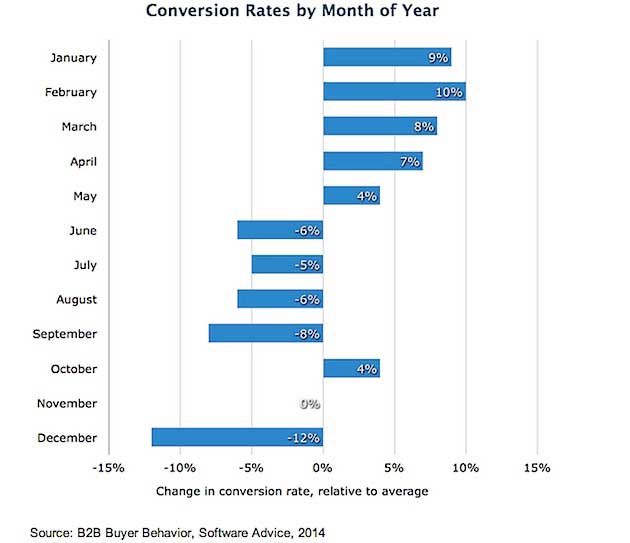
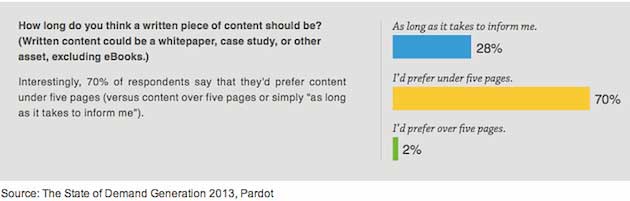
A Social Media Cheat Sheet for the C-Suite
 42 Tips to Make B2B Social Media Work for You
As members of the C-Suite, our social skills are constantly at work. Even those hours spent waiting at airport lounges keep us busy on the phone, and we never know who we might bump into on a flight. Despite this “always on” state, our social skills only get better, not worse; well for most of us at least. On the other hand, when it comes to social media, quality seems to slide as the activity level goes up.
Can you imagine yourself walking into a cocktail evening talking utterly irrelevant things that nobody is listening to. It doesn’t happen (unless you are drunk!), right? And yet, how often do our company blogs, Facebook updates, Tweets and other social media content pieces spew meaningless, out of context stuff that no one cares about? Far too often, I’m afraid, and for many of us. We simply run out of content ideas and because we don’t want to shut up for fear of being forgotten too easily, we keep trying to “socialize”. If, for one moment, we stopped to think about how to really be “social” instead of thinking about how to utilize every media channel available, our relevancy quotient might get a significant boost.
I’m not saying it’s easy; it isn’t. But here is a handy cheat sheet that you can reference every now and then to keep your social media activities on track. Remember that “Context is the new King”. (Click here to Tweet this!)
Think About the Social, Not About the Media
—42 Things to Remember
- Plan your social media calendar, create a strategy and adapt as you go along to always remain relevant.
- Do not jump in with both feet first. Test the waters, learn what works, monitor, measure and refine your online social skills.
- Learn from others’ mistakes. There are plenty to study and learn from!
- Understand that social media is two-way; it has to be interactive; a mix of push and pull.
- Evaluate your aims and objectives – ROI, brand building, relationships, leads, sales, etc.
- Involve sales, marketing, R&D, even the shop floor with your social media campaigns. Your own staff can be your biggest social mouthpiece.
- Do not over-extend your resources. A measured approach will yield better, more consistent results.
- Decide what ‘voice’ your social media persona needs to best represent your company and communicate with your audience.
- A scattergun approach will not work. Don’t channel hop. Increase as you can and not simply because it seems like a good idea or because everyone else is doing it.
- Remember: If an idea is worth doing, it is only worth doing well. If you are not well prepared and confident of doing a good job, wait until you are.
- Social media can very quickly and easily become a time sink. Have the resources ready to cope with this FACT.
- Employees can leave; don’t let them take your social media success with them.
- Social media is about conversation, discussion, engagement, interactivity, sharing, and relationship building. It is a poor broadcast medium, so don’t try to use it as one.
- It might be abbreviated to #SoMe, but it is so definitely NOT about you!
- Social media is not all new. Nor is it all traditional. Build a team with experience across ages and disciplines, and a willingness to adapt while being consistent.
- Know where to find your target audience and where they expect to find your company.
- Be ready to integrate and act across a wide variety of channels – images, video, text, chat, networks, even social bookmarks. And not to forget, IRL (in real life) too!
- Mix and match messages to audience. Whatever you do, don’t be boring! Or you’ll be like that “drone” people run from at a party!
- Remember, the human brain processes images and graphics better than text. Get visual.
- Be flexible and cautious. Today’s hot trending tool or topic can be tomorrow’s wasteland or lost data.
- Learn the lingo and the ‘netiquette’ for every social channel you use.
- Find the right tools for the job and keep records of all account details and tools used.
- Internal communication between all your teams will boost your social media strategy beyond just a small dedicated team.
- Do not pay for friends or followers. Ever. Just think how tragic it is if you ever have to pay guests to come to your party. It’s the same thing!
- Automate what you can. Think If This Then That. What your should NEVER automate, because you can’t, is emotion. That is the real power behind social communication. It’s what gets your audience engaged.
- Engage. Daily, hourly, regularly. Even in your sleep (buffer)!
- Monitor constantly, but only what matters. That includes your competition.
- Analytics are crucial. Learn to understand what the data is telling you.
- Is it working? Are you achieving your targets? If not, try a new tack.
- It is not about how many friends or followers you have. Ten loyal followers who buy and share are better than hundreds who don’t.
- Share. Be generous with your ReTweets and links to third party information.
- Find content to interest your audience and complement your own, in-house creations.
- Are you experts at what you do? Don’t tell everyone; show them by helping solve real problems.
- Try, try and try again. What worked once may not work again. What did not work before may work now.
- Build relationships with your audience. Know their business. And their lives. Know what keeps them up at night and help them find peace of mind.
- Make sure your social accounts are included everywhere you advertise, online and offline.
- Running an ad in print? Include your social sharing details, and get creative. Try augmented reality and QR codes to bring your social presence to life.
- Develop your key marketing messages to fit in 140 characters or less. Not because you can then use them on Twitter, but because you will really need to think hard and clear to do this exercise.
- Email is not dead. Far from it! Tie your social media strategies tightly to that email list and/or newsletter.
- Don’t get lost in ROI metrics on a $ for $ basis. Social media pays in other ways e.g. new, long-term relationships as well as brand respect and loyalty.
- Enjoy the diverse roads social media may take your team down. Don’t rap knuckles for 3 tweets about a follower’s dog. It makes your company personable.
- Don’t seek out viral – it comes of its own accord. Be patient and keep the quality consistent.
Join this exclusive LinkedIn Group and let’s discuss ways to be successful with B2B social media marketing in 2014.
Linking It: 3 Ways to Increase Your B2B Leads from LinkedIn
One of the major reasons B2B companies use content marketing is for lead generation. It helps them tell their story to prospects, and engages their audience to connect with them.

Recently, LinkedIn has been shown to be one of the top lead generators for B2B companies, so if you’re not using it as part of your lead generation strategy, here’s a few tips to get you started.
1. Know your audience
This one keeps getting repeated ad nauseum in every marketing tip these days, but don’t discount it just because you’ve seen it so many times. It really is true. You must know who you’re trying to reach with each piece of content, and on LinkedIn it’s no different.
Use the advanced search feature to find individuals, groups, and companies to follow. This will keep their content in your news feed, so you’ll be up to date on what’s going on with them.

To maximize your time with this, be selective in who you choose to follow, and eliminate the things that aren’t getting you anywhere. Search by keywords for your marketplace, and the roles of your market influencers and decision-makers.
2. Post relevant content to your groups and your LinkedIn Updates.
Post content that matters to your followers and marketplace. This builds up your credibility and trustability. Remember to inform & help, not sell.
3. Use the golden rule when connecting with others.
Know how you don’t like to get those random “connect with me” messages? Well, keep that in mind when building your relationships on LinkedIn. Share content your prospects find interesting, so that they’ll share with their peers, and be motivated enough to contact YOU first.
What other overall tips would you include here? I’m not talking the “join some groups” kind of tips, but BIG sky kind of tips like I’ve mentioned here. Anything else working for you in terms of lead generation on LinkedIn?
How Much Should You Spend On Content Marketing?
 As per most marketing activities, estimating how much your company should spend on content is a bit like estimating how many sandwiches you’d need to feed all your employees at lunchtime – it depends. There is no one-size-fits-all solution with content. Budget depends on anything from your internal resources and how established your brand is, to the simple factor of how much money you have to spare. It’s also important to consider what your peers are spending…
If your friend jumped off a cliff, would you?
Although you shouldn’t base your decisions on what your peers are doing (like we said, everyone is different), it is important to know what they’re spending on content in order to stay one step ahead of your competitors. On average, companies with a turnover of £1 million (the average TO of a UK SME) spend between £8,000 and £18,000 on content per year. Brands that turn over £2 million invest up to £36,000 per year and £5 million, £89,000 per annum. That equates to around 2% of turnover.
Not all marketing managers think in terms of turnover though – it’s all about how much of their own budget to commit to content. The Content Marketing Institute (CMI) reckons that UK marketers typically dedicate one-third of their overall budget to content marketing, with 11% expected to ‘significantly’ increase this in 2014 and 56% planning to up it by a smaller margin. One-third of the entire marketing budget might seem like a lot, but consider this – how much time and money would it take to do the following…
1. Write a content strategy
- Analyse industry trends
- Review your competitors’ content
- Undertake a content audit of your site
- Evaluate the performance of your existing content
- Collate ideas for topics and types of content that will boost brand awareness, drive traffic, spark engagement and encourage conversions – not to mention help retain existing customers
2. Produce content that is…
- Enticing, valuable and relevant to your audience
- Of the right tone and in a structure that’s easy to digest
- Optimised to Google’s ever-changing, exacting standards
- Balanced well between branded and non-branded references
- Designed to target the right stage of the buying cycle
3. Distribute the content and act upon engagement
- Set up the technical display of content on your website, in line with Google’s best practice
- Implement authorship on your site
- Push the content out via your general social channels, replete with meaningful messages
- Identify industry thought leaders to whom you can present the content
- Respond to any engagement swiftly and in a way that builds long-lasting relationships
- Nurture leads generated by content, converting them into sales
…a lot, right? In fact, there’s so much work here that you could be forgiven for thinking why should I bother spending any budget at all on content? It’s so much work!
Ignore what you can afford to spend – can you afford not to spend?
First things first, 88% of your peers are creating content. That’s right – almost 9 in 10 of Britain’s marketers invest in content marketing. What’s more, 71% of your peers have someone in their organisation that’s responsible for content strategy. Not creation – just strategy, a strong (potentially scary!) indicator of how much effort and foresight your competitors are putting into their content.
Who cares, though – is it actually doing anything to convince prospects? Yes. In the first instance, it attracts them to brands they might not have heard of (one of the top three reasons people follow a brand on Twitter or Facebook etc. is ‘interesting content’). It encourages them to stick with brands, too, as 58% of people say they trust editorial content and eventually, can convince them to make a purchase (61% are ‘more likely’ to make purchases from brands that invest in content creation).
As if that isn’t enough, research shows that content marketing can be up to three times more effective in terms of producing return on investment than paid search – a channel that’s often hailed as the superman of ROI. As long as you produce the right kind of content for your audience, this effectively means that whatever you put in, you could get three times’ that back…
If that doesn’t convince to pump as much money into your content strategy as possible, we don’t know what will!
Check out our budget estimator
Want to get an idea of what others are spending on content marketing and social media? Then our budget estimator will give you an idea.
On the Road to Marketing Accountability: Five KPIs You Should Start Tracking Today
 Marketing departments take pride in coming up with clever campaign ideas, exciting images, and compelling messages – and rightly so. However, these matter little to the executive team if the following concern is not addressed: Are our marketing investments bringing enough return?
The first step in addressing this concern, and therefore building up marketing’s credibility, is tracking the right Key Performance Indicators (KPIs) consistently, over time. These KPIs should be monitored, and the results communicated monthly (or at least quarterly) to the executive team.
(Note: While the KPIs listed here are more relevant to B2B organizations, they can be customized to serve B2C organizations as well.)
The five KPIs you should track on a regular basis are:
1. Names: These are the new “calling card” raw prospects that marketing activities generate during the period considered. These are added to your nurturing database so that your marketing automation tool can build interest over time, progressively increasing lead scores.
2. Marketing Qualified Leads (MQLs): These are the Names which have been nurtured and have passed a lead score threshold (a number previously agreed on by sales and marketing) so that they are ready to be handed over to sales.
3. Sales Qualified Leads (SQLs): These are the MQLs that passed the vetting process by sales, and are to be actively pursued for sales transactions.
4. New Customers from Marketing: The number of new customers (“logos”) that came from marketing-generated leads
5. New Bookings ($) from Marketing: The total annualized contract amount that came from marketing-generated leads
You will notice that the five KPIs listed above represent the key stages of your marketing funnel. The ratios between these KPIs are also very useful because they represent conversion between stages. When tracked over time, all these metrics together convey a powerful story of marketing accountability.
 Bonus KPIs
You can add other KPIs to the five listed above to make your tracking more comprehensive. Some you might consider:
- Leads: These are the Names that marketing has identified as worthy of active nurturing. In the funnel, Leads come in between Names and MQLs.
- Sales Accepted Leads (SALs): These are the MQLs that sales has preliminarily examined and qualified for the next level of vetting. SALs are useful if Field Sales is prominent in your organization. SAL qualification may be based on parameters associated with a lead (title, size, etc.) or based on other factors and vetting by the inside sales department
- Total number of new Customers: This is the number of new customers acquired, irrespective of how they are generated. This allows you to understand the percentage of new customers generated by marketing’s efforts.
- Total new Bookings $: This is the annualized contract amount from new customers, irrespective of how they were generated. This allows you to understand the percentage of new revenues generated by marketing’s efforts.
I hope this KPI guidance is useful. This blog is first of many that will explore how marketing teams can build credibility in their larger organizations. Planned future topics include:
- Associating leads with a Lead Source and Marketing Channel
- Tracking leads to sale by Lead Source and Marketing Channel
- ROI by Marketing Channel and budget optimization
- Key things to focus while presenting marketing updates to executive team
Are there other ideas you would like us to explore? Let us know in the comment box below. We look forward to your feedback!
Photo of the open road by Trey Radcliff of Stuck in Customs,used under a Creative Commons 2.0 license.
Photo of a speedometer by Kevin Kryptonic83, used under a Creative Commons 2.0 license.
Business Intelligence, Try Marketing Intelligence
 Over the last couple of years we have seen an increase in the amount of data and information we have to manage and analyse. From IT to sales and marketing to management everyone has had to think of new ways getting the right information out for enhanced insight and decision making.
As you might imagine this may seem like a tiresome and time consuming task. When you think of the time it takes to analyse only small pieces of data you can imagine it would take weeks or months to complete large datasets – especially if you are a larger business and by the time you complete it all the results would be invalid.
However, what can you do when the amount of data you possess is growing bigger and bigger by the day and your losing insight by the hour. Cue the Business Intelligence solution. An interactive tool used for aiding decision making business intelligence tools have become the new saviour in businesses drowning in data.
Business intelligence tools can help to simplify the complex processes within a business, allowing users to track and monitor vital information including transactions, buyer trends, KPIs and marketing campaigns. For someone in marketing, such as myself, a business intelligence tool can help to prove marketing ROI, brand impact and get a better understanding of customers.
Customer buying patterns, campaign results and leads can be tracked and analysed quickly and easily in real time giving marketers a better understanding of future buying trends. Decisions can be based on relevant and insightful information and changed depending on future trends. Business intelligence helps empower marketers to solve their own problems and effectively evaluate and improve campaign effectiveness.
Campaigns can be modified and adjusted, based on real time information and analysis, in order to optimise results and outmanoeuvre the competition. Highly targeted market segmentation mixes can be created easily based on previous buyer behaviour as well as campaign results. Reports can then be easily created in order to share valuable insights with Sales.
All Marketers must understand their customers and the more data you have on your customers the easier this is to achieve. Having the ability to collaborate and share information throughout the team and/or company has huge benefits in terms of proving the ROI of the marketing department and their activities.
Download the white on how to avoid the 10 pitfalls of business intelligence.

Crowdsourcing Lead Generation
Imagine if the entire world was your sales force. Imagine that any time, a potential buyer of your product or services was “in market” one of your current customers told them about you – in a very positive manner. Talk about real time marketing. What if you had an army of “friends” who were telling their friends about your products and services? Sound too good to be true?
It’s already a reality for many big brands that are reaching out to customers who can influence their potential prospects’ buying decisions, and they are recruiting them as a lead generation channel. Customers are a great source of leads. So are employees. And so is anyone else who could influence a buyer’s decision. Every brand has people that will advocate on their behalf. As we used to say at IBM – “all you have to do is ask”.
Smart brands are starting to ask. They are inviting customers, employees and 3rd party influencers to become part of a community that drives leads on behalf of the brand. There are many good reasons why I think this concept will quickly proliferate and transform how brands generate leads.
- It works – at scale. Leveraging assets like customers, employees and influencers is just smart business. Almost all the pundits agree that buyers are being influenced more than ever by friends, family and people they trust. Reaching out to the crowds of people that know and trust you makes good business sense. They are very connected, have a loud and trusted voice, and they can reach their friends easily and often on your behalf. We know of brands that have registered over 1million of their customers into a channel that drove over almost 2million leads to the business.
- The leads are better. When a friend or influencer talks, people listen. We know that brands have much less control of their story and image today than in years past – before social, digital and mobile channels transferred power to consumers. Consumers and influencers are now in charge of the story. Research has consistently shown leads that convert as a result of a referral from a friend or influencer are more loyal to a brand, spend more and stay longer – they are pre-qualified and ready to buy by the time they reach your brand.
- It drives corporate productivity. Leveraging “social assets” dramatically decrease customer acquisition costs. At the most basic level, social channels extend a brand’s sales force (with zero overhead) and they solve one of the biggest challenges brands face: knowing when a potential buyer is in-market. This community is always on and continually active – making referrals, amplifying products and promotions, and posting positive information about your brand, freeing up internal hours and reducing time spent identifying and nurturing prospects.
It’s not important what name you give to this community. You can call them influencers; you can call them advocates; you can call them professional lead generators. Ultimately, you should think of them as a sales and marketing channel. Once you build this channel, you will realize that they can do many other things on your behalf including creating and distributing content and amplifying marketing messages.
Customers, employees and influencers are the fastest growing sales and marketing channel today. By utilizing the latest in social marketing software and technology, business leaders can mobilize this channel by creating and leveraging their social relationships to generate great leads and drive new business.
In future blogs I will explore how to build these channels (it’s easy) and how different operational groups within the enterprise can leverage these channel to drive productivity gains.
Do You Know What Your Sales Reps Are Doing?

According to a CSO Insights study, sales reps spend only two days a week selling. As the chart above shows, they spend about 10 hours a week generating leads and almost two days a week on non-sales activities.
It gets worse.
One quarter of all forecasted sales opportunities end in no decision. That means sales people waste a lot of valuable selling time chasing unproductive deals. So, maybe your sales reps are really spending only 1.5 days a week on effective selling.
Hmmmmmmm…Not so good.
There is one sure way to increase sales productivity: focus on the right opportunities. If your sales reps did that, great things could happen. They would spend more time actually selling—to the right companies at the right time on the right deals.
How much would that be worth to you?
Great sales opportunities don’t appear magically. They result from deep knowledge of target companies, their needs, and their buying processes.
And guess what: “opportunity management” is a system. It is the process of systematically evaluating and prioritizing opportunities.
With an effective system, your reps will know how to score and prioritize their opportunities. Then, they will know where to focus their time and effort.
How to Evaluate Opportunities for Your Sales Reps—Show Me the Money!
An opportunity management system consists of three elements: the target company, the situation at the company, and opportunities at that company.
1. The Company—Focus on companies that sell appropriate products or services for your offering. If you sell $100,000 inventory control systems, don’t call on $2 million (annual sales) plumbing supply companies.
2. The Situation—To make a sale, you need relationships and some influence over the purchasing process at a target company. The company may be a great fit for you. But if you don’t know anyone there, nothing will happen.
3. The Opportunity—The company may be a fit. And the situation may be favorable. But you still need an opportunity—a deal that makes economic sense for you and your prospect.
Here are the components underneath each of the three elements:
Company
- Strategic Fit—Is the target company in the right industry and has needs that you can fill?
- Growth Potential—Is there an opportunity for multiple sales over time, or is this a one-off situation?
-
Revenue Potential—Can this account generate enough revenue to be a major client for you?
Situation
- Access to Decision Makers—Do you have strong relationships (and credibility) with the executives who make purchasing decisions?
- Decision Making Process—How are purchasing decisions made? Can you influence the process in your favor?
- Competition—Are there external or internal alternatives to your offering? How viable are the alternatives? Can you steer the decision makers away from those alternatives?
Opportunity
- Deal Size—Is the deal big enough to justify your efforts?
- Need/Urgency—How badly does the prospect need your offering? How quickly will the prospect act?
- Timing—Does the timing work for you? Can you deliver what the prospect wants when he/she wants it?
What’s the Score?
You can assign a score to each company, situation, and opportunity. That score should tell you what opportunities are worth pursuing.
First, assign a weight/importance of 1 to 3 to each of the nine variables above. Then assign a score of 1 to 5 for each variable based on your knowledge of the company, situation, and opportunity.
Here is a hypothetical example of four companies:

- A Perfect Score results when the company is a perfect fit, the rep has a fantastic relationship with the decision-makers, and the opportunity is a huge deal and a win-win for both the seller and the buyer.
- Company “A” gets a score of 94%. The sales rep should hop right on that one.
- Company “B” has reasonable potential and a very promising opportunity. However, the “situation” is not that favorable. The sales rep needs to do more work building relationships.
- Company “C” has limited potential. The rep has no strong relationships (situation). But the particular deal is very attractive.
- Company “D” has reasonable potential, but the situation is not favorable. Nor is there an attractive deal available.
After reviewing this scorecard, your sales reps may choose to pursue “A” and “B.” The sales reps might not bother with “C” because they don’t have the relationships (Situation) to get a shot at the deal. Sales reps might see a long-term opportunity in “D” and work on a strategy to improve the situation. But it is not an immediate priority.
Getting Press Release Readers to Take Action

Before and after landing page optimization results from MecLabs. Changes to how web pages are structured can significantly increase the results those pages generate.
Marketers know that slight tweaks to their web pages can deliver astonishing “lift” in the results those pages generate. Moving a button to a different spot on the page and reducing the amount of text and other visual clutter increases the likelihood that page visitors will take the desired action, clicking on the primary call to action on the page. This is called ‘landing page optimization,’ and it’s an increasingly important field of digital marketing.
The press releases we issue become landing pages of a sort when they hit the wire and are distributed online. They are hosted on thousands of web sites, and are the digital ambassadors for our brands, conveying messaging, branding, visuals and – importantly – links directly back to our web sites.
New press release outcomes
As a result, many organizations are using releases to generate more than media coverage. Driving social interactions that lead to improved search engine results is one potent new outcome for which brands are using the distribution of content. Promoting content – such as blog posts and white papers – is something else we’re seeing more brands do with online news releases. Generating leads and direct sales (such as app downloads and event registrations) is a third use of news releases we’re increasingly seeing.
Formatting press releases to encourage readers to take action

Jakob Neilsen of the Neilsen Norman Group is the grandfather of online user experinece (“UX”) research, and has devoted considerable time to researching how people read content online. His conclusion – people don’t actually read content online the same way they read long-form print. Instead of methodically reading each line, online readers scan content, using an F shaped pattern, spending more time at the top of the page, and then scanning the left side.
PR pros penning press releases can utilize this research to create more effective content. When formatting news releases and other content destined to be distributed online, writers should pay attention to the following tips, taken straight from Neilsen himself in the article titled, “F Shaped Pattern For Reading Web Content:”
“The F pattern’s implications for Web design are clear and show the importance of following the guidelines for writing for the Web instead of repurposing print content:
- Users won’t read your text thoroughly in a word-by-word manner. Exhaustive reading is rare, especially when prospective customers are conducting their initial research to compile a shortlist of vendors. Yes, some people will read more, but most won’t.
- The first two paragraphs must state the most important information. There’s some hope that users will actually read this material, though they’ll probably read more of the first paragraph than the second.
- Start subheads, paragraphs, and bullet points with information-carrying words that users will notice when scanning down the left side of your content in the final stem of their F-behavior. They’ll read the third word on a line much less often than the first two words.”
It’s no surprise that the inverted pyramid of news writing and search engine optimization best practices also offer similar advice in terms of placing key information at the top of the page and using bullets and bold text to highlight information for readers. Many press release writers, however, ignore this advice, instead loading lead paragraphs with long-winded boilerplate and hiding key messages deep within blocks of text.
I think it’s time to put our messages under the microscope. We need to tune our press releases for our readers, not allowing competing egos or “the way we’ve always done it,” to add barriers to message effectiveness.