One of the most profound shifts in the current sales experience has nothing to do with the modern-day sales executive; the change lies wholly within the mind of the prospect. Contemporary sales teams are challenged most by a single factor: the educated consumer. This data-driven, all-access world we live in accelerates communication, information sharing and transparency — all with the click of a button.
Long before purchasing a product, today’s consumers are highly knowledgeable of their options within any given market. They no longer look to sales professionals to provide neither information— nor do they trust brands as de facto qualified resources. It’s not just that buyers start the sales process without you; research demonstrates that consumers typically complete most of the purchase journey before having any contact with sales. In fact, according to Forrester Research, the average buyer has completed between 60 and 90% of their decision-making process before engaging a sales professional1.
There is no doubt that by the time your sales teams interact with them, prospects are far more informed about your business than you are about theirs.
As a result of greater access to and familiarity with information, customers are demanding more expertise from sales representatives. Sales personnel must adapt to this transforming environment or face extinction. Sales people must transform into expert consultants who gather new customers, while maintaining their base.
Understanding why and how to engage with today’s social business environment starts with recognizing changes in buyer communication patterns, product knowledge and online behavior. Sales pros must learn how to tap directly into the digital origins of these new concepts. We know customers are online and that they use the Internet to research purchases. As consumers evolve, so must sales professionals, particularly in their use of modern communication tools, such as social media.
These new communication avenues will allow sales teams to be where their customers are, regardless of geographical boundaries. Consider the following:
Inside sales is growing 300 percent faster than outside sales2. The shift is towards inbound sales teams and new tools for prospecting — do you know what these are and how to use them?
Sellers must adapt their processes, tools and training to find and engage the right people and build their professional networks.
Regardless of these new tools, we are all still human beings, wired with our “Old Brains.” How can sales professionals combine biology with technology to reinvent customer conversations?
The importance of context and how sales professionals can tailor content and messages by evaluating customer environments, both organizational and virtual.
The business benefits of embracing the educated consumer are exciting, because they offer numerous opportunities for growth. Yet, sales pros can get lost in this new sales world without an understanding of where your prospects find information and how they want to be engaged. You risk obsolescence if you play by their rules and not yours.
For more tips on how to harness virtual and social tools to survive in today’s sales world, read PGi’s latest ebook – Evolution of Sales: The Survival Guide.
1Forrester Research via Miller, J. The Path to a Killer Marketing Strategy as quoted on
Above: Thomas Edison experimenting in his laboratory.
Image Credit: Wikimedia Commons / Library of Congress
Sometimes you don’t know your household brands as well as you think.
From the oil fields of Texas and the Social Security Act to experimental aircraft and even a Disney movie, here are some of the unusual circumstances that brought about five of the largest tech companies in America.
General Electric
General Electric traces its origin back to one of America’s greatest inventors and the foundation of America’s electrical infrastructure.
Thomas Edison established the Edison General Electric Company in 1890 to bring all of his various electrical interests under one name. He and his team at Menlo Park invented the first incandescent lamp and the first electric dynamos capable of powering lighting systems for entire neighborhoods during the 1870s. Edison went on to establish the first power company and construct America’s first power station in New York City in 1882, laying the groundwork for the electrical grids that our society now relies on.
Almost 125 years later, GE is developing the next generation of advanced steam turbine systems. GE Healthcare is also researching a new class of nanoparticle-based imaging agents that may enable medical imaging systems to see diseases like Alzheimer’s and cancerous cells earlier than ever before.
IBM
A merger of three of the largest American companies of the 19th century — the Tabulating Machine Company, the International Time Recording Company, and the Computing Scale Company – created IBM.
Early on, IBM produced and sold a wide variety of machinery, including industrial time recorders, commercial scales, and even meat and cheese slicers. It was renamed the International Business Machines Corporation in 1924 to better represent its focus on creating tabulating solutions for businesses.
In 1935, IBM secured a major government contract to maintain the employment records of 26 million people — part of President Roosevelt’s Social Security Act. It was called “the biggest accounting operation of all time,” and its successful completion brought IBM a steady stream of government contracts. During World War II, IBM placed all of its facilities at the disposal of the U.S. government. The company added bombsights, rifles, and military engine parts to its product line in support of the war effort. IBM employees would go on to invent the automated teller machine (ATM), the floppy disk, the magnetic stripe card, and the Watson artificial intelligence computer system, named for the company’s former president.
Today, IBM researchers are working on solutions for everything from cloud computing and data analysis to smart cities and nanotechnology.
Texas Instruments
Texas Instruments, in spite of the name, didn’t actually start in Texas.
In 1930, in a rented hotel room in Newark, New Jersey, John Karcher and Eugene McDermott began drafting designs for a new type of geophysical instrument to search for oil reserves. They formed Geophysical Services, Inc. in May of that year and became the first independent firm that specialized in reflection seismography. The process involved setting off small dynamite explosions and then recording the reflected shock waves to determine the depth of potential oil and gas reserves. During the 1940s, the company used their signal processing technology to develop submarine detection and airborne radar systems for the U.S. military.
The Laboratory and Manufacturing wing of GSI opened in 1946, with a focus on building military and civilian electronics. The company officially changed its name to Texas Instruments in 1951. TI played an important role in the growth and development of a variety of industries, producing semiconductors, the first integrated circuit, missile-guidance technology, and the even the first handheld calculator.
Texas Instruments now works on an immense variety of products, ranging from driver assistance systems in vehicles to telecom infrastructure and, of course, graphing calculators.
DirecTV & HughesNet
One of America’s most famous aviators and his passion for developing faster aircraft led to the creation of satellite television and Internet.
In 1932, Howard Hughes, a wealthy entrepreneur and aerospace engineer, founded the Hughes Aircraft Company. As an aerospace and defense contractor, the company built numerous prototype aircraft including the famous H-4 Hercules “Spruce Goose.” Hughes flew many of the test flights himself, setting multiple world air-speed records and surviving several crashes.
Hughes Aircraft designed everything from helicopters and spy planes to air-to-air missiles systems. A subsidiary known as the Hughes Space and Communications Company launched the world’s first geosynchronous communications satellite in 1963 and later built a NASA lunar lander. GM purchased Hughes Aircraft in 1985 and merged it with several other companies to create Hughes Electronics.
Throughout the 1980s and 90s, Hughes became a leading manufacturer of satellites. Seeking to expand upon this success, Hughes launched DirecTV in 1994, the world’s first high-powered direct broadcast satellite service. By the early 2000s, Hughes Electronics decided to focus its efforts on the satellite businesses, and in 2003 its remaining components were renamed The DirecTV Group.
Today DirecTV provides television service to over 20 million customers in the United States. The Hughes name itself lives on with Hughes Network Systems and its HughesNet satellite Internet service, which was purchased by EchoStar in 2011.
Hewlett-Packard
Two Stanford graduates, a garage, and Mickey Mouse all played a role in the formation of what would become one of the world’s leading computer companies.
Bill Hewlett and Dave Packard, friends and electrical engineering students in college, rented a house in Palo Alto, California in 1938 to start their own company. While Packard and his wife lived in the house and Hewlett slept in a backyard shed, the two used the one car garage as a workshop and even used the kitchen oven as a paint-baking station for their prototypes.
Some of their early inventions included a device to help astronomers set their telescopes, a harmonica tuner, a foul-line indicator for a local bowling alley, and an electric eye for automatically flushing toilets. The Model 200A resistance-tuned audio oscillator proved to be their first big breakthrough, providing a practical, low-cost method of generating high-quality frequencies. A sound engineer at Walt Disney Studios was so impressed that Disney purchased eight of their slightly modified 200B audio oscillators to use in producing the 1940 landmark film Fantasia.
After deciding on the name of their company with a coin-flip, the two formalized their partnership on January 1, 1939 and Hewlett-Packard was born. Recognized as the producer of the world’s first personal computer, HP remains one of the largest producers of PCs in the world. In addition to laptops, tablets, and printers, HP also produces software, servers, and cloud-based solutions for a range of industries and businesses.
Robyn Johnston has an unequalled passion for science and technology, and has a desire to share it through her writing. When she isn’t writing, you’ll find her focusing on her studies.
VentureBeat and David Raab are working on a new Marketing Automation usage and ROI study. If you currently use a marketing automation system, help us out by answering the survey. If you do, we'll share the resulting data with you.
The experts have spoken. Shorter lead capture forms provide the highest sign-up rates. But if you are stopping at First Name, Last Name, Email, and Phone, you won’t be able to leverage these leads in any intelligent way in your sales, reporting or remarketing efforts downstream.
When you’re done reading this, you’ll know how to capture a greater wealth of information in each and every lead to leverage and make intelligent business decisions with minimal impact to your registration form conversion rates.
Are you picking apart the basics?
So you have captured the basic form information outlined above. A good webmaster will extract the Area Code and County Code from the phone number into its own field. There are many Area Code databases you can use to map to states and time zones.
Your webmaster should also extract the website URL out of the email address. While many leads may have a Gmail, Yahoo or Comcast address, if your lead’s email is john.smith@mybiz.com, you should extract the web address into your database. In this case, www.mybiz.com would allow your sales team to more readily access their company website to learn more about them. Also, knowing their email domain extension (.com, .co.uk, .ca or .mx) may help you define another value, filtering international from domestic leads.
Are you leveraging key demographic information?
Simply asking for their Zip/Postal Code allows you to do more geographical targeting by leveraging and referencing a third party Zip Code/GPS database. Now you can accurately cluster where your leads are coming from. This is a quick way to extrapolate their country, time zone, state, county, city, and general GPS coordinates within large cities — all by asking information that people know and quickly give up.
Are you leveraging key persona information?
If you could ask ONE critical question of your lead that will help explicitly define the potential value of that lead, what would it be? For example, if you sell a service that requires a license for each user, a key question worth asking would be “How many users?” and then provide a simple, but detailed, drop down list ranging from 1,2,3 users, to 10-15, 16-25, 25-50, to 250+ users.
While processing the form information you can map these ranges against your pricing table and capture each leads potential value into your database. This will help in a number of ways: It will allow you to properly prioritize which leads your sales team may go after; it will allow you to score the potential value of your campaign against the actual win value; and you can also deploy targeted messaging in your drip marketing campaigns to larger users versus the smaller ones.
Are you leveraging key tracking?
Your webmaster should be capturing any marketing campaign tracking information when the lead form is submitted. The traditional standards are Google Analytics’ utm_source, utm_campaign, utm_medium, utm_content, utm_term.
These fields should be descript and leveraged for lead routing, tell your sales team a story about the lead, enhance your campaign reports, and allow you to segment or target your email marketing drip campaigns.
Other important fields to capture are “outside site referring URL”, “landing page URL”, and the “URL they were on prior to your lead form.” These “referring URLs” give you the ability to report what key pages are working for you and when the sales team reviews the lead and gives them a high level story of how that person trafficked your site to become a lead.
Key systems information?
Capture their IP address, resolve it to their ISP, and resolve any “Geocode” information (similar to GPS coordinates, but not always AS accurate.) Is the person saying they are from California, but submitting the form while traveling in Texas?
You should also capture their browser and operating system. Are they using a PC, Mac, tablet, or a mobile device? Are they using Internet Explorer or Google Chrome? This information can help you understand how technically savvy your lead is.
When all is said and done…
Your basic four-field form has bumped up to six (adding Zip Code and your key persona question) for your prospect to complete, yet from all the other systems you are able to capture and manipulate, you’ve extended yourself to well over 28 fields of usable information.
How to leverage this information
I’ve touched upon some specific ways you can leverage the information above, but want to provide a bigger picture about how all this information can be used together across your organization.
A good sales team can transform all this information into a great story about the lead, and leverage that in their initial conversation with the prospect. Knowing their interest, where they are located, the potential size of the deal, how technically savvy they are, and what critical pages they’ve viewed can get them far down the path to quickly determine how valuable this lead is, where to start the conversation with the prospect, and how serious the prospect might be. Additionally, sales may have a history of knowing that prospects coming in with one particular interest may also be very interested in another topic that they can bring to the conversation.
A good marketing team will be able to launch multiple email marketing drip campaigns where the email will drop into the prospect’s inbox at, say, the critical time of 10 AM, regardless of their time zone or leverage a regional item in their messaging. They might exclude, or message differently, international leads. They would use dynamic content in their drip marketing emails to message small leads differently than larger leads. They might put them on a different lead nurturing campaign all together. Reports on Zip Code or GPS might discover it’s valuable to do extremely targeted direct mail pieces, attend a local trade show or maybe sponsor a “business breakfast.”
Marketing can also extremely fine-tune their marketing campaigns and spending. Knowing which campaigns are bringing in too many international leads or too many of a smaller demographic might encourage them to shift spending to another campaign that is providing larger domestic leads. (This will make your sales team very happy so they don’t have to contact leads that are a waste of their time!)
Your Webmaster can recognize the traffic patterns and change calls to action to increase results from both strong and weak pages.
With time, you’ll have greater knowledge of your leads, better return on your spending and greater revenues from your ability to intelligently engage and close more leads.
The age of specialization in selling has come and people have bought into the predictable revenue model and companies are seeing massive results.
One of the special intricacies to get right in this model is the lead handoff. Here’s what you can do:
1. Get The Lingo Down Cold
Old School executives worry about BDRs with thoughts like, “I don’t want my least qualified reps making first contact with the buyer…what if they get asked hard questions or screw up? How are they going to smoothly hand off the prospects to closers?”
When the prospect states they want to take next steps, here are a few things you can say to your prospect to make the transition smooth:
“Given the stage of our discussions….
or
“Given your authority…
or
“Given your role in the decision making process…
“I’d like to connect you with one of our prospecting experts who…
“…will be able to answer your deeper questions.”
“…will best be able to understand your objectives and discuss best practices.”
This allows the prospect not to feel like they are being “handed off,” but being “upgraded.”
2. Cruise Through the Administrative Tasks
Calendar: Our sales executives give full calendar access to our business development reps. This way they can set appointments on the spot, like so:
CRM: Have a quick and easily process built out. Ours looks like this:
Record the task that you booked a BDR appointment. Hit Save and Next.
Record the task for an open demo for the AE. Only they can accept and close it.
This allows us to measure scheduled demos, completed demos, and follow the leads through the funnel always tying it back to the business development rep.
3. Use Templates & Text Accelerators
Our reps use email templates for certain stages of the prospects life cycle using ToutApp or Signals.
We also use a text accelerator named aText to help us fill in repetitive information into calendar events or emails. For example: if one of our BDRs types in “AZJoin” …it will automatically fill in Anthony’s Join.me information:
4. Adequately Share the Important Info With the Rep
How big is the company, who are the decision makers, what problems are they trying to solve? Who are the competitors? And what else has the BDR found out?
We ask them to loop this into the calendar invite, which serves two purposes.
It keeps the prospect understanding what they’ve already shared so they don’t have to start from scratch.
It give the Sales executive the full inside scoop on their lead. The more pre-call research the rep has done (and added to the calendar invite, the better).
5. Reminders For the Appointments
Get stats on how many scheduled appointments actually happen (we use this both in the industry, as well as at SalesLoft). We recommend the reps themselves sends an appointment reminder the morning of the meeting.
Passing the baton should be seamless, feel natural to the customer, and not be a burden to either the BDR or Sales Exec.
-
Are there any reasons why you wouldn’t use this advice?
When you're just starting out, you need to project an air of sophistication and establish that you have indispensable skills and knowledge.
Most small business owners I know salivate at the prospect of landing a large customer. But having listened to the woes of entrepreneurs in my field and others, I know most don't know the strategies necessary to lure and land that first big account.
I do. When my business partner Ed Moed and I opened our shop from his squalid, one-bedroom apartment in 1995, we had a measly $12,500 in seed money and my Rolodex of leads. We didn't have a single customer, large or small.
While we employed a host of different strategies to get Peppercomm where it is today, these are the five best tips I can share to help increase your awareness, credibility, and attractiveness among the big boys:
1. Separate yourself from the pack.
By developing a unique value proposition, a small business can immediately differentiate itself. Consider Akvinta Vodka, for example. When the small vodka business began a few years back, it was competing against the likes of Smirnoff, Grey Goose, and Stoli, to name just a few. But Akvinta was different. Its vodka featured 100 percent USDA certified organic content--unlike competitors, it didn't contain any impurities, preservatives, or chemicals.
Akvinta's marketing campaign underscored the difference, billing its product as "the honest vodka" and promising never to hide any ingredients. As a result of its authenticity, Akvinta began being served at Jean-Georges and Nobu (two top Manhattan restaurants) and was named Virgin Atlantic airline's exclusive vodka.
My firm also made a point of separating itself literally from day one. Our first tagline read: "What separates us from our competition is helping to set clients apart from theirs." Those bon mots not only told large customers we provided strategic positioning, it also struck some as quite clever.
In fact, the chief communications officer of a global insurance company called me and said, "If you're smart enough to coin that phrase for yourself, I'd like to hire you to create something just like it for us."
2. Position yourself as a thought leader.
Small businesses can attract big customers by positing a smart or unexpected point of view on subjects of interest to prospects. When we were still in an embryonic stage, I pitched a column on the subject of branding to a leading public relations trade journal. My angle was simple, but unique: I would conduct man-on-the-street interviews with about 20 people, asking them to tell me what type of person they thought a large company would be if it suddenly were to come to life. Would ExxonMobil, for example, be a man or a woman? Rich or poor? Young or old? Liberal or conservative?
I conducted the interviews on an industry-by-industry basis. The trade journal hired an illustrator to draw cartoons to accompany my text and depict exactly how people described AT&T, GE, or GM. As a newly-minted thought leader, I began receiving calls from some of those same organizations asking if I could help them change their image from that of an old, conservative white man to a hip, young woman of color.
Select a subject in your industry on which you can take a unique point of view, and approach a trade journal to suggest authoring a feature article about it. I'll bet you a year's subscription to Inc. magazine you get a bite--and a significant sales lead--as a direct result.
3. Help large customers compete.
The top executives running sales, marketing, and just about every other function at a large organization love to know what their peers think. Small businesses can win large accounts by conducting proprietary pro bono research, and sharing the exclusive results first with targets.
One of our partners, Deb Brown, called 10 top marketing executives and asked them if they'd answer one question. She told them she'd be asking nine of their peers the same question, and would share the results before submitting the research to our top industry journal, PRWeek.
As a result of sating prospective customers' need to know what their peers felt, Deb was able to arrange numerous one-on-one meetings with some and scored a few nice wins with others. Here's how the final article turned out (subscription or purchase required).
In another example, a tiny, Cambridge-based consultancy called Integral lured huge clients away from the likes of Bain, Booz-Allen, and McKinsey by conducting unique studies showing large organizations how to disrupt their competitors. We in turn helped publicize Integral's work in Fortune, an article that generated 843 leads and several large clients for the small upstart. Here's the Fortune piece.
4. Sophistication implies size.
The smallest companies can suggest size and sophistication with the right website design. Matt Lester, our creative director, says small business sites shouldn't be brochures: "Too many small businesses use their sites to sell. Instead, a site should be educational, informational, and entertaining." Matt says sites should show their savvy by "stating in no uncertain terms that they know what's broken in the industry, and that large customers can count on them to fix it." As examples, he cites GoPro, Zillow, and Warby Parker.
A single employee, too, can make all the difference in the world when it comes to landing large customers. The fourth person I hired after hanging out the Peppercomm shingle was a British receptionist/administrative assistant. While her roots may have been Midlands working class, she oozed British sophistication over the phone (and in person). Prospects assumed we were far larger and more diverse than we were simply because we had a charming and polished young professional as a frontline ambassador. Small businesses that understand the critical importance of a first impression will attract and win large customers.
That said, a single employee can also undermine small business's success. Prior to starting my own company, I labored for a global image and branding firm whose receptionist would have made Pol Pot seem like a good guy. The agency had been experiencing a long, slow death at the time, and is now gone. I believe the receptionist was one main reason for its demise.
5. Doing good does a whole lot of good.
Smart small businesses will sometimes agree to help charities and nonprofits by donating their accounting, legal, and marketing needs in exchange for references and testimonials.
We once agreed to publicize the work of the Iraq and Afghanistan Veterans of America. In exchange, we asked that they serve as a reference. As a result of the nonprofit's referral, we were able to attract a major multinational corporation that was trying to win military contracts. The work we produced for the nonprofit also won awards and enabled us to attract other large customers. Doing good will help a small business do very, very well.
This week's blog comes from guest blogger, Bill Bonnstetter. Bill is the founder and CEO of Targeted Training International (TTI) and is considered a pioneer in the assessment industry because of his significant contributions to the research and study of human behavior.
Research studies of top sales people in both the United States and Europe confirm that top sales performance can be predicted.
The most successful organizations in the world already know that hiring the right people has the potential of becoming the most powerful "secret weapon" in their arsenal of competitive strategies.
What they don't know is that hiring the right sales people can be as simple as following a recipe based on recent findings from an international study conducted by Frank Scheelen of Institut for Managementhberatung and Bildungsmarketing and myself, Bill Bonnstetter of Target Training International, Ltd. in Scottsdale, Arizona.
As a result of our twenty years of research, development and distribution of assessment tools to measure performance, we have been telling organizations that it is what's on the inside, not the outside that counts, especially in sales performance.
What we are fighting is the myth that hiring people who look and sound good leads to good performance.
Much of the research conducted in the past on top salespeople has been focused on behavior.
Behavioral research has been popular because, like looking good and sounding good, behavior can be observed. Little, if any significant study has been focused on what goes on inside a top salesperson.
Our groundbreaking research in the United States and Europe now confirms that motivators, that internal drive that pushes us to do the things we do, far outweigh looking good, sounding good or behavior in distinguishing top salespeople.
Two of our most significant assumptions were confirmed by the two studies.
1. Top performing salespeople around the world are similar
2. Motivators are more important than behavior in sales performance.
The Study
In both studies, only top performing salespeople responded.
In the United States study and a separate German study, top-performing salespeople responded to two assessments.
One was based on the internationally validated DISC behavioral model and the other was based on the Motivators model developed by Target Training International.
The Key Findings
In the United States study of 178 firms, top sales performers tended to be spread across three behavioral dimensions.
In the German study, top sales performers tended to be spread across the same three behavioral dimensions.
In view of these results, it is reasonable to conclude that salespeople can sell in most, if not all, behavioral dimensions.
However, when it comes to what is on the inside of top performing salespeople, both United States studies as well as the German study confirm it is hands-down, a Utilitarian Motivator.
DISC Behavior Study
Motivators Study
Study 1: Top Sales Leaders, USA N = 178
Study 2: Top Sales Leaders, Germany N = 492
About Motivators and How They Impact Sales Performance
Every person has 6 motivators. The order that they are ranked and the intensity of the Motivators cause us to move into action – be motivated to do something.
The 6 Motivators are:
Utilitarian: A passion to gain return on investment of time, resources, and money.
Individualistic: A passion to achieve position and to use that position to affect and influence others.
Theoretical: A passion to discover, systematize and analyze; a search for knowledge.
Aesthetic: A passion to experience the impressions of the world and achieve form and harmony in life; self-actualization.
Social: A passion to eliminate hate and conflict in the world and to assist others in becoming all they can be.
Traditional: A passion to seek out and pursue the higher meaning in life and achieve a system for living.
We are mostly motivated by what is ranked 1st and 2nd in us. Therefore, you would want a salesperson to have Utilitarian as one of their top two Motivators.
If it is ranked lower than that, the salesperson does not have the motivation… in other words, the internal drive… to do the core activities required in a sales role on a consistent bases over a long period of time. Without it ranked 1st or 2nd, they lose motivation.
The Motivators assessment is available by contacting Jim Lobaito.
When MarketingProfs and the Content Marketing Institute released our annual B2B content marketing budgets, benchmarks, and trends report last October, it revealed a very clear narrative. Content is no longer a supplemental B2B marketing “nice to have” – it’s now the lifeblood that fuels many enterprise sales and marketing engines.
In fact, according to that report, 93 percent of B2B companies are now using content in some way to drive brand awareness, generate more (and better) leads, spark social engagement, and, ultimately, improve the efficiency of the customer acquisition process.
Given content’s proven ability to positively impact each of those things, the widespread deployment and implementation of content marketing is a no-brainer. Yet, even with incredible innovation in marketing automation and analytics technology, many marketing executives continue to struggle to answer a fairly simple – but oft perplexing – question:
Just how valuable is the content we’re creating and using?
Unfortunately, that’s not an easy question to answer. After all, many B2B companies rely on content marketing to drive top-of-funnel leads, and nurture opportunities to close. While those are valuable contributions on their own, it can be difficult to assess the precise value of them. Complicating things further, many B2B marketers fail to sufficiently track and measure the metrics that would provide critical insight into content marketing ROI – and that might explain why, according to MarketingProfs’ annual report, 55 percent of B2B content marketers think their campaigns are ineffective.
Just when it seemed like the push for mobile had peaked, we’re learning about even more trends that have staying power. Why is it important for marketers to recognize and master mobile progressions?
Don’t Get Left Behind
Your competitors are already jumping on the bandwagon, and they’re having a good time. (source: eMarketer)
42.8% of B2Bs plan to increase spending in the mobile category this year.
The number of B2B companies using apps in their marketing strategy increased by 26 percentage points between 2013 and 2014.
Just 38.6% of marketers say they currently use mobile in their strategies.
94% of marketing executives who use mobile advertising are either “fairly satisfied” or “satisfied” with the tactic.
Tenacious Mobile Trends
BYOD (Bring Your Own Device)
Success Factors: Increased efficiency and flexibility for users. Low overhead costs for companies. Why Marketing Cares: BYOD is the silver lining in mobile marketing strategy and execution. More often than not, your customers are always connected to the web, and to their business email account. They’re also downloading business apps on their personal devices, so as a marketer, you have more time in the day to reach out. (Review our earlier blog post to find out more about this trend.)
Responsive Web Design
Success Factors: Adapts to future technology, requiring minimal design updates. Trumps the “mobile-friendly” site that needs more time and resources to maintain. Provides a better user experience and increases brand credibility. Why Marketing Cares: Massive improvement to bounce rates on mobile resulting in higher MQL (marketing qualified leads). Google’s Hummingbird (algorithm) release last year has put more pressure on businesses to use mobile-friendly and responsive sites—without mobile compatibility, your business’ SEO ranking will likely suffer.
Cloud-Based CRM & Marketing Automation Tools
Success Factors: Accessibility leads to increase in user adoption and productivity. Why Marketing Cares: Make real-time updates in the database and access the most accurate lead information on-the-go. Some mobile marketing apps even allow for photo uploads, voice memos, push notifications, dynamic activity streams and synced workflow notifications.
Meeting Customers’ Expectations
Your customers’ expectations are growing every day, so you need to be digitally proficient, and mobile-savvy.
One in every five people in the world owns a smartphone (source: Business Insider).
Over 60% of all mobile phone owners in the US use a smartphone (source: Nielsen).
More than half of smartphone users access the web almost exclusively via their mobile device (source: InMobi).
60 percent of mobile users expect a site to load in 3 seconds or less. 74 percent are willing to wait only 5 seconds for a site to load before leaving. (Source: Compuware).
Once B2B marketers to understand how prospective customers are using mobile, it will be easier to adapt to trends in mobile marketing. Just know that when it comes to mobile, we haven’t seen many trends that didn’t stick. Even QR codes are showing up in airports and on towing signage!
Content marketing is a great way to attract and convert ideal customers for your business. While SEO and search traffic are key components of content marketing, they are not the whole picture and it takes time to see those kind of results. That’s where being proactive with your content can speed up the process of attracting those ideal customers back to your marketing hub (your website) to capture their contact information and enter them into your lead nurturing sequence.
In order to be proactive with your content marketing, you will need to know where your ideal customers are researching online, asking questions and talking with each other about the problems that your products and services can solve for them.
Social Media Is Not Just For Broadcasting
When you publish new articles on your website you will of course want to broadcast them across all of your social media channels, but that is not the same thing as joining a conversation of an online community.
Finding online communities to contribute to and share with is a two way street, not a bullhorn for you to scream about yourself, so act accordingly. You want to provide value in a conversational way and within the context of ongoing conversations. If you are starting your own discussion around a topic that you have published content about, then do so in a manner that is practical and convenient for the rest of the community, not just a marketing blast about your company.
Always make your content and your communication strategy customer-focused.
So where can you find these online communities to meet and engage with your ideal customers?
Here is a list of 11 places to find your ideal customers online:
11 Places To Find Your Ideal Customers Online
Facebook Groups
LinkedIn Groups
Twitter Chats
Twitter Lists/Directories
Google Plus Communities
Google Plus Hangouts
Quora
Yahoo Answers
Comment Sections Of Industry Blogs
Reddit
Independent Forums
Facebook Groups
“Facebook Groups make it easy to connect with specific sets of people, like family, teammates or coworkers. Groups are private spaces where you can share updates, photos or documents and message other group members. You can also select one of three privacy options for each group you create.”
LinkedIn Groups
“LinkedIn Groups are similar to old school, online forums. They are a great place for like minded people to post questions and ideas for discussion. Since LinkedIn is the largest, professional social media site, it is a great place to go and find like-minded professionals to network with. These professionals may be potential customers or they may be strategic partners that can help your business in other ways.”
Twitter Chats
If your company is on Twitter, then Twitter Chats can be a great way to connect with customers and prospects, build your authority, keep your finger on the pulse of your target audience, and more. You can host your own Twitter Chat or get involved with an existing one.
Twitter Lists/Directories
Finding existing authorities on Twitter and connecting with the same people who they are influencing and being influenced by can help raise your stature in the eyes of your target audience as well. Check out directories like WeFollow or Twellow. You can find Twitter lists by simply searching on Google for “[your niche topic] + twitter list” or “top [your niche topic] to follow on Twitter”.
Google Plus Communities
Google Plus Communities are similar to the other groups we’ve already mentioned like LinkedIn Groups or Facebook Groups. They are made up of like-minded people that share and discuss things on their designated topic.
Head on over to the Communities page on Google + to search for communities or see what they recommend specifically for you.
Google Plus Hangouts
Google Plus Hangouts are basically group video chats within the Google Plus social network. They allow you to invite friends and colleagues to “hangout” and communicate with live video calls. These video chat rooms allow you to connect more personally with other like-minded individuals as opposed to just typing in a forum. Click here to browse the Google Plus Hangouts schedule here.
The easiest place to find out where your ideal customers are asking questions about your industry are directly on a Question and Answer site. Check out Quora or Yahoo Answers and search for topics that you are an expert on and you can start building your thought leadership immediately. This is also a great place to get new ideas for blog posts to write and publish directly on your website. Then you can post a link to your full article along with a brief answer in an answer to someone on the Q&A site (don’t be spammy, provide value in your answer and context with your link. DO NOT link to just a service page, only link to an article valuable and relevant to the answer provided).
Industry Blogs & Online Publications
I don’t know the official number, but I’m sure 90-something% of blogs provide a place for comments after their articles. This is another great place to join in on the conversation going on around the web in your industry. See what people are saying and provide your own insight to the topic at hand.
Most commenting systems also allow you to put a link to your website that will show up when someone clicks on your name. To make this more impactful, instead of using your website’s home page as your link, use the URL for an article on your site that is relevant to what you are commenting about. That way when someone clicks through, they are continuing on the same train of thought and more likely to read and engage further with you. It will also raise your position as a thought leader.
Reddit
Reddit is a tricky one. There are so many ongoing discussions around every fathomable topic on Reddit, but it’s also a very sensitive bunch when it comes to spamming. You have to be very careful about posting any links to your own website or you may be flagged. Reddit is better to join in a conversation and connect with individuals as opposed to trying to pull the audience from Reddit to your own site.
Independent Forums
Every industry and topic is going to have different levels of activity and engagement on all different channels. Some may be more popular on Facebook than LinkedIn. Maybe there’s a big Twitter Chat for your industry but not any worthwhile Google Plus Communities to join.
Then there is the niche forums that you can find that are websites, forums, blogs, or social media networks that are specifically for your one industry or topic. Not every industry is going to have something like this, but many do and they can be the most powerful online communities of all.
Here is another time where good ole Google Search will be the key to finding an online community. Search Google for “[your niche topic] + forum” and see what you can come up with. Don’t limit yourself to that one search, you can get creative and see what else you can dig up.
How Do You Find Your Ideal Customers Online?
What kind of online communities do you get involved in to connect with your prospects and customers? What tools do you use to find these online communities? Leave your questions and experiences in the comments below!
Having more Twitter followers isn’t just about gaining them, but it’s also about keeping the current ones. When you take steps to keep your current ones happy, it will also help you get more engagement through retweets, favourites and responses. Here is a great infographic from DK New Media on reasons why people unfollow on Twitter. It contains a lot of statistics on why people would unfollow someone on Twitter. Check it out below and use it to keep your Twitter followers…
How do you take steps to keep your Twitter followers? What other steps can people take to stop losing Twitter followers? Please leave your comments below.
When we think of writer’s block, we picture a solitary figure alone in a cabin trying to pen a novel. But writing can often feel just as challenging for marketers trying to get through a blog post, an ebook or other types of content creation. The only real secret to clear, consistent writing is to practice daily, but it’s important not to underestimate the importance of having the right environment before your fingers even touch the keys.
Have a comfortable set-up
The key to great writing often lies in the prosaic details. Writing is often framed as a fight of the mind. Fighting your body alongside of it won’t lead to the next great American novel, much less a decent blog post. If your fingers or wrists hurt after a long writing session, consider moving to an ergonomic keyboard. Seating is just as important. If you’re not fancy enough to have a treadmill/desk setup (and really, who is?) get a basic office chair with lumbar support.
Listen to what moves you
Whether it’s a mix of Kanye and Chopin or a single song on repeat for hours, everyone has a different auditory palate. Learn what works for you. Every time you notice a song as more than a background for your writing, skip it. You don’t need something that tempts your mind from the cursor; you need music that will simply live in the background.
Choose a single creative mantra
The dorms of collegiate writers are peppered with writing advice, usually from the likes of Ira Glass or Oscar Wilde. The really esoteric ones go for Anne Lamott. But, having the wisdom of 20 different people staring down at you isn’t inspiring—it’s overwhelming. Pick one mantra to get you through the process, whether it’s from a famous dead guy or something you wrote. Decide what writing roadblock you stumble over most, and write down a sentence or two that encourages you to overcome it.
Minimize distractions
Writing takes an immense reservoir of willpower. When you constantly allow yourself to give in to the distractions of Skype, Facebook and BuzzFeed, you’re draining your reserves. Remove yourself from temptation by installing productivity software and signing out of desktop apps. StayFocusd is a great Chrome extension that allows you to set how much time you’ll spend on time-wasting websites. The Nuclear Option allows you to block all sites for an hour at a time, which allows you to focus purely on your writing.
Give yourself your best chance of success on every project by ensuring that you’re free of distractions and you’re comfortable. These concerns may feel unimportant, but the only thing standing between you and that next great blog post could be a lousy keyboard or death metal.
Last year was another painful year of retrenching and reorganizing for the global mining sector, but in that companies may have sowed the seeds for the industry’s next rally, according to a new report from the accounting and consulting firm EY. The pain of 2013 is clear in a third consecutive year of faltering global mergers and acquisitions (down 16 per cent to $87.3 billion) and collapsing worldwide initial offerings ($815 million compared with $17.5 billion in 2011).
Travel and leisure should be the stuff of content marketers’ dreams — environments rich with images and stories. It’s the shimmering sun over a Spanish plaza, 500 men and women scrambling to form a human spire. It’s the blue waters over coral shallows, and somewhere in there is your fistful of $200 million in sunken treasure.
Or maybe it’s simply a run along fresh alpine powder, the silence of the mountains and the shush of skis. The point is, when it comes to telling stories that drive business, travel practically does the job for you, right?
Not so fast.
“Since five-to-six years ago, innovation is stuck in the travel business,” says Eric Ingrand, vice president of Content Marketing at EnVeritas Group. “So is usage of content.”
Numbers help tell the story of what being “stuck” might mean.
In a 2014 report by Linkdex/State of Digital, the Thomas Cook Group pegs the travel industry’s average conversion rate — when it comes to site visitors and the “look-to-book” ratio — at about 0.3 percent (compared to an average 3 percent conversion rate reported for e-commerce and retail sites in 2013).
TCG suggests that deploying better content across sites can help change that. Even adding ask/answer material to a page, for example, pushed up conversion ratios by 150 percent , according to their studies. Imagine what a compelling story would do.
But conversion doesn’t tell the whole story, especially in an industry where the sales funnel is extremely long. According to MSN Travel’s section of the report, some 68 percent of travelers taking a four-hour trip preface their journeys by logging an average of 42 hours consuming travel-related content online.
Telling great stories, it seems, would be a key strategy for brands trying to tap into some of that time, and use it wisely.
Points of departure: how online travel got review tunnel vision
In the travel industry, online reviews have rule the day for over a decade.
From Expedia to TripAdvisor to blogger outreach, travel marketers invested in the review game early on. But then, “user-generated content became the focus and the fear, at the same time, for most travel providers,” says Ingrand, because negative reviews can flood the Web as easily as good ones.
“Some took this as an opportunity and learned how to use reviews and ratings, and some had more difficulty,” he says. “The result was a relationship of love and hate with UGC.”
The result may also have been tunnel vision, as an obsession with reviews distracted travel brands from telling their own stories.
But not in every case. Some brands have evolved to create original stories that supplement — and perhaps influence — user-generated reviews.
Mid-journey: cases for the power of great travel content
Without a doubt, how much a travel brand invests in content largely depends on the role they play in the purchase process.
“Priceline likely doesn’t need a deep content strategy to persuade and entice potential travelers to select one destination over another,” says Rebecca Lieb, analyst at Altimeter Group. “These are bottom-of-the-funnel buyers. They know where they’re going, and they want to get there, and be there, as cheaply as possible.”
“But another online travel service, Travelocity, has a very deep content strategy with their Roaming Gnome,” Lieb continues. “There’s a blog, videos, images, a spokes-gnome who tweets … a very robust content and advertising strategy indeed.”
Travelocity’s gnome has held strong throughout the years. From 2004 to the present, he’s been a significant part of the company’s image and content strategy.
Whether consumers are trying to track him down in the “Where’s My Gnome?” competition, or using social-media to encourage him to visit their cities during his 10-week, 30,000-mile itinerary, the Travelocity gnome resonates. He’s helped Travelocity tally up more than 30,000 Twitter followers, and he’s front and center to the more than 280,000 people who’ve clicked “Like” on Travelocity’s Facebook page.
But compelling travel content doesn’t need a mobile mascot. It can originate at the destinations themselves; local tourism departments are often in a powerful position from which to tell great stories at the source.
Take Tourism Queensland, for example. They recently brought back a successful D&AD award-winning competition, The Best Job in the World. In it, the best video pitch for the job earns one winner a paid stint on an island along the Great Barrier Reef. There, they blog, film, photograph, and explore the stories that they find while diving, swimming, discovering wildlife, and hanging out on beaches.
Ben Southall, the winner of the inaugural competition in 2009, had a true adventure on Hamilton Island. Near the end of his stay, a deadly Irukandji jelly fish stung him. Hey, if you want hard-to-ignore, compulsively sharable stories, then life-threatening scenarios are certainly one way to go.
For TQ, the effect was quantifiable. By the end of that campaign, they had garnered some eight million unique visits to the event’s website, by IAB’s measure. The average time spent onsite by a visitor was 8.25 minutes. For a story that cost approximately $1.2 million to make, according to SapientNitro Asia Pacific (the agency involved), The Best Job in the World generated at least $100 million in PR value for the company. In fact, Lieb suggests the total PR value might have been even more — as much as $200 million.
That’s not a bad case for travel/leisure content. Not a bad case at all.
The ultimate question: Where to go next?
So, if many other brands are feeling “stuck” when it comes to producing innovative travel/leisure content, what do Travelocity and Tourism Queensland’s campaigns tell us about paving a way forward?
It’s that user-generated content — love-hate relationships and tunnel vision aside — is still a key part of the mix. By harnessing the power of UCG on a local scale, content creators and brands can even compete with the glossy, double-truck photo spreads and expensive reporters planted at top-funded travel magazines and blogs.
“The travel and leisure industry is by definition heavily local in nature, which lends itself beautifully to UGC,” says Lieb. “This can take a tremendous burden off the marketers in terms of content creation. Instead, they can … become platforms for curation, discussion, and display of experiences.”
Any brand can play in this space. Community-level details and personal stories provide an untapped well around which brands can build their compelling platforms. You don’t even have to get stung by a jellyfish.
One way to produce UCG on a local level is for content creators — travelers and residents with a passion for words, video, and photography who are based close to a marketable destination — to team up with brands for that chance to delve into deeper, local “secrets” of a place.
It’s an easy win for brands to become community publishers of vibrant and unique experiences: A blogger who takes you to that wine spot way back in the byways of Venice, where the locals gather for their late-afternoon ombre (tiny glass of wine); the videographer who knows the sun-dappled nooks of a summer river in Aspen, perfect for casting flies. One brand that’s been up to this recently is Timbers Resorts — their blog often emphasizes community narratives and local explorations attendant to their properties. (Full disclosure: I have written for Timbers.)
The tools are there. The opportunity is there. If the travel industry wants to inspire some consumers to seize the day, it’s high time they do it themselves.
SEOUL, South Korea – Expect sharper, clearer selfies this year.
Samsung Electronics Co. has beefed up the camera in its Galaxy S5 smartphone due for April release and added smarter camera software, following Sony and Nokia in their upgrades of handset cameras. The tweaks mean smartphone photos, ubiquitous nowadays because of social media such as Facebook and Twitter, will be closer in quality to images captured by digital single-lens reflex cameras, also known as DSLR.
How to give a super-thin smartphone the power of a DSLR camera that can capture moving images with clarity is a key challenge for the likes of Samsung, Sony, Nokia and LG as they try to differentiate their offerings in a crowded handset market. Their efforts to make smartphone cameras more powerful have taken a toll on the compact, point-and-shoot camera market, but catching up to the high-end cameras used by professional photographers had appeared a far-fetched ambition.
The gap is getting narrower thanks mainly to improvements in camera software and other technologies, but may never close completely.
The global wireless show that wraps up in Barcelona on Thursday showed smartphone makers using software trickery to offset their camera weaknesses: inferior image sensors and lack of optical zoom lens. The companies are also making photo manipulation on the phone easier to learn than manually controlling DSLR cameras.
Instead of touting their smartphones as thinner, lighter or bigger screened, Samsung, Sony and LG were boasting how their latest mobile gadgets can record ultra-high definition videos known as 4K, take big-pixel pictures without a second of delay and capture clearer images even at a low-light settings and when a subject is moving.
One trend in smartphone camera this year will be phase detection autofocus, previously available only in cameras with interchangeable lens, said Chris Chute, a director at research company IDC.
Samsung showcased the feature in the Galaxy S5, the latest version of the South Korean company’s flagship smartphone. It reduces the time it takes to focus on a subject to 0.3 second so even when the subject is moving, the image can be captured with a sharp edge, said Seshu Madhavapeddy, Samsung’s senior vice-president for U.S. product and technology.
“Now that phones are starting to have this, consumers will only be more likely to use phones for not just everyday pictures, but more and more for special event photography,” Chute said.
With the 16 megapixel rear camera in the Galaxy S5, it is possible to preview the result of applying high dynamic range imaging to pictures. HDR imaging usually helps create better pictures in extreme lighting conditions but with digital cameras, it is processed after snapping a photo.
Samsung and LG also showed how their high-end smartphones can selectively blur and sharpen a picture by tapping the area a user wants to adjust. This feature, which adds depth to a photo, was a major trait in DSLR cameras. While DSLR cameras did this trick in the image’s raw data by changing the lens aperture, Samsung’s S5 and LG’s G Pro 2 do it through software. Nokia and Sony said their latest smartphones have similar features.
Nokia is also betting big on powerful camera features to lure buyers from Samsung and Apple Inc. Among Nokia’s major products is the Lumia 1020 smartphone announced last year, which can take 38 megapixel images. Larger pixels in the camera don’t necessarily mean a better picture, which also depends on the lens and image sensors. But bigger pixels allow taking photos with sufficient details for poster-size prints, something that professional photographers are keen on. Other high-end smartphone cameras are around or below 20 megapixels.
Sony’s Xperia Z2 smartphone, announced at the Mobile World Congress, has a rear camera with 20.7 megapixels, same as the predecessor Z1, but Sony upgraded the camera’s video-recording power to 4K. The Z2 is also equipped with technologies that allow users capture to moving subjects blur-free.
All these handsets from Samsung, Sony and LG can record ultra-HD picture quality video, something that isn’t widespread among digital cameras.
“This trend is happening much faster than most predicted,” said IDC’s Chute of the 4K video recording in high-end smartphones.
But will these moves push smartphone cameras to reach the market reserved for premium cameras over $1,000?
“You’re getting to the stage where cameras in high-end models are good enough for the majority of consumers in most environments,” said Nick Dillon, a senior analyst at Ovum. But there will be a significant quality gap between the pictures from DSLR cameras and smartphones for the foreseeable future, he said.
One reason is the sensor. The larger the sensor is, the better the image’s quality because it can capture more light.
“There is a limitation in the sensor size you can put in smartphones because it would make smartphones bigger,” Dillon said.
And that’s one crucial reason why professional photographers haven’t swapped their cameras for smartphones.
Smartphone cameras have yet to match high-end digital cameras especially in low-light settings, said Jun Michael Park, a freelance photo journalist in Seoul.
“I still wouldn’t switch. Smartphone’s small camera comes in handy, but when I take pictures I always think about getting it printed, having a show, or getting them published,” Park said.
Winning over photographers like Park could be the next trophy for smartphone makers.
___
AP Technology Writer Anick Jesdanun contributed to this story from Barcelona.
Follow Youkyung Lee on Twitter: www.twitter.com/YKLeeAP
We are republishing this blog by Ruth Stevens (originally run January 29, 2014) because she hits the nail on the head about marketing automation. In the opening paragraph she states: “Marketers sometimes see automation as a silver bullet. But it’s only a tool. Marketing automation doesn’t identify your best target audiences. It can’t develop value propositions. No way will it make the tough decisions among competing investment options….”
Too often, these days, I am hearing B2B marketers mouth claims like, ”We got this new [fill in the brand] automation tool, so now we can reduce headcount.” Or, “Once this automation system is installed, it will take our marketing to the next level.” This worries me. Marketers sometimes see automation as a silver bullet. But it’s only a tool. Marketing automation doesn’t identify your best target audiences. It can’t develop value propositions. No way will it make the tough decisions among competing investment options. I’m reminded of Mike Moran’s great book title, Do It Wrong, Quickly. In other words, marketing automation doesn’t work without strategy.
Remember ten years ago, when CRM came along? Déjà vu all over again, to echo Yogi Berra. Marketers thought that the new CRM software would solve their customer service and customer retention problems. Expectations dashed. Not only was it a nightmare to get up and running, the software served only to automate the processes—good or bad—that companies already had in place.
Even the marketing automation software vendors themselves recognize the importance of strategy, for their own success, as well as that of their clients. Think about it: if their clients can’t get the value from the software, their revenues are going to be impacted.
So education campaigns are underway. Marketo, for example, sponsored a compelling study done by SiriusDecisions that explains the importance of a strong process in driving results when using marketing automation software. Their data shows that companies using automation combined with a reasonable lead management process—inquiry generation, qualification, nurturing and hand off to sales—produced four times the sales volume of companies with automation but with weaker processes.
Eloqua, too, makes a strong case for strategy in its guide, “6 Pitfalls to Avoid in Your Marketing Automation Journey,” which contains the important reminder to avoid putting “too much focus on technology, and not enough focus on buyers.”
So, what should we be doing with automation, to ensure its success? Three things come to mind.
Be realistic about what it can and can’t do. Automation is not a silver bullet that you can set and forget. So make sure real humans are thinking through the essential tasks of identifying your key audiences, understanding their needs, scoping out their buying processes and developing contact strategies to move them along, in your direction.
Clean up your database. By now it’s clear that the database is the single most important success factor in B2B marketing communications. So don’t be automating messages that can’t or won’t be delivered to the right targets.
Train up your team. Too many marketing groups are leaving the campaign automation system to a set of junior staffers who interface with the tools, deploy campaigns, and report results. I am not saying the marketing VPs should be executing campaigns. But to get the right mix of strategy and tools, we need better integration. Senior marketers should be deeply aware of the capabilities of the software. And junior staffers need training in strategic marketing thinking.
Are there other success factors in B2B marketing automation you can share?
Employees are some of brands best advocates. Leading brands are realizing the value in powering their employees to be active in social channels. One of the most frequently asked questions about employee advocates is “will my employees really share?” The answer is yes, employees that love your company are happy to share.
One thing to realize however, is that employees will all having differing levels of comfort when it comes to sharing on social media. While some employees might be happy to posting and sharing right off the bat, others (and perhaps most) may be a bit more hesitant.
Companies should embrace a crawl, walk, run approach to employee sharing, striving to help employees move from sharing pre-populated text to ultimately curating and creating their own content.
Crawl: One-click sharing of thought leadership content that is pre- populated by the brand or automatically populated with the title of the article
Walk: Use the pre-populated content provided and customize it. Add new hashtags, @ your potential buyers and connections, etc.
Run: Create and curate your own thought-leadership content and share across your personal or business owned channels.
As employees share more and become more confortable sharing they will move from crawl to walk to run. Additionally it’s important that companies provide employees with everything they need to be successful
Tips for success:
Provide content employees want to share. While this sounds obvious, it’s easy to forget. It is critical to put yourself in your employees shoes to determine if the piece of content is really worth sharing. Would you share it yourself? If the answer is no – then it’s definitely back to the drawing board.
Make it EASY. Again this one is another no brainer; however because it is so critical to getting employees to share in social that it must be mentioned. Some ways companies can make it easy for employees to share by providing a centralized place for brand content so that they can easily share and create content.
Help them get started. One way to encourage advocates to create short-form or long-form content is to give them a prompt to help them get started. Many employees want to share but have a difficult time thinking of what to say. By pre-populating text for your employees you can help take out some of the guess work for your employees making it easier for them to share.
Sometimes it’s easier to define something by speaking of what it’s not, rather than what it is. And based on what I see today, most companies are not building a true Demand Strategy. Instead, they purchase some type of marketing technology, load up a list, blast a few emails and call it a strategy. This is far from what should be happening. So let’s be clear on what a Demand Strategy is not….
A Demand Strategy does not start with a marketing technology solution
You cannot purchase Marketo or Pardot or any of the other multitude of solutions available and expect to suddenly see a tremendous increase in the volume or quality of leads. Technology is only an enabler of a well-defined strategy. Without a strategy in place, it will only be a sophisticated piece of software. I once heard someone say that if you have chaos, the only thing technology will do is automate the chaos. This couldn’t be more true. So if you’re making an investment in marketing automation, be sure you take the time to build a strategy with a clearly-defined process first.
A Demand Strategy is not a list of tactics or a “drip campaign”
Webinars, white papers and videos do not constitute a strategy. Nor do bi-weekly emails promoting them. A true strategy should involve a two-way conversation between your company and your prospective buyers, using content specifically tailored for them and sent to them based on their level of interest and place in their buying decision.
A Demand Strategy is not internally focused
Unfortunately, more often than not a product marketing manager will create a white paper and pass it along to marketing with instructions to promote it or even build a “campaign” around it. The problem with this is that the tactic is 100% based on a specific product instead of the pains, issues and possible solutions the buyer is dealing with or looking for. Without an understanding of the external market and buyer personas, any tactical approach will fail.
Avoiding these tendencies is central to developing a true Demand Strategy.
The management skills that got your business off the ground may now be holding it back. Here's how to adapt as you grow.
Your company needs engaged employees who can think conceptually and solve problems, but there is a very real chance that your management style is doing just the opposite: stifling employees' innovation and morale.
Why? Because many entrepreneurs rely on an autocratic, command-and-control model in which the boss tells the workers what to do. That style was born in the 19th century, when we needed employees for their brawn more than their brains. But changes in technology, workplace demographics, and the global economy demand a new paradigm. Old-school management techniques no longer cut it because in a centralized decision-making model one person is doing all the thinking.
Second-stage entrepreneurs need to think hard about how to manage effectively because success now becomes more tied to how you manage your social system rather than how you manage your economic system. In startup mode you focused on how to make money, add value, and capture a market. Once you expand beyond 10 employees, however, the continued success of that system depends on how you manage your workforce. Indeed, Gallop estimates disengaged workers cost between $450 billion and $550 billion annually in lost productivity.
They Want What You Want
Think about why you launch your company in the first place. Having a purpose was probably high on your list, as was autonomy: You wanted to work without someone looking over your shoulder. You wanted to do compelling work, be around people you found stimulating, and control your destiny.
Your most talented employees are looking for the same thing--it’s not just about a paycheck.
One second-stage entrepreneur who really gets this is Luke Ford, founder of My Computer Works (MCW) in Scottsdale, Ariz. Ford launched MCW, which provides remote computer repair, in 2005; today the company generates about $4 million with 70 employees, including 50 technicians who work virtually.
Ford has embraced a management style of empowerment, which he attributes to his years as a sales executive at Fortune 500 companies where he had “responsibility for everything and the power to do nothing.” As CEO of his own company, Ford engages employees by:
Enabling workers to do what they love. That starts with hiring. At MCW aptitude and attitude trump experience. "We look for people who have a real passion for computers and technology and then train them how to be excellent technicians," Ford says. "We believe that if you really love something, you’ll excel at it." What’s more, MCW has developed proprietary analytical software that frees its technicians from more mundane tasks, such as performing diagnostics on hardware, so they can focus on problem-solving, which is what they really enjoy.
Encouraging constructive conflict. Late in 2013, Ford divided his company into seven cost centers and assigned one or two to each of his senior managers. Their objective: make sure costs don’t exceed a certain percentage of revenue. "It’s created a tremendous amount of empowerment," Ford says. "If I make decisions that are going to be expensive, they can call me on the carpet. I don’t have the ability to spend money without their permission--or, at least, without them questioning me."
Stretching skill sets. Ford believes that it's critical to give high performers more responsibility. Case in point: When his CIO wanted to take his children to Europe as part of their home schooling experience, Ford didn’t blink. Nor did he need to call the CIO once during that six-week period. "That proved just how good he was," Ford says. "He had empowered his teams to operate without him. When he came back I promoted him to COO and tripled the number of his direct reports."
Make Flexibility a Core Value
Another example of innovative management is Stuart Carlin, founder of Machine Tools.com, a Michigan-based online marketplace for buyers and sellers of new and used machinery, which generates about $3 million in annual revenue.
"Whenever we hire a new employee, where they work is determined on a case-by-case basis, depending on what’s best for that individual," Carlin explains. Today he has 18 employees: 10 work virtually, five work from MachineTools.com’s headquarters in West Bloomfield, Mich., and three work from its Ann Arbor office, in office space that Carlin opened when he wanted to hire someone who had just become a father. "I didn't want him to have to work from home with a baby," Carlin explains.
That flexibility extends to employees' schedules. MachineTool.com has no vacation policy. People take time off when they need to, and they don't need to ask for permission as long as a colleague covers their duties.
Carlin gets a lot of raised eyebrows about his management model: "People always ask me how I know if employees are really working. First of all, everyone uses Skype, so it's easy to tell when they're at their desks. If you're working, your Skype is on. If you're away, your Skype is off. I don't care if people take a two-hour lunch break or if they suddenly need to take the afternoon off. I trust that my people know what needs to be done and that they’ll do it. When you trust people, you get so much more back."
Carlin is an employee-centric leader. Like Ford, he has a high degree of trust. He doesn't try to impose his working style on employees but instead recognizes them as individuals with different wants and needs. He has created a results-driven organization and allows employees to decide how they will complete tasks and hit goals. What especially impresses me is that he doesn't have a vacation policy, but allows his employee to decide when they need time off. This is really throwing old-school thinking out the window. People talk about work-life balance, but Carlin lives it.
Question (Your) Authority
Remember, as CEO you're the architect of your organization's design. You can design it any way you want, so don't try to force-fit a management style. Step back, take a deep breath, and remind yourself that you're building a new company in a new era.
Set aside some time to question generally accepted management practices and your current management techniques. Are they improving things for your employees and helping them do their best work? Or are you operating by antiquated assumptions that are doing more harm than good?
Experiment. If something works, keep it. If it doesn't, throw it out and try something different. Find out what works for you in this century.
A/B testing has undoubtedly become the buzzword of the marketing world. It has the potential to transform your marketing approach and fundamentally enhance the way you do business online.
It is the only reliable way of establishing cause and effect. In fact, 75% of the internet retailing top 500 are using an A/B testing platform. While 61% of organisations are planning to bolster testing services in the next 12 months.
And yet: poor A/B testing methodologies are costing online retailers up to $13bn a year in lost revenue.
That’s a really big number. It’s no longer enough to say that you use A/B testing. How you do it is far more important. Here are three A/B testing horror stories.
The cases are anonymous, but the scenarios are very real. Avoiding these traps can help you transform an A/B horror story into the marketing fairytale you always dreamed of.
Let’s kiss the toad and turn him into a prince.
Horror story 1: Variation and the case of the flipping coin
One travel website wanted to redesign its entire booking funnel. The plans were drawn up and the design was put live to 50% of its visitors in order to gauge its effectiveness.
Early results looked great and suggested a fairly significant revenue uplift. Within three days, the manager asks why they were not showing this to the other 50% of visitors since the results looked great on collected data to date.
So the experiment was thrown into the site code, despite the small sample size.
A couple of weeks later, that same manager is left wondering why revenues have now significantly fallen. The new booking funnel is suspected and finally the A/B testing is done to full sample size.
The actual result of the test in full was a 10% down lift in conversion rate.
Moral of the story
Ever flipped a coin to find out who gets that last piece of cake? Well the first few times you flip it, it’s quite possible that you would get either all heads or all tails. But if you flipped it 100 times, it would even out to 50/50. The more you do a test, the more accurate your chances become, the less random the results.
Sample size and length of test need to be long enough to shift the balance away from statistical randomness. Looking at test results too early or every day means you might see a strong uplift before a significant sample is collected. Variation is especially pronounced at the start of a test.
So, it’s back to the drawing board! But testing properly saved this company a significant amount of money.
2: The tale of false positives and the pregnant man
Multivariate testing (or MVT) is a common method used in A/B testing. It works so that various combinations of site elements: colour, positioning, copy etc are served to segments in an attempt to find their most effective variant.
One company undertook MVT with 100 variants and they waited until some results made statistical sense; (apparently) following testing best practice!
A few experiments were won and their ecommerce director happily decided to implement one variant into their code. Yet at the end of the year, they had trouble proving revenue uplift despite the win.
When they came to us, we re-ran the tests for a validation phase and they resulted in either zero impact or were genuinely damaging conversion. Result of the original test: a loss of time and money.
Moral of the story
Without validating your winning variations through a second testing phase, you don't know whether they won because of a true effect or because of random variation.
The chance of false positives is high with 1000 variations - something will ‘win’ just by chance. Variation means that if a man takes a pregnancy test a 1000 times, at least one time it would produce a false-positive!
If you notice you’ve had lots of winning tests but no increase in your bottom line, ask your testing company: what is your false positive rate?
3: Early data and the sad story of leaving at half-time
A different travel firm invests in thousands into their new product page design and puts it live as a 50/50 experiment.
After the first week, management were calling to halt the test - conversion rates had crashed! But because they stopped before the test had reached statistical power, they had no way of knowing the true effect of the test.
A disgruntled marketer did the calculations, and just before they were about to pull the plug on it, proved that the probability of the negative result being a true one was less than 30%.
They showed their working to management, and were given the opportunity to let the test run to completion.
The new product page design was shown to be conclusively more successful, and the company decided to alter their marketing KPIs to be in line with revenue driven, rather than the uplift of tests.
Moral of the story:
Early data reached before significance is likely to be the result of random variation. Stopping before an experiment has reached significance reduces your power, the chance of detecting a true effect, thereby potentially missing a winning variation.
Also, a new site design that interrupts the flow of visitors in the middle of their research phase may have a short term negative impact, your test must have a strong hypothesis grounded in the context of the experiment. Ensure stakeholders know this.
A/B testing can be a minefield. Make sure your testing process is rigorously aware of the statistical traps that can lose you time and money.
Don’t count your chickens before they’re hatched! You might be losing at half -time and tempted to leave the stadium...
This is the story of JJ Imbeaux, a former professional soccer player and NCAA basketball coach, who now fills the role of Sales Development Manager at WhatCounts. His work and implementation of the Business Development function helped grow WhatCounts’ top-line sales by 27% in 2013.
If you’re in software sales, this story applies directly to you:
1. Scaling a Sales Team
After 10+ years of successful business, WhatCounts had built a 20 million dollar business with over 100 great customers.
In the eyes of a bystander, their sales team was solid.
But in reality, most of the deals were being brought in by the CEO, Allen Nance. In order to scale, he needed to be cut out of the sales system, and new roles to had to be created to replace him.
In 2012, Allen hired JJ to build a lead generation machine, along with two outbound prospectors. No longer would their sales executives spend time prospecting. The “outbound” top of the funnel would be filled exclusively by JJ and his team of Business Development Associates (BDAs).
2. The Role of Aaron Ross’ Predictable Revenue
WhatCounts’ team brought different ideas to the table, but struggled to find the right answer on their own.
Allen introduced the book as the team’s basis for everything sales. He bought copies for everyone, and they never looked back.
This is the system we’re going to follow, and if it’s not in the book, it doesn’t matter.
Using a consistent plan, the Business Development team increased the total new business pipeline from $878,066 in 2012 to $3,819,870 in 2013.
“Movember” at WhatCounts. Check out the staches!
3. The 7×7 Strategy
WhatCounts employs a 7×7 strategy, reaching out to a prospect seven separate times over the course of seven days. Each outreach is composed of a very short amount of time spent letting the prospect know you’re interested in helping them.
This is the basis for contact:
Day 1 – AM: Short and sweet email. PM: afternoon – voicemail
Day 2 – Anytime: Call, don’t leave a voicemail
Day 3 – AM: Call, no voicemail
Day 3 – PM: Leave a voicemail
Day 4 – Anytime: Send a funny email about farm animals in Latvia
Day 5 – Nothing
Day 6 – Nothing
Day 7 – Send a “breakup email”
Use short and sweet emails and calls over a period of time.
JJ noticed his team was getting more responses using short, simple emails, even if they showed the prospects weren’t interested. While this meant that less prospects were nurtured, the volume of prospects the BDRs could contact long-term increased drastically.
4. Prospecting Tools for Success
As the Business Development team grew, each rep was responsible for their own list of leads (this not only holds them accountable, but means they can’t complain about the quality).
To build them, they tested a variety of tools including Data.com and the SalesLoft Prospector.
Today, SalesLoft has become their primary prospecting tool because of its ability to target specific leads quickly, which can be easily integrated with Salesforce CRM.
Here’s a presentation that WhatCounts uses to outline their Business Development team’s process from hiring to outreach. It’s worth every single mouse click.
WhatCounts has had so much success, JJ is sharing his story. He recently spoke at a SalesLoft User Group, and is the case study for Business Development in Aaron Ross’ upcoming book.
The bottom line? JJ’s sales team is successful, their CEO is happy, they are hiring new employees, and the sales closers are happy.
Change your life, your company, and your future. Just like JJ did.
We’d love to get started with inbound marketing, but…..
B2B content marketing is an awesome tool for manufacturing companies. Unlike traditional B2B marketing, inbound marketing offers a clear ROI and opportunity for nearly real-time continuous improvement of marketing that is analogous to the process manufacturers follow themselves.
As buyer behaviors evolve, self-service buying is increasingly prevalent even with complex products and services. Buyers assume that anything worth finding and considering is part of their search results. So B2B inbound marketing, especially for industrial products, provides the framework for a credible, trustworthy virtual sales relationship through 70% of the buying process before direct interaction is welcome.
But there’s no way around the resource requirements. Whether it’s time and skill set of internal resources, or investment in outsourced assistance, the burden of optimization and consistent creation/production/promotion of genuinely valuable content is substantial.
And sadly, therefore, many companies never get started. They never clear the hurdle of critical mass when the up-front investment in content marketing starts to pay the dividend of sales qualified leads and new revenue – and the massive annuity impacts of cumulative marketing impact and lifetime value of new customers.
Often they acknowledge the opportunity but can’t afford the upfront investment.
Uncle Sam rides to the rescue
Even if you are only focused on selling domestically, global awareness could pay major dividends for you here. Here’s why.
If your business has experienced duress due to import competition (this could be loss of orders directly, reduced employment, even loss of orders to a domestic customer who has scaled back because they have lost business to foreign competition) the US Department of Commerce Economic Development Administration stands ready to split the cost of your marketing efforts through the Trade Adjustment Assistance for Firms program.
It’s a government program, so there’s detail to understand (although much less than one might assume – it’s pretty straightforward.) But the bottom line? Pretty straightforward too:
Uncle Sam will pay 50% of your marketing initiatives (up to $75,000 of $150,000 total)
He pays your consultant/vendor directly so you don’t even have to cover a reimbursement float
He’ll subsidize a wide range of business development work including:
market research
product line evaluation
marketing & sales strategy
competitive analysis
advertising design
export development
promotional materials creation
branding
website development
sales channel analysis
channel partner search
sales force management & training
customer service development
Eliminating barriers in one fell swoop
Inbound marketing makes it natural to attract prospects, convert them to leads, nurture them into customers and then delight them, creating loyal fans. Do it right and it eliminates many of the barriers that new technology and buyer behaviors have created for B2B sales & marketing.
And the Trade Adjustment Assistance program for firms essentially does the same for manufacturers. It makes it easy to launch an awesome program – which will become self sustaining in short order.
Uncle Sam’s making it easy for you, to make it easy for new customers, to discover your value and apply it to their individual requirements – slaying a lame rationale for deferring proper marketing.
Intrigued? Contact us to explore how you could be maximizing your marketing, and how the TAAC program could pay you to do so!
Interesting tidbit alert! The average human attention span in 2013 was 8 seconds, according to StaticBrain, while the attention span of a goldfish is a whopping 9 seconds. Pretty crazy, right? So how do marketers make sure their efforts are realized in such a short window of opportunity? They keep it tight and check it’s right.
Not only should the quality of the content generated be high, but the performance of the campaigns must be gauged as well. The different content marketing initiatives deployed do much more than act as keyword-rich, informative filler to boost SEO. Marketing content is imperative to supporting various departments throughout the company, enhancing advertisements, nurturing leads and opportunities, and shortening sales cycles.
Design the Content
Marketers are finding their content is having a large impact on lead generation and the sales lifecycle, as the average customer will look at three pieces of content before making a purchasing decision. A study from Forrester explained customers typically spend the first 60-70% of the sales lifecycle reading through research on a company, product, or service. That means two-thirds of the purchase journey is often separated from any interaction with sales representatives, and is mostly driven by marketing campaigns – specifically content.
If this marketing content is not concise, effective, or consistent, the results can be harmful to sales conversions and market penetration. Marketers must ensure that the content being delivered is not only high-quality, but consistent across each channel and integrated into an overarching campaign for short-term engagement and long-term profits.
StaticBrain found 17% of Internet page views last less than 4 seconds, while just 4% extend beyond 10 minutes. Marketers cannot expect customers to read through novels of information before getting to the point, and must make sure campaigns are effective ASAP to improve marketing ROI. The content should range from attention-grabbing and introductory to in-depth, and big picture. The information should travel with the customer from start to finish as they discover a product or service, research the value, and understand where it fits in the business model.
Companies will likely enjoy higher returns and faster conversions when their content marketing, along with other marketing tactics, are tracked, managed, and analyzed with customized solutions.
Follow The the Content
It can be difficult to plan out a marketing campaign strategy from start to finish with the understanding thatCreating marketing campaigns that integrate blogs, videos, eBooks, webinars, ads, and other content can be very effective. But while understanding total leads, opportunities, and accounts generated is helpful, you should really track views and responses from each piece of content individually to understand exactly what’s working and what isn’t. When you can see the efficacy of each gear in the machine, poor performances can be adjusted to improve ROI and support future decision-making.
You can use a combination of marketing automation tools and web analytics technologies like Google Analytics to gather online data. But you should also use call tracking technology to measure how each piece of content is generating phone calls to your business. That data can then be included with your Google Analytics data and CRM data to properly track leads from each piece of content through the sales cycle.
When data is collected individually and integrated together, marketers can gain a deeper understanding of the ideal customer’s decision-making process and how better to engage these buyers and convert them into sales.
There are no outcomes without activity. But the right outcomes require the right activity.
“More activity” is the answer a weak manager uses when they need better results. It’s easier to demand more activity than it is to determine the real outcome you need, determine the “right and necessary” activity to deliver those outcome, and to ensure that his people have what they need to be effective in generating both the activity and the outcomes.
Lest you think I’ve gone soft, many underperforming salespeople are asked to generate more activity because it is what is necessary to produce greater results. But when the idea of “more” is applied across an entire sales organization, it’s a clue that it is being used a substitute for what is really needed.
You might need to make more phone calls. But you might also need a campaign of value creation in front of those phone calls to make them more effective.
You might need more opportunities. But you might also need to better work the opportunities that are already in your pipeline but being haphazardly pursued.
You might need more leads—or better leads. But you might also need a list of dream clients and a real plan to nurture those relationships to create the real opportunities you need.
You might need more flexibility when it comes to your price. But you might also need to create a greater level of value and a compelling, differentiated, tailored value proposition.
Sometimes you need more activity. But most of the time what you need is something more complicated, something more difficult to obtain. Strong managers know that some people need to be pushed for “more activity” to achieve their goals, but that most of their team needs greater effectiveness in areas where competencies are more difficult to obtain.
Questions
When is more activity the right prescription?
When does getting better results require something more than more activity?
Is more activity always necessary from all salespeople at the same time?
Why is effectiveness more important than activity?
Think using big data analytics to grow your company is just for large corporations? You might want to re-think that philosophy. There are a growing number of competitive analysis tools available to business owners, thanks to startup companies within the big data space. Whether you use data analysis to unearth new sales leads or you mine data firehoses to beat your competition to the punch, using data analytics to build your brand is definitely an opportunity available to the masses. Do a deep dive into the following big data startups; you just might find your competitor’s Kryptonite.
DataFox – DataFox analyzes everything from government filings to social media activity to provide industry data to its customers. Business owners and marketers can create watch lists of competitors within their niche, uncover potential partnership opportunities, or even discover industry trends before the knowledge becomes mainstream. Crucial to big business and investors, the data and analysis DataFox offers can be utilized by small business owners to spot trends and uncover opportunities long before their competition even notices a market shift.
Competitive Analysis with DataFox
CB Insights - Although targeted at the venture capital industry, CB Insights offers plenty of data for those savvy enough to dig. From industry analytics to company mosaics, CB Insights offers an extensive array of insider information. Whether you want the scoop on the mobile and telecommunications industry or you want a peek at data on the business products and services market, CB Insights can have you feeling like a kid in a candy store in terms of actionable data.
TellApart - TellApart is a big data startup that offers a data driven solution to online retailers. Whether you want to increase the conversion rate of your email newsletters or you want to identify your most valuable Facebook followers, TellApart’s analytics make understanding customer patterns easy.
The offerings of these big data startups are just a tiny taste of the truths you can uncover when you dig into data. Just because a product is targeted at a market other than your own, doesn’t mean you can’t also use their tools to grow your own business. If information is power, the more data you have at your disposal the better prepared you are to outwit your competition.
Those of you whose marketing careers started in the 1990s know all the about rise and fall of the Internet bubble and its impact on the industry. Sites like theGlobe.com, Pets.com and Boo.com ruled the web and gained substantial profits before the bubble’s collapse on March 10, 2000. The majority of these organizations became extinct, though a few got bought out by Yahoo!, like GeoCities and Broadcast.com. Thousands of marketers lost their jobs and struggled through a tough job market for years to come. The U.S. Bureau of Labor Statistics estimated that high tech employment in the Silicon Valley alone lost upwards of 400,000 jobs due to the bubble’s burst. So, after this catastrophe, how did we get to the complex content marketing world of today that we all know and love?
The early 2000s was a time for rebuilding and innovation for the marketing function after the Internet bubble burst; with a much greater focus on marketing return on investment (ROI). While many marketers searched for the perfect ROI equation, best-in-class marketers began with identifying how much their company was spending on marketing, as well as where these monies were being spent. With this, marketing resource management (MRM) companies like Unica and Aprimo came into the picture to help marketers measure and manage their resources. In parallel, marketers were rapidly shifting their focus from awareness building to demand generation in an effort to get more leads to sales and better justify the existence of marketing. This drive to increase the quantity of leads, coupled with the opportunities provided by digital marketing, spurred the growth of marketing automation tools, such as HubSpot, Marketo, Pardot, Act-On and Eloqua, to support marketers in their quest to obtain, track and manage leads. As marketers increased their efficiency in communicating and nurturing leads, they quickly learned that they needed more relevant and higher quality content to engage these leads. Not to mention that the new buyer 2.0 no longer wanted to be treated like a lead, and tended to work with vendors that had established trust with them and their buying team long before a sales rep even showed up on-site. This brings us to the content marketing movement.
Curata defines content marketing as the process for developing, executing and delivering the digital content and related assets (non-product focused) that are needed to create, nurture and grow a company’s customer base. This content is intended to engage readers by providing them with relevant and high quality information that is pertinent to their job, company and/or career in a non-invasive manner. Providing this content is a critical step to establish a trusted relationship with today’s buyer 2.0, increasing the probability of this individual engaging with the vendor as the buying process advances. In our recent study, we found that 71 percent of marketers plan to increase their spend on content marketing in the coming year. However, with the influx of content and the millions of articles posted online every day, it is not enough for organizations to simply join the content marketing movement.
Today’s best-in-class content marketers are building out their team with content creation and management specialists; developing an efficient content supply chain without sacrificing the “art” of content creation; using a mix of created (65%), curated (25%) and syndicated (10%) content to optimize value for their audience; and tapping into the power of new content marketing technologies for ideation, content creation/curation, promotion and analysis (refer to Welcome to the Content Marketing Jungle). These top-notch marketers know that great content cuts through the noise of all the other buzz out there on the web. In fact, 43 percent of companies already have an executive in place responsible for their content marketing strategy, while 56 percent of marketers are using content marketing specific software to publish relevant, valuable content on a consistent basis. Without the implementation of technologies such as content management platforms and curation tools, it can be incredibly difficult to get noticed. Content needs to be published daily, and to multiple channels, in order to reach the right audience and keep their attention. If you aren’t publishing information they need, readers won’t hesitate to look elsewhere.
As content marketers today, we’re all in the pursuit of discovering the perfect content strategy – building an unmatched content team, nailing down the process, and finding the right content marketing tools to match our needs. Eventually, we will get to the stage of being less egocentric in our content marketing efforts, and deliver the right content to the right individuals at the right time, place and format to facilitate deal closure.
Check out the infographic to see the journey through the last 20 years of marketing evolution.
Where do you think the future of content marketing will take us? Check out Content Marketing Tactics Planner 2014 to see what other marketers are planning for this year and leave a comment below! In addition, please do contact us if you’d like a live demo of Curata’s content marketing solution or would simply like to learn more about content curation.
So, Facebook turned 10 this past February. Ten! That’s double digits, big boy age. Facebook can walk to the store to buy candy by itself now. Ten is a big milestone. For a lot less than 10 years, marketers have been working to figure out just how to use social to attract and retain customers. And, in all honesty, we’re getting better at it. But, even as we polish our skills in social marketing, we marketers need to realize that our approach and the current climate is putting social marketing at risk.
The audience is onto us
If we don’t start by admitting that the audience is aware of our motivations and that we are in fact subsidizing the social media platforms, we will continue to spiral downward. We must recognize that our fans are not dumb. They know when we are selling. People do not like to be sold to, unless you are Lego and then you can make millions on a long-form ad. (Well played, Lego!) That being said, it is ok to ask for the sale, just don’t do it ALL the time.
We’re still talking to them, not with them
We are still monolog driven. Despite response models and community managers, we are still talking at them. If we want to get the amplification we desire from social, we must start communicating with our fans. It isn’t a simple poll or question post. That doesn’t do it, we need to invite them in with our content. We need to create new ways for people to interact with the brand. Remember, a huge percentage of people on Facebook are lurkers.
We’re not connecting
Social media evokes emotions. The stories that generate the most interest are either emotionally powerful or really funny. We are not effectively doing either of these things. We do not make them laugh or emotionally connect with them because we are busy selling. Because we lack this resonance, they are not reading our content and skipping over us. And being ignored is a marketers worst nightmare. So, stop selling and start trying to find smart ways to infuse personality, emotion or humor into your brand. Key word there: “smart”. Make sure it fits the brand.
We’re not putting them first
Essentially, we are interrupting their cup of coffee. Chances are, your customer is taking a quick break with coffee catching up with her network. And there we are trying to sell her frozen entrees. When you are creating content and scheduling it, try to find ways to fit into her day at the right time with the right message. Study your segment and their behavior. When are they accessing social and what are they saying. What are they consuming at that time of day. Then schedule content that fits into their mindset.
We’re not listening broadly
Putting our fans first means we are going to need to listen to them. And there are plenty of brands out there that have very active listening and monitoring strategies. However, I would bet that those same brands are only listening to the branded and competitor conversations and not the market or industry conversations. And this is a huge miss. If you are only listening in for your brand, we miss out on at least 80% of the conversation that is driving customers to make decisions outside of your brand. Listening broadly fills this gap and builds better content strategies that net results.
We’re not measuring the ROI
If you are still talking about fan count and engagement, your budget is going to be in danger. The C-suite does not fund based on those metrics. We need to start talking about the sales or leads that are driven by social. If we lose the customers in the manner above and lose the support of the c-suite, we might very well be doomed.
On the bright side, we have all the tools we need to change the way we engage people on social and how we position our results to executives. It is time to build thoughtful strategies to build trust with our fans and the people who fund our efforts.
Although we’re in at least the sixth decade of the Digital Era, Industrial Era knowledge, skills, and strategies still dominate the thinking and behavior of most individuals. This is particularly frustrating for consultants and change agents who have been championing the idea of social business, social enterprise, and enterprise 2.0, as this lamentation from Chris Heuer (and the resulting rich dialogue) demonstrates. Although my perspective is broader (I think it’s important to consider not just software, but hardware, data/analytics, and networks, as well as human capital and operational implications), my experience corroborates those of other consultants and service providers. The possibilities that are very clear and powerful and valuable to us are none of those things to many professionals. Our “wow!” is generally countered by their “meh.”
People ask me all the time what I think are the main reasons that organizational leaders and other senior professionals have not made significant strides in digitally transforming their organizations – or themselves. Why are so many of them resistant, reluctant – or worse? After countless hours talking to folks, reading and researching, and pondering the question, I’ve identified five primary barriers to digital engagement. There is a bit of a hierarchy to these barriers, but the relationships among them are not perfectly hierarchical. Each seems to reinforce and feed the others. The core barrier in my view, however, is the third one.
Recognizing the Barriers to Digital Engagement
The barriers to digital engagement are evident in virtually all organizations, except perhaps large consumer brands. But even they have a ways to go, as their focus to date has been primarily on external applications of social and digital technologies (e.g., marketing) and less on internal applications and implications. And of course these barriers are evident in individuals as well, not just with respect to their organizational roles and responsibilities, but also in terms of their own career management.
Barrier #1: Not Taking Digital Seriously. Obviously senior professionals recognize that digital technology is all around them, but their own experiences tend to be limited to a consumer or individual perspective. Though many consumer technologies get converted to professional applications, their use in business settings is generally more complex than personal ones. And understanding technology as an individual consumer does not readily translate to a broader perspective in terms of economic, industry and organizational applications and implications. The commonly-held notion that digital technologies are “just tools” further undermines their importance, disregarding the fact that mastering modern-day means of communication and collaboration is far more complex and challenging than traditional approaches. The pen may be mightier than the sword, but it is a far more primitive instrument than an electronic device.
Barrier #2: Lack of knowledge and understanding of Digital Era realities. In spite of their smart phones, tablets, and favorite mobile apps, most senior professionals are still digital rookies. They are unable to put today’s technologies in historical context, both with respect to the Digital Era and in the larger scheme of human history and technological evolution. They are often unaware of or have limited knowledge of technology trends that could have a significant impact on their industries and organizations – either by significantly enhancing or disrupting their current business models. Current trends that have potentially widespread implications but are not not widely understood include digital currency (e.g., bitcoin), 3D printing, cognition as a service (CaaS), and crowdfunding. And of course there are a host of risks and issues that need to be understood in a digital context, including privacy, taxes, cybersecurity and more. Even when it comes to the tools themselves, most leaders remain uninformed about the wide range of platforms and technologies that enable more efficient and effective approaches to communication and collaboration.
We often talk about the need for organizational leaders to carve out time for environmental scanning and strategic reflection. Leaders must now add a digital dimension to that imperative, making it even more crucial. To date, however, few leaders have.
Barrier #3: Framing alternatives in a way that leads to risk aversion.Professor Jerry Wind has asserted that “a successful business is the hardest organization to change” (read more), and that idea certainly applies to digital transformation. Kahneman and Tversky’s Nobel prize winning Prospect Theory is illustrative in this regard. Simply put, the idea behind the theory is that when alternatives are framed in the domain of gains, decision makers tend to be risk averse. When framed in the domain of losses, however, they tend to be risk seeking. Consider the following scenarios:
Gain Framed Scenario: An organization has revenues of 1 million and is keeping pace with current industry and marketplace dynamics. It is operating at capacity. Digital engagement and transformation have the potential to increase those revenues to 1.20 million, but they could divert attention from the core business and competencies, causing revenues to decrease to 900 thousand.
Loss Framed Scenario: An organization used to have revenues of 1 million, but they’ve fallen to 800 thousand due to industry and marketplace changes. It is operating at capacity. Digital engagement and transformation have the potential to increase revenues back to 1 million, but they could divert attention from the core business and competencies, causing revenues to decrease to 700 thousand.
In both scenarios, the revenue/loss figures are the same: a potential gain of 200 thousand or a loss of 100 thousand. Prospect Theory – and plenty of anecdotal evidence – indicate that decision makers in the first scenario are unlikely to consider the risk worthwhile, whereas decisions makers in the second scenario would find it much more palatable.
Unfortunately, many organizational leaders seem to be guilty of the “frog in boiling water” syndrome, waiting until technological trends become disruptive and threatening before choosing to take action, instead of recognizing they can avoid the threats altogether by pursuing potential opportunities.
Barrier #4: Poor/no roadmaps for effective digital engagement and transformation. This barrier seems to manifest itself in multiple ways. I’d start with the overwhelming tendency of leaders to focus on the short term and tactical approaches rather than taking a longer-term, strategic view. As I’ve discussed with Didier Bonnet of Capgemini, digital transformation doesn’t have to be either dramatic or immediate. It doesn’t require revolutionary or disruptive change. It’s perfectly appropriate for it to be evolutionary, incremental, and iterative. The key is to recognize that digital engagement and transformation will ultimately be a strategic imperative, and to start developing plans now to get from today’s realities to tomorrow’s necessities.
Given the lack of longer-term perspective, few organizations have developed a roadmap for digital transformation. In addition, leaders’ short-term focus causes them to view digitally-driven changes as current expenses rather than investments in the organization’s future. That view in turn leads them to develop unrealistic expectations for immediate ROI as a justification for moving forward.
In short, rather than recognizing they’re embarking on a journey and preparing for it, they’re basically just thinking about the next turn in traffic.
Barrier #5: No, inadequate or inappropriate resource allocation. This barrier is effectively the culmination of the preceding four. Although many organizations may have moved away from the “give it to the intern” approaches to digital engagement they employed a few years ago, they’re still far from employing an optimal resource allocation strategy. There seems to be a general tendency to add these responsibilities to existing roles that appear to be related (e.g., marketing, sales, IT), even if the people in those roles don’t have the expertise or capacity to execute them well. I’ve also seen instances where organizations “reward” someone who has done well in another capacity with spearheading digital transformation efforts based on their enthusiasm and interest, even if they aren’t qualified. And in other organizations I’ve seen leaders assign people digital responsibilities simply because they are being underutilized in other areas.
These approaches can often result in suboptimization and/or failures that are more likely to be (mis)attributed to the inappropriateness or inadequacy of the technologies and tactics the organization is trying to employ rather than being recognized as management failures in understanding and deploying the proper resources to pursue digital initiatives. If it’s not appropriate to assign someone with no education, training, and experience in accounting to manage accounts receivable, it shouldn’t be appropriate to assign someone with no education, training, and experience in social and digital technologies to manage digital engagement.
Breaking Down the Barriers to Digital Engagement
What will it take to break down the barriers to digital engagement, so that organizational leaders and other senior professionals will commit themselves to digital transformation? First and foremost, they have to make a mental shift, to recognize that it’s actually in their best interests to give serious consideration to how they and their organizations must adapt to Digital Era realities in significant ways.
How do we get them to make that mental shift? Based on my experience, the tactic that seems least likely to work is a full frontal assault from advocates and change agents. Threats and lectures only seem to increase resistance, and even logic and reason have limited impact. Even when organizational leaders understand the impetus for and potential value in digital transformation at a conceptual level, that high-level comprehension isn’t enough to change their behaviors in any significant way.
Getting to the tipping point, when digital engagement and transformation are considered the norm, is going to take:
Time. Change of this magnitude is going to be slow, especially in industries and organizations where there’s not much precedent for the potential value that new technologies and ways of working can offer. It will take time to shift perceptions of Digital Era technologies from novelties to utilities, and from short-term fads to long-term trends.
Increased media exposure. A year ago, little was written in the mainstream press about topics like digital currency and cybersecurity. More recently, ideas like digital transformation and cognition as a service are still being introduced. The more subjects like these move from technical and niche publications to more widely-read outlets, the more likely their importance and implications will be understood.
Education and training. Both formal and informal approaches to learning – especially programs targeted to leaders and experienced professionals – will help accelerate the necessary shifts in knowledge and understanding, and ultimately behavior. Academic institutions, private service providers, and employers themselves need to make digital literacy a strategic imperative for workers at all levels in a all types of roles.
Relatable market leaders. The more examples there are of organizations that have successfully undertaken digital engagement and transformation initiatives, the less resistant later adopters are likely to be. These examples have to come not just from the consumer space, but also in business-to-business enterprises, the public sector, higher education, non-profit organizations, and more. As we emerge from the economic doldrums we’ve been in for years, organizations with stronger appetites for risk will take chances and start to reap visible rewards. When they do, others will start to follow.
Your Thoughts on the Barriers to Digital Engagement?
What would you add to my list of barriers to digital engagement for organizations, their leaders, and other senior professionals? What other factors do you think are necessary to break those barriers down? I’d love to hear your thoughts.
Today, more businesses demand their social media marketing campaigns generate ROI (return on investment). A number of tools help with this, including free ones like Google Analytics and Webmaster Tools, and paid tools like Ubervu and Brandwatch. The problem is, these insights are somewhat fragmented. What businesses need is a tool to understand the performance of their social media campaigns holistically.
That’s why I developed the four-factor model of social media performance. Before I get into the components of the model, let’s take a look at the problem.
Measuring the ROI of Social Media
Measuring your social media performance isn’t easy, in part, because your efforts are fragmented across different social platforms – Facebook, Twitter, your blog, etc. Firms are drowning in all this data, so the bigger problem is knowing what to measure.
Measuring vanity metrics (such as fans, followers and similar expressions of the size of your network) doesn’t help a lot because there’s little correlation between vanity metrics and market performance. Measuring conversion misses the role of micro-conversions (Google’s term for actions leading to conversion). For instance, actions such as sharing impact conversion by amplifying the brand message to more eyeballs.
It seems to me a brand needs a single metric capable of evaluating the overall performance of their social media campaign. A single metric allows firms to track performance over time, compare different campaigns and compare performance across brands. Certainly, firms need to drill down from this single metric to understand factors contributing to performance once they have the initial metric.
A single performance metric must include both conversion (sales, leads, sign-ups) and micro-conversions (actions contributing to conversion). Within micro-conversions I include both the sales funnel (i.e., the clicks visitors take to complete the conversion such as placing a product into a shopping cart or viewing FAQs) and actions unrelated to the sales funnel directly, such as social shares that amplify the brand message while adding personal recommendations.
I’m still refining the model, but currently, it looks like this:
ROI = amplification X sentiment X marketing intensity X close rate
Let’s look at each factor and why I included it in the model. I welcome comments and suggestions for improving the model.
Amplification
Amplification increases awareness of your brand. But, more important, a share is an implied endorsement of your brand by folks who most influence buying decisions – friends. Shares also morph a brand’s image based on characteristics of who does the sharing. For example, if a trendy friend recommends a particular sweater or new restaurant, you’re much more likely to give it a try.
Now, I have a proprietary algorithm developed to assess amplification using scoring for individual pieces of content, but you can create your own simple measure of amplification by adding up all the post Likes, +1s, shares, RTs, etc. Or, maybe you weight different types of shares differently since a recent study published on MOZ shows a different impact for Google +1s, Facebook and Twitter on search results.
Sentiment Analysis
Sentiment analysis measures your brand image – do folks like it or hate it? Obviously, folks buy brands they like and, by extension, brands their friends like. While all sentiment analysis tools have major problems, Radian6 is a good option for gathering sentiment.
Marketing Intensity
Here, we include marketing efforts like coupons, traditional and online advertising spend, maybe some overall measure of content marketing efforts such as number of posts and other factors representing marketing activities.
Close Rate
Your close rate includes conversions, but might also include some other conversion-type factors such as your CTR (click-through rate) for your emails or online advertising, although these might represent your conversion.
Using the Four-Factor Model
First, you can weight any factor in the model as you see fit. Second, you can weight individual elements of each factor. For instance, you might weight sales more than requests for information or other types of lead generation.
You might also add additional factors to the model. Additions I’m playing with include engagement (e.g., comments), weighting actions by influencers based on their Klout score or other mechanism or weighting elements based on the size of the network so that Facebook has a higher weight than Pinterest.
An additional factor to consider is assessing crowdsourced content or other types of user-generated content as a separate factor or including it in the amplification factor.
Now, I recognize using the Four-Factor Model is a little challenging since it isn’t something you can do by simply combining numbers from a single report. Implementation requires either some BI (business intelligence) savvy or a clunky manual process. If you’re a developer, I’m happy to discuss how you might make money developing a SAAS to calculate results based on the model.
As mentioned earlier, you’ll still need to drill down with existing analytics tools to get a more nuanced picture of your social media campaigns. However, despite implementation challenges, I think the Four-Factor Model goes a long way toward addressing how and where ROI is created in your social media marketing campaigns, which allows optimization of those campaigns. I welcome your comments for improving the model.
The results of a recent survey reveal that while B2B marketers are becoming more adept at collecting real time data, they are missing the boat when it comes to converting it into their sales performance. The online survey of more than 230 senior corporate marketers carried out on behalf of the CMO Council, suggests that many businesses lack the systems and organization to deliver sales intelligence to their front line sales and support staff.
A quick look at the CMO’s Customer Sales Intelligence Scorecard soon reveals the areas that the executives perceive as being weak.
The overall grade of D for the Key Competency Areas is both disappointing and surprising; it’s when you drill down into the specifics that a more disturbing picture emerges.
Only 9% say that they see real time delivery of sales intelligence and breaking news to the front line.
A very poor 14% consider that the front line have access to the right level of customer intelligence.
Customer data accuracy, depth and reliability scores at only 16%.
Only 16% consider that there is an effective remote mobile user interface to customer data.
Each of these vital sales areas score a miserable ‘F’ and although it’s not a massive sample size, such a resounding thumbs down is indicative of the extent of the problem.
According to the report the problem doesn’t lie with the collection of intelligence about customers and potential leads; after all social media and mobile technologies have ensured that customer management systems have become ever more sophisticated. The breakdown occurs with real time delivery of real time data to the right place, at the right time to empower sales teams to take advantage of it. The report concludes that many businesses are failing to invest enough time and money in managing the data about customers, both existing and potential, that they collect.
If the trends identified in the survey are reflected across the marketing industry (and based on what we see in the marketplace in general, they are) this is a problem. Marketing executives and their teams will need to adopt a much more flexible and dynamic approach to ensure that customer intelligence data reaches the front line at the right time, whenever that may be.
The greatest challenge? Marketing teams are largely either understaffed or without the necessary budget allocations to make this happen. I see this, and hear these stories, from marketers at every conference I present at. They know the basics of what they need to do, but they don’t have the knowledge and expertise they need to execute, their teams are running lean and their budgets leaner.
What are your thoughts on this? If you’re a marketer, where are you when it comes to integrating real time data into your sales and marketing tactics? If you’re an agency or a consultant, what are you seeing with regard to your clients’ adoption of real time data integration?
Our colleagues at ProfitGuide.com are looking for your opinion on how you deal with being caught lying by your client. Every issue, we—as in the new, combinedPROFIT and Canadian Business—feature the “Crowdsourced” column, where readers chime in with real-world advice on issues affecting entrepreneurs. This issue we want to know how you salvage the situation when your clients discover that you haven’t been entirely honest with them.
Be honest. If you have never exaggerated your own firm’s capabilities, resources and/or experiences in order to land a sale—even just a little—I’m willing to bet you know a fellow entrepreneur who has. Hunger has a way of skewing one’s moral compass.
Those who aren’t 100% honest in their pitches usually use their absolute confidence in their product and/or service offering to justify their white lies. “We’re completely capable of delivering what the client wants,” they reason. “So, why does it matter if we haven’t actually done this before/served similar customers/earned this certification?”
Fair enough. But the client whose money you’re taking may not think the same way.
In 2014, it’s easier than ever for prospective or current customers to fact-check your claims. Google, LinkedIn and countless online review sites make it pretty simple to sniff out falsehoods. And that’s not even factoring in an increasing willingness among buyers to call up past customers you haven’t provided as references.
This all means that if you’re lying (or even just exaggerating), there’s a good chance your customer will be able to call you on it. And that leads to all sorts of problems. You may lose your client’s trust—if not their business altogether. If this client goes public about your dishonesty, you may find yourself with a big image problem—and that kind of thing tends to stick.
So how have you dealt with this problem? Take a minute to visit ProfitGuide.com now and tell Deborah what you think: Your client caught you lying. Now what?
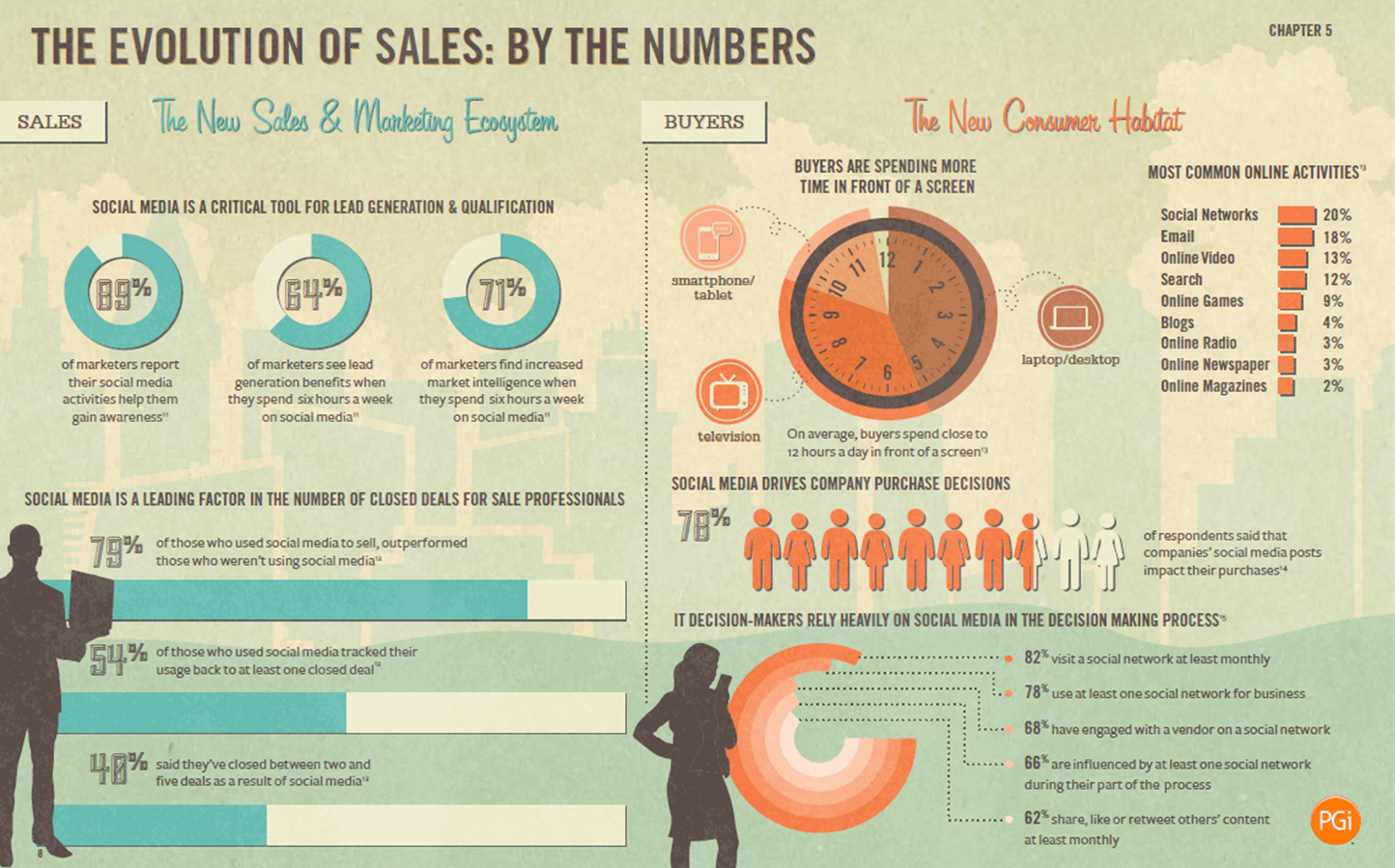


![Reblog this post [with Zemanta]](http://img.zemanta.com/reblog_e.png?x-id=7488322b-4771-4aa8-b3a7-1b072c8ec076)


 Content marketing is a great way to attract and convert ideal customers for your business. While SEO and search traffic are key components of content marketing, they are not the whole picture and it takes time to see those kind of results. That’s where being proactive with your content can speed up the process of attracting those ideal customers back to your marketing hub (your website) to capture their contact information and enter them into your lead nurturing sequence.
![15+ Ways to Lose Your Twitter Followers [Infographic] image 15 Ways to Lose Your Twitter Followers](http://cdn2.business2community.com/wp-content/uploads/2014/02/15-Ways-to-Lose-Your-Twitter-Followers.png "15+ Ways to Lose Your Twitter Followers [Infographic]")
![15+ Ways to Lose Your Twitter Followers [Infographic] image 15 Ways to Lose Your Twitter Followers1](http://cdn2.business2community.com/wp-content/uploads/2014/02/15-Ways-to-Lose-Your-Twitter-Followers1.png "15+ Ways to Lose Your Twitter Followers [Infographic]")


 Too often, these days, I am hearing B2B marketers mouth claims like, ”We got this new [fill in the brand] automation tool, so now we can reduce headcount.” Or, “Once this automation system is installed, it will take our marketing to the next level.” This worries me. Marketers sometimes see automation as a silver bullet. But it’s only a tool. Marketing automation doesn’t identify your best target audiences. It can’t develop value propositions. No way will it make the tough decisions among competing investment options. I’m reminded of Mike Moran’s great book title,
  Today's blog was written by Ruth P. Stevens. Ruth consults on customer acquisition and retention, teaches marketing at Columbia Business School and is a guest blogger at


 Uncle Sam rides to the rescue
 Interesting tidbit alert! The average human attention span in 2013 was 8 seconds, according to
  Think using big data analytics to grow your company is just for large corporations? You might want to re-think that philosophy. There are a growing number of competitive analysis tools available to business owners, thanks to startup companies within the big data space. Whether you use data analysis to unearth new sales leads or you mine data firehoses to beat your competition to the punch, using data analytics to build your brand is definitely an opportunity available to the masses. Do a deep dive into the following big data startups; you just might find your competitor’s Kryptonite.
![Content Marketing History [Infographic] image contentmarketinghistory](http://cdn.business2community.com/wp-content/uploads/2014/02/contentmarketinghistory.png "Content Marketing History [Infographic]")
![Content Marketing History [Infographic] image MarketingEvolutionTimeline1](http://cdn.business2community.com/wp-content/uploads/2014/02/MarketingEvolutionTimeline1.png "Content Marketing History [Infographic]")


 Although we’re in at least the sixth decade of the Digital Era, Industrial Era knowledge, skills, and strategies still dominate the thinking and behavior of most individuals. This is particularly frustrating for consultants and change agents who have been championing the idea of social business, social enterprise, and enterprise 2.0, as


 The results of a recent survey reveal that while B2B marketers are becoming more adept at


 Follow Us
 Like Us