As a reminder, this is #7 in a series on the most ambitious and consequential infrastructure project now under consideration in our infrastructure-degraded land. It is the plan for a north-south California High-Speed Rail system, which had its genesis before Jerry Brown’s second coming as California’s governor but is now his signature project as he runs for re-election to an unprecedented fourth term. For previous installments see No. 1, No. 2, No. 3, No. 4, No. 5, and No. 6
Reinvention and resilience across the nation Read more
The big HSR news of this past week was a ruling from a three-judge panel of California's 3rd district court of appeals. Late on Thursday, the judges unanimously overturned a lower-court ruling that had prevented the HSR authority from selling bonds to begin construction of the system.
The issues in the case are, well, legalistic. For more about them you can check the thorough accounts from the LA Times, the San Jose Mercury News, KQED, and the Fresno Bee. The Bee's and KQED reports have embedded versions of the full text of the ruling.
As all the stories make clear, the ruling does not end the legal problems for the high-speed rail program, nor the political controversy about it. But the appeals court decision was widely reported as a significant step forward for the project and a win for Governor Brown. E.g. this headline from the Mercury News:
The ruling represents the second legal victory in a week for the rail program at the appellate level. On July 24, a different three-judge panel from the 3rd District ruled in the rail authority's favor and upheld [lower court judge] Kenny's approval of an environmental impact report that selected the Pacheco Pass between Gilroy and Los Banos as the preferred corridor for high-speed trains between the Bay Area and the San Joaquin Valley. The San Francisco Peninsula communities of Atherton and Palo Alto had challenged Kenny's approval of environmental work for the Bay Area-to-Central Valley section of the rail line.
For now, that is enough of the legalities. On to further reader discussion of the merits of the plan. First, from a reader in Southern California:
One of the arguments I keep running across is the idea that the High Speed train should run non-stop along the I-5 corridor instead of along the 99, which was only included to get legislators on board.
No, it runs along the 99 corridor to get passengers on board. There are a million people in the Fresno metro area, plus all the people in Bakersfield and a major seaport city in Stockton. Depending on how you count the borders, the San Joaquin Valley is home to nearly 4 million potential customers.
[JF note: see the Federal Highway Administration map of I-5 and Highway 99, at right. I-5 is in red and bypasses, to the west, most of the major cities of the San Joaquin Valley. Highway 99, shown in yellow, goes from city to city through the valley.]
And the San Joaquin Valley is in a natural cul-de-sac, cut off from the south by mountains and mired in a 19th century agricultural economy. One of the biggest benefits of the HSR project is reconnecting the Central Valley with SoCal to allow a modern economy to develop.
While limiting the number of stops helps keep the average speed high, providing more connections helps keep revenues high. The train has to at least serve the big five; Bakersfield, Visalia, Fresno, Modesto and Stockton; plus possibly Merced.
Asking the people of the Central Valley to drive to their destination to board the train is not going to improve the transportation options for the people who could be the key to profitable ridership.
And now, from a reader who was traveling in Europe as he sent the message. He responded a comment from a previous reader, who had said: "The difference of HSR in Europe and Asia to the US is the access to the stations: European cities were built around train stations: see Frankfurt, Hannover, London, Amsterdam." This latest reader, Robert Mahnke, replies:
I don’t know why this sentence really bugged me, but perhaps it’s because it reflects a mistaken belief that we are doomed to live in poorly designed cities because it’s our birthright, rather than a choice we have made.
I am in Brussels, and arrived here by the Eurostar last night after spending several days at the St Pancras Renaissance Hotel in London, located on top of St Pancras station, so right now I am very much appreciating the planning decisions made around rail in Europe.
Of course, most European cities were *not* built around train stations. Londinium was the capital of Roman Britannia. Frankfurt, Hannover and Amsterdam all date from medieval times. Steam trains were a nineteenth- century innovation. To build train stations in these cities surely involved expensive, disruptive engineering projects. (Conversely, American cities like Denver, Phoenix and Tulsa *did* grow up around railroads.)
Amsterdam is an example. Amsterdam Centraal station was built in 1889. In his history of the city, the Dutch journalist Geert Mak laments the decision to build it essentially in the city’s harbor, blocking the city’s waterfront on the IJ. [JF note: I was in Amsterdam last week when I received this message; the IJ, pronounced roughly "eye," is the lake/bay to the city's north.] Since then, reclamation projects have filled in much of the IJ around the city, so modern maps make it hard to see what he means, but here is a 16th-century view of the city:
The perspective is from over the IJ — reflecting that Amsterdam’s trade was with the sea (and the Amstel River), not over the swampy land. If you look at a modern map (the IJ is to the north and west), you’ll see that the train station was built in the harbor, cutting off the city from the IJ:
So as Mak writes, it was a large and hard choice to put Amsterdam’s train station where it is.
Amsterdam Centraal is not at the center of downtown, surely because it would have been so disruptive to site it there. Typically, one doesn’t find train stations at the very center of cities. For older cities, it’s surely because the demolitions that would have been necessary didn’t make sense. So you find multiple rail stations at somewhat more peripheral locations, e.g., in London:
Which is to say that European planners confronted the same problem of building railroads into a built environment that HSR rail now faces. US cities that predate the railroad are similar. I grew up in Boston, where you go to North Station for a train to Portland and South Station for a train to New York.
Much of the reason that it feels like some of these cities were built around the train stations is that later public transit serves them so well. When I go to Amsterdam, I can take HSR from Brussels or Cologne and get onto a tram, and if I then fly out of Schiphol, there’s a fast and convenient train from Amsterdam Centraal right into the airport terminal. When I landed at London Heathrow the other day, I got right on the Underground’s Piccadilly line and got off at St Pancras / Kings Cross station, and my hotel was next door. (And not every European city does it right. When I fly to Berlin, I have to take a cab from the airport. But getting it right is not a uniquely European phenomenon. You can take the El in Chicago right to an O’Hare terminal.)
It is possible to “retrofit” cities to make this work. The Silver Line didn’t exist when I last lived in Boston. I flew back and forth from SFO to Logan on a recent weekend to bring my kids to their grandparents. I got on a Silver Line bus a curbside, and it took me via dedicated lanes to South Station, where I got right on the Red Line to Cambridge. When I went back, it worked just as seamlessly.
California’s struggles with HSR make me wonder if our political system gives too much power to those who would block public-works projects. That said, I will also say that I have been in both Singapore and Beijing recently, and in both cities it seemed to me that the political system makes bad redevelopment too easy. Two cities apparently at opposite ends of the political spectrum, but both downtowns were full of massive projects which made no sense to a pedestrian at street level but might have looked great to someone arriving in a limousine.
Still to come in the series: some reader mail critical of the project, some other international and historical comparisons, and my own "this I believe!" explanation of why on balance I think this is an investment worth making and a risk worth taking for the state.
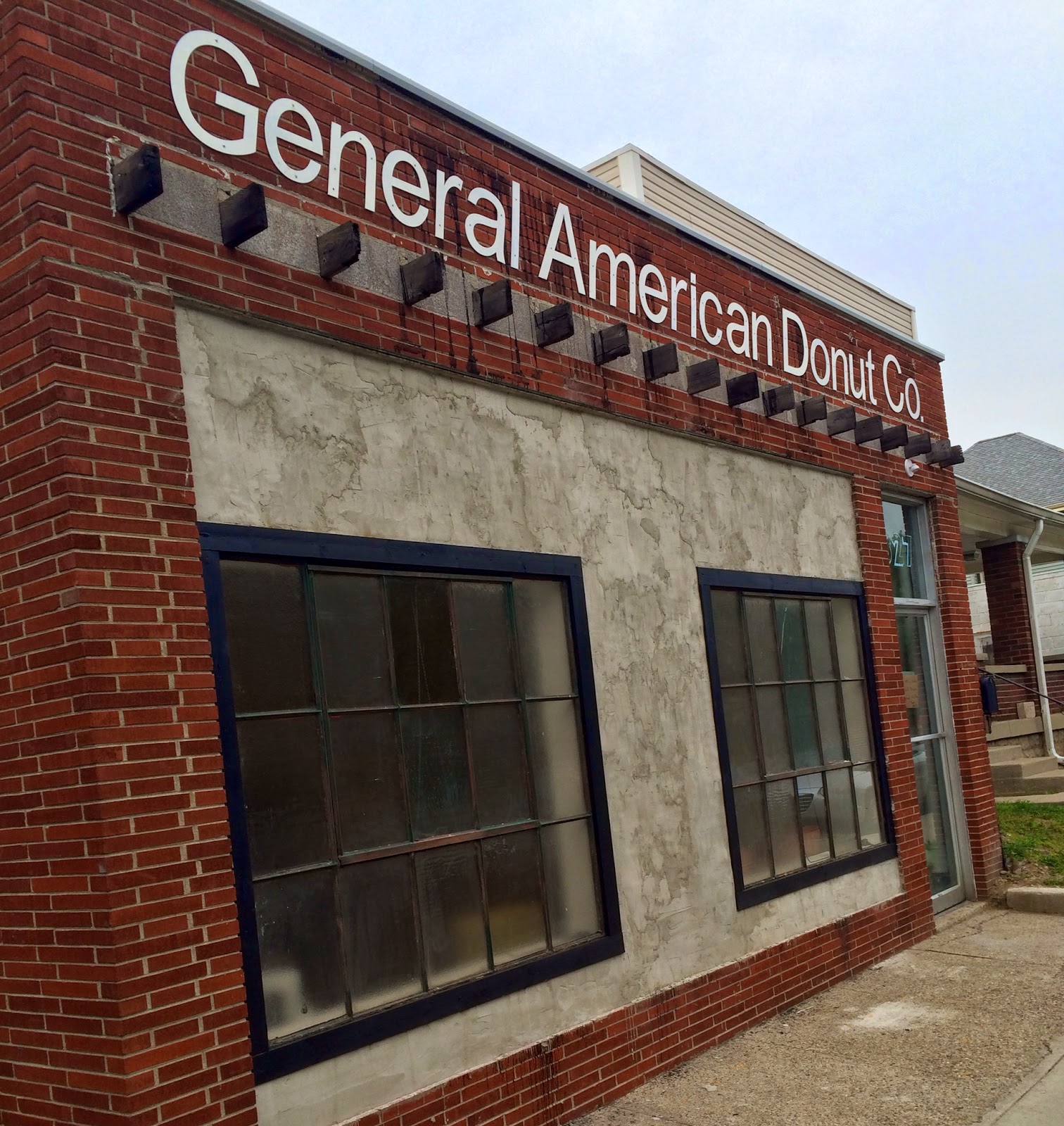
When it comes to donuts, Indy is a city divided. There are die-hard Taylor’s Bakery fans, Boyden’s Bakery devotees, and east coast transplants who will only eat Dunkin’ Donuts. And don’t forget about Long’s Bakery, whose donuts have an almost religious following. But the folks at General American Donut Company hope to unite the Circle City with their creative take on breakfast goodies.
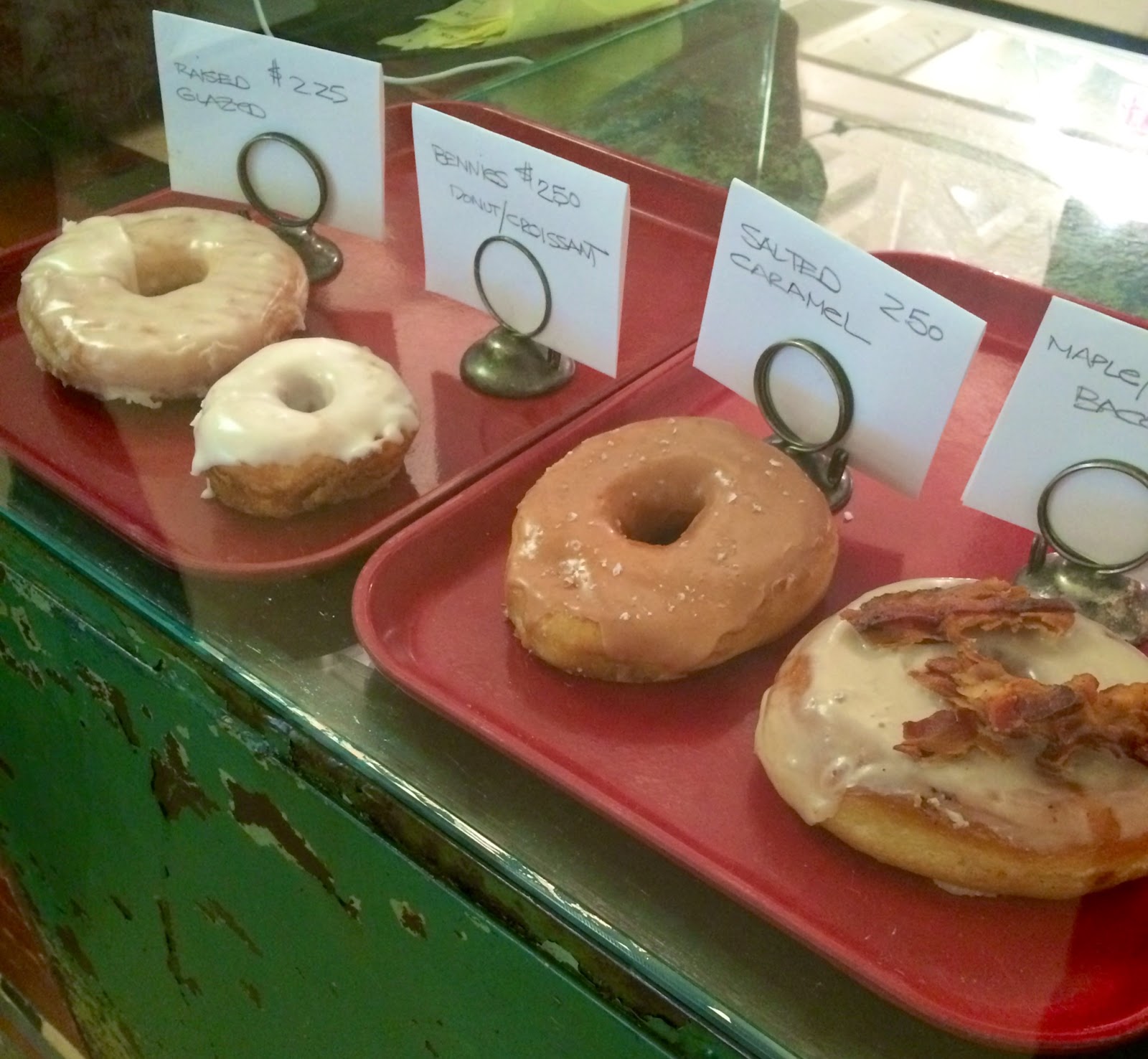
General American Donut Company is Indianapolis’s first craft donut shop. Their menu features inventive varieties like Peanut Butter & Jelly and Crème Brulee, classic flavors like the Raised Glazed, and The Bennie—GADCo’s version of the “cronut.” But the initial draw for me was the Stumptown Coffee. This rich, flavorful java hails from Portland, Oregon and tastes great as brewed coffee, espresso, or bottled as a “Cold Brew.” The cup I drank had a rich, smooth taste that did not disappoint.
I may have come for the coffee, but I quickly realized that the donuts were worth sticking around for. I wasn’t alone—on their opening day, the line to reach the glass bakery case stretched out the door. Patrons who braved the almost hour-long line were rewarded with warm, melt-in-your-mouth treats. I ordered a Salted Caramel donut, a S’mores donut, and a vanilla Bennie. With a medium coffee, my total came to just under $10. While this seemed a little steep for three donuts, these pastries were substantial and much larger than most donuts—I only ended up eating about half of each one, leaving me with a terrific late-night snack.
The S’mores variety had a cake donut base filled with homemade marshmallow fluff and topped with a thick chocolate icing and a graham cracker. Talk about decadence! The Bennie had buttery, flaky croissant layers but was glazed like a donut. My absolute favorite was the Salted Caramel. This yeast donut was topped with subtle caramel icing and beautiful flaked sea salt. I go gaga over anything salted caramel, but this was absolute perfection. The caramel had a rich flavor, but it didn’t overpower the delicate flavor of the donut.
If there is an area where General American Donut Company missed the mark, it was in décor and ambiance. The bakery is located in what appears to be an old garage that has been painted a bright white inside. The furniture is a hodgepodge of old tables and chairs, many of which looked rickety and uncomfortable. The walls were scantily decorated with kitschy Americana deer. I normally love this shabby chic style, but if you’re going to do it, you really have to commit. A handful of paintings from your grandmother’s basement and a deer statue don’t cut it. I couldn’t see myself cozying up here to study with a cup of coffee.
What General American Donut Company lacks in atmosphere it makes up for with an outstanding product. Unlike craft donuts I’ve had in other cities, these didn’t feel gimmicky or as if the donuts themselves took a backseat to crazy flavors. GADCo got basic donuts just right, then dressed them with innovative but crowd-pleasing toppings and fillings. Indianapolis may just have a new favorite donut.
We celebrated our honeymoon in beautiful Cozumel recently and this week, I woke up craving a torta (Mexican sandwich with deliciously crusty bread and your choice of meats). I hopped in my car around lunch time the other day and found myself in Indy's NW side.
Antojitos Domis caught my eye, located next to several Mexican supermarkets. The menu is primarily in Spanish, and really, they offer only a select few items -- tortas, tacos, burritos, and chilaquilles. The place was busy, and everyone was ordering tacos! The restaurant is very small and clean, and I felt welcome despite knowing only a few Spanish phrases.
I ended up ordering 3 tacos and a side of guacamole. All the tacos at Antojitos are meat-heavy with onion and cilantro on top. If you've only eaten tacos smothered in cheese and sour cream, try this more authentic version next time. Each taco was a reasonable $1.99.
The first taco was chorizo; it was salty, fatty, and quite delicious. Chorizo is often served at breakfast time, and as such, it wasn't listed as an option for tacos. The server was happy to accommodate my request, luckily. The second taco was pastor (pork), but wasn't nearly as juicy or as flavorful as I have had elsewhere. Though the menu said pineapple was mixed with the pastor, I couldn't find any. Pastor is my absolute favorite thing to order in a taco, reminiscent of shawarma meat. Last, the chicken taco was quite good -- lots of smoky flavor and very tender. All the tacos were served in freshly made corn tortillas with lime on the side.
Antojitos brings two salsas in squirt bottles (smart!!) - one green and one red. These were sensational -- spicy and full of flavor. The guacamole was freshly made, but I suspect mixed with mayo or sour cream as it was very creamy.
Three tacos made to order with a heaping portion of guacamole was less than 9 bucks. I'll definitely be back to try a torta sometime soon. No complimentary chips and salsa offered on my visit -- but with prices this low and servings so large, I doubt you'll go hungry.
Hi Indianapolis Restaurant Scene readers! I am Megan from the NapTownDiva Blog. I am filling in for Erin today who is taking some time off to let her wrist heal. Poor thing! No fun to have a broken bone in the middle of summer. Lots of well wishes headed your way, Erin!
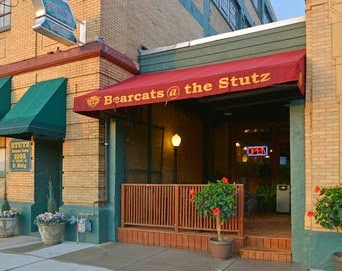
Just like Erin I love to eat at local Indy restaurants. I live/work downtown and consider myself an expert of eateries in this area. A hidden gem I would love to share with you is Bearcats. It is located just south of 11th St. and Senate Ave. in the historical Stutz Building. Quick history lesson for you if you haven't heard of the Stutz Building. Harry Stutz owned and operated Stutz Motorcar Company here from 1911-1919. It was here he built the 'Bearcat' which raced in the very first Indianapolis 500. Talk about history! Now the building is home to all kinds of businesses including Bearcats Restaurant.
I frequent Bearcats as it not too far from where I work. Only a block east of the canal. They are open for breakfast, lunch, and dinner and have a nice bar area. They have a variety of food such as soups, salads, sandwiches, wraps, and burgers.
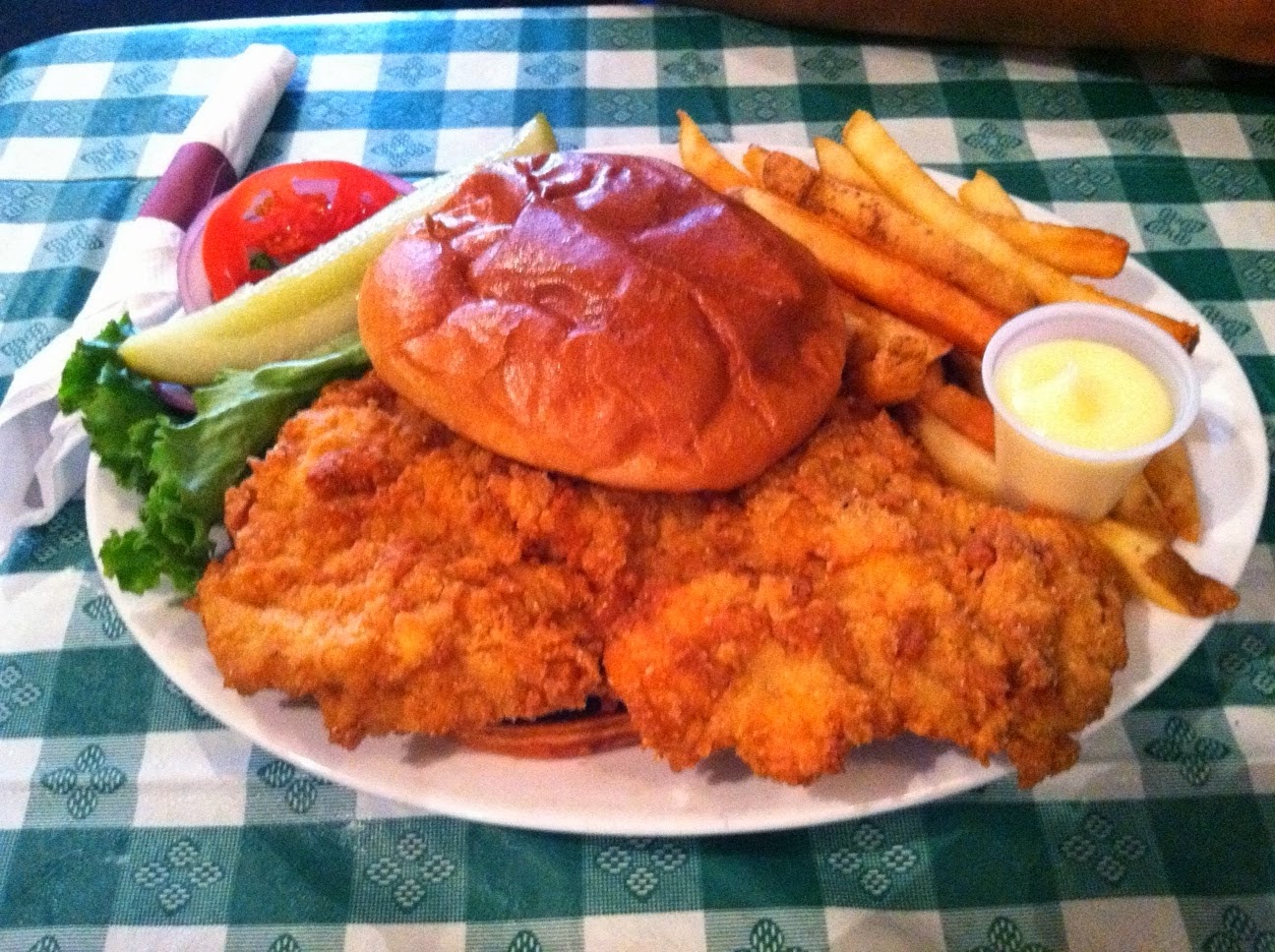
I would say their pork tenderloin sandwich ($7.99) is their specialty. It is big enough to make 2 sandwiches! My friend enjoyed this feast and had plenty of leftovers. I have had this sandwich before and it is the best tenderloin in town!
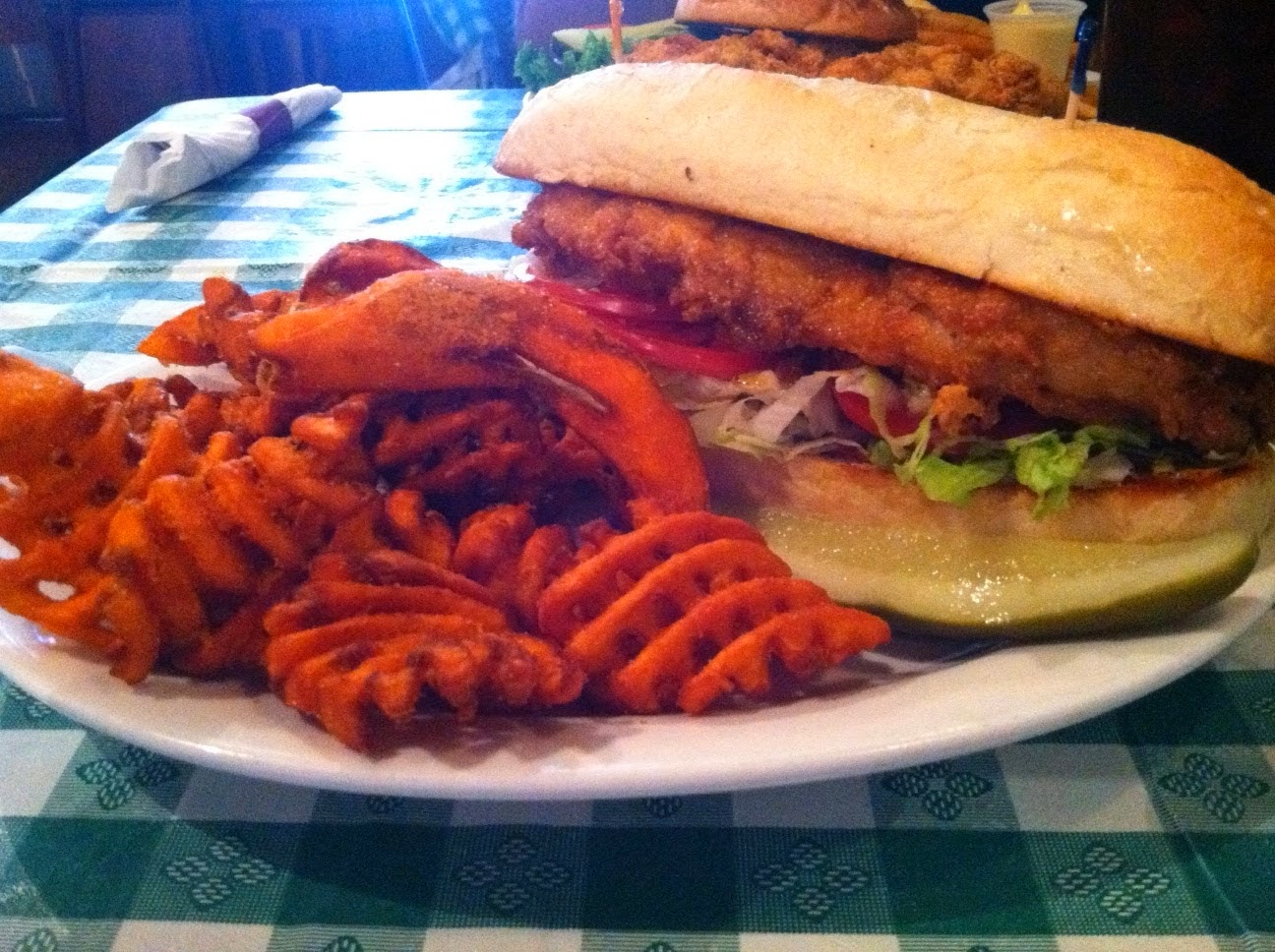
I decided to try one of their new sandwiches, the Grouper Po' Boy ($8.99). Oh man was it delicious. So fresh and that breading is out of this world!!! It was topped with chipolte mayo and onion straws. It just was amazing! And those sweet potato waffle fries. They really topped the meal off.
Another one of my favorites here is their Endless Soup and Salad. For just $7.99 you get a bottomless bowl garden salad with all the fixins. You also choose from one of their 3 soups which change daily. My co-worker and I like to go here when we are in the mood for a good soup. Their onion rings and breaded mushrooms are heavenly. I'm telling you anything batter dipped here is going to make your taste buds dance. Their bar offers 16 beers on tap including some from Indiana.
If you decide to give Bearcats a try, let me know what you think. Please connect with me at NaptownDiva Blog. Happy Eating, Indy!
El Sol de Tala, a staple on East Washington Street for several decades, shut its doors earlier this month amid a court dispute between the restaurant's owner and his landlord.
Back on a road trip to meet up with our friends from Cincinnati—meeting halfway between—this time we decided to try Wagner’s Village Inn in Oldenburg. This place was remarkably similar to the Fireside Inn, both in style and menu. The bar area was a little nicer and bigger I would say though. Our server was very friendly and patient with us (it always takes us awhile to get our order in when we’re all together).
Naturally, the plan was to order the fried chicken, which we did, but of course we needed some other fried things first right? And always on the quest to find the perfect chicken livers, we ordered a starter of a mix of chicken livers and gizzards. Again, I was disappointed because they were pretty dried out. I think I may be giving up on the deep fried chicken livers (that is unless one of you guys can point me in the right direction). We also had a starter of the fried mushrooms, which were the better choice even though I am guessing they weren't housemade. Singe your mouth hot, but decent and served with a side of ranch.
The chicken was served family style and three of us ordered it. You get a big ol’ plate of chicken and it was good. Really good. You could really tell they put some seasoning into the coating—lots of peppery kick. It was smoking hot and fresh and had a super crispy skin. Totally worth eating and definitely in the top 1/3 of fried chicken. It came with lots of included sides. I’d say the highlight of the sides were the dinner rolls—super soft and served hot. I am pretty sure they weren’t making them in house, but for rolls, they were just right. They were my favorite side. The coli slaw was your super traditional, just shredded cabbage and carrots and a lot of the classic creamy sauce. The mashed potatoes were a bit thin, but served the purpose for me, which is the thing to dip your chicken into. There were green beans too, but I didn’t eat them. They were the canned variety and I’m just not into that. I’d totally go back for the chicken though.
The town of Oldenburg is an old German town and has a lot of charm on its own as well. We took a little walk around and saw a couple other places to check out on a later date. One was Pearl Street Pub. Anyone been there?
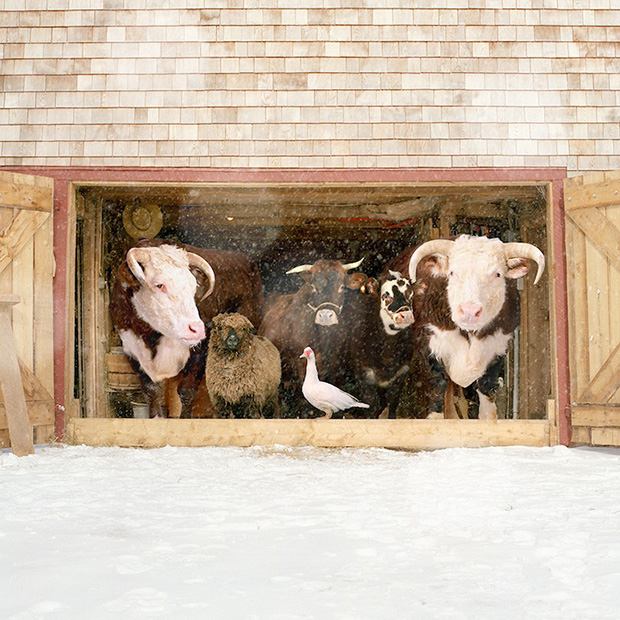
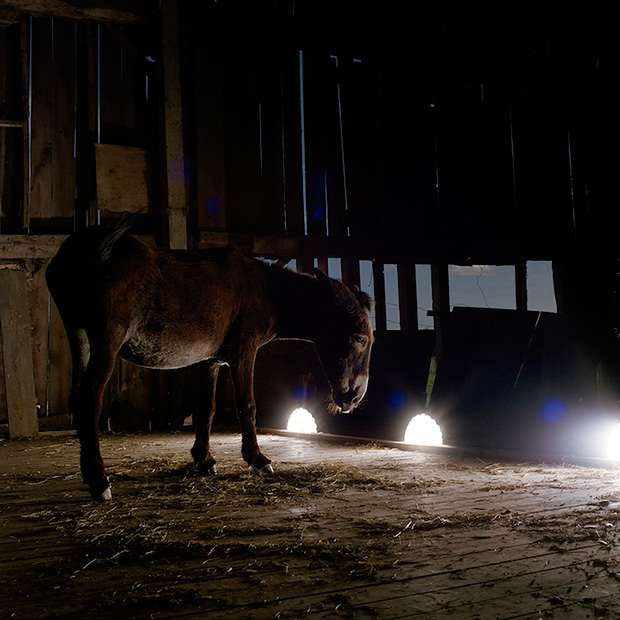
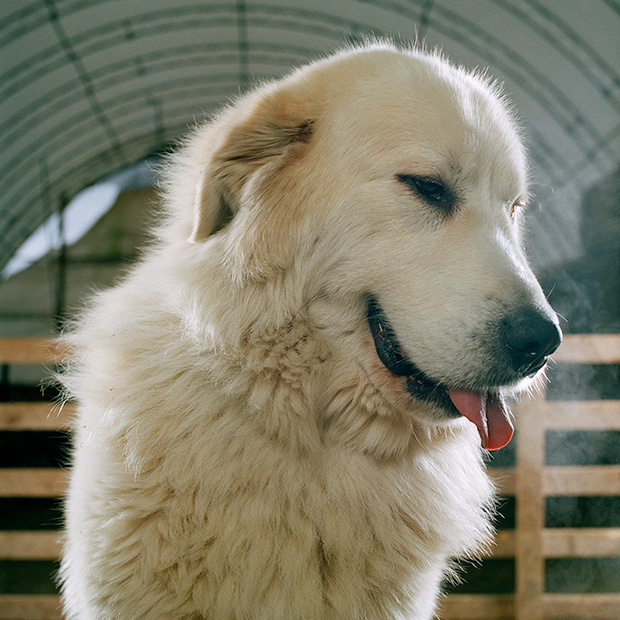
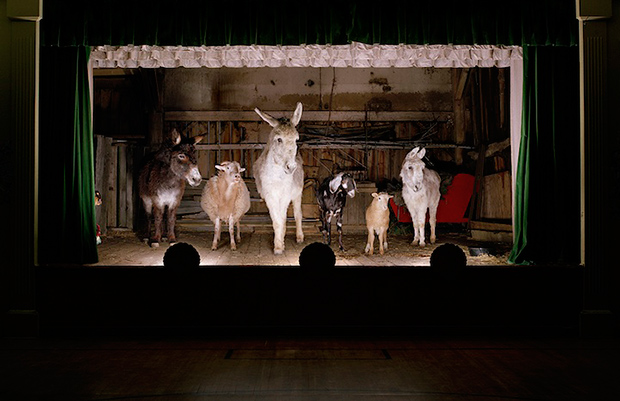
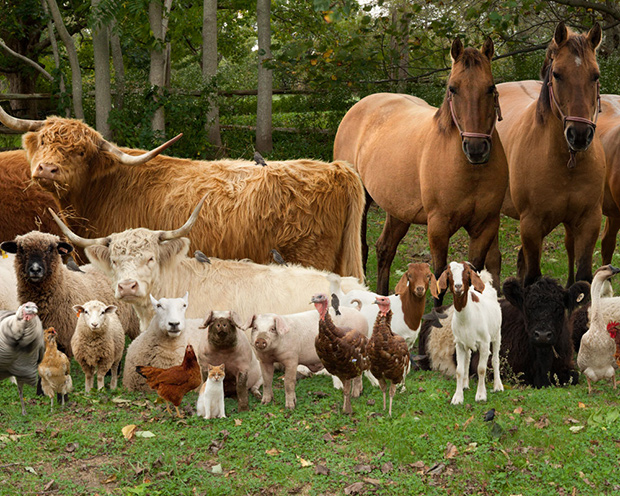
With his touching series The Farm Family, Brooklyn-based photographer Rob MacInnis shoots barn animals in the style of fashion magazine spreads. Freeing the soulful creatures from the context of the lowly barnyard and challenging rituals of human consumption, he wittily and heartbreakingly captures sheep, cows, and goats in Annie Leibovitz-inspired portraits and panoramas. Staged between bales of hay and a snowy doorway resembling a dreamy film screen, the humble beasts find themselves suddenly under floodlights, before a camera that catches their sweet dignity.
Here, MacInnis traces patterns of consumerism, questioning the ways in which we devour both animal lives and glossy fashion imagery. Like the celebrities that grace the pages of Vanity Fair, the animals betray human vulnerabilities. As if waiting backstage before a final performance, they bow their heads as rays of light stream into the barn like spotlights. Creatures of all sizes are meticulously lined up according to color and shape, each staring anxiously ahead at some invisible audience. These animal bodies that we too often take for granted are seen here like stars forgotten by the adoring public by some horrible error, gazing into the camera and painfully yearning for our recognition. No longer objects to be consumed, they exist within complex, meaningful communities not dissimilar to our own.
Indianapolis Power & Light Co. has awarded the engineering, procurement and construction contract for a new natural gas plant in Martinsville. Texas-based CB&I (NYSE:CBI) is expected to begin on-site construction next year and complete the project in 2017.
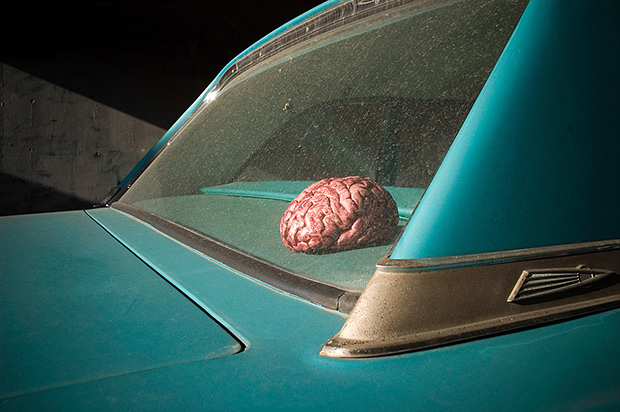
Sometimes, there is nothing more bizarre than the everyday. In 2006, Andrew Waits was just beginning in photography and spent a great deal of time aimlessly wandering Seattle looking for inspiration. The scene photographed above was entirely unplanned, Waits happening upon the old car and its strange back seat ornament hiding in an alley carport. Aside from being a perfect moment of color, light and composition, the image feels imbued with a foreboding intrigue far more meaningful than a chance encounter. The photo has long been one of Waits favorites, becoming a part of his conceptual series We Are What Separates. It is these transcendental moments of serendipity that keeps photographers coming back again and again, the lens somehow seeing even more than we originally intended.
I know nothing about you, sir Indianapolis, but I like your vintage finds. Lets troll …
1. $50 Vintage Desk Lamp Not a show stopper but a super cute architectural lamp that could work in your modern space. It kinda looks like a sad robot but maybe he just needs a good home.
2. $15 Vintage Steelcase Desk Chair Always a classic. This chair could use a recovering, but with $15 its off to a good start. I’d think that it would be under $100 (and could be as cheap as $40) to recover, with only needing a yard of fabric. Good deal.
3. $100/set of Breuer Arm Chairs These guys need recovering and refinishing, but they are classics and can be really pretty and comfortable. You’ll have to invest a bit (maybe $60 per chair + refinishing) but could be worth it.
4. $800/ Set of Eames Shell Chairs Expensive, sure, but BEAUTIFUL. That color is insane and their classic shape is something you can’t get bored with. Snatch those up.
5. $75/ Set of Hairpin Stools So cute. I was just saying yesterday that the hairpin movement might be reaching its peak (not to say that I don’t still love a classic hairpin but I’m just ready to not see them EVERYWHERE). But these guys have the foot rest ring thing which makes them look totally vintage and slightly more unique. Plus they are a great price. Too bad one of your friends will be sitting at least a foot higher than the others. But maybe there are three of you that are really tall and you have a really short friend and you’ve been looking for a way to even all of you out – emotionally and physically.
6. $150/ Set of Vintage Folding Chairs I have a thing for vintage folding chairs. I think it’s from living in New York and loving/needing temporary furniture (furniture you can fold up and put away when people aren’t over so it doesn’t crowd your 200 square foot apartment).
7. $45 Pair of Woven Mid Century Chairs I’m never sure what to do with two chairs – throw them around a breakfast table, or flank a credenza with them, but these two are pretty cute for the price.
8. $35/e Folding Cane Chairs Again with the folding chairs! These are real cute, though. A little more unique. Put them around a Saarinen table (or the knock off from CB2 or Ikea) and call it a day.
9. $40 Pair of Industrial Stools If you got some industrial style going on then these two adorable stools might be for you. Especially for $20 a pop.
10. $900 Vintage Leather Sofa Does a bear buy vintage in the woods? YES!!!! Buy this. I realize its $900 which is not nothing but its worth it for this beauty. It looks like the leather is in the perfect worn condition, the shape is interesting (are you a Chesterfield or are you mid-century?) and while $900 is a lot of money, this would be at least $2400 in a store.
11. $15 Wire Patio Chairs Now next to that sofa these are looking kinda puny and sad. These chairs are easy to find and therefore easy to create a set. They are also easy to spray paint. I’ve bought a lot of them before for an outdoor project because I think there shape is cute and modern. For $7.50 each that is not bad, folks.
From a truck, a bowl, or straight out of the carton…we all scream for ice cream! Well today, we’ve got the scoop on how you can make a benefit packed, dairy free, super healthy version of this frozen favorite. You’ll never know the difference! Fresh cherries are the highlight of today’s recipe and we can’t wait to tell you why.
We used frozen bananas as a base for this faux ice cream. Something magical happens when you blend frozen bananas. It adds that creamy texture of ice cream without having to use cream! It’s totally genius and completely customizable. You can add any fruit you like and the bananas take on any flavor they’re blended with. The options are endless. Here’s what you’ll need for our cherry chip version:
4 frozen bananas
1 1/2 cups fresh pitted cherries, frozen
1/4 cup almond or coconut milk
1/2 cup chopped dark chocolate (we used 80%)
THE PROCESS:
1. Peel your bananas and slice your cherries to remove the pits
2. Put the bananas and cherries into the freezer (3 or 4 hours)
3. Place frozen bananas, 1 cup frozen cherries and almond milk into a blender and blend until smooth
4. Pour into a container and mix in 1/2 cup chopped dark chocolate and remaining 1/2 cup of sliced cherries. (We sprinkled some on top as well for the pretty factor!)
5. Put the entire container into the freezer for at least 1-2 hours
6. Start scooping! (Two scoops please!)
So let’s talk about our delicious friend, the fresh cherry..
There are so many amazing varieties of fresh cherries out there: Bing cherries, Black cherries, North Star cherries, Rainier cherries; all with great health and beauty benefits! Cherries have super high antioxidant levels. For example, the the Montmorency cherry has one of the highest antioxidant levels of any fruit with 17 different antioxidant compounds present. Woah! Antioxidants are vital to the body in order to fight free radicals…the biggest causers of aging. Free radicals are the pits! (We couldn’t resist). Tart cherries are high in melatonin which is a natural way to help that much needed beauty sleep come to fruition. (We know it’s tough to come by!) Cherry juice is also rich in vitamin A and its antibacterial properties remove toxins from the blood and fight bacteria trapped under the skin.
The month of June is the peak of cherry season! We plan on taking advantage of these sweet benefits all month long.
Nice stems! Plan on trying this recipe out? We want to see pics! Instagram: @thebeautydept Twitter: @tbdofficial
General Motors Co. (NYSE: GM) says its Fort Wayne Assembly plant is now the first North American automotive plant to generate electricity from landfill gas. The effort is part of a $24 million initiative that includes Fort Wayne and a Michigan facility. Our partners at 21 Alive WPTA-TV report the improvements are expected to save the company approximately $3 million per year.
DePauw University has announced New York Times columnist David Brooks will speak on the Greencastle campus as part of this year's homecoming events. He will deliver a Timothy and Sharon Ubben Lecture in October.
A well-known Major League Baseball pitcher from the 1970s and 1980s will return to his hometown Sunday to deliver a high school commencement presentation. Tommy John will speak to the Terre Haute North Vigo High School Class of 2014 more than 50 years after he was denied the chance to give an address as Gerstmeyer High School's 1961 valedictorian.
“Do Fathers Matter?” cites research that shows that fathers have an outsize effect on their children’s vocabulary, and that their presence can delay daughters’ puberty, among other findings.
The first medical facility located at the Indiana Government Center is now open. The new Health and Wellness Center is a collaboration between the state and Indiana University Health.
A team that developed an app designed to help local governments repair potholes more quickly has taken top prize in the Indy Chamber's Indy Civic Hack Day. The platform allows smartphones to track potholes by sensing bumpy roads.
Merrillville-based Northern Indiana Public Service Co. and Indianapolis Power & Light Co. are proposing programs designed to replace the state's Energizing Indiana initiative. The plans still need approval from the Indiana Utility Regulatory Commission.
The executive director of the Hoosier Environmental Council says potential federal regulations aimed at slashing carbon pollution from power plants will allow Indiana to become a "major market" for alternative energy innovation. Jesse Kharbanda believes the Environmental Protection Agency plan would increase energy efficiency and reduce electric bills.
Indianapolis homeowners have received a scare-sell insurance pitch about their water-service lines that appears to carry the endorsement of former New York City Mayor Rudy Giuliani.
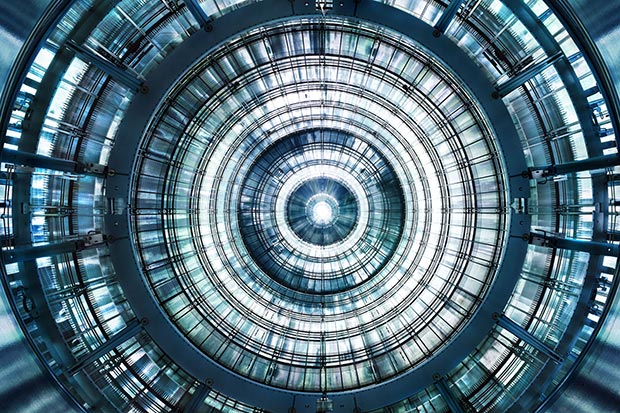
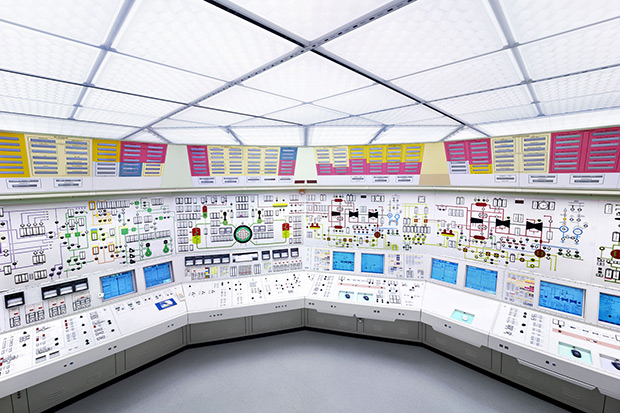
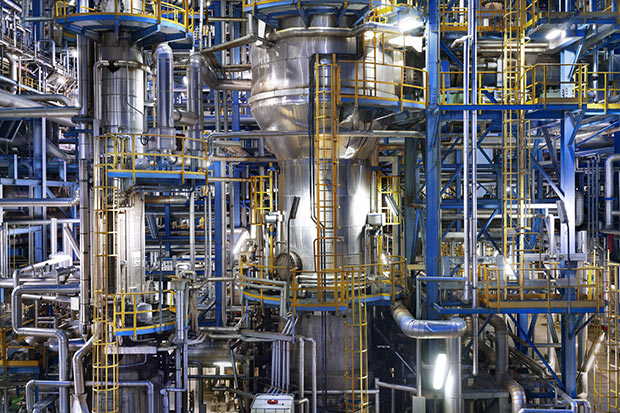
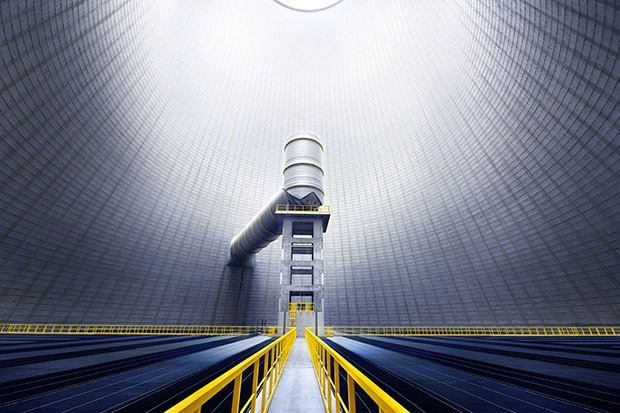
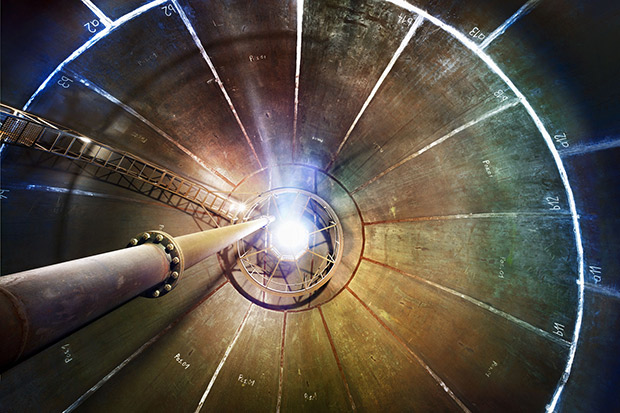
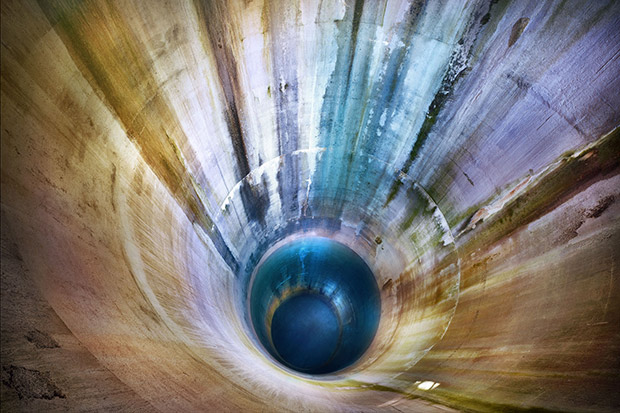
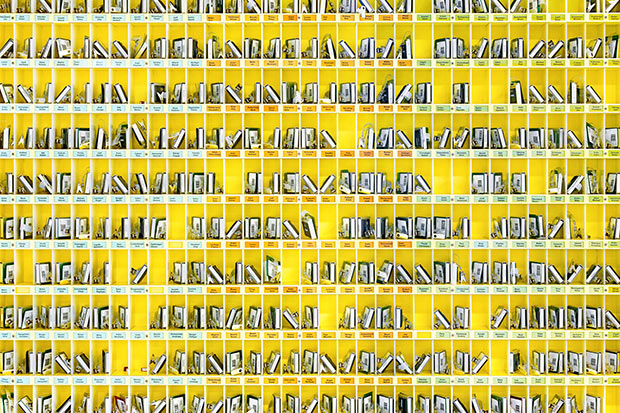
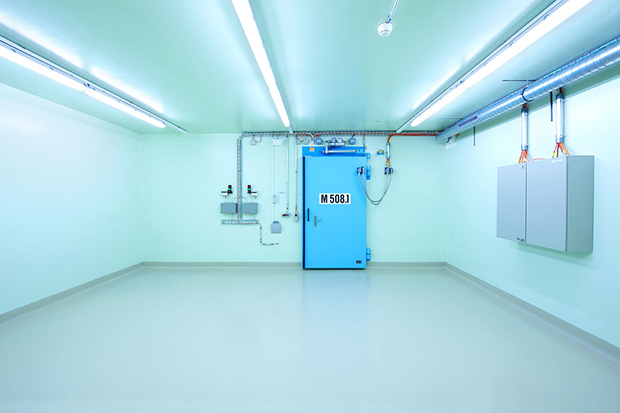
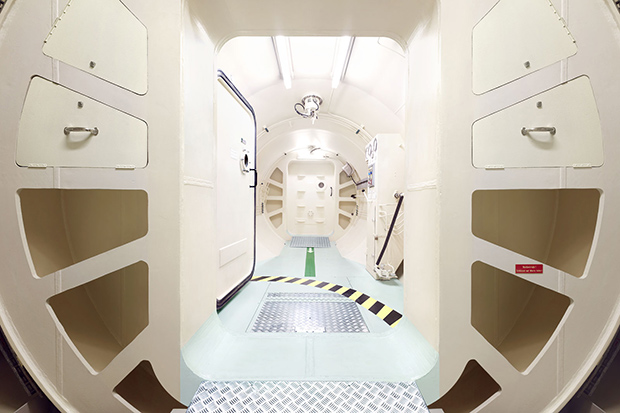
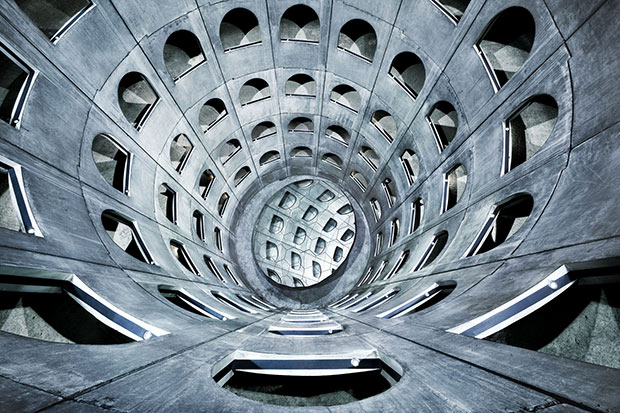
Nuclear power plants are among the most exclusive of spaces, kept under lock and key to guard against disastrous accidents or terrorist attacks. For his series Space and Energy, Zurich-based photographer Luca Zanier gains access into the impenetrable depths of nuclear and coal-fired power stations, cataloging their high ceilings and endless corridors. Through his lens, these plants, which fuel our daily lives, resemble the cold, sterile sets of Stanley Kubrick’s 1968 classic “2001: A Space Odyssey.”
In these power plants and nuclear waste storage facilities, Zanier discoverers an elegant artistry. Much like the duomo of a sacred cathedral, twisting, monolithic ceilings emanate color and light, ascending towards infinity. Though absent of human figures, the space seems to buzz and hum with energy. Marrying the objectivity of the photographic works of artists like Berndt and Hilla Becher with a profound sense of awe, Zanier presents these monolithic spaces as both essential and chilling. Though necessary for modern life, the plants, with their electric shapes and hues, seem vaguely portentous, bringing with them a new—and uncertain— dawn of technological advancement.
The Indiana Office of Utility Consumer Counselor is accepting written comments on a proposed rate hike for Indianapolis Power & Light Co., which would support the city's proposed electric vehicle sharing program. Plans call for $16 million in startup costs to be recovered through a 44 cent increase in the average residential customer's monthly bill.





 “I will admit I had to be told by my law clerks, what’s this Notorious.”