Shared posts

17 Aug 06:58

Deadly swatting increasing on Twitch; alarmed streamers press for change

by Ashley Belanger
Deadly swatting increasing on Twitch; alarmed streamers press for change

Enlarge (credit: Vesnaandjic | E+)

Twitch has faced scrutiny for how it helps streamers targeted by extreme hate campaigns. Last year, the livestreaming service started suing users conducting “hate raids” that rely on bots to spew a continual barrage of hate speech. These raids, Twitch’s lawsuit says, have been “targeting black and LGBTQIA+ streamers with racist, homophobic, sexist, and other harassing content.” Now, vulnerable users are hoping that Twitch will use its heft to stop some of the deadliest attacks affecting marginalized users on the platform: swatting that has reportedly been increasing since 2015 and that now happens multiple times a week.

These swatting attacks are conducted by anonymous persons making prank calls to police, falsely reporting emergency circumstances (like an armed potential mass shooter or a hostage situation that doesn’t exist) in order to get SWAT teams to descend, guns out, on a Twitch streamer’s location. The Washington Post reported this week that these swattings appear to be intensifying and can be traumatizing for targeted Twitch streamers. One trans Twitch streamer told the Post that police in London aimed an assault rifle at her face.

Official attempts to prevent swatting

Back in 2017, a person who was an unintended target died after a swatting sent officers to the wrong address. The Twitch user who set up that swatting, Casey Viner, was sentenced to 15 months in prison, while the man whom Viner hired to place the prank call, Tyler Barriss, was sentenced to 20 years.

Read 11 remaining paragraphs | Comments

14 Jul 12:43

Intel’s Islay Canyon Mini NUCs Available: Whiskey Lake, Radeon 540X, 8GB LPDDR3

by Anton Shilov

Several retailers have started sales of Intel’s NUC 8 Mainstream-G systems previously known as codenamed Islay Canyon. The ultra-compact form-factor PCs pack Intel’s 8th Gen Core i5/i7 processors for laptops, alongside AMD’s Radeon 540X discrete graphics, a rather rare combination.

The Intel NUC8i5INH/NUC8i7INH-series compact PCs come in conventional 4.6-inch × 4.4-inch chassis and is powered by Intel’s quad-core Core i5-8265U/Core i7-8565U CPU accompanied by AMD’s Radeon 540X discrete graphics processor (codenamed Lexa, based on Polaris architecture, featuring 512 SPs) with 2 GB of GDDR5 memory. The UCFF PC are equipped with soldered-down 8 GB of LPDDR3-1866/2133 DRAM.

The key selling feature of Intel’s NUC 8 Mainstream-G systems is a combination of Intel’s low-power Core i5-8265U/Core i7-8565U (Whiskey Lake, 15 W) and AMD’s discrete Radeon 540X that provides higher graphics performance than Intel’s UHD 630 Graphics in games, but there is a catch. As far as media playback is concerned, Intel’s modern iGPUs have numerous advantages over AMD’s Polaris, which includes VP9 10-bit decode, support for sophisticated copyright protection methods that require Intel’s SGX, and so on.

Depending on exact model, different versions of Intel’s NUC 8 Mainstream-G systems will come equipped with Intel’s Optane Memory caching SSD or a 128GB/256 GB M.2 PCIe 3.0 x4 SSD, along with a 1 TB 2.5-in hard drive. Besides, there will also be barebones kits without any storage devices or software installed.

As far as wireless connectivity is concerned, Intel’s NUC 8 Mainstream-G computers are equipped with the company’s Wireless-AC 9560 CNVi 802.11ac Wi-Fi + Bluetooth 5 solution that supports up to 1.73 Gbps throughput over 160 MHz channels. On the wired side of things, the PCs have one GbE (I219-V), two display outputs (DP 1.2, HDMI 2.0b), three USB 3.0 Type-A ports, a USB 3.1 Gen 2 connector, an SD card reader, a 3.5-mm audio connector for headsets, and so on.

Leading retailers, such as Amazon, Newegg, Walmart, and SimplyNUC, already sell the new NUC8i5INH/NUC8i7INH-series compact PCs for $772 – $1075 depending on configuration. Considering pricing of the systems, it is not completely clear how Intel is positioning its Islay Canyon NUCs against its own Bean Canyon machines that are priced similarly, yet they feature higher CPU performance, similar GPU performance, and a better feature set when it comes to media playback.

Related Reading:

Source: Liliputing

12 Sep 08:22

American Chess Day Shortbread

Eight is Enough

  1. Radeon Software Crimson Edition 16.8.3 release notes
  2. Neowin: Windows 10 for PCs build 14393.105
    is available for everyone - here's what's new
  3. Reuters: Samsung mobile recovery suffers blow as Galaxy Notes 'catch fire'
  4. AnandTech: Qualcomm details Snapdragon
    821: clocks, efficiency, and IP
  5. AnandTech: hp announces the Pavilion Wave and Elite Slice desktops
  6. Neowin: Asus introduces ZenScreen, a thin
    and light 15.6" portable display on your laptop
  7. techPowerUp!: EVGA GeForce GTX 1080 Hybrid launched
  8. GSMArena: Geekbench 4 now available
    on PC, Mac, Linux, iOS, and Android

Read more...

09 Sep 10:08

AI for an Eye

by Elena Perez

While they predate the warm and fuzzy moniker that is “wearables,” contact lenses are one of the more common pieces of technology applied to the body today. But, unlike most other commercial wearable devices, corrective contact lenses have not been particularly sexy. They help us see as well as we should see and then their job ends. Or, at least, that’s where it has historically—yes, like everything from cars to shoes to refrigerators, the contact lens is about to get “smart.”

The innovation of smart contact lenses is moving in a few different directions. One notable and noble pursuit is health monitoring. Alphabet’s Verily (formerly Google Life Sciences) is doing work here, with a lens that monitors (via tears) blood glucose levels for diabetics, and startup Medella Health recently secured $1.4 million for its competitive product. Meanwhile, Swiss-based Sensimed AG, has received FDA approval for a lens that tests eye pressure for glaucoma patients. Unlike traditional glaucoma tests, Sensimed AG’s Triggerfish makes it possible to monitor eye pressure for a 24-hour period, including sleep, for more accurate assessment of a glaucoma patient’s risk of vision loss.

The contact lens has an advantage in the health monitoring space—at least compared to other wearables that didn’t originate as medical devices and don’t connect so intimately with the body—but this isn’t the only future for the smart lens. There are new opportunities for vision correction coming, as evidenced by Google and Novartis and EPGL; both teams are developing autofocus lenses in an effort to correct farsightedness. And, of course, there are a number of other innovations in the works that will appeal to our sci-fi’d imaginations, like Ocumetrics, a company that reportedly has created a lens that improves vision 3x better than 20/20. While their “bionic” lens, technically a surgical implant, has received some skepticism from the medical community, it generated a fair amount of buzz in social media. (And, understandably so; for those of us who spent childhoods watching The Six Million Dollar Man, the wait for bionic vision has been long and grueling.)

Meanwhile, Samsung recently filed a patent for a smart lens, which, according to Sammobile, “shows a contact lens equipped with a tiny display, a camera, an antenna, and several sensors that detect movement and the most basic form of input using your eyes: blinking.” This is foundational user interface stuff that sets us up for interactions akin to Google Glass, but right there on the eyeball. It leads a future where the recording of experiences becomes incidental and video games, augmented and virtual reality can be experienced without the need for bulky equipment. In this way, tech becomes more discreet—a point of interest to marketers who have relied on the showmanship of early adopters because how do you fuel word of mouth for “invisible” technology?

More provocative, however, is the potential for change in human behavior as the boundaries between our bodies and information continue to dissolve. If you think there’s no need to lock facts, figures, and trivia into memory because your smartphone is in your pocket today, wait until you can blink your way through IMDB. And how does human interaction shift when Facetime happens in your face, when we have the power to conduct background checks on the fly? (“Hello, it’s great to meet you and…um…are you browsing my Facebook page right now?”) Given the pace of innovation today, it’s not difficult to imagine a world where the smart lens gives a lawyer or student a steroid-like advantage on the intellectual playing field, or a quick lens check become the norm before, say, the National Spelling Bee—all before the next time you need to renew your driver’s license.

As all the world’s information migrates from our fingertips to our eyes, the next logical step is to introduce some level of processing of the information—artificial intelligence—in a lens. Progress here depends a lot on computer vision, the same technology that helps a self-driving car distinguish between a traffic light and a man wearing a green hat. Computer vision is one of the more intensive areas of innovation today—Slate published an interesting piece on the challenges—and naturally there are a number of innovators tackling it. This includes a Russian developer that has created an open source computer vision platform in collaboration with both Google and Facebook. It’s also likely that large scope of data acquired as a result of the first wave of camera-like smart lenses will play a meaningful role in advancing computer vision. In other words, smart lens wearers will be effectively teaching computers how to see.

But we’re not cyborgs (eyeborgs?) yet. Even as humans get more comfortable with the idea of body hacking via objects like radio frequency ID chips, there’s still something squeamish about putting technology right there in the eye.  (Cue A Christmas Story: “You’ll shoot your eye out.”) Innovations in miniaturization, like ETH Zurich’s ultra-thin circuit—50 times thinner than a human hair—help address these concerns.

There is also the powering of smart lens technology to consider—how do these things get their juice? Google’s glucose-monitoring lens would be powered by a “reader” device, such as a piece of clothing or headband that sits near the lens. Google also has a patent for solar-powered contact lens, while Sony’s recent patent includes “…sensors [that] would convert the movements of the eye into energy to power the lens.”

With these and other patents and products in the works today, it’s clear to see that both the reach and role of the contact lens is on the brink of transformation. From vision correction and enhancement to health monitoring, from entertainment to data capture and processing, the range of applications for smart lenses is vast and sets the stage for a behavioral shift on par with—if not more substantial—than what we’ve seen with the mobile device. While we’re not quite there yet, it’s a good time to start thinking about the implications—if recent advances in technology have taught us anything, it’s that big changes can happen in the blink of an eye.

18 Jun 14:25

Complaint Compliant

by BD
Grocery Store | Lexington, KY, USA

(For years our store’s deli has had meat/cheese slicing available as an on-demand service, with no additional slicing fee. More recently, many customers have been taking advantage of this, getting up to 14 or more pieces sliced at once. To hopefully put a stop to this and to save on labor costs, our corporate offices have decided to change this policy to an ordering system with next-day pickup PLUS a $2 charge per piece. There are several signs posted around our deli explaining the new policy. However we’ve had several customers either not pay attention to these signs or just think we’ll slice their order anyway.)

Customer: “Excuse me, could I get this ham sliced?”

(I apologize to the customer and explain the new rules to him in case he might not have seen the signs.)

Me: “We can still slice you order for you but it won’t be available until tomorrow morning, and there is a two dollar fee.”

Customer: “This is stupid! I live in [Town 20 miles away] and you expect me to come back tomorrow? AND I have to pay two dollars more? What are you going to do about this?”

Me: “I’m sorry, sir, there’s nothing I CAN do. Corporate is the one that started this new policy, not us. All of this is above my pay grade.”

(The customer grumbles under his breath and storms off. I think that’s the end of it but about ten minutes later I see that the same customer has cornered one of our managers. Later, as I’m about to go on my lunch break I ask the manager what happened.)

Me: *to the manager* “So, I’m guessing that guy bugged the crap out of you about slicing, too?”

Manager: *exasperated sigh* “YES! That was one of the most hard-headed people I’ve ever dealt with…”

(She begins telling me about HER interaction with the customer:)

Customer: “I just spoke with one of your associates. You mean to tell me you won’t slice when I ask anymore?”

Manager: “No, sir. Corporate changed the policy two months ago as a cost-cutting measure.”

Customer: “Well, then, what are you going to do?”

Manager: “We’re doing exactly what corporate told us to do, sir. My associate and I have explained the new rules to you.”

Customer: “I don’t think you understand…I’m complaining! I live in [Town] and I shouldn’t have to come back tomorrow!”

Manager: “No, I do understand, sir. You’re not the only one who’s had a problem with the new rules. If you have any questions or complaints, you’ll need to call HQ.”

Customer: “Excuse me, but this is supposed to be customer service and you’re being very rude to me!”

Manager: “Sir, I’m being as nice as I can be in this situation. We cannot slice for you right this minute and we’ve given you alternative options.”

Customer: “You DO understand me, right?… This. Is. A. Complaint!”

Manager: “Sir, as I’ve already explained, this is a corporate issue. If you want to complain, give them a call. There’s nothing more I can do for you at the store level.”

(Apparently, this went in circles a few more time before the customer finally stormed off.)

The post Complaint Compliant appeared first on Funny & Stupid Customer Stories - Not Always Right.

04 Sep 09:48

OSVR Updates Hardware And Software For VR Dev Kits

by Brett Howse

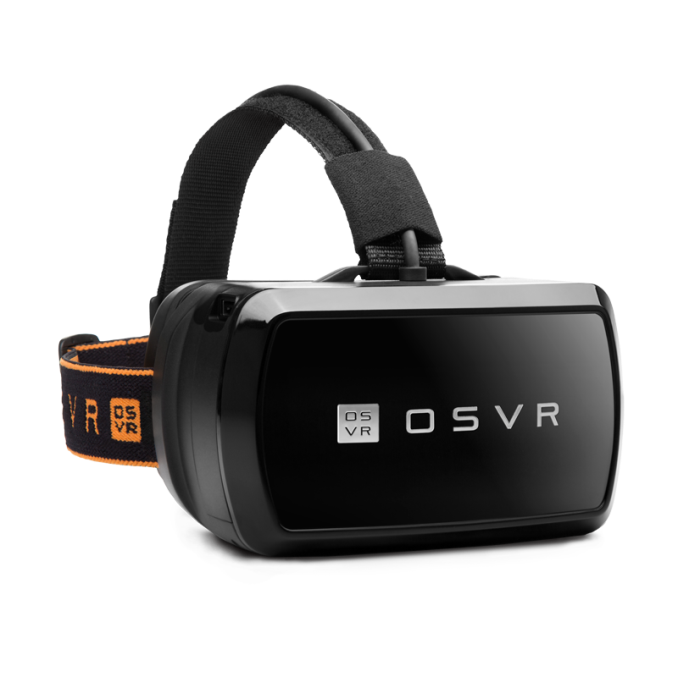
OSVR is Open Source Virtual Reality, which is trying to stake its claim in the yet unrealized Virtual Reality landscape. Today they have announced that they have updated their Hacker Development Kit (HDK) to version 1.3, and they have also updated their software to leverage VR technology from NVIDIA and to provide an application profiler.

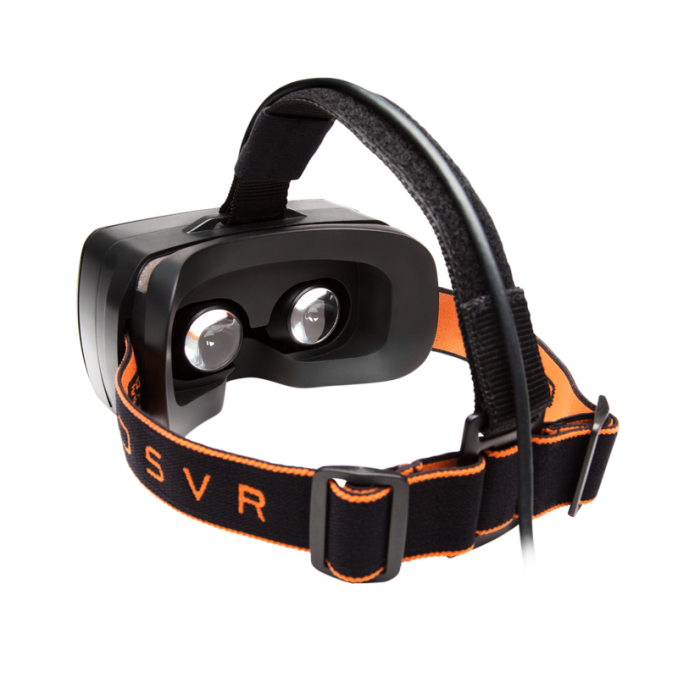
Pre-orders for the HDK v1.3 are going to go live on the first of October, and shipments will begin later in the month. The new kit improves the optics and display modules. The optics module is very important in VR because of how close the displays sit in relation to your eye. Without optics, it is very difficult to focus on something so close. The new optics expands the eyebox which provides sharper images without having to use independent adjustable lenses. The optics module will also offer individual eye focus which will let people who wear glasses adjust each eye to let them use the kit without glasses.

The display module has also been upgraded, and it is now a 1920x1080 resolution 5.5-inch silver screen OLED display which has a 120 Hz refresh rate. Low persistence is the key to VR which is one of the main reasons for OLED on these devices, and the higher refresh rate will likely allow them to do what Oculus is doing to improve persistence, which is to interleave a black frame between images.

OSVR has also worked with NVIDIA to leverage their Gameworks VR technology. Ryan covered this when it was first announced, so I will direct you there to get an overview for what Gameworks VR brings to the table. Specifically for OSVR they have pointed to a few parts of this technology which they are leveraging. Direct Mode lets the NVIDIA driver treat the VR headset as a head mounted display rather than a traditional PC monitor which helps with plug and play support and compatibility. Front Rendering Buffering lets the GPU render directly to the front buffer which reduces latency, and Context Priority lets the developer have more control over the GPU scheduling.

OSVR has also launched a Performance Profiler which uses Event Tracing for Windows to track the performance of a VR application at all stages, allowing developers to locate bottlenecks which may cause stuttering in a typical PC game, but would quickly cause a loss of immersion in a VR scenario.

OSVR is up against some pretty big names, but they have added over 60 new supporters to their open source solution. Content is going to be the key to their success, as it will be for any of the VR headsets.
 

Source: Razer

16 Feb 13:51

A Thin And Crispy Argument

by BD
Pizza | MI, USA

(I am managing a very busy popular grab-and-go pizza place. The customer is the father of some former employees and his family; we always tend to give them a good deal on their food since two of his kids have worked at our location in the past. On this occasion they have received their food, with significant discount, when the father comes back into the store with a displeased look on his face.)

Customer: “Hey, [My Name], can you come over here?”

Me: “What seems to be the problem?”

Customer: *opens pizza box displaying the thin and crispy pizza they had ordered and steps back, arms crossed with a look of disgust*

(I look at the pizza and can see nothing wrong.)

Me: “I don’t understand.”

Customer: “You would eat this?!”

(I look again and see that the pizza has all the characteristics that we look for when making a thin crust, particularly the fact that it has cooked slightly longer than our classic crust pizza, to give it the crispy part of the ‘thin and crispy.’)

Me: “Of course! It looks delicious!”

(He looks at me dumbfounded.)

Customer: “No, this pizza is burnt!”

(Every time they have ever ordered this same pizza, it has always looked like this, but, trying to be nice I explain to him.)

Me: “Well, I will gladly make you a new pizza but this is how our thin crust pizzas come out of the oven. If you would like to have your pizzas lightly cooked, then we need to have that information before the order is made, so that we can have everything the way you would like it.”

Customer: *looks as if he is struggling to hold back anger* “I have never seen a pizza look like this and I have been to several [Pizza Chain]s in this area! I want my whole order redone!”

(At this point, I have a line forming behind him and I can see other customers begin to look annoyed at the extended wait.)

Me: *to the workers making the pizzas, with just a hint of incredulity* “Hey, I need [Customer]’s order redone! Make sure everything is lightly done and perfect for him before he leaves again.”

(He then storms out of the store, leaving his kids to wait for the food. After the rush has calmed down a bit, I and a coworker, the one who had cut the pizzas for him originally, are in the back of the store inspecting the pizzas he had the issue with.)

Coworker: “I can’t believe he would make such a fit about his food, in front of a lobby full of people, especially when he has had two kids work here in the past who have had to deal with rude customers like him!”

Me: *grabbing a slice of the thin crust and taking a bite* “Oh, well. I was hungry anyway!”