It is THE greatest modern christmas song and one of the all-time greatest christmas songs. I listen to it even when its NOT christmas, that's how much I love it.
Billboard reports that Mariah Carey’s inescapable holiday classic “All I Want For Christmas Is You” has reached another milestone on its slow rise to total Yuletide domination, cracking the Top 10 of the publication’s Hot 100 chart for the first time in its 20-plus-year history. The song—so ubiquitous that people…
The Indonesian plantation companies that grow the trees that become printer paper and tissue used in offices and homes from Asia to the U.S. have been accused of stealing village lands, clearing virgin forests and starting devastating fires in 2015 that hastened 100,000 deaths in Southeast Asia from air pollution.
A former Pentagon official who led a recently revealed government program to research potential UFOs said Monday evening that he believes there is evidence of alien life reaching Earth.
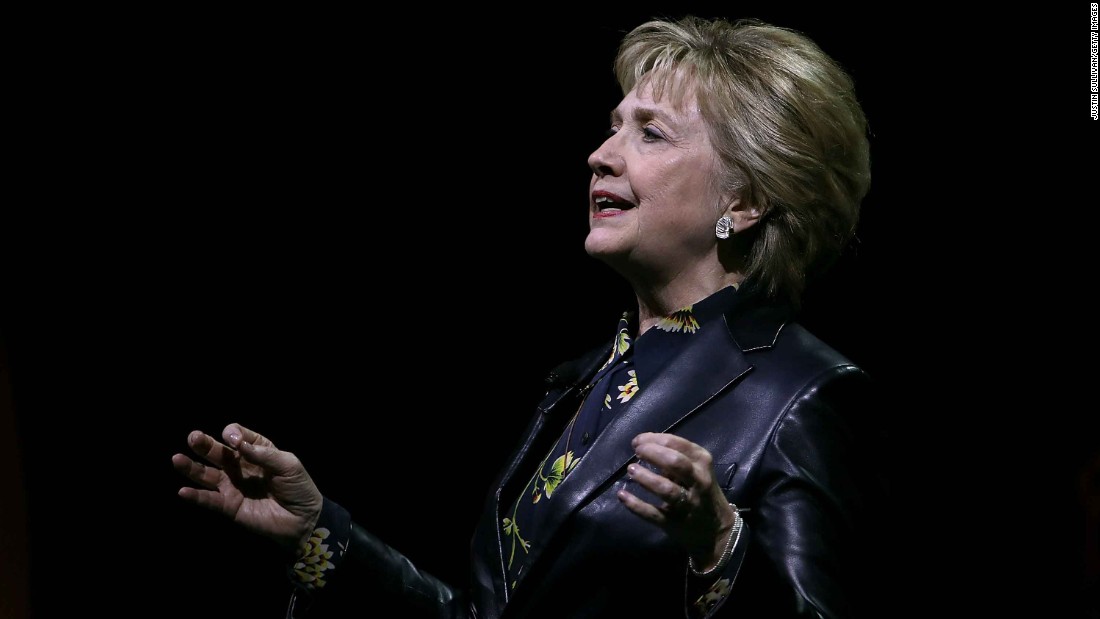
More than a year after the 2016 presidential election, former Democratic nominee Hillary Clinton's favorability rating has dropped to a new low, according to a Gallup poll released Tuesday.
Not necessarily the top photos of the year, nor the most heart-wrenching or emotional images, but a collection of photographs that are just so 2017. From Barron Trump with a fidget spinner to the Great American Eclipse, from Melissa McCarthy as Sean Spicer to Lord Buckethead in the UK, from the toppling of Confederate statues to the toppling of many men in power who stand accused of sexual misconduct, and much more. This is 2017.
We are in the 30-40 range. We provide food (always too much), some beer and wine, and usually a big bottle of liquor (vodka and/or rum and/or whiskey). Plus non-alcoholic stuff. People always bring their own even when we EXPLICITLY tell them not to though and we always end up with a crisper drawer full of beer. I know, what a problem to have, right??
My friend Mike has rules for hosting parties. They go like this:
• Under 25 years old: Party is BYOB. You can tell people if you want, but they should know. Bring your own beer. Bring your own mix. Bring your own bulk pack Cheetos.
• 25 – 30 years old: Host should have wine and beer stocked and there should be snacks available. You’re an old fart now so there’s a bit more party responsibility. Try and squeeze a trip in to pick up some booze between renewing your mortgage and seeing the doctor about your kidney stones.
• 30 – 40 years old: All of the above plus an open bar. If you follow Mike’s rules, this decade is going to hit the pocketbook a little bit.
• Over 40 years old: Open bar plus catering plus staff. Prime time, baby.
So those are his rules.
My rules are: If you’re coming over bring a chair. See, because we rarely provide people with anything. No drinks, no seating, no toilet paper in the bathroom, and definitely no old butler walking around wearing tails and a pencil moustache asking if you’d like a seashell covered in truffle oil and swan liver.
Instead we stick a piece of paper on the front door telling you to meet us in the back, and then help you get started on the two six-packs you brought over. If you’re lucky, we might have a leftover bag of stale Doritos kicking around or maybe some puddings in the cupboard. If not, we’ll need your credit card to order a pizza.
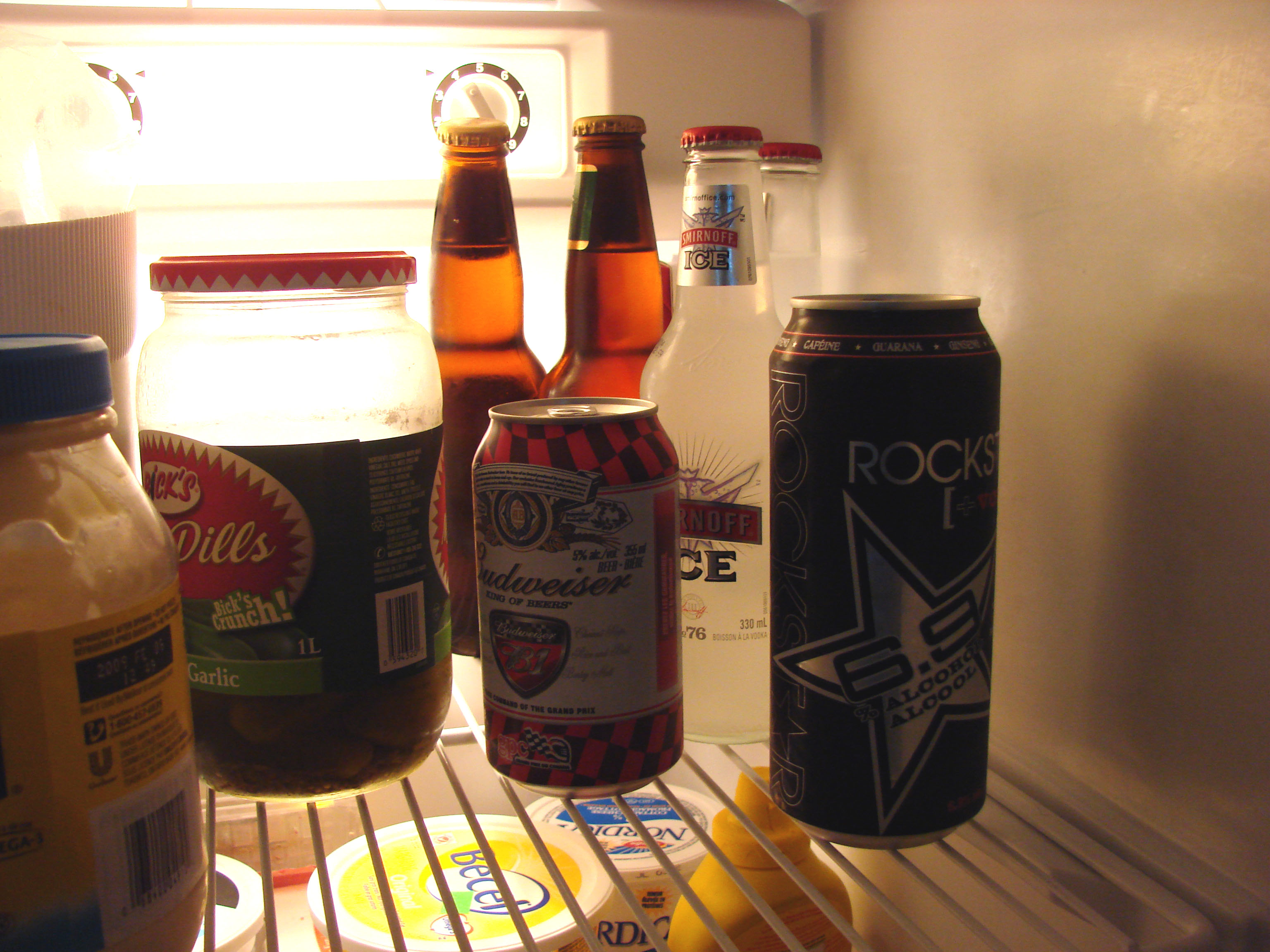
I am an extremely cheap person. So I get a kick out of the random assortment of beers leftover in the fridge the morning after a party. You can basically play detective to figure out who was over the night before: Rock Star energy drink with vodka (night-shift worker trying to stay up), cans of Budweiser (grad student on a budget), Heineken in a bottle (yuppie couple with cubicle jobs), and bottles of Smirnoff Ice (girls).
Man, I love that random mish-mash of assorted beers and drinks in the fridge. Especially because it makes me feel like a better host the next time people come over.
A couple scores the ultimate midcentury time capsule
For people who love old homes, a time capsule—a house that remains mostly unaltered since construction—is the ultimate find. After all, as years go by, remodeling and trends have a way of erasing original details.
But the definition of an architectural time capsule may need to be rewritten in the case of Bob Coscarelli and Karen Valentine. The couple’s midcentury Michigan City, Indiana, home not only came to them with all of the architectural features intact, it was also fully furnished with period Knoll furniture and a Paul McCobb kitchen and built-ins.
In short, if anything could be considered a midcentury modern miracle, this is it.
Bob Coscarelli and Karen Valentine purchased this midcentury modern Michigan City, Indiana, home complete with all of its original Knoll furnishings. Although the same family had used the furniture for decades, Coscarelli describes it as being in “museum condition.” A portrait of Dr. Robert Frost, the original owner, hangs on the left.
The couple’s quest for a home fell far short of miraculous. The die-hard modernists had purchased land in Michigan and planned to build a house on it. The design process was rocky, with a false start and ballooning costs. “About two weeks before we were to break ground, I got cold feet,” says Coscarelli. “We decided to call it off.”
Coscarelli describes the time after the decision as one of “shock and disappointment.” They started looking for another home, one that was already built. Another false start led them in a different direction (literally). They started looking south, along the shores of Lake Michigan in Indiana.
“The town of Michigan City is in the Industrial Belt, and it’s about an hour and a half drive from Chicago,” says Coscarelli. “Most people looking for a lake home outside of Chicago tend to go to places in Michigan like Union Pier and Three Oaks, but in Michigan City you are closer to the city and homes are a tenth of the price.”
The home is constructed with steel framing and powder-coated aluminum panels—some of which are brightly colored. “In town, they call our house the blue, yellow, and green house,” Valentine says. Banksy, their dog, stands at the front door.
But it really wasn’t the town that drew them south, it was a spectacular find: The home they call The Frost House. Built as a model home sometime between 1958 and 1962, it’s notable because it was a prefab home designed by Emil Tessin for a company called Alsides Homes.
The house is a feat of engineering, constructed with steel framing that holds 12- by 14-square-foot panels of styrofoam sandwiched between two pieces of aluminum—some of them powder coated with bright colors, some of them painted white. The result is a bit like Mies van der Rohe’s Farnsworth House crossed with a Piet Mondrian painting. Or as Valentine puts it: “It reminds us of an Ikea version of the Farnsworth House.”
Paul McCobb designed wood-and-glass screens to define the interior spaces.
The glass in the screens are rippled to provide a degree of separation.
Note: Reading the paragraph above, you likely have many questions. Let us clarify a few for you: Yes, the walls are colored aluminum sheets inside and out. Yes, it’s insulated by styrofoam and no, it doesn’t get cold (“It’s like we are living in a giant picnic cooler,” says Coscarelli). Yes, there were prefabricated homes in 1958—this brand was billed in a 1961 issue of LIFE magazine as an “instant house” that would “come delivered in two trailer trucks and within 48 hours be completely assembled down to the last fixture and appliance.” And no, we don’t know how some buyers get so lucky.
Back in the day, a lot of real estate development happened this way: A builder would buy land, erect a spec home to show buyers what to expect (and that’s what The Frost House was originally), and then proceed to sell lots and build more houses. In this case, the development didn’t get very far, as Alsides Homes went out of business almost as soon as it began.
But not before Dr. Robert Frost (a noted pathologist) toured the model home in Michigan City and fell in love. He wanted to not only buy the home, but every last piece of Knoll furniture in it. He moved in with his wife, Amelia, and his two children and lived there for the next 58 years, until he died in the house at age 96. (Amelia passed 17 months later, in a healthcare facility near their daughter’s home in Virginia.)
Inside, some of the aluminum panels are clad with wood veneer. Although the couple replaced carpet with tile floor, almost everything else, including the art, is original to the house.
Here’s where things go from an interesting find to miracle territory. During all those years, the Frosts not only refrained from remodeling and updating the house, they didn’t buy anything new—outside of replacing the aluminum doors with more efficient, double-paned models. What’s more, they never moved the furniture from its original placement. “Over time, the legs of the furniture wore holes in the carpet because they were never moved,” Coscarelli notes.
Banksy relaxes in the dining room.
All the appliances, save for the dishwasher, are original to the home. “At first I thought we would have to replace the refrigerator,” says Valentine. “But it works great. They really don’t make them they way they used to.”
When the couple bought the home from the family, it came with the Frosts’ furniture, artwork, and tchotchkes. If you think that items used by a family for five decades would be worn, you don’t know the Frosts. Dr. Frost was, apparently, meticulous when it came to home maintenance, going so far as to engrave removable screens so they would be put back in precisely the same position when the weather warmed up.
Valentine describes Amelia Frost as a housewife who took the job seriously. “Mrs. Frost was at home, and she took great care of her house,” she says. “They used the same cleaner from the time they bought the house until the day that woman retired and gave the job to her niece. They also used the same family to take care of the garden during their time here.”
The closet doors have their original paint.
Valentine notes that when your house has aluminum walls, you chose where you hang a piece of art very, very carefully. You could extrapolate that feeling to the way they treat the house.
“We went into the house knowing we wanted to preserve it and keep it intact,” says Valentine. “To be honest, where the furniture was originally placed is where it seems to naturally fit.” Bob adds: “I think the house is as fresh, clean, and modern as the day it was built. It’s a testament to the timelessness of modernism and the International Style, and it’s beautiful.”
It’s also a testament to the Frosts. To this day, a portrait of Dr. Frost hangs in the living room and their name remains on the mailbox.
The vintage aluminum Christmas tree is blue and green (as Valentine notes, “like the house”). It sits in a an electric, rotating stand.
Coscarelli and Valentine have used the existing elements as a “style guide” for the small updates they’ve made. Due to the aforementioned holes and Valentine’s asthma, they replaced some of the carpet with terrazzo tiles, a flooring type that already existed in the entry and sunporch. They found a box of the material from the Fritz Tile Company in the basement. The Texas company is still in business, and was able to provide a good match. When they put in a swimming pool, they took cues from the existing landscaping.
And when they’ve come up against some of the home’s more dated elements, they’ve resisted remodeling. For Valentine, stepping into a tub to take a shower is not her favorite moment of the day, and she wishes there were windows in the bathrooms. Coscarelli thinks the electric cooktop is less than ideal.
“However, we don’t plan to change a thing,” Coscarelli says. “We think it’s more important to preserve the house and put up with its little quirks than to alter it.” Valentine adds: “We believe the home feels exactly as it should, and we want to take care of it until it’s time to pass it on to someone who will do the same. It’s a very special place.”
This is the second "female teacher/male student victim" story Fox has posted today.
A high school teacher in Oklahoma was fired Thursday after she and her 16-year-old student allegedly applied for a marriage license, according to reports.
Coldilocks, the oldest living polar bear in captivity in the U.S., celebrated her 37th birthday on Thursday and zookeepers at the Philadelphia Zoo threw her a party for the ages.
The courts are our only hope at this point. And that's why he keeps trying to appoint idiots with no experience who will do whatever he says.
A federal judge in Philadelphia on Friday ordered the Trump administration not to enforce new rules that could significantly reduce women's access to free birth control.
Judge Wendy Beetlestone issued the injunction, temporarily stopping the government from enforcing the policy change to former...
Rob Lowe’s modern-day persona is rooted in an aura of never-ending positivity, one that extends past his chipper Chris Traeger smile and into the TV and film project he chooses to associate himself with. Case in point: Lowe’s apparently genuine enjoyment for doing Lifetime TV movies, with Deadline reporting that he’s…
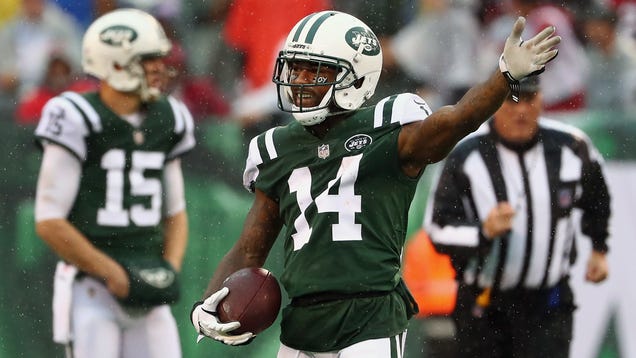
Jets receiver Jeremy Kerley is back at practice after serving a four-game suspension for a positive PED test. At the time of his ban, Kerley said he was “shocked,” as he had never knowingly taken steroids.
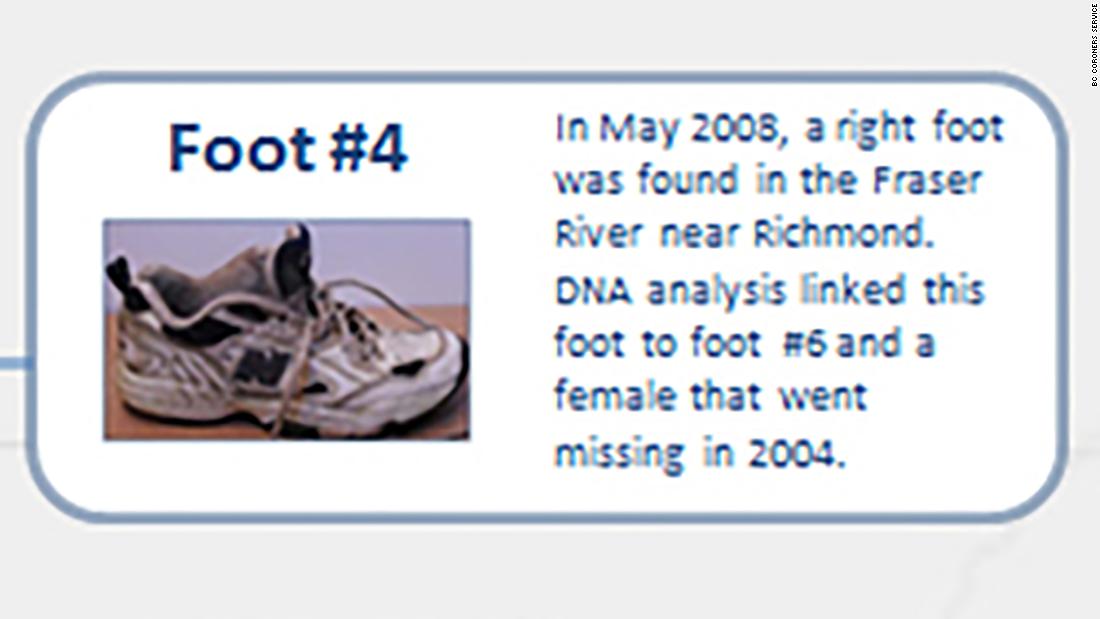
A man walking his dog on a British Columbia beach this week made a grisly discovery: A foot in a shoe, along with part of a lower leg. Adding to the mystery is that it is the 13th foot to wash up on the Canadian province's coastline over the past decade.
John Cena is a busy man, and that business is happening almost entirely outside of pro wrestling at the moment. He was last seen in a WWE ring at Survivor Series as part of the losing Smackdown squad. When he’s not rocking the customary jorts and the sneakers, he’s usually out filming blockbuster movies these days.
To that end, Cena is heavily promoting his starring role in the new animated movie Ferdinand, which is in theaters now. Cena also appeared in the movie Daddy’s Home 2earlier this year, and the world is still gearing up for a raunchy John Cena R-rated comedy called Blockers.
Cena’s a guy that can do it all. That’s why the good people at WIRED sat Cena down for a video where Cena was able to answer the web’s most-searched questions about himself, as well as topics related to Ferdinand the Bull.
Points to the WIRED people for getting out ahead of the “I can’t see John Cena” meme in the comments: “We’re sorry for the technical difficulties. It appears this video has no one in it. We’re trying to figure it out. Thanks for your patience.”
You should check the video out for yourself, of course, but a highlight is definitely John Cena explaining what John Cena looks like. “Well, he is a man with a deformed human face.” That’s … shockingly accurate, really.
White House officials have claimed they purposefully leave information on Russian interference out of Donald Trump’s daily briefings for fear it will upset him. Current and former administration officials told the Washington Post they frequently plan the President’s daily brief (PDB,) around his suspected emotional reactions. “If you talk about Russia, meddling, interference – that takes the PDB off the rails,” a former senior US intelligence official told the Post.
Hello again. Earlier this week we all gathered round the wassail to roast the goofiest items in this year’s Williams-Sonoma catalog. HOWEVER, it was a really thick catalog this year, and there simply wasn’t enough room in print for EVERY ridiculous item featured. Especially the champagne saber. So, with that in mind,…
Update:Aaaaand Genius took the post down, without explanation. So the quoted lyrics you’re about to get are as close to definitive as we have.
What I love about Black Thought’s freestyle is that it does everything hip-hop at its best does. He has the technical virtuosity and improvisation, both of which are first-rate. He toasts, boasts, and roasts. He plays with words, and the words play right back.
But he also tells stories, including this striking one about his mother:
My mother was a working class very lovin’ woman
Who struggled, every dinner could’ve been the last summer
I come home, chasing good-for-nothing half-cousins
And then walk in the crib to the smell of crack cookin’
She was introduced to that substance abuse
On some of the strongest drugs that the government produced
He gets philosophical and abstract. Like, real abstract.
I made the 21-pound for some a new found religion
When money’s put down, it’s only one sound to make
OGs and young lions equally proud to listen
The secret amalgam is an algorithm
Coming from where only kings and crowns permitted
The darkness where archaeologists found
My image in parchment rolled into a scroll
Holding a message for you, it says
“The only thing for sure is taxes, death, and trouble”
The anomaly swore solemnly, high snobiety
Freakonomics of war policy, dichotomy
That’s Heaven and Hades
Tigris and Euphrates
His highness
The apple of the iris to you ladies
As babies, we went from Similac and Enfamil
To the internet and fentanyl
Where all consent was still against the will
He pays homage to rap history:
Maybe I’m the new Rakim
Maybe I’m fat Pharaohe
Undergarments of armor be my intimate apparel
Pre-Kardashian Kanye
My rhyme-play immaculate
Same cadence as D.O.C Pre-accident
Maybe my acumen on par with Kool G Rap and them
And to his own discography:
I hate to say I told y’all, but I told y’all
Things fall apart when the center too weak to hold y’all
I’m just collecting what you owed to my old jawn
You ‘bout to get swooped down on and stoled on
He charms and disarms:
You in the residency of the one they call
King Dada
Ali Baba
The Talented Mr. Trotter
Inside of my right palm, the mark of the stigmata
Big Poppa wig chopper
Emperor Joffrey Joffer
Motherfucka, I’m stronger than the coffee out in Kaffa
All y’all niggas vagina-hop
Remind me of Icona Pop
I step in the booth, I’m a bull inside a China Shop
Mollywopper
Watch another cotton-pickin’ body drop
Every time we rock
Yo they actin’ like it’s Mardi Gras
‘Til the party stop
Skirt off like she that Ferrari drop
So psyched he pumpin’ that Earth, Wind and Fire body I
Cool a product doc
A la Marina, hard-body yacht
You seen another rapper cleaner? Mami, probably not
And sometimes, he just kills it:
How it feel to be the best that did it, I admit it
I’m visiting from planet bring these niggas death in minutes
And y’all know I’m exquisite
Wicked as Wilson Pickett
The sickness I exhibit
I’m too legit to quit it
I don’t fake it ‘till I make it
I take it to the limit, and break it
Never timid, what I’m about, I represent it
Infinite just like Chace is
Been a million places
Conversation is how beautiful my face is
People hating on how sophisticated my taste is
Then I pulled up on these motherfuckers in a spaceship
Even reading this, it’s just too good.
I am a walking affirmation
That imagination
And focus and patience
Get you closer to your aspiration
And just cuz they give you shit
Don’t mean you have to take it
My words capture greatness
Sworn affidavits
Meanwhile, the talented Tariq Trotter himself kept it humble:
That verse was just what I had to say at the moment lol.
We’re getting closer and closer to a crisis point on net neutrality, as current FCC chairman Ajit Pai wages a minor internet culture war to convince people to support his plans for a “free internet”—i.e., one where Obama-era protections don’t exist to stop service providers from charging different amounts of money to…
It’s rare these days that anyone has the patience to read anything over 250 words, let alone discuss its artistic merits on a public platform. But that’s exactly what happened this weekend when Twitter got uncharacteristically excited over a new short story published in TheNew Yorker. “Cat Person” by Kristen…
CNN's Jake Tapper fact checks Roy Moore campaign spokesman Ted Crockett, who inaccurately claimed that a Christian Bible must, by law, be used when being sworn into office.
How NFL owners and Donald Trump put down a national protest.
I. “By the way, everyone wanted to be here today”
It is the day Donald Trump is meeting with the Stanley Cup champion Pittsburgh Penguins, and I am sitting in the basement of the White House with a group of black folks. The group is made up of journalists, cameramen — all here to watch the day unfold.
The mood is light; we talk; joke. But it’s hard not to recognize how surreal this scene is. Here we are on this October afternoon, black, in a house built by slaves — a house where the first black president used to dance with his black wife, laugh with his black kids, and enjoy the company of his black friends.
That was then. Now, upstairs lives a president who is there largely because he is not black, whose campaign was built upon thinly veiled promises to return power to the majority; to make things the way they were before a black man was president.
We eventually walk inside the East Room, listening to the president speak, his words twisting in the pretzel logic we’ve somehow gotten used to. I can’t help but think how weird this all is. Gone are the days of Obama dancing with Northsiders and Cubs on one of the last days of his administration. The White House felt warm, inviting, even loving under Obama for folks like me. This place feels cold, aggressive, and devoid of anything harboring black joy.
“By the way, everyone wanted to be here today,” Trump says, smiling. “And I know why.”
His smile is one I recognize. It’s one that doesn’t quite involve his eyes.
There is constant cheering. Trump calls the hockey players handsome. He says they are incredible patriots, embodying values all young Americans needed to see. It’s unclear if Trump realizes how many of these young men weren’t born in the U.S.
It’s also clear that these hockey stars aren’t being celebrated for what they have accomplished. Trump’s White House has not rushed to invite any other teams who have won championships, including the Golden State Warriors. It took Stephen Curry saying he wasn’t interested in going to the White House for Trump to say the invitation was rescinded — in truth, no invitation had ever been sent to the team. The only other team Trump has welcomed has been the Chicago Cubs, whose co-owner, Todd Ricketts, was a Trump supporter and had been considered for Deputy Secretary of Commerce.
The Penguins are welcomed with open arms as a display of how white athletes are meant to behave. The president can’t put aside his own agenda, even for a moment. Trump brought the team here to reinforce his attacks against the black people he deems dishonorable, the football players who have protested police brutality, and who Trump has made his latest adversaries in his never-ending culture war.
The white audience seems unaware or uncaring. The blackness in the room or watching on TV is being taunted. Trump is taking a victory lap with his chosen champions, gaslighting nonbelievers and smiling while they squirm.
These political gymnastics are exhausting. For the entirety of this charade, I have felt disoriented. How can no one address this?
In this moment, I remember where I’d seen that smile.
II. The Day of Reckoning
It was a few weeks before that day at the White House, Sept. 25, when Dallas and Washington faced off in a Monday Night Football game.
All weekend, NFL players had kneeled during the “Star Spangled Banner,” some in support of Colin Kaepernick and his original protest against the police killing of black people. Others were responding to Trump, who implored NFL owners to "get that son of a bitch off the field right now" if a player kneeled during the national anthem at a rally earlier that week.
While some NFL owners supported their players and were vocally against Trump’s vulgar tirade, reports had come out that the majority of NFL owners were scrambling to find a way to stop the protests, or at least quiet them down enough to make football the story again.
Ahead of Monday Night Football, there was little talk of what would happen in the game. It was all about what would happen before the kickoff, during the playing of the “Star Spangled Banner.” Sports fans, culture warriors, and America tuned in as Cowboys owner Jerry Jones walked out with his players. I’ll admit: I did not, in my wildest thoughts, think I’d see ol’Jerruh, practically a caricature of a rich white man, walk out with these men.
Then, before the “Star Spangled Banner” began, they all kneeled, arms locked, Jones right in the middle. Jones kept his head down while fans booed. He did not care. His plan was already in motion. He finally looked up. The cameras moved closer. He looked directly into the lens and there it was: the smile. That same, soulless smile.
Then, just before the song, Jones and the rest of the Cowboys stood. It was a protest without any teeth. His smile had been a clear signal to white America: Don’t worry. Jerry will take care of this. We’re going to put them in their place.
What was funny about all this was that Jones, certainly by accident, actually showed hypocrisy on the part of the white people he was trying to send a signal to. He exposed the lie that kneeling was about the “Star Spangled Banner” or patriotism or Trump. He knelt before the song played and was still booed.
If Jones’ demonstration was inartful, it was at least emphatic. Jones has made no mistake about his belief that players should stand for the national anthem, even threatening to lead a coup against commissioner Roger Goodell in part because Goodell wouldn’t place any mandate on players. Even within a group of 31 owners who had collectively donated millions to Trump’s campaign, Jones was a hardliner, and he was lock-step with Trump that Goodell should have nipped the protests in the bud. Via ESPN:
At first, some in the room admired Jones’ pure bravado, the mix of folksy politician and visionary salesman he has perfected. But he was angry. He said the owners had to take the business impact seriously, as the league was threatened by a polarizing issue it couldn’t contain or control. To some in the room, it was clear Jones was trying to build momentum for an anthem mandate resolution, and in the words of one owner, “he brought up a lot of fair points.”
Jones couldn’t get exactly what he wanted — what Trump had demanded — in part because the movement was too big. Watching black bodies defy power in primetime was unexpected. Players reacting so quickly and strongly was unexpected and beautiful, and the league was too overwhelmed to react. The weekend had a chance to be historic. Jones needed to usurp the cause somehow, and he found a way. That moment when Jones smiled, I felt that beauty slip away.
That smile haunts me. It was in that moment I understood that this movement would be taken over and killed. This was the white owner reasserting control.
Truthfully, football was never meant to serve the black body.
This was the co-opting of a black message. This was a smile equivalent to a death sentence, signaling the fate of Colin Kaepernick’s movement — the end of an international moment staked in black pride.
This is something we have seen time and time again in the history of American sport: the use of the black body for popular entertainment; black men and women using that popularity to speak out, then white gatekeepers (either owner, audience, or overseer) co-opting that message or striking it down, often violently.
Truthfully, football was never meant to serve the black body, which has been abused for generations. America watched as men they perceive as property begged for a voice and were muzzled. This is a cycle America has always known. It is no wonder these NFL players did not get far.
III. “Those wild and low sports”
Maybe it was destiny that led Tom Molineaux to Copthorne Common on a blustery December afternoon in 1810 to fight Tom Cribb.
Molineaux, a man newspapers called the “American Othello,” was a freed slave from a Virginia plantation whose family taught him to box. Cribb was the champion of England and white. Molineaux had sailed from America just six months prior to start a new life as a prize fighter.
Englishmen thought he was a lamb being led to slaughter. Though the English were sympathetic to abolitionism, a slave wasn't supposed to swing against his white master. By the ninth round, Cribb was being pummeled. After 30 minutes, fans rioted. They thought Molineaux was cheating. By some accounts, they even broke his fingers.
After 39 rounds, Molineaux conceded, finally succumbing to exhaustion. He appeared to knock out Cribb in the 28th round, but no one could hear the referee call "time!" to indicate that Molineaux had won in the chaos that ensued. Cribb recovered and the fight continued. It was a brilliant fight by all accounts, yet there wasn’t much to read about Molineaux’s exploits in America outside of a small clipping in a North Carolina newspaper.
Molineaux was a symbol of a possibility that was deadly to the white world back then. If black people could prove they are equal in one arena, who's to say they shouldn't be equal in every arena?
Sports were the thing that kept Molineaux enslaved and his tool for liberation. Sports were created on the plantation as diversions to help slavers control the revolutionary urges of slaves. Frederick Douglass, who fought off his owner and ran to freedom, was a critic of sports on the plantation. In Douglass’ autobiography, he said Southern plantation owners deployed “those wild and low sports” in an effort to keep black slaves “civilized.”
What Douglass wrote is, foolishly, why owners expect athletes to know their place. It is why no one expected a Day of Reckoning to begin with. What Douglass missed, and what black athletes discovered, was the expressionism sports allowed. As Molineaux demonstrated, sports create room for protest because they hold the minds of the white consumers hostage during play.
White people showed up to watch Cribb beat Molineaux, and instead were held captive as Molineaux upended their expectations. Similarly, they did not think, both owners and fans, that black football players were capable of revolt. And just as Molineaux helped establish a norm, NFL players have made protest commonplace. To restore the old order would require intervention, co-option — violence of a non-physical sort. That was the reason behind ol’Jerruh’s smile. If order was to be reinstated, pain of some kind would have to be established.
IV. “Coach, a Negro boy can’t play football with white fellers”
It took seven minutes for Oklahoma A&M — the university now named Oklahoma State — to try to kill Johnny Bright, Drake University's black Heisman candidate. It was 1951. Bright was knocked unconscious three times, often without the ball. The third was the most brutal. A large, white defensive end named Wilbanks Smith saw Bright, looking left, throwing a pass. Seconds later — some say as many as six — Banks leapt from his feet and cracked Bright’s jaw with a forceful elbow. Bright’s trainer and another player carried him to the bench. A penalty hadn’t been called all day.
Maury White, who wrote about the attack for the Des MoinesRegister, said, “You could feel the bones move.” Photos of Bright are kept in the Drake Heritage Collection. They show images of Bright pulling his mouth apart, wires keeping his jaw straight, the reason his college career was upended. The “Great Negro Flash” would never make it to the NFL.
Local accounts before the game had students saying Bright “would not be around at the end of the game.” Three students told the Register that A&M’s head coach was seen yelling ”get that nigger” when the scout team was running Bright’s plays. Bright told the paper in 1980: “There’s no way it couldn’t have been racially motivated.”
Smith, the white man who tried to kill Bright, said in 2012 he had “nothing to apologize for.” Within two days after the incident, Smith received hundreds of letters of support. Half of the messages begged him to run for office in Louisiana or lead local Klan startups.
“If it wasn’t Wilbanks Smith, it would have been someone else,” the A&M basketball player Dean Nims told the Register in 1980. “They were determined to stop Bright.”
Oklahoma State waited 22 years after Bright died to express sympathy.
Violence was the price of being black in these spaces. It is important to understanding the Day of Reckoning. Players are not simply millionaires asking for attention. They have received death threats, their parents have lost their jobs, their jerseys have been burned from New York to Oakland, their likelihoods are being used as tackling dummies before games, and their coaches are called “no-good niggers.”
A few years before Bright had his jaw demolished in front of the country, Levi Jackson, the first black football captain at Yale, was playing in a high school exhibition. His body had been thrashed for hours, and he was ready to quit. In this era, it was common for white players to attack black players between the whistles. Jackson, however, was fed up. Reading his words, I assume he knew what this sport could do to us. The message was there: White sympathy was not for us unless we were willing to get over race.
“Coach, a Negro boy can’t play football with white fellers,” he said, according to Sport Magazine in Nov. 1949. “You saw what they did to me today. I’m turning in my suit. It’s not sport.”
V. “Nothing more than a mere picnic”
After the Day of Reckoning, the NFL responded by promoting a message of "Unity." I have grown so tired of hearing about “unity” that I no longer believe it's real. What is unity? What are we unifying against? It doesn’t appear to be racism. It has never appeared to be racism. When the concept of unity was offered to these black athletes, it felt comedic.
Look at all these white men. They do not look afraid, as I have. They do not seem tired, as I am.
And the black athletes who felt the same way were often labeled as ungrateful millionaires. "Ungrateful is the new uppity," Jelani Cobb wrote in the wake of the president's attack on players.
For the current revolting black athlete, this certainly seems the case. By co-opting the message of the protests, NFL owners like Jones were able to make still-unsatisfied athletes seem bitter and greedy in a certain light. Thus, Jones' performative wokeness successfully play-actioned protests about police brutality into something lesser that many players felt obligated to accept or else be ostracized even more.
This sort of transformation of messaging angered Bill Russell, one of America’s great social agitators in sports. By the time the March on Washington came to the capital in 1963, Russell was disenchanted with the Civil Rights Movement. He was sick of compromises. He said the day became “nothing more than a mere picnic” because whites marched. The message changed, and the voice of the oppressed was not one with the oppressor at his shoulder.
“The March on Washington was brilliantly conceived and badly executed,” Russell recalled in Go Up For Glory in 1965. “The bigots will make something of this. But I concur with what Malcolm X said: ‘They merely marched from the feet of one dead president to the feet of another.’”
Acts of "Unity" have been the fodder making America’s heart swell. Hand-holding in the face of a president who believes people of color are inhuman plays into America’s often misguided ideals of egalitarianism. Our nation loves to see black hands holding white hands but has never stopped to gauge what it accomplishes. We are not post-racial by any means, and we will not get there soon by evading America’s insidious nature.
Co-option is a powerful tool. So is money. This year, Eagles safety Malcolm Jenkins said he would stop protesting after NFL owners met with the Players Coalition — a group Jenkins co-founded — and agreed to give $89 million over seven years to charitable groups working toward criminal justice reform and better relationships between community and law enforcement. Several members of the Players Coalition, including 49ers safety Eric Reid, publicly announced their decision to leave the group when the announcement was made.
NFL owners didn't have to look far for a lesson in how to stifle a movement.
In 1961, the Baltimore Colts played the Pittsburgh Steelers in an exhibition game in Roanoke, Va. Virginia State Police were enforcing Jim Crow seating. Local NAACP chapters filed lawsuits. For days state courts didn’t hear the suit. Telegrams were sent to black players on both teams. Coaches asked them what they would do if the game proceeded, and many said they wouldn’t play if segregated seating was enforced. Roanoke officials gathered and said they would ignore the segregationist law to keep peace with players. Pete Rozelle, the NFL commissioner, even sent out a press release.
Newspapers labeled the day a victory before it began. Then Lenny Moore, a star tailback for the Colts, walked inside the stadium and saw that the gatekeepers had lied. Jim Crow seating was enforced, just like any other day.
“I had to reach through the chain-link fence in order to shake their hands,” Moore said in his autobiography. “No image had ever made me realize, with such force, just what blacks have been up against all through American history: We have always been on the outside looking in.”
The lesson here is to be wary of white folks; to know that football is fun, but it is also work. You must maim your body for the happiness of your owner, fans, and America. Or you will be fired. You will be cast aside. And you will go back to being an unknown number in a country that does not love you.
VI. “What they are saying is don’t upset the system.”
As we leave the East Room back on that October afternoon, I think to myself that this did not happen by chance. The concerns of black constituents, black footballers calling for an end to police brutality, none of these is as mighty as the man attacking them to get praise from white Americans.
Only under Trump could the Day of Reckoning have happened. If Obama’s presidency was a result of a second era of Black Reconstruction, then Trump, as the journalist Adam Serwer and the author Ta-Nehisi Coates have noted, sparked a second wave of white redemption.
Trump’s white identity politics are stronger than concerns about his temperament, his sanity, or the people who inhabit his administration. They are stronger than the black athletes at odds with him. If white Americans of virtually every economic background were willing to elect a man like this, one whose political identity is tailored for white nationalism, then there is no place for black, protesting football players.
Trump will always attack black athletes because they pose a threat to this white power dynamic, and because it is the easiest way to signal to his base that that they are right to feel threatened. They are evidence that the gatekeeper’s control is slipping. To suppress that idea, Trump must dismiss them and dehumanize them. As an added bonus for Trump, this excites the base — the large swath of the country that created this moment.
“If you look very carefully you will see that they are the same people who are quite happy with the situation as it is,” the Nigerian novelist Chinua Achebe told James Baldwin in 1980. “What they are saying is not don’t introduce politics. What they are saying is don’t upset the system. They are just as political as any of us. It’s only that they are on the other side.”
I can understand why the gatekeepers claim these footballers unpatriotic, because they don’t see us as citizens of their states. This can be an argument about the flag if you don’t believe it represents folks like me.
Near the manicured lawn of the White House, Mike Sullivan, the Penguins coach, begins speaking to gathered press. Sullivan reinforces the lie of the afternoon: He says he felt no pressure accepting an invitation here because it wasn’t political. This was only a celebration, he said.
Jerry Jones provided the smile that killed football’s latest revolt. He is no ally. He is not smiling to me. He is smiling to them: the rest of America.
At this point in our history, it seems foolish that someone could offer this misconceived belief unless they are too nonchalant to care or very careful to preserve their position of power. Either feels like cowardice.
“Does it matter that, regardless of [what you’ve said], the president is using you and your team as a prop in this culture war against other black leagues?” I ask. “Because you can kind of say it as many times as you want, but the appearance is that you are complicit.”
“See, you're suggesting that that’s the case,” Sullivan says. “We don’t believe that.”
It was that moment when I knew, despite anything said, that my initial thought was correct. This shit was weird. Trump and whiteness had won the Day of Reckoning. To be passive in the face of the crime is as dangerous as the transparent attack. To be willfully ignorant about race perpetuates and enables racism in America. I can’t help but think that they are all too afraid, too scared to challenge white power, to do what is just, to show a shred of morality for the unprivileged.
And while it is weird, by this point Sullivan’s words are expected. Yes, all of this is still insulting. Yet since black people were kidnapped and dragged here, four violent centuries says all of this is the American normal.
Jerry Jones provided the smile that killed football’s latest revolt. He is no ally. He is not smiling to me. He is smiling to them: the rest of America. I’m sure they are at ease. His message to them is one that we have heard from white people in power for centuries: Don’t worry. The black men had their fun and are back, reset, ready for servitude, docile once more. How dastardly. How American. What a rush.
VII. “We gon’ be alright”
Talking to black people in this country about the last two years since Kaepernick ignited protest in football and elsewhere, it is easy to become despondent. Folks truly, honestly, wanted to believe something could be done, that we could be saved, and that progress, the same progress we have always clamored for, was possible.
Look around. There is no better. There is no hope. This movie ends in tragedy. The idea that white folks think black folks have reason to believe in change is deflating.
There is no reason for optimism when the first black president was followed by a man looking to destroy his legacy and belittle the achievements and advancements of people who he sees as less than. That includes the men in pads who look as I do.
How can I enjoy optimism while a country pays black people for entertainment, appropriates our culture, then spits in their faces when they say anything other than “thank you?”
Optimism is not for me, though, it is beautiful to dream. There is no hope for the black body in modern America. But neither am I despondent.
Black protesters turned football players should not be hopeful. They also should not compromise. They did not win. Whiteness won. It always wins. But there is space to be positive. Blackness has become indefatigable even if our existence here and on the football field fighting for equality is Sisyphean and disheartening.
Thinking of this often makes me think of Kendrick Lamar and his anthems about Black America. On his 2015 album To Pimp a Butterfly, Kendrick examines the emotions we can have being American. In the past 15 months, I found myself doing this, going back to these affirmations, humming them during the “Star Spangled Banner.”
“Nigga, we gon’ be alright,” Kendrick promises.
These words, in repetition, are like a proverb. Black people were kidnapped and tortured on the way to this country, built its infrastructure, and became its greatest athletes and entertainers. We are the culture, the sound, its consciousness — the heartbeat of America and somehow also its biggest enemy. Kendrick’s ghetto lullaby reminds me of that. The toot of that saxophone, the ping of that high hat, the rasp of his Compton attitude: It’s all soothing.
Our culture, our beauty, allows us — throughout this tortured cycle of protest and destruction — to keep our pride. There is fire shut up in our bones. We have shown how mighty we are. Listen to the song. Kendrick keeps saying, “Nigga we gon’ be alright.”
Well.
Nigga, maybe you right. Maybe one day we actually will.
Netflix is notoriously cagey about releasing ratings data. In 2015, the service said it would refrain from making available its viewership numbers “for as long as we can,” and despite third-party attempts to pin down the figures, Netflix has kept its rather annoying promise. In November, for example, when Nielsen reported that 15.8 million people had watchedStranger Things’ second season within the first three days of its release, Netflix balked, calling the number “not accurate, not even close.” For good measure, the company added, “Their math must be from the upside down.”
It seems that someone at VH1 has been gotten ahold of my vision board because all my quiet prayers have been answered: the forthcoming, Tyra Banks-helmed season of America’s Next Top Model will feature a RuPaul’s Drag Race crossover!!!
Cold brew coffee is basically the only kind of coffee I like, and when there wasn’t a Starbucks readily available, I’d been using the popularTakeya cold brew pitcher for over a year to make it at home. That all changed when my mother-in-law got me OXO’s alternative as an early Christmas gift to help me through a…
Ho Ho the Naughty Elf is one of those characters that is so funny I start laughing to myself just thinking about it
With more than 500 audio episodes and 110 TV episodes (of its now defunct IFC series), Comedy Bang! Bang! is among the biggest comedy podcasts of the past decade and consistently a Podmass favorite. The show has a great stable of one-off and recurring characters, like Paul F. Tompkins’ Lord Andrew Lloyd Webber, Jason…





/cdn.vox-cdn.com/uploads/chorus_asset/file/9865427/House_Calls_Michigan_City_Frost_House_living.jpg)
/cdn.vox-cdn.com/uploads/chorus_asset/file/9865441/House_Calls_Michigan_City_Frost_House_exterior_snow_2.jpg)
/cdn.vox-cdn.com/uploads/chorus_asset/file/9865447/House_Calls_Michigan_City_Frost_House_entryway.jpg)
/cdn.vox-cdn.com/uploads/chorus_asset/file/9865443/House_Calls_Michigan_City_Frost_House_chairs_detail_1.jpg)
/cdn.vox-cdn.com/uploads/chorus_asset/file/9865457/House_Calls_Michigan_City_Frost_House_hallway_1.jpg)
/cdn.vox-cdn.com/uploads/chorus_asset/file/9865497/House_Calls_Michigan_City_Frost_House_kitchen_dining.jpg)
/cdn.vox-cdn.com/uploads/chorus_asset/file/9865465/House_Calls_Michigan_City_Frost_House_kitchen.jpg)
/cdn.vox-cdn.com/uploads/chorus_asset/file/9865469/House_Calls_Michigan_City_Frost_House_master_bedroom.jpg)
/cdn.vox-cdn.com/uploads/chorus_asset/file/9865473/House_Calls_Michigan_City_Frost_House_exterior_Christmas_tree_crop.jpg)











/cdn.vox-cdn.com/uploads/chorus_asset/file/9848965/Cribb_vs_Molineaux_1811.jpg)
/cdn.vox-cdn.com/uploads/chorus_asset/file/9848975/12894988263_b10a5fda17_z.jpg)


