Shared posts

27 May 13:58

A Dialogue With a 22-Year-Old Donald Trump Supporter

by Conor Friedersdorf
IKEA Monkey

Insightful but also, wow.

For several days, I’ve been corresponding with a 22-year-old Donald Trump supporter. He is white, has a bachelor’s degree, and earns $50,000 to $60,000 per year.

He lives near San Francisco.

“I recently became engaged to my Asian fiancée who is making roughly 3 times what I make, and I am completely supportive of her and proud she is doing so well,” he wrote. “We’ve both benefitted a lot from globalization. We are young, urban, and have a happy future planned. We seem molded to be perfect young Hillary supporters,” he observed, “but we're not. In 2016, we're both going for Trump.”

At first, we discussed Bill Clinton.

Last week, I wrote an article asking why Trump supporters aren’t bothered that their candidate called Clinton a shameful abuser of women who may well be a rapist. After all, Trump used to insist that Clinton was a victim of unfair treatment during his sex scandals. Either Trump spent years defending a man that he believed to be a sexual predator, even welcoming him as a guest at his wedding, or Trump is now cynically exploiting a rape allegation that he believes to be false.

The young man explained why he was willing to overlook that behavior. Afterward, he was willing to keep our conversation going. And over the course of several emails, he fleshed out something I’ve been thinking about since last summer, when I published notes from 30 Trump supporters explaining their support. A backlash against “political correctness” loomed large in those accounts. And today’s correspondent expounds on that subject in illuminating ways.

We discussed immigration policy, too.

He allowed me to reproduce our conversation on condition of anonymity, out of concern for how the views he expresses might be used to deny him future opportunities. Here’s a lightly edited version of our conversation, picking up near the beginning.  

Trump Voter: We are young, urban, and have a happy future planned. We seem molded to be perfect young Hillary supporters. But we're not. Both of us voted Libertarian in 2012, and ideologically we remain so. But in 2016? We're both going for Trump.

For me personally, it's resistance against what San Francisco has been, and what I see the country becoming, in the form of ultra-PC culture. That’s where it's almost impossible to have polite or constructive political discussion.  Disagreement gets you labeled fascist, racist, bigoted, etc. It can provoke a reaction so intense that you’re suddenly an unperson to an acquaintance or friend. There is no saying “Hey, I disagree with you,” it's just instant shunning. Say things online, and they'll try to find out who you are and potentially even get you fired for it. Being anti-PC is not about saying “I want you to agree with me on these issues.” It's about saying, “Hey, I want to have a discussion and not get shouted down because I don't agree with what is considered to be politically correct.”

In my first job, I mentioned that I enjoyed Hulk Hogan to a colleague who also liked the WWE. I was not aware at the time, but Hogan had recently made news for his use of some racial or homophobic slur. I was met with a horrified stare. By simply saying I liked his showmanship, I was lumped into saying I too was racist or homophobic.

I feel like I have to hide my beliefs.

I cannot say openly that I identify with Republicans, lest I see friendships and potential professional connections disappear with those words. When I see Hillary Clinton, I see the world becoming less and less tolerant of right-leaning views.When I see Facebook censoring conservative outlets and then see The Atlantic defending the practice, that worries me. When I see the fear that reddit users have about admins banning subreddits because of political beliefs, that worries me.

Normally, I would be very concerned with the throwing of the potentially false accusations of rape. I am in the camp of "comfort the accuser, but don't get ready to hang the alleged criminal until we've had due process." I am concerned with some of Trump’s reversals, but this is not one of them. Why? If false, Bill Clinton will not suffer any real consequences from this. There will be no risk of jail for Bill, which is what the biggest worry is for false accusations. If Trump knew that these allegations were true, I'm not going to defend his conduct. But I will accept it.

This is a war over how dialogue in America will be shaped. If Hillary wins, we're going to see a further tightening of PC culture. But if Trump wins? If Trump wins, we will have a president that overwhelmingly rejects PC rhetoric. Even better, we will show that more than half the country rejects this insane PC regime. If Trump wins, I will personally feel a major burden relieved, and I will feel much more comfortable stating my more right-wing views without fearing total ostracism and shame. Because of this, no matter what Trump says or does, I will keep supporting him.

Conor Friedersdorf: If you're willing to keep the conversation going, here’s the biggest question I have: Why do you think Trump being elected would have a salutary effect on political correctness? It isn’t as if the behavior of illiberal college students or workmates responding to a Hulk Hogan comment depends on who is in the White House. In fact, President Obama has repeatedly criticized political correctness. Through what mechanism would change come if Trump is elected? And for context, what are those “more right-wing views” you feel unable to share openly?

Trump Voter: Having Trump in the White House would both give me more confidence to speak my own opinion and more of a shield from instantly being dismissed as a racist/xenophobe/Nazi (all three things I have been called personally).

Under President Obama, our national dialogue has steadily moved towards political correctness (despite his denunciations), but with President Trump, I think our national dialogue will likely move away from being blanketly PC. Even though, as you pointed out, Obama has criticized PC speech, he doesn't exactly engage in un-PC speech like Trump does. I don't expect a President Trump to instantly convert people, but when you have someone in the Oval Office giving decidedly un-PC speeches and announcements, I think that would change the discourse, don't you?

As for mechanisms, I think Trump would likely do what he can to protect free speech. That could include vetoing bills, instituting laws preventing social media posts from costing people jobs (I never post on Facebook for fear of even a neutral post being interpreted negatively), overruling university speech policies. I'm unsure of whether or not Trump would pursue these policies, but I don't think he'd oppose them if a Congressional rep or Senator proposed them and got the votes.

For context, my right wing views include:

  • Lower taxes for all, and with it a reduction of various benefits.
  • Reduction or an end to affirmative action in favor of a pure merit-based system.
  • Support for law and order, and an intense dislike of disruptive protests.
  • A temporary ban on Muslim immigration.
  • In favor of "melting pot" culture instead of multiculturalism.
  • Isolationist war policy and anti-NATO, in favor of improving relations with Russia.

For further context, I have left-wing views that precluded Rubio and Cruz from getting my vote:

  • Pro access to birth control
  • Pro universal healthcare (despite the taxes this requires, it’s the only realistic way to combat rising prices)
  • Pro LGBT rights
  • I favor the absolute separation of church and state. (I'm a Christian who believes very strongly that my religion should not be pushed onto public policy.)  

One thing I fear is that if Trump loses, it may be seen as the reverse of what I just said: that America rejected a non-PC candidate (especially if he loses overwhelmingly). Clinton's victory could be seen as a further vindication for the PC crowd that there is no tolerance for Trump's type of views, and I fear it will hit other right-wing views.

A question for you! While you don't support Hillary necessarily, you do indicate the better anti-establishment vote would be for the Libertarians, which would hand Hillary the election. Why to you is Hillary Clinton the lesser evil than Trump?

Friedersdorf: You're right that while I prefer Gary Johnson, or for that matter Bernie Sanders, to Hillary Clinton, I prefer Hillary Clinton to Donald Trump. This is so for a few reasons:

1) Donald Trump is deliberately stoking anti-Muslim and anti-Mexican animus to bolster his support. That is a deal-breaker for me. I truly believe that the civil liberties of Muslim Americans and Hispanic Americans will be unusually threatened if Trump is elected, and that his rhetoric is contributing to ethnic balkanization.

2) Trump's authoritarian tendencies are alarming to me. There’s his admiration for Vladimir Putin, his suggestions that he'll rein in the free press, his embrace of torture, his threat that he would kill the family members of terrorists, and his intention to round up 12 million illegal immigrants, which would necessarily require loosing a vast force of armed federal agents in American communities, just for starters.

3) The United States has problems, but as serious as some of them are, this country is among the most prosperous, free places to live not just in the world today, but in all human history. Why risk that by electing an unknown quantity with no policy knowledge or foreign affairs experience—all but inviting stress tests by other countries—when the consequences could be catastrophic, and the alternative, for all her flaws, is a known quantity who will govern much as her husband did in the 1990s? Trump poses enormous unknown risks; Clinton poses none. To me, preferring him to her betrays a failure to appreciate what we've got and a failure to imagine how bad things could get. There's simply no reason for people with good lives in a country like America to take such a big risk on a wild card like Trump.

4) You see Trump empowering people who aren't very PC. That doesn't alarm me. But I see him empowering folks who are much farther right than any view you've expressed: white supremacists and anti-Semites who already seem emboldened by his rise.

I could sketch out some additional reasons, but that's a lot to chew on already. Are you persuaded by any of those concerns? If not, what do you think I have wrong about Trump?

Trump Voter: I'd also sign up for a Gary Johnson presidency. Unfortunately, the world we live in does not make that possibility likely. To answer your questions! Maybe this comes from being in the white group, but I never saw Trump as race-baiting. I don't have a problem necessarily with Mexicans who come here legally, obey our laws, and eventually learn to speak English. I do have a problem with those who look at our immigration laws and say, "Nah, I'd rather not obey those." This is one of my biggest issues with Hillary Clinton and her policy of amnesty.

As for Muslim Americans, I think they have so far been very cooperative with counter-terror efforts, and Trump's policies do not target them. Trump is targeting those who live outside of the U.S., such as the Middle East (where you have a few wars going on that are generating quite a few extremists), and Europe, which is having such an integration issue that they have a major flow of fighters into said wars.

Race is something in general that I see Trump losing people on. In fact, for my fiancee, it took her a long time to come over to Trump, in part due to fearing that his ideology was more rooted in a sort of “America for Whites” (that and her fear of Trump being rooted in an “America for Men”). But I think that Trump, messaging problems aside, wants any race to be successful in America, be it black, white, Latino, or Asian. I do not want a Trump presidency to turn into a racist administration. Non-PC, non-affirmative action is great, but actual discrimination?

That is not something I would be okay with.

I agree with your fears for the free press. Whether Trump would or would not do it, using libel laws to shut down media outlets could be misused, by him or a successor. Even if I trend slightly more authoritarian than average, I don't want to live in a dictatorship.

Killing terrorist family members has been something I've wondered about for a long time. While the idea seems horrible initially, sometimes when you have these attacks, you wonder what can we do to stop them? If we knew that this policy would stop terrorist attacks, would we go down that road? It's a worrying thing to wonder for one's soul. In any case, Trump seems to have disregarded the idea, which I think shows that he can shy away from his most authoritarian ideas, but also that he's willing to discuss ideas that would be instantly dismissed otherwise.

His intention to round up 12 million illegal immigrants does not bother me; these people are criminals, are they not? They illegally entered or overstayed their visas. And who says they need to be federal agents? Local police could absolutely do the job. I don't know whether or not you reside in a sanctuary city, but San Francisco prohibits cops from working with immigration enforcement, even with criminals. Why should people who should not be here be allowed to stay after committing another crime?

I am concerned about the potential economic blowback, and I understand the need to have immigrants do the jobs Americans are unwilling to do, particularly in agriculture.

Riskiness is the issue where I have the most difficulty with Trump. If you were going to convince me to not donate money to Trump, it would be on this point. Part of me thinks that we'd be mostly fine, because presidents do not have a ton of influence on the economy in the first place, our economy doesn't seem tied up in any one sector that could be particularly prone to collapse; U.S. debt is still a pretty low percentage of GDP, the U.S. is still a very stable presence internationally.

My biggest concern is if Trump tries to write off part of the debt. At this time we cannot have a balanced budget, but that's ok! Having a national deficit when you're the U.S. is fine because we can borrow money at comically low interest rates.

If Trump did something to change that, it could spell disaster.

Finally, I feel that white supremacists and anti-Semites are a tiny faction that shouldn't be a reason to dismiss Trump's speech of empowerment. I do see feeling that white culture is under attack in many ways when being called a “white male” is an attack, where white history is decried by the left as a history of rape and pillage. But white supremacy and anti-Semitism is not the answer for most Trump supporters.

Personally, I think that people need to be able to say these statements, even if they are hurtful. What must be done, though, is a dialogue, where ideas are put to the test, where people have the opportunity to hear and reject truly disastrous ideologies.

Look who PC culture does empower. Yesterday's “Google doodle” was a racial separatist who admired Osama Bin Laden. I think she is just as hateful as white supremacists, but she is celebrated by Google. I don't think Google would celebrate a white separatist with a fun drawing and a place of honor on its front page! I have a problem that it celebrated someone who denounces America, but I'm willing to debate why she should have no place of honor instead of just denouncing Google.

I do have some worries about Trump. I really do. If I lived in Ohio or a swing state, I might even be more worried. But I see this overwhelming PC culture, especially online. I get frustrated by the dialogue of letting immigrants into the country without control, letting Black Lives Matter protest without consequence, watching qualified Asian and White students lose places in universities and companies in the name of diversity. I worry about how companies are taking on the rallying cries of these causes, particularly the monopolies that Google and Facebook have.

This may be something of me being 22 and feeling that we have time and can take risks. With Hillary Clinton, we have a stable America, sure, but one where we have to police what we say in fear of being fired by an overly liberal manager. With Trump maybe we can restore some sanity to this country and fight back against this PC craze.

Friedersdorf: I'm intrigued that you voted libertarian in 2012, would sign up for a Gary Johnson presidency in 2016 if you thought it was a realistic electoral possibility, but also describe yourself as "slightly more authoritarian than the average person." Can you tell me more about your respective thoughts on libertarianism and authoritarianism?

Trump Voter: I have supported the Libertarian party specifically for the policies (military non-intervention, ending war on drugs, low taxes, etc.), and the fact that, if successful, it would significantly undermine the Democrat-Republican duopoly.

That said, I do not identify with the libertarian preference for a weak federal government. My ideal government would be strong enough to take on massive projects (such as the illegal immigration question) only when necessary, would prevent mass exploitation by the elites ( conservationist efforts to protect the environment, for example,) but would try not to regulate people's personal and economic lives. The authoritarian aspect comes from the fact that I think we have a lot of issues that need to be fixed. An authoritarian president needs to be able to initiate major policies that may go against party and elite orthodoxies, and I don't want some senator speaking for hours to prevent needed policies. If something needs to be done, it cannot be stalled by senators whose only interest is serving the elites.

Friedersdorf: On immigration, set aside whether illegal immigrants "deserve" to be deported in some moral sense—maybe we can return to that question. For now, it seems to me that you're not thinking through what it would mean, practically, to deport 12 million people, or even a sizable fraction. New York City has a population of 8.4 million. To police the city requires 34,000 uniformed officers patrolling the streets and 51,000 NYPD employees overall, despite the fact that most of those 8.4 million are law abiding and have zero interaction with the criminal-justice system. You're talking about identifying, arresting, and deporting 12 million people, most of them in cities where the local police forces are not only already overburdened with existing duties, but controlled by city councils—and beyond that, voters—who will forbid them from assisting any mass deportation.

So you're talking about dispatching federal law enforcement, all of whom already have their own duties. How many new federal employees will have to be hired and trained?

Then they'll be sent out into America.

How will they identify the illegal immigrants? After all, Americans aren't required to carry their papers on the streets. Will that be required now? Either you've got to start forcing all Americans to prove their citizenship, or else target people who “look like illegal immigrants,” meaning you'll impose a tremendous burden on American citizens and legal immigrants of Hispanic background. That racial profiling would be illegal.

Would that change?

It's illegal to stop and search people without reason to suspect that they committed a crime.

Would that change?

There would be massive street protests in opposition to this effort; significant civil disobedience; significantly less cooperation between illegal immigrants and their family members with the police and other government authorities on unrelated matters; and a massive new unionized workforce of federal law enforcement. How efficient and competent and respectful of peoples right's you think folks who take that job are going to be? If by some miracle they achieve anything resembling success, do you think the new police force just goes away, melting back into unemployment? For those reasons and more, it seems obvious to me that mass deportations would prove a logistical and civil-liberties disaster, one that would do more to divide the country and spark riots and violence than anything since the Vietnam War. Can you give me a realistic version of how it might play out differently?

Trump Voter: Rounding up 12 million is going to rely on a strategy of both new policies to ensure the illegals do not want to stay, and a new force to ensure that those who do remain are rounded up. You’d have mandatory E-Verify for ALL employers: This would help ensure that illegal immigrants cannot work in this country with stiff penalties for not using it. For personal maids or gardeners even, you would need to go through a service to hire them to ensure you are hiring people that can legally be here. To open, or to keep, your bank account, you must show that you are legally able to stay in the United States or do business here. Schools can no longer protect their students and their illegal identity: In fact, schools will no longer be able to take any student who cannot prove they are here legally.

You’d impound all payments to Mexico: This will have a two-fold effect. Illegal immigrants will no longer be able to send ill gotten gains to Mexico, and the Mexican government will be forced to take a more active role in preventing immigrants from going into the United States. You’d end of sanctuary cities: Cities will no longer have the power to defy federal law. And you’d end birthright citizenship. If you are born to two illegal immigrants, you will not be given U.S. citizenship. If you are born to people here temporarily, you will not be given U.S. citizenship.

To borrow Mitt Romney's term of “self-deportation,” I think these policies would encourage many illegals to decide it’s not worth to stay it if their kids cannot get an education and they cannot get work. In terms of rounding up those who do remain, you can give local police additional resources in terms of money and manpower. If they're already overwhelmed, then they could use the new officers even after the immigration problem is finished or at least reduced. I do see the need to prevent the rise of an SS sort of force, so you could try using the military to assist, especially those trained as MPs, or various private-security contractors that would not be unionized and could be disbanded after the crisis and find new employment. But this would mostly be to process the illegals and send them back to Mexico or other Central American states, and less about checking individual American ID cards.

Do you feel the policies I listed would be able to significantly dent the illegal immigration problem? If not, what would you feel be the best solution to illegal immigration?

Friedersdorf: I believe that the best solution is to aggressively deport people who've perpetrated serious crimes and to grant legal residency to everyone else, so long as the folks who snuck across the border or overstayed visas as adults pay a small fine into a fund used to expedite the processing of folks waiting in line to come here legally.

Like the 1986 amnesty, this would get a whole lot of people who live here operating inside the system. And it would avoid destroying the lives of countless people with deportations that needlessly separate families, lovers, friends, and acquaintances. If a border wall would make this more politically palatable, that's fine. I dislike the symbolism of a wall, but the status quo, where we have large swaths of a wall, death-trap gaps in parts of the desert that are particularly dangerous to cross, and armed guards on patrol, many of them corrupt, isn't exactly a symbol of welcome! It may have more costs than a barrier that decreased instances of agents and migrants meeting. Either way, so long as the War on Drugs continues, there will be drug-smuggling routes that double as human smuggling routes.

I am not for totally open borders. While I can't tell you exactly how many immigrants I favor, I can say with confidence that America can easily accommodate the people already living here and the levels of both legal and illegal immigration we're seeing now. It can do so without imposing significant costs on native born Americans. In fact, for the vast majority of native born Americans, the costs that their ancestors imposed on the existing population when migrating legally were much greater than the costs today's immigrants impose on anyone.

The policies you sketch would, I think, lead to some "self-deportations." But they would also increase regulatory costs for all businesses; introduce new barriers and bureaucracies into even the smallest economic transactions; create an underclass of non-citizens who were born here, leading to the sort of disaffected ethnic enclaves seen in France; make criminals out of American citizens who just want to, say, keep the nanny who has helped raise their kids for their whole lives; expand federal power at the cost of localities; spark disruptive protests and riots in many major American cities; make impoverished people who rely on remittances even poorer, sometimes with deadly consequences; make our southern neighbor less stable as a second-order effect; and make the lives of millions significantly worse with small or non-existent benefits for the policy's ostensible winners.

Given your income and where you live, it seems unlikely that illegal immigration has harmed you personally in any way, and it is probable that you've benefitted from it. What explains the relative importance that you give it relative to other issues?

Trump Voter: You make some excellent points. Your thoughts on the potential harmful effects in regards to stability in Mexico could admittedly just make the problem worse in the short term, and could drive even more illegal immigration. The end of the war on drugs is one of the most important aspects of Johnson's platforms I agree on.

Admittedly, I do not focus on the human cost either.

There are a few things I disagree with about the premise of amnesty. One is how frequent these are going to be; you point out the 1984 amnesty, a little more than 30 years ago. This doesn't do anything to solve the issue of the next generation of illegal immigrants, though. Are we going to have another amnesty in the 2040s? And this puts people who are trying to come here legally at a significant disadvantage.

I probably have benefitted from illegal immigration more than I have been harmed, true. Even legal immigration has benefits for me; my fiancee is a second-generation immigrant (her parents came here legally). I think most of my opposition comes from what I feel is a loss of the patriotic American identity and the advancement of multiculturalism and political correctness. The rhetoric of today feels so different than where we were back in 2008, or even in 2012. One issue I have is that many of these illegal immigrants will go over to the Democratic Party. I feel that the Democrats have become a party that I am almost completely opposed to and I have no desire to give them any further political power.  

I also fear that, as increased automation comes to the workplace, we are going to see fewer and fewer job opportunities for low-skill workers. We could be in a position where either illegal immigrants will need heavy government assistance, OR current Americans will lose jobs and see the few remaining ones (such as in retail, services, sanitation, etc.) taken by illegal immigrants, so they would need heavy government assistance. Long term, illegal immigrants will have children who will compete against my children for university spots and job opportunities. It's admittedly very selfish, but I do want to ensure the greatest advantages I can give them.

I don't know how to describe it, exactly, but I feel in a lot of ways that my identity as a white man is shamed. I am in zero ways a white nationalist or supremacist, and I consider myself a feminist. I will likely sacrifice my career goals, either with fewer hours or relocation as needed, so that my fiancee can pursue her ambitions and goals. But I do not want to be shamed or held back or attacked for just being what I am.

* * *

My correspondent has come to believe that political correctness is transforming American culture in a way that puts his interests at odds with activists who are pursuing social justice and Hispanic immigrants who might benefit from affirmative action. His perception of these changes is causing him to engage in zero-sum thinking. If identity-based tribalism is America’s lot, he intends to vote his group interests, whereas he was previously inclined toward a more individualist ethic.

That shift alarms me.

Neither the pursuit of social justice nor immigration policy nor relations among people of different ethnicities are inherently zero sum in nature. Quite the contrary, if sound policies and social norms are in place. If there is an uptick in white people shifting from a liberal mindset to a tribal mindset, something has gone very wrong.

What?

The correspondent’s words track concerns I’ve aired before.

In The Federalist, David Marcus argues that anti-white rhetoric is fueling white nationalism. I’ve previously warned that “encouraging a focus on white identity is a dangerous approach for a country in which white supremacy has been a toxic force,” an admonition that applies to the right and left in different ways. And on the subject of “political correctness,” I’ve posited that citizens who oppose Trumpism should “take a careful look at everything that falls under the rubric of political correctness; study the real harm done by its excesses; identify the many parts that are worth defending; and persuade more Americans to adopt those norms voluntarily, for substantive reasons, not under duress of social shaming or other coercion.”

Today’s correspondent is just one voter. Future opinion polls will say much more about how typical Trump supporters relate to political correctness and white identity. If it turns out that there are a significant number of people who are reacting to social-justice shaming and rhetorical anti-whiteness by shifting from supporting campaigns like Gary Johnson 2012 to campaigns like Donald Trump 2016, what then?

26 May 22:59

Slow guitar sped up sounds like a violin

by Jason Kottke
IKEA Monkey

This is super cool

The Samurai Guitarist recorded himself playing the Beatles' Here Comes the Sun reeeeally slowly for 30 minutes and then sped the audio up by 20 times, which made his guitar sound like a violin. He explains how on Reddit.

Ok so my original plan was to rerecord the guitar normally when the video was done. I have a musical notation software that I plugged in everything exactly how I wanted to play it. I then added a metronome to trigger every 1/32nd note and set the tempo to 7 bpm, knowing that when sped up 20x that would be a nice tempo. It would also take 30 minutes or so which should be about the perfect time for a sunrise.

(via digg)

Tags: music   The Beatles   video
26 May 22:57

Private Investigator Alleges Casey Anthony Told Lawyer She Killed Her Daughter, Paid Him With Sex

by Bobby Finger
IKEA Monkey

Wooooooow

Last month, a private investigator filed court documents claiming Casey Anthony once confessed to killing her three-year-old daughter, Caylee. Anthony, as you probably recall, was acquitted of that crime in 2011 after a two-month trial.

Read more...

26 May 20:04

Review: Carl's Jr. - Bacon Cheddar Fries

by Q
IKEA Monkey

Box of disappointment

Carl's Jr.'s Bacon Cheddar Fries features an order of French fries topped with crumbled bacon and cheddar cheese sauce.

An order goes for $3.79 but I received this courtesy of Carl's Jr.

Some fries hold up well to the steam-heat from being stuffed in a box. Unfortunately, Carl's Jr.'s fries didn't fare so well and were mostly soft with a few crisp bits here and there. They had a nice enough flavor though and weren't too salty, which is especially nice when you have topped fries.

The cheese and bacon were good in terms of flavor but the former was lacking in quantity, while the second lacked any crunch. I'm used to the not-so-crispy bacon at Carl's Jr. but the lack of cheese sauce was disappointing as I struggled to get at least a bit of cheese on every fry as I ate.

Overall, Carl's Jr. Bacon Cheddar Fries was just okay in the sense that you really can't go wrong putting cheese, bacon, and fries together, but it needs work. The lack of cheese makes it rather disappointing, especially for something with cheddar in the name.

Nutritional info not available.
Read more at Brand Eating!
26 May 18:21

Great Job, Internet!: A kid perfectly flips a water bottle, and the internet loses its mind

by Joe Blevins
IKEA Monkey

I think this is cute as hell

What does greatness look like? Maybe it’s watching a general lead his troops into battle, or an athlete set a new world record. Or, just maybe, it looks like a teenager executing a perfect water bottle flip at a high school talent show.

The facts of the case are relatively simple and straightforward. Charlotte, NC senior Mike Senatore recently strode onto the stage of Ardrey Kell High School, humbly clad in a plain white T-shirt and khaki shorts and holding a plastic water bottle as if it were an Olympic discus. Portentous music seemed to promise a display of prowess for the ages. His face impassive, Senatore then flipped his water bottle several feet in the air. When the bottle landed, perfectly and serenely upright, on a nearby table, the crowd’s approval was immediate and deafening. With nothing left to prove, Senatore then wordlessly exited the stage a ...

26 May 01:39

Neanderthal-built structures found in French cave are astonishingly old

by Jason Kottke
IKEA Monkey

So much work for a cave floor of dildos

Bruniquel Cave

In the 90s, Bruniquel Cave was discovered to have a chamber containing an interesting human-built structure made from broken stalagmites. Carbon dating of a burnt bear bone within the chamber put the age of the activity at 47,600 years ago, smack dab in the Neanderthal era in that area. But recently, after a lull in research about these cave structures, analysis of uranium levels in the broken stalagmites resulted in a much older date for the construction: 176,500 years ago.

Nor is it clear how the Neanderthals made the structures. Verheyden says it couldn't have been one lone artisan, toiling away in the dark. Most likely, there was a team, and a technically skilled one at that. They broke rocks deliberately, and arranged them precisely. They used fire, too. More than 120 fragments have red and black streaks that aren't found elsewhere in the chamber or the cave beyond. They were the result of deliberately applied heat, at intensities strong enough to occasionally crack the rock. "The Neanderthal group responsible for these constructions had a level of social organization that was more complex than previously thought," the team writes.

Tags: archaeology   humans   Neanderthals   science
26 May 01:37

Check Out the Obama Family's Post-White House Digs

by Rachel Vorona Cote

The Obama family has settled on their post-White House residence, which means it’s time to pass judgment on their choice.

Read more...

26 May 01:14

Well Played, Janelle Monae

by Jessica
IKEA Monkey

Today in Janelle Monae news

2016 Gordon Parks Foundation Awards Dinner - Arrivals 
In case you found yourself wondering recently, “self, I wonder if Janelle Monae has left the house looking amazing in a hybrid cape/dress recently,” I am happy to tell you… …that the answer is yes. Read More ...
25 May 17:14

Chicago Has One Of The Most Egregious Racial Employment Gaps In The U.S.

by Mae Rice
Chicago Has One Of The Most Egregious Racial Employment Gaps In The U.S. In 2014, white people in Chicago had an employment rate of 73 percent; black people of 47 percent. [ more › ]
25 May 15:26

Newswire: Hush’s Mike Flanagan is already in talks for the new Halloween

by Katie Rife
IKEA Monkey

Hush was a really good slasher/horror film. Thanks for the rec David, we liked it.

Less than 24 hours ago, director John Carpenter announced he’s executive producing a new installment in his Halloween franchise, an announcement met with the sort of unfettered enthusiasm horror fans usually reserve for an especially goopy exploding head. And it looks like the new movie already has a director in its sights: Mike Flanagan, whose home-invasion slasher Hush recently hit Netflix and who has another movie, Before I Wake, coming this fall.

Although he’s perhaps not the biggest or most exciting name working in the genre today, Flanagan would be a logical choice for the job. After all, Hush is about a masked killer with no motive or backstory, an aspect Carpenter says he wants to emphasize in the new movie. And Flanagan further outlined his philosophy on horror on Facebook recently, saying:

When it comes to horror, I strongly believe two things to be true:

1) What ...

25 May 00:36

Compared to The Color Purple's Cynthia Erivo, We All Sing Like Tired Llamas Screeching for Death

by Bobby Finger
IKEA Monkey

Her voice!!

Cynthia Erivo, the British singer and actress currently starring as Celie in Broadway’s The Color Purple, performed one of the show’s closing songs, “I’m Here,” on Monday night’s episode of The Late Show, and—in four breathtaking minutes—proved that she has a better voice than you.

Read more...

24 May 21:01

Dr Chuck Tingle Is Making Fools of a Group of Internet Assholes, And It’s Glorious to Behold

by Tom Hawking
IKEA Monkey

AMAZING

If we needed more proof — and, y’know, we absolutely didn’t, but still — that Flavorwire hero/2015 man of the year/general internet legend Dr Chuck Tingle, PhD, is the best, then here it is: he has apparently purchased therabidpuppies.com, the domain name associated with the right-wing activist group that managed to get him nominated for a Hugo Award.

OK, so, if that news doesn’t appear particularly interesting on face value, bear with me, because there’s a backstory here for those who are not especially interested in the internecine politics of the Hugo Awards (and, honestly, who could blame you?). Here goes: the Rabid Puppies are a bunch of Gamergate-esque dipshits who — presumably for want of anything better to do — specialize in bloc voting in order to get novels nominated for the Awards. Their preferred nominations, shockingly, tend to be politically right-wing, and their campaigns have drawn laudatory coverage from Breitbart — ever focused on the big issues of the day — for “shutting out the ‘SJWs.'”

So far, so tedious. But! This year, the group managed to get the good Dr Tingle’s Space Raptor Butt Invasion nominated for the Best Short Story award. This was clearly meant as a troll-ish gesture, but it rather underestimated Tingle’s general awesomeness, and has blown up in the Puppies’ faces, like a Coke Zero that’s been overshaken by a nefarious SJW. Tingle has responded in a variety of increasingly hilarious ways (the Daily Dot details his needling of the Rabid Puppies here), perhaps the best of which is this: Tingle prefers to remain anonymous, but his nomination comes with an invitation to the award ceremony, so as his proxy he has nominated… Gamergate bogeywoman Zoe Quinn. This, one expects, is not exactly what the Rabid Puppies were expecting when they got together to get a omg-it’s-so-gaaaaaaay-lulz book nominated for an award they clearly both loathe and covet. (And isn’t that always the case with these people?)

All of which brings us to today, and the discovery that the Rabid Puppies, bless them, have forgotten to buy therabidpuppies.com, which is now owned by… why, one Dr Chuck Tingle of Billings, Montana. Click through, buckaroos, and rejoice.

24 May 20:28

Things Have Gotten Much Worse Since An Inconvenient Truth

by Maddie Stone on Gizmodo, shared by Alex Pareene to Gawker
IKEA Monkey

Cool. Cool cool cool.

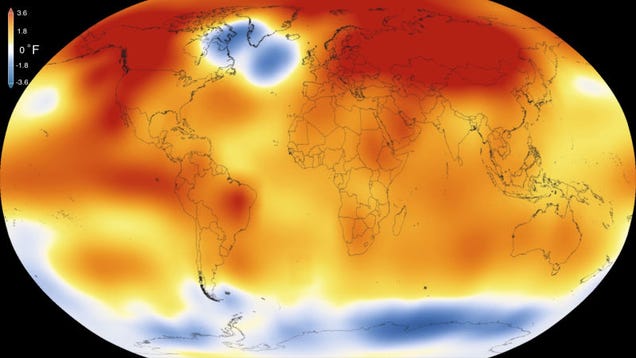
In 2006, Al Gore’s An Inconvenient Truth spread the idea of human-caused climate change far and wide in what is now considered a watershed moment for the science. But today, on the ten-year anniversary of the film’s release, we’ve made little progress toward addressing the grave planetary concerns Gore raised. In fact, by practically every metric, things have gotten much worse.

Read more...

24 May 18:23

Hey, Is This Your Car That's Covered in 20,000 Bees?

by Madeleine Davies
IKEA Monkey

PEsky bees

A silver Mitsubishi Outlander in Pembrokeshire, Wales was swarmed by thousands of bees after the hive’s queen got stuck in the trunk. By the way, is this your car? Can you come get it? (Free bees included!)

Read more...

24 May 15:54

The Tribune Says This Logan Square Burger May Be Better Than Au Cheval's

by Anthony Todd
IKEA Monkey

Hmmmmm

The Tribune Says This Logan Square Burger May Be Better Than Au Cheval's We might have a rivalry on our hands. [ more › ]
24 May 14:10

A Guide to the Best, Worst and Dumbest New TV Pilots for 2016-2017

by Clover Hope on The Muse, shared by Julianne Escobedo Shepherd to Jezebel
IKEA Monkey

There is a LOT of TV coming right for us and none of it looks very good

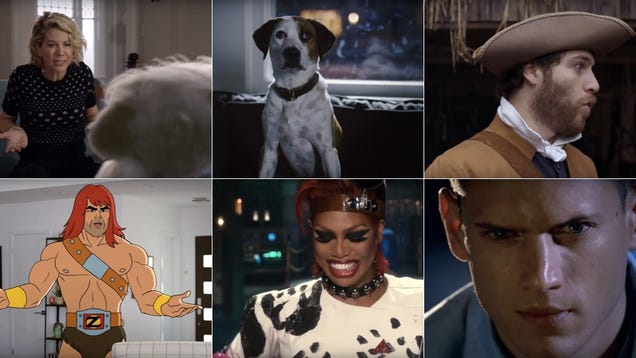
Pilots for the upcoming 2016-17 TV season include three shows involving time travel, one about an adult woman with an imaginary friend and another starring a talking dog. This could possibly be the weirdest and greatest collection of shows in the history of TV.

Read more...

23 May 19:39

Love in the time of climate change: Grizzlies and polar bears are now mating

by Adam Popescu
IKEA Monkey

Today in bear news

Most Alaskans and Canadians have a bear story -- tales of fearsome grizzlies, even polar bears. But a mix of the two?They're known as pizzlies or grolars, and they're a fusion of the Arctic white bear and their brown cousins. It's a blend that's been turning up more and more in parts of Alaska...

23 May 15:59

Georges Laraque Helps Detain Suspect In Alleged Child Kidnapping Attempt

by Barry Petchesky
IKEA Monkey

Montral? Father members?

In broad daylight in Montreal’s busy Jeanne-Mance Park on Saturday, a 24-year-old man allegedly tried to walk off with a seven-year-old girl. The girl’s father and other family members tackled the man, and had a little help holding him until police arrived: former NHL enforcer Georges Laraque, who was nearby playing in a charity baseball game.

Read more...

23 May 15:41

Florence Welch Visits Hospice, Gives Private Concert for Sick Fan

by Rachel Vorona Cote
IKEA Monkey

No, YOU'RE crying

A 15-year-old girl in hospice care was determined to attend a Florence and The Machine concert in spite of her illness. But as the day drew nearer, it became evident that she was too sick to leave the Austin, Texas medical facility. So, on Friday, May 20, Florence came to her instead.

Read more...

23 May 15:34

TV Club: Fred Armisen and pals close out SNL’s 41st season on a high note

by Dennis Perkins
IKEA Monkey

Holy crap, that Farewell Mr. Bunting sketch was amazing.

“I’m not an actor, I’m a [former SNL and my own weird version of SNL] star!”

SNL invited an alum back to host the season finale, with Fred Armisen (and a few surprise others) helping close out season 41. It’s probably partly a practical consideration—I get worn out after 21 episodes just staying up to write these reviews. These people must be burnt, and having someone in the house who knows how things work and who’s presumably easy to work with must be a blessing. (The same was said about why SNL pal Buck Henry used to get called on to host the last shows of the original cast’s seasons—Henry was a pro, plus he reportedly had no compunctions about doing sketches that previous hosts wouldn’t come anywhere near.) At any rate, having Armisen close out the season here paid off beautifully ...

22 May 14:46

Snakes, seen as workplace hazard, prevent mail delivery in Rogers Park

by Alexis Myers
IKEA Monkey

A normal amount of snakes

Mary Harris, 62, drew up a sign Monday and placed it in her front yard that says "Snake-free zone. Could we pleeze have our mail?"

Since the end of March, Harris said her mail delivery has been spotty and she has gone almost 10 days without getting a single letter because her mail carrier is afraid...

21 May 01:37

xoJane Publishes Terrible Article By a Woman Who’s Glad Her Friend Died, Then Deletes Her Byline

by Stassa Edwards
IKEA Monkey

Wow. This is insane.

On Thursday, xoJane published an essay titled “My Former Friend’s Death Was a Blessing,” which outlines a series of petty grievances with a woman who, the piece reveals, later committed suicide. It’s a strange and deeply insensitive piece; simultaneously judgmental, self-absorbed, and unreflective, particularly since the subject matter is a young woman who suffered from schizoaffective disorder.

Read more...

21 May 00:21

Five outstanding Kayne West rants

by Nicholas Wooten
IKEA Monkey

God, that first clip is still so good. Mike Meyers' reaction is incredible.

Kanye West has a history of saying whatever is on his mind whenever the microphone and spotlight are on. 

Here is a subjective list of Kanye's top five rants:

1. "George Bush doesn't care about black people."

WHEN: Sept. 2, 2005, A Concert for Hurricane Relief

In the aftermath of Hurricane Katrina,...

20 May 19:58

Judge insists Mayor Emanuel testify on Chicago police code of silence

by Jason Meisner
IKEA Monkey

They just straight up admit that there's corruption now?

In an unprecedented move, city attorneys on Friday offered to admit to a federal jury that a code of silence exists in the Chicago Police Department if it meant Mayor Rahm Emanuel would not have to testify about it at the upcoming trial involving two whistleblower cops.

But U.S. District Judge Gary...

20 May 19:55

Woman is enraptured with talking Chewbacca mask

by Jason Kottke
IKEA Monkey

OK This is hilarious. Contagious laughter. Headphones on, its loud, but SFW.

This woman in the talking Chewbacca mask is really feeling her Friday. FRIDAY!!! She's not making the noise, the mask is! Get your own mask here and have your own fun. (It's been a long week. This was delightful.)

Tags: Star Wars   video
20 May 17:19

'No More Oreos' For Chris Christie, Trump Decides

by Ellie Shechet on The Slot, shared by Julianne Escobedo Shepherd to Jezebel
IKEA Monkey

As if Trump is Mr. Universe?

New Jersey Governor Chris Christie, who is currently not (wink) being held hostage by Donald Trump, has demonstrated the pitfalls of campaigning with a narcissistic bowl of rotten gazpacho—for example, in addition to everything else that is terrible about Donald Trump, he will also publicly berate you for being overweight.

Read more...

20 May 14:33

When Will the Internet Be Safe for Women?

by Adrienne LaFrance
IKEA Monkey

This stuff makes me so viscerally upset.

The 911 call came in just before 10 o’clock on a Sunday night. The voice on the other end of the line was unnerving—it sounded automated, like a computer. This was odd, but there was no time to waste: Something terrible was reportedly unfolding at the suburban home of Katherine Clark, a Massachusetts congresswoman.

Although it was January, it was unseasonably warm for New England. Not knowing about the swarms of police scrambling toward their home, Clark and her husband were settling in after a relaxing family weekend—their oldest son had been visiting from college. “Then my husband and I noticed that there were a lot of police lights in the front lawn,” Clark said. “I immediately thought something was going on at the neighbor’s house.”

So Clark went outside to find out what was happening. “That’s when I realized there were large lights on our house, and our street was blocked off,” Clark told me. “A police officer was on the front lawn with a long gun.”

Law enforcement had turned out in force, responding to a tip about an active shooter at Clark’s house—a report that turned out to be false and, Clark believes, a reaction to her legislative efforts to fight online harassment. What the Clarks likely experienced is known as swatting, the term for when someone deceives law enforcement into responding to a made-up emergency.

Months before all this, Clark had introduced the Interstate Swatting Hoax Act of 2015, a bill that would prohibit the false reporting of emergency situations—just the way federal law addresses bomb threats and fake reports of terrorism. Back in November, after first filing the legislation, Clark had talked to her local police about the possibility that she might become a target of such hoaxes because of the bill—but she still wasn’t prepared for what she experienced that night in January.

“There was just that moment of panic that something very bad was about to happen or had happened,” Clark told me. “As much as I had heard about swatting, it’s a very different situation when you are all of the sudden standing between your family—between your children—and a very engaged, active police presence in your front yard.”

Standing on the lawn, illuminated by a flood of police lights, an officer described the strange and alarming call they’d received. Clark immediately realized what had happened. If she hadn’t known about swatting already, she says, “I can only imagine that initial terror would continue.”

The experience was scary, but it left Clark more motivated than ever. “It definitely deepened my commitment to this issue and our resolve to make sure that we are taking these crimes—crimes that may be perpetrated virtually—as seriously as we take crimes that happen in our neighborhoods.”

Fighting online harassment, including swatting, has been a legislative priority for Clark ever since one of her constituents, the video gamer designer Brianna Wu, was the target of a deluge of death threats and harassment during the video-game industry controversy known as Gamergate.

“Any woman who is using the Internet for her professional life or for her personal life has come across that moment where there is all of the sudden a hateful or sexist comment coming back at you,” Clark said. “You do internalize it, and even though it is not someone directly in front of you, there is something about the anonymous nature of it—when you don’t know where a threat is coming from—that really gets into someone’s psyche.”

What Wu experienced was worse than most. Both men and women face widespread harassment online, but Gamergate involved a host a threats against women specifically—and high-profile women like Wu, in particular. In general, much of the worst harassment, including attacks that go beyond name-calling to include physical threats, stalking, sexual harassment, or sustained attacks over time, is disproportionately targeted at women, according to a 2014 study by the Pew Research Center.

“When we heard of what Brianna Wu was going through, and really started looking into Gamergate and how extreme—not only the level of threats that were coming in, but the velocity with which they were attacking women; really a 24/7 onslaught of hateful threats and comments. This shouldn’t just be something that we accept as part of women using technology in their work lives and in their personal lives.”

But many women are told they must accept just that: If you don’t like the way you’re being treated online, you should log off.

Two years ago, the journalist Amanda Hess wrote for Pacific Standard about the hailstorm of threats she was receiving online. Among them were messages like: “Happy to say we live in the same state. Im looking you up, and when I find you, I’m going to rape you and remove your head,” and “You are going to die and I am the one who is going to kill you. I promise you this.”

As a journalist who often writes about feminism and Internet culture, Hess was used to being harassed online. But one day, after a string of particularly frightening threats, she called the police.

Two hours later, a Palm Springs police officer lumbered up the steps to my hotel room, paused on the outdoor threshold, and began questioning me in a steady clip. I wheeled through the relevant background information: I am a journalist; I live in Los Angeles; sometimes, people don’t like what I write about women, relationships, or sexuality; this was not the first time that someone had responded to my work by threatening to rape and kill me. The cop anchored his hands on his belt, looked me in the eye, and said, “What is Twitter?”

In recent years, several people—many of them women—have reported similar responses when they’ve sought help from the police. “One of the themes we kept hearing was, the response from police was well intentioned—the police wanted to help—but there was a clear lack of understanding,” Congresswoman Clark told me. “We’ve had [law enforcement] ask, ‘Well, what is Twitter?’ and, even recently, a Boston judge saying to one of the victims, ‘You just have to go offline.’ We hear, ‘It’s virtual, and you just have to turn off the computer and walk away.’”

“When I report a serious death threat to the police, this is what happens,” Wu, the video-game designer, told me in April. “Invariably, a local cop comes to my house and instructs me to stay off social media. I cannot have a career without that online presence.”

In Clark’s view, the disconnect between what people are experiencing online and how police officers are responding represents a training opportunity. That’s why, in March, she introduced the Cybercrime Enforcement Training Assistance Act, a proposal that would provide federal grant money to local law enforcement for the prevention, enforcement, and prosecution of online crimes against individuals. Funding for better resources is also one clear legislative path on a subject that is, for many reasons, tough to address from a regulatory perspective.

“I really think with local police, it comes down to just nothing in their training presents [online harassment] as a crime,” she said. “Law enforcement and judges need to have some fundamental understanding of the nature of these crimes, because many of them are crimes under existing laws.”

In most states, there are already laws pertaining to cyberstalking or other escalated forms of online harassment, according to Police Chief magazine. At the federal level, the Justice Department defines cyberstalking as using “the Internet, e-mail, or other electronic communications devices to stalk another person,” with “stalking” referring to  repeated harassing or threatening behavior. Enforcement, however, is tricky. If someone reports being harassed, and if local police decide to seek the perpetrator—both are big “if”s—investigations often cross state lines, and involve seeking perpetrators who are hiding behind anonymous accounts. Beyond that, even in cases where police identify the person responsible for the harassment, the results of an investigation get passed through a legal system that, historically, has not prioritized prosecuting online harassers.

Last year, when the FBI told Clark that cases involving online harassment are not priority for them, she called on the Department of Justice to intensify their efforts to use existing laws to investigate and prosecute the worst cases of abuse. “The federal government is not responsible for policing the Internet, but it is responsible for protecting the women who are being threatened with rape and murder in violation of existing federal law,” she wrote in an op-ed for The Hill last year.

“In 2006, Congress recognized the real-life dangers of online harassment and amended the Violence Against Women Act to make online threats of death or serious injury illegal,” Clark wrote. “Yet, even though it is a federal crime, federal prosecutors pursued only 10 of the estimated 2.5 million cases of cyber-stalking between 2010 and 2013.”

Several police departments in metro areas don’t keep records or statistics related to online harassment, or swatting, they told me. Law-enforcement officials in New York, San Francisco, Austin, and Los Angeles declined to describe how officers are trained to respond to complaints of serious online harassment. But there are hints that some police departments are beginning to take such incidents seriously. In Philadelphia, for instance, a police spokeswoman told me that officers make no distinction from threats lobbed online versus anywhere else.

“Regardless of the type of communication—if it’s social media, in-person, or through the mail—it’s going to be handled the same way,” said Tanya Little, a spokeswoman for the Philadelphia Police Department. Detectives will conduct an investigation and submit findings to the District Attorney, who then decides how to prosecute, she said. “As things change in the world, law enforcement has to adjust. It takes time. The laws catch up with the crime, and then law enforcement catches up with the laws, and we go from there.”

Little also says that officers in Philly know not to respond to a complaint of harassment by telling someone to stay offline. “We’re not going to restrict someone from their right to use social media,” she said. “You should have the freedom, without being harassed, to do what you want.”

Freedom, but also protection, Clark says. Part of convening in any public forum—online or off—may entail “coarse language” and “opinions that are a personal affront,” she says, but harassment and threats are unacceptable and should be treated as such. “If it crosses the line, and really is a threat to your safety,” Clark says, “My goal is for every woman to know that there’s going to be help for you and you will be able to have a law-enforcement system that is going to assist and bring safety back to you and allow you to continue to earn a living and have a professional life online that is not thwarted by this criminal behavior.”

20 May 14:01

Tallinn Music Week: An Unexpected Lesson in How to Do a City Festival Right

by Tom Hawking
IKEA Monkey

I have wanted to visit Tallinn for a long time. This sounds like a neat event, too.

It’s a strange time for the music festival as a concept — the Coachella-style megafestivals keep getting bigger and bigger, hoovering up big artists and even bigger piles of money, while the sad and ongoing demise of ATP has demonstrated that the boutique festival isn’t as viable a concept as it was ten or so years ago. Add to this the fact that the first generation of avid festivalgoers — Gen Xers, basically — are moving into their mid-30s, a time at which camping out for several days in (shudder) a tent starts to seem less than attractive, and you have a situation that presents both a challenge and an opportunity for festival promoters. There’s clearly still a lot of people who like the idea of a multi-day music binge, but unless you’re Coachella, you can’t appeal to them on the basis of big headliners alone — you have to provide something more.

It’s perhaps because of this that the city-centric festival has become a more prominent phenomenon over the past few years. Being able to stay in town presents several inherent advantages over the Glastonbury-esque field-in-the-middle-of-nowhere model, not least of which is the chance to stay in a proper hotel, sleep in a proper bed, and wash regularly. It also presents its own logistical challenges, though — organizing a festival across multiple venues must be a hell of an undertaking, and when the festival becomes too bloated and/or too successful for its own good (yes, I’m thinking of CMJ in NYC and SXSW in Austin), it can also be a logistical nightmare for attendees.

For this reason, the city festival seems best suited to small-ish cities — Moogfest in Durham, NC, and Soundland in Nashville are examples where this model has worked well. But perhaps the best example of all is in a place where few might expect: Tallinn, the capital of the Baltic nation of Estonia, which has been holding an annual Tallinn Music Week since 2009. The 2016 edition of the festival was held last month, and the organizers were kind enough to invite Flavorwire along — full disclosure, they were also kind enough to fly us out there and put us up in a hotel, which is very kind indeed — and out of curiosity, as much as anything else, we were happy to accept the offer.

It’s fair to say that the average US citizen’s familiarity with post-communist Baltic states is pretty minimal, so let’s note from the outset that Tallinn isn’t all Soviet architecture and leaden skies. It’s a beautiful little city, in fact, with a wonderfully preserved medieval old town, a pretty waterfront, a church that was the tallest building in the world circa 1400 or so, and an amazing Depeche Mode-themed bar. Happily, too, the local obsession appears to be fine dining — in the same way that, say, San Francisco is into craft beer or Seattle is into coffee, Tallinn is into food, with the result that the city is home to a disproportionate number of Really Good Restaurants. Huzzah.

Beyond its setting, Tallinn Music Week enjoys at least one advantage over festivals closer to home — the Estonian national government clearly has no problem providing state funding for such an endeavor, as well as getting involved in other, more hands-on ways. And by that, I mean that the freaking President of Estonia played a DJ set at this year’s festival. As much as “cool” is an integral part of Barack Obama’s brand, it’s hard to imagine him getting on the wheels of steel to drop an impromptu Chicago house set. (I’d love to be proven wrong about this, obviously.)

Estonian President Toomas Hendrik Ilves, however, appeared delighted to DJ at one of the festival’s gala events, presenting a selection of songs from Teenage Wildlife, a compilation of favorite songs from his youth that he released last year for a charity. He relegated actual mixing duties to, um, his national security adviser — I’m not making this up, I promise — but his selections were pretty spot on, so much so that your correspondent may or may not have hollered, “Tuuuuuune!” when he dropped Plastic Bertrand’s “Ça Plane Pour Moi.”

Kristjan Indus/Tallinn Music Week
President Ilves: a better DJ than certain other world leaders (Kristjan Indus/Tallinn Music Week)


It’s easy to be cynical about such things, of course, and I’m sure that Estonian politics is just as appreciative of a well-orchestrated photo op as the politics of any other country. But it also shows that the festival has some serious institutional backing, which manifests in little touches like streets being closed for shows and festival branding being prominent throughout the city (and also in one of the city’s trolleys being set aside for a performance by the 2015 winner of Estonian Idol, a performance that to my eternal discredit I managed to miss by misreading the tram timetable.) It also demonstrates the relative intimacy that a small country can enjoy — all jokes aside, our President could never DJ to a bunch of randos, all of whom were within touching and high-fiving distance, for fear that someone would shoot him. That fear, however founded or unfounded, does not seem to keep Ilves up at night.

And finally, it demonstrates that this festival is for something. Quite what that thing is remains open for debate, but it seems there’s a concerted effort here at presenting Tallinn and the region as a whole as forward-thinking, modern and progressive. As The Quietus point out in their review of this year’s event, “The festival gently exploits our latent cultural snobbery, our “Western” notions of “The Other” for its own ends. It drives ideas of change using tropes and events based round issues that many sensitive types hold dear, like ‘preserving traditions’, or ‘authenticity’. Tallinn is full of people brought in locally and from around the globe, invited to talk about TMW’s agenda.” The fact that the festival’s budget extended to flying Flavorwire from NYC goes some way toward demonstrating how concerted this effort is; we’re proud of our publication, but as far as our profile goes, we’re not quite the New York Times, y’know?

Ilves’ DJ selections were entirely UK or US music — he grew up in New Jersey, curiously enough — but they were the only familiar songs I heard over the course of my week in Tallinn. The festival line-up was almost entirely bands from Estonia and thereabouts — I ran into one solitary Australian band at the bar, because there is always an Australian band at the bar, but apart from them, it was pretty much entirely Eastern Europe. A festival entirely populated by bands you’ve never heard of mightn’t seem like a selling point, but in its own way, it is — you’re only going to be pleasantly surprised, and I was pleasantly surprised more often than I expected. Metal is clearly as big in Estonia as it is in the rest of Europe, which is to say BIG — amongst other things, the festival line-up features, gloriously, an Estonian stoner metal band called “ESTONER” — but so too is experimental electronic music and ambient noise.

Martin Ahven/Tallinn Music Week
The Funky Bus! Eternal Erection: just out of shot (Martin Ahven/Tallinn Music Week)


There’s even something called a “classical rave,” which is perhaps a better idea in conception than execution — if I’m honest didn’t hold my attention for more than 15 minutes, but then, I wouldn’t pretend to be a classical aficionado. And elsewhere, if you’ve never seen a Latvian funk band play on top of an orange bus called The Funky Bus (which apparently belongs to another band called “Eternal Erection”), you’ve never lived. The latter performed at Kultuurikatel, a fascinating post-Soviet industrial area that’s been reinvented as a cultural center. (“This was done entirely by market forces,” festival director Helen Sildna assured assembled journalists, a curious choice of words that harked back to the 1980s, when capitalism was seen as a benevolent force. It all seems so naïve now, right?)

It’s hard to say bad things about a free trip, of course, which is why they’re frowned upon in journalistic circles, but as someone who’s been to a lot of music festivals over the years, I’ll happily say in all honesty that Tallinn Music Week is most certainly one of the best I’ve been to in recent, and certainly the most interesting. In an age where the festival “circuit” exists to satisfy the needs of an aging and increasingly wealthy one-gig-per-year demographic, it’s a pleasure to attend an event that exists for an entirely different purpose — even if that purpose is, in its own way, just as commercially driven.

20 May 03:38

More Than 150 Beagles Saved From Animal Testing Are Going Up for Adoption

by Anna Green
IKEA Monkey

Yay, beagles!

A laboratory in Bengaluru is in the process of releasing 156 beagles.

19 May 23:56

Brewery’s Edible 6-Pack Rings Designed To Feed Marine Life Instead Of Killing It

by Mary Beth Quirk
IKEA Monkey

Such a good idea, why hasn't it been done before?

If you’re like me, once a six-pack of soda or beer is gone, leaving behind only plastic rings, you can’t help but be seized by the urge to snip them apart, an urge likely fueled by grade school lessons about what can happen when they find their way to the sea, and marine animals get tangled up in them. One brewery has created edible six-pack rings that are designed to feed aquatic wildlife if they end up in the ocean, and eliminate the need for all that snipping.

Craft beer company Saltwater Brewery in Delray Beach, FL created the rings from beer by-products that result from the brewing process, like barley and wheat, reports The Huffington Post.

In case fish aren’t in the mood for a snack, the rings are also 100% biodegradable and compostable.

According to the brewery, the design is just as resistant and efficient as plastic packaging, though it is more expensive to produce. The hope is that customers who care about dolphins, turtles, and other creatures of the sea will be okay paying more if it means keeping those animals swimming safely.

And if other breweries grab onto the idea, that could make the production process, and prices for the beers that use the rings, cheaper.

“It’s a big investment for a small brewery created by fisherman, surfers and people that love the sea,” Peter Agardy, head of brand at Saltwater Brewery, says in a video about the packaging.

Edible Rings On Six-Packs Feed Marine Life If They End Up In The Ocean [Huffington Post]