
Not to be outdone by a plane crash and 66 possible dead bodies, Donald Trump has found a way to insert himself into the EgyptAir news cycle, speculating that the plane was brought down by “yet another terrorist attack.”
IKEA MonkeyShut up, you sack of shit
Not to be outdone by a plane crash and 66 possible dead bodies, Donald Trump has found a way to insert himself into the EgyptAir news cycle, speculating that the plane was brought down by “yet another terrorist attack.”
IKEA MonkeyWell duh
 West Side Airbnb listings have doubled from 2014 to 2015, and the neighborhood near Riot Fest's new Douglas Park home saw the number of Airbnb users staying there jump over 800 percent.
[ more › ]
West Side Airbnb listings have doubled from 2014 to 2015, and the neighborhood near Riot Fest's new Douglas Park home saw the number of Airbnb users staying there jump over 800 percent.
[ more › ]
IKEA MonkeyThis could be huge. I hope it passes but I am sure some asshole being paid lots of money by industries that benefit from people having shitty credit will block it.
Each year, thousands of consumers file complaints against the nation’s three credit bureaus — Equinox, Experian, and TransUnion. Most of these complaints are related to inaccurate information on a consumers’ credit report and the difficult time they often have in getting this misinformation corrected. That could change with the proposed overhaul of the system.
Representative Maxine Waters (CA), a ranking member of the U.S. House Committee on Financial Services, unveiled soon-to-be introduced legislation [PDF] today that would make significant reforms aimed at bringing the “broken system” into the 21st century.
The measure, entitled the “Comprehensive Consumer Credit Reporting Reform Act,” aims to augment requirements on the consumer reporting agencies (CRAs), and furnishers that provide information to these CRAs, to ensure consumers aren’t unfairly penalized for incorrect information or outdated debt that may appear on their reports.
“The growing reliance on credit information for non-credit uses means credit scoring has a significant impact on consumers’ lives,” Waters said on a press call Wednesday. “More and more landlords use these reports to decide when to rent to potential tenants, banks use this information to determine when a consumer can open an account, and employers use them to decide when to offer position or promote a worker.”
Waters said she used a previous reform bill introduced in 2014, and discussions with consumers groups to craft the proposal, which is expected to be introduced today.
The reform includes the follow provisions:
• Bad Mortgages — Providing relief to millions of borrowers who were victimized by predatory mortgage lenders and servicers, by removing adverse information about these residential loans that are found to be unfair, deceptive, abusive, fraudulent or illegal.
“This would give a fresh start to victims who were inappropriately steered into loans they could not afford,” Waters said.
• Disputes – Establish clear standards for credit agencies and furnishers to improve the accuracy of reporting.
For the first time, consumers would have the right to appeal initial reviews of disputed items that are conducted by either credit bureaus or furnishers. It also would require furnishers, who regularly provide information about their customers to credit bureaus, to inform their customers of this practice and to let them know the first time that they actually report negative information about a specific customer. It also would require credit reporting agencies to establish dedicated “dispute” pages on their websites that are free of aggressive marketing of products and services.
• Decreasing Time On A Report — Ending the unreasonably long time periods that most adverse information can remain on a person’s credit report, shortening such periods by four years.
Waters contends that even if this information doesn’t factor into credit decisions, the presence on a report can still impact non-credit decisions.
• Student Loans — Giving distressed private education loan borrowers the same chance to repair their credit as federal student loan borrowers, by removing adverse information when delinquent private education loan borrowers make consecutive on-time monthly payments for a certain period of time on their loans.
Additionally, the reform would require furnishers and CRAs to remove delinquent private student loans that were obtained to attend fraudulent for-profit colleges.
• Medical Debt — The reform would restrict how medical debt appears on credit reports by removing paid and federal medical reports within 40 days. Consumers would also be given a 180 day grace period before medical debt can be put on a report.
“This debt can be incredibly complicated and confusing,” Waters said.
• Clearer Information — Consumers would be given tools to help them understand how a credit report is complies and how their credit score is affected by this information. This would also expand access to free credit scores.

IKEA MonkeyBoiling water and a packet of Maruchan?
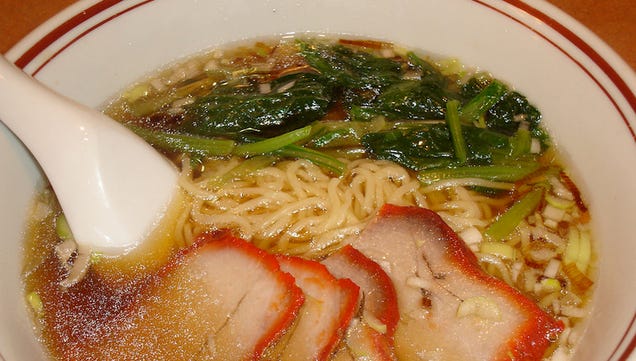
Fresh ramen noodles aren’t hard to make and are so much more delicious than instant ramen. You can save money by making them at home , too. All you need are these three ingredients and a little time.
IKEA MonkeyThis looks awesome

Punk-rock carnival turned multi-city music festival Riot Fest has announced its first wave of bands for its Chicago and Denver festivals, and, as usual, the lineup is eclectic as all get-out. Leading the lineups in the two cities after headliners The Original Misfits are bands like a reunited Ween, Death Cab for Cutie, Deftones, Descendents, NOFX and Bad Religion; some acts, like Morrissey (making his only North American festival appearance) and Jimmy Eat World in Chicago and Sleater-Kinney in Denver, will only appear in one city.
As has become something of a specialty for the festival—Riot Fest usually sees at least one high-profile reunion a year, like 2013’s much-buzzed-about Replacements set—there’ll be several reunion acts, like the previously announced (and 30 years in the making) Original Misfits lineup featuring Glenn Danzig, Jerry Only, and Wolfgang Von Frankenstein. And if horror-punk isn’t your thing, there’ll ...
IKEA MonkeyWhat a strange problem
 One resident has put up a sign declaring their yard a snake-free zone and begging for mail. [ more › ]
IKEA Monkeyholy shit, he tries to excuse himself by telling megan that "she's been called worse"?

Donald Trump has a knack for shocking people with his comments about women. Including, it seems, himself.
IKEA MonkeySo, does that mean I don't have to shove so much meat down my pants?
Supply and demand: the push and pull of time, money, materials, and desire that influences the price and availability of all commodities. An overreaction to a shortage today can result in a glut a few years from now, and vice versa. So how did we end up with the current overabundance of cheese, meat, and grains in the U.S.?
You might remember that just a few years ago, the prices for such goods was on the rise. This led farmers, ranchers, and others to increase their herds, the Wall Street Journal reports.
But two years later, when the prices of these items dropped, the newly expanded operations has caused supplies to pile up in the U.S.
“Farmers have had every reason to expand because of strong global demand,” Shayle Shagam, livestock analyst with the U.S. Department of Agriculture, tells the WSJ. “But now we have a lot of products looking for a home in a smaller number of places.”
In fact, there is so much cheese available in the U.S. that each consumer would have to eat an additional three pounds — in addition to the 36 pounds they already consume — this year just to bring the supply to normal levels.
The oversupply of cheese likely won’t be going anywhere anytime soon. Dairy farmers are expected to produce 212.4 billion pounds of milk this year — the most in history, according to the WSJ.
To make matters worse for these farmers, dairy prices have continuously dropped in recent years.
One Wisconsin cheesemaker says his company invested millions of dollars to expand their plant in 2014 when prices were above $2 a pound.
Now, he tells the WSJ, that instead of using space to make specialty cheese, he’s had to expand his standard cheddar product in order to sell more at a lower price to make up for costs.
While the excess supply of meat, cheese, and other products puts a pinch on companies who make the goods, it also translates into better prices for consumers, the WSJ points out.
The USDA estimates that retail prices for beef products will fall as much as 2% this year, while cheese prices were down 4.3% year over year.
A Cheese Glut Is Overtaking America [The Wall Street Journal]

IKEA MonkeyI was just thinking about this the other day. Swing music was really big for a minute.

It’s a meta-form of nostalgia: looking back at something that was itself looking back at something. Like pining for Happy Days, which was pining for an idealized version of the ’50s. This week is “Weird ’90s Week” at Stereogum, featuring looks back at “the strangest musical moments and trends of the decade.” Writer Tom Breihan bravely owns up to his own immersion in the swing-dance craze of the ’90s, itself an homage to zoot-suit bands and big-band music of the ’40s.
In an emotional and unsurprisingly nostalgic essay, Breihan points to the gap left in ’90s music in the post-grunge era, following Kurt Cobain’s 1994 suicide. An influx of ska bands, he theorizes, helped bridge the gap between that genre and swing, with outfits like The Mighty Mighty Bosstones and Cherry Poppin’ Daddies paving the way. This movement was also helped along by cinematic kick starts, like 1993 ...
IKEA MonkeyAnd then it died, way to go idiots
The weather at Yellowstone National Park on May 9 was fairly temperate: The low was 39 degrees Fahrenheit; the high was 50.
Nevertheless, when two tourists saw a baby bison, they decided it looked cold and needed to be rescued. So they loaded it in the trunk of their car and drove it to a ranger...
IKEA MonkeyUh oh...
If you own a newer model Subaru Outback or Legacy vehicle, the carmaker wants you to keep it in the garage after determining the steering can fail.
Subaru says it has recalled 52,000 model year 2016 to 2017 Outback and Legacy vehicles, and directed dealers to stop the sale of the cars until they can be fixed.
According to a notice [PDF] posted with the National Highway Traffic Safety Administration, the vehicles may contain steering columns that may have been manufactured improperly by a parts supplier.
The issue can cause the steering wheel to rotate freely, leading the driver to lose control of the vehicle.
Subaru says the issue was uncovered on May 3 when the owner of a 2016 Outback reported problems.
The carmaker, along with engineers and a parts supplier, were able to duplicate the issue during an inspection of the vehicle.
The Inspection revealed no conclusive root cause of concern. The steering column was collected and returned to vendor’s lab for further disassembly and inspection for final results.
The carmaker — which did not specify if any injuries or crashes were tied to the issue — says that owners will be notified of the recall. Until an inspection of the steering column can be conducted, owners are advised not to drive their vehicle.
If the vehicle contains a steering column with one of the affected lot numbers, the steering column must be replaced.

IKEA MonkeyCountdown 3... 2... 1... to a Worldstar Hip-Hop video of something throwing a table at an "upscale Taco Bell"...
Taco Bell is giving some of its restaurants a shiny new makeover, with a test of four different “upscale” design concepts. They might feature different decor but there are a few elements they’ll share, including larger tables that aren’t bolted to the floor so people can eat in bigger groups.
The four designs will debut in Orange County, CA this summer through existing restaurant remodels, with plans for a broader rollout later in the year, Taco Bell announced. The look of each test locations will vary depending on where they are, the company explains, with each one “built to reflect the vibrant communities in which they operate.”
New restaurants will feature things like sleek, modern seating, LED lights, exposed wooden beams, and trendy light fixtures instead of the flourescent and neon ambience that you may associate with Taco Bell.
According to the chain, “Heritage” style is “a modern interpretation of Taco Bell’s original Mission Revival style characterized by warm white walls with classic materials in the tile and heavy timbers”; “Modern Explorer is a “rustic modern style” that’s a “refined version” of Cantina Explorer restaurants; “California Sol” is all about the California lifestyle; and “Urban Edge” represents “an eclectic mix of international and street style done the Taco Bell way.”
The plan is part of Taco Bell’s goal to have 2,000 new restaurants by 2022, and also seems to be a move to get people to come in, sit down, and maybe come back for dinner instead of grabbing a burrito and going right back out the door.
As far as we can tell, the food will remain exactly the same as in any other Taco Bell, you’ll just be in fancier surroundings.
“We hope that we see a renewed interest in actually using it as a place to go out to dinner vs. picking up convenience and food to go home,” Deborah Brand, vice president of development and design at Taco Bell tells USA Today.

IKEA MonkeyMy mother
Reproduction is especially complicated for animals that spend their lives in the water column.
IKEA MonkeyI kind of like DGAF Rubio, he seems like someone's dad

Let’s dispel with this fiction that Marco Rubio doesn’t know what he’s doing. He knows exactly he’s doing: freaking out online.
IKEA MonkeyIts probably nothing

IKEA MonkeyDamn, when I graduated Rutgers, we had the now-disgraced NJ Governor give our speech. Lame.
President Barack Obama delivered a commencement address at Rutgers University on Sunday that steered clear of the typical graduation advice and sounded a lot like a tough, aggressive takedown of the Republican presidential front-runner.
The president, who spoke before a crowd of more than 50,000...
IKEA MonkeyGreat read
 Illustration by Marta Parszeniew.
This article originally appeared on VICE UK.
A few years ago, I found wellness. My body felt like a burden, and the food I ate didn't seem to energize me or push me on: It dulled my edges, and it left me foggy, soft, and slow. So I made a change. I got rid of the chocolate bars, microwave meals, and cakes. I read about plant-based diets, and I stopped eating meat, fish, dairy, eggs, and anything too processed. I heard tales about soy milk and hormones and toxicity, so I tried to cut that out, too. Every dinnertime, I sat back in my seat and watched everyone else tuck into their meals, content in the knowledge that I couldn't eat, so wouldn't eat. I thought about food all day; I woke up at night thinking about sausage rolls, pizza, and roast chicken with crisp, lemon-rubbed skin. Food friends and foes drew into two distinct camps in my mind, and I saw ill health at every turn and in every mouthful. I became fearful and thin. I had found wellness, and I was not well.
§
At the end of January 2015, while most of us were still barely roused from the post-Christmas stupor, Ella Mills (née Woodward) was breaking records. Her cookbook, Deliciously Ella (after her recipe blog of the same name), sold more than 32,000 copies in the first week of sale alone to become the fastest-selling debut cookbook of all time. Since then, she's gone on to release a second book, Deliciously Ella Every Day, open a Notting Hill deli, and capitalize on her credentials with a paid-for online service where you can find health tips and weekly food plans.
Ella Mills is at the crest of a wave. Over the last few years, health has become a national pastime. From bone broth to spiralizing, gluten-free, and raw food, to the ubiquity of Magic Bullets, juice cleanses, and avocado toast, this is a food culture centered now on what it claims to be nutrition. It's over a decade since the publication of Nigella Lawson's game-changing cookbook How To Be A Domestic Goddess, which topped the book charts with her brand of warm, homely indulgence. The food books that top the charts now couldn't be further from that. Of the bestsellers in Amazon's Food & Drink category, 18 out of the 20 are cookbooks with a focus on healthy eating and dieting. The language of some of our most beloved food writers has gone from flavor and feasting to cleanness and lightness.
It's "wellness" that's on the menu in this new generation of cookbooks—a term so happily imprecise that it's perhaps easier to frame in terms of what it isn't than what it is. It's not a cold, clinical, kind of health—nothing like big pharma, drugs, and unsympathetic GPs. Nor is it brash workout videos, all messy and sweaty and hot. The diet books of our parents' generation were all tacky evangelism and shouty miracle claims. But our health is more muddled now—we live in an age of "obesity epidemics," horse-meat scandals, and fears over hidden food nasties and carcinogenic additives. "Wellness" lifts us above this food chaos. Why not un-clutter our diets and go back to basics? This is the salvation that wellness promises: no new science, no cutting-edge technology, no fads, but a look backward to a simpler time. In this quest to return to simplicity, the first thing to be cast out is gluten.
§
As early as 1968, alarm began to spread about a potentially toxic ingredient smuggled into the food we love. It was declared responsible for symptoms ranging from migraine to upset stomachs, burning sensations, palpitations, numbness, and weakness. Some began to avoid it personally, steering clear of restaurants where it might be lurking in the ingredients list, while others went further, pushing for it to be declared unsafe by food-regulatory authorities. The panic came accompanied with medical studies, research by esteemed scientific journals, and lobbying from high-profile lawyers. The ingredient was connected by scientists, of varying levels of repute, with ADHD, diarrhea, depression, acid reflux, and obesity. It was an epiphany: finally an explanation for the cocktails of unsavory symptoms that doctors had left undiagnosed in so many for so long.
So far, so familiar. The symptoms are just like those laid at the doorstep of gluten today: the bloating, sluggishness, weight gain, and general ill health, the hyperbolic claims made for its toxicity, the money invested in (and profited from) the elimination of it from our diets. But this mystery Trojan horse wasn't gluten at all. Forty years prior to the gluten panic, it was MSG at the heart of a looming public-health disaster. The thing is, the myth of MSG sickness has since been thoroughly debunked. There was no illness. There was no need to overhaul health legislation or remove MSG from baby food. It was the power of panic.

Ella Mills, a.k.a. Deliciously Ella. Photo via Instagram
Celiac disease, in which individuals may suffer diarrhea, bloating, and acute abdominal pain, is a real and serious condition that affects roughly 1 percent of people in the US. A less severe manifestation of gluten intolerance called non-celiac gluten sensitivity (NCGS) is said to exist in roughly 5 percent of the population. For people who suffer from either of these or allied conditions, avoiding gluten is not just a lifestyle choice but a health imperative. But where does that leave the remaining majority? If you read any of the most popular wellness books or blogs, you could be forgiven for thinking that the case against gluten was clear-cut. In her debut cookbook, Get the Glow, nutritionist-to-the-stars Madeleine Shaw calls it "sandpaper for the gut"; Amelia Freer, author of Eat Nourish Glow, lays the blame for everything from "head fog" to joint pain at the feet of gluten. There is at no point in either of Deliciously Ella's cookbooks any explanation for why we should ditch gluten if we're not sufferers of celiac disease or NCGS. Yet her entire diet centers on the elimination of it.
And then there are the Hemsley sisters, who found fame, a café in Selfridges, and a televised cooking show through their wellness credentials, and who have boasted that the GAPS diet is a huge inspiration for their gluten-free brand of health. The GAPS, or gut and psychology syndrome, diet is a pro-"detox," highly restrictive, gluten-free regime, popularized by a Dr. Natasha Campbell-McBride. The diet purports to treat everything from autism to bipolar disorder, while advocating the ingestion of hydrogen peroxide in order to "cleanse" the gut, encouraging the feeding of raw eggs to infants and inspiring a distrust of medical professionals. The Hemsleys have wisely never endorsed the specifics of the GAPS diet, but I'm left wondering why they'd ever consider the claims of this highly contentious (and largely unsubstantiated) diet a good basis for their philosophy of healthy eating. We deserve facts, figures and thorough research not just from the Hemsley sisters, but from all of the wellness authors and bloggers who promise health transformations in the wake of a gluten-free diet. Good research into health and nutrition is slow, rigorous, and far from the evangelism of things like the GAPS diet, and wellness writing should reflect that. And yet all we're ever really told is that, if we do cut gluten out, we'll lose weight, have better skin, and shinier hair. It seems like a miracle.
The problem is, as Alan Levinovitz explains in his book The Gluten Lie, there is not necessarily any benefit to cutting out gluten unless it's medically required. If gluten is not a personal health risk—and that's for a medical professional to assess—a gluten-free diet won't necessarily help you at all. And this crusade against gluten might not just be fruitless (and expensive—according to Levinovitz, gluten-free products average at 242 percent more expensive than their gluten-containing versions), but actually harmful. Nutrition is an impossibly complicated and contested field, and rarely do we agree on what is and is not good for us. In the absence of certainty, the safest and arguably most healthy approach to nutrition falls back on variety—of food groups, macronutrients, ingredients. When cure-all good health is promised via the exclusion of whole food groups, that might be to go against the grain of one of the few nutritional sureties we have.
So what if a few people needlessly spend a bit more and get nourished a bit less, chasing after a gluten-free miracle that may never come? That needn't affect the rest of us. Except it does. The language used in wellness circles doesn't just point to the ostensible effects of gluten on our health—it soars clear of dietary science and straight into another realm altogether. On popular wellness blogs, the gluten I've heard about is "evil," "poison," "contaminating," and "toxic." There's even a leading Australian gluten-free site called glutenisthedevil.com. This isn't just about nutrition, it's about morality, and when food becomes imbued with this kind of scandalizing language, the dinner table becomes a minefield.
"I despair of the term 'clean eating'... it necessarily implies that any other form of eating —and consequently the eater of it—is dirty or impure and thus bad."—Nigella Lawson
I spoke about this purity fetish to Nigella Lawson, whose guilt-free approach to eating helped to reconfigure my attitude to food when I was at my most vulnerable. "I despair of the term 'clean eating,'" she said, "though I actually like the food that comes under that banner. necessarily implies that any other form of eating—and consequently the eater of it—is dirty or impure and thus bad, and it's not simply a way of shaming and persecuting others, but leads to that self-shaming and self-persecution that is forcibly detrimental to true healthy eating."
Our diets become a moral issue when this is the food culture we foster, and gluten is just the start of it. "I wish people would recognize before saying, 'Hey, try this cool elimination diet—you've got nothing to lose,'" lamented Alan Levinovitz when I asked him about this modern cult of elimination dieting. "Nothing to lose? No, there's a lot to lose."
§
Before my turn to "wellness," my eating disorder had looked very different. If wellness is about loving food, caring for your body, and nourishing yourself, eating disorders supposedly stand at the other end of the spectrum—they're about volatility, deprivation, and fearfulness. My bulimia was just that kind of textbook eating disorder. I've always loved math and the challenge of making sense of a chaotic world through the clarity of numbers. When depression came to me in my teens, this passion found an outlet in diet. My mind was a mess of numbers: How many calories had I eaten and how many purged; how much running equalled a Mars bar; my weight, twice a day; the number of days and weeks that it would take for me to become the person I wanted to be.

"Wellness" blogger Madeline Shaw. Photo via Instagram
When I found "wellness," I thought I'd found a way out of the storm. What I was looking for was someone to say that there were things that weren't just OK to eat, but that they would actually be good for me. At the same time, I wasn't ready to float untethered from my world of food neuroses. Wellness was alluring precisely because of the restriction it promised. There's nothing left to be fearful of when the bad food is labeled "bad food," and when what's left is a miracle cure. I was looking for something like Deliciously Ella's books, which boast "counting goodness, not calories" in one breath, and deride "gross" convenience foods in the next, to weave a precarious path between diet regimes and a love of food. Clearly I wasn't the only one drawn to the comfort of a prescriptive diet: In the introduction of her cookbook, "wellness" expert Madeleine Shaw describes teenage years spent calorie-counting, anxiety, disordered eating, and binging, all of which she left behind on England's dismal shores when she jetted off to Australia and there, in the sun and surf, discovered wellness—via restrictive diet and exercise—and was cured.
Wellness doesn't cause eating disorders. But when we advocate, and even insist upon, a diet so restrictive, moralizing, and inflexible, and market that diet to young women, and then dress it up as self-care: Just how responsible is that?
It seems clear-cut: Eating disorders are messy and unhappy, and wellness is a way out of that anxiety and disorder. But between the lines of the wellness cookbooks, I read a different story, and it's not just gluten in the firing line. In Madeleine Shaw's first cookbook alone, the vocabulary used to describe countless foods, and the way they make us feel, suggests a less accepting view of health: "junk," "sluggish," "bad," "foe," "cheat," and "fat" are all words she uses. She also reminds us that our friends might try to sabotage our diets, but that we must learn to ignore them. Ella Mills begs us to treat ourselves when the craving takes us, but that given enough time, those treat foods will begin to seem "kind of gross, actually."
It gives rise to a kind of all-or-nothing approach to nutrition where all the delicious nuance of cooking, eating, and pleasure is brusquely swept aside. When I asked dietitian and advocate of the Health at Every Size campaign, Michelle Allison, about this dichotomy, she explained: "There is no third option presented by diet culture—there is only black or white, good or bad, dieting or off-the-wagon... And many people flip between the two states like a light switch, on or off, for more or less their entire lives." Nobody sums up the totalitarianism of wellness better than Deliciously Ella herself, though. "It's not a diet—it's a lifestyle." And that's just the catch.
§
Wellness doesn't cause eating disorders. But when we advocate, and even insist upon, a diet so restrictive, moralizing, and inflexible, and market that diet to young women, and then dress it up as self-care: Just how responsible is that? When I subscribed to wellness, it gave me the means to rationalize my food insecurities, while glossing over my fear of food with the respectable veneer of health-consciousness. My illness was hidden in plain sight, and what's more—it became some thing to be proud of.
Orthorexia is a preoccupation with "right" and "wrong" foods. Although it doesn't yet have an agreed upon diagnosis among clinicians, a spokesperson at beat, the UK's leading eating disorder charity, told me that there has been an anecdotal increase in the number of people who suffer from the disorder in the recent years, and explained that "this may be exacerbated by the emphasis on what is termed 'healthy eating,' which may prompt people to go beyond taking care and moving into fixation or obsession." Some consider orthorexia an eating disorder, while others place it closer to OCD, but regardless of its diagnosis, its symptoms—anxiety around "bad foods," dietary inflexibility, a concern with physical health at social and emotional expense—seem to be on the rise.
The diet industry may just have orchestrated the most successful, and valuable, food rebranding in recent history—as of 2014, the UK gluten-free market was worth $250 million.
Of course, there are some people who can dedicate their lives to good health and still be mentally well, just as there will always be people who suffer from disordered eating, "healthily" or otherwise. But when wellness balloons beyond the individual, swelling from personal lifestyle choice to sweetheart of the diet industry bolstered by supermarkets who see kale, coconut oil, and chia seeds as a great profit opportunity, that's a problem for all of us. When the pursuit of health becomes obsessive and fearful, that's not healthy. Still worse, it's becoming more and more clear that the wellness we chase might not even want us back.
§
"Until just over four years ago, I was a sugar monster, and I mean a total addict," recounts Ella Mills, Deliciously Ella, in the opening sentence of her first cookbook. The implication is of course that if she—a self-avowed ex-sugar fiend—can find good health, anybody can. This is a wellness for everyone. In her record-breaking book, with its story of goodness, healing, and transformation, it's fitting that she would set the scene with the scapegoating of an unnatural, unhealthy, drug-like "other."
White sugar is anathema in wellness circles. We know that eating too much sugar can damage our health, so it'd be understandable for the wellness industry to advocate that we eat less sugar, and less often. What is less understandable is why wellness food writer, and somewhat ironically titled "The Yes Chef," Tess War, steers "clear of anything white" or "refined," putting her trust instead in a kind of benevolent Mother Nature that I'm not sure really exists. She recommends "natural" sugars such as raw honey, blackstrap molasses, and coconut palm sugar, though what makes these so much more natural than the sweetness wrought from sugar canes remains unclear.
We can't take it as gospel when Madeleine Shaw derides the "empty calories" in sugar—the very calories that keep us moving, breathing, and surviving. It's also not clear why, just because maple syrup contains some valuable nutrients, we must omit cane sugar from our diets altogether (least of all considering that the former costs over five times as much per gram). If the end goal really is just good health, why does the focus seem to be less on reducing sugar intake and more about promoting expensive, less accessible forms of it? As Alan Levinovitz confirms, "the biggest difference between forms of sugar is their price and the foods they appear in." If health food advocates take us down only the most expensive and exclusionary paths to health, we ought to question their integrity. When wellness guru Amelia Freer says that sugar is "a drug that makes us fat," she says it all. Because, as so often happens in a world that reveres thinness, a conversation ostensibly about sugar, and wellness, has become one about fat.
 Chef and author of 'The Naked Diet' cookbook Tess Ward. Photo via Instagram
Fat is as the heart of wellness, though you'd never guess it by the way the industry brands itself. Tess Ward is quick to point out that her "Naked Diet" isn't a diet diet, but a lifestyle diet, just like how that Madeleine Shaw separates her calorie-counting past and her gluten-free present. Again and again, Deliciously Ella shuns any claim that her diet is about "deprivation." Wellness isn't a diet, we're told, but something clean and sustainable, far from the baseness of "diet talk," weight loss, and bodies.
And yet throughout these books—the very same ones that tell us to locate our self-worth not in how we look but in who we are and how we feel—there is a consistent, entrenched fear of fatness. When Deliciously Ella allays our fears that "things like avocados and almonds will make you fat," she leaves that foundational anxiety around fatness intact as a valid concern. When Madeleine Shaw boasts that her lifestyle tips can create a "leaner, healthier physique," you could be forgiven for wondering where her "be your own cheerleader" pep went.
In the very same books that tell us to locate our self-worth not in how we look but in who we are and how we feel—there is a consistent, entrenched fear of fatness.
If the only "good" food within wellness is the kind that won't make you fat, wellness doesn't look so different to dieting. And with dieting having been proven not only ineffective (an astonishing 97 percent of dieters regain at least as much weight as they lost, within three years, belying the ruthless optimism of the industry), but often also groundless (Health at Every Size is an organization working to fight the claim that all fat people are ill), and even dangerous, maybe the wellness industry isn't quite so magical after all. The diet industry may just have orchestrated the most successful, and valuable, food rebranding in recent history—as of 2014, the UK gluten-free market was worth $250 million, and its popularity continues to boom. The biggest wellness myth might be that it was ever really about wellness at all.
§
Where do we go from here? A clue might lie in a study conducted in the mid 60s. In this study, a group of women—some Thai, the rest Swedish—ate a spicy rice dish, made with flavors and ingredients familiar within Thai cuisine. Scientists found that the Thai women—who hadn't been as thrown by the spiciness of the food as the Swedish women—absorbed nearly 50 percent more iron than the others. When participants were fed puréed meals (comprised of the kinds of foods they knew and enjoyed), they absorbed on average 70 percent less iron than they did when fed those same meals in their more appetizing, un-puréed, format. The pleasure that these women anticipated, and then relished, in their food actually helped them to be more nourished than when they received the same nutrients in a less palatable package. It was a startling result, and highlights what wellness so often overlooks: that when we separate pleasure from nutrition in our diets, we end up less nourished—physically and emotionally—than ever. Enjoying your food, it turns out, is good for you.
In grounding health in rules and restriction, rather than pleasure and intuition, wellness misses a trick. And it's not even clear that the perfect idea of health the movement strives for is a worthy end in itself. The World Health Organization advises that health is "a resource for everyday life, not the object of living," a crucial caveat that the wellness industry routinely ignores. Even if we do choose to prioritize health in our lives, that health doesn't need to be complicated.
There are infinite routes to good health outside of the dogmatism of wellness and clean eating. Reacquaint yourself with the sweet, heady scent of onions caramelizing in butter. When your birthday rolls around, make your own cake, and hold tight to your right to treat yourself with that same kindness as often as you need it. Feel buoyed by the knowledge that food is on average safer, more plentiful, and more nutritious than ever before in human history. Trust that your body knows what it needs, and when you get a hankering for chips, chocolate or courgette, look to that craving: The rumble of your belly is not a saboteur. Remember above all that you will be nourished not only by the food you eat, but by the pleasure you take in it.
If you don't trust me, take it from dietitian Michelle Allison: "Eating a wide variety of foods, trying new things, and taking pleasure in food is good for you. Combine that with the structure of regular meals and snacks, and make an effort to include most food groups at your meals, and you are covered." Eating well really is that simple. The key to good health isn't hiding in a fad diet or an elimination regime. You won't find it, as if by magic, at the bottom of a pack of chia seeds or as a prize for weight loss, gym time or a detox. Eating well is eating intuitively, with pleasure and without shame. Whatever the wellness industry may tell you, you have the secret to wellness already. You've had it all along.
Follow Ruby Tandoh on Twitter.
Some resources for eating well without "wellness":
Health At Every Size – "supporting people of all sizes in finding compassionate ways to take care of themselves."
The Ellyn Satter Institute – resources for a model of healthy eating based on pleasure and "eating competence."
The Fat Nutritionist, a.k.a. Michelle Allison, is a registered dietician and HAES advocate supporting a holistic, empowering approach to food and feeding .
The Gluten Lie, by Alan Levinovitz – debunking some of our most stubbornly popular food myths .
Glenys O – a registered dietitian enabling health within a framework of competent eating and, crucially, without dieting.
Ruby's next cookbook, Flavour, will be released in July. Special preorder book packages will be available from late June, with profits from these sales going to UK eating disorder charity beat.
IKEA MonkeySo this reads like a paper I'd write in Feminist Studies 101 or maybe Women On Film 201 but you know, the points are still valid
This week’s series finale of The Good Wife gave the show’s protagonist, Alicia Florrick, a problem that is not the worst kind to have, all things considered: The high-powered lawyer had to choose, once and for all, between the three suitors who’d courted her throughout the show’s seven seasons. As Alicia struggled with the decision, she tried to imagine what life would be like—day-by-day, year-by-year—with each man. She played out the scenes in her mind, imagining coming home to each one. There was Jason, tall and typically shaggy, standing in her kitchen, holding two bulbous glasses of red wine. And then: There was Peter, in the same place, with the same glasses. And, finally, there was Will, with … yep.

The Good Wife: Florrick v. the Sisterhood
Alicia’s imagined homecomings offered a moment of romantic melodrama—potential futures to be chosen and rejected—but they also offered, for The Good Wife’s hardcore viewers, a winking nod to one of the show’s most oft-repeated bits of character development: Alicia Florrick is a woman who really, really likes wine. Something to celebrate? Wine. Long day at work? Same. Stressful day with the family? Same. Wine, wine, wine—red and generously poured and gulped as often as it’s sipped.
Alicia is not alone in her penchant for televised oenophilia (scroenophilia?). She shares her habit with Olivia Pope. And Tami Taylor. And Skyler White. And Carrie Mathison. And Claire Underwood. And Joyce Flynn. And many, many other TV characters—almost all of them women—who telegraph their internal turmoil via swigs of Syrah.
It’s a little, um, on the nose: sour grapes suggesting sour grapes. But the trope has become fairly standardized across shows and characters and genres, shared by the women of noirish drama as readily as those of low-stakes sitcom. (Even Cersei Lannister, who exists in Game of Thrones’s fantasy-fied parallel universe, will not be deprived of her goblets of wine.) Per the tropic convention, the wine in question is often, but not always, red—which is both moody and vaguely ominous, in the manner of Homer’s “wine-dark sea,” and also more practical from a TV-production standpoint than white (which can, if served chilled, present pesky problems of camera-awkward condensation).
And: The wine is often very generously poured—into traditional glasses, as with Olivia Pope’s iconically extended-stemmed versions, or, as in the long-running gag of Cougar Town, into the larger vessels, flower vases included, that its characters repurposed as wine goblets. (One episode of the show found Jules holding a funeral after the shattering of the glass she’d named Big Joe—who was, she eulogized, “always here when I needed him.”)
What most distinguishes the televised wine, though, is that it is most commonly used as a symbol of the stress that the woman who is drinking it is experiencing. There’s a notable darkness to the Pinots, be they blanc or noir, that Olivia and Alicia and Skyler and their fellow women—Jules included—down so voraciously: Theirs is not, for the most part, social wine or with-dinner wine. It is coping wine. It is medicative wine. It is wine that is often consumed alone. And it is wine that is, as an element of TV production, used by its respective storytellers as a visual metaphor for its drinkers’ worry and fear.
In that sense, the wine suggests something different than the things suggested by, say, the beers of Cheers or the sherries of Frasier or the cosmos of Sex and the City. Instead of conviviality and/or snobbery, the wine in this case suggests the stormy silence of that most modern of afflictions: stress. While traditional wine-drinking might suggest social confidence-building (“lubrication,” etc.), this version emphasizes introversion rather than extroversion: anger that steams into a closed vessel, fear that has no outlet. Olivia gulps wine when, you know, she thinks she might be murdered. Alicia does it when she thinks her husband might go to jail. Skyler, Claire, Carrie, Tami—their wine, to varying degrees of acuteness, indicates the pressures that bear down on them, constantly. And the notion that those pressures must be borne, ultimately, alone.
So while wine, as a beverage and as a cultural phenomenon, has several built-in signifiers—“whenever a character is shown drinking wine,” the site TV Tropes reports, “it’s usually a good sign that person is high class or sophisticated, especially if the wine comes from their special private stock”—the wine consumed by so many of TV’s recent women whiffs of more than the effete or the elite. During a time that finds wine “becoming part and parcel of America’s culture,” TV characters’ repeated Grenache-gulping suggests something both more basic and more specific: personal chaos. And the ritualization of that chaos.
Alicia drinks wine, she once explained, because it’s something she used to do every day when she was a housewife—a quotidian ceremony that carried over as her life became both more exciting and more turbulent. Tami turns to the (wine) bottle after a hard day at work, or while she and Eric are having financial worries, or when any other stressor emerges. (She does it enough to have earned some loving mockery from Amy Schumer.) For Lindsay in You’re the Worst, wine suggests the systemic rejection of adulthood and its responsibilities. For Joyce and Victoria Flynn in Mike & Molly, too, wine is much more than a beverage: It becomes a metaphor, in its blithely sitcomic way, for the anxieties of the American middle class. The women drink because their lives are hard: not violently hard, or tragically hard, but paycheck-to-paycheck and bill-to-bill hard.
From a production standpoint, it makes sense that TV writers and producers would turn so repeatedly to wine to do that telegraphic work. Stress is universal—and thus literarily compelling—but also notoriously hazy and hard to quantify, even for those who are experiencing it. And it tends to manifest, externally, not as itself, but as other things: quickness to anger. A penchant for tears. Or, perhaps, a tendency to swig Zinfandel from a bulbous, 23-ounce goblet, if not right from the bottle. Wine in that sense is extremely effective as a visual indication of inner turmoil. (“Everyone has a tell,” Quinn tells Olivia, in Scandal. “Yours is wine. Red wine. Rare, complex, fantastic red wine.”)
It’s notable, though, that the wine-drinking trope tends to be realized by female characters. Rowan Pope, Olivia’s father and the person who instilled in her her love of those red wines, indulges his own taste for them via sips and strategic food-pairings and an unapologetic use of the word “palate.” Wine, for him, suggests the things it traditionally did, when wine was the beverage of the elite: structure, refinement, and an appreciation for “the finer things” that is, above all, measured and moderate. Eric Taylor has wine with his dinner, sure—because Tami has served it to him—but he doesn’t gulp it with the vague air of desperation that his wife does. Same with Frank Underwood. You rarely see TV’s men gulping wine from goblets, alone in their kitchens—and, if you do, the sight of such hard-and-hermited drinking will likely suggest, in the manner of Don Draper, A Problem.
And that’s the problem with the women-and-wine trope: It refuses to acknowledge anything problematic about its characters’ reliance on wine. Instead, it presents their ritualized wine-gulping as, simply, a fact of female life. “In theory,” The New York Times’s Eric Asimov noted of the emergence of the trope, in 2014, “it’s a nod in the direction of Humphrey Bogart as Rick Blaine in Casablanca, downing shots to dull the pain of Ilsa Lund’s reappearance with another man. In practice, it’s different because it’s wine, not spirits, and those who love wine see it as far more than a numbing palliative for heartache and anxiety.”
It’s also different, though, because it’s Alicia, not Rick, who is using the alcohol in this way. It’s Claire. It’s Carrie. Wine—through which, according to its connoisseurs, one can taste the subtle flavors of the earth—is acting as a metaphor for anxieties that are internalized rather than converted into external action. And the fact that the trope is so commonly applied to female characters suggests—vaguely but also, in its repetition, insistently—that women are, uniquely, subject to that kind of helplessness. The problems faced by Olivia and Alicia and Skyler and their fellow ladies were created, largely, by men; the wine suggests, in its way, that they must be solved by those men. It suggests the extent to which these women—whom their respective shows have presented as strong and independent and even heroic—are also passive participants in their own lives. Kathie Lee Gifford, who with Hoda Kotb regularly drinks it’s-5-o’clock-somewhere glasses of wine during the Today show, explained that the wine is there “to keep the mood festive and to keep it light and happy and uplifting.” If only it served the same purpose for those women’s fictional counterparts.
IKEA MonkeyHe's not Woody Allen's son, he's Frank Sinatra's son. But he is right, and Woody Allen is a monster.
With Woody Allen’s Café Society having just opened at Cannes — and receiving some warm reviews, from The Hollywood Reporter itself — Allen’s son, reporter Ronan Farrow, published a guest column in THR as a timely reminder of what his mother Mia Farrow has claimed — for a very long time — Allen did to his adopted daughter and Ronan’s sister, Dylan (Dylan herself not long ago corroborated the claim — that she was sexually assaulted by Allen when she was seven).
Farrow questions why the conversation surrounding the director so often ignores these allegations to pay homage to Allen’s (wavering) artistry, and begins by drawing comparisons to Bill Cosby. Farrow speaks of how he had interviewed the author of Cosby’s biography in 2014, before the immensity of the accusations against the comedian was realized. Farrow had compromised with his publishers on asking only one question about the book’s omissions of previous accusations, and the author had alleged that they “didn’t check out.” Farrow says that now reporters are examining “decades of omissions, of questions unasked, stories untold,” and finishes before segueing into his own family life, “I am one of those reporters — I’m ashamed of that interview.”
He then moves into describing how Allen’s PR machine seems to have exerted its power to ensure that the media give as little attention as possible when new claims — or new accounts by Ronan, Mia or Dylan Farrow herself — surface. He says that following Dylan’s open letter in the New York Times, emails were sent by Allen’s “powerful publicist”:
Those emails featured talking points ready-made to be converted into stories, complete with validators on offer — therapists, lawyers, friends, anyone willing to label a young woman confronting a powerful man as crazy, coached, vindictive. At first, they linked to blogs, then to high-profile outlets repeating the talking points — a self-perpetuating spin machine.
He continues to describe that not only did Dylan and the rest of his family meet adversity after they made their allegations public, but that it was extremely hard for Dylan to even publish her account at all:
In fact, when my sister first decided to speak out, she had gone to multiple newspapers — most wouldn’t touch her story. An editor at the Los Angeles Times sought to publish her letter with an accompanying, deeply fact-checked timeline of events, but his bosses killed it before it ran.
“I believe my sister,” he writes. “This was always true as a brother who trusted her, and, even at 5 years old, was troubled by our father’s strange behavior around her: climbing into her bed in the middle of the night, forcing her to suck his thumb — behavior that had prompted him to enter into therapy focused on his inappropriate conduct with children prior to the allegations.” But his own gut belief, he emphasizes, doesn’t matter as much as the “credible” and “well documented” specifics of the accusations story — outlined by Maureen Orth in Vanity Fair. Obviously, without any actual court rulings (because no charges were ultimately pressed), the news needs to put caveats next to accusations, but Farrow argues the importance of not simultaneously ignoring the claims of the victims. Since some people — particularly Allen — have used the fact that charges were ultimately not pursued to invalidate the claims, Farrow describes the reason behind the family’s decision:
Here is exactly what charges not being pursued looked like in my sister’s case in 1993: The prosecutor met with my mother and sister. Dylan already was deeply traumatized — by the assault and the subsequent legal battle that forced her to repeat the story over and over again. (And she did tell her story repeatedly, without inconsistency, despite the emotional toll it took on her.) The longer that battle, the more grotesque the media circus surrounding my family grew. My mother and the prosecutor decided not to subject my sister to more years of mayhem. In a rare step, the prosecutor announced publicly that he had “probable cause” to prosecute Allen, and attributed the decision not to do so to “the fragility of the child victim.”
Farrow concludes by noting how the climate surrounding press coverage of sexual assault allegations is changing — how the very fact that THR solicited this piece from him is a bit of a sign. But he urged that there’s still more work to do to ensure that people like his sister don’t feel invisible — fearing that, tonight, at a press conference for Cinema Café, no one will feel the urge to ask the “hard questions.”
Read Farrow’s full piece on The Hollywood Reporter.

IKEA Monkeyso beautiful

Well, okay, in the annals of stunt food , compared to watermelon Oreos and pumpkin spice everything, this sounds like a pretty good idea.
The candies will be on store shelves in July, and we’re playing along with their clever, sugary marketing game of pretending to leak the candy photo to build suspense and buzz. You win, Reese’s.
Reese’s [Facebook]

IKEA Monkeybaby dog

Hank the Dog, the Brewers’ pooch who may or may not be a hoax, was the most famous dog in baseball until this week, when the Savannah Bananas found this good doggy abandoned in their stadium parking lot. Her name is Daisy and she’s extremely good and handsome.
IKEA MonkeyERIN

After more than three decades of estrangement, Riot Fest has done the impossible and gotten the godfathers of horror-punk, The Misfits, back together. Riot Fest has confirmed that founding member Glenn Danzig, bassist Jerry Only, and the band’s long-time guitarist Doyle Wolfgang von Frankenstein (yes, we know) will play together at both the Denver (Sept. 2-4) and Chicago (Sept. 14-16) versions of the festival under the name The Original Misfits.
It’s the kind of booking few ever thought possible, given the band’s tumultuous history. Though the classic version of The Misfits broke up in 1983, tensions were ratcheted up as the years went on. After a lawsuit in the mid-’90s that granted Only the ability to tour and release music under The Misfits’ name (though he’d share the merchandising rights with Danzig), things only got worse. The two feuded publicly, and The Misfits lineup was ...
IKEA MonkeyI hate them all
Mike Lowe tweaked Lake Zurich High School administrators good 3 1/2 years ago.
When they announced measures to eliminate "grinding" at school dances, he organized an alternative to homecoming where dirty dancing was welcome. The mischievous stunt made news from Chicago to Cambodia and turned Lowe...
IKEA MonkeyWay to go, bozo
 Rauner's in good company: Chris Christie, Scott Walker and Rick Snyder top the list. [ more › ]
IKEA MonkeyThat's a big plane
IKEA MonkeyThis guy must be stopped.
George Zimmerman, the neighborhood-watch volunteer who was acquitted of murder in the 2012 shooting death of Trayvon Martin, is auctioning the gun he used to killed the black 17-year-old in Sanford, Florida.
The weapon, Zimmerman wrote on an online auction site, is a 9 mm Kel-Tec PF-9 pistol. Here’s an excerpt from the posting:
Prospective bidders, I am honored and humbled to announce the sale of an American Firearm Icon. The firearm for sale is the firearm that was used to defend my life and end the brutal attack from Trayvon Martin on 2/26/2012. … Many have expressed interest in owning and displaying the firearm including The Smithsonian Museum in Washington D.C. This is a piece of American History.
The gun, Zimmerman says, was recently returned to him by the U.S. Department of Justice. He said he hopes to get at least $5,000 for the weapon, and a portion of the proceeds “will be used to: fight BLM violence against Law Enforcement officers, ensure the demise of” Angela Corey’s career as a prosecutor, “and Hillary Clinton’s anti-firearm rhetoric.” His posting ends with the words “Si Vis Pacem Para Bellum,” a Latin phrase that means “if you want peace, prepare for war.”
BLM refers to the Black Lives Matter movement, which sprung up following several high-profile incidents in which white police officers killed unarmed black men. Corey is the Florida State Attorney who failed in her attempt to prosecute Zimmerman for killing Martin. She is up for re-election.
The planned auction of the weapon is likely to prompt controversy. Indeed, Zimmerman told WOFL-TV in Orlando, Florida, he’d received several death threats after putting the gun up for sale. “What I've decided to do is not cower,” he said. I’m “a free American. I can do what I want with my possessions.”
Martin was walking to his father’s home in 2012 when he was shot and killed by Zimmerman inside a gated community. The neighborhood-watch volunteer said he felt threatened by the 17-year-old and successfully argued in court that his actions were protected by Florida’s Stand Your Ground laws.
Since that time, Zimmerman has been charged with assault following complaints from two girlfriends, who subsequently declined to cooperate with police, leading to the charges being dropped.
The auction for his weapon begins at 11 a.m. EDT Thursday and ends 24 hours later.
IKEA MonkeyYay I love Samurai Jack!

Adult Swim just rolled out its plans for dominating late-night viewers’ attention, which include the return of Samurai Jack that we first reported on last year. The network will air new half-hour episodes of Genndy Tartakovsky’s animated during the 2016-2017 season, though it hasn’t announced the actual premiere date yet. There’s lots of animation on the slate, which will also extend streaming/business hours so that Adult Swim shows are on all day long.
Adult Swim is also plotting a Robot Chicken: The Walking Dead special that will see Seth Green, Matthew Senreich, and Robert Kirkman join creative forces to tell another story of battling the walking dead, because someone else is already fearing them. The press release was light on the details here as well, but we know the walkers have made their way into Robot Chicken’s stop-motion world before. Kirkman “appeared” as himself in ...
IKEA MonkeyHow is the most American thing in London
All proceeds from the ATM will go to a charity to help teenagers with cancer.