Wright.kevin
Shared posts
The New Apple AirPods 4 Are Already on Sale — Get Them for Early Prime Day Deal

Apple working on Pro Display XDR successor and other new monitors

In his latest Power On newsletter, Bloomberg's Mark Gurman says Apple is finally working on the successor of the Pro Display XDR. The higher-end Apple display was announced during the WWDC 2019 alongside the latest Mac Pro.
While Apple said at the beginning of the year that a new Mac Pro with the company's silicon was already in the works, the Cupertino firm hadn't said a thing about a possible new Pro Display XDR successor. According to Gurman, Apple is indeed readying a new high-end screen and other external monitors.
Apple is working on multiple new external monitors as well, including an update to the Pro Display XDR that was launched alongside the Intel Mac Pro in 2019.
However, Bloomberg's journalist suggests that a new Pro Display XDR won't land alongside the M2 Mac Pro "as the computer is further along in development than the monitor."
What's interesting is that this high-end monitor and the Studio Display won't be Apple's only screens, as Gurman says, "multiple new external displays" are in the works. According to him, "those new monitors will include Apple silicon" as it "helps the screens rely less on resources from the attached computer."
Early this year, 9to5Mac reported that Apple was developing a display with higher resolution than Pro Display XDR:
Apple is developing a new external display with a 7K resolution. The current Pro Display XDR has a 32-inch 6K (6016 x 3384) panel with 218 pixels per inch. A 7K external display from Apple could have a higher pixel density of 245 PPI with a 32-inch screen, or it could keep the same 218 PPI as the Pro Display XDR but on a larger 36-inch panel.
One thing is for sure, the most demanding Apple users will have some products to improve their workflow in 2023.
The post Apple working on Pro Display XDR successor and other new monitors appeared first on BGR.
Today's Top Deals
- Amazon is giving away free Echo Dots & LED smart bulbs right now
- Today’s deals: $199 AirPods Pro 2, $3 smart plugs, $15 Echo Dot, iPad deals, Tile sale, more
- Oops! 47 crazy Black Friday deals Amazon forgot to end
- 10 deals you shouldn’t miss this weekend: Fire HD tablets, 50% off Blink cameras, Acer laptops, more
Trending Right Now:
- Netflix’s The Witcher franchise feels like it’s collapsing before our eyes
- The laws of physics don’t actually exist, according to this physicist
- Everything to know about 1923, Taylor Sheridan’s new Paramount Plus show that debuted Sunday
Apple working on Pro Display XDR successor and other new monitors originally appeared on BGR.com on Mon, 19 Dec 2022 at 06:43:59 EDT. Please see our terms for use of feeds.

coworker asks about my personal finances, gender differences in dress codes, and more
This post, coworker asks about my personal finances, gender differences in dress codes, and more , was written by Alison Green and published on Ask a Manager.
It’s five answers to five questions. Here we go…
1. My coworker asks about my personal finances
I work in an education-related industry that’s not known for having particularly high salaries. I’m on the younger end of my workplace, and it’s the kind of place where I might be in the same role as someone decades older than me. That said, my spouse works in a better-paying industry, so with two incomes and no kids, we’re comfortable financially in a way some of my coworkers — even those who’ve been working longer than me — might not be.
I have one coworker who is socially difficult in a variety of ways. One of those ways is that she really likes to talk and complain about money. I’m fine with this if we’re talking about it as it relates to our specific jobs and salaries; I think it’s important to know how other people in the company are compensated. I’m not comfortable with this when it relates to our personal situations. I don’t really want to know all the specifics of her personal debts and financial woes, which she shares in our social team meetings (with 8-10 people in them). I also don’t want to answer the questions she asks in these same meetings, which include “how much did you pay for your house,” “how much did you put down on your house,” and, in response to so many casual comments, from getting my dog spayed to plumbing repairs, “how much did that cost?” I mostly sidestep, don’t give amounts, or — in situations where I feasibly can — ignore these comments.
She’s also above me in the hierarchy and kind of bad at reading social cues, so saying things like, “Oh, I don’t really like to talk about that kind of thing at work” doesn’t do anything more than stop a specific question. She’s right back at it the next meeting.
Because she’s above you in the hierarchy, you probably can’t make her stop sharing her own financial information— especially when she’s sharing with a group, not just you — but you can and should enforce boundaries on what you’re willing (and not willing) to share. If she asks you what you paid for something, it’s fine to say, “I’m private about money” or “that seems really personal to me” or “I’d rather not talk about my personal finances at work” or so forth.
2. Gender differences in dress codes
Many years ago I was in a business networking group focusing on people under 30. One of my fellow members was asked to develop a dress code to add formality in his business. I don’t remember the details, but it was a small, customer-facing financial firm of some sort.
His proposed men’s dress code amounted to, “Business professional: jackets and ties. Consult your manager if you have questions.” But for women he had about five pages of detail. Almost everything had both a minimum and a maximum — heels at least this high but no higher than that, skirts at least this long but no longer than that, etc. There was no option for zero jewelry or zero makeup.
Those of us in the club argued with him, of course, but his response was, “There’s a standard for ‘business professional’ for men, and men have a shared understanding of what it is. There are a lot more options for women, and when I talk to women, they give me different definitions of what ‘business professional’ means, so I’m just trying to provide guidance.”
So: if you were in that conversation, what would you be telling him to do, and how would you be supporting your argument?
With the law! For example: “It’s only legal to have different dress codes for men and women as long as they don’t create more of a burden on one sex than the other. Your proposed dress code is significantly more of a burden on women and thus is discriminatory. It’s both ethically wrong and would open you up to legal liability.”
Also, women can be fully professional without makeup or jewelry and while wearing flat shoes, so something’s going on with him that has nothing to do with business standards.
3. Husband’s relationship with a female coworker
My husband seems to find a female coworker very ambitious and great friend material.
When she asked if he would bring his wife to the Christmas party where all partners are invited, he just responded “I’ll let you know if she comes along” when we had decided that I would come to the party and I still am going to the party. He seems to like the mind game of keeping her unanswered. Is this a red flag or is there a possibility of this developing into something else?
Yes, it is a red flag that your husband is downplaying your attendance and possibly your role/your relationship when talking with this coworker. For some reason, he’s choosing not to signal that your relationship is a solid one where you show up as his partner to social events.
To be clear, this does not mean that people who don’t attend their partners’ holiday parties don’t have solid relationships. But when he knows you are indeed attending, his desire to diminish that demonstration of couplehood is suspect.
4. Telling a candidate we went with someone we liked better
I recently conducted interviews for a role on my team. All five candidates were fantastic. Their qualifications were comparable and I could see them all doing well in the role.
I extended the offer to one candidate who I and the rest of the hiring panel clicked with really well. He was kind, friendly, and polite. It’s not that the other candidates didn’t exhibit these qualities — they did! — but this particular individual gave off … I don’t know, the best vibe? Of all five candidates, I liked this one’s personality the most. I feel like a bastard saying that since I know you can’t gauge someone’s true personality from an interviewer alone, but with equal time spent with each candidate, this is all I have to go off of.
One candidate asked for feedback after we informed them that the offer was extended to someone else. I explained that although they would be great in the role, the offer was extended to someone with slightly more experience. It’s not that this wasn’t true, because it was, but it’s not the reason this person wasn’t selected. I just didn’t know what else to say!
How do you explain to a rejected candidate that someone else got the job because basically you just liked them better, without actually saying that?
You don’t need to say you liked the other person better; instead, explain that you had multiple highly qualified finalists and only one slot. For example: “We had several exceptionally qualified finalists, including you, and the decision was a tough one. We could only hire one person for this role, but I have no doubt that you would have been an asset on our team and would welcome applications from you in the future.”
5. Jobs that want reference letters before you’ve even been interviewed
I just applied for a job in higher ed (STEM support role), which warned me my references would be contacted immediately after I submitted the application. Apparently my references got an automated email requesting a whole letter of reference. This is obnoxious, right? Please tell me this is just a higher ed quirk and other sectors aren’t doing this!
Yep, it’s obnoxious. It’s also terribly inconsiderate to the references, who are being asked to spend time writing letters (a much bigger time commitment than a phone call) for people who haven’t even been through an initial screening yet and who might not even get an interview. It’s rude.
It’s also mostly an academia thing. Not entirely — you occasionally encounter it somewhere else — but mostly. (Most fields don’t do reference letters at all. Academia and law tend to be the main places that do, while most other fields generally use phone calls and only at the finalist stage. Some places use electronic survey forms, which are problematic on multiple fronts, but even then they’re at least not generally sent out until you’re further along in the process.)
What Does HR Find out in a Background Check?

I was reading a bit about your knowledge related to employment background checks.
If I sued an employer, would this come up in a background check?
I believe, from struggles I had that myself seeking employment, that I may have been possibly discriminated against by the mere legal Right & “freedom I had” to sue based on past employment violations.
My question to you is, am I alone? This information made public& is a background check in its own Right, & creates a certain barrier by this burden.
I hope my question is not to “legal like,” but also by way of requesting a response to that possible employer why I was NOT hired what I should be asking for to reinforce this possible theory of mine?
The insight will be very helpful and a strategy as if I can do something to better my chances in this Covid 19 reality.
First of all, a reality check. There may be a zillion people hiring out there, but it doesn’t matter if they aren’t hiring for what you do. Anyone can walk in off the street and get a restaurant job these days, but if you’re looking for a job as a senior marketing specialist, it’s going to be a bit of a struggle. So, don’t panic.
Second, reality check, people aren’t doing background checks before they interview you. No one has that type of extra time.
Third, unless you worked in a small industry and had a spectacular blow-up at your employer that you sued, there isn’t a blacklist. (Some small industries or small towns certainly can be impossible to get back into if you gained a bad reputation. But this isn’t because HR keeps a list.)
Fourth, you would know that the background check was causing the problems if you were getting offers that were then yanked after the background check. (Most companies do background checks after the offer, with the offer contingent on the background check.)
So, to be clear, I don’t think your past lawsuit (whatever it may be) is causing difficulty in gaining a job. But to be sure, I conducted a completely unscientific survey of the HR people at the Evil HR Lady Facebook group.
This is unscientific because people have to
- Opt into the group
- Opt into the survey
- And I don’t for a minute believe that people who join a group of HR people online that is focused on making HR the best it can contain a representative sample of all HR people. I think our group is considerably above average as far as HR people are concerned.
And here’s what I learned
- Almost everyone does criminal background checks
- About half do a pass/fail drug test
- A little less than half do a degree and previous job verification
- About 20 percent do reference checks with former managers/coworkers.
- Out of the 1500 people who saw the survey, only three said they ever receive any information about previous lawsuits.
So, while it’s possible that someone, somewhere, is looking at your lawsuits, it’s a rare thing.
Yes, recruiters google people. So, if you have a unique name. It’s more likely that they will find out. I did Google you, and yes, your lawsuit is the first thing that pops up under your name. (I presume it’s you!) There are no sordid details, though, just that your case was dismissed. Also, it was five years ago.
This isn’t preventing you from working. It could be your resume. It could be your interview skills. If you’ve been out of work since this case, it could be the employment gap, but it’s not likely to be your lawsuit.
Image by Gerd Altmann from Pixabay
The post What Does HR Find out in a Background Check? appeared first on Evil HR Lady.
Here are the hottest TV shows everyone’s binge-watching right now on Netflix and more

Like many people these days, I have a very long backlog of TV shows and movies that I have to catch up on. It's a great problem to have, of course — there's so much great content out there that it's practically impossible to stay current. I finally started The Outsider on HBO and I have to say, it's phenomenal so far. We're only four episodes into the season but it's already crystal clear that HBO has yet another winner on its hands. The series, which is based on the Stephen King novel of the same name, stars Ben Mendelsohn, Cynthia Erivo, Julianne Nicholson, and Jason Bateman, who continues to impress in dramatic roles. If you have HBO and you haven't started watching it, definitely give this thrilling horror show a try. And if you're looking for even more great TV shows to watch, it's time to consult the internet's hive mind.
BGR Top Deals:
- Amazon’s blowing out smart home products in a can’t-miss sale, today only
- Today’s top deals: AirPods Pro at Black Friday’s price, MacBook Pro blowout, $250 50″ 4K Fire TV, $179 Bose soundbar, more
Trending Right Now:
- Some of the PS5’s biggest surprises were just ruined by a huge leak
- Huawei is done with Google for good
- Massive leak says PS5 is better than the Xbox Series X in almost every way
Here are the hottest TV shows everyone’s binge-watching right now on Netflix and more originally appeared on BGR.com on Fri, 31 Jan 2020 at 09:43:25 EDT. Please see our terms for use of feeds.

Facebook suspended Israeli PM's campaign chatbot for hate speech
 Facebook has suspended a chatbot linked to the official account of Israeli Prime Minister Benjamin Netanyahu, after it posted a message that said Israel's Arab politicians "want to destroy us all." It appears that the chatbot -- operated under the na...
recruiter contacted me at my work email address, interviewing for a job where I’d work at a small table in my boss’s office, and more
It’s five answers to five questions. Here we go…
1. I’m interviewing for a job where I’d work at a small table in my boss’s office
I have a second interview coming up for an admin position in a small company (less than 30 employees). I am a seasoned admin, coming from a much larger company in a much larger city, but this job appeals to me for a lot of reasons. The biggest reason is that it’s seven minutes from my house, as opposed to my current one-hour commute each way. The money is not as much as I’m making now, but with the difference in gas money and the wear and tear on my car, it’s almost a wash, not even including my time.
There’s one thing really bugging me, though. This is a newly created position. The interviewer (VP and sister of the company owner) will be my boss, and the work space she has planned for her new hire is a computer set up at a small round table in the corner of her office. That’s it. No desk, no shelf, no drawer, not even a proper office chair, at least as far as I could tell in my first interview. The building the company occupies is new and nicely furnished. It’s a very pretty little table. We sat at the matching side chairs for our interview.
She explained that she wants to keep her new assistant “close” while this person learns the ropes. I don’t know if she plans to move that person to a real desk later. (God, I really hope she does, even if it’s not me.) I didn’t get a tour…I only saw her office and the front/showroom area. I don’t know how much other space there is.
What do you think? Should it really be bugging me this much? Should I ask her about it, and if so, how? I’ve never in my life had a job where I didn’t even have a desk.
I suppose it depends on your own preferences, but I sure as hell wouldn’t want to work at a tiny table in my boss’s office, unless it was only for a day or two for training.
It’s perfectly reasonable to ask, “Can you tell me more about the office space this person will ultimately have? Will they continue to work from your office or move to a different space once they’re trained?”
Depending on the answer, you may need to consider how much a seven-minute commute is really worth to you.
2. Recruiter contacted me at my work email address
This morning I had an email about a job opportunity. Lucky for me, I’m in a very hot career field and I get these emails pretty regularly via LinkedIn or from recruiters who’ve held on to my resume for years and years.
This one came to my work email. I’ve only had this job a few months and my work email address isn’t listed anywhere. It’s not on any company website or on LinkedIn. I realize it’s fairly easy to guess someone’s work email address and that must have been what this recruiter did. Considering that LinkedIn is the only place that mentions where I’m now working, I can’t understand why this person chose not to contact me on LinkedIn. Is it best just to delete it or should I reply back about how completely inappropriate this is?
It’s actually fairly common for recruiters to email people’s work addresses; I’m not really sure why. I think you could certainly write back and say that you don’t want to be contacted at work about other jobs; it’s a legitimate point to make. (And if you don’t want the correspondence on your work email at all, you could write back from your personal email address.) But it would also be fine to simply delete or reply that you’re not interested.
3. My former company laid me off but is telling reference checkers they fired me
Six years ago, I was laid off from a job I had been at for about six months. The reason I was given was that my position was being eliminated, but they also said that it was a concern that I had used one more sick day than I had accrued. They gave me a severance package, and I collected unemployment until I found something else. Since then, when interviewing, I’ve said that I was laid off due to my position being eliminated. I’ve even used my direct manager at that job as a reference. So you can imagine my surprise that when I got a copy of my most recent background check a potential hiring company ran, I saw that the company gave the feedback that I was fired due to attendance and would not be rehired. Obviously, this is bad. What is my best move for future interviews and background checks?
Contact the company and tell them that you’re concerned that they’re providing an inaccurate reference that’s standing in the way of you finding work. Tell them that when they laid you off, they told you that your position was being eliminated — which is different from what they’re now telling references.
This is a little tricky in that it’s possible that they selected your position for elimination because of attendance concerns (and it actually sounds like that might be the case), and it’s also possible to lay someone off and still consider them ineligible for rehire (because of their performance before the layoff, even though a layoff is different from a firing) — but by addressing it forthrightly, you might be able to negotiate what they say. At a minimum, they shouldn’t be saying you were fired when you were laid off.
Sometimes a lawyer can be helpful in negotiating this kind of thing, so that could be an option to consider too, depending on what kind of dynamic you have with the company.
4. How can I get an employee to be less chatty with customers and coworkers?
I have an employee who is very chatty on calls with customers, as well as with employees. She’s an older lady and she is overly thorough to the point that my warehouse mangers and drivers don’t like having to talk to her because she keeps them on the phone too long. I have done a couple of one on one meetings with her but she continues to ramble with employees especially. Can you please advise me of ways to address this?
How direct have you been in your feedback? Have you told her clearly that she needs to significantly pull back on how chatty she is with customers and coworkers, or did you soften the message (which managers often do in an attempt not to hurt people’s feelings)? If you haven’t been very, very straightforward, now is the time to do that. You should also spell out exactly what her chattiness level should look like — because she might think she’s pulled it back sufficiently and doesn’t realize that it needs to be, for example, 50% of what it is now.
If that doesn’t get you where you need to be, you’d need to decide if you’re willing to invest some time coaching her on this, which could include things like observing her interactions with people and giving her feedback afterwards and/or practicing conversations with her.
5. My manager says my weekend hours “don’t count”
I am a salaried exempt employee. I worked hours over a weekend (our work week ends at 11:59 p.m. on Friday) and then had pre-planned vacation that next Thursday and Friday. I took vacation time to equal 40 hours for the week; I included my weekend hours in my calculation, as it was the same work week.
Upon my return, my manager suggested that my weekend hours “don’t count” toward meeting the expected 40 hours, as they were not in my standard Monday – Friday schedule. Is this legal? Can I be made to take vacation time above the 40 hours in a week?
Yes, it’s legal although it’s really, really bad management. It’s unfair, and there’s no faster way to discourage people from doing extra work over the weekend when needed than to tell them it “doesn’t count.”
recruiter contacted me at my work email address, interviewing for a job where I’d work at a small table in my boss’s office, and more was originally published by Alison Green on Ask a Manager.
The Least Crossable Streets in America
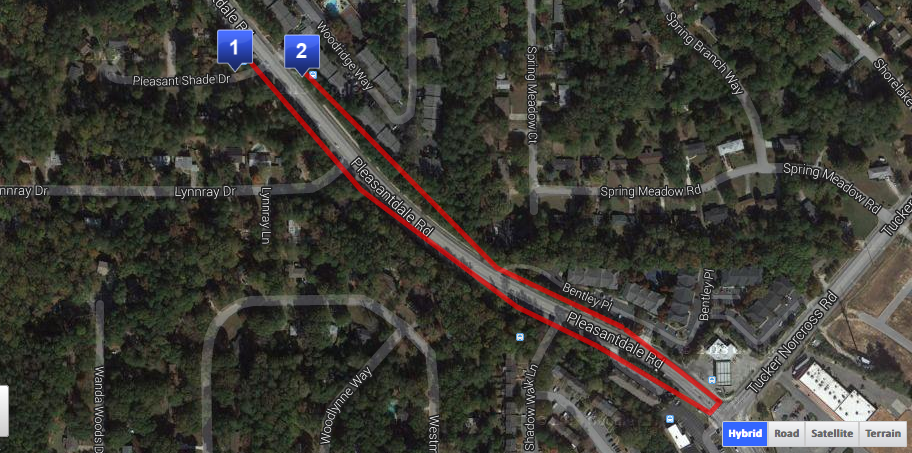
In the Boston suburb of Burlington, Massachusetts, the AMC movie theater is right across the street from the Burlington Mall. But if you're planning to travel between these two destinations on foot, you're in for quite a hike.

The Surface Pro 3 Is Microsoft’s Answer To The MacBook Air. Again.
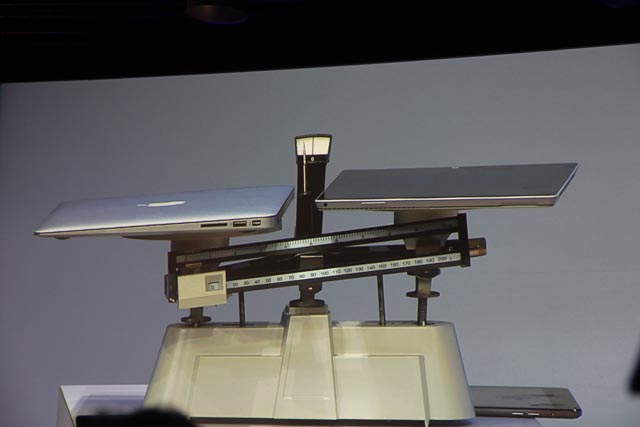 Microsoft just announced the Surface Pro 3 and a new direction for the Surface line. Microsoft is no longer looking to counter the iPad. The Surface Pro 3 is Microsoft's answer to the "heavy" MacBook Air. This argument is not new. Microsoft touched on this with the Surface Pro and then the Surface Pro 2. The value proposition is simply more clear now. Instead of muddling the argument with… Read More