Shared posts

17 Apr 18:13

Patton Oswalt's 8-minute "Star Wars" Filibuster

by Chris Higgins

This Thursday, Patton Oswalt will guest star on NBC's Parks and Recreation. His part may be small by some accounts -- he's a guy trying to block a city council vote via a filibuster -- but his effort is enormous. Presented with the challenge of talking about some topic indefinitely, Oswalt chose Star Wars, specifically what he feels the plot of the 2015 Disney Star Wars film should be. In this clip, Oswalt spews out eight minutes of improvised fan fiction, along with a little trivia. Simply amazing.

Spoiler alert: Boba Fett survived, and it's mainly a crazy Marvel universe crossover since Oswalt cares way more about comic books than Star Wars.


17 Apr 18:11

Absurd pitches (pull out the Hayek and Polanyi lesson)

by Tyler Cowen

  • Facebook - the world needs yet another Myspace or Friendster except several years late. We’ll only open it up to a few thousand overworked, anti-social, Ivy Leaguers. Everyone else will then join since Harvard students are so cool.
  • Dropbox - we are going to build a file sharing and syncing solution when the market has a dozen of them that no one uses, supported by big companies like Microsoft. It will only do one thing well, and you’ll have to move all of your content to use it.
  • Amazon - we’ll sell books online, even though users are still scared to use credit cards on the web. Their shipping costs will eat up any money they save. They’ll do it for the convenience, even though they have to wait a week for the book.
  • Virgin Atlantic - airlines are cool. Let’s start one. How hard could it be? We’ll differentiate with a funny safety video and by not being a**holes.
  • Mint - give us all of your bank, brokerage, and credit card information. We’ll give it back to you with nice fonts. To make you feel richer, we’ll make them green.
  • Palantir - we’ll build arcane analytics software, put the company in California, hire a bunch of new college grad engineers, many of them immigrants, hire no sales reps, and close giant deals with D.C.-based defense and intelligence agencies!
  • Craigslist - it will be ugly. It will be free. Except for the hookers.
  • iOS - a brand new operating system that doesn’t run a single one of the millions of applications that have been developed for Mac OS, Windows, or Linux. Only Apple can build apps for it. It won’t have cut and paste.
  • Google - we are building the world’s 20th search engine at a time when most of the others have been abandoned as being commoditized money losers. We’ll strip out all of the ad-supported news and portal features so you won’t be distracted from using the free search stuff.
  • Github - software engineers will pay monthly fees for the rest of their lives in order to create free software out of other free software!
  • PayPal - people will use their insecure AOL and Yahoo email addresses to pay each other real money, backed by a non-bank with a cute name run by 20-somethings.
  • Paperless Post - we are like Evite, except you pay us. All of your friends will know that you are an idiot.
  • Instagram - filters! That’s right, we got filters!
  • LinkedIn - how about a professional social network, aimed at busy 30- and 40-somethings. They will use it once every 5 years when they go job searching.
  • Tesla - instead of just building batteries and selling them to Detroit, we are going to build our own cars from scratch plus own the distribution network. During a recession and a cleantech backlash.
  • SpaceX - if NASA can do it, so can we! It ain’t rocket science.
  • Firefox - we are going to build a better web browser, even though 90% of the world’s computers already have a free one built in. One guy will do most of the work.
  • Twitter - it is like email, SMS, or RSS. Except it does a lot less. It will be used mostly by geeks at first, followed by Britney Spears and Charlie Sheen.

That is all from Quora, hat tip goes to James Crabtree.

08 Dec 02:07

An alternative view of the attack on Pearl Harbor - updated

by Minnesotastan
(originally posted in 2012)  There are lots of memorial posts on the internet today on the topic of Pearl Harbor.  At the risk of offending some readers, I'll post excerpts from this counterpoint, posted six years ago at The Independent Institute.
Ask a typical American how the United States got into World War II, and he will almost certainly tell you that the Japanese attacked Pearl Harbor and the Americans fought back. Ask him why the Japanese attacked Pearl Harbor, and he will probably need some time to gather his thoughts. He might say that the Japanese were aggressive militarists who wanted to take over the world, or at least the Asia-Pacific part of it. Ask him what the United States did to provoke the Japanese, and he will probably say that the Americans did nothing: we were just minding our own business when the crazy Japanese, completely without justification, mounted a sneak attack on us, catching us totally by surprise in Hawaii on December 7, 1941...

In the late nineteenth century, Japan’s economy began to grow and to industrialize rapidly. Because Japan has few natural resources, many of the burgeoning industries had to rely on imported raw materials, such as coal, iron ore or steel scrap, tin, copper, bauxite, rubber, and petroleum. Without access to such imports, many of which came from the United States or from European colonies in southeast Asia, Japan’s industrial economy would have ground to a halt. By engaging in international trade, however, the Japanese had built a moderately advanced industrial economy by 1941...

When Franklin D. Roosevelt became president in 1933, the U.S. government fell under the control of a man who disliked the Japanese and harbored a romantic affection for the Chinese... Roosevelt also disliked the Germans (and of course Adolf Hitler), and he tended to favor the British in his personal relations and in world affairs...

Accordingly, the Roosevelt administration, while curtly dismissing Japanese diplomatic overtures to harmonize relations, imposed a series of increasingly stringent economic sanctions on Japan. In 1939 the United States terminated the 1911 commercial treaty with Japan. “On July 2, 1940, Roosevelt signed the Export Control Act, authorizing the President to license or prohibit the export of essential defense materials.” Under this authority, “[o]n July 31, exports of aviation motor fuels and lubricants and No. 1 heavy melting iron and steel scrap were restricted.” Next, in a move aimed at Japan, Roosevelt slapped an embargo, effective October 16, “on all exports of scrap iron and steel to destinations other than Britain and the nations of the Western Hemisphere.” Finally, on July 26, 1941, Roosevelt “froze Japanese assets in the United States, thus bringing commercial relations between the nations to an effective end. One week later Roosevelt embargoed the export of such grades of oil as still were in commercial flow to Japan.” The British and the Dutch followed suit, embargoing exports to Japan from their colonies in southeast Asia...

Foreign Minister Teijiro Toyoda had communicated to Ambassador Kichisaburo Nomura on July 31: “Commercial and economic relations between Japan and third countries, led by England and the United States, are gradually becoming so horribly strained that we cannot endure it much longer. Consequently, our Empire, to save its very life, must take measures to secure the raw materials of the South Seas.”
Addendum: A 2013 column in Salon ("Oil led to Pearl Harbor") provides additional information.
In the summer of 1941, before leaving for Placentia Bay, U.S. President Franklin D. Roosevelt had ordered a freeze on Japanese assets. That measure required the Japanese to seek and obtain licenses to export and pay for each shipment of goods from the United States, including oil.

This move was most distressing to the Japanese because they were dependent on the United States for most of their crude oil and refined petroleum products. However, Roosevelt did not want to trigger a war with Japan. His intention was to keep the oil flowing by continuing to grant licenses...

Acheson favored a “bullet-proof freeze” on oil shipments to Japan, claiming it would not provoke war because “no rational Japanese could believe that an attack on us could result in anything but disaster for his country.”

With breathtaking confidence in his own judgment, and ignoring the objections of others in the State Department, Acheson refused to grant licenses to Japan to pay for goods in dollars. That effectively ended Japan’s ability to ship oil and all other goods from the United States.
More at the link.
07 Dec 20:51

dear clusterflock

by Sheila Ryan
Jeffchisholm

Definitely sneezing.

Loss of control over WHICH BODILY FUNCTION do you find most comical? KEY TO YOUR PERSONALITY!

I’m a sucker for vomit. Vomit anecdotes almost invariably crack me up.

It was Wednesday morning, and I was driving west on Interstate 74, just outside of Galesburg, Illinois, when I abruptly vomited, first into my right hand, then onto the floor near the console. Actually, the ejecta was something like ectoplasm, coffee-scented slime flecked with tiny bits of egg. Mucosal projectile vomiting.

The slime on my hand posed a driving challenge, seeing as I drive stick. (A friend suggested third gear is most versatile in these situations.) But I made it to a rest stop a couple of miles down the road.

Ordinarily, I stock the Honda Element with paper towels, along with water, jerky, toe and finger warmers, Mylar blankets, and other such upper Midwestern winter survival supplies, but Wednesday I was out of paper towels. And the state-operated rest stop had none, although they did stock a good supply of those free publications devoted to rip-off hotel coupons and to trucker hook-up ads. These are adequate for a first pass at cleaning your vehicle’s interior, especially if we’re talking molded plastic.

It was pretty funny. So funny that the first thing I did on my return to Galena was to tell friends my vomit story.

Which bodily betrayal is your favorite?

07 Dec 19:21

Street Performer of the Day

by Chris
Jeffchisholm

This is insane. And what a Parisian view!


07 Dec 19:19

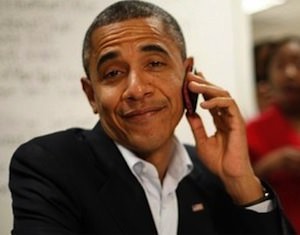
This Just In: Barack Obama Wasn't Actually Secretly Planning to End the Drug War

by Jesse Walker

Whatev'.As my colleague Mike Riggs reported last night, the Obama administration is pondering ways to undermine the pot legalization laws that voters in Colorado and Washington state passed last month. Over at The Huffington Post, Radley Balko responds with a roundup of Obama boosters who assured us during the campaign that the president would back away from the drug war after he'd been safely reelected. Here's Lawrence O'Donnell in April, for example:

Although President Obama thinks it's entirely legitimate to have a conversation about whether our drug laws are doing more harm than good, he has absolutely no intention of having that discussion in the United States until after he is reelected to a second term. With exactly 204 days remaining until the election, that makes possibly ending the war on drugs the 204th reason to vote for President Obama on November 6th.

That may or may not have worked as a get-out-the-vote drive, but as a prediction it looks like it was exactly backwards. Obama wasn't waiting for his second term to bring up an issue that's too hot for the voters. The voters themselves have shoved the issue onto the agenda, and second-term Obama is looking for ways to shove it back.