Shared posts

01 Nov 09:48

The Big Idea: Melissa F. Olson

by John Scalzi

In today’s Big Idea, Melissa F. Olson considers vampires, not through the lens of sparkly teenagers, but through the one that involves waking, getting coffee, and going on with your life. How does that work, and how does it work in her novel Nightshades? Let’s find out.

MELISSA F. OLSON:

When people learn that I write about vampires, they often assume that I myself wish to be a vampire, or believe them to be real. At the very least, they take it for granted that I of course must love vampires. All of those suppositions, however, are wrong. What I really love is a dark, exciting, preferably gothic, thought experiment.

That’s what the concept of vampires is to me, and you can blame Bram Stoker for that. I don’t love Dracula—by now, the Victorian techno-thriller is much too dated, to the point of being practically alien in its depictions of human behavior —but like so many others I am fascinated by it.  I think of Stoker as the Dan Brown of his day: a mediocre (at best) writer who stumbled on an idea that was so universally gripping that it achieved literary near-immortality just by its creation. Parasites are interesting. Immortality is interesting. Putting the two together? Practically irresistible.  Stoker may not have been a legendary writer, but he was savvy enough to recognize a legendary idea when he saw one.

Still, the fact that Stoker wasn’t the world’s greatest writer has had interesting repercussions. As Neil Gaiman put it in his introduction to Leslie Klinger’s annotated edition of Dracula, “I suspect the reasons why Dracula lives on, why it succeeds as art, why it lends itself to annotation and to elaboration are paradoxically because of its weaknesses as a novel.”

In other words, by creating a novel that lacks clarity of plot and mythology, Bram Stoker created a “what if” playground that many writers just can’t resist visiting.  What if there was a creature that never aged, and that fed on human blood? What would the creature look like? How would he interact with humans? What would he feel toward them? How would they react to him?

These questions correlate nicely with my own personal guiding principle of writing fantasy, the mantra I chant whenever the geeky part of my brain starts running off on what would be super cool. Okay, I say to myself, but how would this really work?

If vampires were real (and no, I don’t believe that they are), how would that actually work?

This thought experiment is where I have spent the last five years of my life, writing the Old World series for 47North. A few years ago, however, a new thought occurred to me: what if vampires were real…and nobody really cared?

Oh, they might care in theory, at least for a little while. But I really do believe that if the government captured a “live” vampire tomorrow, there would be a month of social media uproar, and then everyone would just go back to their lives.

Because, you see, that’s what we do. We find out that an earthquake has devastated a country on the other side of the world, or the Hugos are rigged or Donald Trump is running for president, and we have a brief period of outrage (which is like a period of mourning but with more Facebook feuds), and then we go back to putting one foot in front of the other. One day in front of the other. Until the next outrage erupts, and the cycle continues.

But not for everyone.

In Nightshades, a “shade” is a vampire-like creature with preternatural strength, a need for human blood, and saliva that causes intense hypnosis in humans. A few years before the book’s events, a shade was captured alive in Washington DC. There was a public panic, and the director of the FBI created an offshoot agency, the Bureau of Preternatural Investigations, in order to appease the frightened citizens.

A little time passed, no more shades surface, and the uproar began to die down. Most of the world’s population simply went back to their lives, while Congress struggled to determine whether the captured shade is considered a citizen or not. In short, we all absorbed the new normal and moved on.

Except for those government agents who suddenly find themselves dealing with a new species and an apathetic public. When a shade near Chicago starts aggressively kidnapping teenagers, those agents who have to figure out how to handle the crisis, even after everyone else has moved on to the next thing. And the understaffed, uninformed, and desperately overmatched Bureau of Preternatural Investigations has to figure out how to hand a brave new world that the general public would sooner pretend not to see.

Nightshades isn’t about a hidden world, and it isn’t about a well-oiled machine of an agency that can confidently address supernatural threats. It’s about the moments right after vampires are first discovered, and how the new agent in charge of Chicago has to think outside of the box to handle it. I wrote it not because I love vampires, or think they’re sparkly and romantic, but because, damn, I am still having a great time in Bram Stoker’s playground of what-ifs.

—-

Nightshades: Amazon|Barnes & Noble|iBook|Google Play|Kobo

Read an excerpt. Visit the author’s site. Follow her on Twitter.


30 Oct 08:26

The Warren Sweepstakes!

by Sweepstakes

The-Warren-by-Brian-Evenson

We want to send you a copy of Brian Evenson’s The Warren, available now from Tor.com Publishing!

X doesn’t have a name. He thought he had one—or many—but that might be the result of the failing memories of the personalities imprinted within him. Or maybe he really is called X.

He’s also not as human as he believes himself to be.

But when he discovers the existence of another—above ground, outside the protection of the Warren—X must learn what it means to be human, or face the destruction of their two species.

Comment in the post to enter!

NO PURCHASE NECESSARY TO ENTER OR WIN. A purchase does not improve your chances of winning. Sweepstakes open to legal residents of 50 United States and D.C., and Canada (excluding Quebec). To enter, comment on this post beginning at 1:30 PM Eastern Time (ET) on October 26th. Sweepstakes ends at 12:00 PM ET on October 30th. Void outside the United States and Canada and where prohibited by law. Please see full details and official rules here. Sponsor: Tor.com, 175 Fifth Ave., New York, NY 10010.

29 Oct 03:11

Check Out an Exclusive Excerpt from Dusk or Dark or Dawn or Day by Seanan McGuire

by Joel Cunningham

ddSeanan McGuire’s first novella for Tor.com Publishing, Every Heart a Doorway, is one of our favorite books of 2016. In January, the publisher will release another book from her, an unrelated story set in an alternate version of New York heavy on ghosts and short on time. We’re pleased to offer you a first glimpse of Dusk or Dark or Dawn or Day, coming January 10, 2017.

Manhattan, 2015

“Hello?”

The voice is timid; the ones who call between midnight and three a.m. usually are. Years of socialization telling them not to bother people that late conspire to keep voices low and tones unsteady, like they’re waiting for me to start yelling. I can’t blame them, but it hurts my heart every time I hear it. No one should have to walk through life so afraid.

“Hi,” I say, smiling warmly, letting the expression echo into my voice. Some of the people who work this shift keep mirrors taped to their monitors, so they can see themselves smiling. I don’t do that—I don’t like mirrors—but I appreciate that they’re willing to make the effort. There was a time when they wouldn’t have been. “My name’s Jenna.” I don’t ask my callers for theirs. If they want me to have them, they’ll offer.

“I’m…I’m Vicky.”

“Hi, Vicky. What’s going on?”

There’s a pause, brief as an indrawn breath, before she says, “I don’t want to be here anymore. I’m so tired. But I don’t want to go, either. I don’t want to hurt people by going. How can I stay when I don’t want to?”

This is a familiar question, maybe as familiar as the dance of ring and response. Not every call starts this way, but enough of them do that I don’t hesitate before I say, “You can stay, even if you don’t want to, by not going anywhere.”

There’s a shocked pause. Then she laughs, sounding almost relieved. “You say that like it’s easy.”

“No, I don’t. I say it like it’s the hardest thing in the world, because it is.” Patty fought so hard, and she couldn’t stay. Sometimes, even the strongest people get tired. “Do you want to tell me why you’re so tired, Vicky? I’d like to listen, if you feel like talking.”

They don’t, always. Some of them just call so they can say the forbidden words out loud: I want to die. They mask the statement in metaphor and circuitous language, but at the end of the day, anyone who calls a Suicide Prevention Helpline is saying the same thing. “I want to die, and I don’t know how to say that to anyone, and I don’t know how to talk to the people who care about me without scaring them, and so I’m reaching out to strangers, because strangers are safer. Strangers don’t judge, or if they do, strangers don’t matter. Strangers aren’t real.”

I’m never going to be a person to Vicky. I’m just a voice on the other end of the phone, a temporary moment of connection in a world that has somehow knocked her off-balance, and that’s what she needs right now. We talk about her hobbies. We talk about the shows she’s afraid of missing, about the niece whose ninth birthday party she wants to attend this summer, about her cat, who is old and crotchety and would be lost without her.

We talk about the knives in her kitchen. She agrees to lock them in the closet for the night. Too readily: she’s not a knife girl, not Vicky. I listen to the despair and weariness in her voice and I can see how she ends, strychnine in a mug of hot, sweet tea, the bitter bite of poison hidden under honey, and hope. Hope that dead will be better than alive is, because alive isn’t getting her anywhere. She’s a poison girl, ready to sip from the first flower that promises her oblivion.

I soften my voice, make it as gentle as I can, and ask, “Do you have someone who can keep an eye on your cleaning supplies for you?”

There’s a moment of shocked silence, and I’m afraid I’ve gone too far. I’ve done that a couple of times. They can’t understand how I arrow in on the methods they’ve been considering—and I’ve had to learn not to say anything when the method I pick out of their voices is too esoteric. Drowning’s not common anymore. Falling’s a bit more so, but it’s not one of the big three: firearms, poison, or hanging. Call someone’s intent as something that’s not one of those and I might as well be signing their death warrants myself, because they’ll hang up and never call back, and the people who need us…

Well, the people who need us need us. They can’t afford to be scared away because I’m a little overzealous about my job sometimes.

To my relief, Vicky laughs again, and says, “I guess I should have been expecting that. Statistically, women are more likely to go for poisons than men are. We don’t like to leave a mess. We spend our whole lives learning how to be…how to be as neat and tidy and unobtrusive as possible, and then we go out the same way. Sometimes I think I want to make a huge mess on my way out the door. And then I think about the people who’d have to clean it up, and I’m right back to the poison. Does that make me pathetic?”

“No. It makes you human. It means you care. I don’t think there’s anything wrong with caring.”

“I guess you wouldn’t, would you?” Her voice is softer now. Contemplative. She’s thinking about the conversation we’ve just had—and the real conversation is over now, I can hear that in her voice, just as surely as I’d heard the lure of the poisoned cup. It’s all winding down and goodbyes from here. Maybe I’ll hear from her again; maybe she’ll become one of my regulars, calling to update me on her progress, making sure I know she’s still alive. Then again, maybe not. More than half my callers are one-night-only, no encores, no repeat performances.

I’ve met a few of them later, months or even years after they called me. I’ve never met any of them among the living.

“No, I wouldn’t,” I say. People who don’t care don’t choose to take the midnight shift at the Suicide Helpline. People who don’t care stay home safe in their beds, or wander the nightclubs looking for something to connect them to the world, to keep them just that little bit more anchored.

“Well…” She takes a shaky breath, and what I hear in that sound is more reassuring than words could possibly have been. She’s decided to live. Maybe not forever—maybe not even for long—but for tonight, she’s decided to live. I’ve done some good in this world. I’ve paid off a fraction of my debt I owe to Patty, for not hearing the things she never said to me. “Thank you, Jenna. For listening. I…I really appreciate you being willing to do that.”

“Any time, Vicky.”

There’s a click as the line disconnects. She doesn’t say goodbye. I glance to the display on my computer screen: we were on that call for forty-seven minutes. Forty-seven minutes to talk a living, breathing, human woman out of killing herself. At least for tonight, Vicky will remain in the world, and that’s partially because of me. I did that.

Gingerly, I remove my headset and type in the key combination that tells the system I’m done for the night. There are only a few people on the graveyard shift. Two are on calls of their own. The third is working one of the chat rooms we maintain for people who can’t talk on the phone about what they’re feeling, even to a stranger. His fingers dance across the keys, and I pause to admire the speed and grace with which he responds to four different conversations. I never ask to work the chats. How would I measure the time? It’s too abstract. People type at different speeds, they pause and backtrack and lie so much more easily than they can when they’re actually speaking to me. I’d start crediting myself with more than I deserved, and it would all be downhill from there.

Forty-seven minutes. That’s what I’ve earned tonight. Vicky wasn’t my only call, but she’s the one that counts, the one where I spoke long enough, said enough of the right things, that I can legitimately say I made a difference. I hold that number as I get my coat from the closet, shrug it on, and make my way out the door, down the narrow stair to the old pre-code fire door that always sticks and groans when we force it open. Some of my coworkers joke about how we work in a haunted house because of that door. I always laugh with them. It’s not like they’re somehow on to me; Melissa McCarthy and the rest of the Ghostbusters won’t be barging in with their proton packs and witty one-liners any time soon.

Which is almost a pity. The nights can get long, and we could use the entertainment.

The air outside is warm and humid, smelling of boiled hot dogs, cooling pavement, and the close-packed bodies of a million people, each with their own hidden secrets and stories to tell. There are people who don’t like the smell of New York in the summer, but I find it soothing. I could stand in front of the door with my nose turned to the wind for a hundred years, and I still wouldn’t breathe in everything the city has to offer. That’s good. There should be some things too complex to experience, in or outside of a lifetime.

It takes me a moment to orient myself, to determine where I am in relation to Mill Hollow. The pull of it is always there, a fishhook in my heart, but sometimes it gets tangled up in the tall buildings and unfamiliar skyline, becoming twisted and strange. I follow it patiently back to the creek and the old oak by the ravine, until I know my exact position in the world again. I can read a street sign as well as anybody, but I’m always lost if I don’t know where the Hollow is. That’s where I’m from. That’s where I died. That’s what anchors me to this world. Without it, I might as well be a sheet on the wind, blowing senseless, no more mindful than a bit of old laundry.

Everything settles into its proper place. The world makes sense again, and I start walking.

The office of the hotline where I volunteer is tucked into the back of a privately owned building in the East Village, one of those old-money havens where buying an apartment begins in the millions and climbs rapidly upward from there. The last time the top floor was sold, I think it went for five million dollars, and that was eight years ago. Most of the building is owned by a gray-haired, steel-spined old woman whose eldest son took his own life after he came home from Vietnam. She’s the one who gives us our office space, free of charge, because she doesn’t want what happened to her Johnny to happen to anyone else.

“He just got lost, and he couldn’t see that he was already home,” was what she’d said the first time we met, in the late seventies, when her hair was still shot through with black, and her eyes were still sharp without the aid of corrective lenses. She looked at me like she knew me, and when I reached for her hand to shake it, she moved politely away from me. It’s been forty years. She’s in her late eighties now, and she’s never allowed me to touch her.

I don’t think she knows why, exactly. Some people just get a feeling when they’re around me, like they shouldn’t chance it. I don’t push. Most of them heard something from their gran, who heard it from her gran before them, and I don’t believe it’s right to go crossing someone else’s gran. Especially when she’s right. Especially when I am a danger, or could be, if I wanted to.

The streets of New York are never empty. I pass a few college boys, out past when they should be studying or sleeping, a pair of tourists with no idea what they’ve wandered into, and pause when I see a familiar shape settled on the front steps of a brownstone. She’s folded down into herself, shoulders hunched and head bowed, but Sophie has a way about her that can’t be overlooked, not once you’ve come to see it clear.

“Sophie, what are you doing out here?” Now that I’m not on the phones my accent is strong as moonshine and thick as summer honey. I sound like home. Sometimes I talk just to hear words the way they’re supposed to sound, with their harsh edges sanded off and their tempo slowed to something that’s not in such a damn hurry all the time. I crouch down, trying to catch her eye. “I thought you’d found a place.”

“I didn’t like it there.”

“Oh.” I dig a hand into my pocket, pulling out the money I was going to use for pie. I’ve got enough quarters to get myself a cup of coffee, and it’s not like I need the calories. I put the money on the stoop next to Sophie’s hip. She’s younger than she looks, aged by the dirt that cakes her skin and the worries that line her face. I wish I could do more for her, and for all the others like her, but some rescues aren’t mine to make. I don’t touch her. I never touch her, and that hurts too, because she notices. I know that somewhere deep down, she must assume that my distance is born of the same revulsion that she gets from everyone else, the fear-born scorn that doesn’t want to admit that every living human in the city is just one bad break and a few missed showers away from Sophie’s stoop.

For the most part, touching the living isn’t a problem for me. But when the need is bad enough…I can’t risk it. Sophie’s young and old at the same time, ridden hard by a world that’s never been willing to take the time to be kind. She doesn’t need another forty-seven minutes in this place. She needs a miracle, and the brush of my fingers would not be enough to grant it.

“Get yourself something to eat if you can, okay?” I straighten, leaving the money behind. Everyone homeless is fighting an uphill battle—for respect, for safety, for survival—but not everyone homeless is lost like Sophie. She’s fallen through the cracks, and she doesn’t have the tools to find her way back into the light. It’s so hard for the lost. Even on the rare occasions when they have enough money for a healthy meal or a warm coat, they encounter people who won’t serve them, who say a little dirt and a lot of despair is enough to sever someone from the human race.

I don’t know if there’s a heaven or a hell or anything beyond an earth-bound afterlife full of covered looking-glasses, but if there is, I reckon some people will be getting a bit of a surprise when the time comes for their own moving on.

“Okay,” mumbles Sophie, and I’ve done all I can do for tonight. I can’t take her home, and I know from past experience that if I try to take her to the diner, she’ll balk, refusing to go through the door. She has a little money, and she has her comforting shell of invisibility, which wraps around her like a cloak and protects her from the ones who might come through this night to do her harm. She’s been out here a long while. It’s arrogant of me to think she hasn’t made her own choices along the way.

This, too, is a part of life in the city, and while each generation is happy to blame the next for the growing issues of the homeless and the disenfranchised, the fact is it’s been going on since Cain was young, his brother’s blood still dark and drying on his hands. People aren’t so good at being good to one another. We try hard enough, but something essential was left out in the making of us, some hard little patch of stone in the fertile soil that’s supposed to be our hearts. We get hung up on the bad, and we focus on it, until it grows, and the whole crop is lost.

I pull my coat tighter around myself, wondering when the wind turned cold, wondering if it’ll warm again before the sun comes up and the world changes yet again into something new. I walk toward the diner as quickly as I dare, mindful of the drunk tourists and college kids who sometimes stumble out of the bars, vomited into the street like so much spoiled fruit. Most of them turn and stagger back in again, determined to get as hammered as they can before last call comes and spoils all their fun. The ones that stay outside, though…those ones are dangerous.

The people living in this neighborhood know me. They know everyone who volunteers at the hotline. They know the work we do, and how important it is, and that we don’t get paid to do it. None of them would lay a finger on me, much less knock me down and try to take my wallet out of my jacket. The frat boys and the drunks, on the other hand, have no qualms about going for a pretty young thing who doesn’t have the sense not to walk alone.

I’m not what they want. They aren’t what I want. I have the sense to know it; they don’t. Better for all of us if I keep out of the way and keep them from learning things the hard way. Some lessons can’t be unlearned. Some lessons aren’t fair to any of the parties involved, and punishing them would leave me stranded here for longer. Better to keep walking. Better to keep moving on.

The diner appears ahead of me, a skeleton of neon and bright paint glowing through the darkness like a promise, or a psalm. I pick up the pace still more, thinking of vinyl and chrome and the sweet, ever-present scent of pie crust hanging in the air, lard and sugar and flour and the memory of Ma’s hands working the dough, broad and strong and weathered as the Hollow itself, with knuckles like the roots of the old elm trees. We never had the money for eating out when I was young, and even if we did, there hadn’t been anyplace for us to go. Mill Hollow didn’t even get a Waffle House until the end of the 1990s, much less someplace fancy like a Cracker Barrel. The diner shouldn’t speak “home” to me the way that it does.

But time is on its side. Dandy’s was the only thing open the night I rolled into New York City, still young and confused and convinced there’d been a mistake somewhere down the line, that one day I was going to open a door and find my sister on the other side, shaking her head and looking disapprovingly down her nose at my choices. Well, Patty wasn’t waiting when I got off the bus, but Dandy’s was, neon glowing through the dark. It was the first thing I saw in my new world, the lighthouse that called me home, and I’ll always love it for that, no matter how much time stretches between the woman I am now and the girl that I was then.

The pie doesn’t hurt.

The bell above the door chimes as I walk in. It’s been making the same sound for the last forty years, fading a bit with the passage of time, but always sounding clearly. The diner is only about a third of the way full. Half the people I can see are regulars, people who’ve been eating here for years and have learned not to comment on the things a newer patron might find strange. Like the way David caters dinners of mixed seeds and scraps for the pigeons out back, or Brenda’s tendency to sit in the corner with her guitar, fingering chords and smiling, or the way I never seem to age. I am getting older, of course. Just slow, and steady, and not like a living girl would.

I haven’t been aging like a living girl for a long, long time. Not since the night I ran out into the rain. Not since the night I died.

Brenda’s in the corner with her guitar again, a cup of coffee in front of her and her guitar’s neck nestled in her hand. I offer her a nod as I walk by, and she offers one back, and the compact is reaffirmed; this place is still safe. Brenda’s a witch, one of the best I’ve ever known, all bottled magic and unforgiving judgment. She calls her power from the corn, she says, and that’s why she lives in New York, where everything is concrete and glass and the only green comes from the parks and the decorative verge outside the houses. Less temptation to seize the world and do what must be done, if she’s living this far from the corn.

We get along all right. I don’t bother her and she doesn’t bother me. She doesn’t demand I take her time, and I don’t run. We get by.

My seat at the counter is empty. I slide onto it, feel the vinyl conform to the curve of my buttocks, the press of my thighs. I relax a little further. Everything is normal. Everything is the way it ought to be, and I have forty-seven minutes to my credit. I lean my elbows on the counter, breathing myself into the room, and watch the ebb and flow of the people moving around me, trying to take the measure of the crowd.

There are two servers on-duty tonight, Carmen and a new girl whose name I can’t recall. Carmen’s in her late twenties and has been working the night shift here since she graduated high school. She takes morning classes at a local college, and is working her way steadily toward a sociology degree. She’s happy, that’s the thing. Carmen loves her job, loves her regulars, and loves the way it leaves her afternoons free to do whatever she wants to do—even if privately, I think she should spend a few more of those afternoons sleeping. She’s young enough to be able to run for days on black coffee and adrenaline, and old enough to make her choices knowing what the consequences will be.

The second server is younger, the sort of stretched-thin, wide-eyed teenager that Carmen used to be. She has a baby at home, and a GED with the ink still wet tucked into her purse. She’s produced it twice just to show people, for the sheer joy of being able to say “see? See, I have a place in the world, you’ve tried to deny me the right to anything like it, but I got it.” She’ll do well here, once she finishes adjusting to the combined strain of the graveyard shift and a growing infant.

For now, though, she’s dead on her feet, and she moves like every step is a chore. That decides things for me even before she drifts to a halt in front of me, opens her notebook, and asks, in a distinctly non-local drawl, “What can I get you tonight?”

Carmen would address me by name, ask how things went at the hotline, maybe have shown up with a cup of coffee already poured and piping hot in her hand. This girl could be another Carmen, given time. Or maybe she’ll be something completely new, leave us for a better job and a world of prospects outside these neon-covered walls. Only one way to find out.

“Coffee,” I say, with a sunny smile. “Cream and sugar, please.”

She glances up from her notepad, dull surprise in her expression. Oh, she’s exhausted, this one; she’s near to the point of breaking, because there’s never enough time. “No pie?”

“No pie,” I confirm, with a shake of my head.

“Be right back,” she says, and she’s gone, bustling down the counter to fetch the coffee pot from the warmer.

This is the hard part. I lean further forward, and when she fills my cup I reach for it a little too fast, so the liquid slops over the side and onto the counter, burning my fingers. I hiss, drawing back, and she jumps in with her dishtowel and a hastily mumbled apology, trying to clean up the spill before she can get in trouble for scalding a customer, much less scalding a regular.

“I’m sorry, that was my fault,” I say, reaching out as if to help. My fingertips brush the side of her hand, and just like that, I don’t have forty-seven minutes owed to me anymore; I’ve taken them from her.

She stops cleaning for a bare moment, the clouds in her eyes clearing, replaced by a bright, enthusiastic vigor. There’s no drug in this world like the feeling of a ghost touching living skin. Dead people provide a clean, natural, intensely addictive high, one that doesn’t come with any downsides. We take time from the living. We leave them younger, and there ain’t much humanity won’t do for eternal youth.

There’s a reason most of us don’t advertise what we are—apart from the fact that the human race isn’t quite ready for the revelation that life and living aren’t one and the same. Once we’re dead, there will always be those who view haunts as something other than human, and be happy to use us for what we are, instead of respecting us for what we were.

The new waitress blinks, the dazed expression leaving her face, replaced by a dreamy contentment. “I’m sorry about the coffee,” she says. “How about I cut you a slice of pie to make up for it? My treat.”

I’ve been coming here long enough to know the owners won’t take the cost of that pie out of her paycheck: not when she’s doing it for someone who’s in as often as I am, whose habits are as predictable as mine. So I smile, and say, “That would be swell. Peach, if you’ve got it.”

“She’ll take it ala mode,” says Brenda, leaning over me and plucking my coffee from the counter before I can object. “I’m paying. We’ll add the price of the pie you were willing to give her to your tip.”

The new girl is smart enough not to argue with Brenda, who can be a force of nature when she gets going. “Shall I bring it to your booth?” she asks.

“And the cream and sugar our little hummingbird requested, please,” says Brenda. Then she’s walking away, my coffee in her hand, and there’s nothing I can do but follow.

Well. That’s not quite true. There are a lot of things I could do, because the dead still have free will: I didn’t give up being cussed stubborn when I died, thank the Lord. Not sure I could have handled being a teenage girl in the middle of a thunderstorm with no body and a whole new personality. There’s only so much shock a person can handle in one day, and I think that would have been a march too far. So I could stay where I am, or I could turn around and leave the diner, or I could go all transparent and start wailing about how much I want to find my beautiful golden arm. I have choices.

I choose to follow Brenda to her booth, where my coffee is waiting and the guitar is already back in her arms, her fingers etching phantom chords along the neck. “I didn’t ask for your ice cream, and I don’t take any debt with it,” I say, warily.

“I didn’t offer any debt,” she says. “There: the forms are observed. Now will you relax?”

I like Brenda, as much as a ghost can like a witch, as much as it’s safe to drop my guard in the presence of someone like her. Forty years of sharing the same diner will do that. I sink back into the booth, feeling it mold to me same as the seat did, and shrug. “I’m here, I’m relaxed, I’m just waiting for my pie,” I say. “What’d you buy it for?”

“Why didn’t you have the money?” Her accent is pure Indiana, as Midwestern as the corn she says supplies her power. When she speaks, I can see a sky as endless as my Ma’s knitting, and roads that cut from nowhere to everywhere, running for a horizon they know they’ll never reach.

I shrug again, awkwardly this time. “Sophie was outside.”

“Again?” Brenda tsks. “She doesn’t like the shelters. Says they make it harder to hear the city sleeping. She’s right, of course, but that doesn’t change the fact that she’s going to wind up dead if she doesn’t get things under control.”

“Didn’t answer the question.”

“A question is a perfectly viable answer, if you look at it right,” says Brenda. “I bought your pie because I saw what you did for Marisol. How much time?”

“Forty-seven minutes.” There’s no point lying to her. She could touch the new girl—Marisol—and know exactly how much time I’d taken. Making her go to the effort would only annoy her.

Only witches can control how much time a ghost takes. They can also force the issue. Marisol could touch me all day and not get a thing, not if I didn’t want to give it. Brenda could dump a year on me in a second, if she wanted to. That’s part of why they frighten me so much.

Brenda’s expression softens. “How long did you work for that?”

“All night.”

“There are easier ways—”

“No.” I shake my head, refuting the possibility before she can lay it out in front of me. “Not for me, there aren’t. I pay it back. What I take, I pay back.” I’m not supposed to be here. I’m a dead girl playing at being alive, and everything I claim—whether it’s a volunteer position at the crisis line or a seat on the bus—takes something from the living. I’m the damn fool who let her sister die alone in an unfamiliar city, who ran out into a storm and got herself killed. If I want to see my dying day, I’m going to earn every minute that gets me there.

“There’s people who’d say the taking alone pays it back, you know,” says Brenda. “You’re the Fountain of Youth. Take as much as you want, they’ll still come panting to you with more.”

I look at her. Brenda looks back. She can be hard to read sometimes: woman has a poker face like a mountain. As always, I break first.

“You don’t mean that,” I say.

“You’re right, I don’t.” She smiles. “That’s why you get pie.”

Then Marisol comes over with my plate, vanilla ice cream melting in rivulets down the pie crust, and sets it in front of me as ceremoniously as a knight setting the crown jewels before his queen. I reach for my fork, and Brenda smiles, and it’s been a good night. A good, good night.

If I can have a million more just like it, maybe I’ll have done enough. Maybe Patty will be repaid, and I can finally rest.

Dusk or Dark or Dawn or Day will be published January 10, 2017.

The post Check Out an Exclusive Excerpt from Dusk or Dark or Dawn or Day by Seanan McGuire appeared first on The B&N Sci-Fi and Fantasy Blog.

26 Oct 06:50

A Taste of Honey Sweepstakes!

by Sweepstakes

A Taste of Honey Kai Ashante Wilson

Happy book birthday to Kai Ashante Wilson’s A Taste of Honey, available now from Tor.com Publishing! We want to send you a copy of the book, which the Washington Post called one of the month’s best SFF books.

Long after the Towers left the world but before the dragons came to Daluça, the emperor brought his delegation of gods and diplomats to Olorum. As the royalty negotiates over trade routes and public services, the divinity seeks arcane assistance among the local gods.

Aqib bgm Sadiqi, fourth-cousin to the royal family and son of the Master of Beasts, has more mortal and pressing concerns. His heart has been captured for the first time by a handsome Daluçan soldier named Lucrio. In defiance of Saintly Canon, gossiping servants, and the furious disapproval of his father and brother, Aqib finds himself swept up in a whirlwind gay romance. But neither Aqib nor Lucrio know whether their love can survive all the hardships the world has to throw at them.

A Taste of Honey is the future of fantasy,” says the B&N SciFi and Fantasy Blog.

Comment in the post to enter!

NO PURCHASE NECESSARY TO ENTER OR WIN. A purchase does not improve your chances of winning. Sweepstakes open to legal residents of 50 United States and D.C., and Canada (excluding Quebec). To enter, comment on this post beginning at 1:30 PM Eastern Time (ET) on October 25th. Sweepstakes ends at 12:00 PM ET on October 29th. Void outside the United States and Canada and where prohibited by law. Please see full details and official rules here. Sponsor: Tor.com, 175 Fifth Ave., New York, NY 10010.

21 Oct 13:49

Kai Ashante Wilson’s A Taste of Honey Is the Future of Fantasy

by Ross Johnson

kai ashante wilson's a taste of honeyClearly no one told Kai Ashante Wilson, who won acclaim last year for the inventive novella The Sorcerer of the Wildeeps, how to write epic fantasy. Here he is, publishing a sequel, and it’s another slim volume (where is your doorstopper page count?), starring a completely new cast, embracing a vivid range of themes—gender, race, sexuality—with nary a feast in sight.  A Taste of Honey, is, in fact, a sequel only in that it takes place in the same universe as the first novella, sharing many of the same preoccupations while telling a very different story.

Aqib is a minor royal of the Olorumi who nonetheless has the rank and wealth to impress the commoners. Gifted when it comes to animals and steward of the royal menagerie, he’s out walking his favorite cheetah when he encounters a brash soldier from a neighboring land. Lucrio’s charm and roguish good looks quickly overcome Aqib’s shy reserve and delicacy.

There are parallels to Romeo and Juliet in the story of the burgeoning secretive affair between the two men, which, if revealed, would threaten not only Aqib’s own future, but his entire family’s, sabotaging a strategic marriage that would ensure his progeny will hold significantly higher places in the court. Aqib and Lucrio’s nations aren’t at war—in fact, the soldier is part of a peace envoy—but they hold very different ideas about the validity of romantic love between two men.

On the surface, this a very different story from Wilson’s previous novella. While sharing a mythology, the books occur in disparate locations and among entirely different social classes. Both do pick up some time after the collapse of a highly advanced society; remnants of scientific and mathematical knowledge remain, alongside individuals whose bloodlines allow them to harness the abilities of that lost past. To most, though, math and science are indistinguishable from magic.

Sorcerer of the Wildeeps focuses on not a gentle courtier, but a mercenary, Demane, second-in-command on a mission to cross a dangerous no-man’s land and face a terrifying beast. Like Aqib, however, Demane has skills that make him something of a savant, though he hates being called a sorcerer and resists using his abilities unless absolutely necessary, and even then, as far from prying eyes as possible. He also shares with Aqib a romance that’s hidden, if not precisely forbidden: a sexual relationship with the captain of the mercenary troop, one the other men would not understand.

In both books, Wilson’s language stands out, and sets his work apart in the crowded field of fantasy. In Wildeeps, especially, he’s created convincingly distinct dialogue for the hard-living mercenary troops that blends a traditional fantasy tone with hip-hop rhythms and jargon.

It might sound weird, but it’s no less believable than any secondary world dialect (consider how often they’re based on British patterns), and serves an important purpose: it allows black characters to inhabit a fantasy world in a meaningful way, beyond the mere suggestion of dark skin. This is a fantasy world that springs authentically from Wilson’s African-American experience. There’s even a bit of code-switching evident in Demane’s subtle changes in speech patterns and slang as he moves between his lover and the unpolished mercenaries.

A Taste of Honey does something equally interesting, making a hero of a gentle, effete zookeeper. It’s noteworthy when an LGBT character shows up in a fantasy, and the burly wizard Demane is one mode, but building a story in a sword-and-sorcery world around a character like Aqib is another thing entirely. Rather than slotting a gay character into a traditional role, Wilson provides a hero who’s a bit more reactive, but faces recognizable challenges in revealing his sexuality, amid a story that manages to squeeze in a brutal fight scene and a twist ending that I absolutely did not see coming.

The books’ brisk pacing is wonderful. The best fantasy constructs deep, detailed settings, but there is always a risk of getting bogged down in the minutiae of building a world, losing sight of the characters making their way through it. Perhaps because of the trim page count, Wilson is able to create the feel of a lived-in environment, without the need for excess exposition.

On a deeper level, both novellas are preoccupied with crossroads—moments in which a single decision changes the course of a life. In Sorcerer, Demane is called upon to choose between his humanity and his magical nature. Even if our world tends to involve fewer swords and much less sorcery, we’ve all faced choices that will determine the course of our futures. It works as a metaphor in all kinds of ways, but takes on particular resonance in stories with gay leads. Demane is hiding the extent of his power first, and the extent of his relationship with the Captain second; Aqib’s moment of decision is entirely about the choice to run away with Lucrio.

Wilson is hardly the first writer to introduce queer people and people of color into a work of fantasy, but he’s among the most brilliantly brazen. Demane and Aqib aren’t traditional heroes in shades of gay; they feel as though they’ve sprung from an entirely different tradition (thanks in no small part to the inventive use of language). That’s not to say there aren’t beloved tropes on fine display: Wildeeps has bloody battles and sorcerers; Honey fits in some action alongside a romance with supernatural undertones. Each novella stands alone, but together explore very different views on a unique world. If Kai Ashante Wilson is the future of fantasy, I can’t wait to read what’s next.

A Taste of Honey is available on October 25.

The post Kai Ashante Wilson’s A Taste of Honey Is the Future of Fantasy appeared first on The B&N Sci-Fi and Fantasy Blog.

19 Oct 09:05

Two books from my wishlist on sale for $1.99 today

by noreply@blogger.com (John)
Black Swan Green: A Novel by David Mitchell (Cloud Atlas) is $1.99 this morning. And so is The Tiger's Wife: A Novel by Téa Obreht.

Books, I've recently completed--The Fifth Season by N. K. Jemisin is outstanding (I haven't been crazy about her other books).

And Binti: Home is a solid follow-up to Binti, which was terrific and fresh.
05 Oct 07:16

Human After All: The Warren by Brian Evenson

by Niall Alexander

The-Warren-by-Brian-Evenson

Area X meets Duncan Jones’ first and finest movie Moon in a marvellously mystifying novella that wants to know what it means to be human in a world where people can be constructed like sculptures shaped from clay.

X is one such person; the last in a line of such people, even, although almost all of his predecessors, helpfully arranged alphabetically, persist within him. “X was the most recent, the closest to the surface; there was nobody beyond him. And yet he was folded in on himself, damaged.” Being more metaphysical than physiological, that damage is on display from word one of The Warren, which purports to be a record—though it is far from reliable—of X’s pitiable existence:

I am writing on paper because I have seen the way that sectors of the monitor and other recording devices can become corrupted and whole selves, as a result, are lost. I am trying to leave behind a record that will survive. Apparently, judging from the passages that I do not remember but which are nonetheless written, I am not the only part of me writing this.

Never mind for the moment our protagonist’s matter of fact manner. Clearly, “something is quite wrong,” and that something has to do with the many competing personalities X carries, at least one of which is unwilling to lie back and think of Britain. “I am working against myself,” it dawns on X on the day when he wakes halfway out of the Warren. “There are parts of me ready to betray me, and I no longer have clear control over them, particularly when I sleep.”

X is unsettled in another sense as well. The raw materials he could make use of to manufacture another man—a Y, I’d imagine—have run out, meaning that unless X determines an alternative, he will be the last living thing. So it is that X soon suits up and leaves the relative safety of the only home he’s ever known, such as it is, to scour the planet’s scorched surface for more viable matter.

What he’s looking for he finds, kind of, when he happens upon a chamber that houses another human—a human like but unlike X, “not constructed but rather procreated through the fertilisation of an ovum by a sperm and its subsequent development in a womb.” Horak’s story, when it’s told, has our central character questioning his every assumption about himself, and the other beings in his body clamouring for control over their host.

What X is, for him to have so many selves, is just one of The Warren‘s many mysteries. When he is, why he is, where he is, what happened to everyone else—these questions and more come up over its concise and impeccably controlled course. Easy answers are not the order of the day, I’m afraid, which will make this well-judged work of fiction frustrating for some, but a few solutions are alluded to, and they are singularly satisfying.

Discovery for us as readers is piecemeal and unpredictable, just as it is for X himself. What revelations there are are conveyed in what appears to be a haphazard manner, but The Warren‘s broken story mirrors the broken being at its breast brilliantly, revealing fragments of fantastical narrative in the same breath as expanding our understanding of X as a character:

Since I learned most things in a way that I have come to feel would not be considered normal for those who might read this record, my sense of balance and order is sometimes far from perfect. At times, I become confused about the order in which things should be told. Parts of me know things that other parts do not, and sometimes I both know a thing and do not know it, or part of me knows something is true and another part knows it is not true, and there is nothing to allow me to negotiate between the two. The monitor can help if I ask the right questions, but in many circumstances it just adds another layer of confusion so that whatever is being choked or stifled is even more so.

In addition to this, and the unreliable nature of our narrator, there is a powerful sense of strangeness at play in these proceedings—a notion that nothing is as it seems that grows and grows as we pile assumption on top of assumption, all the while aware of the mistake we’re making. “The feeling that you, or rather I, are at once dreaming and remembering and simultaneously doing something as if for the first time” is just as decentering as it sounds. And “that terrible rapid construction of the world around you, but not as a new world; instead, as a world already known, already seen,” is practically peerless here.

I’ve had my ups and downs with Brian Evenson’s work over the years, particularly with his tiresome tie-ins, but The Warren has all the intensity and intelligence of his tremendous 2009 novel Last Days. It may well be the best thing he’s written since.

The Warren is available now from Tor.com Publishing.

Niall Alexander is an extra-curricular English teacher who reads and writes about all things weird and wonderful for The Speculative Scotsman, Strange Horizons, and Tor.com. He lives with about a bazillion books, his better half and a certain sleekit wee beastie in the central belt of bonnie Scotland.

28 Sep 09:39

Every Heart a Doorway Prize Pack Sweepstakes!

by Sweepstakes

ehad-prize-2

Next year, Tor.com Publishing brings you Down Among the Sticks and Bones, the second of Seanan McGuire’s Wayward Children books. Haven’t read the first book, Every Heart a Doorway, yet? Well, we want to send you a copy of it—along with a small poster featuring Rovina Cai’s gorgeous art!

Children have always disappeared under the right conditions; slipping through the shadows under a bed or at the back of a wardrobe, tumbling down rabbit holes and into old wells, and emerging somewhere… else.

But magical lands have little need for used-up miracle children.

Nancy tumbled once, but now she’s back. The things she’s experienced… they change a person. The children under Miss West’s care understand all too well. And each of them is seeking a way back to their own fantasy world.

But Nancy’s arrival marks a change at the Home. There’s a darkness just around each corner, and when tragedy strikes, it’s up to Nancy and her new-found schoolmates to get to the heart of things.

No matter the cost.

Comment in the post to enter!

NO PURCHASE NECESSARY TO ENTER OR WIN. A purchase does not improve your chances of winning. Sweepstakes open to legal residents of 50 United States and D.C., and Canada (excluding Quebec). To enter, comment on this post beginning at 10:30 AM Eastern Time (ET) on September 27th. Sweepstakes ends at 12:00 PM ET on October 2nd. Void outside the United States and Canada and where prohibited by law. Please see full details and official rules here. Sponsor: Tor.com, 175 Fifth Ave., New York, NY 10010.

28 Sep 09:39

Fiction Affliction: October Releases in Fantasy

by Tor.com

FA-FantasyOct

Fifty fantasy books fly onto the shelves this month, including a new entry in Garth Nix’s Old Kingdom; the 20th anniversary edition of A Game of Thrones; Ken Liu’s The Wall of Storms; and Kai Ashante Wilson’s A Taste of Honey. Sequels and series titles about, but there are stand-alones hidden in these lists, too—including new books from Keith Donohue and Daniel Polansky, and a gorgeous collection of Grimm-inspired art from Shaun Tan.

Fiction Affliction details releases in science fiction, fantasy, and “genre-benders.” Keep track of them all here. Note: All title summaries are taken and/or summarized from copy provided by the publisher.


WEEK ONE

All Your Wishes (Blood Singer #7)—Cat Adams (October 4, Tor Boks)
A client begs Celia Graves—part human, part Siren, part vampire—to help return a genie to his bottle. The attempt makes Celia a target for the currently incorporeal ifrit. If she doesn’t give him her body, he’ll kill everyone she loves. If she does, he’ll use her physical form to free thousands of evil djinn. Celia’s not going to hand over her body, but her client tries to trick her into it—so that he can kill the ifrit while it’s trapped in her flesh. That doesn’t end well for the client. Celia might not get paid for the gig, but she’s got to get the ifrit re-bottled before all hell breaks loose—possibly literally!

Otherworld Chills—Kelley Armstrong (October 4, Plume)
Embrace the obscure. In the final installment of the Otherworld anthology series, New York Times bestselling author Kelley Armstrong once again opens the gates to the Otherworld. This collection of rare and never-before-published novellas and short stories brings the clever wit, dark twists, and intense suspense Otherworld readers have come to expect. Favorite characters return, secrets are revealed, and several important storylines reach their conclusions.

Level Grind (Twenty-Sided Sorceress Vol. 1)—Annie Bellet (October 4, Saga)
Omnibus. Gamer. Nerd. Sorceress. Jade Crow lives a quiet life running her comic book and game store in Wylde, Idaho, hiding from a powerful sorcerer who wants to eat her heart and take her powers—her ex-boyfriend Samir. Yet when dark powers threaten her friends’ lives, Jade must save them by using magic. But as soon as she does, her nemesis will find her and she won’t be able to stand up against him when he comes. An omnibus of the first four books in the USA Today bestselling fantasy series—collected together for the first time in one volume: Justice Calling; Murder of Crows; Pack of Lies; and Hunting Season.

The Motion of Puppets—Keith Donohue (October 4, Picador)
In the Old City of Québec, Kay Harper falls in love with a puppet in the window of the Quatre Mains, a toy shop that is never open. She is spending her summer working as an acrobat with the cirque while her husband, Theo, is translating a biography of the pioneering photographer Eadweard Muybridge. Late one night, Kay fears someone is following her home. Surprised to see that the lights of the toy shop are on and the door is open, she takes shelter inside. The next morning Theo wakes up to discover his wife is missing. Under police suspicion and frantic at her disappearance, he obsessively searches the streets of the Old City. Meanwhile, Kay has been transformed into a puppet, and is now a prisoner of the back room of the Quatre Mains. The only way she can return to the human world is if Theo can find her and recognize her in her new form. So begins the dual odyssey of The Motion of Puppets: a husband determined to find his wife, and a woman trapped in a magical world where her life is not her own.

The Black Key (Lone City #3)—Amy Ewing (October 4, Harper Teen)
Young adult. For too long, Violet and the people of the outer circles of the Lone City have lived in service of the royalty of the Jewel. But now, the secret society known as the Black Key is preparing to seize power.
While Violet knows she is at the center of this rebellion, she has a more personal stake in it—for her sister, Hazel, has been taken by the Duchess of the Lake. Now, after fighting so hard to escape the Jewel, Violet must do everything in her power to return not only to save Hazel, but the future of the Lone City.

Aerie (Magonia #2)—Maria Dahvana Headley (October 4, HarperCollins)
Young adult. Aza Ray is back on earth. Her boyfriend, Jason, is overjoyed. Her family is healed. She’s living a normal life, or as normal as it can be if you’ve spent the past year dying, waking up on a sky ship, and discovering that your song can change the world. As in, not normal. Part of Aza still yearns for the clouds, no matter how much she loves the people on the ground. When Jason’s paranoia over Aza’s safety causes him to make a terrible mistake, Aza finds herself a fugitive in Magonia, tasked with opposing her radical, bloodthirsty, recently escaped mother, Zal Quel, and her singing partner, Dai. She must travel to the edge of the world in search of a legendary weapon, the Flock, in a journey through fire and identity that will transform her forever.

The White Spell (Nine Kingdoms #10)—Lynn Kurland (October 4, Berkley)
Acair of Ceangail, youngest bastard son of the worst black mage in history, has followed in his father’s footsteps, wreaking havoc throughout the world and leaving powerful enemies in his wake. After a year of reparation, he owes a final bit of penance: twelve months spent working in a barn without using his magic. Léirsinn of Sàraichte understands horses, stable work, and how to judge men’s hearts. When she starts seeing shadows where there should only be light, she knows there is evil afoot. Unfortunately, it’s something she can’t fight on her own. Acair’s attempts to aid Léirsinn only draw the notice of dangerous mages against whom he is currently defenseless. With only each other to rely on, Acair and Léirsinn find themselves suddenly in a race to save the world before it’s consumed by darkness…

Closer to the Chest (Herald Spy #3)—Mercedes Lackey (October 4, DAW)
Herald Mags, the King of Valdemar’s Herald-Spy, has been developing a clandestine network of young informants who operate not only on the streets of the capital city of Haven, but also in the Great Halls and kitchens of the wealthy and highborn. His wife Amily is growing into her position as the King’s Own Herald, though she is irritated to encounter many who still consider her father, Herald Nikolas, to be the real King’s Own. Nonetheless, she finds it increasingly useful to be underestimated, for there are dark things stirring in the shadows of Haven and up on the Hill. Someone has discovered many secrets of the women of the Court and the Collegia—and is using those secrets to terrorize and bully them. Someone is targeting the religious houses of women, too, leaving behind destruction and obscene ravings. But who? And what is this person hoping to achieve? Mags and Amily will have to track down someone who leaves few clues behind and thwart whatever plans have been set in motion, and quickly—before terror turns to murder.

The Wall of Storms (Dandelion Dynasty #2)—Ken Liu (October 4, Saga)
In the much-anticipated sequel to the “magnificent fantasy epic” (NPR) Grace of Kings, Emperor Kuni Garu is faced with the invasion of an invincible army in his kingdom and must quickly find a way to defeat the intruders.
Kuni Garu, now known as Emperor Ragin, runs the archipelago kingdom of Dara, but struggles to maintain progress while serving the demands of the people and his vision. Then an unexpected invading force from the Lyucu empire in the far distant west comes to the shores of Dara—and chaos results. But Emperor Kuni cannot go and lead his kingdom against the threat himself with his recently healed empire fraying at the seams, so he sends the only people he trusts to be Dara’s savvy and cunning hopes against the invincible invaders: his children, now grown and ready to make their mark on history.

Angels of Music—Kim Newman (October 4, Titan)
Deep in the shadows under the Paris Opera House resides Erik the Phantom, mysteriously enduring through the decades as the mastermind behind a strange and secret agency. A revolving door of female agents are charged by wealthy Parisians and the French Government to investigate crimes and misdemeanours they would prefer to keep out of the public eye. The toxic underbelly of Paris is exposed by Erik’s tenacious women operatives as they confront horror and corruption throughout the city. But it is one dreadful murder during the 1910 Great Flood of Paris that brings Irene Adler, Kate Reed and others together for a final, deadly confrontation.

Goldenhand—Garth Nix (October 4, HarperCollins)
The long-awaited fifth installment in Garth Nix’s New York Times bestselling Old Kingdom series, Goldenhand takes place six months after the events of Abhorsen and follows the novella Nicholas Sayre and the Creature in the Case, which is featured in Across the Wall. Lirael lost one of her hands in the binding of Orannis, but now she has a new hand, one of gilded steel and Charter Magic. On a dangerous journey, Lirael returns to her childhood home, the Clayr’s Glacier, where she was once a Second Assistant Librarian. There, a young woman from the distant North brings her a message from her long-dead mother, Arielle. It is a warning about the Witch with No Face. But who is the Witch, and what is she planning? Lirael must use her new powers to save the Old Kingdom from this great danger—and it must be forestalled not only in the living world but also in the cold, remorseless river of Death.

A City Dreaming—Daniel Polansky (October 4, ReganArts)
M is an ageless drifter with a sharp tongue, few scruples, and the ability to bend reality to his will, ever so slightly. He’s come back to New York City after a long absence, and though he’d much rather spend his days drinking artisanal beer in his favorite local bar, his old friends—and his enemies—have other plans for him. One night M might find himself squaring off against the pirates who cruise the Gowanus Canal; another night sees him at a fashionable uptown charity auction where the waitstaff are all zombies. A subway ride through the inner circles of hell? In M’s world, that’s practically a pleasant diversion. Before too long, M realizes he’s landed in the middle of a power struggle between Celise, the elegant White Queen of Manhattan, and Abilene, Brooklyn’s hip, free-spirited Red Queen, a rivalry that threatens to make New York go the way of Atlantis. To stop it, M will have to call in every favor, waste every charm, and blow every spell he’s ever acquired—he might even have to get out of bed before noon.

Book of the Night: The Black Musketeers—Oliver Potzsch (October 4, AmazonCrossing)
Thirteen-year-old Lukas has been trained as a swordsman by his father, a nobleman who was once a famed Musketeer. When the threat of war and accusations of witchcraft spread across the land, Lukas’s life is forever changed. He flees his home and vows to find his missing sister. Surviving as an outcast, Lukas meets three other fencers—Giovanni, Paulus, and Jerome. Each brings a special talent to their team that leads them to the Black Musketeers, the best fighters in the army. But living with the black-armored Musketeers is nothing like they imagined. In his quest to find his sister, Lukas learns of a legendary book that holds powerful magic. As he fights to keep the Book of the Night out of the hands of his greatest enemy, Lukas discovers the secrets of his own family and what it really means to be a Musketeer.

Legacy of the Demon (Demon Novels #8)—Diana Rowland (October 4, DAW)
Sidelined demon summoner Kara Gillian has her hands full when dimensional rifts allow demons to cause widespread panic and destruction on Earth. These aren’t the human-tolerant summonables she’s known before, but demons from the far reaches of the demon realm. Add three demonic lords with conflicting ambitions to the mix, and Kara has the perfect recipe for global disaster.

Viscera—Gabriel Squailla (October 4, Talos)
Rafe Davin joined the dice-rolling cult of the Assemblage out of desperation, in hopes that his life might be better under their protection. Now, tied helplessly to his Ace and leader, he soon finds himself wandering the perilous woods surrounding the cutthroat city of Eth, plotting unspeakable deeds. Eternal survivor Ashlan Ley is a strange woman navigating a strange land. But when her journey becomes inextricably tangled in the fates of these cultists, Ashlan’s only hope is to return to Eth, accompanied by outcasts and addicts, where her darkest secrets lie under the streets. Through Eth’s pearly walls, conflict is simmering, egged on by the calcified organs of long-dead gods that radiate eldritch power from subterranean catacombs. And when what’s hidden comes to a boil, this band of misfits will fight with everything they’ve got—guts and all.


WEEK TWO

Bound By Blood and Sand—Becky Allen (October 11, Delacorte)
Young adult. Jae is a slave in a dying desert world. Once verdant with water from a magical Well, the land is drying up. If a new source isn’t found soon, the people will perish. Jae doesn’t mind, in a way. By law, she is bound by a curse to obey every order given her, no matter how vile. At least in death, she’ll be free. Elan’s family rules the fading realm. He comes to the estate where Jae works, searching for the hidden magic needed to replenish the Well, but it’s Jae who finds it, and she who must wield it. Desperate to save his realm, Elan begs her to use it to locate the Well. But why would a slave—abused, beaten, and treated as less than human—want to save the system that shackles her? Jae would rather see the world burn. Though revenge clouds her vision, she agrees to help if the realm’s slaves are freed. Then Elan’s father arrives. The ruler’s cruelty knows no limits. He is determined that the class system will not change—and that Jae will remain a slave forever.

Chaosmage (Age of Darkness #3)—Stephen Aryan (October 11, Orbit)
The final book in the epic fantasy trilogy that began with Battlemage—expect fireball-filled battles, otherworldy enemies, and heroically powerful mages. Voechenka is a city under siege. Its dead now walk the city at night, attacking survivors, calling their names and begging the living to join them beyond the grave. Tammy is a watchman sent to the city to investigate, so the ruling powers can decide whether to help Voechenka or leave it to its grisly fate. Zannah is a pariah in Voechenka—making up for her people’s war crimes by protecting refugees who fear her far more than they fear their unearthly attackers. Balfruss is a scholar, a traveler … and the infamous mage who single-handedly ended the war. No one else may enter or leave the city—so if this ragtag group of survivors can’t figure out what is going on, they’ll live out their last few, short days within its walls. And night is coming on fast …

The Apothecary’s Curse—Barbara Barnett (October 11, Pyr)
In Victorian London, the fates of physician Simon Bell and apothecary Gaelan Erceldoune entwine when Simon gives his wife an elixir created by Gaelan from an ancient manuscript. Meant to cure her cancer, it kills her. Suicidal, Simon swallows the remainder—only to find he cannot die. Five years later, hearing rumors of a Bedlam inmate with regenerative powers like his own, Simon is shocked to discover it’s Gaelan. The two men conceal their immortality, but the only hope of reversing their condition rests with Gaelan’s missing manuscript. When modern-day pharmaceutical company Genomics unearths diaries describing the torture of Bedlam inmates, the company’s scientists suspect a link between Gaelan and an unnamed inmate. Gaelan and Genomics geneticist Anne Shawe are powerfully drawn to each other, and her family connection to his manuscript leads to a stunning revelation. Will it bring ruin or redemption?

The Scent of Salt and Sand (An Escaped Novella)—Kristin Cast & P.C. Cast (October 11, Diversion Publishing)
In Amber Smoke and Scarlet Rain, Kristin Cast built a world in which the walls separating Tartarus from the mortal realm have crumbled, releasing every variety of evil into today’s world. In this novella, she sends her fans on a new adventure, one that will meet up with the rest of The Escaped series as it continues on its spellbinding journey. The Sirens are on a mission: to escape Tartarus and rebuild their kingdom in the bay city of San Francisco. They aren’t monstrous by nature, but the line between good and evil blurs when their very existence is in danger. Melody Seirina has always been different. When it is her turn to hunt, as all Sirens must do, she meets Dean, and sees a target who will allow her to fulfill her purpose. What she doesn’t count on is falling in love―a love that could destroy them both.

Catalyst—Helena Coggan (October 11, Candlewick)
Young adult. Eighteen years ago, a dimensional break ripped open the sky, drawing humans into an ancient conflict. Otherworldly souls rained down and fused with those of people, dividing the population into the green-eyed, magical Gifted and the dark-eyed, nonmagical Ashkind. A devastating war followed, and the Gifted have managed a fragile peace ever since, largely through a brutal law enforcement organization known as the Department. Fifteen-year-old Rose’s father, David, has a leading role in the Department. Rose and David are Gifted, but they are also something else—something terrible. Their lives depend on keeping it secret. But when a mysterious murder threatens to tear Rose’s world apart, forcing long-buried secrets into the open, her loyalties are put to the test. How much does Rose really know about her father’s past? How far is the Department willing to go to maintain order? And, when the time comes, who will Rose choose to protect?

The Librarians and the Lost Lamp—Greg Cox (October 11, Tor Books)
For millennia, the Librarians have secretly protected the world by keeping watch over dangerous magical relics. Cataloging and safeguarding everything from Excalibur to Pandora’s Box, they stand between humanity and those who would use the relics for evil. Ten years ago, only Flynn Carsen, the last of the Librarians, stood against an ancient criminal organization known as The Forty. They stole the oldest known copy of The Arabian Nights by Scheherazade, and Flynn fears they intend to steal Aladdin’s fabled lamp. He races to find it first before they can unleash the trapped, malevolent djinn upon the world. Today, Flynn is no longer alone. A new team of inexperienced Librarians, led by Eve Baird, their tough-as-nails Guardian, investigates an uncanny mystery in Las Vegas. A mystery tied closely to Flynn’s original quest to find the lost lamp … and the fate of the world hangs in the balance.

Unhonored (The Nightbirds #2)—Tracy Hickman and Laura Hickman (October 11, Tor Books)
Ellis Harkington is trapped in limbo between life and death, struggling to escape the domination of an evil force masquerading as her friend, Merrick. Only Ellis has ever escaped him, and now that she has discovered the truth, he wants to make sure she can never escape again. Merrick’s dark power has turned the seaside town of Gamin, Maine, into a place of nightmares. The town is transformed into a decaying succession of infinite rooms, bottomless stairwells, and boundless corridors filled with never-ending masquerades, balls, and banquets. Each pageant is about the life Ellis lived before her return—each revelation more terrifying than the last. Ellis is desperate to find her missing cousin and leave, but there is no exit from the House of Dreams except, perhaps, through a séance to contact the living.

Scratch—Steve Himmer (October 11, Curbside Splendor)
After an aimless life, Martin Blaskett is ready to settle down, unaware of the tension rising in his new town from unknowable forces. When he draws the attention of a shape-shifter from local legend, his world is shaken, and he is led across the hazy border of the feral wilderness with a tempestuous history.

Crimson Death (Anita Blake #25) —Laurell K. Hamilton (October 11, Berkley)
Anita has never seen Damian, her vampire servant, in such a state. The rising sun doesn’t usher in the peaceful death that he desperately needs. Instead, he’s being bombarded with violent nightmares and blood sweats. And now, with Damian at his most vulnerable, Anita needs him the most. The vampire who created him, who subjected him to centuries of torture, might be losing control, allowing rogue vampires to run wild and break one of their kind’s few strict taboos. Some say love is a great motivator, but hatred gets the job done, too. And when Anita joins forces with her friend Edward to stop the carnage, Damian will be at their side, even if it means traveling back to the land where all his nightmares spring from … a place that couldn’t be less welcoming to a vampire, an assassin, and a necromancer. Ireland.

Hammers on Bone—Cassandra Khaw (October 11, Tor.com Publishing)
John Persons is a private investigator with a distasteful job from an unlikely client. He’s been hired by a ten-year-old to kill the kid’s stepdad, McKinsey. The man in question is abusive, abrasive, and abominable. He’s also a monster, which makes Persons the perfect thing to hunt him. Over the course of his ancient, arcane existence, he’s hunted gods and demons, and broken them in his teeth. As Persons investigates the horrible McKinsey, he realizes that he carries something far darker. He’s infected with an alien presence, and he’s spreading that monstrosity far and wide. Luckily Persons is no stranger to the occult, being an ancient and magical intelligence himself. The question is whether the private dick can take down the abusive stepdad without releasing the holds on his own horrifying potential.

The Midnight Star (Young Elites #3)—Marie Lu (Putnam Books for Young Readers)
Young adult. There was once a time when darkness shrouded the world, and the darkness had a queen. Adelina Amouteru is done suffering. She’s turned her back on those who have betrayed her and achieved the ultimate revenge: victory. Her reign as the White Wolf has been a triumphant one, but with each conquest her cruelty only grows. The darkness within her has begun to spiral out of control, threatening to destroy all she’s gained. When a new danger appears, Adelina’s forced to revisit old wounds, putting not only herself at risk, but every Elite. In order to preserve her empire, Adelina and her Roses must join the Daggers on a perilous quest—though this uneasy alliance may prove to be the real danger.

Fear the Drowning Deep—Sarah Glenn Marsh (October 11, Sky Pony)
Young adult. Sixteen-year-old Bridey Corkill longs to leave her small island and see the world; the farther from the sea, the better. When Bridey was young, she witnessed something lure her granddad off a cliff and into a watery grave with a smile on his face. Now, in 1913, those haunting memories are dredged to the surface when a young woman is found drowned on the beach. Bridey suspects that whatever compelled her granddad to leap has made its return to the Isle of Man. Soon, people in Bridey’s idyllic village begin vanishing, and she finds an injured boy on the shore—an outsider who can’t remember who he is or where he’s from. Bridey’s family takes him in so he can rest and heal. In exchange for saving his life, he teaches Bridey how to master her fear of the water—stealing her heart in the process. But something sinister is lurking in the deep, and Bridey must gather her courage to figure out who—or what—is plaguing her village, and find a way to stop it before she loses everyone she loves.

Treachery’s Tools (Imager Portfolio #10)—L.E. Modesitt Jr. (October 11, Tor Books)
Treachery’s Tools, the tenth novel in the New York Times bestselling Imager Portfolio, begins thirteen years after the events of Madness in Solidar. Alastar has settled into his role as the Maitre of the Collegium. Now married with a daughter, he would like nothing better than to focus his efforts on improving Imager Isle and making it more self-sufficient. However, the rise in fortune of the merchant classes in Solidar over the years does not sit well with the High Holders, who see the erosion of their long-enjoyed privileges. Bad harvests and worse weather spark acts of violence and murder. In the midst of the crisis, some High Holders call for repeals of the Codis Legis, taking authority away from the Rex. Once again, Alastar must maintain a careful political balance, but he cannot avoid the involvement of the Collegium when someone begins killing students. Trying to protect his imagers and hold Solidar together for the good of all, Alastar stumbles on to a plot by the High Holders involving illegal weapons, insurrection, and conspiracy.

The Wraiths of War (Obsidian Heart #3)—Mark Morris (October 11, Titan)
Alex Locke is desperately trying to hold onto the disparate threads of the complex web of time he has created. He travels to the First World War, living through the horrors of trench warfare in order to befriend a young soldier crucial to his story; then to the 1930s to uncover the secrets of a mysterious stage magician. He moves back and forth in time, always with the strange and terrifying Dark Man on his heels, gradually getting closer to uncovering the true nature of his destiny with the obsidian heart.

The Singing Bones—Shaun Tan (October 11, Scholastic)
Wicked stepmothers, traitorous brothers, cunning foxes, lonely princesses: There is no mistaking the world of the Brothers Grimm and the beloved fairy tales that have captured generations of readers. Now internationally acclaimed artist Shaun Tan shows us the beautiful, terrifying, amusing, and downright peculiar heart of these tales as never before seen. With a foreword by Neil Gaiman and an introduction by renowned fairy-tale expert Jack Zipes, this stunning gallery of sculptural works will thrill and delight art lovers and fairy-tale aficionados alike.

The Delphi Effect (Delphi Trilogy #1)—Rysa Walker (October 11, Skyscape)
Young adult. It’s never wise to talk to strangers … and that goes double when they’re dead. Unfortunately, seventeen-year-old Anna Morgan has no choice. Resting on a park bench, touching the turnstile at the Metro station—she never knows where she’ll encounter a ghost. These mental hitchhikers are the reason Anna has been tossed from one foster home and psychiatric institution to the next for most of her life. When a chance touch leads her to pick up the insistent spirit of a girl who was brutally murdered, Anna is pulled headlong into a deadly conspiracy that extends to the highest levels of government. Facing the forces behind her new hitcher’s death will challenge the barriers, both good and bad, that Anna has erected over the years and shed light on her power’s origins. And when the covert organization seeking to recruit her crosses the line by kidnapping her friend, it will discover just how far Anna is willing to go to bring it down.


WEEK THREE

Isis Orb (Xanth #40)—Piers Anthony (October 18, Open Road)
In Xanth, everyone has a talent. But that doesn’t mean everyone loves his talent, and no one understands that better than Hapless. Endowed with the ability to conjure any instrument he wants, Hapless could be an extraordinary musician if only he could play a tune that didn’t fall ear-piercingly flat. His one desire is to find an instrument he can play—and maybe a girlfriend or three. But like music, women have never been his forte. When the Good Magician hears about Hapless’s desperate desire, he sends the young man on a quest to find the elusive Isis Orb, a magical talisman that could fulfill his wish. But the mysterious Egyptian goddess for whom the orb is named guards the enchanted object and won’t let anyone see it—let alone use it. Setting out to achieve the impossible, Hapless meets an eclectic mix of creatures that join him on his journey. Like the musically challenged Hapless, they all have wishes they hope the Isis Orb will grant. But the only way they can control the orb is to capture the five totems from the regions of Xanth: Fire, Earth, Air, Water, and the Void. Together, this motley crew will heroically fight dragons, a six-headed griffin, and even a beautiful, seductive water gorgon who tries to rain on Hapless’s parade.

Cocktails at Seven, Apocalypse at Eight: The Derby Cavendish Stories—Don Bassingthwaite (October 18, ChiZine)
I’m Derby Cavendish—that’s pronounced Derby with an “ar” sound, not an “er”: remember it for later. Ever since I was a boy, the forces of the otherworldly have been drawn to me like divas to a spotlight. But I’m ready for them. Bring it on, bitches. It’s Supernatural meets Queer Eye for the Straight Guy in this collection of stories fromWizards of the Coast author Don Bassingthwaite.

Moon Chosen: Tales of a New World—P.C. Cast (October 18, St. Martin’s Griffin)
Mari is an Earth Walker, heir to the unique healing powers of her Clan, but she has cast her duties aside—until she is chosen by a special animal ally, altering her destiny forever. When a deadly attack tears her world apart, Mari reveals the strength of her powers and the forbidden secret of her dual nature as she embarks on a mission to save her people. It is not until Nik, the son of the leader from a rival, dominating clan strays across her path, that Mari experiences something she has never felt before. Now, darkness is coming, and with it, a force, more terrible and destructive than the world has ever seen, leaving Mari to cast the shadows from the earth. By forming a tumultuous alliance with Nik, she must make herself ready. Ready to save her people. Ready to save herself and Nik. Ready to embrace her true destiny … and obliterate the forces that threaten to destroy them all.

The Supernaturals—David Golemon (October 18, Thomas Dunne Books)
Built at the turn of the 20th century by one of the richest and most powerful men in the world tucked away in the pristine Pocono Mountains, Summer Place, a retreat for the rich and famous, seems the very essence of charm and beauty. But behind the yellow and white trimmed exterior lurks an evil, waiting to devour the unwary. Seven years ago, Professor Gabriel Kennedy’s investigation into paranormal activity at Summer Place ended in tragedy, and destroyed his career. Now, Kelly Delaphoy, the ambitious producer of a top-rated ghost-hunting television series, is determined to make Summer Place the centerpiece of an epic live broadcast on Halloween night. To ensure success, she needs help from the one man who has come face-to-face with the evil that dwells in Summer Place. Disgraced and alienated from the academic community, Kennedy wants nothing to do with the event. But Summer Place has other plans… As Summer Place grows stronger, Kennedy, along with the paranormal ghost hunting team, The Supernaturals, sets out to confront—and if possible, destroy—the evil presence dwelling there.

A Game of Thrones: The Illustrated Edition—George R.R. Martin (October 18, Bantam)
Published in celebration of the twentieth anniversary of George R. R. Martin’s landmark series, this lavishly illustrated special edition of A Game of Thrones—featuring gorgeous full-page artwork as well as black-and-white illustrations in every chapter—revitalizes the fantasy masterpiece that became a cultural phenomenon. And now the mystery, intrigue, romance, and adventure of this magnificent saga come to life as never before.

Guillermo del Toro’s Pan’s Labyrinth—Nick Nunziata & Mark Cotta Vaz (October 18, Harper Design)
Released in 2006, Guillermo del Toro’s Pan’s Labyrinth was hailed as a dark, thrilling masterpiece and announced the filmmaker as a major creative force, garnering him a loyal fan base attracted to his technical skill and wild imagination. To celebrate the tenth anniversary of this acclaimed fantasy, Guillermo del Toro’s Pan’s Labyrinth provides the definitive account of the film’s creation. Written in close collaboration with the director, this volume covers everything from del Toro’s initial musings, through to the film’s haunting creature designs, the hugely challenging shoot, and the overwhelming critical and fan reaction upon the its release. Including exquisite concept art and rare unit photography from the set, Guillermo del Toro’s Pan’s Labyrinth gives readers an exclusive, behind-the-scenes look at how this modern classic was crafted for the screen.

Rose & Thorn—Sarah Prineas (October 18, Harper Teen)
Young adult. After the spell protecting her is destroyed, Rose seeks safety in the world outside the valley she had called home. She’s been kept hidden all her life to delay the three curses she was born with—curses that will put her into her own fairy tale and a century-long slumber. Accompanied by Griff, the handsome and mysterious Watcher, and Quirk, his witty and warmhearted partner, Rose tries to escape from the ties that bind her to her story. But will the path they take lead them to freedom, or will it bring them straight into the fairy tale they are trying to avoid? Set in the world of Sarah Prineas’s Ash & Bramble fifty years later, Rose & Thorn is a powerful retelling of the classic “Sleeping Beauty” tale where the characters fight to find their own happy ever after.

Reanimatrix—Pete Rawlik (October 18, Night Shade)
Robert Peaslee has spent years trying to forget the monsters that haunt his dreams, but now has returned to witch-haunted Arkham to do the only job that he’s qualified for: handling the crimes other cops would prefer to never talk about. Megan Halsey is dead, her body missing. She might have been one of the richest young women in Arkham, but all that money couldn’t make her happy. Word on the street is that her mother split a long time ago, and Megan had spent a lot of her money trying to find her. Peaslee soon becomes obsessed with the murdered Megan. Retracing the steps of her own investigation, traveling from Arkham to Dunwich, and even to the outskirts of Innsmouth, he will learn more about Megan and Arkham than he should, and discover things about himself that he’d tried to bury. It’s 1928, and in the Miskatonic River Valley, women give birth to monsters and gods walk the hills. Robert Peaslee will soon learn the hard way that some things are better left undead.

Pathfinder Tales: Shy Knives—Sam Sykes (October 18, Tor Books)
Shaia “Shy” Ratani is a clever rogue who makes her living outside of strictly legal methods. While hiding out in the frontier city of Yanmass, she accepts a job solving a nobleman’s murder, only to find herself sucked into a plot involving an invading centaur army that could see the whole city burned to the ground. Shy could stop that from happening, but doing so would involve revealing herself to the former friends who now want her dead. Add in an aristocratic partner with the literal blood of angels in her veins, and Shy quickly remembers why she swore off doing good deeds in the first place.


WEEK FOUR

Illusion (Heirs of Watson Island #3)—Martina Boone (October 25, Simon Pulse)
Caged by secrets all around her and haunted by mistakes that have estranged her from Eight Beaufort, Barrie Watson is desperate to break the curse that puts her family in danger—without breaking the beautiful magic that protects Watson’s Landing. To do that, she must heal the rifts that have split the families of the island apart for three hundred years, unravel the mystery of the Fire Carrier and the spirits he guards, and take control of forces so deadly and awe-inspiring they threaten to overwhelm her. With the spirits that cursed Watson Island centuries ago awake and more dangerous than ever, she finds an unlikely ally in the haunting and enigmatic Obadiah, whose motivations and power she still can’t read—or trust. His help comes at a price, however, plunging Barrie into a deadly maze of magic and wonder, mystery and intrigue that leads through history to places she never imagined she could go.

Lost Gods—Brom (October 25, Harper Voyager)
Fresh out of jail and eager to start a new life, Chet Moran and his pregnant wife, Trish, leave town to begin again. But an ancient evil is looming, and what seems like a safe haven may not be all it appears. Snared and murdered by a vile, arcane horror, Chet quickly learns that pain and death are not unique to the living. Now the lives and very souls of his wife and unborn child are at stake. To save them, he must journey into the bowels of purgatory in search of a sacred key promised to restore the natural order of life and death. Alone, confused, and damned, Chet steels himself against the unfathomable terrors awaiting him as he descends into death’s stygian blackness.

The Plague of Swords (Traitor Son Cycle #4)—Miles Cameron (October 25, Saga Press)
With one army defeated in a victory which will be remembered through the ages, now the Red Knight must fight again. For every one of his allies, there is a corresponding enemy. Spread across different lands, and on sea, it will all come down to one last gamble. And to whether or not the Red Knight has guessed the foe’s true intentions. With each throw of the dice, everything could be lost.

Midnight Hour (Shadow Falls: After Dark #4)—C.C. Hunter (October 25, St. Martin’s Griffin)
Young adult. Being a dyslexic witch is a curse in itself, but Miranda Kane’s time at Shadow Falls has helped her harness her magical powers. Now, just as she’s finally mastered them and is preparing to graduate with her friends, a near-death experience threatens to ruin it all. Miranda awakens in the hospital with a mysterious tattoo that no one can explain. As she struggles to make sense of it, the strange markings begin to spread all over her body, leaving her desperate to find answers. But before she can solve that problem, a new one arises: her sister is missing. Has her sister been kidnapped? Miranda will risk her life to find out. Will she live to share the day she’s worked so hard for with her friends? When the clock strikes midnight, will Miranda make it to her graduation at Shadow Falls?

Black Ice (Pale Queen #3) —A.R. Kahler (October 25, 47North)
The Summer Kingdom has fallen to the Pale Queen, and it’s Claire’s fault. The Winter Kingdom faces destruction, and it’s her fault. Her mother is dead. Everything is her fault. Once the designated assassin for Queen Mab, Claire is now nothing more than a humiliated mortal, haunted by her own failures. Abandoned by her former allies and stripped of her magic, Claire is banished to the Immortal Circus. In place of this once-vibrant show now stands an empty husk. Performers who should be tethered to it for eternity are leaving, negating Winter’s last hold on the Dream. Someone is targeting Winter’s power by weakening its contracts—even Claire’s own. And it’s not hard to guess who’s behind it. Power or no power, contract or no contract, Claire has an obligation to uphold. And with the fate of the worlds hanging in the balance, she takes on the hit she knows will be her last: the Pale Queen.

Certain Dark Things—Silvia Moreno-Garcia (October 25, Thomas Dunne Books)
Domingo, a lonely garbage-collecting street kid, is busy ekeing out a living when a jaded vampire on the run swoops into his life. Atl, the descendant of Aztec blood drinkers, must feast on the young to survive and Domingo looks especially tasty. Smart, beautiful, and dangerous, Atl needs to escape to South America, far from the rival narco-vampire clan pursuing her. Domingo is smitten. Her plan doesn’t include developing any real attachment to Domingo. Hell, the only living creature she loves is her trusty Doberman. Little by little, Atl finds herself warming up to the scrappy young man and his effervescent charm. And then there’s Ana, a cop who suddenly finds herself following a trail of corpses and winds up smack in the middle of vampire gang rivalries. Vampires, humans, cops, and gangsters collide in the dark streets of Mexico City. Do Atl and Domingo even stand a chance of making it out alive?

Cast in Flight (Chronicles of Elantra #12)—Michelle Sagara (October 25, Mira)
Private Kaylin Neya already has Dragons and Barrani as roommates. Adding one injured, flightless Aerian to her household should be trivial. Sure, the Aerian is Sergeant Moran dar Carafel, but Kaylin’s own sergeant is a Leontine, the definition of growly and fanged. She can handle one Aerian. But when a walk to the Halls of Law becomes a street-shattering magical assassination attempt on the sergeant, Kaylin discovers that it’s not the guest who’s going to be the problem: it’s all of the people who suddenly want Moran dar Carafel dead. And though Moran refuses to tell her why she’s being targeted, Kaylin is determined to discover her secret and protect her at all costs—even if keeping Moran safe means dealing with Aerian politics, angry dragons and something far more sinister.

The Blood Mirror (Lightbringer #4)—Brent Weeks (October 25, Orbit)
When does an empire fall? The Seven Satrapies have collapsed into four—and those are falling before the White King’s armies. Gavin Guile, ex-emperor, ex-Prism, ex-galley slave, formerly the one man who might have averted war, is now lost, broken, and trapped in a prison crafted by his own hands to hold a great magical genius. But Gavin has no magic at all. Worse, in this prison, Gavin may not be alone. Kip Guile will make a last, desperate attempt to stop the White King’s growing horde. Karris White attempts to knit together an empire falling apart, helped only by her murderous and possibly treasonous father-in-law Andross Guile. Meanwhile, Teia’s new talents will find a darker use-and the cost might be too much to bear. Together, they will fight to prevent a tainted empire from becoming something even worse.

Every Mountain Made Low—Alex White (October 25, Solaris)
Ghosts have always been cruel to Loxley Fiddleback—but none more than the spirit of her only friend, alive only hours earlier. Loxley isn’t equipped to solve a murder: she lives near the bottom of a cutthroat, strip-mined metropolis known as “The Hole,” suffers from crippling anxiety and can’t cope with strangers. Worse still, she’s haunted. She inherited her ability to see spirits from the women of her family, but the dead see her, too. Ghosts are drawn to her, and their lightest touch leaves her with painful wounds. Loxley swears to take blood for blood and find her friend’s killer. In doing so, she uncovers a conspiracy that rises all the way to the top of The Hole. As her enemies grow wise to her existence, she becomes the quarry, hunted by a brutal enforcer named Hiram McClintock. In sore need of confederates, Loxley must descend into the strangest depths of the city in order to have the revenge she seeks and, ultimately, her own salvation.

A Taste of Honey—Kai Ashante Wilson (October 25, Tor.com Publishing)
Long after the Towers left the world but before the dragons came to Daluça, the emperor brought his delegation of gods and diplomats to Olorum. As the royalty negotiates over trade routes and public services, the divinity seeks arcane assistance among the local gods. Aqib bgm Sadiqi, fourth-cousin to the royal family and son of the Master of Beasts, has more mortal and pressing concerns. His heart has been captured for the first time by a handsome Daluçan soldier named Lucrio. in defiance of Saintly Canon, gossiping servants, and the furious disapproval of his father and brother, Aqib finds himself swept up in a whirlwind romance. But neither Aqib nor Lucrio know whether their love can survive all the hardships the world has to throw at them. A Taste of Honey is a new novella in the world of Kai Ashante Wilson’s The Sorcerer of the Wildeeps.

11 Sep 09:21

LIGHT UP THE NIGHT – TRAILER

by The Protomen

sj1

It’s almost here…

Light Up The Night, starring James Ransone (The Wire, Generation Kill, Tangerine), is a 16 minute short film epic extravaganza of pure excitement that spans “Light Up The Night” through “The Fall”… plus a little extra. It was directed by Matt Sundin and Caspar Newbolt, and some of you were even in it! We’ve been working on this for a long damned time, and we absolutely can’t wait for you to finally see it.

With that said, if you live near Austin, TX, you/we don’t have to wait very long. It’s being shown this Friday (5:30pm) at the Austin Music Video Festivalin a movie theater, no less! (EDIT – Ok, so it turns out it was absolutely not shown in a movie theater…). Do not miss it.

And for everybody else who can’t make it to Austin, stay tuned here and on our facebookinstagramtwitters, because we want you to see it as soon as possible, too. We’ve just gotta finish making some sweet things before we unleash the beast. Keep your feet on the grindstone.

If you didn’t already click on that image above, go ahead and click this link right here… it’s the trailer!

CHICAGO and LEXINGTON
Don’t forget that we have a couple super rad shows coming up real soon in the North-Central America region of Chicago, IL and Lexington, KY. Chicago is this Thursday for Reggie’s 9th anniversary super party, and Lexington is at The Burl on the 24th as the makeup show for just one of those times that our bus exploded.

SEPTEMBER
08th – Chicago, IL – Reggies (9th Anniversary Show) *17+
24th – Lexington, KY – The Burl *21+

More soon.

-Commander


22 Aug 08:50

Rewriting H.P. Lovecraft, Reclaiming the Mythos: A Writers’ Roundtable

by Joel Cunningham

kijGenerating blog content is all about capitalizing on trends, capturing the zeitgeist, joining the conversation. And if there is one conversation that has dominated science fiction and fantasy circles in 2016, it has been the legacy of H.P. Lovecraft. Once considered a two-bit pulp writer, later revered as a literary legend, Lovecraft and his Mythos cast a long shadow over the genres. But today, his work travels with troubling baggage, including a streak of virulent racism that can’t be excused as a symptom of the age in which he wrote, and a near total disregard for women in his stories. And yet: while he’s no longer the literal face of the World Fantasy Award, his influence looms with the presence of one of his shadowy elder gods, trolling the waters of the worlds between the stars.

While writers have long toyed with Lovecraftian tropes, this year brings a confluence of new works that look on the Mythos with new eyes, and wrestle with what is lurking there, both the vile and the transcendent. We asked three authors who have done just that—Kij Johnson (The Dream-Quest of Vellitt Boe, out now), Cassandra Khaw (Hammers on Bone, available October 11), and Ruthanna Emrys (Winter Tide, out in April 2017)—to join us for a discussion of Lovecraft’s legacy, and what modern writers can do to decontextualize the troubling, enduring work of New England’s strangest son.

lovecraftroundtableWhen did you first encounter H.P. Lovecraft’s work?

Cass: In a high school library, while trying desperately to escape the drudgery of state-mandated literature.

Ruthanna: Sideways, through plushies and Call of Cthulhu jokes and the Principia Discordia—in college, Lovecraft was in the air, even though I have no idea how many people had ever read the original. It hit a nerve—probably the same one that made postapocalyptic novels and stories about nuclear war a weird sort of comfort food. Eventually I decided I should look at Howard’s own work. My wife Sarah read the “classic” stories aloud to me while I made dinner, and it definitely hit that nerve, and we enjoyed making fun of all the “cyclopean” language—but encountering the bigotry firsthand was a real shock.

Kij: I think I was nine or 10 on a trip to Chicago with my family. I had $10 to spend in the big Kroch’s & Brentano’s, and I bought, among other things, my first H. P. Lovecraft collection, which included The Dream-Quest of Unknown Kadath. My other major purchase was Amphigorey, by Edward Gorey. I had never read anything like either of these, but they felt terrifically grown-up to me.

What’s your personal relationship to the Mythos? What influence has it had on your writing?

Cass: About six years ago, I started doing a lot and a lot of work-related travelling. Like, a new country/city/state every few weeks or so. In the beginning, it involved putting a lot of faith in people I’d never met, in friends that I only knew through the internet. I’ve gotten lost in places where I had no phone signal, no concept of the language. I’ve sat awake in airports till 6 AM, glaring at anyone who’d make the mistake of coming too close.

You learn a lot about fear that way.

I’d always known about Lovecraft and I’ve read plenty of his stuff growing up. (The Cats of Ulthar upset me so much as a child.) But it wasn’t until then that I found myself consuming his literature in bulk, and all the things that people wrote within the genre he’d made. In an odd way, it helped me frame the quiet, amorphous dread that followed me across dark city streets. The knowledge that you’re small and you’re alone and no one cares especially not here in this place where only the immigration officers know your name. It’s very easy to feel at home in your birthplace, to think you matter enough that someone would say something if you disappeared, but 12 hours away from everyone you know? That stops being true very quickly.

I didn’t start writing fiction until about two years ago but I think the memory of that time stuck. Many of my stories, including the ones that do not immediately involve tentacled horrors, explore the idea of that loneliness. Also, I’m going to stop talking now. Ahem.

Ruthanna: Lovecraft does have this power—that his own very specific fears manage to mirror something more universal—from that isolation you describe to the various looming apocalypses of the 20th and 21st centuries.

My personal relationship with Lovecraft is very much the attraction-repulsion his narrators feel for ancient tomes and inhuman intelligences. I love how he describes things that are truly unknowable, or dangerous to know. I love the scope and alien-ness of his cosmos, and the way he frames the terror of that scale. And yet, at just as bone-deep a level, I recognize that he described people like me—real people, in real places—in the exact terms he used for Deep Ones or Whatelies. I’m one of his monsters; he thought I was a vile, existential threat to everything he held dear.

In a weird way, that’s part of the appeal. Live bigots are actively trying to destroy my family and neighbors, and all the energy I’ve got to engage with them is devoted to trying to prevent that. Lovecraft’s at a safe distance—he helps me better understand what that mindset looks like from the inside, with enough awesome mixed in to make the encounter bearable.

And on the gripping hand, as a writer he’s been incredibly generous to me, even posthumously at a distance. As he was, in his own lifetime, to writers even from groups he despised. How many creators are willing to throw open their worlds so fully for others to play with? How many who find other people so terrifying make themselves so vulnerable?

So basically, personal relationship with Lovecraft = frenemies. Now I’ll stop talking.

Kij: Lovecraft always bugged me because he had no women. Zero. In the entire Dream-Quest, he mentions females I think once, a terrified farmer’s wife in a sentence somewhere. That said so much about how he perceived the world. He lived in our world, where (one assumes) the population was half female even then, and yet we were invisible to him, not even worth being wallpaper in his fiction. As a little girl and as a woman, this was and is infuriating. That’s true of many older works: one of my favorite SF novels of all time, Hal Clement’s Mission of Gravity, has zero females. Ditto The Wind in the Willows. The Lord of the Rings has a paucity. And so forth. Mostly I dealt with this when I was younger by basically genderswapping characters as I read. Some books handled this better than others: it didn’t work at all with Lovecraft; there was just no way I could visualize Randolph Carter as anything but a man. As an adult, thinking this over, I realized that Lovecraft’s breed of casual sexism felt different than Clement’s or Grahame’s (but not Tolkein’s).

How do you separate the baked-in racism from what has become a foundational building block of horror/fantasy/SF?

Ruthanna: I don’t, mostly. I’ve enjoyed reading stories that just take the creepy cosmic horror and try to leave out the racism, but at some level I find them bloodless. Lovecraft’s fear of real people (and real houses, real oceans, and the real scale of the universe compared to his own family, in-group, and species) was at the core of his portrayal of imagined terrors. I find it more interesting to explore the baked-in racism, turn it inside out and upside down, pull out the guts, and engage in a little haruspicy.

Cass: Same here. I don’t think I can offer anything more intelligent—or eloquent—than what Ruthanna’s said, so I’m just going to echo it to that extent. Horror is very human, isn’t it? It is fear materialized into text, into words, into worlds, delicately wallpapered over with enough of the fantastical that the casual reader might think it was conjured out of thin air. Lovecraft’s racism was very much a part of him—as was the elements that drove his questionable views. And if you take that out, you lose him. Which is not to say that I condone his views. But like Ruthanna pointed out earlier, Lovecraft’s manifest terror offers a way of examining bigotry through a safe lens, almost. And I think that is interesting because even if we’re not bigots in the way he is, we’re all humans and we’re all problematic, and we all have little prejudices of our own. And when you start cutting into someone else’s problems to see how they tick, it’s inevitable that you start looking into yourself and sometimes, that produces an unsettling kind of insight.

(And this is where the internet secretly decides that I’m a xenophobic monstrosity in disguise, isn’t it?)

Kij: It’s hard to read the stories as an aware adult, though that’s true of almost all older fiction that engages at any level with race, but even when I was a little girl reading Lovecraft for the first time, he seemed overwrought about race to me. His fear was palpable, and as Ruthanna suggests, it feels fundamentally different than the cosmic horrors of his gods and Elder Ones.

Is H.P. Lovecraft worthy of redemption?

Ruthanna: That’s the wrong question. Unless he shows up reconstituted from Essential Saltes, Lovecraft is what he was, and what he said and did in his own lifetime. His *reputation* deserves to be exactly as mixed as it currently seems: he was brilliant and wildly creative and absurdly neurotic and frothingly bigoted, and none of those things contradict each other. The Mythos, on the other hand, deserves not redemption, but reclaiming.

Cass: I totally agree. I’ve heard people remark on the fact that Lovecraft became more tolerant as he grew older, but I don’t think that’s relevant. You can be a bigot and then you can stop being a bigot, but that doesn’t change the fact that you were a bigot, if you get me? All any of this means is that you learned something.

That said, I dislike the idea of redemption as a whole, mostly because people have a habit of using the word to erase the errors of their past. “I’m good now. It shouldn’t matter that I was bad before.” Because it does matter. It really does, if for no other reason than the fact it offers us a way to measure how far someone has come. To echo Ruthanna, I think that’s the wrong question to ask. I do think it’s worth asking if Lovecraft as an entity is worth impartial examination.

Kij: I don’t think it’s ever about redemption. Lovecraft’s fiction exists as what it is, an artifact of its time, the product of a man of his time, at a specific time in his life. Can we read it? Of course, unless and until we can’t. When I was in grad school, I worked quite a lot with a medieval poem called “The Seige of Jerusalem,” which was full of every sort of vile prejudice about Jews. It was hard to see past the hate language, yet the work was important to study not just as social commentary, but also because it was radically structured. As a writer, I learned things from the author’s structural and stylistic decisions that I could apply to create works that were less vile. This is more or less exactly how I engaged with Lovecraft’s worldbuilding.

How did you come to decide to write your own Lovecraftian story?

Ruthanna: As mentioned above, Sarah was reading the central “canon” of Lovecraft’s Mythos stories aloud while I cooked. Eventually we got to “The Shadow Over Innsmouth.” It opens by talking about the government raiding Innsmouth, and the inhabitants being sent to concentration camps—the narrator clearly thinks this is a good thing. Lovecraft clearly thought it was a good thing. After all, if you don’t lock up your weird neighbors with funny religions, they might try to breed with you…

With that as my lens going in, it really jumped out at me how little the narrator sees directly. He sees the townspeople acting pretty suspicious of him. He sees frog-like folk searching for him. And he hears a resentful grocery clerk and the town drunk rant about miscegenation and human sacrifice and strange religious customs. And I know blood libel when I see it.

The first Aphra Marsh story, now unlikely to see the light of day, was written in a couple of hours that night. It was a barebones narrative of her time in the camp, and didn’t do much beyond point up the problems with the original story. “The Litany of Earth” was intended as a sequel, but ultimately said everything I’d wanted to say originally, and added enough to be a story in its own right beyond critiquing the earlier work.

Cass: My Lovecraftian stories have always been a marriage of two things: cosmic horror and everyday abuse. A big part of it, of course, is because Lovecraft already went there, setting horrific going-ons in sleepy towns. In his work, bad things are always happening just a wall away from you.

And fact is indistinguishable from fiction, in that regard. Look at the news. There’s proof of it everywhere. Whenever we hear about a new atrocity, we’re conditioned to imagine monsters and crooks and people too vile to exist. But the truth is different, isn’t it? Many of the criminals who perpetrate those stomach-churning crimes are…astoundingly normal. It’s just that one thing that makes them into an abomination. One thing. You could spent ten years hanging out with them and not realize that they go home and beat the shit out of their children, because nothing’s amiss except for that one thing.

I suspect that weird blindness can be attributed to the fact that we as a species like normal and anything outside of normal is something we have to concentrate to understand. Sometimes, we don’t even succeed at that. If they were quiet enough about it, an interdimensional horror could eat its way through our neighbours before we knew what was going on.

So, long story short, I ended up wanting to tap into that, to talk about the kind of shit that happens behind closed doors in a way that people can wrap their minds around. Because tentacled monsters are somehow way easier to process than bad parents.

Kij: I was thinking a lot about the invisible women in literature, and wanted to write about them. All the master dreamers of the dreamlands are men, as though Lovecraft didn’t think women were capable of big dreams. Actually, it’s worse than that: women didn’t rise even to the surface of his awareness for him to discount. This mapped for me onto the challenges women have until very recently faced, being taken seriously as individuals and intellectuals.

Why do you think that there has been this sudden confluence of authors working to reinterpret Lovecraft through a modern lens? (Here, we’d also note the long-in-coming decision to banish Howard as the embodiment of the World Fantasy Award.)

Cass: I’m not sure if there’s a sudden confluence of people reinterpreting Lovecraft. I think Lovecraft has always been a source of incredible fascination for a lot of people. What I do think is happening is that a lot of good work was published lately and a lot of that work got a lot of recognition. (Looking at you, Ruthanna.) So now, people are mobilized and suddenly noticing that yeah, this is absolutely a thing.

Ruthanna: You have a point that it isn’t sudden. When Anne and I have looked for modern stories for the Lovecraft reread, we’ve found quite a few recent works that reinterpret to one degree or another. Joanna Russ was doing it brilliantly way back in the ‘70s; “My Boat” is among my favorite discoveries of the reread.

That said, this does feel like one of those moments of sudden condensation, or a feedback loop where interest leads to discussion leads to art leads to interest…

That discussion is key. In many conversations Lovecraft stands in for attitudes that should be outdated, but are also entangled with things that many people are genuinely and reasonably attached to. So when we argue about Lovecraft’s legacy, we’re arguing about whether it’s possible in other facets of society to disentangle and preserve the valuable things, and how far those things can change and still retain their value, and who they have value for… How to be a fan of problematic things, where everyone in the conversation is at some level aware that the problematic thing might be your country, your religion, or the place where you feel like you most belong.

Kij: I think that the discussion about the World Fantasy Award has been instrumental in this new awareness of what Lovecraft actually wrote.

Were you aware, when you began writing, that so many other authors were doing something similar?

Ruthanna: Not a clue. I’m somewhat startled at having managed to hit a trend. Is Cthulhu the next werewolf boyfriend?

Cass: Why, Ruth? Why would you put that image in my head? (Wait, we all write Lovecraftian fiction. I suppose the answer’s right there in the previous statement.) Anyway, the answer’s no.

Kij: I had no idea! I had been thinking about the absence of women in older works such as The Wind in the Willows, since I was writing a sort-of sequel to that work. I mentioned online that Lovecraft bothered me for the same reasons, and Jonathan Strahan said, “Well, what about it?” Until then, I had never expected to write a Lovecraft thing.

What should we call this burgeoning movement?

Ruthanna: I’ve jokingly referred to this subset of it as the Tor.com Lovecraftian Girl Cooties Posse. Though not in public, before, so everyone else is free to roll their eyes at me and call it something else. Also to include my co-blogger Anne M. Pillsworth, and Victor LaValle can have girl cooties too if he wants. (And so can Charlie Stross!) Beyond the Tor.com folks, I’ve heard people talk about a Neo-Lovecraftian movement—don’t know if that’s too general.

Cass: Lovecraftian horror, if we can’t have Lovecraftian Girl Cooties Posse. Jokes aside, I don’t know if we should be trying to distance ourselves from the genre? Many modern writers want to reclaim Lovecraft, to make sense of his bigotry. If we’re going to do that, shouldn’t we remain here in his genre? 500 years from now, I’d like academics to talk about Lovecraftian horror as something that began with a frightened man and then eventually transformed into something better and bigger. If we split off from his legacy, if we become our thing—historians are just going to point to the rift and say, “This is when a whole bunch of people went off and did X” rather than “this was kinda crazy-racist but also brilliant, and then it became just brilliant.”

Ruthanna: Agreed—I definitely don’t think of it as a split. That seems of a piece with the accusations that this new crowd is trying to erase Lovecraft from the canon. (By writing about him a lot and basing stories on his work. Isn’t that how you do it?) More of a sub-sub-genre to refer to a certain sort of take on Lovecraftian horror. Endless fractal genres.

This seems worthwhile both to better talk about what we’re doing, and because some readers are just looking for that thing. I’ve been fascinated by how Lovecraftian Girl Cooties seems to appeal in very different ways to people who love all things Lovecraft, people who really do hate it, and people who know nothing about it other than what they’ve absorbed from osmosis.

Kij: I never write the same thing twice, so I don’t know that I get a vote!

With the politics of racism very much alive in world politics, what catharsis does rewriting or recontextualizing Lovecraft’s racist tales provide? Have we really learned all that much over the last 70 years?

Cass: Well. Yes. We are very much less racist than we used to be—at least on a certain level. To put it delicately, eugenics isn’t really a thing that anyone respectable is okay with, these days. And we’re quite a far cry from the scientific research that gave us Caucasoids and Mongo—ugh. You get the picture.

But at the same time, racism isn’t exactly dead. Bigotry is still there. The big difference here is that the world has learned how to repackage its prejudice, as it were. “I’m not racist, but” is an opener that comes up with remarkable frequency. People hide their hate and their fear better these days and—I’m just going to stop myself there before I get on a soapbox and shake fists at the world.

I have never found rewriting or reading Lovecraftian stories to be cathartic. If anything, they’ve always been hard stories. They’ve always been about confronting hatred and fear, whether they’re a reflection of the writer’s own prejudice or an attempt at pointing a lens at such things. And that, I think, is why they’re so powerful. So, yeah, I don’t personally find writing or reading Lovecraftian fiction to be cathartic in any way. But I do feel like they make me want to go out there and do something about the things that have been said.

Ruthanna: Sometimes I think that people are better at hiding their prejudices now, and sometimes I read the news and think that Lovecraft was, to paraphrase the usual apologia, a man of our time. Although Lovecraft did at one point say that he kind of liked Hitler even if the man had his problems, which no one today would ever… oh, wait, just checked the news again. Well, at least no one today would outright dismiss entire races and cultures as incapable of civilized behavior… oh. Never mind. (ETA: It’s July 8th, and I’m scared to edit this paragraph lest the universe point out yet again that I’m still understating the case.) (ETA: It’s July 27th, and avoiding editing the paragraph didn’t help.)

But I won’t say we’ve learned nothing in the past 70 years. We have learned how far those attitudes can go if left unchecked, how dangerous it is to dismiss them as obnoxious but harmless, and what sometimes works to combat them. And we who’ve learned those things have also—with caveats, always with caveats—learned how to empathize better. There’s more encouragement for people who are on the side of justice and tolerance to be fully on that side, and more guidance and resources for how to do it. So the question isn’t just whether the low point has been raised, but whether we’re aiming at a higher target. That’s worthwhile too.

I do get catharsis out of writing Neo-Lovecraftian stories. Not in the sense of ease or reassurance, but in the old sense of going through something that’s emotionally intense and often hard, but that provides release by virtue of that intensity. I’m arguing with myself, or asking myself a question and then struggling through finding the answer or a more complex question. For me it feels like a natural and rewarding mode, because I’m not trying to send a message but… hell, this is hard to articulate. To write a world with all the complexity and danger and pettiness and glory that makes me awestruck and uncomfortable in the real world, and to have characters walking through it and confronting those things where they can’t be ignored or glossed over. I hope some of that comes through, and helps illuminate empathy for others as well as for myself.

Kij: It is not just Lovecraft we are re-engaging with, and not just his racism we are recontextualizing. A writer has unique opportunities for analyzing an author, when we get inside his or her work and interrogate it, word by word, line by line. Why did Lovecraft say this? Why did he choose that image, that language, that story element? What else might he have said? How much of what he is writing is systemic to the world he lived in, how much specific to himself?

We have been doing a lot of this sort of rethinking in the past decades: new novels re-engaging with Jane Austen, H. G. Wells, Edgar Allen Poe. At their best, these reinventions are asking: what is relevant here? What has changed, and how? When we challenge Lovecraft like this, we are treating him as a foundational writer, worthy of interrogating.

Where do you stand on the legacy of Lovecraft? Let us know in the comments.

21 Jul 11:32

The Dream-Quest of Vellitt Boe Sweepstakes!

by Sweepstakes

The Dream-Quest of Vellitt Boe by Kij Johnson

We want to send you a galley copy of Kij Johnson’s The Dream-Quest of Vellitt Boe, available August 16th from Tor.com Publishing!

Professor Vellitt Boe teaches at the prestigious Ulthar Women’s College. When one of her most gifted students elopes with a dreamer from the waking world, Vellitt must retrieve her.

“Kij Johnson’s haunting novella The Dream-Quest of Vellitt Boe is both a commentary on a classic H.P. Lovecraft tale and a profound reflection on a woman’s life. Vellitt’s quest to find a former student who may be the only person who can save her community takes her through a world governed by a seemingly arbitrary dream logic in which she occasionally glimpses an underlying but mysterious order, a world ruled by capricious gods and populated by the creatures of dreams and nightmares. Those familiar with Lovecraft’s work will travel through a fantasy landscape infused with Lovecraftian images viewed from another perspective, but even readers unfamiliar with his work will be enthralled by Vellitt’s quest. A remarkable accomplishment that repays rereading.” —Pamela Sargent, winner of the Nebula Award

Comment in the post to enter!

NO PURCHASE NECESSARY TO ENTER OR WIN. A purchase does not improve your chances of winning. Sweepstakes open to legal residents of 50 United States and D.C., and Canada (excluding Quebec). To enter, comment on this post beginning at 3:30 PM Eastern Time (ET) on July 18th. Sweepstakes ends at 12:00 PM ET on July 22nd. Void outside the United States and Canada and where prohibited by law. Please see full details and official rules here. Sponsor: Tor.com, 175 Fifth Ave., New York, NY 10010.

10 Jul 21:20

City of Wolves Sweepstakes!

by Sweepstakes

City of Wolves Willow Palecek

We want to send you a galley copy of Willow Palecek’s City of Wolves, available July 26th from Tor.com Publishing!

Alexander Drake, Investigator for Hire, doesn’t like working for the Nobility, and doesn’t prefer to take jobs from strange men who accost him in alleyways. A combination of hired muscle and ready silver have a way of changing a man’s mind.

A lord has been killed, his body found covered in bite marks. Even worse, the late lord’s will is missing, and not everyone wants Drake to find it. Solving the case might plunge Drake into deeper danger.

City of Wolves is a gaslamp fantasy noir from debut author Willow Palecek.

Comment in the post to enter!

NO PURCHASE NECESSARY TO ENTER OR WIN. A purchase does not improve your chances of winning. Sweepstakes open to legal residents of 50 United States and D.C., and Canada (excluding Quebec). To enter, comment on this post beginning at 1:15 PM Eastern Time (ET) on July 6th. Sweepstakes ends at 12:00 PM ET on July 10th. Void outside the United States and Canada and where prohibited by law. Please see full details and official rules here. Sponsor: Tor.com, 175 Fifth Ave., New York, NY 10010.

10 Jul 21:20

Nightshades

by Melissa F. Olson

nightshades-cover

Alex McKenna is the new Special Agent in Charge of the Chicago office of the Bureau of Paranormal Investigations—the division tasked with investigating crimes involving shades.

Or vampires, as they’re more widely known.

Children have been going missing, and agents are routinely being slaughtered. It’s up to McKenna, and some unlikely allies, to get to the bottom of the problem, and find the kids before it’s too late.

Melissa F. Olson’s gritty new urban fantasy, Nightshades, is available July 19th from Tor.com Publishing—we’re excited to share a preview below! This deleted scene didn’t make it into the novella, but it’s an excellent prologue to this supernatural procedural.


Bethesda, Maryland, 2018

At two in the morning, a halfhearted patter of rain began on the roof of Demi’s little cottage. She grunted with annoyance and stopped typing long enough to rub her eyes, smearing makeup across her fingers. The gutters were full of last fall’s leaves, which meant the rain would soak into the lawn and flood the basement again. She’d meant to go buy a ladder and clean them out herself, but she’d gotten distracted. Again. God, she missed the city.

Demi glared down at her black-smeared fingers, grabbing a tissue to wipe off the makeup. Now in her late thirties, Demi was aware that her days of black eyeliner and combat boots were numbered, but she was stubbornly holding onto the lifestyle as long as she could.

And to her baby, one of any number of dirt-poor, idealism-heavy “real news” sites that had sprung up in the years after The Smoking Gun and its ilk. Technically her site was third-gen ATG, after the gun, as her Darknet friends called it. Unlike TSG or many of her contemporaries, Demi refused to sell her well-respected but always on the verge of bankruptcy business.

She went back to her email, a message to her favorite LA reporter, who was about to break a story about the California governor’s promise to crack down on employers who hire undocumented workers. The reporter claimed to have found an undocumented maid in the Governor’s Mansion, but Demi wasn’t about to let him go live with only one source. There was a loud clapping outside, and for a moment Demi’s hind brain just dismissed it as thunder. Then the sound came again, and registered it for what it was: someone slapping a frantic palm against her front door.

Demi froze, her fingers resting on the much-abused keyboard. Her real name was out there, if anyone looked hard enough, but this house was never connected to her in any legal sense; it belonged to a friend of her favorite aunt, who preferred the climate in Tempe. No one but her parents and the aunt knew exactly where she was.

There was a thud from her bedroom, and her deaf Chow mix Carl came plowing into the living room, barking furiously at the door. That was weird, too—he rarely woke up from noise, even vibrations in the house. For the first time, Demi wished she had taken her aunt up on the offer of an inexpensive shotgun “for protection.”

The clapping sounded on the door again, and Demi pushed her chair back hesitantly, cell phone in hand. She couldn’t call the police just for a knock. There was nothing to do but go answer it, and hope that Carl would eat anyone who threatened her.

In the foyer, Demi went up on tiptoes to squint through the peephole. A wet and irritated-looking man in his early fifties stood on the other side of the door, wearing a cap and one of those denim jackets with shearling on the inside. As Demi watched a thick line of blood oozed from a long cut on his forehead, and was washed away by the rain, which had picked up. The man shot a nervous look over one shoulder. Demi relaxed an inch. He’d probably been in a fender bender or something and needed a phone. Carl was still barking his head off, and she made no attempt to silence him, glad for the threatening sound. Holding onto the Chow’s collar, she cracked the door open. There was a pickup truck in her driveway, with a massive dent in the front grill, which certainly lend itself to her theory—as did the man’s hand, which he was clutching at the wrist as though he’d sprained it. “What is it?” she shouted over Carl’s barking. “You need a phone?”

“That’s up to you,” he shouted back. Without another word, the man turned and began trudging back toward his truck, jerking one impatient hand for her to follow.

Demi was pretty sure she’d seen this horror movie, and there was no way in hell she was going out there in the rain to be ax-murdered. Journalistic curiosity or not, she would call the police, thank you. Demi moved to close the door again, but sensing her intention, Carl bellowed and twisted out of her grip, sticking his nose in the crack and wiggling out before she could do more than flail helplessly at him. “Goddammit, Carl!” she yelled, but of course he couldn’t hear her. She swung the door open to see the dog flashing around the side of the pickup truck, and a moment later a man’s loud yelp.

Oh, shit, did Carl bite the guy? Cell phone in hand, Demi ran outside in her bare feet, hurrying as much as she could across the gravel driveway. As she reached the pickup truck she opened the flashlight app on her phone and held it up, hoping the rain wouldn’t get past her hard plastic case.

To her relief, the man was just standing there, still holding his injured wrist, at the corner of the truck. He was fine. But Carl was losing his shit, barking and scrabbling furiously at the pickup bed, trying to climb the narrow ledge and get inside, where there was a tarp draped over something large. She’d never seen him so worked up. Had the man hit a deer or something? Demi rushed to grab the dog’s collar, but Carl saw her coming and dodged away, spinning to make another attempt on the truck bed. Still reaching for the dog, Demi shouted, “What’s in there?” to the man, who just rocked back on his heels, shrugging. Curiosity got the better of Demi and she gave up on corralling the dog in favor of holding up the glowing cell phone. She leaned over the gate and tugged the tarp aside. And screamed. There was a man in the truck, bucking wildly against the thick cords of climbing rope that encircled him from just beneath his nose all the way down to his ankles. He snarled at Demi, who fell back, intending to race in the house and call 911, Carl or no Carl. But then lightning really did light up the night sky, and in the instant brightness she saw the thing’s eyes. They were red.

Not like the irises were red; that would have been weird enough, but everything inside this guy’s eye socket was a dark, terrible red, like a congealed puddle of blood. He bellowed at her, bucking supernaturally hard against the climbing ropes, and even over the sound of the rain Demi heard them creak against the pressure. She shrank back, turning wide eyes to the truck’s driver.

“I didn’t know where else to take it,” he yelled.

“What is it?” Demi said again, her voice gone empty with fear.

The man shrugged. “I have no idea,” he called back, “but it really wants blood.” He held up the injured hand, and for the first time Demi could make out the blood staining his free hand. When he took it away a worm of red blood immediately surged out of the wrist, running down the man’s arm.

The thing in the pickup cab began to writhe. Like a man possessed was the phrase that popped into Demi’s head, and she realized how appropriate it was. The guy—the thing?—looked like he’d stepped out of one of those old exorcism movies.

Demi turned back to the injured man. “Who are you?” she shouted. “How did you find me here?”

The man’s face crooked in a half smile. With his good hand, he reached into a pocket and showed her a small leather item. Despite herself, Demi stepped closer and held up the cell phone light so she could see. It was a badge, with the words Federal Bureau of Investigation carved on the top. Demi gave the man a puzzled look.

“I won’t tell you my name,” he yelled. “Don’t bother asking. But if I give this”—he kicked lightly at the tail gate—”to my superiors, it’ll just disappear. That what you want?”

“No,” Demi said instinctively, then again, loud enough for him to hear. “No.” She bent down and grabbed Carl’s collar firmly. “You’d better come inside.”

Nightshades © Melissa F. Olson 2016

09 Jun 10:10

Prepare for Cybernetically Enhanced Sports with S.B Divya’s Runtime

by Tor.com

Runtime S.B. Divya sweepstakes

As part of Cyberpunk Week, we’re pleased to encore an excerpt from S.B. Divya’s exciting science fiction debut, Runtime—set in a gleaming cybernetic future that’s neither dystopia nor utopia, but embedded in our reality. Available now from Tor.com Publishing.

The Minerva Sierra Challenge is a grueling spectacle, the cyborg’s Tour de France. Rich thrill-seekers with corporate sponsorships, extensive support teams, and top-of-the-line exoskeletal and internal augmentations pit themselves against the elements in a day-long race across the Sierra Nevada.

Marmeg Guinto doesn’t have funding, and she doesn’t have support. She cobbled her gear together from parts she found in rich people’s garbage and spent the money her mother wanted her to use for nursing school to enter the race. But the Minerva Challenge is the only chance she has at a better life for herself and her younger brothers, and she’s ready to risk it all.

[Read an Excerpt]


03 Jun 01:40

Every Heart a Doorway: Seanan McGuire's subversive, gorgeous tale of the rejects from the realms of faerie

by Cory Doctorow
25 May 10:27

See Every Heart a Doorway Author Seanan McGuire in New York City!

by Tor.com

Seanan McGuire author event New York City Kinokuniya Every Heart a Doorway Tor.com Publishing

We’re excited to announce that Seanan McGuire will appear at Kinokuniya Bookstore in Midtown Manhattan on Saturday, June 11th at 3 p.m. to discuss Every Heart a Doorway, her Tor.com Publishing novella about what becomes of the children who step through to other realities, only to lose the portals to the fantastical homes they’ve found. (Read an excerpt here.) Copies of Every Heart a Doorway, as well as many of Seanan’s other titles, will be available for buying and signing!

Come spend a summer afternoon with Seanan and the Tor.com crew talking about portal fantasies, Narnia vs. Neverland, and the multiverse of magical worlds near beautiful Bryant Park. RSVP here!

21 May 18:40

Win Every Book Tor.com Publishing Has Ever Published!

by Katharine Duckett

tordotcompub_everybooksweeps

If you’ve been following the news from Tor.com Publishing, you know we’ve been releasing new novellas from writers like Victor LaValle, Seanan McGuire, Paul Cornell, and Nnedi Okorafor (who just won the Nebula Award for Binti!). Our line includes everything from contemporary fantasy to spine-tingling horror to science fiction adventure, and we want to give one lucky winner the chance to brag to all of their friends about having the whole Tor.com Publishing line on their bookshelf.

We’re giving you a chance to win every book we’ve published from our launch in September 2015 to the first week of June, from Kai Ashante Wilson’s The Sorcerer of the Wildeeps to Malka Older’s Infomocracy. That’s right: Every. Single. Book.

Just go here to sign up for the Tor.com Publishing newsletter and enter to win your very own novella library!

08 May 16:27

Gene Wolfe: A Wolf in Sheep’s Clothing

by Mordicai Knode

Art by David A. Johnson

Did you know Gene Wolfe, who turns 85 years old today, invented Pringles? Well, okay, okay, that is a smidge hyperbolic, but he did develop the machine that makes them. I like to imagine that their famously mustachioed logo is an homage to Wolfe—look at that twinkle in his eye—but that is strictly head canon.

That is just the sort of person Gene Wolfe is though; he’s not content with writing a science fiction epic, or revolutionizing the fantasy epic, or creating a science fantasy epic that bridges the subgenres. Or that Neil Gaiman called him “…possibly the finest living American writer.” Or that Michael Swanwick called him the “…greatest writer in the English language alive today[,]” or that the Washington Post called The Book of the New Sun “[t]he greatest fantasy novel written by an American.” Oh no. He has to take a detour and help invent a new kind of potato chip. Even his life has secret nooks and crannies for the wary reader.

If I had to use two words to describe Gene Wolfe’s writing—say it was my one chance to avoid the fate of being given to the apprentice torturer who is the protagonist of The Book of the New Sun—those words would be “unreliable” and “narrator.” If I had to compare him to a couple of writers—if, say, the mercenary Latro, suffering from amnesia ever since he took a knock on his head fighting at the Battle of Thermopylae, needed it in short-hand—I would invoke Jack Vance and Jorge Luis Borges. Gene Wolfe paints lush worlds with a sense of history, vivid worlds that convince you they exist even after you close the covers of the book. Mythgarthr, the fantasy setting of The Wizard Knight, must be just next door to Earth, and the Urth of the Solar Cycle certainly is the far future fate of our world, isn’t it?

If you were ever going to take my word for something, take it for this: you should read Gene Wolfe. I’ll help you pick something out. If you like “Dying Earth” science fiction or fantasy—they blur together, as I’m sure you know, and Wolfe can be the blurriest—you should start with Shadow of the Torturer, book one of The Book of the New Sun, collected in an omnibus called Shadow and Claw. If you like high concept science fiction, try out Nightside the Long Sun, the first book in The Book of the Long Sun, collected in Litany of the Long Sun. If historical fantasy is more your speed, Soldier of the Mist, in the omnibus Latro in the Mist, is where you should start. If high fantasy is what you crave, The Knight is the book for you; its companion, The Wizard, concludes The Wizard Knight. Short stories, you ask? Wow, there are a lot of collections, but I guess The Island of Doctor Death and Other Stories and Other Stories (yes, sic) is my favorite, but then I’m a sucker for “The Hero as Werwolf” (again, sic). In the mood for something less fantastic? Try Peace, or read my review of it if you aren’t convinced.

I’ll leave you with a few words from Neil Gaiman on “How to read Gene Wolfe”:

There are wolves in there, prowling behind the words. Sometimes they come out in the pages. Sometimes they wait until you close the book. The musky wolf-smell can sometimes be masked by the aromatic scent of rosemary. Understand, these are not today-wolves, slinking grayly in packs through deserted places. These are the dire-wolves of old, huge and solitary wolves that could stand their ground against grizzlies.

This article was originally published May 7, 2013.

Mordicai Knode thinks Sainte Anne and Sainte Croix are Blue and Green; if not on a literal level than on a spiritual one. You can argue about with him about it on Twitter or see pretty pictures on Tumblr.

08 May 11:42

Sin du Jour Prize Pack Sweepstakes!

by Sweepstakes

Pride's Spell Matt Wallace Sin du Jour sweepstakes

The third book in Matt Wallace’s Sin du Jour series, Pride’s Spell, comes out June 21st from Tor.com Publishing—and we’ve got a set of the first three books to send you!

Wallace introduced his supernatural caterers in Envy of Angels, and continued their adventures in Lustlocked. Now, the team at Sin du Jour—New York’s exclusive caterers-to-the-damned—find themselves up against their toughest challenge, yet when they’re lured out west to prepare a feast in the most forbidding place in America: Hollywood, where false gods rule supreme.

Meanwhile, back at home, Ritter is attacked at home by the strangest hit-squad the world has ever seen, and the team must pull out all the stops if they’re to prevent themselves from being offered up as the main course in a feast they normally provide.

Comment in the post to enter!

NO PURCHASE NECESSARY TO ENTER OR WIN. A purchase does not improve your chances of winning. Sweepstakes open to legal residents of 50 United States and D.C., and Canada (excluding Quebec). To enter, comment on this post beginning at 12:00 PM Eastern Time (ET) on May 7th. Sweepstakes ends at 12:00 PM ET on May 11th. Void outside the United States and Canada and where prohibited by law. Please see full details and official rules here. Sponsor: Tor.com, 175 Fifth Ave., New York, NY 10010.

29 Apr 09:37

Engaging in the Democratic Process with Infomocracy

by Malka Older

Infomocracy_full

Infomocracy is based in the late 21st century, in a future when democracy has evolved into micro-democracy and governments compete for dominance across tens of thousands of tiny jurisdictions in a global election. Any centenal of one hundred thousand citizens can vote for any government it wants, and governments knit their scattered constituents together with virtual technology and common laws.

It’s an alluring idea. Each community can pick the government it wants. No need for pitched battles between groups with completely different interests in countries that span time zones, climates, and vastly different histories. It’s a vision of customized democracy that aims to increase voter engagement and information that tries to reduce the problem of oppression by majority, if not completely remove it.

Nonetheless, the characters who populate Infomocracy find that this system is far from perfect. Voters still fall for style over substance, propelling all-celebrity political parties into the top tier. Issues are still complex and voters don’t manage to be well-informed about all or sometimes any of them. In name recognition studies, voters pick serial killers over real politicians (aside: I tried to Google this to see if this has been tested recently, and found this L.A. Times article instead). Some governments still use the legitimacy they can claim from the ballot box to oppress and exploit some or all of their people, and others use identity politics to divide populations and provoke violence.

Infomocracy is set in the future, but the problems its characters struggle with are challenges that we face today. I want my readers to engage with hard questions about democracy while they’re reading, but I also want them to feel that they can engage with these issues in the real world. That’s why I will be donating a percentage of my profits from Infomocracy to Accountability Lab, an organization that supports citizens to build integrity. I chose Accountability Lab because their focus on accountability and grassroots civic engagement closely reflects the concerns of the book. They have a bottom-up approach, working with people on the ground to build accountability mechanisms for their own governments. Their interventions are creative and engaging, using narrative, music, and participatory contests to change the way people think about corruption, civic responsibility, and good governance. Integrity Idol is one such program. It is a global competition that now receives thousands of nominations for honest civil servants—nurses, school principals, clerks—and then creates videos of the finalists, with citizens voting for their favorites. They honor the nominees, and rightly so. We should be idolizing these people as much as we idolize pop stars. The Lab also runs an Accountability Incubator, which supports the ideas of local changemakers for greater accountability and transparency. This program has led to a film school, partnerships with Liberia’s “Hip Co” musicians, and community mediation teams, among many others.

Full disclosure: I went to school with Blair Glencorse, the executive director of Accountability Lab. That’s not why I’m donating to the organization, although it is how I know about their work. The fact that Accountability Lab is relatively new (founded in 2012) and unknown is another reason I want to support them: to make people aware of their programs. There are many other organizations doing important work in these areas such as Transparency International and Global Integrity, for example. What the Accountability Lab does differently is build a new generation of people with integrity through bottom-up, low-cost and high-impact ideas that are shifting the way people think about the role of decision-makers.

Political systems can be so ingrained in our lives that the effects of their particular quirks and configurations become invisible, and the systems themselves seem immutable. Exploring the activities of these organizations is a useful reminder that there are concrete ways we can keep working to make our democracies better. It’s not easy, and there are many different ideas about how it should be done and what directions we should be moving in. Some of the characters in Infomocracy are idealistic believers in micro-democracy, while others are deeply committed but more cynical about its possibilities. Some actively work against the system, because they believe the negative consequences, intended and unintended, outweigh its benefits. Donating a percentage of my profits from Infomocracy to Accountability Lab is a way of connecting my readers directly to some of the efforts to strengthen democracy; where they take it from there is up to them.

infomocracy-thumbnailMalka Older is a writer, humanitarian worker, and Ph.D. candidate at the Centre de Sociologie des Organisations studying governance and disasters. Named Senior Fellow for Technology and Risk at the Carnegie Council for Ethics in International Affairs for 2015, she has more than eight years of experience in humanitarian aid and development, and has responded to complex emergencies and natural disasters in Uganda, Darfur, Indonesia, Japan, and Mali. Infomocracy is her first novel.

13 Apr 09:30

Now We Can Map Every Magical World into a Multiverse

by Chris Lough, Stubby the Rocket

Portal Worlds infographic crop

Seanan McGuire’s new book Every Heart a Doorway explores how to deal with real life once the portal to your own personal magical world has closed. It also gives readers a rough guideline for how all of these different portal worlds–like Narnia, Oz, Wonderland, and so on–relate to each other. From the book:

Here in the so-called “real world” you have north, south, east, and west, right? Those don’t work for the most of the portal worlds we’ve been able to catalog. So we use other words. Nonsense, Logic, Wickedness, and Virtue. There are smaller sub-directions, little branches, but those four are the big ones. Most worlds are either high Nonsense OR high Logic, and then they have some degree of Wickedness or Virtue built into their foundations from there. A surprising number of Nonsense worlds are Virtuous. It’s like they can’t work up the attention span necessary for anything more vicious than a little mild naughtiness.

We saw that and wondered…could we use Every Heart‘s guidelines to map ALL of the different portal worlds in fiction into a single multiverse?

Every Heart a Doorway by Seanan McGuireIt took some doing. “Portal worlds” are only as knowable as their author/creator allows them to be and the aspects of some of them change over the course of the story in which they are featured. In addition, the four main axes–nonsense, logic, wickedness, and virtue–are themselves subjective on a personal and cultural level: One person’s estimation of High Virtue can easily be another person’s estimation of Wickedness.

Thankfully, McGuire’s Every Heart gives us a few different portal worlds that serve as examples of various degrees of the aspects known as nonsense, logic, wickedness, and virtue. With these in hand, we were able to form subjective gradations that could encompass all of the guidelines and examples presented by McGuire, allowing us to place all magical portal worlds into a precise grid (our “multiverse”) while remaining generalized enough to allow those worlds to move around the grid without conflict.


Here’s How The Grid Works:

y axis = Virtue 3, 2, 1, 0, 1, 2, 3 Wickedness
x axis = Nonsense 3, 2, 1, 0, 1, 2, 3 Logic

The below grid has two axes based on the four Aspects noted in Every Heart.

The y axis (up and down) starts in the north with High Virtue. Worlds become less virtuous the further south on the axis you go, until they’re High Wicked. There are three gradations of Virtue and three gradations of Wicked, with a null (zero) state in between them. This means our portal world multiverse is 7 rows tall.

The x axis (right and left) starts in the west with High Nonsense. Worlds become more logical as you head east, until they’re High Logic. There are three gradations of Nonsense and three gradations of Logic with a null (zero) state in between them. This means our portal world multiverse is 7 columns wide.


How Nonsense Is Your Favorite World?

It’s one thing to say that Eleanor’s portal world in Every Heart is “Nonsense 2” but what does that mean? Here’s how we’re defining the three gradations of every Aspect:

  • Nonsense 3 = Environment completely pliable and redefinable. Change motivated by personal whim. Near-chaos. Examples include: The Dreaming from Neil Gaiman’s Sandman.
  • Nonsense 2 = World on the tipping point between fantastical chaos and realistic environments. Examples include: Oz.
  • Nonsense 1 = Reality is pliable through wish fulfillment, but cause and effect actions are still most effective. Examples include: Neverland from the Peter Pan tales.
  • Nonsense/Logic 0 = Stasis, no change occurs in world.
  • Logic 1 = Most things follow rules of cause-and-effect but there is still doubt as to how many things follow rules. Examples include: Lyra’s world from The Golden Compass.
  • Logic 2 = Everything can be explained eventually, but there will always be unique exceptions. Examples include: Our own world!
  • Logic 3 = Everything can be explained, no exceptions to rules. Examples include: Narnia, and most any other world where its god/creator has a direct influence.


How Virtuous Is Your Favorite World?

  • Virtue 3 = Pure and providential, world provides everything you need. Is in an “ideal” state. Examples include: Narnia once Aslan’s control is restored.
  • Virtue 2 = Overriding harmony in world, active championing of human/being rights, but still threatened. Examples include: L. Frank Baum’s Oz, after the Wicked Witch and Wizard are taken out of power.
  • Virtue 1 = World provides for its denizens but in a limited capacity, passive promotion of human/being rights. Could be seen as only slightly better than our own world. Examples include: UnLunDun, from China Mieville’s book of the same name.
  • Virtue/Wicked 0 = Balance between virtuous and wicked desires, but not harmony. Examples include: The Dreaming from Neil Gaiman’s Sandman.
  • Wicked 1 = Unbalanced. Passive or secondary limiting of human/being rights. Examples include: Our own world!
  • Wicked 2 = Overriding disharmony. Active limiting of its denizens. “Crapsack World” but livable. Examples include: Narnia when the White Witch is in power.
  • Wicked 3 = Actively malevolent, apocalyptic, near-unredeemable, near-unlivable. Examples include: The Dark Tower.


OMG Just Let Me See the Grid Already

Here you go! Design credit goes to Jamie Stafford-Hill.

Every Heart a Doorway Portal Worlds multiverse infographic


Hey You Have Narnia On There Twice

That’s because we discovered something really interesting when plotting out this portal world multiverse. Worlds move over time. They slide into Wickedness or correct into Virtue. Check it out:

Every Heart a Doorway portal worlds infographic over time

This means that worlds in a multiverse don’t just have spatial “x, y” coordinates, they have an additional “t” coordinate for the moment in time that you’re measuring them within! Magical worlds float, drift, move…they have vectors, velocity, they insist on being fourth-dimensional! Portal worlds–those magical places we are drawn into–fizz around us like soda pop.

Interestingly, the worlds we chose to depict on the grid only move along the y axis, between Virtue and Wickedness. We couldn’t think of a world that moved along the x axis, which suggests that the Aspects along that axis are more intrinsic to the definition of a world, comprising the core of their reality’s structure.

You’ll also notice that fictional worlds tend to group in certain quadrants and gradations. Worlds don’t really like being in that High Virtue / High Logic space, for example, but that’s probably because we don’t like telling stories about those kinds of worlds. Perfect, happy places where everything is tended to and everything makes sense are a goal, they’re not a story.


Hey You’re Missing…

Oh yes. We stuck to sci-fi/fantasy books mostly, because the multiverse is VAST and full of terrors and we couldn’t make an infographic big enough to contain everything we’ve read. (There are hundreds of portal worlds in comic books alone!)

Really, we can only show you the way.

It is time, perhaps, to chart your own journey through your favorite magical worlds…

Portal Worlds grid map blank

(A printable PDF version is available here.)

Chris Lough is the Content Director of Tor.com. Jamie Stafford-Hill is a Senior Designer at Tor Books. The map of portal worlds was created with the help of Tor.com staffers Bridget McGovern, Emily Asher-Perrin, Natalie Zutter, Leah Schnelbach, Sarah Tolf, and Tor.com Publishing staff Carl Engle-Laird, Katharine Duckett, and Mordicai Knode. It was a true team effort, is what we’re trying to convey here.

28 Mar 22:24

Download New York Review of Science Fiction’s Free David Hartwell Memorial Issue

by Tor.com

NYRSF David Hartwell memorial issue

The New York Review of Science Fiction has, in conjunction with the International Association for the Fantastic in the Arts, assembled a special memorial issue for Tor Books Senior Editor David G. Hartwell. Therein, readers will find a collection of memories, conversations, appreciations, poetry, arguments, and outpourings from friends, family, fellow travelers, clients, coworkers, and others whose lives David touched.

Download the issue for free at this link.

23 Feb 19:51

Photo


15 Feb 07:13

Book Blind Date Sweepstakes!

by Sweepstakes

Book Blind Date sweepstakes

Tor.com Publishing wants to set you up with a book blind date for Valentine’s Day!

Inside this shiny, mysterious package you’ll find a brand-new reading companion from our novella line. If you guess the book, try not to give away the answer to everyone else (though feel free to drop additional hints in the comments).

You and this particular book can enjoy long walks off the plank, travel to interesting locales, and eye-opening experiences together. We’ll have more book blind dates in the future, so keep coming back to meet your new favorite read!

Comment in the post to enter!

NO PURCHASE NECESSARY TO ENTER OR WIN. A purchase does not improve your chances of winning. Sweepstakes open to legal residents of 50 United States and D.C., and Canada (excluding Quebec). To enter, comment on this post beginning at 12:00 PM Eastern Time (ET) on February 14th. Sweepstakes ends at 12:00 PM ET on February 18th. Void outside the United States and Canada and where prohibited by law. Please see full details and official rules here. Sponsor: Tor.com, 175 Fifth Ave., New York, NY 10010.

13 Feb 10:40

Oubliette Session Twenty-Six: Ergot Tea Ceremony.


(Kikashi Lung; Angalamman Festival by Saravanan Dhandapani)

Running a Pan-Asian game with the most identifiable flavour being feudal Japan, we drink a lot of sake at these games. Not enough sake, however, that I instinctively understand "how much" I've had to drink. Which is to say I may have over indulged in my cups in the last session. There've actually been two sessions, but both were high complex social sessions that dealt with character focused set pieces & internal group drama, which is a lot of fun but hard to summarize in any meaningful way, as it is too high context. I actually skipped the last recap, because it was all player-on-player in-character interactions, which is why there is no session twenty-five recap. Both a lot of fun! Which is ultimately the goal, right? Have friends over, have fun. Drinks & social intricacies make for short &/or sloppy summaries, is what I'm saying.

The first major change is that Christine, the art director for our imprint, joined the game. She's Lian, a priestess of Kaguya, the moon goddess. A feminine folk goddess, she also is infamous for taking the gifts of her suitors & disguising herself as the masculine warrior Kusanagi & defeating them all in combat. Lian wears the traditional garb of a folk priest of Kamido & carries bells with her; while the party is in thick with the spirits, they don't have an actual religious person, per se. Amina & Haru are devout, but nobles. Keku is basically an anti-cleric. Ren & the Royal Physician probably count, technically, but they are their whole own kettle of fish. Not to mention the blood magic of the Kitsune cousins...

Notable, this session introduced more of Iroha's family to the party. This is the Lung Family, the Dragons, the Shogun's clan; Haru o-Kitsune the Fox courtier played by Luke is due to marry into them, in full Game of Thrones alliance style. Think of it like he's a Tyrell marrying into the Targaryens. His mother-in-law-to-be is the Shogun's aunt. His prospective father-in-law, as it turns out, is his uncle, on his mother's side: both are former Spiders, Kumo who married into other families. It's a lot of generational political maneuvering coming to fruition, for them.


(Nerai Lung; "The Lady of Pain" by Sinober.)

Nerai Lung: the matriarch of the family, the Shogun's aunt, the youngest sibling of the previous generation. She follows the state religion zealously, particularly worshipping the Monkey King & his aspect as Enlightened One. She seems like she'll happy cut a fool. Or more likely tell someone else to cut that fool, for her; she's used to command.

Seki o-Lung no-Kumo: surprise! Haru has an uncle, & it's his fiancee's father. It's not actually strange at all, given the extended family structure of the aristocracy. The Spider family is known for plots within plots, though the clan doth protest it's innocence too much. Haru has been very good about honoring his mother's side of the family, & now he's reaping the benefits.

Moyo Lung: Nerai's brother, he's older to the point of retirement. Past retirement, if we're being honest. Amina o-Kitsune met him in the barracks, before, not realizing who he was. The old Dragon is fixated on his past greatness at the "Battle of Tonka Bay" & claims to have seen ogres there, & even killed an ogre in single combat. He's also occasionally shrewd, & the old tactician in him can still sparkle now & then.

Kikashi Lung: Iroha's younger, genderqueer sibling, wearing the exaggerated facepaint of a Mao worshipper. The Oni King Mao is part of the pantheon, but he is opposed to the Monkey King & thus obviously Kikashi & their mother Nerai are at each other's throats. They are dragged along to Haru's tea ceremony, but find an unexpected connection in Amina.

The party begins in the Underdocks of Monzen-Jo, at the Inn they've made their base of operations. Haru's failed to drum up more than a modest following...except for the creepy people who riot & then throw themselves down in fits-- Nagini cultists! They've come to see the party off, & they lead Haru, Amina & Keku Kin to the palace proper. Keku has her menagerie with her; her familiar serpent the blasphemously named "Nagini" & her pet pterodactyl-- now about vulture sized-- both. Keku is the neutral party here, the outlier, the wild card. The entourage, off to meet the parent's of Haru's betrothed for tea.

Here's the nitty-gritty. Haru was challenged to a duel, & Amina volunteered to fight as his champion against his much more martial challenger, the giant Kaori o-Foo, as is the style for bushi warriors with kuge courtier cousins. If Amina loses, then Haru is expected to commit seppuku. Thanks to some political maneuvering & Keku's poisons & subterfuges, Haru talked his way into postponing the duel, as Amina sagged "drunkenly." The argument was that they'd need permission from their prospective daimyos. Kaori, who by all indications started the duel because she is in love with Haru's intended Iroha, will duel Haru or his champion Amina before the wedding.

Well pretty much the first think Nerai Lung, Iroha's mother, does is make clear that the wedding will be proceeding as planned, with the duel taking place at moonrise the evening after. Nerai is a steam kettle. She doesn't whistle, though; she gives orders. She is much younger than her husband Seki o-Lung no-Kumo, who greats Haru with a hug, calling him nephew. What he's up to remains elusive: he schemes openly under Nerai's nose, & she seems to tolerate it. Nerai's elder brother Moyo Lung is approaching senility, but by all accounts before he was this seemingly frail old man he was some kind of warrior legend. Don't worry, if you forget, he'll remind you.


(Seki Lung no-Kumo; Hida Satoshi by Jason Engle.)

Kikashi Lung is Iroha's androgynous sibling, the black sheep of the family. Iroha's family is loyal to their particular sect of the Monkey King & Enlightened One, which puts them in divine opposition to Mao. The gods, & their cults & lesser kami, oppose one another, but they are both still in-pantheon. Amanozako the Harpy & her tengu & Nagini the Serpent & her nagas are the same way; it's a traditional part of state kamido. So Kikashi's wearing of oni make-up & obvious rebellion enchant Amina, being the big-old grown-up-runaway wearer of the Mask of the Demon King that she is.

Also at the party is the aforementioned Lian! Christine blended into the group, though it was a more libatious first time then I bet she expected. On the plus side, as the last course of Haru's five course tea ceremony, he did an ergot grain steep. So at least their shenanigans matched, in-character! Lian's story will be revealed over the course of the coming sessions; part of the fun of dropping a new PC into the mix is stirring everything up. This particular campaign harkens back to my days as a Vampire: the Masquerade storyteller, so backstory mysteries play a big role, as recent sessions have been very character motivated.

So that was game! Oh, I mean, game went on for a while longer, as drunken players directed their mildly hallucinating characters. There were some religious discussions & debates, & then the players-- with their new friend Lian-- went back to the inn in the Underdocks to continue their celebration...ending up with Haru & Amina hiding in the rafters, cutting themselves, inviting Lian to join the blood circle, which she refuses. Fun stuff, & when we come back next time, I'm planning on dropping plot into the middle of everything, whether folks are ready or not.


(Left: Lian & horse. Right: Lung family; Photo by Mordicai.)
11 Feb 02:56

Every Heart a Doorway

by Seanan McGuire

every-heart

Seanan McGuire’s Every Heart a Doorway—available April 5th from Tor.com Publishing—introduces readers to Eleanor West’s Home for Wayward Children…

Children have always disappeared under the right conditions; slipping through the shadows under a bed or at the back of a wardrobe, tumbling down rabbit holes and into old wells, and emerging somewhere… else. But magical lands have little need for used-up miracle children.

Nancy tumbled once, but now she’s back. The things she’s experienced… they change a person. The children under Miss West’s care understand all too well. And each of them is seeking a way back to their own fantasy world. But Nancy’s arrival marks a change at the Home. There’s a darkness just around each corner, and when tragedy strikes, it’s up to Nancy and her new-found schoolmates to get to the heart of things.

No matter the cost.


Part I
The Golden Afternoons

There Was a Little Girl

The girls were never present for the entrance interviews. Only their parents, their guardians, their confused siblings, who wanted so much to help them but didn’t know how. It would have been too hard on the prospective students to sit there and listen as the people they loved most in all the world—all this world, at least—dismissed their memories as delusions, their experiences as fantasy, their lives as some intractable illness.

What’s more, it would have damaged their ability to trust the school if their first experience of Eleanor had been seeing her dressed in respectable grays and lilacs, with her hair styled just so, like the kind of stolid elderly aunt who only really existed in children’s stories. The real Eleanor was nothing like that. Hearing the things she said would have only made it worse, as she sat there and explained, so earnestly, so sincerely, that her school would help to cure the things that had gone wrong in the minds of all those little lost lambs. She could take the broken children and make them whole again.

She was lying, of course, but there was no way for her potential students to know that. So she demanded that she meet with their legal guardians in private, and she sold her bill of goods with the focus and skill of a born con artist. If those guardians had ever come together to compare notes, they would have found that her script was well-practiced and honed like the weapon that it was.

“This is a rare but not unique disorder that manifests in young girls as stepping across the border into womanhood,” she would say, making careful eye contact with the desperate, overwhelmed guardians of her latest wandering girl. On the rare occasion when she had to speak to the parents of a boy, she would vary her speech, but only as much as the situation demanded. She had been working on this routine for a long time, and she knew how to play upon the fears and desires of adults. They wanted what was best for their charges, as did she. It was simply that they had very different ideas of what “best” meant.

To the parents, she said, “This is a delusion, and some time away may help to cure it.”

To the aunts and uncles, she said, “This is not your fault, and I can be the solution.”

To the grandparents, she said, “Let me help. Please, let me help you.”

Not every family agreed on boarding school as the best solution. About one out of every three potential students slipped through her fingers, and she mourned for them, those whose lives would be so much harder than they needed to be, when they could have been saved. But she rejoiced for those who were given to her care. At least while they were with her, they would be with someone who understood. Even if they would never have the opportunity to go back home, they would have someone who understood, and the company of their peers, which was a treasure beyond reckoning.

Eleanor West spent her days giving them what she had never had, and hoped that someday, it would be enough to pay her passage back to the place where she belonged.


Coming Home, Leaving Home

The habit of narration, of crafting something miraculous out of the commonplace, was hard to break. Narration came naturally after a time spent in the company of talking scarecrows or disappearing cats; it was, in its own way, a method of keeping oneself grounded, connected to the thin thread of continuity that ran through all lives, no matter how strange they might become. Narrate the impossible things, turn them into a story, and they could be controlled. So:

The manor sat in the center of what would have been considered a field, had it not been used to frame a private home. The grass was perfectly green, the trees clustered around the structure perfectly pruned, and the garden grew in a profusion of colors that normally existed together only in a rainbow, or in a child’s toy box. The thin black ribbon of the driveway curved from the distant gate to form a loop in front of the manor itself, feeding elegantly into a slightly wider waiting area at the base of the porch. A single car pulled up, tawdry yellow and seeming somehow shabby against the carefully curated scene. The rear passenger door slammed, and the car pulled away again, leaving a teenage girl behind.

She was tall and willowy and couldn’t have been more than seventeen; there was still something of the unformed around her eyes and mouth, leaving her a work in progress, meant to be finished by time. She wore black—black jeans, black ankle boots with tiny black buttons marching like soldiers from toe to calf—and she wore white—a loose tank top, the faux pearl bands around her wrists—and she had a ribbon the color of pomegranate seeds tied around the base of her ponytail. Her hair was bone-white streaked with runnels of black, like oil spilled on a marble floor, and her eyes were pale as ice. She squinted in the daylight. From the look of her, it had been quite some time since she had seen the sun. Her small wheeled suitcase was bright pink, covered with cartoon daisies. She had not, in all likelihood, purchased it herself.

Raising her hand to shield her eyes, the girl looked toward the manor, pausing when she saw the sign that hung from the porch eaves. ELEANOR WEST’S HOME FOR WAYWARD CHILDREN it read, in large letters. Below, in smaller letters, it continued no solicitation, no visitors, no quests.

The girl blinked. The girl lowered her hand. And slowly, the girl made her way toward the steps.

On the third floor of the manor, Eleanor West let go of the curtain and turned toward the door while the fabric was still fluttering back into its original position. She appeared to be a well-preserved woman in her late sixties, although her true age was closer to a hundred: travel through the lands she had once frequented had a tendency to scramble the internal clock, making it difficult for time to get a proper grip upon the body. Some days she was grateful for her longevity, which had allowed her to help so many more children than she would ever have lived to see if she hadn’t opened the doors she had, if she had never chosen to stray from her proper path. Other days, she wondered whether this world would ever discover that she existed—that she was little Ely West the Wayward Girl, somehow alive after all these years—and what would happen to her when that happened.

Still, for the time being, her back was strong and her eyes were as clear as they had been on the day when, as a girl of seven, she had seen the opening between the roots of a tree on her father’s estate. If her hair was white now, and her skin was soft with wrinkles and memories, well, that was no matter at all. There was still something unfinished around her eyes; she wasn’t done yet. She was a story, not an epilogue. And if she chose to narrate her own life one word at a time as she descended the stairs to meet her newest arrival, that wasn’t hurting anyone. Narration was a hard habit to break, after all.

Sometimes it was all a body had.

* * *

Nancy stood frozen in the center of the foyer, her hand locked on the handle of her suitcase as she looked around, trying to find her bearings. She wasn’t sure what she’d been expecting from the “special school” her parents were sending her to, but it certainly hadn’t been this… this elegant country home. The walls were papered in an old-fashioned floral print of roses and twining clematis vines, and the furnishings—such as they were in this intentionally under-furnished entryway—were all antiques, good, well-polished wood with brass fittings that matched the curving sweep of the banister. The floor was cherrywood, and when she glanced upward, trying to move her eyes without lifting her chin, she found herself looking at an elaborate chandelier shaped like a blooming flower.

“That was made by one of our alumni, actually,” said a voice. Nancy wrenched her gaze from the chandelier and turned it toward the stairs.

The woman who was descending was thin, as elderly women sometimes were, but her back was straight, and the hand resting on the banister seemed to be using it only as a guide, not as any form of support. Her hair was as white as Nancy’s own, without the streaks of defiant black, and styled in a puffbull of a perm, like a dandelion that had gone to seed. She would have looked perfectly respectable, if not for her electric orange trousers, paired with a hand-knit sweater knit of rainbow wool and a necklace of semiprecious stones in a dozen colors, all of them clashing. Nancy felt her eyes widen despite her best efforts, and hated herself for it. She was losing hold of her stillness one day at a time. Soon, she would be as jittery and unstable as any of the living, and then she would never find her way back home.

“It’s virtually all glass, of course, except for the bits that aren’t,” continued the woman, seemingly untroubled by Nancy’s blatant staring. “I’m not at all sure how you make that sort of thing. Probably by melting sand, I assume. I contributed those large teardrop-shaped prisms at the center, however. All twelve of them were of my making. I’m rather proud of that.” The woman paused, apparently expecting Nancy to say something.

Nancy swallowed. Her throat was so dry these days, and nothing seemed to chase the dust away. “If you don’t know how to make glass, how did you make the prisms?” she asked.

The woman smiled. “Out of my tears, of course. Always assume the simplest answer is the true one, here, because most of the time, it will be. I’m Eleanor West. Welcome to my home. You must be Nancy.”

“Yes,” Nancy said slowly. “How did you… ?”

“Well, you’re the only student we were expecting to receive today. There aren’t as many of you as there once were. Either the doors are getting rarer, or you’re all getting better about not coming back. Now, be quiet a moment, and let me look at you.” Eleanor descended the last three steps and stopped in front of Nancy, studying her intently for a moment before she walked a slow circle around her. “Hmm. Tall, thin, and very pale. You must have been someplace with no sun—but no vampires either, I think, given the skin on your neck. Jack and Jill will be awfully pleased to meet you. They get tired of all the sunlight and sweetness people bring through here.”

“Vampires?” said Nancy blankly. “Those aren’t real.”

“None of this is real, my dear. Not this house, not this conversation, not those shoes you’re wearing—which are several years out of style if you’re trying to reacclimatize yourself to the ways of your peers, and are not proper mourning shoes if you’re trying to hold fast to your recent past—and not either one of us. ‘Real’ is a four-letter word, and I’ll thank you to use it as little as possible while you live under my roof.” Eleanor stopped in front of Nancy again. “It’s the hair that betrays you. Were you in an Underworld or a Netherworld? You can’t have been in an Afterlife. No one comes back from those.”

Nancy gaped at her, mouth moving silently as she tried to find her voice. The old woman said those things—those cruelly impossible things—so casually, like she was asking after nothing more important than Nancy’s vaccination records.

Eleanor’s expression transformed, turning soft and apologetic. “Oh, I see I’ve upset you. I’m afraid I have a tendency to do that. I went to a Nonsense world, you see, six times before I turned sixteen, and while I eventually had to stop crossing over, I never quite learned to rein my tongue back in. You must be tired from your journey, and curious about what’s to happen here. Is that so? I can show you to your room as soon as I know where you fall on the compass. I’m afraid that really does matter for things like housing; you can’t put a Nonsense traveler in with someone who went walking through Logic, not unless you feel like explaining a remarkable amount of violence to the local police. They do check up on us here, even if we can usually get them to look the other way. It’s all part of our remaining accredited as a school, although I suppose we’re more of a sanitarium, of sorts. I do like that word, don’t you? ‘Sanitarium.’ It sounds so official, while meaning absolutely nothing at all.”

“I don’t understand anything you’re saying right now,” said Nancy. She was ashamed to hear her voice come out in a tinny squeak, even as she was proud of herself for finding it at all.

Eleanor’s face softened further. “You don’t have to pretend anymore, Nancy. I know what you’ve been going through—where you’ve been. I went through something a long time ago, when I came back from my own voyages. This isn’t a place for lies or pretending everything is all right. We know everything is not all right. If it were, you wouldn’t be here. Now. Where did you go?”

“I don’t…”

“Forget about words like ‘Nonsense’ and ‘Logic.’ We can work out those details later. Just answer. Where did you go?”

“I went to the Halls of the Dead.” Saying the words aloud was an almost painful relief. Nancy froze again, staring into space as if she could see her voice hanging there, shining garnet-dark and perfect in the air. Then she swallowed, still not chasing away the dryness, and said, “It was… I was looking for a bucket in the cellar of our house, and I found this door I’d never seen before. When I went through, I was in a grove of pomegranate trees. I thought I’d fallen and hit my head. I kept going because… because…”

Because the air had smelled so sweet, and the sky had been black velvet, spangled with points of diamond light that didn’t flicker at all, only burned constant and cold. Because the grass had been wet with dew, and the trees had been heavy with fruit. Because she had wanted to know what was at the end of the long path between the trees, and because she hadn’t wanted to turn back before she understood everything. Because for the first time in forever, she’d felt like she was going home, and that feeling had been enough to move her feet, slowly at first, and then faster, and faster, until she had been running through the clean night air, and nothing else had mattered, or would ever matter again—

“How long were you gone?”

The question was meaningless. Nancy shook her head. “Forever. Years… I was there for years. I didn’t want to come back. Ever.”

“I know, dear.” Eleanor’s hand was gentle on Nancy’s elbow, guiding her toward the door behind the stairs. The old woman’s perfume smelled of dandelions and gingersnaps, a combination as nonsensical as everything else about her. “Come with me. I have the perfect room for you.”

* * *

Eleanor’s “perfect room” was on the first floor, in the shadow of a great old elm that blocked almost all the light that would otherwise have come in through the single window. It was eternal twilight in that room, and Nancy felt the weight drop from her shoulders as she stepped inside and looked around. One half the room—the half with the window—was a jumble of clothing, books, and knickknacks. A fiddle was tossed carelessly on the bed, and the associated bow was balanced on the edge of the bookshelf, ready to fall at the slightest provocation. The air smelled of mint and mud.

The other half of the room was as neutral as a hotel. There was a bed, a small dresser, a bookshelf, and a desk, all in pale, unvarnished wood. The walls were blank. Nancy looked to Eleanor long enough to receive the nod of approval before walking over and placing her suitcase primly in the middle of what would be her bed.

“Thank you,” she said. “I’m sure this will be fine.”

“I admit, I’m not as confident,” said Eleanor, frowning at Nancy’s suitcase. It had been placed so precisely… “Anyplace called ‘the Halls of the Dead’ is going to have been an Underworld, and most of those fall more under the banner of Nonsense than Logic. It seems like yours may have been more regimented. Well, no matter. We can always move you if you and Sumi prove ill-suited. Who knows? You might provide her with some of the grounding she currently lacks. And if you can’t do that, well, hopefully you won’t actually kill one another.”

“Sumi?”

“Your roommate.” Eleanor picked her way through the mess on the floor until she reached the window. Pushing it open, she leaned out and scanned the branches of the elm tree until she found what she was looking for. “One and two and three, I see you, Sumi. Come inside and meet your roommate.”

“Roommate?” The voice was female, young, and annoyed.

“I warned you,” said Eleanor, as she pulled her head back inside and returned to the center of the room. She moved with remarkable assurance, especially given how cluttered the floor was; Nancy kept expecting her to fall, and somehow, she didn’t. “I told you a new student was arriving this week, and that if it was a girl from a compatible background, she would be taking the spare bed. Do you remember any of this?”

“I thought you were just talking to hear yourself talk. You do that. Everyone does that.” A head appeared in the window, upside down, its owner apparently hanging from the elm tree. She looked to be about Nancy’s age, of Japanese descent, with long black hair tied into two childish pigtails, one above each ear. She looked at Nancy with unconcealed suspicion before asking, “Are you a servant of the Queen of Cakes, here to punish me for my transgressions against the Countess of Candy Floss? Because I don’t feel like going to war right now.”

“No,” said Nancy blankly. “I’m Nancy.”

“That’s a boring name. How can you be here with such a boring name?” Sumi flipped around and dropped out of the tree, vanishing for a moment before she popped back up, leaned on the windowsill, and asked, “Eleanor-Ely, are you sure? I mean, sure-sure? She doesn’t look like she’s supposed to be here at all. Maybe when you looked at her records, you saw what wasn’t there again and really she’s supposed to be in a school for juvenile victims of bad dye jobs.”

“I don’t dye my hair!” Nancy’s protest was heated. Sumi stopped talking and blinked at her. Eleanor turned to look at her. Nancy’s cheeks grew hot as the blood rose in her face, but she stood her ground, somehow keeping herself from reaching up to stroke her hair as she said, “It used to be all black, like my mother’s. When I danced with the Lord of the Dead for the first time, he said it was beautiful, and he ran his fingers through it. All the hair turned white around them, out of jealousy. That’s why I only have five black streaks left. Those are the parts he touched.”

Looking at her with a critical eye, Eleanor could see how those five streaks formed the phantom outline of a hand, a place where the pale young woman in front of her had been touched once and never more. “I see,” she said.

“I don’t dye it,” said Nancy, still heated. “I would never dye it. That would be disrespectful.”

Sumi was still blinking, eyes wide and round. Then she grinned. “Oh, I like you,” she said. “You’re the craziest card in the deck, aren’t you?”

“We don’t use that word here,” snapped Eleanor.

“But it’s true,” said Sumi. “She thinks she’s going back. Don’t you, Nancy? You think you’re going to open the right-wrong door, and see your stairway to Heaven on the other side, and then it’s one step, two step, how d’you do step, and you’re right back in your story. Crazy girl. Stupid girl. You can’t go back. Once they throw you out, you can’t go back.”

Nancy felt as if her heart were trying to scramble up her throat and choke her. She swallowed it back down, and said, in a whisper, “You’re wrong.”

Sumi’s eyes were bright. “Am I?”

Eleanor clapped her hands, pulling their attention back to her. “Nancy, why don’t you unpack and get settled? Dinner is at six thirty, and group therapy will follow at eight. Sumi, please don’t inspire her to murder you before she’s been here for a full day.”

“We all have our own ways of trying to go home,” said Sumi, and disappeared from the window’s frame, heading off to whatever she’d been doing before Eleanor disturbed her. Eleanor shot Nancy a quick, apologetic look, and then she too was gone, shutting the door behind herself. Nancy was, quite abruptly, alone.

She stayed where she was for a count of ten, enjoying the stillness. When she had been in the Halls of the Dead, she had sometimes been expected to hold her position for days at a time, blending in with the rest of the living statuary. Serving girls who were less skilled at stillness had come through with sponges soaked in pomegranate juice and sugar, pressing them to the lips of the unmoving. Nancy had learned to let the juice trickle down her throat without swallowing, taking it in passively, like a stone takes in the moonlight. It had taken her months, years even, to become perfectly motionless, but she had done it: oh, yes, she had done it, and the Lady of Shadows had proclaimed her beautiful beyond measure, little mortal girl who saw no need to be quick, or hot, or restless.

But this world was made for quick, hot, restless things; not like the quiet Halls of the Dead. With a sigh, Nancy abandoned her stillness and turned to open her suitcase. Then she froze again, this time out of shock and dismay. Her clothing—the diaphanous gowns and gauzy black shirts she had packed with such care—was gone, replaced by a welter of fabrics as colorful as the things strewn on Sumi’s side of the room. There was an envelope on top of the pile. With shaking fingers, Nancy picked it up and opened it.

Nancy—

We’re sorry to play such a mean trick on you, sweetheart, but you didn’t leave us much of a choice. You’re going to boarding school to get better, not to keep wallowing in what your kidnappers did to you. We want our real daughter back. These clothes were your favorites before you disappeared. You used to be our little rainbow! Do you remember that?

You’ve forgotten so much.

We love you. Your father and I, we love you more than anything, and we believe you can come back to us. Please forgive us for packing you a more suitable wardrobe, and know that we only did it because we want the best for you. We want you back.

Have a wonderful time at school, and we’ll be waiting for you when you’re ready to come home to stay.

The letter was signed in her mother’s looping, unsteady hand. Nancy barely saw it. Her eyes filled with hot, hateful tears, and her hands were shaking, fingers cramping until they had crumpled the paper into an unreadable labyrinth of creases and folds. She sank to the floor, sitting with her knees bent to her chest and her eyes fixed on the open suitcase. How could she wear any of those things? Those were daylight colors, meant for people who moved in the sun, who were hot, and fast, and unwelcome in the Halls of the Dead.

“What are you doing?” The voice belonged to Sumi.

Nancy didn’t turn. Her body was already betraying her by moving without her consent. The least she could do was refuse to move it voluntarily.

“It looks like you’re sitting on the floor and crying, which everyone knows is dangerous, dangerous, don’t-do-that dangerous; it makes it look like you’re not holding it together, and you might shake apart altogether,” said Sumi. She leaned close, so close that Nancy felt one of the other girl’s pigtails brush her shoulder. “Why are you crying, ghostie girl? Did someone walk across your grave?”

“I never died, I just went to serve the Lord of the Dead for a while, that’s all, and I was going to stay forever, until he said I had to come back here long enough to be sure. Well, I was sure before I ever left, and I don’t know why my door isn’t here.” The tears clinging to her cheeks were too hot. They felt like they were scalding her. Nancy allowed herself to move, reaching up and wiping them viciously away. “I’m crying because I’m angry, and I’m sad, and I want to go home.”

“Stupid girl,” said Sumi. She placed a sympathetic hand atop Nancy’s head before smacking her—lightly, but still a hit—and leaping up onto her bed, crouching next to the open suitcase. “You don’t mean home where your parents are, do you? Home to school and class and boys and blather, no, no, no, not for you anymore, all those things are for other people, people who aren’t as special as you are. You mean the home where the man who bleached your hair lives. Or doesn’t live, since you’re a ghostie girl. A stupid ghostie girl. You can’t go back. You have to know that by now.”

Nancy raised her head and frowned at Sumi. “Why? Before I went through that doorway, I knew there was no such thing as a portal to another world. Now I know that if you open the right door at the right time, you might finally find a place where you belong. Why does that mean I can’t go back? Maybe I’m just not finished being sure.”

The Lord of the Dead wouldn’t have lied to her, he wouldn’t. He loved her.

He did.

“Because hope is a knife that can cut through the foundations of the world,” said Sumi. Her voice was suddenly crystalline and clear, with none of her prior whimsy. She looked at Nancy with calm, steady eyes. “Hope hurts. That’s what you need to learn, and fast, if you don’t want it to cut you open from the inside out. Hope is bad. Hope means you keep on holding to things that won’t ever be so again, and so you bleed an inch at a time until there’s nothing left. Ely-Eleanor is always saying ‘don’t use this word’ and ‘don’t use that word,’ but she never bans the ones that are really bad. She never bans hope.”

“I just want to go home,” whispered Nancy.

“Silly ghost. That’s all any of us want. That’s why we’re here,” said Sumi. She turned to Nancy’s suitcase and began poking through the clothes. “These are pretty. Too small for me. Why do you have to be so narrow? I can’t steal things that won’t fit, that would be silly, and I’m not getting any smaller here. No one ever does in this world. High Logic is no fun at all.”

“I hate them,” said Nancy. “Take them all. Cut them up and make streamers for your tree, I don’t care, just get them away from me.”

“Because they’re the wrong colors, right? Somebody else’s rainbow.” Sumi bounced off the bed, slamming the suitcase shut and hauling it after her. “Get up, come on. We’re going visiting.”

“What?” Nancy looked after Sumi, bewildered and beaten down. “I’m sorry. I’ve just met you, and I really don’t want to go anywhere with you.”

“Then it’s a good thing I don’t care, isn’t it?” Sumi beamed for a moment, bright as the hated, hated sun, and then she was gone, trotting out the door with Nancy’s suitcase and all of Nancy’s clothes.

Nancy didn’t want those clothes, and for one tempting moment, she considered staying where she was. Then she sighed, and stood, and followed. She had little enough to cling to in this world. And she was eventually going to need clean underpants.


Beautiful Boys and Glamorous Girls

Sumi was restless, in the way of the living, but even for the living, she was fast. She was halfway down the hall by the time Nancy emerged from the room. At the sound of Nancy’s footsteps, she paused, looking back over her shoulder and scowling at the taller girl.

“Hurry, hurry, hurry,” she scolded. “If dinner catches us without doing what needs done, we’ll miss the scones and jam.”

“Dinner chases you? And you have scones and jam for dinner if it doesn’t catch you?” asked Nancy, bewildered.

“Not usually,” said Sumi. “Not often. Okay, not ever, yet. But it could happen, if we wait long enough, and I don’t want to miss out when it does! Dinners are mostly dull, awful things, all meat and potatoes and things to build healthy minds and bodies. Boring. I bet your dinners with the dead people were a lot more fun.”

“Sometimes,” admitted Nancy. There had been banquets, yes, feasts that lasted weeks, with the tables groaning under the weight of fruits and wines and dark, rich desserts. She had tasted unicorn at one of those feasts, and gone to her bed with a mouth that still tingled from the delicate venom of the horse-like creature’s sweetened flesh. But mostly, there had been the silver cups of pomegranate juice, and the feeling of an empty stomach adding weight to her stillness. Hunger had died quickly in the Underworld. It was unnecessary, and a small price to pay for the quiet, and the peace, and the dances; for everything she’d so fervently enjoyed.

“See? Then you understand the importance of a good dinner,” Sumi started walking again, keeping her steps short in deference to Nancy’s slower stride. “Kade will get you fixed right up, right as rain, right as rabbits, you’ll see. Kade knows where the best things are.”

“Who is Kade? Please, you have to slow down.” Nancy felt like she was running for her life as she tried to keep up with Sumi. The smaller girl’s motions were too fast, too constant for Nancy’s Underworld-adapted eyes to track them properly. It was like following a large hummingbird toward some unknown destination, and she was already exhausted.

“Kade has been here a very-very long time. Kade’s parents don’t want him back.” Sumi looked over her shoulder and twinkled at Nancy. There was no other word to describe her expression, which was a strange combination of wrinkling her nose and tightening the skin around her eyes, all without visibly smiling. “My parents didn’t want me back either, not unless I was willing to be their good little girl again and put all this nonsense about Nonsense aside. They sent me here, and then they died, and now they’ll never want me at all. I’m going to live here always, until Ely-Eleanor has to let me have the attic for my own. I’ll pull taffy in the rafters and give riddles to all the new girls.”

They had reached a flight of stairs. Sumi began bounding up them. Nancy followed more sedately.

“Wouldn’t you get spiders and splinters and stuff in the candy?” she asked.

Sumi rewarded her with a burst of laughter and an actual smile. “Spiders and splinters and stuff!” she crowed. “You’re alliterating already! Oh, maybe we will be friends, ghostie girl, and this won’t be completely dreadful after all. Now come on. We’ve much to do, and time does insist on being linear here, because it’s awful.”

The flight of stairs ended with a landing and another flight of stairs, which Sumi promptly started up, leaving Nancy no choice but to follow. All those days of stillness had made her muscles strong, accustomed to supporting her weight for hours at a time. Some people thought only motion bred strength. Those people were wrong. The mountain was as powerful as the tide, just… in a different way. Nancy felt like a mountain as she chased Sumi higher and higher into the house, until her heart was thundering in her chest and her breath was catching in her throat, until she feared that she would choke on it.

Sumi stopped in front of a plain white door marked only with a small, almost polite sign reading keep out. Grinning, she said, “If he meant that, he wouldn’t say it. He knows that for anyone who’s spent any time at all in Nonsense that, really, he’s issuing an invitation.”

“Why do people around here keep using that word like it’s a place?” asked Nancy. She was starting to feel like she’d missed some essential introductory session about the school, one that would have answered all her questions and left her a little less lost.

“Because it is, and it isn’t, and it doesn’t matter,” said Sumi, and knocked on the attic door before hollering, “We’re coming in!” and shoving it open to reveal what looked like a cross between a used bookstore and a tailor’s shop. Piles of books covered every available surface. The furniture, such as it was—a bed, a desk, a table—appeared to be made from the piles of books, all save for the bookshelves lining the walls. Those, at least, were made of wood, probably for the sake of stability. Bolts of fabric were piled atop the books. They ranged from cotton and muslin to velvet and the finest of thin, shimmering silks. At the center of it all, cross-legged atop a pedestal of paperbacks, sat the most beautiful boy Nancy had ever seen.

His skin was golden tan, his hair was black, and when he looked up—with evident irritation—from the book he was holding, she saw that his eyes were brown and his features were perfect. There was something timeless about him, like he could have stepped out of a painting and into the material world. Then he spoke.

“What’n the fuck are you doing in here again, Sumi?” he demanded, Oklahoma accent thick as peanut butter spread across a slice of toast. “I told you that you weren’t welcome after the last time.”

“You’re just mad because I came up with a better filing system for your books than you could,” said Sumi, sounding unruffled. “Anyway, you didn’t mean it. I am the sunshine in your sky, and you’d miss me if I was gone.”

“You organized them by color, and it took me weeks to figure out where anything was. I’m doing important research up here.” Kade unfolded his legs and slid down from his pile of books. He knocked off a paperback in the process, catching it deftly before it could hit the ground. Then he turned to look at Nancy. “You’re new. I hope she’s not already leading you astray.”

“So far, she’s just led me to the attic,” said Nancy inanely. Her cheeks reddened, and she said, “I mean, no. I’m not so easy to lead places, most of the time.”

“She’s more of a ‘standing really still and hoping nothing eats her’ sort of girl,” said Sumi, and thrust the suitcase toward him. “Look what her parents did.”

Kade raised his eyebrows as he took in the virulent pinkness of the plastic. “That’s colorful,” he said after a moment. “Paint could fix it.”

“Outside, maybe. You can’t paint underpants. Well, you can, but then they come out all stiff, and no one believes you didn’t mess them.” Sumi’s expression sobered for a moment. When she spoke again, it was with a degree of clarity that was almost unnerving, coming from her. “Her parents swapped out her things before they sent her off to school. They knew she wouldn’t like it, and they did it anyway. There was a note.”

“Oh,” said Kade, with sudden understanding. “One of those. All right. Is this going to be a straight exchange, then?”

“I’m sorry, I don’t understand what’s going on,” said Nancy. “Sumi grabbed my suitcase and ran away with it. I don’t want to bother anyone.…”

“You’re not bothering me,” said Kade. He took the suitcase from Sumi before turning toward Nancy. “Parents don’t always like to admit that things have changed. They want the world to be exactly the way it was before their children went away on these life-changing adventures, and when the world doesn’t oblige, they try to force it into the boxes they build for us. I’m Kade, by the way. Fairyland.”

“I’m Nancy, and I’m sorry, I don’t understand.”

“I went to a Fairyland. I spent three years there, chasing rainbows and growing up by inches. I killed a Goblin King with his own sword, and he made me his heir with his dying breath, the Goblin Prince in Waiting.” Kade walked off into the maze of books, still carrying Nancy’s suitcase. His voice drifted back, betraying his location. “The King was my enemy, but he was the first adult to see me clearly in my entire life. The court of the Rainbow Princess was shocked, and they threw me down the next wishing well we passed. I woke up in a field in the middle of Nebraska, back in my ten-year-old body, wearing the dress I’d had on when I first fell into the Prism.” The way he said “Prism” left no question about what he meant: it was a proper name, the title of some strange passage, and his voice ached around that single syllable like flesh aches around a knife.

“I still don’t understand,” said Nancy.

Sumi sighed extravagantly. “He’s saying he fell into a Fairyland, which is sort of like going to a Mirror, only they’re really high Logic pretending to be high Nonsense, it’s quite unfair, there’s rules on rules on rules, and if you break one, wham”—she made a slicing gesture across her throat—“out you go, like last year’s garbage. They thought they had snicker-snatched a little girl—fairies love taking little girls, it’s like an addiction with them—and when they found out they had a little boy who just looked like a little girl on the outside, uh-oh, donesies. They threw him right back.”

“Oh,” said Nancy.

“Yeah,” said Kade, emerging from the maze of books. He wasn’t carrying Nancy’s suitcase anymore. Instead, he had a wicker basket filled with fabric in reassuring shades of black and white and gray. “We had a girl here a few years ago who’d spent basically a decade living in a Hammer film. Black and white everything, flowy, lacy, super-Victorian. Seems like your style. I think I’ve guessed your size right, but if not, feel free to come and let me know that you need something bigger or smaller. I didn’t take you for the corsetry type. Was I wrong?”

“What? Um.” Nancy wrenched her gaze away from the basket. “No. Not really. The boning gets uncomfortable after a day or two. We were more, um, Grecian where I was, I guess. Or Pre-Raphaelite.” She was lying, of course: she knew exactly what the styles had been in her Underworld, in those sweet and silent halls. When she’d gone looking for signs that someone else knew where to find a door, combing through Google and chasing links across Wikipedia, she had come across the works of a painter named Waterhouse, and she’d cried from the sheer relief of seeing people wearing clothes that didn’t offend her eyes.

Kade nodded, understanding in his expression. “I manage the clothing swaps and inventory the wardrobes, but I do custom jobs too,” he said. “You’ll have to pay for those, since they’re a lot more work on my part. I take information as well as cash. You could tell me about your door and where you went, and I could make you a few things that might fit you better.”

Nancy’s cheeks reddened. “I’d like that,” she said.

“Cool. Now get out, both of you. We have dinner in a little while, and I want to finish my book.” Kade’s smile was fleeting. “I never did like to leave a story unfinished.”

Excerpted from Every Heart a Doorway © Seanan McGuire, 2016
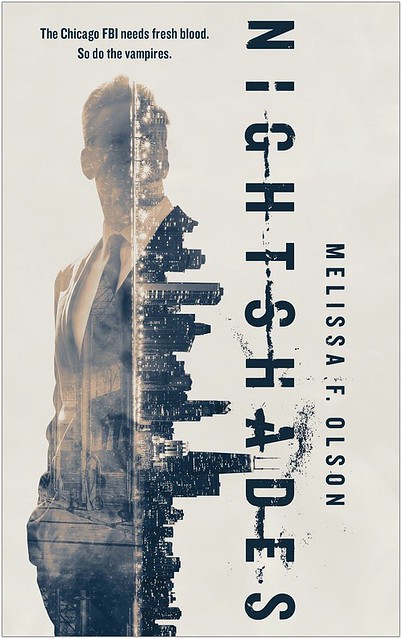
31 Jan 10:43

Out of the Abyss: Velkynelve.


I'm running the Fifth Edition Dungeons & Dragons campaign, Out of the Abyss. Reading it, I was like "woah, this seems like it would be fun to run," & so I decided to do so! I haven't run pre-made adventures since college, when I used to pepper in Harlequin adventures into my Shadowrun campaign: I'd do a SF-punk story, a Fantasy-punk story, then a Harlequin adventure, lather, rinse, repeat. I'm looking forward to running a game where the prep work is already mostly done for me! I also have been wanting to run "DnD," which is to say, the actual generic fantasy setting of the game. I had a blast defeating the Temple of Elemental Evil, & wanted to give newer players a chance to meet mindflayers, beholders, arch-devils & demon princes, that sort of proprietary intellectual property. Bragging rights for defeating named epic NPCs, that sort of thing.

We'd gotten together a few weeks ago to do the main push of character generation, so finishing up before the session was no hard shakes. Jim & Ellen are both pretty 5e adept-- more than me, in fact-- & Alicia, Sam & Pritpaul have some gaming experience, if not this edition. Katharine is a complete rookie, which is great; you know I like playing with novices, because they lack the bad habits some of us grognards have picked up. I told them they were encouraged to share backgrounds, but it was even less required than most campaigns, & that demon-y or Underdark-y hooks would play out swell. In the end, the party ended up about halfway "monster mash":

Imica the drow fey pact warlock & former sage, played by Jim.
Kalythra the cheerful half-drow thief & charlatan, played by Alicia.
Pook'Cha the thri-kreen bard who left his hermitage, played by Sam.
Norin, Ellen's wood elf cleric with a covert, not criminal, background.
Serafin the lightfoot halfling ranger (my first 3e character was too!) played by Pritpaul.
Gizem, Katharine's sagacious mountain dwarf old one pact warlock.

Captured by the drow! Honestly, the cliche in media res start was one of the early hooks this book got in me; it's kind of the only part of Against the Slave Lords that I think works, yeah? An oldie but a goodie, as I was telling Katharine; it's not the way most campaigns start, but it's a classic. Chained up with a very motley crew in a cavern far from the sunlit surface, stripped of all their gear, stuck in a cell with an anti-magic field! The players rolled to see if their characters scrounged up anything useful; three of them have semi-tame tarantula pets, one has a small gem, but nothing of immediate value.


The NPCs do the mash, too; they do the monster mash!

Buppido the friendly derro with bushy white hair.
Prince Derendil a quaggoth who used to be an elf prince.
Eldeth the surface world dwarf captured while hunting orcs.
Jimjar the svirfneblin gambler no one will wager with.
Ront an orc from the tribe Eldeth's people were trying to wipe out.
Sarith a drow, who captured the myconid Stool & killed his superior.
Shuushar the Awakened the non-violent kuo-toa.
Stool a myconid sprout with telepathic spores.
Topsy & Turvy standoffish twin deep gnomes.

Alicia gets the first point of Inspiration: kuo-toa are D&D's version of Lovecraft's Deep Ones, & upon meeting the enlightened Shuushar & leaning that he practices non-violence, she said "more like a pacifish, am I right?" Puns are the best! Her half-drow, Kalythra, befriends Stool, sharing a psychic link created by the myconid's spores with Serafin (& later discover that Sarith shares them too). Jimjar talks to them a bit, but they aren't interested in taking him up on any wagers. He's a gnome, but not like any gnome the surface folks have ever met.

Mostly the two drow talk to Sarith. Buppido the derro is friendly if a little bit "junkie shuffle" & the orc Ront doesn't speak a language anyone else knows but seems to know enough Common to repeat key nouns in agreement with wanting to escape. Eldeth the dwarf is a little foolhardy, & eventually ends up with a drow bolt through her throat-- the drow drag her unconcious & dying body to the "Shrine of Lolth" to be healed, as there's no easy escape in death for the prisoners. They chat with Derendil as well; there's a difference of opinion in whether the polymorphed elf prince should give into his quaggoth rages, or struggle to remember who he used to be.

The party's first testing of the guards-- throwing a fit during feeding time-- leaves them unfed for the day. The leader, one of the male "dones" that serve the matron in charge, shoots amber goo from a wand, which cocoons the Kalythra to the wall. The other drow shoot the thri-kreen who made a fuss, but all three miss, so the drow male leading the group of guards takes them away to be punished for their failures, with the rest of the grub. Norin & Gizem fail their Constitution saves & gain a point of exhaustion from hunger. Eventually they decide to eat the pet spiders (Norin's was crushed by the gate, as she tried to wedge it open with her spider, so she eats Kalythra's pet), & successfully manage to choke them down. Goodbye, little spiders!


Try number two is much more successful; when one group is taken to dump out their chamber pots, the group makes their move! Having heard from gossiping with the other prisoners that two of the "drones," or the elite drow in charge of the other worthless males, are rivals, they wait till the "scarred one"-- Jorlan-- is in charge of the guards, & then use Stool's rapport spores to secretly & telepathically communicate with him. At first, the drow is not having it, as the bug-man dumps his chamberpot on the floor, like he did the day before with his mushroom broth, & he orders the other prisoners to dump out theirs on the floor, fouling the prison with excrement as punishment. It does succeed in bringing him over to scold Pook'Cha, putting him into telepathic contact with those who've shared Stool's rapport spores. They convince him to aid their escape attempt, leaving the door open & a key to their manacles, in order to disgrace his supplanter.

Jailbreak! They spring the gated door of the cavern, & tell the NPCs to hang back. The sneaky characters-- which turns out to mean the cleric Norin, the half-drow rogue & Serafin the halfling-- head out. The cave has enough of a lip to have a walkway, but then it drops off into sheer darkness. Hanging opposite the cave is an "inverted tower," an enormous hollowed out stalactite that the drow use as a guard post...& an armory, at least according to the scarred drow who helped them slip free. Otherwise, one way leads to a waterfall & a dead end, the other to spider webs below, & then down to the small lake where they dump their chamber pots.

Beyond the guard "tower" is the Shrine of Lolth, where their equipment awaits, & their intended destination. If the sneaks can just get some equipment for the crew, maybe they can fight their way...drat! Curses! Spotted! The drow drone in charge-- a third, neither the scarred one or his rival-- notices them & battle commences! In the fray, the party use their manacles as improvised flails, & defeat the warriors, whom the leader sacrifices to buy him time to get reinforcements. It is a close battle; the drone puts down the ranger, who's already been down once already! They begin to raid the armory-- full of shortswords & chainshirts in the drow fashion, hand crossbows & studded leather-- as fast as they can.


Synchronized with the drow alarms-- little ringing bells on threads-- is a KABOOM! as the sounds of horrifying battle commence, culminating in a crash as a hideous being of incarnate evil shatters the wall of the stalactite, shaking it precariously. Resembling a cross between giant skeksis & a blasphemous angel, its feathered wings shed maggots as their bony fingers rattle. It's beak somehow manages to sneer & smile, especially at the two warlocks, claiming "it will see them again soon." It screams rage & envy at them & flaps back into the sky, where black flies the size of dogs with human faces wait to fall upon it with barbed pitchforks.

With that, the drow arrive! Mistress Ilvara herself leads the group, with her apprentice, all the elite drones, & a pack of lesser drow males. The native denizens of the Underdark, besides the drow prisoner, have already made a run for it; Buppido, Jimjar, Topsy & Turvy all booked it once the drone went for backup. They went for the path of the spiderwebs down to the pool of water below. Ront, Stool & Shuushar are with the party, along with Xarith. Seeing Ilvara, & the lateness of the hour, they decide to make a run for it as well. To the spider webs! & that is where we leave it. The game's ambient music was the Bloodborne soundtrack.

I think a big success all around! Katharine was pretty quiet, but it was her first time & I think she was in deep absorption mode. As DM, good table flow is your responsibility-- Wil Wheaton is really good at it-- but I'm also pretty sure she won't have a problem making herself heard when she's ready. Jim & Alicia don't know each other & are playing siblings & that always makes me happy; that's just good social engineering. Similarly, Sam's weird bug-person is their mentor. I've got to talk to Pritpaul about what terrain & enemy he picked; part of the fun of being stuck in the Underdark is the fish out of waterness of it all, but I don't want to actually screw his character. Ellen reminds me of Mike, actually, both in that she's the one with her character on a spreadsheet & that she's the wildcard. (Photos by Liz D.)


23 Jan 11:05

The Road Back: My Journey With David Hartwell

by Marco Palmieri

Marco Palmieri (left) with David Hartwell

A second chance is a rare and precious thing. It’s an act of compassion. It’s a leap of faith. It’s the choice one person makes to raise up another.

This was David Hartwell’s gift to me.

Once upon what seems like another lifetime, I was 46 years old and struggling to pay my bills as a freelance editor, twenty-eight months after I was laid off from Simon & Schuster during the economic crash of 2008. Other houses followed soon after, eliminating jobs by the dozens. Senior editorial positions became scarce, and despite my relative success transitioning to freelance life, it began to feel as if my career was in a death spiral.

It was David who threw me a lifeline.

Early in 2011, a position opened up at Tor Books; a senior editor there needed a new assistant. Assistant editor, I remember thinking, after I’d leveled up to Senior at my last job. It seemed insane on the face of it. I would be starting over. From the bottom. In my mid-forties. But here’s the thing: I knew that if my luck changed and I actually got the job, it would mean working at Tor, for David Freaking Hartwell.

It’s no coincidence that Tor means “mountain,” and that the company takes the image of a jagged peak for its logo; in the landscape of speculative fiction publishing, I thought of Tor as the summit… and of David Hartwell as the mad god who made his home there.

Or so he had always seemed to me. At the time, I knew him only by reputation. I owned a few of his anthologies. I’d read authors he had edited: Gene Wolfe, Phillip K. Dick, Robert Sawyer, John M. Ford, so many others whose careers he had launched or cultivated. He’d won most of science fiction’s major literary awards, several of them multiple times. You couldn’t work in our profession and not know David’s name. It’s a cliché to call him a legend. It also falls utterly short of the truth.

The deeper truth is more sublime: David Hartwell was just a man in the triumphant twilight of his career, nearly seventy years old when I met him, and yet still ferociously passionate about his vocation—one that was defined not just by the way he nurtured authors, but editors as well. David believed in mentorship like no one else I’ve ever known; he felt that taking new editors under his wing was a responsibility, a solemn duty, and it was one he carried out joyfully.

I was told he considered many qualified applicants for the assistant’s position in 2011. What it was exactly he saw in me that tipped his decision in my favor, I may never know. Maybe it was the fact that we had similar professional histories: we had both been editors at S&S, we had both been stewards of the Star Trek novel line, and we had both been fired (albeit decades apart)—so it could be that he saw in me a kindred spirit. Maybe it was my marketing communications background that intrigued him, or my even earlier life as a bookseller, or my willingness to say “fuck it” and start my professional life over, from the bottom rung, and pull myself up again. Or maybe he just liked the fact that I was as passionate about science fiction and fantasy as he was.

Whatever the real reason, David chose me. He gave me a second chance. He invited me into a world I’d previously glimpsed only from the sidelines, he empowered me to discover what I was still capable of, and he encouraged me to reimagine who I could yet become.

And he became my friend. We swapped stories, we laughed, we drank, we fought, and we made great books together. He introduced me to some of the most amazing people I’ve ever known. He counseled me when I needed help. He celebrated with me when I began to build my own list. His victories were my victories, and mine became his.

And when I made senior editor again, less than four years after he hired me to be his assistant, David took me aside, put his hand on my shoulder, and told me he was proud of me.

I owe him a debt I can never repay.

…Except that isn’t quite true.

I’ve wept a lot since learning that David and I would never speak again. Never fight again. Never laugh again. But that sadness is braided with gratitude and optimism. Those of us who knew David and loved him are blessed not merely by the memory of him, but by the example he set, by the legacy he left, and by the boundless energy and passion with which he pursued his life’s work.

He left us a road map to show us the way forward.

Today I take my first step.

Marco Palmieri is a senior editor at Tor Books.

23 Jan 01:24

#TorDnD: The Keep on the Cliff.


It read like a Russian faerie tale, or a medieval "a blank walks into a bar" joke. A jester, a troubadour & a pilgrim show up at a hidden bandit fortress, somehow talk their way in, & then they vanish in the middle of the night amidst a confusing flurry of illusions, invisibility, & other worldly colours from space...with that kid the bandits had kidnapped for their demonic overlords. That's right baby, #TorDnD is back, & for the moment Jonathan is taking over from my Comet Days arc, & Tim is going to keep playing the bard he played when I was Dungeon Master. Which is great, actually, because it was established that he knew my tiefling magic-user, Pantalone, so we started with an easy partnership. Speaking of witch, I rebuilt Pantalone as a warlock, as per my original idea for the character. For my backstory I'm using my trademarked "Macabre dell'arte" for my pact, which I will elaborate on as it becomes germane. Sadly, Irene & Bridget are on hiatus for the foreseeable future, & Scott couldn't make it. Carl was there-- we re-built our characters over lunch-- & his cleric of a trickster god made three.

Pantalone's not all there, but not many people besides his adopted daughter & Bridget's character Columbine seem able to parse the act from the haywire. When this guy starts going on about his kidnapped daughter, I'm suspicious. But then, I'm always suspicious; I'm going, I'm just not convinced this is true or real. The comet has melted, & they are saying the water is doing weird things...like making people lucky, or mad. This little girl was mad, & they were on their way to the nunnery where they put the insane, or cure them, & then bandits grabbed her. Okay? We do find bandits, some pretty exceptionally disciplined bandits, some pretty well armed bandits, living in this keep that's been left overgrown & mossy but is pretty well buttressed, pretty well defended. We sneak around the long way & come at if from the opposite direction of the city, walking openly towards it in the twilight.

How do we manage to fast talk our way in? Well, by claiming landsharks-- real, remember, as this is fantasy-- chased us here, & that the doddering old (disguise self'd) pilgrim was no help either, getting himself lost. But you know, if you help a religious pilgrim, you get a blessing, so we helped! Hey, can you help us out by letting us in? It didn't hurt that Tim's character is an actual bard & my character is an entertainer (jester) by background. Nor did the big Deception & Persuasion rolls hurt, those helped a lot actually. My invisible, flying chicken-- yeah, I have one of those, it's not as silly as it sounds-- scouted the place out, we identified where the little girl was being kept, & boom, we were in. Not in-in, as they only said we could camp down within the walls, & had to avoid the structures, especially the creepy stables; so noted, as was the giant pyre or signal fire on the hill. The food & drink they offer us is drugged! & they come in the night with cudgels & ropes for us.

Luckily the bard Stavenham makes his save & casts lesser restoration on my warlock Pantalone, who turns everyone invisible. The guards are...surprised, to say the least. Suddenly the pitch-soaked pyre goes up-- thanks thaumaturgy-- hopefully ruining the timing if it was a signal fire & creating a distraction...as do all the minor images we are throwing around. Diabolical hounds from inside the main lodge based on an overheard snatch of gossip, a figure writhing in the flames, that sort of thing. The little girl seems to have powers...true sight, expeditious retreat, who knows what all. She also seems child-like in the extreme, amnesiac to a point of delirium. Domin, the cleric, throws up the poison & starts shredding guards with swarms of spiritual guardians, locust-like coins going old school piranha. It's only after they release the literal hell-hounds, & their infernal looking keeper. We weren't sure if they were wicked or if it was just a misunderstanding-- hey, Faramir rolled like that-- but that clinched it. Invisible-- still, or again-- & with Pantalone revealing a massive hyperspace cube, a non-Euclidean three-dimensional representation of a seven-dimensional object AKA a hypnotic pattern, the party escapes. A featherfall & we're up & over the wall.