Andrew Hickey
Shared posts
McSweeney’s Internet Tendency: Back From Yet Another Globetrotting Adventure, Indiana Jones Checks His Mail And Discovers That His Bid For Tenure Has Been Denied.
More details of the Amazon Kindle lockout story.
The future of librarianship
I just had this discussion with my Index Data colleagues, and though the conclusion was worth writing up here. My boss, Sebastian Hammer, asked “So what is librarianship about in the 201Xs ?”

I gave three answers: one smart-alec, one practical, and one philosophical.
1. It’s up to librarians to find something for librarianship to be about.
2. Books on paper are dead or dying, or at least becoming a minority interest like veteran aircraft. But librarianship was only ever coincidentally about books. It’s really about information. 201X librarianship has to be about making ways for people to find and access the information they need.
3. In the long term, librarianship is doomed, because we are moving all the while towards having computers solve the problems that is addresses for us. The problem of finding information is being solved by search engines such as Google and by communities such as Reddit. The problem of actually getting hold of that information is being solved by the existence of e-books, by the quick growth of open access, and by piracy. The role of librarians is to do those parts of information-finding that computers can’t yet do; but computers are doing increasingly more, so the job is necessarily shrinking.
And I am OK with that. The bottom line is that libraries arose as a way to solve the problem that getting hold of information is hard. Now that the problem is going away, the solution will, too. That’s sad for individual librarians, who will need to find new jobs. But it’s good for librarianship. Because in the end, what it means is that libraries have won.


HE'S BEHIND YOU
Andrew HickeyI don't like the transphobia in the bit about Kane, but otherwise this is very good.
HOW COLONEL GADDAFI AND THE WESTERN ESTABLISHMENT
TOGETHER CREATED A PANTOMIME WORLD
Things come and go in the news cycle like waves of fever. A year ago Colonel Gaddafi was killed and an avalanche of camera phone footage of his last minutes was played again and again on the news channels. Then it stopped - and Gaddafi disappeared off into the dark.
What remains is all the footage recording Gaddafi's forty year career as a global weirdo. But the closer you look at the footage and what lies behind it - you begin to discover an odd story that casts a rather unflattering light on many of the elites in both the British and American establishments.
Because over those forty years all sorts of people from the west got mixed up with Gaddafi. Some were simply after his money and they flattered and crept to him because they wanted to be his friend. But for many others he was more useful as an enemy and they helped to turn Gaddafi into a two-dimensional cartoon-like global villain.
Those involved were not just politicians, but journalists, spies from the CIA and MI6, members of Washington think tanks, academics, PR firms, philosophers of humanitarian intervention, posh left wing revolutionaries and the leaders of the IRA.
They all had different aims, and were trying to use Gaddafi in different ways. But underlying almost all of them was a common fear - a feeling that power and influence was slipping away from them, and that increasingly they didn't understand what was going on in the world.
In response, all these different groups began to simplify the world. They all did this in their own ways, but whether they were politicians or journalists or spies, they all began to create an almost pantomime-like picture of the world that maintained their own illusion of control and helped to disguise their loss of power from the general public.
And Colonel Gaddafi happily played a starring role in that pantomime as an absurd clown because it too gave him the global power and influence that he craved.
Together the western elites and Gaddafi helped to lead us into a simplistic two-dimensional vision of the world - full of exaggerations and falsehoods. A fake bubble of certainty that has imprisoned us in the west - and is now preventing us from understanding what is really going on in the world outside.

CHAPTER ONE – THE WILDERNESS YEARS
The story begins back in the mid-1970s with a lonely and frustrated Colonel Gaddafi. He had come to power in 1969 with a burning ambition to transform the world - by liberating the Arab countries from the domination of the west, especially from Britain and America. But no-one would help him - or even cared. He was simply ignored.
Gaddafi was following the vision that had been set out by his hero Gamal Abdel Nasser, the President of Egypt. Nasser had promised to unify the Arab world and transform it into a new revolutionary force that would be strong enough to stand up to the western powers.
But then, in 1970, Nasser died and his vision faltered. Gaddafi tried to keep it alive by unifying Libya with other countries - first with Egypt under Sadat, then with Tunisia and Algeria in something he called "The Steadfastness Front". He even tried Idi Amin in Uganda. But one by one the Arab countries gave up and slipped back to being the compliant puppets of America or Russia.
And Gaddafi was left all alone without any friends.
Here is some of the earliest footage of Gaddafi. It starts with his first appearance ever before the western press.
In order to see this content you need to have both Javascript enabled and Flash installed. Visit BBC Webwise for full instructions. If you're reading via RSS, you'll need to visit the blog to access this content.
But Gaddafi wasn't going to give up. He was determined to challenge the old colonial powers.
He was convinced that Northern Ireland was very like Libya. The Catholics, he believed, were fighting a revolutionary struggle against the yoke of British imperialism. So he offered to supply them with money and arms.
He also offered the IRA semi-ambassadorial status - and an IRA supporter went out to live in Tripoli as the "ambassador". His Libyan handlers gave him the code-name "Mister Eddie" and Eddie lived a life of luxury in a grand mansion in the heart of the city eating his meals off the crockery of the deposed King Idris, while old trawlers took lots of guns and semtex from Libya to deserted coves on the coast of Ireland.
Gaddafi also wanted to undermine the west's support of Israel. He supported Palestinian groups fighting the Israelis. But he also decided to do something more dramatic - to send a submarine to torpedo the QE2 that was taking a group of British tourists to visit Israel. Gaddafi mentioned this to President Sadat - who told him that he was completely mad.
And Gaddafi also funded a left-wing revolutionary party in Britain. It was called the Workers Revolutionary Party and its most famous members were the actress Vanessa Redgrave and her brother Corin. The only problem was that it was probably the most useless of all the revolutionary parties in Britain.
It was run a a paranoid Trotskyite called Gerry Healy who believed all other Trotskyites were really CIA double agents. And Healy was also secretly forcing lots of young female comrades to have sex with him "for the sake of the revolution".
I have found a wonderful film that was transmitted just once in a general election programme in 1974 at 4am in the morning. It shows what happened that night when Vanessa Redgrave stood as a WRP candidate for parliament - against a Labour MP called Reg Prentice. It was in Newham in east London and her behaviour as the results are announced shows dramatically why Colonel Gaddafi was backing the wrong revolutionary horse.
It is also very funny and very sad at the same time.
In order to see this content you need to have both Javascript enabled and Flash installed. Visit BBC Webwise for full instructions. If you're reading via RSS, you'll need to visit the blog to access this content.
But there was also a sinister side to this relationship with Colonel Gaddafi. Later in the 1980s the WRP held an inquiry into what really went on. The report is still kept secret, but parts of it have been published. If these bits are true, they say that in April 1976 Corin Redgrave had signed a secret deal with the Libyan government for:
"providing intelligence information on the 'activities, names and positions held in finance, politics, business, the communications media and elsewhere' by 'Zionists'. It has strongly anti-Semitic undertones, as no distinction is made between Jews and Zionists"
In other words Corin Redgrave agreed to use the party as Colonel Gaddafi's spy agency in Britain and feed him information about prominent Jews in British society.
Here is Mr Redgrave preparing to do a party political broadcast on the BBC - promising to abolish parliament and create a workers state. But he seems to be most interested in how his tie looks.
In order to see this content you need to have both Javascript enabled and Flash installed. Visit BBC Webwise for full instructions. If you're reading via RSS, you'll need to visit the blog to access this content.
By the late 70s Gaddafi decided that there was only one solution to his dilemma. If all the other revolutionaries were so useless - he would have to develop his own global revolutionary theory.
So he did just that and he gave it a name. He called it "The Third International Theory". Gaddafi had discovered what he said was a Third Way, an alternative to capitalism and communism.
Traditional democracy as practiced in Britain and America was a sham he said. It was actually a form of dictatorship. All a party needed was 51% of the vote and it could then impose its ideas on everyone for four or five years - just like clans in Libya did.
The alternative was a new kind of direct democracy in which the people governed themselves. There were no parties - instead Peoples' Committees elected People's Congresses that would manage things. Then there were Revolutionary Committees that made sure the Congresses and their administrators did things in a revolutionary way.
In reality it was a one-man show. Gaddafi made decisions about everything and played all the different committees and congresses off against each other to maintain his power.
But Gaddafi was terribly proud of it. He wrote it all down in what he called The Green Book which he then published in lots of languages because he believed it was a universal, global theory.

You can see just how much this idea pervaded Libyan society from these odd shots I found in some news rushes. They were filmed on a Libyan Ferry going from Malta to Tripoli in the early 1990s. Below decks there are permanent metal signs everywhere explaining the Third International Theory of direct democracy. Good music on the PA system as well.
In order to see this content you need to have both Javascript enabled and Flash installed. Visit BBC Webwise for full instructions. If you're reading via RSS, you'll need to visit the blog to access this content.
Gaddafi wanted to tell the world about his vision. He began to invite the BBC to come to Libya and film long interviews so he could explain how important it was.
The trouble though was that every time the BBC interviewers turned up they weren't really that interested in his theory. Instead they wanted to ask him whether he is sending arms to the IRA, and whether he was really planning to torpedo the QE2.
That's what they are really interested in. Not the Third Revolutionary Theory.
Colonel Gaddafi starts off being grumpy about this. But then you can see his face change as he begins to realise what the submarine story is doing for him. That maybe he doesn't need friends - what he really needs are powerful enemies that will make him, and his Third International Theory, infamous, and thus famous.
There is also a fascinating moment in one when Gaddafi breaks into English and describes his time when he came to study in Britain as a young military student. He tells how he went to Beaconsfield and was bullied by British students there. You begin to feel sympathy with him - and then he blows it. They must have been Jews, he says.
In order to see this content you need to have both Javascript enabled and Flash installed. Visit BBC Webwise for full instructions. If you're reading via RSS, you'll need to visit the blog to access this content.
CHAPTER TWO – LOONEY TUNES AND CAPED CRUSADERS
Then, in the early 1980s Gaddafi got what he wanted, a global infamy that would make him a powerful presence on the world stage. And he got it because he suddenly became useful to two groups at the heart of the power structure of the West who were facing the growing uncertainty of the time.
One was a new wave of right wing ideologues around President Reagan in America who wanted to find a way of regenerating the moral purpose of their country in the world.
The other was the secret services in both America and Britain. The spies were beginning to realise that the Soviet Union might no longer be a serious threat - and that might threaten their own existence.
What they needed was a new enemy. And the more terrifying, unpredictable and mad the better.

At the beginning of 1981 President Ronald Reagan promised to regenerate America's moral mission in the world - above all to confront the evil empire of the Soviet Union.
But in the back rooms of the CIA, analysts were beginning to question whether this was necessary. They said that all the data they were gathering showed that the Soviet Union was in a terrible state. Even the invasion of Afghanistan, they said, was defensive. There was no way that the Russians wanted to take over the world any longer - even if they ever had.
But the new head of the CIA, William Casey, and the new Secretary of State, General Alexander Haig didn't want to hear this. They were convinced that America had to have something to fight for.
And bit by bit, through the spring and summer of 1981 a new enemy started to emerge in the American newspapers. It was Colonel Gaddafi. State Department officials and other administration "sources" briefed journalists that Gaddafi was at the heart of "the new global disease of terrorism".

In August, American jets patrolling off the coast of Libya shot down two Libyan fighters over the Gulf of Sidra. Gaddafi was furious and began issuing all sorts of threats against America.
Then, in October, a famous journalist called Jack Anderson wrote a sensational article. It said that Colonel Gaddafi had sent a six-man hit team to the US to assassinate President Reagan. Sources in the administration, he said, had concrete evidence that they were led by the most famous terrorist in the world called Carlos "The Jackal".
Then Newsweek said that Gaddafi had equipped them with "bazookas, grenade launchers and even portable SAM-7 missiles capable of bringing down the President's plane". The State department even issued photo fits of the six assassins.

But it seems that it was all completely untrue. Made up by the Reagan administration.
Here are some extracts from a documentary made later in the 1980s in which the journalist Jack Anderson explains how he was fed the story, why he believed it - and how it turned out not to be true.
It also includes an interview with one of the administration men who fed the story to the press. He was part of a committee that had been specifically set up to turn Gaddafi into the mad dog of terror. But even he admits that it was based on very little evidence.
It's a fascinating piece because it is the earliest evidence of what would become known later inside the Reagan administration as "Perception Management". This was the idea that you could use the press and television to tell stories that simplified the world for the American people and turned it into a struggle of good against evil. A cartoon-like picture that justified America's policies in the world.
It didn't matter whether the stories were completely true or not because the overriding moral aim was good.
In order to see this content you need to have both Javascript enabled and Flash installed. Visit BBC Webwise for full instructions. If you're reading via RSS, you'll need to visit the blog to access this content.
But Colonel Gaddafi didn't mind the lies at all - because they turned him instantly into a global figure of power and importance.
Gaddafi was a man who understood Perception Management as well, if not better, than the men around Reagan. And he now began to act the part to the hilt. His key ally in this was TV - and in particular the rise of 24 hour news. Underlying it was a shift away from considered packages and towards an exciting sense of immediacy.
Gaddafi was brilliant at it. Here are some of the best bits from the archives of that time. It starts with him appearing on a live satellite link to a mass meeting of The Nation of Islam in Chicago. Gaddafi offers to fund and arm a 100,000 strong black army in America so they can then go and shoot the whites who have oppressed them for so long.
In order to see this content you need to have both Javascript enabled and Flash installed. Visit BBC Webwise for full instructions. If you're reading via RSS, you'll need to visit the blog to access this content.
And here is a bit from a film exposing how Colonel Gaddafi has invited German rocket scientists, some of whom had Nazi pasts, to come and build a rocket in Libya. Gaddafi appears in the film explaining that Libya wants to investigate outer space for peaceful purposes. But the film says it may be also so he can attack anywhere in Europe within minutes.
The German company was called OTRAG, and it had previously been building rockets in Zaire for President Mobutu. The BBC had reported on this the year before.
The film has a great graphic showing how the rockets could hit Israel and even Europe. It is remarkably like all the graphics produced about Saddam's rockets attacking Europe in the "dodgy dossier" in 2003
And through it all Gaddafi plays the coy innocent beautifully. He knows just what he is up to.
In order to see this content you need to have both Javascript enabled and Flash installed. Visit BBC Webwise for full instructions. If you're reading via RSS, you'll need to visit the blog to access this content.
And here's a great rant attacking America
In order to see this content you need to have both Javascript enabled and Flash installed. Visit BBC Webwise for full instructions. If you're reading via RSS, you'll need to visit the blog to access this content.
And then suddenly in the midst of being the world's most dangerous dictator, Gaddafi goes all soft and offers the hand of friendship. He invites the British national team to come and take part in the Libyan International Show Jumping Contest.
The BBC programme Nationwide made a film following the team and what happened. It is just a wonderful film. Not least because it includes a song Gaddafi commissioned - sung in English - to promote his Third Way theory. Plus lots of horses.
Here it is
In order to see this content you need to have both Javascript enabled and Flash installed. Visit BBC Webwise for full instructions. If you're reading via RSS, you'll need to visit the blog to access this content.
Then Gaddafi went bad again. He arbitrarily arrested six British oil workers. Lots of people turned up to see him in his tent and plead for their release including a very odd Labour MP with a large plaster on his nose, and the Archbishop of Canterbury's special envoy Terry Waite. There is a good bit where the Archbishop of Canterbury shows off the copy of the Koran that Colonel Gaddafi has sent him.
And the fashion choice Gaddafi makes when he walks in to be interviewed by the BBC's Kate Adie is fantastic. As is his eye-rolling.
In order to see this content you need to have both Javascript enabled and Flash installed. Visit BBC Webwise for full instructions. If you're reading via RSS, you'll need to visit the blog to access this content.
But then all this went horribly wrong when WPC Yvonne Fletcher was shot dead in April 1984 by a "revolutionary student" inside the Libyan Peoples' Bureau in London.
Here are some bits of the avalanche of news coverage. Even in the face of the tragic killing Gaddafi plays the cartoon villain - claiming that really it was the British who shot her. But there is also a strange two-dimensionality to the presenters in the studios - and to some of the police involved, especially the detective inspector in charge that day outside the Bureau. His description of how he sees the Libyans as strange aliens sort of sums it up.
At this distance you can see how terrorism and the beginning of rolling news coverage in the 1980s were somehow starting to work together to create a strange construction of an unpredictable but yet simplified world. Figures like Gaddafi, and later Saddam Hussein, along with presenters in TV studios holding up AK 47s, and "opposition" figures shot in shadow all combined with each other to create a weird pantomime version of the world outside.
Perception Management.
In order to see this content you need to have both Javascript enabled and Flash installed. Visit BBC Webwise for full instructions. If you're reading via RSS, you'll need to visit the blog to access this content.
This all culminated in 1986 when the Americans bombed Libya, claiming that Gaddafi had been the mastermind behind a wave of terrorist attacks at European airports and the bombing of a discotheque in Berlin.
Reagan explained that Gaddafi was one of the central figures of global terrorism. Along with Iran and North Korea he was part of a set of:
"outlaw states run by the strangest collection of misfits, looney tunes and squalid criminals since the advent of the Third Reich."
And yet again Gaddafi played up beautifully. Here is a fantastic hand held video of him in his bombed-out house the next morning. He calls Thatcher a "harlot" and says that the Americans are trying to stop him spreading his Third Way theory to the young of the world.
And he says that the Americans killed his adopted daughter in the raid - which later turned out not to be true.
In order to see this content you need to have both Javascript enabled and Flash installed. Visit BBC Webwise for full instructions. If you're reading via RSS, you'll need to visit the blog to access this content.
But yet again most of the American allegations turned out not to be true.
A year later the BBC journalist Tom Bower made a film that examined the claims in detail. It makes a very powerful case that Gaddafi had nothing to do with the airport attacks. It also looks at the facts behind the Berlin discotheque bombing and questions how much Libya was really behind that as well.
The film interviews men from European intelligence agencies, from Israeli intelligence and even the ex-prime minister of Israel, Yitzhak Rabin. All of them say that the Americans had taken Colonel Gaddafi's mad rantings after 1981 and assembled the fragments of rants and quotes into a dossier that they said was "evidence" of him being a terrorist mastermind.
The hard evidence, they all insist, is that Syria was behind the attacks. They say that Libya had been chosen as a "soft target". It was too dangerous to confront the real culprit - Assad and the terrorist groups he directed - because of the dangers of destabilising the region. Instead you went for Gaddafi - a man without friends or allies. Even the Russians didn't care about him.
In order to see this content you need to have both Javascript enabled and Flash installed. Visit BBC Webwise for full instructions. If you're reading via RSS, you'll need to visit the blog to access this content.
CHAPTER THREE – OUR NEW BEST ENEMY
Colonel Gaddafi had willingly helped the west turn him into a pantomime villain. That invented character was then very attractive to those in power in the west because it helped in turn make their simplified, and often fictional, version of the world seem real.
And it wasn't just politicians and spies who got involved in this strange two-way collaboration. Increasingly journalists also found themselves seduced by the special power that Gaddafi had - he could help you transform the world into an entertaining story of global super-villains and a battle against dark forces - and he made it feel real.

But just as had happened with the politicians and spies this would lead some newspapers, and their grand traditions of investigation and truth-telling, to lose touch with reality and create a semi-fictional world.
It began with Arthur Scargill, the leader of the National Union of Mine Workers.

Back in 1984, at the height of the miners' strike, the Sunday Times published a "sensational expose". It said that the Chief Executive Officer of the NUM had gone to Libya, met with Colonel Gaddafi, and that Gaddafi had secretly given money to help the British miners.
The Sunday Times said that the NUM man - Roger Windsor - had travelled there with "the European representative of a Libyan-backed terrorist group" and a high-up man in Libyan intelligence. The terrorist representative apparently also ran a grocers shop in Doncaster.
Here is the TV report that night - including footage of the NUM man meeting Colonel Gaddafi that had been released by the Libyans.
In order to see this content you need to have both Javascript enabled and Flash installed. Visit BBC Webwise for full instructions. If you're reading via RSS, you'll need to visit the blog to access this content.
A few months later the strike collapsed, and the story was forgotten. But five years later in 1990 the Daily Mirror and ITV's "Cook Report" programme brought it back to life in a sensational way.
They alleged that Scargill had used Colonel Gaddafi's money corruptly to pay off the mortgage on his house while his members starved. This effectively destroyed Scargill - because although many people thought him vain, pompous and scheming - no one had thought that he was corrupt.
It was full of breathless detail, of the money being smuggled through Heathrow in suitcases, being hidden in biscuit tins and then counted out and distributed in Arthur Scargill's office.
Here is a taste of the avalanche of reaction. Including the Mirror's new proprietor Robert Maxwell challenging Scargill to sue. I have also included an extraordinary shot from some news rushes of a camera constantly pursuing Scargill - up stairs, through corridors, into a ballroom and then through a car park. In its odd way it gives a very good sense of the mood, and of what Scargill was like as a person.
And, as he is followed, notice that Scargill stops to buy a left-wing newspaper called News Line. It is the paper of the Workers Revolutionary Party which had got funding from Colonel Gaddafi.
In order to see this content you need to have both Javascript enabled and Flash installed. Visit BBC Webwise for full instructions. If you're reading via RSS, you'll need to visit the blog to access this content.
But it seems that all the allegations of corruption were completely untrue.
It was true that Mr Windsor went to Libya and met Colonel Gaddafi. There was some money that was lodged in a bank account in Doncaster - but none of it seems to have ever got to the NUM or Arthur Scargill.
But more than that - many journalists and MPs who have looked into the whole episode are convinced that Arthur Scargill and the NUM were somehow set up, possibly by MI5. That the trip by Mr Windsor to Libya and the money he said received was stage-managed or manipulated in some way by the British intelligence services to smear Scargill.
On the other hand none of them have produced solid evidence. Some have alleged that Mr Windsor was really working for MI5, which he firmly denies. Others have asked whether the so called terrorist from Doncaster was a plant. He too firmly denies any such thing.
Then - in 2002 - the Mirror editor who had published the original expose, Roy Greenslade, wrote an article saying that he now believed that everything they wrote was false, and that the Daily Mirror with its great tradition of investigative journalism had been duped. It is a very powerful and courageous piece and it ends like this:
"I am now convinced that Scargill did not misuse strike funds and that the union didn't get money from Libya. I also concede that, given the supposed wealth of Maxwell's Mirror and the state of NUM finances, it was understandable that Scargill didn't sue.
Nothing I have said should be taken as criticism of the Mirror journalists: we were all taken in. I can't undo what has been done, but I am pleased to offer the sincerest of apologies to Heathfield and to Scargill, who is on the verge of retirement. I regret ever publishing that story. And that is the honest truth."

You can find the whole article here. It is really good.
In the article Greenslade speculates whether the Daily Mirror had been duped as part of an MI5 plot to discredit Scargill. But he says it remains a strange mystery.
His article though is fascinating because of the wider picture it gives of what was beginning to happen to investigative journalism as it got involved in this cartoon-like world of "internal subversion" and "international terrorists" and mad dictators. It didn't seem to be so much about just revealing the truth any more - rather it was helping create a sense of dark shadowy plots and impenetrable mysteries surrounding modern life.
And it was going to get a lot weirder - and yet again Colonel Gaddafi was going to be at the heart of it

On December the 21st 1988 a Pan Am flight from London to New York was blown up - and the debris came down on the small Scottish town of Lockerbie. It was one of the first of the modern terror panics - and what made it feel more intense and frightening was the avalanche of reporting in the new 24-hours news cycle.
In the face of this, investigative journalism was going to go beyond the fog of immediacy and cut through and tell the truth - what really happened.
And it did - or so it seemed. Within months of the attack the famous Sunday Times "Insight" team had a series of scoops that revealed that the bombing on the Pan Am plane was a revenge attack by Iran for the shooting down of an Iranian airliner by an American warship in the Gulf in 1988. The articles laid it all out in enormous detail - how the Iranians had paid a Palestinian terrorist group based in Syria to plant the bomb in a Toshiba cassette player. And that this had been done with the help of the Syrian authorities.

The terrorists were named and "intelligence sources" were quoted with absolute certainty saying that they knew this is what had happened. There was no mention at all of Libya.
But then suddenly in December 1990 there was there was a complete switch.
"Intelligence sources" in America began to tell journalists that they had found evidence that showed that it was Libya who had masterminded the bombing.
Then in June 1991 the British and American governments formally announced that Libya had been behind the bombing. Here is the first TV report, it includes a conservative MP called Teddy Taylor who had been to see Colonel Gaddafi. He raises the question that was going to lie at the heart of this puzzle.
Isn't it a bit odd, he says, that at the very moment in 1990 when Syria became America's ally in the first Gulf War, that America suddenly stopped accusing it of Lockerbie? And at the very same moment America and Britain suddenly find evidence proving it was Libya.
In order to see this content you need to have both Javascript enabled and Flash installed. Visit BBC Webwise for full instructions. If you're reading via RSS, you'll need to visit the blog to access this content.
Suddenly the media was deluged with reports that said that the Lockerbie bombing had been carried out by Libya.
And many of the investigative journalists who had previously said that it was definitely Iran also changed their tune as well. Even the journalists who had written the Sunday Times articles saying there was concrete proof it was Iran and Syria now said it was the mad dog of terrorism - Colonel Gaddafi. And what's more their "intelligence sources" were absolutely sure too.
But a few old-school investigative journalists held out against this sudden swerve. The main one was Paul Foot from Private Eye. He wrote a devastating pamphlet that tears part the whole American and British case against Libya.

Foot showed that much of it rested on the evidence of one extremely dubious witness called Mr Giaka who claimed to be high up in Libyan intelligence. In fact he was a mechanic in a garage who serviced the vehicles for Libyan intelligence - and he had been paid hundreds of thousands of dollars by the Americans.
Even his CIA handlers were very suspicious of him - and after two years of getting nothing from Mr Giaka they told him they would stop paying him unless he came up with some incriminating evidence for the US Department of Justice. The next day Giaka did just that - describing a samsonite suitcase that was loaded onto a plane in Malta by Libyan intelligence. Something he had forgotten to mention for two years.
Giaka explained:
"When I met with the representatives of the Department of Justice, they are very good investigators, and they can distinguish truth from lies. One way or another, they can obtain what they want."
The other key piece of evidence was a tiny fragment of what the Americans said was a kind of timing device that had been sold only to Libya. It too was only discovered to be important 18 months after the bombing - but yet again Foot shows how dubious the claims were that the Americans made about this tiny fragment.

Foot's pamphlet is a powerful piece of journalism that makes a strong argument that the case against Libya is at best massively flawed and more probably a work of fiction.
But it also shows what was happening to journalism - because Foot argues that the tradition of investigative journalism that the SundayTimes Insight team represented had fundamentally changed. And the reporting of Lockerbie and Gaddafi showed this.
When Rupert Murdoch had bought the Sunday Times in 1983 he had appointed a new editor who disapproved of the Insight column and its traditions. Foot says:
"One casualty was the tradition of independent journalistic investigation. This was replaced in the main by material which posed as "investigative" but which in fact recycled information from safe sources, safest of which were the police and the security and intelligence services."
That reliance on sources in the police would come to have disastrous consequences for News International - as we have recently seen.
But the key point back then in the early 90s is that that growing reliance upon sources in the secret intelligence world happened at the very moment when those sources were themselves becoming hopelessly lost. The Cold War was over and all the old certainties were disappearing and the spooks were floundering around, not really knowing what was going on any more.
This made both the intelligence services and their political masters increasingly prey to those right-wing ideologues who had first emerged around President Reagan and who seemed to believe that you could base policy "on not very hard evidence" in order to manage the world.
And some journalists, desperate for crumbs from the powerful went on blithely publishing what they were told by their sources, no matter how illogical, contradictory or phoney it was.
And everyone moved further into a two dimensional world.

But Colonel Gaddafi did still have some friends in Britain. Yet again another group who were feeling power and influence slipping away from them turned to him for help. This time it was the National Front.
By the late 80s the extreme right in Britain were falling apart. To try and save themselves a new younger generation in the National Front decided that racist xenophobia was not enough and that what was needed was a positive, inspiring model for how to organise society as an alternative to the two-party parliamentary system.
And the model for that, they decided, was Colonel Gaddafi's Green Book and its Third Revolutionary theory.
A National Front delegation went to Libya. They asked for money to fund their new project - but all they got were bulk copies of The Green Book. Undaunted they decided to try and set up a model for this new politics in the London suburb of Isleworth.
Here is a lovely bit from a documentary made about what happened to the NF in the 1980s and 1990s. There is a great grabbed interview with the architect of the scheme - Phil Andrews. He admires Gaddafi because he criticises "traditional corrupt politics".
Phil sets out to create a Gaddafi -style popular democracy in Isleworth. To help in this he donates a copy of The Green Book to the local library.
In order to see this content you need to have both Javascript enabled and Flash installed. Visit BBC Webwise for full instructions. If you're reading via RSS, you'll need to visit the blog to access this content.
We went to Isleworth Library to see if anyone had borrowed the Green Book since the film was made. But we found that Gaddafi's book is no longer there. Robert Deighton who works in the library said that it had now become "a hub". To do this they had got rid of all the books that no-one borrowed, so it looks like no-one in Isleworth ever read about Gaddafi's Third Way. And now they never will.
Here is a picture of Robert in his "hub".

By the mid 1990s Colonel Gaddafi was all alone again. The sanctions over Lockerbie isolated his country from the rest of the world and his economy began to fall apart. With it also went his vision of the Third Way.
When he held a lavish parade for the 25th anniversary of the Libyan revolution practically no-one came from other countries. But John Simpson from the BBC turned up and did a very good report.
It's good because he cuts through the fog - and says clearly that Gaddafi is really a showman, he is not a serious threat. And that for the past ten to fifteen years Gaddafi has been used as the easy alternative to confronting the serious threats in the Middle East.
Here is his report.
In order to see this content you need to have both Javascript enabled and Flash installed. Visit BBC Webwise for full instructions. If you're reading via RSS, you'll need to visit the blog to access this content.
CHAPTER FOUR - WEAPONS OF MASS DECEPTION
But the fake vision of Gaddafi had by now gone very deep in the western imagination. He was at the centre of an interconnecting web of ludicrous, largely fictional stories. And what was now going to happen was that those stories would begin to a coalesce with other simplified and exaggerated stories about other super-villains around the world. Out of that odd stew would come a grand unified theory that would be one of the central beliefs of our age.
MI6 called it "Global Risks" and it was a vision that we now lived in a terrifying world of mad dictators at the head of rogue states who were teaming up with international terrorists, drug barons and ruthless adventurers offering to sell things like smuggled nuclear weapons to the highest bidder.
The world, this theory said, now had to be seen as one interconnected system that transcended nations and their petty preoccupations. And western elites had a duty to defend the system against this new array of "Global Threats". In short they should become world policemen.
MI6 loved this theory because it gave them something new to do. And the obvious place to start was by getting rid of Colonel Gaddafi.
In 1998 a whistleblower from inside the British intelligence services called David Shayler claimed that in 1996 MI6 had paid an Islamist Jihadi group in Libya to kill Colonel Gaddafi. If true it was not very good for MI6 because it meant that agents of the British government were engaging in a programme of assassinating foreign heads of state.
The Islamist group were called The Libyan Islamist Fighting Group. But, Shayler said, they had bungled the operation and detonated a bomb under the wrong car, killing six innocent people.
Both MI6 and the Labour Government denied it. But Shayler agreed to appear on a special Panorama programme that examined his allegations. The presenter - Mark Urban - concludes that Shayler's claims might be true.
In order to see this content you need to have both Javascript enabled and Flash installed. Visit BBC Webwise for full instructions. If you're reading via RSS, you'll need to visit the blog to access this content.
Although Shayler's story about the strange things that were going on inside MI6 might be true, Shayler then rather undermined his credibility by some of his subsequent behaviour. He decided to believe some of the conspiracy theories about Sept 11th - and then started dressing as a woman, giving himself the name Dolores Kane and declaring that the world was going to end in 2012.

Rex Features
But it also made no difference because by now everyone was believing in this vision of a world of hidden threats. And the biggest threat of all were WMDS.
Journalists also tried to turn themselves into World Detectives, trying to expose these new terrifying threats - the Weapons of Mass Destruction that the crazy but infernally cunning dictators were hiding. Their sources in the intelligence agencies told them the WMDs were there. Somewhere.
Here are some sections from a documentary made in 1998 about a search for Colonel Gaddafi's WMDs that both illustrates this perfectly - and then at the end shows the empty fatuity of this quest.
It is made by the journalist John Sweeney. He gets into Libya to make a film about Gaddafi's giant water project, but he has an additional aim which is to see if the Libyan's are hiding WMDs in the giant underground reservoirs
There are fantastic, beautiful shots of this extraordinary project as Sweeney tramps around looking for the hidden threats. He finds nothing yet keeps talking about how the CIA say there is the biggest chemical weapons plant in the world hidden somewhere.
But Sweeney is a very good and honest journalist - he has an ability that is very rare in TV reporting to emotionally judge the truth of a situation - and towards the end he confronts his minder about the WMDs. He does it on audio, but to do this he has to keep the video camera running.
What results is not only a piece of avant-garde film making. But the minder is also very sharp. In just a few sentences off-camera he makes you reflect on how ridiculous and paranoid this western mindset has become. And Sweeney gives him the space to do it.
In order to see this content you need to have both Javascript enabled and Flash installed. Visit BBC Webwise for full instructions. If you're reading via RSS, you'll need to visit the blog to access this content.
But Colonel Gaddafi was by now in deep trouble, and he was desperate to get rid of the UN sanctions.
In 1999 - pushed by Nelson Mandela who Gaddafi trusted - he agreed that the two men named by America and Britain as suspects could be put on trial in a special Scottish court in the Netherlands. Gaddafi believed that the lack of any substantial evidence would set them free.
But it didn't. One was acquitted, but Abdelbaset al-Megrahi was convicted and sentenced to life imprisonment in a Scottish prison. Gaddafi protested as did lots of Libyans. But is important to realise so did lots of people in Britain. The Professor of Law at Edinburgh University, Robert Black has said bluntly that:
"It is the most disgraceful miscarriage of justice in Scotland for 100 years.
Every lawyer who has read the judgement says 'this is nonsense'. It is nonsense. It really distresses me."
And Jim Swire, whose daughter Flora died on the plane, doesn't believe that the court got anywhere near the truth about Lockerbie. When the verdict was read out in court Swire fainted.
It would seem that possibly Colonel Gaddafi's distrust of Britain and America might not have been just another of his fantasies.
In order to see this content you need to have both Javascript enabled and Flash installed. Visit BBC Webwise for full instructions. If you're reading via RSS, you'll need to visit the blog to access this content.
But even then the Americans refused to lift the sanctions until Libya admitted their guilt. And in 2003 Gaddafi agreed to do that. Or so it appeared.
Gaddafi had decided - as had happened throughout this story - that the only way to get what he wanted was to pretend.
Here are some sections from the rushes of an interview with Gaddafi's son Saif al-Islam. Again and again Saif insists that Libya's admission of guilt was a simply a necessary pretence. A lie that was "the only way to exit from the nightmare of the sanctions". They were being forced "to play by the rules of a game invented by Britain and America".
The interviewer is the BBC producer Guy Smith. He is brilliant at insistently pushing Saif about the terrible cynicism and hypocrisy that underlies such a decision. But Saif is also rather impressive in the way he responds. Not only was there no alternative, he says, but everyone involved - even the families of the victims - have become corrupted by the situation. The families are greedy, he says, constantly asking for more money.
If Saif is right - then the picture he gives is a very dark one, where the lies and exaggerations that started back in 1981 have stretched out to corrupt everyone involved.
But then he might be lying.
It is a really good interview.
In order to see this content you need to have both Javascript enabled and Flash installed. Visit BBC Webwise for full instructions. If you're reading via RSS, you'll need to visit the blog to access this content.
But Gaddafi understood this fake world better than anyone else - and he was about to play with it, twisting the deceptions even further. His aim was to find a way of getting back to the centre of the world stage, and finally be accepted by those in power in Britain and America.
He was going to do it by doing what he had always done. He would pretend to be more terrifying and dangerous than he really was.
The key, Gaddafi knew, were weapons of mass destruction. America and Britain had invaded Iraq in the spring of 2003 - and they had justified this by claiming that Saddam Hussein had WMDs. But it turned out that he didn't and it was a disaster, especially for Tony Blair.
So Gaddafi decided to help Blair. He admitted that Libya had indeed been hiding chemical weapons and nuclear research facilities, and he offered to give them up.
For Tony Blair this was a godsend because it allowed him to say that the Iraq invasion was having the desired effect of persuading other "rogue states" to transform themselves. And the BBC allowed Blair to break live into the 10 pm news to announce that Colonel Gaddafi had made an historic decision.
The only thing that no-one mentioned was that Gaddafi didn't really have any dangerous weapons of mass destruction.
He had tried to develop nuclear research in Libya, and had bought lots of centrifuges and other equipment. But it had never got off the ground. The CIA would later be quoted as saying that it was way beyond the ability of Gaddafi's scientists even to assemble the equipment.
And one of the leading WMD experts - Jonathan Tucker from the Monterey Institute -said that the chemical weapons were "quite limited". Libya had made mustard gas but it remained in leaking barrels and hadn't been turned into weapon form. As for the more powerful nerve agents Tucker said Libya had tried to make them but turned out not to have the capabilites or the know-how.
Here are some bit of Tucker's 2009 report - The Rollback of Libya's Chemical Weapons Programme:
"The nuclear program was embryonic….while the biological weapons program was little more than a plan that had made minimal progress.
The Libyan Chemical Weapons program…had involved fewer than a dozen chemists and chemical engineers.
The size of the Libyan Chemical Weapons stockpile turned out to be far smaller than the 100 metric tons that the US intelligence community had estimated. Although the Chemical Weapons research program was still active, the production line had been shut down for more than a decade.
The large-scale production of nerve agents was beyond Libya's technological reach."
As the presenters wait for Blair to appear, Andrew Marr sums up what is happening brilliantly. The story that is central to Blair's "world picture" he says is that the modern global threat is "rogue states" coming together with "WMDs". And Gaddafi has just made that story real.
Although of course Gaddafi was - as usual - happily exaggerating how dangerous he was.
In order to see this content you need to have both Javascript enabled and Flash installed. Visit BBC Webwise for full instructions. If you're reading via RSS, you'll need to visit the blog to access this content.
There then followed a tidal wave of creepiness with ministers and commentators lining up to say how "courageous and statesmanlike" Gaddafi had been, and how he had "taken a step towards world peace". Culminating in Blair going to visit Gaddafi in his tent.
Blair, along with many commentators, also predicted that this would result in a new openness in Libyan society. Here is Blair's visit, but I have added an interview from 2009 with an internal dissident in Libya to show that even five years later Libya had not changed.
In order to see this content you need to have both Javascript enabled and Flash installed. Visit BBC Webwise for full instructions. If you're reading via RSS, you'll need to visit the blog to access this content.
And in return for this, many western institutions and eminent individuals now happily set out to create a new, alternative, and equally fictional image of Libya. It was no longer the dark realm of international terrorism. It was a "reforming" country joining the modern world. Led by an inspired "modern thinker" - Colonel Gaddafi.
Behind a lot of this was an American PR company called The Monitor Group. They were paid $3 million to conduct a cleansing campaign for Libya's image. The aim, according to an internal memo was to:
"enhance international understanding and appreciation of Libya and the contribution it has made and may continue to make to its region and to the world."
They did this by getting eminent liberal intellectuals and leading academics to come out to Libya and have economic forums where they all agreed that the country could develop into a "unique form of popular capitalism".
One of these intellectuals was the famous prophet of The Third Way who had inspired Tony Blair - Professor Anthony Giddens from the LSE. Giddens was flown out and met Colonel Gaddafi. He wrote proudly of how he discovered that his version of the Third Way was similar to Gaddafi's Third International Theory:
"You usually get about half an hour with a political leader. My conversation lasts for more than three. Gaddafi is relaxed and clearly enjoys intellectual conversation. He likes the term "third way" because his own political philosophy is a version of this idea. He makes many intelligent and perceptive points. I leave enlivened and encouraged."
Very NBF.

Giddens was so encouraged that he went out again and took part in a panel of intellectuals chaired by Sir David Frost - and everyone talked about how "authentic" Colonel Gaddafi's conversion was.
Here they are sitting round a modern table - while Colonel Gaddafi reminds himself of his theories.

With this new image Gaddafi then set off to tour the world as a new leader-cum- philosopher. And everywhere he went the westerners who had once laughed at him and tried to kill him now bowed down before him.
Here are the reports of him visiting the European Commission who were so kind as to have recreated and exact model of the Colonel's tent for him to stay in. Then Gaddafi was invited to the UN. By this time the "conversion" seems to be slipping a bit because he goes and makes a speech where he tears up the UN charter and tells them that swine-flu is man made.
Here are the reports of the visits.
In order to see this content you need to have both Javascript enabled and Flash installed. Visit BBC Webwise for full instructions. If you're reading via RSS, you'll need to visit the blog to access this content.
The Gaddafi family now become international D-list celebrities.
His son Saadi went to play professionally for Perugia FC in Italy. It was rumoured that the Libyans had paid Perugia to take Saadi on.

Another son - Hannibal - travelled the European party circuit staying in swank hotels. In 2008 he was arrested in Switzerland for allegedly assaulting two of his servants. Although the charges were dropped two days later, the Libyans threatened to stop trade with Switzerland, cancelled air flights, and Hannibal's father withdrew £3.2 billion from his Swiss account. It has been reported that the Swiss then apologised and paid Hannibal compensation.

His extremely glamorous daughter Ayesha was a lawyer. But the "conversion" didn't seem to work very well in her case. She went to Iraq to be one of the defence team in Saddam Hussein's trial.

Here is the fantastic sofa Ayesha relaxed on at her Libyan villa. The photo was taken after the revolution.

But the most sought after was Gaddafi's second son, Saif al Islam, because he was rumoured to be his father's successor.

He too wanted to become a "modern thinker' like his father, so he applied to the London School of Economics. One of the Professors discovered that he was helped in his application by British Aerospace.
Some of his teachers were a bit baffled by their new student. One professor later said - "I could never get clear exactly what he was arguing." But another LSE professor had no such doubts. He was called David Held, and he was a great enthusiast for the idea of "globalisation". And Saif's thesis was very much on message - it was called:
"THE ROLE OF CIVIL SOCIETY IN THE DEMOCRATIZATION OF GLOBAL GOVERNANCE INSTITUTIONS: FROM 'SOFT POWER' TO COLLECTIVE DECISION MAKING"
When someone at the LSE explained Giddens' Third Way theory to Saif, apparently his immediate reaction was "my father invented that thirty years ago."
There was only one problem with Saif's thesis though. It appeared that he might not have written all of it himself. An investigation carried out after the Libyan revolution discovered that Saif had quite a lot of help from the Research Department of the Monitor Group. The same PR company that was flying all the global intellectuals out to meet Saif's father.
Saif probably needed this help because he was busy in other areas. At the same time he was becoming an international artist. He had a travelling exhibition of his own paintings. It was called "The Desert Is Not Silent".
Here are some of the paintings.

At the end of 2008 Saif was awarded his PhD. A few weeks later Professor David Held suggested to him that he might help fund the LSE's Centre For Global Governance. Held says that there was no connection between the two.
Saif said that he would give the Centre £1.5 million, and it would come, he said from his own Foundation in Libya.
What then happened was laid out last year in the investigation written by Lord Woolf. It is a brilliant piece of journalism - and it is a savage expose of what really went at the heart of one of the most eminent academic institutions in the world. The report is really worth reading and it is beautifully written.
A group in the LSE led by David Held were happy to accept the money. But then a Professor called Fred Halliday who had spent his life studying the Middle East rather than worrying about Global Governance pointed something very awkward out. He said that the money that was being offered was dirty money. It was actually bribes paid by western companies in order to secure contracts in Libya.
The LSE investigated and found out that this was probably true - and what were called "due diligence" documents laid this out. But then a strange thing happened. At an LSE council meeting these documents were not presented. Instead David Held described how he had monitored the blogosphere for reactions to the proposal and that there had been no negative comment about the relationship.
Lord Woolf is scathing in a very English way about this:
"I am unable to establish why the due diligence documents did not reach Council. It would have been much more valuable for the Council to have had documents relating to the source of the money rather than media clippings showing perceptions of the LSE's engagement with Libya."
It would seem that the practice of "Perception Management" might now have reached the mild liberal academics.
The loan was agreed, David Held joined the board of Saif's Foundation - and then Saif was asked to give a lecture in the big auditorium at the heart of the LSE.
Here is David Held introducing Saif al Islam Gaddafi's speech. Saif still tries to defend his father's idea that Libya is a better form of democracy than the democracies of the west. He points out how the increasingly low turnout of voters in America has allowed politics to be co-opted by special interests. But then he can't help collapsing into laughter when he says that this means that Libya is a truer form of democracy.
In order to see this content you need to have both Javascript enabled and Flash installed. Visit BBC Webwise for full instructions. If you're reading via RSS, you'll need to visit the blog to access this content.
And even Colonel Gaddafi's oldest enemies now became his new best friends.
Twenty years before officers in MI6 had allegedly tried to assassinate Gaddafi by paying a group of Islamist rebels called The Libyan Islamist Fighting Group.
Now MI6 wanted to do everything they could to please their new best friend, Colonel Gaddafi. So when Libyan intelligence asked MI6 help them capture one of the leaders of the Libyan Islamist Fighting Group it seems that they were only too happy to oblige.
One of the leaders of the Fighting Group, Abdel Hakim Belhaj, has alleged that in 2004 Libyan Intelligence asked MI6 to help kidnap him. MI6 and the CIA then traced him and his wife to Thailand where the CIA kidnapped both of them and he was tortured. They were then flown to a Libyan jail and mistreated he says.
Belhaj says that in doing this the British Intelligence agencies effectively were colluding in kidnapping and torture. The evidence of their involvement in his case is strongly backed up by a series of secret memos found by Human Rights Watch in Libyan Intelligence after the revolution.
Here is a very good news report by Peter Taylor about what Belhaj alleges - and how the secret documents back him up.
In order to see this content you need to have both Javascript enabled and Flash installed. Visit BBC Webwise for full instructions. If you're reading via RSS, you'll need to visit the blog to access this content.
The British elites now got everywhere in Libya. Here is an odd moment from a documentary made by Simon Reeve that uncovers a telling detail.
When he gets to the city of Sabha Reeve goes to visit the hut that Colonel Gaddafi lived in when he was a schoolboy. It is now preserved in the middle of a roundabout. Reeve leafs through the visitors book and finds an effusive entry from a British General called Robin Searby.
General Searby was Tony Blair's Defence Co-ordinator for Libya. Documents later revealed that General Searby had helped negotiate a deal that would lead to the SAS training Libyan soldiers in "counter-terrorism".
Searby defended the programme by saying that the Libyans were woefully behind in counter-terrorism tactics:
"It was better to have them inside the tent rather than outside"
He added though that the programme had to be abandoned - because "the Libyans were not up to it".
In order to see this content you need to have both Javascript enabled and Flash installed. Visit BBC Webwise for full instructions. If you're reading via RSS, you'll need to visit the blog to access this content.
CHAPTER FIVE - DOWN THE DRAIN
But this dream world of global acceptance wasn't going to last. Gaddafi had managed to redeem himself by manipulating a simplified vision of the world that was divided into goodies and baddies in such a way that he became a goodie. But that simple universe had a remorseless logic to it - and Gaddafi was about to be brought down and destroyed by that logic.
Western elites by now saw much of the world through that goodies and baddies prism, so when the Arab Spring began in 2011 it was simply understood as the uprising of the good people against the bad rulers. Two months later the Libyan people rose up against Gaddafi, and that mindset automatically saw the Libyan people as Goodies.
Which meant that Colonel Gaddafi must be a baddie. So everyone switched sides yet again, just like that. And the last dance began.
Here is a short film about that last dance - along with some of Colonel Gaddafi's friends.
In order to see this content you need to have both Javascript enabled and Flash installed. Visit BBC Webwise for full instructions. If you're reading via RSS, you'll need to visit the blog to access this content.
The question at the heart of this whole story is - Who was the ventriloquist? And who was the dummy?
Maybe we were the dummy? By allowing perception management with its simplifications, falsehoods and exaggerations to create a simplified vision of the world - we fell into a fake universe of certainty when really we were just watching a pantomime.
And now as the Arab Spring unfolds and reveals the true chaos and messiness of the real world – above all the horror of what is happening in Syria - we find ourselves completely unable to understand it or even know what to do. So those stories get ignored while we follow others with clearer and more simplified dramas which have what seem to be obvious goodies and baddies - thank god for Iran, North Korea and Jimmy Savile.
HOW TO KILL A RATIONAL PEASANT
AMERICA'S DANGEROUS LOVE AFFAIR WITH COUNTERINSURGENCY
At the beginning of this year one of the weirdest characters ever to become involved in the present Afghan war died. He was called Jack Idema and he was a brilliant con-man. For a moment, during the early part of the war, Idema persuaded all the major TV networks and scores of journalists that he was some kind of special forces super-hero who was using all kinds of "black ops" to track down and arrest the terrorists.
In reality, before 2001, Idema had been running a hotel for pets in North Carolina called The Ultimate Pet Resort. He had been in prison for fraud, and had tried to con journalists before about being some kind of super-spy. But September 11th gave him his chance - and he turned up in Kabul dressed like this.

And everyone believed him and his stories. In the process Idema brilliantly exposed the emptiness and fakery of much of the TV and newspaper reporting of the war on terror.
He told the journalists and the TV presenters all kinds of lies and fantasies. He even became the central, heroic figure in a book called The Hunt for Bin Laden.

Then Idema charged journalists fortunes for what he said was an "al qaeda" video of a "a training camp" - where strangely many of the terrorists spoke in english, and allegedly you could hear Idema's voice on the soundtrack. Few of the journalists did anything to really check if any of what he was saying was true.
CBS did a special programme about the tapes fronted by Dan Rather, called "Heart of Darkness". They did check on the tapes - the producers went to some of the new breed of "terror experts" that were spawning after 2001. CBS's press office said that they "showed the tapes to three former British Special Forces officers, who verified the tactics being practiced in the video were consistent with those of Al Qaeda".
The BBC did a report that showed the tapes. And they travelled to the village where they had been recorded - and found an old man who said, yes there had been Arabs there.
But much later a number of journalists did investigate Jack Idema properly - and the consensus now is that the tapes are probably fakes.
Here is the original BBC news report
In order to see this content you need to have both Javascript enabled and Flash installed. Visit BBC Webwise for full instructions. If you're reading via RSS, you'll need to visit the blog to access this content.
But then Jack Idema started to believe his own stories. He set up his own militia group that he called Task Force Sabre Seven - and he and his men went and arrested Afghans they were convinced were terrorists. And then he locked them up in his own private prison.
Things got out of hand in June 2004 when Idema arrested the Afghan Supreme Court judge, Maulawi Siddiqullah, because he believed he might be involved with terrorists. The judge later described what it was like in Idema's prison:
"The first night, around midnight, I heard the screams of four people. They then poured very cold water on me. I tried to keep myself from screaming, but coudn't. Then they played loud, strange music. Then they prevented me from going to the bathroom; a terrible situation. I was hooded for twelve days."
In July Afghan police raided Idema's house in Kabul and found what was described as a private torture chamber. Eight hooded men, including the judge, were incarcerated there, and three of them were hanging by their feet from the ceiling, with their heads hooded.
Idema and two others were put on trial - and sentenced to ten years in an Afghan jail. And all the journalists puffed a lot about how persuasive he had been.
Here is Idema during the trial - still trying to persuade the journalists that he is what he said he was. And how he is being set up by dark sinister forces.
In order to see this content you need to have both Javascript enabled and Flash installed. Visit BBC Webwise for full instructions. If you're reading via RSS, you'll need to visit the blog to access this content.
But what is also interesting about Jack Idema is that in a strange way he may have been ahead of his time.
Because at the moment that Idema was entering his Afghan prison, a group of very senior US military men, led by a General called David Petraeus, were sitting down in a military staff college in Kansas and beginning to write a study that would completely transform the tactics of the US army in Iraq and in Afghanistan.
What General Petraeus and his team did was to go back into the past and exhume a theory of warfare that had been discredited by the US military who thought it was long buried and forgotten. It was called Counterinsurgency.
And out of that would allegedly come the same kind of arms-length, privatised interrogation and torture methods that Idema was indulging in.
I thought I would tell the history of how Counterinsurgency was invented, why it was discredited in America, and how it returned in 2007 to dominate and brutalise the wars in Iraq and Afghanistan. It is a fascinating and weird story that is far odder than anything Jack Idema could have dreamt up - it involves Mao Zedong, John F Kennedy, French fascists, the attempted assassination of Charles De Gaulle, and strange Potemkin-style villages in Vietnam where women get pregnant for no discernible reason.
The theory of Counterinsurgency also had a terrible logic built into it that repeatedly led, from the 1950s onwards, to horror - torture, assassination and mass killing on a far wider scale than anything Jack Idema ever did in his house in Kabul.

The British military (and their associated wonks) like to think that it was Britain's colonial independence struggles in places like Malaya in the 1950s that gave birth to the idea of Counterinsurgency. But the Petraus team in 2006 thought differently. In the foreword to their study, called "FM 3-24 - Counterinsurgency" they point to an enigmatic and long-forgotten French military officer and thinker as their biggest inspiration. They say:
Of the many books that were influential in the writing of FM 3-24, perhaps none was as important as David Galula's 'Counterinsurgency Warfare: Theory and Practice'.
David Galula is an absolutely fascinating figure.
He turns up everywhere in the second half of the 20th century in the wrong place at the right time - like revolutionary China and the Greek civil war in the 1940s, Indo-China in the early 50s, and above all in the French struggle in Algeria in the late 1950s.
In Algeria Galula conducted radical experiments in what was called "revolutionary warfare" - and in these experiments lie the key to understanding the strange revolutionary roots of the theory of Counterinsurgency - and why it could so easily go wrong and lead to horror.
David Galula was born in 1919 in one of the most important colonies of the French Empire - Tunisia. His family were rich merchants and in the 1930s Galula went to study at the prestigious St Cyr military college in France and rose rapidly.
Then, in 1946, Galula was sent to China as the assistant to the French Charge d'Affairs in Beijing. He arrived in the midst of the civil war being fought between the communists led by Mao Zedong and the Koumintang nationalists. A year later Galula went on a trip by himself into the interior and was captured by the communists and held for a week.
Although he was anti-communist, Galula was fascinated by the way the communists behaved towards the local people because it was different from any other troops he had seen. He began to study their tactics which were based on a theory of revolutionary guerrilla war that had been developed by Mao himself.
What Galula realised was that Mao had invented a completely new idea of how to fight a war. Put simply - there was no conventional army any longer, the new army were the millions of people the insurgents moved among. And there were no conventional victories any longer, victory instead was inside the heads of the millions of individuals that the insurgents lived among. If they could persuade the people to believe in their cause and to help them - then the conventional forces would always be surrounded - and would be defeated no matter how many traditional battles they won.
Mao explained the theory in a famous phrase:
"The guerrilla must move amongst the people as a fish swims in the sea"
Here is a picture of David Galula

Galula became convinced that if western armies were going to fight against these new revolutionary ideas they were going to have to change radically. And the way to do it, Galula decided, was to behave exactly the same as Mao's revolutionaries - to swim among the people.
Over the next eight years Galula moved around the world observing the bitter wars of liberation being fought in Greece, Malaya and in Indo China - and he saw how the French army was catastrophically defeated by the communist revolutionary army in Vietnam.
And in 1956 he volunteered to go and serve in Algeria where France was fighting a war against the guerrilla army of the National Liberation Front. Galula found that other officers had been thinking along the same lines - and he was allowed to go and set up what was called "An Experimental Operational Zone".
In a book Galula wrote about his Algerian experiment, that was going to become the bible of the Counterinsurgency movement, he said:
"I felt I had learned enough about insurgencies, and I wanted to test certain theories I had formed on counterinsurgency warfare."
Galula took a village that was in the centre of the insurgency and sent his men to live and work there among the population. The aim was to persuade the people of the village to turn away from the insurgents and thus rob them of their power. The way to do this, Galula said, was through psychological tactics - both by making the villagers feel that they would be safer with the French, but also through indoctrination into a new and modern way of thinking about the world.
If his soldiers and civilian advisers could do this, Galula believed, then the villagers would realise that the real way forward to a better life was not through the insurgents and their vicious tactics, but through the European vision of a new, modern democratic community created amid the harsh mountains of Algeria.
It was a highly idealistic vision - and in 1960 the BBC made a documentary about one of these experiments. It was a "protected village" high up in the Aures Mountains. Galula does not appear - but it is the area in which he was working and is clearly modelled on Galula's theories.
The reporter is the brilliant James Mossman. He was deeply involved in reporting the new wars of liberation that were breaking out round the world - and was no natural supporter of the colonial powers. But he portrays the experiment sympathetically:
"How deeply can the officers influence the minds of the young Algerians by these methods? The officers in charge of the new 'protected villages' make no secret of the fact that this is what they are trying to do. What started as a predominantly military-security operation has blossomed into a fully-blown social experiment"
But at the end Mossman states bluntly "It's all too late"
Here's the film
In order to see this content you need to have both Javascript enabled and Flash installed. Visit BBC Webwise for full instructions. If you're reading via RSS, you'll need to visit the blog to access this content.
But there was another side to this Counterinsurgency theory. If you could persuade the local people to come over to your side - then that would leave the insurgents who lived among the people drastically weakened. And that meant you could destroy them.
But to do that you had to identify the insurgents - and that meant getting information from your new "friends" the local villagers. But sometimes they didn't want to give that kind of information, possibly because they were frightened, or they might even be an insurgent themselves, just pretending to be a villager.
And that led to the French soldiers finding ways to persuade the villagers to tell them who was an insurgent. It was called torture.
Here is part of a Panorama film made only two years later in the same Aures Mountain region that revealed some of the horror that had been going on in other of the "protected villages"
By 1962 the French President, de Gaulle had given Algeria its independence. The victorious FLN took power - and it's guerrilla army, the ALN, came out of the shadows, with a great slogan:
Independence is Only a Step. Revolution is our Goal

The Panorama film is a very weird piece of journalism. It treats the ALN like conquering heroes - and slaps an extraordinary piece of romantic music all over shots of them.
But it then shows what it says is the reality of the protected camps and villages that the local population had been put in for "re-education". As the commentary says, the reality was very different from that shown by the French to TV and newspaper correspondents while the war was on.
The film alleges that torture was used in the camps - and then it shows the revolutionaries unblocking an old well outside one of the villages and sending a young boy into the well to find out what is hidden down there.
Here is the section of the film.
In order to see this content you need to have both Javascript enabled and Flash installed. Visit BBC Webwise for full instructions. If you're reading via RSS, you'll need to visit the blog to access this content.
There was a terrible paradox at the heart of the theory of Counterinsurgency. As formulated by people like Galula, the theory said that the colonial powers had to imitate the tactics of the revolutionary insurgents they were fighting. They had to become like a mirror that copied Mao Zedong's revolutionary theories - but in reverse, so they could pull the people away from the insurgents.
But what this also meant was that in effect the Europeans became copies of the insurgents - and that could so easily lead them to use some of the same terror tactics as their guerrilla enemy.
The paradox was that while this probably led to less deaths than pointless conventional battles - it also brought torture and murder and a copy of the terrorist mind-set into the heart of the European colonial armies.
This was expressed very powerfully in the film The Battle Of Algiers made in 1966 about the struggle against the insurgents in the Casbah in Algiers. They key figure is the French officer Lt Col Mathieu who comes in to separate out and destroy the FLN insurgents.
This is the scene in the script of the film where he elegantly and rationally argues the case for this logic of Counterinsurgency.

In the French military elite this ruthless extension of counterinsurgency was called "guerre revolutionaire" - or revolutionary war theory. And it captured the imagination of many of the leading officers fighting the war. But it was also going to have very strange consequences for France itself.
When President de Gaulle decided to give independence to Algeria, many of the senior French army officers who had been fighting the insurgents were furious. They believed it was a complete betrayal of everything they had been fighting for, and also of the thousands of French Algerians living in Algeria.
In their anger they set up their own clandestine organisation to try and stop de Gaulle. It was called the Organisation de L'Armee Secrete - the OAS - and among its leaders were some of the officers that had led the Counterinsurgency programme. But Galula himself was not among them.
The OAS was a terrorist organisation that between 1961 and 1962 created an intensely violent campaign of bombings and assassinations in both Algeria and France. At one point they exploded hundreds of bombs a day, killing innocent people, to try and force the FLN to resume their terrorist attacks and thus justify the return of French control.
They also tried to assassinate President de Gaulle five times.
Historians who have studied the OAS have argued that this terror campaign had many of its roots in the "black ops" and techniques of subversion that had been developed by the French military in their Counterinsurgency campaign against the insurgents in the late 1950s - techniques that they had come to believe in deeply.
One historian says that the descent of many of the French officers into...
"..the OAS's terror campaign is inexplicable without their faith in the magical qualities of the counterinsurgency theory"
What had begun as a reverse copy of Mao's revolutionary theories had now mutated into a form of revolutionary terror that was trying to bring down a major European political system.
Here are some of the reports of the time - they give a good sense of the fear and uncertainty that the OAS terror was spreading through France in the early 1960s. Many believed that the terrorism was destroying the very idea of democracy.
I have included an interview with Jean Baptiste Biaggi who was the leader of a fascist group called The Revolutionary Patriotic Party that had risen up out of the crisis. He talks of using revolutionary war to bring down the government - the same "guerre revolutionaire" that had been used in Algiers.
In order to see this content you need to have both Javascript enabled and Flash installed. Visit BBC Webwise for full instructions. If you're reading via RSS, you'll need to visit the blog to access this content.
But David Galula had nothing to do with this horrific corruption of Counterinsurgency.
Instead, in the early 1960s, he went to America to spread his idealistic vision of the theory among the US military elite. And the reason he was invited was because an ambitious young Senator had become fascinated with the whole notion of how to fight the spread of communism around the world in a new, revolutionary way. He was John F Kennedy.
Counterinsurgency ideas had first reached America in the form of a best-selling novel. It was called The Ugly American and was published in 1958. It told the story of how communism was spreading through SE Asia - helped on its way by the stupid, arrogant behaviour of the Americans there.
But the hero of the novel - an American engineer called Homer Atkins - behaves differently. He goes and works in local villages to help the local people develop and modernise. Then an American military officer points out that what Atkins is doing is exactly the same as Mao's revolutionary theories set out to do - "win the minds and the hearts" of the local people.
The Ugly American was a runaway bestseller and was later made into a film starring Marlon Brando.

Senator John Kennedy was gripped by The Ugly American. In 1960 he and five other opinion leaders bought a large advertisement in the New York Times saying that they had sent copies of the novel to every US senator because its message was so important.
And on January 18th 1961 - two days before taking office as President - Kennedy set up the new Special Group, Counterinsurgency in the Pentagon - SGCI, led by a powerful General.
But there was only one problem - it couldn't find any real Counterinsurgency experts in America.
So David Galula was invited over by the American military as one of the few people who knew what the new President was on about - and had even written a book about it. And in April 1962 Galula was one of the main guests at a now legendary symposium on Counterinsurgency held by the RAND Corporation military think tank.
All sorts of people were there - like Lt. Col. Frank Kitson who had led the British struggle against insurgents in Malaya, and the mysterious American Colonel Edward Lansdale who was involved in attempts to overthrow Castro in Cuba, and was fascinated by communist theories of revolutionary war.
Galula was the star guest and he got up to speak first. To begin with he put forward his fundamental theory.
"Revolutionary warfare requires a revolutionary approach on both sides in the struggle. Whereas in ordinary war the objective is to destroy the enemy and occupy his territory, the guerrilla's aim is to control the population.
This, therefore, must be the aim of the counter-guerrilla as well"
But then Galula put the boot in to the aspiring counter-insurgents. Whether it was due to his disenchantment with what had happened in Algeria is not clear - but Galula laid out the central problem for the counterinsurgents when they tried to mirror the communist revolutionaries - they didn't have a cause:
"One basic difference between insurgency and counterinsurgency is that the insurgent starts out with nothing but a cause and grows to strength, while counterinsurgent often starts with everything but a cause and gradually declines in strength to the point of weakness"
So the RAND corporation decided to find something equivalent to a cause, powerful enough to bring the villagers in SE Asia over to the American side.
Up to this point RAND had been exclusively dealing with the tactics of nuclear warfare, but in the mid 60s it turned its attention to counterinsurgency - or what they started calling COIN. And very quickly there was a furious debate within the think tank.
The traditionalists argued that you stuck with the Hearts and Minds approach - or what they now called HAM. But others said that this never worked because the Americans didn't have as powerful a vision to offer the peasants as the communist revolutionaries did. They didn't have a romantic picture of creating a new world.
The solution, they said, was to fuse counterinsurgency with modern economic theory - above all the theory of the free market - and treat the villagers as "rational actors" in an economic system. You didn't offer them a vision, or a cause, instead you gave them "selective incentives" to co-operate with the government, plus disincentives to stop them resisting.
One of the men behind this new approach was an economist at RAND called Charles Wolfe Jr. Here he is in 1965 - looking like an economist.

The new theory was called:
"The Cost/Benefit-Coercion theory of Counterinsurgency"
It still believed in Galula's theory of putting the local population into protected villages and making them feel safe. But it gave up on worrying about what was in the villagers heads and treated them instead as self-interested "rational actors" who would respond in more or less predictable ways to incentives - and to disincentives.
It was best summarised in a later book written by another economist called Samuel Popkin all about the cost/benefit calculations of Vietnamese peasants. It was called "The Rational Peasant"

In some ways the shift that happened in Counterinsurgency theory was a picture in microcosm of the much wider shift that was going to happen to all Western societies over the next thirty years. Politicians would give up on the idea that politics was about inspiring the people - and giving them a vision of changing the world. Instead the politicians would adopt the ideas, and the language, of economics, and turn to treating their population as individuals who could simply be incentivised and disincentivised by appealing to their self-interest. You didn't change society any longer - you managed it.
But when this new hybrid theory of counterinsurgency was applied in South Vietnam in the 1960s it didn't work out the way it was intended. To begin with it led to absurdity. And then, just like in Algeria, it led to horror.
Here is part of a film made in 1969 which brilliantly illustrates the absurdity. It is about a South Vietnamese village called Bin Hao - which was held up by the Americans as the model of a pacified village, an example of how their theory and its use of incentives was really working.
But then the Americans discover that the village that their theory has created isn't at all what it appears to be. Their worries begin when many of the women become pregnant - yet there seems to be only old men in the village. And then they discover something much worse.
I have also put at the front of the film a wonderful couple of minutes of two civilian "advisers" in Vietnam playing a board game called "Insurgency". It had been designed by one of the team to express and test out their theories. It sets the weird context for the even stranger reality that then follows.
In order to see this content you need to have both Javascript enabled and Flash installed. Visit BBC Webwise for full instructions. If you're reading via RSS, you'll need to visit the blog to access this content.
But, just as in Algeria, the counterinsurgency programme had its own logic that led to torture and murder.
The aim of the protected villages and all the incentives was to separate the population from the insurgents. The next objective was to destroy the insurgents - and to do this the CIA set up what they called The Phoenix Programme.
One of the men in charge was another RAND theorist called Robert Komer. He knew David Galula and had read his books, but he took a rather tougher approach which was summarised by his nick name - "Blowtorch Bob".
Here is a picture of Blowtorch Bob briefing President Johnson on the sort of things he is up to.

What Komer and the others who ran the Phoenix programme did was set up camps to train Vietnamese militias - drawn from the rational peasants. Their job was going to be to root out and kill the communist insurgents. Following the counterinsurgency theory, the militias were direct copies of the communist cadres.
But also - following the economic model - they were to be incentivised. They were given money for killing Vietcong, twenty pounds for a village official, thirty for a district officer.
In a really good documentary made in the 1990s about the Phoenix Programme, Robert Komer appears. He is a great character - and he is absolutely blunt about what his aim was with the militias:
"We would use the Vietcong techniques to beat them. They conducted a terror campaign, so I thought we had to conduct a counter-terror campaign to kill the VC assassins. And we did."
Another of the architects of the Phoenix Programme, who is interviewed, was Nelson Brickham. He was a devotee of David Galula's ideas and he took Galula's books everywhere he went in South Vietnam. He claims in the film to have been "the conceptual father of the Phoenix Programme" - and says that it worked well.
But others involved have now changed their mind. The film shows, with first hand testimony, how that counter-terror campaign ran out of control. Men who directed the campaign for the CIA say that in essence it led them to become terrorists themselves.
Here is that section of the film with Blowtorch Bob and the other Americans telling what happened.
In order to see this content you need to have both Javascript enabled and Flash installed. Visit BBC Webwise for full instructions. If you're reading via RSS, you'll need to visit the blog to access this content.
There is a strong counter-argument to these criticisms. It simply says - so what? In war killing happens, and a programme of targeted assassination certainly killed far fewer civilians than the horrific indiscriminate bombing by America's conventional forces.
But the documentary goes on to show how the Phoenix programme created something much worse - which it was powerless both to understand or to stop.
The Rational Peasant approach looked at Vietnam as a society of millions of self-seeking rational individuals. In reality, Vietnamese society was far more complicated. Extended families had tangled and intricate histories of relationships - some were friendly but many were driven by rivalries and hatreds.
As the film makes clear this had created a powerful tradition of violent retribution in Vietnamese society - and it goes on to show how some of the militias that the Americans had created used the free rein their masters gave them, to kill and torture not communists, but other, innocent civilians against whom they had long-standing grudges or hatreds.
One CIA officer describes how he found that the local police chief was using their programme's safe house to torture and carve up people who didn't have the right family protection.
An innocent Vietnamese woman who was tortured describes how the Americans just stood and watched.
It shows the terrible limitations of the economic model of society. The Americans were helpless because their militias would assure them that the people they were torturing were communists.
And when you look at everyone as simply a "rational actor" you have no way of knowing whether they were telling you the truth or not.
In order to see this content you need to have both Javascript enabled and Flash installed. Visit BBC Webwise for full instructions. If you're reading via RSS, you'll need to visit the blog to access this content.
After such experiences in Vietnam the whole idea of Counterinsurgency in the American military was discredited. It was buried away and forgotten.
It was replaced in the 1980s by what was called the Powell-Weinberger doctrine. This said that the US should only get involved with a conflict where there are clear objectives and it can use overwhelming force.
But after the invasion of Iraq in 2003 the Americans became bogged down in a new guerrilla war. And so - in 2006 - General David Petraus' team dug up Counterinsurgency again. They took David Galula's ideas and made them the central architecture for a new idea of how to rescue Iraq from the horror that had engulfed it since the invasion of 2003.
At the beginning of 2007 Petraeus was given 20,000 extra troops - and he used them to create a counterinsurgency campaign in Iraq modelled on Galula's theories from the 1950s.
And Galula's central idea - copied from Mao Zedong's revolutionary theory of warfare - that you swim among the people like a fish in water, became the driving idea behind "The Surge".
Here are some unedited rushes recorded in July 2007 - they follow General Petraeus visiting Baqubah -which had been one of the most vicious battlegrounds of the insurgency. General Petraeus shows the BBC reporter John Simpson how the surge is working. As Petraeus talks you can hear the ghost of Galula and his ideas. It is just like the French officer showing a BBC reporter around The Experimental Zone high up in the Aures Mountains fifty years before.
But - just like in Algeria - there were also suspicions about what might be really happening. That the Iraqi army and police were also involved in sectarian killing under the cover of the surge.
John Simpson is a very good reporter - and he knows this and asks the sharp question of the local commander that Petraeus is visiting. The officer's response is, to put it mildly, a bit naive.
In order to see this content you need to have both Javascript enabled and Flash installed. Visit BBC Webwise for full instructions. If you're reading via RSS, you'll need to visit the blog to access this content.
And there were other suspicions about the Iraq Surge of 2007. That there was something far more violent and sinister behind it than the simple Hearts and Minds approach.
In his book - The War Within - the reporter Bob Woodward challenges the myth of the surge. He says bluntly:
"The truth is that other factors were as or even more important than the Surge.
Beginning in about May 2006 the US military and intelligence agencies launched a series of TOP SECRET operations that enabled them to locate, target and kill key individuals in extremist groups
The operations, which were part of Special Compartmented Information (SCI) incorporated some of the most highly classified techniques and information in the US government"
Then, rather strangely for an investigative journalist, Woodward becomes very coy. He says:
"Senior military officers and officials at the White House have asked me not to publish the details or the code word names associated with these ground-breaking programs. They argue that the publication of the names alone might lead to the unravelling of state secrets.....
But a number of authoritative sources say these covert activities had a far-reaching effect on the violence and were very possibly the biggest factor in reducing it. Several said that 85-90% of the successful operations and 'actionable intelligence' ‘had come from these new sources, methods and operations."
The words 'actionable intelligence' are a bit opaque - but they do imply that there was, just like in Algeria and in Vietnam, a large-scale programme of targeted assassination.
There have also been claims made that, again just like in Vietnam, the Americans gave over much of the operation of the programme to the local militias that they had trained. In this case these were the predominantly Shia Iraqi army and police. And these Iraqis, it is alleged, then hi-jacked the programme and used it to torture and assassinate their Sunni enemies on a wide scale.
There has been little reporting of this, but the Rolling Stone journalist Michael Hastings has just written a brilliant and fascinating book called The Operators. It is about the man who commanded the Joint Special Operations Command in Iraq - General McChrystal. JSOC's job was to run the special units involved in hunting down and assassinating the insurgents, In the book Hastings describes what seems to have happened:
"Behind the scenes, McChrystal, operating his own Phoenix-like Special Ops program, wipes out "thousands," according to McChrystal's deputy, Major General Bill Mayville, noting that "JSOC was a killing machine.".......................
The COINdistas strive to prove the surge strategy is an enlightened form of combat - "graduate level of war" as the manual FM 3-24 calls Counterinsurgency. But the reality on the ground is dark and not very reminiscent of graduate school.
Petraeus and his allies decide to team up with a Shiite Islamist government, picking the majority's side in a civil war. The Americans themselves round up tens of thousands of youg Iraqi males. The Iraqi army and police, fully funded and trained by the US military, conduct a campaign of torture and killing, assassinating suspected enemies and abusing Sunnis with electric shocks and power drills, with entire units being used as death squads. The Sunnis respond in kind.
The American response to this campaign, as the New York Times would later note, was an 'institutional shrug'."
Very much the response of a Rational Peasant.
In June 2007 Jack Idema was suddenly, and rather mysteriously, freed early by President Karzai.
He went off to live in a house in Mexico and ran a charter boat for tourists. He had a new girlfriend called Penny who had corresponded with him while he was in prison in Afghanistan. Then last year he fell ill, and died in January this year of AIDS-related complications.
After his death Penny described how in his in time in Mexico Idema got lost in the different personas he was playing. For the tourists on the charter boat he played the role of what he called "Captain Black Jack". Idema modelled this on the character of Jack Sparrow played by Johnny Depp in Pirates of the Caribbean.
But at home Idema dressed up in Arab Robes - like Lawrence of Arabia - drank heavily, took cocaine and continuously played Arab music, the soundtrack to Apocalypse Now, and What a Wonderful World by Louis Armstrong.
And David Petraeus is tipped by some to be the next US president but one.
Opinion: We should be making the positive case for immigration
 The Economist’s front page this week signals its leader on immigration – which says that the Government is getting it wrong on immigration.
The Economist is right. The Government is getting it wrong. All the evidence points towards skilled migrants having a positive impact on the economy for everyone that’s already in the country. And the evidence for unskilled workers having any negative impact on wages or jobs is at best ambiguous. As the article points out (give it a read if you haven’t), making it near on impossible for the brightest and the best to come to the UK from outside Europe with an essentially arbitrary cap on immigration is bad not just for Britain, but for what those in favour of the cap would call ‘British workers’.
Politicians are either wilfully ignorant of the evidence on this (I suspect not) or they are scared of the opinion polling. There is an accepted wisdom in Westminster that a liberal immigration policy loses votes. That’s why Labour and the Conservatives both make sure they sound as tough on it as possible, and the last Lib Dem manifesto talked about deportation and exit checks.
But there is some polling that suggests public opinion is a little more nuanced than that. Between 50 and 75% of those questioned usually say that there is too much immigration – although it is worth remembering that this implies that between 25 and 50% of them were either indifferent or thought there was too much.
However, where more detailed polling has been done, a different story begins to emerge. A 2010 survey found that 72% supported admitting more doctors and nurses from other countries to cope with increasing health care demands, with 51% supporting admitting more care workers. An (admittedly old) poll from 2001 suggested that 67% supported allowing entry to those even without needed skills if they can support themselves financially.
There is a sort of inverse nimbyism on this issue. Research commissioned by The Sun (of all people!) in 2007 suggest that only 15% think migrants are causing problems in their own neighbourhood. Another survey found 85% though that in their area people of diverse backgrounds get along fine.
In other words, people think immigrants are fine in their back yard, but they hear they’re causing trouble elsewhere. They are, on the whole, happy for skilled immigrants to come to the UK, so long as they’re able to support themselves financially.
Immigration is good for the economy, good for business and a natural liberal position. The public’s view on it is more nuanced than Labour and the Conservatives give them credit for. It’s also a pretty clear method of differentiation – comparing a Liberal Democrat Britain open for business with the closed, short sighted position taken by the other parties. Nobody is making the positive case for immigration, even though there’s evidence a significant portion of the public would be open to it. As Liberal Democrats, we should be.
* Tom Richards is a Liberal Democrat member in London.
Chefs in a city under siege
We are into October in an even-numbered year that happens to fall on a particular 4-year cycle—no, not the Olympics; it's an even bigger media circus in the English-speaking nations, for we are currently swamped by the angst, excitement, and general swithering that goes with a US election year. Because the United States predates the telegraph and the steam locomotive, elections had to be held at predictable intervals (with a couple of months between election and administration to allow the new incumbents to travel to Washington DC by river boat and on horse back), and like so many other aspects of the US political framework, the election cycle was effectively frozen in aspic by the US constitution.
Anyway. What this means is simple: for a period of several months, culminating on November 6th, mind-numbingly huge quantities of money will be spent on systematically lying to the US electorate. Meanwhile, the news media will make hay.
News—I use the word to describe the news distribution media—is not about informing us about newsworthy events going on around us. Rather, it's about delivering captive eyeballs to advertisers who in turn pay the news media the money they need in order to keep on doing what it is that they do, which is to say, making a profit. There are a handful of exceptions to this rule. State-owned propaganda media are there to push a particular political agenda on behalf of their owners, but they're vanishingly rare in the English language media. The BBC is a very peculiar entity, a halfway-house between a state-owned propaganda agency and a truly independent news organization funded by charter: but it's in competition with the regular commercial capitalist news media, and so has been co-opted into their advertising-driven rat-race to such an extent that it would be unwise to look to it for an independent view. In general, the English-language media are beholden to advertising as a revenue source, and this skews the way the news is presented to us, the audience of eyeballs they wish to attract and capture.
The need to sell eyeballs to advertisers means that news agencies need to maximize their audience. And because real news is random, chaotic, and incoherent, a big part of their job is to come up with a comprehensible narrative—a grand story of the world around us which makes sense and which keeps us sitting on the edge of our chairs, coming back for more each evening or morning. News—I speak here of the drug, not the pushers—needs to be attractive, enthralling, and addictive. Bad news (stories of horrible things happening to other people) is better than good news (stories about nice things happening) because our primate brains are wired to pay attention to disasters: paying attention to the bloody smear the leopard made of our neighbour yesterday is an important survival skill, which is why to this day you encounter highway tail-backs near any accident site as drivers slow down and rubberneck. The news content is therefore carefully packaged as a downer and delivered to us via drip-feed, a brightly-coloured candy shell wrapped around the faecal bolus of advertising that it is designed to make us ingest.
And so: the US presidential election.
There is no news here. On November 6th, a lot of Americans will go to the polls and tick a box for a candidate. The candidates on offer do not differ by very much; they represent, at best, different factions of the ruling oligarchy. We peer at them and magnify their differences and get upset about the prospects of the disruptive change that letting the wrong one in will cause—but in reality, neither Barack Obama nor Mitt Romney will unilaterally scrap the Pentagon, end the "war on terror", or declare a Workers And Soldiers Soviet. Whoever occupies the Oval Office is a prisoner to the institutional interests of the various arms of the US government, and has to work with the Congress they're given—remember who holds the purse strings? Truly disruptive candidates get filtered out of the system before the election campaign even gets under way: we saw a classic example of this during the Republican primaries this year as each anyone-but-Romney contender was paraded before the cameras for their fifteen minutes of fame before their flaws became too obvious and they were tossed on the scrap-heap of authenticity.
(You shouldn't read this as indicating that I'm in favour of a Romney presidency, mind you. I think he's a classic sociopath, and likely to be as disastrous as George W. Bush. But Barack Obama isn't exactly an attractive alternative to this particular Scottish socialist, either. Douglas Adams said it best: democracy is all about not electing the wrong man-eating lizard.)
Not only is there no news here (the election of Mitt Romney will not stop the drone strikes in the tribal territories of Pakistan), there's not even much of a competition. The statisticians have been calling this 2:1 for Obama for the past nine months.
No, it's not a dead certainty. The election is Obama's to lose: he can screw up completely at one of the staged candidate debates, for example. He could be caught in bed with a live boy or a dead girl. A random event elsewhere on the planet, suitably mis-handled, could blow up in his face. But it's hard to see Mitt Romney coming up with a convincing argument for why he should win—a hitherto-concealed positive that will pull the undecided voters towards him. US presidential elections are usually decided by macroeconomic factors anyway, and favour the incumbent. There is no natural drama to this process.
Which is why the news media are becoming increasingly desperate to shovel the sizzle at us, regardless of how little steak there might actually be. They're chefs in a city under siege, and whatever the pompous cordon bleu menu might say, they're trying to serve you a dog.
[ Discuss on Google Groups. ] Update: Or discuss this blog entry below, now that comments are working again!
Tales of My Mother #5

As I mentioned in the first message here about my mother's passing, there was a slight (ha!) complication when she began dating the man who would later be her husband and my father. He was Jewish. She was Catholic. He wasn't overwhelmingly Jewish and she wasn't overpoweringly Catholic but each was more than enough of what he or she was that it got in the way. Mostly, relatives of theirs decided it should get in the way and for a time, it did.
They dated on and off for years...which means they broke up repeatedly. They were fine with the diversity of religion but others in each family were not. At one point, they even decided it would never (could never) work and my mother went off and married some other guy whose main appeal was, apparently, that he ate bacon. That union went away quickly and soon she was back with the Jew.
Their love for each other kept bringing them together. And some of that had to do with Abraham Ribicoff.
Some of you may know that name because Abraham Ribicoff was Secretary of Health, Education and Welfare to President John F. Kennedy. Before that, he was governor of Connecticut (to date, its only Jewish one) and before that, he was the Congressman in the district wherein dwelled the people who would later be my parents. In 1952, he made an unsuccessful run for the U.S. Senate and was defeated by Prescott Bush, father of George Herbert Walker Bush and grandfather of George W. Bush. If Abe had won, we might have been spared two of the worst presidents this country has ever had.
One other thing you should know about Abraham Ribicoff: He looked like my father. Or maybe my father looked like him. It works either way.
Whichever it was, my father couldn't travel far in Hartford without someone coming up to him and saying, "Congressman Ribicoff, can you do anything about the sewer system?" Sometimes, he'd explain to them that his name was actually Bernie Evanier but sometimes, he'd shake their hand and promise to look into their sewers.
One night in 1950, my parents were out on a date and an irate woman stormed up to their table and shrieked, "Congressman Ribicoff! I've seen enough pictures of your wife to know that that floozie is not your wife. If you're going to have an affair, you could have the decency to not flaunt it in a public place. I'm going to make sure the entire world knows that Abe Ribicoff cheats on his wife!" And with that, she marched off to tell the world and my parents-to-be howled with laughter. I sure hope this isn't why Ribicoff lost to Bush.
Years later, after they had me, they would still sometimes laugh about that lady and tell me of that evening. Neither ever said this to me explicitly because it's not the kind of thing you tell your son...but I can read between most lines. I suspect that as the date progressed, my mother figured that since she'd been branded a floozie, she might as well be a floozie. Maybe it wasn't the first night they slept together but something more significant than just that woman made it a date they'd never forget.
Soon after, they decided that no matter what others said, they were going to get married. Bernie had briefly and timidly toyed with the idea of moving to Los Angeles. He didn't really have a career in Hartford — just a series of short-term jobs that led nowhere. He also liked the thought of living somewhere where people wouldn't keep asking him to do something about the Soviet Union getting "The Bomb." When he shared his toying with Dorothy, she liked the idea. If they could get away from disapproving relatives, this marriage could last a lot longer than her first one. So they decided to go west.
In one or two future installments in this series, I will tell you of the two things that totally healed the breach; that made both sides of the family accept and bless their matrimony. One was having me. The other was my mother learning how to make great latkes. Anecdotes to follow.
21st October 1966 – The Aberfan Disaster

“Buried Alive by the National Coal Board”
On this day in 1966, 116 children from the South Wales village of Aberfan were suffocated in their classrooms, buried alive – just yards from their parents’ homes – by a forty-feet-high avalanche of liquefied coal waste that swept down the hillside after becoming dislodged from its main ‘tip’ by several days of continuous rain. Had the disaster happened just 24 hours later, all the children would have been safe at home on Half-Term Holiday. Had the wave of slurry hit just five minutes before at 9.10 am, most of the children would have been protected by the shelter of their school assembly hall. But the black wave hit the school barely minutes after the children had settled down at their desks, and each classroom at Aberfan school faced directly on to the hillside whence came that black tidal wave of death. And such was its power that beyond 11 am that day, no more survivors would be pulled out of that sticky black tomb alive.
Compounding the tragedy of this national disaster was its dreadful inevitability, for these large tips that teetered precariously above Aberfan had for fifty long years been the subject of local people’s anxiety. But mining chiefs had always been too remote to pay attention to such fears, and the poor relationship between miners and their bosses was – in the valleys of South Wales – the stuff of legend. I should know because I was a child of those very same valleys, and the Aberfan Disaster took place on my ninth birthday. Indeed, I spent my ninth birthday in Deri – just four miles away from Aberfan – surrounded by sobbing aunts, parents and grandparents as the BBC news reports painted an ever gloomier picture. For the National Coal Board, this PR disaster was almost as carelessly and cynically mismanaged as the coal tips that overlooked Aberfan. For rather than rushing to the accident site, Coal boss Lord Robens instead travelled to his investiture as chancellor of the University of Surrey, while Coal Board bosses covered for him. Worse still, Robens further exacerbated the dire public relations of the Coal Board by refusing to allow Coal Board funds to pay for the Aberfan clear up, then by claiming on TV that the disaster had been unavoidable even though the tip that destroyed the school had been dumped across a large spring well known to older locals and still marked upon Ordnance Survey maps.
No Coal Board executives lost their jobs over Aberfan, nor did the government accept Lord Robens’ resignation. Having led the Coal Industry through a then rare strike-free period, he was considered far too valuable to Harold Wilson’s Labour Government to be let go. And so the people of Aberfan – victims and pawns of one of the world’s most cynical industries – were left to deal with their tragedy virtually alone. Shouts of ‘Murderers!’ were heard as the names of the child victims were read out at the public enquiry. One grief stricken father, determined to oppose the official causes of this child’s death – ‘by asphyxia and multiple injuries’ – insisted instead that the cause of death on the death certificate should read:
“Buried alive by the National Coal Board”.
[Written by Julian Cope]
Am I reading this wrong...?
 Or is this ad actually suggesting you read the comic book while you are wearing the mask...?
 You guys...? Comics are starting to get kind of weird.

Wimbledon, ‘Bare-leg’ Tennis, and the Bitter Rivalry Between Helen Wills and Helen Jacobs.
Helen Wills – one of the greatest female tennis players of all time.
Charlie Chaplin once wrote that the most beautiful sight he had ever seen, and presumably he had seen a few, was ‘the movement of Helen Wills playing tennis’. Wills, a pretty 23 year old American, played the game with an unhurried and seemingly effortless style and she was in her heyday when Vogue magazine in their June 1929 issue wrote:
One very noticeable thing about our girl champions at Wimbledon is their grace, distinctly the reverse of what some people have prophesied – that hard exercise and strain would thicken the ankles, coursen the complexion, and lead to general ungainliness.
Helen Wills was certainly never accused of ungainliness but her composed and rather dispassionate on-court behaviour lent her the not particularly affectionate nickname of ‘Little Miss Poker Face’. The designer and tennis player Teddy Tinling described her as the Garbo of tennis not only because of her undoubted beauty but that she “always wanted to be alone and away from her fellow competitors…”
The be-stockinged rivals Helen Jacobs and Helen Wills in 1929.
Wimbledon Championships, 1929
In 1929 Helen Wills, at the age of just 23, was appearing at the famous South London tennis tournament for the sixth time and was already five times Wimbledon singles champion. That year she wore a white sailor suit with a pleated knee-length skirt, white shoes and the white visor for which she was famous. The Wimbledon crowd were more than used to seeing her on the centre court but that year they took a particular interest in what she was wearing. Especially on her legs.
Earlier that summer there had been an enthusiastic debate in much of the press about the wearing, or more specifically the non-wearing, of stockings by female tennis players. The Lawn Tennis Association along with the All-England Club, organisations then as now not exactly known to be at the vanguard of modern fashion trends quickly let it be known that they were considering prohibiting, what was known at the time as, ‘bare-leg tennis’.
The Daily Mail reported that some players were ‘indignant’ with the possible ban, notably the two American tennis stars – the Helens Wills and Jacobs. They were reported as surprised with the proposed veto as ‘bare-leg tennis’ was already popular in America and in France.
Helen wills and Helen Jacobs suitably wearing stockings at Wimbledon in 1929
In the end the committee of the All-England Club sensibly decided against a formal ban but made it be known that they would rely on the good taste and good sense of the players involved. Indeed Miss Wills stated in the London Evening News:
I definitely have decided to wear stockings in the Wimbledon tournament. As soon as I heard that the Wimbledon authorities might object to bare legs I reached a definite decision and I shall not alter it.
Wills easily beat Jacobs 6-1, 6-2 and in fact the only singles match Helen Wills ever lost at Wimbledon was her first final when she lost against the British player Kitty Godfree in 1924 when she was only eighteen.
The stockings, or lack thereof, controversy was brought about by changes in the manufacturing of stockings during the previous thirty years or so. At the turn of the century 19 out of 20 pairs of stockings were black but with the relatively short skirts of the 1920s more and more stockings were made with finer knits and in a range of paler colours.
The stockings were held in place with a combination of suspenders and garters although the Frenchwoman Suzanne Lenglen, the first proper international female tennis celebrity, wore white silk stockings with the tops rolled over her garters in what was called the ‘American’ style. She was also the first major tennis player to play without a corset early in her career for which she was often known by many British tennis fans as ‘the French Hussy’.
American garters from 1930
Lord Aberdare in his Story of Tennis described when Lenglen first appeared at Wimbledon in 1919:
Suzanne acquired strength and pace of shot by playing with men, and for playing a man’s type of game she needed freedom of movement. Off came the suspender belt, and she supported her stockings by means of garters above the knee; off came the petticoat and she wore only a short pleated skirt; off came the long sleeves and she wore a neat short sleeved vest.
Her first appearance at Wimbledon caused much comment, but the success of her outfit led to its adoption by others. In her first championship, she wore a white hat but on subsequent occasions she wore a brightly coloured bandeau which was outstandingly popular until challenged by Miss Helen Will’s eyeshade in 1924.
The corsetless ‘French Hussy’ Suzanne Lenglen in 1924.
A portrait of Suzanne Lenglen from 1924. She often drank brandy while changing ends.
In fact Lenglen’s look: her bandeau (known to some as a ‘headache band’), rolled stockings, knee-length pleated skirts became the symbol of the flapper in the 1920s. It may have been the first time a sports figure influenced general fashion around the world.
Incidentally, Helen Wills and Suzanne Lenglen only played one match together, at a small tournament in Cannes in 1926. It was billed as Match of the Century and it was estimated that three thousand spectators crammed into the stands at the Carlton Club. Lenglen won in straight sets 6-3 8-6 but it seemed that she realised her reign was close to coming to an end and she turned professional soon after. They were never to play together again.
http://www.youtube.com/watch?v=8HSsH7V3Ml8
Helen Wills v Suzanne Lenglen in Cannes 1926
All of the women players wore stockings at the 1929 Wimbledon championships. Although, as far as tennis-playing women were concerned, it was now the beginning of the end for the restrictive garments.
Much against the newspaper’s will, the Daily Mail’s prurient eyes were turned away from the legs of female tennis players and later that summer they started to look at what men were wearing instead. After reporting that men were ‘shy creatures’ and would ‘rather die than wear anything unconventional in public’, on 31 August 1929 the Daily Mail wrote:
Now that the the highest lawn-tennis authority has decided that it has no power to forbid women to play that game bare-legged, it was inevitable that attention should be concentrated on the oddities of male dress. It seems to be universally agreed that male dress at the present time is the most unhygienic, inartistic, somber, and depressing form of costume that the mind could well imagine. But the difficulty is to get the idea of a brighter, more hygienic, and more picturesque attire into the mind of the mere male.
Recently the press had featured a photograph of a Dr Alfred Charles Jordan a renowned radiologist cycling to his office in Bloomsbury. What fascinated and what slightly horrified readers was that he wore shorts with his jacket. This was utterly unknown at the time for anybody working in a city – shorts were for scouts and maybe a hiking holiday; they weren’t even worn by men playing tennis at the time.
Members of the Men’s Dress Reform Party including Dr Jordan on the far right. July 4th 1929.
Jordan was the honorary secretary of the Men’s Dress Reform Party which had announced its existence on 12 June 1929 just twelve days before the be-stockinged Helen Wills had walked out for her first round match on the centre court at Wimbledon. The organisation’s first aim was to improve men’s health by changing what they wore and in early MDRP literature it complained that:
Men’s dress has sunk into a rut of ugliness and unhealthiness from which – by common consent – it should be rescued…Men’s dress is ugly, uncomfortable, dirty (because unwashable), unhealthy (because heavy, tight and unventilated)…it is desirable to guard against the danger of mere change for change’s sake, such as has often occurred in women’s fashion. All change should aim at improvement in appearance, hygiene, comfort and convenience.
An article in the tailoring magazine Tailor and Cutter probably reflected what the majority of men were thinking when confronted by the rather strange clothes worn by members of the MDRP. The anonymous author of the piece wrote that modern male dress depended on:
A loosening of the bonds will gradually impel mankind to sag and droop bodily and spiritually. If laces are unfastened, ties loosened and buttons banished, the whole structure of modern dress will come undone; it is not so wild as it sounds to say that society will also fall to pieces…Such restraints were not noxious: they were the foundation upon which civilisation rested and protected men from savagery and decadence.
Two men modelling ideas entered for a Dress Reform competition.
Members of the Men’s Dress Reform Party in Great Russell Street.
The MDRP was an off-shoot, and shared premises with, the New Health Society formed in 1925 and situated at 39 Bedford Square in Bloomsbury. Dr Jordan was a founding member but the chairman of the organisation was another doctor, Caleb William Saleeby, who had originally chaired the Clothing sub-committee of the New Health Society but had also founded the Sunlight League in 1924. It was formed in London to educate the public about ‘Nature’s universal disinfectant, stimulant and tonic’ and advocated heliotherapy – direct exposure to the sun.
The League campaigned for a variety of causes including mixed sunbathing and the relaxation of the rules for appropriate attire for sunbathing. Towards the end of the 1920s new-fangled sunbathing clubs were opening around London including Finchley and Sidcup while the Yew Tree Club devoted to physical culture and nudity opened in Croydon.
Compared with on the continent, especially in Germany, nudism remained a minority activity in England and it rarely strayed from its suburban, home-counties roots. The clubs had strict conventions and rules of etiquette designed to convince a doubting public that sex was the last thing on the nudists minds. And looking at some pictures maybe it was.
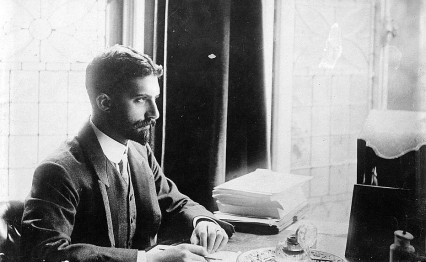
Dr Caleb Saleeby
Rather shy nudists sunbathing at the Yew Tree Camp in Croydon
The first nudist conference held in England by the Sunlight League
Dr Saleeby, as chairman of the MDRP, wrote a letter to the Lawn Tennis Association in 1929 encouraging it ‘to persuade men to give up the handicap of heavy trousers and play in shorts’. The first man to have famously worn shorts at Wimbledon was Henry ‘Bunny’ Austin (his nickname comes from a character in the comic strip Pip, Squeak and Wilfred). Except he wasn’t. In reality the first man to experience fresh air against his legs while playing tennis at Wimbledon was actually the relatively unknown English player Brame Hillyard who wore them on Court 10 a year after Dr Saleeby’s letter in 1930. Despite the freedom his shorts must have given him he promptly lost, and he was hardly ever heard of again.
Two years later in 1932 Bunny Austin, born in 1908 in South Norwood, eight miles or so away from Wimbledon, but educated at Repton and Cambridge, became the first person to wear shorts on Centre Court and thus in front of the world’s press. He claimed that the traditional white flannels were heavy and restricting; John Kieran wrote about him in the New York Times that year:
“With his white linen hat and his flannel shorts, the little English player looked like an AA Milne production.”
Bunny Austin wearing shorts at Wimbledon in 1933
Bunny Austin, despite wearing shorts, lost in the final to the American Don Budge and the Englishman’s reward was a £10 gift voucher redeemable at a high-street jewellers (the winner of the Men’s and Women’s final will earn £1,150,000 this year). Austin was the last Briton to appear in a Wimbledon Singles Final when he was runner-up in 1938. During the war he became active in the Christian pacifist movement and was criticised in the press as a conscientious objector. It wouldn’t be until 1984 that Austin was again allowed to be a member of the All-England Club.
The MDRP, although pretty well forgotten these days, had some success in getting its message across during the first years of its existence. It held annual parties, in order to “give every man a chance to show how he can look and feel his best by the costume he will evolve for this unique occasion.” It was also possible to find MDRP approved clothing in some shops in London including the famous Austin Reed on Regent Street. It also had an official shop and a relatively successful mail-order service.
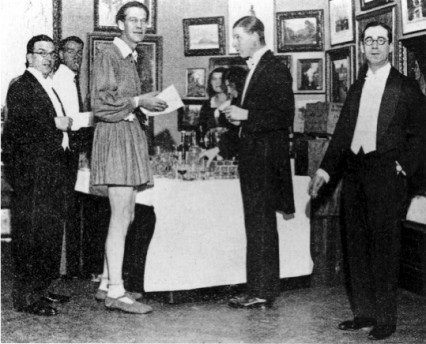
Some members of the Men’s Dress Reform Party were more radical than others.
Realistically the MDRP did little to turn general male fashion around except maybe in holiday and athletic wear. A major shift in men’s clothing didn’t happen until after the war when new fabrics and the rise of American style, with its preoccupation with leisure-wear, radically changed men’s appearances in the 1960s.
In 1931, two women players flouted the unofficial clothing rules at Wimbledon. Joan Lycett, who was actually born Joan Austin and was the sister of Bunny, played without stockings, but by now the newspapers and the watching crowds, used to seeing stockingless players away from Wimbledon, seemed to hardly notice. Lycett’s opponent, however, did cause a sensation. Lili de Alvarez ‘the gay senorita’ from Spain played at Wimbledon wearing a ‘white trousered frock’. The Times on 24 June 1931 wondered, ‘which were the more wonderful things – divided skirts or bare legs?’ On the same day the Daily Sketch saw de Alvarez’s ‘trousered tennis frock’ as yet more evidence that women had a ‘masculine fixation’:
The claim of women to equality with men is understandable, but that so many of them should wish to imitate the appearance of the less beauteous sex is not so easy to understand. It began with bobbing, and reached its logical hirsute conclusion in the Eton crop. And, having lost her hair, many a girl is now making strenuous attempts to lose her curves. And concurrently with these changes the conquest of trousers had been steadily proceeding…although mere man may regret the lose of feminine furbelows more than he resents the theft of his trousers, he realises that it is useless to rail against the spirit of the age. Whether we like it or not, girls will be boys.
Joan Lycett and Lili de Alvarez wearing her ‘trousered tennis frock’ on Centre Court in 1931
Joan Lycett.
Lili de Alvarez playing at Wimbledon in 1926
Helen Wills and her Husband FS Moody
Helen Wills, who became known as Helen Wills-Moody after marrying the business man Frederick Moody in December 1929 (she had met him at the match with Suzanne Lenglen), went on to win 31 Grand Slam tournament titles during her career including eight single titles at Wimbledon. Incredibly she reached the final of every single Grand Slam singles event she entered but, as was common in those days, never played at the Australian Championships.
The rivalry between the two Californian Helens reached a head when they played against each other in the final of the 1933 US Championship at Forest Hills. Wills had always beaten Jacobs and had won seven US Championships out of seven but after being broken on serve twice and falling behind 3-0 in the final set, she suddenly advised the umpire that she could not continue citing a bad back. A reporter for the Associated Press called Will Grimsley wrote:
“The spectators were stunned. The newsmen were outraged. They called her a quitter and a poor sport. They accused her of depriving Miss Jacobs of her moment of glory.”
That wasn’t the only reason why their rivalry had turned so bitter; Helen Jacobs had controversially worn shorts that year at Forest Hills and Wills reputedly said that there was nothing more unflattering to the female form than shorts and that it was hard to distinguish whether the wearer was a man or a woman. It wasn’t a pleasant thing to say but it was also a very pointed comment as Wills would have known, unlike the great majority of the public, that Jacobs was gay.
http://www.youtube.com/watch?v=Sozl9owg-B4
Helen Jacobs and Helen Wills at Forest Hills in 1933
Helen Jacobs in her tailored shorts at Wimbledon with the Wightman Cup, 1934
Helen Jacobs in 1935
Helen Wills
Helen Wills. Photograph by Bassano in the late 1920s
Helen Jacobs in 1933
Helen Jacobs and Helen Wills-Moody having a ‘Little Miss Poker-Face’ competition before their women’s singles finals match on Centre Court at Wimbledon, 1938
The final time the antagonistic Helens met was in the 1938 Wimbledon final. During the first set at 4-4 Jacobs strained her right achilles tendon straining to meet a passing shot from Wills-Moody. Jacobs didn’t win another game but bravely continued to the end of the match graciously, but maybe pointedly, allowing her opponent the full taste of victory in Championship final which she herself hadn’t been given five years previously. After she had won the final point Wills ran up to the net and without exchanging a smile said ‘Too bad, Helen’ after beating her for the 11th time out of 12 matches.
Helen Jacobs became a writer while still playing tennis and wrote two tennis books but also fictional works such as the novel Storm against the Wind in 1944. She served as a Commander in the US Navy Intelligence during World War II one of only five women to reach this rank. She had a life-long companion called Virginia Gurnee and she died of heart-failure in East Hampton in 1997.
Helen Wills, if not always the audience’s favourite, was undoubtedly one of the greatest ever tennis players. She died aged 92 on New Years day 1998 and left her $10 million fortune to the University of California, where she is now remembered by the Helen Wills Neuroscience Institute.
Helen Wills holding her racquet.
http://www.youtube.com/watch?v=U6hog3hLo44
Women’s Tennis 1923-1938
Lots of footage of the tennis matches described above
http://www.youtube.com/watch?v=vxp1ih-Oto0
Helen Wills defeating Elizabeth Ryan 6-2, 6-2 in 1930.

Jimmy Savile and British Rail
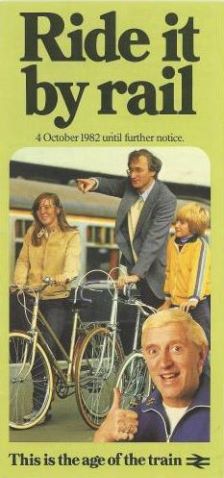
Such is the Conservatives' luck at the moment that no sooner is Sir George Young named as their new chief whip than a picture appears of him and his young children with Jimmy Savile. Well, almost.
But this leaflet is a reminder of Savile's ubiquity in those days. In particular, he was the face of British Rail in all its advertising.
When I was a student I had a theory that you could judge the importance of a station by the number of likenesses of Savile you could find on posters there. A major junction like York would be comfortably into double figures.

Social Skills
I think most of the research into social skills is screwy. The reason? It all assumes you’re interacting with a neurotypical (NT) person. Therefore, ‘good social skills’ refers to good understanding of NTs, while ‘poor social skills’ refers to poor understanding of NTs.
Imagine if we defined ‘good language skills’ as ‘speaking English well’. A celebrated Swedish author, who writes compelling and interesting books but whose English is very poor, would be considered to have poor language skills. I hope everyone can see the problem with that. The same problem arises when we describe ‘good social skills’ in terms of ability to relate well to NTs.
I think there are two distinct sets of social skills. One is the ability to ‘put yourself in another person’s shoes’ and imagine how you’d feel in their situation, and use that to decide how to treat them. This works well if the person you’re interacting with is similar to you, not so well if they’re quite different from you. Most NTs use this set of skills quite heavily, because most people they meet are similar enough for it to apply fairly well.
The second set of skills is the ability to set aside your own perspective and pay attention to the other person, to figure out what they’re thinking and feeling by observation. This is more laborious and inconvenient, but it works with anyone, no matter how much they differ from you. Most NTs seldom get a chance to learn these skills, unless they travel to another culture, form a close bond with an animal (merely having a pet doesn’t necessarily count), or befriend someone with a developmental disability.
For autistics, and for many other people described as having ‘poor social skills’, what’s actually going on is quite different. They are different enough from most NTs that ‘putting themselves in other people’s shoes’ frequently leads to the wrong response – such as a 10 year old regaling his classmates with facts about cockroach biology on the assumption that they’ll find it just as fascinating as he does. With time and effort, they learn to stop putting themselves in other people’s shoes, and instead use the second, harder set of social skills a lot.
I think both sets of skills are important. Being able to put yourself in someone else’s shoes, when appropriate, results in a far deeper experience of empathy for that person, and gives you a very rich knowledge base to interact with them. And though it’s easier than the second set of skills, it does take a certain degree of self-understanding to be able to match up someone else’s experience to your own and figure out what would have been helpful to you in that situation.
And the second set of skills is important in understanding diversity, in seeing the rich variety of experience for what it is. It’s also, I think, important for social scientists, who use similar strategies even when dealing with their own ‘kind’ of people. And it’s important because even NTs can’t always avoid interacting with people who are different from them. You may find that circumstances throw you unexpectedly into a situation of bridging difference, such as when a new mother is told that her child has a developmental disability.
Atypical kids often learn the second set but not the first set. This means that they learn to see interaction in general as difficult and confusing. It also means that they have more trouble developing self-understanding, because they don’t get to form links between their own experience and what they see in others. Alexithymia, the inability to name or identify your own emotions, is commonly associated with autism. I suspect most kids learn to label emotions by having adults correctly recognize and label their own emotions as they’re feeling them (which is harder when the adults are struggling to bridge a difference between themselves and the child), and by empathizing with others while hearing people label the others’ emotions (which is harder when you wouldn’t feel that way in that situation). Spending time with people who are ‘like you’ is very important to understanding yourself.
Which brings me to the topic of integration vs segregation. Atypical kids, in order to succeed in life, need to learn skills for relating to NTs. And segregation is often used as a way to deny a proper education and enable discriminatory practices – no ‘proper people’ see it who aren’t participating in it, and the children don’t see counter-examples to make them question it. But on the other hand, segregated spaces are important, since they allow atypical people to connect with others who are more similar to them. The solution, I think, is to allow opportunities for both integration and segregation, and to make sure the segregated spaces are voluntary and positive (and preferably organized by the same kind of people who participate in that setting, like Autreat).
Neurotypical people often miss out on learning the second set of skills. Being the majority group, this only causes problems under special circumstances, but it does mean missing out on some of the richness of human diversity. And it can be a serious problem for atypical people, dealing with a society where almost no one knows how to relate to them. Furthermore, as I noted before, NTs can’t always tell when they’ll be thrust into a situation requiring the ability to understand someone very different from themselves.
And here is one of the best arguments for integration – when it’s done well, it gives NT children an opportunity to get to know someone different from most people, and to develop the skills to understand them. That is, when it’s done well. Many times, atypical kids in typical settings are rejected. No one tries to understand them or see their point of view. Instead, they learn that in order to be accepted by the people who matter, they must distance themselves from anyone who doesn’t fit in. I don’t think my classmates in any of my classes learnt anything valuable about relating to autistic kids from knowing me, for example.
Other opportunities are cross-cultural encounters such as exchange programs or simply having immigrants in their social group. Being an immigrant, of course, is a potent way to learn about difference – I remember reading about a father of a high-functioning autistic boy who gained a better understanding of his son after they moved from US to England and he started running into social misunderstandings. Having pets can also be a good experience, but only if you approach your relationship to them with the understanding that they have their own, rich, nonhuman experience of the world. If you anthropomorphize them or else treat them like objects that happen to move around on their own, you won’t gain much in the way of understanding differences.
About the Author: Ettina is a young autistic woman who works to make our society more accepting of diversity. This piece first appeared on her blog, Abnormaldiversity, and is reprinted here by permission.


Air Fuel Synthesis turns carbon dioxide and water vapour into petrol.
Opinion: paying the Living Wage makes business sense, so what are you waiting for?
 The Living Wage is something that all the main political parties endorse. According to the Prime Minister it is an idea ‘whose time has come’; Nick Clegg is behind it; Ed Miliband praised it at the Labour conference; and Boris Johnson is a staunch supporter of the campaign. It is therefore unfortunate that, for an idea that enjoys such strong cross-party support, to date, the only local councils accredited as Living Wage employers are of one political colour – red.
Figures out this week show that almost 1 in 5 working Londoners are paid below the London Living Wage. As living costs continue to rise and wages stay stagnant, things will get worse.
The Living Wage of £7.20 per hour and the London Living Wage of £8.30 per hour are independently set rates of pay that quantify what’s needed to bring people up to a basic standard of living – keeping them just the right side of the poverty line. Day-to-day it will mean a worker being able to afford the tube instead of spending hours travelling to and from work on multiple buses. It does not afford luxuries but it is above the National Minimum Wage of £6.19 per hour.
People tend to understand the moral case for paying the Living Wage but many say there isn’t a business case for it, especially in the current climate. Which is why the results of some new and independent research conducted by Queen Mary, University of London – commissioned by Trust for London – are so important. The research shows that there are multiple business benefits of the Living Wage. One of those is reputational – the businesses interviewed found that the reputational effects helped them win new clients.
There was also a positive impact on existing staff with a 25% reduction in staff turnover rates, and over half of employees feeling more loyal and positive about their workplace. This fed through into better attitudes, a real asset in any customer-facing role.
There is, of course, no getting away from the fact that the businesses interviewed as part of research saw an increase in wage costs. However, the costs were often managed down, as the decision to pay the Living Wage led to a reassessment of existing contracts and finding more efficient ways of working. On top of that, the wage bills for those being brought up to the Living Wage made up only a small proportion of the total wage bills of companies.
Moreover, the research shows that if London firms paid the Living Wage then government would save almost £1bn a year because of an increased tax base and reduced welfare spending. This backs up the IFS study that found paying the Living Wage across the UK would save the government over £10bn.
Finally, there is great irony behind citing the economic climate as a reason for not paying the Living Wage. We know that if low paid workers get a bit more in income then they tend to spend a high proportion of it rather than save it. If all low paid workers were brought up to the Living Wage then more goods and services would be bought, injecting money directly into the economy and oiling its wheels.
The Living Wage is an idea whose time has come. But ideas alone do not help people get out of poverty. It is up to employers and politicians to actually do something; given the obvious moral case, and the multiple benefits of paying the Living Wage, there can be few excuses for complacency.
* Bharat Mehta OBE is Chief Executive of the independent charitable foundation Trust for London.
People simply empty out
In 1969, publisher John Martin offered to pay Charles Bukowski $100 each and every month for the rest of his life, on one condition: that he quit his job at the post office and become a writer. 49-year-old Bukowski did just that, and in 1971 his first novel, Post Office, was published by Martin's Black Sparrow Press.
15 years later, Bukowski wrote the following letter to Martin and spoke of his joy at having escaped full time employment.
(Source: Reach for the Sun Vol. 3; Image: Charles Bukowski, via.)
8-12-86
Hello John:
Thanks for the good letter. I don't think it hurts, sometimes, to remember where you came from. You know the places where I came from. Even the people who try to write about that or make films about it, they don't get it right. They call it "9 to 5." It's never 9 to 5, there's no free lunch break at those places, in fact, at many of them in order to keep your job you don't take lunch. Then there's OVERTIME and the books never seem to get the overtime right and if you complain about that, there's another sucker to take your place.
You know my old saying, "Slavery was never abolished, it was only extended to include all the colors."
And what hurts is the steadily diminishing humanity of those fighting to hold jobs they don't want but fear the alternative worse. People simply empty out. They are bodies with fearful and obedient minds. The color leaves the eye. The voice becomes ugly. And the body. The hair. The fingernails. The shoes. Everything does.
As a young man I could not believe that people could give their lives over to those conditions. As an old man, I still can't believe it. What do they do it for? Sex? TV? An automobile on monthly payments? Or children? Children who are just going to do the same things that they did?
Early on, when I was quite young and going from job to job I was foolish enough to sometimes speak to my fellow workers: "Hey, the boss can come in here at any moment and lay all of us off, just like that, don't you realize that?"
They would just look at me. I was posing something that they didn't want to enter their minds.
Now in industry, there are vast layoffs (steel mills dead, technical changes in other factors of the work place). They are layed off by the hundreds of thousands and their faces are stunned:
"I put in 35 years..."
"It ain't right..."
"I don't know what to do..."
They never pay the slaves enough so they can get free, just enough so they can stay alive and come back to work. I could see all this. Why couldn't they? I figured the park bench was just as good or being a barfly was just as good. Why not get there first before they put me there? Why wait?
I just wrote in disgust against it all, it was a relief to get the shit out of my system. And now that I'm here, a so-called professional writer, after giving the first 50 years away, I've found out that there are other disgusts beyond the system.
I remember once, working as a packer in this lighting fixture company, one of the packers suddenly said: "I'll never be free!"
One of the bosses was walking by (his name was Morrie) and he let out this delicious cackle of a laugh, enjoying the fact that this fellow was trapped for life.
So, the luck I finally had in getting out of those places, no matter how long it took, has given me a kind of joy, the jolly joy of the miracle. I now write from an old mind and an old body, long beyond the time when most men would ever think of continuing such a thing, but since I started so late I owe it to myself to continue, and when the words begin to falter and I must be helped up stairways and I can no longer tell a bluebird from a paperclip, I still feel that something in me is going to remember (no matter how far I'm gone) how I've come through the murder and the mess and the moil, to at least a generous way to die.
To not to have entirely wasted one's life seems to be a worthy accomplishment, if only for myself.
yr boy,
Hank
RSS Feed proudly sponsored by TinyLetter, a simple newsletter service for people with something to say.

Debi watches Arrow (sydht!) 1.02: Honor Thy Father

Aw, Arrow, you started so well. Was is really necessary to use your second episode to uncritically showcase one of the worse flaws in the superhero genre? You’ll have non-superhero fans thinking that this is how we do things over here.

It’s not! That’s how!
Note to Non-Comics Readers: It is usually acknowledged in the better superhero books that vigilantes work outside the law and while this gives them an advantage in some ways, it does mean that they get in the way of actual legal proceedings as often as not. If you’re interested in stories about how vigilante justice and the criminal justice system are incompatible, may I suggest Gotham Central and maybe Bendis’ run on Daredevil.
If you like your superheroes ridiculous and have a great resistance against the urge to slap yourself on the forehead, then you’re in luck, because Arrow starts with a DRAMATIC INTRODUCTION VOICEOVER.
Gawd, I love dramatic introduction voiceovers. Remember that time when in every generation there was a Chosen One, and then everything changed when the Fire Nation attacked?
The day I went missing was the day I died. Five years in Hell forged me into a weapon, which I use to honor a vow I made to father who sacrificed his life for mine. In his final moments he told me the truth: That our family’s wealth had been built on the suffering of others. That he failed our city, and that it was up to me to save it, and right his wrongs. But to do that without endangering the people closest to me, I have be someone else. I have to be something else.
All of this over a montage of him suiting up. You have no idea how much I want this to be a regular thing. Can we start every episode with this, please? Stephen Arnell delivers it SO DRAMATICALLY. Feel his pain, guys. FEEL IT. (Also remember that Robert Queen shot himself and another man in front of his son after telling him that it was up to him to undo the bullshit that Robert laid down. Worst father ever.)

So after the suiting up and voiceover of exposition, we cut straight to Arrow on a rooftop beating the crap out of some bad guys with hand to hand tactics and archery. And as in the pilot, the action scene is pretty neat, and Arrow is shown to be definitely good at what he does. Even his shooting of someone behind him is done with precision and you believe that the man crying out and falling over is related to the guy pulling bowstrings. Competence kink, I have one. And Arrow hits it when he fights.
When all the goons are down and only one guy in a suit is left, Arrow proceeds to kick him down, and threaten him by holding his face over an electrical generator.
“Marcus Redman,” he says. “You failed this city. Cellphone, inside pocket. Tell your partner to give those pensioners back their money! Do it. Now.” DRAMATIC EXIT. Presumably trusting that Redman will do it.
So basically, Arrow is going after the kind of con artist that Nate Ford needs a whole crew of super talented criminals to bring down. Only They do it with much more style.

Back at the Queen residence, Ollie joins his mother, sister and step-father in a living room where Moira is watching the news about Redman’s refund of the pension plan and the alleged involvement of the Man In The Hood (please, show, give him a name.) Ollie makes a blase remark about him getting more airtime than the Cardassians Kardashians (I ALWAYS do that) and Thea says what I’m thinking – that with five years on an island he’s got no right knowing who they are. Her tone implies what I’m also thinking – that it was better when he didn’t know stuff, thanks.
Turns out Ollie and the grown ups are off to court today! To prove that he’s alive and get his legal declaration of death reversed. Ollie passes up an excellent opportunity to claim that he’s not dead, he feels happy and that he thinks he’ll go for a walk, but he does tell us that he’s been in a courtroom before.
Enter Tommy! Because no conversation about Ollie’s playboy douchebaggery can be complete without Tommy Merlyn being a cocky dick about it. If Tommy is in fact the bad guy of the season, and not as I suspect, the Harry Osborn son of the bad guy, then he’s way better at the playboy douchebag act than Ollie is, and Ollie shoudl really be taking notes.
Ollie’s previous courtroom adventures number four times, Tommy tells us. DUI, assault on a paparazzi, stealing a taxi “And who could forget peeing on that cop?”
“I wish everyone would,” Moira tells us. I have to disagree, and would suggest that if anyone wanted to create a roleplaying account for this version of Ollie Queen, that peedonacop would be a great username.
Tommy’s here to go to court with Ollie, and so is Diggle. Thea declines, because Thea’s a teenager with Issues and she’s only in this scene to snark beautifully. On the way out of the door, Tommy offers his arm to Moira and she walks straight past, something I only mention because Walter follows, and I was hoping against hope that he’d take the offered arm.
Walter Steele, you disappoint, my man. You disappoint.

There’s paparazzi waiting for them at the courthouse, and Ollie does a very good job of not assaulting them, which is well done on his part, because the crushing of the crowd precipitates a flashback to the boat crash and Sarah’s death, which he has to relate in court.
For all the show’s over the top ridiculous, by the way, I have to say I think the show and Stephen Arnell are doing a bang up job on Ollie’s PTSD. It’s not the main plot: the main plot is JUSTICE and RIGHTING HIS FATHERS WRONGS and DRESSING IN GREEN LEATHER AND SHOOTING PEOPLE, but when they strip that away and remind us that Ollie watched the girl he was sleeping with and his father die in front of him, that he survived in harsh conditions (though obviously different conditions from what everyone think they were) for five years, it’s touching and well played. Oliver Queen is a survivor, and he’s messed up, and even the part of his mess that everyone knows about, he can’t really express because after five years away he doesn’t have the capacity. To be honest, I would probably watch a show about Ollie dealing with this crap if he didn’t suit up for five episodes, because this is where Stephen Arnell shines.
(Well this, and being shirtless.)
And there has yet to be a single emo tear. Suck it, Dean Winchester.
He relates the story of crashing and survival in court. In the last scene, Walter said he’d have to read a prepared statement, but he’s not reading anything, just relating a personal story that seems a little too dramatic for this kind of thing. It would have been easier to read the statement, Ollie. You don’t need to win over hearts and minds in a Proof of Life hearing.
“I knew that I was going to have to live for both of us. (Robert and Ollie). In those five years, it was that one though that kept me going.”
To recap from last episode, then:
The one thing that kept Oliver Queen going for five years:
1. To survive
1. To get home
1. To live for both Robert and Oliver (but not Sarah or the guy Robert shot or the rest of the crew on the boat)
The Queen family lawyer then delivers a just-as-dramatic and even less at place in a courtroom statement about moving to reverse the death in absentia for Ollie, with bonus footnote about Robert Queen still being dead. Because “the Queen family is only entitled to one miracle.”
Really, scriptwriters? Really?
Moira wants to move on to the office, but Ollie begs a deferral, because recounting traumatic experiences in courtrooms is hard, and really the only thing anyone can be expected to do on any given day. I feel you, Ollie. I feel you.

In the foyer, Ollie runs into Laurel, Joanna, and a client.
“What are you doing here?” Laurel demands, shortly because the last time she saw Ollie he was a douche to her and pushed her away.
“They’re bringing me back from the dead. What are you doing here?”
“My job.”
“The DA’s job,” Joanna editorializes, brightly.
I love Joanna, guys. Love her. And it saddens me that she never gets any actual characterization. Because Annie Ilonzeh brightens the screen every time she’s on, and clearly has much more potential as an actress, but no, she’s stuck being a foil to showcase Laurel. I hope she gets some storylines of her own, I really do.
At least she isn’t “sassy,” right?
The client is Emily Nocenti, and we’ll hear more about her later. Right now, she’s just here to stand awkwardly while Laurel exposes her private life and bitterness towards her ex boyfriend in front of a client. Real professional there, Laurel.
NNCR: Ann Nocenti is the current writer on Green Arrow. Note, that these shoutouts are also a grand comics tradition. Many of the cases on the board in Brubaker and Rucka’s Gotham Central were acclaimed Batman creators. Streets in Gotham, Metropolis and comics!GA’s Star City, are often names for creators.
On the steps of the courthouse, the press are accepting a statement from Dickhead of the Week, aka Martin Somers, who is saying he will fight this unwarranted court case from “Ms Lance” “until his last dying breath.” TV land is a strange place, where lawyers are more likely to be mentioned on TV than their clients. I can’t name one real life lawyer, myself.
(Actually, I can name a few, but “Veronica” and “Jeff” are people I know In Real Life, and don’t actually count.)
The press leave DotW behind and run to hound Ollie instead, despite Diggle’s request that they “step back everybody.” Diggle’s been waiting by the car, I guess. Presumably this is his first job, and he confused PSA with ‘chauffeur.’ He ushers Ollie into the back seat of the car, stops to get unprofessionally angry with a photographer, and then watches helplessly as Ollie drives off with the aforementioned car.
Diggle, man, I love you, but you’re terrible at your job.

Time for Exposition of the Week, delivered by Laurel in the courtroom. Victor Nocenti, Emily’s father, learned that Martin Somers was taking bribes from the Triad, and as a result was murdered by Somers. Laurel explains that Somers has friends in the DA’s office, and therefore justice has to happen in the civil court.
“If Emily Nocenti is to get justice for her father’s death, if Martin Somers is to get justice for his crimes, then someone is going to have to do it for them.”
And guess what, Laurel? You’re not going to have the chance to be that someone, because guess where Ollie went in that car? That’s right, to the Arrowcave, for Very Important shirtless training montage in low light WHICH IS HARD TO SCREENCAP OKAY I’M NOT HOLDING OUT ON YOU.
Turns out Martin Somers’ name is on THE LIST, and “Laurel thinks she’s the only one willing to being him to justice. She’s wrong.”
Apparently, Ollie saw that Laurel was going after Somers and decided that he has to be the next name on THE LIST for him to target. Because Heaven forbid Laurel have the chance to actually prove her worth in the courtroom.
He’s got a whole list, and Somers is just one name, that’s all I’m saying.

In his Bad Guy Lair – which I guess might be a warehouse, but no one’s specified what Somers is actually supposed to do, Somers really wants the trial to be shut down, because it means bad publicity and a chance for the press to eat him alive. What he’s not worried about, which he perhaps should be, is that a mysterious hooded man will jump him in his warehouse, knock out his bodyguards, and string him up by his ankles on the Starling City docks, in order to fire arrows at him.
Stay classy, Ollie.
Arrow demands that Somers testify at the trial and confess to having Nocenti killed.
Please note that at this point, and in fact throughout the entire episode Laurel hasn’t presented any proof, Ollie hasn’t seen any proof, and the audience isn’t shown any proof outside of flashbacks that this actually happened. I have no idea even where Laurel got the story she presented in court. Presumably Victor told Emily, but this isn’t exactly clear.
Please also note that torturing someone and threatening their life probably counts as ‘under duress,’ but I’m not exactly a lawyer, here.

Moira, it seems, is not happy with Diggle’s inability to keep his Principal from running off on his own. Diggle’s excuse is that he’s never had a client try to shake his bodyguards before. I suspect this is Diggle’s first job as a PSA.
(I have never worked as or know a PSA. I just read books with them in, sometimes.)
This brief tete a tete suggests to me that Moira did indeed hire Diggle as a PSA, and not as a spy to watch her son for sinister reasons, but this isn’t confirmed yet. Enter Ollie, who says that he’s been running off to enjoy lady company.
“I promise to introduce her if it ever gets to the exchanging first names stage.”
“No, I’d rather you promised to take Mr. Diggle with you on your nextrendezvous.” KINKY.
Anyway, Moira presents a convincing case. She’s worried about her son’s safety; very worried indeed, having lost him once. And she’s also involved in shady characters, so there’s that, but here she seems genuine. She really does fear for Ollie’s safety.
He promises not to do it again, because Ollie’s a lying jerkwad like that. Diggle promises that if he’s ditched one more time, he won’t have to be fired.
Diggle is at his best when he’s not taking any of Ollie’s shit. I’m hoping he’ll catch on to the crap in the next couple of episodes and Alfred it up for him, because I’m getting sick of him being handed the idiot ball every other scene, and it’s only the second episode.
Thea passes Ollie on her way out “somewhere loud and smokey,” Ollie tries to guilt her out of it, she tells him to cut the crap, and not to wait up.

The next day, and Det. Lance is at the docks investigating a 911 call placed… last night? I don’t know. Best guess, there was a 911 call that they did follow up at the time (because I refuse to believe Starling City emergency services are that shitty at their jobs), couldn’t find the Man in the Green Hood, and now they’re following up as part of their investigation into the Arrow guy?
Anyway, Somers doesn’t want them there. He says he doesn’t want the cops there. Despite the cut on his face from an arrow flight, and the hole on his desk that exactly matches the arrow the police recovered elsewhere. And that Quentin doesn’t like him because he’s an arsehole, and Quentin is a great judge of character.
Then Somers reminds Quentin that the latter’s daughter is suing the former, accuses the detective of having ulterior motives, and outright threatens them both. Because there’s no point being a DotW unless everyone knows it.

Meanwhile, the grown ups in Ollie’s life have taken him on a field trip to Queen Consolidated’s offices, to show him around but also to inform him of this new Applied Sciences building they’re intending to dedicate to Robert’s memory. At the dedication, says Moira, they’d like to announce that Oliver would be taking a leadership position in his company.
Ollie, in the only sane move he’s made since returning, says no, much to Moira’s displeasure. Walter tries to be supportive, only to have the fact that he’s married to Ollie’s mom thrown back in his face. Poor Walter, I am rapidly losing every conviction I had that he was a bad guy or even a morally grey one, and hope that he just turns out to be a man trying to do the best by the woman he loves and his best friend’s children.
Ollie makes a great point, though, about everyone fantasizing that he not his MBA on the island. College drop out, remember? He has no credentials to be running a business and I have no idea where Moira’s coming from. She makes a comment about Ollie’s irresponsibility and storms out.
In the car, in which Diggle has remembered his good idea of riding in the back with Ollie, that worthy takes the opportunity to have a heart to heart, from a man who has been in Afghanistan for five years to a man who was stranded on an island for five years, and in doing so, becomes the only person in the whole show to actually acknowledge Ollie might have been through some stuff.
“I could be wrong,” he says. “Maybe after five years alone you’re not as messed up in the head as you have every right to be.”
Which is why Diggle is the best character on this show, idiot ball aside. He’s wrong, Ollie is that messed up in the head, but he’s right in the important part: he has a right to be.

After a flashback to the island, in which we discover that Ollie kept Robert’s body (but not the guy Robert murdered) and on the life raft for the days it took to get to the island, where he buried him, we catch up with Laurel and Joanna on Emily Nocenti’s case. Three ladies, all of them named, two of them lawyers on screen, and they only ever talk about Nocenti and Somers. There’s no reason to expect a Bechdel pass, but it’d be nice one of these days.
The real point of the scene, though, is for Quentin to arrive with a contingent of cops and announce that all three of them are getting round-the-clock police protection, no arguments. So of course, Laurel argues. And argues, and compares protective custody while suing a dangerous businessman with triad connections, to an angry father when she’d started dating.
I get that this is the Daddy Issues episode, show, but really?

I’m beginning to suspect that Martin Somers needs to get himself an actual office, because all his business seems to take place at a run down desk in the middle of a storage facility at the docks. Probably cheaper for show budget, but still. He’s meeting with a Chinese lady with white hair, in order to complain about Hood man.
She disagrees, and says that it’s Emily Nocenti who is the real threat. Mostly because she’s a known who can actually be targeted. Somers argues that killing Nocenti will just bring down the wrath of Laurel Lance.
I like to think that Laurel must be the World’s Greatest lawyer, and already established as the scourge of the underworld due to her excellent lawyer fu. We’ve not had the opportunity to see it on screen, after all, and Somers is apparently terrified that she could single handedly bring down the entire Triad.
Triad lady’s answer? Kill Ms. Lance.
NNCR: This character, played by Kelly Hu, is undoubtably China White, a character from Green Arrow: Year One. Her real name is Chein Na-Wei, but Ollie mishears and mispronounces it as China White. She was the leader of a drug cartel running the island on which Ollie was stranded, and it was against her that he had his first foray into crime fighting.

You know what we haven’t had in nearly ten minutes? Shirtless Ollie Queen. This time in full light, Stephen Arnell does us the favor of turning a complete, very slow two seventy for the camera.
It’s adorable, you guys. It’s the most deliberate turning and showing off of musc… I mean, ridiculously shaped scars I’ve ever seen. And as he turns 270 degrees to end up facing to his original left, all I can think of is how Derek Zoolander has found his soulmate.
SOULMATE, I tell you.
The slow catwalk turn is wasted, however, on his sister, who comes in and demands to know where Ollie got ‘those.’ I eventually figured out she meant the ridiculous scars, but you know, not what I was first thinking of.
Ollie doesn’t want to talk about it. Thea uses the opportunity to complain that he never wants to talk to her about anything anymore. Other than her social life, which I dunno, seems like a thing to talk about? He says he’s not ready to talk about what happened to him, so she pulls him out to the back garden, where tombstones have been erected for Robert and for Oliver.
She used to come out here and talk to “Oliver,” her dead brother, when she was going through the loss of her brother.
“The truth is, I felt closer to you, when you were dead.”
I’m gonna cut Thea slack I won’t cut Moira here, because while Moira did suffer the loss of husband and son, she’s still messing up the mother to a traumatized son thing, with her own weird demands of him. Thea – Thea’s seventeen, and her pain at seeing Ollie like this is obvious, and fantastically portrayed.
“You gotta let me in, Ollie,” she says. “You gotta let someone in.”
So guess what Ollie does?

NO, THAT’S NOT WHO SHE MEANT.
Ollie goes straight to Laurel’s apartment, because he’s a terrible, terrible brother and when his sister says ’me,’ he hears ‘your ex girlfriend.’ Sigh.
After mentioning the police cars outside, Ollie admits to having been a dick.
“I was a jerk before the island, and now I’m a damaged jerk.”
Then he brings out a giant tub of ice cream and hangs out on Laurel’s floor by the couch while they eat ice cream and talk about parental issues. Actually it’s a great little scene, and these two have amazing chemistry and I love them. A pity it has to be interrupted by violence.
I mean, YAY VIOLENCE.
Hearing someone on the fire escape, Ollie grabs a kitchen knife from the coffee table and pulls Laurel around the apartment while China White and some goons barge in. There are a lot of machine guns, and a lot of screaming on the part of Laurel. I remind myself that she’s an awesome and terrifying lawyer and not the greatest Judoka in the world.
They are rescued, not by a man in a hood, but by a man in a snazzy suit and a handgun. Diggle announces his arrival on the scene by shooting two of the nameless goons, before he is locked in hand to hand with China White, and both get to show off their awesome hitting people abilities. It becomes a wrestling match, and, Ollie quickly has to leave Laurel unprotected to get a good angle to duck and throw that knife at China White, knocking out her weapon and losing her the fight. She flees, and Diggle yells at him.
“This is why it’s a good idea to have a bodyguard.”
Diggle. ♥
Quentin arrives on the scene, to find out what happened to Laurel’s police detail, and Diggle explains they were dead in the squad car when he went to get a light. Which means that cops are apparently as disposable in this show as bodyguards, and that Diggle must have excellent timing. Quentin thanks him, and then proceeds to tell Ollie to stay away from Laurel.
Which makes sense if you’re an irrational father of a daughter who died five years ago sleeping with a man, less sens if you’re a competent cop and protective father of a daughter who was being threatened in her own right by the triad-connected businessman she was trying to take down. Especially one who a few scenes earlier was telling that businessman that he has no problems separating personal from professional. When my daughter’s life is saved by the sheer coincidence of being near a man with a super competent bodyguard, my reaction might be to order her to never leave the side of the two men in question.
But that’s just me not being a fan of the idiot ball.

You know who doesn’t like being taken for an idiot? Diggle. Diggle, who has absolutely zero time for Oliver’s crap, thank you very much. He knows that Ollie saved his life. He knows it takes more than a little bit of skill to throw an unweighted kitchen knife with deadly accuracy across ten feet. And he has very nearly had it with all these secrets, Mr. Queen, and he’s obviously THIS CLOSE to punching that smug look right off Ollie’s inadequately bearded chin.
I may be projecting.

Ollie tells Diggle he’s going to bed, but instead he’s off to the Arrowcave for DRAMATIC VOICEOVER and suiting up, in order to go after Somers.
“He’s still going to face Justice. But of a different kind.”
NNCR: In 2009′s Cry for Justice, Green Arrow and his BFF ran around being angry at everyone and trying to be proactive FOR JUSTICE. It wasn’t a good series: a fan favorite character was killed, Speedy lost an arm, and there were far too many detailed crotch shots to make me comfortable. But it is notable for continuing the long standing habit of Oliver Queen grabbing his bow and arrow and announcing to the audience that what he does he does FOR JUSTICE.
Quentin and Laurel are having a fight about putting herself in danger by going after dangerous people, and it becomes a shouting match about Doing the Right Thing and Trying to Protect My Only Daughter and Laurel again gets to show her stubborn idealism and how much those two love each other, when Quentin is called away by a report of activity down at the docks.
That activity, of course, is the Idiot In The Green Hood, who is cutting through bodyguards like paper, including one gratuitous shot to the eye. I start to wonder if the only reason he picked bows rather than guns is because Rule of Cool, then I realize that Rule of Cool is a good reason for anything.
He corners Somers in a cool looking warehouse and starts to fire arrows at him while invoking the spirit of capslock Harry.
“WHO KILLED VICTOR NOCENTI!”
“The triad?”
“Acting on whose instructions? WHOSE?!”
Thank you, Stephen Arnell, by the way, for not using the ridiculous voice of Smallville’s Green Arrow or Nolan’s Batman. I don’t think I don’t cope without dying of laughter if this was also in a stupid voice. I’m laughing pretty hard as it is.
After giving a full confession, Somers is ‘rescued’ by China White, and after Ollie demonstrates his ability to speak Mandarin, fighting follows. It turns out Ollie’s bow is reinforced in a way that allows for its use in some sort of stick fighting technique. What this does to its effectiveness as a bow, I can’t imagine, but he seems to be doing okay. They fight until the police arrive, and China White makes her exit, leaving Ollie to face the arriving cops, including Det. Lance.

“You twitch,” says Quentin, “and you’re dead.”
And Ollie twitches, throwing a dart through the trigger on Quentin’s gun, pinning it the storage container behind him. When the detective looks up, Arrow is gone, but the dart he threw is blinking. It’s a audio recorder, and when he presses play, it’s a tape of Somers’ confession.
You know, that one he gave under duress.
While some idiot was firing arrows at him.
HOW IS THAT EVEN ADMISSIBLE?

Ollie’s voiceover tells us that “Laurel was right. I can’t be the person my mother wants me to be and still keep my promise to my father. I have to be the person I need them to see me as.” Which I don’t actually remember Laurel saying, but whatever. Ollie shows up at the dedication, drunk and disorderly and ready to take over the podium from Walter in order to drunk at people and to announce that he’s not his father and can’t run the company thank you very much I’m angry and drunk.
I guess this is adding to Ollie’s drunk and disorderly public persona, but I hardly see why it’s necessary. Not having graduated from college is a good enough reason not to run a college.
Still, at least the confession TAKEN AND RECORDED UNDER DURESS by a man FIRING ARROWS AT A GUY has led to the DA’s office prosecuting Somers, right? Even though Quentin gets to tell Laurel how “you don’t need to go outside the law to find justice,” a line directly repeated from the pilot despite all evidence to the contrary. And Ollie gets to cross another name off his LIST. So that’s all right.

In the island flashback, just-crashed Ollie is carrying his father’s body to wherever he’s going to bury it. Going through Robert’s pockets, Ollie finds a notebook, with empty pages and a design drawn on the inside cover. In the present, Moira is meeting a mysterious man in a mysterious car, where she explains that her son knows nothing, and doesn’t know that the yacht was sabotaged. She sounds convincing now, like a mother who really wants to protect her son, despite the terrible things she’s done to him to protect a terrible secret.
Ollie meanwhile is visiting the tombstone in the garden, where they’re abou tto take down the Oliver tombstonem but first he explains to his Dad that he’s sad he can’t reconnect with Moira, Thea and Laurel and it sucks. And that “to honor your wishes, I need to dishonor your memory.”
Please talk to Thea, Ollie.
OK, one final denouement scene, because we can’t end without a DRAMATIC TEASER.
Back on the island, after burying Robert under some rocks, Ollie stands up and is shot in the shoulder! By an arrow! Shot by a mysterious archer!

WHO COULD IT BE?
No really, I have no idea.
In conclusion: Apart from suffering terribly from second episode-osis, in which the bad guy was forgettable and boring and the plot was only there to establish status quo, the episode also suffered from poor plotting, and the dialog’s kind of getting ridiculous. On the other hand, the cast remain superlative, with Thea, Diggle and Laurel easily stealing every scene they’re in.
Greatest Line: ”Maybe after five years alone you’re not as messed up in the head as you have every right to be.”
This post can also be found at Thagomizer.net. Feel free to join in the conversation wherever you feel most comfortable.
Feynman on Initial Conditions, Evolving Laws, and What We Consider Physics
We’ve mentioned before that Richard Feynman was way ahead of his time when it came to the need to understand cosmological initial conditions and the low entropy of the early universe. (Among other things, of course.) Feynman actually wrote three different books in the early 1960′s — in his way of “writing books,” which consisted of giving lectures and having others transcribe them — all of which made a point of discussing this problem. The Character of Physical Law was aimed at a popular audience, the Feynman Lectures on Physics were aimed at undergraduate physics majors, and the Feynman Lectures on Gravitation were aimed at advanced graduate students — and in every case he emphasized that we can only account for the Second Law of Thermodynamics by assuming a low-entropy boundary condition in the past, for which we currently have no reliable explanation. (These days we have a larger number of speculations, but still nothing reliable.)
Here’s a video clip from about ten years afterward, in 1973, where Feynman raises a similar point in a conversation with Fred Hoyle, the accomplished astronomer and a pioneer of the Steady State cosmology. (Thanks to Ronan Mehigan.) They don’t go into details, but Feynman introduces the idea as a kind of meta-issue in physics:
“What, today, do we not consider part of physics, which we may ultimately be part of physics?”
His answer (which should be cued up here at the 7:10 mark) is the initial conditions of the universe, as well as the possibility that the physical laws themselves evolve with time. (Conversation continues for a tiny bit in the followup video. Listen on to hear Feynman explain how he doesn’t like to speculate about things.)
What’s interesting is that now, four decades later, it’s commonplace to address the issue of initial conditions in a scientific context, and even to consider the evolution of local physical laws, as we do with the multiverse and the string theory landscape. I’m not sure what is the precise history of this endeavor, but in the very same year this interview was aired, Collins and Hawking wrote an early paper asking why the universe is isotropic. In 1979, Dicke and Peebles published “The Big Bang Cosmology — Enigmas and Nostrums,” which set out many of the puzzles that Alan Guth would attempt to address with the inflationary universe scenario. When we marry inflation with the idea of a landscape of vacua (whether from string theory or elsewhere), we naturally are led to the idea of an evolving set of local physical laws, raising the possibility that we might be able to actually explain (using the anthropic principle or simple probability arguments) why we observe one set of laws rather than some other. Not that we have, or even seem very close, but the scientific agenda is clear.
So how could we answer Feynman’s question today? What do we not consider part of physics, which someday we might?
About Red Dwarf
From a distance, it's not much of a stretch. In the great schism of the 1990s, when letters were sent to DWM suggesting that future Doctor Who should be as much like Star Trek: The Next Generation as possible (and then, after the TV movie, that it should be as unlike The X-Files as possible), Doctor Who and Red Dwarf were seen as pod-brothers: both BBC, both sci-fi. I never believed it then and I don't believe it now, but you probably guessed that, not least because I loathe what's come to be called sci-fi. But I did watch the first episode of Red Dwarf in 1987, as did most of the boys in my class [ADVERTSING SMALL PRINT - girls not included in this survey - boys stay on one side of the classroom and girls on the other - boys may not cross over and talk to girls because that means they're gay somehow]. Still a few years away from the idea of "Cult TV", we just thought it was funny, and different, and unexpected. Younger readers may like to note that although the '80s were exactly as awful as you've gathered, "different" and "unexpected" were still good things then.
Because that's what comedy programmes were / are supposed to be, surely? We had the pleasure of watching "The End" and saying "oh, riiiight... is that guy coming out of the ventilator shaft descended from the cat, then?".
Not untypically, the '90s acceptance of Red Dwarf as "Cult" and "sci-fi" is what slit its throat. In the beginning, Grant and Naylor perceived it as "Steptoe and Son in space". The creators of Porridge pointed out circa 1990 that the essence of sitcom is "two blokes who don't like each other trapped in a room": though both the Fletch / Godber relationship and the media's partial realisation that WOMEN EXIST have caused us to redefine our terms, it's still true that sitcom requires a sense of entrapment if it's going to work. The Grant-Naylor pushmepullyou considered "Marooned" one of the best of the early episodes, and I'd posit it as the best... but even though "Marooned" is essentially two blokes who don't like each other trapped in a room, both the scenario in which they're trapped and the nature of their conversation couldn't exist outside of a space-travelling, history-mangling context. "Polymorph" is more popular with sci-fi people, yet even this takes the claustrophobia of The Thing and uses it for laughs.
Look at the way I phrased that, and it tells you everything. "More popular with sci-fi people." Quite. Despite its authors' claim that Red Dwarf was a working-class sitcom, by the early '90s it had become Cult TV for middle-class university students. I have no problem with this, being massively middle-class myself, but the sense of delusion is startling. It began as Steptoe and Son, using science-fiction ideas to set up otherwise implausible situations; by Red Dwarf VI, it believed it was Star Trek: The Next Generation with jokes. The gulf between the two is enormous. "Emohawk" is a work of fan-fic. "Gunmen of the Apocalypse", after the first few minutes of grotesque VR-sex (a new source of humour in the early '90s), is a very bland episode of an SF series that isn't dramatic enough to be drama and isn't funny enough to be comedy. '90s Red Dwarf fans, by that stage as insular as '90s Doctor Who fans or '90s Iron Maiden fans, voted it one of their favourites. Nobody else gave a toss. (Seeing it this way, "Back to Reality" might be considered the fulcrum of the whole series, the point where comedy and SF balanced perfectly. Of course, we didn't have the term "just before it jumped the shark" in those days.)
And then, as you all know, Red Dwarf VII crossed the line. An obsession with making sci-fi TV "but funny", filmlooked for international slickness even though it alienated the casual audience and removed the last traces of sitcom from a programme that was never, ever designed to work as a "space" show... by this stage, Red Dwarf fans were already seen as the kind of gits who expressed themselves through T-shirts from Forbidden Planet rather than conversation, much as Python fans had been since the '80s. The seventh series made even them too embarrassed to admit to liking it. The eighth was an improvement - in some ways taking the Porridge point rather literally, in others ruining it all with a two-parter involving a f***ing great dinosaur and a cliffhanger that just looked silly - but it came too late. Red Dwarf had pretended to be cool with a hint of monster. It had ended up too geeky even for geeks.
[We will assume the ninth didn't really happen.]
The big surprise of Red Dwarf X, then, is that isn't awful. None of the excitement or newness of I-III, yet still, maybe something of IV-V. This isn't a review, so I won't review it: I'm more interested in its structure. The episodes are designed as sitcom in space, not sci-fi with jokes. The "exterior" shots are now CGI rather than modelwork, and you can argue amongst yourselves as to whether that makes them more or less interesting, even though the answer is obviously less. But everything within the ship is on the small scale, the almost-human level. So much so that when the episode three trailer informs us of the crew [time-travelling / entering a VR / having a mass hallucination] and meeting Jesus, the disappointment's nearly crippling. Then again, even in the early years, they were allowed one day out per series.
The point remains that Red Dwarf X has failed to be terrible simply because it's cramped, and understated, and... well... cheap. "Necessity is the mother of invention" is used to defend all manner of cackpole that didn't turn out the way its creators intended, but can we really deny that things become horribly boring when we've got the capability to do anything? You've presumably read this blog before, so you presumably know what I'm thinking about. Red Dwarf gives us a much clearer example, though. Red Dwarf VII had free reign (there was even a snide-but-backfiring comment about the ship having all the parts it was meant to have before the JMC / BBC stripped it back), as a result of which, it became self-parody. Reassign it to Freeview with what we assume is a minimal budget, and suddenly it's at least focused again.
One final question, irrelevant to much of the above, but something I find interesting just because I like to think about the way people think. If you look at early-phase Doctor Who (certainly the '60s, but leaking into the '70s), the worst thing that can happen to you - the very worst imaginable horror - is to have your consciousness invaded. The trouble is, "mind control" has become so hackneyed in the last half-century that we tend to think of it as the desperate act of a desperate scriptwriter. Yet it meant something tangible, something terribly serious, at a point when (a) psychology was only just establishing itself as a major factor in human concerns after years of being a specialist interest, (b) world powers were being shown to actively employ it as a weapon, and (c) Western culture believed in the notion of people being able to govern themselves rather than just "consuming". As That Tat Wood pointed out, one of the reasons Doctor Who writers used the mind control trope without presenting it as the work of Commie infiltrators was that Doctor Who writers were the kind of people who read a lot of books. Reading promotes an inner voice, and an inner argument. Anything that overrides that argument is a terror beyond all other terrors. Today, mind control is generally presented as A Bad Thing for fading historical reasons (Nazism and Stalinism, even though neither did as much in the field of thought-manipulation as democratic America), unless it's the work of terrorists who want to deprive you of the freedom to choose between Virgin or Sky (the CSI version of brainwashing).
Yet in Red Dwarf, the great fear is of foreknowledge, of predestination. We're trapped by who we are, and by what we're absolutely, inescapably bound to do. "Bound" in its truest sense, too, the sense that you're tied to your future. We could take the characters' own immutable shallowness to be a sign of this, but the idea of being trapped in your destiny occurs as early as the second episode ("Future Echoes", as if most of you didn't know that). It's an idea repeated throughout the series: "Justice" ends with a rant about free will that's undercut by a pratfall which suggests an apology on behalf of the writer/s for explaining the point, while "The Inquisitor" gives us a creature that makes us feel guilty for not achieving greatness. As do the parents of one lead character and the fantasies of the other, throughout the whole 25 years and counting. For further examples, look up a list of episodes on the internet - yes, like I just did - and be astonished by the number of events you hadn't even noticed that fit the same pattern.
When Doug Naylor takes charge in the is-it-funny-or-is-it-sci-fi years, this recoil from an inevitable future gets worse. The first three episodes of Red Dwarf VII are about people doing things because destiny demands it, ironically even though the audience-killing "Tikka to Ride" begins with a prologue which explains that none of the futures predicted in previous episodes are an issue any more. A year later, "Cassandra" takes the breaks off. Now "Fathers and Suns" gives us a computer (like Cassandra, female... a male concern, even if we don't realise it?) who'll doom you in advance because she knows you're going to do exactly the same thing if you're given the opportunity.
A recent study, which you can search for yourselves if you think I make all this up, analysed the human relationships in (amongst many others) Beowulf and Hamlet. It found that Beowulf, despite the surfeit of monsters, was more realistic. Why...? Because in the works we call "sagas", be they Nordic or descendants of Nordic, there's never an ending: good things happen, and bad things happen, but they'll keep happening regardless. Despite their recently-assumed moral similarity to Protestant works, they're actually closer to Buddhism, where the wheel keeps turning unless someone can eventually stop it. Shakespearean tragedy, on the other hand, is always set in an enclosed universe where an end-point will be reached, where people will ultimately suffer, where catharsis will be the objective...
...and in this respect, sitcom is tragedy. Every episode is constructed to create catharsis, suffering, and end-point. Doctor Who writers of yesteryear were genuinely mortified by the idea of other people controlling their thoughts, a fear we no longer experience, since we brush it off as being "part of modern culture" (remember, the anti-jingle rant of "The Macra Terror" is about opposition to advertising rather than opposition to some imaginary fascist elite, jingles being a new and worrying presence in British society circa 1966). '60s readers feared different things to '80s-reared comedy scriptwriters. And many of the latter might reasonably be worried about becoming trapped by their own devices.
Doug Naylor among others.

Codex Born Cover Reveal and Thoughts
CODEX BORN has a cover! This is 99% final, but I’ve been given permission to share. Click on the pic for a larger view, if you like.

There are many things I like about this image. I’m happy that the artist, Gene Mollica, found an Indian model for Lena Greenwood. I love seeing her teamed up with Smudge.1 And I think this fits well with the look of the first book.
I’m particularly pleased that when I tried Lena’s pose, I was able to do it without pain. I love the expression on her face, and the fact that she’s actually got some muscle on her. And while the outfit she’s wearing is rather revealing, it’s also completely in character. Lena might be dressed sexy, but she’s not posing as a sexual object. There’s no unnecessary thrusting of hips or chest. She’s dressed the way she likes, and she’s stepping out of her oak to kick someone’s ass.
Now, those of you who’ve read Libriomancer [Amazon | B&N | Mysterious Galaxy] have probably noticed where this version of Lena doesn’t match the text. When we first meet Lena in chapter one, she’s described thusly:
Lena Greenwood was the least imposing heroine you’d ever see. She was several inches shorter than me, heavyset but graceful as a dancer. I didn’t know her actual age, but she appeared to be in her early twenties, and was about as intimidating as a stuffed bear. A damned sexy bear, but not someone you’d expect to go toe-to-toe with your average monster.
Which raises the question: Why has Lena been “thinwashed,” for lack of a better word?
When my editor was talking to the artist, she asked me to provide description for Lena, which I did. Like I said, Gene Mollica does photo shoots with a model in his studio, then manipulates the best pictures into the cover art. He looked for models who matched my description of Lena.
This was the largest Indian model he could find.2
I have the portfolio shots of the rest, and this truly was the best option for Lena.
This is just one piece of the problem. If we had found a heavier model, I wonder if marketing would have nixed it because they didn’t think people would buy a book with a fat woman on the cover. It’s a moot point, since Gene couldn’t even find a fat model … is that because the modelling profession in particular is hostile to anyone larger than a size six? Or is it because we’ve mocked and shamed people for being fat until they wouldn’t even consider trying to model as a career?
What it comes down to is that our disdain and disgust for anyone overweight, particularly women, permeates our whole culture, and it pisses me off. You don’t want to know how young my daughter was the first time she came to us worrying about her weight. I do think we’re finally starting to figure out that maybe it’s not okay to mock people for their race or gender or sexual orientation, but fat people are still fair game, both in real life and on every movie and sitcom you see.
WHAT THE HELL IS WRONG WITH US???
The Lena Greenwood on the CODEX BORN cover is a sexy, attractive woman. 3 But you know what? The Lena Greenwood in my book is damned sexy and attractive too. And while I’m happy with this cover, and I think Gene did a nice job, I’m also disappointed that we don’t get to see that Lena Greenwood.
Because she’s awesome.
—
- Cover Trivia: Smudge has now appeared on more of my U.S. book covers than any other character. ↩
- While I’m certain there are larger models out there, I’m not sure what other constraints Gene was working with in terms of location, budget, and time. I do know there was a rush to get this cover done for the catalog. ↩
- As much or more because of her confidence and humor and strength than because of her body or the amount of skin she’s showing. ↩
Colored Me
 This is the marriage license of my great-great grandfather, born in Ireland in 1854 and married to a Virginia native in 1884. His race, you’ll notice, is given as “colored.” Since when are Irishmen colored?
My father found this when he started doing family history after he retired. We mostly laughed, a lot, when he revealed it at a family Christmas party: that year he sent us all Kwanza cards as a joke.
But being a historian I couldn’t help but be fascinated. I’d read some of the literature on “whiteness,” notably Ignatiev’s How the Irish Became White, and I’d been HIGHLY skeptical. It seemed to me to be sort of related to the kind of whining white college kids did about how they were discriminated against because they did not have a “white studies program” on campus. That’s not what Ignatiev had in mind, but I thought the “Irish were not white” bit was wildly overstated.
I was clearly wrong, and looking into it a little more resulted in a whole class lesson around the image of the Irish in the 19th century and the range of anti-Irish nativism. It focused on the malleability of stereotypes, and how what seems “natural” and obvious in one era seems odd in the next.
But still how to explain this document? It was his marriage certificate: surely even the greenest Irish immigrant knew enough to avoid being classed as “colored.”
If you take a close look at it, it gets more and more interesting.
Here is the full scan:

Right away there are some oddities–his wife Hester Holland, a Virginia native, is also listed as colored. Perhaps she was known to be colored, and they could not legally marry unless they were both considered colored?
 Seems very unlikely–here’s the loving couple on or about their wedding day. Hard to place them as anything other than “white.”
And it’s hard to believe that any white person living in southern Virginia in 1884, would knowingly or willingly reclassify themselves as “colored:” the disadvantages would be significant, to put it mildly, although not as significant as they would be after about 1895, when formal legal segregation began to appear.
Nansemond County was merged into Suffolk County in 1972: that explains the non-existent Virginia County. The document is a copy issued in 1998. But what about that notation on the bottom line of text, reading “Date Record FiIed: July 1940?” That’s odd. Surely the original license was filed in 1884: otherwise they could not have married and the document could not have been retrieved.
Something funky happened in 1940.
In 1940 Virginia’s Department of Vital Statistics, which housed all VA marriage licenses and birth and death certificates, was under the direction of a very remarkable and remarkably awful man, Walter Ashby Plecker.

Walter Plecker at the Bureau of Vital Statistics
Born in Virginia, trained as a medical doctor, Plecker worked first as a public health official. In this capacity Plecker was a strong southern progressive: he did important work on public health and sanitation, and embarked on a an extremely aggressive program of inspections, cautioning Virginians about the importance of vaccination and the dangers of contaminated drinking water. He gave speeches, he wrote articles in national journals and newspapers. He explained where to build latrines and outhouses, and how to properly wash and cook to prevent disease.
Plecker’s commitment to hygiene extended to racial hygiene as well. He was an absolutely hard-core racist with a deep commitment to eugenics, the science of “racial hygiene.” Plecker believed absolutely in the natural, genetic superiority of the the Anglo Saxon race; though he only a vague understanding of genetics, he insisted that any “amalgamation,” or mingling of the races, would have disastrous effects on general public health. It would undermine the nation itself, by destroying its natural leaders.
The problem, for men like Plecker, came from persons who looked white but possessed “black blood.” Such persons could pass for white but they carried a hereditary taint that would inevitably return.
 Plecker played a major role in the passage, in 1924, of Virginia’s “Racial Integrity Act,” which required that the race of every newborn be recorded at birth. The law further forbid racial “intermarriage” and made it legal to “sexually sterilize” the inmates of state institutions, to prevent them from passing on bad genes.
“In the past,” the public health bulletin says, “it has been possible for these people to declare themselves white.” Thus emboldened, “they have demanded admittance or their children into the white schools” and have even, in a few cases, “intermarried with white people.”
Plecker’s allies in this battle for racial integrity included the Virginia composer John Powell. Trained in Europe as a concert pianist, Powell made a name for himself as a composer. He had a sharp interest in American musical forms, and his Negro Rhapsody of 1918 quoted from Swing Low, Sweet Chariot. But by 1924 Powell too had become obsessed with racial purity. He called the immigrant “melting pot” a “witches cauldron” and began insisting that “negro melodies” were actually stolen from German folksongs: that they represented the musical genius of the Anglo Saxon race. Powell later became a major folklorist, arguing that Appalachian folk songs represented the true musical expression of the pure Anglo Saxon race. He and Plecker corresponded frequently: together they founded a group of organizations known as the “National Anglo Saxon Clubs.”
Virginia’s new law gave Plecker the power to prevent the racially suspect from marrying. He set about the job with obsessive zeal.
Plecker’s zeal for Eugenics was extreme, but not unusual. Throughout the nation, the American Eugenics Society sponsored “Fitter Families” contests, in which teams of experts selected the family with the best and purest bloodlines.

From Popular Science Monthly, August 1923
“Fitter Family” contests, accompanied by educational demonstrations on the dangers of impure blood and racial intermarriage, appeared at state and county fairs all over the country in the 1920s. The American Eugenics Society pushed to have its materials included in high school and college classrooms.
Eugenics was never uncritically accepted. The quest for “fitter families” was sometimes mocked. But Eugenics enjoyed a national and international vogue. This clipping, from the New York Times, May 28, 1926, seems fairly chilling, particularly the last line: “this is the first real test of the Eugenics theory to be tried out in Germany.” The first, but certainly not the last.
When Nazi scientists looked for evidence to support their eugenic theories, they generally turned to the advanced work Americans were doing on the subject. American eugenicists would often use the phrase “final solution” when talking about the problem of the unfit. They meant the elimination of the genetically inferior, through educational campaigns, restrictive laws or by programs of involuntary sterilization.
Plecker saw his role as policing who could and could not count as white., and giving Virginia a reliable racial map. The letter from Plecker below is quoted in Edward Black’s excellent book War Against the Weak:
 This astonishing piece of bullying, Plecker felt, was justified by the necessity of racial purity. In this letter, Plecker far exceeded his actual authority. By the end of his career, he had been sued several times by Virginians who resented his willingness to appoint himself judge and jury and executioner in deciding the citizen’s racial destiny.
Historians know Plecker best through his campaign against Virginia’s Indians.  Mongrel Virginians, published in 1926, argued that there were no Indians in Virginia: the original Indians had so intermarried with negros and low whites that they no longer fit the name. The book invented a new term, the “Win” tribe, to describe. this degraded intermixture.
Plecker used this book, and his own intuition and judgment, to erase the record of Virginia Indian tribes. When he came across persons who called themselves “Indian,” or who named themselves as members of a specific tribe, he would reclassify them as colored. Fearing that African Americans were trying to escape segregation by calling themselves Indians, and believing that no “racially pure” Indians remained, he ordered state agencies to rewrite the historical record.

Letter from Plecker to VA state officials, 1943.
In 1943, for example,. Plecker wrote to “Local Registrars, Physicians, Health Officers, Nurses, School Super-intendents, and Clerks of the Courts” in Virginia, warning that “mongrels, finding that they have been able to sneak in their birth certificates un– challenged as Indians are now making a rush to register as white… Those attempting this fraud should be warned that they are liable to a penalty of one year in the penitentiary (Section 5099a of the Code).”
“To aid all of you in determining just which are the mixed families,” Plecker continued, “we have made a list of their surnames by counties and cities, as complete as possible at this time. This list should be preserved by all, even by those in counties and cities not included, as these people are moving around over the State and changing race at the new place.”
Plecker continued: “all certificates of these people showing “Indian” or “white” are now being rejected and returned to the physician or midwife, but local registrars hereafter must not permit them to pass their hands uncorrected or unchallenged and without a note of warning to us. One hundred and fifty thousand other mulattoes in Virginia are watching eagerly the attempt of their pseudo-Indian brethren, ready to follow in a rush when the first have made a break in the dike.”
Plecker rewrote the documentary record of history to suit his own arbitrary prejudices, and to keep the “dike” of racial segregation intact.
So to return to the marriage license of Patrick O’Malley and Hester Holland: a few years ago I gave a talk in Norfolk, and took a day to drive out to the Suffolk County courthouse to find Patrick and Hester’s original marriage license. The form has a space for “color,” in the left hand column: it says simply “white.”

This is the form Plecker or one of his clerks would have seen, and I assume “refiled,” in 1940. I can reasonably conclude that Plecker or one of his clerks simply decided that Patrick O’Malley, being Irish, was not white, and that Hester (my Father knew her as “Esther”) Holland must have been the product of some tangled skein of intermarriage that made her also non-white in the State’s eyes.

Rail crossing where Patrick and Hester lived
While in Suffolk County I drove out to the address given for Patrick O’Malley and Hester Holland. I asked around in the small town near this crossroads, and people told me there were lots of Hollands still living there, both colored and white. Perhaps Plecker regarded Patrick as white, but wanted to make doubly sure no child of the mongrel Hester’s marriage could ever claim white identity. Perhaps he thought that a woman degraded enough to marry an Irishman off the boat had forfeited the claim to whiteness.
Plecker supported the 1924 Johnson-Reed Act, which virtually halted immigration to the US from countries, mostly southern and eastern European, then regarded as genetically inferior. Ireland was not among them: by 1924 there were too many Irish Americans in positions of political power to make that possible. I have not been able to find any evidence of specifically anti-Irish animus in Plecker, but I have not done much hard research yet.
Racial theorist regarded the Irish as a “celtic,” not an “anglo saxon” people: if anglo saxon equaled “white,” then the Irish did not quite qualify, and neither did the Jews, the Italians, the Russians and Poles and Greeks. I plan to do further research on Plecker and his compadre, Powell, to see if I can find a better-documented answer.
But one sense it hardly matters: Plecker failed completely. Patrick O’Malley’s descendants left Virginia, after a series of railroad-related land speculations apparently failed: no one ever questioned their whiteness again, and while his children felt themselves, as Irish Americans, to be somewhat apart, no one ever doubted their white credentials. We live today in the very “mongrel” America Plecker was most frightened of.
Walter Plecker retired in 1946, at the age of eighty four; he died a year later. There is no evidence that the revelation of the Nazi death camps–the rotten fruit of eugenics, the logical culmination of eugenic theories–affected him in any way.
What do I conclude from this odd episode? That Hester Holland was named as “colored” confirms what others, particularly Edwin Black in War Against the Weak, have already documented: that Plecker used a rigid and arbitrary sense of racial purity to reclassify Virginians at his own whim. Plecker was motivated by white supremacy and by the fear that African Americans were claiming Indian heritage in order to evade Virginia’s segregation laws and “pass over” into white.
I also think I can conclude that as late as 1940 the state of Virginia officially regarded Irish people as “colored,” as comical as that idea might seem. Today, in stereotypes, Irish Americans appear to be extremely “white,” freckled, prone to sunburn, represented on TV by right wing anti-immigrant blowhards like Sean Hannity or Bill O’Reilly. Few Americans today would regard the Irish as a distinct race: they are just white people. But in 1940, Plecker’s office regarded the Irish as a non-white race.
That in turn suggests that eugenics had a far more tenacious hold than Americans would prefer to believe. Plecker continued trying to weed out the racially unfit even as American GIs were liberating the Nazi concentration camps. Though he saw black/white segregation as his core concern he apparently thought it crucial to segregate the ethnic cultures we now commonly think of as “white.” I don’t know this for a fact–I wonder if other families have found similar documents? I hope to do more research on this subject.
Plecker’s career also demonstrates the negative side of progressivism, the ways it used a notion of science to bully and disrupt and destroy. From his desk in Richmond he assumed the power to tell people who they could marry, where they could live, what schools they could attend, what rights they could enjoy. What made the “problem” of racial “mixing” so urgent?
The case makes it abundantly clear how race is “constructed,” an idea born out of the imperatives and needs of specific classes and the State rather than permanently installed by nature. The problem, for Plecker, was not that profound natural divisions between people existed: it was precisely the opposite. These divisions did not exist in any real way. Virginians “intermarried:” they crossed Plecker’s lines all the time.
Plecker’s work was self-subverting–his insistence that people who looked white were actually mixed shows that he knew how flimsy a reed the idea of “racial purity” actually was. Plecker actually created, by administrative fiat, the thing he claimed to loath.
Virginia’s Racial Integrity law was overturned by the Supreme Court in the beautifully named case of Loving vs. Virginia (1967). Mildred Jeter grew up in Virginia believing she was an Indian: the State of Virginia regarded her as “colored,” meaning non-white and subject to segregation. After she married Richard Loving in Washington DC, the State of Virginia sentenced them both to a year in prison. Loving vs Virginia overturned that law, and convincingly established marriage as a civil right open equally to all consenting adults.
The Architecture of the Cell Phone
For various reasons, too tedious to go into, my wife and I still don’t have cell phones. That puts us in a small minority, the less than 17% of American adults who don’t. The interesting thing about not having cell phones is the perspective it gives you. It’s pretty clear that a new form of subjectivity has emerged in the last five or ten years, and cell phones are both a symbol and a cause.
First, this isn’t an anti-cell phone rant or a “watts-a matta-with kids today” jeremiad, or an example of luddism. Theaporetic loves him some gadgets. Cell phones are obviously really good and useful tools, or else people wouldn’t have them. Instead, what I want to look at how technology changes “subjectivity.”
I’ve tried to define “subjectivity” before. It means partly “sense of self” or identity, but it also describes the interaction of one’s internal sense of self and the external forces brought to bear on it. If you commit a crime, you’re subject to the justice system, and youre the subject of its scrutiny. If you get sick, you become a patient, a new subjectivity, and as a patient you are subject to and a subject of the discipline of medicine and the health care industry. Historians are often interested in changing forms of subjectivity: for example, the generation that declared independence from England had different sense of subjectivity than their parents. Cell phones produce a new kind of subjectivity, and you can see this pretty clearly if you’re in the 17%.
 First, cell phone subjectivity does not need places. Generations of Philadelphians would arrange to meet “at the eagle,” a large statue in the main entrance to Wanamaker’s department store. The eagle-site had all the ingredients necessary for pre-cell phone subjectivity. It was big, and unique, and in a grand space. There was a huge public clock right across the street, in case you didn’t have a watch. There were lots of interesting things to look at as you waited, and there were pay phones nearby. “Meeting at the Eagle” combined the social and the commercial and the public. But if both people have cell phones, nobody needs to specify a place except in the most general way: “I’m at the mall. I’m walking towards the Sunglass hut.”
 Pre cell-phone subjectivity thus demanded an architecture that’s vanishing as well. The eagle was intended as a meeting place. Grand Central station in New York had a distinct place to meet, the central information desk. It had numbered doors where you could arrange to be picked up; staircases and landings you could see from 100 yards away. It was designed with that kind of public social contact in mind.
The architecture of the landline era was ordered and hierarchical: arrive here/go there/wait here. There were reception desks, ticket booths, clocks, doormen, statues; places that and landmarked and ordered space. Cell phone subjectivity disregards that hierarchy and order.
 Consider a modern airport, which is architecturally hostile to prearranged meetings: Washington’s Dulles airport is an excellent example. Passengers get dumped out at random undifferentiated doorways, in a long concourse of repeated equally undifferentiated features. You can’t really ask someone to meet you at “whatever that nameless and faceless chain coffee shop is that about three quarters of the way down from the international arrivals.” There’s no obvious rendezvous spot.
 And who needs one? Cell phone subjectivity is based on the idea that the person arriving will call you when he lands, and you’ll both update each other until you come within mutual visual range. Or better yet, you will wait in your car, and they’ll call you as they are leaving the building. There’s no need at all for a grand, landmarked social space. The architecture of the cell phone is dispersed, placeless and oddly uniform.
The most obvious point of change is the dispersion of the self that accompanies this change. If you don’t have a cell phone, you notice that people are constantly checking them. Everyone is always somewhere else. (One of the reasons I don’t have a cell phone is that I know I’d be doing it too, all the time.) To continue the architectural analogue, what’s missing in cell phone subjectivity is the landmark quality, the “here now,” and the hierarchy and structure that implies. You don’t have to allow this moment, this conversation, to command all your time. Or, you are constantly being commanded by other persons in other spaces and times.
There are lots of complaints about this, and it’s a familiar chiche that needs no elaboration. What’s interesting is the larger changes in subjectivity that cell phone ubiquity helps bring about. The American revolution owed a great deal to the new forms of subjectivity brought about by literacy and print. What does it mean to “flatten” public space? I don’t exactly know, nobody does. But if you doubt me, try leaving your cell phone at home for a week, and get back to me. By email.
Update:
It’s been pointed out to me, rightly, that Dulles long predates the cell phone! True, all true. My observations are based on having used the place for more than twenty years. It’s been through many remodels, many, and each on strips out some of the features that made it work with landline subjectivity. I was just there last week and noticing again how it works. As built, it had a vast open concourse with a central staircase and a huge mechanical board listed flight arrivals and departures. The board screamed Meet here! Now I’m not sure if its even still around. Certainly it’s not central in any way. But I think the sense of the argument still works with other, similar buildings and will work with more.
I want to stress again that I don’t see this as an anti cell phone argument, it’s rather a sign of changing subjectivity, different rather than bette or worse. In the middle ages, public clocks frequently had only hour hands. Eventually minute and second hands became more common, reflecting the increased precision that life demanded. The Wanamaker eagle as a meeting place required a high degree of precision and coordination in time and space. The physical landscape cooperated in developing and maintaining that precision. But none of that is necessary now. Rather than say ill meet you at the x at x o’clock, people tend to more generally expect a call that locates the caller and signals action. The public space and time is largely irrelevant.
LITTLE RICHARD - SOUL TRAIN
 You don't need a ticket just GET ON BOARD.
Even though Little Richard's career never recovered commercially after his abrupt departure from the music business in 1957, the man cut some of the hottest wax of his career during the 1966-1968 period (including the incredible "I Need Love").
The Chicago session features the Jackie Wilson/ Brunswick records house band (that later became Syl Johnson's Pieces Of Peace) scorching away, Richard testifying (and laying out a fabulous signature WOO at the end), driven steadily by the bubbling bass of Bernard Reed, and produced by the great Carl Davis. What a team, what a record!
from 1968...
LITTLE RICHARD - SOUL TRAIN

DOES THAT SOUND SMALL TO YOU?
There’s an advert on TV at the moment for Sky Broadband. The advert features the American actor Bruce Willis playing the American actor Bruce Willis. In the advert, Bruce Willis (played by Bruce Willis) marches into the office of his broadband supplier to complain about his service:
Bruce Willis (here playing Bruce Willis) appears to have walked into this office wearing pyjamas and a dressing gown. It’s not the sort of thing you’d expect Bruce Willis to be wearing in public. Why is Bruce Willis in his pyjamas?


Those two men shaking hands on the left there don’t even seem to have noticed the fact that Bruce Willis has just walked in wearing a dressing gown. If I worked in that office and Bruce Willis walked in wearing a dressing gown, I would definitely look round. “That’s Bruce Willis” I’d think. “Why is he in his dressing gown?”
Watching the advert, I assume the implication is that Bruce Willis’ character (played by Bruce Willis) was at home using his laptop when his broadband failed and he became so enraged that he stormed out of the door to complain face-to-face without stopping to get dressed.
There are several problems with this scenario though.
Let’s assume it’s true. Bruce Willis is at home in his pyjamas, maybe in a dressing gown. He’s using his laptop. Suddenly his broadband service is interrupted. He jumps up (grabs a dressing gown if he wasn’t already wearing one) and storms out the door to confront his lousy broadband suppliers.
But how does he know where to go? I use BT Broadband. I wouldn’t know where to go if I wanted to complain. OK, so let’s say he has a bill to hand. Maybe it came in that morning’s post, or it came the day before and was stuck to the front of his fridge with a novelty magnet he picked up on a recent holiday. He grabs the bill, looks at address, then shoves it in the pocket of his dressing gown.
OK, he now knows where he needs to go, but it’s unlikely that he’d recognise the address. He goes back, grabs his phone, then looks up the postcode. Is it likely that he lives walking distance from his broadband supplier? Not really. He goes back inside for a third time, grabs his wallet and his car keys and storms out again.
By this time, I’d be thinking that maybe it would be easier to just phone up rather than go there in person. I’d probably also think that it might be a good idea to get dressed properly.
But let’s assume that Willis’ character (Bruce) has tried phoning them in the past and it’s never worked. First you have to go through the automated call centre, entering your account number and other details, then you’re put on hold for ages, and when you finally get to speak to someone, you’re told it’s not their department and they need to put you through to someone else which means being put back on hold and then having to explain the problem all over again. Also, it must be a bit annoying when you phone a call centre like that and they ask for your name and you say “Bruce Willis” and the other person laughs and says “No, really” and then you have to say “Yes, really – my name is Bruce Willis!” and then they say “What? Really? Bruce Willis? Like the actor?” and then you have to say “Well, actually, I am the actor. Bruce Willis. That’s me” and you have to go through this every single time you want to complain about your broadband or order a pizza or whatever.
Bruce Willis (played by Willis) has had enough of all that bullshit. He’s going to go there in person and he doesn’t care how impractical that might be or how cold he might get wandering through the streets in his pyjamas and dressing gown.
So, he arrives at the offices of his broadband supplier. Now what’s his plan? What does he say to the receptionist? “I want to speak to someone, I’m unhappy with my broadband service?” She recognises him. Of course she does. He’s Bruce Willis (Willis’ performance here is quite uncanny in the way he is able to so accurately capture all of Bruce Willis’ mannerisms). She lets him through. “Just take the lift” she says. “It’s OK, it very conveniently opens out into the main office floor and there aren’t any further doors you need to go through or anything.”
By this time, of course, “Bruce Willis” would already be trending on Twitter. People are posting photos of him wandering around in his dressing gown. Everyone assumes he must be on drugs.
The lift doors open and he’s in the offices of his broadband supplier (who appear to be called “Broadband”). “Who’s in charge here?” he asks. Within seconds, he’s identified the “manager”. The manager of what? The manager of “Broadband”? Surely not. I mean, just look at him. Let’s assume he’s just the Customer Services Manager. Let’s not say that he’s in a more senior role because I think the actor playing the manager is younger than me and it would be upsetting to think someone younger than me might run a company as big as “Broadband”.
Willis shows his laptop to the manager and explains the problem.

“When I’m on the internet, this keeps happening…”

On the basis of this advert, we are to assume that Bruce Willis sits around at home, in his pyjamas, streaming his own films and watching them on his laptop. Is this how Bruce Willis wants us to think of him? A lonely man sat at home, watching past glories on a small screen? And why is he streaming these films anyway? Why doesn’t he just buy them on DVD? The Die Hard Quadrilogy is only £10.99 from Amazon (on Blu-Ray, it’s £19.99)
Even more puzzling is quite how he is able to continue streaming these videos on his laptop once he reaches the offices of “Broadband”. He left his flat, carrying his laptop under one arm, but the film he was watching carried on playing. Either the signal is extremely strong (in which case, it seems churlish for Willis to complain about the occasional outage) or Willis actually lives in the same building as the offices of “Broadband”. This would also help to explain why he is still wearing his dressing gown, but it might have been helpful to have some sort of establishing shot which would illustrate this point rather than expect us to guess that for the dramatic purposes of this advert, the actor Bruce Willis happens to live downstairs from his broadband supplier.
And if it is the case that he lives downstairs from “Broadband”, then that surely reduces the impact of his “face-to-face” confrontation – turning him from an outraged customer to a slightly ratty neighbour.
The fact that Bruce lives downstairs would at least explain why those two men shaking hands were so blasé when he walked in.
Except even that doesn’t make sense. If he’s always wandering in, then why is the ginger haired woman so clearly starstruck as he walks by:

She’d be used to it if he lived downstairs and was always doing this.
As would the dark-haired woman sitting near the manager:


It’s obvious from the way she looks at him and mouths the words “Bruce Willis” that she fancies Bruce Willis. But note how she only mouths the words “Bruce Willis”, not “Bruce Willis – why is he in his pyjamas?”
Willis explains what he expects from a broadband supplier:
I don’t want smaller, I want bigger. I want helicopters shot down by police cars. I want people on the verge of mass destruction. Saving people’s lives on a daily basis. Does that sound small to you?
Although actually, considering Willis’ most famous role as John McClane, it would be more accurate to say he saves people’s lives on little more than a near-annual basis.
Hearing this impassioned speech, the dark-haired woman bites her lip in a sexy way:

She then explains that actually, Sky’s broadband service is much better because it is “totally unlimited”, adding that she is also “totally unlimited”. I think that’s meant to be sexy in some way. Willis then winks at her and the two walk out together, presumably to fuck in the toilets.
I’m not sure what this advert is trying to say. I’ve watched it about fifty or sixty times now. I’m guessing Bruce Willis hasn’t had some sort of Charlie Sheen-style breakdown, but it’s difficult to interpret it in any other way. Either he’s wandering the streets in his dressing gown, or he’s picking up girls who work in the office upstairs. Something has gone wrong in his life.
I don’t plan to change my broadband supplier as a result of this advert.


The Great Unwashed: cleansing questions with Gary Pleece
The Great Unwashed by Gary and Warren Pleece, Escape Books, 2012

The Great Unwashed – basically the lost forgotten Koh-i-Noor of the 90s English comics scene, bit mucky with inky beer and fag-ash, looking great for a rub up – collects a bunch of UK 80s/90s strips from the Pleece Bros’ here again-gone again comic cum ‘zine Velocity, Atomeka Press’ seminal anthoogy A1 and…

… Look, I don’t know, I was like ten years old and a hundred and thirty seven miles away, and we’re talking about a handful of pamphlets produced across maybe eight years by a pair of blokes who I bet can’t remember the exact or even vague publication details themselves. All you need to know is it’s a collection of old strips from the crest of the not just for kids days, handsomely repackaged by the kindly Mr. Paul Gravett’s reawakened Escape Books imprint and available in finer comic shops or an internet near you now or soon.


If English comics are going through a mini-Renaissance at the moment, and y’know it’s a thought you could have a bit of fun with, in the right place with the right people: talking about at one end Glyn Dillon‘s hip priest bit and the aptly named Phoenix at the other (and seriously if there’s an English-language comics industry worth talking about in twenty years time it’ll be because of the work The Phoenix is doing right now), then The Great Unwashed coming along at this moment is akin to the rediscovery of the Greek and Latin texts of classical antiquity. It’s that good. It’s a lot better than that.

You’ll know Warren’s art already (and will be stunned at how huge an influence he must have been on your Phillipses and Adlards) but you’re probably less familiar with kid brother Gary, sweet and tender hedonist, sensitively absurd observer of the messy splurt and gurgle of human life as it smears itself over space and history. He’s someone worth talking to, so we did.

Well we didn’t, I just emailed him really. In an effort to avoid the crushing tedium of most interviews with comics people and in a nod to the ‘comics are the new rock and roll’ thing, very current with the period The Great Unwashed strips were created in, and which you just know they all really had their fingers crossed about, I didn’t bother with a proper interview at all but just nicked a list of questions from an old issue of the much missed weekly musicological journal Smash Hits. H from Steps, if you’re wondering.

Huge thanks to Gary for not telling me to fuck off and answering the questions with as much vim, humour and honesty as he did.
Smash Hits: 1. How well mannered are you?
Gary Pleece: I’m OK, actually. I open doors for elderly folk, I’m quite respectful all in, I think it’s important to be kind. One thing I hate more than anything – no, two things – is when I open a door for someone or let someone pass in a car and it goes unrecognised. I fume and utter obscenities hopefully audible enough to be heard if on foot, or if it’s in a car, the most frantic gesturing I can manage in the short time I have to make an impact in the eye of the offender. And yes, I very much respect my elders, unless they vote Conservative, of course.

2. Do you ever check your hair when passing a shop window?
Er, yes. But these days it’s in the futile attempt to convince myself my thinning pate has somehow just sprouted a miraculous new wheat coloured mane.

3. Are you misunderstood?
Yes, most definitely. I have a very clear view on things and who I am and why I’m here, but I find that hard to translate to people, so I try through comics and it only leads people to look at me oddly and go ‘you’re messed up’ when they’ve read my stuff.
But to me, I am always peeling away the layers of everyday life to reveal the open sores of people’s lives, either in my head or through written word and that’s the truth, right there, the best we can do. How can anyone be truly happy? It’s all a show. People shy away from the truth and aren’t interested in the Unwashed and yet theirs is the most interesting story to tell. We’re fed shit sandwiches by the government and press everyday and told to ‘work hard’ or be punished. Rise up! #Unwashedunite!
The fool, however, is a happy man.

4. When was the last time you fell over?
Yesterday. I’m having osteopathy presently and my pelvis is twisted so I keep tipping over, as if on a pirate ship in an episode of Mr Benn.
5. Do you ever cheat at Monopoly?
No. I only squat.
6. Who do you think are the most over-rated band around?
The Wurzels.

7. What was your biggest hair disaster?
Early 80s perm. I used to love Brookside and Damon, the scally in it and so I went for a perm at the back, casual football hooligan like his, a look so prevalent on the terraces at the time. I had a fascination with a lot of scouse culture back then, still do in some weird way, the music, fashion and football. But can’t stick the accent. Dahling.

8. Cows moo, sheep baa, pigs oink, what do goldfish do?
Oscillate Wildly.
9. When was the last time someone tried to punch you?
When I was 15. I thought I was ‘hard’ and started taking the piss out of this bloke on his bike. He pulled over and landed a barrage of punches on me. I found out next day he was the local toff school’s boxing champ. That was the last fight I was in.
10. Where would you like to live when you’re older?
In one of the Regency flats on Brighton seafront. Or Barcelona.

11. The answer is ‘no way, no way’…what’s the question?
I danced with angels and dropped drugs with Bobby Gillespe. A few times. Or is that the other way round?

12. Are you terrified at the thought of going down the dumper?
I presume this means dying or things getting bad? The last 3 years have been pretty tough, so anything from hereon feels like perma fellatio.
13. Are you ever mistaken for another famous person?
I have been mistaken for Hywel Bennet the actor, Howard Clark the golfer and Tony Hancock the manic depressive comedian. Now that’s a night out with a bunch of lookers.


14. Do you have a special pair of ‘pulling’ pants?
I have tried to convince myself I have, but no.
15. What last made you really angry?
Any absolute and utter shite that comes out of either Cameron or Osborne‘s silver spooned gobs. I know it’s obvious, but…
I also really hate this ‘cul/nt of ‘Boris‘ too; a degenerate buffoon, a right wing hag who ‘simple’ folk ‘love’ because he’s not a fucking lying suit like Clegg – is that all you have to do to be loved?? Need I go on? It’s a fine line though between the lack of intelligence in the voter and the vileness of the politician as to who makes me more angry…
16. Are you a lover or a fighter?
I hate fighting, but I’m wary of love…
17. When was the last time you caught the bus?
The other day when it was raining. I felt like a failure. Thatcher said ‘only losers take the bus’ [immortalised in song so excellently by Fatima Mansions] and it made me feel…Unwashed. So, I was with with my people, but I have this strange detachment from the people I champion. And buses smell of defeat. And dogs.
18. Do you believe in life after death?
No. But sometimes I’m not sure. It’s quite a romantic notion, but I’m unconvinced by romance. Seeing the Dennis Potter interview with Melvyn Bragg was one of the most affecting pieces of television I’d ever seen. When he talks about the blossom, being the blossomest blossom he’d ever seen, I knew it was someone describing something he’d never see again. For sure. At that point it was clear he was walking into death and there was no turning back. It was a turning point in my thoughts about it all, actually.
19. What’s your favourite drink?
Guinness, as long as it is accompanied by 6 oysters.

20. Have you ever had a dream about someone famous?
Yes, Kevin Bacon. My wife was having an affair with him and everytime I see him, I can’t get his turned up nose, irritating non descript weedy face out of my mind for several days later. It’s irrational and yet it has an ongoing affect on me. The phrase ‘bacon sandwich’ keeps popping perversely into my mind at the same time. Unsettling.

Cheers Gary. Go and buy The Great Unwashed, it’s brilliant.


Day 4308: FREEDOM FROM CONFORMITY –Richard Flowers' Message to LGBT+ Lib Dems
The Liberal Democrats have always been at the forefront of the LGBT+ movement for equal rights, pressing the argument forwards in the face of Conservative reactionaries and Labour half-hearted compromise and backsliding.
As one of Millennium Elephant's famous gay daddies, I'd want us to be back at that cutting edge, with an out and proud voice on FPC scrutinising every policy to make sure our communities are never left out where we should be included and that there's a proper section in the manifesto on what Lib Dems are going to do next to keep pressing for true equality. With the party’s emphasis on “Fairness” in the last few years increasingly focused on economic fairness rather than more difficult to measure LGBT+ issues, someone needs to keep an eye out, and I’m volunteering, if I’m elected!
I'd want to consult with LGBT+ Lib Dems and take your lead on which policy areas are of most importance. Personally, my concerns focus on: the problems of bisexual invisibility; on how we can widen the debate around marriage and civil partnerships to include polyamorous relationships; and on the needs of the trans community, how government should be opening doors not putting barriers in the way. Meanwhile, there are some bad laws on the statutes, put there by Labour as much as the Tories, making people criminal where no harm has been done. Those laws need to be repealed.
It's clear that Liberal Democrats in government have taken us closer to equality, if mostly in little steps rather than great strides. The one great stride we have made is marriage equality – which is why at the next election those timid late converts Mr Cameron and Mr Miliband will both be claiming credit, despite one’s Party having opposed marriage equality for thirteen years while in power and the other's Party still being largely opposed as their recent Conference revealed. We need to be clear that this has happened because of us, Liberal Democrats with Lynne Featherstone leading the charge in the Home Office, now followed by Jo Swinson and supported by Nick Clegg and the entire Party.
There are powerful forces gathering against us – not all of them malign, but sometimes we do need the courage to call a bigot a bigot. Freedom to love should not offend anyone, but if someone is determined to take offence, that does not and cannot give them a right to prevent other people's love.
[LGBT+ Lib Dems asked candidates standing for Federal elections to submit 150-200 words on what they would do to support the LGBT+ community. Being me, I wrote 400. So, presented here is the "extended cut" version.]