Shared posts

28 Nov 18:48

Taking sides in the Grant Morrison / Alan Moore cosmic feud

by James Graham

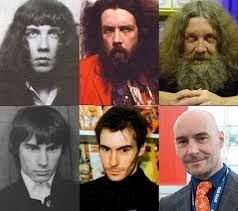
20121128-001951.jpgSooner or later, someone is going to come up with the idea of a story about two wizards – a hirsute, midlander who worships a made up god and dapper suited, bald Glaswegian chaos magician – and the bitter feud between them. The real life story about the animosity between the UK’s greatest living comics writers Grant Morrison and Alan Moore is nothing like as dramatic, but for anyone who has even a modicum of respect for both of them, rather compelling.

We aren’t talking about a massive feud here, incidentally. The two don’t publicly attack each other at every opportunity. The intrigue is rooted in the fact that both writers have very similar interests and backgrounds, and why exactly it is that they have managed to rub each other up the same way

Pádraig Ó Méalóid has written a synopsis of the disagreement which Grant Morrison has taken exception to and comprehensively fisked. You can make your own mind up but to a large extent it is impossible to arbitrate on the issue without your own prejudices about either writer getting in the way. In the interest of full disclosure then, let me say this: on balance I am probably more of a Grant Morrison fan, so take what I have to say on the topic with that particular pinch of salt.

Although I think he is right on the broad thrust, I don’t entirely agree with Morrison though. I think he let’s himself off a bit too gently with his justification that his column Drivel for Speakeasy magazine, which he wrote in the late 80s, was purely work for hire on which he was working to a specific brief. While it is self evident to anyone who has read them that the columns were tongue in cheek – at one stage, I vividly recall his dictum being that “99% of comics are shit except for the 10% that I write” – the fact is that this persona was rehearsed in all the media interviews he gave at the time. What was quite funny a few times rapidly ceased to amuse and he slowly became the parody that he was mocking at the time.

Morrison and his then writing partner Mark Millar were given unprecedented editorial control over 2000AD in 1993 (“the Summer Offensive”) and the two set about tearing up the comic from its roots and implementing the sort of philosophy that Morrison had been espousing in his Drivel columns for years beforehand. The result was an utter disaster, best forgotten. Morrison and Millar’s take on Dredd is the worse mishandling of the character in its long history. I recall in an interview atbthe time Morrison denouncing Dredd-creator John Wagner for not writing funny Dredd strips any more. Ironically, even at his most serious and po-faced, Wagner manages to inject each episode with more genuine humour than Morrison and Millar managed in their entire run on Dredd.

To cut a long story short, in the early 90s, Grant Morrison was a bit of a dick. Having suddenly found himself rich and successful after more than a decade as a struggling writer (his graphic novel Batman: Arkham Asylum hit the bookshelves at the height of Batmania following the release of the 1989 Tim Burton film), discovered the drink, drugs and sex that he couldn’t afford and wasn’t particularly interested in during the early part of his career. In his 30s, he went on a teenage bender, something which almost destroyed him as a writer.

But the important thing is, he grew out of it. The Morrison who emerged over the following decade was a different creature altogether. Most of his works during this period have a sort of life affirming therapy quality to them, with Morrison himself effectively starring in The Invisibles, Flex Mentallo and The Filth.

I find the claim by both Moore and Michael Moorcock that Morrison is a creatively bankrupt thief of their work to be utterly bizarre. If you want to read a sub-Alan Moore deconstructionist and misanthropic take on the superhero genre, you need merely screw up a copy of Watchmen and throw it over your shoulder; the chances are you’ll hit a comic by a writer taking precisely that approach. On a superficial level, there are clearly similarities but where Morrison’s work is all about hope amidst the darkness, Moore’s work is, well, darkness amidst the darkness. They are so incomparable that it is barely worth even rebutting.

And this is the nub of it: Alan Moore’s complaint about Grant Morrison appears to be nothing more than a massive troll, and potentially an attempt by Moore to get his own back for a couple of mean-spirited things Morrison said about him during his idiot period. But as Morrison says, during the Drivel years, Morrison was a 30 year old still struggling to find his place in the world. Alan Moore is a highly successful man in his 60s. In the context, it is hard to deny that Moore is the bigger dick (term used in the strict Wheaton sense of the word).

I have heard more than once people defend Moore when he says his more outrageous things that if you hear him say them in person it is clear he has his tongue firmly in his cheek when he does so. But if this is all an act, is there a risk that Moore himself ends up resembling the persona he is pretending to be? We await to see what Jerusalem is like, but the fact is that most of his work over the past decade has given me the sense of a man coasting. The League of Extraordinary Gentlemen is good fun and a gentle read, kind of like putting on your favourite slippers, but nothing like as edgy as it thinks it is. Century had nothing to say ultimately other than “modern culture (and particularly Harry Potter) is rubbish” – the familiar old man lament since time immemorial. We appear to have reached the point in which Alan Moore has little more to say than “99% of modern culture is rubbish, except for the 10% that I write” – the only difference between this statement and Grant Morrison’s own utterance more than 20 years previously being that even at the time we knew with complete certainty that Morrison was taking the piss.

It’s great fun to watch Alan Moore be rude and nasty about everything, but there comes a point where it’s just rudeness dressed up as criticism. I think he went passed that years ago and it’s time he reined it back in. I suspect that if he did, his work would significantly improve as he was forced to move outside of his (cynical and world weary) comfort zone.

Still looking forward to Heart of Ice though.

28 Nov 18:45

Can a Bot ZZZ of an A/C Baa?

Program note:  ages ago, some internet fiends and I used to play a constrained writing game called “Mad Ape Den”, where you’d have to re-tell a well-known story (novel, movie, TV show, play, etc.) using only words of three letters or fewer.  I’d completely forgotten about it until today, when I dug up this Mad Ape Den version of Blade Runner.  I’ve updated it and fixed a few, er, gaffes, so enjoy, and take a crack at the game yourself — it’s a wonderful tool for developing mental focus, if completely frivolous.

***

In L.A., ’19, all is not so OK. If a man has $, he can buy a cat or dog, get a bot to do a job, or fly to far-off orb. If a man has not got $, in a cot he can nap, and for him no far-off orb, but L.A., w/mud fog and all the bad men.

Ty Co. did get $ for use of Rep bots. Rep bot is as man, but is not man: Rep bot has + STR, AGI and CON, but man has +WIS and tho Rep bot die, man can go on. On far-off orb, man has Rep bot do war job, so Rep bot say: Up yrs, man, now you die! So now man has law: no Rep bot in L.A.

We see Ty Co.: man at one end and cop at one end. Cop say to man: “Are you Rep bot?”

Man say to cop: “I am not Rep bot!”

Cop say to man: “It may be. I do V-K, and we see. Say to me all re: mom.”

Man (who is Leo) say to cop: “Ho ho! Oh, I say re: mom!” And BAM!, cop has rip in gut by gun of Leo. Bye-bye, cop.

Cut to Rik, an old cop – and I say he was a cop, but now is not a cop no mo’. All day Rik see an ad: GO TO FAR-OFF ORB! IT IS SO, SO DEF!  But Rik has no $ to go to far-off orb. Sad, sad Rik.

Now we see Gaf, a Mex-Jap cop who say his rap in Mad Yak. Gaf to Rik: “You A+ bot cop! Hup-hup w/me to HQ.”

Rik to Gaf: “No way, man. I am no cop, let me be.”

Gaf to Rik: “Lo fa, ne-ko, shi-ma, de va-ja bot cop!” And so Rik and Gaf jet to cop HQ.

Top cop Bry did lay out the fax: a Rep bot set, two and two, did go ape and ace the men who did fly an orb-jet. Now the set is in L.A., vs. the law. “You, Rik, can ice the Rep bot set.”

Rik did say nay; “No cop am I, no mo’.”

But top cop did say, “If you no cop, you li’l’ man, and you do as I say or it do go bad for you.”  Gaf did do bok-bok in Jap art, as if to say: you got no say. So off Rik did go, to ice Leo, Zo, P., and Roy.

“#1, Rik did go to Ty Co. Ty, top man at Ty Co, has owl (a bot) and R., a hot gal Fri. NEX-6 Rep bot (so Ty did say) is A+ top bot, but for it is 365 x 4 and no mo’.

“Why is it so, pre-die?”

“It is so bot do not try to be as man”. But Ty did say, too, bot is as man, and so did say “nay!” to Ty as Ol’ Nik did say to God.

“How as man are Rep bot?”, Rik did ask.

“As man in all way,” say Ty; “Do a V-K, you can see. But now do V-K on my hot gal Fri, R., to see how it can do on 100% gal w/DNA and not bot.”

So Rik did do V-K on R. In V-K, R’s eye did go red, and she did say “so and so” and “not so and so”.

100+ Qs and 5+ hrs, R. did go, and Rik did say to Ty:  ”She is bot! How can it be?” To Rik, Rep bot is not as man, but now he did see fax not fit w/his vue.

Ty say:  ”The bad re: Rep bot is, it is as man, but it has no pre-now. W/my gal R., we did put in her pre-now mem, of kid of my sis. So she has pre-now mem, and she do not ken she is bot, but gal. For all she ken she is gal, she can not say to man, ‘Up yrs! Now you die!’.” All the new fax, Rik did not dig.

Off Rik did go to pad of Leo. At the pad, Rik did spy in tub a bit of asp, and say, “Ah ha!” Gaf did do a Jap art of man with big hog.

Cut to: Leo and Roy. Roy is sad: in pad was pix of his fam, and the cop did nab the pix. Roy did say, “Pah!”, for he did ken pix are of pre-now mem – but a lie.

“Now to get an eye, we go.”, Leo say.  Leo, Roy and P. did go see Chu, a man who do the eye for bot.

Roy and his set, as NEX-6 Rep bot, get A++ eye, and ask Chu:  ”Who buy the eye you do? Say, or you get bad ice.”

Chu is all, “Brr! OK, I say! My eye is got by one man: Ty.”

Roy did say, “You get me to Ty? He is not so E-Z to see (w/my eye you did).”

Chu say: “I can not get you to see Ty, but I can get you to see J.F. Seb. He is the man to see.”

Now at pad of Rik, we see R. She say, “I am not bot! I ken Ty did say I am bot, but see? A pic of me w/mom!”

“It is not mom of you,” say Rik. “Is mom of old gal, now R.I.P. It is all a lie: you are a bot.”

“But in me is mem of pre-now! How can it be?”, R. did ask.

“I say of pre-now mem: a lie. Dig: you do got mem of you and bro, at age six – doc fun. He did pop out his hog, and you did run. And, too, a pre-now mem: kid bug did eat mom bug.”

“How do you ken?” ask R., all eye pop.

“All the pre-now mem a lie, I say. I do ken, for Ty did say to me. Too bad, kid, but you are a bot.” R. was sad and did cry, and as R. did go, he did ask: why is she so as gal, tho I ken she is bot?

Cut to: P., a sex bot, who did go to see J.F. Seb, a man who did do bot – bod and mem. P. did lie to Seb, and say, “I am sad.  I got no $ and I got no pad, can I be w/you and be a pal?”

Seb is sad and in in big pad with bot toy, who are as pal, for he has no pal who is man. So Seb did say “OK, P., you are my pal, in we go.”

In apt. of Rik, he did hit the gin and on 88-key box did tap out an air. And now he did ZZZ, and in the ZZZ, he did see a uni. On the 88-key box, we do see a lot of pix, but no pix w/Rik. Now do we go: Are his pre-now mem a lie? Is Rik, too, a bot? It is not for us to say, not yet.

Rik did get up and use PC to dig the pix of Leo; and he did see a gal in hot tog w/tat of asp. Rik did get pic of gal – it is Zo – and bit of asp to an old hag who did do the bot cod. “It is a bot asp”, she did say, “You go see Ben, in fez.” And Ben did say one gal did buy a bot asp: Zo, who is at the Asp Pit.

At the Asp Pit (run by Taf, and Lou at the bar), Rik did say: “You got an asp gal? Say, or you get bad cop act.”

Taf did say OK, and Zo – as Ms. Sal – has fun w/bot asp. Rik did see Zo, and did say, “I am rep of AFL-CIO” – a lie.

Zo did say “No way – you are a cop” and did go on to hit Rik in the gut and try to get him to die. He did not die, so she did run, and Rik did run too. In the end Rik did get a gun and go bam-bam-bam at her: oh no! No mo’ Zo.

Now did Bry and Gaf say to Rik: you do OK to ice this Zo, but you got to ice two and two mo’.

Rik did say, “Do wha? Not two and two, but two and one!”

“No way,”" Bry did say: “Uh uh. You got to ace the gal R., who is a bot but did not ken. Now she do ken she is a bot, and did run.”

Rik did not ken how to act on job to ice the gal R., who he dug a lot. He did go up the ave. in L.A. and put it to his I.Q. As he did go, he did see R., and he ran to her  – but he did not get to her, as Leo did bat his mug w/a big end-of-arm ham.

“How old am I?”, Leo did say.

“I do not ken,” Rik did say, “but it is 365 x 4 ere you die.”

You do not get 365 x 4, sez I,” Leo did say, and he did hit Rik w/18 STR ’til Rik was set to pop. “Get up! It is Die P.M.!”

But Leo did not ace Rik, for BAM! did go the gun of Rik, now w/R. And so it was R. did ace Leo, and did see she may be a bot, but she was a gal too, and it did not do for a bot to ice a man. Now did Rik and R. go to his pad, and he and she did yak.

“If I go,” she did say, “Do you run for me, to ice me?”

“Not me,” he did say, “But it may be Gaf or Bry. You can not get by a cop.”

R. was sad and she did cry, but Rik got hot and say to R., “Say you luv me.” So she did say, and Rik and R. did ‘do it’.

At the pad of J.F. Seb, P. and Seb did yak too. Seb did say “I yen to go off the orb, but see: I am 25, but I am ill too, and if you see me, you say, ‘He is 70. He is so old!’ So I am in L.A. ’til I die.”

“Me too,” P. did say, and as she did say, to the pad of Seb the top bot Roy did go.

“We are now two,” top bot Roy did say, “you and me. Zo did die and Leo too.”

“Do we now die?”, P. did ask.

“No way,” Roy did say. “Not if Seb can let us see the big bot man, Ty.” Seb is not so hep, for at Roy he did eek – but he did say OK.

Seb did see off Roy to see big bot man Ty in the A.M. “Q to B6,” Seb did say (tho Roy did say for Seb to say).

“K6, Q”, Ty did say, but Seb did say “B to K7 – the end!” So Seb (and Roy) won, and in to see Ty did go.

“I dig to be as man,” Roy did say to Ty. “I do not dig to die after 365 x 4. You get for me mo’ 365!”

“No can do,” Ty did say. “You are a bot, and a bot is not a man. You are, as a bot, A++, but it’s all, no mo’.” So did Ty say, but Roy did not dig the A. to his Q., and so he did go ape-poo and did ice Ty and Seb.

Now did Rik go to pad of Seb. P. was at the pad, and she did try to ice Rik: his top, w/her leg, she did try to pop like zit. But Rik is A-OK cop, and he did ace her w/his gun: bam, bam, bam. No mo’ P.

Now Roy had no pal, and he did say to Rik: “Are you not bad, man? You did ace two Rep bot, but fem. Now try a bot who is a man.” And we see it is no lie: Roy, a bot, is to a man as Rik, a man, is to an ant. Roy did toy w/Rik, and did do him all pop, pop, pop: two and one ows for P. and Zo and Leo.

Now Rik did dig: Roy did luv P., and to him Leo was as a bro and Zo as a sis. To him his set was not a Rep bot set, but as a fam of man. But he can not say so: he has to run, to not die.

Roy, too, did not dig to die, but his 365 x 4 is up: he put a rod in his arm like J.C., but he can not but die. Roy did say to Rik, “I see as a man can see; my Rh is as the Rh of a man, and tho I die, I do not ice you, so you can see I die as a man can die and not a bot.” All he did ken is now to go, to be no mo’: how sad. And so Roy did die, not as a bot but as a man, and so we do ken too.

Now did Gaf fly by in jet: “You are as a man,” he did say to Rik (a bot?). “Now you go. It’s too bad she has to die. But so do we all!”

Rik did go to see R. at his pad, for he did ken it was no lie. “Do you luv me?” he did ask.

“Yes,” she did say.

“Do you ken I do not dig to see you die?” he did ask.

“Yes,” she did say.

So the two did go, out of his pad to run by the cop. Rik did see a bit by Gaf: a Jap art uni. Gaf did ken, too, who is R. and who is Rik, and he did let the two run. “It’s too bad she has to die. But so do we all!”

Mirrored from LEONARD PIERCE DOT COM.

28 Nov 16:20

Causal Universes

Submitted by Eliezer_Yudkowsky • 48 votes • 335 comments

Followup to: Stuff that Makes Stuff Happen

Previous meditation: Does the idea that everything is made of causes and effects meaningfully constrain experience? Can you coherently say how reality might look, if our universe did not have the kind of structure that appears in a causal model?

I can describe to you at least one famous universe that didn't look like it had causal structure, namely the universe of J. K. Rowling's Harry Potter.

You might think that J. K. Rowling's universe doesn't have causal structure because it contains magic - that wizards wave their wands and cast spells, which doesn't make any sense and goes against all science, so J. K. Rowling's universe isn't 'causal'.

In this you would be completely mistaken. The domain of "causality" is just "stuff that makes stuff happen and happens because of other stuff". If Dumbledore waves his wand and therefore a rock floats into the air, that's causality. You don't even have to use words like 'therefore', let alone big fancy phrases like 'causal process', to put something into the lofty-sounding domain of causality. There's causality anywhere there's a noun, a verb, and a subject: 'Dumbledore's wand lifted the rock.' So far as I could tell, there wasn't anything in Lord of the Rings that violated causality.

You might worry that J. K. Rowling had made a continuity error, describing a spell working one way in one book, and a different way in a different book. But we could just suppose that the spell had changed over time. If we actually found ourselves in that apparent universe, and saw a spell have two different effects on two different occasions, we would not conclude that our universe was uncomputable, or that it couldn't be made of causes and effects.

No, the only part of J. K. Rowling's universe that violates 'cause and effect' is...

...
...
...

...the Time-Turners, of course.

A Time-Turner, in Rowling's universe, is a small hourglass necklace that sends you back in time 1 hour each time you spin it. In Rowling's universe, this time-travel doesn't allow for changing history; whatever you do after you go back, it's already happened. The universe containing the time-travel is a stable, self-consistent object.

If a time machine does allow for changing history, it's easy to imagine how to compute it; you could easily write a computer program which would simulate that universe and its time travel, given sufficient computing power. You would store the state of the universe in RAM and simulate it under the programmed 'laws of physics'. Every nanosecond, say, you'd save a copy of the universe's state to disk. When the Time-Changer was activated at 9pm, you'd retrieve the saved state of the universe from one hour ago at 8pm, load it into RAM, and then insert the Time-Changer and its user in the appropriate place. This would, of course, dump the rest of the universe from 9pm into oblivion - no processing would continue onward from that point, which is the same as ending that world and killing everyone in it.[1]

Still, if we don't worry about the ethics or the disk space requirements, then a Time-Changer which can restore and then change the past is easy to compute. There's a perfectly clear order of causality in metatime, in the linear time of the simulating computer, even if there are apparent cycles as seen from within the universe. The person who suddenly appears with a Time-Changer is the causal descendant of the older universe that just got dumped from RAM.

But what if instead, reality is always - somehow - perfectly self-consistent, so that there's apparently only one universe with a future and a past that never changes, so that the person who appears at 8PM has always seemingly descended from the very same universe that then develops by 9PM...?

How would you compute that in one sweep-through, without any higher-order metatime?

What would a causal graph for that look like, when the past descends from its very own future?

And the answer is that there isn't any such causal graph. Causal models are sometimes referred to as DAGs, which stands for Directed Acyclic Graph. If instead there's a directed cycle, there's no obvious order in which to compute the joint probability table. Even if you somehow knew that at 8PM somebody was going to appear with a Time-Turner used at 9PM, you still couldn't compute the exact state of the time-traveller without already knowing the future at 9PM, and you couldn't compute the future without knowing the state at 8PM, and you couldn't compute the state at 8PM without knowing the state of the time-traveller who just arrived.

In a causal model, you can compute p(9pm|8pm) and p(8pm|7pm) and it all starts with your unconditional knowledge of p(7pm) or perhaps the Big Bang, but with a Time-Turner we have p(9pm|8pm) and p(8pm|9pm) and we can't untangle them - multiplying those two conditional matrices together would just yield nonsense.

Does this mean that the Time-Turner is beyond all logic and reason?

Complete philosophical panic is basically never justified. We should even be reluctant to say anything like, "The so-called Time-Turner is beyond coherent description; we only think we can imagine it, but really we're just talking nonsense; so we can conclude a priori that no such Time-Turner that can exist; in fact, there isn't even a meaningful thing that we've just proven can't exist." This is also panic - it's just been made to sound more dignified. The first rule of science is to accept your experimental results, and generalize based on what you see. What if we actually did find a Time-Turner that seemed to work like that? We'd just have to accept that Causality As We Previously Knew It had gone out the window, and try to make the best of that.

In fact, despite the somewhat-justified conceptual panic which the protagonist of Harry Potter and the Methods of Rationality undergoes upon seeing a Time-Turner, a universe like that can have a straightforward logical description even if it has no causal description.

Conway's Game of Life is a very simple specification of a causal universe; what we would today call a cellular automaton. The Game of Life takes place on a two-dimensional square grid, so that each cell is surrounded by eight others, and the Laws of Physics are as follows:

  • A cell with 2 living neighbors during the last tick, retains its state from the last tick.
  • A cell with 3 living neighbors during the last tick, will be alive during the next tick.
  • A cell with fewer than 2 or more than 3 living neighbors during the last tick, will be dead during the next tick.

It is my considered opinion that everyone should play around with Conway's Game of Life at some point in their lives, in order to comprehend the notion of 'laws of physics'. Playing around with Life as a kid (on a Mac Plus) helped me gut-level-understand the concept of a 'lawful universe' developing under exceptionless rules.

Now suppose we modify the Game of Life universe by adding some prespecified cases of time travel - places where a cell will descend from neighbors in the future, instead of the past.

In particular we shall take a 4x4 Life grid, and arbitrarily hack Conway's rules to say:

  • On the 2nd tick, the cell at (2,2) will have its state determined by that cell's state on the 3rd tick, instead of its neighbors on the 1st tick.

It's no longer possible to compute the state of each cell at each time in a causal order where we start from known cells and compute their not-yet-known causal descendants. The state of the cells on the 3rd tick, depend on the state of the cells on the 2nd tick, which depends on the state on the 3rd tick.

In fact, the time-travel rule, on the same initial conditions, also permits a live cell to travel back in time, not just a dead cell - this just gives us the "normal" grid!  Since you can't compute things in order of cause and effect, even though each local rule is deterministic, the global outcome is not determined.

However, you could simulate Life with time travel merely by brute-force searching through all possible Life-histories, discarding all histories which disobeyed the laws of Life + time travel. If the entire universe were a 4-by-4 grid, it would take 16 bits to specify a single slice through Time - the universe's state during a single clock tick. If the whole of Time was only 3 ticks long, there would be only 48 bits making up a candidate 'history of the universe' - it would only take 48 bits to completely specify a History of Time. 2^48 is just 281,474,976,710,656, so with a cluster of 2GHz CPUs it would be quite practical to find, for this rather tiny universe, the set of all possible histories that obey the logical relations of time travel.

It would no longer be possible to point to a particular cell in a particular history and say, "This is why it has the 'alive' state on tick 3". There's no "reason" - in the framework of causal reasons - why the time-traveling cell is 'dead' rather than 'alive', in the history we showed. (Well, except that Alex, in the real universe, happened to pick it out when I asked him to generate an example.) But you could, in principle, find out what the set of permitted histories for a large digital universe, given lots and lots of computing power.

Here's an interesting question I do not know how to answer: Suppose we had a more complicated set of cellular automaton rules, on a vastly larger grid, such that the cellular automaton was large enough, and supported enough complexity, to permit people to exist inside it and be computed. Presumably, if we computed out cell states in the ordinary way, each future following from its immediate past, the people inside it would be as real as we humans computed under our own universe's causal physics.

Now suppose that instead of computing the cellular automaton causally, we hack the rules of the automaton to add large time-travel loops - change their physics to allow Time-Turners - and with an unreasonably large computer, the size of two to the power of the number of bits comprising an entire history of the cellular automaton, we enumerate all possible candidates for a universe-history.

So far, we've just generated all 2^N possible bitstrings of size N, for some large N; nothing more. You wouldn't expect this procedure to generate any people or make any experiences real, unless enumerating all finite strings of size N causes all lawless universes encoded in them to be real. There's no causality there, no computation, no law relating one time-slice of a universe to the next...

Now we set the computer to look over this entire set of candidates, and mark with a 1 those that obey the modified relations of the time-traveling cellular automaton, and mark with a 0 those that don't.

If N is large enough - if the size of the possible universe and its duration is large enough - there would be descriptions of universes which experienced natural selection, evolution, perhaps the evolution of intelligence, and of course, time travel with self-consistent Time-Turners, obeying the modified relations of the cellular automaton. And the checker would mark those descriptions with a 1, and all others with a 0.

Suppose we pick out one of the histories marked with a 1 and look at it.  It seems to contain a description of people who remember experiencing time travel.

Now, were their experiences real? Did we make them real by marking them with a 1 - by applying the logical filter using a causal computer? Even though there was no way of computing future events from past events; even though their universe isn't a causal universe; even though they will have had experiences that literally were not 'caused', that did not have any causal graph behind them, within the framework of their own universe and its rules?

I don't know.  But...

Our own universe does not appear to have Time-Turners, and does appear to have strictly local causality in which each variable can be computed strictly forward-in-time.

And I don't know why that's the case; but it's a likely-looking hint for anyone wondering what sort of universes can be real in the first place.

The collection of hypothetical mathematical thingies that can be described logically (in terms of relational rules with consistent solutions) looks vastly larger than the collection of causal universes with locally determined, acyclically ordered events. Most mathematical objects aren't like that. When you say, "We live in a causal universe", a universe that can be computed in-order using local and directional rules of determination, you're vastly narrowing down the possibilities relative to all of Math-space.

So it's rather suggestive that we find ourselves in a causal universe rather than a logical universe - it suggests that not all mathematical objects can be real, and the sort of thingies that can be real and have people in them are constrained to somewhere in the vicinity of 'causal universes'. That you can't have consciousness without computing an agent made of causes and effects, or maybe something can't be real at all unless it's a fabric of cause and effect. It suggests that if there is a Tegmark Level IV multiverse, it isn't "all logical universes" but "all causal universes".

Of course you also have to be a bit careful when you start assuming things like "Only causal things can be real" because it's so easy for Reality to come back at you and shout "WRONG!" Suppose you thought reality had to be a discrete causal graph, with a finite number of nodes and discrete descendants, exactly like Pearl-standard causal models. There would be no hypothesis in your hypothesis-space to describe the standard model of physics, where space is continuous, indefinitely divisible, and has complex amplitude assignments over uncountable cardinalities of points.

Reality is primary, saith the wise old masters of science. The first rule of science is just to go with what you see, and try to understand it; rather than standing on your assumptions, and trying to argue with reality.

But even so, it's interesting that the pure, ideal structure of causal models, invented by statisticians to reify the idea of 'causality' as simply as possible, looks much more like the modern view of physics than does the old Newtonian ideal.

If you believed in Newtonian billiard balls bouncing around, and somebody asked you what sort of things can be real, you'd probably start talking about 'objects', like the billiard balls, and 'properties' of the objects, like their location and velocity, and how the location 'changes' between one 'time' and another, and so on.

But suppose you'd never heard of atoms or velocities or this 'time' stuff - just the causal diagrams and causal models invented by statisticians to represent the simplest possible cases of cause and effect.  Like this:

And then someone says to you, "Invent a continuous analogue of this."

You wouldn't invent billiard balls. There's no billiard balls in a causal diagram.

You wouldn't invent a single time sweeping through the universe. There's no sweeping time in a causal diagram.

You'd stare a bit at B, C, and D which are the sole nodes determining A, screening off the rest of the graph, and say to yourself:

"Okay, how can I invent a continuous analogue of there being three nodes that screen off the rest of the graph? How do I do that with a continuous neighborhood of points, instead of three nodes?"

You'd stare at E determining D determining A, and ask yourself:

"How can I invent a continuous analogue of 'determination', so that instead of E determining D determinining A, there's a continuum of determined points between E and A?"

If you generalized in a certain simple and obvious fashion...

The continuum of relatedness from B to C to D would be what we call space.

The continuum of determination from E to D to A would be what we call time.

There would be a rule stating that for epsilon time before A, there's a neighborhood of spatial points delta which screens off the rest of the universe from being relevant to A (so long as no descendants of A are observed); and that epsilon and delta can both get arbitrarily close to zero.


There might be - if you were just picking the simplest rules you could manage - a physical constant which related the metric of relatedness (space) to the metric of determination (time) and so enforced a simple continuous analogue of local causality...

...in our universe, we call it c, the speed of light.

And it's worth remembering that Isaac Newton did not expect that rule to be there.

If we just stuck with Special Relativity, and didn't get any more modern than that, there would still be little billiard balls like electrons, occupying some particular point in that neighborhood of space.

But if your little neighborhoods of space have billiard balls with velocities, many of which are slower than lightspeed... well, that doesn't look like the simplest continuous analogues of a causal diagram, does it?

When we make the first quantum leap and describe particles as waves, we find that the billiard balls have been eliminated. There's no 'particles' with a single point position and a velocity slower than light. There's an electron field, and waves propagate through the electron field through points interacting only with locally neighboring points. If a particular electron seems to be moving slower than light, that's just because - even though causality always propagates at exactly c between points within the electron field - the crest of the electron wave can appear to move slower than that. A billiard ball moving through space over time, has been replaced by a set of points with values determined by their immediate historical neighborhood.


vs.


And when we make the second quantum leap into configuration space, we find a timeless universal wavefunction with complex amplitudes assigned over the points in that configuration space, and the amplitude of every point causally determined by its immediate neighborhood in the configuration space.[2]

So, yes, Reality can poke you in the nose if you decide that only discrete causal graphs can be real, or something silly like that.

But on the other hand, taking advice from the math of causality wouldn't always lead you astray. Modern physics looks a heck of a lot more similar to "Let's build a continuous analogue of the simplest diagrams statisticians invented to describe theoretical causality", than like anything Newton or Aristotle imagined by looking at the apparent world of boulders and planets.

I don't know what it means... but perhaps we shouldn't ignore the hint we received by virtue of finding ourselves inside the narrow space of "causal universes" - rather than the much wider space "all logical universes" - when it comes to guessing what sort of thingies can be real. To the extent we allow non-causal universes in our hypothesis space, there's a strong chance that we are broadening our imagination beyond what can really be real under the Actual Rules - whatever they are! (It is possible to broaden your metaphysics too much, as well as too little. For example, you could allow logical contradictions into your hypothesis space - collections of axioms with no models - and ask whether we lived in one of those.)

If we trusted absolutely that only causal universes could be real, then it would be safe to allow only causal universes into our hypothesis space, and assign probability literally zero to everything else.

But if you were scared of being wrong, then assigning probability literally zero means you can't change your mind, ever, even if Professor McGonagall shows up with a Time-Turner tomorrow.

Meditation: Suppose you needed to assign non-zero probability to any way things could conceivably turn out to be, given humanity's rather young and confused state - enumerate all the hypotheses a superintelligent AI should ever be able to arrive at, based on any sort of strange world it might find by observation of Time-Turners or stranger things.  How would you enumerate the hypothesis space of all the worlds we could remotely maybe possibly be living in, including worlds with hypercomputers and Stable Time Loops and even stranger features?

Mainstream status.

[1] Sometimes I still marvel about how in most time-travel stories nobody thinks of this. I guess it really is true that only people who are sensitized to 'thinking about existential risk' even notice when a world ends, or when billions of people are extinguished and replaced by slightly different versions of themselves. But then almost nobody will notice that sort of thing inside their fiction if the characters all act like it's okay.)

[2] Unless you believe in 'collapse' interpretations of quantum mechanics where Bell's Theorem mathematically requires that either your causal models don't obey the Markov condition or they have faster-than-light nonlocal influences. (Despite a large literature of obscurantist verbal words intended to obscure this fact, as generated and consumed by physicists who don't know about formal definitions of causality or the Markov condition.) If you believe in a collapse postulate, this whole post goes out the window. But frankly, if you believe that, you are bad and you should feel bad.

335 comments
28 Nov 01:16

The Place of Dead Roads

by Lawrence Burton


William S. Burroughs The Place of Dead Roads (1983)

To start at the beginning, sort of, Genesis P. Orridge is a performance artist, or at least that's as good a description as any. Amongst his more recent and better publicised deeds was a course of gender reassignment and surgical modification aimed towards meeting his wife of the time at a sort of middle ground between male and female. This was, he informed us, pandrogyny, a clever and important new subversive and playful concept challenging our preconceptions and stuff. The term is a fiendishly clever and subversive conflation of the Greek stem pan- meaning all and androgyny which refers to having both male and female characteristics (thus not actually requiring the pan- prefix at all) meaning neither quite entirely like a man nor a lady which playfully challenges our preconceptions. Do you see?

For all his finer qualities, I doubt Genesis P. Orridge can even manage a poo without redefining it in a new subversive context so as to challenge our preconceptions, probably wiping from side to side with pages torn from a Gutenberg Bible, playfully rebranding the deed as coprommunion or something. Still, it takes all sorts...

Three decades ago Genesis P. Orridge was in a band called Throbbing Gristle. I dearly loved and still appreciate their noisy, largely improvised electronic music, possibly having been primed to enjoy such things at the age of six by what the BBC Radiophonic Workshop did for The Sea Devils. In interview, P. Orridge would tend to make frequent reference to beat author William Burroughs as a significant influence, so just like all the other little suckers who would automatically rush out and buy up the entire Nolan Sisters back catalogue on the strength of P. Orridge observing how I'm in the Mood for Dancing is actually a playfully subversive challenge to our preconceptions regarding something or other, I read everything I could find. The upside of this is that I discovered Burroughs, a fascinating and thought-provoking author. More annoying was that once I'd read everything I could find, I noticed Burroughs had become the poster grandfather for humourless wankers in black clothes, which was both off-putting and an uncomfortable reminder of how close I had myself sailed towards becoming a humourless wanker in black clothes.

This, I imagine, is probably why I avoided the man for so long. I pretended I wasn't in when he called around, and I effected an unconvincing oriental accent when he phoned.

Burroughs famously wrote by means of cut-up text, although this should not detract from his already being an extremely competent writer. A cut-up is text derived from a random reordering of the words or phrases on a page, sometimes with a semblance of sense emphasised by means of fresh punctuation. The idea is in some way a literary equivalent of shamanic divination by means of entrails, tea leaves, the flight of birds, or any other effectively random source material which may be seen to reveal a pattern. Cut-ups, Burroughs believed, exposed truths hidden within the text, allowing the future to leak through to the present.

This, by way of example, is a cut-up of the second paragraph:
Probably wiping from Bible, playfully something still. It takes all with pages torn from a deed as coprommunion or side to side doubt. Genesis rebranding the new sorts for all his Gutenberg, manage a poo with to challenge our P. Orridge. Can even subversive context so as finer qualities I without redefining it, preconceptions.

Well, anyway. Whilst Burroughs incorporated cut-ups sparingly in his novels, the narrative as a whole tends to follow the random logic of the technique. Scenes are often short and to the point, heavy on ideas and dark humour, contradictions and non-sequiturs dominating as the story unfolds. If confusing, it's surprisingly engrossing and happily free of the sort of extraneous exposition required by a more obviously linear narrative; and as with anything of seemingly random order, if there's enough of it, a pattern tends to emerge whether intentionally on the part of the author or otherwise.

Written towards the end of Burroughs' life, The Place of Dead Roads reads a little like a loosely autobiographical summation as he prepares for death, although death has always been one of his themes, so that may just be me. It's roughly speaking a nineteenth century western, albeit one which follows its principal character around all the places Burroughs lived - London, Morocco, Paris, a colony on the planet Venus; and there is a sort of narrative logic, or at least more so than in many of his previous works. From this dreamlike succession of events, Burroughs applies his characteristically sharp wit to culture, conditioning, and the carnivorous nature of human society and stupidity and, for all that it makes little sense in linear terms, it hits hard as allegory.

Even if those who often hail Burroughs as one of the most important writers of the twentieth century so frequently turn out to be complete cocks, one shouldn't allow this to cloud judgement of his works, or the strong possibility that he probably was one of the most important writers of the twentieth century.

For what it's worth, anyone who regarded Lawrence Miles' This Town Will Never Let Us Go as a work of substance and insight - as opposed to something distantly tied in to a cancelled kid's TV show - would probably find a lot to enjoy in The Place of Dead Roads.
28 Nov 01:15

On the Buses explains the Jimmy Savile era

by Jonathan Calder
Though his roots reached back to the era of post-war racketeering, Jimmy Savile came to prominence in that odd period between the dawn of the permissive society and the rise of feminism. This era took in the second half of the 1960s and most of the 1970s.

And I am increasingly coming to the conclusion that the key texts in understanding this era are the three spin-off films made from the ITV comedy series On the Buses.

This was a rare success for ITV comedy which was shown between 1969 and 1973 and starred Reg Varney as the bus driver Stan Butler and Bob Grant as his conductor Jack Harper.

There were three spin-off films: On the Buses (1971), Mutiny on the Buses (1972) and Holiday on the Buses (1973). As a Guardian article on the oeuvre by Andrew Roberts once said:
It may seem bizarre now, but On the Buses was the most successful British film of 1971, outgrossing allcomers, including Diamonds Are Forever.
Roberts went on to aay:
In retrospect, On the Buses is as bleak as any offering from Ken Loach, with its London of rusting Hillman Minxes, bare light bulbs and kitchens reeking of congealed fat.
All that was true, but we should not ignore the sexual politics of On the Buses either. Reg Varney and Bob Grant were both middle-aged and not particularly attractive, yet all the dolly-bird conductresses were depicted as being up for sex with them at the drop of a peaked cap.

And the first of the films revolved around Varney and Grant's successful attempt to sabotage management's attempt to bring in women drivers. Females characters may have been available, but they were certainly not liberated.

What of the labour politics of On the Buses. Stumbling and Mumbling once wrote a post blaming all Britain's subsequent economic woes on Reg Varney - he also opened the first ATM machine.

Andrew Roberts, however, sees it differently:
But it sold vast numbers of cinema seats – unlike its near contemporary, Carry On at Your Convenience. The only entry in the Carry On series with a contemporary blue-collar work setting, At Your Convenience made the fatal error of siding with the management – unlike On the Buses, where Inspector Blakey merely exists to be splashed by Reg Varney's bus passing through a convenient puddle.
Even at the time, Blakey was my favourite character. And I don't know if it is age, my experience of public transport or our post-Thatcher society, but I cannot help noticing today that the passengers counted for nothing in On the Buses.

Just at Alexander Mackenderick, the director of Whisky Galore!, sympathised with Captain Waggett, the representative of English officialdom who attempted to round up the whisky rescued from the wreck of the S.S. Cabinet Minister, so I now see Blakey as the hero of On the Buses and its spin-off films.

And whatever you think of the labour politics of On the Buses, its sexual politics was indefensible.

I 'ate you, Butler.

Featured on Liberal Democrat Voice
27 Nov 18:07

‘LOL stands for Lucifer Our Lord’ and other lies told by the deluded self-righteous

by Fred Clark

This is ridiculous:

If you can’t view that image, it says:

BEWARE: Stop using the abbreviation “LOL.” “LOL” stands for “Lucifer our Lord.” Satanists end their prayers by saying “Lucifer our Lord,” in short, “LOL.” Every time you type “LOL” you are endorsing Satan. Do not use “LOL” ever again! Keep Satan out of your life. Share this advice to Christians.

This is a lie. It is an obvious, intentional and ridiculous lie.

It’s not true, and no one is really stupid enough to believe it’s true, but they find the game of pretending it is to be titillating.

It’s exciting to pretend you’re standing up against Satan. It’s pleasant to imagine that you are more righteous than your Facebook friends because you avoid the abbreviation LOL. What a convenient tribal marker to set you apart as a heroic, good and godly person.

And what a rush, pretending that you have secret knowledge that others must turn to you to receive. You are enlightened, they are benighted. They should listen to you so you can set them straight and save them from Satan and all his satanic monstrosity.

Those are the emotional rewards of playing this game. That’s why participating in such delusional deceptions can feel good. All of those emotional rewards may be counterfeits, but the counterfeits are so much easier than trying, and likely failing, to actually be heroic, good or godly.

We can laugh at the nonsense of that Facebook version of Satanic panic, imagining that those passing it along are just too naive, ignorant or dim to know any better. But that’s not the dynamic here. They do know better. This isn’t stupidity or ignorance, it’s pride.

Pride makes the deception attractive, and embracing the deception — immersing yourself in it — requires you to reject reality in favor of something else.

The end result is something that may appear indistinguishable from appalling ignorance, but it’s a different disease with a different cure.

Here is another version of the exact same delusional nonsense:

Planned Parenthood offers Black Friday discounts on murder of unborn” screams the headline.

Oh Noes!1! The Satanic baby-killers are discounting the Satanic baby-killing for Lucifer Our Lord!

Planned Parenthood of South Florida and the Treasure Coast offered the special, saying, “Visit our West Palm Beach or Kendall Health Center for special after Thanksgiving savings on Friday, November 23rd.” It appears you would have been able to save $10 on the murder of your unborn child yesterday.

It makes things a bit easier, doesn’t it? After all, who doesn’t want “cheap and easy” for discarding the unborn? We might as well get it done between our trip to Starbucks and our Black Friday shopping.

This is a lie. Two health clinics in Florida offered $10 discounts for office visits on Friday for patients getting well-woman check-ups, contraception consultations or STI screenings. Not abortions. (And, seriously, how much of a raging misogynist asshole do you have to be to even imagine that a $10 discount would create some kind of incentive for getting an abortion?)

This lie is as obvious, as intentional and as ridiculous as the “LOL” lie at the top of this post. And it is being told for all of the same reasons.

The blogger at “Front Porch Politics” is lying because it makes him feel good about himself. He is lying to make himself feel righteous by imagining others to be demonic. He is lying so he can pretend he has secret knowledge that others must rely on him to bestow. He indulging in a role-playing fantasy in which he battles Lucifer Our Lord, a lonely enlightened hero in a benighted world. He is lying in order to invoke tribal markers that he believes set him apart as heroic, good and godly.

And he is writing for others who wish to participate in the counterfeit emotional rewards of this delusional lie.

This invitation to deception is not true or right or good. But it is very popular among evangelical Christians desperate for some way to at least briefly feel like they are heroic, good and godly.

Lies, pride and willful delusion. That’s the cancer at the core of American evangelicalism, the corrosive rot that has turned bearing false witness into a spiritual discipline. LOL.

27 Nov 16:46

Can anyone stop Cameron's personal booze crusade?

by The Heresiarch
There's an extraordinary story in the Telegraph - extraordinary not for what it says, which is that if (when) the government imposes a minimum unit alcohol price, probably 45p, multi-buy deals such as M&S's dinner + wine for £10 will be illegal - but for what it reveals about the open revolt within the Cabinet over the proposal.  Thus "a source" complains that "a policy that’s supposed to stop drunks and out-of-control teenagers ends up preventing respectable middle-class couples having a cheap dinner at home."  The policy is said to have have "raised fears inside the Government that middle-class drinkers will be hit hardest," and will therefore be a vote-loser.

It's not exactly news that David Cameron's desire to impose a minimum unit price, which will supposedly curb excessive drinking,  hasn't found much favour among his colleagues.  The former health secretary Andrew Lansley was said to have been particularly firm in his opposition, though his successor Jeremy Hunt may be more amenable to Cameron's way of thinking.  What's remarkable is the timing.  The announcement of a Home Office "consultation" on a MUP is due, after several delays, to be made tomorrow.  The Telegraph report, along with a flurry of others in recent days, looks like a determined attempt by someone within the government, possibly even within the Cabinet, to sabotage the proposal at the last minute. 

This comes after a report for the Adam Smith Institute by Chris Snowdon picked apart the computer modelling that led the government to claim that a 50p per unit price would save thousands of lives, concluding that the assessment was based on assumptions which "range from the questionable to the demonstrably false."  In Scotland, the proposal has already been driven through by the SNP administration, but faces a strong legal challenge on the basis of EU competition law.  Why the urgency in England?  Scotland has a worse drink "problem" than England.  If a minimum price is the answer, and is not in fact illegal, then the effect of the policy will soon become evident.  If it doesn't work, then adopting a wait-and-see approach in England would spare the government from an embarrassing (and no-doubt unpopular) failure.

The Minimum Price, while long demanded by the health lobby (which seems to believe that reducing the chance of early death is the only goal worth striving for in life) is only being forced on England because it is Cameron's personal obsession.  Cameron has a regrettable tendency - it's the most irritating thing about him - to go off on moral crusades.  He likes to ride a high horse, even though it usually turns out to have been lent to him by the husband of Rebekah Brooks.  We've seen it over "sexualisation" and now we're seeing it over alcohol.  His alcohol policy is of course inherently illiberal and unConservative (if people want to drink themselves to death, that's their right in a free society), but it's also bad, stupid and unnecessary.  Even were it to work, it would do so by increasing the profits of drinks retailers.  If the aim is to increase the price of alcohol, that could be achieved much more simply through higher duty, which would be entirely legal and would also benefit the Treasury.  Banning multi-buy deals will mostly hit people who are catering for parties or weddings. 

It's not even as though England and Wales have, by European standards, a particularly serious drink problem.  Consumption has been falling steadily for the best part of a decade, and has fallen most rapidly among the young - about whose supposed tendency to "binge drink" most of this moral panic revolves.  Extraordinarily, according to the most recent NHS statistics fewer than half of those aged 16-24 report having more than one alcoholic drink per week.  Among under-16s, the proportion had fallen over the decade from more than a quarter to a mere 13%.  A mere 5% of adult women and 9% of adult men reported drinking alcohol every day.  While it's in the interests of health campaigners to scare-monger about an increasing alcohol problem, the facts tell a different story.  Drinking will probably continue to fall in the years ahead, whatever the government decides to do.  If Cameron gets his way, no doubt he will want to give his MUP the credit for any reduction that occurs, but he will have no statistical justification for doing so.

Despite claims that the policy is aimed only at cheap booze and loss-leaders, MUP will push up the price of alcohol for all consumers.  It will hit the poor hardest, but the already-squeezed middle will be affected as well: the "hard-working families" who will be punished for wanting to relax over a bottle of wine at the end of a hard-working week; the pensioners who have few other pleasures in life.  And, of course, most members of the government know this only too well.  The policy may be popular with the killjoy BMA (or perhaps not: they want a Minimum Price of at least 50p a unit), it will go down badly with ordinary voters (and, to judge by Conservative Home, is already hated by grassroots Tories).  It will do next to nothing to tackle hardened drinking and won't even result in increased tax revenues.  Oh, and it will also be devastating for the Cornish cider industry.

So why is it happening?  How is Cameron able to drive through a policy no-one in his Cabinet wants, is unlikely to achieve its aims, targets a "problem" that is in fact diminishing with every passing year, will be stunningly unpopular and is probably illegal anyway?  Britain is not supposed to be an autocracy, in which one man's personal obsession makes law.  The business reminds me of the poll tax fiasco, which was Mrs Thatcher's personal project, imposed on an unwilling Cabinet and against much backbench opposition, which rightly saw it as an impending disaster.  Reports like today's in the Telegraph show that opposition to Cameron's scheme is, if anything, growing within government.  That should be enough to call a halt. 

I don't think that Cameron's stupid, however high-handed and pig-headed he is at times.  I think he knows that minimum unit pricing is a bad idea.  The trouble is that he is personally and publicly committed to it.  Not only has he announced his support for it, he has made great claims for what it will achieve.  A climbdown now would be seen as a failure of leadership, just it would have been a failure of leadership for Mrs Thatcher to have abandoned the poll tax.  If he abandoned the policy he would seem to be abandoning the goals that the policy is supposed to realise.  To demonstrate both his personal commitment to ending "binge drinking" and his authority as a leader, he feels bound to drive through a bad policy.  This is something that happens all too often in our political system.

© 2013 Heresy Corner, all rights reserved.
27 Nov 14:20

John Leech MP writes… Remembering the reasons for Leveson

by John Leech MP

The Manchester Evening News has a regular slot in the paper where they get a number of MPs to write an opinion column on topical issues of their choice. This week just happened to be my turn, so I thought that I would comment on the eagerly awaited Leveson report, due out on Thursday.

For those of you who don’t know, the MEN is owned by Trinity Mirror, and along with other major newspaper groups, are totally opposed to independent regulation of the press. They claim that regulation will be the end of freedom of expression. How ironic then, that the MEN has refused to print my personal views in an opinion column. So much for their commitment to freedom of expression. Judge for yourself as to whether my opinion was so subversive as to warrant being censored.

John Leech “Viewpoint” column on the Leveson Report

This Thursday, the long awaited Lord Justice Leveson report is published into media regulation. On behalf of the Liberal Democrats, I want to make clear that we will support any reasonable recommendations he makes that are proportionate and workable.

However, we are clear that a balance needs to be struck – We need to change the way in which media accountability works, but we should also defend the principle of a challenging, independent and free press as an integral part of democracy.

In all the rows between Labour and Tories about who was closer to Rupert Murdoch, the central reason for the report has been forgotten.

It is because journalists systematically broke the law, and tapped the phones of celebs, politicians and normal people to find stories.

Do you remember how you felt when you heard that journalists had hacked the phone of Milly Dowler? I know I felt disgust and contempt.

We need a system in place that allows us to look at the parents of Milly Dowler in the eye and say that we have done all we can to stop what happened to them happening to anyone else.

Leveson happened because journalists, by their actions, showed that voluntary self-regulation, administered by the Press Complaints Commission (PCC), simply does not work.

The last three Prime Ministers have had relationships with some members of the press that goes well beyond a professional relationship all politicians need with journalists. Tony Blair jetted off to meet Murdoch in Australia, and was Godfather to his son.

Gordon Brown altered the Data Protection Act following press lobbying, and the current PM, by appointing Coulson and being close friend with Brooks, both now charged by the police, has made similar mistakes.

Both the Tories and Labour recognise that the Liberal Democrats did not have the same relationship with the Press as them.

In June, David Cameron said, “Let me be frank: we are talking about the relationships that Conservative politicians and Labour politicians have had over the past 20 years with News Corporation, News International and all the rest of it. To be fair to the Liberal Democrats, they did not have that relationship.”

And Labour peer David Puttman added, “In truth, the only party that has consistently taken a thoughtfully independent position on this issue has been the Liberal Democrats.”

In 2003, we argued that the PCC be reformed into a genuinely independent body, with compulsory membership and at arm’s length from editors. These are exactly the same reforms being talked about today.

In 2009, we referred the Metropolitan Police Inquiry into phone-hacking to the Independent Police Complaints Commission, saying that the Met could not act as judge and jury in their own trial.

In 2010, Chris Huhne MP called for a full judicial inquiry into phone hacking. We were the first political party to do this.

It was thanks to Lib Dem Minister Tom McNally that the Communications Bill contained the plurality test that prevented News International taking full control of BSkyB in 2011.

And at our 2011 Conference, we passed a motion on phone hacking which again called for the overhaul of the PCC and stronger ‘fit and proper persons’ rules.

Nick Clegg has made the Lib Dem view clear. Giving evidence to Leveson, he said,

Maintaining the freedom and diversity of the press is critical. As a liberal, it is my deepest instinct to preserve a press that is fiercely independent, and protected from political interference. Any proposals from government or this inquiry must have this principle at its heart.

We wait to see what Lord Leveson recommends on Thursday.

27 Nov 13:56

http://powerpopcriminals.blogspot.com/2012/11/christmas-episode-vii-2012-here-we-go.html

by angelo
CHRISTMAS - EPISODE VII (2012)


Here we go again, time of the holiday season is knocking on your door. This is Episode VII of the PPC seasonal venture. All previous volumes are still available and quite enjoyable. So, if you want them, you can get them (dead links will be updated soon). "A Christmas Blog Gift For You" (2006), "Another Christmas Blog Gift For You - Born To Greet" (2007), "Dreamland With The Pop Snowflakes" (2008) or "Santa Claus & The Powerpop Criminals (2009), The Magnificent Seven (2010). Sleigh Bells In The Snow (2011). Thanks for visiting the PPC Blog, and have a cool yule!...Enjoy the spirit of Christmas... and don't forget to comment about this "Wonderful Christmastime"..that could be the final one.

RS or  ZS
Click on pix below for details of the bands involved  
27 Nov 11:53

Why some prisoners should have the right to vote

by Mark Thompson
There is some confusion about exactly what the government's draft bill on prisoner voting will contain on Thursday. What there is no confusion about, however, is that our MPs are strongly opposed to any move to extend the franchise to inmates. In February last year, they voted by a majority of 212 (with only 22 against) to retain the current ban.

There are some who say it is foolish for our politicians to behave in this way as it will result in a confrontation with the European Court of Human Rights. That argument does not cut much ice with me. I don't think we should legislate on this because Europe is telling us to. We should legislate on it because we are a liberal democracy.

When people are locked up for crimes in this country they already have lots of things taken away from them. Their liberty. Their right to see their family and friends whenever they please. Usually their job and their home. Their basic choices about what to eat, when to eat, where to eat and so on. It is right to deprive those who have committed crimes serious enough to warrant a jail sentence of these things. But why should they should automatically have their right to vote removed too?

I can see the argument for not allowing long-term prisoners and those with life sentences the vote. But the majority of prisoners are serving short sentences and, at the time of any general election, most of them will be released before any subsequent election and hence will be affected as a free citizen by the government elected. In the case of referenda, which tend to come around very infrequently, those results could affect the prisoner for the rest of their life. Someone only a few months away from release in May 2011 will be now out and yet may never get the chance to vote on the electoral system used for the House of Commons.

Perhaps even more importantly, one thing that almost everyone across the political spectrum agrees on is that we need to reduce reoffending rates, which in 2011 were running at an astonishing 90 per cent for serious crime.

Giving prisoners the vote will not change this overnight. But treating them with a little bit more respect and giving them a stake in how their society is governed is likely to be one of the things that helps. If we want to reduce recidivism, we need to be willing to think outside the constricted box our politicians have placed themselves in on this issue. A good start would be for the government to acknowledge on Thursday that there is a strong, principled case for some prisoners to have their democratic rights restored.

Not because Europe has told us to, but because it is right.


This post was originally published last week on The New Statesman online.

27 Nov 06:45

The Agues of Empire

If there are three things that militaries worldwide love to do, it’s spend huge amounts of money, kill people for no good reason, and tell the civilian leadership to shut up and mind its own business.  But if there are four things that militaries worldwide love to do, the next one is give their latest massacre-in-the-making a hilariously juvenile G.I.-Joe-style nickname.  When Israel announced that the latest phase in its program of punishing the Palestinian people for their continued existence would be called “Operation Pillar of Defense”, I was as delighted as a man can be while simultaneously being suicidally depressed.

For one thing, characterizing any violent action by a country that spends a larger percentage of its budget on the military than any other nation in the world against a demoralized aggregation of impoverished minorities who don’t even have any internationally recognized legal status as “defense” is pretty hilarious right off the bat.  Even the stingiest NFL defenses lack a go-to play that involves murdering their opponents’ offensive coordinator, and there is a reason that a game whose final score is 168-6 is referred to as a ‘slaughter’.  The two teams aren’t playing in the same league; they aren’t playing on the same field; they aren’t even playing the same game.

But this, really, is part of the problem.  I am the first to admit the phenomenal power of the metaphor to encourage thought and understanding; obviously, for this issue in particular, plenty of people agree with me, as the vast and largely pointless history of public editorializing on the rights and wrongs of the Israel/Palestine conflict is rife with metaphor.  The land is a garden, thriving and blooming but rife with pests; the land is a neighborhood, where one house is full of rowdies; the land is a living room, and the kids need a swift lesson in discipline from a kind but forceful dad.  Even one of the foundational statements of the nation of Israel — that it was a “land without a people for a people without a land” — is a metaphor, albeit one so poorly chosen that it has caused no end of trouble.

We have had more than enough trouble.  We are tired of metaphor; we are exhausted with conflict; we are weary of making excuses.  Very well then:  at a certain point, metaphors — being as they are merely carefully constructed mental narratives, or, if you prefer, lies — no longer serve an argument.   They can too easily be derailed, added to, subtracted from, rerouted, and decorated with irrelevancies.  So we must turn to something less subject to the fripperies of interpretation and the vagaries of opinion.  We must abandon metaphor; we must forsake irony; we must leave behind even the flat presentation of facts (in what other context is it acceptable to solve a problem by killing dozens of times as many people as were killed by the problem itself?), and turn instead to the cold and pitiless lessons of history.

The only thing that makes the issue unique among contemporary political issues is that so many American liberals are willing to forsake the dedication and passion they show to victims of civil rights abuses elsewhere when it comes to the occupied territories.  Courtesies extended to every other oppressed other are denied the non-people of non-Palestine.  Sometimes, this is attributable to Jewish heritage, or at least to an appreciation of the legitimate suffering of the Jewish people that has been allowed to fester into overcompensation; in other cases, it has to to with the game of realpolitik that the U.S. government has played with Israel since its founding, and a wish to not seem hypocritical by condemning conservative support of Israel’s terrible abuses of the civilian populace while defending it when a Democrat is in the White House.   Just as five different right-wingers support Israel for five different reasons, so too do five different left-wingers have five different excuses for why what Israel does to its captive population isn’t really worthy of condemnation.  But what they all have in common is that they are helping an expansionist colonial power make excuses for its behavior.  They are all playing the same old game of exceptionalism, and it is a game that will always and forever lay on the wrong side of history.

For all those who like to pretend otherwise, there is literally nothing new under the sun on the baked concrete slabs of Gaza, in the crowded slums of the West Bank, in the miserable refugee camps dotting the landscape of Lebanon.  Every single objection that has been made to justify the behavior of Israel’s government towards those living in its areas of military occupation, and every single objection that will be made in the future, has been made before for every other settler state.  It has been made by Americans about the indigenous population they shifted into ever smaller ‘reservations’ as the needs of the white population grew, about their black slave population, and about the Filipinos they ‘liberated’ from Spain only to slaughter in vast quantities to establish a foothold in the East; it has been made by the white majorities in South Africa and Rhodesia, the colonial powers in Africa and Asia, the French in Vietnam, the British in India and Ireland, the Dutch in Indonesia, the Russians in Eastern Europe, the Japanese in China, the Christians in the Middle East and the Muslims in the Maghreb, the Romans nearly everywhere, and in every other land occupied by force, where the humanity of the native population was considered secondary to the convenience of the invader.  It is so well-established a historical pattern that citing chapter and verse hardly seems necessary, but if this will not serve to convince anyone on the Israel-is-justified side (or its mealy-mouthed cousin, the both-sides-are-equally-bad side), it may at least preserve my sanity to remember.

The Palestinians say they want peace, but they violate the treaties again and again — just like the Sioux violated their treaties with Washington, forcing violent reprisals.  (The government itself is blameless in all this, of course.) The government merely wants peace; it has no ulterior motive – just like the colonies were meant to spread order, prosperity and civilization, not to loot foreign lands of resources and labor.  Israel means only to defend itself against an entrenched and bitter enemy – just as American soldiers ‘defended’ our sovereignty against the threat of Filipino tribesmen armed with knives.  Palestine does not recognize the right of Israel to exist (never mind the reciprocity) — just as those foolish blacks would not accept the legitimate authority of their white masters in South Africa.  If Israel and Palestine are at war, then the Arabs started it – just as “intolerable aggression” on the part of the occupied is always a just cassus belli throughout history, everywhere from Gleiwitz to Baghdad.  The Palestinians are vile terrorists, and occupation or no, they must stop their attacks before there can be peace — just as the Irish were savage hooligans, and the IRA needed to lay down its arms before the British would stop their abuses of human rights.  Palestine was an empty and unproductive desert before the Israelis arrived, and its people should be grateful for what was done for them by their conquerers — just as the Africans were little more than animals before the blessings of colonialism, which they have ungratefully flushed down the toilet, thus becoming responsible for their own miseries.

Honestly, for anyone not ignorant or deliberately blind to history, the argument becomes tiresome as soon as it is begun.  Do you support the collective punishment of Palestinians by Israel for the activities of radicals?  Then you must have been all right with similar collective punishment in South Africa.  Do you believe that it is in the nature of Arabs to be treacherous, criminal and weak, and to respond only to force?  Then you must have agreed with the Japanese Empire when it said the same thing about China.  Do you think the terrorists of Hamas and the PLO deliberately hide among civilians, forcing Israel to harm women and children despite their best intentions?  Then you must have been fine with Dutch bombers unleashed on Indonesia when the rebels there allegedly did the same thing.  Do you feel Palestinian terrorists are a special breed of evil because they kill innocent civilians?  Imperialists have said the same about every force that ever stood in their way, from the American terror of Indians and blacks and Chinese to the brute beasts the British coincidentally encountered everywhere they settled.  (Women and children killed by a native resistance are always innocents cruelly targeted, and the fault of the rebels; women and children killed by the occupying forces are always regrettable but inescapable ‘collateral damage’, and also the fault of the rebels.)  Do you think that the Israel-Palestine conflict is a special and unique one, created by political elements irreproducible in any other time and place?  So, too, did the colonial powers in every other century, on every other continent.

What is happening to the Palestinians under Israel — and it is happening to them — is not unique.  It is not special.  And most of all, it is not historically defensible.  It is inevitable.  It is the necessary progression of colonial logic, a historical phenomenon as predictable as sunset as as destructive as a hurricane.  Its excuses have always been the same, and they will always be viewed with shame when civilization progresses to the point at which it can no longer be tolerated.  The only differences are the demographics and politics of the people who have been roped into special pleading for the imperialist aggressor.  Defend the actions of a bullying settler state all you like; you will find increasing numbers to keep you company.  But in the end, you are standing over the butchered victims of the Nat Turner rebellion and asking your fellow landowners what is wrong with the Negro, that he can do such awful things; and contemplating what further punishment you can inflict on him, so that he does not do them again.

Mirrored from LEONARD PIERCE DOT COM.

27 Nov 06:35

The Trouble With Tributes

by Unmann-Wittering
 
Morecambe and Wise are firmly established as the nation’s favourite double act, remembered lovingly every year in tribute programmes and repeats of their most famous shows. They are also commemorated with individual statues in their home towns, although they are of wildly variable quality.

Eric was a keen bird watcher, hence the binoculars
Wayhey!
Eric, who died in 1984, was born in Morecambe, and his statue is brilliantly placed at the top of a set of steps leading up to the sea front, allowing for some fantastic sunsets and sunrises to backlight his iconic silhouette. Unveiled in 1999 by The Queen, it was sculpted by Graham Ibbeson, and is an effective and affectionate tribute to a much loved figure, as well as an accurate portrait, but then Ibbeson has form: his other works include statues of Eric-lookalike Phillip Larkin and Cary Grant, as well as one of Les Dawson in Lytham-St. Annes.
Ernie died in 1999, a few months before Eric’s statue was put in place. Eleven years later, in March 2010, his own statue was unveiled in his home town of Morley in West Yorkshire. It’s terrible. Little Ern looks rough and unfinished, and is unsympathetically situated in a busy street, shoved in a flower bed like an upturned ice cream cone. It's difficult to recognise the subject, especially as it puts him in the less familiar (but not inaccurate) pose of a song and dance man, albeit one whose legs are glued together with concrete. At seven feet tall, however, it's considerably larger than the real thing, which Ernie may very well have appreciated. Whereas Eric’s statue attracts tourists, Ernie’s statue simply upsets passers-by. One Morley resident said: "It doesn't look like him. It looks as if he’s falling over. It’s frightening people".
'It's frightening people' 
Is that a crease on the right hand side, or a tear track?
I’d like to see a statue celebrating these friends and colleagues at their very best and most recognisable, i.e. together, perhaps with Eric smacking Ernie about the chops. I'll go as far to suggest that it should take up permanent residence on the vacant fourth plinth in Trafalgar Square. The tourists won’t necessarily get it, but it isn’t for them, it’s for us, and is every bit as relevant as, say, Major General Sir Henry Havelock.
27 Nov 00:17

Former OED editor covertly deleted thousand of words of non-British English.

Former OED editor covertly deleted thousand of words of non-British English.
26 Nov 19:26

What about the David Cameron description UKIP as being a party mostly of “fruit-cakes, nutters and closet racists” ?

by Henry G Manson

Henry G Manson makes the case

David Cameron’s quote about UKIP has been bandied around the press this weekend amid speculation he may distance himself from it. He was right not to do so. Whatever the politics or prejudices of UKIP supporters there are things we do know about them in the public domain. They’re not something that any mainstream political party should have anything to do with.

There also those in UKIP rejected by the Conservatives because they no longer share the party’s values, such as these golliwog supporters: Relatively minor stuff in the scheme of things, you might say. If it was left at that, you might think the party is culturally dated and insensitive. But it’s not.

There is an Islamophobic element to UKIP that mirrors many parties in Europe. There have been UKIP candidates arguing that Islam is a “morally flawed and degenerate” religion. Another UKIP candidate claimed “the Koran is worse than Mein Kampf”.

Earlier this year a UKIP candidate was suspended after sympathising with Norwegian fascist mass murderer in an article on a website. UKIP Deputy Leader Lord Monckton urged members of the far right British Freedom Party to join UKIP.

There’s talk of a new book from a former Conservative who defected to UKIP and has since left will also tell about alleged racism and corruption from UKIP officials. But it’s not just about issues of race.

In Croydon North we have the UKIP candidate tweets he is the candidate to “give it to you straight” in a campaign against an openly gay Labour candidate. This is reminiscent of Simon Hughes’ unsavoury by-election campaign in Bermondsey over Peter Tatchell thirty years ago and dogged the deputy leader for years. In 2004 boxing promoter Frank Maloney was a UKIP candidate in the 2004 mayoral election where he refused to campaign in Camden because there are “too many gays” and “I don’t want to campaign around gays. I don’t think they do a lot for society.”

It seems extraordinary that Conservative Vice Chairman Michael Fabricant would now urge David Cameron’s Conservative Party to have an electoral alliance with UKIP. It’s one thing to form a coalition with the Liberal Democrats out of parliamentary necessity. It’s another to consider such an alliance prior to an election with talk of deals to guarantee Nigel Farage a government job.

    David Cameron is right to stand his ground and not apologise for his earlier remarks about UKIP. What should worry him more is the growing number of people in his own party who seem quite relaxed with working with them.

    They are either blissfully unaware of what lies underneath the party’s anti-European statements or worse are prepared to tolerate them for electoral gain.

There will have been great pressure on the Prime Minister to respond to political events and resile from earlier statements about UKIP. I am quite proud that he didn’t.

Henry G Manson

Note from Mike Smithson

If anybody from UKIP would like to respond to Henry’s post then I’d be delighted to publish it

26 Nov 17:24

IBM granted patent for removing leading and trailing space characters.

Andrew Hickey

Dear God. I'm embarrassed to be working for these people.

IBM granted patent for removing leading and trailing space characters.
26 Nov 17:23

Kiss my ass

by Shaun Usher


In 1970, shortly after being elected Attorney General of Alabama, 29-year-old Bill Baxley reopened the 16th Street Church bombing case — a racially motivated act of terrorism that resulted in the deaths of four African-American girls in 1963 and a fruitless investigation, and which marked a turning point in the Civil Rights Movement. Baxley's unwavering commitment to the case attracted much hostility, particularly from local Klansmen, and in 1976 he received a threatening letter of protest from white supremacist Edward R. Fields — founder of the "National States' Rights Party" and "Grand Dragon" of the New Order Knights of the Ku Klux Klan — in which he was accused of reopening the case for tactical reasons.

Bill Baxley's famously succinct reply, which was typed on his official letterhead, can be seen below.

The next year, a member of the United Klans of America named Robert Chambliss was found guilty of the murders. He remained in prison until his death in 1985.

Full transcript follows.

(Source: Francis Buckley; Image: Bill Baxley in 1983, via.)


Transcript
THE ATTORNEY GENERAL
STATE OF ALABAMA

February 28, 1976

"Dr." Edward R. Fields
National States Rights Party
P. O. Box 1211
Marietta, Georgia 30061

Dear "Dr." Fields:

My response to your letter of February 19, 1976, is – kiss my ass.

Sincerely,

BILL BAXLEY
Attorney General

RSS Feed proudly sponsored by TinyLetter, a simple newsletter service for people with something to say.
26 Nov 14:10

November 26, 2012


NEW VIDEO DAYYYY!


26 Nov 11:39

The religious liberty right to believe that algebra is an abortifacient

by Fred Clark

The lawsuit involving Tyndale House’s “religious” refusal to provide health care for female employees raises some intriguing questions.

Tyndale is Protestant, and thus lacks any longstanding doctrinal or theological basis for its alleged religious objection to contraception. So Tyndale House is pretending it’s not about an objection to contraception, but to abortion — because, contrary to science and reality and Tyndale’s own religious tradition, they “believe” that contraceptives are “abortifacient.”

Interesting.

Say you have a public school student who is an observant Jew. That student has a reasonable religious liberty objection to being offered only school lunches containing pork. But what if this student were to refuse school lunches containing beef, asserting that he believes beef to come from pigs and therefore to violate his religious commitment to keeping kosher.

Does the school have an obligation to accommodate the delusional belief that beef comes from pigs? Tyndale House says yes. The Christian publisher says it has a right to its own sectarian facts and sectarian reality, and that no such thing as objective truth exists that might constrain that.

The Rutherford Institute — which is like a much more thoughtful and interesting version of the religious right — is making a similar legal argument on behalf of a Texas high school student who objects to the GPS tracking in her school’s student ID badges.

One could certainly argue that this is an intrusive violation of students’ privacy, but the religious right does not believe in privacy. So instead the Rutherford lawyers are arguing that the ID badge violates the student’s “religious liberty,” because she believes she’s being asked to accept the Mark of the Beast spoken of in the book of Revelation.

Note that any sort of objective, knowable reality is irrelevant to this legal argument. It does not matter that the Northside Independent School District is not, in fact, the Beast of John’s Apocalypse. Nor does it matter that this student ID is not, in fact, the Mark of the Beast.

The student’s beliefs are factually wrong — demonstrably so. Her beliefs are based on poor exegesis, scientific ignorance, a haughty disdain for others, and a preference for fearful lies over objective truth. Yet they remain her beliefs. And thus, Rutherford says, she has a legal right to be foolishly, fearfully wrong. Sure, her church seems to be the sort of place that abuses the Bible, cherry-picking distorted proof-texts to reinforce a stunted, fearful incomprehension — but it’s still a her church.

Religious liberty cannot only mean the right to believe in that which can be proved. Nor can it only mean the right to believe in unassailable religious claims that can neither be proved nor disproved. It also has to include the right to believe in sheer nonsense that can be or even has been disproved. The state does not want to get entangled in the business of evaluating the relative respectability or legitimacy of various religious claims.

This is why the law surrounding religious freedom attempts to remain neutral about the legitimacy of religious claims, restricting itself to evaluating instead whether or not the state has a compelling secular interest in regulating behavior related to those claims. A school district can probably manage some accommodation for a student who claims to think ID cards are the Mark of the Beast, but what of students who claim to believe that vaccination is the Mark of the Beast? Or what if a student, emboldened by Tyndale House’s suit, claims that his religion forbids algebra because it is an “abortifacient”? (That claim would have as much basis in reality as Tyndale’s own supposed “belief” about contraception does.)

The bottom line, for me, is that we should try to accommodate even delusional kooks just as long as they are not hurting anyone else. The Texas student doesn’t seem to be hurting anyone else, so she can likely be tolerated as That Weird Kid With No ID Because She Thinks Everyone Else Is The Antichrist. She may cling to a theology that literally demonizes the entire school district, but since it’s also a flaccid, impotent theology that doesn’t require her to confront this supposedly Satanic evil in any meaningful way, she’s probably mostly harmless.

But Tyndale House is not harmless. The publisher is refusing to provide the health insurance its employees have earned. That is “wages kept back by fraud,” as the book of James says, and it should not be legally permitted, no matter what trumped up religious delusions Tyndale claims as justification for such wage theft.

26 Nov 11:34

The First Settlers Called it the Crystal Feast (Christmas on a Rational Planet)

by noreply@blogger.com (Philip Sandifer)
Speaking of Christmas, and the general season of gift-giving it implies, have you considered just how much all of your friends and family want copies of the first two volumes of TARDIS Eruditorum in book form? You should probably make their dreams come true.

Unless, of course, you don't think they'd want a copy. Then you should think about just how good family or friends they are, and whether they deserve to have their dreams come true. Then you should get them copies anyway.

Volume 1 (William Hartnell): (US) (UK). Volume 2 (Patrick Troughton): (US) (UK).

——
I'll Explain Later

We skipped GodEngine, to someone’s sorrow, I’m sure. It had Ice Warriors and lots of continuity references.

Christmas on a Rational Planet is the debut book of Lawrence Miles, which is almost certainly the most important thing about it. It features the intrusion of the raw forces of chaos into our universe and Chris making the decision as to what the fundamental nature of the universe should be, albeit manipulated by the TARDIS. It also introduces the idea of Eighth Man Bound, a Time Lord game about previewing your future regenerations. Lars Pearson, still a number of years away from employing Lawrence Miles, calls it “delicious, but a bit text-heavy and fragmented as hell.” Dave Owen, at the time, bemoaned the release schedule, saying that if the book had “been among the first handful of New Adventures it would have been immediately seized upon as radical, unprecedented, and exhibiting a fresh approach to Doctor Who storytelling,” but suggesting that the disposable nature of the novels means that it won’t get the second reading it deserves. Shannon Sullivan’s rankings have it embodying mediocrity - at thirty-first out of sixty-one it is the median New Adventure with a 69.1% rating. DWRG Summary. Whoniverse Discontinuity Guide (worth it for the attempt to figure out if fan rumor of a reference to every Doctor Who story is true. It's not - Miles misses thirty-three even by a sympathetic count).

——
It’s July of 1996, one of those months where the number one single changes weekly. Baddiel, Skinner, and the Lightning Seeds start us off with “Three Lions.” Then we get The Fugees’ “Killing Me Softly,” Gary Barlow’s “Forever Love,” and finally the real news in The Spice Girls’ “Wannabe.” Los Del Rio, Underworld, Celine Dion, Toni Braxton, Belinda Carlisle, and Mariah Carey also chart. While in news, Dolly the sheep is successfully cloned, Boris Yeltsin is reelected, and Eric Robert Rudolph, an anti-abortion domestic terrorist, bombs the 1996 Olympics in Atlanta.

In books, it’s Lawrence Miles’s debut novel, Christmas on a Rational Planet. Which means we finally have to do Lawrence Miles. Except he’s not Lawrence Miles yet. Which is an odd thing to say, but bear with me. Lawrence Miles, the grand figure of myth who provided the primary creative vision of the Eighth Doctor era, has his debut novel with Alien Bodies. That’s the book with which Miles immediately seized the crown of “most interesting writer in the line.” But that title relied in part on just how dire the early chunk of Eighth Doctor Adventures were on the whole, and, for that matter, how utterly uninspiring the entire Eighth Doctor thing was.

But in July of 1996 we were in an altogether more ambiguous point, as I’ve already observed. The Virgin line was already the past of Doctor Who. And Lawrence Miles embodies that tension perfectly. For all that he’s, creatively speaking, associated primarily with the Eighth Doctor line, aesthetically he’s a much better fit with the Virgin line. Indeed, he’s said in interviews that the Virgin era is outright his favorite period of Doctor Who. And, not to flip too far ahead, for all that he’s the major creative figure of the Eighth Doctor range, his time there is enormously fraught and comes to a crashing and unsatisfying close. Miles is, in many ways and for many reasons, an oddly liminal figure that doesn’t quite fit into any era. As such, this liminal period in which Doctor Who lacks an era is actually perfect for him. This truly is Lawrence Miles’s native era - not so much a part of Doctor Who as a figure haunting Doctor Who with the uncanniness of its alternative histories.

And haunting perfectly describes the role this book plays. For one thing, no matter how much Miles disclaims the book (he’s visibly not fond of it in interviews, suggesting that the correct acronym for it is CRaP), the truth is that several of his Big Ideas show up here: Grandfather Paradox, a bottle universe, Eighth Man Bound, the possibility of something uncanny regarding the Third Doctor, a fascination with the notion of Time Lord biodata. And they show up in ways that are oddly coherent. The idea that Grandfather Paradox is loosed upon the world because of a conflict regarding the teleology of the universe that occurs within the frisson between the Seventh and Eighth Doctor’s eras is, for instance, aggressively, perfectly right. Even though, in 1996, none of that future was visible in the least, Miles’s larger aesthetic siege on Doctor Who seeps out from this book.

But perhaps the more important thing to observe is that the notion of alternative mythologies haunting the narrative is in fact Lawrence Miles’s primary concern not only throughout this book but throughout Miles’s work. Here the central idea is that the rational universe established by the Time Lords is continually haunted by a sense of irrationality. This, of course, is just a rejigging of what Marc Platt did way back in Time’s Crucible, but here the idea goes subtly and wickedly further. Miles explicitly presents irrationality as a literary, narrative logic, having, at one point, irrationality’s avatar, the Carnival Queen, challenge Chris, asking “do you have a sense of justice? A sense that somehow, sometime, there has to be a happy ending and a way of tying up all the loose ends?” Which, of course, there is, in point of fact, in Chris’s world given that he exists inside a novel that is broadly governed by Aristotelean structures.

Implicit in this is one of Miles’s great hobby horses, which is his firm belief that Doctor Who is not a science fiction series. A cursory glance over his various published Internet musings reveals this, particularly his insistence in the time before Russell T. Davies brought the series back that the only way it was ever going to come back was as a cult television show in the model of Babylon 5, where it would fail spectacularly and kill the series off forever. Wrong, clearly, but instructively so both in terms of how accurately he diagnoses a particular version of fandom’s vision. During that time, however, Miles was taking to the letters column of Doctor Who Magazine (issue 233, specifically) arguing that this completely misunderstood the nature of Doctor Who, which, in his view, has its roots “in Arthurian romance and European mythology” but that uses science fiction props. This, at least, pretty accurately describes, for instance, the Hinchcliffe, Bidmead, and Cartmel eras, but it cuts against a huge swath of thought about the show that we’ve been characterizing as the Whoniverse approach. Needless to say, that’s largely fine, at least in terms of this blog’s agenda. We have, after all, never been fans of the Whoniverse.

But what Miles does here is considerably more interesting and nuanced than just suggesting that Doctor Who is actually fantasy and not science fiction, which was at least part of the problem with Platt’s approach - it went as far as noticing that the Time Lords could just as easily be magical, but then said “ah, but they picked science fiction” and left it at that. Instead Miles jams the two together, staging a confrontation in which the irrational universe reasserts itself as an irreducible Other to the supposedly rational universe that Doctor Who, as a series, is prone to insisting that it is. And Miles is ruthlessly consistent in this, even in his choice for what the irrational forces call the Time Lords, namely the Watchmakers. On the one hand this invokes one of the common arguments for the existence of god, typically phrased as “if you found a watch lying on the beach you would assume that there is a watchmaker because it is too complex to have arisen naturally.” But this, of course, frames the Time Lords in terms of the supposed irrationality of religion, trapping them in the very logic their nature resists.

But there’s an added sting involved in the label “watchmaker” for the Time Lords, which is that it’s a backhanded demotion for them. There is a world of difference between the idea of Time Lords and Watch Lords. If they are mere watchmakers than all they have done is created a tool and a system of measurement for time. They rule it only because they’ve used language to describe it, and language, as a tool, trends inexorably towards the forces of irrationality. They don’t rule time - they rule a particular framework for understanding time.

Indeed, one need only look at the peculiarities of how the term “watchmaker” is used to signify the Time Lords. On the one hand, it’s clearly a reference to the argument for god. But that argument was most famously advanced by William Paley in 1802, whereas the term “Watchmakers” within Christmas on a Rational Planet is framed as part of a primordial conflict about the nature of the universe. Which is to say there’s no way that the Carnival Queen could have been referencing Paley when she picked the epithet. And yet the name is an obvious reference to Paley. The name itself, in other words, defies causality, illustrating exactly the sort of thing that the Time Lords’ perspective cannot grasp.

Again, the underlying trick here is that the universe of Christmas on a Rational Planet really is running according to the grounds it stakes out as irrational. Being a novel, things really do work according to a metaphoric logic. The nature of things really does vary depending on context and circumstance, as opposed to things having fixed and absolute definitions. There is no such thing as atheistic fiction for the simple reason that the “world” of any given work of fiction really was created by an intelligent and (in terms of that world) all-powerful being. And thus no matter what the Time Lords try to do they cannot impose a “life of ordered calm” onto  the world they live in because the underlying principles of their world are ordered towards a logic that isn’t just imposed by an external force, but one that exists from a different universe entirely. (This is central to the notion of the bottle universes that Miles plays with at such length in future books)

For instance, look at Eighth Man Bound. Ostensibly it’s a Time Lord game about seeing future regenerations, with the eighth regeneration being, apparently, the first one that is impossible to foresee. That’s a reasonable enough concept that has an internal logic within the narrative, much like “watchmaker” makes sense as a swipe at the fact that the Time Lords do not control time but instead control the description of time. But much like “watchmaker” is obviously a reference to the external logic of William Paley (who writes three years after the novel is set, making him doubly inaccessible as a reference within the book), Eighth Man Bound is also clearly a reference to the external logic of Doctor Who as a television show that got cancelled while on the Seventh Doctor such that, within the confines of the Virgin line, the Eighth Doctor was unforeseeable. But this logic is completely foreign to the Time Lords if we treat them as imaginary people - it’s wholly impossible that they have even the slightest concept of this. That’s what the threat of irrationality imposes - not illogic, but a logic from another system entirely.

This is terribly clever, especially for Doctor Who, a series that is, historically, all about pulling code switches such that what looks like one sort of story suddenly starts working according to the logic of another sort. The idea of haunting Doctor Who itself with a logic that is necessarily outside of its own comprehension is absolutely brilliant. And what’s really brilliant is that it puts the Doctor (and, by extension, the TARDIS) in the position of not being able to understand how they work. Both believe that they can only function as creatures of rationality. This makes sense for them - they, after all, have no way of recognizing the genre tropes and literary conventions that in fact explain how they work. (Or, rather, they can, but it requires that we zig instead of zag within the series’ history, picking The Mind Robber instead of The War Games.) The Doctor cannot understand his own actions as the intrusion of one genre on another, and thus mistakes himself as working rationally. It’s a glorious deconstruction of the concept - and for once I mean deconstruction in its proper sense where, once dismantled, the concept continues functioning not just in spite of its contradictions but because of them.

But there’s a larger problem here. Well, two, actually. The first is that Miles inexplicably and ill-advisedly ties these principles to gender essentialism, having men be the forces of reason while women are the forces of irrationality. “The male and the female of the species, in every humanoid species, have completely different psychologies,” Miles has the Doctor mansplain. “Men build… their fundamental purpose is act as architects. Towers. Pillars. Bridges. All men’s things. In a man’s world, everything has to be defined, named, planned with precision… the female psyche has no need to construct, no need to control… no need to define. The female psyche is adaptable, mutable. That’s why little boys dream of killer robots and little girls dream of faerie queens.” Which, you know, great. Thank you, Lawrence Miles, for making stereotypical gender essentialism a fundamental principle of the universe. Brilliant. Now we can move on to Dave Sim’s vision of Doctor Who, I hope. What’s particularly frustrating about this is that it mucks up what would otherwise be a fantastic idea, namely the Gynoids, which are robotic creatures who are not built but who simply are. It’s a great, chilling concept, and even plausibly an antecedent to the existential horrors of the Silence and the Weeping Angels, except that Miles frames it in a shockingly sexist manner that just poisons the concept.

The second problem, however, is the tying of history to rationality. Rationality, throughout the book, is repeatedly tied to the progress of history, with the development of human warfare culminating in the atomic bomb being explicitly presented as one of the consequences of allowing the universe to remain based on Reason. (Miles does distinguish between the capitalized and uncapitalized versions of the word, with several jokes throughout the novel hinging on people noticing the capital letter in ostensibly spoken dialogue) To some extent this makes sense, serving as an extension of the critique I made about why science fiction in its classic Golden Age form is an irreparably flawed genre. And given that the bulk of the novel is set in the past there’s a wicked cleverness to this. On the one hand, as a matter of practical reality, the atomic bomb is the inevitable teleology of 1799. But if we accept that as an inevitability then the novel’s system of belief forces us to also accept the sci-fi teleology of things like Babylon 5 in all its oppressive horror. Which is quite clever.

But the idea that irrationality, as presented, lacks any necessity or teleology is fundamentally flawed. The rest of the time the book trades heavily on the fact that it is a novel and thus has the irrationality of Aristotelean narrative structure. The whole point of Aristotelean narrative structure is that the ending of the story is made inevitable by the beginning and that the beginning is necessary setup for the ending. This is part of a larger incoherence in Miles’s system that depends on the assumption that art and Reason are a coherent dichotomy. He avoids the worst form of this assertion by having irrationality continue to persist and haunt the edges of the Rational universe, thus showing that the dichotomy cannot be absolute. In many regards this isn’t a huge problem - art and Reason don’t have to be 100% opposed in all contexts to work as a thematic division in a novel any more than the White and Black Guardians had to be a perfect division. But as one might expect from someone who doesn’t really like The Ribos Operation, Miles doesn’t quite manage to paper over the gaps within his metaphor so as to build an even temporarily workable frame.

My objection here is not, of course, that Miles does not tie everything off into a neat structure. That would cut against what’s so interesting about what he’s doing in the first place. But for a novel that is self-evidently trying to make a point about the nature of history and of totalizing ideologies it’s a fairly substantive problem. But equally, it’s a first novel. Miles will do better with these concepts in future works. Paul Cornell didn’t get his definitive statement of what he wanted to do with the Doctor together in Timewyrm: Revelation either. Which is an apt comparison, because this is the single biggest infusion of new ideas Doctor Who has seen since that book. Much is made of Alien Bodies and how Lawrence Miles swept in and provided a direction and vision for Doctor Who at a point when it was otherwise floundering badly in the disastrous start of the BBC Books line. Not nearly enough, however, is made of how Christmas on a Rational Planet, as the Virgin era wound down towards an uncertain future, showed that there was, at least, such a thing as post-Virgin ideas.
26 Nov 01:10

Interesting Postcards

by Unmann-Wittering

Municipal Offices and Royal Parade
Plymouth, Devon

What a fantastic, colourful place Plymouth seems to be! A Technicolor wonderland where there's a bus for every single person in the town. Even the Ministry of Love looks light and modern and friendly, no wonder that lady is taking a moment to soak it up before she flings herself to her death.
26 Nov 00:50

How to Discuss Someone's Questionable Life Choices

by Scott Meyer

 Thanks as always for using my Amazon Affiliate links  (USUKCanada).

25 Nov 23:17

The Sparrow

by Lawrence Burton


Mary Doria Russell The Sparrow (1996)
I had this friend called Nellie, a Turkish woman who worked at Royal Mail. One night she was involved in a terrible car accident, or would have been had the Lord Jesus Christ not levitated her beloved Mini across the crash barrier at the crucial moment thus saving her life. She later offered this as proof of his divine glory, and yes I am aware of my not having capitalised the personal pronoun.

'It must have been Jesus,' she explained. 'How else would me car have ended up in the other lane, on the other side of that metal fing?'

Nellie, for all her likeable qualities, was essentially mad; and mad as in requiring serious medication in order to function within the community as opposed to just being a bit kooky. I'm not sure if her madness derived from nature or nurture but I'm inclined to blame the latter. Firstly, being lesbian, she already had a tough road to travel, born to a traditional Turkish family which viewed male children as beloved of God and which viewed a daughter as something by which one might procure a hard-working son-in-law. I'm not sure whether she was beaten as a child, although I recall darkly hinted mumblings along those lines, and I know her father sometimes left her locked inside a cupboard for up to six hours.

Eventually she found a job, a combination of pills which took the edge off the more extravagant gymnastics of her brain, and Jesus, who I would like to think helped in some way; but she was not generally speaking a happy bunny. She laughed, and was often very funny. She was a long way from being stupid or in any sense an unpleasant person, but always I had the impression of her being broken beyond repair; and she died of cancer in her forties, which was tremendously shit really.

I tended to nod, smile, and wait for it to pass when Nellie got onto the topic of himself upstairs, my reasoning being that if it was something which helped her through the day, then it wasn't really for me to point out how it was probably bollocks and in any case I wasn't interested. On one such occasion we were walking in Dulwich Park when I saw a jay, quite a rare sight in that part of London.

'Look,' I said, excited and pointing. 'A jay!'

Nellie shrugged. 'It's just some bird, innit?'

This made me sad. Colourful birds are not so common in England, and her comment struck me as typical of the attitude of a certain religious mindset which is seemingly unable to appreciate the wonder of almost anything unless viewed through its own specifically theological lens, like the moron who stands before Niagara Falls only able to consider its splendour in terms of something God did. Whilst religious themes might work as painting, particularly landscape painting, or music - forms of expression which, done right, can still communicate regardless of theological context, the written word seems more problematic, at least where The Sparrow is concerned.

I could be wrong but I get the impression Mary Doria Russell views love as the most powerful force in the universe. I myself suspect it's probably something like gravity or what you get when you smash a couple of atoms together. Her debut novel places a bunch of Jesuits in the position of being the first humans to travel to another planet and make first contact with an alien species for the purpose of learning to love them as they love all God's creations. For what it's worth, it's plausibly and intelligently done with nothing to upset Isaac Asimov in terms of the mechanics of such a voyage. The problem is that for me at least, The Sparrow lives up to few of the claims made by those glowing reviews quoted in the introductory pages, and once you get past the setting and the furniture of Christians in space or amongst the natives of the planet Rakhat, the rest is some bloke looking at Niagara Falls and thinking about Jesus a whole lot. The landing, for example, starts well before getting bogged down with ruminations upon one of the characters reconciling his Christianity with being a gay Texan through the infinite love of him upstairs. I realise this may seem a little harsh, but to paraphrase Burroughs, you cannot take bullshit into space.

Rarely is there a science-fiction novel that some bloke from the some Seattle rag can recommend to his literate SF-challenged friends, it says here amongst similar accolades promising something more cerebral than the usual robots and spacecraft bollocks, the sort of mind-stretcher one expects from Margaret Attwood and her peers, the sort of sophisticated shit you can enjoy whilst sipping on some real fancy wine and that. The humour, highlighted by at least a few of the reviews, is at the level of smart comments made by characters from an episode of Friends, mostly followed by descriptions of how hard everyone laughed in response, I presume so as to show us how these are cool Christians rather than the stern, disapproving types. This actually constitutes reportage of wit rather than wit in its own right, I would argue; and these characters are neither especially memorable nor even easily distinguished from one another, not even our main man, the Priest Emilio Sandoz who just comes across as a bit of a cock. It probably didn't help that he is described as being madly in love with God, which for me places it all on the same level as Nellie's Mini Cooper miraculously levitated to safety by Jesus. I'm sure it communicates to those who are already there, but to the rest of us it suggests a lack of perspective.

On the other hand, the writing is okay, certainly readable if a little formulaic and overly reliant upon the attempted characterisation of a group of people for whom it is sadly difficult to care - a competently completed exercise submitted as part of some novel writing correspondence course.

I'm not averse to religiously themed fiction and, if anything, probably prefer it to the other tub-thumping extreme of droning atheism, but there's a way to do this stuff which communicates beyond those already converted - Philip K. Dick and Clifford D. Simak being two that spring to mind - and then there's Christian science-fiction just as there's Christian heavy metal, forms which, if they were really that bothered about engaging with the rest of us, might like to spend a bit more time on the means by which they communicate their message.

The message, or specifically the dialogue of The Sparrow is a response to the question of how a loving God can allow a universe of rape, murder, torture, and small Turkish girls locked in cupboards without food or water for six hours at a time. The subject, when at last it shows up, is handled extremely well and is presumably what has inspired those comments quoted on the opening pages. However, it's immensely aggravating that all of this good stuff should be concentrated in the concluding fifty pages with Russell finally getting serious and living up to the promise of the reviews; and it comes as so much of a contrast as to feel like the work of a different author. Following on from 450 pages with all the philosophical depth of a John Lennon motivational poster, all the supposedly spiritual shite that actually isn't anywhere near so profound as even Life of Brian, it's wonderful but still too little too late.


Onel Mehmet  Rest in Peace Hope you found what you were looking for, girl...
25 Nov 20:47

Labour peer calls for nuclear attack on Afghan border

by Jonathan Calder
So far it has not been picked up by the British press - a reader directed me to Press TV and there is also a report on the website of the Pakistani newspaper The Nation - but on Thursday a Labour peer called for a nuclear attack on the Pakistan/Afghanistan border.

Here is the former defence minister Lord Gilbert speaking in the Lords that day:
I draw your Lordships' attention to what used to be called the neutron bomb. It is a very misleading description. It was not necessary a bomb. It was a warhead that could be attached to a torpedo or a missile. The main thing was that it was not a standard nuclear warhead. Its full title was the ERRB-enhanced radiation reduced blast weapon. 
I can think of many uses for it in this day and age. It is something that we could go and talk to the Chinese about. Building on the example that I just gave your Lordships about the Straits of Magellan, you could use an enhanced radiation reduced blast warhead to create cordons sanitaire along various borders where people are causing trouble. 
I will give an example. Your Lordships may say that this is impractical, but nobody lives up in the mountains on the border between Afghanistan and Pakistan except for a few goats and a handful of people herding them. If you told them that some ERRB warheads were going to be dropped there and that it would be a very unpleasant place to go, they would not go there. You would greatly reduce your problem of protecting those borders from infiltration from one side or another. 
These things are not talked about, but they should be, because there are great possibilities for deterrence in using the weapons that we already have in that respect.
If you ever doubted the need for reform of the upper house, John Gilbert here makes an eloquent case for it.
25 Nov 19:45

My Larry Hagman Story

by evanier

Here is my Larry Hagman story. Get comfy. This will take a while.

The year is 1980 and I am the Head Writer on Pink Lady, an infamous variety series that was forced by high-level corporate interests on All Concerned: Its producers, its staff, some of its stars, certain folks at NBC who didn't want to put it on...and on the American public, most of whom opt not to watch. Working on it presents every conceivable problem one can have making a variety show and a biggie is that guest stars do not wish to guest. Or at least, the ones you'd want for promotional purposes don't want to guest. Even before the show airs and anyone has any idea if it's good or bad, we cannot secure a guest star whose name means anything.

A man named Fred Silverman is running NBC that week, trying frantically but nobly to enrich the disastrous ratings levels he inherited upon his arrival. Mr. Silverman did not want to put Pink Lady on the air but was so ordered by those above him. Seeking to make the best of things, he adds his clout to our endless pursuit of guest stars. This means going after performers not on NBC shows since there are so few of those viewers will tune in to see. He sets his sights on Mr. Hagman, the star of Dallas over on CBS. Hagman is very popular, though not as popular as he'd be a few months later.

Silverman himself gets on the phone to try and arrange a Hagman guest shot on Pink Lady. Failing to navigate through a sea of agents, he decides to call the star directly. You can do that when you're Vice-President of Programming — I think that was his title — at NBC. Time is of the essence so he phones him on a Sunday. The following is the story as told to me by Mr. Hagman and if it isn't true, it oughta be.

Larry Hagman lives in a big house in Malibu where he observes certain rituals which some might call superstitions. One is that he does not speak on Sundays. He whistles. He can whistle in a manner that goes up in pitch at the end. That one means "yes." He can whistle in a manner that goes down in pitch at the end. That one means "no." He has a few others but those are the key ones — The whistle for "yes" and the whistle for "no." Those who know the star know all about this and Fred is well aware. He starts the call by saying, "Larry, I know you don't talk on Sundays but please listen to this..."

He tells him about the show and how all we want is a day or two of his time. The pay will be $7500, which is more or less standard for a Big Name Star in this kind of gig — or at least it was then. Hagman will be in a sketch or two and he will not be alone in these as Sid Caesar is also a guest. At he mentions Sid Caesar, Silverman unknowingly scratches a long-held itch of Mr. Larry Hagman. Larry grew up watching Sid's old Your Show of Shows, thinks Caesar is the greatest genius ever on television, and once fantasized about being Carl Reiner or Howie Morris — a second banana supporting player to Sid Caesar.

When Fred asks, "Will you do it?," Larry Hagman gives his whistle for "yes." Fred mishears it as the whistle for "no" and offers $10,000.

Hagman gives the whistle for "yes." Fred mishears it as the whistle for "no" and offers $12,500.

Hagman gives the whistle for "yes." Fred mishears it as the whistle for "no" and offers $15,000.

Hagman gives the whistle for "yes." Fred mishears it as the whistle for "no" and says, "Well, I can't go higher than that but I'll tell you what I can do. You have your own production company, right? I'll arrange for it to get two commitments to produce TV Movies for NBC. There's good money in those and if one of them becomes a series, that could mean millions."

Hagman says, "You've got a deal!" There are some situations for which one will break one's vow of silence.

Fred's happy. We're happy. Larry is happy. Who is not happy? The producers of Dallas are not happy. They're shooting a key episode that coming week and are horrified when their star announces that on two days — Wednesday and Thursday — he will be walking off their set at 6 PM so he can come over and do our show. They want him to be able to stay later if they need that, then they want him to go home and rest and learn lines for the next day. Wednesday evening, he will rehearse with us. Thursday evening, he will tape with us.

There's apparently no point in getting angry at him so they get angry at us, like it's unprofessional of us to make an offer to their actor. I have nothing at all to do with schedules nor did I hire Larry Hagman but one of their Production Managers phones me to complain and to say things like, "How would you like it if we hired one of your stars to moonlight while you're shooting?" I tell him (a) he's quite welcome to any or all of them and (b) if he doesn't like it, he should call Fred Silverman at NBC. In a semi-threatening tone, he tells me we're better not keep Hagman up late. "He has to be in makeup for us by 6 AM each day."

Wednesday evening, Larry Hagman walks into our rehearsal at around 7 PM. He is utterly charming and human and just about the nicest guy you could ever want to meet. He is so thrilled to be working with Sid Caesar but he is also genuinely polite and gracious to everyone...and very humble. Well aware he is new to this "variety show thing," he asks everyone if he's doing this or that right, if we're okay with how he's reading certain lines, etc. He even comes up with one great joke to add to a routine.

During breaks, he and I get to talking and I tell him — true story — that I was in a "test" audience once that was shown the pilot to his earlier TV series, I Dream of Jeannie. I was among those in the test group that voted to put the show on the air. He loves me for that and thanks me like I am wholly responsible for his career. He also likes that I don't ask him what's up in the current Dallas storyline...though he did let me in on a secret. He'd just come from filming a scene in which his character, J.R. Ewing, was shot and may die. "It's going to be the cliffhanger at the end of this season. Everyone will have to wait until September to find out if J.R. lives or dies and who shot him." I am not a watcher of Dallas but I have to ask, "Okay, so who shot him and are you coming back?"

He says he doesn't know who shot him. "I don't think the producers have figured that out yet or if they have, they ain't telling." As for coming back next season, he says that all depends on how contract negotiations go. In other words, how much they pay him. It is at this moment that he tells me and some of the others who work on the show, the story of how he agreed to do it — Fred Silverman, the whistling, the commitment for two TV Movies. The commitment is one reason he can say, "If they [the Dallas folks] don't meet my price, I'll star in one of those TV Movies, we'll make sure it becomes a series and I'll do just fine."

We hurry Larry through rehearsals, well aware he has to get back to Malibu (a 30-45 minute drive) and learn lines and sleep before he has to be in Burbank at 6 AM. But he doesn't seem to care. We tell him at 10 PM he can go but he sticks around, discussing his scene with Sid and then chatting with us. I mention a movie he was in that I had recently seen — Fail Safe with Henry Fonda — and that elicits a half-hour of anecdotes, all of them riveting, about how green and nervous he felt on that set with all those seasoned actors. He segues to tales of his mother, the great Mary Martin, and what it was like to grow up in her world.

We talk of Jeannie and of his hat collection. The man collects hats. He has come to us wearing what he says is his favorite. It's a baseball cap imprinted with the logo of a company in Texas that sells, presumably for purposes of artificial insemination, bull semen. I can't imagine what else you'd use the stuff for. As sun screen?

Hagman calls that cap the supreme metaphor for show business. He also likes the looks he gets when people who are talking to him suddenly read his hat. He says, and this is clearly a reference in some way to his upcoming negotiations to return to Dallas next season, "Life is a whole lot more fun when you can keep other people just a little off-balance."

The stories go on and on. Every ten or fifteen minutes, I hear the voice of that Production Manager and I say something like, "Well, Larry, I know you have that long drive back to Malibu and an early call tomorrow..." Larry nods and grins and starts another anecdote. I finally escort him to his car and we stand there in the parking lot for another half-hour until, just past Midnight, he grudgingly heads home. I have no idea how he managed to get there, sleep, learn lines and be on the set the next morning at six but he did that. He filmed there all day, then came to us with a full load of energy to perform.

He was perfect in every capacity: Charming, funny, gracious to all, etc. At one point, we encountered a production delay that added at least an hour to our evening and forced all to sit around and wait. Not a peep of complaint was heard from Larry Hagman.

His key sketch, the one he'd been looking forward to, was just him, Sid Caesar, one other actor and two allegedly naked women. The actor was Jim Varney, who was later famous for his "Hey, Vern" routines. The ladies were not naked but you only saw their legs and were supposed to presume that somewhere above the top of your screen, each was indecently attired.

Caesar and Hagman play two businessmen going out to discuss contracts and terms at a restaurant. It turns out the restaurant has strippers and as Hagman tries to talk about financial matters, Caesar struggles to take his eyes off the young ladies and to focus on what Hagman is saying. Hagman is brilliantly deadpan throughout, making like the dancers aren't there. Caesar cannot take his eyes off them, especially as items of clothing fly from the stage and land upon him. It's a very short sketch but it's pretty funny and Larry Hagman is thrilled to have done it. Afterwards, he tells all, especially Sid, over and over what it means to him to appear in a sketch with the great Sid Caesar.

I again walk Larry to his car and we stand out in the parking lot for another half-hour as he tells me about his love of Caesar and of that style of comedy and how he wishes he had grown up to be Howie Morris. (As I will learn later when I work with the man, even Howie Morris wishes he had grown up to be Howie Morris.) Larry finally heads back to Malibu around 1 AM, which I'm sure thrilled the crew over on Dallas no end.

Time passes, as it has a way of doing. I finish the sixth episode of Pink Lady (all anyone was contracted to do) and move on to another show. J.R. Ewing is shot on the final episode of Dallas that season and all of America wonders whodunnit. Those who are aware that Larry Hagman is renegotiating his contract are equally intrigued to know if J.R. will live or die. Larry does sign. J.R. comes back. It turns out J.R.'s mistress Kristin shot him. And at some point, Fred Silverman leaves NBC.

One day, I am over at the studio of that very same network, walking through some corridor and I hear a voice say, "I know that man." It is Larry Hagman. He doesn't recall my name — I wouldn't have expected him to — but he does recall me. I wouldn't have expected that, either. He hugs me and tells the folks he's with all about this sketch he got to do on our show with Sid Ceasar and how it was a childhood fantasy come true. In the course of the chat, he casually mentions, "I had such a great time that it doesn't even bother me I didn't get paid."

"Didn't get paid?"

No, he tells me. He was supposed to get these two TV Movies for his production company but NBC kept stalling his lawyers on when...and then after Silverman departed, the network said, "What commitments? Nobody here knows anything about any TV Movie commitments to Mr. Hagman." He literally did not receive a cent for doing our show.

I tell him, "That's awful" and I say I'll call Marty Krofft (he was the producer) and maybe we can get him paid some amount in some way. Legally, he must at least receive union scale.

Larry interrupts and tells me not to bother. "If you saw the deal I made to come back to Dallas, you'd know why this doesn't bother me. They're paying me millions." He insists I drop the entire matter saying, "I just told you that on account of I find it so funny the way they love you one moment in this town and the next, it's like "who the f are you?'" And he says it with a twinkle that reminds me why he is able to play J.R. Ewing so well. Then he adds, "Hey, you know what I would like? I don't have a copy of that show. If you could arrange that, I'd call it even."

I assure him that will be arranged and he gives me his address saying, "Now, if you lose that, just call the National Enquirer and ask them. They send a nice man around every night to go through my garbage." We part and I go home and phone Marty Krofft who arranges for a videotape to be messengered to Hagman's home.

End of that story. Here's the sequel...

A few days later, Marty's secretary Trudy phones and tells me, "Larry Hagman's assistant just called. He wants to send you something to thank you. Is it okay if I give them your address?" I tell her it's fine and I figure I'm about to get an autographed photo or a note or something. Two days later, a delivery man brings a large, cylindrical package to my door. It's from one of the most expensive stores in Beverly Hills and I want to say it was Abercrombie and Fitch. Maybe it wasn't but I'm going to say it was Abercrombie and Fitch.

Helping me open it — because she was there at the moment — was a young lady named Bridget Holloman, who was one of the dancers on Pink Lady. In fact, she provided one set of the legs Sid Caesar had ogled in that sketch. The box, we discover, contains a quite-lovely white Stetson-style cowboy hat. There's also a handwritten note. It says, "Thanks for being one of the good guys" and it's signed "Larry."

What a nice, thoughtful gesture. I certainly wasn't expecting anything from him, particularly something like this. But I don't wear hats and I certainly don't wear hats like this. Bridget, on the other hand does. She looks good in everything but she really looks good in this white Stetson except, of course, that it's a size or two too big for her. Fortunately, the box also contains a slip that says that if it doesn't fit, bring it back to the store and exchange it. I tell Bridget the hat is hers. "Take it back and get one that fits." Three days later, she goes to do that.

I'm working at home when I get a frantic call from her — from a pay phone at the store in Beverly Hills. At first from her tone, I think she's been mugged or beaten up or that something horrible has happened. "Calm down, Bridget," I tell her. "Take a deep breath and tell me what happened."

She takes a deep breath and says, like she's telling me the Earth has been invaded, "It's...it's a fourteen hundred dollar hat!"

She says they cheerily took it back and told her she had a little over $1,400 in store credit. This is around 1983. That was even more money then than it is now and it's a lot of money now. "What do I do?" she asks me. I tell her she can pick out another hat or anything else she wants or she can see if they'll let her take some or all of it in cash. I say, "Maybe you can buy a pair of $20 earrings and take $1,380 bucks home in change." What she does is to buy a cheaper (and to my eye, almost identical) hat and take the rest in currency.

The almost-identical hat costs her under $200 and it makes a good point. If Larry Hagman wanted to send me a white cowboy hat, he could have spent $200 and I would have been perfectly pleased and impressed by the gesture. But he didn't. He spent $1,400.

Bridget wanted to give me the change or at least split it with me but it was almost her birthday so we made a deal: She'd keep it but for the next six months, whenever we went to a restaurant, she'd pay. Which she did. I kind of enjoyed that when our server brought me a check, I'd point to the cute blonde lady and say, "She's paying." I got some awfully odd looks.

Larry Hagman was right. Life is so much more interesting when you can keep other people just a little off-balance. I'm sorry his is over. There may be other stories about him that paint him as another kind of guy but this is my Larry Hagman story and I'm sticking to it.

25 Nov 14:18

Lords reform is dead! Long live, erm, a bloated, ineffective, undemocratic Lords!

by Stephen Tall

The Guardian reports today that dozens of new life peers are to be appointed to the House of Lords:

Political parties are preparing to draw up lists for dozens of new appointments to the House of Lords in a move that will reignite controversy over creating peers just months after the collapse of legislation to dramatically reduce the second chamber. The move, which is expected to create at least 80 new life peers with allegiance to political parties – most of them Conservative, Liberal Democrat and Labour – is an embarrassment to all three party leaders, who had pledged in their manifestos to cut the number of peers.

Personally I’m not sure why Nick Clegg should be embarrassed. He attempted to steer through Lords reform, a promise made by all three parties at the 2010 general election. Unfortunately for the sake of reform, only the Lib Dems stuck to that promise.

We are now where we are. And just as we will contest the next election under the first-past-the-vote system I see no reason why we would refuse to participate in the Lords simply because neither Labour nor Conservatives are keen on ending patronage. That will simply allow their small-c conservative stranglehold on democracy to become ever more dominant.

I’m a bit baffled then by Lord (Matthew) Oakeshott’s comments in the same Guardian article:

Lib Dem peer Lord Oakeshott, a former member of the joint committee of both houses on Lords reform, said: “Stuffing the Lords up to 900 now would be a disgrace to democracy, utterly against our principles, and make a mockery of our campaign to clean up and reform British politics. How can we possibly excoriate personal patronage and a bloated house of Lords, then cynically U-turn and do just what we’ve been condemning just a few weeks earlier? Trust in politicians is already hanging by a thread – this would sicken Liberal Democrats and reformers in all parties and none.”

Yes, he’s right that ‘stuffing the Lords’ is a ‘disgrace to democracy’. But what’s his alternative? Letting the Lib Dem presence in the Lords become ever more diluted as Labour and Tories merrily add to their numbers on the red benches? I’m at a loss to understand how that will in any way advance the cause of democratic reform.

I want a strong Lib Dem presence in the Lords — one that reflects, as promised in the Coalition Agreement, ‘the share of the vote secured by the political parties in the last general election’ — precisely so that there will be parliamentarians making that case.

* Stephen Tall is Co-Editor of Liberal Democrat Voice, a Research Associate for the liberal think-tank CentreForum, and also writes at his own site, The Collected Stephen Tall.

25 Nov 14:16

Treklife: This Is Not The Kirk I Was Promised

by Prankster

I only watched the classic Trek for the first time in its entirety a few years ago. As a TNG-loving teen I'd made a few attempts over the years, most notably dipping into a Trek marathon that aired on Canada's Space Station over...the holidays, I think? Or possibly while I was out of school, sick? I honestly don't remember, though being sick might explain my inability to engage with it. Or maybe that's just because I was, y'know, a teenager. Camp is the bane of teenagers, and TOS was campy even at the time it was made. I was outgrowing the kinds of clunky TV shows I'd uncritically consumed as a kid and embracing a whole new set of supposedly cooler shows, ones that offered more superficial appeal and engaged with my adolescent reptile thrill-seeking brain. You know the drill. You went through it yourself.

This dorky, extremely low-budget series with its hammy acting was too ripe for my newly minted sense of reflexive irony. I've actually always been a little more open towards older movies and TV shows than many, even as a kid, but Trek just didn't click. I think it might have been the fact that it was nominally connected to The Next Generation--instead of being free to be its own thing, I could only view it through the lens of the new show. I ended up sitting there and nitpicking how ridiculous the Klassic Klingons looked and trying to concoct reasons for why the Cardassians or the Ferengi weren't on anyone's radar back then.

As an older, "wiser" specimen, I've actually found my tastes becoming broader and my willingness to engage with art on its own terms expanding, and thus, with J. J. Abrams' reboot was threatening to hit the screens, I borrowed the box sets from a friend and delved in.

(My thoughts on Abrams' remake have cooled quite a bit, but I enjoyed it at the time, and in fact wrote this snotty review of Trek in general that ticked a lot of people off. I did mean it tongue-in-cheek, but yeah, that was kind of dickish of me. You should probably read that before continuing.)

I think one of the things that caused me to write that review--that caused me to fall away from Trek in the first place--was my reading about the backstage travails of how it came to the screen. You see, I really *believed* in the ideals of Trek. I still do. Exploration, rationality, communication and compromise, striving towards a better future. These have become a major part of my moral makeup, and Trek is a big part of why. And I was naive enough to believe that the show's creators shared these ideals.

But of course, it's just a fucking TV show.

It's not even some story of Hollywood backbiting that drove me off (though it became clear later that Rick Berman was quite a tool.) It was the underlying cynicism and laziness that was beginning to seep into the show, the way the writers didn't seem to care much about exploring the issues they raised anymore, the way continuity was shredded and characters treated callously. Basically, all the stuff I wrote about in my last post on the subject. But it was exacerbated by my growing awareness of the way TV shows were made.

Look, I'm aware that art isn't some perfect, pure process in which the muses flit down on wings of saffron and caress the artist's brow to provide inspiration, and even if it were the process of getting it to the screen would require change and compromise. I know that the ethereal, platonic magic that stirs your soul has to go through a mundane process of realization, which can be reduced to charts and graphs and scripts and outlines and formulas. All artists have a physical process. I know that now.

But at the time I felt deeply, deeply betrayed by uncovering Trek's relationship to showbiz, and combined with the way that, in the latter seasons of TNG, no one involved seemed to care all that much, it provoked a hostililty that lingered all the way to 2009, when I wrote that review.

So there's that.

Really, though, what I was still reeling from--and what I now find fascinating--is just to what degree classic Trek isn't the thing everyone seems to think it is.

We all know the litany: a post-scarcity future with prosperity and enlightenment for all. The Vulcan reverence for Logic. The Prime Directive. The emphasis on communication and co-operation. The glimpse of a better future for mankind. These are things that have a powerful appeal.

Which is why it's so astounding that the classic series was so conflicted about all this stuff.

Decades later, Roddenberry and the fans codified the above ideas as the core of Trek, and it's been that way since the movies. But the thing is, Roddenberry wasn't that great a writer, and he left a lot of the work to a talented team that seemed to have different ideas about what Trek would be. This clash of ideologies made it into everyone's Platonic ideal of the show to a degree, but Roddenberry's vision has been the one that prevailed.

Roddenberry clearly was a socialist democrat who believed in military adventurism (I’d argue he was more mainstream in the 60s, some of the more offbeat stuff that crept into his thinking–a slightly creepy collectivism, for instance–having come later) but the show had libertarian and counterculture writers as well. Likewise there are episodes like “The Way to Eden” which is pretty contemptuous of the youth culture of the time, yet a lot of other Trek stories seem to embrace it in more subtle ways, particularly the idea that there’s something ridiculous about authority and that love, peace and harmony can triumph over evil (and “Way of the Gun” sees the crew using passive resistance and an oddly Buddhist mindset to overcome violence.) There are episodes that can be read as both for and against the Vietnam war (which is really what the Prime Directive was about in the first place) and episodes that are both for and against organized religion.

As for Spock, he definitely seems to have been created as a straw man--someone to show the value of humanity and the perils of relying on logic entirely. And yet it doesn’t take too long before the writers seem to start siding with Spock on a lot of things–in fact, he almost seems to be the representative for the counterculture at times, his spirituality being almost as big a point as his logic. In “Space Seed” Spock is appalled to hear everyone else speaking well of Khan, and I can’t imagine we aren’t supposed to, at the very least, sympathize, if not completely agree. (And it’s interesting to me that the supposedly detached, logical character is the one taking the firm moral stance while the more emotional humans can admire the historical monster, if somewhat back-handedly; conventional storytelling would have flipped that to criticize Spock's logic, but here it seems like humanity is the one that’s in danger of falling under the sway of a charismatic figure.) Of course there are plenty of “silly Spock, there’s more to life than logic” episodes as well, but the character was no Agent Scully, there just to voice the “wrong” opinions. (Actually I’d argue even Agent Scully wasn’t an Agent Scully, but I’m drifting from the point here.)

Likewise, there's the idea of a post-scarcity society without money, which looms so large over discussions of Trek, but which barely seems present on the original series. It’s implied by the replicators and so on, but the way everyone’s needs seem to be taken care of could be chalked up just as much to the fact that this is a pseudo-military organization as to anything else. Isn’t there discussion of mercantile arrangements in the early episodes? Isn’t Harry Mudd basically a con artist? What’s he swindling people out of if not their money? And I could have sworn Scotty or someone mentioned getting paid, though of course he could have been speaking figuratively.

Finally, there's the Prime Directive. The fact that Kirk violated the Directive practically every week is, by now, a cliche, but what's even more interesting is that, looking at the original series in isolation I honestly couldn’t tell you if the writers meant for it to be seen as a good thing or a bad thing. It often seems more like a dramatic obstacle than a philosophy, something that was just there so that Kirk could show off what a badass renegade he was--the Cop Who Plays By His Own Rules transposed into the 23rd century. And indeed, Starfleet in general seems to be heavily populated with stiff bureaucrats who exist only to make Kirk's life miserable.

Utopian future? I don't think so.

It's a fascinating series precisely because of these contradictions, and it's ironic that the show's own creator asserting his creative vision arguably produced something less interesting. It's certainly a handy riposte to people who think Trek's vision of a relentlessly positive future is naive or unworkable: that vision never really existed...


25 Nov 14:11

With friends like Caesar, the church doesn’t need enemies

by Fred Clark

Two red-state stories about the dismal state of church and state, both of which feature pious government officials “helping” the church by treating it as servant and subsidiary the state.

First up, a story from Oklahoma, where a judge has sentenced someone to church.

OK, so, I’m a big fan of Buffy the Vampire Slayer. If you haven’t seen it, I think you should. I want you to watch it and to enjoy it as much I have enjoyed it the many times I’ve seen it.

Because of that, I would be upset if some judge somewhere decided to make watching Buffy a punishment. That would ruin it. It’s a terrific bit of storytelling, but if you’re sentenced to watching that story, you’ll never experience it the way you should. Turning it from something voluntary into a mandatory punishment would change the experience and change the thing itself.

That’s one part of why I think Oklahoma district judge Mike Norman is an idiot for sentenced a 17-year-old to 10 years of church attendance.

I want everyone to attend church — to experience church and enjoy church just as much as I have enjoyed it. By making church a punishment for this kid, Judge Norman changes the meaning and the experience of church — twisting it into something mandatory, onerous and punitive.

That’s not what church is for. It is not a tool of the state or a tool of the courts.

Judge Norman’s abuse of church — the damage he is doing to church — is one half of why the separation of church and state is so important. It protects citizens from the government establishment of religion — a constitutional clause that Norman’s decision clearly violates. But it also protects the church from the kind of distortions that Norman is imposing on it.

I agree with the Rev. Prescott:

The Rev. Bruce Prescott, executive director of the Oklahoma chapter of Americans United for Separation of Church and State, said he is sure the sentence doesn’t pass constitutional muster, but he is equally worried about the spiritual ramifications.

“I’m a minister,” Prescott said. “I want people to go to church, but it’s not helpful for a judge to sentence someone to church. What will the judge do if the young man changes his affiliation in the next few years? Will he be allowed to switch to a mosque or become an atheist? Religion is not a tool of the state, and it’s certainly not for the state to use as a tool of rehabilitation.”

Which brings us to our second story, from Kentucky, where Democratic state Rep. Tom Riner says he’s a Baptist minister. Riner may be some kind of a minister, but he ain’t no Baptist:

The law and its sponsor, state representative Tom Riner, have been the subject of controversy since the law first surfaced in 2006, yet the Kentucky state Supreme Court has refused to review its constitutionality, despite clearly violating the First Amendment’s separation of church and state.

“The church-state divide is not a line I see,” the inquistor explains to Maria of Montjoie.

… The law states, “The safety and security of the Commonwealth cannot be achieved apart from reliance upon Almighty God as set forth in the public speeches and proclamations of American Presidents, including Abraham Lincoln’s historic March 30, 1863, presidential proclamation urging Americans to pray and fast during one of the most dangerous hours in American history, and the text of President John F. Kennedy’s November 22, 1963, national security speech which concluded: “For as was written long ago: ‘Except the Lord keep the city, the watchman waketh but in vain.’”

The law requires that plaques celebrating the power of the Almighty God be installed outside the state Homeland Security building — and carries a criminal penalty of up to 12 months in jail if one fails to comply. The plaque’s inscription begins with the assertion, “The safety and security of the Commonwealth cannot be achieved apart from reliance upon Almighty God.”

Tom Riner, a Baptist minister and the long-time Democratic state representative, sponsored the law.

“The church-state divide is not a line I see,” Riner told The New York Times shortly after the law was first challenged in court. “What I do see is an attempt to separate America from its history of perceiving itself as a nation under God.”

Look, it’s not easy to be a bad Baptist. We really only have one rule, and it’s embodied right there in the name: Baptists. We don’t baptize anybody who doesn’t choose it for themselves. We don’t baptize infants just because their parents are part of the church. And — more importantly — we don’t baptize infants believing that anyone born in the state belongs to the church (or that anyone born in the church belongs to the state).

The definition of the category “Baptist,” in other words, is an expression of a bold, dark, uncrossable line dividing church and state.

Tom Riner can call himself whatever he likes, but the word Baptist does not describe him.


25 Nov 13:39

35mm film is dead. Will classic movies ever look the same again?

35mm film is dead. Will classic movies ever look the same again?
24 Nov 23:42

Is UKIP racist?

by noreply@blogger.com (Simon Titley)
The big news today is the decision by Rotherham council to remove three children from a foster couple on the grounds that the couple belongs to UKIP, a “racist party”.

Leaving aside the justice of this decision, is UKIP actually racist? It is certainly xenophobic but, in any case, this is to miss the point about UKIP.

During the 2005 general election campaign, I was campaigning in the (then) Liberal Democrat-held constituency of Teignbridge in Devon. One evening, I went to a hustings held in the parish church of Bovey Tracey, a small town on the edge of Dartmoor and in the least Liberal Democrat part of the constituency.

What was striking about this meeting was the age of the audience. Almost everyone was over 70. As the meeting progressed, it became clear that their sympathies were split roughly 50/50 between the Tories and UKIP.

But they were not driven by racism. All of their various interventions from the floor, whatever the issue, seemed to boil down to the same question: “Why can’t we turn the clock back to the 1950s?”

If you are not old enough to remember the 1950s or earlier, it is very hard to appreciate just how fundamental a social revolution has taken place since then. It is not just the extent of the change but also its speed.

Philip Larkin caught the moment in his poem Annus Mirabilis:
Sexual intercourse began
In nineteen sixty-three
(which was rather late for me) –
Between the end of the Chatterley ban
And the Beatles’ first LP
Of course, ‘golden ageism’ has always been with us. The idea that there was a golden age (perpetually 30 to 50 years ago) when things were much better can be found as far back as the writings of the Ancient Greeks. Believers habitually begin with the phrase, “In my day...”

But because the depth and pace of change over the past fifty years have been unprecedented, today’s elderly aren’t merely nostalgic but often feel completely discombobulated.

And that is the essence of UKIP’s appeal. EU membership is not really the issue but a symbol of something deeper, a mourning for Britain’s loss of empire, a feeling that the country has gone to the dogs and a resentment towards an increasingly cosmopolitan culture.

UKIP understands that it is appealing to gut instincts, so it is no surprise that its policies amount to little more than a rag-bag of bar-room prejudices. But UKIP is quite distinct from the BNP. It is middle class and suburban in character, unlike the BNP, which is racist and appeals to a different constituency (and a different gut instinct) of urban working class.

Liberal Democrats often worry about this sentiment among UKIP and right-wing Tory supporters. They should not. Relatively few elderly people vote Liberal Democrat, and xenophobic and reactionary voters tossing up whether to vote UKIP or Tory will prefer the real McCoy to any insincere Liberal Democrats who try to mollify them.

But there’s a more important reason for not attempting to appease such sentiment. What UKIP’s supporters basically want cannot be delivered. It is simply not possible to turn the clock back to the 1950s. The British Empire cannot be restored. The toothpaste of people’s sense of personal liberation cannot be put back in the tube.

Britain leaving the European Union would not bring back the 1950s, any more than drinking Camp coffee, putting on Brylcreem or forcing BBC radio news announcers to wear a bow tie.

That is why UKIP is fundamentally dishonest; its nostalgic appeal is as fake as the commercials for Werther’s Originals (sweets from Germany, which were not sold in the UK until the 1990s).

Sometimes you have to be cruel to be cruel. Far from cowering in the corner when discussion turns to the EU, the Liberal Democrats should not be afraid to come out and deliver some harsh realities to any voters who believe the past is an option. But it isn’t necessary to take away their adopted children.
24 Nov 23:17

The Lurker at the Threshold

by Lawrence Burton


H.P. Lovecraft & August Derleth The Lurker at the Threshold (1945)
I haven't read Lovecraft in ages - ages probably equivalent in this case to about two decades, and it seems this figure still stands even after reading The Lurker at the Threshold which amounts - according to some bloke on the internet - to about fifty-thousand words of which a little over a thousand derive from a fragment penned by Chuckles before his untimely demise. Said fragment was subsequently expanded to novel length by August Derleth. One might at this juncture frown upon Derleth's sauce - although I'm told it's delightful with pheasant - but I'm not convinced this was undertaken entirely in the spirit of milking a dead cow, despite appearances. Aside from anything, the two of them were good friends - albeit solely through the postal service - and Lovecraft's name might quite possibly have vanished into pulp magazine obscurity were it not for August Derleth and Donald Wandrei publishing posthumous collections of his short stories. Furthermore, Derleth was himself not lacking in talent and contributed much to the Cthulhu mythos even to the point of providing its overarching title, to my mind an improvement on Lovecraft's preferred Yog-Sothothery which just sounds like some sort of weird and messy criminal offence. If anyone was qualified to write this novel then it was probably Derleth, and given how much use it makes of the mythos in question, it would  have been worse form to omit Lovecraft's name from the cover.

That said, for all his talents, Derleth was quite a different sort of writer to his friend, and whilst he pulls all the Lovecraftian moves you would expect, it's still not really the same. This isn't necessarily bad, for Derleth adds flourishes that Lovecraft would not have considered for one reason or another, writing from a slightly more worldly, even mainstream perspective.

The only problem is that The Lurker at the Threshold is still very much the generic Lovecraft tale and as such might arguably work better in short form. The innocent inherits the house that no-one dare discuss, assumes all those tales about his deceased relative summoning tentacled types to be bullshit, but little does he realise...

Lovecraft wrote this same tale over and over, mostly getting away with it through the sheer poetry of his prose and the immediacy of tales which demanded no suspension of disbelief lasting much longer than an hour; but after a hundred pages of our hapless and transparently doomed hero desperately maintaining that nothing funny is going on and certain nameless monstrosities from beyond the dawn of time can probably be put down to poor digestion, he begins to look like a bit of an idiot.

The Lurker at the Threshold is enjoyable enough depending on how much you're into Lovecraft, but most readers will probably be better off with the short stories.