Shared posts

15 Jan 15:17

A reminder – the main cause of pro-LAB bias in the electoral system is not the boundaries but lower turnout levels in LAB-held seats

by Mike Smithson

The new boundaries wouldn’t have solved main driver of pro-LAB bias in system – lower turnout in LAB seats. See chart twitter.com/MSmithsonPB/st…

— Mike Smithson (@MSmithsonPB) January 15, 2013

I’ve published this chart before which is based on data prepared by Professor John Curtice of Strathclyde University and others after the 2010 general election and seeks to show one of the big drivers of “electoral bias”.

The first set of data shows the average electorate in LAB and CON constituencies last time. There is a difference – 72,435 in CON seats to 68,612 in LAB ones but the gap is nothing like as large as is widely perceived.

Just look at the second group – which shows the average aggregate votes cast in CON seats (49,436) compared with 41,842 in LAB ones.

    The reason is turnout. The average level in CON seats was 68.4% while in LAB seats it was 61.1%. It is this gap which is behind much of the distortion.

In Labour’s heartlands, where the outcome is not in doubt, far fewer people bother to vote. This is not something you can change with legislation.

Unless there’s a drastic change in voting patterns, which I very much doubt, there will still be a much higher vote threshold for the Tories to win an overall majority than Labour however much you bring average seat sizes into line.

Mike Smithson

For the latest polling and political betting news

Follow @MSmithsonPB

15 Jan 15:14

Who should pray at the inauguration? How about nobody?

by Fred Clark

Louie Giglio’s withdrawal from the invitation to pray a benediction at President Barack Obama’s second inauguration has sparked a fun game of nominate the prayer pray-er.

This game can be entertaining, but it also illustrates the larger underlying problem.

The basic parameters of the game are pretty simple: Giglio, Obama’s first choice, backed out over controversy arising from sermons he gave urging LGBT people to repent from, um, from being LGBT people, apparently. So it seems we just need to find, as Sarah Posner put it, “an LGBT-affirming clergy, or at least someone who doesn’t have an online trove of sermons denouncing sexual sin.”

This is the look Roger Williams would give you if you asked him to pray at an official government ceremony.

This is fun because we have lots of good names to choose from. GLAAD has a pretty terrific list, including the Rev. Nancy Wilson (moderator of the Metropolitan Community Church), Jay Bakker, Jacqui Lewis, Andrew Marin, Rabbi Denise Eger, Fr. Jim Martin, the Rev. Otis Moss III and Rachel Held Evans. Organize a conference with that bunch as your list of speakers and I’ll mail in my registration.

Alex Seitz-Wald has a good list too at Salon, including Episcopal Bishop Gene Robinson, Methodist Bishop Minerva Carcaño, Jim Wallis, Brian McLaren, Rabbi David Saperstein, Welton Gaddy, Tony Jones, Imam Mohamed Magid, Sister Simone Campbell, James Forbes of Riverside Church, and Luis Leon, who preaches at St. John’s Church in D.C., where the Obamas often attend worship. Looks like another great conference.

Of the names I recognize there, I like all of those choices.

But that’s the problem. President Obama isn’t looking for someone who would appeal mainly to people like me.

Obama invited Louie Giglio to pray for the same reasons he invited Rick Warren four years ago. They  both were invited in part because the president seems impressed with some of their work — Giglio’s efforts to stop human trafficking and Warren’s PEACE plan both address things Obama has worked on too. But mainly they were invited because they are respected within the white evangelical community.

Obama is about to be sworn in for the second time as the president of all Americans, but he knows that not all Americans will feel included. Many Americans feel alienated at his election and re-election, for a wide variety of reasons. White evangelicals make up one of the largest such groups — they voted overwhelmingly for Obama’s opponent in the last election. He extended an invitation to Louie Giglio for the same reason he earlier invited Warren — to reassure their community of white evangelicals that he will be their president too.

That’s a commendable sentiment — an expression of a necessary component of democratic government. But it also makes our game of pick-the-pray-er much more complicated. Now we have two variables. We need someone who will make white evangelical Americans feel included but who will not make LGBT Americans feel excluded.

These two criteria almost cancel each other out, with a zero-sum tribal response from some evangelicals insisting that they must. Many of the names in the lists above are people who would be celebrated and embraced by white evangelicals except for their “stance on homosexuality” (as the lingo goes). Jay Bakker’s pro-gay ministry is the reason that other evangelicals insist on calling him a “post- evangelical.” Brain McLaren’s is a big part of why other evangelicals insist on calling him a “post- Christian.” Tony Jones’ advocacy for same-sex marriage got him booted from the evangelical club here at Patheos. And Rachel Held Evans’ lack of condemnation for LGBT folks is a big part of the reason she’s been labeled “controversial” by people who still think that’s an effective way to silence questions or to silence women or to silence women who ask questions.

So it seems as though anyone who meets the first criteria of not being hostile to LGBT people will — by virtue of meeting that criteria — therefore fail to meet the second.

As tricky as the game now seems, I think we could still come up with a few names. Ed Dobson might work. Or — and this is a bit outside-the-box — maybe Ted Haggard. Yes, like Giglio, Haggard preached quite a few anti-gay sermons back in the day, but his circumstances have changed a bit since then. Inviting him would certainly be a challenge to Fitzgerald’s rule about second acts in American lives.

But my point here isn’t really to come up with a winning list of names. My real point is that this game shouldn’t be played at all.

So here is my recommendation for who President Obama should invite to give the benediction at his inauguration ceremony: No one.

This is not a church service. This is a state ceremony celebrating the peaceful transition of secular power in our secular democracy.

We do not need prayers at inaugurations. We need to not have prayers at inaugurations. Those sentences are true whether the “we” refers to we Americans as a nation or to “we” Christians or “we” religious people. Mingling of church and state is not good for either church or state.

(This is where all the Baptists should be saying “Amen!” Yet somehow the Southern Baptists never seem to join in.)

In the case of semi-official ceremonial prayers like an inauguration benediction, I think the danger is far greater for church than for state.

To appreciate the nature of that danger, just imagine what would happen if Obama took my advice here and dispensed with public prayers at his inauguration. Many American Christians would freak out. They would declare this to be an attack on them, an attack on Christianity itself.

For those Christians, neutrality and equality is perceived as injustice, because for those Christians, privilege is perceived as their due and their birthright.

That’s a problem. That’s a very large problem. We’re seeing hints of the scope and the depth of that problem in some of the evangelical reaction to Giglio’s withdrawal from the ceremony — self-pitying screeds, staggeringly disproportionate claims of persecution, and all the other symptoms of stage-four terminal privileged distress.

About which, much more in the next post on this topic.

As for the name the pray-er game, as much as I admire the good Christians listed above (and the excellent choice of Nadia Bolz-Weber in the previous thread), I don’t want to see a Christian invited to replace Giglio.

Such public invitations reinforce Christian privilege — and reinforce the Christian expectation of privilege. And that only makes it harder for American Christians to work through the privilege distress now hobbling the church in this country.

So let’s have a rabbi. Or perhaps one of the Sikh leaders from the Oak Creek temple. Or, better yet, Neal DeGrasse Tyson. “Benediction” means “good word,” after all, and he’s pretty terrific at offering a good word. Or how about Jessica Ahlquist? She’s been subjected to enough bad words that she deserves the chance to respond with a good one.

15 Jan 14:31

John Hurt and Skip James, 1964

by Michael Leddy
Here’s a rare thing: a 1964 radio broadcast with Mississippi John Hurt and Skip James. The radio station, WTBS (now WMBR), belonged to MIT. The show’s host, Phil Spiro, was one of the record collectors who located Son House in Rochester. Hurt’s grandnephew Fred Bolden describes the events surrounding the broadcast in this discussion thread on his John Hurt website.

The contrasts in personality between Hurt and James come through loud and clear in the interview segments of this broadcast: the one affable and at ease, the other prickly and defensive (“I don’t play copycat after nobody. I just plays my own Skip.”) Musically the two men are far apart as well: the one bright and buoyant, the other sounding like a ghost. No disrespect to James: that’s the best simile I can muster to suggest the ethereal, mournful quality of his music.

The most surprising moments in this broadcast are Hurt’s two duets with Alan Wilson (later of Canned Heat), who plays harmonica. As in his later recordings with John Lee Hooker, Wilson energizes and inspires a much older musician. These are two of the most exciting Hurt performances I’ve heard. James, as you might imagine, works alone.

The program: “Louis Collins,” “Cow Hookin’ Blues,” “Trouble, I’ve Had It All My Days,” “Cherry Ball Blues,” “Illinois Blues,” “I’m So Glad.” And a bonus: three minutes of conversation from an interview with Muddy Waters, tacked on at the end.

Related posts
Hooker ’n Heat
Mississippi John Hurt
MJH, Discovery
MJH for Chevy
MJH: Sing Out!
Alan Wilson

[Imagine a world in which one could turn on the radio and hear Hurt and James playing live.]
You’re reading a post from Michael Leddy’s blog Orange Crate Art. This work is licensed under a Creative Commons 3.0 License.
15 Jan 14:31

Separated at birth?

by Michael Leddy


Mississippi John Hurt and Ray Collins (Boss Jim Gettys in Citizen Kane, Lieutenant Arthur Tragg in Perry Mason).

Related posts
Nicholson Baker and Lawrence Ferlinghetti
Ted Berrigan and C. Everett Koop
Broderick Crawford and Vladimir Nabokov
Elaine Hansen (of Davey and Goliath) and Blanche Lincoln
Ton Koopman and Oliver Sacks
You’re reading a post from Michael Leddy’s blog Orange Crate Art. This work is licensed under a Creative Commons 3.0 License.
15 Jan 05:06

Sunday, January 13, 2013

Andrew Hickey

Holly will appreciate this one...

Pearls Before Swine by Stephan Pastis for January 13, 2013
15 Jan 05:05

#441 Day Care

by noreply@blogger.com (treelobsters)
Andrew Hickey

Another one that Holly may appreciate...

15 Jan 00:09

The Investors vs. the Tabby

by MarkCC

There's an amusing article making its rounds of the internet today, about the successful investment strategy of a cat named Orlando..

A group of people at the Observer put together a fun experiment.
They asked three groups to pretend that they had 5000 pounds, and asked each of them to invest it, however they wanted, in stocks listed on the FTSE. They could only change their investments at the end of a calendar quarter. At the end of the year, they compared the result of the three groups.

Who were the three groups?

  1. The first was a group of professional investors - people who are, at least in theory, experts at analyzing the stock market and using that analysis to make profitable investments.
  2. The second was a classroom of students, who are bright, but who have no experience at investment.
  3. The third was an orange tabby cat named Orlando. Orlando chose stocks by throwing his toy mouse at a
    targetboard randomly marked with investment choices.

As you can probably guess by the fact that we're talking about this, Orlando the tabby won, by a very respectable margin. (Let's be honest: if the professional investors came in first, and the students came in second, no one would care.) At the end of the year, the students had lost 160 pounds on their investments. The professional investors ended with a profit of 176 pounds. And the cat ended with a profit of 542 pounds - more than triple the profit of the professionals.

Most people, when they saw this, had an immediate reaction: "see, those investors are a bunch of idiots. They don't know anything! They were beaten by a cat!"
And on one level, they're absolutely right. Investors and bankers like to present themselves as the best of the best. They deserve their multi-million dollar earnings, because, so they tell us, they're more intelligent, more hard-working, more insightful than the people who earn less. And yet, despite their self-alleged brilliance, professional investors can't beat a cat throwing a toy mouse!

It gets worse, because this isn't a one-time phenomenon: there've been similar experiments that selected stocks by throwing darts at a news-sheet, or by rolling dice, or by picking slips of paper from a hat. Many times, when people have done these kinds of experiments, the experts don't win. There's a strong implication that "expert investors" are not actually experts.

Does that really hold up? Partly yes, partly no. But mostly no.

Before getting to that, there's one thing in the article that bugged the heck out of me: the author went out of his/her way to make sure that they defended the humans, presenting their performance as if positive outcomes were due to human intelligence, and negative ones were due to bad luck. In fact, I think that in this experiment, it was all luck.

For example, the authors discuss how the professionals were making more money than the cat up to the last quarter of the year, and it's presented as the human intelligence out-performing the random cat. But there's no reason to believe that. There's no evidence that there's anything qualitatively different about the last quarter that made it less predictable than the first three.

The headmaster at the student's school actually said "The mistakes we made earlier in the year were based on selecting companies in risky areas. But while our final position was disappointing, we are happy with our progress in terms of the ground we gained at the end and how our stock-picking skills have improved." Again, there's absolutely no reason to believe that the students stock picking skills miraculously improved in the final quarter; much more likely that they just got lucky.

The real question that underlies this is: is the performance of individual stocks in a stock market actually predictable, or is it dominantly random. Most of the evidence that I've seen suggests that there's a combination; on a short timescale, it's predominantly random, but on longer timescales it becomes much more predictable.

But people absolutely do not want to believe that. We humans are natural pattern-seekers. It doesn't matter whether we're talking about financial markets, pixel-patterns in a bitmap, or answers on a multiple choice test: our brains look for patterns. If you randomly generate data, and you look at it long enough, with enough possible strategies,
you'll find a pattern that fits. But it's an imposed pattern, and it has no predictive value. It's like the images of jesus on toast: we see patterns in noise. So people see patterns in the market, and they want to believe that it's predictable.

Second, people want to take responsibility for good outcomes, and excuse bad ones. If you make a million dollars betting on a horse, you're going to want to say that it was your superiour judgement of the horses that led to your victory. When an investor makes a million dollars on a stock, of course he wants to say that he made that money because he made a smart choice, not because he made a lucky choice. But when that same investor loses a million dollars, he doesn't want to say that the lost a million dollars because he's stupid; he wants to say that he lost money because of bad luck, of random factors beyond his control that he couldn't predict.

The professional investors were doing well during part of the year: therefore, during that part of the year, they claim that their good performance was because they did a good job judging which stocks to buy. But when they lost money during the last quarter? Bad luck. But overall, their knowledge and skills paid off! What evidence do we have to support that? Nothing: but we want to assert that we have control, that experts understand what's going on, and are able to make intelligent predictions.

The students performance was lousy, and if they had invested real money, they would have lost a tidy chunk of it. But their teacher believes that their performance in the last quarter wasn't luck - it was that their skills had improved. Nonsense! They were lucky.

On the general question: Are "experts" useless for managing investments?

It's hard to say for sure. In general, experts do perform better than random, but not by a huge margin, certainly not by as much as they'd like us to believe. The Wall Street Journal used to do an experiment where they compared dartboard stock selection against human experts, and against passive investment in the Dow Jones Index stocks over a one-year period. The pros won 60% of the time. That's better than chance: the experts knowledge/skills were clearly benefiting them. But: blindly throwing darts at a wall could beat experts 2 out of 5 times!

When you actually do the math and look at the data, it appears that human judgement does have value. Taken over time, human experts do outperform random choices, by a small but significant margin.

What's most interesting is a time-window phenomenon. In most studies, the human performance relative to random choice is directly related to the amount of time that the investment strategy is followed: the longer the timeframe, the better the humans perform. In daily investments, like day-trading, most people don't do any better than random. The performance of day-traders is pretty much in-line with what you'd expect from probability from random choice. Monthly, it's still mostly a wash. But if you look at yearly performance, you start to see a significant difference: humans do typically outperform random choice by a small but definitely margin. If you look at longer time-frames, like 5 or ten years, then you start to see really sizeable differences. The data makes it look like daily fluctuations of the market are chaotic and unpredictable, but that there are long-term trends that we can identify and exploit.

Share

14 Jan 20:28

New series and new licence

by Gavin Robinson

I promised that I’d get back to blogging in January. I’ve finished the last freelance contract, but I’m just about to start a bigger one so I won’t be blogging as much as I’d planned. Instead of what I said I was going to do, I’ll be posting a transcript of an early-modern document every month, with links to images and some explanation of what it’s about. This means that my blogging will be exclusively early-modern for at least six months. The series starts tomorrow with accounts of horse losses in the English Civil War, which will make a nice transition from last year’s cavalry series and partly answer a question that people are always asking me.

The other big news is that I’ve changed my Creative Commons licence to attribution only. This means that you (yes, YOU) are free to modify and re-use my blog posts for any purpose, including commercial use, as long as you attribute it to me. The new licence DOES NOT apply to any posts deleted before today. Also, I’m not waiving any of my moral rights, so no defamatory false attribution, please. I was already planning to make this change before Aaron Swartz died, partly to save me from the trouble of having to give permission for commercial use when people ask for it, and partly to prove that CC-BY doesn’t automatically help neo-nazis. The downside is that I have to pay myself £1,500 per post in Blog Processing Charges, but I’m hoping I might get some free taxpayers’ money to cover that, because I’m a businessman too and so my profits should be just as important as publishing companies’ profits.

14 Jan 17:18

Secret Courts: an open letter to Nick Clegg

by Mark Valladares
Dear Nick,
I've been following the progress of the "Secret Courts Bill" with rather more interest than usual, as justice issues are not exactly my area of expertise - I'm a bureaucrat, not a lawyer - but given my wife's multiple votes against the proposals at the Report Stage, I do feel that I have an obligation to take an interest.
I'm proud of my Party's traditionally strong stance on civil liberties, opposing ID cards, ninety day detention and so on, representing as it does the support for individuals against an over mighty State.
And, I must admit, I do have my doubts about the logic of allowing a situation whereby an individual can potentially be denied information that might restrict their ability to defend themselves.. There may be a credible argument to support the contention implied by the need for such legislation, but it hasn't convinced a good many people whose judgement I respect.
Under such circumstances, it strikes me that there is scope for a conversation on the subject, an opportunity for both sides to make their case, an opportunity that you have rejected, as I understand it.
Given that you are asking our Parliamentarians to act in a manner contrary to what is stated as Party policy, I can't help but feel that you have an obligation to reach out to your opponents on this, especially as these are the very people that you call upon to make the case for the Liberal Democrats on the ground and in the media.
I accept that, as the leader of a political party in government, you cannot just do as our conference tells you - being in a coalition means that some compromises are inevitable - but you do have a duty to explain what those compromises are and why they are necessary.
The concession of holding a meeting with the campaigners against this Bill would earn you some respect and, more importantly, goodwill with the wider Party. Is it too much to ask?
Yours sincerely,
Mark
14 Jan 16:57

By-election with 27 Conservative candidates and 48 voters

by noreply@blogger.com (Alun Wyburn-Powell)

The British political system changes only slowly and sometimes it gets stuck for decades part-way through a modernisation. This is the case with the House of Lords and it has given rise to a peculiar by-election.

In 1911 the Parliament Act reduced the power of the House of Lords, so that it could, at most, delay legislation for up to two years. In 1949 this delaying power was reduced to one year. Then, in 1999, all but 92 of the hereditary peers were removed from the House of Lords, leaving appointed life peers in the majority.
The 92 hereditary peers remaining in the Lords comprise 17 office holders and 28 other Crossbenchers, 3 liberal democrats, 2 Labour and 42 Conservatives.
One of the 42 Conservative hereditary peers, Earl Ferrers, recently died. Under the current rules, his replacement is to be chosen in a by-election among the surviving Conservative hereditary peers sitting in the House of Lords. There will be 48 voters (Conservative office holders and elected hereditary peers). 27 candidates have come forward (all Conservative hereditary peers not currently sitting in the Lords). The vote will take place using the Alternative Vote system.
So, effectively we have a by-election with 27 Conservative candidates and just 48 voters (all Conservative lords), to elect a new member of an ‘unelected’ chamber, by the Alternative Vote system (which the Conservative Party rejected for the House of Commons). 
With a system as simple and transparent as this, it is amazing that anyone would suggest any further reforms at all!
14 Jan 14:15

DSM-5: A Ruse By Any Other Name...

by Neuroskeptic
In psychiatry, "a rose is a rose is a rose" as Gertrude Stein put it. That's according to an editorial in the American Journal of Psychiatry called: The Initial Field Trials of DSM-5: New Blooms and Old Thorns.

Like the authors, I was searching for some petal-based puns to start this piece off, but then I found this "flower with an uncanny resemblance to a MONKEY" which I think does the job quite nicely:
Anyway, the editorial is about the upcoming, controversial fifth revision to the Diagnostic and Statistical Manual (DSM) of the American Psychiatric Association (APA).

A great deal has been written about the DSM-5 over the past few years, as "the rough beast, its hour come round at last / Slouches towards Bethlehem to be born" (see, I can reference early-20th-century poetry too).

But now the talk has moved into a new phase, because the results of the DSM-5 'field trials' are finally out. In these studies, the reliability of the new diagnostic criteria for different psychiatric disorders was measured. The new editorial is a summary and discussion of the field trial data.

Two different psychiatrists assessed each patient, and the agreement between their diagnoses was calculated, as the kappa statistic, where 0 indicates no correlation at all and 1 is perfect.

It turns out that the reliabilities of most DSM-5 disorders were not very good. The majority were around 0.5, which is at best mediocre. These included such pillars of psychiatric diagnosis like schizophrenia, bipolar disorder, and alcoholism.

Others were worse. Depression, had a frankly crap kappa of 0.28, and the new 'Mixed Anxiety-Depressive Disorder' came in at -0.004 (sic). It was completely meaningless.

The American Journal editorial was written by a group of senior DSM-5 team members. I'm sure they wanted to write a triumphant presentation of their work, but in fact the tone is subdued, even apologetic in places:
As for most new endeavours, the end results are mixed, with both positive and disappointing findings...Experienced clinicians have severe reservations about the proposed research diagnostic scheme for personality disorder...like its predecessors, DSM-5 does not accomplish all that it intended, but it marks continued progress for many patients for whom the benefits of diagnoses and treatment were previously unrealized.
Remember: this is the journal published by the organization responsible for the DSM and even they don't much like it.

But the real story is even worse. The previous editions of the DSM also conducted field trials. These trials had a system to describe different kappa values: for example, 0.6-0.8 was 'satisfactory'.

However, the new DSM-5 studies used a different, lower threshold. They simply moved the goalposts, deeming lower kappa values to be good. At one point, they wrote that values of above 0.8 would be 'miraculous' and above 0.6 a 'cause for celebration', yet this wasn't the view of previous DSM developers.

The indispensable 1boringoldman blog has a nice graphic showing the results of the DSM-5 trials, with the kappas graded according to the old vs. the new criteria. As you can see, the grass is greener on the new side.
The fact is that the DSM-5 field trial results are worse than the results from DSM-III, the 1980 version that's served mostly unchanged for 30 years (DSM-IV made fairly modest changes.) The reliabilities have got worse - despite the editorial's claims of 'continued progress'. It's true that the DSM-5 field trials were a lot bigger and conducted rather differently, but still, it's a serious warning sign.

Finally, there was great variability in the results between different hospitals - in other words the reliability scores were not, themselves, reliable. Some institutions achieved much higher kappa values than others, but it's anyone's guess how they managed to do so.

Still, there's great news: the DSM-5 is just a piece of paper (well, a big stack of them). Any psychiatrist is free to ignore it - as the creator of the more reliable DSM-IV (not III, oops) is now urging them to do.

ResearchBlogging.orgFreedman R, Lewis DA, Michels R, Pine DS, Schultz SK, Tamminga CA, Gabbard GO, Gau SS, Javitt DC, Oquendo MA, Shrout PE, Vieta E, and Yager J (2013). The Initial Field Trials of DSM-5: New Blooms and Old Thorns. The American Journal of Psychiatry, 170 (1), 1-5 PMID: 23288382
14 Jan 13:45

Corporations don’t like you…

by Tobias Buckell

I don’t agree with James Altucher on everything, but man he’s always thought provoking and this latest kinda hit me:

3) Corporations don’t like you. The executive editor of a major news publication took me out to lunch to get advice on how to expand their website traffic. But before I could talk he started complaining to me: “Our top writers keep putting their twitter names in their posts and then when they get more followers they start asking for raises.”

“What’s the problem?” I said. “Don’t you want writers that are popular and well-respected?”

When I say a “major news publication” I am talking MAJOR.

He said, “no, we want to be about the news. We don’t want anyone to be an individual star.”

In other words, his main job was to destroy the career aspirations of his most talented people, the people who swore their loyalty to him, the people who worked 90 hours a week for him. If they only worked 30 hours a week and were slightly more mediocre he would’ve been happy. But he doesn’t like you. He wants you to stay in the hole and he will throw you a meal every once in awhile in exchange for your excrement.

The number of people I run into who’ve been fired for having a personality outside of their job. The recruiters I hear who bemoan the unwillingness of younger workers to want to commit to a job for very long (why commit, we see what happens in every down turn, loyalty goes both ways, son, and the reason my generation and younger doesn’t want to commit is we don’t see commitment)…

…when I left to freelance people asked ‘aren’t you worried about living day to day, what about not knowing what the future holds? The uncertainty?’

The truth was, their lives were just as uncertain as mine, they were just being told day in and day that it wasn’t so.

I’ve been thinking a lot about this over the last couple months. I don’t have certain conclusions, but I’m probably going to circle back on it here and there.

14 Jan 13:43

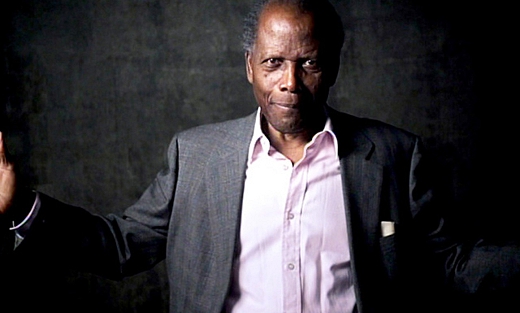
My name is Sidney Poitier

by Shaun Usher


In January of 1943, 15-year-old Sidney Poitier left his poverty-stricken family in Nassau and headed for the United States, the "land of opportunity," in search of a better life for himself and, ultimately, his loved ones. Months of low-paying jobs in Miami followed, and then countless nights sleeping rough as he slowly made his way to Harlem. Once there, still only 16 and unable to find a job to keep him afloat, he lied about his age and joined the U. S. Army, from which he was discharged after a year. Very quickly his money was gone and he was ready to give up. Desperate to return home but unable to scrape together enough money with which to buy a ticket, he wrote the following letter to President Roosevelt and asked for a loan.

Thankfully for Poitier, no reply came; he soon joined the American Negro Theater and slowly made an impression as an actor. In 1963, 18 years after writing to President Roosevelt, Sidney Poitier became the first black person to win a Best Actor Oscar, for his role as Homer Smith in Lilies of the Field.

(Source: This Life; Image via Ebony.)

Dear President Roosevelt,

My name is Sidney Poitier and I am here in the United States in New York City. I am from the Bahamas. I would like to go back to the Bahamas but I don't have the money. I would like to borrow from you $100. I will send it back to you when I get to the Bahamas. I miss my mother and father and I miss my brothers and sisters and I miss my home in the Caribbean. I cannot seem to get myself organized properly here in America, especially in the cold weather, and I am therefore asking you as an American citizen if you will loan me $100 to get back home. I will send it back to you and I would certainly appreciate it very much.

Your fellow American,

Sidney Poitier

RSS Feed proudly sponsored by TinyLetter, a simple newsletter service for people with something to say.
14 Jan 10:32

Comic for January 13, 2013

14 Jan 01:27

Suzanne Moore and ever decreasing circles

by James Graham

Suzanne-Moore-006I’ve been pondering over whether to write a post about identity politics-centred twitterstorms for a while now, but each time I get close to doing so, I back off. The reason? A fear of getting engulfed in the same maelstrom that I’d be commenting on. That in itself is probably a good reason to write, but I think I should start off with a number of disclaimers.

Firstly, this blog is primarily a means by which I seek to order my own thoughts. I welcome other people’s constructive feedback because that, in turn this helps to further order my thoughts. If people agree or are inspired by what I say that’s tremendous. What it most certainly is not is an attempt to lecture people or hector them. If you are tempted to verbally assault me for anything I write here, please consider for a moment that it may just be that we disagree (or that you don’t like what I have to say) rather than assume I am being condescending or trying to silence you. I am certainly not attempting to speak for anyone other than myself.

Secondly, my knowledge of gender studies is almost certainly defective although I do my best to look up and understand unfamiliar terms. If I get any concepts wrong here (in fact, I’ve ended up largely trying to avoid them to make this article as accessible as possible), then I’m sorry and would be happy to make a correction if you point them out.

Thirdly, I’m writing this as someone who has been a political campaigner for 18 years (Has it really been 18 years?) and in the spirit of support for cultural and economic equality for everyone regardless of their identity or background. I hope that anyone who reads this will find it interesting and useful. In all likelihood, it won’t be. Either way, please read it with that in mind rather than view it automatically with suspicion as something written by a white, middle aged, middle class, southern English man in an exclusive, long term heterosexual relationship.

Why all the disclaimers and nervousness? Because some of the people involved in this storm are people I have tremendous respect and admiration for, and I really don’t want to fall out with them. At the same time, it feels as if the battle lines have been drawn in this debate and people seem to get pigeonholed (or indeed pigeonhole themselves) on one side of the debate or the other within seconds. Rational or not, it does feel somewhat as if the odd wrong word here or there is liable to blow up in my face. From reading Stella Duffy’s article on the Suzanne Moore row, it would appear that it isn’t just white middle class men who have this anxiety.

I genuinely can’t decide whether it is to queer feminists’ credit or detriment that I’m as concerned as I am about blundering into this debate as I am in a way that I wouldn’t think twice about in pretty much any other subject (I blog on all subjects these days much less than I do, but that has more to do with a fear of repeating myself than actually offending anyone). People being mindful of the language they use is a good thing; sclerosis caused by a fear about unintentionally offending people is not. Disagreeing in public with someone you like – especially if that person is experiencing a crisis to a greater or lesser extent – is much harder than disagreeing with someone you don’t.

It’s further complicated by my indecision about to what extent I actually disagree or who I disagree with. When considering the recent rows between, for example, Caitlin Moran and her critics over the last few weeks, there have been numerous times when I’ve switched sides as a new fact here or there emerged.

Finally there is the fact that I’m not perfect, and indeed my own views are evolving. My interest in feminism over the past decade, and especially over the last five years, has increased enormously partly as I’ve changed and partly as what I perceived as a rather sterile debate has revived itself. Would I blunder into the “female political blogosphere” debate quite as cackhandedly and insensitively as I did five years ago? One of the problems with having views which are emergent, is that you are rarely confident of them, especially when there are things you are on the record of having written in the recent past which you are not entirely proud of.

Anyway, enough introspection and onto the main purpose of this article. I can’t really improve on Stavvers’ analysis of the Suzanne Moore row (at least as of Friday; it has moved on since then). For me though, the most depressing moment was when I saw Graham Linehan tweet this:

Needs finessing, but a new logo for Twitter? twitpic.com/bub5hd

— Graham Linehan (@Glinner) January 11, 2013


Needs finessing, but a new logo for Twitter?  on Twitpic
I know a lot of people dismissed Linehan’s views a long time ago as just another member of the privileged elite closing ranks, but I was genuinely surprised to see someone who considers himself to be on the left making such a crass intervention; this isn’t so much Jeremy Clarkson-lite as Jeremy Clarkson. Even as an adolescent in the 80s in a boys school for whom women were an alien species, Millie Tant seemed like a particular low point for Viz. The jokes seemed to be just a little bit too obvious; the target just a tiny bit too easy; the strip just a teensy bit too defensive. The implication of Linehan’s tweet was that we are going back to a point in which feminism and mainstream culture simply had nothing to say to each other and that he, as part of the mainstream, was putting as much distance between it and himself as possible.

Suzanne Moore’s wounds this week were entirely self inflicted. Her response to her critics was to give them both barrels and ended up escalating the argument from a small matter of poor taste and judgement to becoming grossly offensive in a matter of minutes. What I hope her most fervent critics have noticed however is that an awful lot of sensible, rational supporters of equality ended up taking her side. In most cases, that was a kneejerk reaction having failed to bother reading the debate, let alone what Moore herself actually said (today’s revulsion by many of the same people to the Julie Burchill article in which she does little more than repeat the thrust of Moore’s argument suggests that), but who can say they don’t depend on heuristics when it comes to taking side in a debate?

It seems to me that there’s a perception problem here that somehow needs to get tackled. The problem is, we seem to be experiencing a case of ever decreasing circles here. As Stavvers writes:

Privileged person nakedly articulates something privileged or wrong or harmful. It pisses off those who are harmed by it–or those who know just how harmful such naked articulations of privilege can be. We express this. We are told not to be angry, or rude, to be rational and logical. It is all derailed. The privileged person fails to learn, change, grow, be better. They act as though they are the victim of some unreasonable mob, never giving a second’s thought to why people are angry.

I understand and share Stavvers’ and others’ frustration at this. Where (I think) I disagree with her is that the answer is to plough on, getting steadily angrier, until the “revolution” arrives (ironically of course, Suzanne Moore’s article which started this latest cycle was also in defence of anger).

Notwithstanding the fact that Burchill may have indirectly helped matters by laying her transphobia bare for all to see in her defence of Moore, I don’t see this circle and widening gulf ending well for the queer feminists. The greater danger is a return to the situation in the 90s in which feminists, when they occasionally emerged blinking into the spotlight of mainstream attention at all, had nothing more to say other than that the fight had been won by a mixture of Thatcherism, Madonna and the Spice Girls. It’s been quite refreshing to see women of the generation after mine take ownership of feminism in the way that women (let alone men) of my generation largely did not. At the moment, I worry that this trend may be on the verge of reversing.

None of this is intended to let the commentariat off the hook. The target of much of this ire recently has been Caitlin Moran. Helen Lewis wrote a blog a couple of weeks ago which went through many of the Caitlin Moran controversies. I found it genuinely enlightening, and it presents a much more sympathetic figure in Moran than her critics tend to present. But if the defenders of Moore were guilty of letting their prejudices about her critics blind them to what she actually wrote, and this is a problem queer feminists must tackle, then the same can be said of Moran. She’s got herself into a rut, with people who ought to be her champions hating her. And it’s happened because she lets her temper and weakness for a cheap gag and playing to the audience get the better of her too often. She’s allowed herself to become surrounded by a group of likeminded writers who, like her, have gone from fearing the mob to actively baiting it. And in doing so, all too often she betrays the values she espouses.

Is rapprochement really too much to ask for? Is the gulf between these two sides really so great? It is terribly fashionable to say that the left likes its infighting, but I’m not sure that actually applies to more than a minority; most people just find it all rather alienating.

For the commentariat, the demands are pretty simple: have a bit of care for your language and don’t make a minority group which faces prejudice and oppression the butt of a cheap laugh, no matter how “accessible” that makes you as a writer (I don’t believe this anyway; in what way would Suzanne Moore’s article have been undermined if she’s replaced “Brazilian transsexual” with “supermodel”? If anything it would have made it more accessible). If you lose your temper on Twitter, like Moran did when she ill-advisedly told someone she “literally couldn’t give a shit about” women of colour, then expect a storm. As a public figure, you can’t complain when it leads to a load of abuse any more than any politician could do so if they made a gaffe.

And there’s the rub. Because what a lot of this row feels like to me is a group of people who are incredibly uncomfortable with the slow dawning realisation that social media, a thing they hitherto embraced as a great leveller, is leading to increased scrutiny and thus accountability that they assumed would only happen to “them” – the politicians, bankers and business people who they perceived as alien and thus the problem. It must be a horrible feeling to suddenly realise you are perceived in much the same way as the people you yourself consider to be the establishment.

As someone who, in a previous lifetime, was a relatively high profile Liberal Democrat blogger and activist, that level of scrutiny and, yes, abuse, is something I take for granted (admittedly, at a lower level). Yes, it is often difficult to deal with and you wouldn’t be human if you always dealt with it with that perfect blend of diplomacy, tact and humour that is often necessary. But however unfair much of it is, it’s a fact of life.

It is worth noting that when politicians get abuse on social media they don’t, as a rule, attempt to smear all their critics with the same brush when responding to it. A few exceptions exist, notably people like Nadine Dorries. Here then is a hint, journalists: if you invite comparisons to Nadine Dorries, you are doing it wrong. Unlike Nadine Dorries however, all too often they get away with it; their supporters simply swallow it as fact when of course it isn’t. That’s a repository of good will which is being abused. Optimistically, I’d like to think that the commentariat will simply calm down after a few years as it learns to take the rough with the smooth of social media. There is however a chance that they will simply continue to close ranks. I doubt this will do newspaper sales many favours (accountability of journalism is also a theme of the Leveson report and thus received a similarly over the top and defensive response from journalists, but I think I’ll leave that hanging for now).

For queer feminists, the challenge is somewhat more amorphous, not least of all because it is a more amorphous grouping. The fact is that there are a lot of people out there who will happily jump on anyone they disagree with on Twitter and start issuing the death threats and piling on the abuse. James Ball triumphantly spent this afternoon retweeting a number of the ones he received for making some mildly satirical comments.

I find the vogue on Twitter to express a desire to “kill” or “set on fire” anyone you happen to disagree with rather odd. It’s tempting to dismiss it on the basis that the individuals concerned can’t really mean it, are being satirical and that the correct interpretation is that it is simply shorthand for an expression is strident disagreement, but I think there’s probably a bit more to it than that (I also wonder, at the risk of sounding patronising, whether it is a cultural issue and that the generation who spent their adolescence using the internet simply developed a different grammar and cultural norms which us oldies can’t interpret). Either way I somehow doubt that, on a psychological level, having 20 people superficially threaten to kill you does anyone any good in terms of developing an open mind about their threateners’ opinions.

I’m not going to go down a cul-de-sac about whether right-minded people have a moral obligation to condemn the threats; I don’t think that particularly gets anyone anywhere. What I do question however is whether the rhetoric of self-righteous anger is particularly helpful. No injustice was ever resolved without at least one person being angry enough to do something about it; that’s pretty redundant. But I question that anger itself should be celebrated in the way that both Moore and Stavvers were suggesting.

A lot of the time the expression of anger is a just massive suck on energy. But it’s actually worse than that. As a tool, the expression of anger has only ever been effective when it has hit the right target and when there have been other tools at people’s disposal to back it up. The poll tax riots worked – but only because there was a political opposition to Thatcher which reaped the benefits politically. 2010′s student protests failed because there was no other channel with which to direct the rage; ironically, the Tories did a fantastic job at getting that rage deflected on the Lib Dems and using it against them during the AV referendum (and by doing so, ensuring that the political system remains as unresponsive as ever). Anger without being connected to anything is simply the verbal and/or political equivalent of letting off a machine gun in a crowded street and hoping it will hit the right target.

I’m reminded of the Guy Aitchison / Jeremy Gilbert dialogue in the book Regeneration (which I failed to review last year), in which Guy’s explanation of the protest movement’s strategy depressingly resembled the Underpants Gnomes’ business strategy in South Park. To be fair, this confusion between tactics and strategy is hardly a problem unique to the radical left (in the Lib Dems’ case, you can replace “anger” with “Focus leaflet” and reach pretty much the same conclusion – although admittedly all those leaflets have proven themselves to be far more effective than riots), but it is a massively under-appreciated one amongst lefties (of course, there isn’t a perfect overlap between queer feminists and the radical left, but there is hopefully sufficient crossover for it to give people pause for thought).

Suffice to say, by all means hold on to your anger – you need it and it will keep you going. But if you aren’t combining every protest and attack with a concerted effort to build bridges and alliances, all you will succeed in doing is alienating people who should be your allies and burning yourself out. Don’t let your anger end up blinding you into carving up the world into some Manichean divide of light and dark, or the light will just look increasingly dim. And don’t confuse genuine anger with casual irritation, which is all an emotionally stunted individual needs to start issuing death threats on Twitter. They aren’t angry; they’re just nasty.

But the other area in which people could improve matters is in communications. Gender studies is the only field I’ve come across in which a criticism over the use of inaccessible language is quite so frequently inferred to be an attack on the field itself. To be fair, cis- is a useful piece of shorthand as long as everyone is on the same page, but if you’re trying to convince someone who hasn’t come across the term that you aren’t being deliberately obscurantist, it simply isn’t helpful. “Intersectionality” is arguably even worse. Again, it isn’t the meaning of the term that I would take issue with (although the term does appear to have drifted from referring to an area of study to referring to an agenda), just the way the term seems to be so frequently held aloft like some kind of talisman. I’ve lost count of the number of tweets I’ve read over the last year that go along the lines of “I just don’t understand why people can oppose intersectionality”. If each time someone wrote something like that they replaced the i-word with something like “awareness that all women face discrimination and the importance of solidarity” (that can certainly be improved upon, but it’s less than 140 chars), an awful lot of progress would have been made. At its heart, this row is rooted in people being defensive in their use of language; a bit of give and take seems necessary on both sides. If your aim is to bring people on the fence over to your side, then speaking in terms they don’t find alienating is a basic step. I’m genuinely confused why this appears to have become such a shibboleth.

I hope that, as tempers start to cool, people on both sides of the divide might attempt to reach out to the other side. If they don’t, then it will simply be an opportunity wasted.

UPDATE: There was an observation I meant to make in this post about the double standard when it comes to “twitterstorms” but I forgot. It was simply an observation that some of the same people who I observed dismissing the idea that abuse on Twitter could effectively silence a feminist writer then went on to defend Suzanne Moore against those selfsame awful feminists. An example is Hayley Campbell here and here, although Hayley is by no means alone. I wanted to include this point not to single people out but to observe quite how tribal this whole debate has become.

UPDATE 2: A few links which I found interesting:

13 Jan 21:08

Love is not a victory march — unless you’re Marvin Olasky

by Fred Clark

I’m not yet ready to forgive Hemant Mehta Jessica Bluemke at The Friendly Atheist for sharing this story: “Christian Writer Ruins the Best Song Ever.”

Go ahead and follow that link, but be warned: Once you have read right-wing Calvinist lyrics, you cannot un-read them.

The best song ever Hemant Jessica refers to is one that I’d put on my own short-list of contenders for that title: Leonard Cohen’s “Hallelujah.” Cohen wrote more than 80 verses to the song, which was initially rejected by his record label, but has since been recorded more than 300 times by artists all over the world.

Marvin Olasky is a far better poet than Leonard Cohen … said Marvin Olasky.

Alan Light, author of the book The Holy or the Broken: Leonard Cohen, Jeff Buckley and the Unlikely Ascent of Hallelujah, offers an appreciation of the song for the BBC, saying of Cohen’s beautiful words and music, “It can fit into weddings and funerals. It can be there in the greatest moment of celebration or for funerals or in moments of tragedy. It’s still seen as kind of a sacred pop song, a modern hymn.”

Amanda Palmer said of “Hallelujah,” “If you were to tell me that playing this song as a cover is totally cliche, I’d tell you so is breathing.”

But here is one thing that no one has ever said about this song: “Hey, wouldn’t it be great if the lyrics were re-written by a right-wing Calvinist from the Bush administration?”

Yet still, somehow, Marvin Olasky seems to think this was something the world needed, and so he has presented what he humbly refers to as his “improved lyrics.”

He said that. “Improved.” Marvin Olasky thinks he improved Leonard Cohen’s lyrics.

Hemant has posted Olasky’s “improvements,” go ahead and click over to read them.

This is not what an improvement looks like. It’s not just that Olasky’s rendition is didactic — a poem replaced by a catechism — but also the horrifying substance of Olasky’s prosaic sermonizing. “But God has said, your child will pay / And from your lips He’ll draw the Hallelujah.” That’s Dobson & Huckabee after Newtown all over again — you sinned, so God will keep killing your children until you praise Him for it.

Fneh.

“Improved.” Remember that. Remember that’s what he bragged he did. Remember that the next time you see Marvin Olasky offering his political commentary or his revisionist history. Use that to gauge his reliability, wisdom, intelligence, prudence and honesty.

And if Olasky gets anywhere near “Joan of Arc,” or “Suzanne,” or “Everybody Knows,” or “Famous Blue Raincoat,” the authorities should press charges.

Olasky’s pompous embarrassment is good news for at least one person — Bono no longer has to worry about his “spoken-word” recording of the song being the worst thing ever done to it.

OK, to rid your mind of Olasky’s ignorant vandalism, here’s the man himself, Leonard Cohen, doing another of his songs that needs no “improvement”:

Click here to view the embedded video.


13 Jan 20:33

Petition: promote the use of free software in US schools

by Superbowl H5N1

Whitehouse.gov has a petition to advocate and gradually replace in US schools software with restrictive licensing in favor of open source alternatives with GPL type licenses. In as much as possible we should have our students using software that complies with the definition of free software as defined by the Free Software Foundation.

13 Jan 20:33

'THE HOBBIT: AN UNEXPECTED JOURNEY'

by Gavin Burrows


Splitting Tolkien's book up into a trilogy of films like this, some have suggested a commercial motive. To which insiders have responded that those are people who “don't know Peter.” And they're right. For example, I have never met director Peter Jackson and I am suggesting that.

It's not just that Tolkien's first book was roughly a third of the length of 'Lord of the Rings'. That in itself is just an indicator of the way 'The Hobbit' was written in a very different tone. In a perhaps unusual move, Tolkien started off with a children's book then added a sequel for adults. I tend to think of it through Tove Jannson's illustrations; moody and myserious landscapes peopled by strange but cheery cartoon figures, at once otherly and homely.

Worse, take away that tone and you're left with the book's formal elements – which are uncannily similar to those of 'Lord of the Rings'. An unlikely hero joins a motley fellowship on a quest. It's quite often even the very same stops. If it's Thursday, this must be Rivendell. Oh, except instead of getting lost underground to orcs, this time it's goblins.

Plus of course it's all happening in the wrong order. I read... you read... everybody read 'The Hobbit' then progressed onto 'Lord of the Rings'. (I can distinctly remember seeing the fat one-volume edition in bookshops, thinking “one day I will be grown-up enough to read that.”) We read them in the order they were written.

Jackson's solution to that one is foreboding. (Tolkien buffs say a lot of this is stuff folded back from still-later works such as 'The Silmarillion.') Things in Middle Earth are taking a darker turn. Sinister figures loiter, Orcs are abroad, strange shadows fall. Pretty soon you won't be able to leave your windows open.

Particularly in the scene where Saruman shows up, it's hard not to be reminded of 'The Phantom Menace.' But then again, with all the problems that film filled itself, it's prequel ordering wasn't one of them. Plus Tolkien's compatriot CS Lewis wrote his Narnia chronicles out of chronology, starting off at quite possibly the darkest moment. The foreshadowing is probably quite a good idea. The problem is that this never seems a more innocent land, for the shadows to show up more starkly against. The Shire seems as provincially calm as ever. But that's precisely the way it was in 'Lord of the Rings'.

As you'd probably expect, things lurch from set-piece to set-piece like a video game. (Level 5 - Underground against Goblins. Level 6 – on a clifftop against Orcs.) Scenes can seem so overlong I'd claim the expanded director's cut has been released early, except that will tempt fate for the still-more-expanded director's cut that's doubtless to come. The warring rock giants epitomise one pole of the film. They look spectacular but add precisely nothing to the plot. They're not even overcome, really, they just do their thing and go away to leave us ready for the next thing.

But there is another pole of the film, in scenes which do seem more reminiscent of the book. (Or at least work the book into a contemporary film in a manageable way.) The Trolls are not CGI hordes but finite in number, and are (sort of) characterised. There's peril, but served with black humour. You're not quite sure whether to feel charmed or chilled. The scene where Bilbo first encounters Gollum is also effective. Notably both feature wordplay above swordplay, Bilbo battling Gollum by riddling.

But let's face it, we fans are probably making a category error to begin with. These films aren't made to be thought about. Whatever their claims to 'authenticity', they're there to go “oooh” to. A fan of the original trilogy will come away happy. The things you'd expect to happen happen. Except for the things you'd expect to happen in the two sequels. There's just enough Tolkien left in there to act as a kind of through line, to stop it becoming entirely lurching set-pieces like every other Jackson film.

It's like when Wily Coyote steps off the cliff edge, but doesn't fall so long as he keeps running. Things kind of get by on kinetic energy alone. Whether things will start to fall further in the two sequels... that remains to be seen.
13 Jan 17:55

Spring conference to be abolished?

by noreply@blogger.com (Simon Titley)
The Liberal Democrats’ Federal Executive (FE) has set up a working group to consider abolishing the party’s spring conference. It is not clear who will chair this working group; even the Federal Conference Committee’s officers have not yet been informed. In any event, this will not affect this year’s spring conference.

It is not the first time such a change has been mooted. The reasons this time are said to be financial but there may also be political motives, since the past two spring conferences have been embarrassing for the leadership.

The spring conference cannot be abolished without a constitutional amendment, which requires a two-thirds majority vote of the Federal Conference. Clause 6.6 of the party constitution permits the FE to cancel a conference “in exceptional circumstances” (which in practice means coinciding with a general election) but the FE has no unilateral power to cancel conferences in perpetuity.

The party’s Federal Conference has been held twice a year ever since the merger in 1988, when this arrangement was enshrined in the new party’s constitution. The autumn conference in September is part of Britain’s traditional party conference season, and continues the practice of the pre-merger Liberal Party, which held an annual conference (the ‘Assembly’) each September. The spring conference in March, on the other hand, was a bastard child of the merger negotiations.

The pre-merger Liberals held only one Assembly a year but also had a body called the Party Council, which held a one-day meeting four times a year. This council had about 300 voting members. It had ‘interim’ policy-making powers (i.e. it could make party policy but could not overrule the Assembly), so its policy debates tended to be limited to topical or specialist issues. The council had a more valuable role, however, of holding the party’s officers and committees to account, which it did very thoroughly (unlike the cursory report-back sessions at today’s Liberal Democrat conferences). More informally, the council also provided a platform for unknowns to become known and rise through the ranks of the party, which was useful for members pursuing a career in party organisation rather than parliamentary ambitions.

The pre-merger SDP had a bizarre set-up, with one annual ‘roving’ conference, where a single conference would be held in three different towns in succession. The SDP conference had few powers, since the party’s leaders had been traumatised by battles with the far left in the Labour Party, to the extent that they did not trust even the SDP’s tame membership.

During the merger negotiations, the Liberals refused to accept the SDP’s roving conference because it was an expensive shambles. The SDP refused to accept the Liberals’ party council because it smacked of dangerous grassroots power. The spring conference was the compromise they agreed on, but neither party felt any enthusiasm for it.

The spring conference is just as much a Federal Conference as the autumn conference, with parity under the party constitution. In practice, the spring conference has less influence, since it is a shorter event and attracts little media coverage. It also attracts few if any commercial exhibitors, so struggles to make money.

If the spring conference loses money and embarrasses the leader, it is easy to see why some party bigwigs might be keen to get rid of it. The party’s members should offer them a trade-off. We’ll swap the spring conference for the restoration of a party council, where we will hold these bigwigs more thoroughly to account. Is that a deal?
13 Jan 17:25

Julie Burchill: Not in my Name

I am a cis white feminist, like Julie Burchill. I have quite a lot of privilege, although perhaps not as much as Julie Burchill, given that national newspapers don't give me a platform for my views. Also like Julie Burchill, I do not pretend to understand the experience or feelings of transfolk

Where I differ from Julie Burchill appears to be that I consider trans people to be human beings whose thoughts and experiences are just as valid as my own. I can't understand but I can empathise and I can listen and I can try to not be an ignorant hate filled shitstain. The article printed in today's observer under Burchill's name is filled with the kind of prejudicial language that makes any person with a heart feel sick. The observer would never have printed an analogous article on the subject of (for example) race. If somebody wrote a piece saying niggers and pakis should shut up and stop whinging and making "jokes" about curry, the observer would rightly refuse to publish it. Why in the name of Cthulhu they thought this article was acceptable, then, I can't even begin to fathom. Perhaps it's Daily Mail style link bait. Perhaps it's talking up controversy for the sake of website hits. Whatever it is, it's naked and unadorned hatred, and it's unacceptable from a newspaper which claims to be progressive.

Julie Burchill does not speak for me, and if she speaks for you then you are not a person I want to pay any attention to whatsoever.

comment count unavailable comments
12 Jan 17:00

Between Impression and Expression: H.L. Mencken

I’ve always been fascinated by the fact that being a witness to even the most electrifying events is no guarantee of recalling them accurately.  The men and women who survived the sinking of the Titanic disagreed as to exactly how the great ship went down, even though they all saw it at the same time; victims of great disasters and horrific crimes, who presumably have had the smallest memories burned into their cortices by trauma, will often give entirely different accounts.  On a lesser scale, our sporting press has always managed to wrest their own legendary interpretations out of events they personally witnessed, but those interpretations frequently bear no resemblance to what actually happened.  This essay on the Jack Dempsey/Georges Carpentier fight, written by H.L. Mencken, has thus always been a favorite of mine, illustrating both the tendency of storytellers to aggrandize their own narrative at the expense of the facts, as well as the unreliability of the eye-witness.  Neither factor has changed much since Mencken wrote about them, almost a hundred years ago.

***

The late herculean combat between Prof. Dempsey and Mons. Carpentier, in addition to all its other usufructs, also had some lessons in it for the psychologist — that is, if any psychologist can be found who is not an idiot.  One was a lesson in the ways and means whereby legends are made, that man may be kept misinformed and happy on this earth, and hence not too willing to go to Hell.  I allude specifically to a legend already in full credit throughout the length and breadth of Christendom, to wit, the legend that Carpentier gave Dempsey some fearful wallops in the second round of their joust, and came within a micromillimeter of knocking him out.  Loving the truth for its own sake, I now tell it simply and hopelessly.  No such wallops were actually delivered.  Dempsey was never in any more danger of being knocked out than I was, sitting there in the stand with a very pretty gal just behind me and five or six just in front.  

In brief, the whole story is apocryphal, bogus, hollow and null, imbecile, devoid of substance.  The gallant Frog himself, an honest as well as reckless man, has testified clearly that, by the time he came to the second round, he was already substantially done for, and hence quite incapable of doing any execution upon so solid an aurochs as Dempsey.  His true finish came, in fact, in the first round, when Dempsey, after one of Carpentier’s flashy rights, feinted to his head, caused him to duck, and then delivered a devastating depth-bomb upon the back of his neck.  This blow, says Carpentier, produced a general agglutination of his blood corpuscles, telescoped his vertebræ, and left him palsied and on the verge of Cheyne-Stokes breathing.  To say that any pug unaided by supernatural assistance, after such a colossal shock, could hit Von Dempsey hard enough to hurt him is to say that a Sunday-school superintendent could throw a hippopotamus.  Nevertheless, there stands the legend, and Christendom will probably believe it as firmly as it believes that Jonah swallowed the whale.  It has been printed multitudinously.  It has been cabled to all the four quarters of the earth.  It enters into the intellectual heritage of the human race*.  How is it to be accounted for?  What was the process of its genesis?

Having no belief in simple answers to the great problems of being and becoming, I attempt a somewhat complex one.  It may be conveniently boiled down to the following propositions:

(a) The sympathies of a majority of the intelligentsia present were with M. Carpentier, because (1) he was matched with a man plainly his superior, (2) he had come a long way to fight, (3) he was the challenger, (4) he was an ex-soldier, whereas his opponent had ducked the draft.

(b) He was (1) a Frenchman, and hence a beneficiary of the romantic air which hangs about all things French, particularly to Americans who question the constitutionality of Prohibition and the Mann Act; he was (2) of a certain modest social pretension, and hence palpably above Professor Dempsey, a low-brow.

(c) He was polite to newspaper reporters, the surest means to favorable public notice in America, whereas the oaf, Dempsey, was too much afraid of them to court them.

(d) He was a handsome fellow, and made love to all the sob-sisters.

(e) His style of fighting was open and graceful, and grounded itself upon active footwork and swinging blows that made a smack when they landed, and so struck the inexperienced as deft and effective.

All these advantages resided within M. Carpentier himself.  Now for a few lying outside him:

(a) The sporting reporters, despite their experience, often succumb to (e) above.  That is, they constantly overestimate the force and effect of spectacular blows, and as constantly underestimate the force and effect of short, close and apparently unplanned blows.

(b) They are all in favor of prize-fighting as a sport, and seek to make it appear fair, highly technical and romantic; hence their subconscious prejudice is against a capital fight that is one-sided and without dramatic moments.

(c) They are fond, like all the rest of us, of airing their technical knowledge, and so try to gild their reports with accounts of mysterious transactions that the boobery looked at but did not see.

(d) After they have predicted confidently that a given pug will give a good account of himself, they have to save their faces by describing him as doing it.

(e) They are, like all other human beings, sheep-like, and docilely accept any nonsense that is launched by a man who knowns how to impress them.

I could fish up other elements out of the hocus-pocus, but here are enough.  Boiled down, the thing simply amounts to this:  that Carpentier practiced a style of fighting that was more spectacular and attractive than Dempsey’s, both to the laiety present and to the experts; that he was much more popular than Dempsey, at least among the literati and the nobility and gentry; and that, in the face of his depressing defeat, all his partisans grasped eagerly at the apparent recovery he made in the second round — when, by his own confession, he was already quite out of it — and converted that apparent recovery into an onslaught which came within an ace of turning the tide for him.

But why did all the reporters and spectators agree upon the same fiction?  The answer is easily given:  all of them did not agree upon it.  Fully a half of them knew nothing about it when they left the stand; it was not until the next day that they began to help it along.  As for those who fell upon it at once, they did so for the simple reason that the second round presented the only practicable opportunity for arguing that Carpentier was in the fight at all, save perhaps as an unfortunate spectator.  If they didn’t say that he had come hear to knocking out Dempsey in that round, they couldn’t say it at all.  So they said it — and now every human being on this favorite planet of Heaven believes it, from remote missionaries on the Upper Amazon to lonely socialists in the catacombs of Leavenworth, and from the Hon. Warren Gamaliel Harding on his alabaster throne to the meanest Slovak in the bowels of the earth.  I  sweat and groan on this hot night to tell you the truth, but you will not believe me.  The preponderance of evidence is against me.  In six more days, no doubt, I’ll be with you, rid of my indigestible facts and stuffed with the bosh that soothes and nourishes man…Aye, why wait six days?  Tomorrow I’ll kiss the book, and purge my conscience.

Meanwhile, I take advantage of my hours of grace to state the ribald and immortal truth in plain terms, that an occasional misanthrope may be rejoiced.  Carpentier never for a single instant showed the slightest chance of knocking out Dempsey.  His fighting was prettier than Dempsey’s; his blows swung from the shoulder; he moved about gracefully; when he struct the spot he aimed at (which was very seldom), it was with a jaunty and charming air.  But he was half paralyzed by that clout on the posterior neck in the very first round, and thereafter his wallops were no more dangerous to Dempsey than so many cracks with a bag stuffed with liberty cabbage.  When, in the second round, he rushed in and delivered the two or three blows to the jaw that are alleged to have shaken up the ex-n0n-conscript, he got in exchange for them so rapid and so powerful a series of knocks that he came out of the round a solid mass of bruises from the latitude of McBurney’s point to the bulge of the frontal escarpment.

Nor did Dempsey, as they say, knock him out finally with a right to the jaw, or with a left to the jaw, or with any single blow to any other place.  Dempsey knocked him out by beating him steadily and fearfully, chiefly with short-arm jabs — to the jaw, to the nose, to the eyes, to the neck front and back, to the ears, to the arms, to the ribs, to the kishkas.  His collapse was gradual.  He died by inches.  In the end he simply dropped in his tracks, and was unable to get up again — perhaps the most scientifically and thoroughly beaten a man that ever fought in a championship mill.  It was, to my taste, almost the ideal fight.  There was absolutely no chance to talk of an accidental blow, or of a foul.  Carpentier fought bravely, and for the first minute or two, brilliantly.  But after that he went steadily down hill, and there was never a moment when the result was in doubt.  The spectators applauded the swinging blows and the agile footwork, but it was the relentless pummeling that won the fight.

Such are the facts.  I apologize for the Babylonian indecency of printing them.

***

*:  It even appears to this day on Wikipedia, thus forever ensuring its sacrosanct status as an unvarnished truth. — LP

Mirrored from LEONARD PIERCE DOT COM.

12 Jan 00:07

Day 4394: The Turn of the Tide

by Millennium Dome
Friday:

Never give up hope.

Would I personally have celebrated the halfway point of our shackling to the Nasty Party by voting for a 1% cap on most working age benefits, another miserable compromise, watering down slavering Tory attacks on the less well off, because something is better than nothing?

Would I want to be in a place where anyone has even heard the phrase "triple dip"?

Would I call the first half of this Coalition a SUCCESS? After TUITION FEES, the NHS bill, the AV debacle, Lords Reform failing, and just Jeremy Hunt...

But Hard Labour want to ban FROSTIES.

The considered response of Her Majesty's Loyal Opportunists to the economic crisis and the health of the nation is... to outlaw a sugared breakfast cereal*.

Ladies and gentlebums, things could CLEARLY be a WHOLE LOT WORSE!

I wouldn't be QUITE so smug if I were the Labour Party on 40% in the polls given their historical propensity for dropping 10% between their mid-term and polling day, often just over the course of an election campaign.

At the moment, if you want to voice discontent, or even just grumble about the state of things, then as opposition goes they're the only game in town.

But if you look at what they're OFFERING it's just MORE OF THE SAME – more borrowing, more PFI schemes, more borrowing, a temporary VAT cut, did I mention more borrowing – another meal of reheated TURKEY, leftovers from the Mr Frown era, based on the assumption that NOTHING HAS CHANGED (except a few banks are not so popular anymore) in a World where EVERYTHING is different.

Their answer to the question raised by the 1% benefit threshold – "how would you tackle the alternative of a three billion pound overspend on the benefit bill?" – is the simply fatuous "we would have more people in employment". If Governments could DO that, do you think the Coalition wouldn't? (Actually, some people DO think that, but we'll take sane commentators only, please.) Governments of all colours have shown again and again that they are VERY BAD at creating jobs (except by directly employing people which, by simple maths, costs MORE than any possible "savings").

Labour's NEW policies have not yet been tested because, well, (banning Frosties aside) they haven't GOT any new policies. Mr Balloon tried the tactic of having no policies and springing "the Big Society" on us during his manifesto launch. History tells us this that is NOT the strategy of a WINNER.

HINDSIGHT makes it SO easy to score hits off the Coalition, and off Cap'n Clegg (now on Pirate Radio!) in particular. No one has EVER done this before, a Coalition in the era of Presidential Politics, and Parties considered to be monolithic rather than the fluid pre-War groupings. I don't remember ANYONE mapping out a way to do this, let alone a BETTER way to do this.

So if you think we should have gone for DIFFERENTIATION sooner (from Day One)... you're forgetting that we were OPTIMISTIC, we wanted this government to be SYNTHESIS, a great reforming government, the best of Liberal AND Conservative traditions, and that the Coalition Agreement looked like it could deliver that. AND we were OPTIMISTIC that the voters would see what we were doing and approve of it as "grown up politics" – kind of like the voters always SAID that that was what they wanted.

OPTIMISM isn't WRONG. OPTIMISM is what you need if you are to be creative; it's the power you need to drive great change and to carry people with you.

DIFFERENTIATION is a strategy for when SYNTHESIS isn't working. DIFFERENTIATION is for when voters are BLAMING you for compromise rather than AGREEING there must be give and take. To have adopted DIFFERENTIATION from Day One would have been to abandon any chance of greatness for this Government.

Of course it DIDN'T WORK. It's a classic PRISONER'S DILEMMA – the optimal strategy is for BOTH SIDES to work together. But GAME THEORISTS tell you your PERSONAL STRATEGY is always better to SHAFT your partner. There were a determined band of Tories (up to and including Master Gideon) who WERE practising differentiation from Day One. But that wasn't down to us.

Did they "outplay" us? That depends on whether you think being in Government is a GAME or a serious attempt to make things BETTER for people. And that's not to say that certain parliamentarians (up to and including Master Gideon) DO think of it as a GAME.

In those terms, in the short term, the answer is yes. Obviously yes. They set out to destroy Lib Dem policy after Lib Dem policy (or, still more accurately, COALITION POLICY after COALITION POLICY) and won quite a lot.

Mind you, the price is that they have made the Conservative Party unelectable FOREVER. At least as it is presently constituted. There will never, ever be another majority Conservative government. Too much of their Party now will not come in from the RIGHT. Up to and including Master Gideon and his lust for a tax cut which, by giving handouts to the rich, broke the Tories in the opinion polls. And EVERY Tory Prime Minister of the Twentieth and Twenty-First Century from Balfour through to Lord Blairimort will tell you you can ONLY win from the Centre.

Which doesn't help build a Liberal Agenda for the SECOND HALF of this Coalition.

It is hard to remain OPTIMISTIC.

That's not to underplay the areas where we ARE making a big difference: in GREEN ENERGY and GREEN ECONOMY; or the work Mr Dr Vince is doing to create APPRENTICESHIPS and support and invest in British success industries; or the prospect of EQUAL MARRIAGE.

But we see ever more BARKING MAD policies being brought forward by our Conservatory uncivil partners – this week: "let's privatise the probation system!" – while constitutional and institutional reform founders.

(And the Prime Monster tosses us a bone of "fixing primogeniture" – our process for picking a Head of State may be undemocratic, promote privileged and the corruption that goes with a fixed establishment, and strangle innovation with nostalgia, but at least it will no longer be inherently sexist! The inclusion of persons married to a Catholic, who would formerly have been barred, does not WIDELY increase the pool of potential candidates. Prince Charles – more in sorrow than anger no doubt – declares his opposition to even this little reform lest, get this, some future second child should try to take the country to the European Court because HE thinks HE should have inherited ahead of his SISTER. As though a court case like that wouldn't end the whole monarchy problem for us right there and then. Charlie has always been a big one for his PRIVILEGES and, unlike his mother, never really grasped that it's actually about his DUTIES.)

As a Party we are not immune to the voices of complaint and the "I told you so" tendency. It's all too easy for us to fall back on scorn and mockery when the Party hierarchy try to suggest a "message".

We NEED a "message" if we're going to be heard at all when the LANGUAGE of the national debate has become increasingly STRIDENT and DIVISIVE, with the Parties on BOTH sides of us seeking to DIVIDE and CONQUER. If it's not outright CLASS WAR, setting poor against poorer, then it's taking INFLAMMATORY ANTI-IMMIGRATION rhetoric right up to the edge of borderline racist... and sometimes jumping right over. And if this is an age of UNREASONABLE debate, let us not ever forget Labour's contribution: screaming "TRAITOR" without rhyme or reason for two years solid. How exactly was THAT going to lead to nuanced comment?

To be halfway fair to Hard Labour, in the IMPOTENCE of OPPOSITION and the ABSENCE of POLICIES, all they've GOT is NAME CALLING. The Conservatories however are discovering the IMPOTENCE of being in OFFICE – taking the BLAME for EVERYTHING and able to change NOTHING. And last year's Budget put them fully in the frame, no longer having us as their lightning rod.

In part because we're "centrists" but more because we encourage DIVERSITY – including in opinion – Liberal Democrats are HILARIOUSLY BAD at this sort of SLANGING MATCH politics. ("Alarm Clock Britain" anyone?). We, far more than the one-idea-fits-all Parties, need to be able to EXPLAIN ourselves. Hopefully Cap'n Clegg's half-hour-a-week broadcasts – talking in SENTENCES – will do more good than any number of silly SOUNDBITES.

We need to EARN ourselves a hearing and – very gradually – we ARE winning back the right to be heard.

And then we need to have something WORTH hearing.

Far too much of what our MPs and especially our Ministers come out with is TECHNOCRATIC and MANAGERIAL. Let's have something to say that is a wee bit POSITIVE. It doesn't have to be EXPENSIVE; just LIBERAL will do.

For example:

Our parliamentarians need to be more OUTSPOKEN in OPPOSITION to the creeping SECURITY AGENDA – it's not just about the taking of liberties, it's EXPENSIVE too, and we can really make a case for NOT wasting millions and billions on security theatre.

We need to say that our aim of FAIRER TAX also means aiming for SIMPLER TAX – fewer loopholes, harder to dodge. Master Gideon has proved himself as much of a TINKERER as Mr Frown. We want to be saying we will cut through all the complex rules and make a tax system that people – not least the people at HMRC who have to run it – can actually understand.

And we need to speak more positively about FREEDOMS – freedom of speech, pushing the changes to libel laws much further; freedom to exchange and innovate on the web, reforming copyright laws to encourage creative talent, not monolithic rights holders, and supporting open-source programming though government and civil service choices; freedom from conformity, so let's talk more about ROLLING BACK the things that are illegal and less about making more crimes. The law should be there to PROTECT people, not INTRUDE on and PUNISH them for being different.

And while were' about it, we should be much more positive about how HUMAN RIGHTS are a GOOD THING. And that they are GOOD RIGHTS to HAVE: the right to NOT BE KILLED; the right to NOT BE LOCKED UP without a fair trial and a good reason; the right to HOLD OPINIONS; the right to MEET OTHER PEOPLE. They're all very simple. And people DO NOT lose their human rights – not even very bad people, in fact ESPECIALLY not very bad people – because YOU wouldn't want to be in IRAN or KOREA or RUSSIA or GUANTANAMO and suddenly told that you've lost YOUR human rights! ALL humans have human rights, and if you say otherwise, you're saying people are SUB-human and, well, there was a WAR about that.

Basically, we need to say why Liberal Democrats will make things BETTER!


So let's play FLUFFY NOSTRADAMUS for a second.

Mr Stephen Tall says we shouldn't count on TOTAL Liberal Democrat Wipe-out at the next election, so what MIGHT happen?

The election of 2015 becomes increasingly interesting. Or rather the electionS of 2015. Because I think there's every chance that we will see at least two if not THREE(!) elections next time.

We and the Tories WILL lose seats, no doubt about it. But Labour won't have done enough to achieve a majority on their own. And they'll play SILLY-BUGGERS about doing a deal with surviving Liberal Democrats. So they will try and run a minority Government (what they secretly – and not so secretly – wanted all along). And it will collapse, possibly as soon as they try to get a Budget through the House and it triggers a Sterling crisis.

Repeat THAT a couple of times over the Summer and people might just start to get the message that Coalitions are better than Hard Labour's monomania too.


*Cornflakes were, of course, invented as a cure for... well, never minds that; "They're Grrrr...ievously contributing to the obesity crisis!" says a Labour spokesperson.
11 Jan 21:47

Let’s Be Frank

by Pete Baran

So the first picture of Michael Fassbender as Frank Sidebottom have appeared on the internet, and the internet is all a kerfuffle. It doesn’t look – right – they say. The eyes aren’t round, the eyebrows have been shifted from Sievey’s perma-surprise to a more reflective, even pair of brows. And real-Frank was more dapper than this movie-Frank. The body language is all off too (but this may not be a film take). Just wait til we hear his voice, possible drifting from the Irish-German lilts that are the Scylla and Charybdis of all of Fassbender’s vocal performances.
frank

But hold on a minute. Do we want this Frank to look just like the real Frank? This is not a case of impersonation, Fassbender is playing a role. A role in a film about which Jon Ronson , one of the writers, says : “The film isn’t a film about Frank Sidebottom. It’s totally made up and – whilst inspired by Frank – is inspired by other people too” Other people who took to the stage with papier mache heads, it was a big scene in the mid-eighties…

But if you think of it as a role, the subtle differences in this head to real-Frank’s head start to make more sense. If the other actors, if anyone is playing a real character, they will not be able to physically replicate them. This head must be a choice, its not as if the producers would have found it difficult to replicate Sievey’s original model. If it is a mistake that a costume design/art director is out of a job. So it must be intentional. And perhpas it is. I remember seeing Walk The Line and thinking at the end what a great job Joaquin Phoenix did as Johnny Cash. He didn’t look remotely like Cash. Or indeed sound much like him. So why hire Michael Fassbender if you are just going to put him in a perfect replica of Sidebottom’s head. Where is the acting in that? Oval eyes…that’s acting.

11 Jan 17:24

Rip This World Apart For Just One Cell (Alien Bodies)

by noreply@blogger.com (Philip Sandifer)

Alien Bodies, by Lawrence Miles, is the landmark Eighth Doctor Adventure - the one that changed everything. It introduces Faction Paradox, the War, kills off the Doctor, introduces the Dark Sam plot, and probably does a fair number of other things I’m not thinking of at the moment. Steven Moffat has praised it. Everyone has praised it. Everyone. It’s the fourth most popular Eighth Doctor Adventure, with an 84.1% rating.  Jackie Jenkins, guesting for Dave Owen in Doctor Who Magazine, declared that it “nourishes itself through constant questioning,” which sounds like a touch of faint praise. Lars Pearson, unsurprisingly for someone who would go on to publish Miles’s Faction Paradox series, calls it “one of the best ‘Who’ novels ever.” Lawrence Miles, meanwhile, says that it “isn’t even that good.”

——
It’s November of 1997. Aqua is at number one with “Barbie Girl,” and I think we’ll just leave that to be a metaphor. For something. I refuse to decide what. It lasts nearly all month, and then is finally overtaken by a massive supergroup covering Lou Reed’s “Perfect Day” in support of the BBC and the license fee, which is to say that things are clearly changing in terms of the BBC and it’s willingness to be proud of itself. Backstreet Boys, Chumbawumba, Spice Girls, LL Cool J, Natalie Imbruglia, Moby, Hanson, and a duet between Barbra Streisand and Celine Dion also chart.

In news, MCI and WorldCom merge to become MCI WorldCom, which then became WorldCom, which then imploded in a massive and spectacular accounting scandal to nobody’s surprise and nobody’s edification. Mary McAleese is elected as President of Ireland, succeeding Mary Robinson in the world’s first female succession of another female as an elected head of state. The BBC begins online news service having previously only covered a few specific events, and the British Library opens a public reading room at its new not-in-the-British-Museum site.

While in books, we finally get to the bits where Lawrence Miles becomes Doctor Who’s driving creative force. It’s a short period - we’ll be out of it by the end of the month - and yet is by any definition one of the most important things to happen in the space between the TV Movie and Rose. It’s also terribly controversial, both because of the scope of Miles’s ambitions and ideas and because of his, shall we say, somewhat abrasive style. This sets up something of a choice. For the most part, all things being equal, I like to keep the lens on the present of Doctor Who. The Wilderness Years are a bit of an exception, in that I let the new series hang over them. The reasoning here is fairly simple: to present the Wilderness Years as they were would be to read them with a sense of continual despair at the fact that Doctor Who is never coming back, because that’s what we all genuinely believed more or less until Rose’s ratings came in. This, while authentic to the time, is a very silly way to read them now, so instead I’ve let the knowledge that the series does come back seep into things simply because it makes it feel less absurd.

But when it comes to this era of Doctor Who history it’s hard to just live through it. There’s a metric ton of fan politics going on in every part of this. And it’s not an era I lived through - as I said, I bailed out on Doctor Who in 1996. And even if I had, as an American high school student I wasn’t going to be up close and personal enough to see the politics. I’ve pieced a lot of it together from interviews, stories, and online discussions, but not nearly enough to call it a full history. And there’s no secondary source covering the history of this era comprehensively. Which means that I just don’t feel like I can give the play-by-play of the era. So instead I’m going to treat everything from here to The Ancestor Cell with the knowledge of what happens.

The short form: Lawrence Miles, mostly on the strength of this book and secondarily on the strength of Interference, introduced the bulk of the plot points that governed the first few years of the Eighth Doctor Adventures. But with the change of editors from Steven Cole to Justin Richards they decided to wrap up their current plot points. Instead of letting Miles wrap up his own plots Cole co-authored The Ancestor Cell, which provided its own resolution to all of them. Miles, incensed both by his marginalization and by his belief that The Ancestor Cell ripped off plot ideas he’d proposed to Cole, had a massive falling out with just about everybody. It wasn’t the end of his time with the Eighth Doctor Adventures - he wrote The Adventuress of Henrietta Street, openly for the money, but it marked a cataclysmic end to his time as the most acclaimed and controversial of the Eighth Doctor Adventures books, and began his current status as curmudgeon extraordinaire.

There are, if you will, three basic perspectives to take on Lawrence Miles these days. First, that he’s a mad genius who remains the most creative Doctor Who writer ever and everybody, but especially Steven Moffat and Neil Gaiman, rip off of him. (This is actually a point I have seen raised in all seriousness - the accusation that The Doctor’s Wife was knowingly ripped off from Lawrence Miles’s short story “Toy Story.” I relate this mostly to convey the fact that Miles has a dedicated enough fanbase to have stark raving mad extremists. And, you know - to sustain publication of the Faction Paradox line.) Second, that he writes overcomplicated shit that nobody in their right mind would ever like. Third, some diplomatic blurring of the two that allows that his personal style can be a bit grating but that his books are quite clever, albeit obviously unmanageable in any larger sense. A subset of this view is the “Alien Bodies was quite good, but as of Interference he started going a bit far” position.

All of this is rubbish. But the scope of it is kind of staggering, so let’s start with what the book is known for. There are in effect three major ideas introduced by Alien Bodies. The first is the War - a still mysterious event hanging somewhere in the future of both Gallifrey and the Doctor - in which the Time Lords very much have their backs against it facing an unknown Enemy. The second is Faction Paradox, a rival organization to the Time Lords who worship paradox and reflect the Time Lords’ technology back to them in a manner explicitly analogous to the practice of voodoo. The third is that the Doctor is eventually killed, and his body is bid on for its potential as a weapon in the aforementioned War.

There are several observations to make here. First, for most writers any one of these ideas is sufficient. The idea of a massive war that wipes out the Time Lords is itself worth several novels. It’s perhaps cheeky to note that Faction Paradox could support an entire book line. And so to use both of these as ballast for a story that already has the phenomenally huge idea of the Doctor confronting the end of his story is a strange decision that seems in many regards profligate. But what’s perhaps stranger is that by all appearances Miles really did intend most of these concepts to be one-offs. He’s said in an interview that he hadn’t been going to build out Faction Paradox much at all in Interference, and only did because Orman and Blum grabbed them for Unnatural History. The War was something he seems to have meant to pick up, but his view is mainly that it should have been left to hang over the line.

Equally, however, he’s suggested that he thought other writers would play around with the War, which is puzzling. On the one hand, yes, obviously when you put something absolutely massive like the War into Doctor Who continuity people are going to want to play with it. But look at what he does with the War. You can’t actually depict it, since the one big thing we know about the War is that it kills the Doctor, which is kind of a problem for the long-term health of the line if you depict it. Plus, it’s clearly scads of years out from Alien Bodies and doesn’t feature the Eighth Doctor. So in fact what you have is a big War whose defining feature is that you can’t actually show it. And Miles thought people were going to pick up on this plot?

On top of that you have Miles’s… prickly manner. I don’t want to get too far into the gossip here or start adjudicating whether some of Miles’s more extreme statements are “just his sense of humor” or “him being an absolute and indefensible jerk to people and then using the classic lame defense of saying he was only joking,” but let’s allow that, broadly stated, Miles has had some feuds. One of these feuds was at least partially started when he suggested that Orman and Blum, in Unnatural History, did not get Faction Paradox right. Now, I’ve not gotten to Unnatural History yet, so I’m not even close to suggesting that Miles is or isn’t right in that accusation. But let’s leave the accuracy aside and just look at the basic frame of the statement - Miles is criticizing other people in a multi-author franchise for not doing what he would do with a concept.

On the one hand, fair enough. The issue of how to share and play with concepts in a multi-author franchise is a complex one, but there is a general ethos that the person who created a concept gets at least some say on how it plays out, and if Orman and Blum got Faction Paradox a bit wrong in Miles’s eye that’s at least something that’s OK to point out. On the other, it’s not like Paul Cornell vetted every Benny book for Virgin - there’s a degree of letting it go that one does. It’s a matter of personal preference, at least partially, but on the flip side, it’s pretty obvious that Miles is a writer who has strong vision of his ideas and is at least a bit put out when other writers break from his ideas.

So we’re left with a War that can’t be depicted and whose creator gives the sense that he’d rather people not break his concepts, and there’s any question why a lot of people didn’t deal with it? It’s not that it was a bad idea - it was in many ways a very brilliant idea. It’s just not a great long-term idea. And that was what it became.

This is not to say that Alien Bodies is bad or fatally flawed. It’s a damn good book, and it’s not a surprise that it set the direction of the Eighth Doctor Adventures for a good long while. It makes sense, really. Where Blum and Orman failed to set the direction with a vivid characterization of the Eighth Doctor, Miles creates concepts and ideas - the Eighth Doctor Adventures’ equivalent of things like “Time’s Champion,” Death, and the Other. Nobody really picks them up for a year, but to be fair, the gap from Love and War to The Left-Handed Hummingbird was a bit rocky as well in terms of actually having developing the ideas that Cornell established for Virgin. The problem is that these ideas just didn’t work. (Well, the War didn’t at least, and Faction Paradox didn’t really work within Doctor Who as such.)

But it’s not like Miles should have realized that he was inadvertently setting the stage for inadequate follow-ups of his work. After all, nothing he did in Alien Bodies is actually that much more bonkers than the Carnival Queen in Christmas on a Rational Planet or the true nature of Tyler’s Folly in Down. It’s just that this time he did it on a line desperate for direction and people seized on to bits of it to try to stitch together an aesthetic for the line. And because this time the sequencing of ideas went just a little differently. Where Down could be ignored like most of the Benny books and Christmas on a Rational Planet was an oddity in the wave of New Adventures towards the end, Alien Bodies came in a line that needed the direction. It was a Doctor Who book that at least had everyone talking in a way that didn’t involve rolling your eyes and wondering what the hell John peel was even thinking. That counts for a lot. Perhaps more than it should.

But what’s key ist hat this doesn’t seem to have been what Miles wanted for the book either. And understanding that requires us to understand Miles in a bit more detail. For our purposes the influence of Lawrence Miles has been hanging over virtually the entire blog, since he’s one of the co-authors on the superlative About Time series that I’ve engaged repeatedly. So before we tear into what he’s doing here, let’s pause and ask what he wants Doctor Who to be. After all, when we have someone who has expended as many words on the subject as he has, we may as well take his own standards for Doctor Who seriously.

The biggest and most visible split between the two authors of About Time is on the Williams/Nathan-Turner axis. Tat Wood loves Graham Williams and hates Nathan-Turner, whereas Miles is the exact opposite, skewering Graham Williams while quite appreciating Nathan-Turner. And the bit of the Nathan-Turner era that Miles really goes to the wall with praise for is Season Eighteen: the Bidmead era. Which, good for him. There are places where Tat Wood is dead wrong, and his dislike of the Bidmead era is one of them. But if we’re going to pick a specific story to look at their differing approaches on the clear one to do is Enlightenment. Both of them like the story, but the nature of their praise goes in subtly different directions. Wood praises the way that the Doctor is at the center of the story figuring out the world. Miles, on the other hand, compares it to Hartnell-era historicals based on “an exploration of a complete world-view.” The difference is both stark and telling - Wood is fundamentally interested in the way in which the Doctor reacts to the world, whereas Miles is interested in the world itself - and specifically the world as separate from the Doctor. If we’re exploring a world-view then we’re not really all that invested in the Doctor at all. Miles is invested in strangeness. That’s the key difference. Wood wants Doctor Who to serve up something only it can do that’s never been seen before. Miles wants it to use the familiar to give us a peek into the truly strange. The Doctor is only interesting as something that gets out of the way in favor of said strangeness.

This is something Miles has backed up in later interviews, particularly after Interference. And it’s a troubling claim, just because it seems to rather badly reduce the amount of Doctor Who Miles can plausibly like. Bits of the Hartnell era, Season Eighteen, some scattered moments of Davison, and… that’s about it. Those are the only times the series has ever subjugated the Doctor to the weirdness of the world. And most of those are happy accidents - Season Eighteen works that way because the production is actively trying to get Tom Baker under control. Hartnell works that way because they hadn’t gotten the series together yet - and by Miles’s own admission that goes out the window by the end of Season One. For all Miles gives Wood stick for not liking the vast majority of Doctor Who, by his own aesthetic there’s precious little he can like.

This issue gets at at least part of Miles’s vocal dislike of the Moffat era. This is, to be fair, a somewhat larger feud, at least on Miles’s part. (There’s precious little evidence Moffat gives a damn.) Moffat, for his part, apparently told Miles that the cliffhanger to chapter five of Alien Bodies - that would be the one where the Doctor discovers that he’s involved in an auction for his own body - is the best cliffhanger of anything he’d ever read. Miles diagnoses that this is because, in his words he “turned the Doctor into a fetish object.” And he regrets this. Technically, at least, he’s right about what that cliffhanger does, but he’s so mind-wrenchingly wrong about the overall point that it’s tough to make much of this.

The big error is that he thinks that he’s the one who did that. Because the Doctor has been a fetish object since, at the very least, the Pertwee era, and frankly since about The Reign of Terror. The ship sailed long ago. So much so that it’s nearly impossible to argue that the interesting thing about the Doctor’s body in Alien Bodies is its fetishization. It’s not. What’s interesting is that the Doctor’s end is now a part of the story. One of the awkward bits of Doctor Who existing in relation to real world time is that it’s difficult to have the future of Doctor Who impact its present. You can write a Third Doctor story where the Eleventh drops in with no problem, but reversing that and having the Eleventh Doctor meet the Eighteenth is a problem simply because it’s impossible to accurately predict what the Eighteenth will be like, and everyone watching now knows it and won’t fall for it.

So Miles manages to pull off quite a trick in having the Doctor encounter his own death - both the most fundamental part of his future and the one bit you can get away with impressing on the past. Unless for some reason someone decides to attempt a proper, final tie-off of Doctor Who that involves killing the Doctor, it’s never going to be shown. It can just be displaced endlessly forward, left as one future adventure that will happen someday, to some Doctor. And so you get a book where the future successfully haunts the past, forcing the Doctor to deal with an inevitability. It introduces, in a much firmer way than the silly “twelve regeneration limit” idea, the idea of an end to Doctor Who without ever requiring that the end happen. This is the interesting bit of what Alien Bodies proposes. Unfortunately, it’s just the big silly epic War and the crazy voodoo Time Lords that anyone bothered to pick up on.

Another thing that Miles objects to is Moffat’s apparent declaration once that Miles, in his heart of hearts, knew Alien Bodies was the best thing he’d ever written. This horrified Miles partially because Miles likes to think of himself as perpetually improving, but there’s a larger issue. On the one hand Moffat was right - Miles never again had the sheer impact he had with Alien Bodies. The book came at the exact right time to have a big impact, and was the exact right configuration of his ideas. But the reasons it succeeded were largely the ones that were least like what Miles was interested in. It was simultaneously the Miles book most unlike his other stuff and most like what Doctor Who fans like. This was, necessarily, an unstable combination - one that burned tremendously brightly as we headed into 1998, but equally one that was inevitably going to flame out even more spectacularly.
11 Jan 03:17

Caught in their own welfare trap.

by septicisle
It's fair to say that I've been rather despairing of the ever increasing attacks on benefit claimants, both those in work and out of it.  The BBC has joined in, surveys seem to suggest ever hardening attitudes towards those both sick and unemployed, there are numerous first-hand reports of those in wheelchairs being accused to their face of faking their disability for payments, and then there are the people who have died while waiting for their appeal against being declared fit for work by ATOS to be heard.  Recessions and hard times almost always result in those one rung down the ladder being kicked by those above them, but the way in which those at the top, whether in politics or the media, have upped the ante over the last couple of years has still managed to shock.

Today marks the end point.  The Conservatives have overreached themselves to such an extent through the benefit uprating bill and the rhetoric surrounding it that the only result will be the undermining of the entire narrative.  It should be remembered that the current popular attitude towards welfare is not the work of either the Tories or the tabloids, it's thanks to Labour's helming of the system.  Not, as the tabloids and Tories have it that they failed to reform it, but rather that they set in motion the exact reforms the coalition have supercharged.  The work capability assessment was Labour's invention, as was replacing incapacity benefit with employment and support allowance, while abolishing income support.  All this was put about with the equivalent of a nod and a wink, which while preferable to the "strivers vs skivers" of late had the same end result: encouraging the tabloids to print ever more articles about scroungers or the very few claiming huge amounts of housing benefit.

This shaming of claimants has been so successful that Labour has completely gone along with it. Faced with Osborne's wheeze of freezing benefits at 1%, they've wanted to talk only of the effect on those in-work, as if those out of work aren't striving for a job, or the sick and disabled making do on their meagre payments aren't worth an in line with inflation rise. Those on the right of the party balked at even this, imagining they were walking straight into Osborne's trap.

As so often in the past, politicians have once again underestimated the public.  Osborne felt certain this would be just as popular as the benefit cap, the undeserving poor put in their place, with minimal impact on those claiming tax credits.  Depending on how the question is asked you get different results, but overall it looks as though opinion is close to evenly split on whether the move is justified or not.  It's certainly nowhere near the 75% support the £26,000 cap receives. What's more, this is the point at which support is going to peak.  Once everyone fully realises how either they or their friends and family will be affected, the number in favour will drop further.

More than anything else, the Conservatives and Osborne continue to mistake their showing in the polls for actual popularity.  The fact is, almost anything government touches is instantly passé: once you're completely open in your loathing for the poor and poorly paid in general, as opposed to the underclass or those taking the taxpayer for a ride, the fightback begins in earnest.  When the politics are so base and so transparent that you're putting up billboards denouncing Labour for daring to say the low paid, the sick and the out of work should see their benefits increase with inflation, something they agreed with last year when Osborne said the same people deserved the rise, you're inviting the parodies and vandalism that will inevitably follow.

It's still come to something though when it's David Miliband, of all people, who exposed his party's cowardice in not going all the way in denouncing this bill for what it is.  It is rancid, and the Liberal Democrats should never be allowed to forget that they supported it. Miliband showed where the money to fund the rise could come from, and even dared to say the problem was unemployment, not the unemployed, underlining just how far the debate has moved from reality when something so obvious has to be pointed out.  When there are simply not enough jobs to go round, where is the fairness in expecting those on JSA to make do on an extra 71p a week?

Even if the Tories are regretting their attempt to create a dividing line, as the likes of Andrew Sparrow and others are implying, and are now attempting to tone down the rhetoric, it's far too late.  The damage has already been done: it's a measure highly unlikely to win many votes, especially coming 2 years before an election, despite the Tories seeming to believe it's just around the corner through the billboard campaign, and it will reinforce amongst those who are claiming what the Tories really think about them.  This is a government that demands responsibility above everything else and yet it refuses to take any itself, whether it's on the double-dip recession that never merits a mention, or the humiliating failure of the work programme.  As Liam Byrne said, in opposition Iain Duncan Smith made clear that "Conservative policies have to work for Britain's poorest communities and ... must be measured by that standard".  Duncan Smith presumably agrees then that the spread of food banks is a wonderful example of the Big Society in action.
10 Jan 22:43

the Platinum Coin

by mike

You’ve probably read about the platinum coin idea. I posted about it before, but it’s probably worth revisiting. If it seems like it doesn’t make sense that’s because it kind of doesn’t make sense.

reagancoinHere’s the problem. Congress makes the budget. The budget mandates a certain amount of spending. The spending congress mandates is in excess of the revenue Treasury Department takes in in taxes and fees. The Treasury must make up the difference by borrowing 1

Starting in 1939, Congress introduced a single vote to authorize the Treasury to issue more debt. This is the debt ceiling vote. It’s not entirely clear, to me, that Congress has this authority. And you should be noticing the oddity of the situation; having passed a budget with the force of law that requires borrowing, Congress also gave itself a chance to vote on whether to authorize the borrowing it just required.

The debt ceiling vote was originally imagined as a symbolic vote. You would vote no, and then get to tell your constituents “I voted against this massive public debt!” And historically, it’s been an entirely symbolic, partisan vote. See this chart, in which Republicans always vote “no” when there’s a Democratic President, and “yes” when there’s a Republican President. The symbolism works both ways–Obama voted against increasing the debt limit in 2008, a fact which will prove embarrassing indeed*.

If you just passed a budget requiring borrowing, then refused to authorize the borrowing, then you just caused the Federal Government to default on its obligations–obligations you gave it! It’s a clear violation of the spirit, but not the letter, of the debt ceiling vote, and a radically cynical act with potentially disastrous implications.

Obama could go around this by issuing the platinum coins. The Secretary of the Treasury can mint platinum coins in any denomination he sees fit. Not gold, not silver not copper: platinum specifically. It was intended as a way to sell commemorative coins to the collector market. The Treasury Sec. could order up a platinum coin commemorating, say, 9/11, and design and mint  a $20 dollar coin with a picture of heroic firemen and an eagle on it. According to law, he can print as many or as few of these as he/she likes, in whatever denomination he/she likes.

The Treasury Secretary could simply mint two platinum coins, each worth a trillion dollars, deposit them at the Federal Reserve, and write checks based on that deposit. It is absolutely legal, and would not cause inflation because the coins would only be used to cover the spending congress has already mandated.  But the debt ceiling vote would be rendered once again purely symbolic.

Should he do it? Yes, absolutely. It would violate the spirit, not the letter of the law, and it would be a radically cynical act, but blocking the debt ceiling increase is itself a violation of the spirit if not the letter of the law, and a radically cynical act. And there’s the 14th amendment’s prohibition on calling the debt into question.

The precedent here is maybe Franklin Roosevelt’s actions under the Emergency Banking Relief Act of 1933, which FDR used to mandate the sale of gold bullion to the Treasury, thus taking the US off the domestic gold standard. Roosevelt drew on an earlier WWI act, the 1917 Trading with The Enemy Act, which gave Woodrow Wilson the power to seize assets of enemy nations in an emergency. These acts, still in force today, establish the precedent that a state of emergency gives the President powers to intervene dramatically in the economy. Neither of these precedents gives much confort to libertarians.

But failure to authorize the debt ceiling increase would amount to a national emergency. The Treasury Secretary would have to decide who to pay and wh0 not to pay. Federal contractors might not be paid. Military personel would not all be paid. National Parks would close. The FBI might go unpaid. Contracts with foreign governments might not be paid. Medicare or social security checks might not go out. Very large numbers of Federal Employees would have to be laid off. The impact on the economy would be enormous. But the key advantage for the GOP is that Obama would take the blame for each unpaid obligation, not congress.

Minting the coins would not be illegal, though it would be unorthodox. It would not cause inflation. It would not destabilize the economy–quite the opposite. It would constitute an end run around congressional intent, but using the debt ceiling as blackmail is itself an end run around congress’ own intent. 

The GOP has been really brilliant in its use of the debt ceiling vote. It’s making the deficit look like Obama’s fault, and it’s putting the blame for its own inability to reign in spending and/or increase revenue on the executive branch. It dramatizes the gap between what the govt. takes in and what it spends. If Obama mints the coins, he’ll continue to get the blame for the debt, and they will accuse him of assuming dictatorial powers etc etc. It will be very bad for Obama, in  a public relations sense. But he can’t have a third term. Now is the time to act decisively to end this form of blackmail, and establish a rational footing for discussion about the national debt.

I suspect he won’t do it.

The platinum coin idea is admittedly odd. Earlier I compared it to daylight saving, in which time of day was understood as both the natural postion of the sun and as an entirely arbitrary number changed twice a year. Like daylight saving, the platinum coin sits right where our idea of money as tangible good runs into our idea of money as purely symbolic. It’s particularly calculated to outrage conservatives, because it forces these two idea to collide. To take something with a real material market value–platinum–and give it an arbitrary dollar value is a gross affront to hard money libertarian economics, and indeed to the very idea that economics should and does reflect some kind of natural law.

The coins in one sense would simply be commodities. The treasury could, for example, produce platinum statues of the washington monument, and price them at 20 bucks a piece, and sell them. What’s different here is the special and strange relationship between the Treasury and the Federal Reserve, and the particular law authorizing the minting of platinum coins. The Fed would have to accept them at face value, because according to law their face value is exactly what the Treasury Secretary says it is.

That seems odd, but it’s what law does. There is a piece of property, and one day the law puts a sign on it that says “private property. No trespassing.” Nothing physical has changed, but everything about the land has changed, including the uses to which it can be put. Similarly, it’s 10:07 EST at the moment, but when daylight saving resumes this same moment in the sun’s passage will now be 11:07. Nothing has changed except the designation in law, but as a result, everything shifts. The law says you can only drive 25 miles per hour in this space; it says we are at war with “terrorism;”; it says X or Y is illegal, it says an “adult” suddenly appears at age 18 except when it comes to drinking. All these things are pure fictions with real and possibly beneficial and necessary social effects. It can say these two coins are worth a “trillion dollars apiece” and produce real social effects. In this case, the effects would be beneficial.


*The debt ceiling vote appears to violate the 14th amendment, which says very clearly, in section 4, “The validity of the public debt of the United States, authorized by law, including debts incurred for payment of pensions and bounties for services in suppressing insurrection or rebellion, shall not be questioned.”

  1. How does it do this? Mostly by issuing Treasury bonds. It sells, for, say, $100, a bond which says the buyer will receive, in 15 years, $150. Who buys the bonds? Well among others, the Federal Reserve system, which is not part of the Federal government. The Federal Reserve buys Treasury bonds, and this creates money, because the Federal reserve issues our money, which is why is says “Federal Reserve Note, although just to complicate things, the government actually prints the money. So to simplify, when the Fed buys bonds, it puts money into the economy. When it sells them, it takes money out. But the issuance of Treasury Bonds to cover the excess spending Congress mandated is a big part of the national debt.
10 Jan 12:00

The nonsense of Labour's welfare policy

by Jonathan Calder
I am with the Liberal Democrat MPs who rebelled over the one per cent cap of benefit increases after yesterday's debate.

As Caroline Lucas said:
The Secretary of State brandishes the figure of a 20 per cent increase in benefits in the past five years. In cash terms, jobseeker’s allowance has gone up from just £59.15 in 2007 to £71 in 2012. In other words, in each of those past years JSA has gone up by just £2.50.
And as David Miliband said of the politics behind this move:
The truth is that this rancid Bill is not about affordability; it reeks of the politics of dividing lines that the current Government spent so much time denouncing when they were in opposition in the dog days of the Brown Administration. It says a lot that within two years they have had to resort to that dividing-line politics. We know the style: you invent your own enemy, you spin your campaign to a friendly newspaper editor, you “frame” the debate. But the enemy within in is not the unemployed; the enemy within is unemployment.
But what really struck me about the debate was this complaint from Liam Byrne:
Some 40,000 soldiers, 300,000 nurses and 150,000 primary and nursery school teachers will be hit by this Bill.
But why are such people receiving money from the government at all? A common complaint about welfare systems is that they use public money to subsidise bad employers, but here the government is using it to subsidise a perfectly reasonable employer - itself.

Worse than that, the last Labour government had no great appetite for making the rich pay tax. And even if a government does have that ambition, it turns out to be rather hard to do.

The result is that the tax credits for soldiers, nurses and teachers have to be financed by people in reasonably but not highly paid jobs. People like soldiers, nurses and teachers, in fact.

In other words, the whole system is a complicated way of leaving people pretty much where you found them.

The Coalition has the right idea in cutting tax rates for lower paid workers and reducing the reach of the tax credit system. They should use some of the money they have saved to protect the poorest of all from inflation.
09 Jan 16:57

Trixie Seven: Writer’s commentary

It’s true that I churned out Trixie Seven in a couple of hours, plus the time it took to edit after beta, but it’s still the case that I keep talking about that tiny little fic every opportunity I get. Because I put a lot of my personal knowledge and experience into it, and I’ve had a few conversations here and there.

So in one place:

Some things about Trixie Seven

or: Debi has too much to say about fanfic.

  • There are three things paleontologists get sick of hearing from people about their job: “hypothetically, could we clone dinosaurs from mosquitos?” “Just like Ross from Friends;” and “so you work on dinosaurs, then?” Obviously, the first one would never have been asked of a character in Jurassic Park, and Friends came to TV the year the first JP movie was released. (I know these things.) Obviously, I am a dinosaur paleontologist, so I’m fine with the last question, but my insect/mammal/plesiosaur/fish friends are heartily sick of it.
  • The T-shirt Ellie sleeps in is a real shirt, and I have seen people wearing it at conferences. It probably doesn’t date back to the 1990s, but call it artistic license. The same company also makes T-shirts for archaeologists and paleontologists sick of people getting the disciplines confused.
  • Gizzard stones are small stones swallowed by animals in order to aid digestion of tough plant materials. These stones sit in an organ called the “gastric mill” (or, y’know, “gizzard”) and crush the food together. Both birds and crocodylians have gizzards, which gives a good evolutionary basis for extrapolating that dinosaurs may have. Adn of course, there’s the presence of gastroliths:
  • Gastroliths are stones found in the stomach region of a fossil animal, presumed to represent gizzard stones. Gastroliths have been identified from some sauropodomorphs, and specifically from a specimen of Psittacosaurus, housed in the AMNH in New York. Psittacosaurus is the closest relative of Triceratops to have been recovered with gastroliths.
psittaco

Psittacosaurus at the AMNH – photo from Wikipedia

  • In the book Jurassic Park, the sick dinosaur was a Stegosaurus, not a Triceratops and Ellie tracked the cause of its illness to poisoning by West Indian Lilac. The animal had not been eating the berries directly, but swallowing them accidentally while picking up gizzard stones from the base of the plant. Neither large ceratopsians nor stegosaurs have been found with gastroliths, but stegosaurs are a more likely candidate because:
  • Ceratopsians had awesome teeth! Tough little spoon shaped molar-like (but not molars, ’cause only mammals have molars) doodads arranged in large tight tooth batteries that basically did the job of one large elephant molar. Also,ceratopsians, like many dinosaurs, had flesh covering the side of their mouths to form cheeks. They didn’t need gizzard stones because they chewed their food, is what I’m saying.
  • The issue of cheeks in dinosaurs isn’t uncontroversal, but Ellie’s looking at a living Triceratops with cheeks, so that kind of ends the controversy.

    triceratops

    Triceratops at the HMNS – photo from Wikipedia

  • Triceratops is unusual among ceratopsians, in that its cranial frill was made of solid bone. While many ceratopsians sported these ridiculous things, most are made lighter by the presence of large windows in the frill: “cranial fenestrae.” Check this picture of Torosaurus for an example.
  • In 2010, Scannella and Horner hypothesized that Torosaurus and Triceratops were actually synonymous (the same genus) and that the cranial differences represented animals at different ages, rather than different genera. As far as postcranial anatomy goes, the two genera are very similar, but personally, I think the cranial differences are more than enough to justify a cranial split.
  • As the bony frill was supposed to represent the juvenile stage, it was misrepresented in the media as “Triceratops is no longer a dinosaur!” which would be inaccurate, as Triceratops is the older name and therefore it would be Torosaurus that would no longer be a valid genus. When Ellie says “this isn’t a Triceratops,” she means that she thinks Trixie has been misidentified, not that the taxon is invalid.
  • Ornithischians are more objectively more interesting than saurischians. Fact.

This post can also be found at Thagomizer.net. Feel free to join in the conversation wherever you feel most comfortable.

09 Jan 15:08

Bearded presidents of the United States: two trivial notes

Every four years I get an uptick of interest in my web page on facial hair and US presidential elections. There have been a total of only five American presidents with beards, starting with Abraham Lincoln and continuing through the rest of the nineteenth century. I offer a couple of trivia questions about them.

Quick trivia question #1: Of the five bearded presidents, how many were Democrats and how many were Republicans?

Answer: All five were Republicans. The Democrats have never even had a candidate with a decent beard, and of their presidents only Cleveland even went as far as a moustache.

Quick trivia question #2: Which state were most of the five bearded presidents born in?

Answer: Ohio. Lincoln, born in Kentucky and elected from Illinois, was the only exception. Grant, Hayes, Garfield and Benjamin Harrison were all native Ohioans; Grant, however, was elected from Illinois and Harrison from Indiana.

Slightly surprising to have such a political and geographical concentration of beards, but no doubt it is merely a visible manifestation of less visible trends.

09 Jan 15:07

What have we ever done for the Romans?

by noreply@blogger.com (Simon Titley)
The prospect of a referendum on British membership of the European Union, in itself, does not fill me with trepidation. With the right campaign, the case for staying in can be won.

The fear is that the same sort of people who ballsed-up the AV referendum will be put in charge of the campaign.

EurActiv reports that both sides are already limbering up for a campaign and that both plan “to woo the country’s biggest swing demographic: those aged between 18 and 44” (although EurActiv’s description of such campaigns as “youth-focused” is rather generous to thirty- and forty-somethings).

This seems a bizarre strategy for UKIP and the ‘out’ campaign. A referendum will have a turnout no higher than about 30% (unless it is held on the same day as a general election, which is unlikely), so the result will hinge on differential turnout. The ‘out’ campaign has a built-in advantage because support for UKIP – and for euroscepticism in general – comes mainly from older voters, who turn out more reliably than younger voters.

If the ‘in’ campaign’s strategy is to woo younger voters, there is always a risk of the ‘dad at the disco’ syndrome. The idea that Sir Richard Branson would make the campaign look ‘hip’ is a case in point.

There has not been an effective pro-EU campaign in Britain since the 1975 referendum. Pro-European opinion has tended to rest on its laurels. When Europhiles do get off their backsides, they usually present their case in abstract or dry constitutional terms. Most people outside the political elite cannot relate to such arguments.

Even when the discussion turns to concrete benefits, the arguments are mainly of the ‘what the EU does for you’ variety. Well, yes, the EU does promote jobs and trade. But to achieve a more effective campaign, why not turn this argument on its head and ask what you can do for the EU?

To understand what this would mean, begin by asking yourself what you most admire about other EU countries. What sort of things make cultural and commercial exchanges so enriching? The chances are that these are things of quality, which are also a unique expression of those countries’ cultures. Belgium? Chocolate. Denmark? The Killing and Borgen. Spain? Rioja. Germany? Mercedes. Poland? Reliable plumbers.

Now think about similar British things that other Europeans might admire and want (and which have nothing to do with stereotypical images of bowler hats and red double-decker buses).

Fortunately, a recent trend has provided many such things for Britain to offer its European neighbours. Over the past decade, there has been a renewal of pride in local identity, and a revival of interest in local heritage and craftsmanship. The shame in Britishness and especially Englishness that was fashionable in the right-on era of the 1980s has been ditched. Last year’s Olympic opening ceremony marked the point when the British finally kicked the habit of national self-flagellation. Instead, they are celebrating their local cultures – in particular, there has been a boom throughout the country in locally-produced food and drink.

A pro-European referendum campaign that presented the EU as a bigger stage on which British people can promote themselves and their local cultures would be much more effective than dreary talk of treaties and constitutions. For example, British supermarkets sell French cheese, Italian ham, German sausages and Spanish wine. Imagine a campaign that aimed to stock supermarkets elsewhere in the EU with English ales and ciders, Bury black puddings, Lincolnshire sausages, Cornish clotted cream, Welsh lamb and Scottish beef. Imagine a campaign that aimed to force shops in France and Spain to declare how much of their fresh seafood actually comes from Cornwall or the Hebrides. Imagine a campaign that aimed to make a fish and chip shop as common a sight in Italy as a takeaway pizza joint is in Britain.

It’s not just about food and drink. Imagine a campaign that aimed to help young British people pursue careers elsewhere in the EU. Imagine a campaign that aimed to sell more effectively our tourist attractions to other Europeans. Imagine a campaign that aimed to make BBC TV and radio programmes more easily available throughout the EU.

A ‘what you can do in Europe’ campaign would be more ‘real’ for most people than a traditional campaign. It would also involve more people because it is about enabling anyone with pride in something, and because so many local interests have something they want to brag about.

And the real beauty of such a campaign is the way it would put Euroscepticism on the back foot. Euroscepticism starts from the assumption that local identities and the EU are incompatible and therefore antagonistic. This campaign would redefine that relationship as symbiotic. Conversely, Euroscepticism would be redefined as a force that limits the scope of local identities and prevents them taking wing.

But if we seriously want to win this referendum, before we do anything else, we must first make sure that no one puts the usual tossers in charge of the campaign.