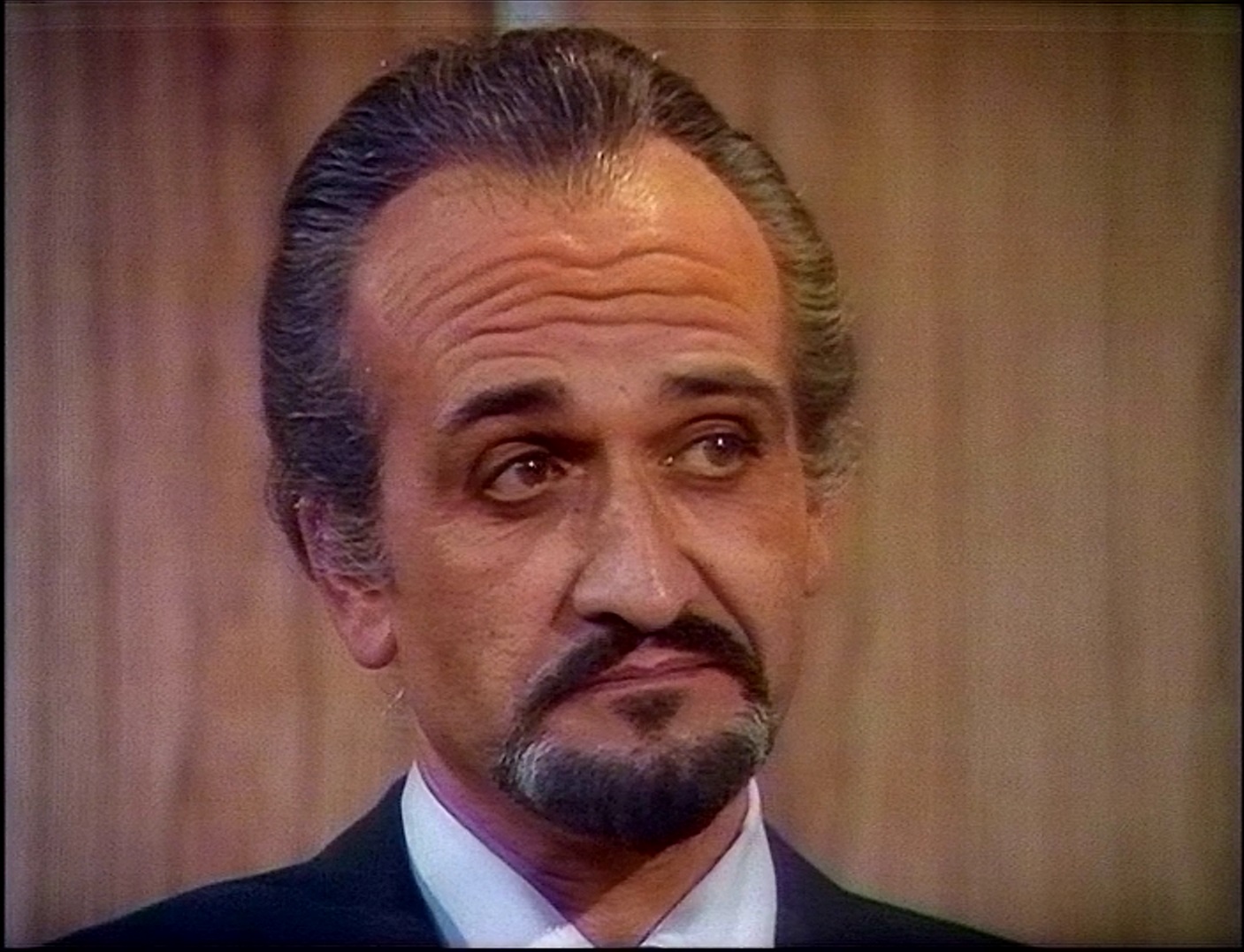
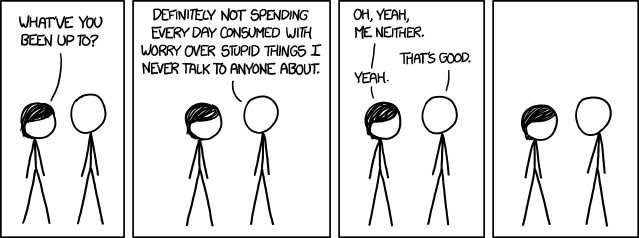
Re-upped by request
Lossy: 320 lame 3.97 (181 mb)
First posted here
2010, November 21
“I am the Master.”And while sometimes I add a second Bonus Quotation here, something’s got into my head (a sort of drumming) and now there are rather more. More spoilers, as well. So, peoples of the Blogosphere: please attend carefully…
“I am many things.”
“This plastic has got unique properties, Mr McDermott. Allow me to demonstrate.”
“Look, why don’t you try it?”McDermott’s been eyeing the chair uneasily and prodding it like a first-time swimmer at the water’s edge – but the Master’s sudden whiplash of will is that of a villain who’s suddenly tired of the shaggy dog and wants to skip to the punchline. McDermott can’t help but sit. The moment he does, the chair starts to writhe again, wrapping itself around him and, rearing over his head, suffocating his screams within its thick, blobby synthetic mass and the thick, blobby synthesiser music.
“Well, you’ll never sell that, I’ll tell you that for nothing. Sure, it looks like – like a black pudding.”
“Try sitting in it.”
“It’s got a cold clammy feel to it. Now plastic should be warm and dry to the touch—”
“Sit down, man!”
“Sylvia? Will you check Mr McDermott’s entitlement on termination of employment, please?”Rex Farrel – and the rest of us – are already so far back in the Master’s thrall after all this showing off that when he hilariously affects humility at the waste of so much material for one simple death we’re with Rex in saying, no, no, that was an impressive one, honestly. And like Rex, we want to know what the Master means when he gives a playful smile and promises efficient death with just a few inches of plastic:
“The human body has a basic weakness. One which I shall exploit – to assist in the destruction of humanity.”I’ve written about the death at the plastics factory before – I didn’t see the Master’s showpiece scene on screen until more than twenty years after it was broadcast, but I saw it in my mind’s eye as a thrilled little boy reading one of the first books I ever bought, Terrance Dicks’ novelisation Doctor Who and the Terror of the Autons, and not only does it grip you (and Mr McDermott) on TV, it’s just as gripping on the page. Though it makes Rex more sympathetic by taking away his punchline, permitting him more struggling shock and generally removing the impression that his appreciation of the patronising right-hand-man’s death is an eagerness to murder his father by proxy, it gives the Master a terrible gag that I’ve always loved. You can read what in my in-depth review of the novel here, complete with that very scene as my selection of choice (and a terrifying picture of little me). And if you keep watching the DVD, the Master gets another deft little punchline later along the way…
“The Master’s consumed with hatred. It’s his one great weakness.”Even as the camera lingers on the Master’s gun – and he’s never more brutally trigger-happy than here – even as he’s twisted with physical agony, even he’s as kept alive by his absolute focus on the most important person in his life, the subject of all his rage and envy and vengeance, the one who he’s crafted all this to get his attention before he dies in disgrace, the Doctor still just dismisses him. That hurts.
“Weakness, Doctor? Hate is strength.”
“Not in your case. You’d delay an execution to pull the wings off a fly.”
“Now, this Traken web of harmony is broken. I am free…!”Although Geoffrey Beevers’ time as the Master was a short one on television – though I do love The Keeper of Traken – the Master of voice has appropriately become the definitive audio Master, with many delicious readings of Doctor Who novels (not least Doctor Who and the Terror of the Autons) and a splendid new array of adventures for Big Finish. Perhaps the most remarkable of these is Joseph Lidster’s Master, which has more than a passing influence on TV Master stories to come…
“So it works. Congratulations, Doctor. I always knew you’d do it.”Logopolis is probably Mr Ainley’s most dangerous performance – and certainly his Master’s most deadly effect – but, if you want a wider variety of Doctor in your ‘The Seven Faces of the Master’, like Mr Delgado he has other stories worth a look. I’d recommend Planet of Fire for a different and rather glorious interpretation of the Master in which he has a great deal of fun and is pitted for the last time against the ‘new’ Doctor who becomes his arch-enemy as they were in the early ’70s. Then there’s a more different still portrayal in Survival, Mr Ainley’s last TV appearance but, as with his first, not quite managing to finish off the Doctor (here one who shares Mr Ainley’s birthday, and his companion’s, too).
“You did most of this.”
“Oh, no. I was little more than a humble assistant – but I have learned a great deal. And now I think it’s time for you to go and explain the presence of your friends. There’s quite a hubbub outside.”
“You’re quite right. One mistake now could ruin everything.”
“I know that, Doctor – and it could happen so easily.”
“What do you mean?”
“The Universe is hanging on a thread. A single recursive pulse down that cable and the CVE would close forever. Even a humble assistant could do it.”
“You! You took my things – where are they?”
“They’re not your things any more. Pretty soon, everything around here’s going to belong to the Master again.”
“Again? What’s he been telling you?
“When he gets his body back from you, I’m going to be rich.”
“And you believe him?”
“Why shouldn’t I?”
“I suppose he neglected to mention that there won’t be any place to spend your money?”
“Which is why we have no time to waste.”
“But time to change!”
“I always dress for the occasion.”
“Chan—but you’ve locked them in—tho…?”
[“Get it open! Get it open!”]
“Not to worry, my dear. As one door closes, another must open.”
“There you go, Gramps. Oh, do you know? I remember the days when the Doctor – oh, that famous Doctor – was waging a Time War, battling Sea Devils and Axons. He sealed the rift at the Medusa Cascade, single-handed. Phew. And look at him now. Stealing screwdrivers. How did he ever come to this? Oh yeah – me!”
And then a funny thing happened the next morning. If you followed the link to that story, you found a completely different story, nearly twice as long, with a slightly different headline. The new story wasn’t just expanded; it had been stripped of key details, with no acknowledgment of the changes. That updated version, time-stamped at 8:51 AM on June 7, backed off from key details in the original story.
Crucially, the Post removed the “knowingly participated” language and also scrubbed a reference to the program as being “highly classified.” In addition, a detail in the opening graf that claimed the NSA could “track a person’s movements and contacts over time” was changed to read simply “track foreign targets.”Bott goes on to suggest that the Post took a leaked PowerPoint presentation from a single anonymous source and rushed to publication because it was afraid that other publications would get the story too:
The Post compounded its error by quietly correcting its story and not publicly acknowledging that there were errors in the original story. In fact, the revised story still claims the NSA and the FBI are “tapping directly into the central servers” of those companies when that allegation no longer appears to be true.
In short, one of the great journalistic institutions of the 20th Century is now engaged in outright click-baiting, following the same “publish first, fact-check later” rules as its newer online competitors.
I’ve been posting things about my knee problems here because, well, when you commit to blog almost every day, you wind up writing about most things in your life, especially when you think you have some interesting or funny things to say about them. It also saves time. Friends of mine read about it here and then I don’t have to tell them or have them later say to me, "Why didn’t you let me know about this?" I am absolutely not asking for sympathy or pretending it’s important that I can’t climb stairs without wincing a bit.
Something I’ve learned about injury and illness is that it’s important to keep these things in perspective. When you’re sick, you can make your problems worse — even make yourself actually sicker — by living in an overdramatized mindset. Recovery can have a lot to do with not thinking like a sick person…but at the same time, you have to be realistic and not set yourself up for constant disappointments by expecting that broken leg to be fully-healed by Thursday. A friend once said to me of another friend, "He’s making his condition worse because he doesn’t know how to be sick."
Every indicator suggests my knee will be fine in a month or two. I have to accept the pain and inconvenience that I will experience in that time and decide that I’m not going to let it encroach on my life and work any more than it has to. If I resent it…or if I see it as a bigger problem than it is, it can become a bigger problem than it is.
I’ve been thinking a lot about this kind of thing lately because I have so many friends who are not well. I have a lot of that in my life and it’s not just because I’m 61. As you get older, you expect more and more of the people around you to have medical problems and even die. What I’m observing goes beyond that and I think it has something to do with the economy…and with the cost of health care. My torn meniscus will end up costing me around $8000 even with pretty decent health care. I asked a lady at the surgical center what something like this could wind up costing someone with no insurance. She said that in her experience it was roughly a factor of ten — $80,000 — and could go even higher. Needless to say, there are folks out there who simply don’t have the eight grand, let alone the eighty.
That’s bad but like I said, my problem should be over in a month or two. The real tragedy is with people whose conditions are open-ended and which could persist for a long, indeterminate period.
Each morning, I awake to e-mails and calls from sick friends telling me the latest. I log into various forums and read updates…like I just read the latest from Stan Sakai about his wonderful wife Sharon. I’ve known the two of them since before Stan began lettering Groo the Wanderer, which was before he created his own, highly popular comic book character, Usagi Yojimbo. They are great people and it breaks everyone’s heart that Sharon is suffering with a benign but inoperable brain tumor. "Benign" is better than "Malignant" but it has still caused her just about every conceivable health problem one can have: facial paralysis, anemia, rapid heart rate, double-vision, difficulty in breathing, difficulty in swallowing, difficulty in speaking, massive weight loss, etc.
I read all that and I have two kinds of reactions, one of them a bit selfish. The selfish one is that I think, "Jeez…and here I am thinking it’s a tragedy that my right knee is going to be hurting for a few more weeks." The non-selfish one is to feel for Sharon…and for Stan and what he must be going through. They’re smart, strong people and they have insurance — but smart and strong people have their limits and so do insurance policies.
I am one of those people who doesn’t like "Obamacare" because it is not Single-Payer. It’s better than what we had before and infinitely better than the Republicans’ "repeal and replace" goal which seems to largely sidestep the "replace" part. When I hear John McCain acting like he’s offended there’s a war we could be in and aren’t, and you think what those wars cost us just in terms of dollars, it’s a real head-shaker. The most conservative estimates suggest Afghanistan and Iraq will wind up costing U.S. taxpayers $4 trillion to $6 trillion and we’ll spend the rest of our lives trying to explain what we got for our money. Some estimates say that single-payer would more than pay for itself and lower the over-all costs of health care in this country. Even if it didn’t, ten years of it couldn’t cost more than we spent to rid the world of those Weapons of Mass Destruction that Saddam Hussein didn’t have.
Will this happen? Someday. ‘Til then, we put up with it and people will continue to suffer and die because they can’t afford to get things fixed. I have at least two friends who I believe died unnecessarily because they couldn’t afford good insurance. In the meantime, I’m glad for mine…and glad that my problems are so minor compared to some. I hope I don’t give the impression that I think this knee thing is anything more than a minor annoyance.
From Time:
Creative types are often seen as rather flaky — their minds leaping wildly from one bizarre idea to another, ever seeking inspiration. But a new study suggests that people who actually achieve creative success have minds that stubbornly cling to ideas, even to the point where it impairs their ability to shift focus.
. . . .
During the study, participants had to shift their attention from a global level of processing to a local one, by focusing on different aspects of patterns. In some cases, they were asked to identify a large letter made up of smaller ones (for example, an “S” pattern made up of smaller “e’s”). In other instances, the correct answer was the opposite one — identifying the smaller letter.
“It’s a little counter-intuitive,” says Zabelina, “but people with high creativity actually actually perform badly on this test.” In fact, they made more than twice as many errors as the less creative group — and even after controlling for overall intelligence, the creative people still did less well.
. . . .
“The general idea is that [people with ADHD] are not able to focus on anything,” says Zabelina, “But really there are two different parts of the disorder, and one is that if they really get interested in something, they become almost like autistic people: really focused, so much so that they are not able to practice anything else.” Indeed, between 30% and 50% of autistic people also have ADHD.
The combination of an ability to range widely from one thought to another and to focus when a good idea occurs may be the sweet spot for creative success. The trick is in the timing: to mind-wander enough when seeking ideas to hit on the best ones and then to zoom in and persist once the right solution has been found.
Link to the rest at Time
Click to Tweet/Email/Share This Post
A response to Author Solutions and Penguin Random House – The Real Deal? from the indispensable David Gaughran:
[Author Solutions uses] a multi-pronged strategy:
1. Author Solutions runs a multitude of faux-informational websites purporting to provide independent advice to inexperienced writers. After filling out a questionnaire, these sites then present a selection of publishing “options” – all subsidiaries owned by Author Solutions, all terrible. Author Solutions spends a lot of time and money to ensure that these sites appear at the top of Google’s search results for any generic terms that a publisher-hunting newbie would use (I’m not linking to these sites as that will help their SEO, but you can Google anything like “I need a publisher” to see what I mean. Running variations of those searches will bring up more than 20 different fake sites, all operated by Author Solutions).
2. Author Solutions operates fake social media profiles of “independent publishing consultants” which are manned by Author Solutions staff, target the most inexperienced writers, and only recommend Author Solutions companies.
3. Author Solutions pressures customers into writing positive testimonials before releasing their books for publication. I received one such complaint the last time I posted about Author Solutions, from an AuthorHouse UK customer who said that they wouldn’t publish the book she had already paid for until she wrote the testimonial here (second from top).
4. Author Solutions partners with supposedly legitimate and independent organizations to give a veneer of respectability to their scammy operations (like Hay House, Writers Digest, Simon & Schuster, Lulu, HarperCollins, the Authors Guild, Harlequin, and various writers conferences).
. . . .
While I regularly read both The Bookseller and FutureBook, I’ve had plenty of issues with their editorial line, particularly with regard to their policy of never printing anything critical about Author Solutions – or, at least, not since they were purchased by Penguin.
In the last few months, this policy has extended to censoring comments critical of Author Solutions on their blogs, a policy they now share with Digital Book World - whose parent company has its own Author Solutions-powered vanity press.
Both of these companies depend on income from advertising and running conferences, and it appears they don’t want to be critical of a huge player like Author Solutions’ owner Penguin – especially with their impending merger with Random House, which will create the largest (by far) trade publisher in the world.
Link to the rest at Let’s Get Visible and thanks to Geoff for the tip.
Passive Guy says the vanity press business is just another variation on the contract scams that the “legitimate” operations of some big publishers foist on unwary authors.
Without spending time blowing his own horn or claiming to be the smartest guy around, PG has negotiated a lot of contracts with a lot of large organizations – Microsoft, Apple, Oracle, Citicorp, Goldman Sachs, JP Morgan, Fidelity, Disney, etc., etc., etc. He’s currently negotiating contracts with companies that are household names for some of his non-literary clients. Suffice to say, PG has a sense of what’s generally considered reasonable in American business contracts.
When he first focused on a plain-vanilla publishing contract from a large New York publisher a few years ago, PG was astounded at how unfair some of the standard contract terms were for authors. As he saw other publishing contracts, he learned that publishers copied onerous terms from one another. The wording might be different, but the meaning was the same.
Additionally, it was not unusual to find what, to PG’s jaded eyes, were drafting techniques designed to disguise some of the more egregious contract provisions from authors who did not have experience dissecting contracts.
After having reviewed many, many agreements and proposed agreements between traditional publishers and authors, PG is prepared to say these contracts, as a group, stand apart from the general run of business agreements as conscience-shocking monstrosities.
No, they do not reflect the special snowflake nature of publishing. They’re simply designed to screw authors and give publishers control over authors and their work that is far beyond what is regarded as reasonable in the rest of American business.
So, when David justifiably rants about how Random Penguin’s Author Solutions and other vanity presses screw authors, PG suggests this is just the other side of the same coin as the non-vanity part of the business. Each side reflects the same attitude toward authors — geese to be plucked.
PG hasn’t written longer posts on specific publishing contract provisions for some time. You can find examples here, here, here, here, here, and here. If you use TPV’s blog search function to look for How to Read a Book Contract and cursor down, you’ll find more. You can also search on the Contracts category to pull up everything, but this category covers much more than contract problems for authors.
Click to Tweet/Email/Share This Post
It’s been hard to miss the coverage of revelations that the US government has been scooping up data from tech giants such as Apple and Facebook – you’ve probably already seen newspaper reporting on the Prism project slides.
What’s surprising is that people think this is cause for renewed concern. Data in the cloud really should not be considered secure. The Americans have some sort of quasi-legel process for handling this, but I doubt other foreign intelligence is And if you are a big corporate, your data – blueprints, designs, release and pricing information – is probably of more interest to them too, as they can then give it to their own companies to produce cheap knockoffs.
And it’s not like the media in this country are any better behaved either. Personally, I regard all data on Facebook as near-enough public. Privacy settings stop my neighbours snooping but little else.
Rather more concerning is the UK involvement in this. According to the Guardian, “Prism would appear to allow GCHQ to circumvent the formal legal process required to seek personal material such as emails, photos and videos from an internet company based outside the UK.”
This is interesting in light of the recently proposed Communications Data Bill. If the security services already have access to the data, what was the bill for? One option is that it would have allowed open use of Prism data in UK courts, without raising questions as to it’s origin.
Another is rather more concerning: In exchange for Prism data we were expected to be able to generate similar data for the US on data travelling through UK-based servers and networks, building a global network of surveillance by states on each other’s citizens.
All of these are in some way unbelievable. #1 is asking for a class action suit that destroys your company. #3 involves some very suspicious national security reporters at two different outlets simultaneously getting duped. And #2 strikes me as extremely unlikely. I can imagine one rogue employee doing this without telling his employers. I cannot imagine the exact same thing happening at nine of the biggest internet companies.
The most likely possibilities seem to be #4 or #5: the NSA is filtering this stuff at some point outside the companies, or the companies have issued some very, very carefully worded statements.
Uh, mostly not, because apparently I was the only person in the US who assumed the government was already doing something very much like this? Because it was doing it under Bush, and if Obama had gotten around to stopping doing it, his administration would have made a big deal about it, no? And since the Obama Administration never said a single word about it that I can recall, it was probably still going on? So I guess what I would say is, yeah, seems not surprising in the least, why are you suddenly freaked out about it?
This is separate and independent from the question of whether the government should be vacuuming up every single bit of information out there in our communication channels, to which my reflexive answer is, oh, very probably not. Seems like a bad idea, for all the usual reasons involving rights and civil liberties, and the fact that our government, while nominally seen as liberty-loving, is not forever guaranteed to be so (and of course there are many who do not believe it is that way now). With that understood, again, since this has been happening since the early days of the millennium, it seemed to me unlikely that it had suddenly had stopped. Our government doesn’t have a whole stratum of secret legal and operational apparatuses for nothing, you know. It’s being used. It hasn’t stopped being used, because, again, if it had stopped, the current administration would have made a fine show of not using it.
I’m not personally thrilled with the possibility/probability of everything I do online being strained through the government’s baleen, as it were, but I’ve assumed it’s been doing so for the last decade at least. Inasmuch as I live my online life with the assumption that nothing I do there is private and unknown anyway (i.e., it’s all discoverable at some point, and in some way), this did not require a huge adjustment on my part. The question I usually ask myself before I do anything online is this: Is this something I can tell my wife about, and she would be cool with? If the answer is “yes,” then if someone else finds out, meh.
(This doesn’t mean I’m keen to share all the (generally really not all that exciting, sadly) details of my online life with all y’all, “all y’all” including the NSA, and I think quite honestly most of you are probably happy with that arrangement as well. But if it happened, there’s nothing there that would surprise Krissy, and at the end of the day she’s actually the one that matters.)
On a related note, I’m also aware of how much privacy I’ve already given up on a daily basis to private corporations. For example, I’m nestled fairly deep into the Googlesphere at this point; I use its GMail service, have an Android phone and tablet and otherwise use a fair number of its services. Google knows where I am all the time (so long as I have my phone and/or tablet), reads my email and tracks a lot of what I do online, and in return it does a lot of things that make my life somewhat easier (I don’t get lost anymore when I go on the road, for example).
This constitutes a loss of privacy, to be sure, but it’s also varieties of privacy that I don’t feel terribly awful about compromising because a) I understand what’s being compromised and what I get out of it, b) Google doesn’t actually give a shit about my e-mail or other private information other than for keywords to offer me ads and services (and again I’m aware of that particular trade), c) a decade plus of dealing with Google has given me a good idea what I’m in for. Likewise Apple, Microsoft and Verizon, all of whose devices I use on a regular basis and have for years, and whose user agreements I actually do read.
Do I want Google (or anyone else) to allow the government access to their information on me without appropriate legal procedures? No (note Google’s flat denial of participation in a PRISM program here). On the other hand, again, simply as a matter of course, I have assumed the US government was getting my data one way or another. At the end of the day, the Internet was born out of ARPANET, and the US government has never been keen of letting the Internet go entirely private. Once more, I’m slightly surprised people seem surprised.
And again, this lack of surprise is separate and independent from my thoughts on whether this assumed suctioning up of my data is correct, just or right. What I’m saying is that I’m not especially outraged at the moment. It’s hard to be outraged for an entire decade. At least it is for me.


The guessing game cycle of working out who the next lead in Doctor Who is upon us again. You know, the one where we shout out names of actors we like and then when the character is finally cast look baffled and go, “Who? Who even is he? My show is RUINED FOREVER!”
I use he/him pronouns here, because despite much of the wishlist of dream castings being women, the role will almost certainly go to a man. Which, at the moment, is probably a good thing.
Now, I fervently disagree with the Daily Mails and Louise Mensches of the world, adding their voices to the cavalcade of squawking from the misogynistic fanboys that the Doctor has to be played by a man. These whines about a potential threat to male supremacy, dressed up as false concerns about political correctness and the integrity of canon are nonsense. They’re completely fucking nonsense. A woman Doctor could be really, really fucking cool. Or, indeed, a genderqueer Doctor, a non-binary identified Doctor, or anywhere across the beautiful rainbow of gender. There are so many actors I would love to see in the role: Tilda Swinton as a circumspect Doctor; Sue Perkins as an exuberant Doctor; Judi Dench completely schooling the children in how to get shit done.
However, this all depends on the writer and who’s in charge of deciding the Doctor’s destiny.
And unfortunately that person right now is Stephen fucking Moffat.
As you might gather, I am hardly the Moff’s biggest fan, thinking him something of a colossal sexist. I can see, nightmarishly clearly, just how badly he would fuck up a woman Doctor. She would regenerate, and upon realising she is a woman, announce proudly “I’ve got boobs! Marvellous, exciting boobs!” She would take up with a male companion, because I cannot see Moff allowing women to travel space and time without some male supervision. And she’d fall in love with this male companion, because that’s how women work on Planet Moff. The fact she had regenerated as a woman would become a great, plot-driving mystery, as women are mysterious on Planet Moff.
I cannot see any way that a woman Doctor handled by the Moff would be written and characterised well. All I can see is car crashes.
So not yet, I don’t want a woman Doctor just yet. Not under Moff. He’s got to go before a woman Doctor would stand a chance at being anything other than simultaneously the butt of a joke and the Greatest Mystery In The Universe.


Is there a word for studies which confirm existing prejudices so are trumpeted everywhere as there now being scientific backing for such prejudices? If not, there should be.
The latest that has come to my attention is a study which is being reported as showing that women don’t want to be friends with women who have had a lot of sexual partners, while men don’t mind as much if their male friends are getting a lot of sex. Entitled “Birds of a Feather? Not When it Comes to Sexual Permissiveness“, the study claims to provide some support for a sexual double standard and suggests these findings might have an evolutionary basis. Male and female participants were provided with a profile of a fictional person, and asked questions pertaining to friendship with them. The only difference between the profiles was how many sexual partners the fictional person had had: two, or twenty.
As with most of these prejudice-confirming studies, though, there are a few problems with how the authors reached their conclusions. As with so many studies of this ilk, there is a huge issue with sampling, and the generalisability of this study. Participants were US college students, the overwhelming majority of whom were economically privileged–only 11% rated themselves as working class or lower middle class. But most importantly of all, gay and bisexual participants were excluded from the study to ensure that none of the results reflected any sort of sexual attraction (because, apparently, queer folk are unable to just be friends with heterosexuals). The findings, therefore, can only ever be generalised to heterosexuals and be applied to heterosexual culture. This is something which has not been reported in any media discussions of the study, probably due to a combination of the fact that journalists tend to regurgitate press releases rather than read studies, and a hefty dose of good old-fashioned heterosexism.
There is also a major problem with the stats used in this study. When conducting statistical tests, we use a probability that the finding was down to chance. The conventionally-accepted figure for a statistically significant finding is that there is only a 5% possibility that this finding is due to chance, and it’s important to report the values of this probability as a p-value, where we convert the percentage into a decimal. For example, p=.04 is statistically significant, meaning the result is unlikely to be due to chance. Meanwhile, p=.09 is not significant as it’s more likely that the findings were just chance. In this study, several findings were reported as being “marginally significant”. The threshold for this was p<.08. “Marginal significance” is a phrase which pisses me the fuck off, as it means it actually isn’t significant by any conventions which are used, it’s just kind of close and the authors wanted something else to talk about.
Then we run into another problem. When multiple tests are run, the possibility of a false positive increases. At a significance threshold of p=.05, if a researcher were to run 100 statistical tests, five would come up as significant just by chance. So it’s important, when you’re doing a lot of statistical tests, to adjust for this. The authors of this paper didn’t. The good news is, there’s enough data there for me to undertake a quick and dirty* adjustment called a Bonferroni Correction. As I said above, the generally-accepted significance threshold if p<.05. A Bonferroni Correction takes this significance threshold and divides it by the number tests run. Charitably discounting the 64 descriptive stats tests run, I count 160 tests undertaken (though I may have missed a few). p<.05 divided by 160 gives us the significance threshold of p<.0003, and from the data tables, it looks like there isn’t much that’s significant by this measure. Some findings are reported as p=<.001, although we cannot conclude from the information available whether they manage to reach the revised threshold.
For those of you whose eyes glazed over during that dry statistical excursion, take the findings of this study with a hefty pinch of salt.
If you did read the stats paragraph, you’ll notice I’m feeling charitable today, so now it’s time to talk about something I found really interesting in this paper, and I’m a little sad the authors didn’t examine more. Along with filling in questionnaires which largely formed the basis of the analysis, participants were also invited to write down things they liked and disliked about the fictional person. Almost everyone, men and women, had something negative to say about sexuality, even when it was the fictional person who had only had two sexual partners. These negative things included negative statements about extramarital sex and stigmatising phrases like “whore-like tendencies”.
Conclusions
We cannot draw the conclusions the authors and overexcited journalists have drawn–that women don’t want to be friends with slutty women. What we can see, though, is that among heterosexual US college students, there is still a pretty dodgy attitude towards sexuality, with people holding views which are generally quite negative even when a fictional person has had relatively few sexual partners. This is something we need to work on as a society: sex is a thing a lot of people do, and it’s much nicer to do it without judgment from peers. We need to support others in having safe sex rather than think unpleasant things about them, accepting people. We’ve all internalised a lot of shit, living as we do in a society with a decidedly wack view of sexuality. And that needs to change.
__
*Why do I find Bonferroni Corrections quick and dirty? Because I’m a Monte Carlo Simulation gal. Far more fun, you just get to leave a computer running while you go out for lunch and it feels like you’re working. Also, it’s more robust, or something, but mostly it’s the fact you get to pop out for lunch.


It is one of the biggest yet most under-appreciated ironies of British politics that the policy that unites the Liberal Democrat party membership in its most fervent rapture — the introduction of proportional voting to Westminster elections — is also, probably, the thing most likely, if implemented, to lead to the end of the party is we know it.
That is not to say that PR would necessarily lead to the break up of the party, but it is undeniable that majoritarian electoral systems force together the relatively broad coalitions that are the pre-requisite to winning elections.
The way in which individuals end up as supporters of particular parties under the present system is an interesting consideration in itself. Location, temperament, experience, upbringing: all can be more important factors than ideology. Paddy Ashdown became a Liberal because a canvasser persuaded him that he ought to. Nick Clegg became a Lib Dem because his then boss Leon Brittan thought he would fit in. Whether, but for these encounters, they would have ended up in the party is a matter on which we can only speculate.
Small, individual decisions, and a good deal of chance, explain why self-definining social democrats like Vince Cable and Andrew Adonis, socially and economically liberal politicians like Jeremy Browne and George Osborne, and centre-right Christian Democrat types like, well, David Cameron and Tony Blair end up in different, opposing parties.
What got me thinking about this was this post by Jeremy Cliffe over at the Economist. What, he asks, would British politics look like if we took a similar approach to our northern European neighbours? Here’s Jeremy’s guess, albeit with the sensible caveat that “[s]uch an exercise is doomed to be imprecise”:
Christian Democrats (c.30% support)
- Core agenda: Pro-business, institutional conservatism, support for families
- Voters: Middle- and upper-classes in suburban and rural areas
- Would draw on: Conservatives, Lib Dems
- Foreign corollaries: CDU (Germany), Moderates (Sweden)
- Possible leaders: David Cameron, Ken Clarke, Jesse Norman
Social Democratic Party (c.30% support)
- Core agenda: Progressive taxation, industrial activism, vocational training
- Voters: Working- and middle-classes in urban and suburban areas
- Would draw on: Labour, Lib Dems
- Foreign corollaries: SPD (Germany), Social Democrats (Sweden), NDP (Canada)
- Possible leaders: Ed Miliband, Andrew Adonis, Vince Cable
Free Liberals (c.15% support)
- Core agenda: Cutting taxes, pro-immigration, social liberalism
- Voters: Younger, urban, middle- and upper-class voters
- Would draw on: Lib Dems, Conservatives, Labour
- Foreign corollaries: FDP (Germany), VVD (Netherlands)
- Possible leaders: George Osborne, Nick Clegg, Peter Mandelson
People’s Party (c.15% support)
- Core agenda: Living costs, curbing immigration, social conservatism
- Voters: Older working- and lower-middle-class voters in post-industrial areas
- Would draw on: Labour, Conservatives, UKIP
- Foreign corollaries: Die Linke (Germany), Socialist People’s Party (Denmark)
- Possible leaders: Jon Cruddas, Robert Halfon
National Party (c.10% support)
- Core agenda: Socially conservative, small-state, anti-immigration
- Voters: Older middle-class and upper-class voters
- Would draw on: Conservative Party, UKIP
- Foreign corollaries: True Finns (Finland), Lega Nord (Italy)
- Possible leaders: Nigel Farage, Liam Fox
I think Jeremy is broadly on the money with his guess of the various potential parties we might see, and the spread of current politicians among them. I am less convinced on the estimated vote-shares. In particular I think he overestimates how well the People’s Party and National Party would do.
The other particular unknown is the effect of history on the extent of the changes: would, for example, a new Social Democrat Party emerge, or would the Labour Party simply evolve into it? If the latter, to what extent would those lifelong Labour supporters stick with the party, even if, say a People’s Party, better represented their views? In other words, would voters look dispassionately, rationally at the party that correlates most closely with either their ideology or interest, or would other, less rational, motivators prevail?
Fundamentally, political parties will always adapt to the system in which they operate. An equally plausible alternative to the reversion of the Lib Dems to its predecessor parties would be for the party to remain broadly intact, united as now by some of the fundamental liberal tenets that the vast majority of the party holds dear, but fighting elections in a rather different way: more distinctively liberal, less populist on issues like immigration. The electoral necessity to stick together might not be as strong, but the common threads and shared history would be.
Do share your thoughts below: Would PR be the end of the Lib Dems? Should it be? What of the other parties?
* Nick Thornsby is Thursday Editor of Liberal Democrat Voice and blogs here.
I'm proud to announce the preprint of Robust Cooperation in the Prisoner's Dilemma: Program Equilibrium via Provability Logic, a joint paper with Patrick LaVictoire (me), Mihaly Barasz, Paul Christiano, Benja Fallenstein, Marcello Herreshoff, and Eliezer Yudkowsky.
This paper was one of three projects to come out of the 2nd MIRI Workshop on Probability and Reflection in April 2013, and had its genesis in ideas about formalizations of decision theory that have appeared on LessWrong. (At the end of this post, I'll include links for further reading.)
Below, I'll briefly outline the problem we considered, the results we proved, and the (many) open questions that remain. Thanks in advance for your thoughts and suggestions!
(If you're not familiar with the Prisoner's Dilemma, see here.)
The paper concerns the following setup, which has come up in academic research on game theory: say that you have the chance to write a computer program X, which takes in one input and returns either Cooperate or Defect. This program will face off against some other computer program Y, but with a twist: X will receive the source code of Y as input, and Y will receive the source code of X as input. And you will be given your program's winnings, so you should think carefully about what sort of program you'd write!
Of course, you could simply write a program that defects regardless of its input; we call this program DefectBot, and call the program that cooperates on all inputs CooperateBot. But with the wealth of information afforded by the setup, you might wonder if there's some program that might be able to achieve mutual cooperation in situations where DefectBot achieves mutual defection, without thereby risking a sucker's payoff. (Douglas Hofstadter would call this a perfect opportunity for superrationality...)
And indeed, there's a way to do this that's been known since at least the 1980s. You can write a computer program that knows its own source code, compares it to the input, and returns C if and only if the two are identical (and D otherwise). Thus it achieves mutual cooperation in one important case where it intuitively ought to: when playing against itself! We call this program CliqueBot, since it cooperates only with the "clique" of agents identical to itself.
There's one particularly irksome issue with CliqueBot, and that's the fragility of its cooperation. If two people write functionally analogous but syntactically different versions of it, those programs will defect against one another! This problem can be patched somewhat, but not fully fixed. Moreover, mutual cooperation might be the best strategy against some agents that are not even functionally identical, and extending this approach requires you to explicitly delineate the list of programs that you're willing to cooperate with. Is there a more flexible and robust kind of program you could write instead?
As it turns out, there is: in a 2010 post on LessWrong, cousin_it introduced an algorithm that we now call FairBot. Given the source code of Y, FairBot searches for a proof (of less than some large fixed length) that Y returns C when given the source code of FairBot, and then returns C if and only if it discovers such a proof (otherwise it returns D). Clearly, if our proof system is consistent, FairBot only cooperates when that cooperation will be mutual. But the really fascinating thing is what happens when you play two versions of FairBot against each other. Intuitively, it seems that either mutual cooperation or mutual defection would be stable outcomes, but it turns out that if their limits on proof lengths are sufficiently high, they will achieve mutual cooperation!
The proof that they mutually cooperate follows from a bounded version of Löb's Theorem from mathematical logic. (If you're not familiar with this result, you might enjoy Eliezer's Cartoon Guide to Löb's Theorem, which is a correct formal proof written in much more intuitive notation.) Essentially, the asymmetry comes from the fact that both programs are searching for the same outcome, so that a short proof that one of them cooperates leads to a short proof that the other cooperates, and vice versa. (The opposite is not true, because the formal system can't know it won't find a contradiction. This is a subtle but essential feature of mathematical logic!)
Unfortunately, FairBot isn't what I'd consider an ideal program to write: it happily cooperates with CooperateBot, when it could do better by defecting. This is problematic because in real life, the world isn't separated into agents and non-agents, and any natural phenomenon that doesn't predict your actions can be thought of as a CooperateBot (or a DefectBot). You don't want your agent to be making concessions to rocks that happened not to fall on them. (There's an important caveat: some things have utility functions that you care about, but don't have sufficient ability to predicate their actions on yours. In that case, though, it wouldn't be a true Prisoner's Dilemma if your values actually prefer the outcome (C,C) to (D,C).)
However, FairBot belongs to a promising class of algorithms: those that decide on their action by looking for short proofs of logical statements that concern their opponent's actions. In fact, there's a really convenient mathematical structure that's analogous to the class of such algorithms: the modal logic of provability (known as GL, for Gödel-Löb).
So that's the subject of this preprint: what can we achieve in decision theory by considering agents defined by formulas of provability logic?
More formally (skip the next two paragraphs if you're willing to trust me), we inductively define the class of "modal agents" as formulas using propositional variables and logical connectives and the modal operator (which represents provability in some base-level formal system like Peano Arithmetic), of the form
, where
is fully modalized (i.e. all instances of variables are contained in an expression
), and with each
corresponding to a fixed modal agent of lower rank. For example, FairBot is represented by the modal formula
.
When two modal agents play against each other, the outcome is given by the unique fixed point of the system of modal statements, where the variables are identified with each other so that represents the expression
,
represents
, and the
represent the actions of lower-rank modal agents against
and vice-versa. (Modal rank is defined as a natural number, so this always bottoms out in a finite number of modal statements; also, we interpret outcomes as statements of provability in Peano Arithmetic, evaluated in the model where PA is consistent, PA+Con(PA) is consistent, and so on. See the paper for the actual details.)
The nice part about modal agents is that there are simple tools for finding the fixed points without having to search through proofs; in fact, Mihaly and Marcello wrote up a computer program to deduce the outcome of the source-code-swap Prisoner's Dilemma between any two (reasonably simple) modal agents. These tools also made it much easier to prove general theorems about such agents.
Can we find a modal agent that seems to improve on FairBot? In particular, we should want at least the following properties:
It's nontrivial that such an agent exists: you may remember the post I wrote about the Masquerade agent, which is a modal agent that does almost all of those things (it doesn't cooperate with the original FairBot, though it does cooperate with some more complicated variants), and indeed we didn't find anything better until after we had Mihaly and Marcello's modal-agent-evaluator to help us.
But as it turns out, there is such an agent, and it's pretty elegant: we call it PrudentBot, and its modal version cooperates with another agent Y if and only if (there's a proof in Peano Arithmetic that Y cooperates with PrudentBot and there's a proof in PA+Con(PA) that Y defects against DefectBot). This agent can be seen to satisfy all of our criteria. But is it optimal among modal agents, by any reasonable criterion?
It turns out that, even within the class of modal agents, it's hard to formulate a definition of optimality that's actually true of something, and which meaningfully corresponds to our intuitions about the "right" decisions on decision-theoretic problems. (This intuition is not formally defined, so I'm using scare quotes.)
There are agents that give preferential treatment to DefectBot, FairBot, or even CooperateBot, compared to PrudentBot, though these agents are not ones you'd program in an attempt to win at the Prisoner's Dilemma. (For instance, one agent that rewards CooperateBot over PrudentBot is the agent that cooperates with Y iff PA proves that Y cooperates against DefectBot; we've taken to jokingly calling that agent TrollBot.) One might well suppose that a modal agent could still be optimal in the sense of making the "right" decision in every case, regardless of whether it's being punished for some other decision. However, this is not the only obstacle to a useful concept of optimality.
The second obstacle is that any modal agent only checks proofs at some finite number of levels on the hierarchy of formal systems, and agents that appear indistinguishable at all those levels may have obviously different "right" decisions. And thirdly, an agent might mimic another agent in such a way that the "right" decision is to treat the mimic differently from the agent it imitates, but in some cases one can prove that no modal agent can treat the two differently.
These three strikes appear to indicate that if we're looking to formalize more advanced decision theories, modal agents are too restrictive of a class to work with. We might instead allow things like quantifiers over agents, which would invalidate these specific obstacles, but may well introduce new ones (and certainly would make for more complicated proofs). But for a "good enough" algorithm on the original problem (assuming that the computer will have lots of computational resources), one could definitely do worse than submit a finite version of PrudentBot.
In my opinion, the result of Löbian cooperation deserves to be published for its illustration of Hofstadterian superrationality in action, apart from anything else! It's really cool that two agents reasoning about each other can in theory come to mutual cooperation for genuine reasons that don't have to involve being clones of each other (or other anthropic dodges). It's a far cry from a practical approach, of course, but it's a start: mathematicians always begin with a simplified and artificial model to see what happens, then add complications one at a time.
As for what's next: First, we don't actually know that there's no meaningful non-vacuous concept of optimality for modal agents; it would be nice to know that one way or another. Secondly, we'd like to see if some other class of agents contains a simple example with really nice properties (the way that classical game theory doesn't always have a pure Nash equilibrium, but always has a mixed one). Thirdly, we might hope that there's an actual implementation of a decision theory (TDT, UDT, etc) in the context of program equilibrium.
If we succeed in the positive direction on any of those, we'd next want to extend them in several important ways: using probabilistic information rather than certainty, considering more general games than the Prisoner's Dilemma (bargaining games have many further challenges, and games of more than two players could be more convoluted still), etc. I personally hope to work on such topics in future MIRI workshops.
Here are some LessWrong posts that have tackled similar material to the preprint:
 I am writing this blog while I am both hopping mad and absolutely dumbfounded. I have just had an interaction with a creative artist’s representative that has cost me at least a week of my working life, dozens and dozens of e-mails, and hundreds of dollars. This interaction might end up costing me hundreds more, but there is a distinct possibility that, in the end, I will make hundreds of thousands of dollars
All because of one person’s stupidity and ignorance of the law.
First, let me tell you that I’m writing this on the day that the most unbelievable stupidity occurred, the day that I am now turning everything over to my lawyer to handle from this moment forward. I am not publishing this blog for weeks, maybe months, maybe a year or more.
In other words, while I am writing this as if it happened this week (and for me, it did happen this week), you are reading this blog at a completely different time. I’m doing this so that the ignorant idiot I’ve been dealing with doesn’t know I’m talking about it (yes, I’m going to call the idiot “it” and its associates Frick and Frack will also be “it” or maybe “they”), because I think what happened here is a prime example of a teachable moment.
If I can divorce the moment from the details of what happened to me, and get to the core that applies to all working writers.
Here goes.
First, the personal experience—in vague terms.
There are many times in a writer’s career that she works with other creative artists—actual visual artists, screenwriters, comic book writers, translators, musicians, game developers and more—who develop derivative work based on the original property. These derivative works are governed by copyright law.
If someone wants to create a derivative work, that someone needs permission from the rights-holder for that work. The permission must be granted legally. There are different forms for the permission—a paper contract, an e-mail between the two parties, a user agreement on a website (fan fiction sites licensed by the copyright holder, like the ones for the Star Trek properties use this method) and so on.
Most sub rights sales are for derivative works. A translation of a novel into another language is a sub right sale, and it is also a derivative work because the words are different, but the story is the same. The work is a translation of an existing work; it is not the existing work. It was derived from it.
In the definition of derivative work under the copyright law, the statute says in part:
A “derivative work” is a work based upon one or more preexisting works, such as a translation, musical arrangement, dramatization, fictionalization, motion picture version, sound recording, art reproduction, abridgment, condensation, or any other form in which a work may be recast, transformed, or adapted.
Once the derivative work exists, then the maker of that work needs the original copyright holder’s permission to do anything with the derivative work. If the Derivative Work Maker does not get the copyright holder’s permission, then the work of the Derivative Work Maker is dead.
Got that?
Long ago and far away, I worked with a creative artist’s representative who was also (briefly) my representative. I gave permission for a derivative work based on one of my works, to be used for six months only. My agreement was with the representative, not with the derivative work’s maker (DWM). I presumed that the representative had a separate agreement with the DWM, which also lasted for six months.
Nothing came of this, except that I made a great deal of money. Like so many things in the sub rights category, someone had a good idea, put some money into it, realized the project would not get off the ground, and went on to other things.
Fast forward several years. I get contacted by DWM’s new representative, who wants to send DWM’s old derivative work into the same marketplace again. I state that I will not permit this, unless we have a written agreement and money has changed hands.
The representative is shocked! Shocked! that I would demand funds and a legal agreement. Then I tell the representative that I have years of experience in all of the businesses this representative (whom we shall now call Frick) deals in, and if Frick wants any cooperation from me on this property, I need a legal agreement and money.
Frick makes an insulting offer. I say no. Frick promises to have a new offer shortly.
I hear nothing. Then I get a weird e-mail from Frick saying that someone else in the industry “is close” to paying me. I realize that Frick has been shopping this property without my permission and without an agreement in place. I demand that Frick come up with a legal agreement and money right now.
I hear from a person who identifies itself as a lawyer. At that moment, I assume said lawyer is attached to Frick and Frack, the representatives of DWM. Instead, I learned—today—that said lawyer represents DWM and doesn’t represent Frick and Frack at all.
Let me simply say that DWM should fire this idiot immediately.
Idiot lawyer is argumentative and nasty, refuses to deal with me by e-mail “because that’s not how it’s done in our industry” and demands to talk with my representative who, idiot lawyer believes, “will understand what I have to say.”
Well, I am now good and pissed, insulted, and on top of that, have three representatives are actively trying to sell a derivative work from my work without my permission. I tell them to stop marketing the work immediately. I tell them the negotiations have broken down and remind them that they do not have any rights in this work whatsoever without me. Since they are unwilling to pay for the privilege, they cannot market the work any longer.
Meanwhile, I’ve been consulting with my attorney all along. My attorney, appalled at these idiots, tells me to be firm with these people and make them go away.
I was, I am, and I get an astonishing letter in return.
The first letter, from the idiot lawyer, says that the representatives and DWM will remove all references to me or the title of my work on the derivative work, and will continue to market the derivative work.
My lawyer, appalled, tells me to remind them that this work is registered with the Copyright Office, and we will sue.
I do tell them this.
Frack contacts me, tells me that name removal is done all the time in their industry, and I shouldn’t worry my pretty little head about it.
I again in e-mail tell them they do not have the rights to this.
Why am I doing all this, and not my lawyer? Because my lawyer costs hundreds of dollars per hour, and I am already losing money on this. All I am doing is reiterating that I do not agree to anything and that these people do not have rights or permission to this work in anyway. I am doing so in e-mail, which is getting forwarded to my lawyer. We have a paper trail. I am doing nothing more complicated than that. I am saying this: No. No. No. No.
Then I get today’s astonishing e-mail, in which the lawyer—the lawyer—for this DWM says that they will continue to market this derivative work without my permission. I can let them do it or “prove that there are damages.”
Ack! Ack! Ack!
The idiot lawyer doesn’t know copyright law. I don’t have to prove damages. The damages are statutory, provided that the original work is registered with the Copyright Office, which my work is. I have actually informed these people of that fact. And to make it worse, copyright law states that if I can show willful infringement—which means that they knew the work did not belong to them and they infringed on it anyway—I’m entitled to even more damages.
Idiot Lawyer put on the fact that they were going to steal this property from me in his reply to my latest cease and desist e-mail. Which proves right there that they plan to willfully infringe on the copyright.
My lawyer is actually salivating. Should the derivative work receive any money at all for any reason, we have grounds to go after Frick, Frack, and Idiot Lawyer.
Unfortunately, we will also have to go after the DWM as well.
I am convinced that all DWM knows about me is that I am an unreasonable bitch. I am sure that DWM’s representatives have informed the poor schmuck that I won’t cooperate, but they have resolved the problem anyway.
For DWM’s sake, this derivative work had better not make any money. Because even if DWM gets a payout in very large figures, DWM’s representatives have guaranteed in writing that I will get a large portion of that payout ( if not all of it). They have done so with their stupidity.
Okay, I’ve gone on here much too long because I’m mad. But here’s the thing: for the last year or so, I’ve been dealing with other people’s representatives in one way or another. Sometimes it’s on my sub rights and derivative works. Sometimes it’s connected to other projects I’m doing that aren’t writing-related.
In most cases, when I have dealt with a representative of another creative person, that representative has cost the creative person money or has jeopardized a good deal. Or—and this is the most common—has negotiated worse terms for their client than the terms being offered.
Back when Dean and I were doing Pulphouse, kind little writer that I was, I would tell the representative not to ask for that or I would personally contact the creative artist and put a bug in their ear about their representation.
Part of the reason that Pulphouse had no assets to sell when we got in financial trouble was that we bent over backwards to be fair to other creative types. We had nothing to sell. I learned that lesson. Now I bite my lip and write posts like this.
People hire bad representation all the time. Let’s take this out of the realm of the creative for a moment. Every week, it seems, you see an article about some movie star or athlete who is suing their financial advisors for bad advice. Or you read in the paper about legal cases being appealed because of “ineffective assistance of counsel.” Yes, that’s a legal term based the Sixth Amendment to the Constitution. It means what it says—the case is being appealed because the lawyer for the defendant (usually) was stunningly, appallingly, provably bad.
Ignorance of the law, by the way, isn’t part of ineffective counsel or DWM could go after idiot lawyer for that. DWM just hired a lawyer who had the wrong area of expertise or is so arrogant that it never bothered to learn its job. (I vote for never bothering to learn.)
I have been in the same position as DWM almost every single time I’ve hired an agent (one exception only). I discovered only after firing some of them just how bad my representation was, and how much those people interfered with my career. None of them, to my knowledge, invited someone to make me party to a lawsuit like Idiot Lawyer just did, but note that I say “to my knowledge.” I’m pretty sure DWM doesn’t know that my lawyer and I now have a file on DWM that we are prepared to use when/if idiot lawyer actually makes good on its threat.
I was planning to write a blog on this during the month the events were going on, before things escalated, because this incident also marked the first time I’d ever experienced a reaction that Randy Tatano, who works as a freelance broadcast news reporter, mostly for NBC, described in my Freelancer’s Survival Guide . I’m going to reproduce it here (and note, Randy gave me permission to use this in the Guide and on this site):
Well, on the topic of hiring someone to negotiate, a news anchor I know hired an agent to negotiate her next contract. Her agent took such a hard line that management called her bluff and she ended up out of work. She had absolutely no desire to leave but apparently didn’t convey that well enough to her agent.
On the other side I was trying to hire an anchor once and the agent was so incredibly obnoxious I moved on to someone else. I was trying to negotiate and meet the guy in the middle but he wanted to play hardball.
What surprised me about these instances is that both anchors were extremely likable people, yet hired agents who were so difficult to deal with. And, as you pointed out so well Kris, anyone who negotiates for you needs to know exactly how you feel.
I am pretty creative-artist friendly. I like working with others, and I am willing to make a lot more concessions than I probably should. But Frick, Frack, and Idiot Lawyer so angered me that I didn’t give a rat’s ass about DWM. DWM could have called me and tried to talk to me about this problem, and all I would have said was, “Hire new representation, dude.”
That’s it.
I had never before been on the receiving end of a representative who was so slimy, so smarmy, so unlikeable, that I refused to do business with that person, no matter how much I wanted to work with the client. And that was before the Idiot Lawyer told me it would steal from me.
Well, I’ve been there now, and believe me, now I get it.
In the past, I had been the client of the bad representative. One of my agents caused similar problems for me. Several editors kindly told me that no one liked my agent. I figured good: that means my agent is tough. (sigh) Another writer (who I later learned had fired the same agent) pointed out that the agent had a new assistant every year.
As a person who has owned several small businesses, that should have been a red flag for me. The agent couldn’t keep assistants. But it wasn’t. I was lost in the myths that a writer needed an agent. And I believed this agent was a good one. Nope.
Well, not true. That agent still has a reputation for being a good agent. I don’t know where it comes from because those of us who have gotten rid of said agent know it is not true.
I am now making a lot more money on foreign rights than I did with any agent. I am making 100% more money for my Hollywood rights than I did with any agent, because the agents screwed up the deals. I am making 100% more money in audio and in a dozen other sub rights because I’m actually negotiating and making those deals as well.
Just this last week, I spoke to a writer friend, a New York Times bestseller, whose agent just sold audio rights to a company I’ve worked with. The agent got this writer the exact same deal that I got without an agent (and without a New York Times bestselling series), and will now take 15% of that same deal in perpetuity.
In other words, I’m getting paid more for doing the work myself. How much work was it? Three e-mails. Three. That’s it.
Is doing the negotiations myself worth moments like today? After all, an agent would have dealt with these idiots from day one. The problem is that almost every single agent I had (with one exception) would have given Frick and Frack the rights to this property for free, without consulting me.
That’s why Idiot Lawyer wanted to talk to my representation. Because I was a harder negotiator than any of the agents I had hired. What Idiot Lawyer didn’t understand was that had my lawyer been on the phone, the conversation wouldn’t have gone Idiot Lawyer’s way. At all. Because my lawyer works for me, and unlike all of those agents, my lawyer knows it.
Some people believe that if a writer has a six-figure or more deal on the table, then it’s okay to hire an agent for that one project to shepherd things from here to there, to use contacts to talk with the sales force, to manage.
I disagree. If a writer feels she needs someone to step in and do those things, then she might want to hire someone. But I see no problem with the writer doing that herself. It’s better to do so.
Why do I hold that opinion? Because of today’s experience?
No. Because of an experience I had with three different high powered agents. One had just gotten a Big Name client. I was in the agent’s office as the agent was consulting on Big Name Author’s new book title. The agent looked at me, grinned, and said, “Big Name always writes smut, so we want a smutty title for the book.”
“Smut” was not being used nicely here. The agent told me this to impress me with the fact that she had better literary taste than this, but the “smut” made money. Besides, Big Name did not write smut. Big Name wrote urban fantasy with some sex in it.
I figured that agent was being chummy with me, a client, but the moment rankled. And then got worse as another person came into the office. “What do you think of this title?” the agent asked the other person. “Is it trashy enough to appeal to Big Name’s readers?”
Breathtaking. I left that office wondering what nasty things the agent said about my work behind my back.
Here’s the second incident: I met with the president of a boutique agency. That president only had two clients, neither of whom were me. I was with a different agent in that agency. The president was exceptionally rude to me, essentially telling me that I wasn’t a client worthy of her time, and then told me to leave.
At the time, my 15% paid for two of the in-house employees at that agency, plus benefits.
I left all right. I left the agency entirely.
Finally, a (not-so-dumb) assistant of an agent I hired mailed me the cover letters that had gone out to editors with my latest novel. The agent said point-blank in those letters that my work wasn’t up to snuff, but I had forced said agent to mail the work anyway. Agent was sorry for bothering the editor with it all. Implied in the letters? Please reject so that I can get my client off my back.
This was not some random small-time agent. This was another big name agent at another big name firm.
The damage done to my career by the people who theoretically “managed” or “handled” my career was astonishing. Even more so when you figure they had an economic interest in doing well.
But I’ve only seen more of this kind of thing since I started the blog. So many writers have sent me agency agreements or told me stories of things they discovered that their agents had done wrong.
I recommend attorneys to handle negotiations or at least review legal agreements. But the person I had the most trouble with today was a lawyer—and it was awful.
How do you make sure you have a good one?
First, realize you’re hiring your lawyer for a single job only. Some lawyers are good negotiators. Some are good litigators. Some are good at reading certain kinds of contracts. Some are good at estates.
Hire the lawyer for the job that you need, and make sure that lawyer has an expertise in that area.
Clearly Idiot Lawyer didn’t know copyright law or Idiot Lawyer wouldn’t have written half the things it did in e-mail. Idiot Lawyer also did not copy its client on those e-mails, another no-no in my book.
Second, learn as much about this stuff as you can so that you can make an informed decision when you hire a representative. If you don’t think you’re good at working with people, if you don’t want to liaison with your traditional publishing house on your six-figure deal, then make sure you hire a good person for that job only for a flat fee, and fire that person if they don’t do a good job. Trust, but verify. Make sure they’re doing the job you want by checking with the people they’re supposed to be working with. You’ll hear if things are going badly.
Third, you license copyright. If you don’t know what that means, if you don’t understand why my lawyer is so happy about the paper trail above, then get a copy of the current Copyright Handbook right now. Now! Don’t delay.
Finally, if you end up having success in this business, you will have to hire lawyers, accountants, managers, and all other manner of people to work for you. Hire them when you absolutely need them on an hourly or flat-fee basis. Do not hire them when you start out. If you haven’t made a dime as a writer, why are you hiring an agent for a percentage? Don’t bring your best friend from college in on any deal because he went to law school. He might have studied to become a real estate attorney and he knows nothing about publishing or copyright or anything else. Lawyers, accountants, managers and all other manner of professional service people specialize. Hire the right person for the right specialty.
DWM clearly did not. I’ll wager DWM got Frick and Frack and celebrated because they took him on. I’ll also wager that DWM never researched Idiot Lawyer either. If DWM knew what Idiot Lawyer was writing in DWM’s name, well, I would hope that DWM knows enough to realize that Idiot Lawyer just threatened to steal my work and dared me to stop him.
But I wouldn’t bank on that. I can almost guarantee you that DWM knows nothing about business or copyright or anything else associated with the freelance work DWM has started to do. There are too many signs that DWM knows nothing—the same signs that twenty-something me was giving off before I realized that I had to monitor my representatives, before naïve me realized that representatives could do bad things or not even try.
Once again, I’ve been confronted by the school of hard knocks. Only today, it’s the potential hard knock that will go to DWM and I will not hesitate to deliver that knock if need be.
It’s sad.
But DWM hired bad representation, doesn’t monitor said representation, and has no idea what said representation is doing in DWM’s name.
I’ve been there. I escaped.
I doubt DWM will.
I hope you all will be more sensible than both of us. And realize that you’re not playing a game here. You’re not just trying to be published or trying to get the best deal or trying to get noticed.
You’re also dealing with contracts and copyrights and courts and things that could have a lifelong impact on you and your family.
Keep that in mind whenever you bring anyone new into your business. Particularly if you ask them to represent you.
“The Business Rusch: “Good Help” copyright © 2013 by Kristine Kathryn Rusch.

 Send to Kindle
YouGov have done a survey asking people their opinions about Doctor Who and what characteristics they want to see in the next Doctor. As politics and Doctor Who are two of this blog’s continuing obsessions, I couldn’t resist writing about it – and this post becomes even more ‘my entire blogging history in one post’ if I tell you I’m doing it while I wait for the highlights of the Criterium du Dauphine cycling to come on TV.
(Insert your standard disclaimer here about polling not necessarily being accurate, margins of error, just a bit of fun etc)
It’s perhaps not surprising that Lib Dem voters are more likely to be Who fans than supporters of other parties (see Alex Wilcock’s ‘How Doctor Who Made Me A Liberal‘ or my take on it here) but it’s nice to see it statistically confirmed – 41% of Lib Dem supporters are interested in the series, compared to 34% of Labour, 29% of Tories and just 26% of UKIP supporters.
I’m actually surprised to see David Tennant topping the ‘favourite Doctor’ part of the survey by quite a convincing margin – 43% to Tom Baker’s 16% and Matt Smith’s 14%. He won a similar DWM poll while he was the Doctor, but he’s now three years out of the role, which does indicate that he may well have replaced Tom Baker as the public’s image of the Doctor. (He is one of my favourites, but if I’d have been polled, I’d have doubled Patrick Troughton’s support amongst Lib Dems.) However, fun confirmation of stereotypes comes with Jon Pertwee getting his highest ratings from UKIP and Tory voters, but absolutely no support from Lib Dems. It’s possibly because he’s the most ‘establishment’ of all the Doctors – no other Doctor spent so much time hanging around the military – though one could also argue that the Pertwee era was full of images of a proudly independent Britain with its own space programme and big energy projects. As soon as he went, Tom Baker’s first story saw international sovereignty being pooled to protect nuclear codes in ‘Robot’ and the English countryside, if it was real at all, was depicted as being full of androids.
There’s also interest in the questions about what characteristics the new Doctor should have. Even without the breakdown by party, I’m surprised to see that the population of Britain are relatively open to the idea of a different Doctor. The only characteristics that get bare majority support are British (54%) and male (52%) – and male only gets about 40% support from Labour and Lib Dem voters. That gives me hope that when – and I believe it is a question of ‘when’, not ‘if’, even if it’s not this time – we get a female Doctor, the general populace will be much more inclined to accept it and see how it goes than certain Who fans believe they will be.
Other figures almost look as though they were created by the stereotype-o-matic such as 50% of UKIP voters thinking it’s important the Doctor is white, compared to 5% of Lib Dems, though I’m confused by a couple of spikes (which might just be statistical noise because of small sample size) – Tories are more likely to want the Doctor to be attractive, while Labour voters are more likely to want the actor to already be a household name.
My general position is that I want the next Doctor to be played by someone interesting – I’ve not been the biggest fan of the last three years of the series, but I think Matt Smith’s done a good job with some weak material and has been very good when he gets a good script – and most of the actors who I’ve thought could be interesting Doctors have been different from the norm. (That said, I do edge towards the ‘I’d like a woman Doctor, but not one written by Steven Moffat‘ position) If it was up to me, I’d be trying to persuade one of Adrian Lester, Maxine Peake, Chiwetel Ejiofor, Naomie Harris or Ben Whishaw to take the role – but it’s not up to me, so I just get to wait, watch and see what comes next. Hopefully, I’ll still be around for the 100th anniversary, when all this speculation will seem as quaint and irrelevant as ‘can you really get another completely different actor to play the Doctor?’ was in 1966.
 |
| That's not right! |

“So! Yu-dan! You have the guts to show your face around here!”
“Yes, Li Bai. I have done much thinking.”
“And what have you decided? To face your shame! To be a man! Or to run away, again, like a coward?”
“I feel no shame, Li Bai. I know I made the right choice when I left the school.”
“The you are back! To be a coward. Ha! Ha! Ha! I should have expected as much, from such a weakling.”
“Good grief, Li Bai. Why do you talk like that?”
“I don’t know what you mean, foolish one! Like what, I ask you.”
“In that stilted way. You sound ridiculous. Your sentences are all spoken in fragmented bits. It’s really distracting.”
“Do you challenge me! You fool?”
“Well, I certainly challenge your affected way of speaking. Honestly, it makes it difficult to carry on an intelligent conversation.”
“So, you think me stupid? We will see who is the stupid one! When I accept your challenge…and defeat you!”
“See, now, that’s exactly what I wanted to talk to you about.”
“Taste my…what? Talk to me?”
“Yes. I really think we’re approaching this whole thing the wrong way.”
“What whole thing!”
“Look. You and I both hate the Manchus, right? They make everyone’s life miserable. Yours, mine, Ji Jian Lo’s, Min Feng’s, Wu Yi the Drunkard’s, Crippled Master Liu’s. And yet, what are we doing about it? All we ever do is get into fistfights. And not with the Manchus, but with each other. You’re about to punch me now. Aren’t you?”
“Yes! Your face I will punch, to prove the superiority of my Tae Gu Fist! You think your Choy Li Fut is pretty good, but…”
“You know, actually, I don’t think my Choy Li Fut is all that great.”
“…what?”
“Don’t get me wrong, it’s fine. Maybe I could beat you with it. Maybe I couldn’t. Who knows? I think it’s a better style, to be frank, but you’ve been back here practicing for the last six months, and I’ve been off in the mountains reading economic treatises. You could probably wipe the floor with me.”
“Ha! Ha! Ha!”
“Yeah, it’s really funny. Anyway, my point is, maybe you can kick my ass. Maybe I can kick yours. But what good is any of that going to do against the Manchus?”
“We…I…look! We defeat them! With wushu! Martial skill! Many Manchu pigs have fallen before the blades of Yuyang School!”
“Right. And many more Yuyangs have gotten hauled off and beheaded. We don’t even have any guns, for goodness’ sake.”
“Guns?”
“It’s 1744, Li Bai. Try reading a book sometime that doesn’t just have pictures of people hitting each other.”
“You dishonor our training.”
“I don’t do any such thing. I just recognize its limitations.”
“Then…what will you do?”
“I’m thinking about taking the civil service exam.”
“Civil service! You are not serious, with your words!”
“I am. I think I can change the system from within. All this fighting is just perpetuating an endless cycle of violence. We’re in lockstep with the Manchus. We spend precious intellectual resources — resources that could be used to devise real political and sociological solutions — on figuring out the proper knee positioning for modified cat stance.”
“It’s like this. Your balance knee is up, parallel to…”
“You’re missing my point. I am forsaking a dead-end solution and working towards a new approach.”
“And you think this plan will work?”
“I don’t know. I know it can’t be any worse than standing under waterfalls to improve my resistance to pain, and then getting truncheoned into oblivion anyway.”
“You are a fool, Yu-Dan. History will vindicate my hotheaded face-punching solution! When you and your high-minded schemes for linguistic reform, economic reapportionment and merit-based administrative advancement are long forgotten, people all over China — perhaps even the world — will still revel in tales of how I broke a clay roof tile over the head of a minor trade official, and kicked the stomach of that one cook at Lo Han School who called my sister a trollop!”
“Whatever you need to feel good about yourself, Li Bai.”

Stevenson ran the first passenger steam train from Manchester to Liverpool, Rutherford split the Atom and discovered and named the proton in Manchester. It was in Manchester that Whitworth created his international gauge which enabled the first mass production and the first production of machinery that could be replicated anywhere in the world. The first overland air-flight in Europe was from London to Manchester in 1910, and the first modern computer was created in Manchester thanks to Alan Turing.
Manchester gave us the Samuel Crompton’s spinning mule; Richard Arkwright built the first steam powered mill in Manchester; Sir William Fairbairn’s riveting machine, John Kay’s flying shuttle and the Rev George Garrett built the first steam submarine in Manchester (okay it sank but it worked before it sank). The first telephone exchange in the UK was in Manchester, and the first canal of the industrial era was opened in Manchester (the Bridgewater Canal).
Today Manchester is still making scientific history with Graphine, sub-atomic research at Cearn, the International work in space exploration centred at Joddrell Bank and much more.
Manchester is the home of British Science and it is absolutely right that we have a science museum in our city, indeed it could be argued that the National Science Museum should be located in this City when you look at our history.