Shared posts

22 Aug 20:00

Not Magic Boxes

by Abigail Brady
Clarke's Third Law, it's called.

Any sufficiently advanced technology is indistinguishable from magic.

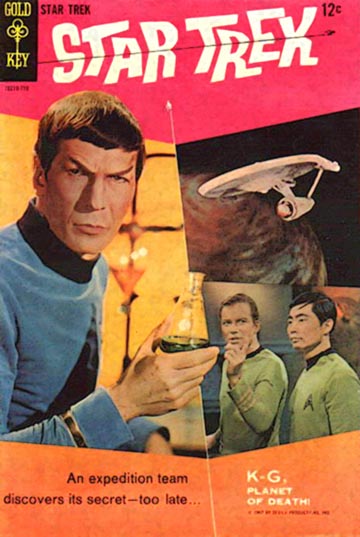
It would be far from the most original idea to submit that technology is pretty advanced these days. I have here in my pocket a smartphone (three years old - practically ancient) with a touchscreen of the sort that would have astonished 1993 me. It looks like it came out of Star Trek, for Christ's sake. You can even talk to it and it answers back!

But on Star Trek the ship computer can answer complex questions that require all sorts of interpretation, guesswork and knowledge. It displays a true intelligence. All Siri can do is the same old fuzzy database matching that wouldn't have impressed 1993 me a bit. It's quite cleverly done, but it's a trick. Same as everything else. Our entire IT infrastructure has has been painstakingly constructed, piece by piece, in expensive research efforts. Not useless, by any means, but certainly not magic.

But to politicians it's all the same. They really do see a magic box which does stuff, and us - programmers and IT professionals and other such people - as wizards. They're especially concerned that we seem to be indoctrinating their children into our world without them really understanding it. All they've done is make perfectly reasonable requests like for the magic boxes for displaying information from anywhere in the world be restricted to certain types of information. If we were in a fantasy world that might sense. The magicians have cast their spells to enchant the boxes! Surely they can tweak the spells a bit, so the magic boxes have parental consent controls.

But it's hard. Filters can work two ways. Automatically, or a blacklist. Automatically is rubbish. To get them working properly you need full AI, which ranks alongside nuclear fusion in technologies that we shouldn't rely on ever existing. Blacklists are also rubbish. And, anyway, neither work for an Internet where you can encrypt information just as trivially as registering a new website.

To Cameron we're a bunch of stubborn people who could perfectly well do what he wanted. He thinks the "no", or the "we're doing the best we can" from Google and the ISPs is a negotiating position, rather than a technical reality. He has, after all, never had a job where's he's had to deal with physics and resource constraints rather than just manipulating people. He initially tried sweet-talking the internet industry, but they've not changed their line. So he's resorting to the threat of the law, because that's the next step if you're trying to get your way and you're the government.

Except, he's not alone. The Internet porn nonsense has triggered this particular rant, but we've seen more or less the same problem with copyright (they've blocked Pirate Pay how many times now?), and more recently with libel (hello Lord MacAlpine) and breach of various court orders (Trafigura, Baby P, Jon Venables). And it's not the first time a government has misunderstood the Internet but felt it ought to write a law altering the way it worked (cookies, anyone? oh, and the snooper's charter.) And this is only going to get worse. We saw a few months ago the shocked reaction to a 3D printed gun. Yes, it's not exactly viable as a murder weapon today. But ten, twenty years down the line, what then? It will be as impossible to make a 3D printer suitable for general use yet incapable of making a lethal weapon, as it is to make a phone cable unable to transmit pornography. New Scientist ran a piece about using 3D printers to synthesize drugs, where the research team naïvely thought they could make sure nobody could hack the machines to print bad drugs.

All our laws around publishing and information are stuck in a pre-Internet age, and are fundamentally incompatible with a world where you can't stop the signal. In some areas - because of their manifest absurdity - they have lost popular consent and are effectively unenforceable. Where they have been altered they have had to resort to increasingly draconian measures in the hope of having any sort of effect. An entire sector of law has become obsolete in a generation, due to massive technology shifts. We need to have a serious discussion about what to do about that. And, if kiddies really were being scarred for life by porn (hah), we'd need to come up with an appropriate reaction to that: a mass public information campaign to parents about the services and software and hardware that is already available to restrict their children's use of the Internet might be a good place to start.

David Cameron is not capable of participating in that discussion. Very few politicians are. It's not just that he's not an expert in the subject matter, but that he lacks the humility to take advice from experts (see: Khat). Only a handful of what Charles Stross calls the "ruling party" have ever lived in the real world, where you can't stop a tide by parking your throne on the beach. Computers are not magic boxes, and we can't be heading further into the 21st century with our policymakers acting like they are.

12 Aug 22:46

Evolution Of The Monkees Part Two

by Dereksdaily45
Michael blessing the new recruitOK, so last time around we covered the majority of the noteworthy pre-Monkees singles; however, there's one remaining from NEZ that needs to be featured. Coming nearly two years before Country Joe And The Fish's "Feel Like I'm Fixin' To Die" is this incredibly direct anti-war statement. This was controversial material (to say the least) in 1965, and it's a wonder that producer Bob Krasnow was even ABLE to get something like this released through a pop label such as Colpix. NO commercial potential whatsoever, but it certainly had the potential to be an underground favorite. Unfortunately, underground FM radio was still off in the future by a year and a half or so, by which time The Monkees were looked at with disdain by a big chunk of the "hip" cognoscenti (although a surprising supporter of the group was Jerry Garcia, who famously spoke positively of the group in a '67 interview, not to mention those fans they had in the UK named John, Paul, George and Ringo).

The New Recruit

Micky dolenz davy jones do it in the name of loveBy 1971, The Monkees name was finished. Reduced to the duo of Davy & Micky and a final flop LP (Changes ), the duo walked away licking their wounds. Michael Nesmith (who departed in late '69) had launched his amazing First National Band for a series of superb LP's (calling them country rock is only telling part of the story), and peter Tork had fallen into total obscurity as his group Release never saw any of their music GET released. There was one final tombstone for the group, in the form of a duo single from Davy and (mis-spelled on the label) Micky. With production once again from bubblegum maestro Jeff Barry (he produced the much maligned Changes), this single ends the group on a high note. Although they couldn't use the name The Monkees, this superb bubblegum-soul track (which was also covered by Candi Staton) is the *true* spirit of the group, condensed to a perfect single side. Too bad it was a complete commercial failure.

Do It In The Name Of Love

Micky dolenz daybreakSpeaking of commercial failures, the 1973 remake of "Son of Dracula" was one of the biggest turkeys of the '70's. The film was essentially pulled after a disastrous first run, and has never been issued on VHS or DVD. Several of the legendary party crew "Hollywood Vampires" were involved; namely, Harry Nilsson, Ringo Starr and Micky Dolenz. One bright spot was the soundtrack LP, which featured a great Nilsson composition called "Daybreak". Micky Dolenz cut a version of the track that was issued as a single and also used in the film (although it was not included on the soundtrack LP). These hard partyin' dudes knew the heartache of daybreak all too well, and Micky gleefully tells the tale of the party starting in LA and waking up several days later in a massage parlour in Phoenix (oft told, but relayed visually in the excellent Who is Harry Nilsson documentary).This track shows off just how great a vocalist the Great Dolenzio is!

Daybreak

Micky dolenz aliciaIn addition to a small handful of other solo releases, Micky and Davy embarked on a highly succesful touring quartet with Tommy Boyce and Bobby Hart, which also saw the release of a really great, highly overlooked LP. By the end of the decade though, Micky was ready to move away from music (for the time being, at least) Micky's final single before embarking on a highly succesful second life as a film/ TV director in the UK was a nice effort in the quasi-disco "Love Light". Back when Monkee mania mark two hit in the '80's, I first heard these songs as traded on cassettes as the records were all out of print and VERY hard to find in those pre-ebay years. The one song that always stuck with me from the late '70's era was the flip side to "Love Light", Micky's self-penned "Alicia". Micky's lyrics are fantastic here, and as someone who had experienced the ups and downs of success first hand, turns in an excellent vocal performance (no surprise there).

Alicia

A journey with michael blessingBonus: I don't think there's any Nez involvement with "A Journey With Michael Blessing" (the b-side to "The New Recruit") but it's a freaky slice of an L.A musical freakout, 1965 style.

A Journey With Michael Blessing


-Derek See

12 Aug 22:17

That clause three moment

by Iain Donaldson

In previous blog-posts I have mentioned how the education policies central to the work of this Government make it the most Liberal Government in my lifetime but there is another way in which this Government is giving more than just a nod to Liberal principles, and that is in its economic policies.

Clause three of the preamble to the constitution of the Liberal Democrats makes for interesting reading as it sets out clearly the economic philosophy of the party, and for those of my regular readers who have never quite got past the bit about creating a fair free and open society, clause three bears repeating here.

“We will foster a strong and sustainable economy which encourages the necessary wealth creating processes, develops and uses the skills of the people and works to the benefit of all, with a just distribution of the rewards of success. We want to see democracy, participation and the co-operative principle in industry and commerce within a competitive environment in which the state allows the market to operate freely where possible but intervenes where necessary. We will promote scientific research and innovation and will harness technological change to human advantage.”

In every aspect of this Government’s economic policies we are seeing strong threads of clause three borne out, and finally we are beginging to see benefits that those threads are bringing to our nation.

A strong and sustainable economy requires that we use more sustainable energy and become less dependent on fossil fuels. This Government has overseen the building of more wind turbines and more photoelectric power generation than any in our history. The research it is funding into renewable energies is substantial and as a result we are beginning to become less dependent as a nation on fossil fuel. It will take time but the path to a greener economy has finally been set out.

This Government is also working towards ensuring that our corporation tax is low so that we attract business to Britain, and the action of suspending employer’s NI for low paid jobs is creating more jobs to go round. This government has seen the creation of over a Million new jobs in our economy, and the Liberal Democrats in Government have set at target of creating a million more. The more jobs there are the more we can lift people out of benefits enabling everyone to get on in life.

It is also important that the burden of tax is more fairly distributed, and thanks to the Liberal Democrats in this Government we have seen over 2 million people lifted out of paying income tax all together and 25 million people receiving a £700 cut in their income tax through raising the threshold (money Labour still want to claw back to give a tax break for the rich on luxury goods) whilst the richest will pay more income tax in every year of this Government than they did in any year of the last Labour government.

The big difference though between a Liberal Market economy and the alternatives offered by Labour and the Conservatives is the co-operative principle. Liberal Democrats believe that the means of production should be at least in part owned by the workers, and one of the great advances that we have seen under this government has been the substantial increase in the number of worker co-operatives in the UK. Even the Royal Mail privatisation is to have an element of worker co-operative ownership (not enough in my oppinion but it is definitely a step in the right direction).

As a Liberal Democrat I want to see the Government do much more in this direction, I want to see a ‘worker buyout’ being always the first option when a company goes into liquidation. If you look at the turn round in the Argentinian economy, it is exactly this principle that has driven it, and the Unions have been able to use their massive funds to help workers to make the buy-outs and own their own workplaces. That is a far better option that allowing the dead hand of state to take over, or allowing forign investors to asset strip the company of its machinery and its intellectual properties.

Most importantly, this Government has not shied away from investing in new research and development. The money that is being invested in the Graphine Research Centre in Manchester is a prime example of this. British money being invested in an invention made here in Manchester to ensure that British companies and industry are able to take advantage of possibly the greatest scientific advance since Rutherford (again in Manchester) split the atom, and the greatest industial advance since Whitworth (again in Manchester) introduced his standard gauge for the maufacture of machinery.

The difficulty in this country is that we only really have three recognised modes of business, the private company, the partnership and the sole trader. What is needed is a fourth mode, the co-operative business which actually encompasses everthing from the big worker co-ops, farms and banks, right down to the credit unions and the community associations. The vast majority buisness in this country that is not sole trader is conducted by co-operatives of one form or another.

The Liberal Democrats, in my oppinion, must make the full legal recogition of the co-operative model of business the centre-piece of our economic policy for the next general election.


12 Aug 21:43

Doctor Who: 1986

by 0tralala
After episode 653 (The Trial of a Time Lord, part fourteen)
18 December 1986
<< back to 1985
The Doctor on trial again
Tomorrow's World, 18 December 1986
On 6 December 1986, the Doctor was found not-guilty by a jury of his peers in the final - and fourteenth - episode of The Trial of a Time Lord. Twelve days later he faced a new challenge on BBC One, the Tomorrow's World Christmas quiz.

Broadcast live in prime time, it pitted the Doctor, astronomer Heather Couper and Neil Cossons, then director of the Science Museum, against the studio audience, trying to guess the purpose of a bunch of new gadgets. You can watch the whole thing on YouTube but for a flavour of the tone, here's how presenter Howard Stableford introduced our hero:
HOWARD:
The nominated captain of our expert panel is Colin Baker, Doctor Who. Good of you to find the right time to join us.

DR. WHO:
It's nice to be back again because I was on the 50,000th edition when the TARDIS - the prototype - was shown.

HOWARD:
Was I still on the show?

DR. WHO:
No you were pensioned off.

HOWARD:
Replaced, was I?
This achingly BBC banter feels a bit odd when we know that Colin Baker was in the midst of being replaced. He'd been told that his contract as Doctor Who was not to be renewed some six weeks earlier on 29 October, between the broadcasts of parts eight and nine of Trial of a Time Lord. That news seems to have been reported in the press in early December, just before the quiz was broadcast (though I've not found a source).

Doctor Who's producer still hoped Baker would appear in one more story to hand over to his successor: four days after the Tomorrow's World quiz, he commissioned that story and the writers,
"were asked to write their scripts for the Sixth Doctor and include a climactic regeneration sequence ... Any hope of Colin Baker appearing in Strange Matter was lost on January 6th, 1987, when the first installment of an interview with the actor appeared in The Sun. In it, Baker expressed regret at his dismissal from Doctor Who, and spoke scathingly of BBC1 Controller Michael Grade."
The Tomorrow's World quiz was Colin's last appearance as the "current" Doctor.

Colin wasn't sacked but the decision not to renew his contract seems like a judgment on his time in the series. The show was in trouble - it had been taken off the air for 18 months in 1985, and then Trial was not brilliantly received by the public - but that was hardly his fault. As the star, he was just the most visible, recognisible person in the frame.

How much control or choice does a Doctor have over the show? We know David Tennant said no to a story set inside JK Rowling's head. Patrick Troughton battled the production team about the burden of the production schedule and got shorter episodes in his final season. Jon Pertwee had the original actress cast as Sarah Jane Smith replaced. In each case, that Doctor had been in the role for some years which gave their opinions more weight.

But generally, interviews with Doctors suggest that while they might have set the tone in the rehearsal rooms and while filming, and put cast and crew at ease, they didn't have the time or clout to affect the programme being made. They weren't involved in commissioning or editing scripts, or the tone or direction of the series. Perhaps their biggest say over their time in the progamme is what they wore as the Doctor; Colin didn't even have that. Few - the Second, Fifth, Tenth and Eleventh Doctors - got to choose when they left the series.

That's not to say they were victims. The Doctors all clearly worked very hard to make the most of the material. Like most actors, they'd query their characters motives, reactions and dialogue. They might have rephrased lines, added jokes or asked what the emphasis should have been, or what their character knew or was thinking at a particular moment. Some incredible moments in the series are the result of an actor playing against the apparent meaning of the lines, or playing them in an unexpected way.

So I'm not arguing that actors should necessarily have more say and involvement in the material they appear in. It's not a bad thing in principle, just not always practical - or desired. Rather, I'm interested in the trust that has to exist between the lead actor(s) and those running a show. I've worked on productions where actors haven't liked or understood what we were making, but threw themselves into it anyway (usually after I'd listened to their doubts and tried to answer their questions). The key thing is the right kind of open, creative environment where people can ask questions and suggest improvements, but whoever's in charge has the final say and keeps everything on course.

That clearly wasn't happening at the end of Colin's time in the show: the producer and script-editor - the "showrunners" at the time - weren't talking, the latter left after an argument and the final episode he wrote was dumped in favour of something else. In the confusion, Colin was left asking fundamental questions about his final story - how much of what we see on screen is a lie, how much has the Doctor turned evil and is his companion really dead? It's bad enough that he had to ask, but I think the answers given in each case were the ones needing least effort to work in, not that made a better story.

All he could do - all any actor could do - was show willing and make the best of what he was handed. He did, and lost his job.

Doctor Who continued with a new actor in the lead, a new script-editor behind the scenes and a new, lighter touch. I've heard people wonder how the series might have been if Colin had stayed on. His work for Big Finish has been extraordinary, reinventing the Sixth Doctor, making him quite brilliant. But if he'd stayed in the role back then?

I think we can tell. Watch him in the Tomorrow's World quiz: smart, benign, trading terrible jokes with good humour. Making the best of it anyway.

Next episode: 1987
12 Aug 15:57

Property Madness in UK

by noreply@blogger.com (Cicero)
London Prime Property has become an international asset in the same way as any other tradeable asset from gold to bonds. It may be that the majority of properties in Zone 1 are now owned by foreign non residents. Syrians and other Arabs, Russians, Chinese: the London Property market has attracted speculators from around the globe. Increasingly, however, these new owners do not let these properties, they simply leave them empty. Walking in some central London neighbourhoods at night is a sobering experience- there are few lights on, and the economic impact is growing ever more severe.

The reasons why London Prime property became so attractive are many and varied, but the primary reason is that the UK does not tax these empty properties. Council tax is not levied when no one lives at the property, and Capital gains and VAT can be avoided very simply.

This gross distortion of London Prime property prices is destroying the city and the country. As George Osborne seeks to reflate the property bubble, the fact is that this may simply lead to significant transfers of wealth away from the UK. 

I have rarely seen a more obvious case where a land tax should be levied. It is ridiculous at a time of major housing shortages in the UK to permit such a significant portion of the housing market to simply lie idle. In my view, apart from a land tax, foreign non-residents who own UK property should at least pay a punitive capital gain rate: announced early enough this might provoke major activity and begin to de-stress the property market and create more normal investment conditions. As the rest of the UK market stagnated, London Prime has doubled over four years: this is insanity caused by our failure to tax efficiently and it is time that some of these ill-gotten gains were returned to the UK.   
31 Jul 13:23

Politics – Finally the DWP have worked out what most of us already knew about ATOS!

by Iain Donaldson

Of all the privatisation of services undertaken by the last Labour Government, one of the most dangerous and damaging was their privatisation of the review of disability benefits under a contract with ATOS.  Long before the coalition Government was formed, ATOS were blundering and blustering through appeal after appeal.

Their ineptitude resulted in more than 600,000 of the 1.8 million assessments carried out by ATOS since 2009 being the subject of an appeal, at a cost of £60m.   An astounding Around 30 per cent of the appeals succeeded and as I have said before this could only be the case if the Company was not following Government benefits policy.

From the first day that Labour privatised the assessment of disability benefits and hired ATOS to do it’s dirty work those of us who have been fighting to help people living with disabilities have been calling for a review of this company’s handling of benefits claims.  In many cases they have made rulings that have been wrong, based on unsupported assumptions, or simply outrageously unfair to the claimants.

Finally the DWP has heard the myriad voices calling for the quality of ATOS’s assessments to be reviewed and the contract they have for providing those assessments to be brought to an end, and commissioned an Audit of around 400 of the company’s written reports into disability claimants, grading them A to C.   Of these, 41 per cent came back with a C, meaning they were unacceptable and did not meet the required standard.of the quality of the service provided by ATOS.

Whilst the lowest grade does not necessarily mean the decision was wrong, it does indicate that a serious error or omission occurred, such as no evidence to justify the recommendations, or inconsistencies in the evidence provided.

Following the findings the company will be stripped of its monopoly on deciding whether people with disabilities are fit to work. The DWP said the poor quality of the company’s written reports were “contractually unacceptable” and announced on Monday it would be inviting other companies to bid for fresh regional contracts by summer 2014 to help reduce waiting times.  I repeat here what I have said many times before, for this scale of incompetence in dealing with some of the most vulnerable people in our society ATOS should have been sacked altogether.

Whilst Labour will claim that the failings are a direct consequence of three years of coalition Government, I must remind regular readers of my blog that I was raising issues about ATOS a matter of days after they took over the service when it was privatised by Labour.

Richard Hawkes, Chief Executive of the disability charity Scope, is reported to have said: “It’s about time the Government told ATOS to smarten up its act. But, it’s also strikingly clear to disabled people that the whole £112m per-year system is broken.”

I happen to disagree with him.  It is high time that ATOS were sacked and that the determination of benefits claims and appeals were placed in the hands of local councils, with the support of the specialist medics working on the care of the patient in their local health trusts where needed, and second opinions from medics from other health trusts where appropriate.


28 Jul 09:18

Oblique Strategies For Causing Social Revolutions

by noreply@blogger.com (Philip Sandifer)

A sketch written mostly for my own entertainment, and to see what happened if I wrote with a relatively constrained form on a one hour sprint.

Change nothing and continue with immaculate consistency
A sure shot, really. If nothing else the abuse we’re heaping on the planet seems sure to cause social revolution. We’ve effectively broken the food chain. We have huge amounts of the global economy invested in cities that will wash away in a bad storm, and bad storms are becoming increasingly frequent. The social order of the world is not going to remain unchanged in the face of that. Carrying on is, in fact, going to work.

Do the words need changing?
We may, after all, want to direct things. Perhaps we want “a revolution," but odds are we have some of the details in mind. Given this, it’s useful to frame the question. Magicians call this a statement of intent. Yours may vary. Let’s suggest something fairly generic like a utilitarian model of social good. 

Accretion
Social revolution is a complex thing, not a discrete event. Major upheavals to the system come out of aggregate causes from initially diverse areas of society. It is perfectly imaginable that something you are already doing is contributing to a massive social change, whether passively as you blast increasing amounts of carbon into the atmosphere or actively as you participate in thriving artistic communities. As strategies go, “do what makes you happy" isn’t that bad.

Overtly resist change
Certainly a popular strategy, especially in terms of the close links between white heterosexual male power in the world and environmental devastation. The fact of the matter is that the economic right and the outright radical right (who in fact promote change, but frame it in the recapture of a fictitious past) do offer a viable model for complete social revolution.

Make something implied more definite (reinforce, duplicate)
An increasingly viable avenue is the changing of the everyday in the expectation that political change will follow. Steubenville essentially functioned like this, though with dramatic blowback. The existence of dramatic blowback is interesting, however. The prospect of coverting what is de facto normal in the world into law is oddly terrifying to those who wield power in the world. This is what transparency and leaks do, after all - reveal the applications of human nature to the mechanisms of power. Proceed carefully, but embrace.

The most important thing is the thing most easily forgotten
There is a critique of ideology that suggests its most destructive effects are on the level of language and thought. It is not the things that the society loudly and overtly forbids us to do, nor even things like “give peace a chance" that we reject out of hand, but the things that we do not ever think to do in the first place that are society’s most effective form of repression. In this regard we might consider that spiritual enlightenment is a form of social revolution inasmuch as the social only exists on the level of its interaction with individual consciousness. Modify that and everything else changes.

Not building a wall but making a brick
Social revolution implies a very large society. We ought remember that our social life is a smaller sphere. Community scales, and the newspaper stories about the mechanisms of power are but oblique forces affecting our day-to-day life. Consider - how much of Congress have you ever met? How many Presidents? The mechanisms of power are no more real to you than The Simpsons. Social revolution can start on a neighborhood level. Go have a cookout and give burgers away to your neighbors. See what happens.

Ask people to work against their better judgement
Another reasonably frequently enacted strategy on the right, in which our sense of what is best for us and what is empirically demonstrable as best for us diverge. Active engagement of this tendency in humanity can be used to control it. This may seem counterrevolutionary, but remember - stasis is a viable strategem.

Distorting time
When exactly did you want this revolution? On a scale of centuries human understanding of the world transforms completely. You absolutely do not think like someone from 1513. The resemblance between your worldview and that of someone from 1013 is next to nil. Even on the small scale of a lifetime this is true - the world of 1913 was profoundly different to that of 2013. Even if we solve every practical problem facing contemporary civilization with no major transformations to its social configuration the basic sweep of time will still accomplish the task.

Emphasize the flaws
Political protest remains a fascinating phenomenon. It is difficult not to feel a thrill go up the spine as one watches anybody demonstrate loudly in the streets from a safe distance. Even when it goes to rioting, there’s a secret thrill. Clearly we want to root for this side, despite no clear mechanism of action or explanation of how Occupying Wall Street and overthrowing the global financial system are going to be causally linked. Again, the basic principle that if you’re spooking the people in power you’re probably doing something effective seems to apply. If the NSA is interested in it, it must be cool.

You don’t have to be ashamed of using your own ideas
Let’s presume you’ve already focused on internal consciousness as the sphere of your revolution. You still have to get up off your zen meditating ass and take a shit from time to time, so you may as well apply your perfect understanding to the real world. Even if you haven’t gotten the whole blessed and highest level of evolutionary consciousness thing down, you still may as well apply some of that rich inner life of yours to the real world. Which is to say that if you’ve got a revolutionary idea, revolute, baby, revolute.

Repetition is a form of change
History does have a habit of repeating itself. In this regard even the most progressive figure can learn from the radical right. Historical methods of enacting social change probably still work. The Situationist International almost overthrew France. The lesson to learn from this is not “well that doesn’t work," it’s “fine tune that and try again." On a more prosaic level, consider that preserving elements of society is as effective as destroying them in changing it.

Don’t be afraid of things because they’re easy to do
Easy solutions do exist. Turn out the lights in rooms you’re not in. (The Woman laughs.) Pay more attention to where your food is from. Volunteer in your local community. The obvious things people do are worth investigating.

Take a break
I am, in fact, out of tea.

Accept advice
There are people who have spent a lot of time thinking about many things that you may be interested in changing. Expertise is a tricky business, but it exists. On a basic level, listening to what scientists have to say about climate change is probably a good idea. Listening to what engineers say about the long-term viability of Miami’s urban infrastructure is probably smart. It’s terribly unlikely that you are the first person to try to solve this problem.

Decorate, decorate
There is more appeal in the Berlin Cabaret approach than the description suggests. It may well be that a life of decadence is the best route, particularly if you frame decadence as an ideology and not as an act of selfishness. What it lacks in surefire success (and remember, anything’s a surefire success) it at least makes up for in fun.

Are there sections? Consider transitions.
Are there sections? Before we consider any social transitions, we should perhaps figure that out. Contemporary social justice theory suggests a focus on intersectionality. On a basic level, this consists of the observation that most people who are screwed are screwed in several ways. On a more complex level it suggests that progress in one sphere is likely connected to progress in another, such that feminism and economic justice are natural allies. Which is to say that we should consider the possibility that there are not, in fact, sections. Equally, we should consider the fact that any given section is necessarily connected to another, and that working on two problems at once is not a bad idea, while working on all of them at once is.

Look closely at the most embarrassing details and amplify them
As we’ve previously observed, leakers are not entirely beloved by the establishment. Journalism might well be the answer. On the other hand, did phone hacking bring down News International? Did the Guardian’s PRISM scoop end NSA surveillance? Still, Havel’s injunction to live in truth seems useful and worth keeping around.

Would anybody want it?
Social revolution can be thought of as nothing more than a sales job. Does anybody want communism? Is libertarian anarchism a lot of people’s dream? Moving something into the realm of the possible is the first step in accomplishing it. 

Simple subtraction
Find the problem. Destroy it. There’s a certain simplicity to it. You can identify something wrong in the world. Go try to stop it. 

Which elements can be grouped?
Of course, intersectionality is only interesting inasmuch as its a practical tool. If everyone’s getting it in the neck that’s all well and good, but what can we do about it? Who are our viable allies, and what do our alliances constitute? Social revolution necessitates the social. You don’t get to do this alone.

Think - inside the work - outside the work
Social revolution is not the whole of society. Even when everything is changing there are aspects of society distinct from the Revolution. If you have no awareness of what those are, what you are pursuing is not the Revolution. If you have nothing that is not the Revolution you have not become the Revolution, you have become nothing.

Courage!
The first step is deciding to do something. Passivity is merely one choice. That others are scary does not rule them out. If you want radical change, you may have to actually make one.

Humanize something free of error
Religion is an aspect of society. It is worth considering whether there are gods that might be of direct use to you. Consider this both purely and in terms of intersectionality.

Always first steps
The end game is uncontrollable from the beginning, after all. You’re not solving the end of the problem right now, you’re starting a revolution. Even if the Revolution is underway, you’re still at the beginning of the future. A focus on the here and now is not counter-revolutionary.

Water
It does seem likely to be one of our most fundamental political issues, doesn’t it? Whether it be the water that’s going to wipe coastal cities out, the water the Middle East doesn’t have, or the water that increasingly more places are losing, this would appear to be a hot-button issue.

The inconsistency principle
Again, social revolution necessitates change. Changing things for the sake of it is not as frivolous a strategy as one might think. If there is nothing in your life that can viably change your life’s direction you are almost certainly not contributing to a social revolution.

Take away the elements in order of apparent non-importance
Prioritize the weaker enemies, in other words. You probably can’t end economic injustice, but you probably can alleviate the sharpest ends of it for some of the people around you. The political causes that can be won right now are not replacements for ones that are further away, but that doesn’t mean taking out the easy steps first isn’t productive. A hot-button political issue is one worth weighing in on.

Make a blank valuable by putting it in an exquisite frame
It is worth remarking on the fact that con men have a romance to them. And more to the point, a romance that seems necessarily adjacent to the political revolutionary. Perhaps fakery and lies are a more valuable tactic than we think. Alternatively, perhaps superficial change is all there is. As the advice goes, never waste a good crisis.

Make it more sensual
Alan Moore’s famed argument about how sexual liberation coincides with particularly nice periods of history does have some appeal to it, though one has to stack the deck a bit. We ought consider the possibility of sexual freedom, particularly if we remember intersectionality.

Abandon normal instruments
There is something to be said for outright personal radicalism. The commune in the woods, as it were. Certainly inasmuch as society is the thing you’re experiencing around you this would constitute a revolution. 

Be dirty
It is of course theoretically possible that the structures of power can only be altered through violence. Virtually all historical social change has coincided with violence, although correlation is not causation. Still, armed and violent revolution should not be discarded as a possibility. We might also consider “fight dirty" as a corollary of this.

Go outside. Shut the door.
Two major themes here have been nature and collaboration. Both likely exist outside of your house and day-to-day life. If we do not want to completely cede the fight on environmental issues, this is outright necessary. 

Gardening, not architecture
Aside from describing an environmental cause, we should note that social revolution is about cultivating what exists and nurturing it, not about building new structures. The world will change. Revolution is thus not about causing that, but interacting with it.

Is it finished?
No. It never is.
26 Jul 19:42

Are Lib Dem ministers happy with a “wogs go home” message?

by noreply@blogger.com (Simon Titley)
Yesterday came news of the government’s latest wheeze to reduce illegal immigration. The Home Office is planning to send large billboards round six London boroughs on the back of advertising vans, carrying the slogan “Go home or face arrest”.

For the full sordid details, read Caron Lindsay’s report on Liberal Democrat Voice, the report in last night’s London Evening Standard, and a statement issued by Liberal Democrat MP Sarah Teather, which is worth quoting in full:
This is the latest in a string of Home Office announcements that are designed to make the Government look tough on immigration. But I fear that the only impact this deeply divisive form of politics will have will be to create tension and mistrust towards anyone who looks and sounds foreign.
Instead of trying to grab cheap headlines, the Government would be much better advised to tackle the real issues that undermine confidence in the immigration system. Home Office statistics show that decision making by officials is extremely poor and leads to a quarter of initial decisions to refuse asylum being overturned on appeal. And many of those people who the Government are targeting with these policies are either those whose case has been mishandled by the Home Office, or who Ministers acknowledge cannot be sent home because they wouldn’t be safe.
Vulnerable individuals who are fleeing persecution and violence are treated with disbelief and a complete lack of compassion in a rigid and inhumane system. But rather than tackling these problems head on, Ministers are choosing to once more crank up the anti-migrant rhetoric.
These adverts are nothing less than straight forward intimidation and can only have bad consequences for communities like those I represent in Brent, where people from all faiths and races have mixed for decades. We will all be much poorer for it.
Well said, Sarah. The question is why there have been no similar utterances by any Liberal Democrat minister. After all, this is not merely some mildly unpleasant concession the Liberal Democrats have made as part and parcel of the coalition agreement. This is a fundamental issue of principle, where the Tories are indulging in blatantly racist and provocative tactics. It’s not even a practical policy; these billboards will have no impact on immigration but they will help increase racial tension. Any self-respecting Liberal should publicly disown this policy. Instead, not a word.

Might this be the explanation? In yesterday’s Guardian, John Harris noted how all the proud talk of Britain’s diversity we heard during last year’s London Olympics has been dropped by the government. He reported:
Ten days ago, the former Lib Dem education minster Sarah Teather broke cover, and talked not only about initial Tory intentions to restrict the bringing-in of non-European spouses to people earning £40,000 a year or more, but a new subcommittee of government called the Inter Ministerial Group on Migrants’ Access to Benefits and Public Services. No cabinet ministers attends its meetings, but it apparently includes such figures as the Lib Dem education minister David Laws and the Tory immigration minister Mark Harper, and its fingerprints are all over many of the proposals above.
What on earth is David Laws doing participating in such an exercise? Did he consult Liberal Democrat colleagues before agreeing to these racist policies? The man is a complete and utter disgrace to the party.

And why has Nick Clegg failed to respond to criticisms from within his party? In this instance, he would be well advised not to resort to his usual tactic, which is to patronise internal critics as naive children who don’t understand the practicalities of government. Party members already understand perfectly well what nasty game the Tories are playing – the question is, does Clegg?

Postscript: See Liberal Democrat Councillor Lester Holloway’s blog post: “Theresa May and her ministers and officials know full well the impact of this billboard will be on multicultural communities in general rather than the odd illegal immigrant who might be passing by. It reads like a message to the whole community, an attempt to divide communities and harvest the racist vote from UKIP.”
26 Jul 14:37

Monarchy versus the Panopticon

by Charlie Stross

So, the British royal family has a new third-in-line heir to the throne. Congratulations to the happy couple, who are presumably in for a period of sleepless nights. Somewhat fewer congratulations to the media and political establishment, though.

The kid is not going to have anything remotely approaching a normal life. For one thing, under current UK law, he isn't eligible to vote. His ultimate career path is already known and if he doesn't want to put up with it, tough: the pressure to conform to expectations is enormous—he was born under a life sentence. When he ends up in that final occupation he won't even be eligible for a passport (for long and complex constitutional reasons). He's going to be the subject of paparazzi attention for the rest of his life. He's almost certainly going to be sent to a private boarding school of some variety (probably Eton, as with his father), to ensure that he's exposed to normal people (for "public schoolboy" values of normality); this is normal for the royal family, and it's worked on previous generations. The usual recipe is for it to be followed by university, then officer training in one of the branches of the military, before joining the Old Firm and learning the onerous duties of public ceremonies and diplomatic receptions. The royals get a particularly brutal work-out in return for their privileges: what other family business would expect an 87 year old great-grandmother to make over 400 public appearances per year?

But those are the traditional parameters of a crown prince's upbringing. This prince is going to find things a little different because he's going to be the first designated future British monarch to grow up in a hothouse panopticon, with ubiquitous surveillance and life-logging ...

I expect there to be Facebook account-hacking attacks on his friends, teachers, and associates—and that's just in the near term. He's going to be the first royal in the line of succession to grow up with the internet: his father, Prince William, was born in 1982 and, judging by his A-level coursework, is unlikely to have had much to do with computer networking in the late 1990s. This kid is going to grow up surrounded by smartphones, smart glasses (think in terms of the ten-years-hence descendants of Google Glass), and everything he does in public can be expected to go viral despite the best efforts of the House of Windsor's spin doctors.

His uncle, Prince Harry, made some public gaffes—going to a fancy dress party dressed as a Nazi in 2005 springs to mind—but these were generally dismissed as youthful indiscretions: they happened in the age of the DSLR-toteing journalist, when repro-quality cameras were still relatively uncommon on the city streets. Now phonecams are good enough that the Chicago Times has fired their photographers, issuing iPhones to their journalists: a move which is either very prescient or very foolish, but which shows which way things are going. Right now we're living through the Photography Singularity; 10% of all photos ever taken were taken in the past 12 months, and the exponential up-slope is continuing.

What is it going to be like to be the heir to the throne, aged ten and starting at a public school (that is, a very high-end private school) in 2023?

(POLITICAL NOTE: I am a Republican, insofar as I support the disestablishment of the monarchy and its replacement by a ceremonial presidency. I hold that the existence of a hereditary monarchy creates two classes of citizen, and is intrinsically discriminatory and incompatible with the principles of human rights and equality before the law. But this is not the thread for discussing that. It's the thread for discussing the social implications of the near-future world of ubiquitous computing and monitoring as they interact with the institution, as it currently exists. Topic drift, especially onto the question of how the monarchy should be changed, will be frowned upon by the moderators ...)

26 Jul 13:57

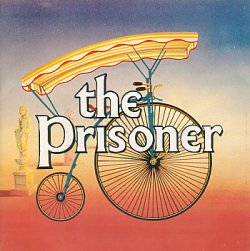
Sensor Scan: The Prisoner

by noreply@blogger.com (Josh Marsfelder)

Let's get this straight right from the start: Entire analytical projects can, have been, and should be written about Patrick McGoohan and George Markstein's The Prisoner. It's rightly regarded as one of the single greatest and most influential, and most oversignified, television series of all time. Given I don't even regard the entirety of Vaka Rangi, which tackles just about every filmed moment of Star Trek and then some, as a definitive authoritative reading of the Star Trek franchise, there is absolutely no way I can be expected to come up with some comprehensive interpretation of something like The Prisoner in one blog post. That said, this is still one of the most iconic parts of the televisual landscape of 1967-8 (not to mention a show that was a massive source of inspiration for at least one future creative figure) so there's no getting away from me saying something about it.

Some assorted thoughts then. First, for those who might not be intimately familiar with The Prisoner, it's a seventeen episode (though apparently only seven were actually intended and are considered by the creators to be part of the overall story arc) miniseries aired during the 1967-8 season on the British channel ITV that was a rather-more-than-spiritual successor to Patrick McGoohan's previous series Danger Man, in which he starred as secret agent John Drake. The Prisoner follows a nameless agent, played by McGoohan and largely assumed to be Drake himself, who, after resigning from the service, is kidnapped and imprisoned in a mysterious coastal retirement community. The rest of the series follows the agent, who is never named but who is referred to as Number Six in keeping with the Village's convention of assigning its residents numbers, as he refuses to acclimate and constantly tries to escape his captors. Number Six's captors, spearheaded by Number Two (a position filled by a revolving door of individuals) and his superior, the mysterious, unseen Number One, launch a campaign to systematically break Six and discern why he resigned so abruptly.

This summary, of course, does the show no justice because one of its biggest signatures is its overt focus on psychedelic and 1960s counterculture themes, best exemplified by its avant garde cinematography and editing and conspicuous usage of jarring, unsettling and downright bizarre imagery. There is a willfully dreamlike and disjointed approach to structure here: The show goes out of its way to muddle its viewers just as much as The Village tries to psychologically manipulate Number Six and frequently violates its own internal logic just to show that no rules or conventions are above reproach (there is infamously an entire episode where the show suddenly and inexplicably becomes a western, complete with unique intro and closing credits sequences). Although this is possibly the most celebrated part of The Prisoner's legacy and contribution to TV, it's also the part that's most easily misunderstood. First of all, expecting the show's abject weirdness to be some kind of overly complicated way of obfuscating “The Truth” and trying to use it to discern some kind of secret, hidden meaning or revelation (like the popular fan theory the show's credits are designed to give away the ending, and thus the show's “point”, with the exchange “Who is Number One?” “You Are Number Six”-this rather pointedly and obviously does not mean what fans might like to think it means if you actually watch the show) is hopelessly misguided. This is a show that is not designed to make sense. It is a show designed to tear down the concept of sense.

In that regard one of the things The Prisoner (as well as Danger Man) does not get nearly enough credit for being is an actually rather straightforward critique of its genre, which, head trippiness aside, is really spy fiction. Despite starring in a spy series himself, McGoohan was always somewhat sceptical and apprehensive about the prevalence of certain kind of spy story. He was actually one of the first choices to play James Bond, but he turned the role down because he objected to the fundamental ethics of the character and the series. Number Six is in many ways the complete opposite of Bond: He doesn't carry a gun, refuses to fight unless forced to and is explicitly celibate, the show going out of his way to show his interest in the female characters is purely platonic and that he's anything but a womanizer. The Prisoner is actually rather excellent on feminist grounds on the whole, being the rare action show without any really significant overt gendered remarks or assumptions. In addition, a reoccurring theme is suspicion over the growing threat of rampant nationalism, and indeed the one real clue we get for why Number Six resigned is that it was “a matter of conscience”.

It's also possible to read The Prisoner rather easily as another individualist versus collectivist treatise. The Village definitely operates like an oppressive, effacing institution, down to the show's famous catchphrase “I am not a number! I am a free man!”. What's particularly interesting about the way The Prisoner does this however is that this theme is not conveyed as a blunt, anti-communal attack on Soviet-style classical “liberal” systems of government that so typifies much fiction of this era. Rather, it's an altogether more localized critique of a uniquely British, and if I'm being honest Western, kind of power structure. The Village bears more then a passing resemblance to a British holiday camp, which was a peculiarly mid-20th century phenomenon whereby legions of working to lower middle class families would be shipped off to spend several weeks on holiday in a stretch of housing for what basically amounted to the adult version of a summer camp. Part and parcel of this experience would be mandatory communal meals and activities, lots of general forced happiness and even authoritarian monitor who would patrol up and down at night to make sure everyone was in by curfew and that nothing untoward (meaning flirtatious) went on. The nearest fictional US equivalent might be something like Stepford Village, if the secret wasn't that everybody was a robotic killer but that there's an authoritarian power out to gain dominance by enforcing an oppressive classist power structure.

In other words, what McGoohan is essentially doing here is likening glamourous spy fiction, and by association the espionage system Western powers like Britain are built on, to a holiday camp where everyone is required to be chipper and behave like good little conformist citizens while a distant and very probably fascist jingoistic power lords over them. So I guess in the end not much unlike Stepford after all. The sort of collectivist mentality The Prisoner is attacking isn't the kind of generative, bottom up communal living of the sort that typifies the actual left, but the kind of authoritarian statism that has defined Western imperialism since the concept began.

If we were to compare The Prisoner to what we've seen on Star Trek so far, the closest point would probably be “The Return of the Archons”, with Gene Roddenberry's critique of blindly following orders and the whims of centralized powers, or perhaps Robert Hamner's “A Taste of Armageddon” with the Federation's constant screwups and the Eminians quietly submissive to war as it's become ingrained in their society. Were I inclined to be especially charitable to people like Roddenberry, I could read an episode like that a similar way, not as blunt Red Scare rubbish but as a critique of at least the idea of authoritarianism, if not its manifestations in the West. The only problem with this is that Gene Roddenberry was not Patrick McGoohan. If Roddenberry ever intended a theme like that to be prevalent in any of the scripts he worked on in Star Trek's first season, he was nowhere near capable enough a writer to adequately convey this in the finished products, and his reactionary tendencies elsewhere make it rather difficult for me to give him the benefit of the doubt on anything. McGoohan has a deft handle on his craft and knows exactly the sorts of things he wants us to think about, and his shows reflect this in turn.

No, a far better point of comparison in my opinion is actually Raumpatrouille Orion. While that show lacks The Prisoner's handle on psychedelic, avant garde imagery and themes, it too has a very clear suspicion of hierarchical power structures. Recall the key joke is that the unified Earth government is actually staggeringly incompetent and hilariously petty, and Tamara Jagellovsk's primary character arc involves her having to come to terms with how slavish deference towards rules, regulations and authority is unhealthy, counterproductive, unsustainable and unworkable. Cliff McClane as well, despite being an ace pilot and one of the best commanders in the fleet, is far more likely to part with official policy then enforce it and he's become something of an annoyance to some of his superiors in spite of his heroism, valour and upstanding, selfless nature. While Raumpatrouille is far lighter on the whole and doesn't approach these themes with anywhere near the gravity and seriousness The Prisoner does, it does seem to share them. Much like Raumpatrouille Orion then, The Prisoner is frequently quite clearly working with the concept of institutionalized and otherwise hegemonic power structures and how to work against them from within.

However, focusing on McGoohan's basic political statements, as interesting and important as they may be, rather avoids the issue that The Prisoner is still one of the most artistic and unorthodox bits of television ever filmed. Although it remains fundamentally a bit of spy fiction, the show's explicit embrace of psychedelic imagery means the realms of the mystic and transcendental are never far away, always exerting their wills on what The Prisoner does. It may not have been the trippiest work of its time, that title would probably go to one of The Beatles' contemporaneous films (although it is worth noting The Beatles were enormous Prisoner fans and had actually originally hoped to get McGoohan to produce their movies), but what's special about how it's used here is that it can be seen as bringing together and reinforcing the other concepts the show is working through clear cut meta-commentary. There is a very noticeable televisual motif throughout The Prisoner, most noticeable in the scenes where Number Two and his aides watch Number Six's efforts on a monitor from the Blue Dome. The camera angles constantly switch between the action with Six and Two watching the same scene from the same perspective. Number Two and his men can also remotely operate different facets of The Village to foil Six's efforts, and this is another method they use to try and psychologically manipulate him.

An example that comes to mind is in the first episode, where Number Two is remarking on the failure of one of his agents, disguised as Six's sympathetic housekeeper, to extract information from him. Two says something along the lines of how “well acted” her performance was and how convincingly she played her role, and that he was sure Number Six would be taken in by it. Two sounds exactly like a hypothetical audience member here, remarking on the actions of the characters onscreen and the talents of the actors who portray them. Furthermore, the one bit of knowledge those in charge of The Village keep stressing is of paramount importance is the exact reason Number Six resigned his commission. Interestingly, we actually do get to see the moment Six resigns in the opening scene of the first episode, but we're unable to hear what he says to his superior as all audio apart from the soundtrack is muted.

Later on, we learn that The Village apparently knows everything about Six's life except this one minor annoying detail and they're obsessed with finding out what it is, and Number Two is standing in for the audience. So now, we don't just have spy fiction equated with British holiday camps and authoritarian Western statism, but also with the act of voyeuristically watching television itself. From a modern perspective, it's almost impossible for me not to see Number Two's anal fixation on irreverent and inconsequential details like why exactly this character resigned his post as a rather scathing, yet also hilarious, critique of a certain kind of obsessive genre fiction fan, which is all the more impressive as such an archetype, at least in the way we would recognise it, really didn't exist in 1967. What this means is that Number Six isn't just constrained and imprisoned by his job, or the kind of society he lives in, or even by the trappings of his genre, but by, honestly, the abstract concept of television Soda Pop Art itself.

In this regard then perhaps Number Six is more similar to Captain Kirk, at least when he's written by people who know what to do with him, then might be immediately obvious. Both can be seen as characters who are trapped and restricted by the shows they're on, and who are constantly looking for ways to escape and grow apart from them. The primary difference between the two, however, is how the shows they're on work through these ideas. Star Trek is a show that consistently only works in spite of itself, and its various disparate elements are each trying to become their own equally fascinating things while the actual structure and value system the show inherits from its influences keeps trying to hold it back. When Kirk works he's great and William Shatner is far more savvy then absolutely anyone gives him credit for, but he's got both the diegetic and extradiegetic shows fighting against him. But while Star Trek is struggling because of these concerns, The Prisoner could be convincingly read as actually being about them, which really says quite a lot about what it was possible for both the television landscape and also the larger zeitgeist of 1967 to be.

Unfortunately, this means that, in 1967, Star Trek is frankly behind the times. Between The Prisoner and Raumpatrouille Orion the world of television around it is going in directions that are pretty clearly forcing Gene Roddenberry and the Enterprise crew to play catch-up. It's telling that, of the three shows, Star Trek is the only one to be canceled outright by virtue of its own quality and ratings: Raumpatrouille's overblown budget made it financially unviable, and The Prisoner almost got another season and Patrick McGoohan actually had to fight and compromise to keep it at seventeen episodes, as it was never intended to be a long-form serial. Star Trek, in spite of its cult legacy and what the material episode lists say, really only has one more year left in it before NBC puts it to bed. But Star Trek the franchise has outlasted almost everything, which is, here in 1967, is just about the most stupefyingly inexplicable thing ever. Why is that? Well, I think part of the reason has to do with things like this...
26 Jul 12:14

The New World of Publishing: Having Fun

by dwsmith

Yeah, I know. A weird topic for a blog: Having Fun.
Over the last week or so I had the fantastic pleasure of being in a large room for a week with thirty-five very-well-published professional writers, all excited about writing and publishing and having fun.

That’s right. In this time in history where every writer’s conference, every blog post, every “expert” is shouting about the sky falling and how publishing is coming apart and the world is ending, I spent a week with writers excited for the future and enjoying writing again.

Let me repeat that: Writers excited for the future and enjoying writing.

In fact, everyone there enjoys writing and publishing so much that one of the main topics was how to control projects and decide what to write next.

A Personal Note:

When I started writing in 1974, it was an awful experience and even though I felt driven to write, I pretty much hated it. I hated the fact that I had to “rewrite” everything, that I had to “plot” everything out ahead, that I had to have “feedback” before I could ever do anything with anything I wrote.

Note: All of those problems were my internal problems. I believed all that crap of the myths, and for seven years I produced two short stories per year and hated everything about the process. Everything.

Then, in 1982, I decided to follow Heinlein’s Rules because, to be honest, they sounded like fun. And I decided that if I couldn’t have fun with my writing, I would move on to something I did enjoy. (I have done an entire long lecture series on Heinlein’s Rules and why the five rules work for writers.) I went from writing two stories a year to fifty per year and started selling. Surprise, surprise… And I was having fun writing.

In 2008, after twenty-six years of having fun, writing again had become no fun. I hated what New York was becoming, I hated what they were requiring me to do, I hated the lack of respect my hundred-plus novels got me with young editors. Writing had again become a dull, lifeless, stupid thing for me to do because of how I was treated by New York. (Note: These problems were not internal this time, but the external problems of publishing in general had invaded my mind and made everything no fun.)

I was about to walk away.

Then came the indie publishing world.

Suddenly, all the hundreds of stories and novels I had written again had value. And I could control what I wanted to write again, I could publish what I wanted to publish, and I didn’t have to rewrite for someone the age of my granddaughter (I don’t have one) because they thought they knew more than I did about writing and story.

Suddenly, when I went to the computer in my little writing garret overlooking the Pacific Ocean, writing was again fun. I was free!! I was back playing and enjoying myself just as I had done when I discovered and started following Heinlein’s Rules in 1982.

Today my main rule for writing fiction and publishing is this: “If it’s not fun, why bother?”

How to Have Fun

But Dean (I can hear people saying) how do I learn to have fun?

I think the answer I give most people is simply “First, Step Back.”

What I mean by that is step back from your writing and what you are doing and just give it a hard look. Where does writing stop being fun and start being torture?

Here are some main torture points I have heard in many, many letters from writers over the past six months.

1… You bog down and stop almost every story or novel in the middle.  

This is caused by fear, total fear of some result you have made up that will happen when you finish.  This is deep. And often it is caused by your critical voice taking over after a burst of creative voice. Critical voice always thinks your creative voice sucks.

Solution?  Dare to be Bad. Follow Heinlein’s Rules and make it a challenge to follow those rules for a year. Another solution: Stop caring what other people think. Stop showing your work to workshops. Just finish and publish and never look at numbers or reviews or anything.

Results if you follow the solution: Writing becomes all that matters, and the fun will return. (But a warning, it is scary hard to follow these solutions.)

2… You finish stories or novels easily, but get trapped by no story being perfect, so you rewrite everything and never mail or publish anything or very little and you hate rewriting.

This is caused by a couple of things. Once your creative side is done, your critical side takes over and makes you believe nothing is good enough, just like some nasty English teacher would. And you rewrite, which dulls your story and turns it into sameness and thus it will never be bought. And not being bought gives a feedback loop to your critical voice, giving it power to make every story worse and keep it in control over your creative voice.

The other reason for this is that you haven’t gotten past the myth of rewriting yet and still believe what your English teachers and others taught you.

Solution? Start studying the creative process more. Start understanding how your own brain works. There is a very real reason Rule #3 of Heinlein’s Rules is “Don’t Rewrite unless to editorial demand.”

When you realize that art comes from the creative side of your brain, you must start learning how to block the critical side at all turns. Don’t rewrite past a mistake-fix draft and a spell-check draft. Learn to trust your creative voice. (Scary hard to do.)

Results if you follow the solution: Wow, does writing become fun again. The child that is your creative voice is let loose to play and you just have a blast writing and mailing or publishing and then repeating, over and over. You get a lot more prolific and have a ton more fun.

3… You have to carefully outline everything before you start.

The cause of this is complete fear of something you made up way back in your past, or were taught and still believe. And holy smokes is outlining a story or novel ahead of writing it a dull and boring process.

Needing to outline is a totally false belief put on you by your critical voice and listening to years of myths.  Get over the fear.  Every writer is different, so for one year try writing everything without an outline. Then if that doesn’t work, go back to outlining just a little.

Solution?  Just stop. Shut off the critical voice and myths that are telling you that you HAVE to do that and try writing a story for fun with no outline. And then another and another. Give no-outlining six months or a year and see if you don’t have more fun and write better stories.

Results if you follow the solution: You will be far, far more prolific, enjoy writing a ton more, have fun with the normal challenges of writing like getting stuck, and so on. It really is great fun to just write into the dark and take a chance. And a ton less boring and a ton less work.

NOTE!!!  Right about now I have lost about half of you because you have said, “Oh, that doesn’t apply to me. I HAVE to do that. I can’t mail anything without rewriting, I can’t finish, I must outline.  If you heard that thought hit your mind, step back, and think about it again. Step Back. I’m trying to help you have more fun, remember?

4… Every book or story is an event and thus must be perfect.

This is the result of years of traditional publishers making us believe that books are “Events!!!” This is total crap, of course. Books and stories are not events, they are just stories. Entertainment. Nothing more.  But if you believe a book or a story is an event, it takes on a huge level of “Importance” to you and thus that book or story is almost impossible to let go of, or stop working on.

This also wraps in all of you trapped in doing research instead of writing. When you are trapped in research instead of writing new words on something, you are making a book too important. Research is a good thing to do if you don’t let it stop your writing.

And this thinking of a book as an event often causes the problems in the top three above.

Solution? Somehow you must take out the idea that surrounds you that a book is an event. No one way of doing this that I have found except writing fast and following Heinlein’s Rules. People around you will come up to you and ask how your book is doing. You know you have beat this when you don’t know which book they are talking about.

Results if you follow this solution: The freedom you will feel to write anything and have fun will overwhelm you and you also will end up talking to other writers about how to figure out what fun project to write next because there are so many you want to write and play with.

5… You must sell your book to a traditional publisher (or you must have an agent)

In this modern world, that feeling is just suicidal for most, meaning about 75% of all writing careers. Agents are ripping people off more and more these days, and making rights grabs with agency agreements. And unless a traditional publisher wants your book, you have no clout and are begging, and thus they will screw you with contracts. (I have done a bunch of posts on these topics.)

However, that said, this is very, very deep in many writers and often they must sell a book first or have an agent first before they can clear this out and get back on track in a modern world. That said, this desire is recoverable problem for some. Some writers never get past this and would rather sit in a bar whining about not being able to sell another book than move on. But not all writers. But it will cost you years and years of your life and more grief than you can ever imagine if you walk that path in this modern publishing world.

Many of the writers in the big class last week were traditionally published and were working hard to regain the fun in their writing. I am traditionally published, remember. I know this one. You can recover after years of publishers and agents taking your money, but it won’t be an easy recovery. Trust me.

Solution: This one is simple. Set your plan to get good enough at writing great stories and indie publishing them that in a few years you will have so many readers traditional publishers will come to you instead of you going begging to them. By then you might have learned a little more about what you want and the myth of needing to be traditionally published might have vanished some. At least then you can make a clear decision with facts and knowledge.

Results if you follow this solution: You might get really rich, and at worst you’ll become a better writer because you will have practiced and had so much fun writing.

6… I can’t indie publish my own work. I don’t know how. (Read that as I am afraid to learn.)

The learning curve for learning how to do your own covers, learning how to find a copyeditor, learning how to load a book up to all the distribution sites like Kindle, Kobo, and so on isn’t that steep. It is stressful at times. Yes, but now four years into this new world there are a ton of classes and other indies writers to help you.

And if you really want someone to take care of you, so you want to stay in traditional publishing, you are reading the wrong blog. That attitude will get you exactly what you ask for. Someone will take care of you. And take all your money and copyrights in the process.

Solution: Get over your fear. Just assign some time in your life to learn how to do covers, write good blurbs, and upload work. Expect some stress because learning is stressful by the very nature of learning. But the moment (and I do mean the very moment) you get that first book loaded and selling all over the world and realize that you did it and it’s not impossible, the feeling of freedom with your writing will overwhelm you.

Results if you follow this solution: Total freedom with your writing and a future of choices.

So Why Will All This Help Me Have Fun?

Because if you can climb past those six major things above, maybe you can go at each story as a challenge, as an adventure to tell yourself. Writing fiction is a wonderful way to make a living.

I sit alone in a room and make stuff up.

That’s my job description.

And for a few decades in traditional publishing, back in the old days before New York changed, I made a ton of money at it and had a blast.

Now I still make a ton of money at it and have even more freedom to write what I want then I ever had before. Ever.

Readers now decide if they like my story or not, not some editor.

And I can write as much or as little as I want without anyone yelling at me.

And I can make my books look exactly as I want them to look.

But most importantly, I can entertain myself.

I have thousands and thousands of choices now with my writing.

I have control and I have freedom.

And for me, all that is great fun.

Go have fun.

————————————————

Copyright © 2013 Dean Wesley Smith

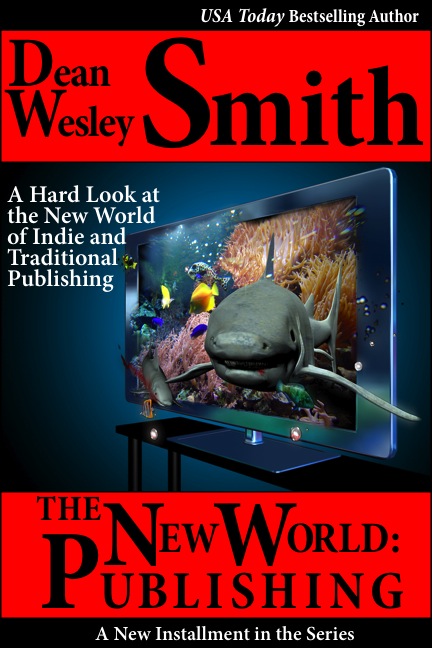
Cover art copyright Philcold/Dreamstime
————————————————–

This chapter is now part of my inventory in my Magic Bakery.  I’m giving you this small slice as a sample. I’m giving you a taste, but not selling any of the pie. 

I make my living with my writing, as I have said above. Sometimes I write these for fun, to entertain myself, sometimes I write them to help others.

Either way, if you feel this helped you in any way, toss a tip into the tip jar on the way out of the Magic Bakery.

If you can’t afford to donate, please feel free to pass this chapter along to others who might get some help from it.

And I would like to thank all the fine folks who have donated over this last year. I don’t always get a chance to respond, but the donations and the comments both after the posts and privately are really keeping me going on this. Thanks!

Tip Jar: Go To Paypal


26 Jul 09:29

I never write “metropolis”

by Passive Guy

I never write “metropolis” for seven cents when I can write “city” and get paid the same.

Mark Twain

Click to Tweet/Email/Share This Post

22 Jul 15:46

Lib Dem incumbency: immune to government?

by David Herdson

Local factors could mean they’ll be as hard to shift as ever

The biggest and longest-lasting movement in opinion polling since the 2010 general election has been the loss of at least half of the Lib Dem vote, most of which has gone to Labour.  By contrast, despite the spending restraint and what at times has been a strained relationship between the Conservatives and their traditional supporters, the last YouGov poll showed only a 1% direct net swing from Con to Lab (compared with a 5% swing from Con to UKIP).

Does this mean that swathes of Lib Dem MPs are doomed in 2015?  Election predictors based on a uniform swing suggest maybe but how do we factor in what we know is a traditional Lib Dem strength: local presence and popularity?

    Most Lib Dems seats were won because of strong and sustained local activism, which carried council election victories into a Westminster win.  That was necessary to prove relevance and distinctiveness and enabled candidates to run almost as local independents, outside and above the normal party structure.

     Despite local election losses over the last few years, the first part remains the case; the second, less so.

It is now far harder for Lib Dem MPs to lead the sort of local campaigns they used to.  Campaigns are far more effective when they’re against something than for it but when you’re in government there’s a good chance that your party is in some way responsible for what you’d like to campaign against.  Even if it isn’t, there’s a greater expectation that Lib Dem ministers might be able to do something about it (which on occasion they might, but far less frequently than the public might think).

That’s even more true for the third of the Lib Dem parliamentary party which are ministers.  Not only is it extremely difficult for them to campaign directly against the government but the demands of office also eat up time.  Simply getting about and being the sort of visible local MP that’s been the template for re-election is harder than when by far the largest part of their job was to be the member for South Bodminshire or wherever.

Likewise, the Lib Dem electoral machine has benefitted candidates hugely in the past from being able to rely on negative votes from other parties to stop a third (usually Labour to stop Tory but not necessarily).  Government and coalition has severely limited the scope to play that card in 2015.  The Lib Dems are not None Of The Above to anything like the extent they were.

    So, is it all hopeless for Clegg’s army?  Far from it.  For a start, the Lib Dems still enjoy a particularly loyal and active membership, to their local MP if not necessarily to the leadership – and it is local campaigns which will matter here.  Councillors, where they survive, will also remain a prize asset for their party, with Focus leaflets delivering regular examples of small but tangible achievements. 

UKIP – the main alternative NOTA party in England – does not have anything like the same activist and councillor base, either in numbers or motivation.

Also, many of the Lib Dem seats have the Conservatives in second with Labour far behind, blunting the impact of anti-government sentiment, though life will be more difficult for Lib Dem MPs representing urban areas, or parts of Scotland or Wales where the nationalists are strong.

Entering government after appealing to the electorate as political outsiders was always a massive jump in the party’s character; something which has inevitably impacted on their polling and will likely cost them seats.  Even so, they still have many of their traditional strengths to fall back on.  I wouldn’t be at all surprised to see the Lib Dems hold on to at least half the seats the predictors suggest they’d lose on a raw swing.

David Herdson

22 Jul 15:31

Not that porn-blocking bollocks again

by stavvers

Once again, the politicians have decided to enter into the “WE NEED TO DO SOMETHING! ANYTHING!” pissing contest over a race to block as much porn as possible in order to… do something involving children. The language of both sets of press quotes seems to conflate a hell of a lot of things with each other, so it’s kind of complicated unpicking exactly why they want to do each of the things they’re planning on doing.

In the blue corner, David Cameron wants ISPs to set up filters which automatically block porn, block certain search terms and have more power to shut down file-sharing networks, as well as banning “porn depicting rape”. In the red corner, Labour want to do kind of exactly the same thing, but vaguely say that the government aren’t going far enough (despite them doing exactly the same as Labour want) and that they “know it works” in reference to porn-filtering.

It’s hard to know where to start with this bollocks, so let’s start with all of the things that are being conflated here. Labour and the Tories alike have hit cross-party consensus in conflating images of child abuse, rape porn (where it sounds like they are throwing in the consensual stuff along with actual images of actual rapes, which are actually illegal anyway) and children seeing porn. These are all very different things, but it’s easy to see why they have lumped all of these things together. Start with the hideous, move on to raising the spectre of something that a lot of people find disgusting, and then finally park in raising concerns over just general, vanilla internet porn, because what if a child sees? It’s a clever way of gaining support for actions which will achieve very little on a social level, while granting politicians a world to win with increased internet controls.

Let’s talk about the specifics of some of the proposals here, and how woefully ineffectual they’re likely to be. Now, I for one am not a fan of letting providers put content locks on the internet. if you’re on O2, might I take this opportunity to say you smell of a dog turd on a hot day and you’re a suppurating dickmelon? It’s OK, I can say that as if you’re on O2, you’re almost certainly not reading this blog because apparently it’s porn and you’d have to pay your mobile provider in order to “verify your age” and get to see what I’ve written. Now, you might notice that my blog is not porn. I’d wager you’d have a hard time cracking one out to this blog, and even if you do, your kink is not my kink, but your kink is OK.

Obviously, it’s not all about me, and there’s a lot of stuff which gets blocked by mobile content locks, such as sexual health sites and LGBT sites. In short, things that definitely aren’t porn and information that young people ought to be able to access. A lot of social justice websites also disappear under content locks as many of us are talking about sex and rape and all that stuff which apparently young people ought to be kept completely unaware of, leaving them to learn about sex and sexuality and consent through the medium of terrible fanfiction.

It gets worse when you add in the possibility of blocking certain search terms. Sometimes, any given search term will be used by a survivor in order to make sense of what happened to them, in order to find support from people who have been through similar. By just flat-out blocking these search terms, access to vital support could well be blocked. Yes, David Cameron seems to think this can be safeguarded by blocking results and instead sticking up a helpline number, but sometimes a helpline is not what survivors want. Sometimes it’s a search for a community, sometimes merely an indication that what happened to them was wrong. This move could well prove to be dangerous.

As for throwing in rape porn, I’ve made my views on this matter perfectly clear. A ban isn’t the solution. What could solve these problems is hard, far too hard for a media-friendly quick fix, the appearance of something being done.

With all of this is the pervasive thread of, as the Labour press release said “we know this works”. But do they? Do they really? There is evidence supporting the idea that increased access to porn reduces the incidence of rape, and there is evidence for the other view. It’s not conclusive: pretty much all studies have used internet access as a proxy for looking at porn, and none have tested whether there is any impact of actually blocking porn. Indeed, it looks like what the politicians want is to produce is a major social experiment of this hypothesis, with the added benefit of being able to decrease access to anything else they find unpleasant.

And it is all for the sake of that media-friendly quick fix. The quick fix desire, the obsession with doing something shit with instant results, is pervasive throughout all of the political spectrum. This measure will no doubt garner the support of some feminists, feminists who have lost site of the fact that we need so much more than to push the things we do not want to see out of sight.

Banning and blocking will not stop abuse from happening, it will just drive it underground, making it easier to perpetrate. At all ages, we need better education about consent. And, as I have said before, we need better porn, ingraining consent as a process inherent in sex. We need to be better at looking out for communities, of responding to abuse that happens, rather than hoping it goes on in places we do not look. We need to make sure employment rights of porn performers are protected until capitalist patriarchy falls entirely. We need to destroy rape culture and grind it to dust.

And that all sounds hard, too hard for a lot of feminists who have lost sight of how deep the rot goes, preferring such inadequate quick fixes mediated entirely by a state with a vested interest in restricting internet access.

But it is only the hard work that can ever end rape of people of all ages; only the hard work which will eventually keep all generations safe. I see the appeal of the quick fix clearly, but we must continue to think, criticise and act. It is not better to do something untested with potential harms. It is not safe to trust the state with this task.

It may sound cliched, my repeated demands for a complete revolution across all facets of society, but this is what we need to address the real problem of rape and abuse. Creating a climate where we cannot speak openly about it is dangerous: these are the conversations that need to happen. Unfortunately, silencing these discussions is one likely outcome of the proposed measures, and let us not forget that the this outcome would only benefit those who profit from rape culture.

Further reading

Is the rape porn cultural harm argument another rape myth? (ObscenityLawyer) Exploration of the evidence base.

Family friendly content filters (Sometimes, it’s just a cigar) Pertinent questions

The proposed UK porn filter is a threat, not a safeguard (Dave I/O) Really detailed techie analysis of why the blocks won’t work, and what might happen.

Porn blocking – a survivor’s perspective (Milena Popova) Why a survivor thinks it’s a horrible idea.

Comment from Wokstation Exploring the technical issues of a porn block.


22 Jul 15:17

Myriad Universes: The Planet Of No Return (Gold Key)

by noreply@blogger.com (Josh Marsfelder)

One of the key points frequently brought up in fan discussions about the differences between Star Trek, Star Wars and Doctor Who as large-scale science fiction franchises is that Star Trek supposedly has a hard and fast “canon”: A meticulously constructed and maintained Official History of stories that actually “happened” as opposed to ones that “don't count”. For better or for worse, this is seen as a major point of contrast between the three franchises: Star Trek's canon is supposedly absolute, whereas Star Wars' is more fluid and the subject of much debate. Meanwhile, true Doctor Who fans will be quick to point out their show has no canon at all: Every single Doctor Who story that has ever been told both did and didn't happen, depending on the perspective of the person making judgment calls about it.

I've never been especially fond of the idea of canon. Aside from the self-evidently rather silly notion of squabbling over which events did and didn't happen in a fictional world, to me the concept grows out of a particularly exclusionary mindset and approach to genre fiction I pretty strongly disagree with. While the fundamental goal may be to pay respects to a work's originator, and weigh their contributions to it accordingly, canon to me seems more typically used to lay down arbitrary and authoritarian rules as to who can and can't contribute to a developing oeuvre. There's a very good reason there's no mythological canon: Myths and legends belong to an entire people and their whole existence is built around the expectation that stories and ideas will be shared and retold constantly, and that new ones will be continuously added to the pile. If Soda Pop Art is going to serve a similar role for Western cultures, building a big gate, locking the door and only giving a podium to the people already on the inside isn't going to do anyone any good.

The first recorded use of the term “canon” (which is, of course, a word gleaned from Biblical studies) to refer to genre works is actually in a 1911 satirical essay by Ronald Knox, who was lampooning scholars interested in discerning a “historical Jesus” and sourcing the Synoptic Gospels by applying their methods to Sir Arthur Conan Doyle's Sherlock Holmes stories (blog friend Andrew Hickey has more details in this excellent post). The problem is, as with most great satire, few actually got the joke and Sherlock Holmes fandom in fact latched onto the idea and attempted to construct a legitimate Sherlock Holmes Canon, which became no more and no less then every story Conan Doyle himself wrote, and set about trying to create a timeline to make it all fit together. It should go without saying this was expressly not Conan Doyle's intention for his stories, which he turned out on a fairly regular schedule to keep up with massive demand for more Holmes mysteries and keep himself employed as a writer (his numerous attempts to either kill Holmes or end his adventures went over about as well as trying to kill off a massively popular franchise does today).

But regardless of where the idea of genre canon came from, the fact of the matter is that it's something Star Trek latched onto and was a perspective Gene Roddenberry was clearly working from, isn't it? After all, the whole idea of a Star Trek canon comes from Roddenberry specifically saying only the TV and film stories counted, and as the shepherd decrees the flock obeys.

Well, not quite.

First of all, the idea of Gene Roddenberry being the sole torch-bearer and authority for all of Star Trek should already be a claim we should all be more than a little sceptical of. Secondly though, even if you for some bizarre reason want to grant Roddenberry the title of Godlike Creator, the fact is he never actually *said* anything like this. What he actually said was something far less concrete and more guarded: Early on in the run of Star Trek: The Next Generation, while he was still de facto showrunner, Roddenberry was asked by a fan at a convention which stories “counted” among all the various Star Trek TV episodes, movies, novelizations and comic books. Roddenberry said that when he and the writing staff were making new episodes and needed to cross-reference something, they only looked at the TV episodes and movies, because there was just too much spin-off content for him to keep track of. Roddenberry also apparently asked Mike Okuda to come up with a solid timeline for the franchise at this point (something it had lacked beforehand) just to keep things easy for him and the production team, hence the first recorded mention of an in-universe calendar year in the Star Trek: The Next Generation season one finale.

It's very important to look very closely at what exactly Roddenberry's statement is, because it is manifestly not a declaration of the existence of a canon. Instead, this is rather an explanation by Roddenberry of a specific approach to writing the franchise that he uses to make life easier for him personally. It is not a decree from on high that certain stories “don't count” or are somehow less valid or less worth investigating because he and his team didn't film them for whatever reason, and to take this comment and use it as some excuse to throw out reams of Star Trek novels and comics, or to discourage fans from writing their own Star Trek stories (many of which are in fact leagues better than the stuff that actually made it to air), is at once more evidence of the annoying tendency to deify Roddenberry and hang on every word he said, as well as a clear misreading of those words and an attempt to weaponize them for a purpose they were never intended to be used for. There is, in point of fact, no such thing as a hard-and-fast Star Trek “canon” and nobody involved in making the show (at least from the first and second generation of writers) ever meant for there to be one in the first place.

Which is rather a roundabout way of both introducing this section of the blog, which looks at so-called “non-canon” works in a way designed to hopefully demonstrate their merit and value both apart from the television and movie stories and as a vitally important part of Star Trek history in their own way. The first story I've pegged to talk about is “The Planet Of No Return”, the debut issue of the spin-off Star Trek comic series from Gold Key. This series lasted an impressively long time, from July, 1967 to October, 1979, and was the first (and for a significant amount of time only) licensed comic book based on the franchise. The idea of a licensed tie-in comic is an important one, and this is far from the last time we'll be talking about it. A comic book based on a TV show is both an easy way for a publisher to squeeze more money out of the franchise, but it's also a way for fans to get new adventures featuring their favourite characters during the series' hiatus. It's also telling Star Trek got a comic book right away as opposed to other forms of spin-off media, as that rightly or wrongly tacitly implies a target audience of children (which the show in its earliest days seemed to be working hard to distance itself from), and indeed Gold Key was largely famous for licensed works based on cartoons (including distributing Carl Barks' Donald Duck stories in the United States for a time).

“The Planet Of No Return” is apparently nobody's favourite Star Trek comic, despite its historical value (and corresponding exorbitant collector's value). Much of the disdain for this story comes from, naturally, its apparent flagrant violations of Star Trek canon. The transporter is called a teleporter, the bridge looks nothing like the bridge on the TV show, nor does, actually, the rest of the ship, and Kirk and Spock talk about using TV and radio frequency scanning instruments. In some later issues of the Gold Key Star Trek book, there are some rather infamous scenes of the Enterprise acting like a rocket ship and leaving ignition trails. It is true that Gold Key's writers in the earliest days of the comic frequently had no working knowledge of the property they were ostensibly trying to adapt, but given that obvious handicap Star Trek actually doesn't turn out too badly and, in fact, “The Planet Of No Return” is probably closer to the actual TV show in 1967 than many fans would probably be comfortable admitting, if not outright superior to it in some areas.

Firstly, the fact the ship's interior looks nothing like Desilu's backlot is actually a *plus* as far as I'm concerned. A comic book naturally has more space and resources to experiment with elaborate artwork and design then a TV show, and that actually shows here. The Enterprise bears more than a passing resemblance to its TV counterpart (which is more than can be said for Kirk, who looks absolutely nothing like William Shatner. Spock, McCoy and Rand don't look too off by contrast), and actually looks far more visually evocative, with pleasingly curvaceous instruments and meticulously detailed rooms, which give the ship a sense of scale it never had on TV. There's also a variety to the decks, with the various science labs looking rather dark and claustrophobic as Spock and McCoy huddle over monitors, which is contrasted to with openness of, say, the transporter room. The Enterprise here actually looks more than a little like a convincing hypothetical halfway-point between the Orion and the Enterprise from Star Trek: The Motion Picture.

The story is also quite attention-grabbing: Nonsense technical jargon about travelling though “Galaxy Alpha” aside, the Enterprise is very explicitly on a mission of exploration here, conducting a survey with the express intent of finding new and undiscovered forms of life. That may not sound too revolutionary, but coming off a season that, contrary to the pop perception of the Original Series, was about 90% comprised of stories where Kirk and the crew are on routine patrol duty enforcing space laws, is a genuine breath of fresh air. This is the first time the Enterprise has been consciously designed as a ship of scientific exploration, and the fact this momentous change happens in the silly spin-off comic book that “doesn't count” is frankly absolutely delightful. Said new life is also interesting in its own right: The crew stumbles upon a planet inhabited by a civilization of intelligent, sentient plants who reproduce by seeding spores throughout the galaxy that turns animals into plant creatures. It's not the most original or engrossing premise, but for a 12-cent action sci-fi adventure comic it's more than serviceable, and a damn sight more imaginative than the parade of identical Earth colonies we got in the Roddenberry era.

The rest of the book is standard pulp stuff: The crew beams down to investigate, gets menaced by plant monsters (including one eye-rolling scene where Rand gets kidnapped and tossed into a plant cattle farm, which is mercifully of the slaughterhouse variety instead of the dairy one), laser gun fights ensue, as do a charmingly heaping helping of silver age expressions like “Great Galaxies!” and “Howling Crashwagons!”. That said, the story does have one more surprise up its sleeve in the treatment of its token redshirt: When the security-guard-of-the-week gets predictably infected and mutates into a plant beast, he sacrifices himself to protect the rest of the landing party and there is almost a full page dedicated to the crew mourning his loss and remarking on what a good friend and officer he was before burying him in an impromptu service on the planet's surface. This is the most care and attention Star Trek will *ever* pay to a redshirt death, and it displays a level of awareness about the limitations and drawbacks of its genre that's decades ahead of its time. He's obviously only there to get killed off, but the crew still treats him as a person who had relationships and aspirations. Once again, the supposed silly spin-off work is doing things better than its parent property.

The final aspect of “The Planet Of No Return” that Star Trek fans are most likely to raise a fuss about is the resolution, where Kirk has the Enterprise sterilize the planet, thus totally wiping out a civilization he himself regarded as intelligent and sophisticated, to prevent the spores from spreading throughout the galaxy. This could be seen as a pretty flagrant violation of Starfleet ethics and philosophy, not to mention a generally morally bankrupt thing to do. However, this scene is, disturbingly, not quite as removed from the sorts of things we've been seeing on television this year as we may like to pretend it is. After all, let's not forget that in “A Taste of Armageddon” Kirk gave a standing order to destroy all signs of life on Eminiar VII should he fail to convince the Eminians of the true horrors of war and almost facilitated genocide of the Horta in “The Devil in the Dark” before he came to his senses. So really, a scene where the Enterprise uses its phaser banks to salt and burn an entire planet because its native civilization is based around intergalactic parasitism is a depressingly reasonable thing to expect of Star Trek in 1967.

But really what we have with “The Planet Of No Return” is a book that's doing exactly what a spin-off work ought to do, which is provide more adventures when its parent property is off the air that are in keeping with the spirit and tone of the original while doing things that it couldn't do constrained by television. It's not a book I'd necessarily recommend to someone looking for a sterling example of how Star Trek's spin-off and fan works improve the franchise on the whole, but it's everything we could reasonably expect a Star Trek comic book circa 1967 to be like. And the time will come on more than one occasion where stories like this will be the franchise's torch-bearer, because something like Star Trek can only be native to a medium like television for so long. This is a theme that is every bit as important to learning about what Star Trek is about as figuring out what Gene Roddenberry's words meant or what the original point of the Klingons was: It's stories like this, the “non-canonical” and the “ones that don't count”, that will keep Star Trek alive for years to come.
22 Jul 13:51

Saturday 20th July 2013

Andrew Hickey

Very nice post, worth reading all of.
BTW I've finally found an example of something Mel Smith was in that Holly's seen -- he played the torturer in The Princess Bride.

Balls. Mel Smith died.This was a shock both because he was way too young, but also because I was surprised how much it hit me. I didn't realise how much I liked him, but to a young boy who was not interested in music he was one of the rock star heroes of my childhood. Not The Nine O Clock News was the first significant TV comedy for my generation. We'd missed out on Monty Python (although I caught up with it on LP) and in those days there was a long drought between subversive comedy shows. It was massive.
22 Jul 07:32

#951; In which Kim gets her Wish

by David Malki !

CONCERT TONITE: Marooned For A Decade, Kimberly Collins Ate A Piano. Come Hear Her Arresting, Dissonant Belching In 7/4 Time

22 Jul 07:31

The Boot Is On The Other Foot As Opponents Cry "Mercy!", So Let Us Be Gracious

by noreply@blogger.com (Jae Kay)

It takes a man to suffer ignorance and smile,

Be yourself no matter what they say

For the last couple of hundred years (i.e. the period where identifiably LGBT people have existed) there has been little let up in the persecution of our predecessors. They suffered executions, chemical castrations, electroshock therapy, imprisonment and public shaming. It is with great relief that I can look back on my life and know that the worst that ever happened to me was a few stones thrown at my boyfriend and I when we dared hold hands in public. Our community, however, was forged through that odd mixture of passion and terror.

It is thus rather easy, even for those of us not personally touched by the persecution of the past, to look at opponents as they lose battle after battle and laugh when they claim to be persecuted themselves. These are people who get rather upset if you even just refer to them as a bigot when they refer to your relationship as "grotesque" or "disordered". So yes, it is easy to mock them.

We must, however, be cautious. On occasion on this blog I warned our opponents that they should think carefully about their actions for they may not like it when their influence is on the wane. But I also have the same warning for those I very much agree with. We must be the better people, the good people, the ones who (should our influence itself wane) will be able to say "We weren't like you".

I remember the first time I walked down the street in London and heard some man screaming into a megaphone about how evil gay people were. It hurt. There's no pretending it didn't. It made me feel deeply angry. But I understood that he had the right to speak freely. So it is sad to see people making complaints to the police about nasty people like Tony Miano. It only helps to stroke Christians already intense persecution complex. So please... stop it. What would have been better would have been to set up a rival speaker right next to him talking of the evils of religion, the hate that is spewed in its name, the harm it does to free thought and free speech the world over. And also point out that cowardice=/="woman".

But saying that it is possible that our opponents may experience injustice does not mean we should accept all their outrageous comments. Orson Scott Card, a US writer and infamous Mormon hater of homosexuals, said recently about the Supreme Court decision on DOMA:

“It will be interesting to see whether the victorious proponents of gay marriage will show tolerance toward those who disagreed with them.”
If I'd been reading that over my breakfast there'd have been cornflakes everywhere as I splutter in disbelief.

Or check out this disingenuous article Can Gay Couples, Too, Live and Let Live?

Our opponents EXPECT us to be better than them. As if they have a right to expect it. I cannot begin to express how infuriating, yet insightful, these reactions are. Those who insult us, attempt to oppress us at every opportunity and who would have us back in the closet in seconds if it was their choice demand that we treat them with the respect they so failed to give us.

BUT. There is always a but. We must meet their expectations. Even exceed them. We must bite our lips, avoid the temptation to enact (quite justified) revenge. We must be the example that Christians and other religious types so failed to be.

As they flail wildly for attention, as their membership dwindles, as their hate becomes manifest we have the luxury of being gracious. If we are to believe we have the right to liberty, then we must protect their rights to it too.

Always remember: Don't be Mary Whitehouse.
22 Jul 07:28

Some editors

by Passive Guy

Some editors are failed writers, but so are most writers.

T. S. Eliot

Click to Tweet/Email/Share This Post

22 Jul 07:23

How to Share an Innovative Idea

by Scott Meyer

As always, thanks for using my Amazon Affiliate links (USUKCanada).

21 Jul 23:20

An improving economy: The biggest threat to the future of the UK?

by TSE

If you subscribe to the theory that the next election will be largely determined by the performance of the economy, then 2013 has been interesting, at the start of the year, the main economic news was whether we would avoid a triple dip recession.

A few months ago, not only did we avoid the triple dip, but it turns out the double dip didn’t happen either, and a few weeks ago, the cherry on the parfait was that the IMF upgrades UK growth as its cuts rest of the world.

This month the economic optimism index has hit three year highs with both YouGov and Mori, with all these factors, it is unsurprising that the Labour lead has narrowed this year, with the Gold Standard of VI, showing the Labour lead wiped out.

If the quarter 2 GDP figures released this week, show further economic improvement, then the polls could narrow further and start showing  a conservative lead?

For supporters of this theory,that it’s the economy, stupid, proof of this theory is that the largest and sustained shift in Voting Intentions in this parliament followed the omnishambles budget of 2012.

So how does this have an impact on the Scottish Independence referendum to be held in 423 days time in, September 2014?

Panelbase conducted a poll last October which found that an 8% lead for remaining in the Union became a 12% lead for leaving the union if Scottish voters believe David Cameron’s Tories will win the UK general election in 2015.

To put that finding into context, David Cameron remains unpopular in Scotland and trails Alex Salmond by 40% in the leadership ratings, as per the Ipsos-Mori Scottish Political Monitor for May

In the past week, we’ve seen that the Scottish economy is outperforming the rest of the UK, add in polling from 2011 that shows almost two-thirds of Scots would vote for independence if they were guaranteed to be just £500 better off a year, then perhaps Scottish independence is a lot closer than we think if it starts looking like that David Cameron and the Tories will continue to be in office post May 2015.

At the time of writing the best odds on Scotland voting to leave the Union next year is 9/2, available with both Ladbrokes and William Hill.

TSE

21 Jul 22:50

Microsoft: From QDOS to QMA in less than 35 years

by Scott

This past week I was in Redmond for the Microsoft Faculty Summit, which this year included a special session on quantum computing.  (Bill Gates was also there, I assume as our warmup act.)  I should explain that Microsoft Research now has not one but two quantum computing research groups: there’s Station Q in Santa Barbara, directed by Michael Freedman, which pursues topological quantum computing, but there’s also QuArC in Redmond, directed by Krysta Svore, which studies things like quantum circuit synthesis.

Anyway, I’ve got two videos for your viewing pleasure:

  • An interview about quantum computing with me, Krysta Svore, and Matthias Troyer, moderated by Chris Cashman, and filmed in a studio where they put makeup on your face.  Just covers the basics.
  • A session about quantum computing, with three speakers: me about “what quantum mechanics is good for” (quantum algorithms, money, crypto, and certified random numbers), then Charlie Marcus about physical implementations of quantum computing, and finally Matthias Troyer about his group’s experiments on the D-Wave machines.  (You can also download my slides here.)

This visit really drove home for me that MSR is the closest thing that exists today to the old Bell Labs: a corporate lab that does a huge amount of openly-published, high-quality fundamental research in math and CS, possibly more than all the big Silicon-Valley-based companies combined.  This research might or might not be good for Microsoft’s bottom line (Microsoft, of course, says that it is, and I’d like to believe them), but it’s definitely good for the world.  With the news of Microsoft’s reorganization in the background, I found myself hoping that MS will remain viable for a long time to come, if only because its decline would leave a pretty gaping hole in computer science research.

Unfortunately, last week I also bought a new laptop, and had the experience of PowerPoint 2013 first refusing to install (it mistakenly thought it was already installed), then crashing twice and losing my data, and just generally making everything (even saving a file) harder than it used to be for no apparent reason.  Yes, that’s correct: the preparations for my talk at the Microsoft Faculty Summit were repeatedly placed in jeopardy by the “new and improved” Microsoft Office.  So not just for its own sake, but for the sake of computer science as a whole, I implore Microsoft to build a better Office.  It shouldn’t be hard: it would suffice to re-release the 2003 or 2007 versions as “Office 2014″!  If Mr. Gates took a 2-minute break from curing malaria to call his former subordinates and tell them to do that, I’d really consider him a great humanitarian.

21 Jul 20:51

The Cygnus Solution.

by Peter Watts

I think Ontario Power Generation is trying to sell us on the idea of feeding nuclear waste to swans.  At least, that seem to be the subtext of this ad I just got focus-tested on (click to embiggen)…

probit01

Probit seemed curious as to my reaction…

probit02probit03

probit04

probit05

Then they asked some questions to assess my Tree-Hugger Quotient:

probit06

probit07probit08

probit09probit10probit11I especially liked the won’t-someone-think-of-the-children question and that last Rabble-rouser metric.

Probit finished off by telling me a little bit about themselves:

probit00

Which actually added a nice bit of symmetry, since the ads they use to sell themselves are every bit as substantive and convincing as those their clients use to sell the Cygnus Solution.  I especially like the compulsive way they bolded up the word experts three times in a single sentence. I was going to be all skeptical, but if it’s in a bold font it must be true.

Maybe I’m not being fair. I could be misreading the ad entirely. After all, that picture is presumably meant to represent the neighborhood “thousands of years from now”. Maybe, after all those millennia of nuclear contamination,  those aren’t even supposed to be baby swans stuck to mommy’s back.

Maybe they’re sapient tumors.

21 Jul 20:41

Go See 'Blackfish' Before Sea World Stops You

by David Neiwert


There's an amazing and gripping new documentary out this week that -- like The Cove -- may prove to be at least a small turning point in how humans treat our fellow animals, wild and otherwise. It's titled Blackfish, and it's well worth your time.

And if the noises coming from Sea World -- the chief target of the documentary -- prove substantive, you may want to see it before it gets pulled from theaters under threat of lawsuit. The New York Times has the story:
In an unusual pre-emptive strike on the documentary “Blackfish,” set for release on Friday in New York and Los Angeles by Magnolia Pictures, SeaWorld Entertainment startled the film world last weekend by sending a detailed critique of the movie to about 50 critics who were presumably about to review it. It was among the first steps in an aggressive public pushback against the film, which makes the case, sometimes with disturbing film, that orca whales in captivity suffer physical and mental distress because of confinement. ...

... It was also deliberating possible further moves, which might conceivably include informational advertising, a Web-based countercampaign or perhaps a request for some sort of access to CNN, which picked up television rights to “Blackfish” through its CNN Films unit and plans to broadcast the movie on Oct. 24.

... Asked whether SeaWorld was contemplating legal action against the film, G. Anthony Taylor, the general counsel, said decisions about any such step would have to wait until executives were able to more closely assess the movie. “Blackfish” made its debut at the Sundance Film Festival in January and has since screened at other festivals in the United States and abroad.
Here are the eight points Sea World raises -- along with the filmmakers' responses. As you can see, Sea World's arguments are made out of some pretty thin gruel. For example, they try to pretend that orcas live as long or longer in captivity than they do in the wild -- an outrageously laughable claim:
SeaWorld Assertion 2
The assertion that killer whales in the wild live more than twice as long as those living at SeaWorld. While research suggests that some wild killer whales can live as long as 60 or 70 years, their average lifespan is nowhere near that. Nor is it true that killer whales in captivity live only 25 to 35 years. Because we’ve been studying killer whales at places like SeaWorld for only 40 years or so, we don’t know what their lifespans might be—though we do know that SeaWorld currently has one killer whale in her late 40s and a number of others in their late 30s. 


Film Response
In the wild, average lifespan is 30 for males, 50 for females. Their estimated maximum life span is 60-70 years for males and 80-90 years for females. In captivity, most orcas die in their teens and 20s and only a handful have made it past 35.The annual mortality or death rate for orcas is 2.5 times higher in captivity than it is in the wild. These are not controversial data. In the film, we depict what seems to be a deliberate attempt by SeaWorld to misrepresent these well documented data to their visitors.
The film's director, Gabriela Cowperthwaite, observed in an interview with Salon that the facts just aren't on Sea World's side, so it is trying the usual right-wing tactic of creating an alternative reality in which they are:
And yet it did surprise us that they would want to take on the facts. Anyone who knows anything about SeaWorld knows that this has always been a losing battle for them; the facts are indisputable. Their intention is to cast a shadow of doubt right before the film goes nationwide. We expected it. But I didn’t know they would’ve taken this tactic. It’s not one they tend to win.
But they have been good at shutting down and mucking up investigations of their operations, including those by local and federal animal-welfare authorities, and they've been expert at throwing up lots of fog about what they do and the nature of their "zoological facilities" -- which are, as Cowperthwaite observes, really entertainment venues that generate multibillon-dollar revenues for their ownership.

And let's not forget just who those owners are: None other than our right-wing friends at the Blackstone Group, well noted for their attempts in cahoots with the Koch Brothers to astroturf such campaigns as "Social Security reform", and whose CEO notably compared President Obama to Hitler for having the audacity to raise taxes on him and his fellow 1 percenters.

But more important, as the Times review observes, the film's power is driven by the immense charisma of the animals themselves -- and the growing realization on our part that tiny concrete tanks are no place for six-ton giants with powerful brains:
Calmly and methodically countering SeaWorld’s contention that whales benefit from captivity — the Web site “Orcas in Captivity” places the current total at 45 — Ms. Cowperthwaite questions the advisability of exploiting mammals whose brains, the neuroscientist Lori Marino suggests, may be more complex than our own.

“When you look into their eyes, you know somebody is home,” one of the trainers says. Perhaps that’s why SeaWorld’s most well-known show was called “Believe.”
Blackfish isn't showing everywhere this weekend; it's coming out in staggered releases nationally. Check the film's screen schedule for a complete rundown.

UPDATE: Andrew O'Hehir has a great piece about Blackfish at Salon.
20 Jul 17:04

The screenwriting book that’s taken over Hollywood—and made every movie feel the same

by Passive Guy

From Slate:

If you’ve gone to the movies recently, you may have felt a strangely familiar feeling: You’ve seen this movie before. Not this exact movie, but some of these exact story beats: the hero dressed down by his mentor in the first 15 minutes (Star Trek Into Darkness,Battleship); the villain who gets caught on purpose (The Dark Knight, The Avengers, Skyfall, Star Trek Into Darkness); the moment of hopelessness and disarray a half-hour before the movie ends (Olympus Has Fallen, Oblivion, 21 Jump Street, Fast & Furious 6).

It’s not déjà vu. Summer movies are often described as formulaic. But what few people know is that there is actually a formula—one that lays out, on a page-by-page basis, exactly what should happen when in a screenplay. It’s as if a mad scientist has discovered a secret process for making a perfect, or at least perfectly conventional, summer blockbuster.

The formula didn’t come from a mad scientist. Instead it came from a screenplay guidebook, Save the Cat! The Last Book on Screenwriting You’ll Ever Need. In the book, author Blake Snyder, a successful spec screenwriter who became an influential screenplay guru, preaches a variant on the basic three-act structure that has dominated blockbuster filmmaking since the late 1970s.
When Snyder published his book in 2005, it was as if an explosion ripped through Hollywood.

Link to the rest at Slate and thanks to Meryl for the tip.

Click to Tweet/Email/Share This Post

20 Jul 10:49

Crib Sheet: 419/Rule 34

by Charlie Stross
Andrew Hickey

I don't know what it says about me that I read the whole of Rule 34 and didn't notice that none of the characters except the gangster were heterosexual. Probably something bad -- the sexuality equivalent of colour-blindness...

It is something of a truism that the reward for a job done well is another job.

In my case ... "Halting State" was that rare, unexpected thing: a commercial breakthrough novel. (The initial hardback run sold out before publication date, and it went into reprint twice in its first month: it earned out the hardcover and paperback advance in its first three weeks.) I was busy finishing "Saturn's Children" when this happened, and regretting not having a sequel up my sleeve—but "Halting State" had been hard to write (it took me 15 months; my contract allowed 12 months per book, so I got paid late).

So my agent went into a new contract round with Ace and Orbit, and this time came back with a three book deal: a short story collection (to give me time to recharge my batteries), a sequel to "Halting State" titled "419", and "The Fuller Memorandum".

So what happened to 419?

I sat down to write "419" in early 2008, right after I wrote "Palimpsest" and then "The Fuller Memorandum", in that order. Then I got blindsided by the future.

"419" was going to be the tale of the biggest bust-out in history: an Advance Fee Fraud targeting the World Bank and the EU and the US Federal Reserve to the tune of (raises little pinkie, Dr. Evil style) "twenty beellion dollars!"

I'd read about the Banco Noroeste collapse, in which a Brazilian bank was brought down by Nigerian scammers who convinced them to invest in a new airport for Abuja. My scammers were going to go one bigger. Key to their scam was a played-out gas field, circa 2020, in Khazakstan or Turkmenistan: it's a little-known fact that when natural gas pipelines are laid, the company that operates the pipeline acquires a right of way not only for the fuel it transports, but also for their maintenance equipment and monitoring telecoms. If you have a gas field in central Asia, with pipelines going west to Europe and east to China, you can blow a lot of fibre optic cables down the empty rusting tubes, and shave milliseconds off the packet latency between the trading floors of London and Frankfurt and those of Guangzhou. And if you've co-opted the government of the country with the gas field, you can then run a man-on-the-middle attack on all those deal orders ...

Then Lehman Brothers went bust, the global banking system coagulated like full-fat milk on a hot summer's day, and Bernie Madoff popped his head up and said "oops", like a bizarrely polite financial groundhog that has surfaced in front of the cameras as a harbinger of the imminent collapse of the global investment banking sector.

As you can imagine, this brought my plans for "419" to a complete screeching halt. Suddenly a novel about a heist netting $20Bn seemed paltry in the face of the rampant corruption that had just come to light. So it was clearly necessary to go back to the drawing board—and to buy more time. I asked my agent, and she negotiated a swap with my publishers: they'd run "The Fuller Memorandum" first, instead of "419", while I worked on a new near future thriller that fit the "sequel to 'Halting State'" remit while not being rendered obsolete prior to publication.

"Rule 34" was a bear to write. It took me eighteen months of skull-sweat, even after I decided to go back to basics, pick up one of the more interesting characters from "Halting State", and focus much more narrowly on her preoccupations five years after the events of that book. The Rule 34 Squad itself seemed like an obvious extrapolation; so did the seedy world of backyard printcrime. The Toymaker and his shadowy criminal entrepreneurial backers ... well, organized crime traditionally runs on the application of business practices to activities that are legally prohibited: where there's a market there's a profit, even if it's a bit marginal and you have to cover your own enforcement and insurance overheads. Organized crime today simply doesn't seem to have assimilated the lessons of a thousand MBA courses, much less agile and just in time production and supply chains. It seems inevitable that if we get over the War On Drugs in the next decade, those criminal cartels that don't curl up and die will have to evolve: hence the Operation, which (coincidentally) appears to be based not a million miles away from Santa Cruz.

A chunk of the background behind ATHENA comes out of discussions I had over a couple of years with Karl Schroeder, whose novels you will probably enjoy if you like mine enough to have read this far. You might also note some influences from the direction of Peter Watts with respect to the utility of consciousness to an artificial intelligence. And I'd been reading too much about soft paternalism as a tool of social control.

Gender issues: I was going through one of my periodic bitching and moaning phases about the ubiquity of stereotyping of non-heteronormative characters in SF and the lack of plausible fictional role models for LGBT folks, and doing a bit of anxious navel-gazing over maybe having fallen into that trap myself. So I decided to make "Rule 34" a decisively non-heteronormative work. The only significant character who is remotely conventionally heterosexual is the psychopathic gangster: everybody else is somewhere else on the Kinsey scale, even if they don't admit it (as is the case with Anwar). If you read it, you might want to keep half an ear open for the sound of breaking genre gender cliches.

Reality issues: I wanted to write a story set in a future I could see myself living into. An inhabitable one, in other words, full of people just muddling through their day to day lives. (Turns out you can get there really easily if you just ignore the big global news items ...)

The second person thing: "Halting State" is written in the second person because that is the natural voice of the computer game. ("You are in a maze of twisty passages, all alive ...") "Rule 34" is in the second person for an entirely different reason. ATHENA is a non-self-identifying AI; ATHENA has no sense of "I", but instead focuses its identity onto whichever human it is monitoring. The "you" is the natural voice for a narrator who isn't human, has no sense of "I", and is in fact the observer in an emergent ubiquitous-surveillance panopticon state.

Any questions? Ask here! (I may update this crib sheet entry if you remind me of anything important I forgot to mention.)

19 Jul 23:04

Our new same-sex marriage is not yet equal marriage.

Andrew Hickey

Fair summary by Tatchell

Our new same-sex marriage is not yet equal marriage.
19 Jul 22:28

Quantum Mechanics

You can also just ignore any science assertion where 'quantum mechanics' is the most complicated phrase in it.
19 Jul 00:04

Charlotte Henry and Comrade Richard Grayson

by Jonathan Calder
In the first post in the new Golden Dozen Charlotte Henry celebrates “Comrade” Richard Grayson’s decision to leave the Liberal Democrats.

After inveighing against “leading lefties” and “Socialist Liberal Forumistas”, she concludes:
“With another leading light of the the (sic.) Lib Dem social democratic left gone, the rest of us can get on with getting liberals elected to make the country fairer and freer.”
Perhaps this post was just a clumsy attempt at humour, but I fundamentally disagree with its reasoning.

Successful political parties bring together people and interest groups with divergent or even blatantly contradictory goals and interests. Unsuccessful parties tend to be interested in doctrinal purity, but I do not think Michael Foot’s Labour or Iain Duncan Smith’s Conservatives are a promising model for us to follow.

That is why, though his social democrat politics are not my own, I was sorry to see Richard Grayson leave the Liberal Democrats.

I share Charlotte’s wish to see the Liberal Democrats putting liberal policies into practice, but I believe this goal is more likely to be reached by bringing new people into the party than by encouraging existing members to leave.

A wise man once said that when two people violently disagree it can be because there is a false premise they hold in common.

I suspect something like that is happening here, with both Richard and Charlotte too worried about the total value of public spending when there are many more important questions to answer. What is it spent on? Where is it spent? And who gets to decide?
19 Jul 00:00

Music Library: Ray Charles

by Hayden Childs
Ray Charles and Buck Owens


When I broke this entry up like this, I thought I might have a lot to say about the output of Mr. Charles, but I did not know what. I still do not know what. Buy the Atlantic albums; they're perfect. I have multiple copies of several of these because I had them on vinyl, again on CD, and then I bought the Complete Atlantic Recordings box set. None of this was wasted money.

1957: Ray Charles and The Great Ray Charles. These are perfect, as I already pointed out. This track in the video was the second song on his debut.


1958:  Ray Charles At Newport, Yes Indeed!, and Soul Brothers (with Milt Jackson). Even when the dude plays jazz with a jazzbo like Milt Jackson, he holds his own.


1959: What'd I Say and The Genius Of Ray Charles. The Atlantic excellence hitting a fever pitch. I have FOUR versions of What'd I Say.


1960: Ray Charles In Person and The Genius Hits The Road. In Person is the last Atlantic album released while Charles was still signed to the label, but they had a lot of stuff in the vaults. The Genius Hits The Road is a concept album about traveling across the US. His leap to ABC let loose a lot of syrup, although even Ray Charles syrup is pretty awesome.


1961: Genius + Soul = Jazz, The Genius Sings The Blues, Soul Meeting (with Milt Jackson), The Genius After Hours, and Ray Charles And Betty Carter. Sings The Blues and After Hours are Atlantic releases of older material. They are perfect. Genius + Soul, Soul Meeting, and the Betty Carter album are jazzbo albums. They are good-to-great. I don't have Dedicated To You, which is yet another Ray Charles release from 1961.


1962: Modern Sounds In Country And Western Music and Modern Sounds In Country And Western Music, Volume Two. Aw yeah. Ray Charles turns Hank Williams and Don Gibson (and lots of other country) songs into the richest, lushest, most urbane Americana. A brilliant metaphor for the struggles of the Civil Rights Movement and a brilliant statement of purpose stating that African-Americans are Americans, pure and simple. Not just perfect, but GODDAMN perfect.


1963 and on: Ingredients In A Recipe For Soul (1963), Live In Concert (1965), Crying Time (1966), Ray's Moods (1966), Invites You To Listen (1967), I'm All Yours Baby! (1969), Volcanic Action Of My Soul (1971), A Message From The People (1972), Porgy and Bess (with Cleo Laine, 1976). Sometimes good, sometimes great. None of these are perfect albums, but some of the songs are perfect. He flounders more and more in the late 60s and 70s, but he never quite lost it.


Compilations: The Definitive Ray Charles and Pure Genius: The Complete Atlantic Recordings, 1952-1959. The Definitive compilation is good, one of the first Ray Charles albums I bought, while I may have mentioned that anything Ray Charles recorded for Atlantic is perfect.