Shared posts

28 Oct 03:10

Derek's Weekly 45's: Brian Wilson productions, 1962.

by Dereksdaily45

Bob and sheri the surfer moonDuring the summer of 1962, a brilliant 20-year old from the L.A suburbs saw his band get signed to Capitol Records, and their debut release for the label ("Surfin' Safari") became a minor national hit. Brian's talent was looming so large that it couldn't be contained within The Beach Boys alone; compositions written by Brian and Gary Usher were so prolific and the need to prove his budding talent as a producer spread the legend out on to some other cool records.Of course millions upon millions of words have been written about Brian and The Beach Boys, and they really need no other introduction nor biographical data. In full disclosure, I fully admit that I've "drank the Brian Wilson kool-aid" since I was a very young kid (my mom once drove all around L.A's south bay when I was 10 years old or so to find me a Beach Boys style candy striped shirt) so this particular genius fella is as highly regarded in my eyes as anybody else!

Bob sheri surfer moon 2What strikes me about these two particular records is how great he was working with others at such a young age and, for all intents and purposes, so GREEN.

Brian moved out on his own during this period, and his roomate turned out to be Bob Norberg, a songwriter himself and one half of the duo Bob
and Sheri (Sheri being Sheryl Pomeroy). Brian and his father (Murray, then the Beach Boys' manager) saw hit potential in the duo, and Brian wrote and produced the gorgeous track "The Surfer Moon", and the Wilson family pressed it up on the Safari label. Judging by how rare this record is today (the few times it ever comes up for sale it goes for between $1500-$3000), probably 500 or so copies got pressed. A Beach Boys fan club pressed up a bootleg copy in 1981 on blue vinyl which was also VERY limited (1000 copies), which is my copy that you see here. Bob Rachel+and+the+revolvers+the+revo-lution& Sheri's harmonies on the track are simply divine, and the sparse backing track is perfect for the mood of the song. Brian liked the tune enough to re-record it with the Beach Boys in 1963. The flip side ("Humpty Dumpty") is a quickie novelty, but it's fun nonetheless.

The Surfer Moon 

Humpty Dumpty

The same month (September '62) that "Surfin' Safari" began ascending the charts, Brian went into the studio to cut a record that was strongly influenced by both Little Eva's "The Loco-Motion" and the massive amount of twist records that had littered the scene since 1960. While "The Revo-lution" isn't exactly on par with the sophisticated tracks Brian began to compose in the coming months, it certainly is Brianwilsonbrianin1962cute and the play on the word revolution is pretty damn clever. As my wife, hearing it for the first time this morning said (before knowing of Brian's involvement) "that's an interesting one! nice play on words". When I told her the story and of Brian's involvement, she said 'THAT figures!!!".

"Rachel" is L.A session singer Betty Willis, and she shows off her gorgeous voice in a sublime way on the b-side, "Number One". On "Number One", Brian wears his Four Freshmen influence on his sleeve with a melody that's so pretty it's almost corny. But like the rest of this man's work, the sincerity cuts through any cynicism and "Number One" completely melts me into a puddle.

The Revo-Lution

Number One

(The photo is Brian in the Capitol Records studio in the summer of '62)

-Derek See

03 Oct 09:51

Kolmogorov's Axioms of Probability

by MarkCC

The way that I've talked about probability so far is mostly informal. That's the way that probability theory was treated for a long time. You defined probability spaces over collections of equal probability sets. You combined probability spaces by combining their events into other kinds of equally probable events.

The problem with that should be obvious: it's circular. You want to define the probability of events; to do that, you need to start with equally probable events, which means that on some level, you already know the probabilities. If you don't know the probabilities, you can't talk about them. The reality is somewhat worse than that, because this way of looking at things completely falls apart when you start trying to think about infinite probability spaces!

So what can you do?

The answer is to reformulate probability. Mathematicians knew about this kind of problem for a very long time, but what they mostly just ignored it: probability wasn't considered a terribly interesting field.

Then, along came Kolmogorov - the same brilliant guy who's theory of computational complexity is so fascinating to me! Kolmogorov created a new formulation of probability theory. Instead of starting with a space of equally probable discrete events, you start with a measure space.

Before we can look at how Kolmogorov reformulated probability (the Kolmogorov axioms), we need to look at just what a measure space is.

A measure space is just a set with a measure function. So let X be a set. A measure μ on X is a function from a subset of X to a real number: \mu: 2^X \rightarrow R with the following properties:

  • Measures are non-negative: \forall x \subseteq X: \mu(x) \ge 0
  • The measure of the empty set is always 0: \mu(\emptyset) = 0
  • The measure of a finite sequence of unions is the sum of the individual measures\mu(x + y) = \mu(x) + \mu(y)

So the idea is pretty simple: a measure space is just a way of defining the size of a subset in a consistent way.

To work with probability, you need a measure space where the measure of the entire set is 1. With that idea in mind, we can put together a proper, formal definition of a probability space that will really allow us to work with, and to combine probabilities in a rigorous way.

Like our original version, a probability space has a set of events, called its event space. We'll use F to represent the set of all possible events, and e to represent an event in that set.

There are three fundamental axioms of probability, which are going to look really similar to the three axioms of a measure space:

  1. Basic measure: the probability of any event is a positive real number: \forall e \in E: P(e) >= 0.
  2. Unit measure: the probability that some event will occur is 1, which we write as P(\Omega)=1 (\Omega is called the unit event, and is the union of all possible events.) Alternatively, the probability of no event occurring is 0: P(\emptyset)=0.
  3. Combination: For any two distinct events or sets of events e and f, the probability of e or f is P(e) + P(f): \forall e, f \subseteq P: e \cap f = \emptyset \Rightarrow P(e \cup  f) = P(e) + P(f). This can be extended to any countable sequence of unions.

This is very similar to the informal version we used earlier. But as we'll see later, this simple formulation from measure theory will give us a lot of additional power.

It's worth taking a moment to point out two implications of these axioms. (In fact, I've seen some presentations that treat some of these as additional axioms, but they're provable from the first three.

  • Monotonicity: if e \subeq f, then P(e) \le P(f).
  • Upper Bound: for any event or set of events e, P(e) \ge 0 \land P(e) \le 1.

The brilliance of Kolmogorov was realizing that these rules were everything you need to work out any probability you want - in both finite and infinite spaces. We'll see that there's a lot of complexity in the combinatorics of probability, but it will all always ultimately come back to these three rules.

04 Sep 21:46

Jack

by evanier

jackkirby08

Jack Kirby was born this day in 1917. I suppose — I hope — everyone reading this knows how brilliant a man he was and how important he was not just to the comic book industry but to several genres and media of popular culture. There are novels and feature motion pictures that are not about Marvel Super-Heroes that still show the influence of Kirby. I can scarcely turn around in a public place, let alone in my house full of comics, and not be reminded of Jack.

I am asked constantly what I learned working for him and knowing him. Simple question, very long answer. Here’s about 2% of that answer…

I didn’t learn how to draw like him, that’s for sure. I’m not sure anyone could have except in the following sense. If you had developed a whole new, energized style that synthesized all you’d seen into one brand-new, innovative approach, then you would have been drawing like Jack Kirby. But if you produced work that looked like it had been drawn by Jack Kirby, then you weren’t drawing like Jack Kirby. Jack was all about something new, something exciting and something that took whatever he was doing to the next level.

He was different from almost all the men who followed him on the comics he began. They were interested in producing a good, well-drawn issue of that book…and some, of course, succeeded very well. Jack was first and foremost interested in producing something that would take comics to some new plateau, creating new opportunities and new possibilities. He was also more interested than anyone else who ever worked in comics in creating work that would generate new revenue for his publisher. He had a steadfast, if foolhardy at times, belief that if he made his publishers and collaborators wealthier, some of that wealth would trickle down to him. That, sadly, almost never happened. In fact, it sometimes seemed to work in reverse: The more he made them, the less they seemed inclined to share.

He was a wonderful man on so many levels and one of the things I’d like to think I learned from him was to treat everyone with decency and respect. He was nicer than I would have been to some of the people I think screwed him over. Some are still doing that…but try though they may, they haven’t been able to get all of his reputation. People everywhere love him and his work. People come up to me at conventions and ask if they can shake my hand because they never got to meet Jack and they know my hand shook his hand.

I’d also like to think I learned something about effort and caring about your work. It was not possible — for me, for anyone — to be as clever and innovative as Jack was but it was and is possible to work that hard. Jack worked very hard. Even doing work that he knew would be disrespected and diminished by those further down the assembly line…even doing work where he knew there was a high likelihood he’d be cheated on the money and/or credit…he still usually managed to give it his all. And his all was very, very good.

I have so many mixed emotions about Jack. I can’t even decide whether to view him as a winner or a loser. He certainly never got his due financially but he is still to many, the kind of god-on-Earth he so often wrote about in his work. I should probably focus on "winner" since today is a day to remember Jack. Then again, every day is a day to remember Jack…at least around here.

Almost all his major work is either in-print or not far from its next reissue. I recommend darn near all of it, not just as good comics but as a way to know the man who made them. There’s an awful lot of Jack in almost everything he did, at least when he had some measure of creative dominance. In fact, the more I read some of it, the more I see of that amazing guy I was privileged to know. We all were…even those who never met him except through that wonderful, wonderful body of work.

Here’s some video of the man…

01 Sep 09:03

Liberal Wednesday 6: Martin Luther King’s “I Have A Dream” #LibDemValues

by Alex Wilcock

This week’s Liberal Monday is on a Wednesday: the fiftieth anniversary of one of the most celebrated speeches of the Twentieth Century. Dr Martin Luther King Jnr’s speech to the March on Washington for Jobs and Freedom still has tremendous power both for in itself and for its place in history – the right person, at the right time and place, with more than the right moral clarion call in its inspired oratory. The BBC marked the occasion with a tribute on Radio 4 at 9am, plus a documentary to come on BBC2 at 9 tonight.
“I have a dream that one day this nation will rise up and live out the true meaning of its creed: ‘We hold these truths to be self-evident, that all men are created equal.’

“I have a dream that one day on the red hills of Georgia, the sons of former slaves and the sons of former slave owners will be able to sit down together at the table of brotherhood.

“I have a dream that one day even the state of Mississippi, a state sweltering with the heat of injustice, sweltering with the heat of oppression, will be transformed into an oasis of freedom and justice.

“I have a dream that my four little children will one day live in a nation where they will not be judged by the color of their skin but by the content of their character.

“I have a dream today!”
What is there to be said of this great appeal for equality, justice and fellowship that hasn’t already been said? Well, there’s this morning’s tribute, for a start. I was a little sceptical of Radio 4’s I Have a Dream this morning – reminiscent of the BBC’s 1997 recording of Perfect Day, the main part of the programme was a ‘cover version’ of the speech performed by a wide array of different people from different countries. It seemed like a bit of a gimmick. But on listening to the collage, ranging from John Lewis and Joan Baez, who were both part of the 1963 March for Jobs and Freedom that day, to the Dalai Lama, to Malala Yousafzai, the Pakistani student shot by the Taliban for being a girl who went to school, I found it incredibly moving. With a full speech, the reading doesn’t just switch reader on every line, instead segueing between Dr King and impassioned stretches by so many other people it had touched with enough time for each different person to get a sense of how much it means to each of them. And unlike the original line-up of speakers after the 1963 March, this version of the rally’s showstopping final number has women in it, without which it would seem odd today but shows that not only racial attitudes have changed in the last half-century. It’s repeated on the World Service at 3.30 this afternoon and on Radio 4 this Sunday at 1.30pm.

You can also listen to the programme for the next week on BBC iPlayer here; you can read about it and the many contributors here; you can read the text of the speech here; and, above all of those, you can watch Martin Luther King delivering the original speech here.

I’d heard the whole speech before, though much more often excerpts from it – most of all, the extraordinary “I have a dream” peroration of the second half that echoes down the decades. But listening to it fresh this morning, without the thrilling cadences of Dr King whose voice gave perhaps the greatest speech I’ve ever heard, though the multiple performance had much less power than the original, it made me concentrate more on the words.

The speech itself is fascinatingly constructed, an appeal to America’s history and heartstrings with astonishing moral force. I think of the passion, the imagery, the repeated refrains, but it’s far more than that. The speech comes to us now with the power of fifty years of Dr King being proven right and becoming a lasting symbol on its side, but in itself it cascades back through history.

Dr King stood at the Lincoln Memorial and made his own and the marchers’ demand for the fulfilment of Lincoln’s promise an integral part of President Lincoln’s own history; I remember going to Washington in my twenties and wanting to visit that Memorial as soon as I could, looking up at the great graven face of Lincoln but seeing and hearing King in my head. And his speech grounds itself firmly on Lincoln’s own promise, deliberately opening between the hundredth anniversary of the Emancipation Proclamation and the hundredth anniversary of the Gettysburg Address with a championing of one and the echo of the other: “Five score years ago…” Dr King samples Shakespeare, economics, current affairs and a host of other touchstones, but in speaking for a new America rising irresistibly on the deepest feelings of the old, there’s no mistaking the other great stream pouring through the speech – religion. It’s not just in the words, testifying to the equality of all God’s children, but coming through his own preacher’s experience and oratorical style. The American Dream is only real for any American if it’s shared by all Americans, and that’s because God created all equal. And in that shared language, he was speaking to many who wouldn’t otherwise want to hear him.

For me the most fascinating thing about the speech from my own experience of watching and making a great many different speeches is how it’s essentially two speeches, Dr King’s extraordinary gift making them appear seamless. I know that my own best speeches have been ones delivered without a prepared text, but my worst ones, too: it’s a risk to try to fly. What he does here is start in the safer, meticulously prepared style as a run-up, then suddenly lifts off. There’s the carefully crafted written word fixed in American history, a reasoned argument. And then, apparently spurred by Mahalia Jackson’s cry of “Tell them about the dream, Martin!” he switches from his written text into the part that everyone remembers: the repeated rhetoric beamed straight into the heart through Biblical words and a million-watt charisma, every phrase resonating with the American Dream and with the Gospel call. And that, clearly, is the powerful spiritual appeal of the preacher.

That’s not to say that the “I have a dream / Let freedom ring” extended climax was entirely off-the-cuff. Dr King had had three years of honing that exact metaphor, from his 1960 speech “The Negro and the American Dream” onwards, but clearly it was on the day that it was most needed that suddenly the theme came together and, inspired and inspiring, helped transform America.

There’s much more to the speech – embracing both the more timorous and the more militant sides of the Civil Rights movement, the uncompromising demand to make brotherhood a reality, passing sometimes shocking judgement on the segregationists and the shameful, but then not just rising but soaring above them, preaching against hate, the realisation on his part and on “our white brothers’” part that “their freedom is inextricably bound to our freedom”. But I still get teary-eyed reading or watching it for myself, so watching or reading it for yourself is going to have much more of an impact than reading about it.


It’s a sign of how far things have come that under the institutional bigotry of the times, in 1963 twenty-one US States prohibited mixed-race marriage. That’s almost impossible to believe, fifty years later, when Martin Luther King’s speech has become one of America’s great moral foundations. Today, thirty-seven US States prohibit same-sex marriage. I wonder whose soaring rhetoric will transform the next fifty years?


Featured on Liberal Democrat Voice


31 Aug 23:19

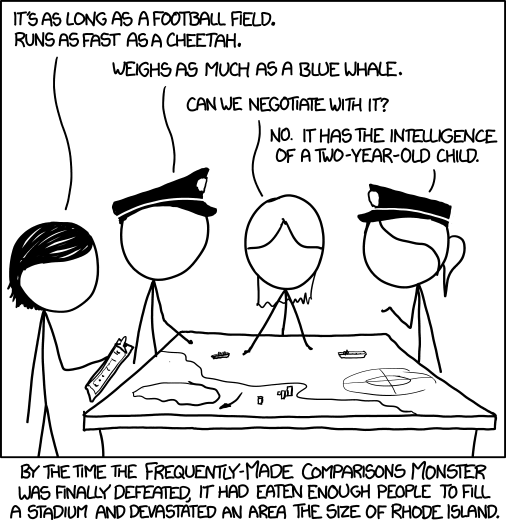
Monster

It was finally destroyed with a nuclear weapon carrying the destructive energy of the Hiroshima bomb.
31 Aug 12:54

The Rescue

by Iain Coleman

Violence is totally alien to people on this planet

In the vast expanse of the South Atlantic, halfway between South Africa and South America, an ancient volcano rises from the sea. This is the main island of Tristan da Cunha, the most remote archipelago in the world, home to around 260 souls. And it’s British.

Image

Tristan da Cunha as seen from space

There is one policeman in the British Overseas Territory of Tristan da Cunha, and he’s pretty bored. His colleagues back in Blighty investigate crimes from burglary to murder, but for Inspector Conrad Glass a stolen bicycle would be the highlight of his year.

The fact is that on Tristan da Cunha, with its one pub and six surnames, there is hardly any crime to speak of. Everyone knows everyone else, and when Inspector Glass is called in it is generally to calm down arguments between neighbours, not to arrest and prosecute criminals.

It sounds like an ideal society, unless you are a policeman. But the relative tranquillity of these islands is not the result of any unusual virtue among the inhabitants, nor has it come about through any political genius. Rather, it is a predictable result of the capacities and limitations of the human brain.

It’s hard to commit crimes against people who you know, and harder to get away with it when everyone knows everyone’s business. Yes, there are people who will do terrible things to their closest friends and family, but these are thankfully rare. A small community isn’t guaranteed to be peaceful, but there is at least a good chance that a small enough group, with effective social sanctions to deal with issues before they become too serious and a token police service as a backstop in case they do, could come as close as possible to a crime-free ideal.

The question is, how small is small enough?

The anthropologist Robin Dunbar noted that, in apes and monkeys, there is a good correlation between the size of the neocortex relative to the rest of the brain and the size of the typical social group. The neocortex is involved in many of the higher brain functions, including sensory perception, language and conscious thought, so it’s reasonable to suppose it plays an important role in managing social relations. The correlation noticed by Dunbar suggests that the processing power of the brain sets a limit on the size of the animal’s social group, much as the processing power of your computer limits the number of browser tabs you can keep open at once.

But Dunbar went a step further. He extrapolated this correlation to humans, who have a larger relative neocortex size than any other hominid. This predicted a human group size of 148, though uncertainties in the data mean you can only really say that the group size is somewhere between 100 and 200.

Regardless of these uncertainties, a slightly rounded figure of 150 has now become known as Dunbar’s Number, and is frequently invoked to explain all kinds of social group size, from the average size of villages in the Domesday Book to the size of Army units – the average standalone unit, the company, averages about 150 soldiers.

Of course, you can be acquainted with far more than 150 people, but this does seem to be number of people with whom you can have a genuine social relationship, defined by Dunbar as people you wouldn’t feel embarrassed about joining for a drink uninvited if you happened to bump into them in a bar. Studies of social networks show that the same considerations apply in virtual space: we can have thousands of Facebook friends, but the number that we have some real connection with, as opposed to vaguely remembering from school and paying no real attention to, is limited to about this number of 150. (Speaking of which, I’ve just checked my Twitter profile and the number of people I’m following is… 151. Sorry, but one of you is going to have to go.)

So groups of one or two hundred people can all know each other, but in itself this isn’t enough to keep the peace. Roughly speaking, there’s about 5% of the population who are willing to commit the most appalling crimes in cold blood against people they know well. Some of these people have some recognised clinical condition such as sociopathy, others are just pricks. Whatever their reasons, we could expect our group of 150 people to have 7 or 8 such individuals. That may seem like quite enough dangerous criminals to have in your community, but bear in mind that whether these potential criminal proclivities translate into actual offending is highly situational. It depends on motivation – do they think they have something to gain from the crime? – opportunity – do events put them in a position where crime looks like a good idea? – and ability – even the most sociopathic three-year-old is unlikely to murder the babysitter, and the infirm elderly tend not to get into bar fights. It’s also worth noting that this figure of 7 or 8 is an average, and will fluctuate from time to time, and from population to population. The rule of thumb for counting statistics is that the standard deviation – a measure of the size of fluctuations – is the square root of the average number, so here the standard deviation would be a bit less than three. So a typical range might be 4 – 11, and it wouldn’t be terribly unlikely to sometimes be zero.

Also, some risk factors for criminality have a hereditary component. In particular, sociopathy – the lack of empathy towards others – has a heritability of around 50%. If, by whatever chance, our initial population has few of the genetic factors involved in sociopathy, then the number of potential criminals in subsequent generations may be much lower than the estimates above. (Though there is a caveat: these numbers for heritability come from recent studies on sample groups from the US: the heritability level in a radically different environment may be much higher or lower.)

So a small community may not be perfect, but it certainly seems like it’s more peaceful than the average Monday morning on the tube, never mind daily life in a high-crime inner-city estate. In which case, why don’t we all live like that?

Well, the historical development of urban civilisation is a bit long for this blog post, but the fundamental point is that larger societies are able to do more, different things, are able to advance and innovate artistically, scientifically, socially and technologically in ways that small groups simply can’t achieve. Our ancestors used stone tools for a million years, and the incremental development was so slow that an untrained eye would be hard pressed to distinguish a Lower Paleolithic axe head from a Neolithic model. By contrast, the distinction between a Roman pilum and a Heckler & Koch G36 assault rifle would be apparent to the dullest Neanderthal.

The science fiction author Charlie Stross recently tried to establish what would be the minimum population required to maintain a technological civilisation of the level we have today. It’s about having enough people for the division of labour and specialisation that makes our society possible. It’s about having people who can build all the things we use, people who can maintain them, extract the raw materials needed for manufacture, distribute them throughout the population. It’s having educators who can train the population in complex tasks, farmers who can provide raw foodstuffs, butchers, bakers and sandwich makers who ensure the population is fed, artists, actors and writers who create the vital cultural life of the society, through simple entertainment or deep reflection. It’s about the bin collectors and sewage workers who stop us all drowning in filth, the clinicians and support staff who keep us healthy and care for the sick. It’s even about the politicians and bureaucrats who keep the whole thing working, and the emergency services who step in when it doesn’t.

Stross comes up with an estimate of about a hundred million people. This is roughly the number of people who would have to settle some alien planet before it could be a self-sufficient technological society like the one its people have just left. It’s a bit of a hand-wavey number, to be honest, but even if it’s too high by a factor of ten or a hundred, it still tells us that if a technological civilisation is to survive, it must be of a substantial size – much too large to be peaceful in the way that tiny populations can achieve.

So what of the Didonians? We are assured they are a peaceful people, and that they numbered only about a hundred – few enough that Bennett could reasonably think he had wiped them out by attacking one small ceremony. But with such small numbers, there is no way they could develop a “new ray” for use in construction. Indeed, even the elaborate spike traps in the cave would probably be beyond them: their design and construction would require significant division of labour and surplus resources.

Mind you, if they’re such a peaceful people… who are the spike traps for?


29 Aug 10:38

Meet Bayard Rustin, the gay socialist pacifist who planned the 1963 March on Washington

by Dylan Matthews

march_rustin I had been planning on writing something about Bayard Rustin, the organizer of the March on Washington, but Steven Thrasher has done a fairly definitive take over at Buzzfeed, talking with the late activist’s partner, Walter Naegle, who will accept Rustin’s posthumous Presidential Medal of Freedom on his behalf.

Rustin was a fascinating character. In his youth, he was a member of the Young Communist League — the youth branch of the Communist Party USA — owing to the fact that the Communists were just about the only political party in the 1930s to be fully opposed to segregation. ”Living in Harlem, he saw that whenever blacks got into trouble, it was invariably the Communists who were willing to defend them,” his biographer, John D’Emilio, writes. “Other radical groups, like the Socialist Party or assorted Trotskyist organizations, promised gains only after the revolution.” His ties to the party would get him investigated by the FBI once he became a well-known leader of the civil rights movement.

He quit the party in June 1941, after the Nazi invasion of the Soviet Union led the U.S. party to switch gears into building American opposition to fascism, and racial justice issues fell by the wayside. By the end of his life, Rustin was the chairman of  Social Democrats USA, the pro-Vietnam War successor party that emerged out of the Socialist Party’s collapse in the 1970s, and which  was a breeding ground for many neoconservatives (indeed, the word “neoconservative” was first used as a term of abuse for members of the Social Democrats USA). Rustin opposed the war but also opposed withdrawing without a negotiated settlement. As late as 1975, Rustin sent President Gerald Ford a letter urging him to “do whatever is possible to secure the freedom of Vietnamese whose lives are now threatened by the communist military victors.”

Despite that link, Rustin was a deeply committed pacifist, owing largely to his Quaker background, and got thrown in jail for conscientiously objecting to service in World War II. He was the one who introduced Gandhi’s tactics of nonviolent resistance (which he learned from visiting independence activists in India) to the Rev. Martin Luther King Jr. King’s links to Rustin occasionally caused him trouble, not just because of his dalliances with Communism but because Rustin was openly gay, an astonishing fact at the time. Both segregationists and other civil rights leaders would use this against him and King, as Steven Thrasher explains:

In 1960, Rustin and MLK were preparing to lead a boycott of blacks outside the Democratic National Convention. This would have deeply embarrassed the leading elected black politician of the day, Rep. Adam Clayton Powell. Powell threatened to spread a rumor that Rustin was having a sexual relationship with King. King canceled the protest, and Rustin resigned from the Southern Christian Leadership Conference. […] Rustin’s sexual arrest record terrorized him again in 1963, when segregationist Sen. Strom Thurmond read its entire contents into the congressional record, in an attempt to make the march lose its best organizer. It backfired. Civil rights leaders, taking an “enemy of my enemy is my friend” approach, were not supporters of Thurmond and backed Rustin.

Rustin didn’t live long enough to see legal recognition for relationships like his and Naegle’s, so he creatively opted to adopt Naegle as his son, which allowed Naegle to inherit Rustin’s belongings upon his death (which, given that Rustin was 37 years older, was an important consideration). While there was barely a gay rights movement to speak of when Rustin began his activism, toward the end of his life he became more involved, saying on one occasion, “The question of social change should be framed with the most vulnerable group in mind: gay people.

But he always resisted the notion that his activism was driven by personal motives. “My activism did not spring from my being gay, or for that matter, from my being black,” he wrote in a letter. “Rather it is rooted, fundamentally, in my Quaker upbringing and the values that were instilled in me by my grandparents who reared me. Those values are based on the concept of a single human family and the belief that all members of that family are equal.

It’s important, today, to remember the incredible impact that Dr. King had on Aug. 28, 1963. But it’s worth taking a moment to remember the man behind the event, who hasn’t been given his due because of decades of prejudice.

27 Aug 15:32

Day 4622: Syrians versus Badgers

by Millennium Dome
Tuesday:

One day, I would hope, people will stop thinking that the solution to a problem is to throw ordinance at it.

But apparently that’s not today. No, today we are talking about curing cows by shooting badgers and curing a civil war by lobbing bombs into Syria.

Since being dead means they don’t have TB any more this is supposed to be “better for the badgers too”; presumably Lord Blairimort – hmm, “TB” – will pop up shortly to make the same argument about Syrians.

In either case, we’re in danger of making the cure worse than the disease.

Can we please resist this drift into military action in Syria.

It seems that a successful intervention in Libya has cleansed military minds of the cataclysm that we brought about by wading into Iraq.

This accelerating drum beat to war is being driven by some pretty horrific stories in our newspapers and on the television.

Why do our media seem to care more about massacres in Syria when we barely hear a report on the ongoing conflicts in Africa, the more distant parts of Asia and Latin America? Partly, I suspect, it’s immediacy, novelty even; partly it’s because of the effect on our so-called “national interests”, our allies in Turkey and Israel being closely affected by the conflict, and then there are all those nearby oilfields (although of course the war in the African Congo is paid for by the mining rights for those rare metals that we need for our smart-phones and sadPads); partly even it may be that after years of reporting on “Middle Eastern Crises” (from Cyprus to Yom Kippur War, from Lebanon to Intifada; from Iraq to Arab Spring) there’s just a core of embedded, committed journalists there with on-the-ground knowledge and stories to tell.

But are highly emotive stories of the horror of civil war entirely the best way to be deciding on whether we throw our armed forces into yet another conflict?

It would be nice to think that everyone agrees that gassing civilian populations is an act of evil. Although clearly not everyone agrees or it wouldn’t happen.

But do we really protect people from bullies by being the bigger bully?

We certainly don’t seem to be willing to take these people out of harm’s way by offering them safe haven thousands of miles from the conflict in the United Kingdom. No, it appears we’d much rather they stayed there in the firing line while we take some pot-shots at the Syrian army to “give them a taste of their own medicine”. (Not, obviously the poison gas kind of medicine.)

“There are no good outcomes in Syria,” we are warned, “but non-intervention is the worst.”

Really?

Because this civil war is the outcome of nothing but interventions, ever since the “great powers” decided to carve up the Ottoman Empire, and since perfidious Albion (that’s us, by the way) promised the same small acreage to about a dozen different mutually-antagonistic factions, we’ve kept on sticking our noses into the Middle East, picking sides for proxies in the Cold War, supporting dictators because they promised to keep the oil flowing, supplying billions of dollars (to Israel, to Egypt, we don’t discriminate) with which their military can buy weapons from us for “self-defence” in order to support jobs at home without thought as to where those weapons might one day be pointed (that means at us, by the way).

For decades, Presidents and Prime Monsters have talked about “draining the swamp” of the Middle East. Instead, we just keep pumping in more mud.

There are hard questions to ask: Can we do anything? Can we actually stop this sort of thing happening? Are we sure we will make things better? Regardless of what good we do, what harm will we also cause? What will be the consequences?

If we say we will intervene, will this provoke the Assad regime to greater atrocities in an attempt to “win” before our forces can reach the battlegrounds? Or will our tacit support of the rebels drive them to recklessly assault government-held positions in the assumption that we will arrive to back them up? How will Vladimir Putin’s Russia – already feeling isolated, ignored, insulted and impotent – react? Does the West’s reputation for selfishly hoarding the World’s resources and randomly blowing up any bits of the planet that get “uppity” about it really need any more sullying?

Civil war is very rarely the best route from dictatorship to democracy; replacing one regime with another does not a liberal democracy create. What you need is time, rule of law, stability, broader education and even a dollop of affluence. But imposing a democracy from outside is even worse. You cannot, after all, impose self-determination.

John Stuart Mill, writing in 1859, had a Few Words to say on Non-Intervention [pdf]. At a time when the British Empire saw itself as a “civilising influence” he may have rather gone along with that attitude towards “barbarians”, but when it came to civil war, his answer was this:
“When the contest is only with native rulers, and with such native strength as those rulers can enlist in their defence, the answer I should give to the question of the legitimacy of intervention is, as a general rule, No.”
And he explains:
“The reason is, that there can seldom be anything approaching to assurance that intervention, even if successful, would be for the good of the people themselves.”


As for the badgers: I am constitutionally against the assassination of fluffy animals!

But even if I wasn’t, would it not be better to await the outcome of the vaccination trials currently being conducted in Wales? As I recall the evidence from the last time a cull was tried was that the cases of bovine TB actually went up, (presumably because badgers are territorial and wiping them out allows for greater movement of badgers and hence greater chance of infection and cross-infection) and even DEFRA’s own scientists only estimate a reduction in new TB cases of 12% to 16%.

Killing things hardly seems to be a solution.

Who’d have thought!


PS:

There is an E-petition to stop the badger cull (care of Dr Brian May!).

Having already gained more than double the 100,000 signatures threshold this ought to be debated in Parliament, were they not all off on recess, but please continue to sign to increase the pressure on them to do so.
27 Aug 11:08

How to Live on the Edge

by Scott Meyer

As always, thanks for using my Amazon Affiliate links (USUKCanada), especially to the person who used Amazon to buy all of their textbooks!

27 Aug 07:04

When authorities confiscate your electronics they will install malware before returning them.

When authorities confiscate your electronics they will install malware before returning them.
25 Aug 19:43

Chelsea Manning: on pressing the button

by Abigail Brady
Private Manning's announcement today that she is a trans woman came as no surprise to those of us who'd read the chat logs.  Admittedly, the name she's picked: Chelsea, was a bit of a turn-up: in the logs she'd previously identified as Breanna.  Anyhow, on seeing this news I did what any self-respecting Wikipedian would do, and had a look to see if anyone had updated the Wikipedia article yet.

This had come up before, but it was thought that the transcripts and a few sources reporting on the implications of them were not enough.  Some trans activists had been championing visibility on this issue, but I had felt uncomfortable with both sides.  Sure, Manning, by her own words, which I had no reason to doubt, was probably trans.  But those chat logs had hardly been released with her full agreement and she hadn't socially transitioned (that is, actually asked people to start calling her a different name, or use female pronouns).  But, also, it was not clear that'd she'd be able to ask that, as her contact with the outside world was very limited.  Wikipedia took the side of caution and didn't mention it except peripherally, and it certainly didn't move any articles.  Meanwhile, I, in conversations, carefully avoided referring to Manning by anything other than surname.

We'd had a similar issue with the article on the Wachowkis - where there had been rumours floating around about Lana for years, but they all traced back to a single, rather salacious, source (we try to be careful about that, in Wikipedia, believe it or not - although what's worse is when some article is using us as a source without citing us and we get into a horrible citation loop).  Eventually Lana did let it be known - the Wachowskis are quite private so what really clenched it was her official listings on a union site and IMDB.  Laura Jane Grace, the lead singer of Against Me, was another interesting case because she initially announced that she was going to transition, so we kept referring to her with her old name and gender for a bit.

What do I mean by "transition", anyway?  Well, as I use it here, that's the process of actually changing your name and asking people to start calling you by it; and also to use new pronouns.  People who aren't trans ("cis people", if you follow the Latin pun) often seem to obsess about genital surgery, and claim that "she" is really "he" until that happens, but, disregarding the unhealthy fixation on other people's genitals, this ignores the legal and practical reality of the situation: being socially transitioned for a good length of time is generally a requirement for surgery.  You might as well claim that having passed a driving test is a prerequisite for learning to drive.

Manning's statement was pretty clear that she was transitioning immediately, such as it was possible (and I don't even really want to think about doing that inside the US military justice system, but that's another issue).  I got agreement from a few other interested parties on the talk page, and moved the page, and started copyediting it.  But to what exactly?  There are two schools of thought here (well, there are three schools of thought: the third is that transition is sick and wrong and against nature and biologically impossible and so on, and therefore the prose shouldn't acknowledge it at all other than as a delusion; but I'll discount that one).

The first is that you should use "old" pronouns and names for pre-transition events, back when Manning was living as male; and the new ones for ongoing statements of fact and events afterwards.  The second is that the new pronouns and names be applied for the entire biography.  The first is often justified based on an appeal to the unalterability of the past, and the avoidance of awkward wording, but it can lead to plenty of difficulties in phrasing in its own right.  How would we phrase "[X] is imprisoned at Quantico, after [X] was convicted for multiple charges of espionage"?  One of these things is in the present; the other in the past.  We can't be switching pronouns within a sentence, that's what I call real nonsense.

Fortunately, the Wikipedia Manual of Style is completely clear on this point, favouring the second:

"Any person whose gender might be questioned should be referred to by the gendered nouns (for example "man/woman", "waiter/waitress", "chairman/chairwoman"), pronouns, and possessive adjectives that reflect that person's latest expressed gender self-identification. This applies in references to any phase of that person's life. Direct quotations may need to be handled as exceptions. Nevertheless, avoid confusing or seemingly logically impossible text that could result from pronoun usage (for example: instead of He gave birth to his first child, write He became a parent for the first time)." (my emphasis)

It has been like this for a long time, and reflected long-established usage well before that.  So, our manual of style backs me, I've got the citation I needed, I got consensus on the talk page.  I pressed the button and watched.

It was not as uncontroversial as it should have been.  There is currently a raging argument on the talk page, in which all sorts of mud has been flung (I've been accused of misusing my admin rights, even though any user could do what I did!)  A lot of this has been supportive of my decision.  But a depressing amount of it full of people repeating the same canards as if they are being original, and I'm not even allowed to block them because technically they haven't done anything wrong (well, apart from the ones who have tried to move it back in a technically incompetent way.)  Instead, we're supposed to argue individually with each tendentious passer-by, each of them saying things like "ooh, but it's just a matter of the facts" like we hadn't considered facts before or something.  I kept it up for a while, but it's draining.  Instead, I'll address them en masse here:

Other sites have in fact changing things throughout the day.  It's not like we were breaking news or anything at any point.

Chelsea Manning's genitals are none of your business.  Or mine.

No, we are not a laughing stock of the world.  I have been watching twitter.  Twitter thinks what we did was awesome.  I've been watching "Manning" and "Wikipedia" all afternoon and it's been well 95% positive.

How is it you are so sure of Chelsea's chromosomes?  Did you have her karyotype done?

Can you not read or something?  The Manual of Style clearly is meant for cases like this.  No, you can't point out that it only applies in cases where there is a "question" and then claim there is no question.

Look, you seem to be denying the the validity of transsexuality in general and then using that as a basis for keeping the article at "Bradley" and the pronouns as "he".  I don't expect to persuade you that you're wrong, not on a Wikipedia talk page, but can you see that failure to even pay lip service to the idea that the entire medical-scientific-social consensus in the West might be right about trans people is not be an entirely sensible basis for a discussion of policy?  What are you going to do next, edit Oscar Wilde so it calls him a sodomite?

Maybe putting these answers here will work. Because nobody seems to be listening on the talk page.
It's easy to forget, dealing with these sort of nonsense, that Wikipedia's openness has advantages as well.  It's precisely because anyone can edit that I'm able to do so, and that the article was moved at all.  Right now, people are voting about whether it should be moved back.  Or rather, they are participating in this bizarre consensus-reaching procedure which is way more than a simple headcount.   And ultimately, I probably don't need to be countering every spurious invocation of the same nonsense on the talk page, because the closing admin (the person who takes it upon themselves to be responsible for looking at what we've thrown at the wall and somehow discerning the consensus of the discussion) will look at the facts and the policy and the arguments, weigh them up carefully, and decide that it's not going anywhere.

Abigail Brady is a software engineer and writer, and has been a Wikipedian since 2003.   This piece is under CC-BY-ND.  If you want to run it in an edited form, please drop me a line.
25 Aug 19:39

No Justice in Life

by LP

Superman!  Superior man!  A man who’s better than the other men

If you are a man and you think you’re great, you might be right

But you’re definitely not as good as

Super Man!

Batman!  Man of bats!  A man who is dressed like a bat and that makes him kind of scary!

Maybe you don’t think about bats very often but he thinks about them all the time

And that makes him a hero named

Bat Man!

These are the leaders of the Justice League of America

Leaguing together for American justice

Justice League of America punches

Laser beam eyes and weapons shaped like bats

This is the JLA!

Flash!  The Flash!  Fastest man of all the men who know how to run

His bright red costume is wadded up in a ring until he needs to run around in it

Then it’s time for speedy fastness from

Flash Man!

Mr. Green!  Green Lantern!  He has a ring too but there’s not any clothes in it

Unless he wants there to be, because magic science lets his brain cause things to come out of the ring

Your ring is probably just to show people you graduated high school and isn’t awesome like

Lantern Man!

These are two bros in the Justice League of America

Stomping on starfish and communists for the USA

Justice League of America rings

But manly rings, not like a woman or something

Aquaman!  Aquatic Man!  He lives under the sea and wears a chain mail shirt

He can tell sea creatures what to do if he wants to

You might want him to drown but he never will because he is

Aqua Man!

Martian Manhunter!  Martian Hunter of Men!  He comes from Mars and has a bunch of crazy powers

He hunts down men and maybe he kills them and puts their heads on the walls of his apartment

Or maybe he just punches people and turns invisible, you never know with a Martian who is

Man Hunter Man!

These are a couple of wierdoes from the Justice League of America

Their costumes aren’t that great either

But you never know what kind of thing might come in handy

In an American league, but not the baseball one, the justice one

Wonder Woman!  A Wonderful Woman!  She has a plane and a lasso and wristbands

She’s a woman but they let her in the Justice League of America anyway

Because of equality, and also she has a really good lawyer who will sue you on be half of

Woman Man!

The guys I mentioned earlier plus this last one, the lady, make up the Justice League of America

Tune into their justice adventures

Whether you like leagues or America

There is something to watch and then tell your friends to watch in the JUSTICE LEAGUE OF AMERICA!

23 Aug 22:20

Abolish spring conference? No thanks!

by noreply@blogger.com (Simon Titley)
A working group, appointed by the Liberal Democrats’ Federal Executive (FE), has produced a consultation paper ‘Spring Federal Conference: Cost-Neutral Options for the future’ [pdf], which includes the option of curtailing or even abolishing the party’s spring conference.

I should say at the outset that, even though I’m a member of the party’s Federal Conference Committee (FCC), which organises the conference, I have had no inkling of these proposals until now because the working group has not presented its views to the FCC. We will have to comment in the same way as every other party member has a right to, so here are my initial views.

This is not the first time anyone has proposed to abolish the spring conference. There was a previous attempt under Charles Kennedy’s party leadership. The idea was scotched after it became clear there were many reasons not to abolish it, and that conference would not support the proposal, let alone provide the two-thirds majority required to amend the party’s constitution.

There are a number of reasons why curtailing or abolishing the spring conference is a bad idea. Here are the first five that spring immediately to mind.
  1. The move is presented as a financial necessity but is not due to be implemented until after 2015, by which time the difficulties caused by the sudden withdrawal of Short and Cranborne money in 2010 may or may not have abated.
  2. The value of spring conference cannot be measured in purely financial terms. We know that many members come to conference to take part in the extensive training programme, to help develop policy by attending debates or consultation sessions, or for other reasons such as networking (see page 4 of the consultation paper). The training programme, in particular, can be put together only through the arrangement of the weekend conference package with meeting rooms and hotels. Thus abolition or curtailment would be a false economy. The spring conference is not a loss-leader but a good opportunity to provide economies of scale, which is why the other parties, even without party democracy, also have weekend events.
  3. The ability of party members to hold the party to account would be diminished if abolition were to take place. To be precise, it would be halved.
  4. The ability of the party to make policy would be severely affected. Without a spring conference, the party would be unable to make policy more than once a year. There would also be less opportunity for consultative sessions. Only the Federal Policy Committee (FPC) would be able to fill the gap, yet it has not been consulted at all about the FE’s proposals. The net result would therefore be more policy-making on the hoof.
  5. One idea mooted in the FE’s paper is to reduce the spring conference to a one-day event, but has anyone actually thought what a one-day conference agenda might look like? For s start, it would not run from 9am to 6pm because people would not be able to arrive in time, no matter where the event is held. This would mean a loss of debating time in any case. But when you also allow time for the leader’s speech, the obligatory sessions for reports from various party bodies, and constitutional amendments (which must be debated), there would be hardly any time left for actual debate.
There is one silk purse that could be made from this particular pig’s ear. When abolition was last mooted, income from the spring conference rose significantly. It broke even in one year, as people worked harder to make the event pay. With next spring’s event in a new location likely to be popular (York), perhaps this will happen again.

This post was written by Gareth Epps, who is a member of the Liberator Collective and is also a directly-elected member of the Liberal Democrats’ Federal Conference Committee. He writes here in a personal capacity.
23 Aug 21:02

Another Sokal takedown: the number 2.9013 will go down in the history of bad science.

Another Sokal takedown: the number 2.9013 will go down in the history of bad science.
23 Aug 20:45

Gender and Pronouns and NPR

by Jim C. Hines

ETA:On Friday, NPR’s Managing Editor for Standards and Practice Stu Seidel issued new guidance, saying that NPR’s “thinking has evolved” and that the network will honor Manning’s preferences.”

#

From an article in the New York Times:

…the lawyer for Pfc. Bradley Manning told the “Today” show that his client would like to be considered a woman and referred to as Chelsea.

With that, the debate over how to refer to Private Manning exploded in newsrooms, comments, blogs and Twitter.

I’m sorry, but what is there to debate? My legal name is James, but I prefer to be called Jim. I don’t recall needing other people’s approval for that, and I definitely don’t remember anyone, anywhere ever needing to debate whether or not it was appropriate to call me by my chosen name. Nor has anyone ever demanded I drop my pants before they would acknowledge me as male.

It gets worse. A spokewoman from NPR weighed in on this “debate”:

National Public Radio will continue for now to refer to Private Manning as “he,” according to a spokeswoman, Anna Bross. “Until Bradley Manning’s desire to have his gender changed actually physically happens, we will be using male-related pronouns to identify him,” she said.

Not only is NPR deliberately refusing to respect Manning’s wishes, they’re also explicitly linking gender identity to physical sexual characteristics. Sorry, but neither sex nor gender identity are that simplistic. (See here for an article on Germany’s new law which will legally acknowledge and recognize intersex children, along with some examples and statistics about sex and gender.)

If you’re worried about confusing your readers, you open with a sentence stating that Pfc. Manning has asked to be referred to as female, and with the name “Chelsea,” and you continue from there. But NPR was apparently more concerned with policing Manning’s genitals.

Unfortunately, this is also one of those stories that’s easy to dismiss if it’s not something that affects you personally. It’s easy in part because our culture works awfully damned hard to erase people like Chelsea Manning from our stories and our awareness, in part by refusing to respect their right to be called by the names and pronouns they choose.

When was the last time you saw or heard about a transgendered character on mainstream television? Oh sure, they’re used as the butt of transphobic jokes all the time, but that’s it. (See pretty much every sitcom ever for jokes about the horror of a guy starting to hook up with a woman who turns out to be — gasp — another guy! Yay, let’s all laugh at the intersection of transphobia and homophobia!)

On the same day that NPR’s spokeswoman released this ridiculous statement, one of the panelists on the Diane Rehm show (also broadcast on NPR) joked about how we shouldn’t trust military secrets to a guy who wears lipstick.

Bite me.

Look, I get that if you’ve grown up with a simplistic binary view of gender, it can be both difficult and uncomfortable to move beyond those narrow, exclusive definitions. When a friend of mine asked to be called Rachel instead of Rich many years back, I screwed up sometimes. I used the wrong pronouns. I used “Rich” sometimes out of habit.

It happens. You apologize, and you try harder. These days, trying to think of Rachel as “Rich” feels utterly wrong and bizarre.

But blatantly refusing people the respect and dignity of referring to them by their chosen names? Refusing to acknowledge someone’s identity because of what they may or may not have between their legs? That’s just dickish.

It’s also harmful.

As a society, we erase transgendered people. We treat them as jokes. We pretend they don’t exist, or if they do, they’re simply damaged, deviant, and broken. We don’t accept them as fully human. And we lash out verbally, emotionally, and physically against them.

NPR contributed to that dehumanization today. They contributed to the fear and hatred and violence that goes with it.

For future reference, here’s how the conversation about someone’s preferred identity should go:

  • Person A: “Hey, I prefer to be called by this name and pronoun.”
  • Person B: “Okay.”

It really isn’t that difficult, people.

ETA: NPR has a contact form for anyone wishing to write to their ombudsman about this. Thank you icecreamempress for that link!

23 Aug 15:06

These three paragraphs say everything about Obamacare

by Sarah Kliff
state fair

Would you like a side of Obamacare — I mean Kynect — with your curly fries? (Mark Wilson/Getty Images)

Huffington Post’s Jason Cherkis spent two days at the Kentucky State Fair with workers from Kynect, the state’s health marketplace. He came back with a better understanding of deep-fried Kool Aid (“funnel cake dough flavored with the powdered drink mix”) and this fantastic anecdote.

 A middle-aged man in a red golf shirt shuffles up to a small folding table with gold trim, in a booth adorned with a flotilla of helium balloons, where government workers at the Kentucky State Fair are hawking the virtues of Kynect, the state’s health benefit exchange established by Obamacare.

The man is impressed. “This beats Obamacare I hope,” he mutters to one of the workers.

“Do I burst his bubble?” wonders Reina Diaz-Dempsey, overseeing the operation. She doesn’t. If he signs up, it’s a win-win, whether he knows he’s been ensnared by Obamacare or not.

This speaks to a point that others, particularly Jonathan Bernstein, have already made: When Americans actually interact with Obamacare, it won’t be called Obamacare at all. In Kentucky, for example, it will be Kynect, the state health marketplace. In Idaho, local residents will purchase coverage from Your Health Idaho. Covered Oregon will serve (surprise!) Oregonians, while neighboring Washingtonians will purchase coverage from WAHealthPlanFinder. If you watch the ads that states have produced to support their marketplaces, they rarely mention the federal law that has set these changes in action.

This means it’s entirely possible that, even as people start signing up for Obamacare, the program won’t get much more popular at all, something Democrats have roundly expected. “If the ACA works as its sponsors hope, quite a lot of people — maybe the majority — who get their insurance from the exchanges will tell you that, no, they have private insurance,” Bernstein wrote recently in the American Prospect.  ”They aren’t getting anything from Obamacare.”

23 Aug 13:52

Carnival of the Lib Dems – A Celebration of Blog Posts

by Alex Wilcock

Tomorrow, nominations close in the “Liberal Democrat Voice Awards”. These have been thrillingly renamed, relaunched and expanded, but for me the greatest pleasure in them remains celebrating the brilliant flow of ideas by a carnival of Lib Dem voices on their own blogs. The shortlist I most look forward to is that for Liberal Democrat Blog Post of the Year – both because that always introduces me to some great writing I’ve not seen before, and because it’s so much easier to read a hand-picked selection of posts than read through the complete shortlisted blogs, Twitter pages or Facebook timelines.

I was sad to see this award dropped last year, and delighted that it’s back in the greatly expanded new array. And last year I resolved to do something about it, saying: “I will pick at least a dozen articles from at least a dozen different blogs from across the year that I think are among the best and plug them” here. I’ve been noting the most interesting posts to catch my eye – not necessarily the ones with which I most agreed – throughout the year, and as well as irregularly proposing them for Lib Dem Voice’s weekly Golden Dozen, I’ve spent the last couple of weeks poring over the lot (one reason I’m rather later with my selection than ideal). I hope in the three weeks before the winners are announced this will be part of showing just how marvellous Lib Dems blogging are.

So here, to celebrate the talent in the Lib Dem blogosphere and introduce more blogs is a journey through the year (rather than in order of preference) with two dozen of the Lib Dem finest. Pah-pah pah pah-pah-pah…

The first post I’d recommend might be in the ‘Best individual post’ category, or it might be in the ‘Best online campaign’. I’ll leave that to the judges. But last Autumn Jennie Rigg’s outstanding effort in putting questions to over a hundred candidates for the Liberal Democrat Federal elections made a mighty series of posts that shouldn’t be forgotten.
Jennie Rigg on Automated Attack Monkeys, Scalpel Mines, & Acid: Questions for FCC and FPC candidates

Chris Richards on On Liberty Now: Time for Liberal Democrats to stop saying ‘No’
Isn’t it deeply conservative to campaign only to prevent things? The Liberal Democrats should have positive ideas.

Jonathan Calder on Liberal England: Nick Clegg needs to get crunchy again
Nick needs to rediscover his old self as a thinker and libertarian, because the “centre” is defined by your opponents.

Zoe O’Connell on Complicity: New Tory Policy: Pretending to protect children more important than protecting children
Why education is better at keeping kids safe online than faith in the Daily Mail and Internet blocking.

Andrew Brown on The Widow’s World: Dear Nick… An Open Letter on Closed Material Procedures
A loyalist takes a stand on civil liberties.

Jennie Rigg on Automated Attack Monkeys, Scalpel Mines, & Acid: Saturday Silly today comes courtesy of Andy Burnham MP
Now Labour wants to ban Frosties – Jennie outlines some healthy alternatives. Not to Frosties; to bansturbation. Puritanism is never satisfied.

Jonathan Wallace: The Lib Dems’ Battle of Stalingrad
A vibrant image of how Eastleigh “was fought street by street, house by house, sucking in vast armies of activists battling it out.”

Councillor Gavin James: How the Lib Dems should take on UKIP
The three parts of UKIP’s support and how to take them on – by being Liberal Democrats.

Cicero on Cicero’s Songs: The SNP tries to have its cake and eat it
The SNP is now in favour of the pound while defaulting on its debts, British identity while leaving the Union, armed neutrality while staying in NATO, divorce while getting more love from the divorced partners, and it sees no contradiction in that. Cicero does.

Stephen Glenn on Stephen Glenn’s Liberal Journal: In response to Simon Hughes
Thoughtfully exposing the mass of contradictions in Simon Hughes’ attack on religious freedom and equality.

David Boyle on The Real Blog: Violet, Winston and the meaning of Free Trade
What Churchill’s thundering Liberal case for Free Trade in favour of the lower-paid tells us about how the Tories have warped the idea since.

Richard Flowers on The Very Fluffy Diary of Millennium Dome, Elephant: No New Powers for the Security Services At Least Until They Explain Why They Failed to Use the Ones They’ve Got!
A message to Alan Johnson on the Zombie Snoopers’ Charter – is totalitarian China the best role model?

Nick Barlow on What You Can Get Away With: On political stereotypes and Doctor Who
Who would have thought that polling voters about Doctor Who would reveal so much about the wildly differing social attitudes of different parties’ voters?

Mark Pack on Mark Pack’s Blog: Liberal Democrat achievements in government and What do the Liberal Democrats believe?
Not quite ‘blog posts’, but his twin infographics (disclosure: I made some suggestions on the second) are well worth a look.

Mark Thompson on Mark Thompson’s Blog: Seven awkward questions for Liberal Democrats
Still waiting for answers.

Nick Thornsby on Nick Thornsby’s Blog: UK tax revenue and public spending 1997-2012
Sounds boring, doesn’t it? But – shockingly – in the last 15 years, UK governments have only balanced the budget once, relying on massive borrowing in every other year, from a full decade before Labour could blame the international crisis. Sole credit year: +£16bn. Biggest debt year: -£186bn. No wonder the deficit’s taking a while to fix.

Jen Yockney on Either / And: But he’s a TORY!
On why it’s good for sexuality not to be a party political plaything and why both people who grumble that the latest out bisexual MP is a Tory and the Daily Mail have got it wrong.

Peter Wrigley on Keynesian Liberal: Wither amnesty for illegal immigrants?
Contrasting Nick Clegg’s courageous debate performance with his unilateral retreat.

Sam Phripp on So Sam said... A statement about my membership of the Liberal Democrats
Sam gives his three top tips if you’re planning on leaving the party.

Jae Kay on Freedom Is Not The Problem: Marriage Equality: Taking Stock And Preparing For The Future (AKA It Ain’t Over)
After a year of heroic posts about equal marriage – and many more before then – this looks to what’s next.

Lester Holloway: The Voice says Labour are losing the Black vote. Addressing Black voters might help
A detailed analysis of the relationship between all parties and the Black vote – and what to do about it.

Caron Lindsay on Caron’s Musings: What the hell are the Home Office playing at – and why are Liberal Democrats letting them get away with it?
The Tories aren’t just re-toxifying themselves with their racist harassment of every non-white person but trying to toxify the Lib Dems too. It’s time for Nick to take the gloves off both because it’s right and for our survival.

Charlotte Henry on Digital Politico: Anti politics leaves us all with egg on our face
When our political culture is so warped and toxic that no-one can discuss it properly.

Carl Minns – Thoughts from Hull (A Liberal view from Hull): How to tweet like a Lib Dem
After columnist guides to tweeting like the other two, Carl redresses the balance with a guide to tweeting like a Lib Dem.

And finally… Alex Wilcock on Love and Liberty: My Best Posts 2012-2013
…It’s quite hard enough choosing one from other people’s!

If any of these blog posts excite and delight you, please consider nominating them for the Awards. Good luck to everyone nominated.

And if there’s a vital one I’ve missed, please add it in the comments!
After all, my draft list started out twice as long, so there are plenty more where all of those came from…


23 Aug 13:50

“…In The Astounding World To Come!”

by plok

Conversation on a porch, 2065 A.D.:

*

GRANDFATHER: Hey, kid!

KID: Hey, Grandpa.

G: What’d you learn in school today?

K: (pauses; looks at the Grandfather skeptically) Well, in History class, the teacher was talking about something…and…

G: Yes?

K: Is it true about the phones?

G: Sorry…the phones? Is what true about them?

K: Well…she said, back in the 2010s or whatever, that there were all these…

G: Oh, the PHONES!

K: So…you do know about that?

G: Oh yes! Good heavens. I had one.

K: You had one?

G: Everybody had one. Even your great-grandmother had one. Though to her, it was just a thing you turned on when you wanted to make a call…you couldn’t even leave her a message on it…

K: But…

G: Yes?

K: …But, how could everybody have one? They said people driving trucks and flying planes were on them all the time…

G: Well…

K: It just seems really wrong. And WEIRD. In class they showed this video of the Pope holding a mass for people’s phones…

G: Oh, no…I remember that, but it wasn’t a mass…and, I’m not sure it was the Pope? The Archbishop of Canterbury, or something?

K: But Grandpa, that’s CRAZY.

G: Oh, yeah; you’re right, kid. It was definitely crazy.

K: I just…I can’t believe it. Did that all really happen, I mean really?

G: Yes, really. Honestly, would I tell you a lie?

K: But, how could you put up with it? Why didn’t anybody do anything about it? People typing while they were driving their cars, typing while they were driving their cars, I mean…I mean, I know the teacher’s not lying, and I know you’re not lying, but…it’s just really hard to accept. I don’t understand why it happened.

G: Well…at the time that was the problem, you see? Nobody really understood the “why” of it, so they just kind of responded. Responded without thinking too hard about it. And that was easy to do, because they didn’t want to think about it. We did solve the phone problem eventually…

K: Twenty years later, Grandpa! So why’d it take so long?

G: Well, I’m getting to that bit. (sighs) See, what you have to understand first of all is that there’s really no limit to how much people can want things. We all want things, but there are limits on how much of them we can get, so we think — anyway we always did think — that the wanting was limited too, and it was limited the same way. You could want something just so much, and then eventually you’d stop wanting it and start wanting something else, is what we thought. And we thought there was good evidence for this, although…I mean, there was good evidence for it, but we were still wrong about it. There were some people, famous people, who would be in a position to not have to stop wanting more of the same, and they were pretty good examples of how the limit on wanting was actually way higher than we thought, but we used to just say there was something wrong with them. That they had “addictive personalities”. Really they were mostly just normal people in very strange situations — after a while an average person stops wanting anything they can’t get, and that’s how Nature works, like you get hungry when you see a picture of food because that’s automatic, that’s what evolution has given you…well, the brain stops assigning resources to wanting stuff that’s impossible after a while, and that’s evolution too. If you want something that’s in New York City, but you live in San Francisco, then you don’t want it for long because the brain decides it’s irrelevant. I mean, you can still want it, but you don’t want it like you want another peanut, you want it like “if I save up all my money for a year then I can find a place to stay there, and I can get a plane ticket, and I’ll do that next July.” You want it, but the wanting’s in the distance, it isn’t impulsive in its nature. But, if you’re a really famous person…at least, a really famous person of a certain type…

K: Were those the Celebrities?

G: Yeah, them.

K: They were mostly actors, they said at school.

G: They were, mostly. Although some were celebrities first and then they tried to become actors, like being an actor made it natural to be that way.

K: Huh.

G: There was this one girl…what was her name…ah! Lindsay Lohan.

K: She wanted to be an actor?

G: No, no, she was an actor already.

K: I don’t really understand the Celebrities thing…

G: Never mind, she was an actor, all right? And she was very famous, and she was extremely rich, and she could do whatever she wanted to, so she did. She was famously uncontrollable, completely impulsive. And we all thought things about her like “oh, she used to be such a sweet young thing, now look at her, she’s headed for a crash…”

K: And did she?

G: Did she what?

K: Did she crash?

G: Hmm, I don’t really remember…anyway, the point is that we thought there was something specially wrong with her, you see? We didn’t think she was like the rest of us. But she was. And we found that out, after a while. See, we all weren’t rich or famous, but the phones made us feel like we were…like we all had a sort of Inner Lohan that had always wanted to come out, but before it had always needed fame or money, but now it only needed the phones. And we just weren’t ready. And it happened to everybody; everybody suddenly started to feel that important. Including the people in politics, you see? So they didn’t do anything about people driving and texting, for years, because they really loved their phones. SO MUCH, they loved them! I loved mine, too. We all did. We loved them like…like…

K: Like?

G: …Like a little girl loves a sock monkey, is the only way I can put it to you. Like a child loves a puppy. There is nothing they won’t do, at a certain age, to be with that puppy. The puppy is the most important thing in the whole world. Do you see what I’m saying?

K: I…guess so…

G: The phones reached into our brains, and they made us feel like kids again. Made us reason like little kids. They looked like toys! We used to say that all the time, we used to call them toys. We used to tell each other that we were addicted to them. We were just trying to figure out how to figure it out, we kept talking about it and talking about it, trying to hear ourselves. And, it took some time…

K: …But, you finally did hear?

G: Erm. No. (sighs) That would’ve been nice, but it didn’t happen that way.

K: What did happen, then?

G: Well…what happened was that it wasn’t just adults who had the phones. The kids had them too. And they used them. Nobody was really ready for this, so nobody took any steps. No one saw what was going to happen.

K: Which was…?

G: I think it started in about…oh, maybe 2020? It was on the news, and it did seem like a big deal at the time, but we just didn’t put the pieces together right away. So, all across the country, what happened was that about thirty percent of all the Grade Seven classes — all of them — failed to graduate from elementary school.

K: …What?

G: It was all the texting. They texted. All day, every chance they got. Well, why wouldn’t they? We drove cars while texting…and they saw that, so they texted too. So by the time they got to the age of going on to high school, they weren’t ready, and the teachers gave them failing grades. And still we didn’t see it coming. I mean: the teachers saw. But nobody listened to what teachers said, in those days. And it just looked like a hiccup. We didn’t know it was going to be a clog.

G: Until the next year, when fifty percent of the Grade Sevens failed to graduate…and thirty percent of the Grade Sixes failed to move on to Grade Seven.

G: Schools kind of work like plumbing, you know? Pipes sometimes get clogged, but all the pipes don’t get clogged at the same time…and when clogs happen then you call the plumber, and if a bunch of pipes get clogged then you call the plumber fast. But we still didn’t know what was happening; it was on the news, and there was outrage and everything, but things still weren’t moving. Over at the schools, they were in this huge emergency where things were going to burst: the year before they’d needed new portables everywhere, millions and millions of dollars…they needed more teachers, they needed more chairs. But this year they needed whole new buildings, actual school buildings, and they needed them in every jurisdiction, in every city and town, and suddenly it was hundreds of billions of dollars, and the money just wasn’t there. But they had to do something. So they did the only thing they could.

K: What did they do?

G: They graduated all the kids anyway.

K: WHAT?!

G: Because it made the problem go away. Parents were happy again, because their kids weren’t being held back. The government was happy, because it didn’t have to build all new schools everywhere. It wasn’t on the news, so the general public was happy because they felt like they’d fixed something. But then, one year later…

K: Oh no!

G: Yes? What do you think it is?

K: …The universities?

G: Right on the button. One year later, about 80% of first-year students washed out when they couldn’t pass the Language Comprehension Exam. That was in the Faculty of Arts. The Faculty of Science was basically EMPTY, because most kids couldn’t even do long division, so they didn’t even bother applying. And universities weren’t going to lower their standards! So then it became a much bigger deal, and can you guess what made it even worse?

K: Uh… (thinks)

G: What made it so all the new laws got passed?

K: (thinks harder)

G: Where do you think teachers come from?

K: …OH!!

G: Such a little step, eh? Such a small thing. Just phones. Well, would you want to do without texting?

K: (grins) No way!

G: Yeah, we didn’t want to do without it either. And neither did that Inner Lohan…oh, HEY!

K: What? Did you remember what happened to her?

G: Yeah, sort of! She went to jail, finally, I think. But then afterwards she founded this big literacy organization! Jeez, I’d forgotten all about that. What a scandal.

K: It was a scandal? What was the scandal?

G: Well, everyone wanted her to do some kind of rehab thing instead…

K: Wait, they wanted her to do something else?

G: Oh, people wanted celebrities to do things all the time! They never did, though. Or, just sometimes.

K: I don’t really…

G: It was a long time ago. Anyway, we’re not talking about that, are we? We’re not talking about Lindsay Lohan, we’re talking about the Inner Lohan. And Lindsay was still walking around when the Inner Lohan got sent to jail. Did you get to the Badge System, in your class?

K: (pulls out a chip on a necklace from under his shirt) You mean these badges?

G: (chuckles) No, kid. Not those badges. Heh.

K: (gives quizzical look)

G: Tell you what, I’m gonna call your teacher tomorrow. How old is your teacher?

K: Uh…thirty?

G: I should not have asked you that question.

G: How about a game of ping-pong?


23 Aug 13:44

College reads on Better Book Titles Follow @DanWilbur on...

23 Aug 13:26

The Higgs Boson vs. Boltzmann Brains

by Sean Carroll

Kim Boddy and I have just written a new paper, with maybe my favorite title ever.

Can the Higgs Boson Save Us From the Menace of the Boltzmann Brains?
Kimberly K. Boddy, Sean M. Carroll
(Submitted on 21 Aug 2013)

The standard ΛCDM model provides an excellent fit to current cosmological observations but suffers from a potentially serious Boltzmann Brain problem. If the universe enters a de Sitter vacuum phase that is truly eternal, there will be a finite temperature in empty space and corresponding thermal fluctuations. Among these fluctuations will be intelligent observers, as well as configurations that reproduce any local region of the current universe to arbitrary precision. We discuss the possibility that the escape from this unacceptable situation may be found in known physics: vacuum instability induced by the Higgs field. Avoiding Boltzmann Brains in a measure-independent way requires a decay timescale of order the current age of the universe, which can be achieved if the top quark pole mass is approximately 178 GeV. Otherwise we must invoke new physics or a particular cosmological measure before we can consider ΛCDM to be an empirical success.

We apply some far-out-sounding ideas to very down-to-Earth physics. Among other things, we’re suggesting that the mass of the top quark might be heavier than most people think, and that our universe will decay in another ten billion years or so. Here’s a somewhat long-winded explanation.

A room full of monkeys, hitting keys randomly on a typewriter, will eventually bang out a perfect copy of Hamlet. Assuming, of course, that their typing is perfectly random, and that it keeps up for a long time. An extremely long time indeed, much longer than the current age of the universe. So this is an amusing thought experiment, not a viable proposal for creating new works of literature (or old ones).

There’s an interesting feature of what these thought-experiment monkeys end up producing. Let’s say you find a monkey who has just typed Act I of Hamlet with perfect fidelity. You might think “aha, here’s when it happens,” and expect Act II to come next. But by the conditions of the experiment, the next thing the monkey types should be perfectly random (by which we mean, chosen from a uniform distribution among all allowed typographical characters), and therefore independent of what has come before. The chances that you will actually get Act II next, just because you got Act I, are extraordinarily tiny. For every one time that your monkeys type Hamlet correctly, they will type it incorrectly an enormous number of times — small errors, large errors, all of the words but in random order, the entire text backwards, some scenes but not others, all of the lines but with different characters assigned to them, and so forth. Given that any one passage matches the original text, it is still overwhelmingly likely that the passages before and after are random nonsense.

That’s the Boltzmann Brain problem in a nutshell. Replace your typing monkeys with a box of atoms at some temperature, and let the atoms randomly bump into each other for an indefinite period of time. Almost all the time they will be in a disordered, high-entropy, equilibrium state. Eventually, just by chance, they will take the form of a smiley face, or Michelangelo’s David, or absolutely any configuration that is compatible with what’s inside the box. If you wait long enough, and your box is sufficiently large, you will get a person, a planet, a galaxy, the whole universe as we now know it. But given that some of the atoms fall into a familiar-looking arrangement, we still expect the rest of the atoms to be completely random. Just because you find a copy of the Mona Lisa, in other words, doesn’t mean that it was actually painted by Leonardo or anyone else; with overwhelming probability it simply coalesced gradually out of random motions. Just because you see what looks like a photograph, there’s no reason to believe it was preceded by an actual event that the photo purports to represent. If the random motions of the atoms create a person with firm memories of the past, all of those memories are overwhelmingly likely to be false.

This thought experiment was originally relevant because Boltzmann himself (and before him Lucretius, Hume, etc.) suggested that our world might be exactly this: a big box of gas, evolving for all eternity, out of which our current low-entropy state emerged as a random fluctuation. As was pointed out by Eddington, Feynman, and others, this idea doesn’t work, for the reasons just stated; given any one bit of universe that you might want to make (a person, a solar system, a galaxy, and exact duplicate of your current self), the rest of the world should still be in a maximum-entropy state, and it clearly is not. This is called the “Boltzmann Brain problem,” because one way of thinking about it is that the vast majority of intelligent observers in the universe should be disembodied brains that have randomly fluctuated out of the surrounding chaos, rather than evolving conventionally from a low-entropy past. That’s not really the point, though; the real problem is that such a fluctuation scenario is cognitively unstable — you can’t simultaneously believe it’s true, and have good reason for believing its true, because it predicts that all the “reasons” you think are so good have just randomly fluctuated into your head!

All of which would seemingly be little more than fodder for scholars of intellectual history, now that we know the universe is not an eternal box of gas. The observable universe, anyway, started a mere 13.8 billion years ago, in a very low-entropy Big Bang. That sounds like a long time, but the time required for random fluctuations to make anything interesting is enormously larger than that. (To make something highly ordered out of something with entropy S, you have to wait for a time of order eS. Since macroscopic objects have more than 1023 particles, S is at least that large. So we’re talking very long times indeed, so long that it doesn’t matter whether you’re measuring in microseconds or billions of years.) Besides, the universe is not a box of gas; it’s expanding and emptying out, right?

Ah, but things are a bit more complicated than that. We now know that the universe is not only expanding, but also accelerating. The simplest explanation for that — not the only one, of course — is that empty space is suffused with a fixed amount of vacuum energy, a.k.a. the cosmological constant. Vacuum energy doesn’t dilute away as the universe expands; there’s nothing in principle from stopping it from lasting forever. So even if the universe is finite in age now, there’s nothing to stop it from lasting indefinitely into the future.

But, you’re thinking, doesn’t the universe get emptier and emptier as it expands, leaving no particles to fluctuate? Only up to a point. A universe with vacuum energy accelerates forever, and as a result we are surrounded by a cosmological horizon — objects that are sufficiently far away can never get to us or even send signals, as the space in between expands too quickly. And, as Stephen Hawking and Gary Gibbons pointed out in the 1970′s, such a cosmology is similar to a black hole: there will be radiation associated with that horizon, with a constant temperature.

In other words, a universe with a cosmological constant is like a box of gas (the size of the horizon) which lasts forever with a fixed temperature. Which means there are random fluctuations. If we wait long enough, some region of the universe will fluctuate into absolutely any configuration of matter compatible with the local laws of physics. Atoms, viruses, people, dragons, what have you. The room you are in right now (or the atmosphere, if you’re outside) will be reconstructed, down to the slightest detail, an infinite number of times in the future. In the overwhelming majority of times that your local environment does get created, the rest of the universe will look like a high-entropy equilibrium state (in this case, empty space with a tiny temperature). All of those copies of you will think they have reliable memories of the past and an accurate picture of what the external world looks like — but they would be wrong. And you could be one of them.

That would be bad.

Discussions of the Boltzmann Brain problem typically occur in the context of speculative ideas like eternal inflation and the multiverse. (Not that there’s anything wrong with that.) And, let’s admit it, the very idea of orderly configurations of matter spontaneously fluctuating out of chaos sounds a bit loopy, as critics have noted. But everything I’ve just said is based on physics we think we understand: quantum field theory, general relativity, and the cosmological constant. This is the real world, baby. Of course it’s possible that we are making some subtle mistake about how quantum field theory works, but that is more speculative than taking the straightforward prediction seriously.

Modern cosmologists have a favorite default theory of the universe, labeled ΛCDM, where “Λ” stands for the cosmological constant and “CDM” for Cold Dark Matter. What we’re pointing out is that ΛCDM, the current leading candidate for an accurate description of the cosmos, can’t be right all by itself. It has a Boltzmann Brain problem, and is therefore cognitively unstable, and unacceptable as a physical theory.

Can we escape this unsettling conclusion? Sure, by tweaking the physics a little bit. The simplest route is to make the vacuum energy not really a constant, e.g. by imagining that it is a dynamical field (quintessence). But that has it’s own problems, associated with very tiny fine-tuned parameters. A more robust scenario would be to invoke quantum vacuum decay. Maybe the vacuum energy is temporarily constant, but there is another vacuum state out there in field space with an even lower energy, to which we can someday make a transition. What would happen is that tiny bubbles of the lower-energy configuration would appear via quantum tunneling; these would rapidly grow at the speed of light. If the energy of the other vacuum state were zero or negative, we wouldn’t have this pesky Boltzmann Brain problem to deal with.

Fine, but it seems to invoke some speculative physics, in the form of new fields and a new quantum vacuum state. Is there any way to save ΛCDM without invoking new physics at all?

The answer is — maybe! This is where Kim and I come in, although some of the individual pieces of our puzzle were previously put together by other authors. The first piece is a fun bit of physics that hit the news media earlier this year: the possibility that the Higgs field can itself support another vacuum state other than the one we live in. (The reason why this is true is a bit subtle, but it comes down to renormalization group effects.) That’s right: without introducing any new physics at all, it’s possible that the Higgs field will decay via bubble nucleation some time in the future, dramatically changing the physics of our universe. The whole reason the Higgs is interesting is that it has a nonzero value even in empty space; what we’re saying here is that there might be an even larger value with an even lower energy. We’re not there now, but we could get there via a phase transition. And that, Kim and I point out, has a possibility of saving us from the Boltzmann Brain problem.

Imagine that the plot of “energy of empty space” versus “value of the Higgs field” looks like this.

Higgs potentials

φ is the value of the Higgs field. Our current location is φ1, where there is some positive energy. Somewhere out at a much larger value φ2, with a different energy. If the energy at φ2 is greater than at φ1, our current vacuum is stable. If it’s any lower value, we are “metastable”; our current situation can last for a while, but eventually we will transition to a different state. Or the Higgs can have no other vacuum far away, a “runaway” solution. (Note that if the energy in the other state is negative, space inside the bubbles of new vacuum will actually collapse to a Big Crunch rather than expanding.)

But even if that’s true, it’s not good enough by itself. Imagine that there is another vacuum state, and that we can nucleate bubbles that create regions of that new phase. The bubbles will expand at nearly the speed of light — but will they ever bump into other bubbles, and complete the transition from our current phase to the new one? Will the transition “percolate,” in other words? The answer is only “yes” if the bubbles are created rapidly enough. If they are created too slowly, the cosmological horizons come into play — spacetime expands so fast that two random bubbles will never meet each other, and the volume of space left in the original phase (the one we’re in now) keeps growing without bound. (This is the “graceful exit problem” of Alan Guth’s original inflationary-universe scenario.)

So given that the Higgs field might support a different quantum vacuum, we have two questions. First, is our current vacuum stable, or is there actually a lower-energy vacuum to which we can transition? Second, if there is a lower-energy vacuum, does our vacuum decay fast enough that the transition percolates, or do we get stuck with an ever-increasing amount of space in the current phase?

The answers depend on the precise value of the parameters that specify the Standard Model of particle physics, and therefore determine the renormalized Higgs potential. In particular, two parameters turn out to be the most important: the mass of the Higgs itself, and the mass of the top quark. We’ve measured both, but of course our measurements only have a certain precision. Happily, the answers to the two questions we are asking (is our vacuum stable, and does it decay quickly enough to percolate) have already been calculated by other groups: the stability question has been tackled (most recently, after much earlier work) by Buttazzo et al., and the percolation question has been tackled by Arkani-Hamed et al. Here are the answers, plotted in the parameter space defined by the Higgs mass and the top mass. (Dotted lines represent uncertainties in another parameter, the QCD coupling constant.)

HiggsStability

We are interested in the two diagonal lines. If you are below the bottom line, the Higgs field is stable, and you definitely have a Boltzmann Brain problem. If you are in between the two lines, bubbles nucleate and grow, but they don’t percolate, and our current state survives. (Whether or not there is a Boltzmann-Brain problem is then measure-dependent, see below.) If you are above the top line, bubbles nucleate quite quickly, and the transition percolates just fine. However, in that region the bubbles actually nucleate too fast; the phase transition should have already happened! The favored part of this diagram is actually the top diagonal line itself; that’s the only region in which we can definitely avoid Boltzmann Brains, but can still be here to have this conversation.

We’ve also plotted two sets of ellipses, corresponding to the measured values of the Higgs and top masses. The most recent LHC numbers put the Higgs mass at 125.66 ± 0.34 GeV, which is quite good precision. The most recent consensus number for the top quark mass is 173.20 ± 0.87 GeV. Combining these results gives the lower of our two sets of ellipses, where we have plotted one-sigma, two-sigma, and three-sigma contours. We see that the central value is in the “metastable” regime, where there can be bubble nucleation but the phase transition is not fast enough to percolate. The error bars do extend into the stable region, however.

Interestingly, there has been a bit of controversy over whether this measured value of the top quark mass is the same as the parameter we use in calculating the potential energy of the Higgs field (the so-called “pole” mass). This is a discussion that is a bit outside my expertise, but a very recent paper by the CMS collaboration tries to measure the number we actually want, and comes up with much looser error bars: 176.7 ± 3.6 GeV. That’s where we got our other set of ellipses (one-sigma and two-sigma) from. If we take these numbers at face value, it’s possible that the top quark could be up there at 178 GeV, which would be enough to live on the viability line, where the phase transition will happen quickly but not too quickly. My bet would be that the consensus numbers are close to correct, but let’s put it this way: we are predicting that either the pole mass of the top quark turns out to be 178 GeV, or there is some new physics that kicks in to destabilize our current vacuum.

I was a bit unclear about what happens in the vast “metastable” region between stability and percolation. That’s because the situation is actually a bit unclear. Naively, in that region the volume of space in our current vacuum grows without bound, and Boltzmann Brains will definitely dominate. But a similar situation arises in eternal inflation, leading to what’s called the cosmological measure problem. The meat of our paper was not actually plotting a couple of curves that other people had calculated, but attempting to apply approaches to the eternal-inflation measure problem to our real-world situation. The results were a bit inconclusive. In most measures, it’s safe to say, the Boltzmann Brain problem is as bad as you might have feared. But there is at least one — a modified causal-patch measure with terminal vacua, if you must know — in which the problem is avoided. I’m not sure if there is some principled reason to believe in this measure other than “it gives an acceptable answer,” but our results suggest that understanding cosmological measure theory may be important even if you don’t believe in eternal inflation.

A final provocative observation that I’ve been saving for last. The safest place to be is on the top diagonal line in our diagram, where we have bubbles nucleating fast enough to percolate but not so fast that they should have already happened. So what does it mean, “fast enough to percolate,” anyway? Well, roughly, it means you should be making new bubbles approximately once per current lifetime of our universe. (Don Page has done a slightly more precise estimate of 20 billion years.) On the one hand, that’s quite a few billion years; it’s not like we should rush out and buy life insurance. On the other hand, it’s not that long. It means that roughly half of the lifetime of our current universe has already happened. And the transition could happen much faster — it could be tomorrow or next year, although the chances are quite tiny.

For our purposes, avoiding Boltzmann Brains, we want the transition to happen quickly. Amusingly, most of the existing particle-physics literature on decay of the Higgs field seems to take the attitude that we should want it to be completely stable — otherwise the decay of the Higgs will destroy the universe! It’s true, but we’re pointing out that this is a feature, not a bug, as we need to destroy the universe (or at least the state its currently in) to save ourselves from the invasion of the Boltzmann Brains.

All of this, of course, assumes there is no new physics at higher energies that would alter our calculations, which seems an unlikely assumption. So the alternatives are: new physics, an improved understanding of the cosmological measure problem, or a prediction that the top quark is really 178 GeV. A no-lose scenario, really.

Share

23 Aug 12:56

Liberal Democrats, goldfish and my part in their downfall

by Jonathan Calder
Mark Pack has written an article today looking at the charge that "the Liberal Democrats have a policy on goldfish". He argues - correctly - that, as far as the party did have a policy on goldfish, it formed part of a policy on animal welfare in general. And much of it has since been passed into law and is now never questioned:
What Lib Dem conference really agreed on goldfish 
In autumn 2003 the Liberal Democrats passed an animal welfare motion at the federal conference in Brighton. The accompanying policy paper Respecting All Animals, which following the passage of the motion became party policy, said: 
Liberal Democrats will … prohibit the giving of live animals as prizes. 
The logic was an extension on the RSPCA’s concerns over goldfish – animals won as prizes are animals that are not well looked after.
David Laws complains 
In 2004 David Laws took up public cudgels against the party’s attitude towards goldfish, complaining in The Orange Book that, 
If freedom means anything it must surely include the freedom to engage in activities which others may consider unwise. This includes smoking, overeating, not exercising, driving “off road” cars in cities, even winning goldfish. A Liberal society is one where people should be free to “make their own mistakes”. 
He wasn’t the first senior Liberal Democrat to knock the policy. Charles Kennedy, when party leader, also did so. His was a rather curious as he had chaired the Federal Policy Committee during the period when the policy paper was drawn up, agreed and signed-off by the FPC.
There is one piece of history here that Mark omits.

This policy was passed in the days when I was a member of the party's Federal Policy Committee. And when the animal welfare working party's report came to it, a few of us staged a libertarian rebellion - using arguments much like those David Laws was later to make. We picked out half a dozen of the most nannyish clauses and voted them out of the report before we passed it.

Don't worry: Conference voted them all back in.

This episode crystallised for me some of the problems the Liberal Democrats face - or faced in those days. We tended to buy in our policy from experts or campaign groups rather than make it ourselves. I can remember the working party chair saying, aghast, that the RSPCA would condemn us if our libertarian amendment became party policy.

And, while we said we put liberty first, when push came to shove we were unwilling to go against what you might call 'the Guardian line'.

One of my reasons, incidentally, for joining this rebellion was an impatience with the RSPCA. They campaigned on fox hunting: they campaigned to curb pet owners. But on the biggest animal welfare issue of all - factory farming - they had little to say.
23 Aug 12:32

Opinion: A Penny For Your Vote? – the costs of winning votes

by Nick Tyrone

Votes for cashThe Electoral Reform Society has released a paper entitled A Penny For Your Vote?, which explores the connection between politics and money. It will come as no surprise to most Liberal Democrats that the equation between cash and seats is out of kilter. But the hard numbers contained within the paper may still come as a shock.

The amount of money spent winning a single vote ranges from £3.07 down to 14 pence dependent on where in the country you live. The disparity between these two figures equates to the small number being 22 times paltrier than the large one. This is because, as most of you will have surmised already, the amount of cash that parties pour into a seat at a general election is mostly down to how marginal it is thought to be. In other words, does the party who holds the seat at the time of the election expect to have to seriously fight to keep it? And does one or more of the parties not in control of the seat have a reasonable expectation of winning it? The answer in most constituencies is sadly no, to both questions.

Out of 650 Westminster seats, only 85 are now considered marginal. If this number seems terrifying then keep in mind that most psephologists are of the opinion that this figure is only going to shrink in the coming decades. So the gap between what is spent in marginal seats and what is spent in safe seats is only destined to get even wider. The most likely result of this trend is that more and more money is going to be concentrated in fewer and fewer seats. Which means the government of the day is going to be decided by fewer and fewer people.

So what is the solution to this problem? There are essentially two things that could turn the tide on this quandary. The first is to sort out funding for political parties. This is an active debate but an intensely politicised one. The Tories want to close down union support for the Labour party, Labour want to figure out how to stem the tide of big business funds going into Conservative coffers. The recent collapse of the cross party talks around this was depressing. However, with Ed Miliband’s St Bride’s speech, new life has been breathed into the topic.

Secondly, a change to the Westminster voting system to reduce the number of safe seats would help greatly, although many will shoot back immediately that the public rejected electoral reform, for Westminster at least, during the 2011 referendum. Still, one has to wonder if the debate will come back to the fore, perhaps this time with a PR system in mind, if there is another hung parliament come 2015 and again in 2020 – which the shrinking number of actively marginal seats makes ever more likely.

* Nick Tyrone is a Liberal Democrat writer. He blogs at nicktyrone.wordpress.com and works as Senior Adviser for Public Affairs at the Electoral Reform Society.

23 Aug 11:09

Columbus

And thus was smallpox introduced into the previously Undying Lands.
23 Aug 11:08

I Ain’t No Good Man

by LP

I know it’s hard.   I know how hard it is.  And I know how easy it would be not to try, because that’s the way the world is built:  for you not to try.  For you to give up.  The world will always give you a million reasons not to try, and they’re not bad reasons.  They’re not just excuses or justifications.  They’re really good reasons to just not bother.  Plenty of other people – most other people — don’t try, and a lot of them even get rewarded for it.  No matter how many stories you get told, you’ll learn that you can keep on trying forever and still fail.  That is a hard lesson.  And there is really no earthly reason to keep on trying, except the tiny possibility that the act of trying itself might elevate you; that even if you struggle and fall, there will have been something in the struggle that made you feel different, that made you feel good, that made it seem worthwhile somehow.

I know you get angry.  Christ, I know how angry you get.  You get so fucking angry, and still nobody responds to your anger, and then you feel like you should do what is so tempting: make your anger real and permanent for someone, just to show them (them, them, there is always a them) that you were serious, that you weren’t fucking around, that they shouldn’t have ignored you and your needs, which are as real as any of theirs.  And the anger can just settle and fester and stink so that you can’t even see anything else but shades of your anger, even though you know that to exercise it will only make things worse, that it can never solve your problem.  But that doesn’t matter to them; why should it matter to you?  There’s not a goddamned reason it should.  There’s no one has the right to judge you, and if you get punished, you’ll just be one more person who gets punished while someone else gets away with it.  And that is a hard lesson.  And there is really no earthly reason not to do violence on others as they have done it on you, except the faint little recognition that if you don’t, there is a little less suffering in the world than there would otherwise have been, that one less person will cry themselves to sleep at night, that you, if only you, didn’t shove one more log on the bonfire of misery.

I know how small you feel.  I know that burning resentment that flares up when someone tells you that your emotions, your feelings, your pain and your suffering don’t matter.  How you were born at the top of some constructed pyramid of privilege, and because of where you emerged, you will always be considered a threat to someone when you wouldn’t harm them for the world, you will always be considered an oppressor to someone when you never held them down, you will always be considered fortunate to someone no matter how late you are on last month’s rent.  You hate that your size makes you a menace, your age makes you a joke, your skin makes you an enemy.  It is so easy to just embrace those roles, to decide you might as well be what everyone thinks you are anyway.   It’s a problem that came with the facts of your existence, and you can literally never change it, no more than you can change who your parents were or the year you were born.  And that is a hard lesson.  And there is really no earthly reason to give a shit what other people think of you, or to even try to be an exception to a bunch of rules that you had no say in writing, except the brutally difficult realization that there are words like “valorization” and “intersectionalism” and “kyriarchy”, and they’re not just words that someone made up to sound smart — oh, it’s easy, so easy, and funny, and so fucking easy to believe that — but they are complicated words for complicated ideas that someone sat down and figured out to make sense out of a complicated world, and if you figure them out too, and you live according to the ideas that are encompassed in those words, you might change; not the world itself, but you, and you are a part of the world, aren’t you?

I know how it is to lose hope.  I have lost sight of it so long I sometimes wonder if I ever had it at all.  You can work very hard to master your art, and still not be that good.  You can work hard all your life and still be poor.  The people you fall in love may never love you as much, or at all.  Your friends will fall away, or move, or die.  The things you counted on will not come to pass.  The world will fall into the hands of villains.  No one will care about the things you care about.  You will get old, and everything, every bloody frustrating little thing, every thought and every physical action, will get harder.  And someday you will die, and it’s very likely that the world will barely notice that you were ever there in the first place.  And those are staggeringly, devastatingly, ruinously hard lessons.  And there is really no earthly reason to go on hoping, except for the minuscule glittering beads of glass on that vast shoreline of empty despair:  that art is its own reward, that poverty does not need to equal misery, that there is the slenderest hope that someone will love you, that you had friends in the first place, that life can constantly surprise you, that even one year left alive can be full of unspeakable beauty, of astonishing adventure, of intense thought and feeling and you dare not miss a second of it.

And most of all I know how frustrating it is that there is no reward.  There is no prize for becoming a better person, no committee of decency who will visit you on your deathbed and pin a lapel to your breast for being less of an asshole than you were when you started.  Like Cutty Wise found out when he was cutting grass to stay out of jail, there’s no great payoff at the end; there’s just more grass to be cut, and the only endgame of staying out of jail is being out of jail.  Even if you dedicate your every waking moment to becoming a better person than you were the day before, there are people who will spurn you and scorn you; there are people who will hate you for no good reason — or very good reasons; and worst of all, there are billions of people who will simply ignore you.  The world is under no obligation to take notice of your attempts at self-improvement, and that’s even if you manage to get it right and become a better person, and not just fuck it up and become a blowhard who talks a big game about being decent when they’re really the same shitbird they were before they came to Jesus or Buddha or Noam Chomsky.  And that is the hardest lesson of all.  And there is really no earthly reason to even make the attempt, because no one will praise you or thank you — no one but yourself.  And that is the reason to try — try to be good, try to be better, try to be less bad, just try:  because even if you don’t succeed in being a good person for anyone else; even if life never puts you in the position to make someone else’s life more endurable, or even less miserable; you may still get a chance to make the world better for the one person whose company you must endure from birth until death.  That’s the place I have to live, and I’m tired of tearing it apart.  I may only keep it clean for me, but I’m the only one who has to stay.

23 Aug 10:20

Opinion: Chelsea Manning is a woman. Get over it.

by George Potter
Andrew Hickey

The "intersex" bit is wrong of course...

This week the leaker of the US diplomatic cables to Wikileaks, US Army private Bradley Manning formally announced that she will be living the rest of her life as a woman, hopes to have hormone therapy and would like to be referred to from now on with female pronouns.

Predictably, this triggered an onslaught of media attention referring to Chelsea Manning as “Bradley” and as “he”. This in turn triggered an equally predictable deluge of transphobic opinion and comment pieces across print, broadcast and online media.

Some of these pieces are of the “a dog isn’t a cat even if you call it one and therefore Manning is a man” variety. Others just view it as something to laugh at. Yet others claim that this is a spur of the moment “cowardly” and “pathetic” attempt for Manning to try and avoid a tough time in prison. This ignores the fact that Manning’s trial revealed that she had struggled with her gender identity since childhood and that revealing this in an institutionally LGBT-phobic environment like the US military is hardly likely to make her life easier.

With all of this going on, many people might be confused as to how they should react and how they should refer to Manning.  Given that trans* issues are not exactly something that most people have ever been taught about, I’d like to present this handy guide to what trans* means and what the correct way to refer to trans* people is:

  • Trans* is short for a range of transgender issues.
  • A cissexual person is someone who identifies and presents themself as the same gender identity that is their socially assigned sex.
  • A transsexual or transgender person is someone who does not identify and present themself as the same gender identity that is their socially assigned sex.
  • Being trans* is not a mental or medical disorder – it is a part of people’s identity in the same way as sexuality or skin or eye colour are.
  • A trans* person who identifies as a man is a man.
  • A trans* person who identifies as a woman is a woman.
  • A trans* person who does not identify as either traditional gender identity is intersex.
  • A trans* person should be addressed with the name and pronoun they prefer to be addressed with.
  • If you are unsure: ask.

If you choose not to use the pronouns or name which a trans* person prefers then you are effectively erasing their identity in a way which makes you no different from the kind of people who insist that homosexuality is a choice.

Despite what tabloid editorials might tell us, using the correct pronouns for Chelsea Manning and other trans* people is not “political correctness gone mad.” It’s simply treating other human beings with basic respect for their identity.

You might find this video lecture from Sam Killeman at TEDx helps with an understanding of the complexities of gender.

So if you find it difficult to accept that Chelsea Manning is a woman then you really need to get over it.

* George Potter is the Policy Officer for the Lib Dem Disability Association (LDDA), writing in a personal capacity. He blogs at the Potter Blogger.

22 Aug 15:47

Day 4616: No Shit Sherlock

by Millennium Dome
Wednesday:


Cool as a Cumberpatch

I have to confess that I am disappointed that Cap'n Clegg's response to the detention of David Miranda and the destruction of data at the Graniad has been measured rather than robust. I can understand it - and Nick Thornton makes a good case for considering the two cases separately - but I'm still less than happy that the case for Civil Liberties has to be made by a silent protest from a famous actor when there are Liberal Democrats in government who should be doing so.

A bit less measured and an bit more Mark Pack and Julian Huppert please. And where exactly IS Jeremy Browne?

PS:

Well done old friend to Mr Nigel Booth for letter in the Graun.
22 Aug 15:46

Lord McNally writes…David Miranda and the reform of Schedule 7

by Lord Tom McNally

Being a Lib Dem Minister in Government has both its pleasures and its downsides. One of the downsides is that if anything hits the headlines concerning civil liberties there are some in the Party who instantly assume that Lib Dem ministers have been passive and quiescent whilst human rights are trampled under foot. The case of David Miranda, and more broadly what we are doing regarding the use of the Schedule 7 powers which were used to detain him at Heathrow is a good case in point.

I’ve read with interest the views of a wide range of Liberal Democrats, both here on Lib Dem Voice and further afield. It is clear that many Liberal Democrats, understandably, feel deeply uneasy about the detainment of someone who was travelling on behalf of a journalist. The freedom of the press is an essential liberty, and the work of investigative journalists plays an important role in holding government and private organisations to account.

It is also important, however, that despite this sense of unease, we respond to the facts and not hypothetical scenarios. That is why Liberal Democrats working in the Coalition have been very clear that we are awaiting the report of David Anderson QC, the independent reviewer of terrorism legislation. David Anderson is in a unique position. He has access to the most secret information, is an experienced lawyer, and is able to make a clear, professional and non-partisan judgement about what constitutes an abuse of anti-terrorism powers. As a party which cares deeply about protecting civil liberties, it is important we await his verdict on the detention of David Miranda.

But there is a broader and very important point here, and one which goes back to the overbearing curtailment of civil liberties which we saw during the last Labour government. This is why I have been so surprised in recent days to hear Labour speaking out in favour of civil liberties. I have many memories of the long nights Liberal Democrat MPs and Peers endured to fight the Labour government during their intrusive, prolonged and unnecessary legislative drive to limit British civil liberties. The Liberal Democrats should be rightly proud of the successes we have had in this government, such as the passing of the Protection of Freedoms Bill. But, inevitably, we are still working to amend other pieces of legislation.

Schedule 7 of the Terrorism Act 2000 is one of these powers which we are seeking to limit. It is clearly a broad and over-bearing power. Examining people at ports and airports is necessary for public safety and UK security, but at present this power goes too far. In December 2012 the Home Office undertook a public consultation to examine the use of Schedule 7 powers, and David Anderson QC also made a series of recommendations to reform the use of these powers. At present, we have proposed a number of changes to Schedule 7 in the Anti-social Behaviour, Crime and Policing Bill. The Bill is at report stage in the House of Commons, and Jeremy Browne MP is working on the Liberal Democrat side of the Coalition to navigate the Bill through Parliament.

The proposed changes to the powers include:
* A reduction in the maximum period of detainment from 9 to 6 hours
* The extension of the right to have a person informed of their detention
* The right to consult privately with a solicitor when detained at a port (currently only available when someone is detained under Schedule 7 at a police station)
* Examination beyond one hour will require formal detention, ensuring access to legal advice
* The introduction of a requirement for a detention to be periodically reviewed
* A requirement to make provision in the statutory code of practice about the training of examining or review officers
* The repeal of the power to take an intimate sample
* And the introduction of an express provision for the copying and retention of information from a seized item, for example the call history information stored on a mobile phone.

These changes will reduce the potential for this power to be a misused; will protect the rights of those the power is applied to; and crucially still ensures that police at UK borders are capable of ensuring the safety of UK citizens. As someone who is proud of the achievements of the Liberal Democrats in Government, I look forward to this Bill passing over to the House of Lords, and having the chance to walk through the division lobby with my fellow Liberal Democrat Peers in support of these changes.

I recognise the serious concerns raised over the detention of David Miranda, and await David Anderson’s review. But importantly, Schedule 7 is a power which needs reform, and one which the Liberal Democrats have the opportunity to do so as part of the Coalition. Let me assure Liberal Democrats that those of us in Government will work to ensure that happens.

* Tom McNally is Leader of the Liberal Democrats in the House of Lords and a Minister of State for Justice

22 Aug 13:21

The NCAA is nuts. Johnny Manziel should be able to sell his own autograph.

by Neil Irwin
They call him Johnny Football, but Texas A&M Quarterback Johnny Manziel is in big trouble if it turns out he sold his autograph for cash. Here's why that makes no sense. (Dave Einsel/Associated Press)

They call him Johnny Football, but Texas A&M Quarterback Johnny Manziel is in big trouble if it turns out he sold his autograph for cash. Here’s why that makes no sense. (Dave Einsel/Associated Press)

I confess. I did it. I was in college, and I took money for doing journalism: A little freelance gig there, a paid summer internship there. And then I went back to writing for my college newspaper like it never happened. Good thing the National Collegiate Journalism Association never caught wind of it, or I surely would have lost my eligibility to continue on competing as a student-journalist, and the college paper could have faced big-time sanctions.

Of course, there is no NCJA, and if there were it wouldn’t care whether reporters for college papers took money for doing what they were trained to do. It is not, in other words, at all like the NCAA, the body that oversees college sports with an iron fist and the sensibility of an unusually constipated accountant.

Which brings us to the case of Jonathan Benjamin. He is a University of Richmond student with an entrepreneurial streak. He launched a clothing line, called Official Visit, that he hoped would become the next Under Armour or Nike. He marketed his clothing line using Facebook and Twitter, as one does in the modern age, and, quite reasonably posted photographs of himself wearing the clothes.

And it was enough to potentially cost him his eligibility to play college basketball. As Patrick Hruby reported at Sports on Earth, Benjamin had run afoul of an NCAA rule that student athletes can start a business, so long as the “student-athlete’s name, photograph, appearance or athletics reputation are not used to promote the business.”

It’s just the latest in a series of stories, with varying degrees of absurdity, of how the body that oversees college athletics metes out its bizarre version of justice. Just this week, the NCAA backtracked after first ruling that a Marine veteran could not play football for Middle Tennessee State University because he had played in loosely organized games on-base while in the military. And the NCAA is investigating whether star Texas A&M quarterback Johnny Manziel sold his own autograph, which if proven would count as a grave offense.

This all has its roots in the central fraud that is big-time college sports. Universities function as the nation’s true minor league sports franchises, driving billions in revenue in the process, mainly from football and mens’ basketball. The players, er, student athletes, are not only unpaid by their universities; the NCAA rules actively prevent them from earning money in any way from the thing that they spend most of their waking hours doing. They will not be allowed on the field or court if they so much as they take $20 in exchange for signing an autograph for a fan.

Because there are vast revenues to be won for fielding a top-tier team in one of the televised sports, universities will spend untold millions to try to improve. But because their star performers are student athletes who they are not allowed to pay, that competition occurs not by bidding up salaries but in other ways. By spending big to get the best coach (hence Alabama coach Nick Saban’s $5.3 million annual pay package); investing in the best facilities; and developing a reputation as a place that prepares its athletes well to make a go at the NFL or NBA after a few good years at the college level.

The result: Some kid who grew up poor in Tuscaloosa puts his health on the line by playing left tackle for the University of Alabama and isn’t allowed to take a dime for it, working under a coach gets paid hedge fund money.

Defenders of the current system would argue that amateurism is the essence of college sports, what makes the NCAA men’s basketball tournament or a great football rivalry game so exciting. That makes no sense to me; the precise pay arrangements of the people on the field don’t really matter if you’re the one in the stands watching what you hope will be an entertaining game.

A better argument can be made that the system is one of elaborate cross-subsidies, in which big-time college sports support more truly amateur pursuits that in turn enrich college life. Having a wildly profitable football program is, for the University of Texas, a way of funding a less high-profile tennis or swimming or track team, and ultimately the educational mission of the institution. Perhaps if there were bidding wars among universities for top high school recruits in football and basketball, that would eat up the profits that now subsidize lower profile athletics, and universities would be worse for it.

But here’s how the rules for college athletics could be changed to make more sense, and offer more basic fairness to the athletes involved, while preserving their role as a prestige sports as a revenue driver for universities.

Keep their unpaid status. But eliminate restrictions on other ways they can earn income. An endorsement deal with a local car dealer? Mazel tov. Getting paid for autographs? Why not?  It could even enliven some currently low-profile college sports if, for example, budding professional tennis players found it useful to enroll in a university and compete at that level while tuning up for Wimbledon.

Years ago, the Olympics realized that requiring competitors to be “ameteur” created all kinds of problems. First, it meant that some of the world’s top athletes were not allowed to play, making the competition less compelling; do you remember any Olympic basketball games from before 1992, when NBA players were finally allowed to participate?

And second, it meant that there was all kinds of difficult rule enforcement around who counted as an amateur and who didn’t; a nation could employ an athlete as a “soldier” when their real job was to train for the Olympics, but one shoe endorsement deal was enough to end an Olympic career.

The Olympics eventually realized that in the interest of quality competition and basic sanity, they needed to relax on the whole principle of amateurism. It’s time for college sports to do the same.

22 Aug 13:13

Manufacturing monsters: When you know you’re lying, you know you’re wrong

by Fred Clark

It’s been a while, so let’s remind ourselves of this bit of wisdom from C.S. Lewis in Mere Christianity:

The real test is this. Suppose one reads a story of filthy atrocities in the paper. Then suppose that something turns up suggesting that the story might not be quite true, or not quite so bad as it was made out. Is one’s first feeling, “Thank God, even they aren’t quite so bad as that,” or is it a feeling of disappointment, and even a determination to cling to the first story for the sheer pleasure of thinking your enemies are as bad as possible? If it is the second then it is, I am afraid, the first step in a process which, if followed to the end, will make us into devils. You see, one is beginning to wish that black was a little blacker. If we give that wish its head, later on we shall wish to see grey as black, and then to see white itself as black. Finally we shall insist on seeing everything — God and our friends and ourselves included — as bad, and not be able to stop doing it: we shall be fixed for ever in a universe of pure hatred.

And here’s a discussion by Doktor Zoom of a recent example of people enthusiastically failing that test — “Newest Wingnut Fad: Obama Decrees That 3 x 4 = 11“:

Fire up the Debunk-O-Matic 5000 and get ready to start sending your wingnut co-workers to snopes.com, folks! Fox & Friends and the American Patriarchy Association’s Bryan Fischer are among several conservative outlets pitching a selectively edited video that appears to show Illinois school official Amanda August saying that under the Common Core standards, it won’t matter whether a student thinks three times four equals eleven or twelve, as long as the student can explain why they came up with their answer.

… So, kids, our lesson for today: If you selectively edit a video to make someone seem to be saying the exact opposite of what they actually said, you will be richly rewarded in the rightwing media.

This is worse — exponentially worse — than what Lewis describes. He warns against the lure of wanting to view those we think of as bad as far worse than they actually are. That desire is part of the story Doktor Zoom shares there. Exactly the thing that Lewis describes is what makes the audience for Fox and Fischer so eager to swallow their mendacious selective editing. It’s what makes them actively refuse to question even the most obviously dubious claims about those they are predisposed to dislike.*

And that, in turn, is what will shape their response to the debunking of this misrepresentation from Snopes or even from The Blaze. Such debunking will give them a “feeling of disappointment” and lead to their “determination to cling to the first story for the sheer pleasure of thinking [their] enemies are as bad as possible.”

Do not expect them to thank you for reassuring them that the world is not as bad as they fear. That will only make them angry. This fear is all they have left, and you’re threatening to take it away from them.

But what Lewis describes cannot account for the actual act of selective editing that incited this latest round of ensuring that the Fox and Fischer audiences remain “fixed for ever in a universe of pure hatred.”

To perform that act of selective editing requires that one chooses to do so, and that one makes that choice willingly and knowingly. It takes thought and effort and a careful carelessness.

It is a kind of lying that can only be done by people intent on lying — people who are aware that they are lying and who are determined to lie convincingly.

It is perilous, Lewis said, to allow ourselves to be susceptible to such lies. That way lies madness — an obsession with witch-hunting and with Satanic baby-killers that, he said, “will make us into devils.”

But to create such lies — to craft them, painstakingly splicing away any traces of truth that would keep others from believing them — is something even worse. These folks know they’re lying and, therefore, they know they’re wrong.

* Lewis’ “test” also helps to explain how it could be possible that 29 percent of Louisianans said they blame President Obama, rather than President Bush, for Bush’s poor response to Hurricane Katrina in 2005 — years before Obama was elected president. See also: The persecution complex of Air Force Senior Master Sgt. Phillip Monk.

22 Aug 09:34

David Miranda’s detention – what do the public think?

by Stephen Tall

Polling firm YouGov has surveyed the British public on their attitudes to this week’s big news story: the detention of David Miranda, partner of Glenn Greenwald, the journalist who’s worked with Edward Snowden, the former US intelligence officer on whistleblowing / leaking details of the the surveillance activities of the US and British intelligence agencies.

‘Public divided’ is how YouGov’s summarised it, pretty fairly. This in itself is surprising: generally the public favours ‘national security’ over ‘individual liberty’ when push comes to shove. This suggests the police’s actions, possibly in themselves unlawful, have worried more than just the usual civil liberties groups (in which I include most Lib Dems). It may also have something to do with the Guardian’s original framing of the story, which implied Mr Miranda had been targeted simply because of his relationship with Mr Greenwald, rather than because of the material he may have been carrying.

Overall, the British public supports the current Schedule 7 arrangements (which are in the process of being amended by the Government) by a 3-to-1 margin: 66% support the police having powers to detain individuals for up to nine hours without the need for either evidence or ‘reasonable’ suspicion, while 22% oppose this.

I was interested to see the party breakdowns. (NB: we need to be cautious about these, especially with the Lib Dem and Ukip figures, as these sub-group sample sizes are much smaller and the possible margin of error therefore much larger.) As you might imagine, Lib Dems are least supportive, though a majority (54%) do still support Schedule 7. Conservative and Ukip voters are most enthusiastic, with 4-in-5 of their voters backing the Schedule 7 powers.

Under Schedule 7 of the Terrorism Act 2000 police are allowed to stop, examine and search passengers at ports, airports and international rail terminals. They may do so to determine whether a passenger is involved in terrorism. (They do NOT need evidence or ‘reasonable’ suspicion to do this). A passenger can also be held for up to nine hours for questioning about
whether they have been involved with acts of terrorism. In principle, to what extent do you support or oppose police having this power?
Total Con Lab Lib Dem Ukip
Strongly support 30 37 26 13 43
Tend to support 36 43 33 41 35
TOTAL SUPPORT 66 80 59 54 78
Tend to oppose 14 9 19 25 11
Strongly oppose 8 3 11 12 6
TOTAL OPPOSE 22 12 30 37 17
Neither oppose nor support 9 7 9 10 3
Don't know 3 1 3 1 1
YouGov Survey Results (20th - 21st August 2013)

But what about reforming Schedule 7 in the light of the David Miranda detention case? Though two-thirds of the public support the current Schedule 7, a plurality of voters (42%) also favour reforming it so that the police may only use detention powers where there is reasonable suspicion. However, one-third of voters (33%) support its retention as is. Lib Dem voters are most likely to back reform, by 56% to 36%.

Taking these events [David Miranda's detention] into account, do think the law should or should not be
changed?
Total Con Lab Lib Dem Ukip
Should be changed – the law should be tightened so that that the power may be
used only where is a ‘reasonable suspicion’ of involvement in terrorism
42 32 53 56 35
Should not be changed – the police should keep the rights they have been given
under Schedule 7 of the 2000 Act to detain people entering or leaving Britain
33 44 26 36 37
The law should be extended – the police should have the right to detain anyone in
Britain (and not just those entering or leaving the country) and seize their computer
and mobile phone, without needing ‘reasonable suspicion’ of a crime being
planned or committed.
12 18 10 1 20
Don't know 12 6 10 7 7

A couple of interesting reveals from these figures.

First, the similarity of views between current Lib Dem and Labour voters. Scan down the figures for all the questions asked in the survey and they’re very closely aligned. Whether Labour voters would have taken the same view if there were a Labour government is a moot point, of course: voters tend to give a more sympathetic hearing to their own side, treat with greater suspicion what the ‘other lot’ says.

And secondly, the similarity of views between current Conservative and Ukip voters. This is most clearly shown in the response to the question of if/how Schedule 7 should be reformed. Astonishingly, one-in-five Conservative and Ukip voters back the police being given unlimited powers of detention – ie, the police having the right to detain anyone in Britain (and not just those entering or leaving the country) and seize their computer and mobile phone, without needing ‘reasonable suspicion’ of a crime being planned or committed – which are tantamount to a police state.

* Stephen Tall is Co-Editor of Liberal Democrat Voice, a Research Associate for the liberal think-tank CentreForum, and also writes at his own site, The Collected Stephen Tall.