The action potential propagating in a nerve fibre generates accompanying mechanical and thermal effects. The whole signal is therefore an ensemble which includes primary and secondary components. The primary components of a signal are the action potential itself and longitudinal mechanical waves in axoplasm and surrounding biomembrane. These components are characterized by corresponding velocities. The secondary components of a signal are derived from primary components and include transverse displacement of a biomembrane and the temperature -- these have no independent velocities but have been measured in several experiments. A robust mathematical model is presented based on differential equations describing the signal primary components which are coupled into a system by coupling forces. The model includes also mathematical formulation for establishing the secondary components following the ideas from experimental studies.
Nosimpler
Shared posts
Primary and secondary components of nerve signals. (arXiv:1812.05335v1 [physics.bio-ph])
Convergence Results for Neural Networks via Electrodynamics. (arXiv:1702.00458v5 [cs.DS] UPDATED)
We study whether a depth two neural network can learn another depth two network using gradient descent. Assuming a linear output node, we show that the question of whether gradient descent converges to the target function is equivalent to the following question in electrodynamics: Given $k$ fixed protons in $\mathbb{R}^d,$ and $k$ electrons, each moving due to the attractive force from the protons and repulsive force from the remaining electrons, whether at equilibrium all the electrons will be matched up with the protons, up to a permutation. Under the standard electrical force, this follows from the classic Earnshaw's theorem. In our setting, the force is determined by the activation function and the input distribution. Building on this equivalence, we prove the existence of an activation function such that gradient descent learns at least one of the hidden nodes in the target network. Iterating, we show that gradient descent can be used to learn the entire network one node at a time.
Non-nociceptive roles of opioids in the CNS: opioids’ effects on neurogenesis, learning, memory and affect
Non-nociceptive roles of opioids in the CNS: opioids’ effects on neurogenesis, learning, memory and affect
Non-nociceptive roles of opioids in the CNS: opioids’ effects on neurogenesis, learning, memory and affect, Published online: 05 December 2018; doi:10.1038/s41583-018-0092-2
Maladaptive modulation of learning, memory and affect by opioids is linked to dysfunctional neurogenesis. In this Review, Kibaly and colleagues discuss this link and how strategies that target neurogenesis to rescue opioid-dependent learning, memory and affect impairments constitute future directions for anti-addiction therapies.Emergence of three-dimensional order and structure in growing biofilms
Emergence of three-dimensional order and structure in growing biofilms
Emergence of three-dimensional order and structure in growing biofilms, Published online: 26 November 2018; doi:10.1038/s41567-018-0356-9
Single-cell tracking of up to 10,000 bacteria reveals the structure and dynamics of 3D biofilms—providing evidence to suggest that both local ordering and global biofilm architecture emerge from mechanical interactions.Excitatory GABAergic signalling is associated with acquired benzodiazepine resistance in status epilepticus
The value structure of metabolic states
Automatically Selecting a Suitable Integration Scheme for Systems of Differential Equations in Neuron Models.
| Related Articles |
Automatically Selecting a Suitable Integration Scheme for Systems of Differential Equations in Neuron Models.
Front Neuroinform. 2018;12:50
Authors: Blundell I, Plotnikov D, Eppler JM, Morrison A
Abstract
On the level of the spiking activity, the integrate-and-fire neuron is one of the most commonly used descriptions of neural activity. A multitude of variants has been proposed to cope with the huge diversity of behaviors observed in biological nerve cells. The main appeal of this class of model is that it can be defined in terms of a hybrid model, where a set of mathematical equations describes the sub-threshold dynamics of the membrane potential and the generation of action potentials is often only added algorithmically without the shape of spikes being part of the equations. In contrast to more detailed biophysical models, this simple description of neuron models allows the routine simulation of large biological neuronal networks on standard hardware widely available in most laboratories these days. The time evolution of the relevant state variables is usually defined by a small set of ordinary differential equations (ODEs). A small number of evolution schemes for the corresponding systems of ODEs are commonly used for many neuron models, and form the basis of the neuron model implementations built into commonly used simulators like Brian, NEST and NEURON. However, an often neglected problem is that the implemented evolution schemes are only rarely selected through a structured process based on numerical criteria. This practice cannot guarantee accurate and stable solutions for the equations and the actual quality of the solution depends largely on the parametrization of the model. In this article, we give an overview of typical equations and state descriptions for the dynamics of the relevant variables in integrate-and-fire models. We then describe a formal mathematical process to automate the design or selection of a suitable evolution scheme for this large class of models. Finally, we present the reference implementation of our symbolic analysis toolbox for ODEs that can guide modelers during the implementation of custom neuron models.
PMID: 30349471 [PubMed]
Stratospheric Controlled Perturbation Experiment
I have predicted for a while that as the issue of climate change becomes ever more urgent, the public attitude regarding geoengineering will at some point undergo a phase transition. For a long time it seems the general attitude has been that deliberately interfering with the Earth’s climate on a large scale is “unthinkable”: beyond the pale. I predict that at some point this will flip and the general attitude will become: “how soon can we do it?”
The danger then is that we rush headlong into something untested that we’ll regret.
For a while I’ve been advocating research in geoengineering, to prevent a big mistake like this. Those who consider it “unthinkable” often object to such research, but I think preventing research is not a good long-term policy. I think it actually makes it more likely that at some point, when enough people become really desperate about climate change, we will do something rash without enough information about the possible effects.
Anyway, one can argue about this all day: I can see the arguments for both sides. But here is some news: scientists will soon study how calcium carbonate disperses when you dump a little into the atmosphere:
• First sun-dimming experiment will test a way to cool Earth, Nature, 27 November 2018.
It’s a good article—read it! Here’s the key idea:
If all goes as planned, the Harvard team will be the first in the world to move solar geoengineering out of the lab and into the stratosphere, with a project called the Stratospheric Controlled Perturbation Experiment (SCoPEx). The first phase — a US$3-million test involving two flights of a steerable balloon 20 kilometres above the southwest United States — could launch as early as the first half of 2019. Once in place, the experiment would release small plumes of calcium carbonate, each of around 100 grams, roughly equivalent to the amount found in an average bottle of off-the-shelf antacid. The balloon would then turn around to observe how the particles disperse.
The test itself is extremely modest. Dai, whose doctoral work over the past four years has involved building a tabletop device to simulate and measure chemical reactions in the stratosphere in advance of the experiment, does not stress about concerns over such research. “I’m studying a chemical substance,” she says. “It’s not like it’s a nuclear bomb.”
Nevertheless, the experiment will be the first to fly under the banner of solar geoengineering. And so it is under intense scrutiny, including from some environmental groups, who say such efforts are a dangerous distraction from addressing the only permanent solution to climate change: reducing greenhouse-gas emissions. The scientific outcome of SCoPEx doesn’t really matter, says Jim Thomas, co-executive director of the ETC Group, an environmental advocacy organization in Val-David, near Montreal, Canada, that opposes geoengineering: “This is as much an experiment in changing social norms and crossing a line as it is a science experiment.”
Aware of this attention, the team is moving slowly and is working to set up clear oversight for the experiment, in the form of an external advisory committee to review the project. Some say that such a framework, which could pave the way for future experiments, is even more important than the results of this one test. “SCoPEx is the first out of the gate, and it is triggering an important conversation about what independent guidance, advice and oversight should look like,” says Peter Frumhoff, chief climate scientist at the Union of Concerned Scientists in Cambridge, Massachusetts, and a member of an independent panel that has been charged with selecting the head of the advisory committee. “Getting it done right is far more important than getting it done quickly.”
For more on SCoPEx, including a FAQ, go here:
• Stratospheric Controlled Perturbation Experiment (SCoPEx), Keutsch Group, Harvard.

The Grand Canonical ensemble of weighted networks. (arXiv:1811.11805v1 [cond-mat.stat-mech])
The cornerstone of statistical mechanics of complex networks is the idea that the links, and not the nodes, are the effective particles of the system. Here we formulate a mapping between weighted networks and lattice gasses, making the conceptual step forward of interpreting weighted links as particles with a generalised coordinate. This leads to the definition of the grand canonical ensemble of weighted complex networks. We derive exact expressions for the partition function and thermodynamic quantities, both in the cases of global and local (i.e., node-specific) constraints on density and mean energy of particles. We further show that, when modelling real cases of networks, the binary and weighted statistics of the ensemble can be disentangled, leading to a simplified framework for a range of practical applications.
Numerical parameter space compression and its application to microtubule dynamic instability
Topological gene-expression networks recapitulate brain anatomy and function
Neonicotinoid exposure disrupts bumblebee nest behavior, social networks, and thermoregulation
Neonicotinoid pesticides can negatively affect bee colonies, but the behavioral mechanisms by which these compounds impair colony growth remain unclear. Here, we investigate imidacloprid’s effects on bumblebee worker behavior within the nest, using an automated, robotic platform for continuous, multicolony monitoring of uniquely identified workers. We find that exposure to field-realistic levels of imidacloprid impairs nursing and alters social and spatial dynamics within nests, but that these effects vary substantially with time of day. In the field, imidacloprid impairs colony thermoregulation, including the construction of an insulating wax canopy. Our results show that neonicotinoids induce widespread disruption of within-nest worker behavior that may contribute to impaired growth, highlighting the potential of automated techniques for characterizing the multifaceted, dynamic impacts of stressors on behavior in bee colonies.
A Well Ordering Is A Consistent Choice Function

Well orderings have slightly perplexed me for a long time, so every now and then I have a go at seeing if I can understand them better. The insight I’m about to explain doesn’t resolve my perplexity, it’s pretty trivial, and I’m sure it’s well known to lots of people. But it does provide a fresh perspective on well orderings, and no one ever taught me it, so I thought I’d jot it down here.
In short: the axiom of choice allows you to choose one element from each nonempty subset of any given set. A well ordering on a set is a way of making such a choice in a consistent way.
Write P′(X)P'(X) for the set of nonempty subsets of a set XX. One formulation of the axiom of choice is that for any set XX, there is a function h:P′(X)→Xh: P'(X) \to X such that h(A)∈Ah(A) \in A for all A∈P′(X)A \in P'(X).
But if we think of hh as a piece of algebraic structure on the set XX, it’s natural to ask that hh behaves in a consistent way. For example, given two nonempty subsets A,B⊆XA, B \subseteq X, how can we choose an element of A∪BA \cup B?
We could, quite simply, take h(A∪B)∈A∪Bh(A \cup B) \in A \cup B.
Alternatively, we could take first take h(A)∈Ah(A) \in A and h(B)∈Bh(B) \in B, then use hh to choose an element of {h(A),h(B)}\{h(A), h(B)\}. The result of this two-step process is h({h(A),h(B)})h(\{ h(A), h(B) \}).
A weak form of the “consistency” I’m talking about is that these two methods give the same outcome:
h(A∪B)=h({h(A),h(B)}) h(A \cup B) = h(\{h(A), h(B)\})
for all A,B∈P′(X)A, B \in P'(X). The strong form is similar, but with arbitrary unions instead of just binary ones:
h(⋃Ω)=h({h(A):A∈Ω}) h\Bigl( \bigcup \Omega \Bigr) = h\Bigl( \bigl\{ h(A) : A \in \Omega \bigr\} \Bigr)
for all Ω∈P′P′(X)\Omega \in P'P'(X).
Let’s say that a function h:P′(X)→Xh: P'(X) \to X satisfying the weak or strong consistency law is a weakly or strongly consistent choice function on XX.
The central point is this:
A consistent choice function on a set XX is the same thing as a well ordering on XX.
That’s true for consistent choice functions in both the weak and the strong sense — they turn out to be equivalent.
The proof is a pleasant little exercise. Given a well ordering ≤\leq on XX, define h:P′(X)→Xh: P'(X) \to X by taking h(A)h(A) to be the least element of AA. It’s easy to see that this is a consistent choice function. In the other direction, given a consistent choice function hh on XX, define ≤\leq by
x≤y⇔h({x,y})=x. x \leq y \Leftrightarrow h(\{x, y\}) = x.
You can convince yourself that ≤\leq is a well ordering and that h(A)h(A) is the least element of AA, for any nonempty A⊆XA \subseteq X. The final task, also easy, is to show that the two constructions (of a consistent choice function from a well ordering and vice versa) are mutually inverse. And that’s that.
(For anyone following in enough detail to wonder about the difference between weak and strong: you only need to assume that hh is a weakly consistent choice function in order to prove that the resulting relation ≤\leq is a well ordering, but if you start with a well ordering ≤\leq, it’s clear that the resulting function hh is strongly consistent. So weak is equivalent to strong.)
For me, the moral of the story is as follows. As everyone who’s done some set theory knows, if we assume the axiom of choice then every set can be well ordered. Understanding well orderings as consistent choice functions, this says the following:
If we’re willing to assume that it’s possible to choose an element of each nonempty subset of a set, then in fact it’s possible to make the choice in a consistent way.
People like to joke that the axiom of choice is obviously true, and that the well orderability of every set is obviously false. (Or they used to, at least.) The theorem on well ordering is derived from the axiom of choice by an entirely uncontroversial chain of reasoning, so I’ve always taken that joke to be the equivalent of throwing one’s hands up in despair: isn’t math weird! Look how this highly plausible statement implies an implausible one!
So the joke expresses a breakdown in many people’s intuitions. And with well orderings understood in the way I’ve described, we can specify the point at which the breakdown occurs: it’s in the gap between making a choice and making a consistent choice.
Modal Types Revisited
We’ve discussed the prospects for adding modalities to type theory for many a year, e.g., here at the Café back at Modal Types, and frequently at the nLab. So now I’ve written up some thoughts on what philosophy might make of modal types in this preprint. My debt to the people who helped work out these ideas will be acknowledged when I publish the book.
This is to be the fourth chapter of a book which provides reasons for philosophy to embrace modal homotopy type theory. The book takes in order the components: types, dependency, homotopy, and finally modality.
The chapter ends all too briefly with mention of Mike Shulman et al.’s project, which he described in his post – What Is an n-Theory?. I’m convinced this is the way to go.
PS. I already know of the typo on line 8 of page 4.
Lab-grown ‘mini brains’ produce electrical patterns that resemble those of premature babies
Lab-grown ‘mini brains’ produce electrical patterns that resemble those of premature babies
Lab-grown ‘mini brains’ produce electrical patterns that resemble those of premature babies, Published online: 15 November 2018; doi:10.1038/d41586-018-07402-0
Structures could help researchers to study the early stages of brain development disorders, including epilepsy.Stop exploitation of foreign postdocs in the United States
Stop exploitation of foreign postdocs in the United States
Stop exploitation of foreign postdocs in the United States , Published online: 21 November 2018; doi:10.1038/d41586-018-07479-7
A survey reveals some lab heads are using the need for visas to create unacceptable conditions for junior researchers.Strong preference for autaptic self-connectivity of neocortical PV interneurons entrains them to γ-oscillations
What Motivated the First Speakers?
An early (Oldowan) chopping tool.
I have received a letter from a reader who goes by the handle jgkess. Under the title the origin of communicative intent in the use of hominem proto-language he (or maybe she) writes: “The idea was to get another to Do something, (or not do something) either proximally or distally (in a temporal sense), by way of getting him to think or feel in an intended way. There was no "generic" intent just to "inform" another---that would be insufficiently motivating, and communicative behaviour is, after all, motivated behaviour. In the pragmatics of hominem proto-linguistic communication, I think, lie the seeds of the evolution of our kind of general intelligence---this is a kind of take on Dan Sperber's work.”
Seventy years ago, Norbert Wiener published a book entitled Cybernetics or Control and Communication in the Animal and the Machine. It publicized secret wartime achievements in getting machines to control one-another by communicating (i.e., by exchanging information). Back in the early 1970s I finally read the book, which describes communication entirely in terms of making something separate from the communicator act in certain way. Cells within an organism control one another, ants control one another, computers in a network control one another, Employees in a military organization control one another. So there seems to be much in favor of this idea of control, but while the book was eye-opening and powerful it did not persuade me that control is the main function of language.
As an English major, I immediately protested that humans also can recite Keats’ Ode on a Grecian Urn, or talk about what they did the previous weekend, or argue over politics, report a piece of news, or teach a course in advanced calculus. None of these tasks have a cybernetic function. The difference becomes obvious when you compare a high-level computer language like C++ with any natural language. C++ tells a machine what to do. It cannot be used for any of the purposes I listed at the top of this paragraph. Meanwhile, telling people what to do (writing procedures) is a special skill that earns technical writers a livelihood. One of the guiding principles of this blog is that natural languages and computer languages are different things and it is a category error to refer to one and draw conclusions about the other (e.g., it is a mistake to argue that computer languages are not ambiguous, therefore natural languages should not have to be ambiguous either).
A natural question for this blog is why don’t apes talk? They seem smart enough and probably have a higher IQ than some people who do talk. Forty years ago there were a series of experiments in which apes were taught sign languages, proving they were smart enough to use some language. The problem was that apes could not get beyond cybernetic motives. They used signs to signal their wants to humans and also answered questions creatively (e.g., Human: what’s that (pointing to a swan), Ape: water bird.) So apes are smart and creatuve, but they only volunteered one kind of statement: requests. They told humans they wanted a hug, or an apple, or even that their tooth needed fixing. So they could signal their wants. Intriguingly, apes that knew how to sign did not start chatting with one another. I assume that was because apes already had ways of making requests of one another and found no advantage in signalling to their fellows they wanted an apple. Get it yourself, one can imagine Ape1 telling Ape2.
In his book, Origins of Communication, Michael Tomasello notes that among wild chimpanzees it is common for a youngster to lose sight of its mother and to begin to howl in anxiety. Other chimpanzees probably know what the fuss is about and could point mama out to the upset toddler, but they never do that. They never use language or signaling to share their knowledge with others. They do not have the motivation to come to the youngster’s rescue.
But humans pitch in to inform others, even strangers, all the time. It is common for strangers in an area to ask for directions and receive them. jgkess denies that originally there was a “‘generic’ intent just to ‘inform’ another---that would be insufficiently motivating” but it seems that the motivation has come along somehow since informing others is a routine part of daily, human existence,
It is common for two-year-olds to shout out the names of things they see. A toddler shouts doggie and a mother glances toward a TV screen and says, Yes, that’s a big dog. That is a fairly clear example of a human using language to inform another human for no good reason beyond the drive to express what the human knows. Human communication is distinctive in function as well as structure from other known communication systems. Babies get adults to do things for them by using a communication system older than language: they cry.
On this blog, I have insisted for years that the sine qua non of language is the speech triangle: speaker and listener paying joint attention to a topic. Not every utterance is defined by the speech triangle (e.g., Stop in the name of the law) but a communication system that cannot form a speech triangle is not a language.
If you want to imagine hominems first using speech to tell each other what to do, I cannot stop you or prove you wrong, but only when the hominems started using a speech triangle did they begin to use even a proto-language. We can see that almost 2 million years ago, the Homo lineage was passing along knowledge -- specifically, they taught new generations how to make Oldowan tools, We cannot prove they used language to teach the tool making. They may have just shown students how to smash rocks together to get a cutting edge. The knowledge was passed along for a million years or more and spread over a wide area. Nor did passing along knowledge stop. The tools eventually became more complex and required more teaching, This steady tradition of passing along knowledge is possible because of humanity’s unusual communal nature.
We depend on one another to become who we are. We become members of whatever community raises us, speaking its language, sharing its tastes and customs, assuming its assumptions. About the only instinct we have left is the instinct to be like those around us (especially, those who are raising us). Presumably, Homo habilis was not so dependent on its culture to make its members who they were, but we have been heading in our current direction for a very long time. At some hazy patch along the way, we introduced language as an especially powerful tool for getting us to share information and thoughts, organizing human communities so that anybody’s genius could be shared. Sharing information, not controlling others, is and has been the secret of the Homo lineage’s success.
As Camp Fire Death Toll Rises, Meet the Prisoners Making $1 an Hour to Fight California's Wildfires
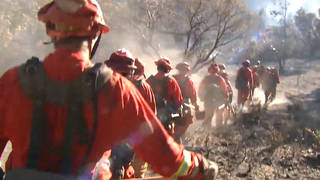
The death toll from the Camp Fire in California has risen to at least 63, with 631 people reported missing. As California continues to battle the deadliest fire in the state’s history, we turn to the hidden heroes on the front lines the raging climate-fueled wildfires: prisoner firefighters. At least 1,500 of the 9,400 firefighters currently battling fires in California are incarcerated. They make just a dollar an hour battling on the front lines but are rarely eligible to get jobs as firefighters after their release. In September, the Democracy Now! team traveled to the Delta Conservation Camp about an hour north of San Francisco, a low-security prison where more than 100 men are imprisoned. We interviewed incarcerated firefighters who had just returned from a 24-hour shift fighting the Snell Fire in Napa County.
New paper claims that LIGO’s gravitational wave detection from a neutron star merger can’t be right
Normal
There are various overused terms in mathematics. “Normal” is one of them. Perhaps the four commonest uses are the following:
- A complex square matrix is normal if it commutes with its conjugate transpose. Normal matrices are precisely the ones which can be diagonalised by a unitary matrix (that is, have an orthonormal basis of eigenvectors).
- A topological space is normal if two disjoint closed sets have disjoint open neighbourhoods.
- A field extension L/K is normal if every polynomial over K which has a linear factor over L splits completely into linear factors over L.
- A subgroup H of a group G is normal in G if it is mapped to itself by conjugation by elements of G; equivalently, its left and right cosets coincide.
Most of these uses seem completely unconnected. But the use of the same term for the last two is not coincidence, but comes from Galois theory. If L is a Galois extension of a base field E, and K an intermediate field, then L/K is a normal extension if and only if the Galois group of L over K is a normal subgroup of its Galois group over E. (If this happens, the Galois group of K over E is the quotient group.)
But this also hides some mystery. The most important property of normal subgroups is that they are kernels of homomorphisms (and conversely). But step outside group theory, to semigroup theory or universal algebra, and you learn that the kernel of a homomorphism is a partition, not a subalgebra: two elements are in the same part if they have the same image under the homomorphism. It just happens that, in groups, the kernel partition of a homomorphism is precisely the partition into cosets (left or right, it doesn’t matter) of the kernel subgroup.
Indeed, in German, one talks of a “normal divisor” rather than “normal subgroup”, which presumably arises from this interpretation as partition (but I am guessing, I don’t know the etymology).
You can see kernels of homomorphisms in the Galois connection. If L/K is a normal extension, with L Galois over the subfield E, then any E-automorphism of L fixes K setwise, and so induces an E automorphism of K. So we have a homomorphism from Gal(L/E) (the group of E-automorphisms of L) to Gal(K/E). The kernel of this homomorphism consists of the automorphisms which act trivially on K; these are the K-automorphisms of L, the elements of Gal(L/K). [An E-automorphism of L is a field automorphism of L fixing E elementwise.]
In group theory, the term “normal” could be, and sometimes is, replaced by “invariant”. An invariant subgroup is one mapped to itself by all conjugations; this fits in with the notion of fully invariant subgroup, mapped to itself by all endomorphisms. Indeed, for the notion that most people call “subnormal subgroup” (a term in a series of subgroups, each normal in the next, with top element the whole group) was called by Marshall Hall a “subinvariant subgroup”; he remarked in a footnote that he found the term subnormal “unnecessarily distracting”. [Footnote on p.124 of his book The Theory of Groups, published in 1959. He says “The more colorful term subnormal series has been urged on the writer by Irving Kaplansky”, suggesting that it wasn’t yet in common use in 1959.]
All well and good, if a little confusing so far; the first three uses mentioned above are so well separated that probably mathematical papers using each of them form disjoint open neighbourhoods.
But when we come to Cayley graphs, there is real confusion.
Let G be a group, and S an inverse-closed subset of G not containing the identity. The Cayley graph Cay(G,S) is the graph with vertex set G, in which two elements g and h are joined if and only if hg−1∈S. The fact that S is inverse-closed makes the graph undirected, and the fact that it doesn’t contain the identity makes the graph loopless. The group G acts on itself by right multiplication; this action embeds G into the automorphism group of the Cayley graph.
Now each of the following two definitions occurs in the literature:
- The Cayley graph Cay(G,S) is normal if the set S is closed under conjugation in G; equivalently, the action of G by left multiplication is also contained in the automorphism group of the Cayley graph.
- The Cayley graph Cay(G,S) is normal if G (embedded by the right action as before) is a normal subgroup of the automorphism group of the graph.
These two definitions are quite different. Indeed, the second one restricts the symmetry of the graph (its automorphisms are all contained in the normaliser of G in the symmetric group), while the second expands it (the left, as well as the right, action of G consists of automorphisms).
The complete graph on G is a Cayley graph for any group G; it is normal in the first sense but not the second (if the order of G is greater than 4). On the other hand, the Cayley graph of S3 with respect to two of its transpositions is a 6-cycle, and its automorphism group contains S3 as a (normal) subgroup of index 2; so it is normal in the second sense but not the first (since the three transpositions are conjugate).
Both terms, as I said, are well-established, and it is probably too late to change the terminology now.
This was on my mind because of recent events. The argument about synchronization for groups with regular subgroups mentioned in the last-but-one post depends on a relevant graph being a normal Cayley graph (in the first sense); but I learned about the result of Cai and Zhang at the conference in Shenzhen, which also had a talk about normal Cayley graphs (in the second sense).
Philosophers of mathematics argue about whether mathematics is discovered or invented. In the book of Genesis we read that God created the animals but Adam gave them their names. I think what the examples above show is that, whether mathematics is discovered or invented, the names we give to the concepts are our own invention.
2-Groups in Condensed Matter Physics
This blog was born in 2006 when a philosopher, a physicist and a mathematician found they shared an interest in categorification — and in particular, categorical groups, also known as 2-groups. So it’s great to see 2-groups showing up in theoretical condensed matter physics. From today’s arXiv papers:
- J.P. Ang and Abhishodh Prakash, Higher categorical groups and the classification of topological defects and textures.
Abstract. Sigma models effectively describe ordered phases of systems with spontaneously broken symmetries. At low energies, field configurations fall into solitonic sectors, which are homotopically distinct classes of maps. Depending on context, these solitons are known as textures or defect sectors. In this paper, we address the problem of enumerating and describing the solitonic sectors of sigma models. We approach this problem via an algebraic topological method – combinatorial homotopy, in which one models both spacetime and the target space with algebraic objects which are higher categorical generalizations of fundamental groups, and then counts the homomorphisms between them. We give a self-contained discussion with plenty of examples and a discussion on how our work fits in with the existing literature on higher groups in physics.
The fun will really start when people actually synthesize materials described by these materials! Condensed matter physicists are doing pretty well at realizing theoretically possible phenomena in the lab, so I’m optimistic. But I don’t think it’s happened yet.
My friend Chenchang Zhu, a mathematician, has also been working on these things with two physicists. The abstract only briefly mentions 2-groups, but they play a fundamental role in the paper:
- Chenchang Zhu, Tian Lan and Xiao-Gang Wen, Topological non-linear σ\sigma-model, higher gauge theory, and a realization of all (3+1)d topological orders for boson systems.
Abstract. A discrete non-linear σ\sigma-model is obtained by triangulate both the space-time M d+1M^{d+1} and the target space KK. If the path integral is given by the sum of all the complex homomorphisms ϕ:M d+1→K\phi \colon M^{d+1} \to K, with an partition function that is independent of space-time triangulation, then the corresponding non-linear σ\sigma-model will be called a topological non-linear σ\sigma-model which is exactly soluble. Those exactly soluble models suggest that phase transitions induced by fluctuations with no topological defects (i.e. fluctuations described by homomorphisms ϕ\phi) usually produce a topologically ordered state and are topological phase transitions, while phase transitions induced by fluctuations with all the topological defects give rise to trivial product states and are not topological phase transitions. If KK is a space with only non-trivial first homotopy group GG which is finite, those topological non-linear σ\sigma-models can realize all (3+1)d(3+1)d bosonic topological orders without emergent fermions, which are described by Dijkgraaf-Witten theory with gauge group π 1(K)=G\pi_1(K)=G. Here, we show that the (3+1)d(3+1)d bosonic topological orders with emergent fermions can be realized by topological non-linear σ-models with π 1(K)=\pi_1(K) = finite groups, π 2(K)=ℤ 2\pi_2(K)=\mathbb{Z}_2, and π n>2(K)=0\pi_{n > 2}(K)=0. A subset of those topological non-linear σ\sigma-models corresponds to 2-gauge theories, which realize and classify bosonic topological orders with emergent fermions that have no emergent Majorana zero modes at triple string intersections. The classification of (3+1)(3+1)d bosonic topological orders may correspond to a classification of unitary fully dualizable fully extended topological quantum field theories in 4-dimensions.
The cobordism hypothesis, too, is getting into the act in the last sentence!
The "financial toxicity" of a cancer diagnosis
Approximately 15.5 million Americans have a history of cancer, with an estimated 1,688,780 new cases and 609,640 deaths annually. With 87% of diagnoses occurring in persons ≥50 years of age, cancer remains the second leading cause of death in the United States. Cancer's financial burden is often substantial during treatment phases and often worsens with improving prognoses.The American Journal of Medicine is peer-reviewed and is one of the most highly respected medical publications in the United States.
With 6.5% of direct costs among nonelderly persons alone involving out-of-pocket payments, over half of all persons with cancer experienced house repossession, bankruptcy, loss of independence, and relationship breakdowns. Additionally, 40%-85% of cancer patients stop working during initial treatment, with absences ranging up to 6 months. Deductibles and copayments for treatment, supportive care, and nonmedical or indirect costs (eg, travel, caregiver time, and lost productivity) may be financially devastating even with healthcare coverage.
At year+2, 42.4% depleted their entire life's assets, with higher adjusted odds associated with worsening cancer, requirement of continued treatment, demographic and socioeconomic factors (ie, female, Medicaid, uninsured, retired, increasing age, income, and household size), and clinical characteristics (ie, current smoker, worse self-reported health, hypertension, diabetes, lung disease) (P<.05); average losses were $92,098. At year+4, financial insolvency extended to 38.2%, with several consistent socioeconomic, cancer-related, and clinical characteristics remaining significant predictors of complete asset depletion.
Cannabinoid–glutamate interactions and neural oscillations: implications for psychosis

Data suggest that the cannabinoid and glutamatergic systems are implicated in the pathophysiology of schizophrenia (SZ). In several brain regions associated with SZ, cannabinoid receptor type 1 (CB1Rs) and glutamate N‐methyl‐D‐aspartate receptors (NMDARs) have direct and indirect interactions. CB1Rs and NMDARs act upon gamma‐aminobutyric acid (GABA) interneurons to reduce GABAergic neurotransmission, which could disrupt neural network oscillations and lead to psychotic symptoms.
Abstract
Preclinical and clinical data suggest that the cannabinoid and glutamatergic systems are implicated in the pathophysiology of schizophrenia (SZ), the prototypical psychotic disorder. This has led to distinct “cannabis” and “ketamine” models of SZ, respectively. However, these two models need not be mutually exclusive. Indeed, in several brain regions implicated in the putative neural circuitry of SZ (e.g., hippocampus, frontal cortex, cerebellum), cannabinoid receptor type 1 (CB1Rs) and glutamate N‐methyl‐D‐aspartate receptors (NMDARs) have direct and indirect interactions. CB1R agonists and NMDAR antagonists act upon gamma‐aminobutyric acid (GABA) interneurons to reduce GABAergic neurotransmission. This would be predicted to result in the unsynchronized activity of pyramidal neurons, disrupting neural network oscillations involved in information processing, thus leading to psychotomimetic effects. Hence, the overarching aim of the current review is to synthesize the known literature on cannabinoids and glutamate in the context of neural oscillations in SZ. First, discussion of SZ and the basic mechanisms of neural oscillations are discussed, including a summary of the role of theta (4–7 Hz) and gamma (30–80 Hz) oscillations in neurocognition. Next, a brief review of the role of the cannabinoid and glutamatergic systems in SZ is outlined, followed by discussion of the known synaptic interactions between these two systems. Finally, the potential role of CB1Rs and NMDARs, both independently and in combination, on neural oscillations in relation to psychotic symptoms is considered. It is hoped that this review will yield a series of testable hypotheses that may be used to further elucidate the pathophysiology of SZ.
The human herd and its digital overlords.
For a chilling vision of our future if we continue the current trajectory I recommend the article by Yuval Harari in the August issue of the Atlantic. He suggests that most humans run the risk of becoming similar to domesticated animals, with only a small elite training their children to maintain the expertise and competence required to run the whole show. From his concluding paragraphs:
...if we want to prevent the concentration of all wealth and power in the hands of a small elite, we must regulate the ownership of data...Unfortunately, we don’t have much experience in regulating the ownership of data, which is inherently a far more difficult task than regulating land or machines...The race to accumulate data is already on, and is currently headed by giants such as Google and Facebook and, in China, Baidu and Tencent. So far, many of these companies have acted as “attention merchants”—they capture our attention by providing us with free information, services, and entertainment, and then they resell our attention to advertisers. Yet their true business isn’t merely selling ads. Rather, by capturing our attention they manage to accumulate immense amounts of data about us, which are worth more than any advertising revenue. We aren’t their customers—we are their product.
Ordinary people will find it very difficult to resist this process. At present, many of us are happy to give away our most valuable asset—our personal data—in exchange for free email services and funny cat videos. But if, later on, ordinary people decide to try to block the flow of data, they are likely to have trouble doing so, especially as they may have come to rely on the network to help them make decisions, and even for their health and physical survival.
Nationalization of data by governments could offer one solution; it would certainly curb the power of big corporations. But history suggests that we are not necessarily better off in the hands of overmighty governments. So we had better call upon our scientists, our philosophers, our lawyers, and even our poets to turn their attention to this big question: How do you regulate the ownership of data?
Currently, humans risk becoming similar to domesticated animals. We have bred docile cows that produce enormous amounts of milk but are otherwise far inferior to their wild ancestors. They are less agile, less curious, and less resourceful. We are now creating tame humans who produce enormous amounts of data and function as efficient chips in a huge data-processing mechanism, but they hardly maximize their human potential. If we are not careful, we will end up with downgraded humans misusing upgraded computers to wreak havoc on themselves and on the world.
If you find these prospects alarming—if you dislike the idea of living in a digital dictatorship or some similarly degraded form of society—then the most important contribution you can make is to find ways to prevent too much data from being concentrated in too few hands, and also find ways to keep distributed data processing more efficient than centralized data processing. These will not be easy tasks. But achieving them may be the best safeguard of democracy.
Time-asymmetric loop around an exceptional point over the full optical communications band
NosimplerSounds important
Time-asymmetric loop around an exceptional point over the full optical communications band
Time-asymmetric loop around an exceptional point over the full optical communications band, Published online: 17 September 2018; doi:10.1038/s41586-018-0523-2
Time-asymmetric light transmission over the entire optical communications band is achieved using a silicon photonic structure with photonic modes that dynamically encircle an exceptional point in the optical domain.Is the coding metaphor relevant for the genome?
I have argued that the neural coding metaphor is highly misleading (see also similar arguments by Mark Bickhard in cognitive science). The coding metaphor is very popular in neuroscience, but there is another domain of science where it is also very popular: genetics. Is there a genetic code? Many scientists have criticized the idea of a genetic code (and of a genetic program). A detailed criticism can be found in Denis Noble’s book “The music of life” (see also Noble 2011 for a short review).
Many of the arguments I have made in my essay on neural coding readily apply to the “genetic code”. Let us start with the technical use of the metaphor. The genome is a sequence of DNA base triplets called “codons” (ACG, TGA, etc). Each codon specifies a particular amino-acid, and proteins are made of amino-acids. So there is a correspondence between DNA and amino-acids. This seems an appropriate use of the term “code”. But even it in this limited sense, it should be used with caution. The fact that a base triplet encodes an amino-acid is conditional on this triplet being effectively translated into an amino-acid (note that there are two stages, transcription into RNA, then translation into a protein). But in fact only a small fraction of a genome is actually translated, about 10% (depending on species); the rest is called “non-coding DNA”. So the same triplets can result in the production of an amino-acid, or they can influence the translation-transcription system in various ways, for example by interacting with various molecules involved in the production of RNA and proteins, thereby regulating transcription and translation (and this is just one example).
Even when DNA does encode amino-acids, it does not follow that a gene encodes a protein. What might be said is that a gene encodes the primary structure of proteins, that is, the sequence of amino-acids; but it does not specify by itself the shape that the protein will take (which determines its chemical properties), the various modifications that occur after translation, the position that the protein will take in the cellular system. All of those crucial properties depend on the interaction of the product of transcription with the cellular system. In fact, even the primary structure of proteins is not fully determined by the gene, because of splicing.
Thus, the genome is not just a book, as suggested by the coding metaphor (some have called the genome the “book of life”); it is a chemically active substance that interacts with its chemical environment, a part of a larger cellular system.
At the other end of the genetic code metaphor, genes encode phenotypes, traits of the organism. For example, the gene for blue eyes. A concept that often appears in the media is the idea of genes responsible for diseases. One hope behind the human genome project was that by scrutinizing the human genome, we might be able to identify the genes responsible for every disease (at least for every genetic disease). Some diseases are monogenic, i.e., due to a single gene defect, but the most common diseases are polygenic, i.e., are due to a combination of genetic factors (and generally environmental factors).
But even the idea of monogenic traits is misleading. There is no single gene that encodes a given trait. What has been demonstrated in some cases is that mutations in a single gene can impact a given trait. But this does not mean that the gene is responsible by itself for that trait (surprisingly, this fallacy is quite common in the scientific literature, as pointed out by Yoshihara & Yoshihara 2018). A gene by itself does nothing. It needs to be embedded into a system, namely a cell, in order to produce any phenotype. Consequently, the expressed phenotype depends on the system in which the gene is embedded, in particular the rest of the genome. There cannot be a gene for blue eyes if there are no eyes. So no gene can encode the color of eyes; this encoding is at best contextual (in the same way as “neural codes” are always contextual, as discussed in my neural coding essay).
So the concept of a “genetic code” can only be correct in a trivial sense: that the genome, as a whole, specifies the organism. This clearly limits the usefulness of the concept, however. Unfortunately, even this trivial claim is also incorrect. An obvious objection is that the genome specifies the organism only in conjunction with the environment. The deeper objection is that the immediate environment of the genome is the cell itself. No entity smaller than the cell can live or reproduce. The genome is not a viable system, and as such it cannot produce an organism, nor can it reproduce. An interesting experiment is the following: the nucleus (and thus the DNA) from an animal cell is transferred to the egg of an animal of another species (where the nucleus has been removed) (Sun et al., 2005). The “genetic code” theory would predict that the egg would develop into an animal of the donor species. What actually happens (this was done in related fish species) is that the egg develops into some kind of hybrid, with the development process closer to that of the recipient species. Thus, even in the most trivial sense, the genome does not encode the organism. Finally, since no entity smaller than the cell can reproduce, it follows that the genome is not the unique basis of heritability – the entire cell is (see Fields & Levin, 2018).
In summary, the genome does not encode much except for amino-acids (for about 10% of it). It should be conceptualized as a component that interacts with the cellular system, not as a “book” that would be read by some cellular machinery.
Velocity-dependent Lyapunov exponents in many-body quantum, semiclassical, and classical chaos
Author(s): Vedika Khemani, David A. Huse, and Adam Nahum
It has been a long-standing challenge to expand the notion of exponential sensitivity to small perturbations in the initial conditions from the realm of classical chaos to that of many-body quantum systems. Recently, exponential growth in a measure known as the out-of-time-order commutator (OTOC) has been proposed as a diagnostic of chaos in the setting of many-body quantum systems. The authors examine the behavior of the OTOC along rays of different velocities for a variety of spatially local extended many-body quantum systems, both integrable and nonintegrable. They find that the velocity-dependent Lyapunov exponents are negative for velocities greater than a characteristic “butterfly speed”, which defines the light cone for the spreading of operators. It is demonstrated that a regime with well-defined positive Lyapunov exponents inside the light-cone may only exist for classical, semiclassical, weakly interacting, or large-N systems, but not for fully quantum systems with strong short-range interactions and local Hilbert space dimensions of order one.

[Phys. Rev. B 98, 144304] Published Tue Oct 16, 2018