There's a counter-intuitive notion taking hold out there that the George Zimmerman's case had nothing to do with Stand Your Ground. This argument is most explicitly made by Jacob Sullum in a column entitled, "Sorry, The George Zimmerman Case Still Has Nothing To Do With Stand Your Ground." Here's Sullum:The story that George Zimmerman told about his fight with Trayvon Martin, the one that yesterday persuaded a jury to acquit him of second-degree murder and manslaughter, never had anything to do with the right to stand your ground when attacked in a public place. Knocked down and pinned to the ground by Martin, Zimmerman would not have had an opportunity to escape as Martin hit him and knocked his head against the concrete. The initial decision not to arrest Zimmerman, former Sanford, Florida, Police Chief Bill Lee said last week (as paraphrased by CNN), "had nothing to do with Florida's controversial 'Stand Your Ground' law" because "from an investigative standpoint, it was purely a matter of self-defense." And as The New York Times explained last month, "Florida's Stand Your Ground law...has not been invoked in this case." The only context in which "stand your ground" was mentioned during the trial was as part of the prosecution's attempt to undermine Zimmerman's credibility by arguing that he lied when he told Fox News host Sean Hannity that he had not heard of the law until after the shooting. During his rebuttal on Friday, prosecutor John Guy declared, "This case is not about standing your ground." I think this is overly broad. It's very true that Zimmerman's narrative holds that he never had the opportunity to retreat, and thus SYG was not relevant to his specific defense. It is certainly not true that "the only context" in which SYG came up was from the prosecution. As I wrote yesterday, SYG is explicitly mentioned in the jury instructions:If George Zimmerman was not engaged in an unlawful activity and was attacked in any place where he had a right to be, he had no duty to retreat and had the right to stand his ground and meet force with force, including deadly force if he reasonably believed that it was necessary to do so to prevent death or great bodily harm to himself or another or to prevent the commission of a forcible felony.Sullum says how the jury instructions apply "to the facts of this case." But this is changing the argument. Bill Lee's decision to not arrest George Zimmerman also don't apply to the facts of this case. They apply to Sullum's stated argument--"The George Zimmerman Case Had Nothing To Do With Stand Your Ground."I do not mean to be pedantic here. The decision to not arrest George Zimmerman is critical in understanding why Trayvon Martin is a national cause célèbre and Justin Patterson is not. In looking at that decision, it is important to understand the changes enacted in Florida law in 2005, under SYG. Among those changes--making it very difficult to arrest someone who claims self-defense:776.032 Immunity from criminal prosecution and civil action for justifiable use of force.-- (1) A person who uses force as permitted in s. 776.012, s. 776.013, or s. 776.031 is justified in using such force and is immune from criminal prosecution and civil action for the use of such force, unless the person against whom force was used is a law enforcement officer, as defined in s. 943.10(14), who was acting in the performance of his or her official duties and the officer identified himself or herself in accordance with any applicable law or the person using force knew or reasonably should have known that the person was a law enforcement officer. As used in this subsection, the term "criminal prosecution" includes arresting, detaining in custody, and charging or prosecuting the defendant. (2) A law enforcement agency may use standard procedures for investigating the use of force as described in subsection (1), but the agency may not arrest the person for using force unless it determines that there is probable cause that the force that was used was unlawful.(3) The court shall award reasonable attorney's fees, court costs, compensation for loss of income, and all expenses incurred by the defendant in defense of any civil action brought by a plaintiff if the court finds that the defendant is immune from prosecution as provided in subsection (1).The language here is interesting. It says that making a claim of self-defense grants immunity from arrest. It then adds exception for probable cause, which is the standard by which police make an arrest anyway. It then finishes by noting that should the court find the that the claimant is immune to prosecution, they can recover from the state all expenses. I'm not clear on all of this because the language is so tangled. But my reading is that the pre-trial hearing is where such an immunity from from prosecution determination would be made. If immunity is found, then the state is on the hook for all the claimants bills. I don't see anything here that excludes people arguing that they could not retreat (like Zimmerman) from such a hearing. This language was added to Florida's law books in 2005, exactly at the time that Florida put codified "stand your ground." They were part of the same reform, and have always been understood to be as such--even by Stand Your Ground's proponents. :Marion Hammer, the NRA's Florida lobbyist, said the measure was needed to prevent authorities from harassing law-abiding people with unwarranted arrests. "The law was written very carefully and it means what it says: You have a right to protect yourself," she said...."There is nothing wrong with the law," she said. "Some of the state attorneys and law enforcement officers are complaining because they can't just go arrest everybody and sort it out later."Sullum criticizes Ben Jealous for inveighing against Stand Your Ground, but correctly invoking the set of laws by the name which they have long been known. It's very nice that Bill Lee now claims that the decision not to arrest George Zimmerman had nothing to do with SYG and its attendant reforms. But Bill Lee's statements today, must be weight against what the city of Sanford actually said at the time:"Zimmerman provided a statement claiming he acted in self defense, which at the time was supported by physical evidence and testimony," the letter, signed by Sanford City Manager Norton Bonaparte Jr., says. "By Florida Statute, law enforcement was PROHIBITED from making an arrest based on the facts and circumstances they had at the time." The killing of Trayvon Martin was not the first time law enforcement officials in Florida reached this conclusion:It took Hillsborough County deputies two days to arrest Trevor Dooley, the school bus driver accused of shooting and killing a Valrico Air Force veteran on a basketball court. The arrest on manslaughter charges may have been complicated by the state's "stand your ground" law, which allows the use of lethal force if a person feels threatened by another with great bodily harm. The law makes it more difficult to make arrests and prosecute assailants when there has been a fight. The thing to understand here is that Stand Your Ground laws do not exist in some segregated section of Florida's criminal code. They are not bracketed off from the rest of Florida's "standard" self-defense laws. Stand Your Ground laws are integral to the very meaning of self-defense in the state. I do not think you can argue that Zimmerman would have been convicted if not for Stand Your Ground. But you certainly can't argue that the law had "nothing" to do with this case. And you most certainly can argue that SYG reduced the chances of Zimmerman being arrested. If that arrest had happened we probably would not be talking about this case right now.MORE: Via Andrew, here is a juror directly (if mistakenly) citing Stand Your Ground as part of why they acquitted: COOPER: Because of the two options you had, second degree murder or manslaughter, you felt neither applied? JUROR: Right. Because of the heat of the moment and the Stand Your Ground. He had a right to defend himself. If he felt threatened that his life was going to be taken away from him or he was going to have bodily harm, he had a right. Again, it is simply not supportable to say that Stand Your Ground had "nothing" to do with this case.
Shared posts
How Stand Your Ground Relates To George Zimmerman
Steve DyerI'm still catching up on facts of the case. Here are some details I was not clear on.
moustache-cashstashh: notyourtypicalsexygayguy: tastefullyoffen...


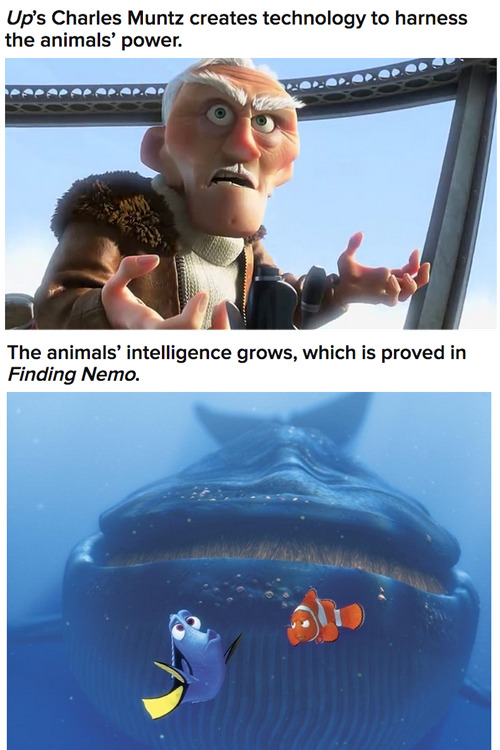
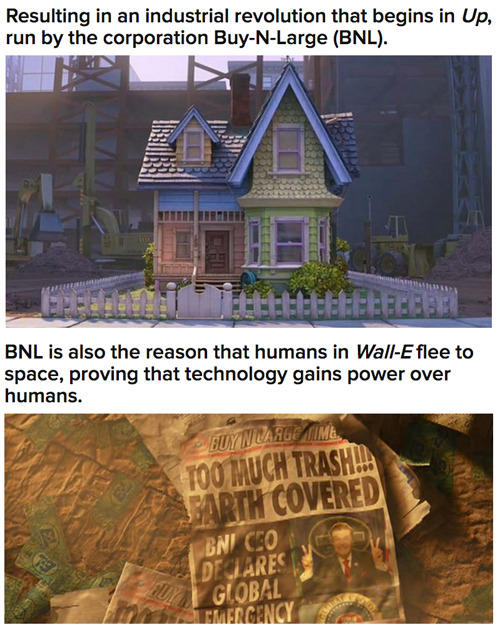
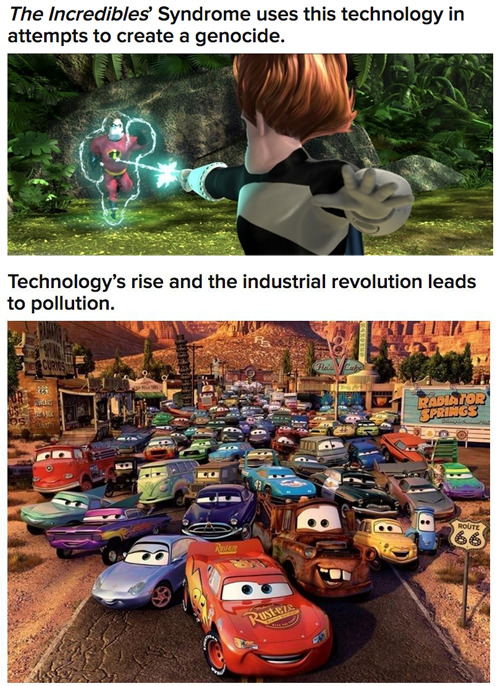
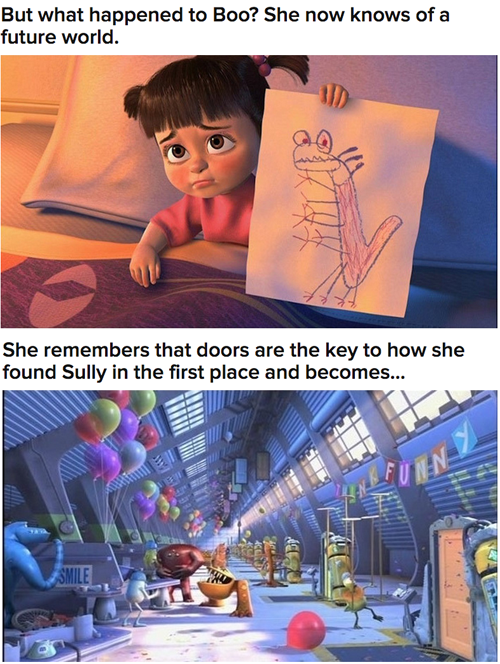
Theory of the Pixar Universe by John Negroni [detailed version]
Previously: Disney Movies in Disney MoviesTALK ABOUT A COMPLETE MIND FUCK OF FUCKERY!!!!!
WHAT THE FUCK
lalabunney: hannabryn: Guys, let’s not forget about baby...
Steve Dyerplease click if you like or have ever thought about taylor lautner
Guys, let’s not forget about baby Taylor Lautner’s sicknasty number in Shark Boy and Lava Girl…
i’m cRYING
'Grown Ups 2' Somehow Had a Bigger Opening Than the Original 'Grown Ups'
Steve DyerGrown-Ups 2 beat Pacific Rim, time to go home.
The slightest of several terrible things that happened this weekend was Grown Ups 2 becoming a big hit. While a poorly-reviewed Adam Sandler movie making a ton of money is nothing new, what's surprising about this is that Grown Ups 2 made more money than the original, despite receiving worse reviews and the fact that audiences knew what to expect from a Grown Ups movie going in this time around.
Grown Ups 2 grossed $42.5 million its opening weekend, recouping more than half of its $80 million budget in just a few days. It came in pretty close behind Despicable Me 2's $44.7 and narrowly beating Pacific Rim's $38.3. The original Grown Ups opened to $40.5 million, but the new one beat it slightly despite being in fewer theaters. So, this means the Grown Ups franchise is on an upward trend, meaning that Grown Ups 3 is probably going to be a real thing that we can complain about on the internet without seeing in three years.
0 CommentsThe Best of 'Army Man,' the Humor Magazine That Was the Foundation of the Original 'Simpsons' Writers Room
Steve DyerSo I guess James is just in my RSS now.
If there is such a thing as a cult comedy magazine, it's Army Man, America's Only Magazine. With a writing staff that included George Meyer, Jack Handey, Jon Vitti, John Swartzwelder, David Sacks, Ian Maxtone-Graham, Andy Borowitz, Roz Chast, Ian Frazier, Bob Odenkirk, and many many more, it's criminal that Army Man isn't more well known.
But the humor magazine ran for only three short issues and was never widely distributed. It was a homemade production, each 'zine photocopied and stapled by comedy genius George Meyer. The quality of the humor is only surpassed by the the caliber of the writing staff and their subsequent projects. Most famously, creator George Meyer and others became a large chunk of the Simpsons writing staff. But beyond Springfield, Army Man's writers have won many Emmys, a few Golden Globes, a NAACP Image Award, and a Tony. The 'zine spawned four New Yorker staff writers, the first Letterman top ten list, the Chanukah Song, USO tours, Bob Odenkirk, cookbooks, humor collections, and what seems like all TV programming since the '80s.
I heard about Army Man for the first time through a New Yorker profile of Meyer, written by David Owen, also a former Army Man contributor (they are everywhere, seriously). In the late '80s Meyer left New York and a job writing for Letterman and sought refuge in Colorado. He wanted to get away from the New York grind and work on a personal project. But since he's Meyer, he also ended up writing, what is by all accounts, a brilliant feature script. Although it was never produced, the script was so good that, according to Owen's profile, Simpsons' writers would guiltily borrow from it when they needed a joke.
When he needed a break from the screenplay, Meyer worked on Army Man. He wrote much of it himself, laying out his pieces alongside submissions from writers he knew at the Lampoon, Letterman, and elsewhere. "The only rule was that the stuff had to be funny and pretty short," Meyer told the New Yorker. Working on his bed, Meyer cut, pasted, copied, and stapled all the issues for the original run.
Nowadays, Army Man is almost impossible to find. I became obsessed with finding these three issues, but it proved difficult. It felt unfair that my laptop refused to yield up Army Man. The instant availability of the internet age had spoiled me — I just assumed that on some back-shelf of the internet, sat scans or PDFs. But the twenty-odd pages of Army Man seems to have thus far eluded the insatiable maw of the web. Sure, there are some crappy scans and transcriptions, but I craved the whole deal. So I emailed friends, I reached out to confused 'zine librarians, I trolled university library catalogues. Nothing. I gave up and was content that even today, there are still places to hide from the internet's roving eye.
But a few months ago, I interviewed with someone who happened to be a former Lampoon writer of Meyer's generation. At some point, he and I both gushed about Meyer and Army Man. Coyly, I brought the conversation back around – getting the job was secondary at this point. He offered to run off some photocopies for me. I tried to match his casualness and acted like I wasn't singing comedy nerd Christmas carols in my mind.
A few days later, I met him at his office, and while he ate his lunch, I cradled the still-warm copies, complete with an apologetic letter from Meyer that Army Man was suspending publication (Meyer: “To paraphrase Gen. Douglas MacArthur, 'I shall, if circumstances permit, and no one objects too strenuously, return.'”) I imagined, with the anticipation, the exhaustion, and the joy, that this must be what having a child is like.
By the time I got off the subway back in Brooklyn, I had made my way through most of the magazine and was blown away. The first thing that struck me was how dense the magazine is, visually as well as comedically; the page layout takes little care about design, and instead aims to get as much on each page as possible. It's an obvious cut and paste affair, looking more like a punk 'zine than I would have guessed.
And everything is incredibly brief. The longest piece is just a page long, topping out at no more than 500 words. I recognized Jack Handey's Deep Thoughts, which are surprisingly somewhere in the middle for length. Nothing is very topical, almost all of the jokes are broad enough to still be relevant today. There are lines of “stray dialogue” that poke fun at film and TV tropes. There are small fragments of scripts, or sketches that end after three lines. There are log-lines for movies that will never be made. There's a scathing review of Cannonball Run II from a Honolulu newspaper that Meyer apparently liked enough to clip out and include.
But what makes Army Man's humor so relatable is that many of the pieces are pointedly critical and, like much great humor, evidently reflect the writers' frustrations. The jokes land with more honesty and truth as a result. Take this bit on the news media that which could be a list of Buzzfeed articles or headlines on a 24 hour news network:
Or this, which could easily be a marketing executive's pitch for military rebranding:
One of my favorites is this short sentence that succinctly skewers the mind games that advertising plays:
And this bit, which lampoons health food obsession:
It's also interesting to see a foreshadowing of The Simpsons and the style that would make the show distinct. Look at this snippet of dialogue from John Swatzwelder, which I can easily imagine taking place in Springfield:
And read this in the voice of Mr. Burns:
The longer pieces really shine, too — bizarre stories written with the sensibility of sketch, with a single twist or conceit. Take this one by Ian Frazier, which blows out a joke that in less capable hands might have landed as obvious:
Which is the best? Let Meyer speak for his own magazine, from his New Yorker profile:
"To me, the quintessential Army Man joke was one of John Swartzwelder's: 'They can kill the Kennedys. Why can't they make a cup of coffee that tastes good?' It's a horrifying idea juxtaposed with something really banal — and yet there's a kind of logic to it. It's illuminating because it's kind of how Americans see things: Life's a big jumble, but somehow it leads to something I can consume. I love that."
This captures what makes Army Man work so well, even decades later. It's the density of the jokes that makes them more than just a quick laugh. They are able to pull in large ideas, universal gripes, and pain. This universality and relatability is what would make the Simpsons one of the greatest shows of all time. If there's a joke that could serve as the thesis of Army Man, I would chose this:
The juxtaposition of truth and levity in this joke is like the smile of Homer Simpson that still remains after more than twenty years of failure and pain: light-hearted, goofy, and irreverent in the face of the all the world's horrors.

In the age of Twitter, it can be tempting to compare Army Man's short, punchy humor to tweets. But unlike twitter, Army Man has no chaff. This is the power of an editor with a strong vision. Meyer chose the funniest of funny. Careful attention is given to each joke but also to the unity of the absurdist, off-kilter voice. With Twitter and democratic or algorithmic organization, the steading hand of an editor is lost. Meyer's editorial guidance makes Army Man more than what it would appear to be.
The magazine's success would be its ultimate downfall. One of Army Man's biggest fans was producer Sam Simon. When Simon needed to quickly pull together a writing staff for the first season of The Simpsons, he opened a copy of America's Only Magazine and hired George Meyer, Jon Vitti, and John Swartzwelder. Later, most of the masthead of Army Man would end up writing for The Simpsons. Which was great for The Simpsons, but it doomed the magazine. Meyer didn't want to sacrifice the quality of either by trying to juggle his attention. So after just three issues, the magazine stopped.
I'm not going to scan the whole thing here, just a few of the jokes. Sorry. It's not that I don't want to share this amazing magazine. Rather, I like that some things are still hard to find. And I imagine it's what George Meyer would have wanted — a limited run of strange, short, and timeless humor. (Email me if you agree or disagree, Mr. Meyer, or just to say hi!).
If you get a chance though, read Army Man. You won't regret it.
James Folta is a writer, comedian, and improviser living in Brooklyn. He has published writing for McSweeney's Internet Tendency, Esquire, and Narrative.ly. Find more of his work online at jamesfolta.com.
3 Commentsvia
Steve Dyerhttps://en.wikipedia.org/wiki/Iqaluit
"First Anglican/Episcopalian church service in North America"
https://en.wikipedia.org/wiki/Martin_Frobisher
" On his second voyage, Frobisher found what he thought was gold ore and carried 200 tons of it home on three ships, where initial assaying determined it to be worth a profit of £5.1 per ton. Encouraged, Frobisher returned to Canada with an even larger fleet and dug several mines around Frobisher Bay. He carted 1,350 tons of the ore back where, after years of smelting, it was realized that both that batch of ore and the earlier one he had taken were worthless iron pyrite. "
fucking wiki K-hole help
Journey Into Two Semi-Obscure Texts
Steve DyerEveryone's all over James' junk.
Good things come in twos today, apparently:
1. Reed Johnson at the New Yorker writes at length about the Voynich Manuscript, a strange book featuring drawings of nonexistent plants and written in a mysterious language. If you haven't heard of the Voynich Manuscript before, you should definitely give this a read.
2. James Folta at Splitsider takes you through a tour of the three issues of obscure comedy zine Army Man and explains why it's the basis of modern comedy writing.
How I take a seat
Steve Dyersensuality


How I take a seat
Hangover Costs
“Americans have about 117 billion alcoholic drinks each year. Hangovers cost us about $1.37 for each drink in lost productivity.”
Maybe you’ve been there. You had just one too many the night before and you are sitting at work thinking (or trying to think) about how much time you can spend in the bathroom without anyone becoming suspicious about why you’ve been away from your desk for so long. And maybe you’re nodding off a little bit because alcohol does this really funny thing to you, which is jolts you awake at 5:30 in the morning even though you had just closed your eyes three hours before. It’s because of something called the “rebound effect.” You know that because you had trouble going back to sleep so you Googled it on your smartphone. Anyway, you’re going to just do your best for the next six hours and pray that you don’t vomit into the wastebasket. ‘I’m never doing that again,’ you tell yourself. It’s a lie. It’s all lies today.
Photo: David
8 CommentsAmazon’s Unfulfillment Centers
Steve DyerThe internet hates Tim.
A Financial Times article spotlights Amazon’s shipping warehouse in the former coal-mining town of Rugeley, England. John Brownlee follows up:
The issue at Rugeley is not that workers are ungrateful for the jobs Amazon has given them, or even that they find these jobs unpleasant. Most of Rugeley’s workers come from mining families, a stock not exactly known for its weak-livered dandyism. It doesn’t matter that these jobs are hard. It’s that they have no future. … The jobs in the Rugeley fulfillment center are almost always temporary positions handed out by agencies on zero-hour contracts. Nothing is guaranteed, and a fulfillment associate’s job can completely disappear between one day and the next. As such, the local economy is not recovering as locals hoped. Amazon is not investing in the town’s people; instead, it’s mechanizing them.
Brownlee talks to Ben Roberts, whose photo series Amazon Unpacked documents Rugeley’s “vast” and “shockingly quiet” shipping center:
“The workers at Rugeley are effectively human robots,” Roberts says. “And the only reason Amazon doesn’t actually replace them with robots is they’ve yet to find a machine that can handle so many different sized packages.” … ”When you buy something from an independent retailer, you might pay more than Amazon, but that extra bit is an investment,” Roberts explains. “When you pay it, you’re investing in the quality of not only your own life but the life of the community around you.”
Dustin Kurtz reacts:
The same panicked grasping by local governments at jobs, no matter how temporary or poorly paid, that led to the placement of the warehouse in Rugeley is how Amazon managed to place packing plants in other locations as well. Amazon (a company that receives more money from the UK government than it pays in taxes, remember) currently has other UK “fulfillment centers” in Hemel Hempsted, Hertfordshire; Swansea, Wales; Doncaster, South Yorkshire and Peterborough, Cambridgeshire, former mining towns all. At what point will those communities be forced to ask what, in fact, Amazon is giving back to them, if anything?
Quote For The Day
Steve DyerWhat is this world coming to
“It’s very important for people not to be overly critical of someone else until you’ve examined your own heart,” – former president George W Bush, when asked what he meant when he responded to a question about marriage equality thus:
I shouldn’t be taking a speck out of someone else’s eye when I have a log in my own.
Dissents Of The Day
A reader quotes me:
I wouldn’t be bothered with his Baldwin-like inability to own his own anti-gay record, if he weren’t obviously trying to win the White House back again, by-passing the 22nd Amendment via his wife.
Okay dude, I’m not gonna bicker with you about the proper amount of penance for Bill Clinton. It’s fruitless, and because the HIV travel ban affected you so personally and directly, I don’t see that much movement is possible in that discussion, which is fine.
What’s less understandable is your reversion to the third-term-for-Bill meme. What happened, man?I’m off to work and don’t have time to dig
through your archives, but its a real reversal for you to start treating Hillary like some political pawn for her husband’s machinations again, or like a Lady to his Macbeth. Did you just forget the last four years? If she becomes the President, she’ll be the President, not her husband.I don’t think you’re being fair to Bill, but god knows he wasn’t fair to you. But to reduce a remarkable, accomplished, and frankly gracious woman like Hillary to the backdoor into power for her husband is (however unintentionally) sexist and blind.
That wasn’t my intent, and I’m sorry it came out that way. I have long seen both Bill and Hillary as an equal power couple, and have faulted Hillary’s feminism for not demanding the first crack at national power. Another reader:
Hillary Clinton is many things, but she’s surely not a pushover or a mere front for her husband. We’re not talking about Lurleen Wallace here [seen above with her husband, George, whom she succeeded as governor], and it boggles the mind for you to suggest so.
Agreed. Hence my apology and clarification. Another reader:
The gal can’t win.
When she was First Lady, she was condemned for wielding imagined power. Now that she may become president, are we supposed to see her as made of tissue paper, with Bubba pulling the strings? Ugh.
I have qualms about power families. But I think Hillary Clinton has demonstrated enough independence and political ability in her own right that this line of thinking is moot. She is more obviously qualified than George W. Bush or, heck, even Bill Clinton circa 1992.
Maybe this was just a snarky one liner, not meant to be taken literally as a sexist belittling of Hillary Clinton. Irony anyone?
I do agree that in some respects having Bill as a husband is a liability. As a progressive, I am well aware of Bill’s cynical, triangulating ways. But I also recognize that in the face of the toxic, nihilist modern GOP, the man got things done. He brought the Democratic Party back to national significance. In the last election, that speech he gave at the Democratic Convention was an ass-kicking that nobody else in the party could have delivered. And whatever flaws in his character or leadership are far, far outweighed by the sleazy villainy of his political opponents.
Anyway, I know you are getting lots of emails on this, so I don’t want to pile on. It does seem to me you are quite forgiving of some folks, and relentlessly unforgiving of others, but I guess all of us can be like that. You write a blog, and you wear your emotions on your sleeve, and that is often a good thing. You have a lot of anger about liberals in particular, their hypocrisy and political correctness. I can see that. But please don’t forget the bullshit Republican craziness that has been going on since the early nineties in ever increasing amounts. This stuff does have a political context.
Another:
I read your blog constantly. It’s usually such a well-rounded, smart take on what’s going on in the world that it’s a “must click” at least hourly. But lately I’ve been clicking less – this week you seem to have homed in on this relentless effort to take down Bill and Hillary Clinton and Alec Baldwin in some sort of half-assed effort to shore up your independent bona fides. Well, it just comes across as cranky, whiny and stubborn. You’re clearly not going to let your Bill Clinton-bashing go, but just when I’ve thought you had come to see the light on Hillary (i.e., she’s not evil), today you decide that in the spirit of your cranky “I hate the Clintons” diatribe, you’d decide to write off the Baby Boomer generation entirely (“God save us from another Boomer president”). I’m far from a Boomer, but what? That’s such an uneducated and overboard stance that you have to know that you come across like a humorless, unhappy asshat.
As my friend and fellow Dishhead put it, hopefully P-town will chill you the fuck out this holiday weekend.
Photo
Steve Dyerthis is real
http://www.youtube.com/watch?v=_XxuBIiFZKs
starring tara reid


When someone admits that I was right
Steve DyerSudden wave of nostalgia over how good Glee was season 1.

Why Not Tie A Carbon Tax To Temperature?
Steve DyerI'd sign on to that
First, a question: is the discovery of climate change mankind’s greatest achievement?
But how should we respond to those measurements? Ross McKitrick, a global warming skeptic, suggests (pdf) a climate policy compromise:
[T]he best way to proceed would be to put a small tax on CO2 emissions, and tie its subsequent evolution to a suitable measure of atmospheric temperatures. If temperatures go up, so does the tax. If they do not, the tax does not change. In this way everybody will expect to get the policy they think best, and whoever turns out to be right deserves to be so. Sceptics who do not believe in global warming will not expect the tax to go up, and might even expect it to go down. Those convinced we are in for rapid warming will expect the tax to rise quickly in the years ahead. Companies managing factories and power plants will have to figure out who is more likely to be right, because billions of dollars of potential tax liabilities will depend on what is going to happen. Nobody will benefit from using false or exaggerated science: instead the market will identify those who can prove they understand the climate well enough to make accurate forecasts. And policy-makers will be guaranteed that, whatever the tax does in the future, the policy will turn out to have been the right one.
Bailey thinks ”McKitrick’s proposal seems quite sensible because it harnesses the vast dispersed knowledge of scientists, manufacturers, fossil fuel suppliers, renewable energy innovators, and speculators to address the problem of climate change.”
Somerville, MA rebels against minimum parking requirements
In a city where people can spend hours searching for parking, Boston officials are pursuing a strategy that seems as galling as it is counterintuitive: They are deliberately discouraging construction of new spaces.
The policy shift — which comes even as thousands of new residents flock into its neighborhoods — is being implemented across the city, with officials relaxing once inflexible requirements that parking be built with every new residence. The goal is to encourage the use of public transportation, and to devote more land and money to affordable housing, open spaces, and other amenities. Officials also say the city’s youthful population is becoming more accustomed to life without a car.
“We don’t need a parking space for every bedroom in every new building,” Peter Meade, head of the Boston Redevelopment Authority, said in a recent interview. He cited US census data showing that one in three Boston residents is between 20 and 35, and most bike, walk, or use public transportation to get to work.
Residents are complaining the new policy will make matters worse in the short run, even if there is a longer-run substitution away from cars. By the way, this is not causally connected but there is evidence Boston has reached “peak car”:
The number of registered vehicles in the city has dropped by nearly 14 percent in the last five years, from 362,288 in 2008 to 311,943 today, according to the Registry of Motor Vehicles.
The full story is here, and my earlier column on minimum parking requirements is here.
I Can Die Now: Here's What I Don't Have to Worry About Now That the Supreme Court Overturned DOMA

- ROBERT ULLMAN
My death.
It crosses my mind every time I get on an airplane, every time I speak before a crowd, every time I ride my bike over the Ballard Bridge. And it doesn't just cross my mind. There's nothing momentary or fleeting about it. I flash on gruesome, high-res images of the plane I'm on exploding in flames, or one of the many assholes who send me death threats splattering my brains all over the lectern I'm standing at, or the city bus that's bearing down on me dragging my mangled bike and lifeless body for several blocks.
Does that sound exhausting? It is. And it must be genetic, because my mother was like this, too.
Whatever the situation, whatever the challenge, my mother would obsess about the worst possible outcome. She never got on a plane without thinking about it crashing, she never dropped her four kids off at the lake without thinking about all four of us drowning, she never ate a chicken salad without worrying about salmonella poisoning. My husband long ago dubbed this affliction "WCSD," which stands for "worst-case scenario disorder." He considers it a mental illness.
Terry may be right. But here's the thing: WCSD works. My mother believed that obsessing about worst-case scenarios was the best protection from worst-case realities. If you thought about the plane you were on crashing, the plane you were on wouldn't crash. If you thought about your kids drowning, your kids wouldn't drown. If you thought about your chicken salad killing you, your chicken salad wouldn't kill you.
Clinton And Forgiveness, Ctd
Steve DyerTory, isn't Andrew's Clinton hate the most popcorn.gif thing on the whole internet right now?
You’re not letting this one go, are you? A reader writes:
In 2008 Barack Obama ran as a candidate opposed to gay marriage. I don’t think there’s any doubt that he chose to do this in the teeth of his personal beliefs and the knowledge that it would be hurtful to the gay community. He chose to do so because he believed to do otherwise would lose him votes and possibly the election. The president has changed his official stance on the issue, and his policies and rhetoric today certainly reflect that change. But I don’t think he’s issued any sort of public apology for his 2008 stance.
Now, Clinton’s past sins in this area dwarf Obama’s, but Clinton was also operating in a political climate much more hostile to gay rights. Are you convinced that, under similar circumstances, Obama would not have behaved the same? I’m not.
Well, that’s an impossible hypothetical, but if forced to give an answer, I’d say I am. Yes, they’re both pragmatists; but there is a limit and a method to Obama’s pragmatism, and a patience in achieving his ends. There is, in contrast, no limit I have been able to find to the Clintons’ pragmatism or careerism. They were also amateurs, who didn’t think through how to achieve their ends, announced aims without beginning to prep for how to get there, and ended up being completely outflanked by the rabid right. Another reader:
From AFP: “Ending the US travel ban had been an uphill struggle for rights groups, who saw former president Bill Clinton’s attempts to repeal the restrictions shot down by conservatives.” So you saying that Clinton “signed the HIV travel ban” by supporting (along with Barney Frank) a generous NIH funding bill with historically high HIV/AIDS funding, which (despite Clinton’s/Frank’s lobbying) re-authorized the ban, would be like saying “Obama signed the green-card ban on gay immigrants” by signing a non-inclusive immigration reform bill (which he’s indicated he’d do if there were no other way to pass immigration reform).
There’s a huge difference between not including gay couples in immigration reform because a Supreme Court ruling would soon likely make it it moot; and signing into law a brutal piece of stigmatization and persecution for countless people with HIV. Jesse Helms said he regretted it. Clinton has never owned up to his role in signing it. Above, he is still blaming others. You will not find a single instance of him blaming himself for bungling these issues in 1993 and then running from them ever since. Again: a simple sorry would suffice. It remains beyond him. Another:
Sorry Andrew, but your criticism of Bill Clinton’s record on gay rights jumped the shark when you listed “don’t ask, don’t tell” as one of the ways in which he “did so much damage to gay lives.”
While DADT was seriously flawed insofar as it required that gays in military remain closeted, it prohibited – for the first time – discrimination and harassment against closeted homosexual and bisexual service members and applicants. This distinction seems ludicrous now, but it was a huge step forward at the time. Clinton, moreover, actually wanted to sign an executive order that would have allowed gays to serve openly, but he was forced to fall back on DADT as a compromise position after being met with staunch opposition from prominent congressional Republicans and Democrats who threatened to write the exclusion of gays into law.
In fact, other than DOMA, Clinton’s record on gay rights is extremely impressive for the 1990s. He was the first president to appoint openly gay men and women, he issued executive orders lifting the ban on security clearances for LGBT federal employees and outlawing discrimination based on sexual orientation in the federal civilian workforce, and he also pushed for both hate crimes laws and for the private sector Employment Non-Discrimination Act. All this at a time when supporting gay rights was pretty unpopular.
None of this, of course, excuses Clinton from later selling out gays for his own political gain, but you overplayed your hand.
He sold us out at the very beginning. He had no plan to implement the end of the gay ban; it was just another promise to fundraisers he never thought through. Then he dropped it almost immediately and left all those who had come out in the lurch. Then under Clinton as commander-in-chief, the rate of discharges on grounds of homosexuality doubled compared with this predecessor. He did nothing to stop this, even as George Stephanopoulos reassured me and others that gay servicemembers were going to be safer under the new law. They were, in fact, sitting ducks – and Clinton learned one lesson: take the money from the gays but fire more of them than any private employer. Note above that he even blames Colin Powell before taking responsibility himself. But Clinton never took responsibility for anything but his successes. Another:
The issue about Clinton and DOMA taps into a bigger question I have about how to view the millions of conversions on this issue over the last two decades, and the millions more who have not yet changed their minds. Are they all recovering bigots?
I did not support same-sex marriage when DOMA passed. Few Americans did; in 1988, only 11 percent supported gay marriage or had much idea what it would actually mean. I opposed DOMA, but mainly because it singled out gays and lesbians – not because I had a substantial disagreement with the policy of allowing only heterosexual marriage. Though I believe now that it was an awful law, DOMA seemed a logical step for those who sincerely opposed same-sex marriage.
There was an interesting moment on this week’s ”Meet the Press” (a rarity, I know), when Ralph Reed and Jim DeMint accused Rachel Maddow of labeling Bill Clinton and all those who once supported DOMA as bigots. Maddow pointed out that Reed and DeMint were the only ones using the word “bigot”, but they had a point. As our society’s views continue their tectonic shift on this issue, how do you accommodate people whose deeply held beliefs are changing?
Was I a bigot in 1996? Or did I not yet recognize the discriminatory effects of my beliefs? I don’t really have an answer to that yet – and I would suggest that the answer is just as fuzzy for Clinton and other politicians who supported gay rights in principle but also supported DOMA.
I try to avoid the word “bigot” as much as possible for those reasons. I don’t think Clinton was a bigot just because he made a big show of returning to Arkansas in election year to personally preside over the execution of a mentally retarded African-American man, Ricky Ray Rector. I just think he was a disgusting opportunist, and if it ever was a choice between his career and minorities, his career always came first. It still does, and I wouldn’t be bothering with his Baldwin-like inability to own his own anti-gay record, if he weren’t obviously trying to win the White House back again, by-passing the 22nd Amendment via his wife.
The Best of 'Inside Amy Schumer's First Season
Steve DyerHi Laura Wilcox in Abusive Couple!
The reason why Inside Amy Schumer seemed to work since the show premiered, and the reason why the entire first season ended up being a success, is because it felt like all of the sketches clearly represented the vision of the star of the show, no matter which writer or writers were responsible. Schumer's established artistic scope is a very appealing one — Amy engages her audience with a ribald vocabulary, yet after you hear two or more setups and punchlines it's clear that she is more than vulnerable. She constantly doubts herself, using one eye to wink at the fun she's having through being single while using the other to look for a more loving future. She makes a comic's living on speaking in frank, licentious language about sex and relationships, while coming off as a sensitive hopeless romantic, not completely unlike Woody Allen. When that strong of a working comedic persona influences everything about a program, it's hard to fail.
Not surprisingly, the few sketches that didn't work were the ones most out of Schumer's range, e.g. the segment where Amy was a meth cooker. But it worked when Schumer, co-executive producers Daniel Powell and Jessi Klein, and writers Kurt Metzger, Gabe Liedman, Kyle Dunnigan and Tig Notaro focused on what would be an extension of an Amy Schumer bit until all of the comedic meat was sucked dry from the bones. There was a patient, assured timing to all of the sketches that lent even the dumbest of bits some respectability.
Here are the ten best Inside Amy Schumer sketches from the first season, starting with the perfect segment juxtaposing the old fashioned way of courtship with the new.
Sexting
A Porn Star Is Born
The strange bit of an homage to The Artist with its black and white usage to put the pornographic industry in a cliched historical context.
Psychic with Dave Attell
Ambien For Elephants
This is a scene not currently available to YouTube or Comedy Central. After a nightmare full of disgusting men, Amy takes the pills and ends up as a princess in a supermarket. "Amy is the prettiest person we've ever had in here, and Hilary Duff is someone we've had in here," blared the supermarket speaker.
2 Girls 1 Cup
The sketch that started it all. A perfect example of crass mixed with humanity.
Clown Panties
"They let us out of work early because there was a shooting..."
Abusive Couple
What can best be described as the silliest segment (yes more so than "Clown Panties.")
Cancer Excuse
Schumer's selfishness taken to the biggest of extremes.
Compliments
According to Schumer's Reddit AMA: "Jessi Klein the head writer and executive producer and I noticed that we were deflecting any kind words coming our way, and we thought that was problematic. So we wrote a funny little scene where everybody kills themselves at the end."
How Will This Relationship End?
From the season finale. A game most of us would be good at playing.
---
See more posts by Roger Cormier
What’s Left Of The Left?
Barry Friedman and Dahlia Lithwick wonder what issue liberals will trumpet after marriage equality:
Abortion, the death penalty, gun control, economic injustice, all that stuff was fraught enough to make you just want to triangulate. Abortion clinics don’t poll well. Good grief, even access to primary health care polls poorly. And those issues are as popular as plums compared with the rights of death row inmates and freedom from religious coercion … Now that gay marriage is looking like a check in the win column, it is precisely the right moment to ask: What does it mean to be left anymore? Is there even a left left? Or just a center that calls itself left because it is always standing next to the dude labeled “right” in the photographs?
First off, a quibble. Not all those in favor of marriage equality are on the left. We just look that way because the right has become a faction of religious fundamentalism. Second, these questions are somewhat premature; Enten expects that the fight over marriage will last for many decades in the South:
All the southern states except for West Virginia have in place a constitutional ban against same-sex marriage. All the southern states – except for Arkansas and Mississippi, where support for gay marriage is somewhere between 20% and 30% – require state legislative action before overturning a state constitutional amendment against gay marriage.
The fact that state legislatures will be required to act changes the entire equation for the south. All the southern legislatures with a constitutional ban against gay marriage also feature Republican control of at least one house of the state legislature. In most cases, Republicans control both houses with plenty of room to spare and no sign that control is going to switch anytime soon. All of the states that require going to the legislature demand super-majorities (60%+) and/or at least two consecutively elected legislatures to approve an amendment for it to reach the popular ballot.
What this basically means is the same-sex marriage debate is not even about what the majority of the people thinks in most of these states. Republican legislators control the action. That’s the whole game.
So Your Car Broke Down on a Family Trip...What's Next? by James Folta
Steve DyerWAIT THE BYLINE HI JAMES
1) Don't Panic
The most important thing is to remain calm. You probably want to pound the dashboard until your knuckles are raw and bloody and make insane deals with gods you've never believed in. But before you promise a portrait in blood to Isis, try taking a deep breath. Hold it in until reality starts to fade away and then exhale. Don't let feelings of terror set in; they'll only alarm your family and lead you to make worse decisions.
2) Turn Your Car Off
It sounds obvious, but people often forget about this one. If there are any problems with the engine, you can avoid causing further damage. You'll want to conserve your battery and your precious fuel. Also, the sound of the engine will draw unwanted attention; you don't know who is around and you don't want to run into anyone before you've been able to prepare and get a better handle on your surroundings.
3) Check For Damage or Hazards
Careful! Make sure everything is safe before you think about getting out of the car. Are there flames? Broken glass? Bandits? Remote roads are heavily trafficked by murderous bands and unfriendly clans' warriors. Look and listen for threats. Based on visible landmarks, create a quick map. Divide your surroundings into different quadrants and assess each section's relative safety. Your glovebox might have a small flashlight that will help you see in low-light situations.
4) Evaluate Your Supplies
At this point, you can't know how long it'll be before help arrives. It's a good idea to assume you'll be stranded much longer than you think, and it's best to plan on being marooned indefinitely. Stockpile any food, medical equipment, and sundries on the driver-side dashboard where you can keep an eye on them. The panel inside the door of most cars can be pulled back to hide valuables and supplies that you don't want stolen. Steel yourself and trust no one. You will need to be harsh and unforgiving in your rationing.
5) Arm Yourself
The worst case scenario is if bandits or wild beasts arrive before you are prepared. If you don't have any of your weapons on hand, don't worry, you can make your own. A head rest makes a handy bludgeon, an aerosol can with a lighter is an intimidating flame thrower, a bumper can be torn off and used as a club. Be creative. Remember, defending yourself is a "when," not an "if" scenario—it is essential that you begin to mentally prepare your family to kill. Begin to slowly and systematically harden them and erode their instincts for restraint and empathy.
6) Sort Your Family
Once you're armed, test each of your family members on their strength and courage. Have each of your loved ones do simple exercises like lifting heavy objects or arm wrestling, and then assign them a letter grade based on their strength. Require the weakest to begin a training regimen to improve themselves and their usefulness. To test courage and fortitude, a close-quarters screaming contest will sort the wheat from the chaff. As the most important member of the car, you may consider banning anyone with “B”s or lower from sitting up front with you. Obviously, you should by now be severely shaming anyone who cries.
7) Send out Scouts
Based on the map you've made, you should have a fairly good idea of where the best hunting and foraging will be located. Start thinking long-term and begin regularly sending out your family members with grades of average strength and high courage to locate additional food and supplies. Be sure to make it clear to everyone that these scouts may not return. You can turn on your hazard lights every few hours as a beacon to guide their return. But make no promises—you cannot appear weak.
8) Accept Your New Life
By now it will probably be clear to your family that you won't be returning to the home compound anytime soon. Your life is here now, in the car, and you must all start cutting mental ties with your life before the car. Try not to dwell on regrets, and start a conversation about goals and plans. Do you want to expand territorially? In the spring will you plant crops? Will you allow other worthy travelers to join your new kingdom? How will you distribute the scalps of defeated enemies? This is a chance to have a little fun. You will need to come up with a new system of laws and decision-making. The design and creation of a flag is a great project for the kids.
9) Thrive
If you can survive your first winter and defeat enough gangs of bandits to earn a reputation as a ruthless car warlord, you will have established yourself and your broken-down car kingdom. Best of luck to you (unless I encounter you in battle, of course!). Cherish your family, and remember that in this mad world of ours, the little things still count the most. Each day is a tiny blessing worth fighting for!
James Folta is a writer, comedian, and improviser living in Brooklyn. He has published writing in various print and online media, including McSweeney's Internet Tendency, Esquire, and Narrative.ly. Find more of his work online at cargocollective.com/jamesfolta.
The Humor Section features a piece of original humor writing each week. To submit, send an email to Brian Boone.
---
See more posts by Brian Boone, Editor
The beginnings of a drug lord.
Steve DyerIt's coming back SO SOON

The beginnings of a drug lord.
“You Broke The Faith With This Nation”
Steve DyerGood watchings for your lunchtime.
Robert Bateman believes that the above exchange shows “what ‘Congressional Oversight’ is supposed to be about”:
Tammy Duckworth, who lost both legs and had her arm sewn back on, mostly, lays it down. A businessman is called out. It seems his company got something like $500 million in contracts from the government, primarily because his company was a “small business, disabled veteran owned.” His disability? When he was in prep-school, he twisted his ankle playing football. The prep school was the one at Monmouth, which is the feeder for West Point, but if you come in from civilian life, it has no military obligation at all. …
Representative Duckworth, who knows something about sacrifice to your nation, tears this man a new orifice. And I, for one, would ask that everyone, regardless of politics, forward the clip. This man, and those like him, hurt us.
RedState’s streiff blames the system, not Braulio Castillo:
Stipulated: the VA system is broken. Stipulated: an industry exists to help veterans get a VA awarded service connected disability rating. Stipulated: the military services are a part of that system. Regardless of what “Doctor” Duckworth might think of Mr. Castillo’s injuries, the facts are that he applied for the disability rating and the VA granted him that rating.
Marc Herman attempts to sort out why Castillo’s VA disability rating is higher than Duckworth’s:
How did Duckworth’s terrible injuries—she was hit with a rocket-propelled grenade—justify a lower VA disability benefit than Castillo’s old football knock? Well, the GAO has looked into how the VA assigns disability ratings several times over the past few decades, most recently late last year. It found the system to be pretty much a disaster, which is significant in a country where 2.4 million people have served in conflicts over the past decade-plus. Duckworth notes that the average wait for a disabled soldier to get a VA review of his or her injury is nearly nine months. … As long ago as 1988, the GAO looked into the matter, and found that the disability assessment system hadn’t been broadly updated since 1945. …
What sort of conditions might have shown up in a medical chart after 1945 but not before? Anything they’d invented by the time of the Vietnam war, say. Helicopters, for example. Or Agent Orange.
a-very-cliffrose-christmas: icantbelieveitsnotsanity: i’ve...
Steve DyerThis is what caused the brawl.


i’ve reblogged this like three times and i still have no idea what the fuck is going on
is this what happens when actors try to leave disney
The Wine To Drink When You're Not Done Being Drunk
Steve DyerThis is how I want all my reviews of all things to be.
You know those moments in the middle of the night when you wake up with an insatiable thirst caused by an evening of imbibification and you know only a slug of low-alcohol-content liquid will send you back to a serene slumber without causing you to void the contents of your stomach? Portugal's Vinho Verde is the perfect tipple for the pre-dawn drinker, and now that you can pick up what is apparently a pretty decent bottle for the remarkable price of $4 you'd be remiss to not have one or two chilling the fridge for those early morning gasp attacks. Head down to Astor pronto.
---
See more posts by Alex Balk


through your archives, but its a real reversal for you to start treating Hillary like some political pawn for her husband’s machinations again, or like a Lady to his Macbeth. Did you just forget the last four years? If she becomes the President, she’ll be the President, not her husband.I don’t think you’re being fair to Bill, but god knows he wasn’t fair to you. But to reduce a remarkable, accomplished, and frankly gracious woman like Hillary to the backdoor into power for her husband is (however unintentionally) sexist and blind.