Shared posts

13 Jan 04:52

Time of Your Life

by Nicole Boyce

90sfest1

I saw the first denim scrunchie before I’d even reached the venue. A woman in front of me was wearing a Sandlot t-shirt with the caption, “You’re killing me, Smalls!” Another woman, wearing a shirt that just said, “The 90s,” posed a friend for the camera. “You’ve got to move the vest so we can see the t-shirt,” she said. “There ya go.” Her friend’s t-shirt read, “You’re a virgin who can’t drive.”

I’d been thinking recently about the way that nostalgia is now being sold back to millennials—the past marketed and re-experienced for a fee—which is why I was waiting in line on an overcast Saturday morning in Brooklyn for the inaugural 90sFest, a one-day music festival featuring Coolio, Smash Mouth, and Salt-N-Pepa, among others. Organized by promoters Leuven Media, Prime Social Group, and Founders Entertainment, tickets for the festival sold for between $50 and $150. (It was far from the only marketed experience capitalizing on millennial nostalgia this year: Marketing Magazine, Adweek,and Forbes have all run articles on nostalgia marketing in recent months, while Vogue called 2015 “the summer of 90s music”; Marilyn Manson did a summer tour with Billy Corgan; and Sugar Ray recently finished a tour with Eve 6, Better Than Ezra, and Uncle Kracker.) As we approached the festival gates, I peeked inside at the scattering of side ponytails, chokers, and butterfly clips. It was like the blue fairy had waved her wand over a BuzzFeed gallery.

Betches

I’d been inside for less than five seconds when someone handed me a promotional bill printed with a Mars Attacks alien, Kevin McCallister, and the logo for SmileTrain, 90sFest’s charity partner. I spotted a cluster of Rugrats mascots and hustled over to get a photo, but couldn’t figure out where on the mascot’s foamy body to put my hand. Did I just accidentally touch its butt? Which part is the butt? The mascots were standing between a Sunny D booth and something called Betches Bedroom, a detailed re-creation of teenage girlhood stocked with Beanie Babies, an *N Sync poster, and Steve Madden memorabilia. A woman in a tattoo choker manned a GIF photobooth inside. “Where can I get one of these?” a visitor asked her, holding up a pillow that said “#Betches Love the 90s.”

“Sorry, we made those special,” the choker-wearing staffer said. Her co-worker joked to me, “Maybe we should sell them.”

“Bet you could make a fortune,” I said.

She laughed, then looked at me earnestly. “We are selling tank tops, though. They’re $44.” She pointed at a grey tank top printed with the words, “Dawson’s Fleek.”

When it comes to re-experiencing our youth, we can’t divorce memory from economics. The Atlantic’s Megan Garber has described the current state of nostalgia as a “memorial-industrial complex. While the word “nostalgia” used to be associated with Madeleine-induced warm and fuzzies, Garber explained, now memory is often experienced as a media product. Our past—thanks to the Internet—is instantly accessible and always available for purchase. As Trent Moore declared in his recent Blastr critique of Hollywood’s Jurassic reflux: “For better or worse, nostalgia is the new currency.” 90sFest, then, isn’t just whimsical marketing: It’s calculated economics. As Bruce Starr of BMF Media Group noted in an interview with BizBash, booking nostalgic acts is extremely cost-effective, since the hit-makers of yesteryear typically bill less than artists with current no. 1 singles, all while tapping into built-in fan-bases and publicity potential. For attendees, throwback festivals are a chance to reminiscence, and an excuse to revisit acid-washed jeans. The experience isn’t just about the music, but about the overalls andfloral dresses that are enjoying their comeback heyday. Blogger Vladimir Vukicevic has theorized an S curve for nostalgic appreciation that’s visible in the fashion industry: Pop cultural items move from an establishing event and gradual appreciation period to a nostalgic apex—usually twenty years after the fact—then depreciate as nostalgic capital. If fashion is a Venn diagram, nostalgia is the spot where hipster and Hanson overlap, and 90sFest is a hyper-concentrated version of that performative nod backwards.

Pauly greets the crowd

“My name is Pauly Shore,” our host announced as he took the stage shortly after 2pm. He looked tired but self-amused in a loud printed t-shirt and shorts set, his Son in Law hair long since cropped off. He began hyping up the crowd, gesticulating with a bottle of Sunny D. “How many Lisa Loeb fans are here?” he asked. A big cheer. “What Lisa Loeb songs can you name?” The crowd went quiet. “You don’t like Lisa Loeb,” he sneered, then started listing his movies—Biodome, Jury Duty, and Encino Man—which elicited another huge cheer. “Those are all movies from the nineties,” he said, squinting out into the crowd. “They asked me to host because that’s when I was really popular.” The crowd laughed, then got quiet again, unsure of whether we were supposed to laugh. “At least I’m still fucking alive, right?”

“Everybody (Backstreet’s Back)” played on the speakers and Pauly gyrated in his Hawaiian outfit, shouting at people to dance. “You guys, this was life before the fucking internet!” After what felt like many minutes, he left the stage and the band Tonic stepped on, launching straight into “Open Up Your Eyes,” a crowd-pleaser. I was struck by how many Tonic songs I know—“You Wanted More,” “Sugar”—and by how tight the band’s performance was, delivering well-harmonized vocals and spot-on instrumentals. If Tonic is washed up, they’ve washed up wholly intact. It occurred to me then that 90sFest was not just a fashion show or an orgy of elastic cuffs and orange drink: Tonic is a seasoned band who plays well-loved numbers, and for them, 90sFest wasn’t a novelty act, it was a music festival. After indulging us with a group sing-along to “If You Could Only See,” the band left the stage and the festival’s kitsch flowed back in full force. A man dressed like The Mask strutted past the Sunny D booth, a woman wore a Spice Girls collectable sticker on her bicep, and another woman, in pastel cargo pants, flirted with a man in a vintage t-shirt. I hadn’t seen anyone flirt in cargo pants in a long time.

90sfest2

Over the course of the day, I talked to a number of festivalgoers. Katie, twenty-eight, wore overalls and a backwards baseball cap, while Ashley, thirty, had a row of butterfly clips in her hair. They both live in New York, and found out about the festival through a Facebook ad.

“Is there a band you’re especially excited to see?” I asked.

They shook their heads. “None of the performers are my favorite nineties performers,” said Katie. “But I know a handful of songs from each, so I thought, ‘It’ll be awesome.’”

I knew what she meant. I too have fond, if vague, recollections of most of the performers, but I don’t own an album by any of them. I asked about the outfits. Ashley bought her butterfly clips from a stand in the festival’s marketplace, while Katie’s overalls came from an H & M. She mentioned something that came up with every person I talked to—how difficult it was to tell en route who was dressed up in nineties garb for the festival and who was just from Brooklyn.

I asked Katie about her shoes—Vans with hearts doodled on the side—“That’s how you can tell they’re from ten years ago,” she said. “I haven’t drawn on my shoes in ten years.”

Next, I talked to Olivia, twenty-five, and Sanders, twenty-four. Olivia said the outfits were the biggest reason she wanted to attend the festival. “I actually bought this whole thing,” she said, pointing at her backwards hat, overalls, and leggings. “I went to both Goodwill and Spencer’s yesterday, I’m ashamed to admit.” She did a lot of internet research to curate the look. “This is mostly based on Clarissa Explains It All.”

“Where did you get your fanny pack?” I asked Sanders.

“Some friends gave it to me in college,” he said. “It’s actually a JammyPack.”

That sounded to me like a cartoon onesie gang, but Sanders demonstrated that the pack housed a mobile speaker system. This was 2009 dressed up like 1993, resurrected in 2015. Nineties culture, over time, has been essentialized into a few symbols: phat pants, Doc Martens, mini buns.

Around 3:30pm, Coolio took the stage in a hat customized for his braided pigtails. Midway through his performance, a recording of gunshots played, and Coolio left the stage. He returned, wearing neon orange Wayfarers and a Notorious B.I.G. t-shirt, then launched into “Gangsta’s Paradise.” Ecstatic howls rang out through the crowd. Hundreds of people in vintage plaid started waving their hands in unison.

90fest4

The venue—a large fenced lot—was packed by then, and I wondered whether 90sFest was delivering on its Pog-centric advertising. “I think it’s pretty good for [the festival’s] first year—good turnout, good food,” Olivia had said. Her one critique? “I wish Shaggy was here.” Could 90sFest just be a pretty good way to spend a Saturday afternoon? There’s something to be said for a guy in a Where’s Waldo costume playing giant Jenga with his friends and having what looks like a kickass time. Those of us at the festival weren’t unaware that we’d paid $60 for the tickets and too much for Bud Light; we were being marketed to, but not necessarily duped. And for the first time, I felt real nostalgia: not for Rugrats or Steve Madden shoes, but for a time when I was less skeptical about buying the experiences I love.

Around 4:30, I weaved back through the crowd to watch Lisa Loeb perform under increasingly ominous clouds. After Perez Hilton introduced her—and talked up his role in the upcoming Full House musical—Loeb launched into her new material. The crowd chattered as if she wasn’t onstage. Admittedly, I didn’t find the new material gripping either, but I still cringed when I heard a woman behind me say what we were all thinking: “I don’t want to hear the new album stuff. I want to hear the old stuff.” As Loeb continued playing, a man beside me said, “Wow—look at her arms!”, presumably referring to Loeb’s toned biceps. A guy further back in the crowd shouted out: “I made my girlfriend buy your glasses!” How many of us have made sexual choices based on nineties pop icons?

When Loeb played the first chord of “Stay,” everyone paid attention. We all knew the words, and we all sang along. It was a beautiful moment in a bizarre context—the direct evidence of the song’s emotional impact, concentrated over time. And it struck me how unusual it is to hear the favorites of my childhood performed live; I was too young to go to concerts then, and my taste has changed now, so the songs hang, disembodied. Introducing “Stay,” Loeb said, “This song has taken me all over the world, so I always love to sing it.” The guy beside me smiled patronizingly. “Good for you, Lisa Loeb. Good for you,” he said.

The essentials of herd musicality are unchanged from my teenage experiences at Warped Tour—the back pain, the fickle weather, the smell of weed. Time, however, has brought us cellphones to hold aloft and earplugs to embrace. Most importantly, we could drink in this time-warped nineties, which lent the festival a messy undertone. By 5pm, a line had formed for the beer tent. The foam Rugrats got up on stage with some Spice Girls impersonators to do the Macarena, and people all around me started half-assedly flopping through the movements, Budweisers in one hand.

I found Joey, forty-one, watching the crowd warily. I asked whether the festival was living up to his expectations. “It’s kind of a big disappointment,” he said. “I feel like I’m in jail in the nineties,” he added, referring to the lack of in-and-out privileges. He preferred a recent Sugar Ray and Everclear concert that “was more like a regular concert. Less commercial.” In fact, his biggest beef with 90sFest was that “Nickelodeon is overrepresented and the U.K. as a whole is underrepresented.”

Joey was right that Nickelodeon was everywhere. It had been “sliming people” throughout the afternoon at a booth branded with the words “The Splat,” which was later announced as the name of its new all-nineties-all-the-time network. In the crowd, the “ewws” of childhood had been replaced with the calm remove of adults watching something ridiculous. “That looks water-based,” a guy behind me noted as one woman was splatted. His friend nodded. “Yeah, water-based.”

Downpour

As dinner time approached, Pauly Shore bounced onstage again and delivered hype lines peppered with variations of “motherfuckin’.” The DJ—Suga Ray—played songs poached from Carson Daly-era TRL. Then Blind Melon took the stage and delivered a decent performance, with Travis Warren, the non-holographic replacement for deceased vocalist Shannon Hoon, singing “No Rain” to a crowd of people wishing for umbrellas. At 7:30, Pauly Shore got the Nickelodeon slime treatment, and left the podium looking a little annoyed. I sympathized, damp from the rain, re-living my worst nightmare of the nineties—standing in front of my male peers with limp bangs.

Darkness fell as we waited for Smash Mouth. A man beside me was using a Treasure Troll as a pocket square. People sang “a-yo, a-yo, a-yo, a-yo,” and I wondered how “No Diggity” has never been appropriated as a mayo jingle. I was surprised at my relief to see Pauly Shore take the stage in a new, even more brightly patterned suit. “Are you ready to smash your mouth or what?” he shouted.

Perhaps because of the rain delay, Smash Mouth wasted no time and launched straight into the favorites: “Can’t Get Enough of You Baby,” “I’m a Believer,” “Walkin’ on the Sun.” No one threw bread at them, so they didn’t swear at us. It was a serviceable performance but I couldn’t shake my longtime distaste for the band; I tried to picture them playing a small venue in the early nineties, people in the crowd saying “Damn! They’re gonna be big!” All around me, people were singing “All Star,” riding on each other’s shoulders. The band departed with a triumphant bow, then Pauly returned, shouting, “Yeah! That was sick!” The ground was paved with empty beer cans and crushed sunglasses. “Let’s give it up for god tonight, bringing us this beautiful moment. Praise god, praise the lord,” Pauly said. Then, shortly afterwards, “Play Weezer for the motherfuckin’ Weasel!”

By 9, I’d nearly had my fill of the nineties. I’d encountered a soggy fanny pack in the port-a-potties, and watched a drunk couple slow dance to Chumbawamba. But it was time for the festival’s headliners, Salt-N-Pepa, who exist in my memory as three songs: “Whatta Man,” “Let’s Talk About Sex,” and “Shoop.” They burst onto stage singing none of the above, but I couldn’t take my eyes off them: They had sparkly hats and male back-up dancers, coordinated dance moves for every song, and slick vocals. “I just wanna say, Salt-N-Pepa are coming up on our thirtieth anniversary,” Salt said. “And still got those sexy Tina Turner legs.” Then she told us, “This is not a show. This is a Salt-N-Pepa experience.”

That experience took us to “Let’s Talk About Sex,” with the back-up dancers spanking Pepa’s leather skirt. Then “Jump Around,” “Sweet Child of Mine,” and “Girls Just Wanna Have Fun,” during which Salt invited women up on stage to dance with her. She extended another offer during “Whatta Man,” calling up “all those good men out there.” Pauly Shore shimmied back onstage. Finally, they delivered high kicks during “Shoop,” their backup dancers bringing out the iconic leather jackets, white and yellow with red letters. Afterward, they got slimed—albeit, in plastic ponchos—and left the stage dripping green sludge. Whether by rain or slime, everything left 90sFest dampened.

Through the detritus of an exploded decade, I worked my way to the door. The Betches Bedroom had closed for the night; a man ran past to steal its Clueless poster. Walking toward the subway, I saw another man with the “#Betches Love the 90s” pillow tucked under his arm. We had literally looted the past. In some ways, I was glad we did. There was an element of camaraderie to 90sFest—people were reminiscing with friends, complimenting strangers’ outfits, exchanging knowing glances during Billboard hits. There were also times when the experience felt cheap, despite its expense—the blatant sponsor-plugs made me feel like we’d paid to take part in a giant Nickelodeon commercial.

Three days after the festival, 90sFest tweeted about “the next #90sFest.” The past is a resource that keeps on giving. I wonder though, will we still buy tickets after two years, five years, ten? Can our nostalgia sustain this festival indefinitely? If it can, I’m going to need more slap bracelets. And if it can’t, don’t worry: I’m sure someone’s working on #AughtsFest.
13 Jan 04:52

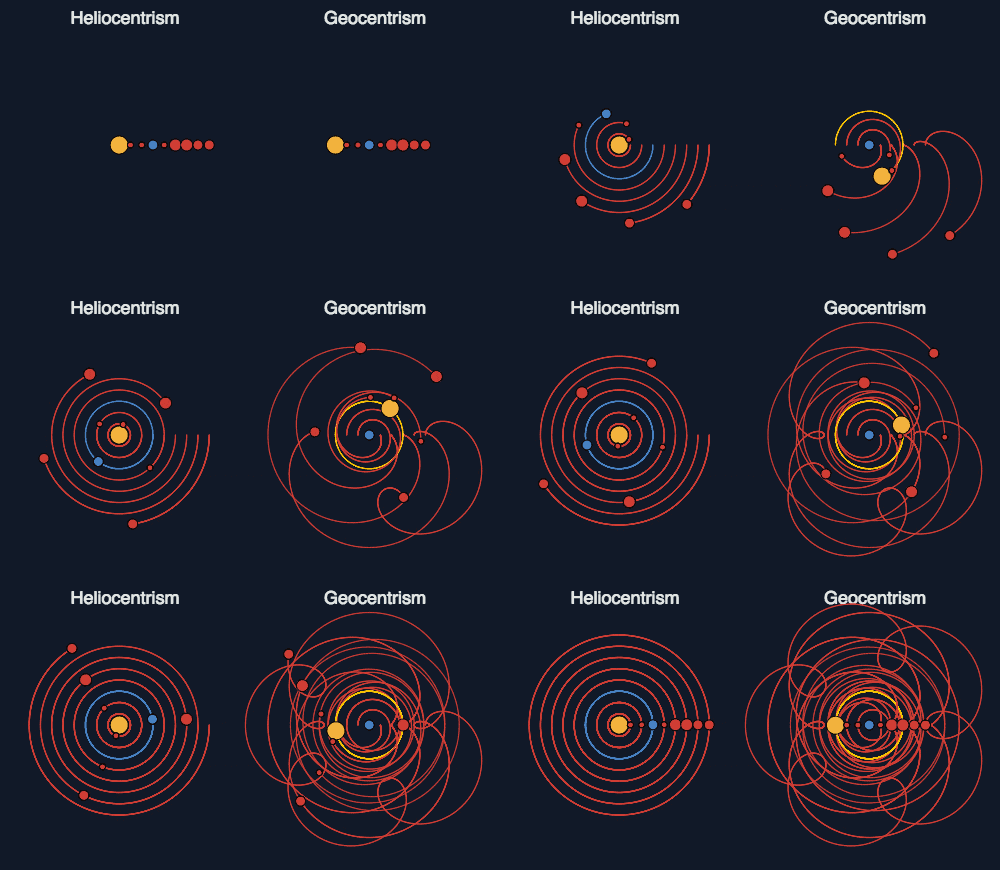
Heliocentrism vs geocentrism

by Jason Kottke
Steve Dyer

SPACE

Helio Vs Geo

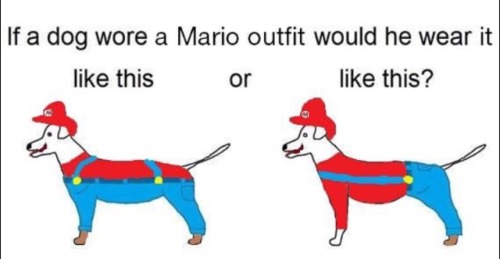
With hindsight, it seems bloody obvious the Sun and not the Earth is the center of the solar system. Occam's razor and all that. (via @somniumprojec)

Tags: astronomy   geometry   science   solar system
13 Jan 03:33

Photo


10 Jan 22:37

Photo

Steve Dyer

this is a good and important new meme


10 Jan 22:35

Photo


10 Jan 21:28

how things work

by Freddie
Steve Dyer

This is INSANE to me?!

For years I’ve said that there’s a wagon-circling function in media that makes criticism of certain connected people appear professionally risky. A lot of people in the media question the accuracy of that criticism, and I fully admit that at times I can be too sensitive to it. But I’m not inventing it, either. Here’s an email in response to my criticism of The New Republic’s Jeet Heer yesterday:

Screenshot_2016-01-10-12-26-25

This is pretty much how it goes. It’s not an explicit threat, exactly. It’s just an editor at a big publication who has the ability to trade writing for money – or not – giving vague warnings about my reputation in the industry. It’s a bit of “nice career you got here… Would be a shame if anything happened to it.” And this, essentially, is how it goes down. This is far from the first email I’ve ever received like this.

Incidentally: some will turn around and say that, by printing this email, I’ll be scaring off other publishers, that this is a bit of exposure for the sausage-making process that I’ll pay for. So the circle gets a little tighter. And you know what? Those people are probably right.

09 Jan 17:18

A Slow Motion Gargling Uvula is Much More Entertaining Than It Deserves to Be: WATCH

by Andy Towle
Steve Dyer

this is disguscinating

slow mo uvula

The Slow Mo guys took a fantastic voyage this week to inspect the uvula, that pink flap of skin at the back of your mouth.

RELATED: Handsome Slow Mo Guys Get Wet And Deliver The Ultimate Backflop: VIDEO

The physiological function of the uvula is not entirely clear, though it’s useful in some languages to help form consonant sounds. It can also contribute to snoring.

uvula

What is clear after watching the clip is that the uvula’s activities resemble that of a small, hilarious seal in your mouth throwing water around. The uvula is also an expert at self flagellation.

Watch:

The post A Slow Motion Gargling Uvula is Much More Entertaining Than It Deserves to Be: WATCH appeared first on Towleroad.

09 Jan 16:59

Channing Tatum Brought Beyoncé to Last Night’s Lip Sync Battle: WATCH

by Andy Towle
Steve Dyer

Just watch the first one, but you NEED to watch it.

Channing Tatum brought Beyonce

Spike’s Lip Sync Battle saw some fierce drag last night, as Jenna Dewan Tatum faced off against her husband in two numbers. Entering the stage on a horse, Channing Tatum brought Beyonce’s “Run the World (Girls)” as a response to his wife’s Magic Mike-themed number of Ginuwine’s “Pony”.

Watch the real Beyoncé’s arrival at 3:30.

This spectacle followed a number in which Channing became Elsa from Disney’s “Frozen” and twirled a version of “Let It Go”.

Watch:

The post Channing Tatum Brought Beyoncé to Last Night’s Lip Sync Battle: WATCH appeared first on Towleroad.

08 Jan 17:21

Link Roundup!

by Nicole Cliffe
Steve Dyer

Nicole follows me on twitter, just sayin

Mallory and Sansa are best friends now.

Read more Link Roundup! at The Toast.

07 Jan 22:07

Life: No One Shall Know: Touch These Clean Dinner Plates With Your Bare Foot

Steve Dyer

this chilled me to the core and i didn't even click through

They’ll be none the wiser…
07 Jan 20:48

The Year in Weird New Frogs

by Dan Nosowitz
Steve Dyer

guysssss

froge

The number of amphibians has been declining disturbingly rapidly over the past few decades, due to all the usual suspects: habitat destruction, climate change, pollution, pesticide use, introduced species, weird new fungal diseases. Being a widespread and effective seed distributor as well as a food source for many larger animals, the disappearance of the frogs is a huge and very un-cute problem. As a result, funding and interest in discovering and theoretically protecting frogs has increased quite a bit. More and more scientists and researchers are tasked with heading out to find new frogs. And it turns out that if you go looking for new frogs, there’s a pretty decent chance you’ll find some new frogs.

Last year was a banner one in frog discovery. I’m not sure exactly how many new species were discovered or described, because scientists don’t all use one spreadsheet where they write down the frogs they find, but it seemed like you couldn’t go a month without reading about some great new frog. At least I couldn’t. Here are some of the very good frogs that we now know about.

Diane’s Bare-Hearted Glass Frog

Glass frogs are so named because they’re sort of translucent and delicate-looking. This one was found in Costa Rica and got a lot of attention because it looks like Kermit, who is technically a puppet and not a frog. Frogs have semi-permeable skin and can use their skin as a secondary breathing apparatus; Kermit’s skin is green cloth and he does not breathe. There are also other differences.

whoaforg

Mutable Rain Frog

This is a very small frog found in the Ecuadorian mountains, and is an especially good frog because it’s capable of changing its skin texture from bumpy to smooth. Basically it can look like a toad or a frog depending on how its skin looks. (For what it’s worth all toads are frogs; the word “toad” is an arbitrary and not very good grouping of some frogs based on warty-looking skin.)

dangfrog

Teresensis’ Bromeliad Treefrog

Found in southeastern Brazil, this very small frog lives in the pool of water created by the cupped shape of the leaves of a bromeliad plant. It is extremely cute.

froshagj

Noblella madreselva

Also found in South America, this Peruvian frog has a bandit-like mask, which is a very good look for any animal, but is probably more notable for its size: about as big as a regulation-sized jelly bean.

froggy

Seven New Brachycephalus Species

Oh boy!!!! Scientists exploring the cloud forests of Brazil found a whopping seven new species of related frogs, all of which are tiny, some of which are bright orange and very poisonous. Do not eat these frogs. Right after the presence of those seven frogs was announced to the world, a Brazilian researcher followed by announcing his own new Brachycephalus species. This one looks very angry.

fjsajgh

Incredibly Weird Clawed Frogs

Clawed frogs are native to sub-Saharan Africa and are weird pretty much always: They’re these bizarre flat-looking frogs with eyes on top of their heads and big claws on their back legs. They also will give birth when injected with the urine of a pregnant human woman, which, like, what? What a weird freakin’ frog.

Six new species of clawed frog were discovered this year, and they are extra weird because their DNA is polyploid. Humans, and most other animals, are diploid, meaning we snag half our DNA from one parent and half from the other. These frogs, for whatever reason, snagged the entire chunk of DNA from both parents, and some were even found to be the second or third generation to do that, meaning they have the complete sets of DNA from grandparents as well. Again: weird frog.

frpge

Atlantic Coast Leopard Frog

If you grew up basically anywhere on the east coast, this guy probably looks familiar: The leopard frog is the most interesting frog we have. Its discovery is one of those not-as-exciting things where scientists look at the DNA of a population of an animal and decide it’s different enough from the rest of the populations of the animal to qualify as its own species. What this means is that if you had had elaborate DNA testing equipment as a kid you could have discovered this frog and named it after yourself. But you didn’t. Now you might never have a frog named after you.

wowfrg

Brazilian Hylid Frog, or Greening’s Frog

The Brazilian hylid frog is the weirdest frog discovery of 2015. It is the world’s first known venomous frog. You might be saying, hey, what about those cute poison dart frogs, they’re brightly colored and aren’t they very dangerous? And yes they are, but they’re poisonous, not venomous: You get sick when you eat a poisonous animal, but a venomous animal can actually sting or bite or otherwise actively inject you with venom. This frog, native to the coastal areas waaaay out in the central-east part of Brazil, has a bunch of spines on its lip, and actually scraped the scientist who discovered it, leaving him a terrible pain for a few hours before he recovered, making a firm note not to grab the mean frog next time. The Greening’s Frog, interestingly, is both venomous and poisonous: it secretes poison from its skin, and can also inject venom with its spines. Very good, very scary frog.

The reason frogs are being discovered so often now is undeniably a depressing one: The IUCN, which is the organization responsible for deeming species “threatened” and “endangered,” estimates that somewhere between nine and a hundred and twenty-two species of frog have gone extinct since 1980, and that around half of known species are in significant decline. But hopefully the discovery of new frogs could have some miraculous effect, maybe alerting governments that it’s not just furry mammals that need protecting.

Another good frog is the Pignose Frog.


Photos by Luiz Fernando Ribeiro, Katherine Krynak, Rodrigo Ferreira, Vanessa Uscapi, Luiz Fernando Ribeiro, Vaclav Gvozdík, Brian Curry, and Carlos Jared, respectively

07 Jan 18:47

Adam Sandler’s ‘The Ridiculous 6’ Is Now Netflix’s Most Watched Movie Ever

by Megh Wright
Steve Dyer

MY DAY IS RUINED

If you thought Adam Sandler’s Netflix movie The Ridiculous 6 wouldn’t do so well, think again, because not only has the movie been a success for the streaming network, but it also has earned the title of Netflix’s most watched movie ever — which is pretty impressive considering it’s only been out since December 11th. […]
07 Jan 17:37

Two Saturnian moons, lined up

by Jason Kottke
Steve Dyer

SPAAAAAAAAAAAAAAAAAAAACE

Saturn Two Moons

The Cassini spacecraft took a photo of two moons of Saturn, Tethys and Enceladus, beautifully aligned with each other. The cosmic ballet goes on. (via slate)

Tags: astronomy   Cassini   NASA   photography   Saturn   science   space
07 Jan 17:25

Better as a Tweet

by John Herrman
Steve Dyer

I like these 9,000 words that actually consider what would happen if twitter allowed embedded articles!

A great number of journalists, including most who cover Twitter, have made the service a major part of their jobs. It functions less as a resource than a context; a feed-and-follower-based framework that matches a reporter’s self-conception better than most of the other things they do at work, where their stories are filed and piled into publications with diminishing sense of direction or purpose. It’s a place where they feel listened-to, at least by their peers; it’s a place where their news can get just the right amount of traction, becoming visible to thousands of people without totally losing context. It’s a service that allows the writer’s ego to remain, if diminished, at least intact. It is a place where reporters perform their jobs in every sense of the word.

And so of course we’re mad! This time about [CHECKS TWITTER] the long tweets. Jack Dorsey, writing in the voice of the first-ever man to discover that sentences can be linked together into groups larger than two but fewer than infinity, responded to leaked news reports about “10,000-character tweets” with this announcement:

pic.twitter.com/bc5RwqPcAX

— Jack (@jack) January 5, 2016

“We’ve spent a lot of time observing what people are doing on Twitter, and we see them taking screenshots of text and tweeting it,” Dorsey writes. “Instead,” he asks, “what if that text… was actually text?” Not-quite answering his not-quite rhetorical question, he says: “That’s more utility and power.”

Screenshotting text is a common recent behavior: celebrities posting screenshots of notes; publications posting preview quotes; most commonly, probably, readers screenshotting and highlighting the parts of links they most want their followers to read. Twitter has been gradually and deliberately adding new types of media to Twitter posts for half a decade: with clickable hashtags; with shortened links; with images, then grids of images; with “Cards,” which preview text—many characters of text!—and pictures; with videos, then auto-playing videos; with quotes of tweets inside tweets. 140 characters, once an all-encompassing limit, became just one limit of many: you can have this many photos, this many links, and these many letters tying them all together. As Matt Buchanan wrote in 2012, after the introduction of one of an endless line of “new Twitters”:

So, this is the Twitter we have today, and the one we’ll essentially have for the foreseeable future, particularly since Twitter has pushed out third-party developers and clients that would give us an alternative way to look at and use Twitter. It’s rich and graphical and dense and will only become richer, denser and more media-heavy still. It’s ultimately a different service now, no longer simply about the best you can do with 140 characters.

Then, a conclusion that could have been written at the end of basically any Twitter article published since: “Twitter may well be just as important today as it was yesterday, if not more so, but the things we’re saying with it now just don’t feel quite so essential anymore.”

Anyway, people were posting images of text on Twitter for lots of reasons. They posted images of text because there was no other way to write long. They posted images of text because they wanted to highlight a quote. They posted images of text because… they wanted to post images of text! For all its reported struggles with growth, Twitter still has the rare privilege of being a destination—a platform that people check frequently and repeatedly, from which they find other things. People are linking to images on Twitter? Let’s incorporate images! People are watching YouTube videos from Facebook? Let’s host videos of our own. People are reading articles from the feed? Let’s… put articles in the feed! Platforms are markets; they research themselves. It’s a great setup for the platforms! And one that Twitter has embraced enthusiastically, gradually assembling a service out of features conceived and tested by users and (mostly now defunct) third parties. (Down to its logo. Down to its verbs!)

So the capability to post longer text posts that expand inside the feed seems especially notable because posts can be counted in characters, and Twitter is known for its character count. But a feed in which you can already tap “play” or open a grid of photos into a slideshow or open a link into an internal browser is a feed in which tapping a text preview to see more text will feel natural. It won’t take long, I imagine, for links to start to feel almost out of place—for Twitter to feel a bit more like Instagram, where users frequently write blog-length captions, and where the links and the web effectively don’t exist.

Like each change before it, longer text posts will alter the character of Twitter—they will make certain behaviors more attractive and common and will marginalize others. Alternative link-shortening services still exist for a very narrow set of uses—analytics, mostly—and plenty of people still post links to images or gifs hosted elsewhere. But the dominant link and image behaviors on Twitter became, as soon as was possible, native.

What’s unusual about text, and which helps explain why journalists’ reactions to this change are so confident and visceral—as opposed to the resigned and uncertain responses they have to changes in Facebook, which, to them, is much more powerful in ways they can control much less—is that, unlike, say, native Twitter images, which marginalized a small number of Twitter-specific companies, longer posts change a professional calculus for anyone who uses Twitter to promote writing online. An old boss used to say, half-joking and then eventually not joking at all, “maybe that story would be better as a tweet.” What was initially almost pejorative—said to mean “short” or “slight” or “unworthy of a longer post”—became a complex judgement. Could this piece of news be conveyed well in a sentence or two with an image or video? Could we just screenshot that statement, or release, rather than asking people to follow a link to a post where it’s quoted? If the answer is yes, then the corresponding reader question—would I rather see this on Twitter, or click on some site—is answered as well.

The ability to post 10,000 characters will make the answer to that question “yes” in a majority of situations. Possibly a large majority! This post, for example, would fit in a 10,000 word text card. I doubt anyone reading it expanded in their Twitter feed would think, “damn, I wish I was reading this on a website instead of right here! I wish I had clicked a link, for some reason!” This is somewhat worrying if you’re in the business of making posts against which ads are sold.

In the past, the tweeting media professional could attempt to justify the enormous amount of labor invested in the daily use of Twitter with a number of arguments: it sends traffic, which makes money with ads; it develops loyalty not just to me, your employee, but to you, my employer; it keeps us in “the conversation,” or “a conversation,” or “the most readily visible conversation.” The first argument, which was always questionable—Twitter never sent THAT much traffic, and the arguments that it was somehow especially valuable traffic were conveniently unquantifiable—barely applies. The jokes about journalists all “working for Twitter” suddenly become true in every way except one.

Longer text will, in this way, ruin Twitter for the people who are most vocal about its ruin: it will make the work they do better for Twitter, better for Twitter users, but worse for them (or at least their employers). If Twitter could absorb what’s left of blogging, great news for Twitter! Moments seems like it might be a better, or at least more complete, product if a “collection of tweets” could include a little more text, right?

Now commence some now-familiar conversations:

— If readers never leave Twitter, what does a publication matter to them?

— If readers never leave Twitter, how do posters get paid?

— If posters get paid, why only those posters? Because they work for publishers? Didn’t we just lose track of what a publisher is?

— How would revenue sharing work? Twitter doesn’t really monetize posts or videos or images so much as it monetizes the entire feed, so… ???? (I think this explains, somewhat, some publishers’ early experiences with Facebook Instant articles, which are returning significantly lower ad rates per-reader than heavily monetized webpages. Facebook’s like “nope, that’s the right amount of ads,” because they also monetize outside of individual posts, in the feed itself; publishers are like, “hey, uhhhh, we need to be making a LOT MORE on these posts to keep doing what we’re doing??” And then everyone backs out of the room shrugging. Allegedly.)

And some newer ones:

— Why would your interview subject, who is on Twitter, talk to you for a post that you’ll be putting in a text box on Twitter?

— Inline Twitter writing would be… different, right? You wouldn’t just write a straight new article to be read inline—it would have to feel sort of natural in the flow? It’s maybe not a place for stories so much as… announcements? Announcement-like things? Stories told like announcements?

— Twitter is currently testing non-chronological feeds, and already shows you tweets you “missed,” etc. A stronger emphasis on engagement will naturally favor native posts. This isn’t a question I guess.

— Will this make arguing on Twitter easier? (Or just more tempting, oh god)

— Do tweets become… headlines for themselves?

— What’s the end-game? Where does that gradual trajectory of follower growth end up? At a sad plateau corresponding with the death of Twitter? Somewhere else entirely? Just… here, forever? Hm.

But we’re getting ahead of ourselves here. The only question in Jack’s post was “What if that text was… actually text?” More utility, more power. For Twitter.

07 Jan 15:33

terpsichorean: Dictionary.com Word of the Day

terpsichorean: pertaining to dancing.
06 Jan 15:40

Aretha Franklin Brings President Obama to Tears with Stunning Carole King Tribute – WATCH

by Sean Mandell
Steve Dyer

this is INSANELY good

aretha

Queen of soul Aretha Franklin stole the show at the 38th Annual Kennedy Center Honors broadcast on Tuesday night with her performance of Carole King’s iconic song, “(You Make Me Feel Like) A Natural Woman.”

Franklin brought the audience to its feet, President Obama to tears–

giphy (35)

and caused King to lose her ability to even.

giphy (36)

There was also a coat drop.

Franklin herself was a Kennedy Center honoree in 1994. Other honorees this year were Rita Moreno, George Lucas, Cicely Tuson, and Seiji Ozawa, as The Wall Street Journal notes. 

Watch Aretha slay like a natural diva, below:

The post Aretha Franklin Brings President Obama to Tears with Stunning Carole King Tribute – WATCH appeared first on Towleroad.

05 Jan 23:42

Ronda Rousey to Host ‘SNL’ on January 23rd

by Megh Wright
Steve Dyer

This is awesome I think?!

Saturday Night Live has revealed its second host of 2016. The show announced on Twitter today that UFC fighter and actress Rona Rousey will host on January 23rd with musical guest Selena Gomez a week after Adam Driver hosts with musical guest Chris Stapleton. It will make the SNL debut for both hosts and musical […]
05 Jan 18:47

Photo

by annagoldfarb
Steve Dyer

i REALLY want this to be a screamer


05 Jan 18:37

I, Rodent

by Maud Newton
Steve Dyer

KNOCKOUT MICE ARE AMAZING

3341680985_556ae52895_b

Last year started with fluey nightmares about humanized mice. I dreamed of mice used in research: “frantic” mice, for studying anxiety; “Methuselah” mice, known for longevity; and mice with human liver cells and brain cells and tumor cells. I also dreamed of mice that, as far as I know, exist only in my mind—mice with human lungs, brains, or hearts growing out of their bodies to replace our worn-out organs.

If you’ve been on the internet for a while, you’ve probably seen that photo of a lab mouse with a human ear jutting out of its back. Controversy about genetic engineering raged after it first made the rounds in the late nineties, but researchers were quick to note that the mouse was a naturally occurring immunocompromised mouse, a “nude mouse”, and not genetically modified. (It did have cow cartilage implanted beneath the skin in the shape of an ear, though.)

Nude mice, and others like them, were used in research until scientists engineered more severely immunocompromised mice, often called knockout mice; their manufacturers inactivate selective genes based on the type of research they’re intending to do.

I was eleven and visiting a friend who was about fourteen when some of her even-older friends showed up. “If you were an animal,” one of the boys told her, “you’d be a lynx.” He was handsome, with an easy, generous smile, and he continued around around the circle. This friend was a zebra, that friend was a grizzly, the next was a fox.

Eventually he reached me, took in my pale skin, my freckled face, my enormous brown glasses. “You’d be a mouse,” he said. I wanted to turn over the coffee table and throw a lamp against the wall, quash his judgment with ten seconds of fury. Instead I smiled regretfully and nodded. I wasn’t up to a scene and objecting politely would only confirm his opinion of me.

Growing up, I was often compared to mice, usually because I was quiet, but also because I was small. I heard it to mean that I didn’t register, that I was doomed to insignificance and anonymity.

Before I started having the nightmares, I’d been reading about mice with human DNA for years. Generally, I exposed myself to stories about them in the way many of us do: Transfixed but cringing, curious about the science, flummoxed by the advent of such potentially dystopian experiments, hopeful for people who might be helped by the research, sad for the mice themselves. After reading, I quickly clicked away to something less fraught.

Last December brought a wave of reports about mice infused with human brain cells. They were vastly smarter than their mouse-brained counterparts, said the researchers. Nevertheless, the researchers contended, the brains of the engineered mice were still fundamentally mouse brains, not human brains, because the parts devoted to thinking consisted entirely of mouse cells.

Though I didn’t enjoy being compared to them, I always liked mice. When I was eight or nine, my mom gave me two, one black and one white. Despite the assurances of the pet store clerk, they were not both boys. Soon I had ten mice, in different colors. I separated them, males in one wire-covered aquarium and females in the other. The males chased each other around the cage and bit each other’s genitals. This was normal, my mom assured me.

A favorite friend visited from California. We took all the mice out to play and they got loose in the room. Every last one went into hiding. I worried they’d be eaten by our cats or that they’d live in the walls and procreate endlessly. I lay awake and imagined them cowering and shitting behind bookcases. Their interchangeability troubled me; I’d given them names but sometimes got them confused. If only a few came back, would I know for sure which ones they were? I left food out and somehow within six days I’d recaptured them all.

A week or two later, reckless with triumph, I took all the mice out again. Again, they got away. This time, after I gathered them up, my mom took them to the pet store and left them. She suggested this solution, and I quickly agreed, or maybe it was the other way around. In bed at night I tried not to imagine them, their bodies trembling, hearts racing with terror, as they ran from someone’s pet snake.

According to New Scientist, the researchers put human brain cells into mice by injecting ”immature glial cells” from human fetuses into baby mice, where they ”developed into astrocytes, a star-shaped type of glial cell,” and became invasive.

“Within a year, the mouse glial cells had been completely usurped.… The 300,000 human cells each mouse received multiplied until they numbered 12 million, displacing the native cells. ‘We could see the human cells taking over the whole space,’ [said the lead researcher]. ‘It seemed like the mouse counterparts were fleeing to the margins.’”

Astrocytes, the story notes, “are vital for conscious thought.”

A year after my friend’s friend said I was a mouse, my parents had divorced and my mom had remarried. Somehow we had a new white mouse, only one this time. My stepsister’s cousin, who was about six years old, put the mouse in her shoe and then put the shoe on.

“Take it off! Take it off!” my stepsister and I screamed.

After a couple minutes, the cousin’s mother intervened. The shoe came off and the mouse came out. It lay limp in the cousin’s hand.

“It’s dead,” my mom said, lifting the tiny white body. “It suffocated to death.”

I touched its tender nose, its prickly little feet. I remember tears, but I can’t recall which of us cried, it was so awful and shocking.

Humanized mice have been around awhile, but their rat counterparts weren’t feasible until fairly recently, Nowadays there are multiple varieties.

Last year, the researchers who made mouse brains part-human were eager to try the same experiments in rats, which are considered naturally more intelligent than mice.

The team chose not to try the experiments on monkeys, however. ”’We briefly considered it but decided not to because of all the potential ethical issues,’” the lead researcher said.

Some months after the mouse suffocated in the shoe, we—my mom, stepfather, sister, stepsister, and I—moved to a house behind a shopping center with restaurant dumpsters that attracted vermin. My sister and I refer to this place as “the first rat house.”

The rats already had a stronghold when we moved in, and their fortifications grew with time. They only came out at night, and only in the kitchen, probably because it was out of reach of our dogs, who patrolled the place during the day but were sequestered with my mom and stepfather when it got late.

On the kitchen counters, in the sink, across the floor, the rats teemed and scrabbled. The room was papered in demonic red-and-white toile, its garish red cabinets and scuffed scarlet linoleum accentuating the surrealist horror movie vibe.

During the year we lived in the first rat house, my mom got two cockatiels. Within weeks she had twenty. Soon she branched out into parrots, parakeets, and finches. Eventually I realized that the rats flourished during our time in the first rat house because of the birds’ droppings and the husks of their feed.

It’s impossible to know how many many kinds of humanized rodents exist, in part because, if you’re a researcher, you can have the mice tailor-humanized just for you. One company claims to provide at least seventy-five hundred strains.

On a webpage titled, “Why mouse genetics?” the company explains, “humans and mice are surprisingly similar. We share more than 95 percent of our genomes and get most of the same diseases…. A mouse with a specific disease or condition can serve as a model or stand-in for a human patient with that same disease or condition. This allows scientists to conduct experiments that would be ethically impossible in people.”

When we moved into the second rat house, it wasn’t a rat house yet. It had a pool and jacuzzi and, in several rooms, mirrored velvet seventies wallpaper. By that time my mom had accumulated more than a hundred birds. A few lived in our house; more lived in the yard; most lived on the back screened-in porch.

It must have been impossible for any self-respecting rodent to resist the bounty of spent kernels, plucked corncobs, and continually-flowing birdshit our house had to offer. By then we also had about ten dogs and after our boxer and Westie swallowed a few of the more intrepid rats whole, the rats of the second rat house, like those of the first, only came out at night and only in the kitchen.

If I needed something to eat after midnight, I liked to give them plenty of time to hide. I’d stomp to the threshold, reach quickly around the corner to turn on the light, and bang away for a bit. Then I’d return with even more noise, hoping they’d all have dispersed. Sometimes I saw them lumbering down from the sink, rushing to their mysterious tunnel under the cabinets.

In one of my favorite short stories, E.B. White’s “The Door,” a man ponders rats that a professor has “driven crazy by forcing them to deal with problems which were beyond the scope of rats, the insoluble problems” stemming from seemingly simple questions such as, which door leads to food and which leads to a shock.

Then the man catches “a glimpse of his eyes staring into his eyes, and in them was the expression he had seen in the picture of the rats–weary after convulsions and the frantic racing around, when they were willing and did not mind having anything done to them.”

I have no idea how many rats there were in the second rat house. Let’s just say, very very many. While I was away at college, my stepfather discovered that they’d eaten through concrete and established an enormous nest beneath the garbage disposal. He cemented the area back up, but even this didn’t eliminate them.

By the end of my family’s time in the house, I was in my mid-twenties and living elsewhere. Some of the rats had grown to the size of housecats. When I visited and deployed the lights-and-clattering gambit, they just leered at me from the counter.

So far, whatever discussion exists in the scientific community about how humanized mice themselves might be affected by, for example, having human brain cells, seems to focus on the ways we’ve succeeded in making the mice more like us.

Late last year, I read George Church’s Regenesis: How Synthetic Biology Will Reinvent Nature and Ourselves. As I wrote a few months afterward, the book is fascinating and repellent, brilliant and facile. It inspired my research into lab mice and my nightmares about them.

After I tweeted about humanized mice and linked to a site that sells them, ads for knockout rodents started following me around the internet.

I only encountered rodents in the wild—by which I mean, outside a pet store or my own home —with any regularity when I moved to Brooklyn at age twenty-eight. At night in the subways, the rats ran along the tracks, eating fallen Cheetos, licking soda straws, playing and fighting with each other.

Most things about the city are disharmonious with the timid animal part of myself I tend to disavow. There’s far too little nature and far too much noise, and it’s dirty and crowded and brash. But it’s taught me things.

I was too nice when I moved here, in a compulsive way. If someone seemed to take a dislike to me, I couldn’t stand it. Unless they were nasty enough to make my aggressive side kick in, I would keep trying to charm them, to show how genuine I was, how helpful I was, how well-intentioned. I met a woman who would later become one of my best friends, but who took a dislike to me because I wouldn’t stop doing this kind of scrambling. The harder I tried, the more chilly her responses. Much later, after we’d become close, we talked about the night we first met.

“You were like a hamster in a wheel,” she said, putting her hands up and paddling to signify running. “Squeak squeak, squeak squeak.” Nowadays she hates that she said this, but it was one of the most helpful things anyone has ever told me. After that, whenever I found myself hamster-wheeling, I knew I needed to stop. I tried to focus on my Cheetos, lick my straw.

Humanized mice give us hope of freedom from illness, from fear, from the inevitability of death. These are all things I was taught as a child that believing in Jesus could do. In the Bible story, though, the son of God chooses to become human.

Several years ago, my father-in-law died of multiple myeloma. In August, one of my best friends died of diffuse B Cell lymphoma. Both of them lived longer than they otherwise might have because of experimental chemo that was likely honed through research on humanized mice.

Former president Jimmy Carter announced last month that he’s free of tumors that were in his brain and liver earlier this year. He was given the experimental drug Keytruda, which was tested on syngeneic mouse models.

We’ve engineered rodents to take on diseases for us, to suffer so that we might be healthier and happier and live longer. Because of this, some of us have extra time on the planet. And also, because of this, humanized mice exist in myriad permutations, many of them miserable.

We have brought these creatures into being. What are our responsibilities to them?

For a couple years I’ve been studying the Alexander Technique. I started because I had bad posture and a racing overanxious brain and nothing else I’d tried until then (apart from psychotherapy) had helped much with either.

The Alexander Technique is difficult to describe, but it can teach you to reduce unnecessary tension by becoming aware of your habits, of things that have come to seem inherent to an activity but aren’t really. For example, thinking doesn’t actually entail clenching your jaw or wrinkling your forehead, even if you always do those things when you’re concentrating. Sitting doesn’t need to involve swinging your arms. Texting doesn’t have to induce hunching.

Something you can do to try to train yourself out of habits like these is to tell yourself things like, “I am not sitting down,” even as you sit down, and see what happens. Or tell yourself, “thinking is not a jaw activity,” or even, “I don’t have a jaw.”

I’m describing it poorly, but the Alexander Technique has acquainted me with so many knotty places in myself that I can work with more easily now. One that remains mysterious is just below my chest, between my heart and my gut. It’s a spot that always feels kinked.

“Sometimes it helps to imagine what it feels like to be inside there,” my teacher said recently.

I’ve learned to take these suggestions seriously and when I got home later I tried feeling my way into the spot. It was hard like a walnut on the outside. The thunder of my heartbeat reverberated all around. Prying open the nut, I found a small brown mouse, trembling and uncertain, its whiskers twitching. It was braced to hamster-wheel. It expected to be disavowed. It’s okay, little mouse, I thought, and the kink loosened slightly.

Photo by Lucas Cobb

Save Yourself is the Awl’s farewell to 2015.

23 Dec 20:05

the point is to win

by Freddie
Steve Dyer

Post 1 re: General Tso

Today I shared this story, about Oberlin students complaining that bad cafeteria food is cultural appropriation. The story blew up, because it seems to confirm so many of the stereotypes of college students. (Among other things, even if you buy into the idea that food that was intentionally spread by members of other cultures into the wider world can be appropriated – I don’t – a type of chicken that was invented in the United States and a sandwich that comes in a French baguette are really bad examples.)

But check out this other story about student protesters at Oberlin going after the dining halls. In this piece, if starts off with complaints about food quality, which is asking to be dismissed. (I’m really sorry to tell college students this, but shitty food is a fact of life.) But it goes on to mention that there’s also a complaint about better working conditions for the cafeteria staff. That’s what you should be protesting about! That’s what could work! That could actually win people over to your side. I think it’s OK for me to say so. More: I think it’s my responsibility to say so.

But a lot of people on Twitter today yelled at me for criticizing the first story. They think I should keep my mouth shut. They think my job, as a leftist, is not to say when I think a movement, argument, or action has gone wrong. They think the point of left wing politics is to defer to those making certain kinds of complaints.

Well, I don’t defer to anybody, when it comes to politics. My goal isn’t to be on a team. My goal is to build a left wing movement that can win. And Oberlin students complaining about bad chicken will never, ever grow  the coalition of the left. Those tactics cannot possibly win, and so people who defend them are hurting the effort to make the world a more just place. Anybody who’s about winning is my ally. Anybody who isn’t is my enemy. And I think everyone who’s genuinely committed to real world justice should feel the same.

23 Dec 20:02

yes Virginia, there is a left-wing reform movement

by Freddie
Steve Dyer

Post 2 re General Tso

I was quoted in a couple prominent publications yesterday, repeating my complaints with Oberlin’s protest against the supposed cultural appropriation of bad cafeteria food. Predictably, this resulted in both a lot of praise and a lot of criticism on social media. I don’t take either too deeply to heart. But I am disappointed that, from both critics and supporters, this has resulted in a common refrain: that I must be something other than a leftist, that to differ with (for example) Oberlin college students on the question of cultural appropriation must mean that I’m a closet whatever.

In fact, I critique that practice because I am on the left. I’m part of a small but growing collection of people who feel that the left has lost its way, and that it must be steered back to its traditional roots: in materialism, in class solidarity as the basis of political organizing, in recognizing that racism and sexism can only be meaningfully addressed through structural economic change, in privileging the material over the symbolic or the linguistic, and in defining our purpose as building a mass movement — and thus necessarily reaching out and convincing those who are not already convinced. This tendency is not a moderating or rightward-bearing tendency. In fact, most of the many people I know who participate in this reformist push believe that they are the true inheritors of the left-wing tradition, because they prefer the economic, material means of change common to historical socialist movements.

The arguments against such a movement you could rehearse in your sleep.  Those inclined to defend the current rhetorical practice of the left insist that this a movement of cis het white male etc privilege, a retrenchment. That’s not true, actually. I know men and women, people of every race, gay and straight, trans and cisgender, and of every other facet of human diversity, who have deep reservations about the current habits of the American left and are desperate for a realist left movement that cares about winning and does what it takes to make winning more likely. I would name some individual names, but then I’m associating them with me, and I have no interest in forcing others to answer for my position. It’s enough to say that every day, I encounter more people who are convinced that contemporary left practice is a road to nowhere. Many of them are hesitant to be public with these complaints, because the backlash against them can be quite severe. But every day, people get a little bit bolder. The exhaustion and disillusionment has begun to outweigh the natural tendency to keep quiet and play along.

What do these people object to? They’re tired of the prioritization of the symbolic over the substantive; of the  ever-more-obscure left-wing vocabulary; of the near-total silence on class issues; of the abandonment of labor organizing as a principal method of political action; of the insistence that people who aren’t already convinced must educate themselves, when convincing others is and has always been the basic requirement of political action; of the confusion of pop culture ephemera with meaningful political victory; of the celebrity worship; of the clumsy Manicheanism that divides the world into all good and all bad; of the use of cruelty, shaming, and character assassination; of the insistence that people within a political movement should “just listen” when someone makes a claim, no matter how outlandish, misguided, unfair, or wrong; of the expectation that everyone should know how to speak and act in perfect congruence with obscure and elitist conceptions of righteous behavior; of the profound conservatism of demanding that everyone occupy a narrow band of cultural practices, refusing to enjoy the world’s vast cultural bounties, out of fear of appropriating someone else’s culture; and, more than anything, of the willful obscurity and inaccessibility, the total and complete indifference towards actually reaching out and building a bigger movement by meeting people halfway and trying to adapt to them as you ask them to adapt to you, the replacement of a mass political movement with an exclusive social circle.

I’m an academic, and a proud one, and many of my friends and family are academics, and I grew up within the academic left. But I’m perfectly willing to say that the academic turn within the American left — the way in which the university system has replaced the labor movement as the primary incubator of left-wing ideas — has been an unmitigated disaster. It has taken the materialist philosophies of socialism and corrupted them with a reality-denying postmodernism that prevents us from doing the basic work of politics, which is understanding reality and working to change it. It’s made the left’s behavior the behavior of a cloister, a political straitjacket that compels us to direct our appeals to a tiny fringe rather than to the vast world outside the campus walls. And in replicating that cloistered behavior on social media, the public face of the left has become synonymous with these obscure practices. Meanwhile, unable to articulate its value to the wider world thanks to these same pathologies, the humanities crumble within our universities, despite how badly the world needs them.

Claims that doing yoga is impermissible cultural appropriation, arguments that we should drop phrases like “I see what you mean” because they’re ableist, the assumption that linking to Tweets constitutes violence but harassing and degrading people to the point of suicide is noble activism, filing Title IX claims against people for writing essays in major magazines, allowing your position to become synonymous with attacks on the right to free expression, claiming that you can fight capitalism and the state with hashtags — this is the behavior of a movement that cannot win. We cannot win that way.

Getting past this stage will not be easy, and the recrimination and bitterness will be considerable. But the worm is turning, already. More and more people have come to realize that the left’s current way of engaging with the world is badly broken. In its place, we can build what we should always be working towards: a mass movement of people dedicated to achieving economic justice, to fighting racism and sexism and homophobia, to tearing down the brutal injustices of the drug war and the police state, to providing all people with material security, to ending labor exploitation, to building a social system founded on joint ownership of the productive apparatus of society by all, to creating a better world. We do that all through the only means that will ever work, which is convincing others that this effort is in their own best interest.

It won’t be easy, and it won’t happen fast. On a personal level, resistance to this reform movement will be incredibly bitter. But that’s politics, and I haven’t seen any better suggestions. And in the meantime, I’m not going to get pushed off my spot, on this. I am not attacking the left. I’m trying to reform the left, to get the left to return to what it has always meant to be on the left. Many other people are, too, and if we’re going to actually achieve a better world, we need to win. And someday, we will.

22 Dec 19:09

Steve Harvey Apologizes After Crowning the Wrong Miss Universe: WATCH

by Andy Towle
Steve Dyer

GUYS DID YOU WATCH THIS

Steve Harvey Miss Universe

In case somehow you missed last night’s epic fail in pageantland as Steve Harvey awarded the Miss Universe crown to Miss Colombia instead of Miss Philippines — and then the moment when Colombia is de-crowned.

Watch:

Harvey apologized for what has to be one of the worst blunders in pageant history:

I'd like to apologize wholeheartedly to Miss Colombia & Miss Philippines for my huge mistake. I feel terrible.

— Steve Harvey (@IAmSteveHarvey) December 21, 2015

Secondly, I'd like to apologize to the viewers at that I disappointed as well. Again it was an honest mistake.

— Steve Harvey (@IAmSteveHarvey) December 21, 2015

I don't want to take away from this amazing night and pageant. As well as the wonderful contestants. They were all amazing.

— Steve Harvey (@IAmSteveHarvey) December 21, 2015

The post Steve Harvey Apologizes After Crowning the Wrong Miss Universe: WATCH appeared first on Towleroad.

22 Dec 19:07

Do you speak Kim Kardashian?

by Susannah Breslin
Steve Dyer

I bought this so hard and I don't regret it at all.

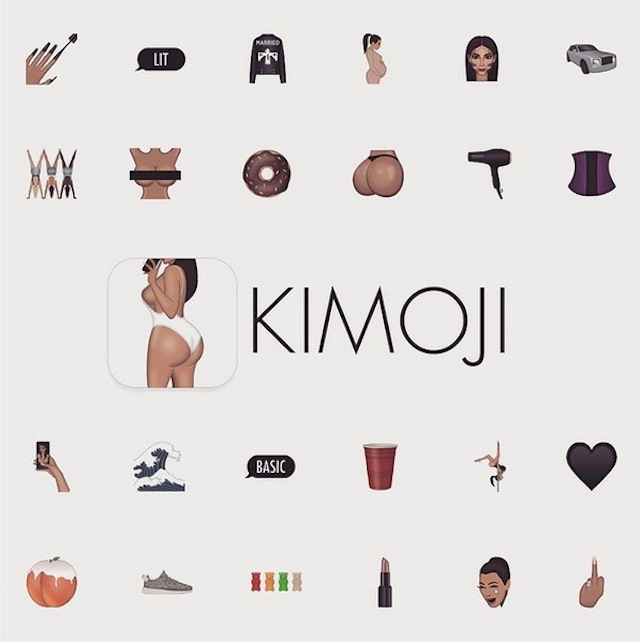
Just in time for the holidays, Kim Kardashian, queen of the selfie, is releasing her own line of emoji. They are called Kimoji. The emoji include a butt, a doughnut, Kim's censored boobs, Kim ugly crying, a word cloud featuring Kim calling someone "basic," a solo cup, Kim taking a selfie, and a hairdryer.

kimoji.jpg

Tags: emoji   kim kardashian
18 Dec 21:21

Photo

Steve Dyer

let's get pregnant


17 Dec 17:46

damn this mom need a ease up [x]

Steve Dyer

big fan of these scroll downs now


damn this mom need a ease up [x]

16 Dec 15:51

Boston’s Santa Speedo Run Brings the Beefcake: PHOTOS, VIDEO

by Sean Mandell
Steve Dyer

These are all of my friends that I actually hate! I know EVERYONE in this post!

santa speedo run

Boston’s famous Santa Speedo Run returned this year, albeit to somewhat warmer temperatures, and made good on its annual promise to serve up scantly clad men running through the city’s streets, braving shrinkage in the name of charity and a good time.

The Boston Herald reports: 

The one-mile race is a fundraiser for Play Ball Foundation, which supports school sports programs geared toward Boston Public School middle-schoolers.

The unseasonable warm weather — temperatures hit 61 degrees — was inviting to the carefree athletes who donated a minimum of $400 to race while showing off their holiday spirits.

Check out photos of this year’s Boston Santa Speedo Run along with video, below:

Instagram Photo


Instagram Photo


Instagram Photo


Instagram Photo


Instagram Photo


Instagram Photo


Instagram Photo


Instagram Photo


Instagram Photo

Watch video of the run, below:

The post Boston’s Santa Speedo Run Brings the Beefcake: PHOTOS, VIDEO appeared first on Towleroad.

15 Dec 21:12

caseymeeks: I never, ever want context for this.

Steve Dyer

Let's remind ourselves


caseymeeks:

I never, ever want context for this.

15 Dec 17:30

thecommonchick: I’M SO DEAD RN 😭😂


thecommonchick:

I’M SO DEAD RN 😭😂

11 Dec 17:43

Michelle Obama Doing Gangsta Rap Again

by Evan Hurst
Steve Dyer

Buried lede: Jay Pharaoh hanging out with FLOTUS. Not quite Billy on the Street level, but up there.

Oh, that Michelle Obama is at it again! She has been the scourge of wingnuts for years now, saying they should be healthy and drink water and eat vegetables instead of whatever cheesy fried butt lard they usually eat. And in that fight, she has had the utter gall to use hippity-hop rap music, which, as Bill
11 Dec 14:47

Photo