
im going to vomit
Steve Dyerjust be mad at something that isn't politics for a minute
Commenter Gingerbaker, on the last post:
A narcissistic fascist put in power because Republican apparatchik secretaries of state kiboshed election recounts in two swing states and you don’t see the benefit of violence?
The U.S. with the greatest disparity of wealth in history due to corrupt Republican policies entrenched in the legislative and judicial branches with virtually zero legal recourse – and you don’t see the benefit of violence?
That narcissistic fascist controls the most powerful military in human history. He controls tanks; he controls stealth bombers; he controls drones. He controls a security, espionage, surveillance, and military apparatus like none ever before known in the history of civilization. Both of his prior two predecessors, Republican and Democrat alike, dramatically expanded his ability to utilize that apparatus with impunity. So: how are you going to fight him with violence, exactly? The state knows everyone you have ever communicated with electronically. It knows where your car is at all times. It knows where you are at all times, if you carry a cell phone. The state has satellites that can read your t-shirt from space. And we’re going to do… what, exactly, about that? What is the strategic plan that people think we can implement, through violence, as the American left?
Whenever people debate the morality of left-wing political violence, I always ask: what targets are you going to hit? Who exactly is going to be waging this violence? What’s the specific tactical purpose of your first attack? What’s the broader strategic plan? Where are you getting your munitions? Do you have a plan to establish supply lines? What ability do you have to set up medical facilities? Who will care for the children of your fallen comrades? There’s no answers to these questions, of course, because they know they can’t come up with them. Not in their wildest dreams. Again, the fixation on the morality of violence represents a means to avoid talking about the tactical irrelevance of violence.
History is long, and things can change. Perhaps a violent socialist revolution in an advanced country will someday be in the offing. But whatever else is true, this is true: the material reality of the violent power of the state has changed since the socialist revolutions of the 20th century. 21st century America is not 1917 Russia, nor is it 1950s Cuba. Technological advances have enabled the state to dramatically expand its military advantage over insurgent forces, particularly in a country as rich and developed as the United States. Sometimes I hear people saying that the key is to turn the military to their side, but this underestimates the durability of institutional control and the fact that militaries tend to be conservative in general and the American military is conservative in the specific. I just don’t see any remotely plausible scheme where large-scale violence is useful in current conditions.
I have never said that people shouldn’t defend themselves when they are under attack, nor that you shouldn’t defend others that you have the power to physically defend. But I think people are fixating on interpersonal violence beyond its actual prevalence amidst all of this political horror, again because doing so seems more hopeful than comprehending what’s before us. Of course you should stop right-wing violence on vulnerable people. But unless you’re going door-to-door saying “Is anyone doing fascism in here?” I don’t see how that’s remotely scalable to confronting the material conditions we’re in right now, in the real world. I’m just trying to be real and honest with you.
Sometimes people respond to me by saying that I’m saying things are hopeless and that we should give up. No, on the contrary. I’m saying that a simple, sober analysis of our present situation should show that violence has very little short-term value to a left-wing or progressive effort. Instead, we are left with the same old prescription: to create a mass movement, through persuasion, by articulating a vision of a better world and a plausible path to creating it, to draw in those who can become our allies, to use a variety of tactics like street protest, electoral politics, direct action, labor organizing, and similar, to gain real-world power. That’s a daunting task, to say the least, and it will mostly be a long, boring slog, without high-profile victories or moments of triumph. I’m afraid you’ll never get to hang a flag about the Reichstag. But it’s still a lot more plausible a vision of progress than fighting the state, or somehow making life better for real world human beings through uncoordinated and directionless acts of violence.
Steve Dyerproud vegetarian here
Steve Dyer#DadsOfNAFTA

Mexican President Enrique Peña Nieto has canceled a meeting with Donald Trump following Trump’s executive order to start planning the construction of a border wall.
Tweeted Nieto:
“This morning we informed the White House we would not be attending a meeting scheduled for next Tuesday with the President of the United States. Mexico reiterates its willingness to work with the United States to reach agreements on behalf of both nations.”
Esta mañana hemos informado a la Casa Blanca que no asistiré a la reunión de trabajo programada para el próximo martes con el @POTUS.
— Enrique Peña Nieto (@EPN) January 26, 2017
México reitera su voluntad de trabajar con los Estados Unidos para lograr acuerdos en favor de ambas naciones.
— Enrique Peña Nieto (@EPN) January 26, 2017
Nieto had said yesterday that Mexicans will not pay for the wall but he might still make the trip.
Anderson Cooper spoke last night with former Mexican President Vicente Fox, who again repeated his assertions that Mexicans “will not pay for that f**king wall.”
He added: “Trump is a different thing. He doesn’t seem to be an American. He is a false prophet who is taking that nation into the desert.”
The post Mexican President Enrique Peña Nieto Cancels Meeting with Donald Trump appeared first on Towleroad.
Steve Dyerfirst link
1. The culture that is Dutch first all-avocado restaurant to open in Amsterdam.
2. New blog, Political Arithmetick, high quality on economic stats and their meaning, by Brent Moulton.
3. “One of the Obama administration’s signature efforts in education, which pumped billions of federal dollars into overhauling the nation’s worst schools, failed to produce meaningful results, according to a federal analysis.” Link here. In 2003 I wrote that vouchers are overrated, but now they are definitely underrated.
4. Econofact.org.
5. Japan’s real Westworld theme park, now defunct, based on the 1973 movie, via Yana.
6. New Dani Rodrik paper on global vs. national inequalities (pdf).
The post Sunday assorted links appeared first on Marginal REVOLUTION.
Steve DyerStuff I've been thinkin about! From the left, below, and the right, here: http://www.theatlantic.com/politics/archive/2016/12/how-stigma-sows-seeds-of-its-own-defeat/509273/
During the election I got into one of these social media debates. The topic was violent resistance to Trump. Protesters had gotten into some scrapes with Trump crowds. I said then (and believe now) that protesters have a right to defend themselves physically if they have to. A friend of mine went further. She said that beyond merely defending themselves, activists should be actively obstructing Trump’s message – pulling up yard signs, shouting down people speaking out in support of him, hacking Trump-supporting websites. The stakes were so high, she said, that we couldn’t spend time worrying about bourgeois concerns like freedom of expression. Because Trump was a nativist demagogue, because we were in a moment of incipient fascism, we needed to obstruct his message.
I then asked her if she thought that we should be physically preventing his voters from going to the polls, attacking them if necessary, to stop his election. She scoffed at the idea. She said I sounded like a conservative conspiracy theorist. Of course she didn’t think we should stop Republicans from going to the polls. Where do I come up with this stuff?
As I said at the time… that doesn’t make sense. If we were looking at the rise of real-deal American fascism, if we were (and are) facing the possibility of an American Kristallnacht, then we couldn’t possibly do anything but try to stop them from voting. She had already said without reservations that basic rights should be abridged in the effort to fight Trump. So why should the right to vote be materially different? It’s OK to muddle along – we all do it sometimes. What gets to me, and what made this minor argument indicative of something far broader, was that the internal contradictions and lack of clear theoretical footing were packaged with the aggressive presumption that the conclusions were obvious.
This is a constant condition for me: interacting with liberals and leftists who affect a stance of bored impatience, who insist that the answers to moral and political questions are so obvious that every reasonable person already agrees, who then lack the ability to explain the thinking underlying their answers to those questions in a remotely compelling way. Everything is obvious; all the hard work is done; only an idiot couldn’t see what the right thing to do is. And then you poke a little bit at the foundation and it just collapses. I suppose the condescension and the fragility are related conditions, the bluster a product of the insecurity at the heart of it all. You act like everything is obvious precisely because you can’t articulate your position.
I’ve been asking my friends on the academic left what rights conservative students have, in an era of a university culture obsessed with trauma. Two things are broadly true: one, they think that it’s ridiculous to suggest that there’s any reason to worry about what conservative students can and can’t say – there’s no questions here, no conflicts, nothing even to discuss. Two, despite the mutuality of this dismissal, no two of them have the same idea about what answers are stunningly obvious, only that they are. I am told that of course students can support Trump and say so, but that “Make America Great Again” is hate speech, despite simply being the slogan of the campaign that they just said students have the right to support. They say that it’s not permissible for students to identify with the alt-right, which is a hate group, but it’s fine for them to be plain-vanilla conservatives, despite the fact that the latter group has indisputably done vastly more to harm marginalized people than the former.
What are the rules? I don’t know, and I’m ensconced firmly in these debates. I harp on civil liberties and free speech a lot because, yes, I think they’re worth defending and that the traditional association between leftist politics and support for them was substantively correct on political theory grounds. But also because they’re a perfect example of the holes in current left theory. When does someone’s trauma outweigh the right of another to speak? Who can say what, in which contexts, when? I have no idea what people think the answers are. I just know that they think the question is so obvious as to not be worth asking. It’s an inverse argument from incredulity, not “I can’t believe you could possibly think that” but “I can’t believe you don’t already.”
A half-dozen emailers rose to the challenge and answered the questions in my post on cultural appropriation. Most of them expressed precisely the attitude I’m talking about here: disdain for the idea that these questions have to be discussed at all, a sense that my asking them has to be just trolling, like I can’t possibly be actually confused. They then set about answering them in flatly contradictory ways. Their answers were comprehensively and fatally incompatible. How can both these things be true? How can different people who share the same basic outlook on a political question be so certain that the answers to questions about that outlook are obvious and then answer them themselves in such incompatible ways?
I would love to tell you that this is restricted to my usual antagonists – vanilla partisan Democrats, media progressives, the Twitterati, the whole social world of sneering smart-kid coastal liberalism. But sometimes I also find it in the groups I’m more likely to agree with, the radical left, the dirtbag left, the socialist left. It’s a widespread problem.
Few things are more deadly to a broad political tendency than a eye-rolling assumption that there is no work to be done. You combine that with the way challenging questions have come to be seen as themselves offensive, particularly in academia, and you have a left-of-center that cannot do the work of figuring out what it is and what it stands for at precisely the time its mission is most important. Our opposition’s taken control of everything, so how do we respond? Race OR class or race AND class? Neoliberalism or socialism? Identity or economics or both? Wonk autocrats or the grassroots? I know what I prefer. But I don’t know what broad movement will emerge when everyone is so busy being certain about the answers that they cannot articulate or justify. I don’t know how we settle these things. Liberalism is a social monoculture that is busily eliminating the internal division and intellectual insurgency that are a necessary part of any healthy politics. The left (update: as distinct from liberals!) is smart but fractured, vibrant but weak, and has no institutional support. I am fresh out of ideas; it all seems bleak.
Steve DyerAm I wrong when I state "the 70s were the sweatiest decade?" It's just something I've always known to be true.
Steve Dyerlight SUCKS
In a 45-minute video called Riding Light, Alphonse Swinehart animates the journey outward from the Sun to Jupiter from the perspective of a photon of light. The video underscores just how slow light is in comparison to the vast distances it has to cover, even within our own solar system. Light takes 8.5 minutes to travel from the Sun to the Earth, almost 45 minutes to Jupiter, more than 4 years to the nearest star, 100,000 years to the center of our galaxy, 2.5 million years to the nearest large galaxy (Andromeda), and 32 billion years to reach the most remote galaxy ever observed.1 The music is by Steve Reich (Music for 18 Musicians), whose music can also seem sort of endless.
If you’re impatient, you can watch this 3-minute version, sped up by 15 times:
This isn’t strictly true. As I understand it, a photon that just left the Sun will never reach that most remote galaxy.↩
Steve Dyerthis was a great scrolllll
Last month, game designer Elizabeth Sampat took to Twitter to share some life lessons she’d learned. Perhaps you’ll find some of them as interesting and useful as I did.
Tags: Elizabeth Sampat listsThe maximum amount of work you can ever possibly do in a relationship is 50%.
When someone says they can’t do something, 75% of the time it means “There are things not worth sacrificing to make this happen.”
Never feel bad for dropping people from your life. Friends, family, whoever.
Don’t rely on a single person for all your emotional needs, even if monogamous. It’s not a poly thing, it’s a diversification of assets.
Brussels sprouts and spinach are delicious, it’s just that your mom couldn’t cook.
Mallory Ortberg’s “what an odd thing to say!” is the world’s best polite response to someone saying something insulting.
You can’t self-control your way out of sadness.
Steve DyerHere's my mom in 1964: https://scontent-mia1-1.xx.fbcdn.net/v/t1.0-9/294892_10200570548299874_1549183538_n.jpg?oh=f324b1655adb377e23ed431aa9be33d6&oe=590CA92A

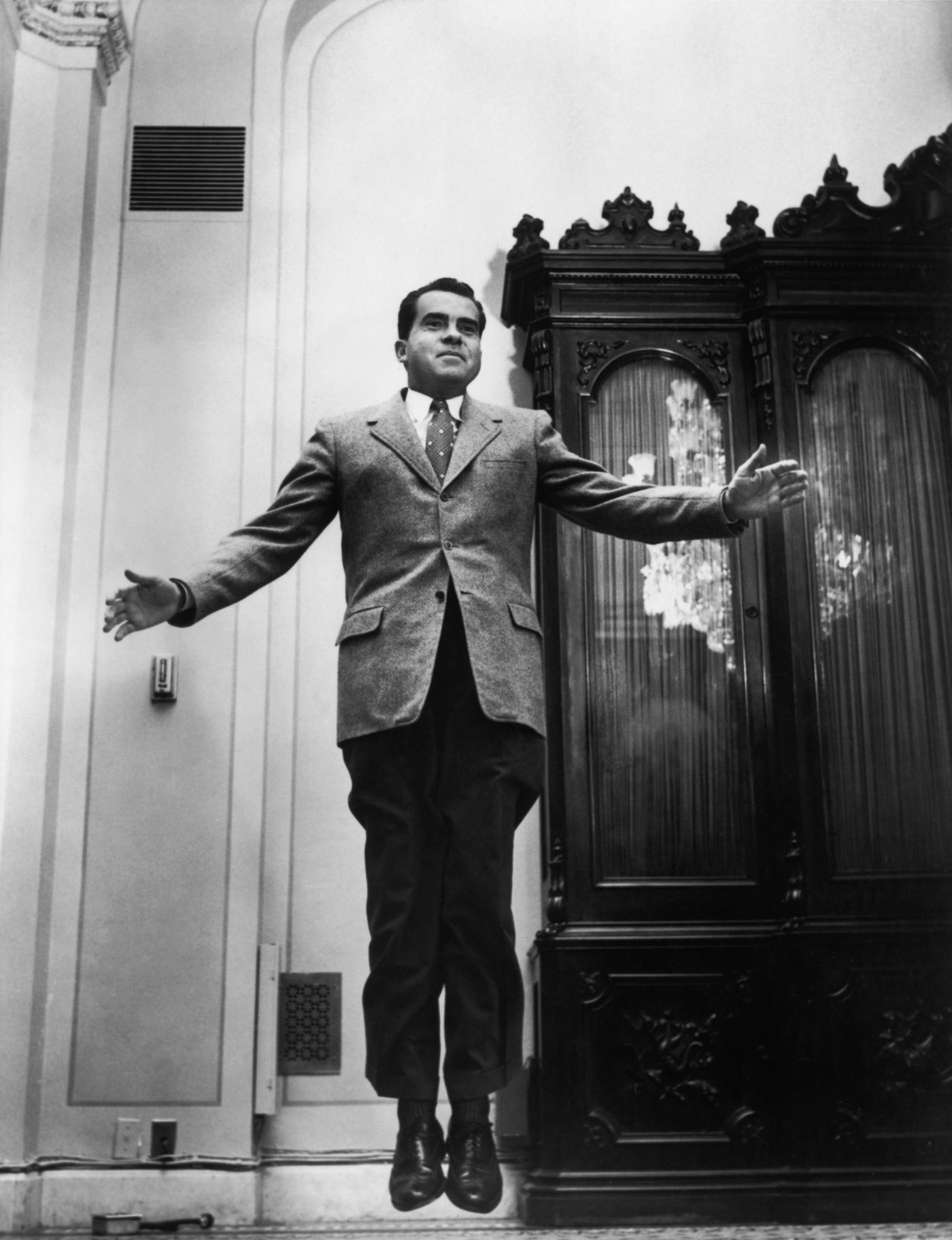

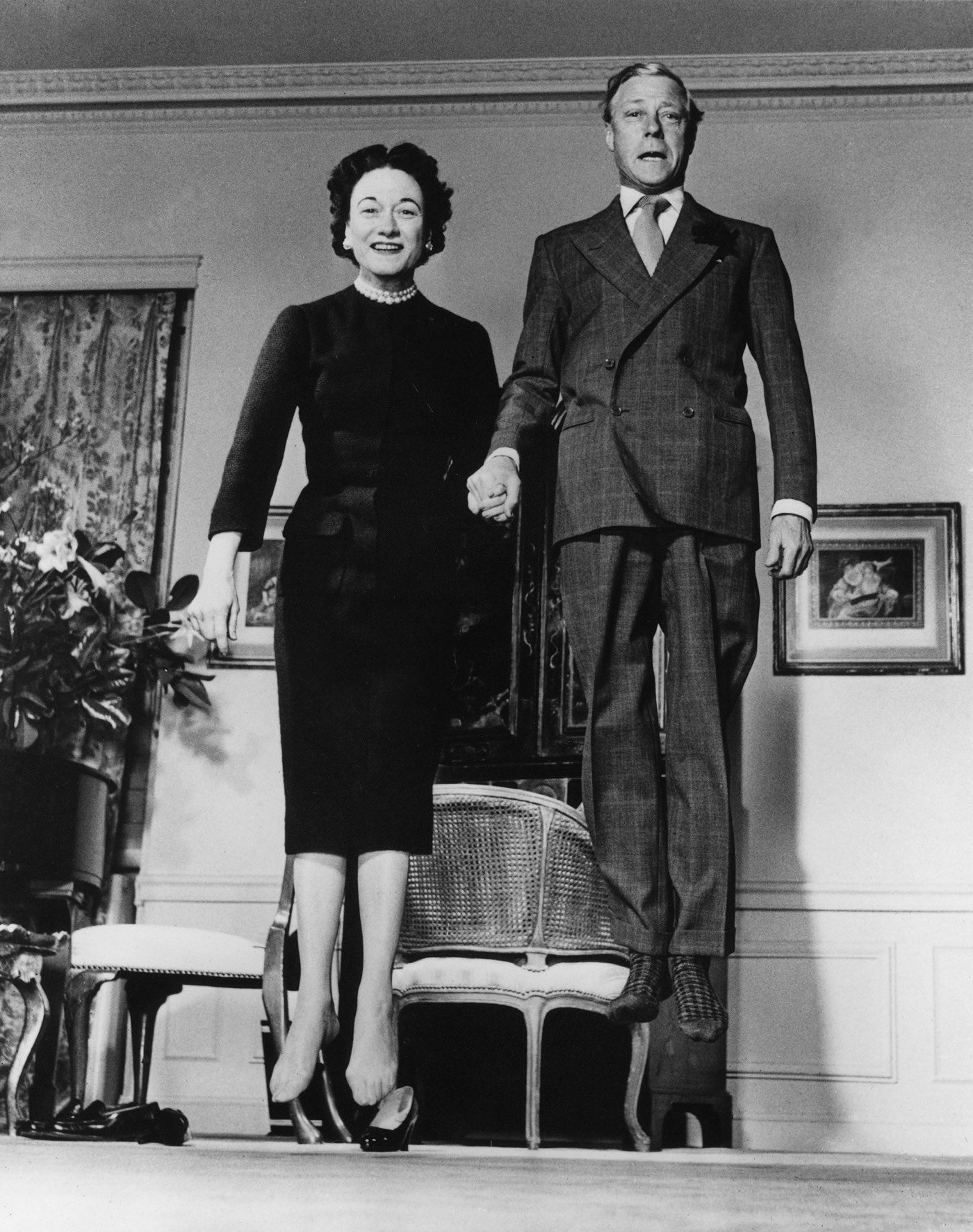
Philippe Halsman was a renowned portrait photographer who was particularly active in the 40s, 50s, and 60s and most famous for his iconic photos of Salvador Dali and Albert Einstein. For a period in the 1950s, Halsman ended his portrait shoots by asking his famous subjects to jump. The results were disarming.
When you ask a person to jump, his attention is mostly directed toward the act of jumping and the mask falls so that the real person appears.
Halsman got all sorts of people to jump for his camera: Richard Nixon (above), Robert Oppenheimer, Marilyn Monroe (above), Aldous Huxley, Audrey Hepburn (above), Brigitte Bardot, and the Duke & Duchess of Windsor (above). He collected all his jump photos into the recently re-released Philippe Halsman’s Jump Book.
Tags: Audrey Hepburn Marilyn Monroe Philippe Halsman photography Richard NixonSteve Dyerbeeeeees
every bee truck in history tips over
they are conspiring against us
they all gang up and push against the outside wall every time they go around a curve
the bees are coming for us
was disappointed when i googled "donut peach"

Nearly a year ago, I became aware of The Tipping Bee Truck Catastrophe, an ostensibly common occurrence the name itself describes. Spotting article after article about tipped-over bee-carrying trucks at a somewhat alarming rate, I gleaned that American truck drivers were being irresponsible as hell with our Precious Bees, either driving too quickly or turning too sharply, flinging themselves and their cargo onto their side, and releasing, according to my careful calculations, no fewer than 100 million bees in the past few years. Hi Seamless, America would like a billion EpiPens, thanks.
Typically, semi-trucks that transport bees share a similar purpose and straightforward trajectory: Stop by a honey or bee purveyor, load up to millions of honey bees by the hive in the truck, and transport them (often across state lines and often in the Western US) to pollinate farms of anything from Hass avocado trees to almond groves to donut peach trees. Because you shouldn’t stop driving your bee truck in the middle of the day when it’s hot out, lest you want to simulate hell-like conditions in your cargo and send the bees into delirium, a smart transporter will start this procedure early in the morning, according to Modern Farmer.
Bee Convoy: Shipping Interstate Apiaries - Modern Farmer
The first incident I noted was one in Delaware in 2014, when a truck tipped over on an on-ramp to I-95, unleashing an estimated 16 to 20 million bees near the small city of Newark. According to USA Today, the state police had a specific “bee swarm removal procedure” to enact, though a local sergeant was quoted saying that he believed “this [was] the first time [they had] actually activated the plan.” Though lucky to have not died upon tipping over, the three men in the truck were each stung by an estimated 50 to 100 bees, which almost definitely felt like dying, but very slowly. A witness “saw one of the younger men ‘running in traffic, ripping his shirt off and smacking himself,’ as cars swerved to avoid him,” according to the article.
Millions of bees swarm Del. highway after wreck
It kept happening. In 2015, 13 million honey bees broke free from a turned-over truck in Washington state, and as many as “gillions and gillions” found a new home off I-35 in Oklahoma, according to local reports. During the Bad Year, Wyoming, North Carolina, and Missouri all witnessed bee truck tips. There has unfortunately not been any follow-up regarding the number of consequential bee stings suffered.
I called Andy Sievers, a trucking safety expert, to find out why semi-trucks in general may tip over. Basically, it has to do with centrifugal force, and the higher the truck’s center of gravity, the more likely it will tip. It’s why so many semi-trucks — and the above bee-carrying trucks — tip over while getting on or off exit ramps.
“You’re turning the wheels and the cargo wants to go straight,” Sievers said. However, he also said that because bee-carrying trucks aren’t particularly tall, they shouldn’t have an exceptionally high tipping risk. Instead, he blamed the portrayal of the “trend” on everyone’s favorite ne’er do well: the media. “I think the reason those stories are published is because they’re about bees,” he said. “Paper rolls trucks also tip over and nobody really cares.”
I also spoke to the president of the American Honey Producers Association, Darren Cox, who, when asked if he was aware of The Tipping Bee Truck Catastrophe, said yes. He did not elaborate. I interrogated further into why he thought the trucks kept tipping over, he echoed Siever’s sentiments, saying “certainly if a load of bees gets in a wreck, it will get in all the news in comparison to lumber or anything else.” I was disappointed. Maybe this trend was not so much a trend, but more of an affirmation of our propensity for drama and the absurd.
However, in a spilled bee truck article from the Seattle Times in 2015, a professor of entomology at Washington State University throws out a speculation that could undermine all speculations. The unintentional agitator, who goes by the name Walter Sheppard, “[said] a couple of trucks carrying honeybees crash each year, but it doesn’t make as much of a buzz [ed. note: eyeroll] unless it’s near a city or major roadway.” So maybe the media disproportionately covers semi-truck accidents when bees are involved — but maybe mainstream media also disproportionately covers accidents with a closer proximity to larger cities. Maybe there are hundreds of bee trucks tipping over in tiny American towns and we don’t ever hear about it.
14 million spilled bees on I-5: 'Everybody's been stung'
All of this is to say that I have little more insight, except that you definitely shouldn’t trust anyone! Except for maybe bees, considering they continue to provide us avocados and almonds and blueberries and all the foods that we’ve pushed to the edge of extinction, including the bees themselves, because we’re reckless as hell. Maybe this is how the bees have reportedly recovered from their apocalyptic-sounding colony collapse — by escaping the trucks for a better life. Maybe we deserve to tip over our bee trucks and free the fuzzy insects from the claws of consumerism.
Amanda Arnold is yet another writer living in Brooklyn with bylines at Broadly, The Hairpin, Racked, Lit Hub, and SAVEUR.
Why Are So Many Bee Trucks Tipping Over? was originally published in The Awl on Medium, where people are continuing the conversation by highlighting and responding to this story.
Steve Dyer#learning
I strongly favor NATO and I don’t think you can trust the Russians with just about anything, or for that matter make much of a deal with them. I’m with Mitt Romney on all of this, as I’ve been saying for years.
That said, I feel some of the recent discussions on Trump’s pronouncements have been a bit kontextlos. I would suggest this wee bit of background history:
1. Not too long ago, Germany did have a national leader, Gerhard Schröder, who in essence ended up as a paid agent of Vladimir Putin. After leaving office, he has spent much of the rest of his career working for Gazprom. Try on this bit for size:
Mr Schroeder was Germany’s Social Democrat leader from 1998 until 2005. He is a personal friend of Vladimir Putin and once described the Russian President as a “flawless democrat”. He joined the board of the Russian energy giant Gazprom after losing Germany’s 2005 election and has defended Russia’s response to the crisis in Ukraine on several occasions.
In other words, Germany had its own Trump long before the United States did. You could call Schröder the Ur-Trump, albeit with a different socioeconomic pose.
2. It was Schröder who made the decision to take Germany off nuclear power and also to make the country energy-dependent on Russia:
As Chancellor, Gerhard Schröder was a strong advocate of the Nord Stream pipeline project, which aims to supply Russian gas directly to Germany, thereby bypassing transit countries. The agreement to build the pipeline was signed two weeks before the German parliamentary election. On 24 October 2005, just a few weeks before Schröder stepped down as Chancellor, the German government guaranteed to cover 1 billion euros of the Nord Stream project cost, should Gazprom default on a loan…Soon after stepping down as chancellor, Schröder accepted Gazprom’s nomination for the post of the head of the shareholders’ committee of Nord Stream AG, raising questions about a potential conflict of interest.
Russia now provides 35% of Germany’s oil imports and 39% of the natural gas imports.
I say NATO as an instrument for opposing Russia (not its only purpose, however) mostly ended with the Russian gas deal, because Putin can turn off the spigot any time he wants. Germany, the major European power, can no longer stand up to Russia in a pinch and it cannot do so because of the corruption of one of its major leaders. (Merkel I believe would not have done the same, but it is hard for her to undo this unfortunate situation, though I applaud the toughness she has shown, which at times has been considerable.) Furthermore, earlier U.S. presidents, most of all Bush, didn’t have the stones or the means to do anything about this.
If you’re looking for icing on the cake, try this:
3. Germans today are some of the most anti-American people in Europe, and that doesn’t help the Atlantic alliance either. It’s not uncommon for German citizens to suggest they don’t see much difference between Putin and the United States (NYT), or even may be pro-Putin, and I mean that pre-Trump. So when Trump equates Putin and Merkel, German citizens have been equating American presidents with Putin for a good while now. That’s not an excuse or rationale for Trump’s behavior, but it is worth keeping in mind when thinking about how to reboot the alliance moving forward.
I don’t at all favor what Trump is saying, or how many Republicans don’t seem to be complaining, but NATO has been on the ropes for some time now. On the Russia issue, Trumpismus is far more advanced in Germany than here in the United States. The sorry truth is that some of what Trump is saying is true, though his current rhetoric probably will end up making it worse.
The post A bit of context on Trump, NATO, and Germany appeared first on Marginal REVOLUTION.
Steve Dyerthinkin' bout stuff (2)
I see a lot of people going on about a supposed conflict between something called “identity politics” and something called “economic populism,” which is strange because I doubt any of them thinks there’s an actual substantive conflict. Instead there’s just a liberal managerial class that has essentially abandoned any interest in economic justice at all and so has cooked up a phony pretense that these things are somehow contradictory. Liberals talk constantly about “class first” or “class only” leftists, but with my very large network of left-wing connections I can name not a single actual person who holds that position. Instead I see a lot of class-never liberals who clearly have no particular interest in fighting poverty as such, inequality as such, or the 1% as such and have ginned-up a phony fight as a distraction.
The elementary divide in politics remains as clear as ever, even as the two creaky coalitions called “liberalism” and “conservatism” slowly die and people with limited imaginations scramble to understand the new world.
The basic idea is this: that all people deserve equal rights, material security and comfort, and human dignity by virtue of being human and for no other reason. These things are not deserved, nor can your right to them be fairly taken from you, regardless of what you’ve done, what you believe, and whatever culpability we imagine you might have for your condition. My analytical position is that people are almost never actually responsible for their own immiseration, though our culture is set up to get you to think otherwise. But even if that were not my analytical position, my moral position would be that it’s irrelevant. You cannot lose your moral claim to food, shelter, clothing, medical care, equal rights and participation in government, or human value through any action or inaction, or through possessing any belief, no matter how ugly or retrograde. If you believe that some people deserve their hardships, you’re my enemy, and it doesn’t matter what color tie you wear.
Naturally and of necessity, the left has spent a lot of energy focusing on people in traditional marginalized groups, as these groups are those most likely to be denied those basic human entitlements I named above. If you believe that all people deserve equal rights, you will necessarily be a feminist, because those rights are so routinely denied to women. If you believe that all people deserve economic security, you will necessarily fight against racism, because economic security is so routinely denied to people of color. If you believe all people deserve to live lives of human dignity, you will necessarily fight for LGBTQ people, because dignity has so routinely been denied to them. Any political platform that fights to guarantee the rights that I have enumerated here is necessarily feminist, anti-racist, and so on, because the people that suffer from bigotry are those who have been denied them. That such a platform would also help a white straight man in the destitute corridors of Appalachia could only be perceived as a flaw by those who have fundamentally misunderstood the essential question of contemporary politics. Racism and sexism and homophobia are uniquely pernicious and require our special attention; that special attention presents no conflict at all with our absolute need to help those white or straight or male people who suffer too. Anyone who sees a contradiction between the two halves of that sentence is someone who is not actually committed to the fight for human progress.
What is the actual substantive conflict here? What policy are we meant to think hangs in the balance? What specific, material dimension of a political platform is this fight over? Answer this for me: what do the two camps who are supposedly fighting this fight disagree about in terms of what we should actually be trying to do?
The social conflict that has developed online political spaces is just that, a social conflict. “Class vs. race” has no ideological grounding whatsoever. It is substantively empty; there is no content there. What people are fighting such fierce battles about is purely affective: it’s a fight about what we prioritize (or “center,” if you must) not in terms of actual substantive policy but in terms of social and linguistic cues. Typical of contemporary progressivism’s obsession with the symbolic, the fight over what we center isn’t connected to any meaningful dispute in actual material strategy. To act as though we must constantly define one group or another’s interests as a higher priority, even in political messaging that is intended to attract as many people to our cause as possible, is like a parody of liberalism’s inability to simply develop a program and implement it. For weeks thousands of people have said to themselves “I want to take part in pretending there’s a conflict between these two values and engage in a solidarity-destroying fight about it even though I can name no specific issue on which there is a meaningful difference.” This is the response to incipient fascism. It’s breathtaking.
Which would I choose, if I thought I had to either fight racism or fight poverty? I don’t know, if both your children were hanging off a ledge and you could only save one of them, which would you let die? If you could cure cancer but the cure killed all the pandas would you do it? Who would win in a fight, Jaws or the Ghostbusters? It’s an asinine, juvenile question, bullshit dorm-room sophistry, an empty bit of moral posturing wrapped up in virtue signaling and the smug self-satisfaction of those for whom political questions are entirely academic. Please. Save your absurd hypotheticals for Reddit or conversations with your weed dealer. Here on planet Earth we have actual problems to worry about.
The supposed political conflict is also no conflict at all. How do you get the white working class to vote for your politicians? Show them you care about their problems and will work to help solve them. How do you get the support of a diverse electorate? Show them you care about their problems and will work to help solve them. A huge part of politics is simply being able to credibly say to voters that you hear them, that you take their problems seriously, that you acknowledge them as problems. Bill Clinton, as odious as I find him, was masterful at this. And Barack Obama has been even better, appealing to both diversity and economic populism effortlessly, and to the effect of two huge electoral victories. I don’t pretend that he’s delivered on either real diversity or real economic justice, but his political messaging synthesized both easily. It’s not complicated. Yes, yes we can. Si, se puede. The example of the current president completely undermines the notion of a conflict between these values. That suggests that those who claim there is a conflict are really just trying to prevent any substantive economic reforms. That’s all that’s happening here: some people who consider themselves liberals or progressives out of inertia and cultural comfort are butting up against their fundamental political conservatism and are acting out about it.
Up from below. For universal rights or against them. In support of egalitarianism or in support of the vicious inequalities of “meritocracy.” These are the conflicts. If you’re a conservative who thinks that black people in poverty in Detroit deserve it because of a supposed culture of dependence, you’re my enemy. If you’re J.D. Vance, author of Hillbilly Elegy, and you think white people in poverty in the Cincinnati suburbs deserve it because they don’t take initiative in their own lives, you’re my enemy. If you’re Donald Trump and you think undocumented immigrants deserve to be kicked out of the country, you’re my enemy. If you’re some wealthy liberal aristocrat writer, sneering down at the rubes and condemning them to misery because you’ve decided they’re all bigots, you’re my enemy. People deserve their suffering or they don’t. I say they don’t. That’s it, that’s all there is.
Steve Dyerso good
Steve Dyercherv this is our brand
Watch me act a fool and educate u guys on yawning 😴
Steve Dyer“Blogging was real-time, ongoing learning process. That went away. … I didn’t write too much [during the 2016 election] because I didn’t want to take this oracular role. There was no space to try to figure it out. There was no space to think about it.”
sadddddddddddddddddd
(Editor’s note: These questions from Atlantic readers—in bold—and replies from Ta-Nehisi were compiled from an “Ask Me Anything” he did with the TAD group on 1/12. In the podcast above, starting at the 114:30 mark, Ta-Nehisi speaks at length about the bygone era of blogging and his writing today. Money quote: “Blogging was real-time, ongoing learning process. That went away. … I didn’t write too much [during the 2016 election] because I didn’t want to take this oracular role. There was no space to try to figure it out. There was no space to think about it.”)
I have been dying to ask about the new book. Is it by any chance the historical fiction one you’d started oh so long ago? I always thought you had captured some lightning with that one.
Hi Sandy. Yes. Signed a two book deal. First, is essays. Second is that historical fiction.
You tweeted earlier this year that you’re focused on book-writing. How much has your process changed as you’ve gotten more attention and a wider audience? How different is your day-to-day process now from the days of The Atlantic blogging and the original Horde?
Changed a lot. More people looking. Probably more than I’m comfortable with. Much less room to think out loud. So, thinking is much more of a private thing these days. The landscape isn’t really set up for the public act of asking questions.
It’s cool though. There was a time when I asked questions privately—before I got to The Atlantic. Basically have to go back to that. Maybe that’s as it should be.
Do you miss blogging? [Atlantic colleague and former Dish editor] Chris B. was lamenting the fall of blogging as a platform for thinking and learning in public and I always found that to be my favorite kind of process to read.
Yes. Terribly.
You seem both surprised and a little discomforted by how much attention you got following BTWAM [Between the World and Me] and, obviously, a lot of it was hostile. I remember reading about your Park Slope house purchase and your comments on the whole response to that. How do you manage that? I'm legit just curious about it as someone who feels, y'know, affection for you from your work but also invested in your work and what it adds to the discourse.
The house was actually in Lefferts-Garden, where I’d rented when my wife, my son and I first moved to New York. Was attached to that neighborhood. Got the house. Neighborhood blog plastered my face up. Realtor talked. And suddenly it wasn’t home anymore. It was performance.
When you know that people know who you are, you are always working—and not the work you want to do. You are sort of performing, because you know they are looking, or at least glancing at you. Would hate to walk out thinking about that.
There is something else: People never stop to think about you as an actual person with a family in these situations. I’ve said this publicly now, so it’s no point hiding it. My wife has long had women’s health issues at the core of her mission, specifically reproductive rights. She’s actually in med-school now, and the plan was always for her to be active on that front. When you want to go into that work, and your address is plastered all of the internet, with pictures and floorpans of your house, well … When I talked about “not feeling safe,” it wasn’t just for me.
People sort of went crazy when BTWAM came out. I’m happy a bunch of people read it. I’m happy it touched so many people. I’m less happy that it became an object for certain folks, or was discussed that way. I’m less happy that journalists started scrolling through my kid’s Instagram account.
It’s been a year of adjustment. The good news is I think I understand now. The rules are different. I can’t do things like I used to. I’m not “one of the folks” anymore. I kinda had to accept that. Was very hard to.
I can only imagine that was difficult—not just the specific risks, but having to reorient your way of carrying yourself both as a writer and person to accommodate and adjust to that sudden level of attention. It’s interesting to me that you became noteworthy in part and while interacting very directly with your audience, which always appealed to the punk fan in me, but also that you never seemed to hold yourself apart or above your readers and commentators.
So it's hard not to notice when you bought the house that the attention had a specific edge to it, in much the same way that the critiques of BTWAM or “The Case for Reparations” had an edge to it. Part of watching your career has sort of been watching your room to maneuver or margin for error shrink, even as the critiques—particularly from other writers—become more personalized and less focused or astute. I don’t know that there's really a question in there, just observations from being a reader for the past six or seven years. Your growth as a public intellectual and writer has been tremendous and some of the attention you’ve gotten has been warranted, but it’s sad to see how you becoming more widely known and noteworthy enables some of the worst reactions.
It’s just a fact of “winning.” That’s what it is. I won. I became a “successful” writer. And this is part of what comes with it. My job is to make sure that I don’t let any of that—good or bad—corrupt the things that I love: writing, my health, and my family.
Hi Mr. Coates, this is the artist formerly known as Horde Centurion Erik Vanderhoff. I’ve been reading you since 2009, and I have to say, it’s been fascinating watching you grow as a thinker and a writer. The time period where you felt brave and curious enough to share that growth in real time through your blog at The Atlantic and interacting so directly with your commenters was a really special thing, something I’ve not seen reproduced and am not sure could be. Now, as a member of the moderator team at TAD, I’ve come to really appreciate the sheer amount of effort curating the Horde must have entailed for you.
As with all things so special, it had a short life. I’m wondering if you could verify a suspicion of mine: Did the Horde sort of sow its own seeds of its demise? Was there a point where you realized that the Horde was no longer providing the challenge and education it had in the past? I’ve always felt that we moved beyond deep discussion to a more insular community of personality, and that such things invariably attract discord from without
I never expected my writing to become as popular as it did. You don’t make a case for reparations thinking “Oh yeah, people are gonna love this.” I didn’t see that coming. That, more than anything, killed the blogging. It became impossible to talk. Just too many people.
Do you have a question for us?
I just want you all to know that I’m sorry I had to leave you. It was not a case of me feeling like I’d outgrown the space or anything. Just became impossible to protect it as such.
Steve DyerPer me and Cherv's gchat last night during Obama's speech, she noted that they did a really good job shielding the kids from the press despite everything. Honestly, gun to my head, despite my constant consumption of political news, I couldn't tell you with more than 70% certainty which was which. (Until she gave me the very helpful mnemonic *M*alia looks like *M*ichelle, which is information that would have been great 9 years ago.)
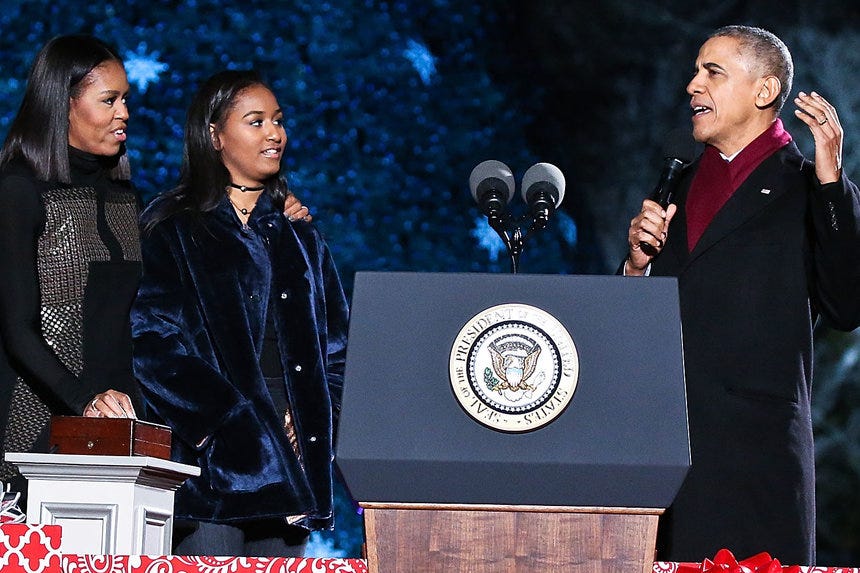
Tuesday, Barack Obama gave his last speech as President live from Chicago, Illinois. It was an emotional occasion for all of the obvious reasons, and First Lady Michelle Obama and Vice President Joe Biden were among the attendees. But a lot of viewers were surprised when, at a certain point in his speech, the President addressed daughters Malia and Sasha and the camera panned to reveal that only Malia was there. “Where is Sasha????” Twitter screamed. Just that question. Where is she? Keyword search it. People were revved up.
It’s being reported that Sasha had a science exam Wednesday morning, which makes sense because everyone just got back from holiday break and that’s exactly when teachers are like, “Lol time to own u.” Remember that move? It’s rude. But also, “I have a test” is an age-old parent-proof excuse not to have to do some shit you don’t want to do. Family reunion? Craaaaap I have this project. Aunt Gina’s forty-third birthday party? Ughhhhh drivers’ ed! Regardless of whether or not Sasha actually needed to stay home and study, her absence confirmed something I’ve been appreciating throughout her dad’s eight year presidency: Sasha is a really good first teen.
She was seven when her dad became President, and she’s only fifteen now, so she’s never been old enough to have an arrested-for-having-a-fake-ID moment like the Bush twins or an interning-at-“Girls” moment like her sister. Sasha’s just… regular. America’s little sister. She scooped ice cream on Martha’s Vineyard as a summer job. She wore a choker and lip synced all the words when Chance the Rapper performed at the White House Christmas tree lighting ceremony.
And while her older sister Malia seems to share their parents’ affinity for continual camera-readiness and extreme composure, Sasha always looks how I imagine I’d look if someone tossed me in a pea coat and made me watch a turkey pardoning: disinterested but doing my best to hang.
happy birthday to a hero: sasha "never once been here for your photo op" obama
Often, the Obamas disembark a plane in coordinated looks. It’s a nice photo opportunity, and you know every time you land in a place the local paper wants a nice portrait of the first family for their front page. But while the rest of the Obamas would lean into the visual, sporting matching blue and yellow florals, or three different takes on gingham, Sasha would be wearing… all black.
Michelle Obama stages her own London Fashion Week http://t.co/OXIS9sripK
— @nytimes
Sasha Obama had to miss her father's farewell address because she has an exam Wednesday morning, White House says. https://t.co/EsIBvyHxHe
— @ABC
Can’t you hear the argument now? It’s every argument any teen has ever had with their family in the history of time. Yelling down a White House hall, “I NEVER ASKED FOR THIS, MOM!!!!!!” and slamming a door. “Accidentally” “forgetting” a gingham jumper in the closet and sliding a black dress into the suitcase instead. Our emo queen. Our fifteen-year-old selves.
The same way that I hope Malia was smoking weed at Lollapalooza, I’m glad Sasha ditched her dad’s work event for whatever reasons she had. Coming of age is wild, and doing that with the world’s eyes on you, braced for you to be breathtaking and inspirational in the face of some truly wild circumstances, is something I cannot imagine would be fun day-to-day. So yeah, study for your test Sasha. Stay home on a Tuesday. Peak teen. Best teen. America’s teen.
Sasha Obama Was A Really Good First Teen was originally published in The Awl on Medium, where people are continuing the conversation by highlighting and responding to this story.
Steve DyerThey are coming to The Middle East on 1/30 and I got tickets so hard and fast
Steve Dyerme

An obese gay man has claimed that “curing” his homosexuality six years ago was easier than changing his diet and maintaining a healthy weight.
In an article written for The Christian Post, anti-gay activist Dr. Michael Brown (above) shared the story of an “ex-gay” man named Eric who had been struggling with weight issues. Posting his story to Brown’s Facebook page, Eric described himself as “morbidly obese.” In that post he wrote:
“I left homosexuality behind 6 years ago. That was SO much easier than getting my weight under control. I do understand being isolated from life due to weight. It’s more than just what people think. It is a physical bondage that fatigues and makes just fitting in a chair difficult. Other than learning about God’s word and knowing Jesus there is nothing I want more than to be healthy.”
 Replying to Eric while getting in a plug for his new book Breaking the Stronghold of Food, Brown wrote:
I know many people who have struggled with same-sex attraction, some experiencing instantaneous, miraculous transformation, others working for years to see those attractions gradually diminish, and still others fighting for decades to see change without any success.
Yet Eric says that leaving homosexuality, obviously by God’s grace, was so much easier than changing his relationship to food.
When God set me from heavy drug use in 1971 at the age of 16 (including shooting heroin), I couldn’t relate to those who would say, “I’m a recovering drug addict.”
For me, that was a thing of the past, someone who I used to be, and it had no bearing on my life after that. To this day, I do not think of myself as a recovering drug addict.
But when it comes to food, I live as if I’m a recovering food addict. In fact, one of the first chapters in my new book Breaking the Stronghold of Food (written together with my wife Nancy), is entitled, “Confessions of a Recovering Food Addict.” And even though I’ve been totally free from food addictions since late August, 2014, when my lifestyle transformation began, I live as if one wrong bite could set me back. Why play with fire?
Charlatan Michael Brown still peddling the "ex-gay" myth. Brown represents intellectual rot so prevalent on right https://t.co/snJ1hncGvn
— Wayne Besen (@WayneBesen) January 3, 2017
Discussing his own issues with food addiction, Brown continued:
Getting back to our friend Eric, for whom I ask you to pray, he wrote this at the end of his post, explaining that there was one more reason he was ordering our new book, and for him, it was another reason to get healthy: “the morbidly obese make poor witnesses for Christ.”
Nancy and I really do understand how difficult the battles are (we’re totally candid in the book, and you’ll laugh — or sigh — at some of our stories), and that’s why there’s not an ounce of condemnation in anything we write.
We don’t want to beat you up, we want to help you out, and we’re convinced that if the Lord could help us, with all our bad eating habits and food addictions, He can help anyone. (For the record, according to recognized weight standards, which are probably a little too generous, we were both obese in the past.)
So, if you find yourself struggling with unhealthy eating habits or food addictions, even if you’re not overweight, there is a solid, lasting way out. And if you’re obese or morbidly obese, all the more are these promises for you. Even when it comes to food, “If the Son sets you free, you will be free indeed” (John 8:36). There is a better way!
Brown’s advice ends with a note that preorders of the new book come with a free ebook plus the first three chapters in PDF by email! Brown’s FIRE School of Ministry is also now accepting donations.
Watch a report on the early days of “ex-gay” therapy below.
The post Obese Christian Says Leaving Homosexuality Was Easier Than Losing Weight: VIDEO appeared first on Towleroad.
Steve DyerChris, how did we do on this?
Cliff Asness reports:
Maybe it’s just me but a lot of end-of-year commentary about financial markets in 2016, implicitly and sometimes explicitly, makes it sound as if it was a crazy year. It wasn’t. In fact, it was amazingly normal. This is true of at least the S&P 500 (I’m not going to be more ambitious here) which is what I think many of these commentators are talking about.1,2
Annualized daily volatility during 2016 came in at 13.1%. Based on rolling same-length periods going back to 1929 this falls at the 47th percentile.3 You say you don’t want to compare to the craziness of the Great Depression? Maybe that leads to everything else looking calm and you don’t think that’s meaningful. That’s reasonable. Well, that same value of 13.1% is at the 54th percentile since WWII and the 42nd percentile since 1990. Pretty darn normal. Maybe people are comparing to very recent times (I would argue in error) and have been lulled into a false sense of calmness now shattered by 2016? Nope, it’s still only at the 54th percentile when compared to the last five years. Realized daily volatility simply was not high in 2016 compared to pretty much any prior period (it certainly wasn’t exceptionally low either).
And:
The S&P 500 was +9.5% in price return in 2016.
Here is the source, there is further evidence and discussion of the metrics at the link.
The post 2016 was not an especially volatile year for equities appeared first on Marginal REVOLUTION.
Steve DyerI put this up on the big monitor that Robby abandoned here and holy shit this is amazing
French visual effects artist Maxime Causeret took a track from Max Cooper’s album Emergence and created these wonderful biologically inspired patterns and interactions.
Maxime also shows us a section of animated reaction-diffusion patterns, where simple chemical feedback mechanisms can yield complex flowing bands of colour — these forms of system were originally thought up by Alan Turing, and were part of the early seeds of the field of systems biology, which seeks to simulate life with computers, in order to better understand the systems producing the complexity we see in the living world. They were also the starting point of my main research area many years ago before I got lost in music! (where I began with the question of what patterns could be produced via reaction-diffusion forms of system as opposed to gene-regulatory network controlled patterning).
There’s a blue brain coral pattern at the 1:30 mark and a neuron-ish pattern at 2:30 that I wish would go on forever. Headphones recommended, psychoactive drugs optional. (via colossal)
Tags: biology Max Cooper Maxime Causeret mesmerizing music videoSteve Dyerme af
From an excerpt of Kevin Kelly’s recent book, The Inevitable, a list of the Seven Stages of Robot Replacement:
1. A robot/computer cannot possibly do the tasks I do.
2. [Later.] OK, it can do a lot of those tasks, but it can’t do everything I do.
3. [Later.] OK, it can do everything I do, except it needs me when it breaks down, which is often.
4. [Later.] OK, it operates flawlessly on routine stuff, but I need to train it for new tasks.
5. [Later.] OK, OK, it can have my old boring job, because it’s obvious that was not a job that humans were meant to do.
6. [Later.] Wow, now that robots are doing my old job, my new job is much more interesting and pays more!
7. [Later.] I am so glad a robot/computer cannot possibly do what I do now.
[Repeat.]
I predict that getting to #6 will be challenging for many people.
Tags: books Kevin Kelly lists robots The Inevitable working







_09633u.jpg)