09 Dec 01:17
by Kazuyuki Takahashi, Kiko Kawamukai, Mitsunobu Okai, Tomoyuki Mochida, Takahiro Sakurai, Hitoshi Ohta, Takashi Yamamoto, Yasuaki Einaga, Yoshihito Shiota, Kazunari Yoshizawa
Abstract
Unprecedented anionic FeIII spin crossover (SCO) complexes involving a weak-field O,N,O-tridentate ligand were discovered. The SCO transition was evidenced by the temperature variations in magnetic susceptibility, Mössbauer spectrum, and coordination structure. The DFT calculations suggested that larger coefficients on the azo group in the HOMO−1 of a ligand might contribute to the enhancement of a ligand-field splitting energy. The present anionic SCO complex also exhibited the light- induced excited-spin-state trapping effect.

Photoinduced spin transition: Unprecedented anionic spin crossover (SCO) complexes involving an weak-field FeIIIN2O4 coordination sphere were discovered. The tetramethylammonium salt with the present SCO anion exhibited the light-induced excited-spin-state trapping effect, which is quite rare in FeIII SCO complexes (see scheme).
06 Dec 05:43
by Yoann Prado
Article
The enhancement of the magnetic anisotropy of superparamagnetic nanoparticles may increase their functionality. Here, the authors report that the functionalization of maghemite nanoparticles with cobalt(II) complexes enhances their magnetic anisotropy, and subsequently blocking temperature and coercive field.
Nature Communications doi: 10.1038/ncomms10139
Authors: Yoann Prado, Niéli Daffé, Aude Michel, Thomas Georgelin, Nader Yaacoub, Jean-Marc Grenèche, Fadi Choueikani, Edwige Otero, Philippe Ohresser, Marie-Anne Arrio, Christophe Cartier-dit-Moulin, Philippe Sainctavit, Benoit Fleury, Vincent Dupuis, Laurent Lisnard, Jérôme Fresnais

06 Dec 05:28
by Karl Ridier, Béatrice Gillon, Arsen Gukasov, Grégory Chaboussant, Alain Cousson, Dominique Luneau, Ana Borta, Jean-François Jacquot, Ruben Checa, Yukako Chiba, Hiroshi Sakiyama, Masahiro Mikuriya
Abstract
Polarized neutron diffraction (PND) experiments were carried out at low temperature to characterize with high precision the local magnetic anisotropy in two paramagnetic high-spin cobalt(II) complexes, namely [CoII(dmf)6](BPh4)2 (1) and [CoII2(sym-hmp)2](BPh4)2 (2), in which dmf=N,N-dimethylformamide; sym-hmp=2,6-bis[(2-hydroxyethyl)methylaminomethyl]-4-methylphenolate, and BPh4−=tetraphenylborate. This allowed a unique and direct determination of the local magnetic susceptibility tensor on each individual CoII site. In compound 1, this approach reveals the correlation between the single-ion easy magnetization direction and a trigonal elongation axis of the CoII coordination octahedron. In exchange-coupled dimer 2, the determination of the individual CoII magnetic susceptibility tensors provides a clear outlook of how the local magnetic properties on both CoII sites deviate from the single-ion behavior because of antiferromagnetic exchange coupling.

All mapped out: Polarized neutron diffraction on a paramagnetic single crystal permits mapping of the molecular magnetic anisotropy regardless of the number of molecular orientations in the crystal cell and the investigation of the competing roles of magnetic exchange and single-ion anisotropy in polynuclear complexes.
06 Dec 05:27
by Marta Mon, Alejandro Pascual-Álvarez, Thais Grancha, Joan Cano, Jesús Ferrando-Soria, Francesc Lloret, Jorge Gascon, Jorge Pasán, Donatella Armentano, Emilio Pardo

Solid-state incorporation of a single-ion magnet (SIM) within the pores of a magnetic 3D metal–organic framework (MOF) in a single-crystal to single-crystal process has been demonstrated. The resulting host–guest supramolecular aggregate affords the first deep study on the interplay of the internal magnetic field of the MOF and the slow magnetic relaxation of the SIM allowing the observation of a partial suppression of the quantum-tunneling effects operative in the SIM. More information can be found in the Full Paper by E. Pardo et al. (DOI: 10.1002/chem.201504176).
06 Dec 05:22
by Jiang-Zhen Qiu, Long-Fei Wang, Yan-Cong Chen, Ze-Min Zhang, Quan-Wen Li, Ming-Liang Tong
Abstract
A series of heterometallic 3d–Gd3+ complexes based on a lanthanide metalloligand, [M(H2O)6][Gd(oda)3]⋅3 H2O [M=Cr3+ (1-Cr)] (H2oda=2,2′-oxydiacetic acid), [M(H2O)6][MGd(oda)3]2⋅3 H2O [M=Mn2+ (2-Mn), Fe2+ (2-Fe) and Co2+ (2-Co)], and [M3Gd2(oda)6(H2O)6]⋅12 H2O [M=Ni2+ (3-Ni), Cu2+ (3-Cu), and Zn2+ (3-Zn)], are reported. Magnetic and heat-capacity studies revealed a significant impact on the magnetocaloric effect depending on the anisotropy of the 3d transition metal ions, as confirmed by comparison of the observed maximum values of −ΔSm between complexes 2-Co and 1-Cr. In these two complexes, the 3d metal ions have the same spin (S=3/2 for Co2+ and Cr3+ ions), and the theoretical calculation suggested a larger −ΔSm value for 2-Co (47.8 J K−1 kg−1) than 1-Cr (37.5 J K−1 kg−1); however, the significant anisotropy of Co2+ ions in 2-Co, which can result in smaller effective spins, gives a smaller value of −ΔSm for 2-Co (32.2 J K−1 kg−1) than for 1-Cr (35.4 J K−1 kg−1) at ΔH=9 T.

Cool magnets: A series of heterometallic 3d–Gd3+ complexes based on the [Gd(oda)3]3− (H2oda=2,2′-oxydiacetic acid) metalloligand (see figure) are reported. According to the magnetic entropy changes of the complexes, obtained independently from magnetization and heat-capacity date, besides a high spin value, the use of isotropy 3d metal ions like Cr3+, Fe3+ and Mn2+, also plays an important role for obtaining heterometallic magnetic coolants with large magnetocaloric effect.
06 Dec 05:21
by Deborah Brazzolotto, Marcello Gennari, Shengying Yu, Jacques Pécaut, Mathieu Rouzières, Rodolphe Clérac, Maylis Orio, Carole Duboc

A series of mononuclear penta-coordinated halide CoIII complexes with intermediate S=1 spin state has been investigated. Their magnetic anisotropy is sensitive to the nature of the halide in an unexpected way: the largest value was found for the chloride compound and the smallest for the iodide one. This study evidences that contemporary computational methods are powerful tools to predict and rationalize the magnetic anisotropy in such systems. However, for each metal ion, at each oxidation and spin state, benchmark studies are required to define magneto-structural correlations. The authors gratefully thank Dr. Sylvain Bertaina for his assistance in the design of the cover illustration. More information can be found in the Full Paper by M. Orio, C. Duboc et al. (DOI: 10.1002/chem.201502997).
06 Dec 05:19
Inorg. Chem. Front., 2016, 3,150-156
DOI: 10.1039/C5QI00208G, Research Article
Jiang-Zhen Qiu, Yan-Cong Chen, Long-Fei Wang, Quan-wen Li, Martin Orendac, Ming-Liang Tong
Two 3D Gd(III)-based coordination polymers, [Gd(glc)(Hglc)(H2O)]n[middle dot]nH2O (1) and [Gd(Hglc)3]n (2) are reported. The MCE measurements indicate the weaker magnetic coupling in 2 produce a higher MCE than 1, especially at moderate fields (-[capital Delta]Sm,max = 41.1 J kg-1 K-1 and 24.8 J kg-1 K-1 for 1 and 2 respectively at [capital Delta]H = 3 T).
The content of this RSS Feed (c) The Royal Society of Chemistry
06 Dec 05:04
Chem. Commun., 2015, Accepted Manuscript
DOI: 10.1039/C5CC07541F, Communication
Michele Vonci, Marcus Giansiracusa, Robert W. Gable, Willem van den Heuvel, Kay Latham, Boujemaa Moubaraki, Keith S. Murray, Dehong Yu, Richard Mole, Alessandro Soncini, Colette Boskovic
Ab initio calculations carried out on the Tb analogue of the single-molecule magnet family Na9[Ln(W5O18)2] (Ln = Nd, Gd, Ho and Er) have allowed interpretation of the inelastic neutron scattering...
The content of this RSS Feed (c) The Royal Society of Chemistry

06 Dec 05:00
Chem. Sci., 2016, 7,155-165
DOI: 10.1039/C5SC03111G, Edge Article

Open Access
Matthew Gregson, Nicholas F. Chilton, Ana-Maria Ariciu, Floriana Tuna, Iain F. Crowe, William Lewis, Alexander J. Blake, David Collison, Eric J. L. McInnes, Richard E. P. Winpenny, Stephen T. Liddle
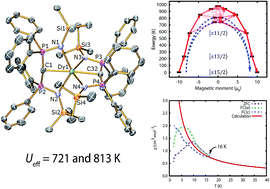
We report a monometallic dysprosium(III) single molecule magnet with record energy barriers and unusual spin relaxation behaviour.
The content of this RSS Feed (c) The Royal Society of Chemistry

04 Dec 06:03
Dalton Trans., 2016, 45,690-695
DOI: 10.1039/C5DT03800F, Paper
Min Ren, Zhong-Li Xu, Ting-Ting Wang, Song-Song Bao, Ze-Hua Zheng, Zai-Chao Zhang, Li-Min Zheng
Homochiral mononuclear complexes (Et3NH)[Dy((R,R)/(S,S)-3-NO2salcy)2] (1R/1S), where 3-NO2salcyH2 is N,N[prime or minute]-(1,2-cyclohexanediylethylene)bis(3-nitrosalicylideneiminato), are reported, and their optical and magnetic behaviors are studied.
The content of this RSS Feed (c) The Royal Society of Chemistry

04 Dec 06:03
Dalton Trans., 2016, 45,392-396
DOI: 10.1039/C5DT04157K, Paper
Iwan Zimmermann, Reinhard K. Kremer, Shichao Hu, Mats Johnsson
The crystal structure of the new compound CuSb6O8(SO4)2 is made up of charge neutral layers with long antimony oxygen distances present in between the layers. CuSb6O8(SO4)2 constitutes a linear chain S = 1/2 Heisenberg antiferromagnet (J [similar] 2.8 K) which undergoes long-range antiferromagnetic ordering at 0.69 K.
The content of this RSS Feed (c) The Royal Society of Chemistry

04 Dec 05:55
Dalton Trans., 2016, 45,85-88
DOI: 10.1039/C5DT02444G, Communication
Zhi Chen, Ming Fang, Xiao-Min Kang, Yin-Ling Hou, Bin Zhao
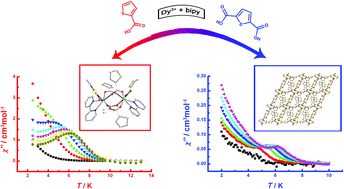
A dinuclear Dy SMM was assembled into a 2D network by adding a carboxyl group on the ligand, and the assembly effectively tunes the relaxation energy barrier from 21(1) to 68(2) K.
The content of this RSS Feed (c) The Royal Society of Chemistry

04 Dec 05:54
Dalton Trans., 2015, Accepted Manuscript
DOI: 10.1039/C5DT03667D, Paper
Jiong-Peng Zhao, Ya-Bo Xie, Jian-Rong Jeff Li, Xian-He Bu
Low-temperature hydrothermal reactions of copper salts with NaN3 and structurally related pyridine-based ligands, 1-(4-pyridyl)pyridinium, 3-chloromethylpyridine, 4-benzylpyridine, and quinoline (L4), respectively, led to the formations of four new magnetic complexes, [Cu3(L1)2(N3)6]n...
The content of this RSS Feed (c) The Royal Society of Chemistry

04 Dec 05:43
by Anthony J. Cortese, Dileka Abeysinghe, Branford Wilkins, Mark D. Smith, Gregory Morrison and Hans-Conrad zur Loye

Inorganic Chemistry
DOI: 10.1021/acs.inorgchem.5b02132

02 Dec 11:40
by Stefan Mebs, Beatrice Braun, Ramona Kositzki, Christian Limberg and Michael Haumann

Inorganic Chemistry
DOI: 10.1021/acs.inorgchem.5b01822

28 Nov 01:33
by Maria Manoli, Sofia Alexandrou, Linh Pham, Giulia Lorusso, Wolfgang Wernsdorfer, Marco Evangelisti, George Christou, Anastasios J. Tasiopoulos
Abstract
Two nanosized Mn49 and Mn25Na4 clusters based on analogues of the high-spin (S=22) [MnIII6MnII4(μ4-O)4]18+ supertetrahedral core are reported. Mn49 and Mn25Na4 complexes consist of eight and four decametallic supertetrahedral subunits, respectively, display high virtual symmetry (Oh), and are unique examples of clusters based on a large number of tightly linked high nuclearity magnetic units. The complexes also have large spin ground-state values (Mn49: S=61/2; Mn25Na4: S=51/2) with the Mn49 cluster displaying single-molecule magnet (SMM) behavior and being the second largest reported homometallic SMM.

Stacking blocks: Two nanosized Mn25Na4 and Mn49 clusters consisting of four and eight decametallic supertetrahedral subunits, respectively, are reported. These clusters are unique examples of oligomeric species based on magnetic subunits and have large spin ground-state values S=51/2 (Mn25Na4) and 61/2 (Mn49). The Mn49 cluster displays single-molecule magnet (SMM) behavior and is the second largest reported homometallic SMM.
28 Nov 01:30
Inorg. Chem. Front., 2016, 3,133-141
DOI: 10.1039/C5QI00192G, Research Article
Wen-Min Wang, Shi-Yu Wang, Hong-Xia Zhang, Hai-Yun Shen, Ji-Yong Zou, Hong-Ling Gao, Jian-Zhong Cui, Bin Zhao
Three Dy2 complexes with similar crystal structure have been synthesized. Magnetic studies reveal that they exhibit different magnetic relaxation behaviors, originating from the different chemical environments of the center Dy3+ ions with different [small beta]-diketonate coligands.
The content of this RSS Feed (c) The Royal Society of Chemistry
28 Nov 01:28
CrystEngComm, 2015, Accepted Manuscript
DOI: 10.1039/C5CE02058A, Paper
Isabel Castro, Wdeson Barros, Maria Luisa Calatayud, Francesc Lloret, Miguel Julve, Nadia Marino, Prof. Giovanni De Munno, Humberto Osorio Stumpf, Rafael Ruiz-Garcia
A novel series of dinuclear copper(II) pyrazolenophanes of formula [Cu2([small micro]-4-Mepz)2([small micro]-ClO4)(ClO4)(bpm)2] (1), [Cu2([small micro]-pz)2([small micro]-H2O)(ClO4)(4,7-Me2phen)2]ClO4[middle dot]H2O[middle dot]CH3CN (2), [Cu2([small micro]-pz)2([small micro]-H2O)(ClO4)3/2(H2O)1/2(phen)2]2[Cu2([small micro]-pz)2([small micro]-ClO4)(ClO4)2(phen)2][middle dot]8H2O (3), and [Cu2([small micro]-pz)2(CH3CN)2(3,4,7,8-Me4phen)2](ClO4)2 (4) (Hpz = pyrazole, H-4-Mepz = 4-methylpyrazole, bpm = 2,2'-bipyrimidine, phen = 1,10-phenanthroline,...
The content of this RSS Feed (c) The Royal Society of Chemistry

28 Nov 01:25
Chem. Commun., 2015, Accepted Manuscript
DOI: 10.1039/C5CC08701E, Communication
Keith S. Murray, Wasinee Phonsri, Victor Martinez, Casey G Davies, Guy N L Jameson, Boujemaa Moubaraki
We describe the first example of a bis-tridentate heteroleptic iron(III) spin crossover (SCO) complex, [Fe(3-OMe-SalEen)(thsa)].Compared to the parent homoleptic compounds, the spin crossover features in the heteroleptic species are enhanced...
The content of this RSS Feed (c) The Royal Society of Chemistry

28 Nov 01:22
Dalton Trans., 2016, 45,98-106
DOI: 10.1039/C5DT03909F, Paper
Sihuai Chen, Valeriu Mereacre, Christopher E. Anson, Annie K. Powell
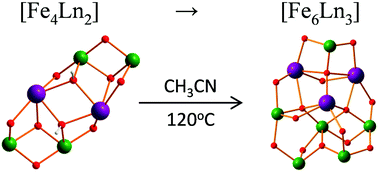
Under ambient and solvothermal conditions four new compounds [FeIII4LnIII2([small mu ]3-OH)2(mdea)4(m-NO2C6H4COO)8][middle dot]3MeCN and [FeIII6LnIII3([small mu ]4-O)3([small mu ]3-O)(mdea)5(m-NO2C6H4COO)9][middle dot]3MeCN (Ln = Y and Dy) have been synthesised and their magnetic properties investigated.
The content of this RSS Feed (c) The Royal Society of Chemistry

28 Nov 01:21
Dalton Trans., 2016, 45,226-236
DOI: 10.1039/C5DT03453A, Paper
Wenxue Yang, Ke-Qing Zhao, Bi-Qin Wang, Carl Redshaw, Mark R. J. Elsegood, Jiang-Lin Zhao, Takehiko Yamato
Products resulting from the reaction of MnCl2 with [2 + 2] Schiff-base macrocycles have been structurally characterized, and were found to be poorly active for the ROP of ε-caprolactone.
The content of this RSS Feed (c) The Royal Society of Chemistry

28 Nov 01:21
Dalton Trans., 2016, 45,253-264
DOI: 10.1039/C5DT03790E, Paper
Hong-Ling Gao, Li Jiang, Shuang Liu, Hai-Yun Shen, Wen-Min Wang, Jian-Zhong Cui
A multi-relaxation single-molecule magnet (SMM) of a {Dy4} complex exhibits two distinct relaxation processes, with a high energy barrier of 121 K.
The content of this RSS Feed (c) The Royal Society of Chemistry

28 Nov 01:21
Dalton Trans., 2016, 45,107-120
DOI: 10.1039/C5DT03750F, Paper
Mark B. Bushuev, Denis P. Pishchur, Vladimir A. Logvinenko, Yuri V. Gatilov, Ilya V. Korolkov, Inna K. Shundrina, Elena B. Nikolaenkova, Viktor P. Krivopalov
A mononuclear iron(II) pyrimidine-based complex shows remarkable spin crossover properties and unprecedented thermal robustness.
The content of this RSS Feed (c) The Royal Society of Chemistry

27 Nov 08:59
by Deborah Brazzolotto, Marcello Gennari, Shengying Yu, Jacques Pécaut, Mathieu Rouzières, Rodolphe Clérac, Maylis Orio, Carole Duboc
Abstract
Understanding the factors that control the magnitude and symmetry of magnetic anisotropy should facilitate the rational design of mononuclear metal complexes in the quest for single-molecule magnets (SMMs), based on a single metal ion, with high blocking temperatures and large energy barriers. The best strategy is to define magnetostructural correlations through the investigation of a series of metal complexes. It has been demonstrated that the main contribution to the magnetic anisotropy arises from the spin-orbit coupling (SOC) effect in metal-ion-based systems, so current studies focus particularly on the use of both ligands and metal ions possessing a large SOC. In this context, we report a unique series of halide CoIII complexes, [CoL(X)], with X=Cl, Br, I (CoX) and L=2,2′-(2,2′-bipyridine-6,6′-diyl)bis(1,1-diphenylethanethiolate), which possess a rare intermediate S=1 spin ground state. The S=1 CoIII complexes are attractive species because they possess a remarkably large axial zero-field splitting (defined by D from the following Hamiltonian: H=DSz2), as well as the halide ligands inducing large SOC constants. The single-crystal X-ray structures reveal that the CoBr and CoI complexes are isostructural with the previously described CoCl complex. Their coordination sphere displays a distorted pentacoordinated square pyramidal geometry, with the halide located in the CoIII axial position. Large positive D values of 35, 26, and 18 cm−1 are found for CoCl, CoBr, and CoI, respectively, through analysis of the magnetic susceptibility data as a function of temperature. To rationalize this trend, theoretical calculations based on both density functional theory (DFT) and complete active space self-consistent field (CASSCF) methods are performed successfully. Both the sign and magnitude of D are predicted remarkably well by these theoretical approaches. The DFT calculations also show that the resulting D values originate from a balance of several contributions, and that many factors, including differences in their structural properties and in the contribution of the halide, should be taken into account to explain the trend of D in this series of complexes.

Complex magnetism: The factors that control the magnitude and symmetry of the magnetic anisotropy are investigated for a unique series of halide CoIII complexes (see figure), which possess a rare intermediate S=1 spin ground state and remarkably large axial zero-field splitting.
26 Nov 09:34
Chem. Commun., 2015, Accepted Manuscript
DOI: 10.1039/C5CC09385F, Communication
Dimitrios I Alexandropoulos, Luis Cunha-Silva, Giulia Lorusso, Marco Evangelisti, Jinkui Tang, Dr Theocharis Stamatatos
A family of interwoven molecular inorganic knots, shaped like the 'Star of David', was prepared by the employment of naphthalene-2,3-diol in 3d/4f-metal cluster chemistry; the isoskeletal dodecanuclear compounds exhibit slow...
The content of this RSS Feed (c) The Royal Society of Chemistry

25 Nov 04:24
by Li Zhang, Lang Zhao, Peng Zhang, Chao Wang, Sen-Wen Yuan and Jinkui Tang

Inorganic Chemistry
DOI: 10.1021/acs.inorgchem.5b02215

25 Nov 01:19
by Xiangyu Liu, Xiaoni Qu, Sheng Zhang, Hongshan Ke, Qi Yang, Quan Shi, Qing Wei, Gang Xie and Sanping Chen

Inorganic Chemistry
DOI: 10.1021/acs.inorgchem.5b02196

24 Nov 09:13
by Saurabh Kumar Singh, Mohammad Faizan Beg, Gopalan Rajaraman
Abstract

Quantum tunneling: DFT and ab initio calculations suggest that both Ni⋅⋅⋅Dy and 1, 3 Ni⋅⋅⋅Ni (see figure) interactions help to quench the QTM behavior in {3d–4f} single-molecule magnets.
24 Nov 09:12
Inorg. Chem. Front., 2016, 3,61-66
DOI: 10.1039/C5QI00127G, Research Article
Lorena E. Rosaleny, Alejandro Gaita-Arino
A newly developed extension to the SIMPRE program allowed the estimation of the potential of 63 polypeptide-coordinated lanthanide structures as single ion magnets and as spin qubits.
The content of this RSS Feed (c) The Royal Society of Chemistry
24 Nov 09:02
Chem. Soc. Rev., 2016, 45,203-224
DOI: 10.1039/C5CS00321K, Review Article
Open Access
David Aguila, Yoann Prado, Evangelia S. Koumousi, Corine Mathoniere, Rodolphe Clerac
Switchable Fe/Co Prussian blue compounds and their low dimensional analogues displaying thermally and photo-induced electron transfer phenomena are reviewed.
The content of this RSS Feed (c) The Royal Society of Chemistry








![[BOND]](http://onlinelibrarystatic.wiley.com/undisplayable_characters/00f8ff.gif) O
O orbital of the NiII ions, leading to rare and strong antiferromagnetic Ni⋅⋅⋅Gd interactions. Calculations reveal the presence of a strong next-nearest-neighbour Ni⋅⋅⋅Ni antiferromagnetic interaction in complex 1 leading to spin frustration behavior. CASSCF+RASSI-SO calculations performed on complex 2 suggest that the octahedral environment around the DyIII ion is neither strong enough to stabilize the mJ |±15/2〉 as the ground state nor able to achieve a large ground-state–first-excited-state gap. The ground-state Kramers doublet for the DyIII ion is found to be the mJ |±13/2〉 state with a significant transverse anisotropy, leading to very strong quantum tunneling of magnetization (QTM). Using the POLY_ANISO program, we have extracted the JNiDy interaction as −1.45 cm−1. The strong Ni⋅⋅⋅Dy and next-nearest-neighbour Ni⋅⋅⋅Ni interactions are found to quench the QTM to a certain extent, resulting in zero-field SMM behavior for complex 2. The absence of any ac signals at zero field for the structurally similar [Dy(AlMe4)3] highlights the importance of both the Ni⋅⋅⋅Dy and the Ni⋅⋅⋅Ni interactions in the magnetization relaxation of complex 2. To the best of our knowledge, this is the first time that the roles of both the Ni⋅⋅⋅Dy and Ni⋅⋅⋅Ni interactions in magnetization relaxation of a {3d–4f} molecular magnet have been established.


