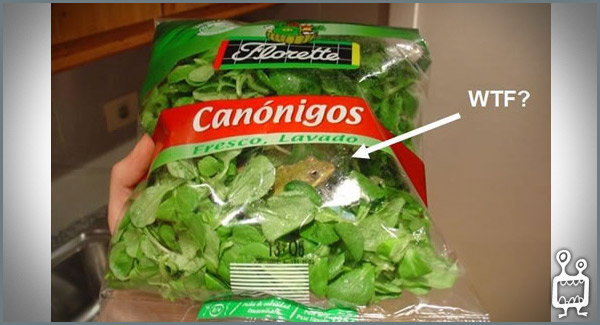
when u nut and shawty keep suckin

El Claustro, 2011. Querétaro, México. 10 x 10 x 11m

El Claustro, 2011. Querétaro, México. 10 x 10 x 11m

El Claustro, 2011. Querétaro, México. 10 x 10 x 11m

El Claustro, 2011. Querétaro, México. 10 x 10 x 11m

El Claustro, 2011. Querétaro, México. 10 x 10 x 11m

La Capella, 2009. Piera, Spain. 5.5 x 6 x 15m.

El Sótano de la Tabacalera, 2011. Madrid, Spain. 13 x 15 x 7m.

Sala Buit, 2011. Barcelona, Spain. 12.5 x 5 x 2.5m.

Palazzo Ducale, 2011. Genova, Italy.
15.5 x 12 x 4m

Espaço 180, 2013. Lisbon, Portugal. 18 x 15 x 8m.

Cerveira Creative Camp, 2012. Vilanova de Cerveira, Portugal. 13.2 x 9.5 x 7.7m.
Barcelona-based Penique Productions is an artist collective founded in 2007 that creates transformative installations in public spaces. To do this the group utilizes massive plastic balloons that are inflated inside buildings and other interior areas. Coupled with exterior lighting that illuminates the colored plastic, the results can be beautifully dramatic, making the new environment almost unrecognizable from the actual space.
You can see many more views of several installations on their website, and almost all of them are accompanied by videos that document the process. Penrique has upcoming projects next month at both the UB University in Barcelona, and at Galeria N2.


blo:
This is a Lykoi Cat. It looks like a goddamn wolf.
Coolest fucking cat, in. the. world.
I need one of these. Or maybe 12.
right, meow.
SO CUTE
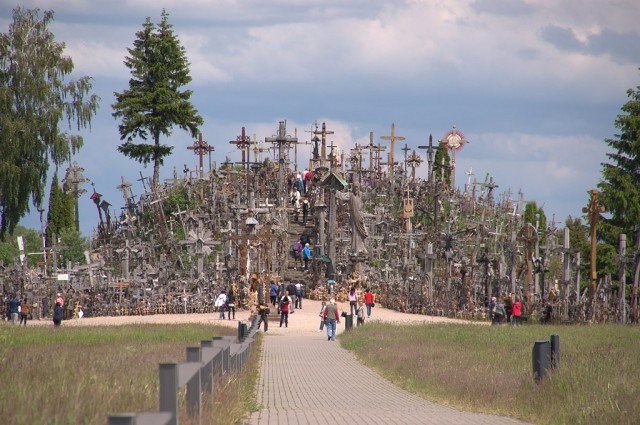
Twelve kilometers from the Lithuanian city of Siauliai is located an unusual hill dotted with crosses of different shapes and different materials.
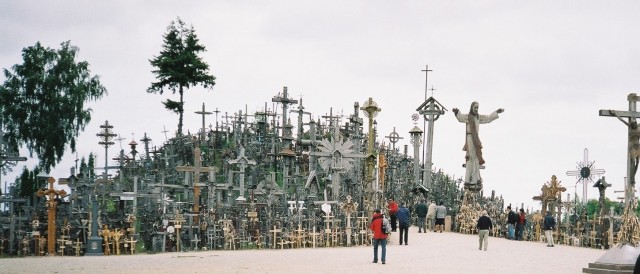
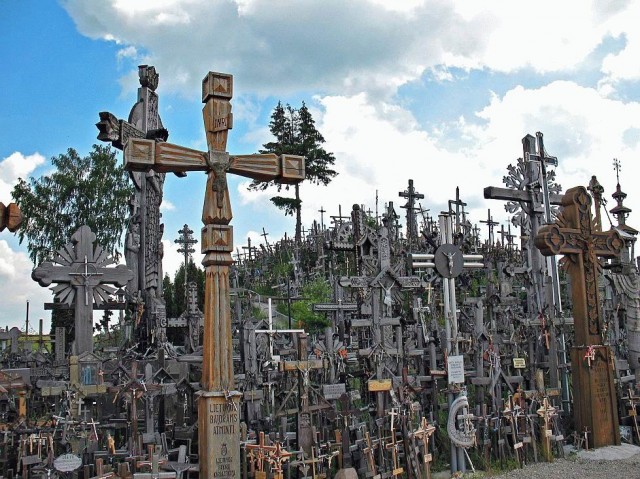
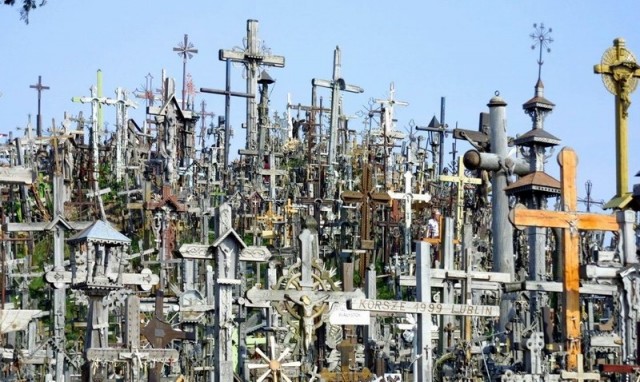
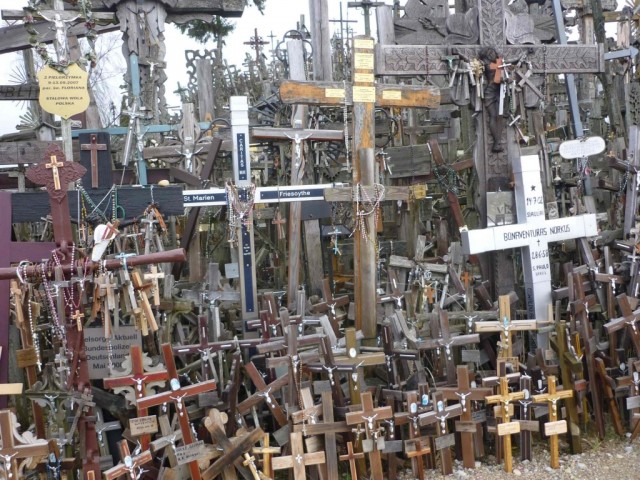
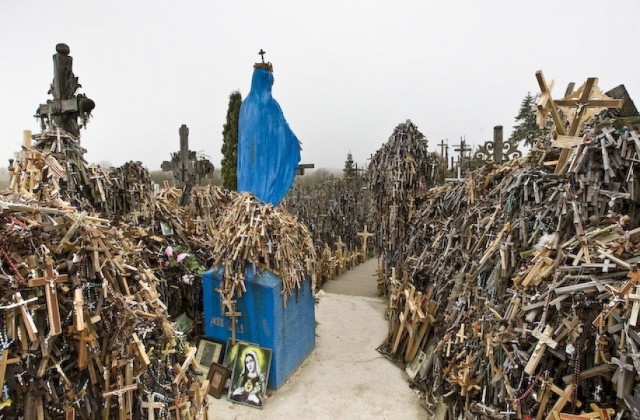
See more on weezbo.com

    
|
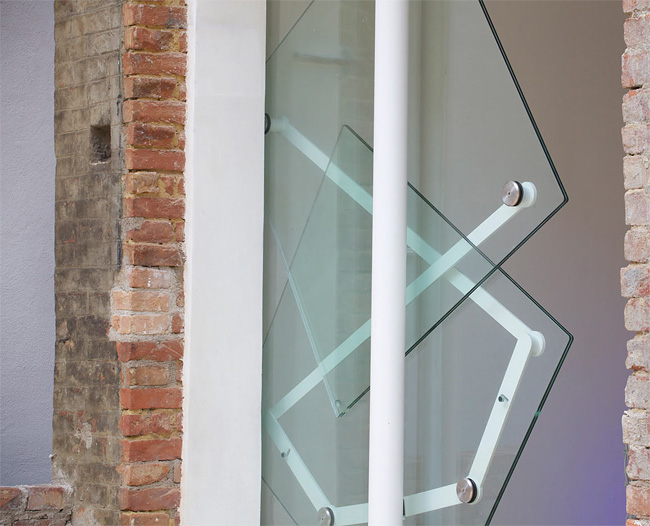
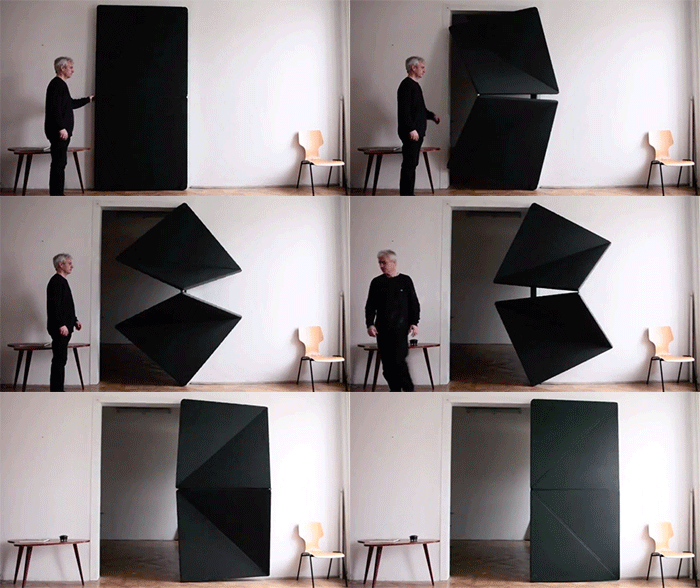
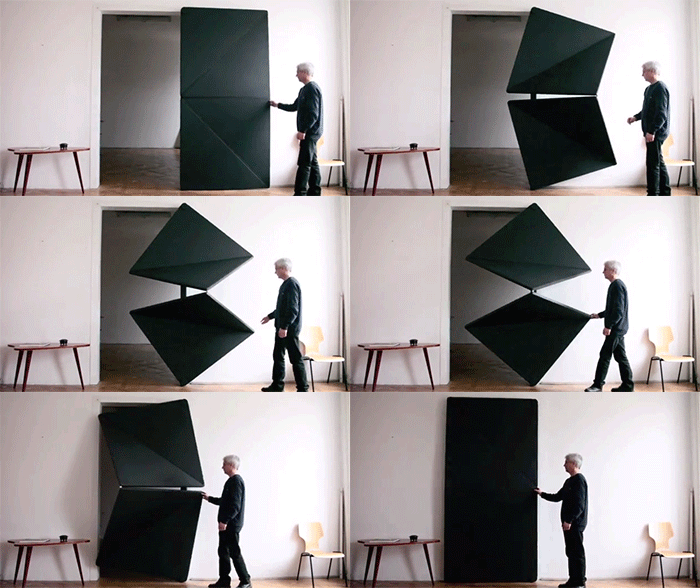
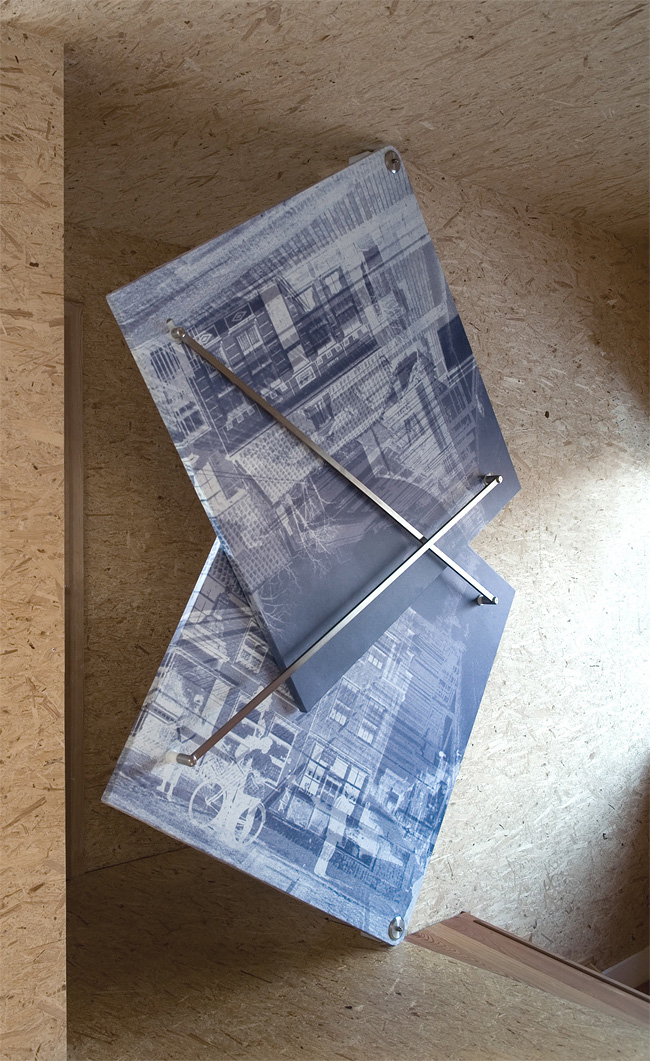
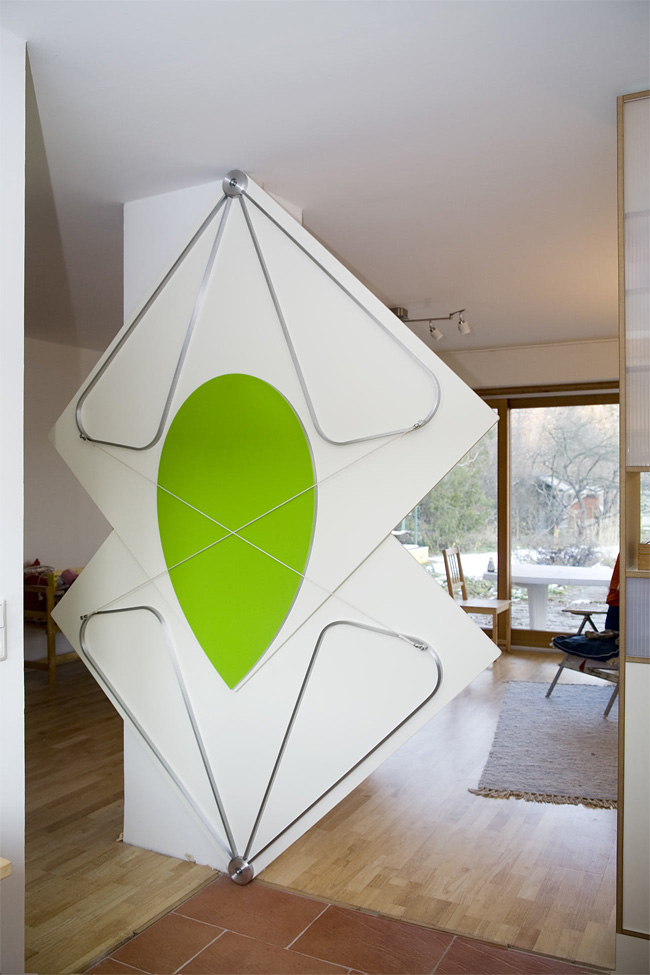
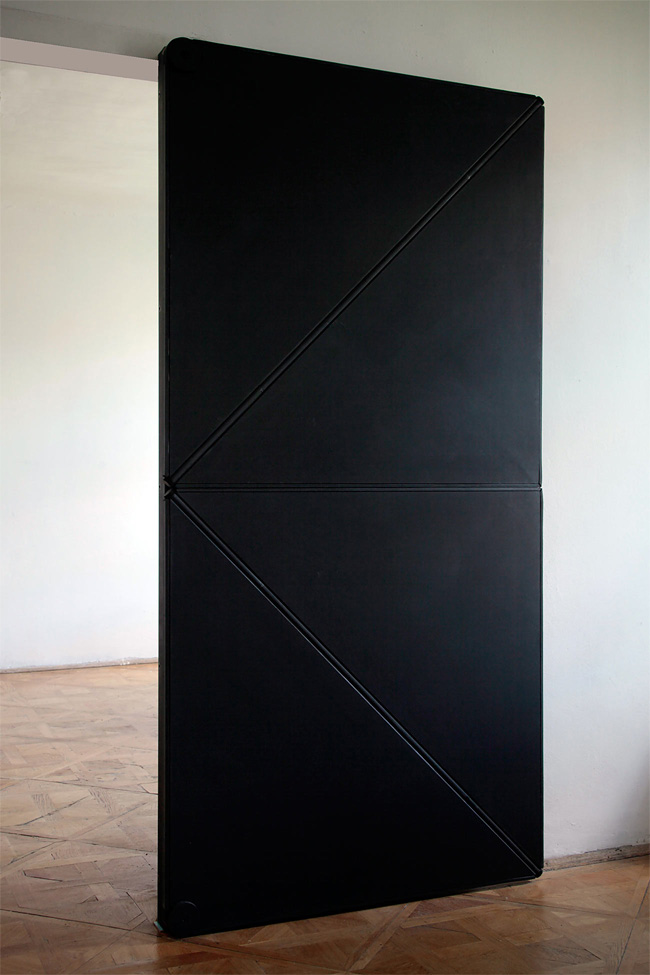
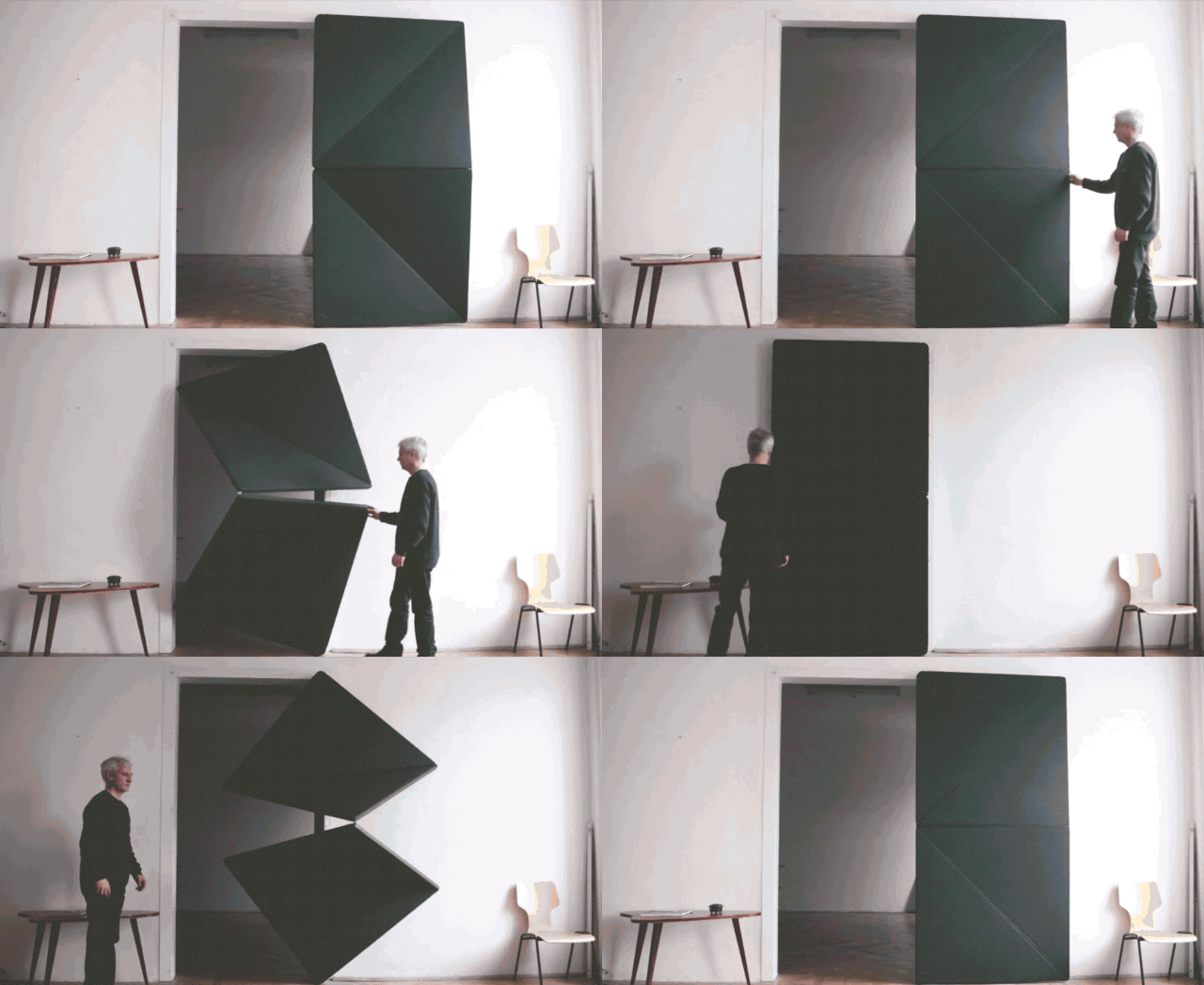
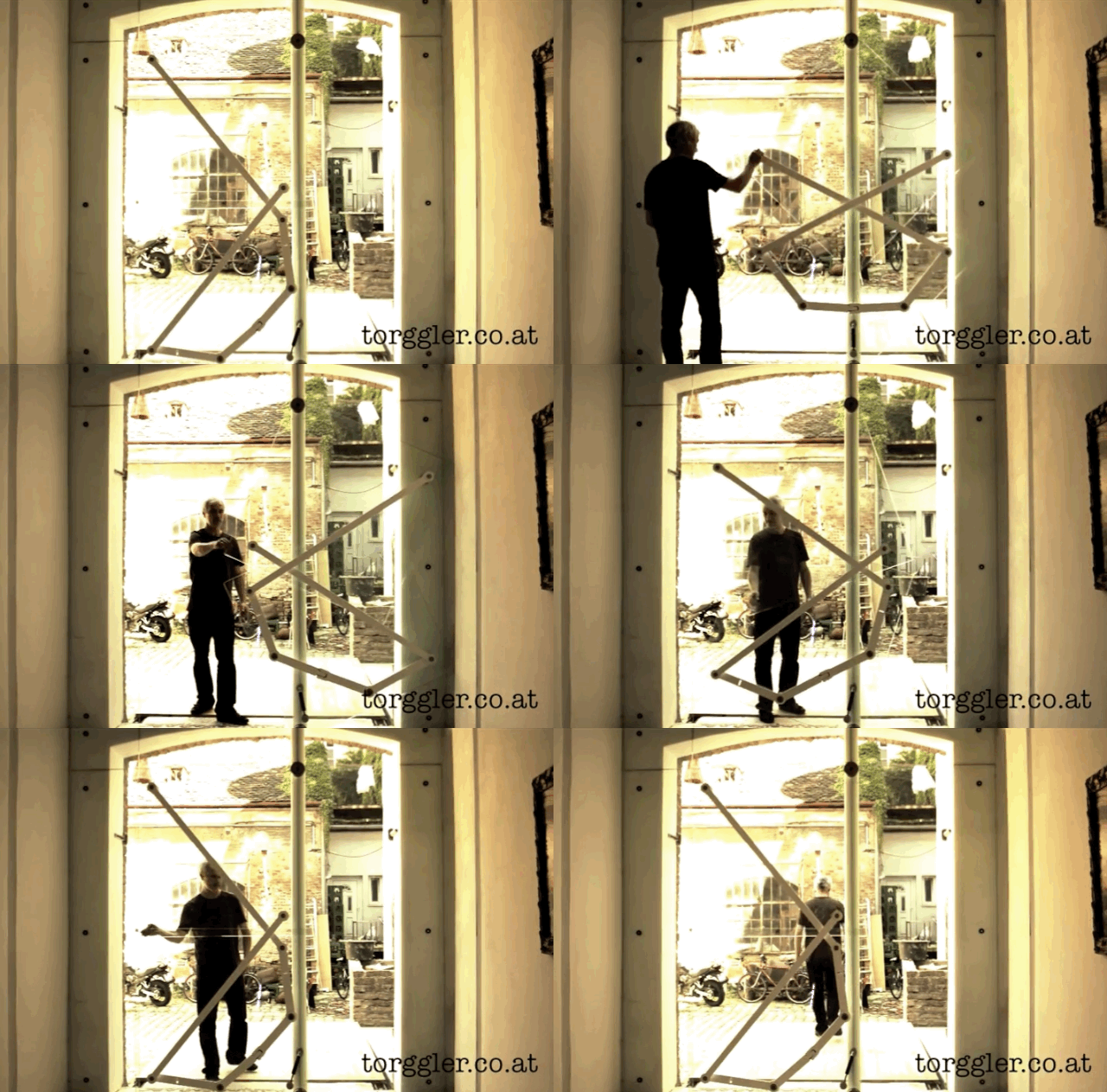
Klemens Torggler‘s door is an invention based on rotating squares, The special construction makes it possible to move the door sideways without the use of tracks. This technical trick opens up new applications for the door.

|
|


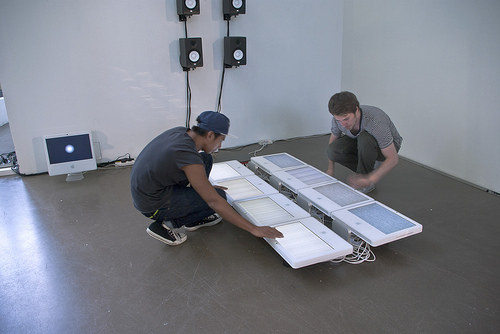

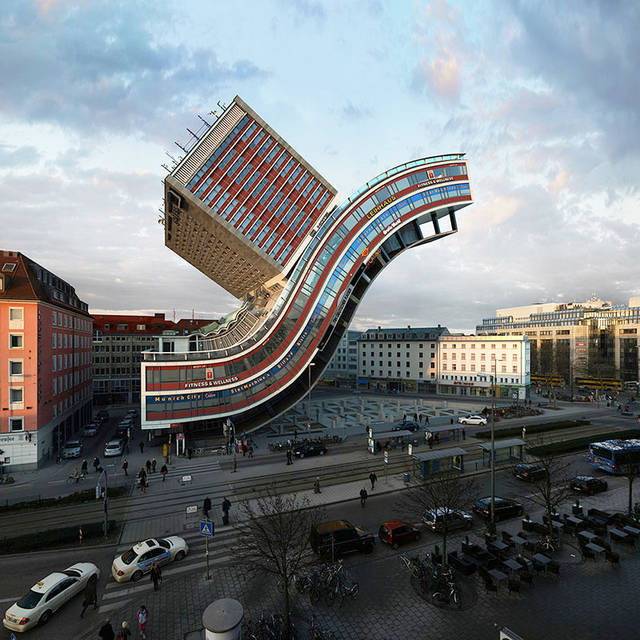
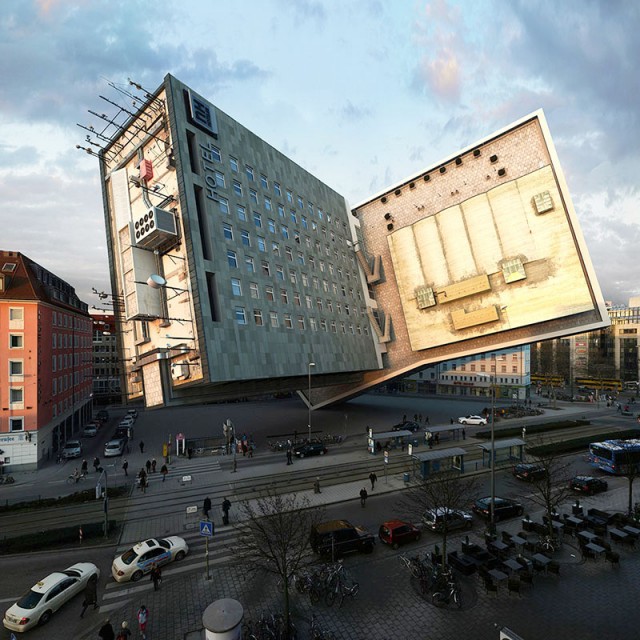
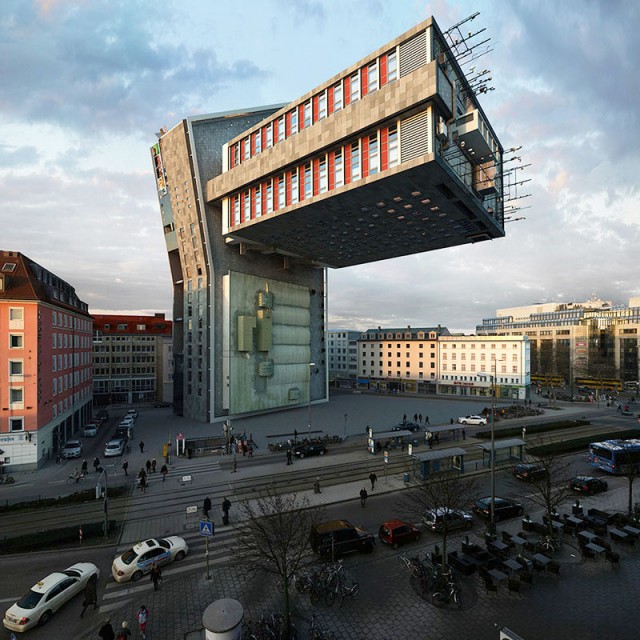
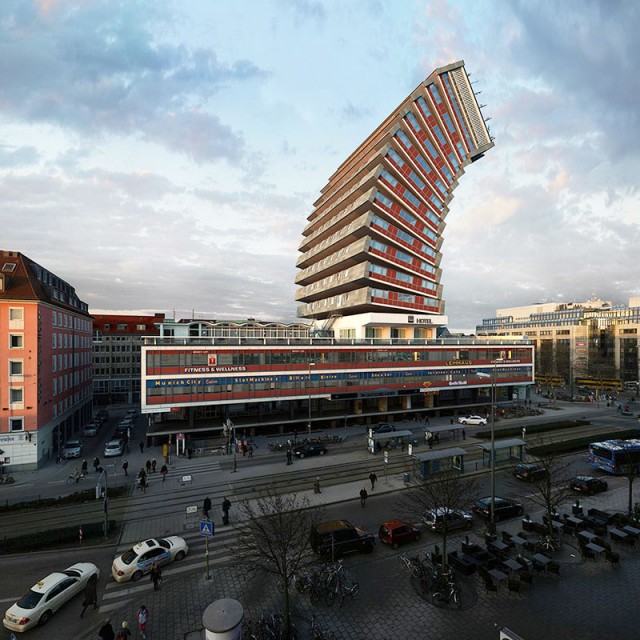
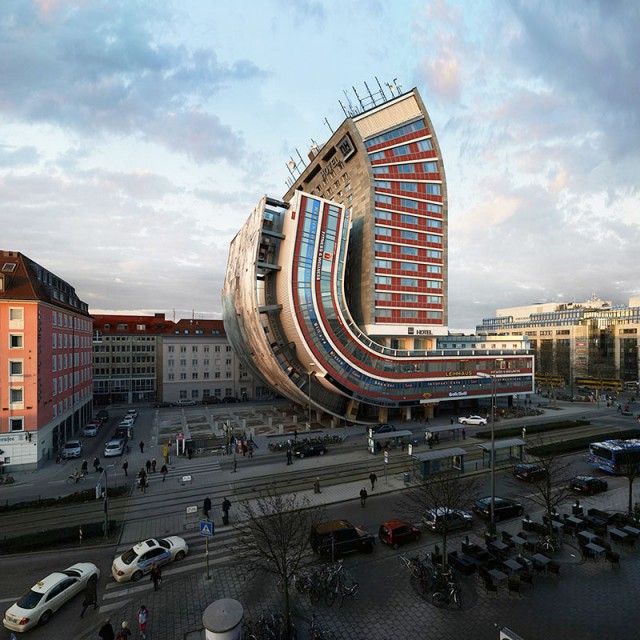
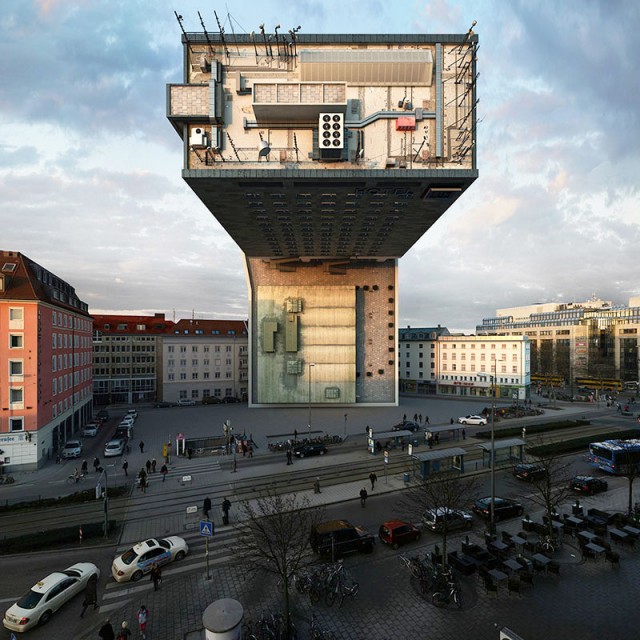
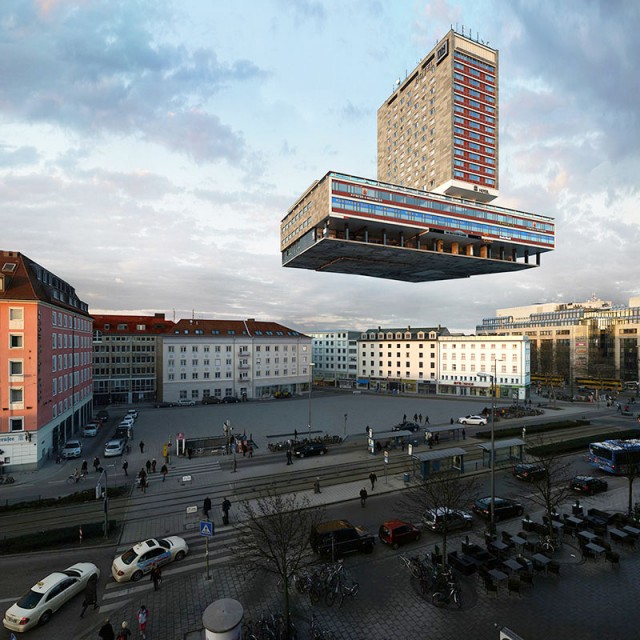
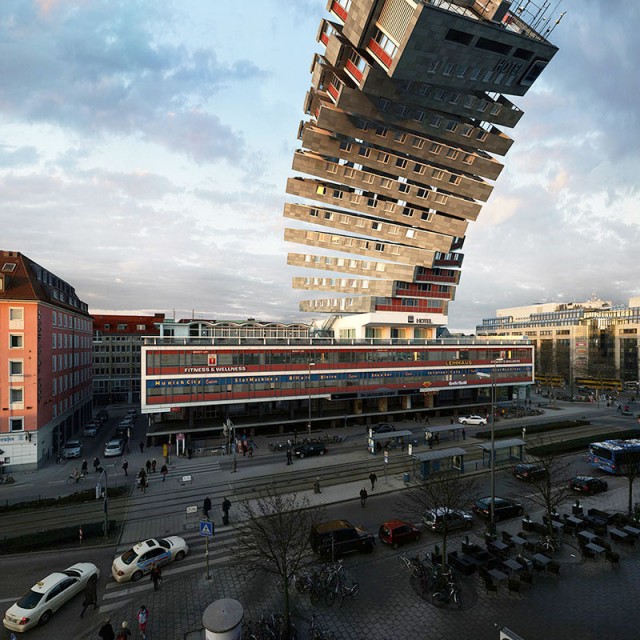
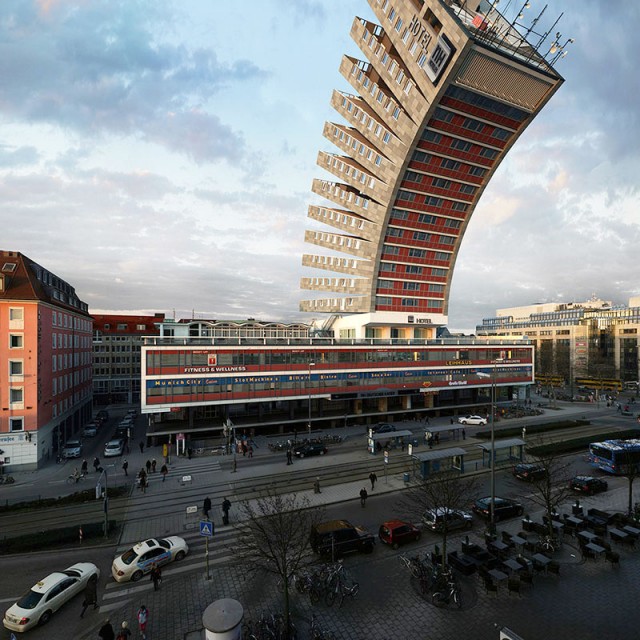
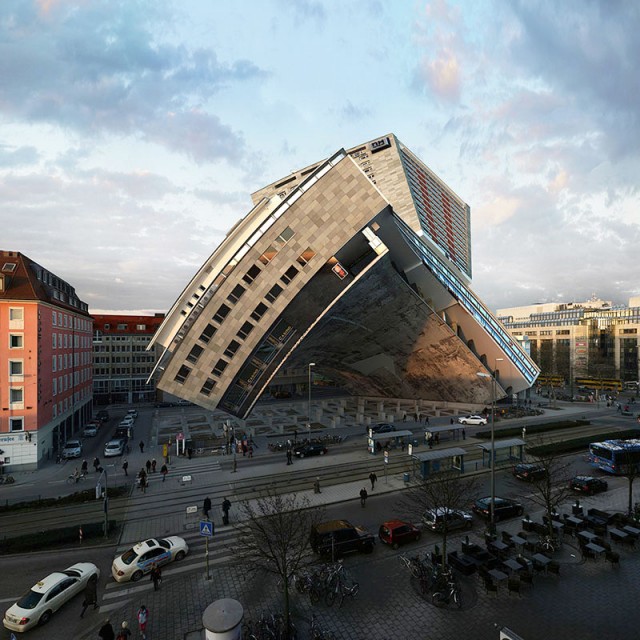
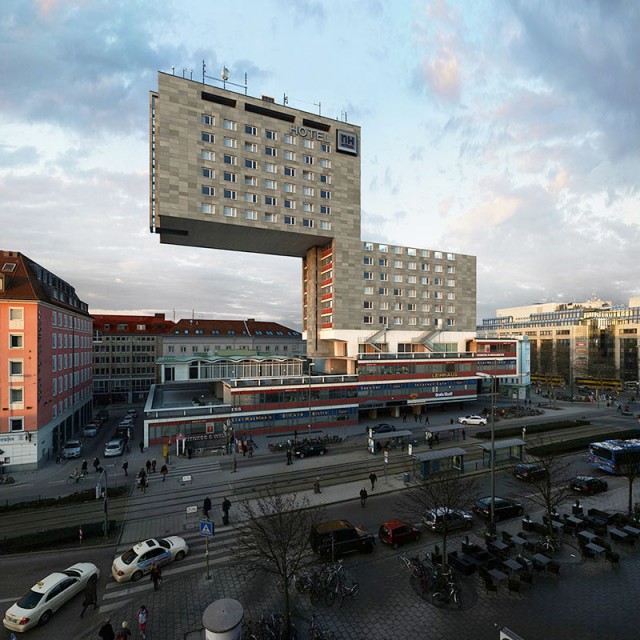
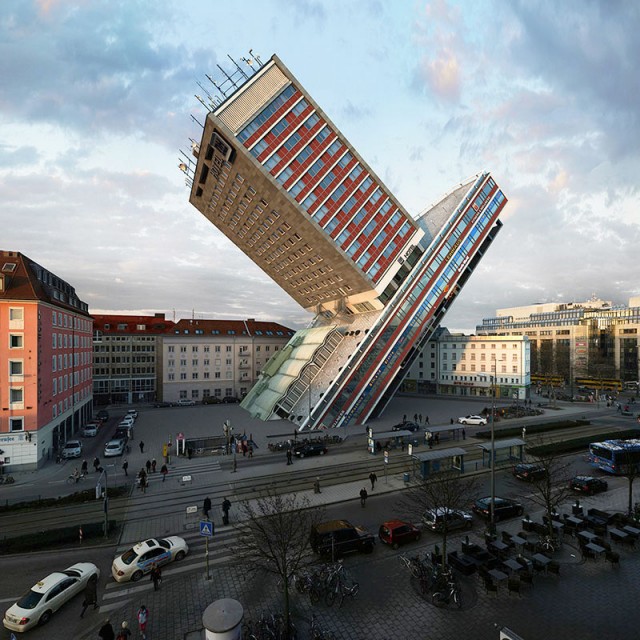
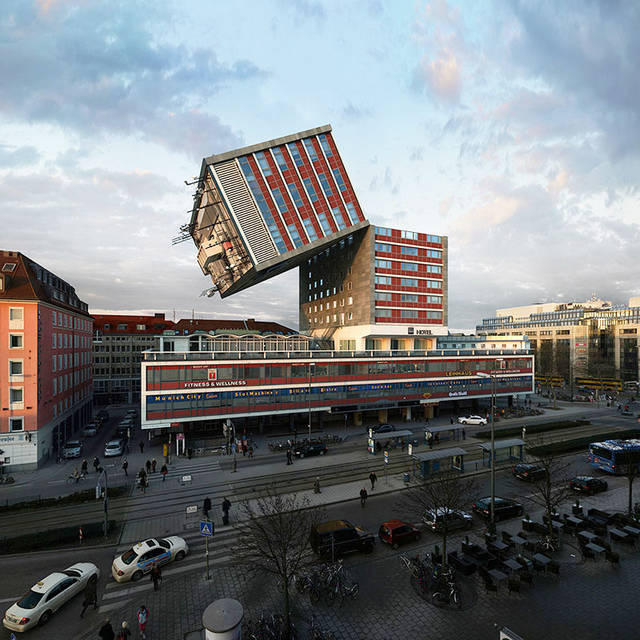
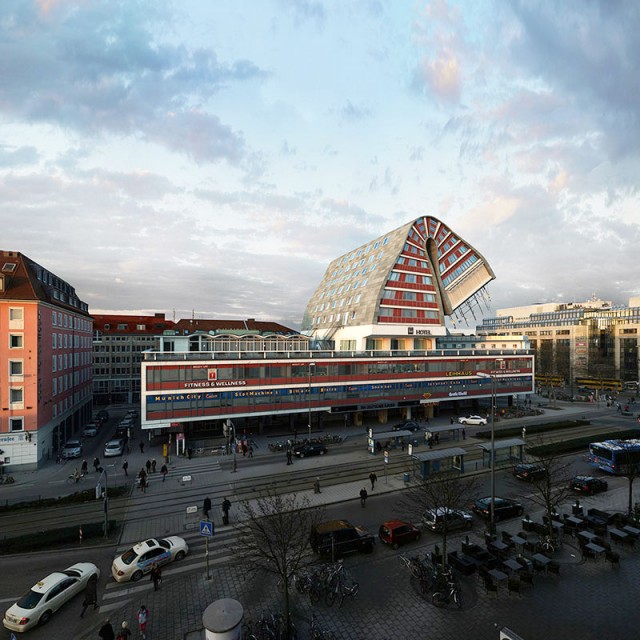
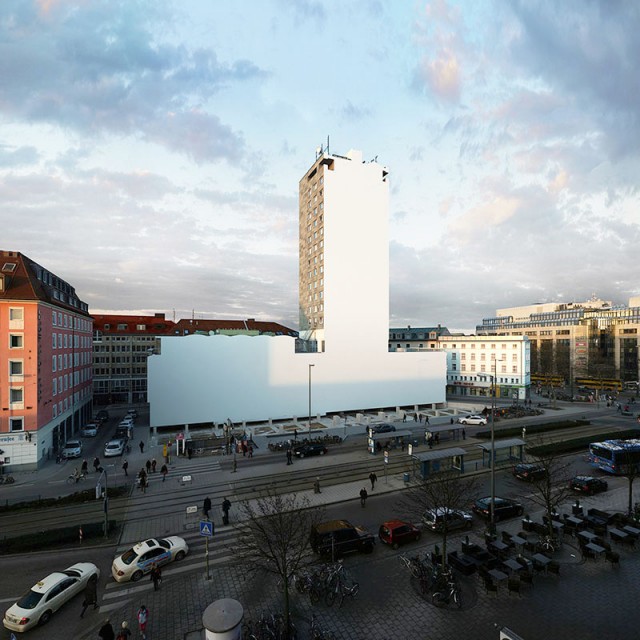
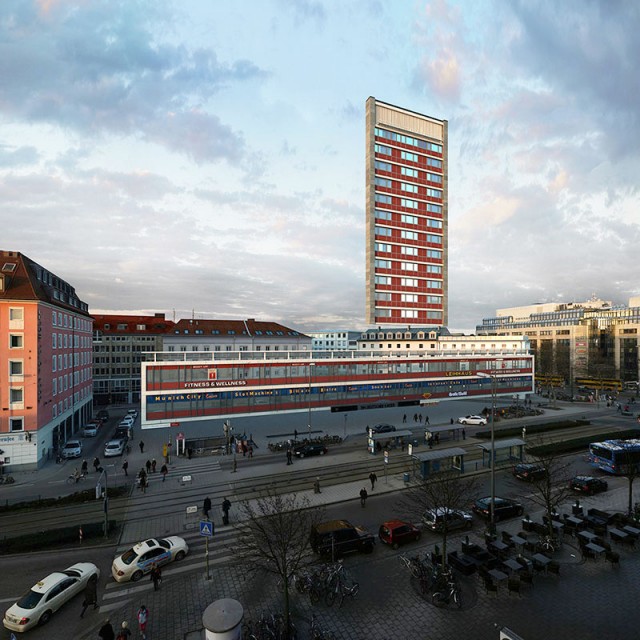
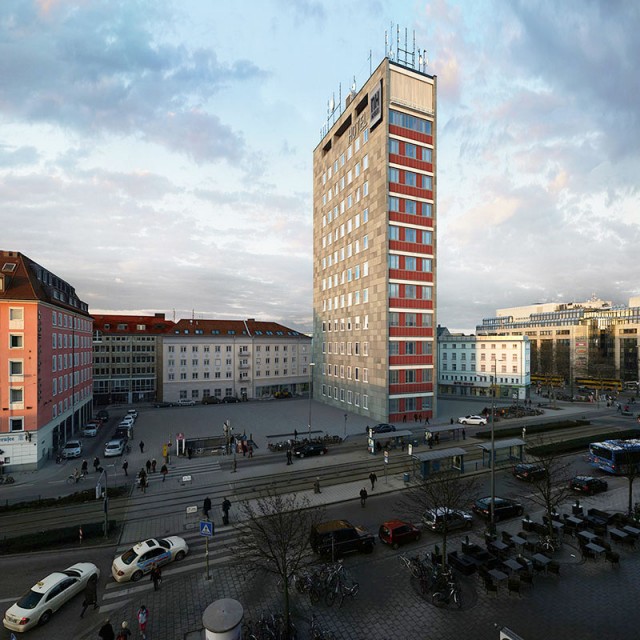
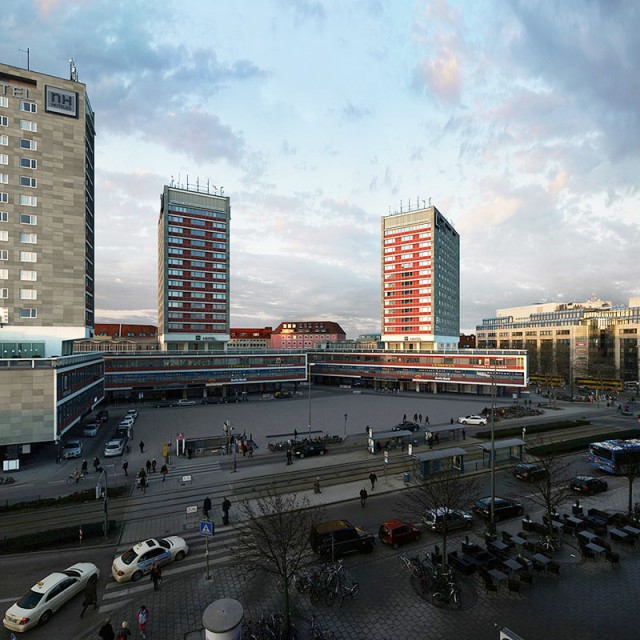
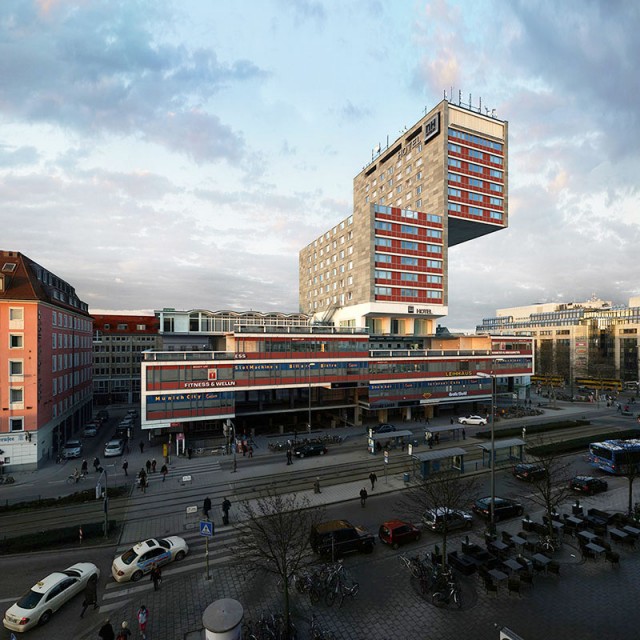
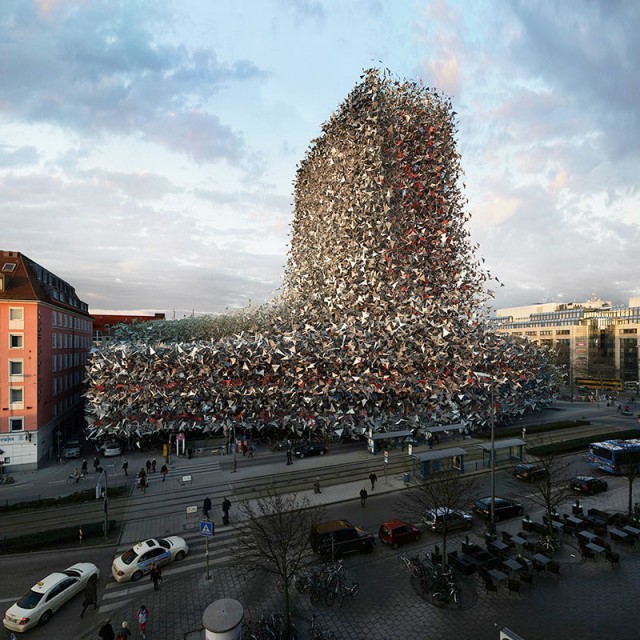
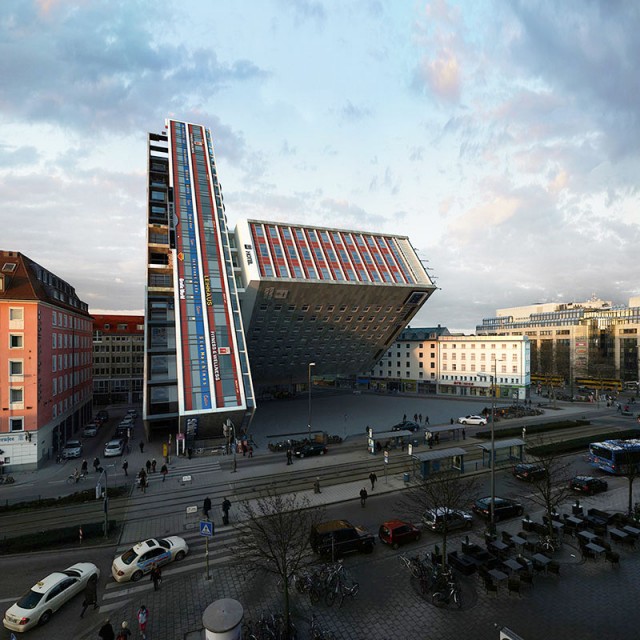
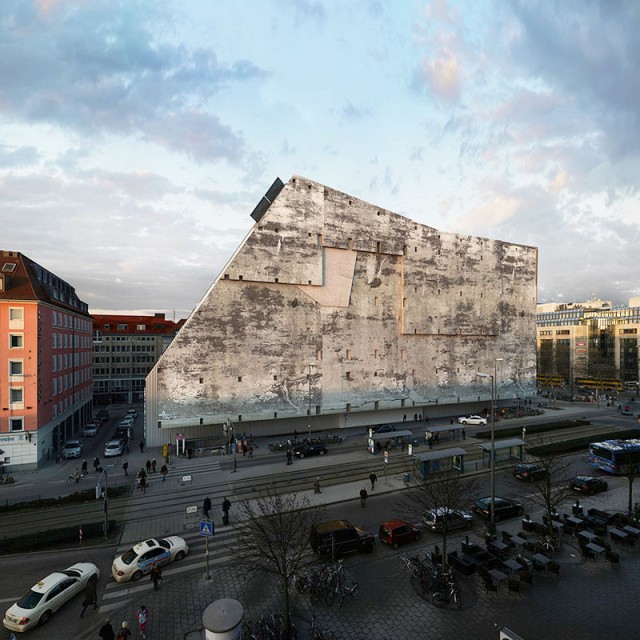
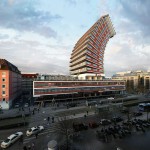
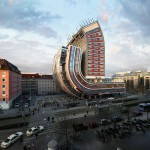
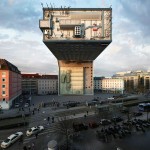
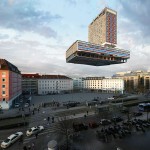
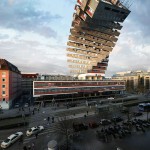
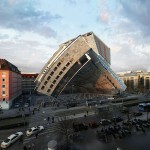
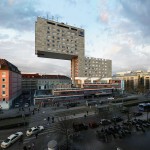
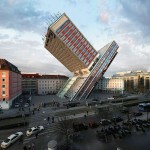
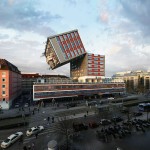
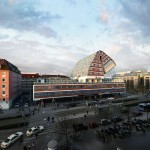
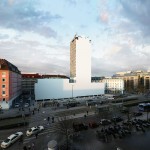
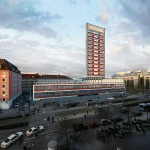
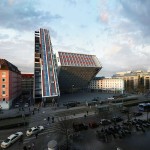
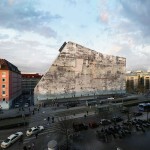
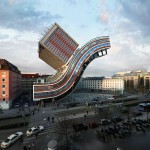
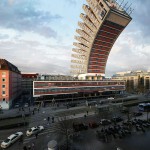
Víctor Enrich s’est donné comme défi, dans le cadre de son dernier projet NHDK, de repenser, déstructurer et recomposer 88 fois le même bâtiment, situé à Munich en Allemagne. Un projet passionnant, permettant à l’artiste de nous montrer toute l’étendue de son imagination à travers une série d’images.
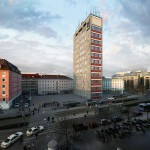
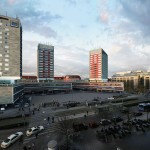
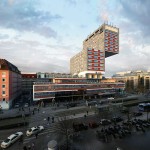
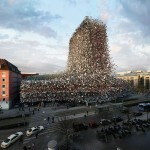

Solomon R. Guggenheim Museum, New York, Frank Lloyd Wright. Icing, gingerbread, cotton candy, candy wrappers, licorice, sugar.

Karuizawa Museum, Nagano, Yasui Hideo. Chocolate, gingerbread, hard candy, cotton candy, sour flush.

The Louvre, Paris, I.M.Pei. Gingerbread, hard candy, licorice.

Museum Aan de Stroom (MAS), Antwerp, Neutelings Riedijk Architects. Gingerbread, lego candy, hard candy, sesame candy, chocolate, bubble gum, sour rolls.

Maxxi – National Museum of the 21st Century Arts, Rome, Zaha Hadid. Gingerbread, hard candy, lollipop sticks.

Museo Soumaya, Mexico City, Fernando Romero. Candy balls, gingerbread, sour rolls, taffy.

Tate Modern, London, Herzog & de Meuron. Gingerbread, hard candy, cotton candy, bubble gum.


Recently completed for display at Dylan’s Candy Bar during Art Basel Miami, these towering architectural creations of the world’s most famous art museums and galleries were created with gingerbread and candy by food artists Caitlin Levin and Henry Hargreaves. An array of hard candy windows forms the iconic pyramid extension at the Louvre, while icing and gingerbread form the smooth curves of the Solomon R. Guggenheim Museum. Some of the iconic structures are so immaculately detailed that once photographed in black and white they almost look like the real thing. You can see more behind the scenes photos here.

Smoke Bombs, 2008
 Color Wheels, 2012

Smoke Bombs 3, 2013
 Firey Eye, 2013
 Smoke Bombs 2, 2011
Swiss visual artist Olaf Breuning places no limits on his medium of choice, expressing his artistic vison through peformance art, sculpture, drawing, photography, installation and film. My favorite of his work are these precisely staged photos of various smoke bombs, fireworks and other colorful objects arranged on a loose framework. The pieces have occasionally been lit as part of a “happening” such as his site-specific smoke installation at Station to Station in New York. You can see much more of his photography and other art over on his website, and see a brief interview with him courtesy of the Avant/Garde Diaries.


Tokujin Yoshioka is one of the more famous contemporary artists today, even if his website’s bio modestly (or jokingly) claims “His works, which transcend the boundaries of product design, architecture, and exhibition installation, are highly evaluated also as art.” His current career retrospective at Museum of Contemporary Art Tokyo is titled Tokujin Yoshioka_Crystallize, a play on both the artist’s tendency to utilize both light and crystals in his work, as well as the idea of the alternate definition of crystallizing, meaning to give form to.
The exhibition, which is Yoshioka’s largest solo show to date, consists of well-known and previously un-shown pieces, though certainly centers around the immersive sculptural installation, Rainbow Church (pictured above). The installation is forty feet tall and consists of 500 light-refracting crystal prisms which project rainbow hues in the gallery space.
In a description of the piece for Fast Company, Margaret Rhodes describes the work, “The spare aesthetic doesn’t make it easily apparent, but Rainbow Church is influenced by an experience from his early 20s, when he visited Henri Matisse’s Rosaire Chapel in Vence, France. “I had a mysterious experience of being filled with overwhelming light and vibrant colors,” the artist says in a press release. “A dream to build architecture like this chapel came up to me strongly.” In a departure from the tangible materials he’s used in the past–foil for chairs, feathers for a snow-themed art installation–he’s building with light, the most ephemeral material of all.”
Other works also utilize the ethereal qualities of refraction, such as Ray of Light (below) also emits a rainbow glow, this time via a transparent crystal structure. The gallery walls are again activated by the light, as the gallery space is changed by the sculpture itself. (via designboom and fast company design)


The post Tokujin Yoshioka’s Prismatic Installation Created With 500 Light Reflecting Crystals appeared first on Beautiful/Decay Artist & Design.
The weird, the wonderful & the completely obscure, all covered in great detail in Codex Seaphinianus, an illustrated encyclopedia penned by Italian artist, architect and industrial designer Luigi Serafini. Completed over a 30 month period, the book is divided into 11 parts, teeming with hand drawn illustrations that are accompanied pages of mostly illegible alphabets & languages. Have a look at some extracts from the legendary publication below & pick yourself up a copy by clicking here.


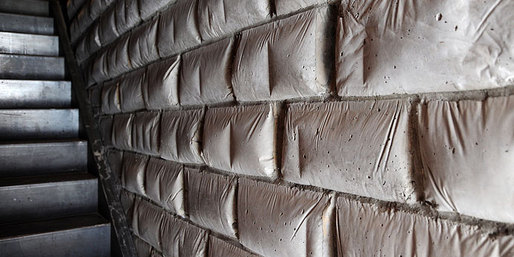
Flour sacks emptied by Runner&Stone's baker were re-purposed as the formwork for nearly 1,000 custom fabricated gently swollen concrete building units. Each "belly block" is uniquely shaped forming billowing walls of concrete that thread through the restaurant, up the stairwell and into the residences above.

Namib Desert / October 5, 2013

Ganges’ dazzling delta / July 31, 2009

Scandinavian snows / February 1, 2013

Mississippi River Delta / May 25, 2012

Clearwater Lakes, Canada / May 17, 2013

Peruvian landscape / July 4, 2013

Plentiful plankton / September 14, 2009

Swirling cloud art in the Atlantic Ocean / June 11, 2010

Agricultural crops in Aragon and Catalonia / November 26, 2010
Though I don’t have a homepage set, the first page in my daily rounds is always the Astronomy Picture of the Day (site currently down), a website launched by NASA and the Michigan Technological University way back in 1995, a nearly continous publication run of 18 years. Unfortunately due some minor, uhm, budget cuts in the U.S. government, all NASA websites are currently down due to a crushing 97% cut in workforce, including the humble Astronomy Picture of the Day.
Luckily there’s at least one space agency still publishing photos of space (and space from Earth), the European Space Agency. The ESA has an incredible Observing the Earth archive that’s updated every week and each satelitte image is usually accompanied by a brief essay to explain a bit about what you’re looking at. Collected here are some of my favorite images from the last few years taken with too many different satellites to mention, and you can search photos back through 2005 here. (via Devid Sketchbook)


Created by Colombian artist Otoniel Borda Garzón, this towering 40 foot (12 meter) torando of scrap wood was installed last year as a centerpiece at the Bogota International Art Fair. Garzón is known for his twisting organic vortices constructed primarily from old pieces of lumber that seem to dominate gallery spaces, an ongoing series of work he refers to simply as Reserva. You can see more of this twisting sculpture over on Behance.

Schema / Photo by JP Bland courtesy Kate MccGwire

Schema, detail / Photo by JP Bland courtesy Kate MccGwire

Sepal Speculum II / Photo by Ian Stuart courtesy Kate MccGwire

Flail / Photo by JP Bland courtesy Kate MccGwire

Flail, detail / Photo by JP Bland courtesy Kate MccGwire
 Shroud / Photo by JP Bland courtesy Kate MccGwire
 Shroud, detail / Photo by JP Bland courtesy Kate MccGwire

Coalesce / Photo by JP Bland courtesy Kate MccGwire

Coalesce, detail / Photo by JP Bland courtesy Kate MccGwire

Orchis / Photo by Tesa Angus courtesy Kate MccGwire

Cusp / Photo by JP Bland courtesy Kate MccGwire
 Cusp, detail / Photo by JP Bland courtesy Kate MccGwire
 Smother / Photo by JP Bland courtesy Kate MccGwire
 Smother, detail / Photo by JP Bland courtesy Kate MccGwire
British sculptor Kate MccGwire (previously) creates uncanny organic sculptures from layers of bird feathers. The objects she creates are so precisely assembled that they seem to form hybrid creatures with tentacles or limbs that twist and curve into unexpected forms.
MccGwire grew up on the Norfolk Broads, a network of rivers and lakes in eastern England where her connection with nature and fascination with birds was nurtured from an early age. Today the artist patiently collects pigeon and mallard feathers which are carefully washed and sorted in preparation for each new sculpture.
If you want to see her work first-hand this month you’re in luck, as she currently has pieces and installations in no less than four five ongoing exhibitions. You can stop by Le Royal Monceau in Paris through November 3rd, Gaasbeek Castle in Belgium, the Cheongju International Craft Biennale 2013 in South Korea, Cheltenham Art Gallery and Museum, and the Viewing Room exhibition at the Marylebone Church Crypt in London.

Video showing the making of an awesome new public artwork by British artist Alex Chinneck. Watch it below!
View the whole post: Alex Chinneck Public Art over on BOOOOOOOM!.