16 Apr 13:46
by Samantha Husmann,
Mohammad Torkamanzadeh,
Kun Liang,
Ahmad Majed,
Chaochao Dun,
Jeffrey J Urban,
Michael Naguib,
Volker Presser

The conversion of niobium carbide MXenes into niobium sulfide/carbide hybrids by sulfidation can be controlled to obtain specific nanoarchitecture. The obtained electrode materials show promising performance for hydrogen evolution reactions, with important differences between Nb4C3 and Nb2C derivatives.
Abstract
MXene-transition metal dichalcogenide (TMD) heterostructures are synthesized through a one-step heat treatment of Nb2C and Nb4C3. These MXenes are used without delamination or any pre-treatment. Heat treatments accomplish the sacrificial transformation of these MXenes into TMD (NbS2) at 700 and 900 °C under H2S. This work investigates, for the first time, the role of starting MXene phase in the derivative morphology. It is shown that while treatment of Nb2C at 700 °C leads to the formation of pillar-like structures on the parent MXene, Nb4C3 produces nano-mosaic layered NbS2. At 900 °C, both MXene phases, of the same transition metal, fully convert into nano-mosaic layered NbS2 preserving the parent MXene's layered morphology. When tested as electrodes for hydrogen evolution reaction, Nb4C3-derived hybrids show better performance than Nb2C derivatives. The Nb4C3-derived heterostructure exhibits a low overpotential of 198 mV at 10 mA cm−2 and a Tafel slope of 122 mV dec−1, with good cycling stability in an acidic electrolyte.
16 Apr 13:43
by Ping Wang, Ding Wang, Shubham Mondal, Yuanpeng Wu, Tao Ma, and Zetian Mi

ACS Applied Materials & Interfaces
DOI: 10.1021/acsami.1c23381
16 Apr 13:42
by Maria Tenorio,
Cesar Moreno,
Pol Febrer,
Jesús Castro‐Esteban,
Pablo Ordejón,
Diego Peña,
Miguel Pruneda,
Aitor Mugarza

A 2D lateral superlattice heterostructure with unprecedented single-bond band discontinuities and heterocomponent dimensions down to one nanometer is realized by the coupling of interdigitated nanoribbons into a nitrogen-doped nanoporous graphene structure. The atomic scale band discontinuities at the nanoporous heterojunctions endow this nanomaterial with a multifunctionality that can be relevant for photodetection, excitonic solar cells, water splitting, or selective nanosieving.
Abstract
Nanometer scale lateral heterostructures with atomically sharp band discontinuities can be conceived as the 2D analogues of vertical Van der Waals heterostructures, where pristine properties of each component coexist with interfacial phenomena that result in a variety of exotic quantum phenomena. However, despite considerable advances in the fabrication of lateral heterostructures, controlling their covalent interfaces and band discontinuities with atomic precision, scaling down components and producing periodic, lattice-coherent superlattices still represent major challenges. Here, a synthetic strategy to fabricate nanometer scale, coherent lateral superlattice heterojunctions with atomically sharp band discontinuity is reported. By merging interdigitated arrays of different types of graphene nanoribbons by means of a novel on-surface reaction, superlattices of 1D, and chemically heterogeneous nanoporous junctions are obtained. The latter host subnanometer quantum dipoles and tunneling in-gap states, altogether expected to promote interfacial phenomena such as interribbon excitons or selective photocatalysis.
16 Apr 13:39
by Paul Y. Kim, Yige Gao, Zachary Fink, Alexander E. Ribbe, David A. Hoagland, and Thomas P. Russell

ACS Nano
DOI: 10.1021/acsnano.1c09853
16 Apr 13:38
by Rongjie Zhang, Yongjue Lai, Wenjun Chen, Changjiu Teng, Yujie Sun, Liusi Yang, Jingyun Wang, Bilu Liu, and Hui-Ming Cheng

ACS Nano
DOI: 10.1021/acsnano.2c00350
16 Apr 13:37
by Ali Imran,
Muhammad Sulaman,
Muhammad Yousaf,
Muhammad Abid Anwar,
Muhammad Qasim,
Ghulam Dastgeer,
Kossi A. A. Min‐Dianey,
Baoyu Wang,
Xinqiang Wang

High electron mobility is achieved by reducing the dislocation density and unintentional electron doping by boundary temperature controlled epitaxy method under indium-rich growth conditions. The method can be applied for industrial-scale production of InN for commercial optoelectronic device applications.
Abstract
The fabrication of high-speed electronic and communication devices has rapidly grown the demand for high mobility semiconductors. However, their high cost and complex fabrication process make them less attractive for the consumer market and industrial applications. Indium nitride (InN) can be a potential candidate to fulfill industrial requirements due to simple and low-cost fabrication process as well as unique electronic properties such as narrow direct bandgap and high electron mobility. In this work, 3 µm thick InN epilayer is grown on (0001) gallium nitride (GaN)/Sapphire template under In-rich conditions with different In/N flux ratios by molecular beam epitaxy. The sharp InN/GaN interface monolayers with the In-polar growth are observed, which assure the precise control of the growth parameters. The directly probed electron mobility of 3610 cm2 V-1 s-1 is measured with an unintentionally doped electron density of 2.24 × 1017 cm-3. The screw dislocation and edge dislocation densities are calculated to be 2.56 × 10⁸ and 0.92 × 1010 cm-2, respectively. The step-flow growth with the average surface roughness of 0.23 nm for 1 × 1 µm2 is confirmed. The high quality and high mobility InN film make it a potential candidate for high-speed electronic/optoelectronic devices.
16 Apr 13:36
by Yuqiang Fang,
Ke Yang,
Enze Zhang,
Shanshan Liu,
Zehao Jia,
Yuda Zhang,
Hua Wu,
Faxian Xiu,
Fuqiang Huang

Layered CrZr4Te14 is constructed of [CrTe2] and [ZrTe3] chains along the b-axis. The intrachain magnetic coupling of the [CrTe2] chain is ferromagnetic, while the opposite magnetic ordering between the chains makes CrZr4Te14 an antiferromagnet. Moreover, CrZr4Te14 shows large intrinsic negative magnetoresistence of −56%, and the in-plane anisotropic factor reaches 8.2 owing to the ferromagnetic [CrTe2] chains.
Abstract
The discovery of 2D van der Waals (vdW) magnetic materials is of great significance to explore intriguing 2D magnetic physics and develop innovative spintronic devices. In this work, a new quasi-1D vdW layered compound CrZr4Te14 is successfully synthesized. Owing to the existence of 1D [CrTe2] and [ZrTe3] chains along the b-axis, CrZr4Te14 crystals show strong anisotropy of phonon vibrations, electrical transport, and magnetism. Density functional theory calculations reveal the ferromagnetic (FM) coupling within the [CrTe2] chain, while the interchain and interlayer couplings are both weakly antiferromagnetic (AF). Notably, a large intrinsic negative magnetoresistance (nMR) of −56% is achieved at 2 K under 9 T, and the in-plane anisotropic factor of nMR can reach up to 8.2 in the CrZr4Te14 device. The 1D FM chains and anisotropic nMR effect make CrZr4Te14 an interesting platform for exploring novel polarization-sensitive spintronics.
16 Apr 13:35
by Qian Song
Nature, Published online: 23 February 2022; doi:10.1038/s41586-021-04337-x
Multiple complementary optical signatures confirm the persistence of ferroelectricity and inversion-symmetry-breaking magnetic order down to monolayer NiI2, introducing the physics of type-II multiferroics into the area of van der Waals materials.
16 Apr 13:35
by Chiara Trovatello
npj 2D Materials and Applications, Published online: 28 March 2022; doi:10.1038/s41699-022-00299-4
Ultrafast hot carrier transfer in WS
2/graphene large area heterostructures
16 Apr 13:35
by N. Bart
Nature Communications, Published online: 28 March 2022; doi:10.1038/s41467-022-29116-8
Nucleation control of self-assembled quantum dots is challenging. Here, the authors employ conventional molecular beam epitaxy to achieve wafer-scale density modulation of high-quality quantum dots with tunable periodicity on unpatterned substrates.
16 Apr 13:32
Abstract
The production of two-dimensional nanosheets (2D NSs) with all sizes (1–100 nm) and few (< 10) layers is highly desired but far from satisfactory. Herein, we report an all-physical top-down method to produce indium chalcogenide (In2X3 (X = S, Se, Te)) NSs with wide-range (150–3.0 nm) controlled sizes. The method combines silica-assisted ball-milling and sonication-assisted solvent exfoliation to fabricate multiscale NSs with varying distributions, which are then precisely separated by cascade centrifugation. Multiple characterization techniques reveal that the as-produced In2X3 NSs are intrinsic and defect-free and remain β-phase during the whole process. The redispersions of In2X3 NSs exhibit prominent excitation wavelength-, solvent-, concentration-, and size-dependent photoluminescence. The NSs-poly(methyl methacrylate) (PMMA) hybrid thin films demonstrate strong size effects in nonlinear saturation absorption. The absolute modulation depths of 35.4%, 43.3%, 47.2% and saturation intensities of 1.63, 1.05, 0.83 MW·cm−2 (i.e., 163, 105, and 83 nJ·cm−2) are derived for the In2S3, In2Se3, and In2Te3 quantum sheets, respectively. Our method paves the way for mass production and full exploration of full-scale 2D NSs.

16 Apr 13:30
by Emiliano Cortés
Nature Reviews Chemistry, Published online: 28 March 2022; doi:10.1038/s41570-022-00368-8
Disentangling the nanoscale interplay of electromagnetic near fields, heat and charge transfer in plasmon-assisted chemistry is non-trivial. We survey the techniques that enable the characterization of these properties with spatial, energetic and/or temporal resolution, with insight regarding the challenges associated when going from studying the ensemble level to single-particle measurements.
16 Apr 13:25
by Jan Hempelmann,
Peter C. Müller,
Christina Ertural,
Richard Dronskowski

Uncovering the peculiar chemical bonding of phase-change materials is essential to understand their unique physical properties. For the first time ever, Richard Dronskowski et al. analyze in their Research Article (DOI: 10.1002/anie.202115778) the wavefunctions of these rather covalent materials in terms of interacting atomic orbitals, mirroring independent analyses of their projected force constants. All these materials breaking the octet rule clearly evidence electron-rich multicenter interactions, similar yet different from the molecular case.
16 Apr 13:23
by Yi Wen, Shiang Fang, Matthew Coupin, Yang Lu, Colin Ophus, Efthimios Kaxiras, and Jamie H. Warner

ACS Nano
DOI: 10.1021/acsnano.2c01170
16 Apr 13:22
by Matthew Parker
Nature Electronics, Published online: 29 March 2022; doi:10.1038/s41928-022-00741-x
A sub-terahertz transceiver in 22 nm FinFET
16 Apr 13:22
by A. M. J. Zwerver
Nature Electronics, Published online: 29 March 2022; doi:10.1038/s41928-022-00727-9
Silicon spin qubits can be fabricated in a 300 mm semiconductor manufacturing facility using all-optical lithography and fully industrial processing.
16 Apr 13:19
by Chandra Sekhar Reddy Kolli, Venkatarao Selamneni, Barbara A. Muñiz Martínez, Andres Fest Carreno, David Emanuel Sanchez, Mauricio Terrones, Elodie Strupiechonski, Andres De Luna Bugallo, and Parikshit Sahatiya

ACS Applied Materials & Interfaces
DOI: 10.1021/acsami.2c02624
16 Apr 13:17
Abstract
Ferroelectric field-effect transistors (FeFET) with nondestructive readout capability have emerged as an attractive candidate for next-generation nonvolatile memory technology. Herein, we demonstrate ferroelectric-gated nonvolatile memory featuring a top gate architecture by combining multi-layer ReS2 with ferroelectric poly(vinylidene fluoride-trifluoroethylene) (P(VDF-TrFE)) copolymer films. The ReS2 FeFET using hBN as substrate shows a large memory window of ∼ 30 V. Repeated write/erase operations are successfully performed by applying pulse voltage of ±25 V with 1 ms width to the ferroelectric P(VDF-TrFE), and an ultra-high write/erase ratio of ∼ 107 can be achieved. Furthermore, the ReS2 FeFET shows stable data retention capability of longer than 2,000 s and reliable endurance of greater than 2,000 cycles. These characteristics highlight that such ferroelectric-gated nonvolatile memory has great potential in future non-volatile memory applications.

16 Apr 13:17
Nanoscale, 2022, 14,5851-5858
DOI: 10.1039/D2NR00331G, Paper
Cheng Zhang, Le Wang, Yue Gu, Xi Zhang, Xiuquan Xia, Shaolong Jiang, Liang-Long Huang, Ying Fu, Cai Liu, Junhao Lin, Xiaolong Zou, Huimin Su, Jia-Wei Mei, Jun-Feng Dai
We reported a layer-controlled transition from the soft to hard ferromagnetic state in atomically thin CrSiTe3 flakes. Our study paves the way towards exploring and learning much more atomically thin and layered intrinsic ferromagnets.
The content of this RSS Feed (c) The Royal Society of Chemistry
16 Apr 13:16
by Libor Šmejkal
Nature Reviews Materials, Published online: 30 March 2022; doi:10.1038/s41578-022-00430-3
Only in recent years has the Hall effect been predicted and observed in materials with antiferromagnetic order. This Review systematically organizes the current understanding of anomalous antiferromagnetic materials that generate a Hall effect, discussing these systems in the broad context of spintronics, topological condensed matter and multipole magnetism.
16 Apr 13:15
by Alejandro Mercado, Sharmistha Sahoo, and M. Franz
Author(s): Alejandro Mercado, Sharmistha Sahoo, and M. Franz
A new proposal for generating Majorana zero modes—electronic states with potential for quantum computing—would not require sub-Kelvin temperatures.
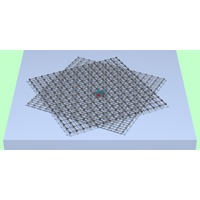
[Phys. Rev. Lett. 128, 137002] Published Wed Mar 30, 2022
13 Apr 11:08
by Hiroshi Shimizu, Jiang Pu, Zheng Liu, Hong En Lim, Mina Maruyama, Yusuke Nakanishi, Shunichiro Ito, Iori Kikuchi, Takahiko Endo, Kazuhiro Yanagi, Yugo Oshima, Susumu Okada, Taishi Takenobu, and Yasumitsu Miyata

ACS Applied Nano Materials
DOI: 10.1021/acsanm.2c00377
13 Apr 11:08
by Gaolei Zhan
Nature, Published online: 30 March 2022; doi:10.1038/s41586-022-04409-6
In situ scanning tunnelling microscopy reveals the dynamic nature of the early stages of two-dimensional (2D) polymer formation and crystallization at the solid–liquid interface.
13 Apr 11:02
by Huanhuan Yang, Lingling Song, Yunshan Cao, and Peng Yan

Nano Letters
DOI: 10.1021/acs.nanolett.2c00555
13 Apr 11:02
by Ping Wang,
Woncheol Lee,
Joseph P. Corbett,
William H. Koll,
Nguyen M. Vu,
David Arto Laleyan,
Qiannan Wen,
Yuanpeng Wu,
Ayush Pandey,
Jiseok Gim,
Ding Wang,
Diana Y. Qiu,
Robert Hovden,
Mackillo Kira,
John T. Heron,
Jay A. Gupta,
Emmanouil Kioupakis,
Zetian Mi

Controllable synthesis of monolayer hexagonal boron nitride (hBN) has remained a daunting challenge. An hBN/graphene-interface-mediated growth concept to enable scalable epitaxy of unidirectional high-quality monolayer hBN on graphene substrates is proposed and demonstrated. A uniform moiré superlattice and robust deep-ultraviolet excitonic emission (around 6.12 eV) are achieved in such a monolayer hBN/graphene van der Waals heterostructure.
Abstract
Monolayer hexagonal boron nitride (hBN) has been widely considered a fundamental building block for 2D heterostructures and devices. However, the controlled and scalable synthesis of hBN and its 2D heterostructures has remained a daunting challenge. Here, an hBN/graphene (hBN/G) interface-mediated growth process for the controlled synthesis of high-quality monolayer hBN is proposed and further demonstrated. It is discovered that the in-plane hBN/G interface can be precisely controlled, enabling the scalable epitaxy of unidirectional monolayer hBN on graphene, which exhibits a uniform moiré superlattice consistent with single-domain hBN, aligned to the underlying graphene lattice. Furthermore, it is identified that the deep-ultraviolet emission at 6.12 eV stems from the 1s-exciton state of monolayer hBN with a giant renormalized direct bandgap on graphene. This work provides a viable path for the controlled synthesis of ultraclean, wafer-scale, atomically ordered 2D quantum materials, as well as the fabrication of 2D quantum electronic and optoelectronic devices.
13 Apr 11:02
by Aleksandra Pilch‐Wrobel,
Agata Maria Kotulska,
Satu Lahtinen,
Tero Soukka,
Artur Bednarkiewicz

The compositional architecture of lanthanide-doped upconverting core-shell nanoparticles (UCNPs) strongly affects their suitability for Resonant Energy Transfer (RET) based sensing. The upconversion (UC) in lanthanides advantageously diminishes background signal, but concurrently complicates luminescence kinetics analysis. Newly suggested RET quantification methods exploit long luminescence risetimes of the donor and fluorescent acceptor molecules to understand the mechanisms behind and propose optimized donor NPs.
Abstract
Förster Resonance Energy Transfer (FRET) between single molecule donor (
D
) and acceptor (
A
) is well understood from a fundamental perspective and is widely applied in biology, biotechnology, medical diagnostics, and bio-imaging. Lanthanide doped upconverting nanoparticles (UCNPs) have demonstrated their suitability as alternative donor species. Nevertheless, while they solve most disadvantageous features of organic donor molecules, such as photo-bleaching, spectral cross-excitation, and emission bleed-through, the fundamental understanding and practical realizations of bioassays with UCNP donors remain challenging. Among others, the interaction between many donor ions (in donor UCNP) and many acceptors anchored on the NP surface and the upconversion itself within UCNPs, complicate the decay-based analysis of
D
-
A
interaction. In this work, the assessment of designed virtual core-shell NP (VNP) models leads to the new designs of UCNPs, such as …@Er, Yb@Er, Yb@YbEr, which are experimentally evaluated as donor NPs and compared to the simulations. Moreover, the luminescence rise and decay kinetics in UCNP donors upon RET is discussed in newly proposed disparity measurements. The presented studies help to understand the role of energy-transfer and energy migration between lanthanide ion dopants and how the architecture of core-shell UCNPs affects their performance as FRET donors to organic acceptor dyes.
13 Apr 10:55
by Sean W. O’Neill and Todd D. Krauss

Journal of the American Chemical Society
DOI: 10.1021/jacs.1c11697
13 Apr 10:55
by Alexandra Schroter,
Susanne Märkl,
Naomi Weitzel,
Thomas Hirsch

A higher lanthanide concentration of 80% sensitizer (Yb3+) and 20% activator (Er3+) increases the absorption rate of upconversion nanoparticles. A NaYF4 shell blocks the energy migration pathways to the particle surface, which enhances the upconversion luminescence upon near-infrared excitation significantly. An investigation of particle diameter and shell thickness reveals significantly enhanced luminescence in the red (660 nm) for bioanalytical applications.
Abstract
Lanthanide-doped upconversion nanoparticles (UCNPs) have attracted a lot of interest due to their benefits in biological applications: They are not suffering from intermittence and provide nearly background-free luminescence. The progress in synthesis nowadays enables access to complex core-shell particles of controlled size and composition. Nevertheless, the frequently used doping ratio dates back to where mostly core-only particles of relatively large size have been studied. Especially at low power excitation as needed in biology, a decrease in particle size leads to a drastic decrease in the upconversion efficiency. An enhancement strategy based on an increased absorption rate of near-infrared light provided by an increase of the sensitizer content, together with the simultaneous blocking of the energy migration pathways to the particle surface, is presented. NaYbF4(20%Er) particles of 8.5 nm diameter equipped with an about 2 nm thick NaYF4 shell show significantly enhanced upconversion luminescence in the red (660 nm) compared to the most commonly used particles with only 20% Yb3+ and 2% Er3+. The impact of size, composition, and core-shell architecture on photophysical properties are studied. The findings demonstrate that an increase in doping rates enables the design of small, bright UCNPs useful for biological applications.
13 Apr 10:53
by Sunchao Huang,
Ruihuan Duan,
Nikhil Pramanik,
Chris Boothroyd,
Zheng Liu,
Liang Jie Wong

Unprecedented versatility in van der Waals (vdW) materials as a platform for compact free electron-driven X-ray generation is demonstrated. Including the vdW material tilt angle as a controllable degree of freedom broadens the accessible X-ray photon energy range by over 100%. This allows the tunable photon output to span the extreme ultraviolet and X-ray regimes, using table-top electron sources.
Abstract
Van der Waals (vdW) materials have attracted much interest for their myriad unique electronic, mechanical, and thermal properties. In particular, they are promising candidates for monochromatic, table-top X-ray sources. This work reveals that the versatility of the table-top vdW X-ray source goes beyond what has been demonstrated so far. By introducing a tilt angle between the vdW structure and the incident electron beam, it is theoretically and experimentally shown that the accessible photon energy range is more than doubled. This allows for greater versatility in real-time tuning of the vdW X-ray source. Furthermore, this work shows that the accessible photon energy range is maximized by simultaneously controlling both the electron energy and the vdW structure tilt. These results will pave the way for highly tunable, compact X-ray sources, with potential applications including hyperspectral X-ray fluoroscopy and X-ray quantum optics.
13 Apr 10:51
by Tim Hawly, Manuel Johnson, Andreas Späth, Hannah Nickles Jäkel, Mingjian Wu, Erdmann Spiecker, Benjamin Watts, Alexei Nefedov, and Rainer H. Fink

ACS Applied Materials & Interfaces
DOI: 10.1021/acsami.2c00097

